
Utorch S1 Mini 5000K and 6500K Flashlight Review
The Utorch S1 Mini is a flashlight available in multiple emitter temperatures, featuring an aspheric lens for wide output.
Official Specs and Features
Here’s a link to the Utorch S1 Mini Flashlight product page. The specs for these two lights are essentially the same.
Versions
There are two versions, and I’m lucky enough to have both of them here for review. There’s a 6500K version and a 5000K version. Otherwise, the lights are the same.
Price
Normally north of $30, but there’s a flash sale on the 6500K at GearBest right now. Hit this link for more! Go see what the price is! (It’s $26.99 for the 6500K.) The 5000K is ~$28.
Short Review
This light isn’t perfect, and I have other aspherics that I’d grab first. But it’s a fun, inexpensive entry to aspherics. The hardware is good, but I’m not a huge fan of the UI.
Long Review
The Big Table
| Utorch S1 Mini | |
|---|---|
| Emitter: | Cree XP-L HD (6500K) |
| Price in USD at publication time: | $27.00 |
| Cell: | 1×16340 |
| Turbo Runtime | |
| LVP? | No |
| Switch Type: | E-Switch |
| Quiescent Current (A): | ? |
| On-Board Charging? | Yes (in cell) |
| Chargetime | |
| Power off Charge Port with no Cell? | – |
| Claimed Lumens (lm) | 600 |
| Claimed Throw (m) | 50 |
| Candela (Calculated) in cd (at 30s) | 70lux @ 3.353m = 787cd |
| Throw (Calculated) (m) | 56.1 (112.2% of claim)^ |
| Utorch S1 Mini | |
|---|---|
| Emitter: | Cree XP-L HD (5000K) |
| Claimed Throw (m) | 50 |
| Candela (Calculated) in cd (at 30s) | 70lux @ 3.195m = 715cd |
| Throw (Calculated) (m) | 53.5 (107% of claim)^ |
| All my Utorch reviews! | |
^ Measurement disclaimer: Testing flashlights is my hobby. I use hobbyist-level equipment for testing, including some I made myself. Try not to get buried in the details of manufacturer specifications versus measurements recorded here; A certain amount of difference (say, 10 or 15%) is perfectly reasonable.
What’s Included
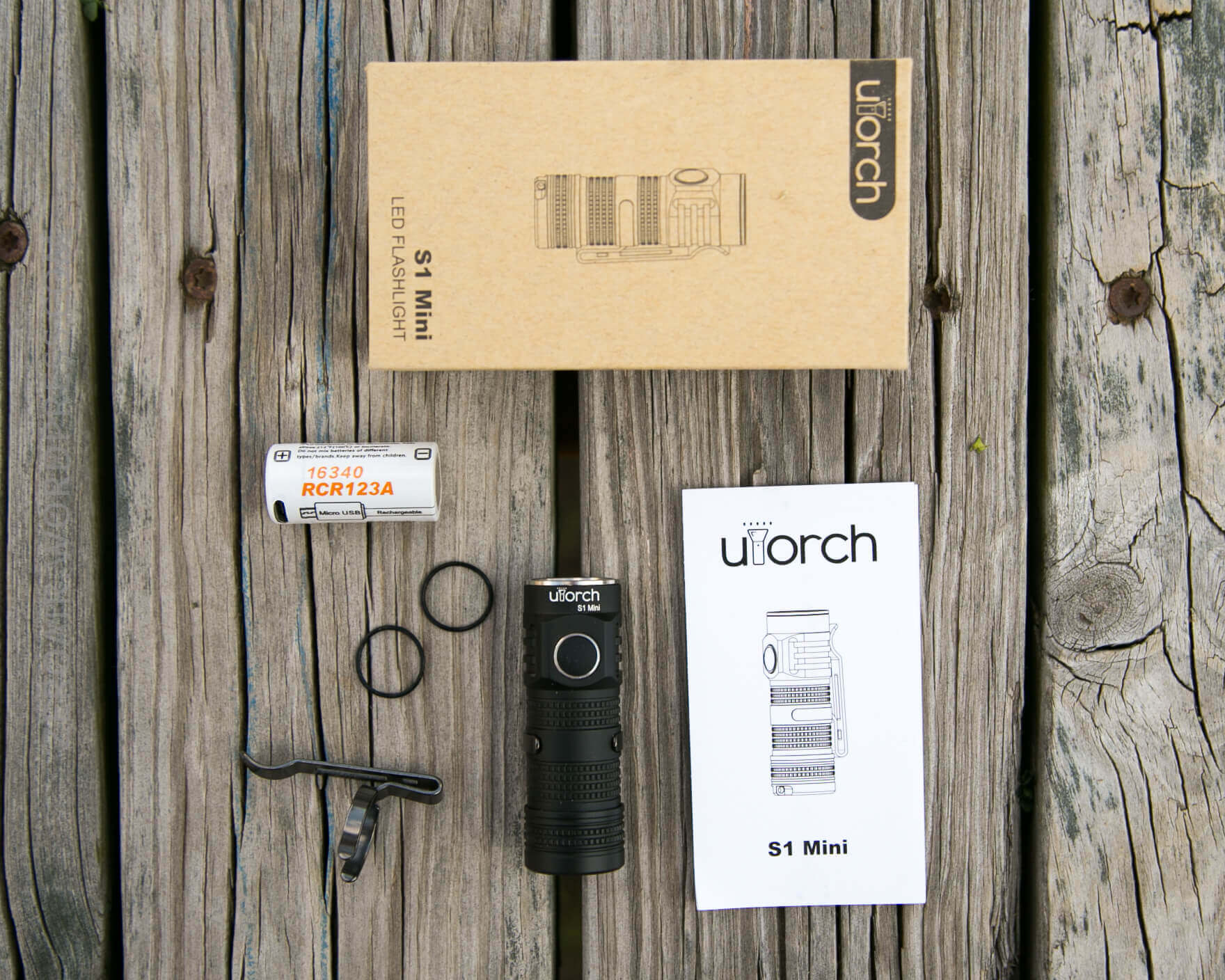
- Utorch S1 Mini Flashlight
- Lumintop 650mAh 16340
- Spare o-ring (2)
- Pocket clip
- Manual and paperwork
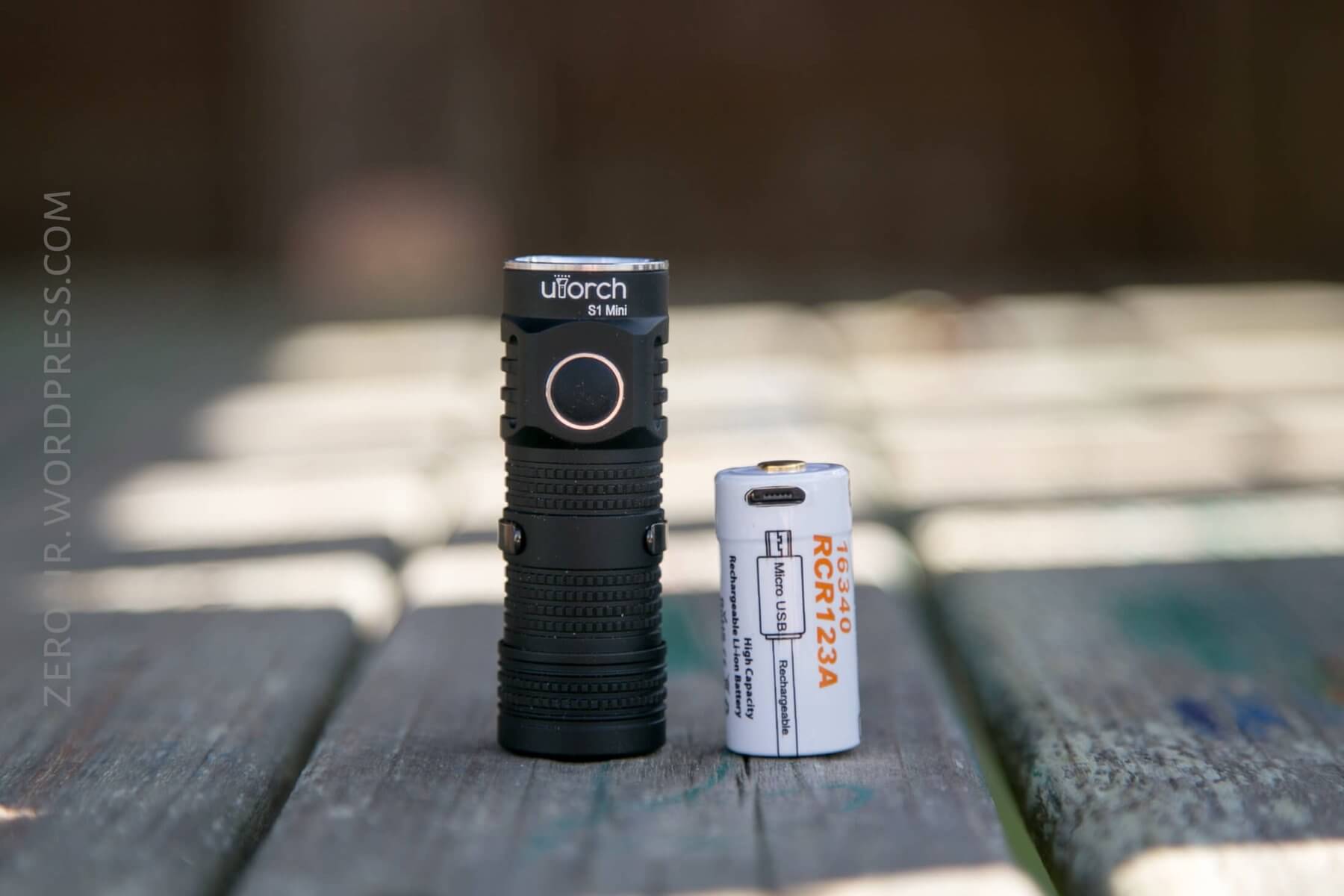
Can you believe it? I remembered to get a shot of the cell.
Package and Manual
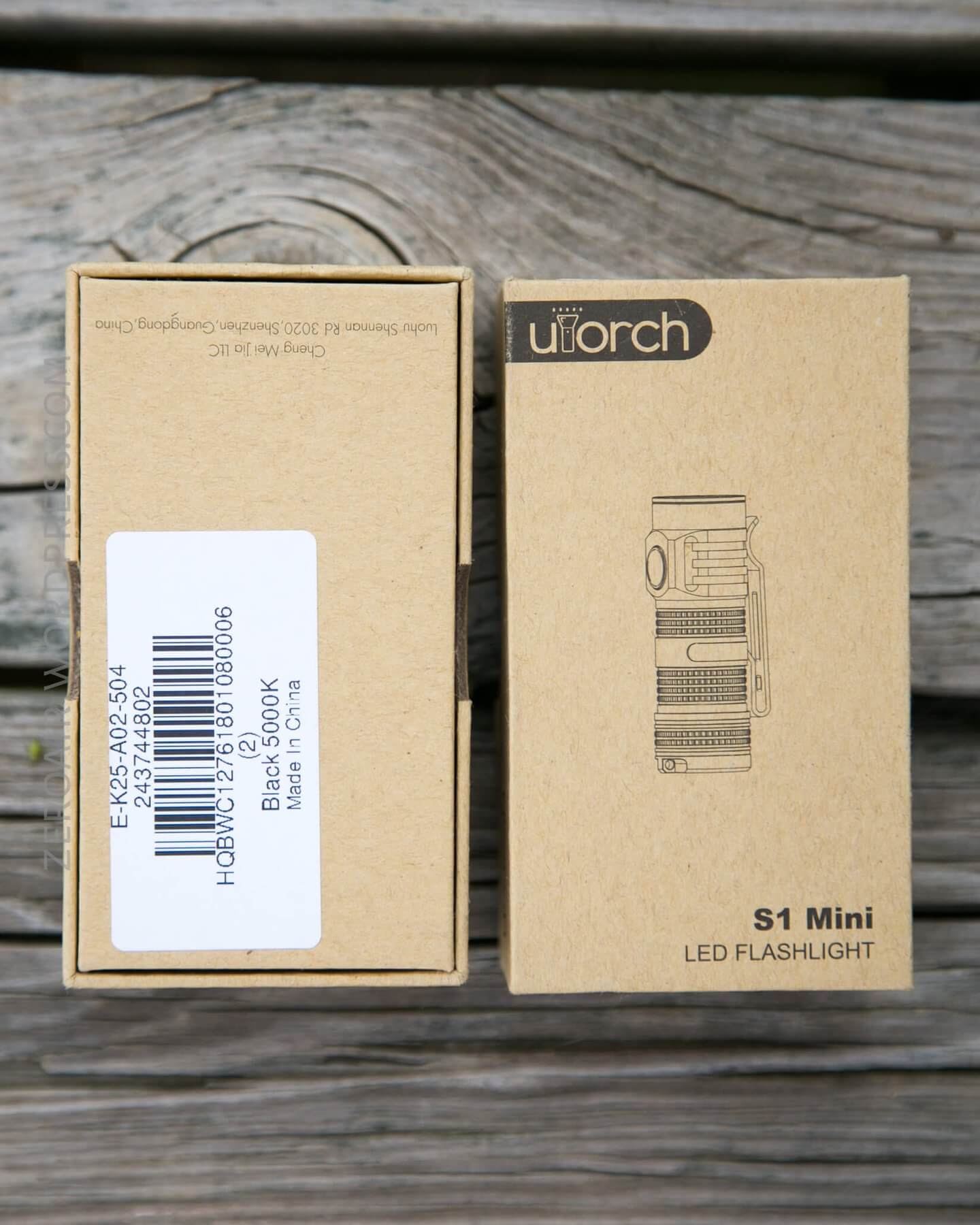
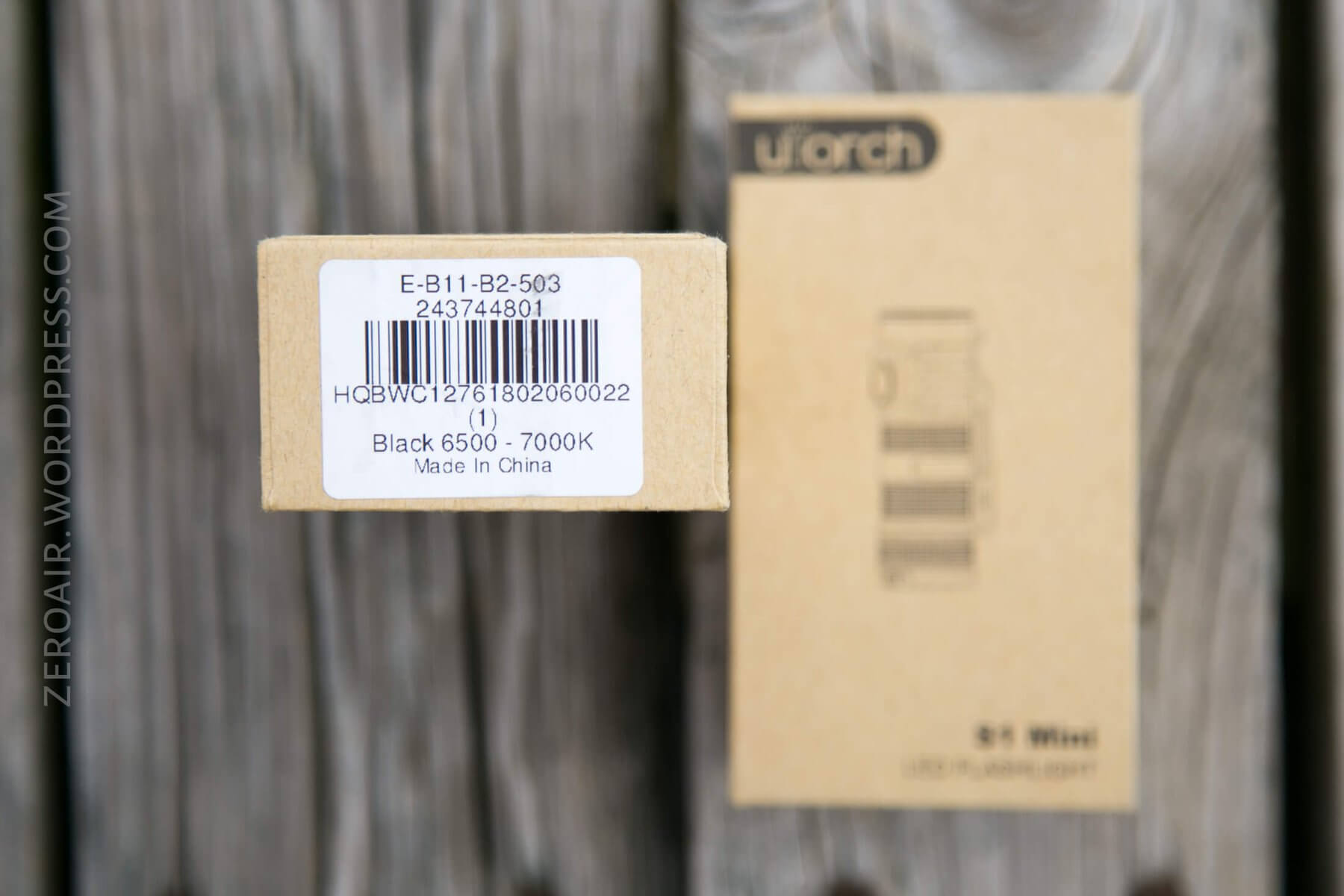
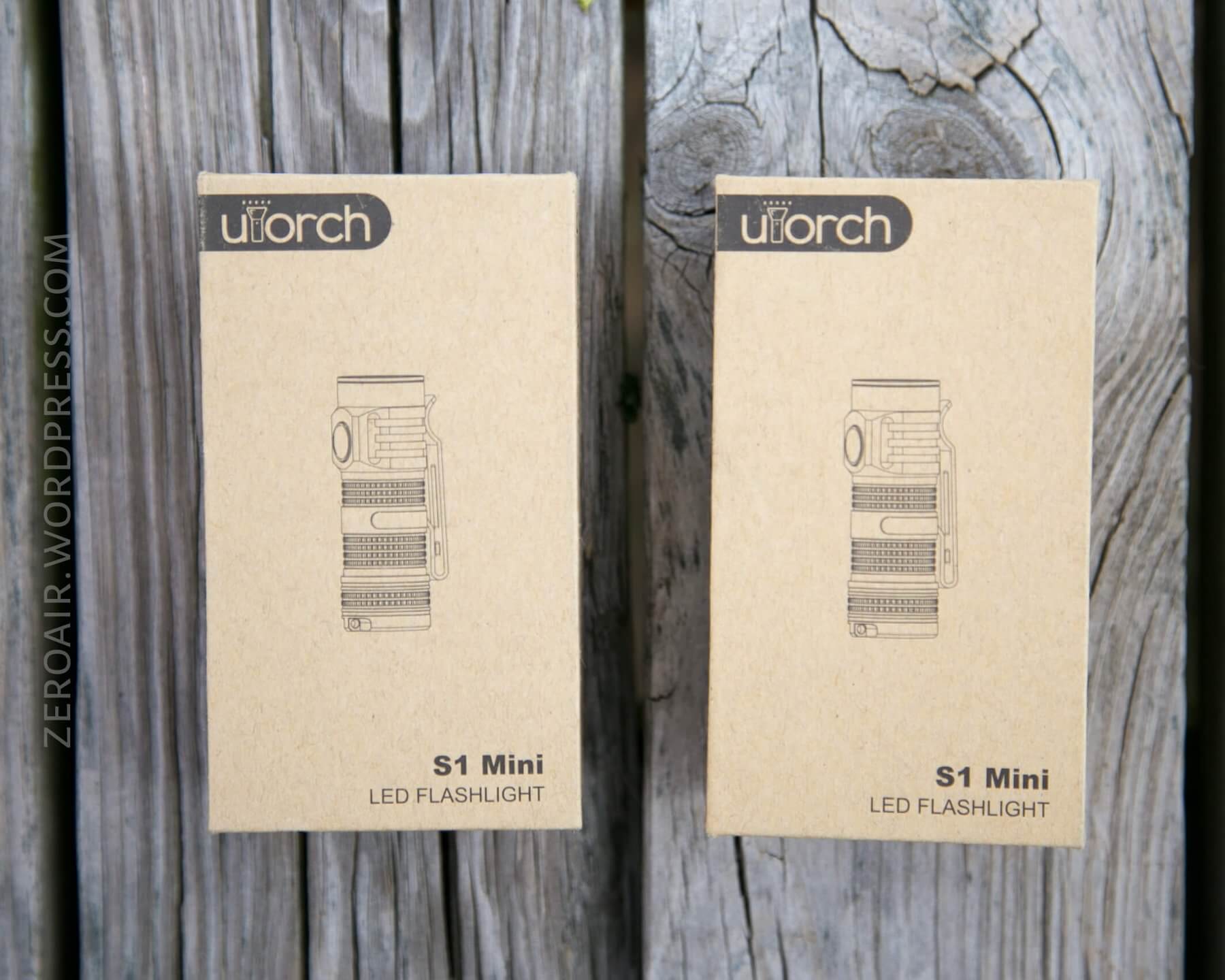
The box that the S1 Mini ships in is quite nice – slip-fit thick cardboard. The top has a nice illustration of the light, and there’s really nothing else much on the box. GearBest has an inventory sticker on the box, but the placement is inconsistent.
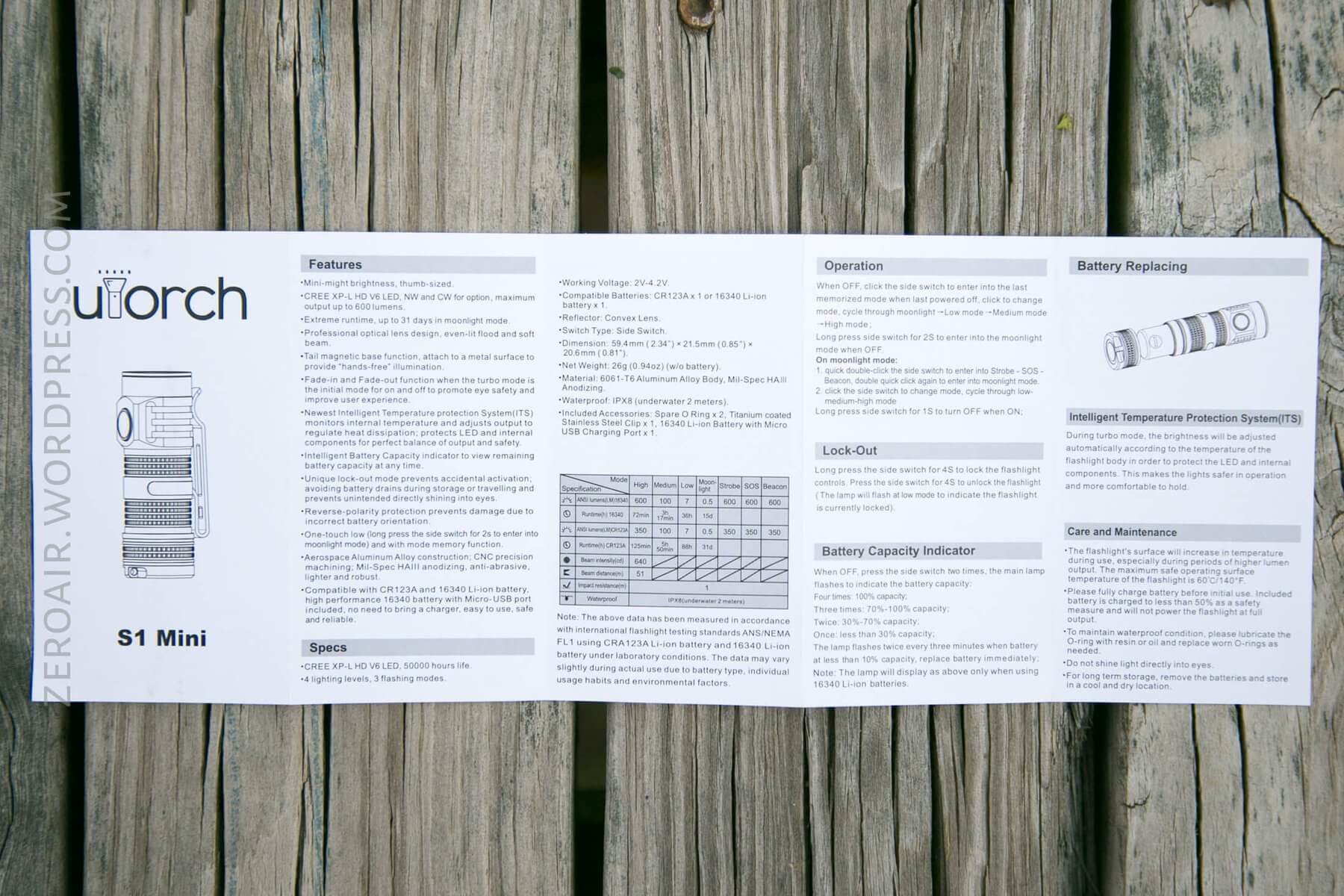
The manual is a small slip of glossy paper, printed on only one side. All the requisite information is there and laid out well. It’s a fine manual.
Build Quality and Disassembly
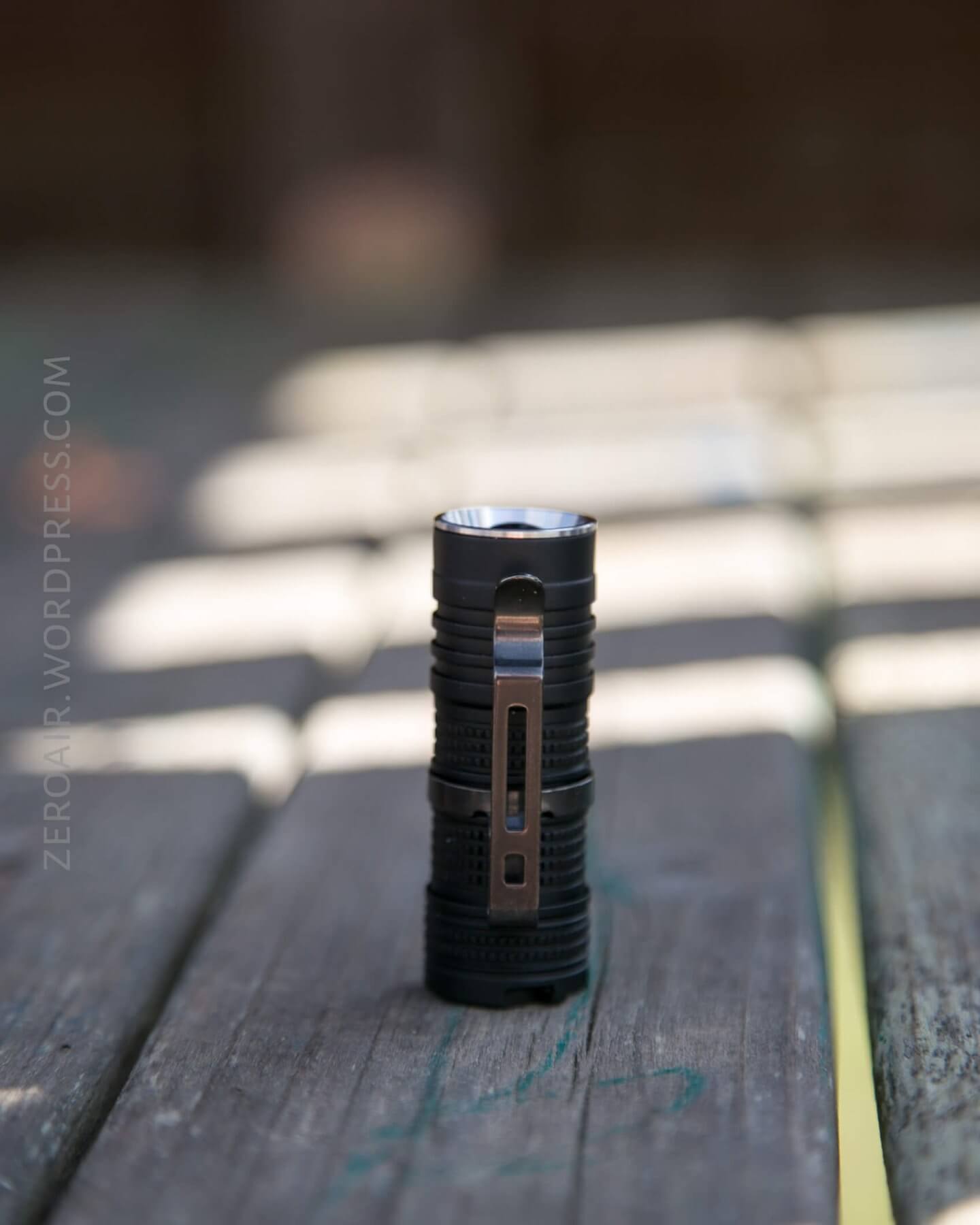
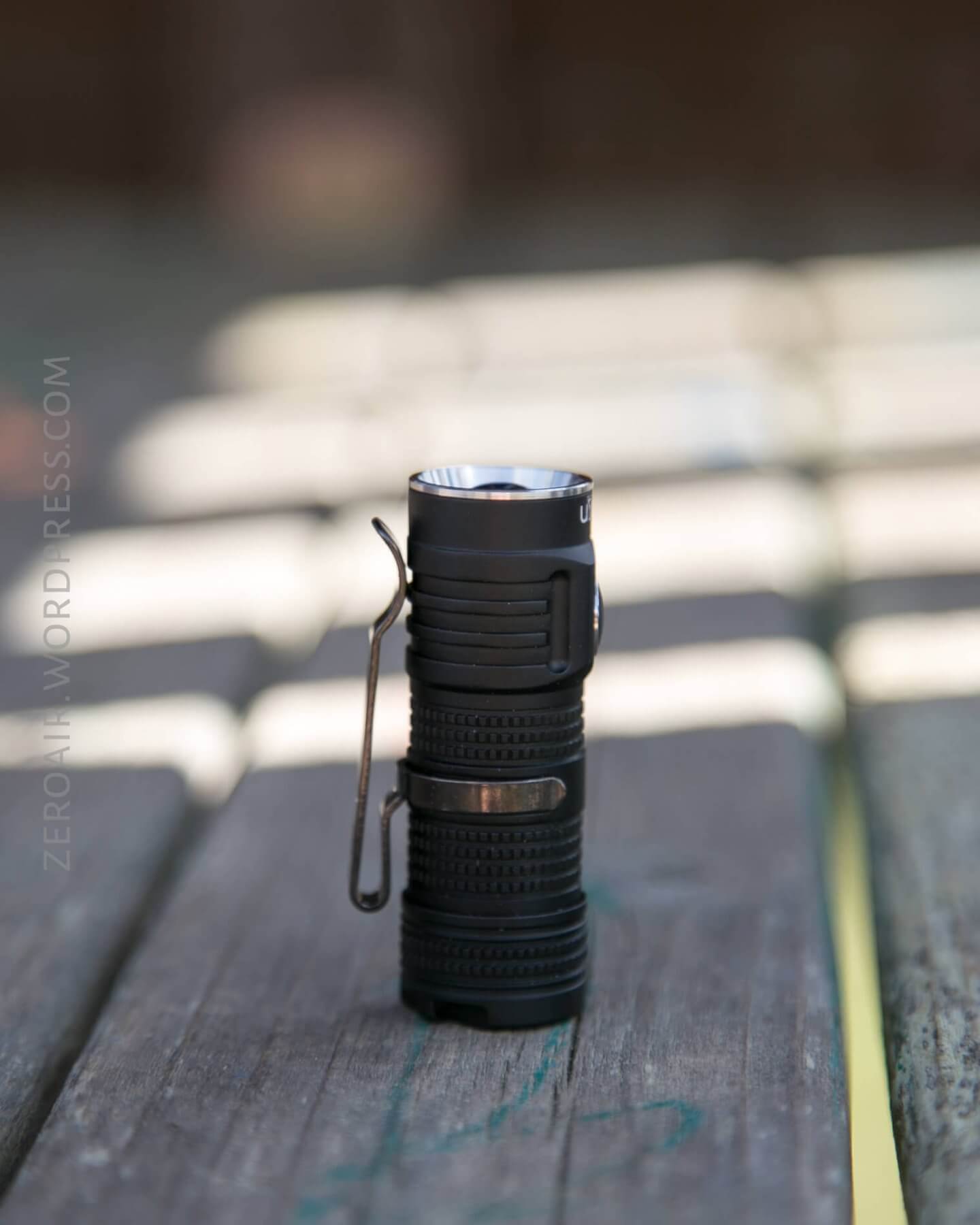
I like the build quality of the S1 Mini. The feel is nice – good weight, good anodizing. The anodizing is lightly matte.
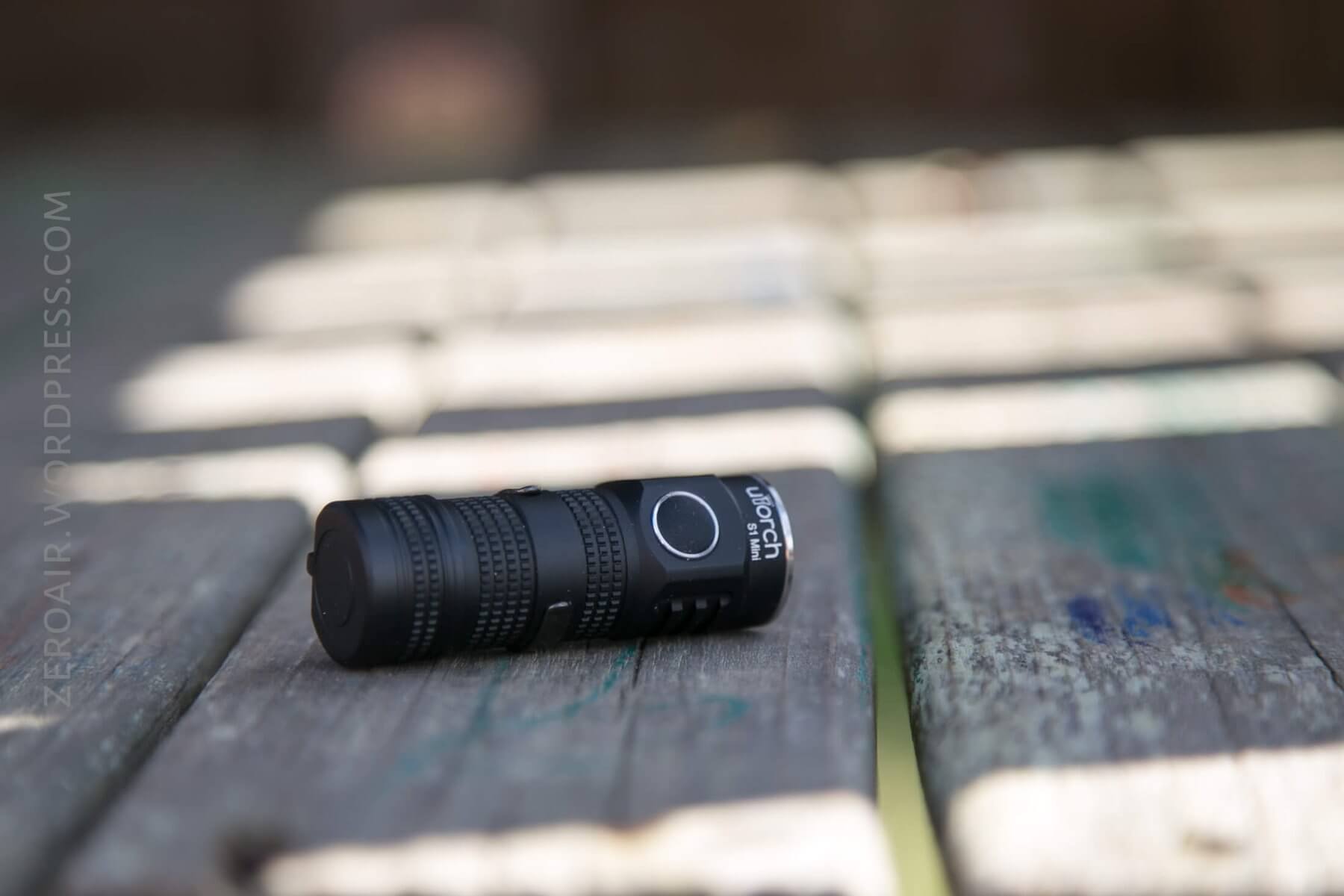
The knurling is square-cut and quite raised, but not sharp. Good for gripping.
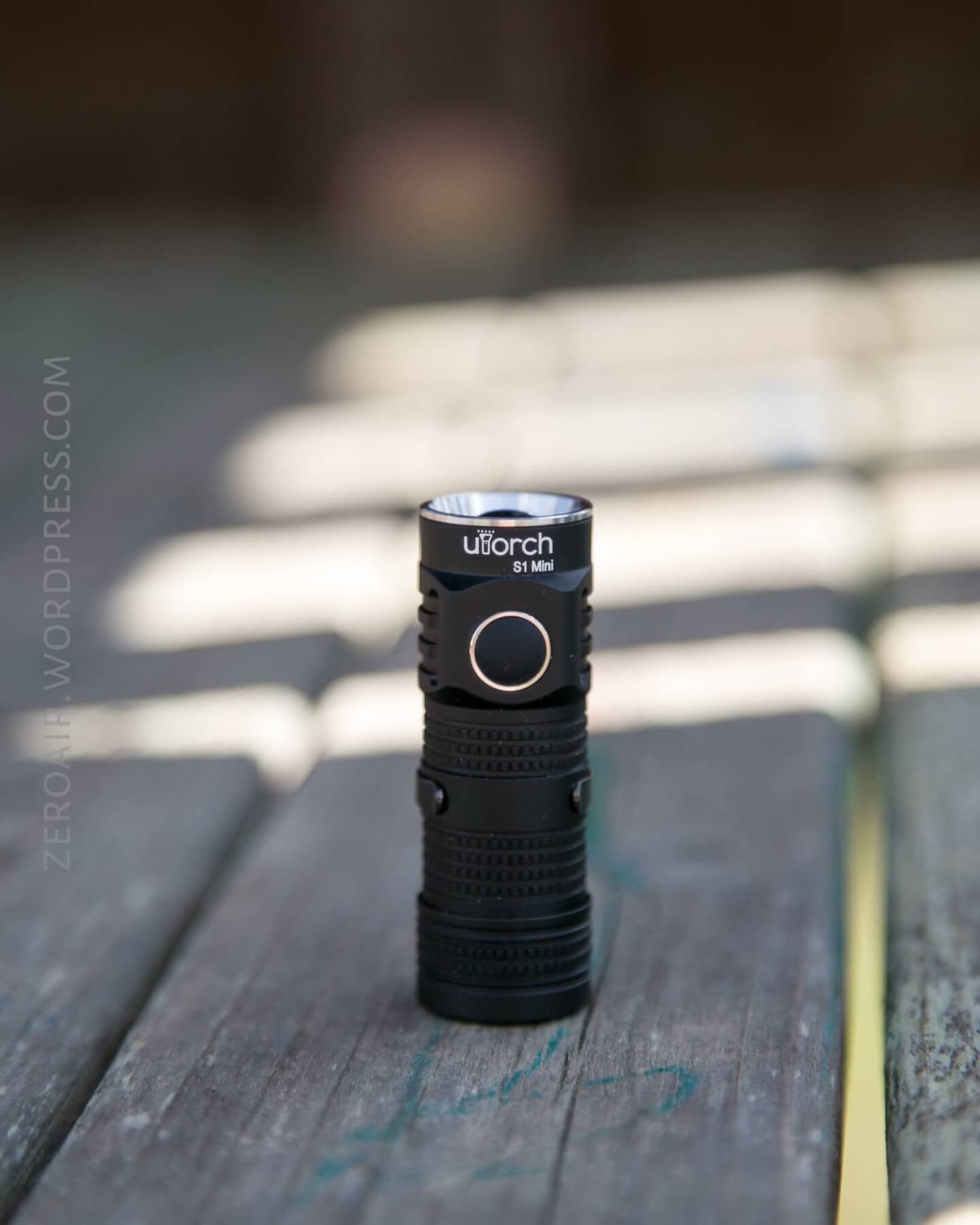
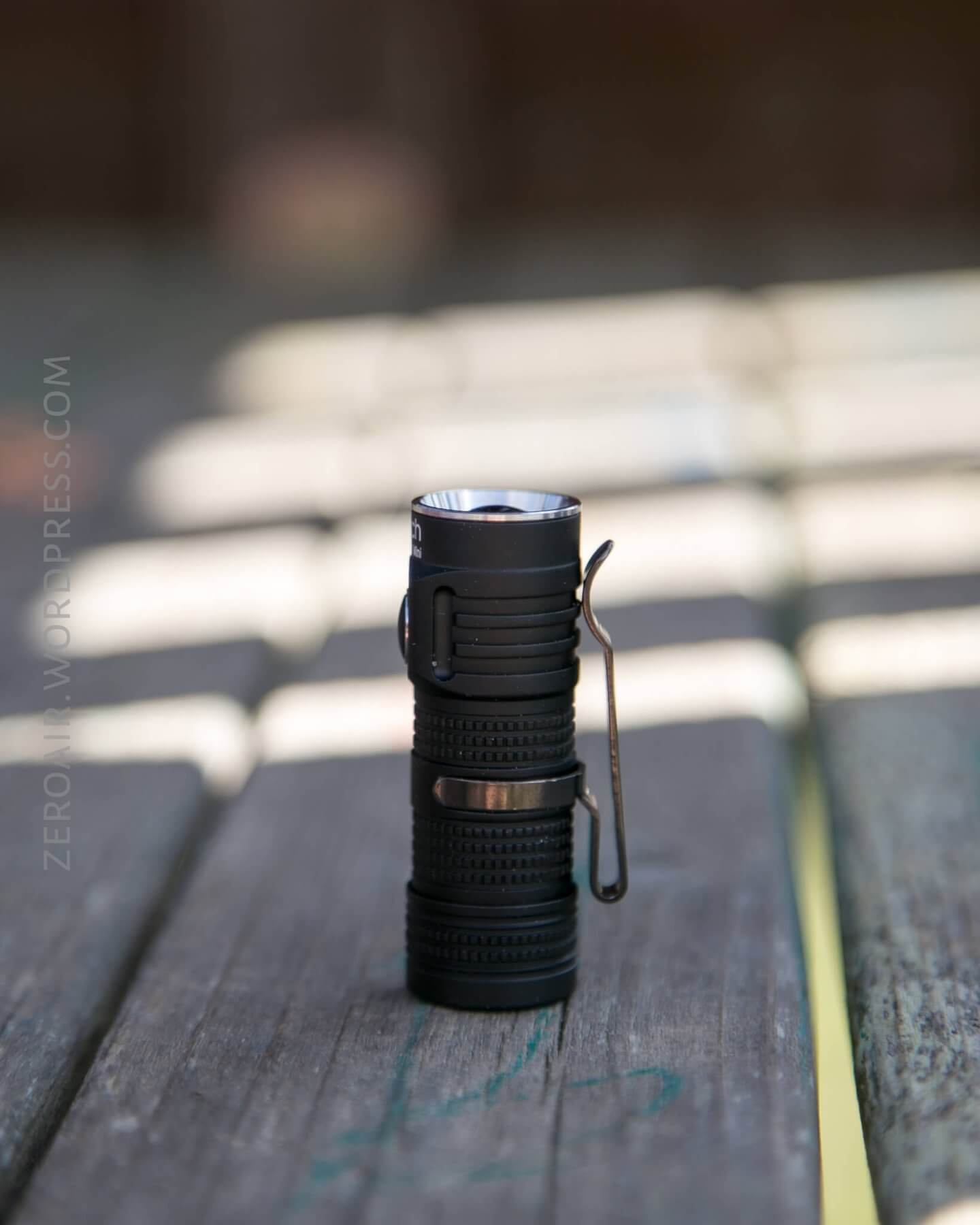
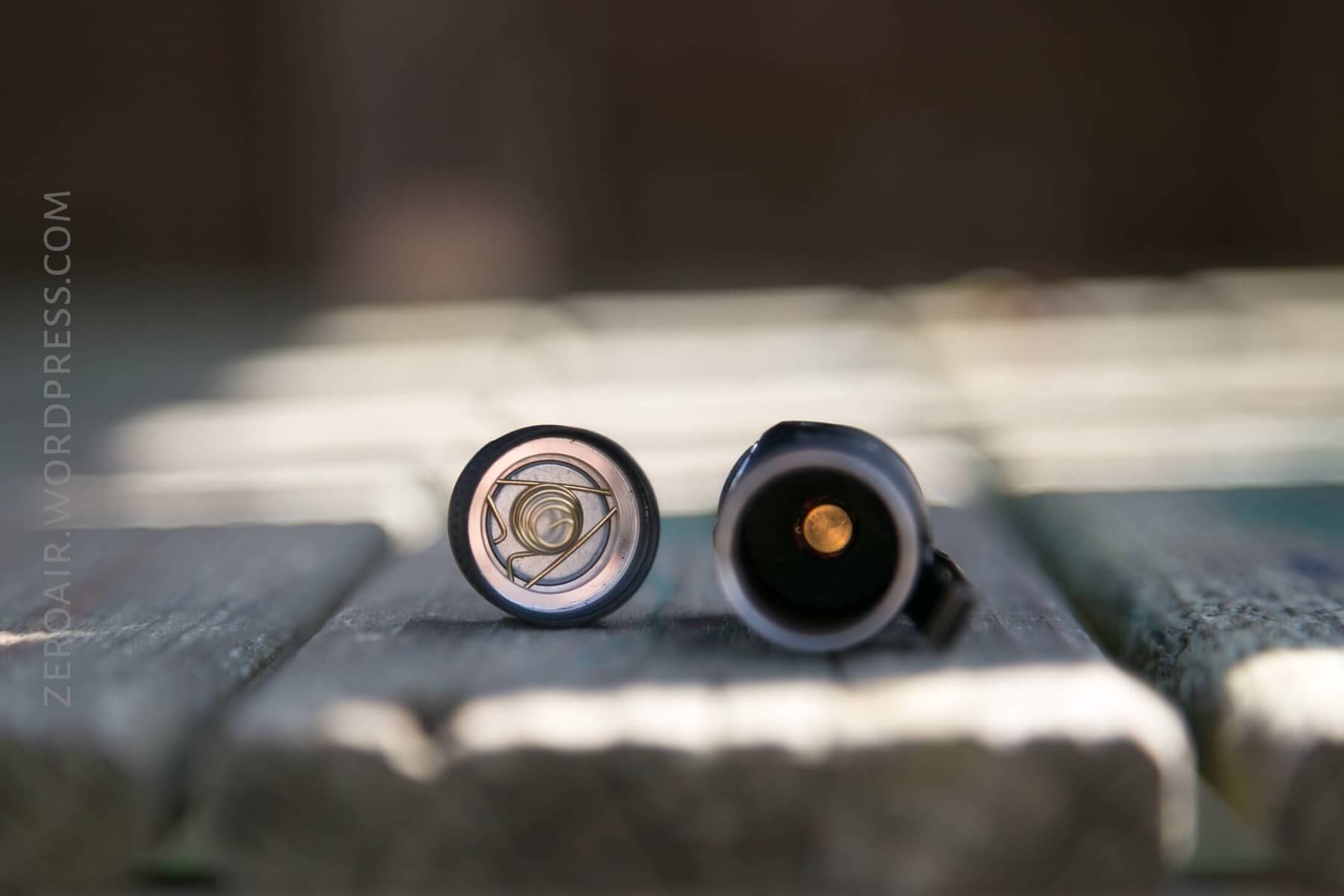
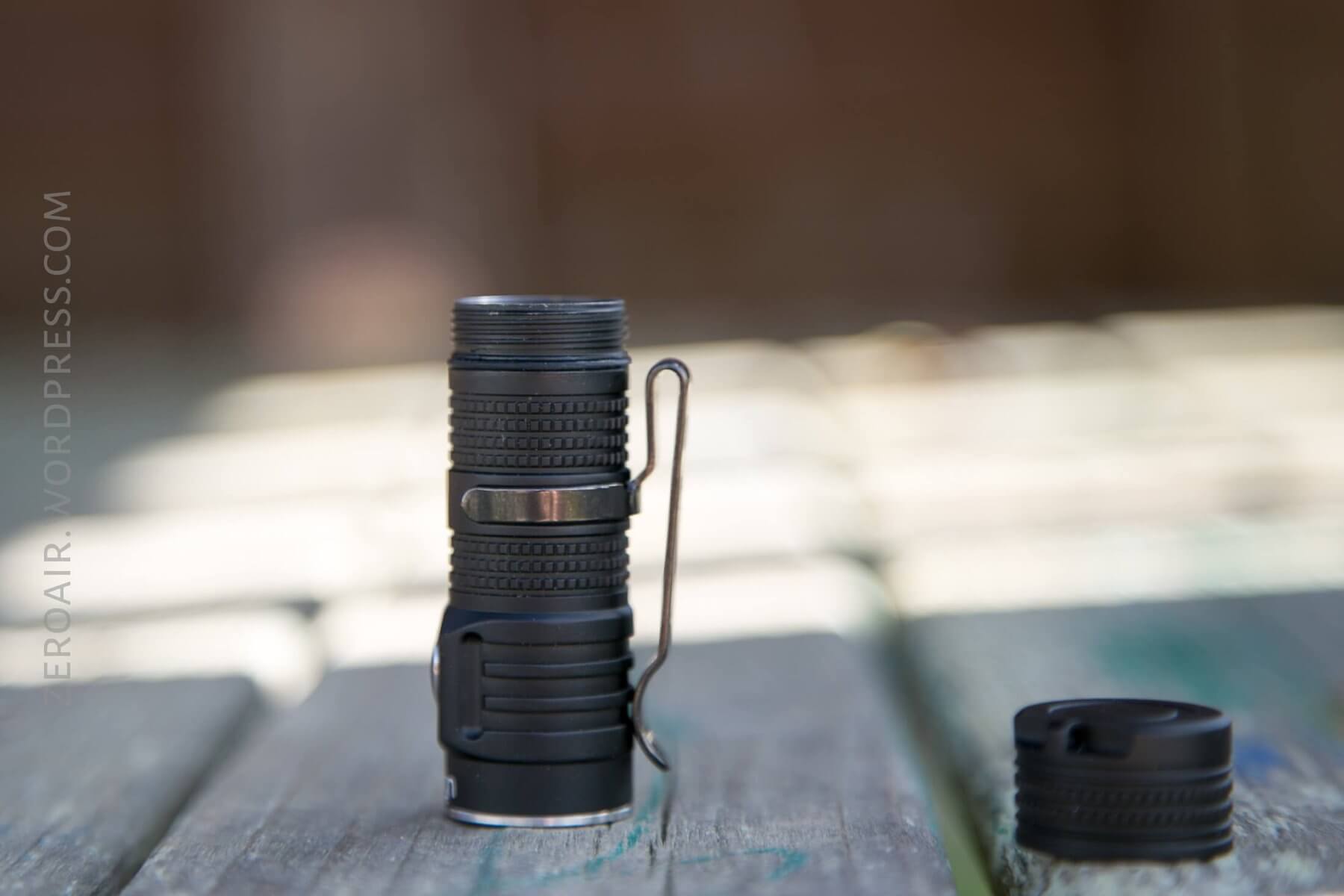
The threads (which are anodized) are surprisingly lightly lubed. They are square threads, too. As far as I can tell, the head does not unscrew from the head. Doesn’t budge, and also, I can’t see a seam. I also could not get the stainless bezel ring to budge, and there aren’t any internal divots for a tool to help unscrew. So I can’t really speak to changing the emitter in this light.
Size
Official size is 59.4mm x 21.5mm x 20.6mm. And it weighs 26g without the cell.
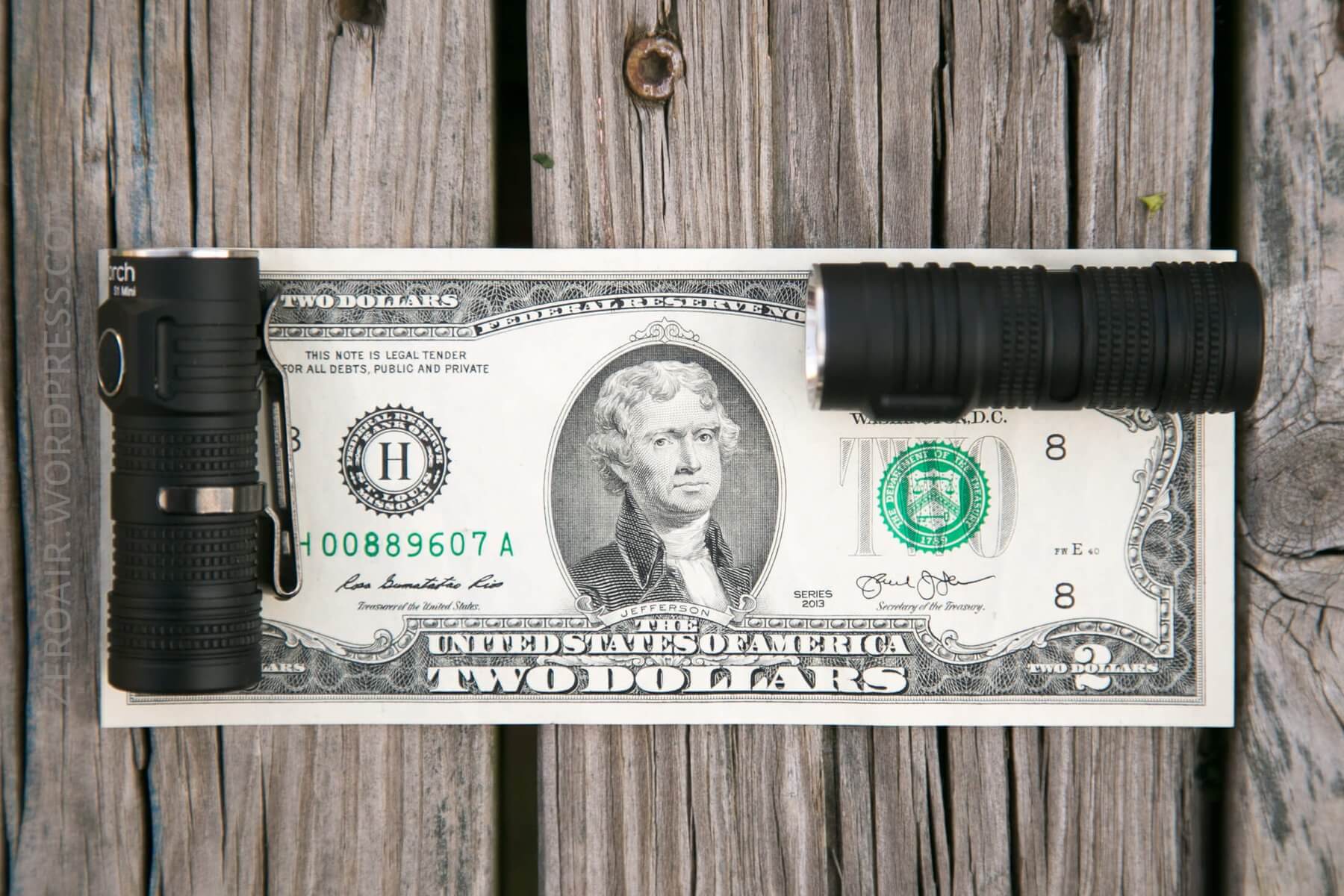
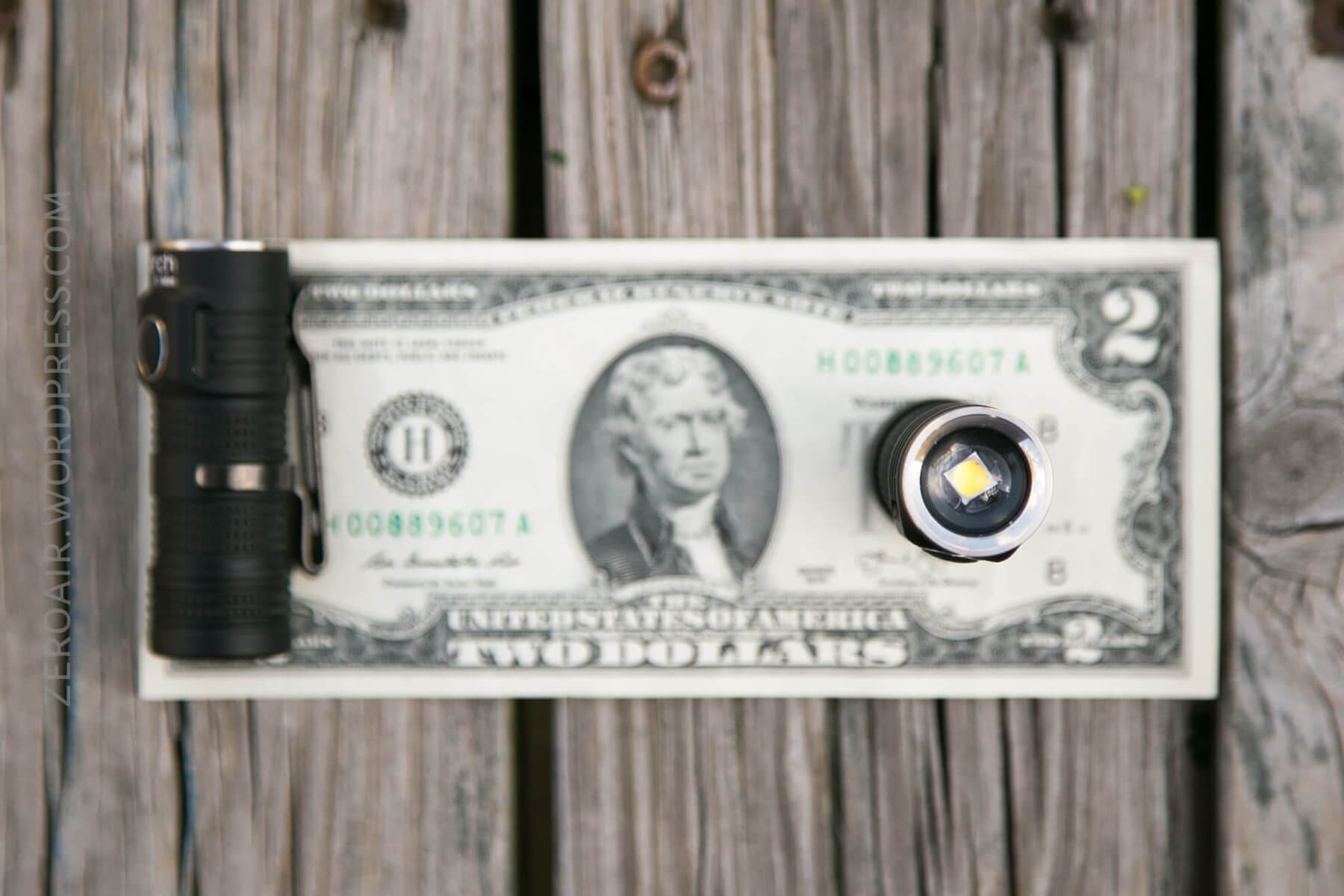
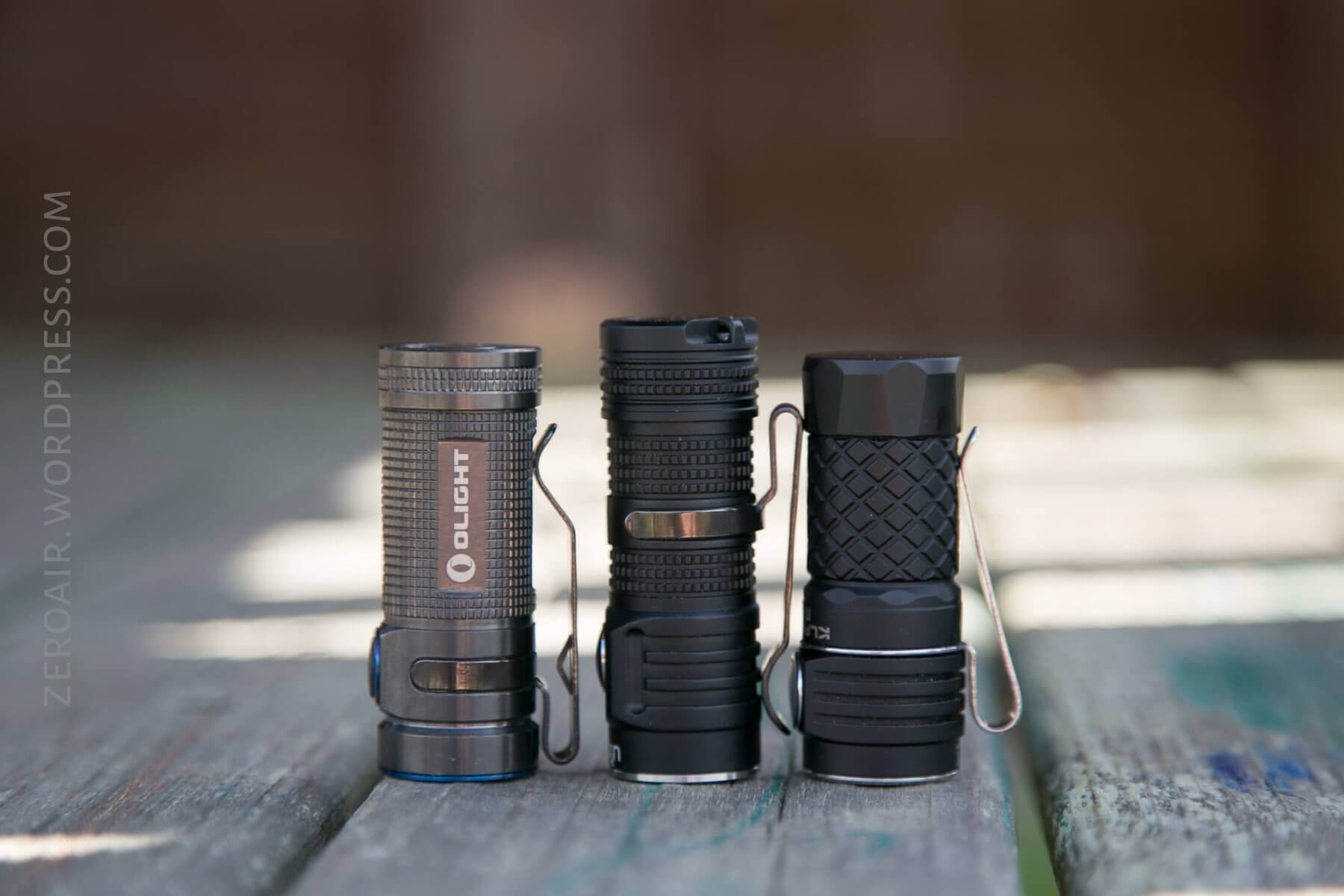
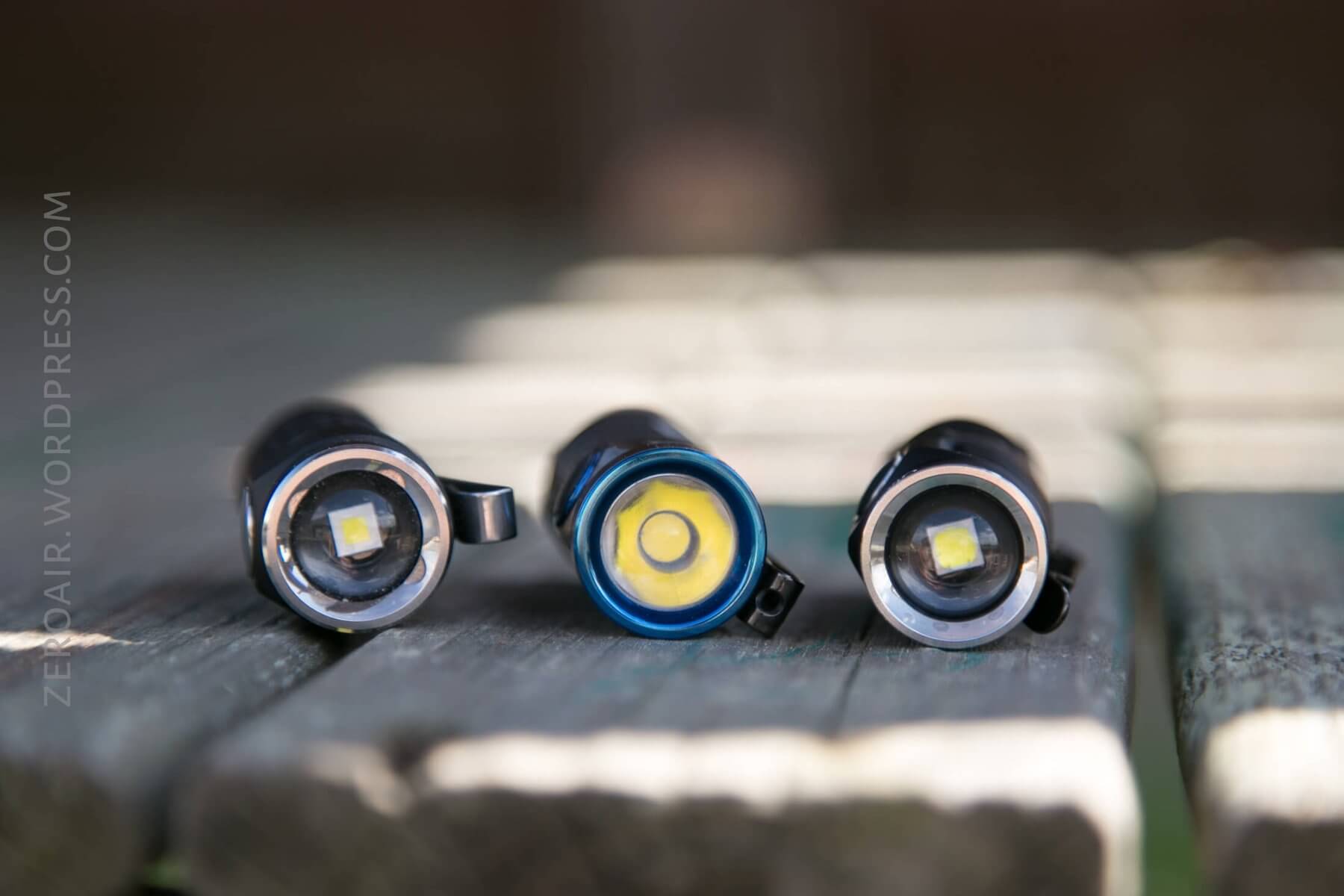
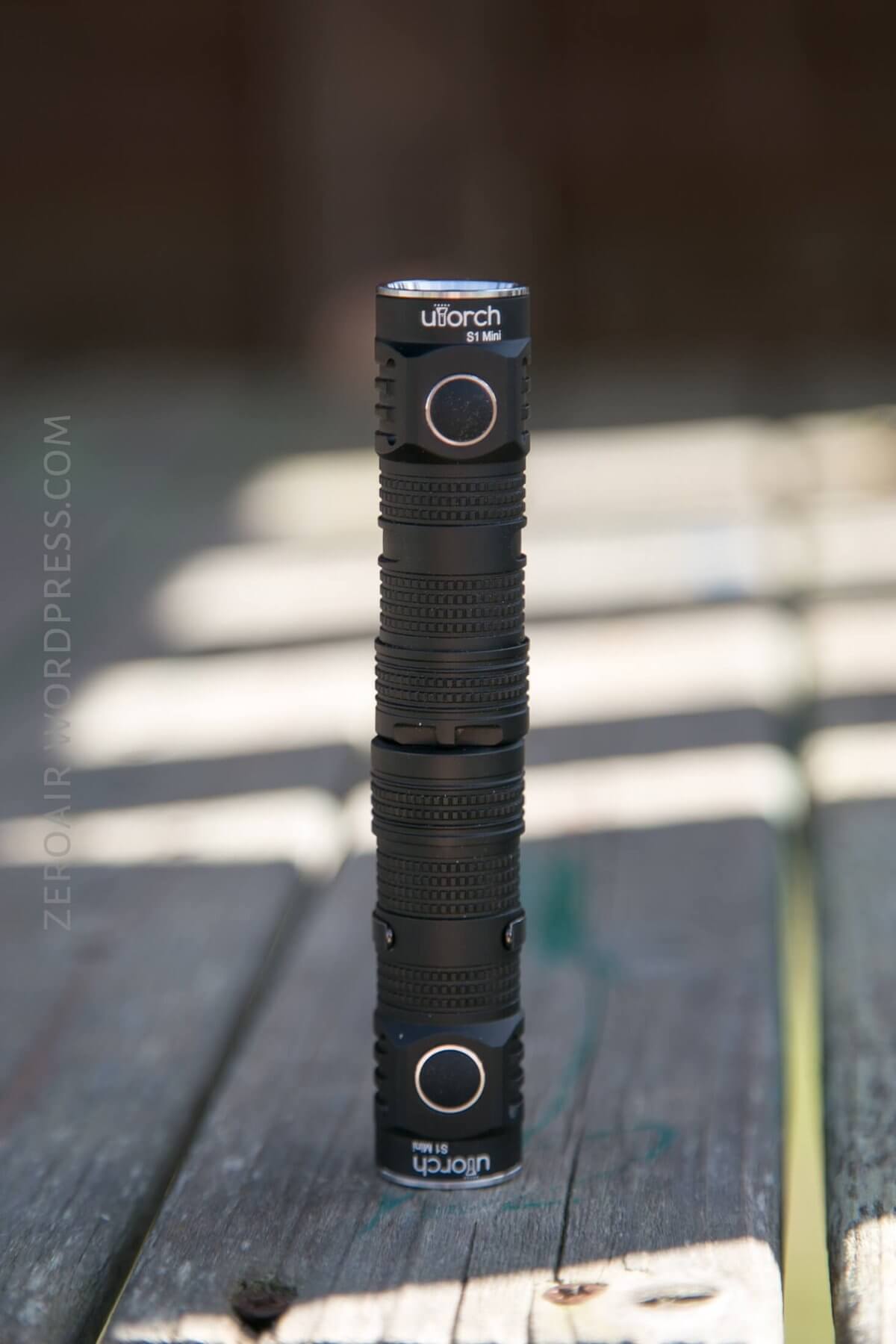
It’s a small light. It’s not the smallest 16340 light, of course – that honor is still held by [probably] Olight. Seen here are two other lights that are smaller – the Olight S Mini (stainless steel), and the Klarus Mi1C. The Mi1C is also aspheric and has a magnet. (I reviewed that one here.)
Retention
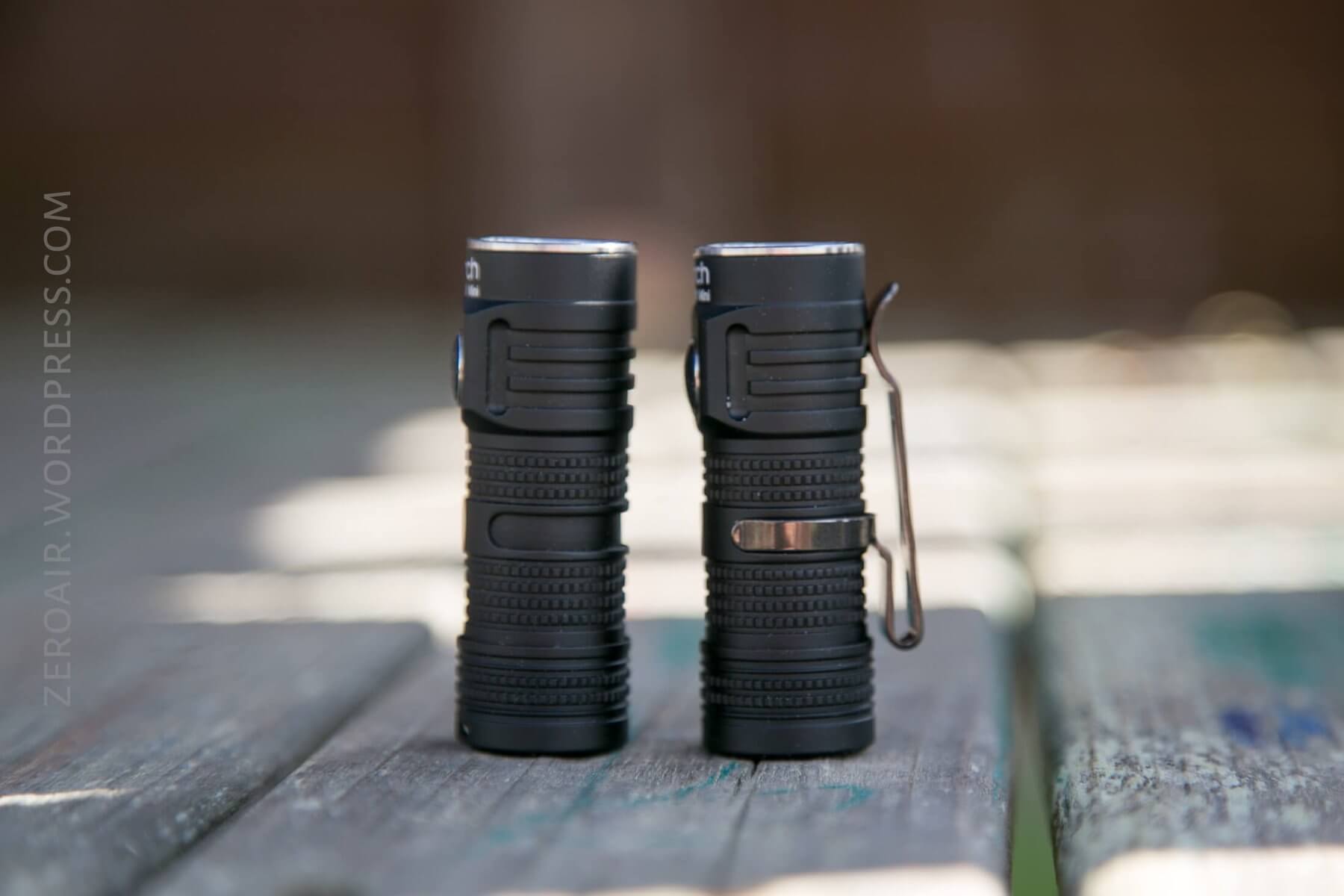
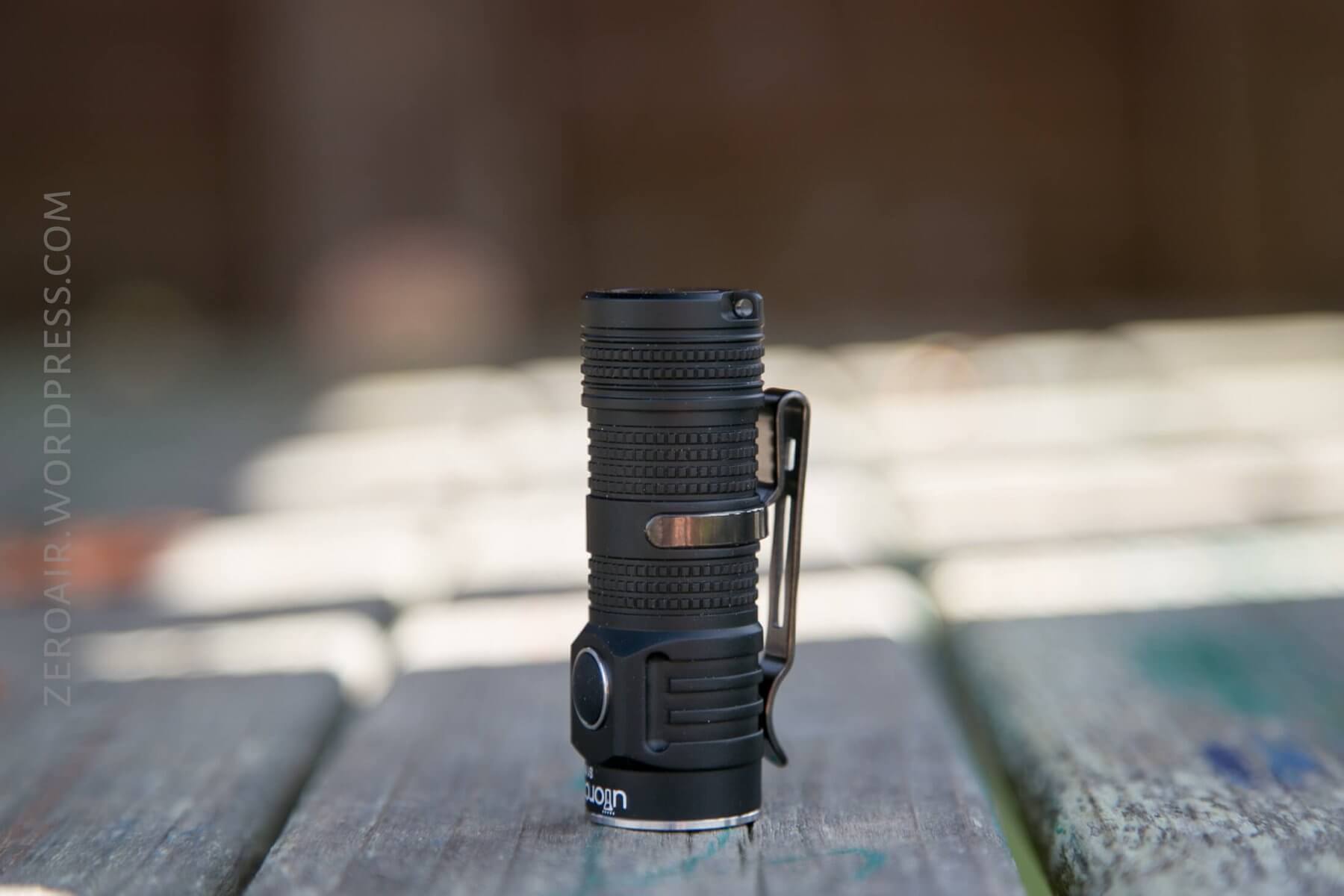
The S1 Mini includes a pocket clip, which attaches at nearly the center point of the body. The clip does not rotate around the body – there’s a specific cutout made for this clip and this clip only. The clip holds on snugly and is reversible, but if reversed, the mouth is a little below the tail of the light.
There’s also a lanyard hole in the tailcap. No lanyard is included.
And of course, the tailcap has a magnet. The magnet is plenty strong to hold the light in any orientation very snugly.
Power
A single 16340 cell powers the S1 Mini. Utorch provides a Lumintop cell. I am not sure what the relationship is between Utorch and Lumintop, but it’s not unreasonable to think that Lumintop might be making these Utorch lights.
There’s a rubber donut around the positive terminal, which will prevent reverse polarity damage to the light and also prevent the use of flat-top cells. The light does not have low voltage protection. In my tests, the light did turn off at around 1.5V and cites a working voltage of 2-4.2V, so it’s likely that a primary cell will not work in this light.
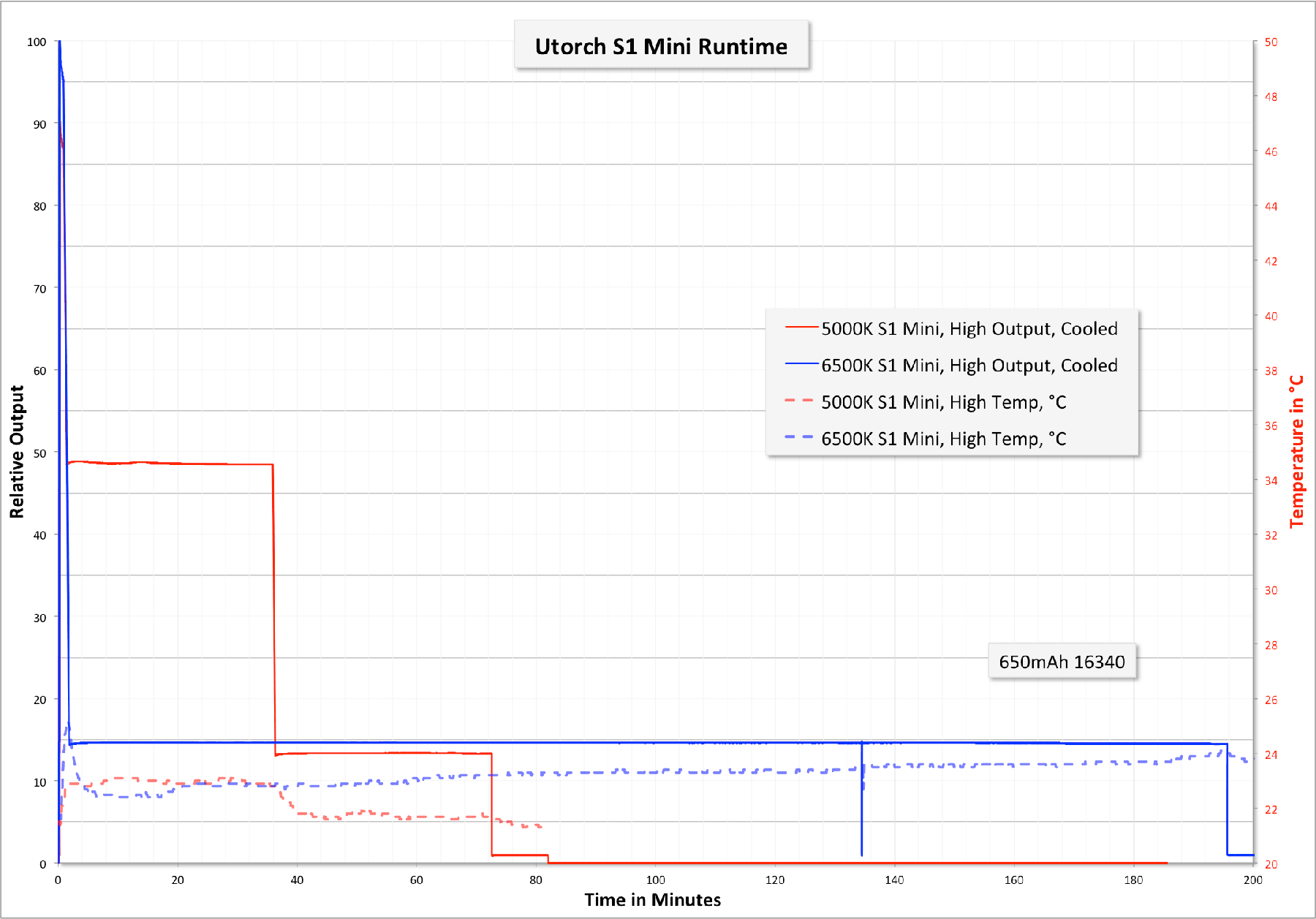
Here’s a runtime for both tints of the S1 Mini, on High. As you can see, the overall output of the cooler light is greater, and due to a strangely different stepdown pattern, the runtime is also much longer. The High output of the 5000K version looks to be around 10-13% lower than the 6500K version.
There’s also a battery check (see below in the user interface description). Double-click when the light is off, and the main (i.e., only) emitter will flash according to the charge state of the cell. If the cell is <10%, the main emitter will flash twice every 3 minutes (this is separate from the battery check mode).
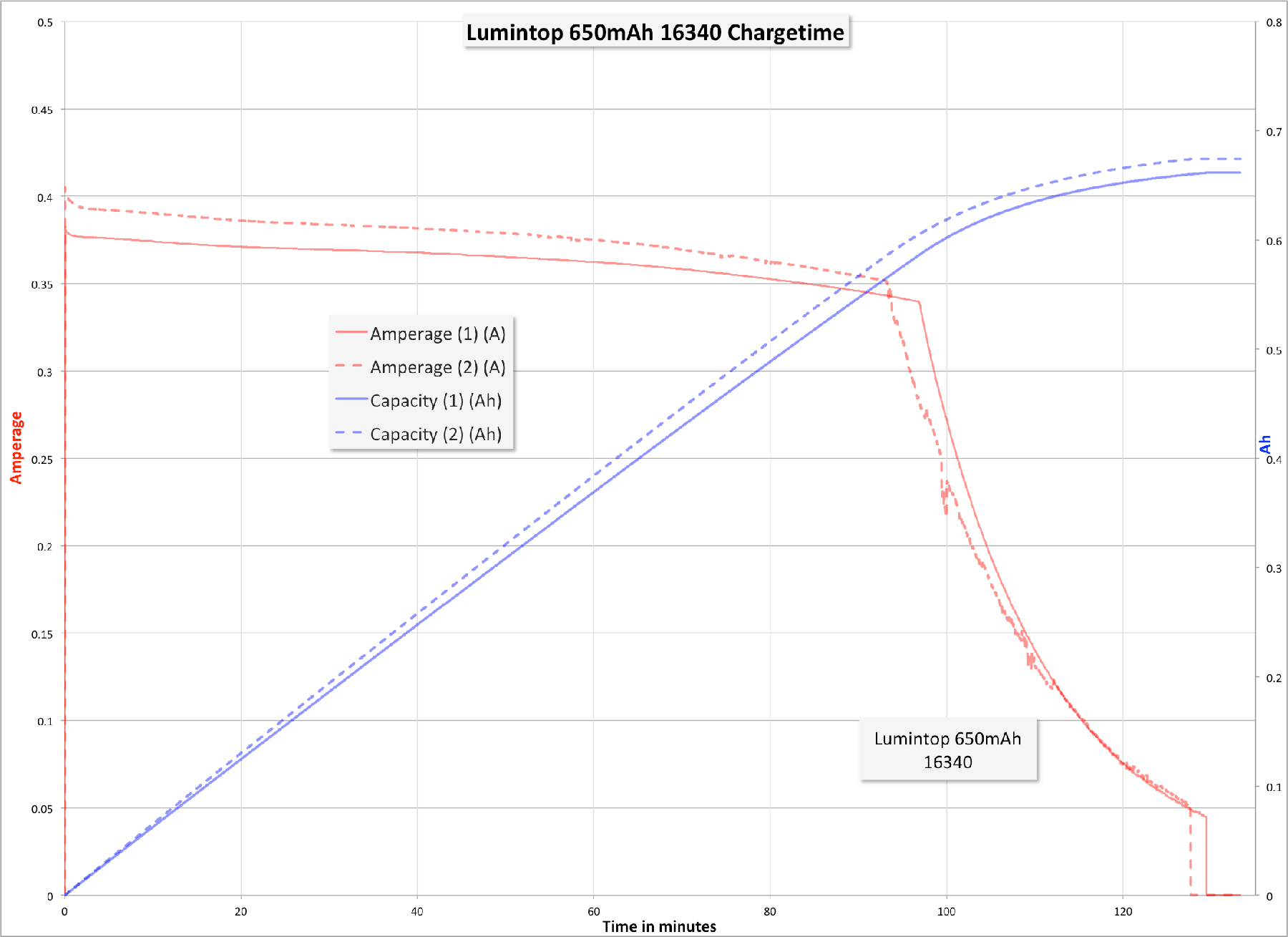
Charging
The included cell has onboard charging. There are also two lights – one red and one green – to indicate if charging is happening (red) or if charging is complete (green).
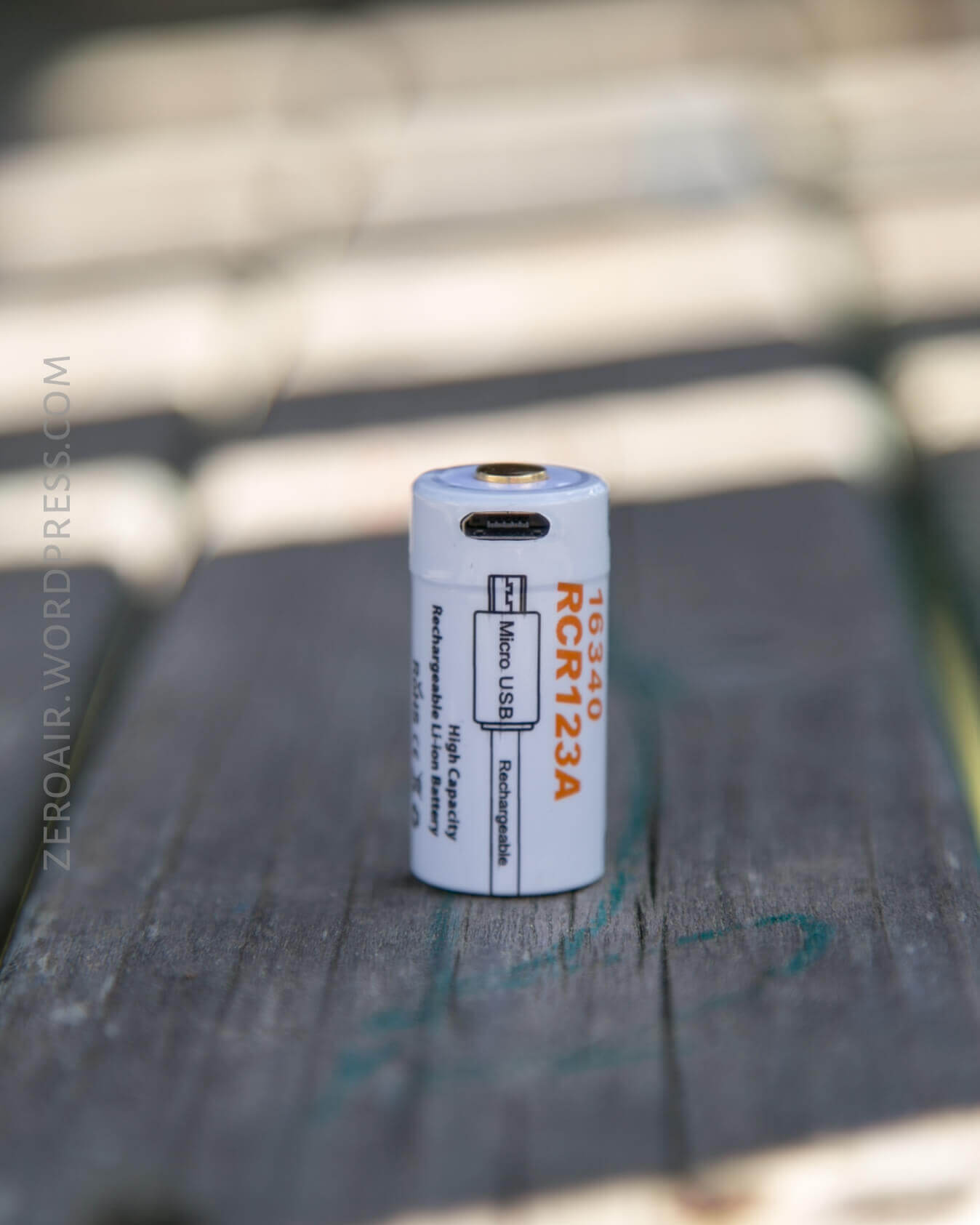
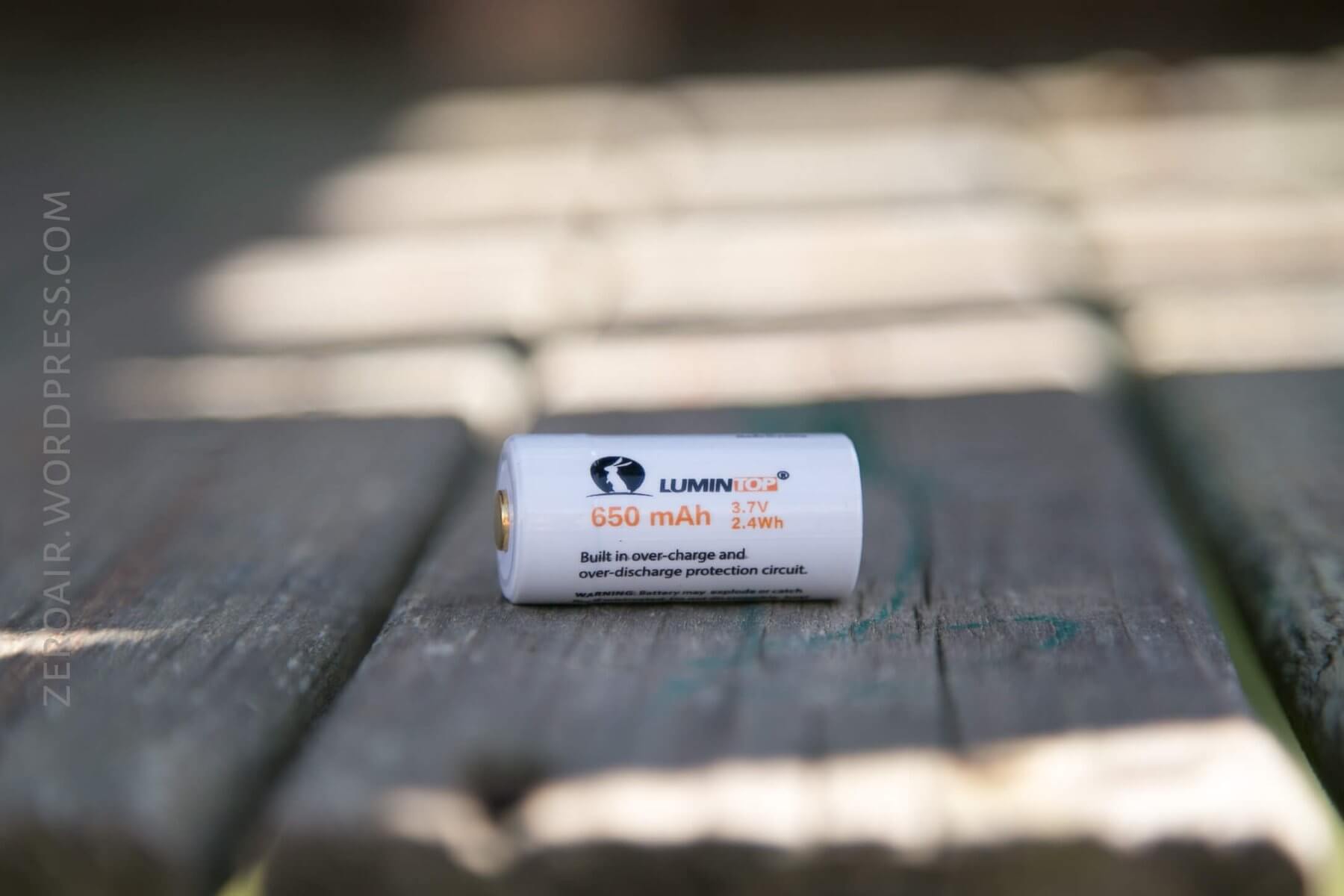
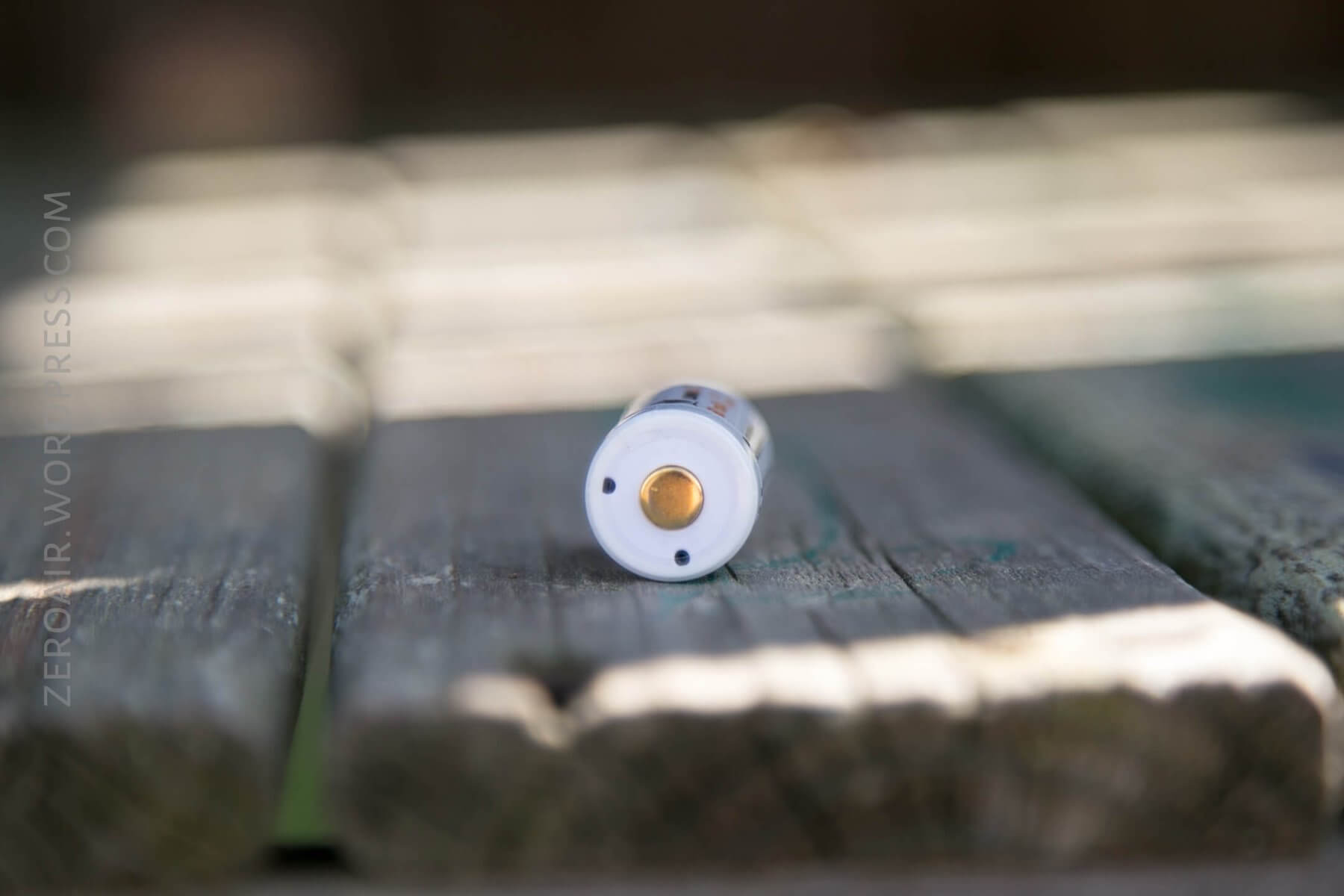
I went ahead and tested charging with both cells – the charge circuit is clearly the same. The capacity looks appropriately labeled on the cell, too. Charging happens at about 375mA, which is a good rate for this small cell. So no complaints about the charging here.
User Interface and Operation
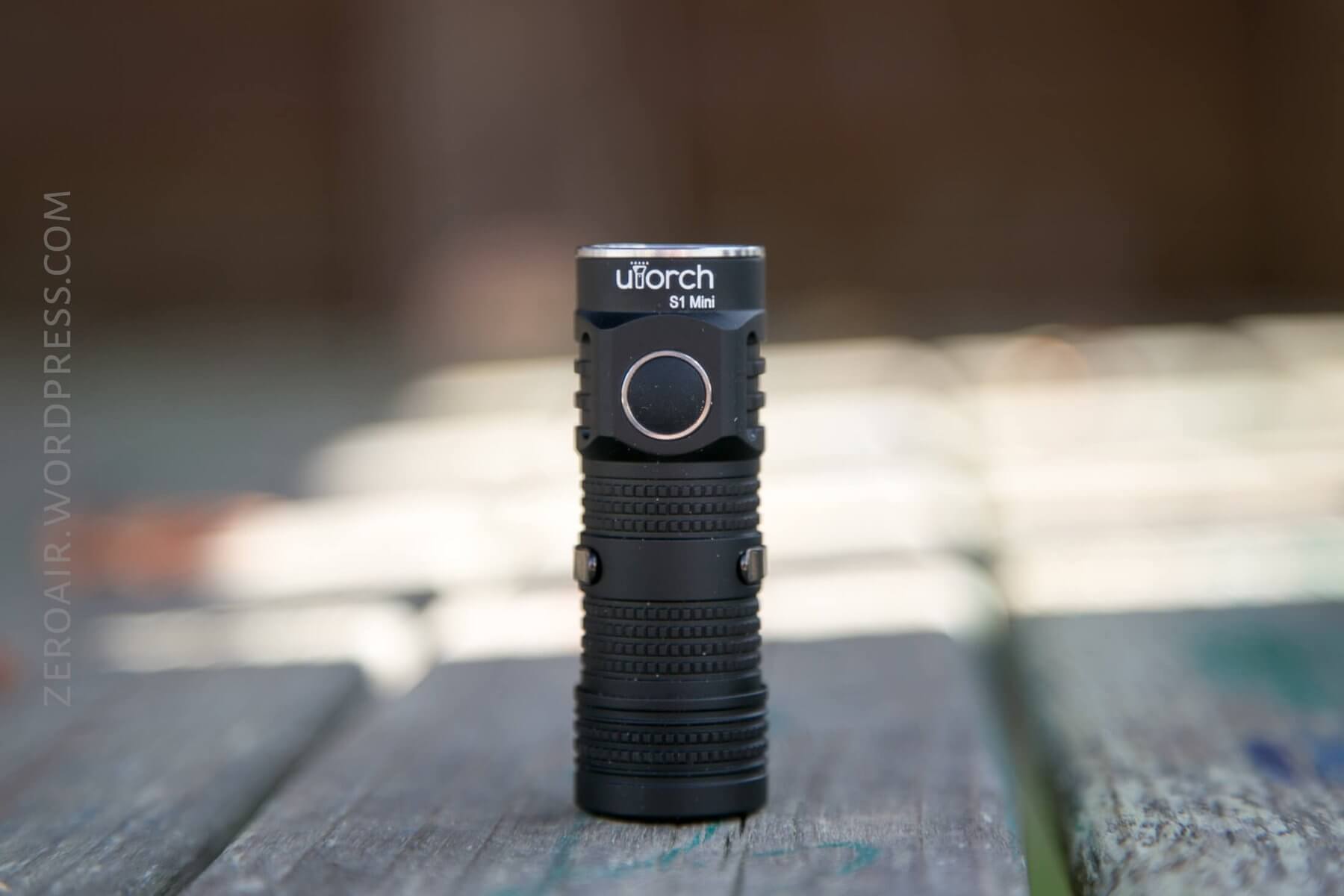
There’s a single button on the S1 Mini, and it’s a side clicky e-switch. It’s not a big switch, but it’s easy to find and operate, and it’s a good level of clicky.
Here’s a user interface table!
| State | Action | Result |
|---|---|---|
| Off | Click | On (Mode Memory) |
| Off | Hold | Moonlight |
| On | Hold | Off |
| On | Click | Mode advance (Moon>L>M>H) |
| Moonlight | Double Click | Strobe |
| Strobe | Click | Strobe advance (SOS>Beacon>Strobe) |
| Strobe | Double click | Moonlight |
| Off | Long Hold (>4s) | Lockout |
| Lockout | Long Hold (>4s) | Unlock |
| Off | Double Click | Battery check^ |
^ Battery check works as follows:
Four flashes: 100% capacity
Three flashes: 70-100% capacity
Two flashes: 30-70% capacity
One flash: <30% capacity
Modes
| Mode | Mode Claimed Output (lm) | Claimed Runtime | Mode Measured Lux (5000K/6500K) | Tailcap Amps |
|---|---|---|---|---|
| High | 600 | 125m | 12850/14250 | ~1.5 |
| Medium | 100 | 5h50m | 1915/2100 | ~0.3 |
| Low | 7 | 88h | 130/136 | ~ |
| Moonlight | 0.5 | 31d | 6/7 | ~ |
LED and Beam
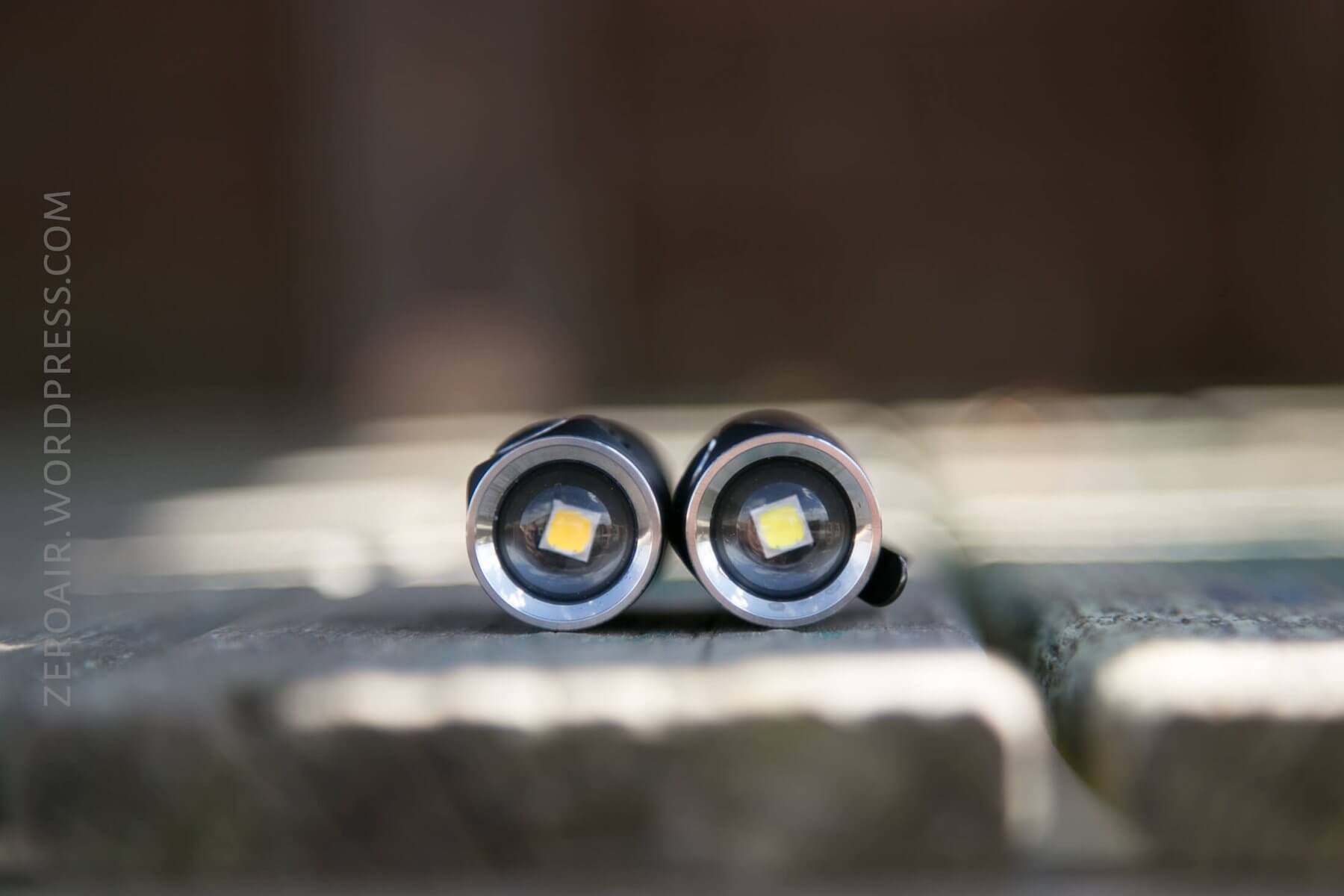
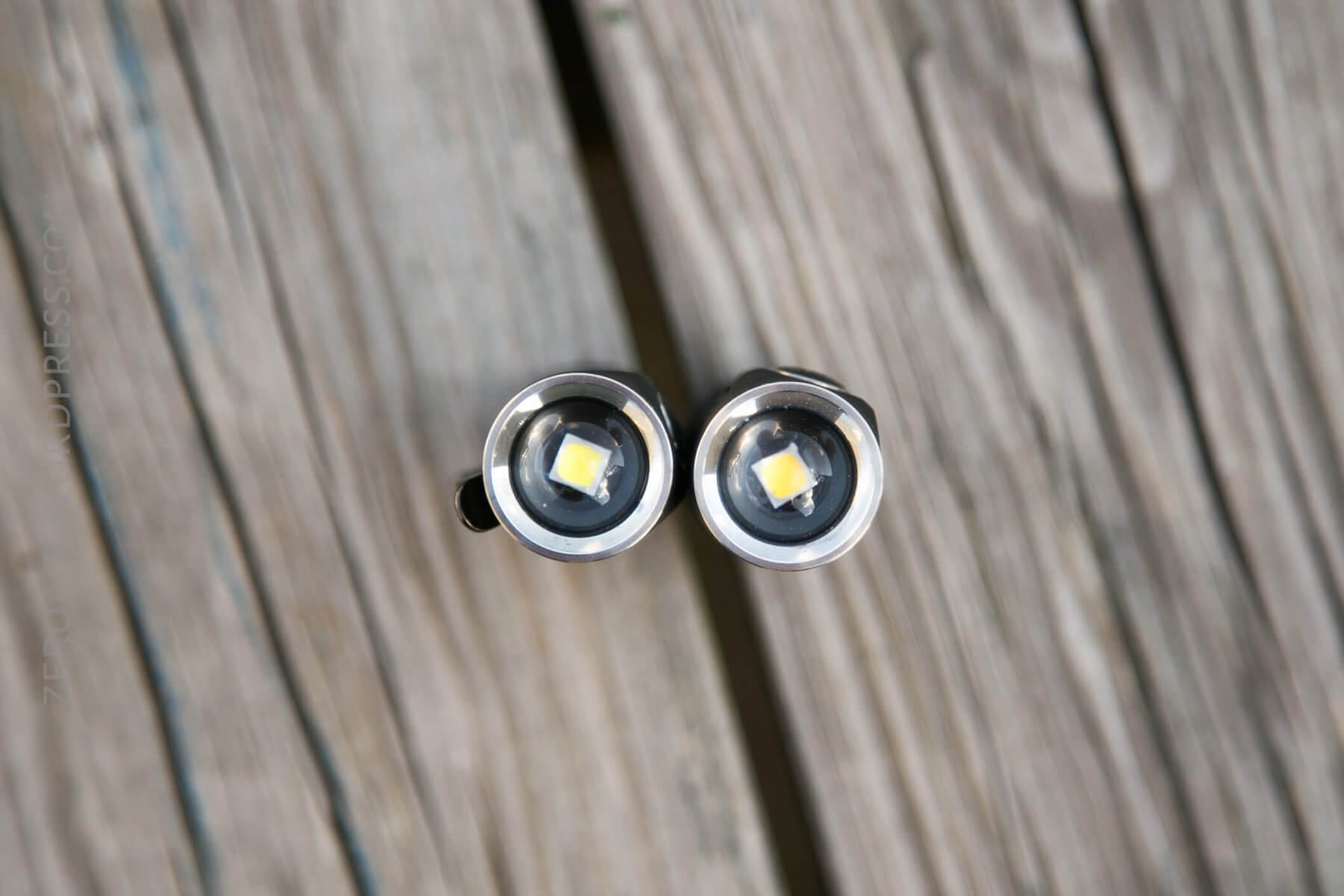
Both of these lights have Cree XP-L HD emitters. There are two tint options. 5000K (on the left, below) and 6500K (on the right, below). The difference in tint between the two is quite marked.
Note that these lights have aspheric lenses.
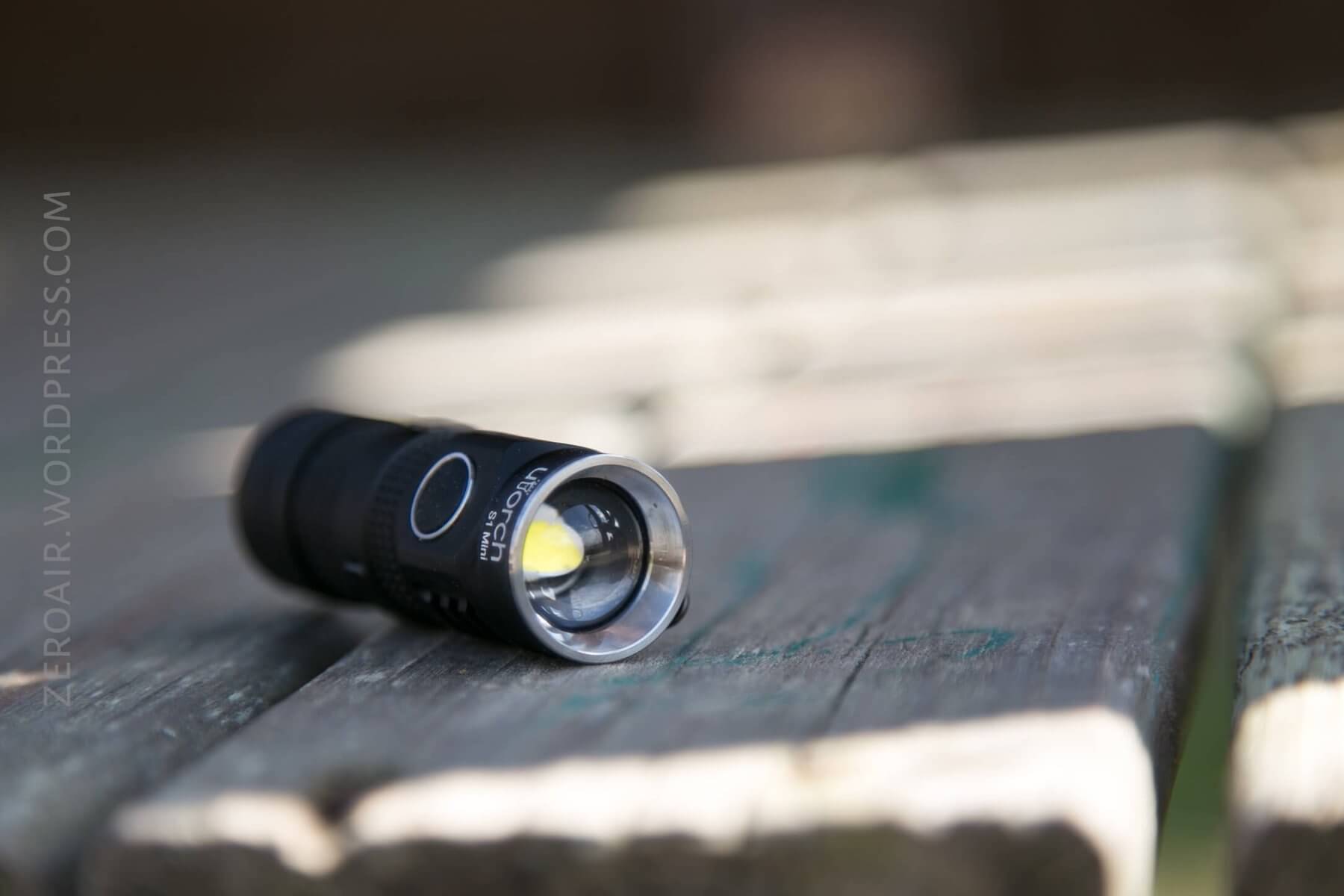
The beam is quite floody and ringy. It’s not entirely unlike the McGizmo Sundrop XR-U, but just feels a little less ‘clean’ (for lack of a better way to say it). Even the Klarus Mi1C seems to have a better beam profile.
Beamshots
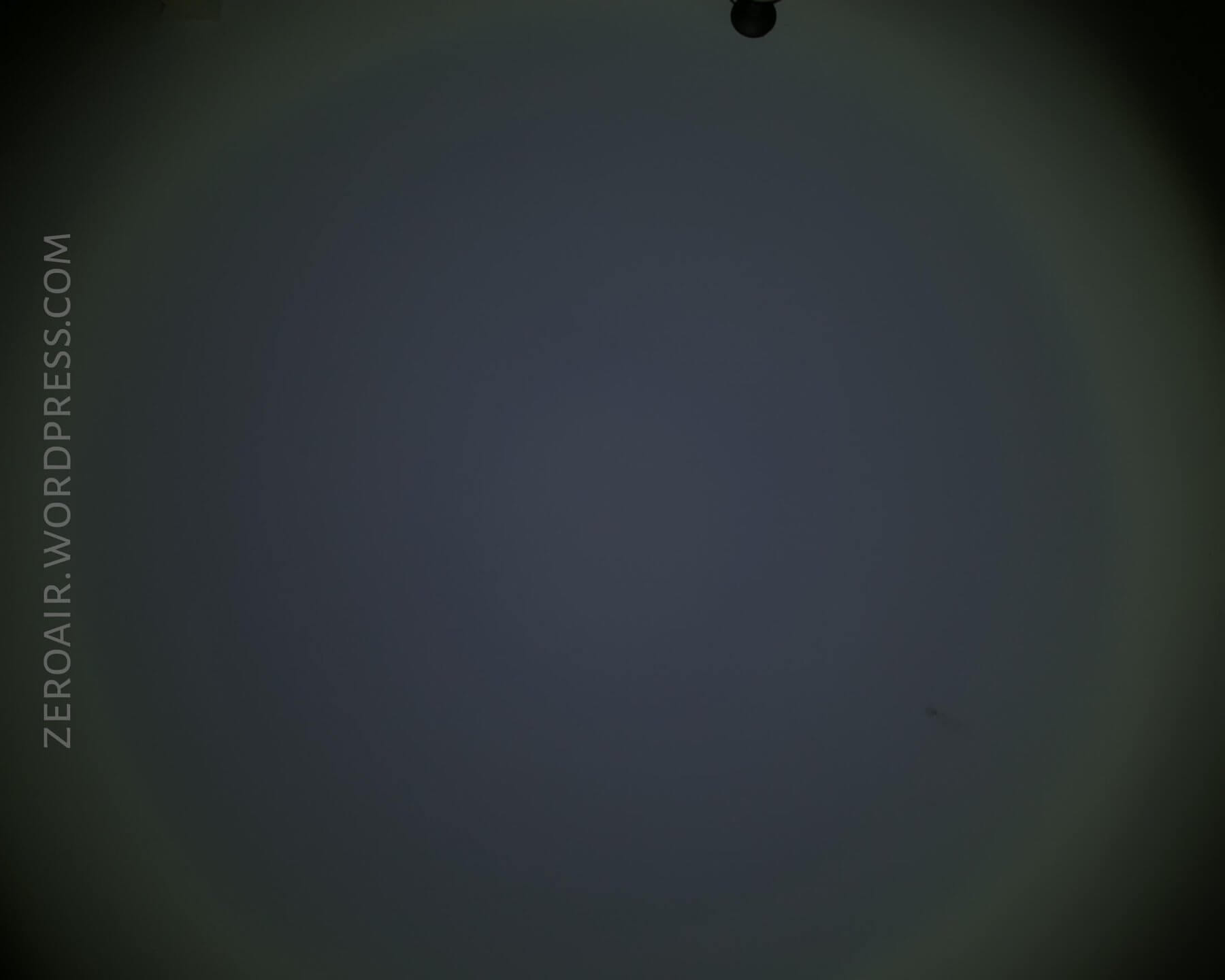
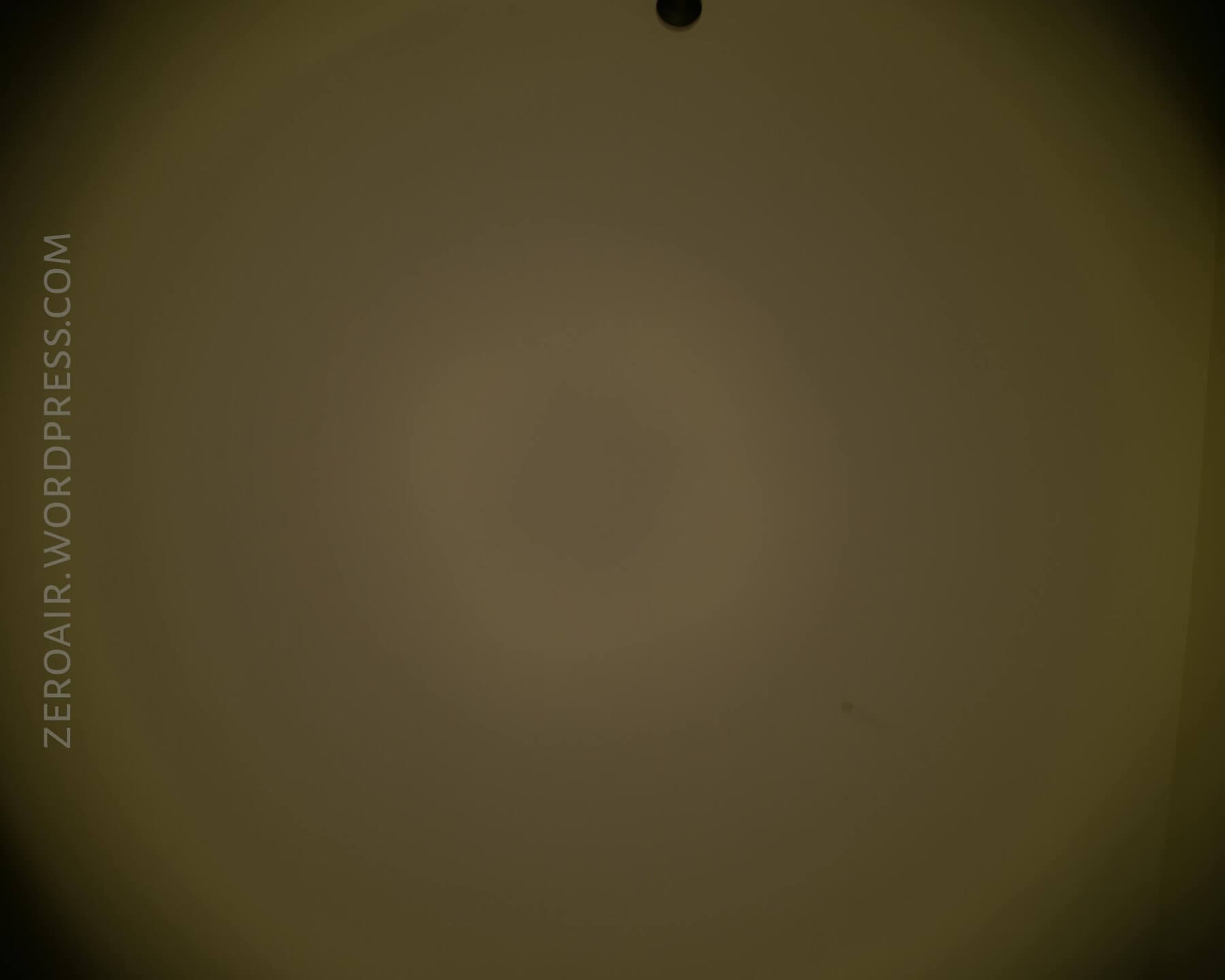
These beamshots always have the following settings: f8, ISO100, 0.3s shutter, and manual 5000K exposure. These photos are taken at floor level, and the beam hits the ceiling around 9 feet away.
6500K beamshots:


5000K beamshots:


Random Comparisons and Competitive Options
Of course, the already-mentioned Klarus Mi1C compares nicely with these Utorch lights. I would give it an edge on a number of things: size, UI, beam profile, and build quality. But if you’re just looking to try an aspheric, the S1 Mini is a good one to try.
Conclusion
What I like
- Build quality is good (square-cut threads)
- Low cost of entry to trying an aspheric
- Good switch
What I don’t like
- Threads not lubed
- Beam profile is unappealing (even if you like aspherics)
- The naming convention is unacceptable. “S1 Mini” is taken!
- User interface ramping between modes is annoying
Parting Shot
Look into my eyes….
Notes
- This light was provided by GearBest for review. I was not paid to write this review.
- This content originally appeared at zeroair.org. Please visit there for the best experience!
- Use my amazon.com referral link if you’re willing to help support making more reviews like this one!
- Please support me on Patreon! I deeply appreciate your support!
Discover more from ZeroAir Reviews
Subscribe to get the latest posts sent to your email.