
Klarus Mi1C Titanium Flashlight Review
The Klarus Mi1C Titanium flashlight is a neat little 16340 flashlight, with a side e-switch. The shallow reflector makes for great spill!
Official Specs and Features
Here’s a link to the Klarus Mi1C Titanium flashlight product page.
Versions
As I’ve mentioned above, there’s an aspheric version available in aluminum. But the version I’m reviewing here is available in titanium, raw copper, and “dark copper.” There are no emitter options
Price
At FastTech, the copper version is available for $45. The titanium version is around $55.
Short Review
I enjoy this light. I liked the aspheric, for as much the overall quality as the asphericness of it, and this one’s good in the same way.
Long Review
The Big Table
| Klarus Mi1C Ti | |
|---|---|
| Emitter: | Cree XP-L HI (V3) |
| Price in USD at publication time: | $55.00 |
| Cell: | 16340 |
| Turbo Runtime | High Runtime |
| LVP? | Low |
| Switch Type: | E-Switch |
| Quiescent Current (A): | ? |
| On-Board Charging? | Yes |
| Chargetime | |
| Power off Charge Port with no Cell? | – |
| Claimed Lumens (lm) | 600 |
| Measured Lumens (at 30s) | 625 (104.2% of claim)^ |
| Claimed Throw (m) | 107 |
| Candela (Calculated) in cd (at 30s) | 107lux @ 4.761m = 2425cd |
| Throw (Calculated) (m) | 98.5 (92.1% of claim)^ |
| All my Klarus reviews! | |
^ Measurement disclaimer: Testing flashlights is my hobby. I use hobbyist-level equipment for testing, including some I made myself. Try not to get buried in the details of manufacturer specifications versus measurements recorded here; A certain amount of difference (say, 10 or 15%) is perfectly reasonable.
What’s Included
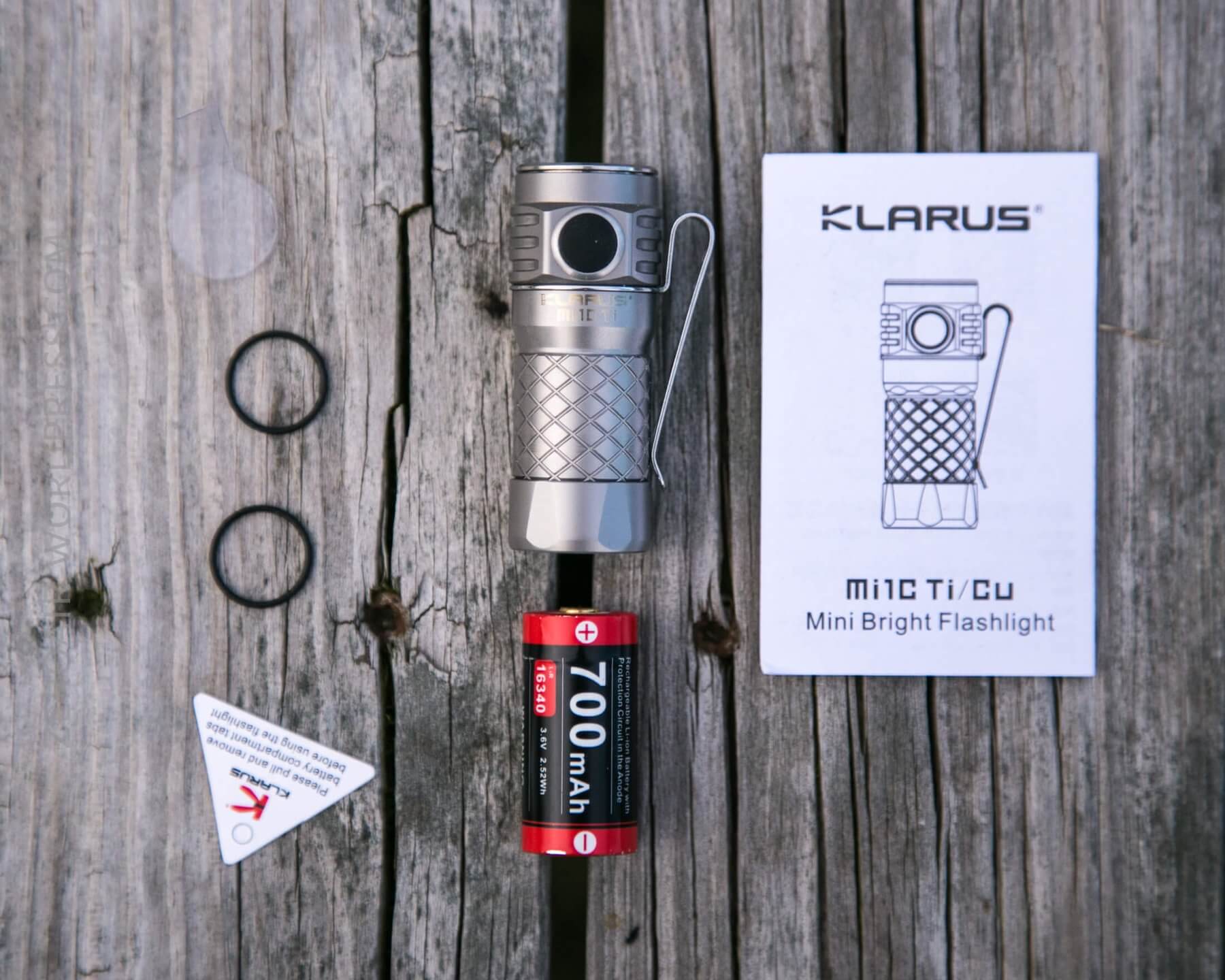
- Klarus Mi1c Titanium flashlight
- Klarus 700mAh 16340
- Spare o-rings (2)
- Manual
Package and Manual
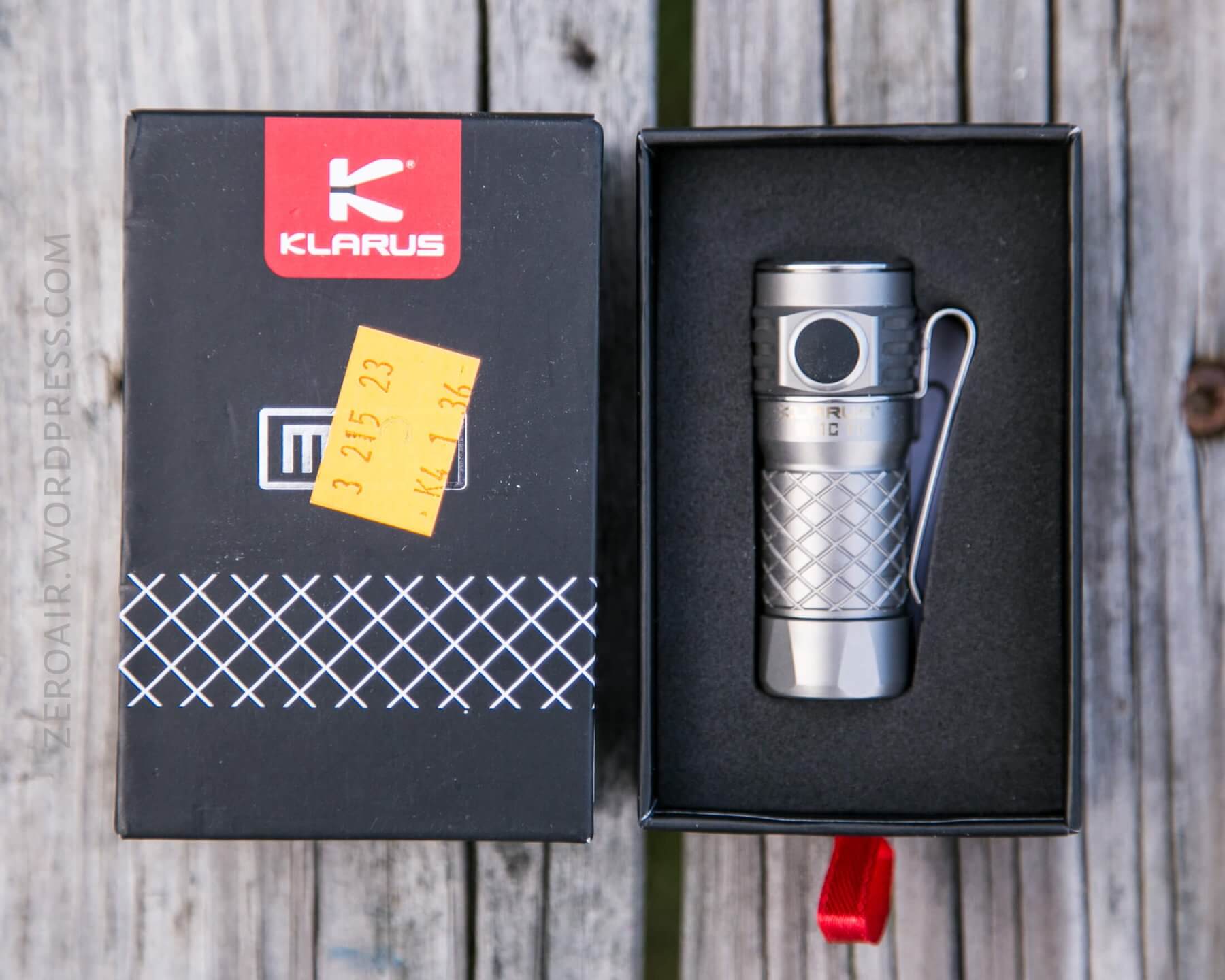
This is a nice package – a hard cardboard sleeve, and a ribbon attached to a box for pulling the box out.
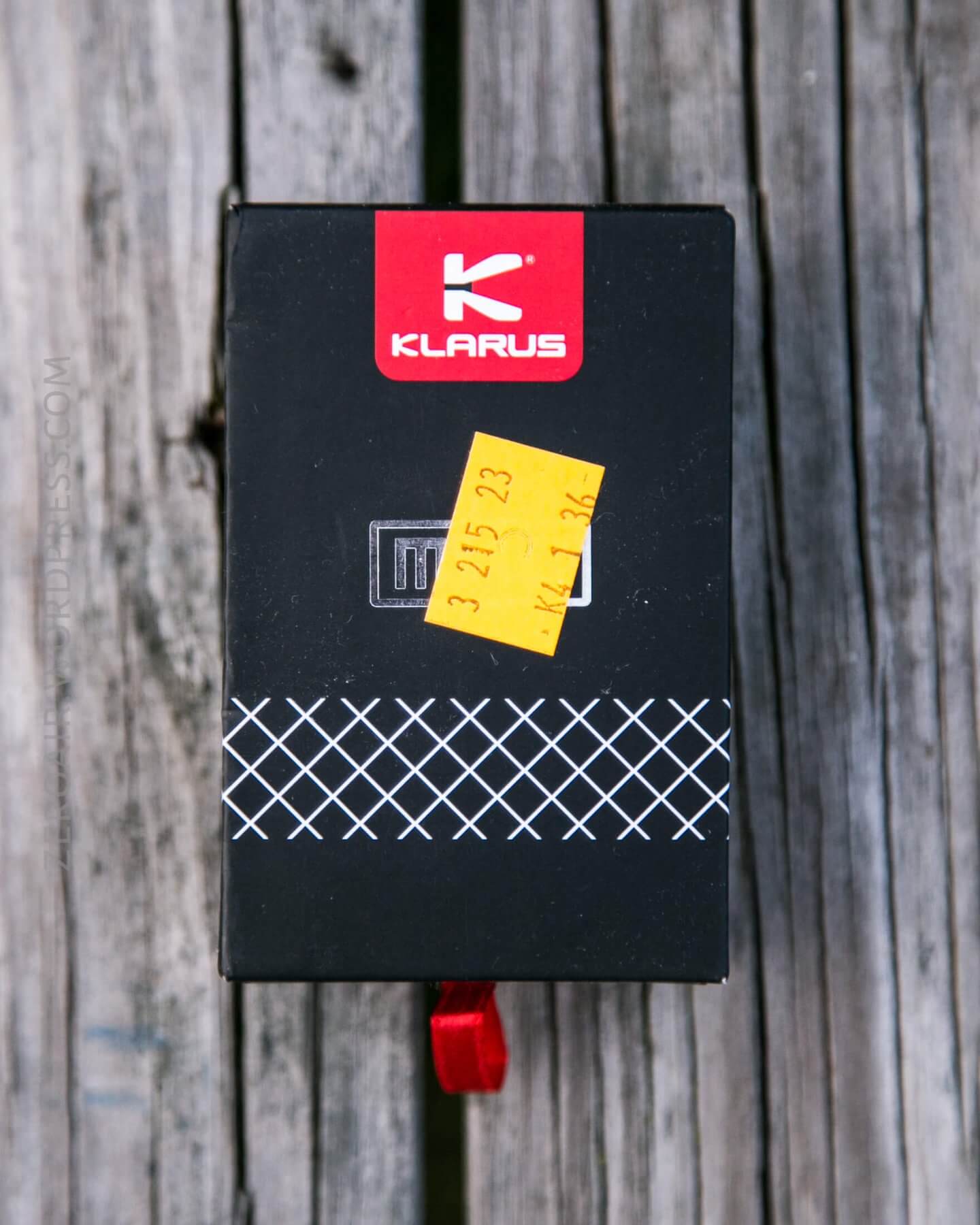
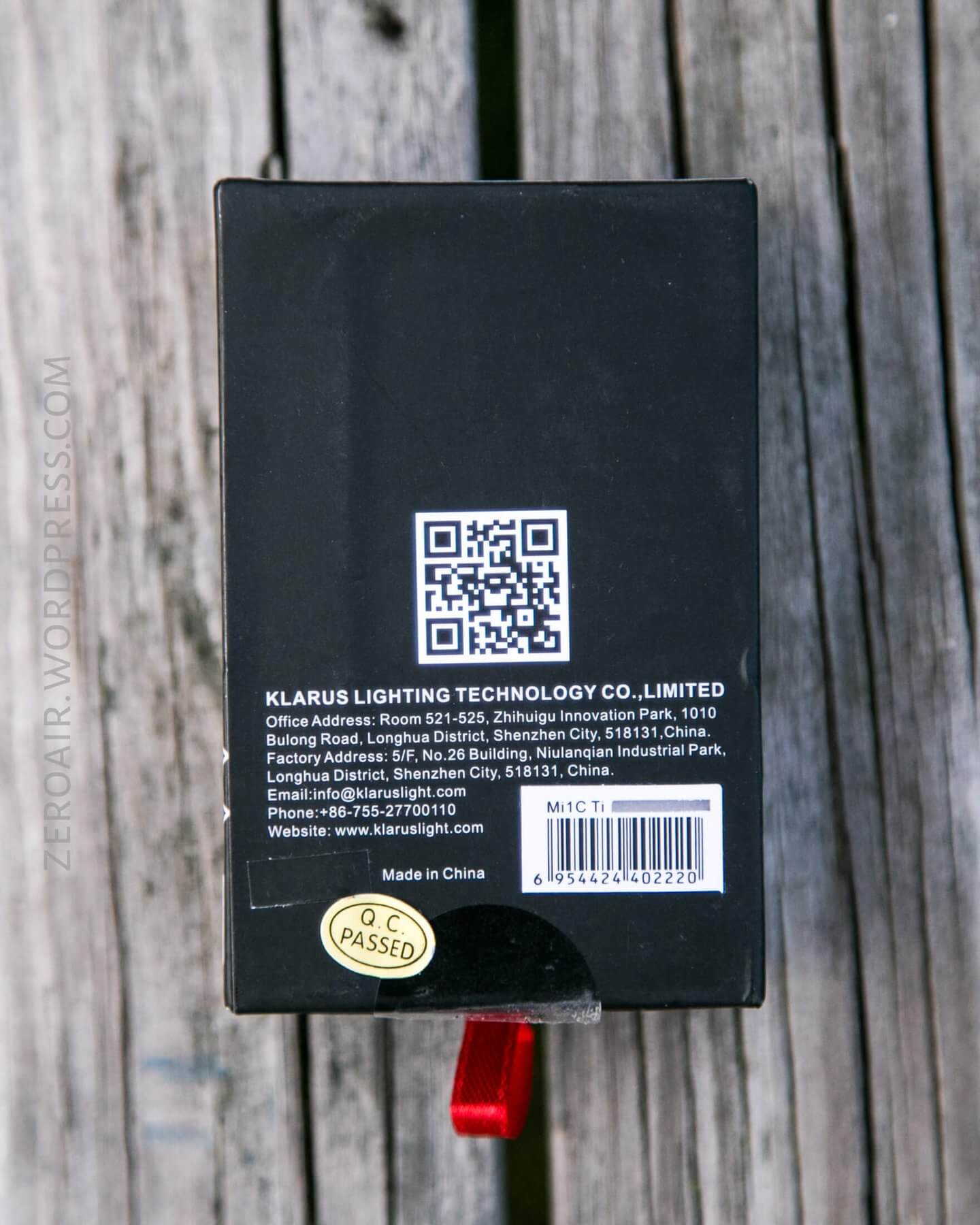
The box is largely unadorned, but FastTech adds its inventory sticker to the front.
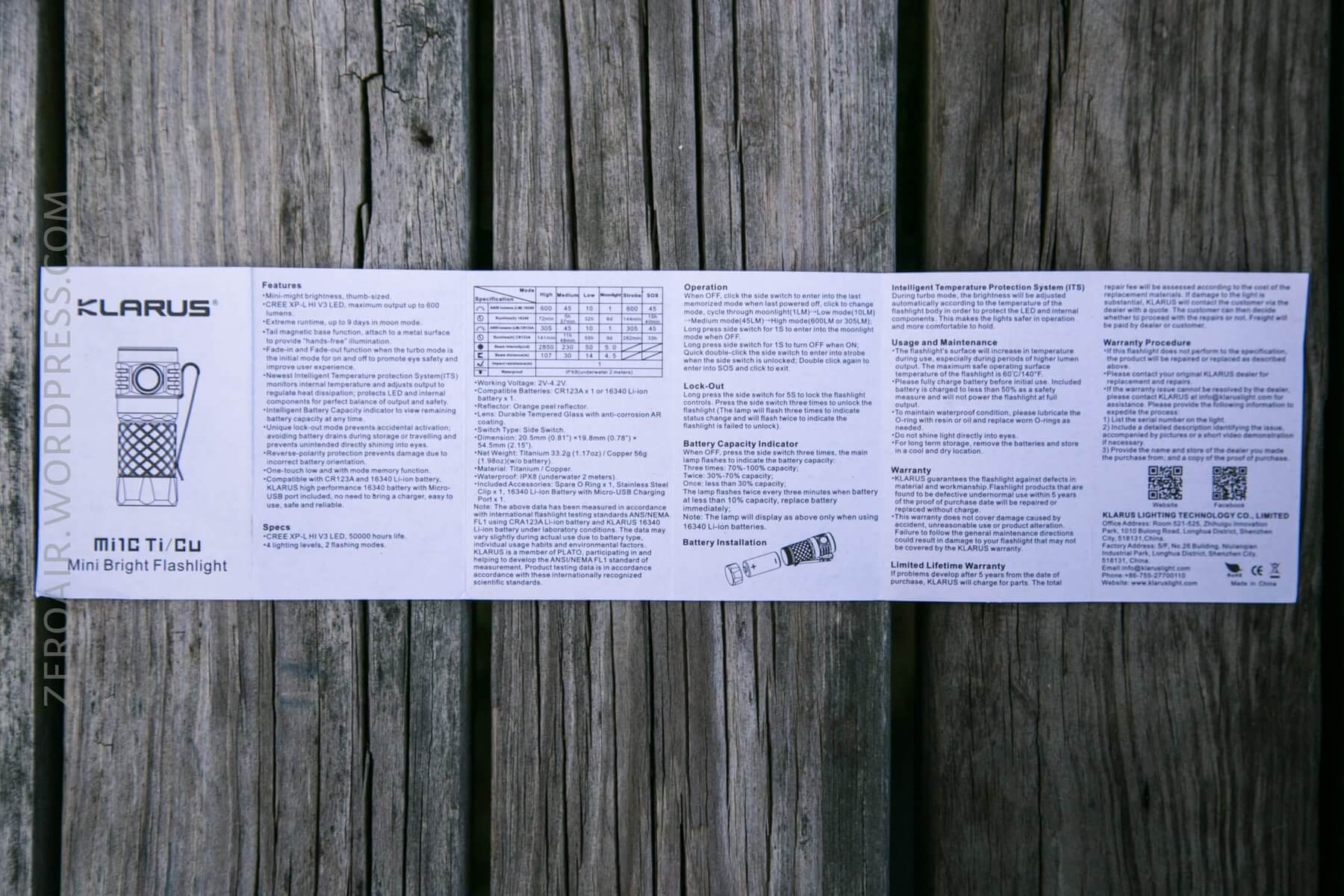
The manual is nice and complete.
Build Quality and Disassembly
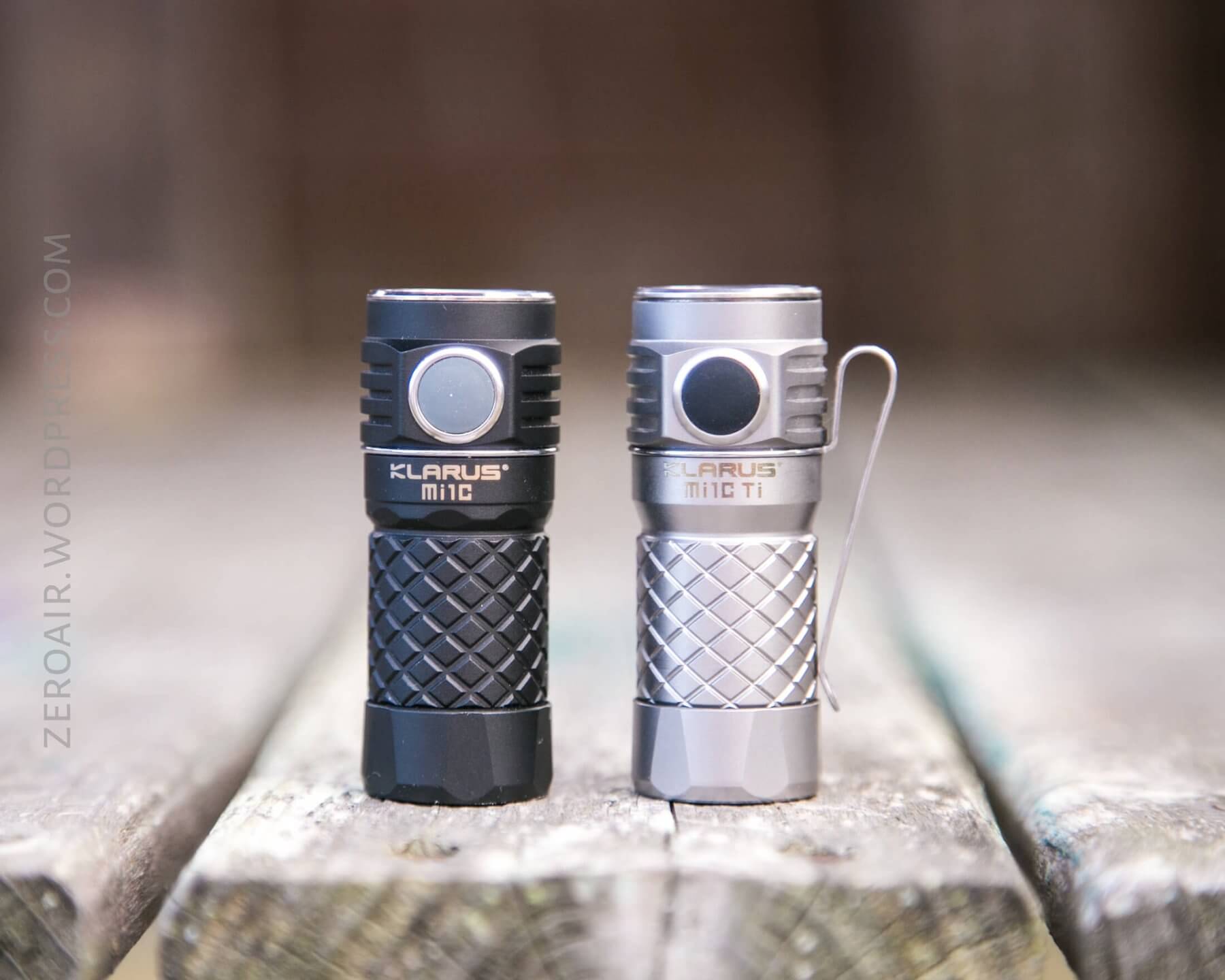
This is a very nice little titanium light. I love the pineapple style knurling, and the finish has a very nice shine.
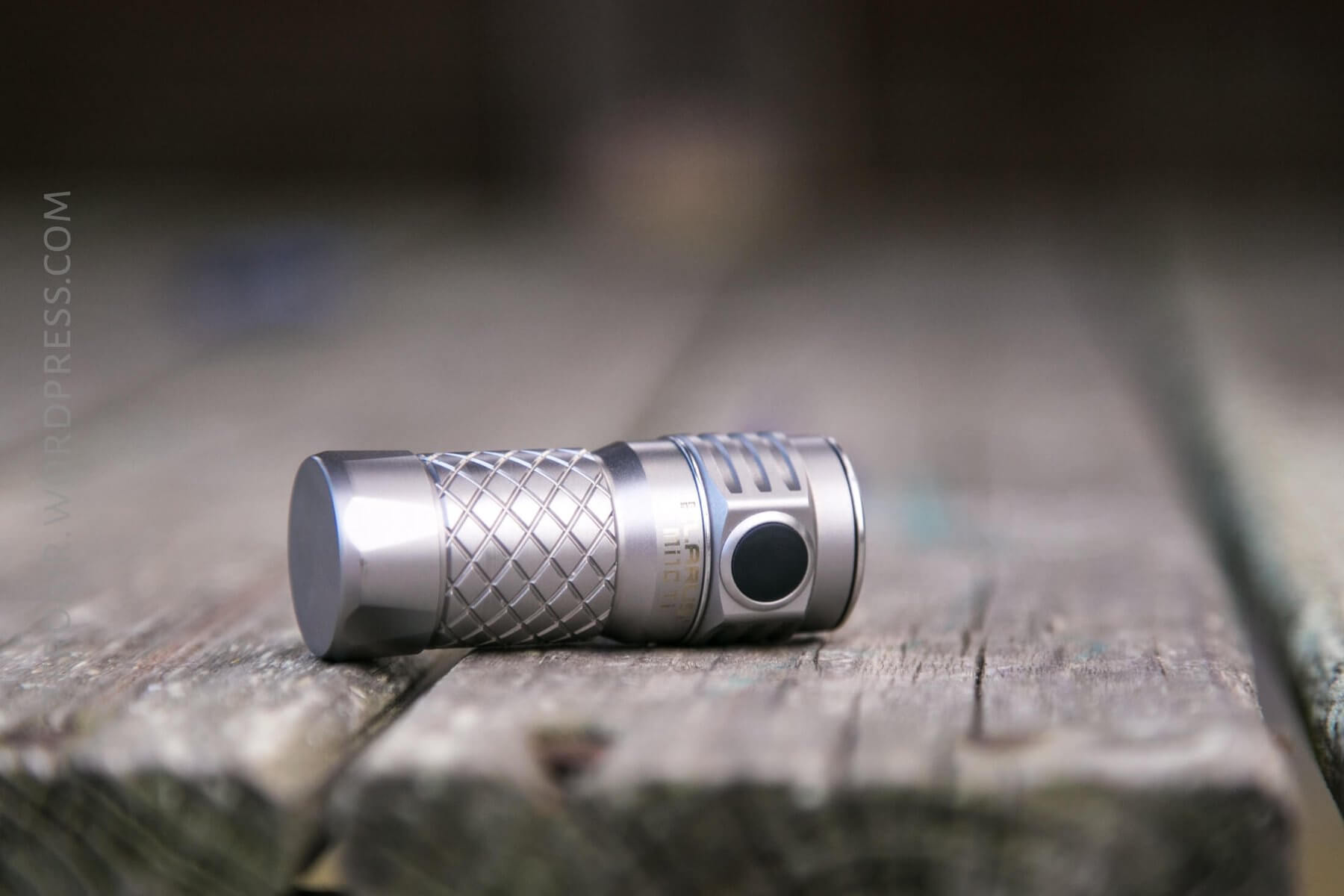
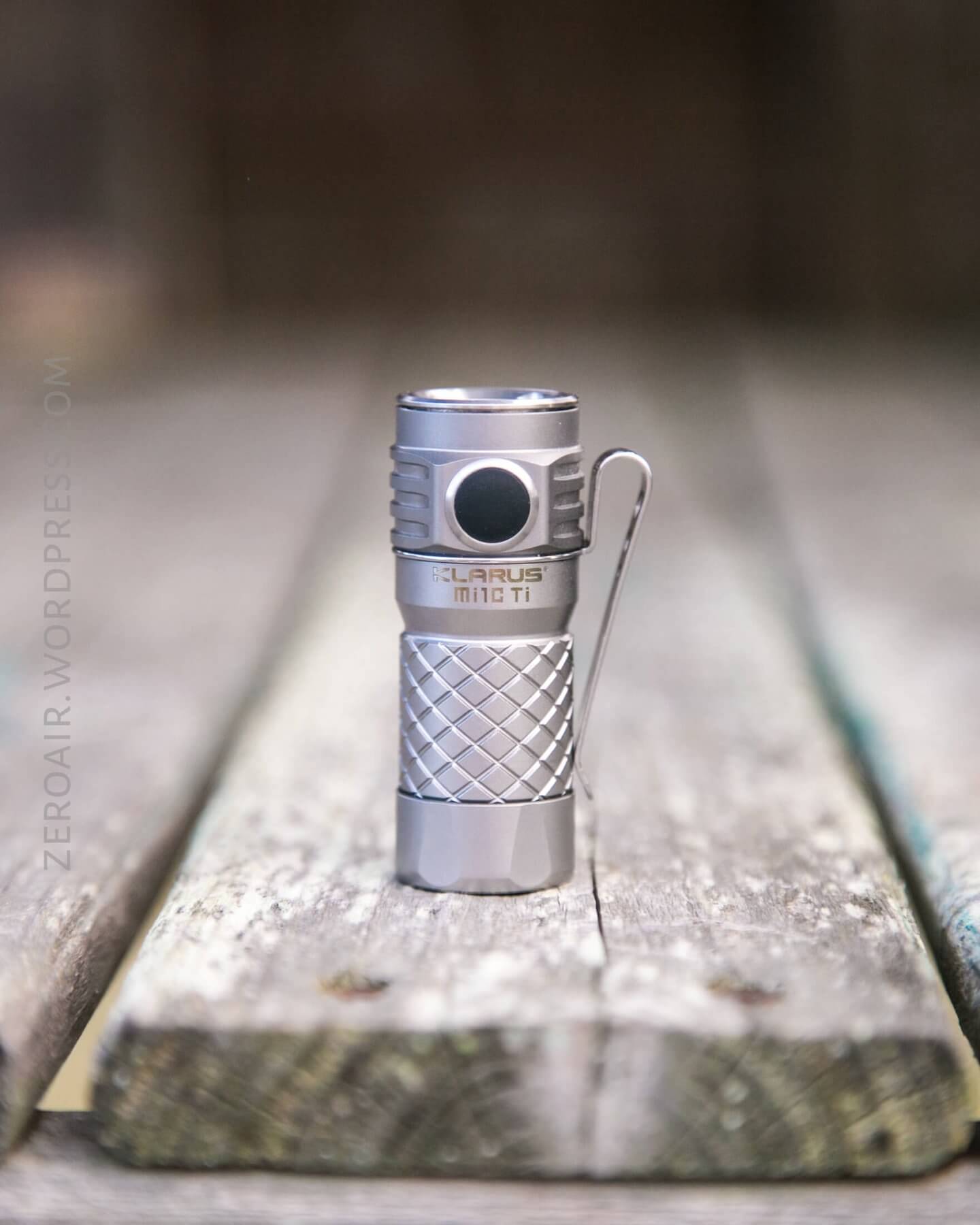
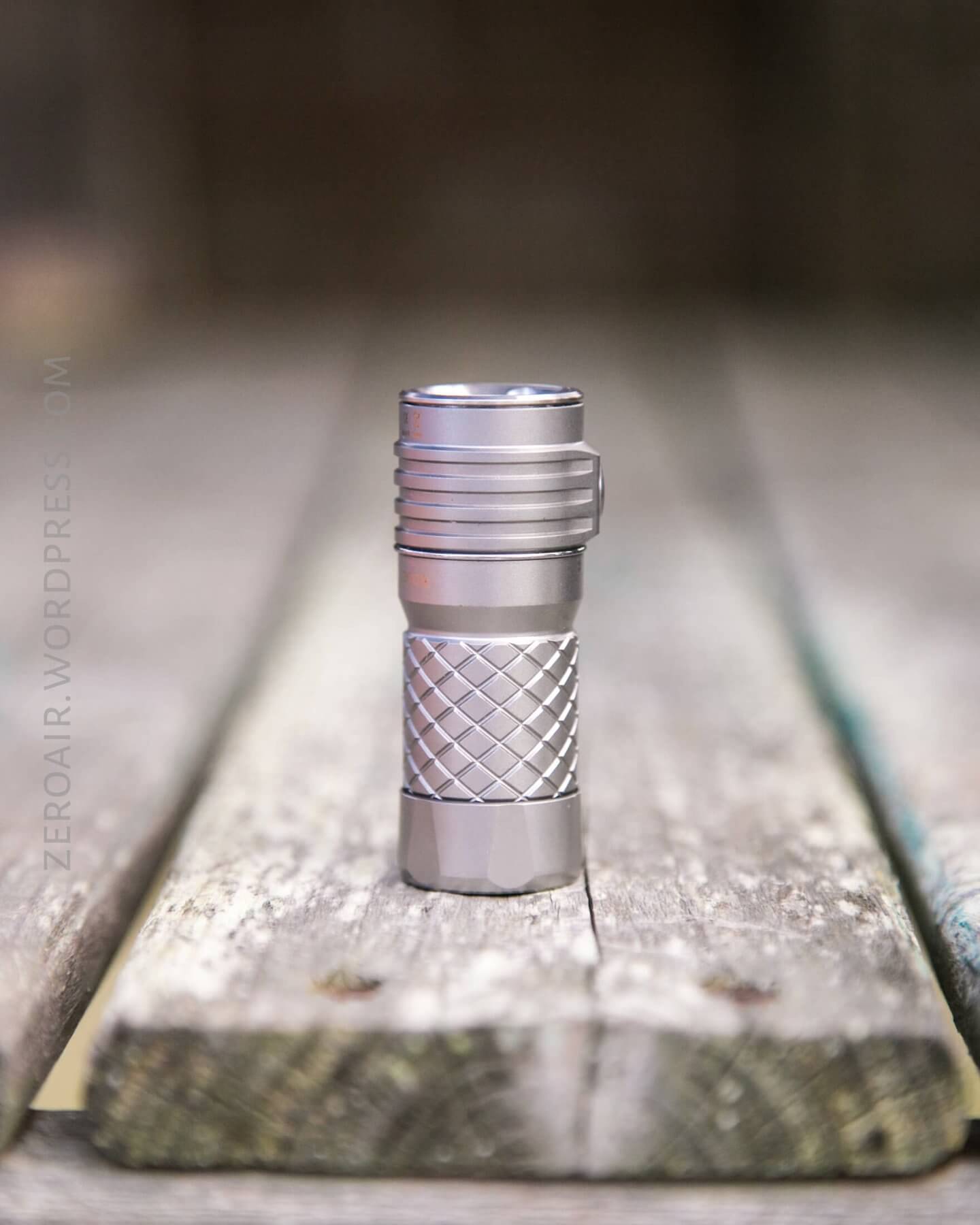
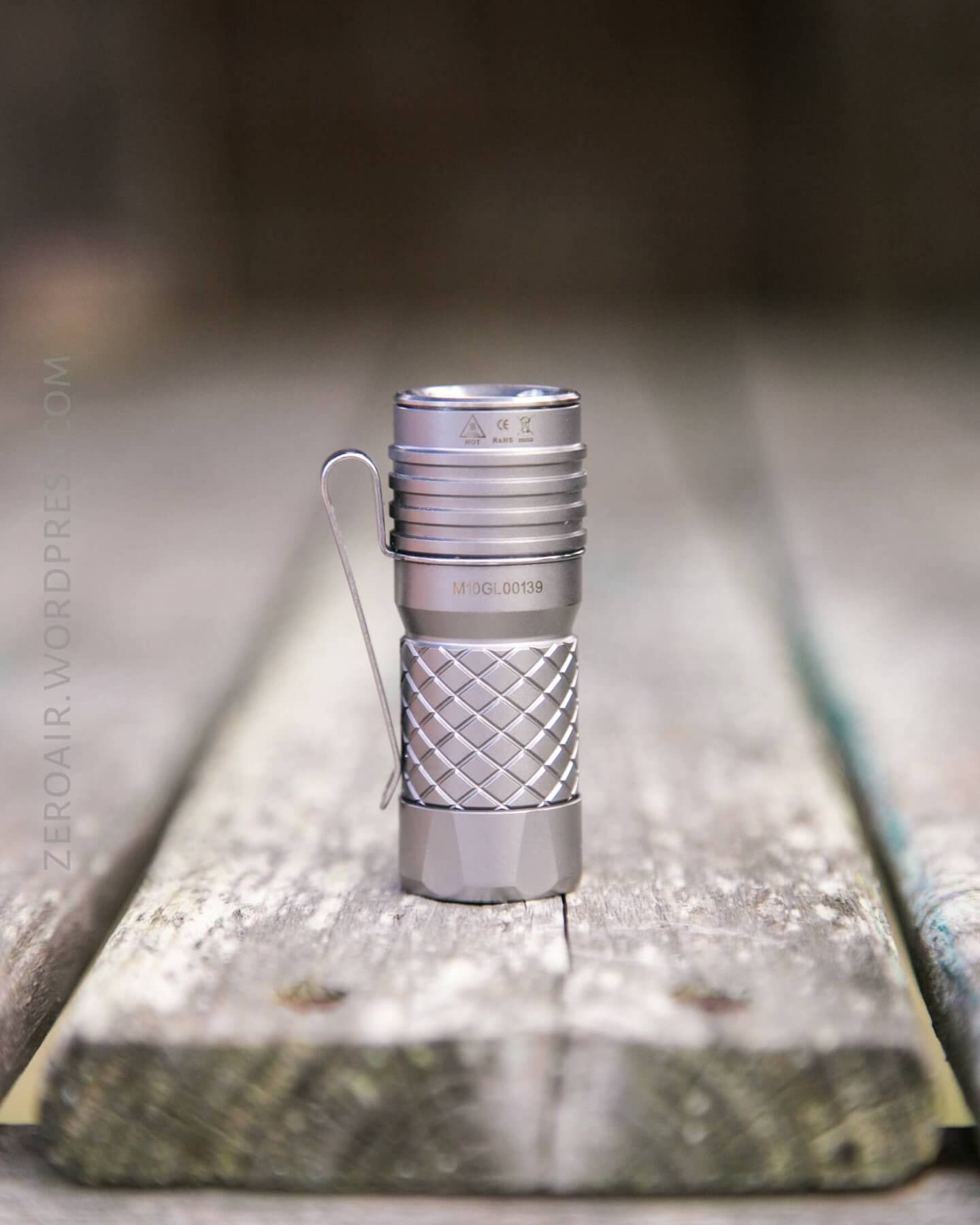
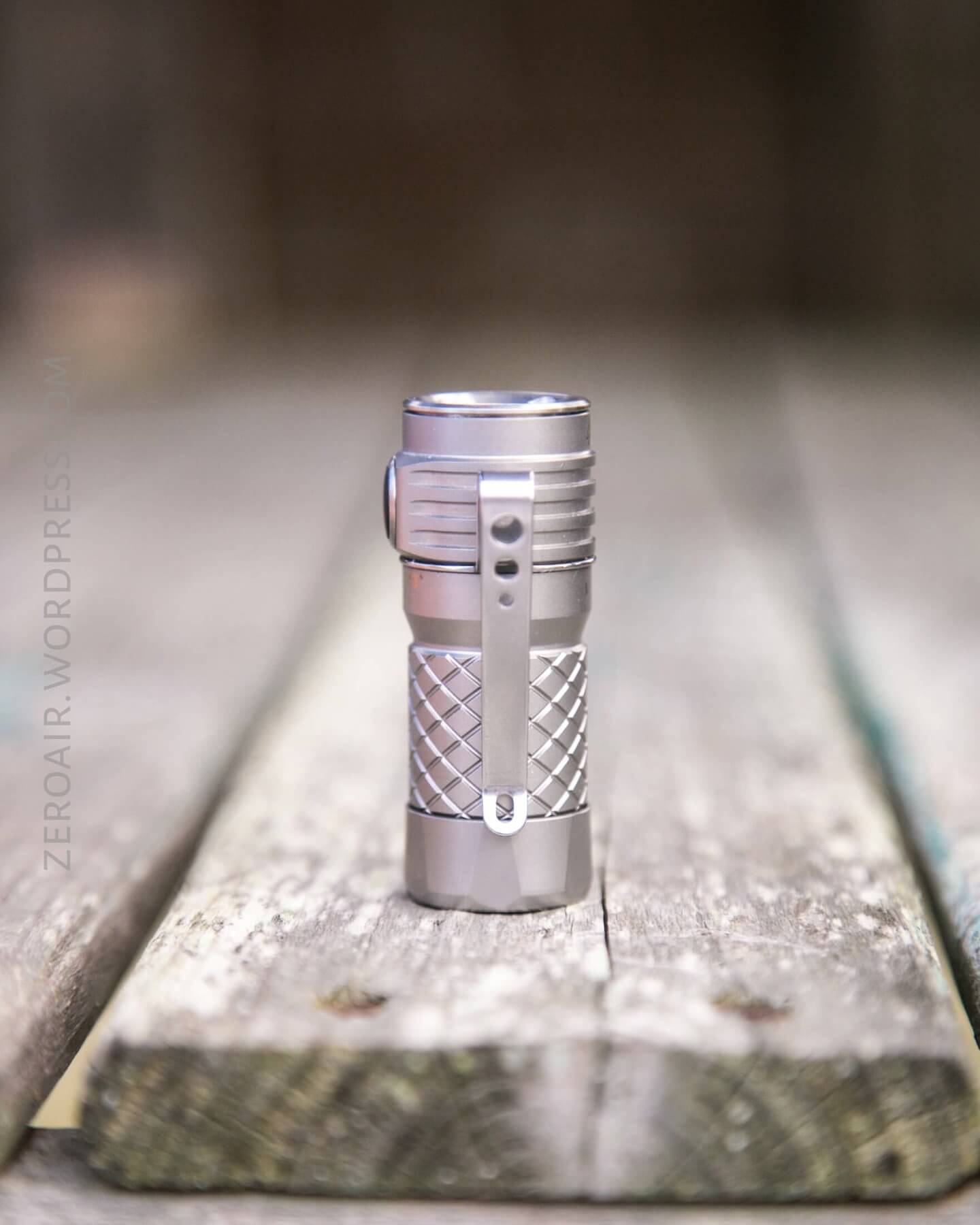
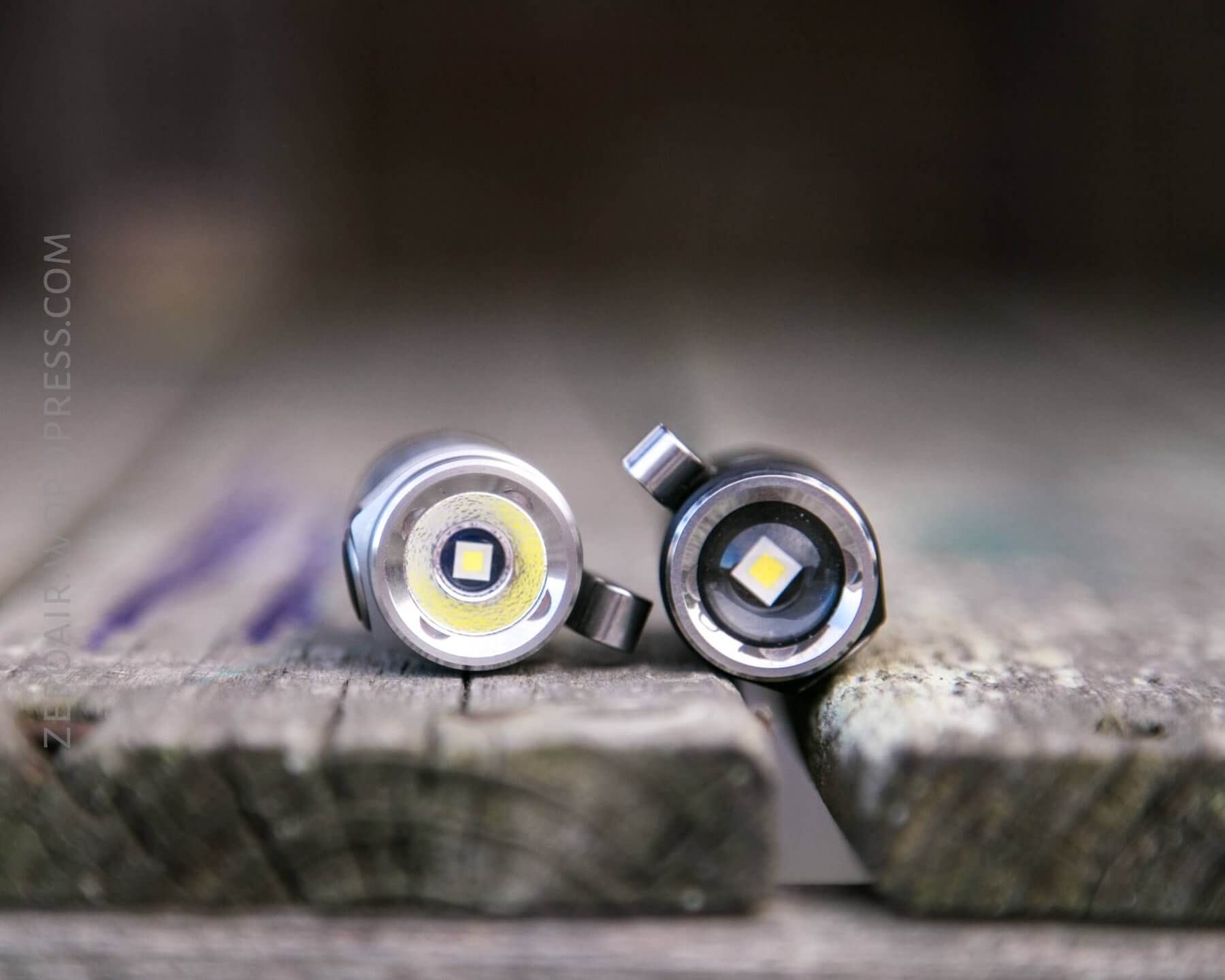
One thing notable about this light is how shallow the reflector is. Probably a product of this same body being used for an aspheric and a reflector-based light. Either way, I like how visible the emitter is. Nicely displayed, it is.
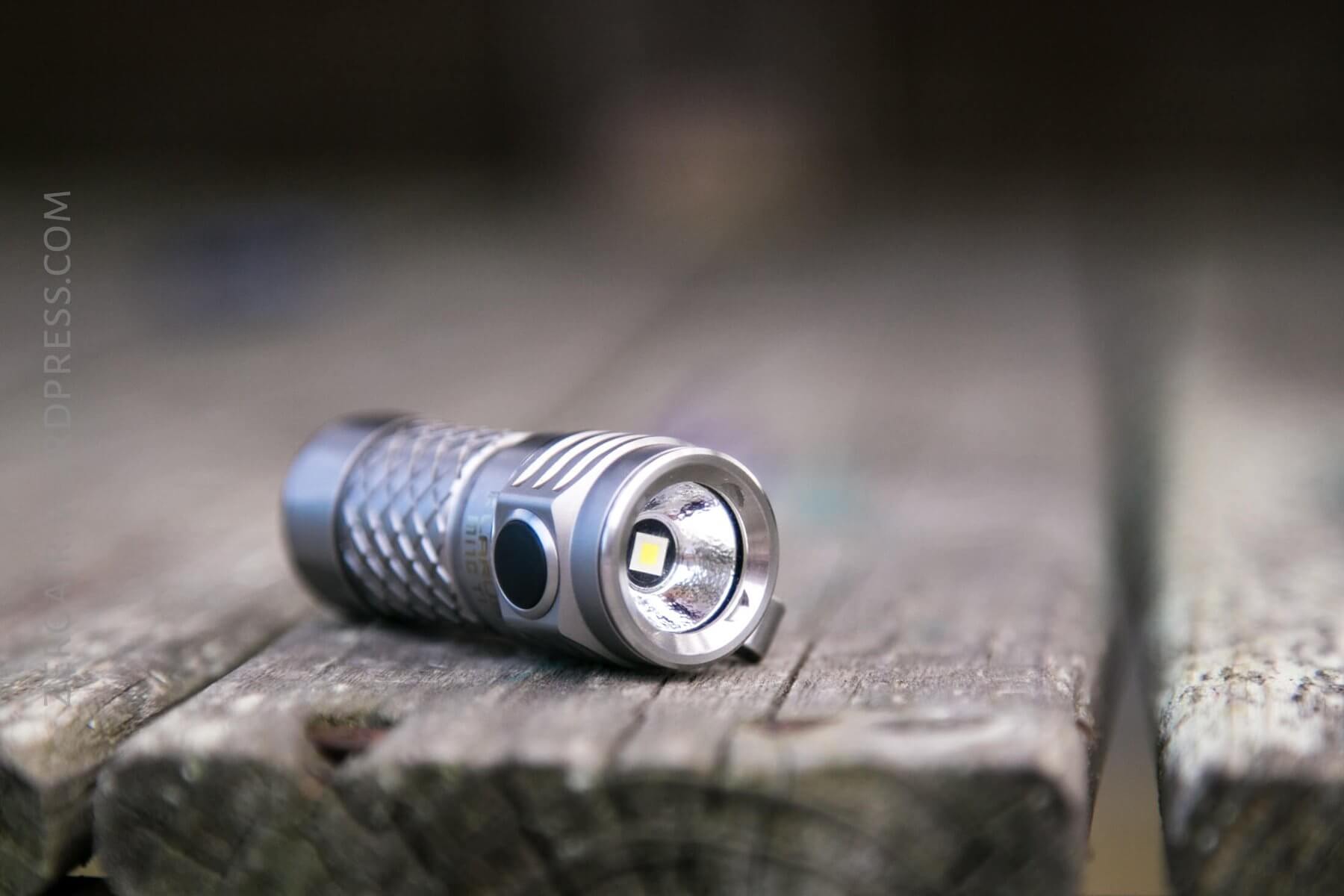
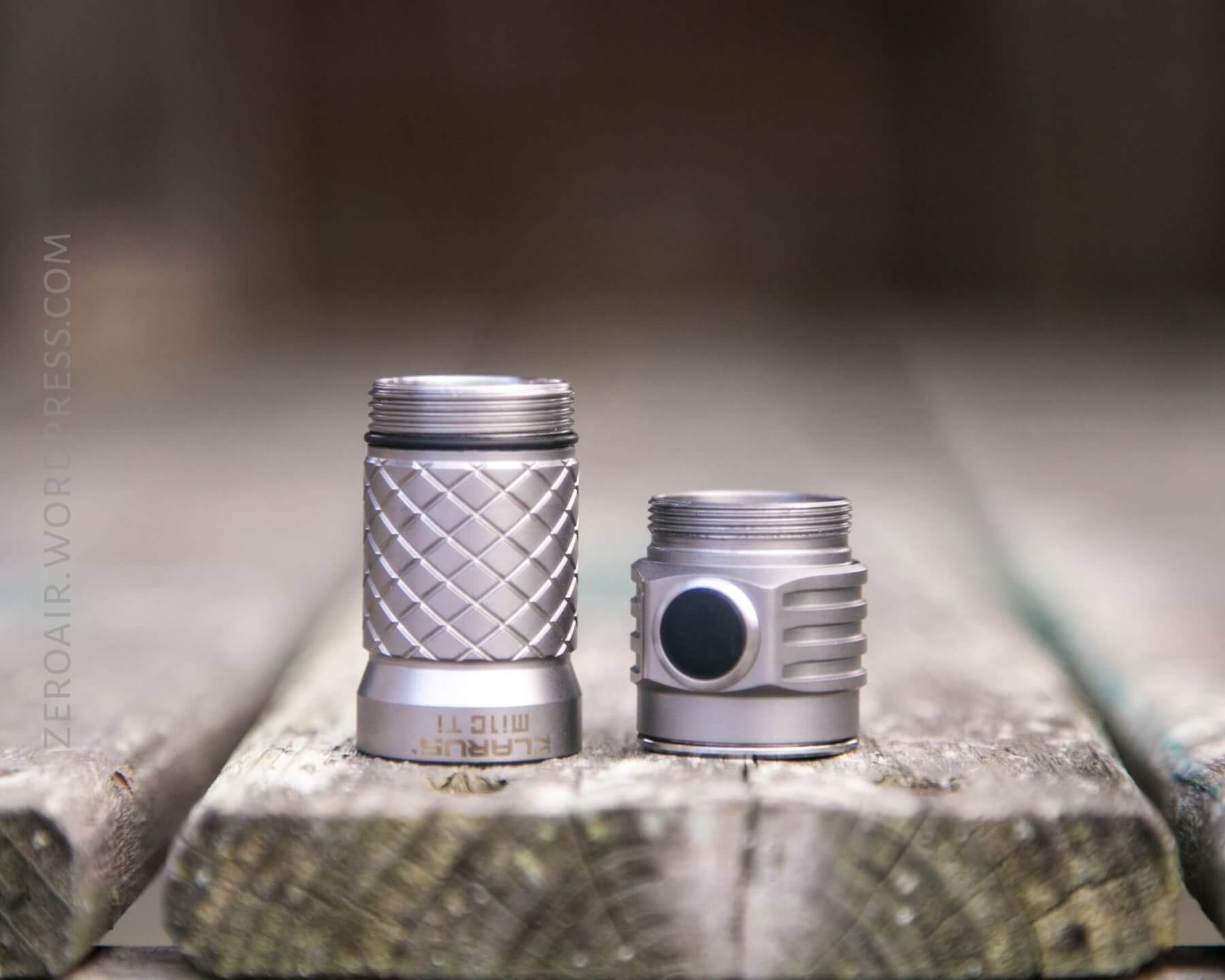
Here’s a close-up of the pineapple knurling. There are also some fins around the head, for better heat dissipation.
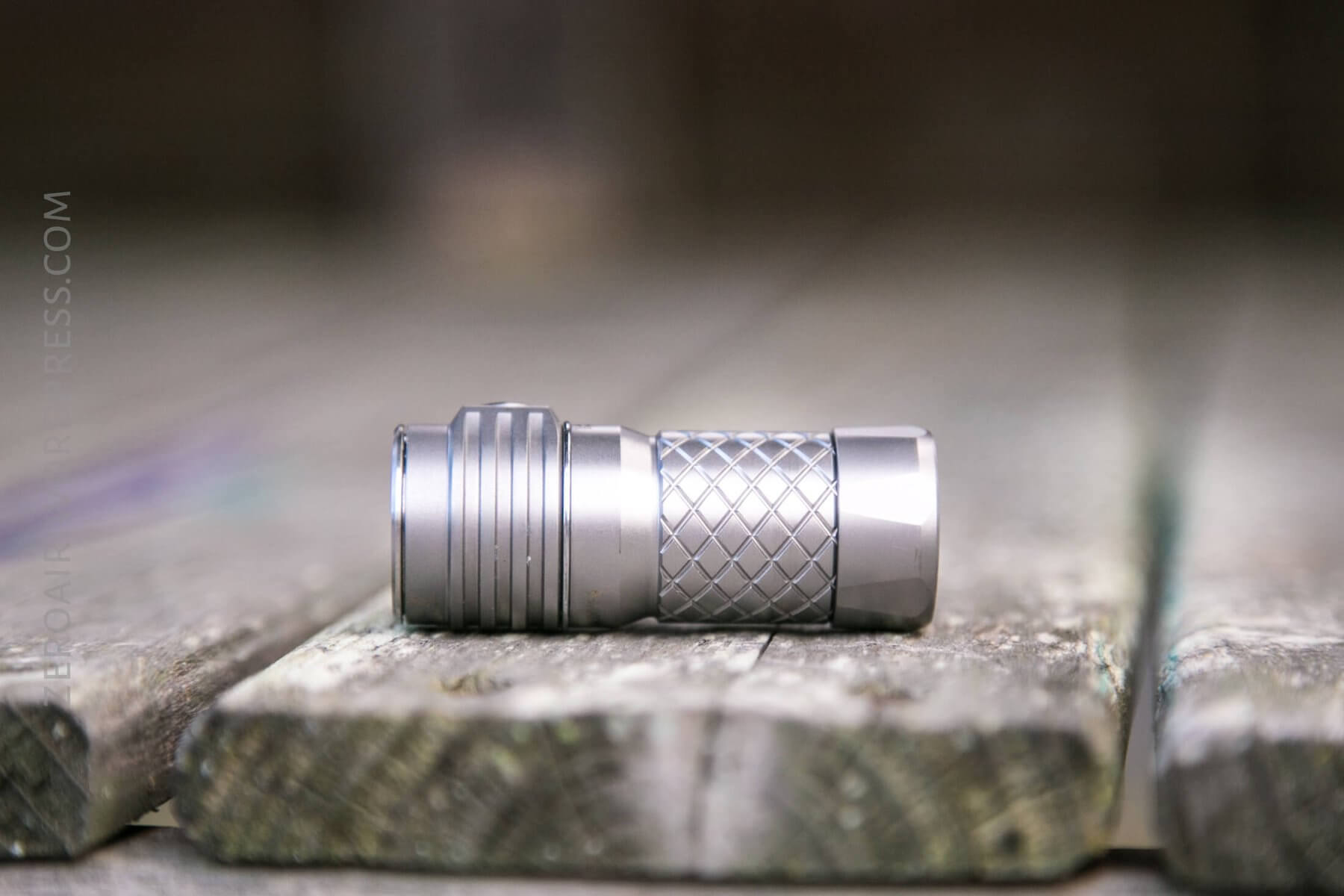
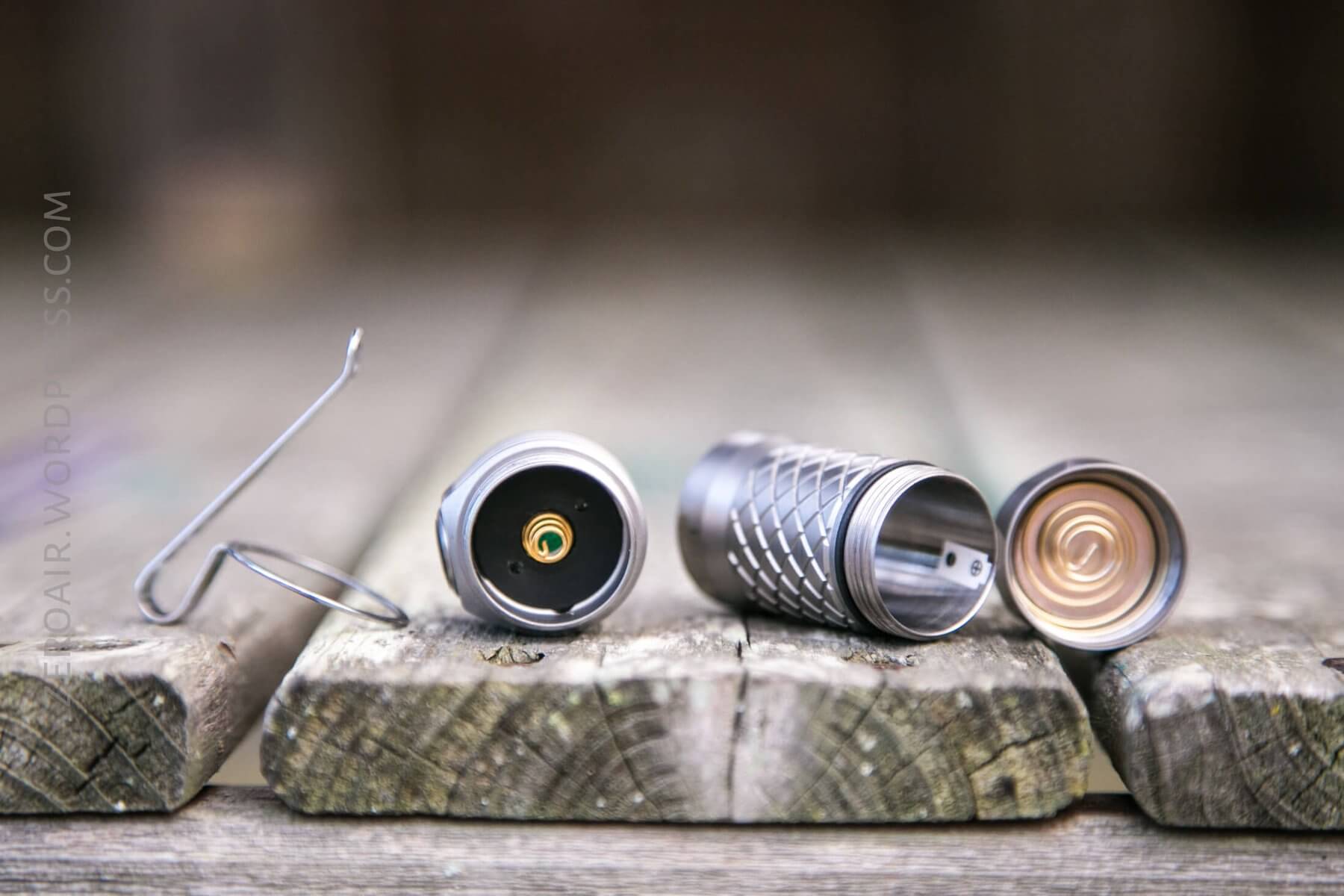
Here’s a simple disassembly of the light.
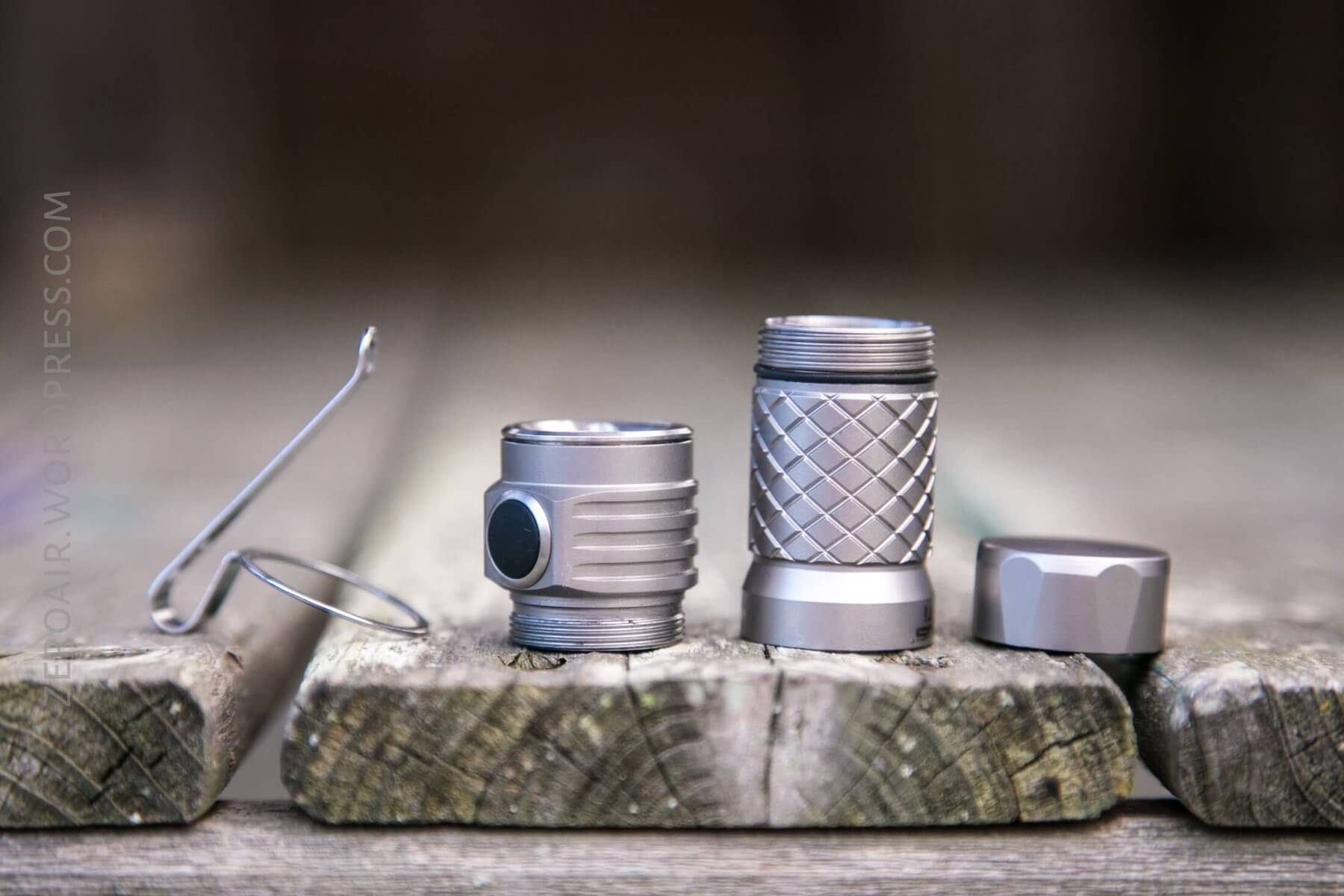
The tailcap has a big spring, while the head has a smaller spring. Neither of these springs is very stiff.
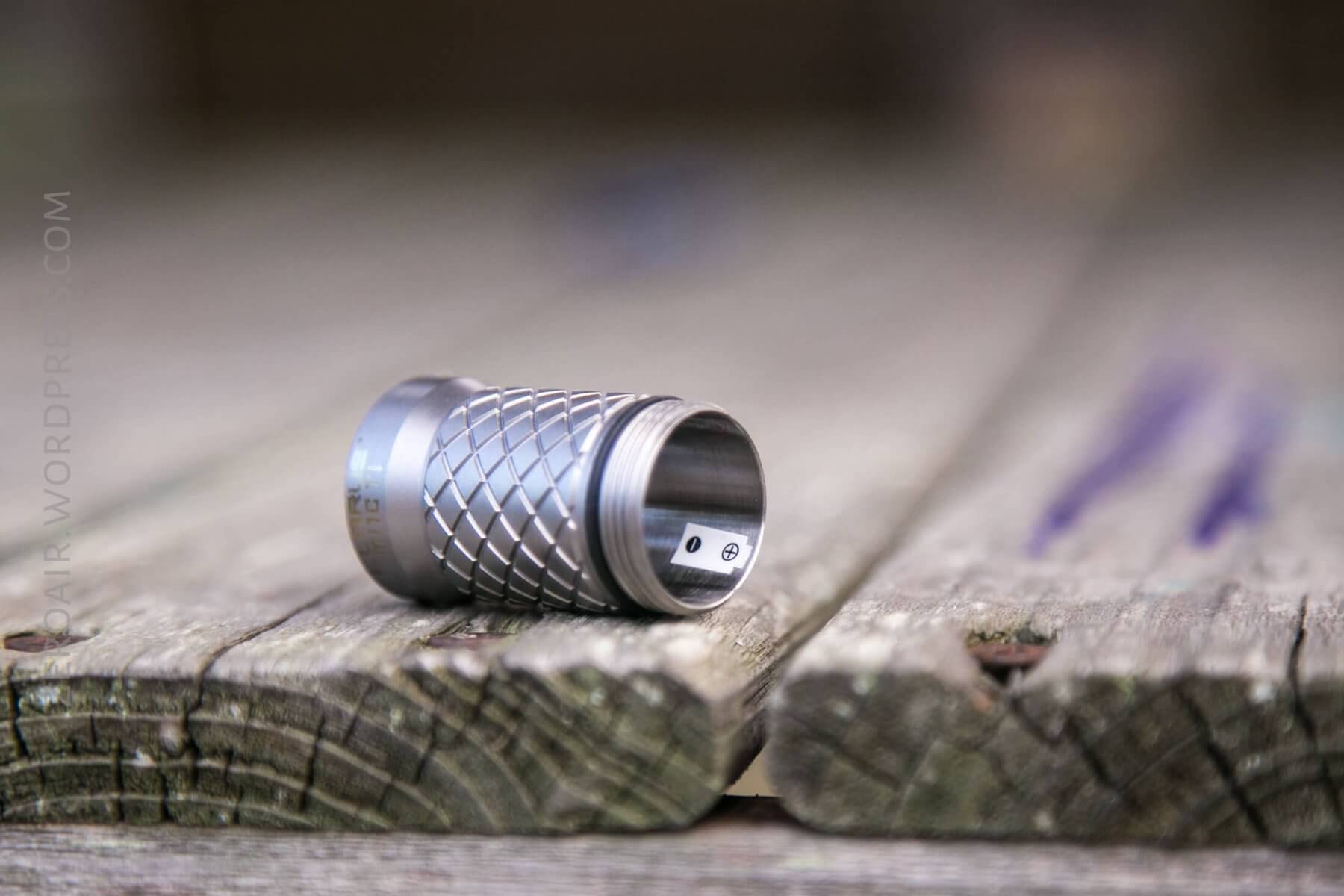
The cell tube has a silkscreen to show the orientation of the cell.
The threads are triangle cut but do seem to have a little flat top. However they’re made, they’re some of the smoothest titanium threads I’ve ever handled.
Size
Dimension: (Head) 19.8mm x (Body) 20.5mm x (Length) 54.5mm.
Net Weight: Titanium 33.2g (1.17oz) / Copper 56g (1.98oz)(w/o battery).
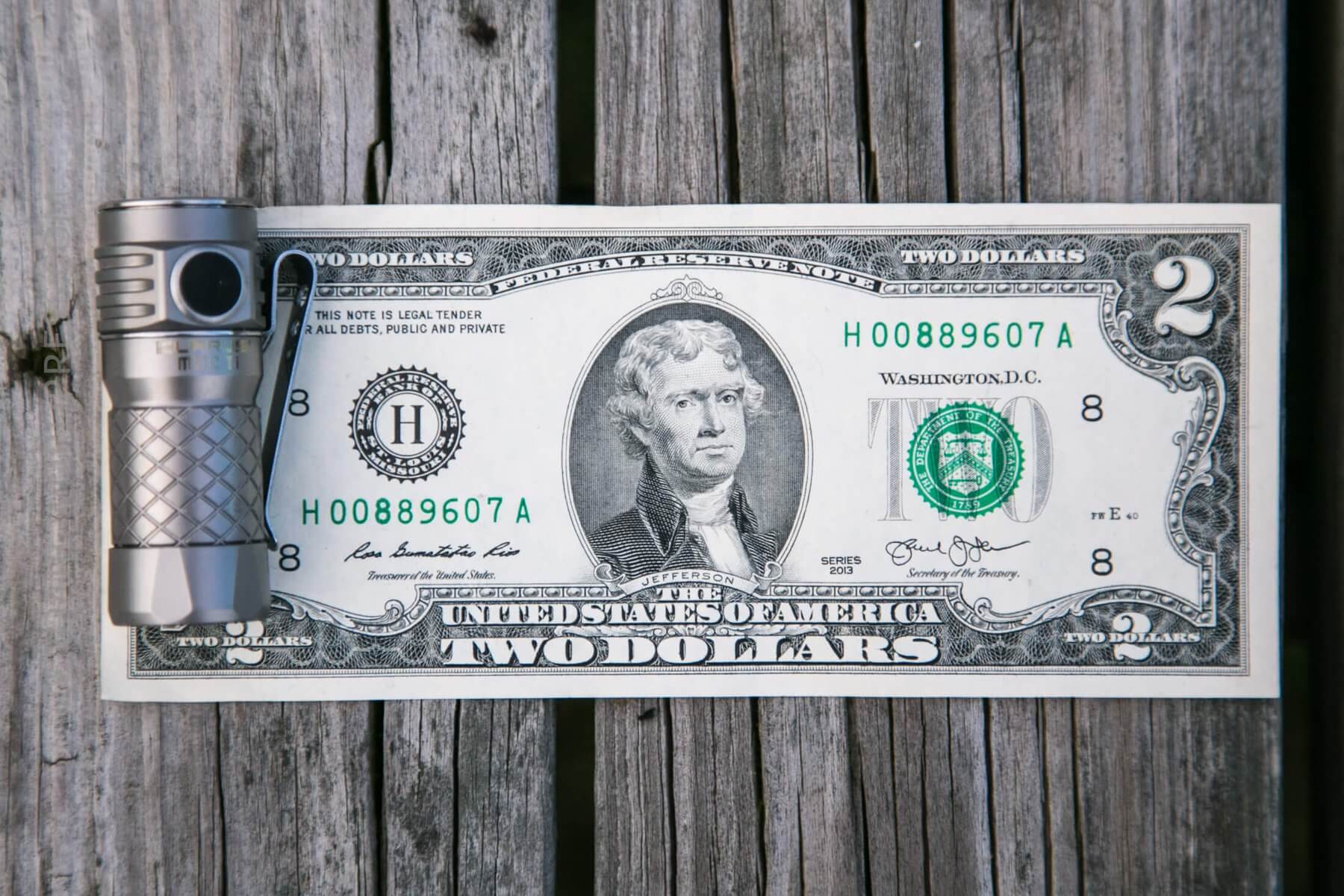
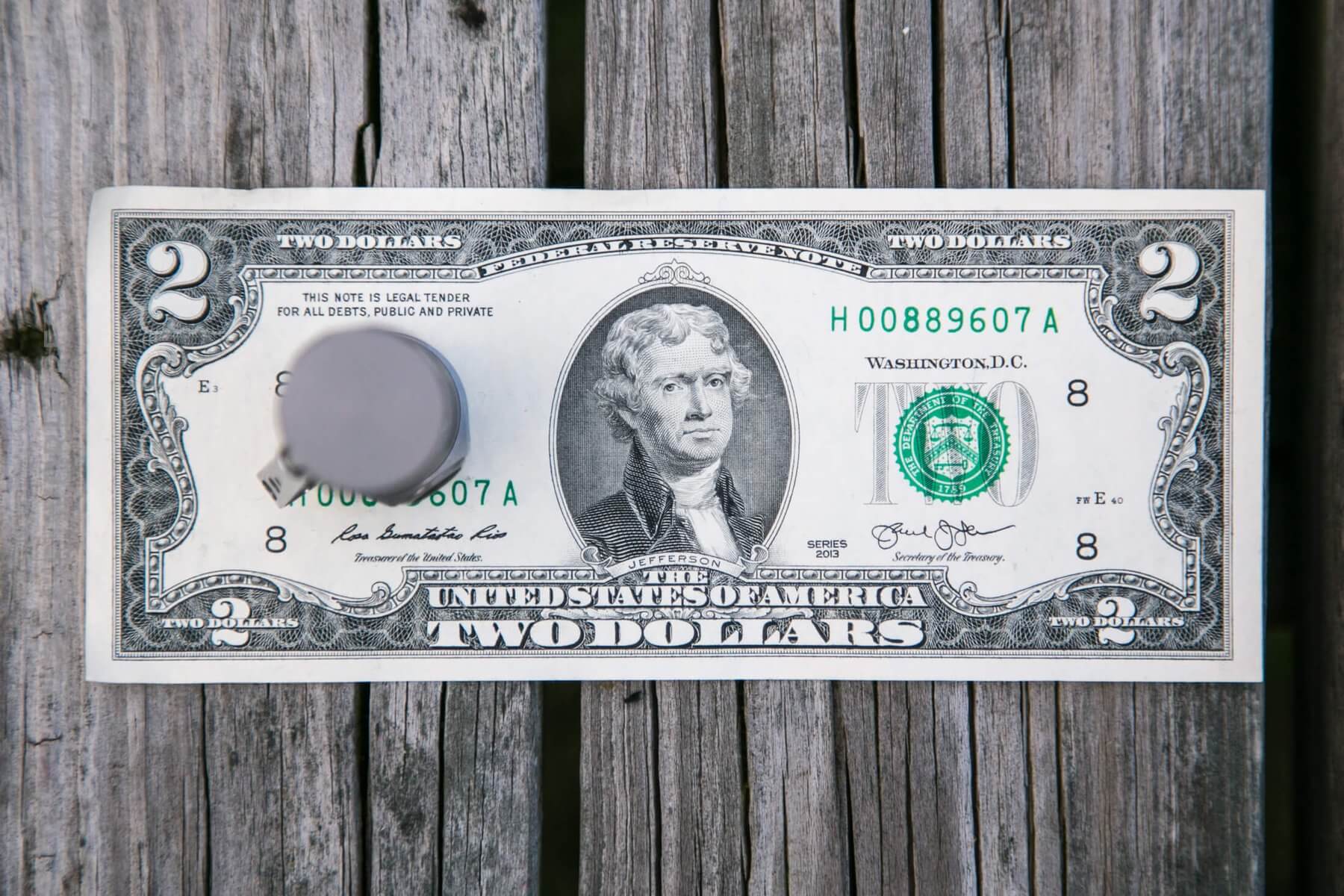
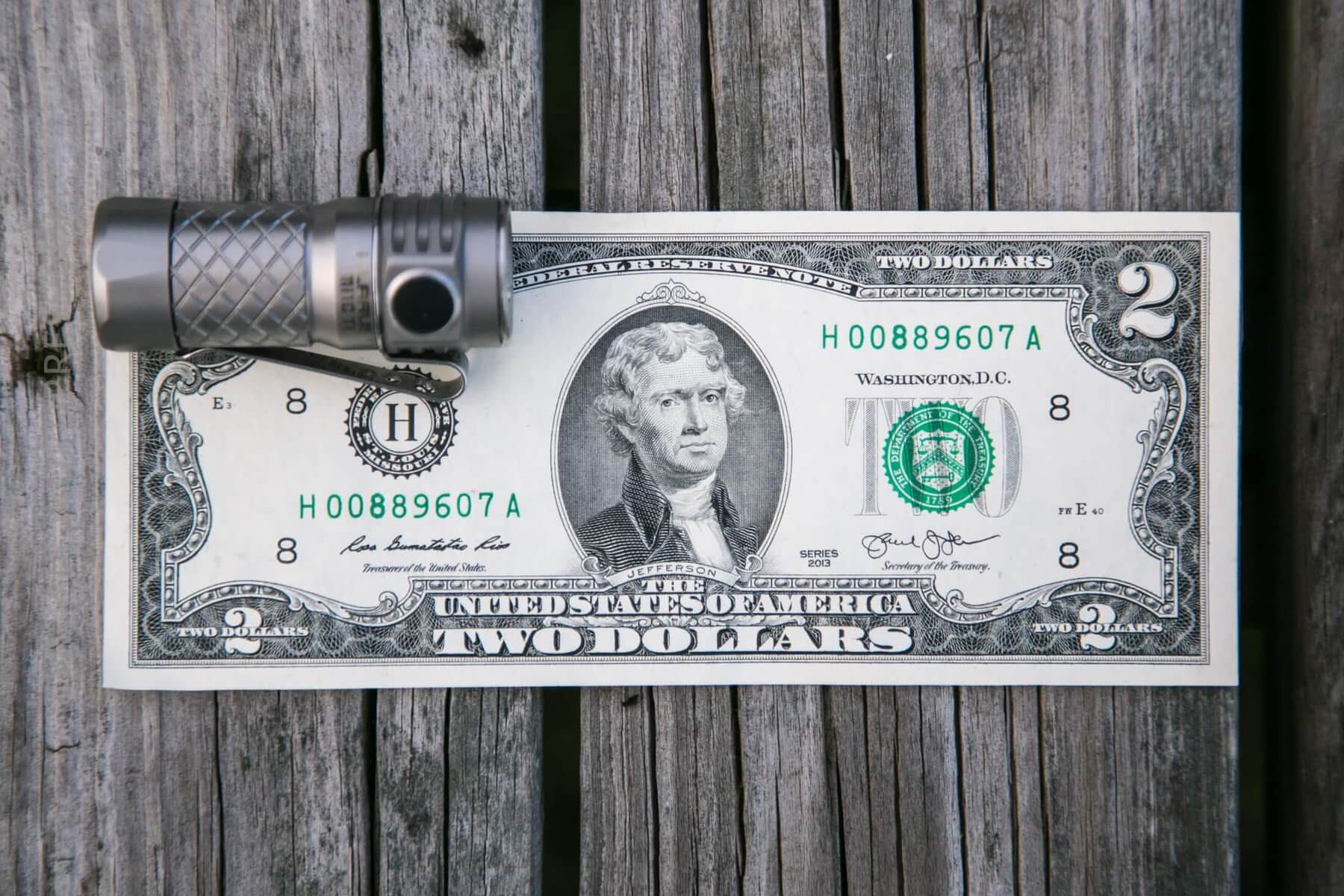
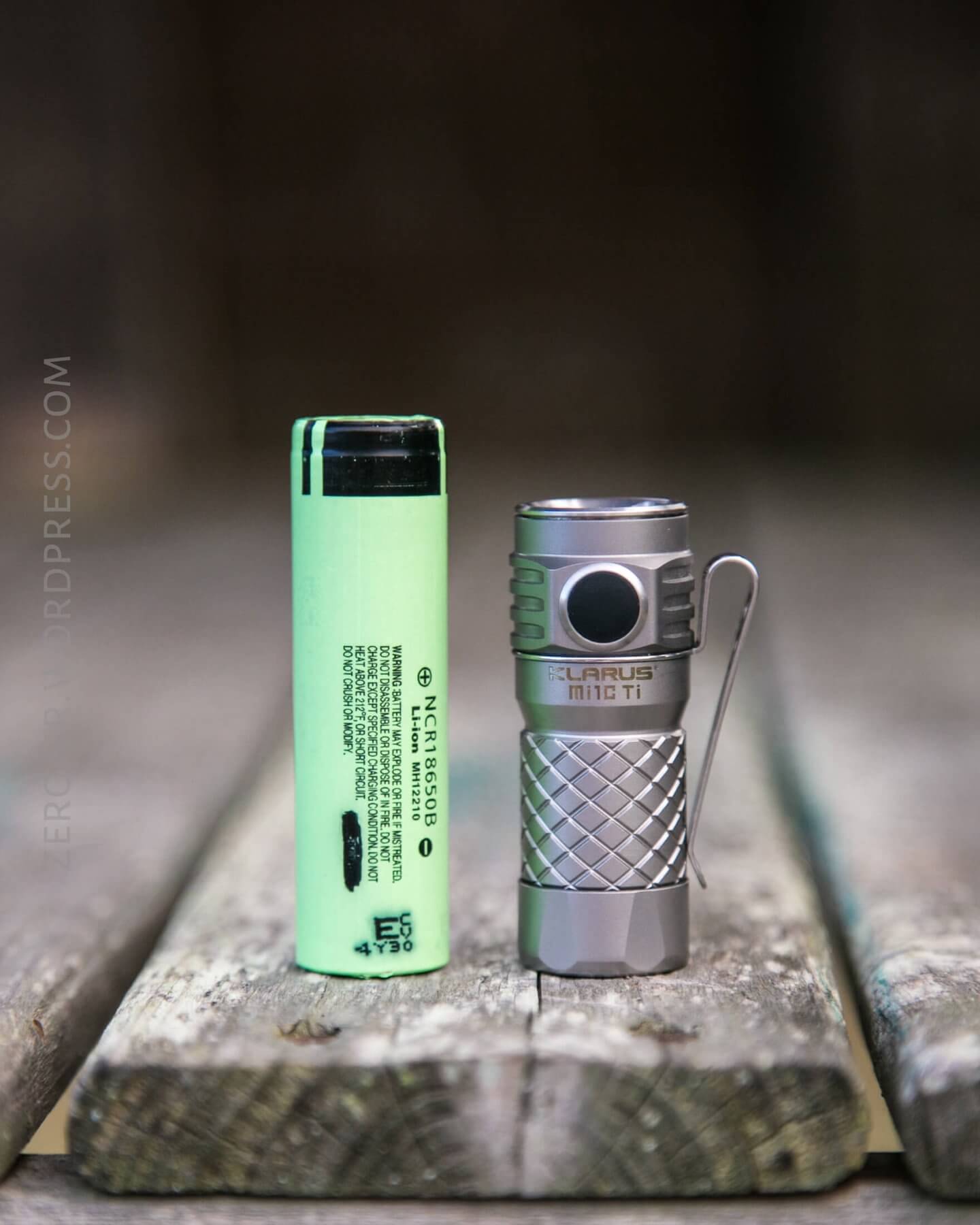
This is a small light!
Here’s the test light with the venerable Convoy S2+. Mine’s a custom “baked” edition Nichia 219b triple. A very nice 18650 light.
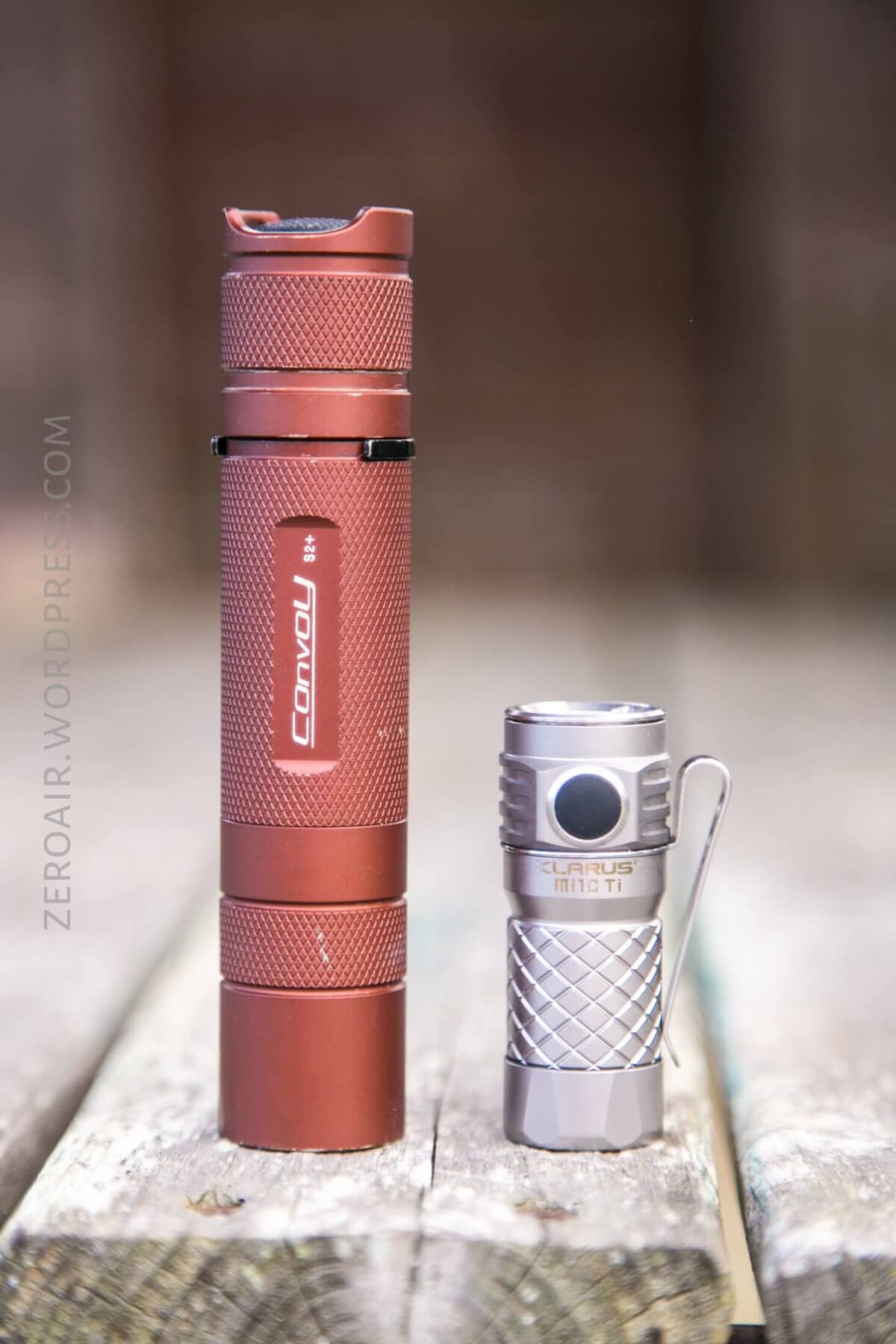
Below, see the Mi1c beside an 18650.
Here’s the aspheric brother light:
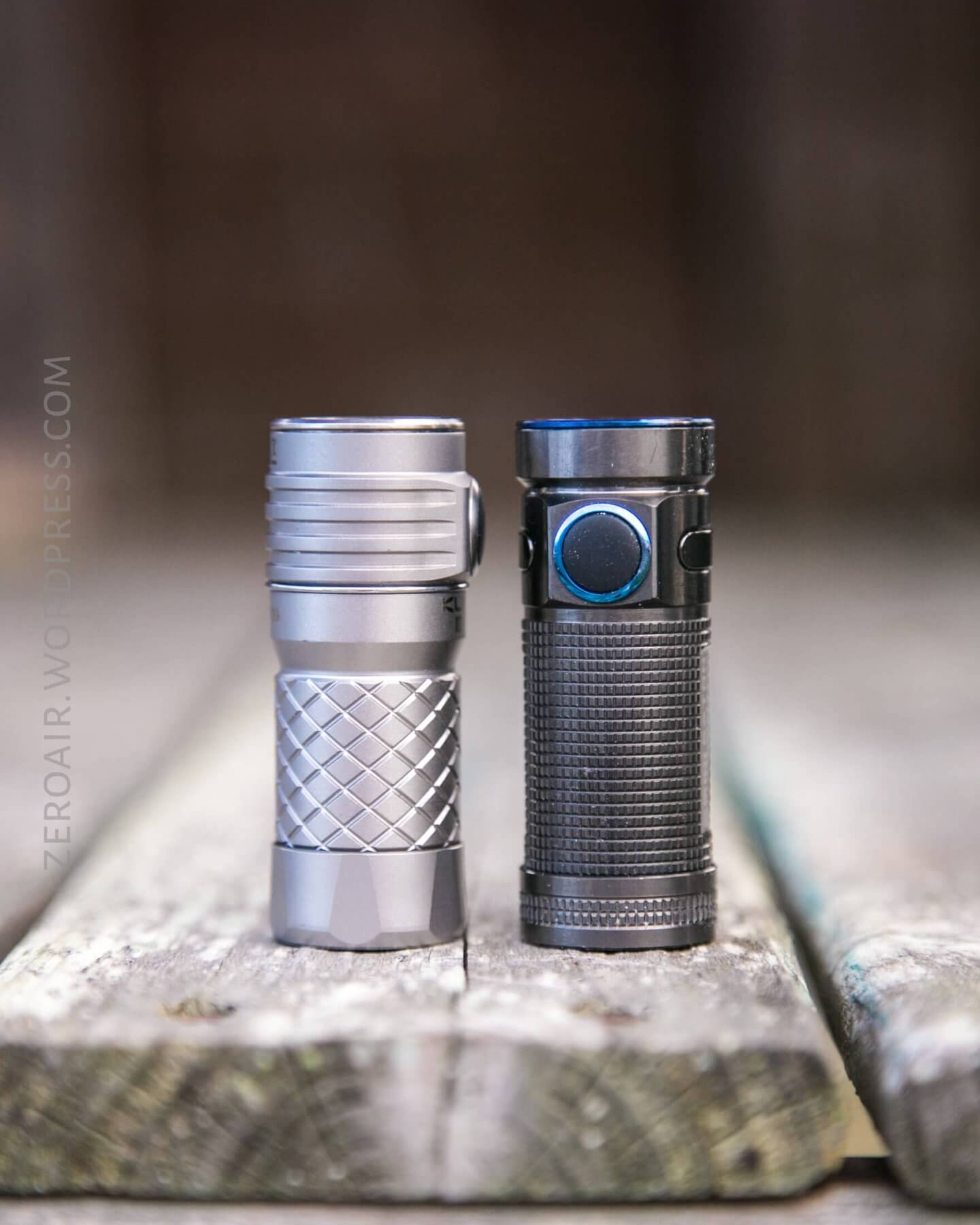
And finally, one of the smallest 16340 lights out there, the Olight S Mini (Stainless Steel).
Retention
The pocket clip (which comes already attached) is the collar variety. It has a very small mouth, but a big pocket shoulder. It’s a good clip, but the mouth really needs to be bigger.
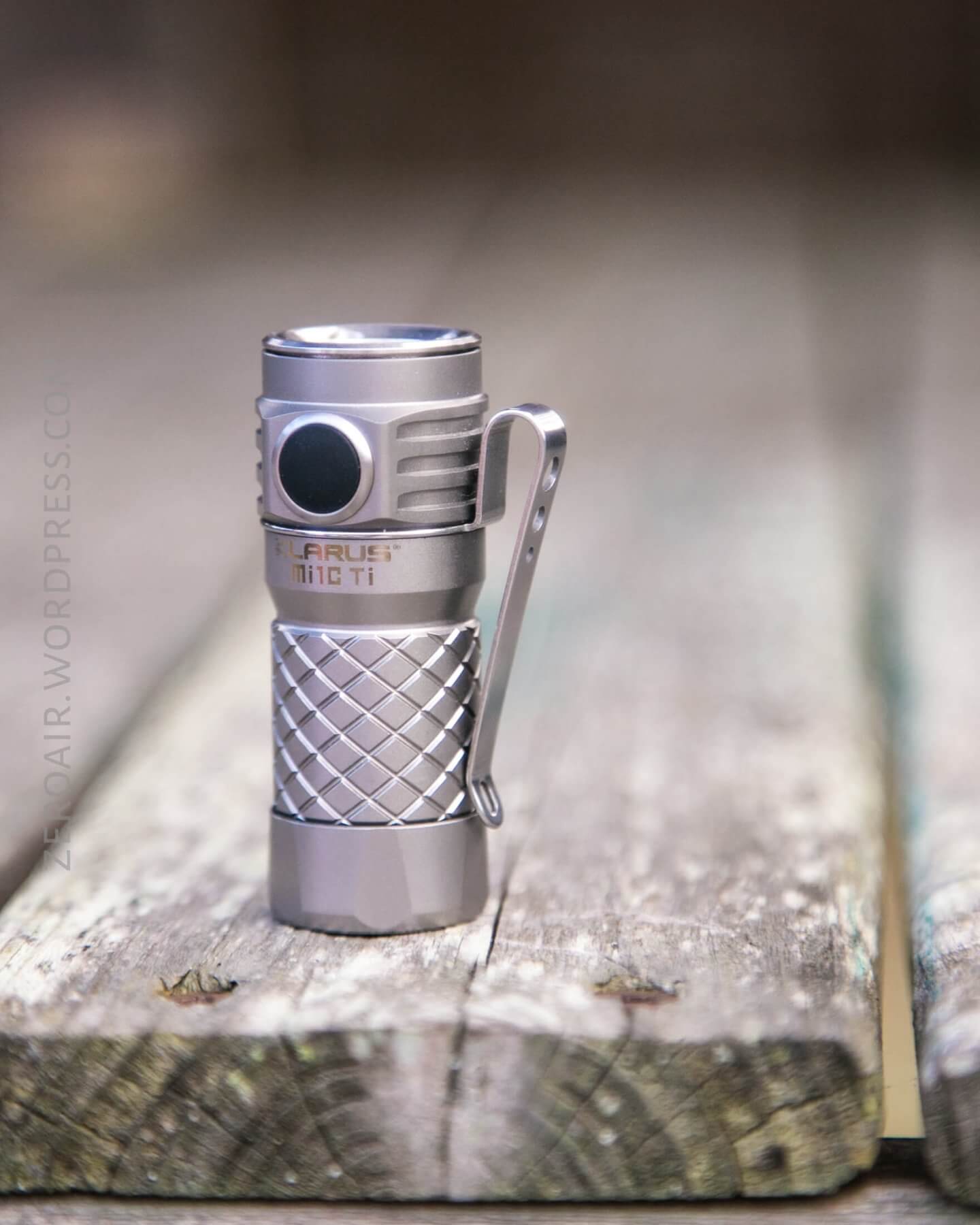
The clip has a few TorchLAB BOSS-esque holes, into which could be connected a lanyard or cordage. Normally I don’t like using clips this way, but this being a collar clip makes it a perfectly reasonable use.
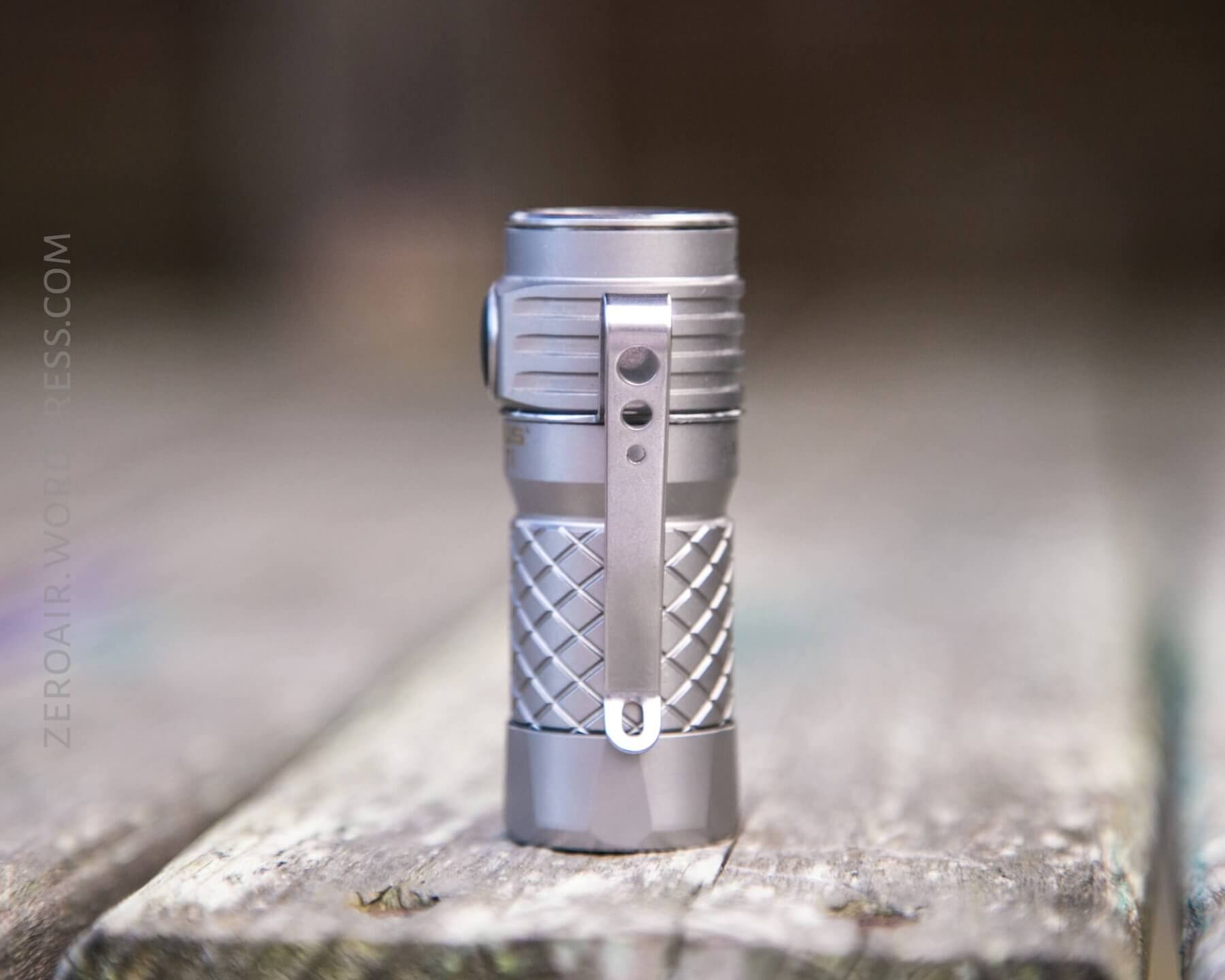
The clip is completely removable, and the light should maintain its waterproofness.
There’s also a magnet in the tailcap, which is plenty strong to hold the light in place.
Power
A single 16340 powers the Mi1C. Klarus provides a “700mAh” 16340 with this little light. While the light doesn’t have onboard charging, the cell has micro-USB charging. Note that a micro-USB cable isn’t included. That the fit of the included cell is very snug. The manual states a working voltage up to 4.2V.
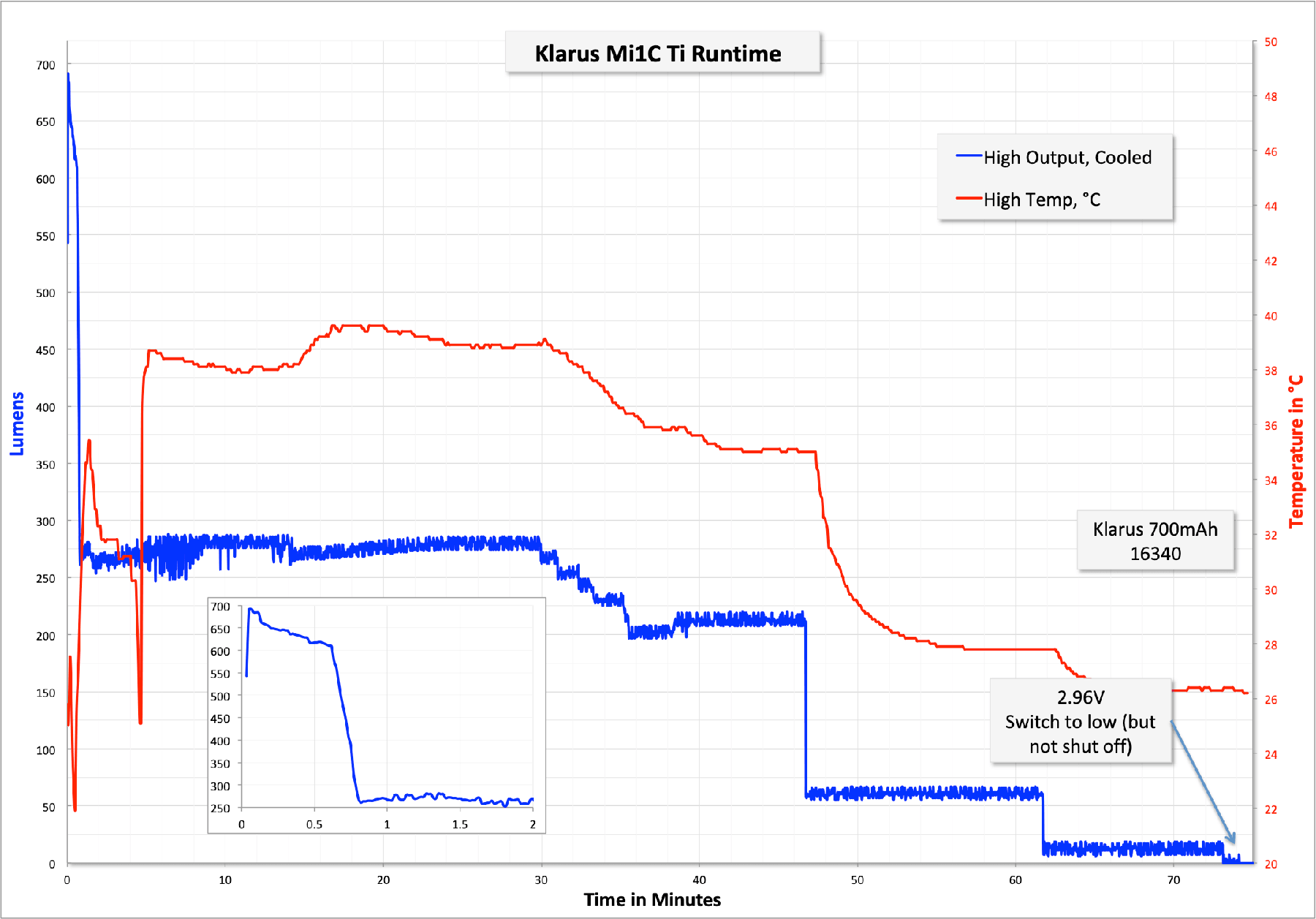
Here’s a runtime on Turbo. Pretty heavy stepdown from Turbo, and then a fairly well-regulated output for the rest of the runtime. (I have this graph labeled “Turbo” – they call it “High”.)
The runtime on High is absolutely flat. (I have this graph labeled “High” – they call it “Medium”.)
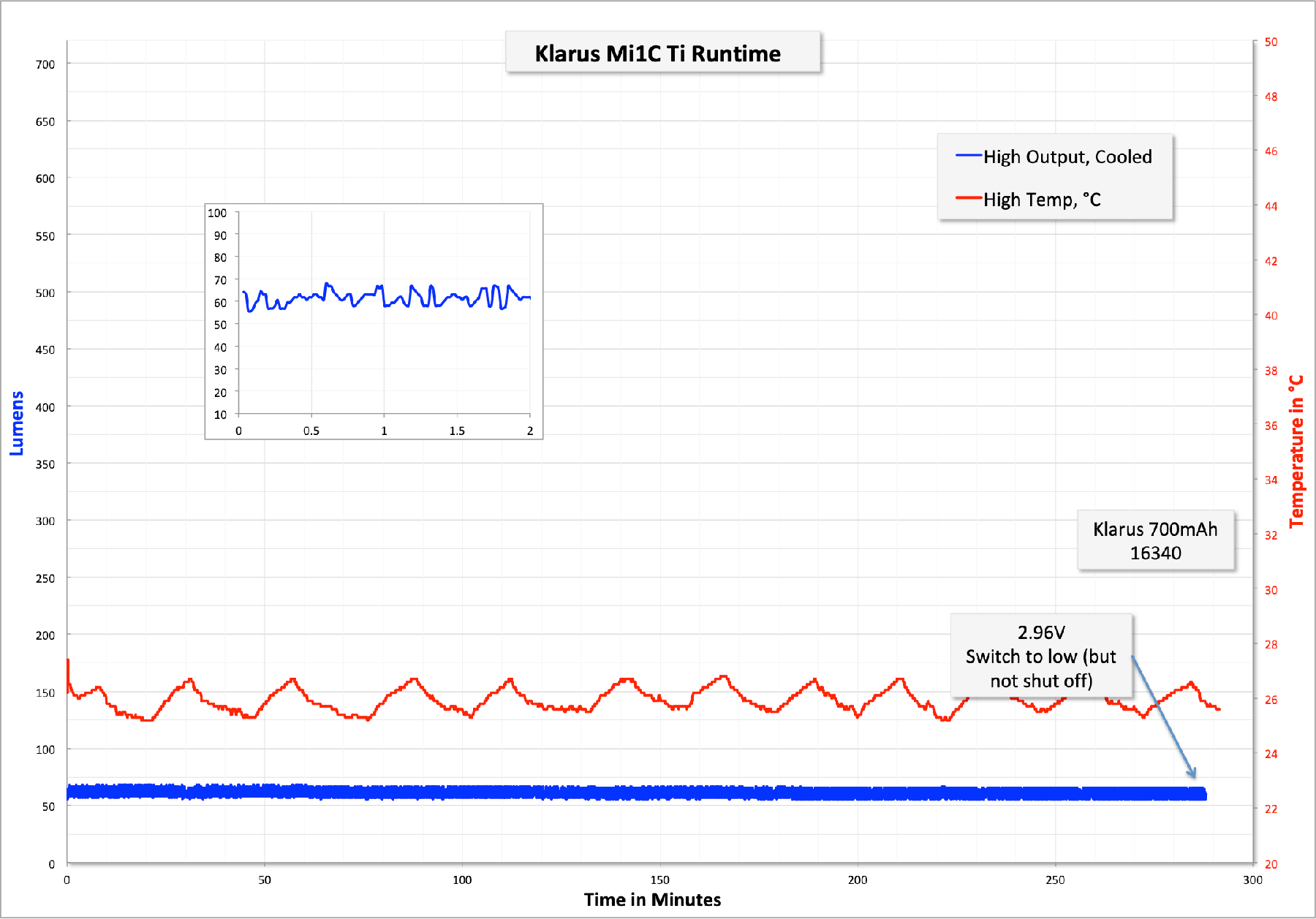
In neither runtime did the light really shut off (LVP), but it did switch to extremely low output.
Charging
The chargetime is very consistent, at around 0.33A. For such a small cell, that’s fairly good charge current, at about 0.5C
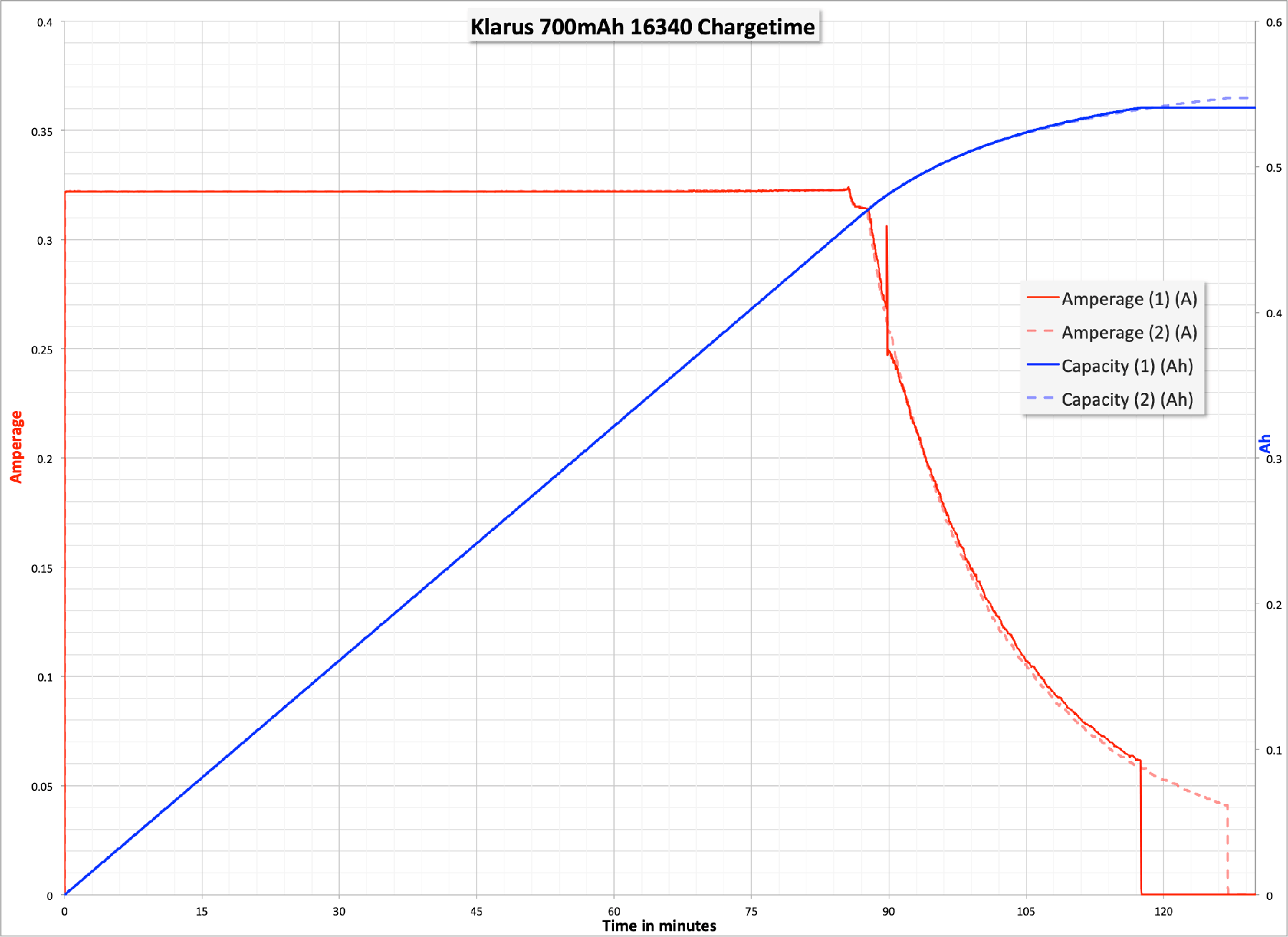
I charged this 16340 in a couple of random chargers around the house, and the charger shut off due to temperature protection. That makes the second of these Klarus cells to get very hot during charging. As a result of this, I’d generally recommend to either not use them, or charge them with their own port, and not in a charger.
User Interface and Operation
There’s a single switch on this light. It’s a side e-switch. It’s small but a normal size for a small light (and the same size and texture and clickiness as many Olight switches.) The user interface is fairly intuitive.
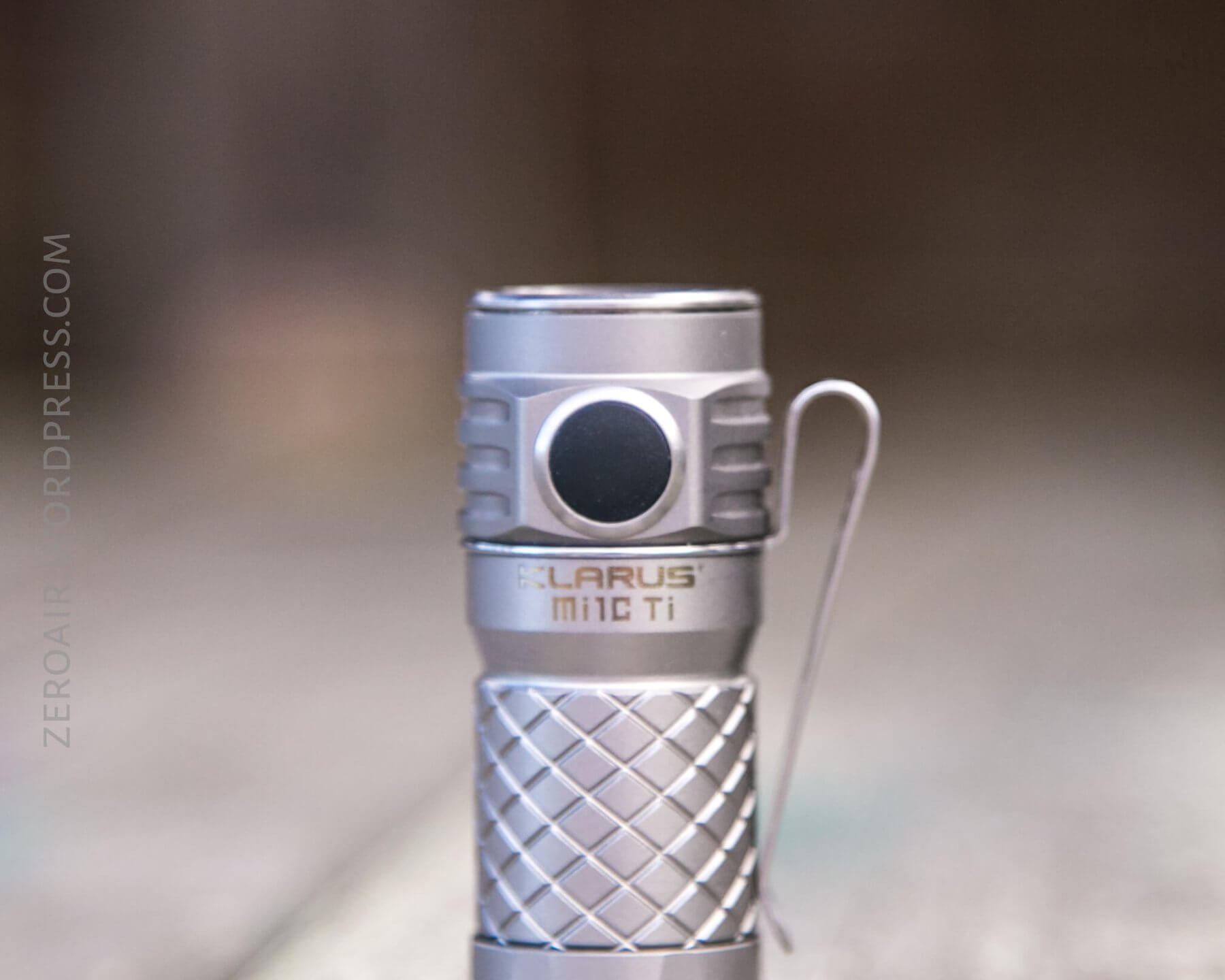
Here’s a user interface table!
| State | Action | Result |
|---|---|---|
| Off | Click | On (Memory) |
| Off | Hold | Moonlight |
| Off | Double Click | Strobe (fast, alternating) |
| Strobe | Double Click | SOS |
| Strobe | Click | Return to previous state (including off) |
| On | Click | Mode cycle (L>H direction) |
| On | Hold (short) | Off |
| Any | Hold (long) | Lockout (confirmed by double flash) |
| Lockout | Any | Lockout indicator (double flash) |
| Lockout | Triple click | Unlock |
| Off | Triple click | Battery indicator^ |
^ Only with Li-ion 16340 cells. Three flashes = 70-100%, two flashes = 30-70%, one flash = <30%. When below 10%, the light will flash twice every three minutes.
That user interface looks a little complicated (if you think long tables are necessarily complicated) but in general use it’s pretty simple, and unlikely that you’ll get an inappropriate mode accidentally. I am pleased that the light offers a battery check option!!
Modes
| Mode | Mode Claimed Output (lm) | Claimed Runtime | Measured Lumens | Tailcap Amps |
|---|---|---|---|---|
| High | 600 | 1h12m | 473^ | 2.42 |
| Medium | 45 | 5h37m | 47 | 0.07 |
| Low | 10 | 32h | 7 | – |
| Moon Light | 1 | 6d | – | – |
^ That’s not 473 ANSI lumens – the stepdown was quicker than 30 seconds.
LED and Beam
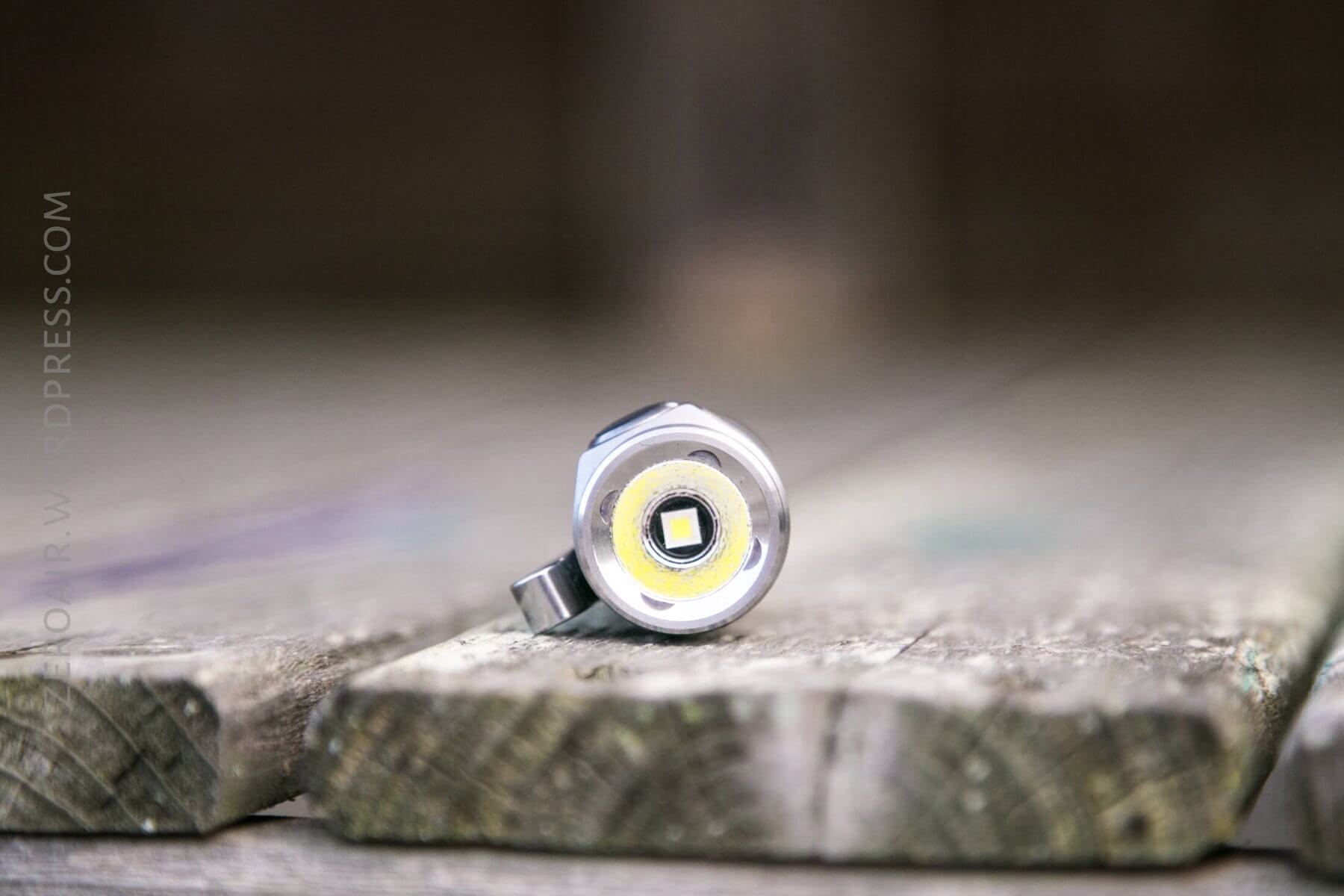
Klarus chose a Cree XP-L HI for this whole series. Maybe that’s an odd choice for an aspheric – it’s an emitter normally chosen in throwers. This light isn’t a thrower, but this emitter isn’t a bad choice for it. The reflector has light orange peel, and overall the beam profile has a fairly tight spot, but there’s a reasonable amount of spill.
Beamshots
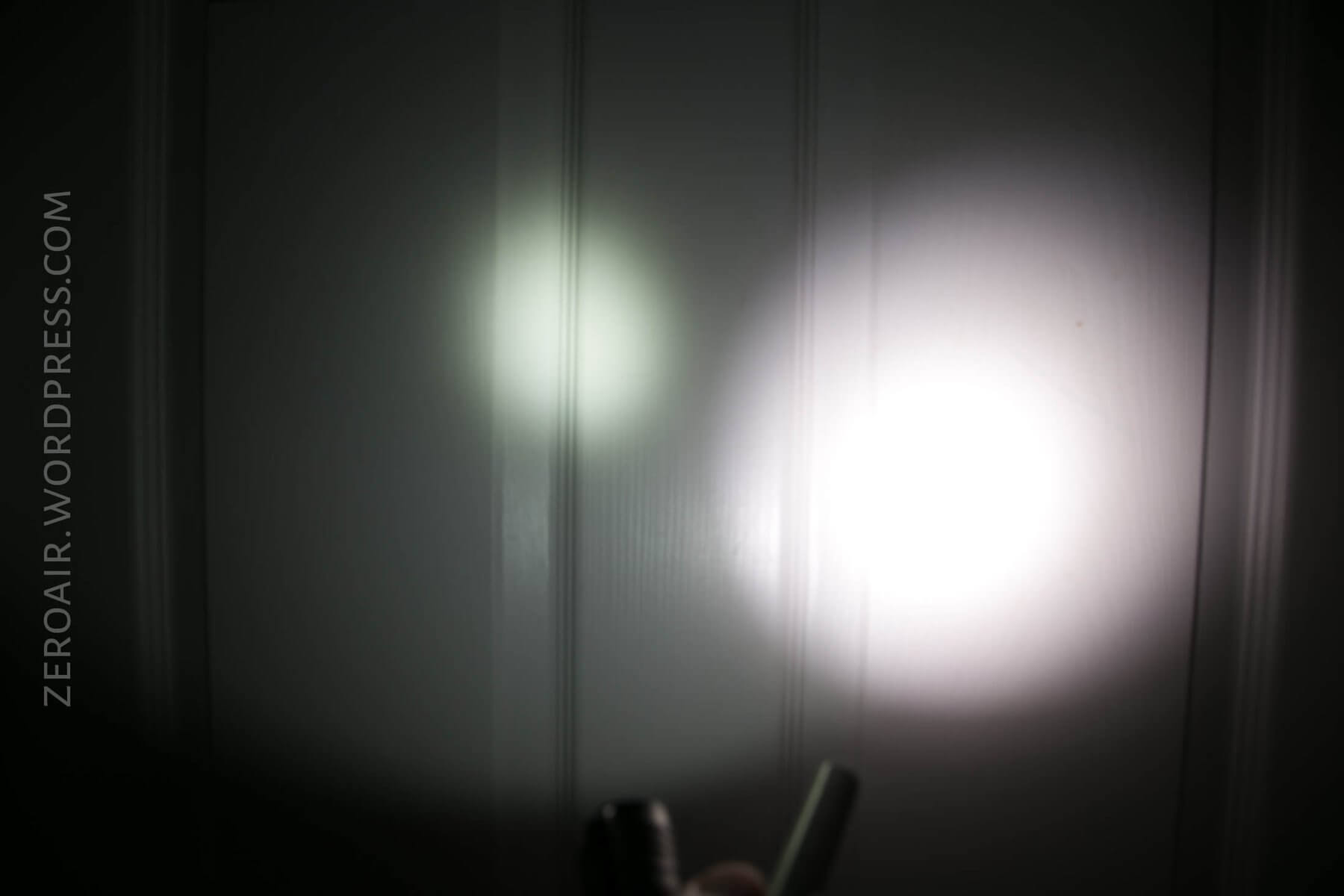
These beamshots always have the following settings: f8, ISO100, 0.3s shutter, and manual 5000K exposure. These photos are taken at floor level, and the beam hits the ceiling around 9 feet away.


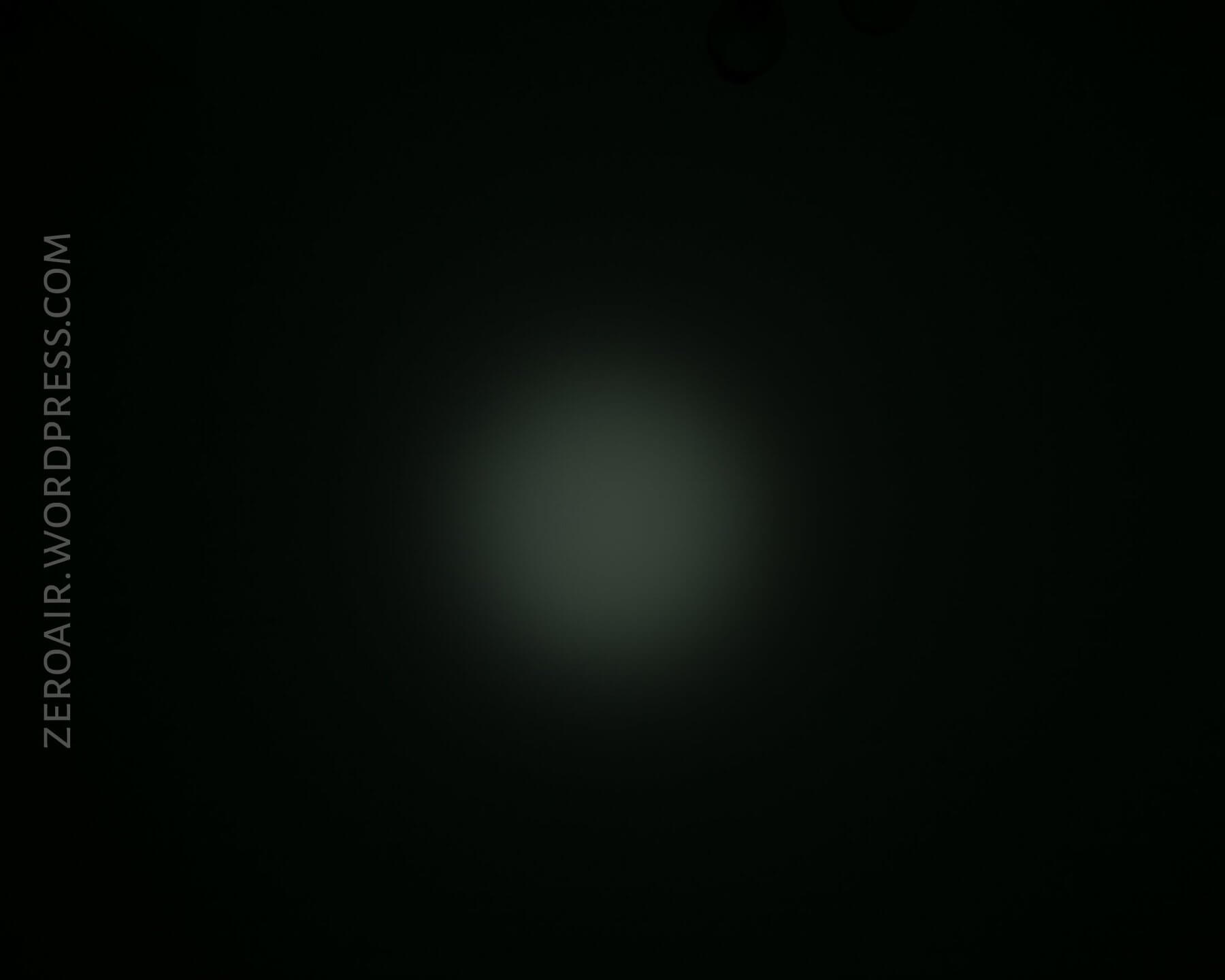
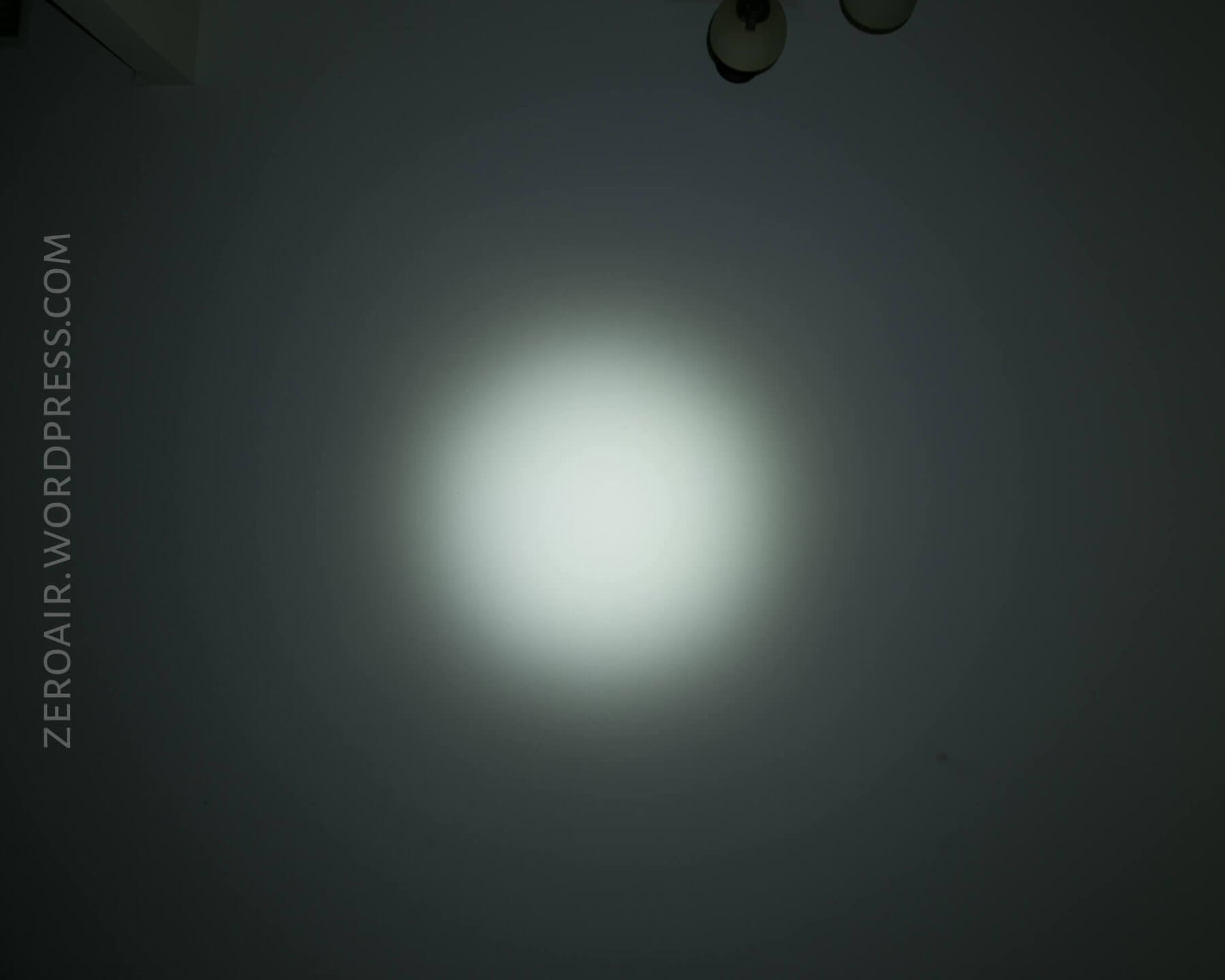
Tint vs BLF-348 (KillzoneFlashlights.com 219b version) (affiliate link)
I keep the test flashlight on the left and the BLF-348 reference flashlight on the right.
Random Comparisons and Competitive Options
Here’s a relevantly filtered page on parametrek.com. There aren’t all that many XP-L HI 16340 lights. I like them. I would love to have more! This is maybe the only titanium option, aside from the ‘very’ special JETBeam Jet-II Pro, which is quite striking (that’s a strike bezel joke). Among the other choices, only the Fenix E16 looks to compare to the Mi1c on size, and it’s only available in aluminum.
Conclusion
What I like
- Availability in copper and titanium
- Output is good on high
- Stable output after stepdowns.
- Great build quality
- Package includes cell
What I don’t like
- Ramp when switching to or from High
- Switch is a little hard to get to (that’s really more of a measure of this light being so small!)
- Pocket clip gets in the way when screwing the light together
Parting Shot
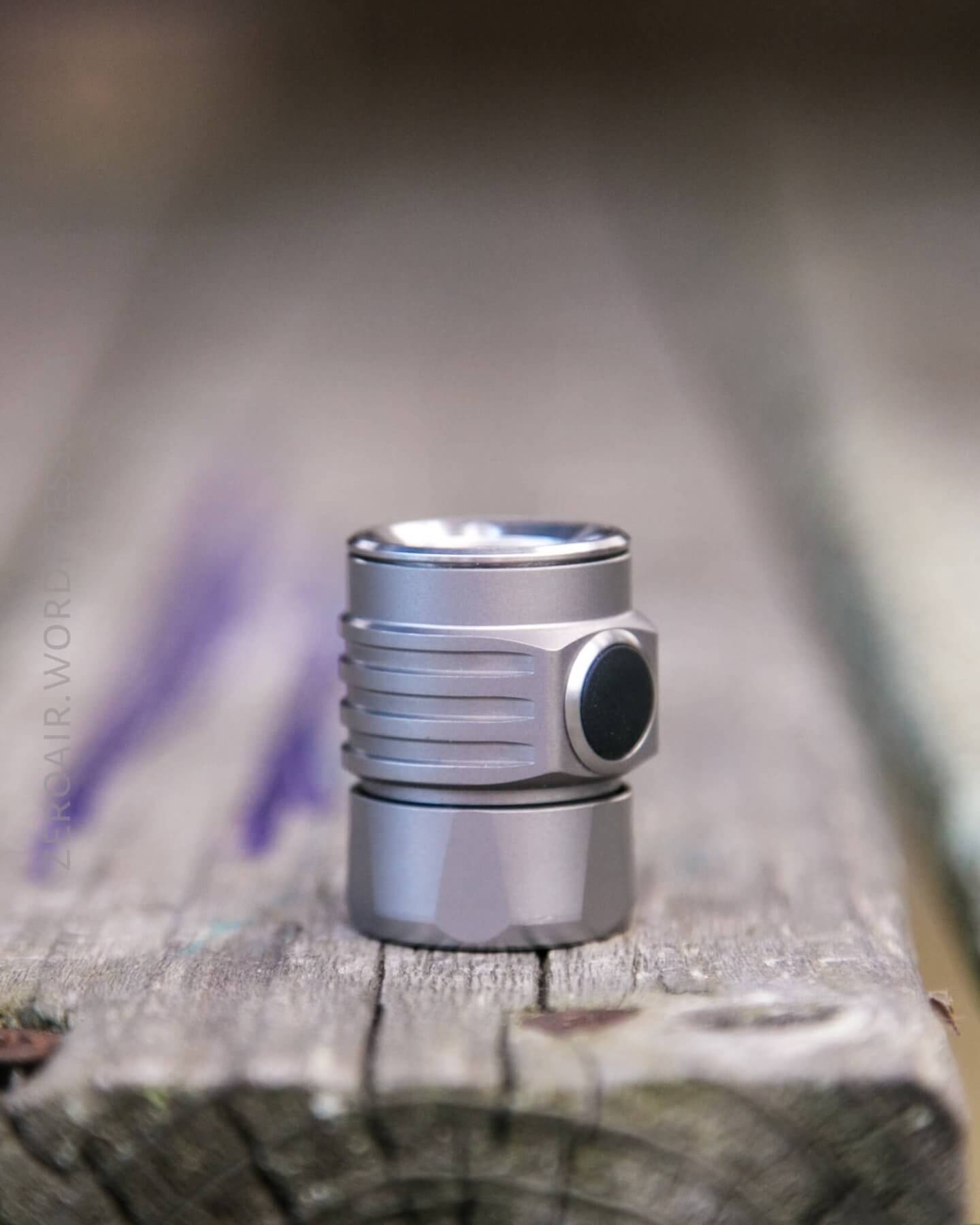
Unfortunately, no, the light doesn’t work with a button cell in this configuration. However, I think it could if you wanted to slip a piece of foil in there and make the contacts hit just right.
Notes
- This light was provided by FastTech for review. I was not paid to write this review.
- This content originally appeared at zeroair.org. Please visit there for the best experience!
- Use my amazon.com referral link if you’re willing to help support making more reviews like this one!
- Please support me on Patreon! I deeply appreciate your support!
Discover more from ZeroAir Reviews
Subscribe to get the latest posts sent to your email.