
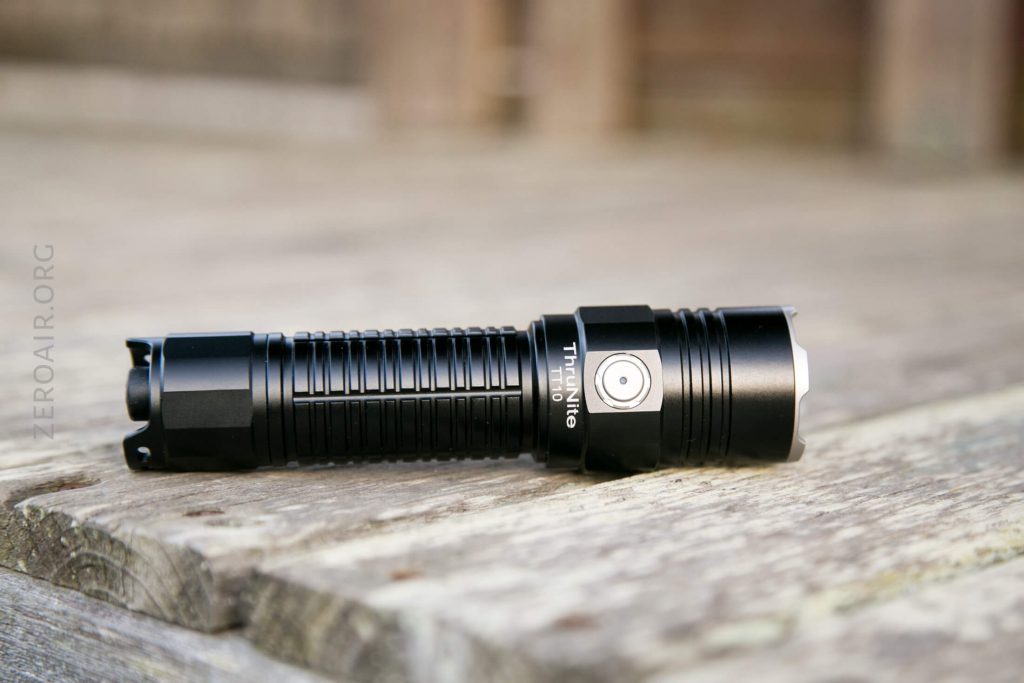
Thrunite TT10 Flashlight Review
The TT10 is a new flashlight by Thrunite. It’s a 21700 light, with three switches. This light has some nice features.
Official Specs and Features
Here’s a link to the Thrunite TT10 Flashlight product page.
Versions
There’s only one body, as with most Thrunites, and also as with most Thrunites, there are both NW and CW options.
Price
The current price is $109.95 $99.95 on amazon (referral link).
Short Review
This is a feature-rich light, with the only real downfall being that the output doesn’t seem to measure up to specification. Otherwise, everything about the light is good, if it fits your application. Direct access to Turbo and Strobe could be very useful for some.
Long Review
The Big Table
| Thrunite TT10 | |
|---|---|
| Emitter: | Cree XHP70.2 (“70B” CW) |
| Price in USD at publication time: | $99.95 on amazon (referral link) |
| Cell: | 1×21700 |
| Turbo Runtime | High Runtime |
| LVP? | Yes, ~3V |
| Switch Type: | Both |
| Quiescent Current (A): | ? |
| On-Board Charging? | Yes |
| Chargetime | |
| Power off Charge Port with no Cell? | No. With cell, 2 modes. |
| Claimed Lumens (lm) | 3700 |
| Measured Lumens (at 30s) | 2551 (68.9% of claim)^ |
| Claimed Throw (m) | 268 |
| Candela (Calculated) in cd (at 30s) | 570lux @ 5.25m = 15711cd |
| Throw (Calculated) (m) | 250.7 (93.5% of claim)^ |
| All my Thrunite reviews! | |
^ Measurement disclaimer: Testing flashlights is my hobby. I use hobbyist-level equipment for testing, including some I made myself. Try not to get buried in the details of manufacturer specifications versus measurements recorded here; A certain amount of difference (say, 10 or 15%) is perfectly reasonable.
What’s Included

- Thrunite TT10 Flashlight
- Thrunite 5000mAh 21700
- Nylon pouch
- Charge cable (USB to micro-USB)
- Spare o-rings (2)
- Small split ring
- Spare charge port cover
- Spare tail switch cover
- Lanyard
- Manual and papers
Package and Manual

Standard Thrunite box.

And standard Thrunite manual.

Build Quality and Disassembly

The TT10 is well built. Nothing to complain about at all.
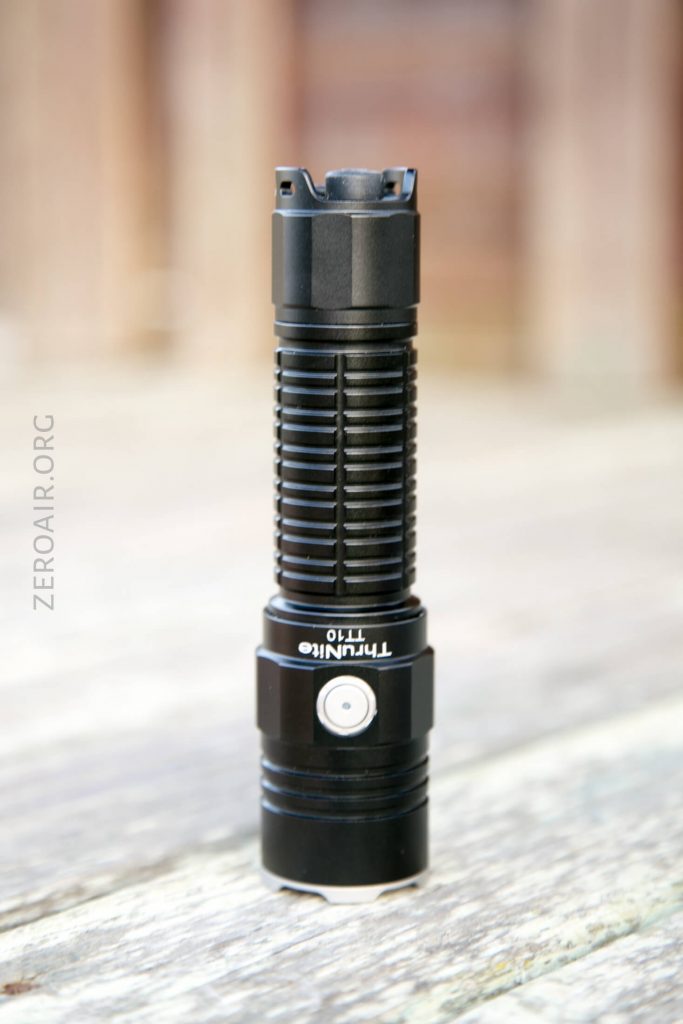
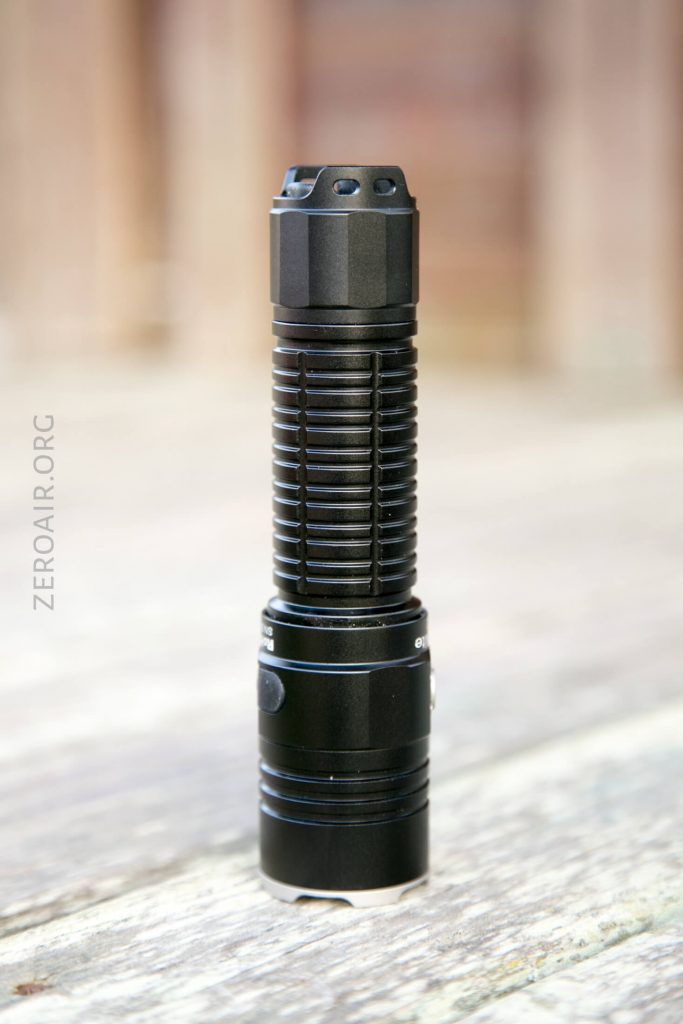
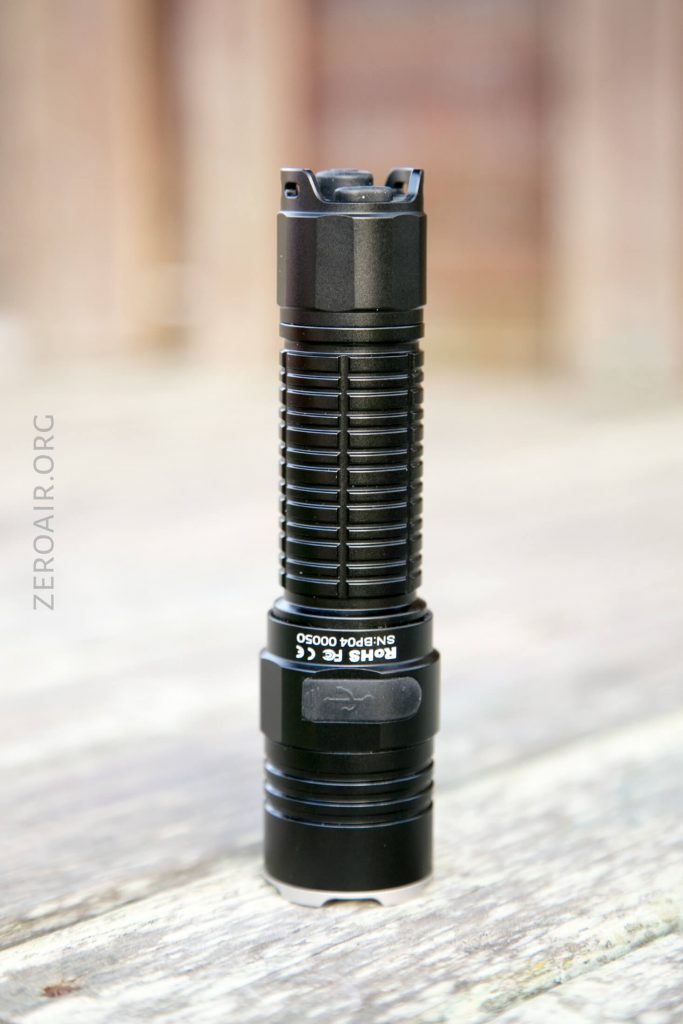
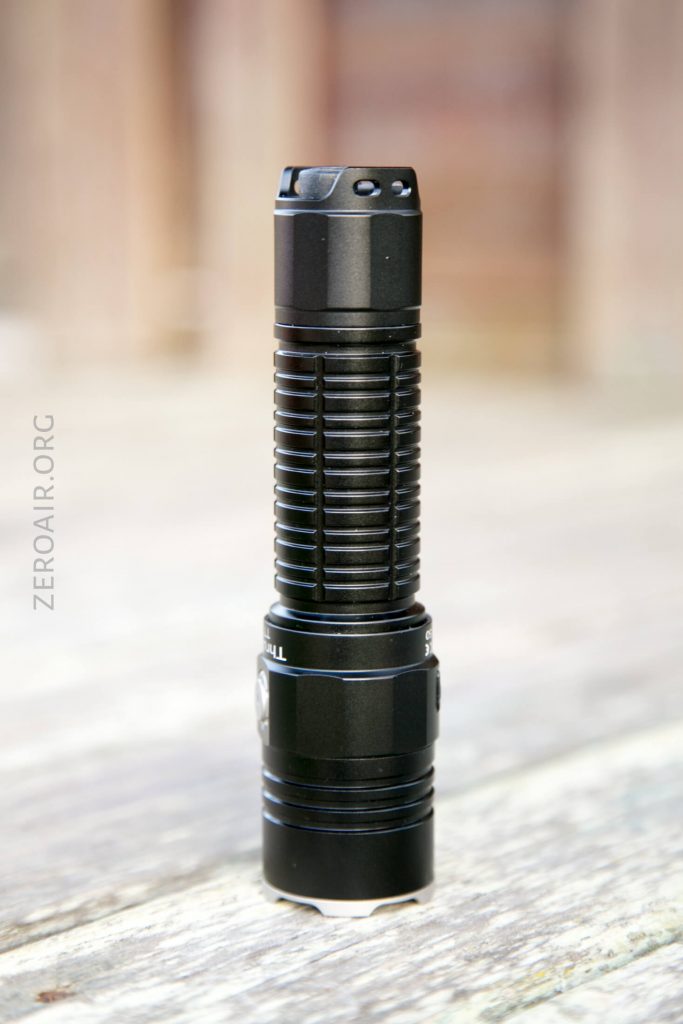
The design on the cell tube doesn’t provide grip like knurling does, but it’s fairly adequate.

The tailcap has a thick double spring. Also, note how much is depicted in the picture. The tailswitch is a dual electronic switch. Because of this, you’ll note that the cell tube has an inner sleeve. The threads on the tailcap are unanodized, so you might be tempted to think that the light can’t be mechanically locked out. But when the tailcap loses contact with that innerspring, the tailswitches stop doing anything. The side switch, however, still works! So the light can’t actually be mechanically locked out…. confusing a little?


The head also has a thick spring.

The bezel unscrews easily, but the lens and reflector don’t fall out easily.


Size and Comps
Dimensions: 137.5mm x 35mm x 27.5mm
I measure the following: 138.63mm x 32.97mm x 28.22mm
Weight: 190.5g with battery
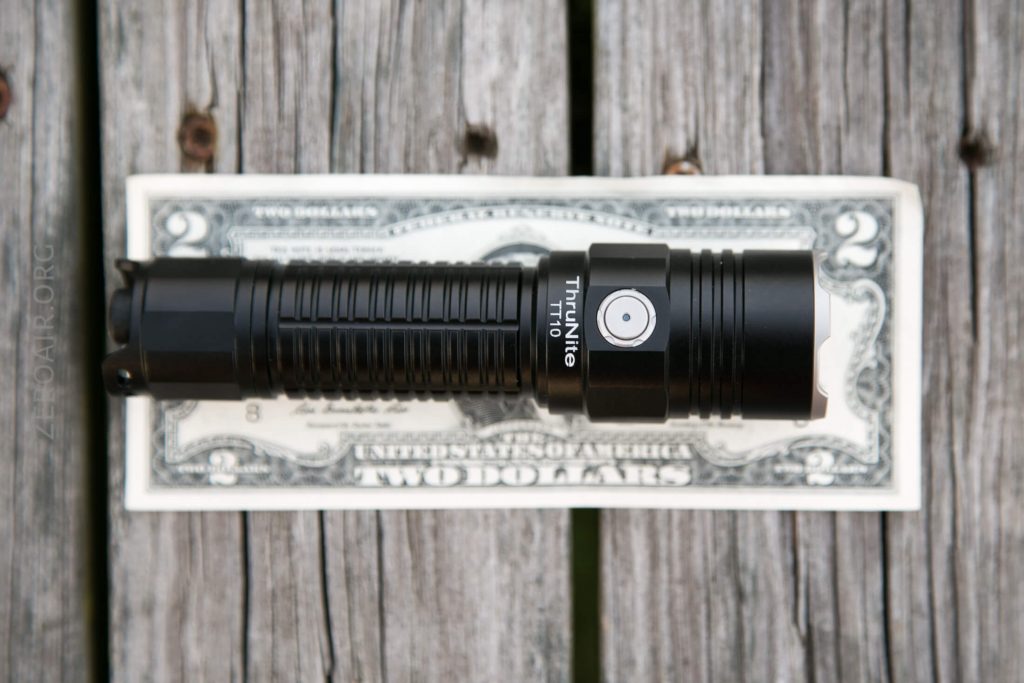
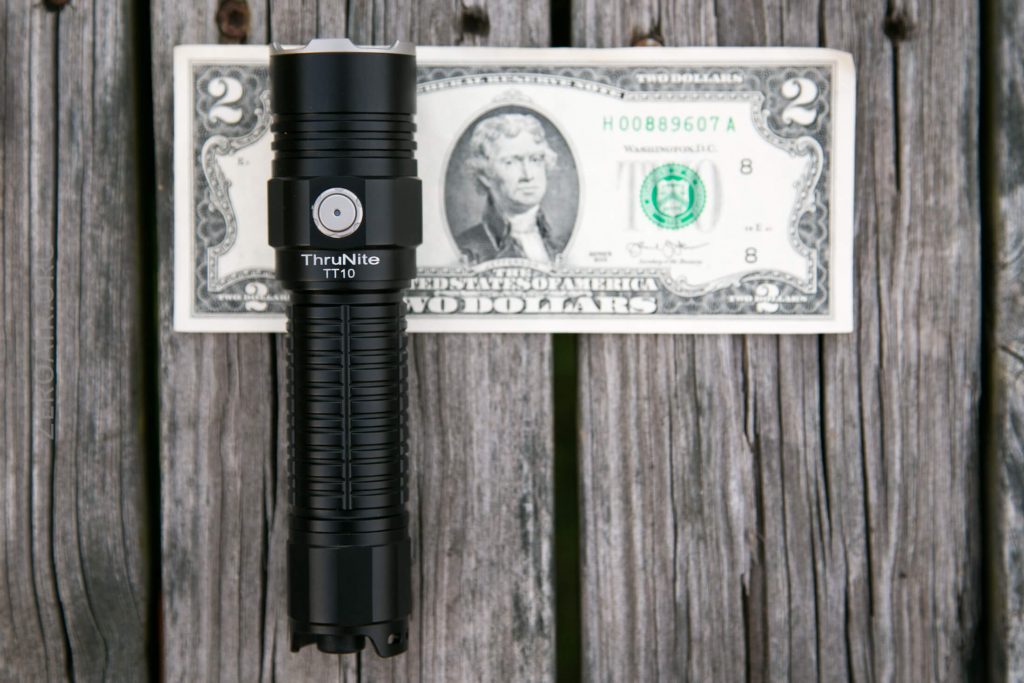
This isn’t really a small light, and I found it too big to comfortably carry even where I normally carry long lights like the Convoy S2+. Mainly because the bezel showed too much love to my jeans, and the head is a little big for that carry.
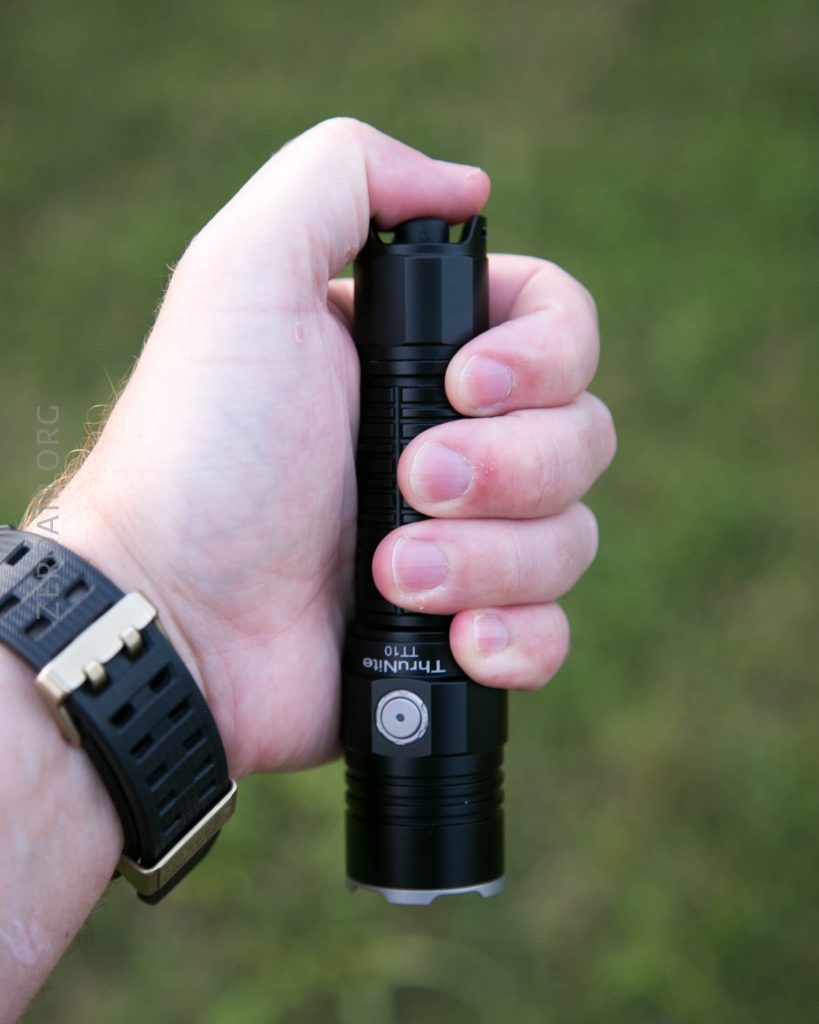
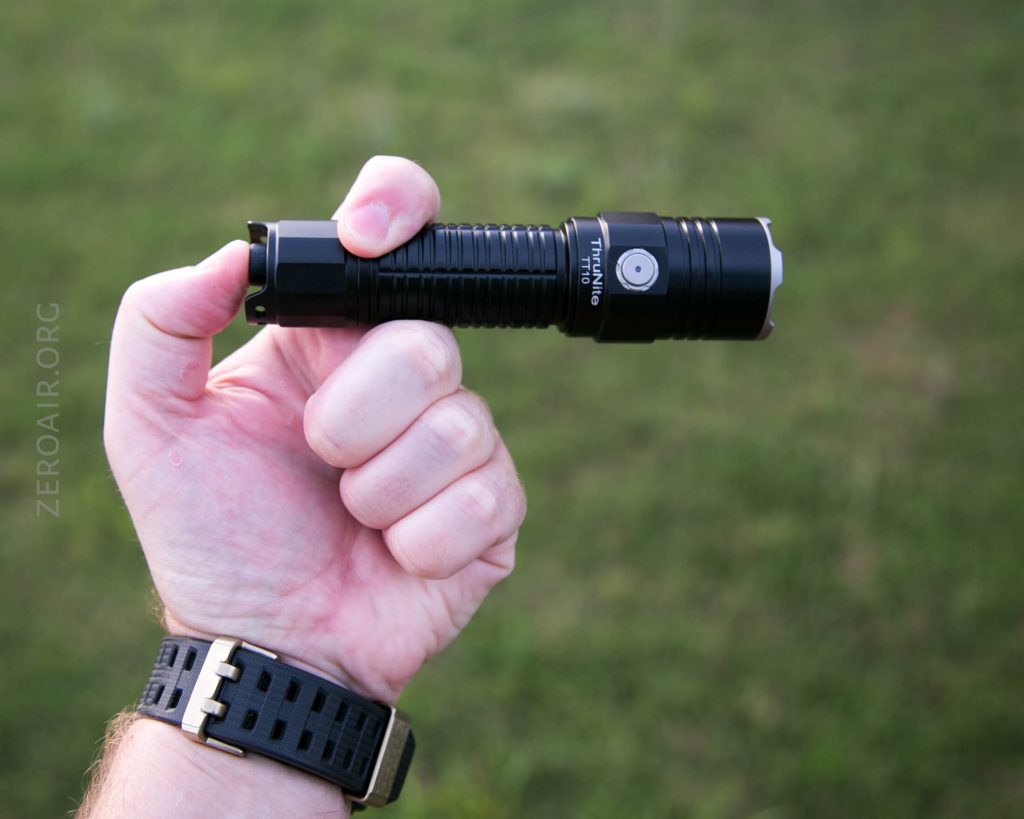
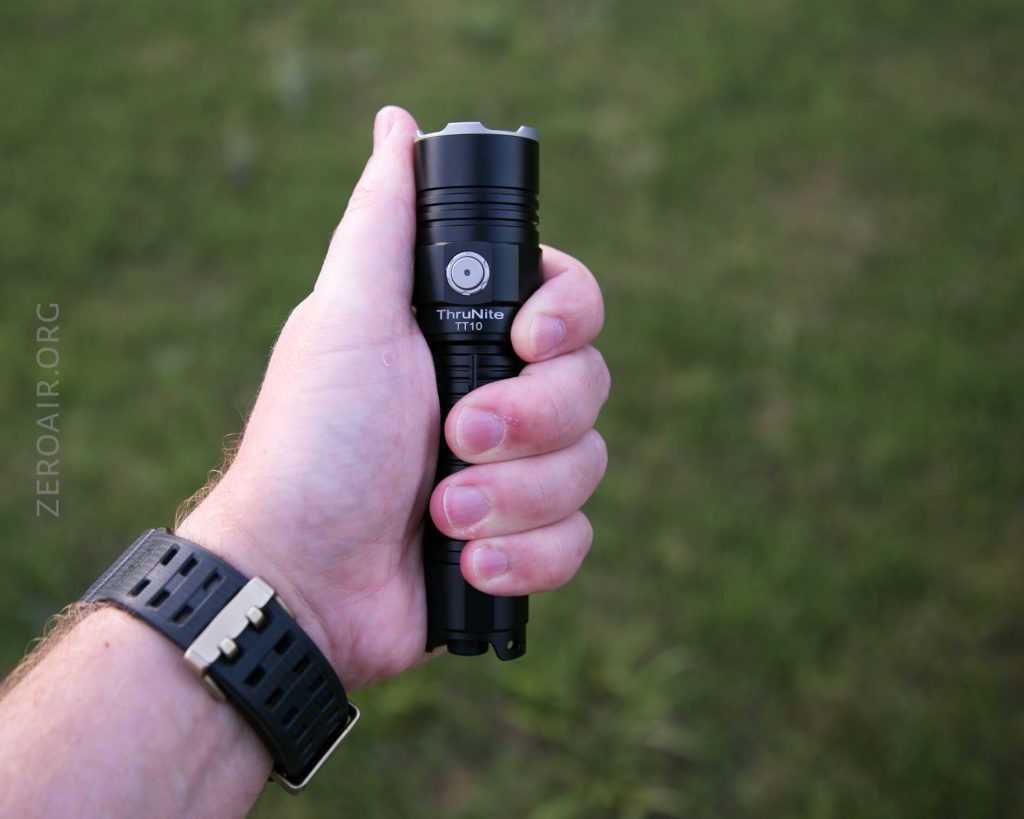
Here’s the test light with the venerable Convoy S2+. A very nice 18650 light.

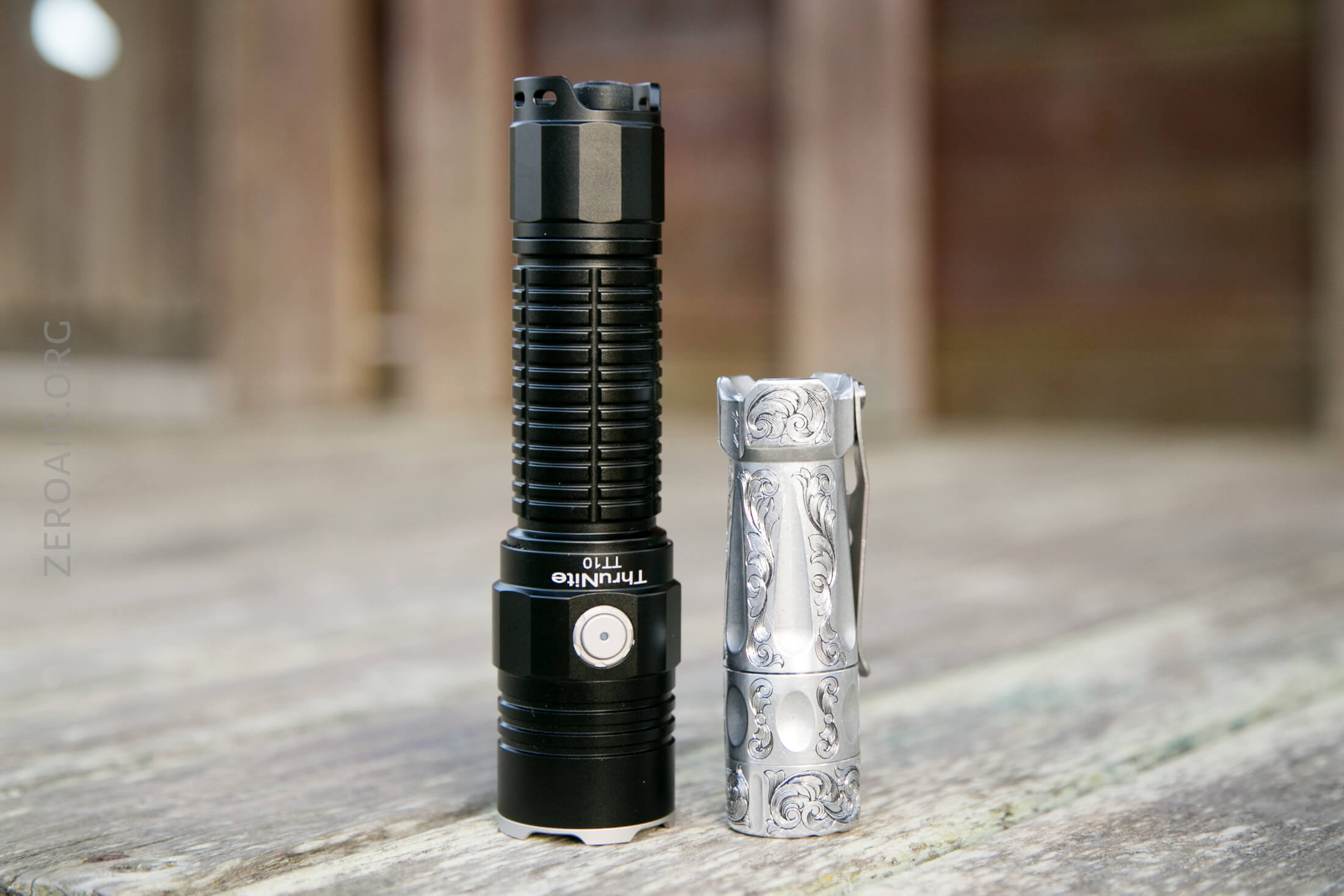
And here’s the light beside my custom-engraved TorchLAB BOSS 35, an 18350 light. I reviewed the aluminum version of that light in both 35 and 70 formats.
Retention and Carry
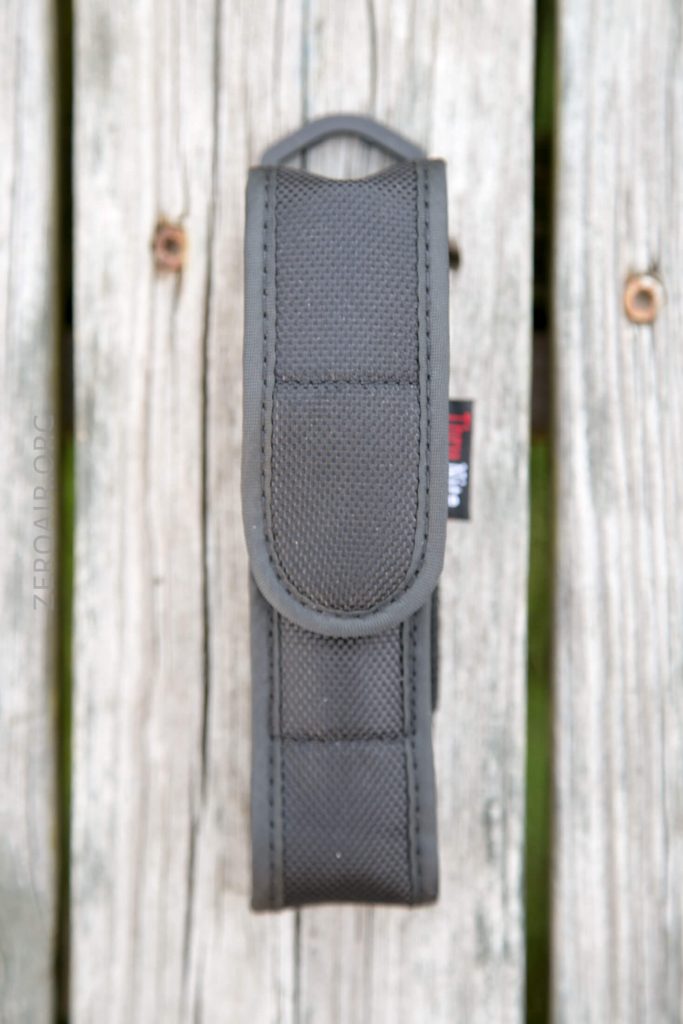
My opinion is that the main carry for this light will be the nylon pouch. It’s a good one, and the light will fit in either orientation.
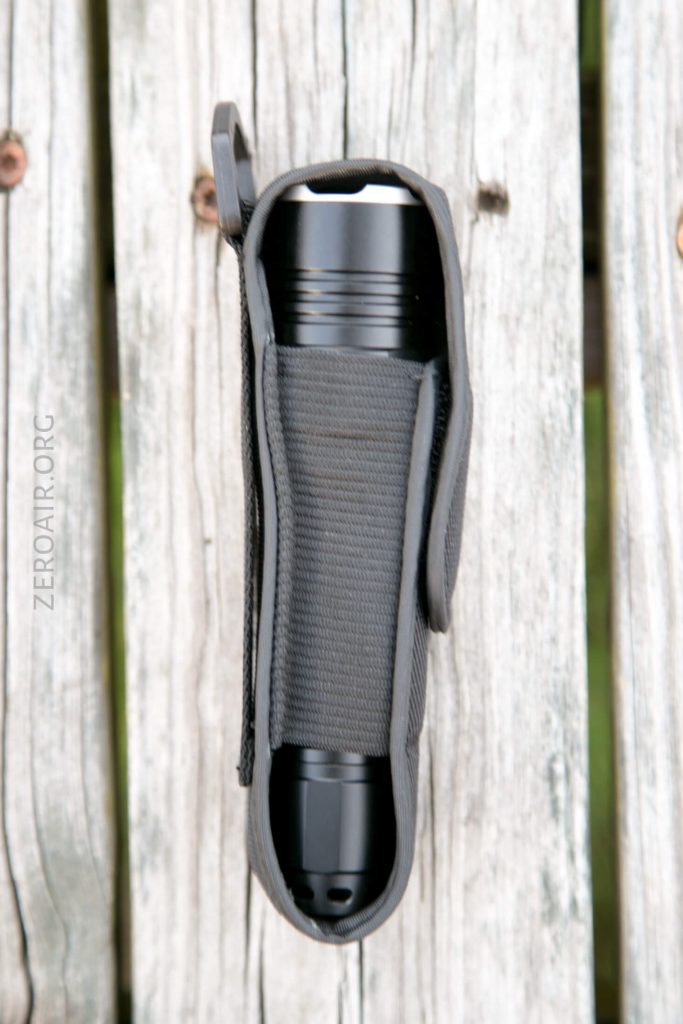
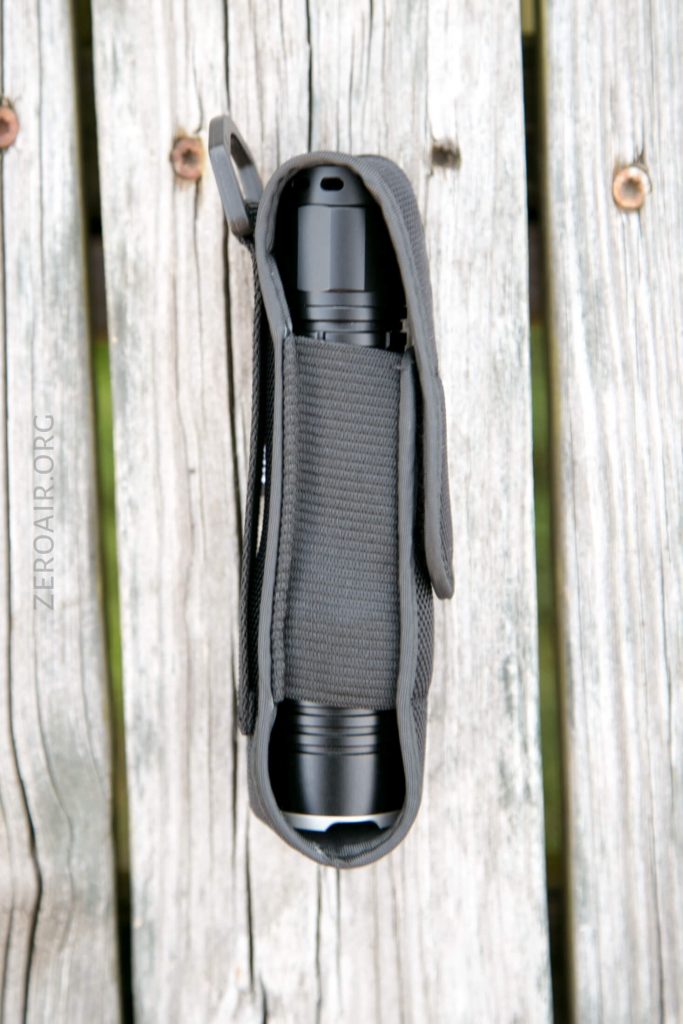
The other option is the lanyard, which attaches through holes in the tailcap. There are two holes on both sides of the tailcap. The light will semi-reluctantly tail stand despite the cap being the way it is.

There is no pocket clip, nor is there any good place to connect a pocket clip.
Power and Runtime
The TT10 is powered by a lithium-ion cell, and one is included. It’s a 5000mAh 21700, with a typical Thrunite wrapper.
I performed two runtimes. Turbo first, where we see a huge stepdown at around 2 minutes. Also note that even at startup, the output doesn’t measure to the spec of 3700 lumens. I can’t really account for this 30% difference, especially since Thrunite includes a cell with the light.

High runtime is surprisingly shorter than the Turbo, but that’s explained by output is just a little bit higher for a good bit longer. On high, the output does meet the specification.

Both tests did indicate the light has LVP.
Charging
The TT10 also has onboard charging. This is by a micro-USB port in the head, opposite the switch. The cover for this port is very secure.
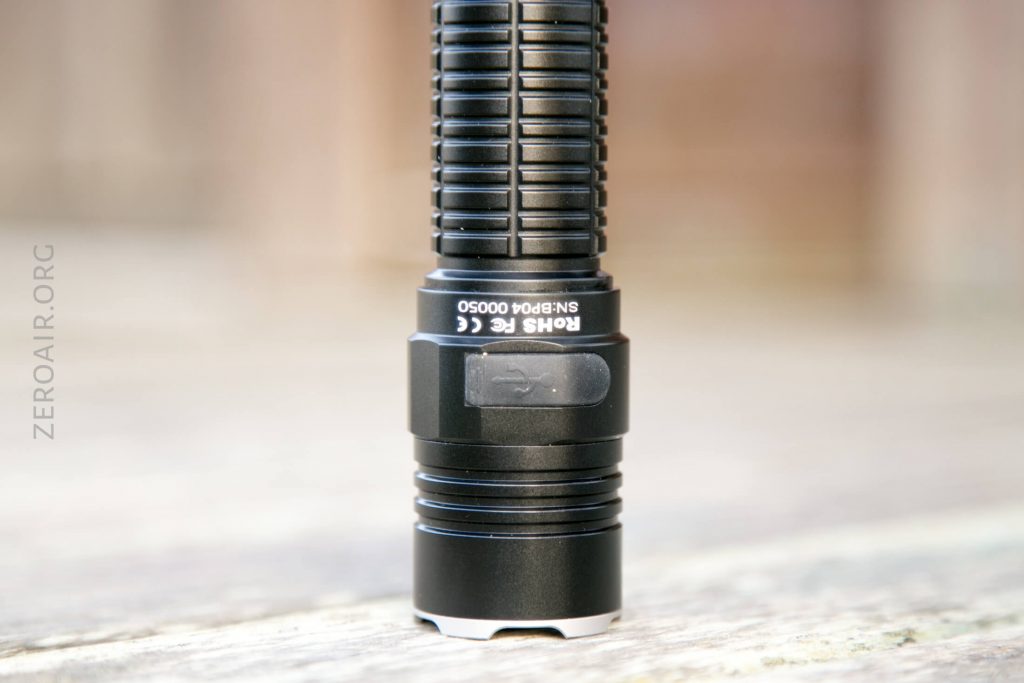
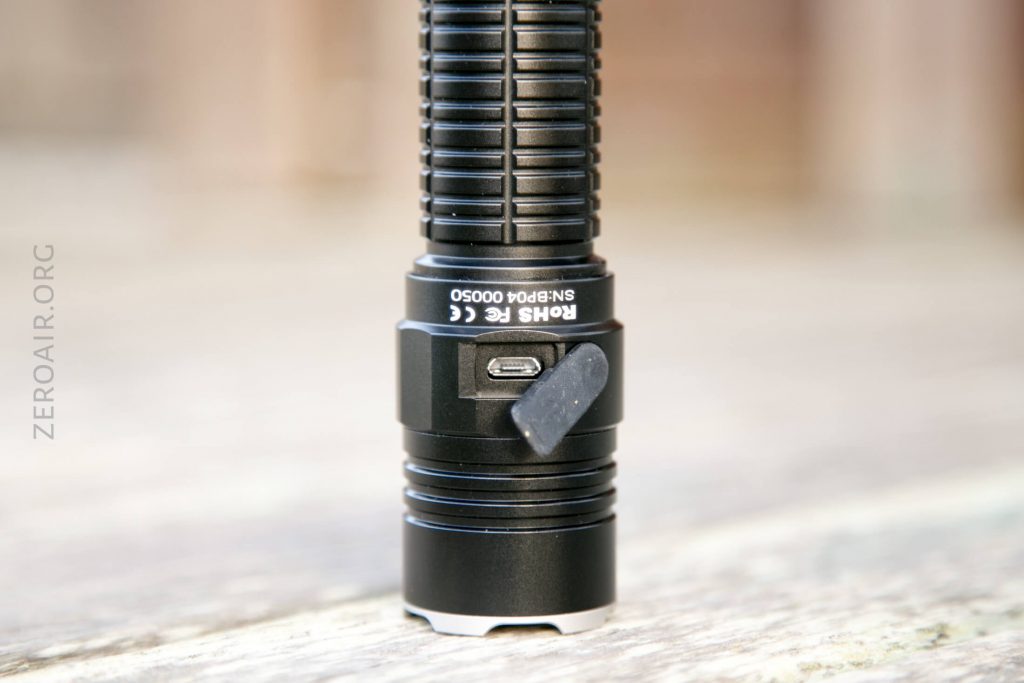
Thrunite includes a cable, too.
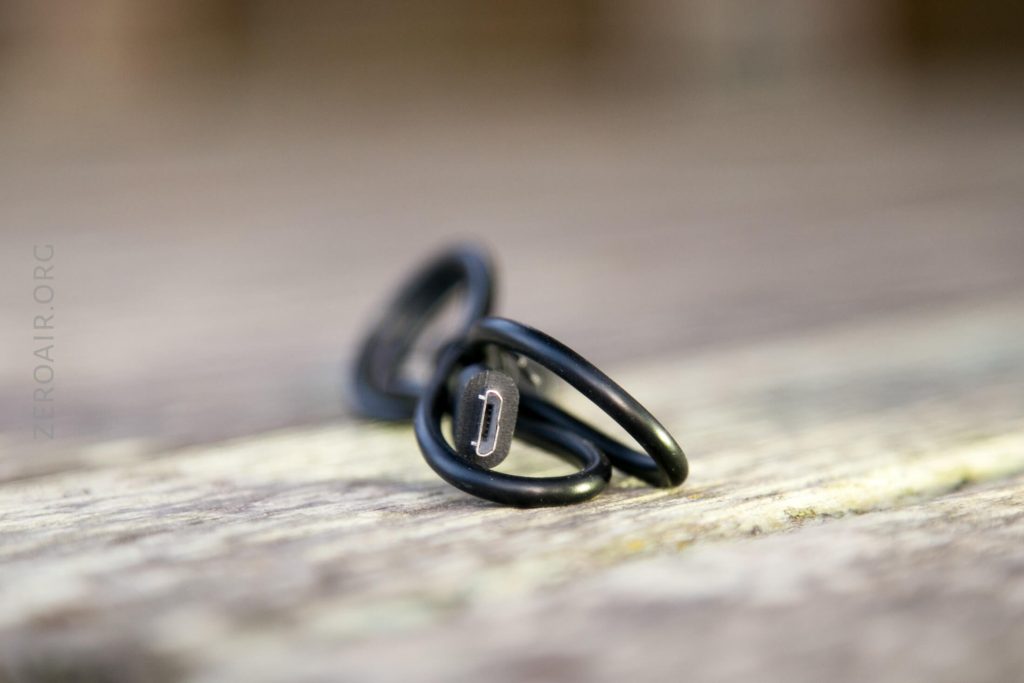
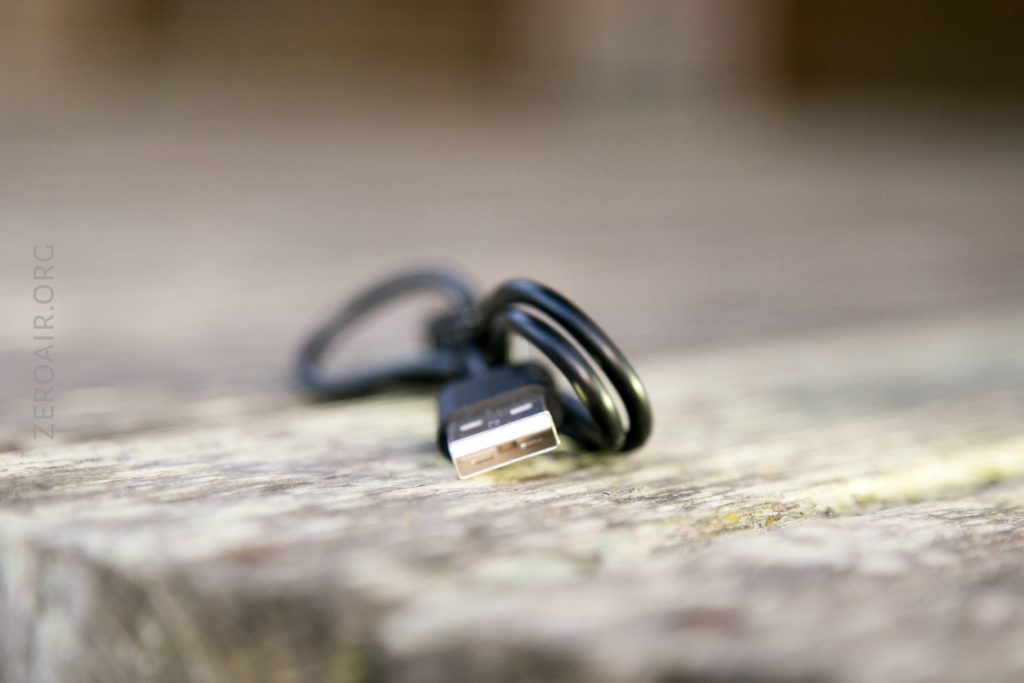
The charging looks a little funny, but is very consistent, and also quite fast – over 2A to the cell in both tests, and for a prolonged time (almost 2 hours).

During charging, the indicating switch is red. When charged, the switch is blue. If flashing purple, something’s up with charging.
Modes
| Mode | Mode Claimed Output (lm) | Claimed Runtime | Measured Lumens |
|---|---|---|---|
| Turbo | 3800/1100 | 2m/150m | 2511/1320 |
| High | 1750/1100 | 3m/155m | 1797/1500 |
| Medium | 300 | 8.5h | |
| Low | 28 | 68h | |
| Firefly | 0.5 | 57d |
I haven’t included a current measure for any modes; the tailcap e-switch complicates all of that too much. I’ll fill this chart in later tonight. 😀
Pulse Width Modulation
No real PWM for any mode.
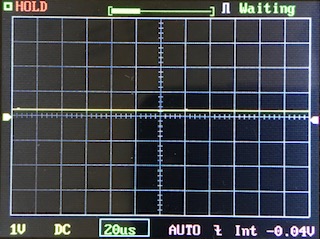


Just for fun though (and really because it is a specifically measurable thing), I’m adding the Strobe frequency view below:

Here you can see a “baseline” – a chart with almost no light hitting the sensor.

Then there’s the Ultrafire WF-602C flashlight, which has some of the worst PWM I’ve seen. It’s so bad that I used a post about it to explain PWM! Here are multiple timescales (10ms, 5ms, 2ms, 1ms, 0.5ms, 0.2ms) to make comparing this “worst” PWM light to the test light easier. That post also explains why I didn’t test the WF-602C at the usual 50us scale.


User Interface and Operation
There are three switches on the TT10. First are the two switches on the tailcap. One feels like a clicky mechanical, and the feels like a paddle switch.

Last is the e-switch on the head, which also has an indicator function.
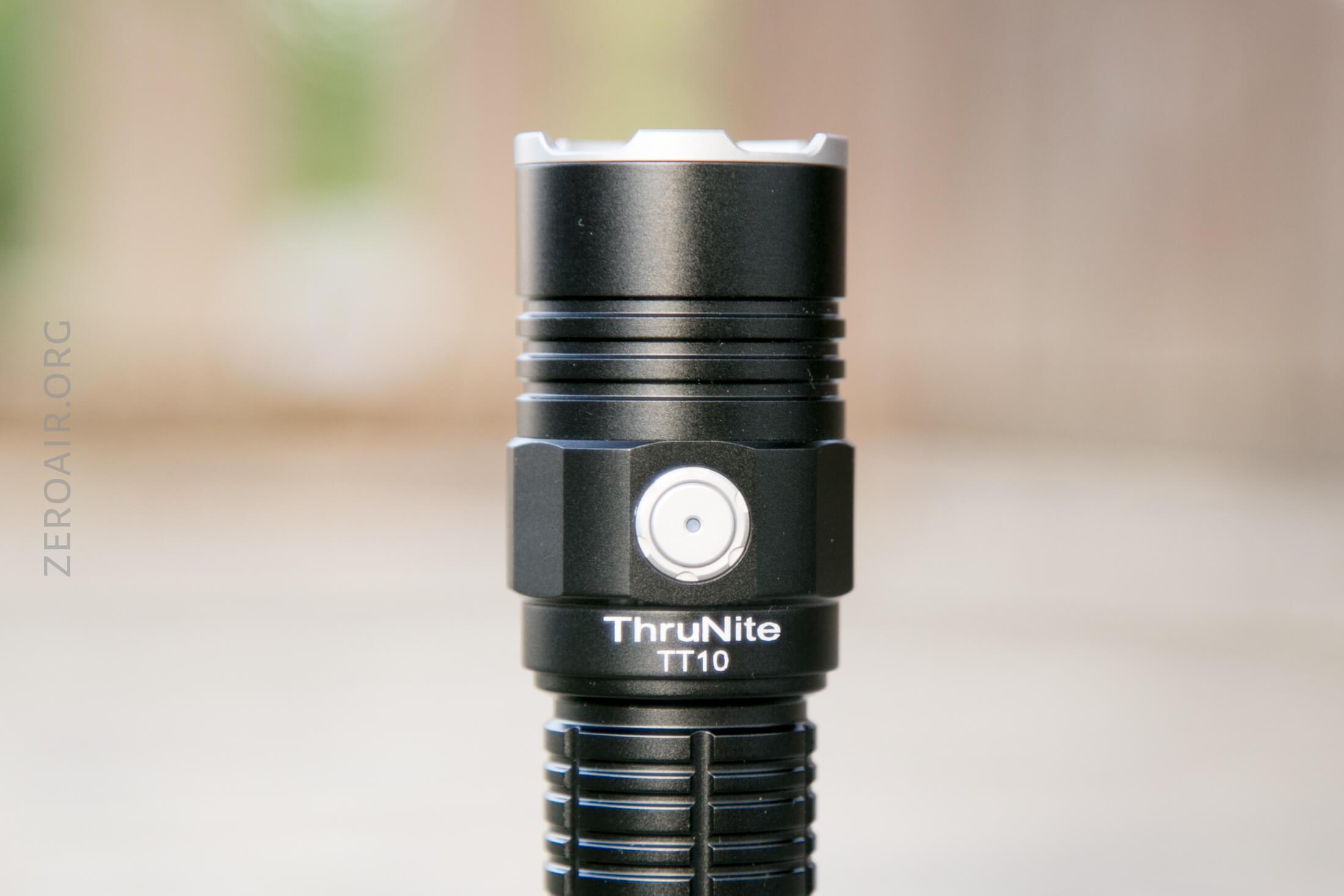

The user interface is not overly complicated by all these switches. More or less this light should be thought of as a side-switch light, but with discreet buttons for easy access to Turbo (big button on tail) and Strobe (smaller button on tail). Either tail switch overrides any other action or state of the light except Lockout.
Here’s a user interface table!
| State | Action | Result |
|---|---|---|
| Any | Click Power Switch (PS) | On (Turbo, steady) |
| Any | Press PS | Momentary Turbo (when released, light goes to off no matter previous state) |
| Any | Click Tail Switch (TS) | Momentary Strobe (when released, light goes to off no matter previous state) |
| Off | Hold Side Switch (SS) | Firefly |
| Off | Click SS | On (Mode Memory, excluding Firefly, Turbo, and Strobe) |
| Firefly | Hold SS^ | Lockout (Locks out all modes)^^ |
| Firefly | Click SS | Switch indicates Red for Lockout |
| Firefly | Click TS or PS | No action (not even red indicator on SS) |
| On | Click SS | Off |
| On (LMH) | Hold SS | Mode Advance (LMH only) |
| Any | Click SS 2x | Turbo |
| Lockout | Hold SS | Unlock |
| Any | Click SS 3x | Strobe |
^ Note that this means from Firefly, other non Turbo/Strobes can’t be accessed directly
^^ Lockout isn’t signified in any way – just hold til you think it’s locked out. That’s probably long enough.
LED and Beam
The emitter here is a Cree XHP70.2, in cool white. Also available is NW, and I’d recommend that one generally unless you must have M A X L U M E N S.

The reflector is fairly deep, orange peel, and there’s a white centering ring around the LED.


These beamshots always have the following settings: f8, ISO100, 0.3s shutter, and manual 5000K exposure. These photos are taken at floor level, and the beam hits the ceiling around 9 feet away.

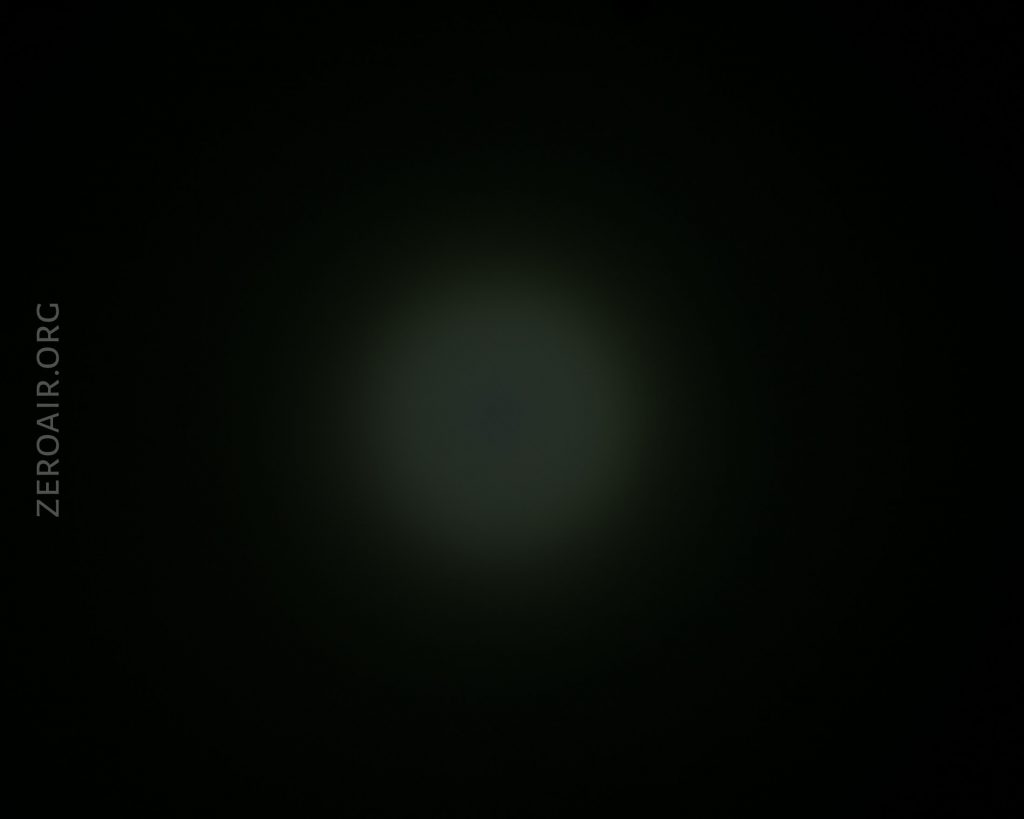
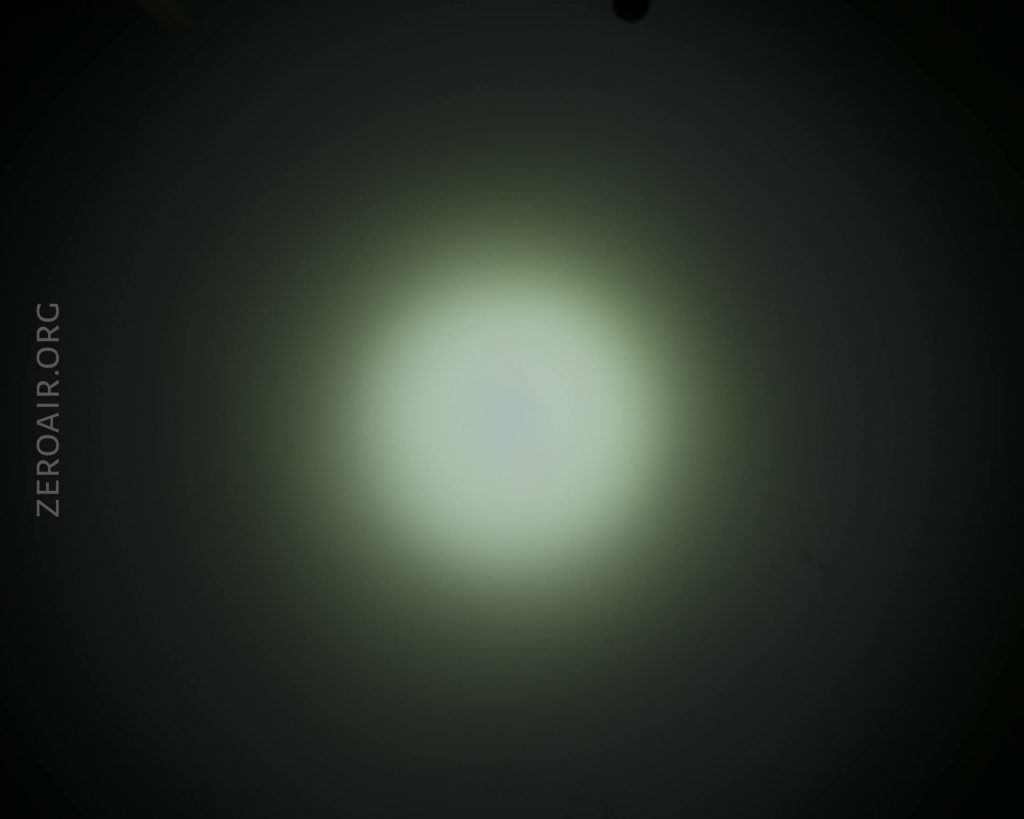
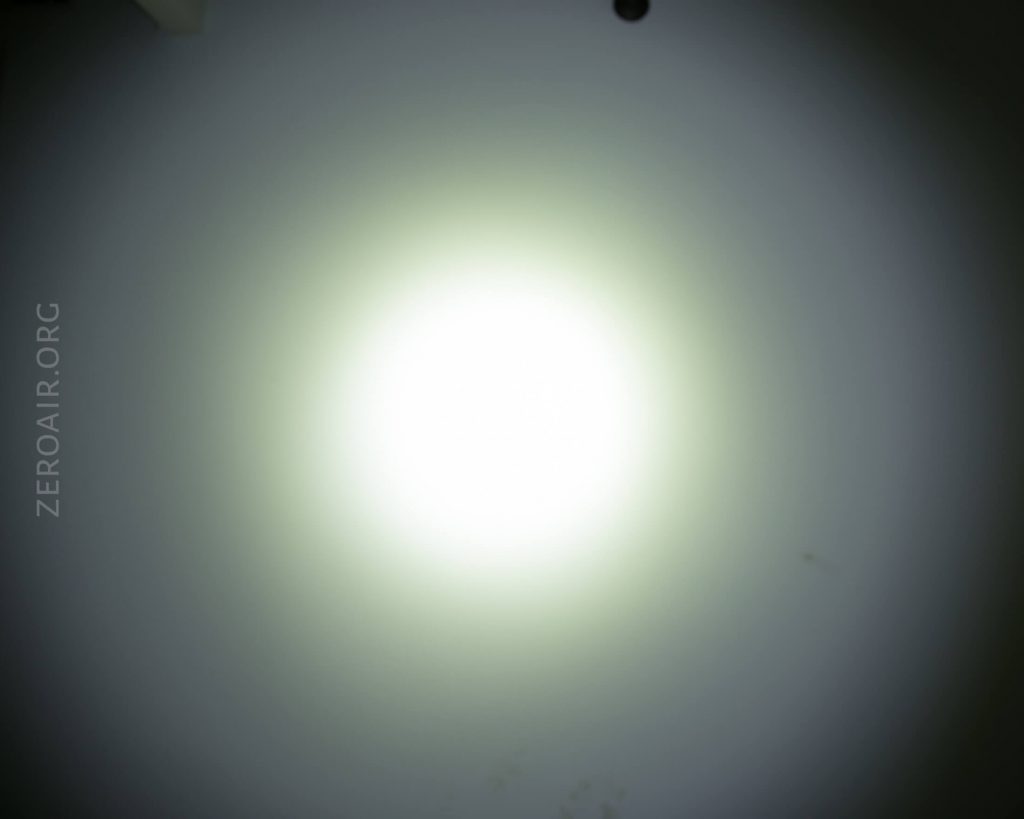
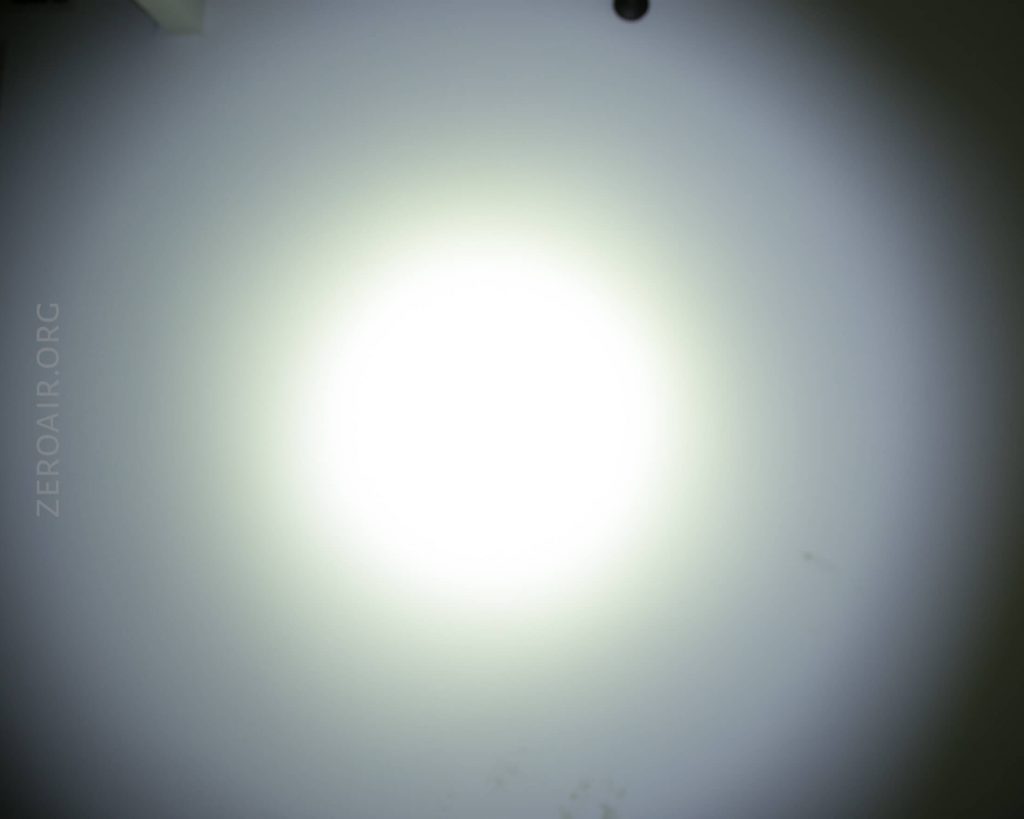
Tint vs BLF-348 (KillzoneFlashlights.com 219b version) (affiliate link)

I compare everything to the Killzone 219b BLF-348 because it’s inexpensive and has the best tint!
Random Comparisons and Competitive Options
Here’s a link to a relevantly filtered page on parametrek.com. I use that site a lot! There are a few compelling competitors, a couple of which have more throw than the TT10. Still, the TT10 is a good entry in the category, with easy access to Turbo and Strobe.
Conclusion
What I like
- Very fast charging (especially over regular micro-USB)
- All the switches
- Full package including cell
What I don’t like
- Didn’t hit output numbers
- Price
Notes
- This light was provided by Thrunite for review. I was not paid to write this review.
- This content originally appeared at zeroair.org. Please visit there for the best experience!
- For flashlight-related patches, stickers, and gear, head over to PhotonPhreaks.com!
- Use my amazon.com referral link if you’re willing to help support making more reviews like this one!
- Please support me on Patreon! I deeply appreciate your support!
were you able to test the amps for turbo and high?
No, something about the circuit of the TT10 didn’t allow it to work the way I test.