
Reylight Pineapple Mini Flashlight Review
Today I have for review a light you all knew I’d buy… It’s the ReyLight Pineapple Mini flashlight in brass, with Nichia 219b. It’s great, inexpensive, and supports multiple chemistries. Read on if you need more convincing!
Official Specs and Features
Here’s a link to the ReyLight Pineapple Mini Flashlight product page.
Versions
There are at least a few versions of the ReyLight Pineapple Mini Flashlight. There’s titanium and copper, and of course, brass (seen here). There’s also a twisty version, which has been available for a while, and I reviewed it here.
Price
Shipped, the ReyLight Pineapple Mini Flashlight is $44.
Short Review
This is a wonderful little light. Nichia 219b 4500K with a high CRI r9080 really sells the light. The rest of it is just a bonus! Brass is great.
Long Review
The Big Table
| ReyLight Pineapple Mini Flashlight | |
|---|---|
| Emitter: | Nichia 219b (4500K, R9080 High CRI) |
| Price in USD at publication time: | $44.00 |
| Cell: | 1xAAA |
| Turbo Runtime | High Runtime |
| LVP? | |
| Switch Type: | Mechanical |
| On-Board Charging? | No |
| Claimed Lumens (lm) | 90 |
| Measured Lumens (at 30s) | 79 (87.8% of claim)^ |
| Candela per Lumen | 5.1 |
| Claimed Throw (m) | – |
| Candela (Calculated) in cd (at 30s) | 51lux @ 2.712m = 375cd |
| Throw (Calculated) (m) | 38.7^ |
| All my Reylight reviews! | |
| ReyLight Pineapple Mini Flashlight | |
|---|---|
| Emitter: | Nichia 219b (4500K, R9080 High CRI) |
| Price in USD at publication time: | $44.00 |
| Cell: | 1×10440 |
| Turbo Runtime | High Runtime |
| LVP? | |
| Switch Type: | Mechanical |
| On-Board Charging? | No |
| Claimed Lumens (lm) | 240 |
| Measured Lumens (at 30s) | 192 (80% of claim)^ |
| Candela per Lumen | 6 |
| Claimed Throw (m) | – |
| Candela (Calculated) in cd (at 30s) | 98lux @ 3.294m = 1063cd |
| Throw (Calculated) (m) | 65.2^ |
| All my Reylight reviews! | |
^ Measurement disclaimer: Testing flashlights is my hobby. I use hobbyist-level equipment for testing, including some I made myself. Try not to get buried in the details of manufacturer specifications versus measurements recorded here; A certain amount of difference (say, 10 or 15%) is perfectly reasonable.
What’s Included
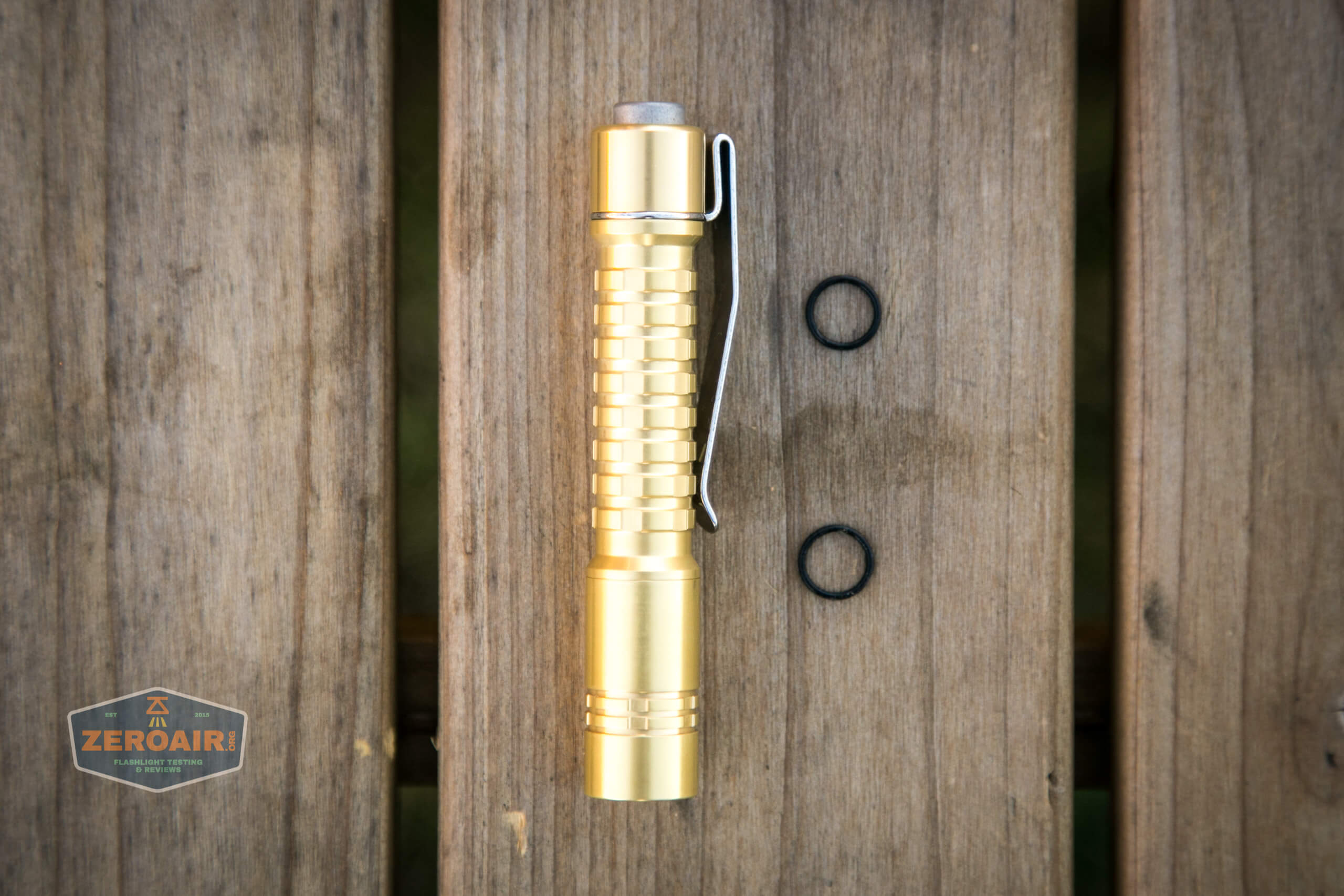
- Reylight Pineapple Mini Brass Flashlight
- Spare O-rings (2)
Package and Manual
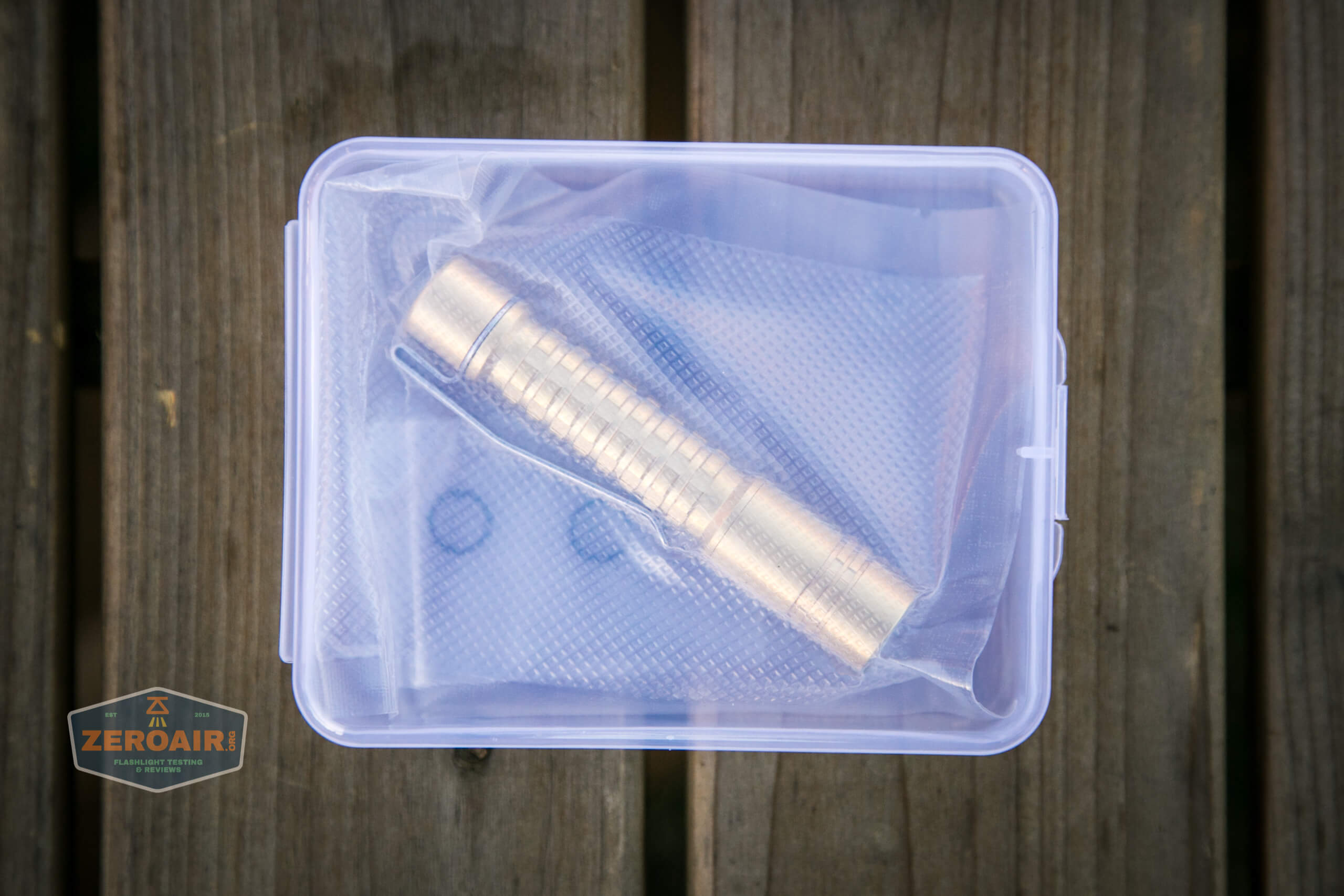
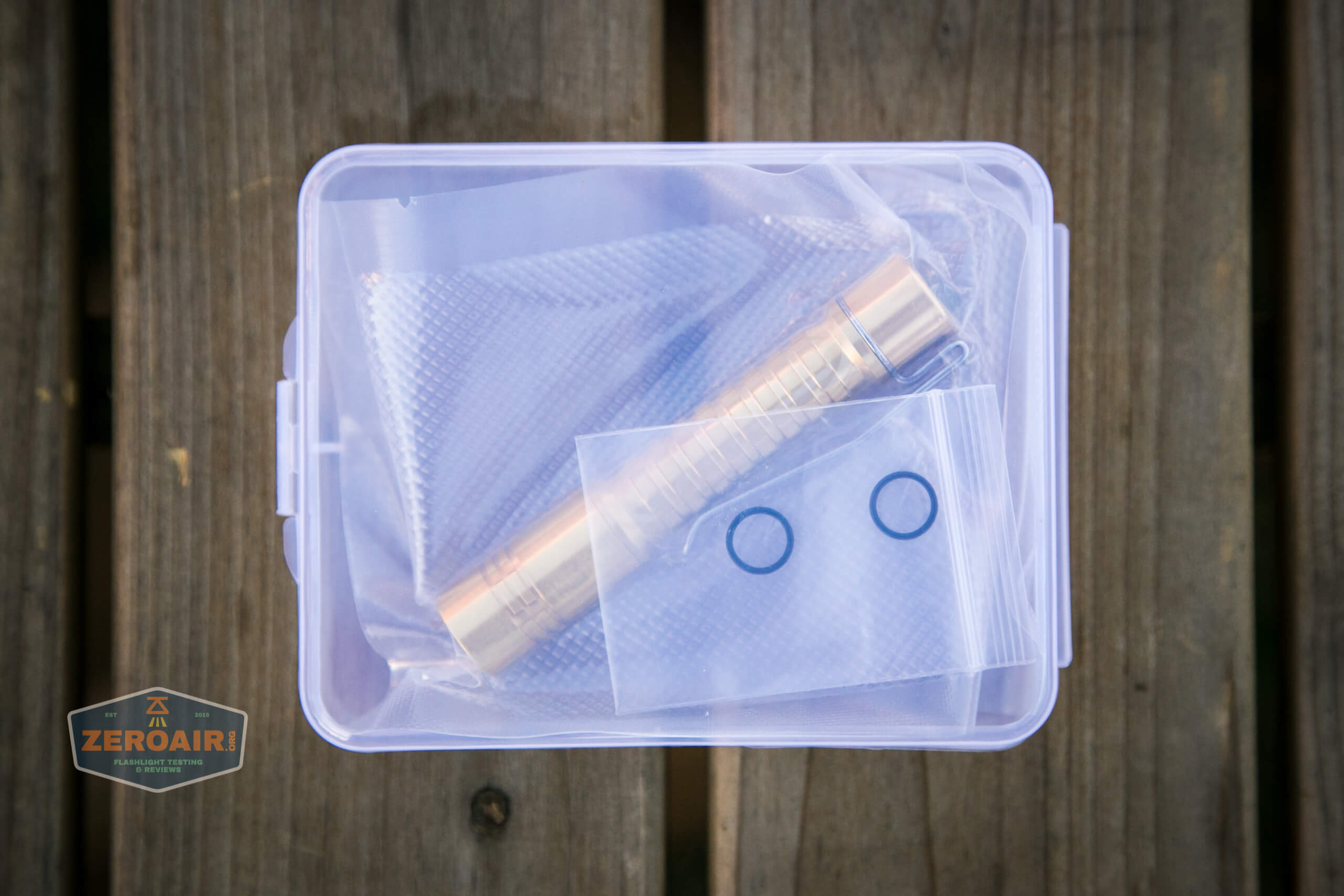
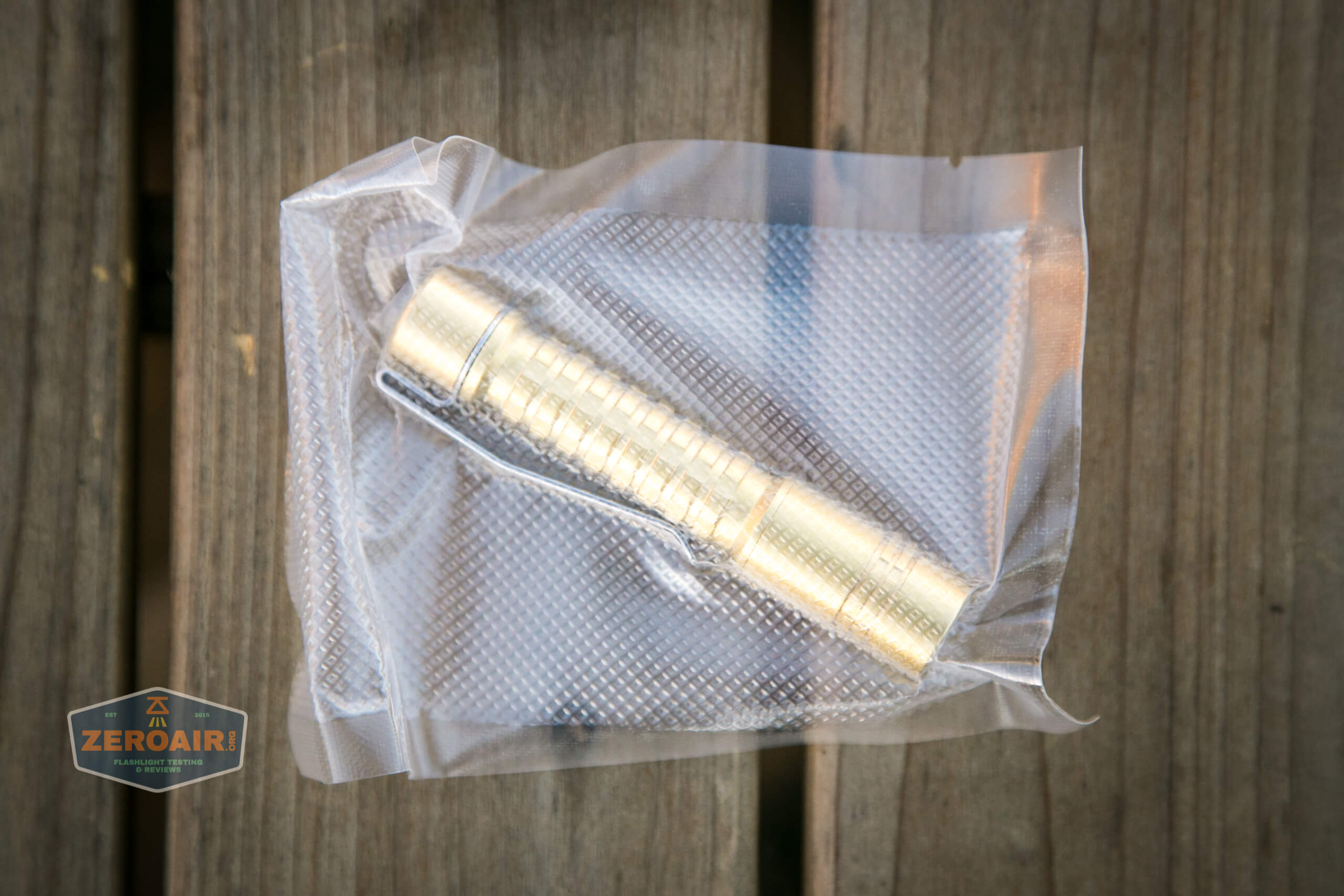
There is no manual.
Build Quality and Disassembly
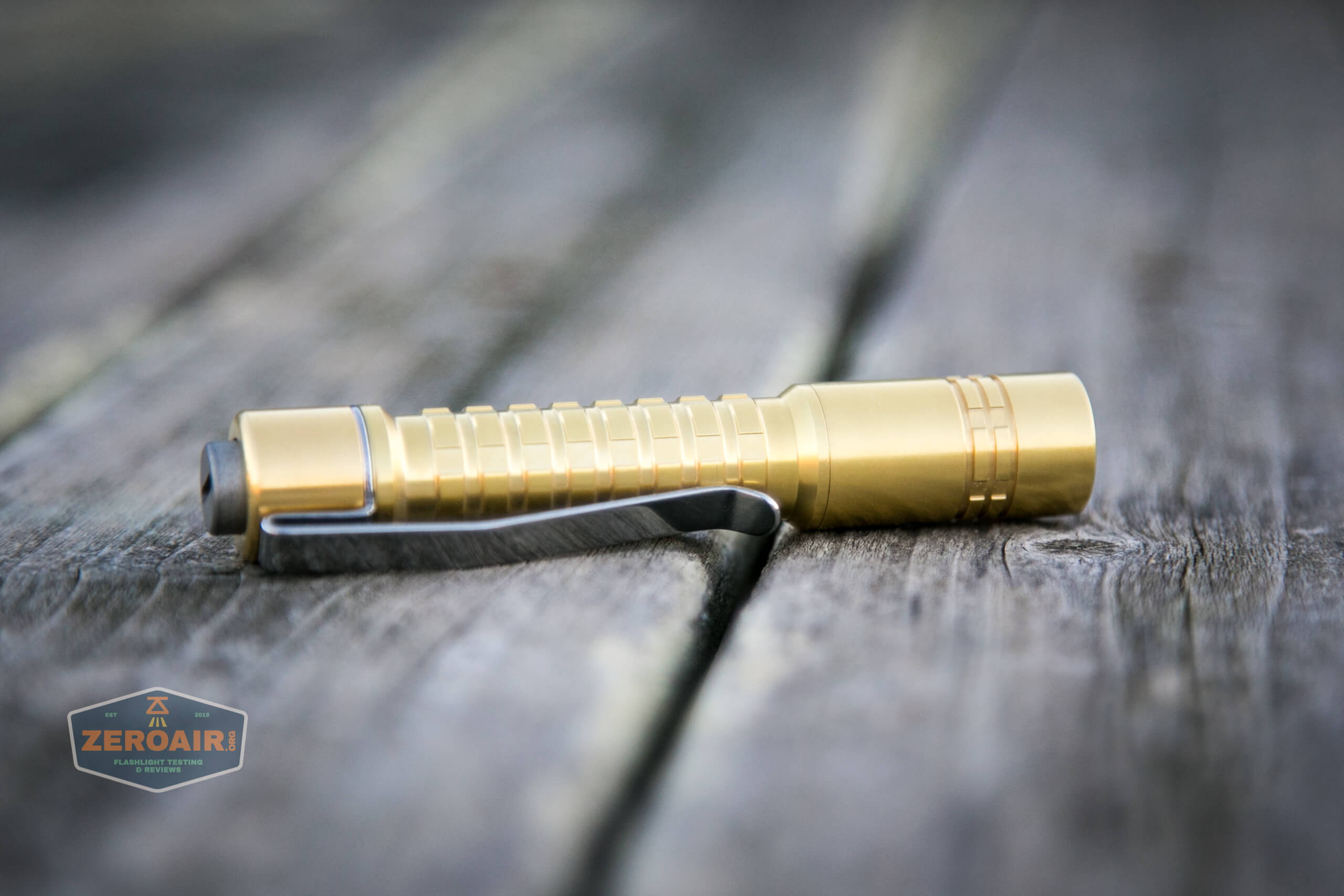
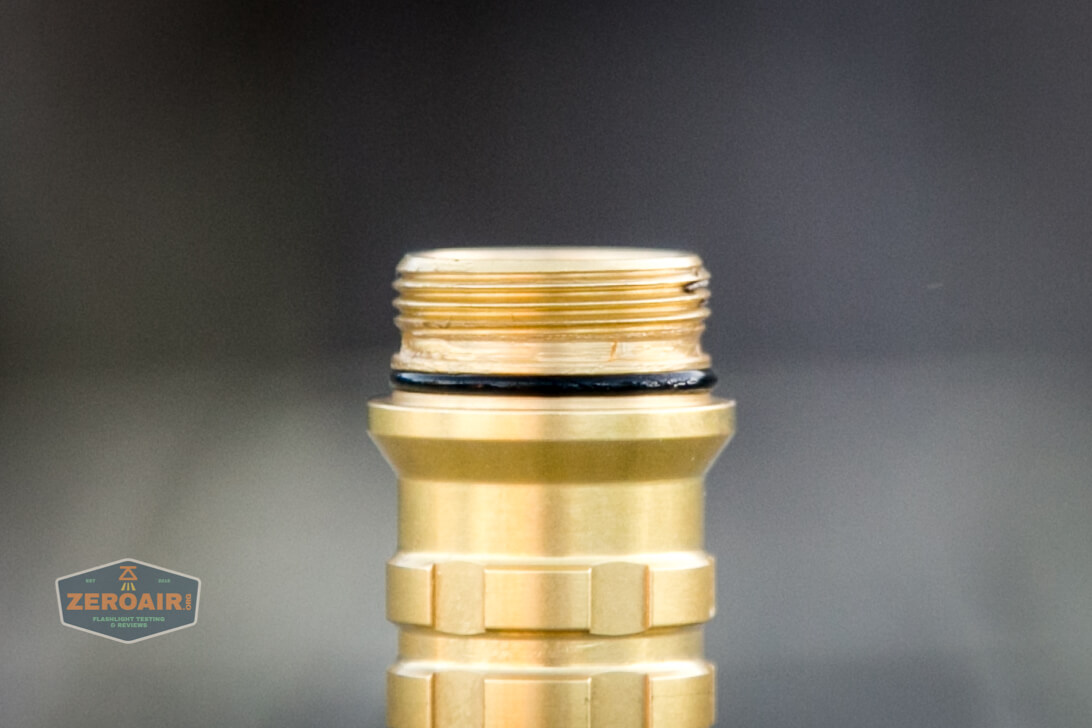
The build quality of the Pineapple Mini is good. It’s pretty typical of Reylights, but the threads are ridiculously smooth.
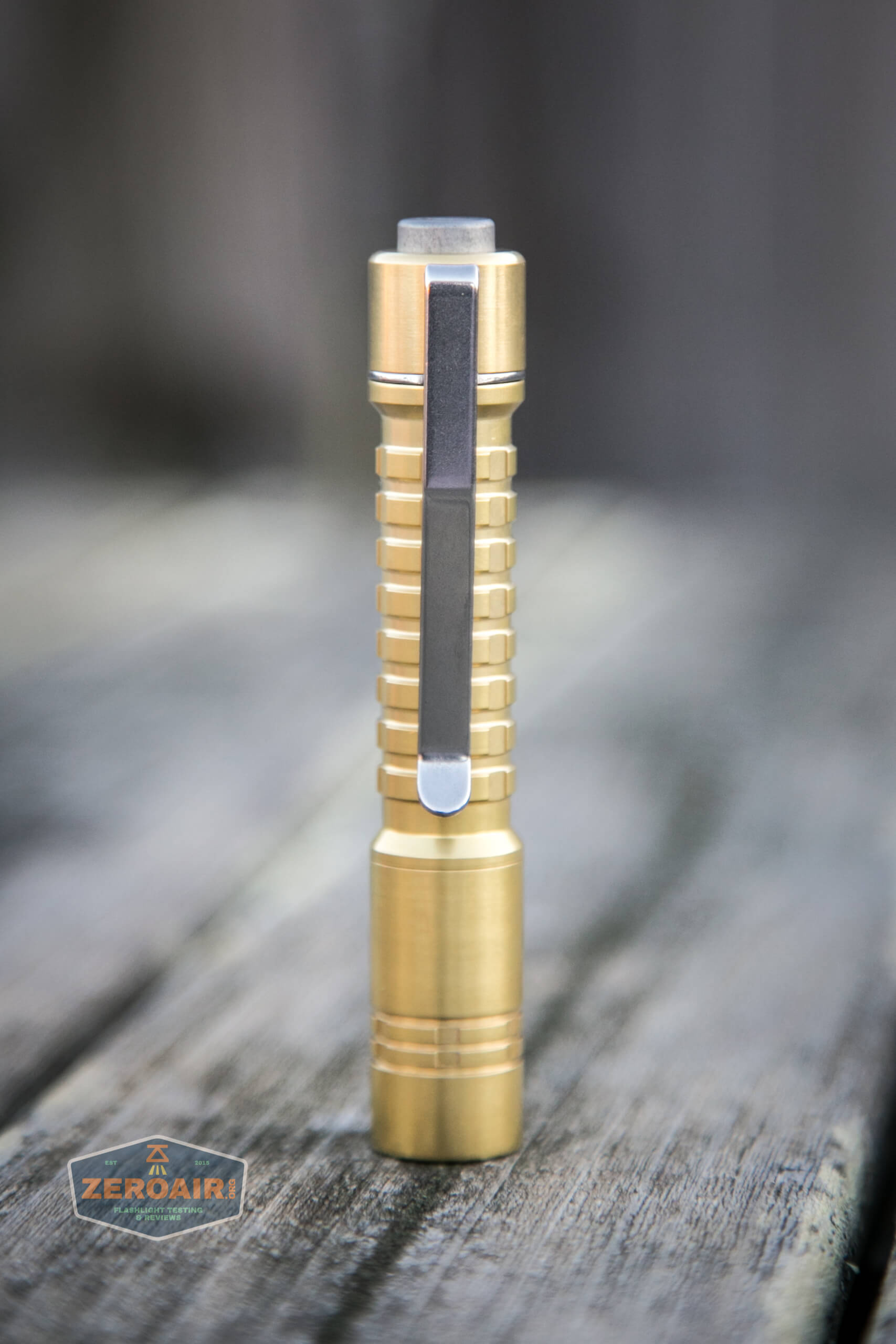
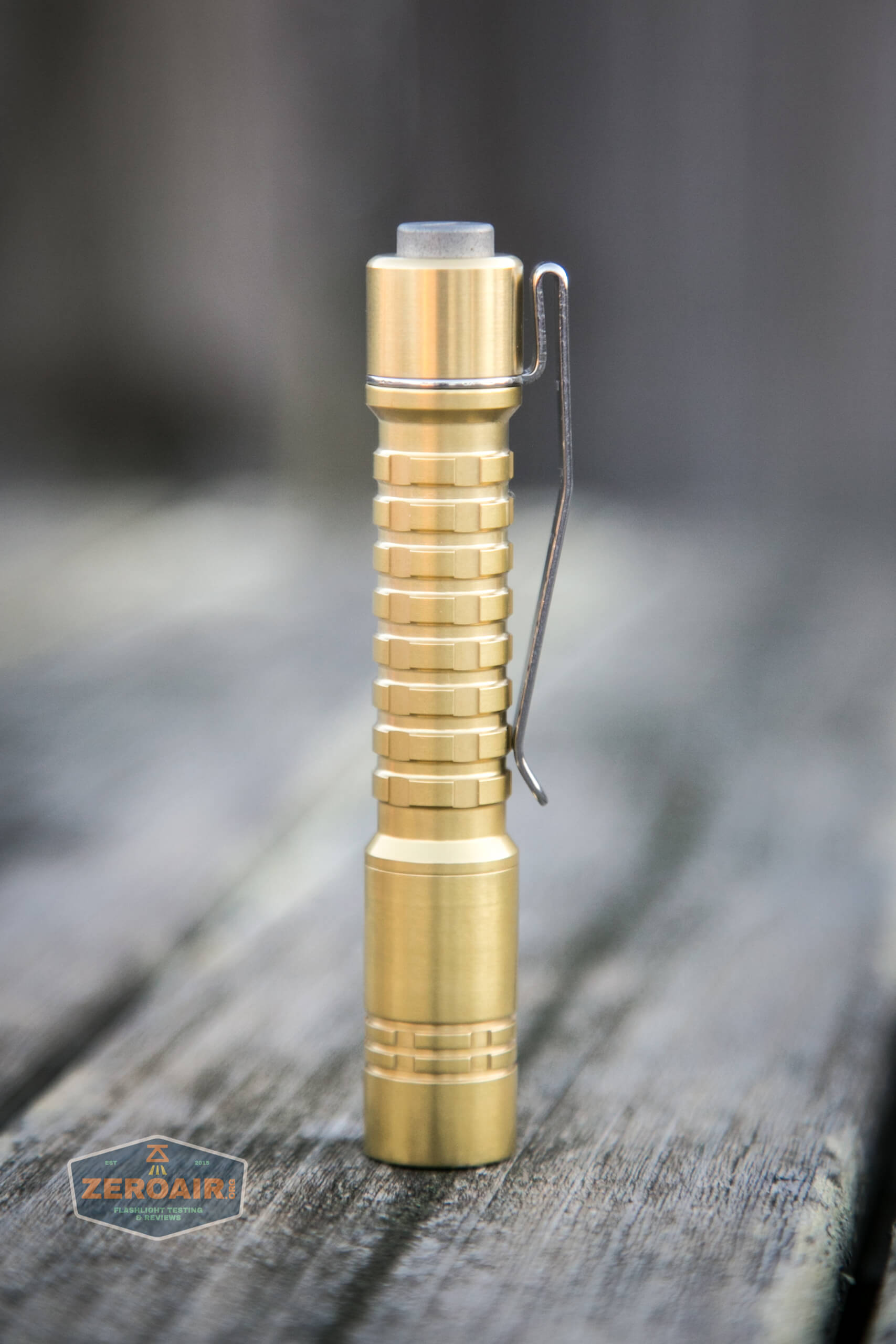
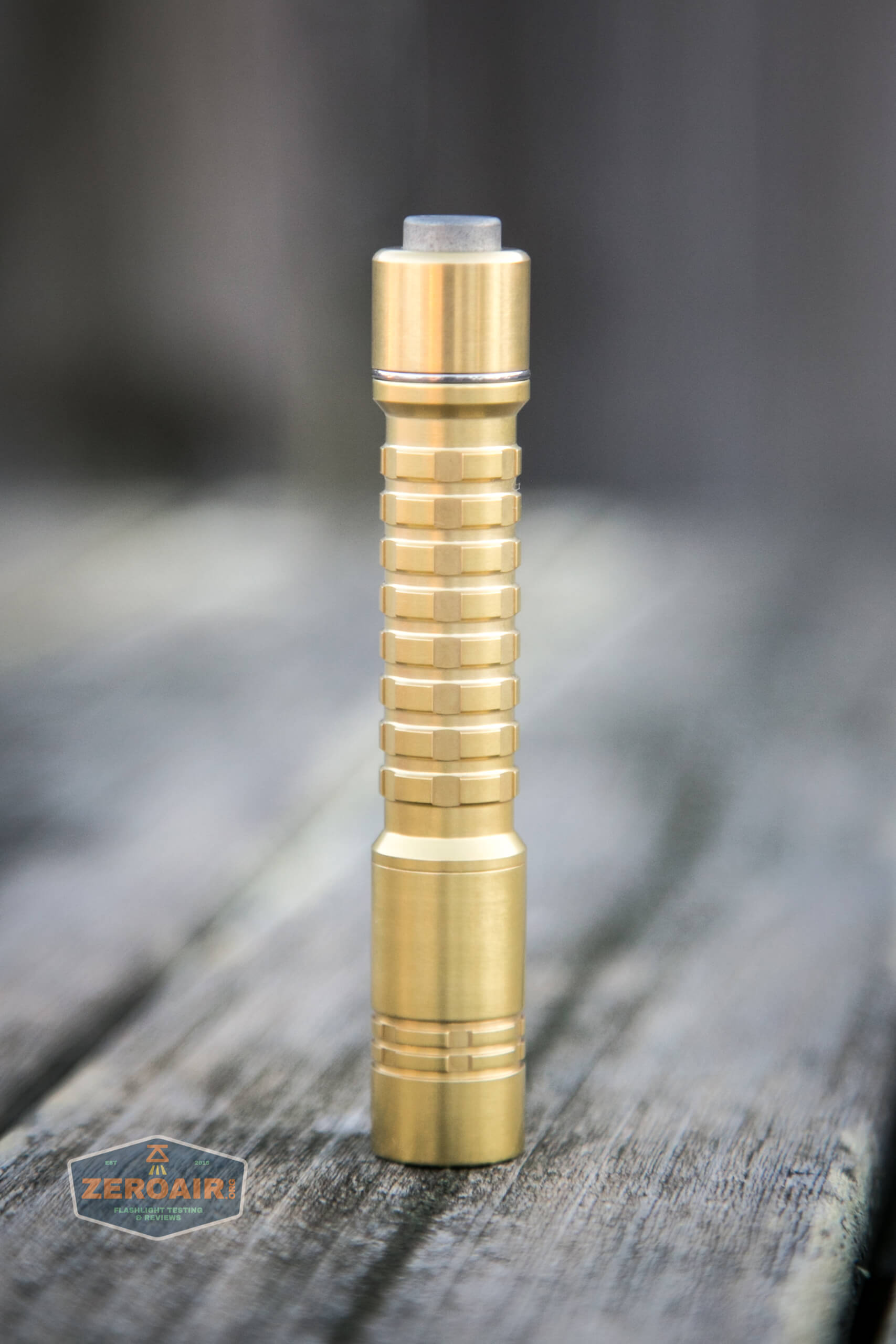
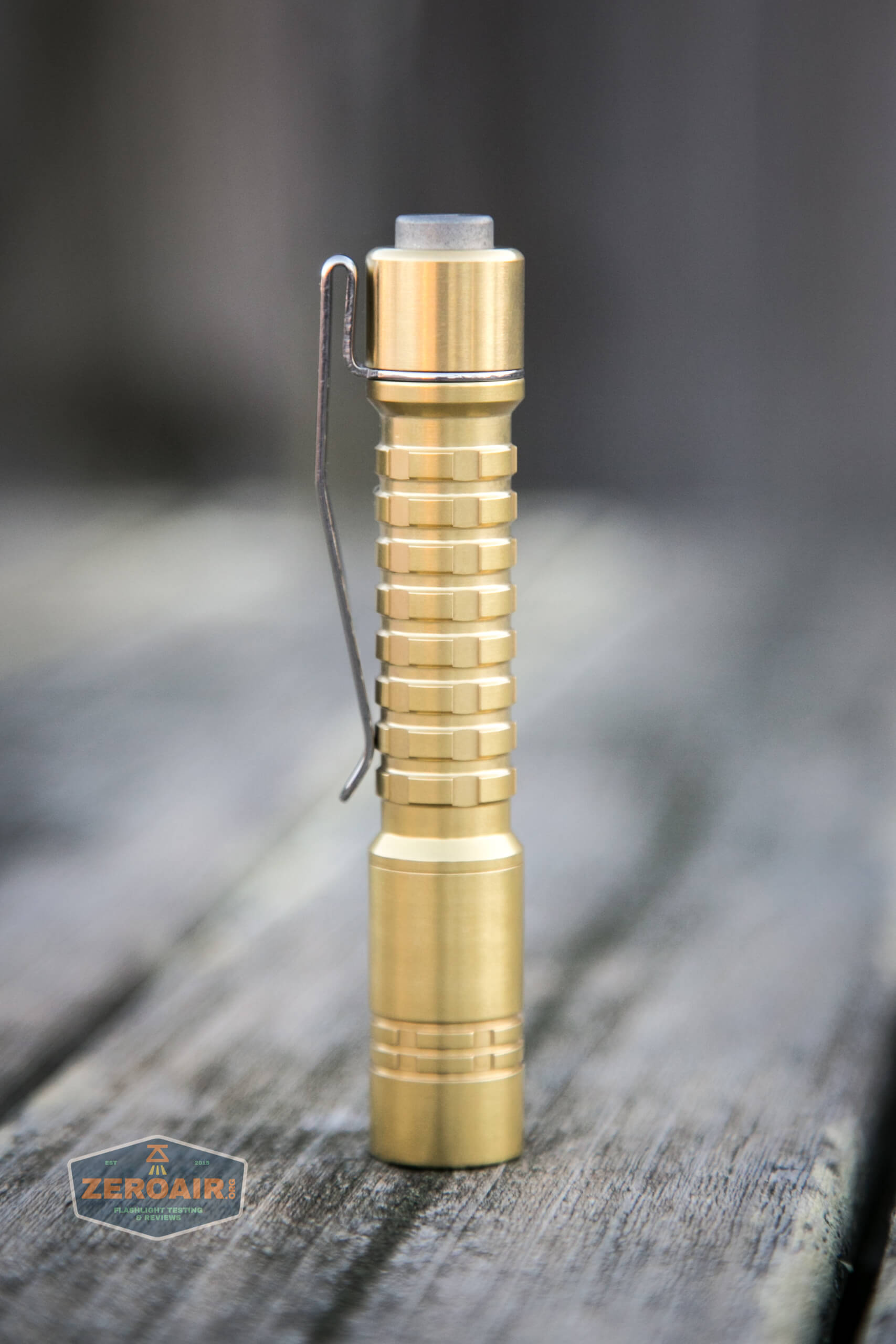
The body is nice and thick, giving the light a good weight in hand.
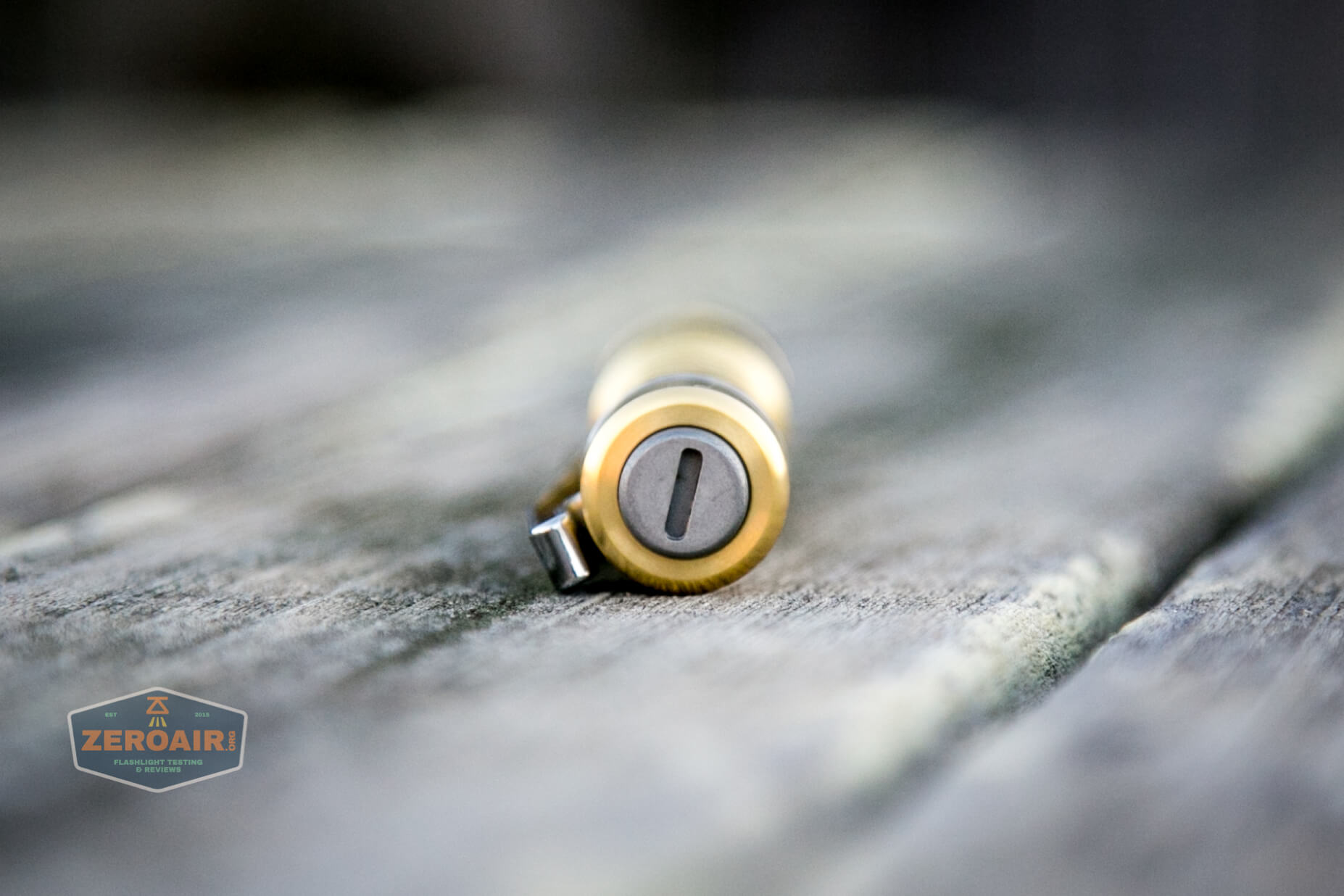
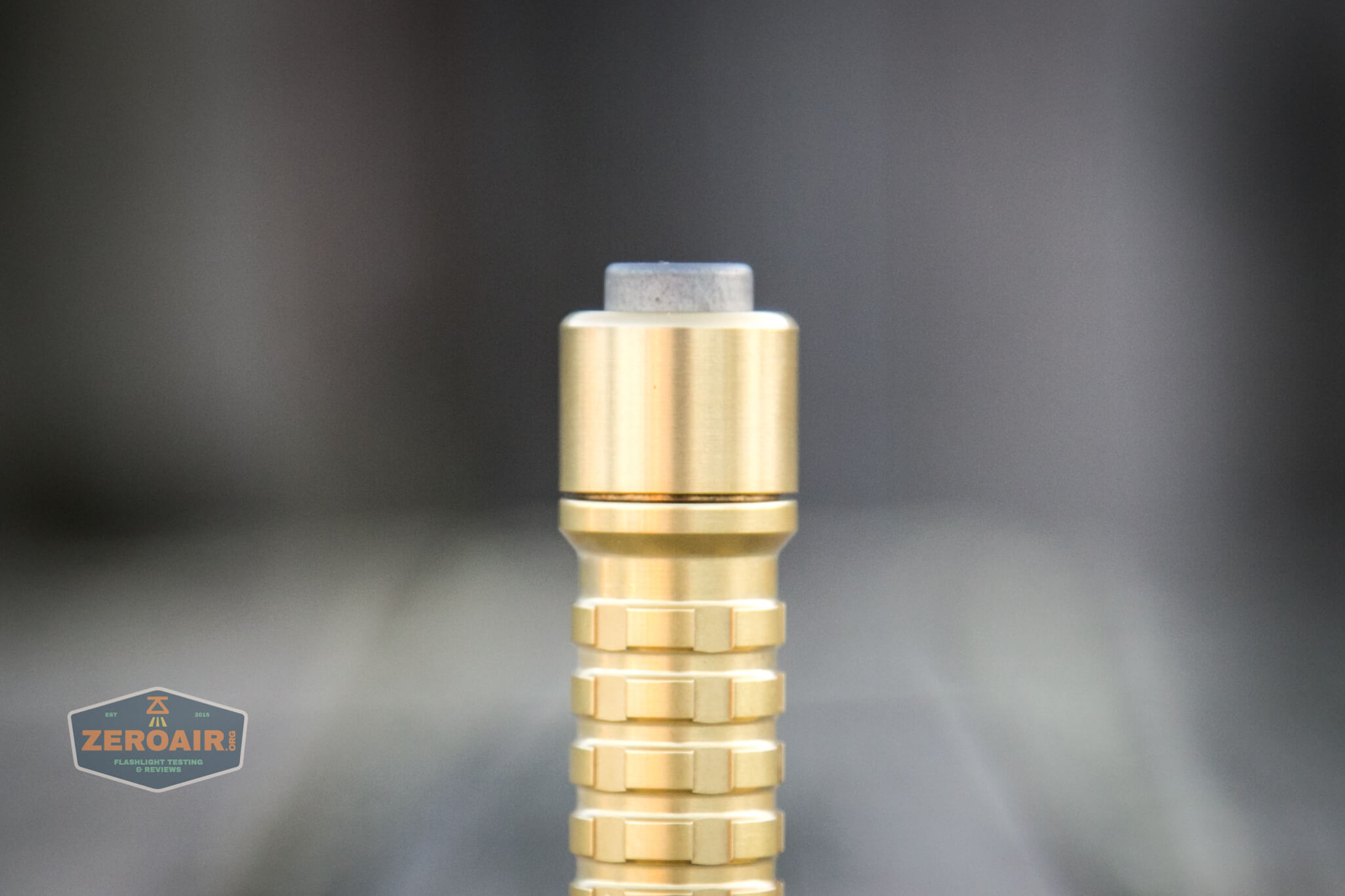
The switch has a tritium slot, which you can have fitted by Rey. I didn’t include a tritium vial, mainly because I didn’t see the tiny place on the webpage that mentioned it was possible to include it…. Anyway, it’s a 1.5mm x 6mm vial, which can be purchased separately elsewhere.
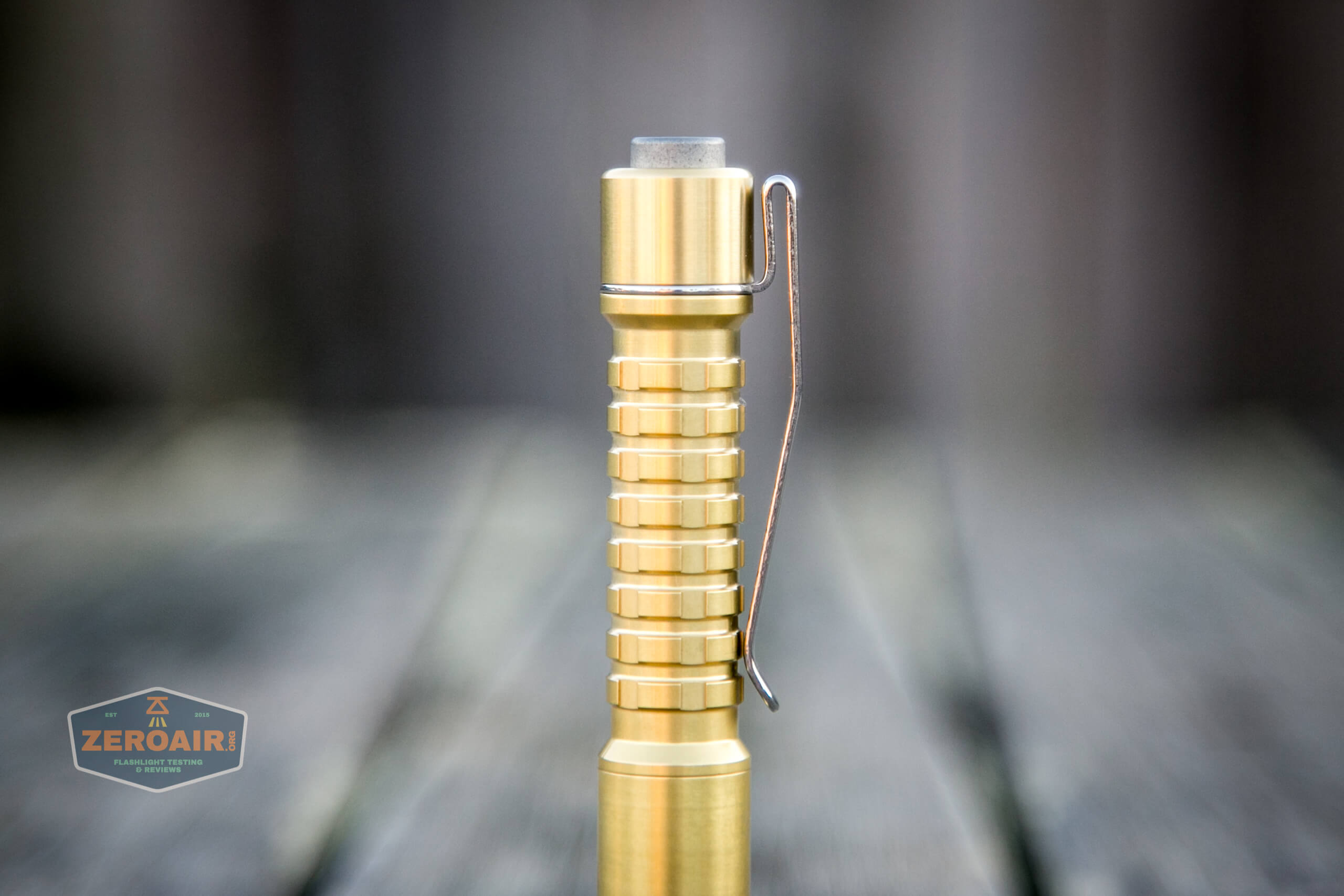
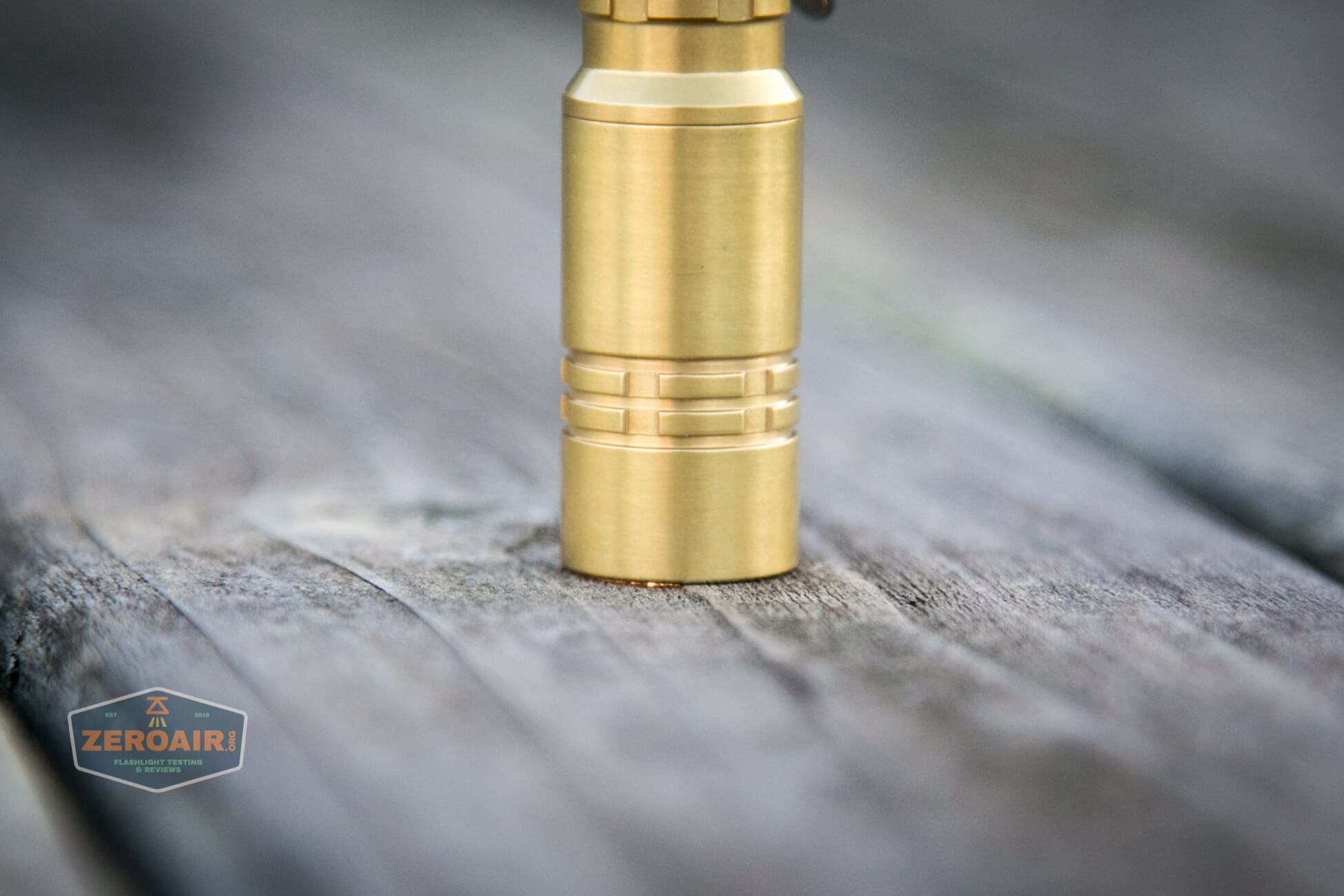
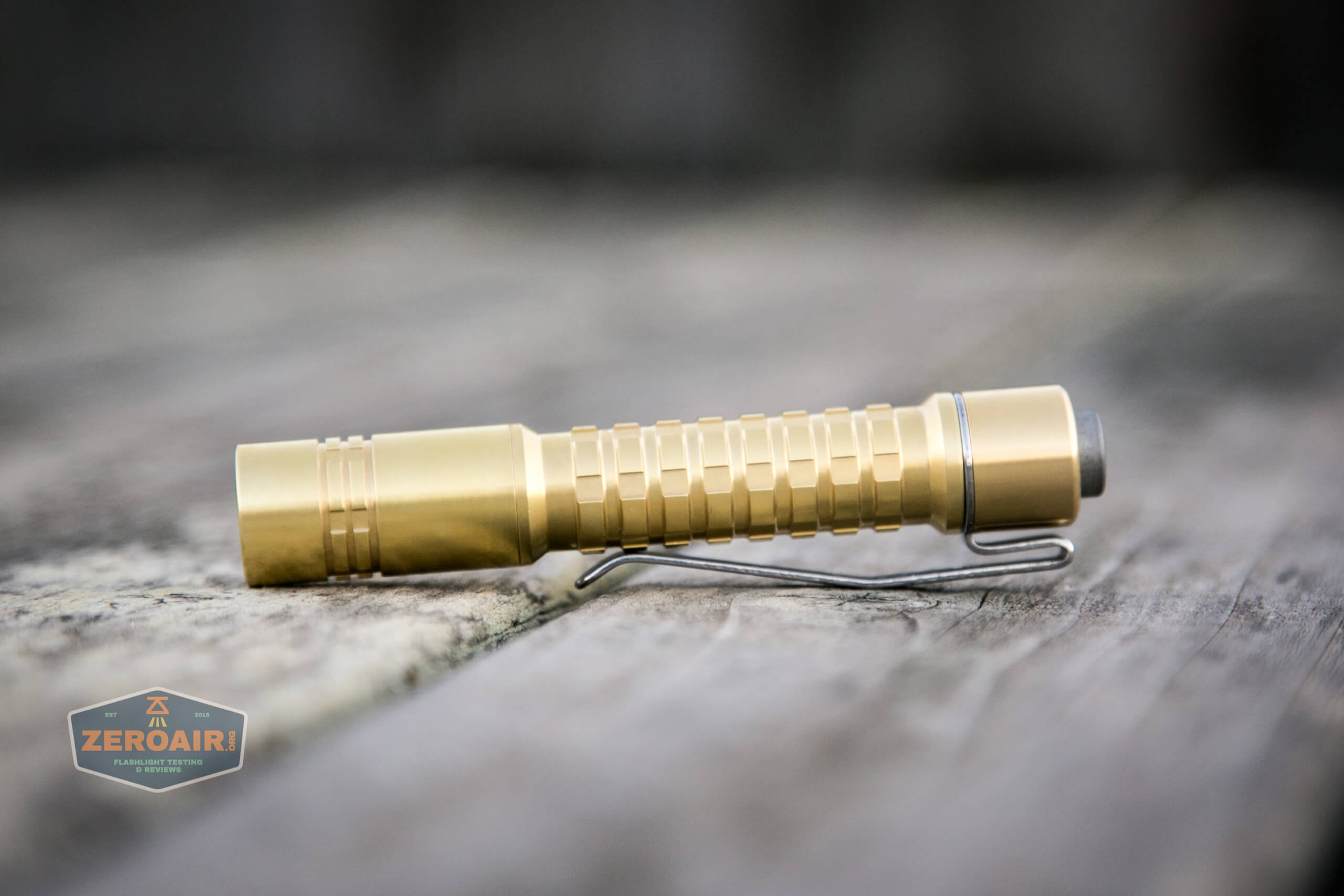
The body has somewhat of a frag pattern, but this harkens back to the Reylight Dawn. It’s a pattern he’s used before.
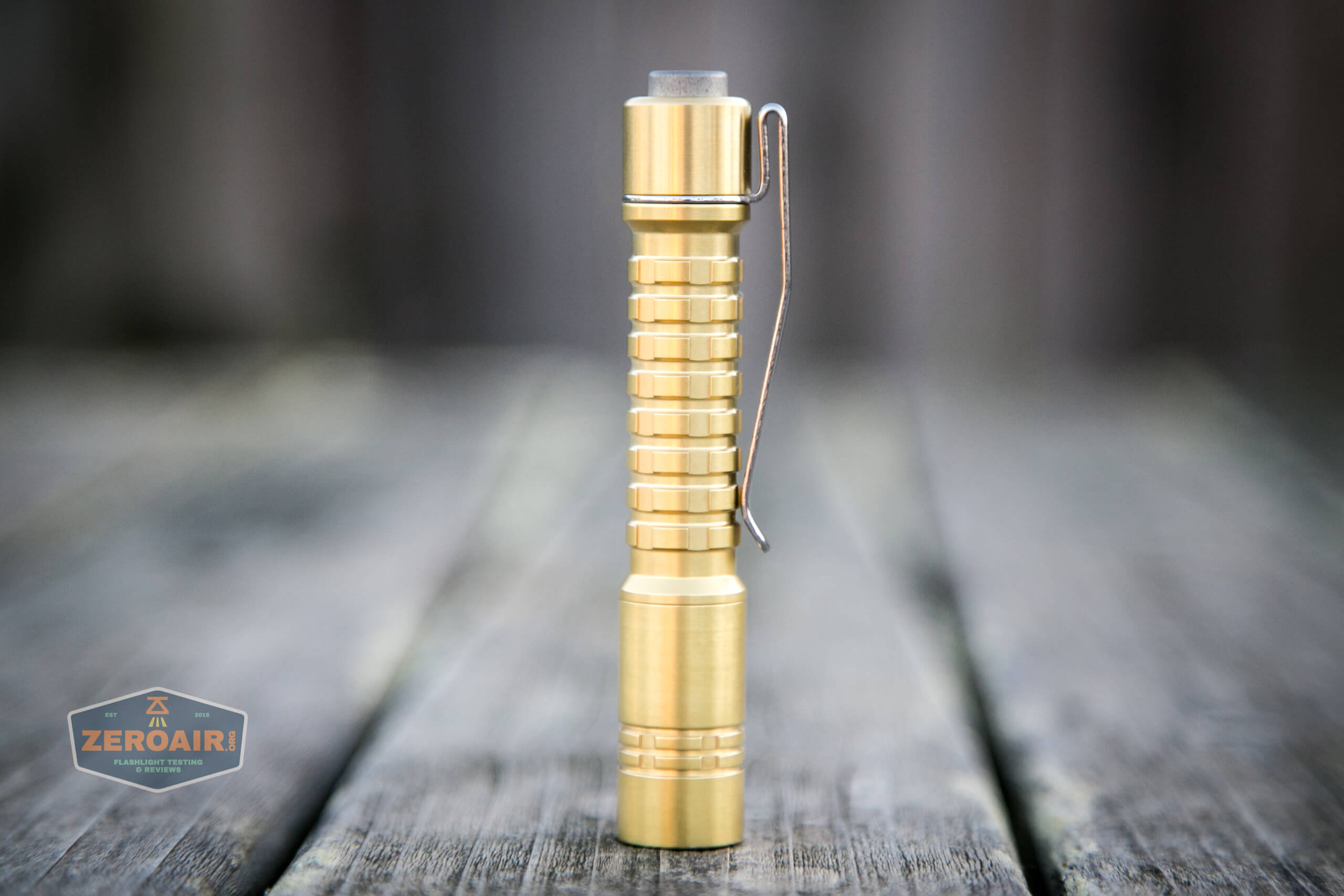
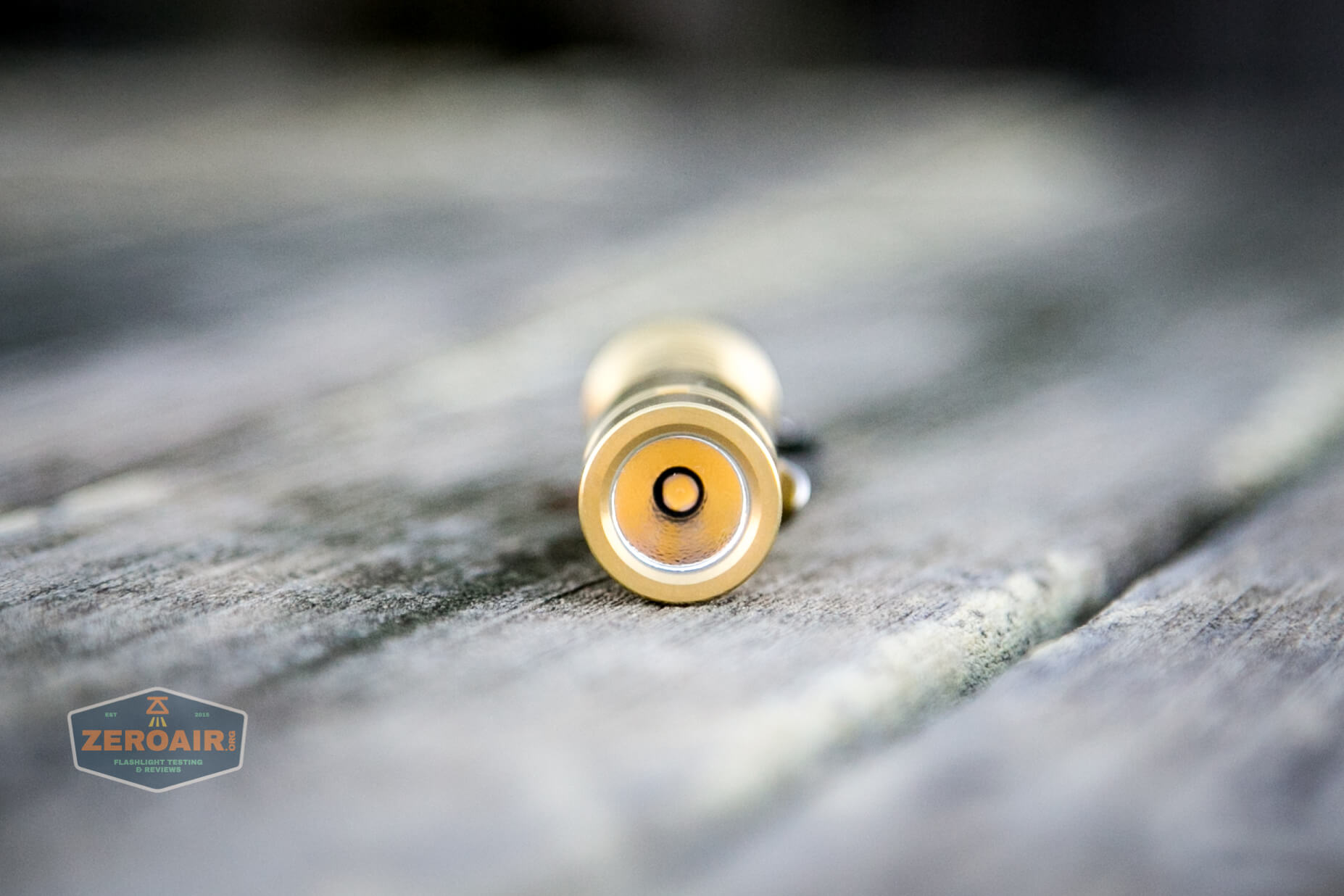
The head doesn’t really have any cooling fins, but what ridges it does have are good for unscrewing the head.
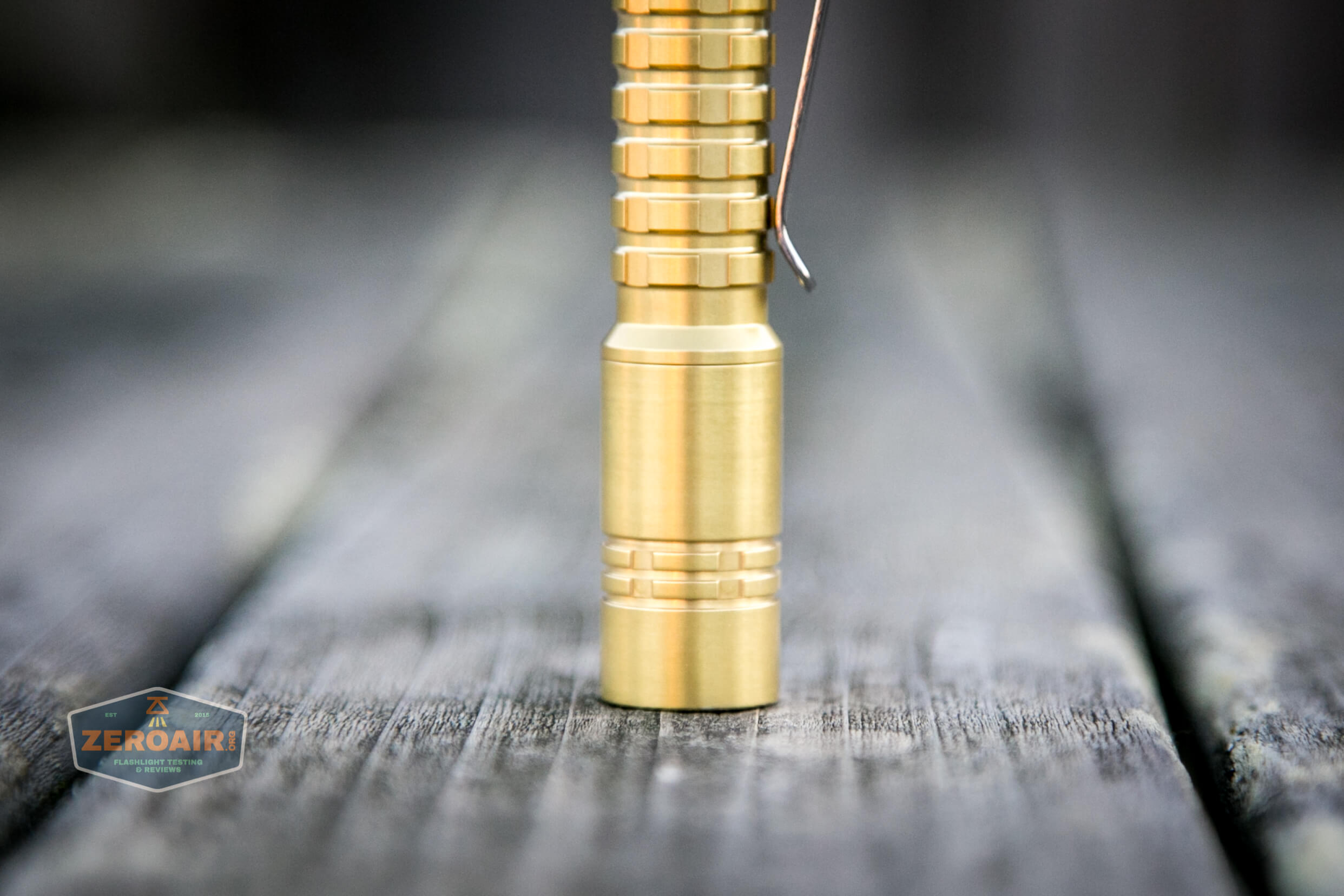
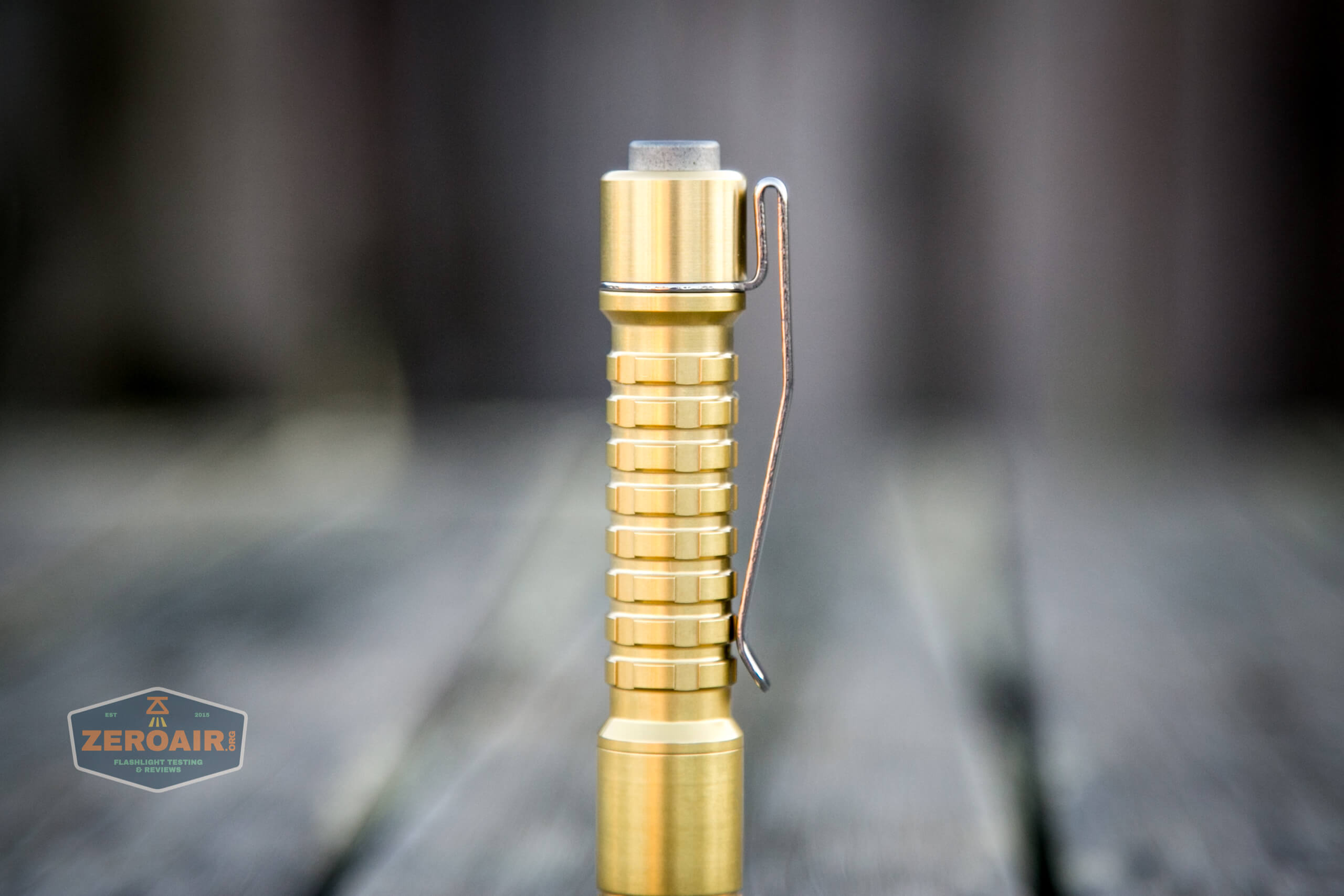
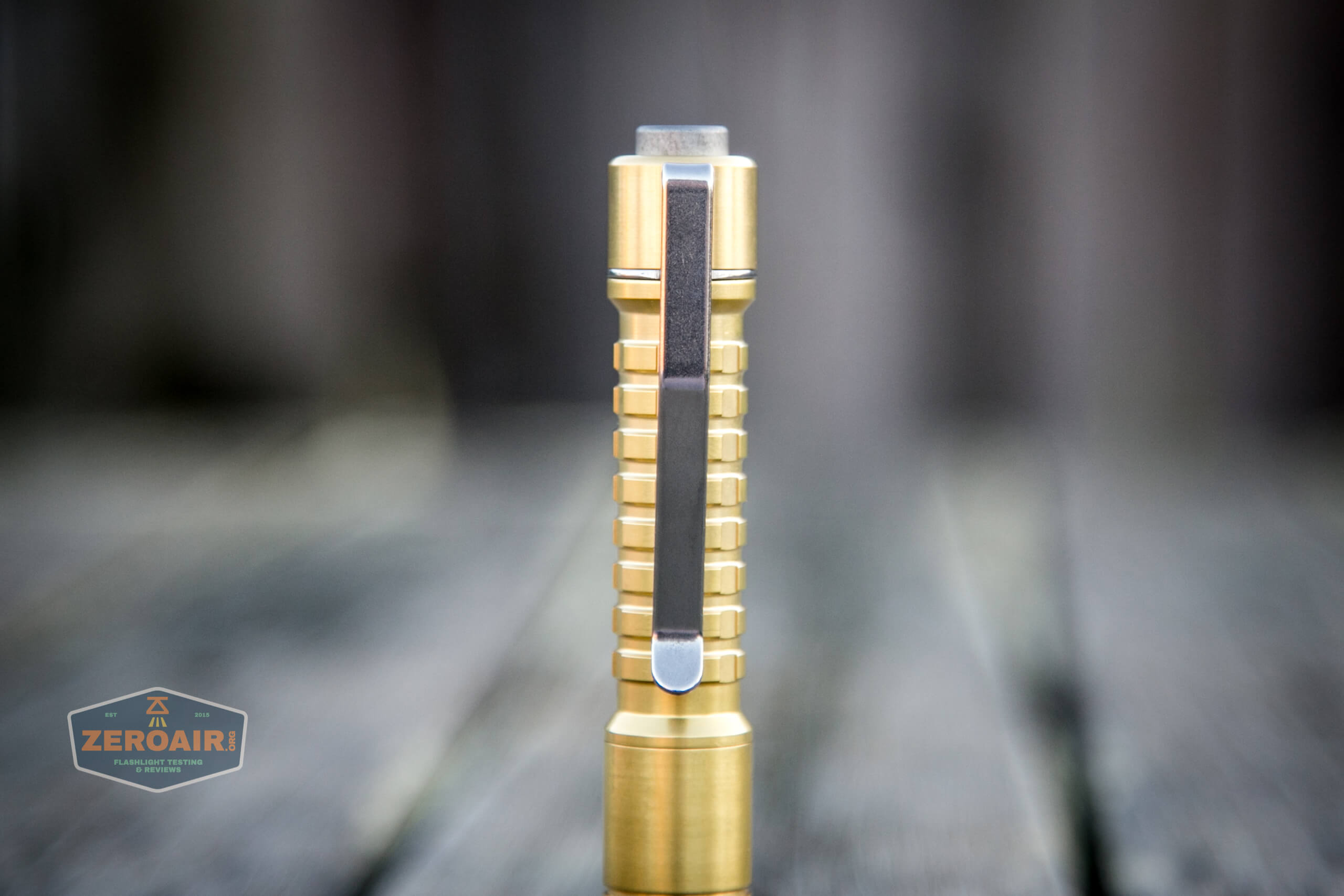
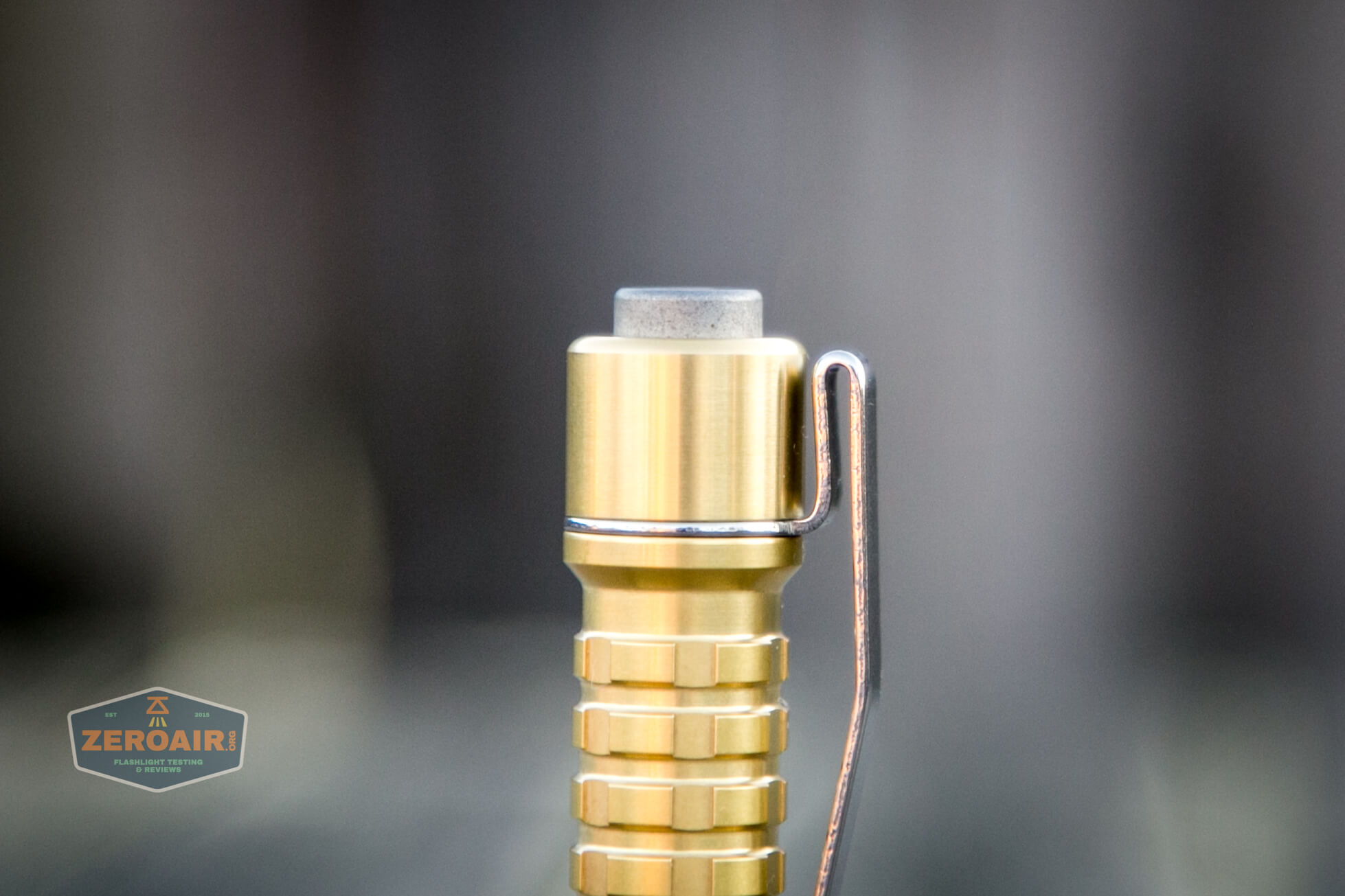
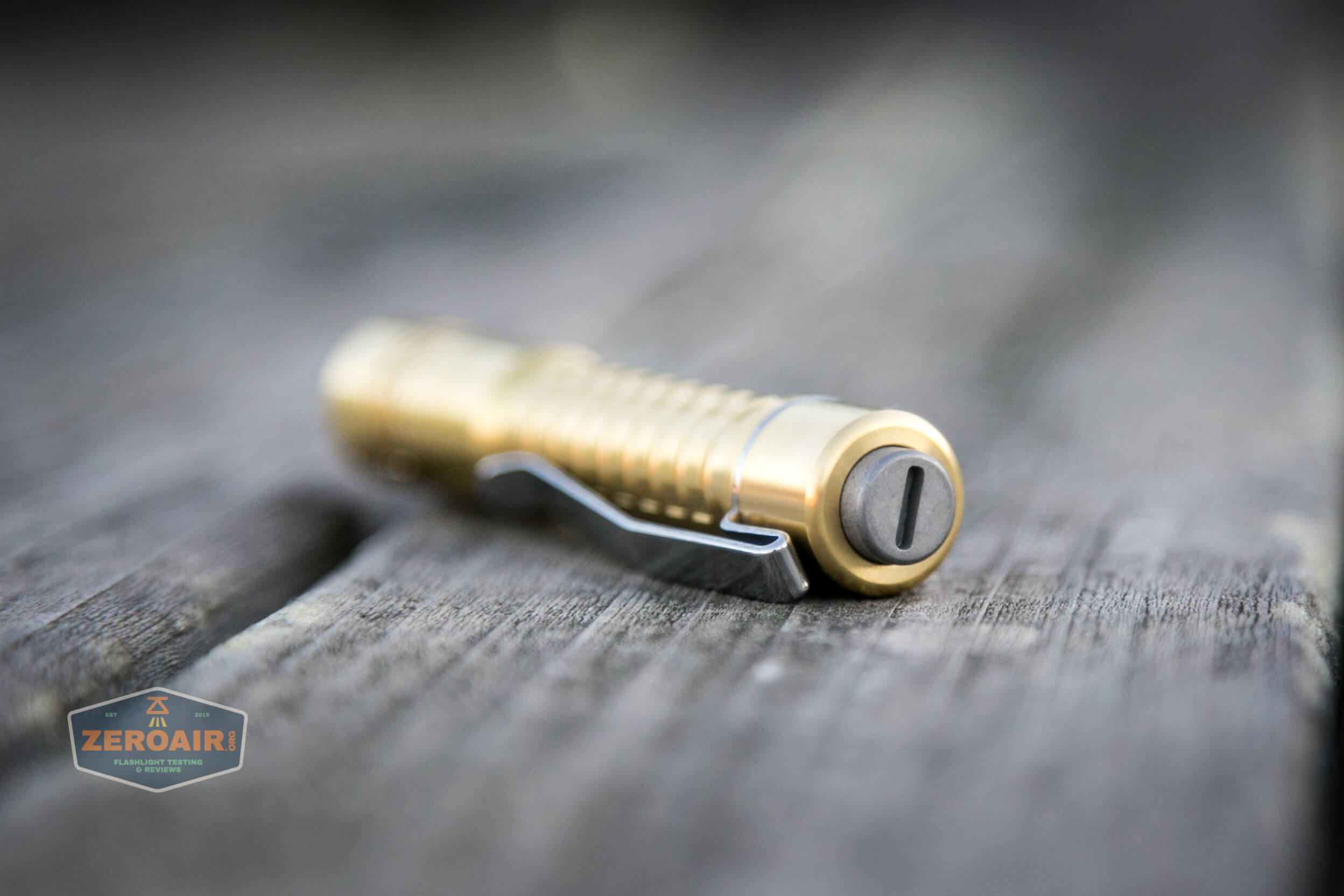
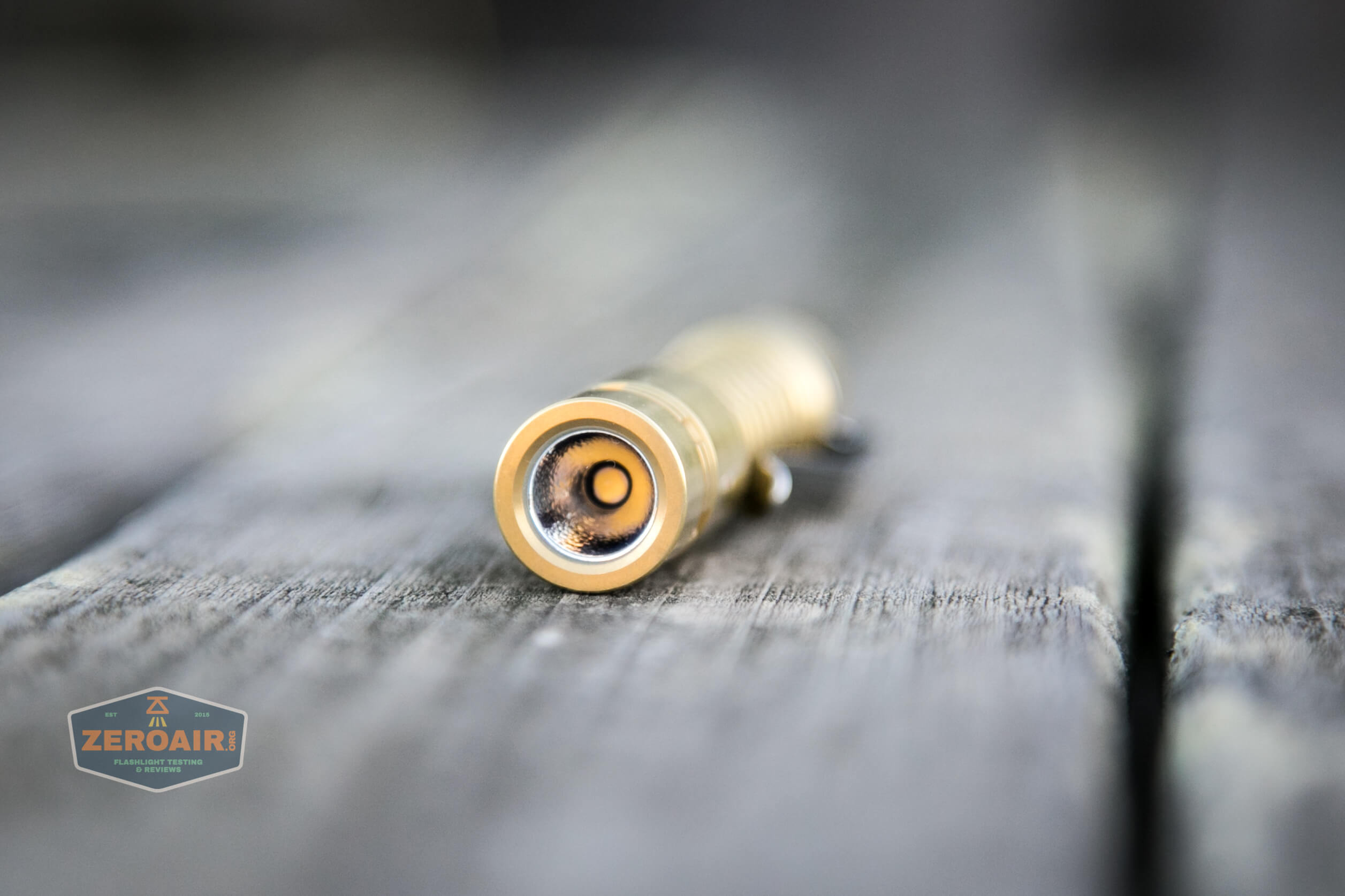
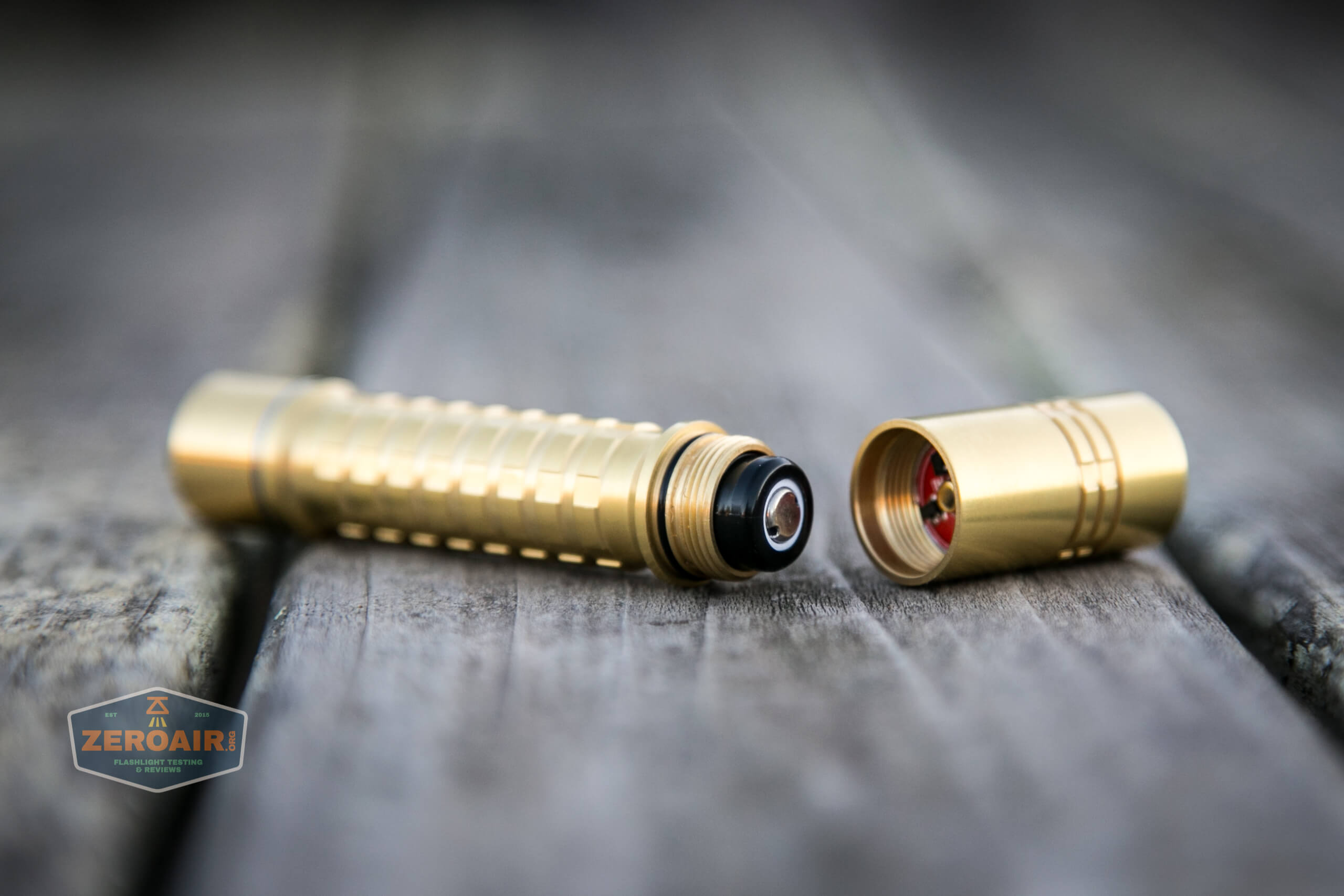
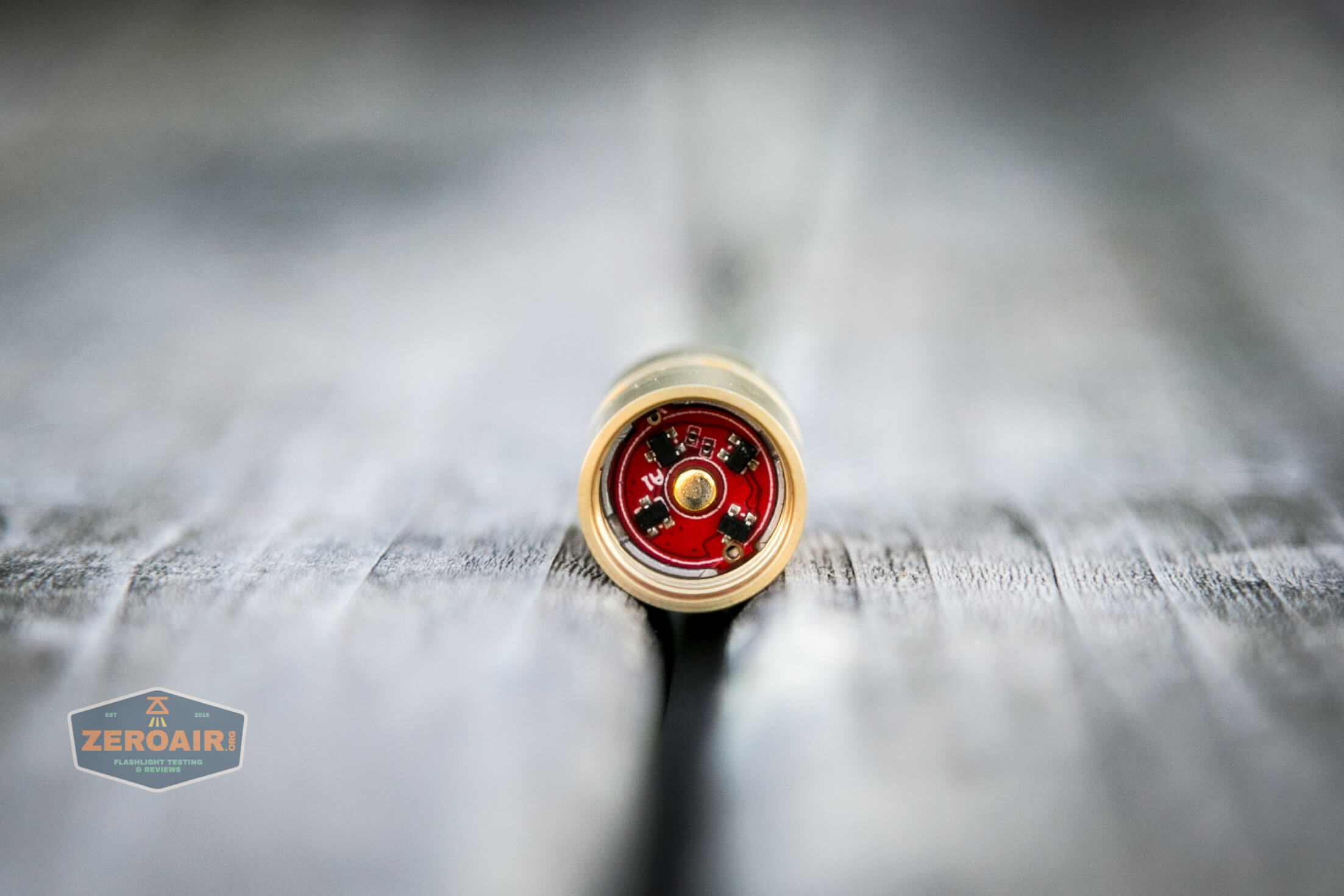
The head has a tiny brass button. I believe the driver is screwed in.
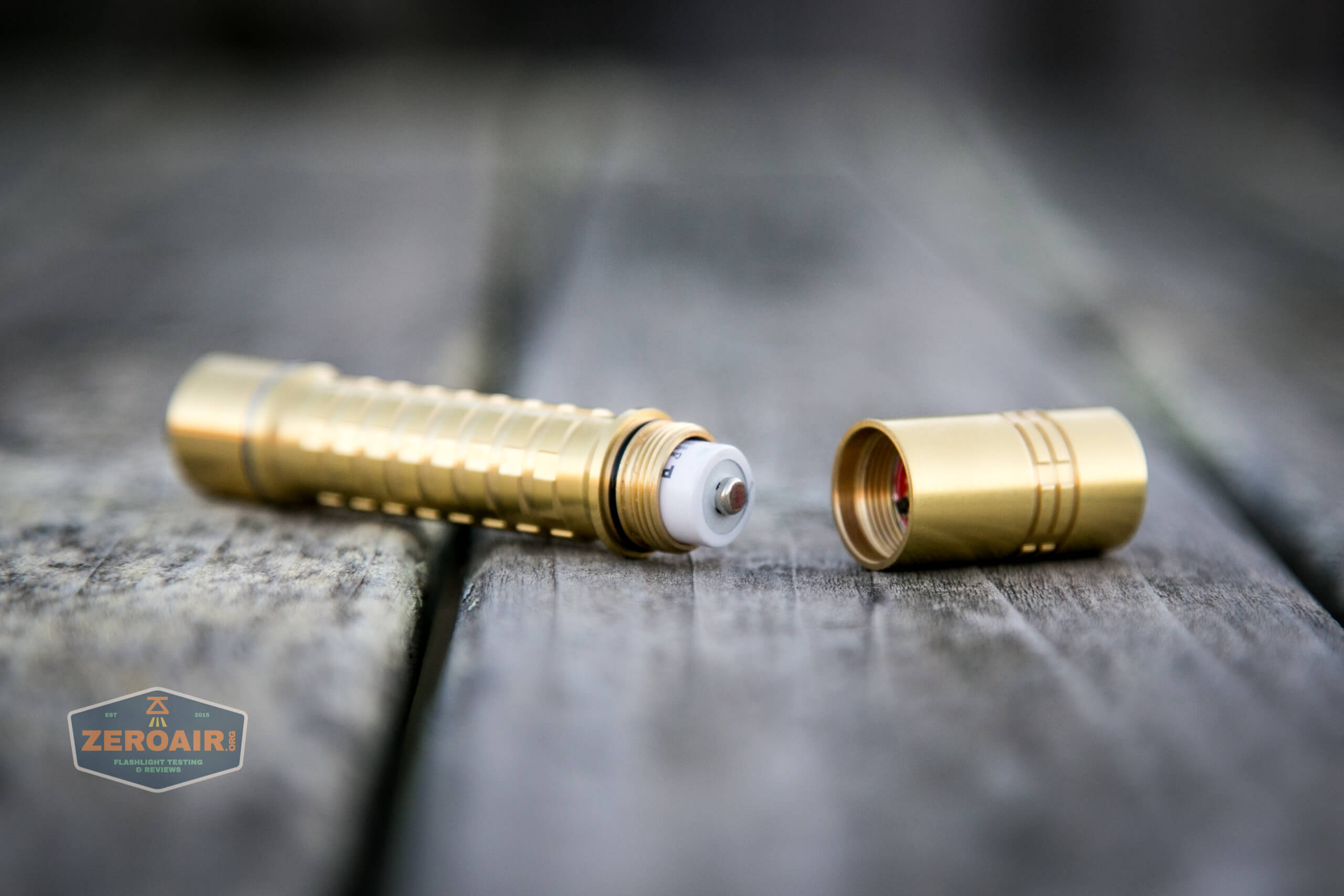
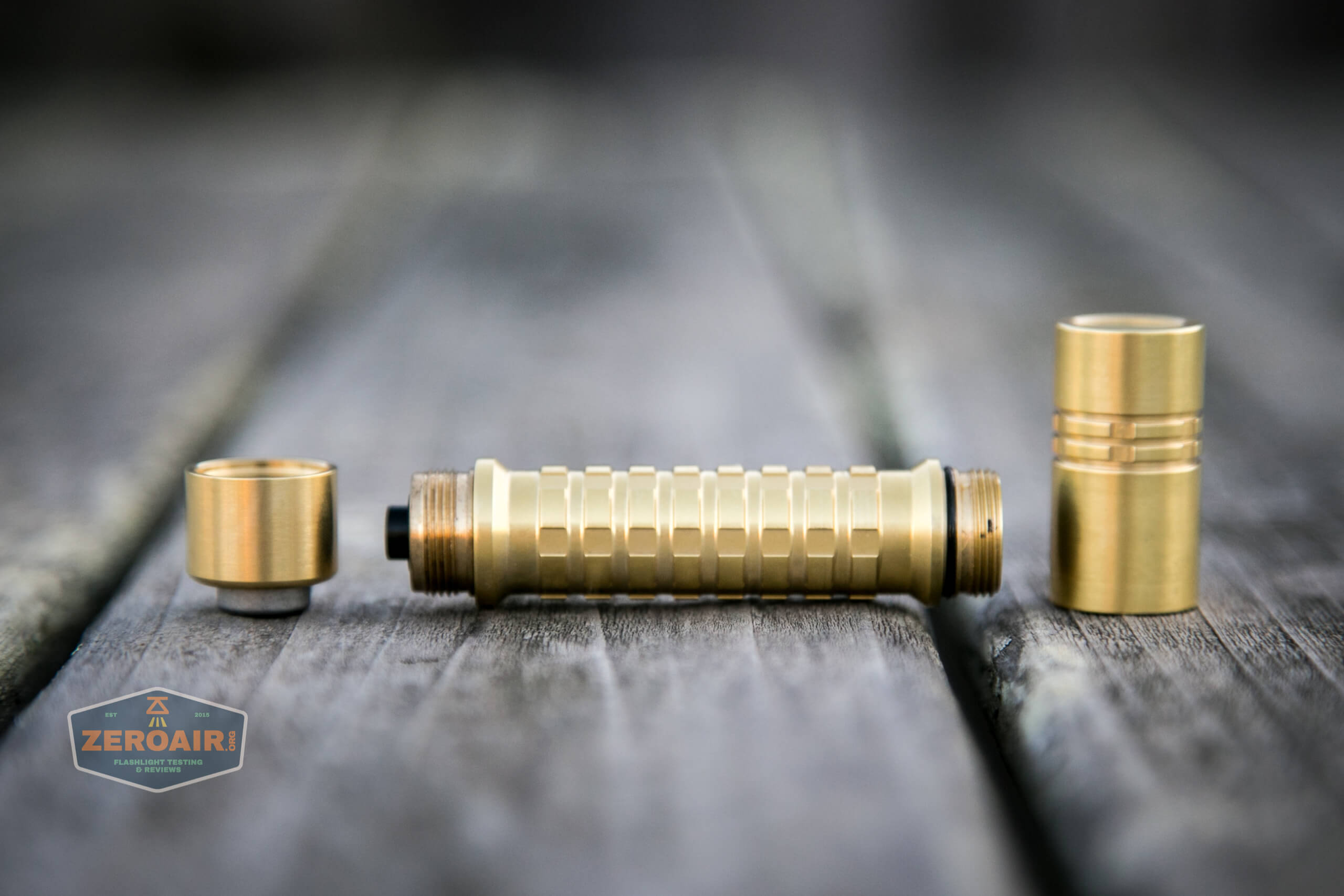
Both head and tail unscrew easily – nothing is locked down. The head and tail threads are not the same sizes, so unlike some other Pineapples I’ve had, the head and tail don’t screw together.
The switch is accessible once the tailcap is unscrewed.
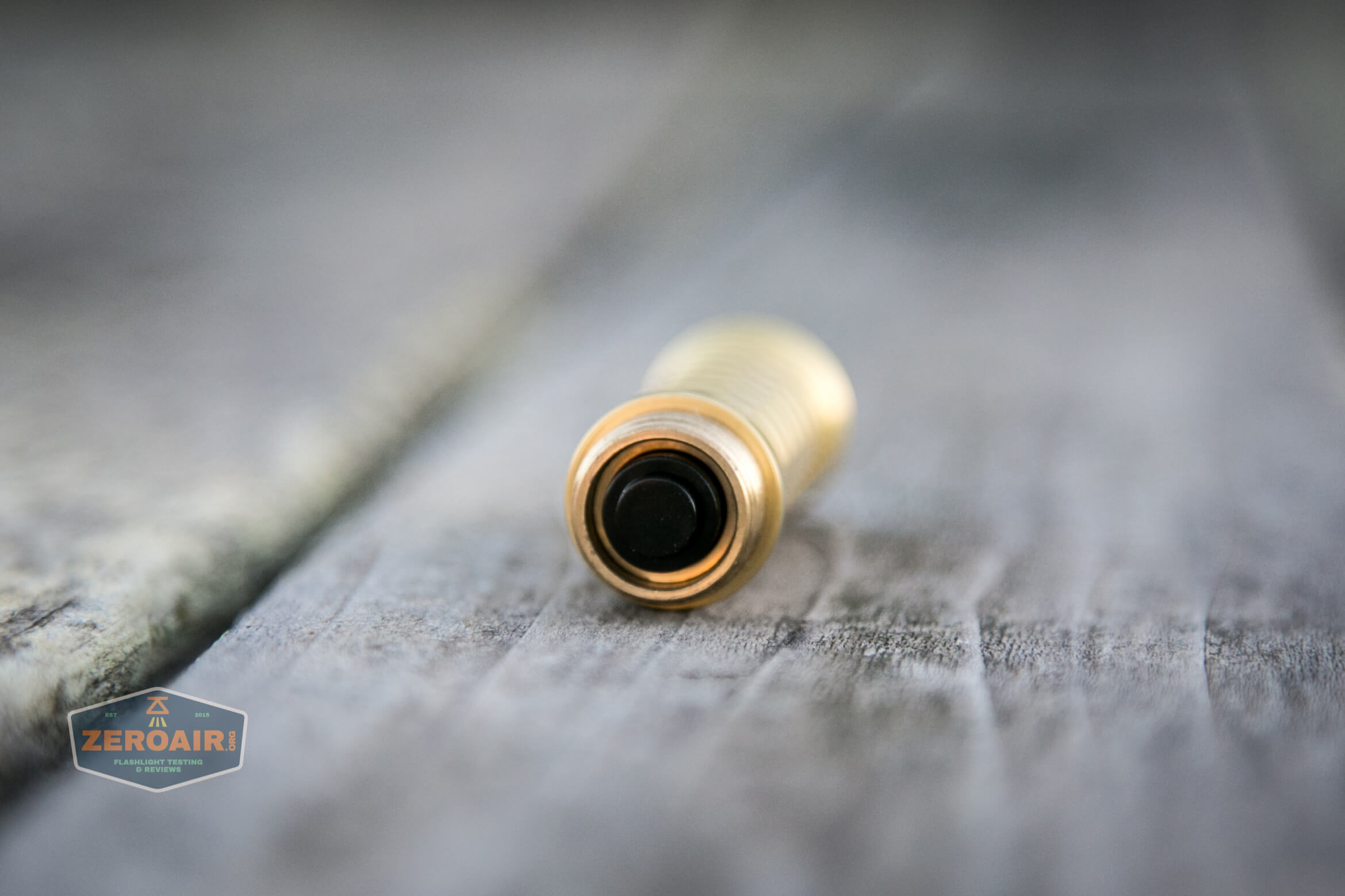
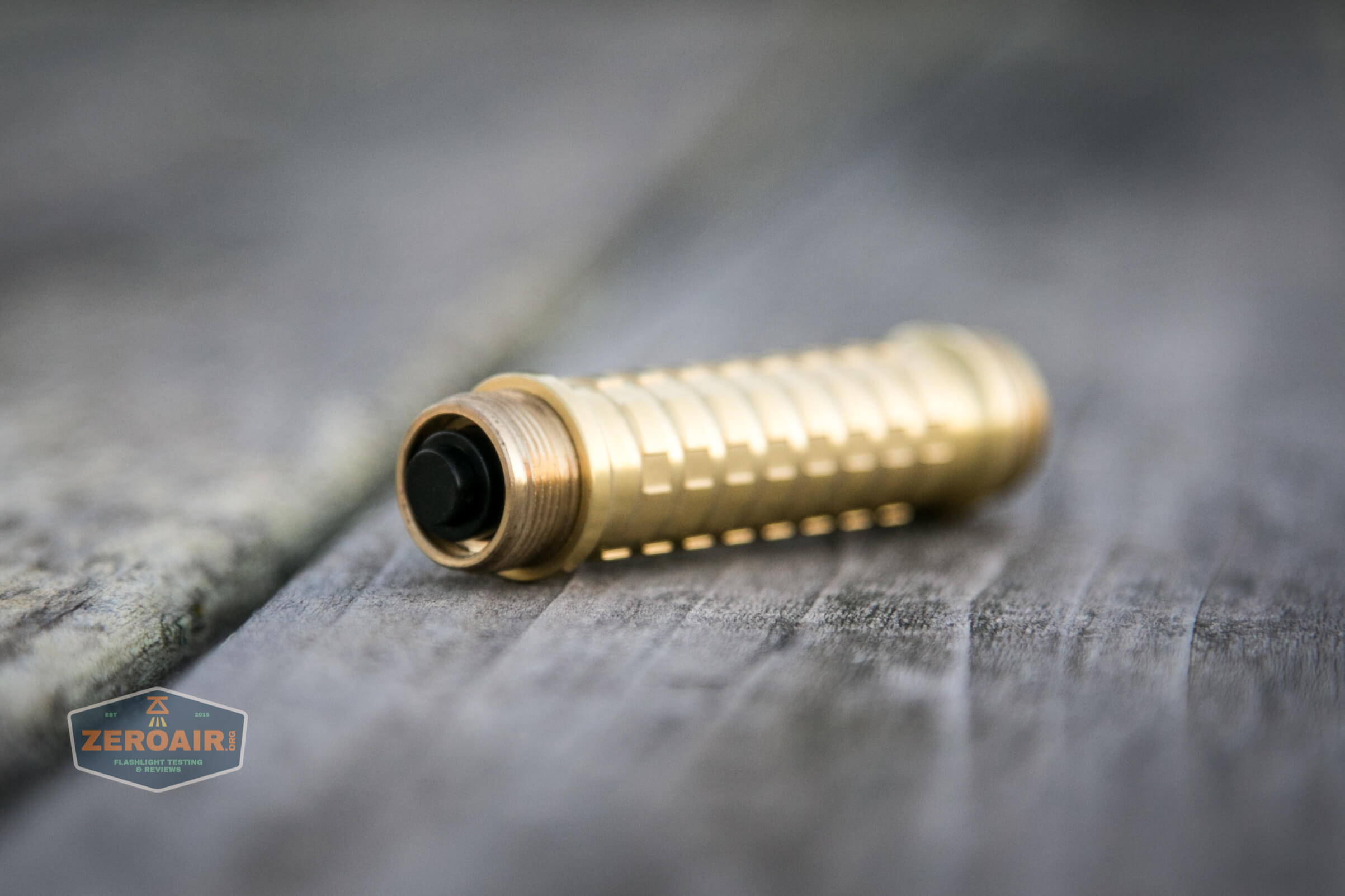
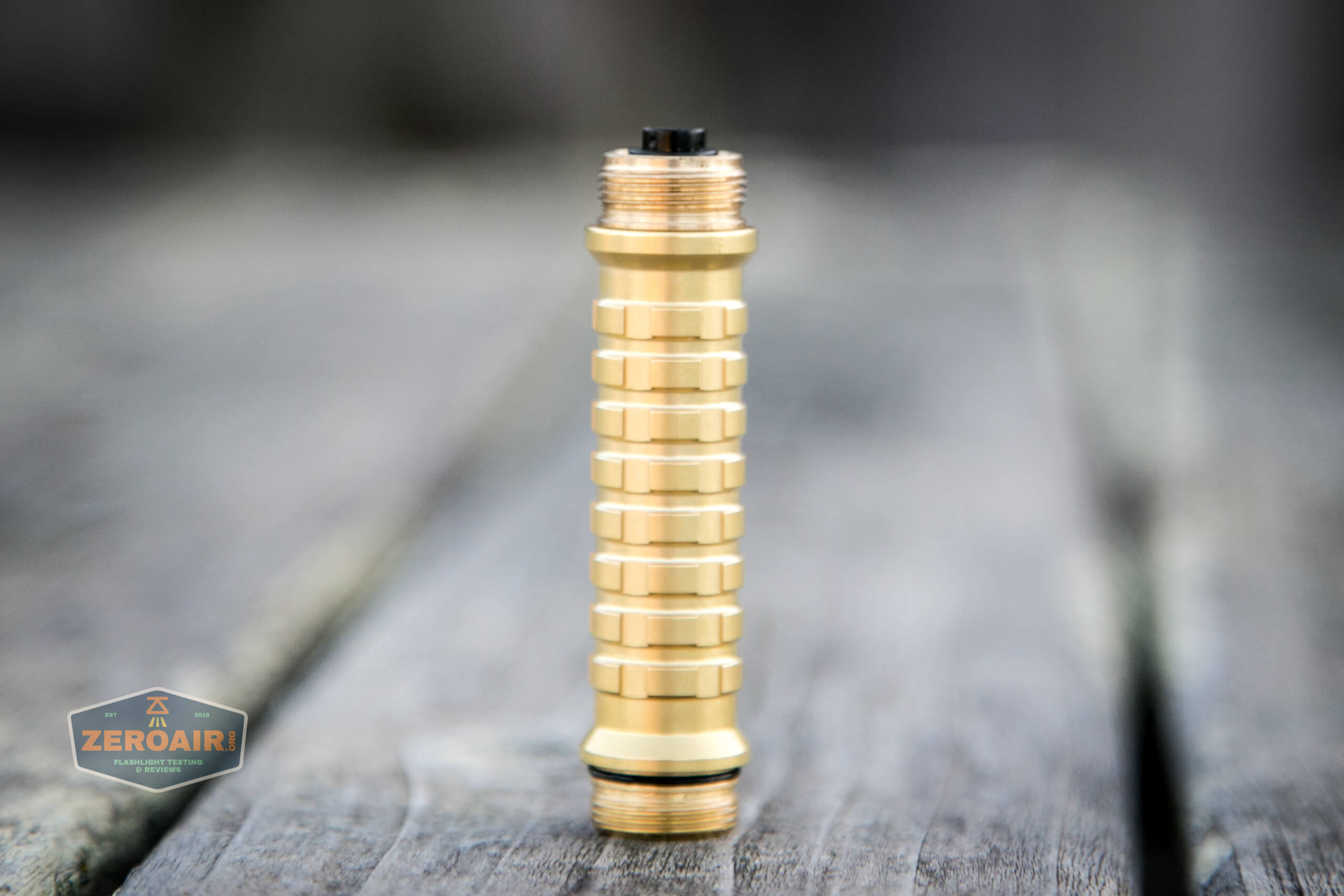
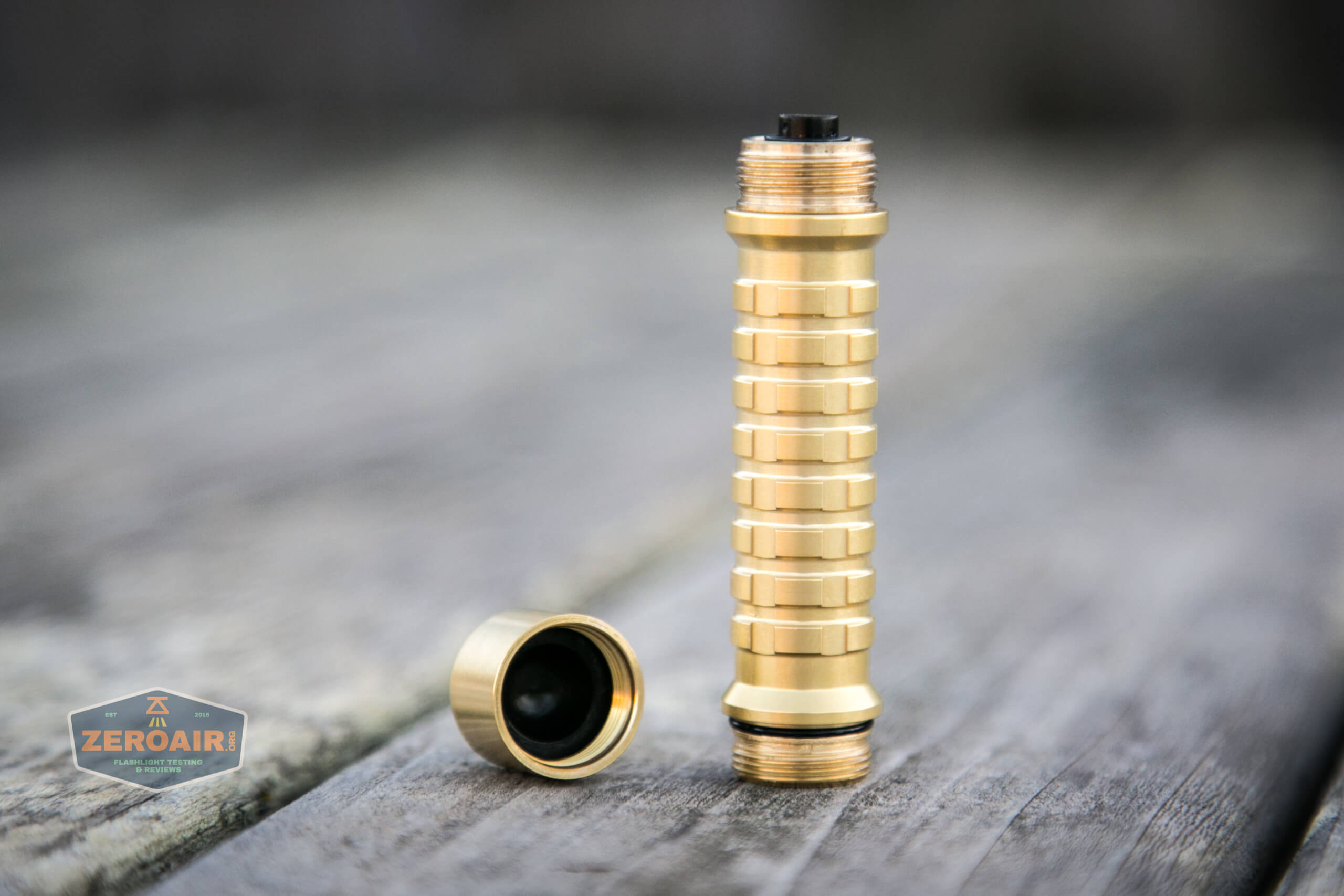
The negative end of the light has a spring.
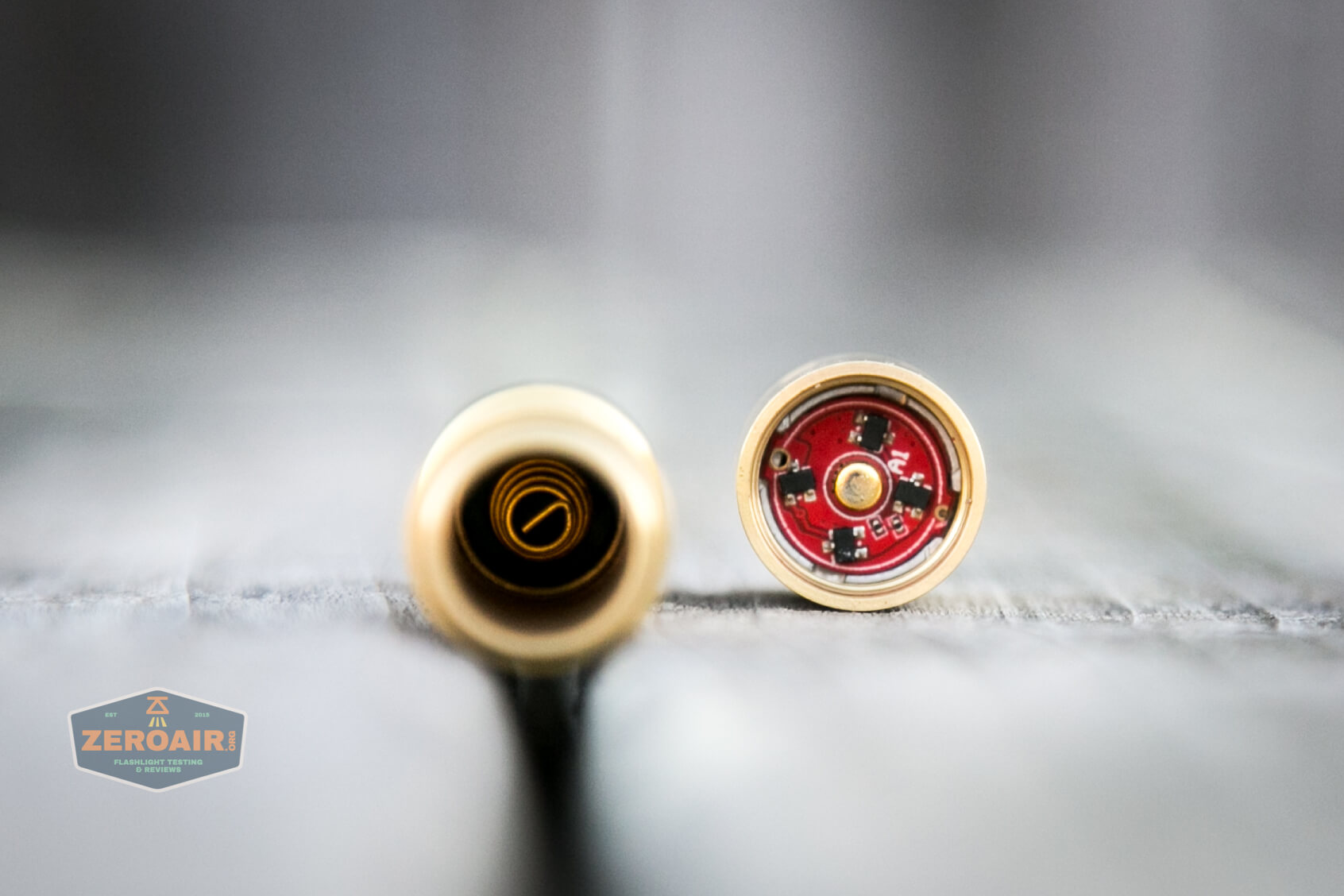
The threads here are very smooth.
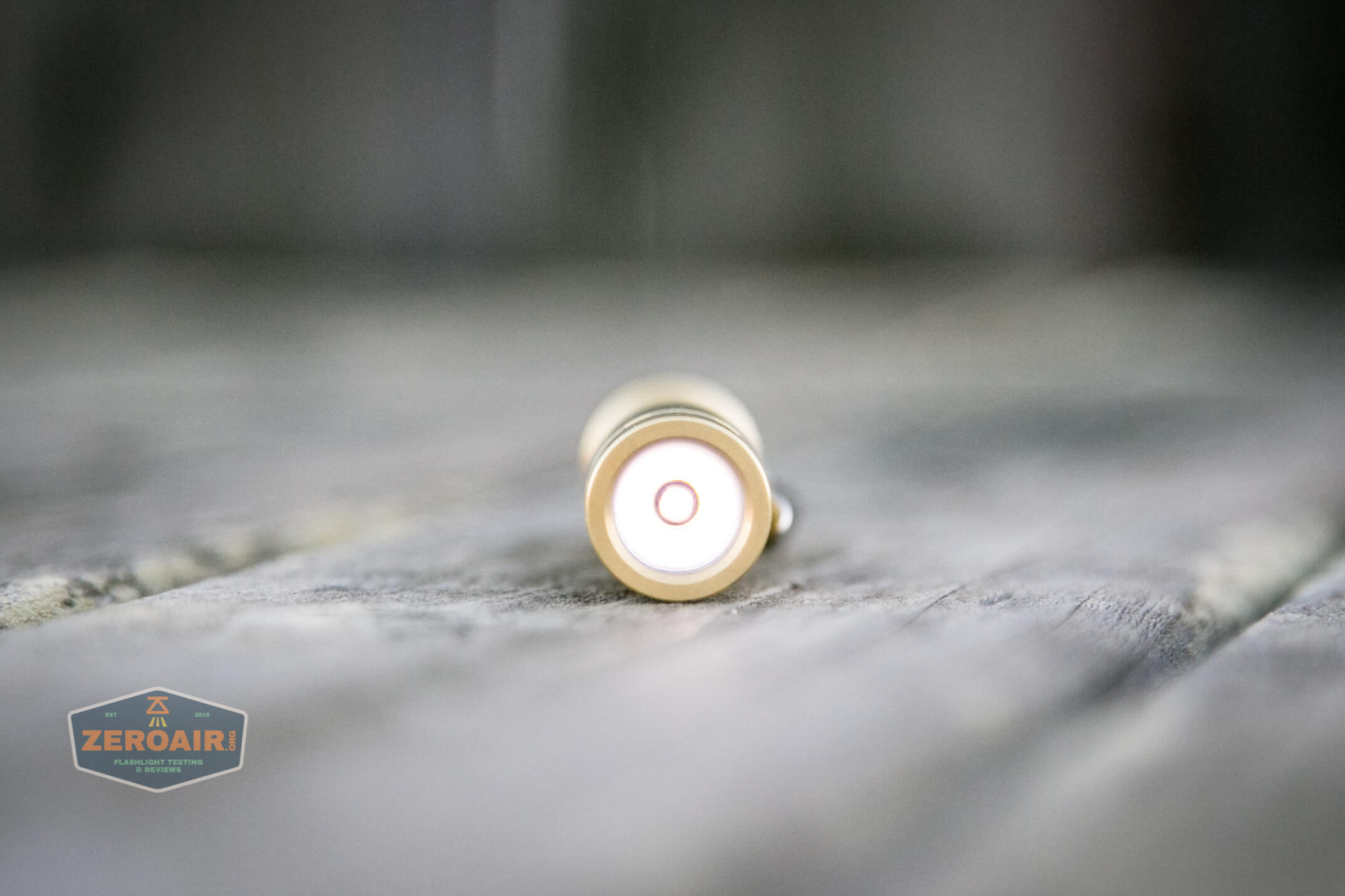
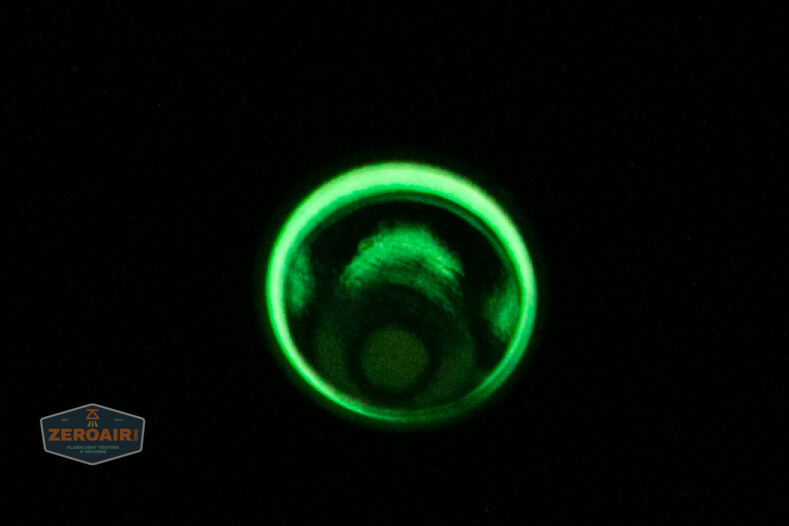
There’s a glow glasket in the head – it’s very glowy, too!
Size and Comps
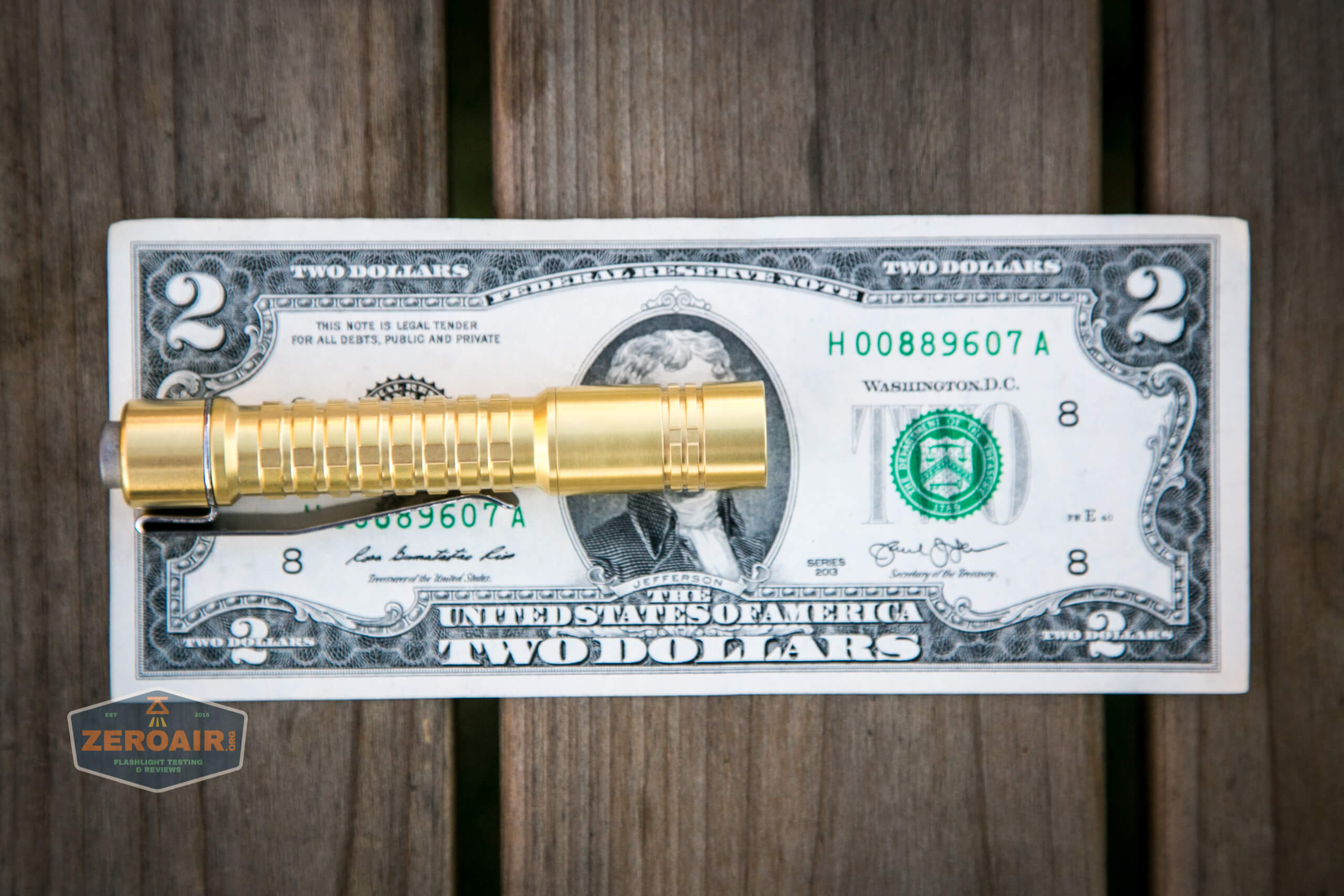
Officially: 89mm length (including the switch button)
Diameter: 15mm
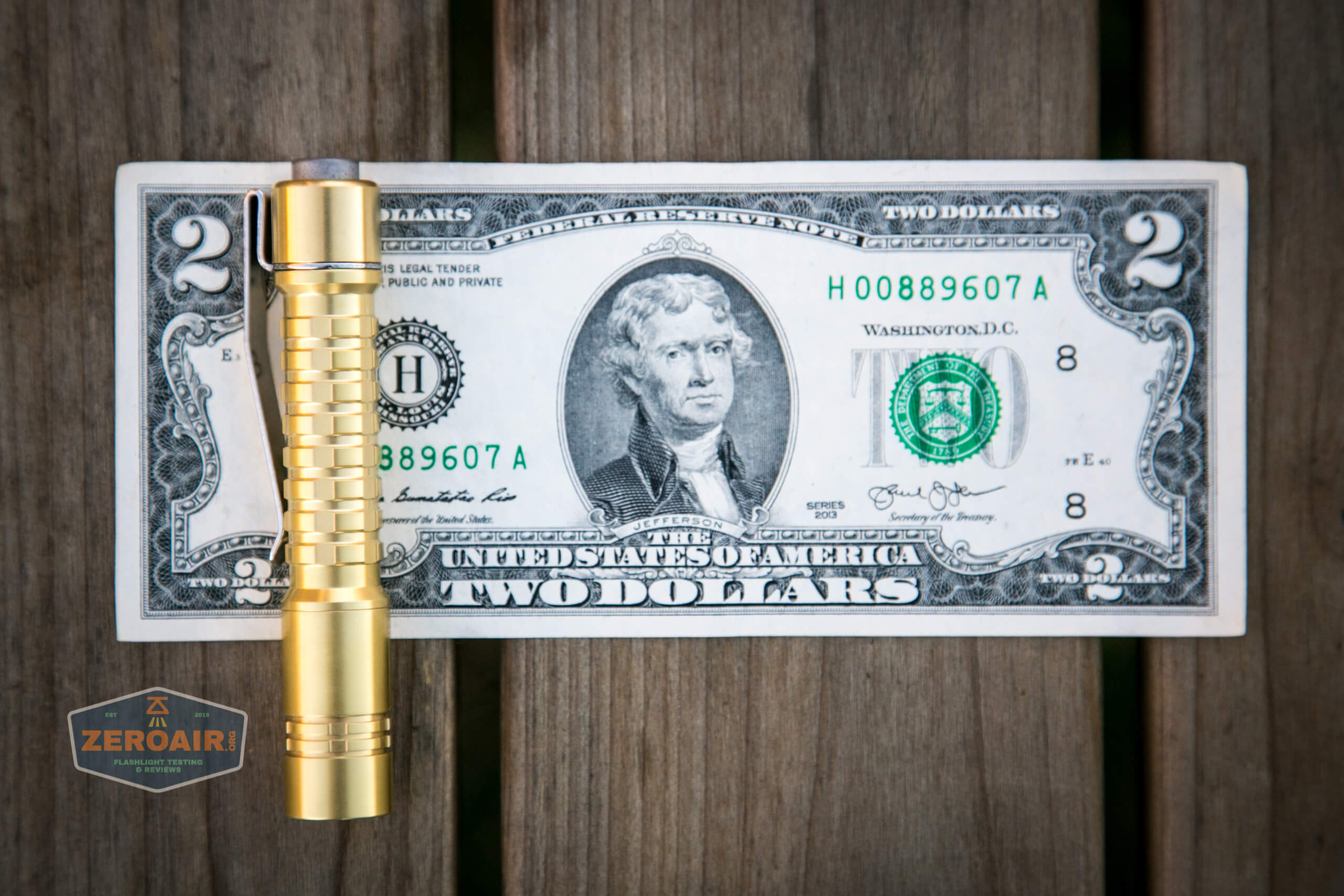
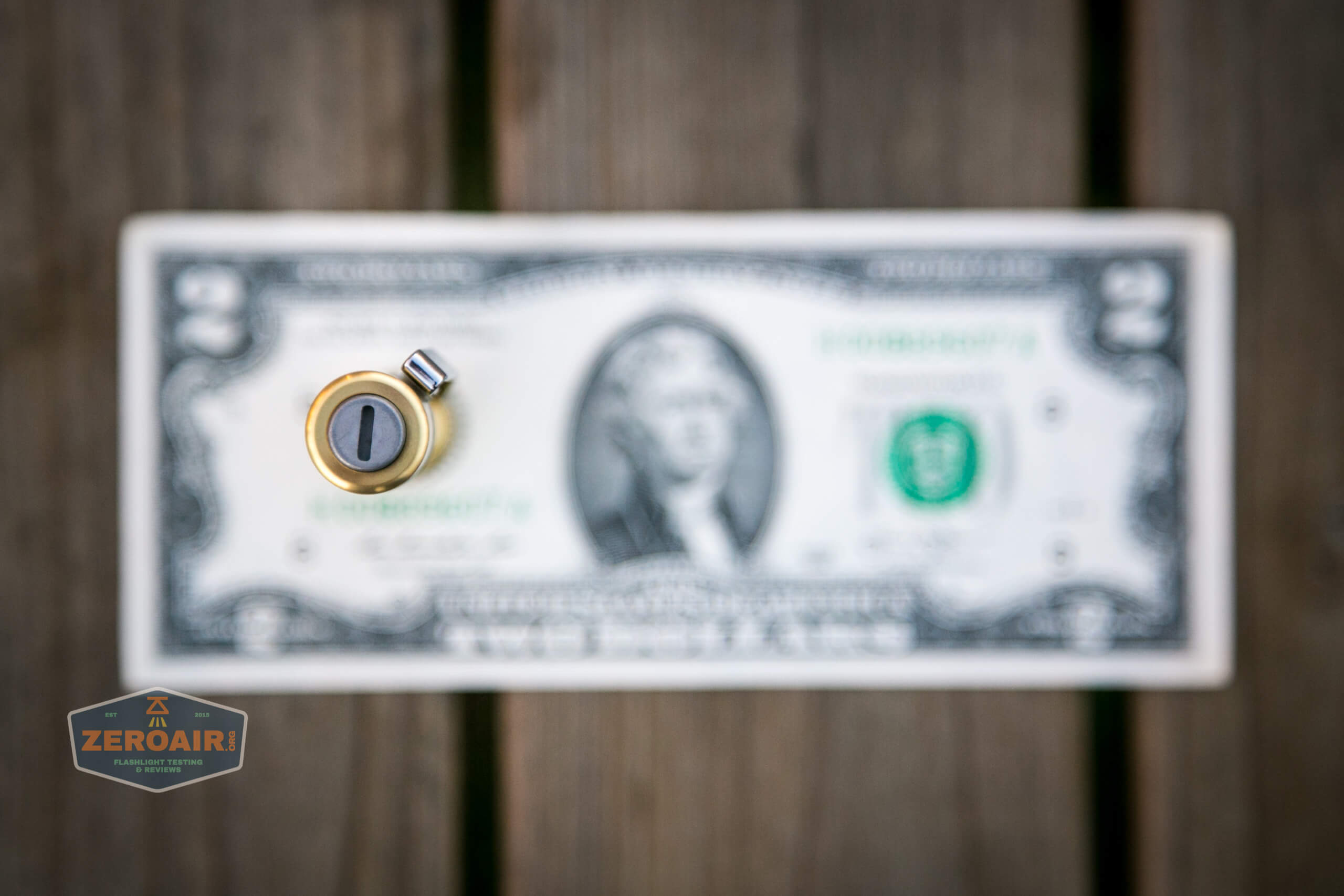
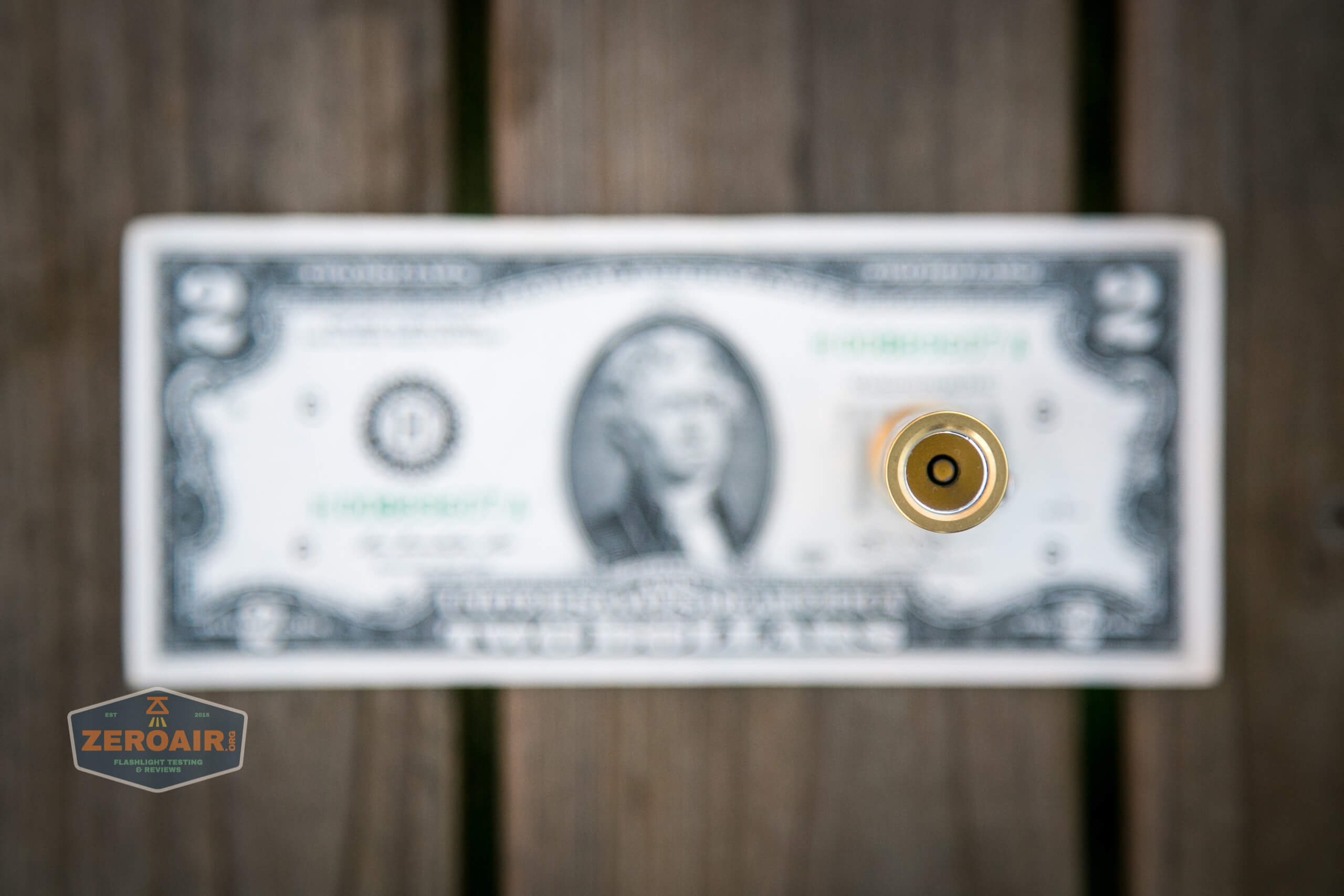
If the flashlight will headstand, I’ll try to show it here. If the flashlight will tailstand, I usually show that here, too.
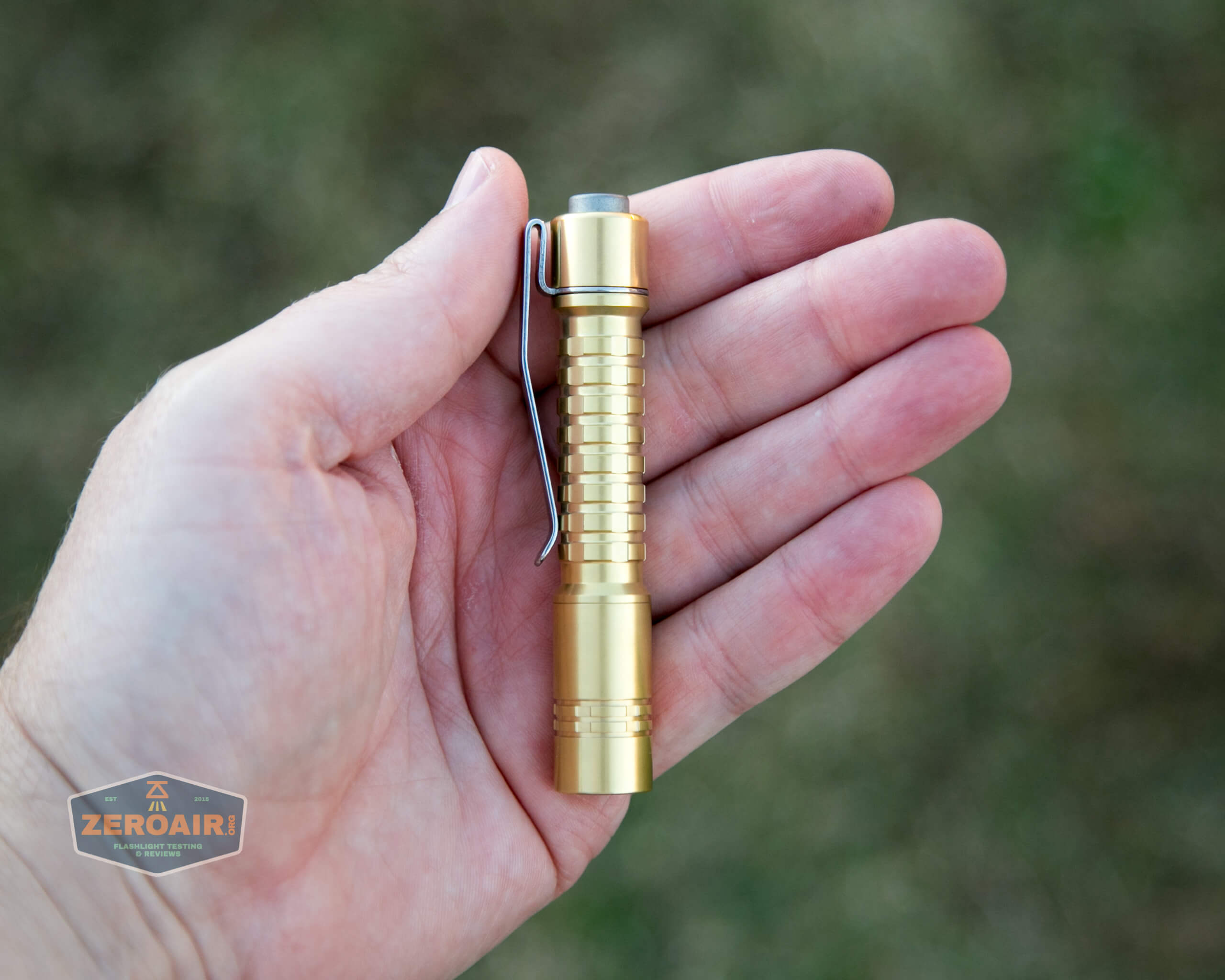
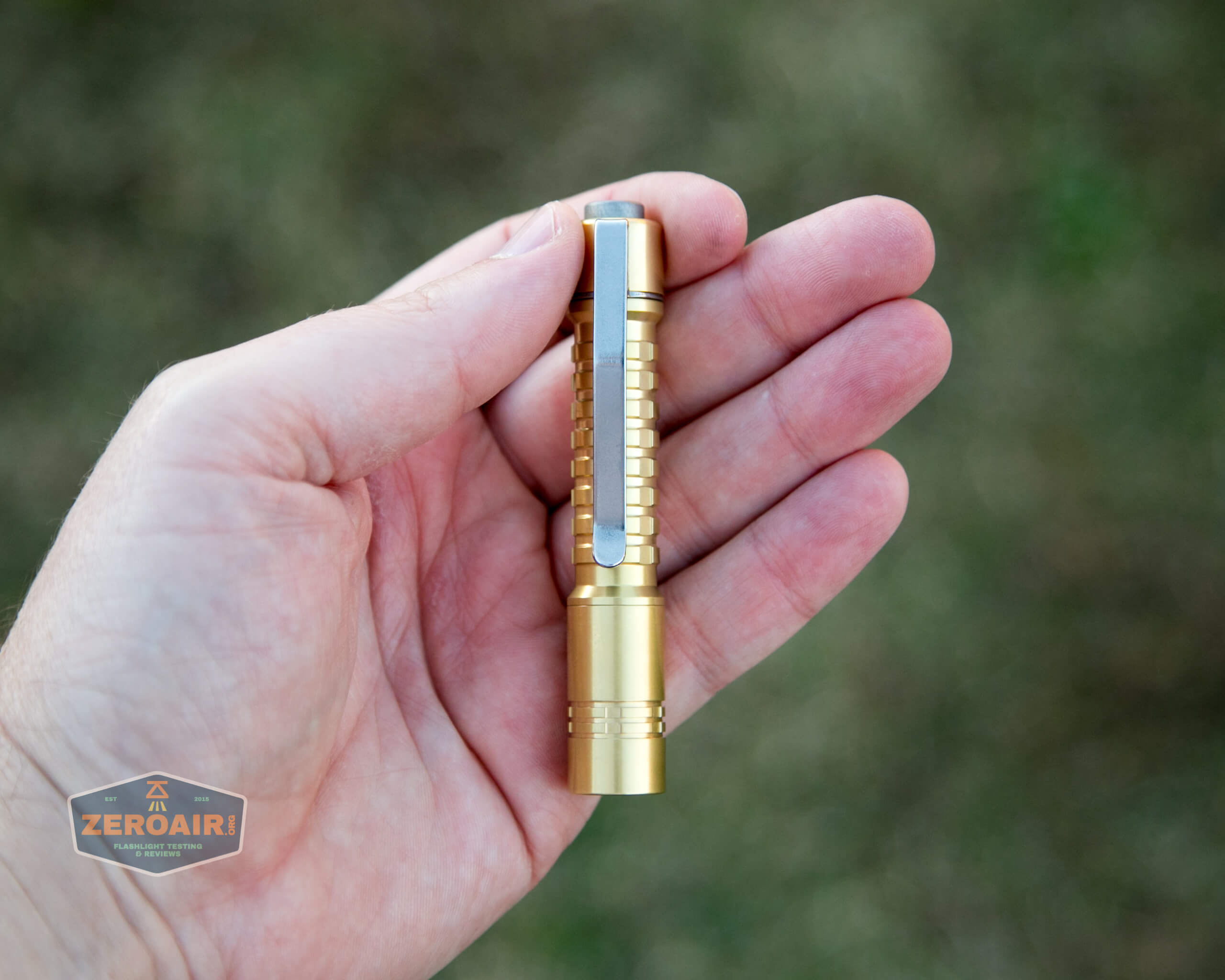
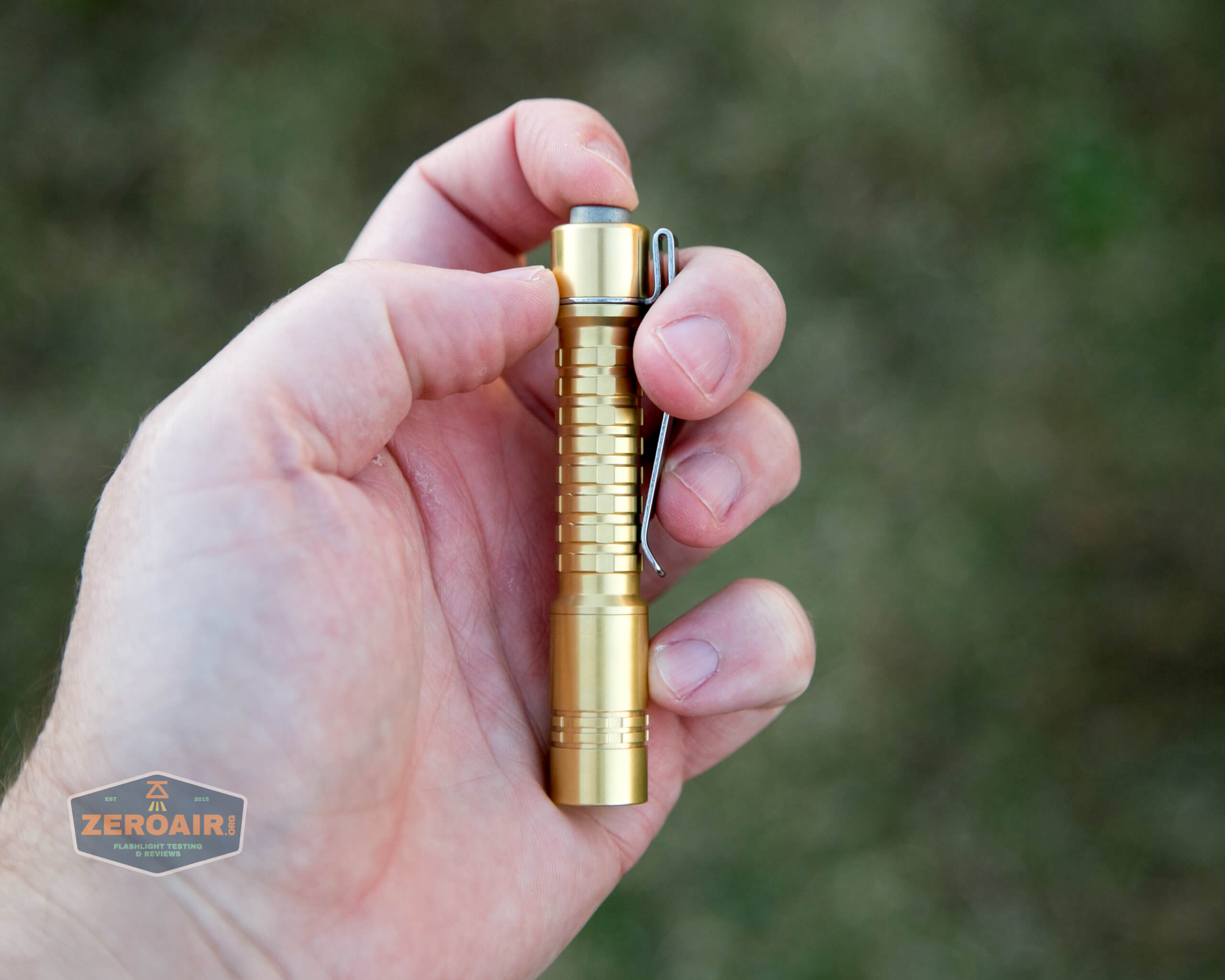
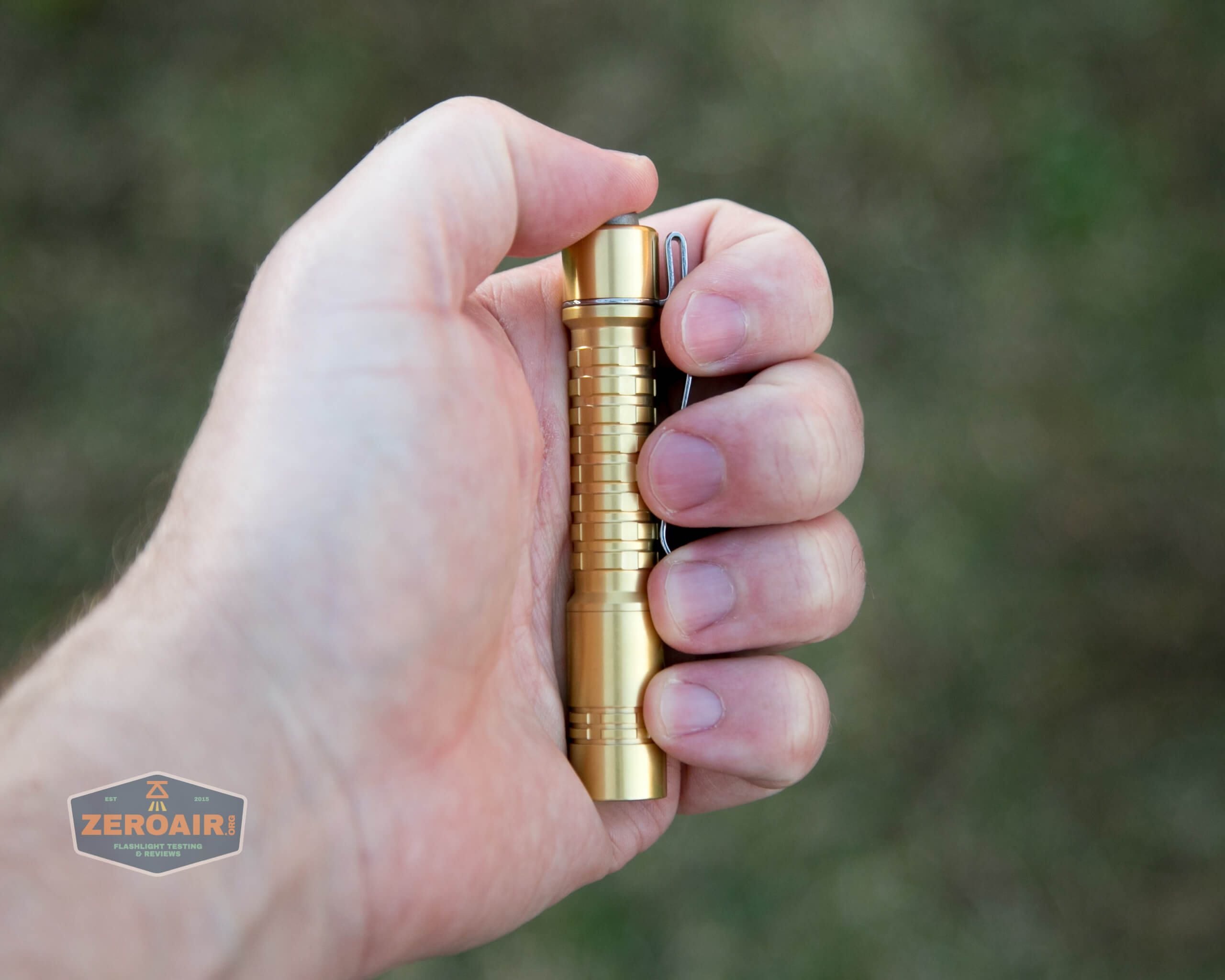
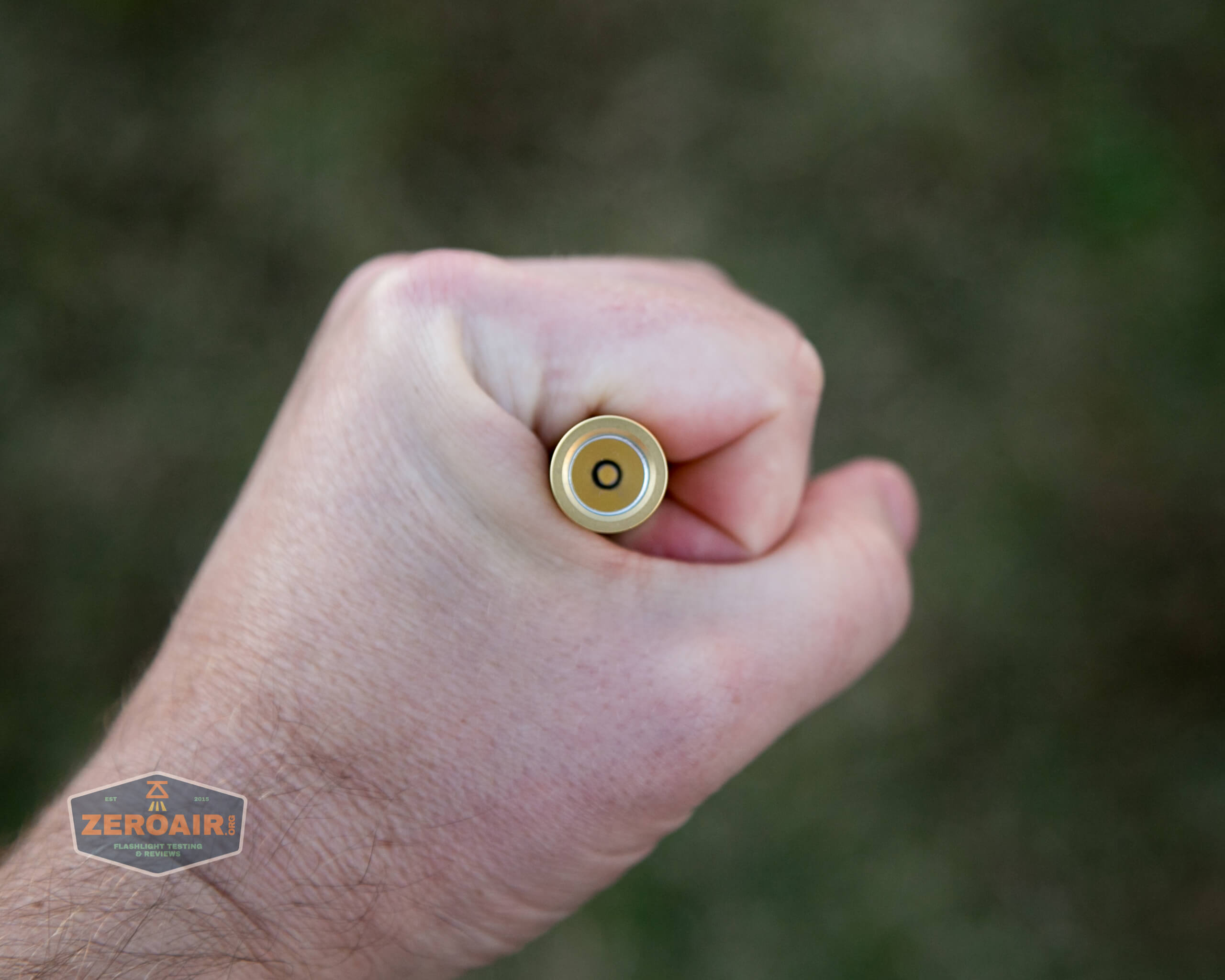
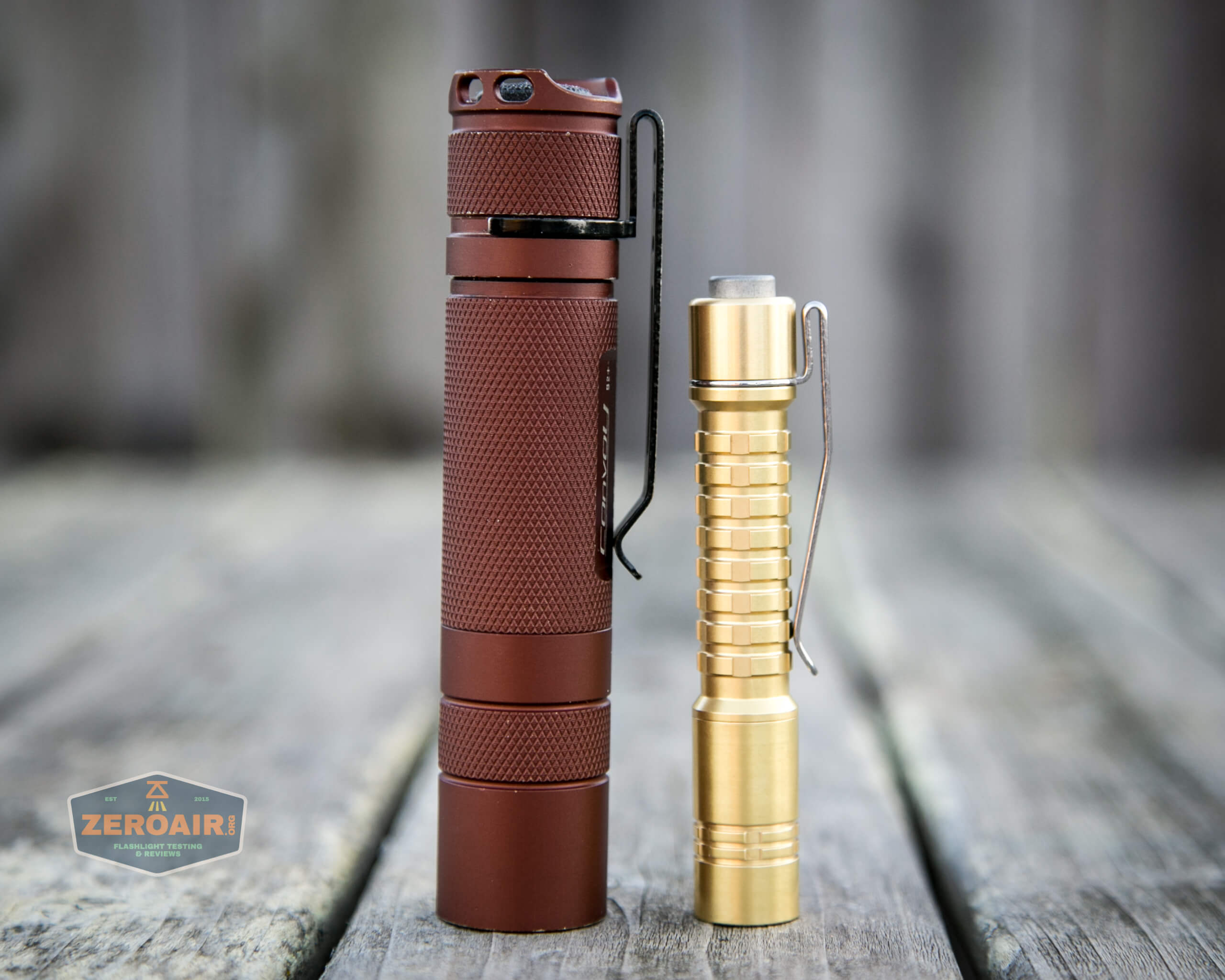
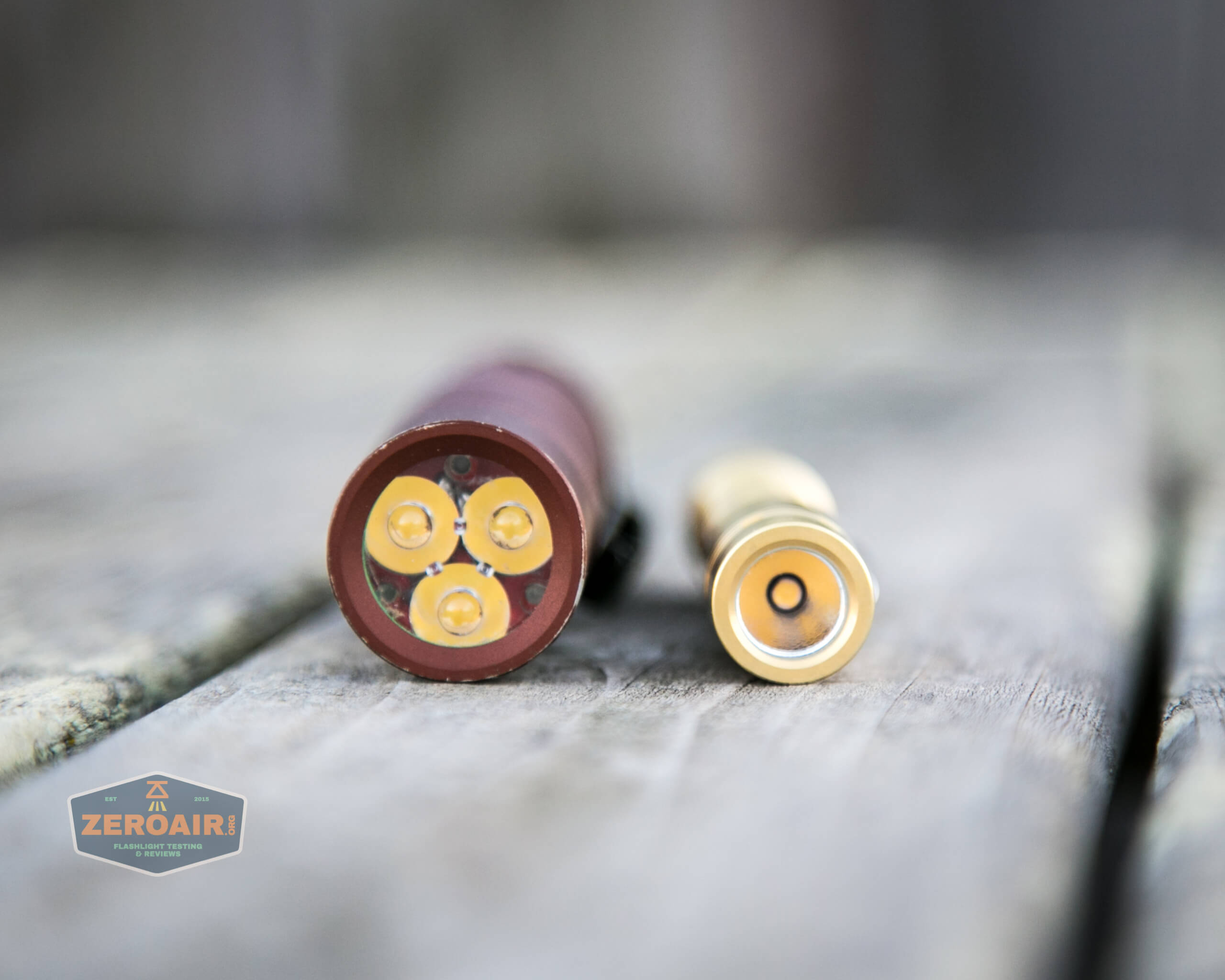
Here’s the test light with the venerable Convoy S2+. Mine’s a custom “baked” edition Nichia 219b triple. A very nice 18650 light.
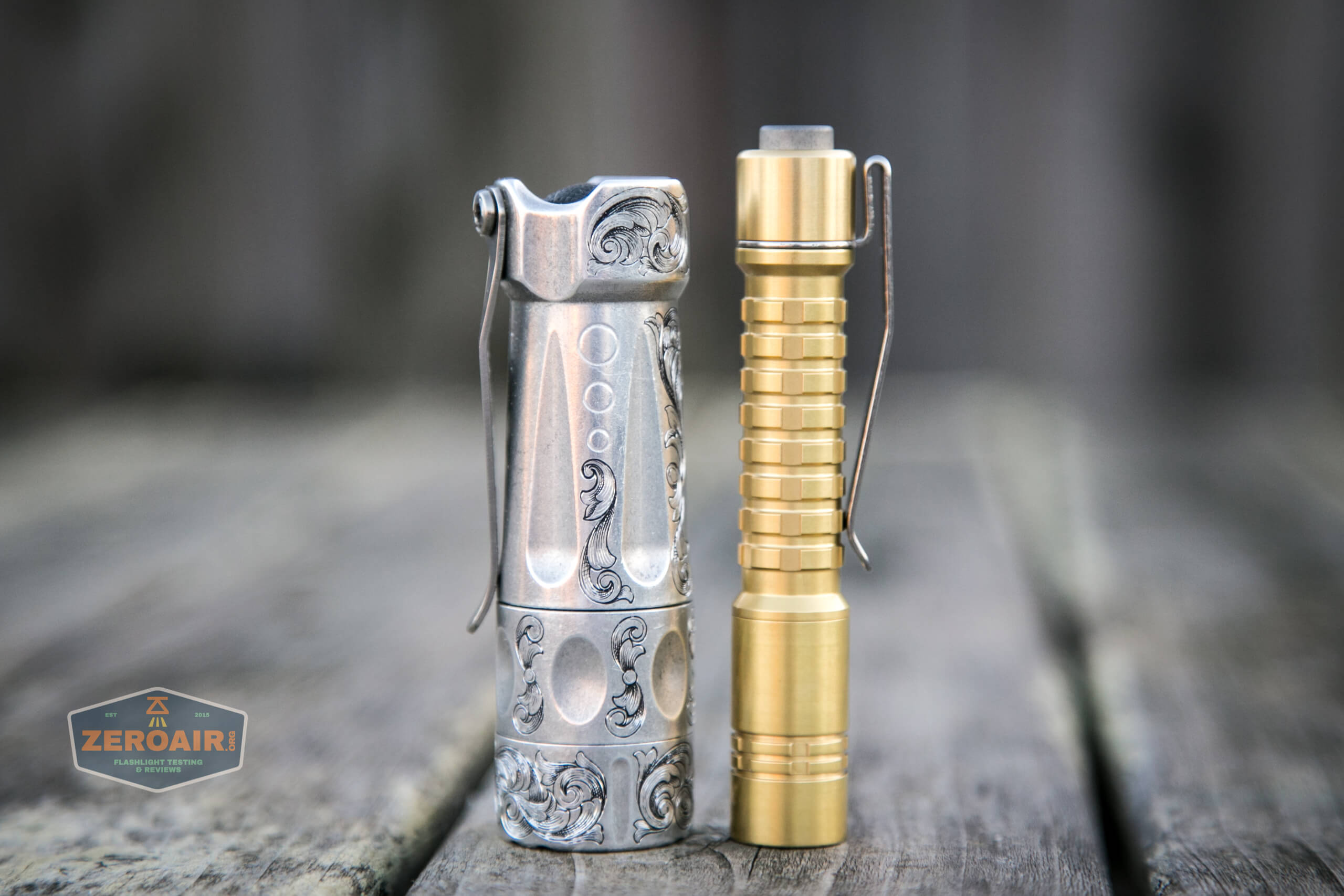
And here’s the light beside my custom-engraved TorchLAB BOSS 35, an 18350 light. I reviewed the aluminum version of that light in both 35 and 70 formats.
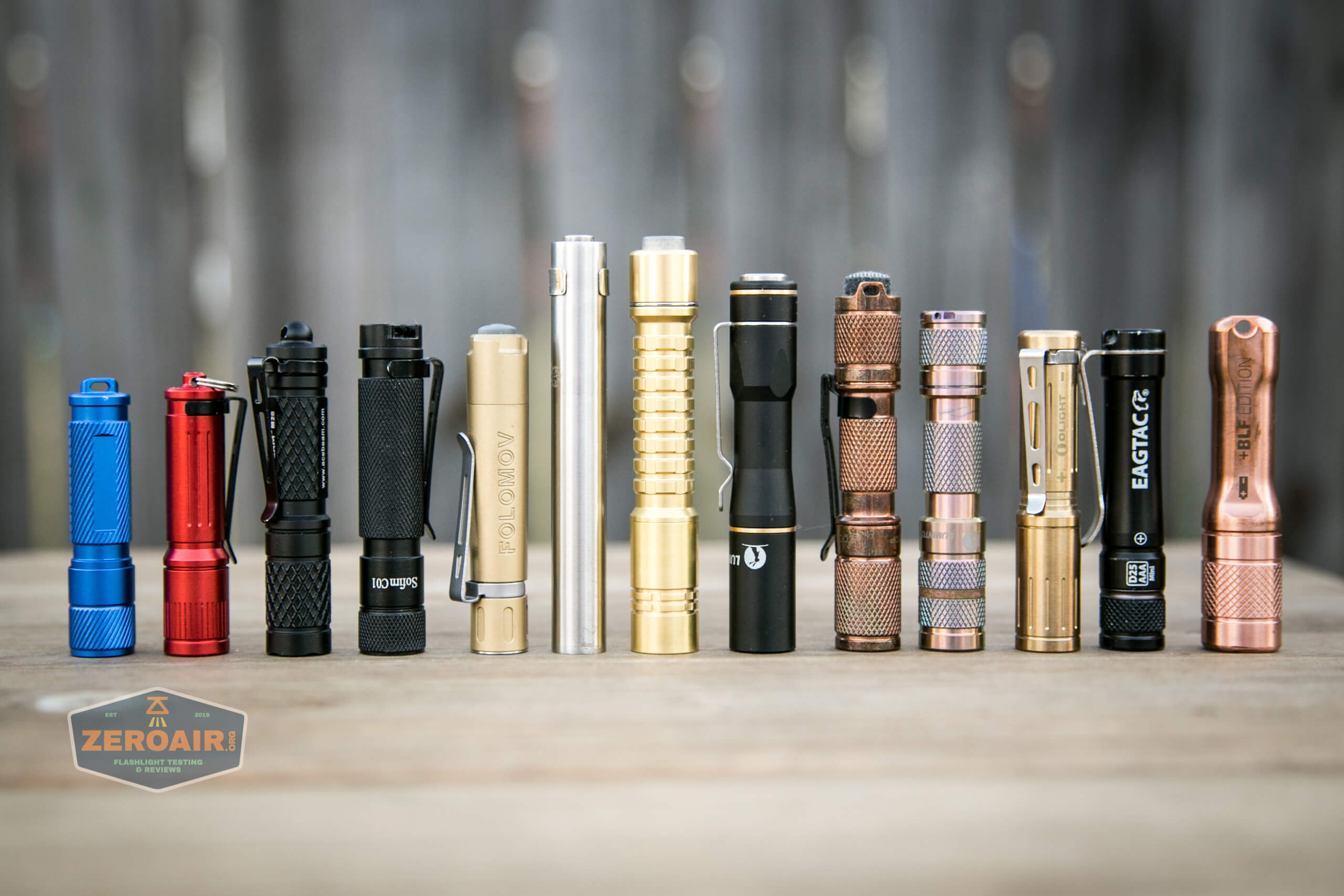
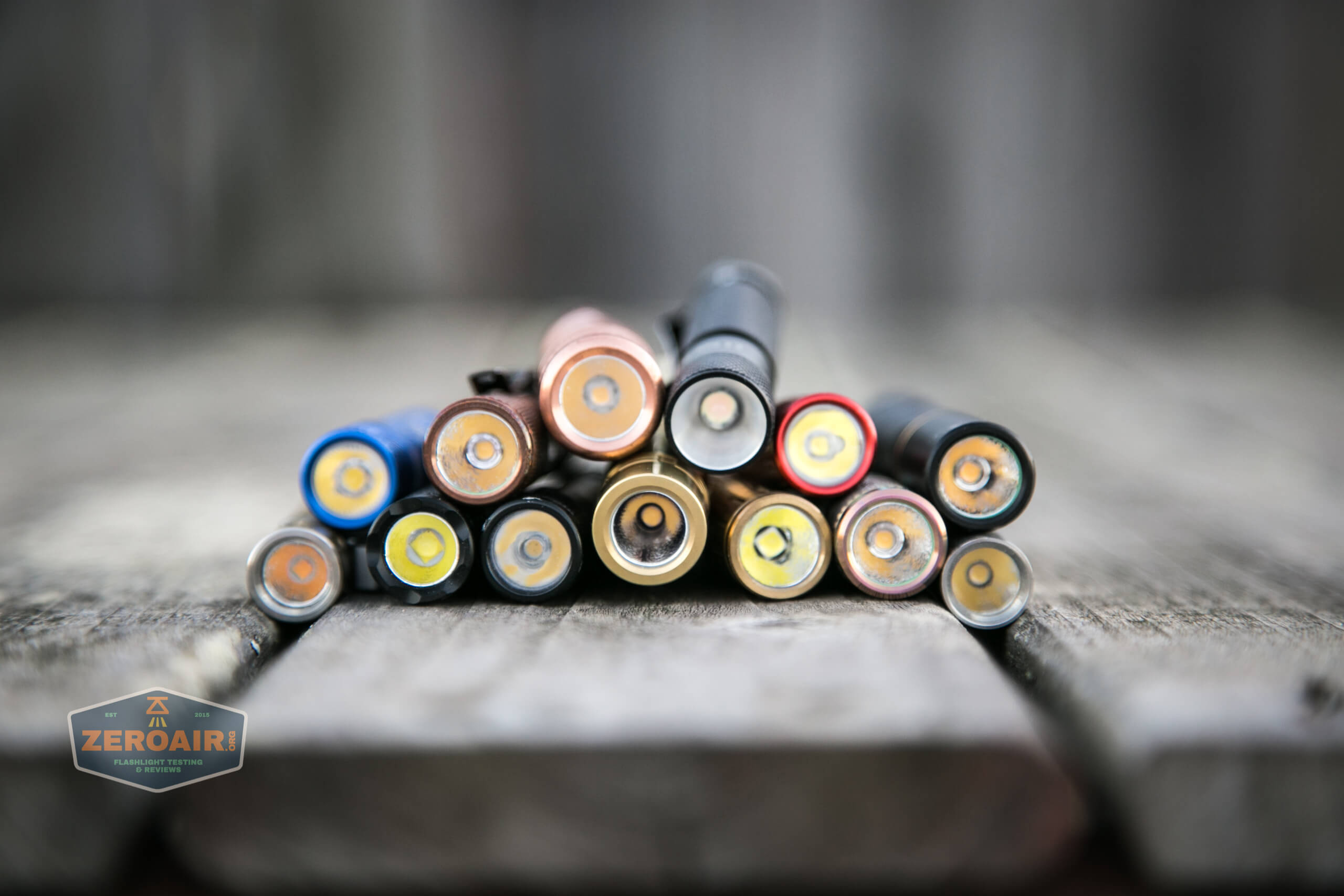
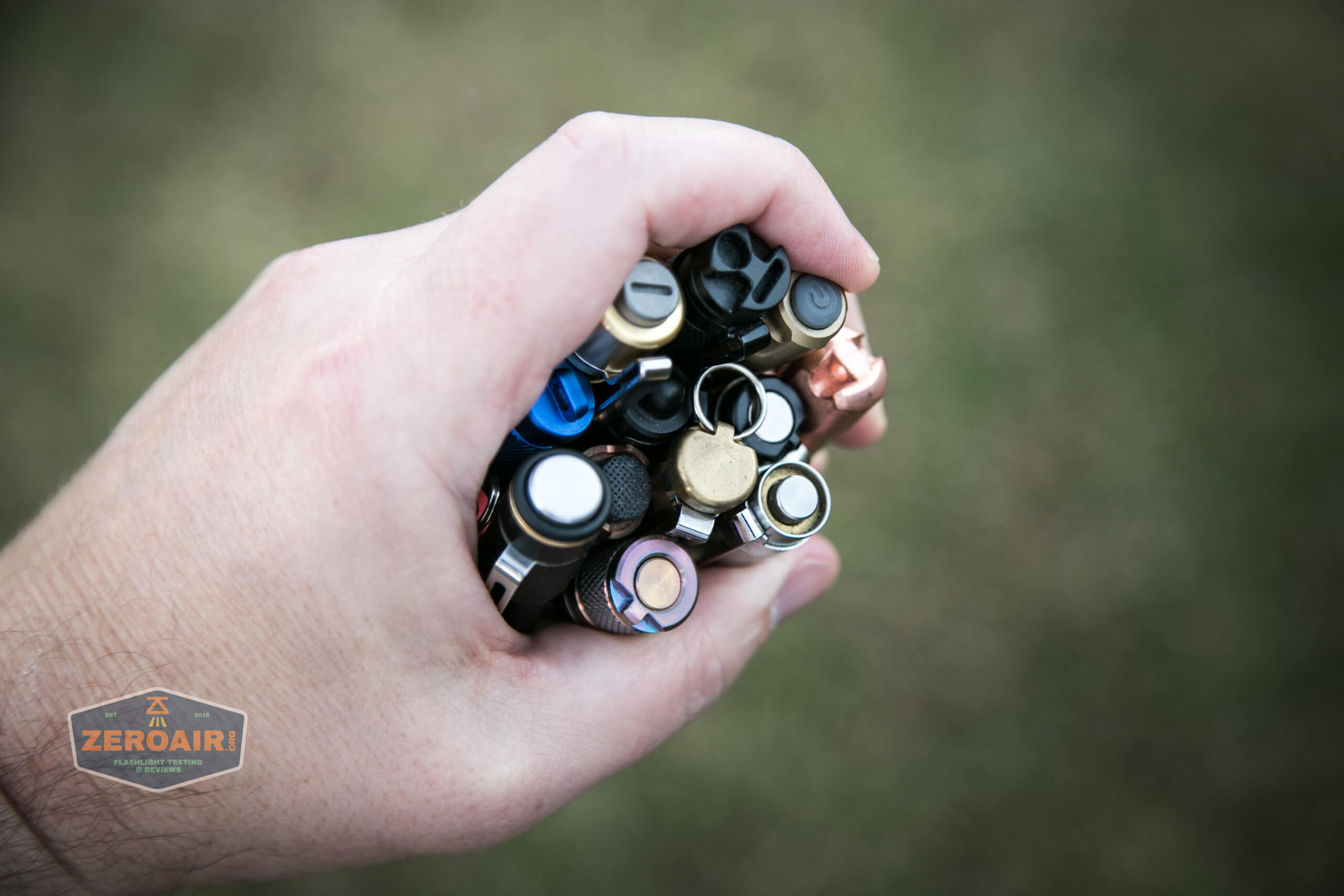
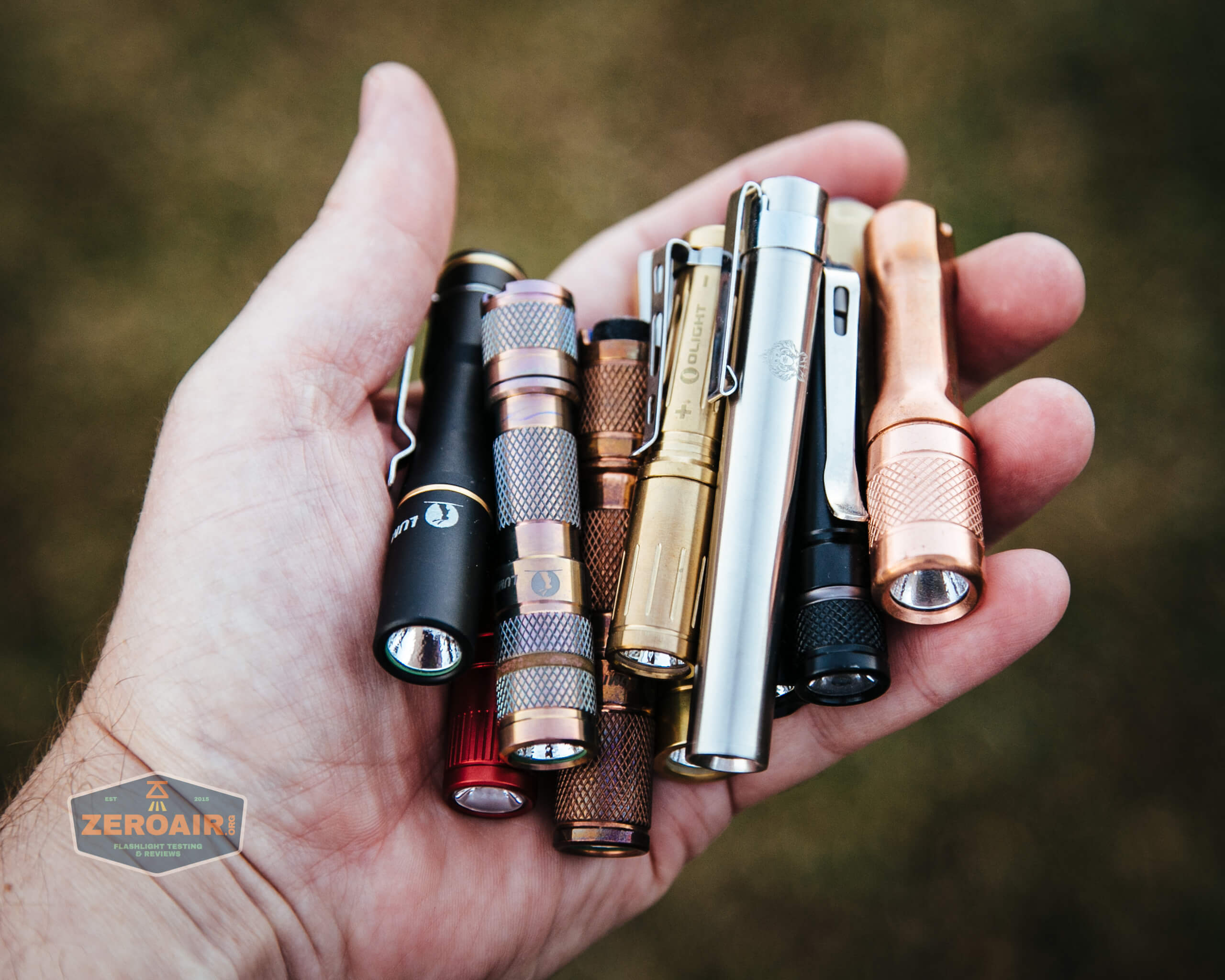
Here are some other AAA lights…. Note that the Pineapple Mini and the BLF-348 are pretty much the same length. And both clicky, and both 219b…. in fact, they’re very similar lights! The bonus is that the Pineapple Mini has modes!
Retention and Carry
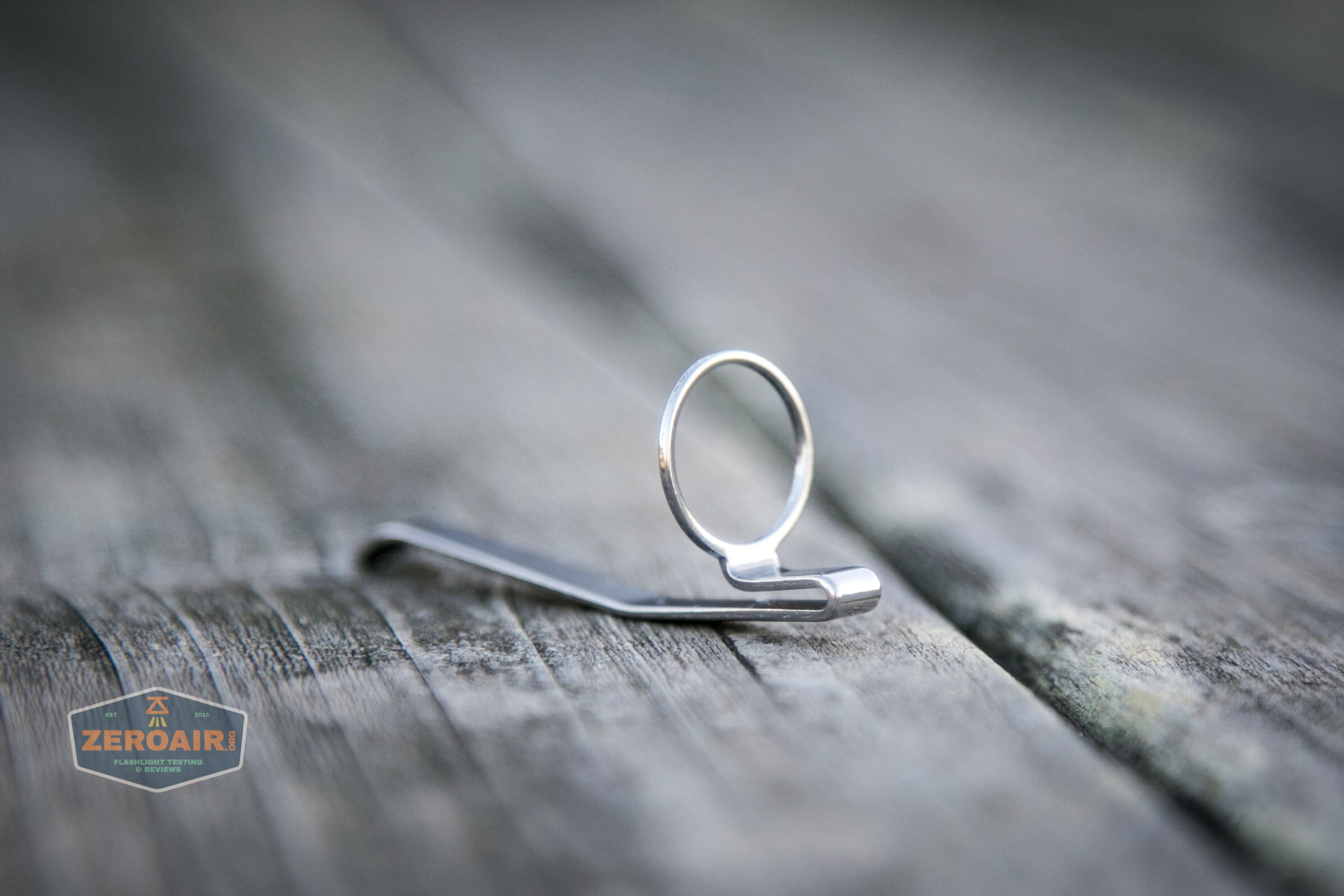
The light ships with a collar-style clip installed.
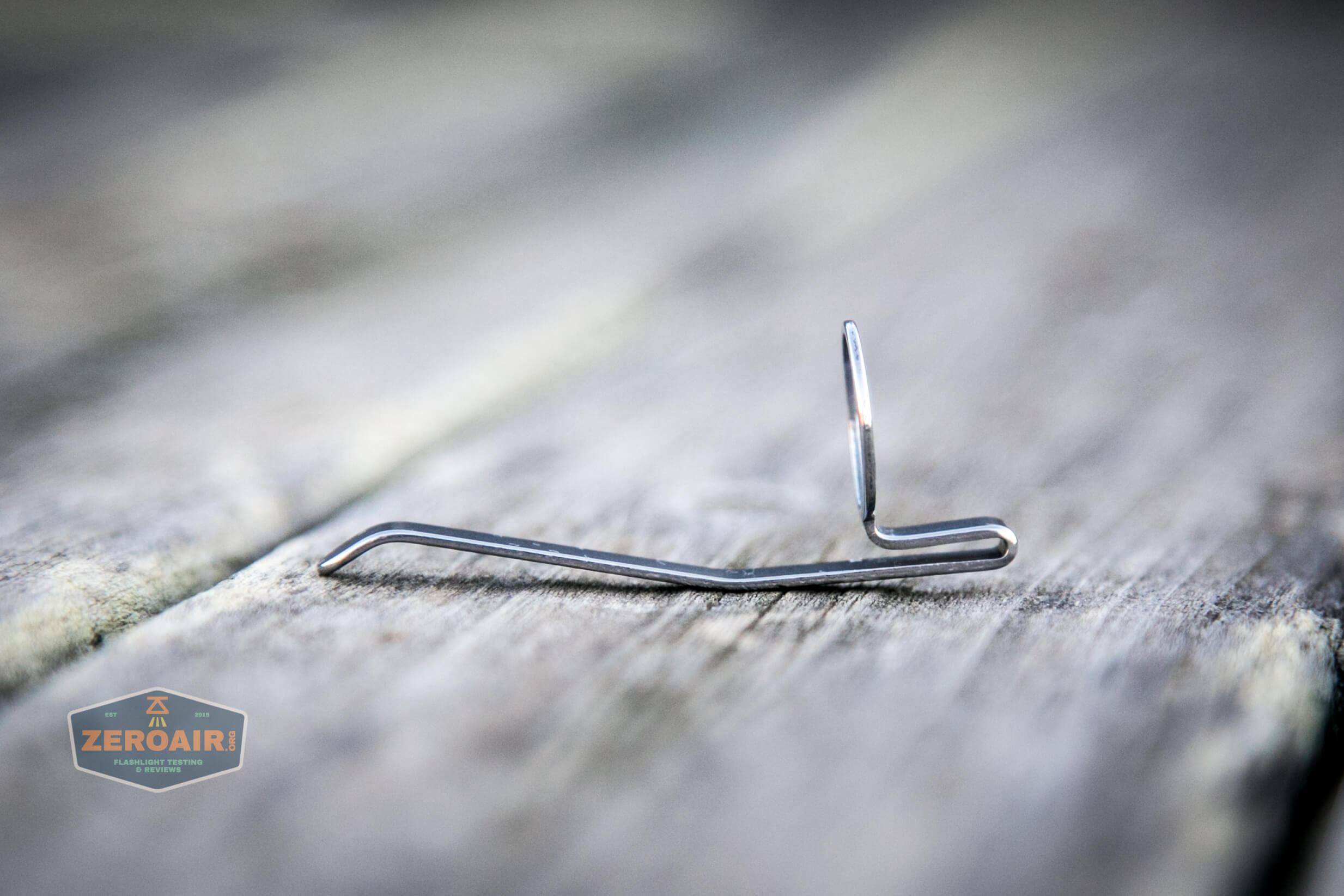
It’s a deep (ish) carry clip – that is, it’s a deep carry clip if your pants will fit in the narrow shoulder you can see below.
The clip has a nice open mouth and is overall finished very cleanly.
The clip is not reversible, and as such, this light can’t be used on a hat.
Power and Runtime
The Pineapple Mini can surprisingly run on 1.5V sources, and also 4.2V sources. All the usual AAA types work – alkaline, NiMH, lithium primary. And also the lithium-ion 10440 cell works! Output is different between the voltages, too.
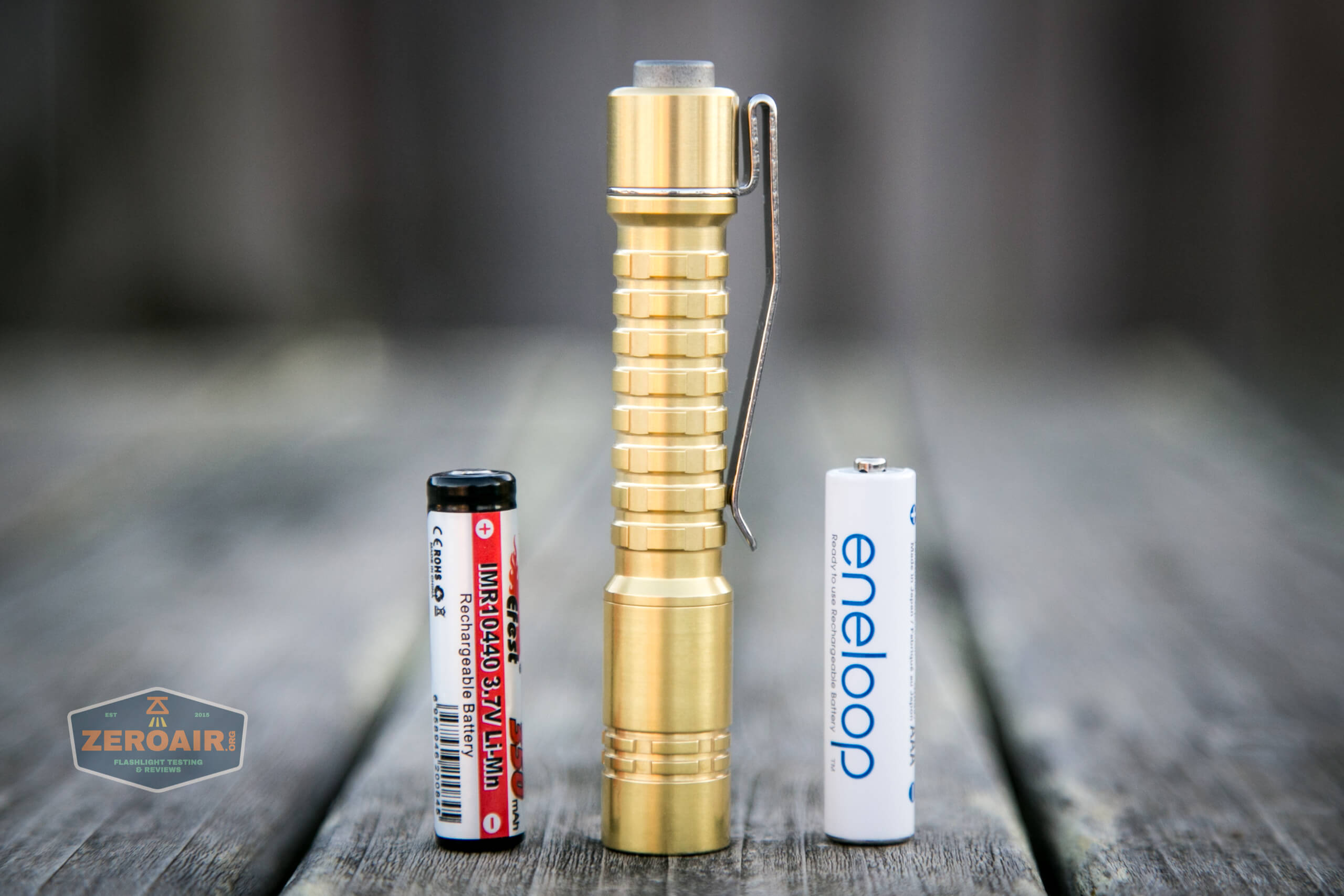
According to the product page, the body doesn’t like long button tops due to fitment issues. Thus, the preference is for either regular AAA cells or flat top 10440 cells.
The cell is installed in the normal direction – positive end toward the head. Below is an Eneloop AAA NiMH cell installed.
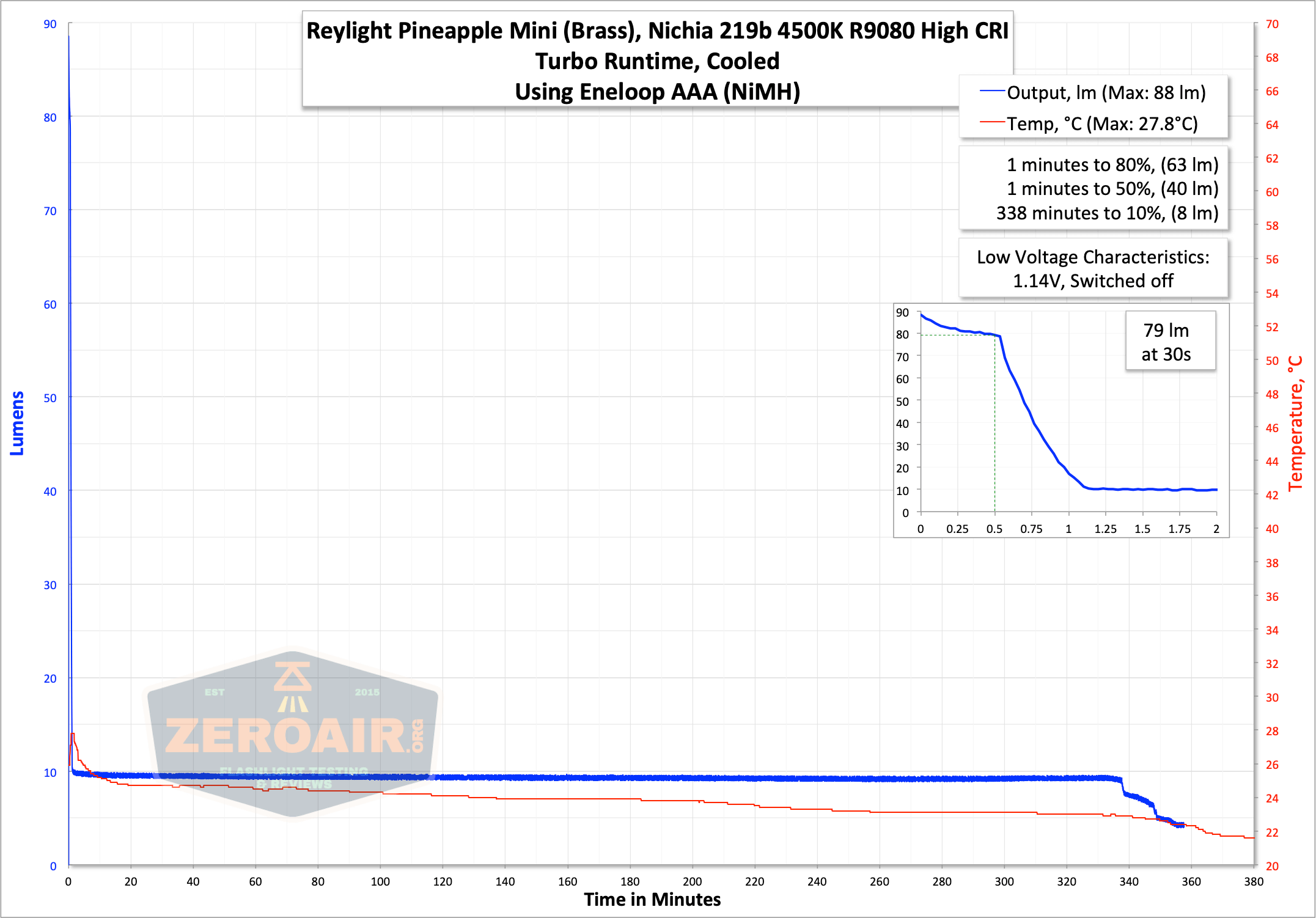
Here’s some testing on the NiMH chemistry. There’s a big stepdown at around 30 seconds, and then the output holds very steadily for a long while.
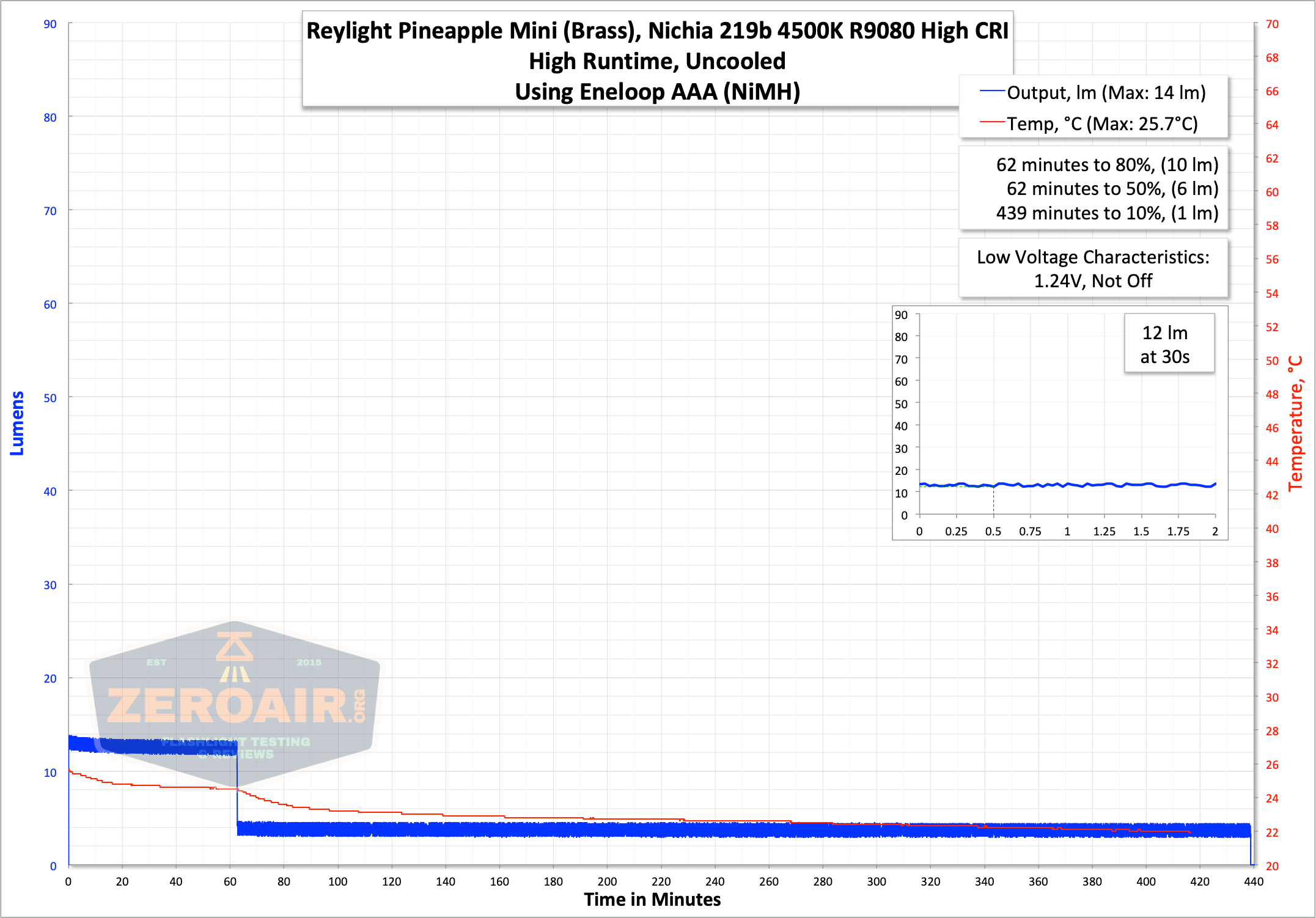
High is also very stable and has quite low output. Nothing at all wrong with that. I actually stopped this test, and the light was still going strong at the low level.
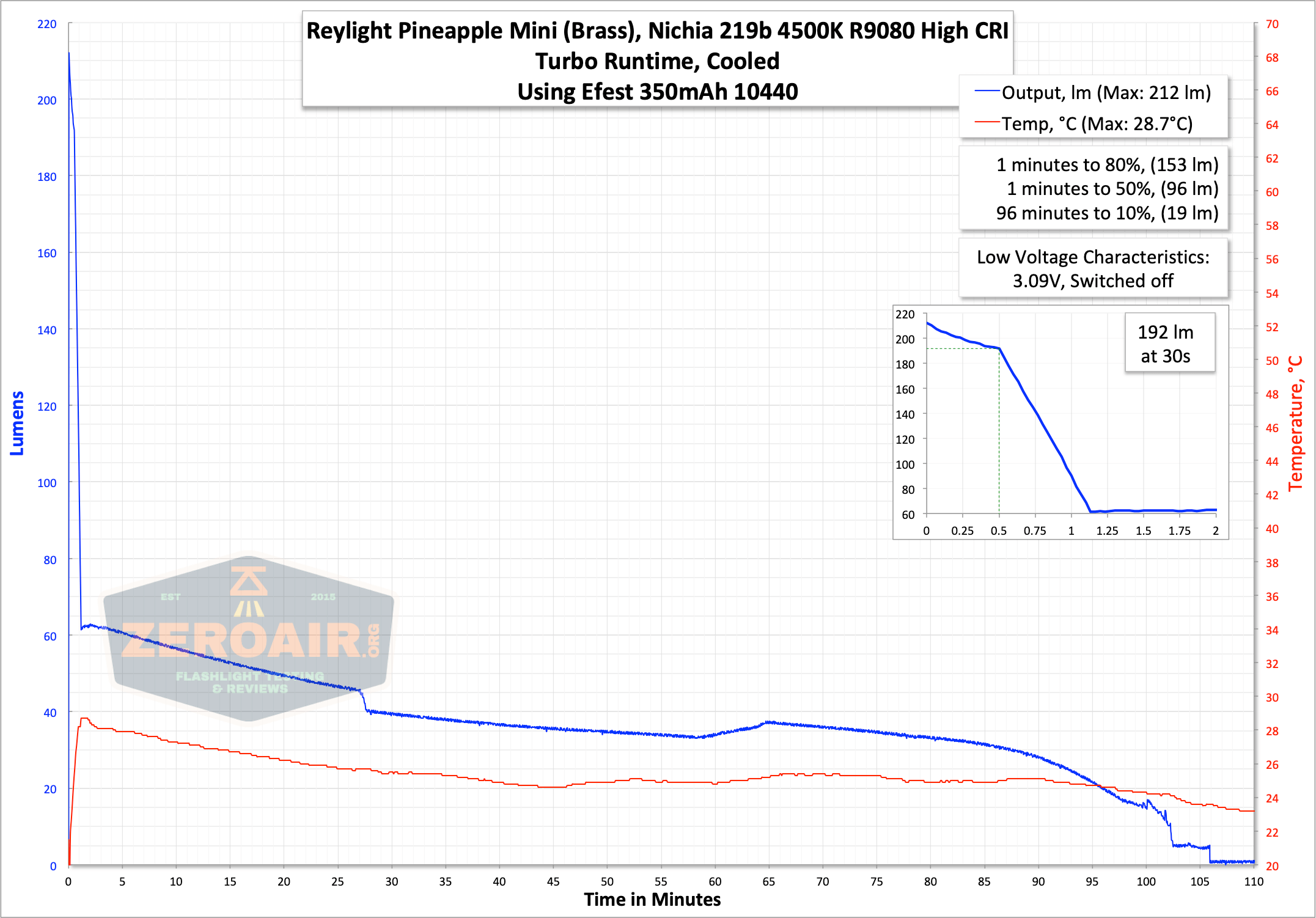
Here’s the Pineapple Mini with a 10440 installed. A 10440 can be included with your purchase from Rey, too.
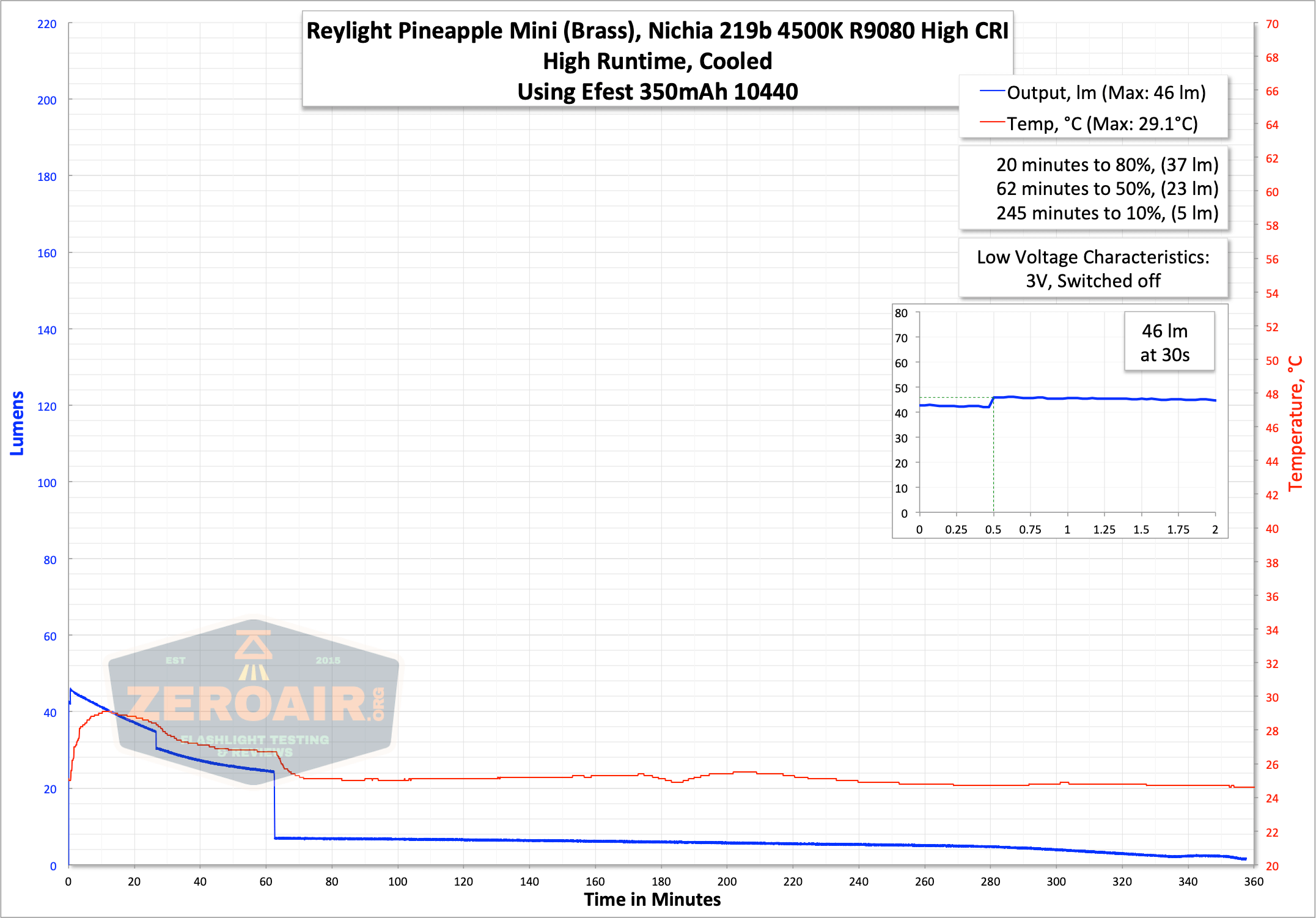
Turbo with a 10440 is much higher than with NiMH. The stepdown is around the same timeframe (30 seconds in). From there, the output wanders down in a much less regulated fashion than on NiMH.
Here’s High.
Modes and Currents
| Mode | Mode Claimed Output (lm) | Claimed Runtime | Measured Lumens | Tailcap Amps |
|---|---|---|---|---|
| Turbo (AAA/NiMH) | 90 | – | 87 | 1.49 |
| High (AAA/NiMH) | – | – | 12 | 0.10 |
| Medium (AAA/NiMH) | – | – | ~ | 0.05 |
| Low (AAA/NiMH) | – | – | ~ | 0.04 |
| Mode | Mode Claimed Output (lm) | Claimed Runtime | Measured Lumens | Tailcap Amps |
|---|---|---|---|---|
| Turbo (10440) | 240 | – | 210 | 1.41 |
| High (10440) | – | – | 43 | 0.23 |
| Medium (10440) | – | – | 12 | 0.07 |
| Low (10440) | – | – | 0 | 0.04 |
Pulse Width Modulation
AAA:
 10400:

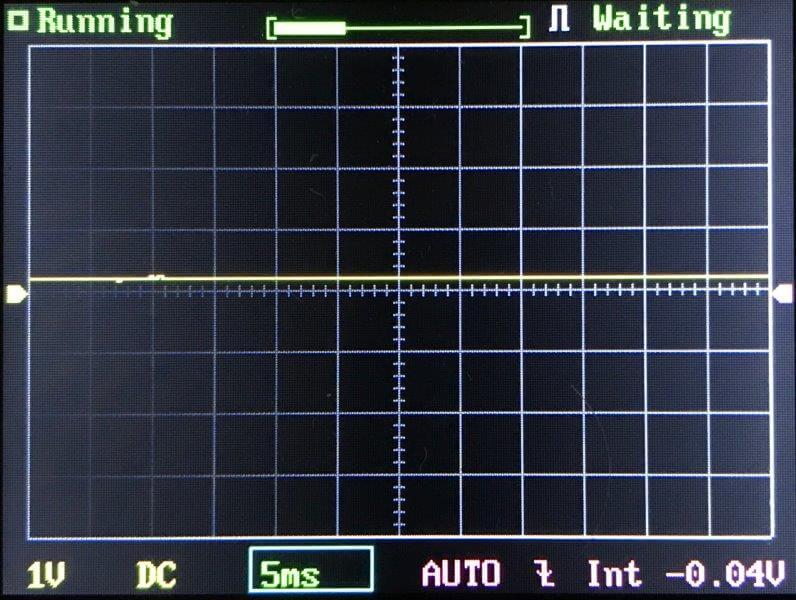
Here you can see a “baseline” – a chart with almost no light hitting the sensor.
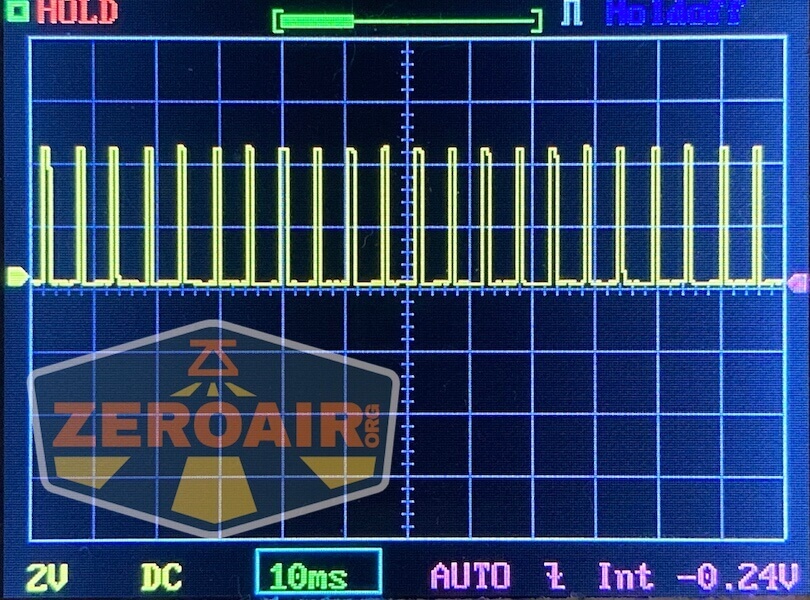
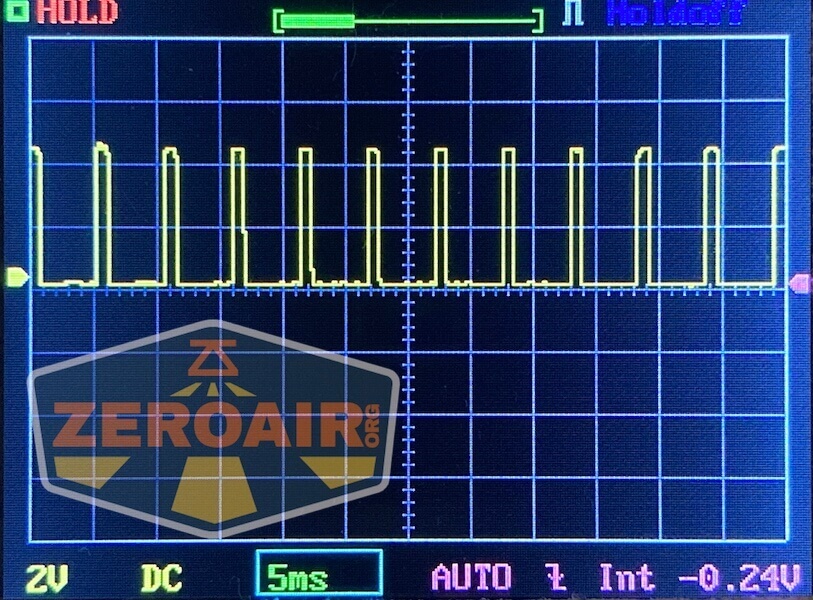
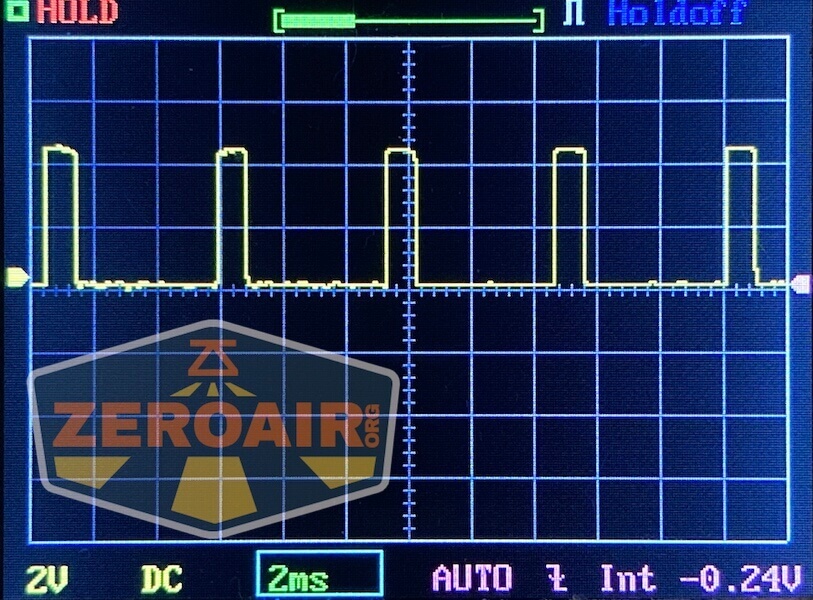
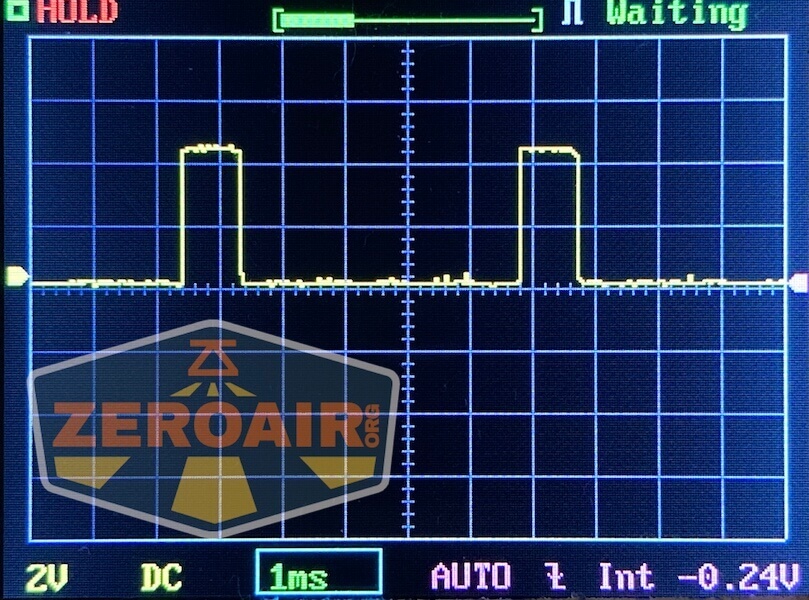
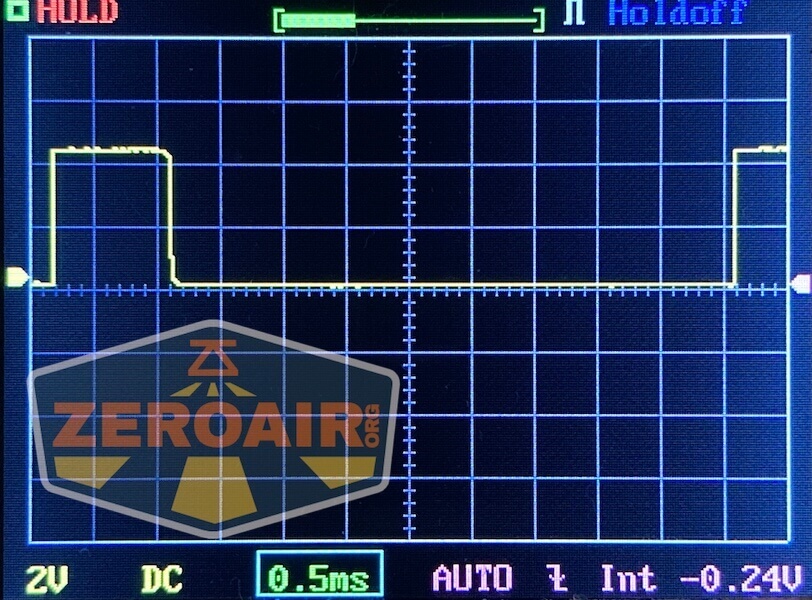
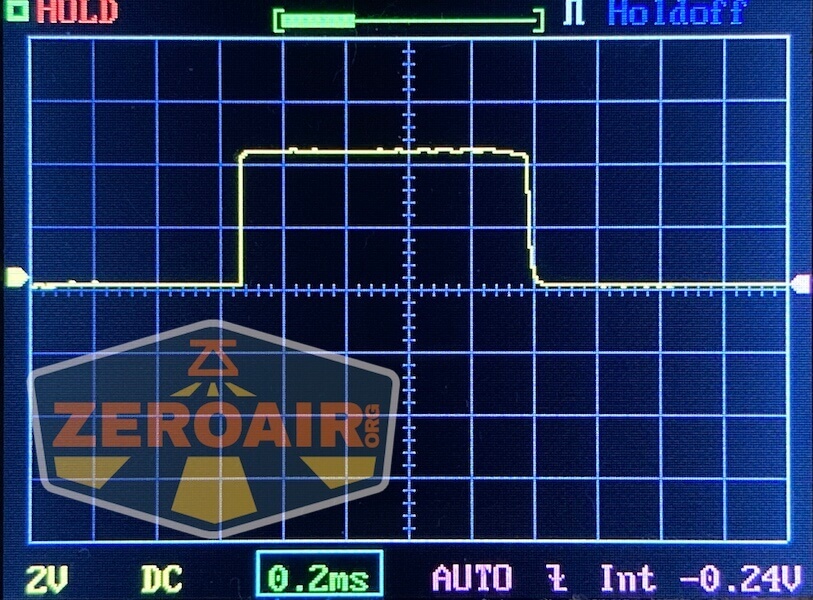
Then there’s the Ultrafire WF-602C flashlight, which has some of the worst PWM I’ve seen. It’s so bad that I used a post about it to explain PWM! Here are multiple timescales (10ms, 5ms, 2ms, 1ms, 0.5ms, 0.2ms) to make comparing this “worst” PWM light to the test light easier. That post also explains why I didn’t test the WF-602C at the usual 50us scale.
User Interface and Operation
The switch on the Reylight Pineapple Mini is a mechanical clicky. It’s a reverse clicky, which means the modes can be changed while the light is on.
As mentioned above, the switch has a Tritium slot.
The switch is very proud, but flat, so technically the light will tailstand if you’re very determined. (Below, you can also see the light without the clip installed.)
The user interface actually has some programming features. Mode memory can be turned on or off (default is off, thankfully). There are a bunch of mode options, too.
Here’s a user interface table!
| State | Action | Result |
|---|---|---|
| Off | Click | On (Low, if mode memory is off) |
| On | Click | Off |
| On | Tap | Mode advance (LMHT) |
| On | Tap 8x | Enter programming mode^ |
^ Programming goes like this. Once in programming mode the light will blink once, then blink very quickly (strobe-ish), then blink twice then blink very quickly (strobe-ish), and so on, up to five blinks. In order to program a certain feature, click during the “strobe-ish” section after the blink. Each of these blinks represents a programming option, as follows:
First blink: Program the mode groups. Only this option has sub-options. In this option, the light will blink slowly 4x. The mode groups are as follows:
1 blink: (ML)-2%-20%-100%
2nd blink: (ML)-10%-40%-100%
3rd blink: (ML)-2%-10%-50%
4th blink: (ML)-50%-100%-strobe-SOS
To accept any of those four mode groups of your choice, click after the appropriate blink. So if you want the third option, wait for the light to blink 3x, and tap the switch. You’ve programmed the third mode group. The light will run the 4x blink cycle twice and then exit programming.
Second blink: Toggle mode memory. Off is the default.
Third blink: Toggle moonlight mode. On is the default.
Fourth blink: Toggle mode order. Default is ascending. Can be toggled to descending.
Fifth blink: Reset to factory settings.
LED and Beam
The emitter of choice in this light is really the standout – it’s a Nichia 219b at 4500K, and r9080, and High CRI. There’s a very light orange peel reflector.
Nichia 219b is extraordinary. And in this light, it’s good too!
Beamshots
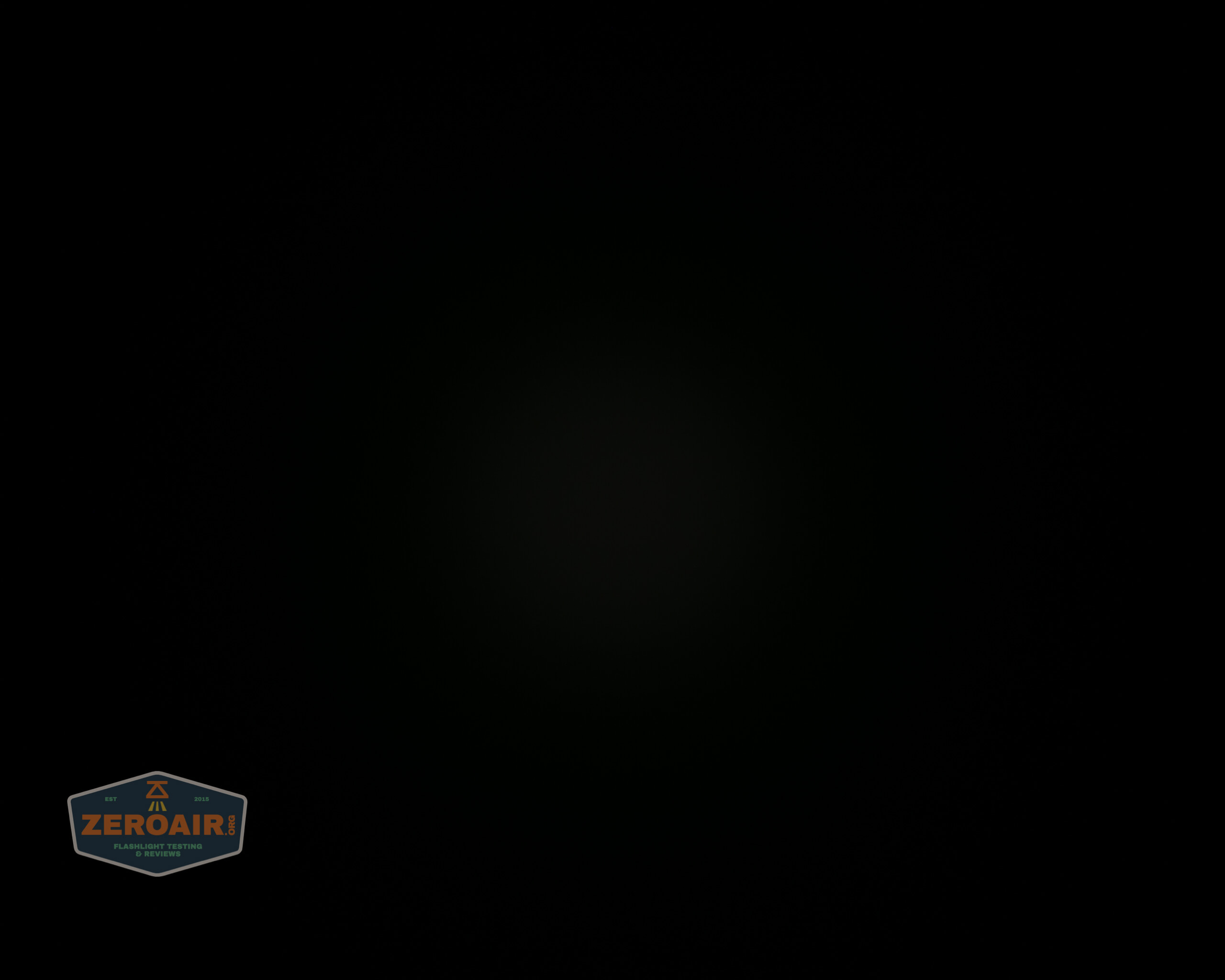
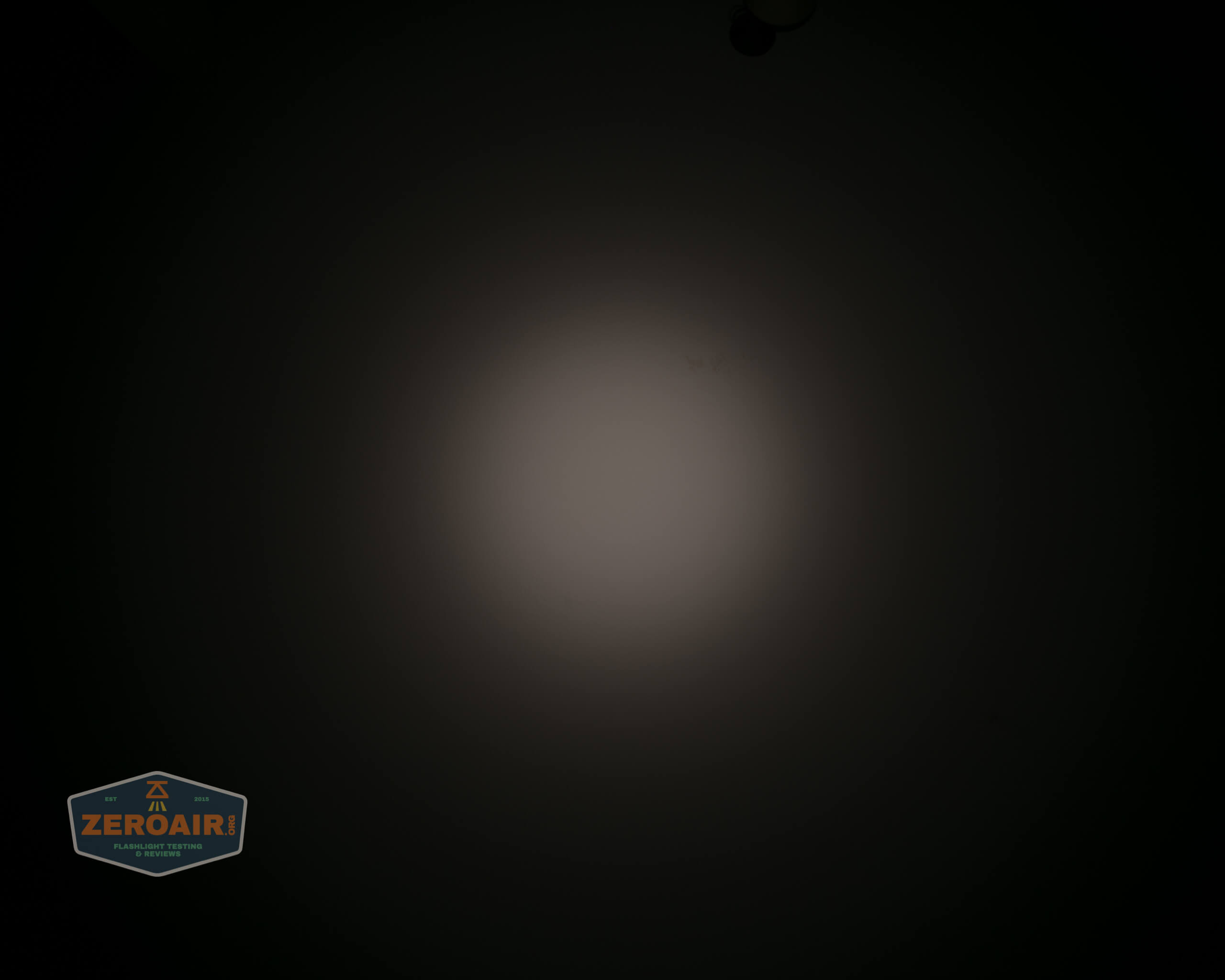
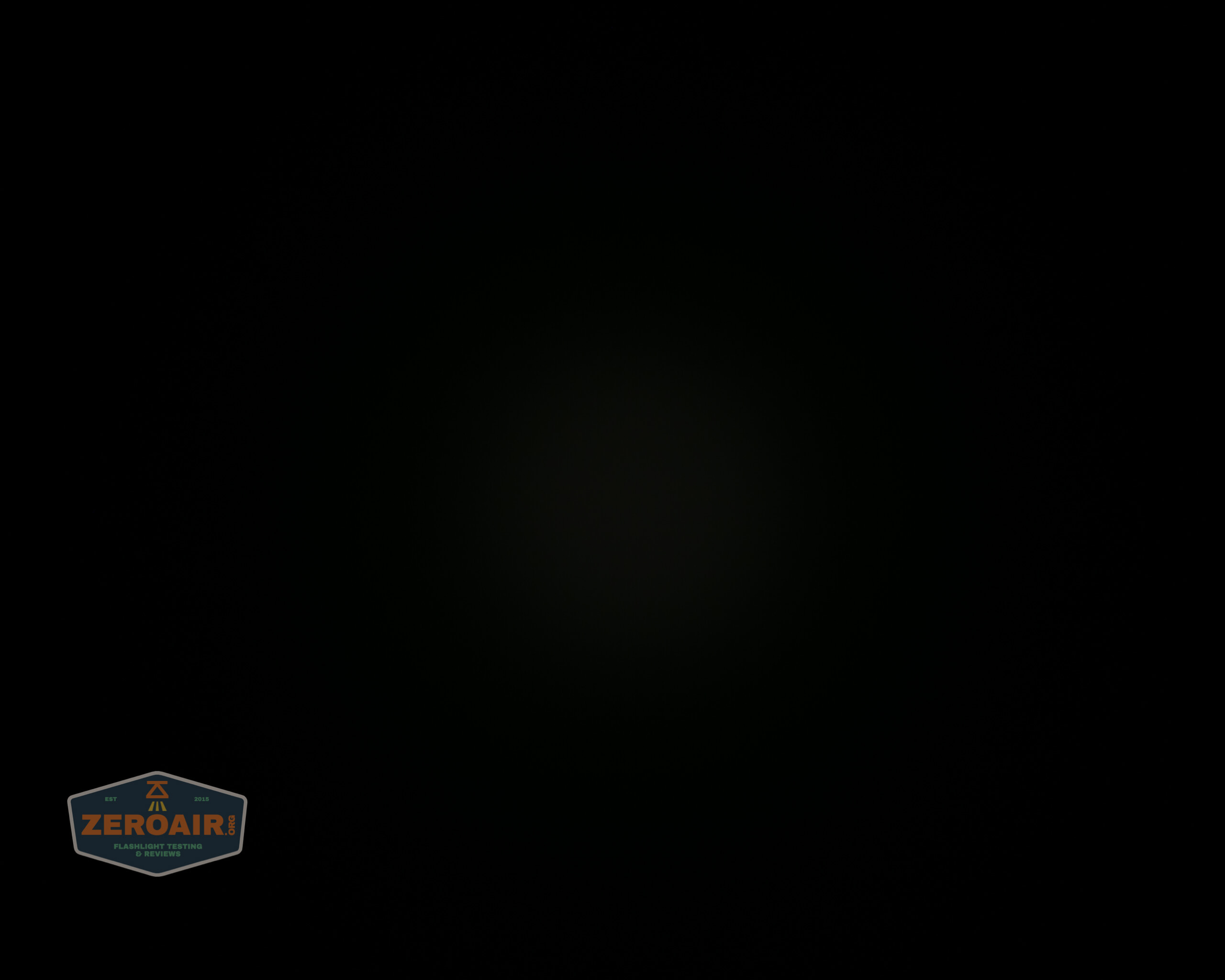
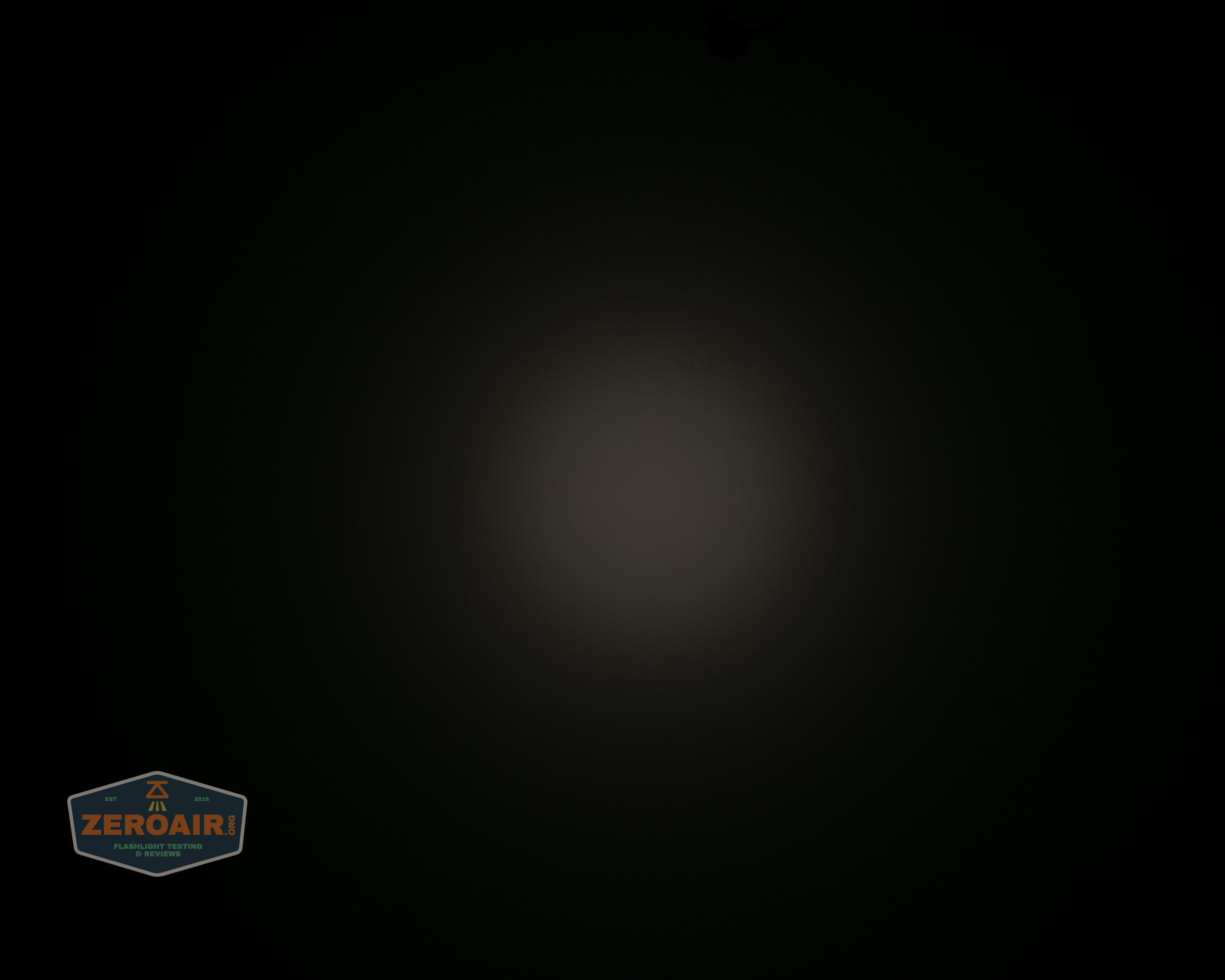
These beamshots always have the following settings: f8, ISO100, 0.3s shutter, and manual 5000K exposure. These photos are taken at floor level, and the beam hits the ceiling around 9 feet away.
AAA:


10440:

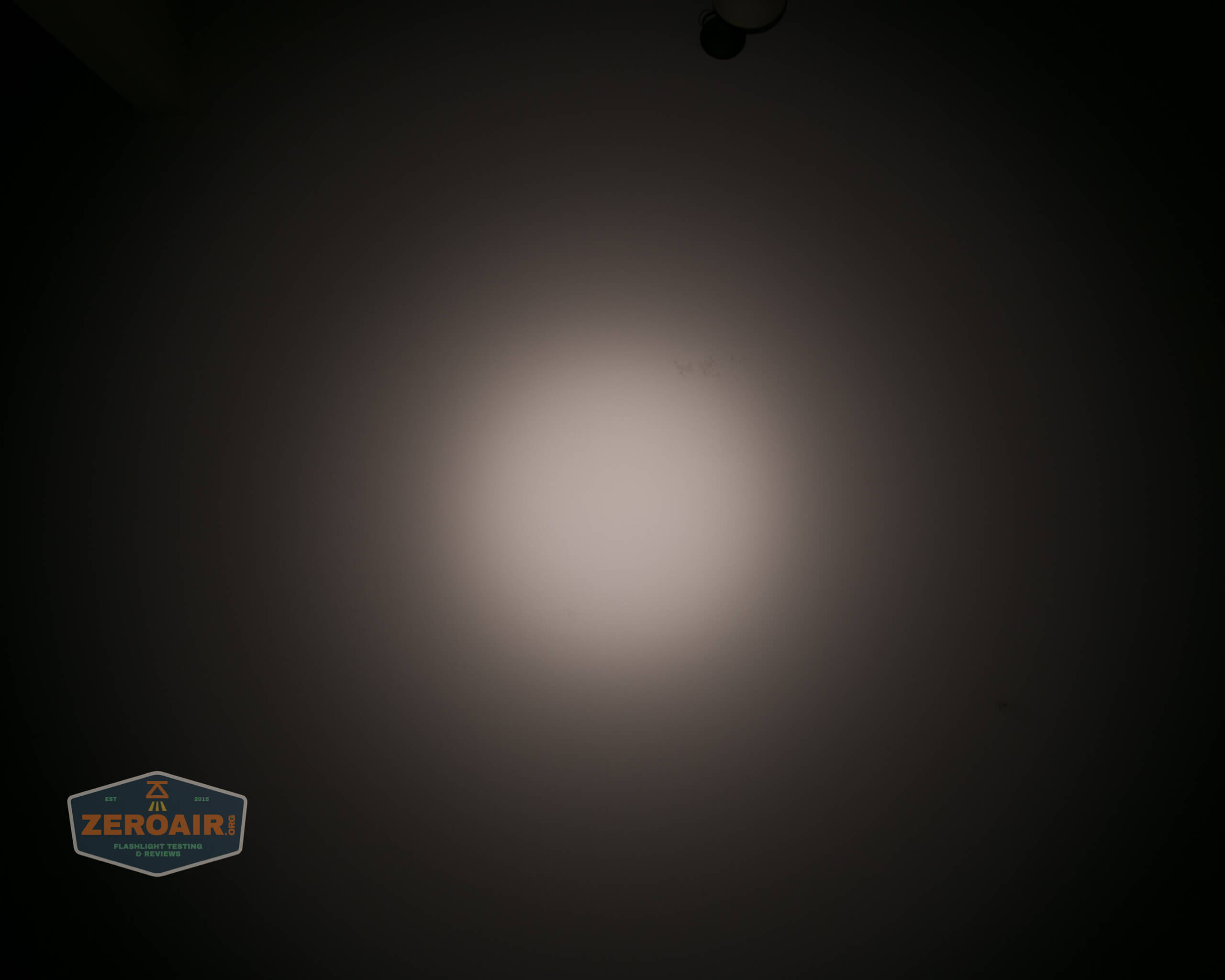
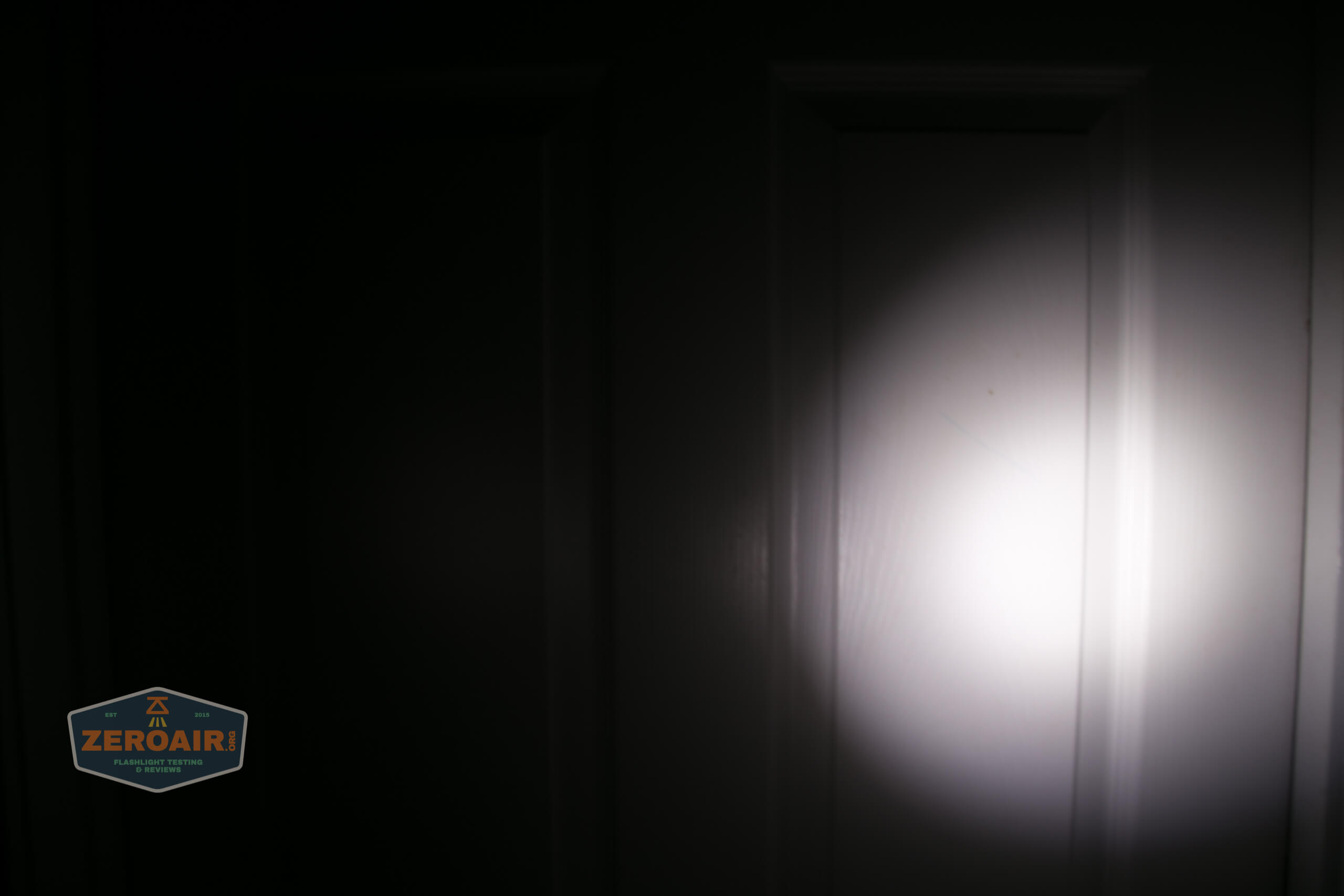
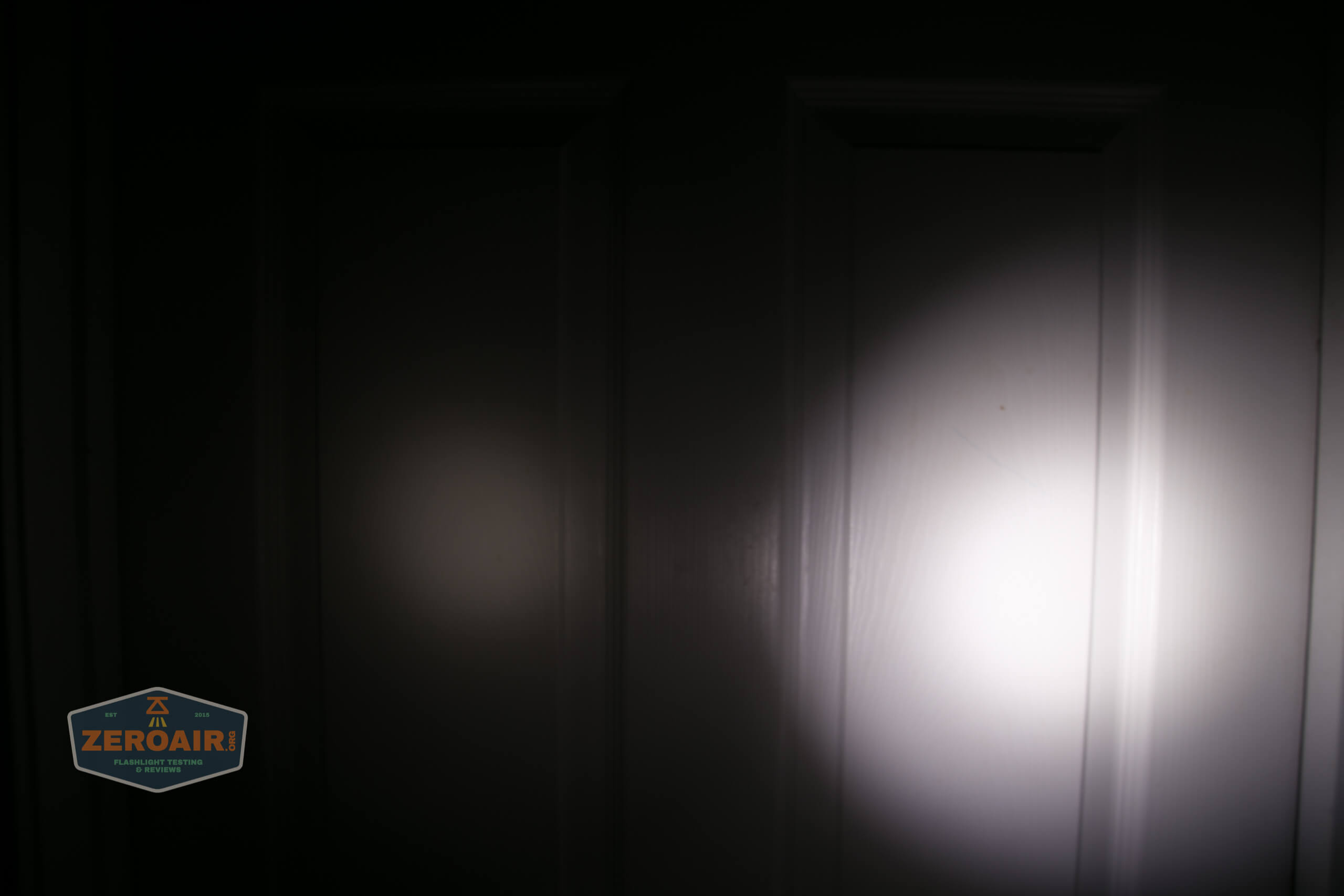
Tint vs BLF-348 (KillzoneFlashlights.com 219b version) (affiliate link)
I keep the test flashlight on the left and the BLF-348 reference flashlight on the right.
AAA:
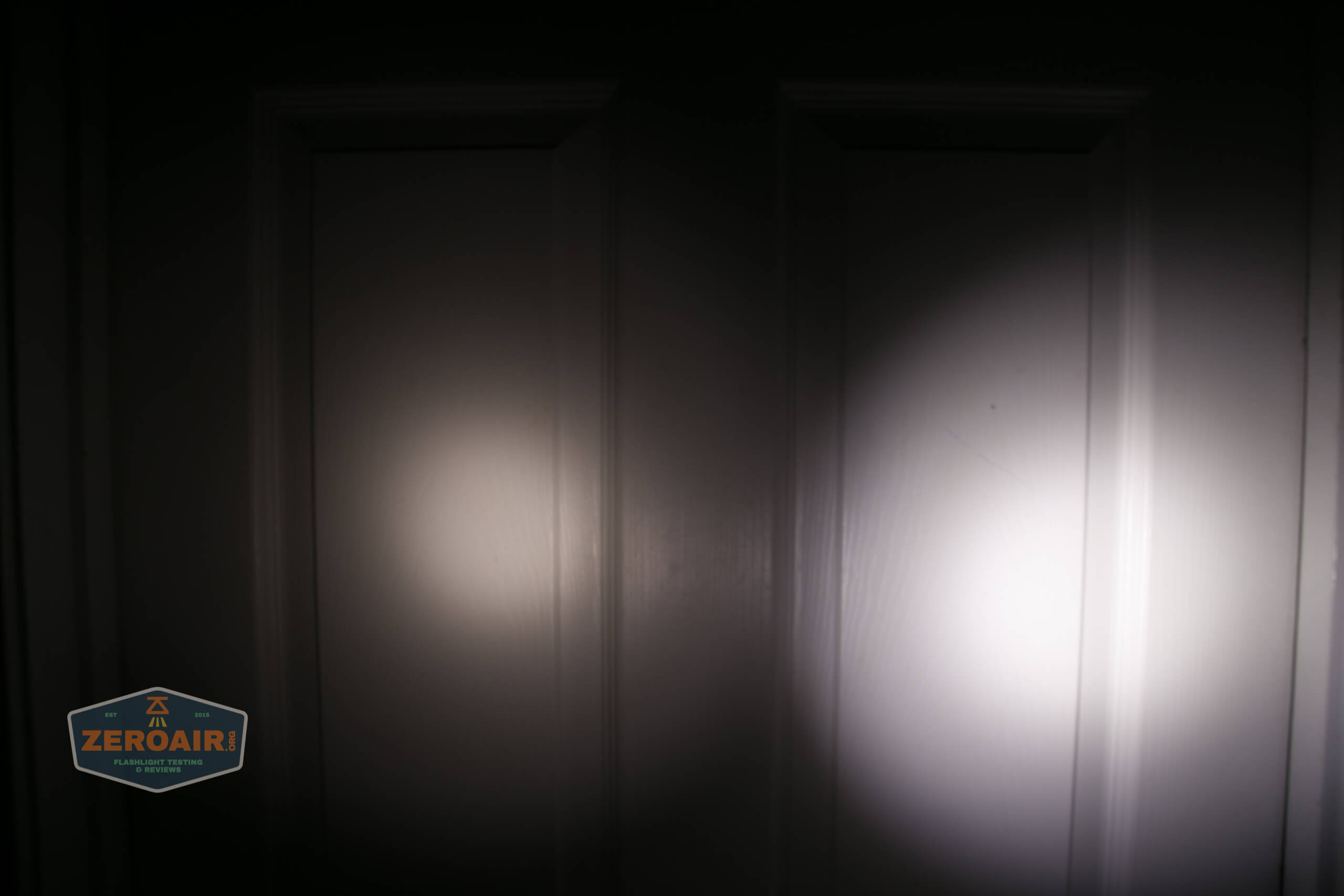
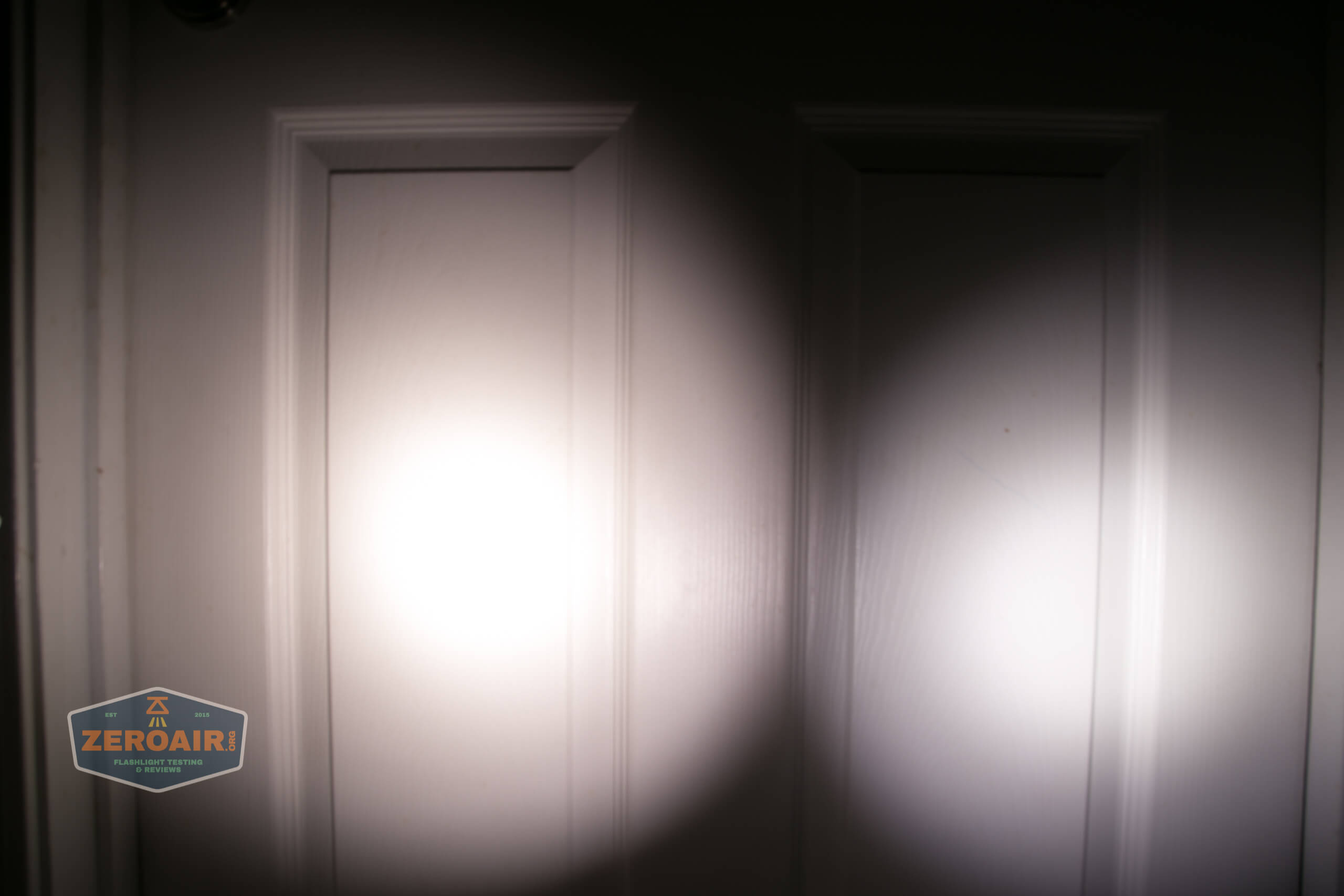
10440:
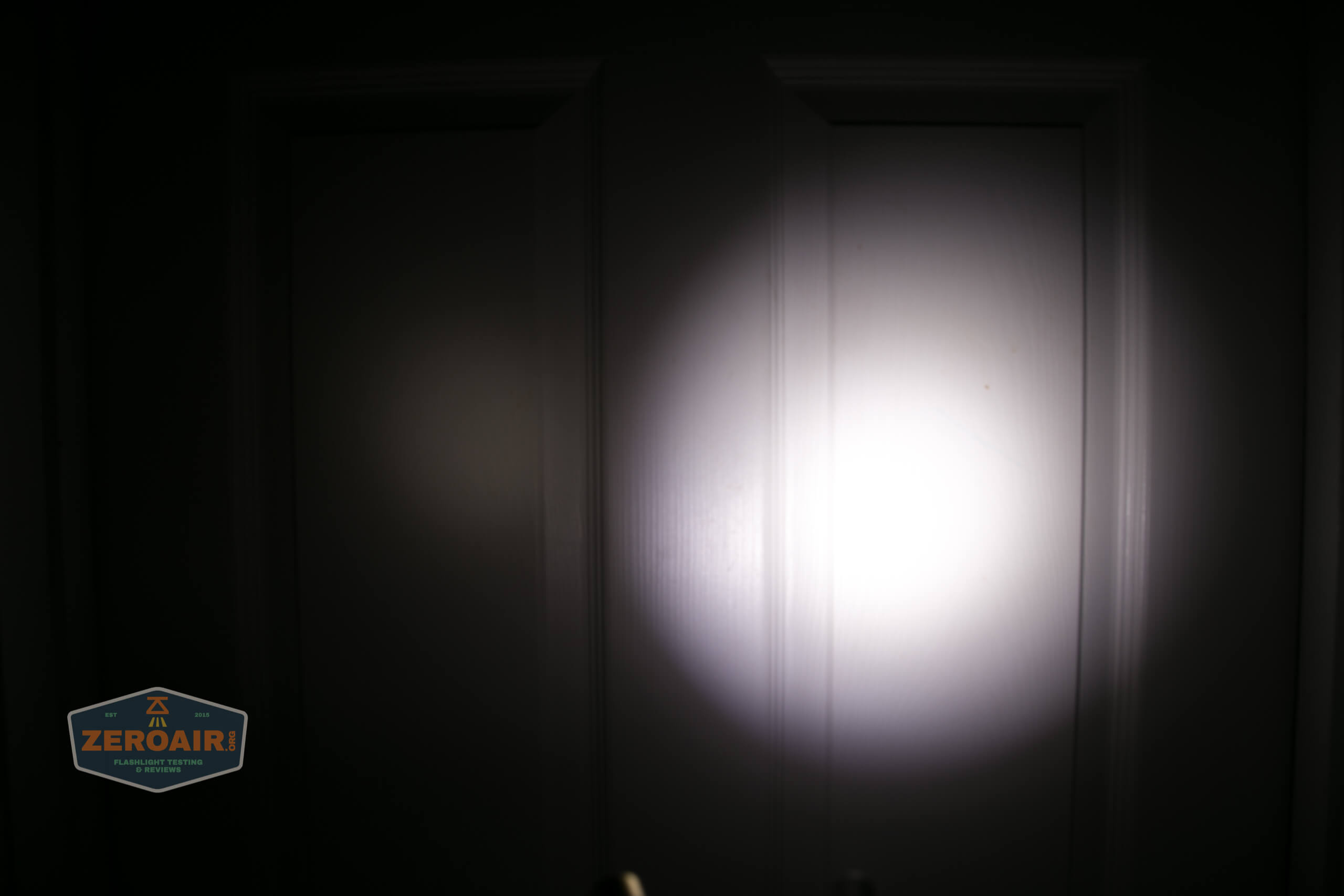
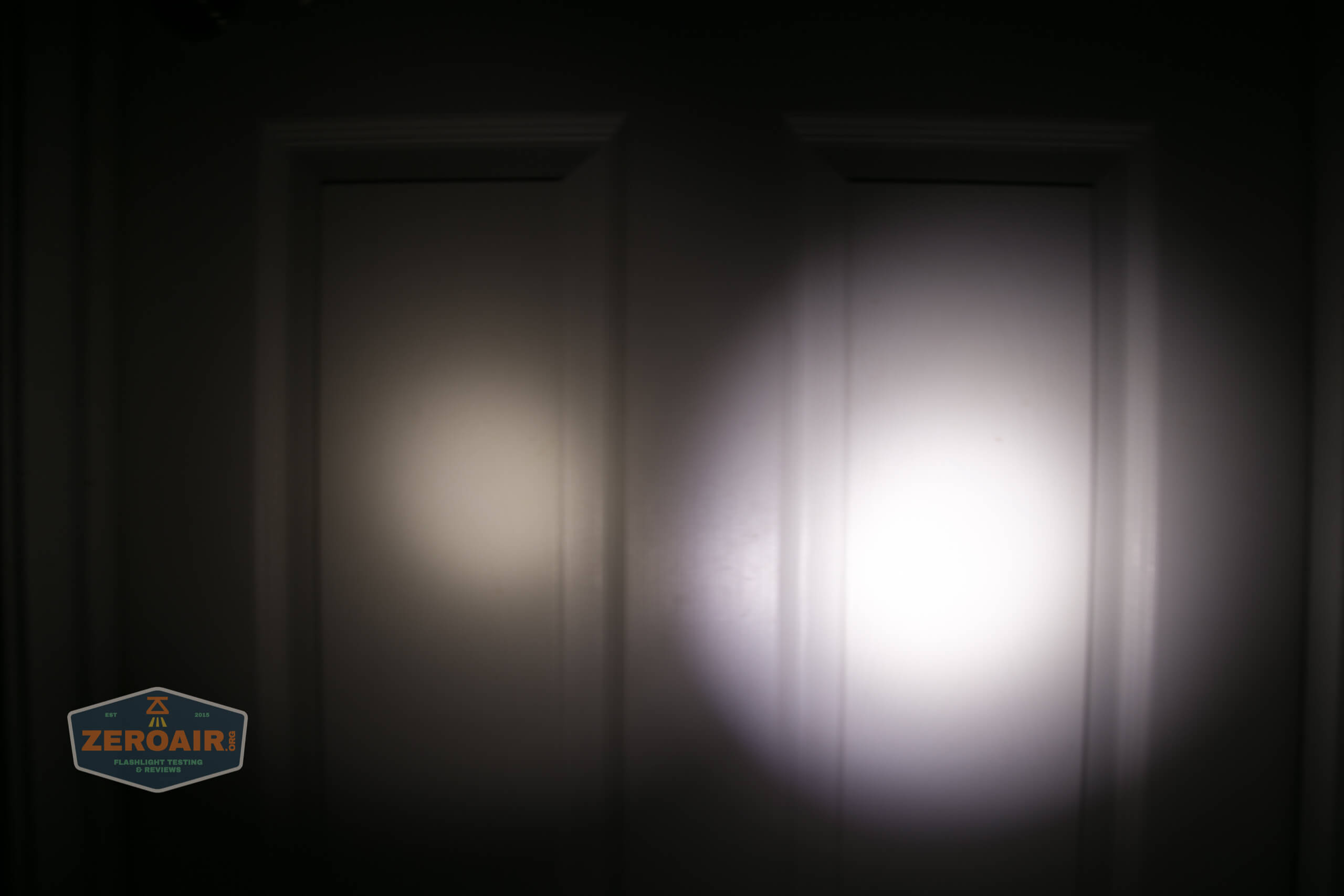
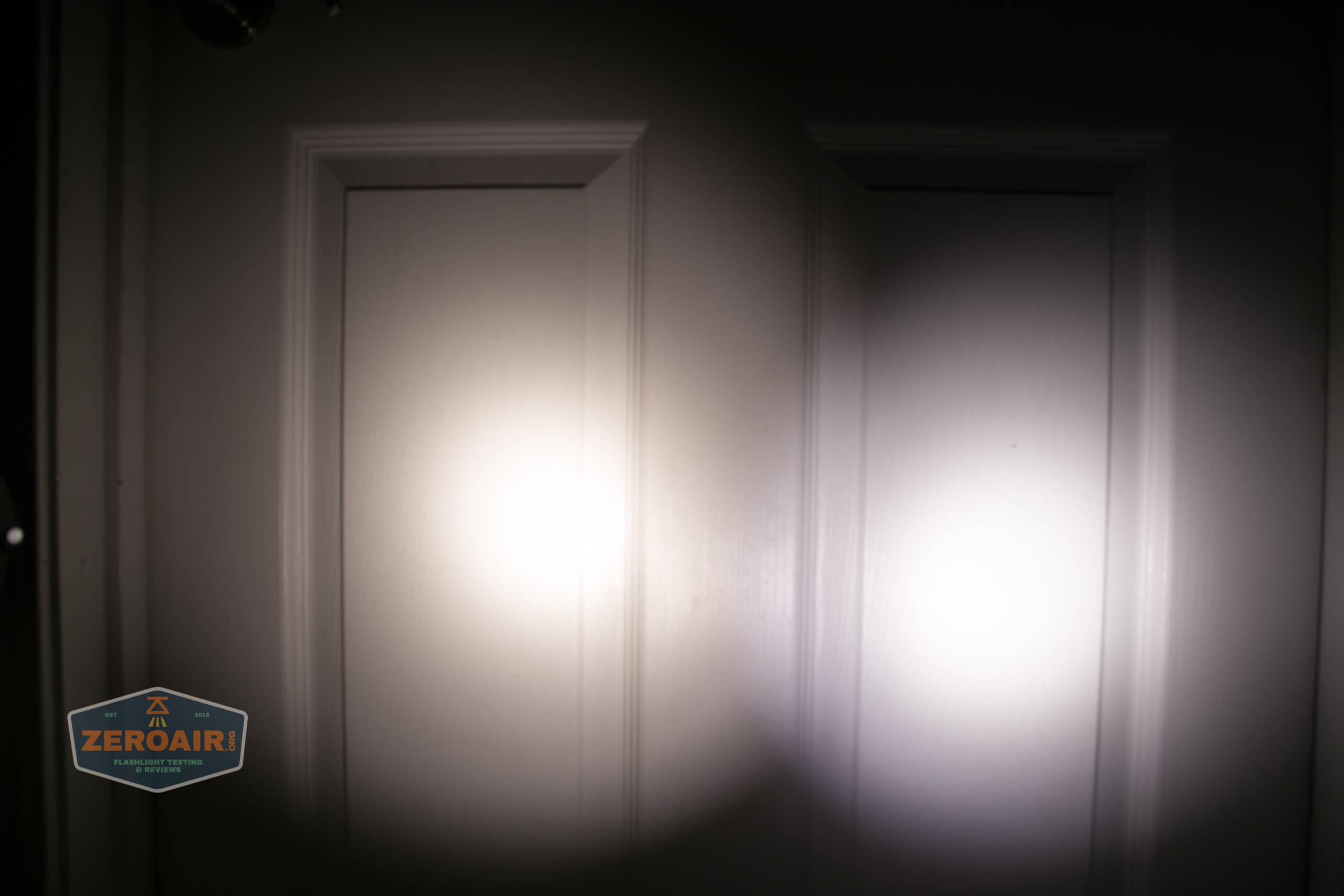
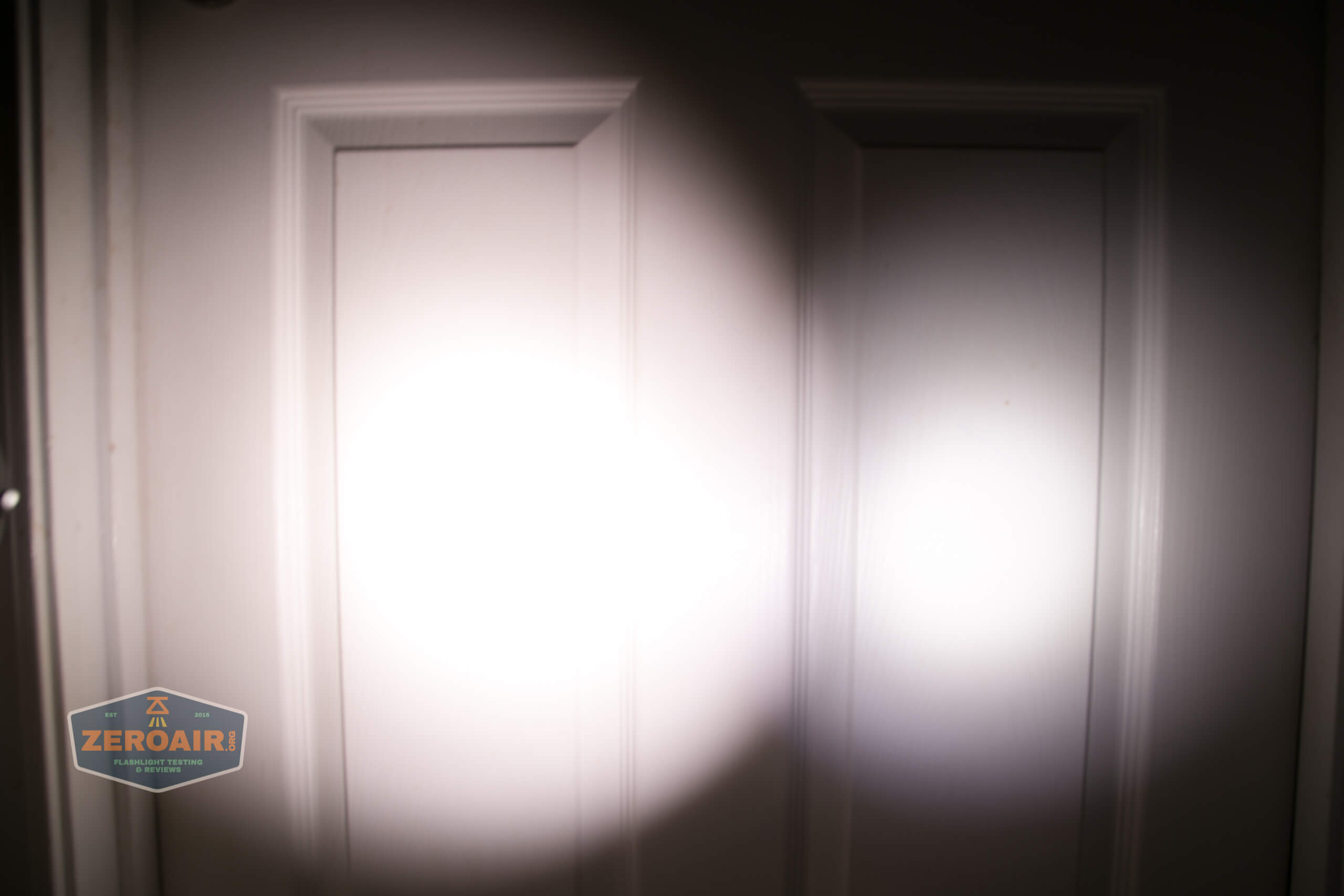
I compare everything to the KillzoneFlashlights.com 219b BLF-348 because it’s inexpensive and has the best tint!
Conclusion on the ReyLight Pineapple Mini Flashlight
What I like
- Nichia 219b!
- 4500K!
- r9080 for great color rendering
- High CRI!
- Brass!
- Programming options – mode groups, memory or not, etc.
- Supports both 1.5V and 4.2V cylindrical AAA-sized cells.
What I don’t like
- Size is big – it’s as long as, and thicker than, the BLF-348.
Notes
- This light was provided by me for review. I was not paid to write this review.
- This content originally appeared at zeroair.org. Please visit there for the best experience!
- Use my amazon.com referral link if you’re willing to help support making more reviews like this one!
- Please support me on Patreon! I deeply appreciate your support!
Discover more from ZeroAir Reviews
Subscribe to get the latest posts sent to your email.