

XTAR T1 Keychain Flashlight Review
XTAR recently dropped the T1 keychain flashlight. It’s an e-switch light with USB-C charging and some neat side emitters. Read on!
Official Specs and Features
Here’s a link to the XTAR T1 keychain flashlight product page.
Versions
There appears to be just one T1, but also available is the T1-UV, which is similar but also very different.
Price
Looks like the XTAR T1 keychain flashlight is available at $35.90 on aliexpress. Not sure where else you can buy this one at the moment.
Short Review
Build quality is good enough. The switch is nice. It’s great to use USB-C charging. But Cree XP-G3 and “mode cycle through strobe” kills this one for me. The side emitter colors and options are nice novelties, though. Probably the only reason I’d buy this light.
Long Review
The Big Table
| XTAR T1 keychain flashlight | |
|---|---|
| Emitter: | Cree XP-G3 |
| Price in USD at publication time: | $35.90 |
| Cell: | Internal |
| Turbo Runtime Graph | High Runtime Graph |
| LVP? | ? |
| Switch Type: | E-Switch |
| Quiescent Current (mA): | ? |
| On-Board Charging? | Yes |
| Charge Port Type: | USB-C |
| Charge Graph | |
| Power off Charge Port | |
| Claimed Lumens (lm) | 500 |
| Measured Lumens (at 30s) | 437^ (see runtime graph) |
| Candela per Lumen | 3.9 |
| Claimed Throw (m) | ? |
| Candela (Calculated) in cd (at 30s) | 195lux @ 2.395m = 1119cd |
| Throw (Calculated) (m) | 66.9 |
| All my XTAR reviews! | |
^ Measurement disclaimer: Testing flashlights is my hobby. I use hobbyist-level equipment for testing, including some I made myself. Try not to get buried in the details of manufacturer specifications versus measurements recorded here; A certain amount of difference (say, 10 or 15%) is perfectly reasonable.
What’s Included

- XTAR T1 keychain flashlight
- Charge cable (USB to USB-C)
- Keyring
- Manual
Package and Manual
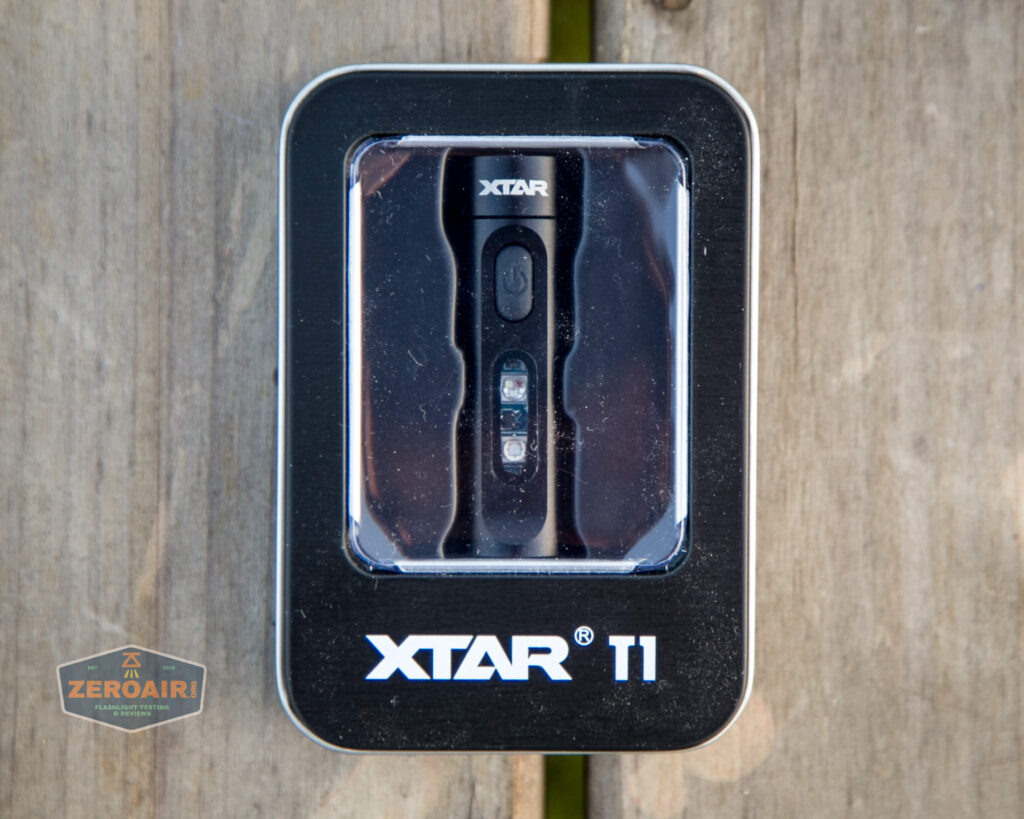
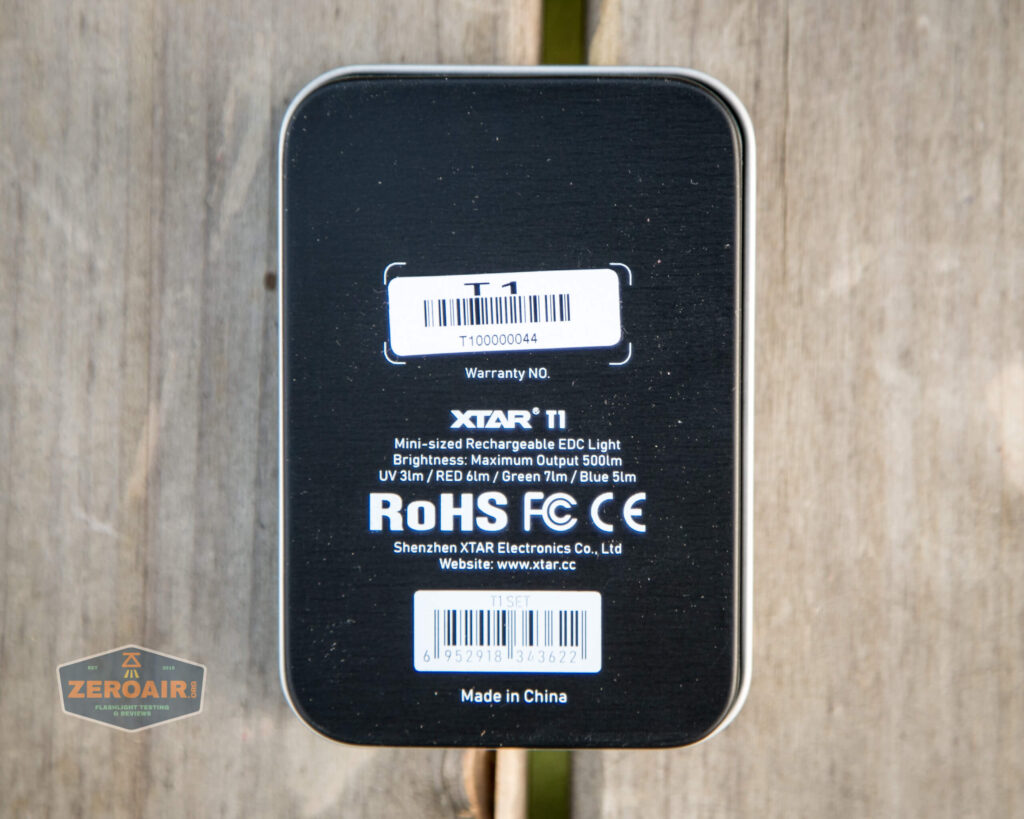

Build Quality and Disassembly

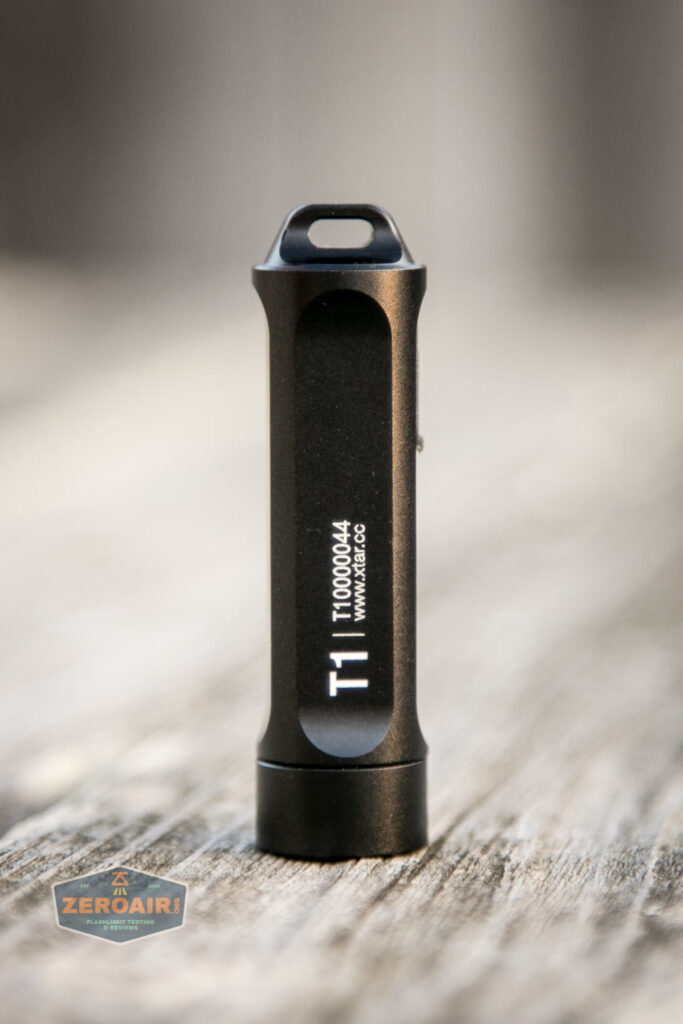
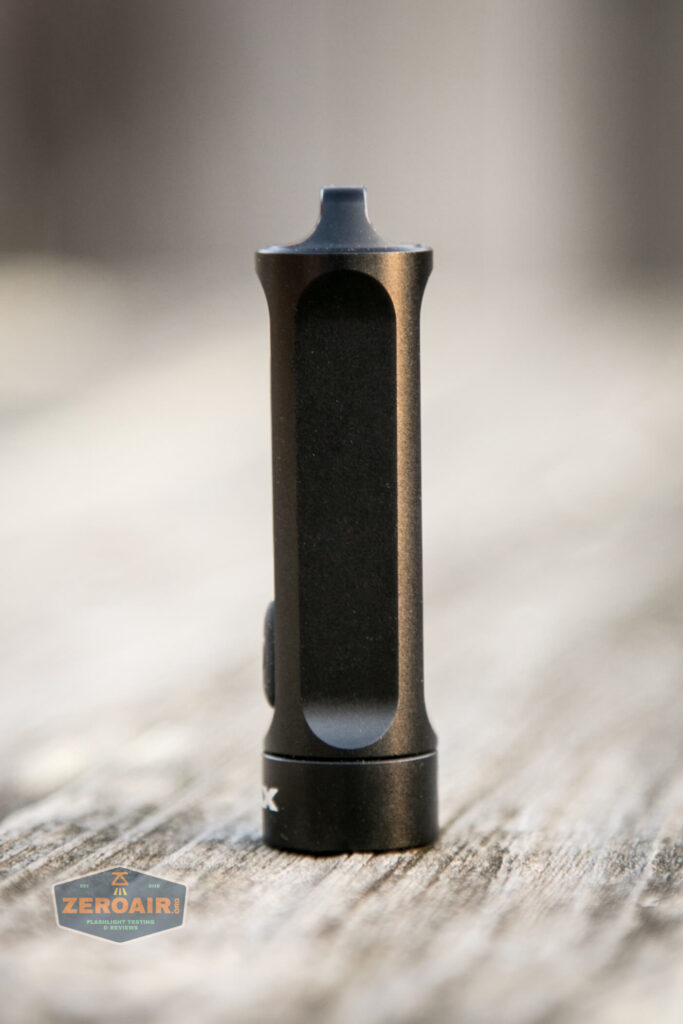
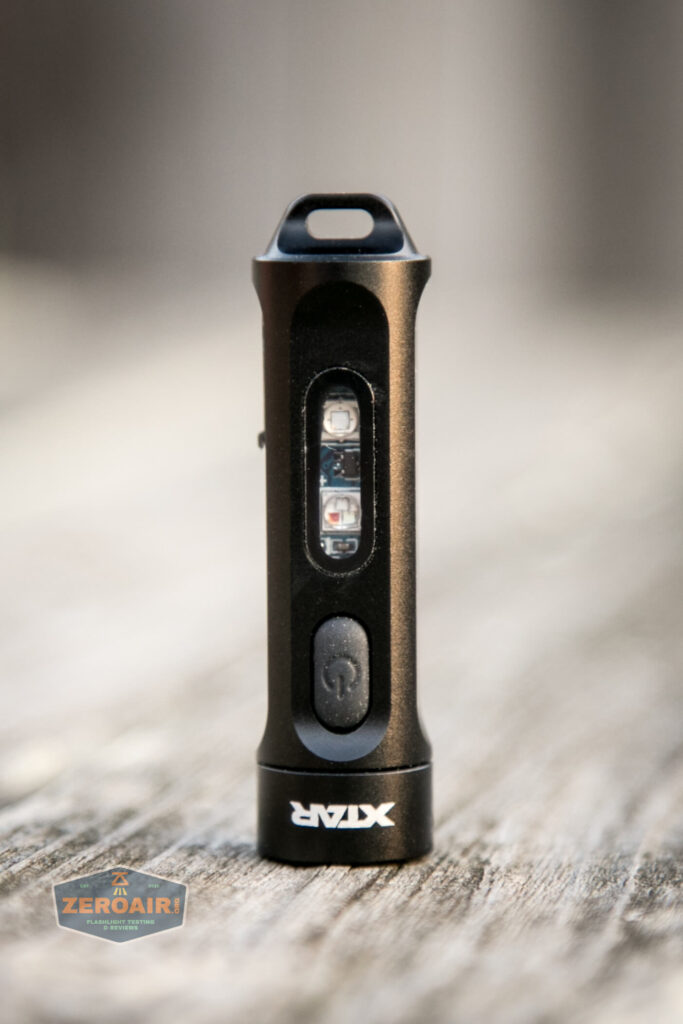

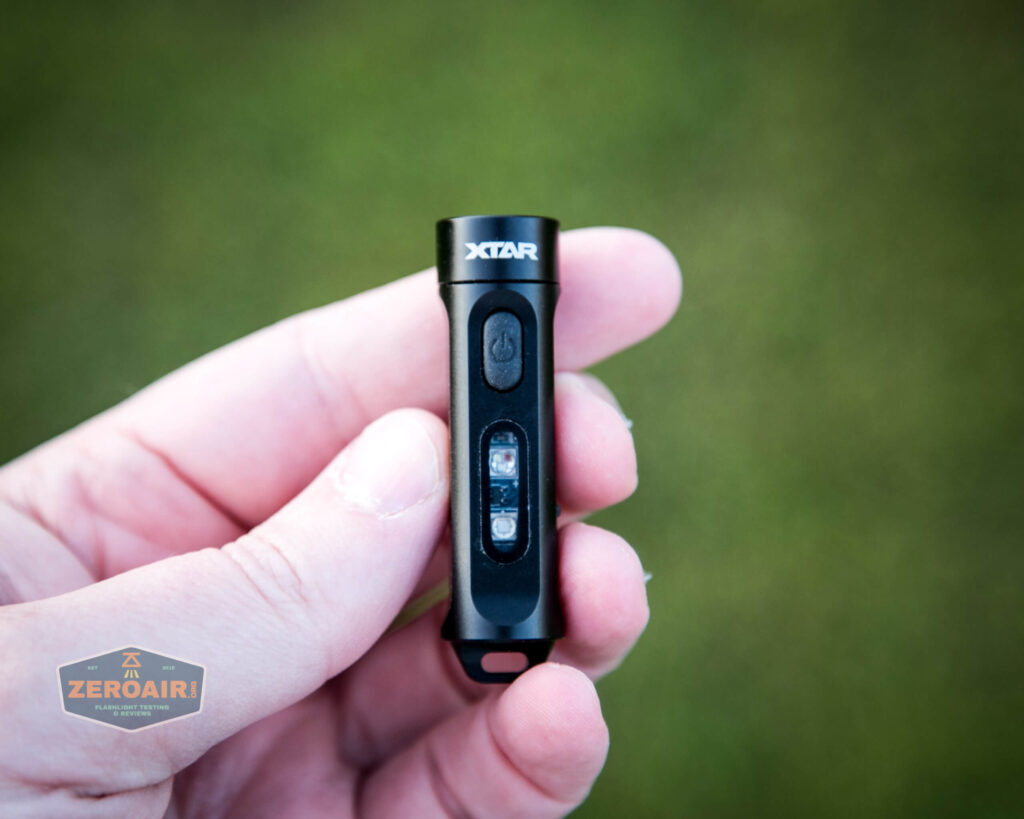
Build quality is good. The housing seems to be metal, which is a big plus for me. This light should wear very nicely on a set of keys.

This tail loop looks to be removable, but I couldn’t make it budge.

Here begins the top-down view.


I couldn’t get any of the parts to come apart. The bezel didn’t unscrew. The tailcap didn’t unscrew. Maybe with some o the right persuasion it could happen, though. Also please note that the manual states this light is not waterproof.
Size and Comps
Length: 57.6mm
Diameter: 15.8mm
Weight: 18.5g

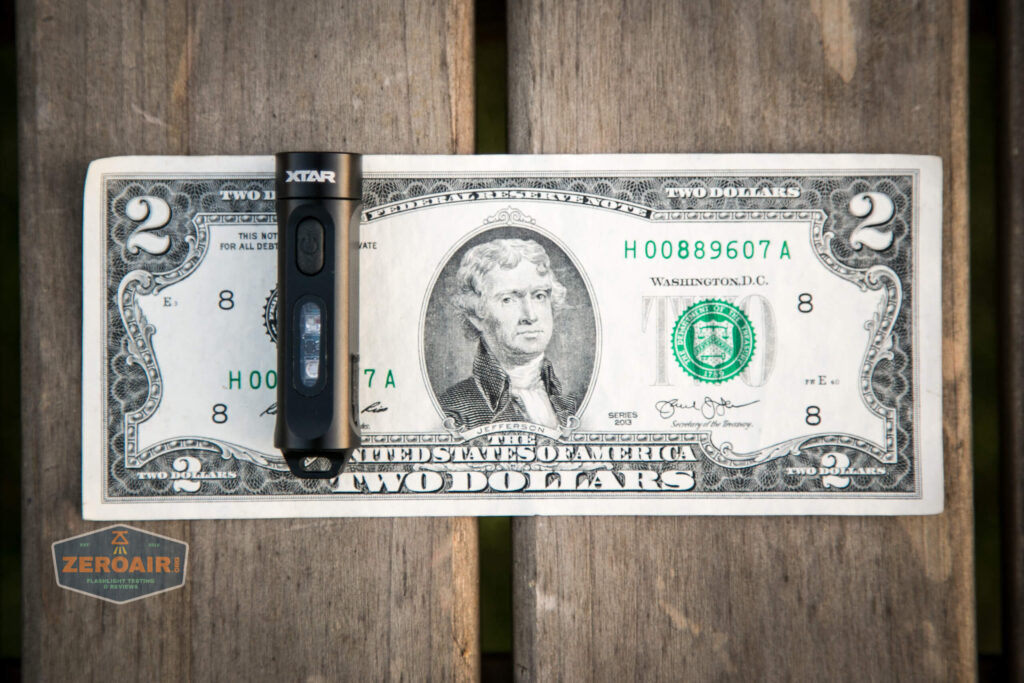
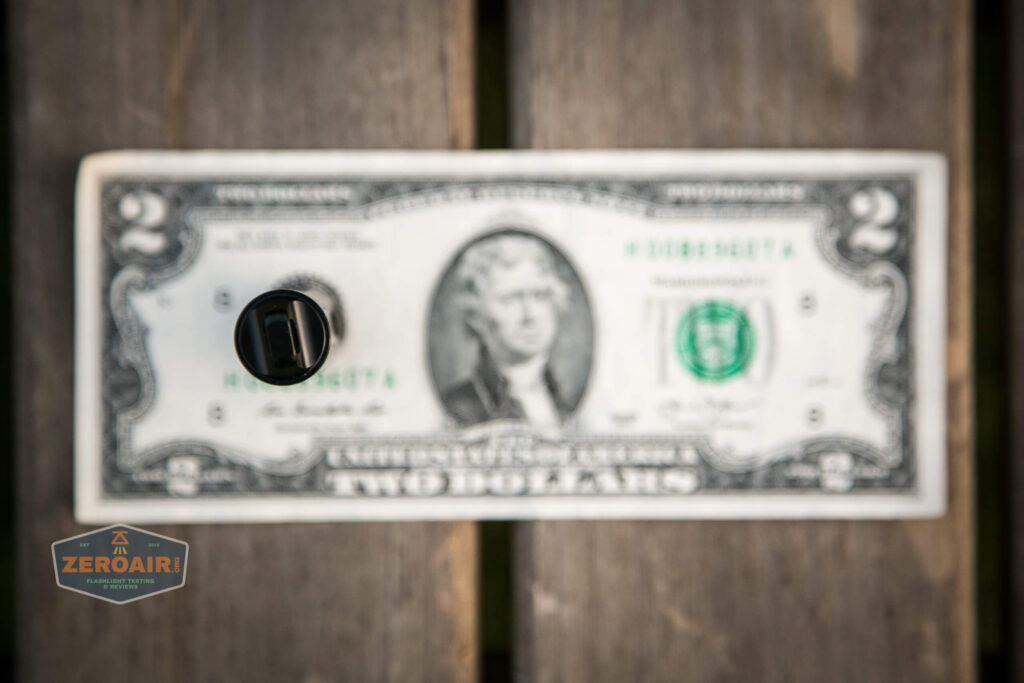
If the flashlight will headstand, I’ll show it here (usually the third photo). If the flashlight will tailstand, I’ll show that here, too (usually the fourth photo).
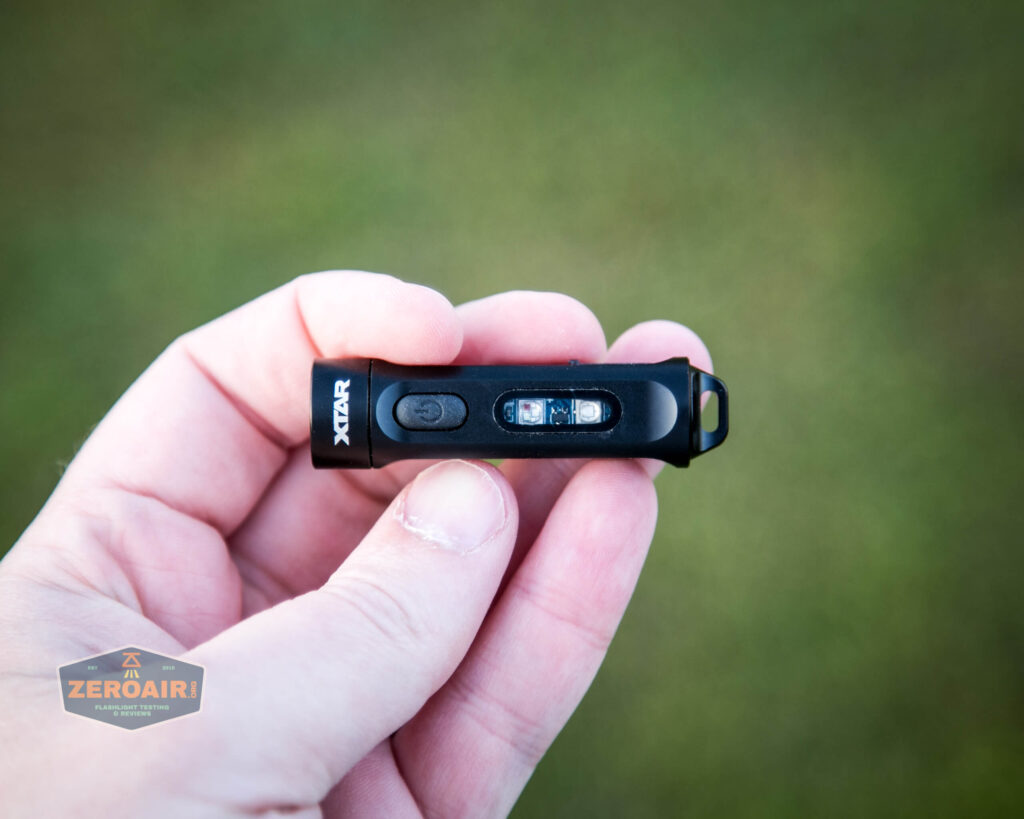
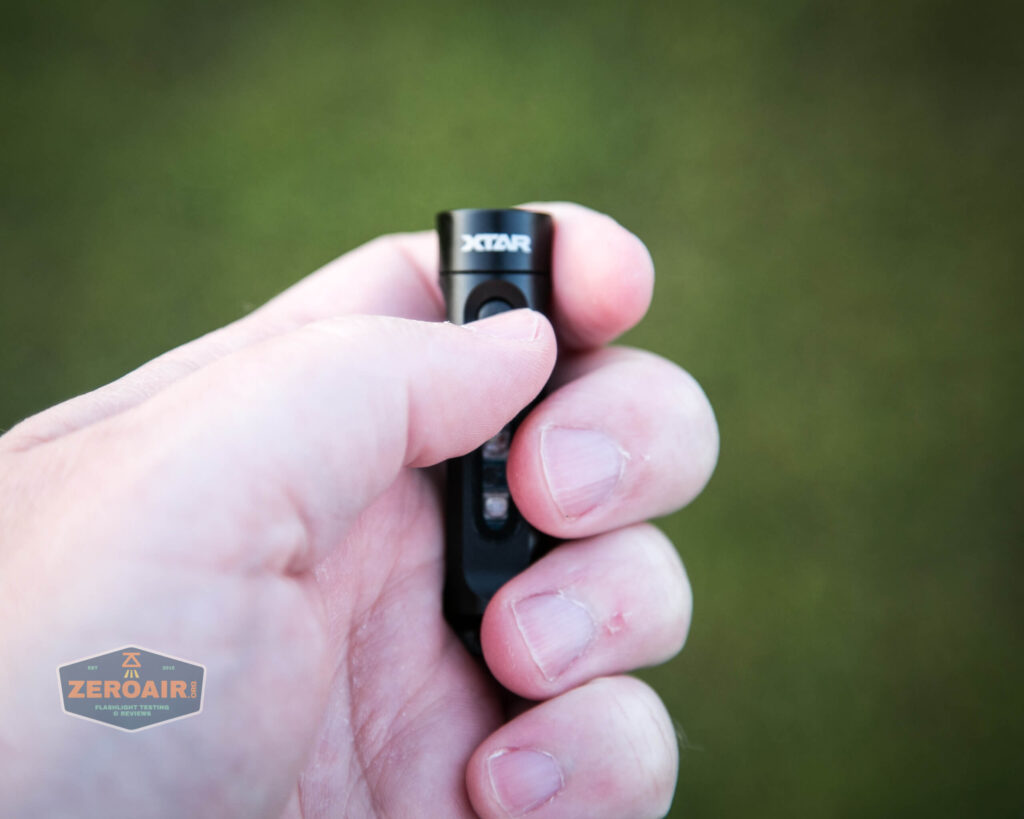
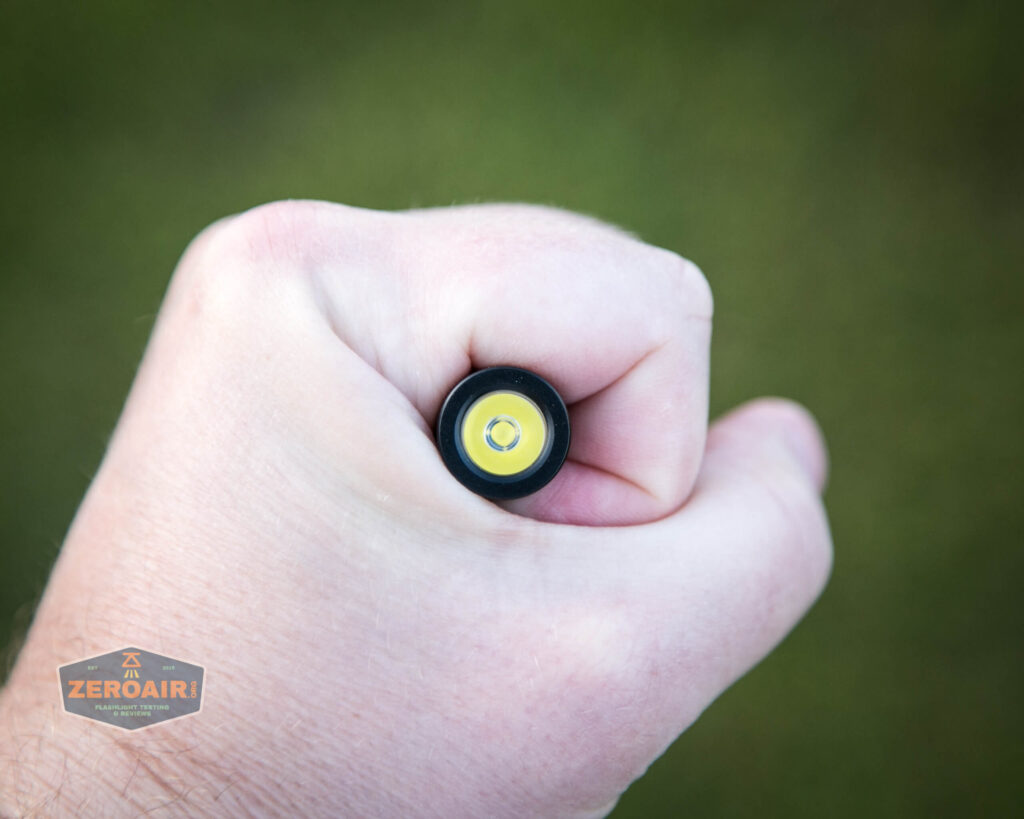
Here’s the test light with the venerable Convoy S2+. Mine’s a custom “baked” edition Nichia 219b triple. A very nice 18650 light.
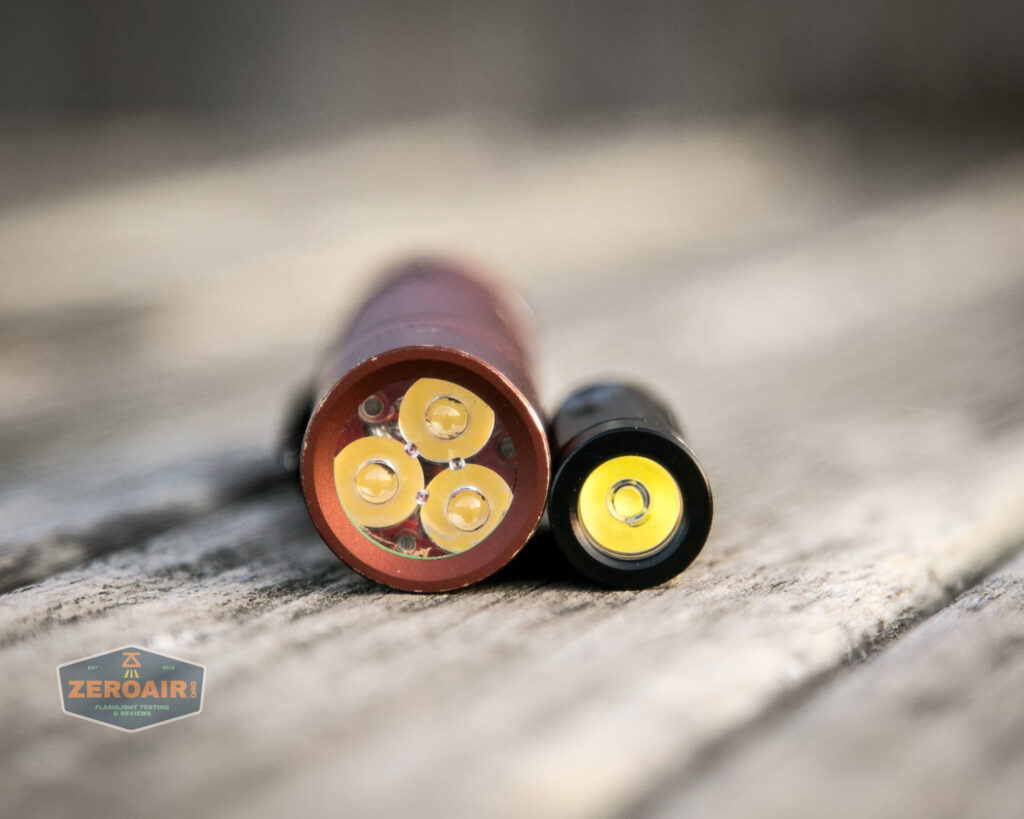
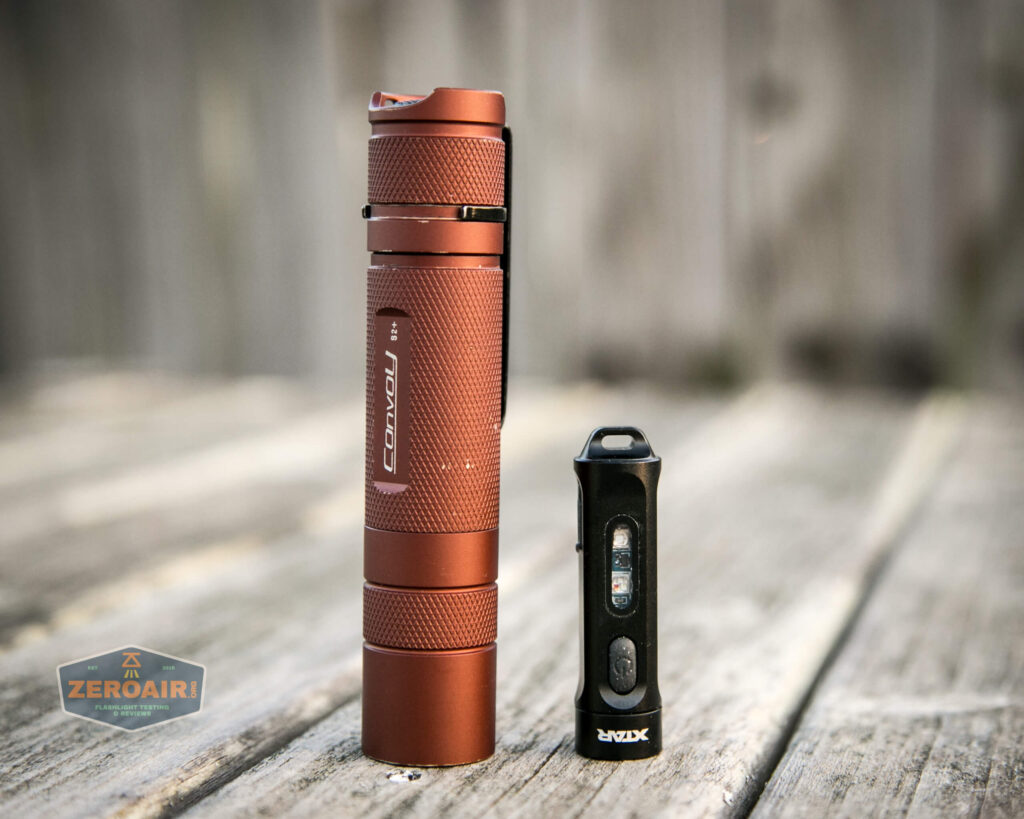
And here’s the light beside my custom-engraved TorchLAB BOSS 35, an 18350 light. I reviewed the aluminum version of that light in both 35 and 70 formats.

Here’s the XTAR T1 keychain flashlight with some other similar keychain flashlights.
Left to right:
RovyVon A5 GITD
RovyVon Aurora A8x
RovyVon Aurora A3Pro
XTAR T1 keychain flashlight
RovyVon A8 Y

Retention and Carry
The XTAR T1 keychain flashlight ships with a little hooky key loop, which attaches via the split ring to this loop in the body.
That’s it; there is nothing else. Unlike the RovyVons above, there is no pocket clip.
Power and Runtime
The battery for the XTAR T1 keychain flashlight is built-in. As far as I can tell there isn’t an option to replace it, and I don’t know of a feature by XTAR to send it for replacement. XTAR also doesn’t state what the capacity is.
I performed a few runtimes. Turbo is a “momentary Turbo” only – It’ll stay at “Turbo” for as long as you hold the switch, up to 30 seconds. At 30s, the light turns off. So I did that, over and over, until the output was noticeably “not Turbo” and then I just turned the light on to High until it stopped. The inset graph reports “437 lumens” but really, this is after a massive stepdown (to around 250 lumens) and then the shutoff. So really at 30 seconds, the output is “zero” if you want to state it that way. Or it can be 437 if you want to look at it that way. Either way, view the graph. As you can see the output on turbo dwindles down every turbo reset, until finally (around 5 minutes) “turbo” is not even 100 lumens.

High also has a big stepdown, but the light doesn’t shut off.

Medium is fairly steady, and at least there isn’t a stepdown.

In every case, the switch lit red to notify the user that the battery was low and needed to be charged. Based on the charge graph below, we can estimate the battery to be around 100mAh capacity.
Charging
As stated as a “plus” of the XTAR T1 keychain flashlight, there is built-in USB-C charging here.

The charge port is in the side, and not the opposite side to the switch The cover sits pretty deep and you won’t get it confused with the switch (the switch is much prouder). I found the charge port cover to be fiddly and often had to get tweezers to open it.

A short charge cable is included – USB to USB-C.


Charging seems quite reliable and requires only around 30 minutes. While charging, the switch is red. When charging is complete, the switch is green.

Despite XTAR not claiming a battery capacity, we can make some estimates based on this test. I’m recording at the USB source, so I’m recording at 5V. And we could do some math to calculate the conversion (down to 4.2V) but we can also just estimate and say the battery is probably around 100mAh. That’s pretty low, but then again, this light is very tiny.
Modes and Currents
| Mode | Mode Claimed Output (lm) | Claimed Runtime | Measured Lumens | Tailcap Amps |
|---|---|---|---|---|
| Turbo | 500 | 9m | 437 (see runtime graph!) | ? |
| High | 300 | 19m | 208 | ? |
| Mid | 150 | 52m | 127 | ? |
| Low | 50 | 109m | 46 | ? |
| Moonlight | 2 | 243m | ~ | ? |
Pulse Width Modulation
Wow the PWM we see here. For the white modes (listed first here), this isn’t necessarily so bad – I don’t see the PWM in person when waving the light madly. Note that all modes have PWM.
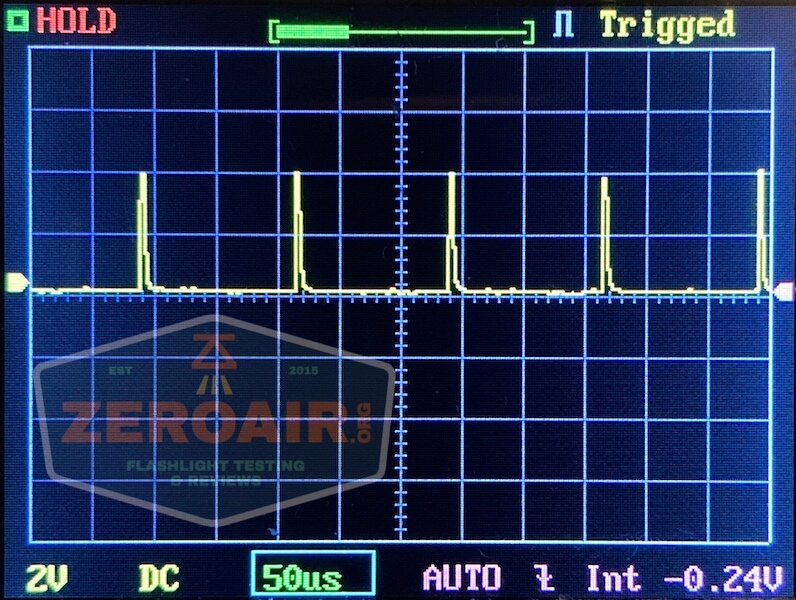


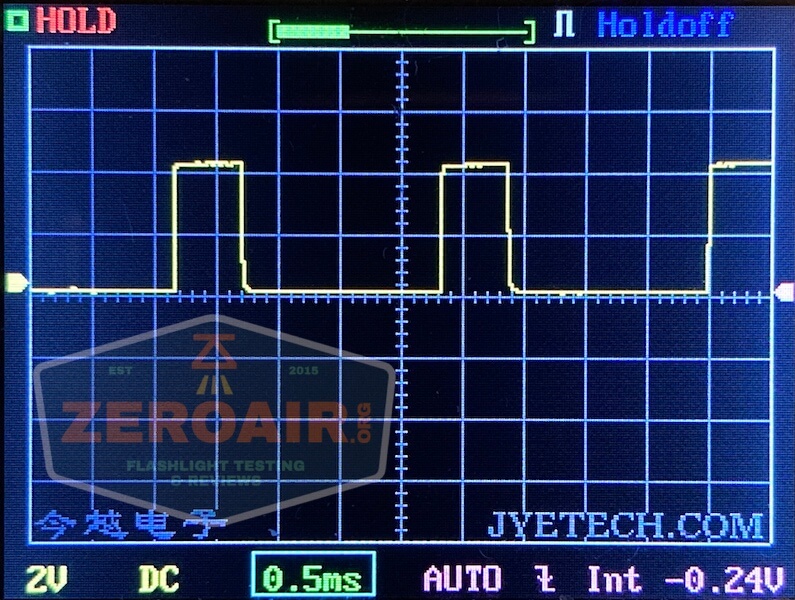
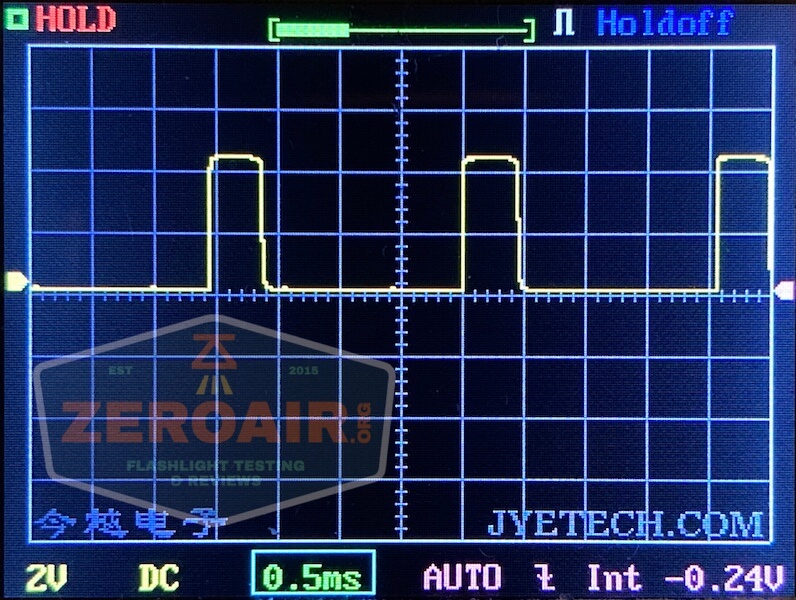
But for these color modes (it’s the colors first, and last is UV), the PWM is particularly bad. Visible in every mode. But the graphs below and above look so similar…. what’s the difference in being able to see one and not the other? I really can’t say. Probably “off-time” – in the modes below the light is off for longer (“much” longer?).


Here you can see a “baseline” – a chart with almost no light hitting the sensor.

Then there’s the Ultrafire WF-602C flashlight, which has some of the worst PWM I’ve seen. It’s so bad that I used a post about it to explain PWM! Here are multiple timescales (10ms, 5ms, 2ms, 1ms, 0.5ms, 0.2ms) to make comparing this “worst” PWM light to the test light easier. That post also explains why I didn’t test the WF-602C at the usual 50us scale.


User Interface and Operation
There’s a single switch for the XTAR T1 keychain flashlight. It’s an e-switch near the head and labeled with a power icon.

Here’s a user interface table!
| State | Action | Result |
|---|---|---|
| Off | Click | On (mode memory) |
| On | Click | Mode advance (Moon, Low, Mid, High, Strobe) |
| Off | Hold | Momentary Turbo (max 30s) |
| On | Hold | Off |
| Any | Double Click | Color group (mode memory) |
| Color Group | Click | Color advance (Red, Green, Blue, Police (red/blue), Christmas Sequence (red/green/blue cycle), Red blinking |
| Any | Triple Click | UV |
LED and Beam
The main emitter is a Cree XP-G3. There’s a TIR for shaping the beam.


The side emitters are unstated red, green, blue, and UV.
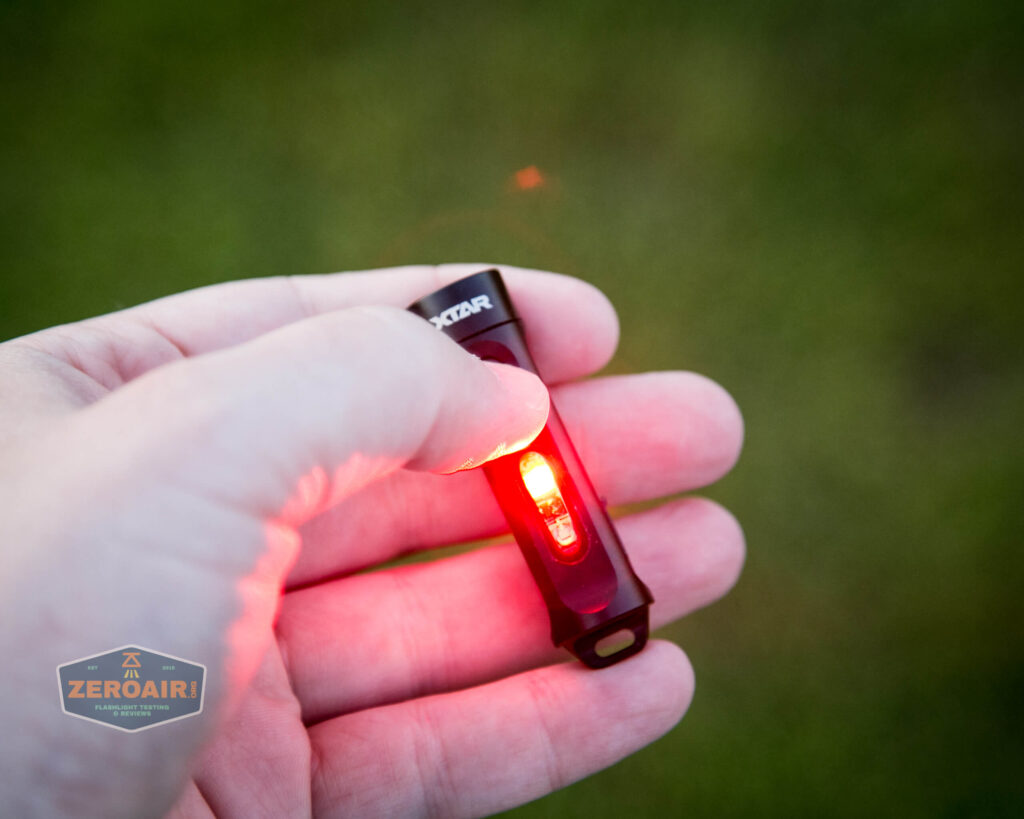
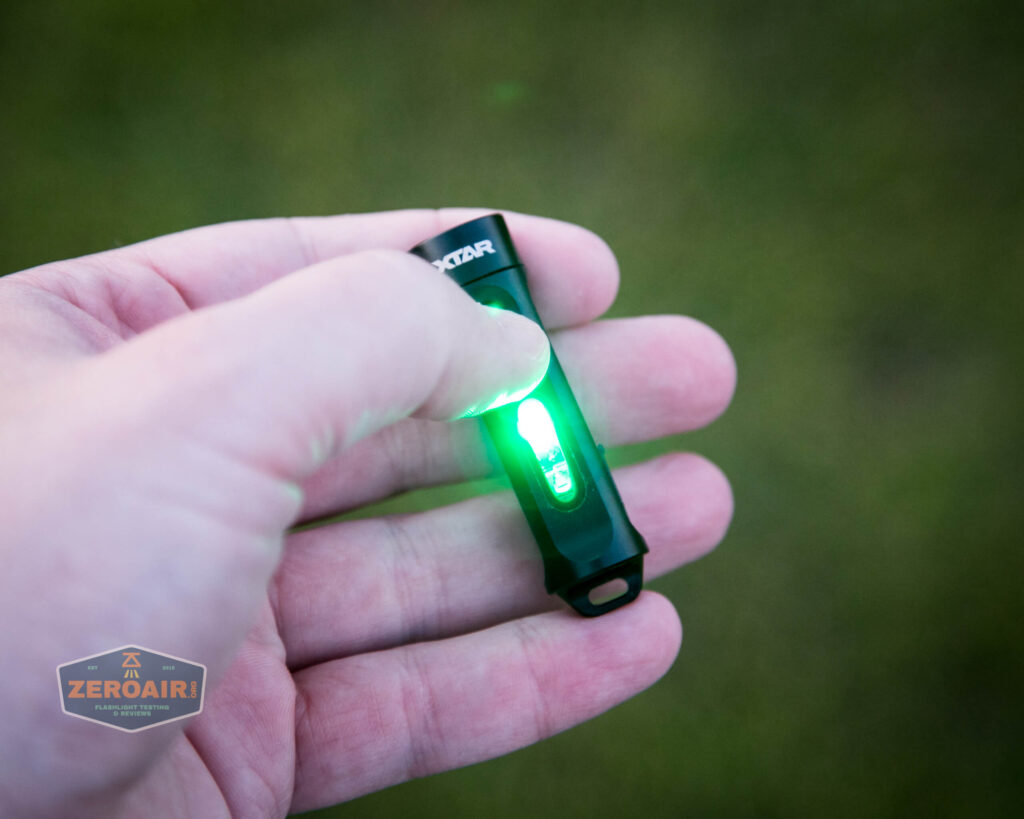
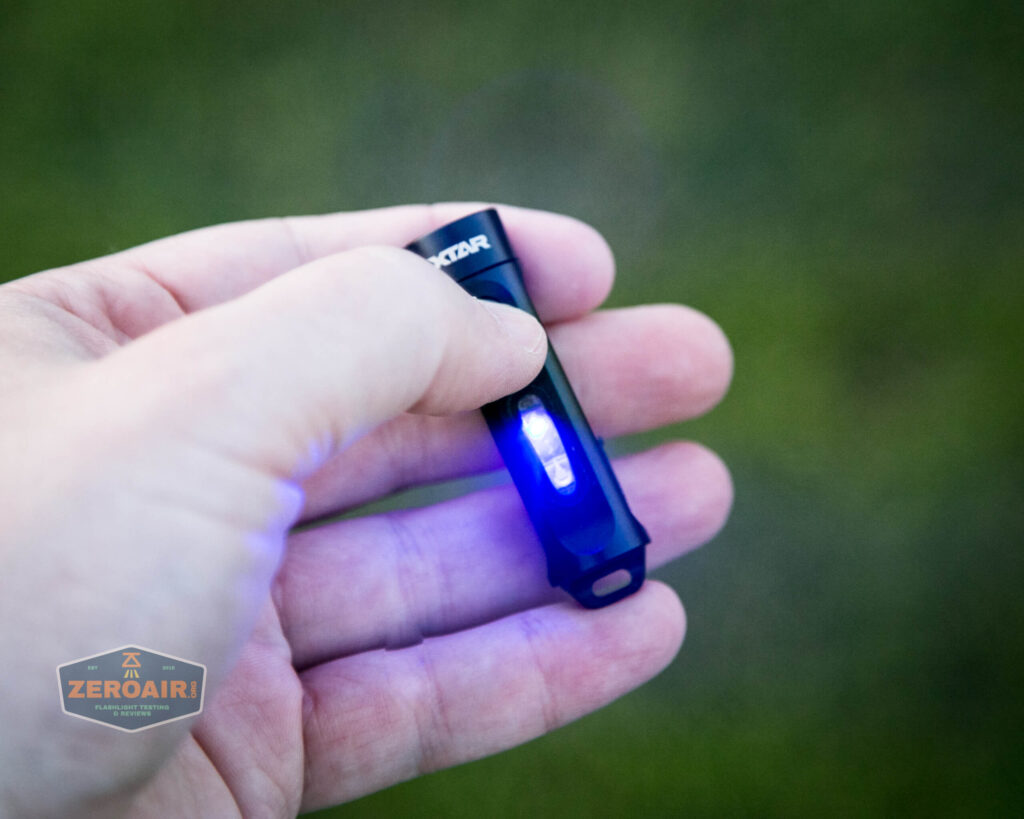
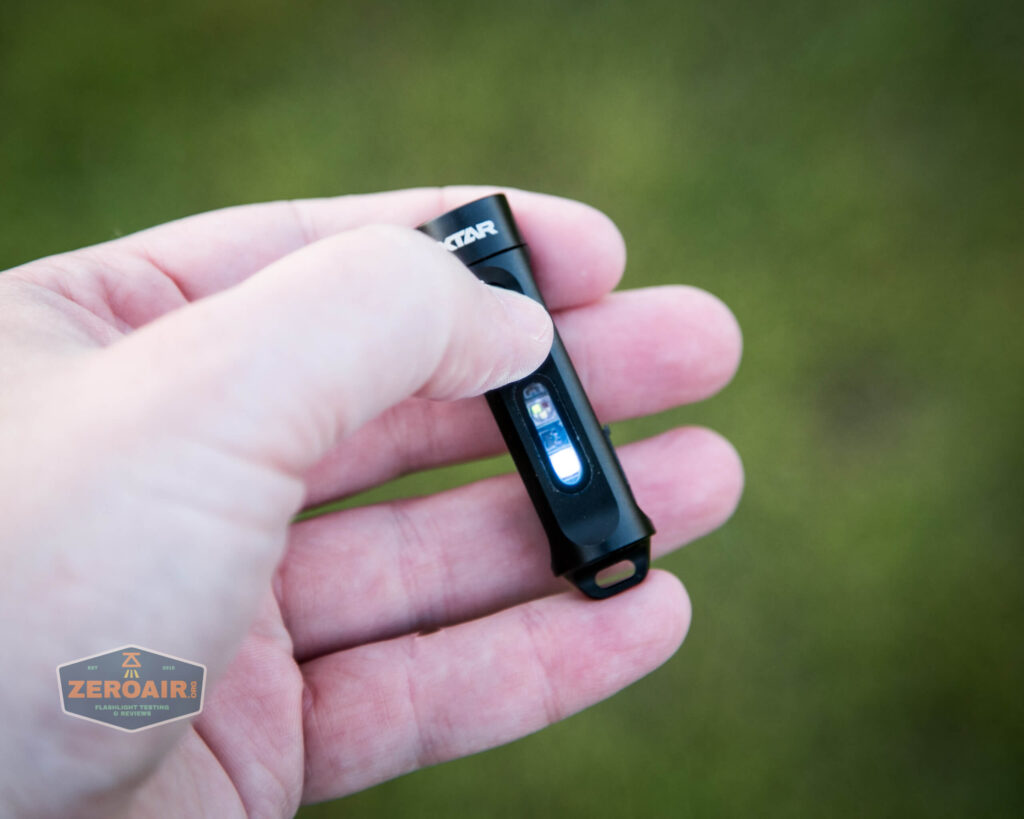
These beamshots always have the following settings: f8, ISO100, 0.3s shutter, and manual 5000K exposure. These photos are taken at floor level, and the beam hits the ceiling around 9 feet away.

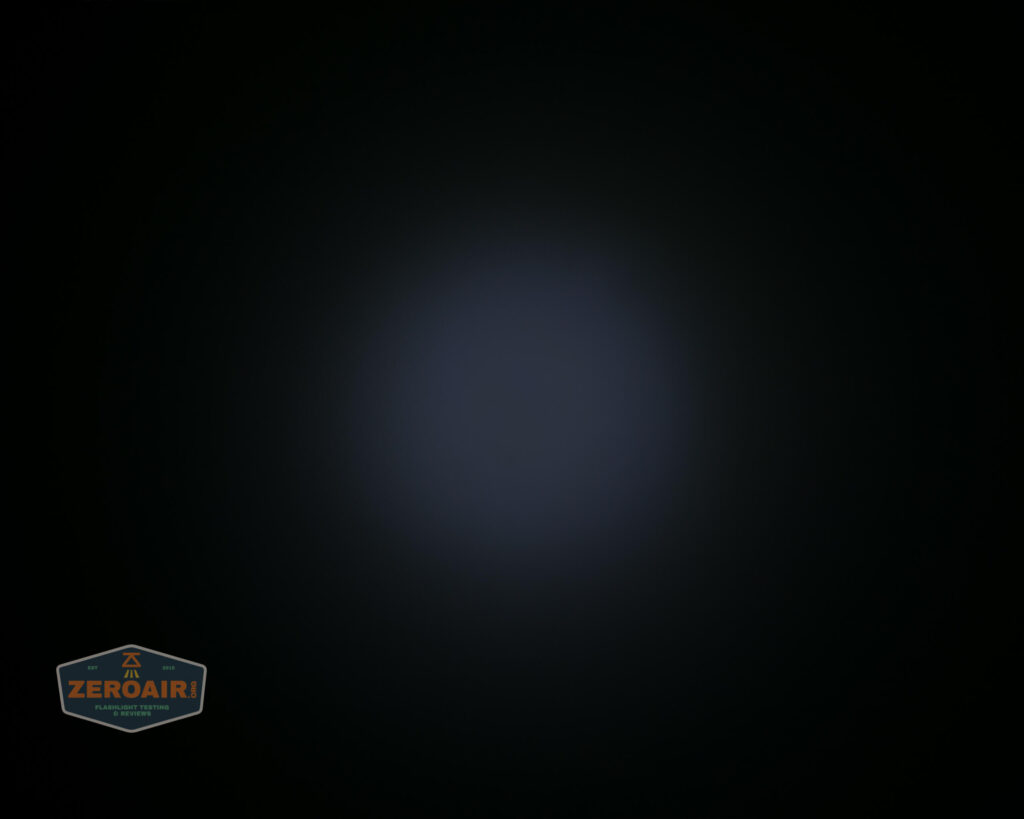
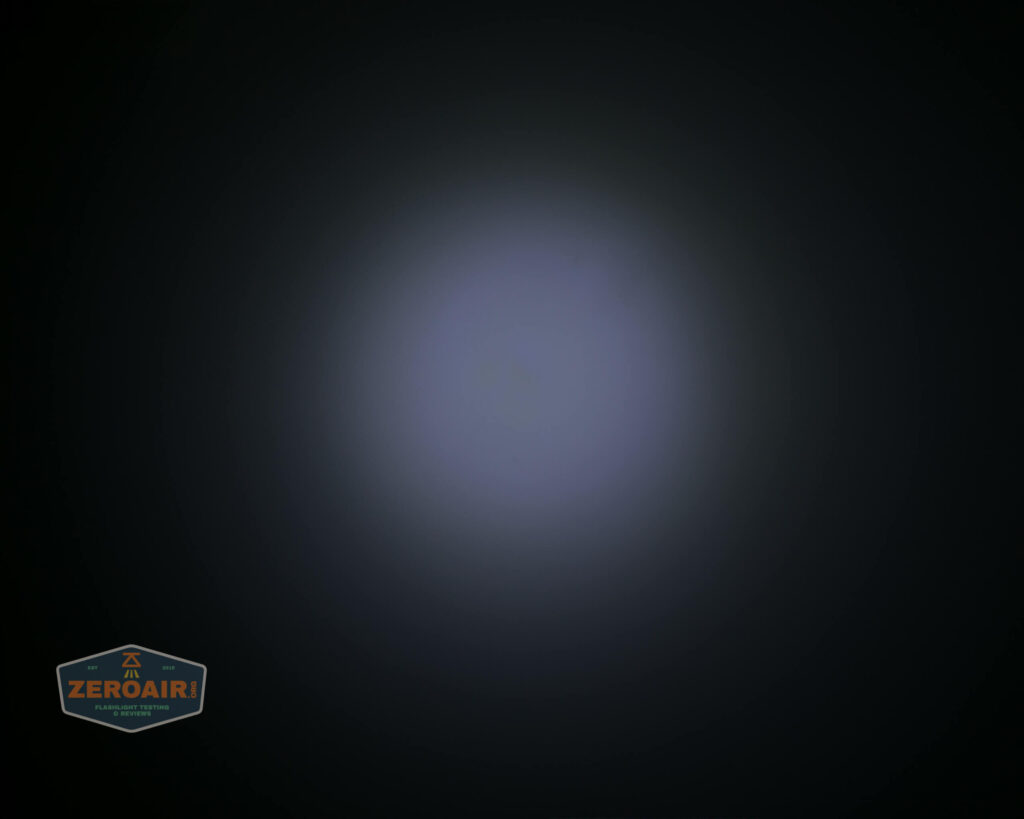
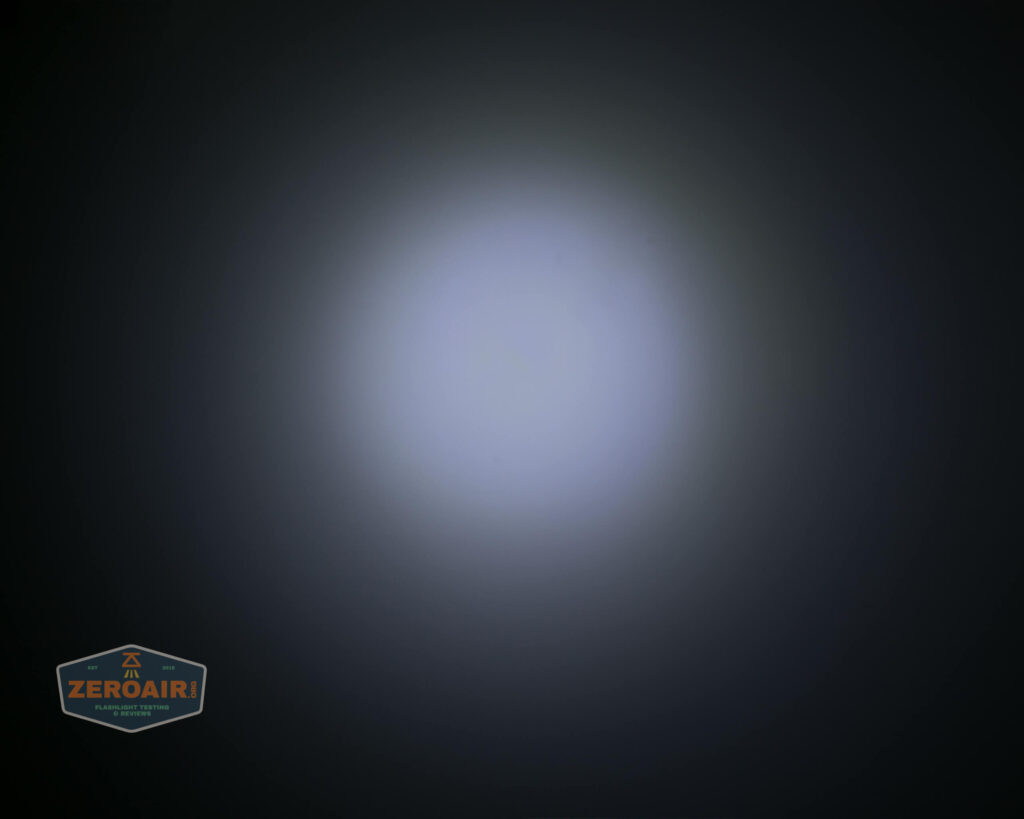
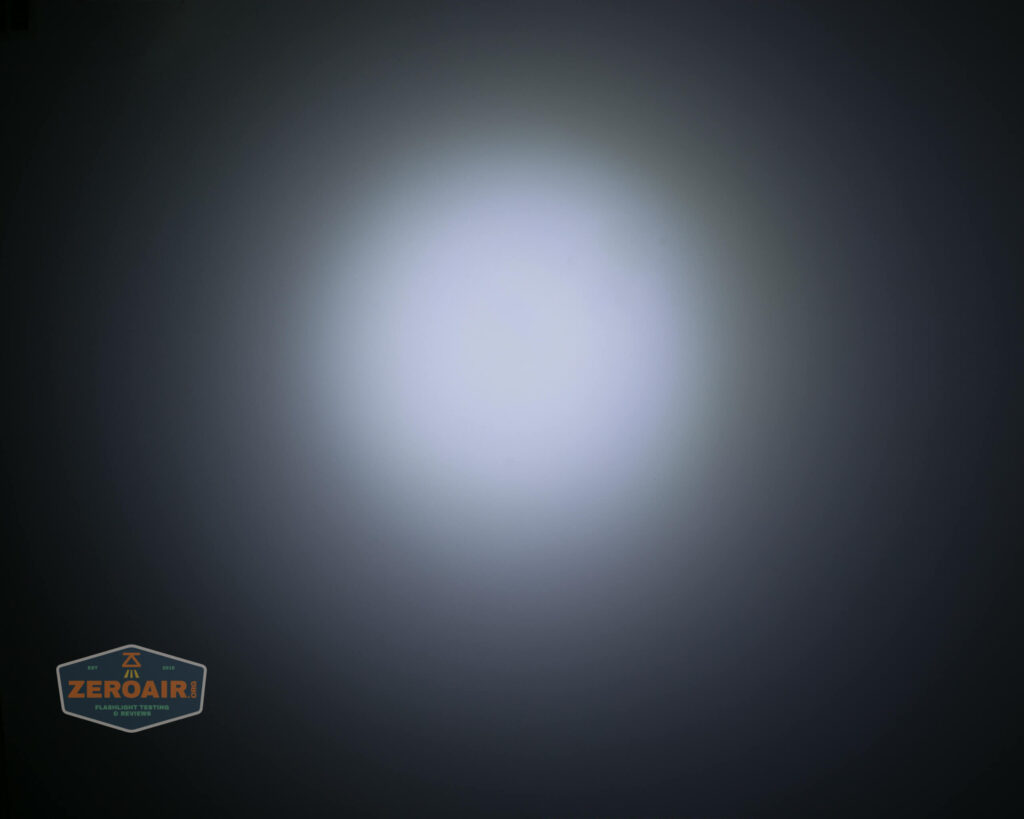
The color emitters are completely and entirely flood, so they don’t even show on my ceiling.




Tint vs BLF-348 (KillzoneFlashlights.com 219b version) (affiliate link)
I keep the test flashlight on the left and the BLF-348 reference flashlight on the right.
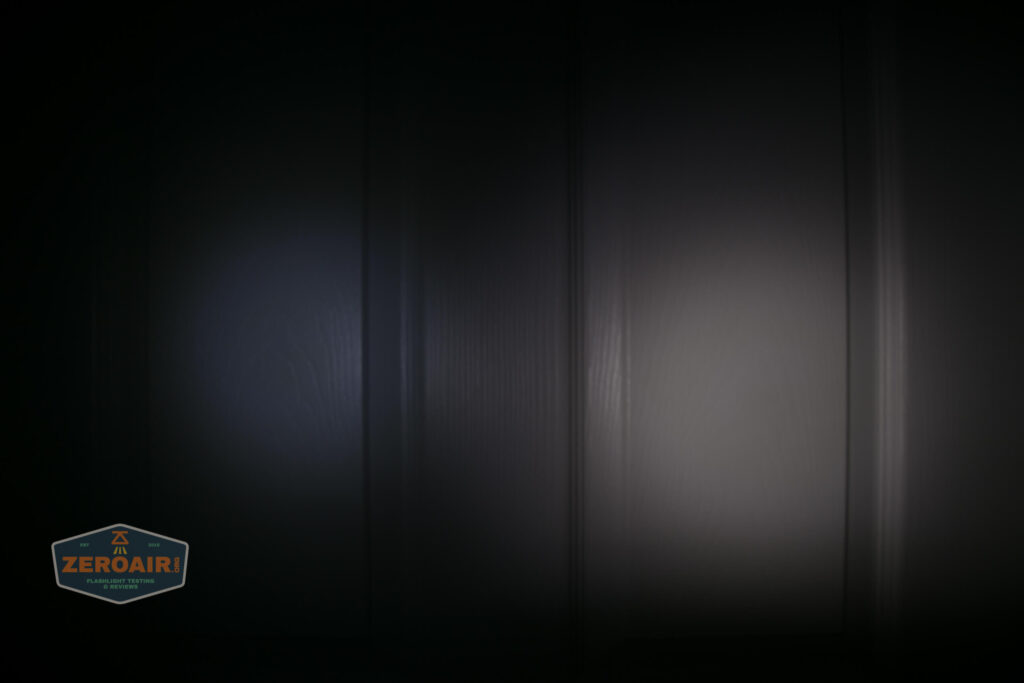
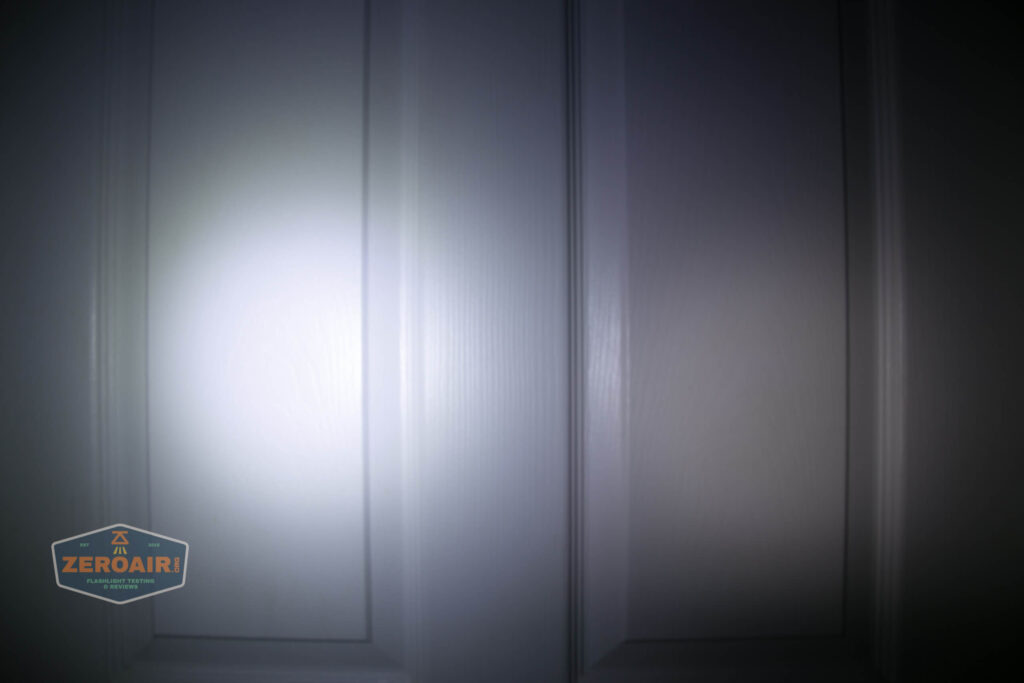
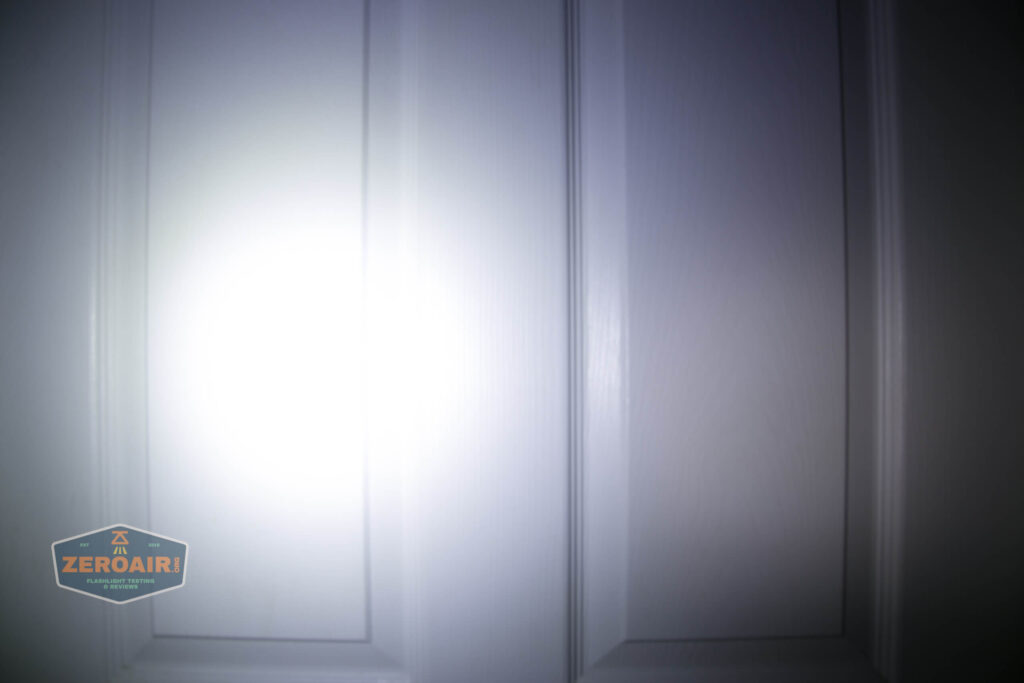
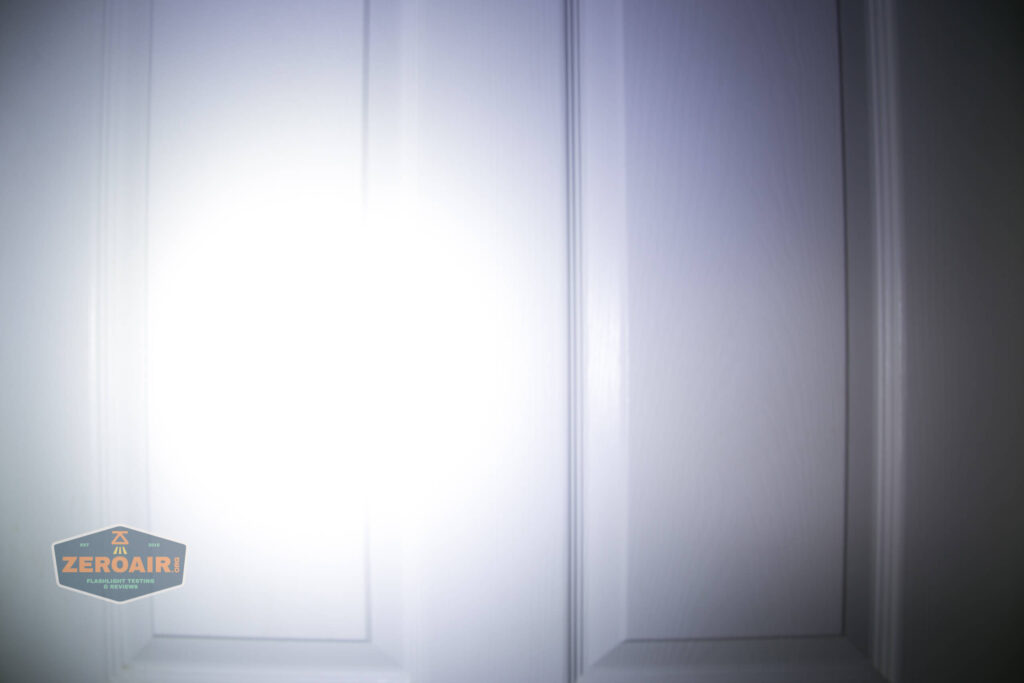
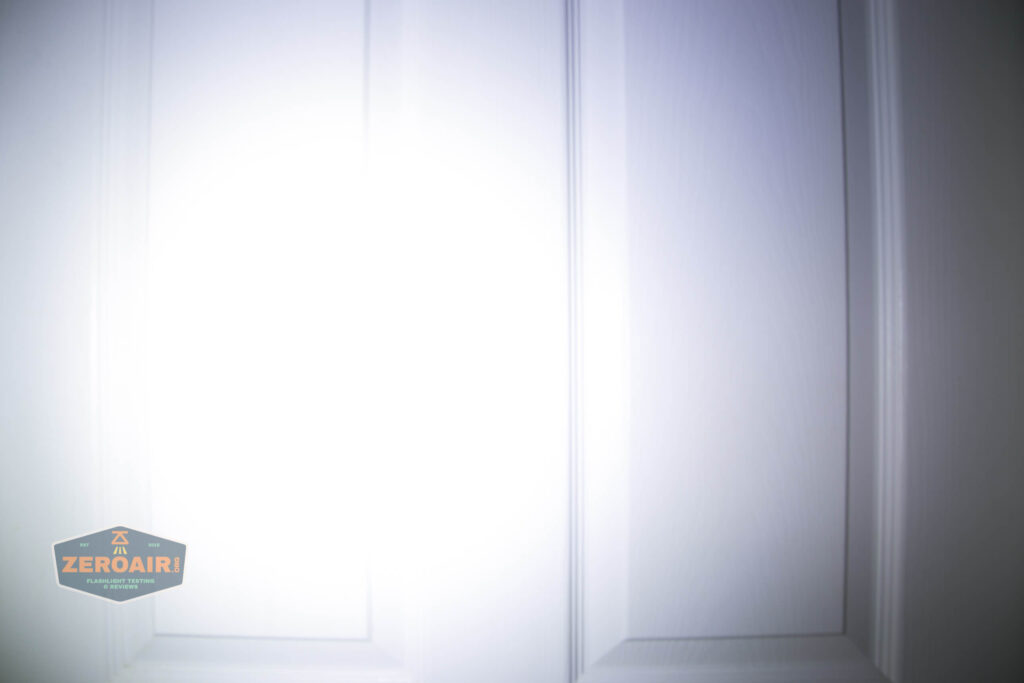
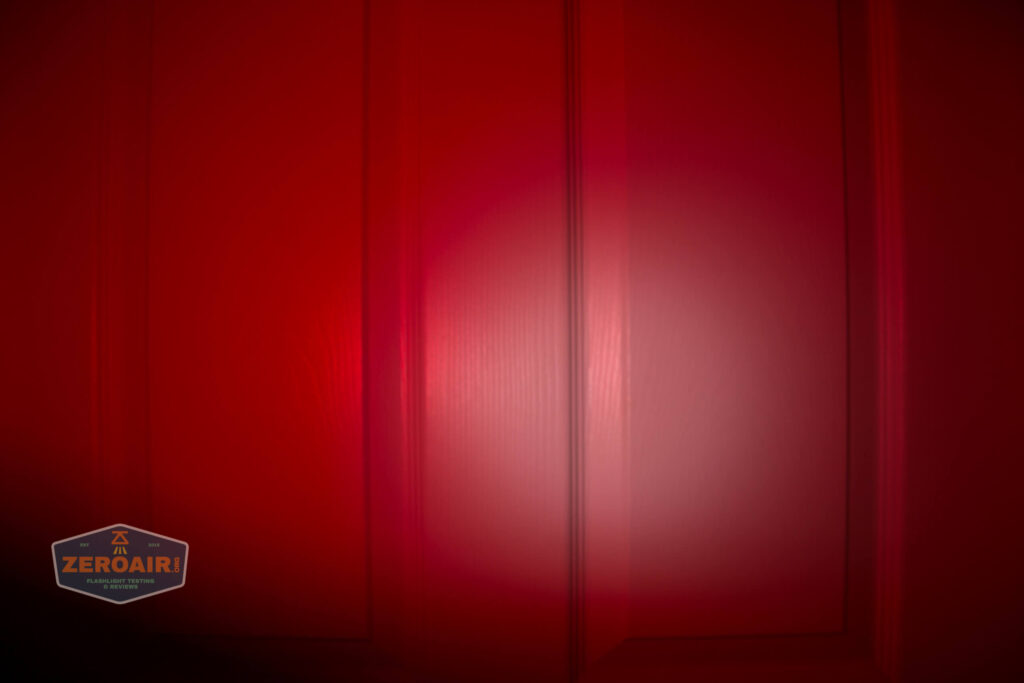
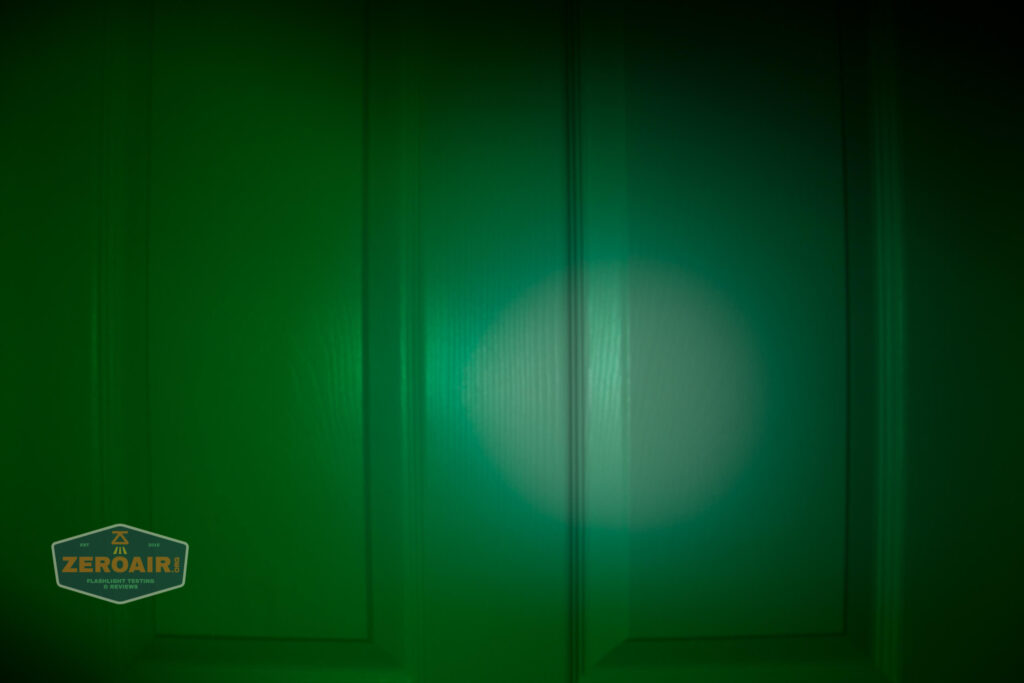
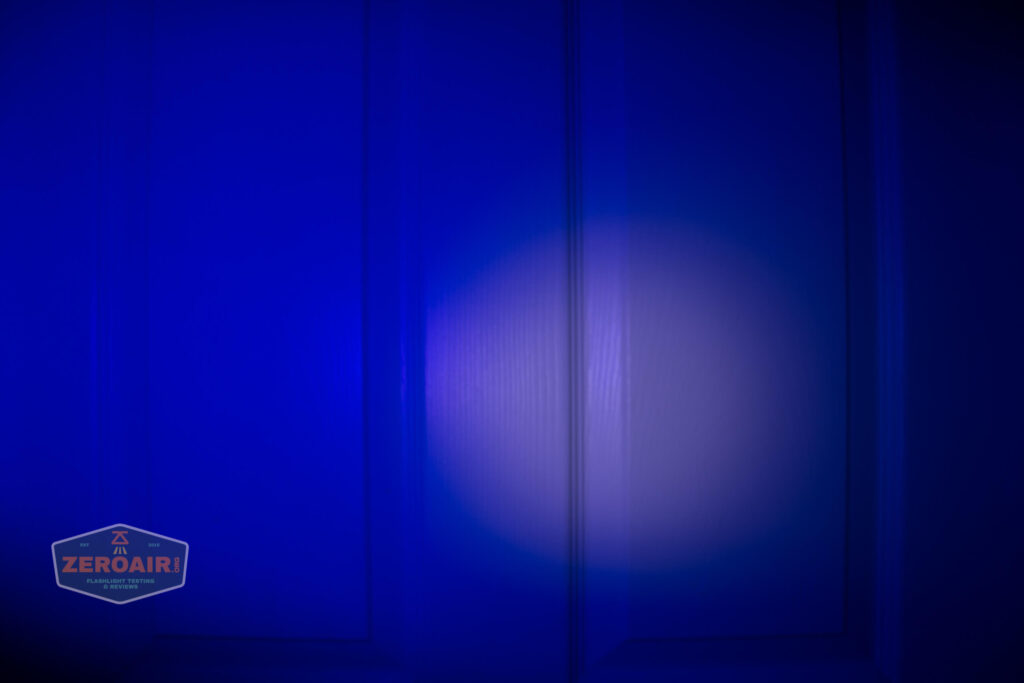
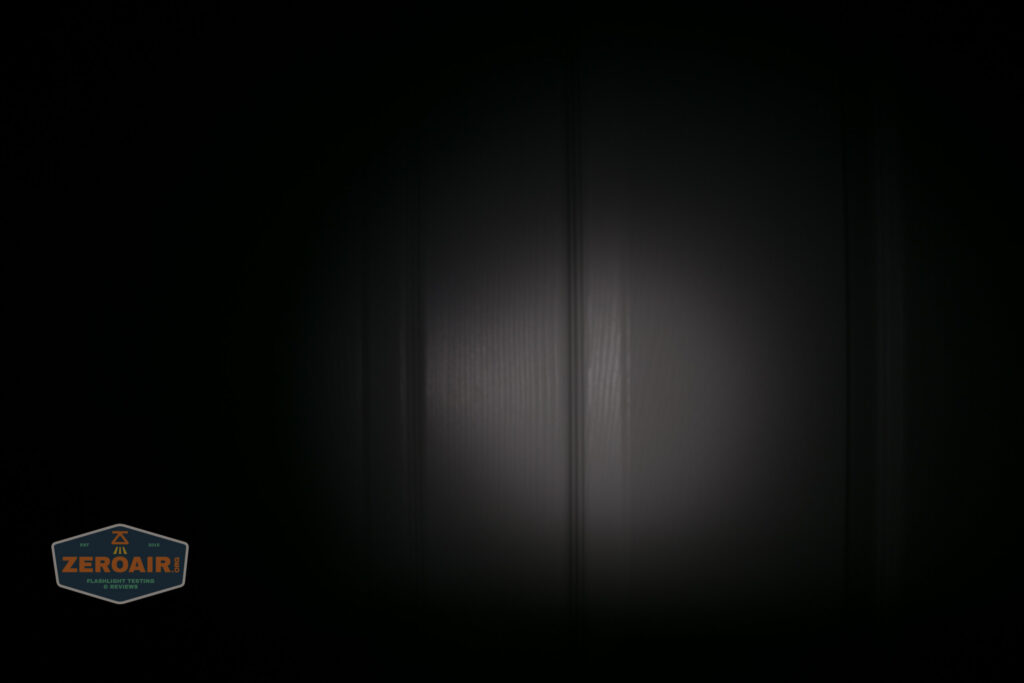
I compare everything to the KillzoneFlashlights.com 219b BLF-348 because it’s inexpensive and has the best tint!
Conclusion
What I like
- Fun color modes
- UV option, but you won’t get to UV accidentally
What I don’t like
- Not waterproof
- Non-replaceable battery
- Cree XP-G3
- Only momentary Turbo
- Strobe in main mode cycle (and turbo is not)
- Bad PWM on color modes
Notes
- This light was provided by XTAR for review. I was not paid to write this review.
- This content originally appeared at zeroair.org. Please visit there for the best experience!
- For flashlight-related patches, stickers, and gear, head over to PhotonPhreaks.com!
- Please use my Amazon.com referral link to help support zeroair.org!
Pingback: Flashlight News: Phreaky Briefing Issue 39 – PhotonPhreaks
Pingback: XTAR T2 Keychain Flashlight Review - ZeroAir Reviews