
Lumintop Ant Man LEP Flashlight Review
Lumintop has released the Lumintop Ant Man LEP flashlight, the smallest LEP available! This 14500-powered handheld thrower has one mode and a simple interface.
Official Specs and Features
Here’s a link to the Lumintop Ant Man LEP product page.
Versions
As far as I can tell, this is the only version of Lumintop Ant Man LEP available right now.
Price
This light was sent to me for review by NealsGadgets.com. The Lumintop Ant Man LEP is available at Neals for $129.95.
Short Review
Well, if you want The Smallest LEP available, then this is it. I don’t even think there are any other 14500 LEPs available now, so this one just wins on size all the way around. The user interface is also exceptionally simple, with just one mode. Performance is another story, though. This LEP underperforms the specification, only throwing around 420m.
Long Review
The Big Table
| Lumintop Ant Man LEP Flashlight | |
|---|---|
| Emitter: | LEP (Cold White) |
| Price in USD at publication time: | $129.95 and available at NealsGadgets.com |
| Cell: | 1×14500 |
| Cooled Runtime Graph | Uncooled Runtime Graph |
| LVP? | ? |
| Switch Type: | Mechanical |
| On-Board Charging? | No |
| Claimed Lumens (lm) | 165 |
| Measured Lumens (at 30s) | 75 (45.5% of claim)^ |
| Candela per Lumen | 575.3 |
| Claimed Throw (m) | 590 |
| Candela (Calculated) in cd (at 30s) | 1167lux @ 6.198m = 44831cd |
| Throw (Calculated) (m) | 423.5 (71.8% of claim)^ |
| Item provided for review by: | NealsGadgets.com |
| All my Lumintop reviews! | |
^ Measurement disclaimer: Testing flashlights is my hobby. I use hobbyist-level equipment for testing, including some I made myself. Try not to get buried in the details of manufacturer specifications versus measurements recorded here; A certain amount of difference (say, 10 or 15%) is perfectly reasonable.
What’s Included
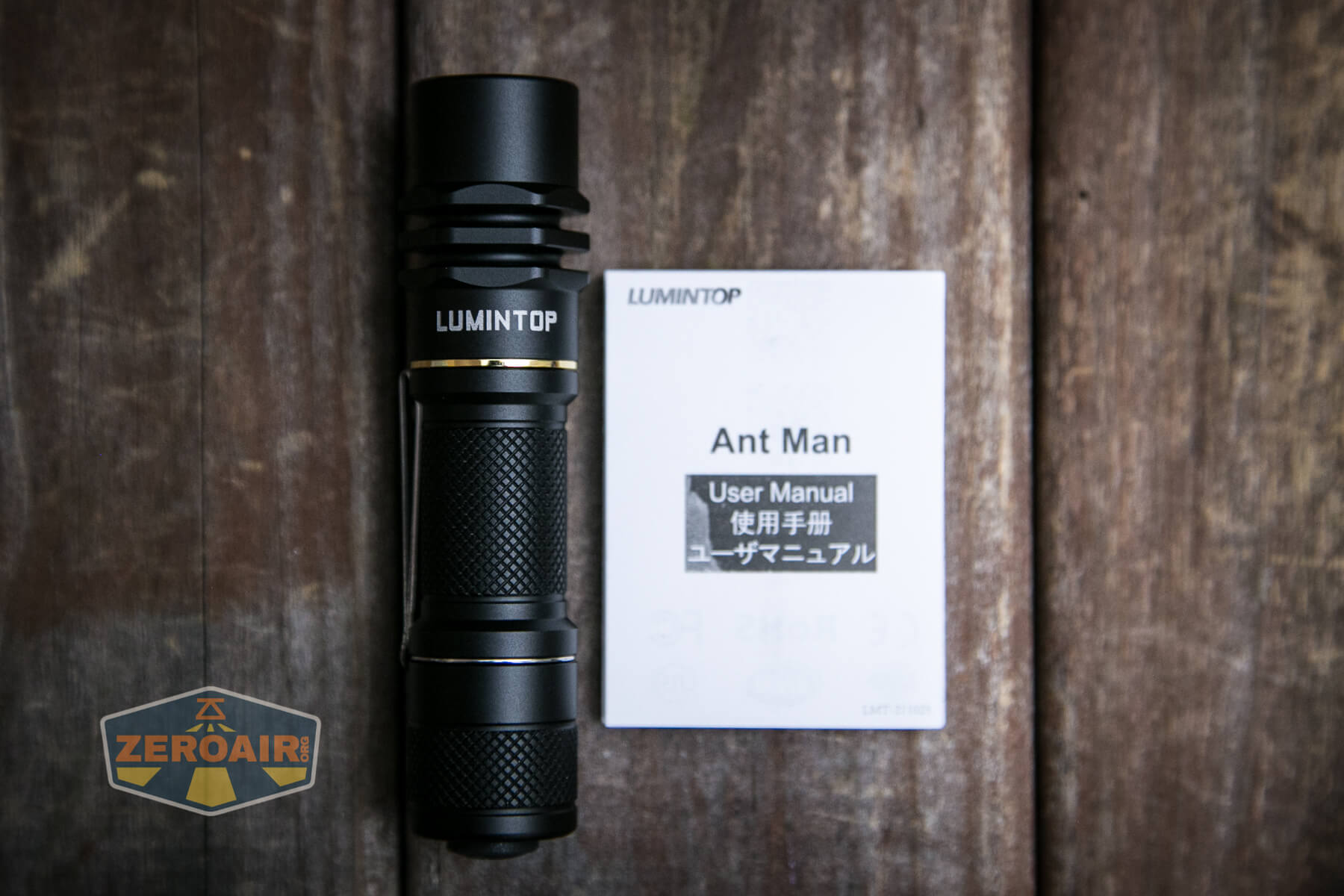
- Lumintop Ant Man LEP
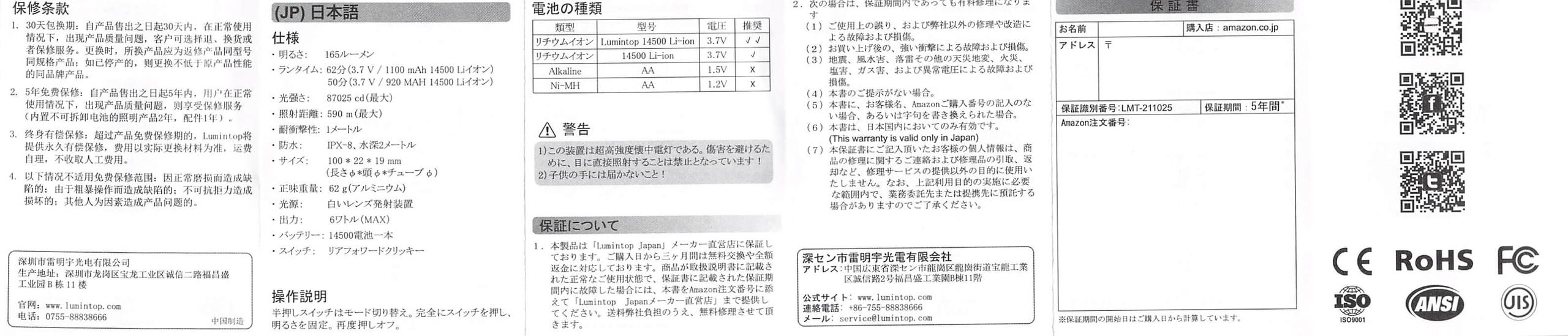
- Manual
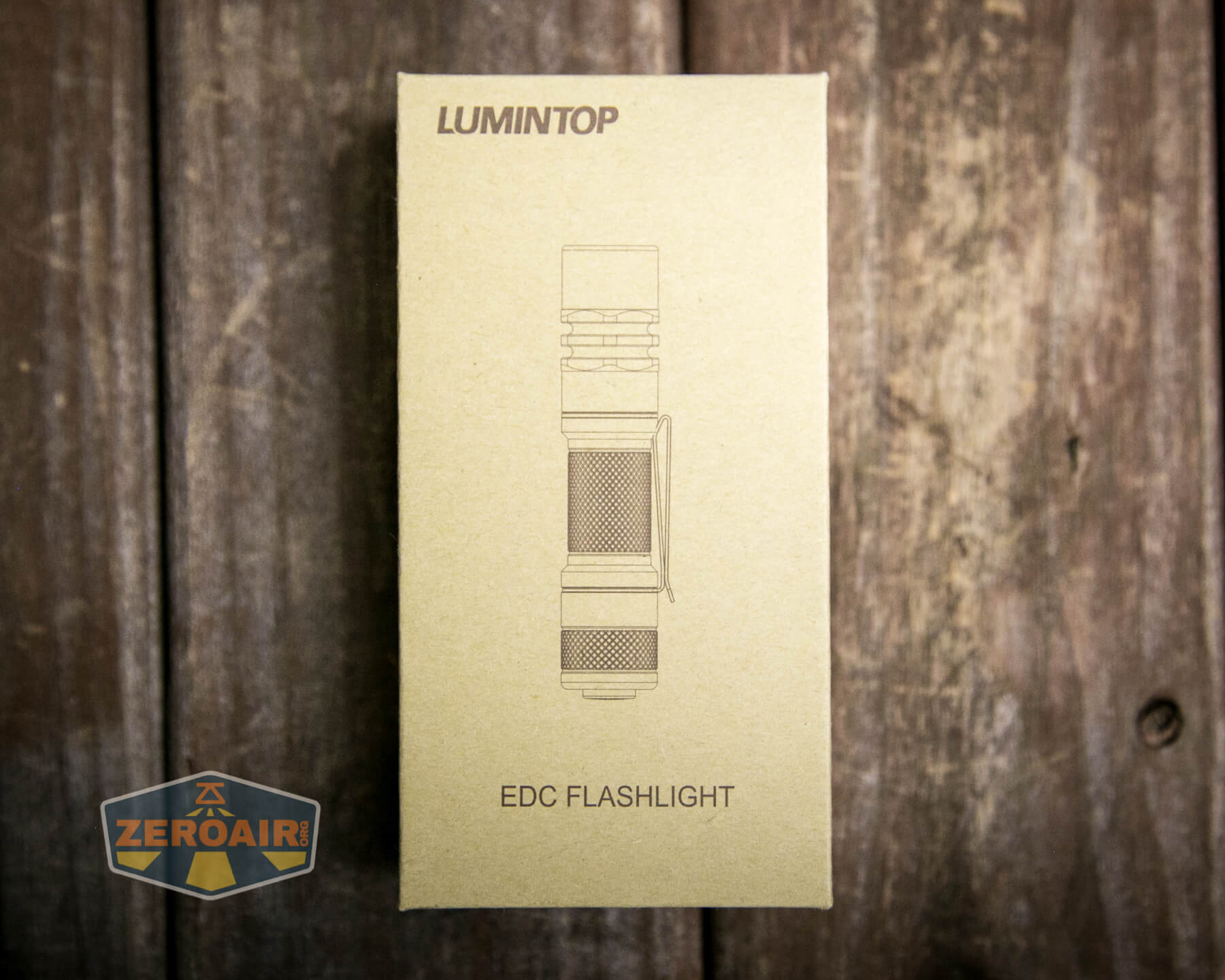
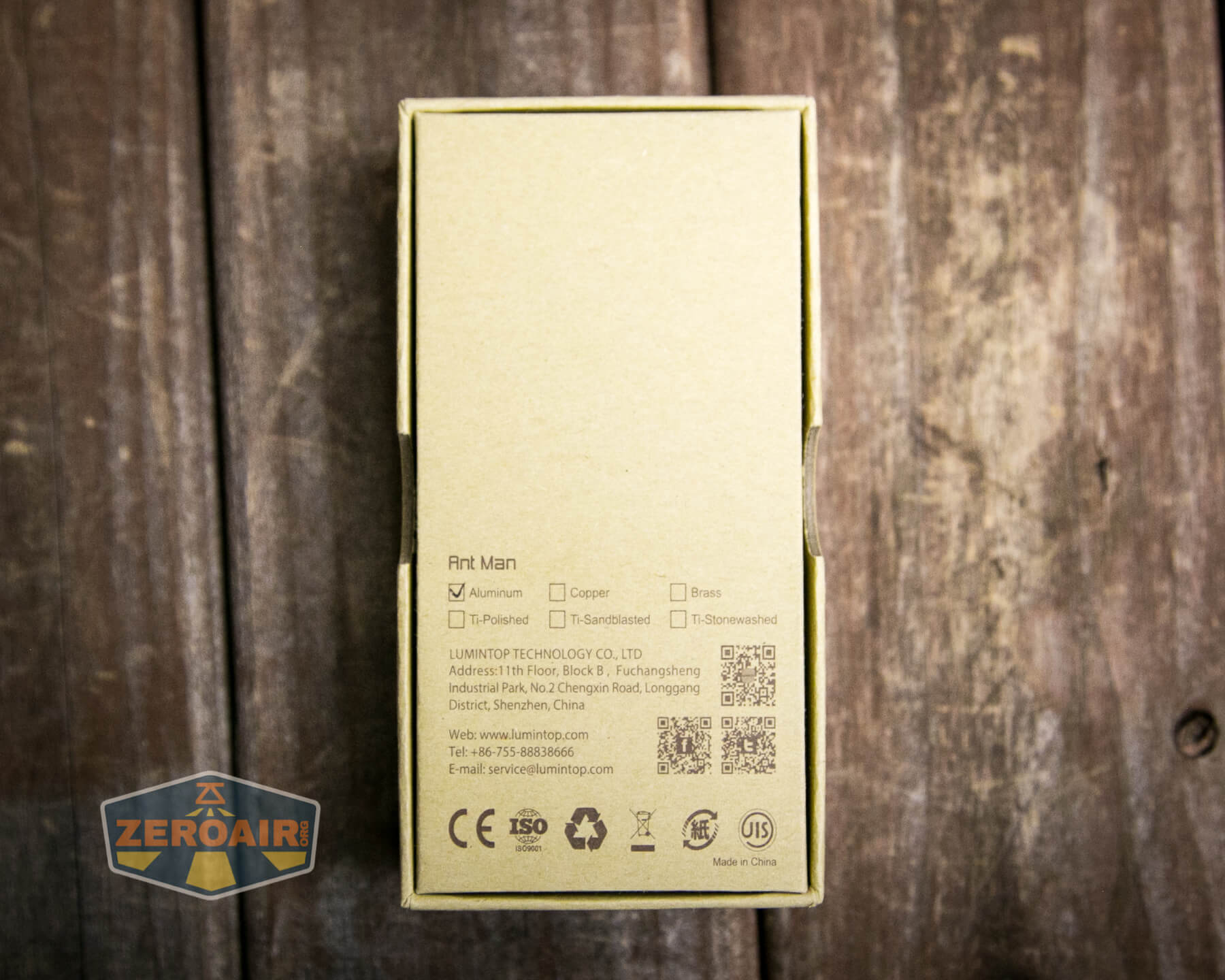
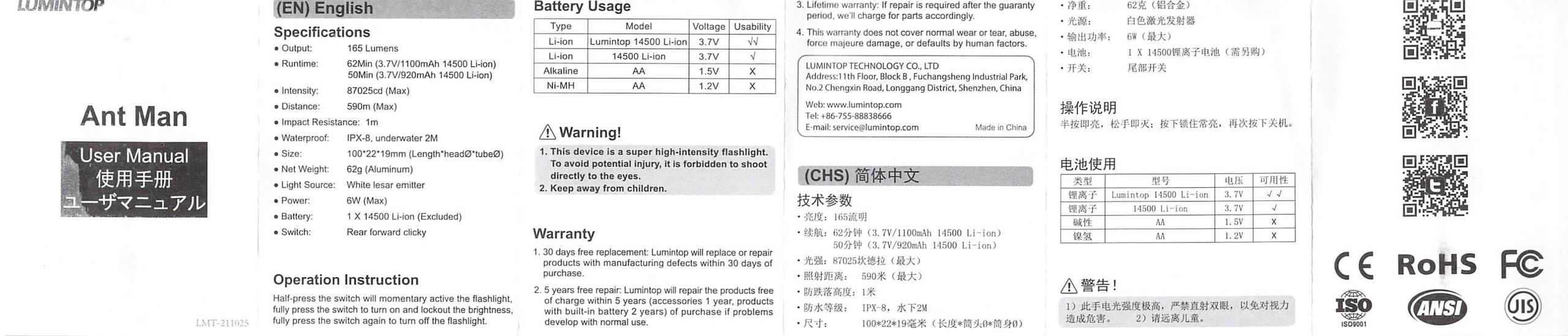
Package and Manual
Build Quality and Disassembly
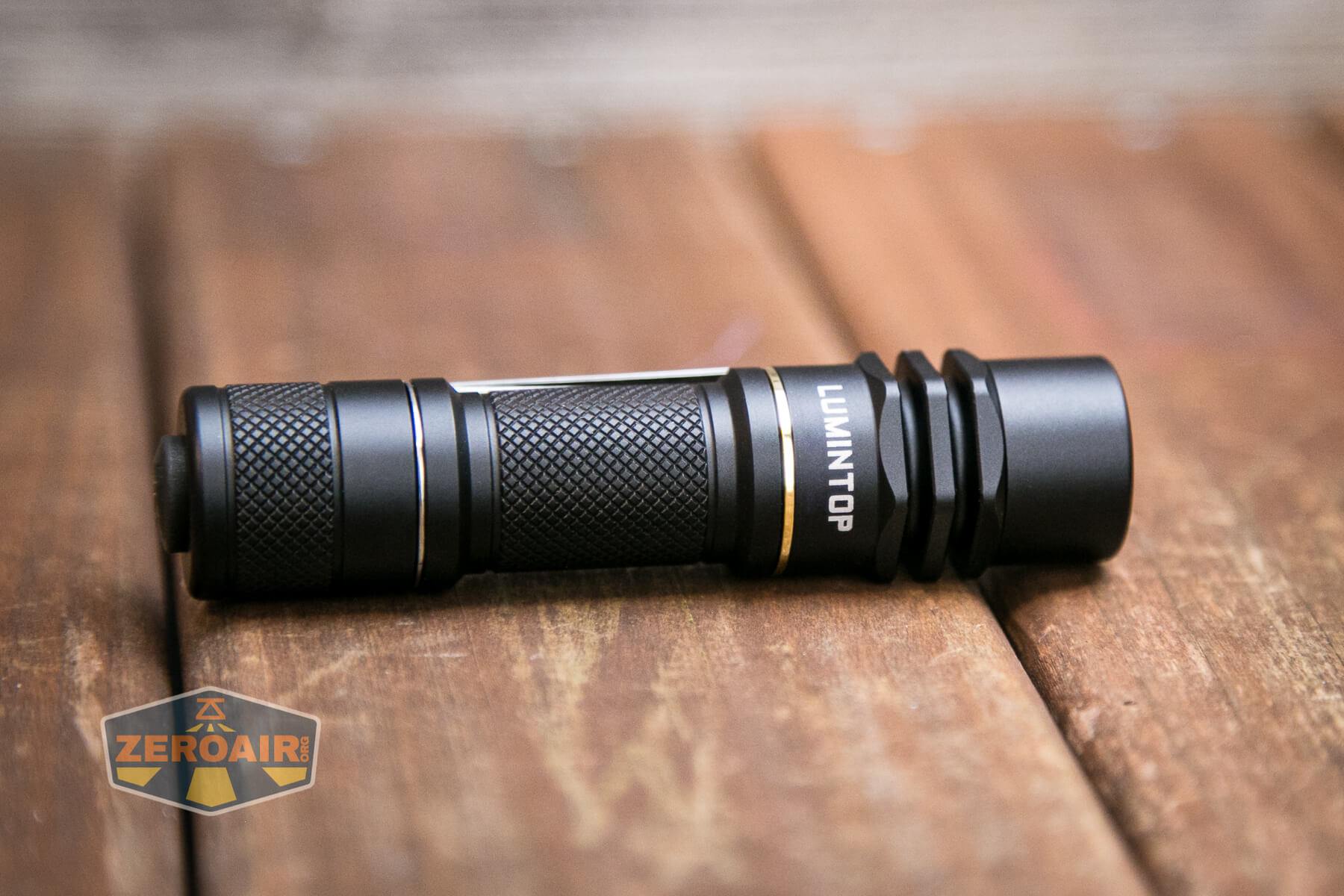
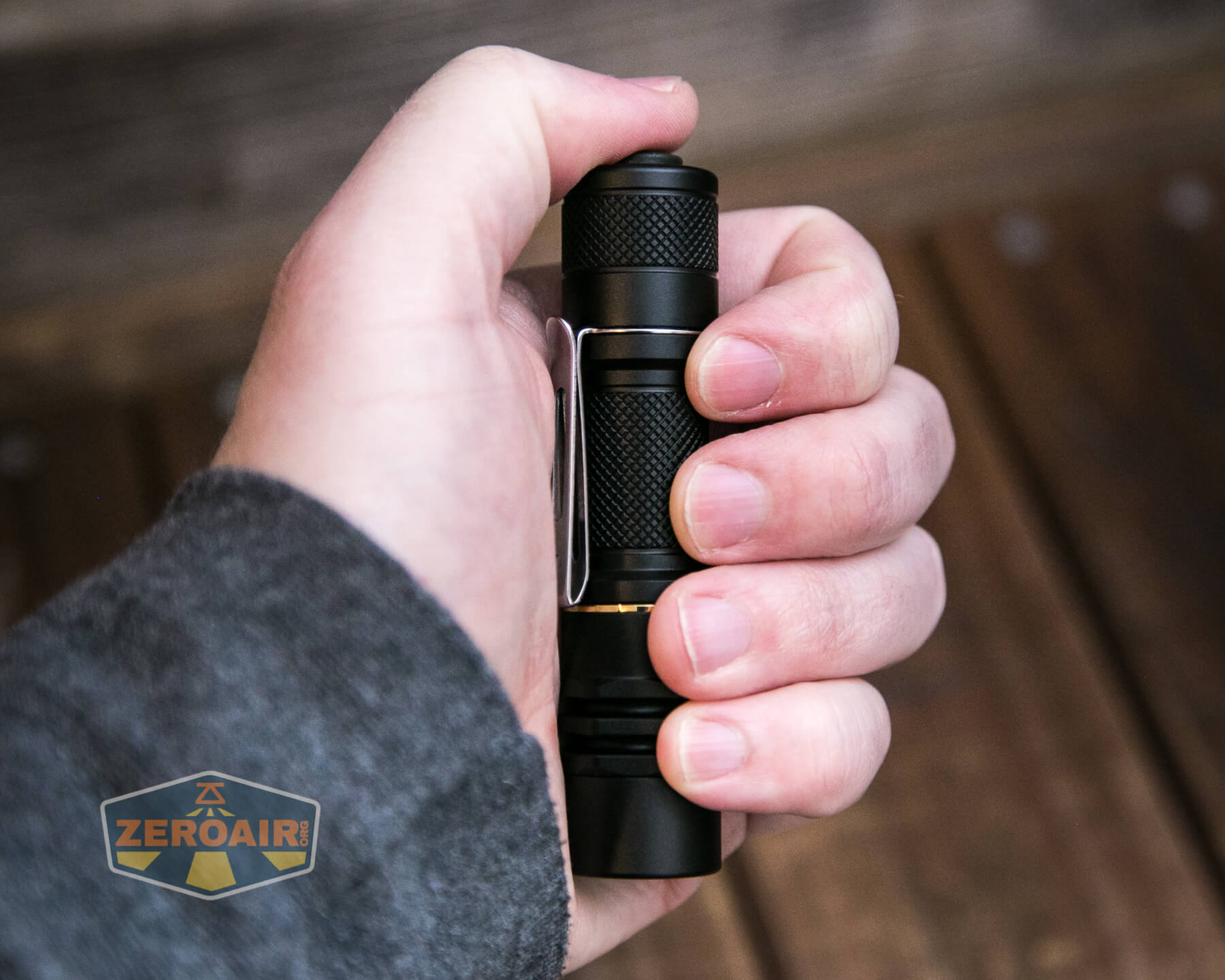
This Lumintop Ant Man LEP has a good build quality and, more importantly, has a great feel in hand. While it’s reminiscent of a light like the Tool AA, it’s just “better” – fewer edges, softer in hand, while retaining good grip.
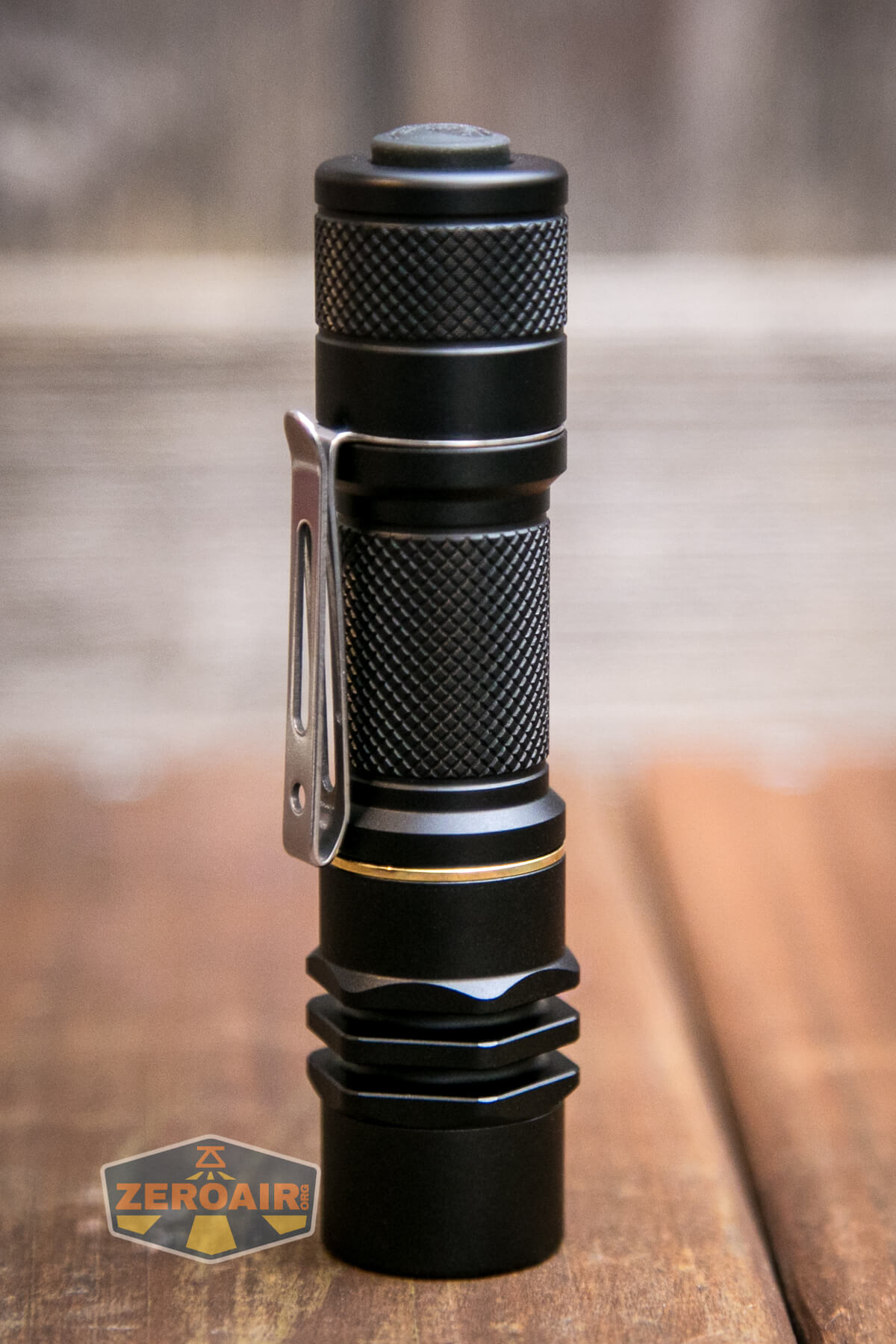
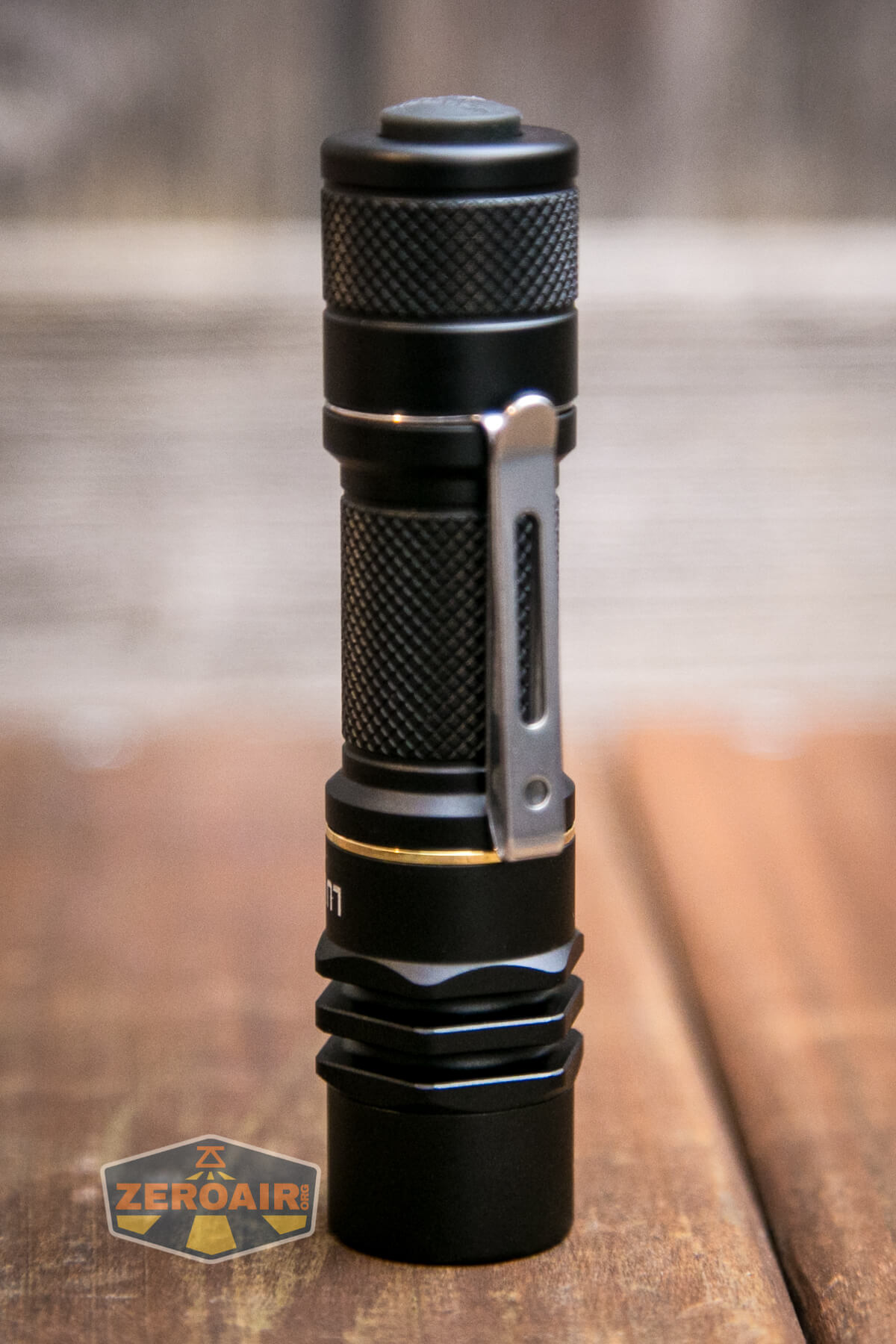
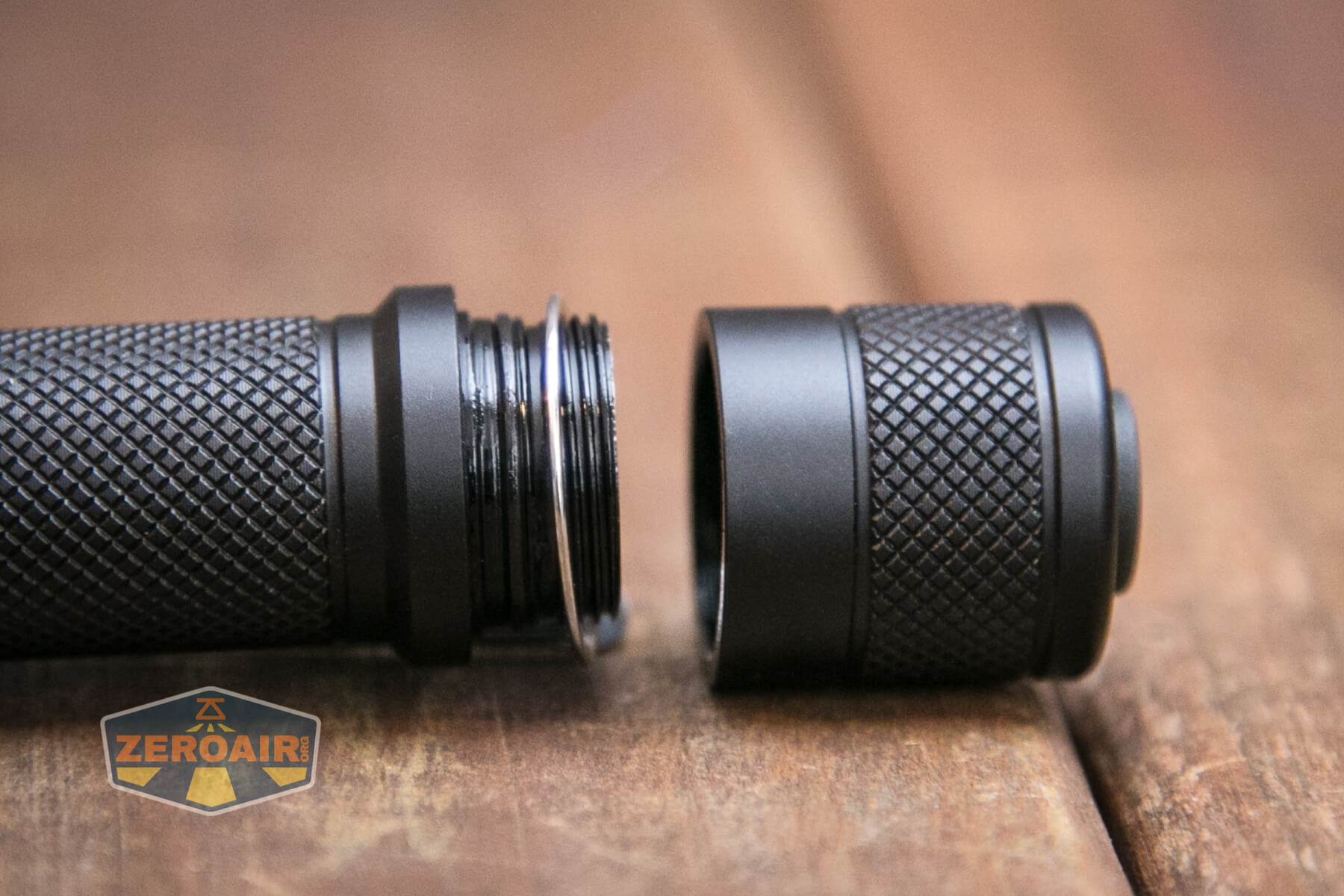
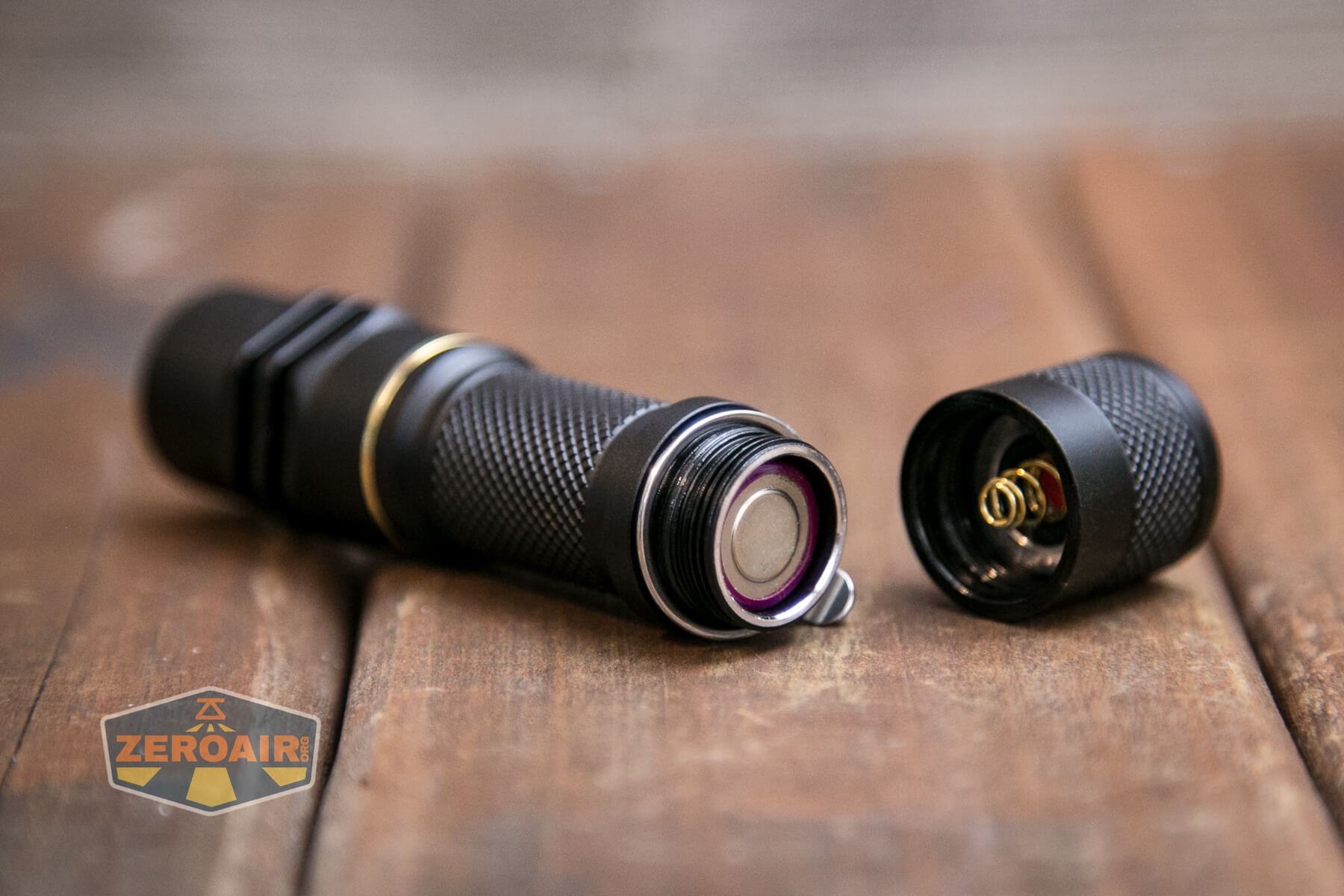
Both head and tail are removable. Here’s the head off, revealing anodized, square cut, and “well-lubed.”
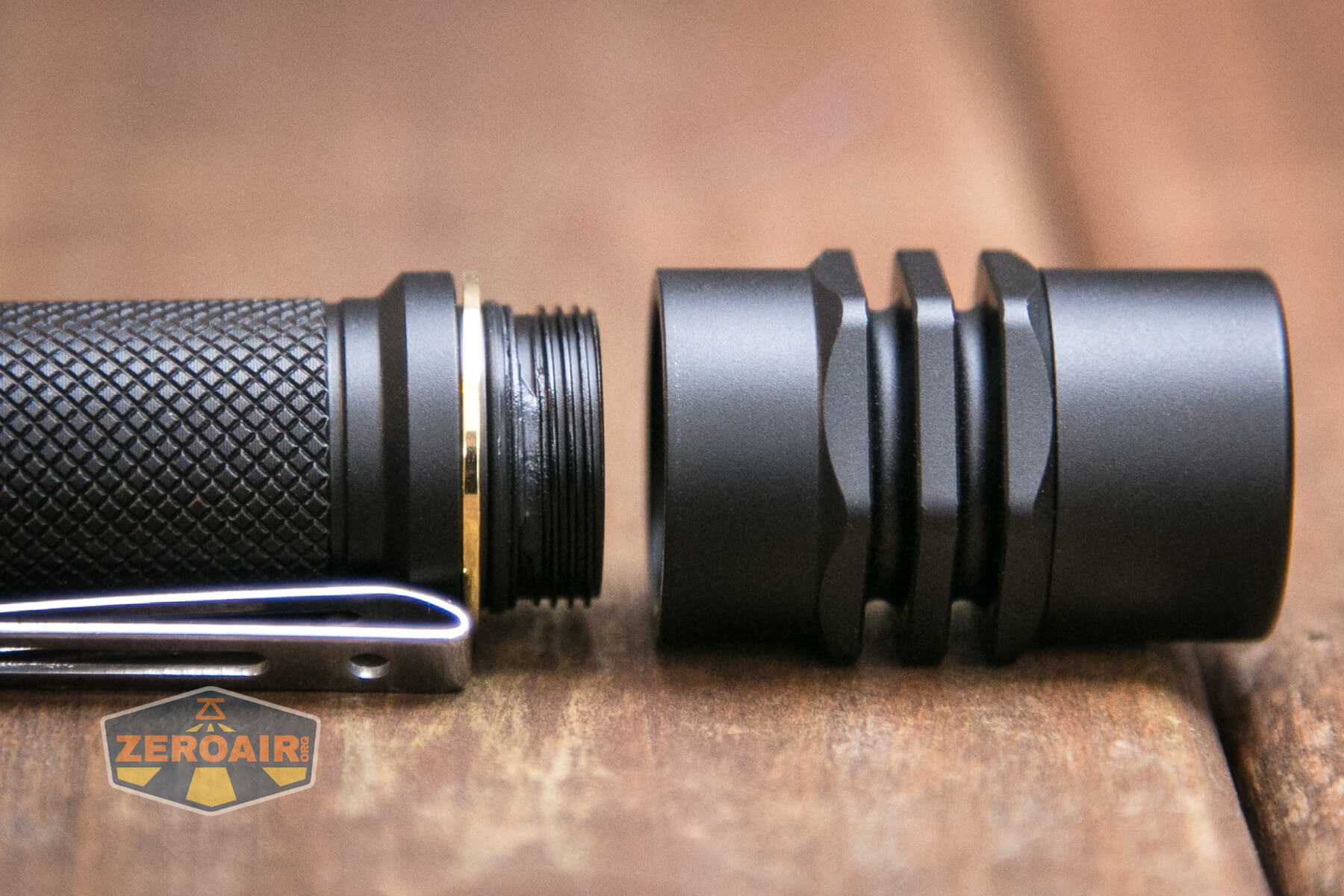
The head has only a button for contact with the positive end of the cell – no spring here.
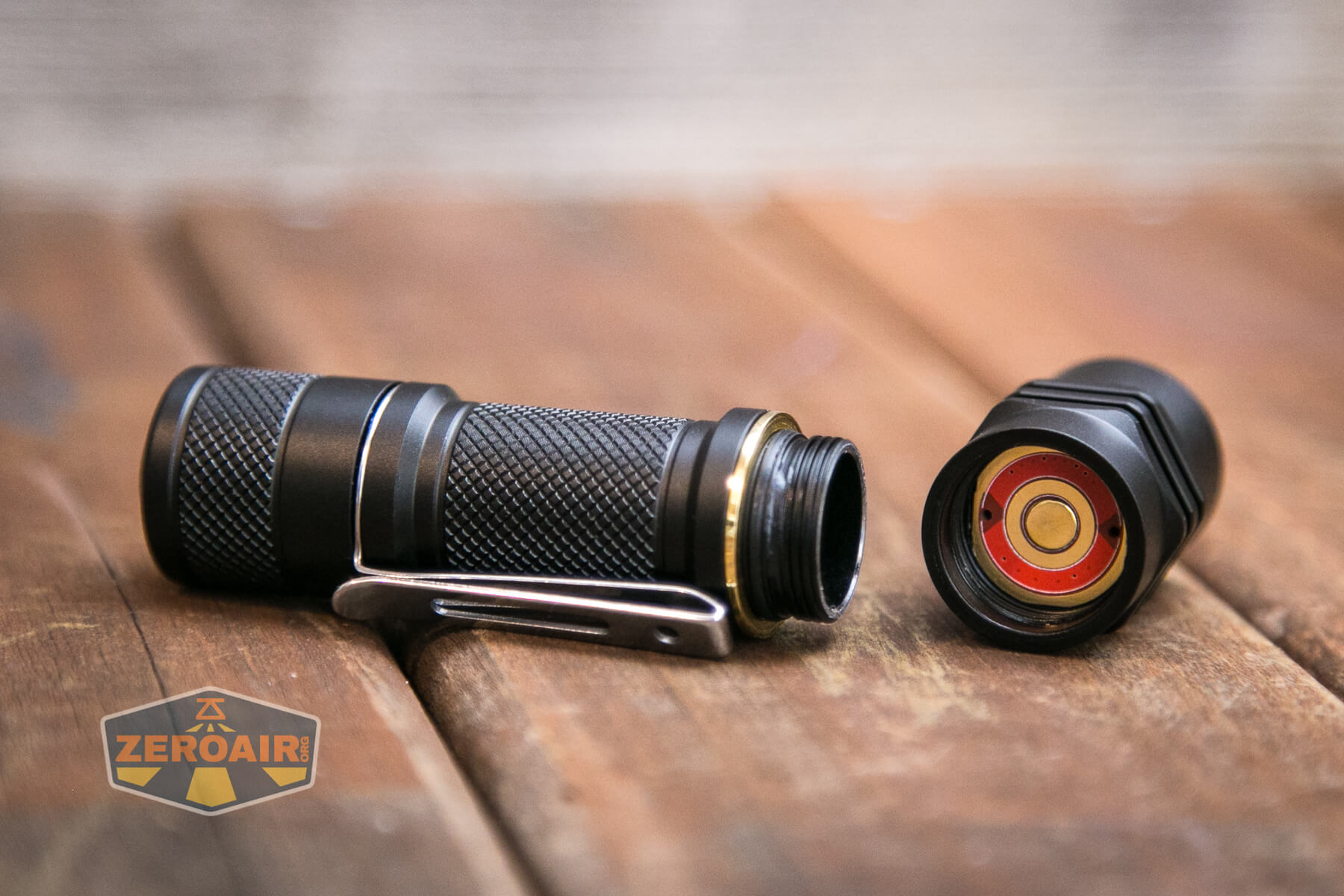
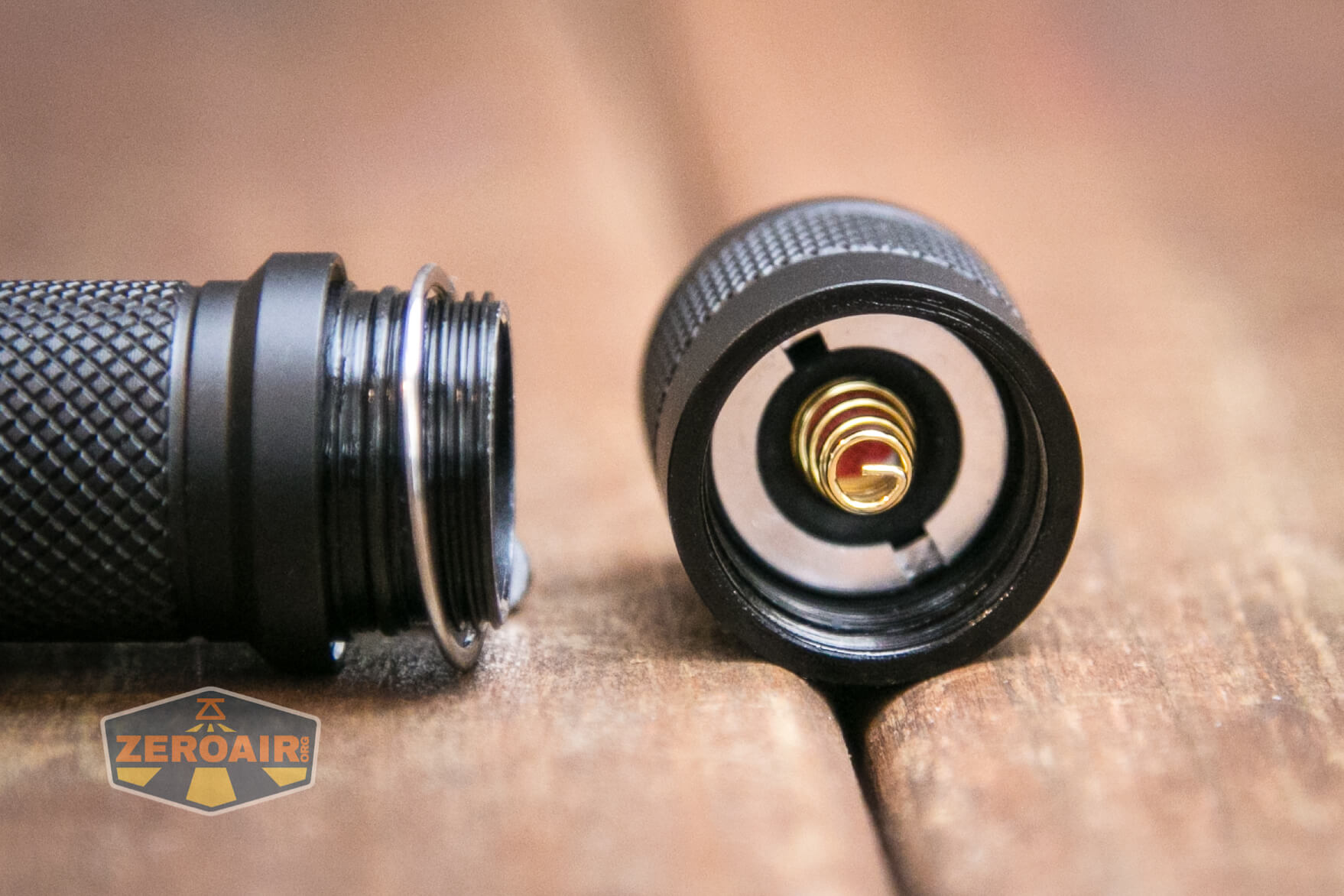
On the tail end, we see similar threads, but also the pocket clip. It’s a collar-style pocket clip, and not really held in place by any means. So if you perform cell swaps through the tailcap end, you’ll be faced with fussing with the pocket clip every time. There’s no good reason not to swap the cells through the head, so that’s what I’d go with.
The tailcap has a nice beefy spring.
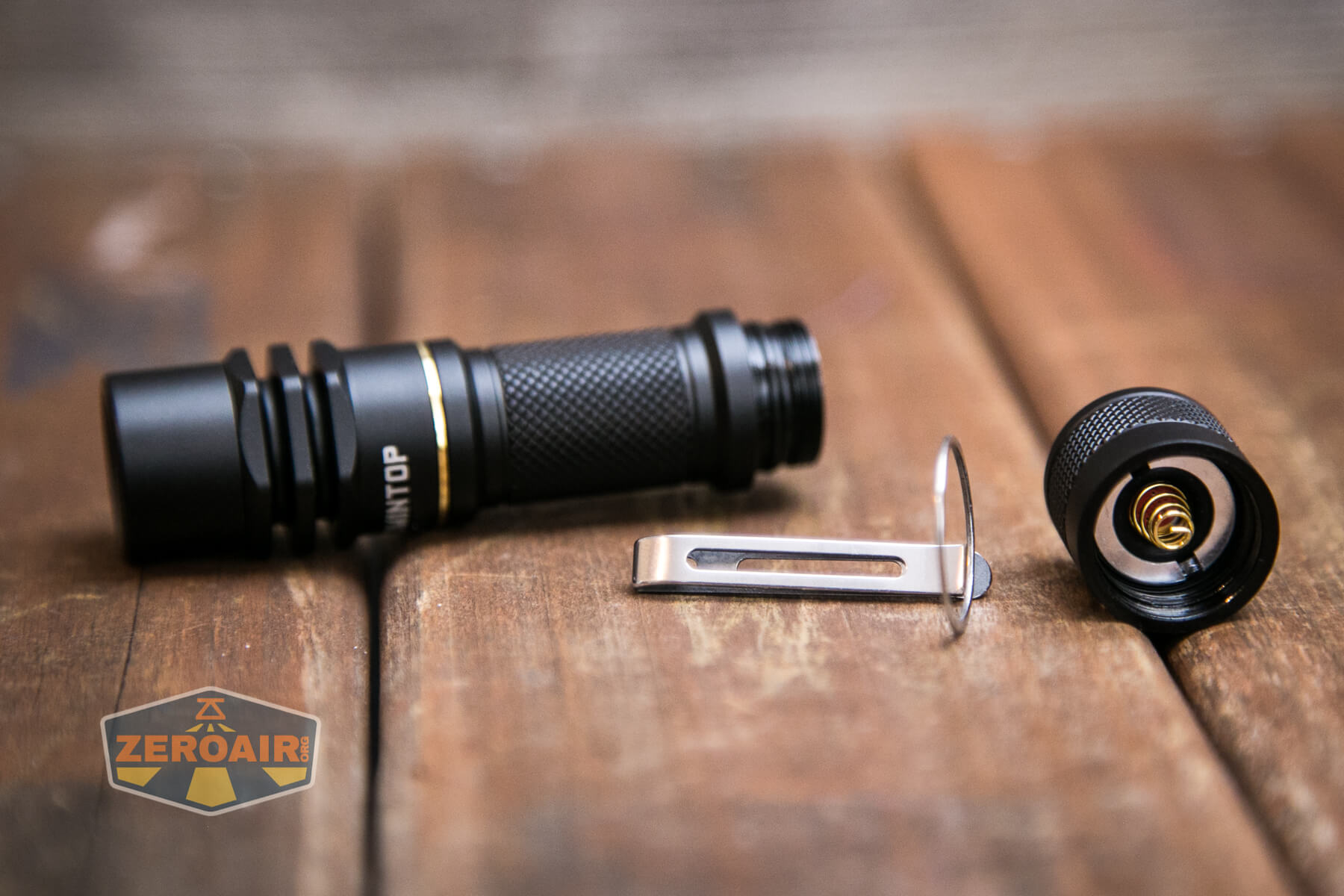
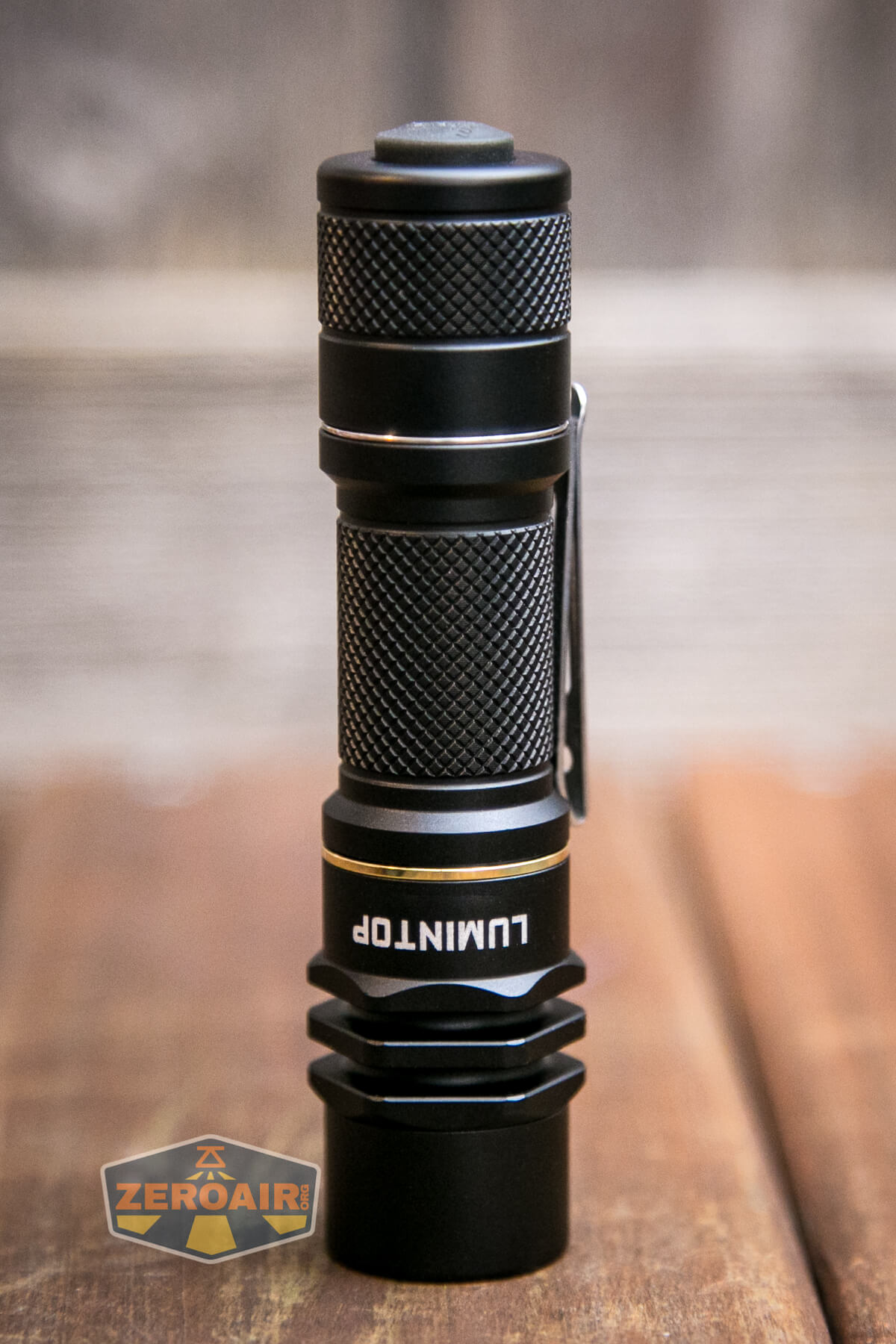
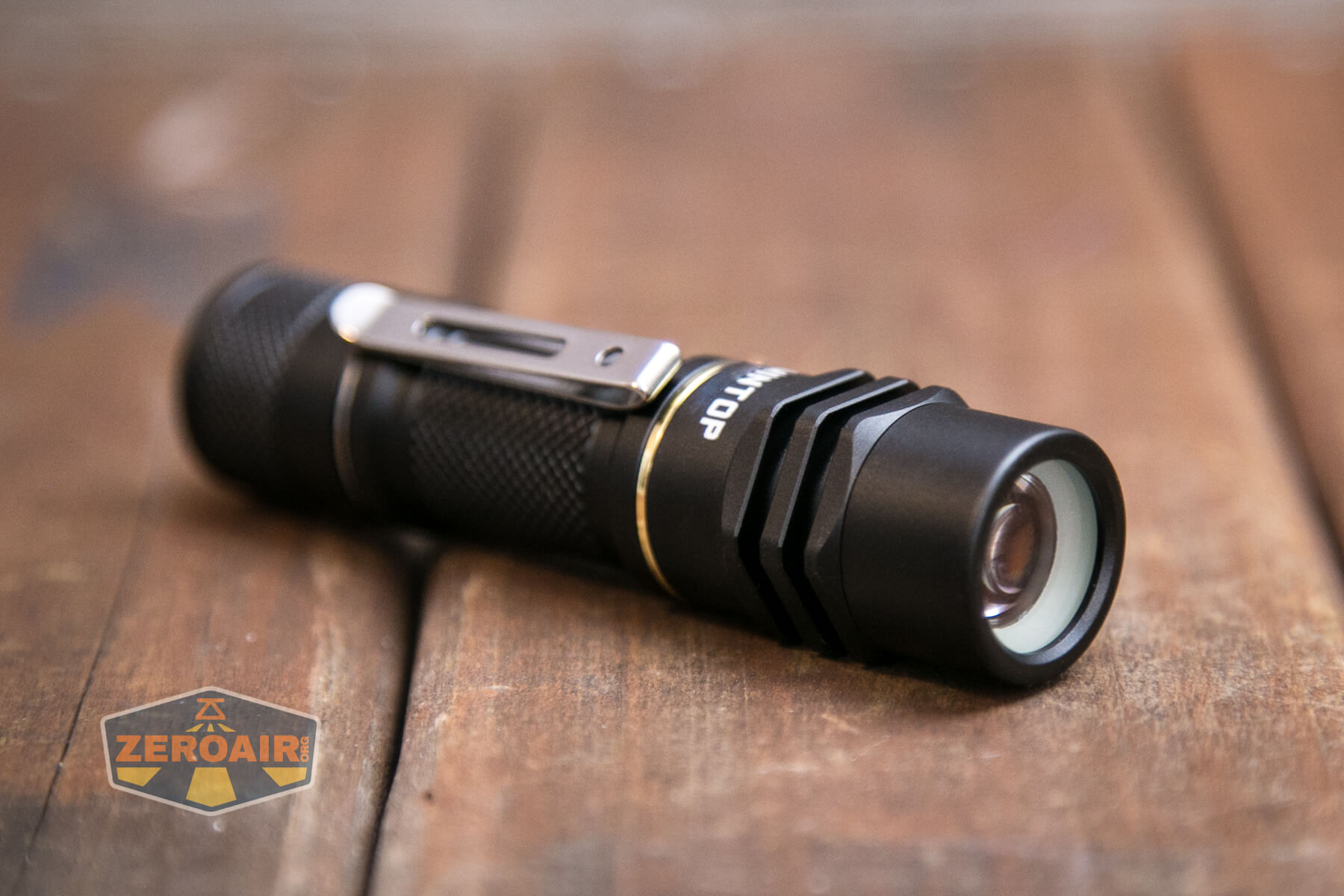
Here you can see the “cooling fins” on the head – not sure how much those are needed since the driver seems to pull just around 1A. But it’s a good anti-roll feature anyway.
Size and Comps
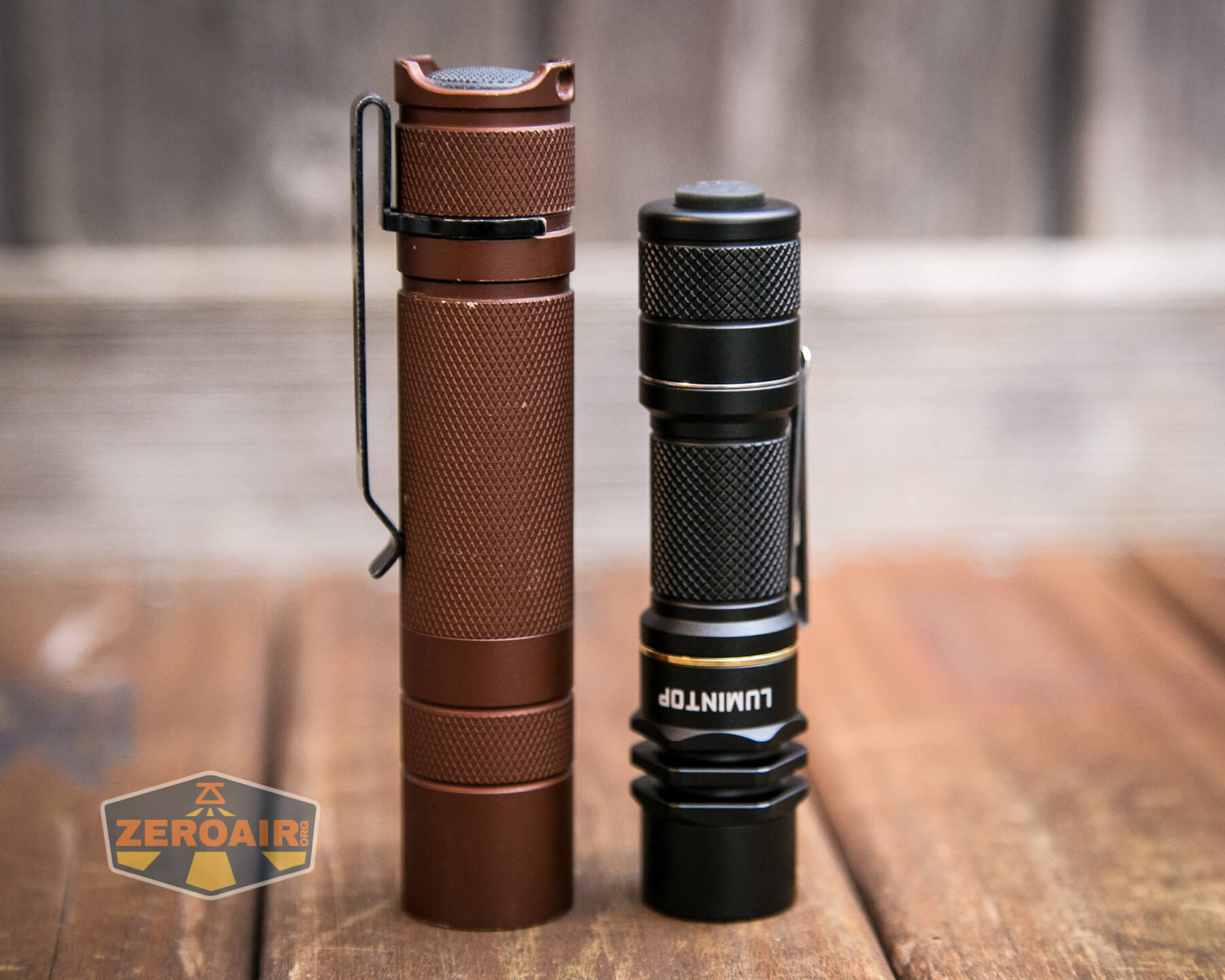
Size: 100mm x 22mm x 19mm (Length x head Ø x tube Ø)
Net Weight: 62g (Aluminum)
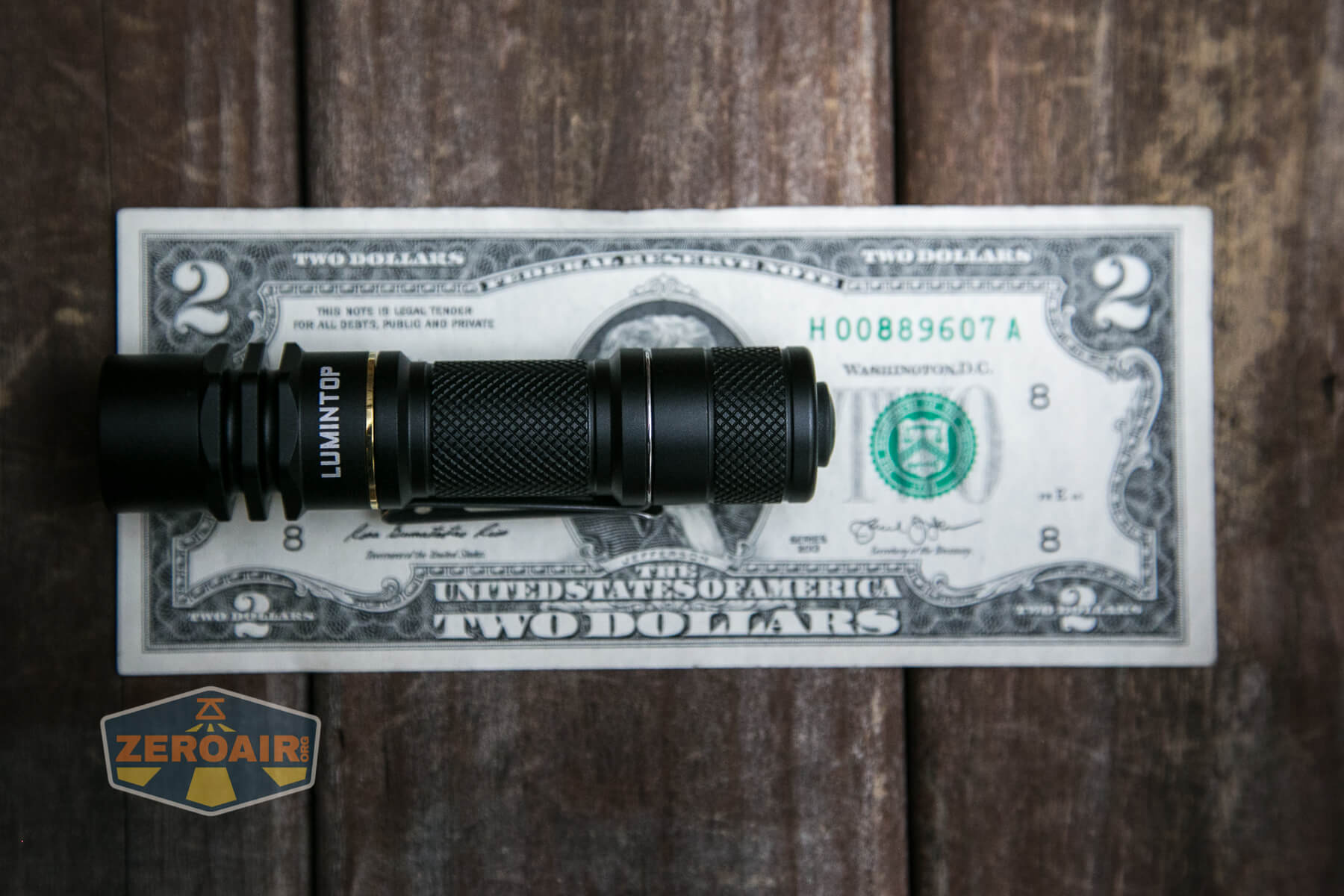
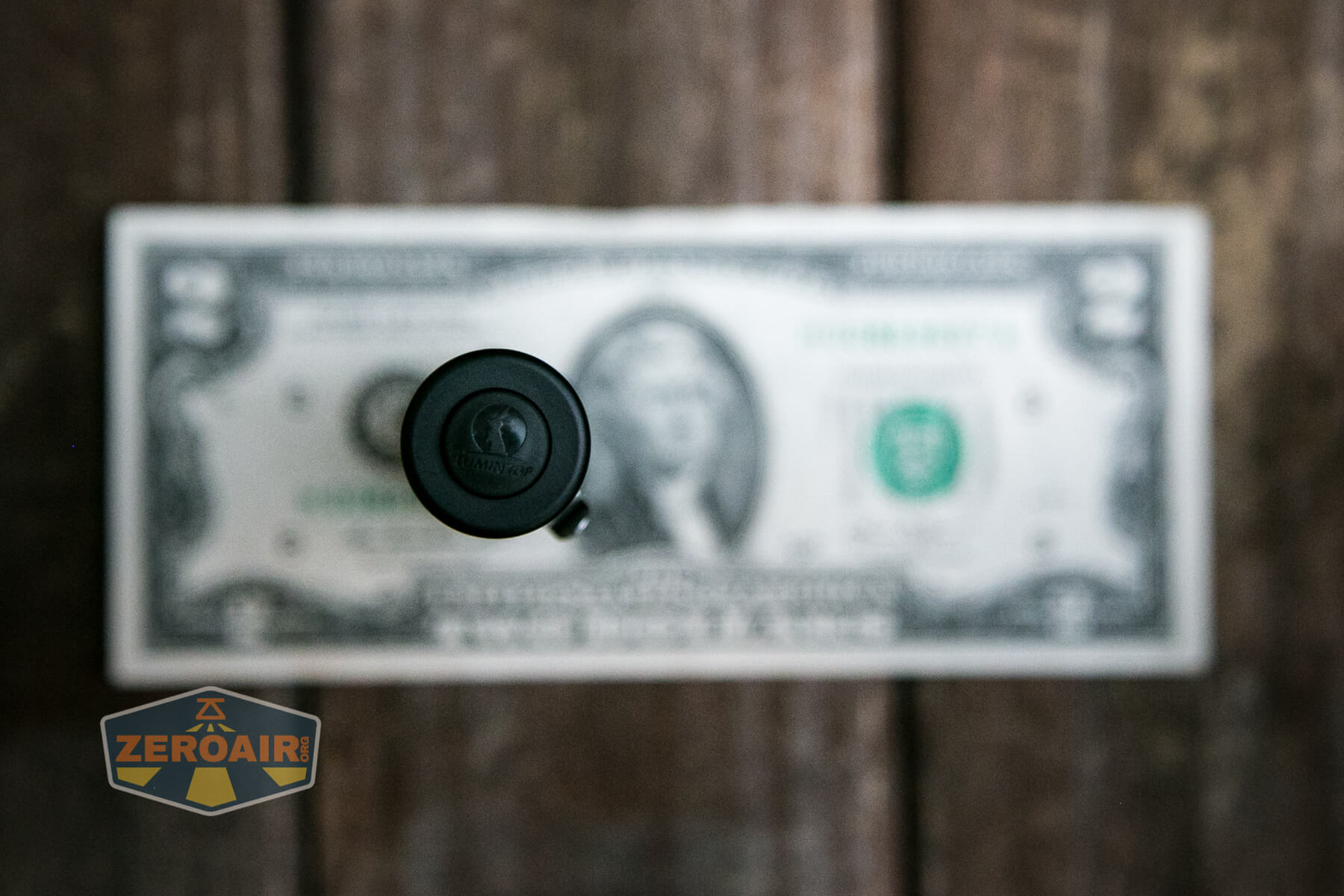
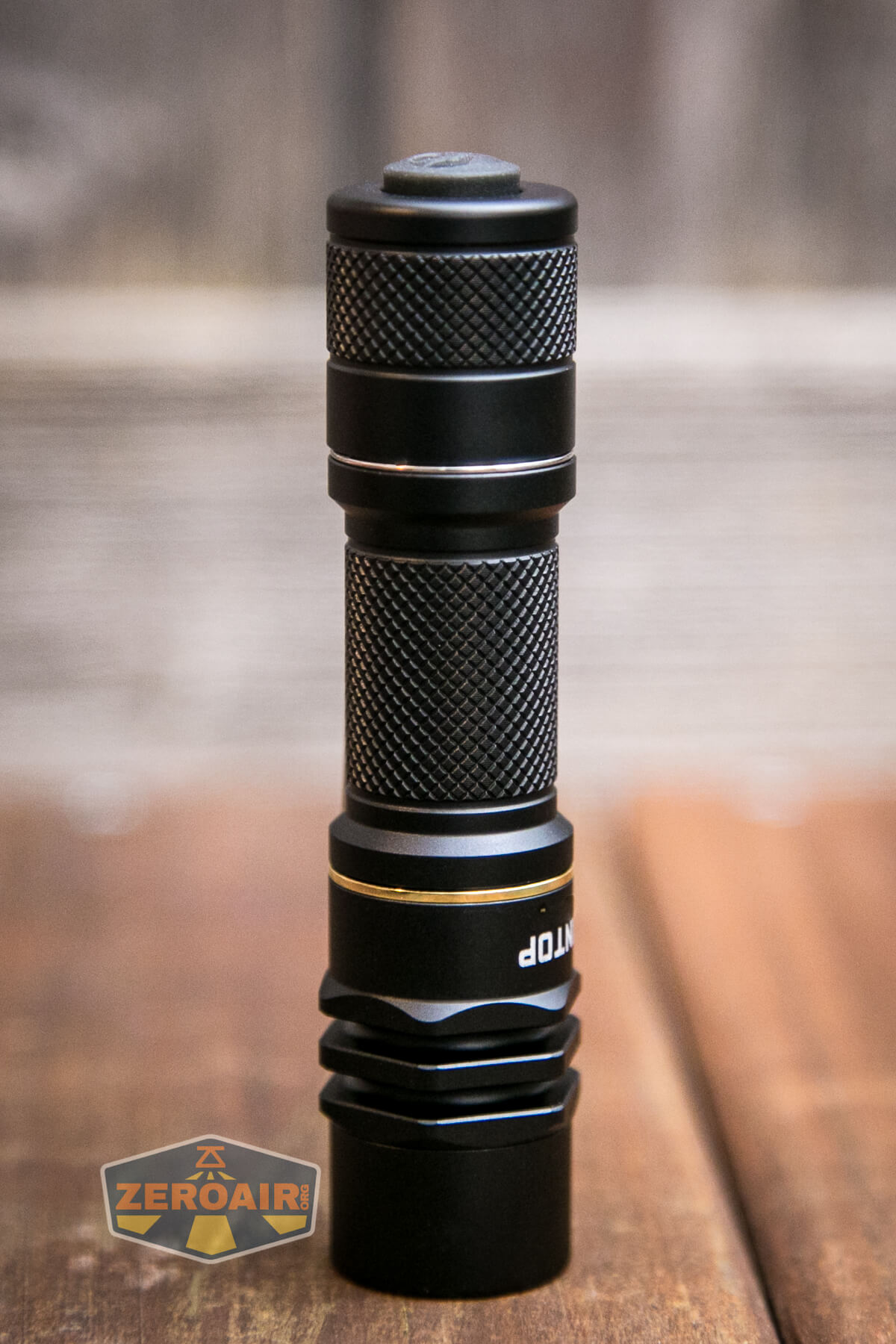
If the flashlight will headstand, I’ll show it here (usually the third photo). If the flashlight will tailstand, I’ll show that here, too (usually the fourth photo).
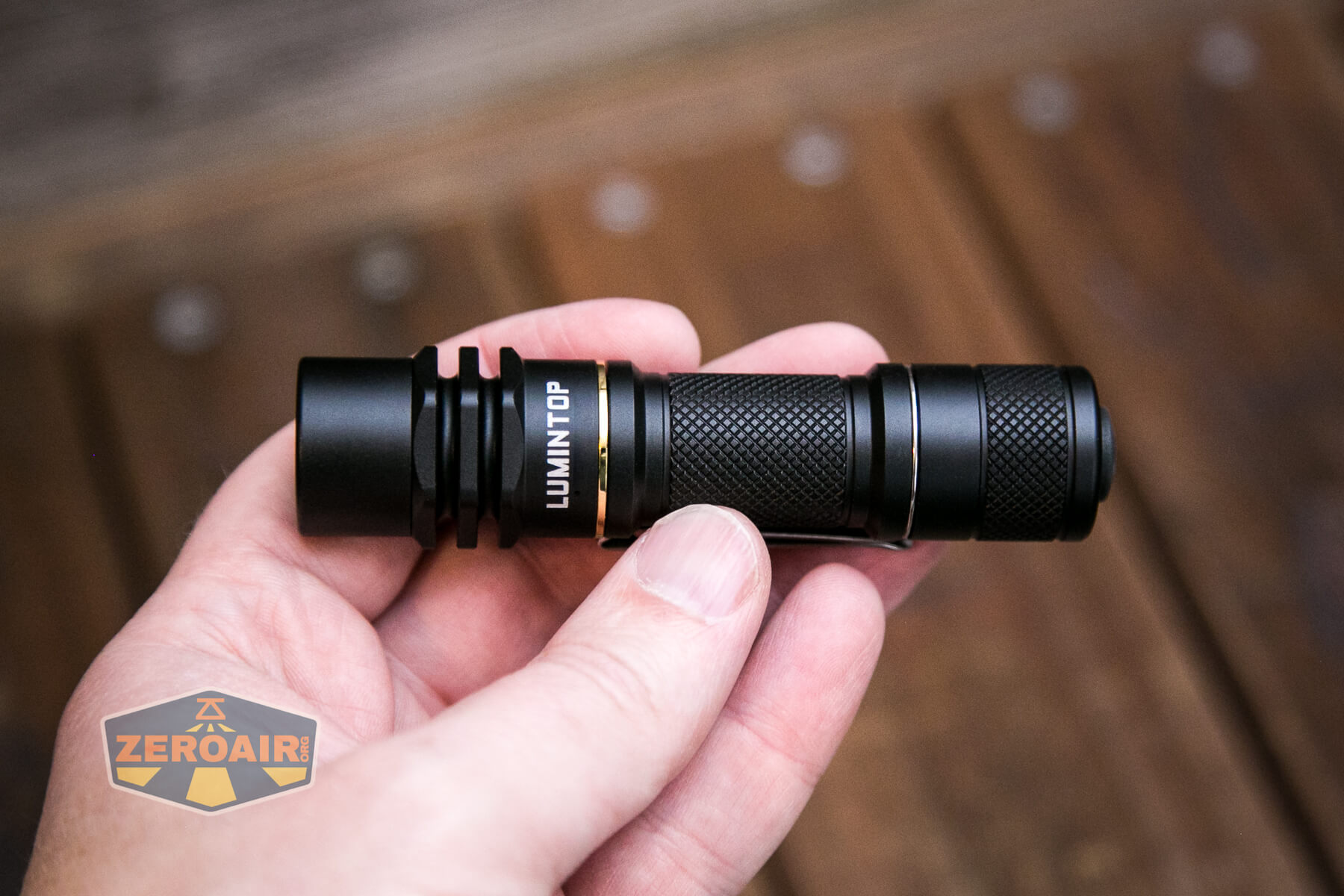
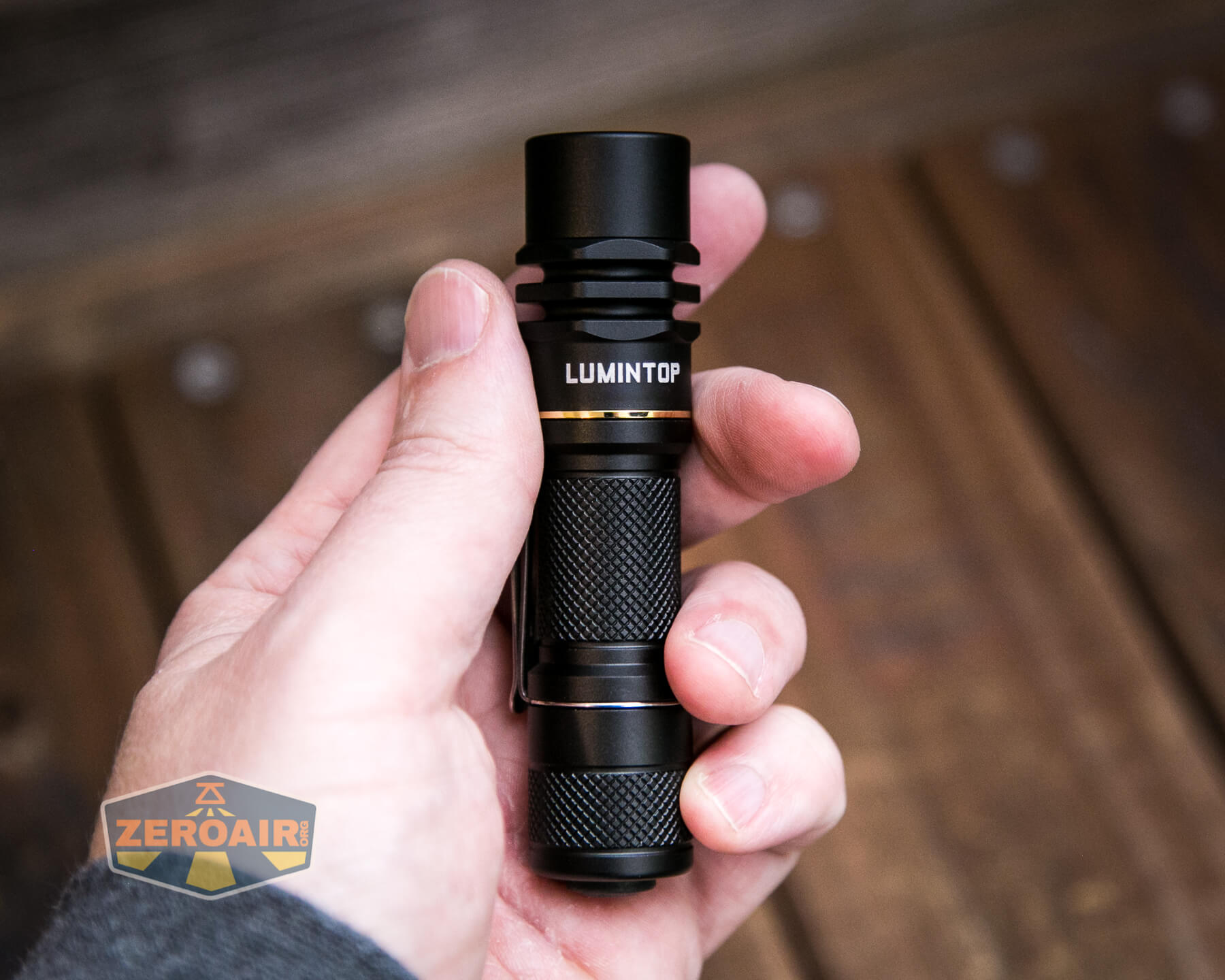
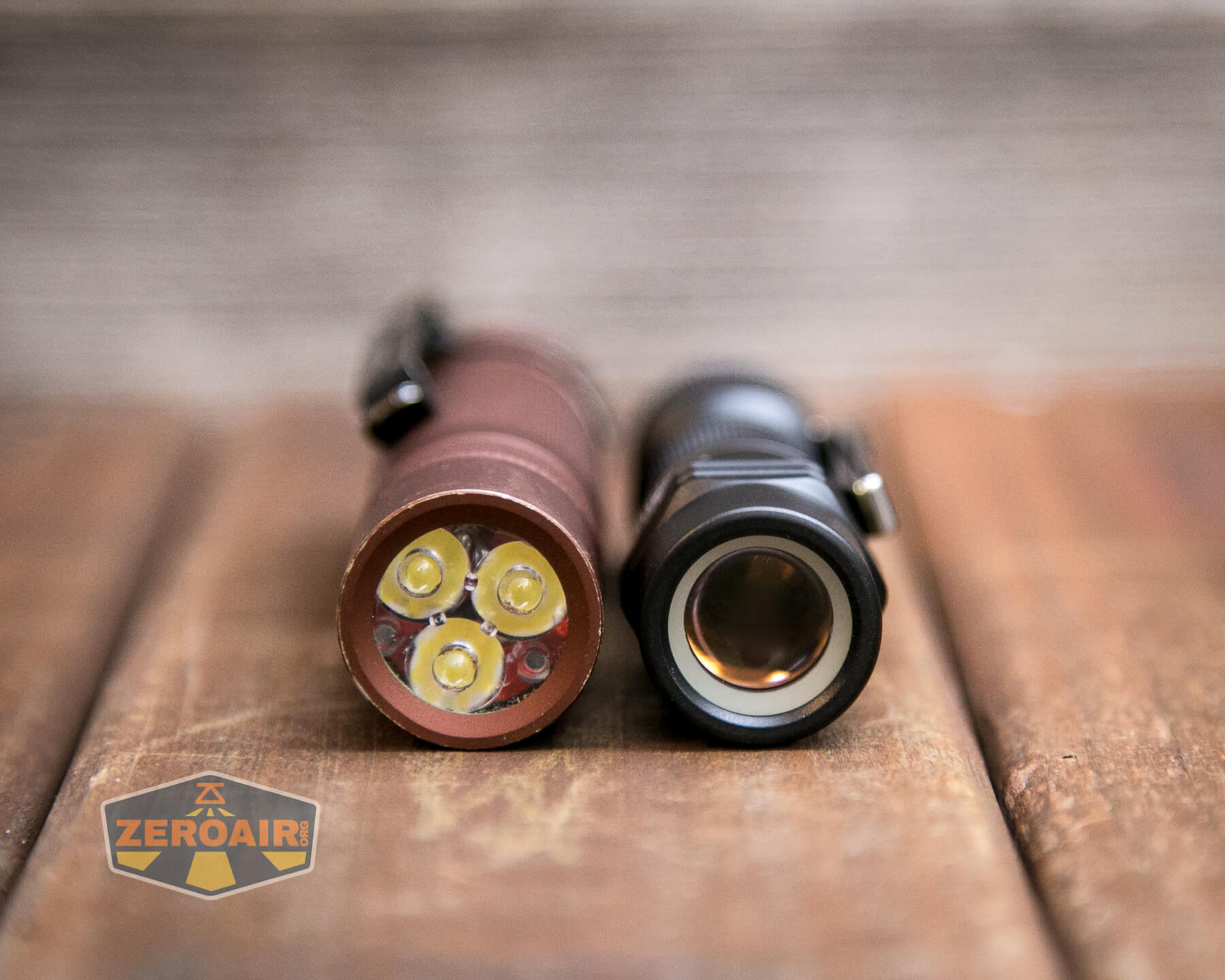
Here’s the test light with the venerable Convoy S2+. Mine is a custom “baked” edition Nichia 219b triple. A very nice 18650 light!
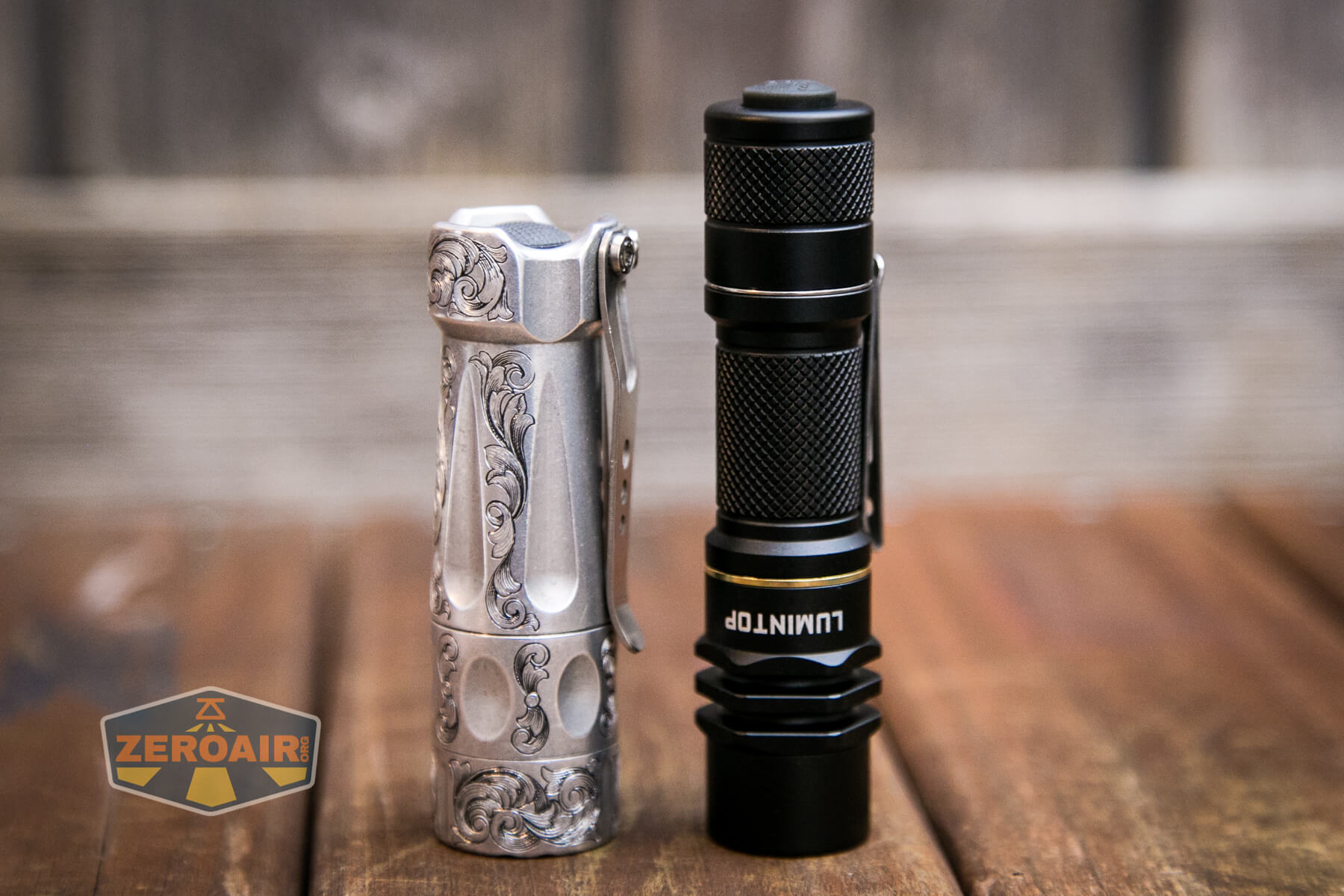
And here’s the light beside my custom-engraved TorchLAB BOSS 35, an 18350 light. I reviewed the aluminum version of that light in both 35 and 70 formats.
Retention and Carry
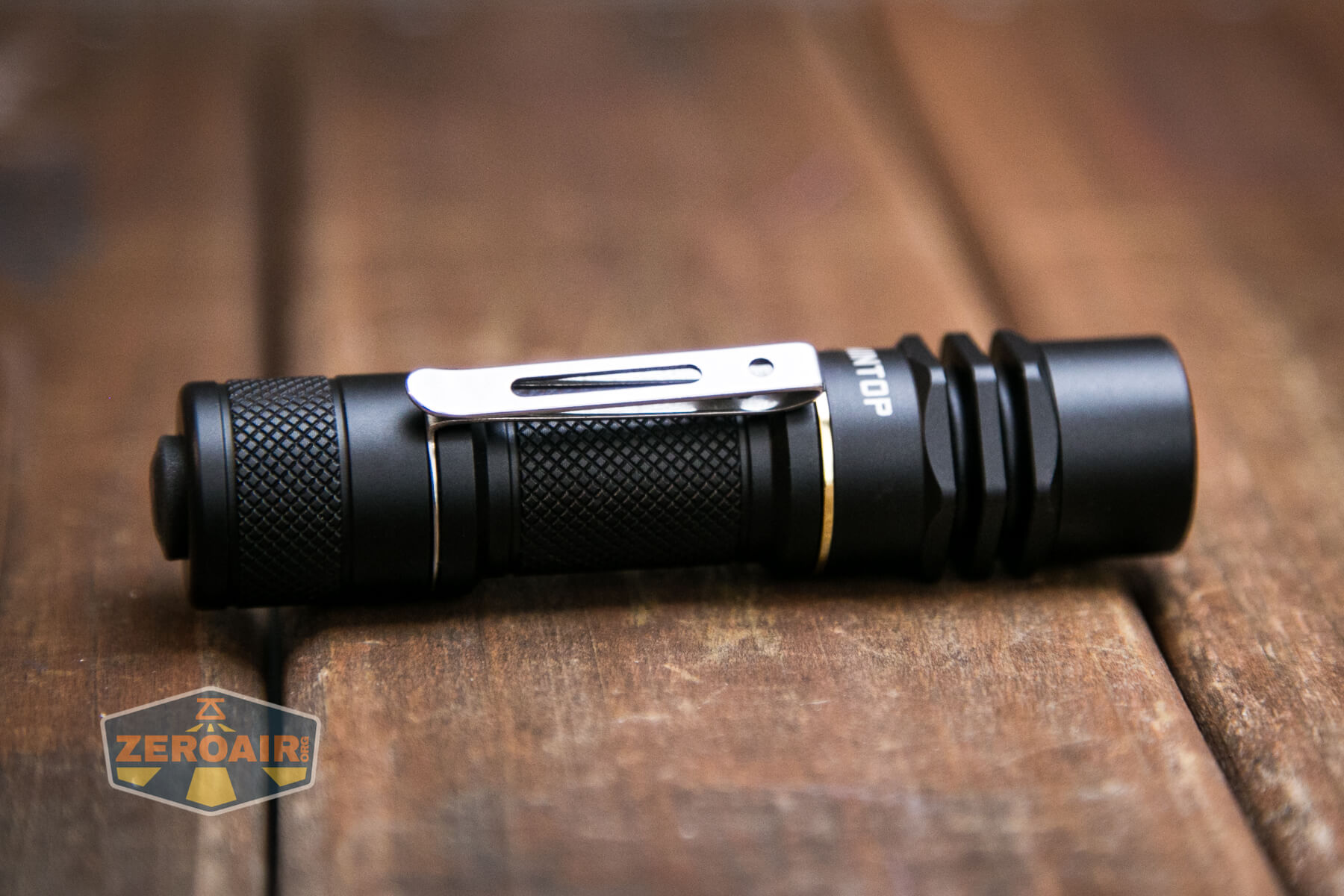
I’ve talked about the pocket clip some already. This is a very standard “Lumintop” pocket clip. There’s that recognizable slit down the middle and the hole in the shoulder that would easily accept a lanyard.

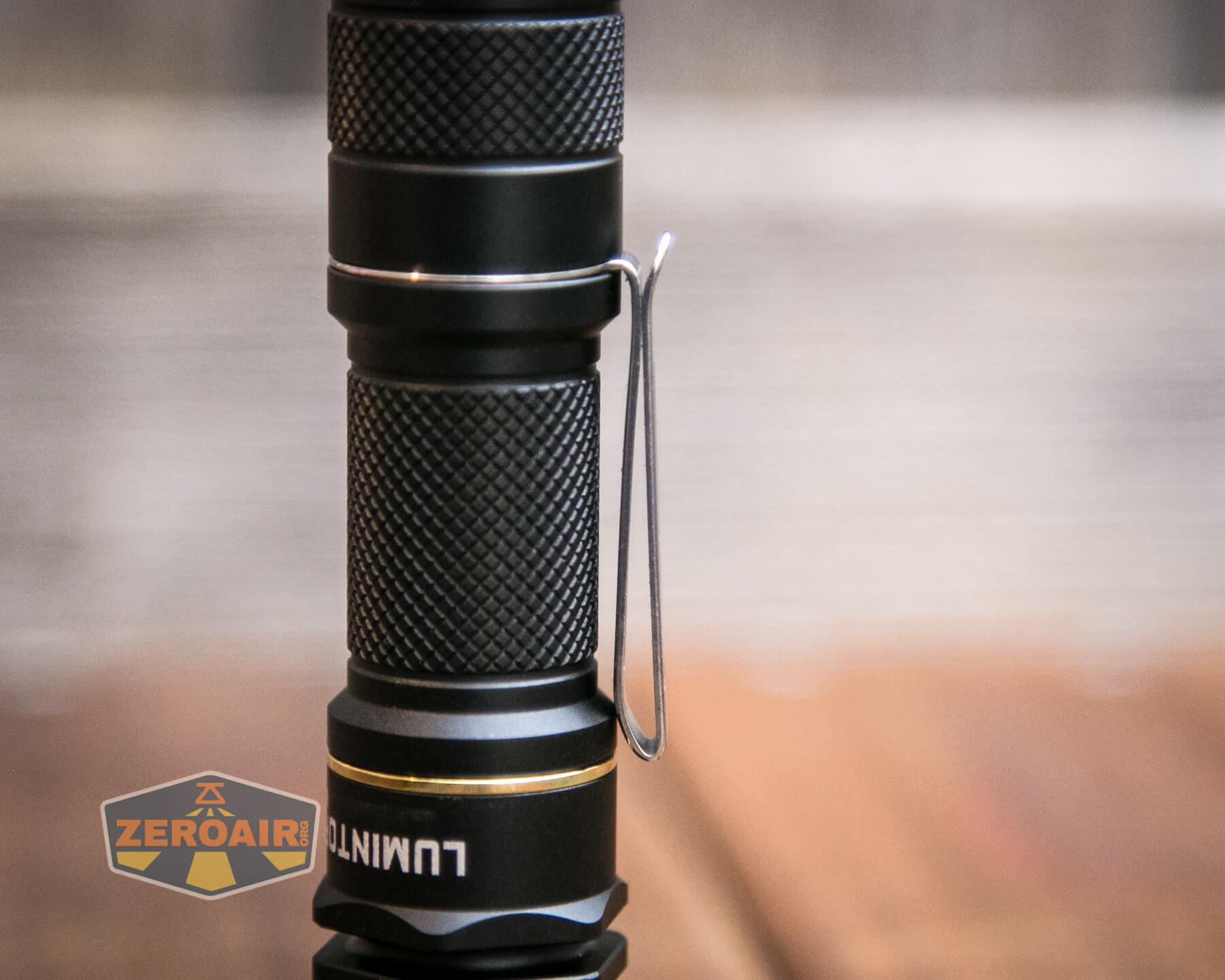
This is a collar-style clip, though, so it will be very reliable.
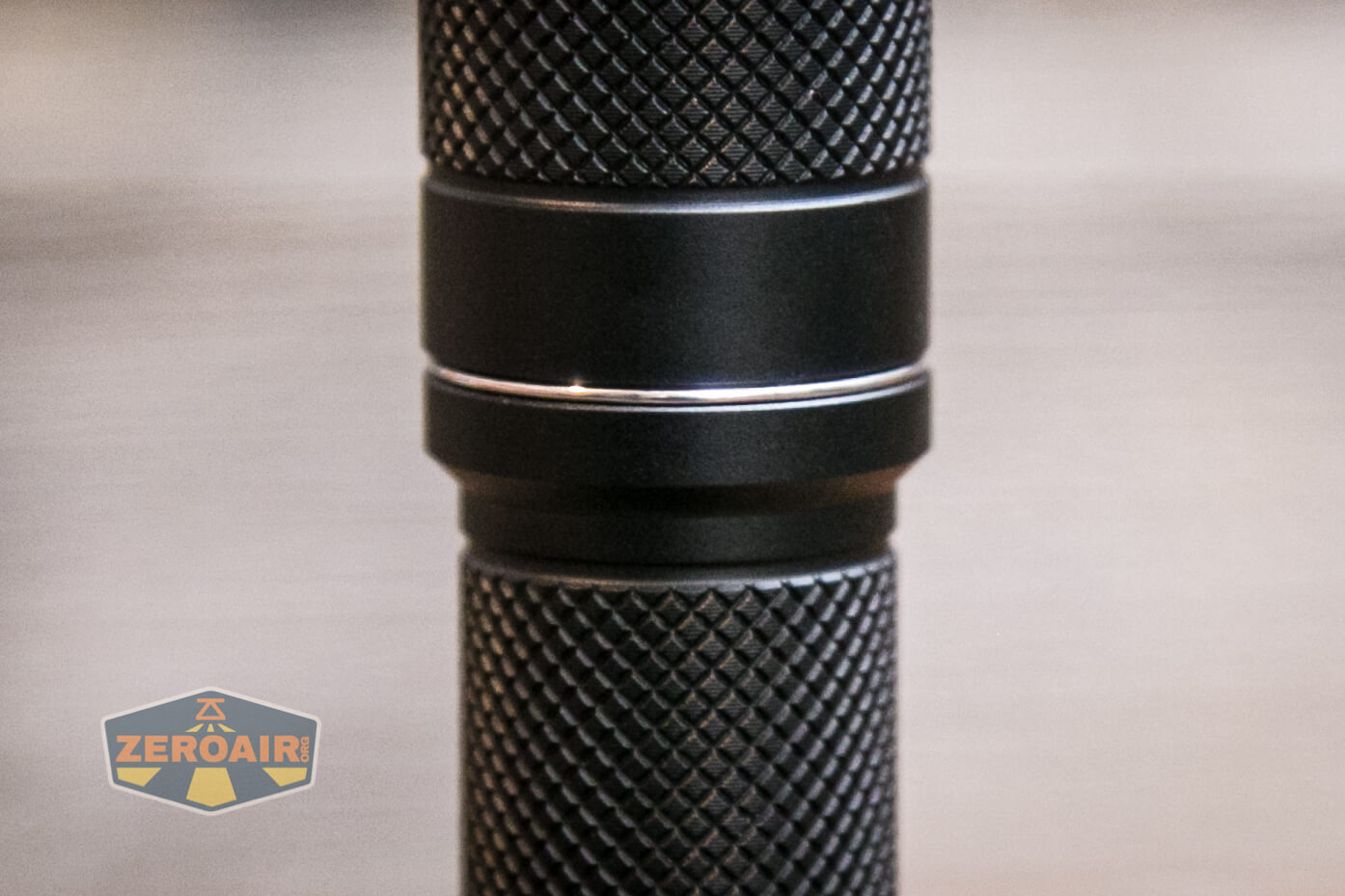
The cell tube is not reversible. That brass ring on the head end (which is not really brass, I think), is held in place by an o-ring. But just an o-ring. It should be possible to swap this ring and the pocket clip if you really need the clip the other way (despite the clip being a “two-way” clip).
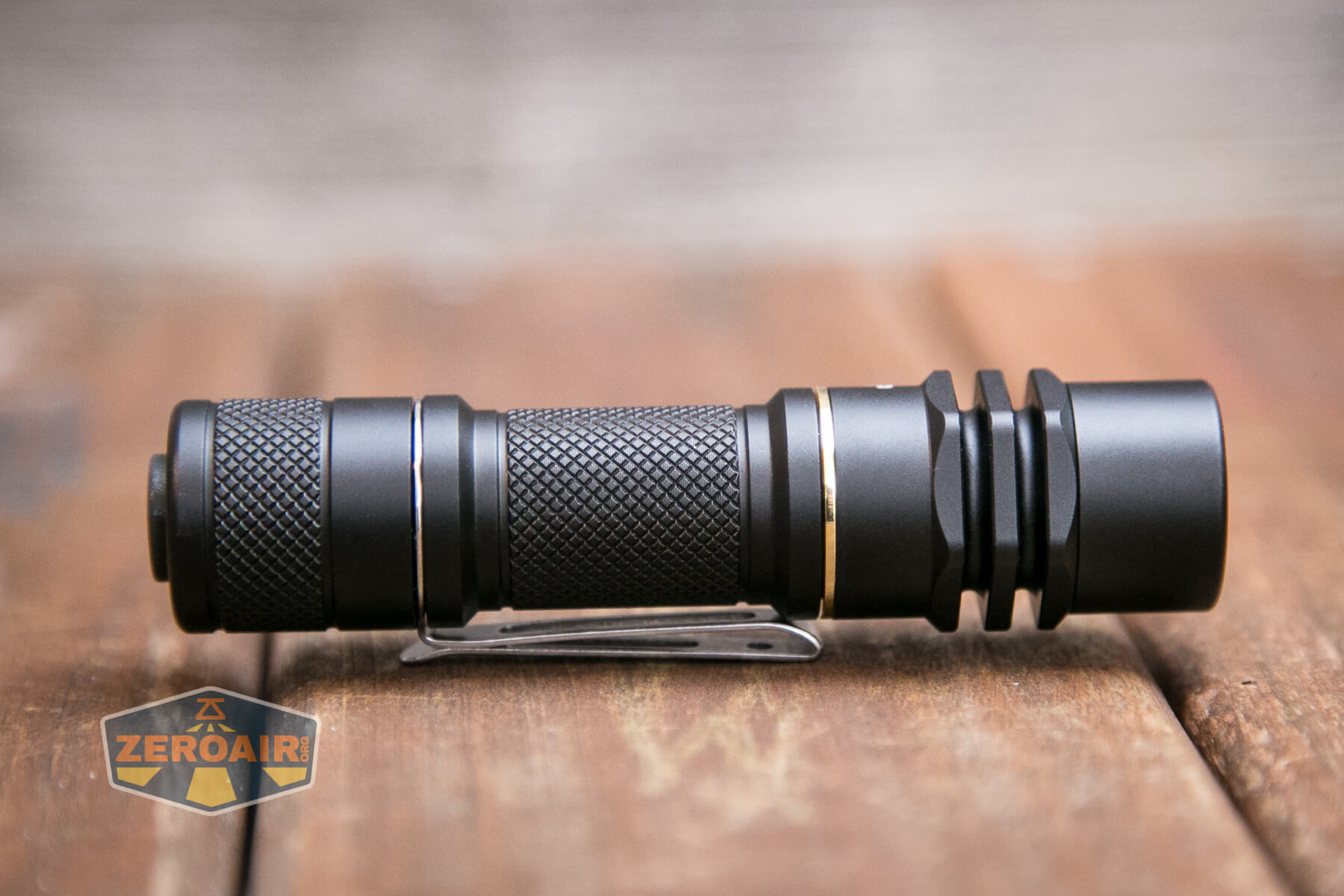
If you had a lanyard, you could attach it to either of these holes on the pocket clip. Since the clip is a collar style, it should be a very secure attachment point.
Power and Runtime
The Lumintop Ant Man LEP is powered by a single 14500 cell. A cell is not included with the purchase, but I happened to have this Vapcell H10, a 1000mAh 14500 button top. I believe any style 14500 should work because the head end has a small button (very small). Even flat tops should work fine.
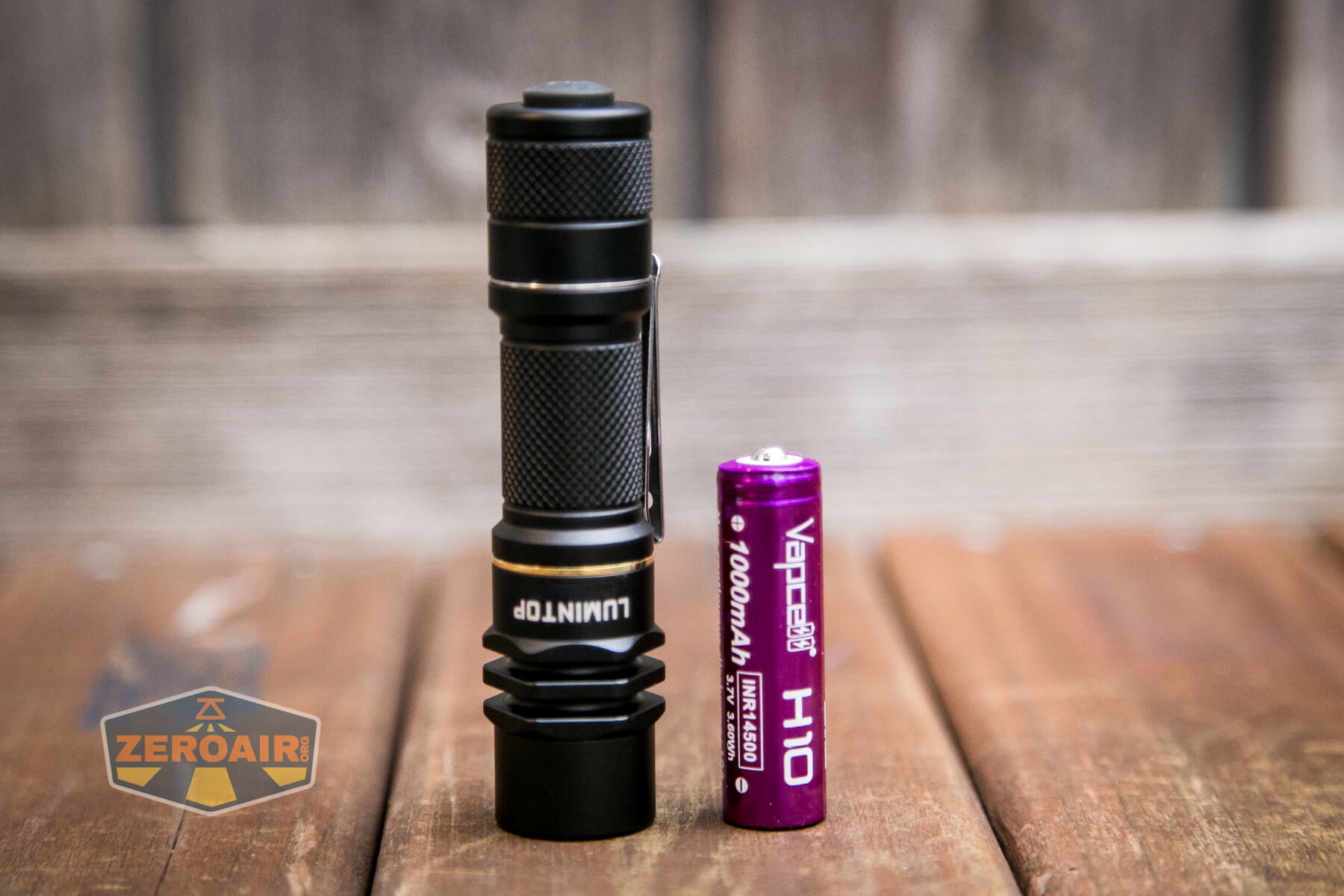
The cell is installed into the Ant Man in the usual way – positive terminal toward the head. Below you can see I’ve removed the tailcap – you’ll have to fight with the pocket clip if you go this route. It will be easier to remove the head for cell swaps.
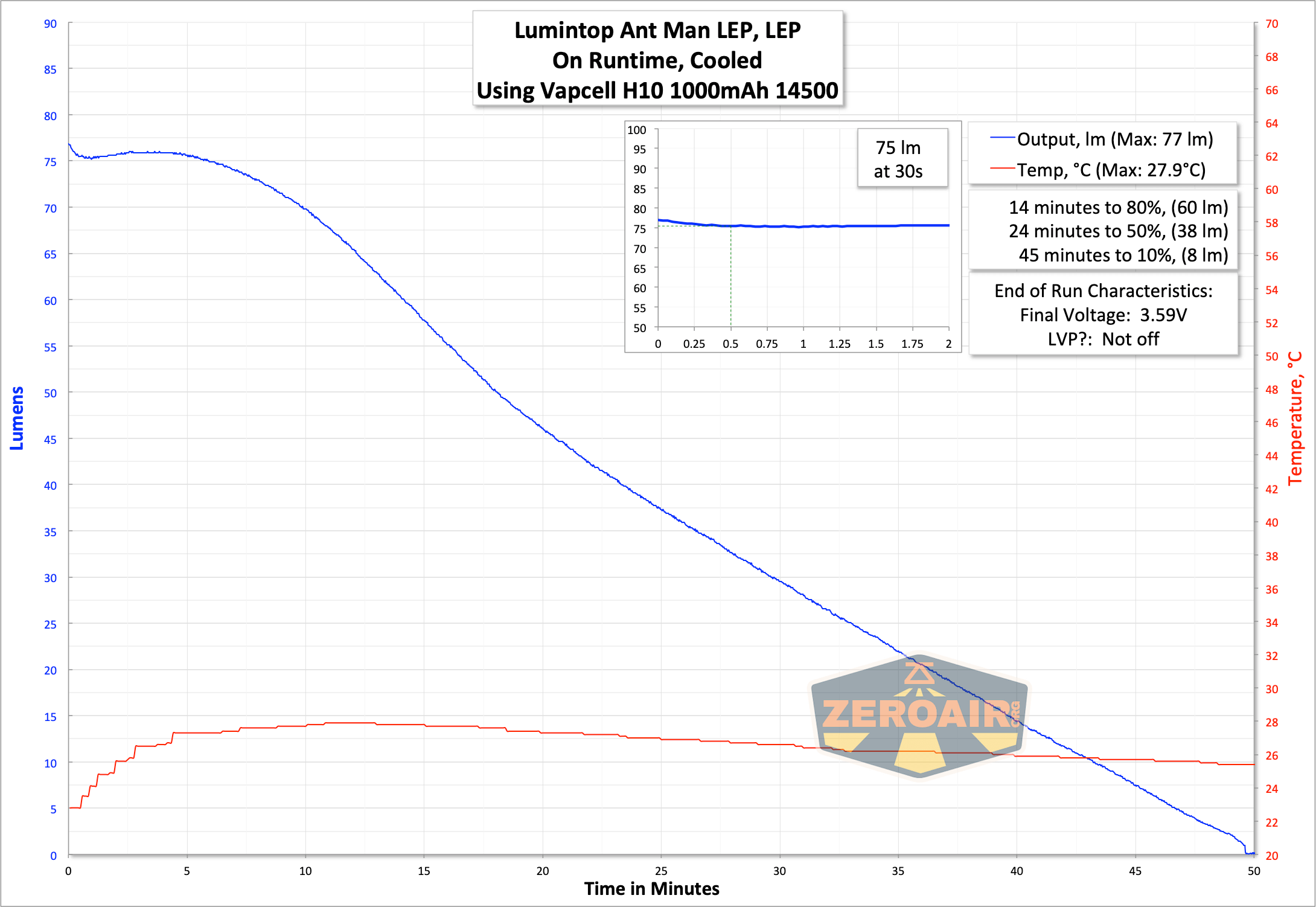
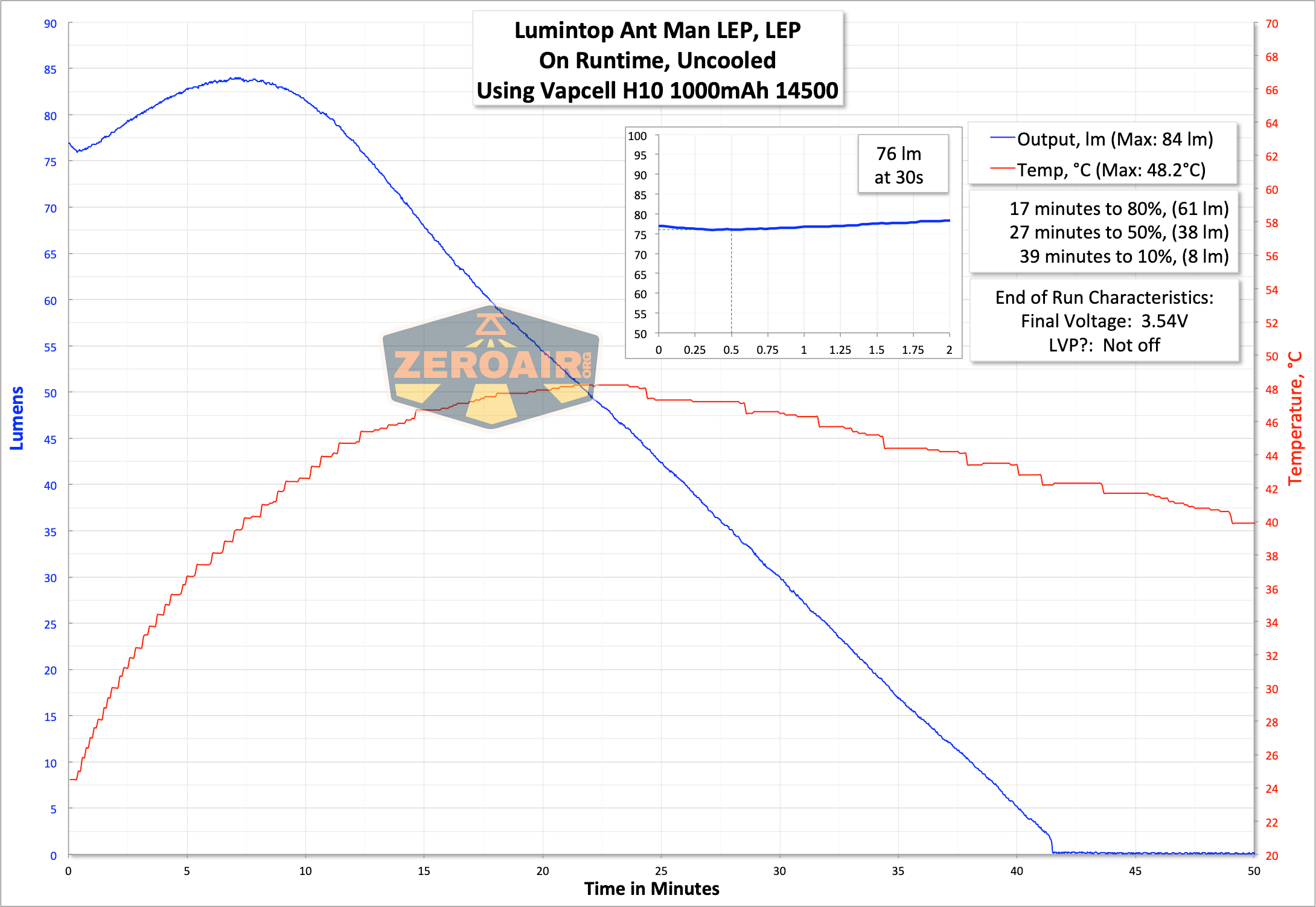
Here are two runtime graphs. There’s just one mode, so I tested with a fan and without. One thing you’ll notice here is that the output is only around 75 lumens. The claim is 165 lumens. There are a couple of things to think about here. First, this is an LEP. Literally all that matters here is throw. So that this light isn’t hitting 165 lumens doesn’t matter so much to me. It’s worth mentioning, sure, but more importantly, does the LEP hit the throw numbers? Well, no, it does not. It’s much closer to hitting the throw (72% of claimed throw) than it is to hitting the output value (45% of output value). If it was hitting the throw number, then we could safely not care about it not hitting the output number. Since it’s hitting neither, I’d say this is a problem.
Modes and Currents
| Mode | Mode Claimed Output (lm) | Claimed Runtime | Measured Lumens | Tailcap Amps |
|---|---|---|---|---|
| On | 165 | ~60m | 75 | 1.08 |
Pulse Width Modulation
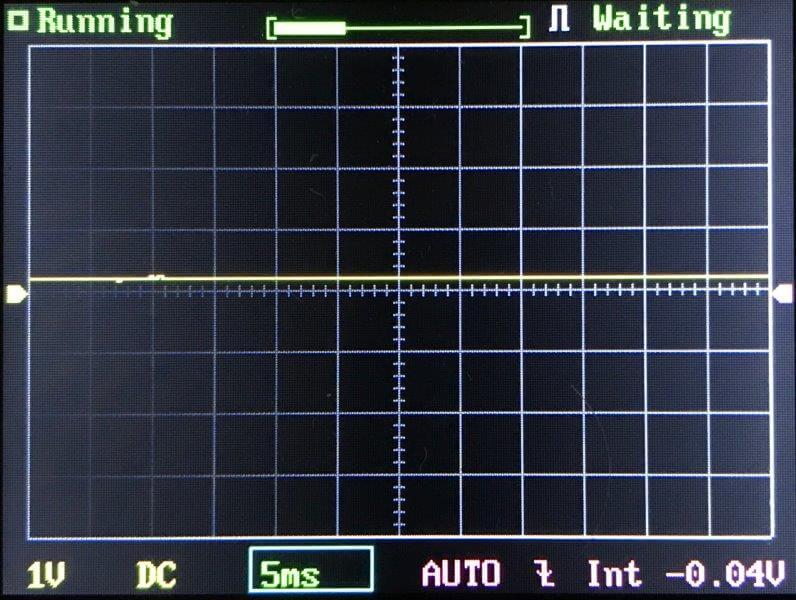
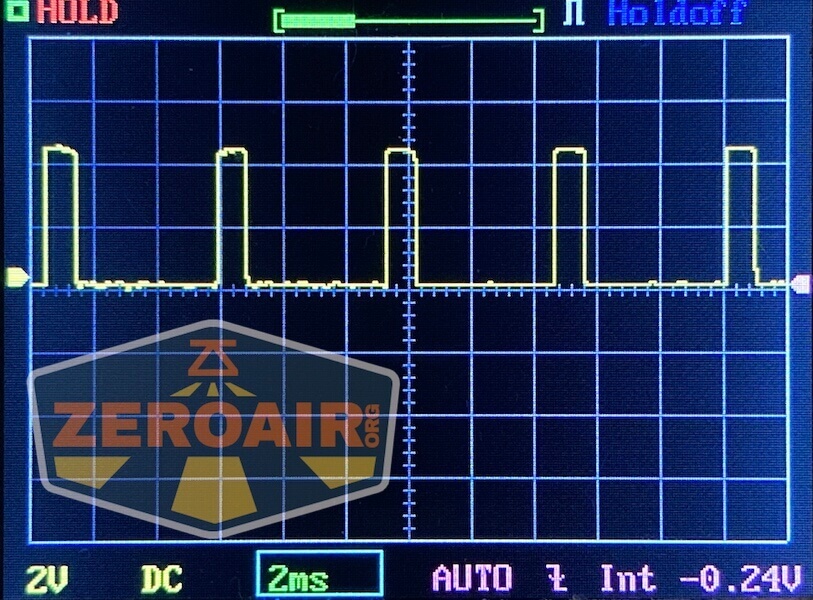
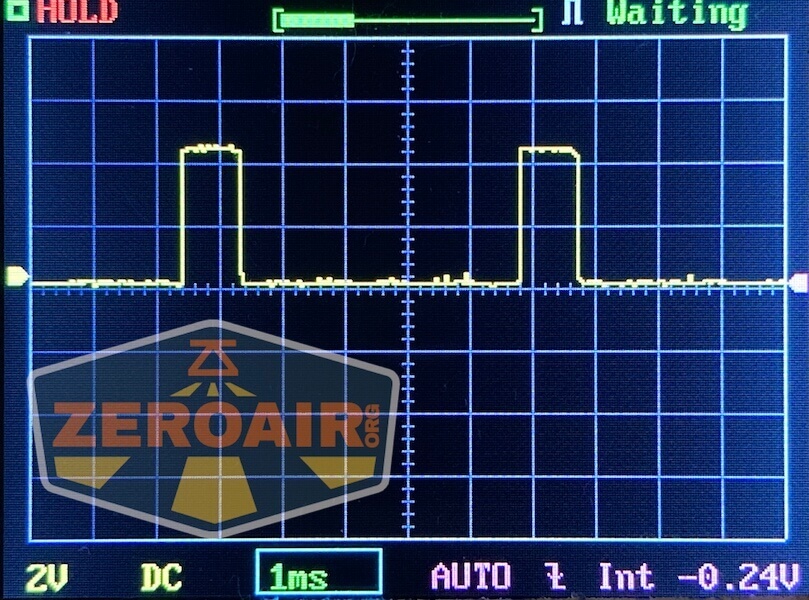
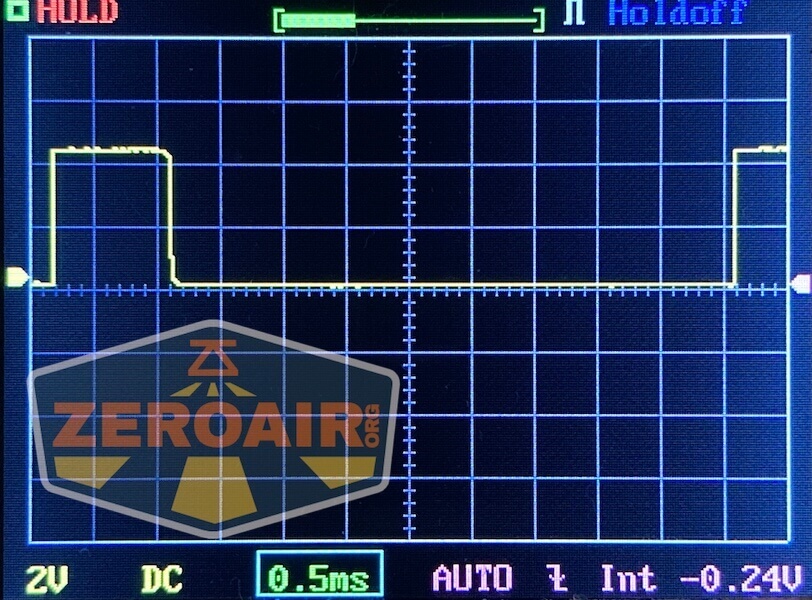
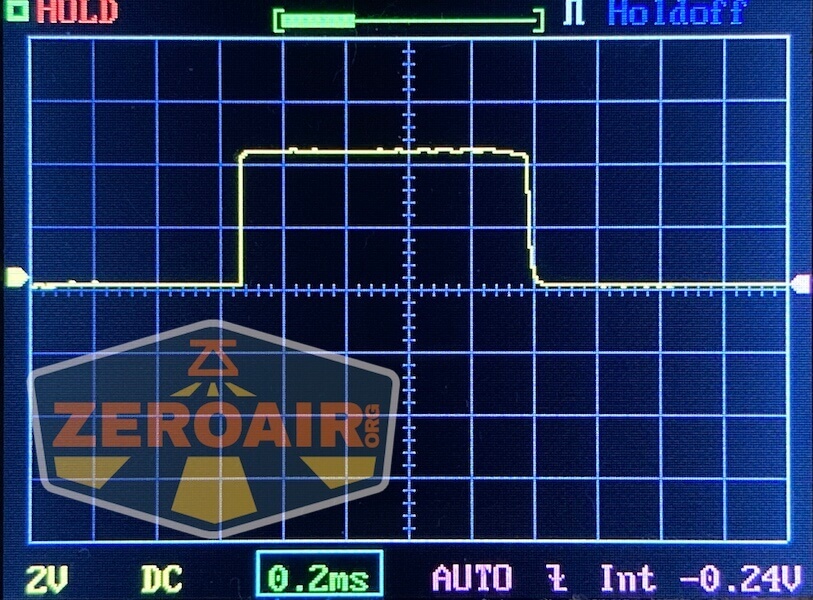
The single mode does not utilize PWM.
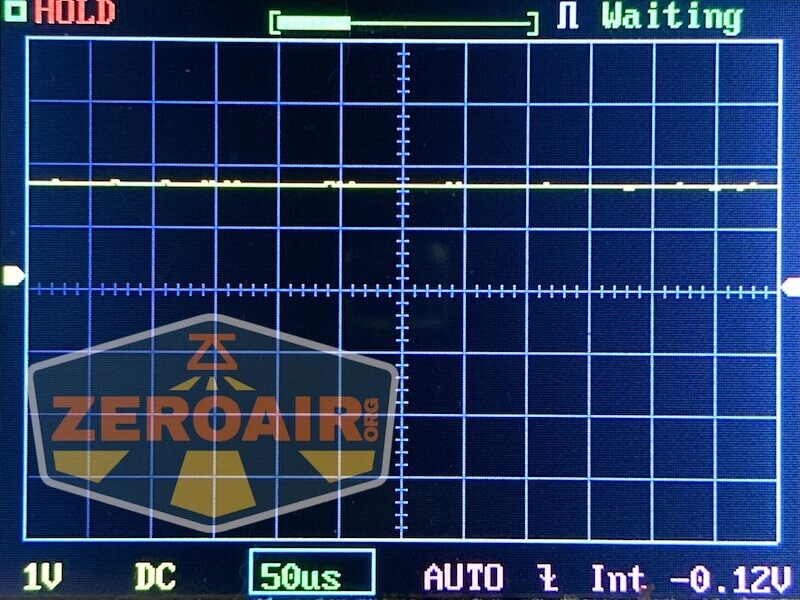
Here you can see a “baseline” – a chart with almost no light hitting the sensor.
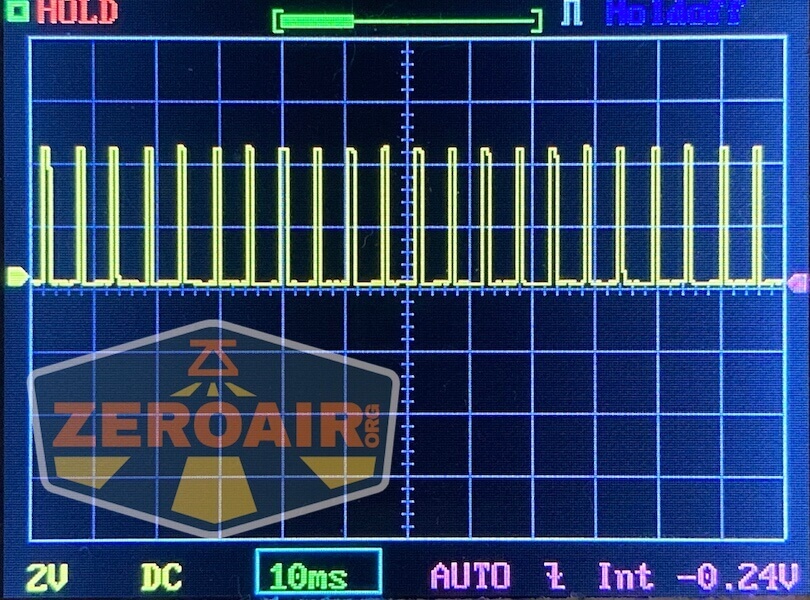
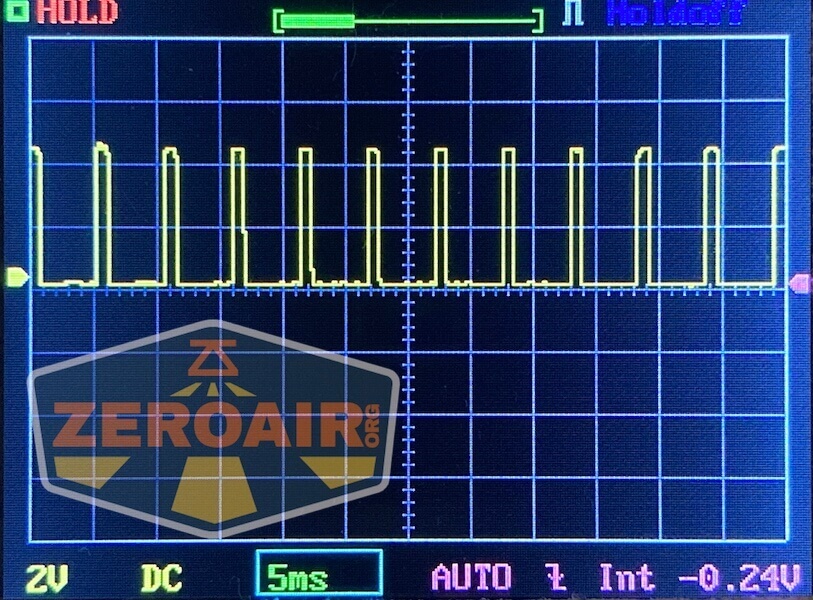
Then there’s the Ultrafire WF-602C flashlight, which has some of the worst PWM I’ve seen. It’s so bad that I used a post about it to explain PWM! Here are multiple timescales (10ms, 5ms, 2ms, 1ms, 0.5ms, 0.2ms) to make comparing this “worst” PWM light to the test light easier. That post also explains why I didn’t test the WF-602C at the usual 50us scale.
User Interface and Operation
Lumintop uses a single switch on the Ant Man LEP. It’s a forward clicky.
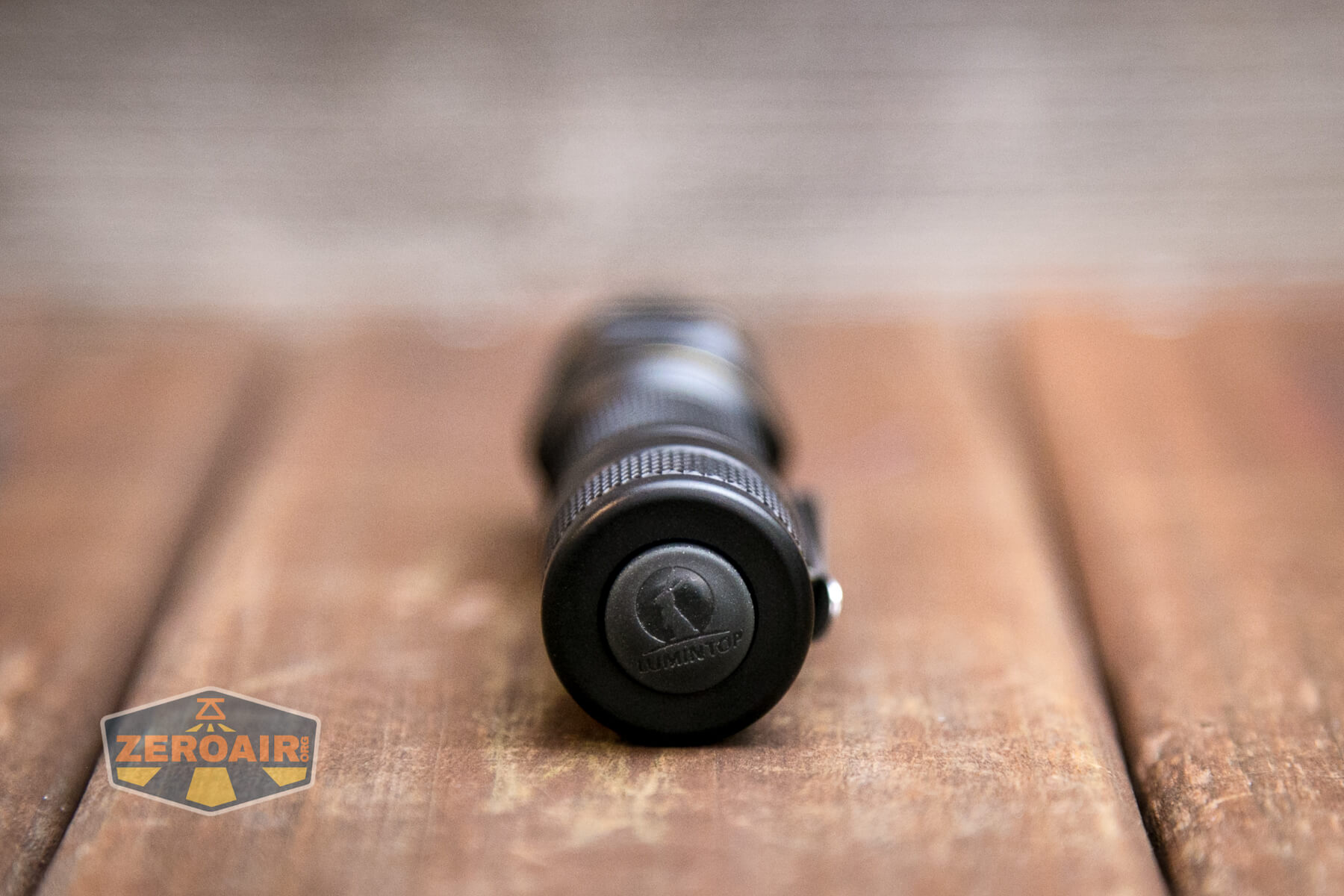
The switch is very proud and prevents tailstanding.
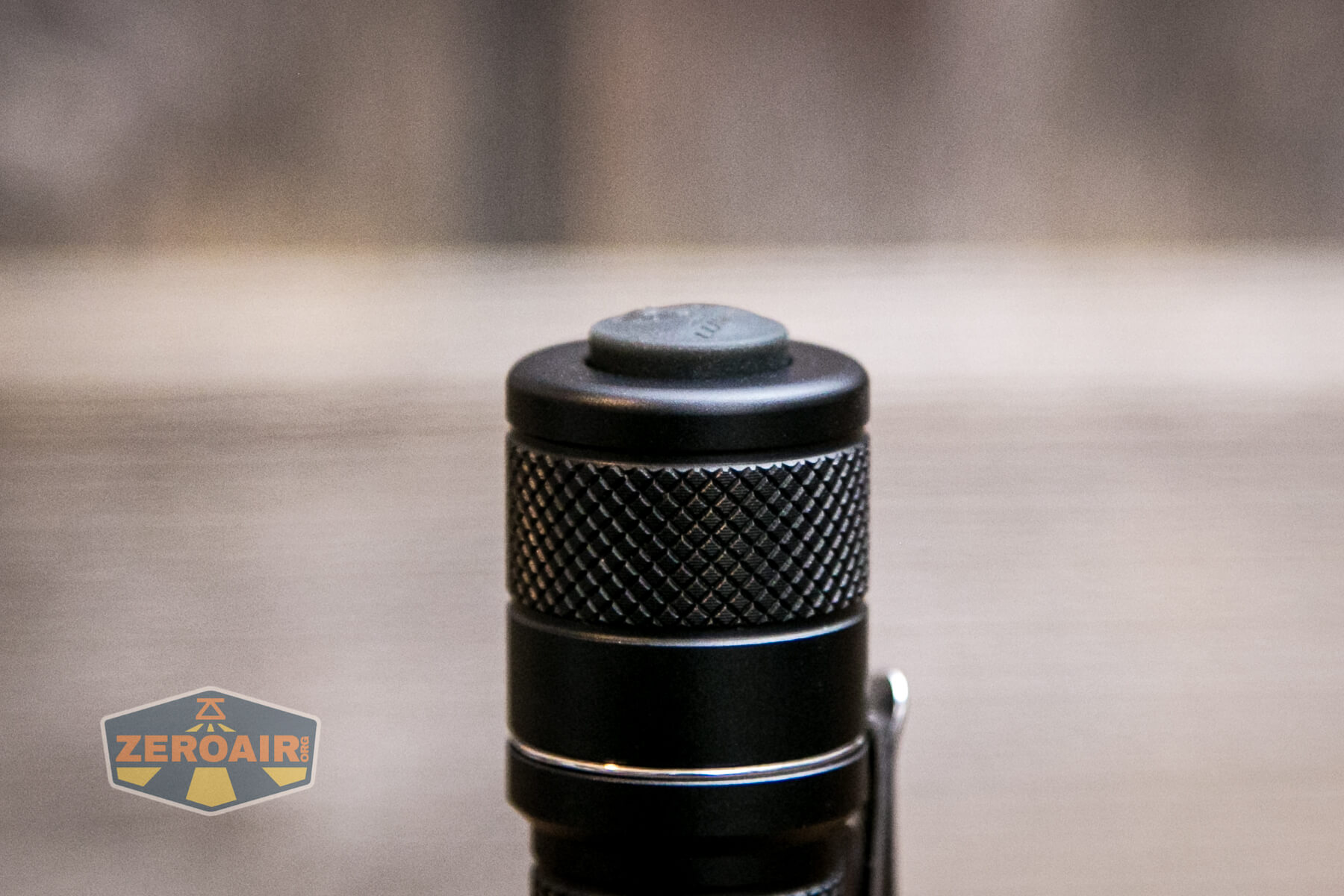
Actuation is fairly typical for a forward clicky. Very positive action.
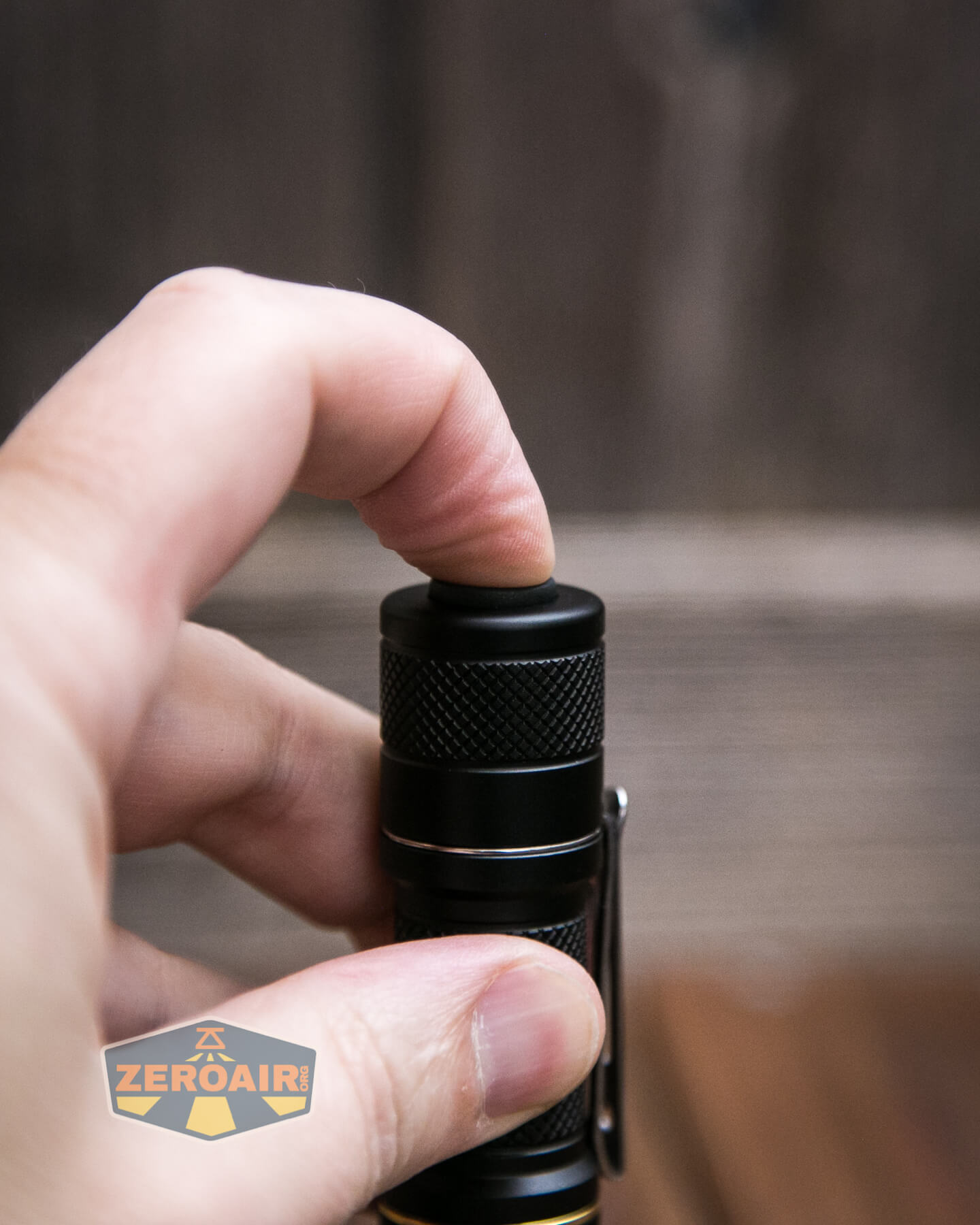
The user interface is dead simple, of course. Click for on. Click for off. Nothing else.
Here’s a user interface table!
| State | Action | Result |
|---|---|---|
| Off | Click | On |
| Off | Hold | Momentary |
| On | Click | Off |
LED and Beam
The Ant Man is a LEP flashlight. LEP stands for “laser excited phosphor” and “laser excited phosphor” stans for “some magical output that is nearly all throw.” These lights are really truly something different!
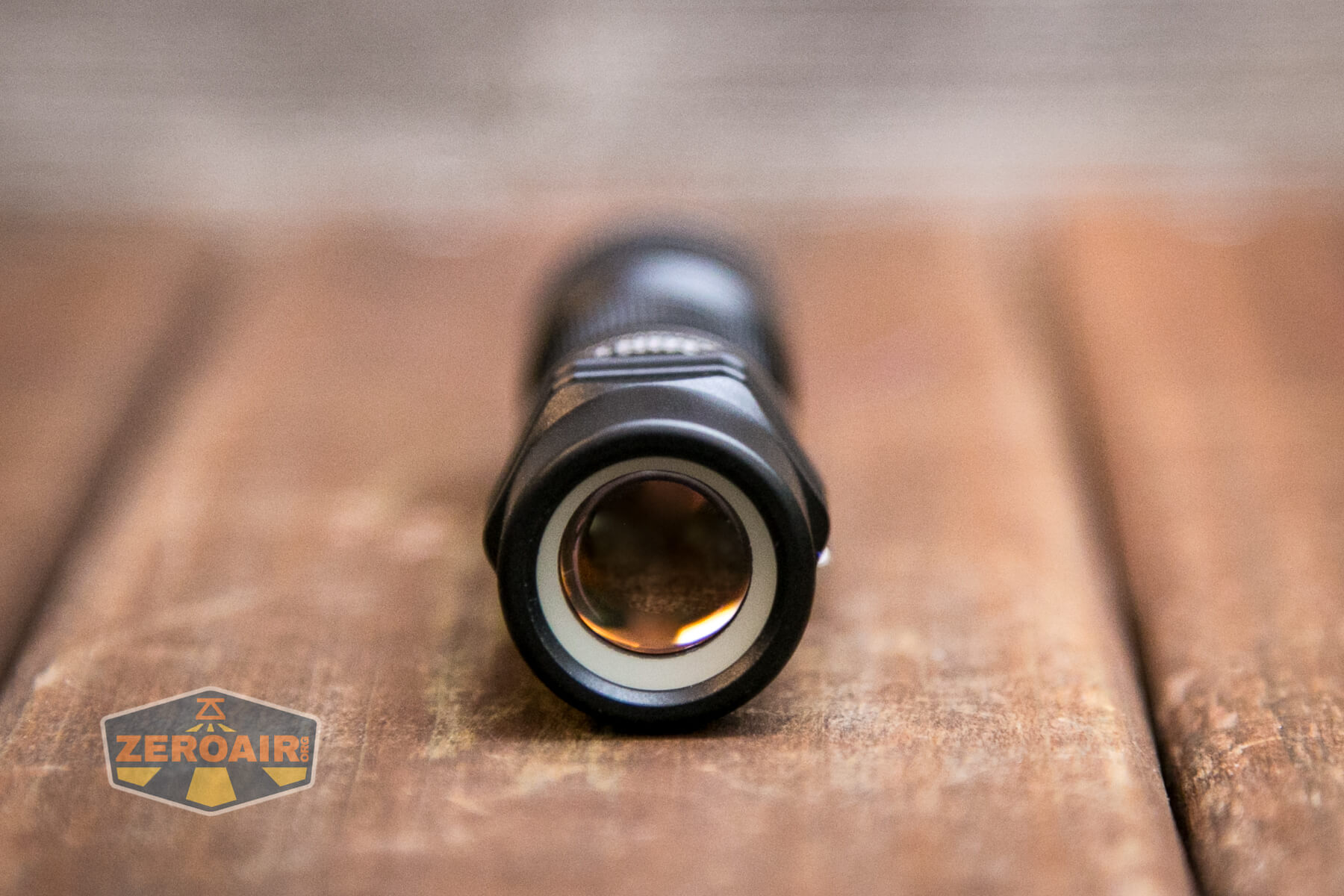
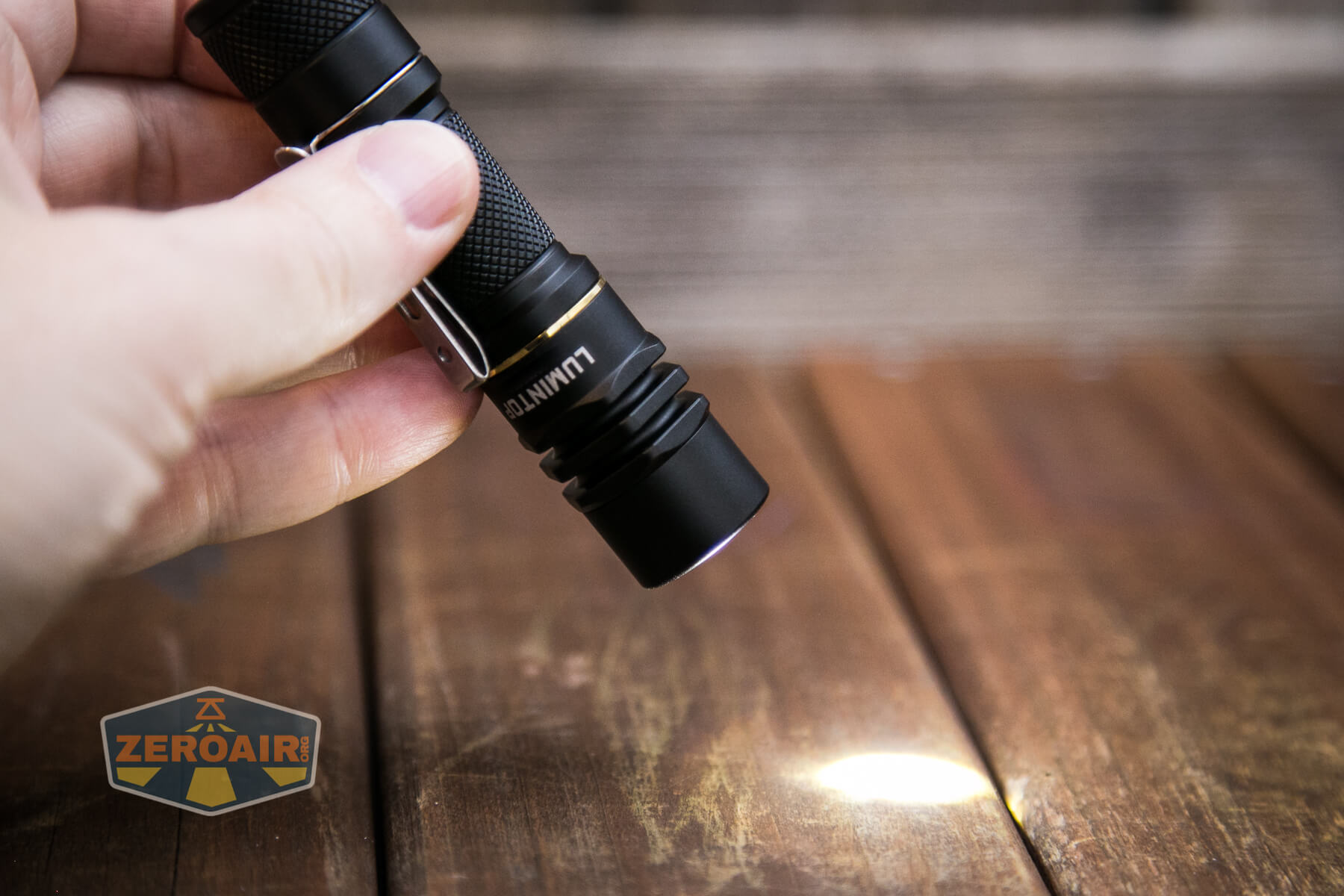
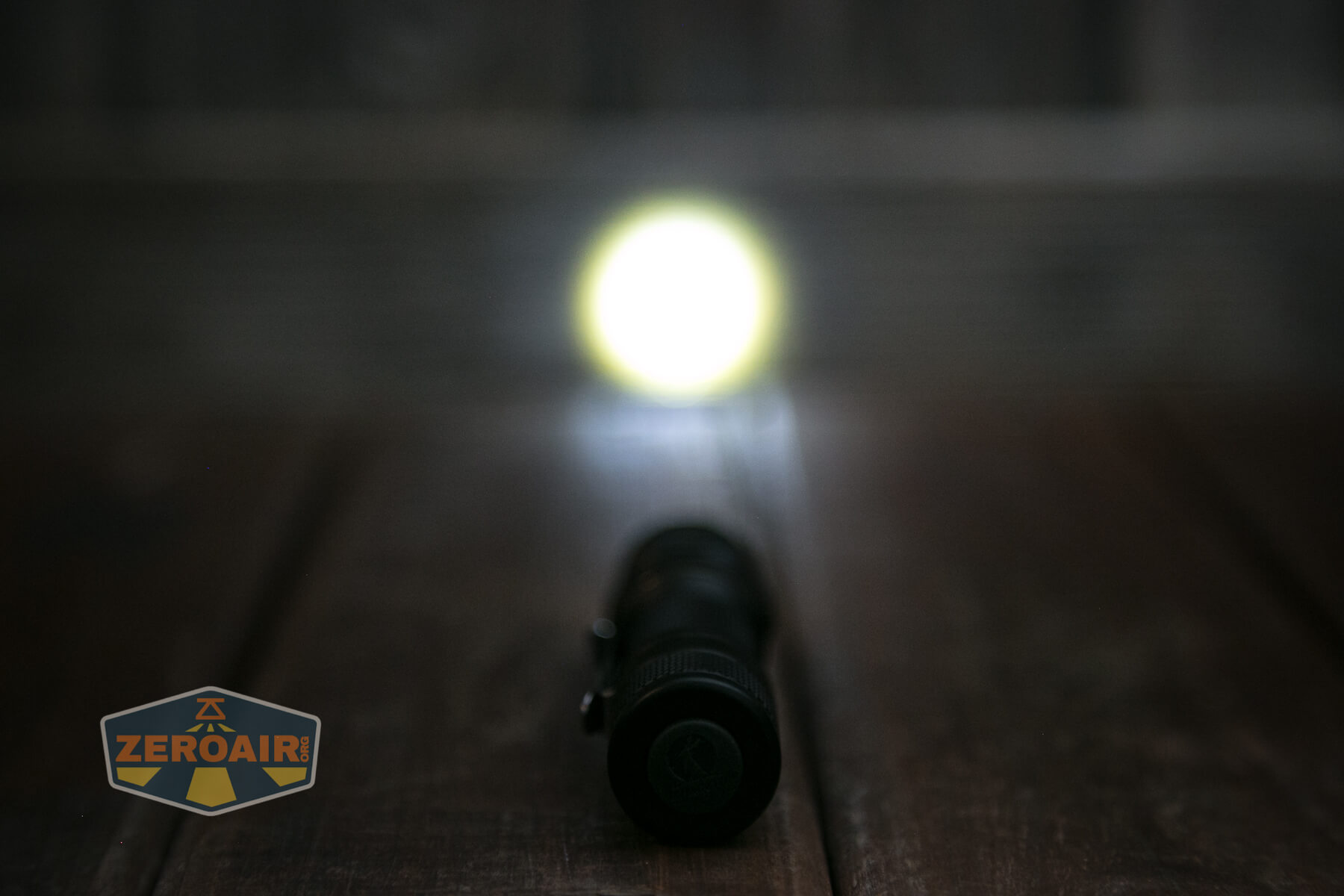
They don’t use a typical LED emitter, and they have a very tight beam profile.
LED Color Report (CRI and CCT)
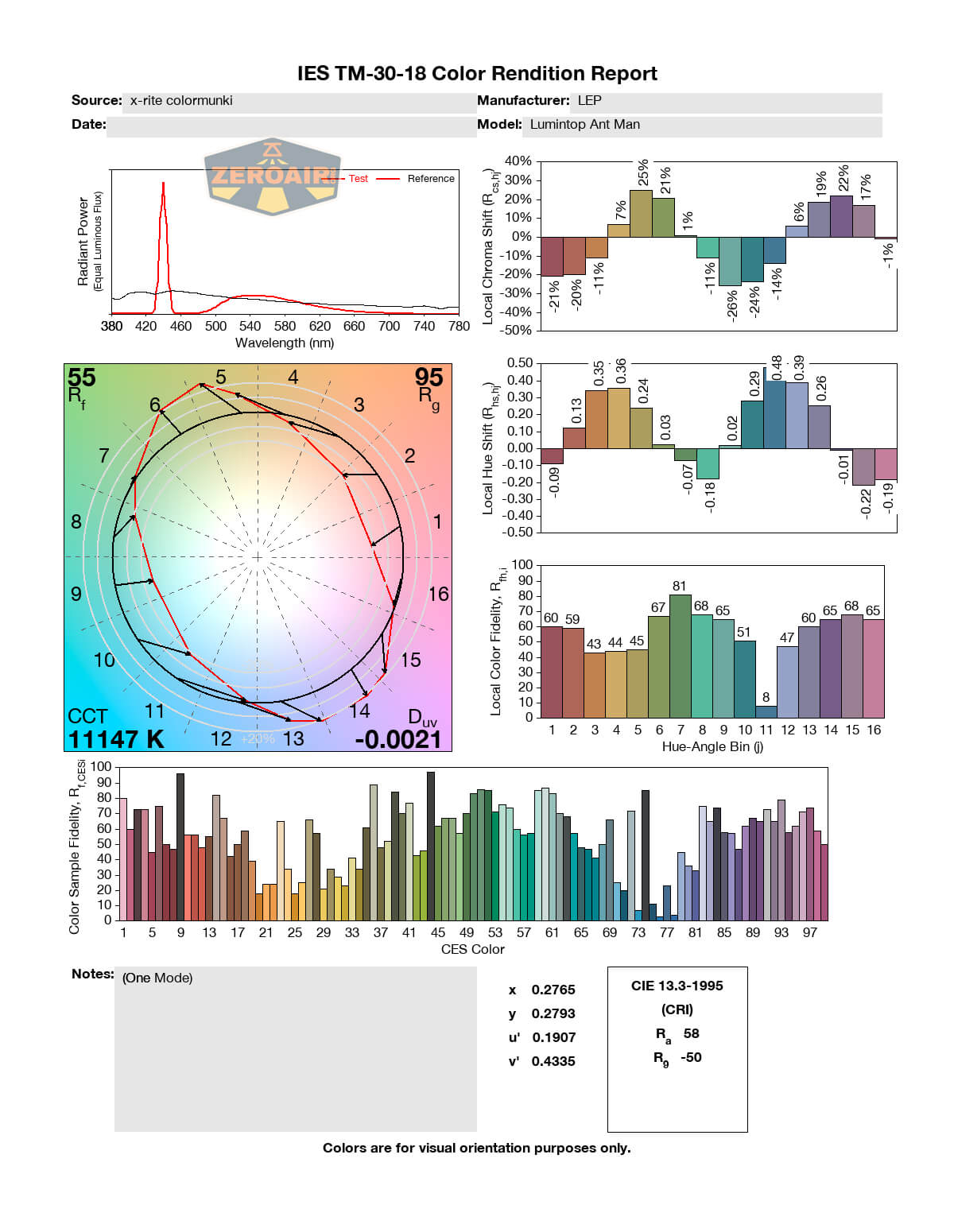
One thing we do see with most LEP flashlights is that the CRI and CCT is not what a typical flashlight enthusiast enjoys. To wit, it’s a very cool (around 11100K) output, and low (around 58) CRI. Those are the tradeoffs you make in order to get the 575.3 candela per lumen that a LEP gives.
Beamshots
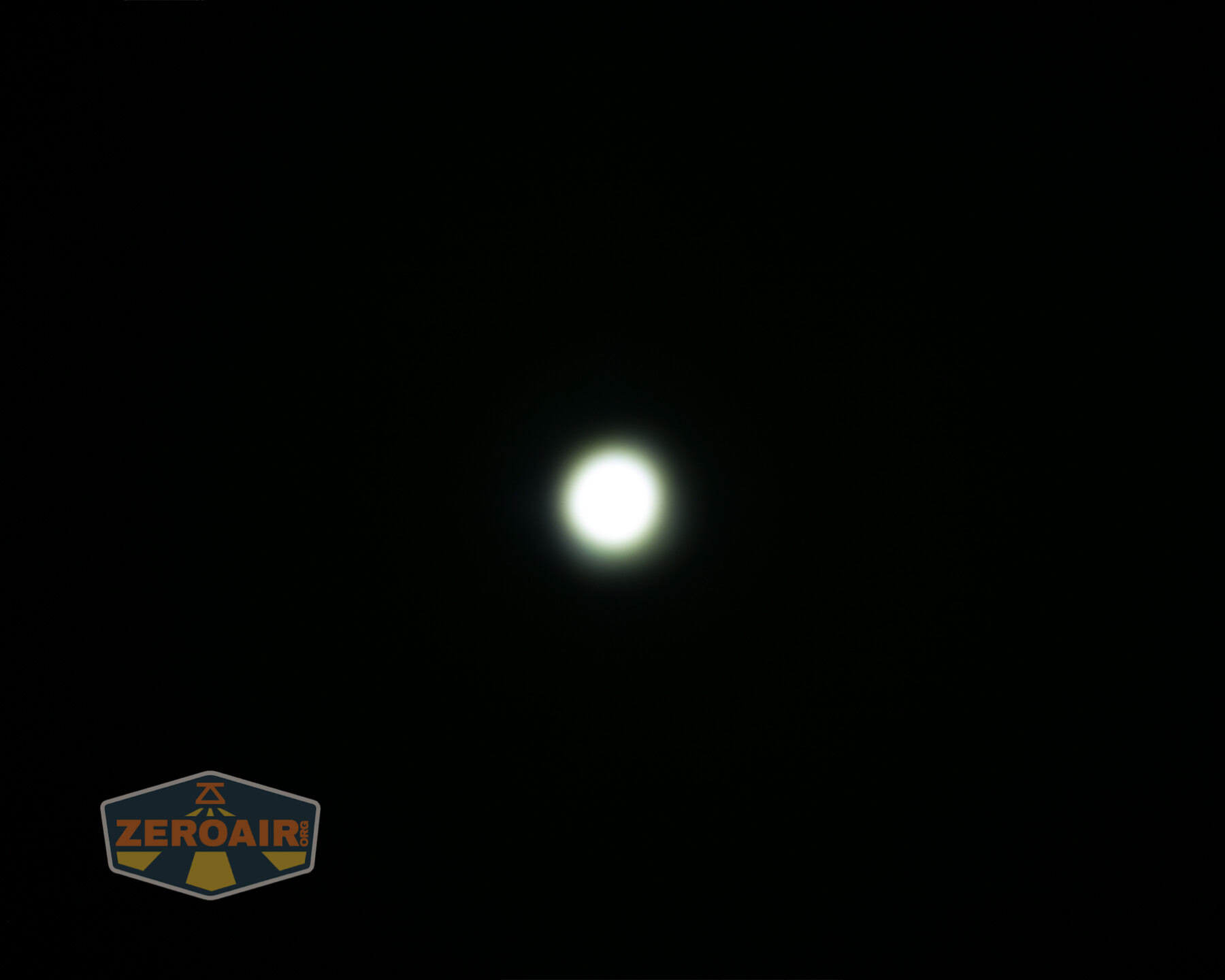
These beamshots always have the following settings: f8, ISO100, 0.3s shutter, and manual 5000K exposure. These photos are taken at floor level, and the beam hits the ceiling around 9 feet away.
Tint vs BLF-348 (KillzoneFlashlights.com 219b version) (affiliate link)
I keep the test flashlight on the left and the BLF-348 reference flashlight on the right.
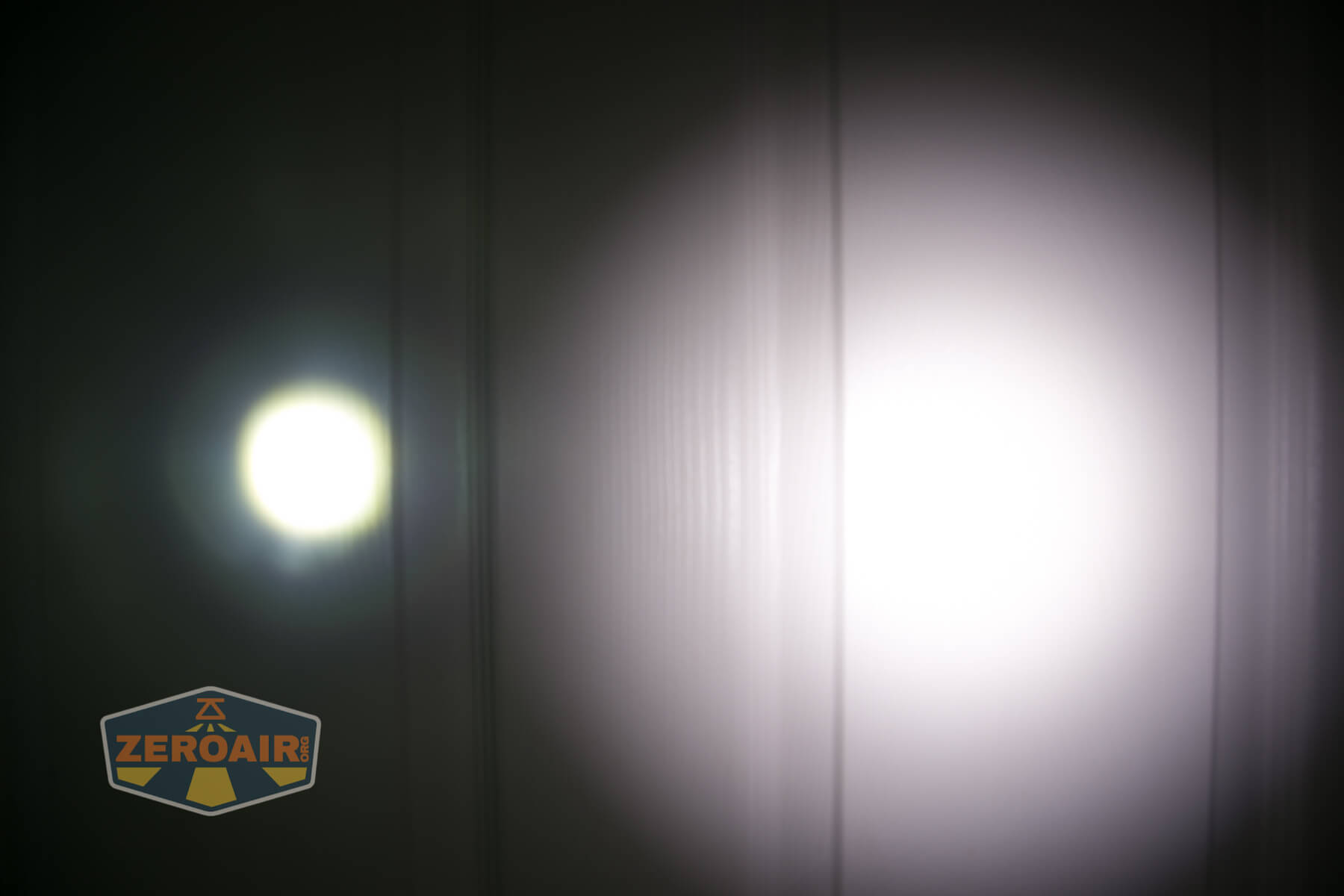
I compare everything to the KillzoneFlashlights.com 219b BLF-348 because it’s inexpensive and has the best tint!
Conclusion
What I like
- Smallest LEP available
- Good build quality
- Comparably low cost (for an LEP)
- User interface is easy
What I don’t like
- Misses throw rating
- Grossly misses output rating (generally understandable for LEP)
Notes
- This content originally appeared at zeroair.org. Please visit there for the best experience!
- Please use my Amazon.com referral link to help support zeroair.org!
- Please support me on Patreon! I deeply appreciate your support!
Discover more from ZeroAir Reviews
Subscribe to get the latest posts sent to your email.