
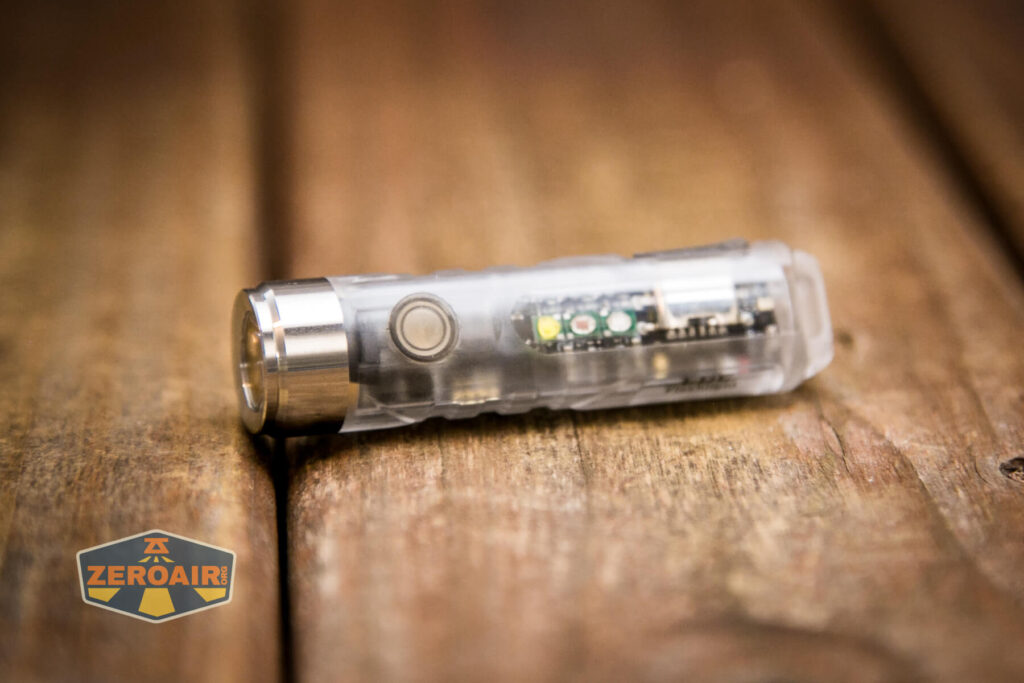
RovyVon Aurora A8 Keychain Flashlight Review
The RovyVon Aurora A8 keychain flashlight is another in the long line of Auroras, but it offers USB-C charging and more! Read on for testing!
Official Specs and Features
Here’s a link to the RovyVon Aurora A8 keychain flashlight product page.
Versions
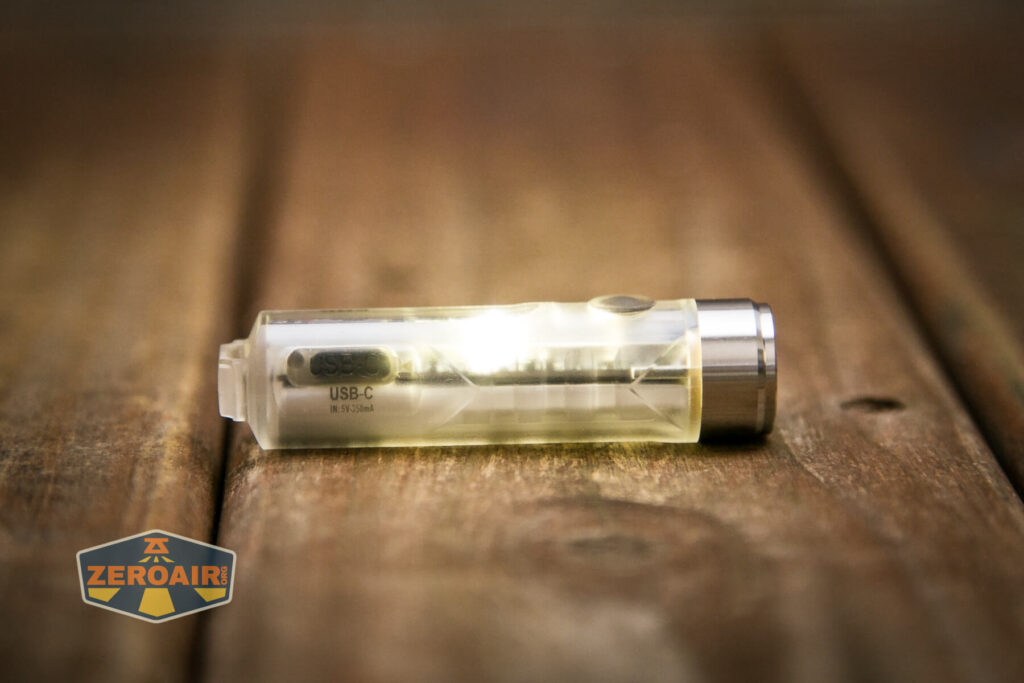
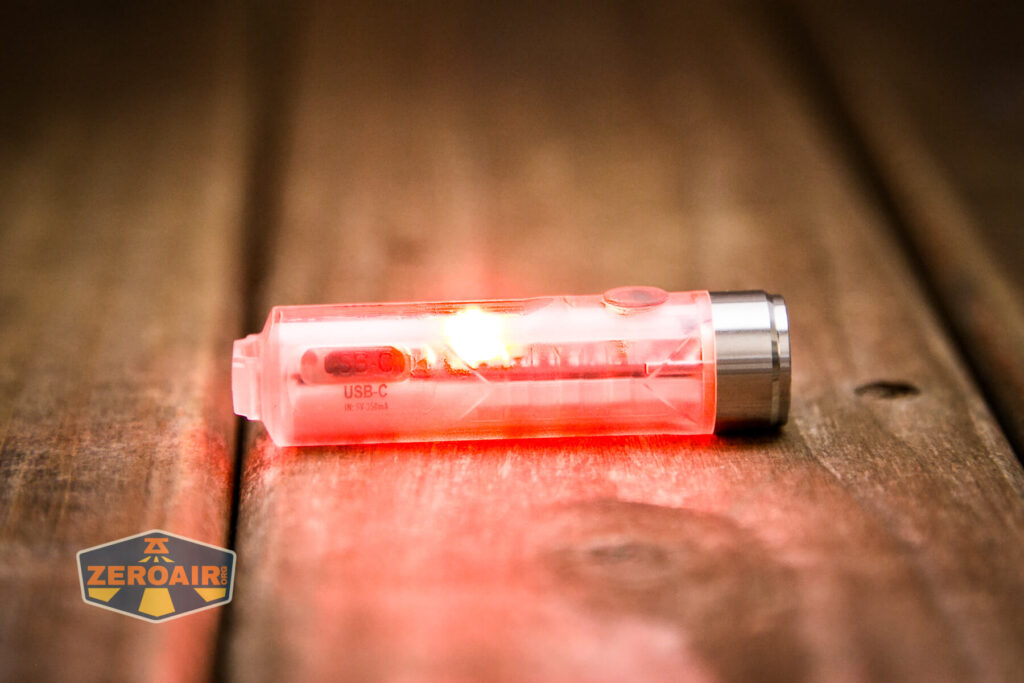
There are so many Aurora lights! Specifically, the RovyVon Aurora A8 keychain flashlight comes in some emitter option versions. The front emitter is available as Nichia 219c (seen here) in 5000K with 90CRI, but also a higher-output Luminus SST-20 at 6500K. The side emitters can be red/UV/warm white (as seen here), or amber/red/blue.
Price
The RovyVon Aurora A8 keychain flashlight is selling for $46.95 right now at RovyVon.com. The RovyVon Aurora A8 keychain flashlight is also available at amazon.com (referral link).
The coupon code “REDDIT” will get 10% off at rovyvon.com!
Short Review
It’s no secret that I love these little Aurora keychain lights. If you need UV, this is a fine option. USB-C charging is a great update, too.
Long Review
The Big Table
| RovyVon Aurora A8 keychain flashlight | |
|---|---|
| Emitter: | Nichia 219C 5000K 90 CRI (UV/Red/White) |
| Price in USD at publication time: | $46.95 on amazon.com |
| Cell: | Internal LiPO |
| High Runtime Graph | Medium Runtime Graph |
| LVP? | Yes |
| Switch Type: | E-Switch |
| Quiescent Current (mA): | ? |
| On-Board Charging? | Yes |
| Charge Port Type: | USB-C |
| Charge Graph | |
| Power off Charge Port | All except the highest two modes |
| Claimed Lumens (lm) | 420 |
| Measured Lumens (at 30s) | 262 (62.4% of claim)^ |
| Candela per Lumen | 5.6 |
| Claimed Throw (m) | 70 |
| Candela (Calculated) in cd (at 30s) | 67lux @ 4.266m = 1219cd |
| Throw (Calculated) (m) | 69.8 (99.7% of claim)^ |
| Claimed CCT | 5000 |
| Measured CCT Range (K) | 4800-5000 Kelvin |
| Item provided for review by: | RovyVon |
| All my RovyVon reviews! | |
^ Measurement disclaimer: Testing flashlights is my hobby. I use hobbyist-level equipment for testing, including some I made myself. Try not to get buried in the details of manufacturer specifications versus measurements recorded here; A certain amount of difference (say, 10 or 15%) is perfectly reasonable.
What’s Included

- RovyVon Aurora A8 keychain flashlight – technically this is the “A8U”
- Tailcap magnet attachment
- Pocket clip (with magnet)
- Charge port cover spare
- Split rings (two types)
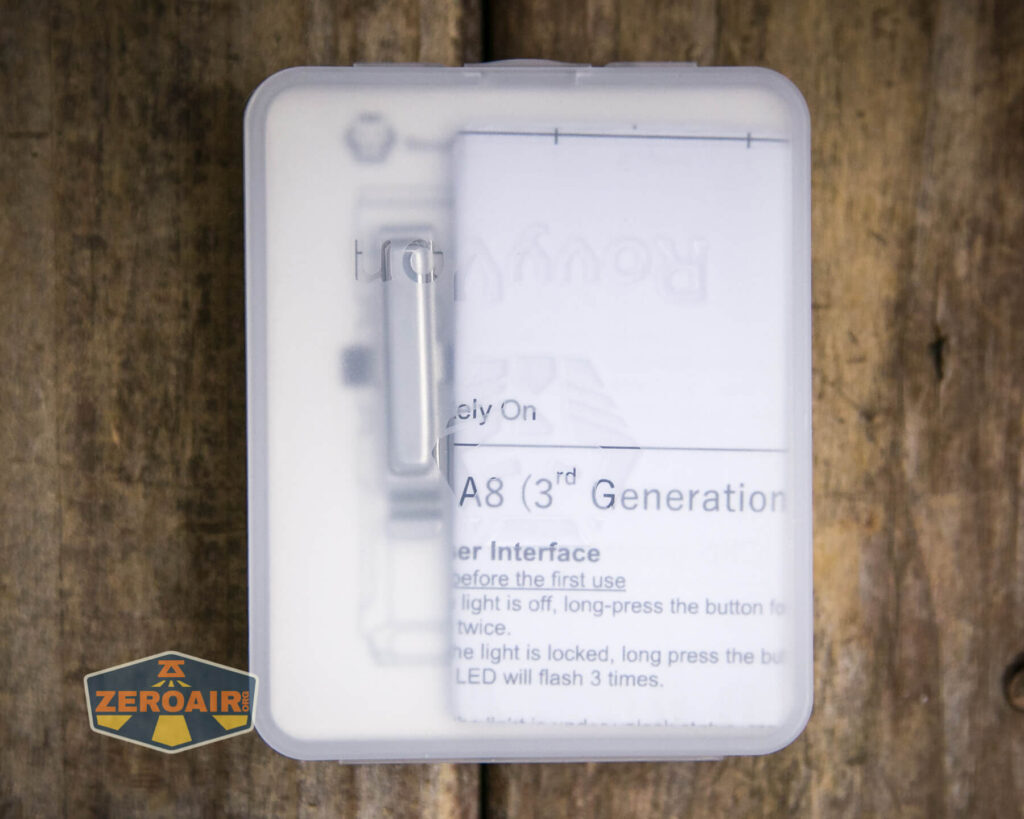
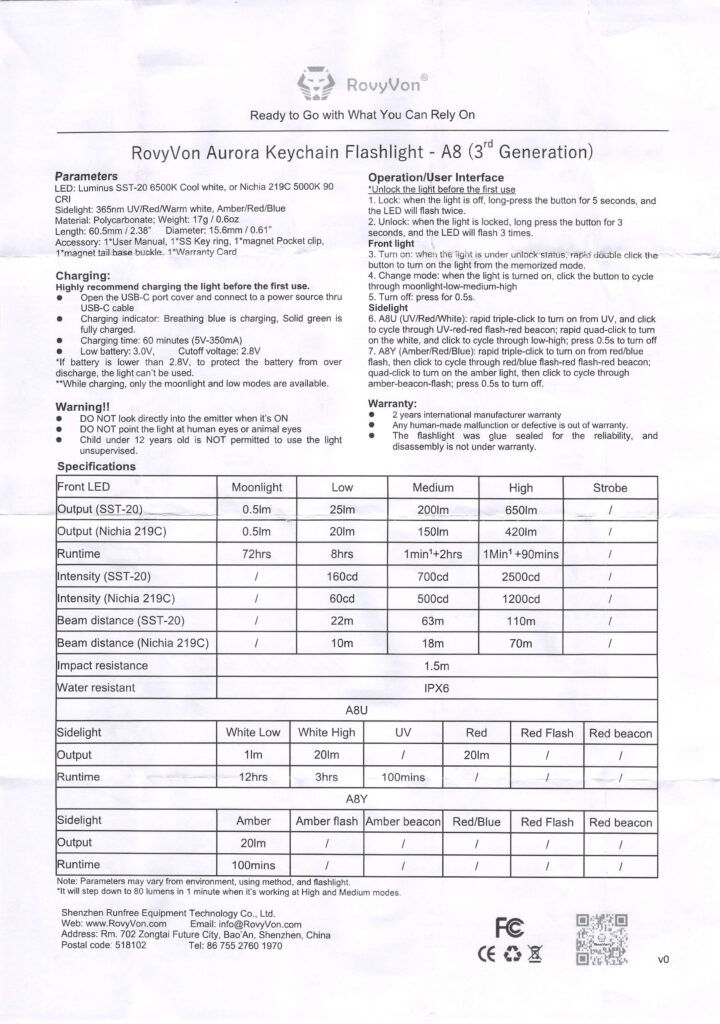
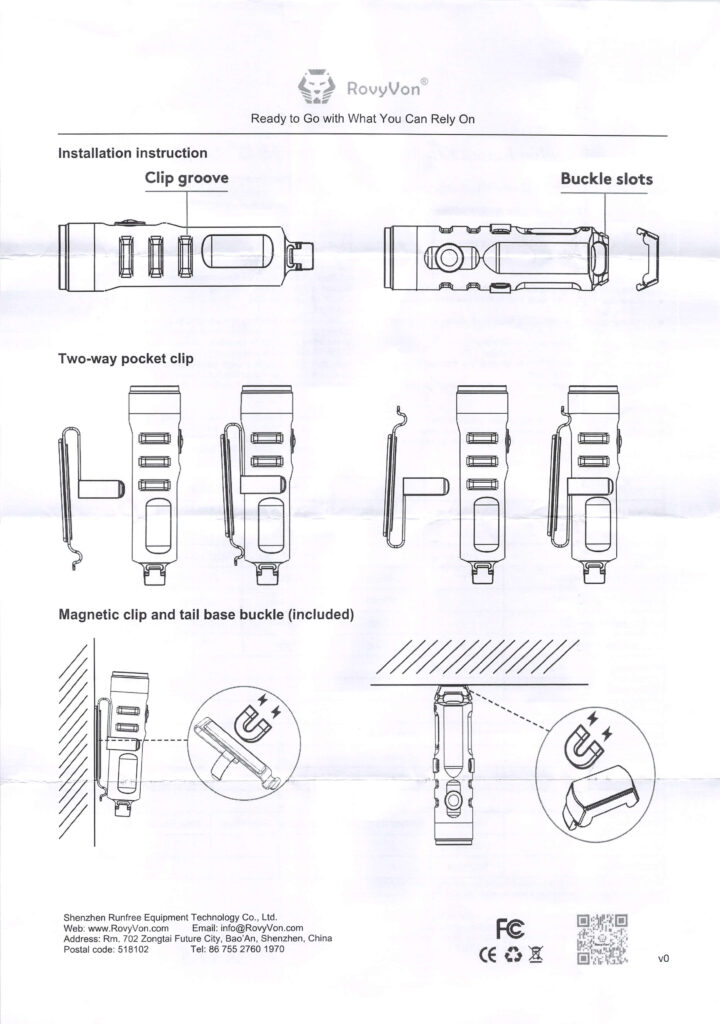
- Manual
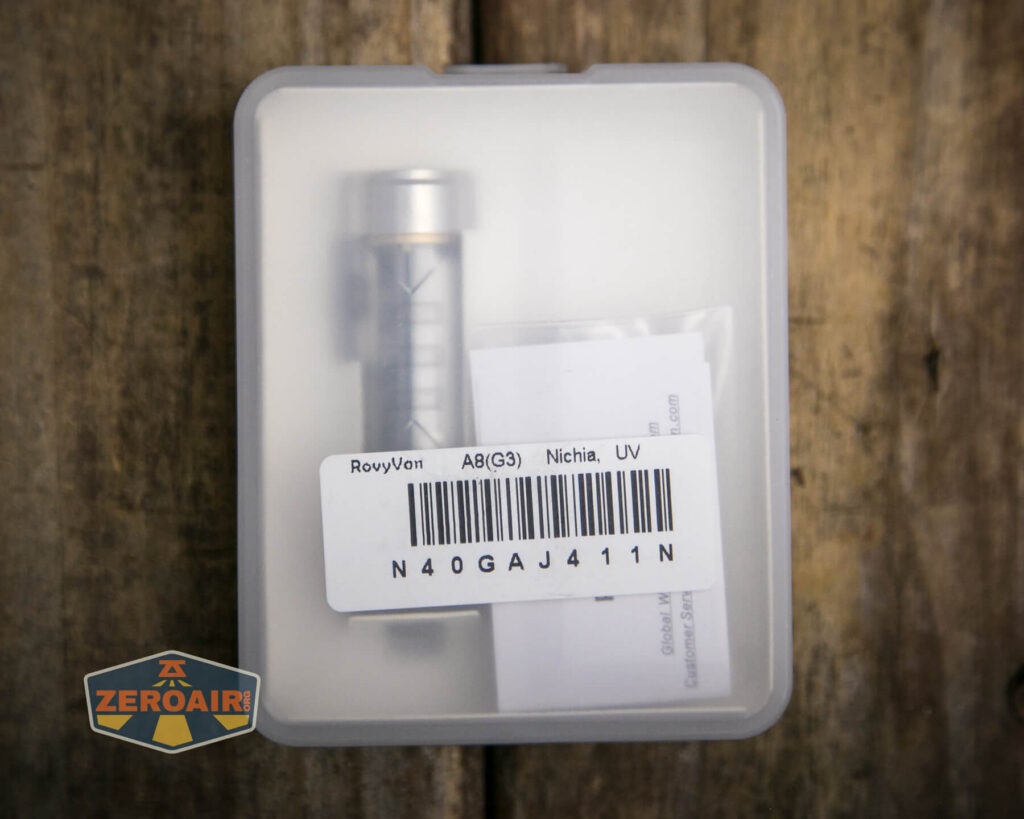
Package and Manual
Build Quality and Disassembly

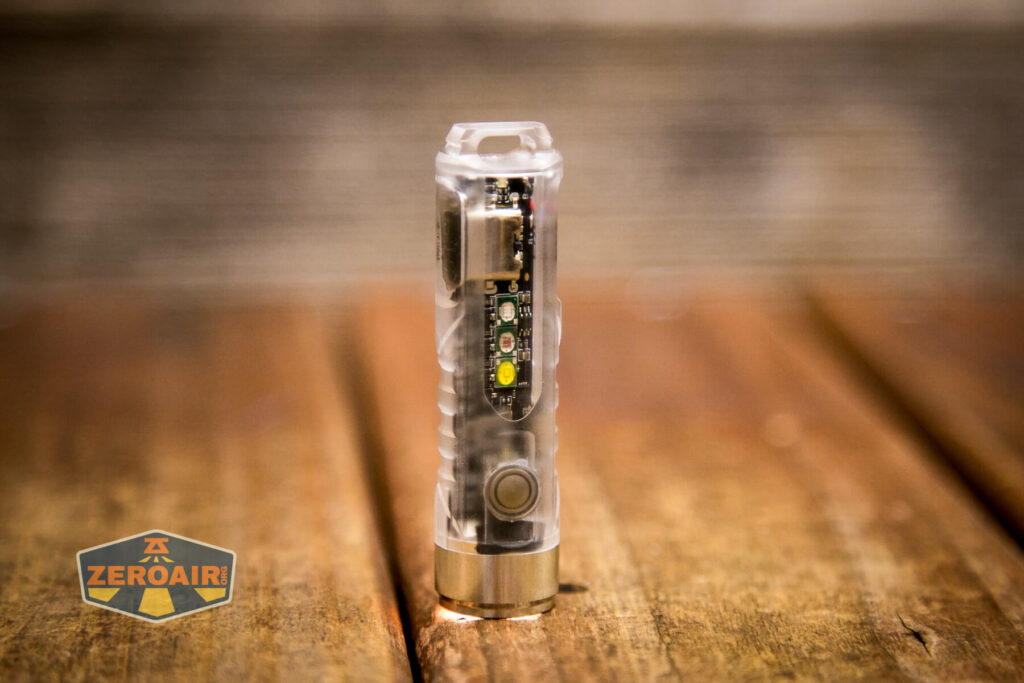
The RovyVon Aurora A8 keychain flashlight is nicely built. The body is fully plastic aside from the bezel, which appears to be stainless steel.
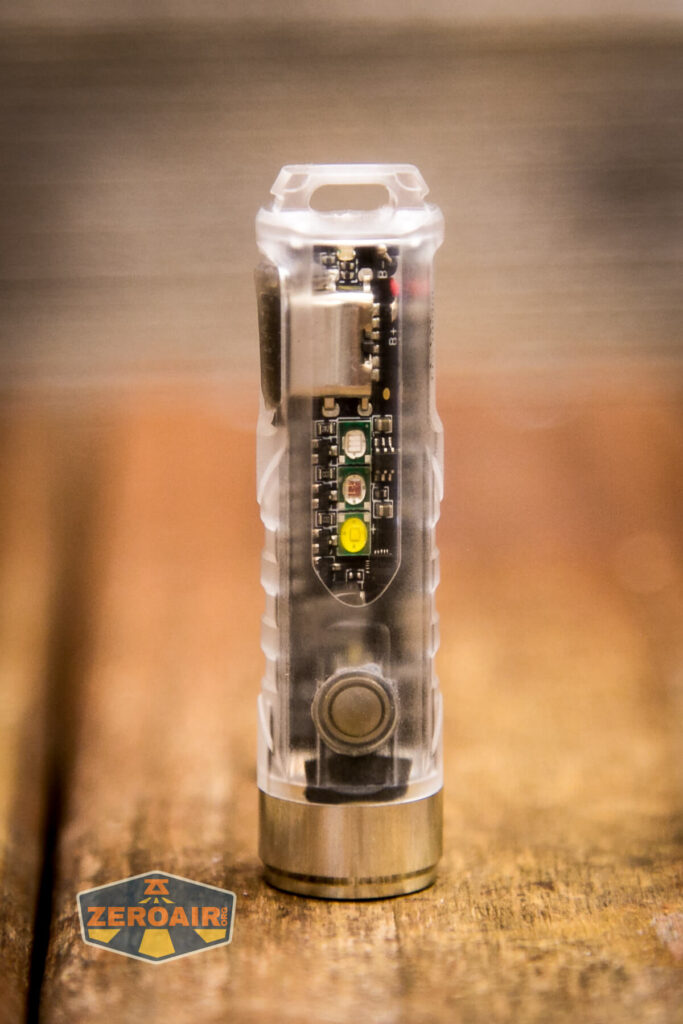

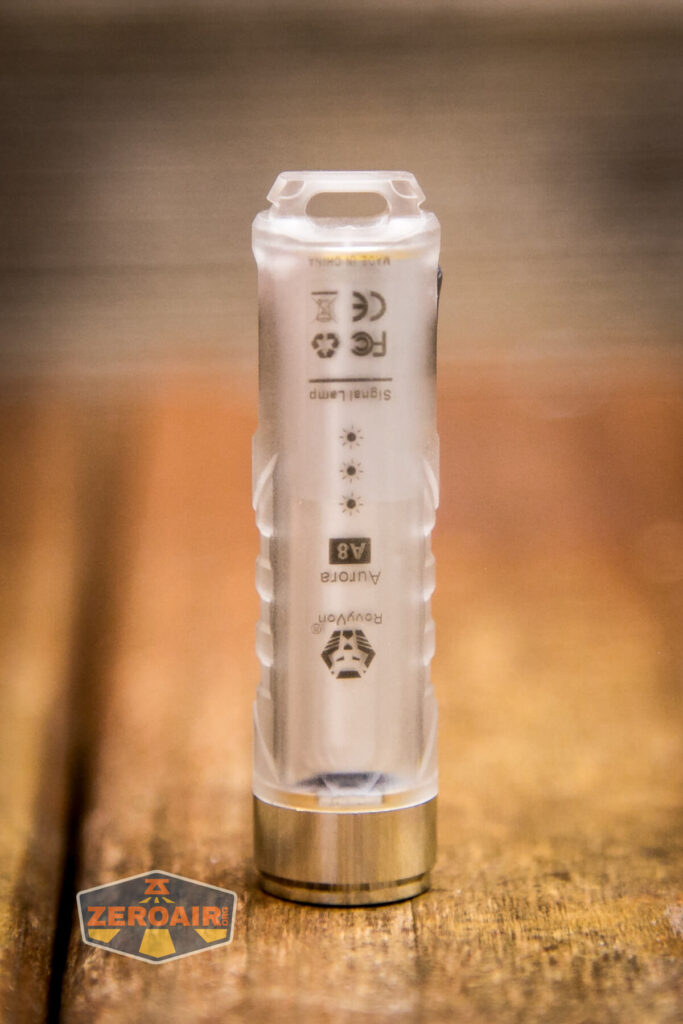
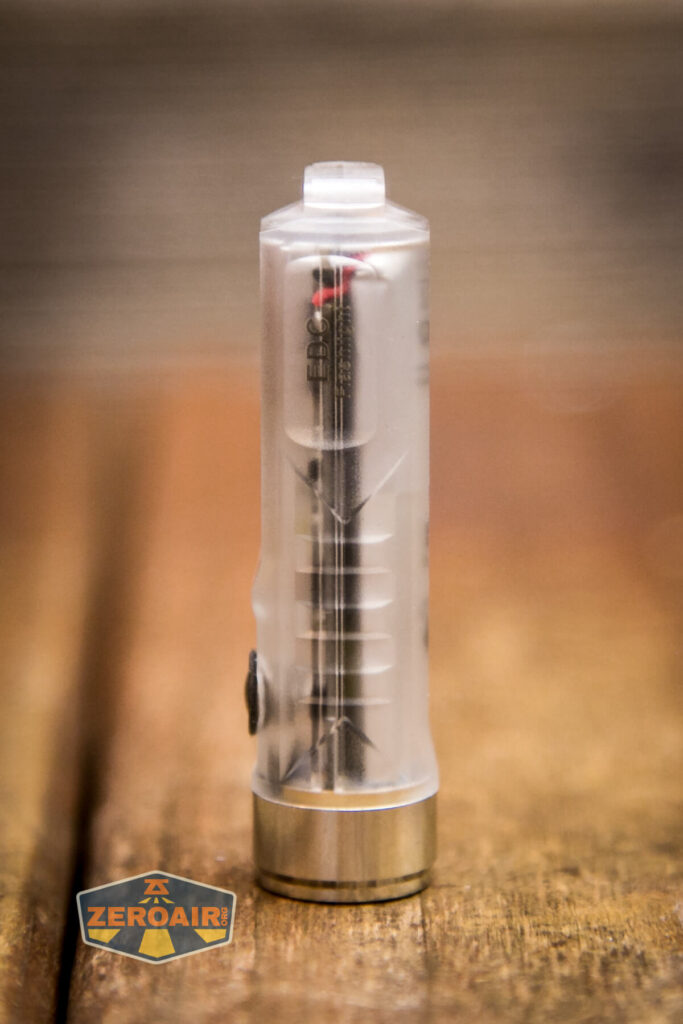
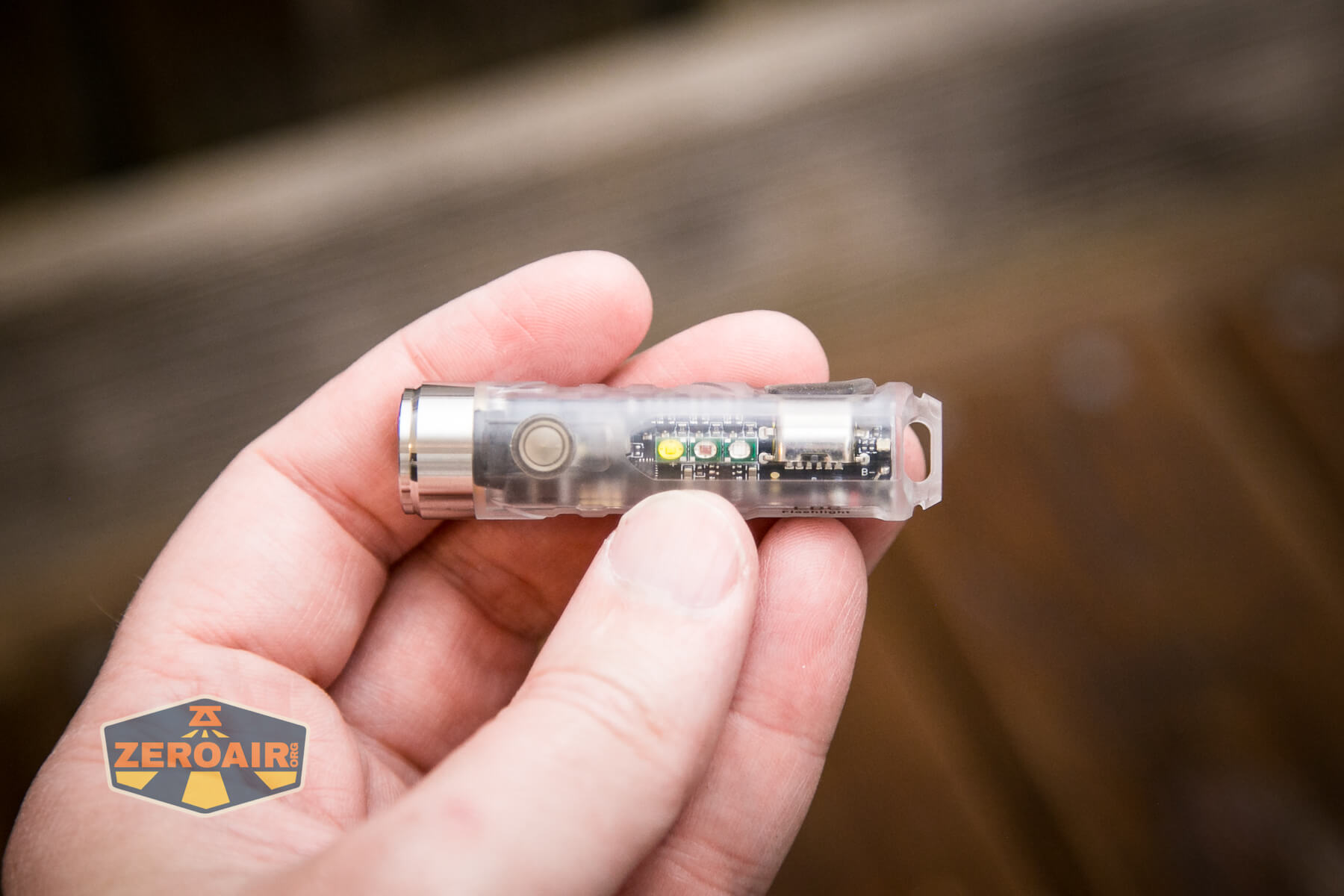
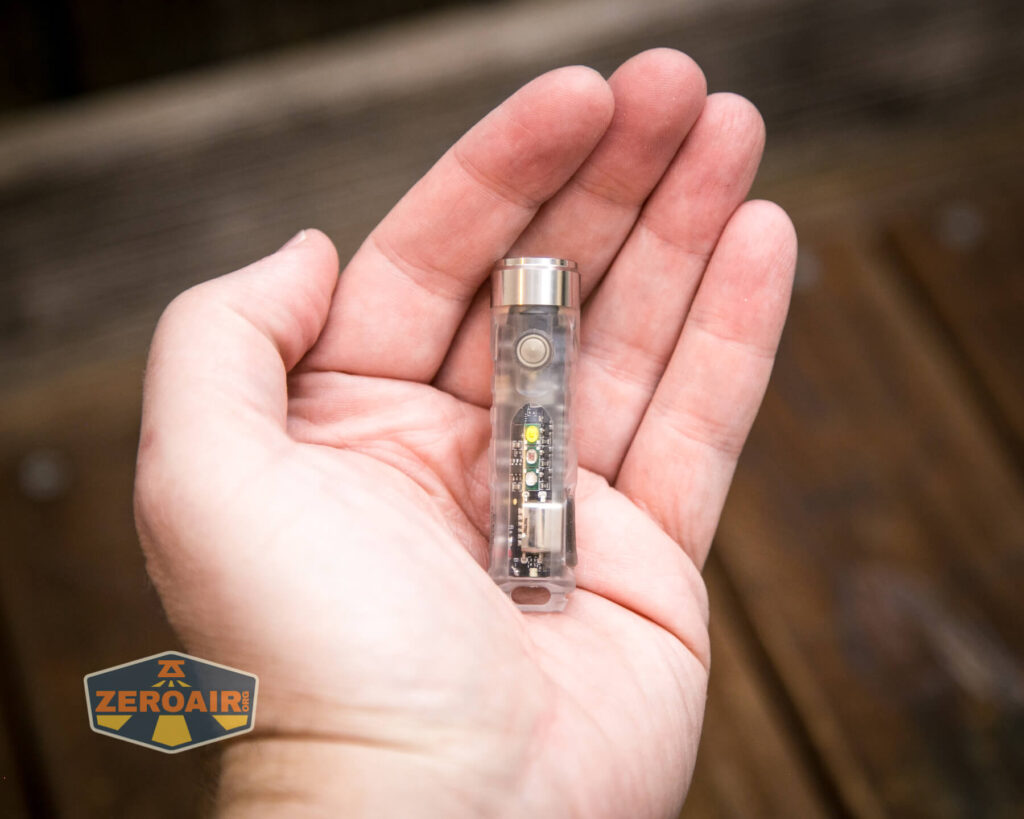
The body is also clear, which means the internals may be viewed through the body. Above, you can just make out the pouch cell. It’s not coin/button cells! (I think that’s a solid decision.)

Size and Comps
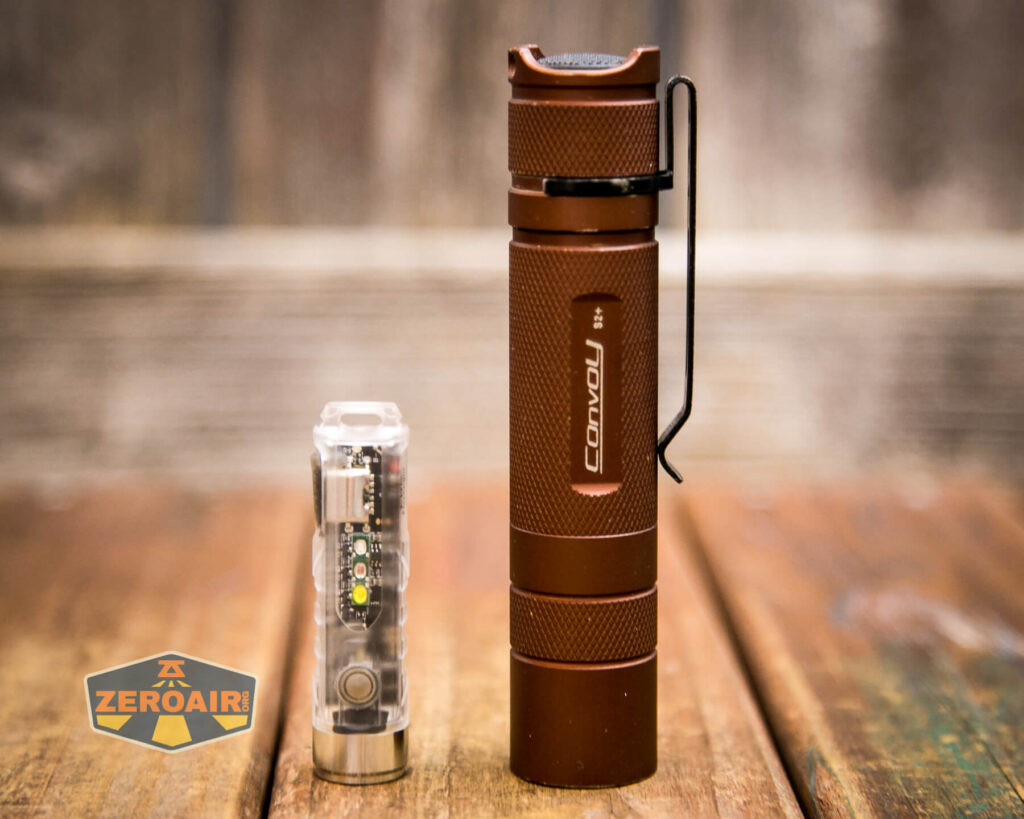
60.5mm x 15.6mm and 17g.
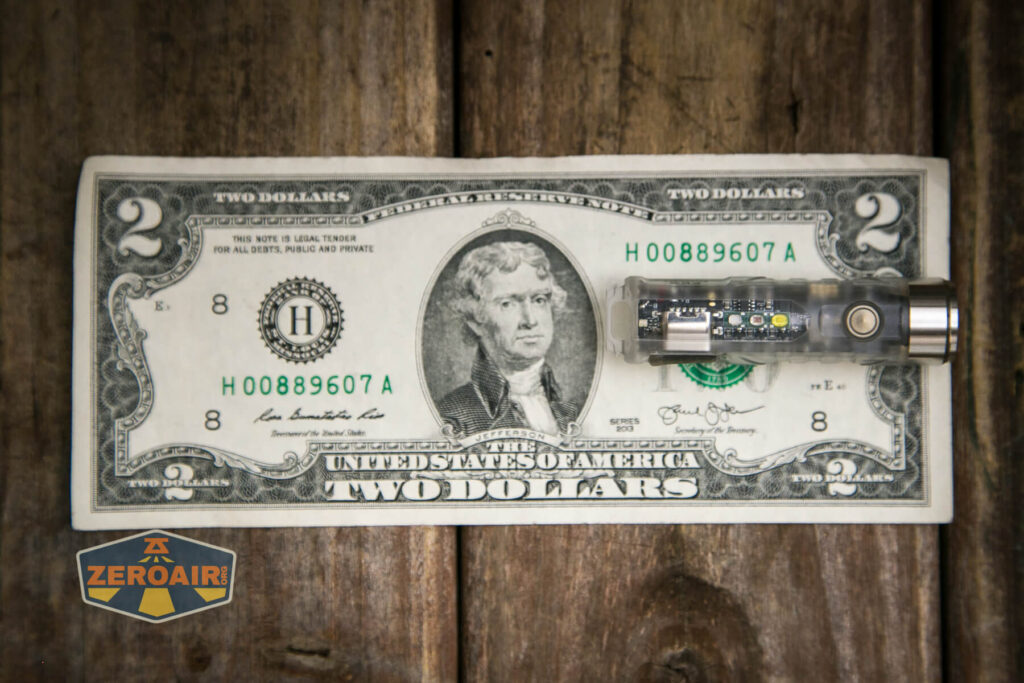
If the flashlight will headstand, I’ll show it here (usually the third photo). If the flashlight will tailstand, I’ll show that here, too (usually the fourth photo).
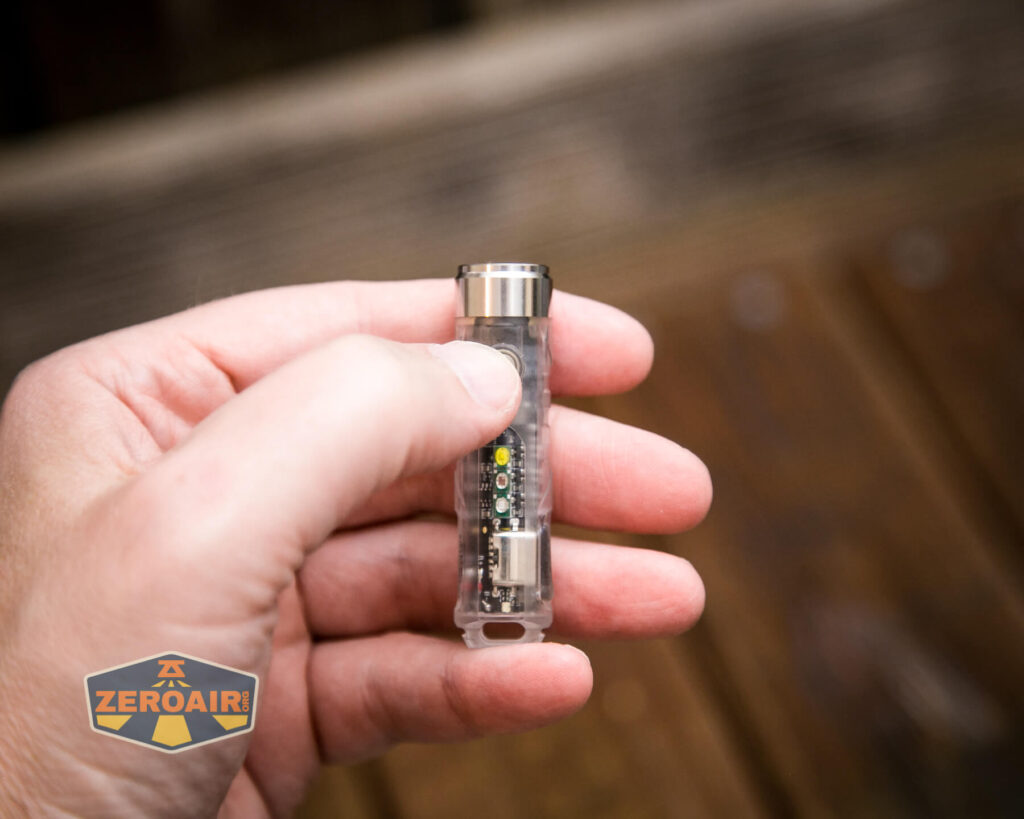
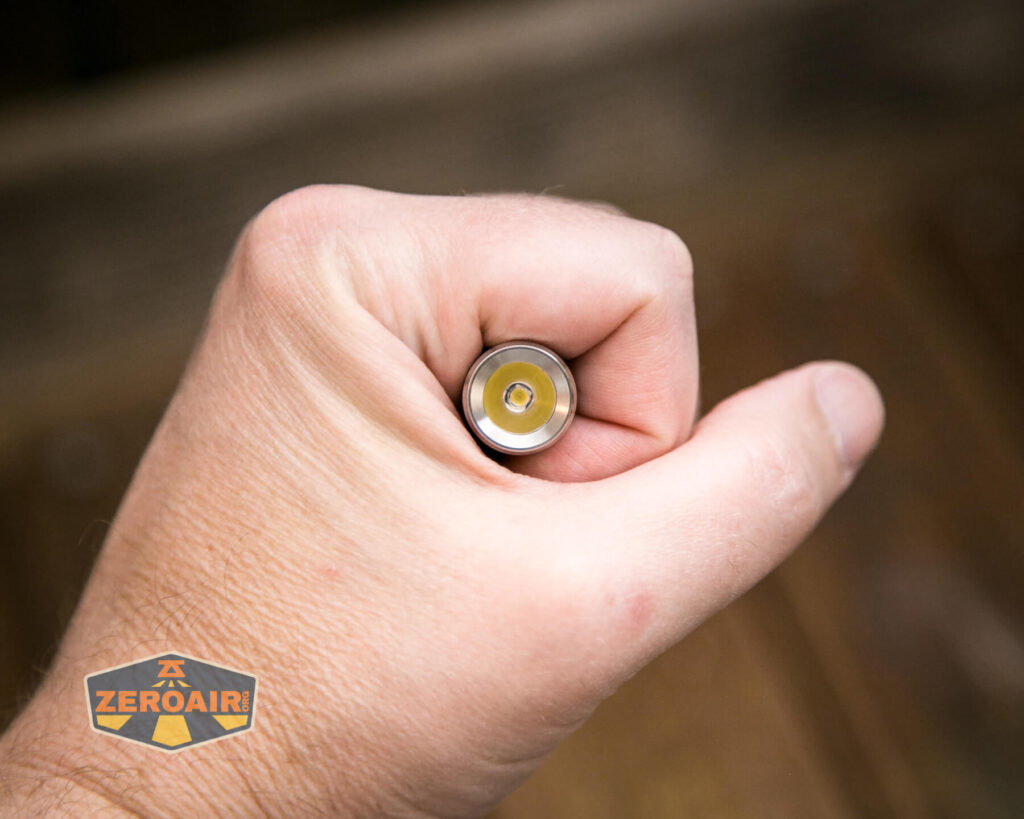
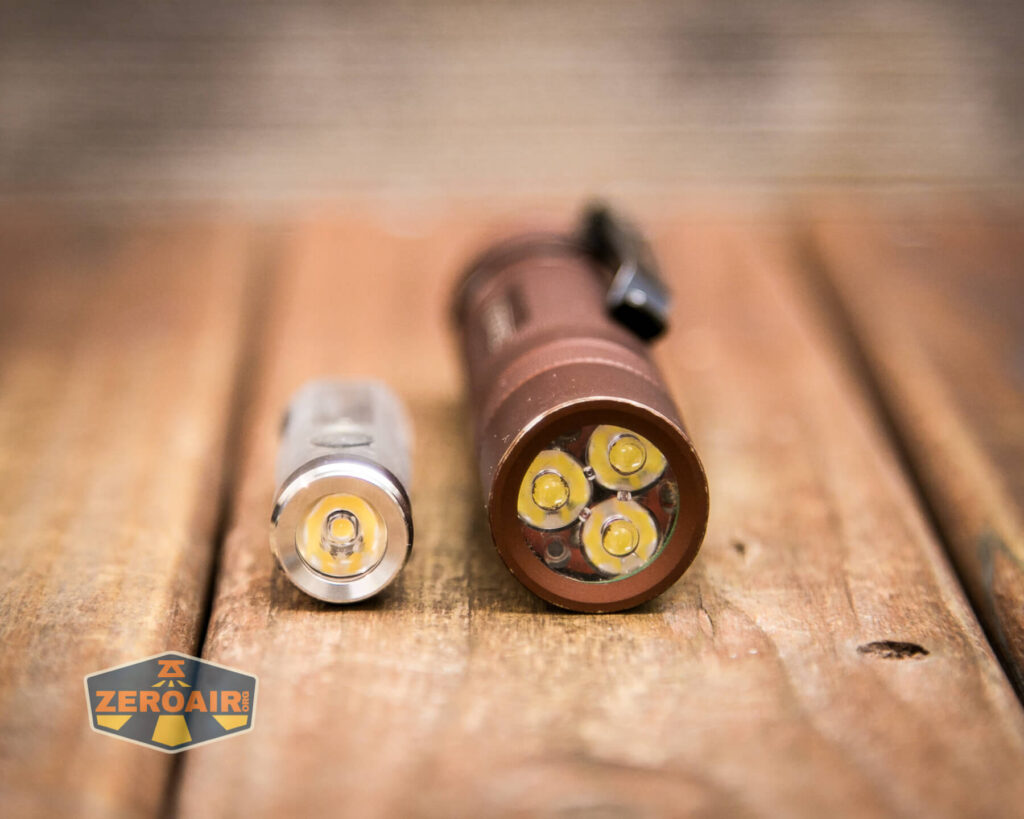
Here’s the test light with the venerable Convoy S2+. Mine is a custom “baked” edition Nichia 219b triple. A very nice 18650 light!
And here’s the light beside my custom-engraved TorchLAB BOSS 35, an 18350 light. I reviewed the aluminum version of that light in both 35 and 70 formats.

Retention and Carry
As with other Auroras, the RovyVon Aurora A8 keychain flashlight has a pocket clip. This does not ship attached to the light, and it has a new magnetic side feature! The magnet is perfectly strong for holding the light in any orientation.

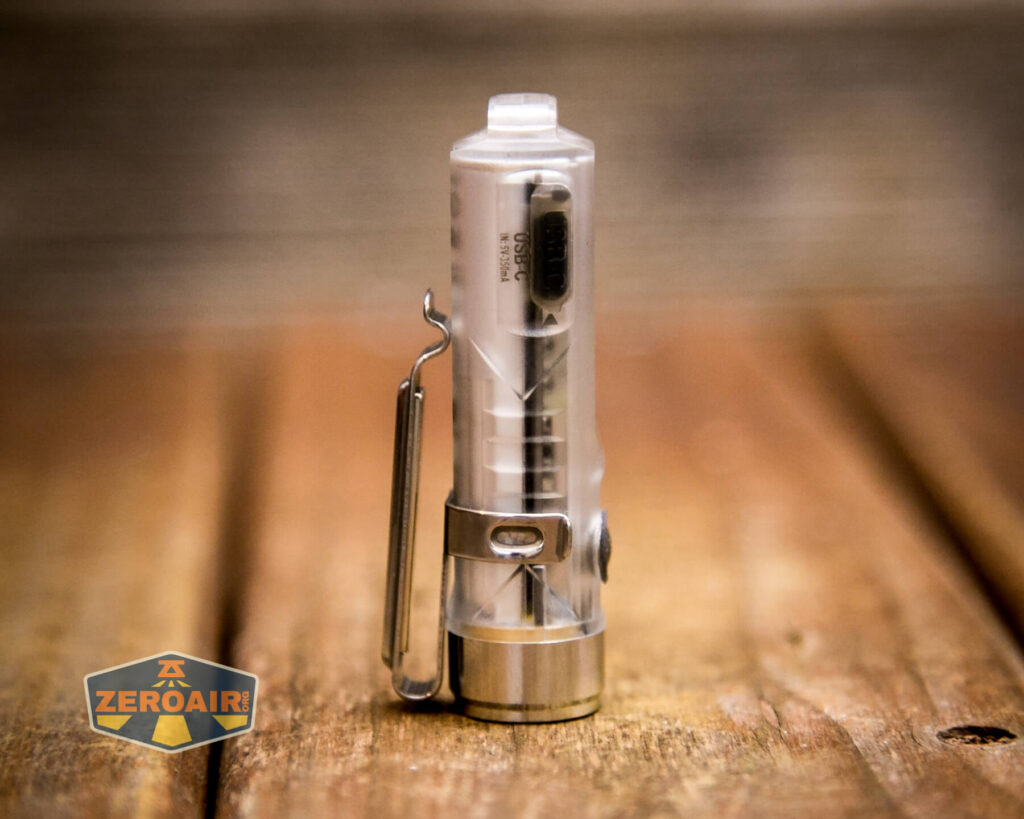
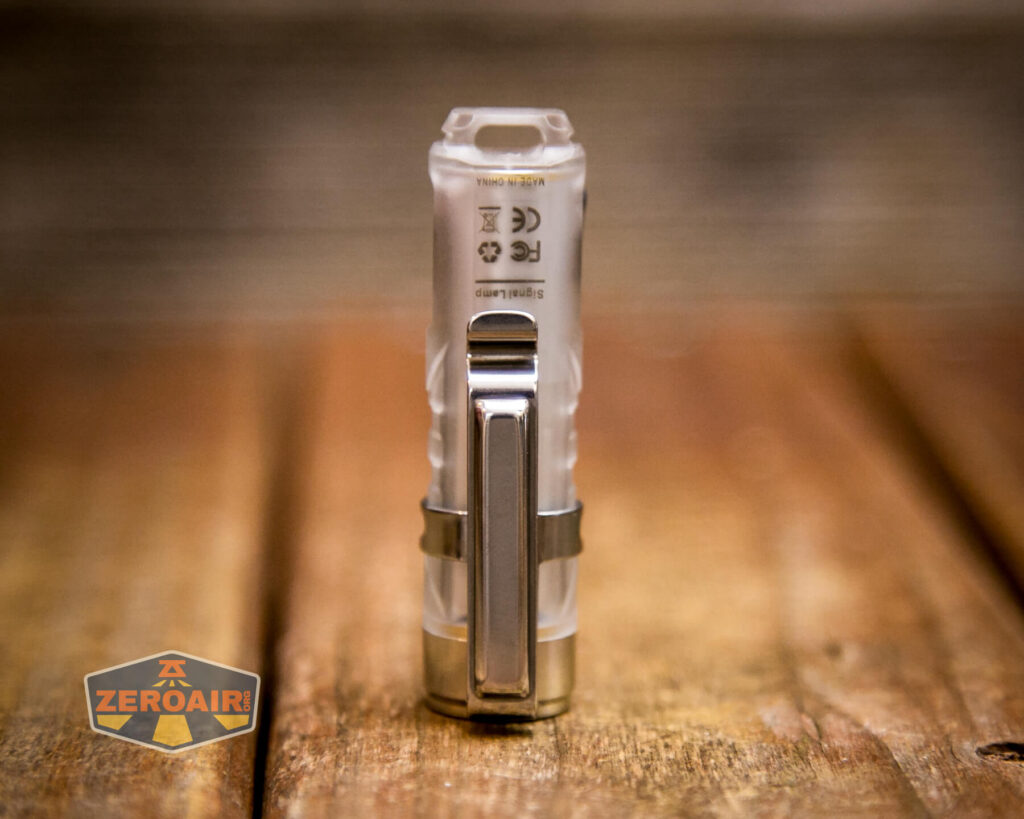

Not just the pocket clip, but the tailcap also has an attachment and that attachment also has a magnet!
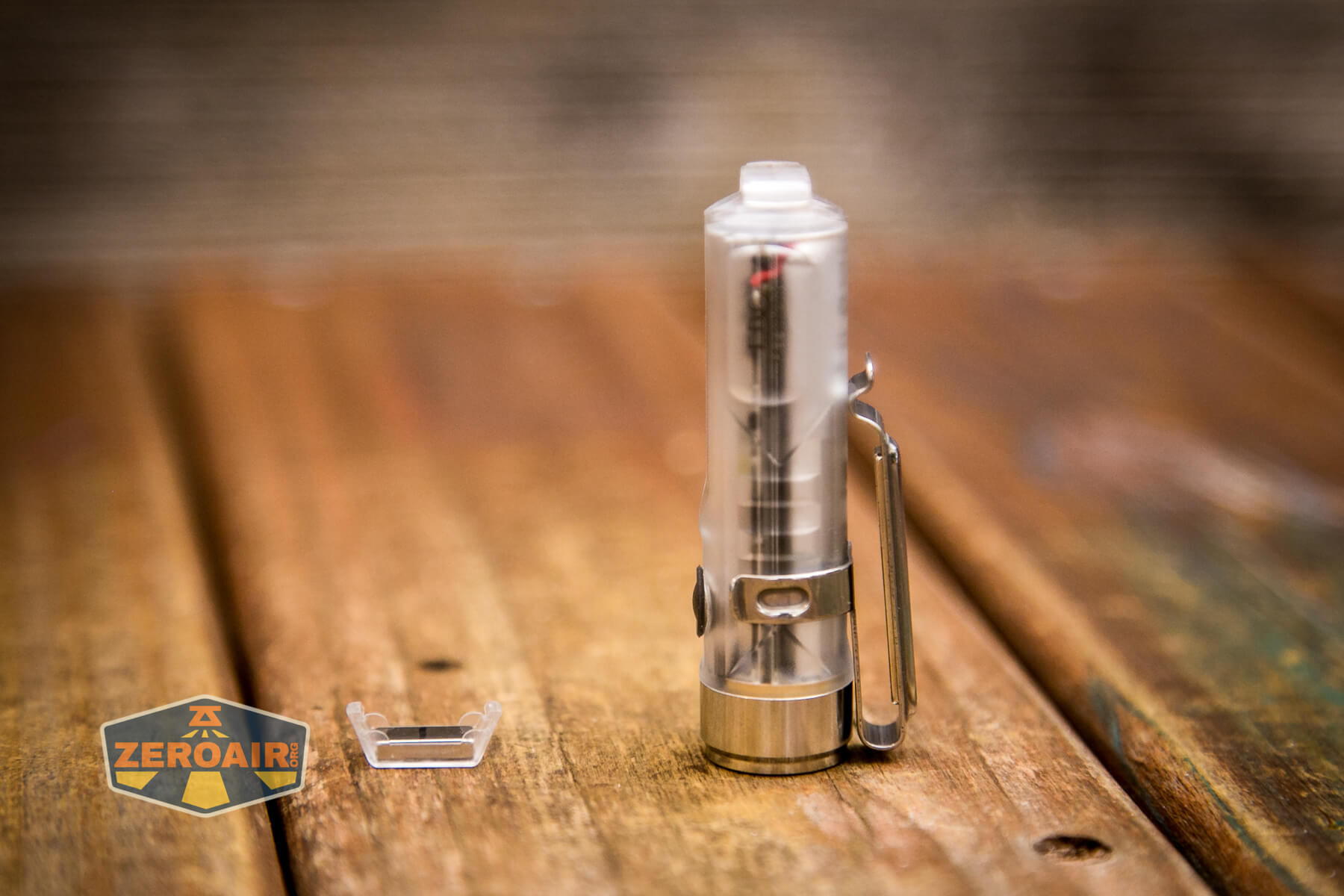


This magnet too is strong enough to hold the light.

RovyVon includes a couple of split rings of various sizes.

Power and Runtime
The battery is built-in and not removable.


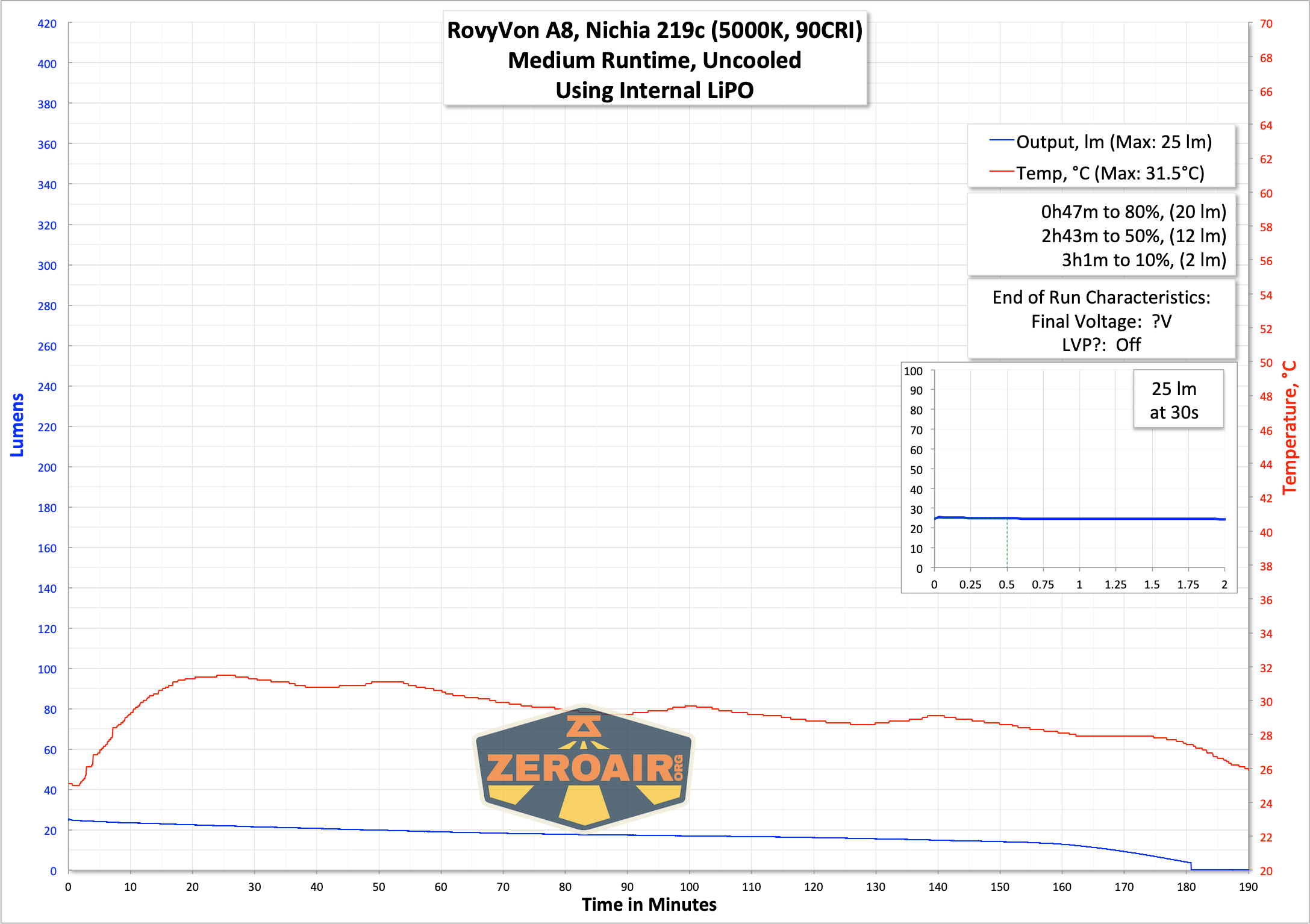
The light shuts off when the cell voltage is low, but I’m not able to test at what voltage it shuts off. RovyVon has confirmed that the shutoff voltage is 2.8V.
Charging
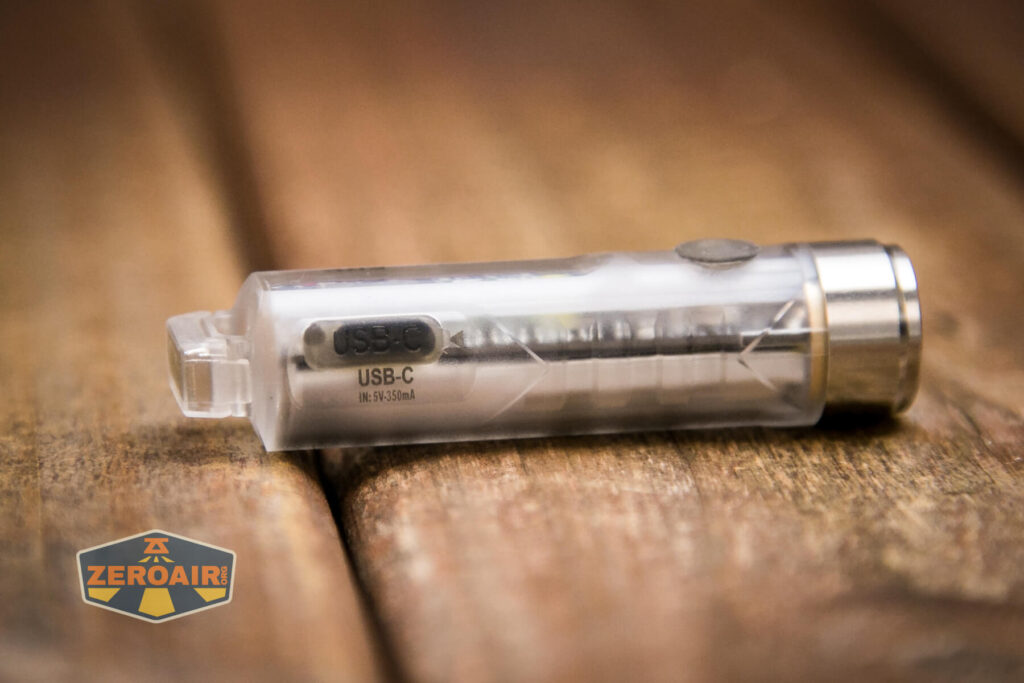
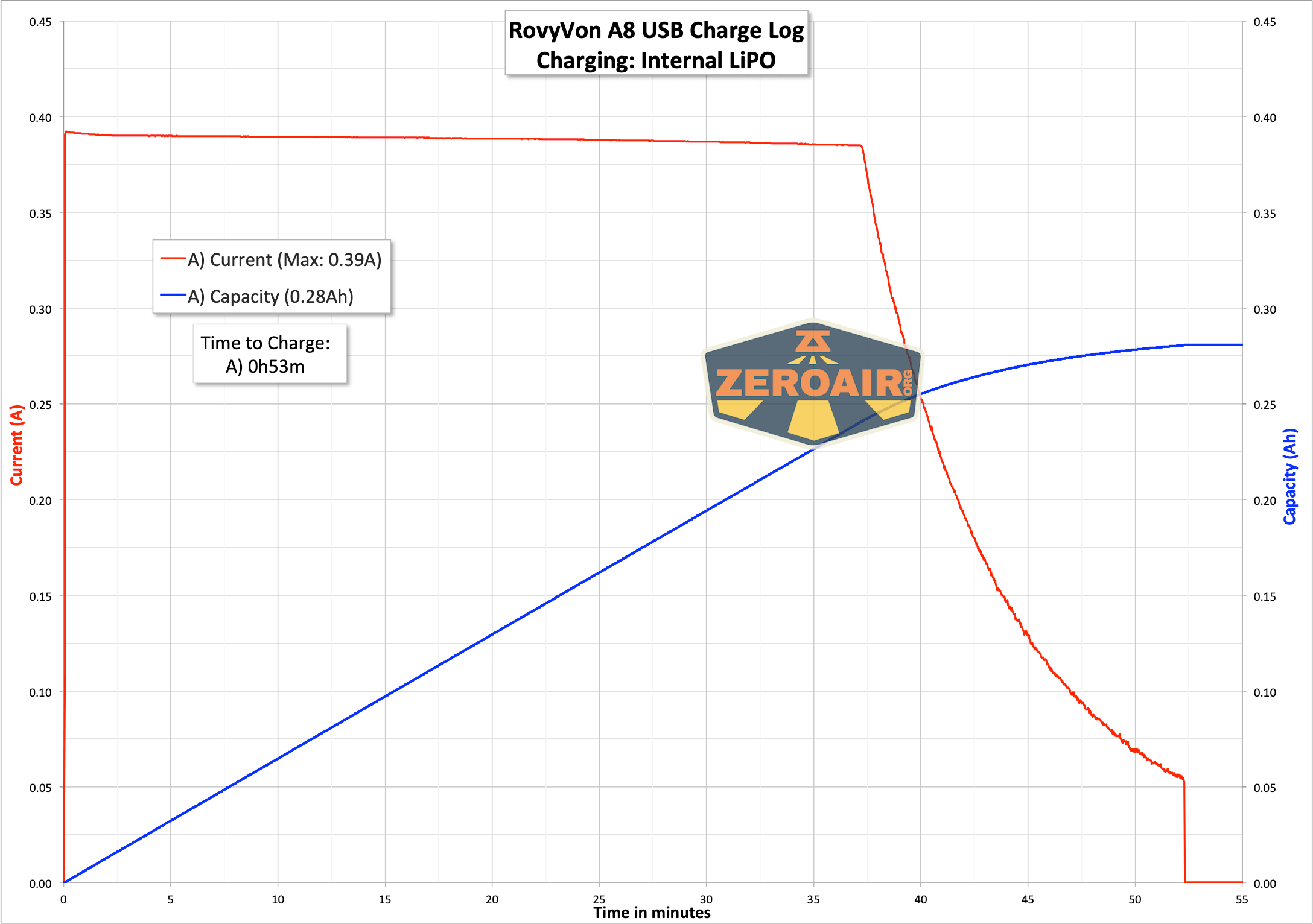
The RovyVon Aurora A8 keychain flashlight is charged via USB-C, which has a push-in rubber cover. This cover stays attached. The plug is a little harder to manipulate than most I’ve used, but it works just fine.

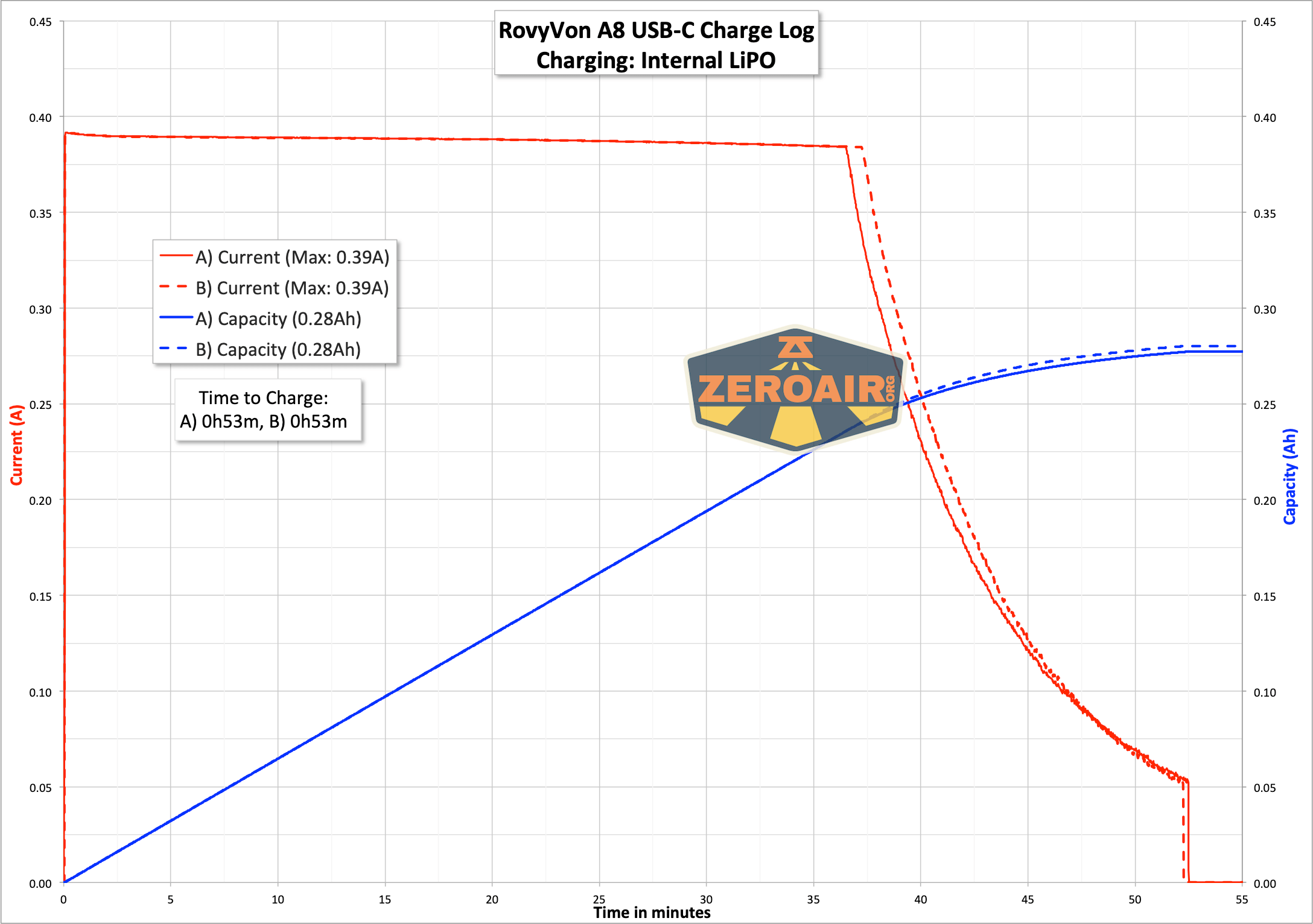
It’s nice to note that C to C charging works too.
Modes and Currents
| Mode | Mode Claimed Output (lm) | Claimed Runtime | Measured Lumens |
|---|---|---|---|
| High | 420 | 1m+90m | 262 |
| Medium | 150 | 1m+2h | 122 |
| Low | 20 | 8h | 25 |
| Moon | 0.5 | 72h | |
| White Side Low | 1 | 12h | |
| White Side High | 20 | 3h | |
| UV | / | 100m | |
| Red | 20 | / |
Pulse Width Modulation
The order below is as follows: Four front white modes then two side white modes (low then high), then UV, then Red. That’ll be the order for the rest of the images in sequence, too. Many of the modes use PWM. Most of the PWM is so fast you’ll never be able to notice it.
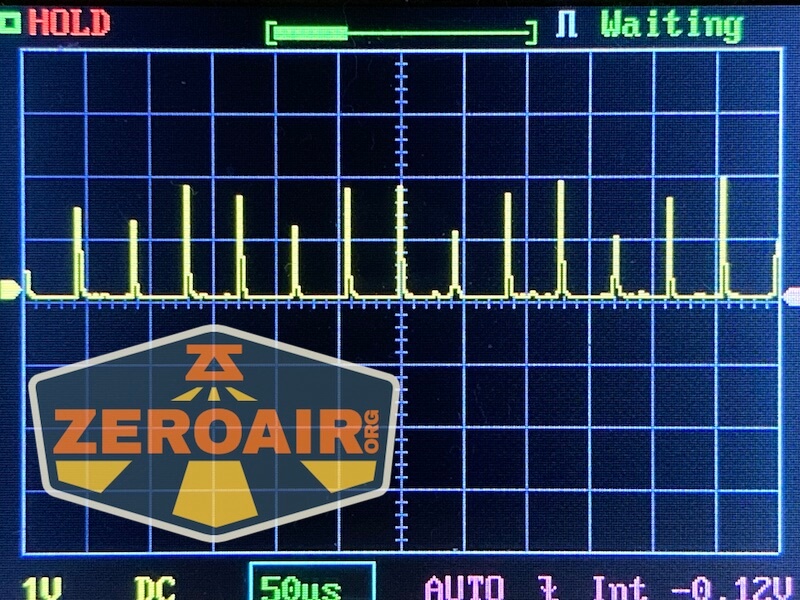
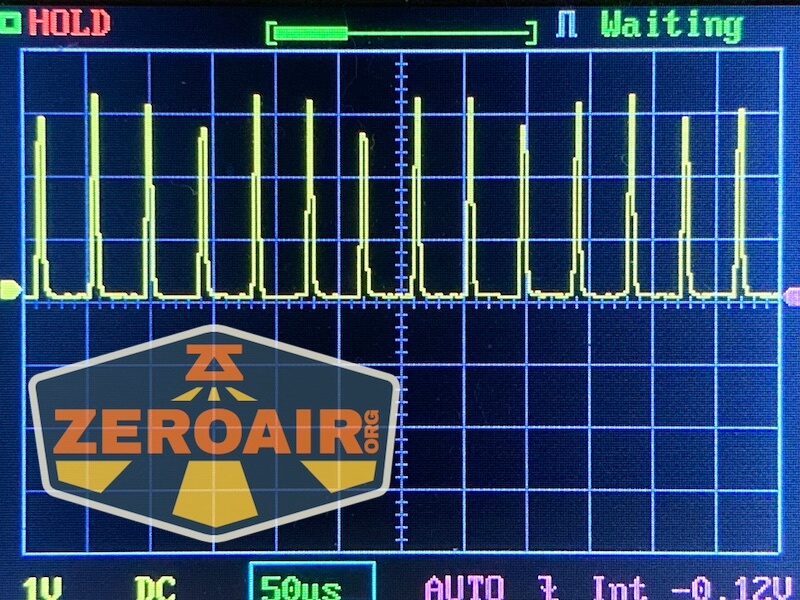
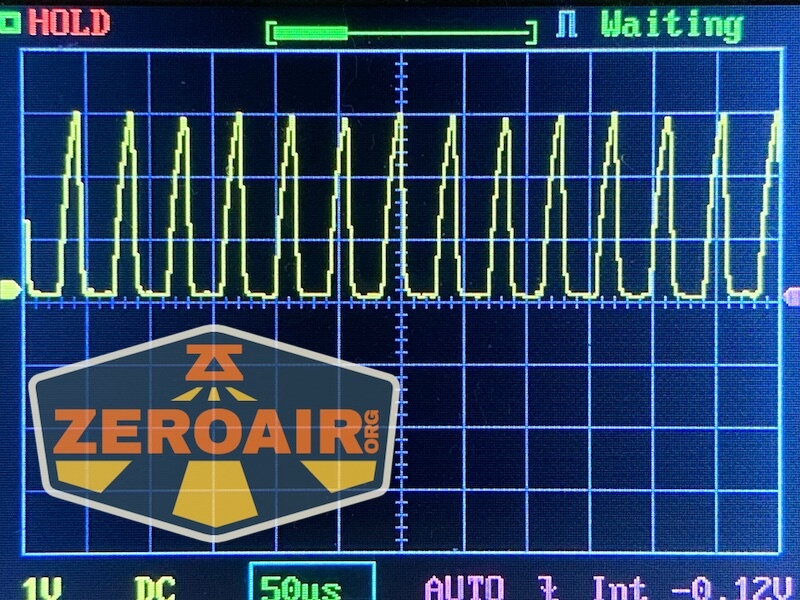
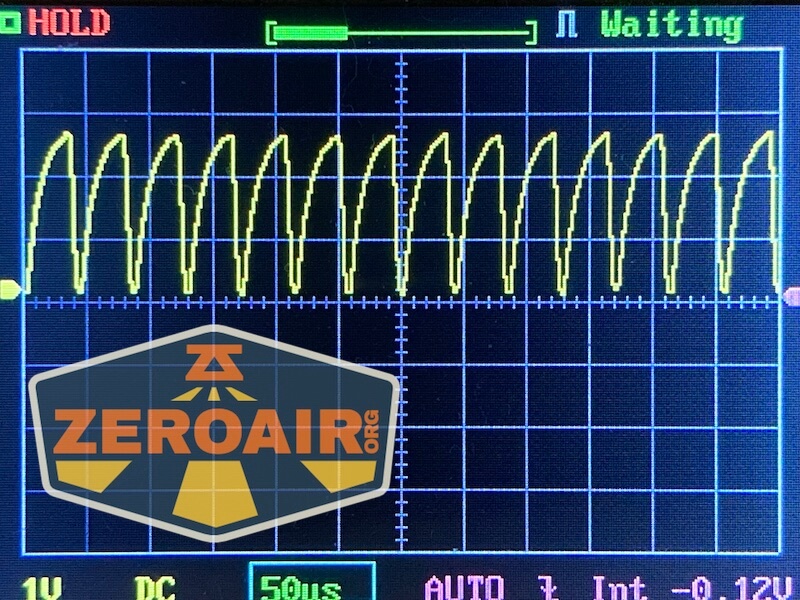
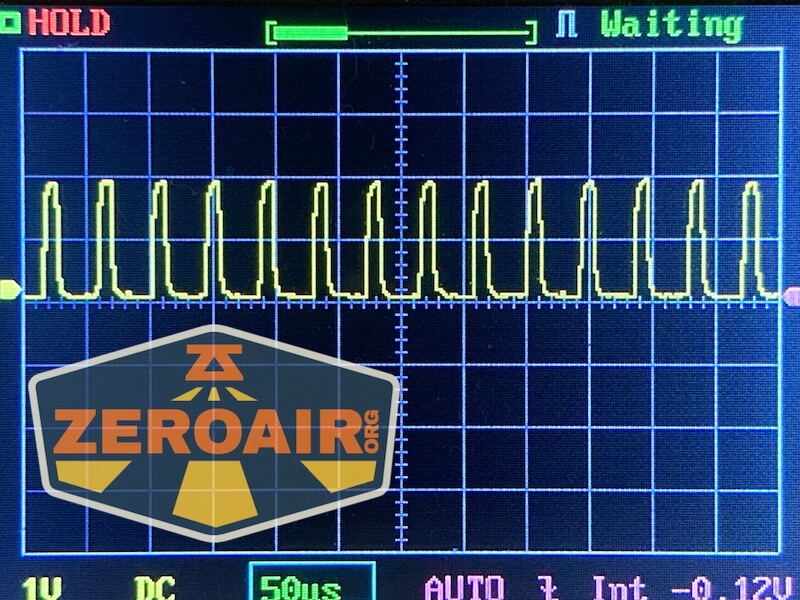
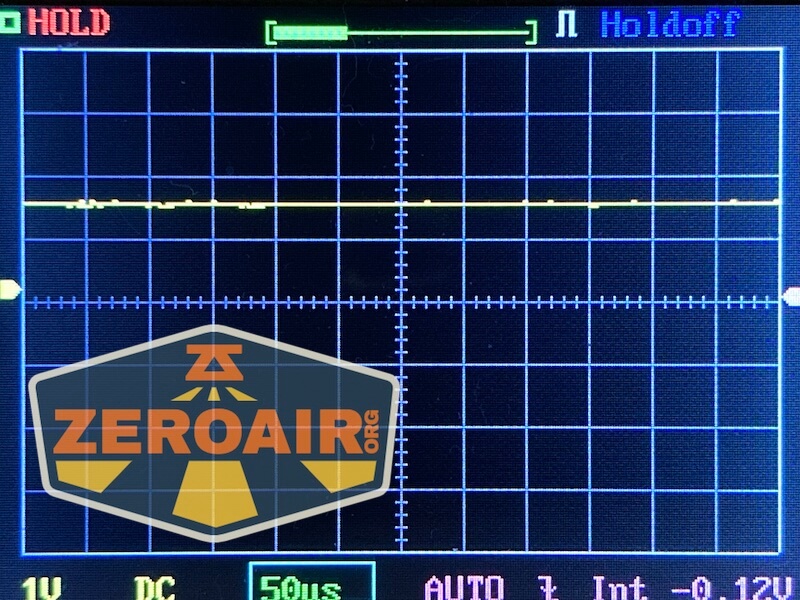
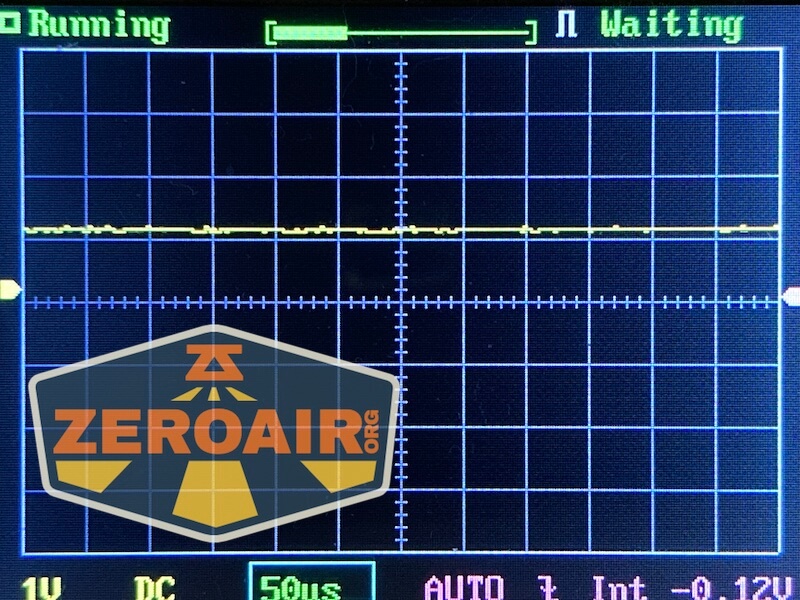

Here you can see a “baseline” – a chart with almost no light hitting the sensor.

Then there’s the Ultrafire WF-602C flashlight, which has some of the worst PWM I’ve seen. It’s so bad that I used a post about it to explain PWM! Here are multiple timescales (10ms, 5ms, 2ms, 1ms, 0.5ms, 0.2ms) to make comparing this “worst” PWM light to the test light easier. That post also explains why I didn’t test the WF-602C at the usual 50us scale.


User Interface and Operation
There’s a single side switch for operating the RovyVon Aurora A8 keychain flashlight. It’s a clicky e-switch.

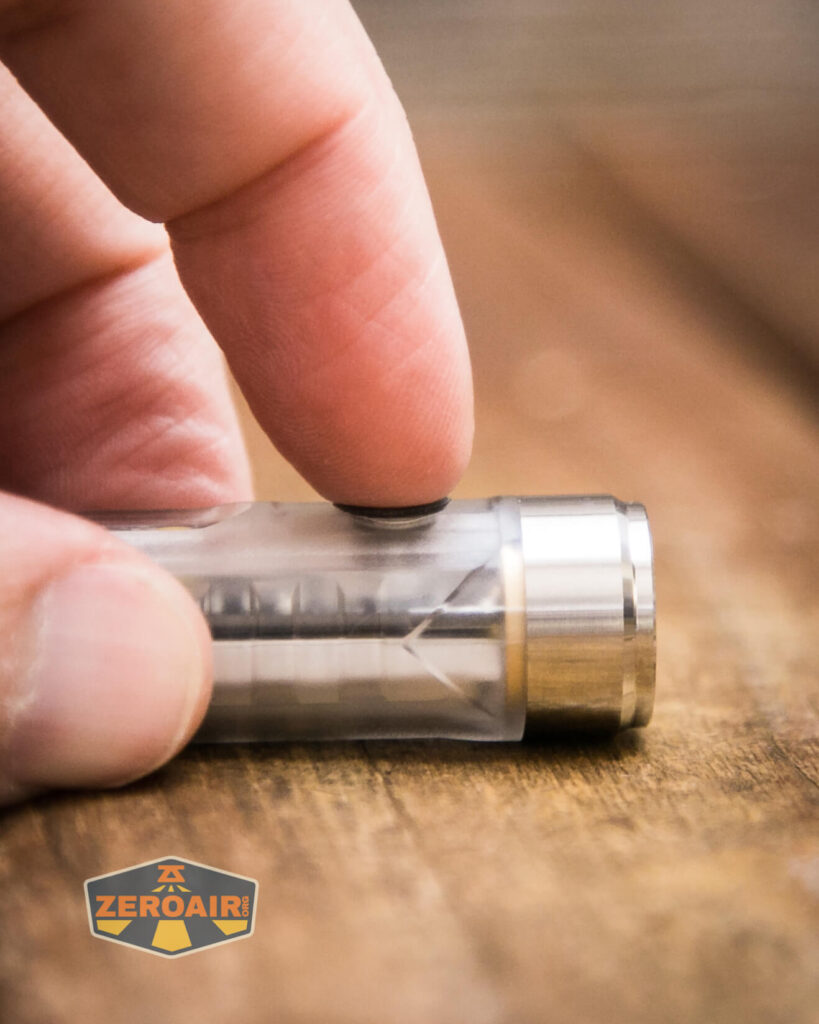
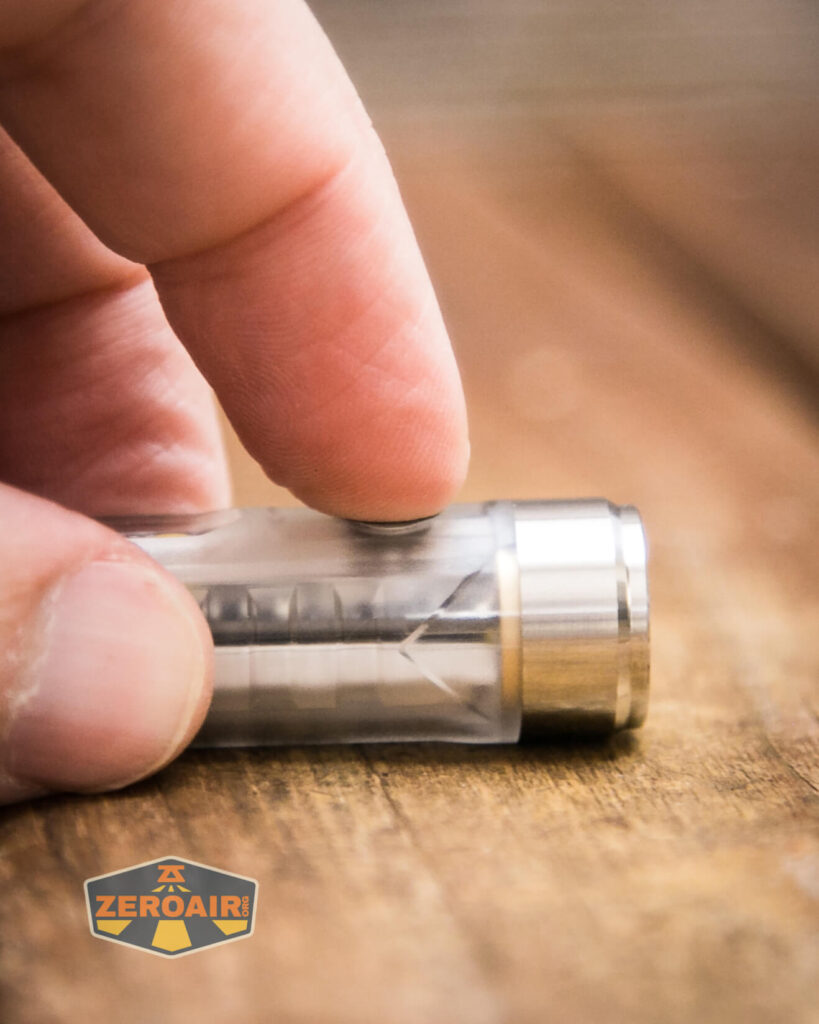
The user interface is fairly versatile. Here’s a user interface table!
| State | Action | Result |
|---|---|---|
| Off | Click | No action |
| Off | Hold | No action |
| Off | Double Click | Low Front Light |
| Front Light On | Click | Mode Advance (L,M,H,Moon) |
| On | Hold | Off |
| Off | Triple Click | Side UV On |
| Side UV On | Click | Side mode advance (Red, Red Blink, Fast Red blink, UV) |
| Off | Click 4x | Side White On |
| Side White on | Click | Side White Iterate Low/High |
^ After a certain amount of time being “on” the next click turns the side light off.
LED and Beam
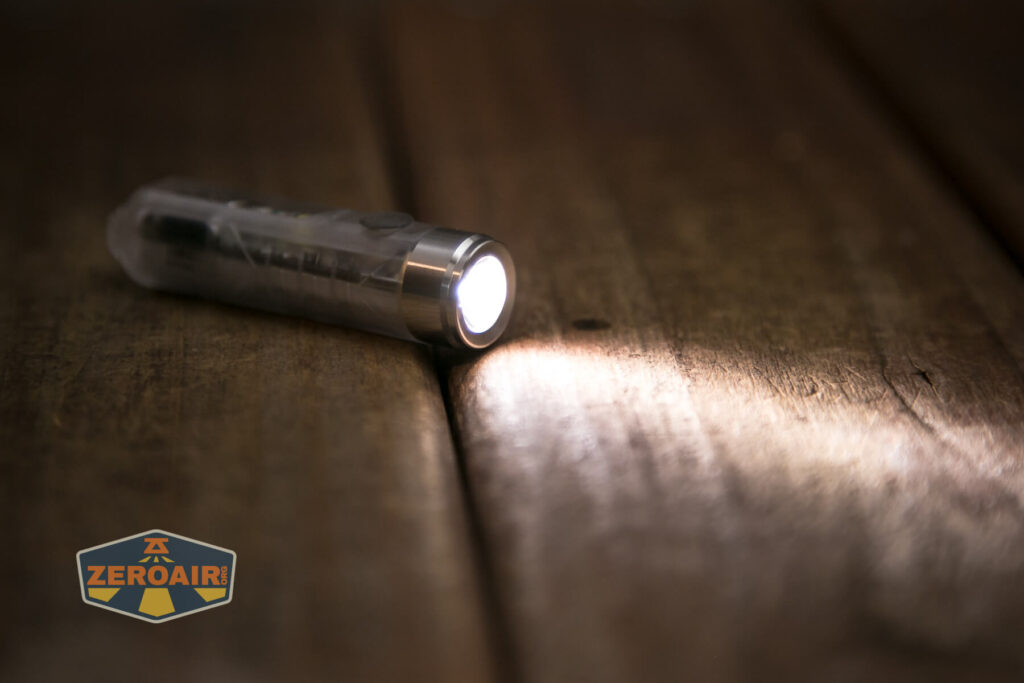
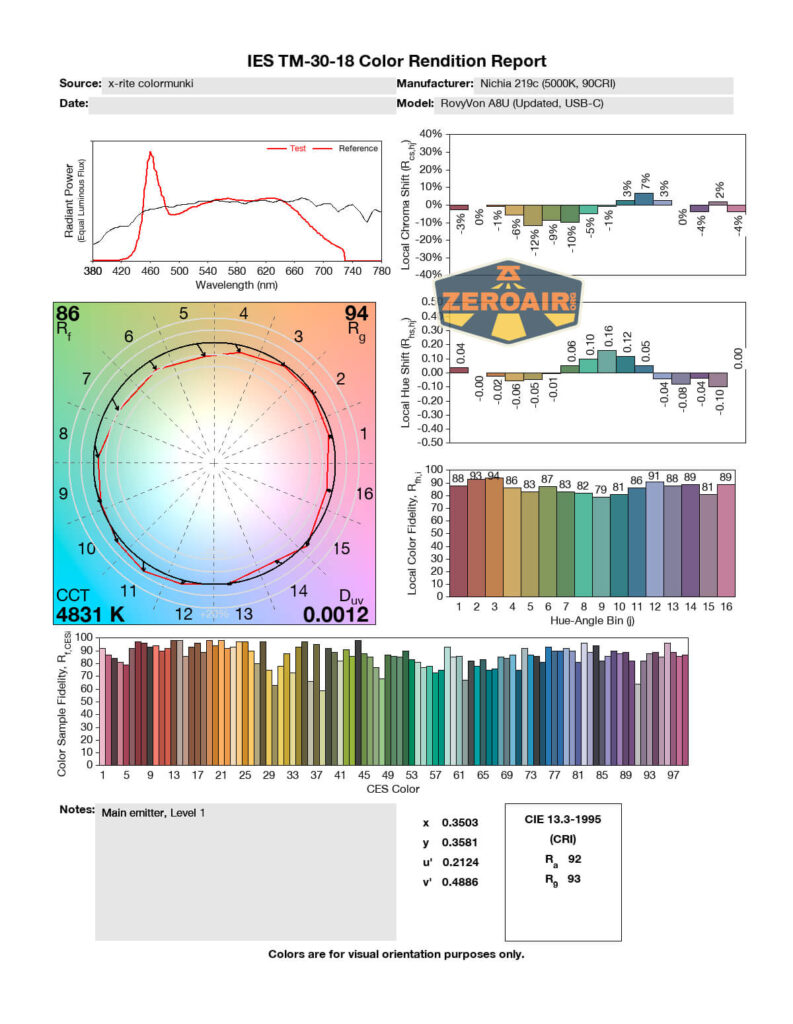
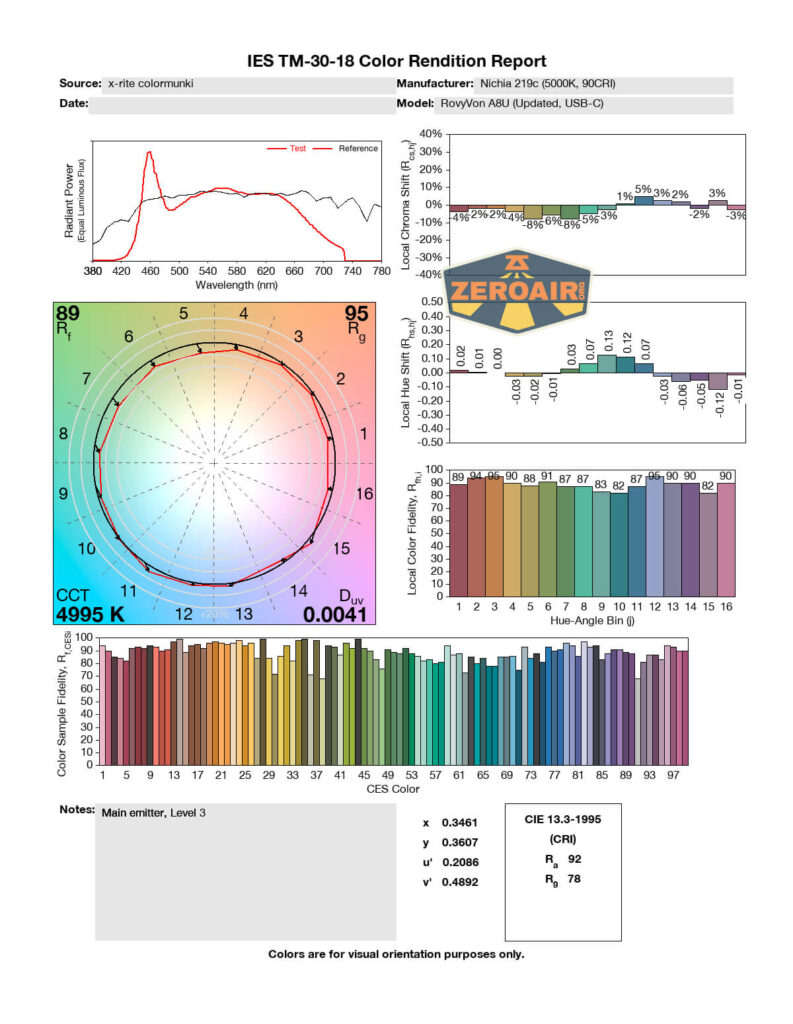
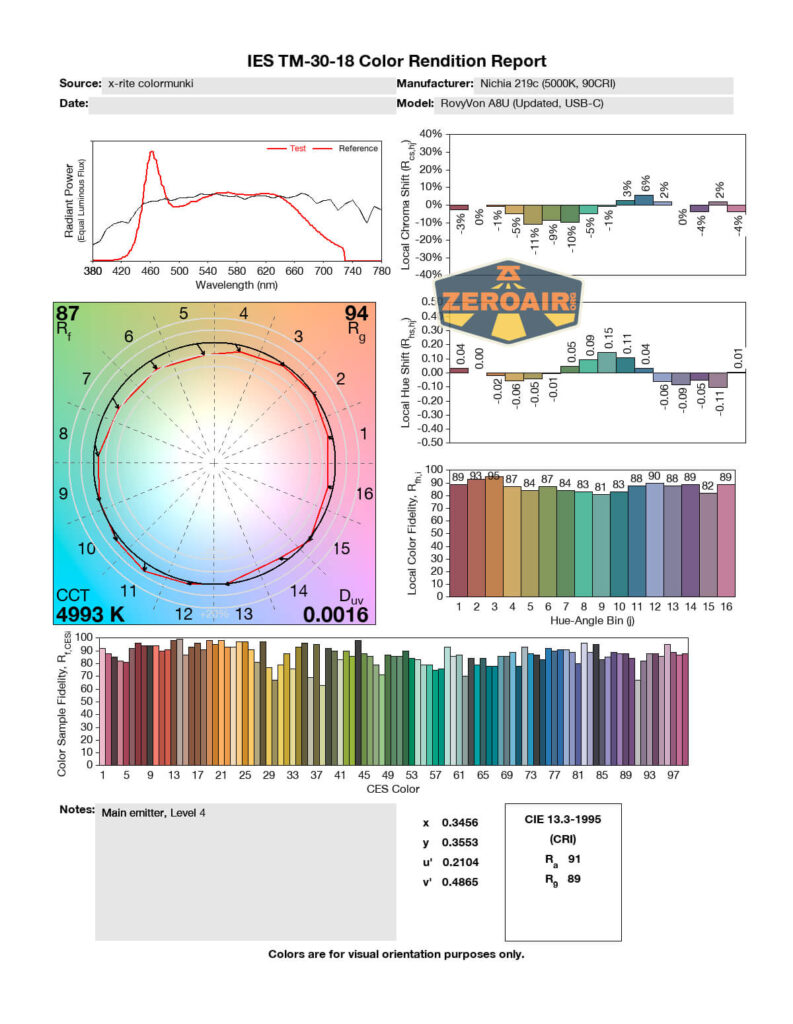
The main emitter here is a Nichia 219c with 5000K and 90CRI. That’s great! The tiny optic makes the beam very usable, too.

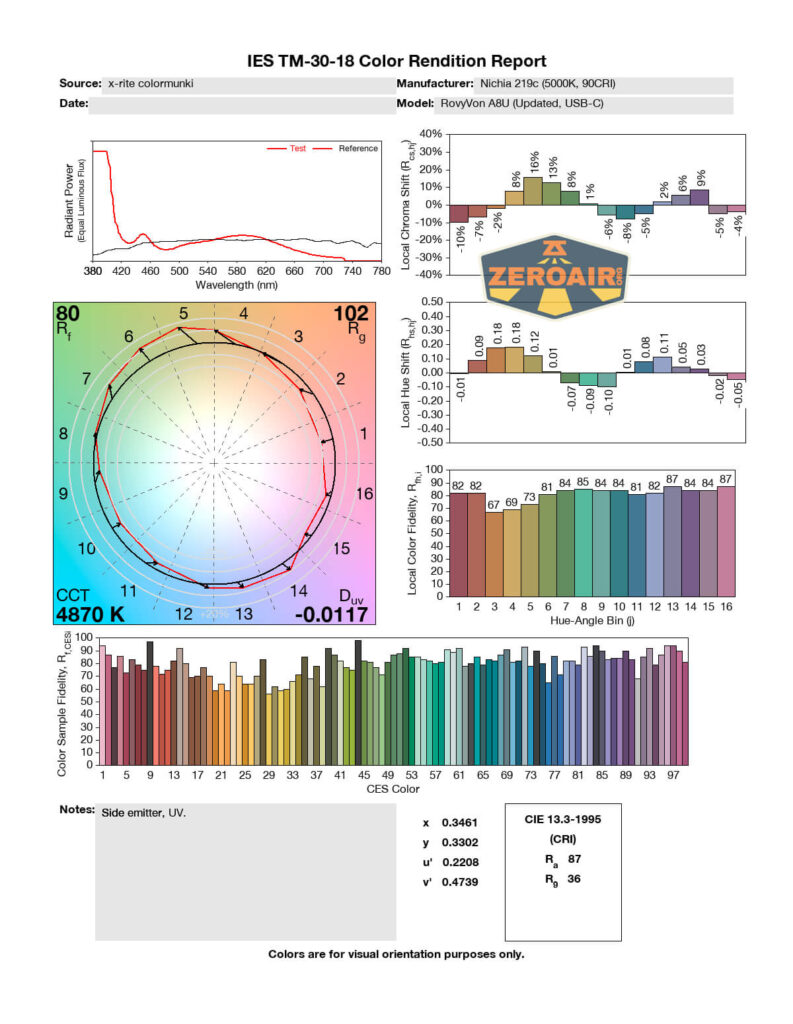
These side emitters are completely floody. There are three – Red, Warm White, and UV.


LED Color Report (CRI and CCT)
The order is as above. It’s nice to note that RovyVon gives accurate data on the 5000K emitter, and the CRI (at 92) is a bit better than specification!




Beamshots
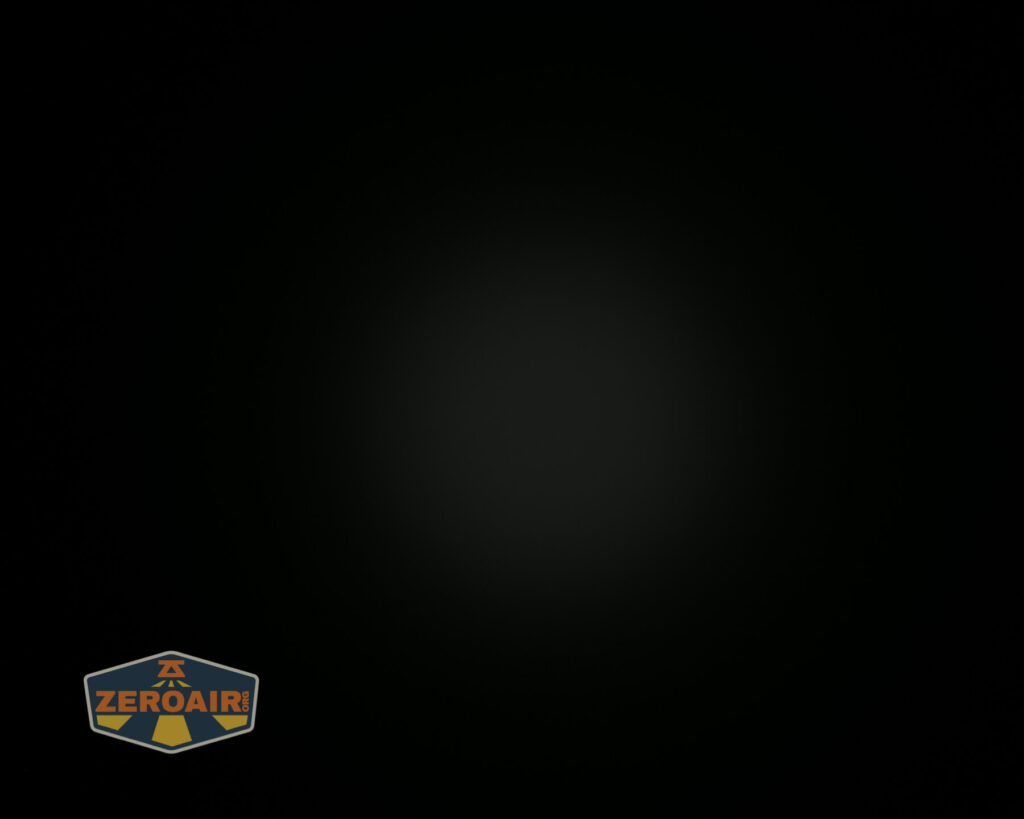
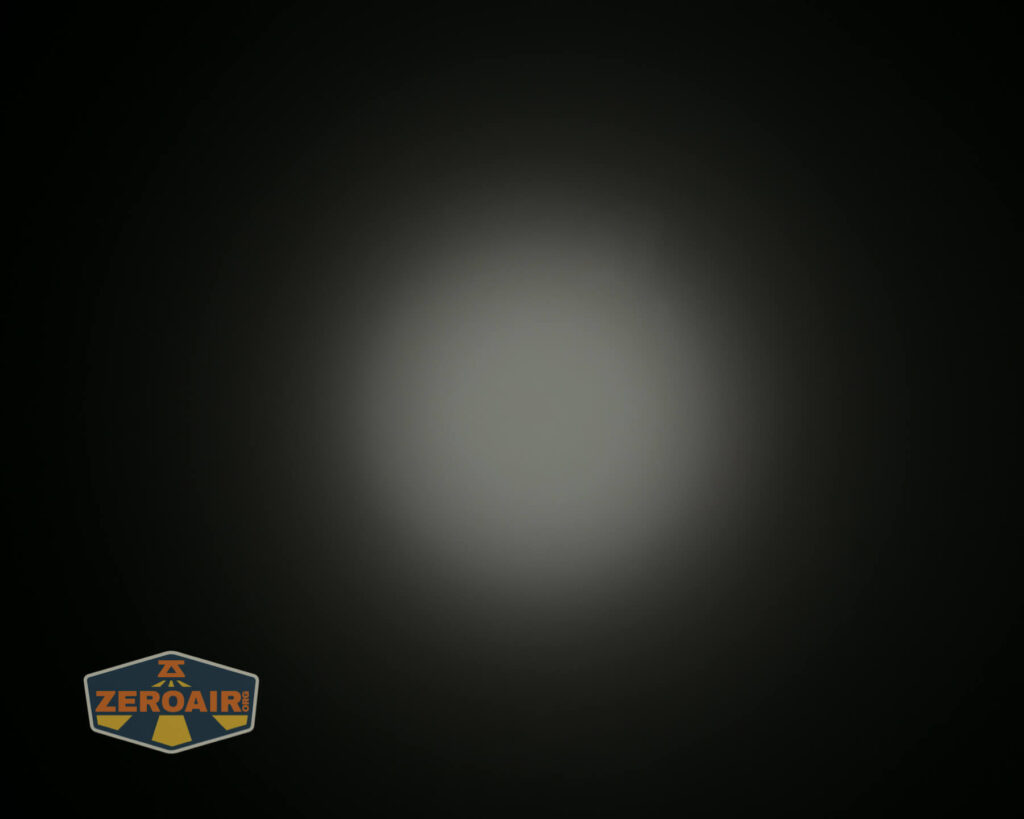
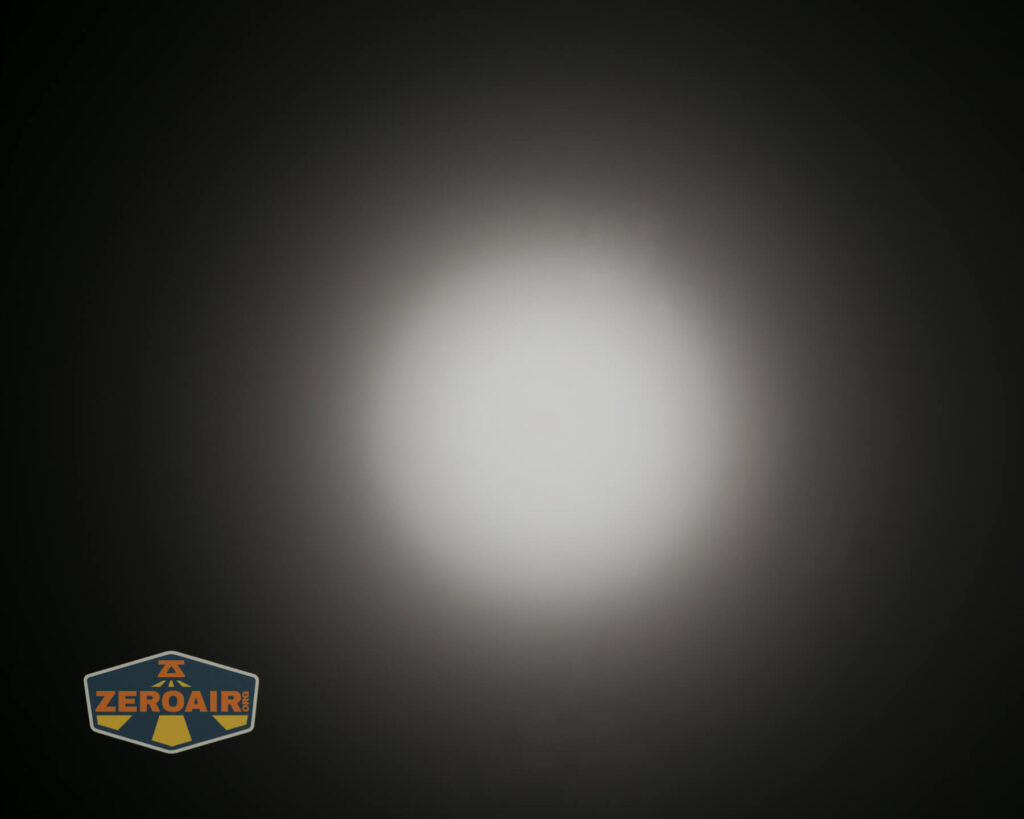
These beamshots always have the following settings: f8, ISO100, 0.3s shutter, and manual 5000K exposure. These photos are taken at floor level, and the beam hits the ceiling around 9 feet away.
Tint vs BLF-348 (KillzoneFlashlights.com 219b version) (affiliate link)
I keep the test flashlight on the left and the BLF-348 reference flashlight on the right.
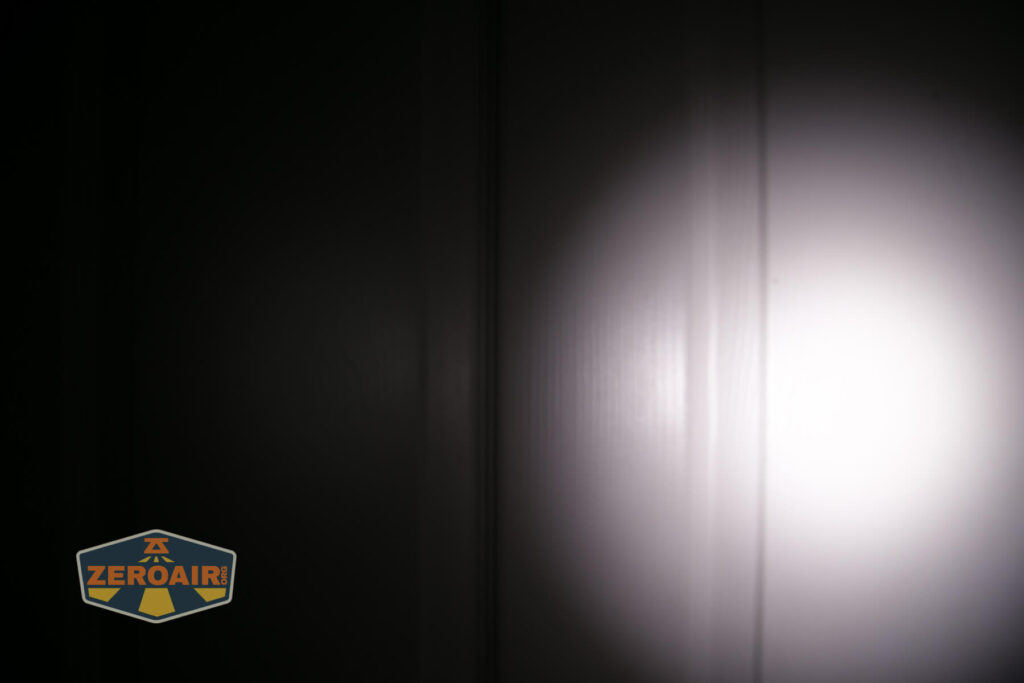
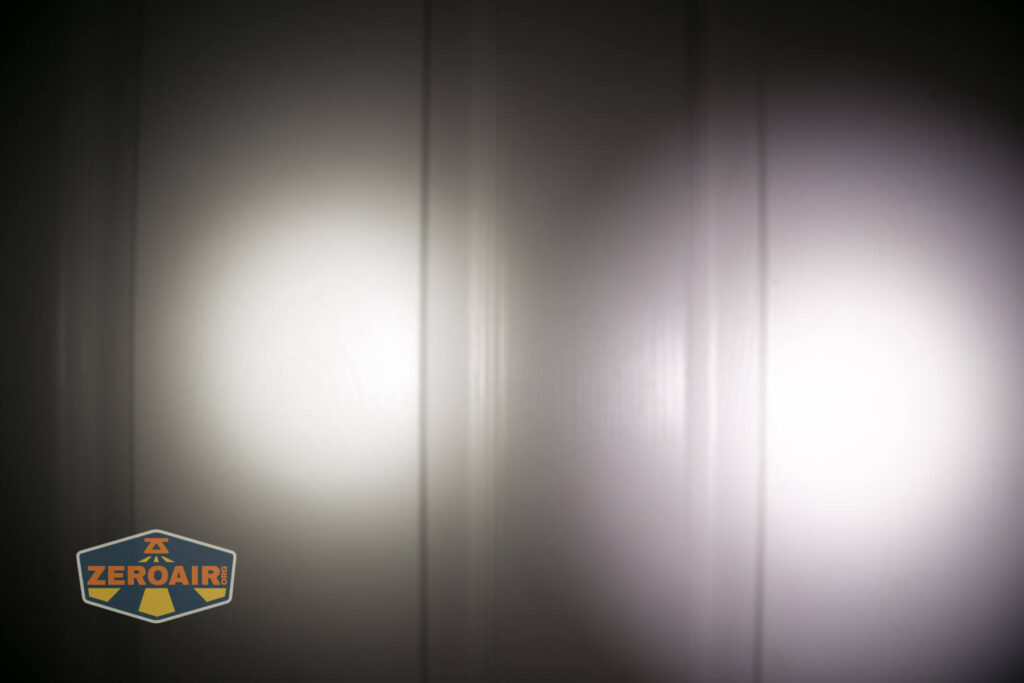
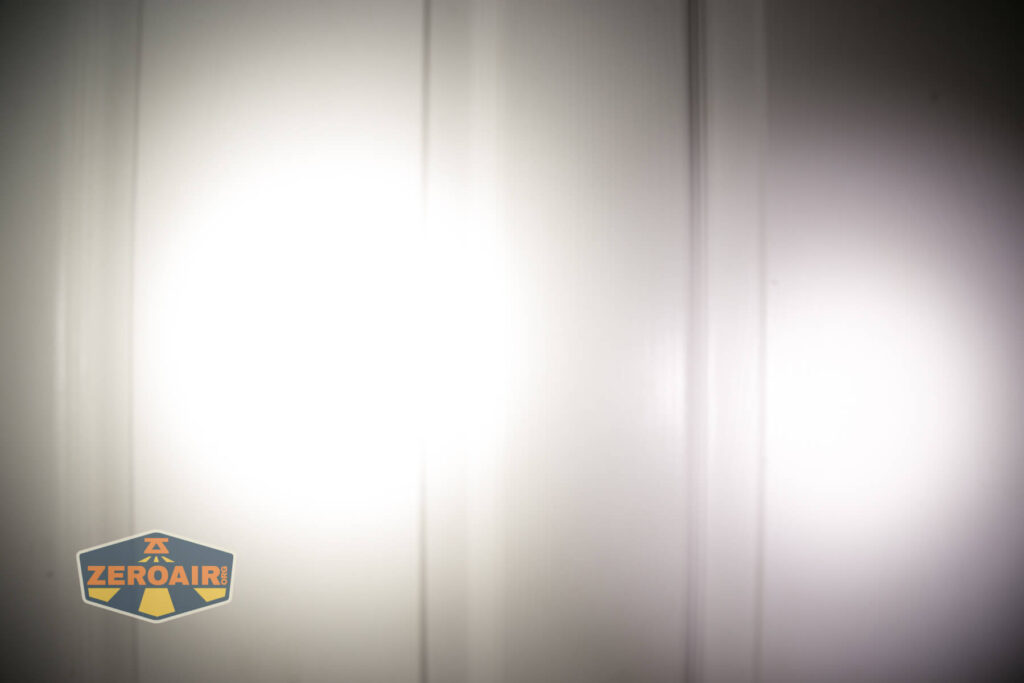
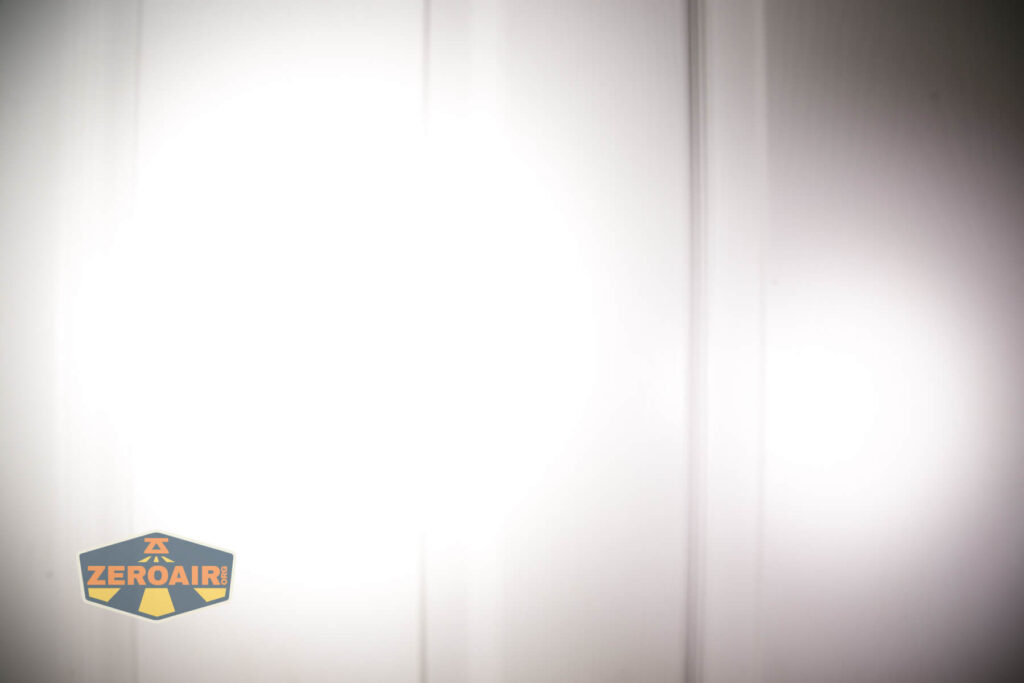
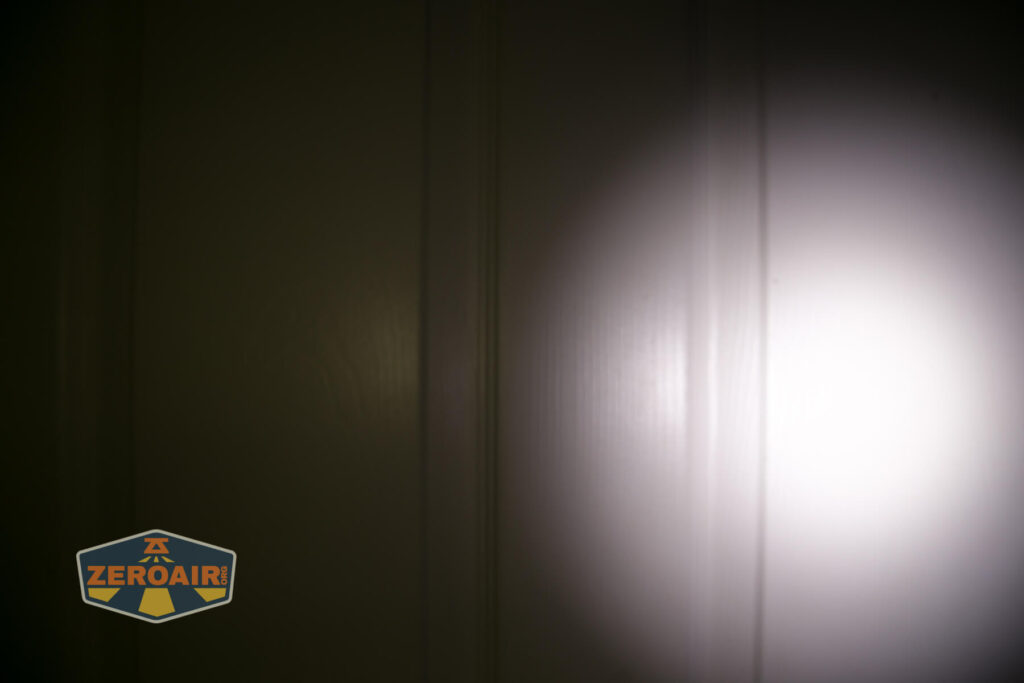
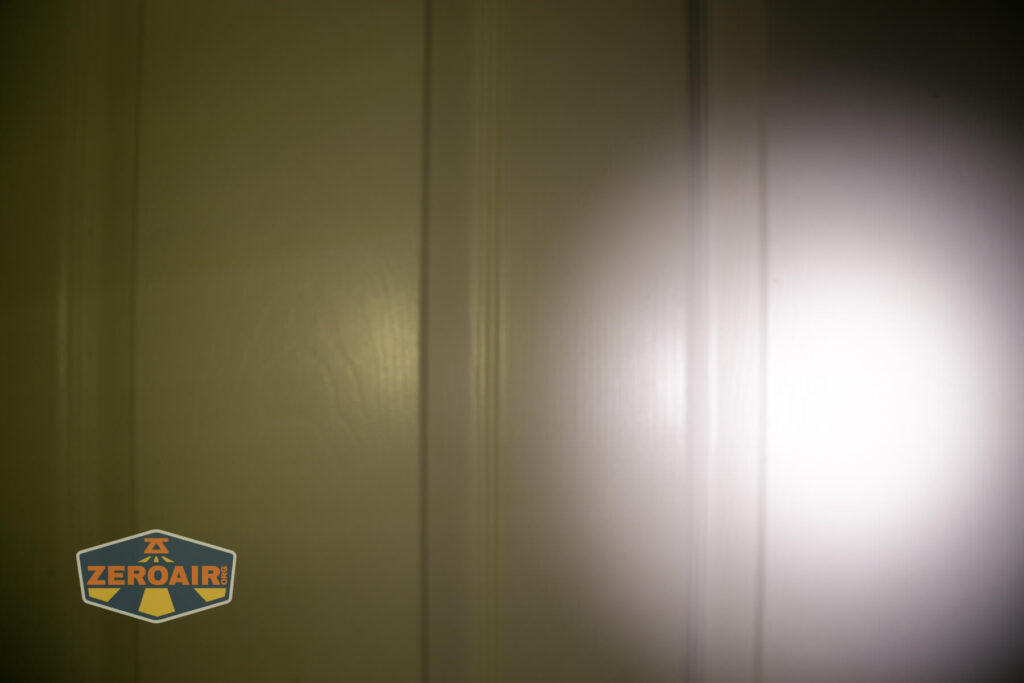
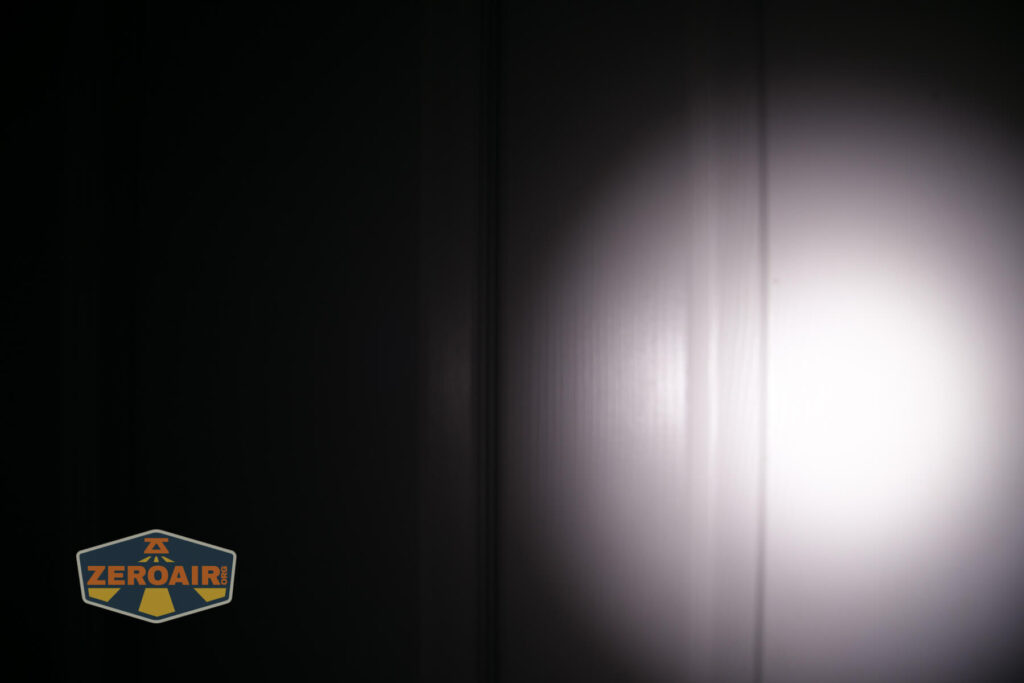
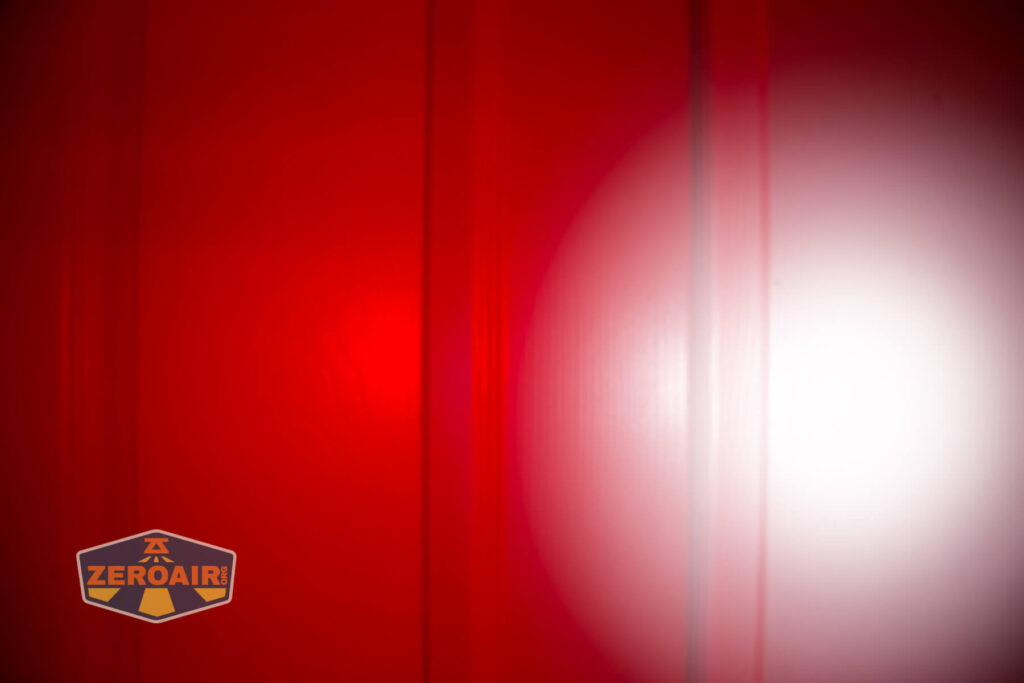
I compare everything to the KillzoneFlashlights.com 219b BLF-348 because it’s inexpensive and has the best tint!
Conclusion
What I like
- USB-C charging is a nice update
- C to C charging works!
- Nichia 219c emitter at 5000K and 90CRI is a great choice
- Side emitter options are robust
- User interface makes UV fairly easy to avoid
- Magnets on pocket clip and tailcap are useful
What I don’t like
- Output falls below specification
Notes
- This content originally appeared at zeroair.org. Please visit there for the best experience!
- Please use my Amazon.com referral link to help support zeroair.org!
- Please support me on Patreon! I deeply appreciate your support!
I just got this light and I figured out something that isn’t in the manual. If you keep a mode active for 3 minutes, that mode becomes ‘memorized’ and will be the mode that starts with a double click.
New version as of 9-18 has momentary on press and hold. And it may have changed the point at which it drops output on the sst20 from my playing with it.