

Convoy S2+ SFT40 3000K Flashlight
The Convoy S2+ SFT40 3000K flashlight offers high CRI in a sort of novel package from Luminus. I tested it in an S2+ just as a means to test the emitter!
Official Specs and Features
Here’s a link to the Convoy S2+ SFT40 3000K flashlight product page.
Versions
There are two versions of the Convoy S2+ (old and new) and for the new version, there are a bunch of colors. All sorts of emitter options exist, too, but the whole point of this post is to test the Luminus SFT-40 3000K emitter!
Price
I paid around $23 for the Convoy S2+ SFT40 3000K flashlight but the price can fluctuate a bit. I’d aim to pay $20, and call that a huge win!
What’s Included
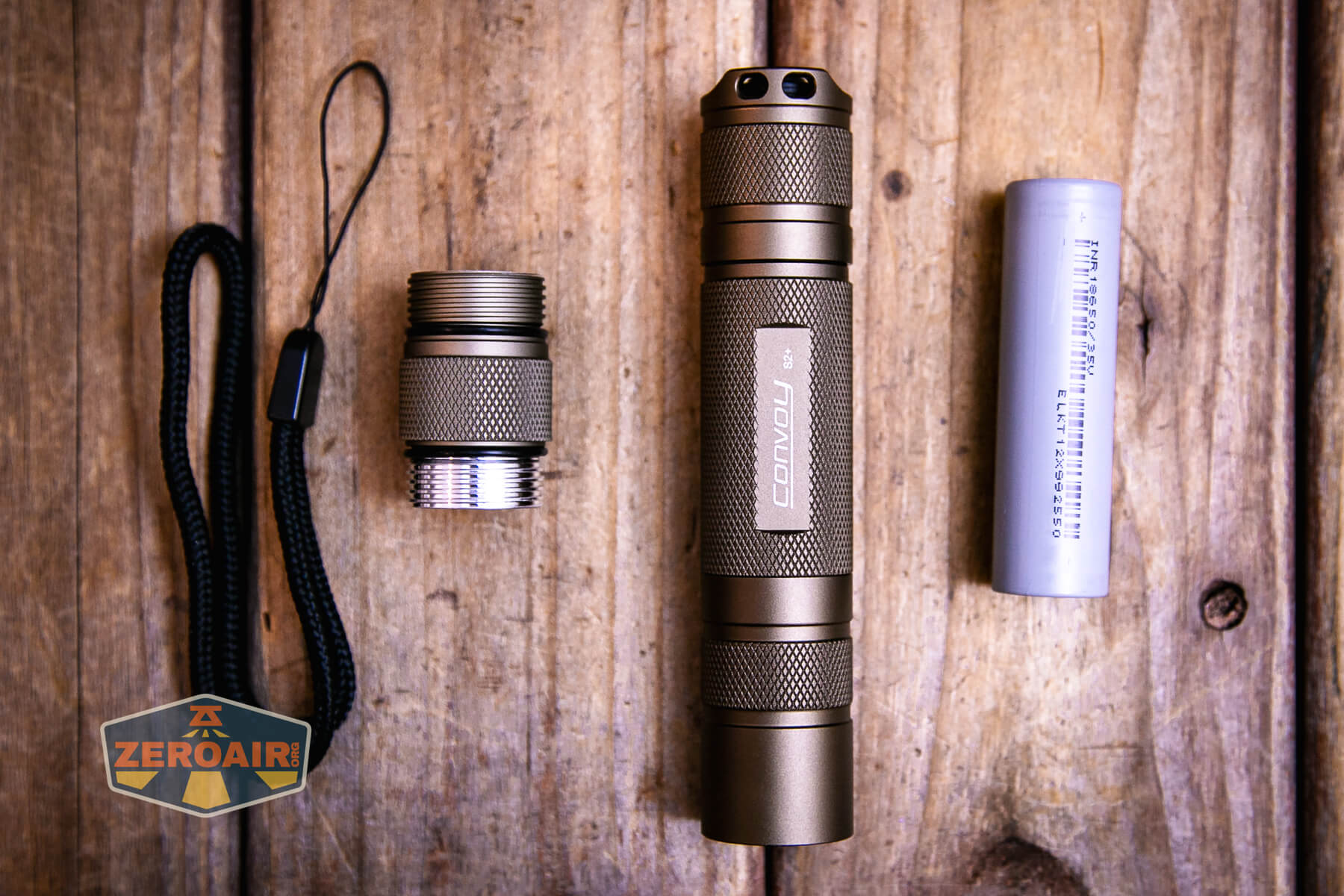
- Convoy S2+ SFT40 3000K flashlight
- 18650
- Lanyard
Package and Manual
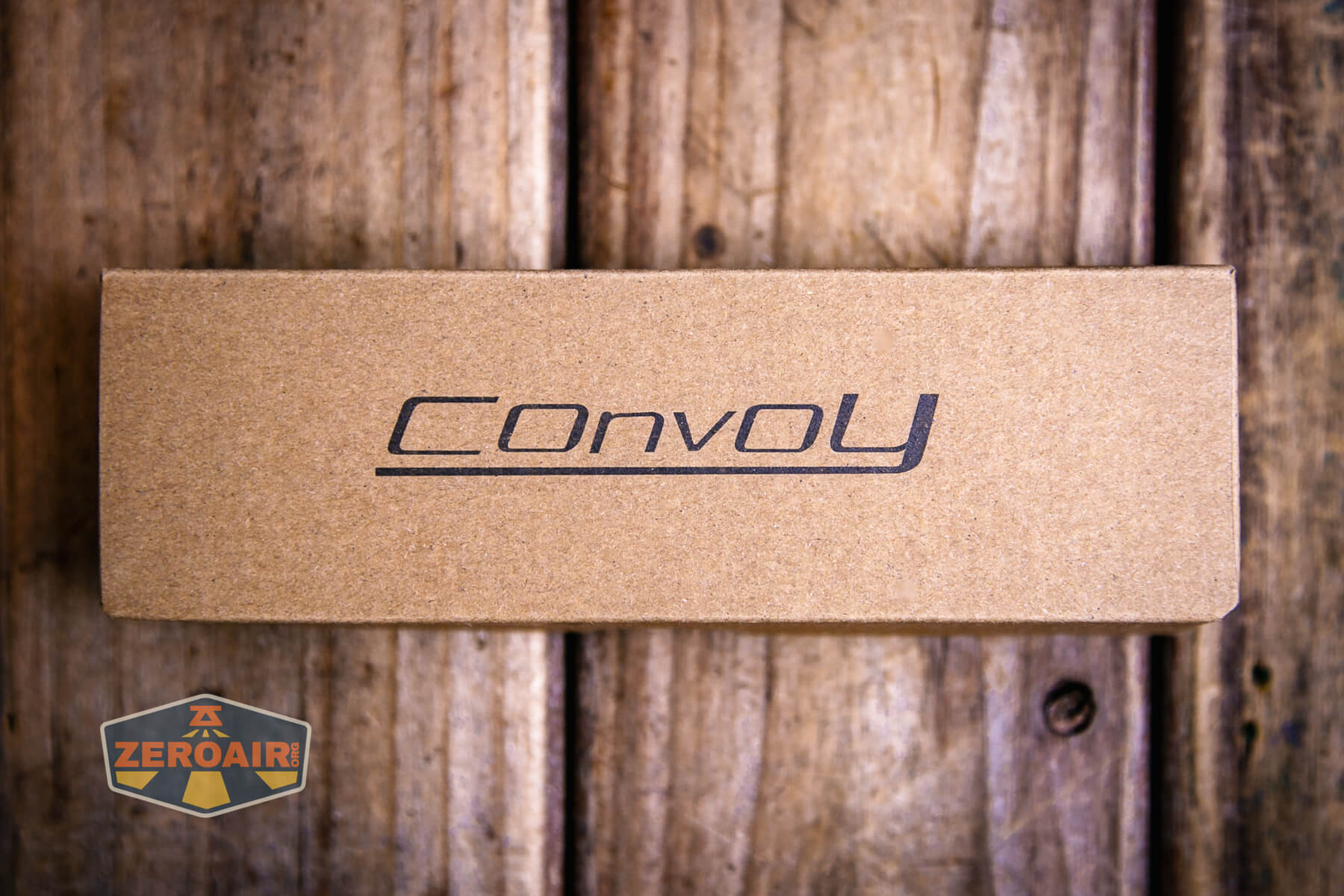

There is no manual
Build Quality and Disassembly

Convoy is very highly regarded by flashlight enthusiasts for having great build quality and low prices. This Convoy S2+ SFT40 3000K flashlight is no exception. It’s great! As stated above, I’ve tested the Convoy S2+ before (a few times, actually) and even once in an orange color. I did fully test this version with output and all that, but this post is mostly about the Luminus SFT-40 3000K version of the light. So basically, view the testing if you want specific info on the 3000K Luminus SFT-40 3000K version!

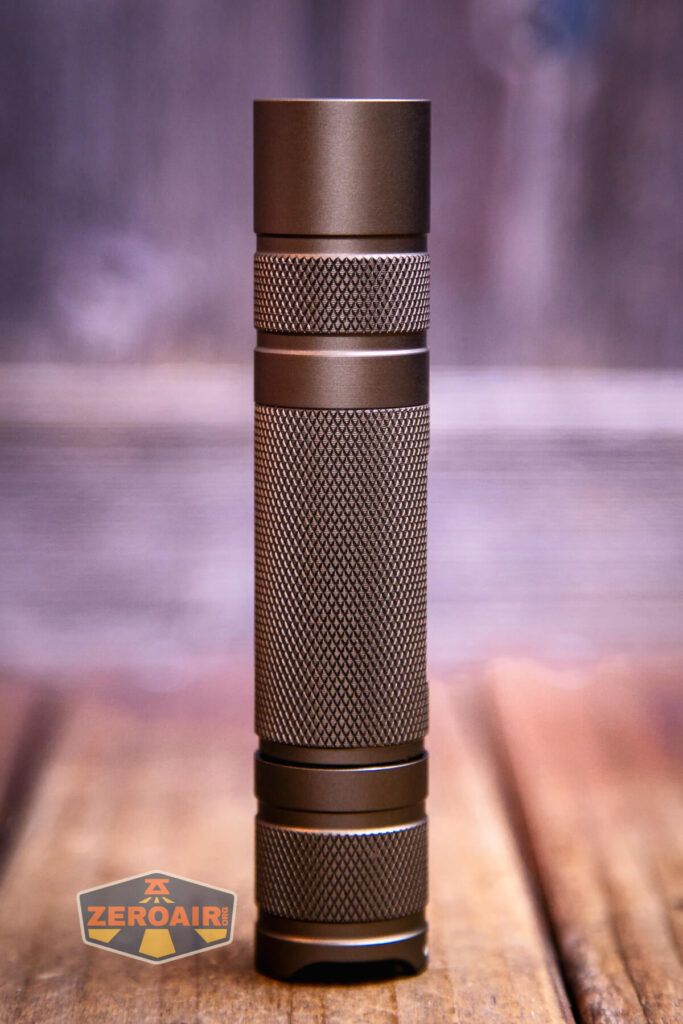
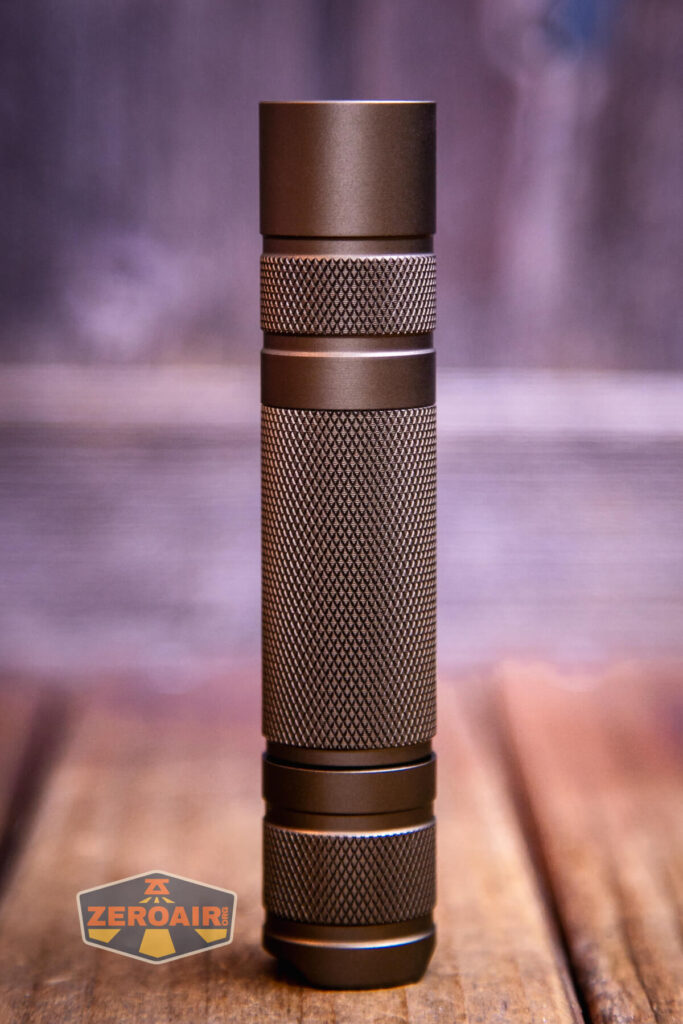
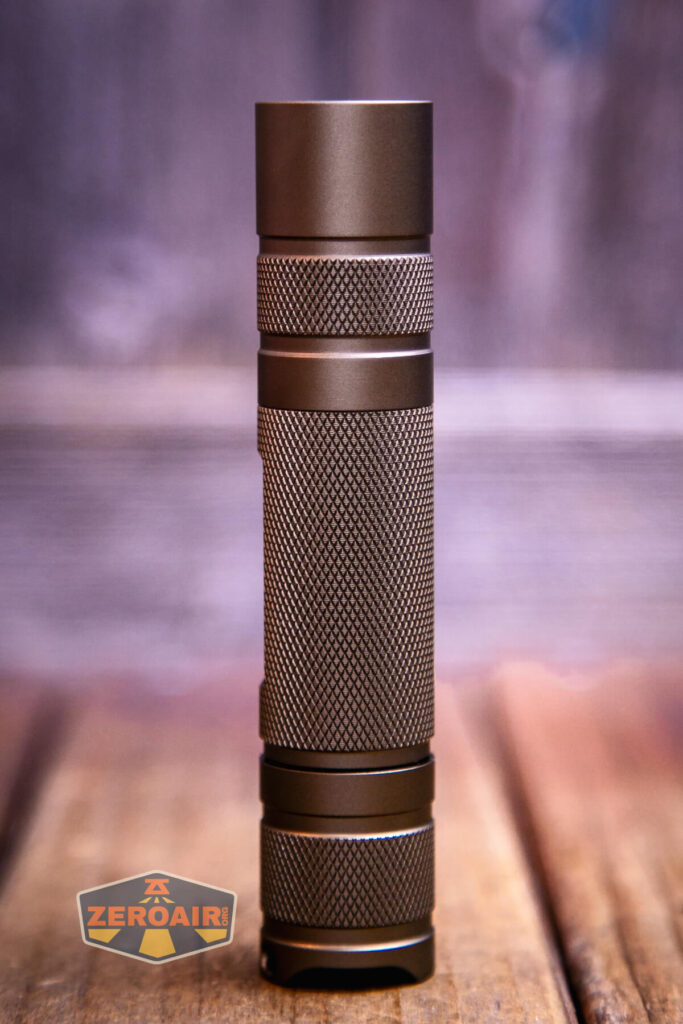
Aside from the emitter, this Convoy S2+ is a standard Convoy S2+. I did opt for the tan color, which I haven’t had previously. It’s nice!
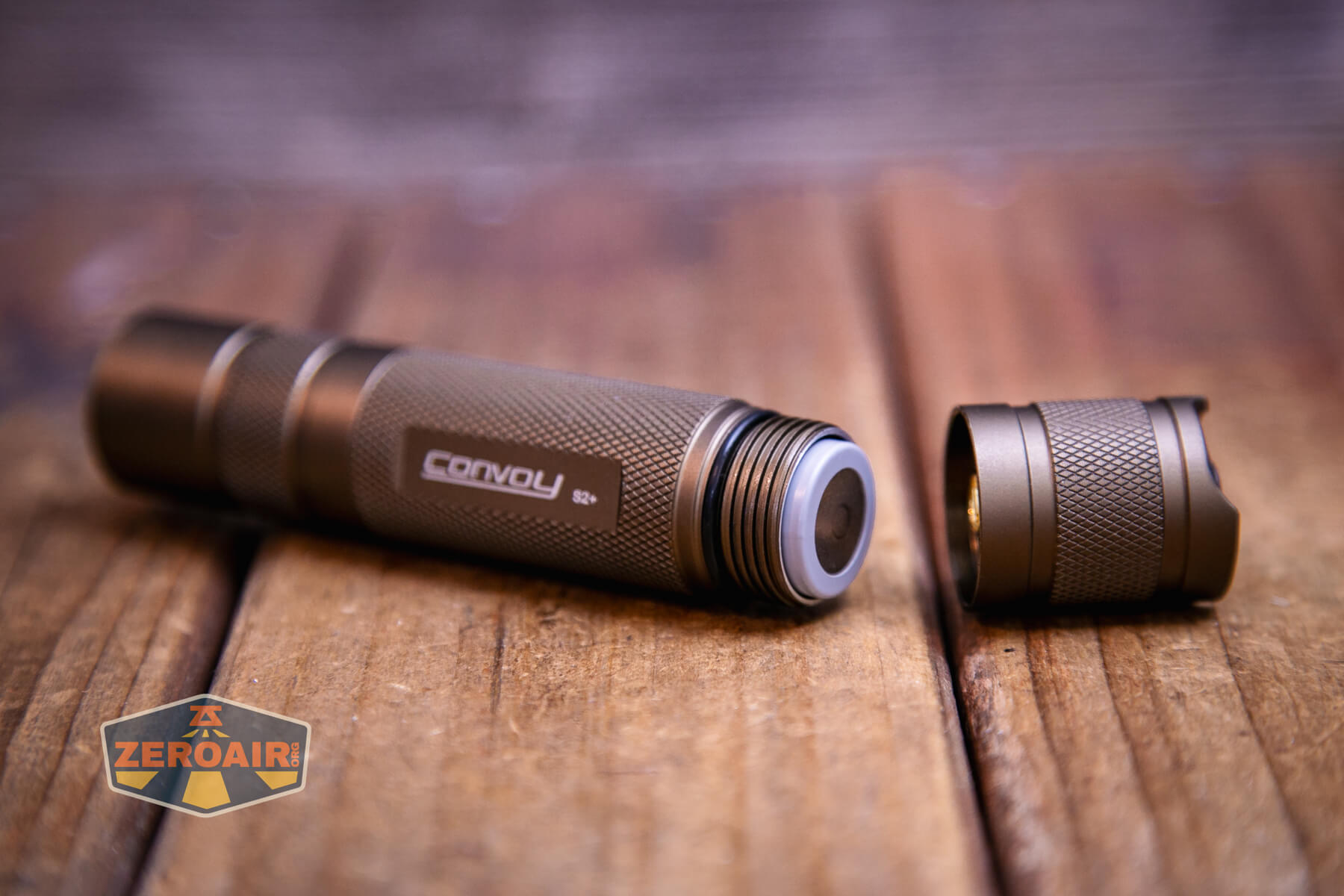
Both head and tail come off the light. The tail parts are held in place by a brass retaining ring.
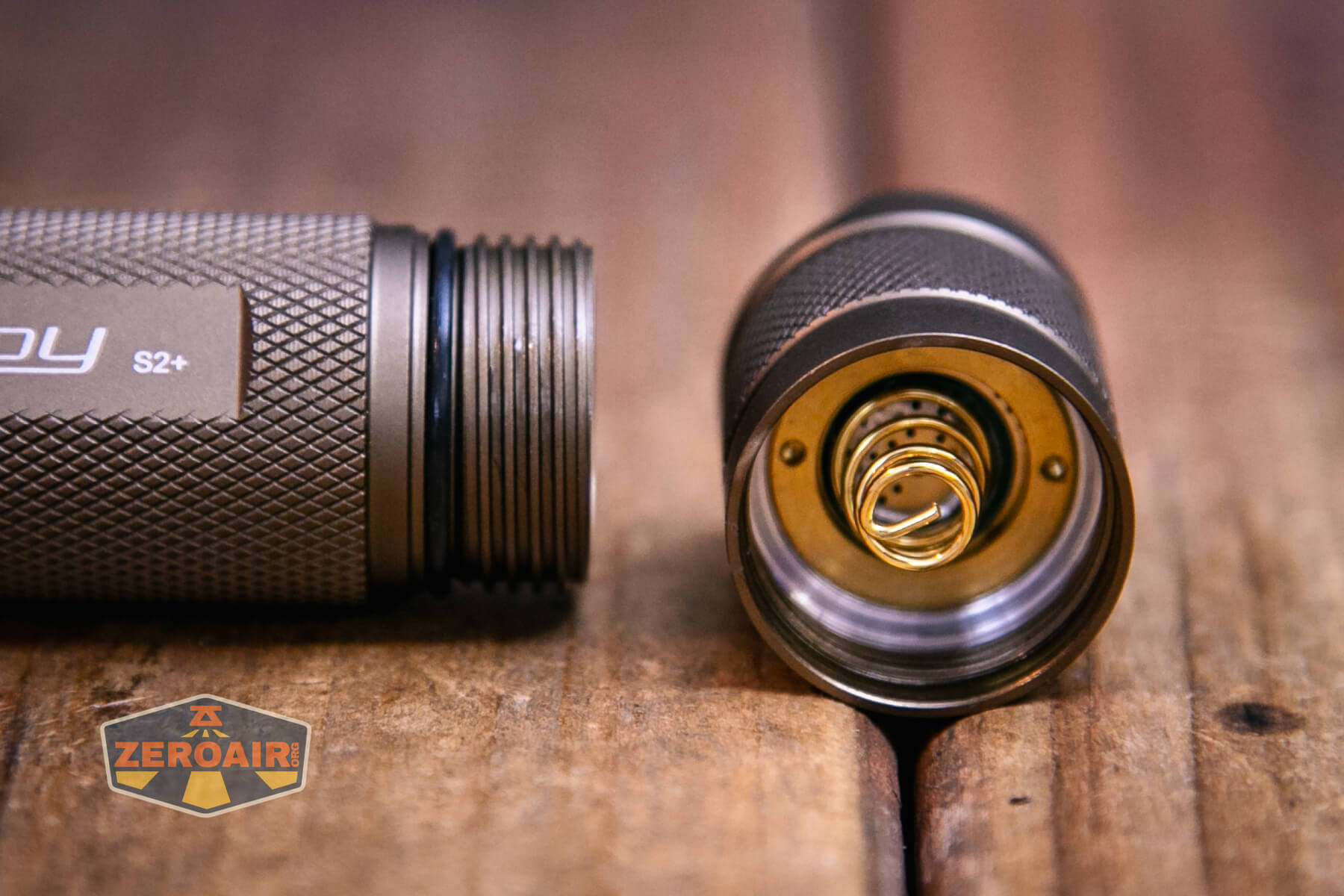
The driver is visible – note how the driver is not soldered to the retaining ring on this version. I’m not sure if that’s a special feature to the 519a version or if it’s the way Convoy ships them all now.

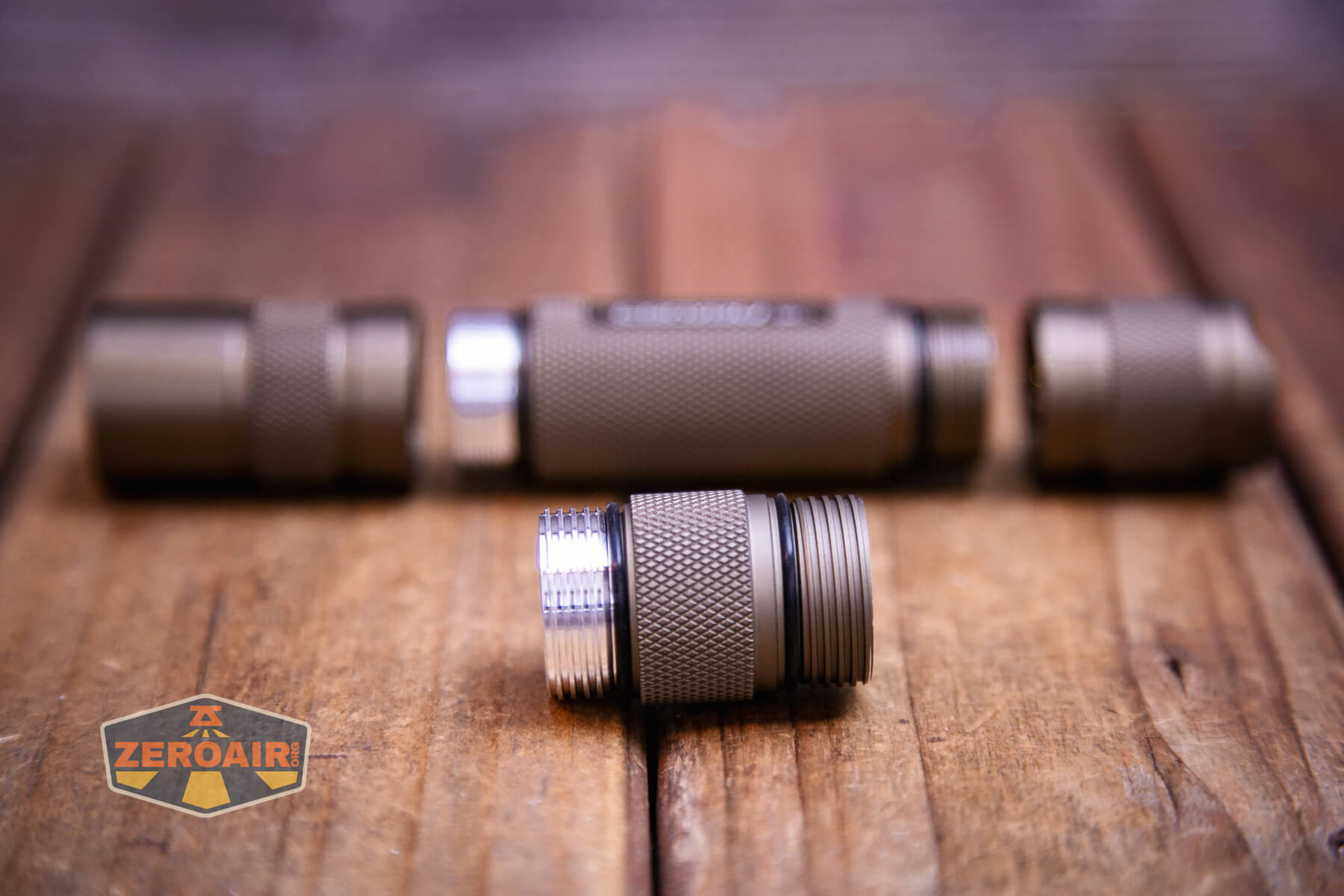
The cell tube is not reversible. One end is anodized, and one is unanodized. The anodized end is the tail end. Also, both bodies have their own o-rings. Below you can see the 18350 tube. I didn’t test with the 18350 tube, but I can’t not buy the matching accessory like this!
Size and Comps
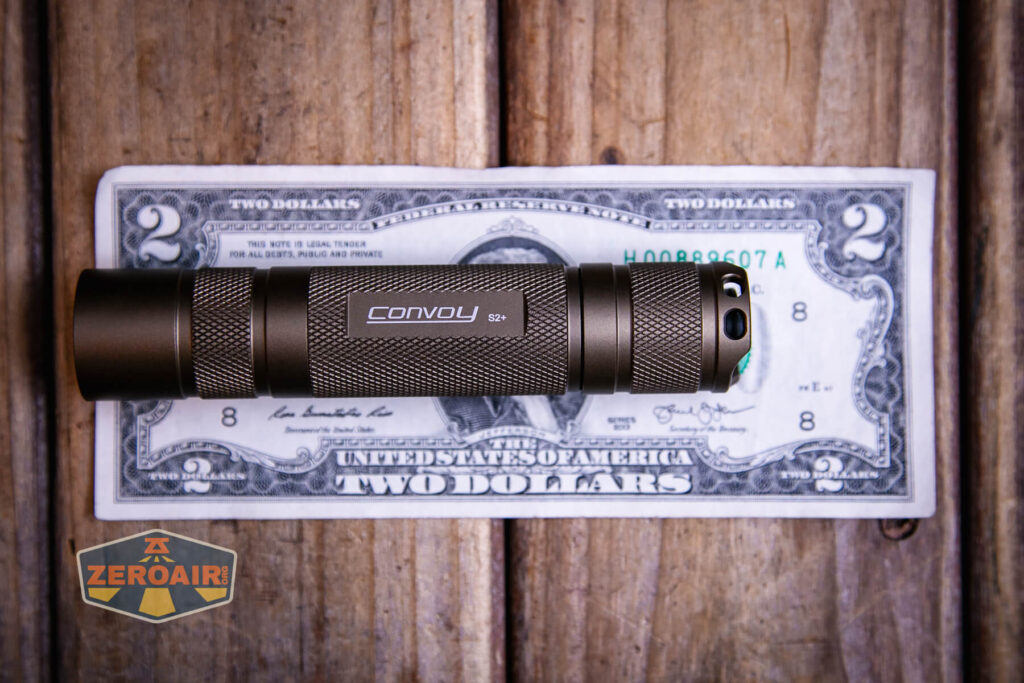
Length: 118.9mm
Width: 24.1mm
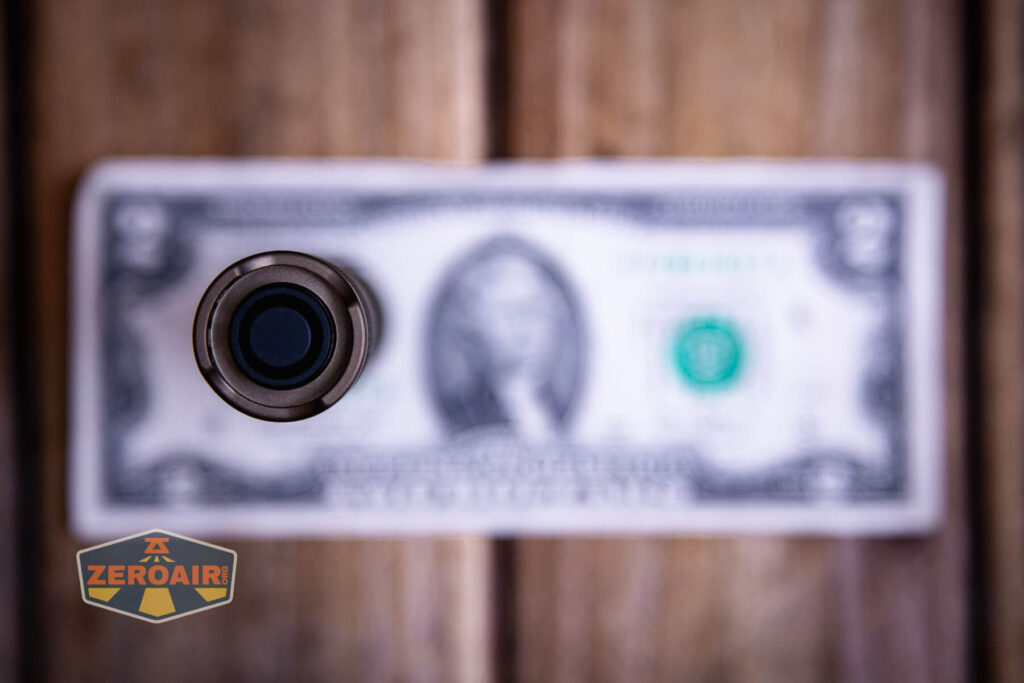
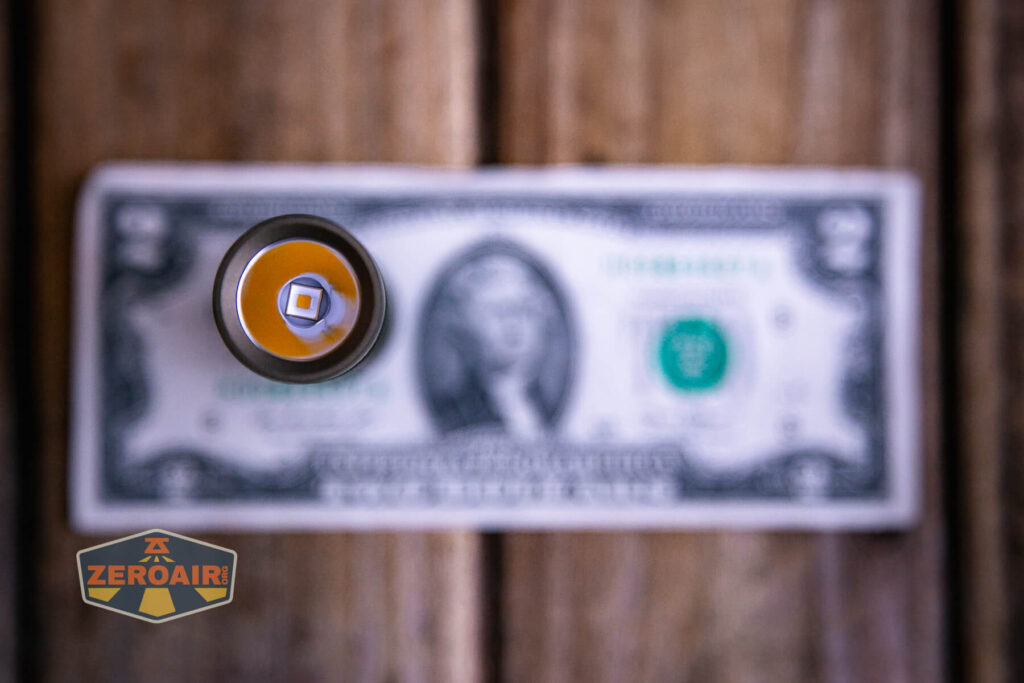
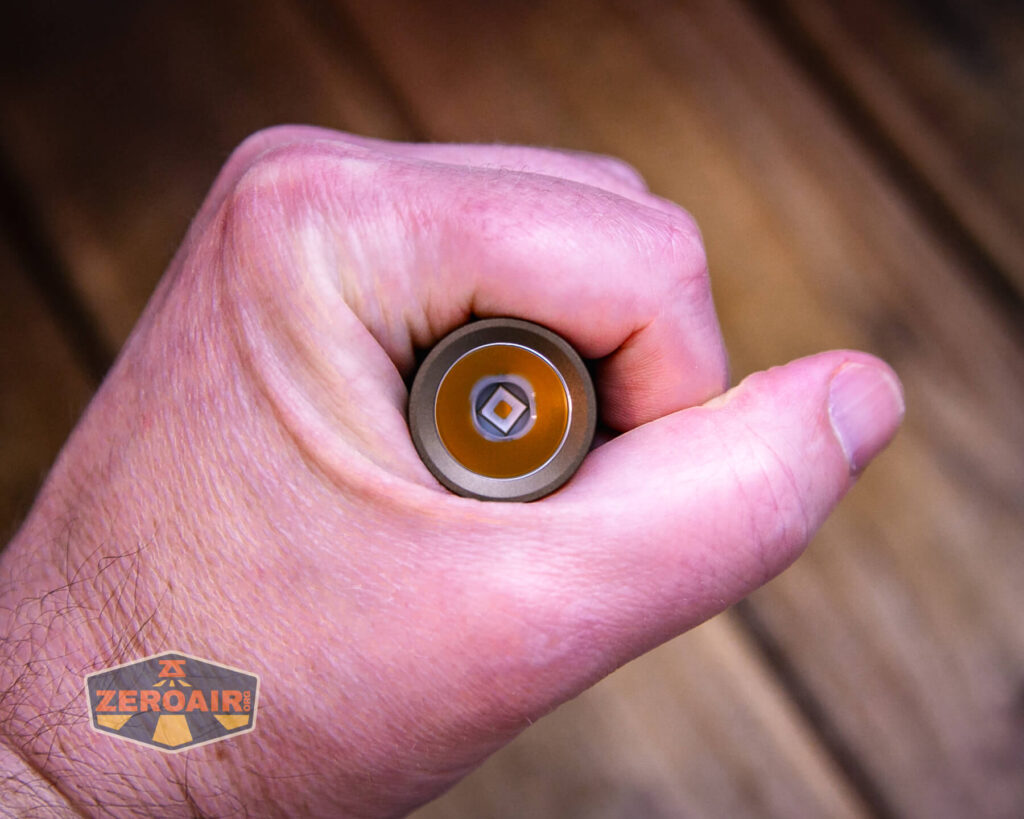
If the flashlight will headstand, I’ll show it here (usually the third photo). If the flashlight will tailstand, I’ll also show that (usually in the fourth photo).
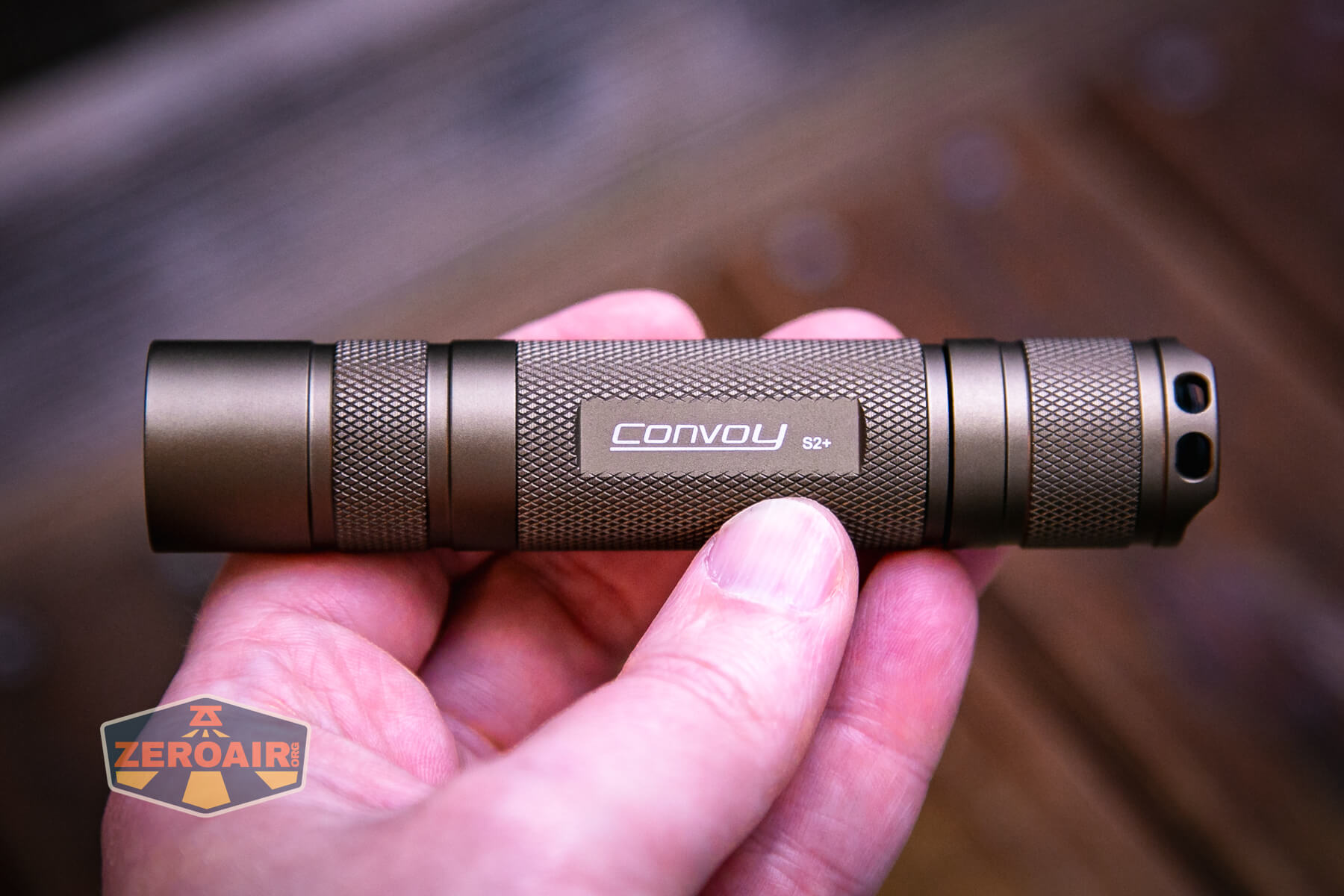
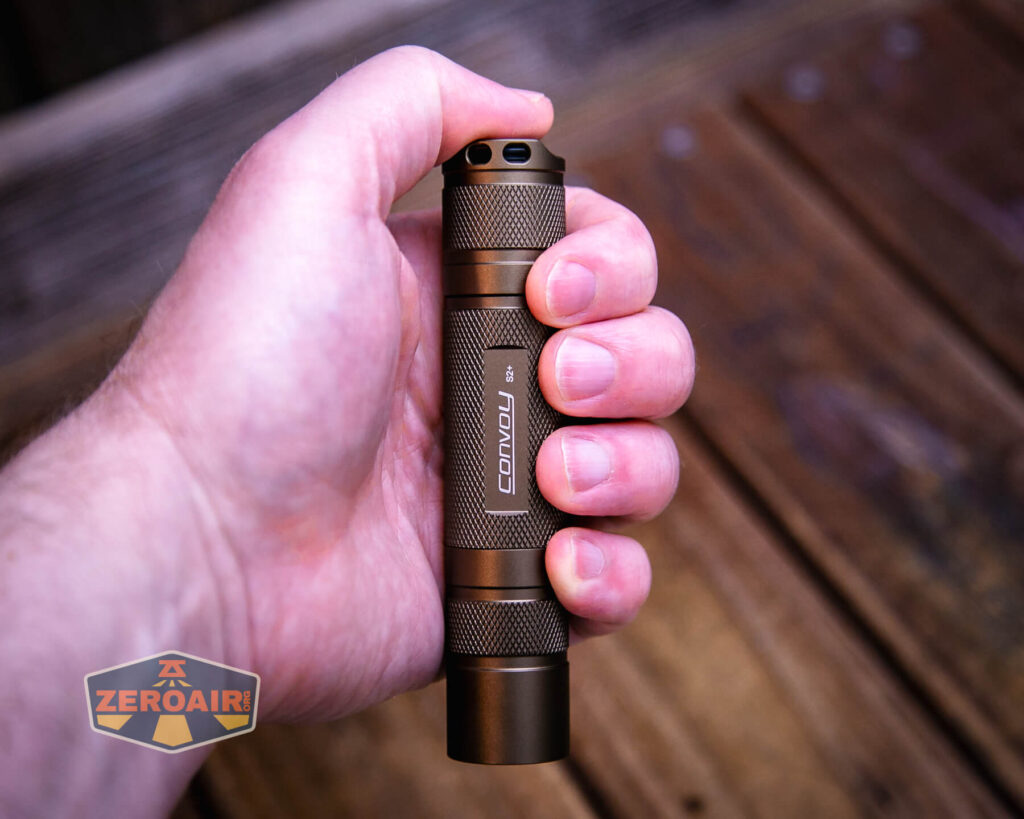
Here’s the test light with the venerable Convoy S2+. The version below is a custom laser-engraved Convoy S2+ host by GadgetConnections.com. I did a full post on an engraved orange host right here! Or go straight to GadgetConnections.com to buy your Convoy S2+ now!
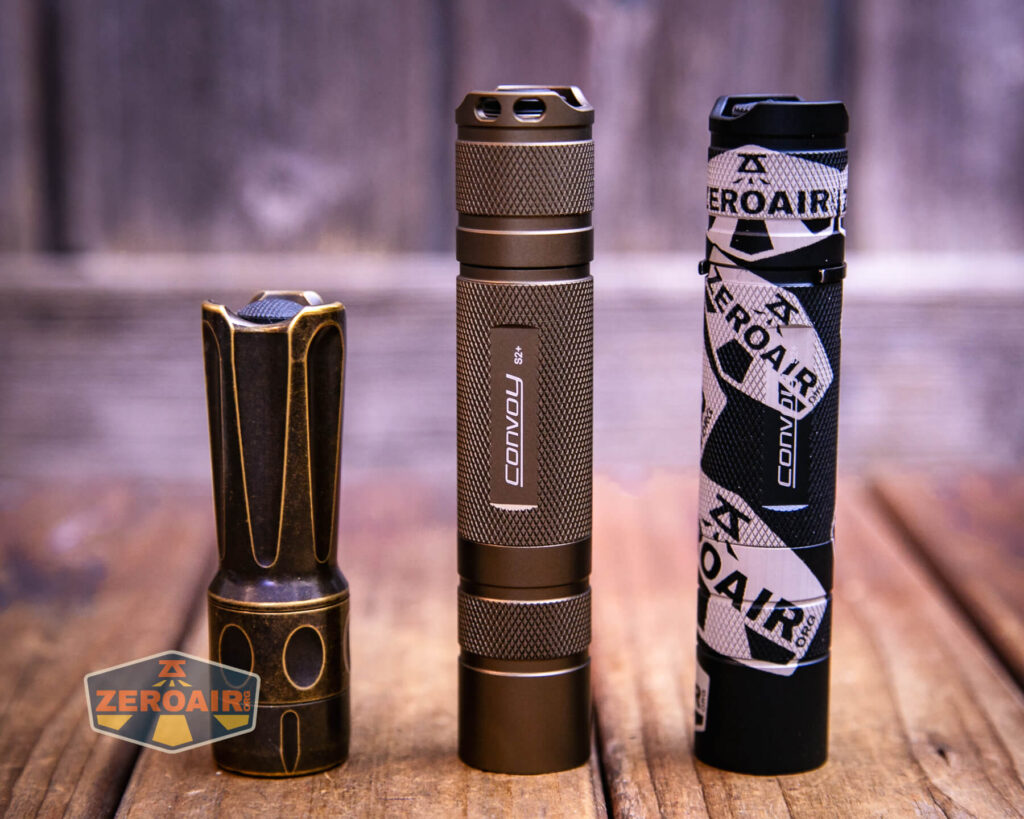
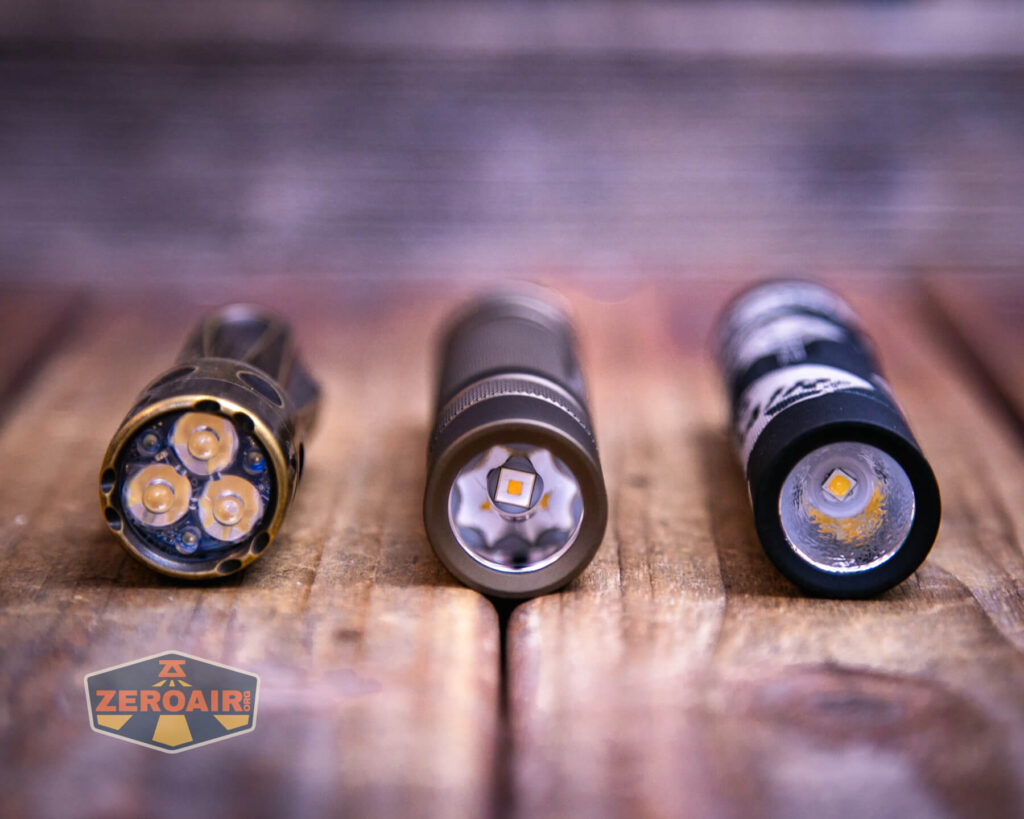
Also above is the light beside a TorchLAB BOSS 35, an 18350 light. I reviewed the aluminum version of that light in both 35 and 70 formats. I also reviewed that specific edition, the “Oveready BOSS FT Collector Vintage Brass” 35. I love it!
Retention and Carry
There are three main ways to carry the S2+. The first is a pocket clip, which is a separate purchase. I happened to have a few on hand. You should buy one with the light! Unlike me, because I failed to do so with this purchase.  You can see the pocket clip in my other Convoy S2+ reviews.
With the pocket clip, this light can be carried either orientation and deeper or shallower, depending on preference.
Included with this purchase is a lanyard. The lanyard fits through two holes on the tailcap. Note that the holes are only on one side of the tail, so the lanyard and screw clip can’t be used together unless actually attaching the lanyard to the clip. I don’t know if the clip will withstand that type of use, though (it’s fairly thin).
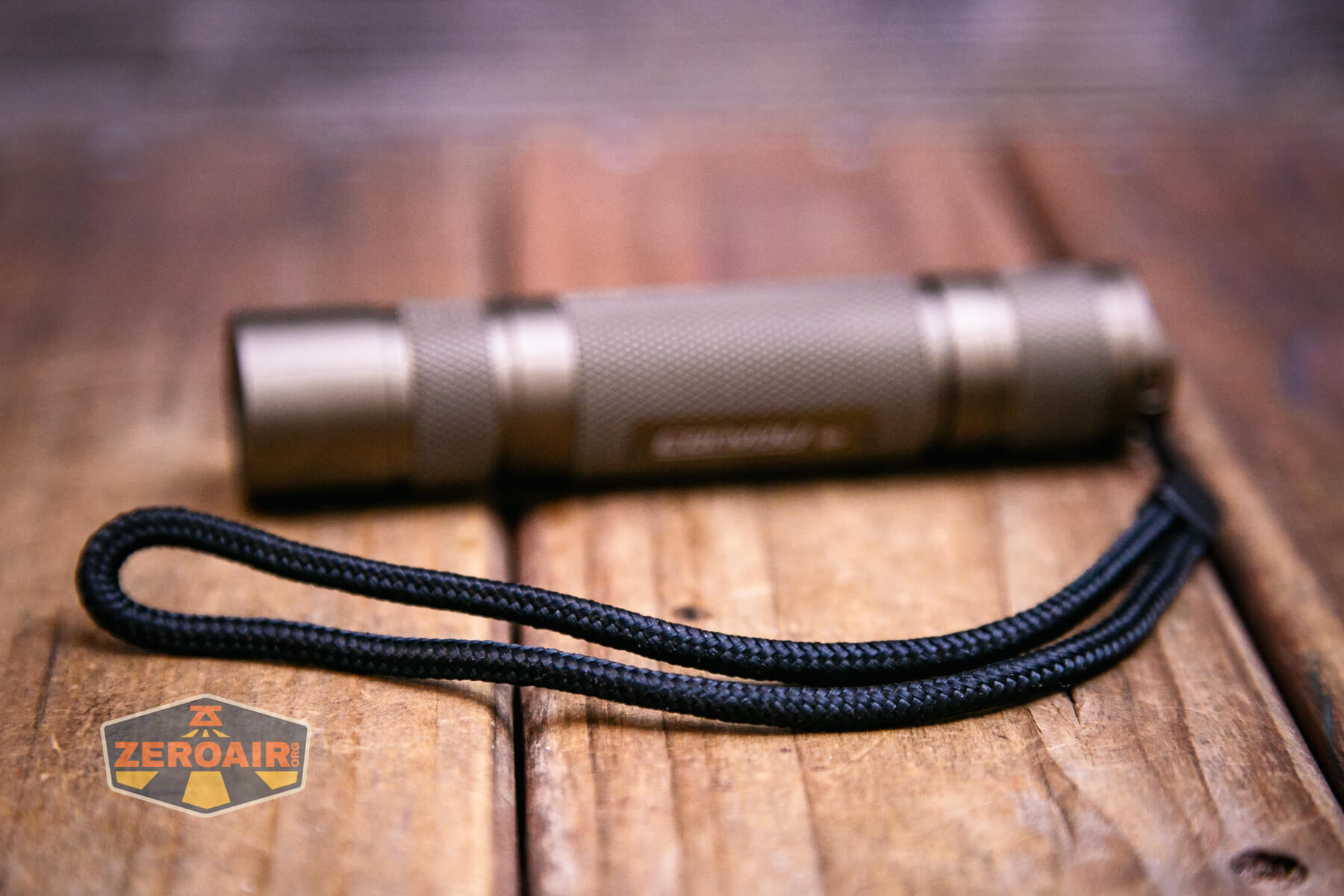
This lanyard is the “simple” variety, and that’s fine. I never use lanyards anyway!
Power and Runtime
The Convoy S2+ is powered by a single lithium-ion cell. The default tube supports a single 18650 cell. The accessory tube supports a single 18350 cell.
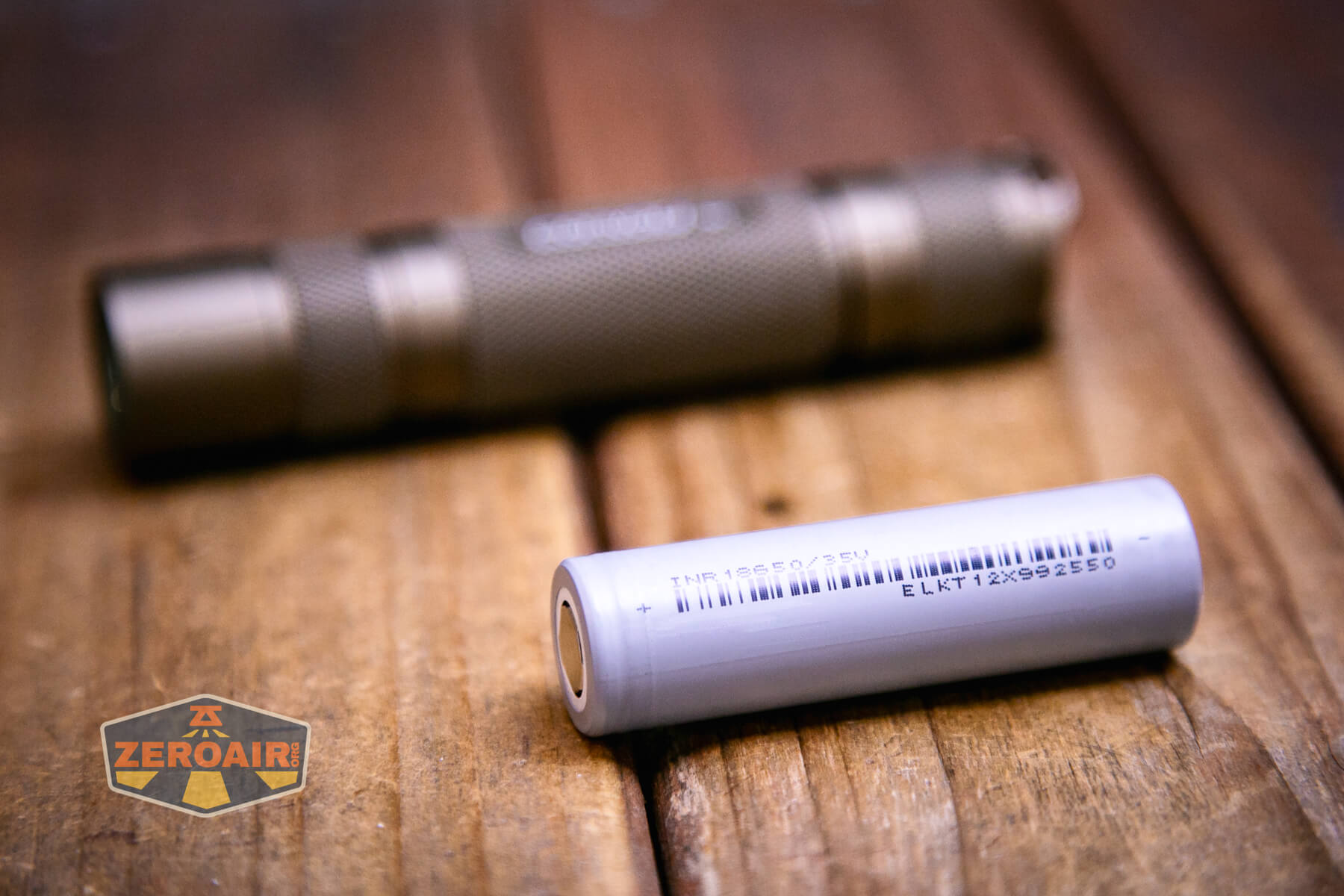
The cell goes into the light in the normal direction – positive end toward the head.
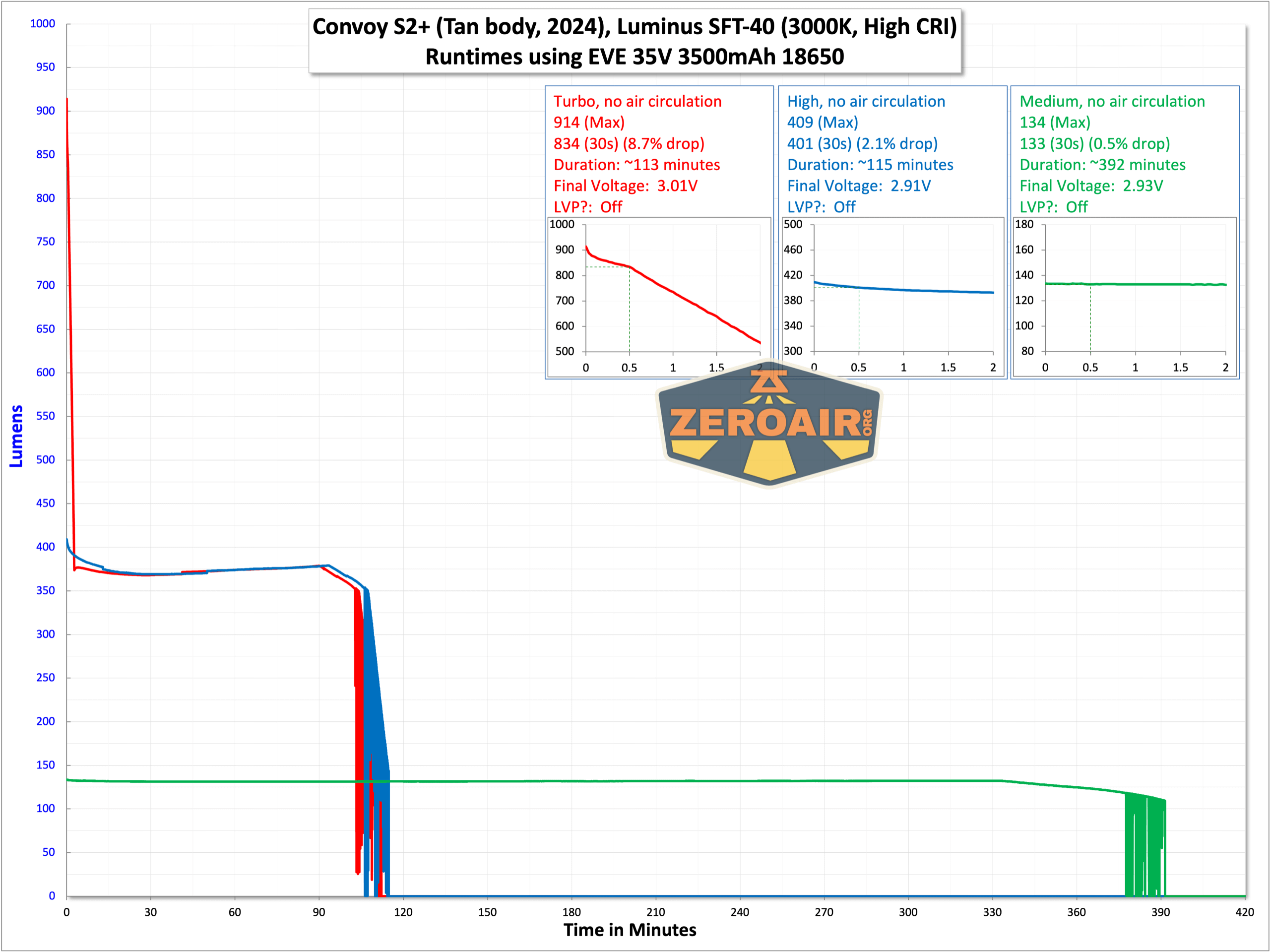
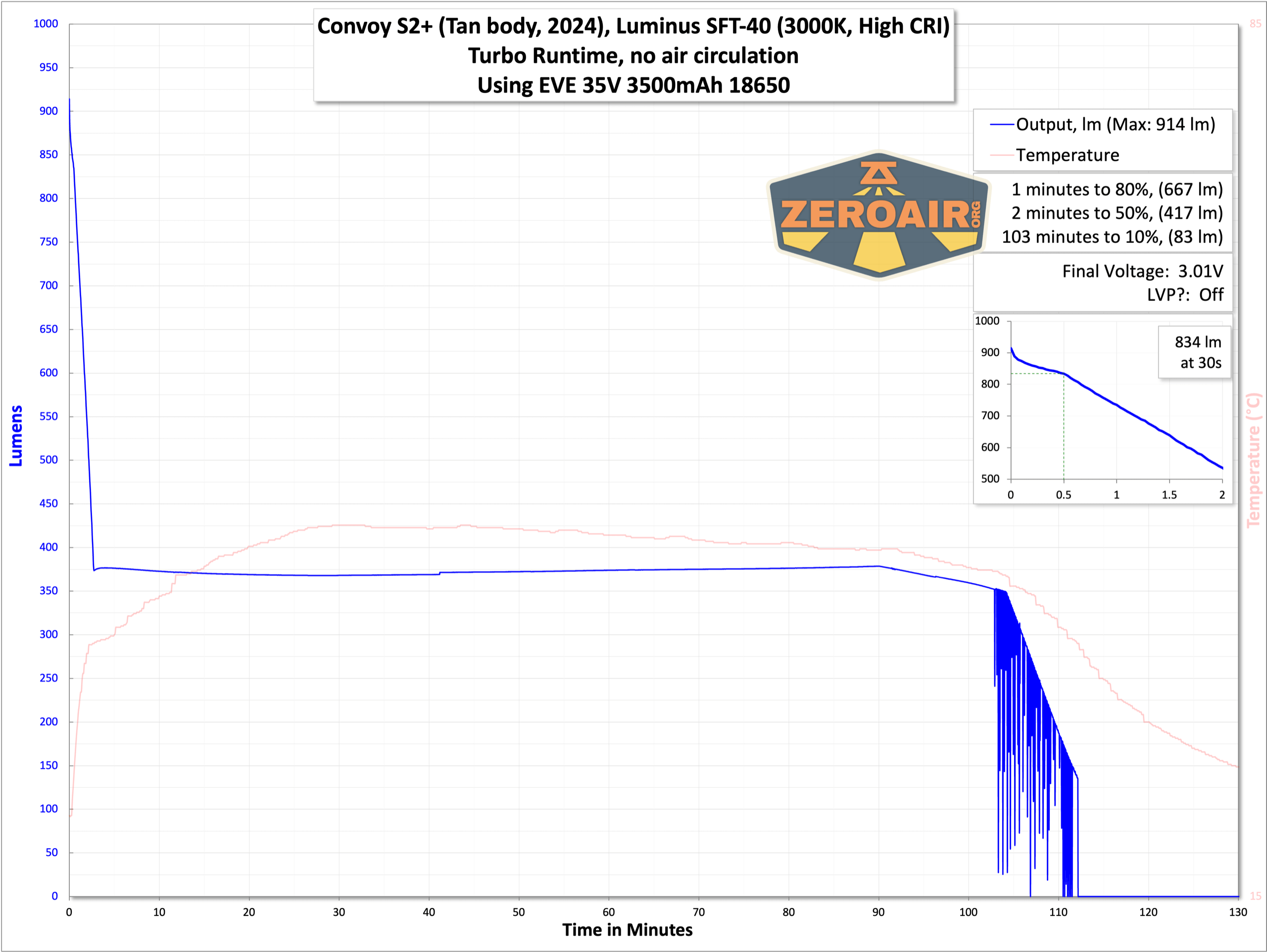
Here are a few runtimes for the 18650 setup. The light does have low voltage protection, and on bench power seemed to shut off electronically at around 2.6V. That’s just a shade low, but still acceptable. This performance is very typical of the Convoy S2+ 12-mode driver. (Again, it’s the emitter with regards to CRI and CCT that we’re most interested in here!)
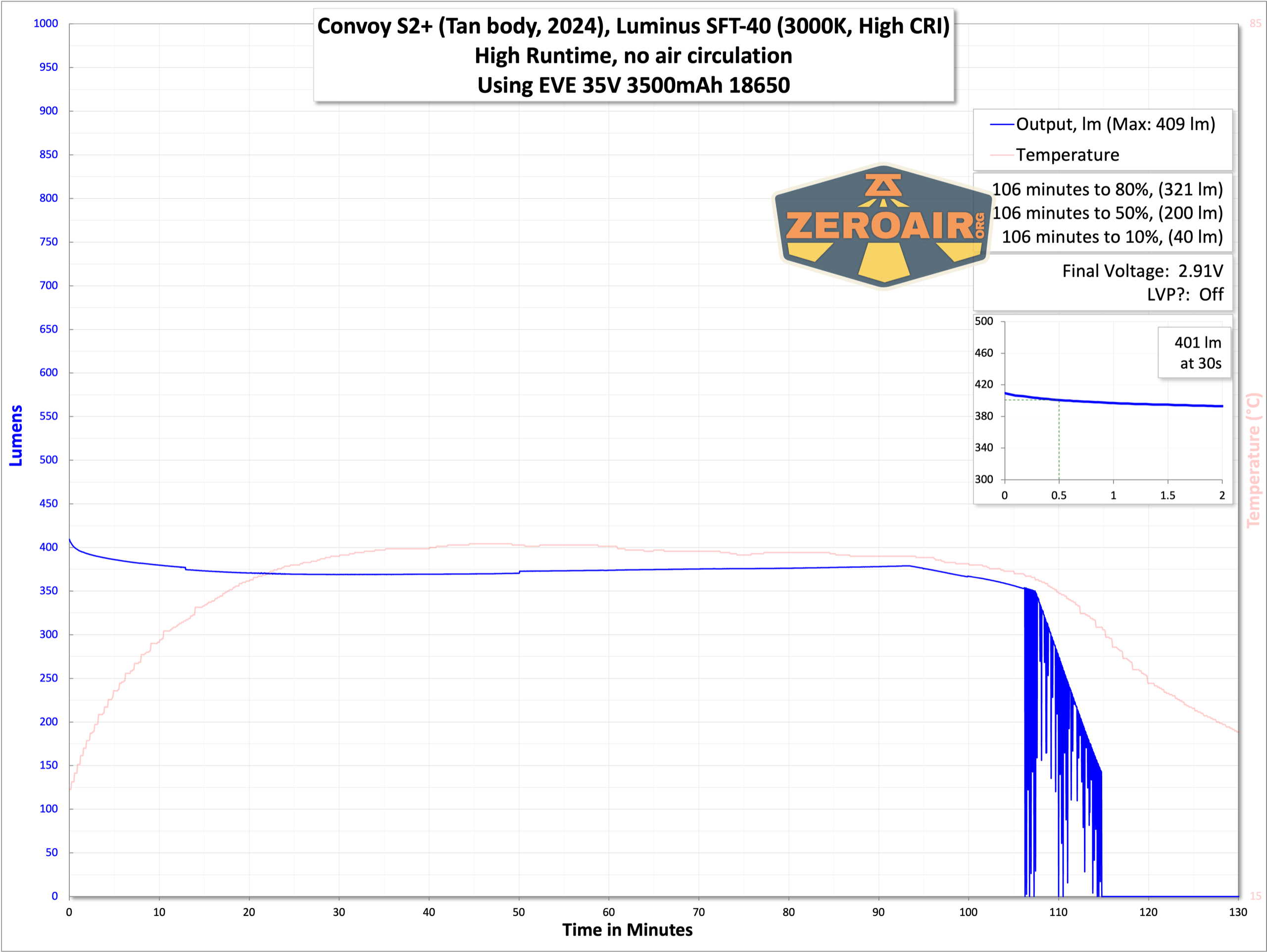
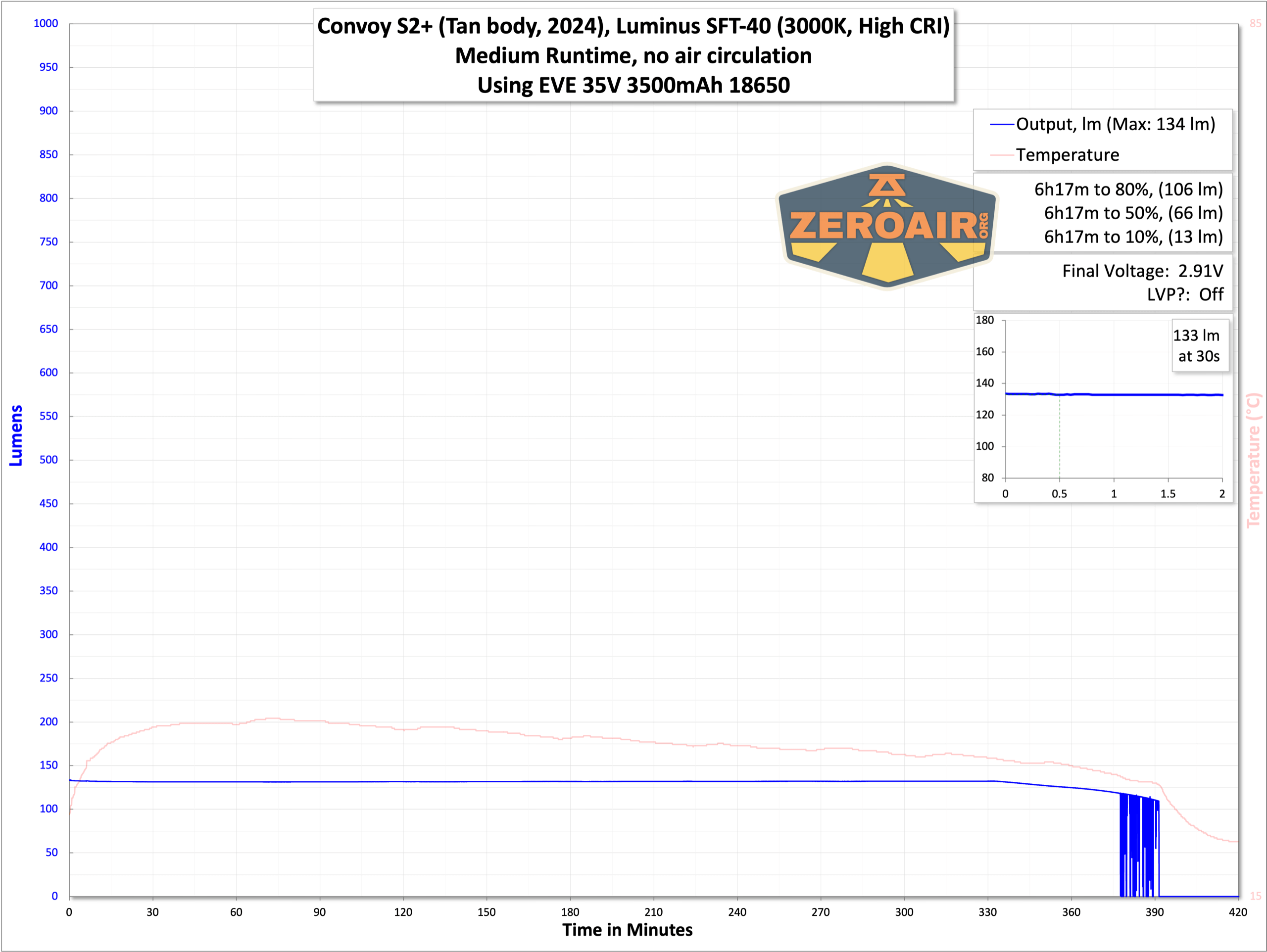
Modes and Currents
| Mode | Mode Claimed Output (lm) | Claimed Runtime | Measured Lumens | Tailcap Amps |
|---|---|---|---|---|
| 100% | – | – | 914 (0s) 834 (30s) |
5.43 |
| 35% | – | – | 409 | 1.89 |
| 10% | – | – | 134 | 0.53 |
| 1% | – | – | 11 | 0.04 |
| 0.1% | – | – | 0.7 | [low] |
Pulse Width Modulation
This version of the S2+, unlike some previous versions, does not seem to use PWM!
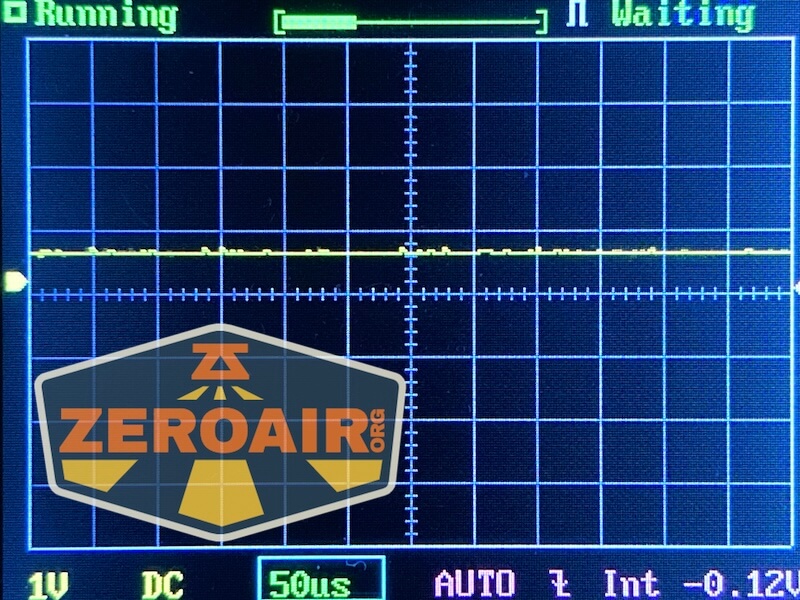

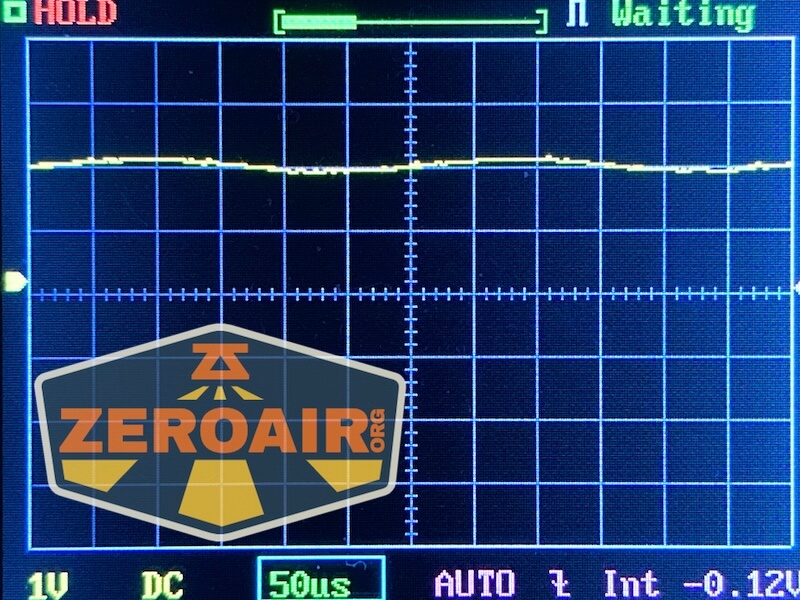
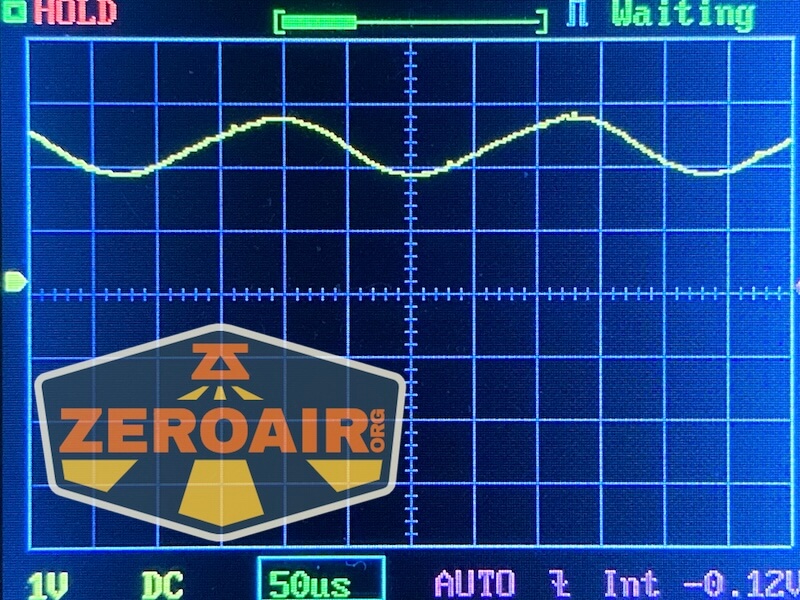
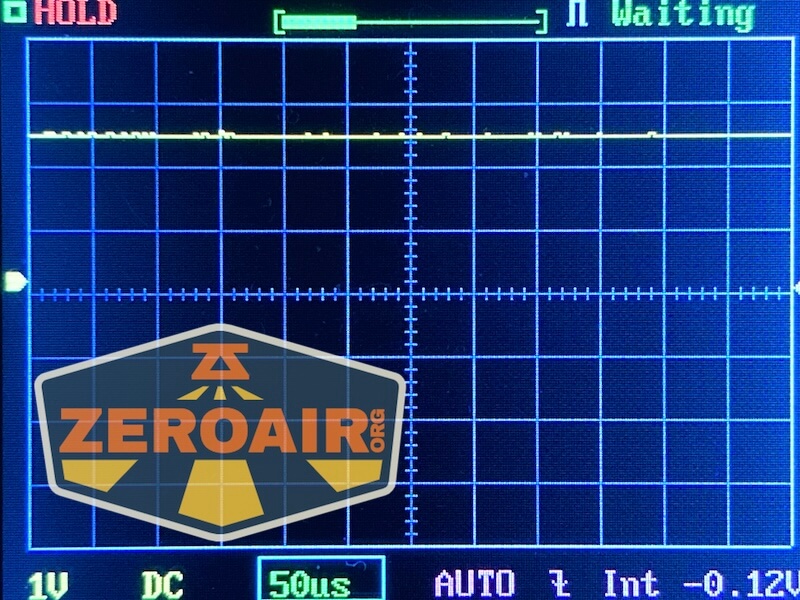
Here you can see a “baseline” – a chart with almost no light hitting the sensor. Then there’s the Ultrafire WF-602C flashlight, which has some of the worst PWM I’ve seen. It’s so bad that I used a post about it to explain PWM! Here are multiple timescales (10ms, 5ms, 2ms, 1ms, 0.5ms, 0.2ms) to make comparing this “worst” PWM light to the test light easier. That post also explains why I didn’t test the WF-602C at the usual 50us scale.


User Interface and Operation
There’s a single switch on the Convoy S2+ SFT40 3000K flashlight. This is a reverse mechanical clicky. A reverse clicky has the benefit of allowing mode changes while the light is on. But this also means that the switch does nothing until it is on – no momentary action whatsoever. This is the 12-mode group user interface, but a four-mode group is also available.
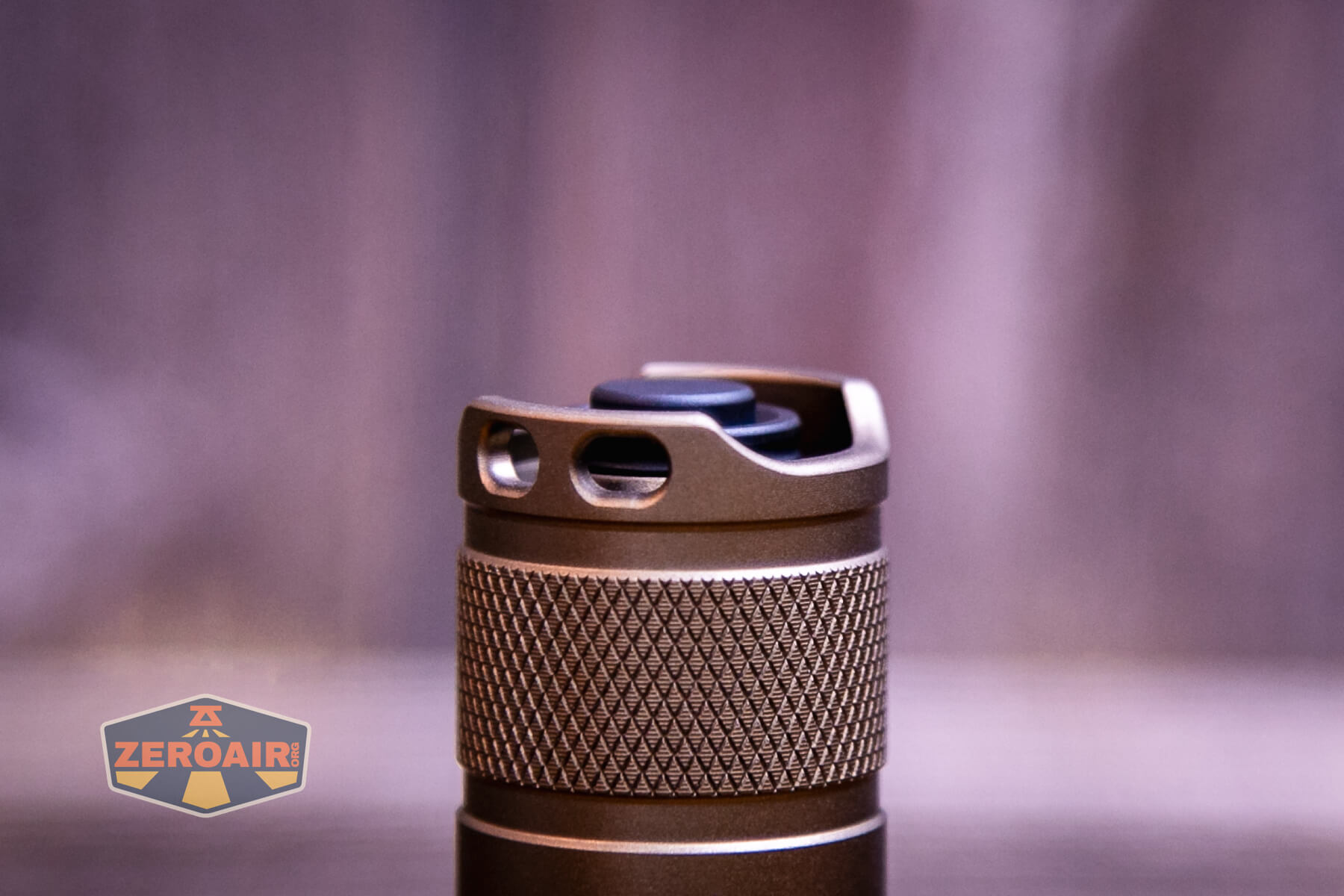
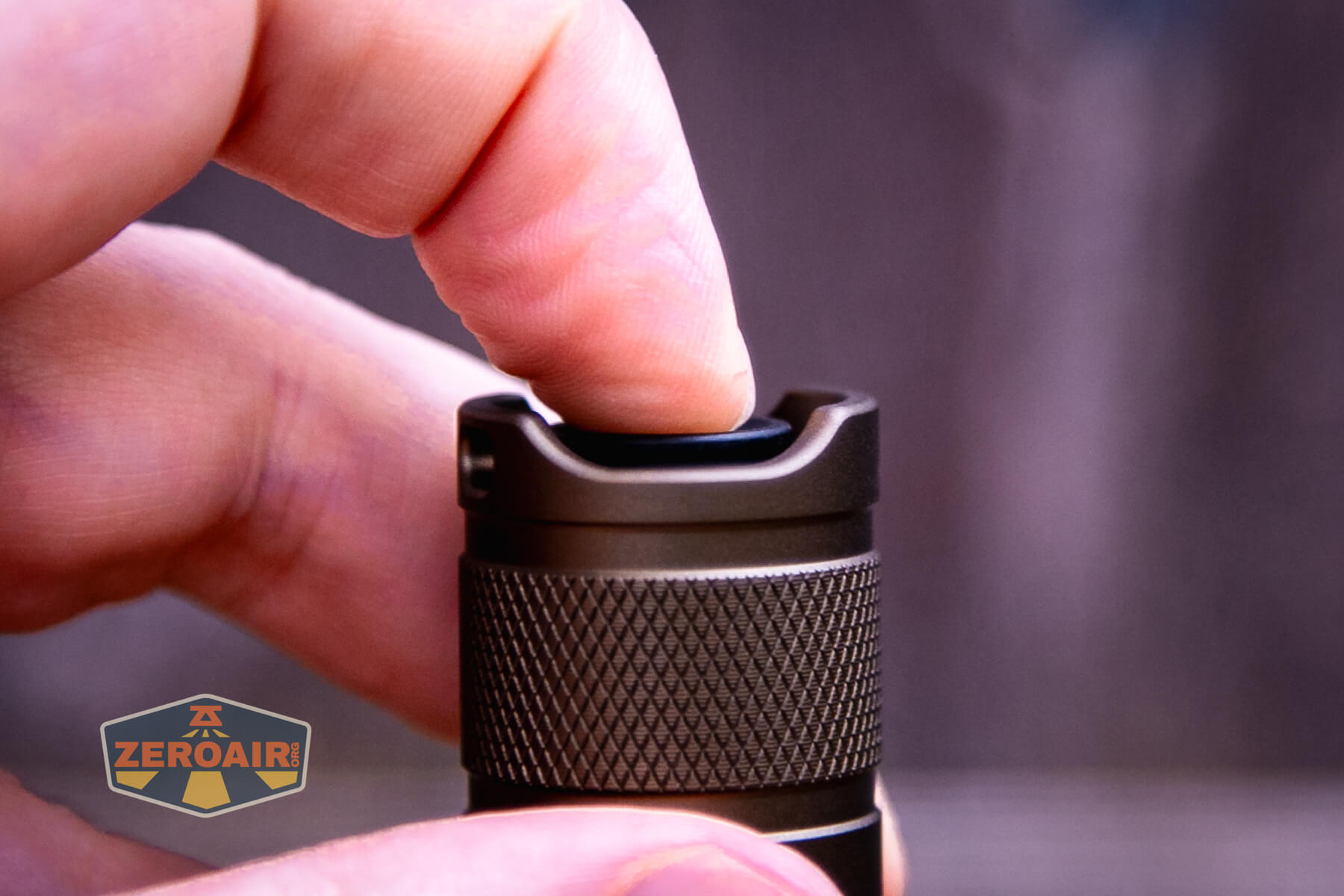
The action on these metal switches is fantastic. It’s like clicking a good Bic Clic Stic pen – just a rewarding action. And idk. This coated (black) version seems somehow smoother than the uncoated version!
This driver is known as “Biscotti” and has a bunch of mode groups. Actually, this is reportedly not true Biscotti – that’s why I called it “Fauxcotti.” It’s nearly the same though. Mode memory can be turned on or off (yay!), and programming is easy! But there are simply too many possibilities for me to list the user interface in a table as I usually do. Here is Simon’s flow chart for the UI.
Here’s the official guide for the Biscotti firmware:
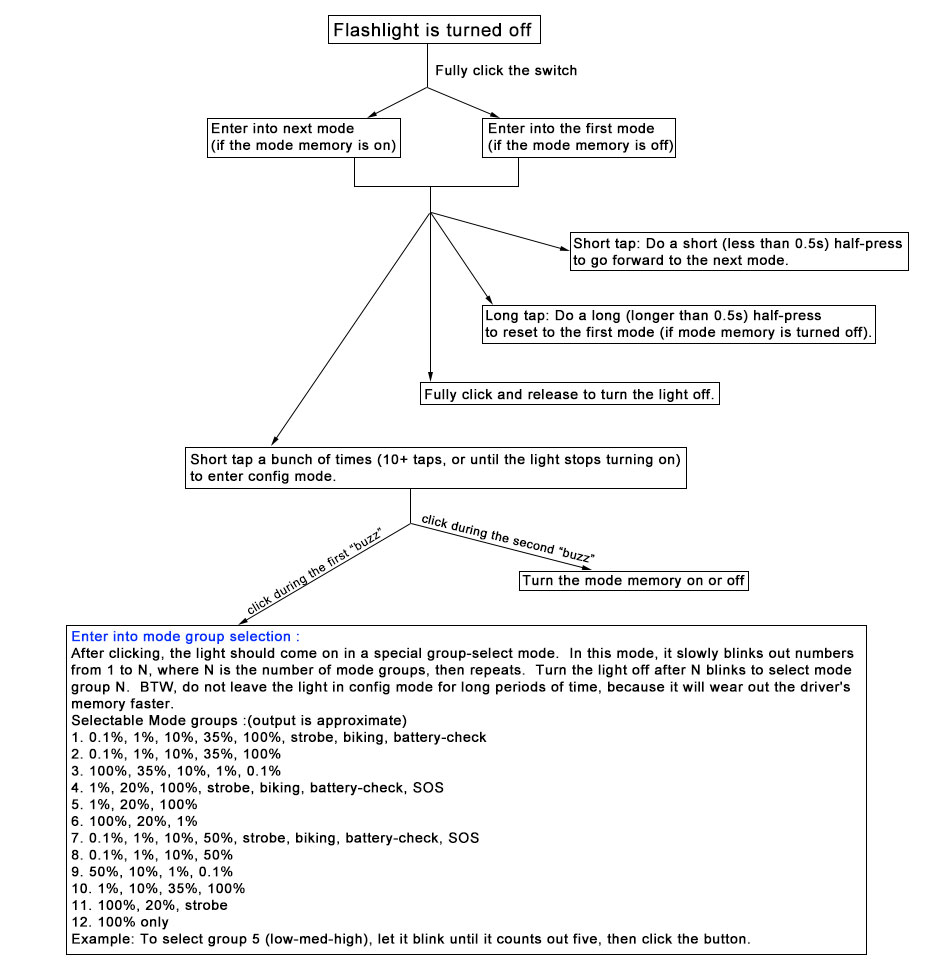
From the mode group selection above, the light ships in mode group 1. You’ll want to switch it to mode group 2 quickly of course.  And I always turn off memory if possible (and it’s possible here!). I made a first pass at my flow chart, which you can see below.

If something’s wrong (or even just “unclear”) in there, please let me know!
LED and Beam
And finally, after nearly 1300 words, we make it to the whole point of this post! This emitter is a Luminus SFT-40. That’s not new or interesting. What is new and interesting is that this version is 3000K (warm!) and also very high CRI. More on that later. But for now, drink in this eggy yellow reflection in that smooth reflector. It’s simply fantastic.

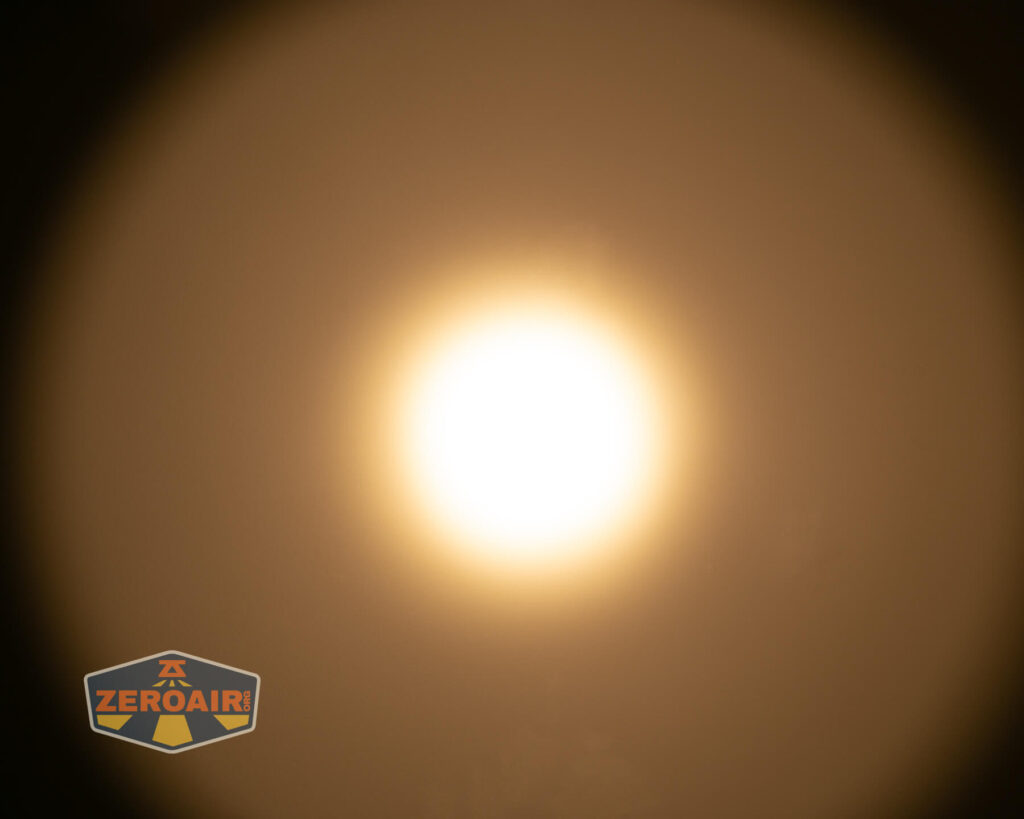
The beam for this emitter in this reflector is not perfect. There are some artifacts that sort of mess up the beam shape, but my guess is that if you aren’t white wall hunting, you’ll never notice this. But you can swap in an orange peel reflector or there’s probably a TIR that will work. I’m happy enough with it like this, though.

LED Color Report (CRI and CCT)
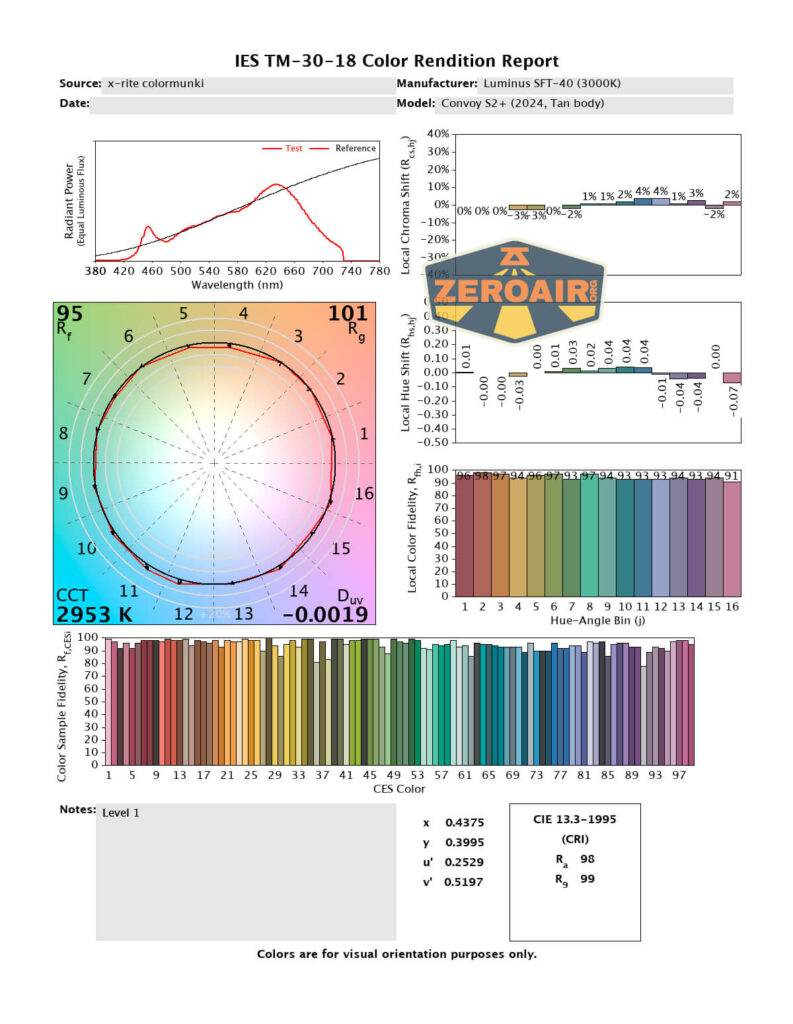
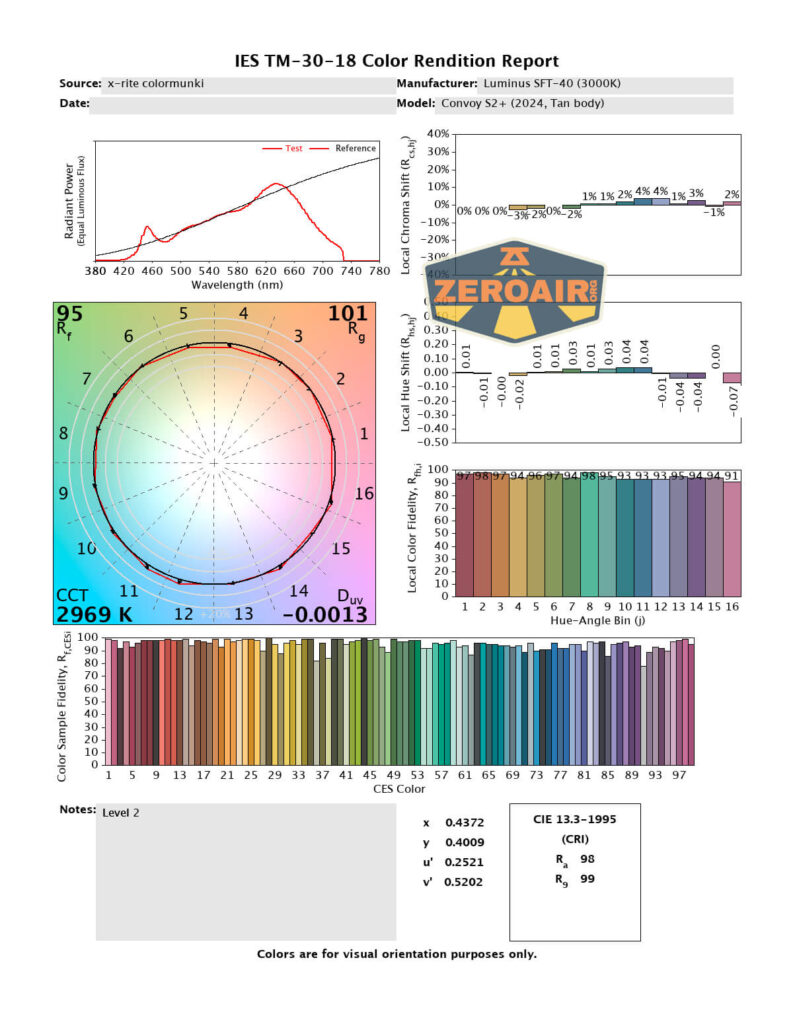
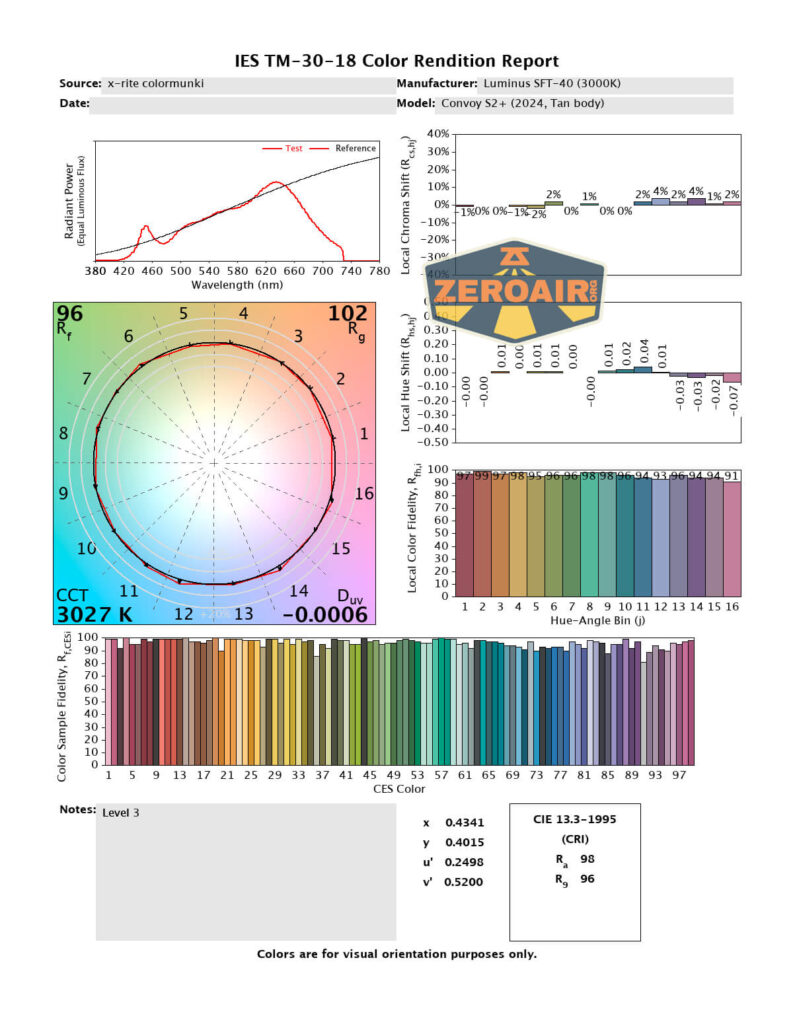
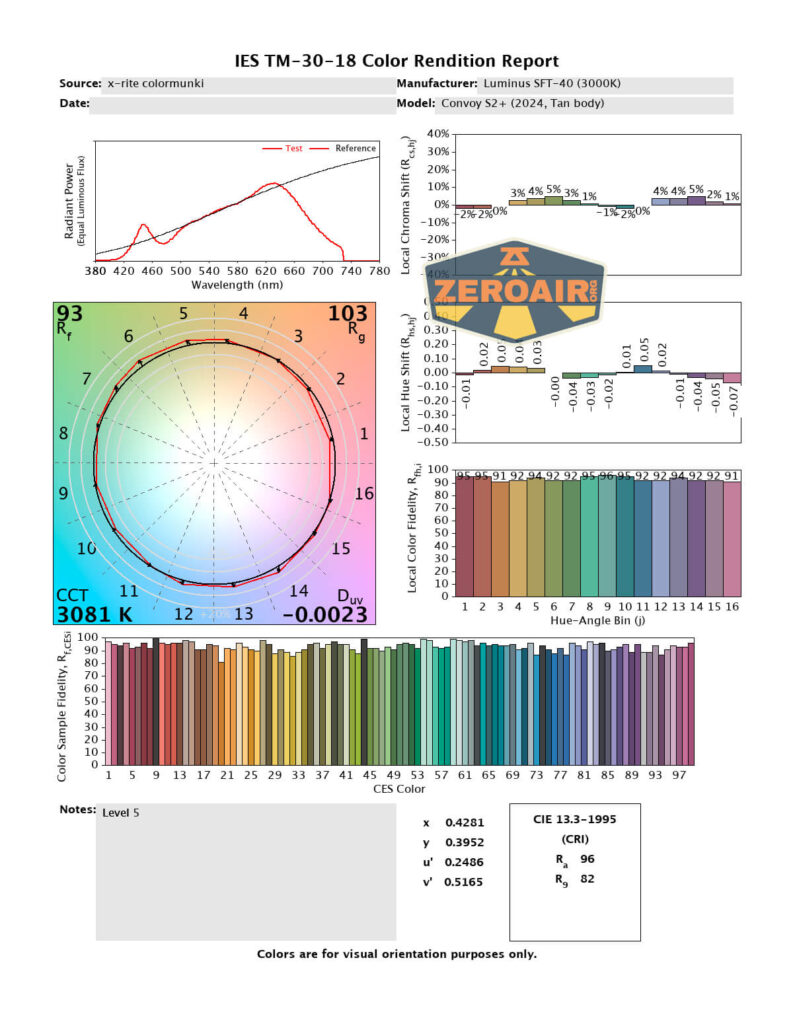
The claim for the Convoy S2+ SFT40 3000K flashlight is 3000K. That claim is met nearly across the board. I don’t think there’s a CRI claim made, but this emitter is very high CRI. 98 CRI on the lower modes, and only down to 96 on the highest mode. That’s truly exceptional. You can gauge that by looking at the big circle. Note how the red line matches the black line nearly perfectly. (On a 100 CRI light, that red would overlap the black perfectly!) All of the modes have negative Duv, too. It’s not even “fuss-worthy” negative – no one will say this light is “too pink.” This may be the perfect emitter!

Beamshots
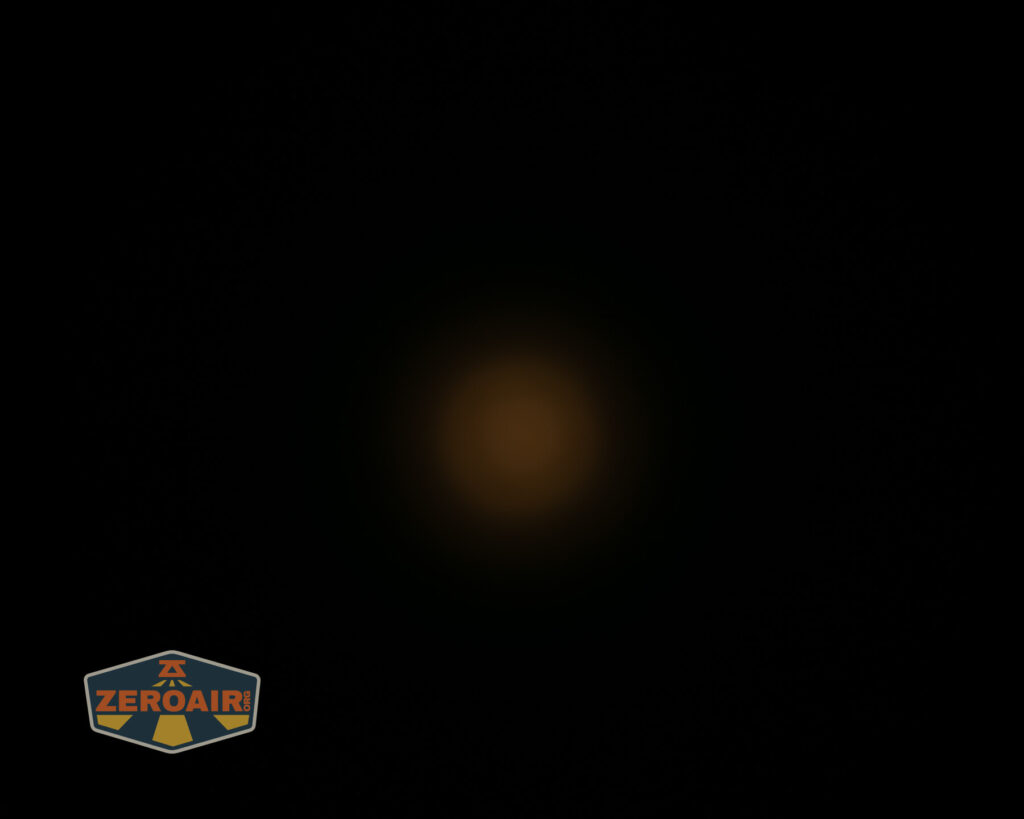
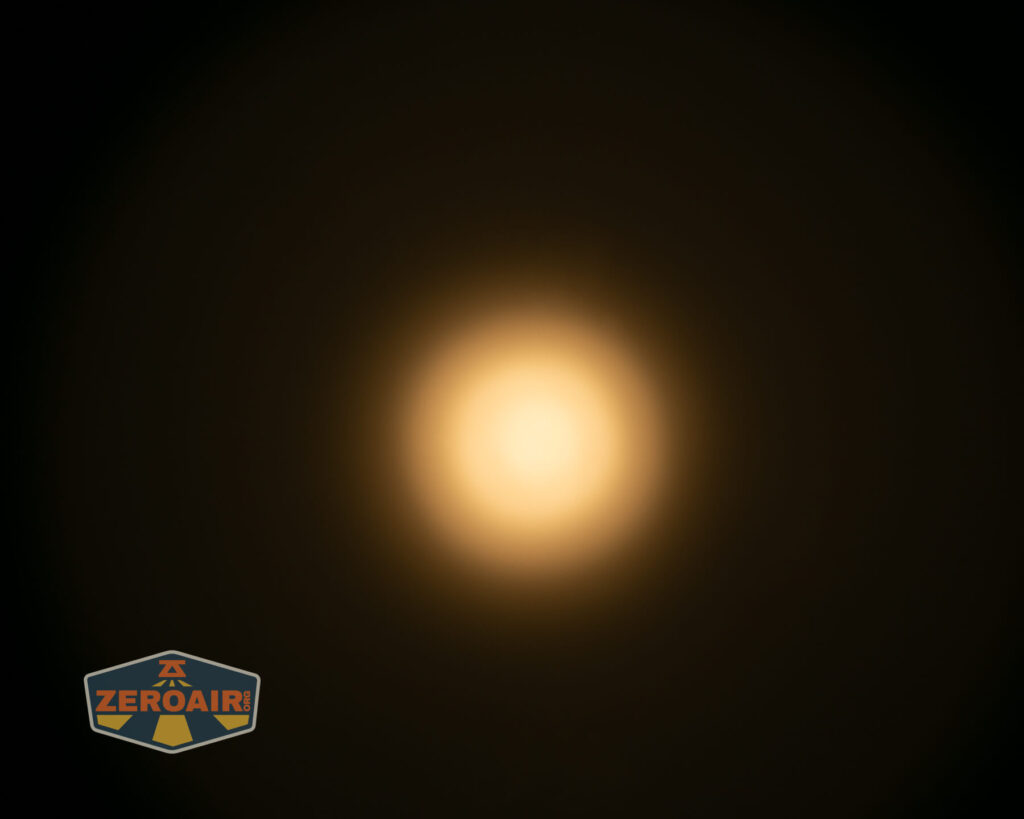
These beamshots always have the following settings: f8, ISO100, 0.3s shutter, and manual 5000K exposure. These photos are taken at floor level, and the beam hits the ceiling around 9 feet away.


Tint vs BLF-348 (KillzoneFlashlights.com 219b version) (affiliate link)
I keep the test flashlight on the left and the BLF-348 reference flashlight on the right.
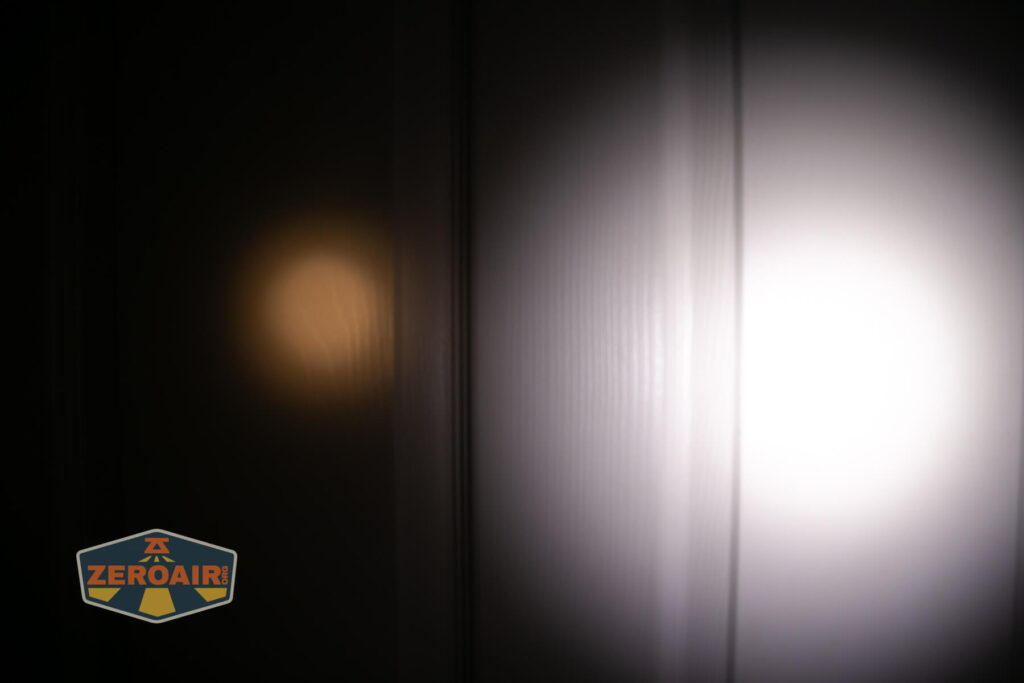
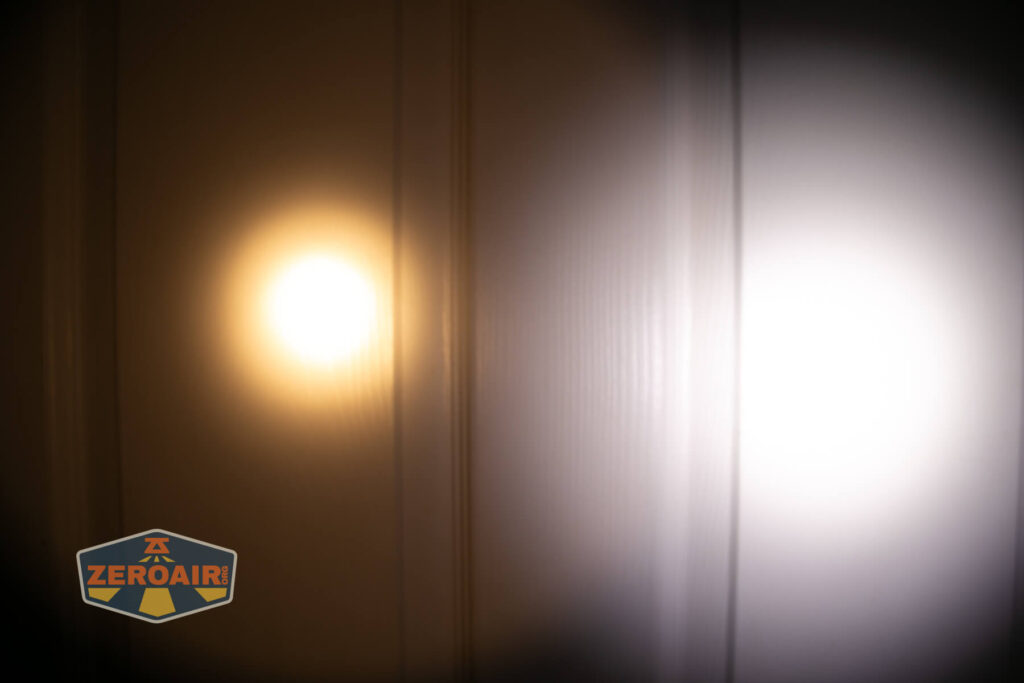
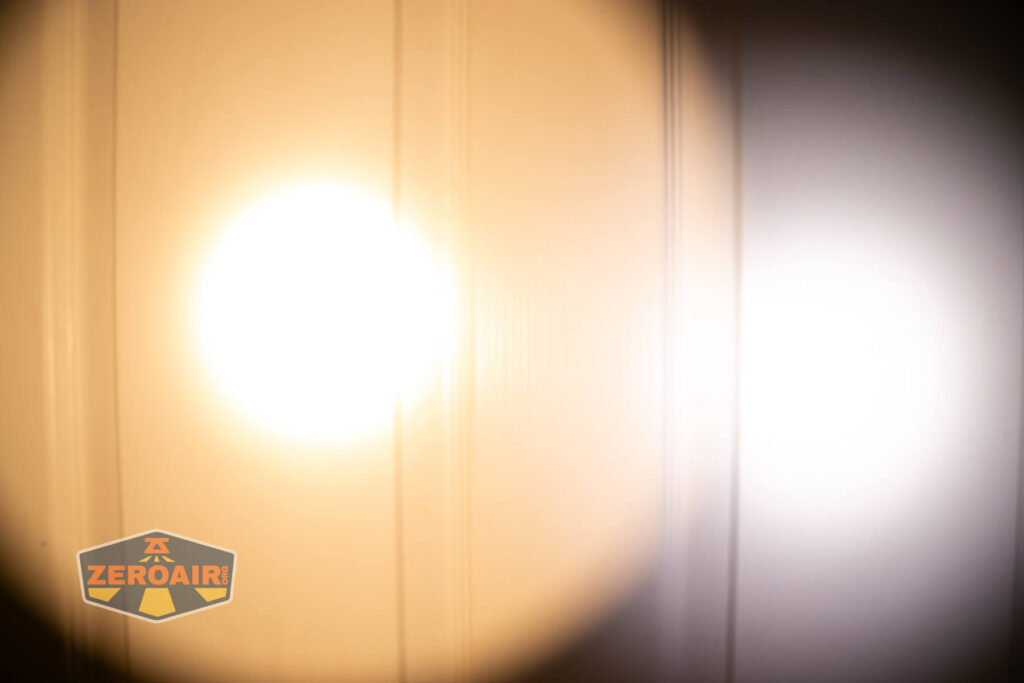
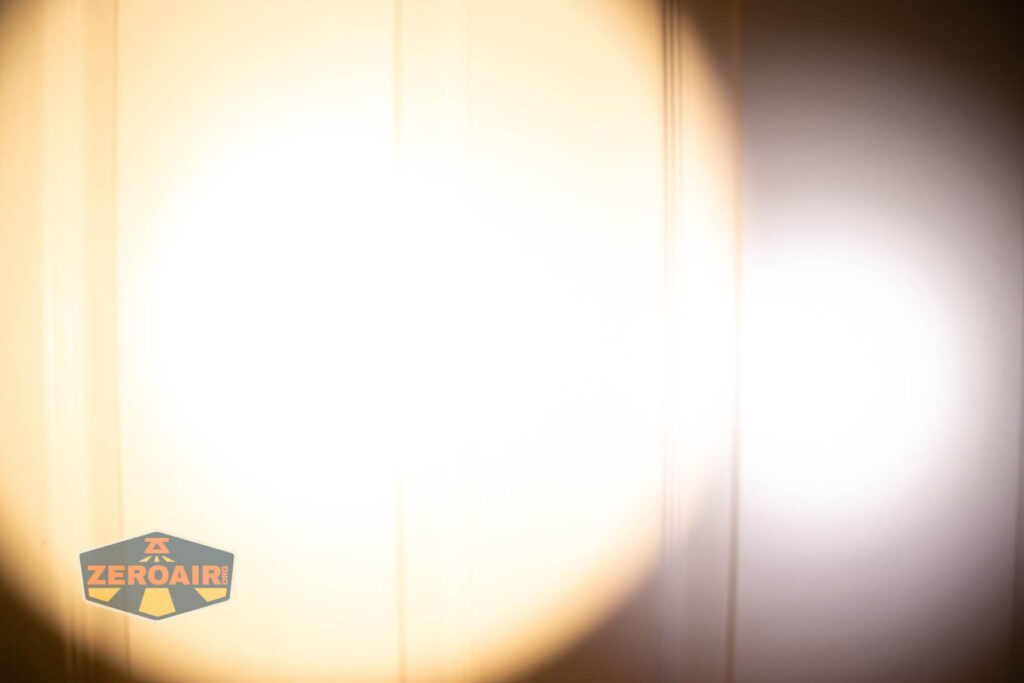

I compare everything to the KillzoneFlashlights.com 219b BLF-348 because it’s inexpensive and has the best tint!
Summary and Conclusion
I could not be more pleased with this emitter. The only way I could be more pleased with this light is probably if I’d gone for an orange peel reflector or a single TIR (which I’d have to buy separately). I love Convoy S2+ lights, and I love this emitter. Maybe you don’t need an S2+ (blasphemy) but check Simon’s Convoy store to see which light you want this emitter in. Because you want this emitter!!
The Big Table
| Convoy S2+ SFT40 3000K flashlight | |
|---|---|
| Emitter: | Luminus SFT40 (3000K) |
| Price in USD at publication time: | $26.16 |
| Cell: | 1×18650 |
| Runtime Graphs | |
| LVP? | Yes |
| Switch Type: | Mechanical |
| On-Board Charging? | No |
| Claimed Lumens (lm) | – |
| Measured Lumens (at 30s) | 834 |
| Candela per Lumen | 18.2 |
| Claimed Throw (m) | – |
| Candela (Calculated) in cd (at 30s) | 455lux @ 5.668m = 14617cd |
| Throw (Calculated) (m) | 241.8 |
| Claimed CCT | 3000 |
| Measured CCT Range (K) | 3000-3100 Kelvin |
| Item provided for review by: | Me |
| All my Convoy reviews! | |
^ Measurement disclaimer: Testing flashlights is my hobby. I use hobbyist-level equipment for testing, including some I made myself. Try not to get buried in the details of manufacturer specifications versus measurements recorded here; A certain amount of difference (say, 10 or 15%) is perfectly reasonable.
What I like
- VERY high CRI
- Familiar user interface
- Nice looking Tan body
- Great build quality, and certainly at the price
- 18350 cell tube option
What I don’t like
- Pocket clip isn’t included (or at least pushed – I always need a reminder to grab
onefive!)
Notes
- This content originally appeared at zeroair.org. Please visit there for the best experience!
- For flashlight-related patches, stickers, and gear, head over to PhotonPhreaks.com!
- Please use my Amazon.com referral link to help support zeroair.org!
- Please support me on Patreon! I deeply appreciate your support!