

EDC Titanium 14500 Flashlight Review
The EDC Titanium 14500 flashlight offers a couple of heads (single or triple) and a great stonewashed finish. There are plenty of tritium slots, too! Read on!
Official Specs and Features
Here’s a link to the product page on aliexpress. If there is a more official page than that, I am not aware of it. (To be honest, I’m not even sure what brand to call this light!)
Versions
Just like my uncertainty with the brand, I am uncertain how many versions there are. At least two packages exist – one is just like mine and one has a third much bigger and more throwy head. Unfortunately, it was unavailable when I purchased it, but I’d recommend grabbing that package just for the variety.
Price
I paid around $130 for the EDC Titanium 14500 flashlight package as you see it here.
What’s Included
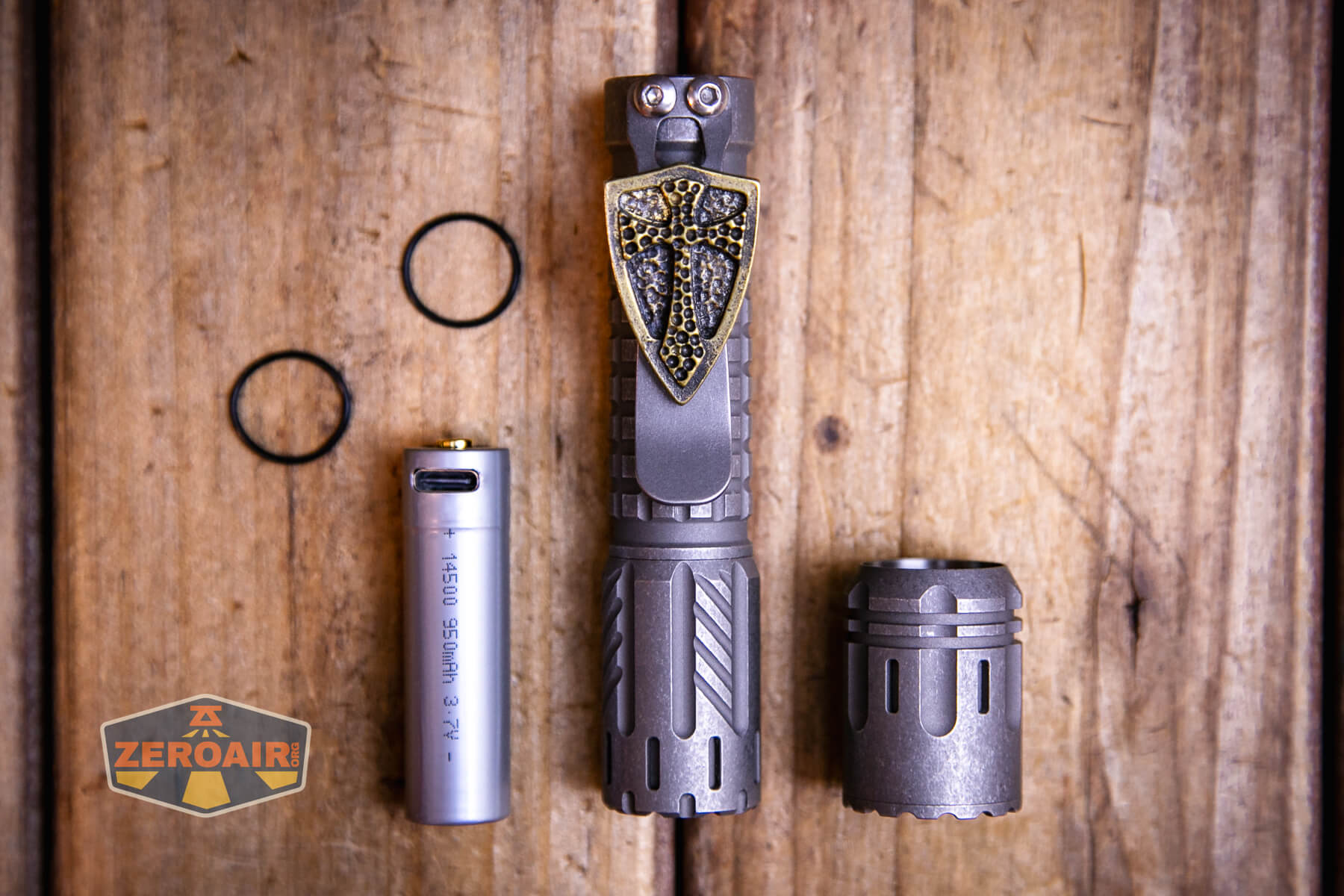
- EDC Titanium 14500 flashlight
- Single emitter head
- Triple emitter head
- 14500 cell
- Spare o-rings (2)
Package and Manual
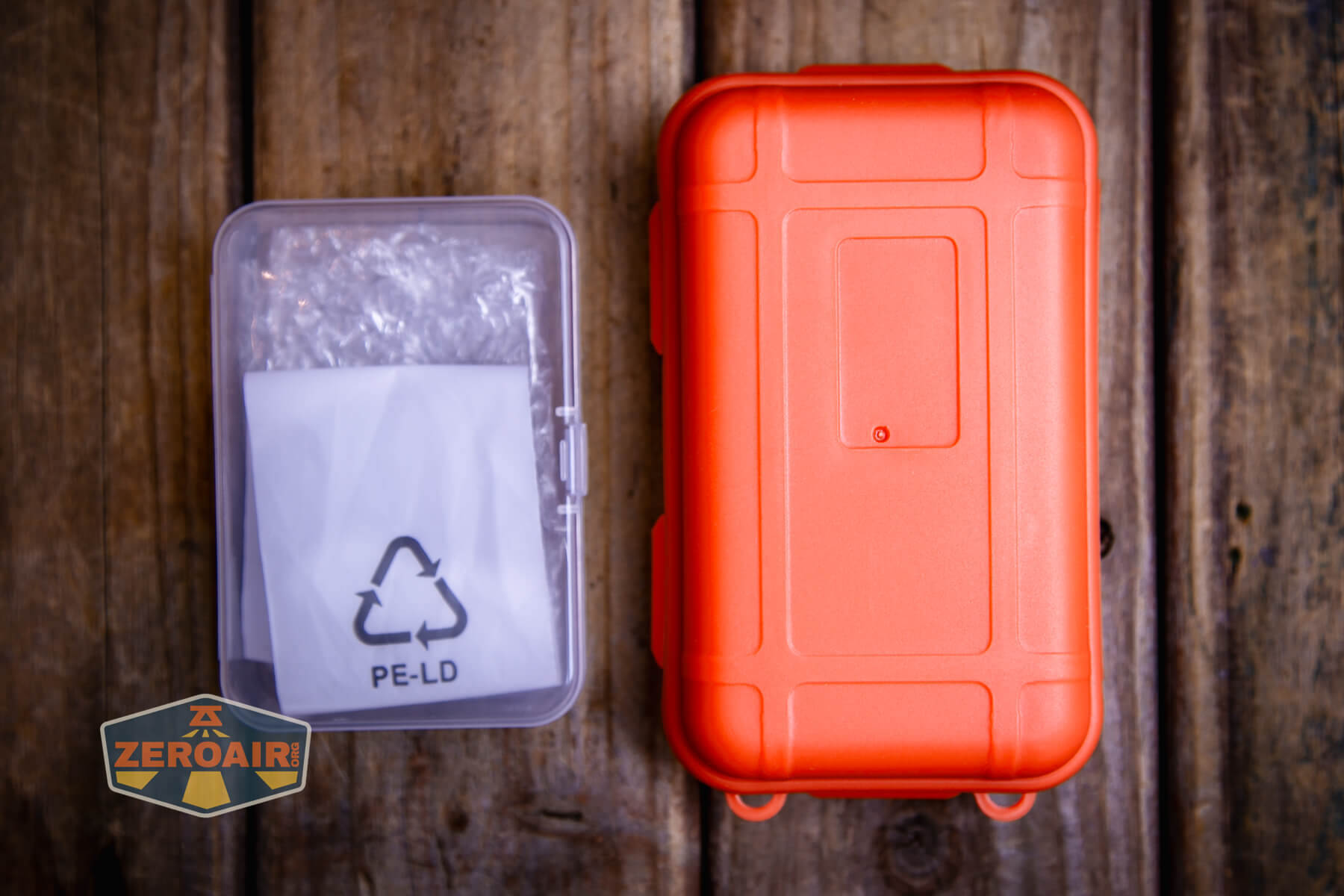
The package comes in two parts. There isn’t a manual. That’s not necessarily bad but I think this light is probably programmable (without a manual it’s hard to say!)
Build Quality and Disassembly

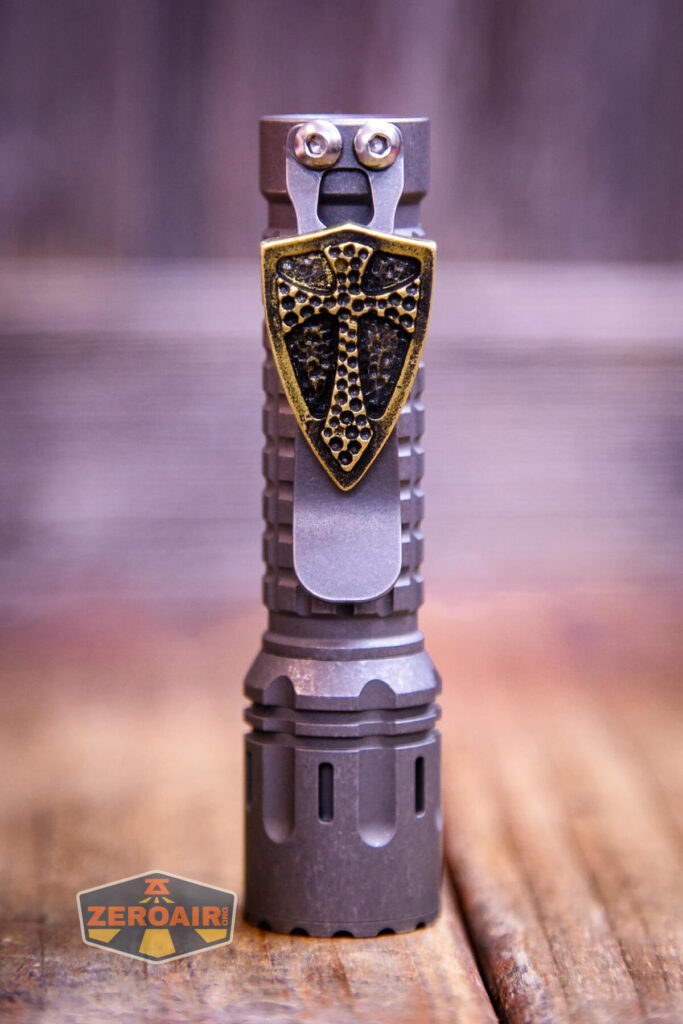
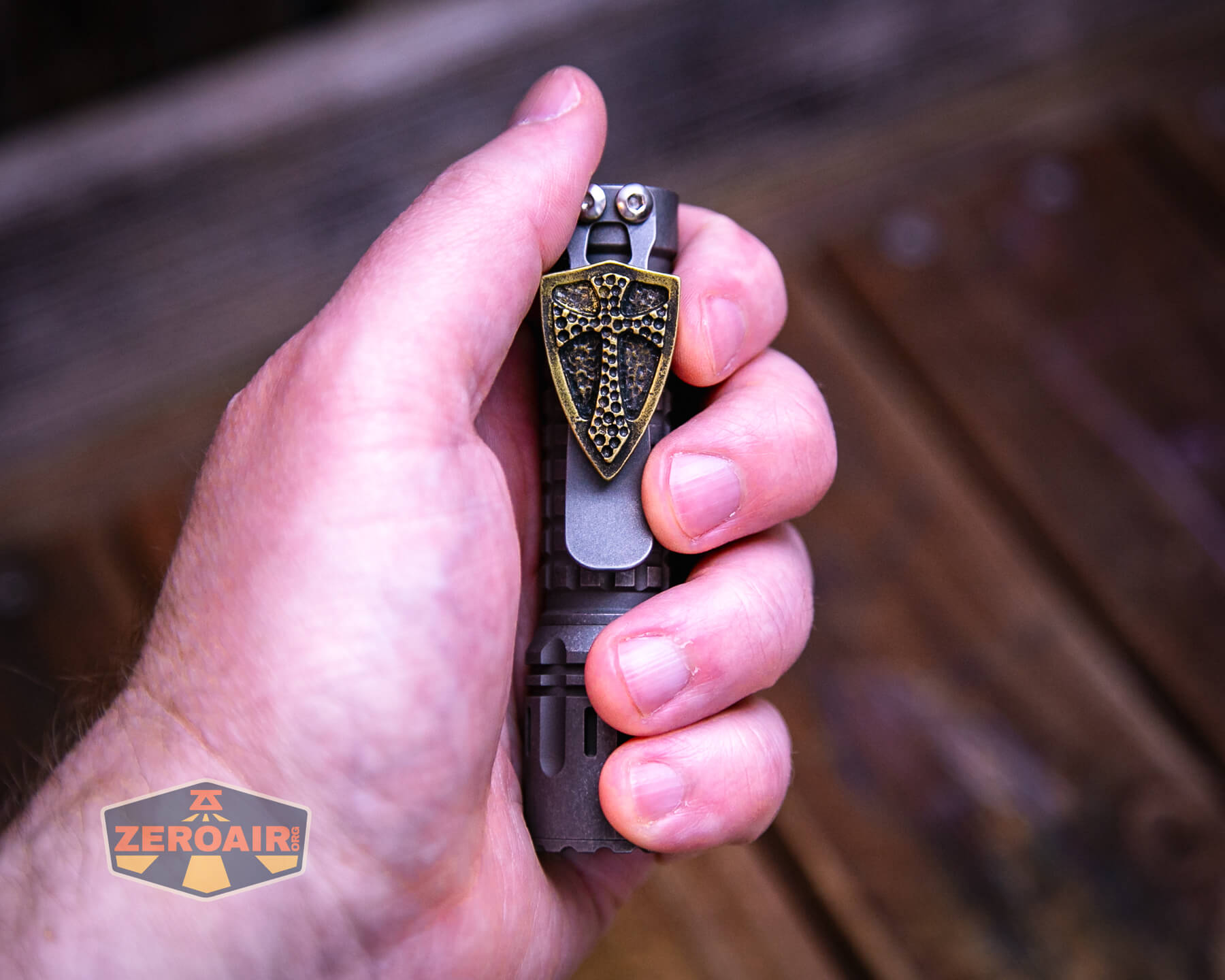
There are a few versions of this light with various clip options. So don’t get hung up about that (possibly gaudy?) clip. I haven’t done it, but I think the clip adornment is removable anyway (see below).
Past the clip (if you can get past the clip?), this light is very reminiscent of some ReyLight flashlights. For example, the build and finish feel similar to the ReyLight Krystal.
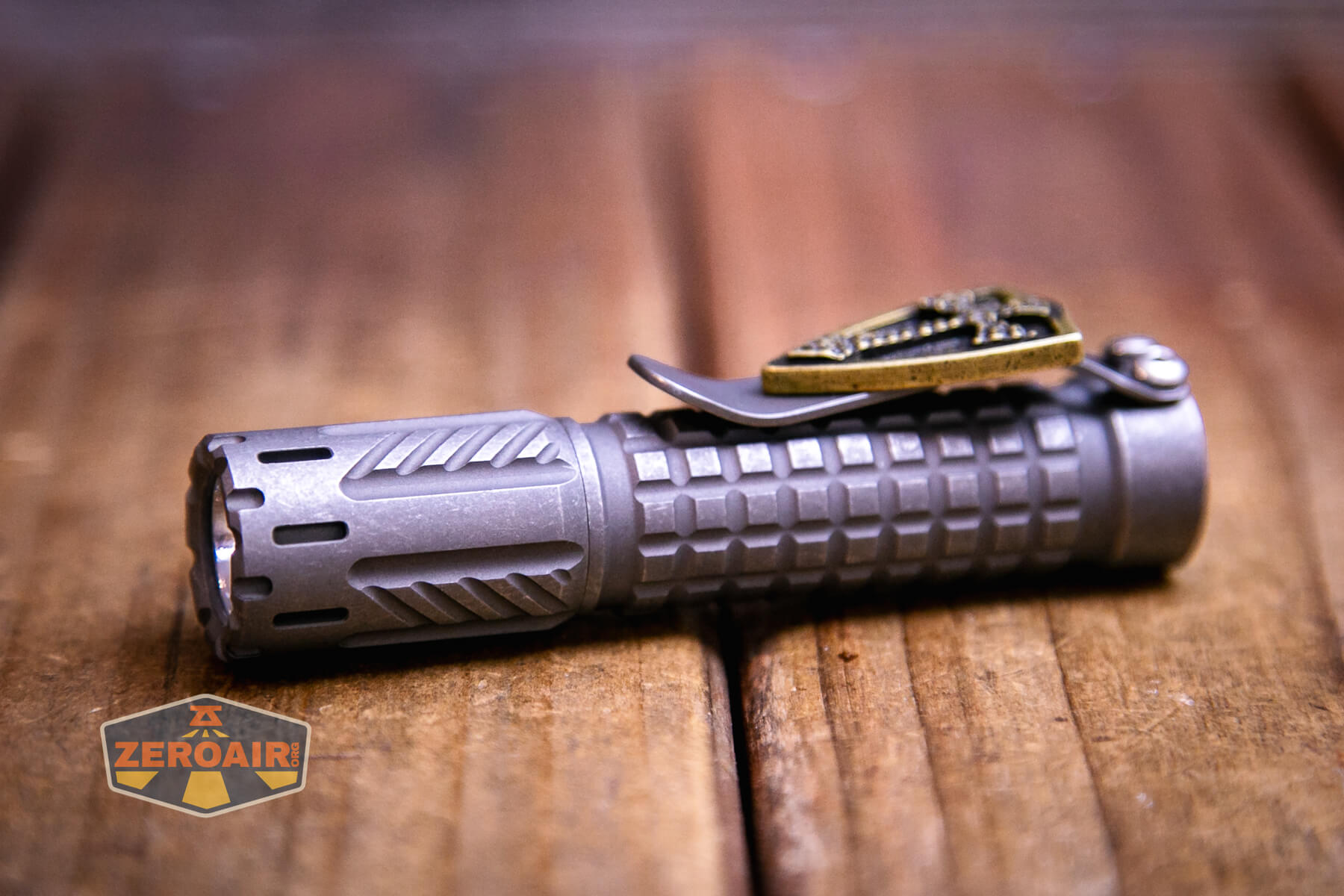
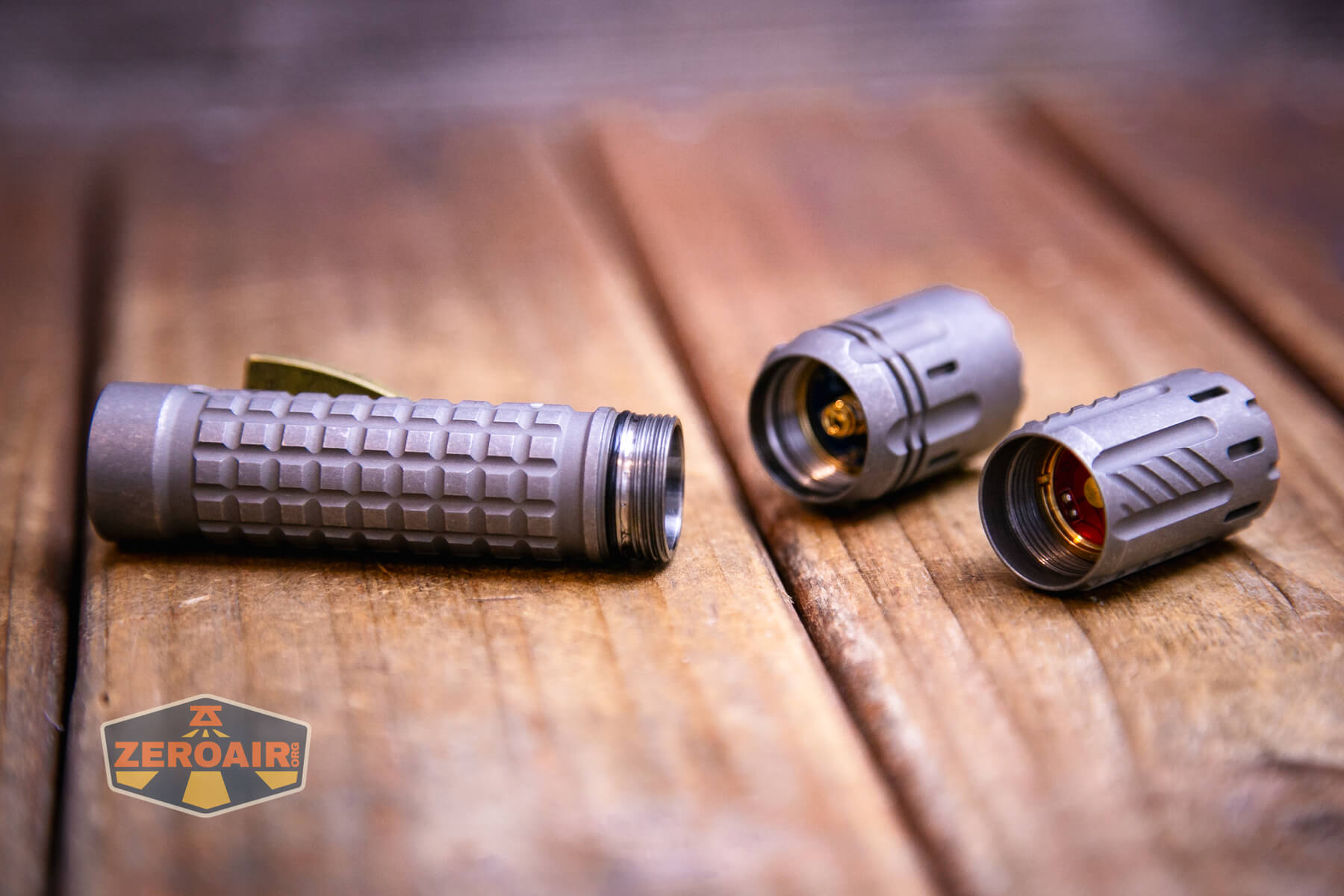
Regardless of what else it’s like, the build quality is good. The light is definitely titanium (in case you had any doubt based on the comparatively low price). I’ll mention this more later but the cell tube has a sort of “Frag” pattern. On the head are cooling fins as well as a number of tritium slots. There are 6 slots on the triple head and 8 on the single head. The switch has three slots!
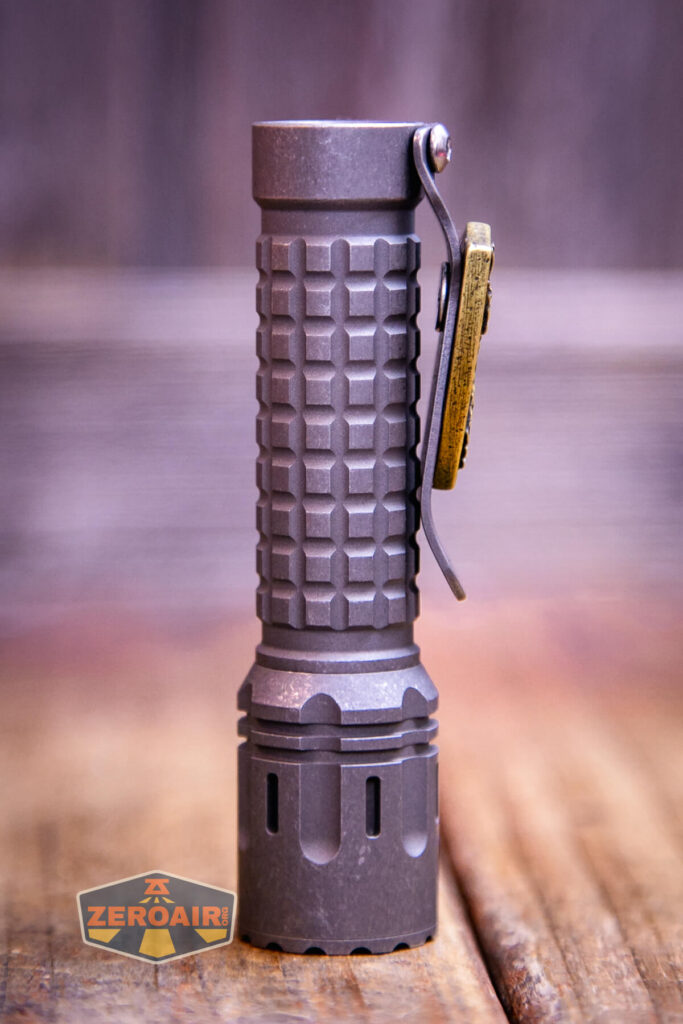
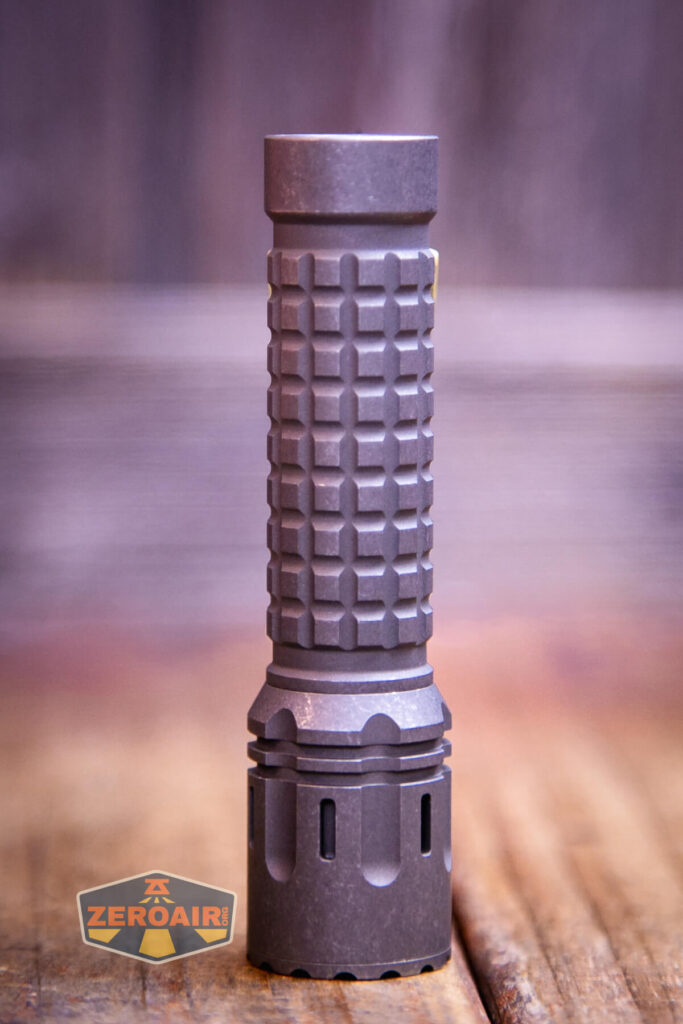
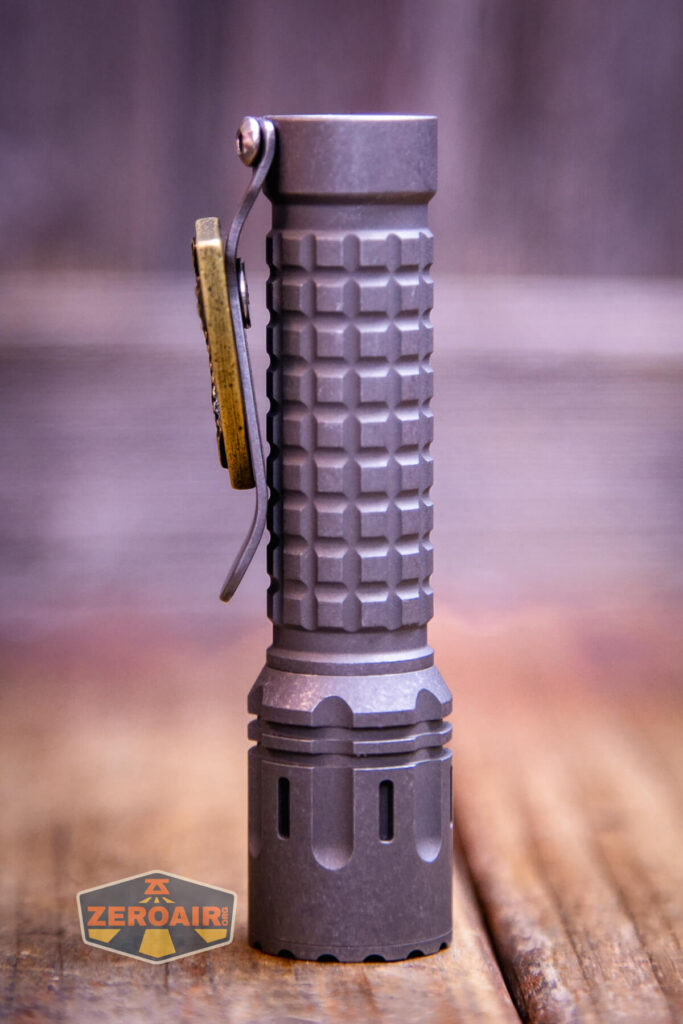
The single and triple are quite different! Below you can see one difference – the single (right) has a button for contact while the triple (middle) has a spring. The cell tube (which is used for both lights) has a spring on the switch end.
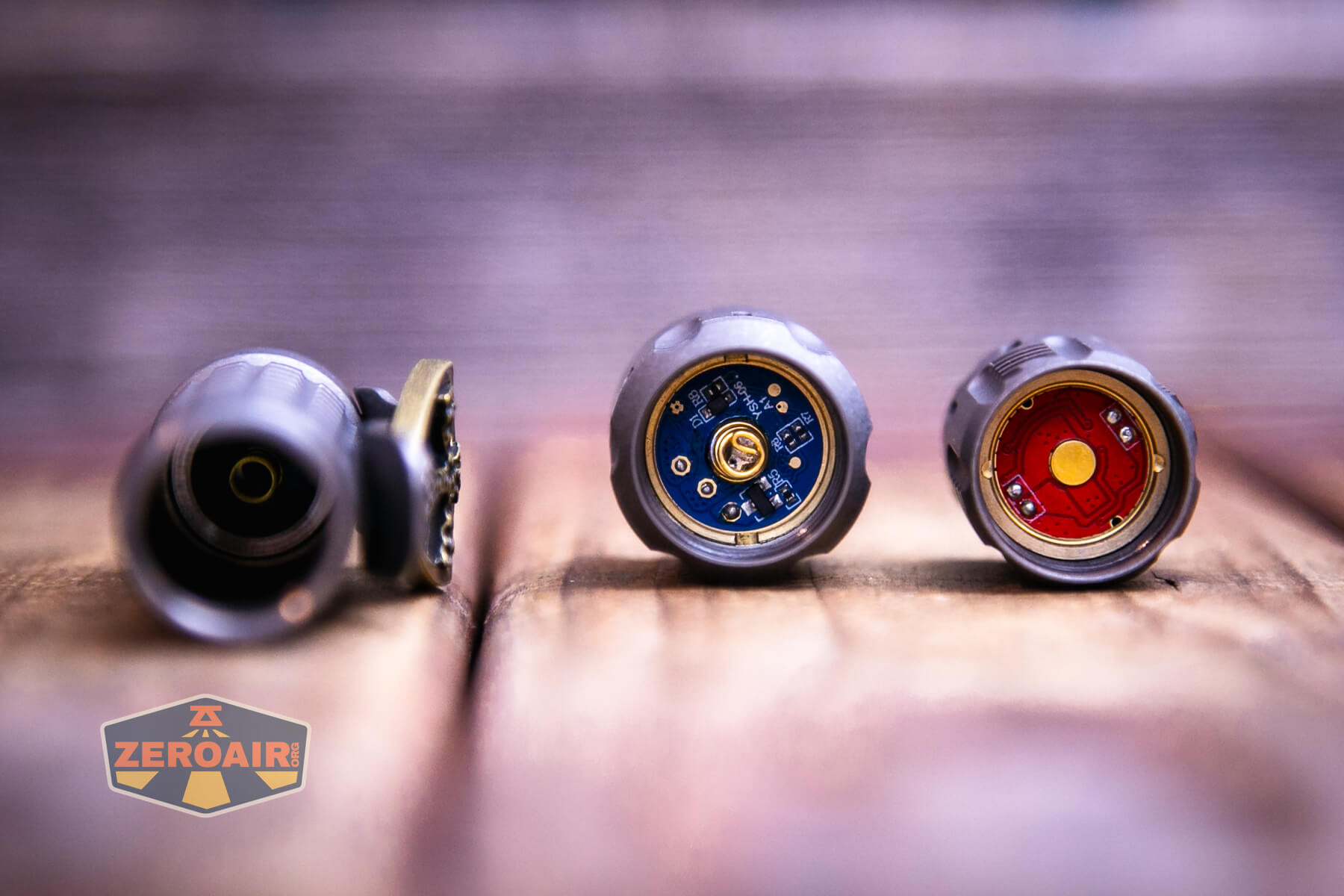
Here’s how you’ll know the light is titanium – the threads are “titaniumy.” You won’t mistake that feeling! It’s not bad, as these threads are fine. But it’s a feeling!
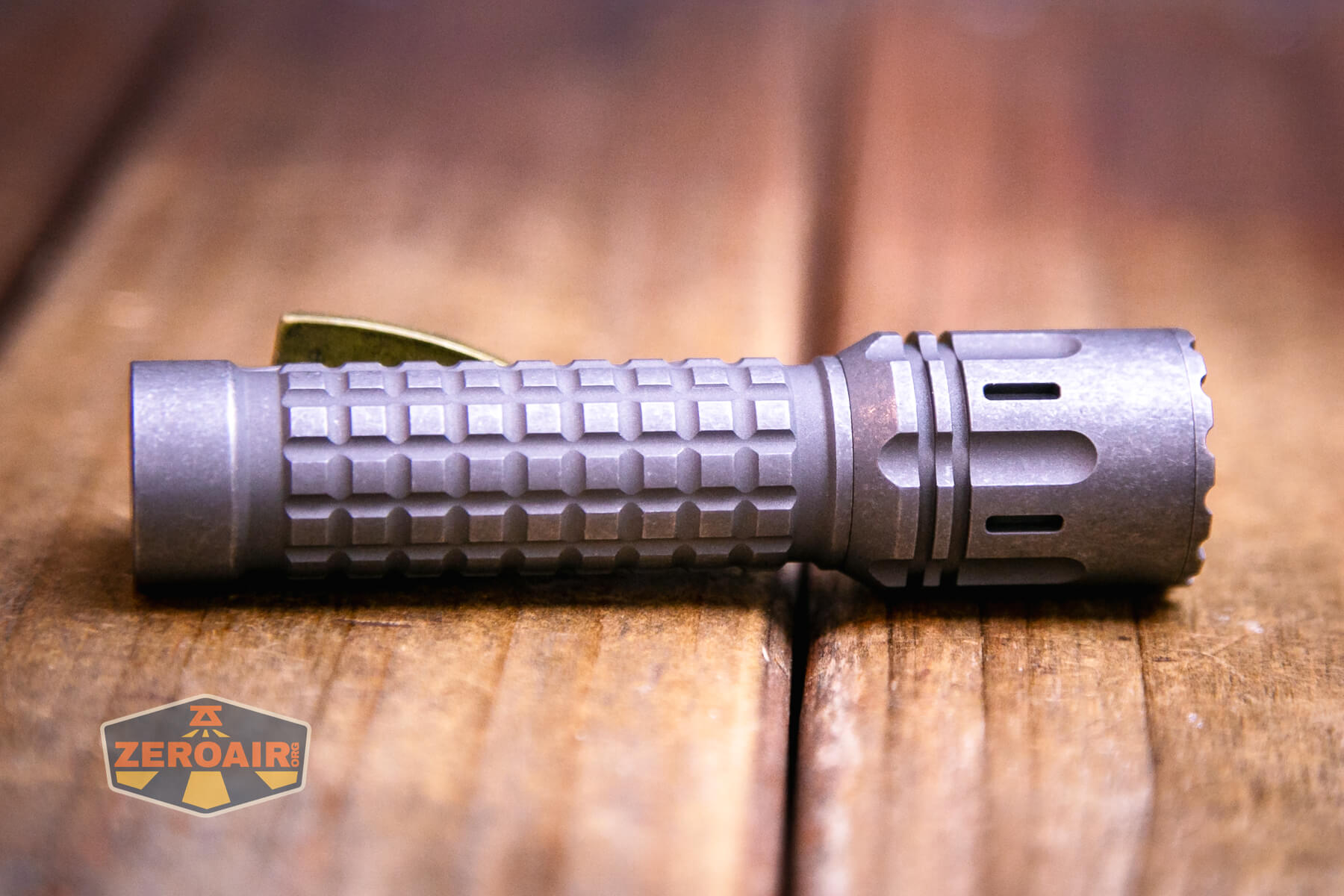
Proportions on this light with the triple head (below) are fantastic. With the single head, it’s a very slender light!
Size and Comps
Body and triple: 93.81mm
Body and single: 95.16mm
Triple diameter: 23.2mm
Single diameter: 21.11mm
Tail diameter: 19.81mm
Widest at clip: 27.22mm
Body, 14500, and triple weight:
Body, 14500, and single weight:
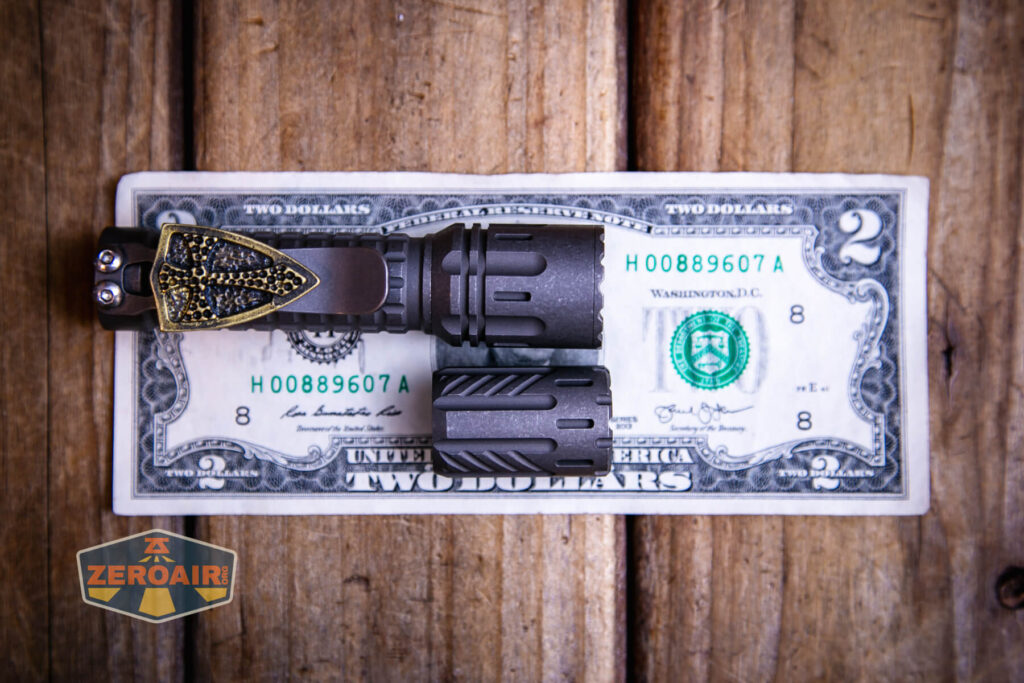
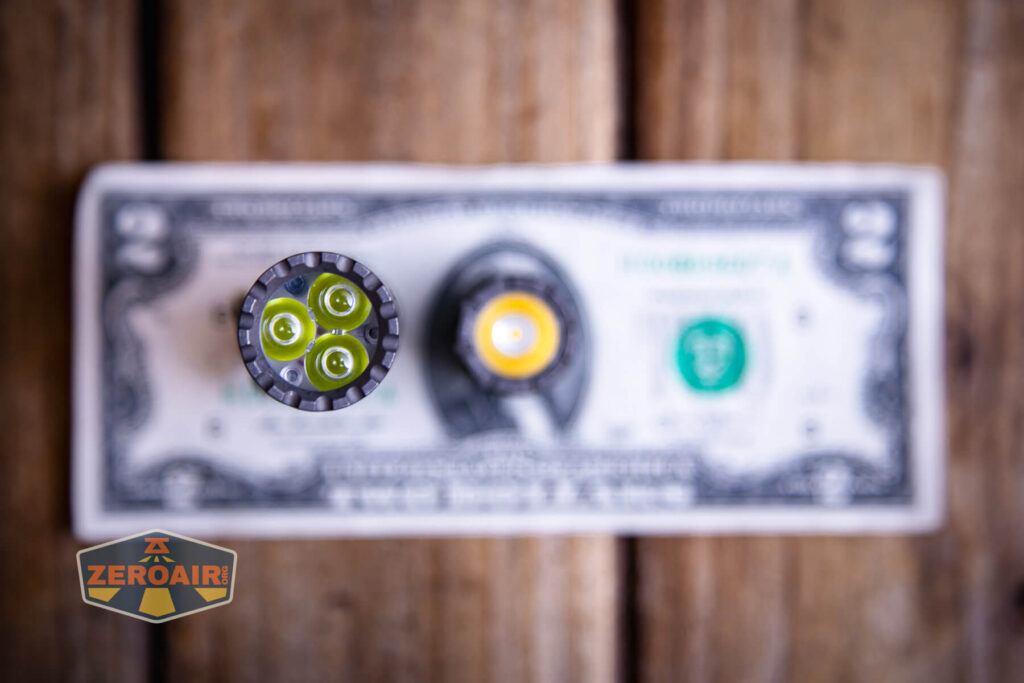
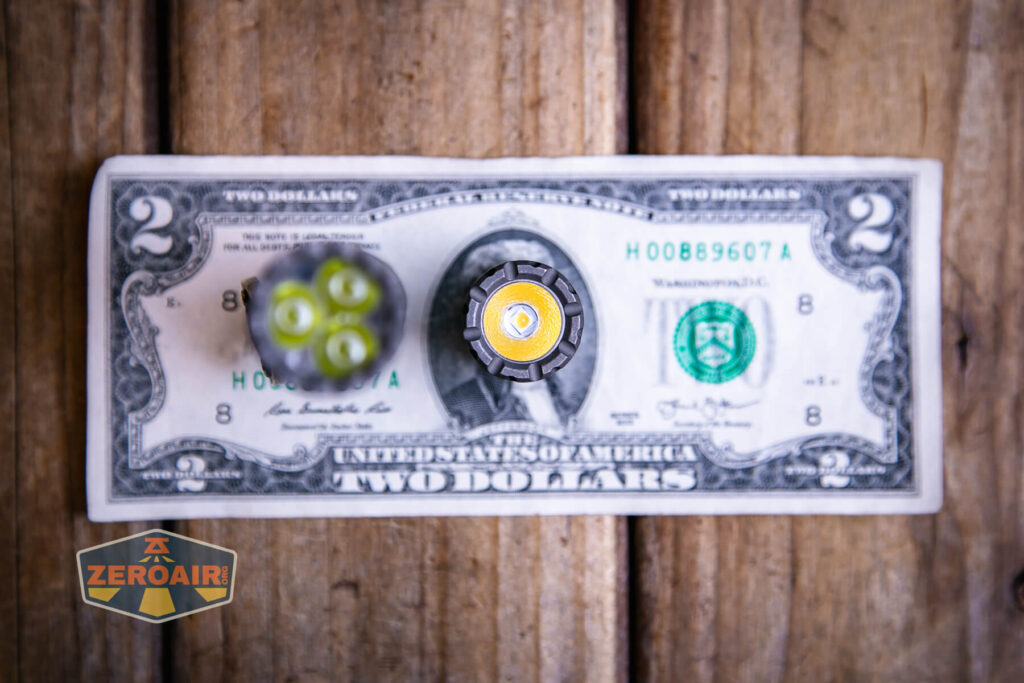
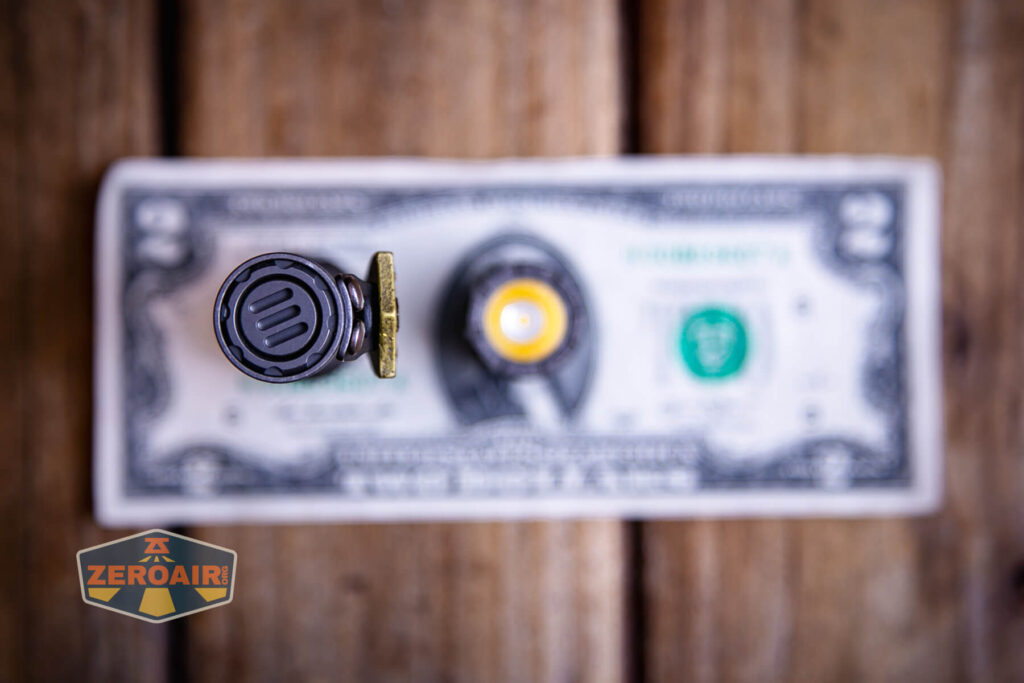
If the flashlight will headstand, I’ll show it here (usually the third photo). If the flashlight will tailstand, I’ll also show that (usually in the fourth photo).
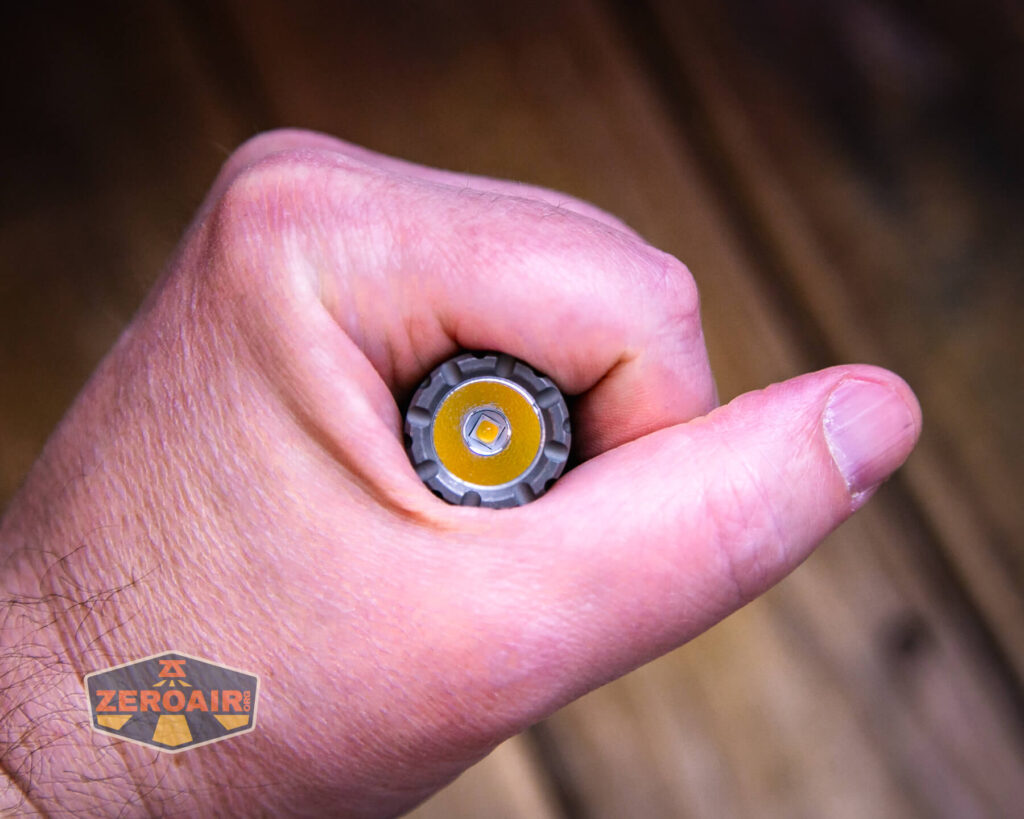
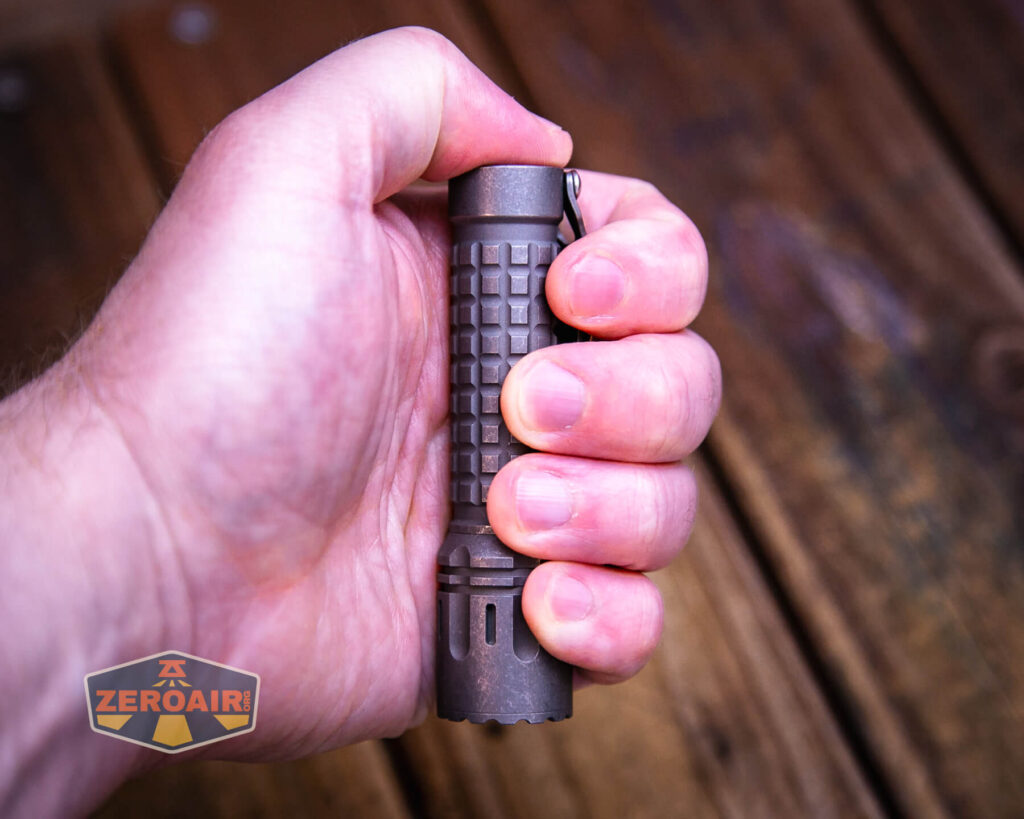
Here’s the test light with the venerable Convoy S2+. The version below is a custom laser-engraved Convoy S2+ host by GadgetConnections.com. I did a full post on an engraved orange host right here! Or go straight to GadgetConnections.com to buy your Convoy S2+ now!
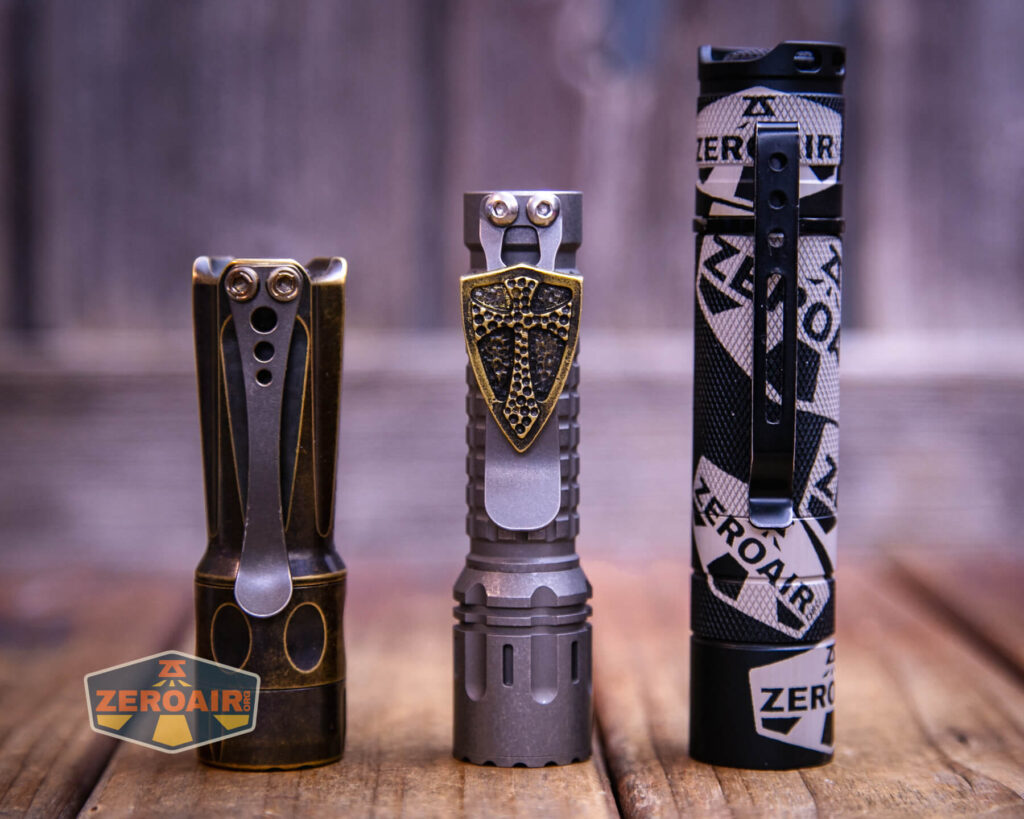
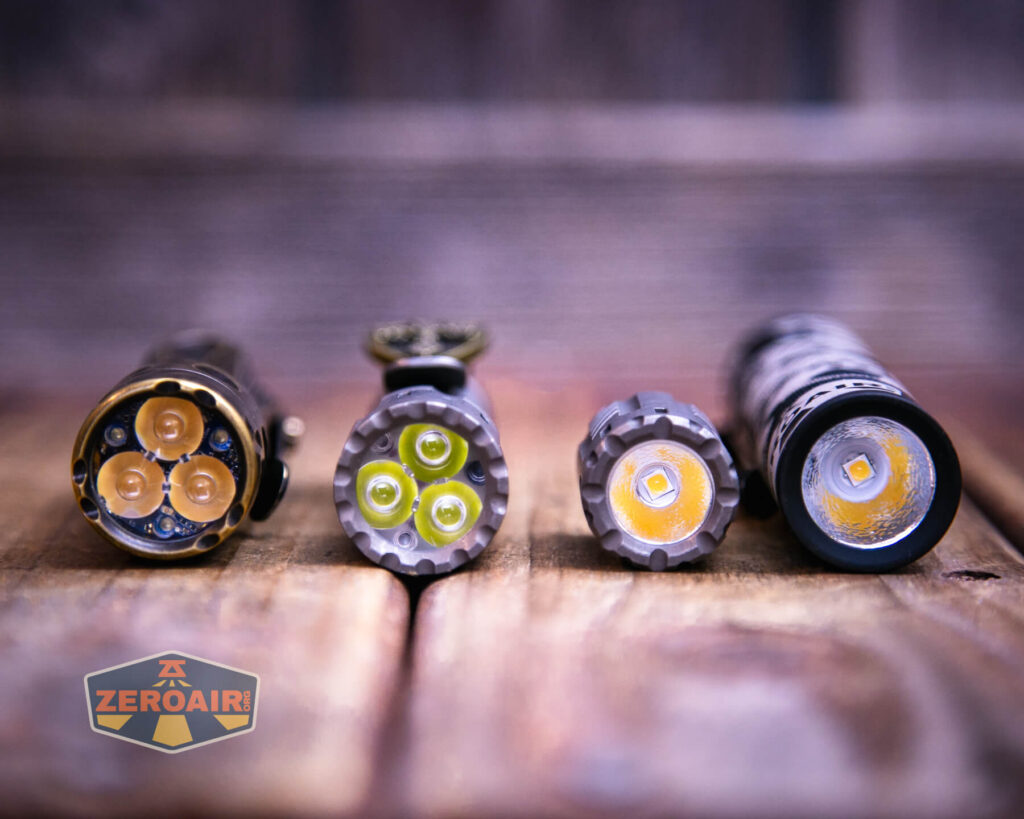
Also above is the light beside a TorchLAB BOSS 35, an 18350 light. I reviewed the aluminum version of that light in both 35 and 70 formats. I also reviewed that specific edition, the “Oveready BOSS FT Collector Vintage Brass” 35. I love it!
Retention and Carry
I’ve mentioned the pocket clip already. The adornment is just screwed on (I think; didn’t remove it) and under that is a ReyLight platypus pocket clip. By itself, this is a great clip! With the Frag pattern and stiffness, it’s much more difficult to use. This light could be a pocket shredder!
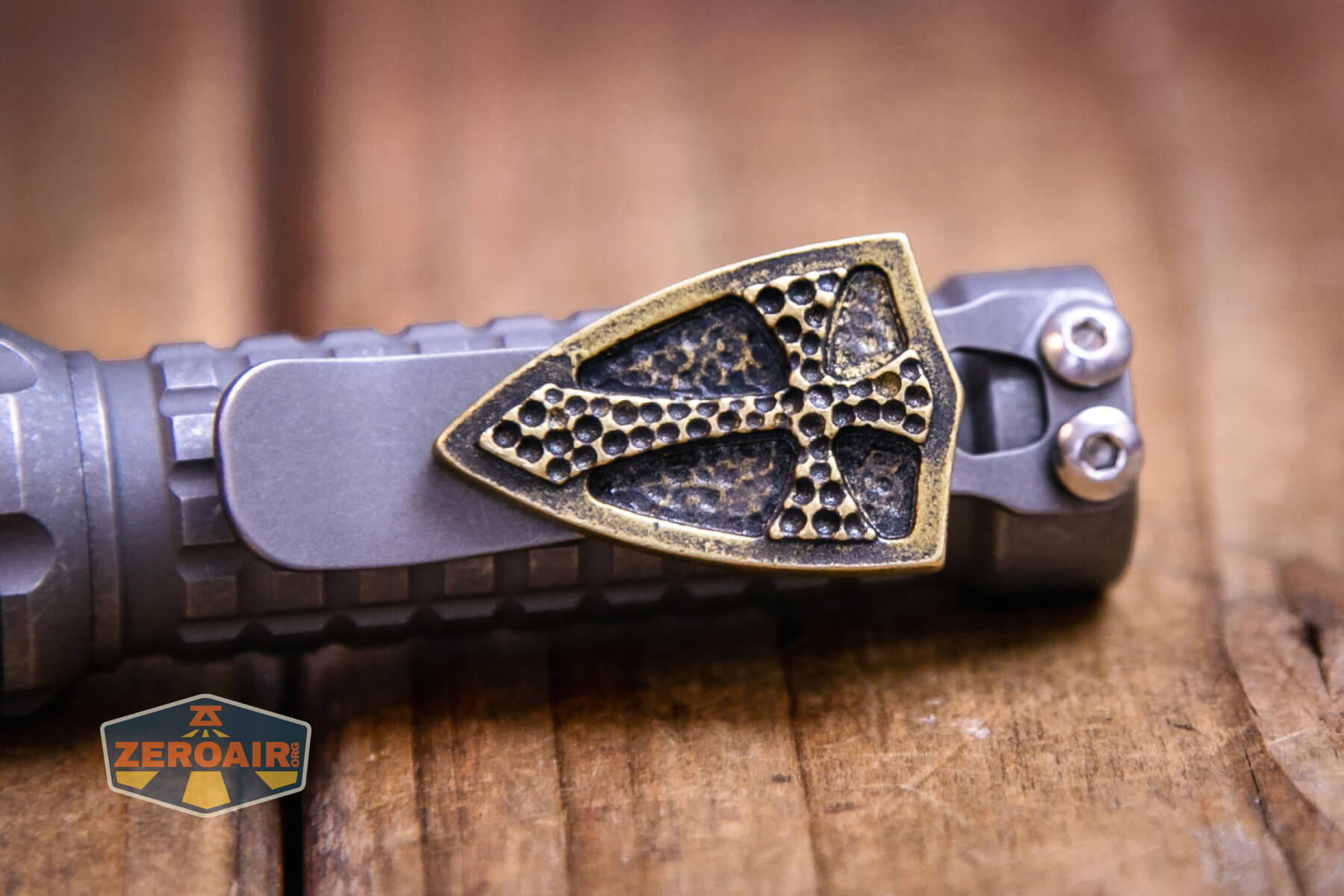
This appears to be a standard hole pattern, and if it’s a ReyLight clip then it would be. So you could put a SteelFlame clip on here if you wanted to.
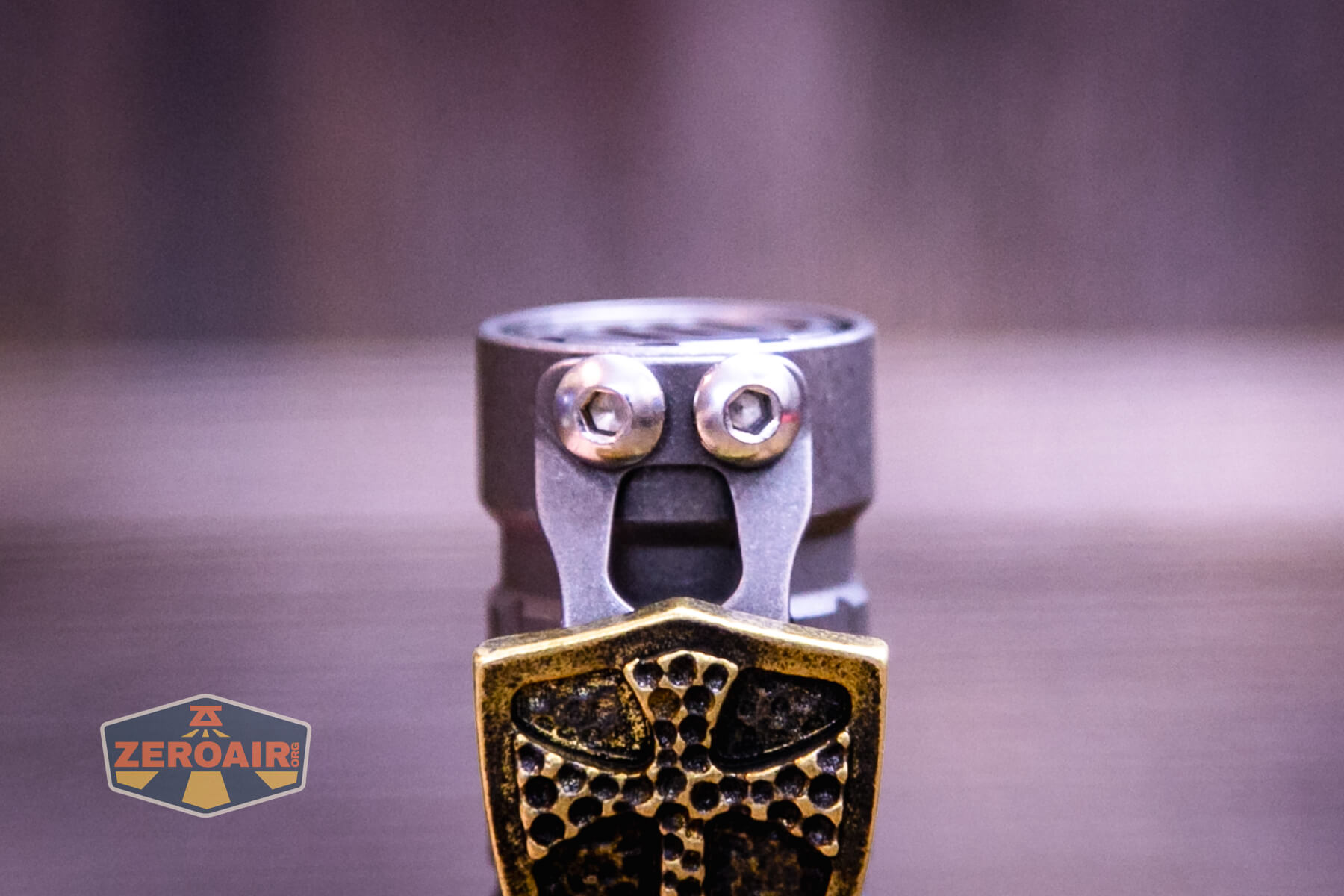
Below you can see how the shield is screwed onto the clip. You’ll have to remove the clip from the light to get at this, but that’s easy enough.
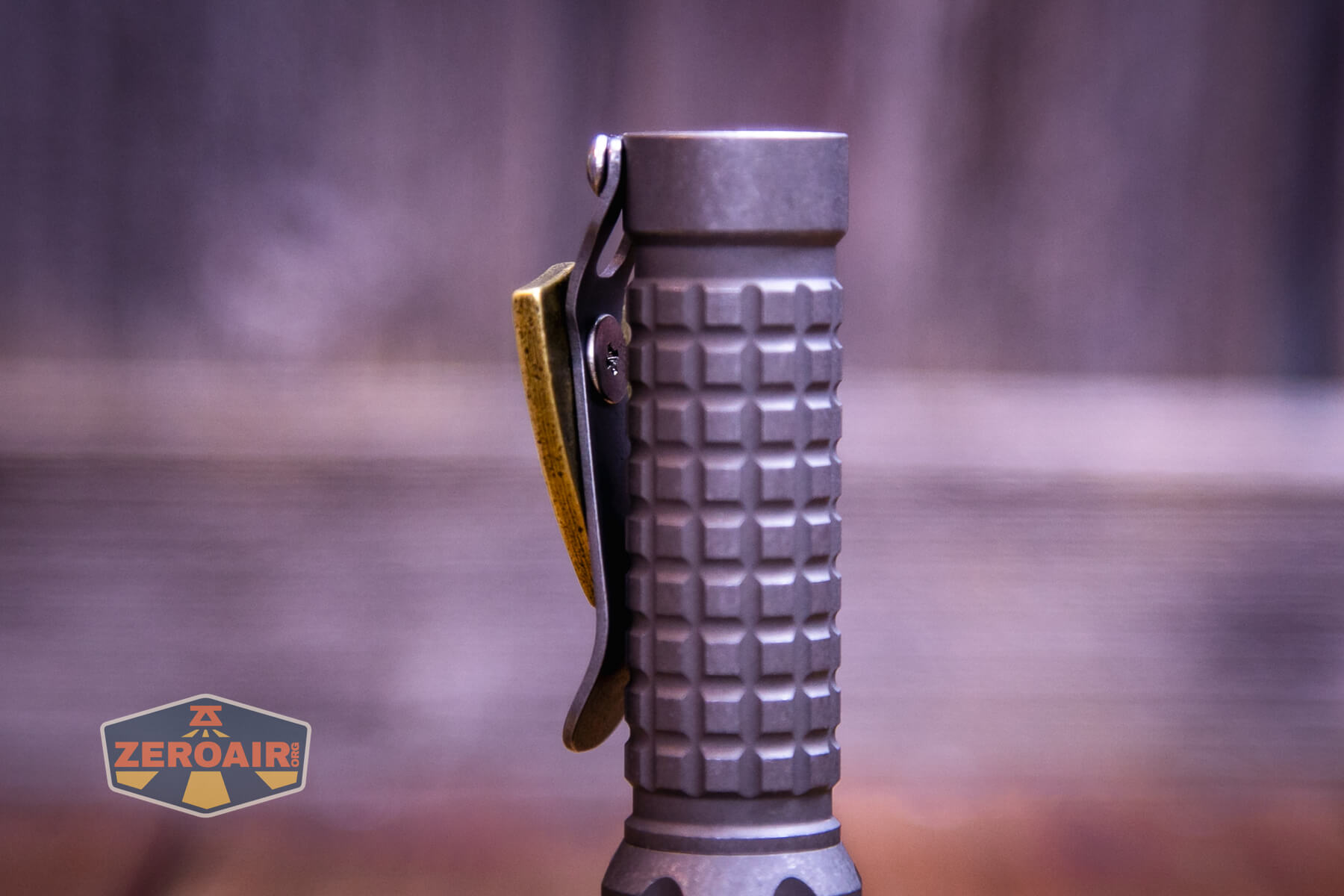
That’s it for carry, other than the orange plastic case (which I doubt you’d use for carry – it’s more of a shipping container.)
Power and Runtime
Included with the EDC Titanium 14500 flashlight is the 950mAh shown below. It is unbranded.
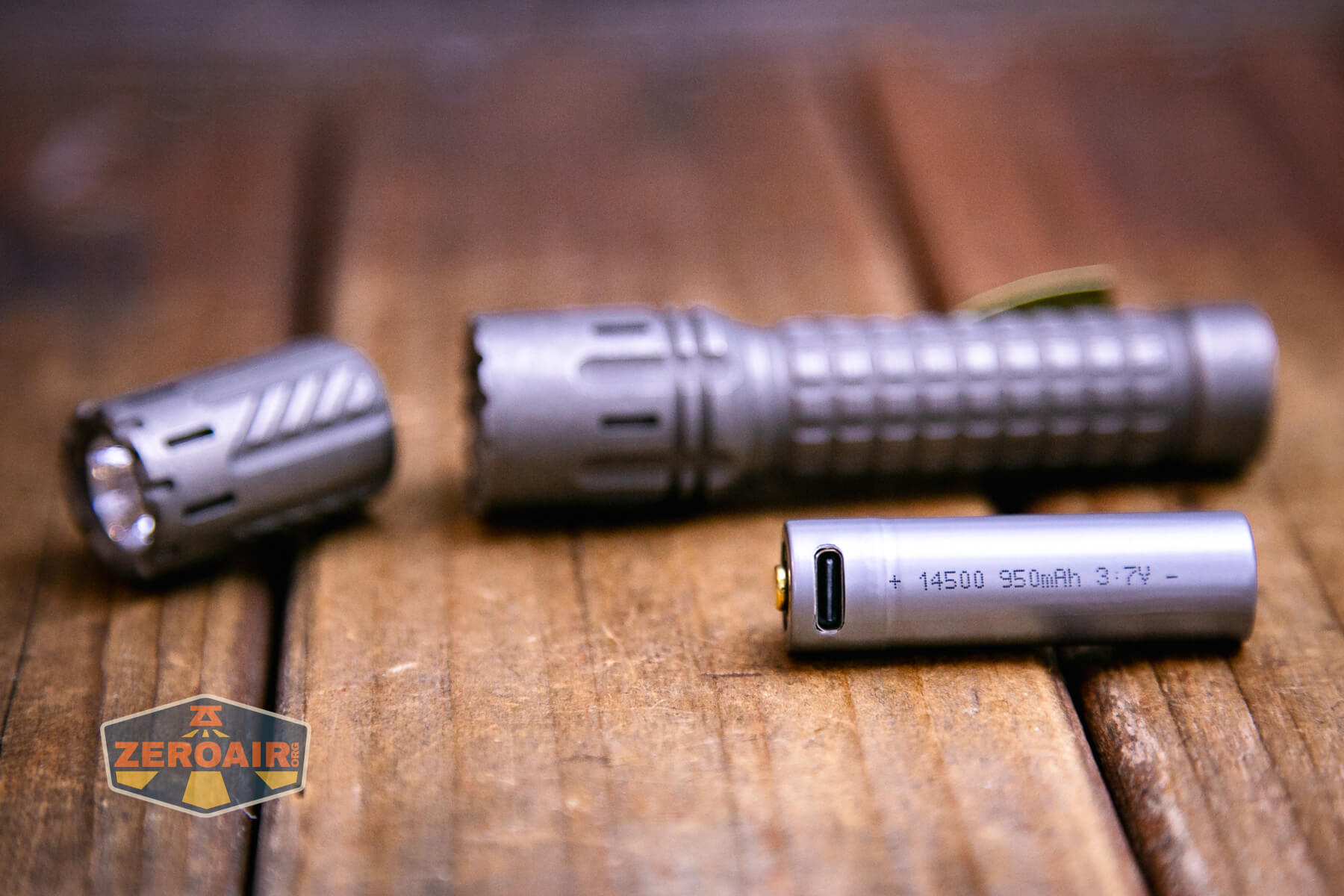
The cell goes into the light in the usual way – positive end toward the head.
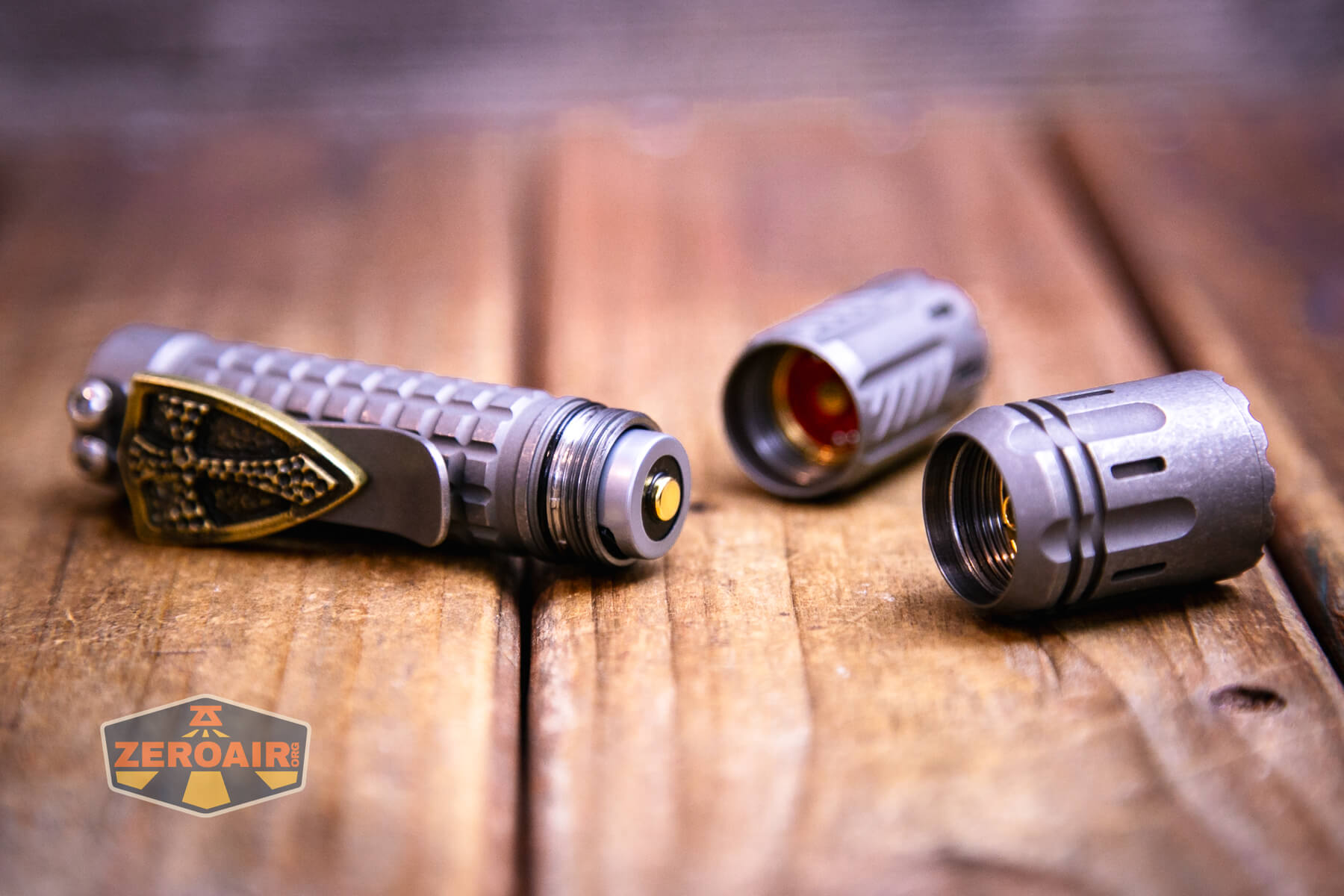
The single emitter head will also work with one AA cell. The triple head, however, will only work with a 14500 cell.
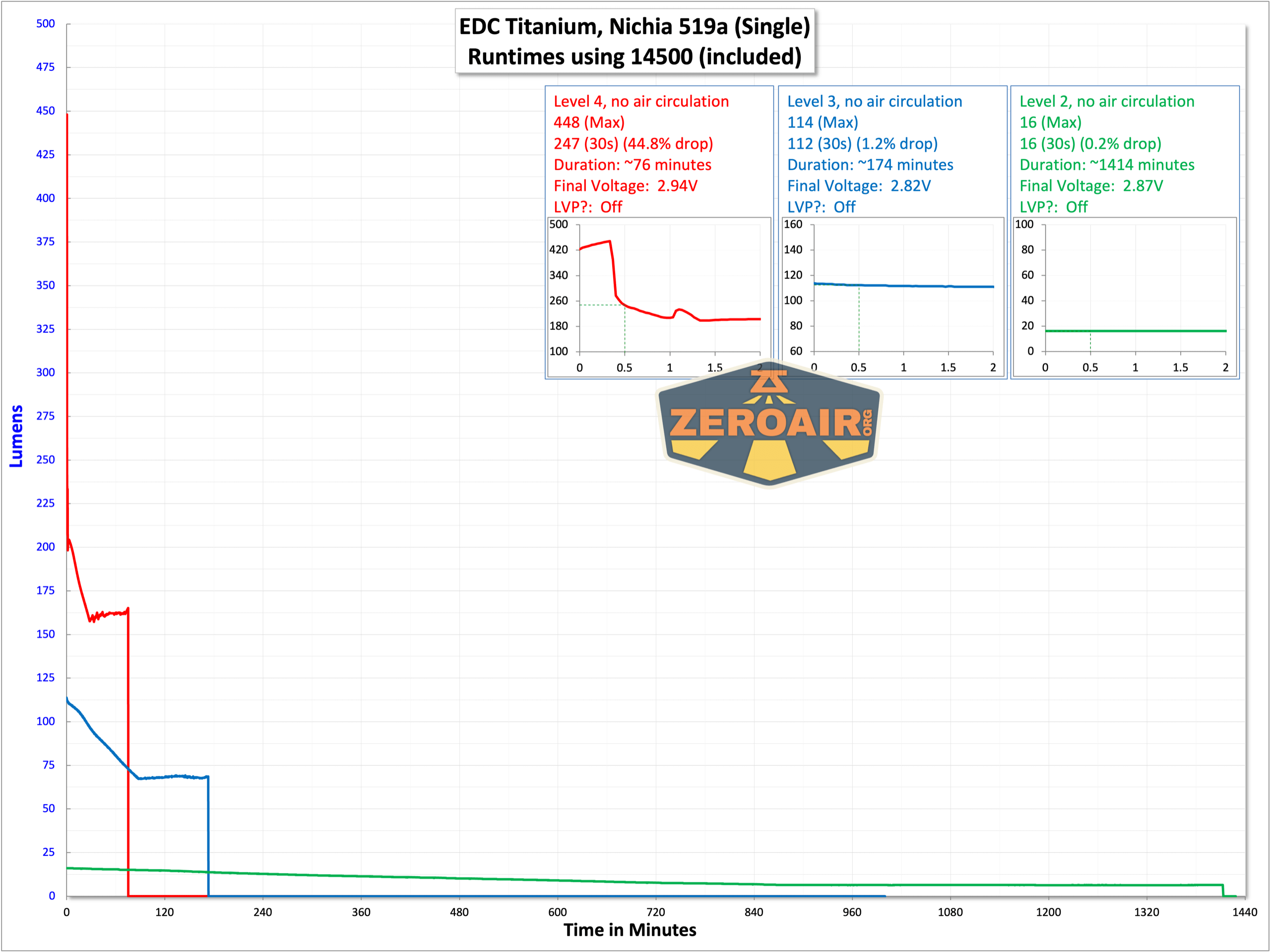
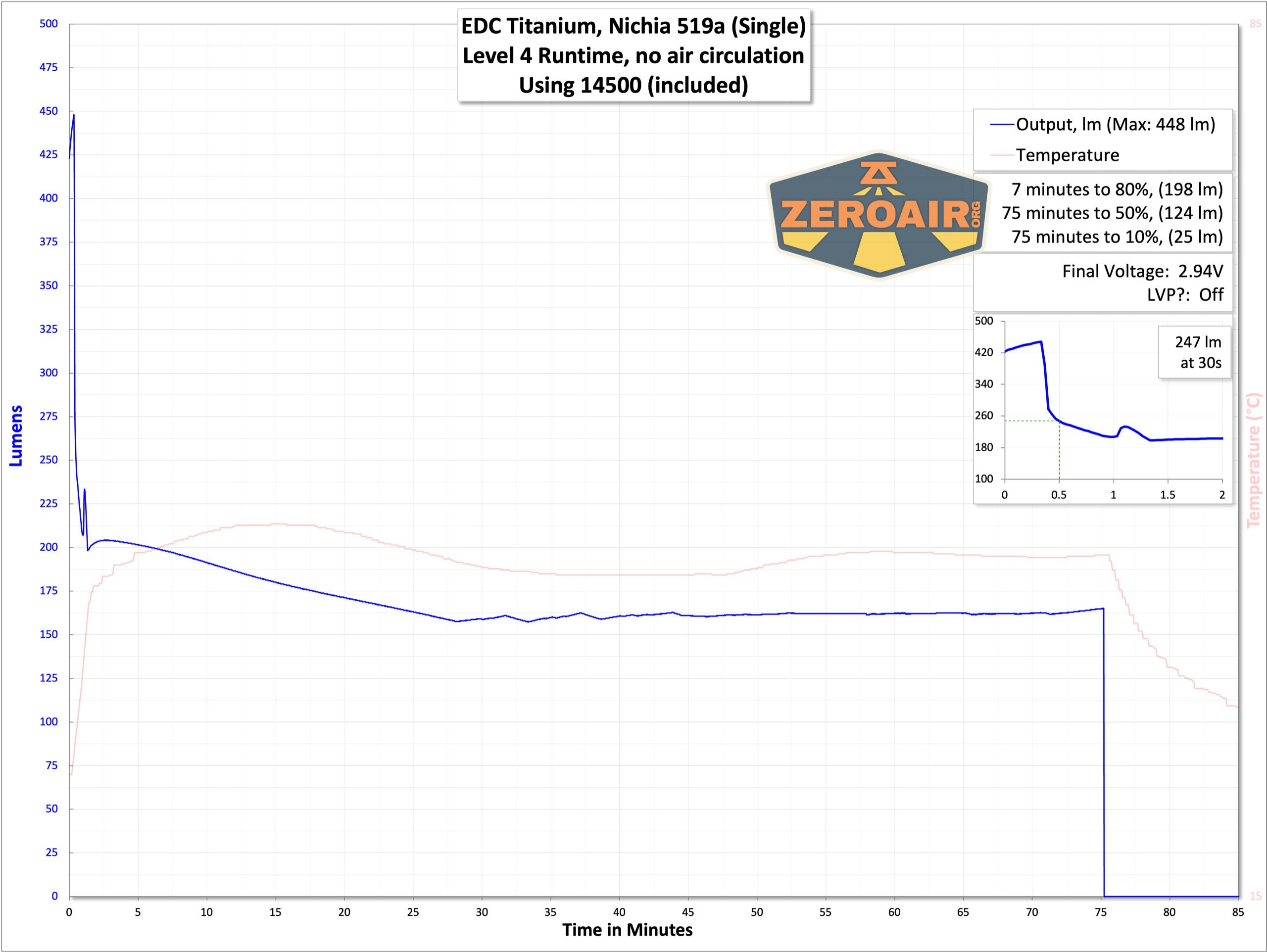
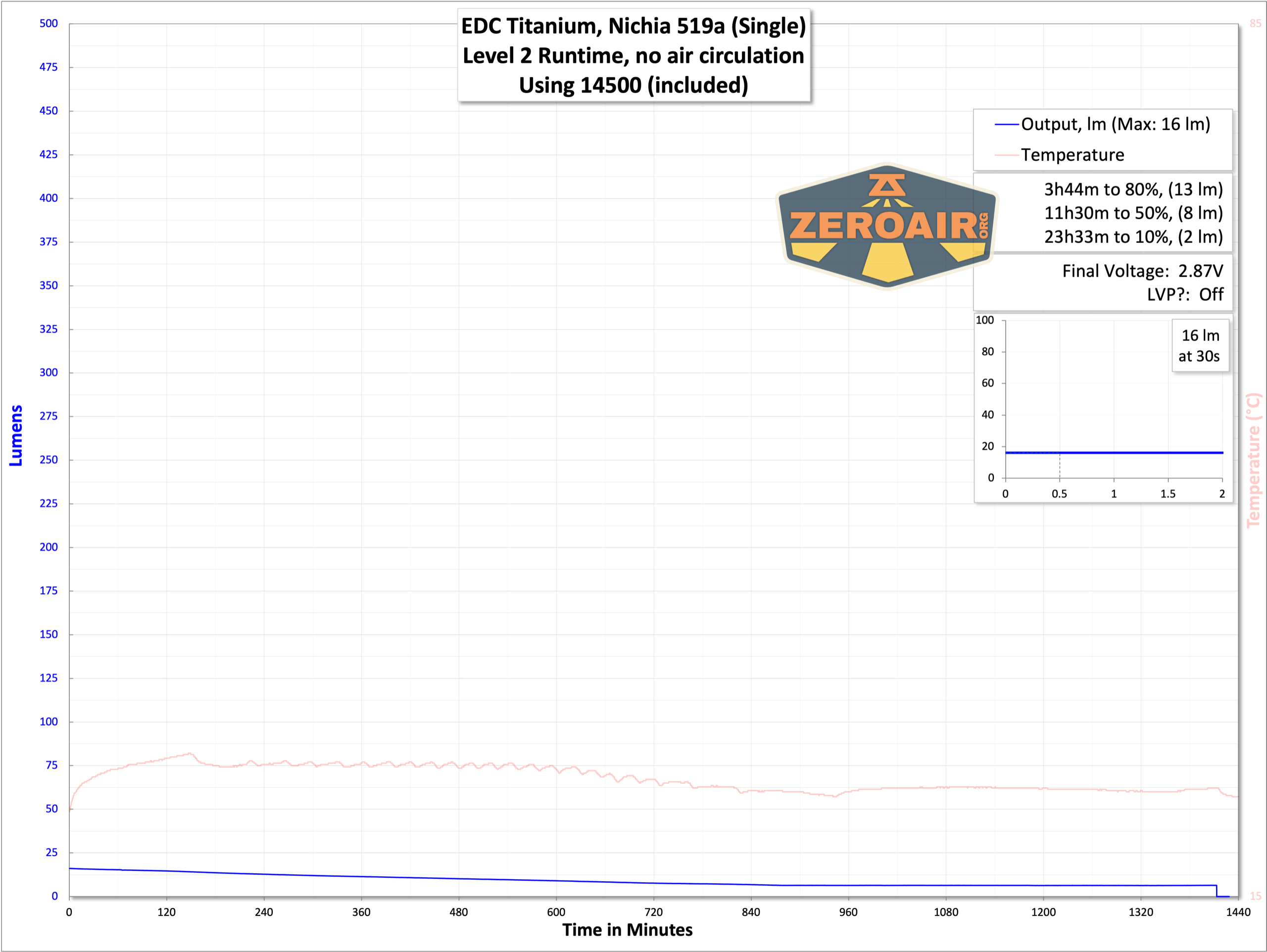
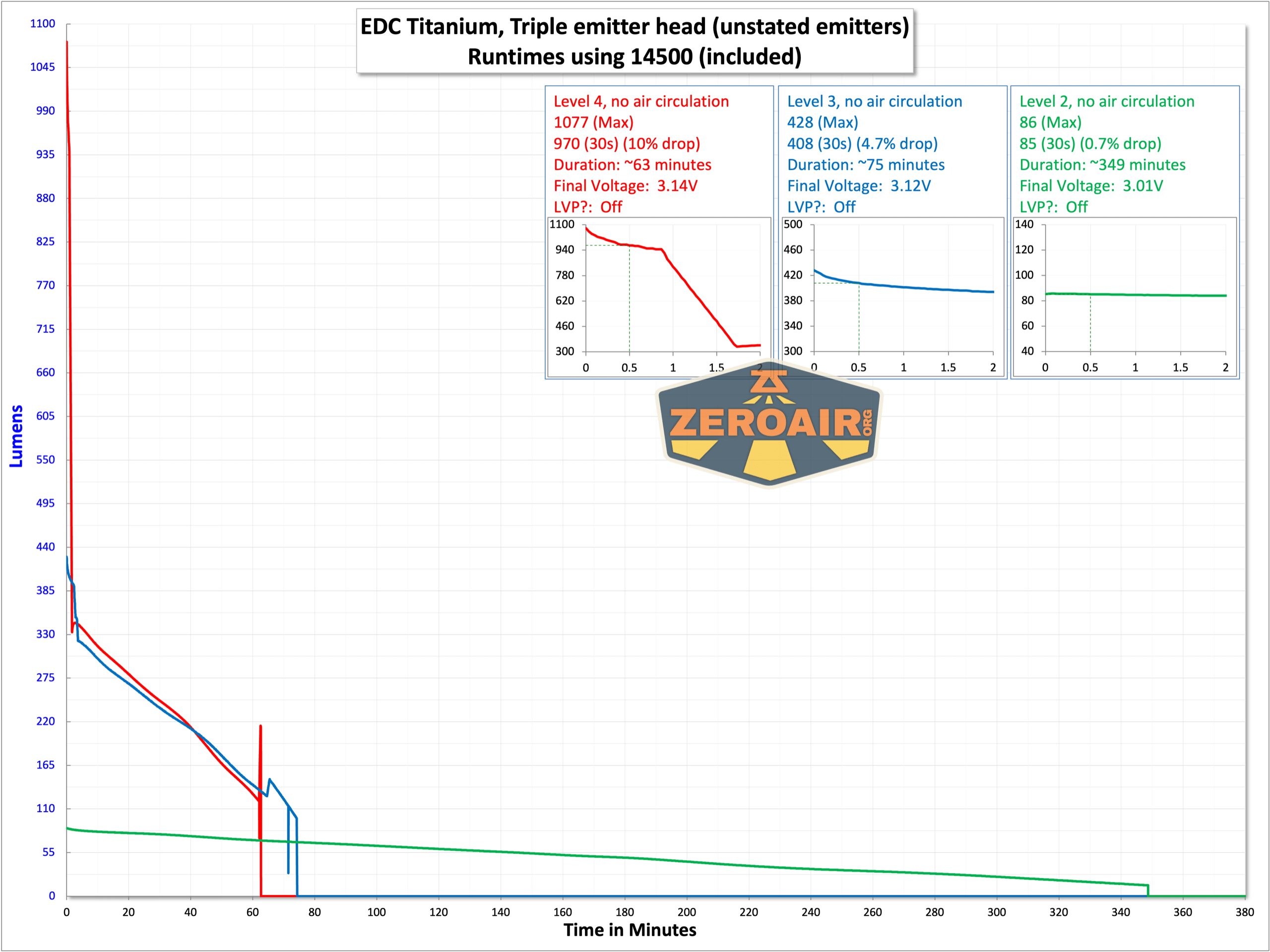
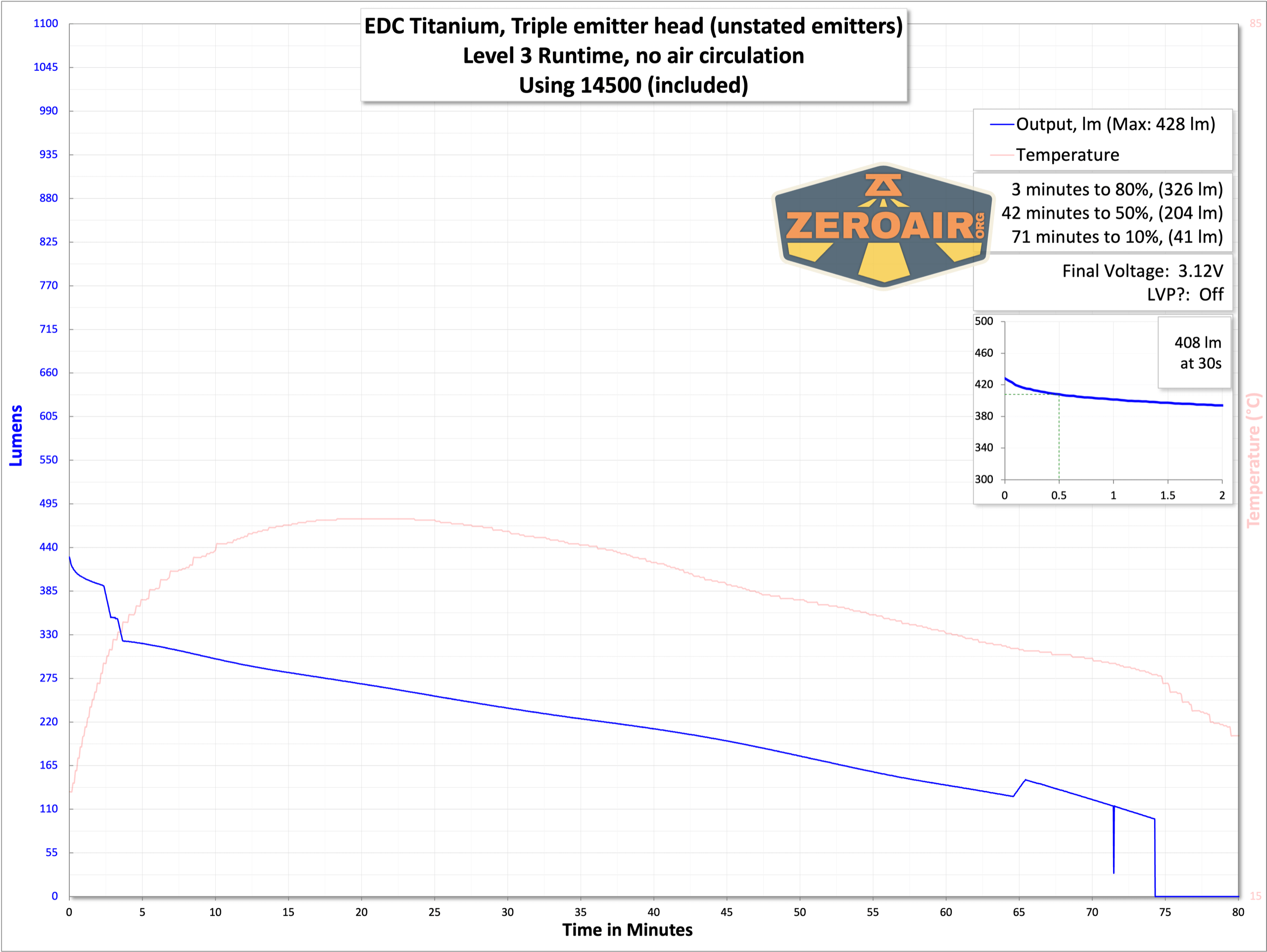
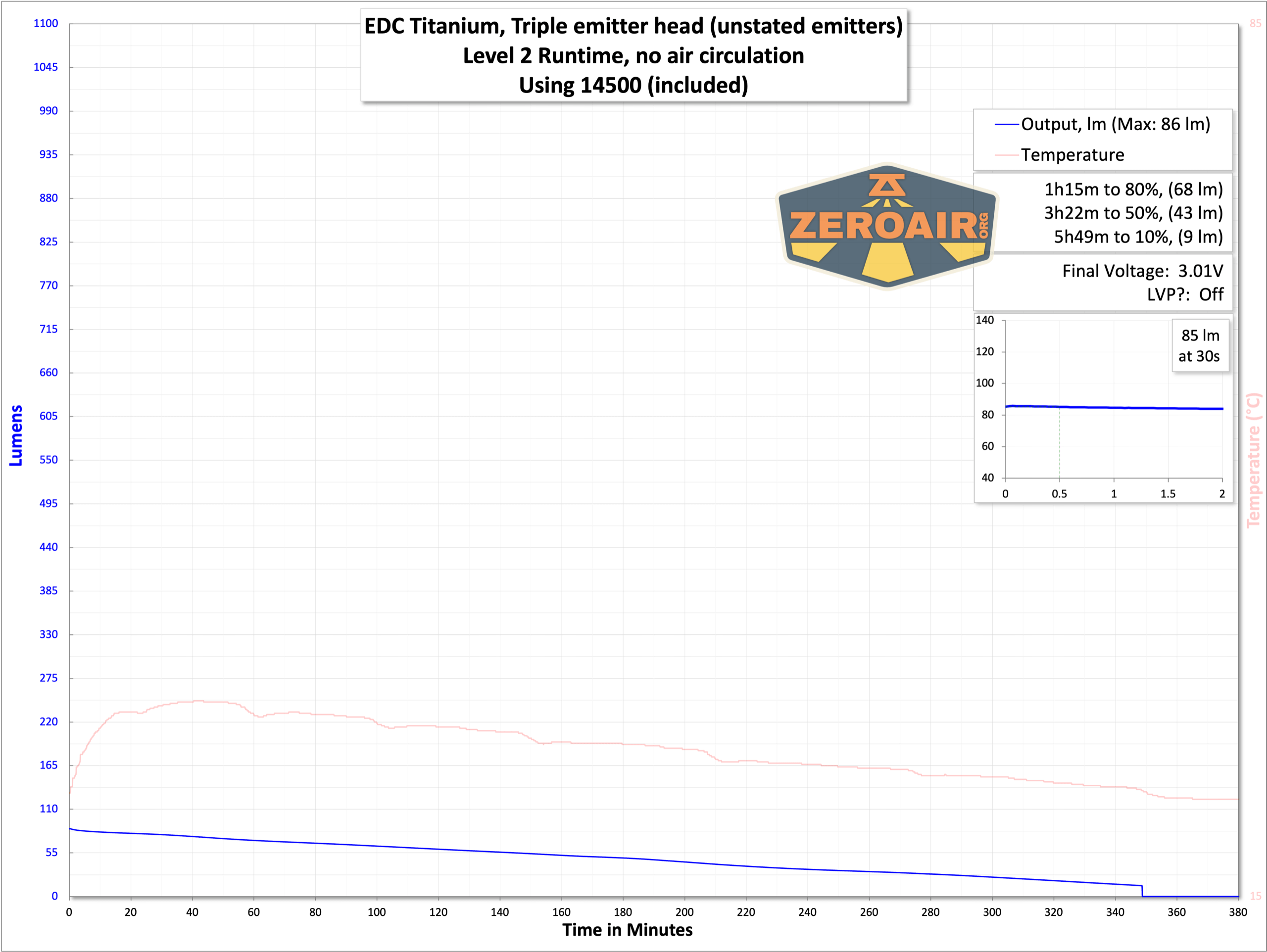
Below are a number of runtimes. All are tested with the included cell, and there are three tests for each head.


Charging
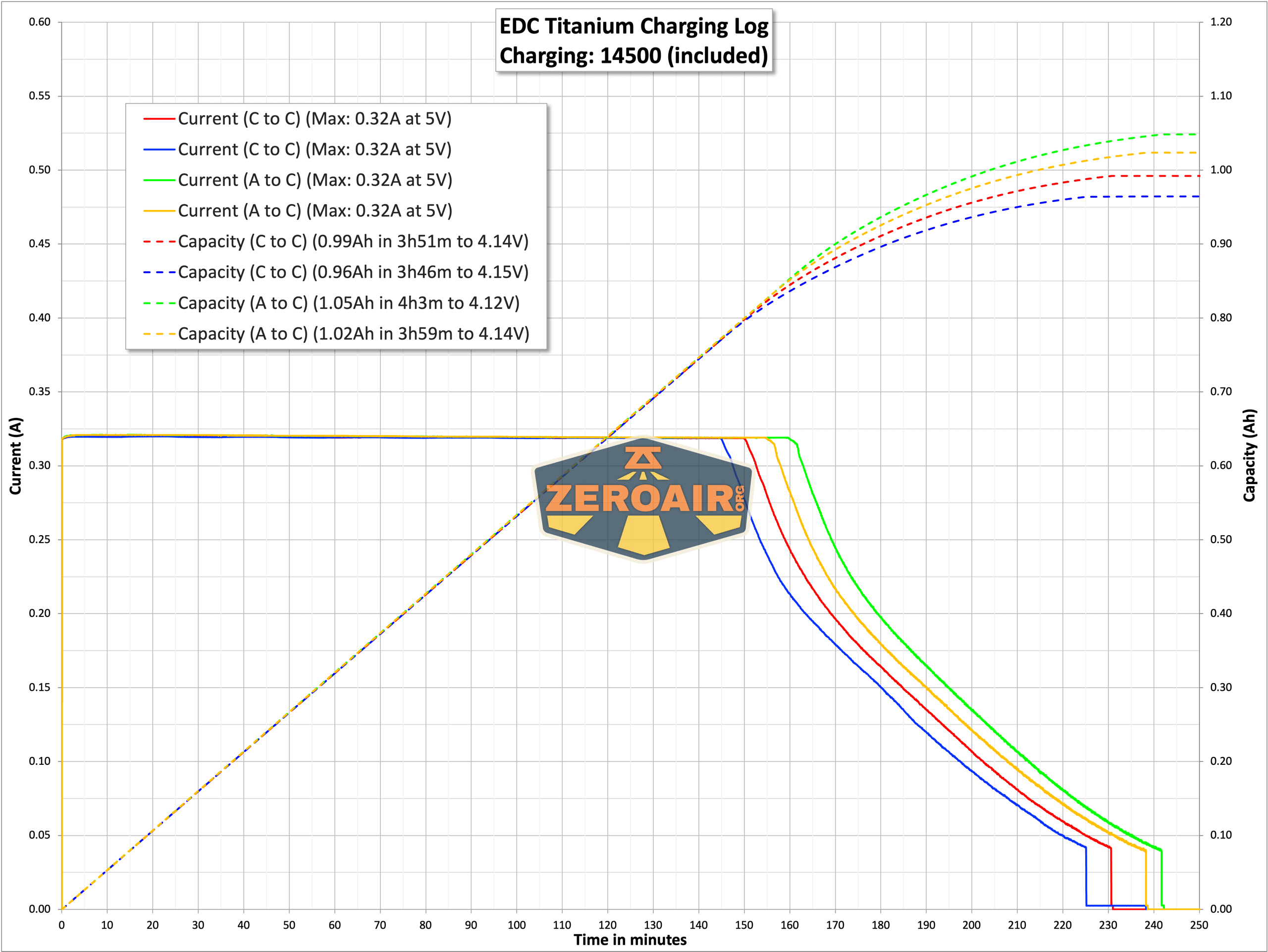
While the EDC Titanium 14500 flashlight itself does not have charging, the included cell does. That’s by way of a USB-C port on the positive end.
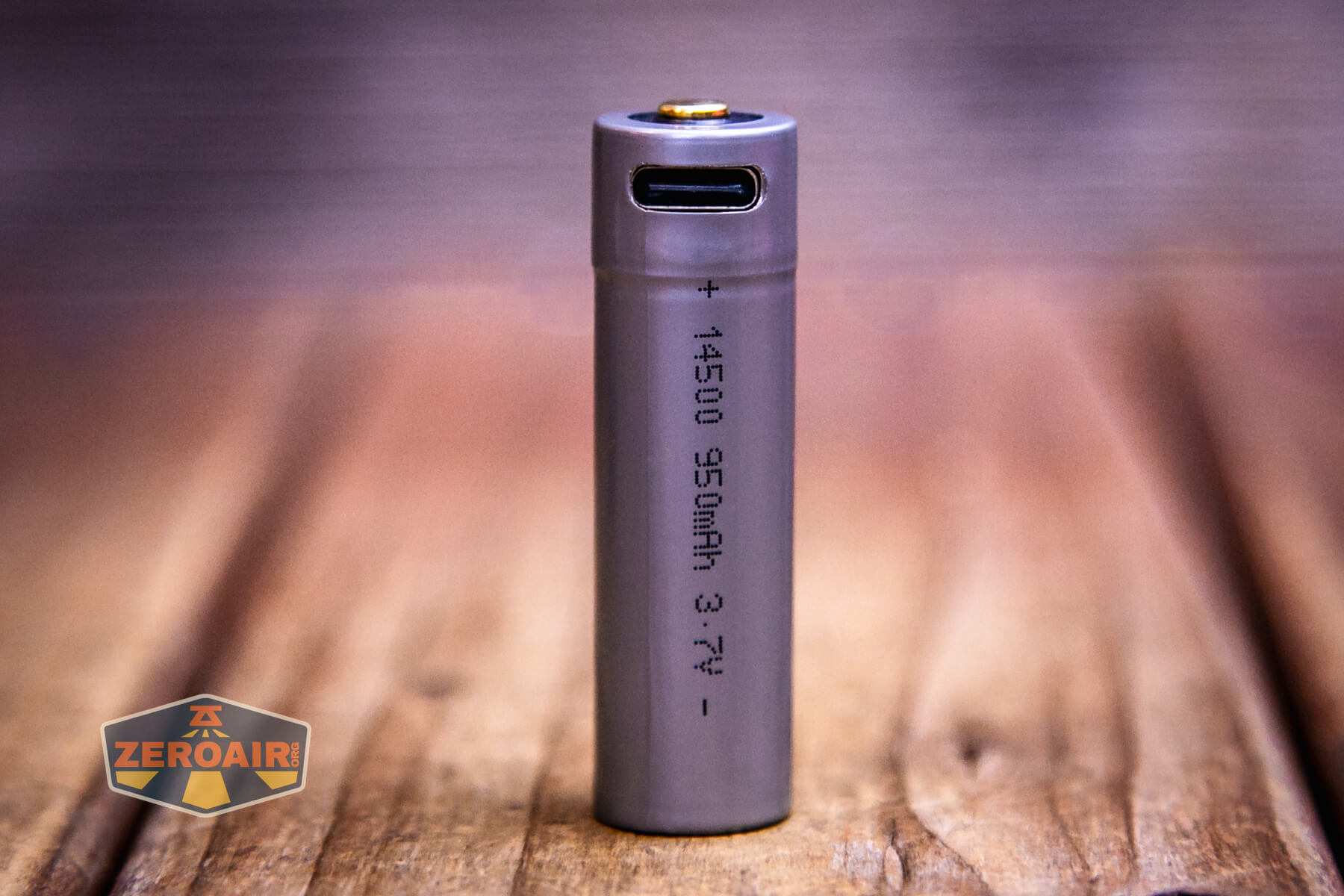
It’ll charge fine C to C or A to C – both are about the same. They’re both a little slow, but that’s ok. Slow charging is great for cells.
Modes and Currents
| Mode | Mode Claimed Output (lm) | Claimed Runtime | Measured Lumens | Tailcap Amps |
|---|---|---|---|---|
| Single, High 14500 | – | – | 448 (0s) 247 (30s) |
2.64 |
| Single, Medium 14500 | – | – | 114 (0s) 112 (30s) |
0.52 |
| Single, Low 14500 | – | – | 16 | 0.06 |
| Single, Lowest 14500 | – | – | 0.12 | [low] |
| Single, High AA | – | – | 81.6 | 2.08 |
| Single, Medium AA | – | – | 62.2 | 0.76 |
| Single, Low AA | – | – | 6.9 | 0.07 |
| Single, Lowest AA | – | – | – | [low] |
| Triple, High 14500 | – | – | 1077 (0s) 970 (30s) |
6.13 |
| Triple, Medium 14500 | – | – | 428 (0s) 408 (30s) |
1.55 |
| Triple, Low 14500 | – | – | 85 | 0.15 |
| Triple, Lowest 14500 | – | – | 9.1 | [low] |
Pulse Width Modulation
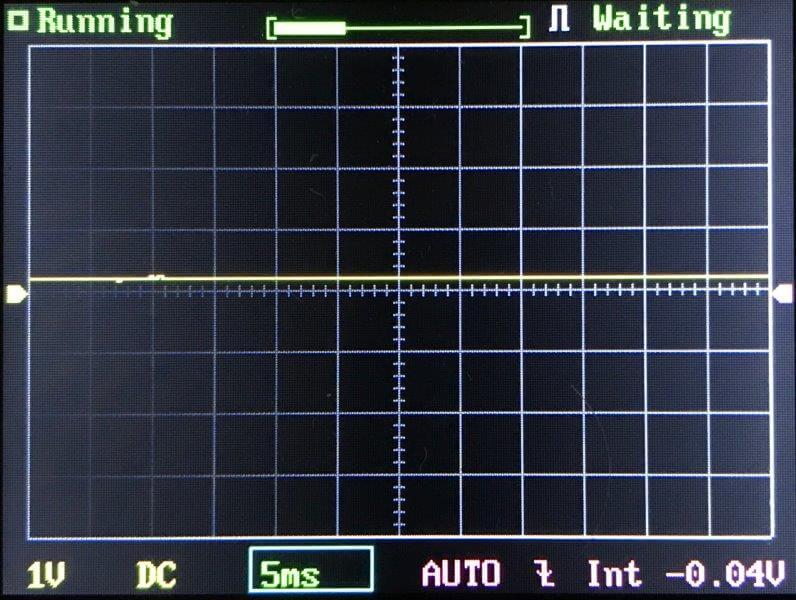
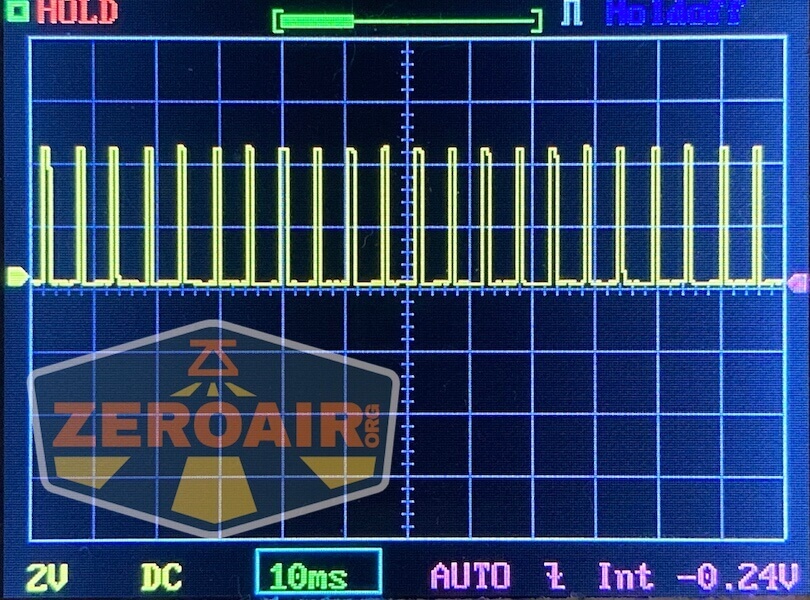
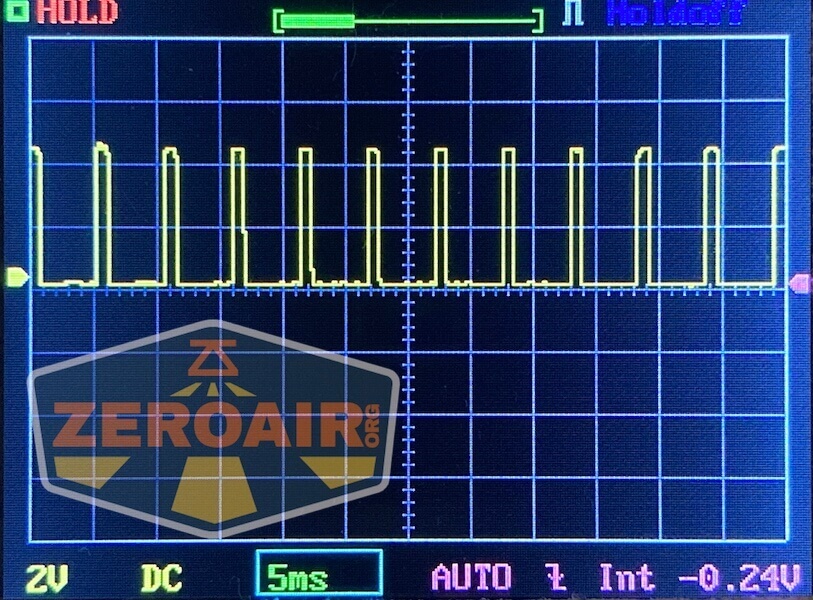
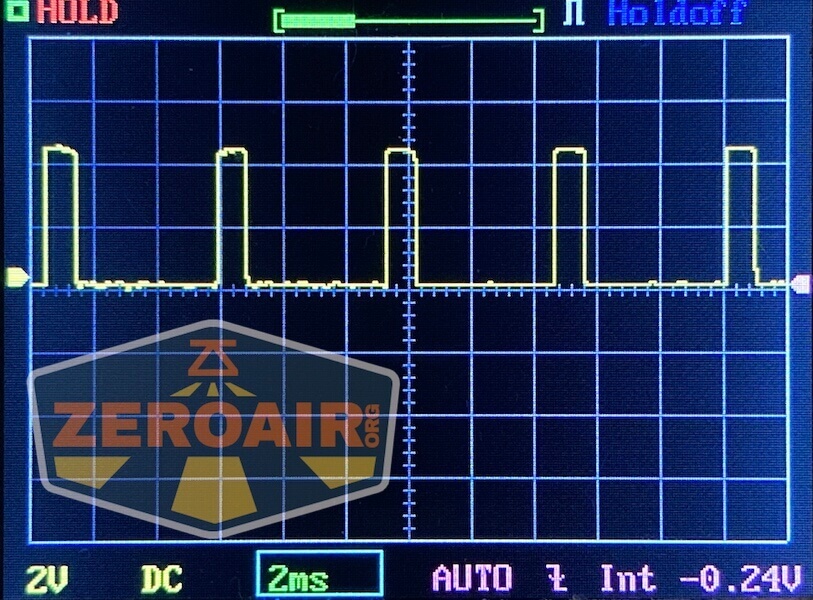
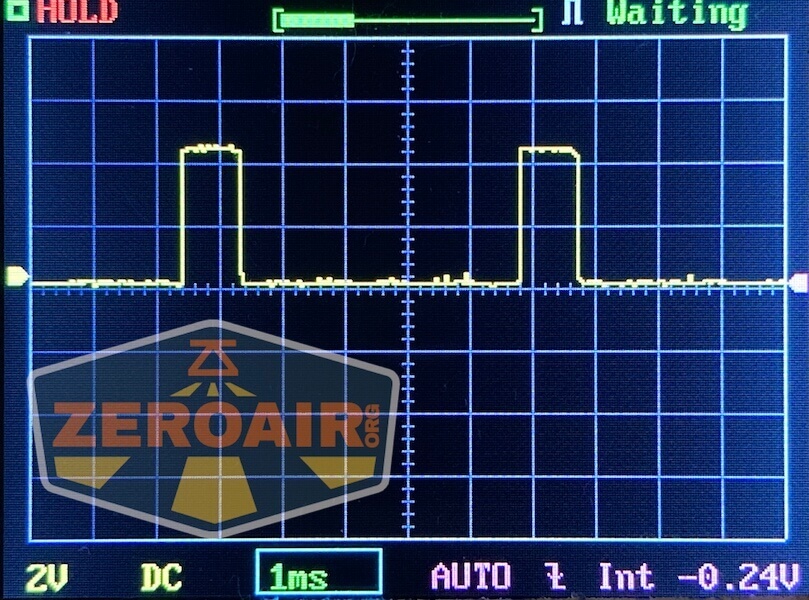
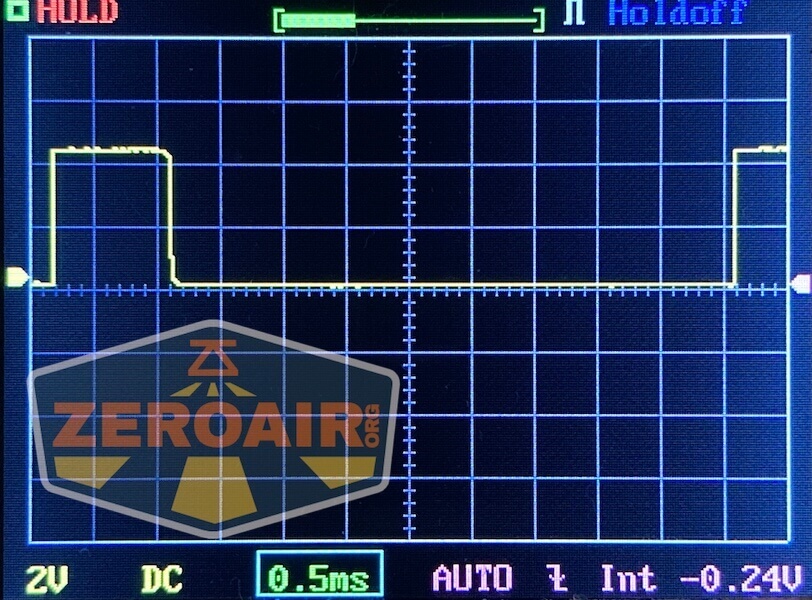
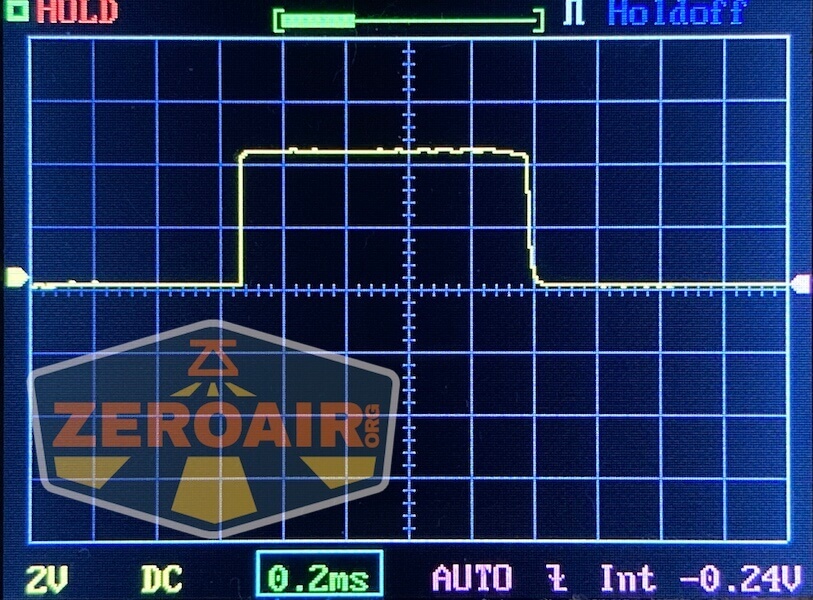
Every mode on every head and every cell type uses PWM. It’s pretty fast – I can’t notice it and I don’t think you’d be able to, either.
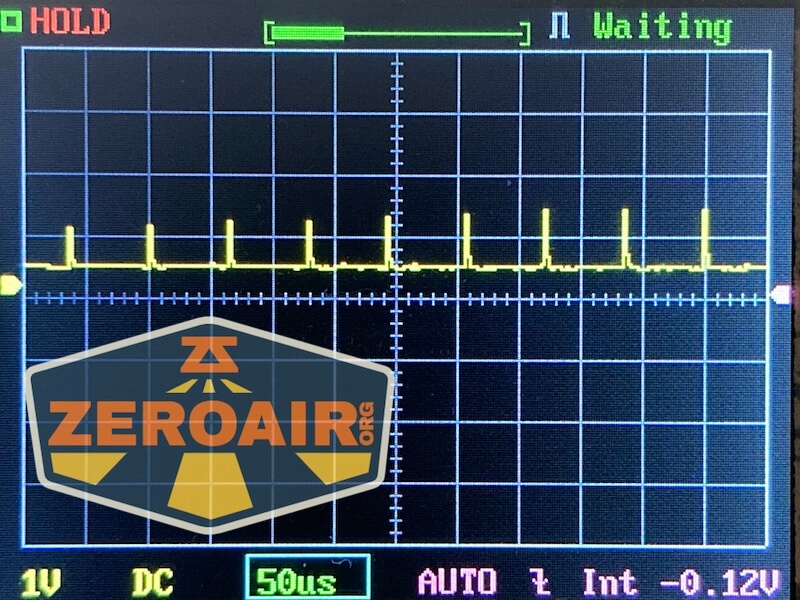
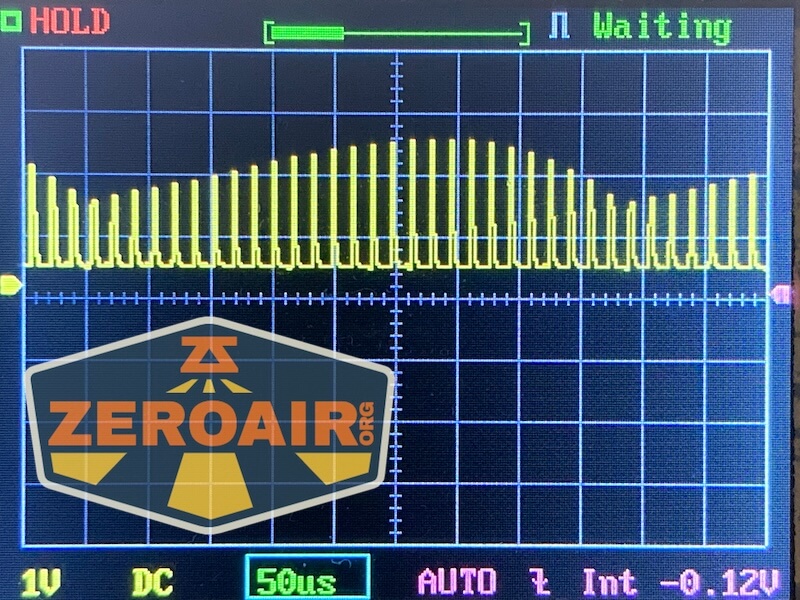
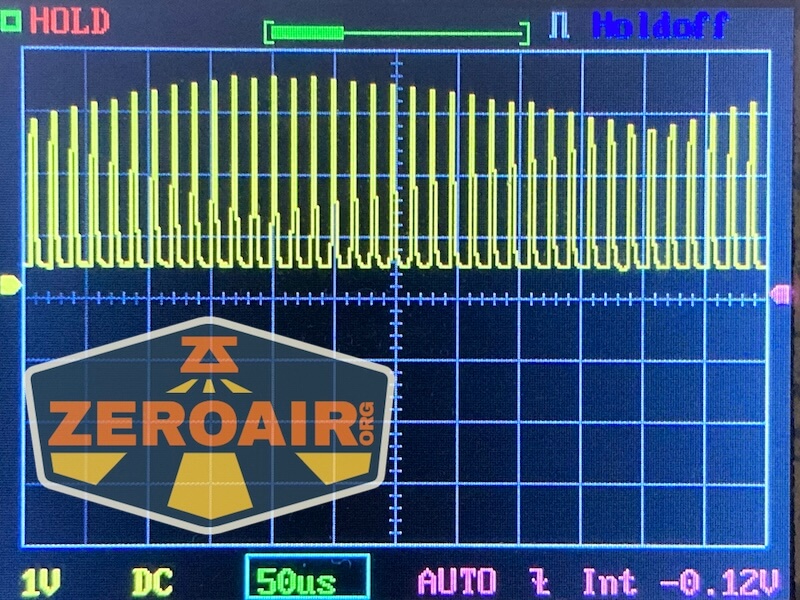
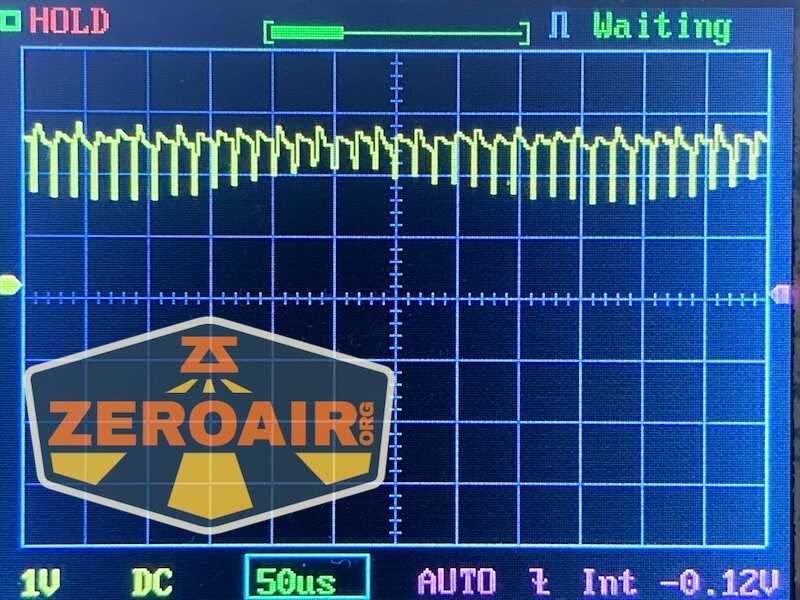
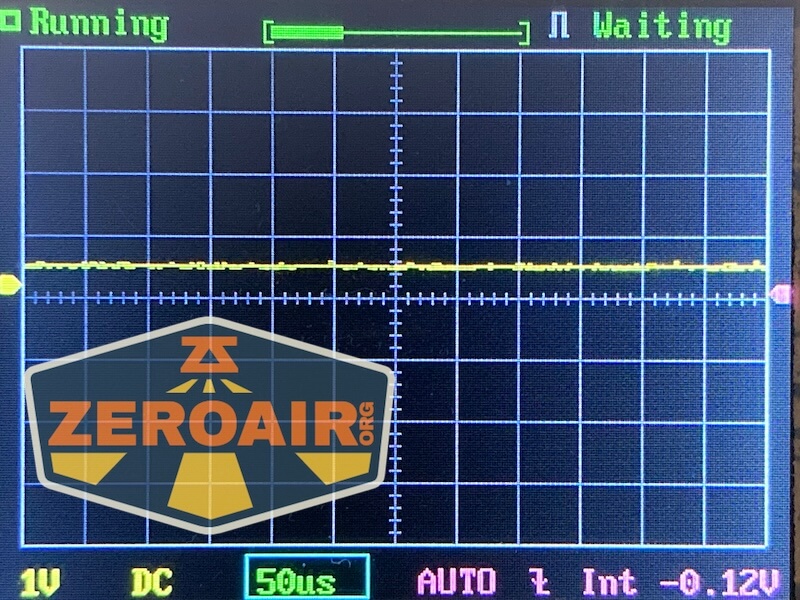
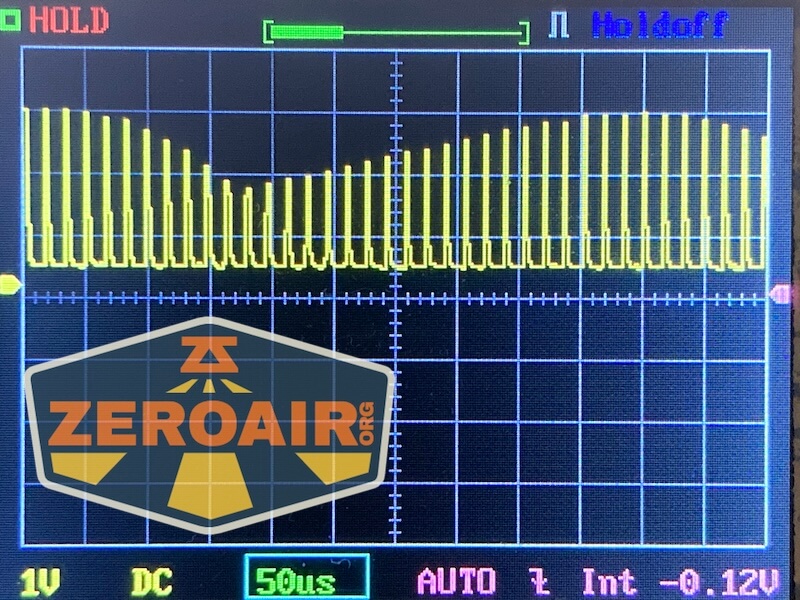
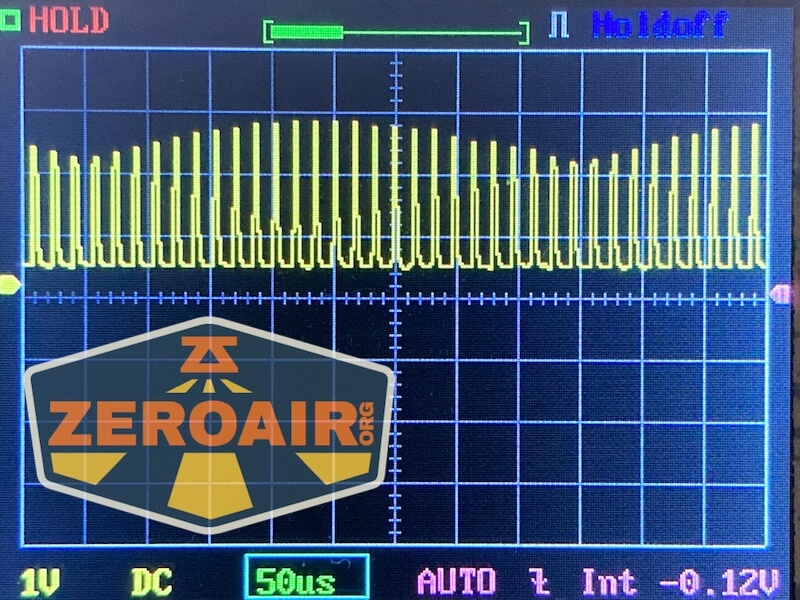
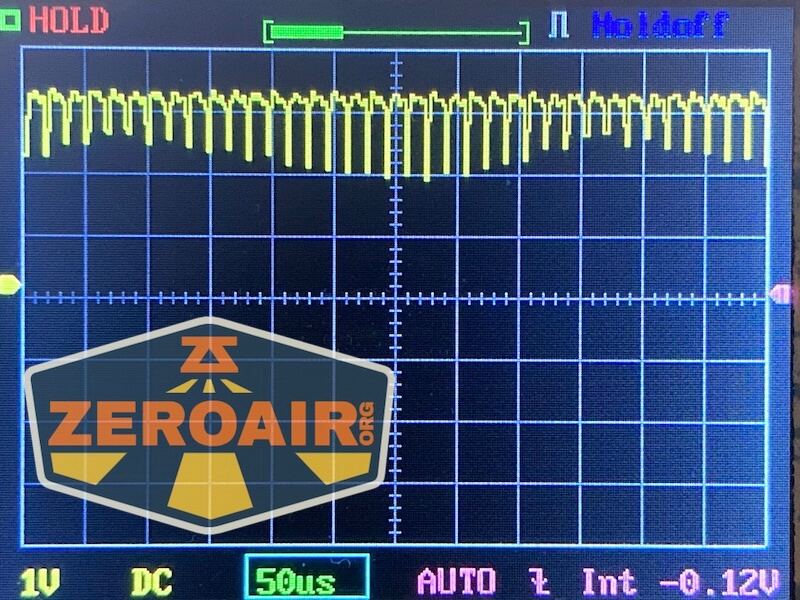
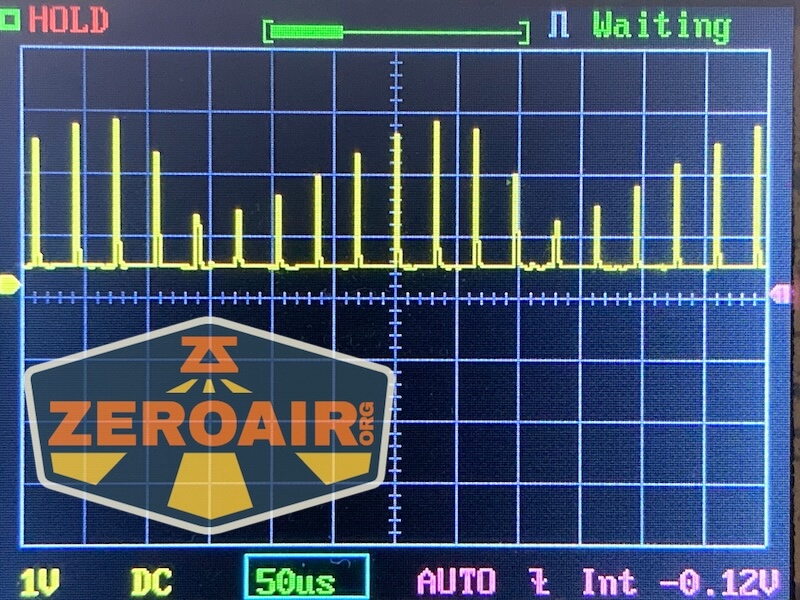
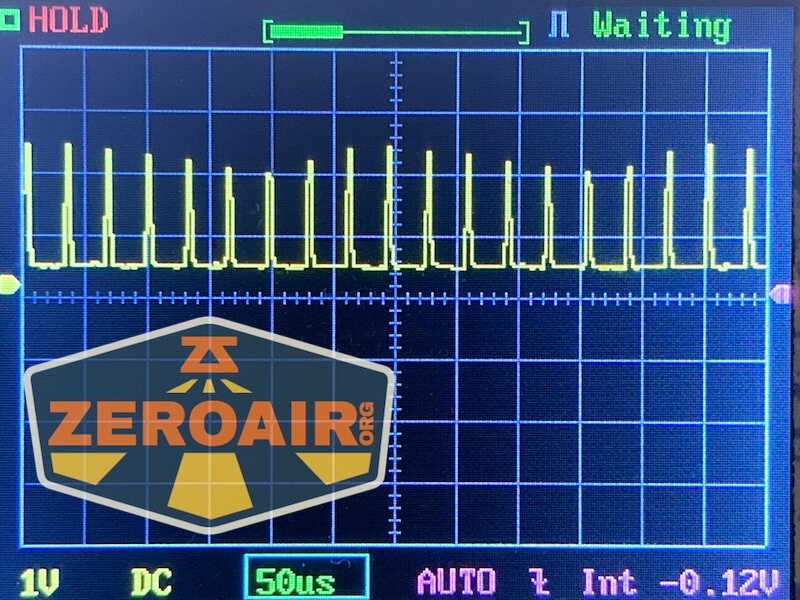
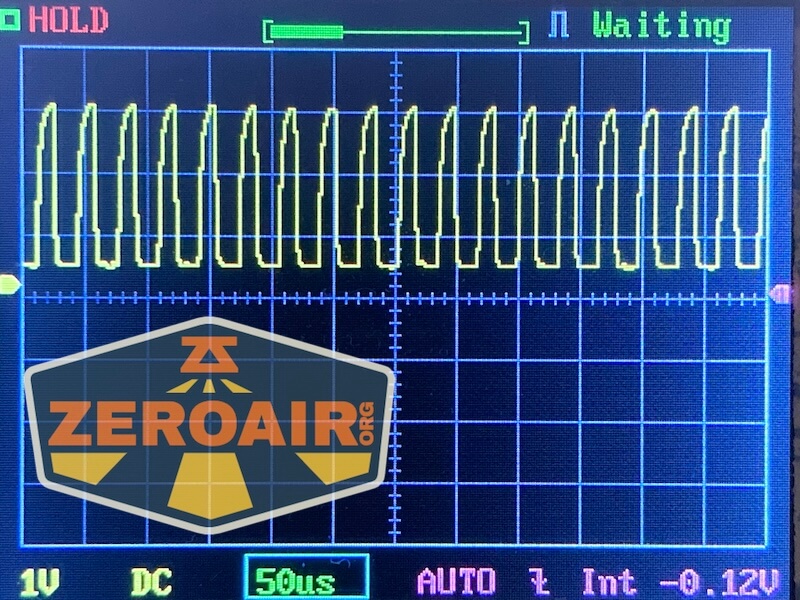
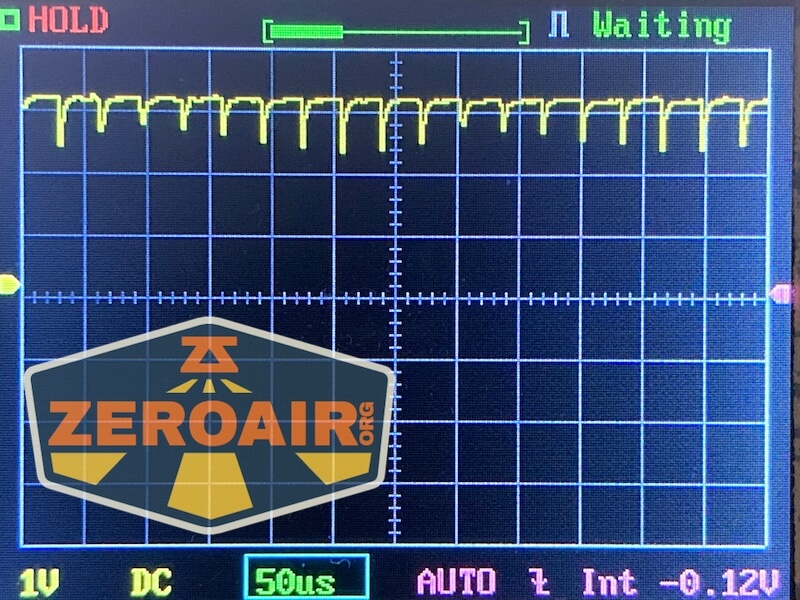
Here you can see a “baseline” – a chart with almost no light hitting the sensor. Then there’s the Ultrafire WF-602C flashlight, which has some of the worst PWM I’ve seen. It’s so bad that I used a post about it to explain PWM! Here are multiple timescales (10ms, 5ms, 2ms, 1ms, 0.5ms, 0.2ms) to make comparing this “worst” PWM light to the test light easier. That post also explains why I didn’t test the WF-602C at the usual 50us scale.
User Interface and Operation
The EDC Titanium 14500 flashlight uses a mechanical reverse clicky switch. That switch has a metal cover and three slots for tritium.
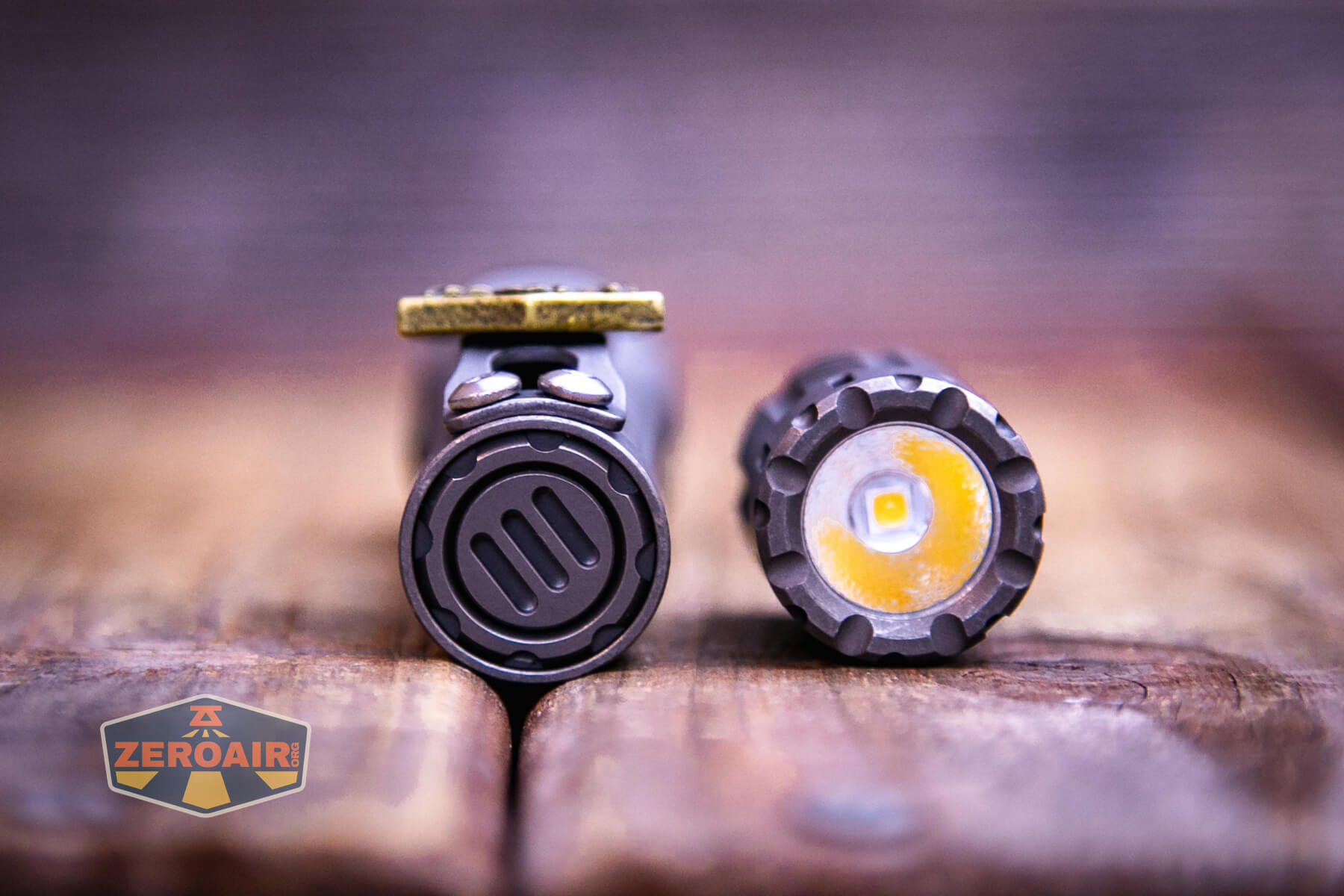
The switch cover itself is flush with the edge of the light but very definitely does not protrude over the flashlight edge. That’s important for tailstanding!
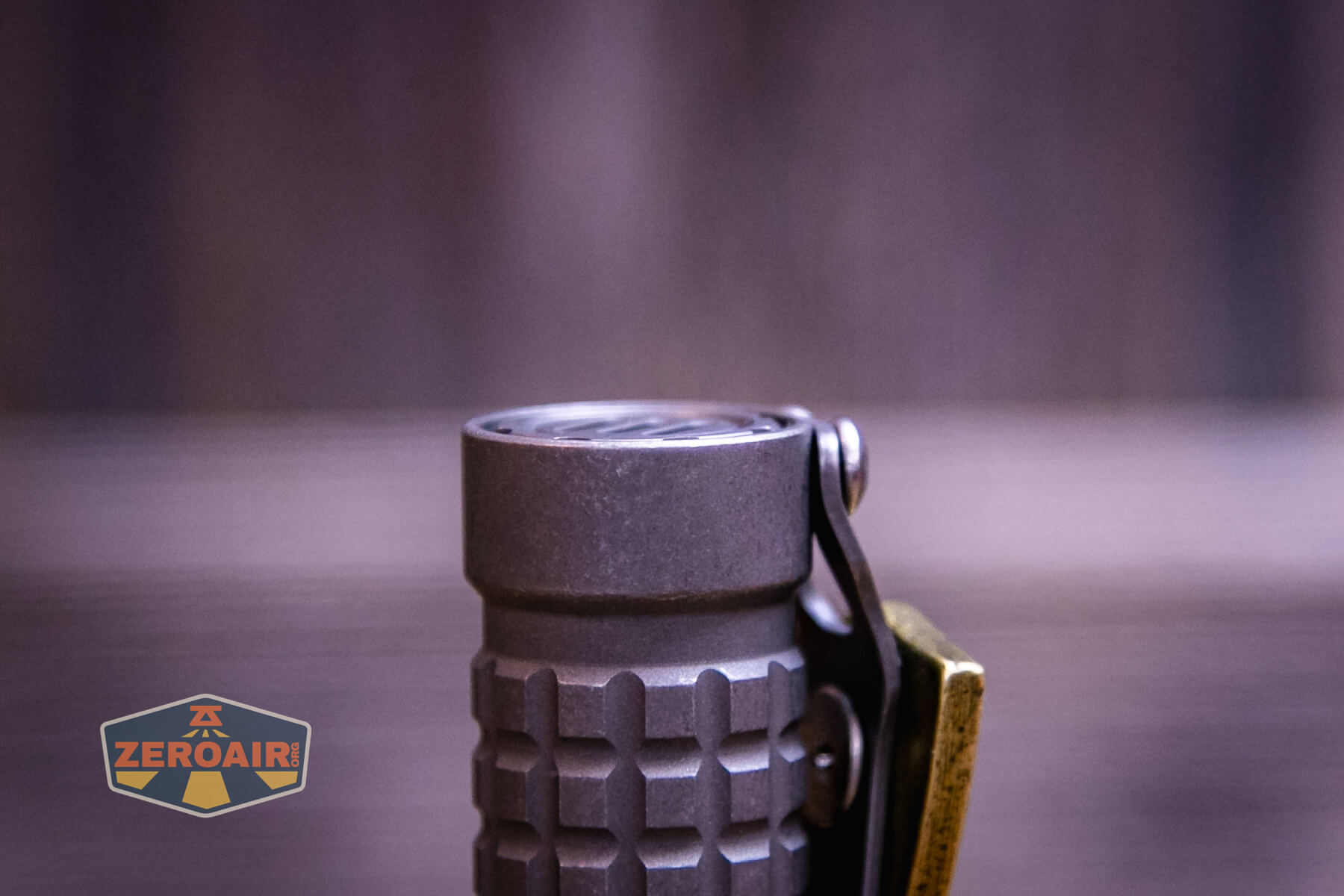
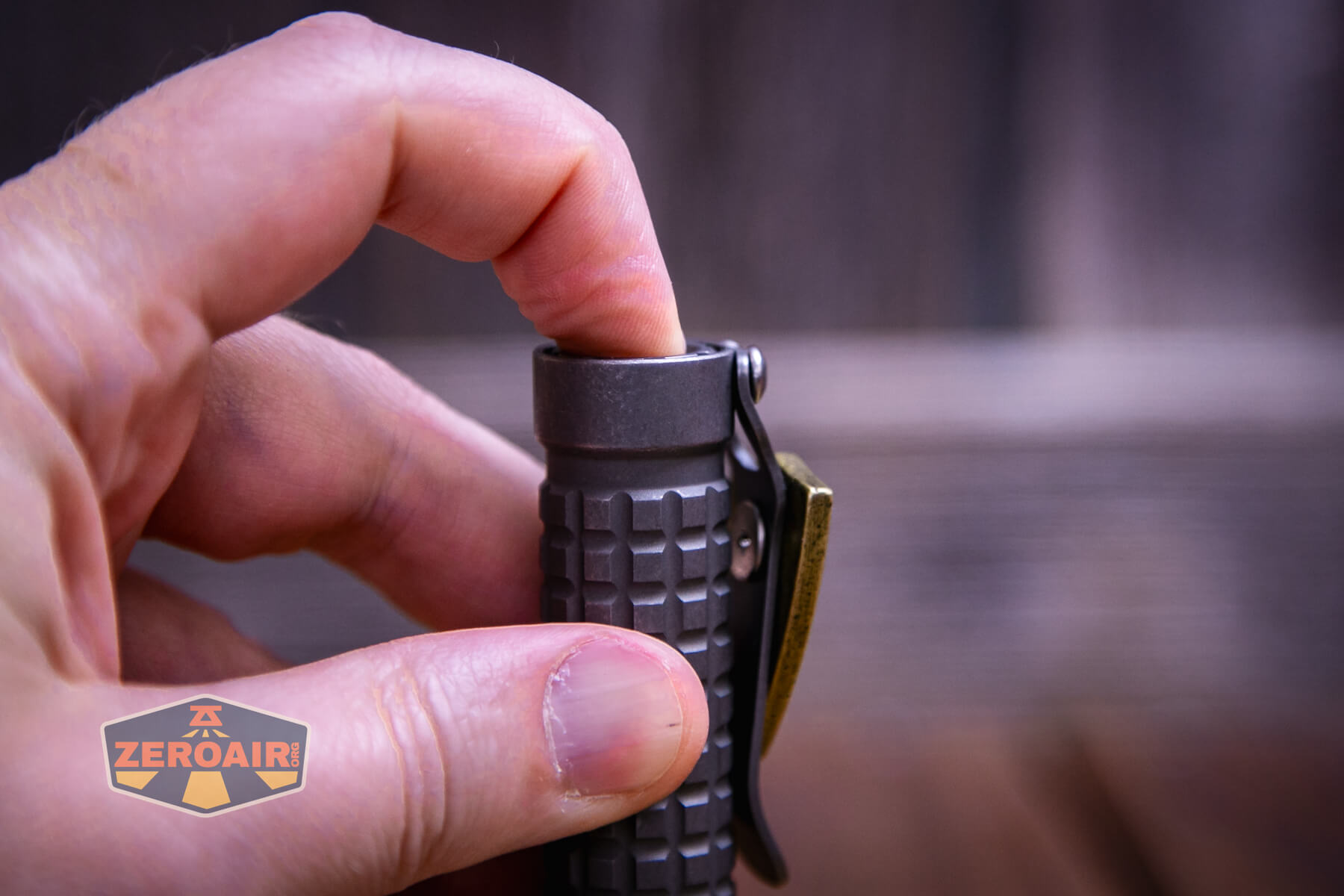
Action on this switch is good. There’s little rock (side to side) (or “wobble”) but still, intentional direct pressure will work best. The action is fairly shallow (but still clicky) on this mechanical switch.
Here’s a user interface table! I didn’t get a manual and I do think this light is probably programmable. But without a manual, I am not sure! It’s worth mentioning that the heads seem to have the same user interface, despite looking different and also accepting different cell types.
| State | Action | Result |
|---|---|---|
| Off | Click | On to Lowest |
| On | Click | Off |
| On | Tap | Mode advance (through all 4 levels) |
I really think that’s it. This is not a complex user interface.
LED and Beam
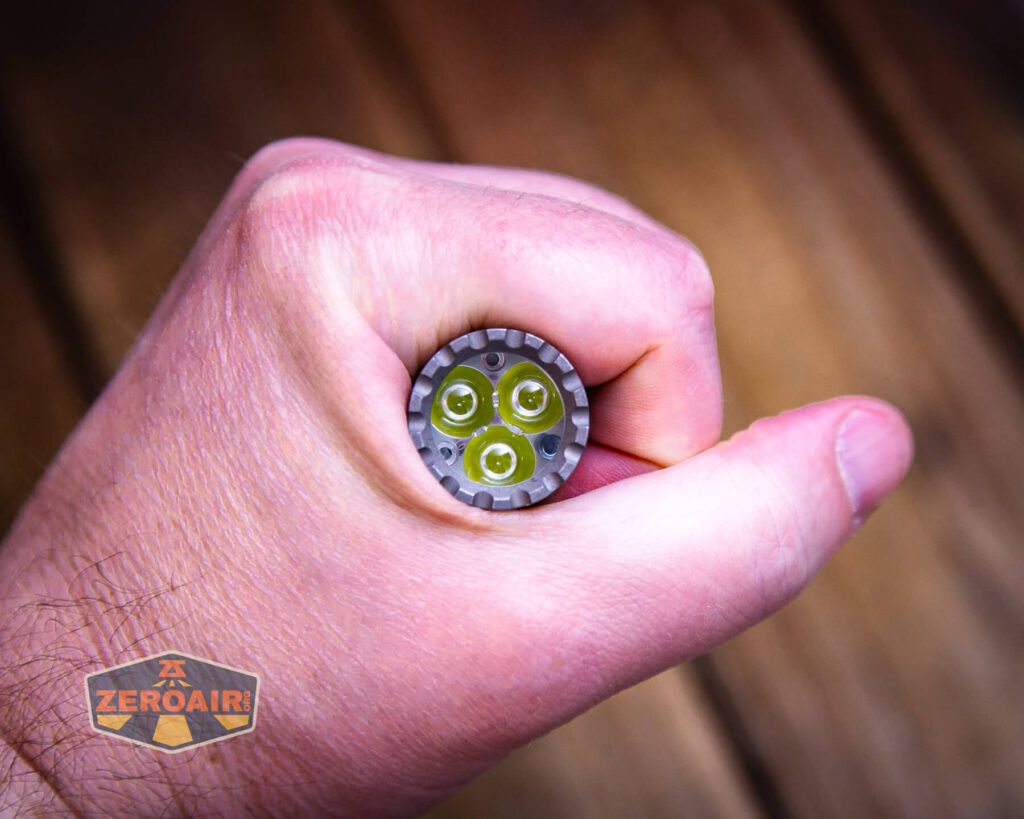
The EDC Titanium 14500 flashlight ships with two (or three, if you get the good package) heads. The single emitter light is specified as a Nichia 519a emitter but specs weren’t listed for the triple. They’re likely some Cree variant and seem intended for higher output.
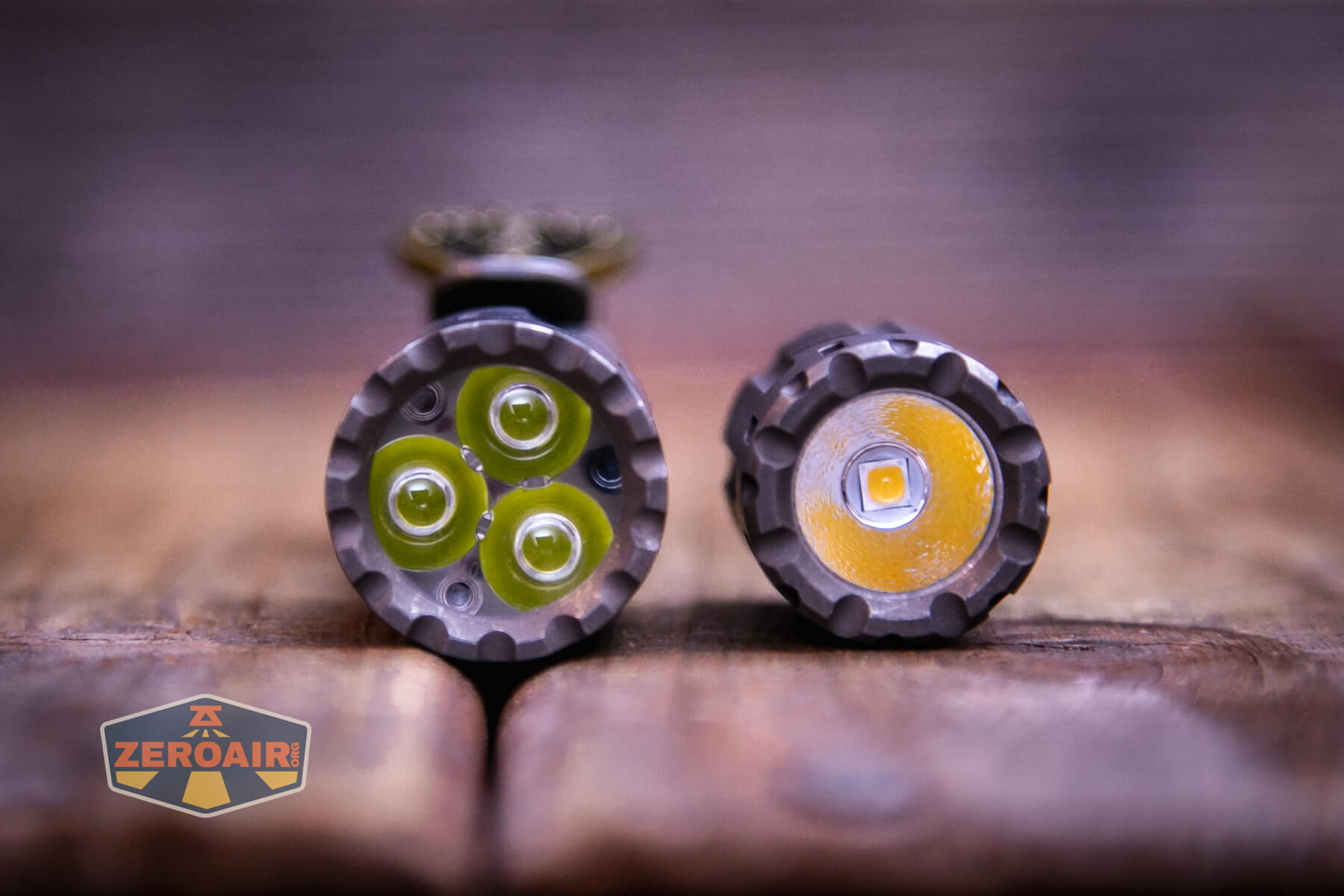
The single head has an orange peel reflector.
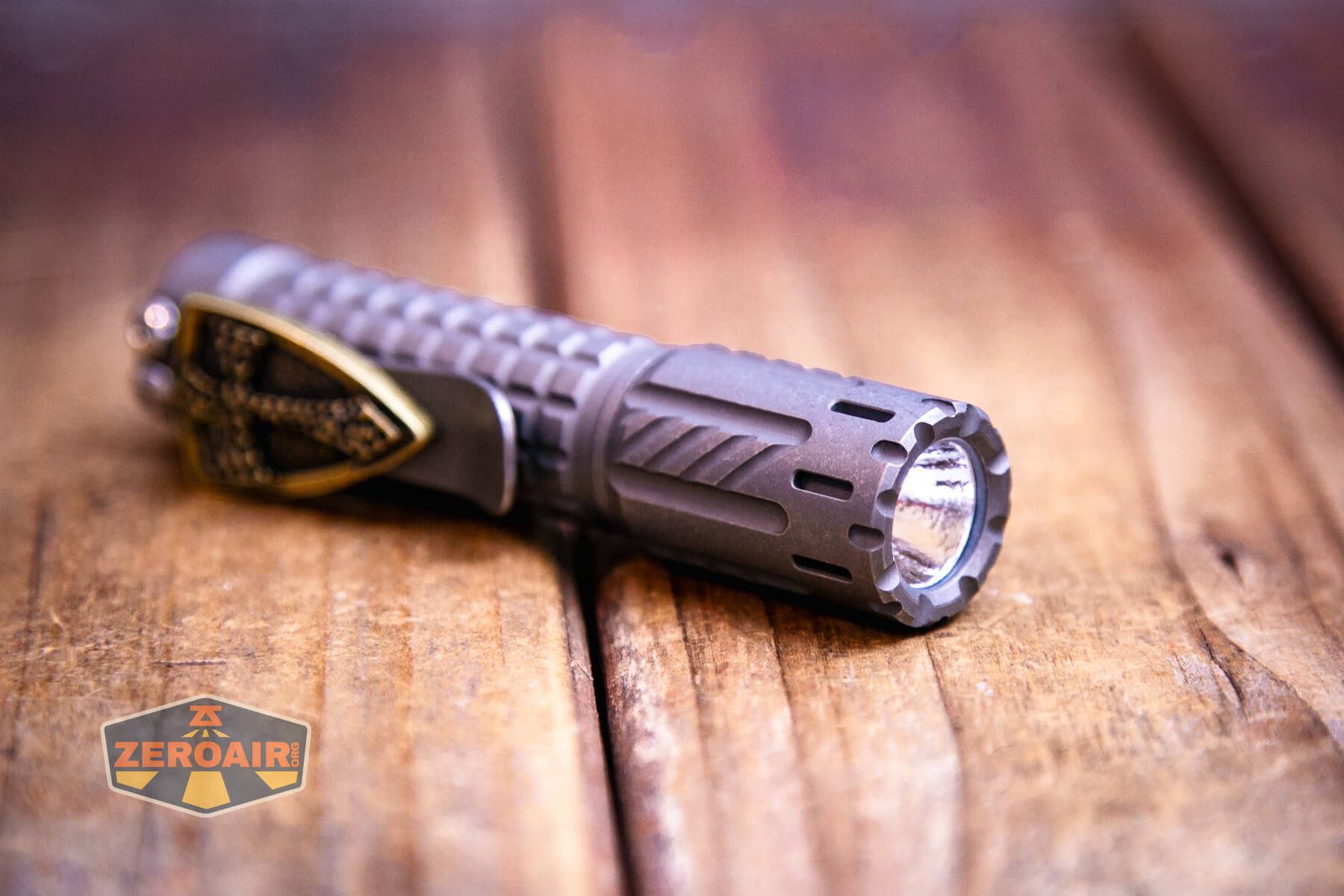
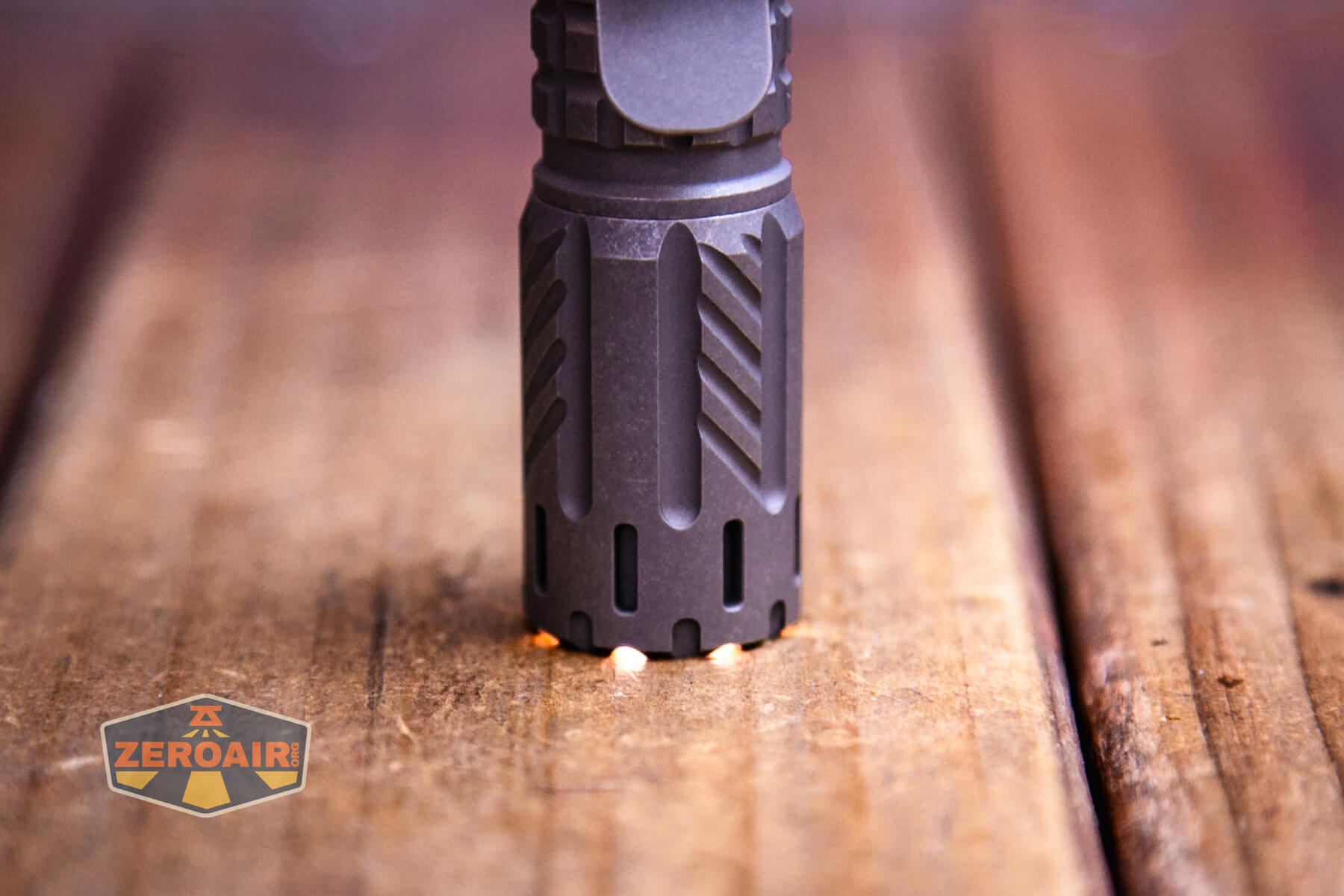
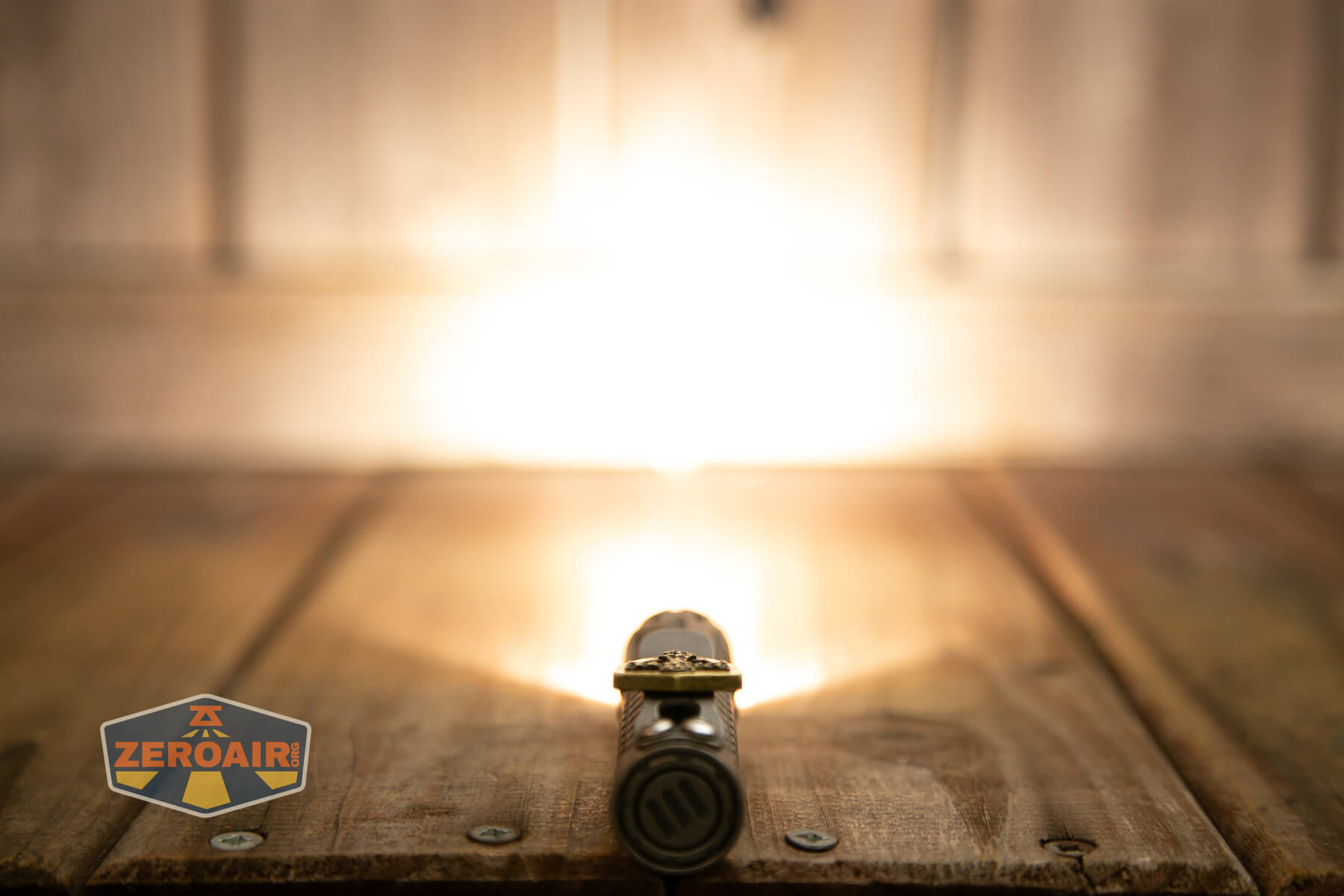
Both heads have grooves in the head that allow light to escape while headstanding and also some tritium slots.
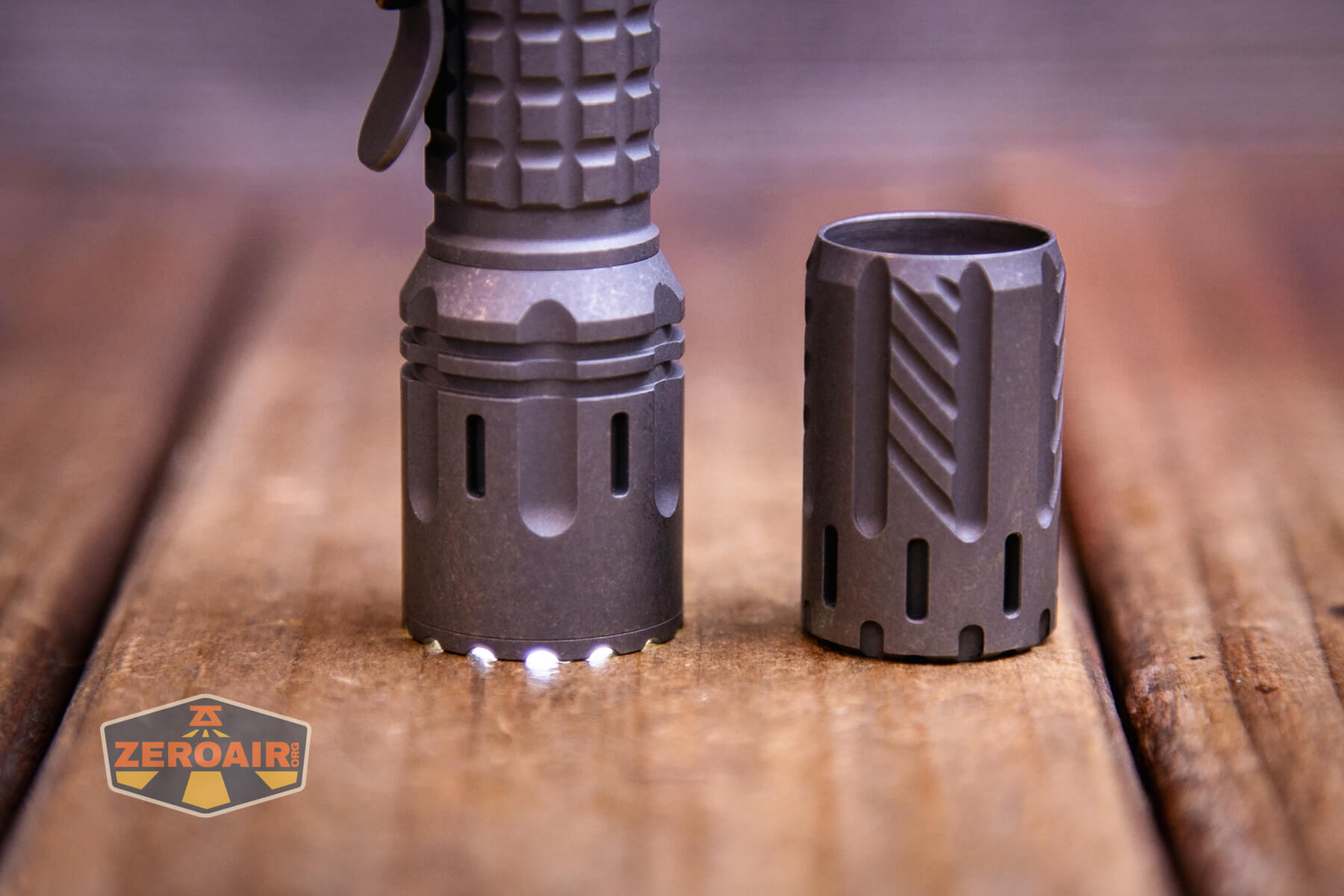
The triple head does have a screw-in bezel, so swapping the emitters shouldn’t be all that difficult.
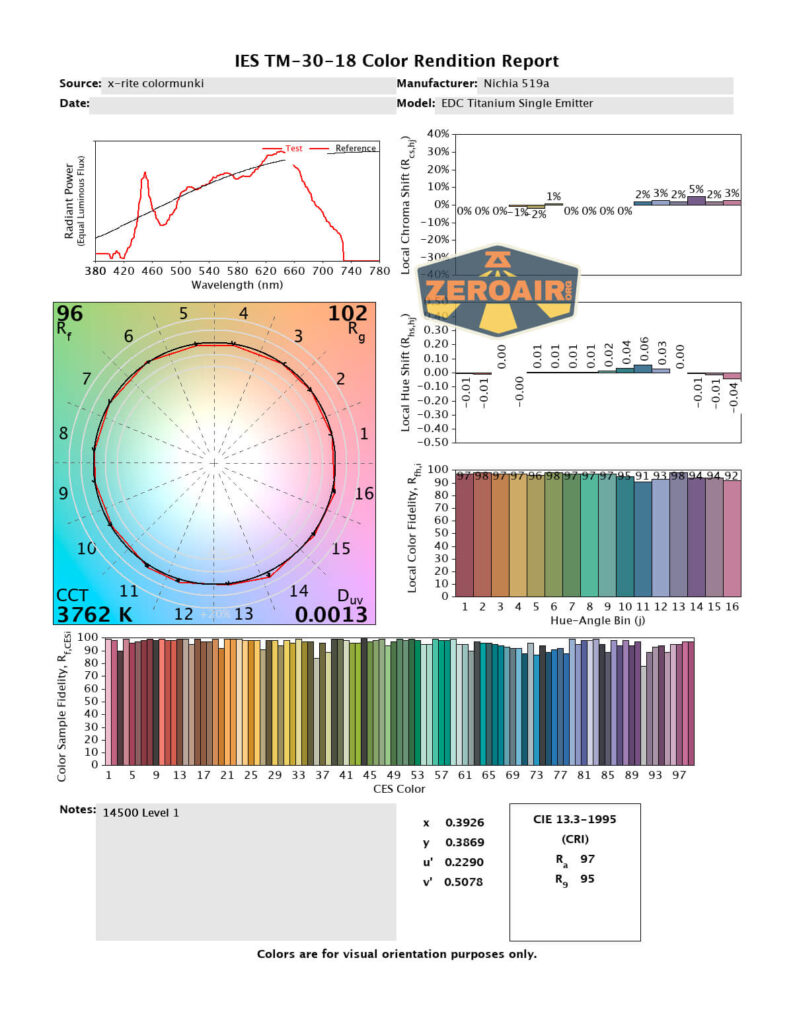
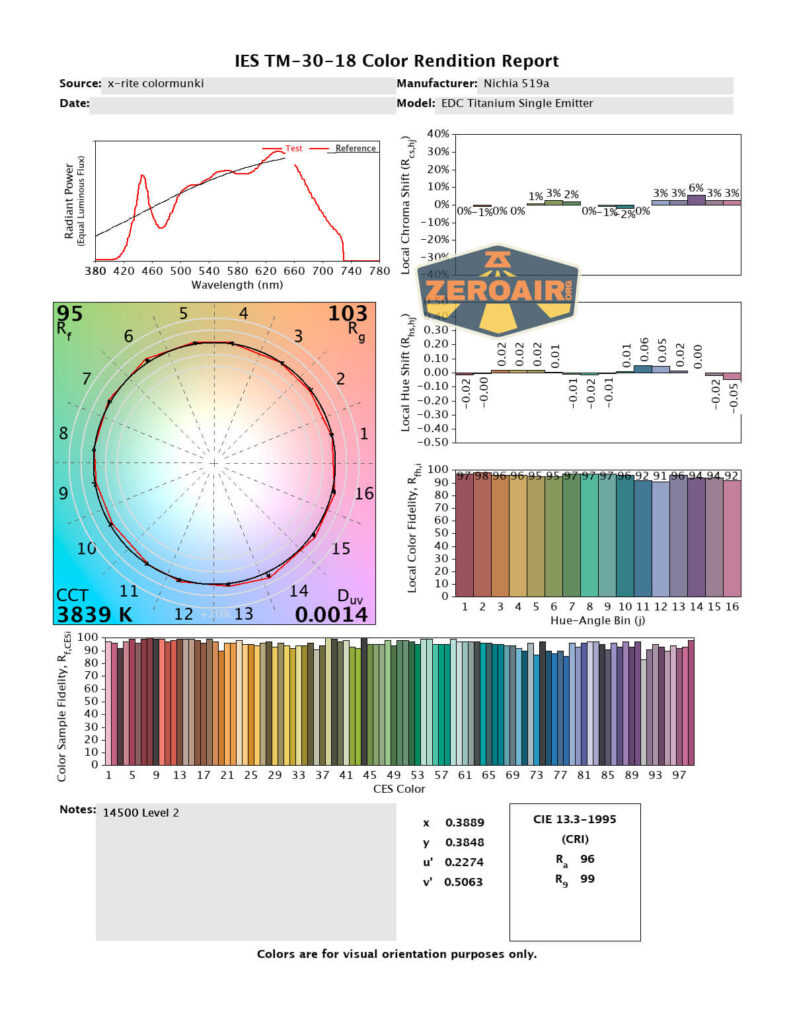
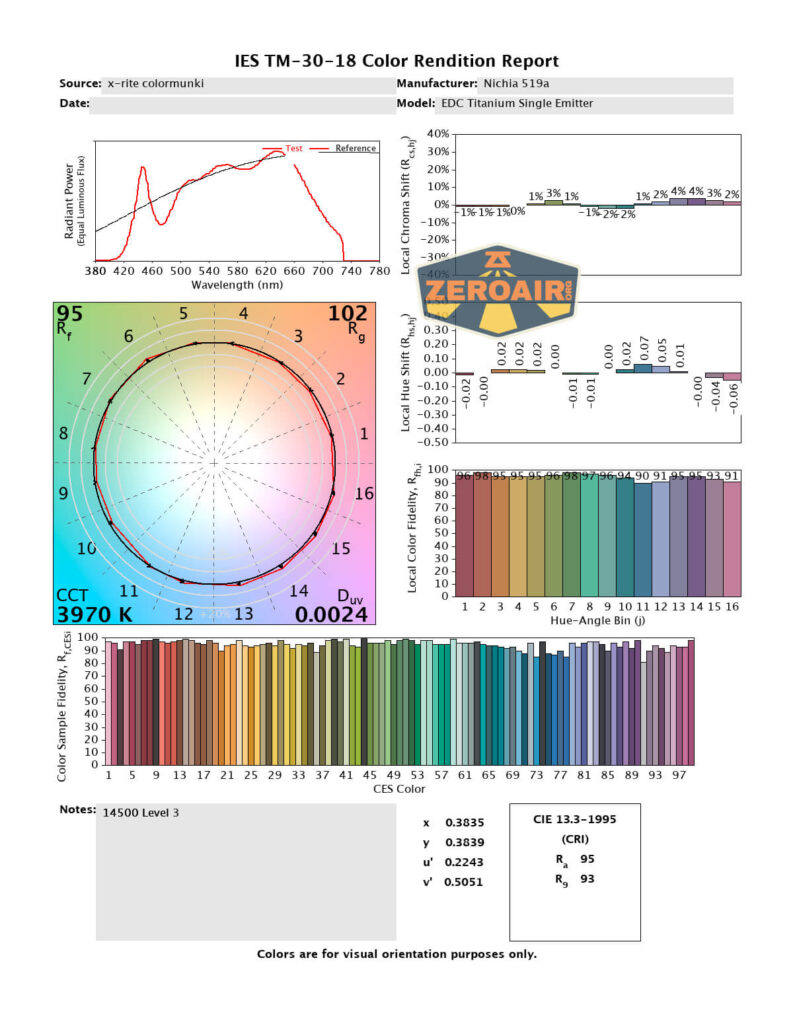
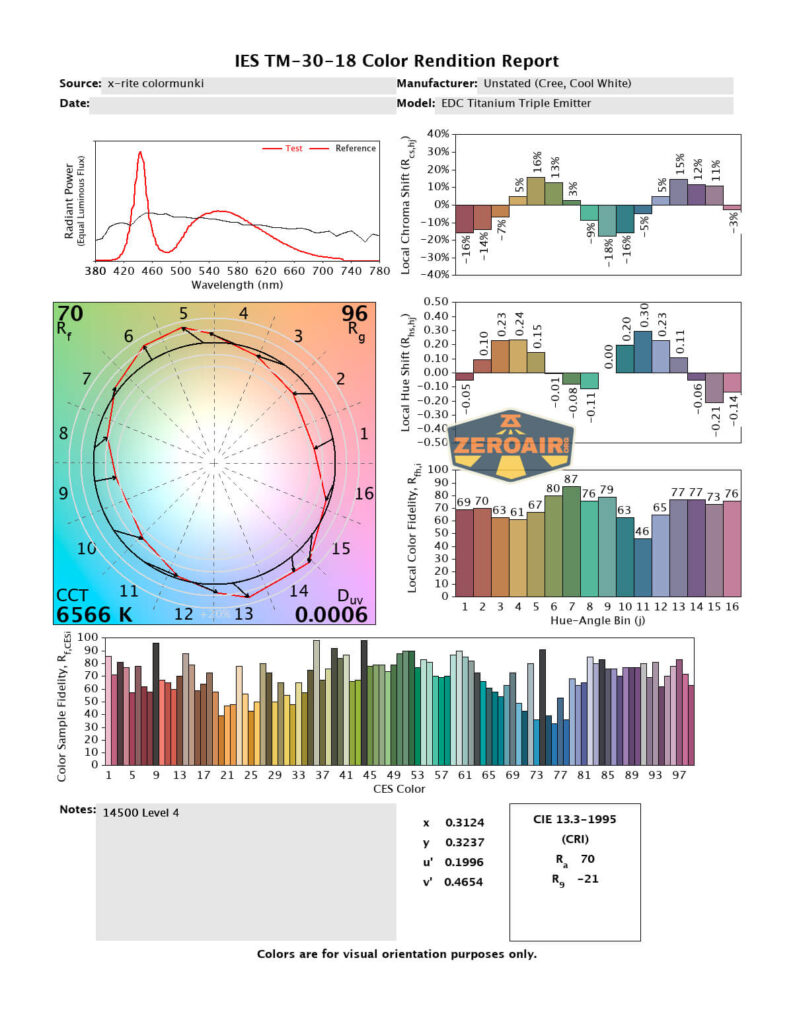
LED Color Report (CRI and CCT)
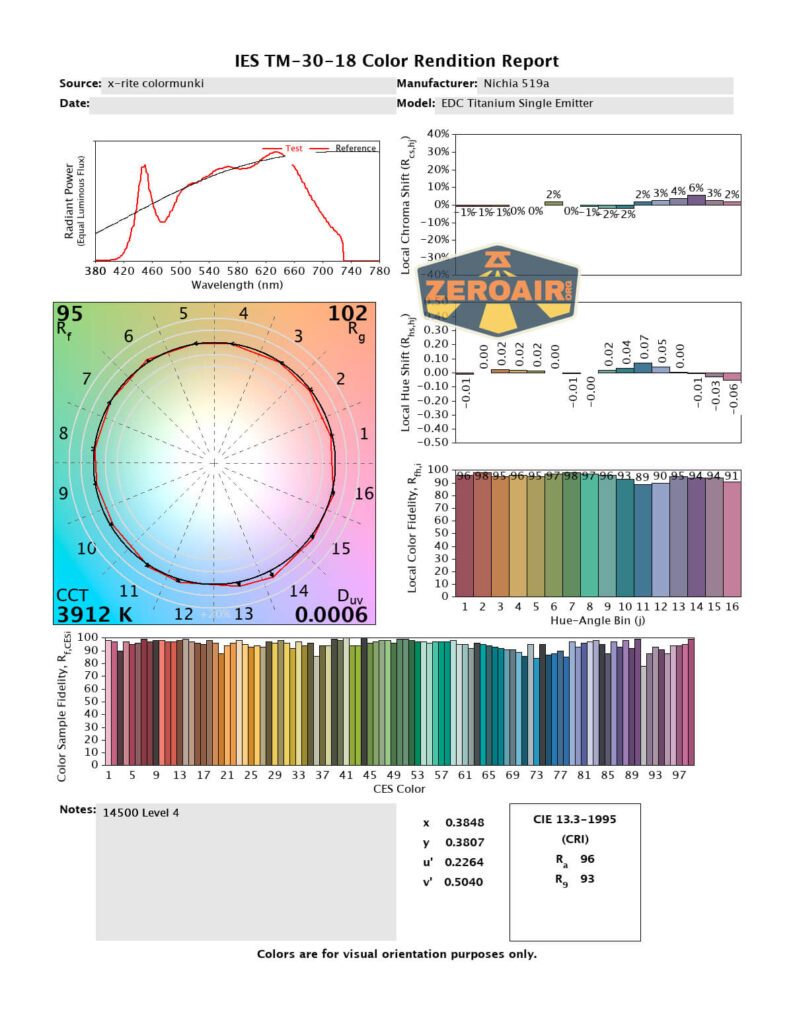
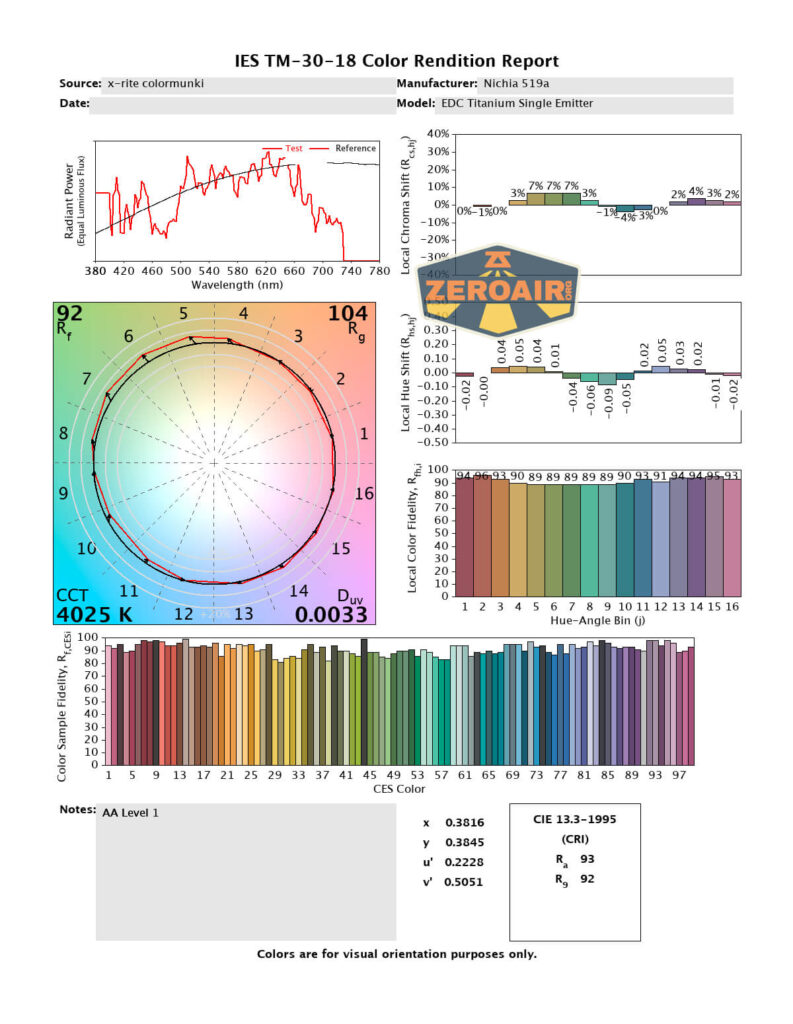
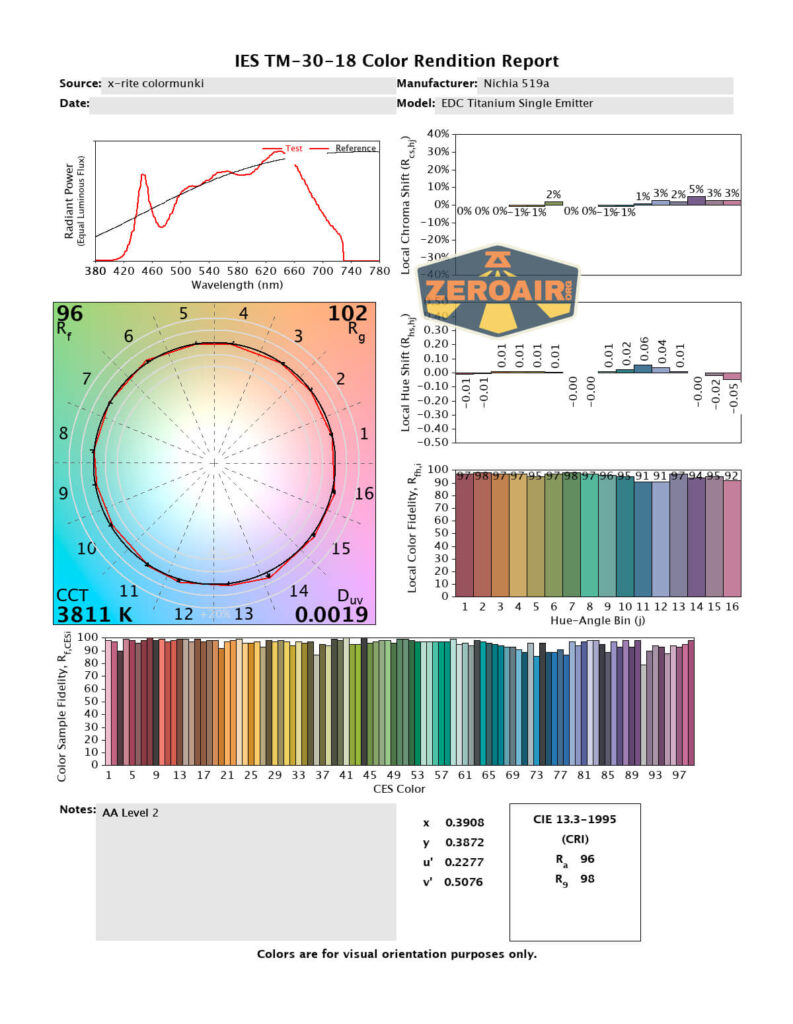
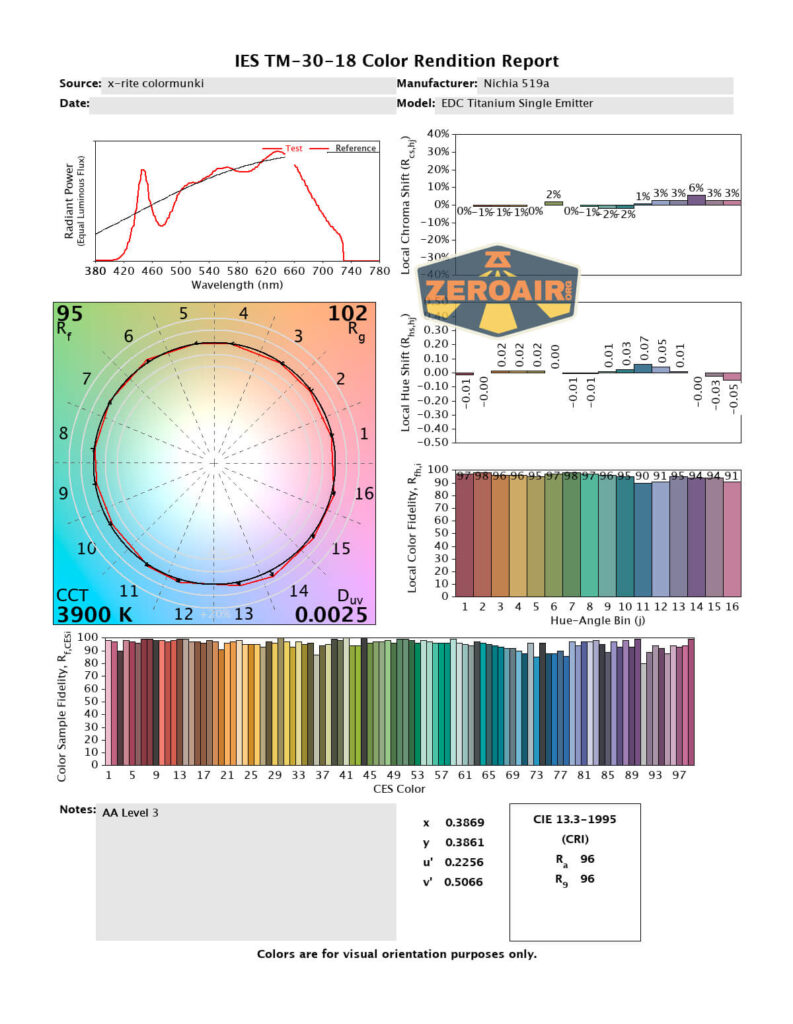
CCT and CRI on the single-emitter Nichia version is of course, wonderful. The CCT is warmish at around 4000K and the CRI is high. The higher output option – the triple head – is much cooler and also low CRI. This is often the price you pay for higher output!
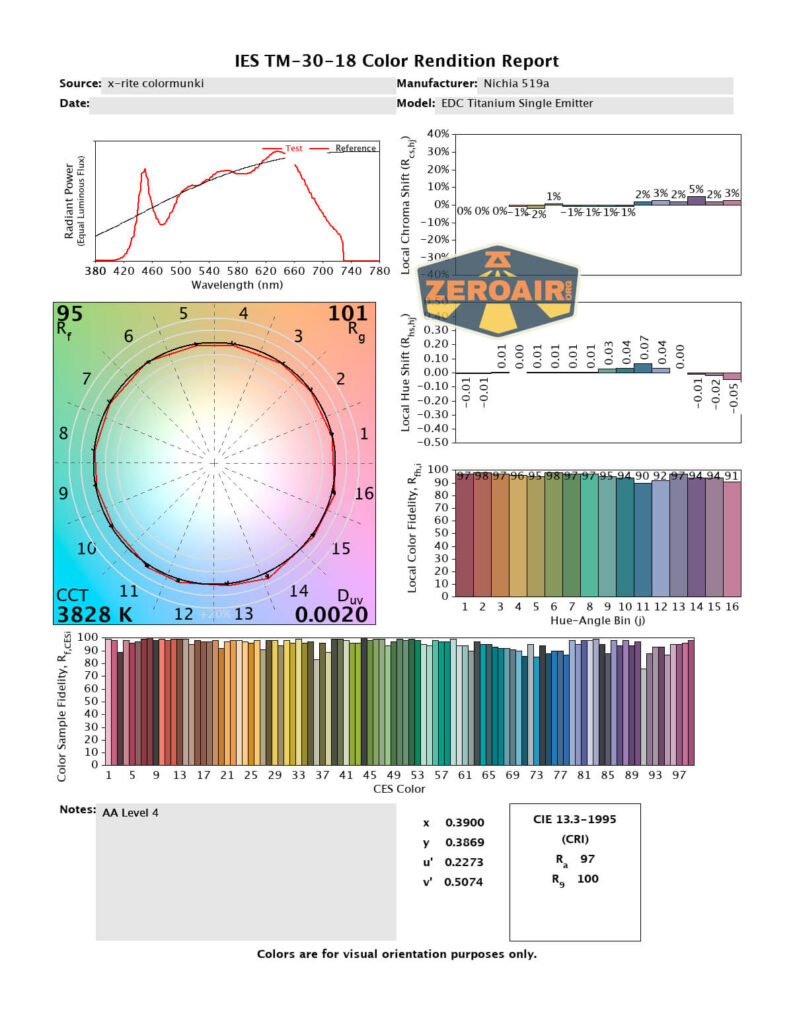
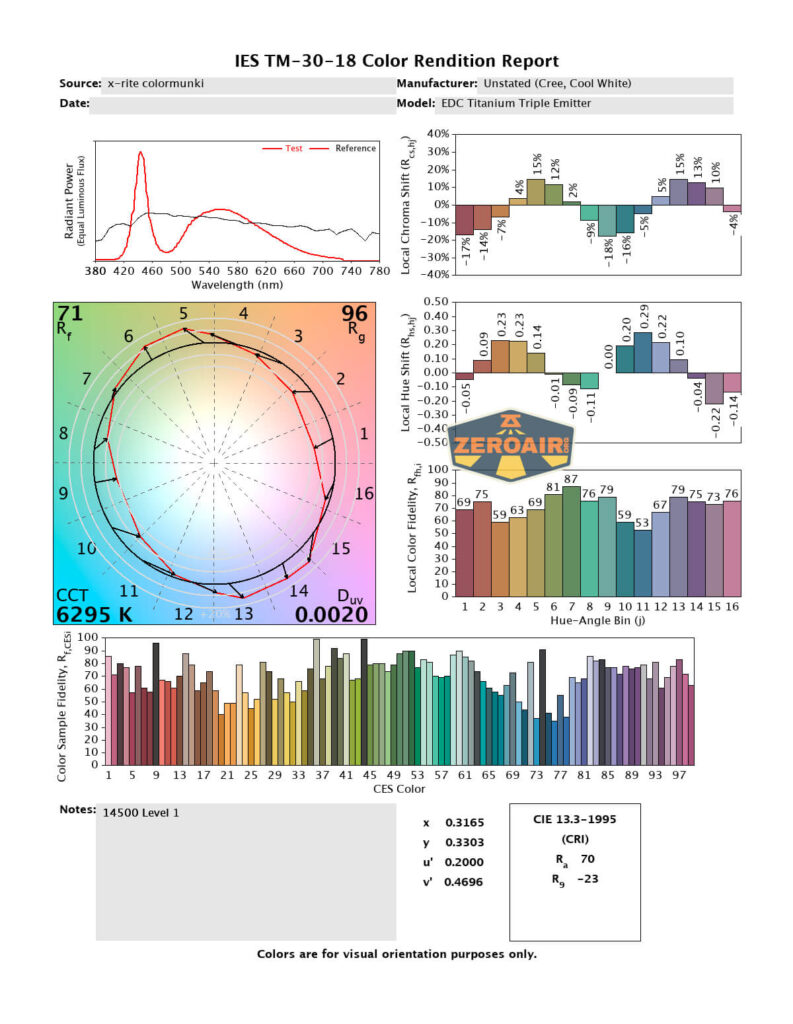
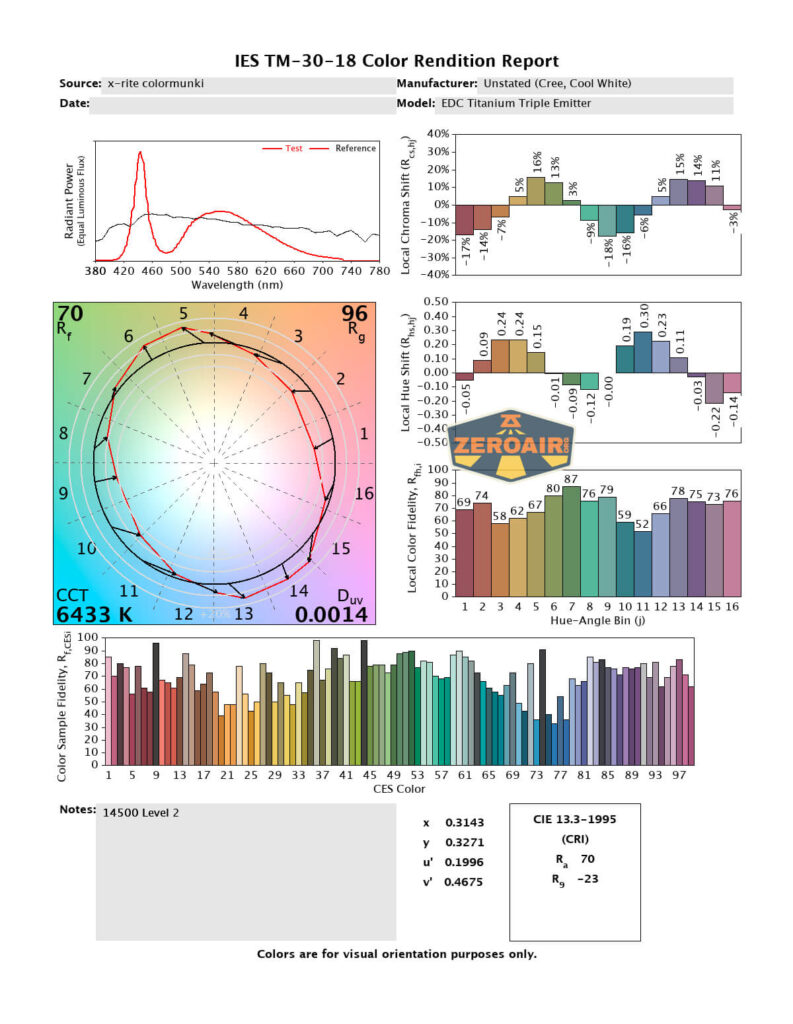
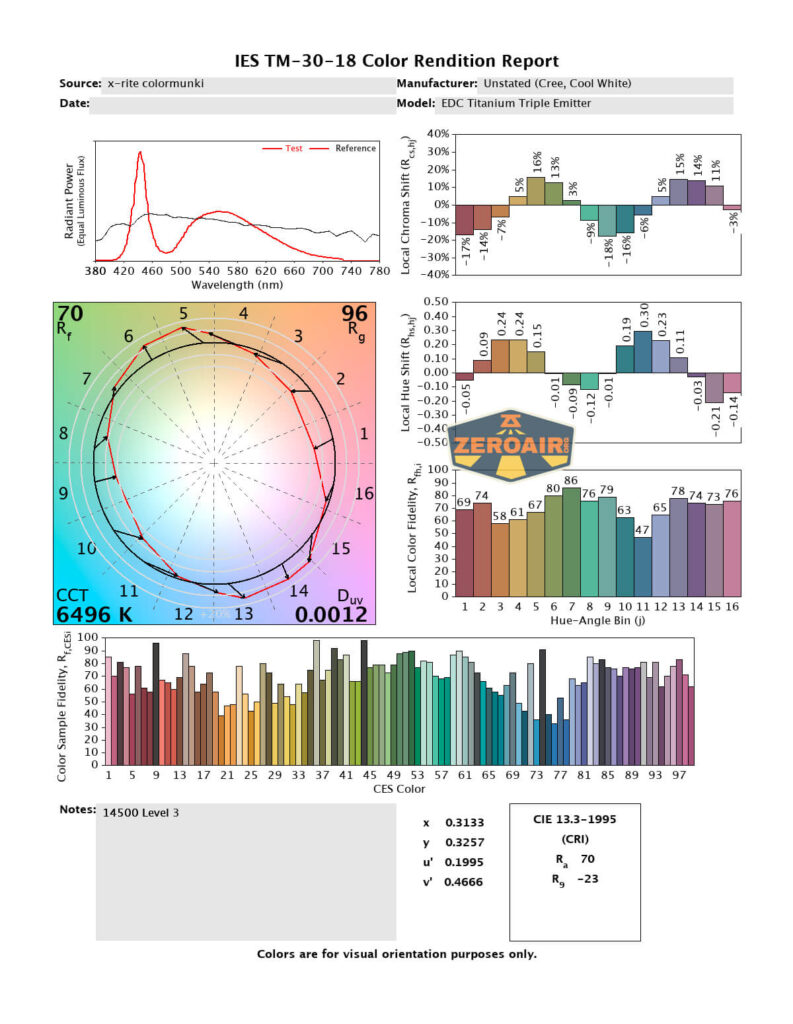
Beamshots
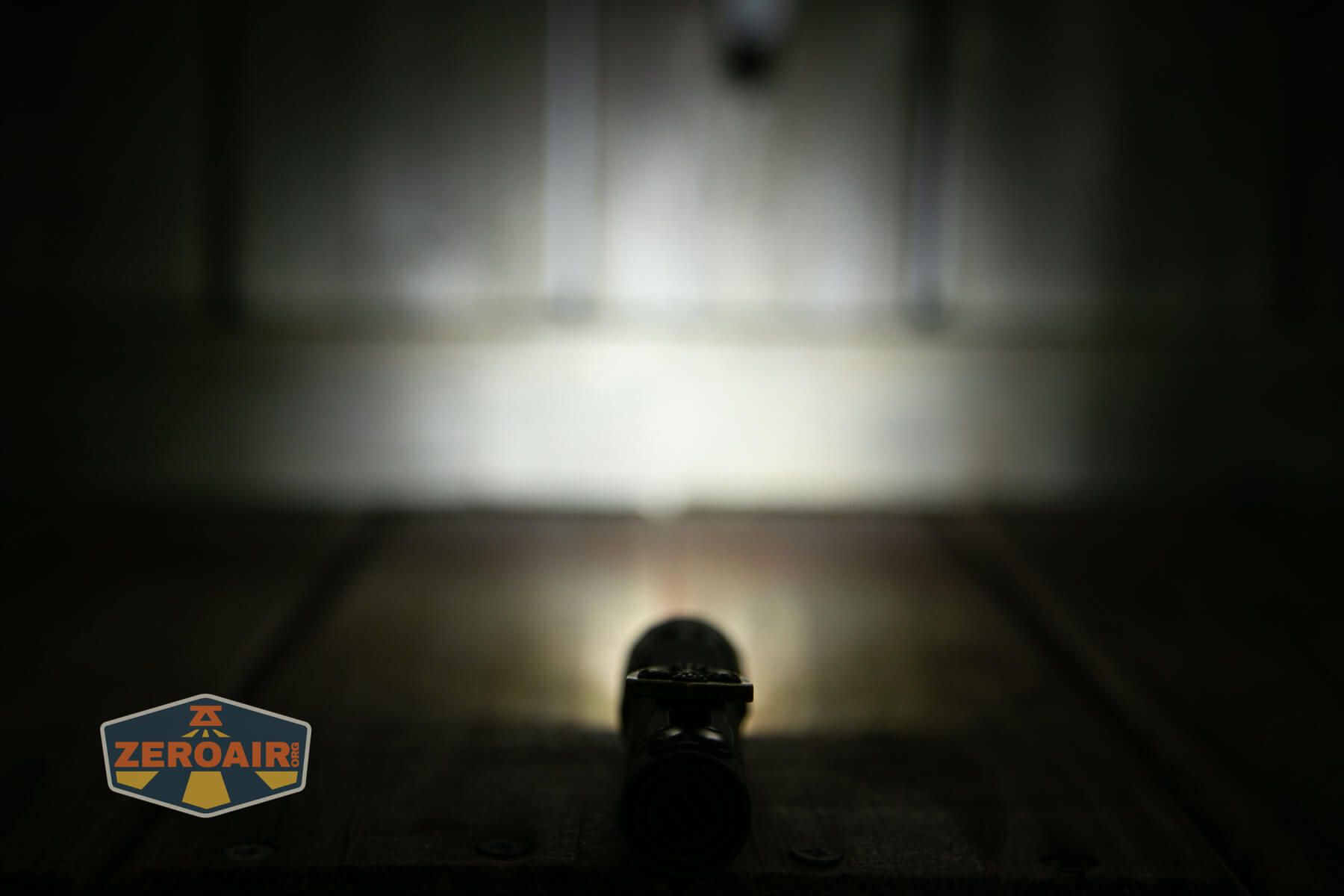
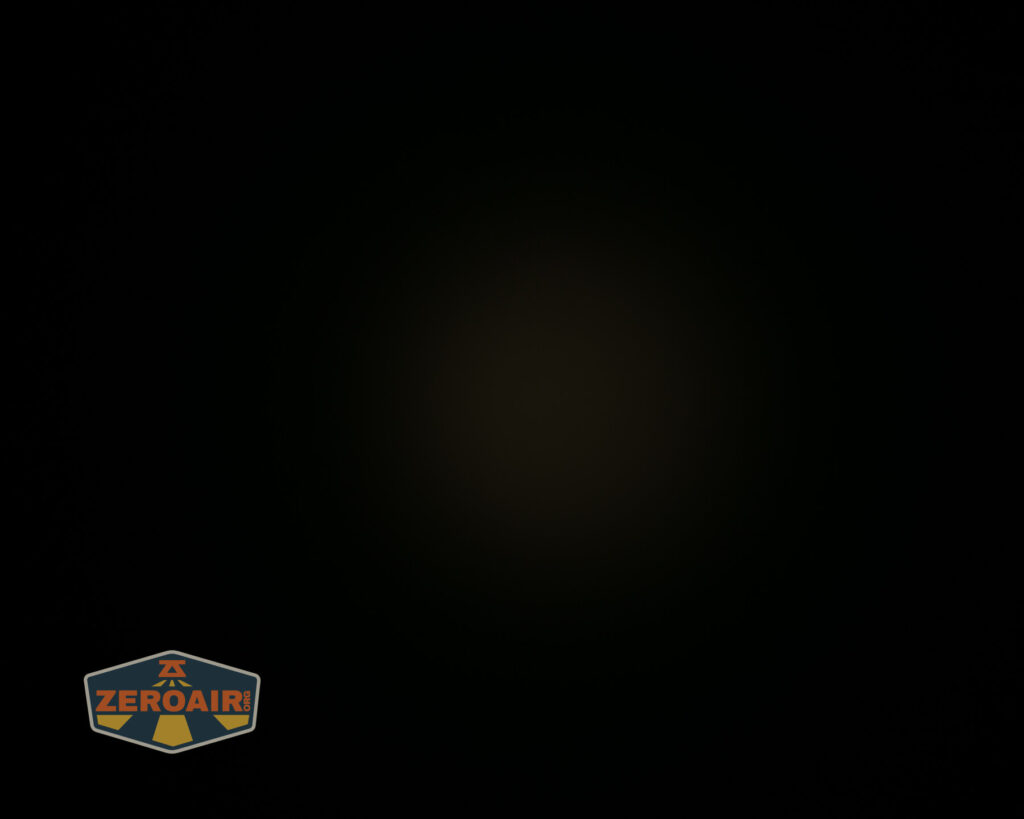
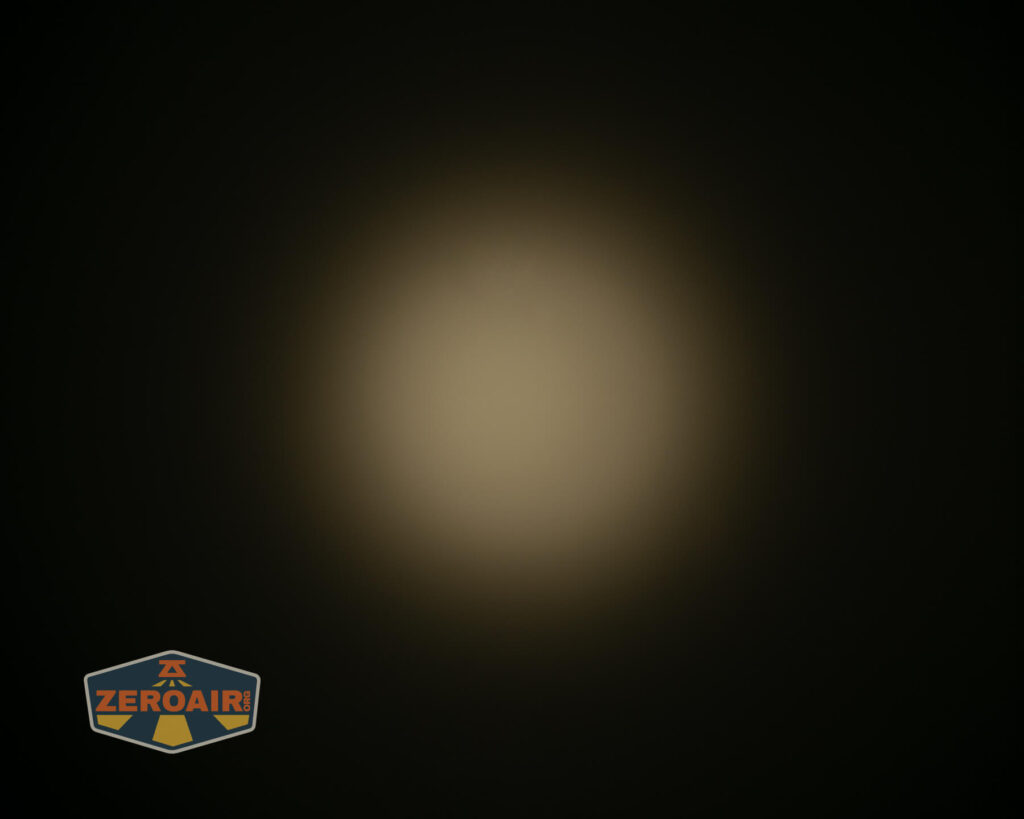
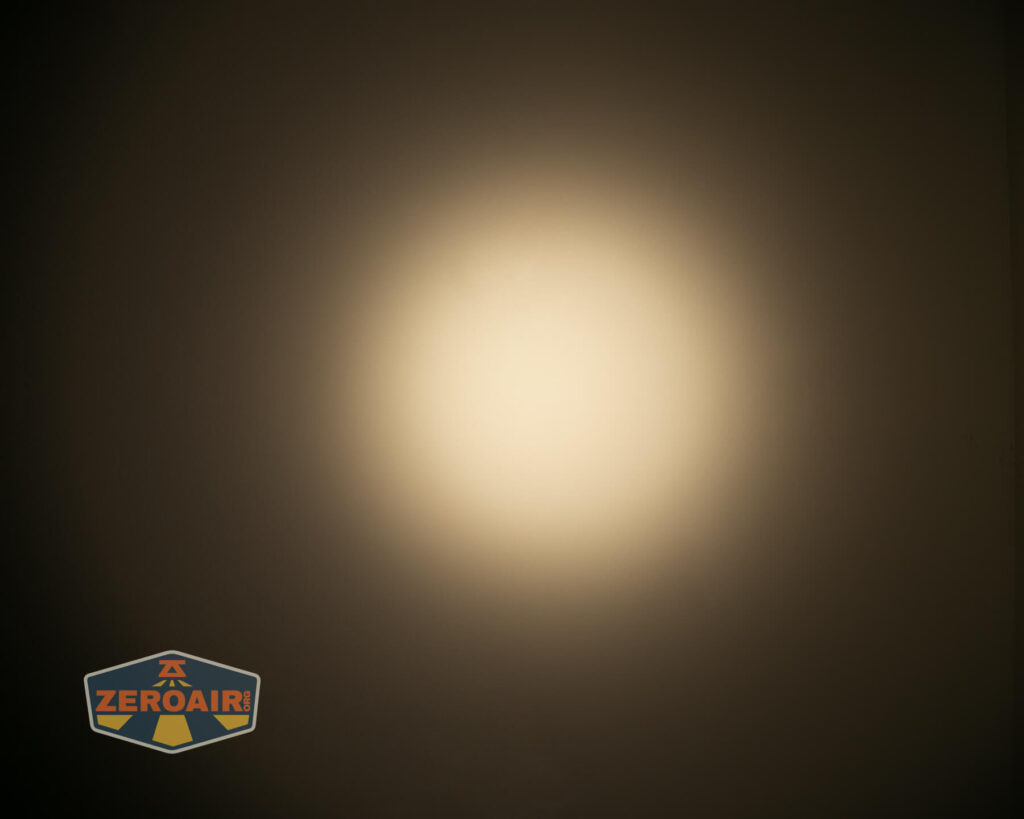
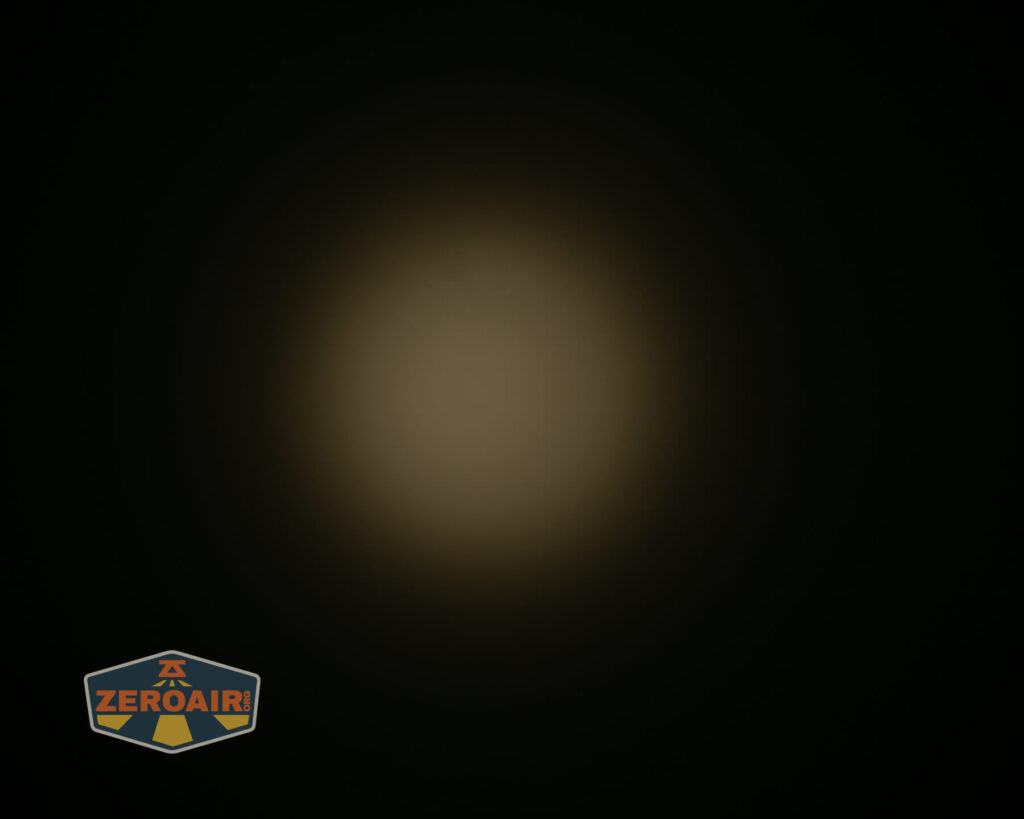
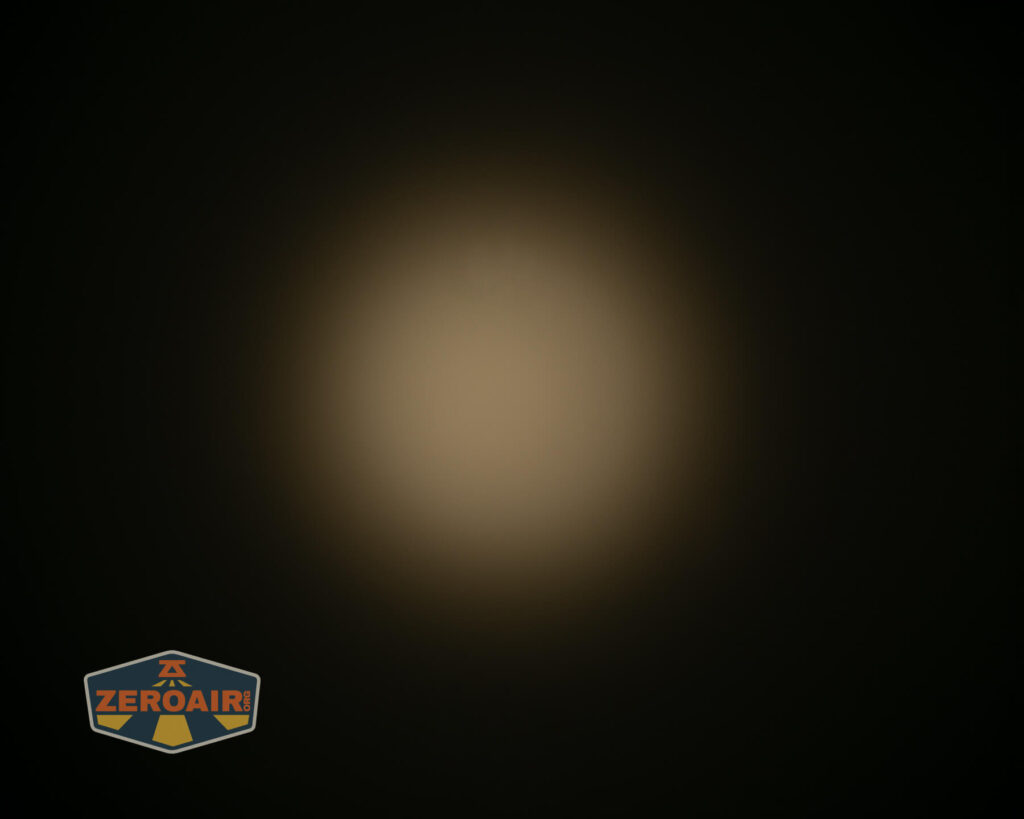
These beamshots always have the following settings: f8, ISO100, 0.3s shutter, and manual 5000K exposure. These photos are taken at floor level, and the beam hits the ceiling around 9 feet away.


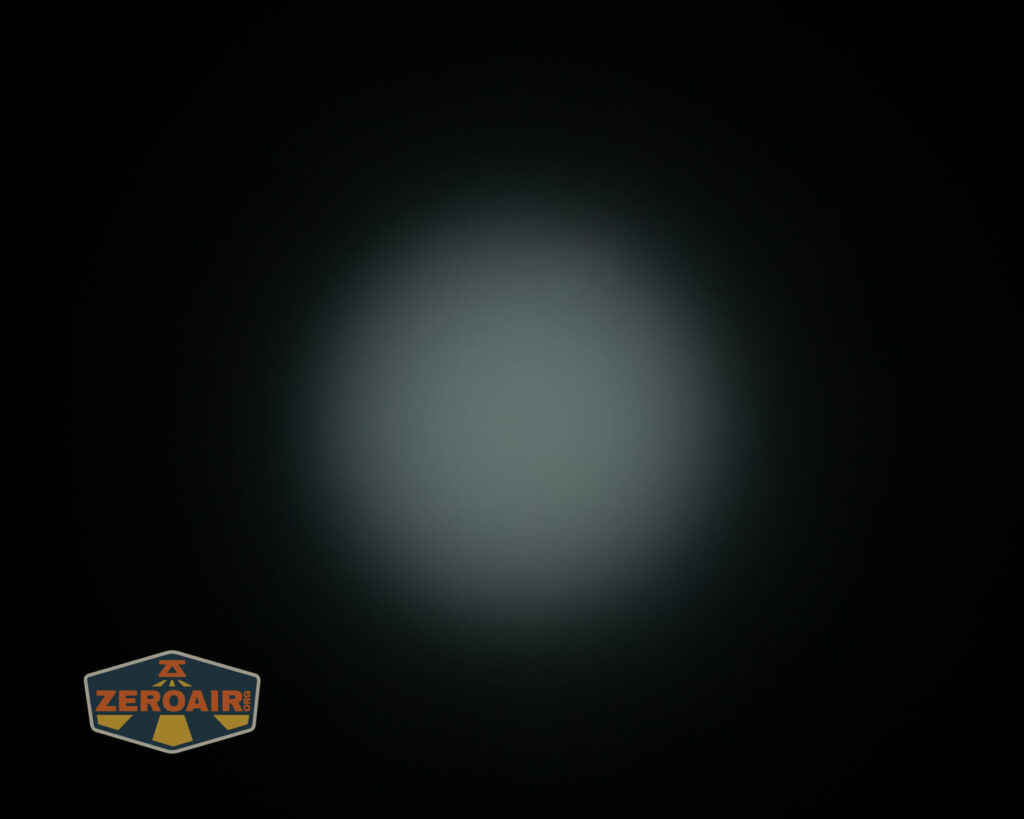
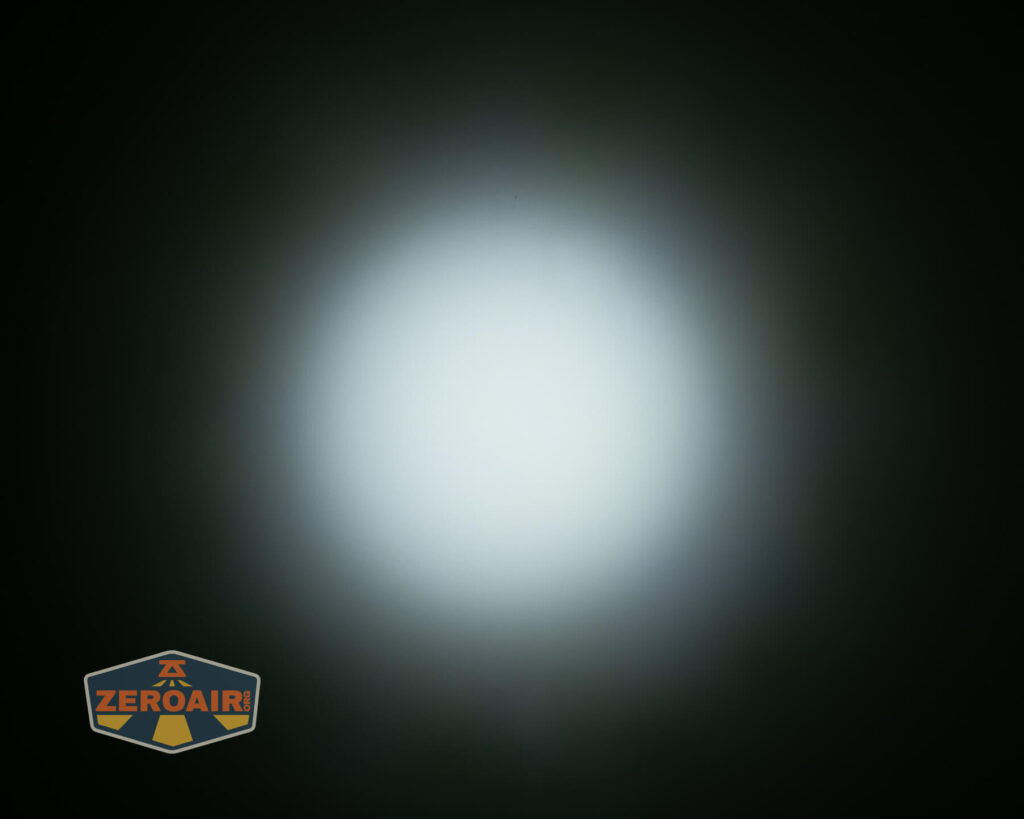
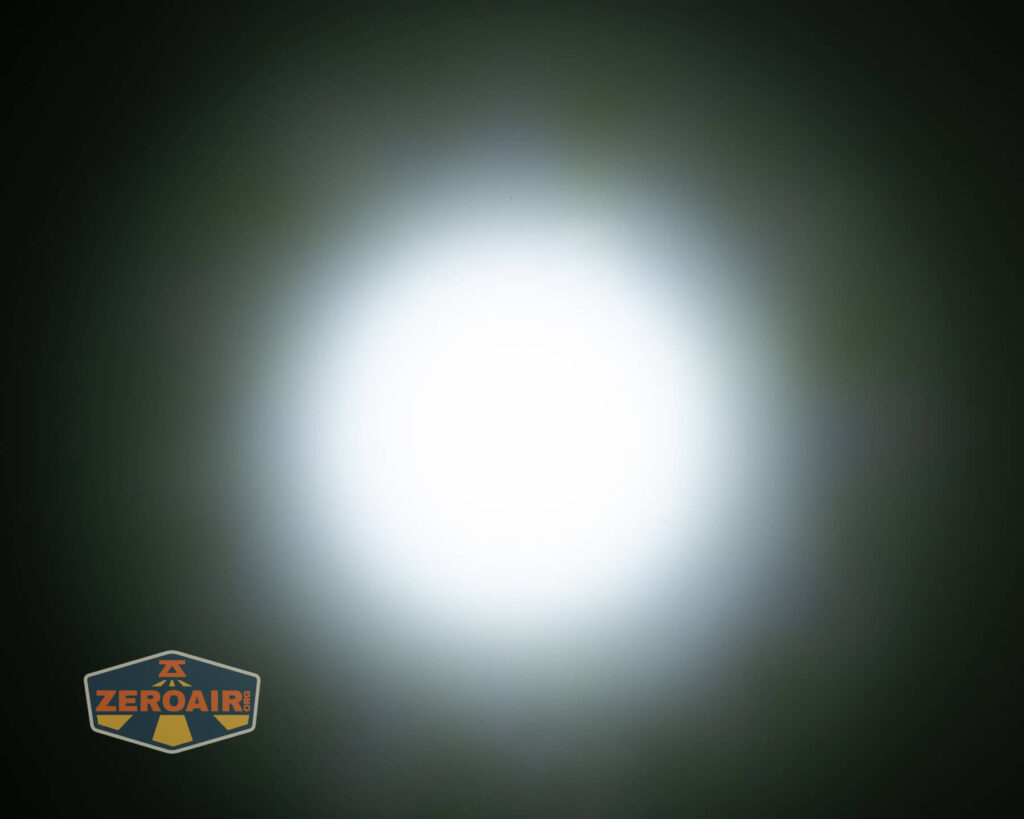
Tint vs BLF-348 (KillzoneFlashlights.com 219b version) (affiliate link)
I keep the test flashlight on the left and the BLF-348 reference flashlight on the right. These photos are taken around 18 inches from the door.
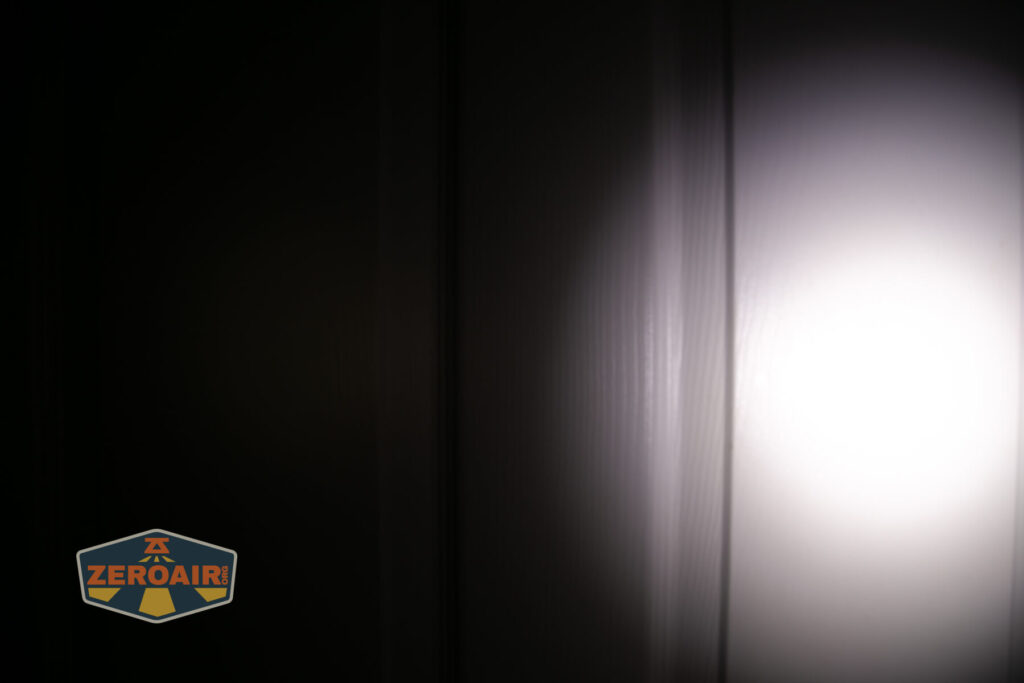
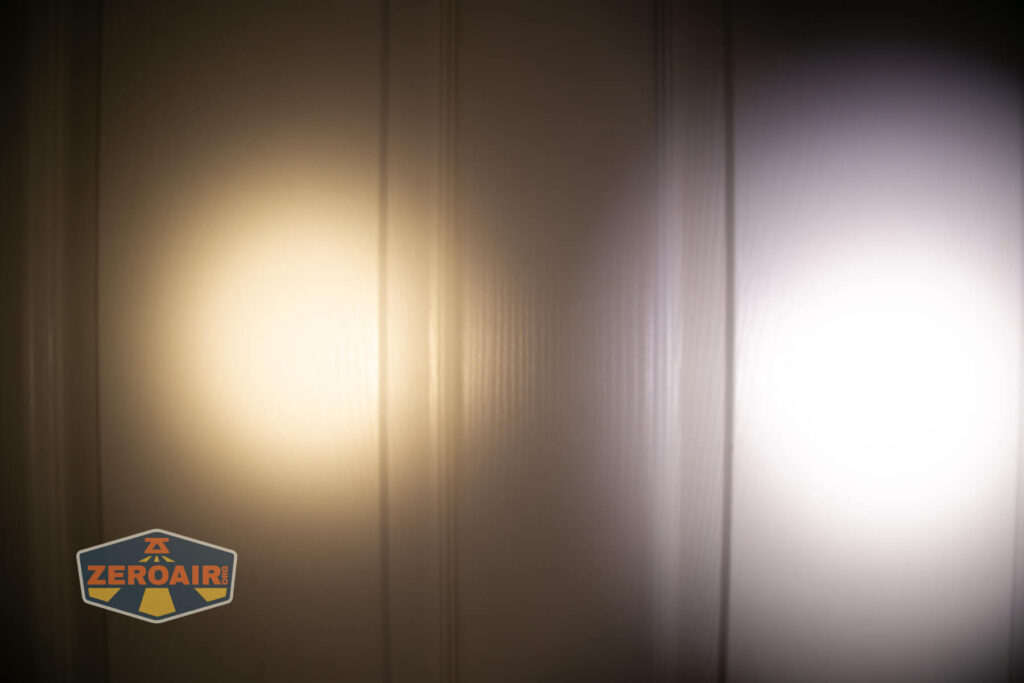
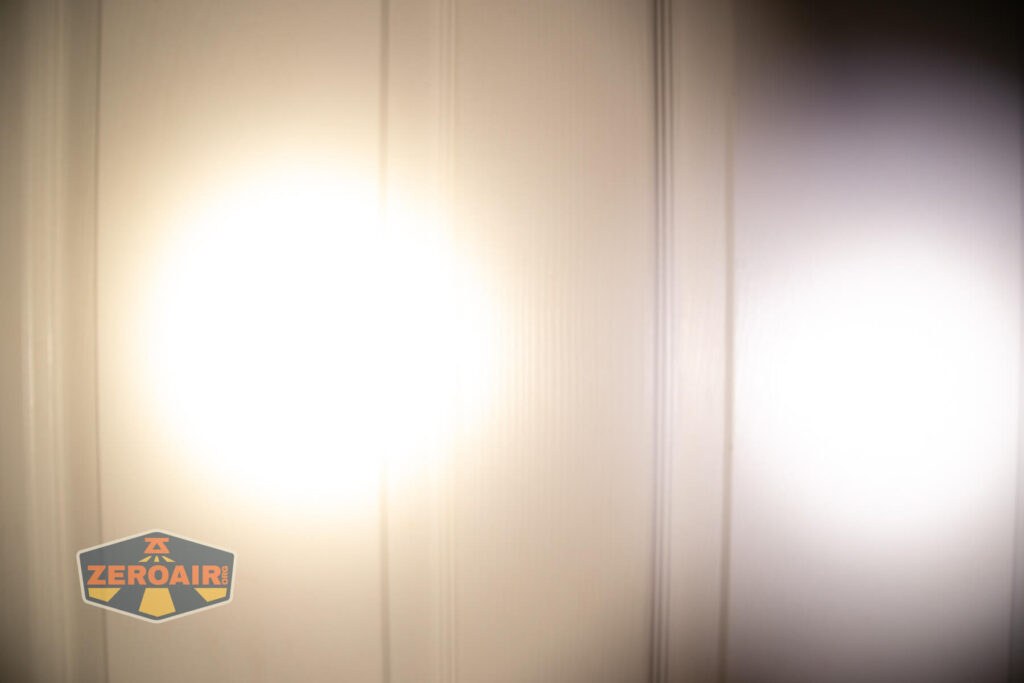

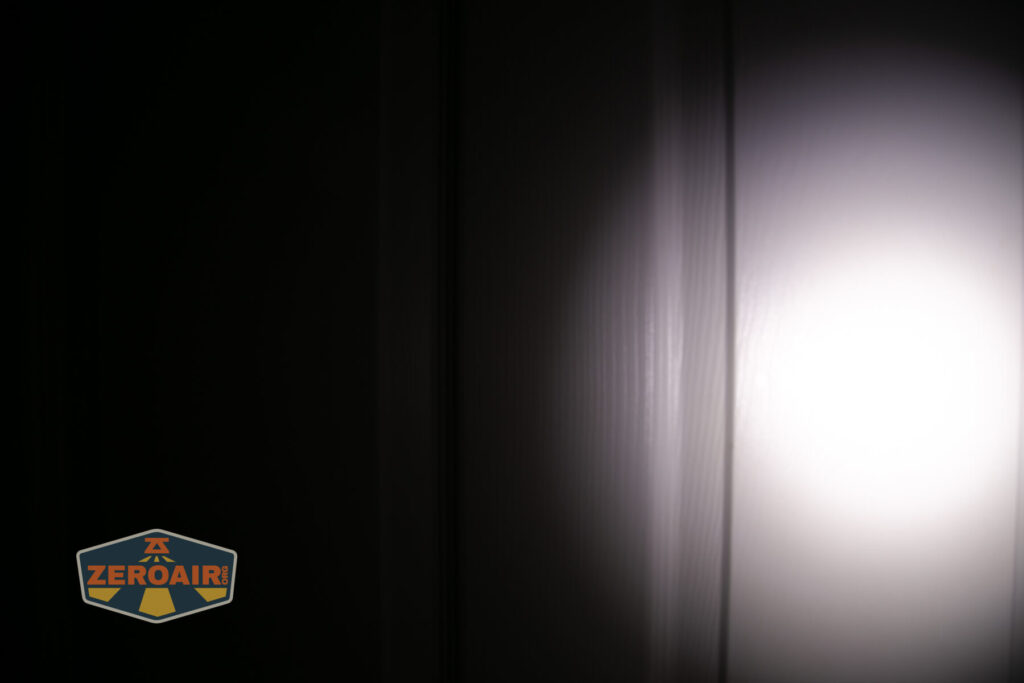
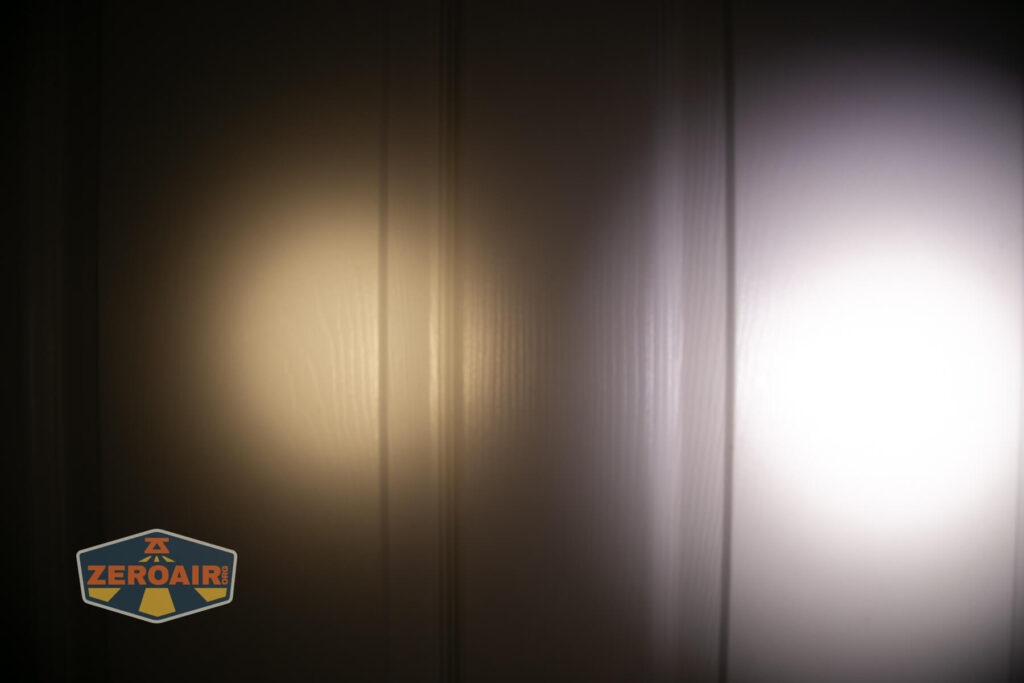
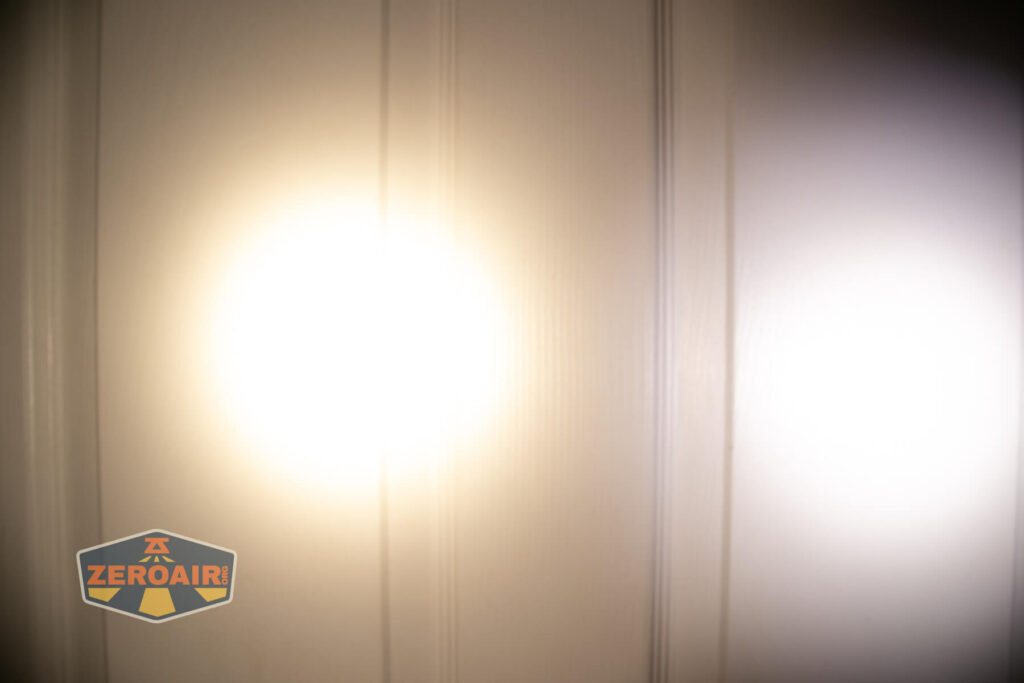
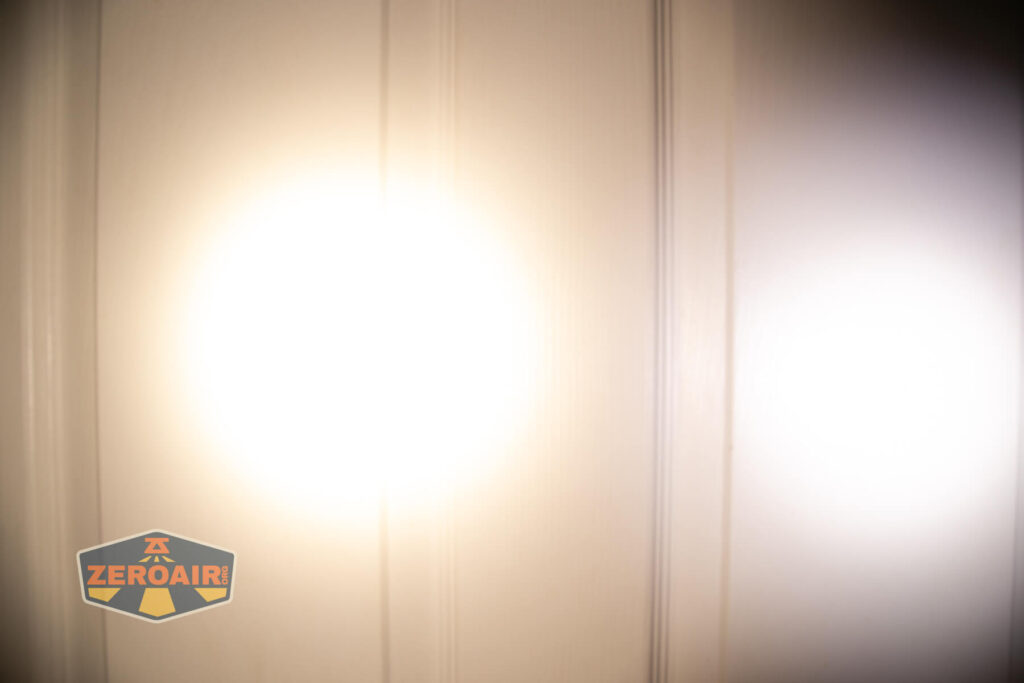
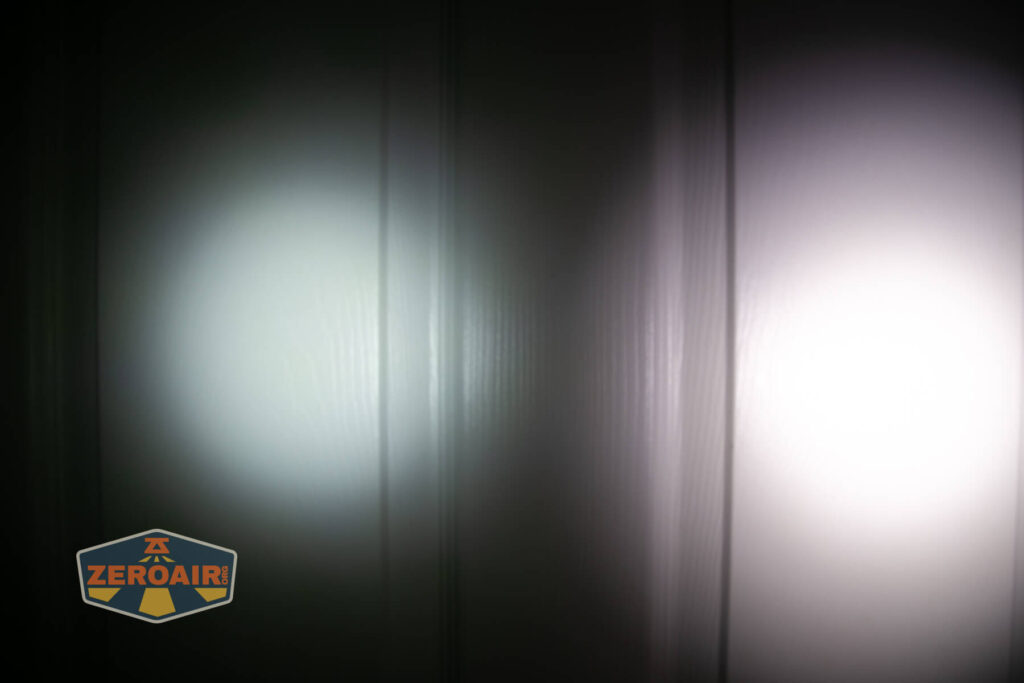
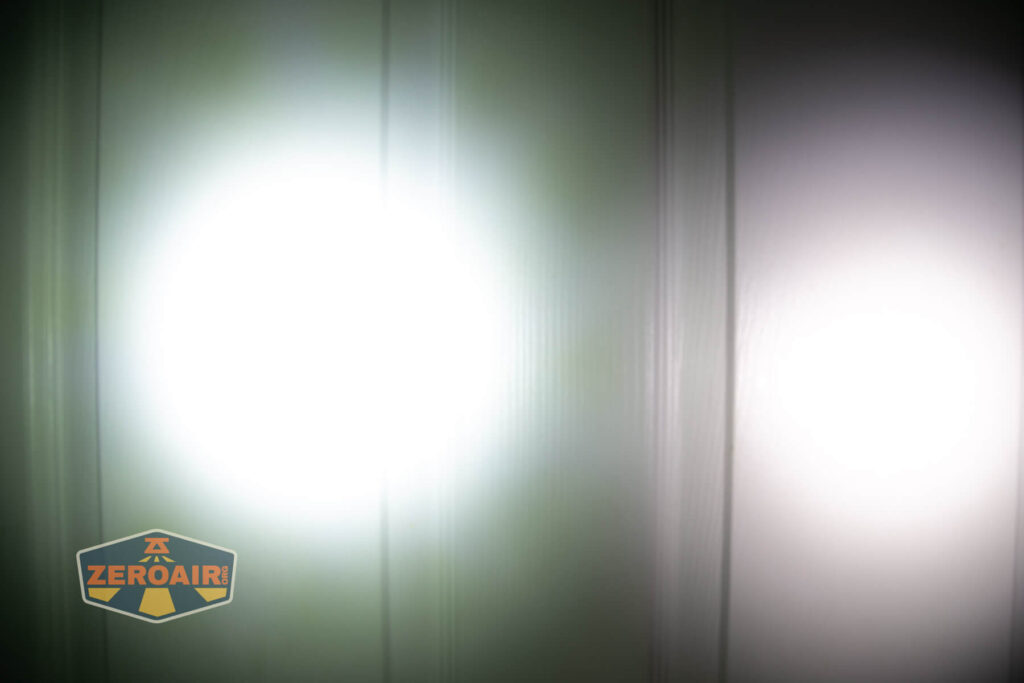
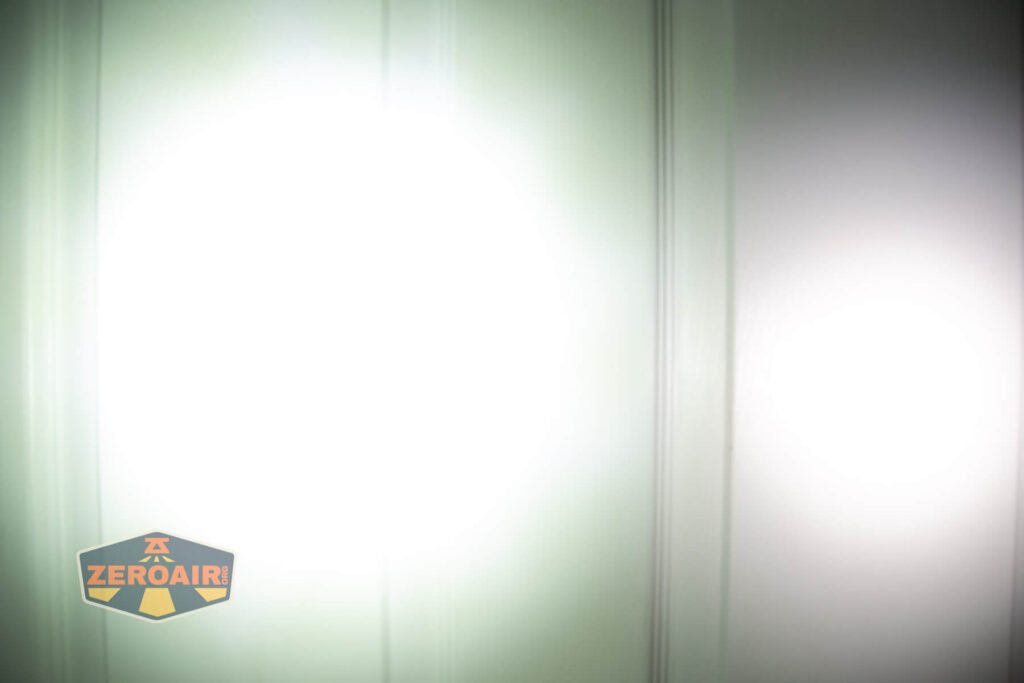

I compare everything to the KillzoneFlashlights.com 219b BLF-348 because it’s inexpensive and has the best tint!
Summary and Conclusion
I really enjoy 14500-sized lights. I like that this light ships with two heads and offers something very different between those heads. The cool white triple is a bit disappoint (in CRI and CCT) but that’s fixable. Build quality is great and the design is phenomenal. This is a nice little light!
The Big Table
| EDC Titanium 14500 flashlight | |
|---|---|
| Emitter: | Nichia 519a (Single) |
| Price in USD at publication time: | $130.70 |
| Cell: | 1×14500 |
| Runtime Graphs | |
| LVP? | Yes |
| Switch Type: | Mechanical |
| On-Board Charging? | Yes (on cell) |
| Charge Port Type: | USB-C |
| Charge Graph | |
| Power off Charge Port | – |
| Claimed Lumens (lm) | – |
| Measured Lumens (at 30s) | 247 |
| Candela per Lumen | 5.04 |
| Claimed Throw (m) | – |
| Candela (Calculated) in cd (at 30s) | 61lux @ 4.657m = 1323cd |
| Throw (Calculated) (m) | 72.7 |
| Claimed CCT | – |
| Measured CCT Range (K) | 3800-3900 Kelvin |
| Item provided for review by: | Me |
| All my EDC Titanium reviews! | |
| EDC Titanium 14500 flashlight | |
|---|---|
| Emitter: | Nichia 519a (Single) |
| Price in USD at publication time: | $130.70 |
| Cell: | 1xAA |
| Measured Lumens (at 30s) | 82 |
| Candela per Lumen | 5.04 |
| Claimed Throw (m) | – |
| Candela (Calculated) in cd (at 30s) | 36lux @ 3.477m = 435cd |
| Throw (Calculated) (m) | 41.7 |
| Claimed CCT | – |
| Measured CCT Range (K) | 3800-4000 Kelvin |
| Item provided for review by: | Me |
| All my EDC Titanium reviews! | |
| EDC Titanium 14500 flashlight | |
|---|---|
| Emitter: | Unstated (Triple) |
| Price in USD at publication time: | $130.70 |
| Cell: | 1×14500 |
| Runtime Graphs | |
| LVP? | Yes |
| Switch Type: | Mechanical |
| On-Board Charging? | Yes |
| Charge Port Type: | USB-C (on cell) |
| Claimed Lumens (lm) | – |
| Measured Lumens (at 30s) | 970 |
| Candela per Lumen | 5.72 |
| Claimed Throw (m) | – |
| Candela (Calculated) in cd (at 30s) | 408lux @ 3.774m = 5811cd |
| Throw (Calculated) (m) | 152.5 |
| Claimed CCT | – |
| Measured CCT Range (K) | 6300-6600 Kelvin |
| Item provided for review by: | Me |
| All my EDC Titanium reviews! | |
^ Measurement disclaimer: Testing flashlights is my hobby. I use hobbyist-level equipment for testing, including some I made myself. Try not to get buried in the details of manufacturer specifications versus measurements recorded here; A certain amount of difference (say, 10 or 15%) is perfectly reasonable.
What I like
- Excellent look (particularly with the triple head)
- Nice build quality
- Good use of 14500 (the size is good)
- Single head can use an AA cell (1.5V)
- Very simple user interface
- Metal switch cover
- Lots of tritium slots
What I don’t like
- No manual
- Very cool white and low CRI triple head
- Pocket clip attachment seems excessive
Notes
- This content originally appeared at zeroair.org. Please visit there for the best experience!
- Please use my Amazon.com referral link to help support zeroair.org!
- Please support me on Patreon! I deeply appreciate your support!
Discover more from ZeroAir Reviews
Subscribe to get the latest posts sent to your email.
They are programmable. Messaged ali express seller and he sent instructions.
I was nearly sure it is programmable. Probably the same programming as ReyLights….
I’ll message the seller. Thanks!
The smaller head has Reylight driver and triple clone of dragon driver named “Flying Tiger” 😀 there is manual on few auctions with this flashlight.