

Maratac X-3 Gen II Flashlight Review
The Maratac X-3 Gen II flashlight is an updated version of a neat EDC light by Wuben. It features wireless charging (only) and multiple emitters. Read on!
Official Specs and Features
Here’s a link to the Maratac X-3 Gen II flashlight product page.
Versions
Maratac sells just one version of the X-3 Gen II flashlight. It’s available in limited numbers (as it’s a limited-run CountyComm exclusive!). Wuben does make other versions of the X-3 Gen II, though.
Price
The Maratac X-3 Gen II flashlight sells for $84.95 and is still available now.
What’s Included

- Maratac X-3 Gen II flashlight
- Charging case with USB-C charging
- Lanyard charging cable
- Manual
Package and Manual
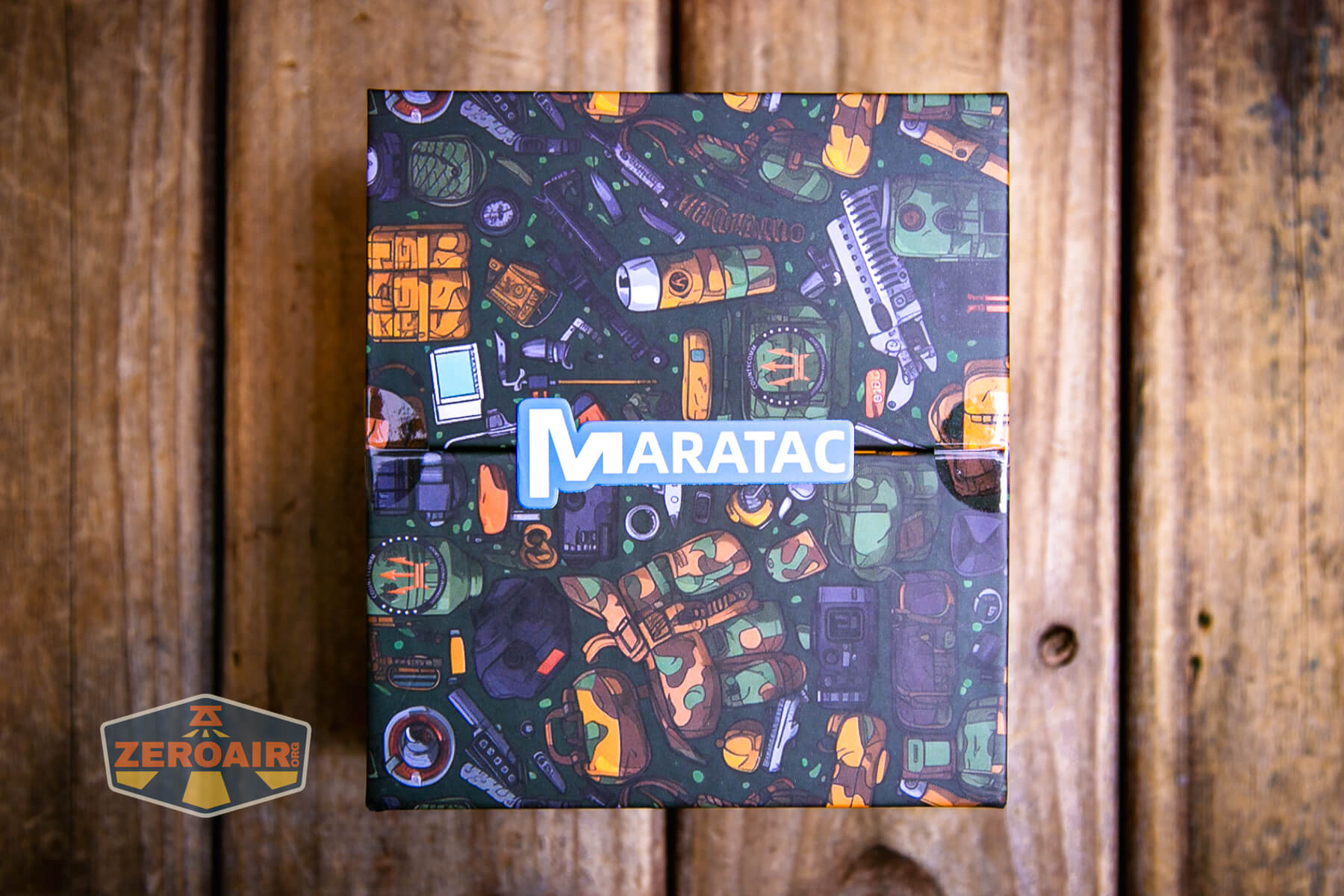
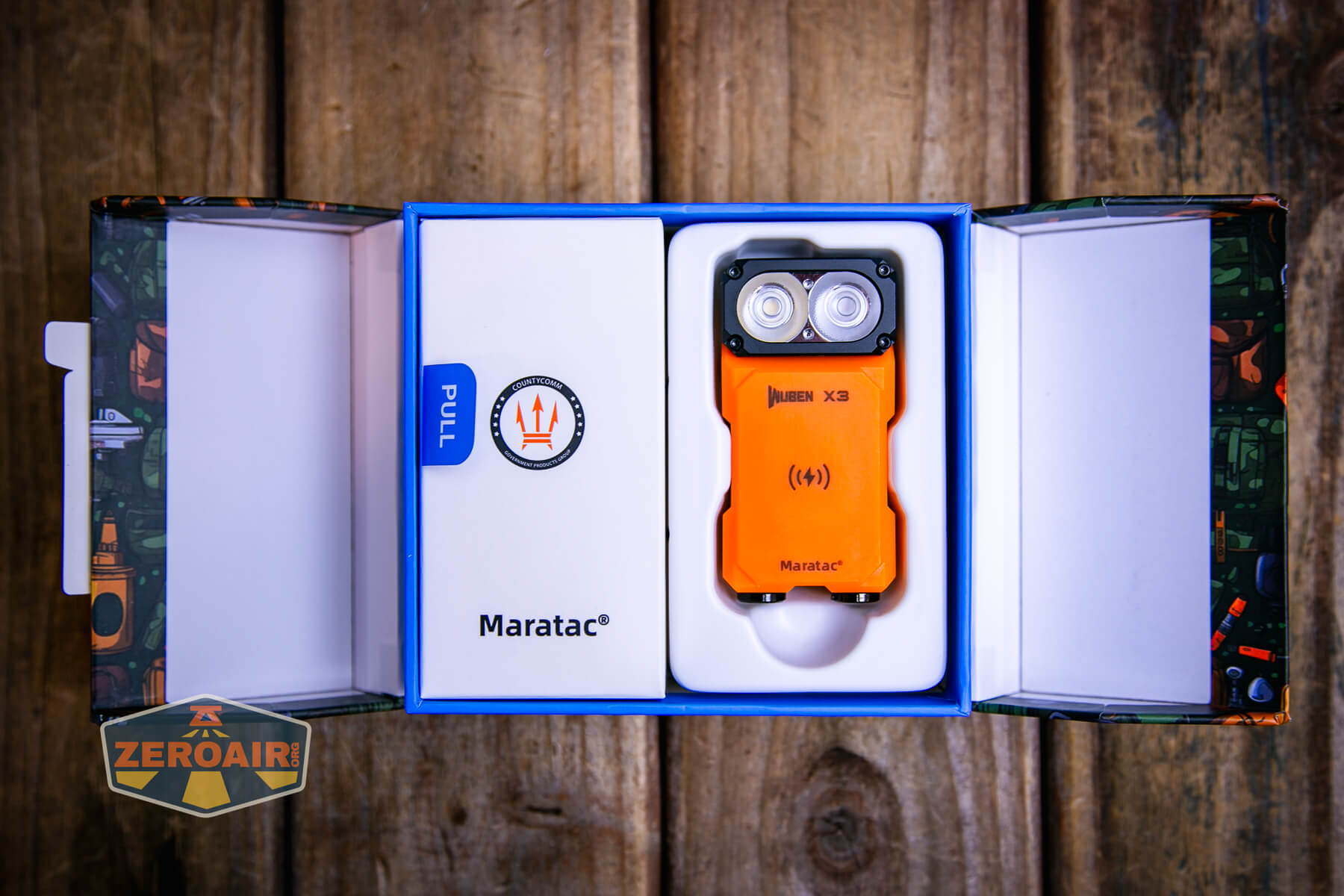
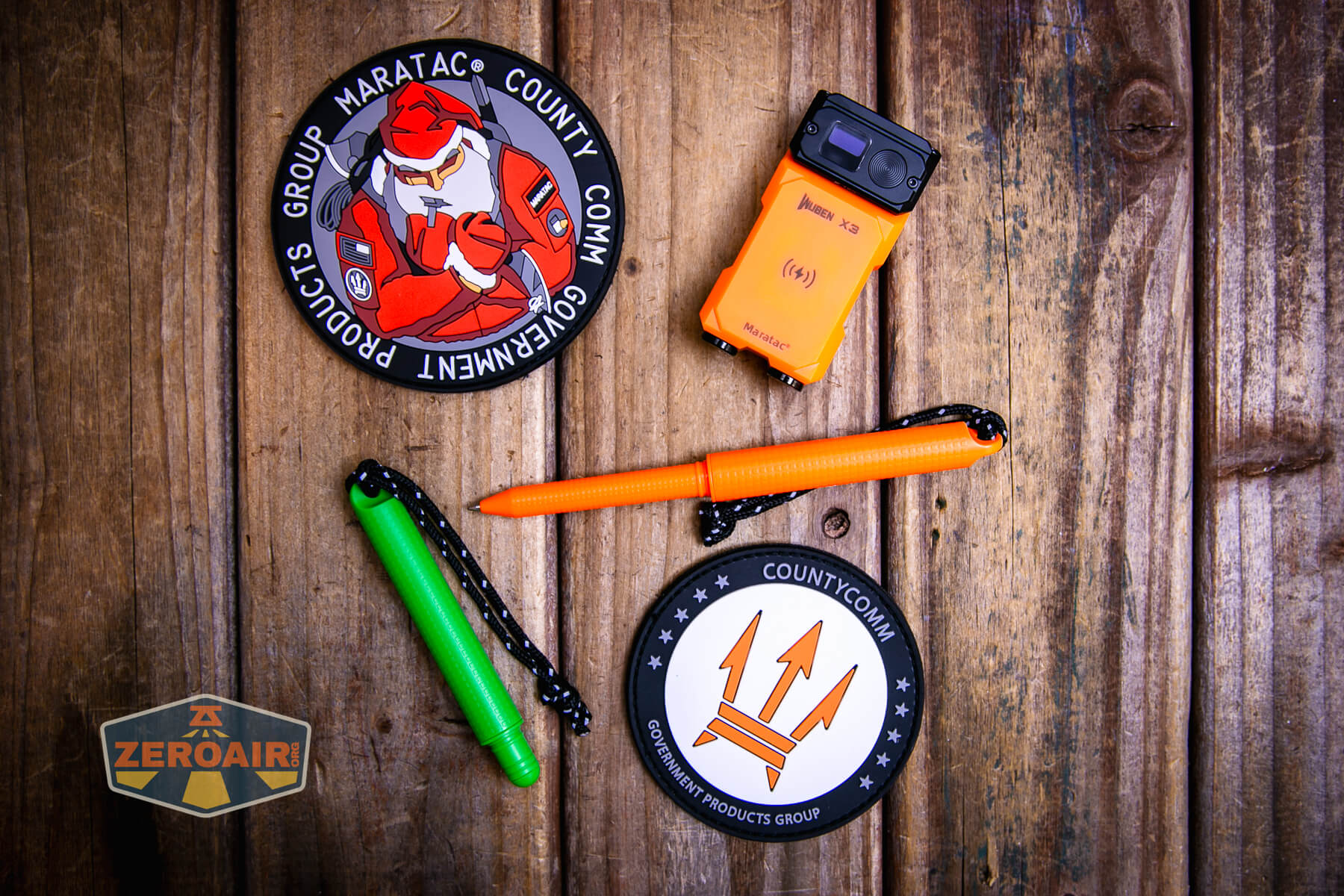
Below is some other stuff not specifically included with the Maratac X-3 Gen II flashlight, but available at a low cost from CountyComm.com. I recommend grabbing a few of the Pop Out Pens (POPs) for under $2!



Build Quality and Disassembly

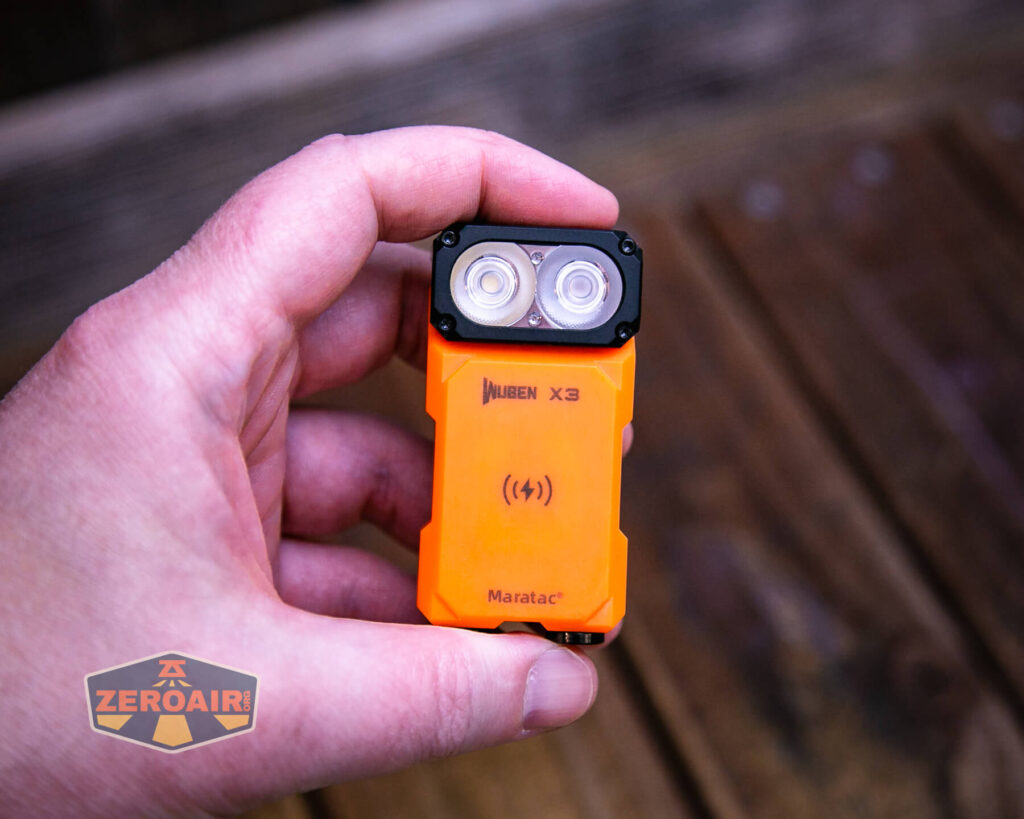
What a bunch of interesting features there are on this Maratac X-3 Gen II flashlight. The wireless charging option and the rotating head. We’ve seen the rotating head before on lights (for example) made by Nicron. This one feels … more interesting… somehow. It’s a very neat feature!

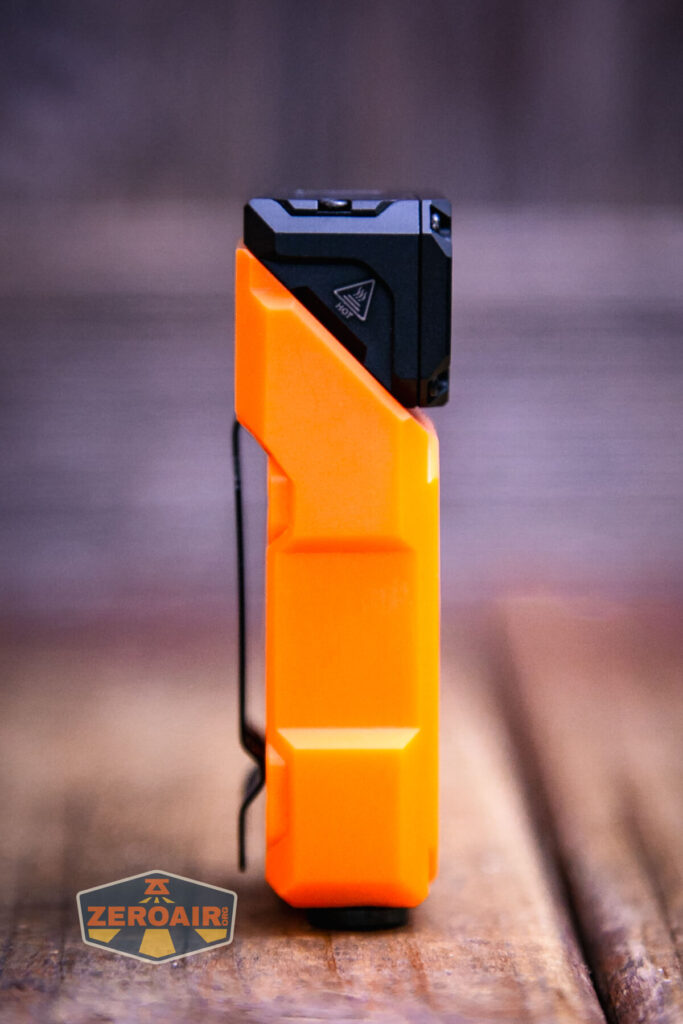
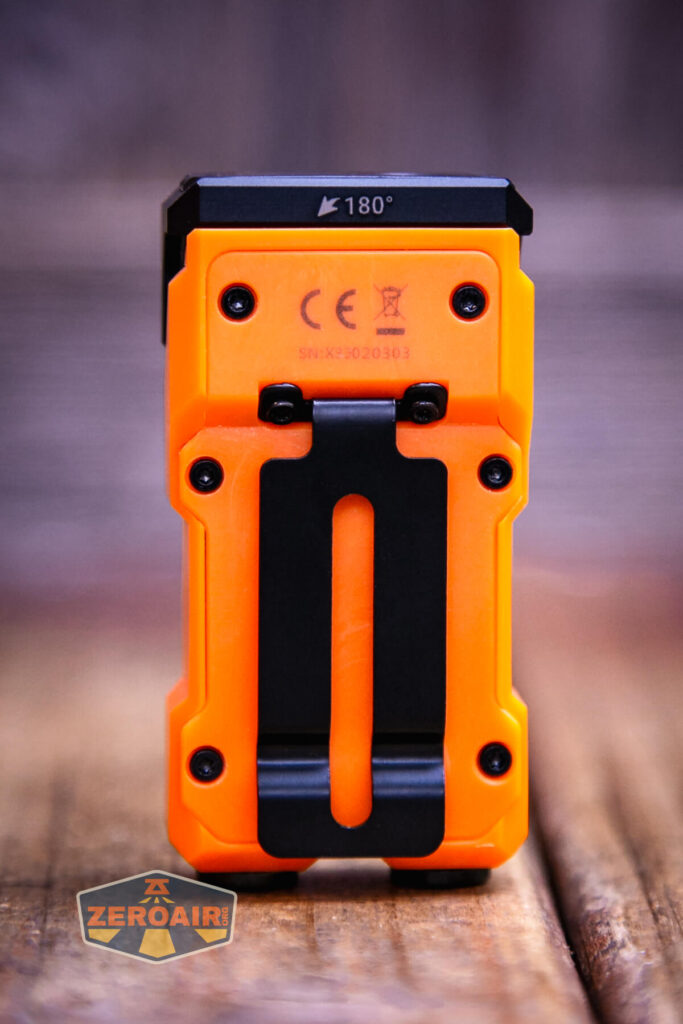

Build quality on the X-3 is about like you’re probably familiar with from other lights like RovyVon, for example. It’s a plastic flashlight. It does have quite a few metal parts, though, and that’s nice.
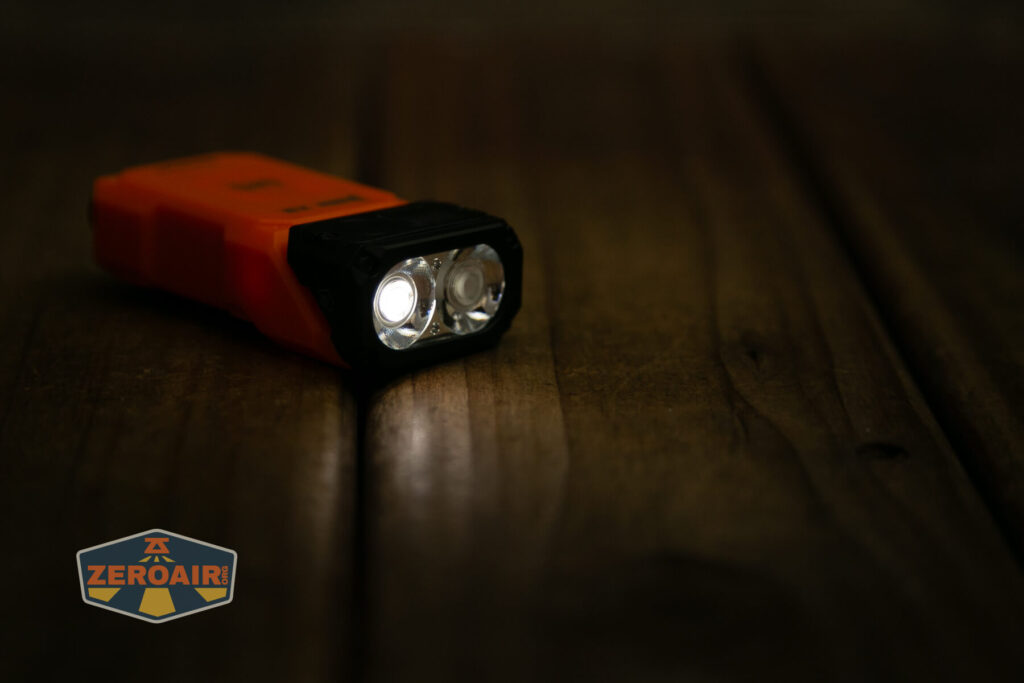
Also in the (leftmost) photo above, you can see one big update to the Gen II version of the X-3. The optics are updated! You can see how that changes the beam shape in a later section.
Size and Comps
“Portable Lamp” (the flashlight part): 70mm x 35mm x 21mm and 70g. (Unchanged from Gen 1).
“Energy Storage Bin”: Unstated size. Gen 1 size was 85mm x 47mm x 40mm and 102g.
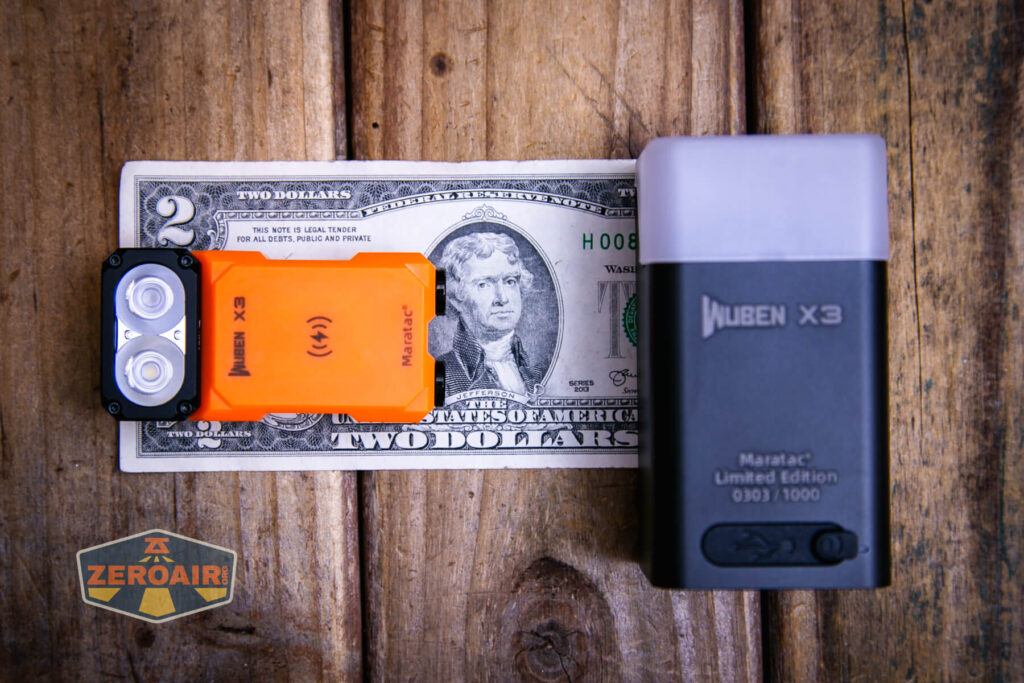
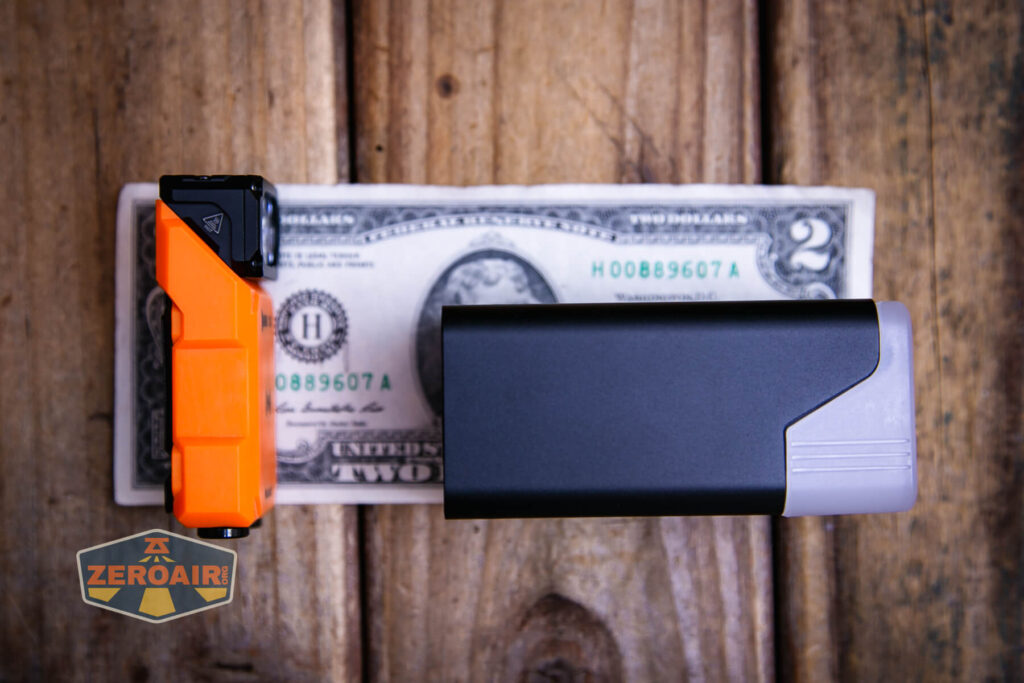
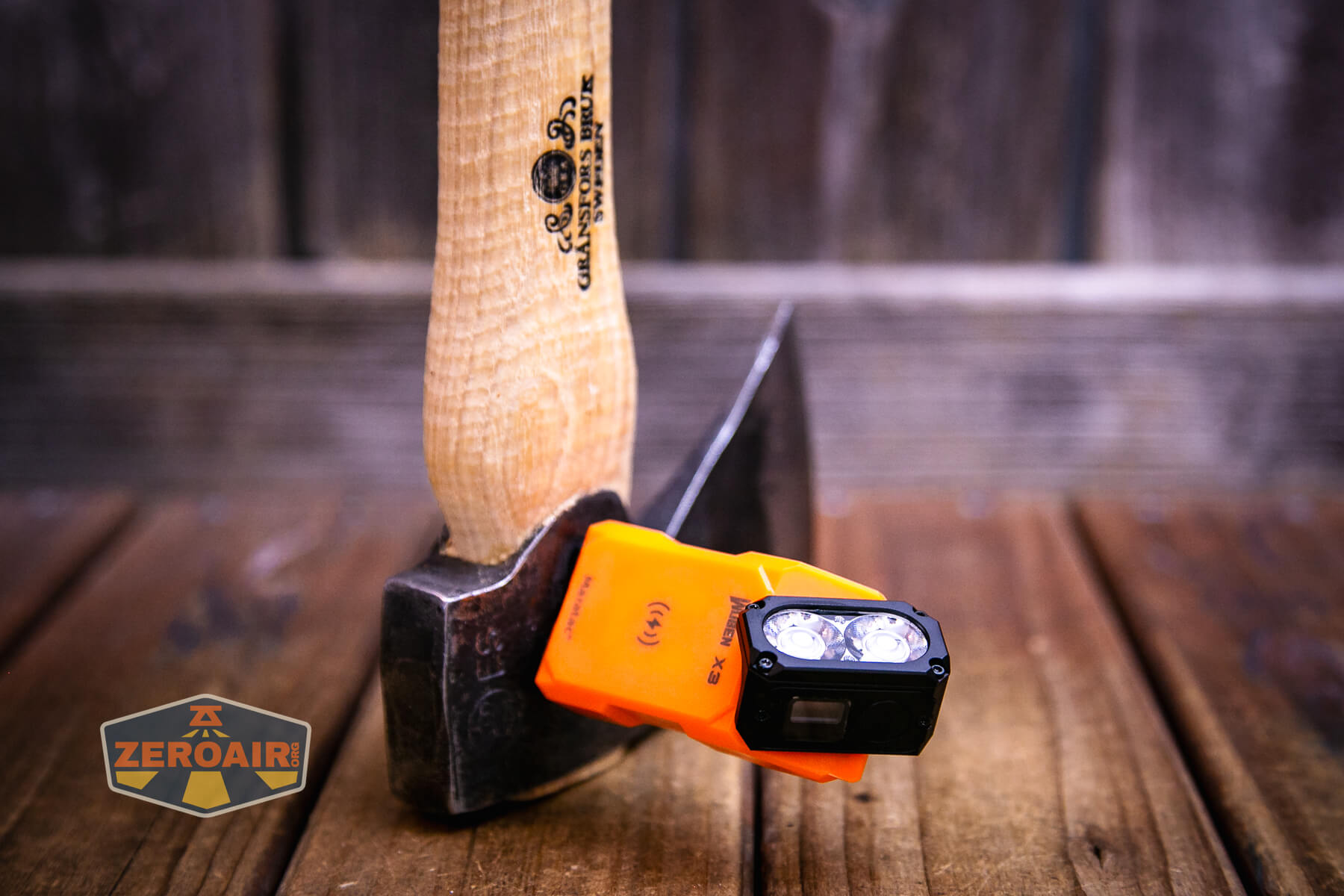
If the flashlight will headstand, I’ll show it here. If the flashlight will tailstand, I’ll also show that here too!

Here’s the test light with the venerable Convoy S2+. The version below is a custom laser-engraved Convoy S2+ host by GadgetConnections.com. I did a full post on an engraved orange host right here! Or go straight to GadgetConnections.com to buy your Convoy S2+ now!
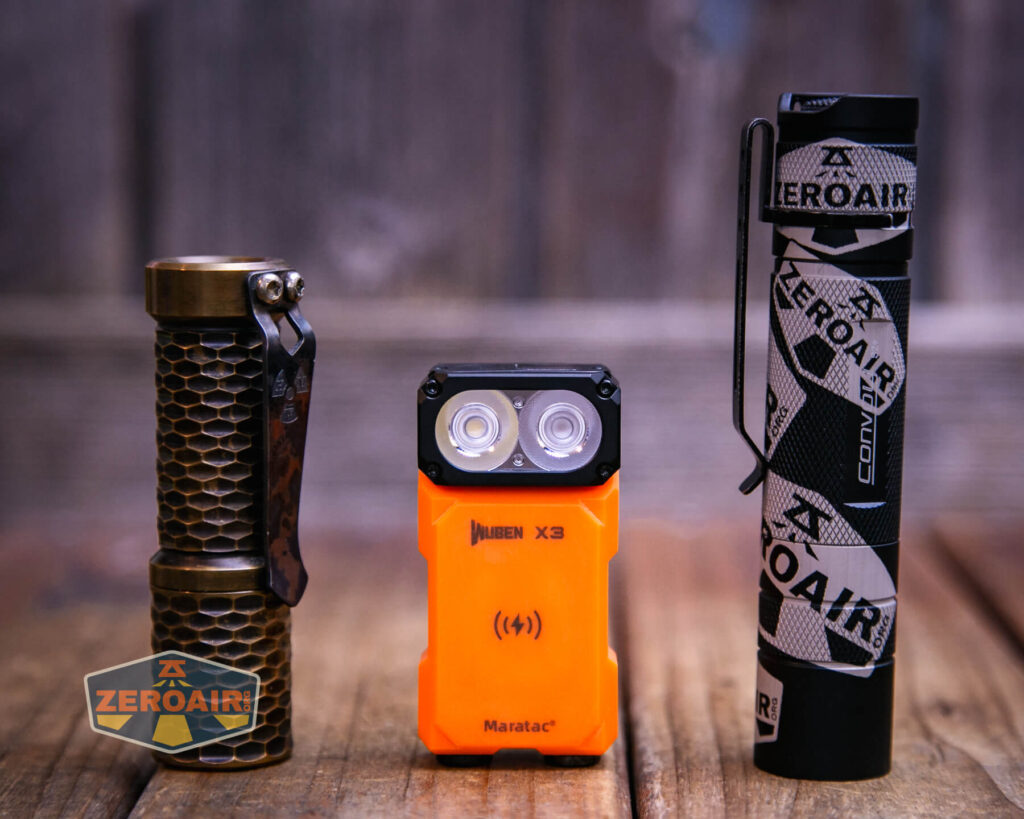

In the photo above, you may note that the SRM (standard reference material) flashlight for comparison has changed! I used a TorchLAB BOSS 35 for ages. Now what you can see as the 18350 SRM is the Hanko Machine Works Trident. While I have not reviewed or tested the Gunner Grip version seen here, I have tested a Hanko Machine Works Trident Total Tesseract in brass. I love the Trident, and it’s a striking contrast next to the inexpensive Convoy S2+, which also makes a great standard reference material.
Retention and Carry
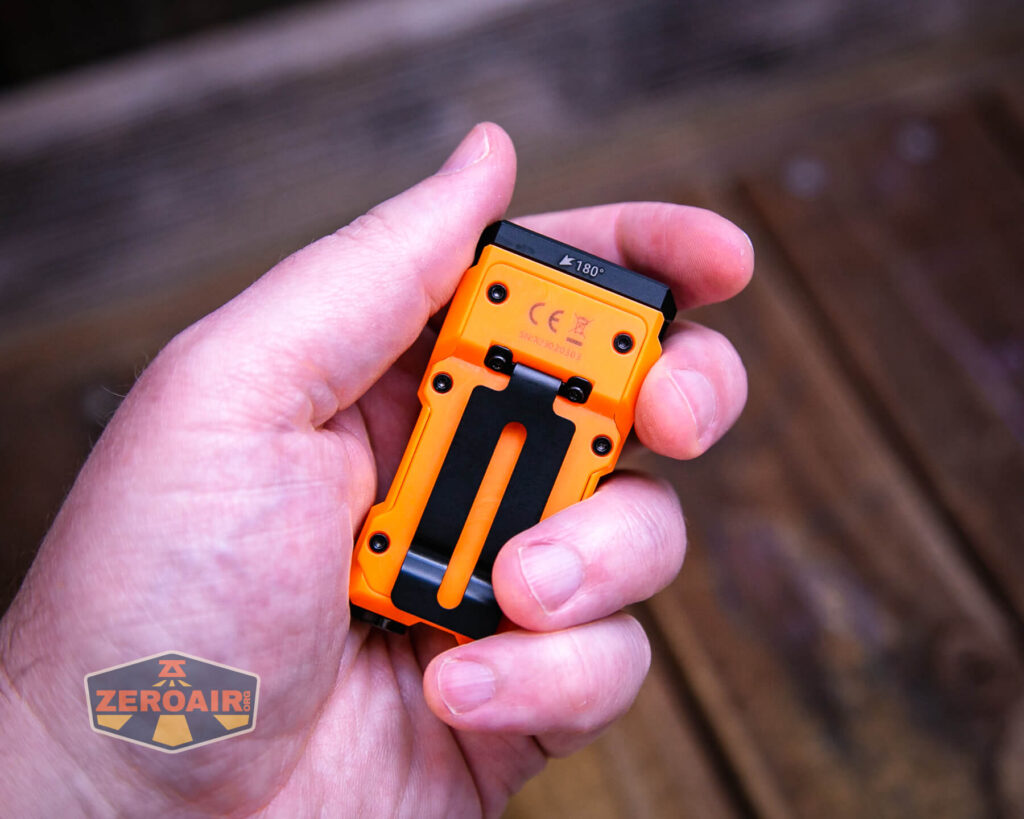
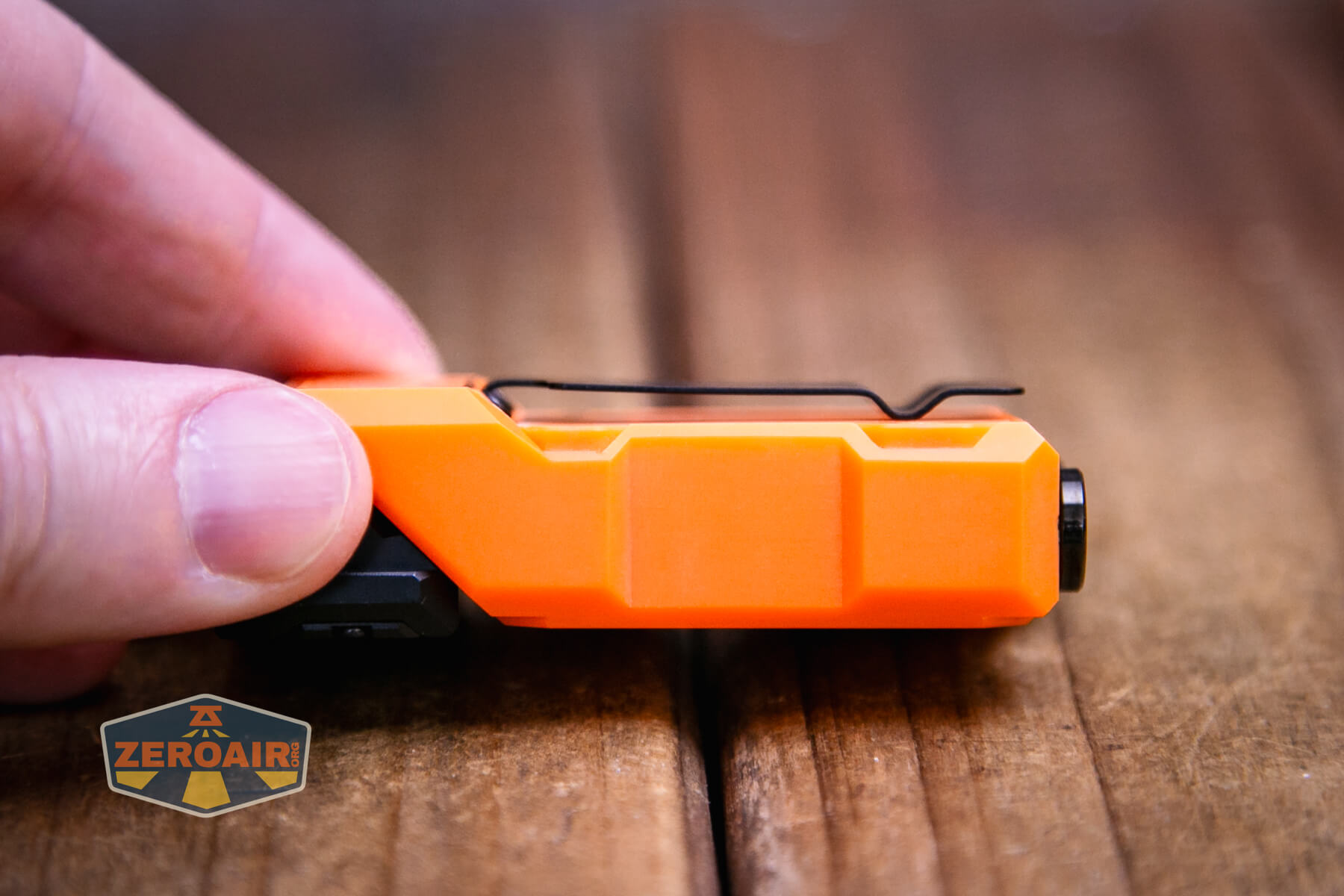
Let’s start with the pocket clip. This pocket clip is a big affair, probably more suited to belt use. It screws in and so is removable and also trustworthy for lanyard attachment.

It’s fairly slim but the X-3 Gen Ii is all angles, and you can feel all these edges (including those on the pocket clip).
Next up is this set of magnets on the bottom of the flashlight. There are two, and they are very proud and quite large, too. The light isn’t otherwise too big so these aren’t extra but they are – again – just more edges that you’ll feel when holding the Maratac X-3 Gen II flashlight.

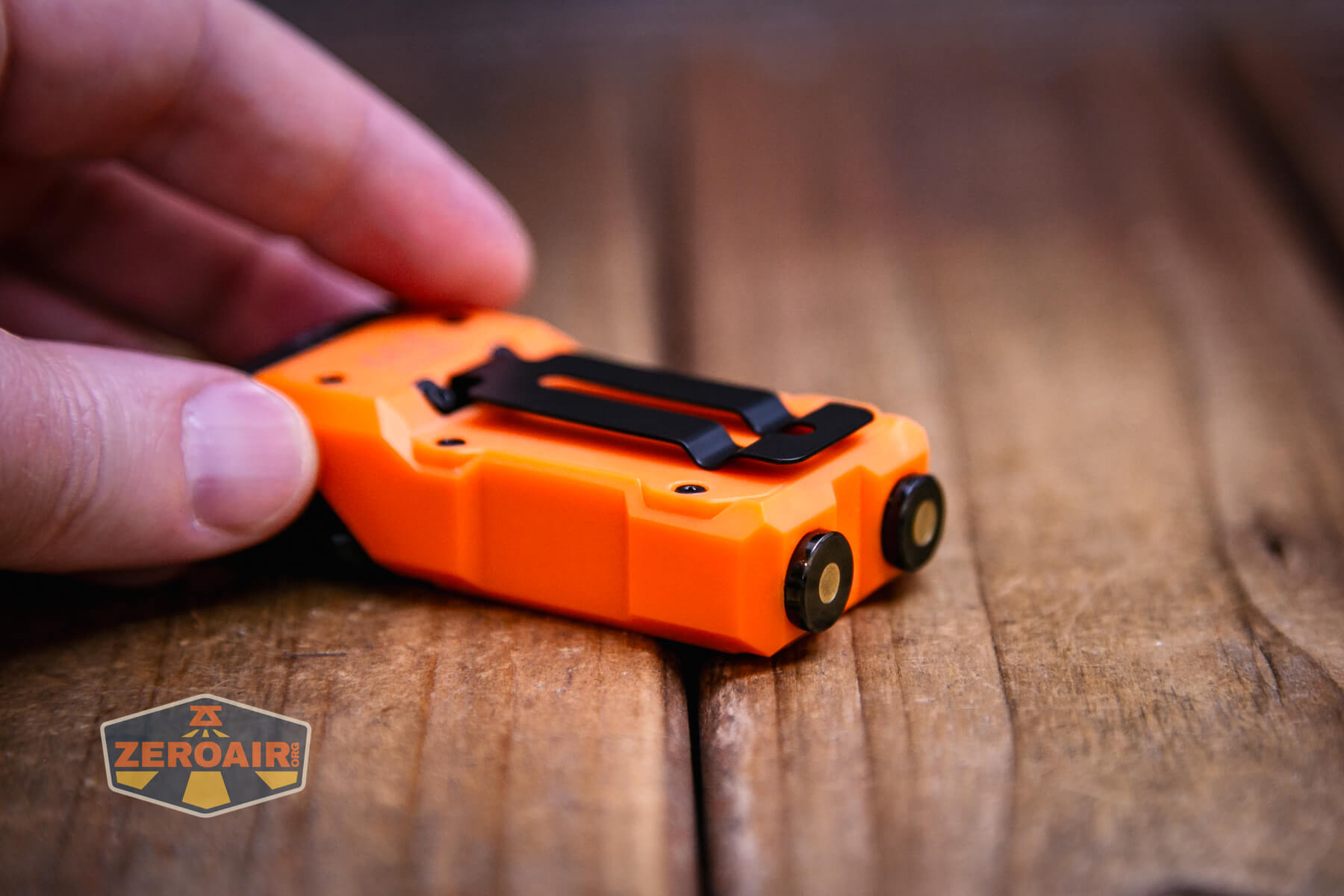
These magnets work very well, of course.
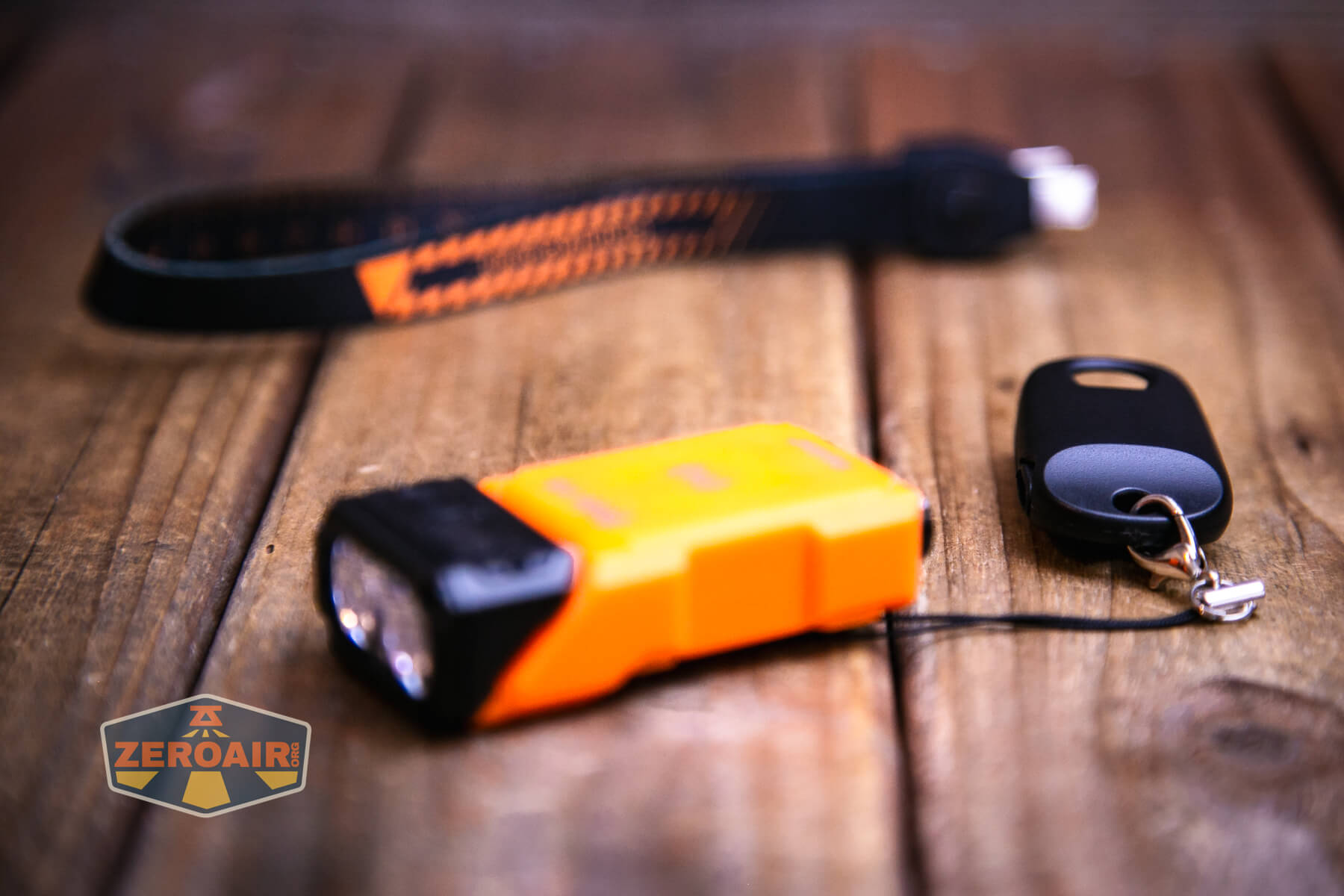
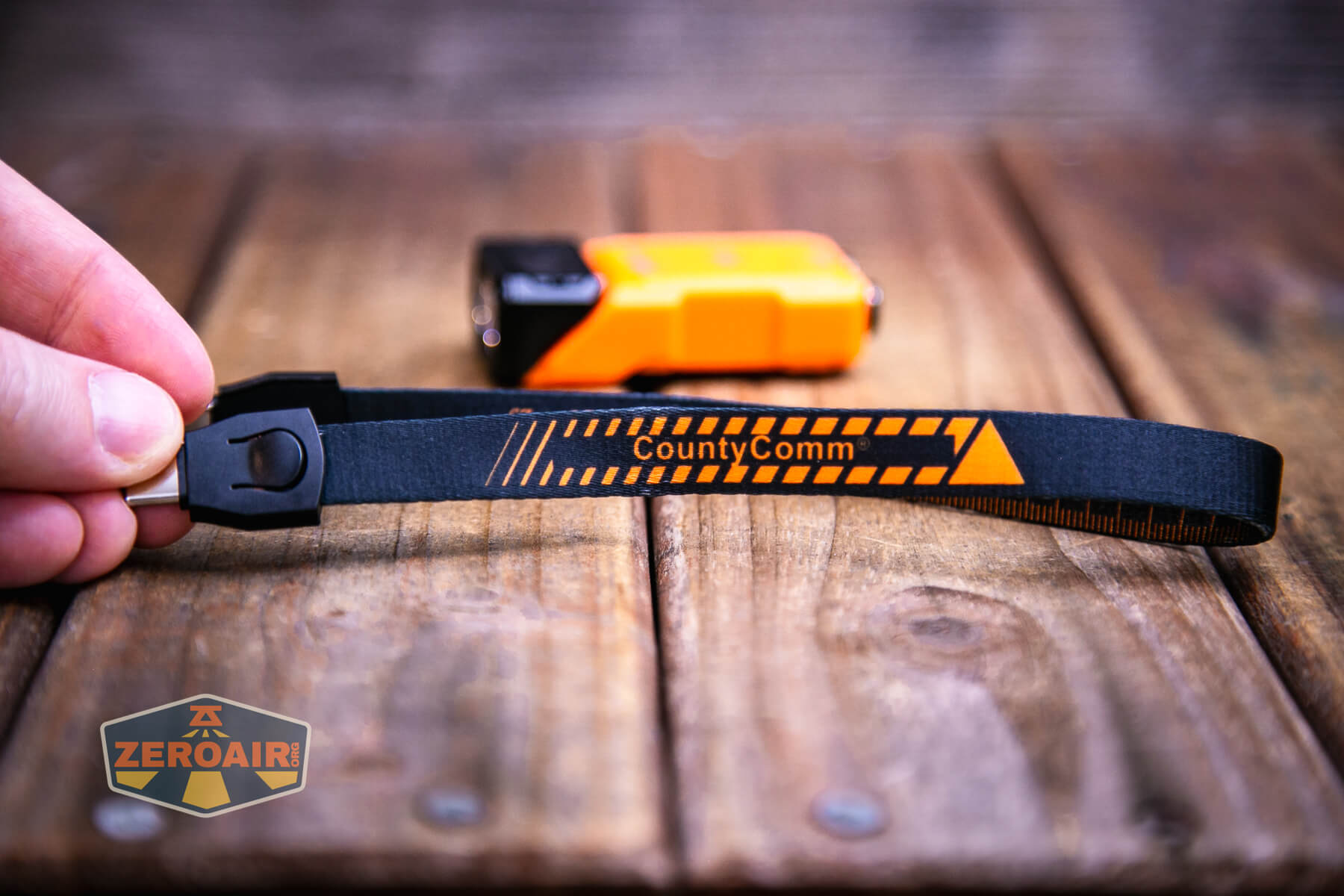
We’ll talk more about the lanyard later but just check it out a bit here.
I don’t know whether to include the Energy Storage Bin here, but it’s reasonable. You can carry the light in that, and it does have a lanyard attachment too.
Power and Runtime
In the manual, Wuben says the battery is an internal 1000mAh cell.
Performance of this Gen II is about the same as Gen 1, with a very slight variation at the end of power.
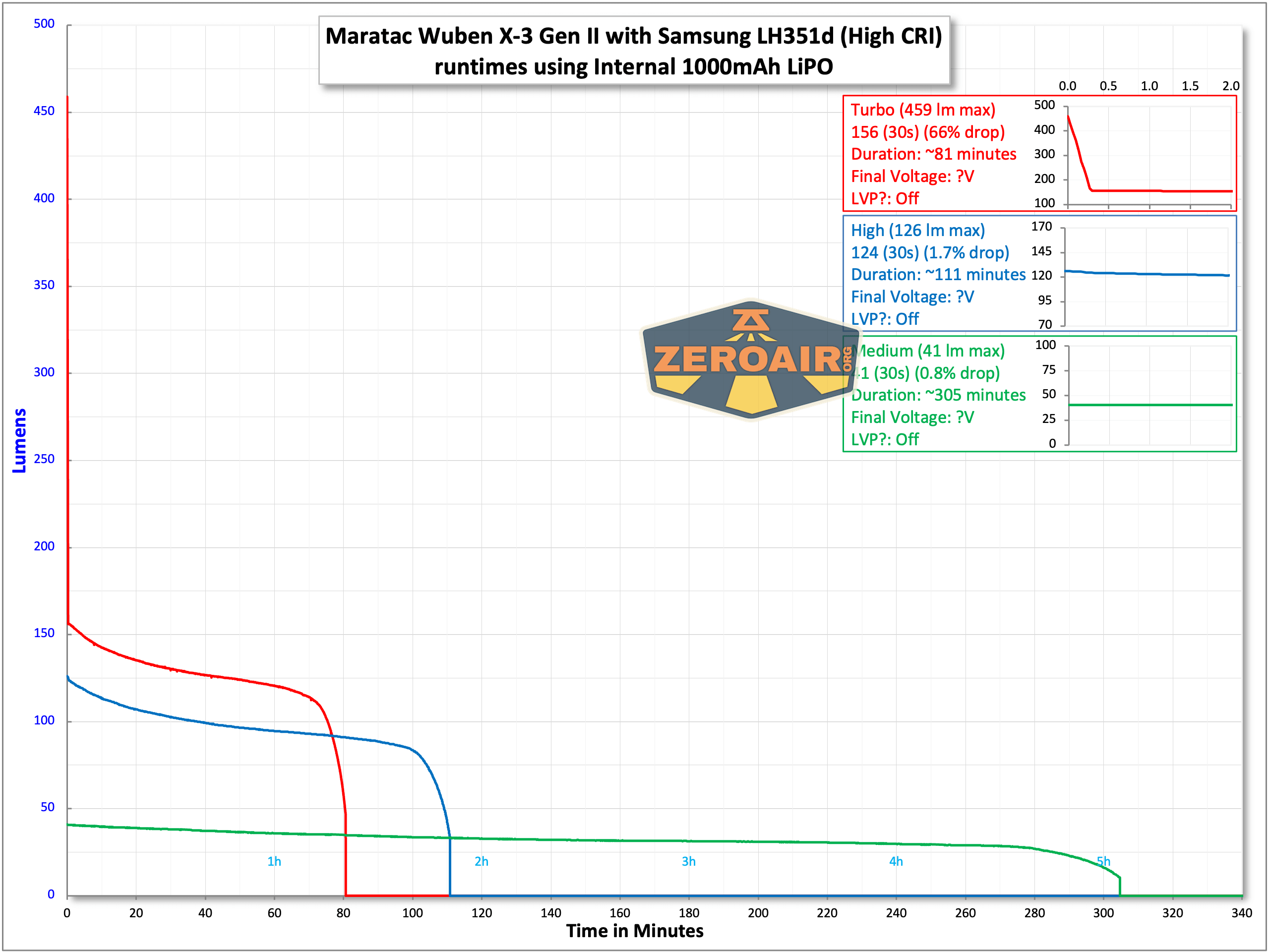
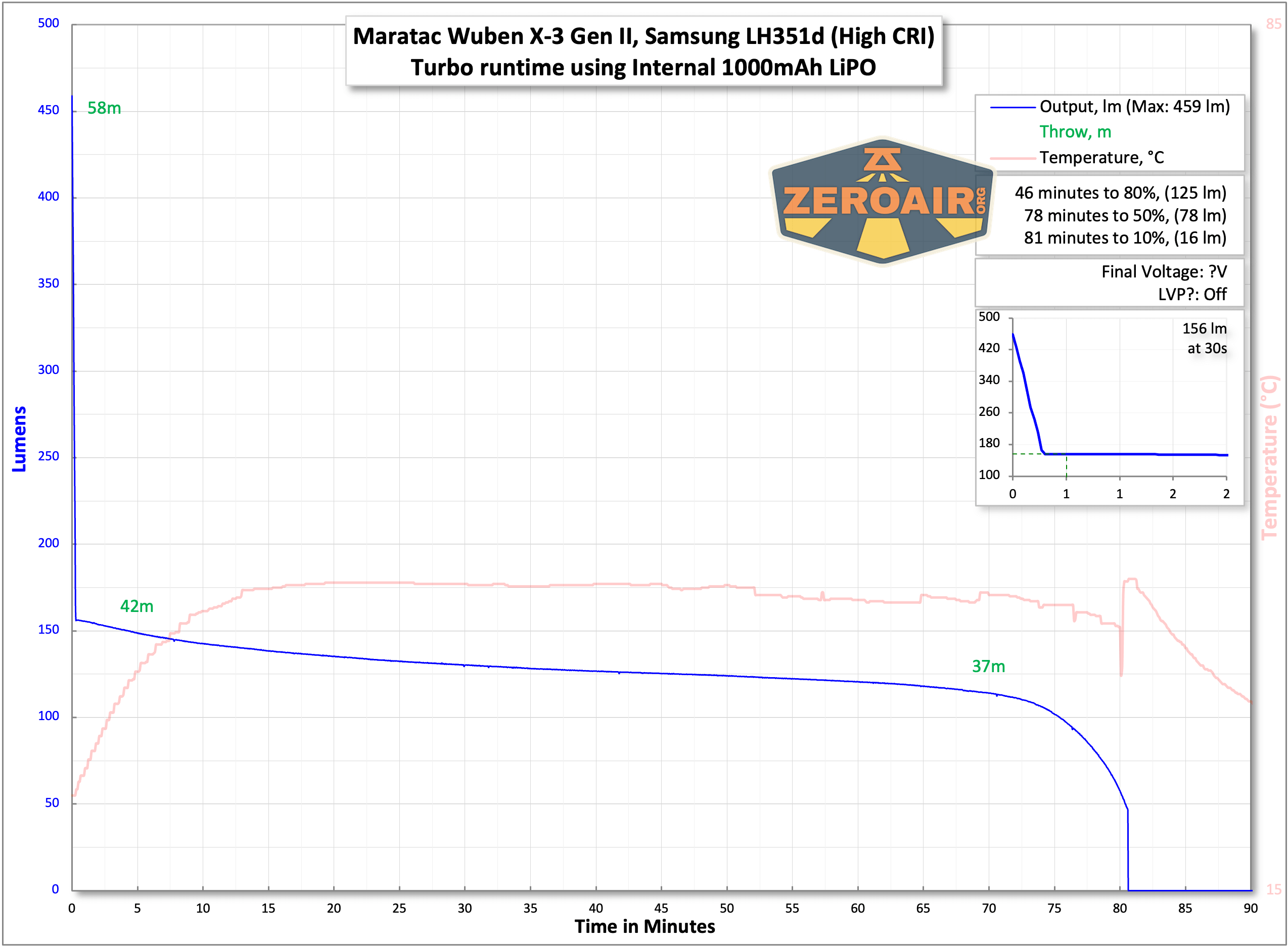
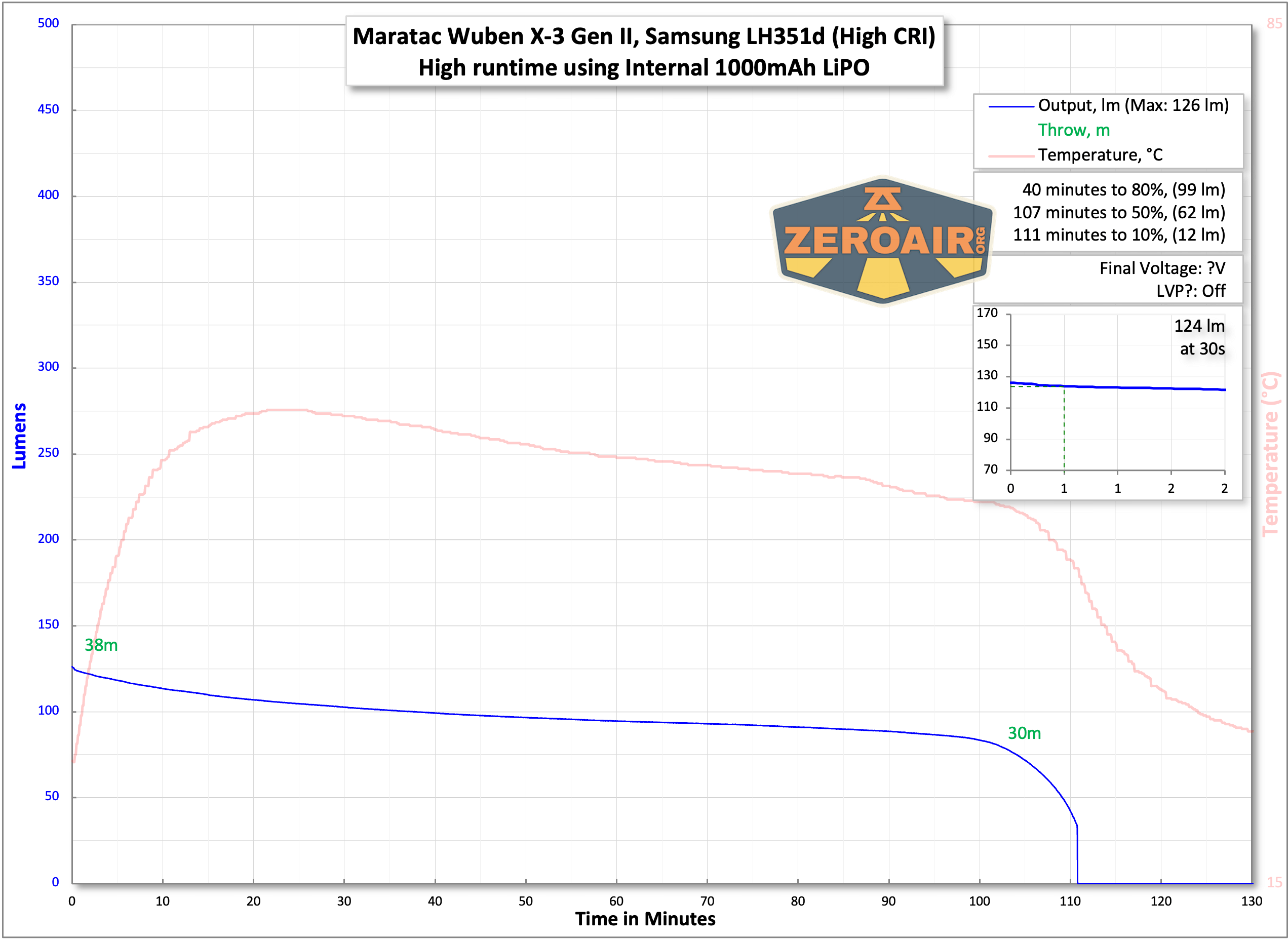
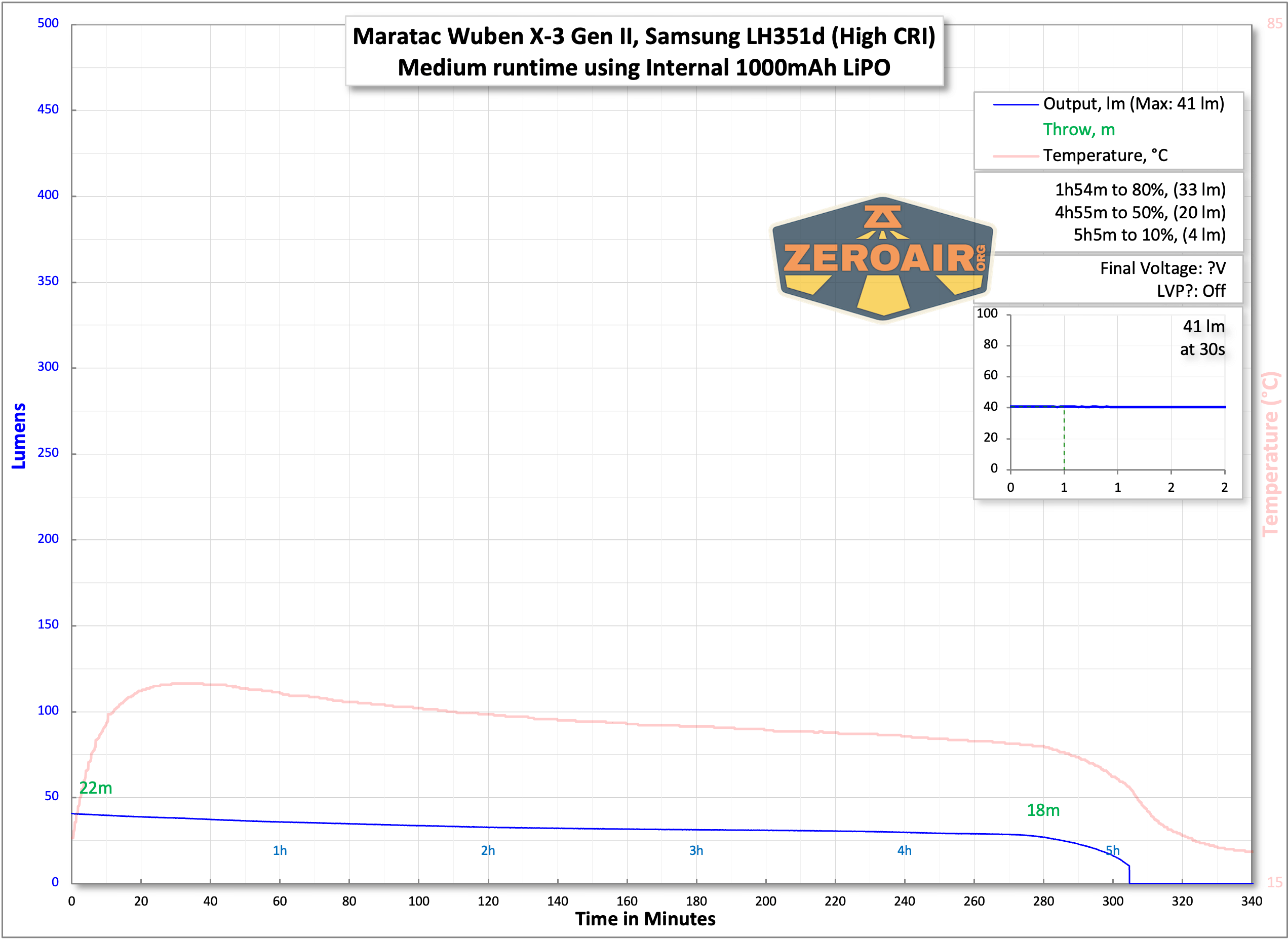
Since I can’t access the battery, I can’t tell what the shutoff voltage is. The light does shut off though, and when it’s shut off, the display shows some level of battery percentage.
Charging
To charge the light, you’ll need to take advantage of the wireless charging feature. You can see the connection on the X-3 below. (There’s a little wireless icon on the front and center.)
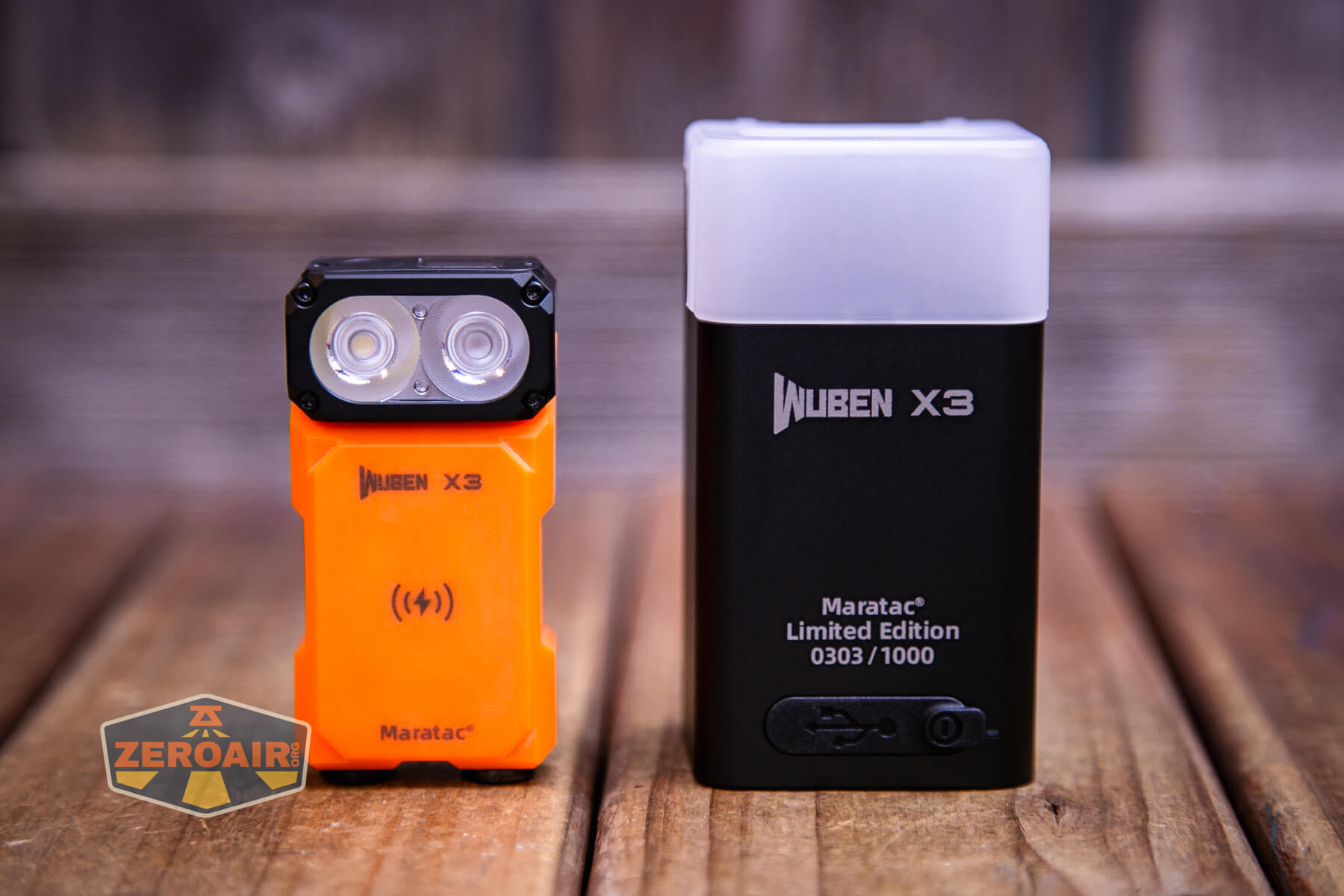
The wireless charging doesn’t seem to be proprietary. I don’t have a way to log, I can’t report with a graph that wireless charging works. But it does seem to. The display on the light responded but didn’t stay on steadily to indicate charging was ongoing.
To charge, put the X-3 in the X-3 case and wait! The display on the X-3 will report battery percentage as the light increases in charge. It’s possible to put the X-3 into the case frontward or backward, but it’ll only charge when the clip is toward the back.
This charging case is updated and much better than the first generation. Not in function (as that’s the same) but for example the lid hinges from the back and works better.
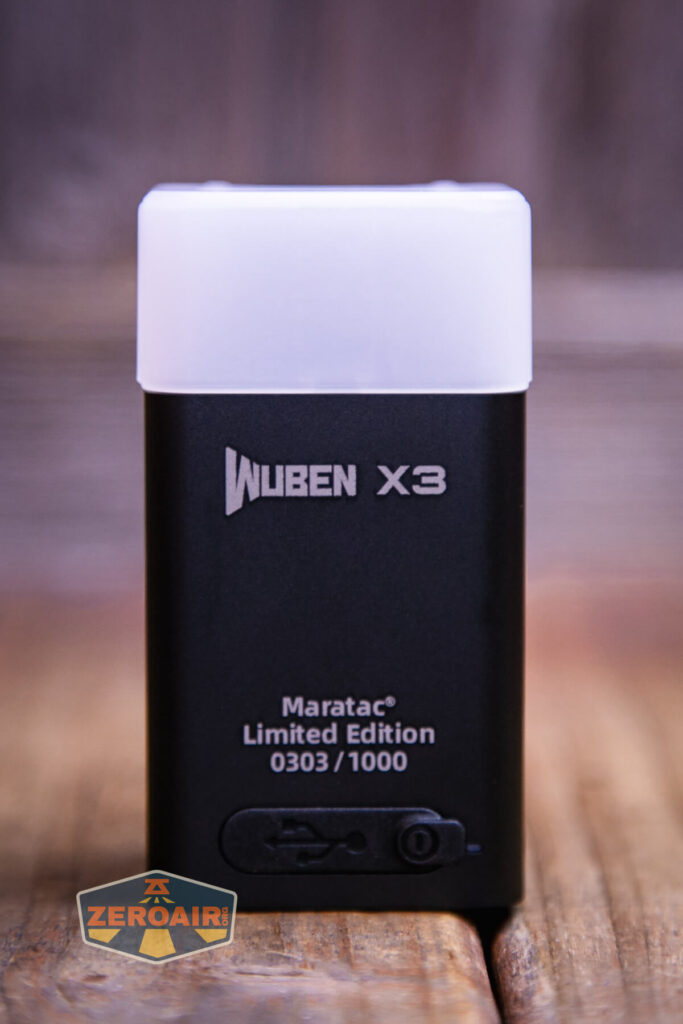

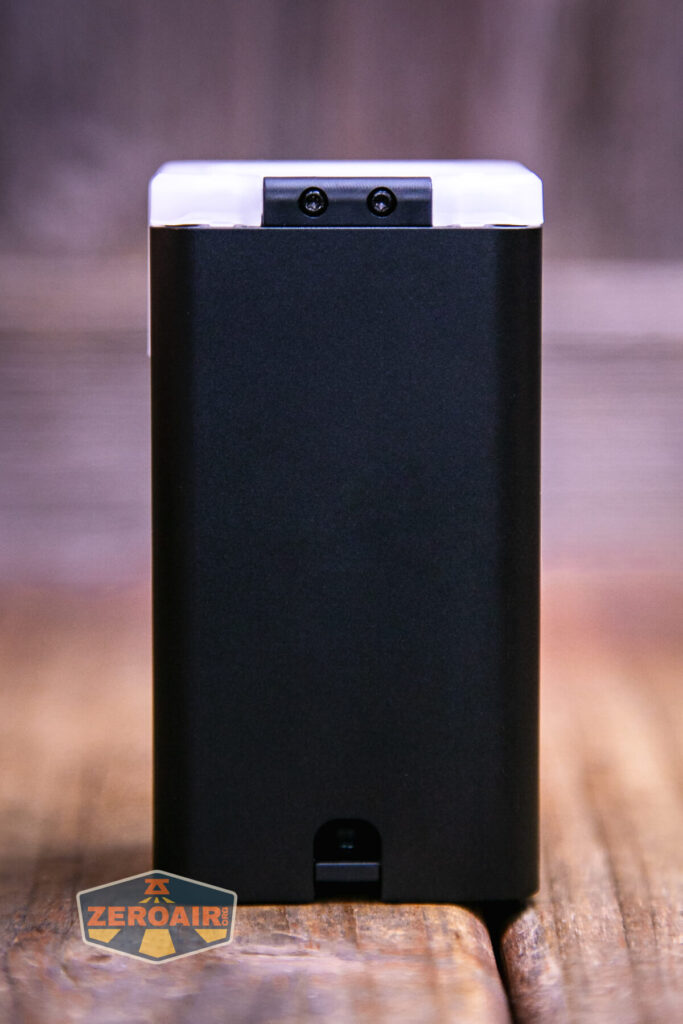
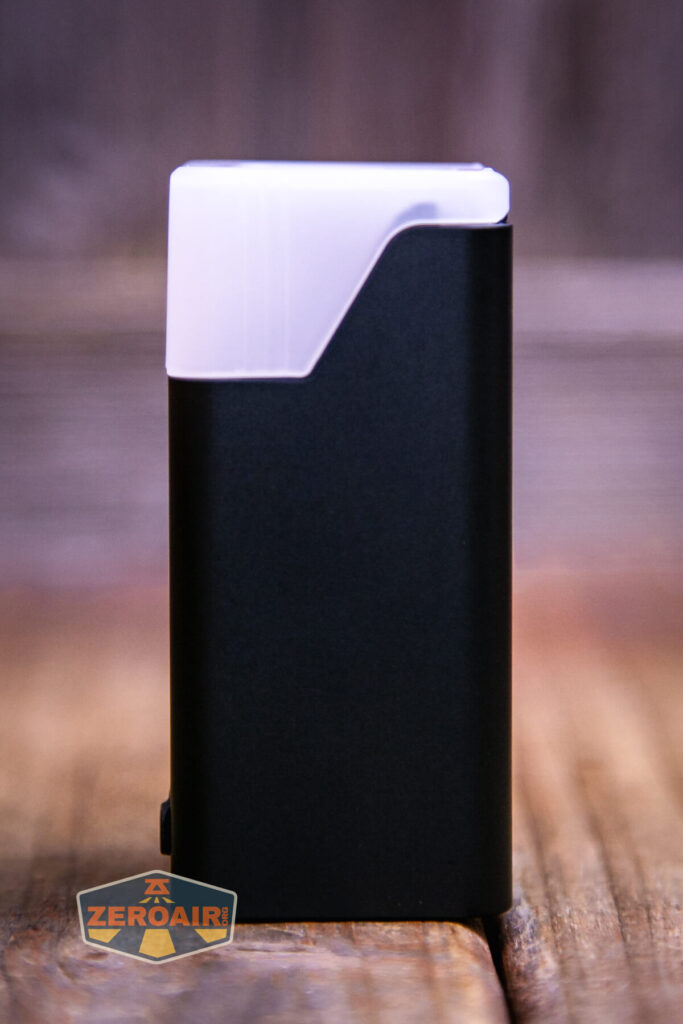
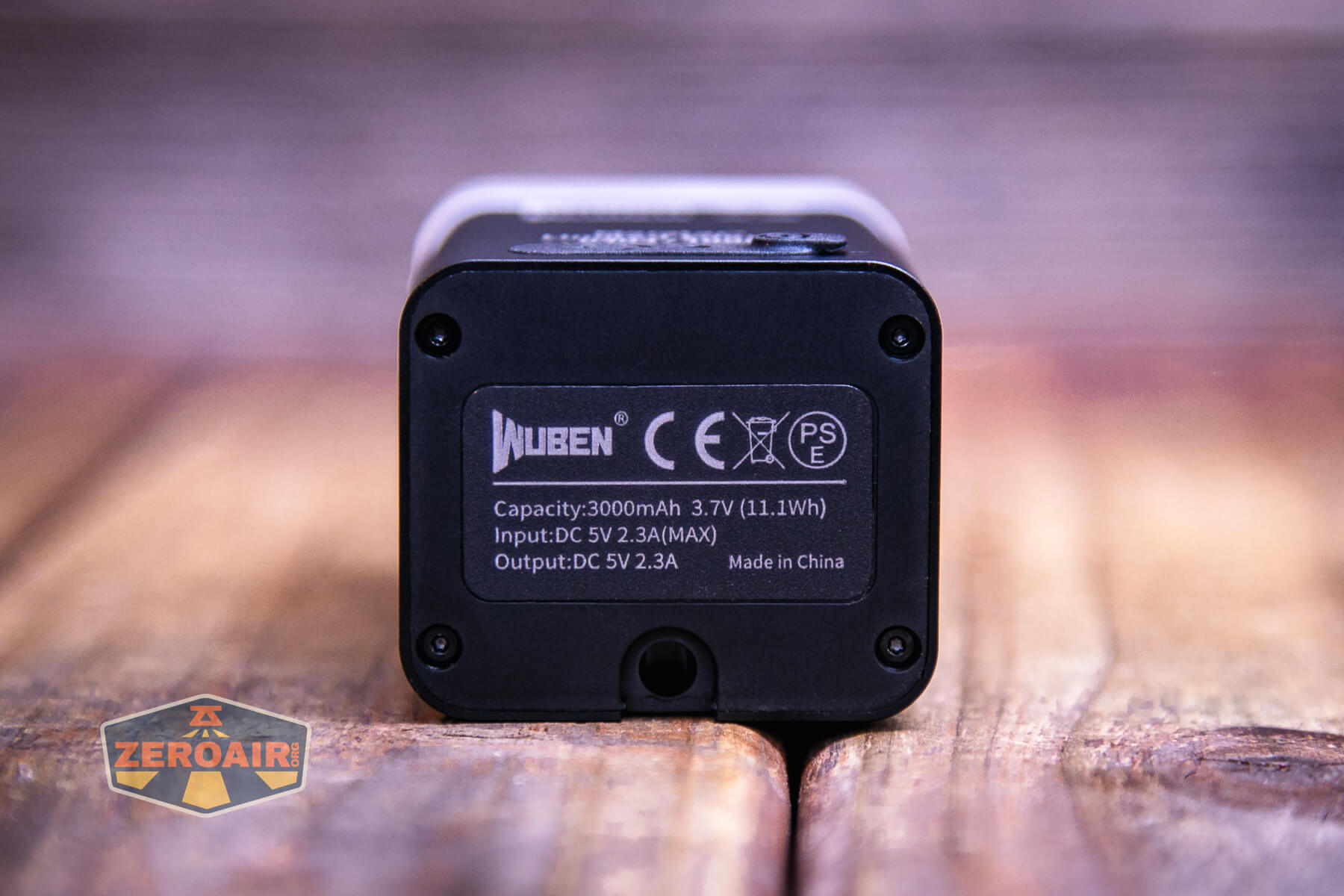
The X-3 light has a 1000mAh battery and this wireless case has a 3000mAh battery. I don’t know how inefficient wireless charging is but I’d guess you can fully charge the X-3 twice in the case.

When the Maratac X-3 Gen II flashlight is charging in the case, there’s a little blue LED (seen below).

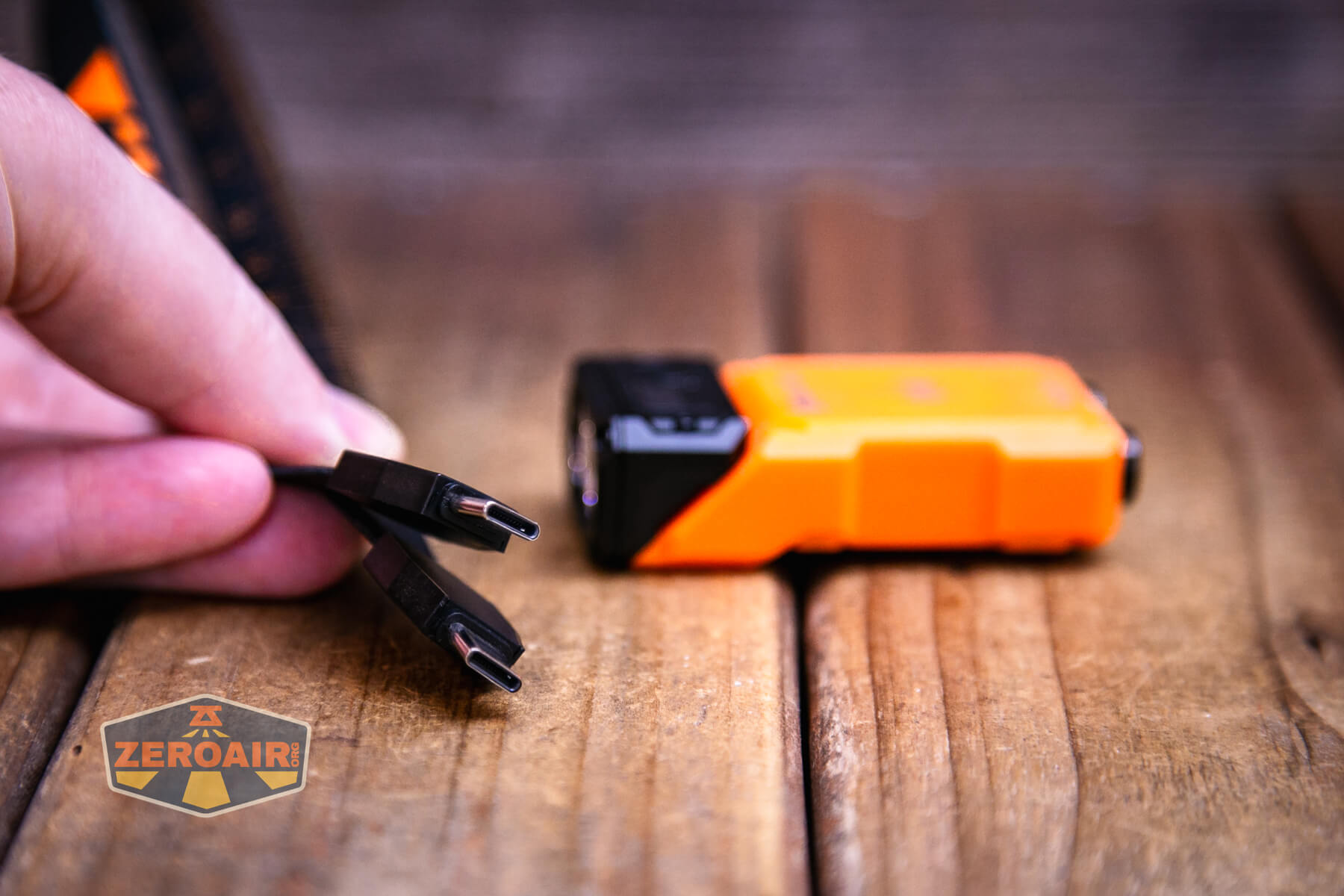
Here we talk again about the lanyard. The lanyard is actually a charging cable, too! It’s USB-C to USB-C.
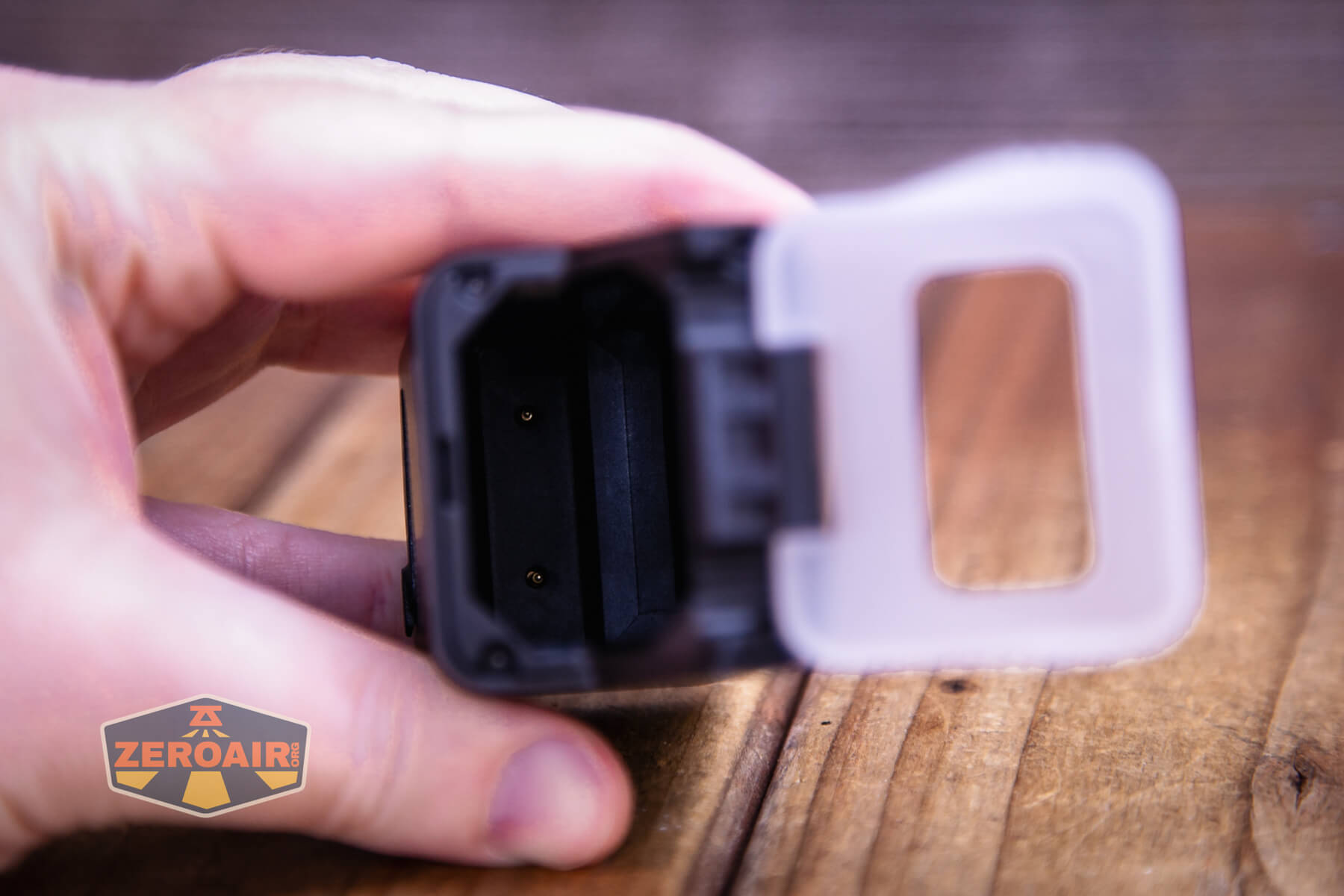
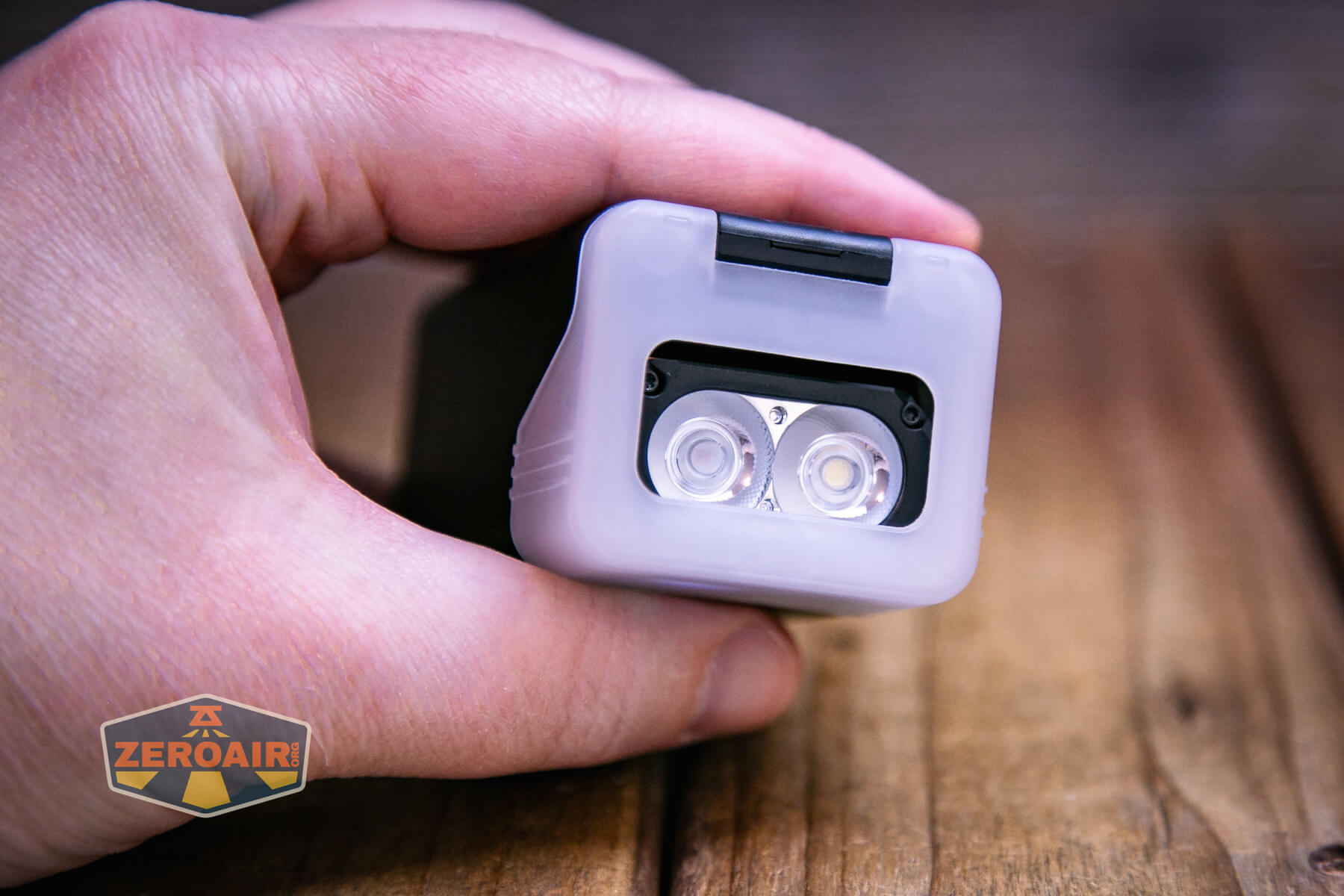
It’s technically possible to use the light while it’s in this charging case. That is very cumbersome, though.
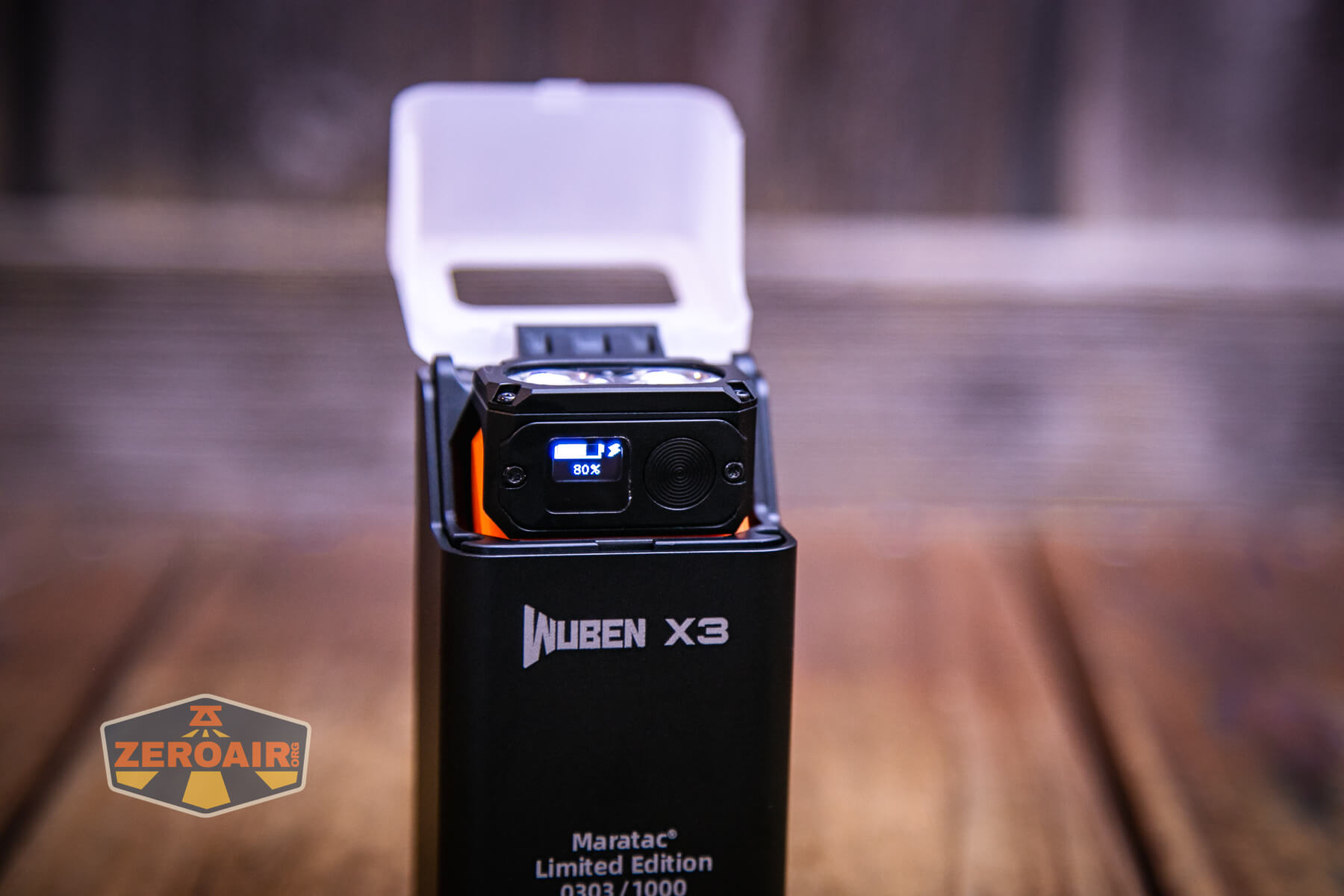
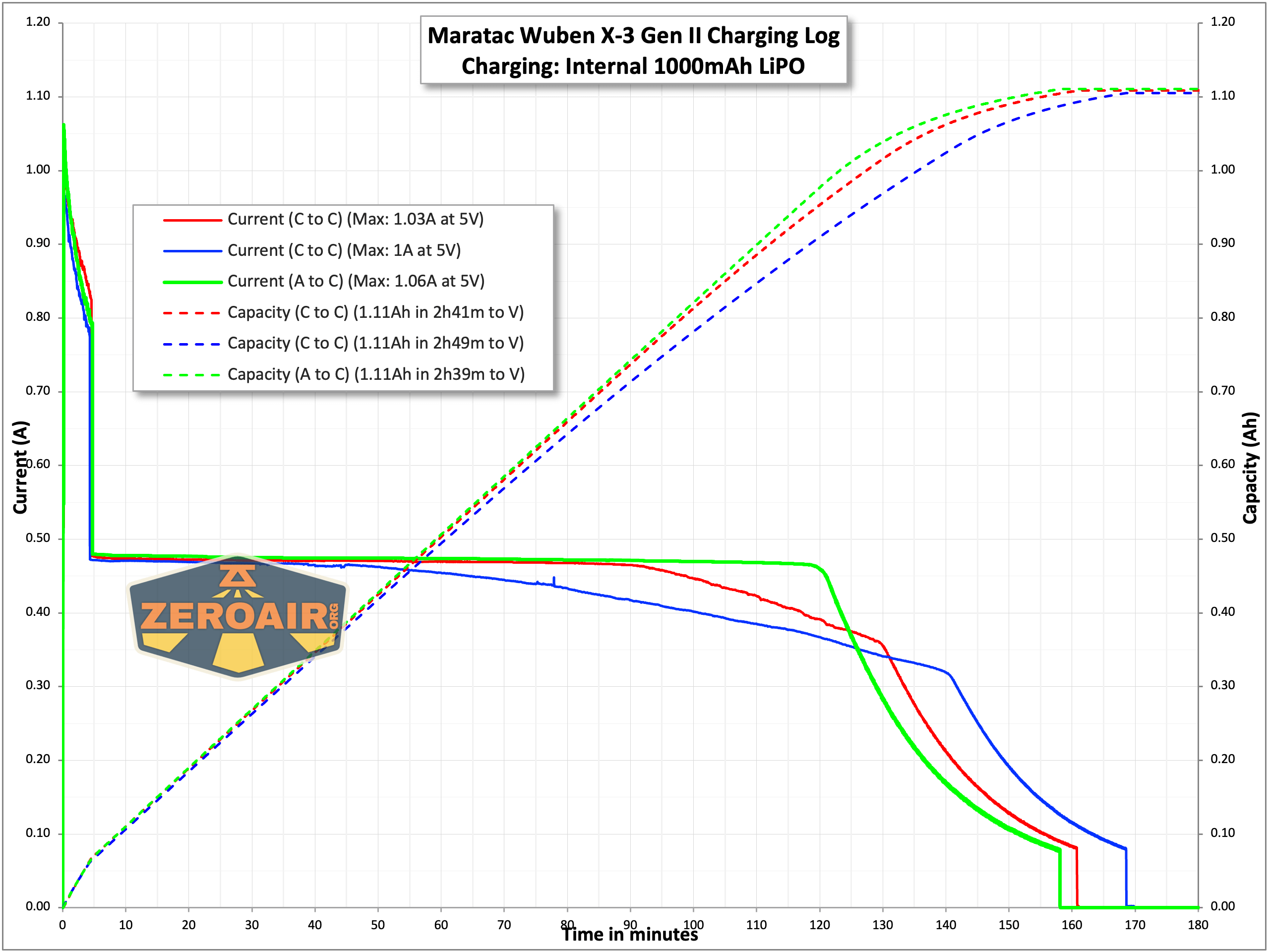
It seems like charging has taken a tumble on this Gen II version. It’s slower, at around 0.5A, and takes nearly 3 hours. That said, since the case itself can charge the light, you don’t really have to be tethered to anything.
Powerbank
I did not do any power bank testing of the Maratac X-3 Gen II flashlight case, but the manual says this advanced version (which means “the case”) can be used as a powerbank – USB-C output. The case has 3000mAh, so you can probably get at least partial charge on your phone, etc, in an emergency scenario.
Modes and Currents
| Mode | Mode Claimed Output (lm) | Claimed Runtime | Measured Lumens |
|---|---|---|---|
| Turbo | 700-200 | 30s+1.5h | 459 (0s) 156 (30s) |
| High | 150 | 2h | 126 (0s) 124 (30s) |
| Medium | 50 | 6h | 41 |
| Low | 0.5 | 56h | 1.3 |
Pulse Width Modulation
Every mode uses PWM. It’s not the best PWM, either (which means it’s slow, and you could notice it if you’re PWM-sensitive). Below, from left to right, are low to high white and then low red and high red.

Here you can see a “baseline” – a chart with almost no light hitting the sensor.

Then there’s the Ultrafire WF-602C flashlight, which has some of the worst PWM I’ve seen. It’s so bad that I used a post about it to explain PWM! Here are multiple timescales (10ms, 5ms, 2ms, 1ms, 0.5ms, 0.2ms) to make comparing this “worst” PWM light to the test light easier. That post also explains why I didn’t test the WF-602C at the usual 50us scale.


User Interface and Operation
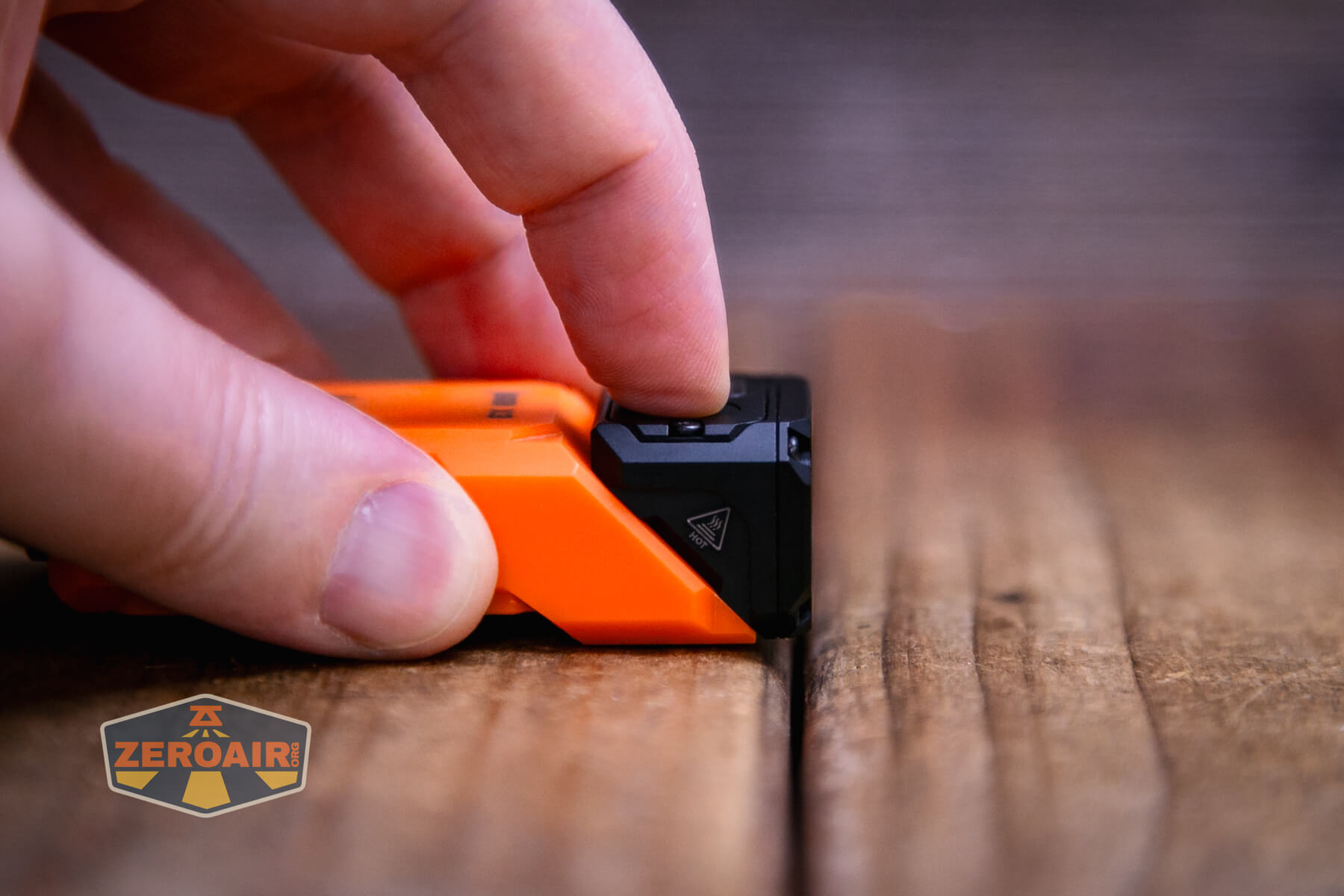
Just one switch controls the X-3. It’s an e-switch on the head. Depending on the head setup, it can be on the top or side.
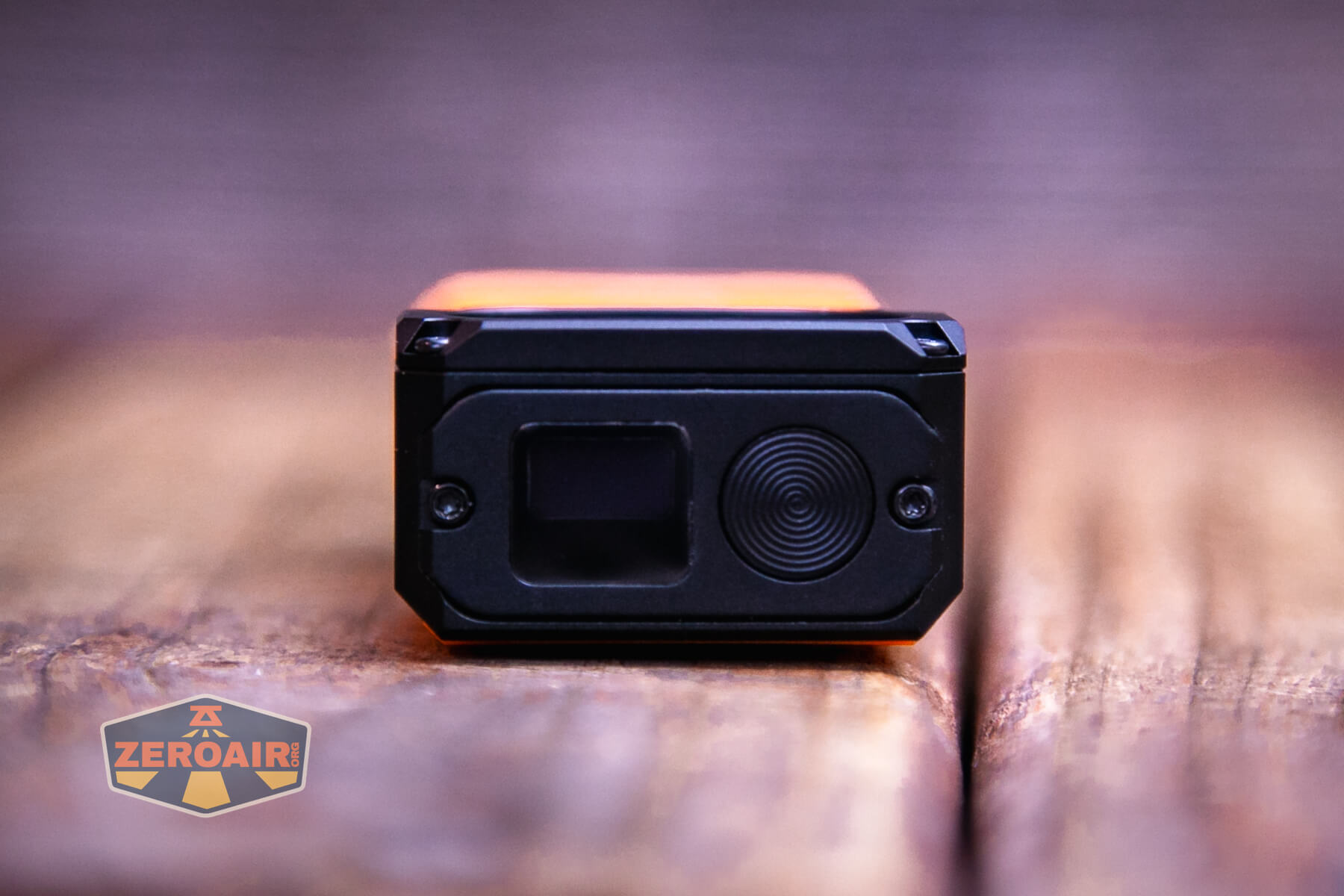

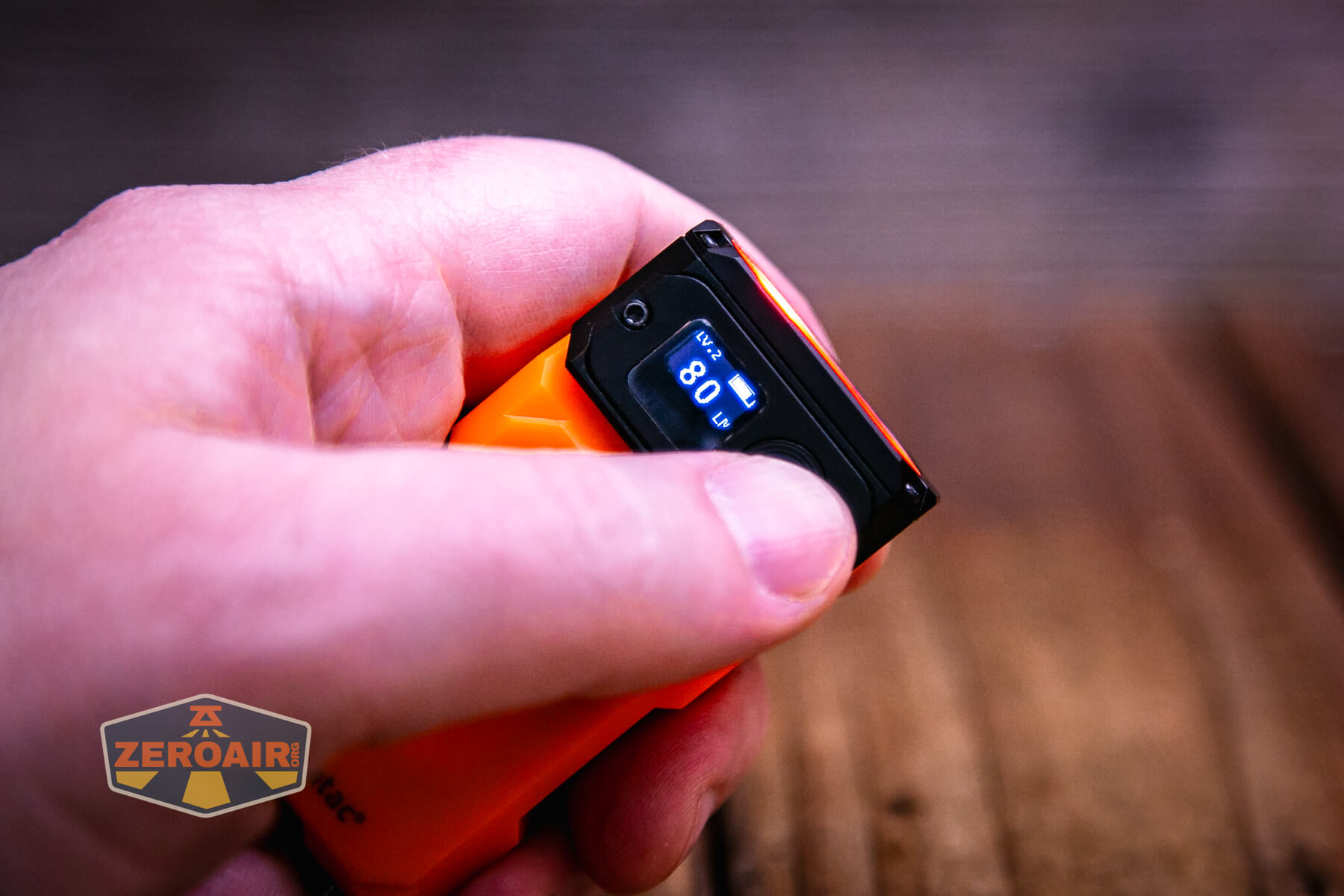
It’s a good e-switch with very low action.
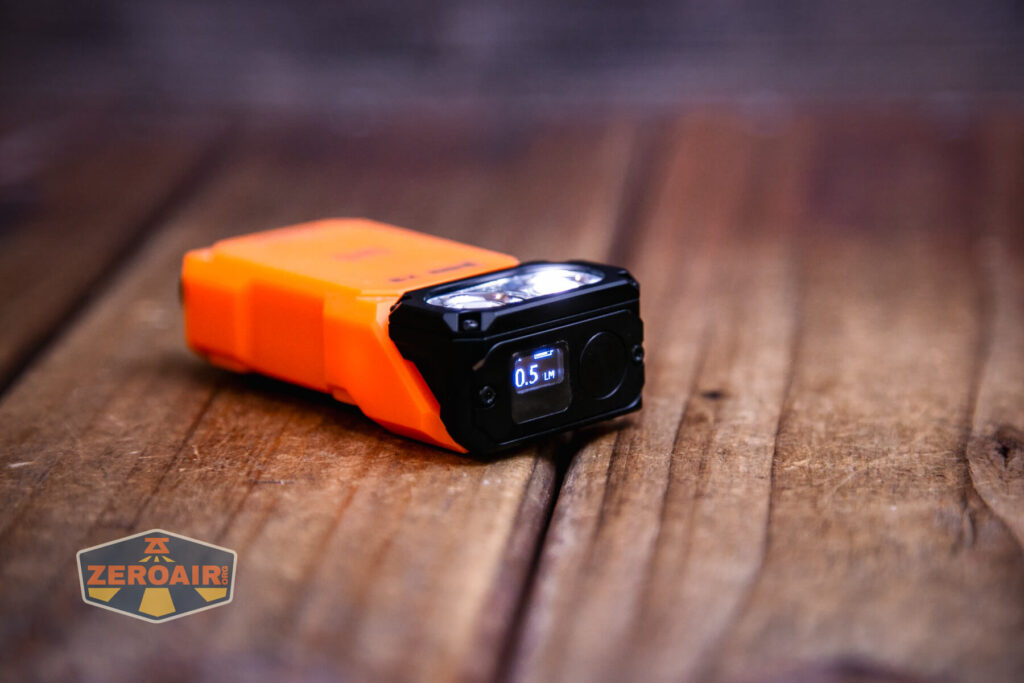
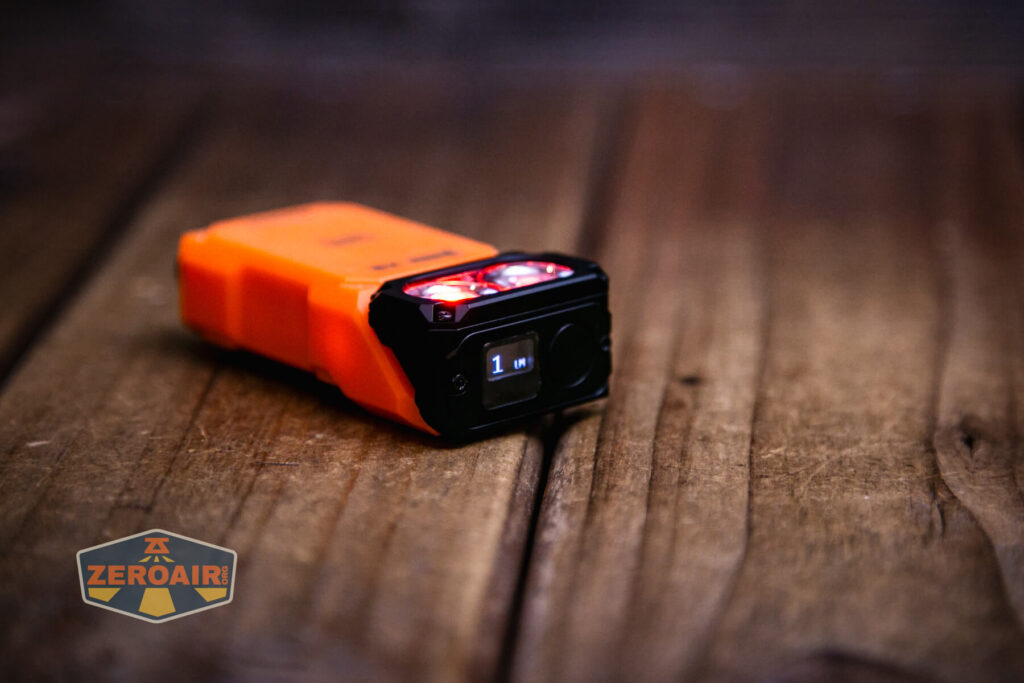
Clicking through the modes you can observe the level on the display. Red high is 70 lumens (low is 1, not pictured). Red strobe is 20 lumens.
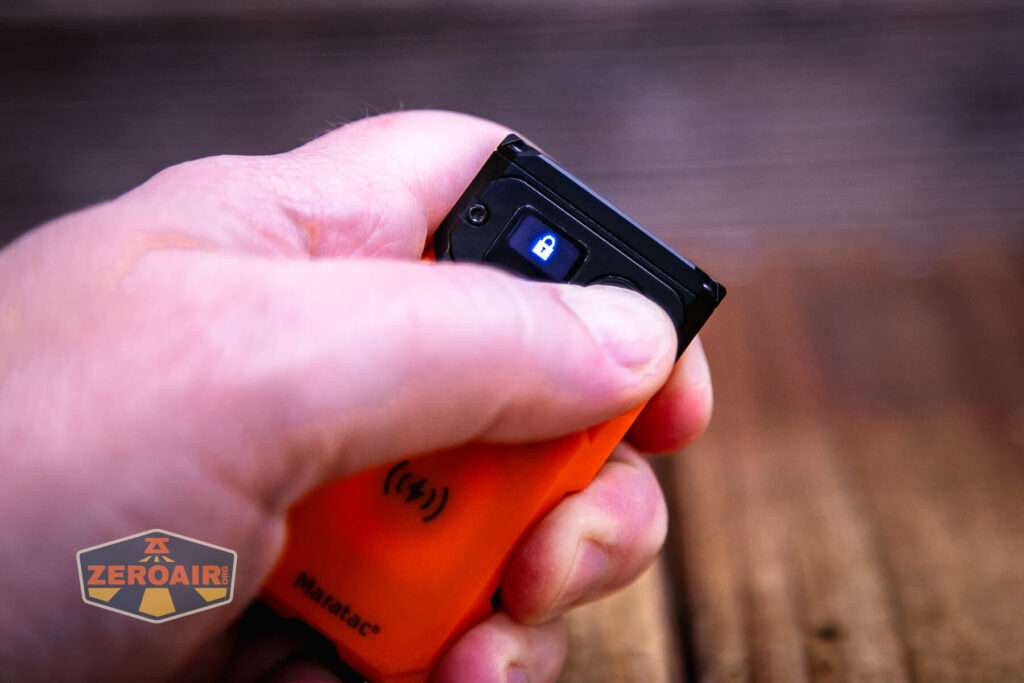
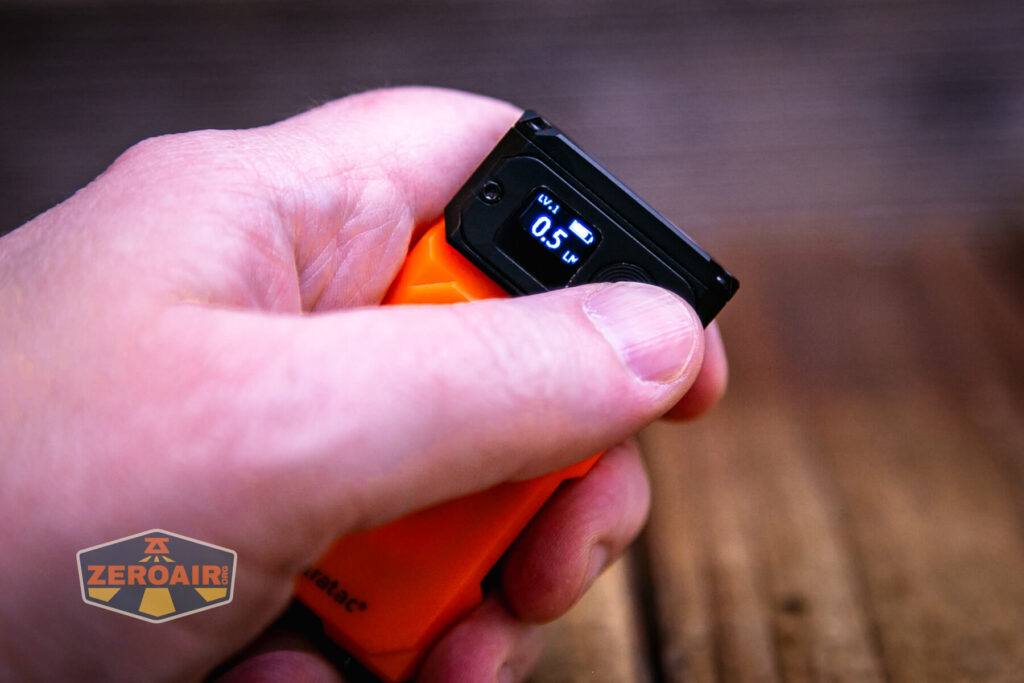
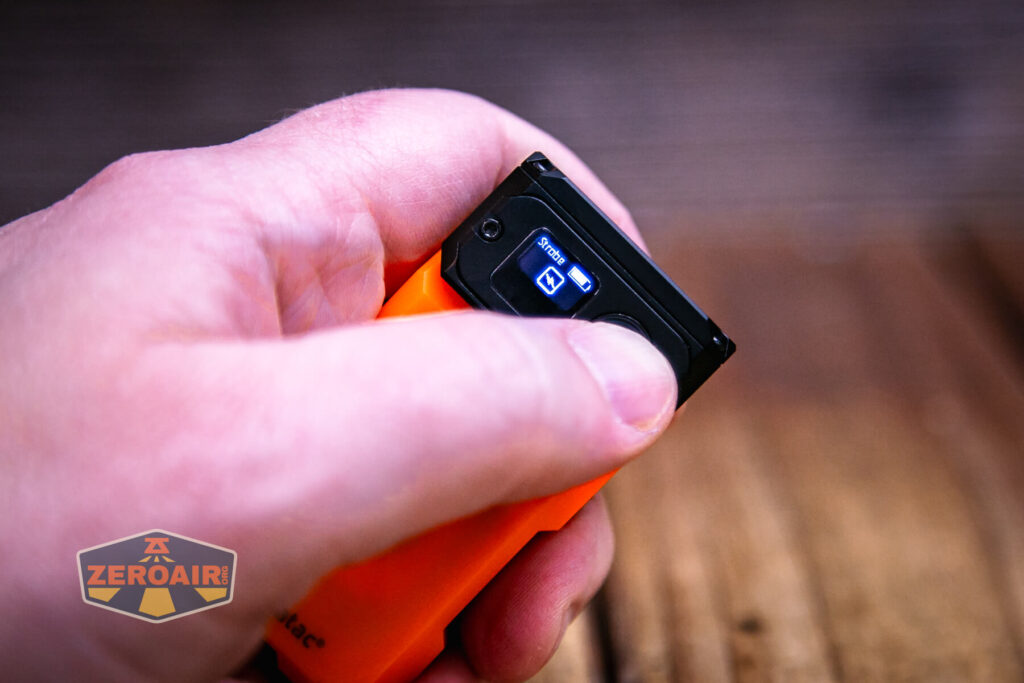
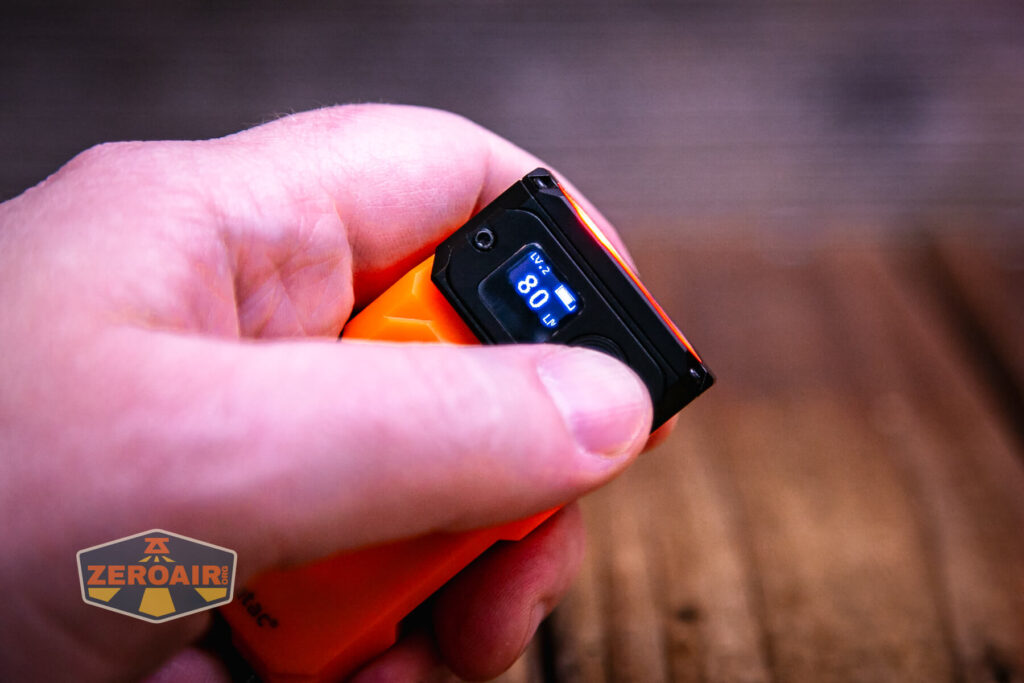
Here’s a user interface table!
| State | Action | Result |
|---|---|---|
| Off | Click | White on (Mode memory, excluding turbo and strobe) |
| On | Click | Off |
| On | Hold | Output advance (LMH for white or Low High Strobe for red) |
| Off or on in White | Double Click | Turbo |
| Turbo | Double Click | Previous state^ |
| Off or on in White | Click 3x | Strobe (white) |
| Strobe group | Click 3x | Iterate between SOS and Strobe |
| Off | Hold | Red (Mode memory) |
| Red | Double Click | No change |
| Off | Click 4x | Iterate lockout. Lock icon on OLED. |
| Off | Click 5x | Iterate indicator light. The light doesn’t respond in any way when this action is made. (On this Gen II version of the X-3 I’m not totally sure where this indicator light is!) |
^ The manual says “previous mode” but if you access Turbo from off, another double click does not turn the light off.
LED and Beam
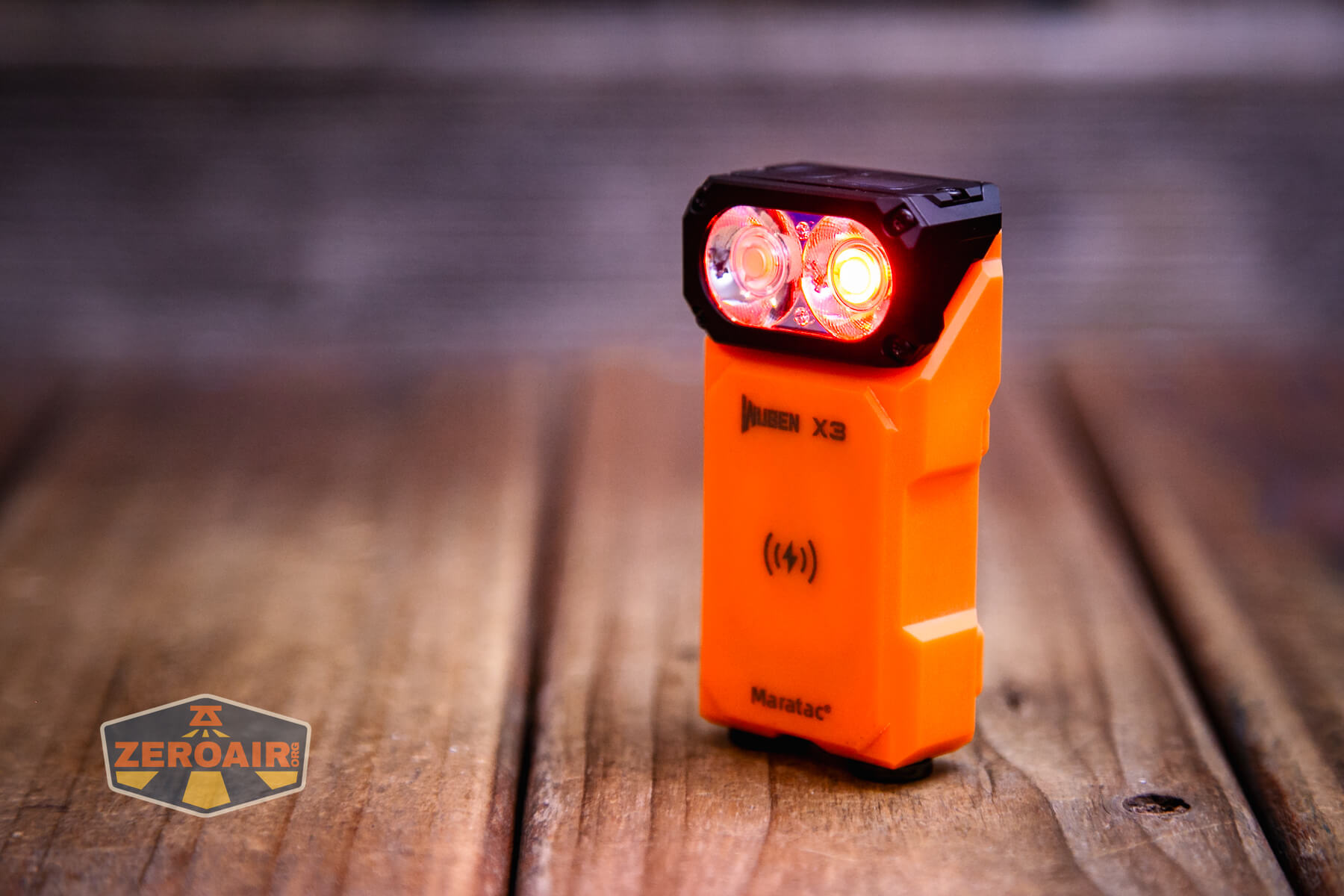
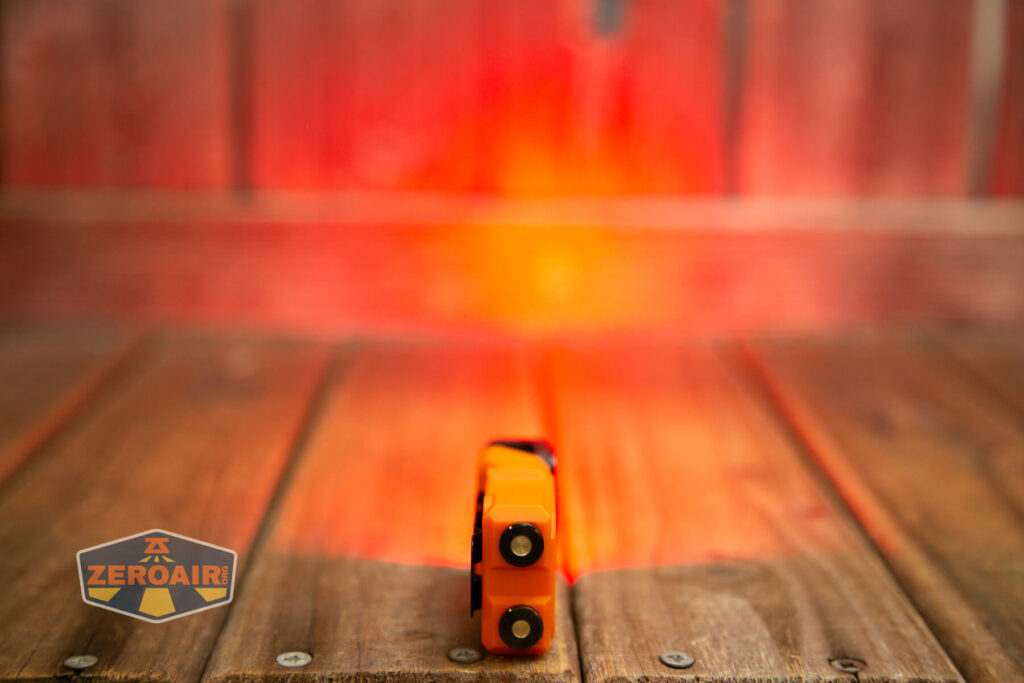
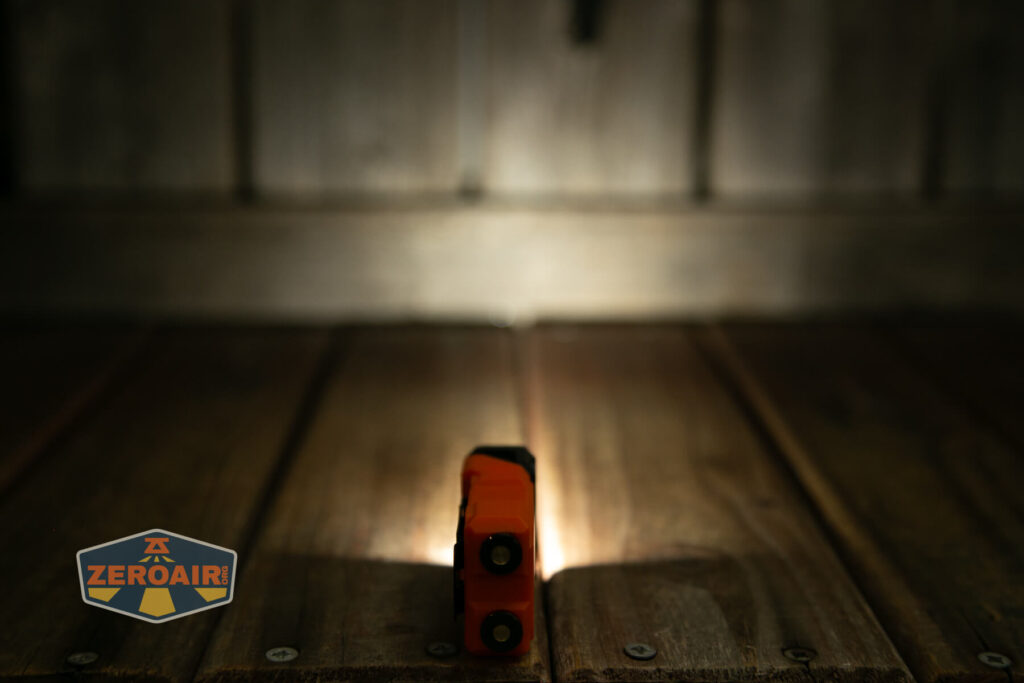
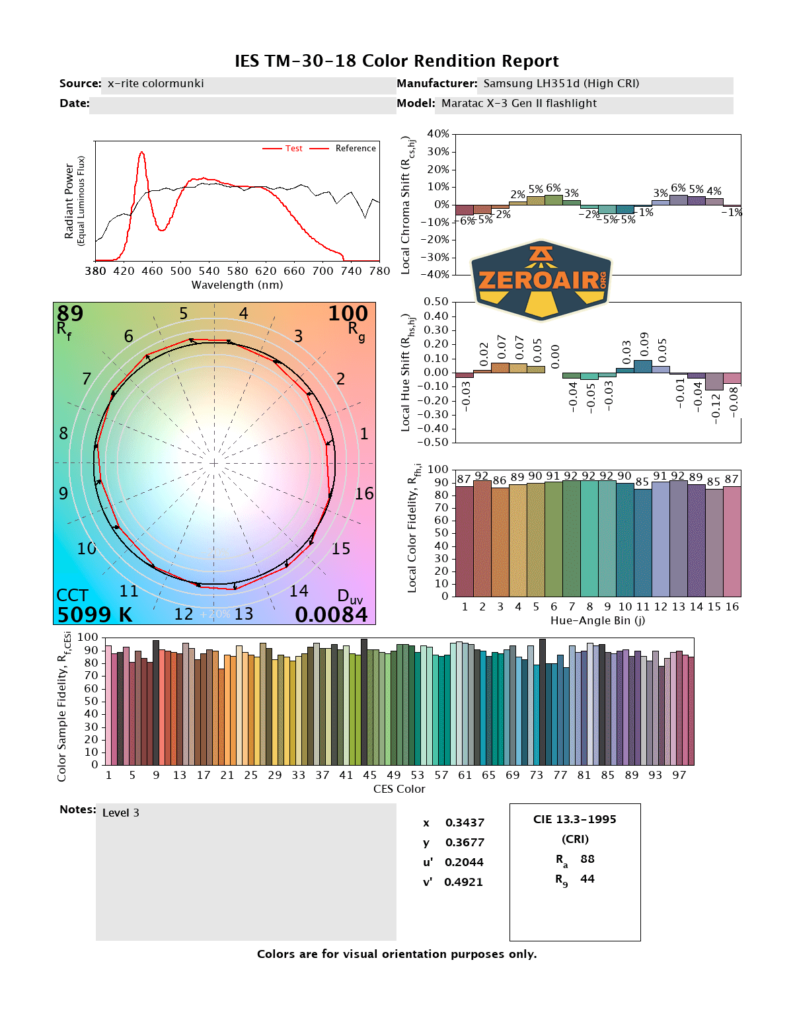
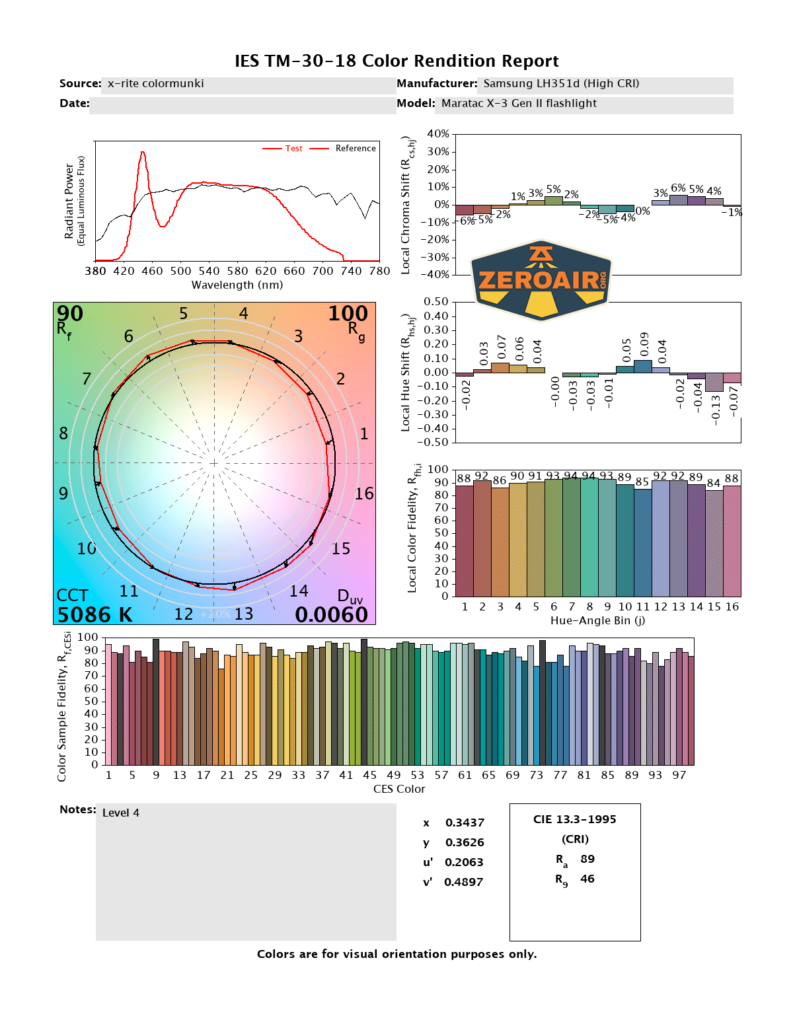
Wuben opted for a Samsung LH351d for the white emitter. Red is very red! Like the original version, this Gen II uses TIR optics. These are updated though, and provide a much smoother beam.


LED Color Report (CRI and CCT)
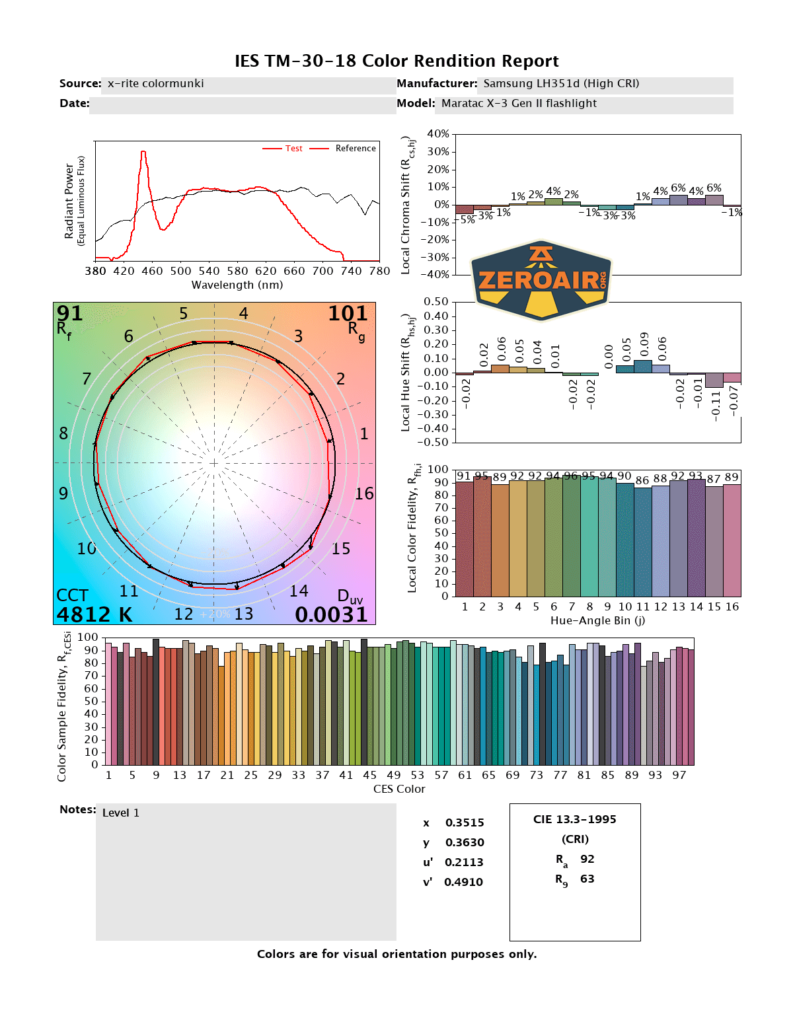
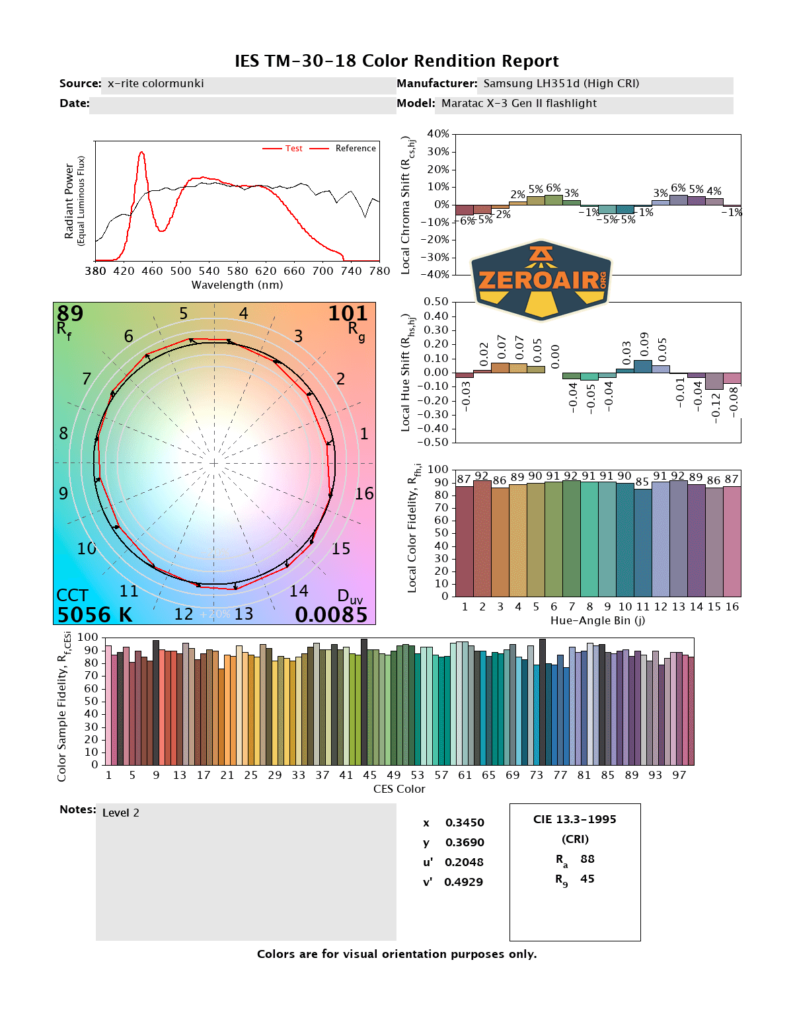
CCT is around 5000K, which is great. CRI is high too, so that’s also great! Red is a very intense red. (If you’re counting “greats,” that’s also great!)
Beamshots
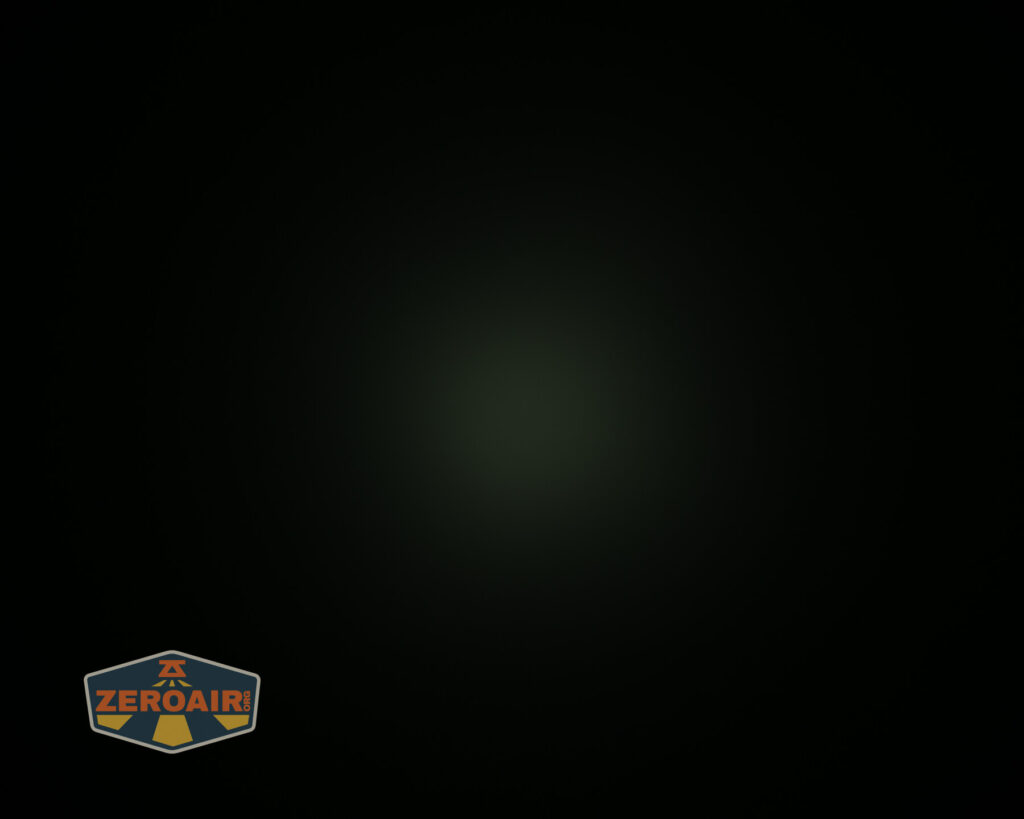
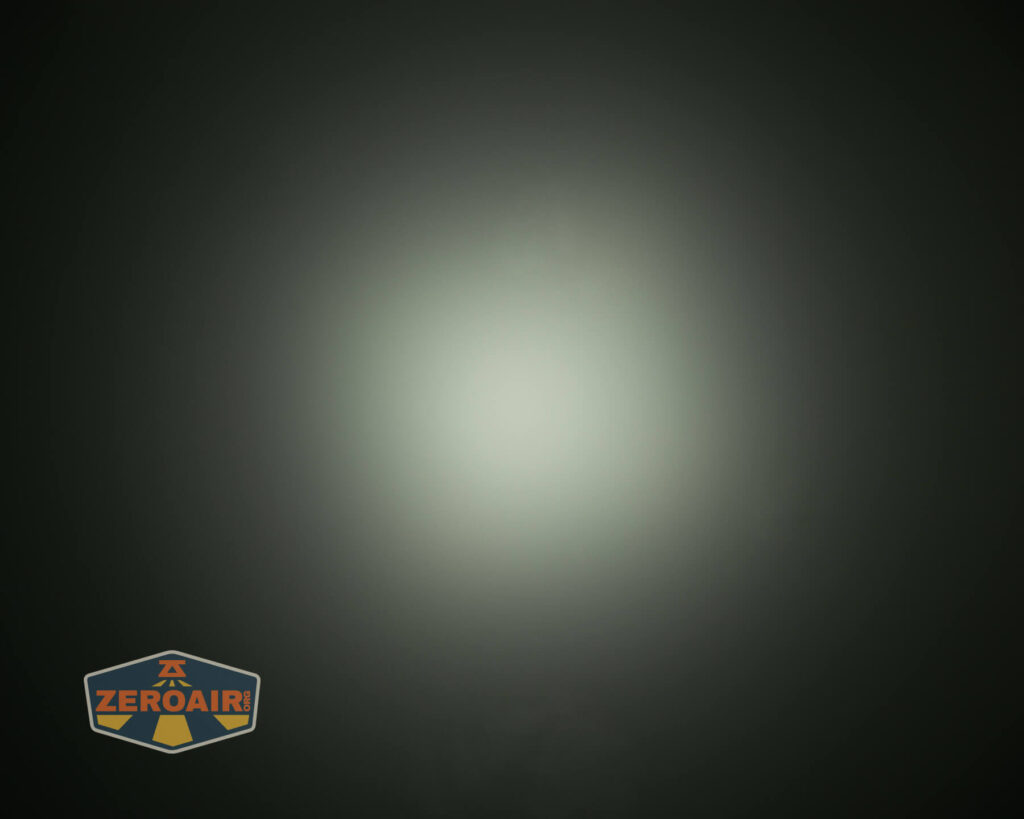
These beamshots always have the following settings: f8, ISO100, 0.3s shutter, and manual 5000K exposure. These photos are taken at floor level, and the beam hits the ceiling around 9 feet away.


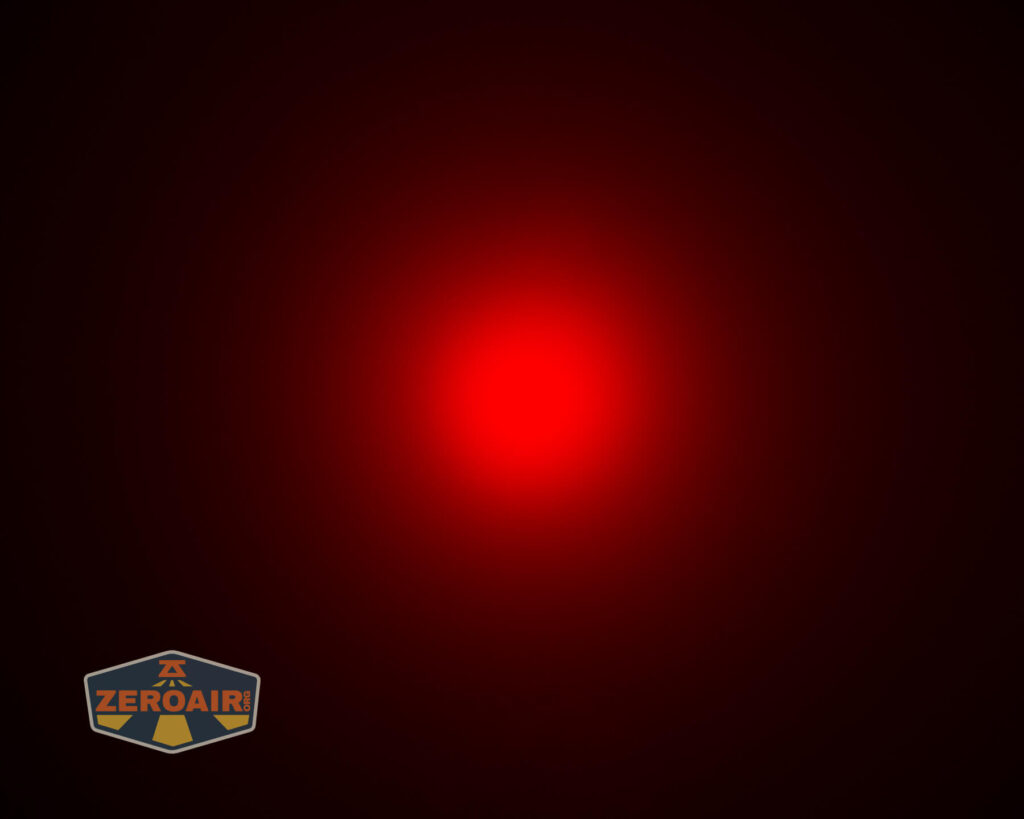
Tint vs BLF-348 (KillzoneFlashlights.com 219b version) (affiliate link)
I keep the test flashlight on the left and the BLF-348 reference flashlight on the right. These photos are taken around 18 inches from the door.
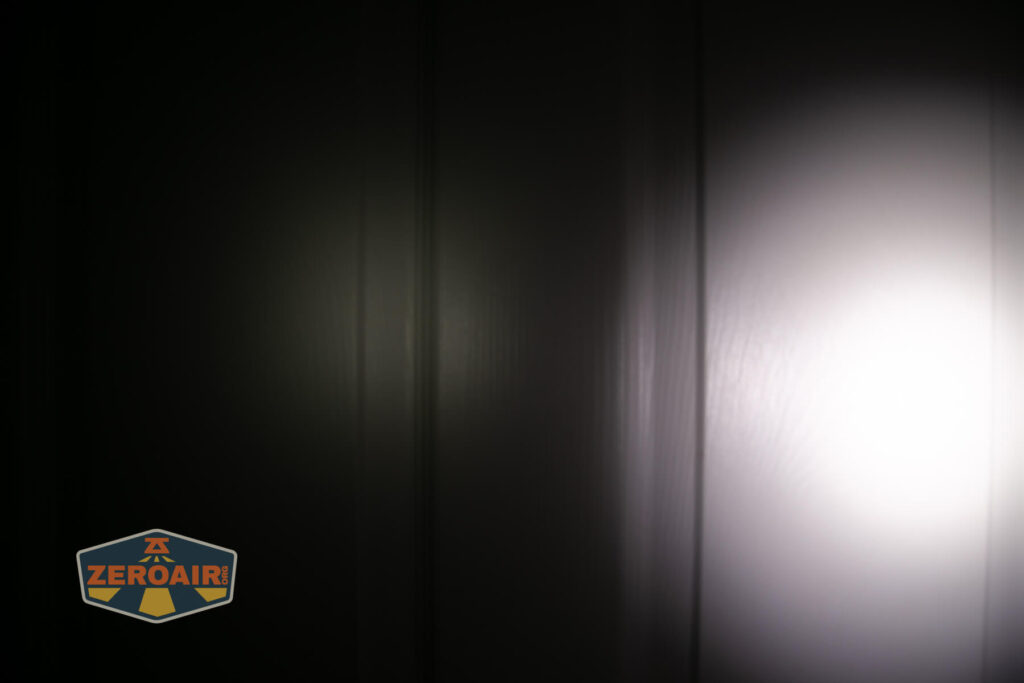
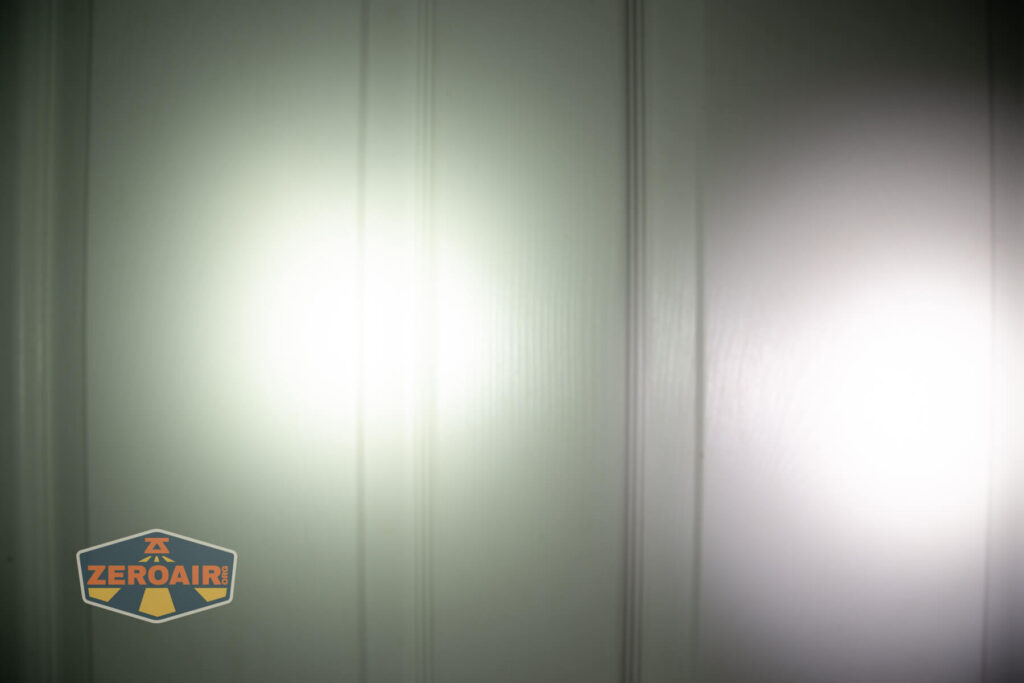
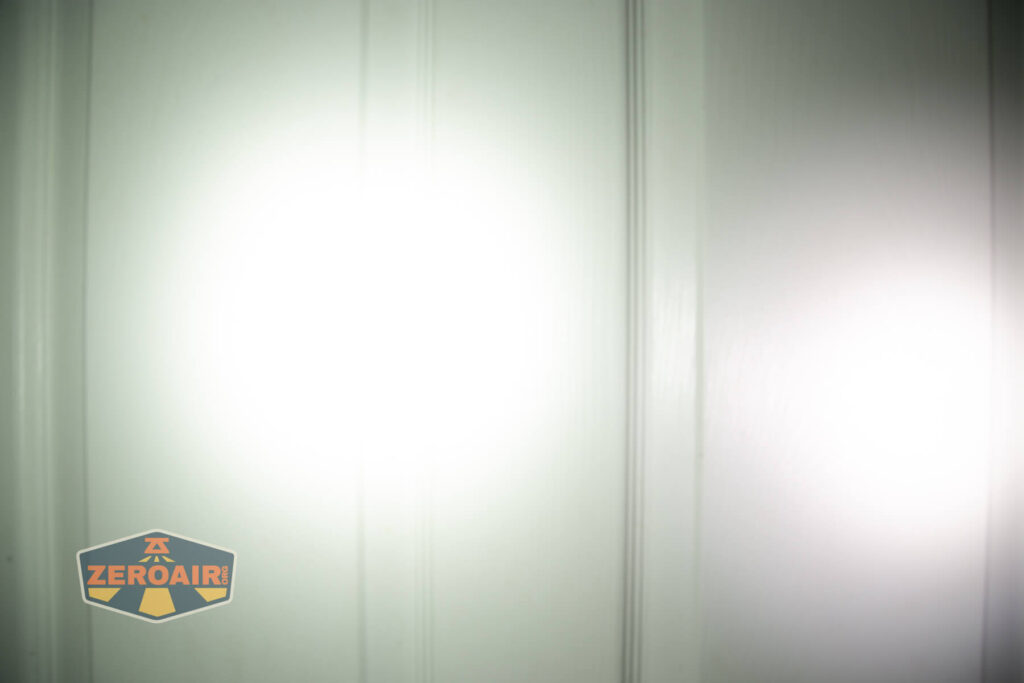

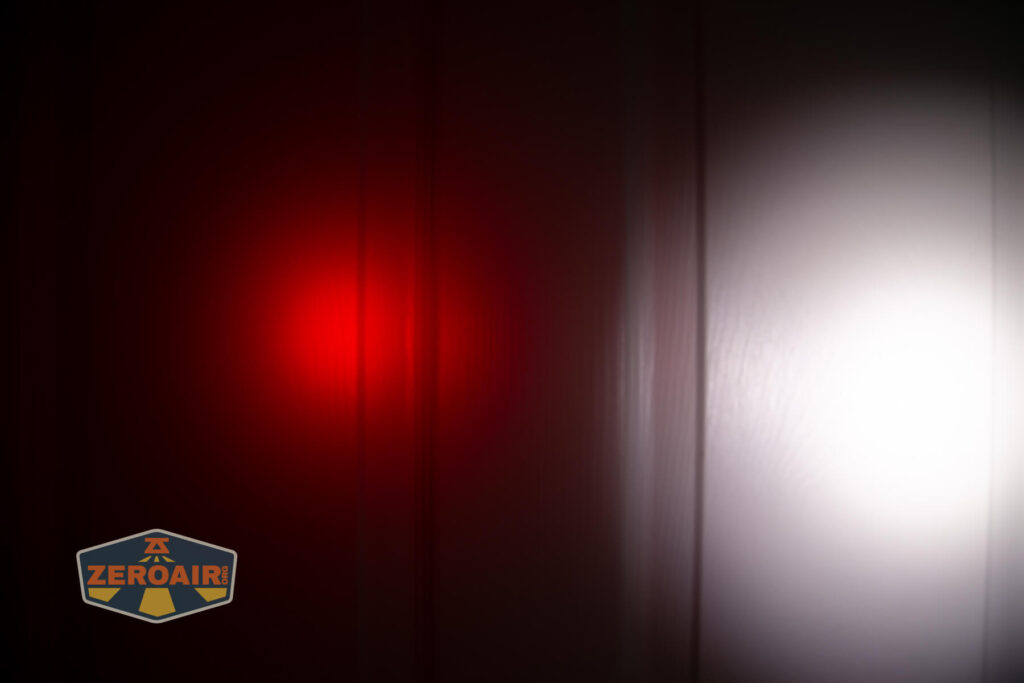
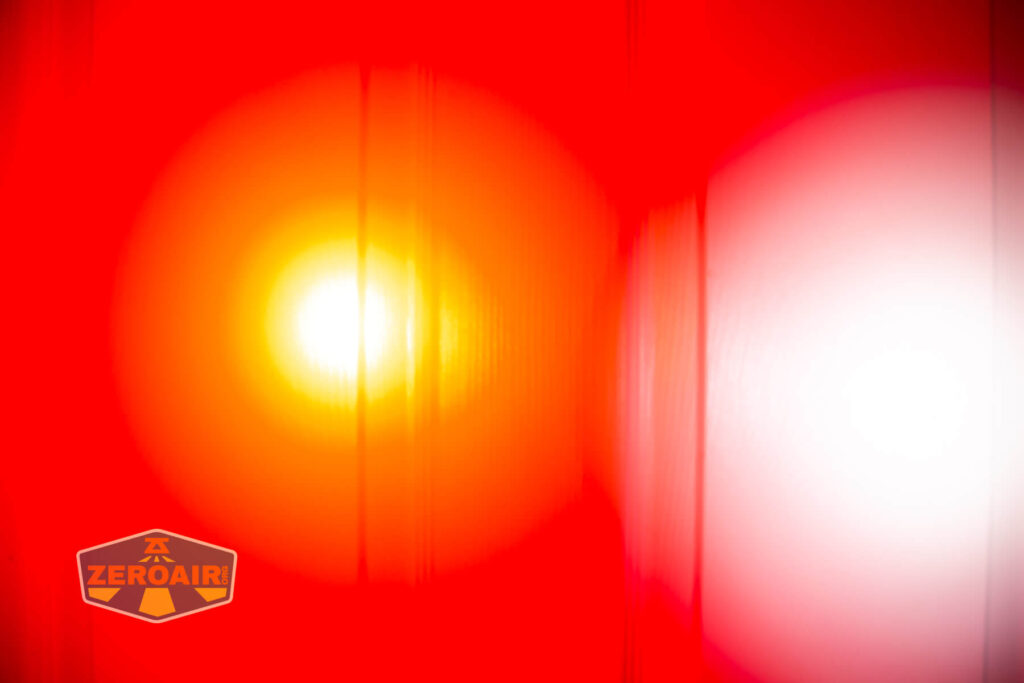
I compare everything to the KillzoneFlashlights.com 219b BLF-348 because it’s inexpensive and has the best tint!
Summary and Conclusion
The Big Table
| Maratac Wuben X3 Gen II | |
|---|---|
| Emitter: | Samsung LH351d (High CRI) |
| Price in USD at publication time: | $84.95 |
| Cell: | Internal |
| Runtime Graphs | |
| LVP? | All modes (in a manner of speaking) |
| Switch Type: | E-Switch |
| Quiescent Current (mA): | ? |
| On-Board Charging? | Yes |
| Charge Port Type: | USB-C |
| Charge Graph | |
| Power off Charge Port | Sort of? |
| Claimed Lumens (lm) | 700 |
| Measured Lumens (at 30s) | 156 (22.3% of claim)^ |
| Candela per Lumen | 3.03 |
| Claimed Throw (m) | 102 |
| Candela (Calculated) in cd (at 30s) | 24lux @ 4.586m = 505cd |
| Throw (Calculated) (m) | 44.9 (44% of claim)^ |
| Claimed CCT | 5000 |
| Measured CCT Range (K) | 4800-5100 Kelvin |
| Item provided for review by: | CountyComm |
| All my Maratac reviews! | |
^ Measurement disclaimer: Testing flashlights is my hobby. I use hobbyist-level equipment for testing, including some I made myself. Try not to get buried in the details of manufacturer specifications versus measurements recorded here; A certain amount of difference (say, 10 or 15%) is perfectly reasonable.
What I like
- Hi-Viz Orange body (with afterglow!)
- Interesting design
- Excellent update to the charging case
- Wireless charging is neat
- Powerbank function
- Rotating head can be forward or side output
- Reasonable cost for such an unusual design
- Good user interface
- Nice switch!
What I don’t like
- Light itself does not have any way other than wireless to charge
- Stepdown on the highest output
- Doesn’t come close to claimed output (maybe 700 lumens is for the two white emitter option?)
Notes
- This content originally appeared at zeroair.org. Please visit there for the best experience!
- Please use my Amazon.com referral link to help support zeroair.org!
- Please support me on Patreon! I deeply appreciate your support!