
Sofirn SK1 Tactical Flashlight Review
The Sofirn SK1 tactical flashlight has a Luminus SFT25R with a smooth reflector for great throw and a tight beam shape. The rotary control is a great option!
Official Specs and Features
Here’s a link to the Sofirn SK1 tactical flashlight product page.
Versions
Just one version of the Sofirn SK1 tactical flashlight is available, but you can buy it with or without the “circular clip” (which you can see later in this review.) Buy the clip – it adds just $2!
Price
What’s Included
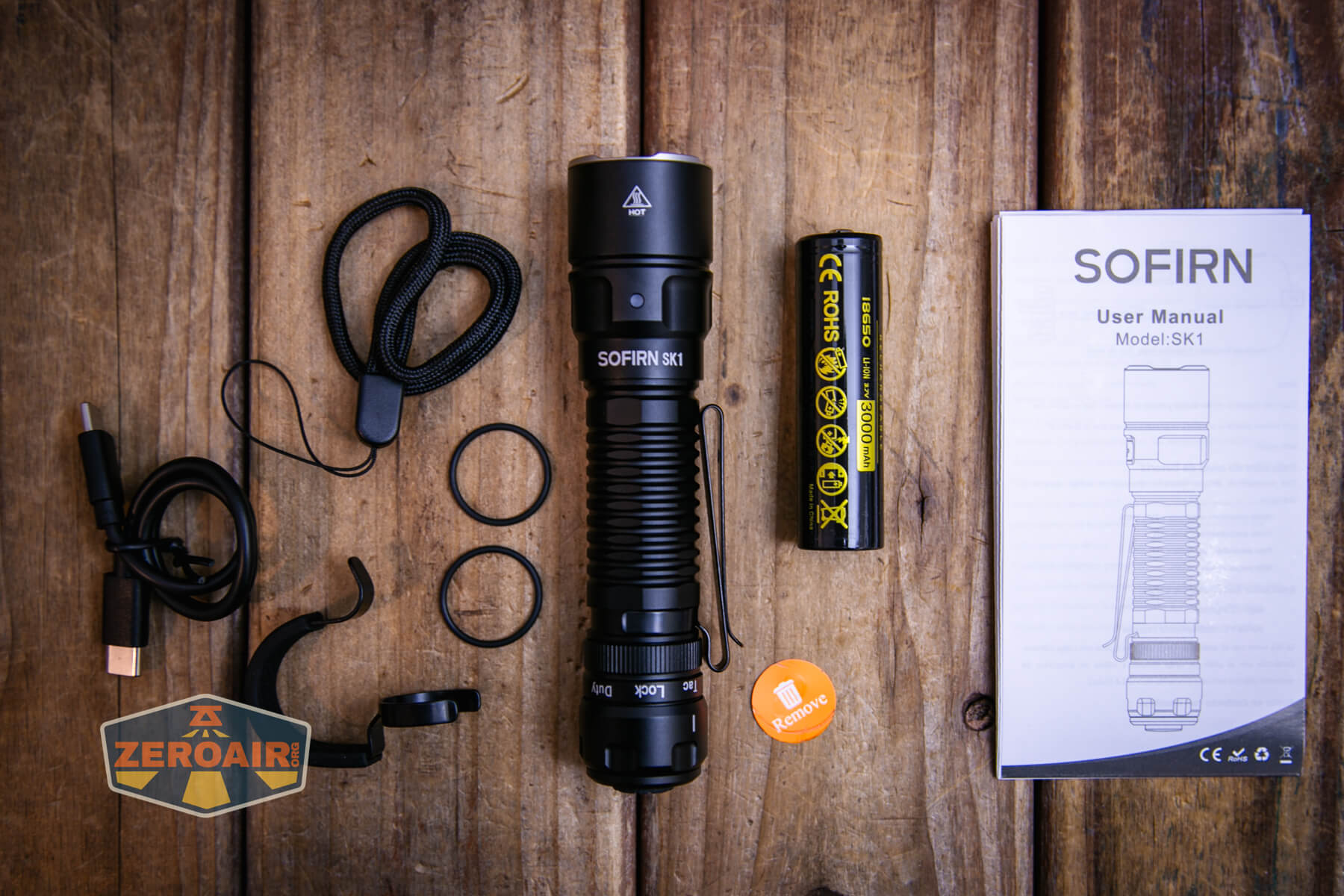
- Sofirn SK1 tactical flashlight
- Sofirn 3000mAh 18650
- Charging cable
- Circular (tactical) clip
- Lanyard
- Spare o-rings (2)
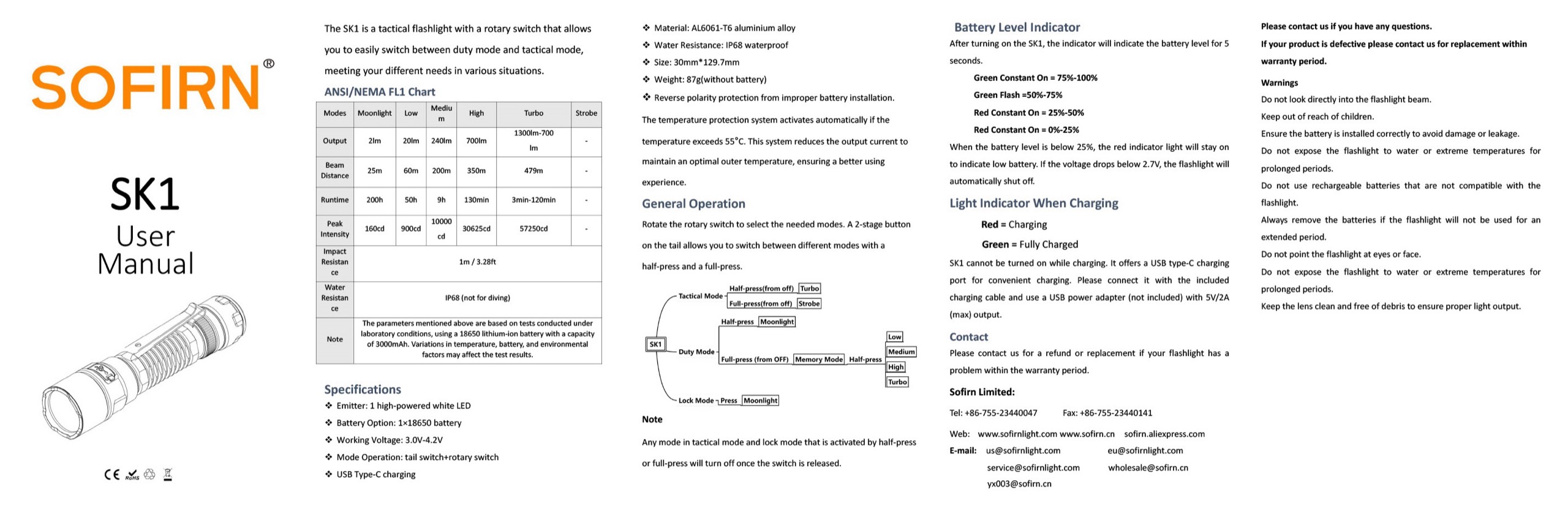
- Manual
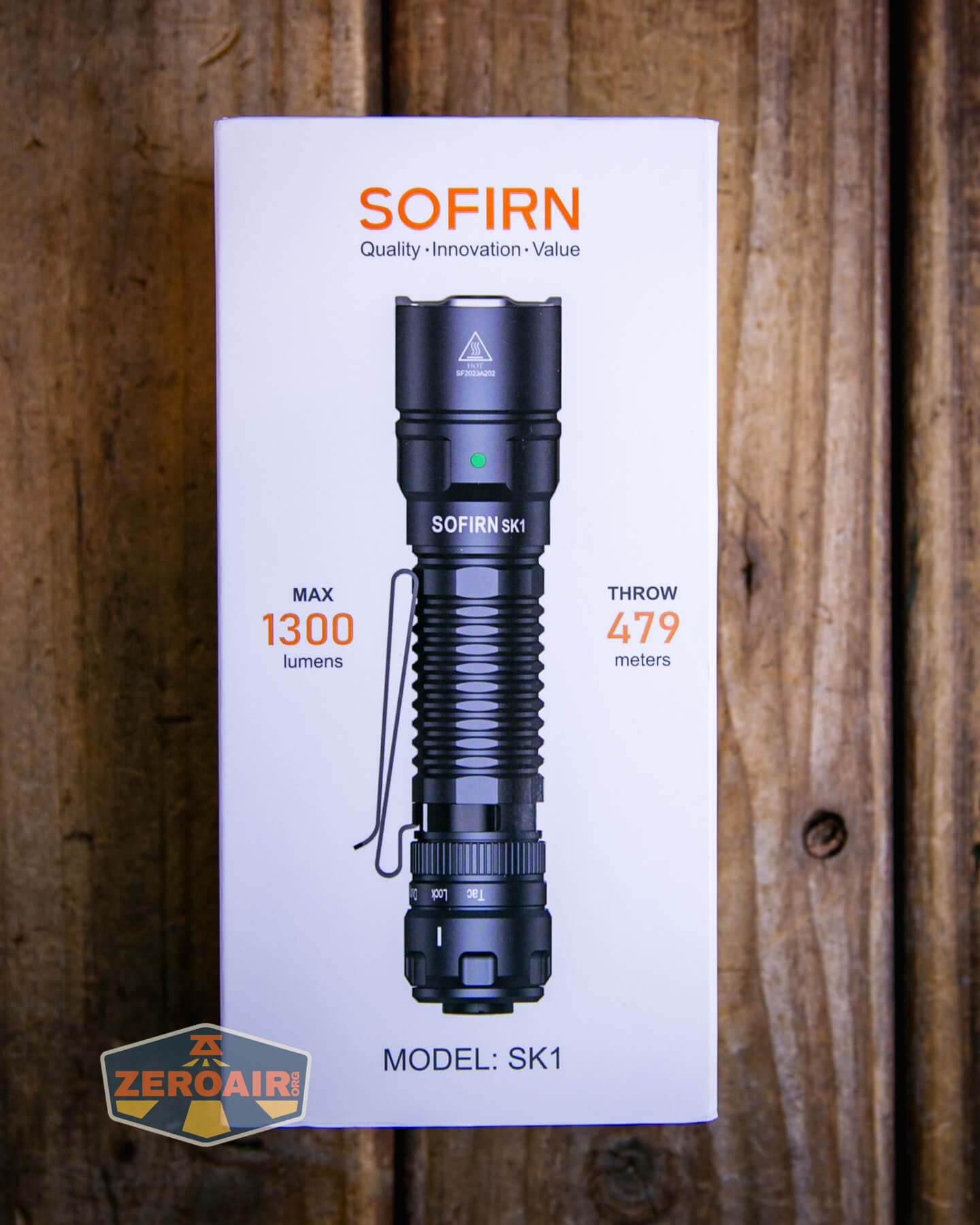
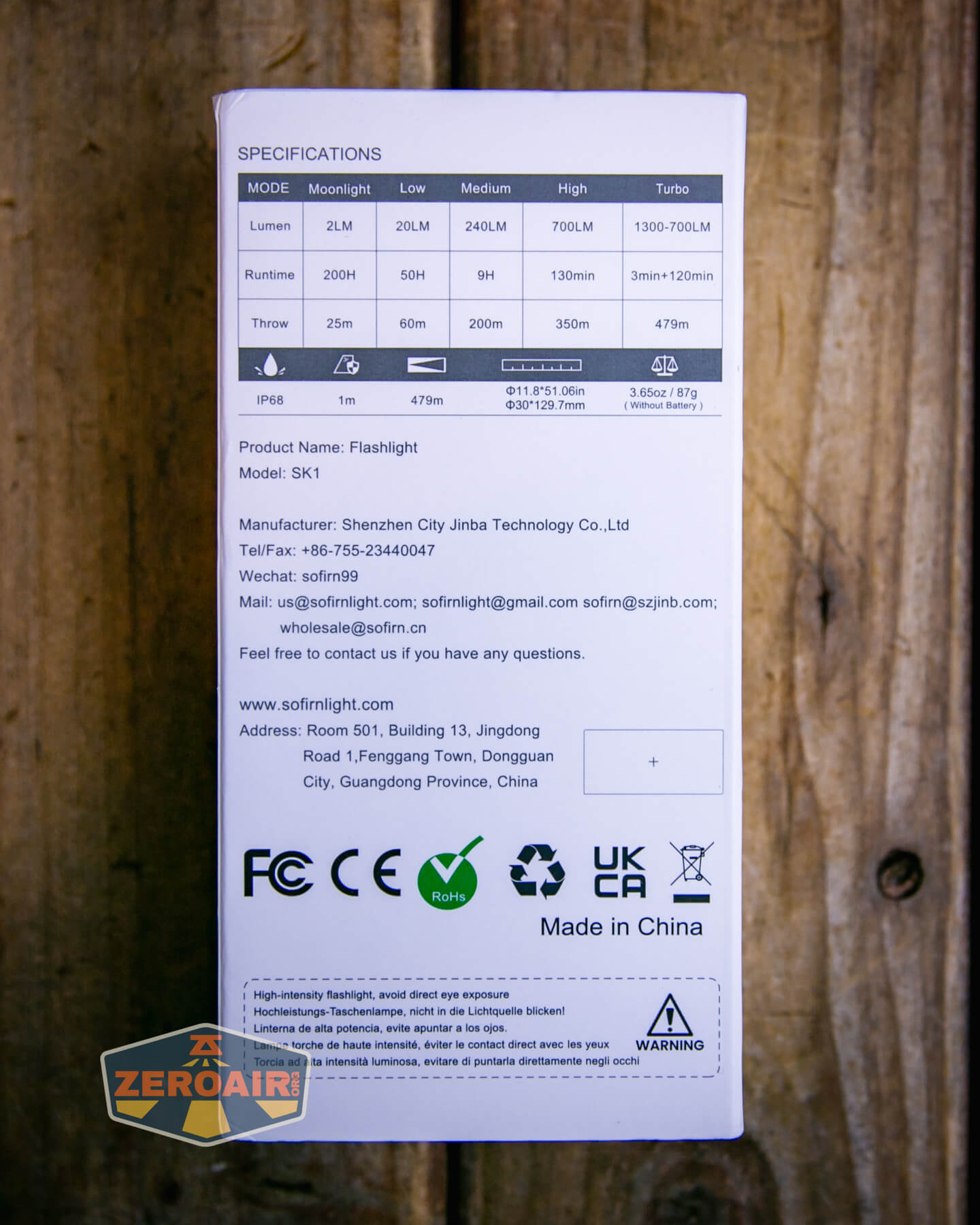
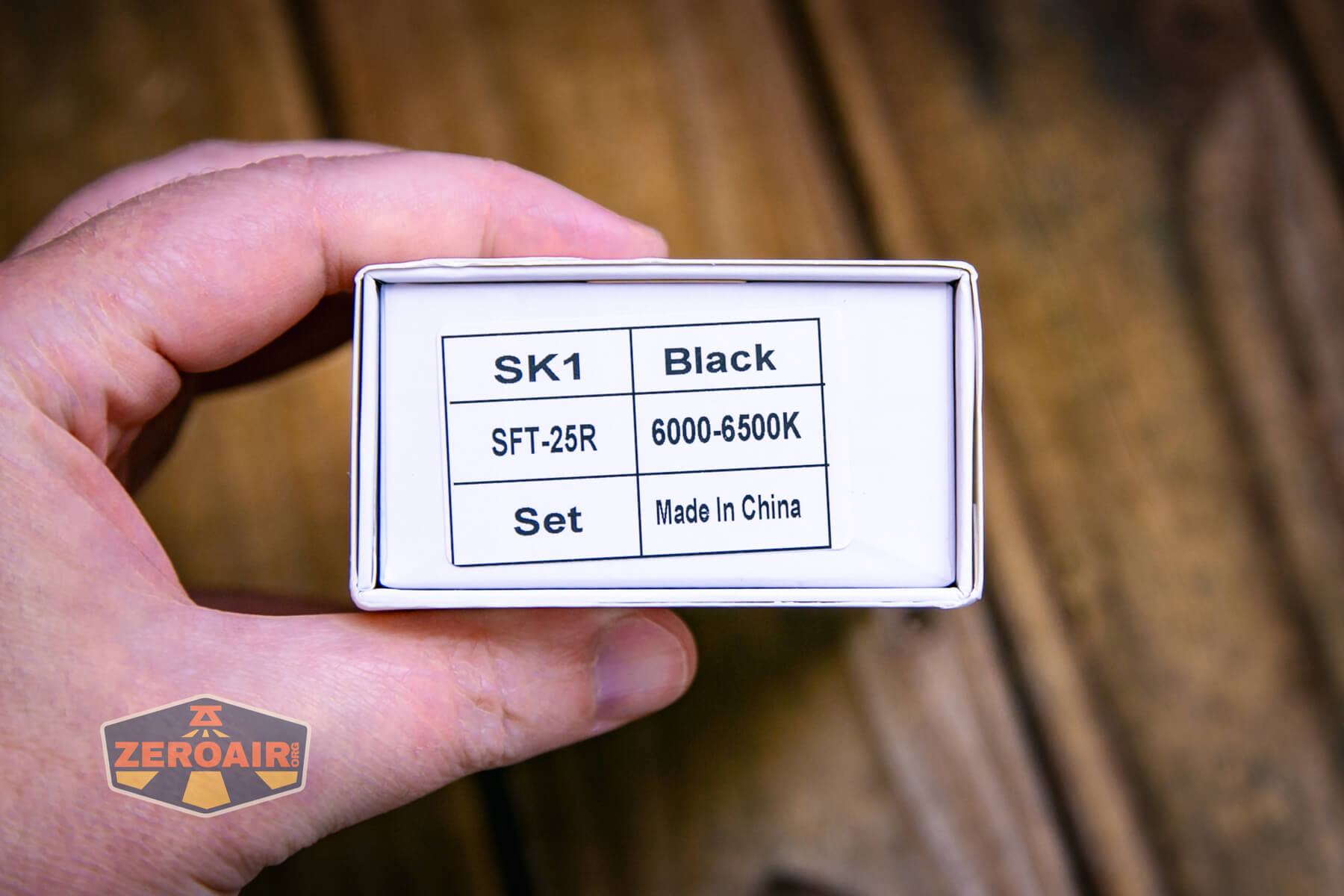
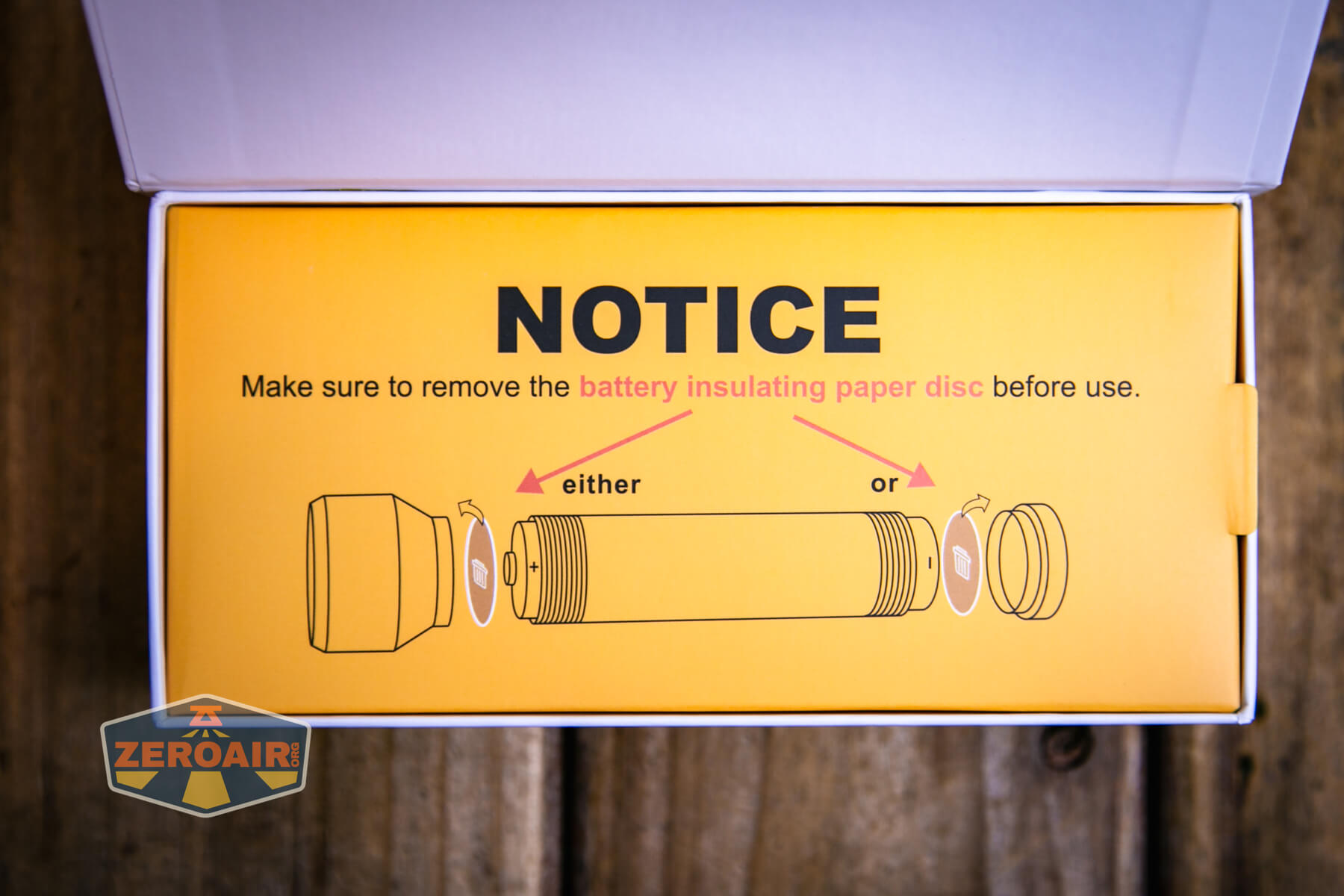
Package and Manual
Build Quality and Disassembly
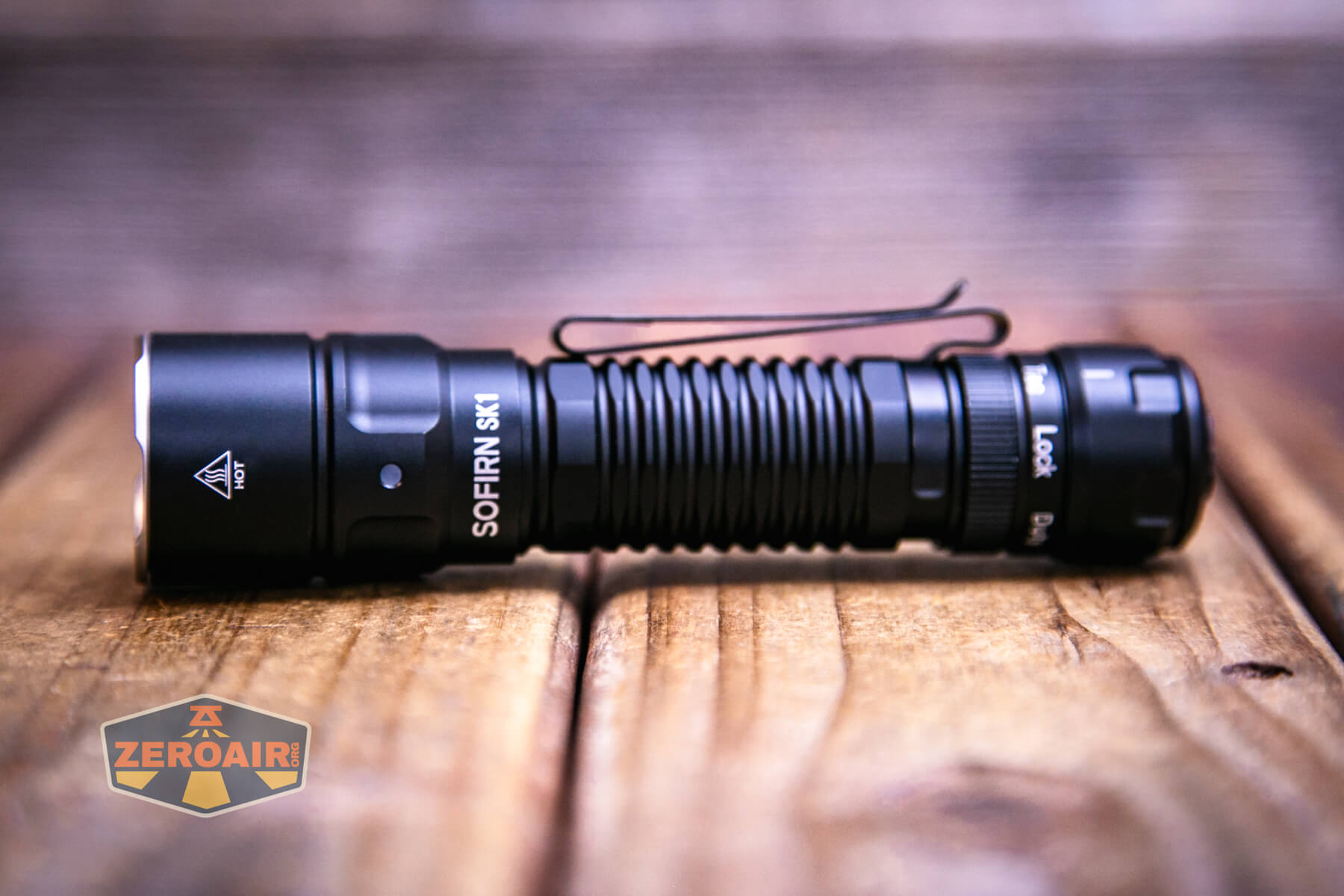
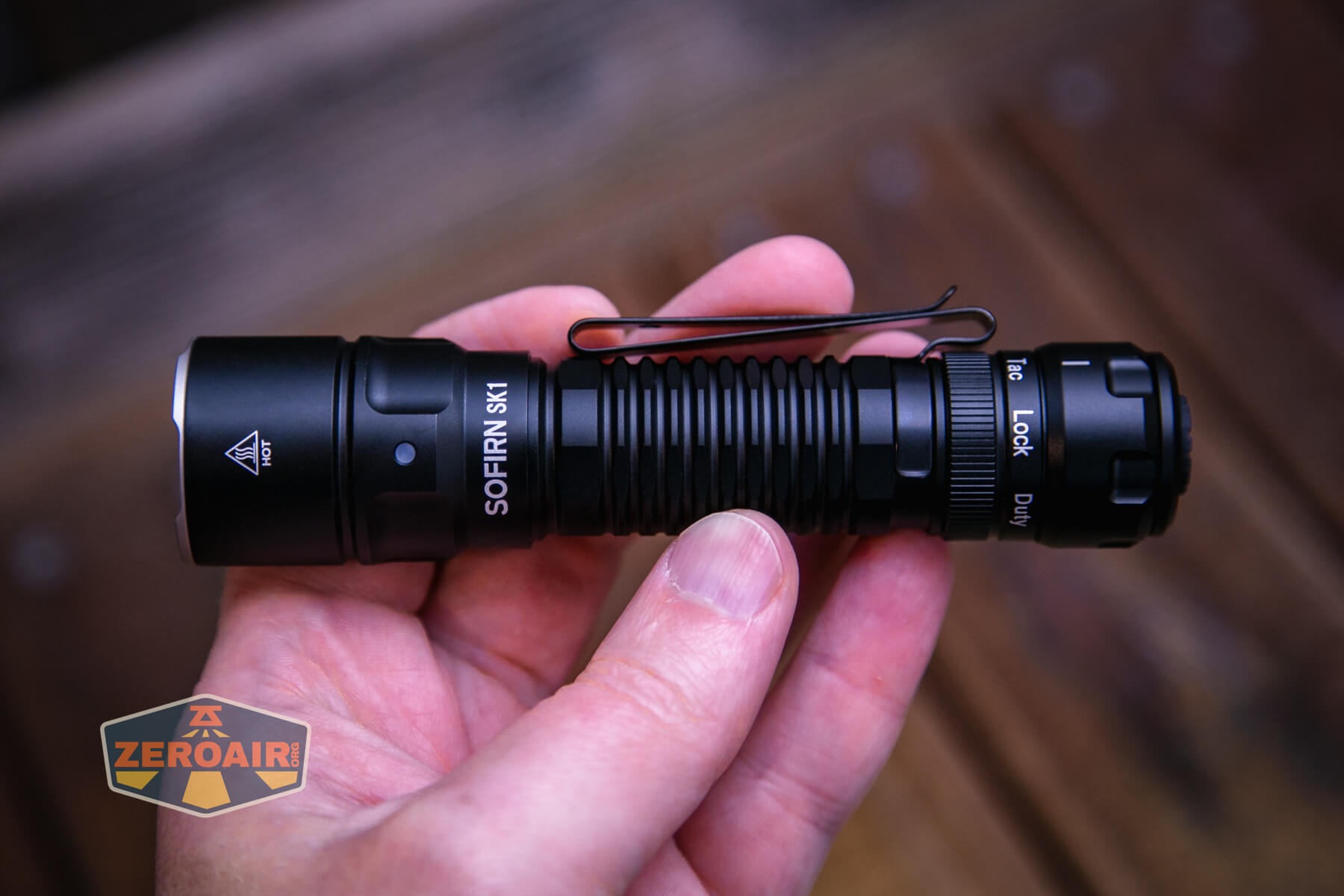
The build quality on this Sofirn SK1 tactical flashlight is perfectly satisfactory. It’s a nice light! You might recongize those two sentences from another review. That’s the Wurkkos TD07, which I just posted. These lights are nearly identical lights! You can pick up on a few cosmetic differences, but there’s one difference in the user interface that I like on the Sofirn!

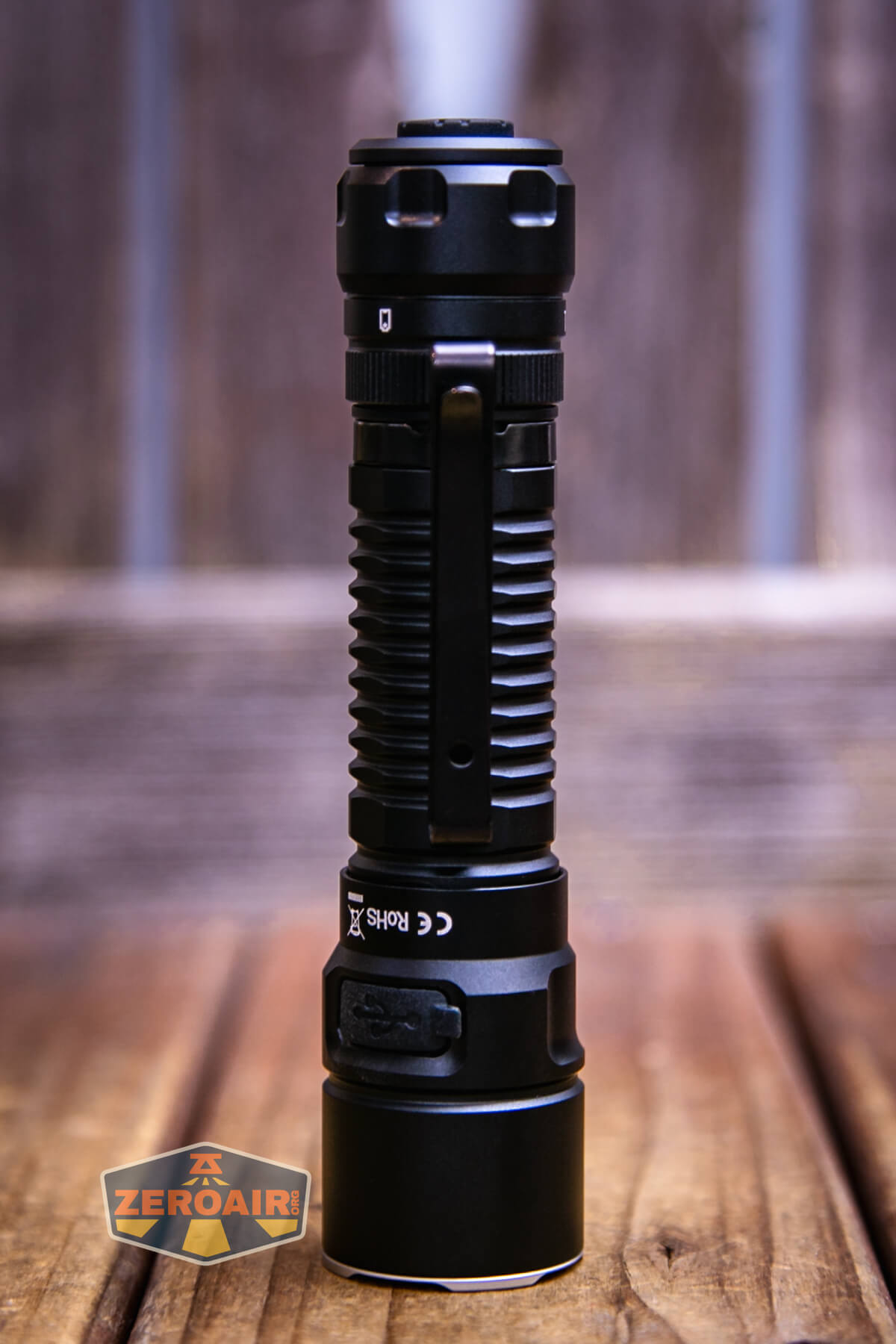
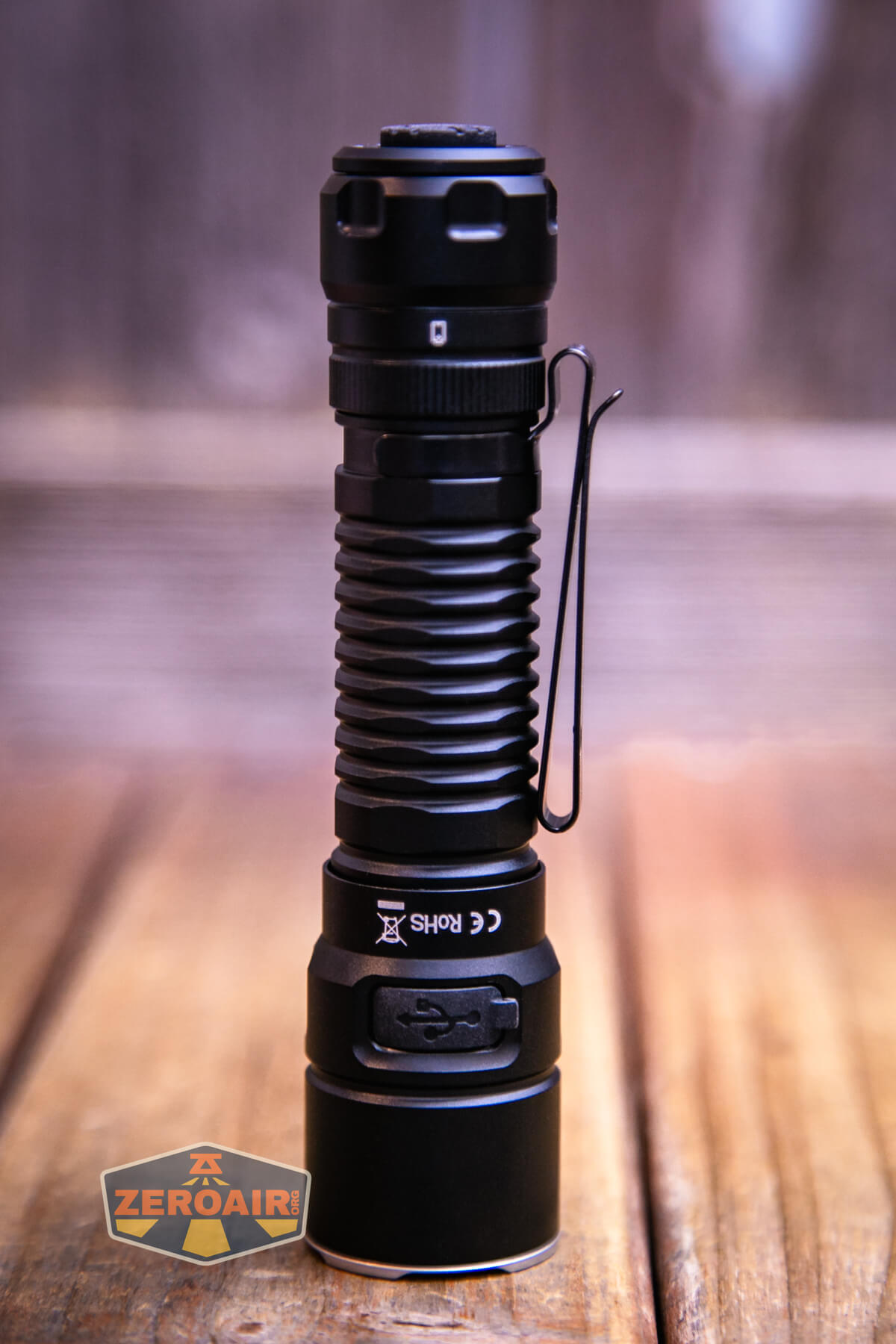
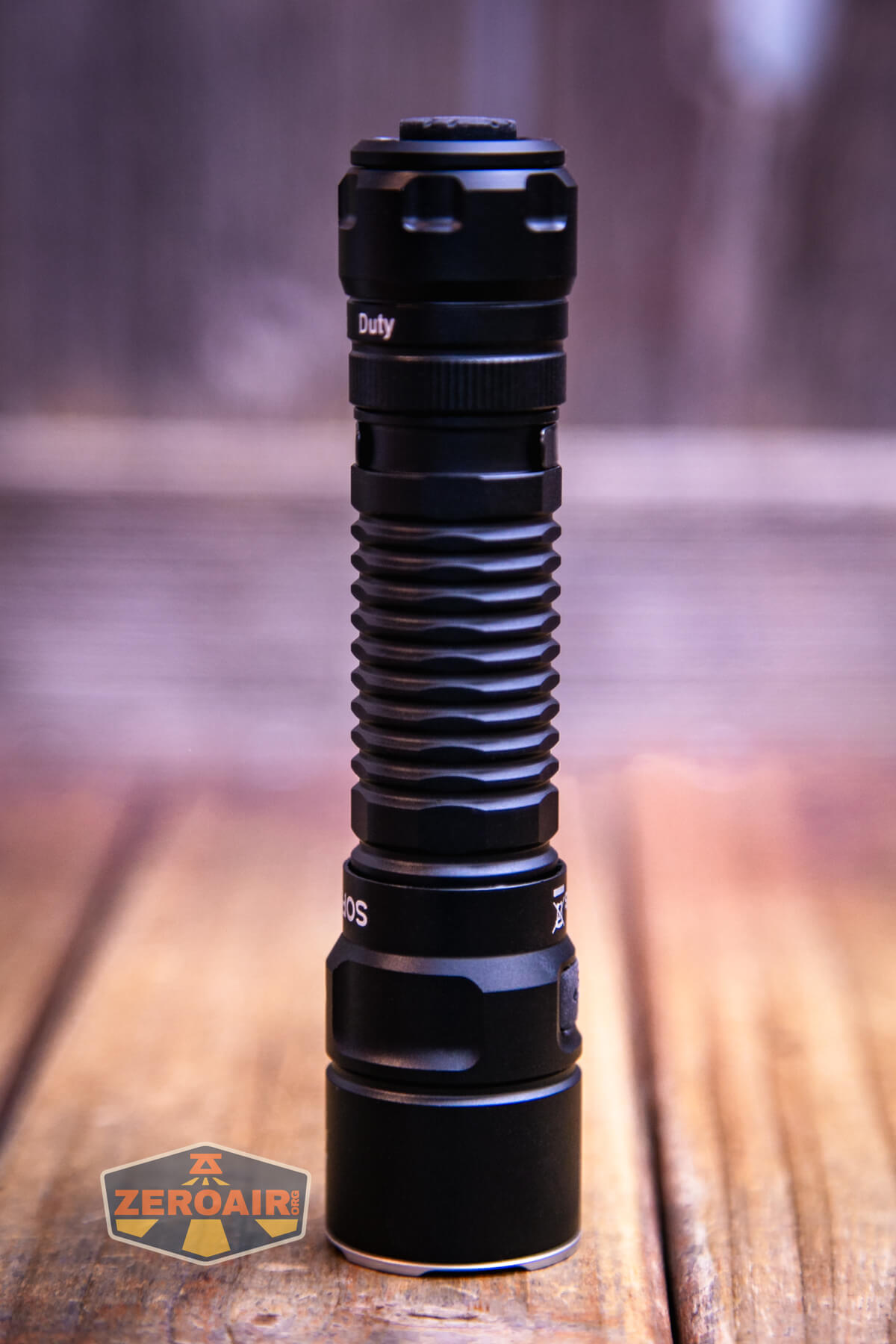
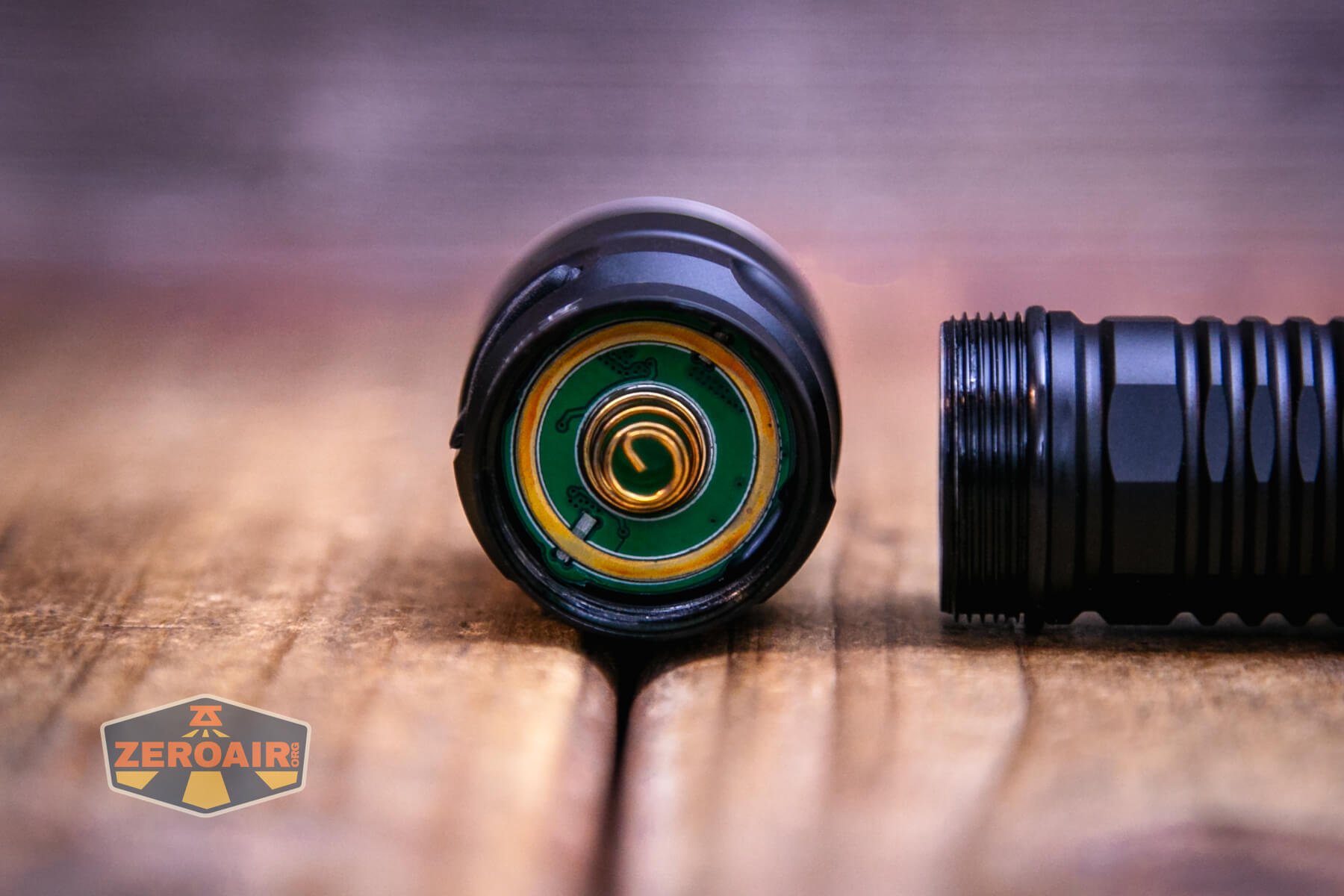
Only the head is removable on the Sofirn SK1 tactical flashlight. Since the tail has the rotary controller, this is a good choice. Both the head and tail have nice beefy springs, and the threads on all parts are anodized and very smooth.
Size and Comps
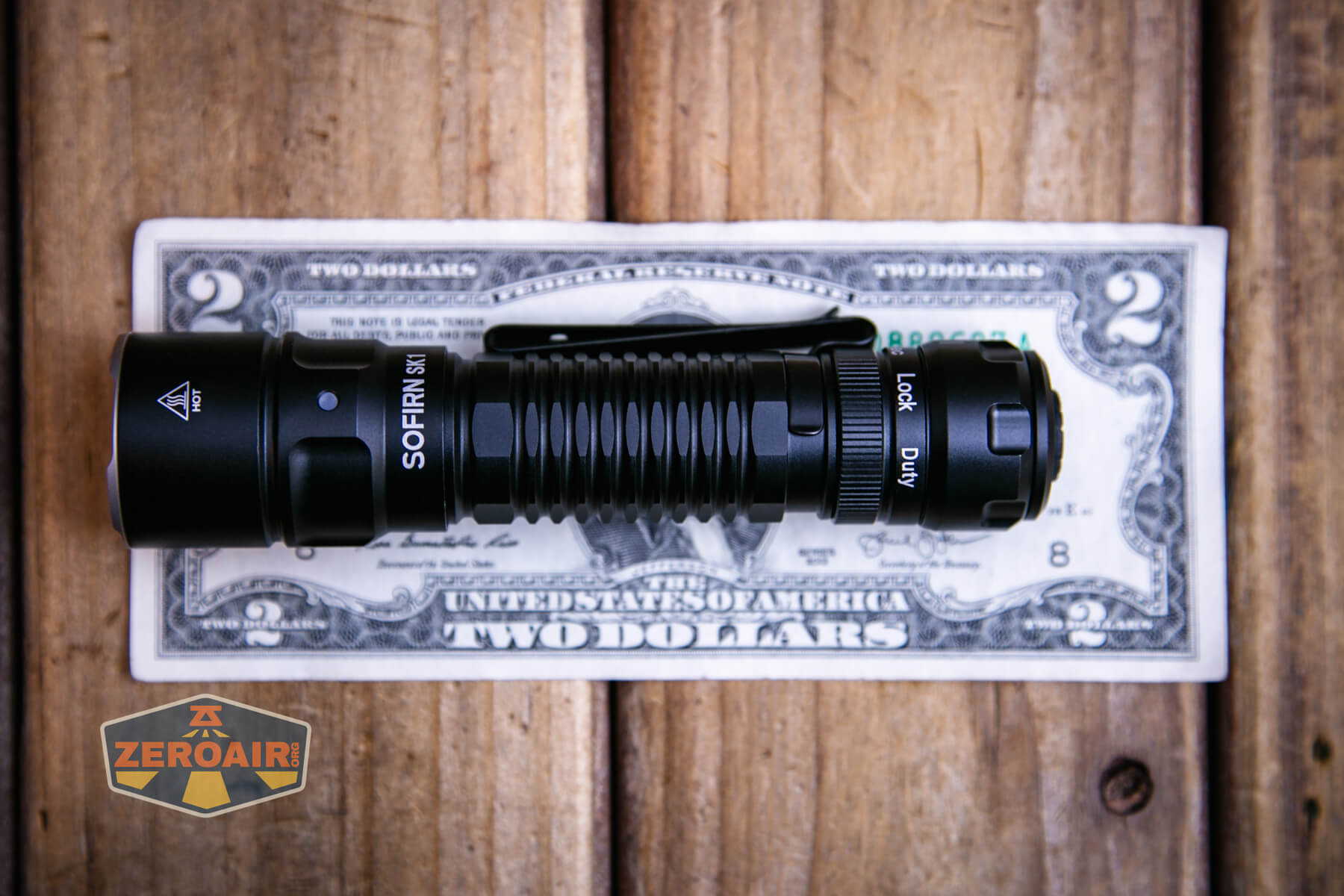
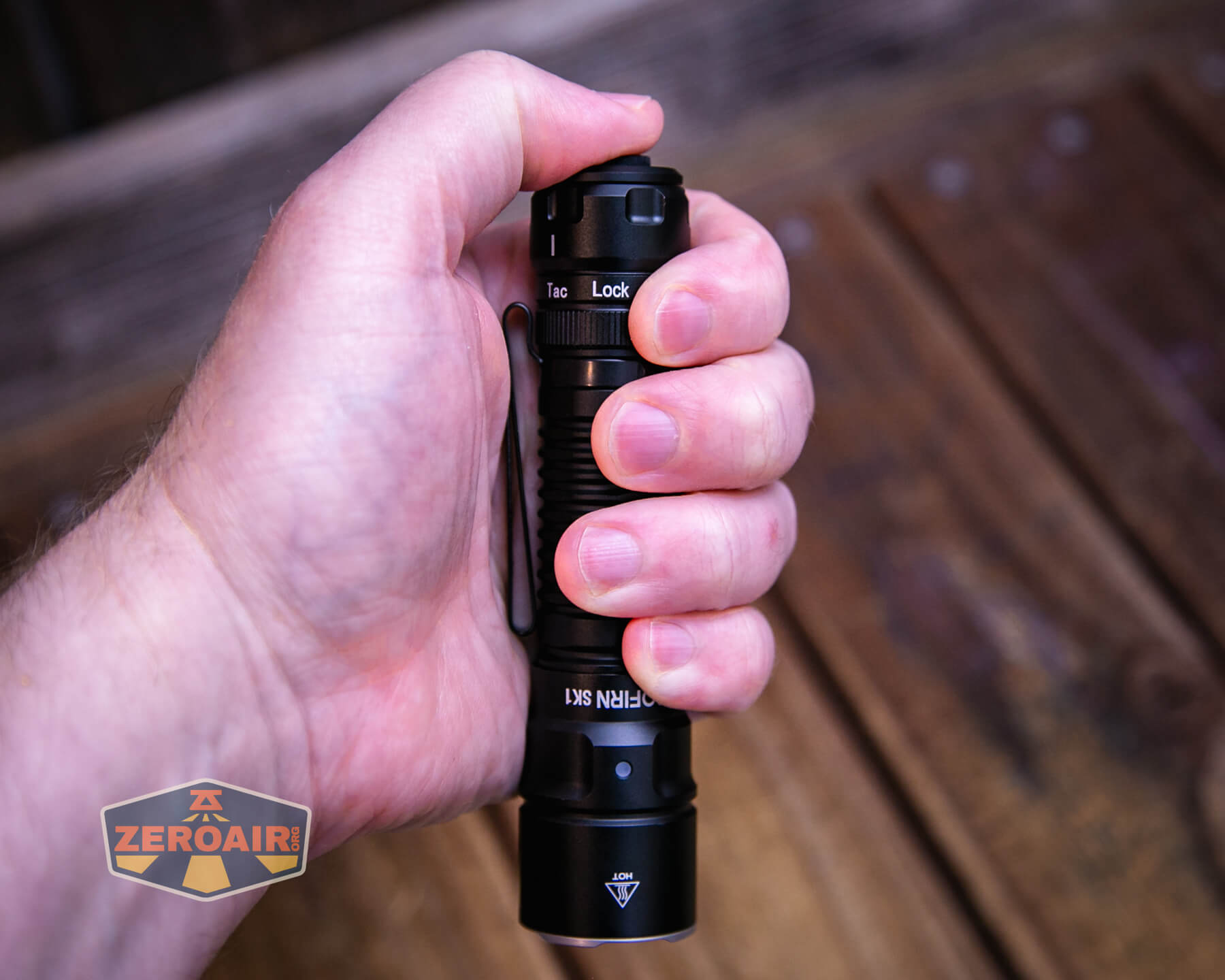
Size: 30mm x 129.7mm
Weight: 87g (without battery)
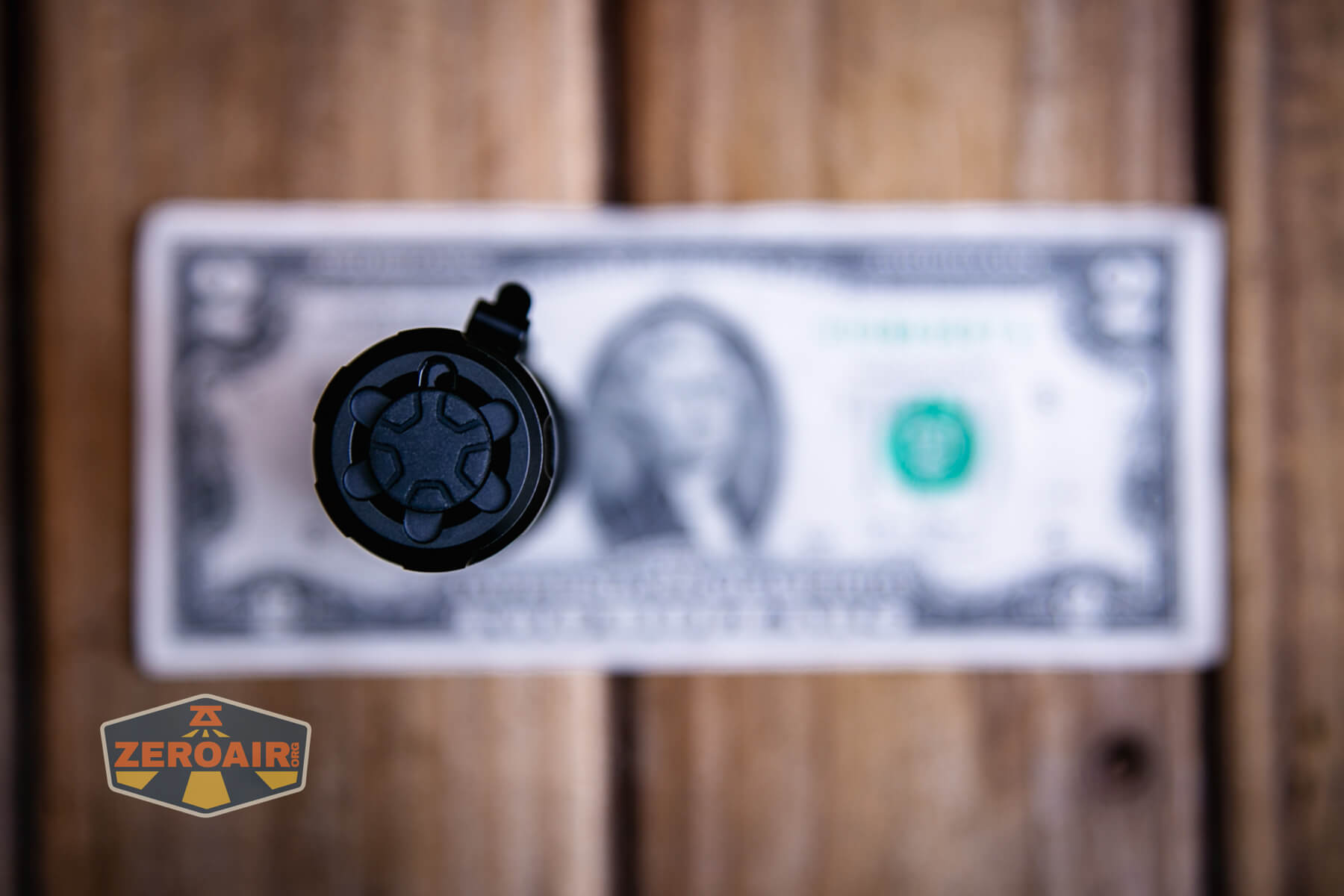
If the flashlight can headstand, I’ll show it here. If it can tailstand, I’ll also show that here!
Here’s the test light with the venerable Convoy S2+. The version below is a custom laser-engraved Convoy S2+ host by GadgetConnections.com. I did a full post on an engraved orange host right here! Or go straight to GadgetConnections.com to buy your Convoy S2+ now!
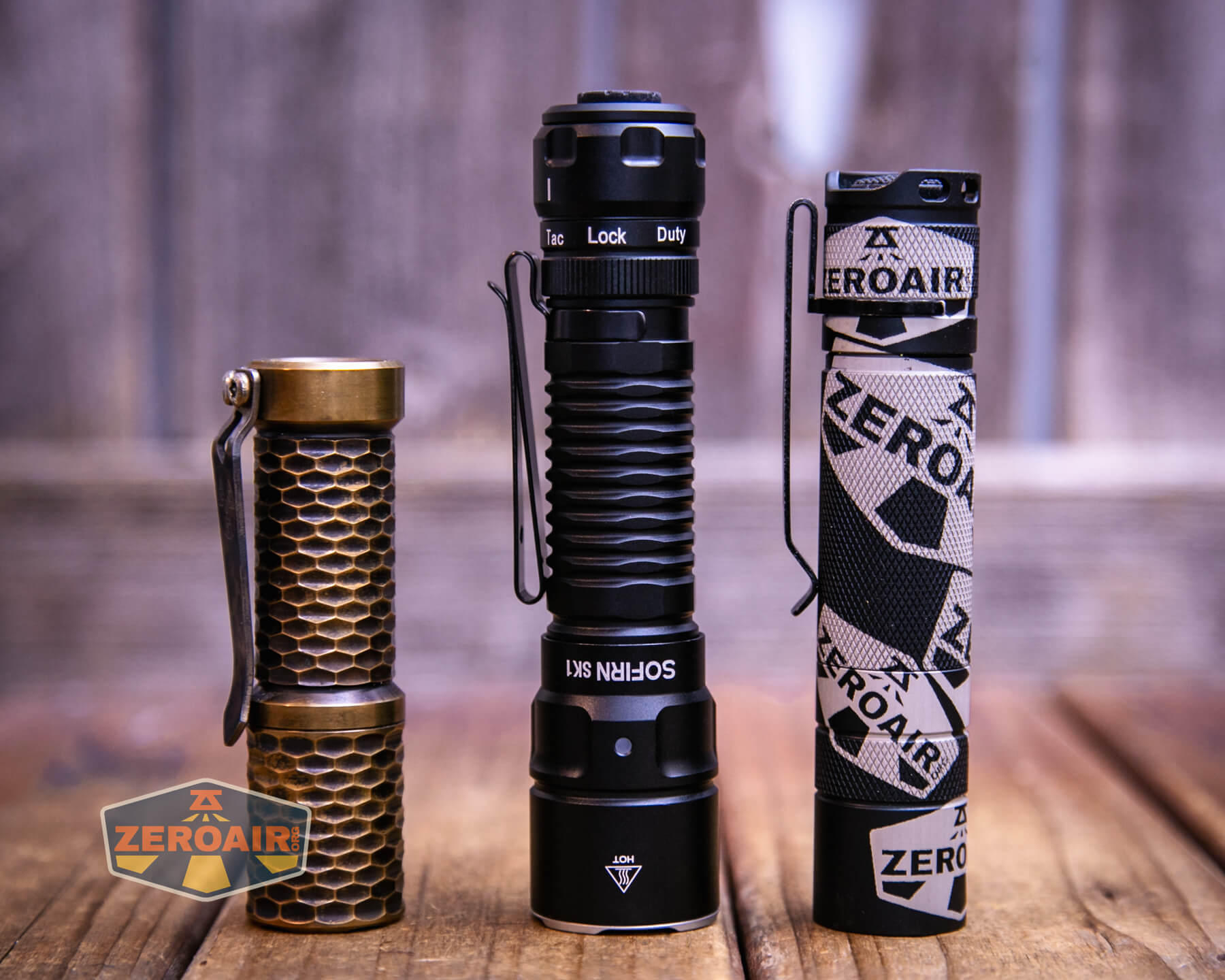
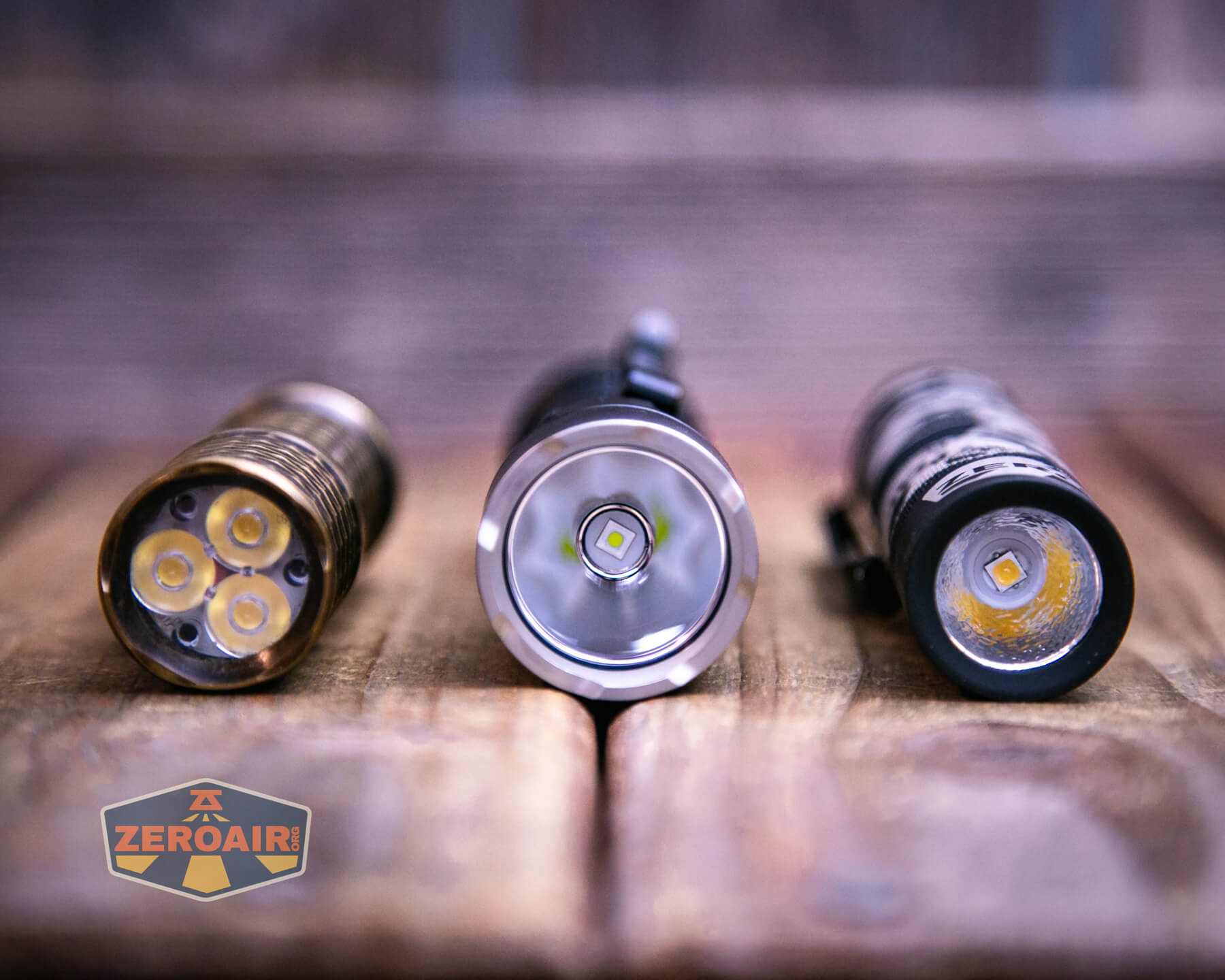
Also in the photo above, my Standard Reference Material (SRM) flashlight is the Hanko Machine Works Trident, an 18350 light. While I have not reviewed or tested the Gunner Grip version seen here, I have tested a Hanko Machine Works Trident Total Tesseract in brass. I love the Trident, and it’s a striking contrast to the inexpensive Convoy S2+, another great SRM.
Retention and Carry
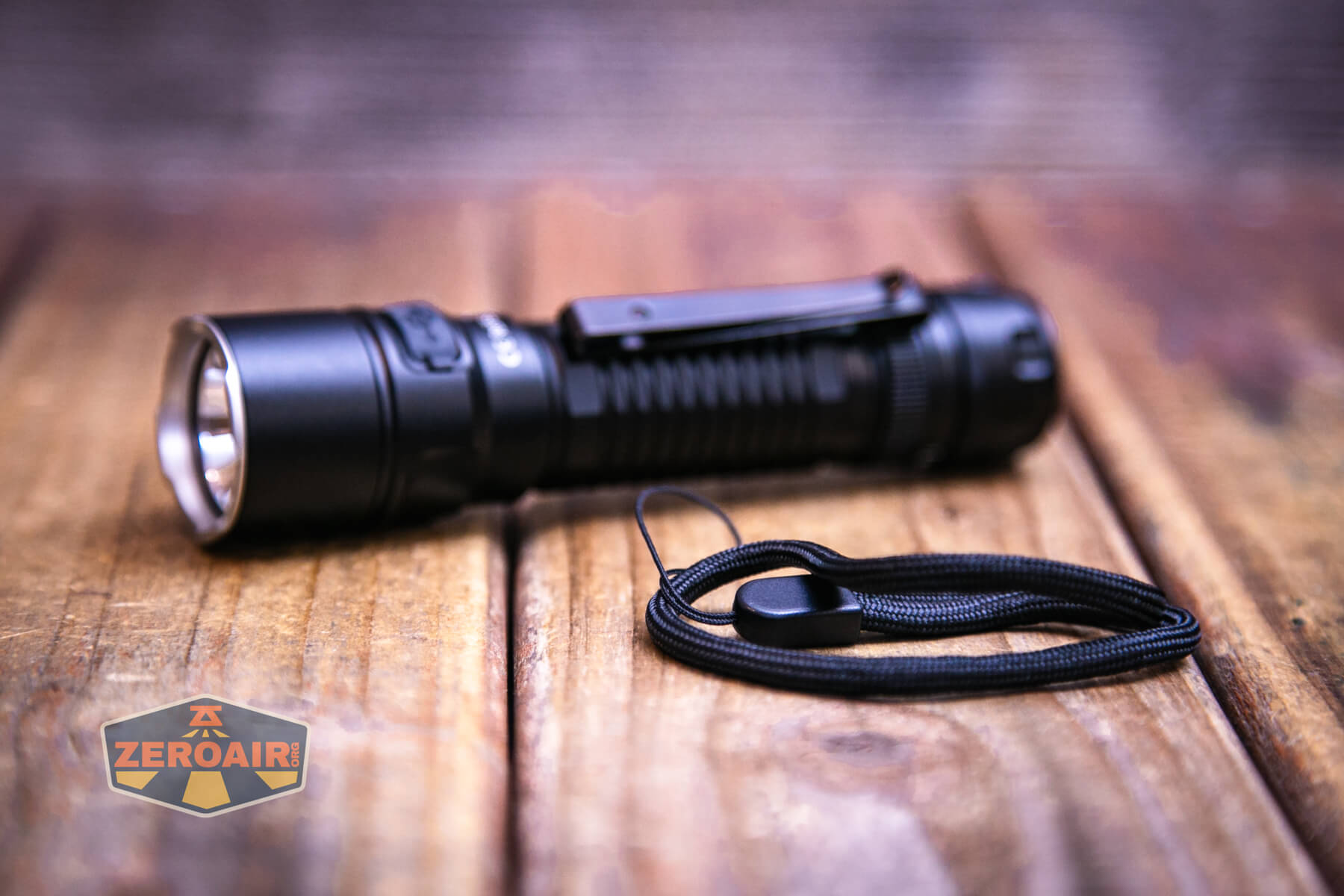
The Sofirn SK1 tactical flashlight includes a friction-fit two-way pocket clip. The clip can only attach on the tail end of the light (which is fine, it’s a two-way clip) but it has a lanyard hole on the weirdest section.

That spot on the pocket clip is the only place to attach this included lanyard, too. Carrying it this way is going to be awkward I think, but maybe for a tactical grip it’s just right.
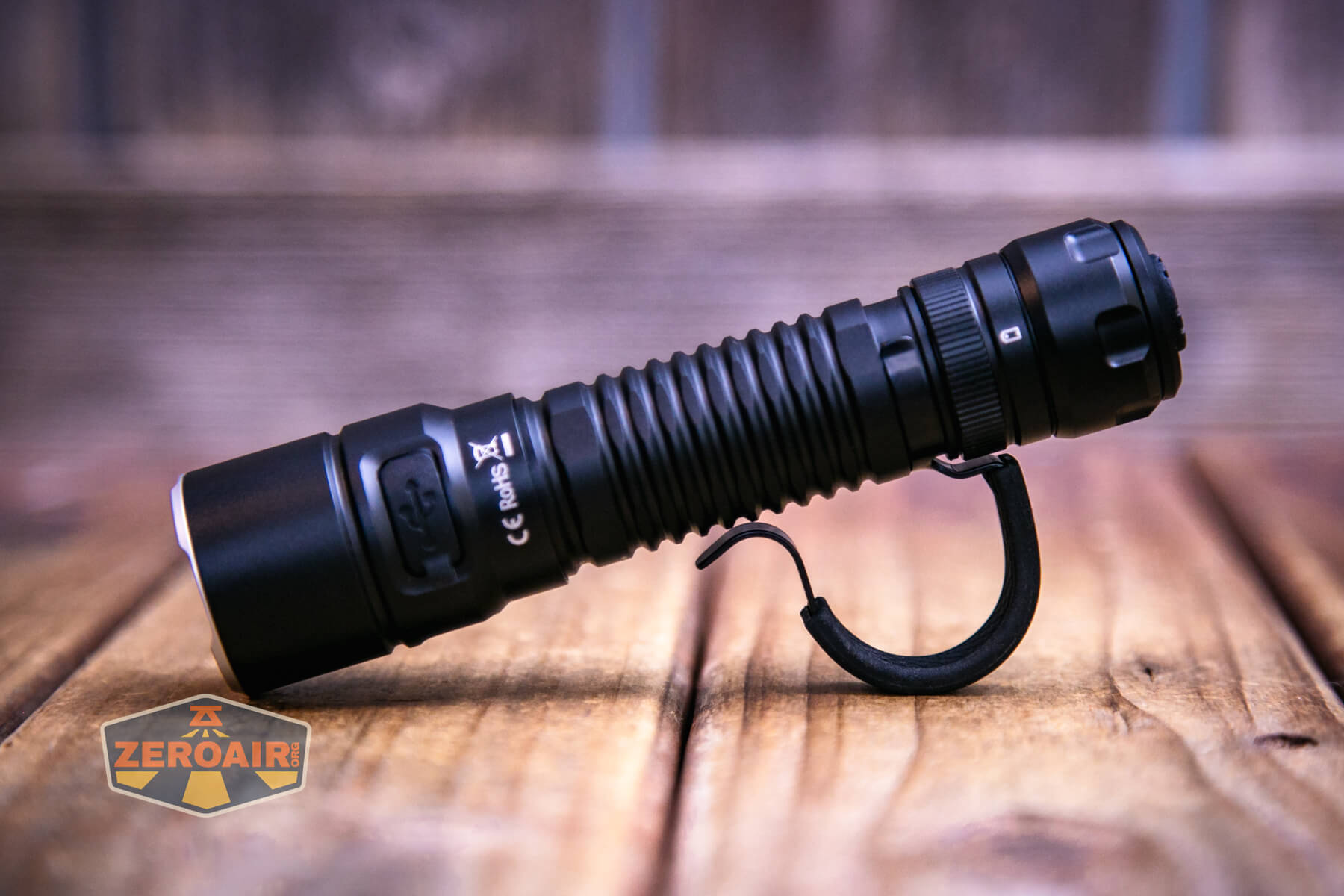
The $2 accessory can be seen below. It’s a “circular clip” (or tactical grip) that is friction-fit in the same place (and way) that the pocket clip attaches. You can’t attach both at one time.
Power and Runtime
The Sofirn SK1 tactical flashlight runs on one 18650 cell. A standard button top, 3000mAh cell is included.
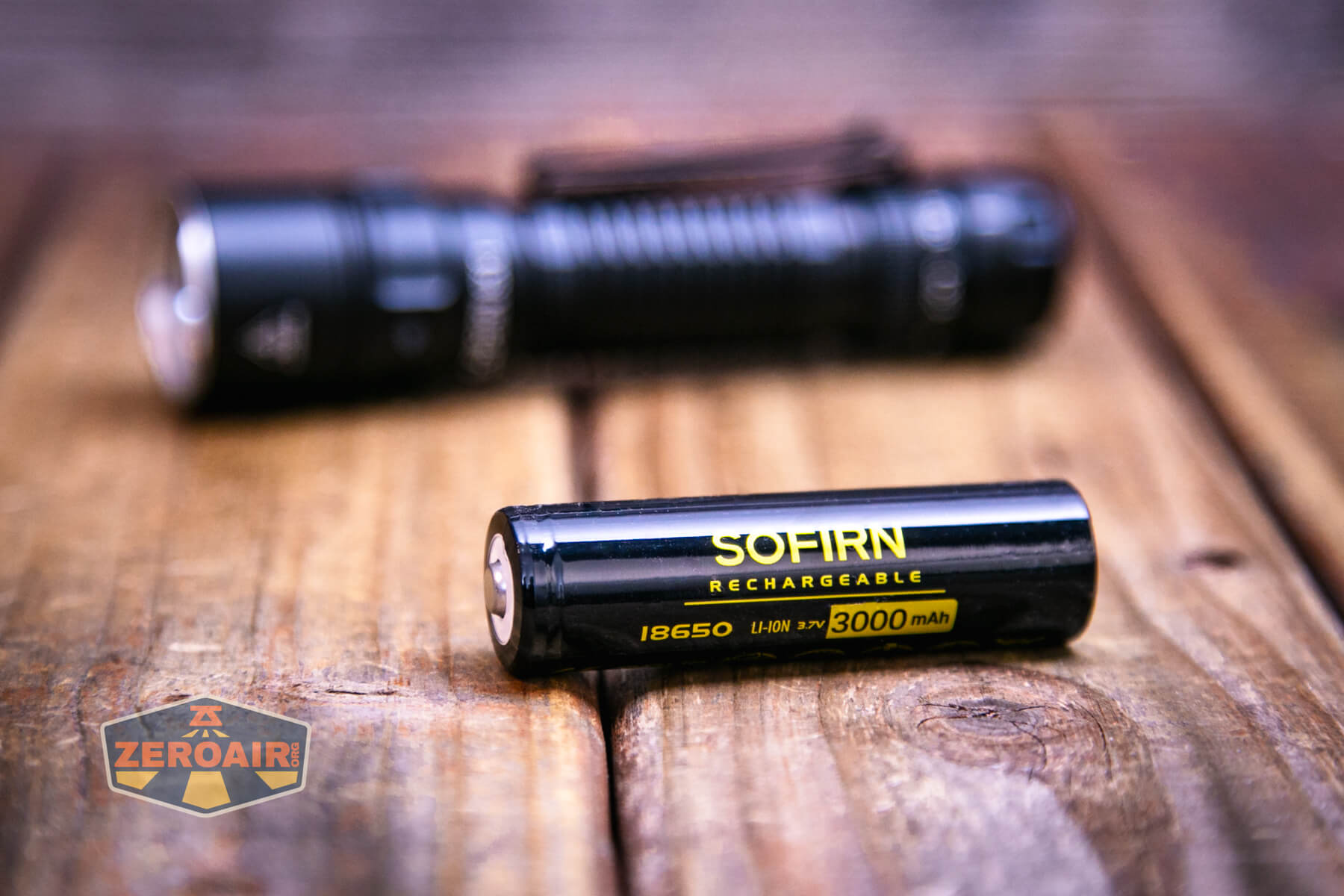
The cell goes into the Sofirn SK1 tactical flashlight with the button toward the head (that’s the normal configuration for most lights). In case you forget that, you can note the little printed cell icon on the tailcap.

Below are a few runtime tests. Performance doesn’t quite hit the claim of 1300 lumens, but it’s pretty close. Notably, throw is fantastic for this little light! I said the same thing exactly for the Wurkkos TD07 – these seem like practically the same light internally.
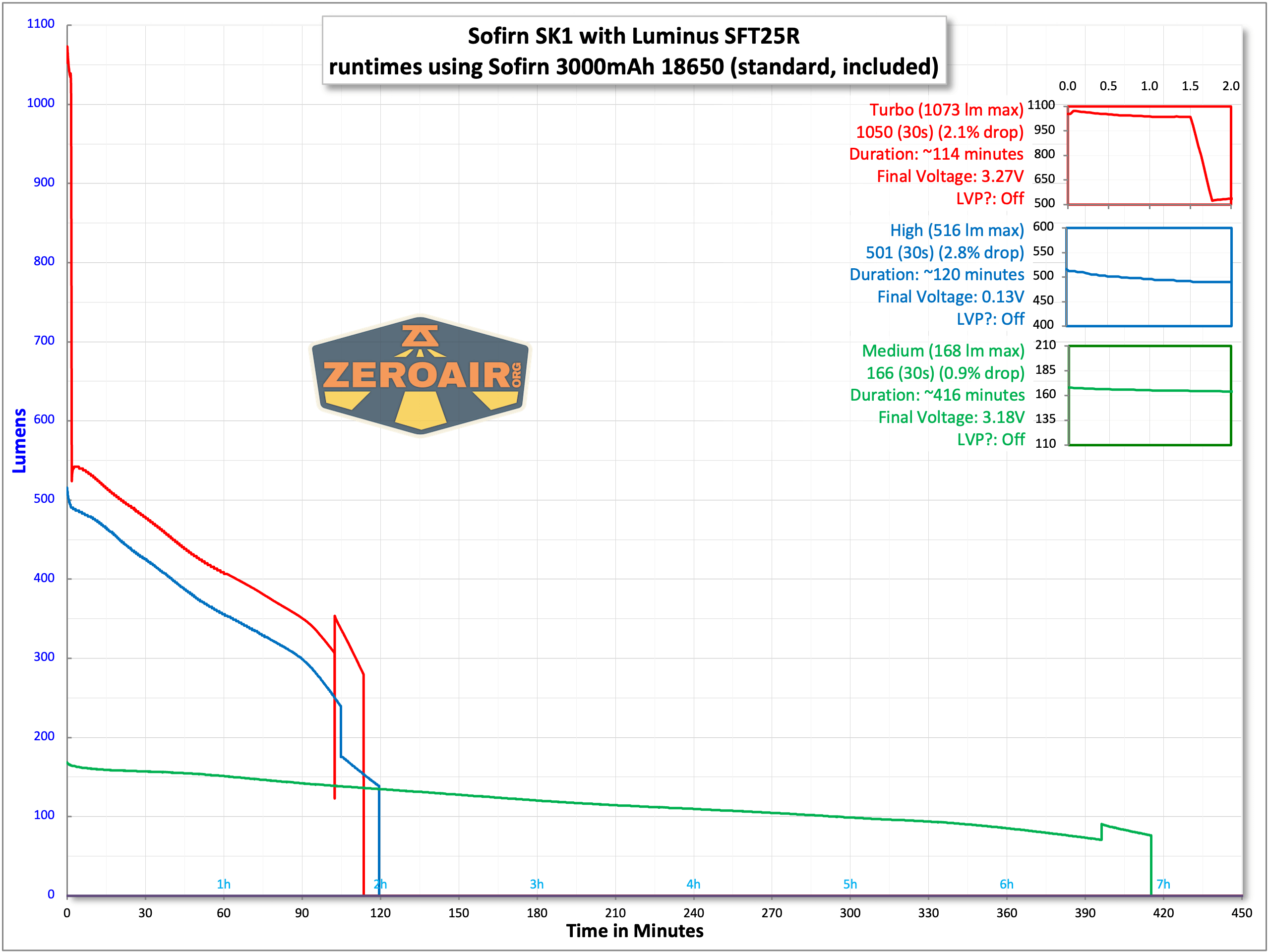
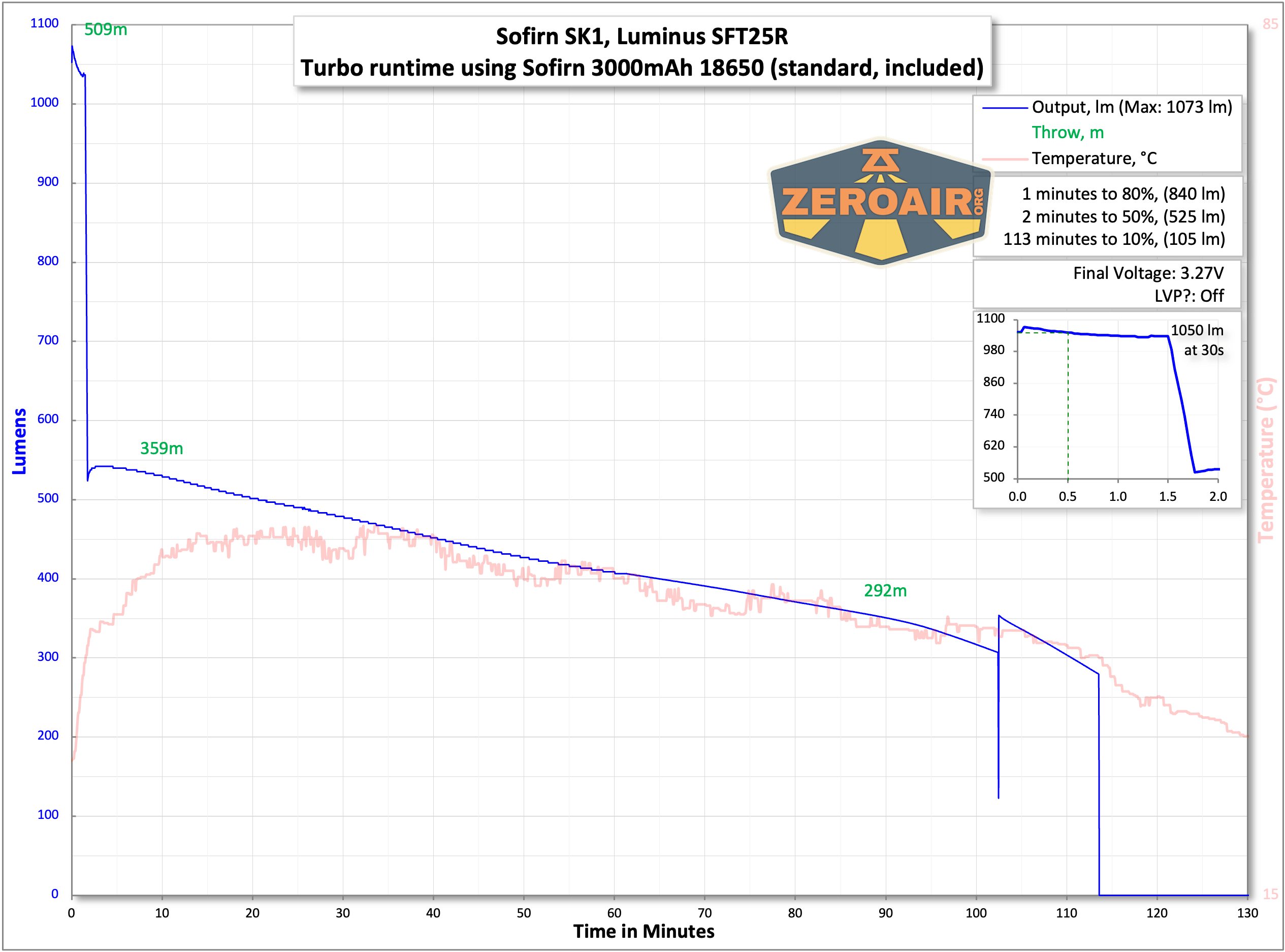
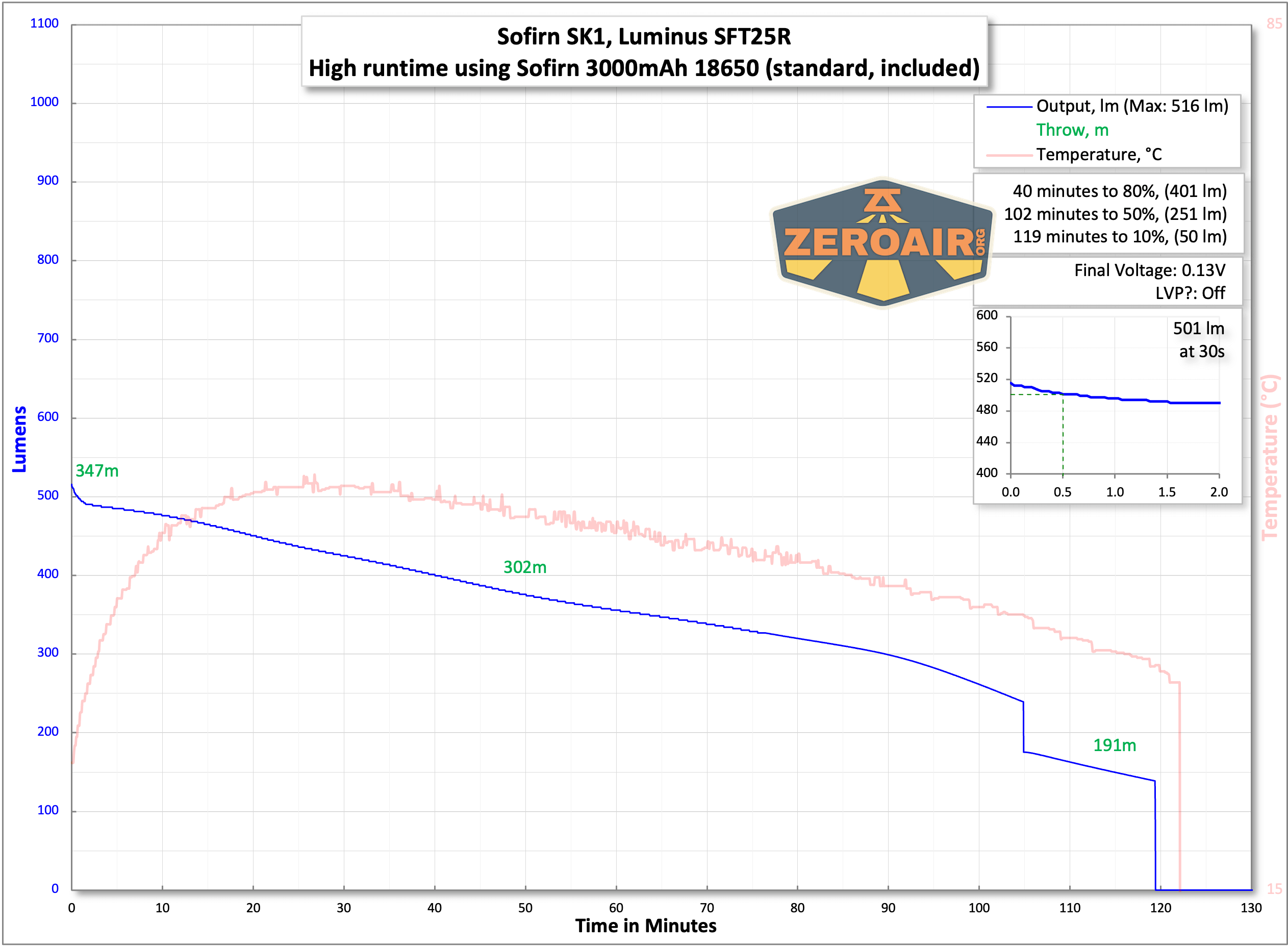
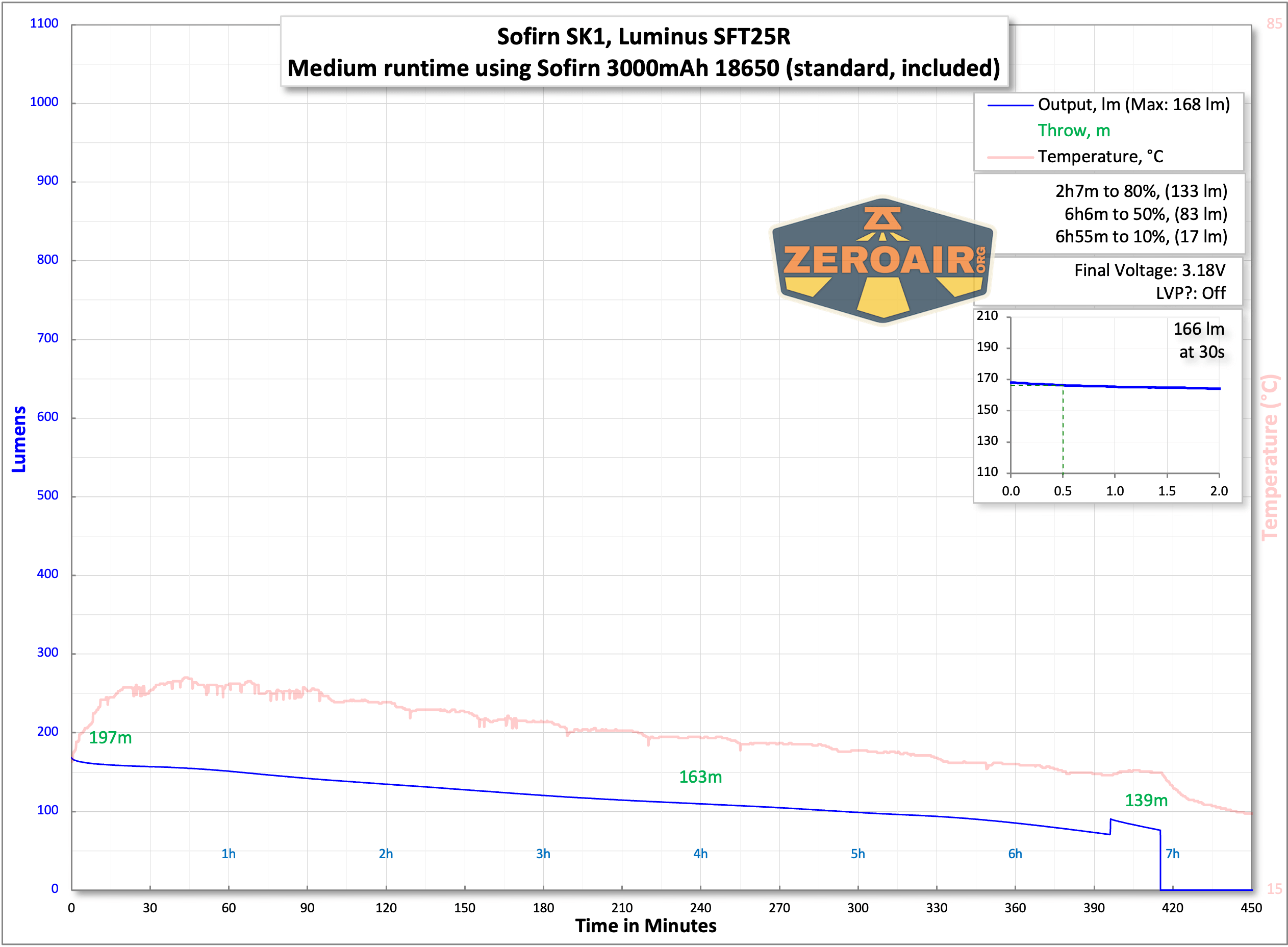
The light does shut off with low voltage protection.
Charging
Built into the Sofirn SK1 tactical flashlight is USB-C charging. A press-in cover is attached.
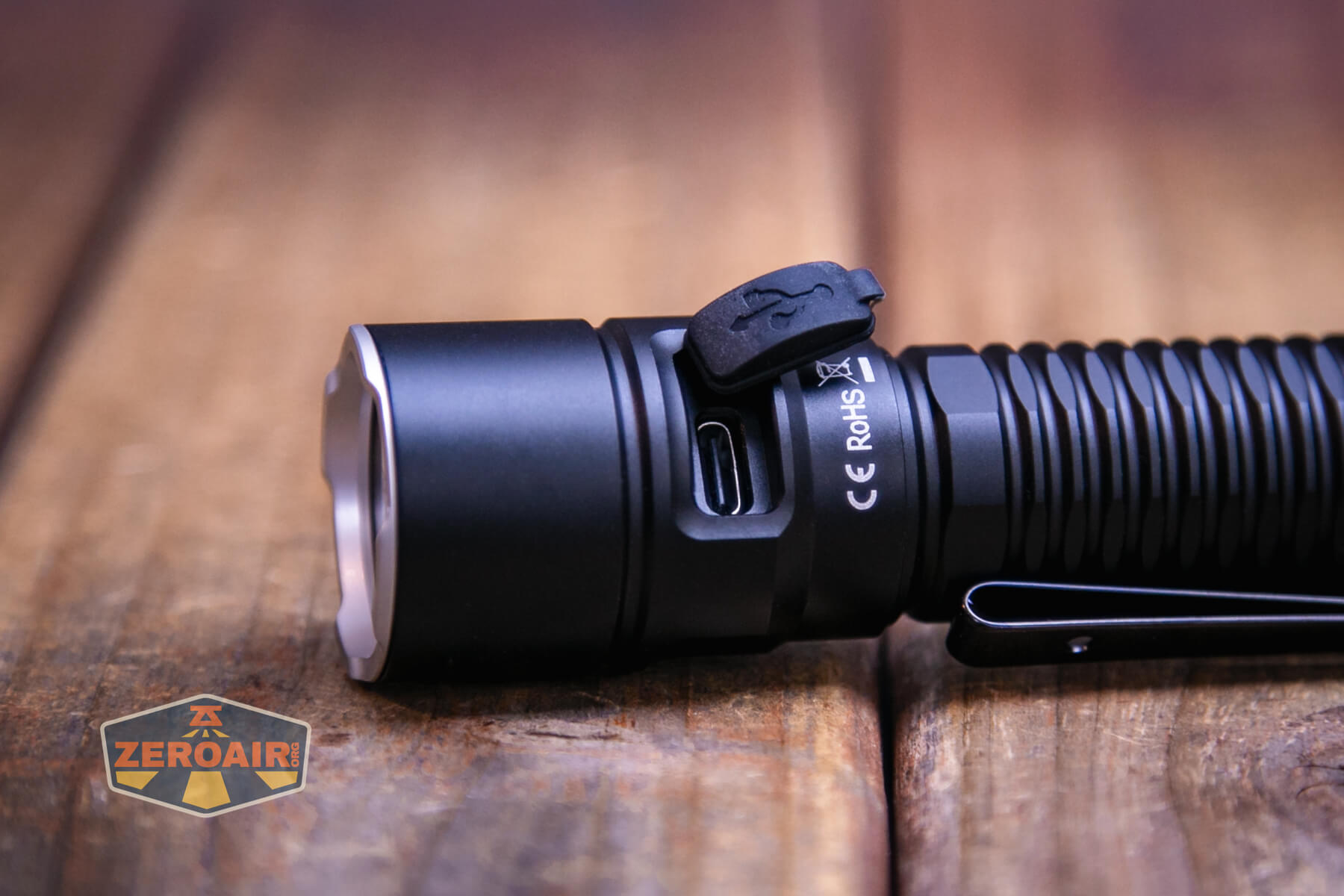
Sofirn includes this USB-C to USB-C charging cable.

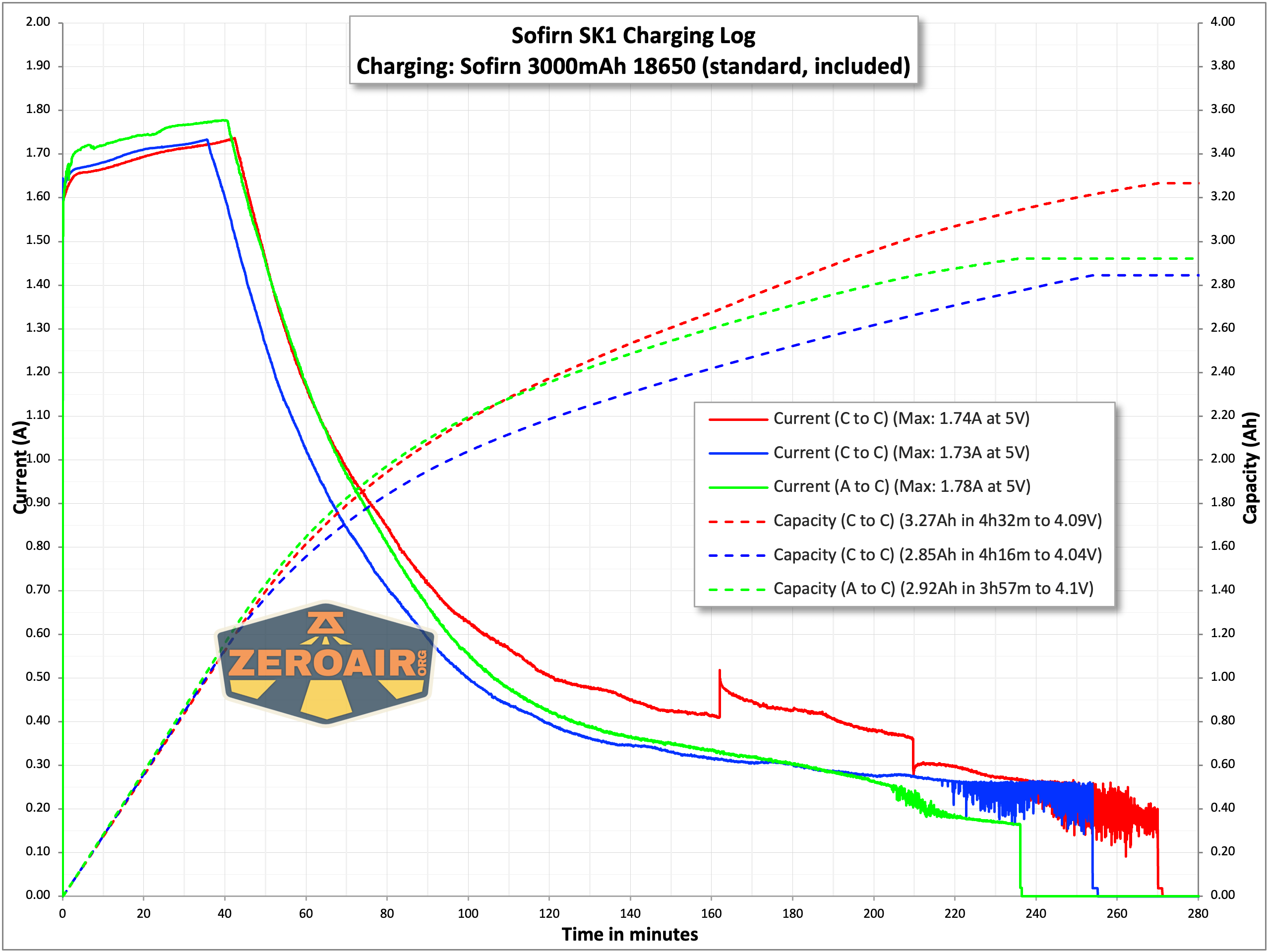
Charging works fine and proceeds at just under 2A. That’s great for this 3000mAh cell – well under 1C. Charging on the Wurkkos TD07 and Sofirn SK1 appears to be the same. It’s too fast for the 1100mAh 18350 in the TD07, but just fine for a 3000mAh 18650 in the SK1.
While running and while charging, this little indicator below gives a charge status. While charging, this indicator is red. When charging is complete, the indicator turns green.

The indicator does more in other (non-charging) scenarios, though.
Green: 60-100%
Green flashing: 30-60%
Red: 10-30%
Red flashing: <10%
Modes and Currents
| Mode | Mode Claimed Output (lm) | Claimed Runtime | Measured Lumens | Tailcap Amps |
|---|---|---|---|---|
| Turbo | 1300-700 | 3m-120m | 1073 (0s) 1050 (30s) |
5.24 |
| High | 700-350 | 130m | 516 (0s) 501 (30s) |
– |
| Medium | 240 | 9h | 168 | – |
| Low | 20 | 50h | 15 | – |
| Moon | 2 | 200h | 8 | – |
Pulse Width Modulation
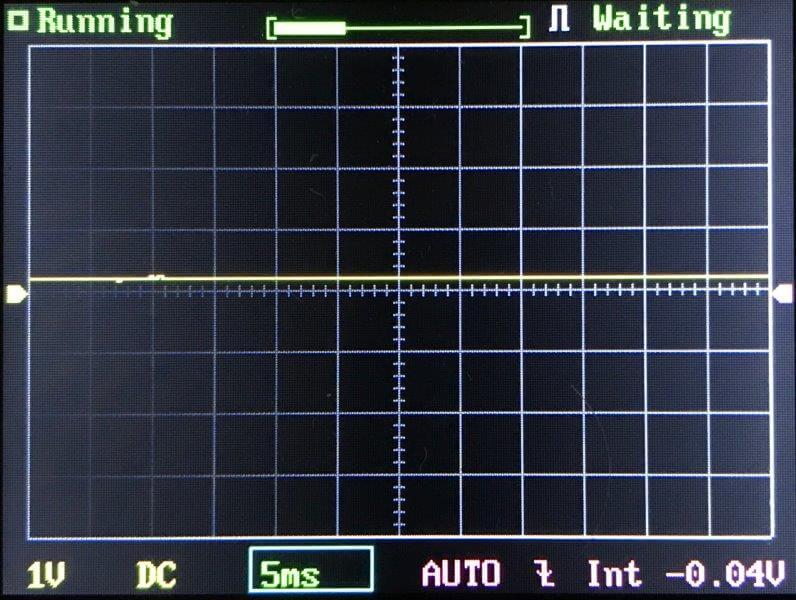
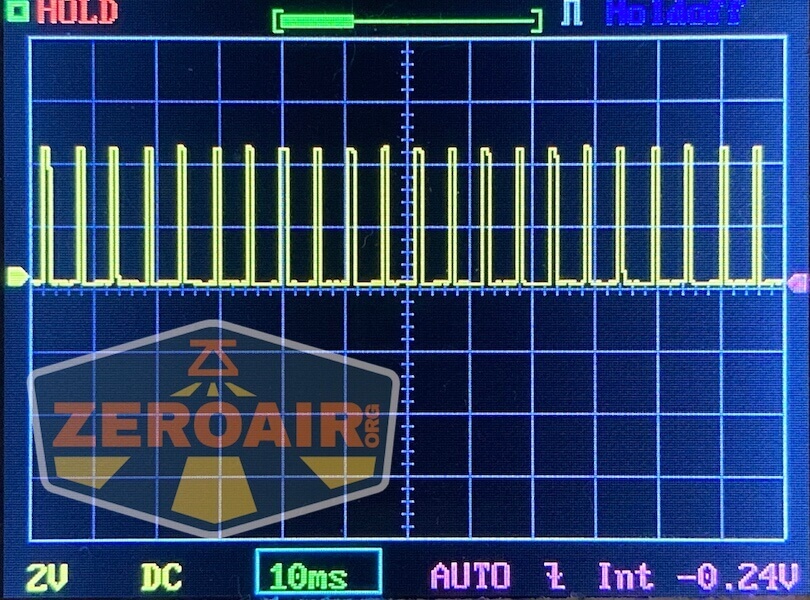
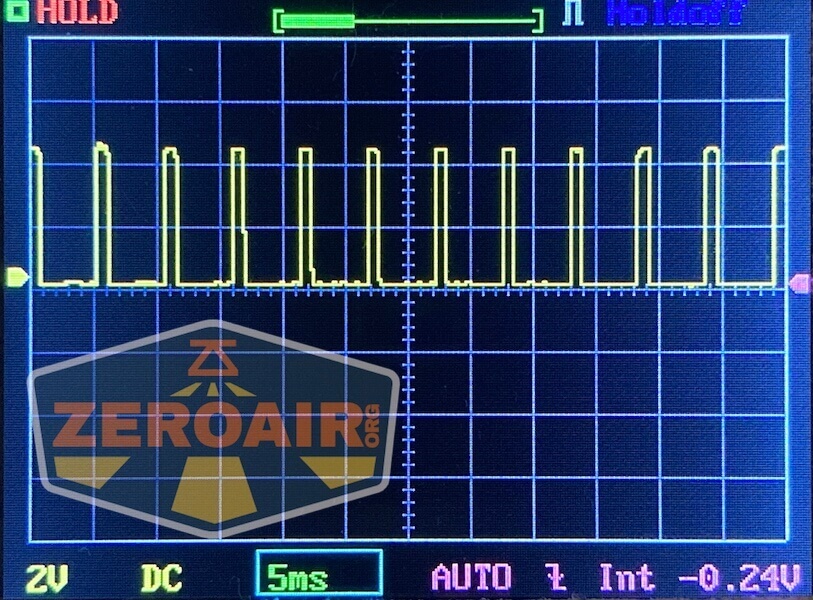
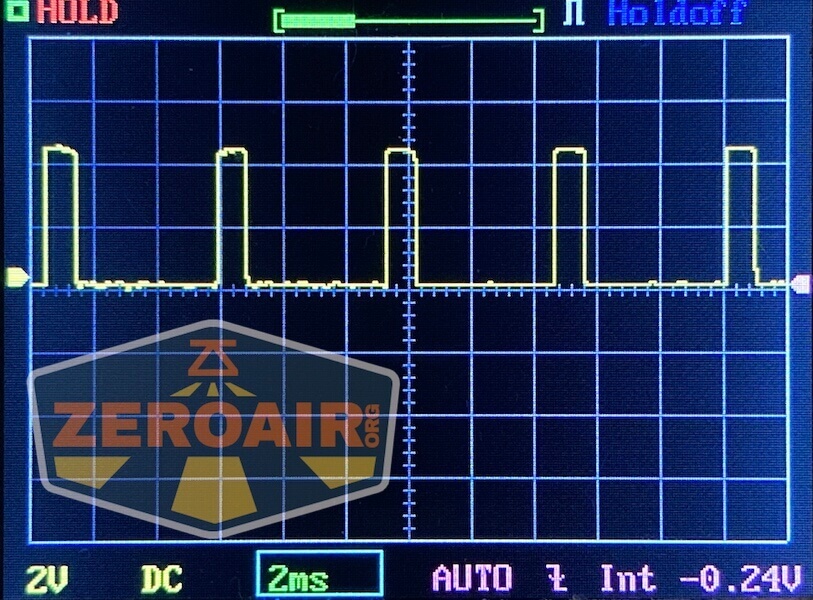
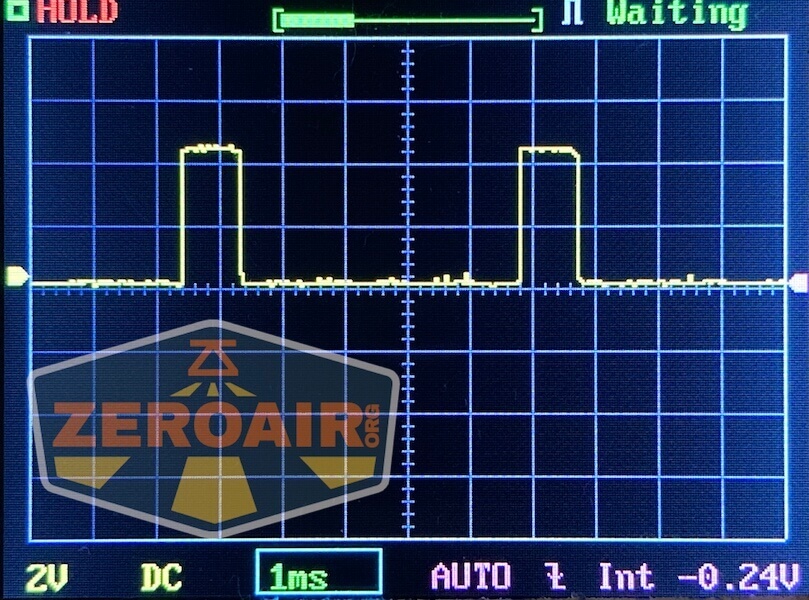
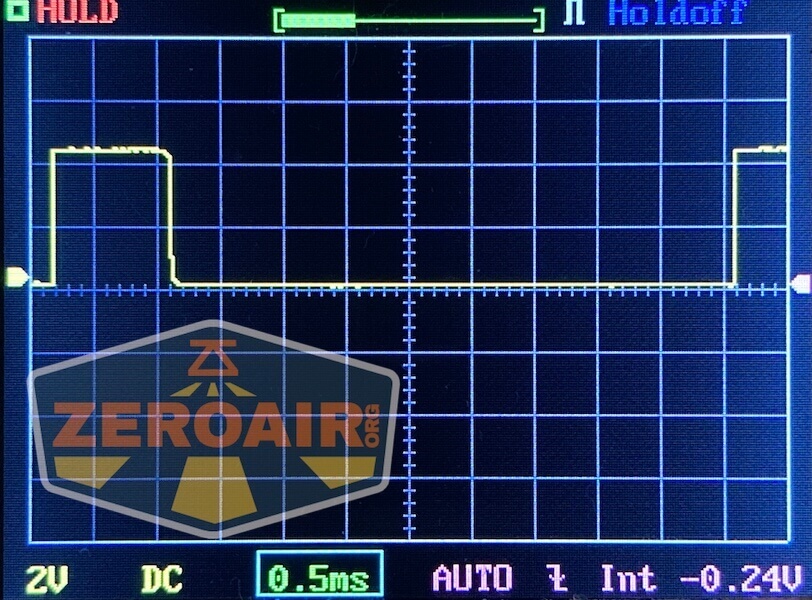
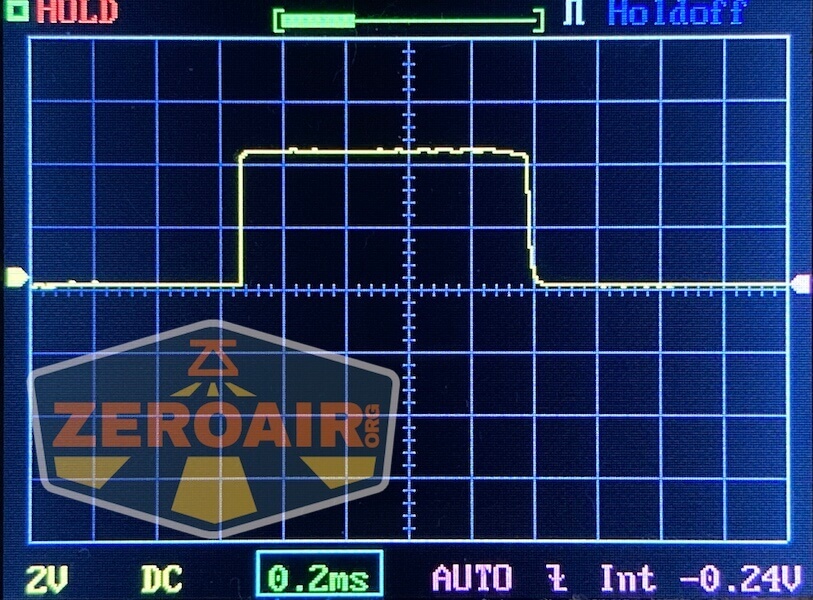
Each mode has the sawtooth that you can see below. I’m not sure if this is PWM or SMS ripple. It’s pretty fast, either way.

Click here to see a “baseline” – a chart with almost no light hitting the sensor.
Then there’s the Ultrafire WF-602C flashlight, which has some of the worst PWM I’ve seen. It’s so bad that I used a post about it to explain PWM! Here are multiple timescales (10ms, 5ms, 2ms, 1ms, 0.5ms, 0.2ms) to make comparing this “worst” PWM light to the test light easier. That post also explains why I didn’t test the WF-602C at the usual 50us scale.
User Interface and Operation
The Sofirn SK1 tactical flashlight is controlled in two ways. First is this rotary mode selector.
There’s a Duty mode. In the middle is the Lock position. The other is a Tac mode (selected above, note the little line on the tailcap).
Once you’ve selected your mode, output is controlled by the tail switch. This really feels like an e-switch, but I can’t say for certain. Tail e-switches usually require an inner sleeve for contact with the head, and this light doesn’t have one of those. Well, I can say for certain that it’s an e-switch. I just am not sure how it works.
The switch has a dual-action, and I found that most input comes from a half-press. The action on this switch is very nice!

Here’s a user interface table!
| State | Action | Result |
|---|---|---|
| Rotary – Tac Off | Half click | Turbo momentary |
| Rotary – Tac Off | Full click | Strobe momentary |
| Rotary – Lock Off | Full or half click | Moon momentary |
| Rotary – Duty Off | Half click (hold) | Moon |
| Rotary – Duty Off | Half click | No change (remains off) |
| Rotary – Duty Off | Full click | On (Memory, LMHT) |
| Rotary – Duty On | Full click | Off |
| Rotary – Duty On | Half click | Mode advance (LMHT) |
Notably, the SK1 has Turbo in the main group and no double click action. I like this better than double (half) clicking the TD07, as that action is a bit fiddly. Also pleasantly, Moon is easily accessible from off, and the modes advance upward from there, so you can avoid being blinded by Turbo memory.
LED and Beam
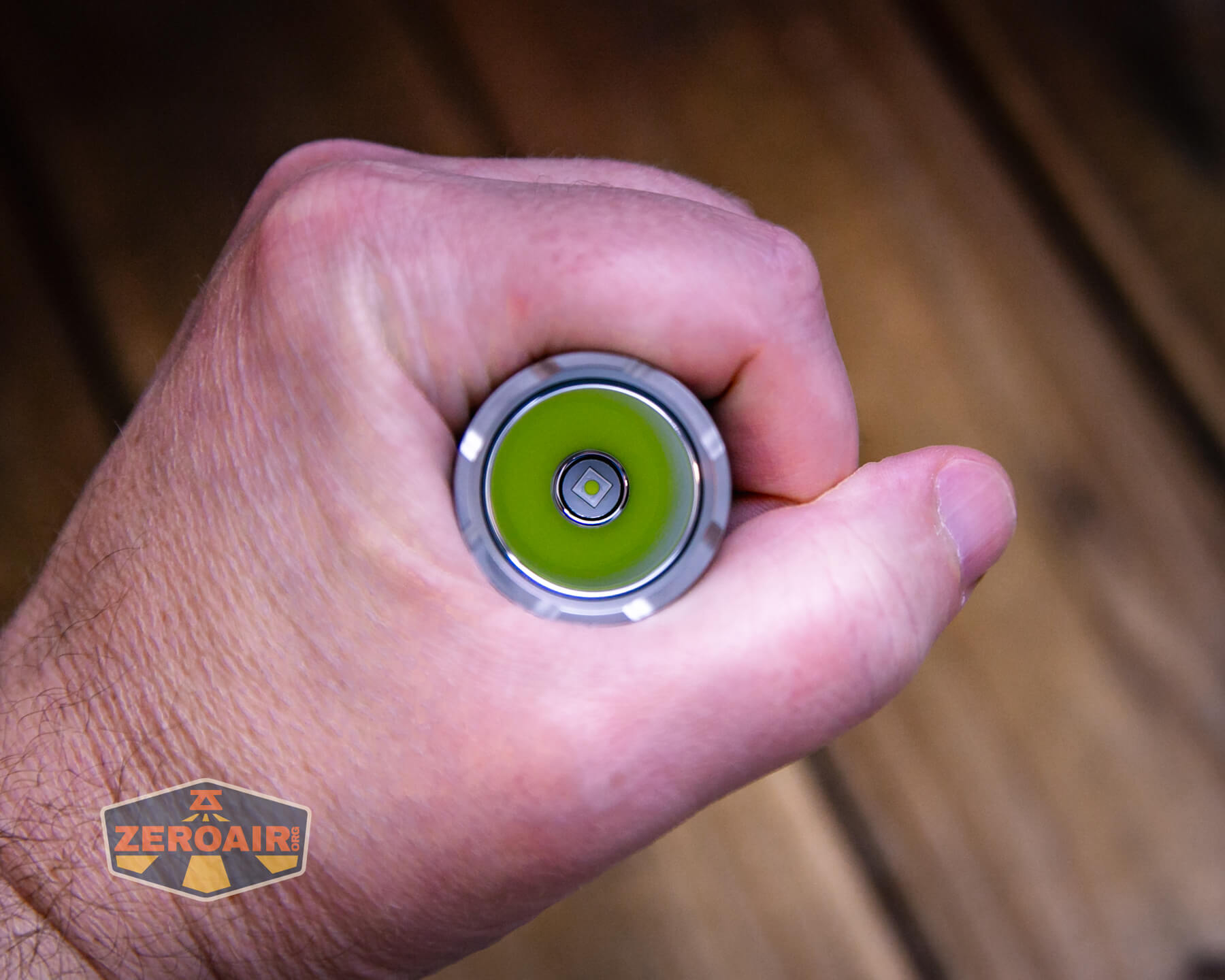
Sofirn has used a Luminus SFT25R in the SK1. That gives great throw and good output. The smooth and fairly deep reflector help with the throw, too.
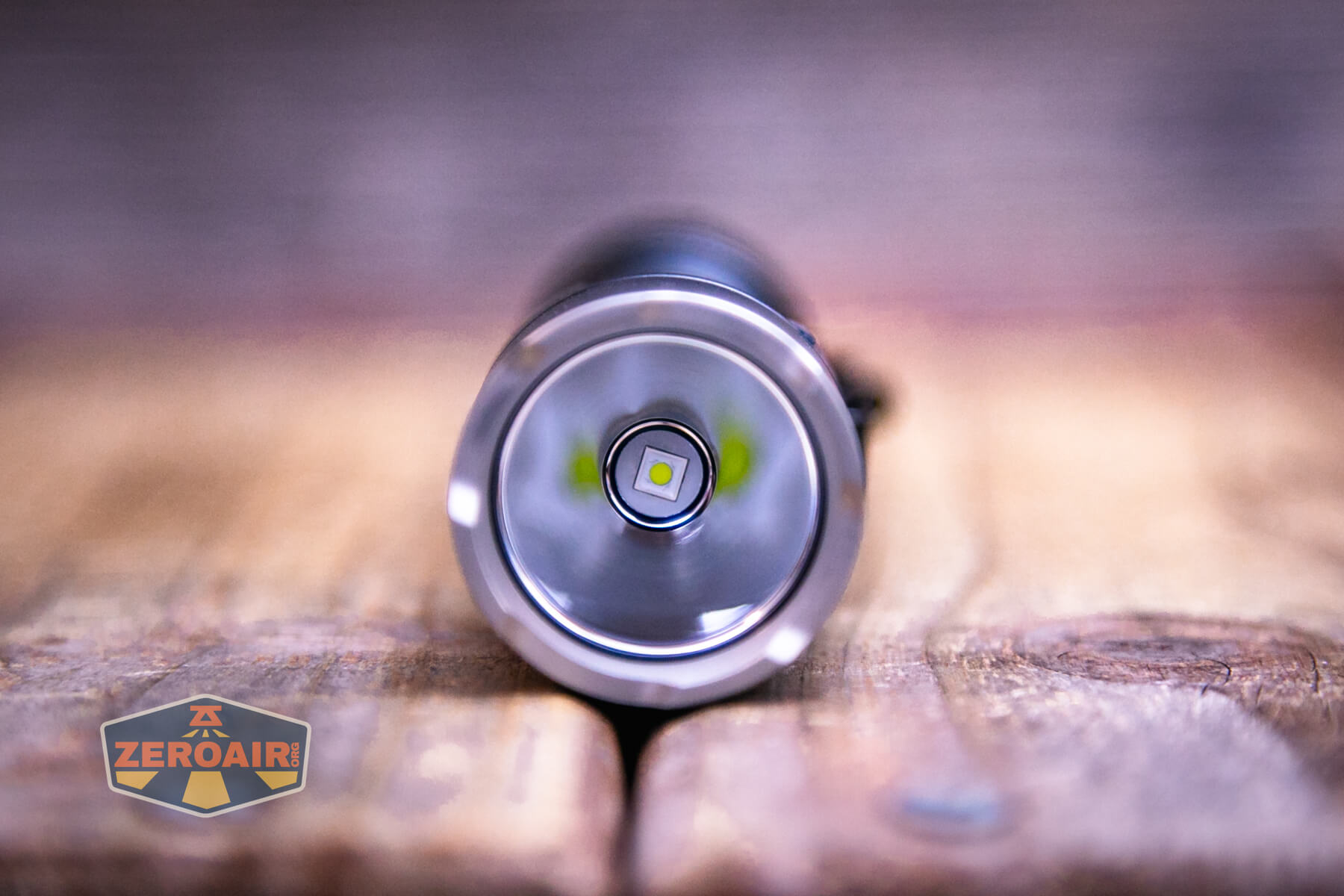
The bezel has some relief and is probably stainless steel.
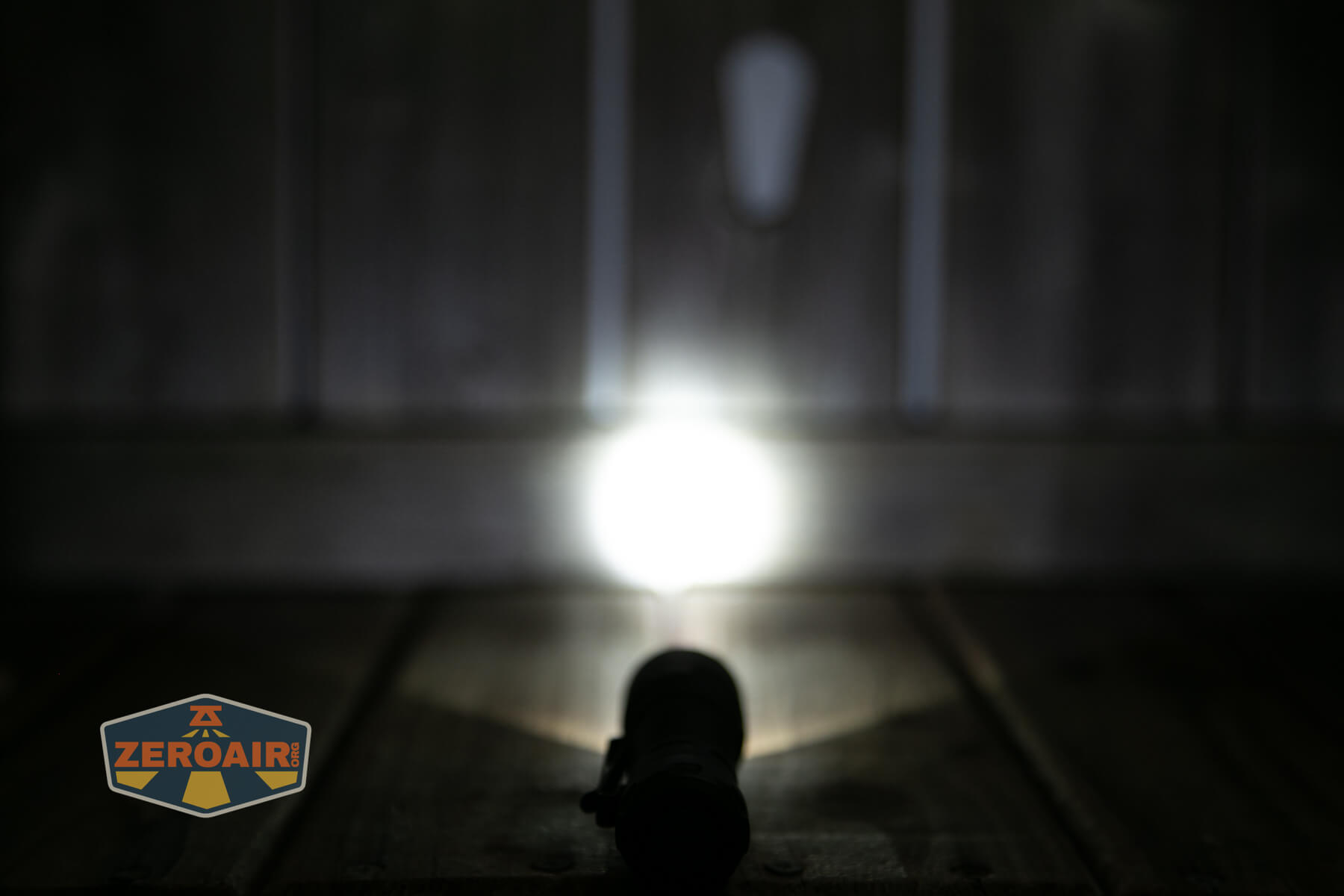
The beam is nice and tight! I think this is what you’d want on a tactical light. It’s what I’d want, anyway.
LED Color Report (CRI and CCT)
CCT and CRI are basically what we’ve come to expect from tactical lights. Low CRI and cool white. No surprises here. Interestingly, the CCT is a little bit warmer than the Wurkkos TD07.
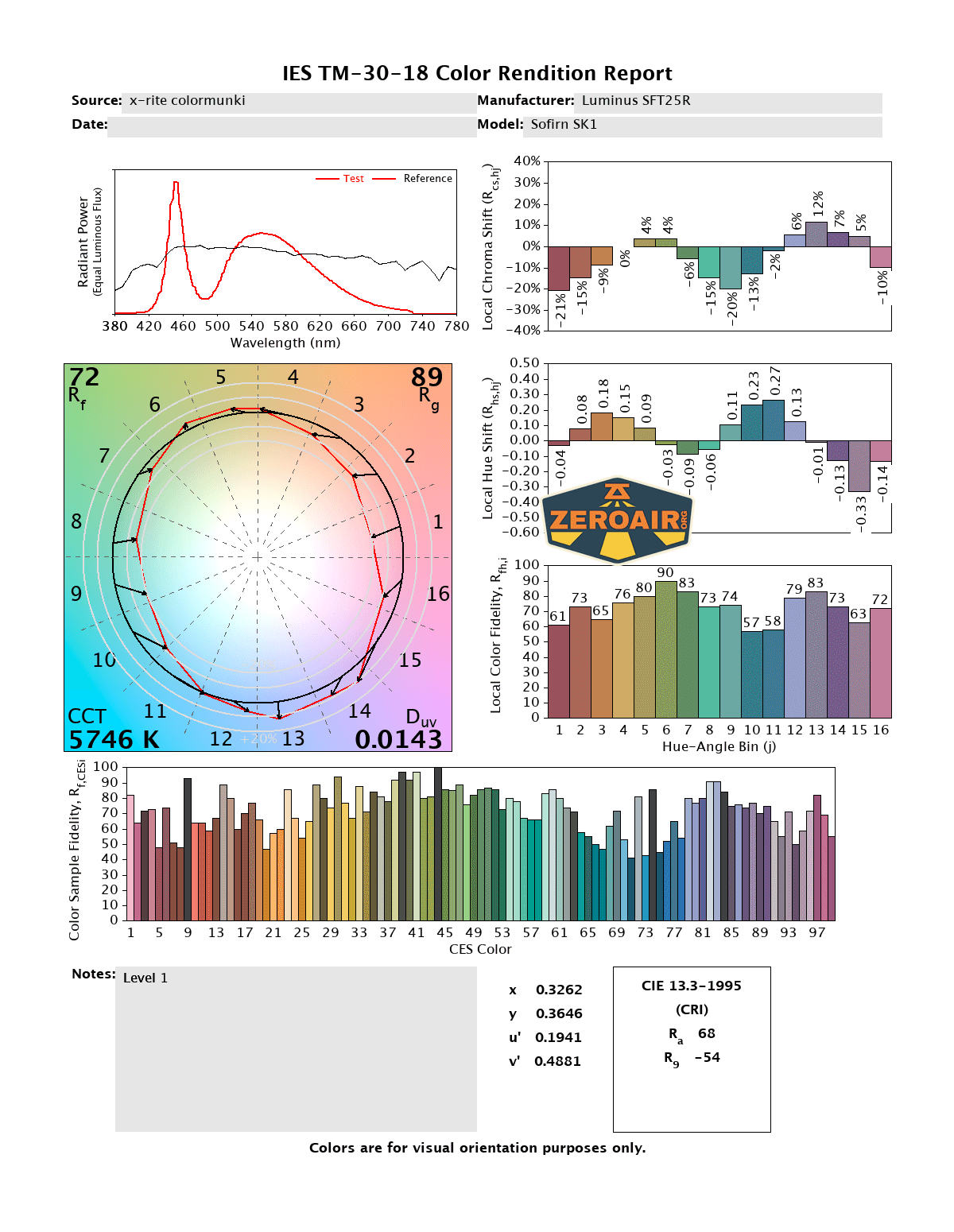
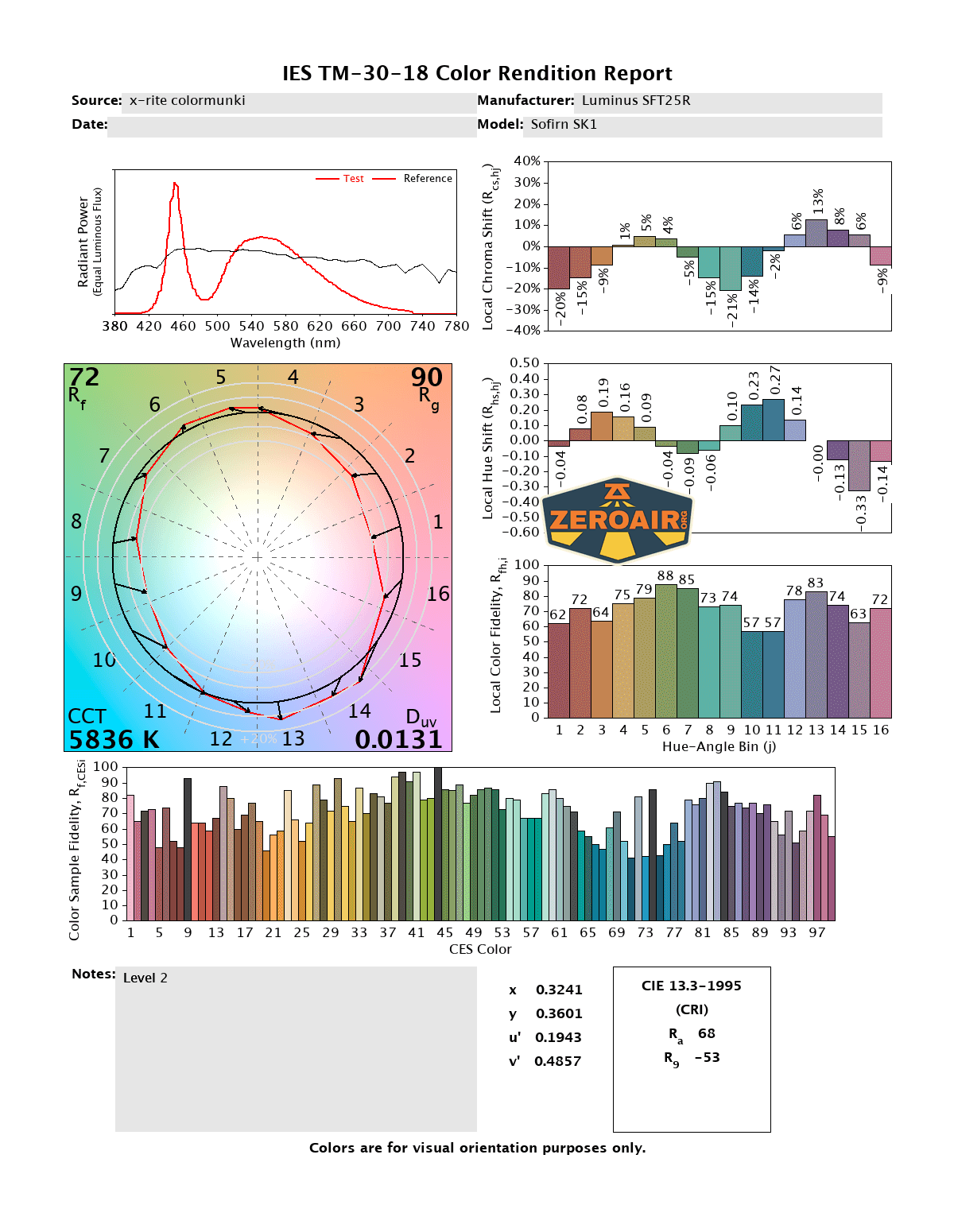
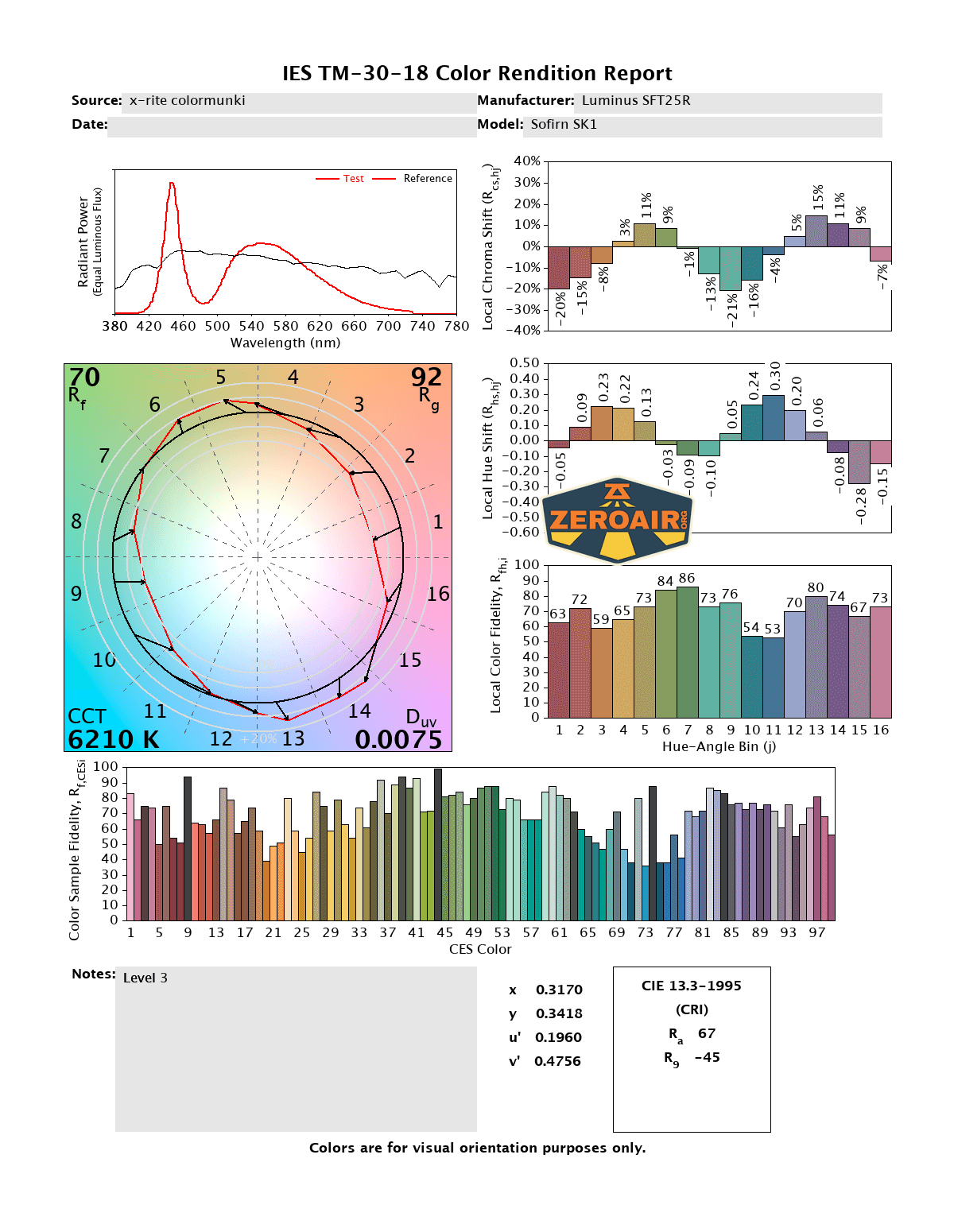
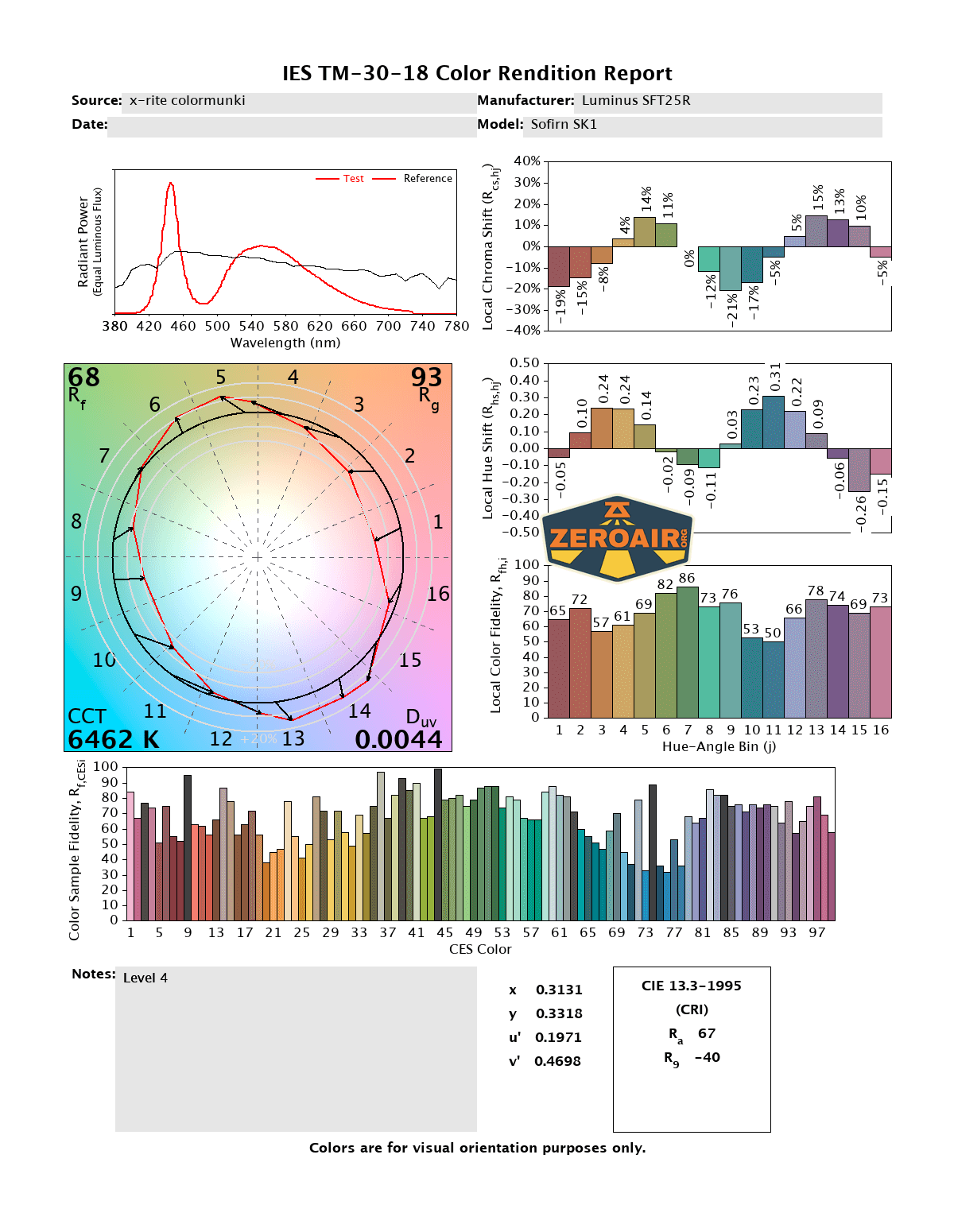
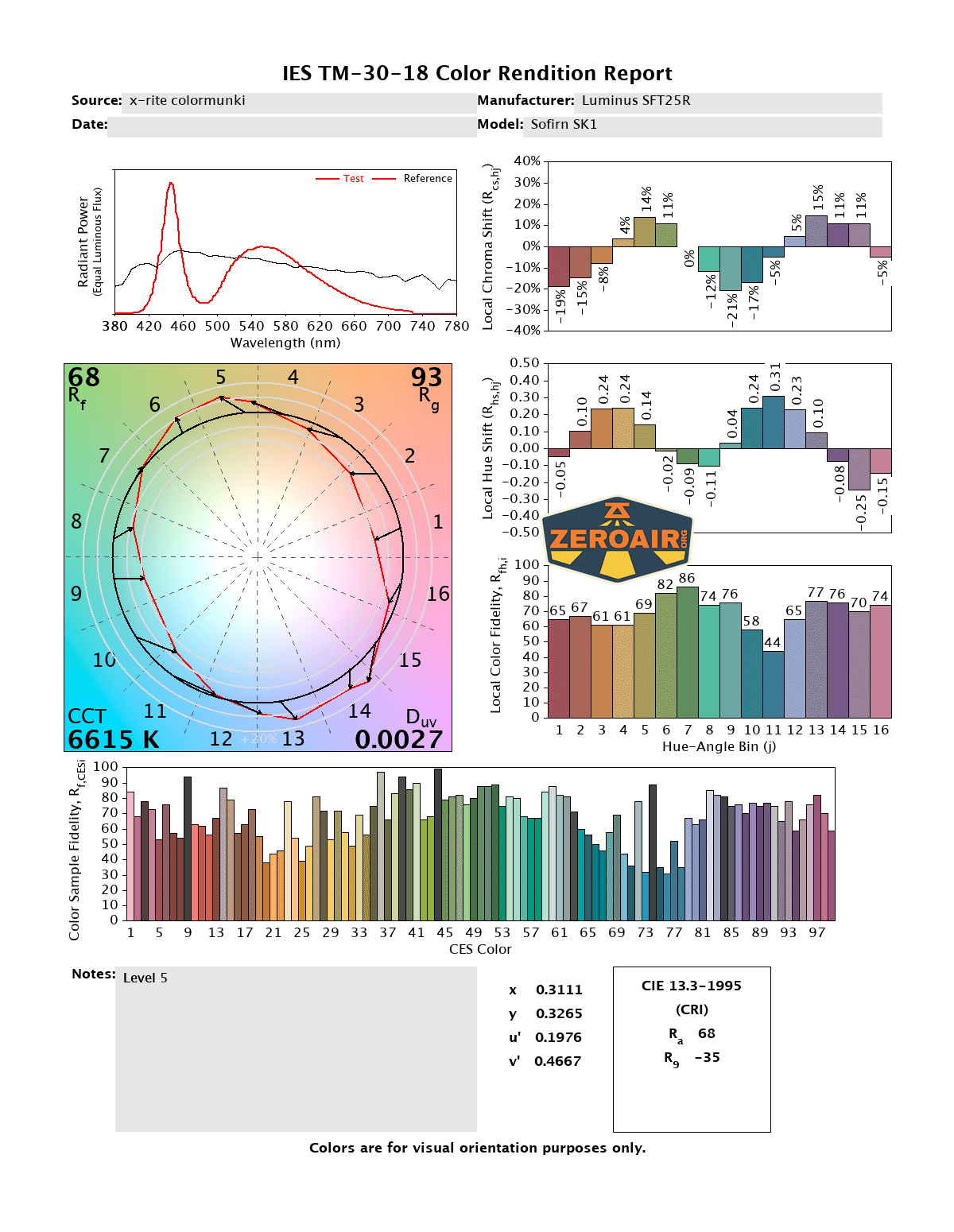
CCT (Correlated Color Temperature) refers to the measurement of the color appearance of light, expressed in Kelvins (K), which indicates whether the light is warm (yellowish) or cool (bluish). A lower CCT (below 3000K) is considered warm light, while a higher CCT (above 5000K) gives cooler, bluish light.
CRI (Color Rendering Index) is a measure of how accurately a light source renders colors in comparison to natural sunlight. Scored on a scale from 0 to 100, higher CRI values indicate that colors appear more true to life and vibrant, similar to how they would look under the sun.
Beamshots
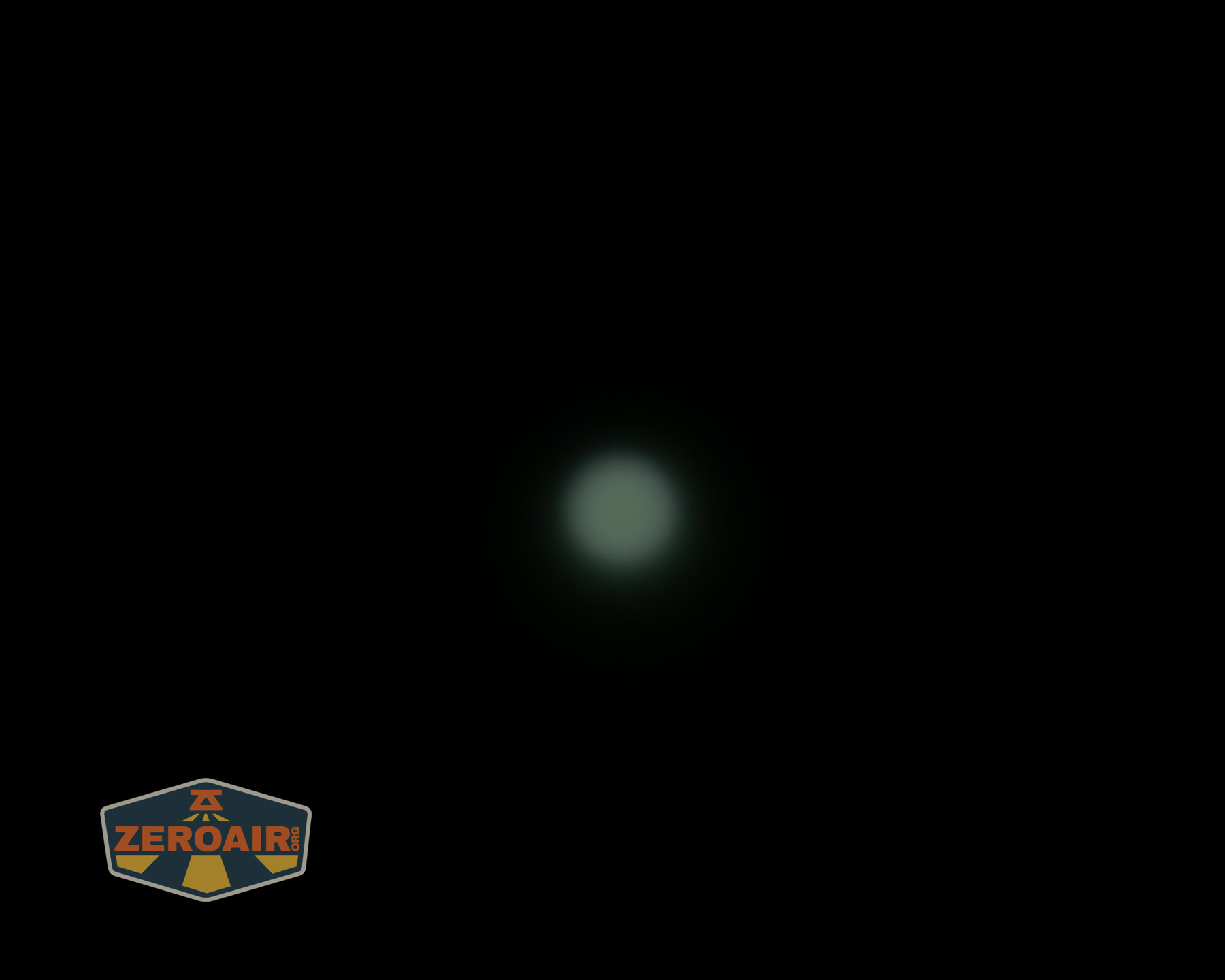
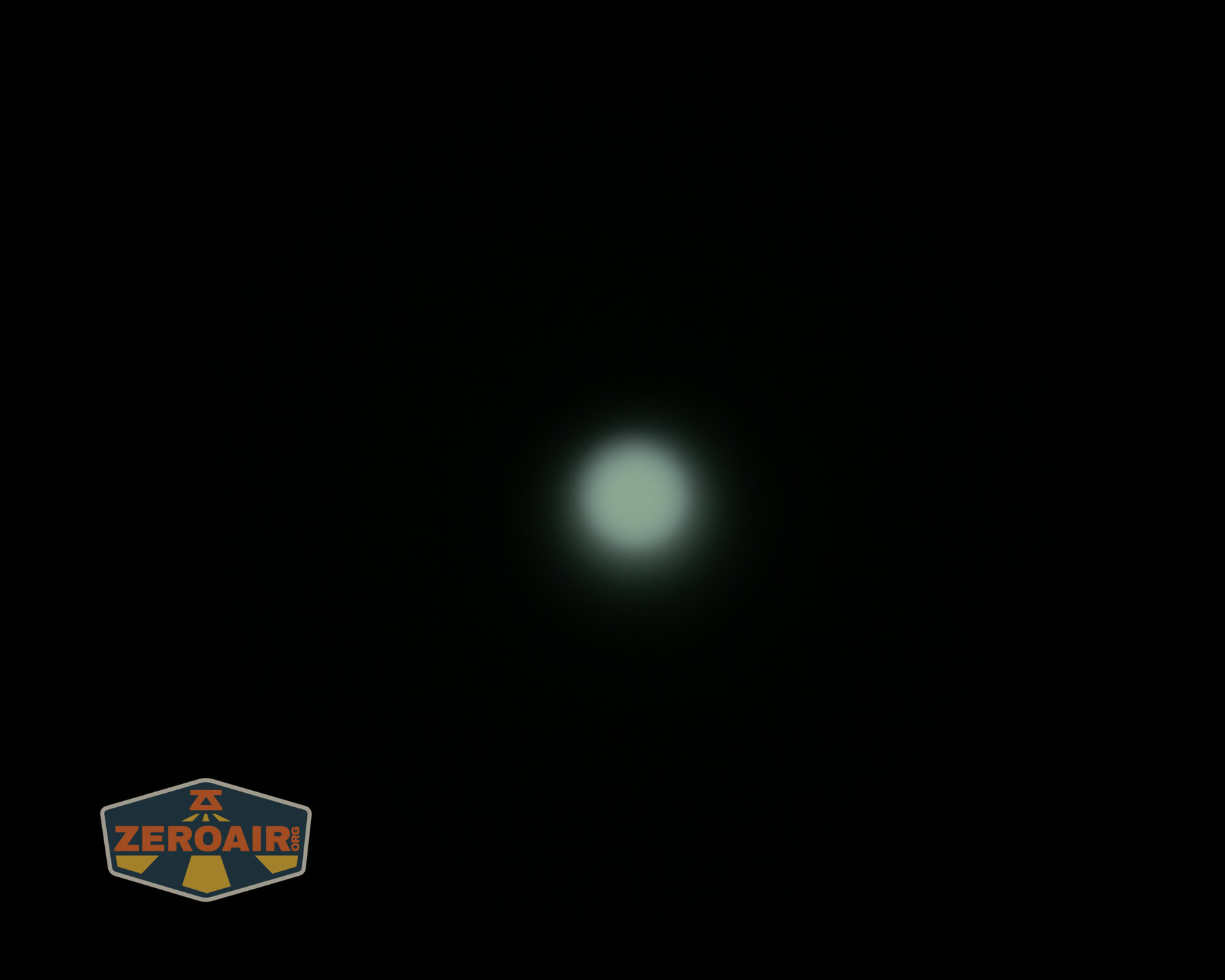
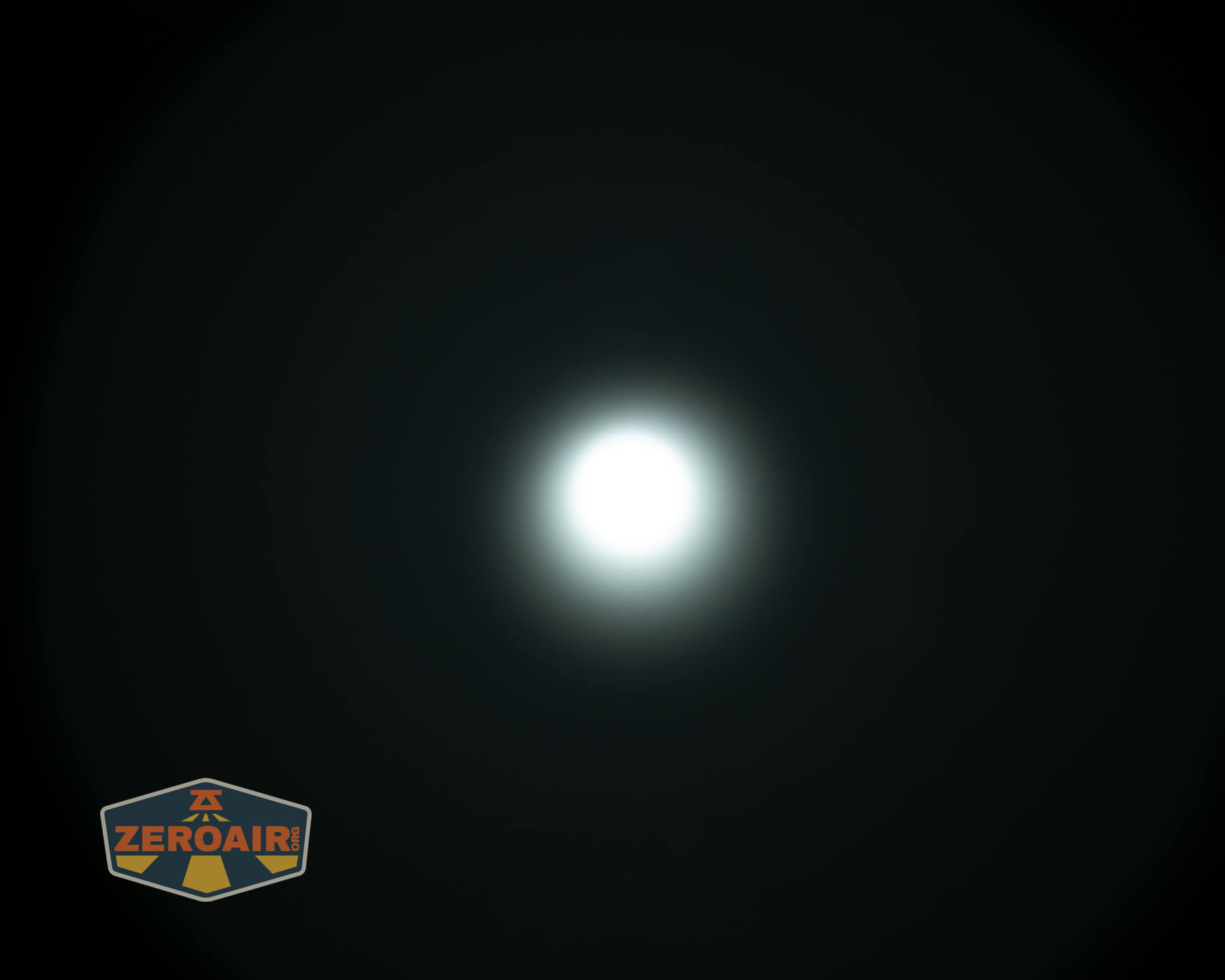
These beamshots always have the following settings: f8, ISO100, 0.3s shutter, and manual 5000K exposure. These photos are taken at floor level, and the beam hits the ceiling around 9 feet away.
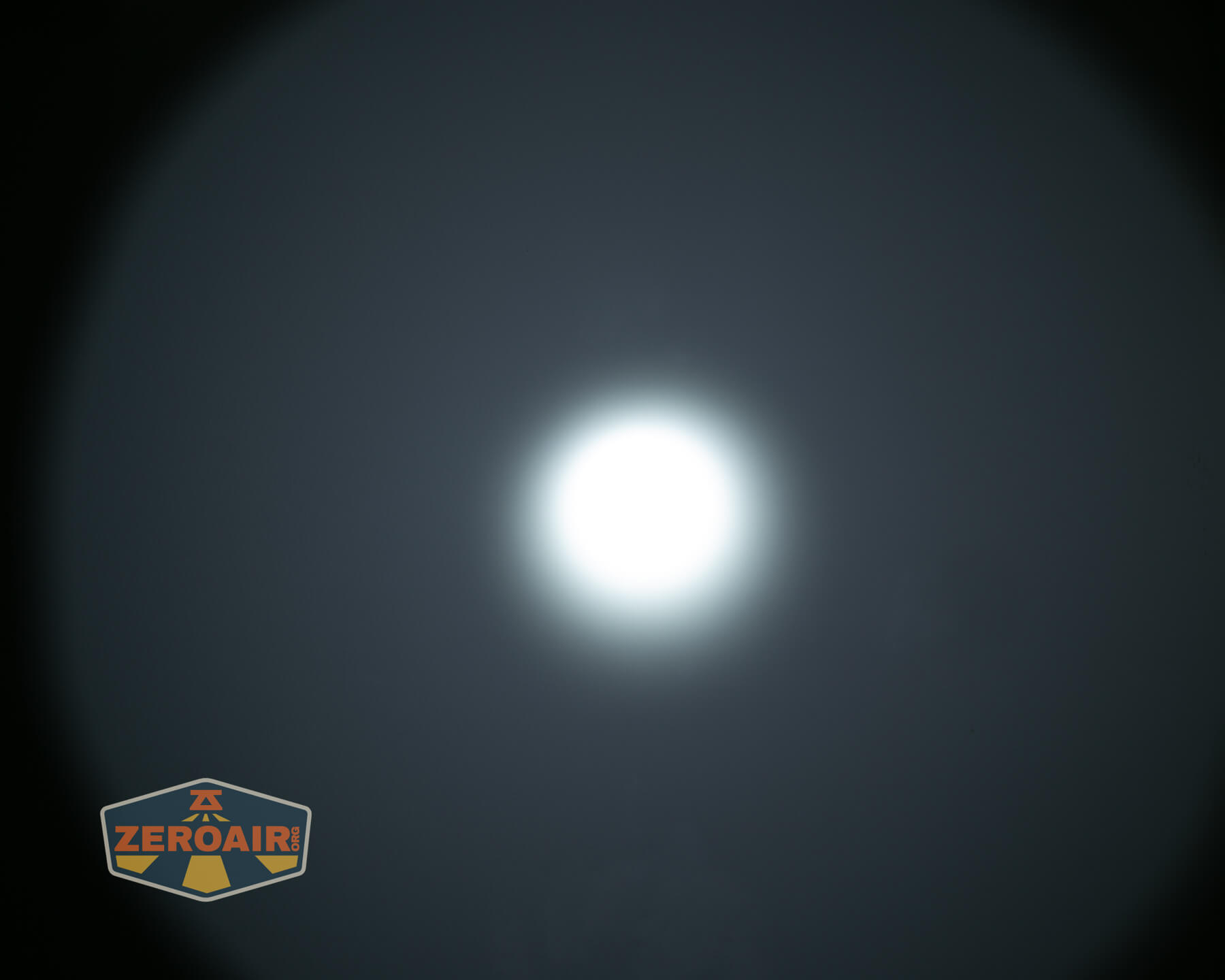
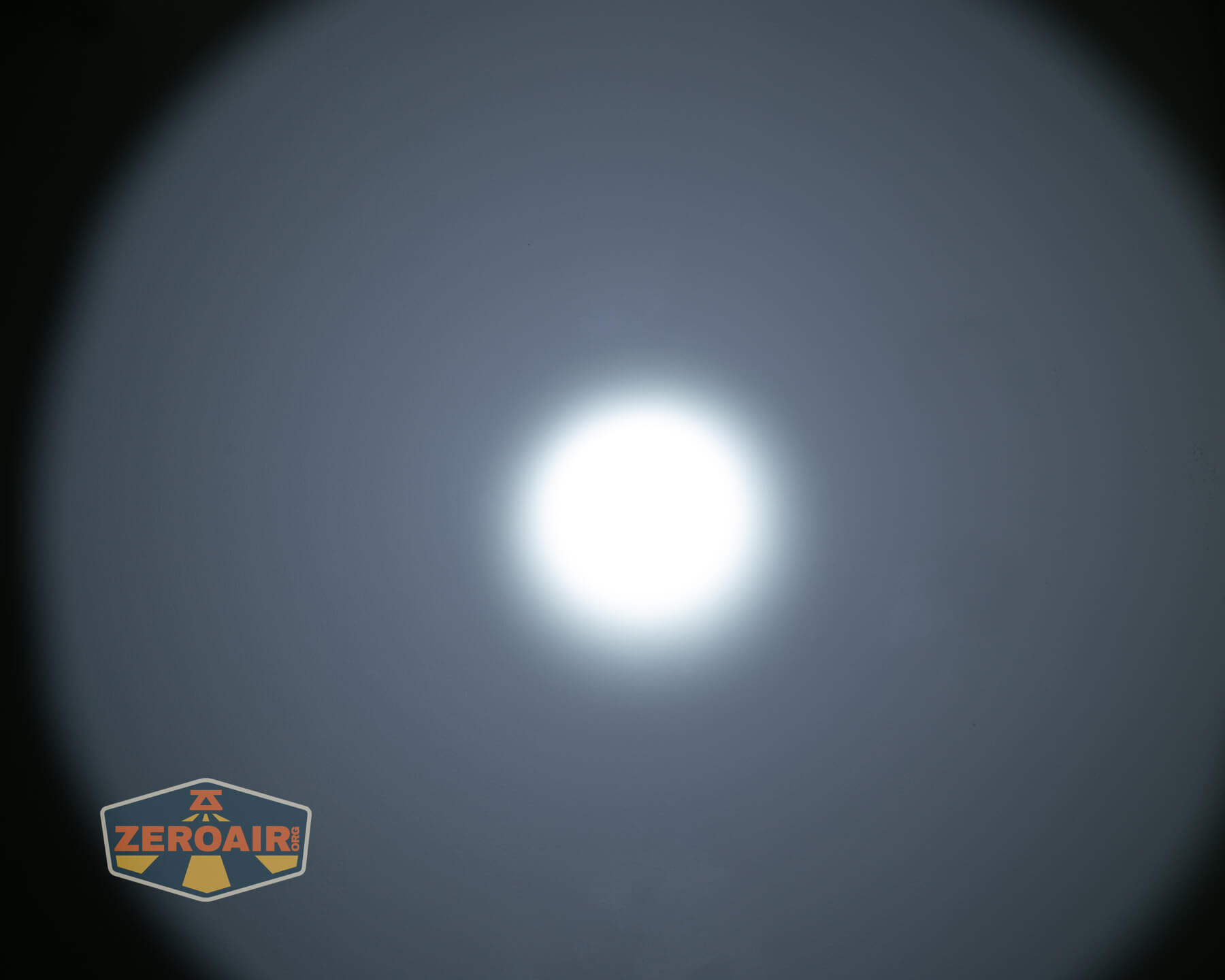
Tint vs BLF-348 (KillzoneFlashlights.com 219b version) (affiliate link)
I keep the test flashlight on the left and the BLF-348 reference flashlight on the right. These photos are taken around 18 inches from the door.
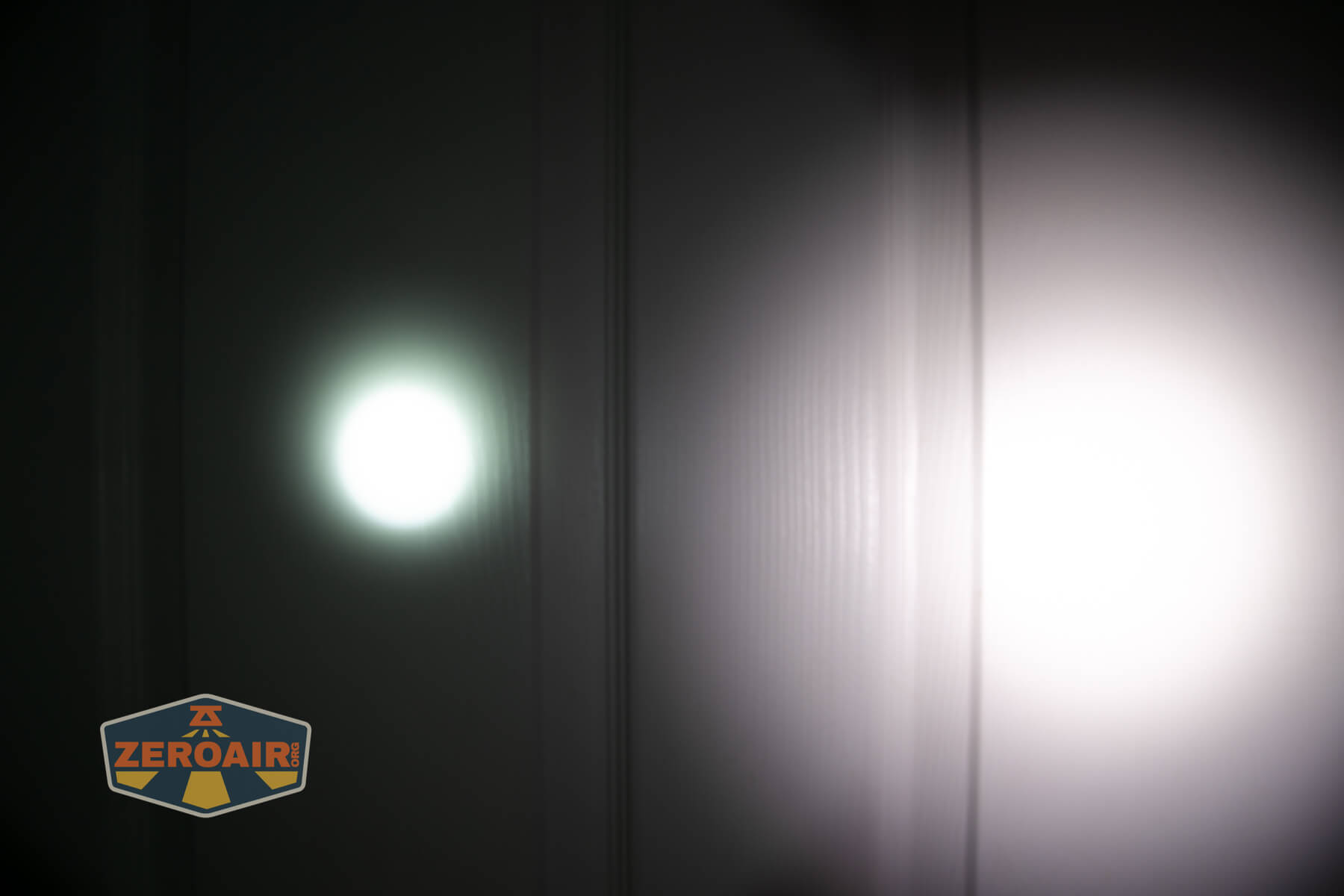
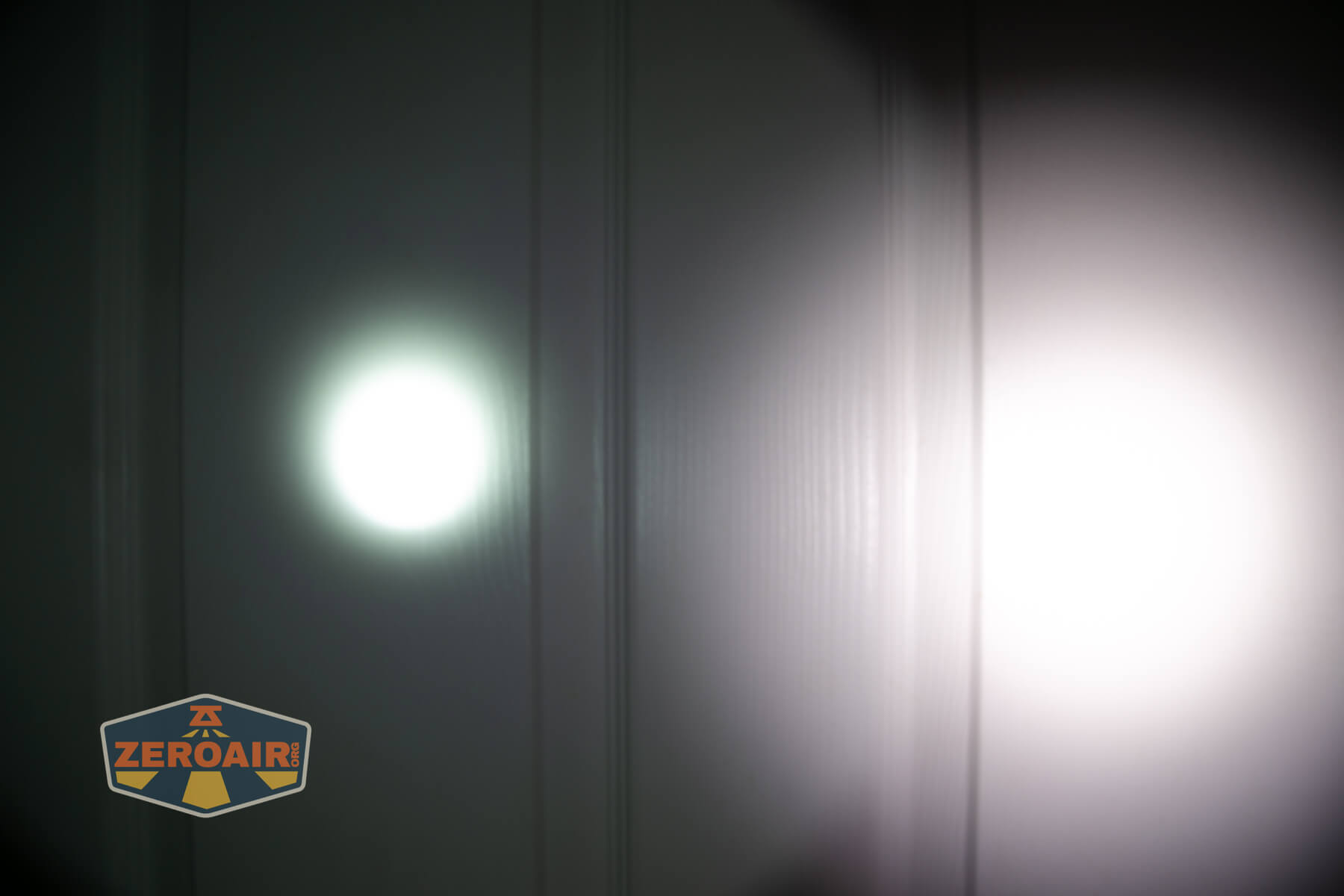
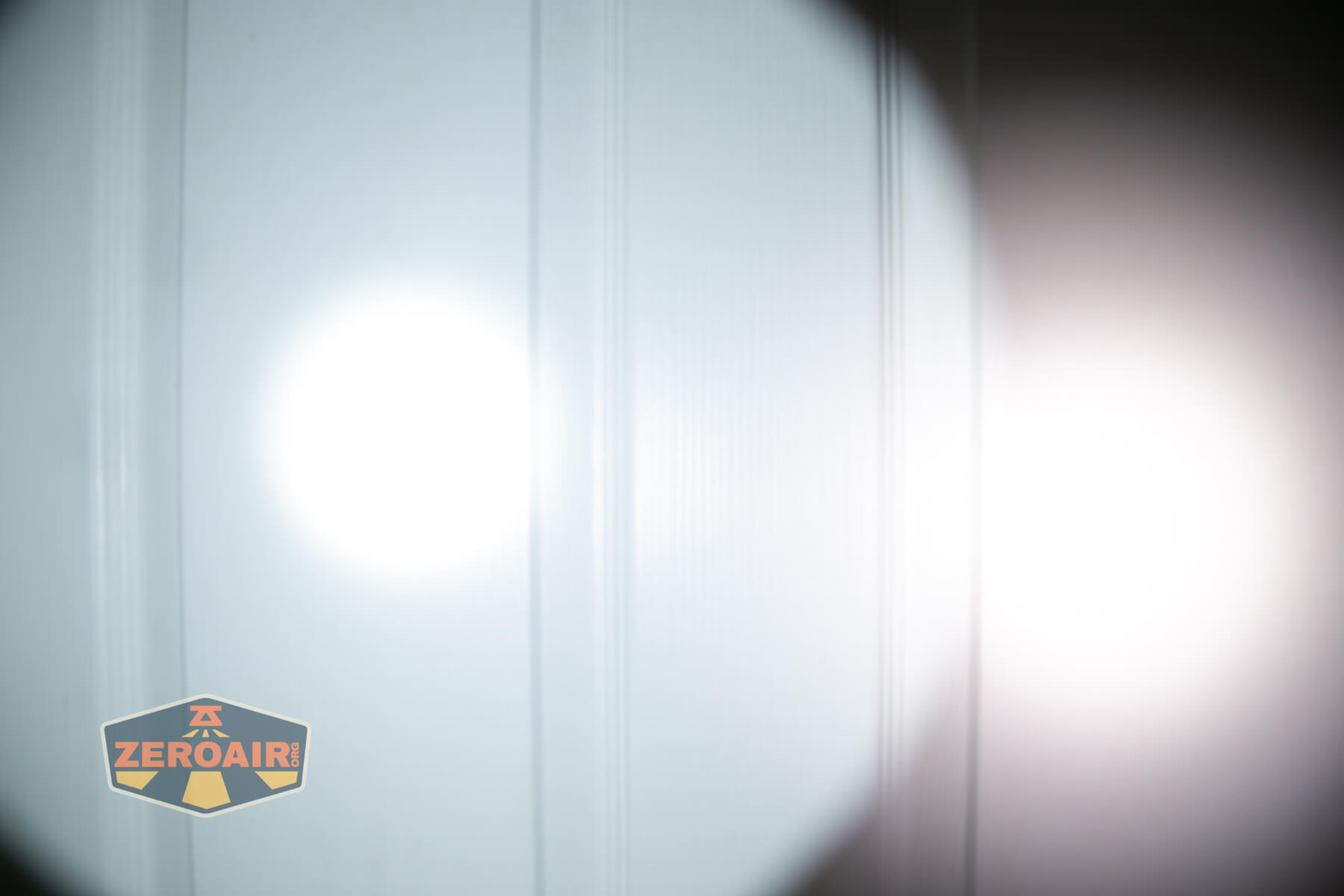
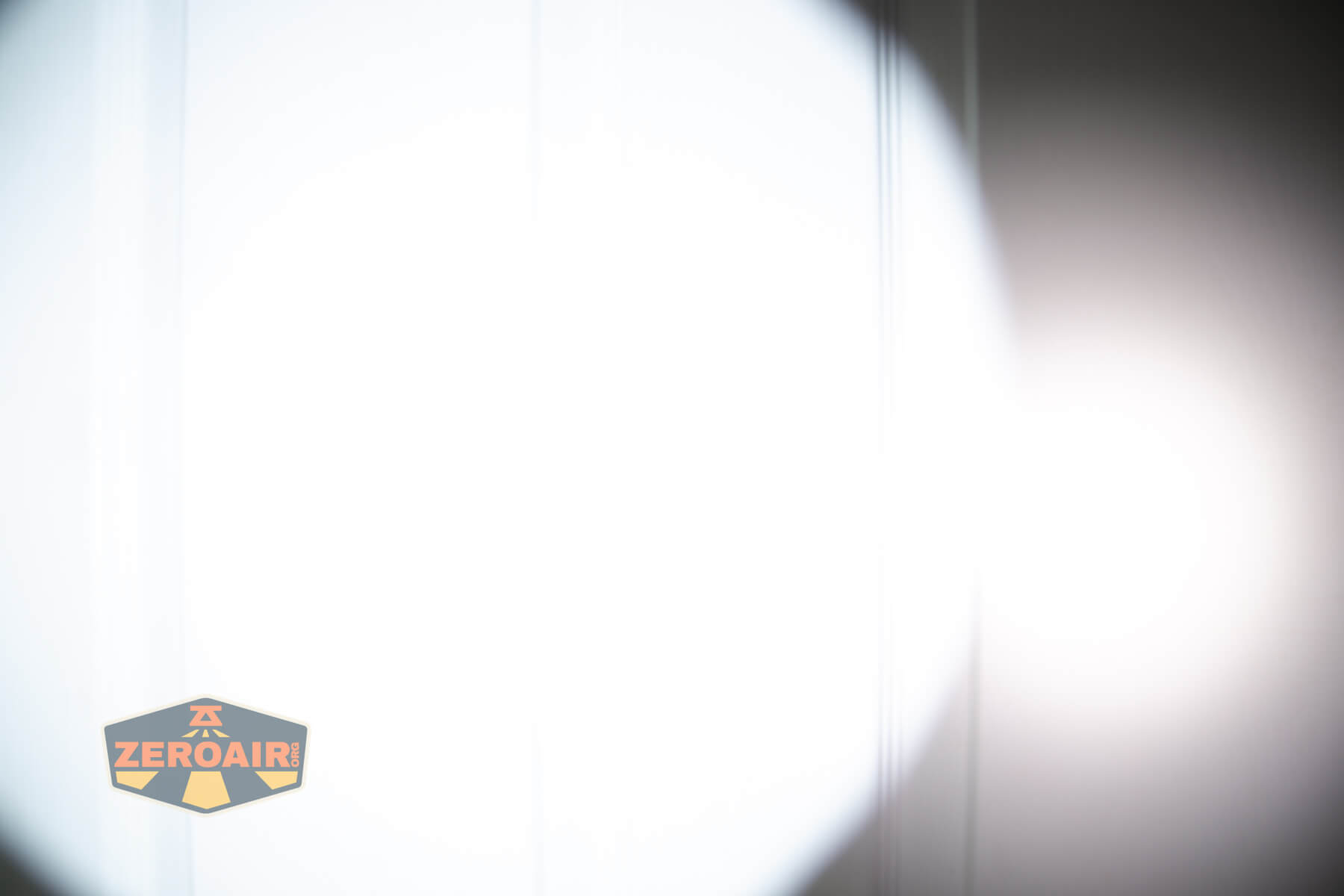
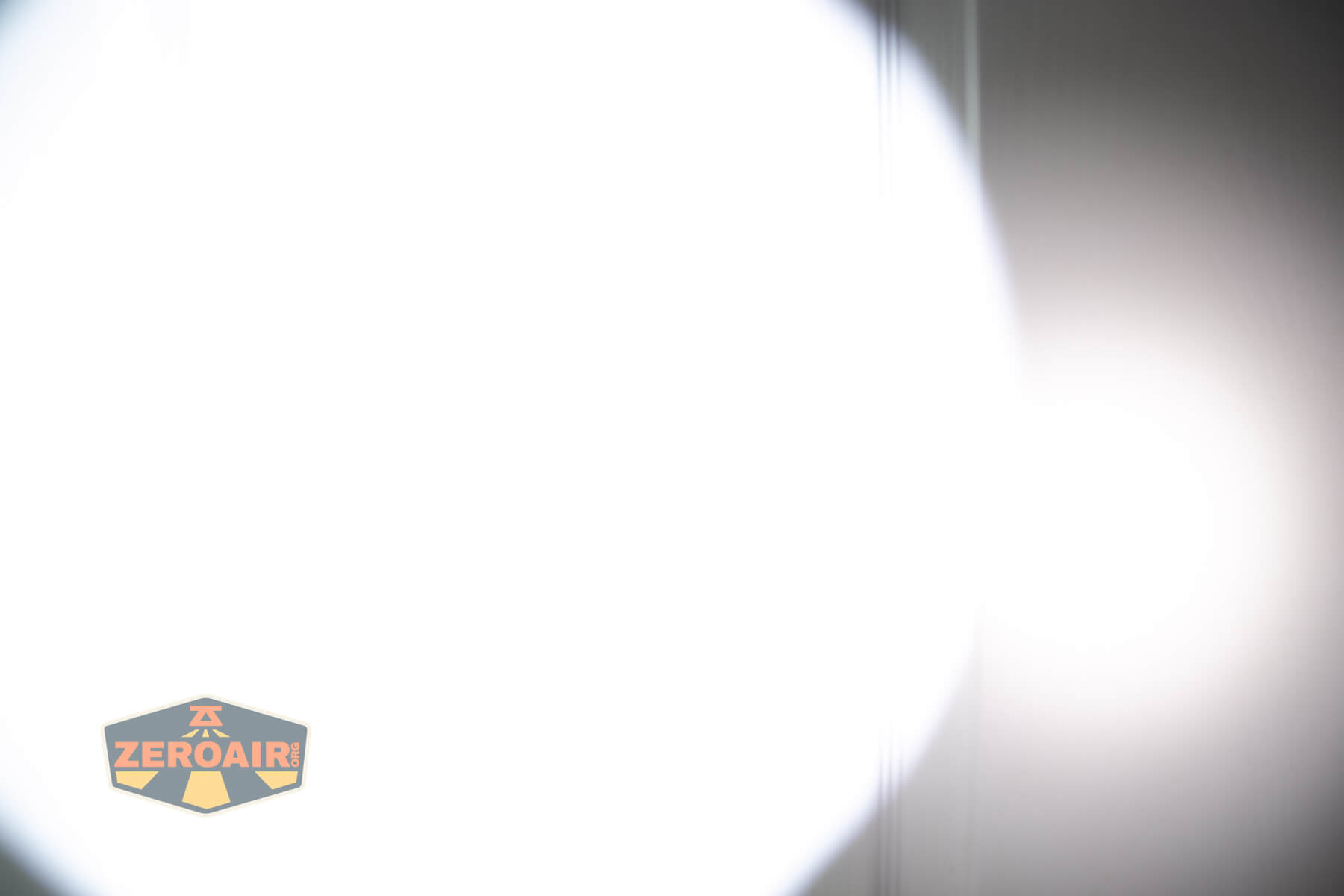
I compare everything to the KillzoneFlashlights.com 219b BLF-348 because it’s inexpensive and has the best tint!
Summary and Conclusion
The Sofirn SK1 tactical flashlight, much like the Wurkkos TD07, is a very inexpensive light with tactical features. I like the (tight) beam profile. It’s good for tactical, but I’d also use it for daily carry, too. The user interface is surprisingly easy to grasp (and better with Turbo in the main group). All I might ask is a way to lock the rotary into any of the three modes. The low level mode spacing is a bit odd, too – Moon and Low are very close. For $35, it’s hard to go wrong!
The Big Table
| Sofirn SK1 tactical flashlight | |
|---|---|
| Emitter: | Luminus SFT25R (Cool White) |
| Price in USD at publication time: | $37.99 |
| Cell: | 1×18650 |
| Runtime Graphs | |
| LVP? | Yes |
| Switch Type: | E-Switch |
| Quiescent Current (mA): | ? |
| On-Board Charging? | Yes |
| Charge Port Type: | USB-C |
| Charge Graph | |
| Power off Charge Port | No modes |
| Claimed Lumens (lm) | 1300 |
| Measured Lumens (at 30s) | 1050 (80.8% of claim)^ |
| Candela per Lumen | 60.84 |
| Claimed Throw (m) | 479 |
| Candela (Calculated) in cd (at 30s) | 1762lux @ 6.111m = 65801cd |
| Throw (Calculated) (m) | 513.0 (107.1% of claim)^ |
| Claimed CCT | 6000-6500 |
| Measured CCT Range (K) | 5700-6600 Kelvin |
| Item provided for review by: | Sofirn |
| All my Sofirn reviews! | |
^ Measurement disclaimer: Testing flashlights is my hobby. I use hobbyist-level equipment for testing, including some I made myself. Try not to get buried in the details of manufacturer specifications versus measurements recorded here; A certain amount of difference (say, 10 or 15%) is perfectly reasonable.
What I like
- Price
- Beam profile
- User interface
- Charges with a reliable profile
- Very good throw
- Two-stage switch is a joy to use
What I don’t like
- CRI (low) and CCT (high)
- Lack of locking (or harder detent) on rotary selector
Notes
- This content originally appeared at zeroair.org. Please visit there for the best experience!
- Please use my Amazon.com referral link to help support zeroair.org!
- Please support me on Patreon! I deeply appreciate your support!
Discover more from ZeroAir Reviews
Subscribe to get the latest posts sent to your email.
Hello from Greece. Can you suggest a battery upgrade for the SK1?
How about a 3500/4000 mAh from LiitoKala? Easily available on AliExpress and quite affordable. Or you could try something on the expensive side, from NITECORE or XTAR – one of those for the price of four or five LiitoKalas.
The output drops slowly and steadily from the very start. Does that mean it is not well regulated?
A comprehensive review, as they all seem to be here.
But I cannot find the actual throw. You give only the claimed one – which is, at best, an invitation to look into this flashlight, but nothing to rely on.
So, what is it?
It’s in the table.