
Nitecore TIP3 Keychain Flashlight Review
The Nitecore TIP3 keychain flashlight has four LEDs and three CCT options (warm, neutral, and cool), a dual-switch interface, and USB-C charging. Read on!
Official Specs and Features
Here’s a link to the Nitecore TIP3 keychain flashlight product page.
Versions
The Nitecore TIP3 keychain flashlight has three body colors available, but all of those offer the same emitter options.
Price
What’s Included
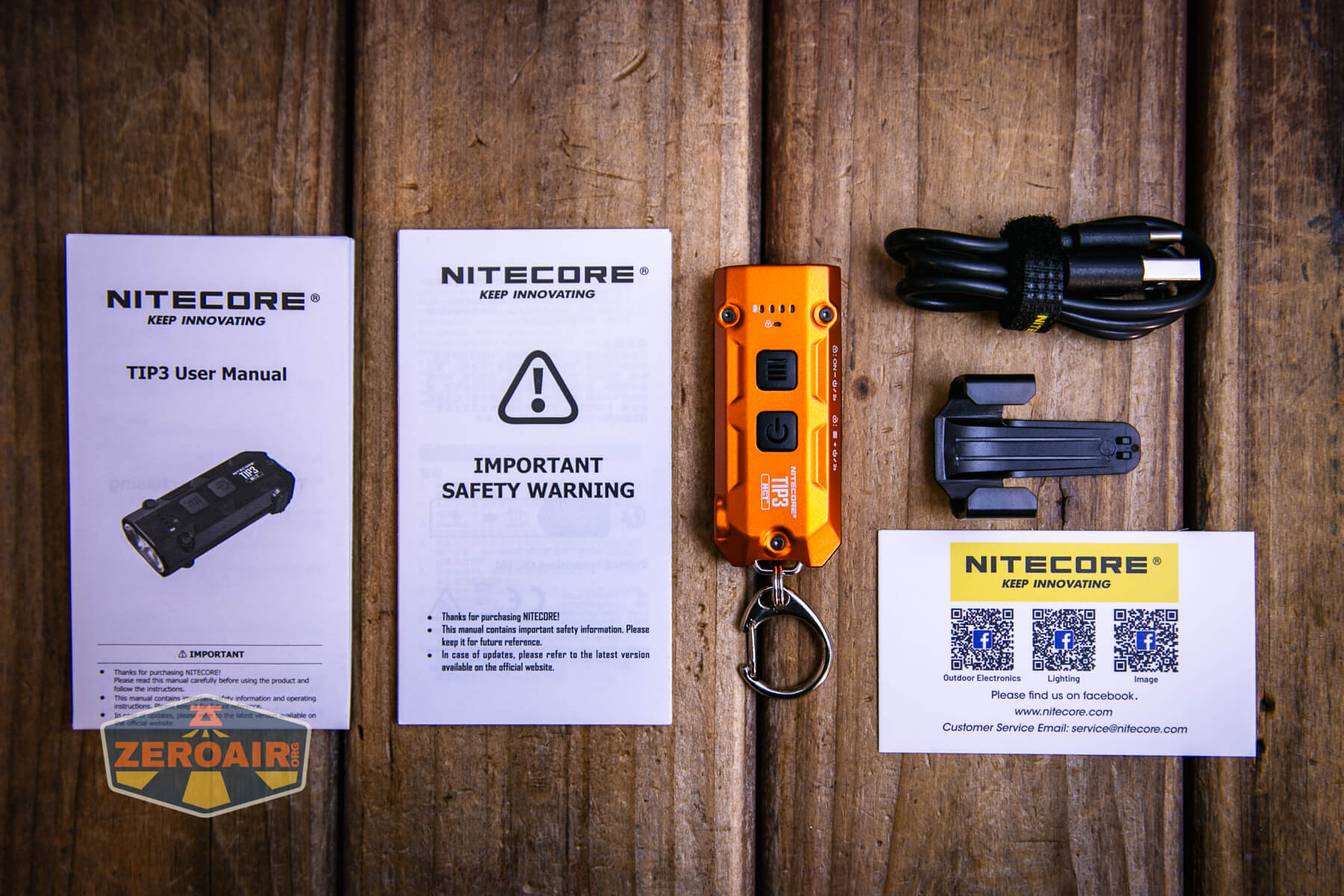
- Nitecore TIP3 keychain flashlight
- Charging cable
- Pocket clip
- Keychain parts
- Manual
Package and Manual
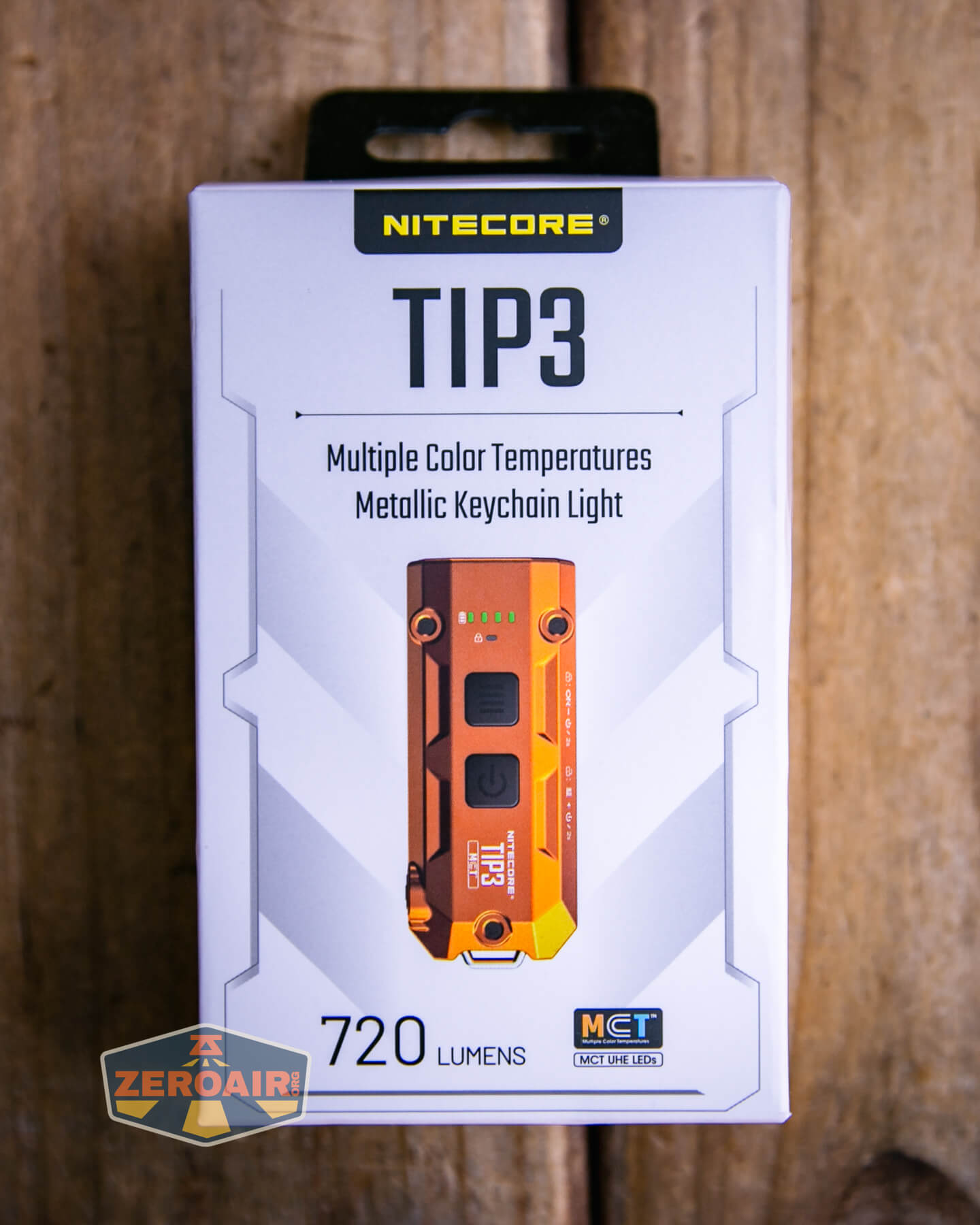
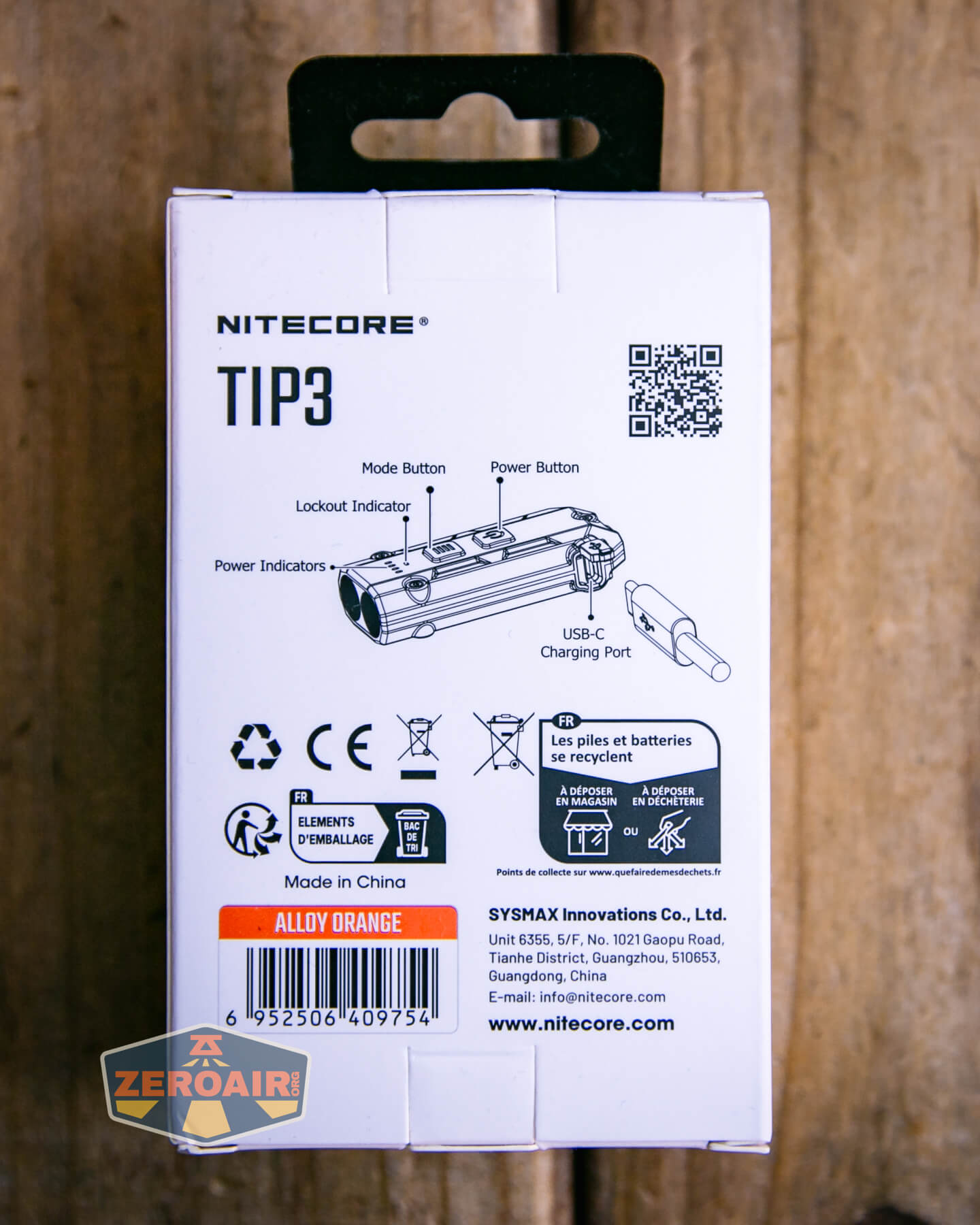
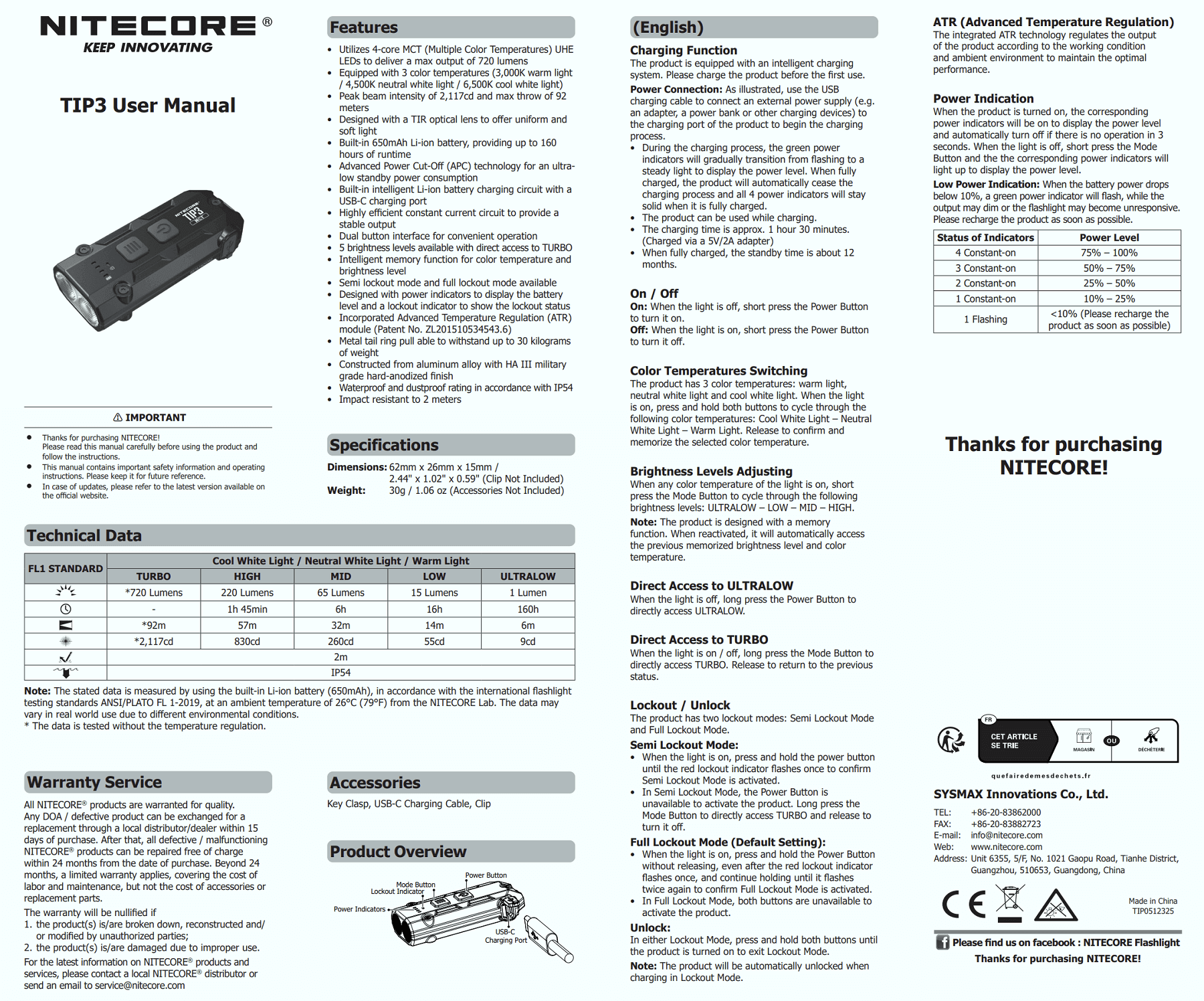
Build Quality and Disassembly
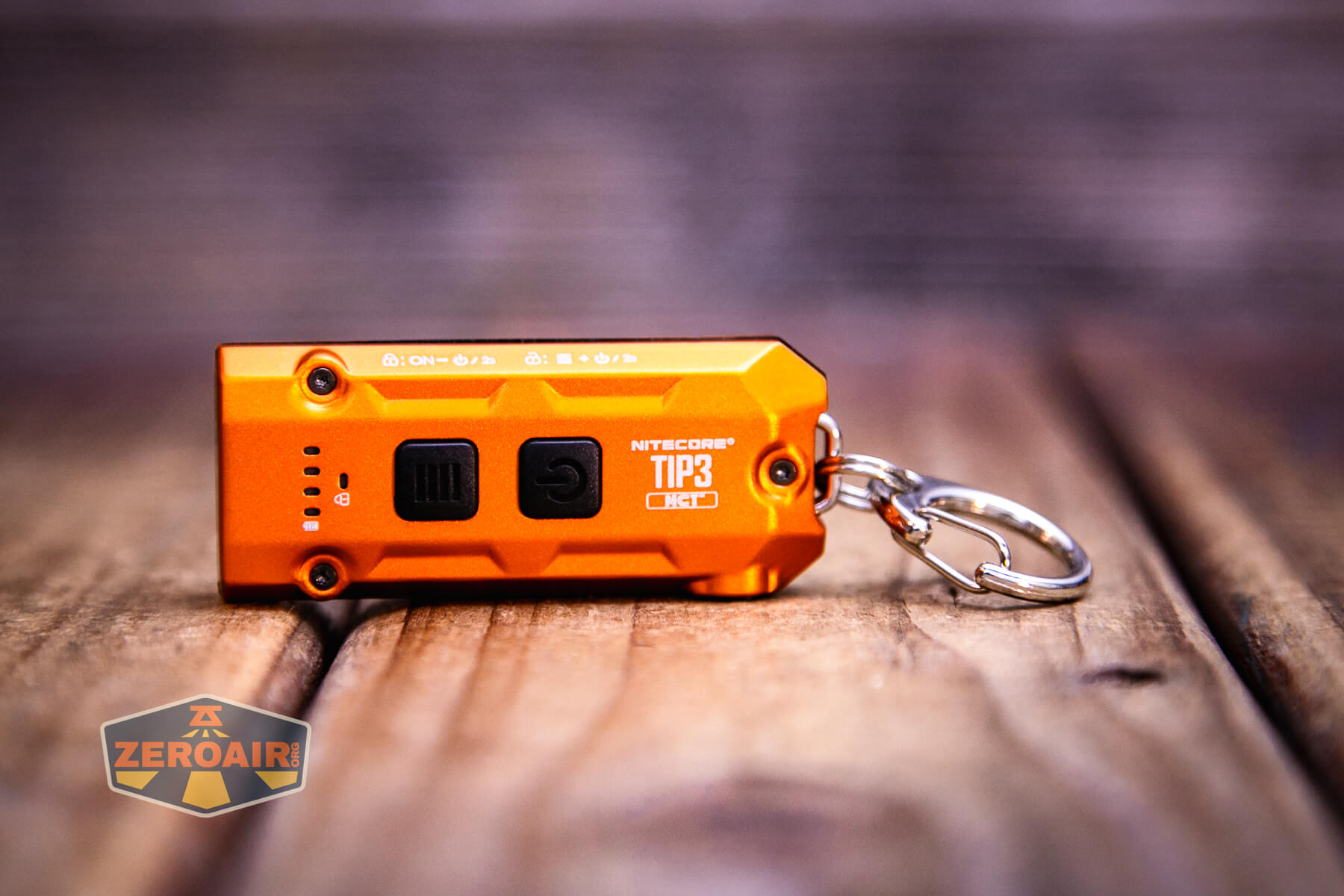
The Nitecore TIP3 keychain flashlight is quite a bit like the Nitecore TUP3. In my case, they share a body color (orange), but they also have similar build quality, interface, and switch setup. They even share the defining characteristic of offering warm, neutral, and cool white output.
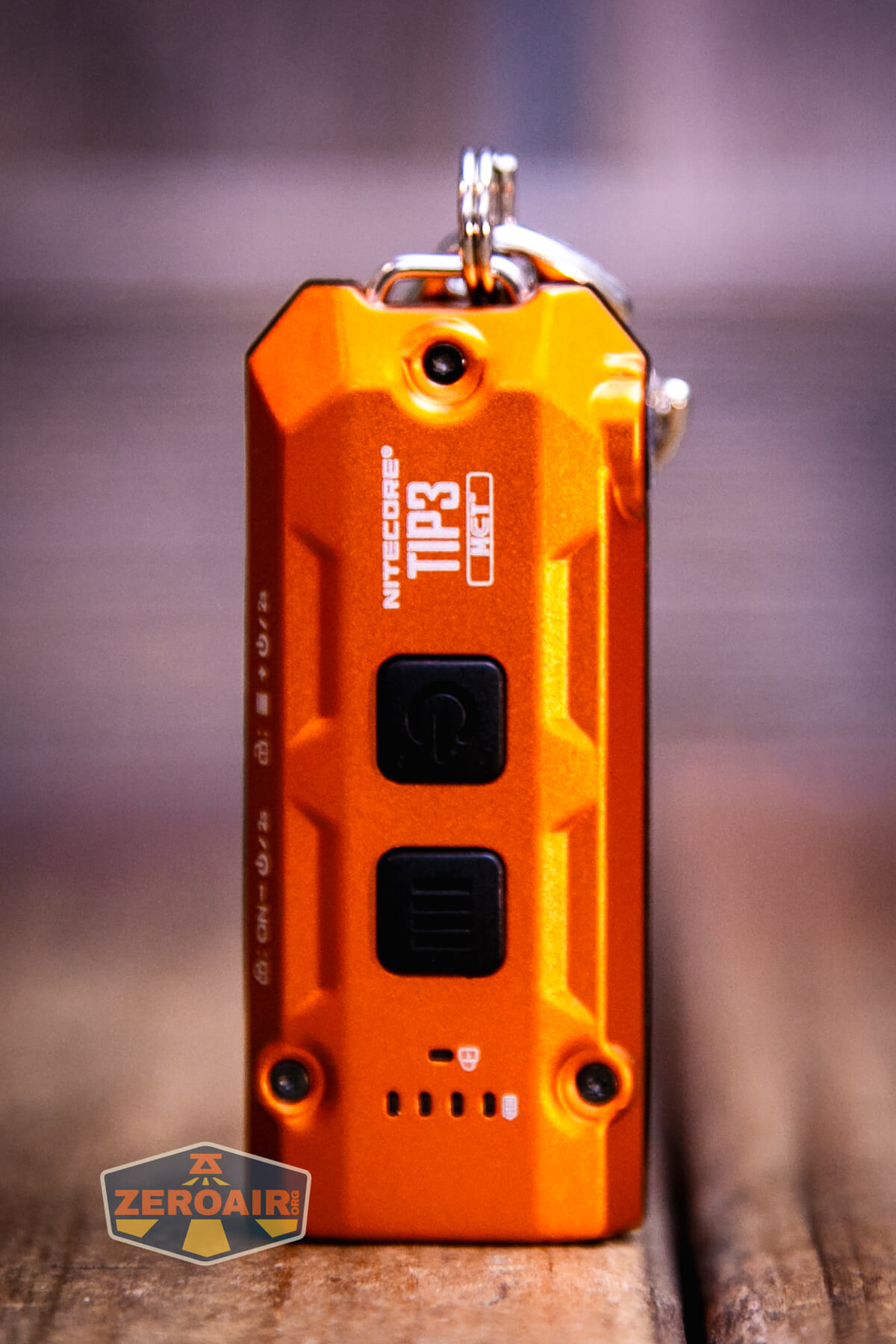
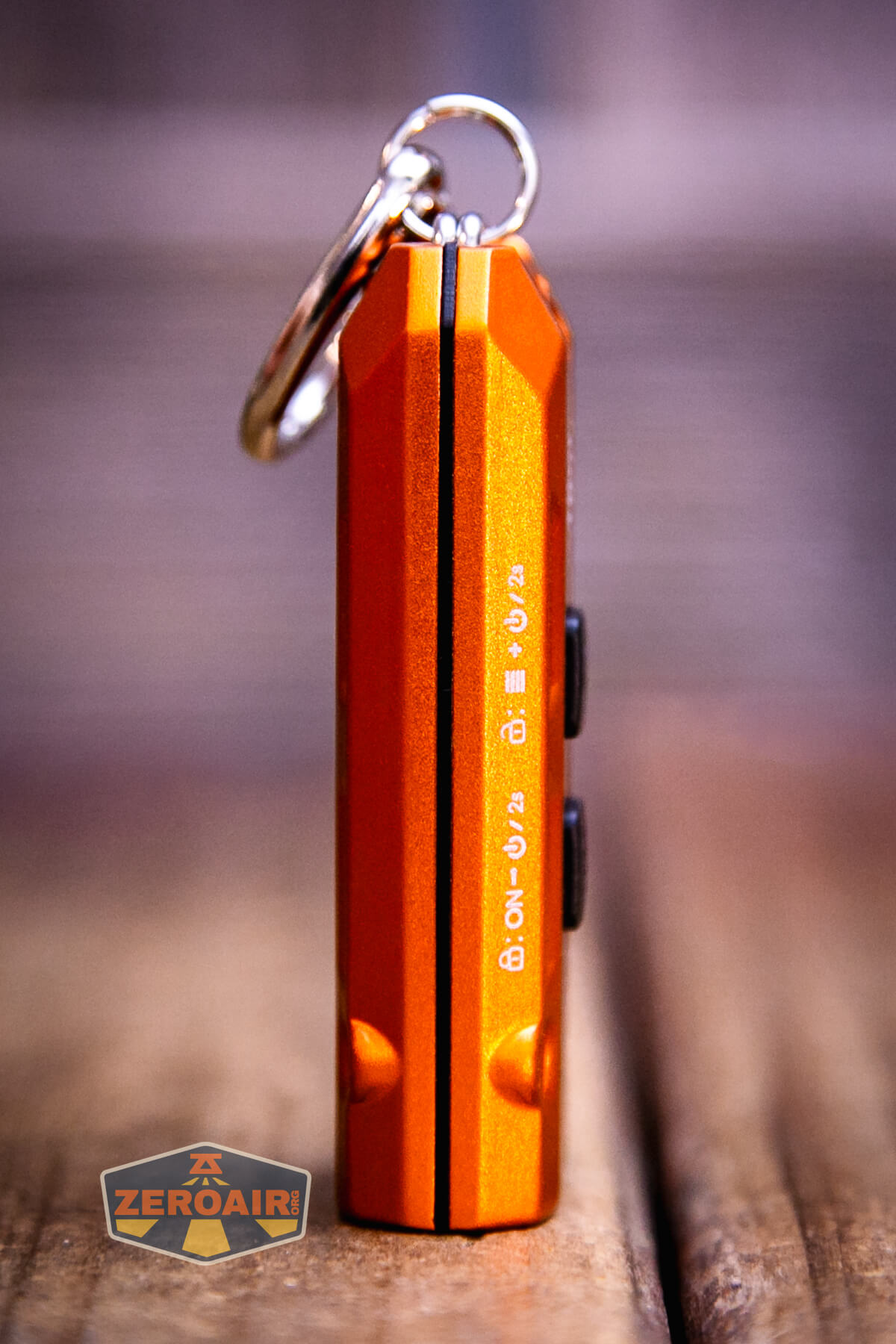
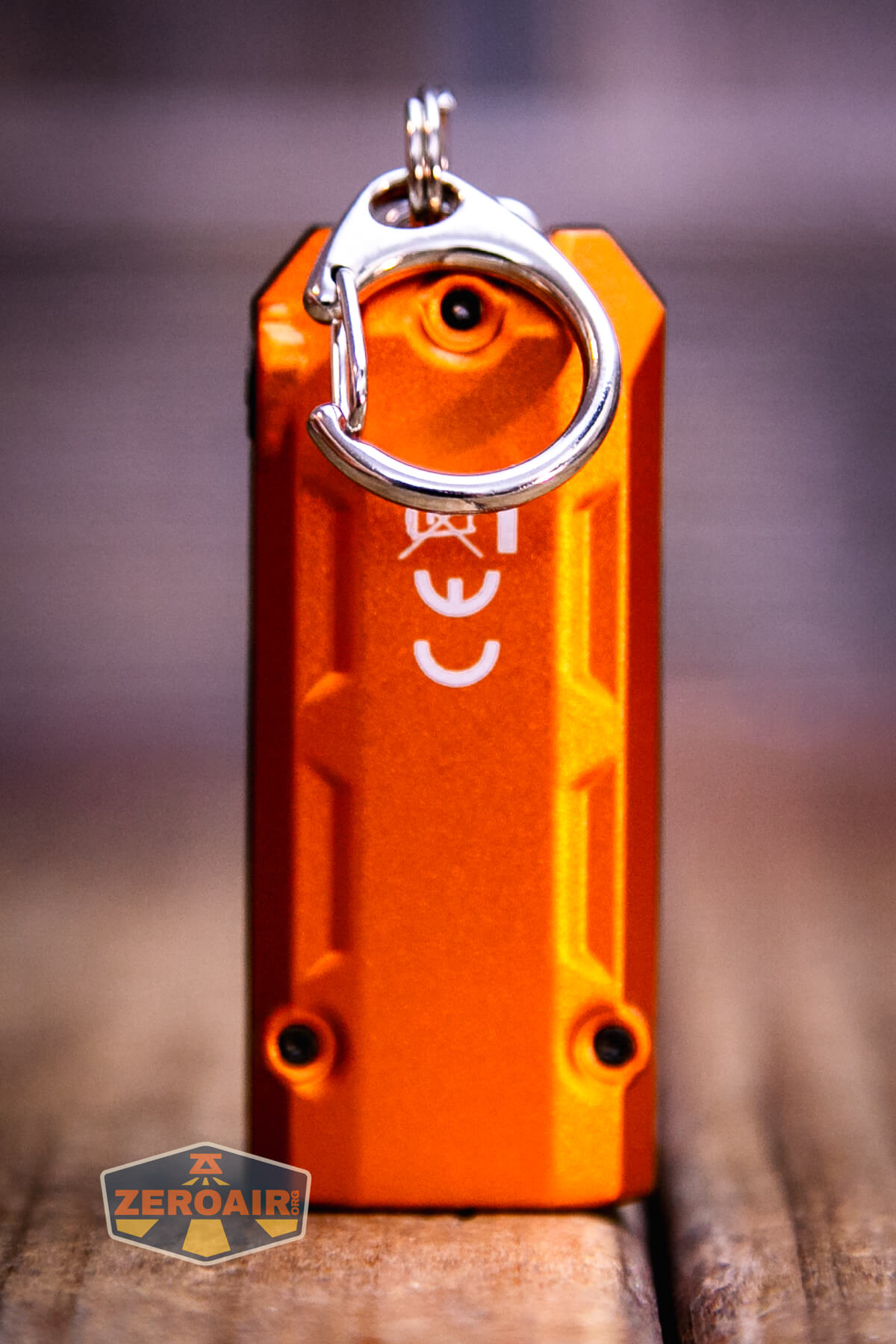
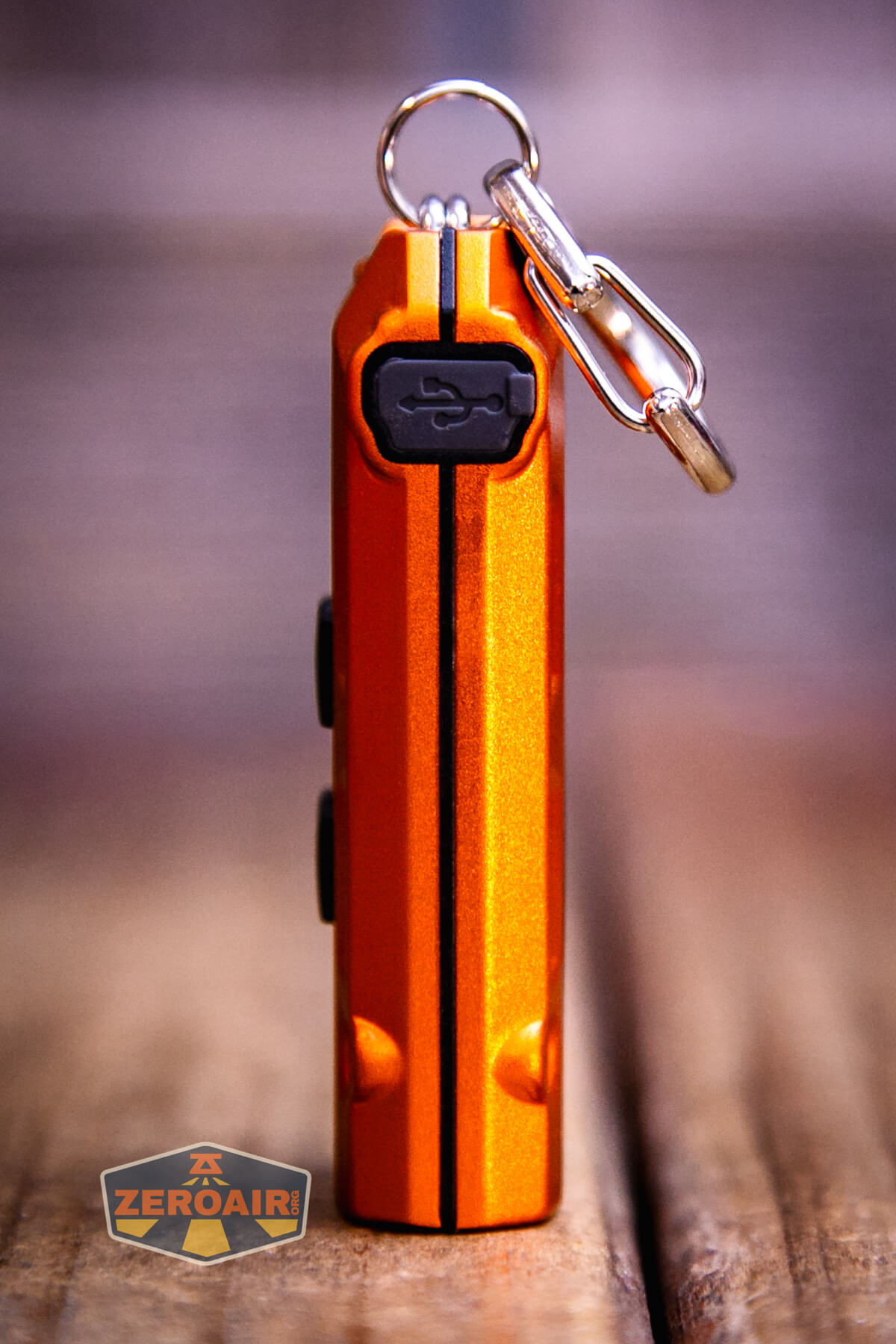
The build quality seems fine, but I didn’t take the light apart at all. Both sides have three TORX screws, so it is possible to get in there!
Size and Comps
Dimensions L-2.44″ x W-1.02″ x H-0.59″
Weight 1.06 oz
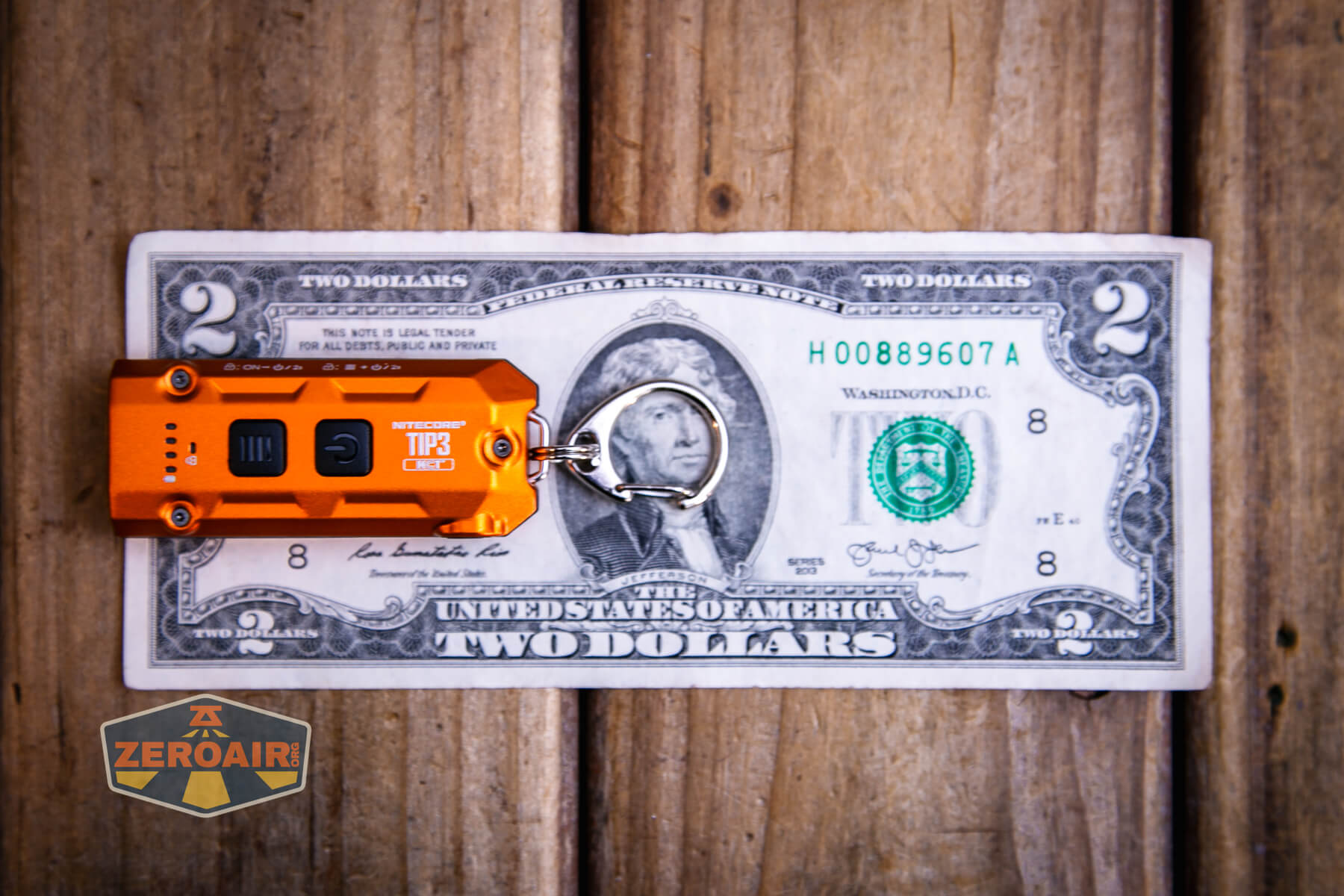
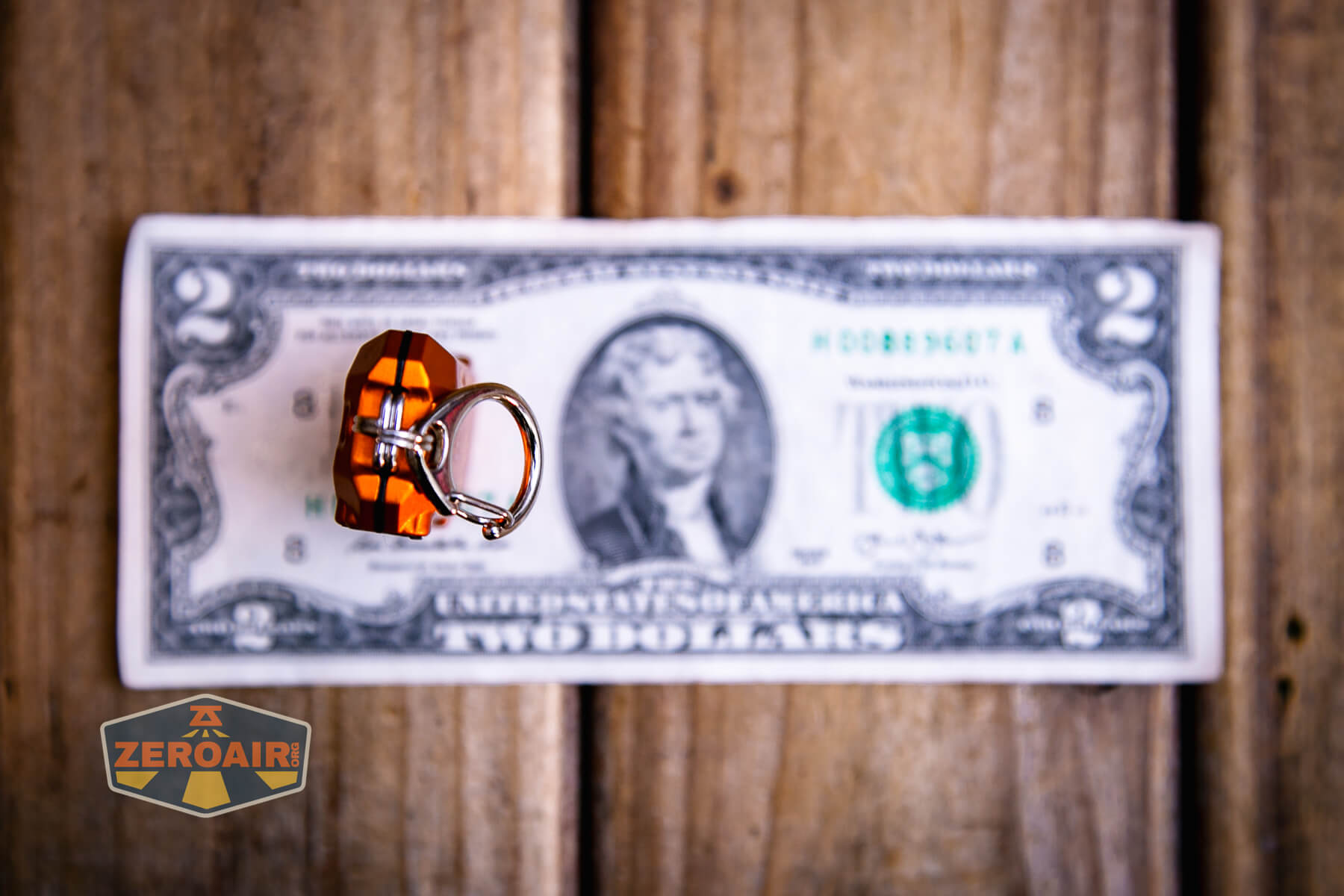
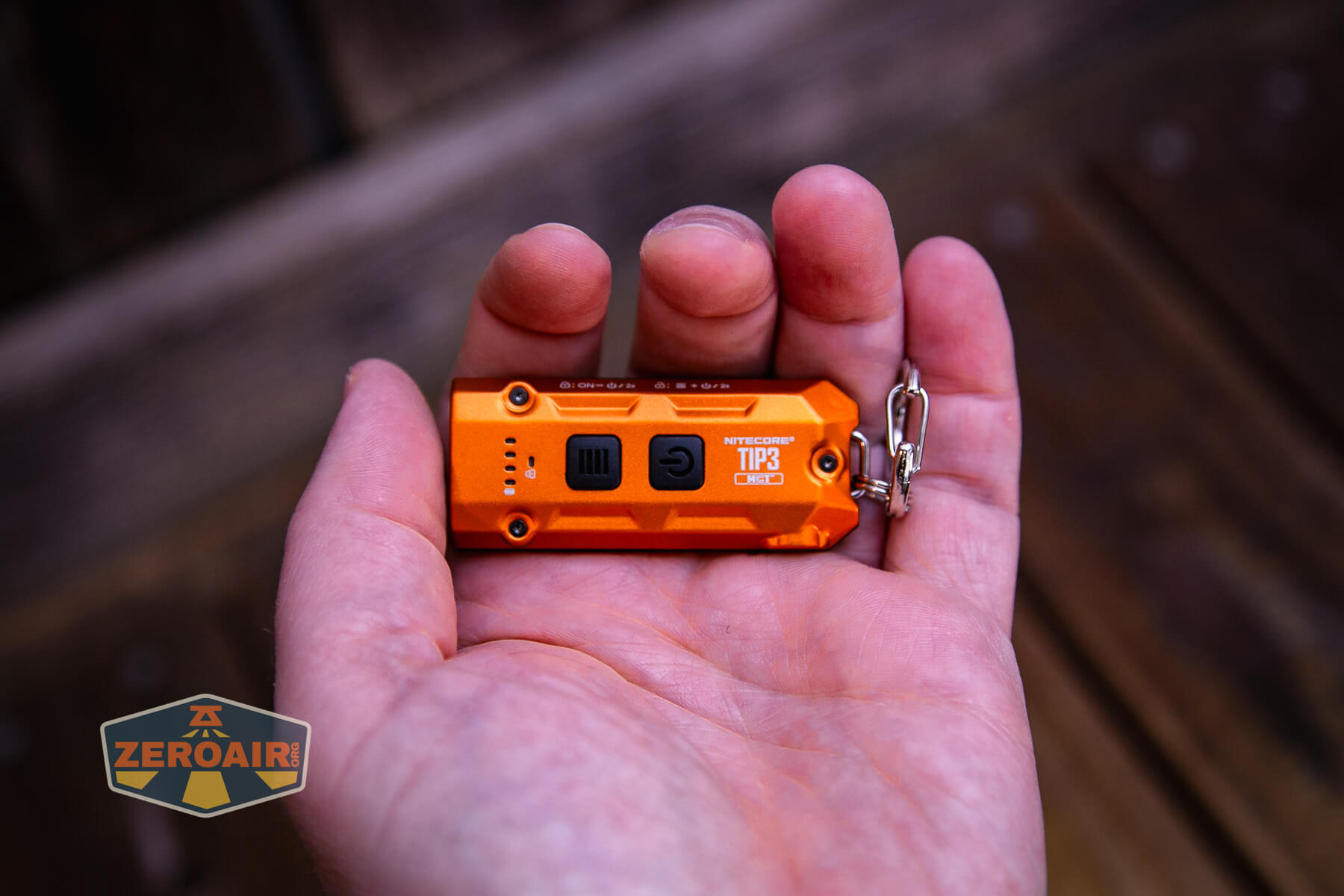
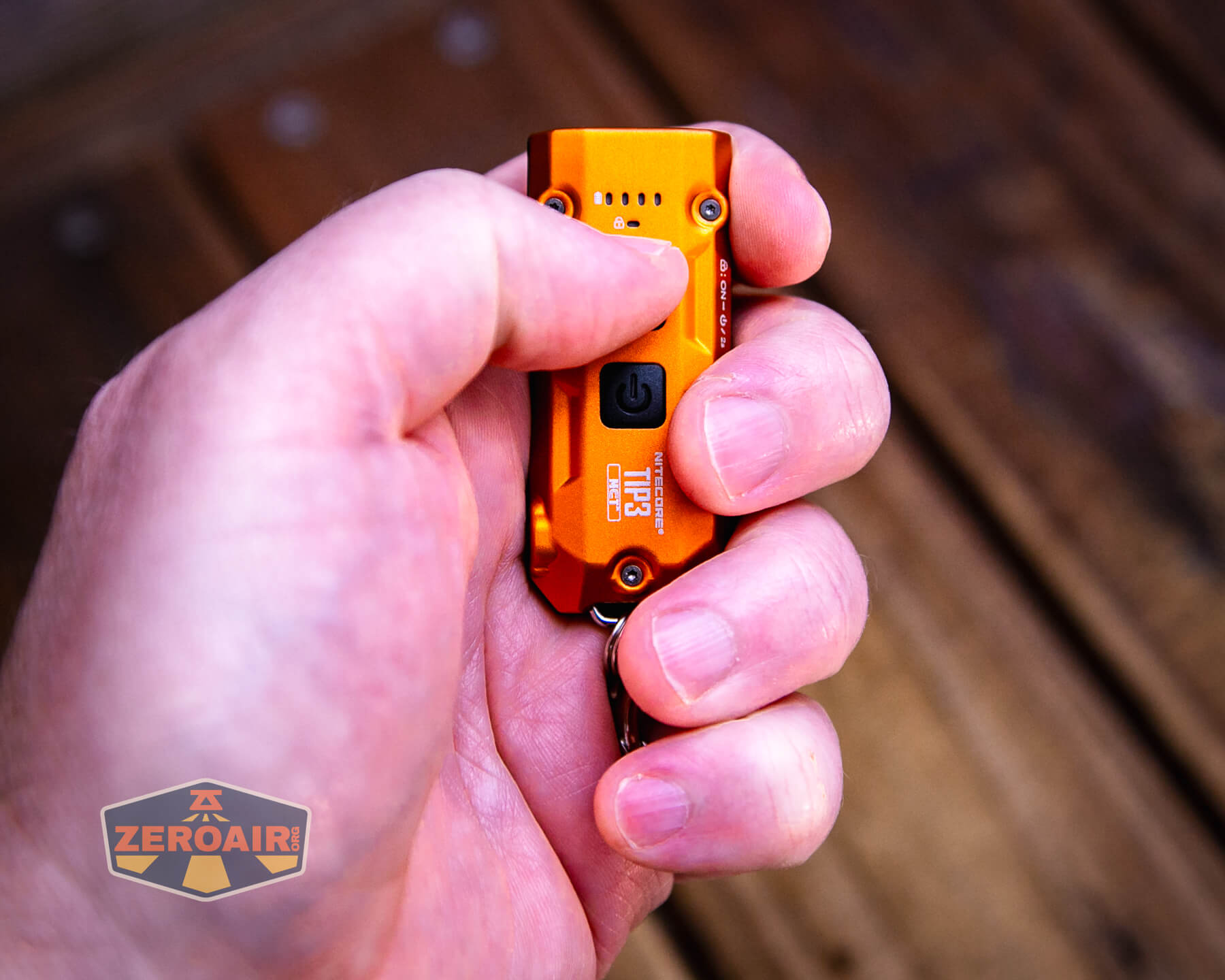
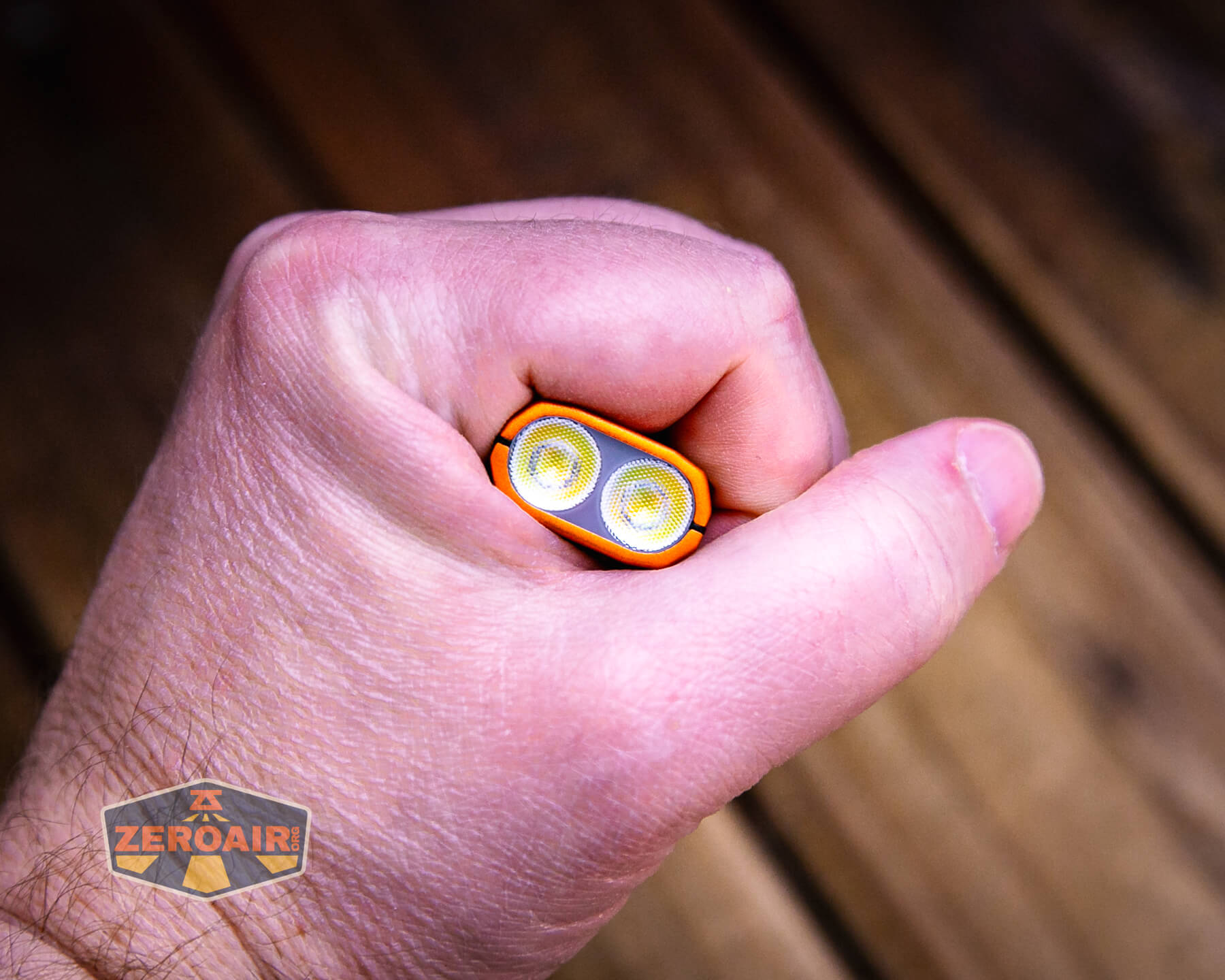
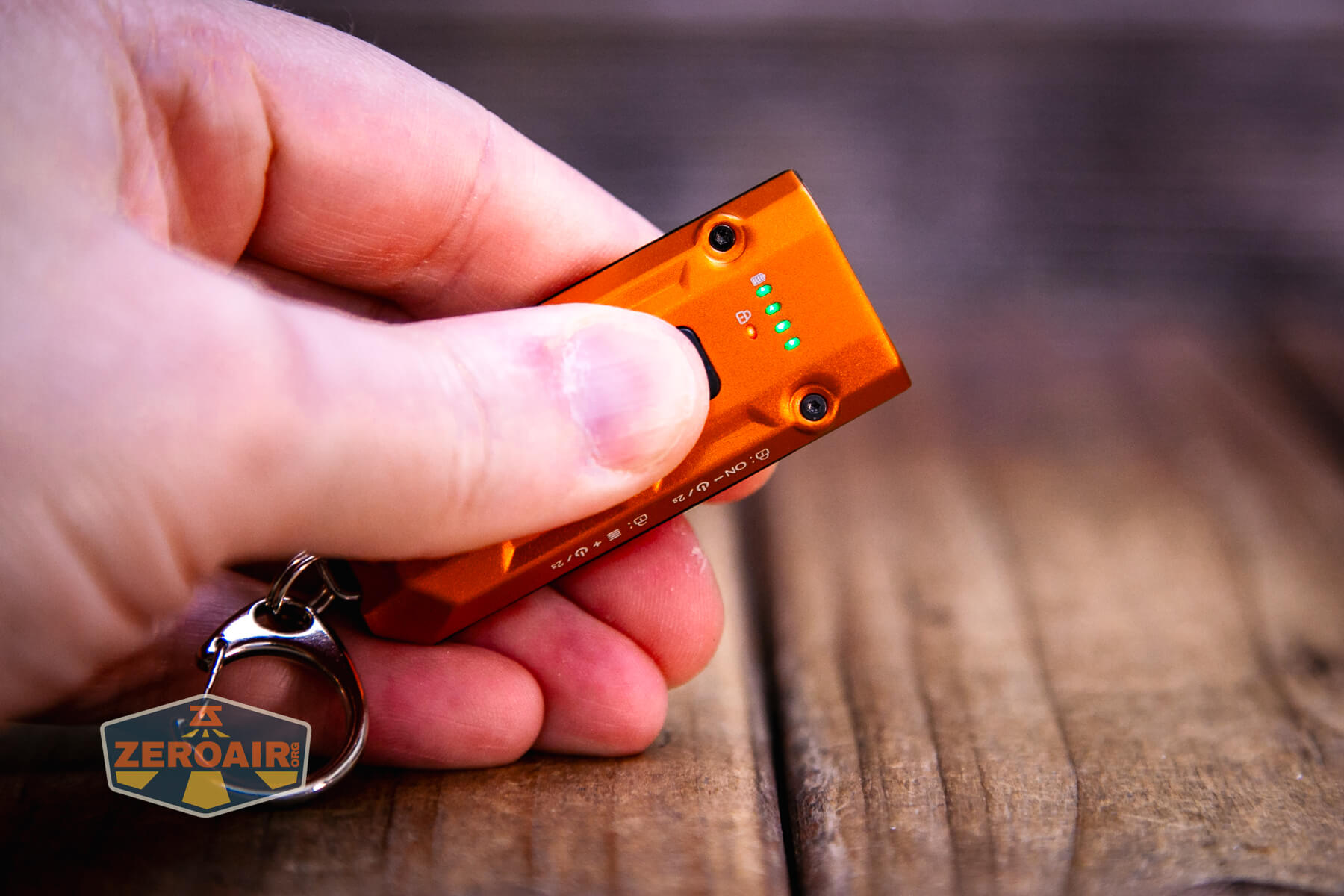
Here’s the light in hand:
Here’s the test light with the venerable Convoy S2+. The version below is a custom laser-engraved Convoy S2+ host by GadgetConnections.com. I did a full post on an engraved orange host right here! Or go straight to GadgetConnections.com to buy your Convoy S2+ now!
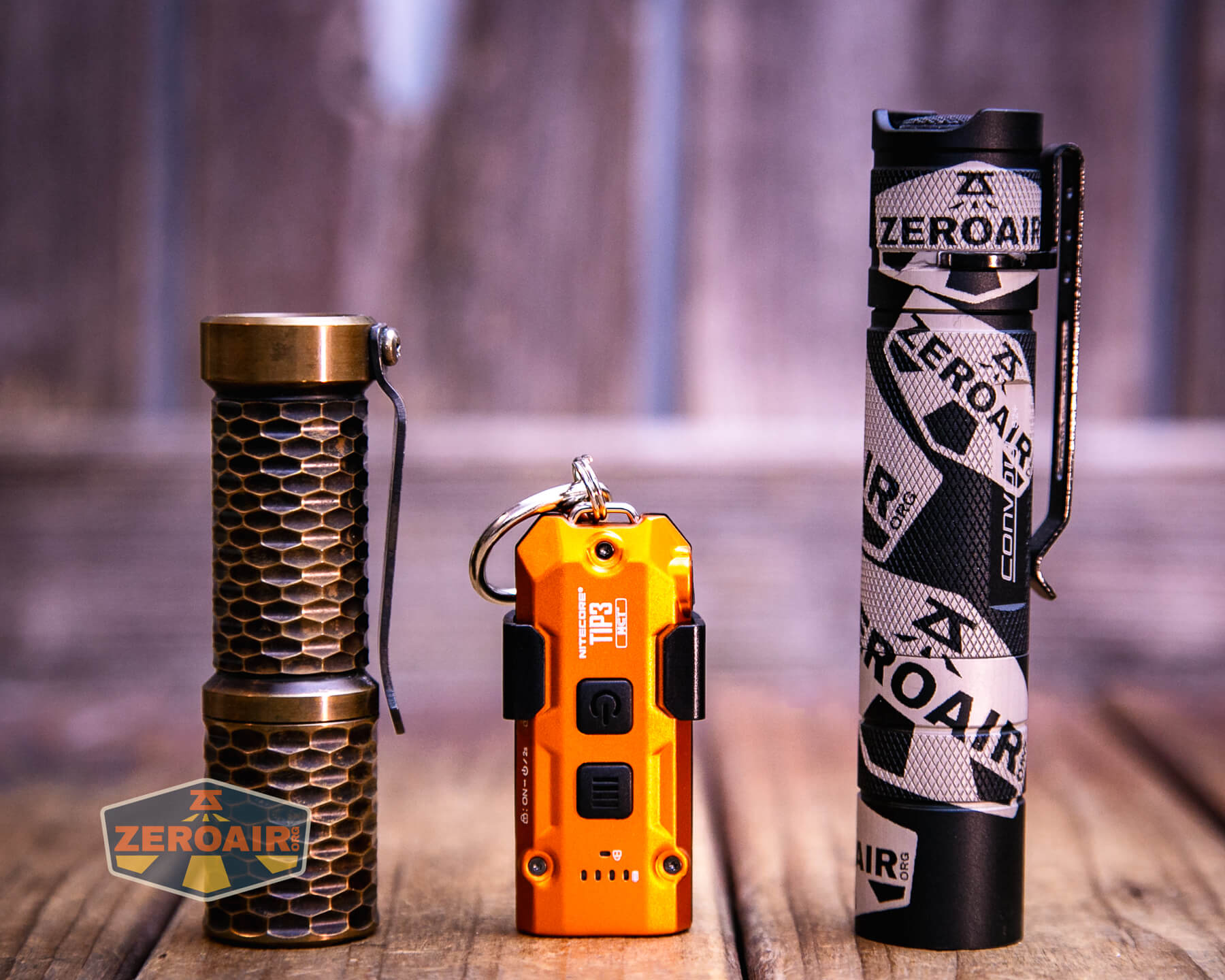
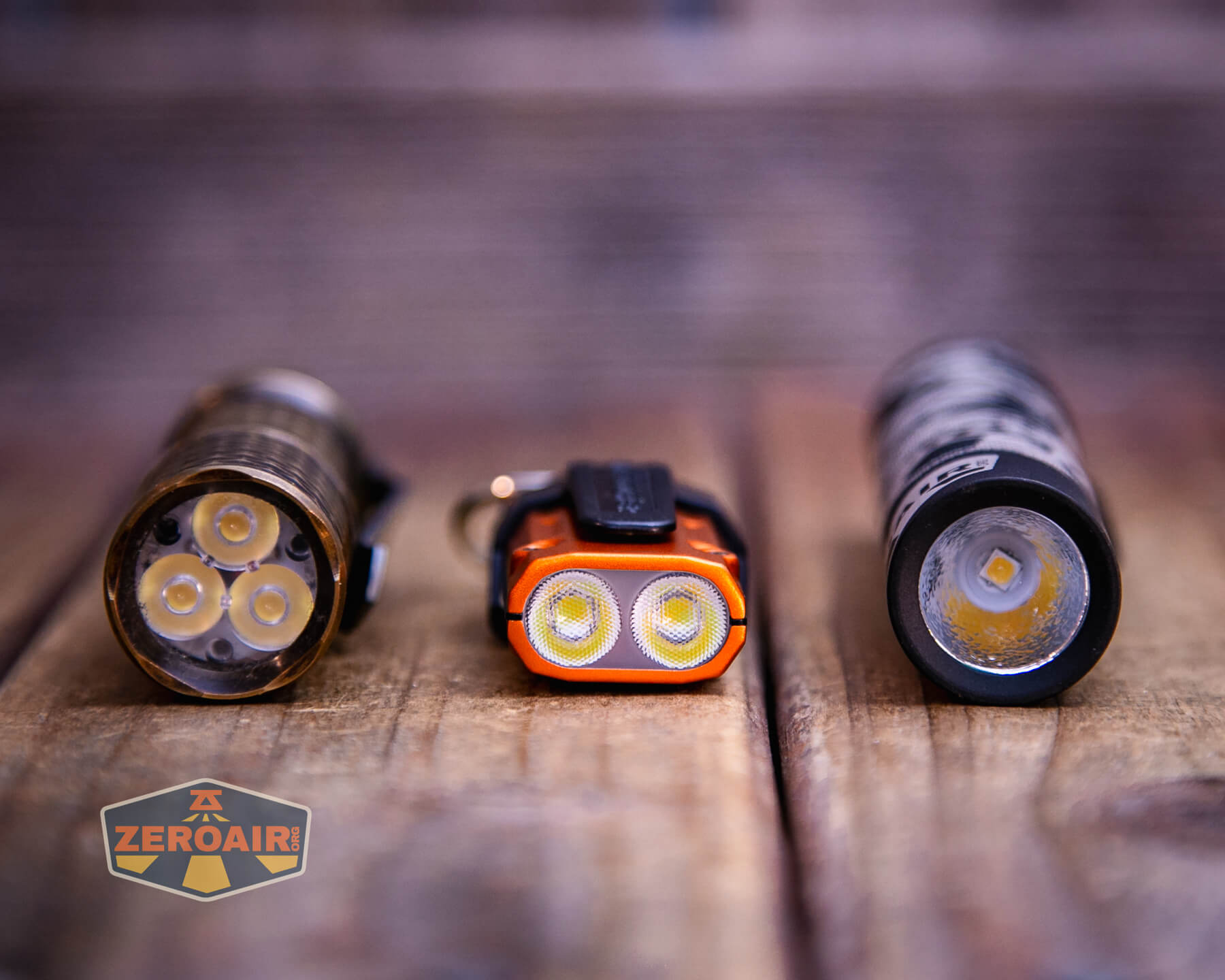
Also in the photo above, my Standard Reference Material (SRM) flashlight is the Hanko Machine Works Trident, an 18350 light. While I have not reviewed or tested the Gunner Grip version seen here, I have tested a Hanko Machine Works Trident Total Tesseract in brass. I love the Trident, and it’s a striking contrast to the inexpensive Convoy S2+, another great SRM.
Retention and Carry
The Nitecore TIP3 keychain flashlight has a plastic pocket clip included. It hugs the whole body of the light.
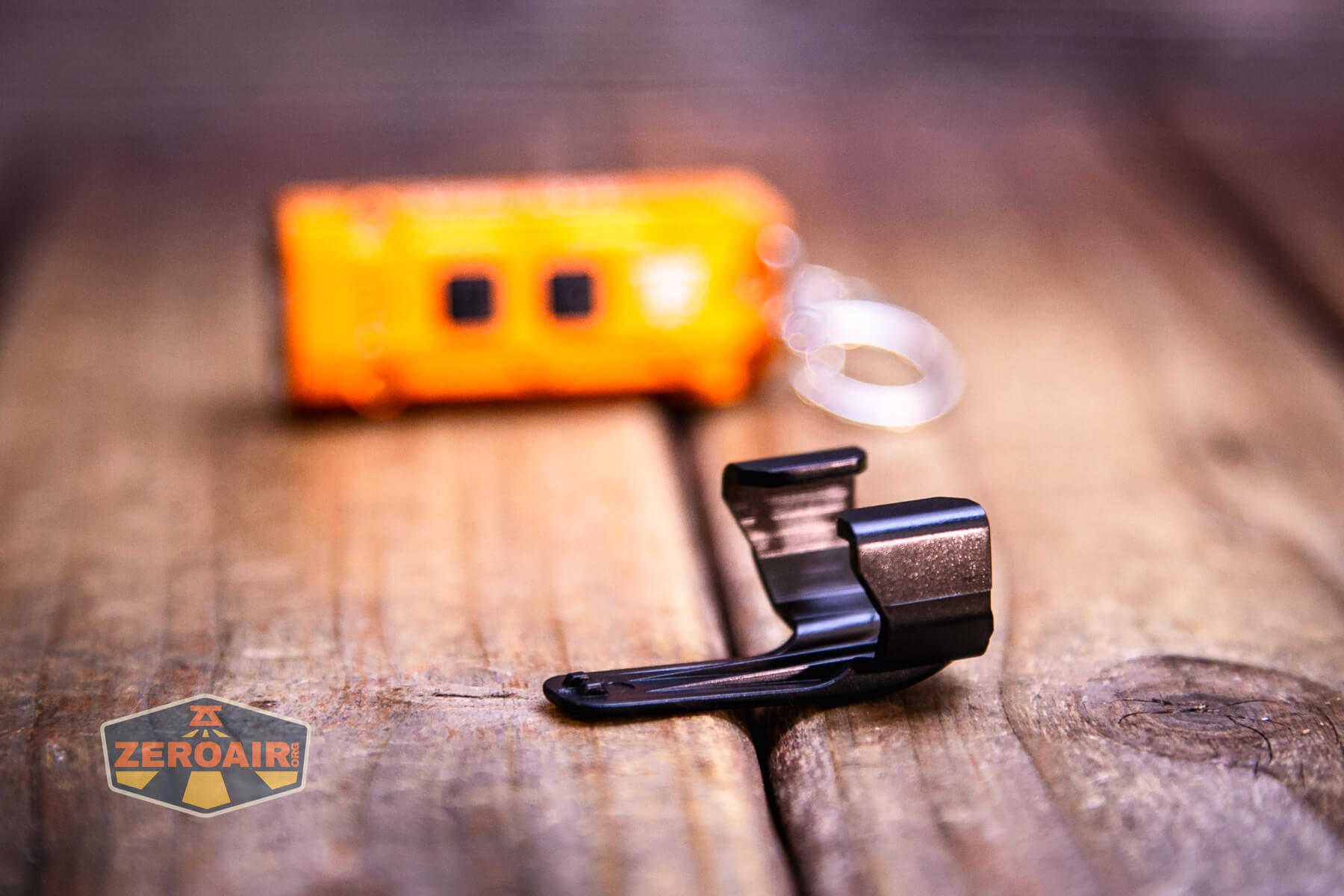
It can be mounted various ways – specifically, there are four points for attachment.
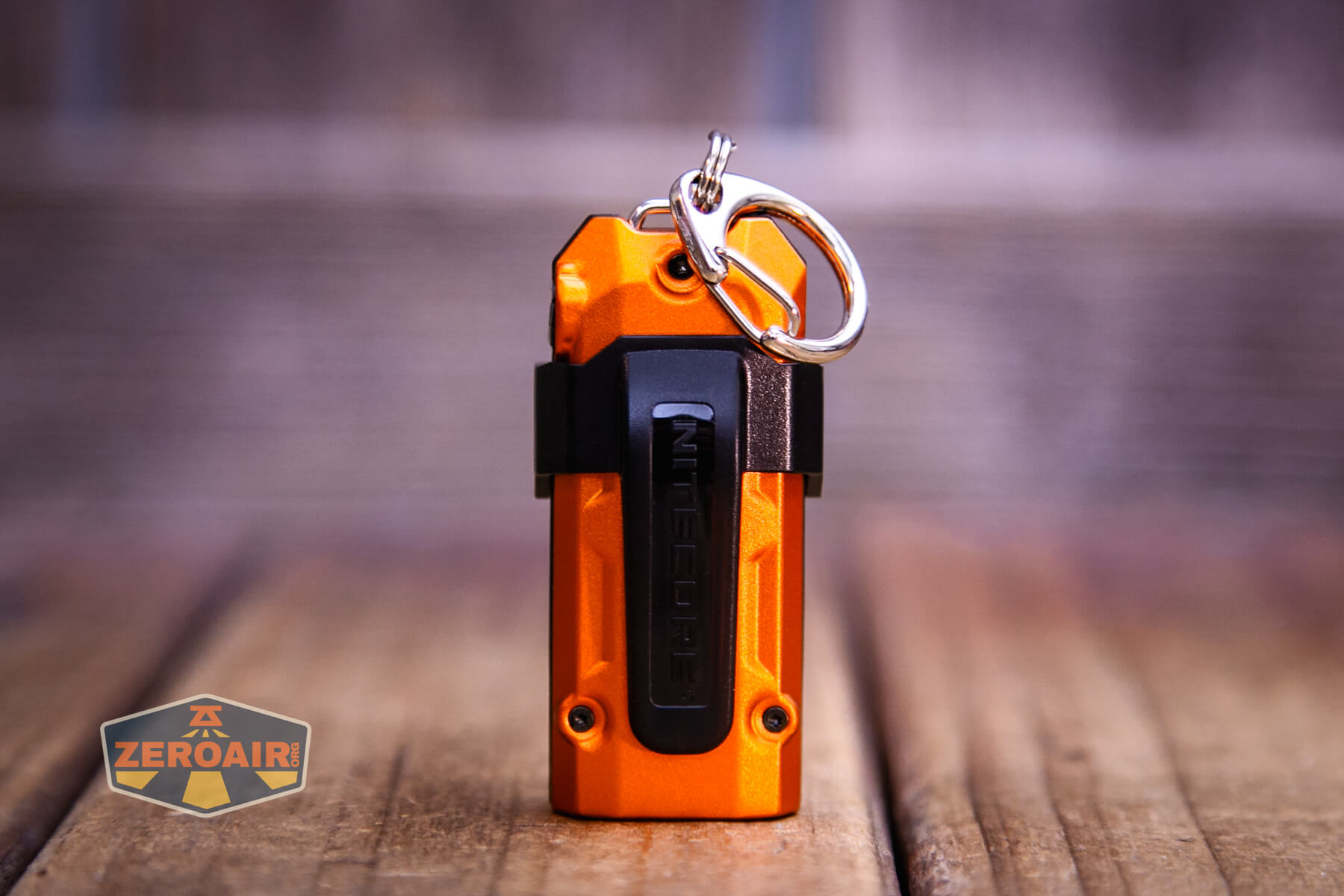
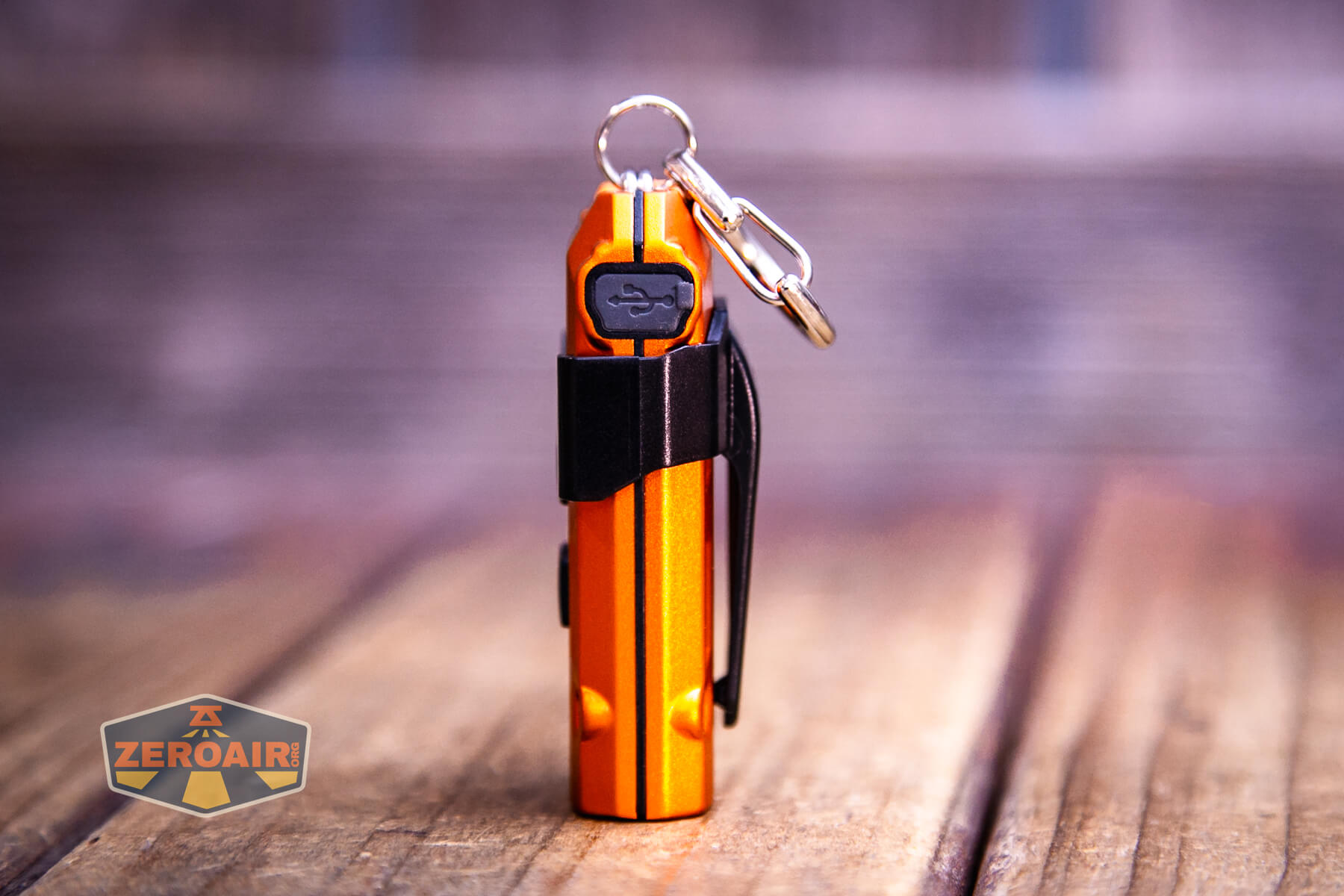
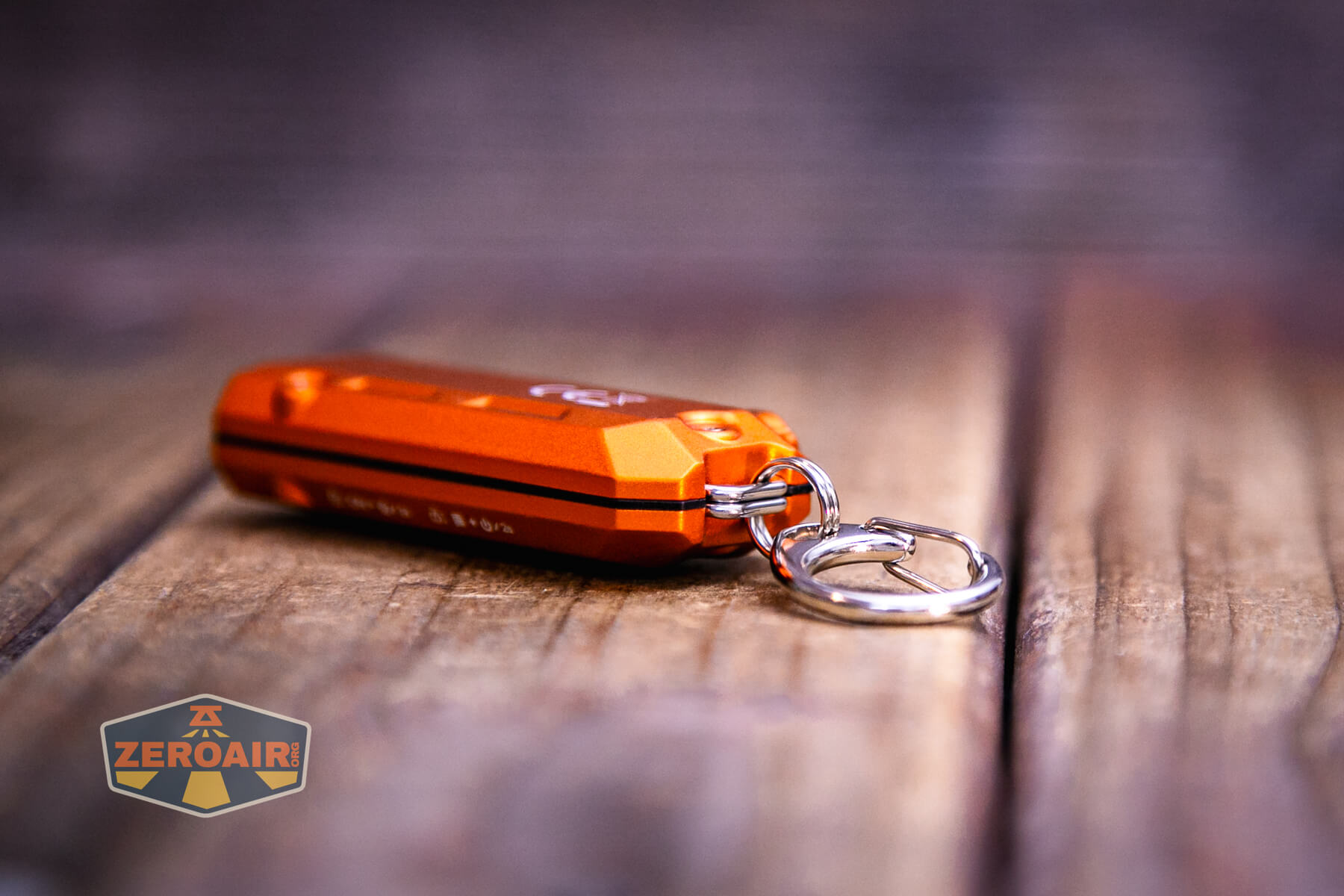
This is a keychain light, so there’s a keychain loop on the body.
Power and Runtime
The Nitecore TIP3 keychain flashlight has a built-in internal cell, which is stated as a 650mAh battery. Nitecore has been accurate in the past with their other similar models. This isn’t a user-replaceable battery.
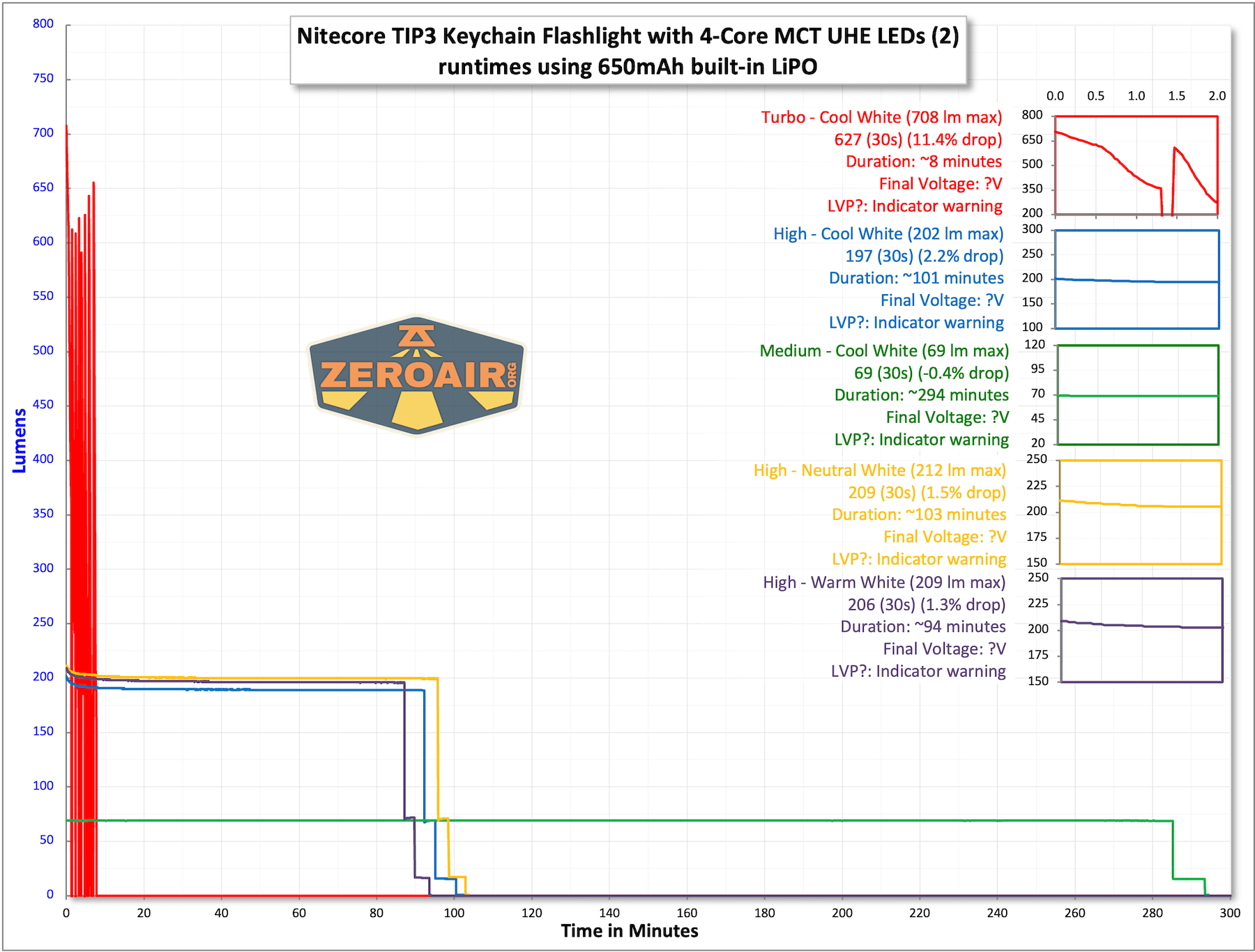
When testing turbo (which is momentary-only) on the Nitecore TIP3 keychain flashlight, I clicked and held the switch until the light seemed to have stepped down to the high output level. Then I released and soon after, clicked again.
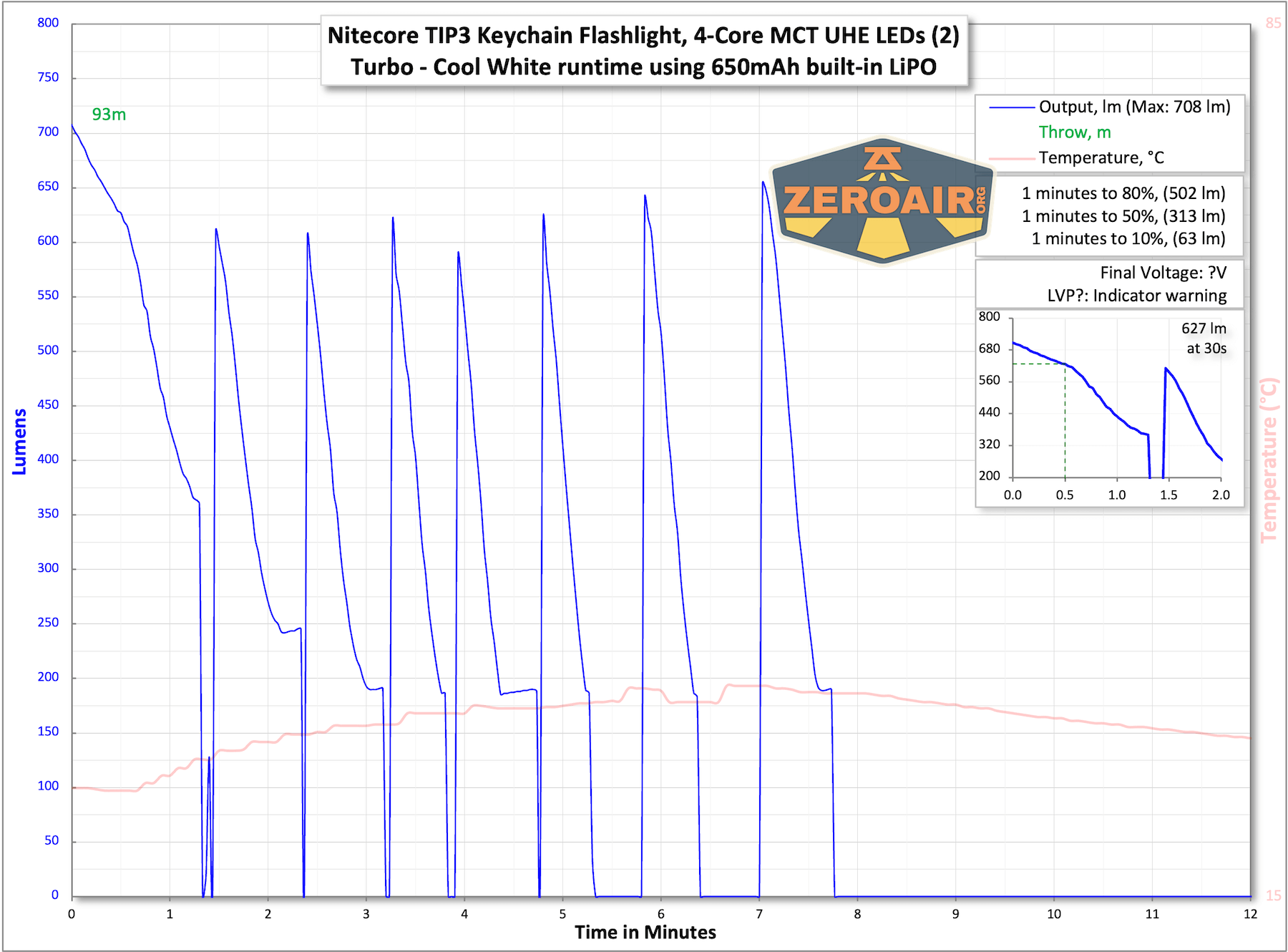
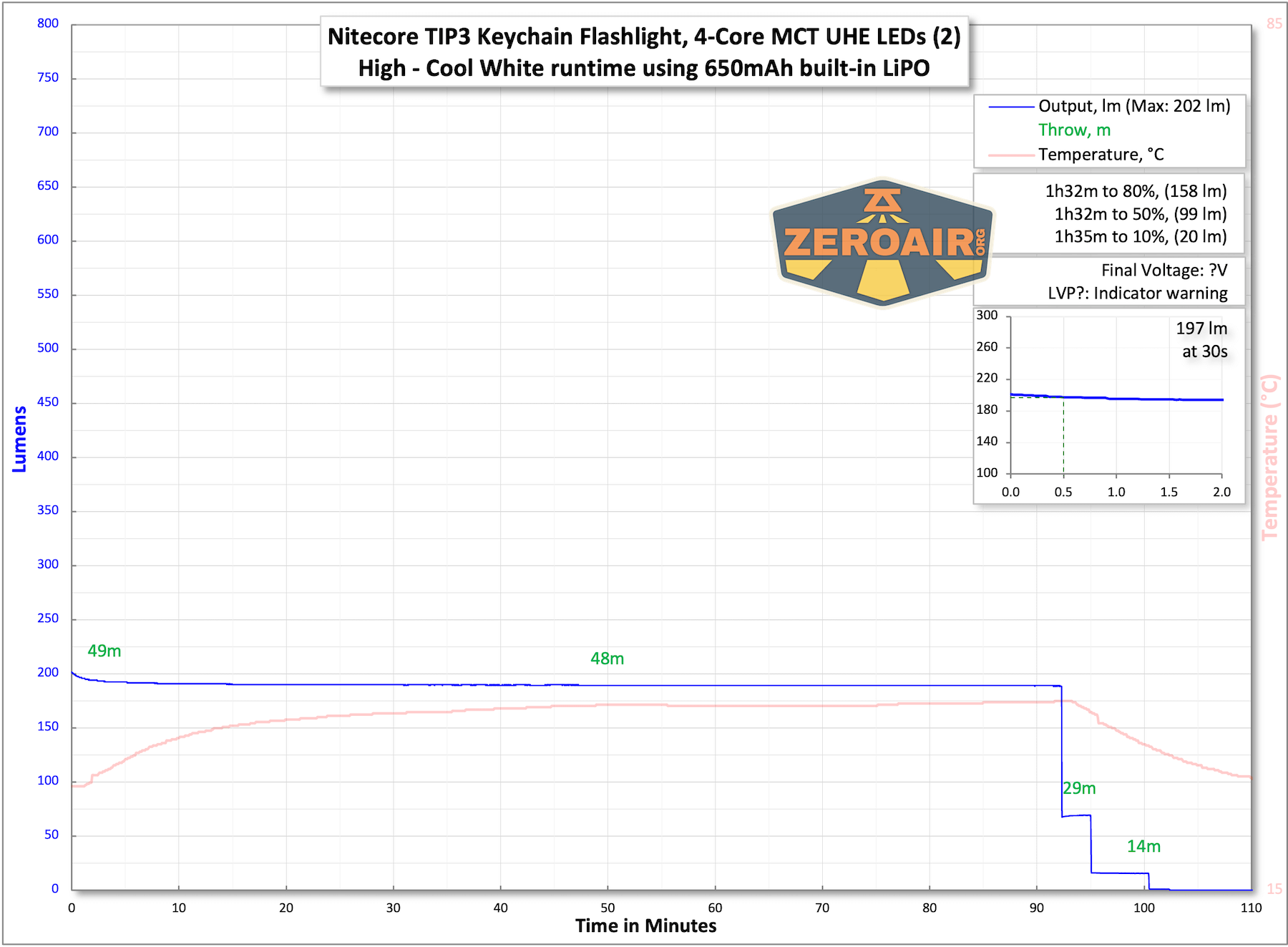
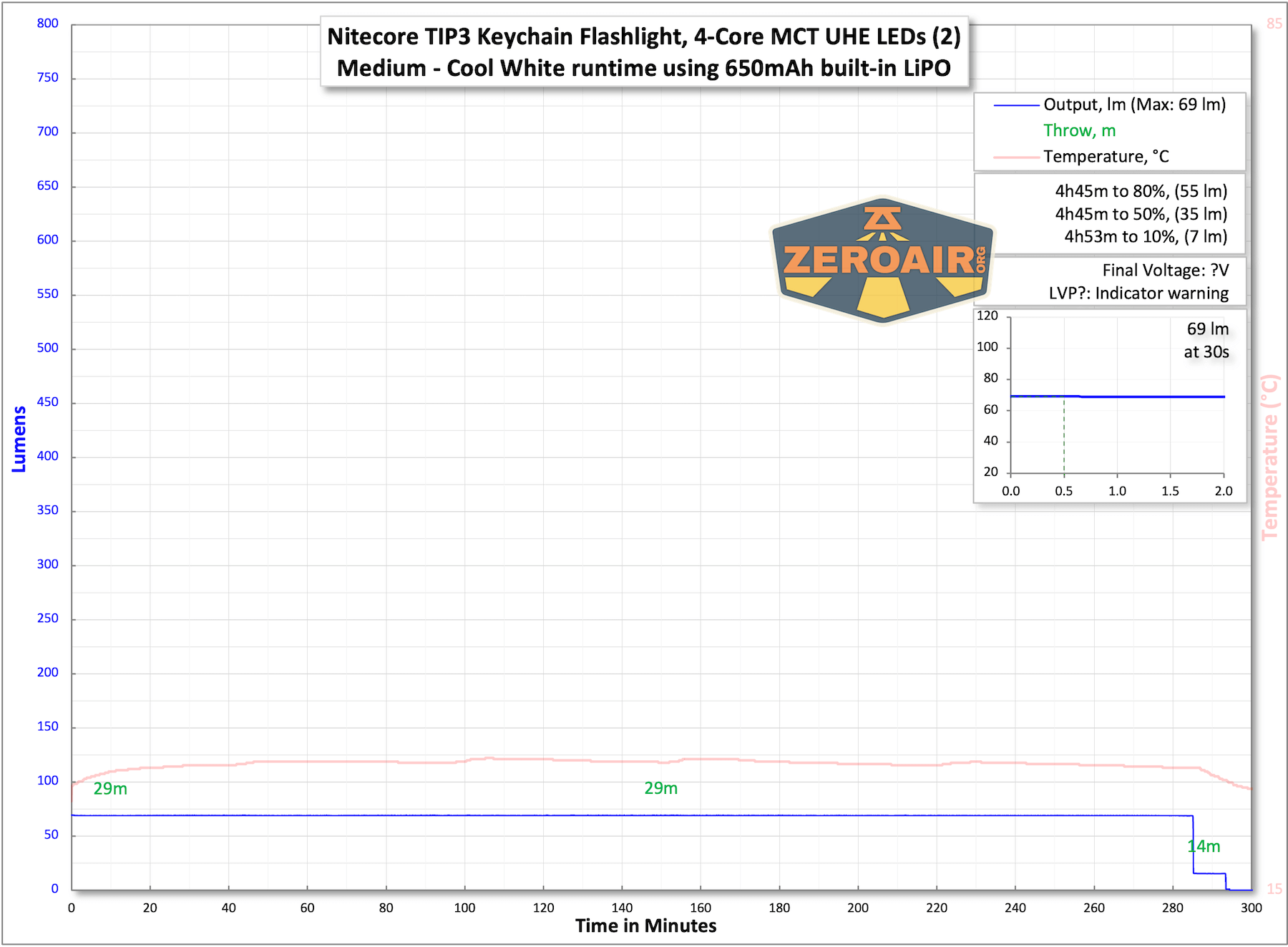
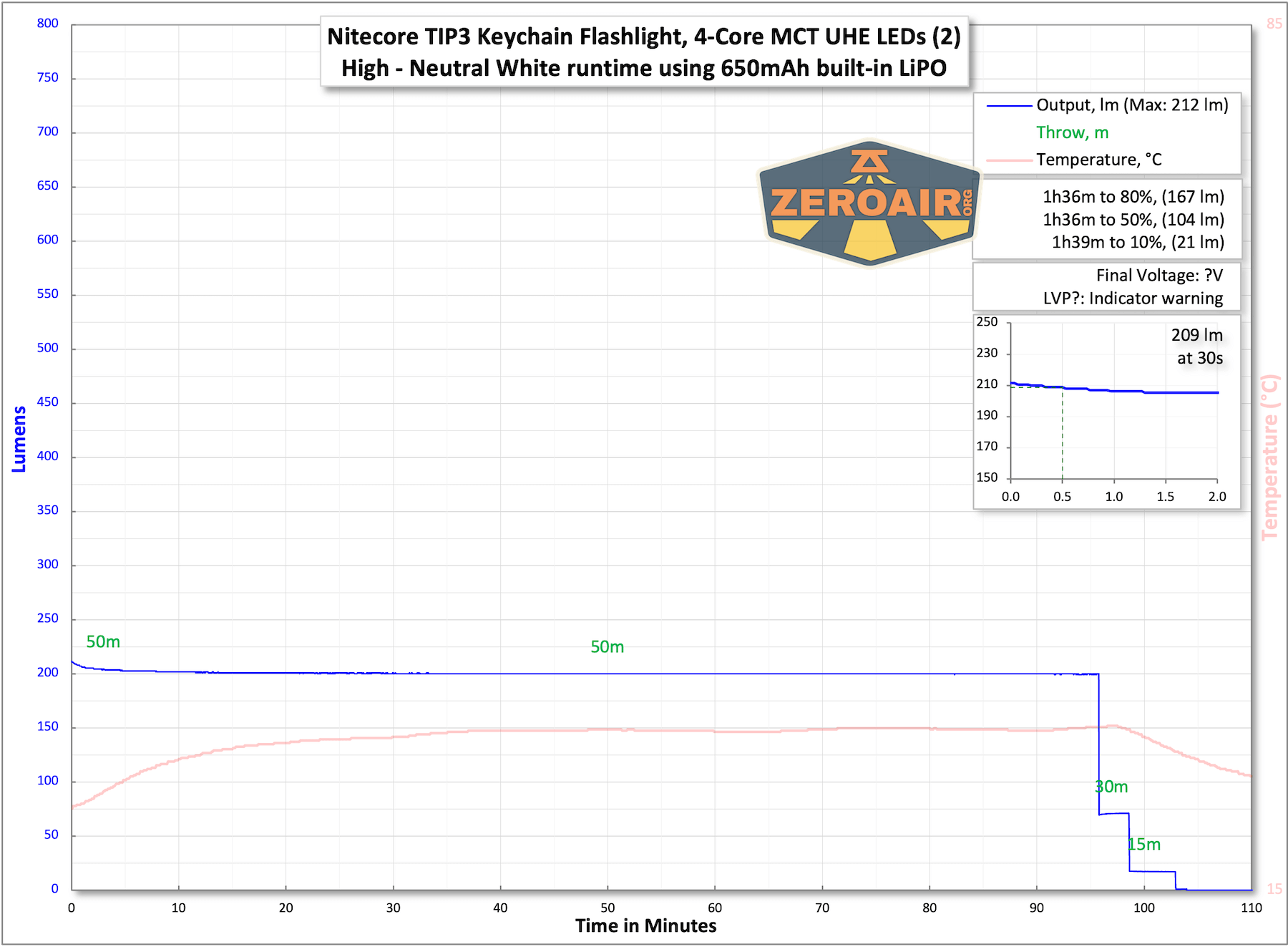
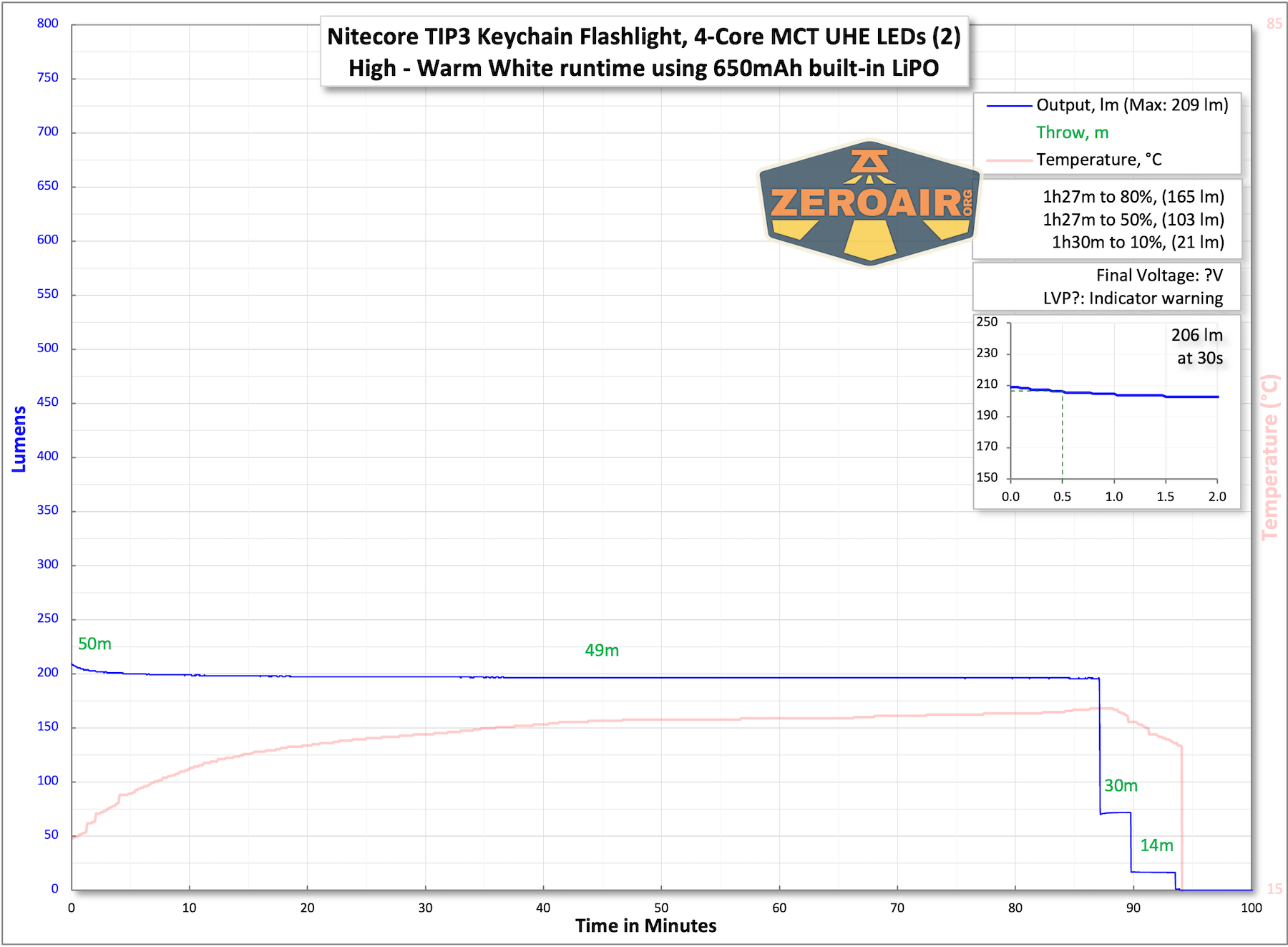
The temperature lines in these charts are included as general context, not precise measurements. The values represent the range (min to max) during testing, but should not be taken as exact readings. A temperature sensor is not always attached to the bezel (or even the hottest spot, assuming that could be defined). Even with ideal placement, too many variables affect temperature to definitively state a specific max value.
Charging
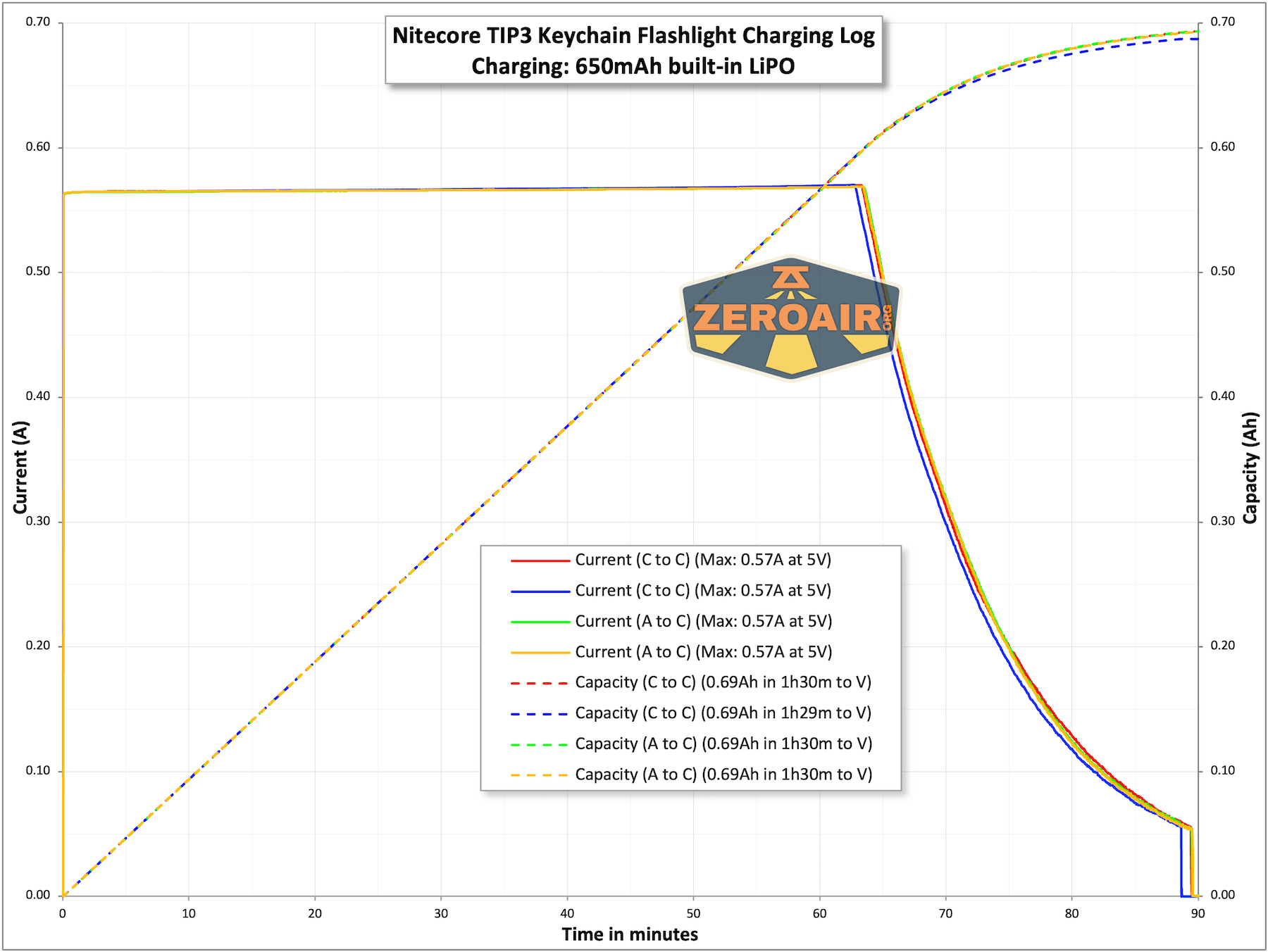
Charging is by USB-C.
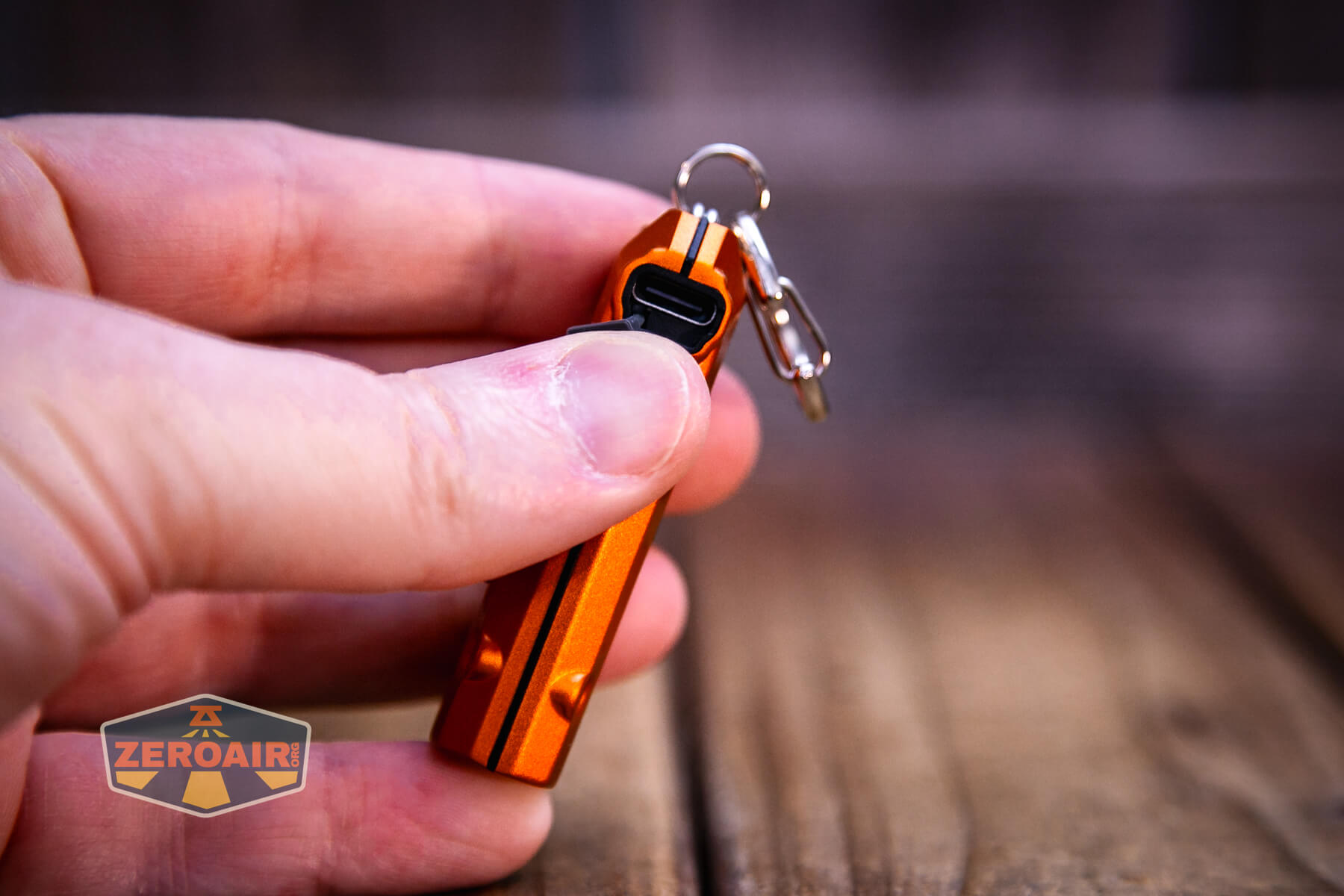
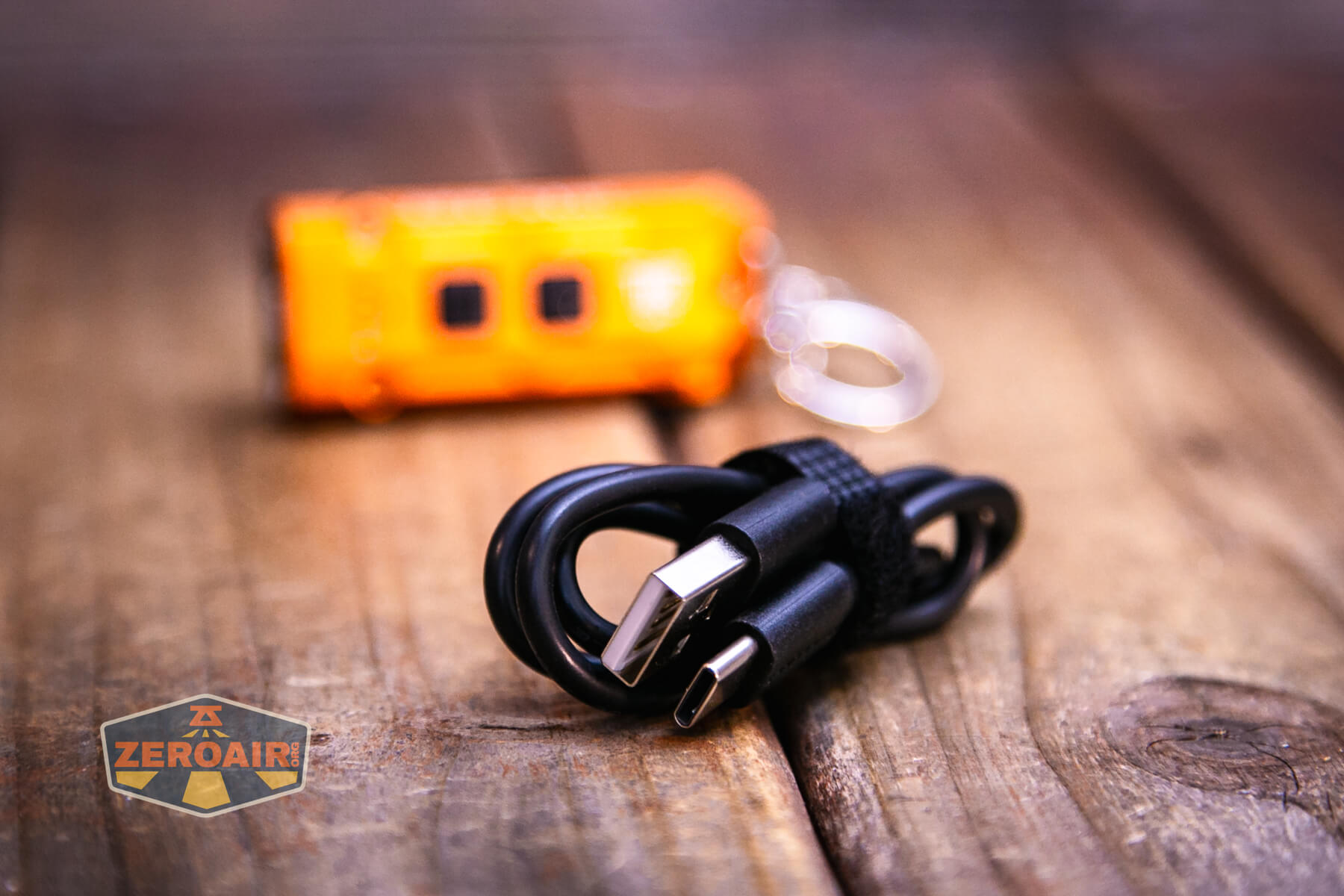
Nitecore includes a charging cable, too! It’s USB to USB-C.
Charging looks great, at around 1C, which in this case, is around 0.5A. This finishes in around an hour and a half.
Modes and Currents
| Mode | Mode Claimed Output (lm) (same for all CCTs) |
Claimed Runtime (same for all CCTs) |
Measured Lumens |
|---|---|---|---|
| Turbo | 720 | – | Cool White: 627 Neutral White: 762 Warm White:627 |
| High | 220 | 1h45m | Cool White: 197 Neutral White: 209 Warm White: 206 |
| Mid | 65 | 6h | Cool White: 69 Neutral White: 73 Warm White: 72 |
| Low | 15 | 16h | Cool White: 16 Neutral White: 18 Warm White: 17 |
| Ultralow | 1 | 160h | Cool White: 0.95 Neutral White: 0.99 Warm White: 1.01 |
Pulse Width Modulation
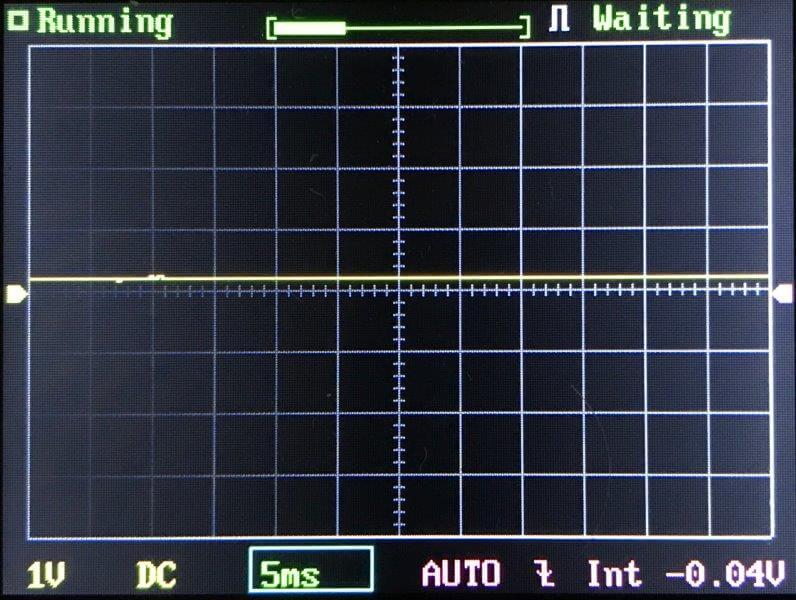
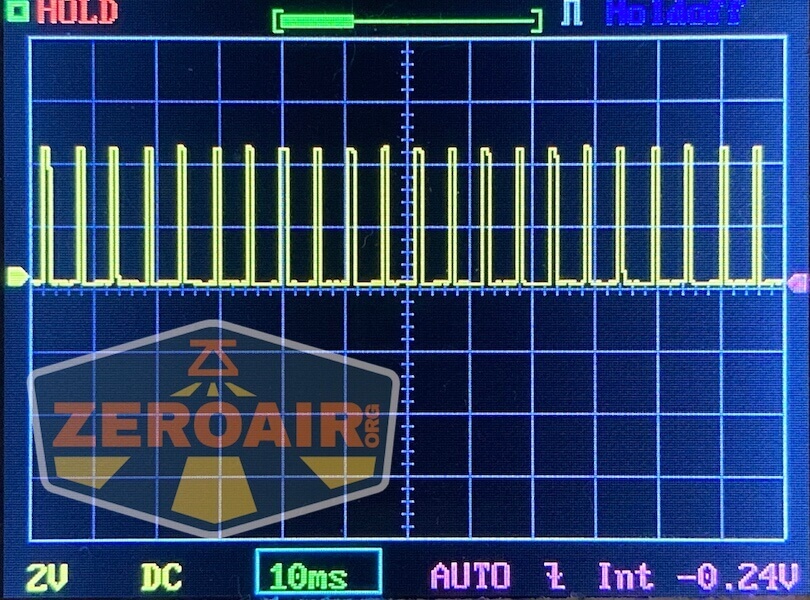
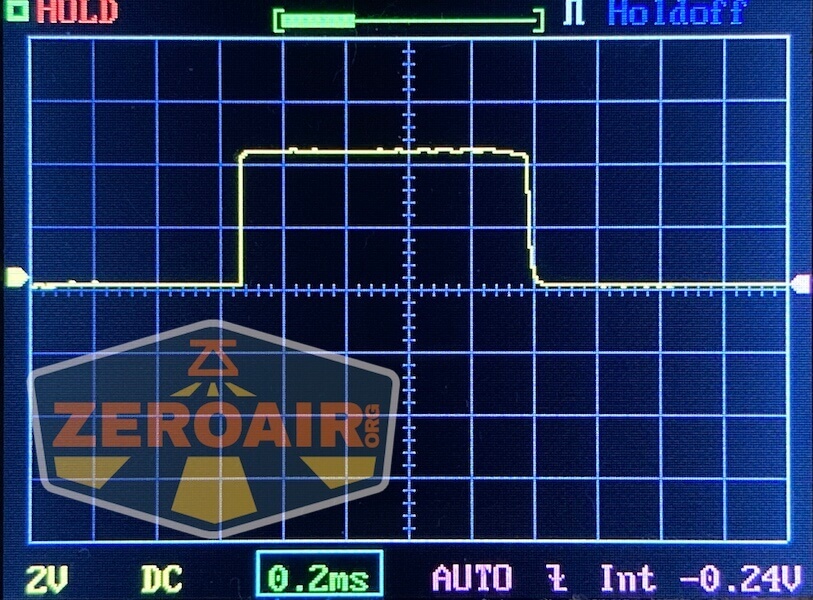
None of the modes really use PWM, but there’s a bit of waviness. These are the same for all three CCTs, so I didn’t repeat the images here.

Click here to see a “baseline” – a chart with almost no light hitting the sensor.
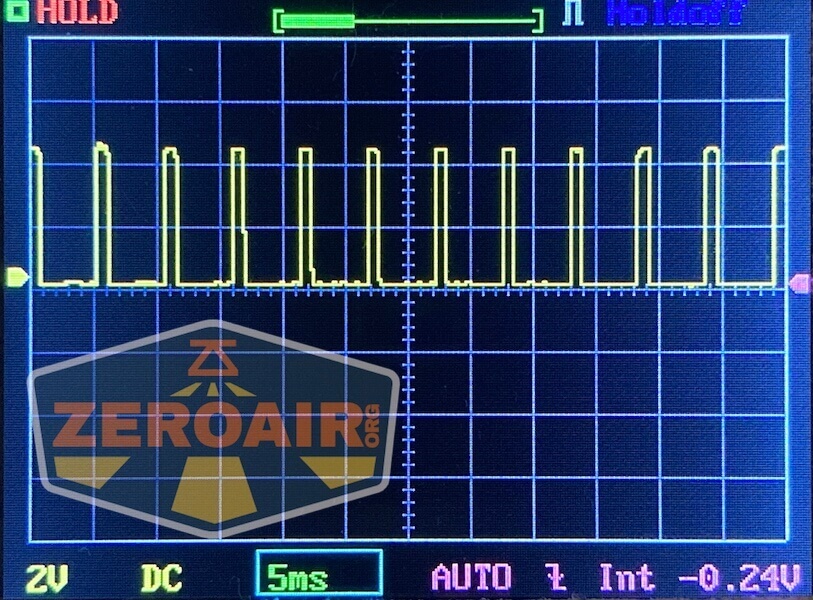
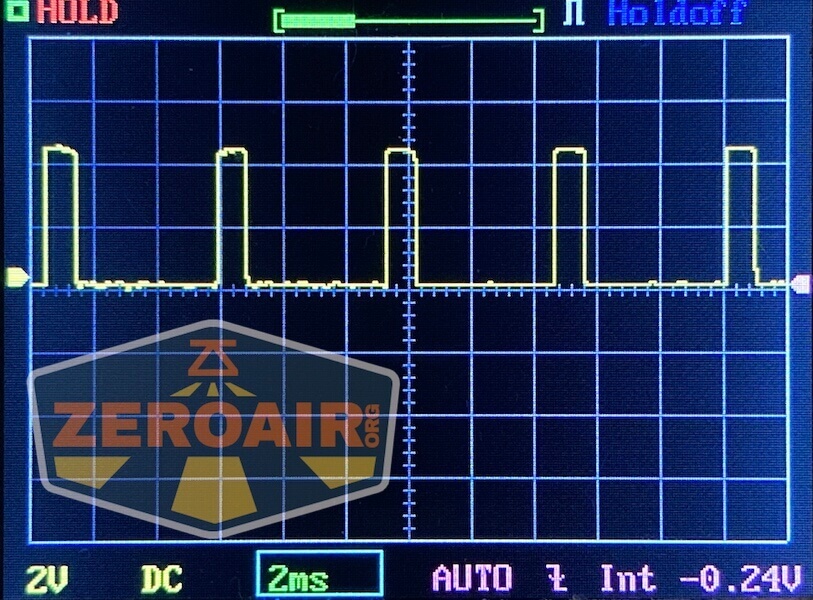
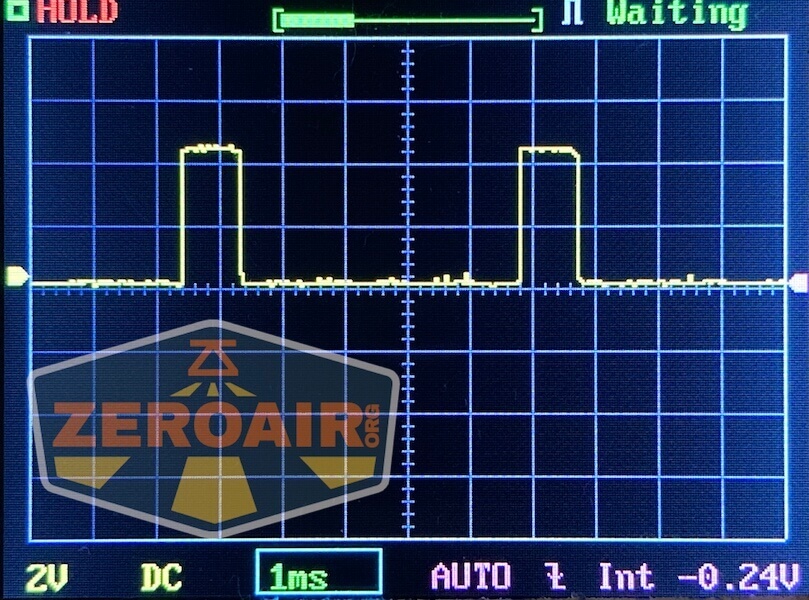
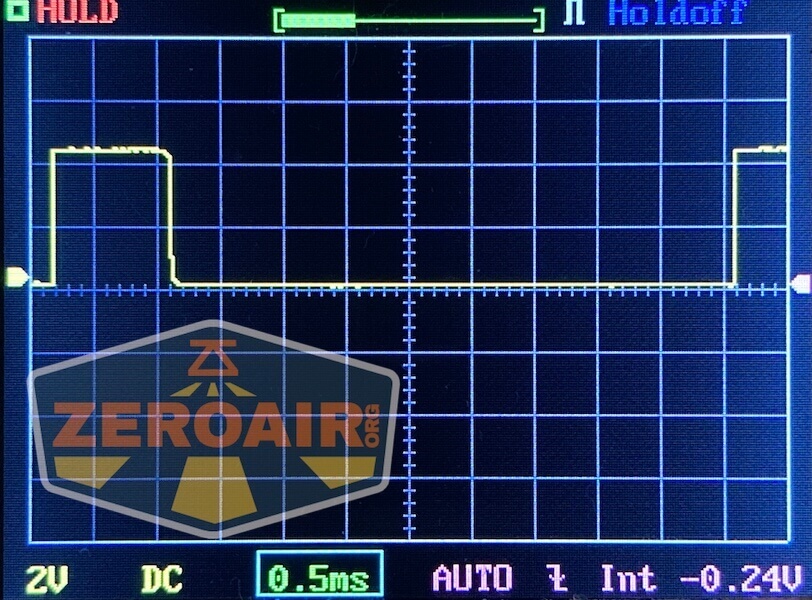
Then there’s the Ultrafire WF-602C flashlight, which has some of the worst PWM I’ve seen. It’s so bad that I used a post about it to explain PWM! Here are multiple timescales (10ms, 5ms, 2ms, 1ms, 0.5ms, 0.2ms) to make comparing this “worst” PWM light to the test light easier. That post also explains why I didn’t test the WF-602C at the usual 50us scale.
User Interface and Operation
Two e-switches are used for controlling the Nitecore TIP3 keychain flashlight.
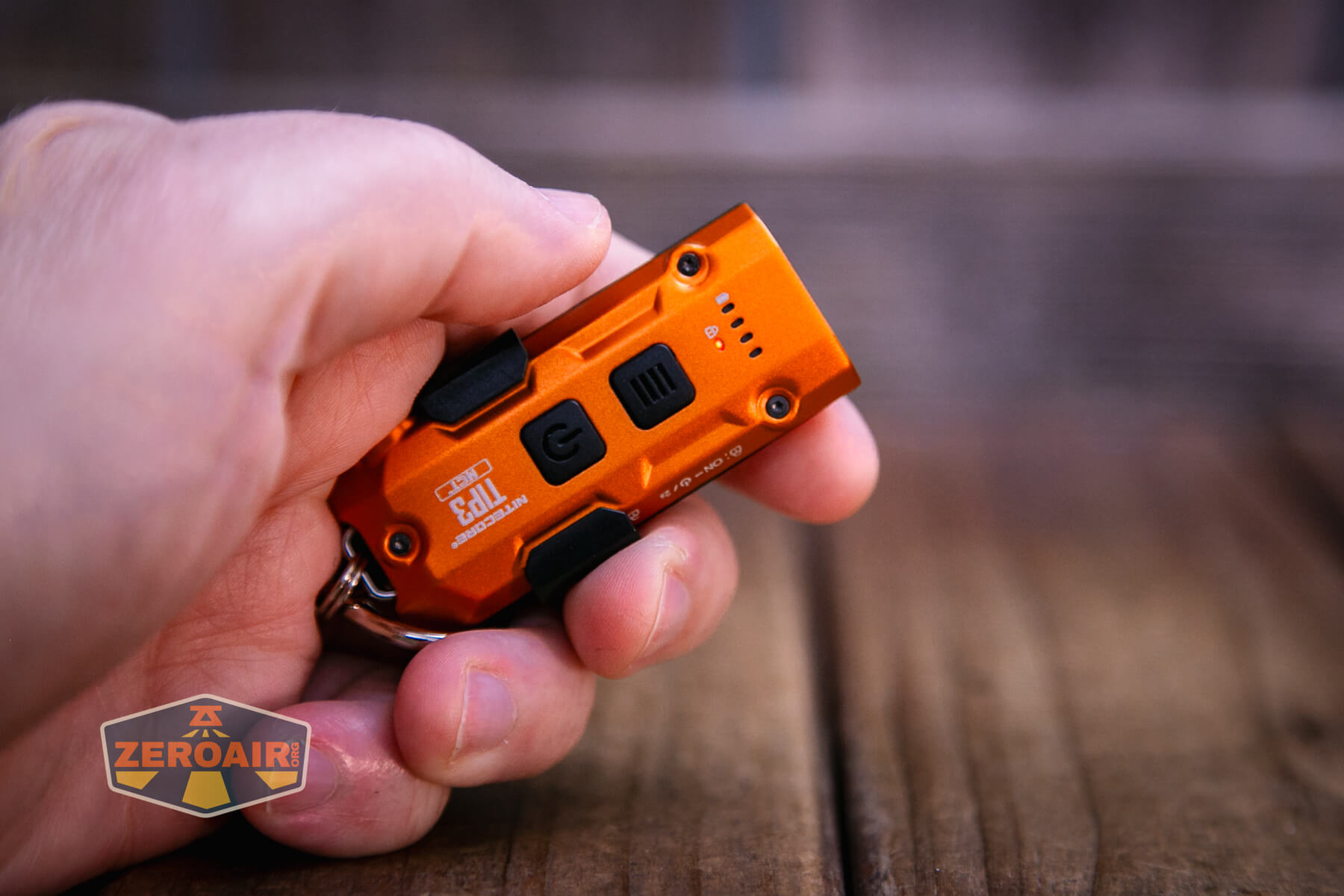
Here’s a user interface table!
| State | Action | Result |
|---|---|---|
| Off | Click Power Switch | On (mode memory) |
| Off | Click Mode Switch | Battery Check |
| Off | Hold Power Switch | Ultralow |
| Any | Hold Mode Switch | Turbo (momentary) |
| On | Both (>1s) | Advance through CCT options (Cool > Neutral > Warm) |
| Off | Double click (either) | No action (Technically double clicking the power turns the light on, then right back off). |
| On | Click Power Switch | Off |
| On | Click Mode Switch | Mode advance (Ultralow>L>M>H) |
| On | Click Power Switch | Off |
| On | Hold Power Switch | Semi Lockout (Turbo with Mode switch still available) |
| On | Hold Power Switch | Full Lock (no modes available) |
| Either lock | Hold both switches | Unlock to Ultralow |
LED and Beam
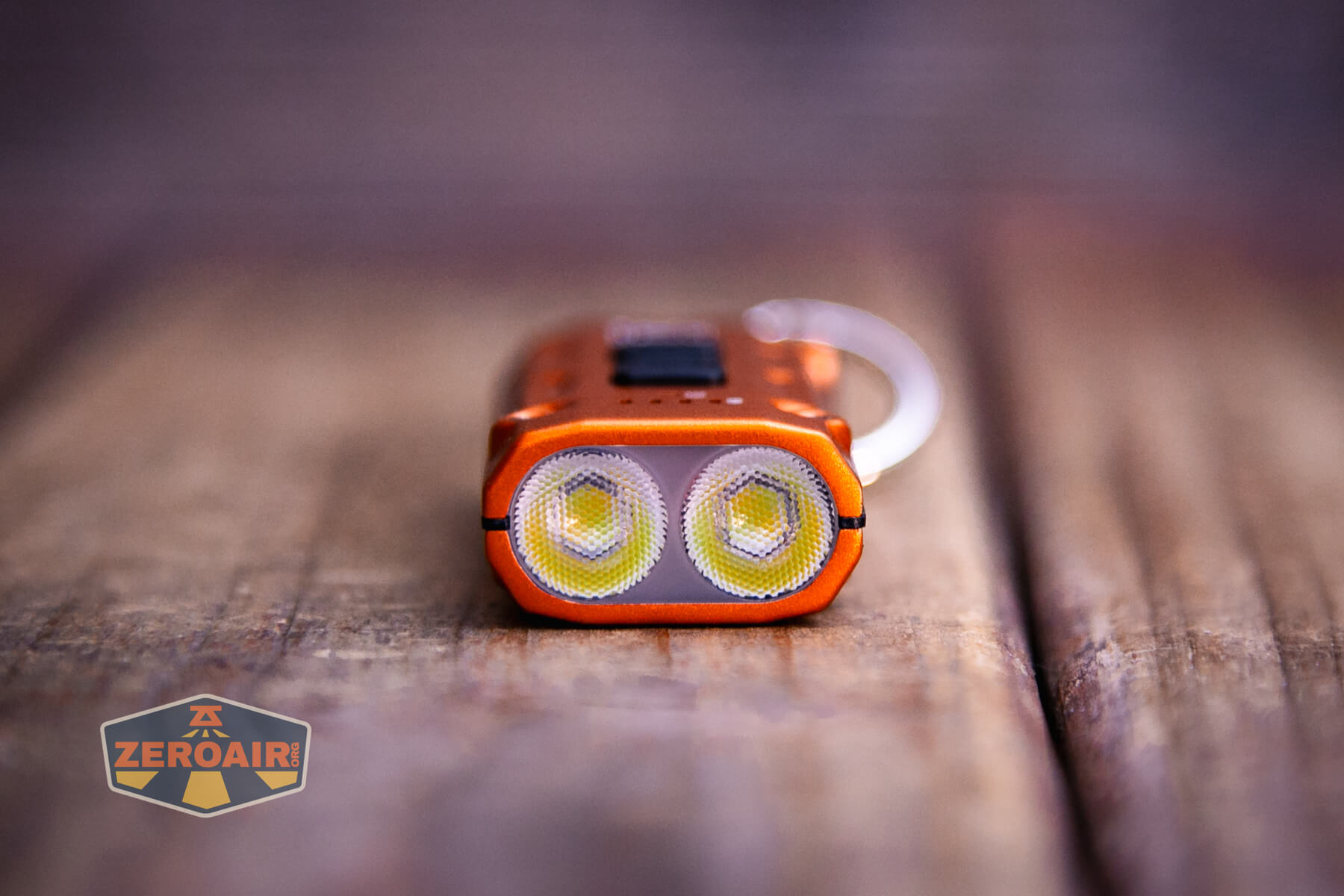
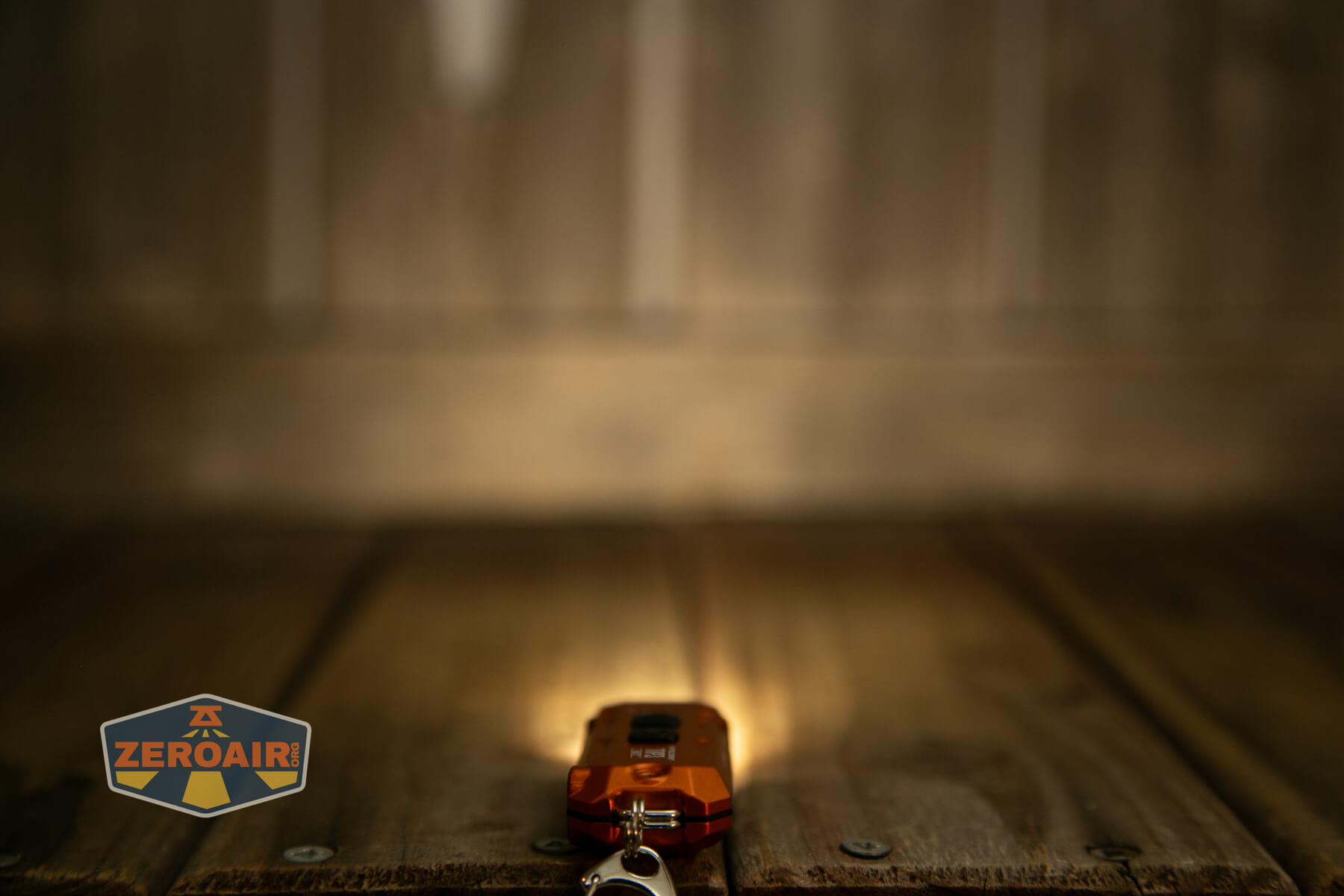
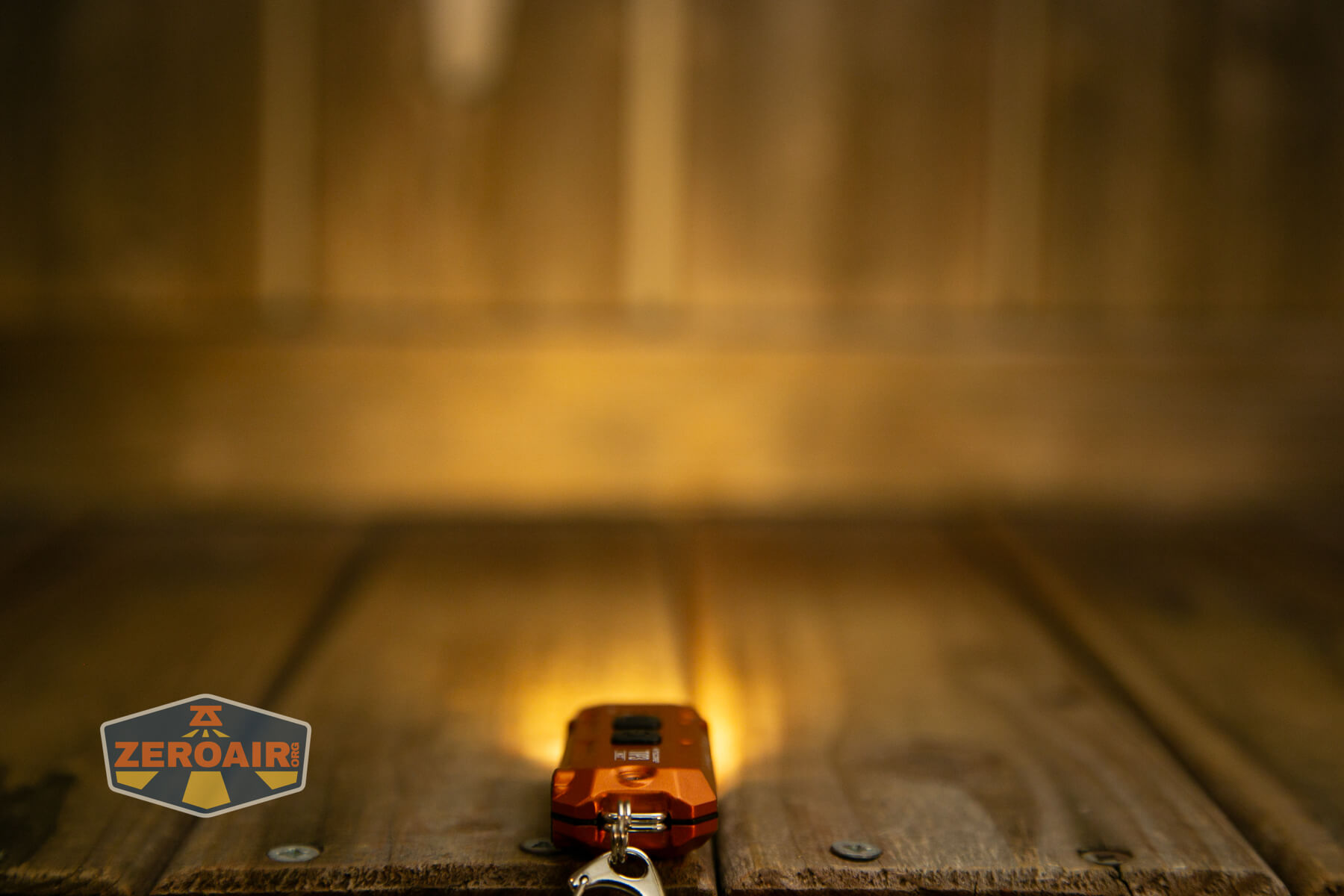
The Nitecore TIP3 keychain flashlight uses two NiteLab MCT UHE LEDs. I believe these emitters are divided into quadrants, so one die has enough variations to allow three CCTs. It’s a nice setup!
LED Color Report (CRI and CCT)
The CRI for all modes and levels hovers around 70-72. That’s pretty low, unfortunately. Still, the beam doesn’t appear green in the photos or in real use, so that’s a positive. CCT is within the claimed ranges (Cool, neutral, and warm).
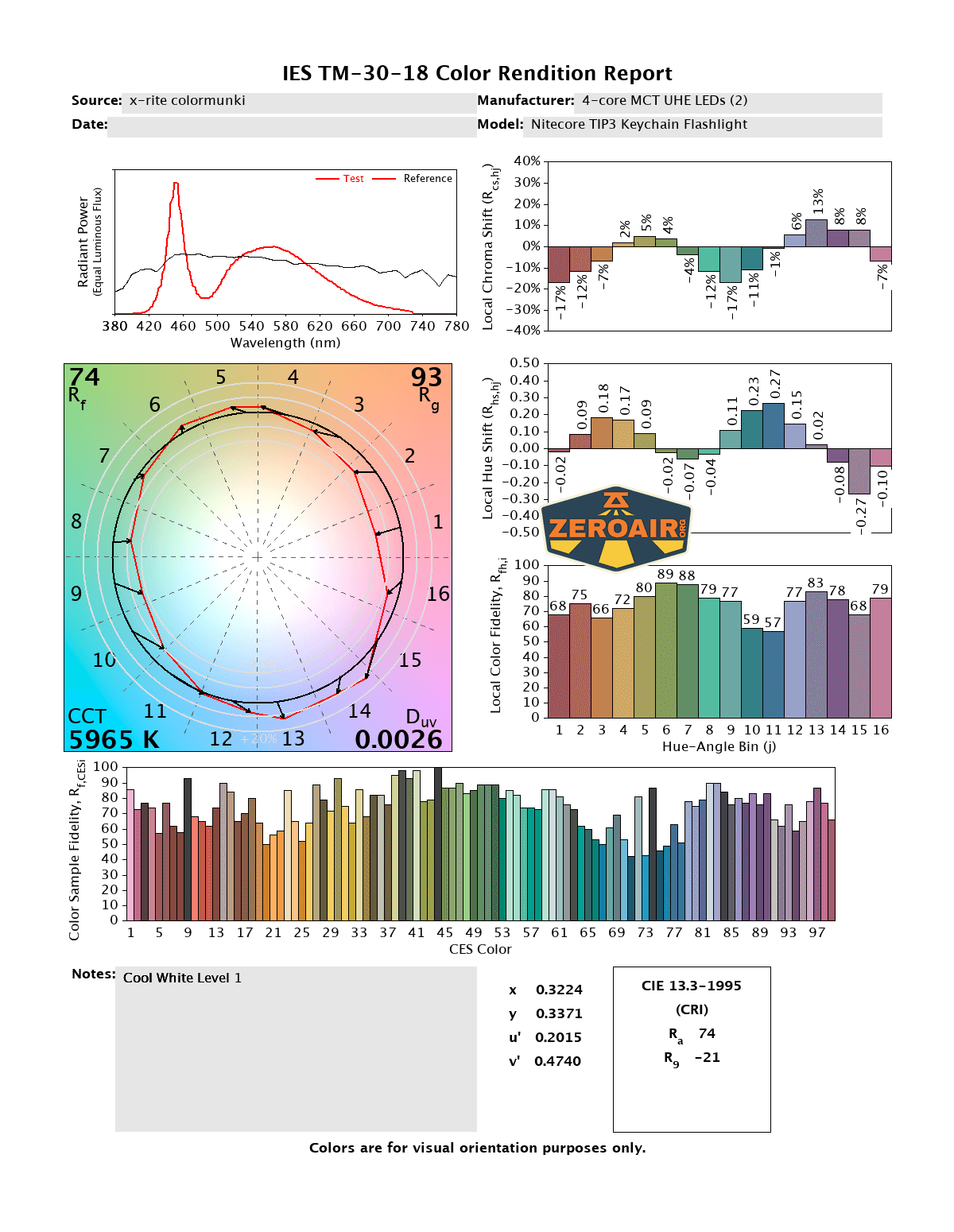
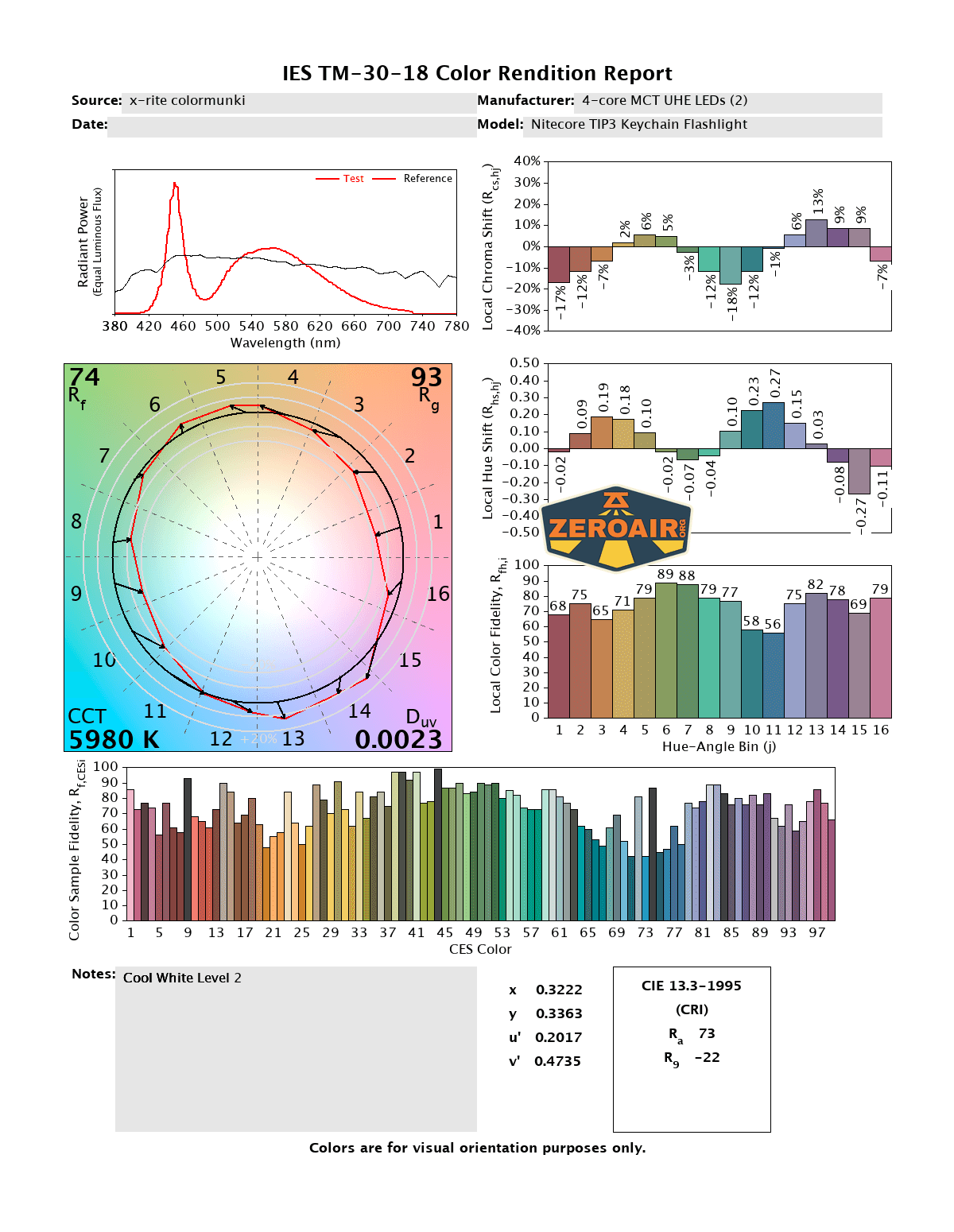
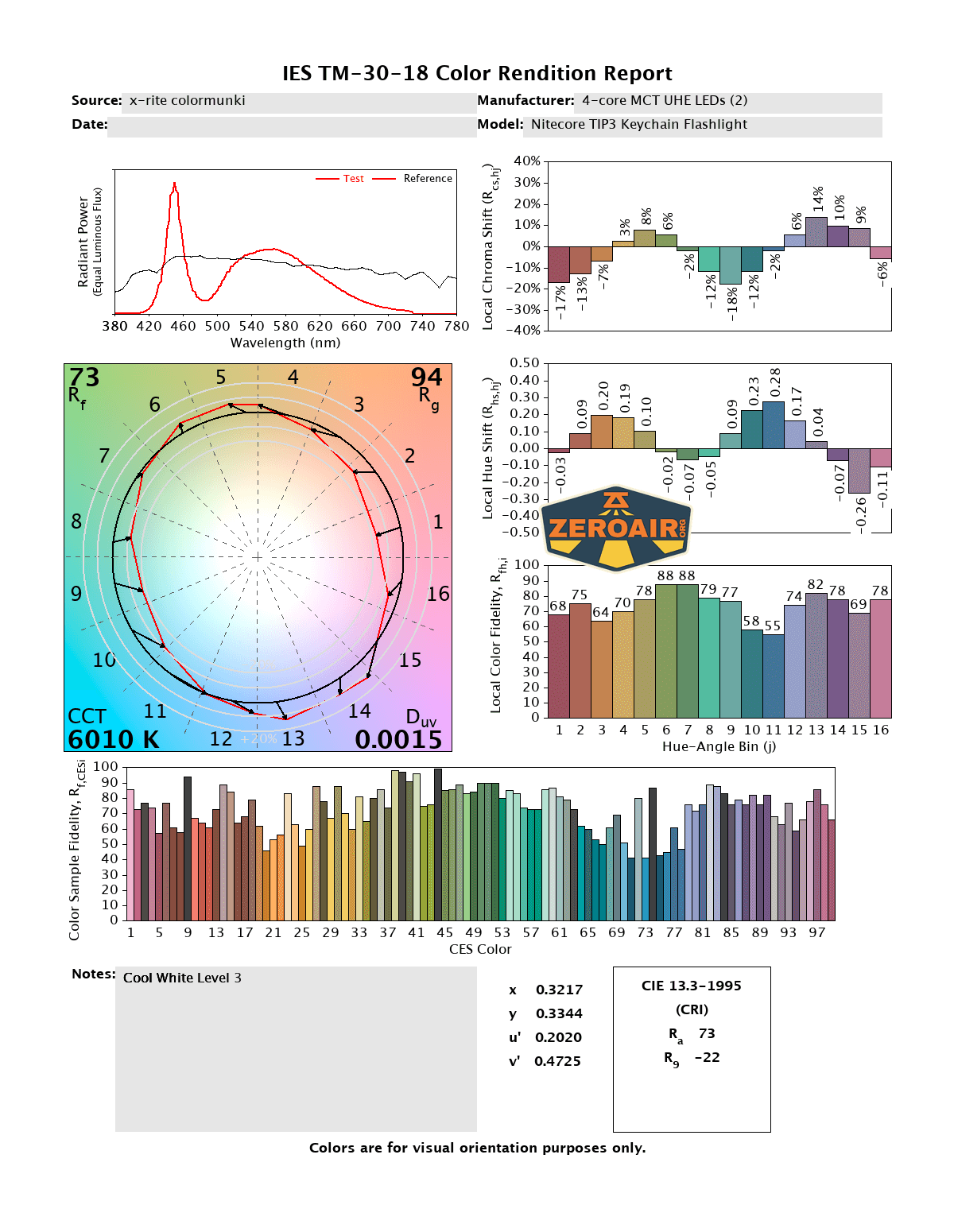
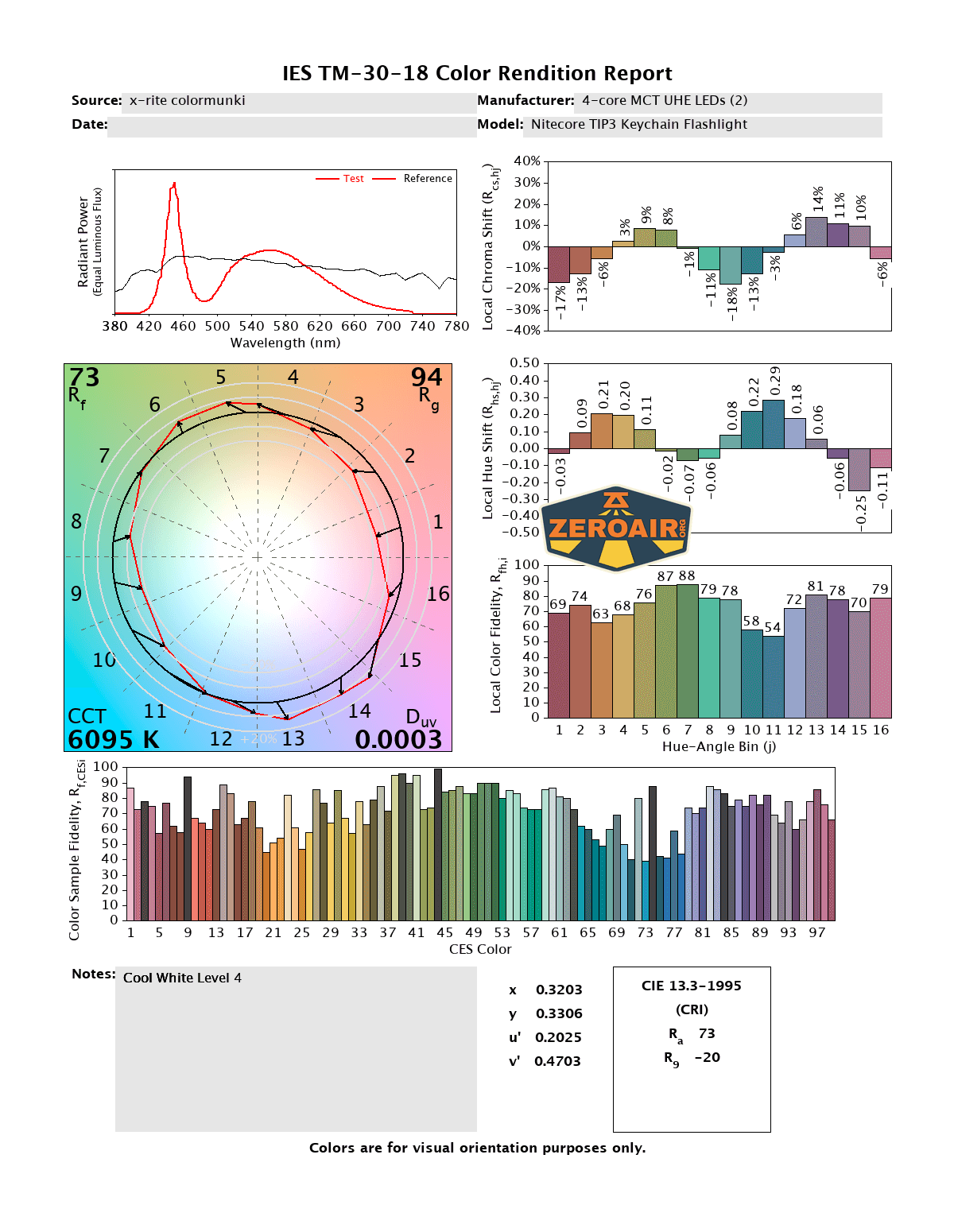
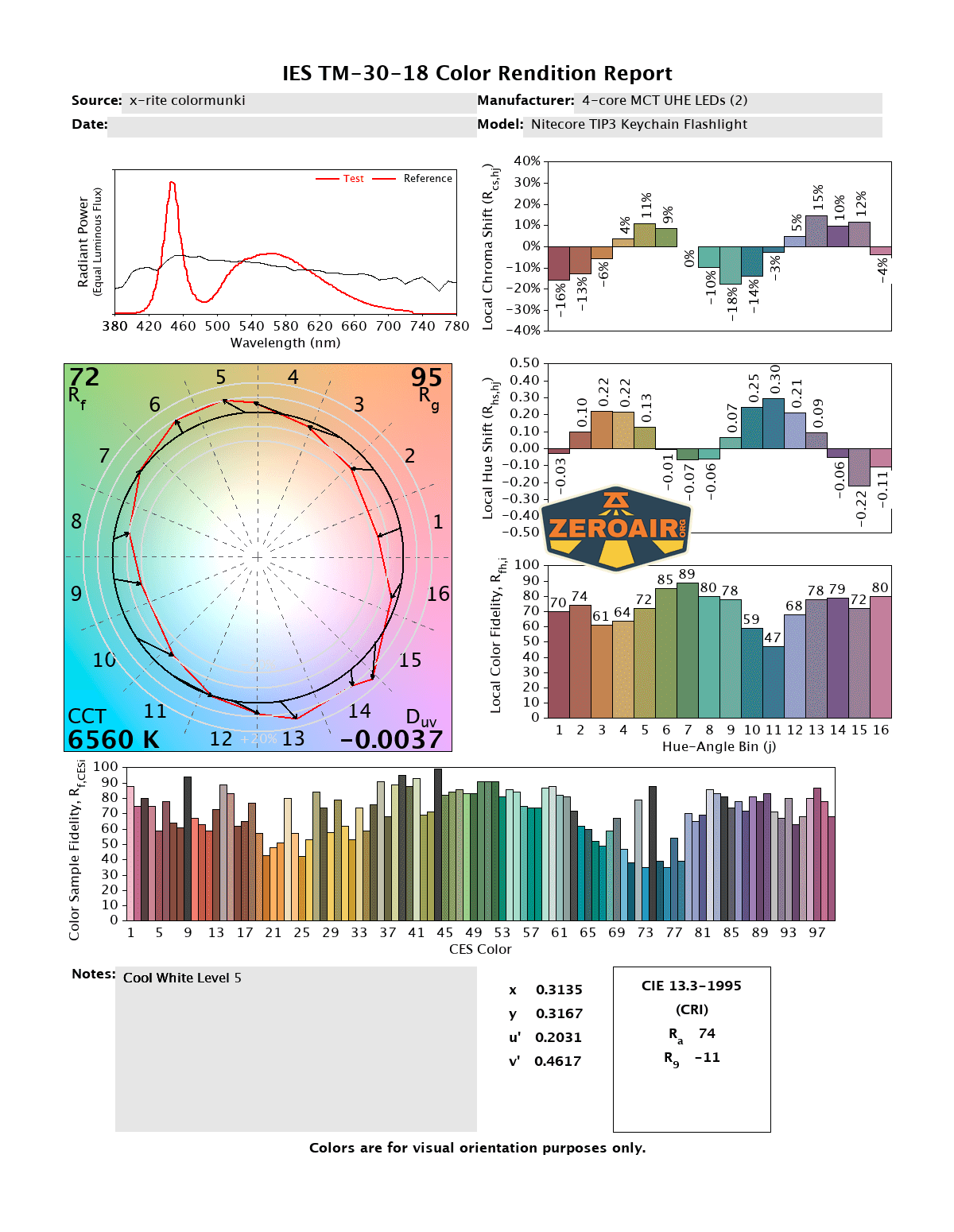
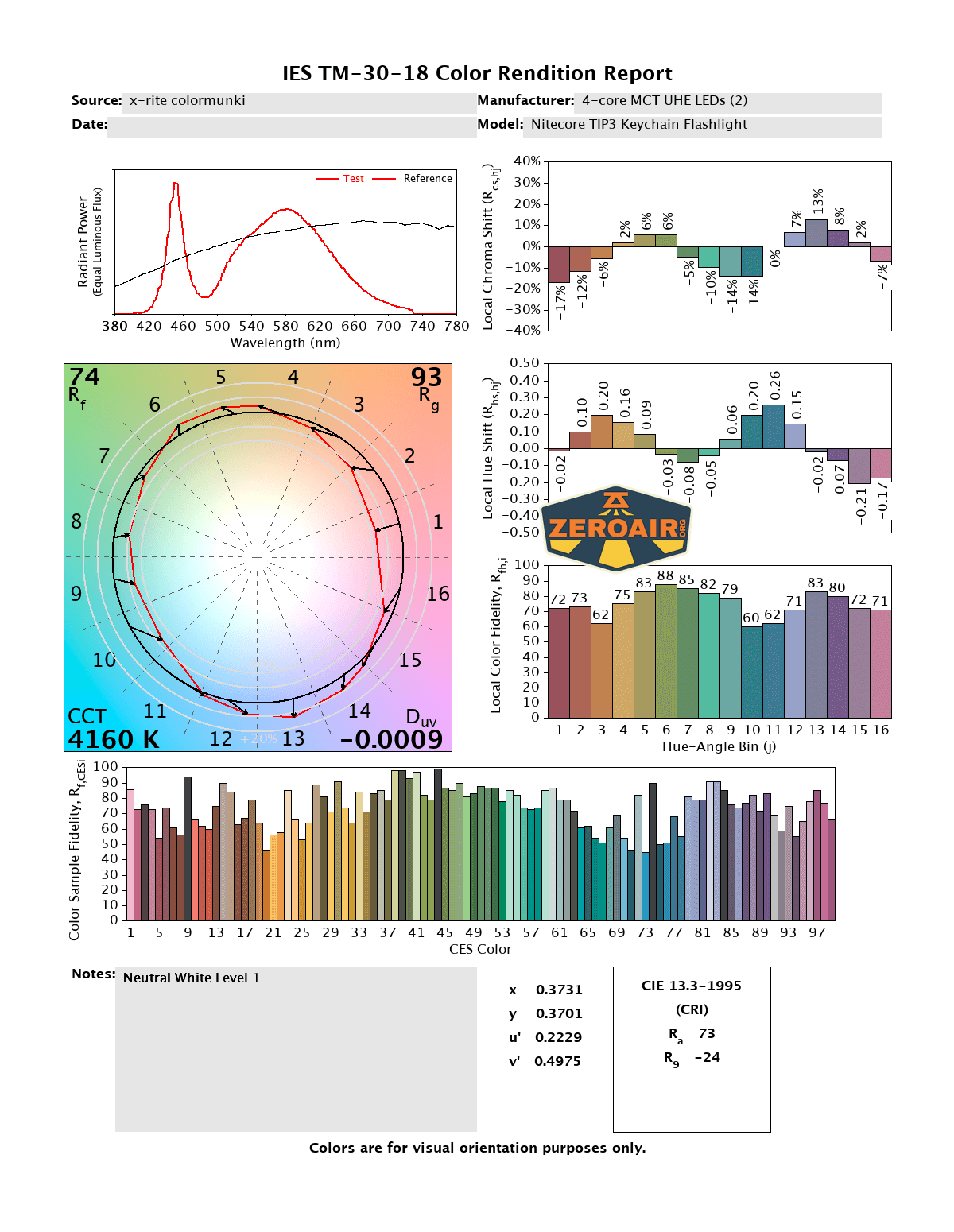
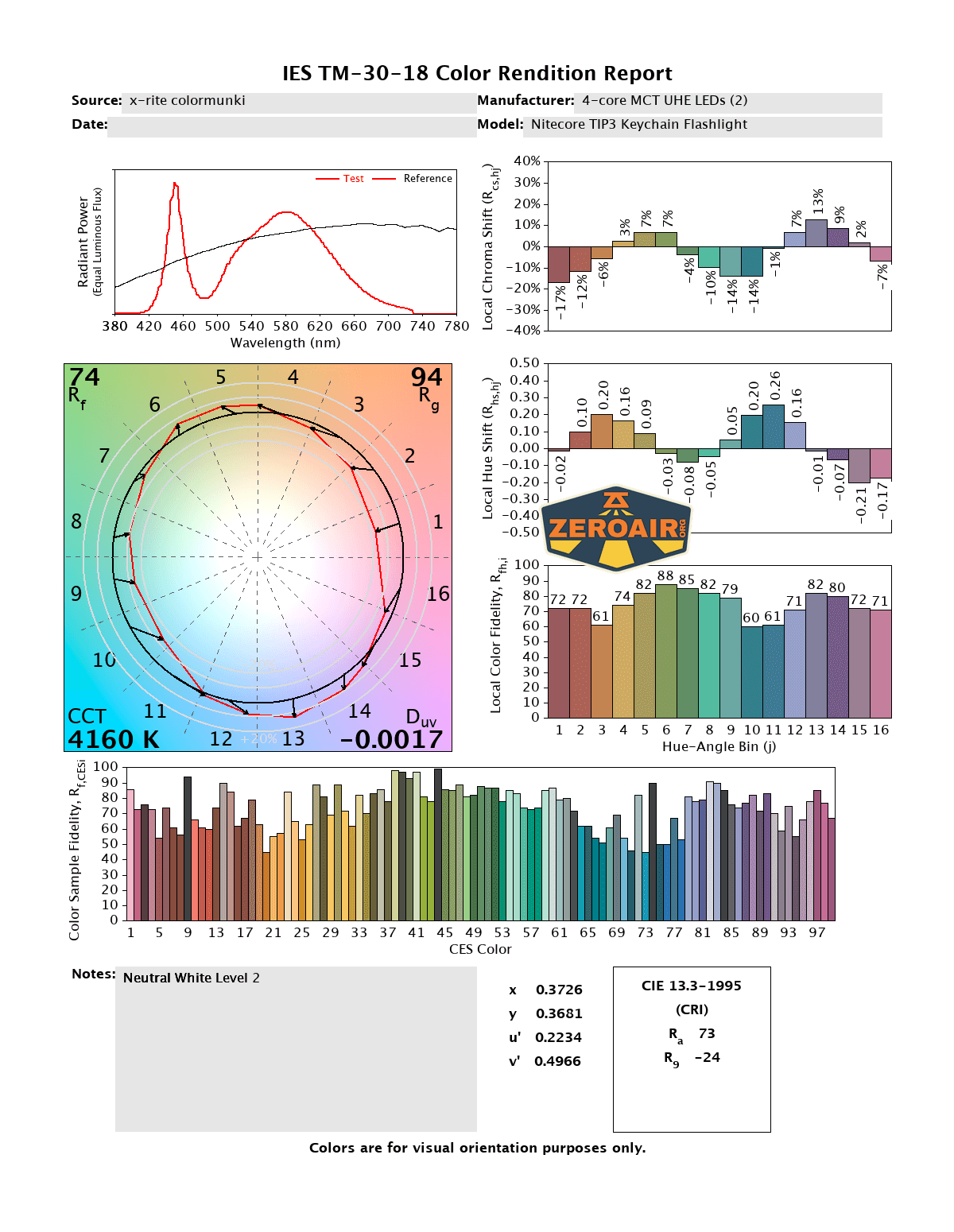
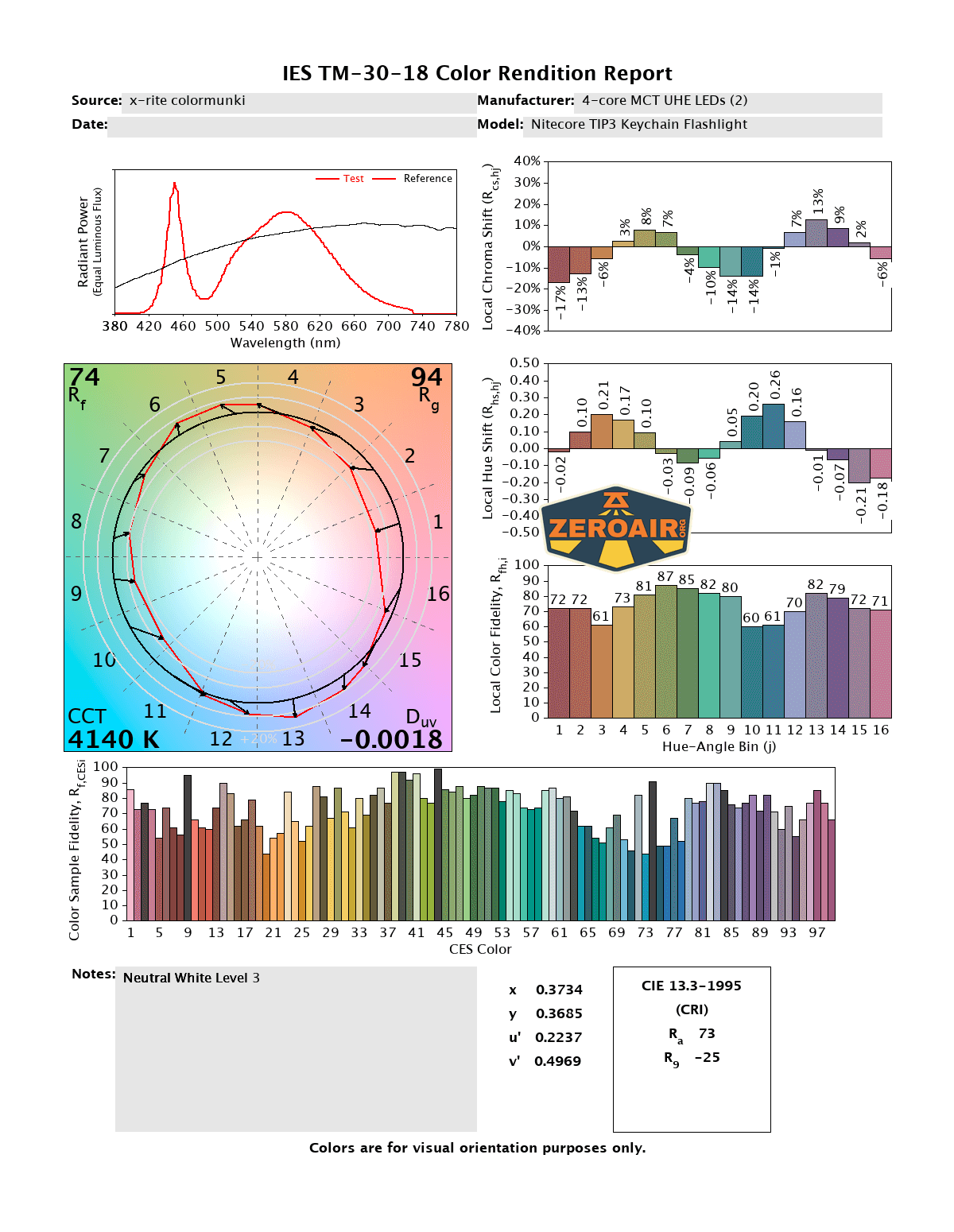
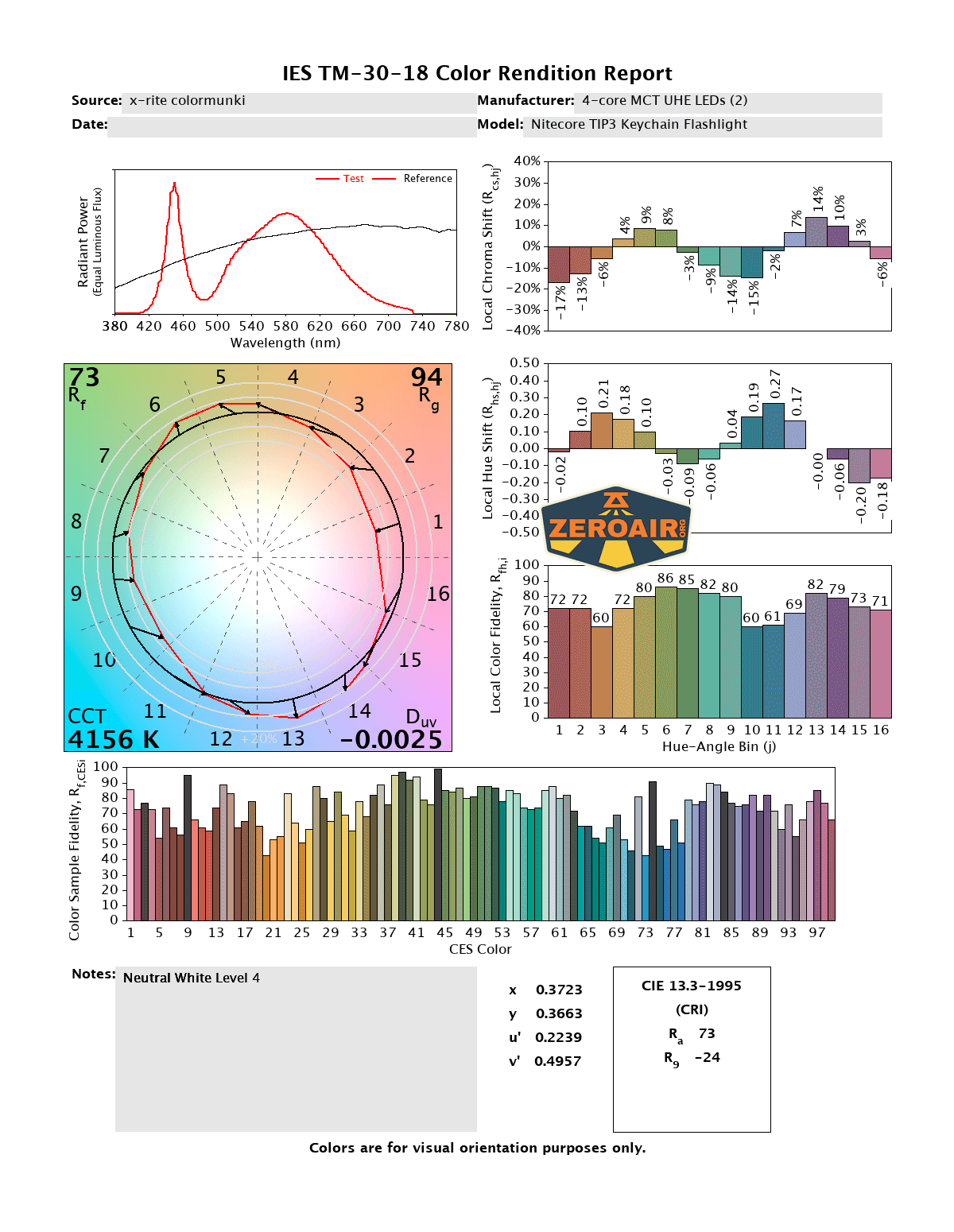
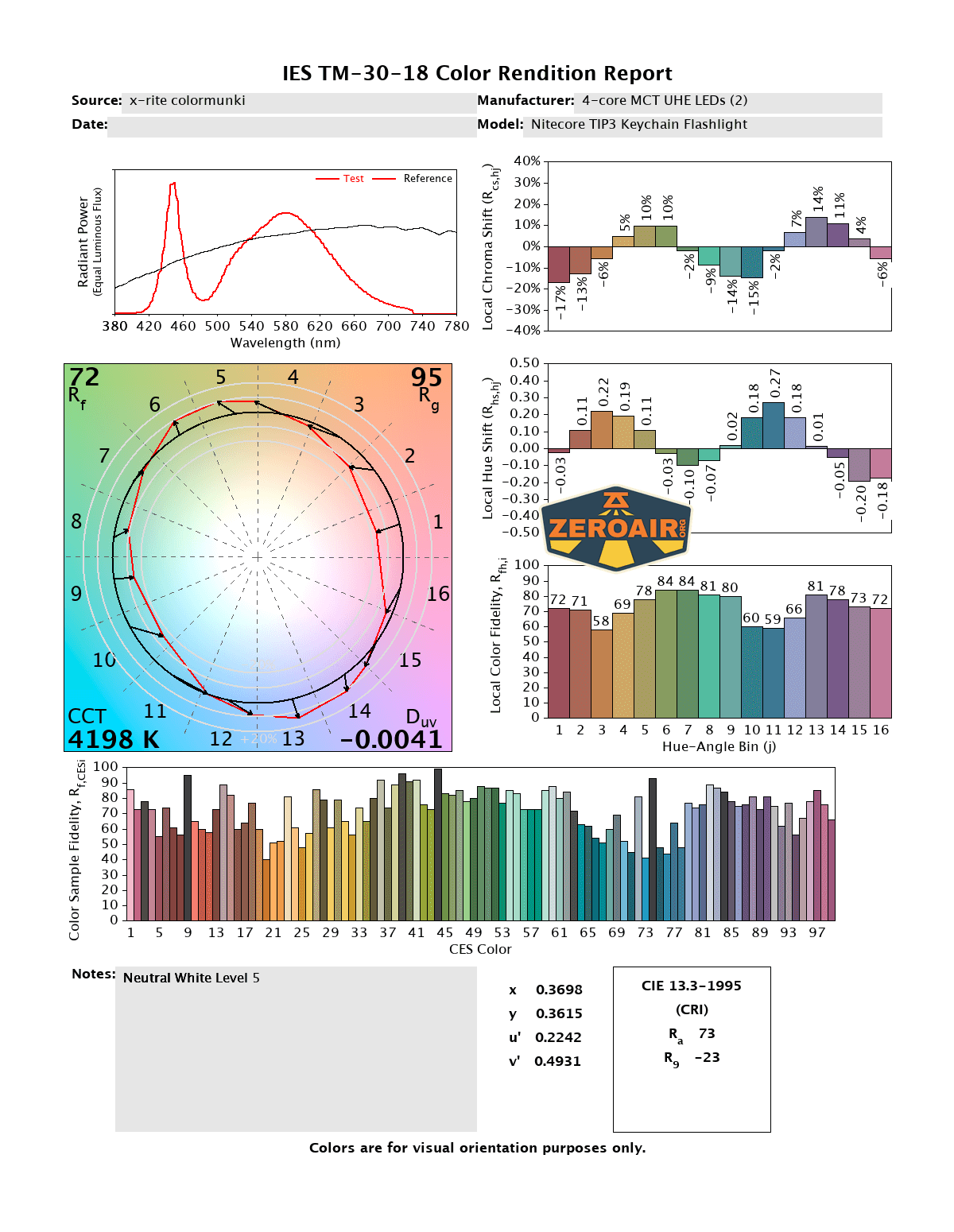
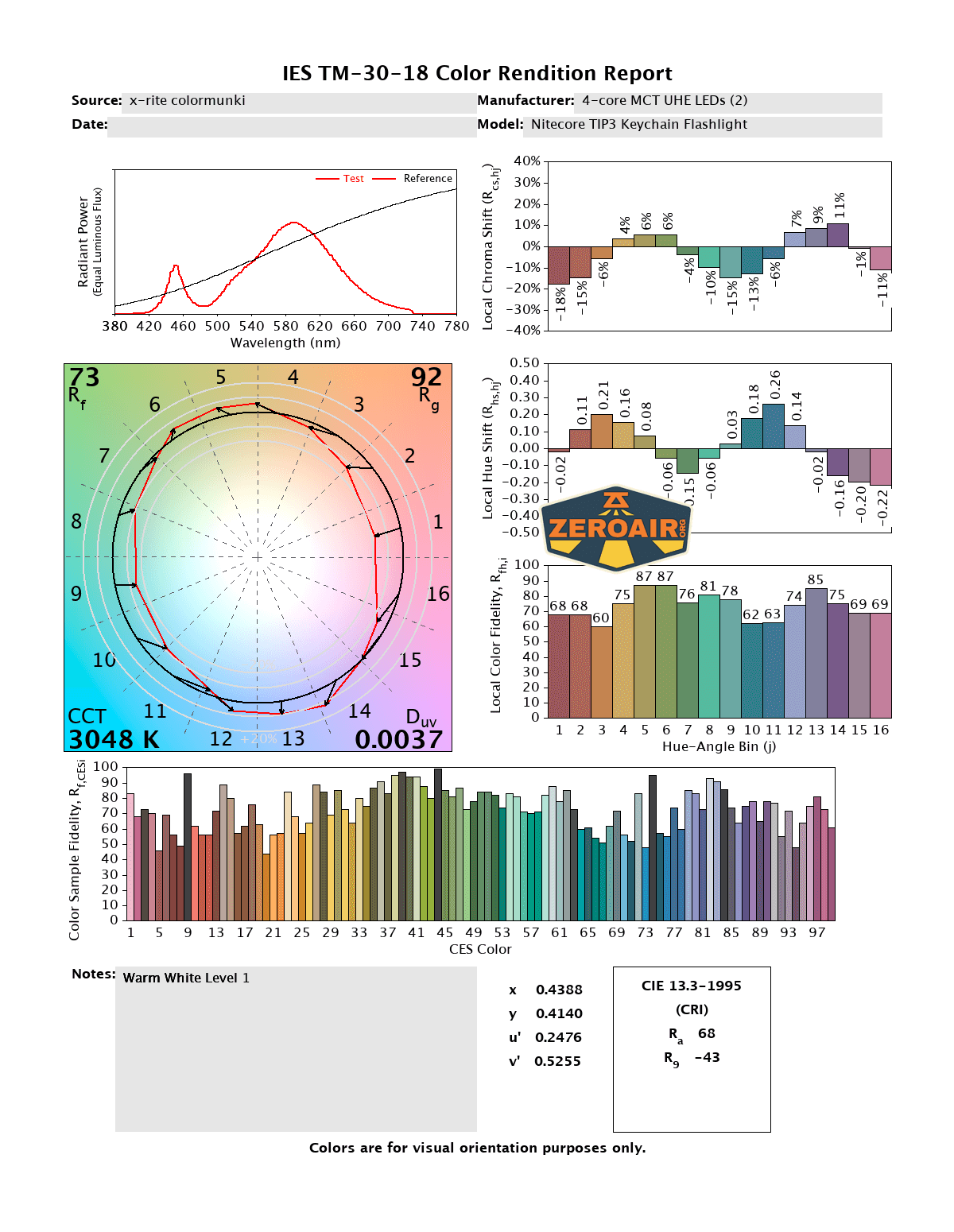
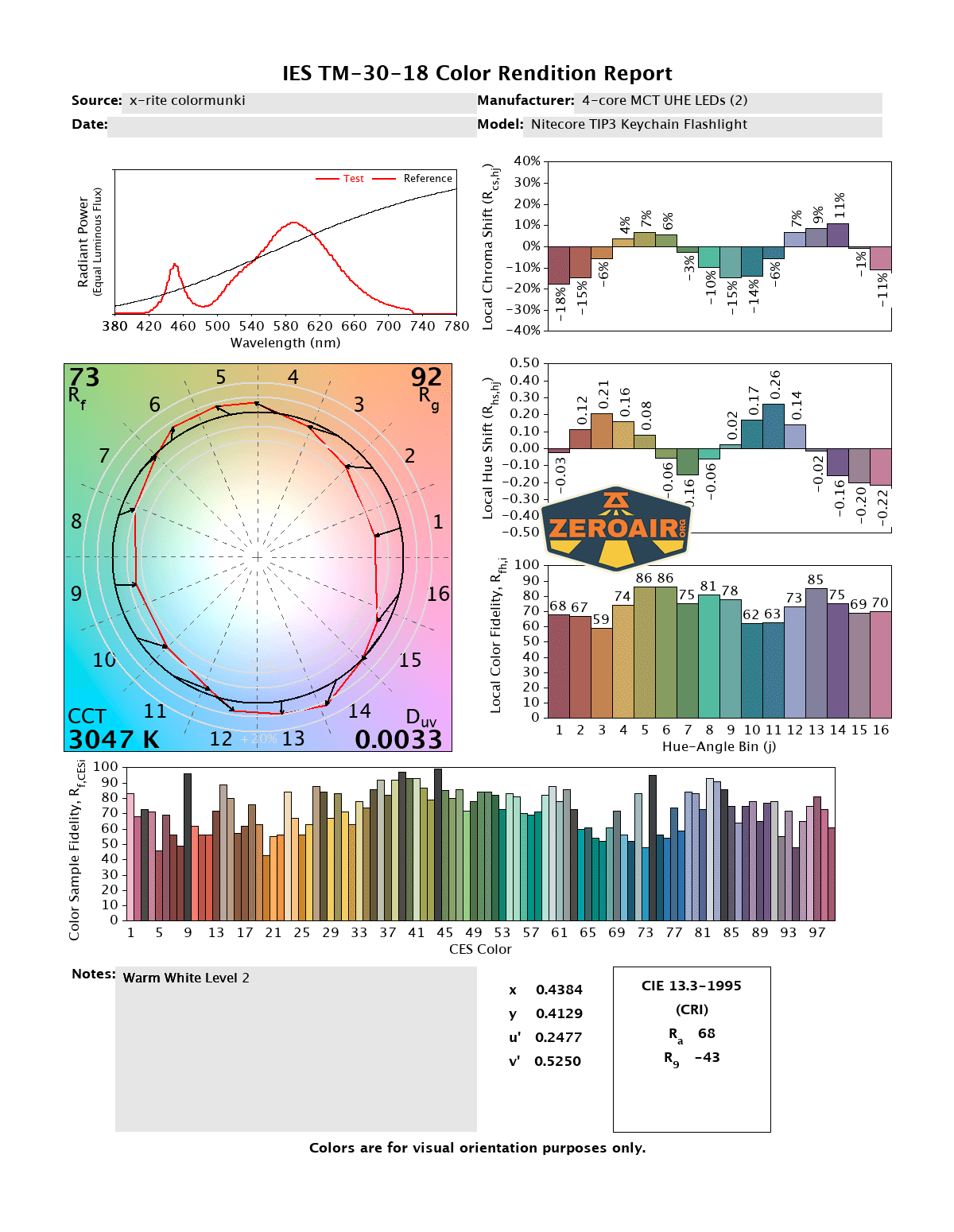
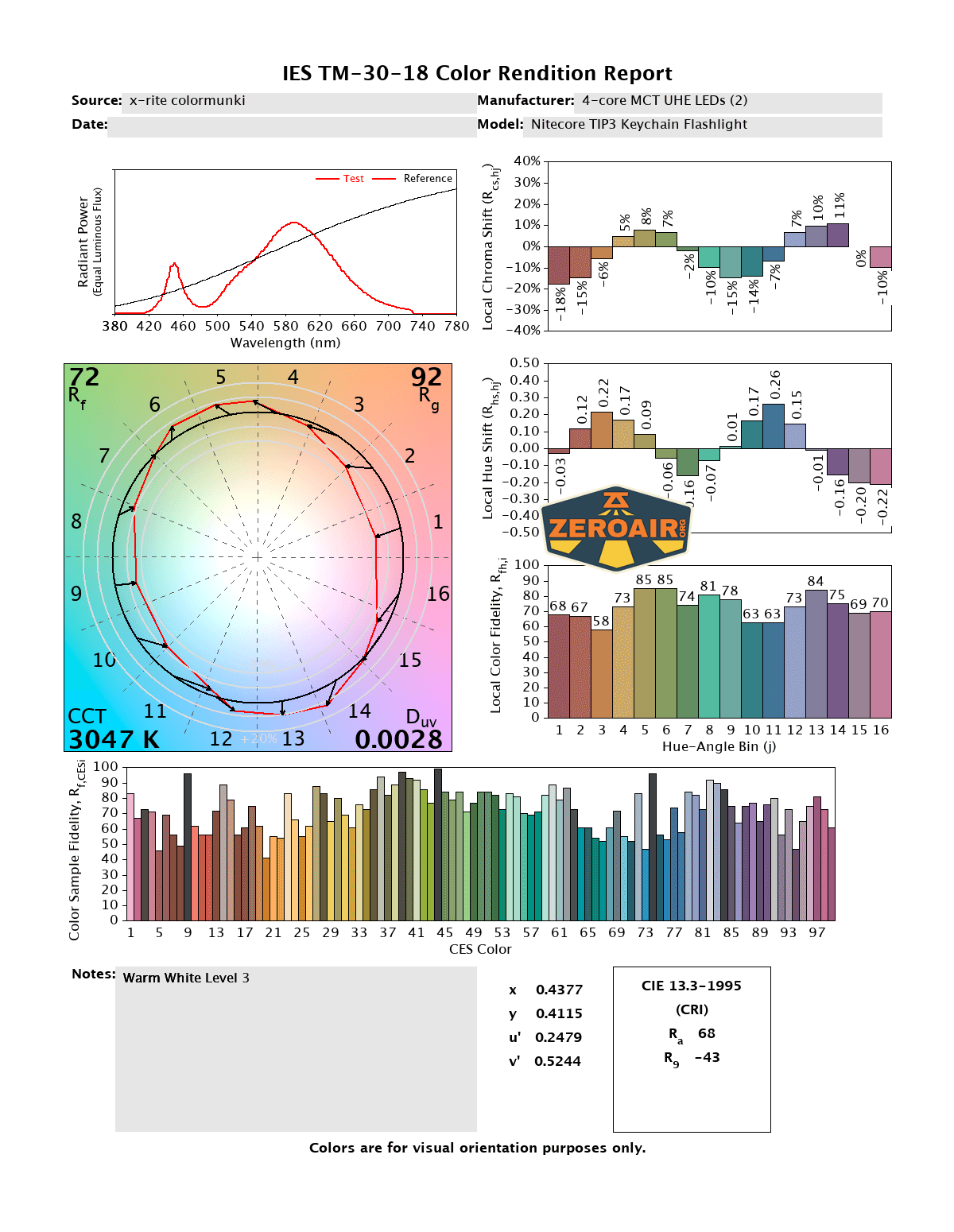
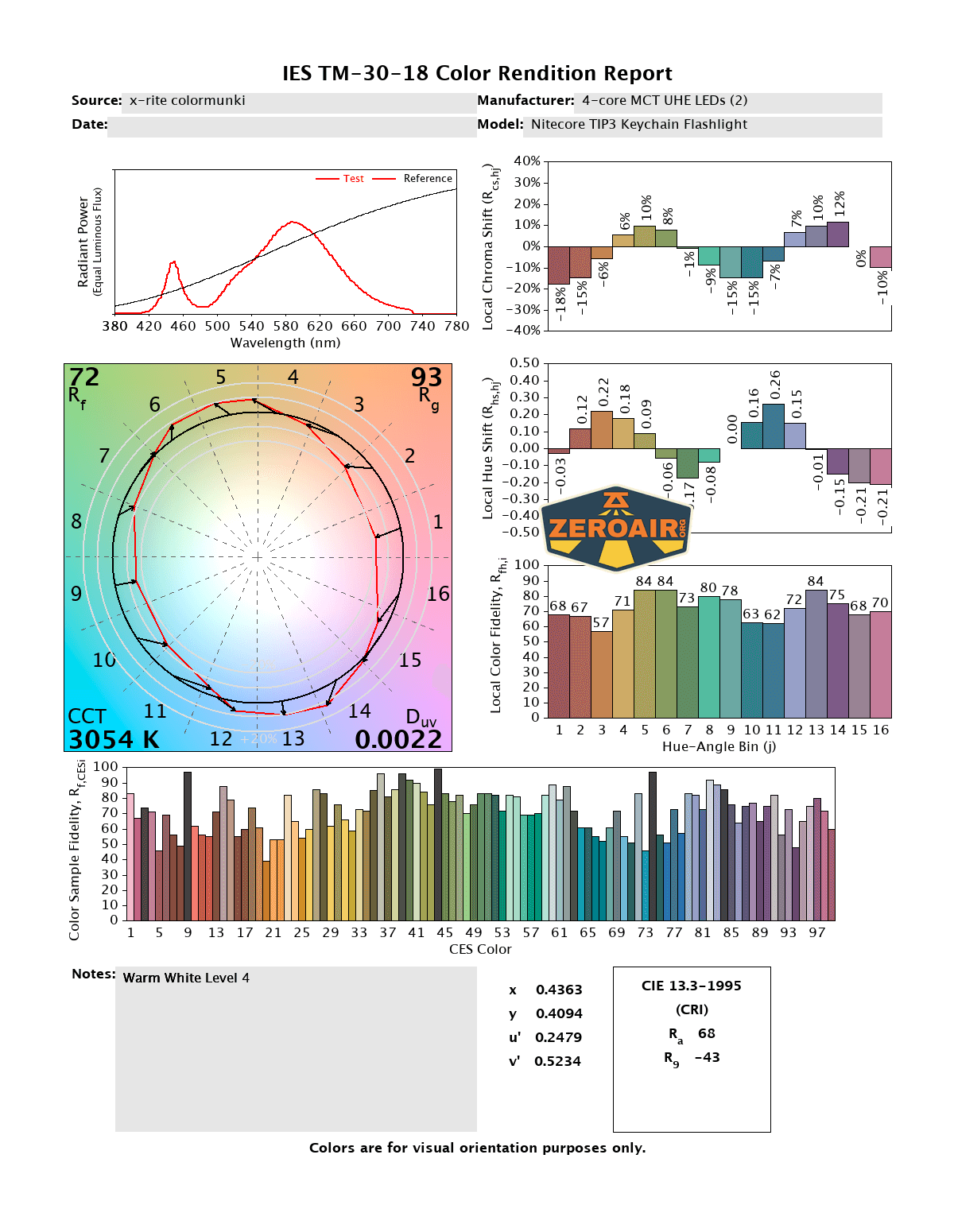
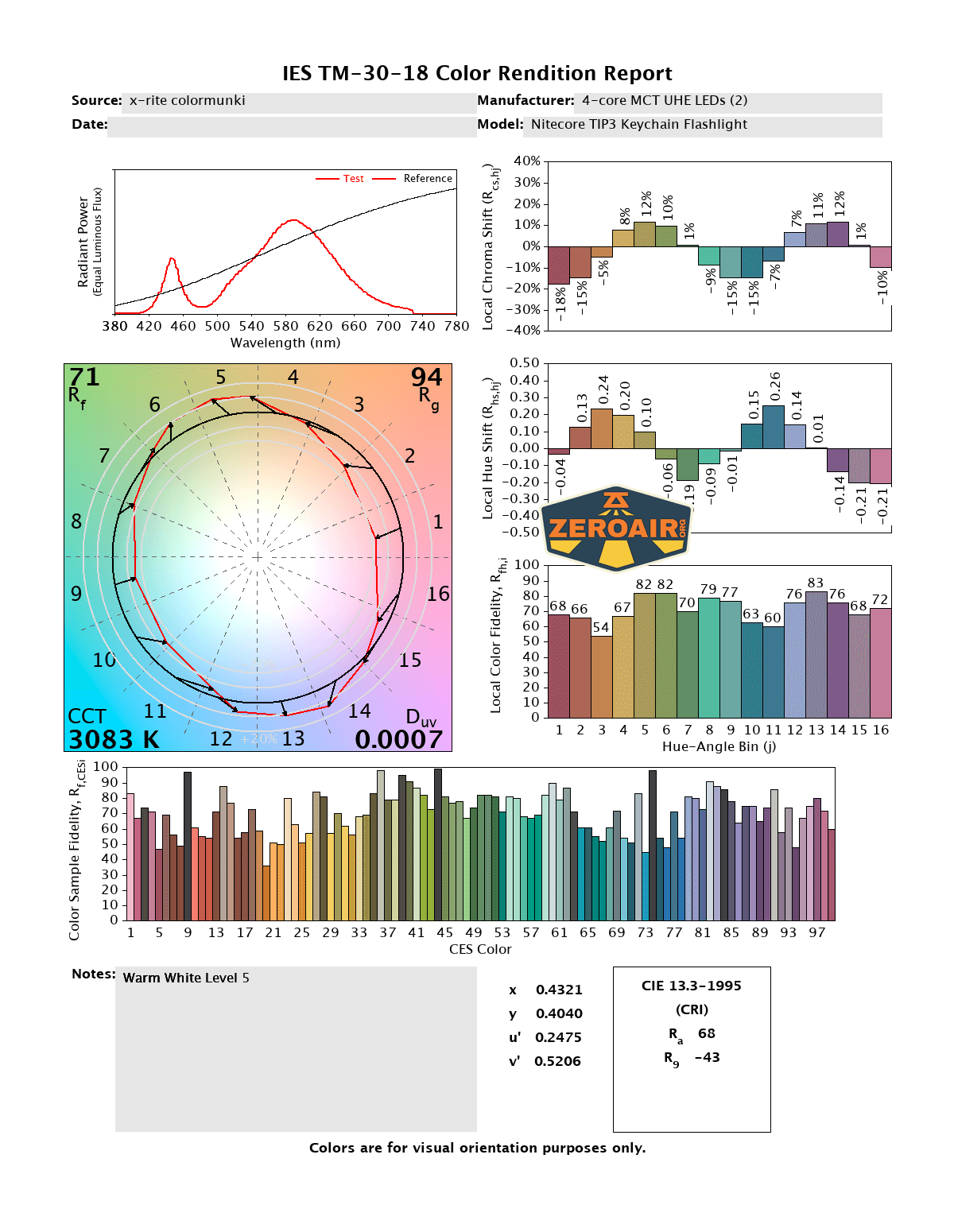
CCT (Correlated Color Temperature) refers to the measurement of the color appearance of light, expressed in Kelvins (K), which indicates whether the light is warm (yellowish) or cool (bluish). A lower CCT (below 3000K) is considered warm light, while a higher CCT (above 5000K) gives cooler, bluish light.
CRI (Color Rendering Index) is a measure of how accurately a light source renders colors in comparison to natural sunlight. Scored on a scale from 0 to 100, higher CRI values indicate that colors appear more true to life and vibrant, similar to how they would look under the sun.
Beamshots
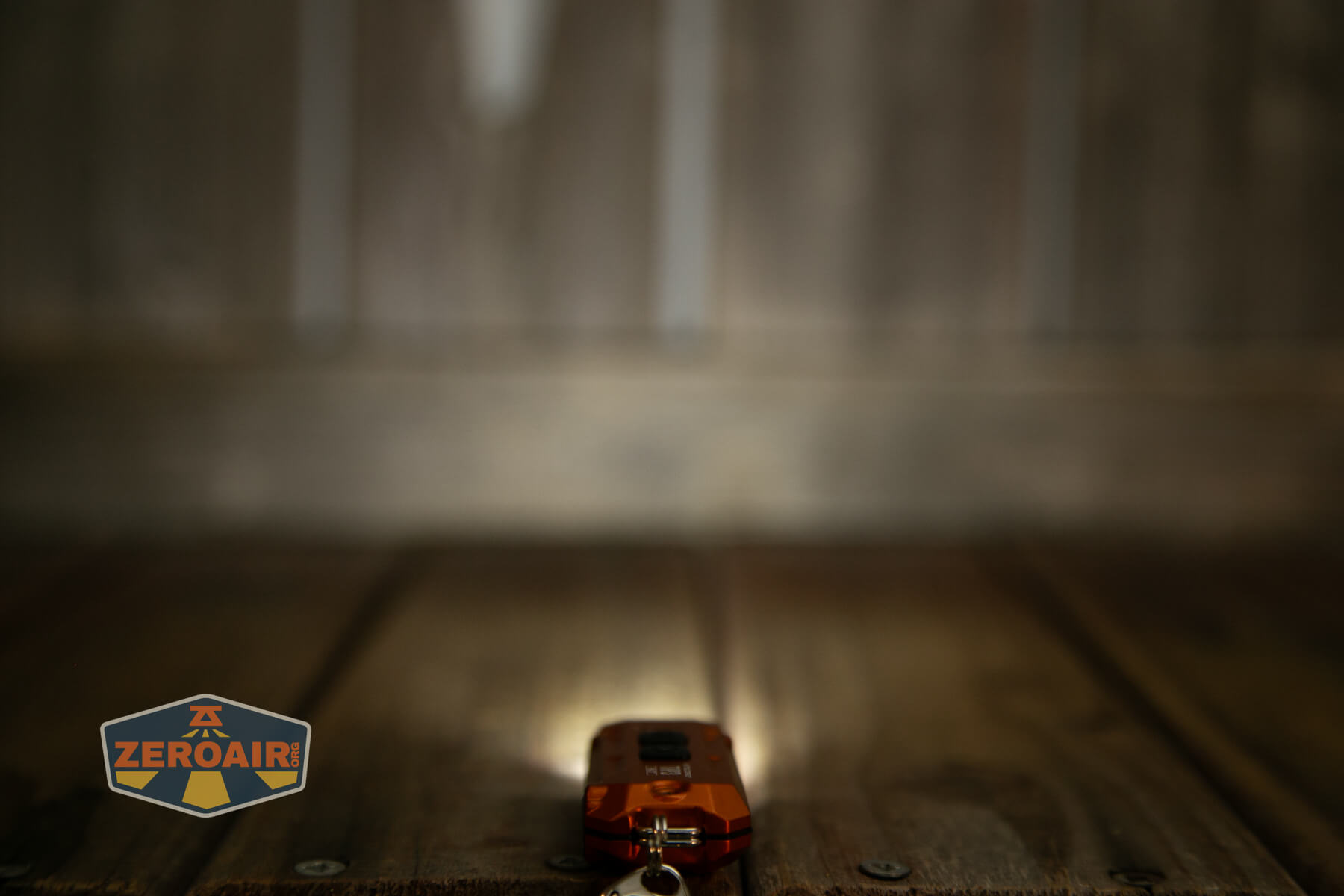
These beamshots always have the following settings: f8, ISO100, 0.3s shutter, and manual 5000K exposure. These photos are taken at floor level, and the beam hits the ceiling around 9 feet away.
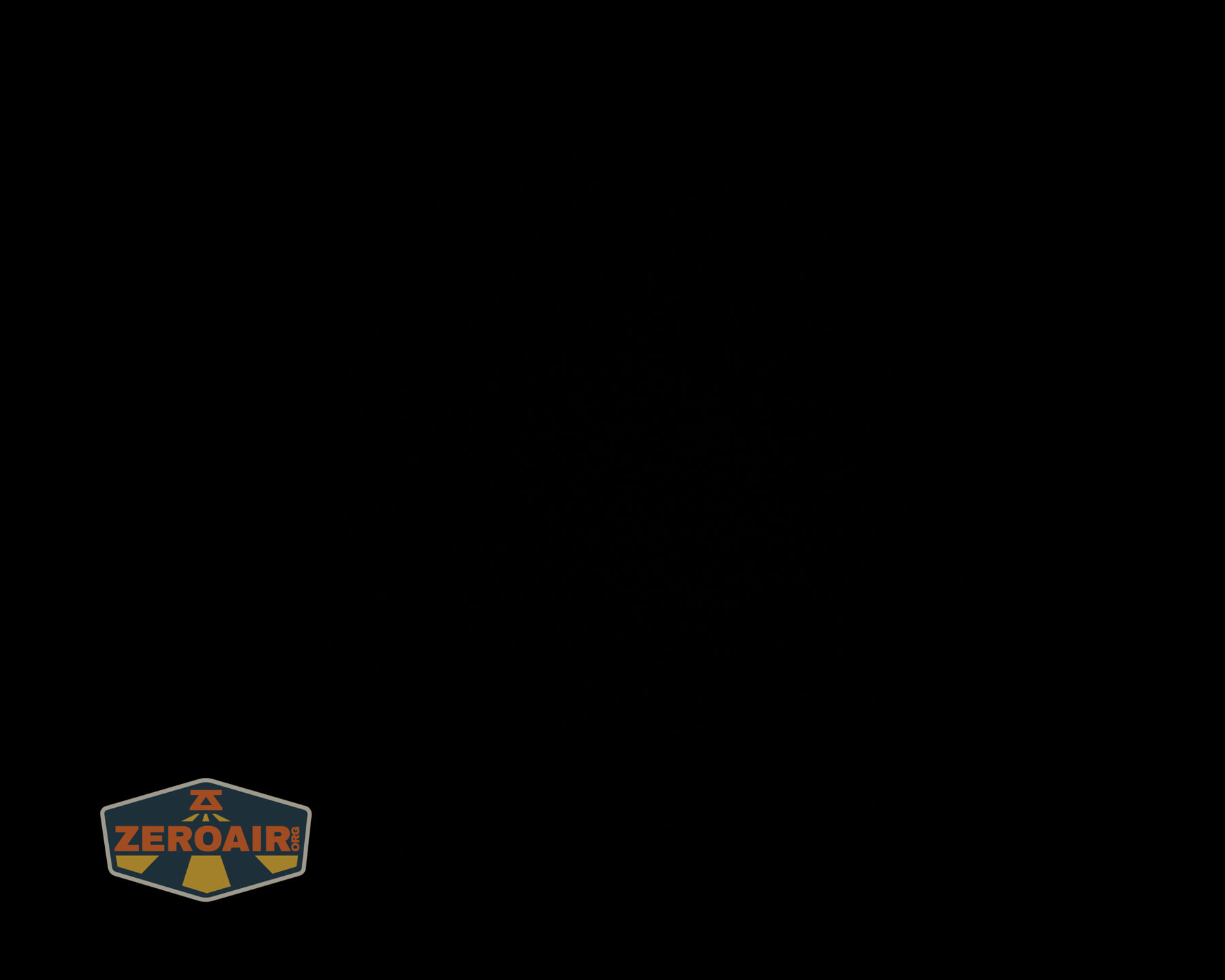
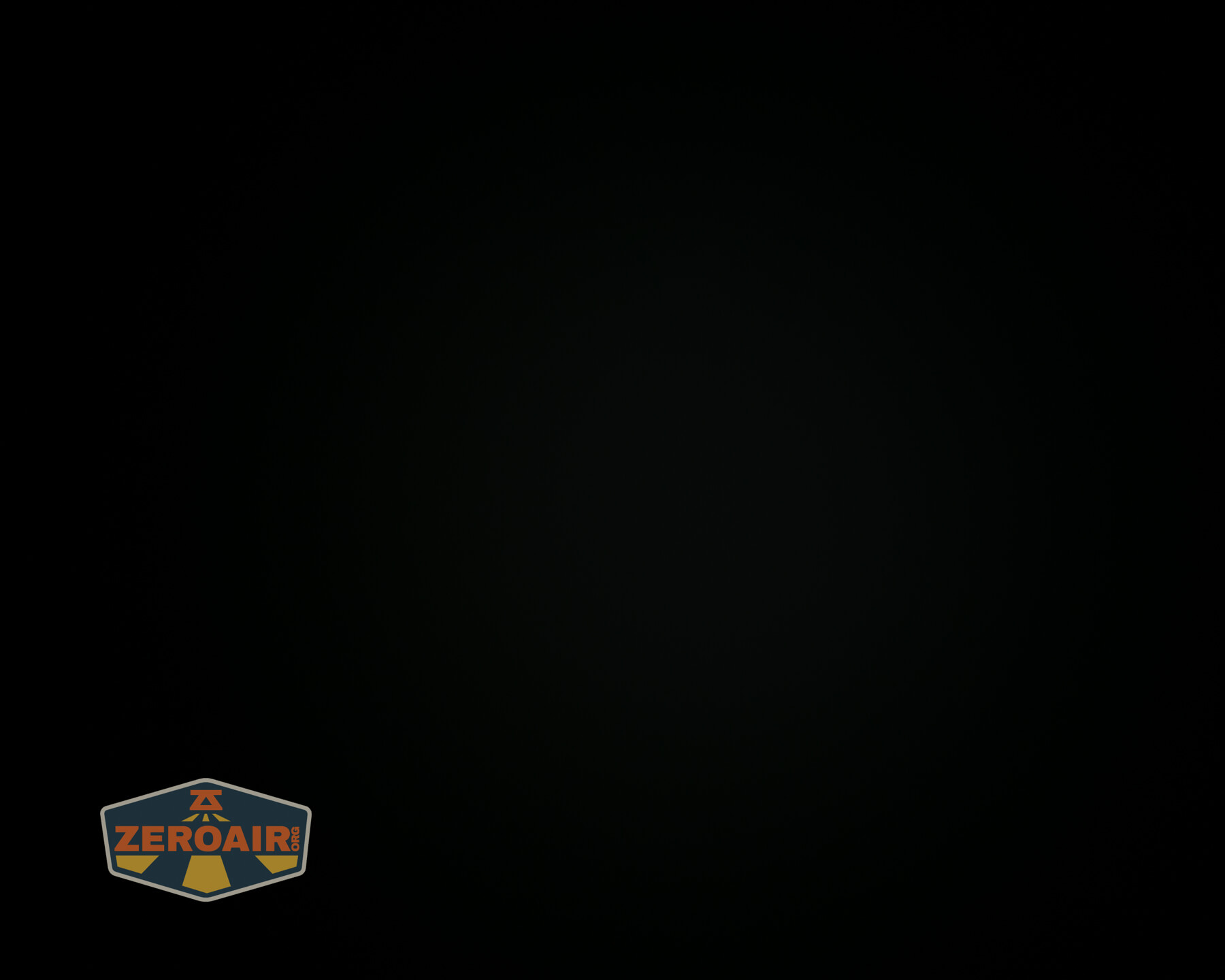
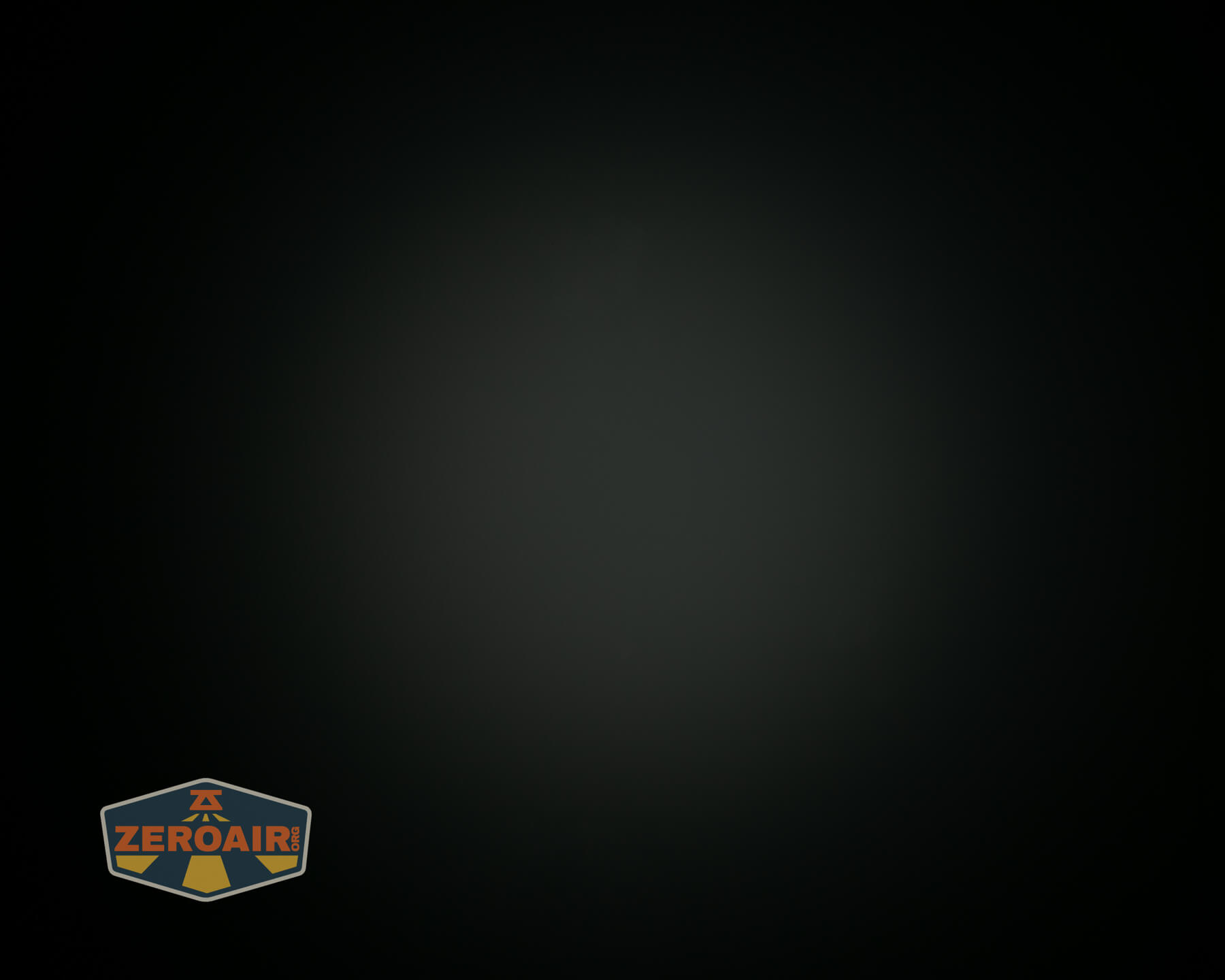
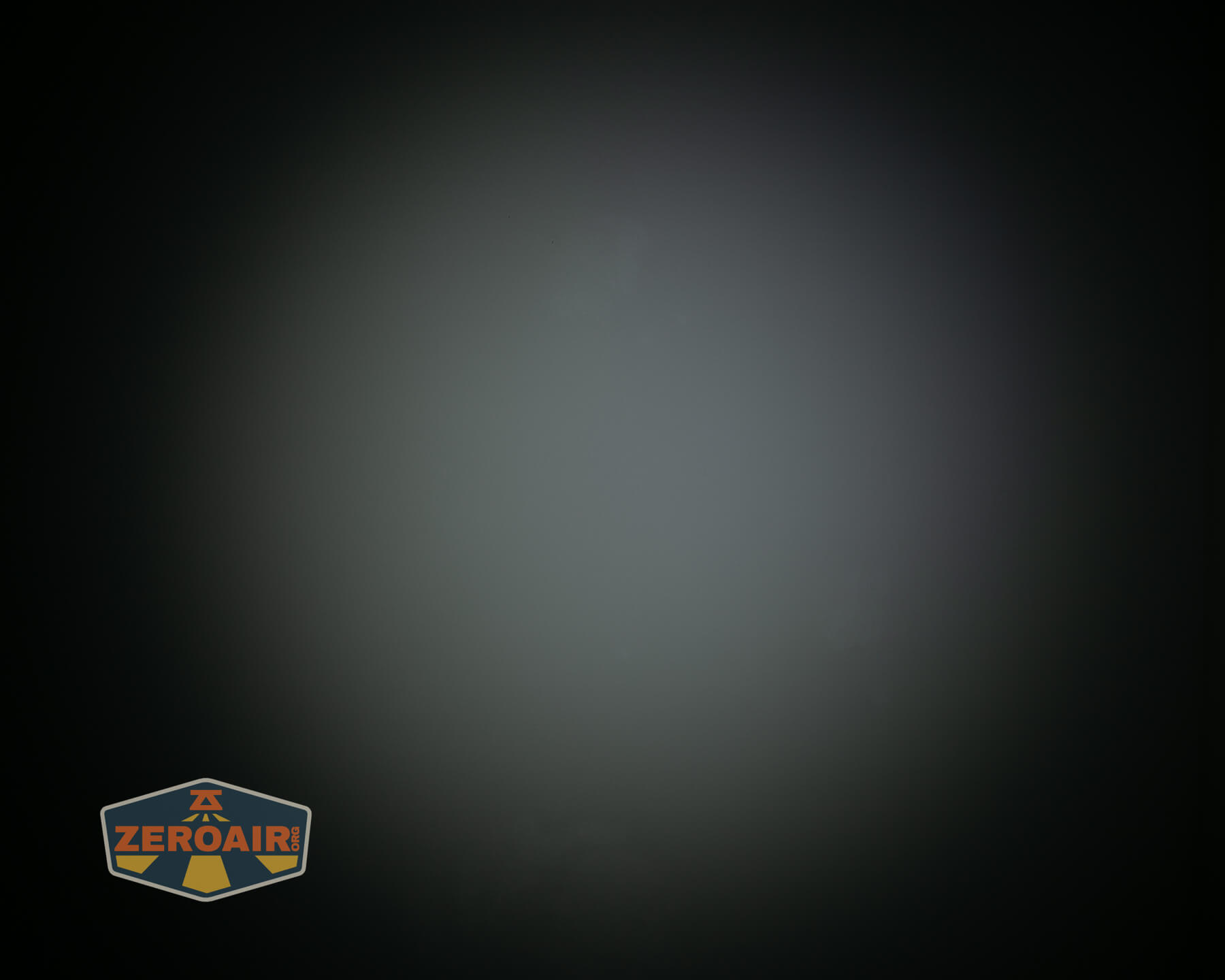
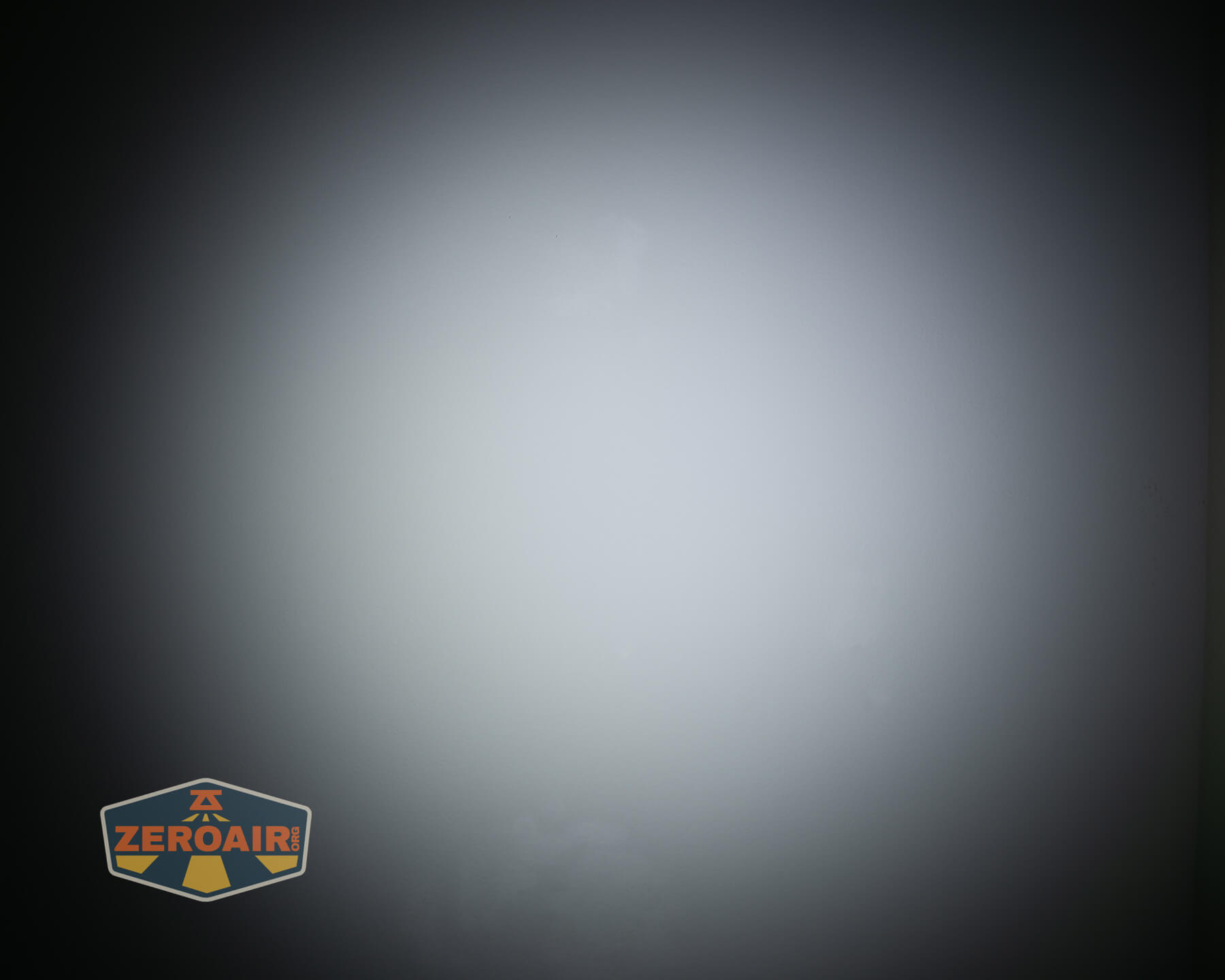
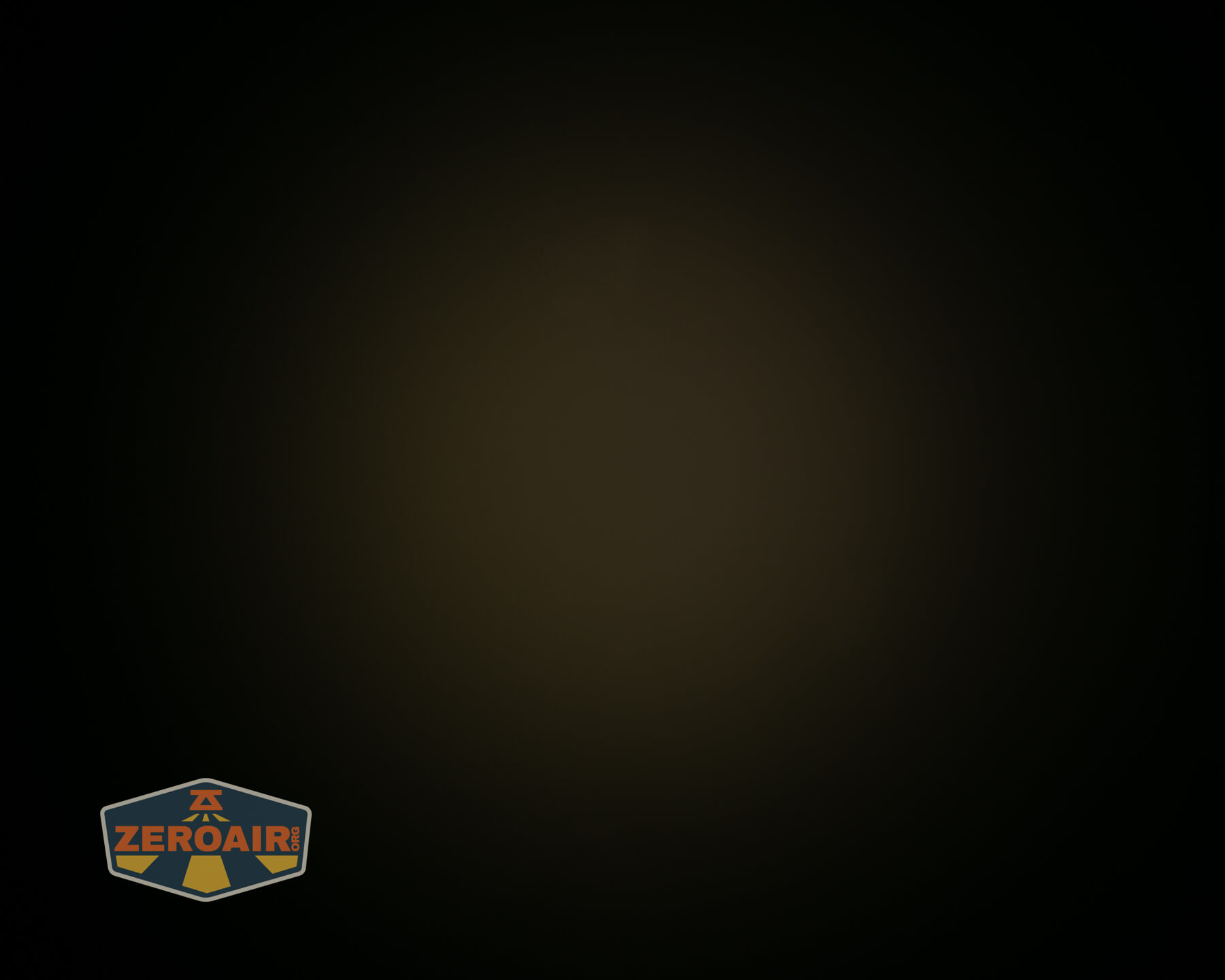
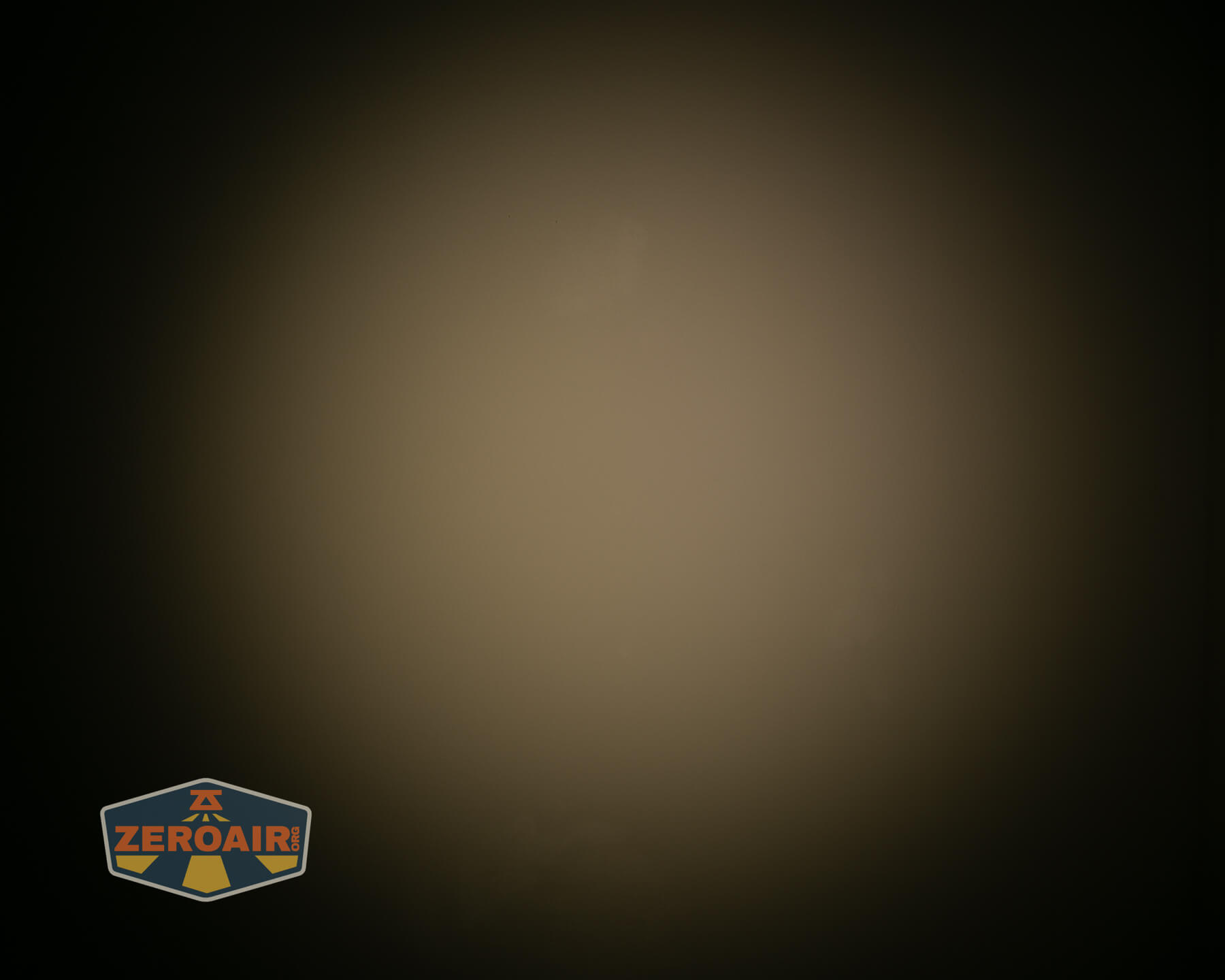
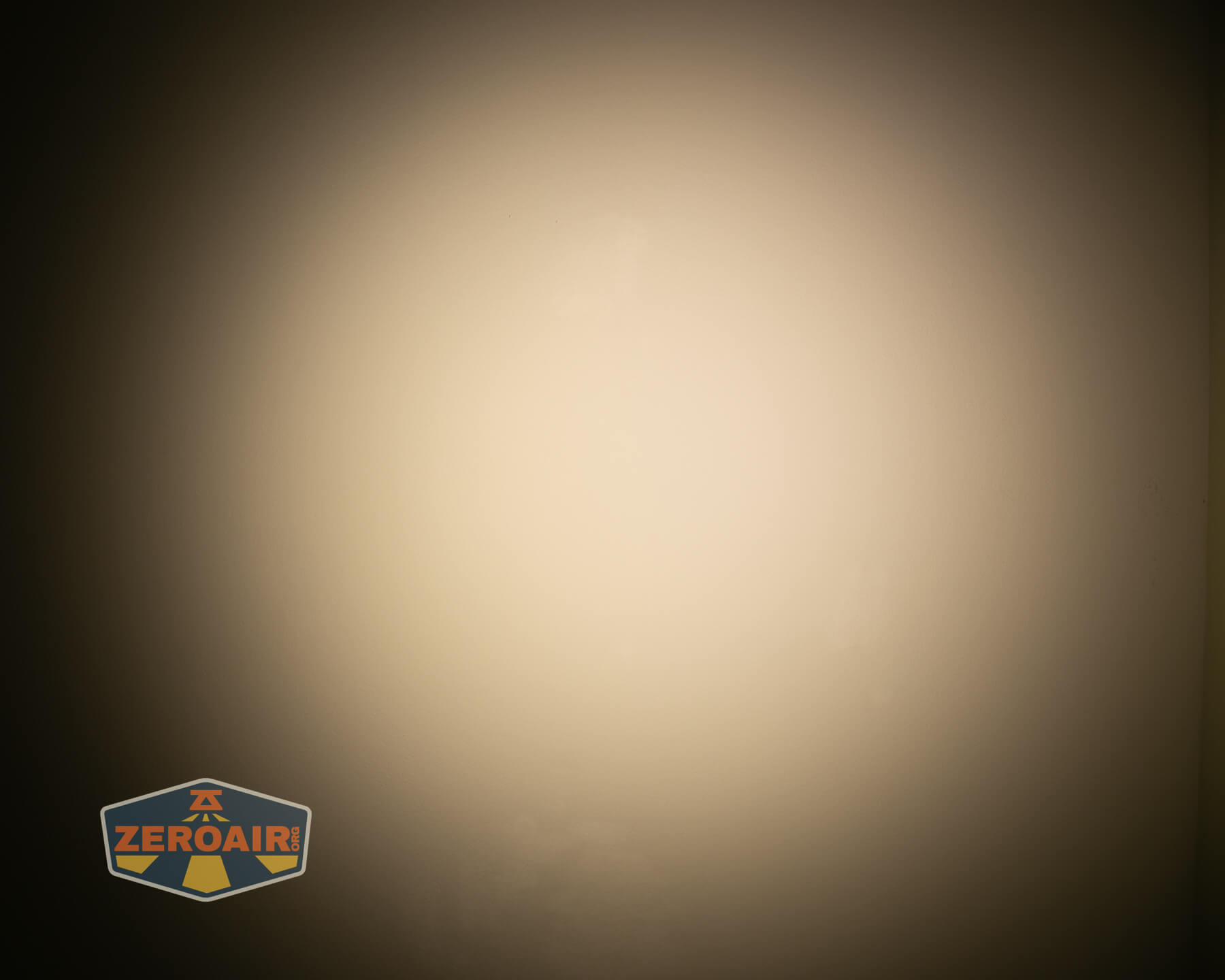


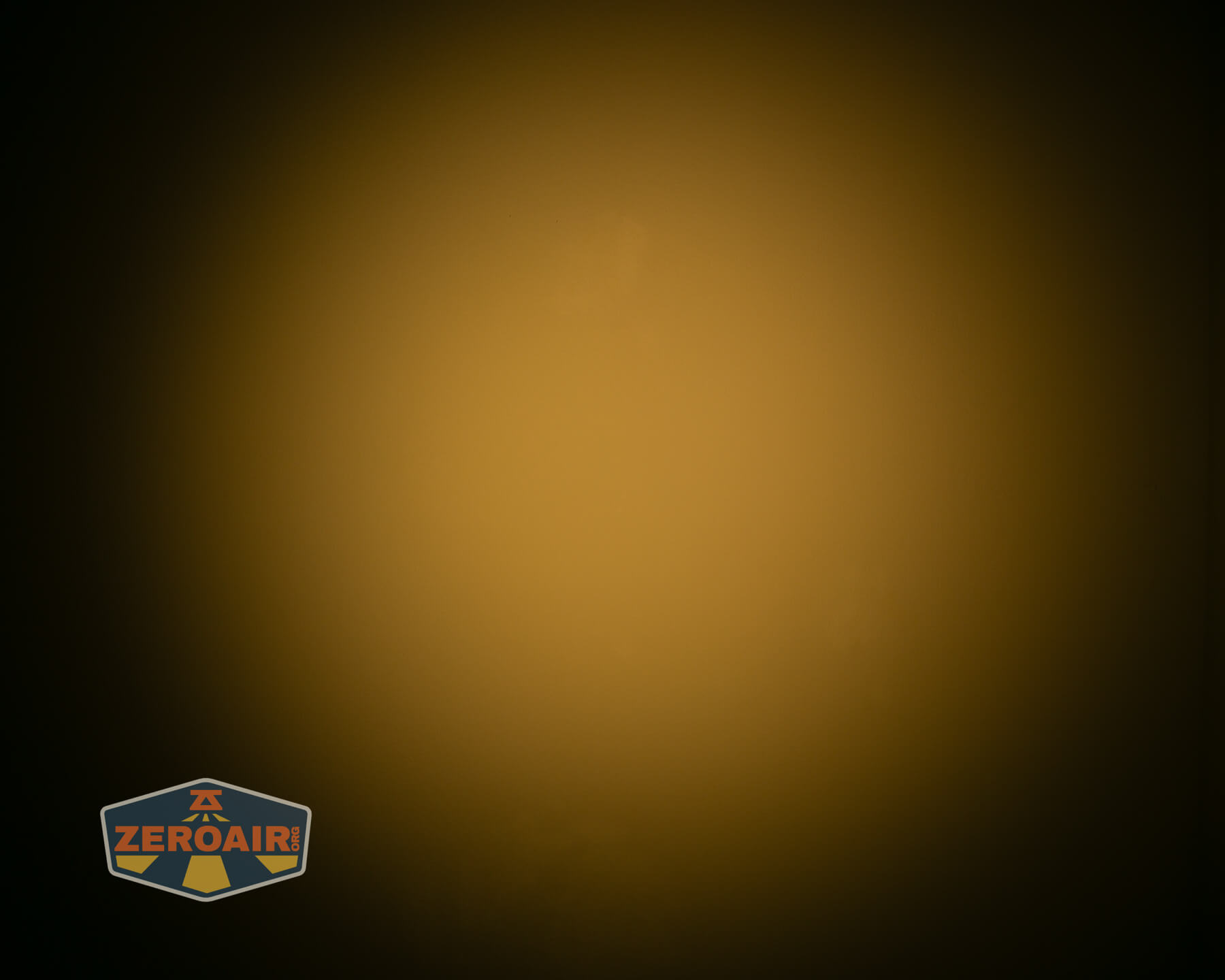
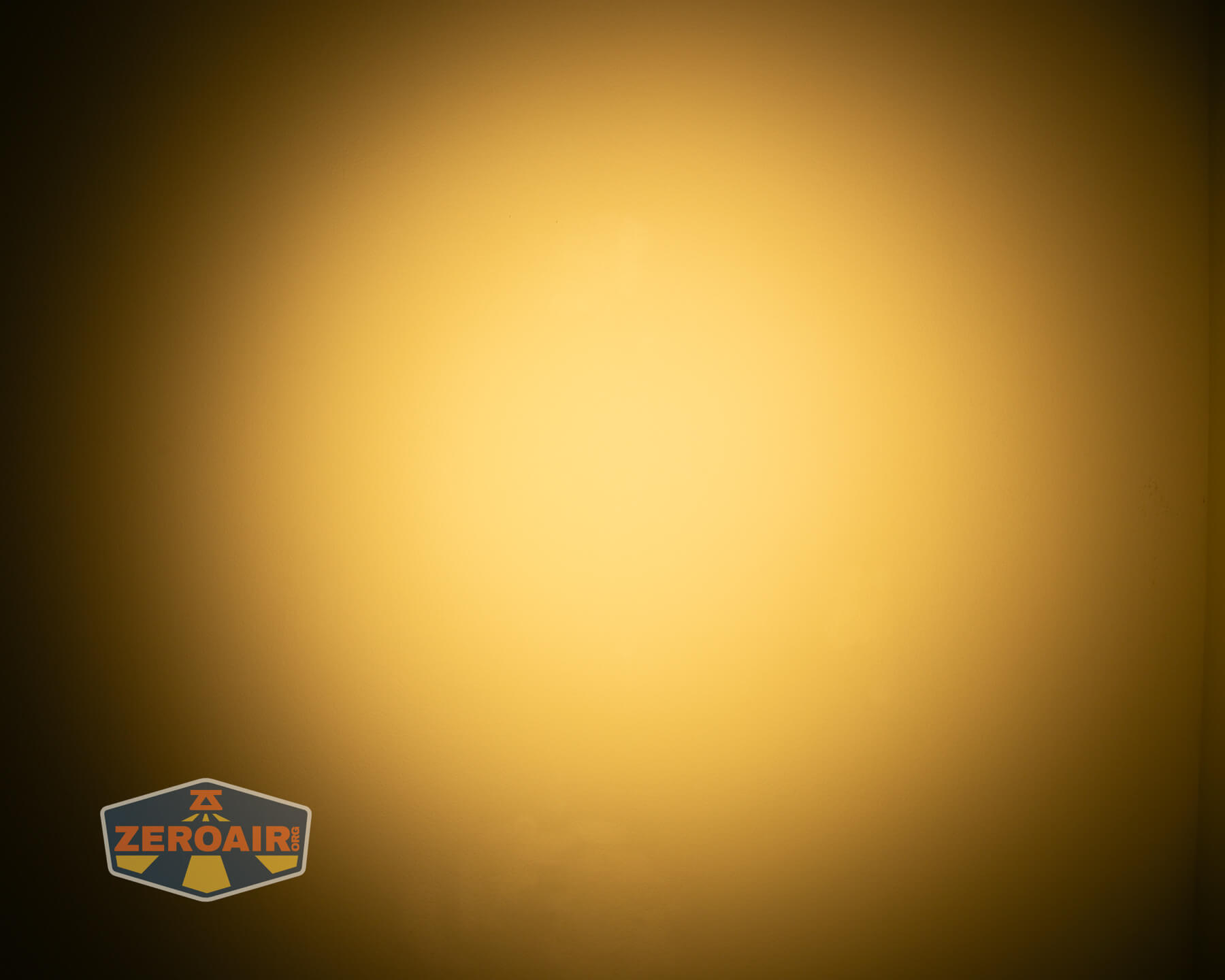
Tint vs BLF-348 (KillzoneFlashlights.com 219b version) (affiliate link)
I keep the test flashlight on the left and the BLF-348 reference flashlight on the right. These photos are taken around 18 inches from the door.
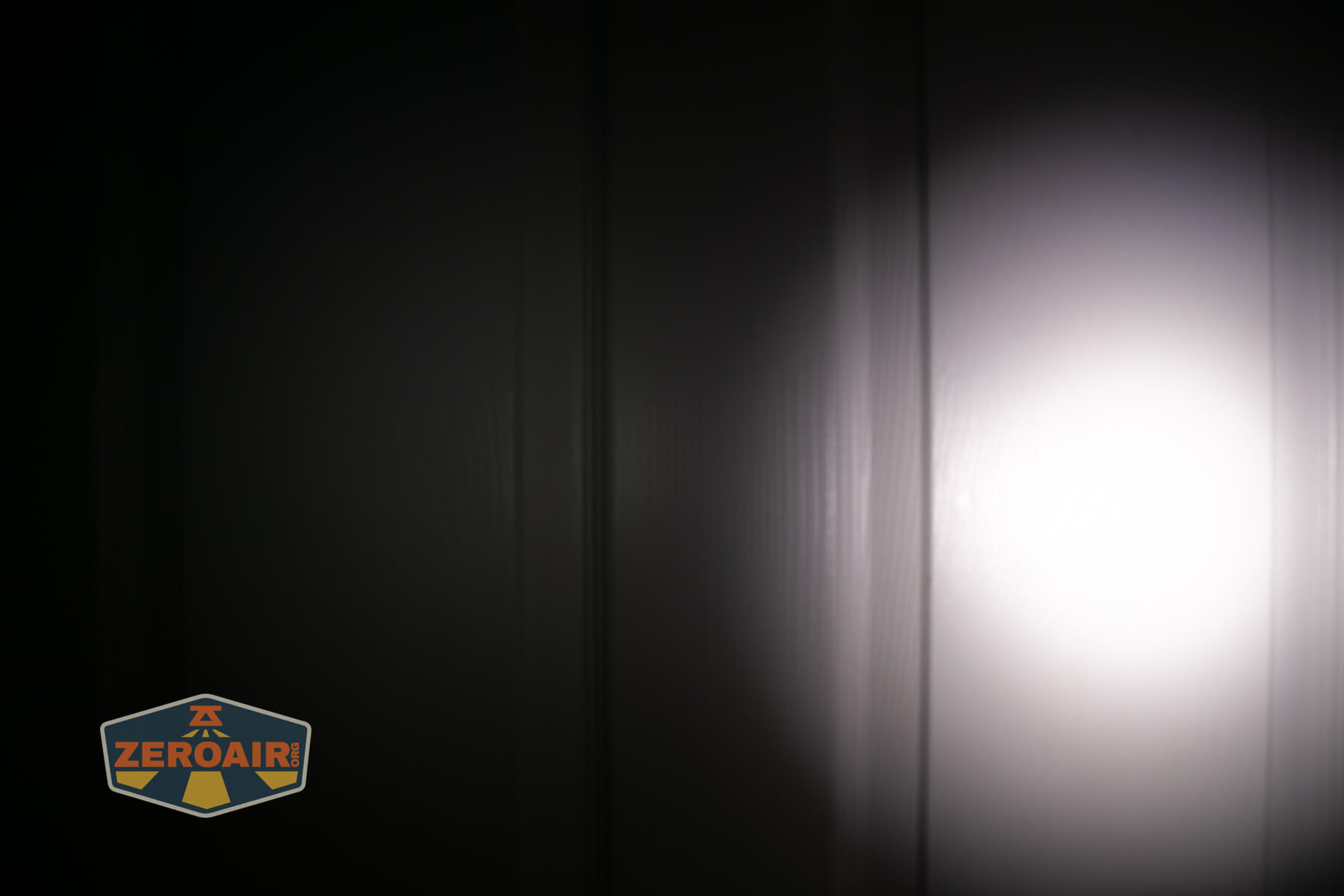
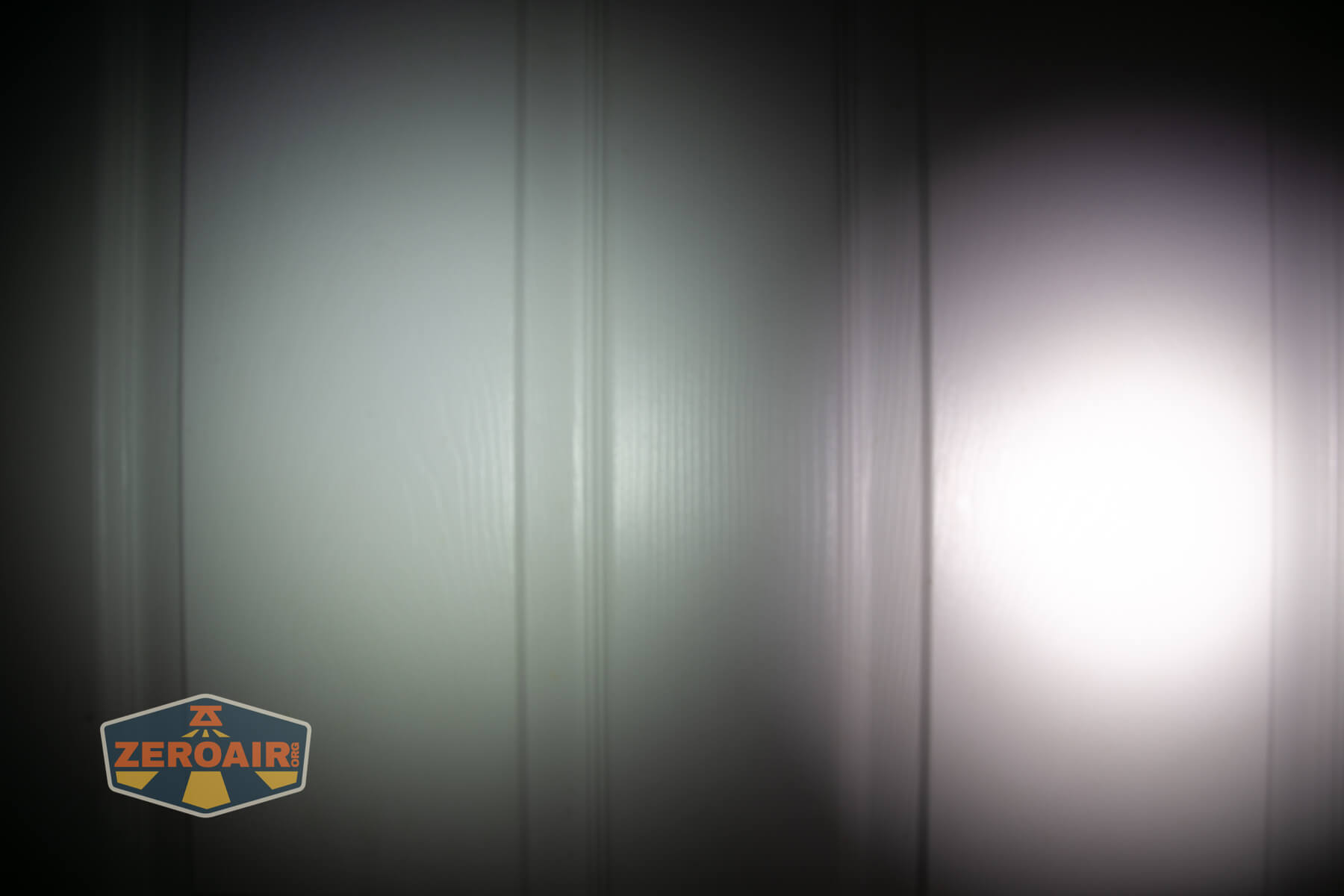
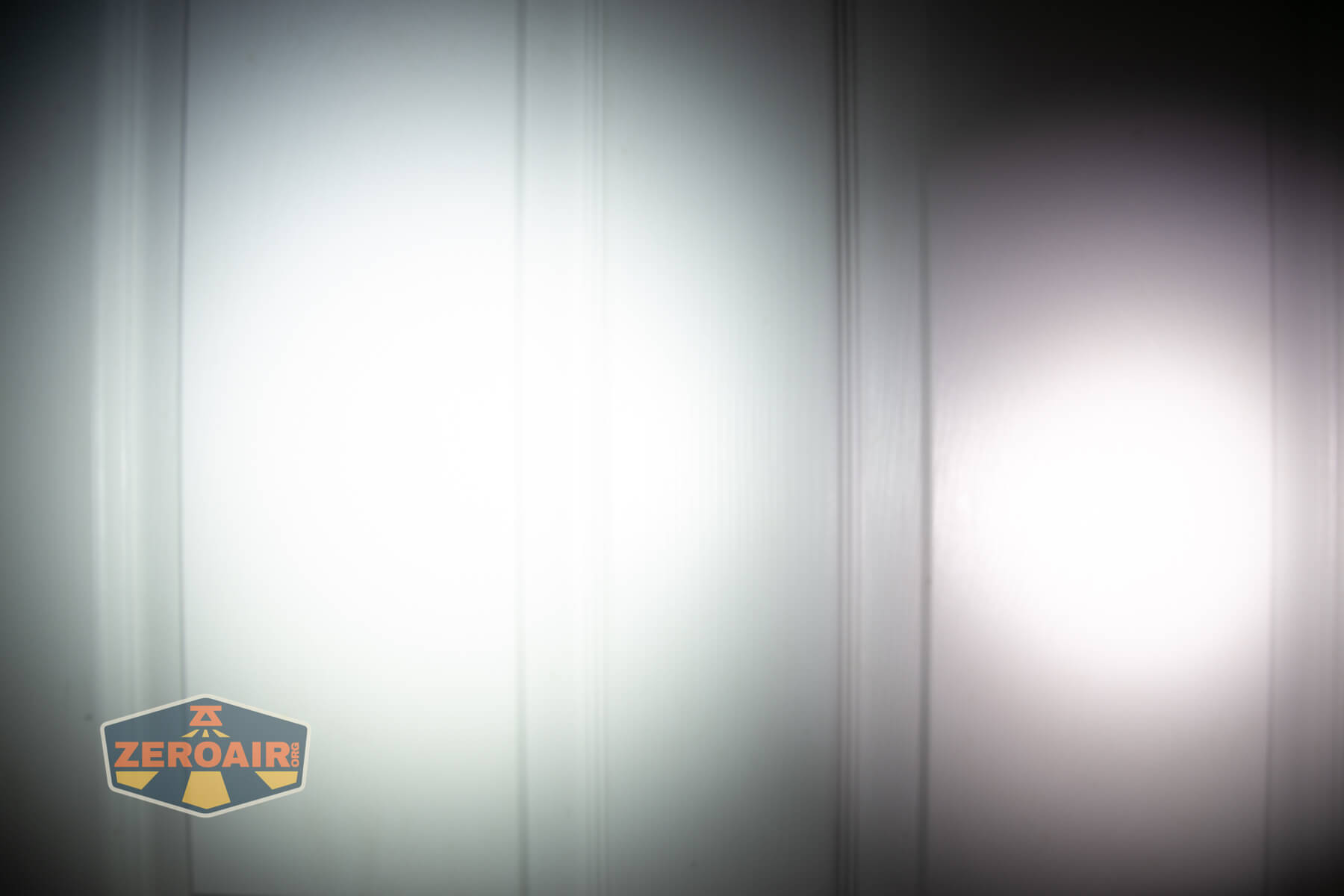
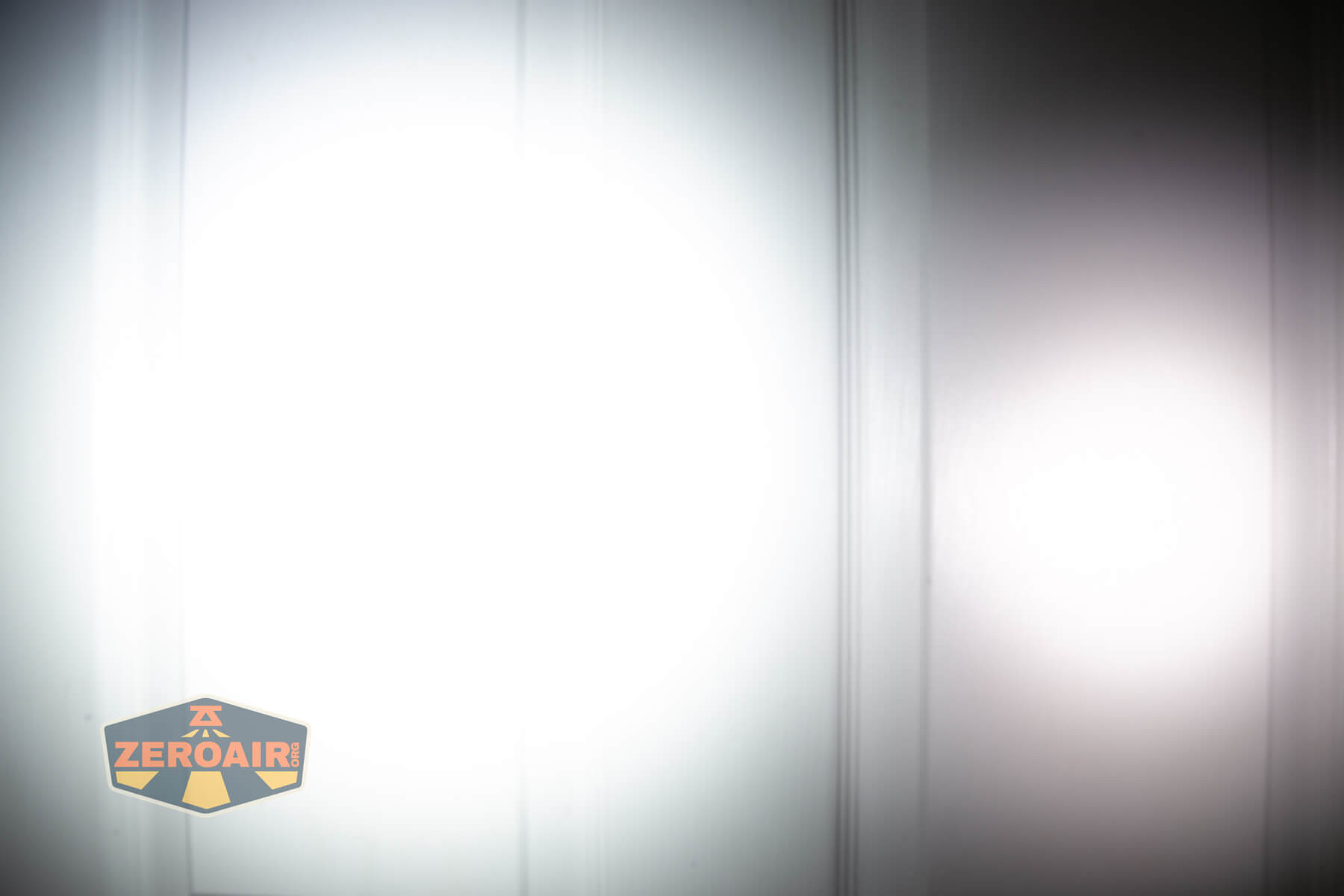
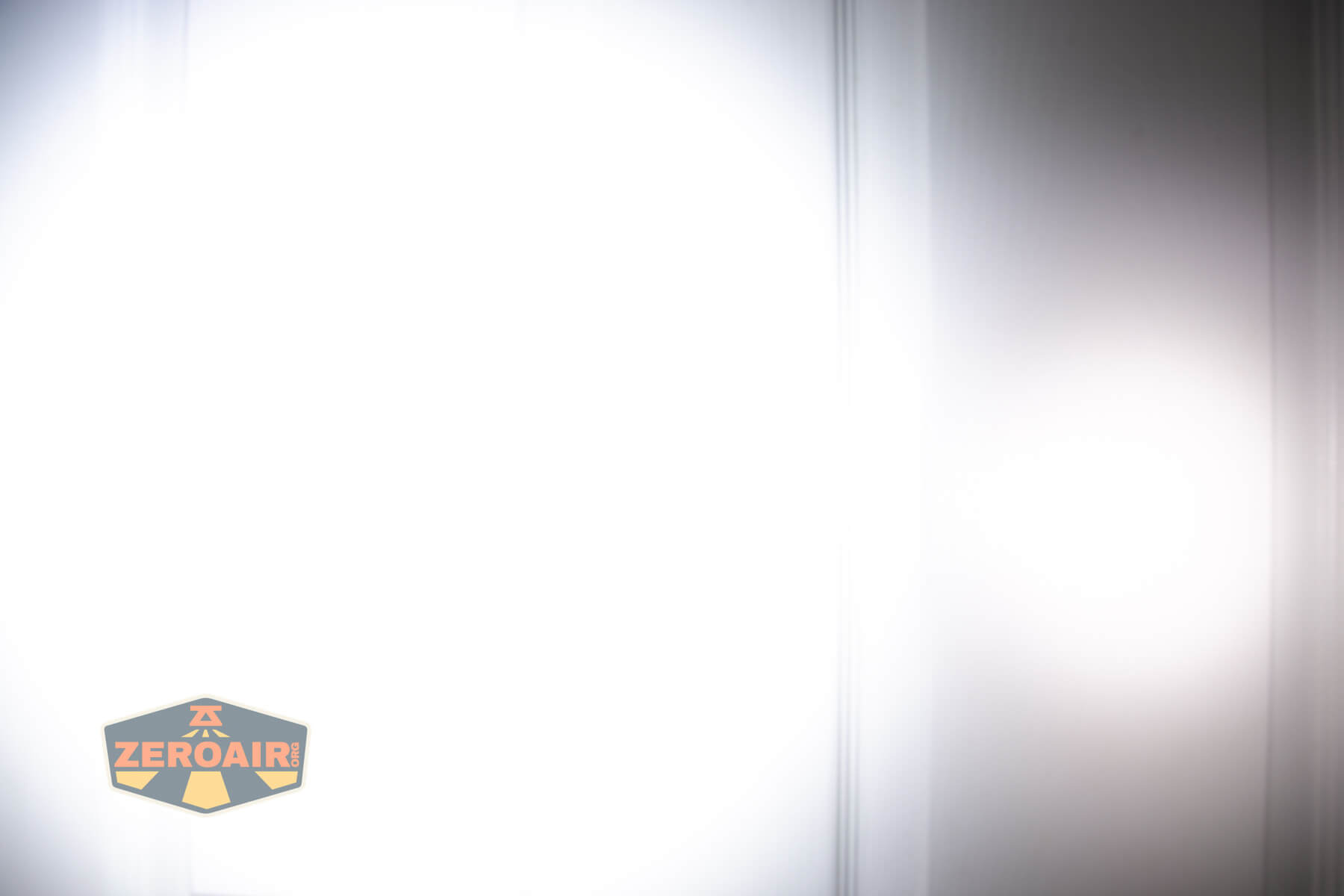
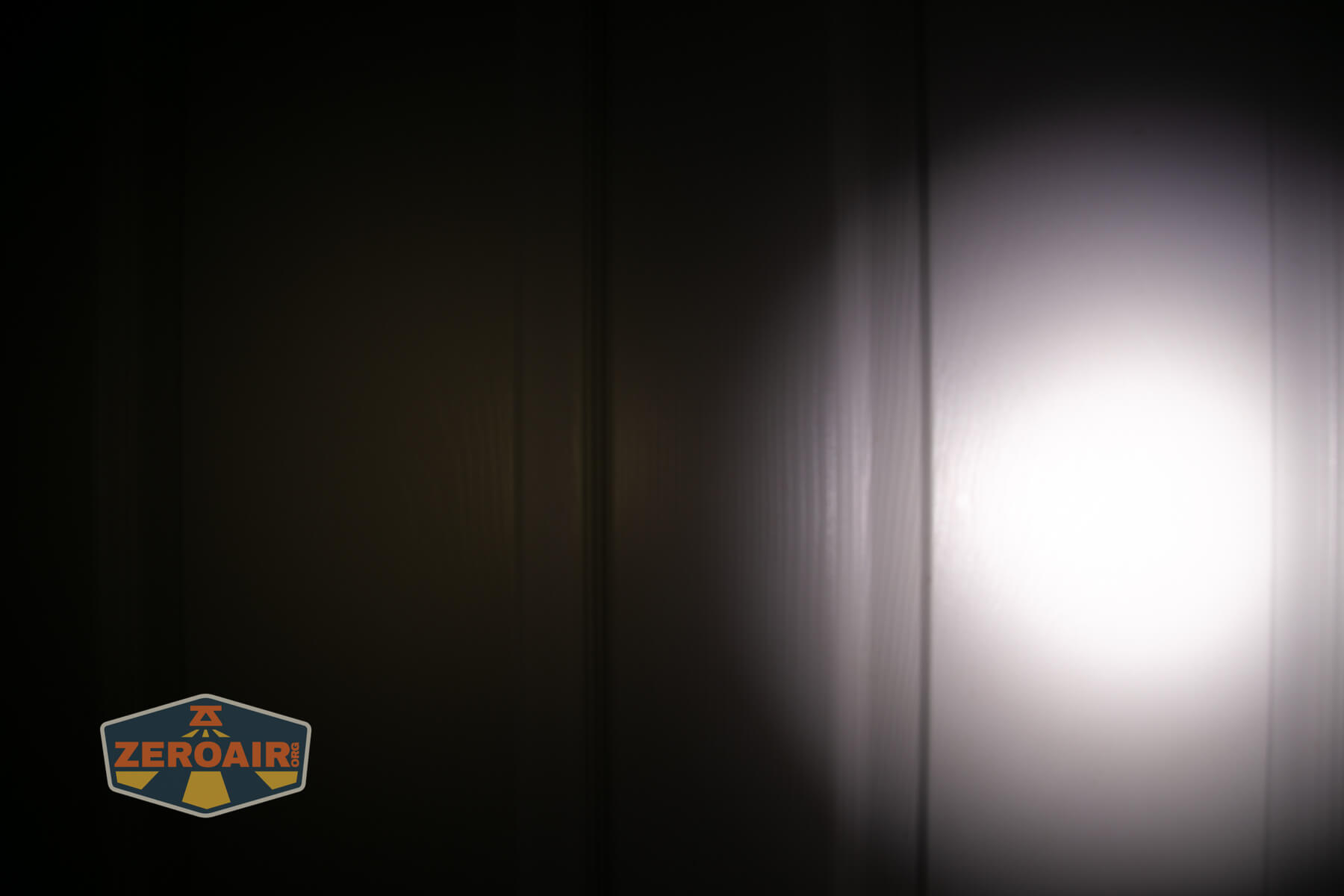
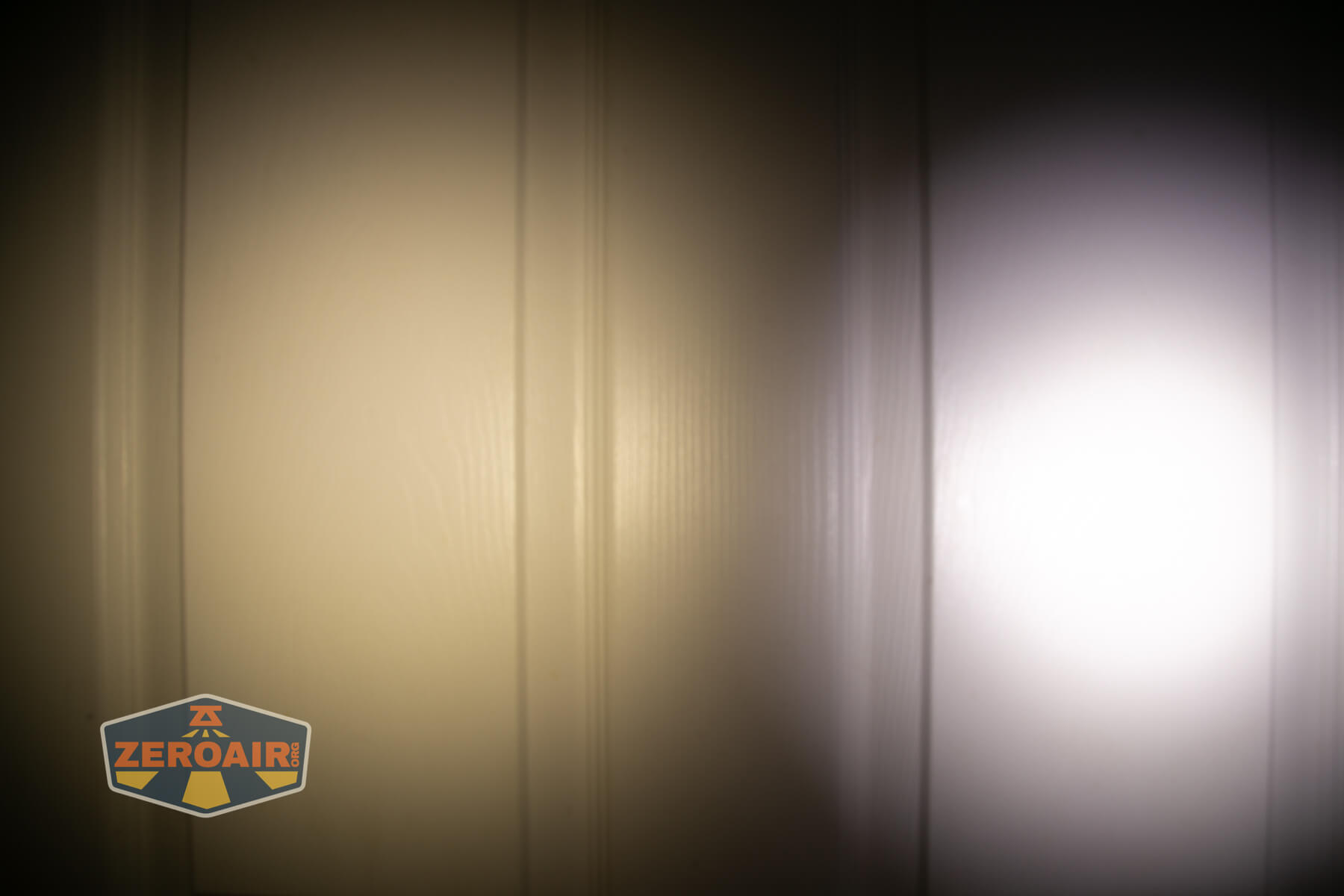
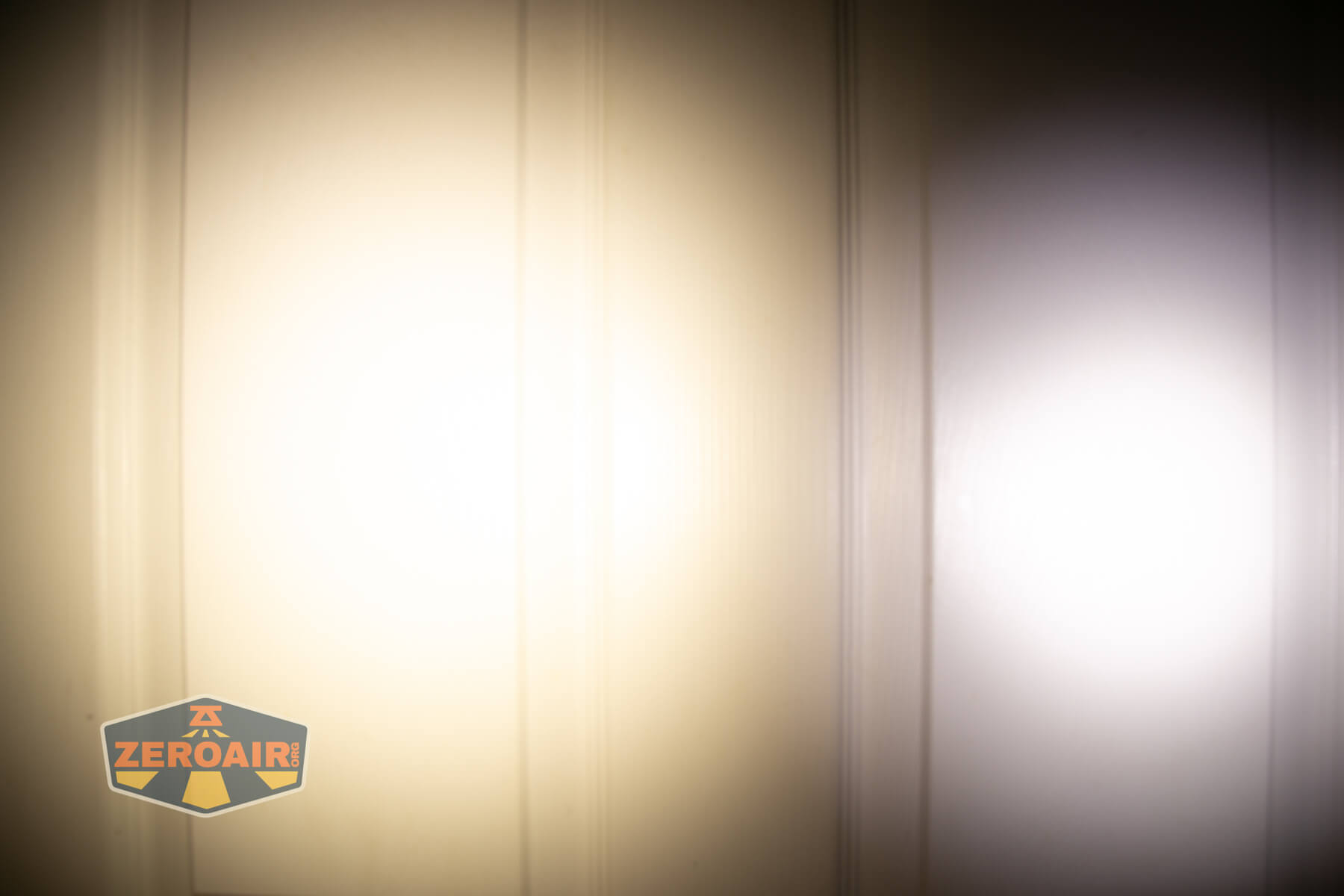
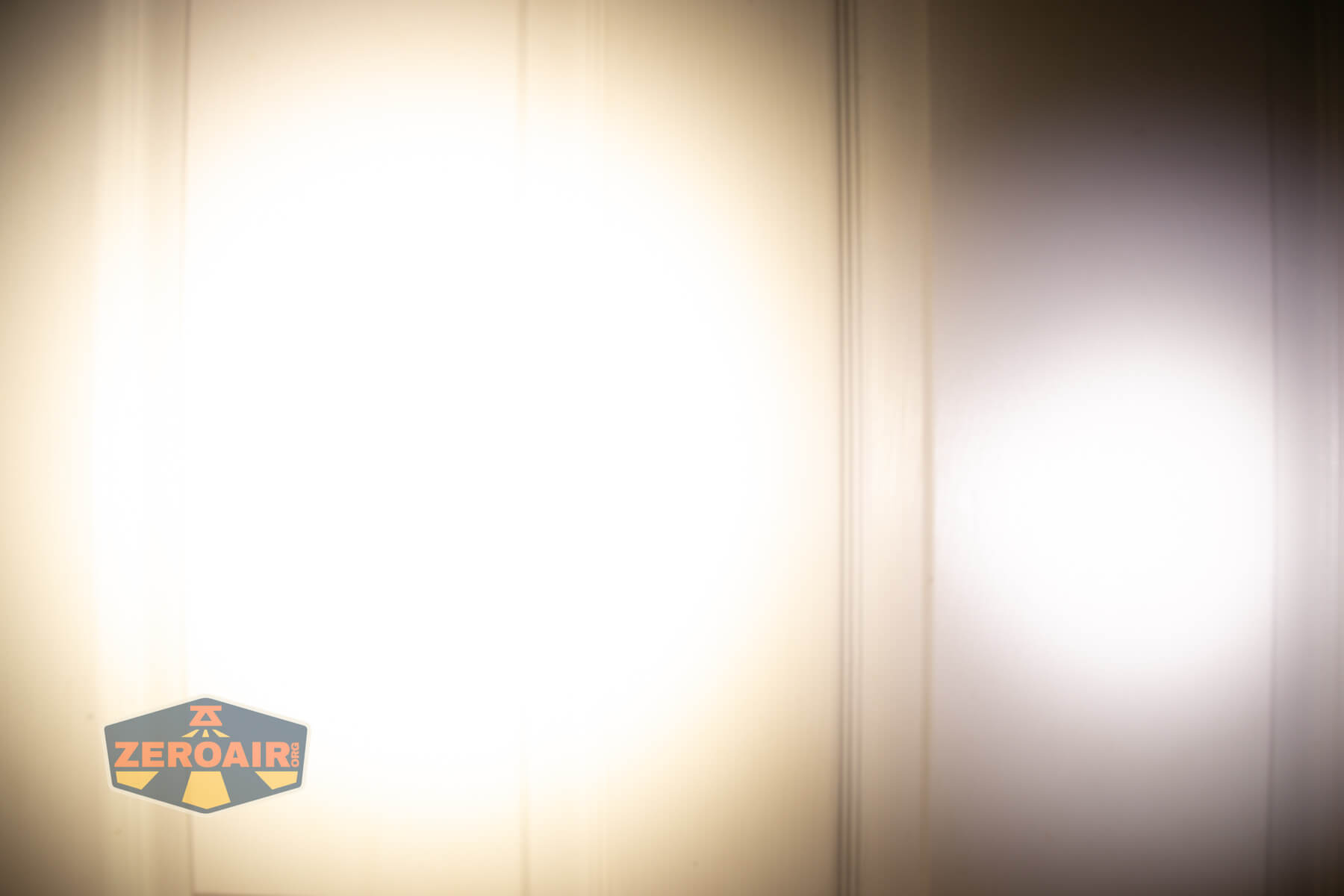
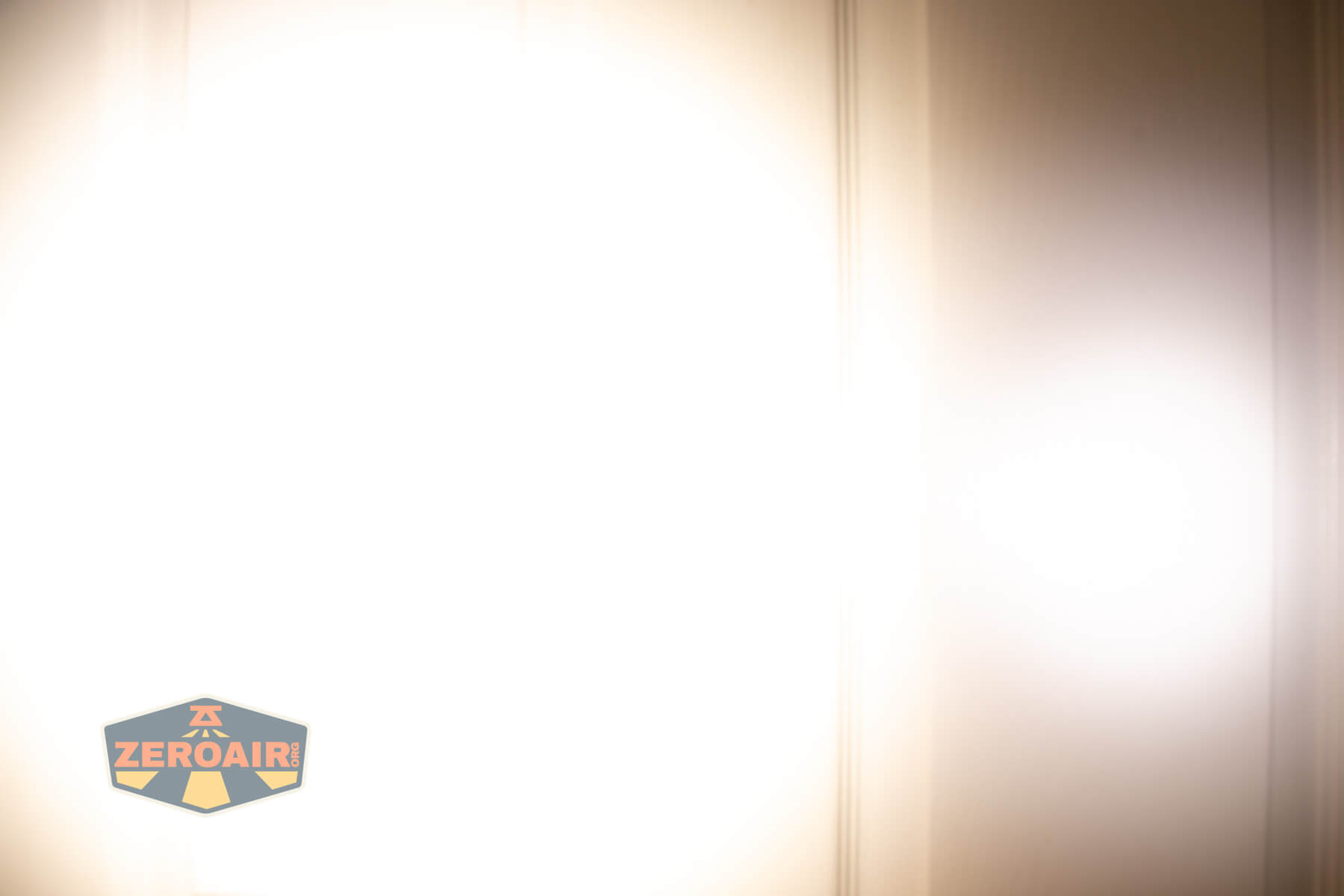
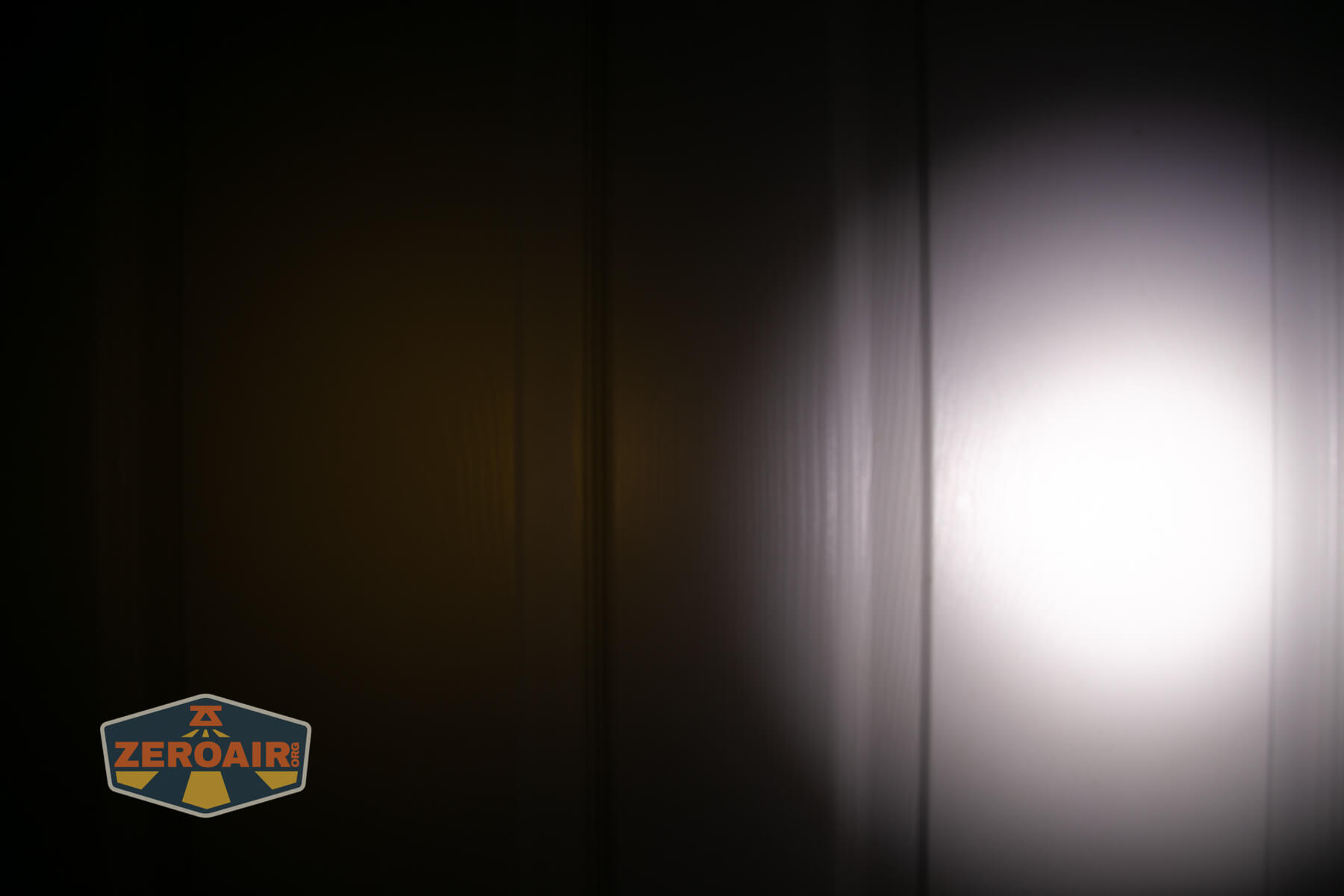
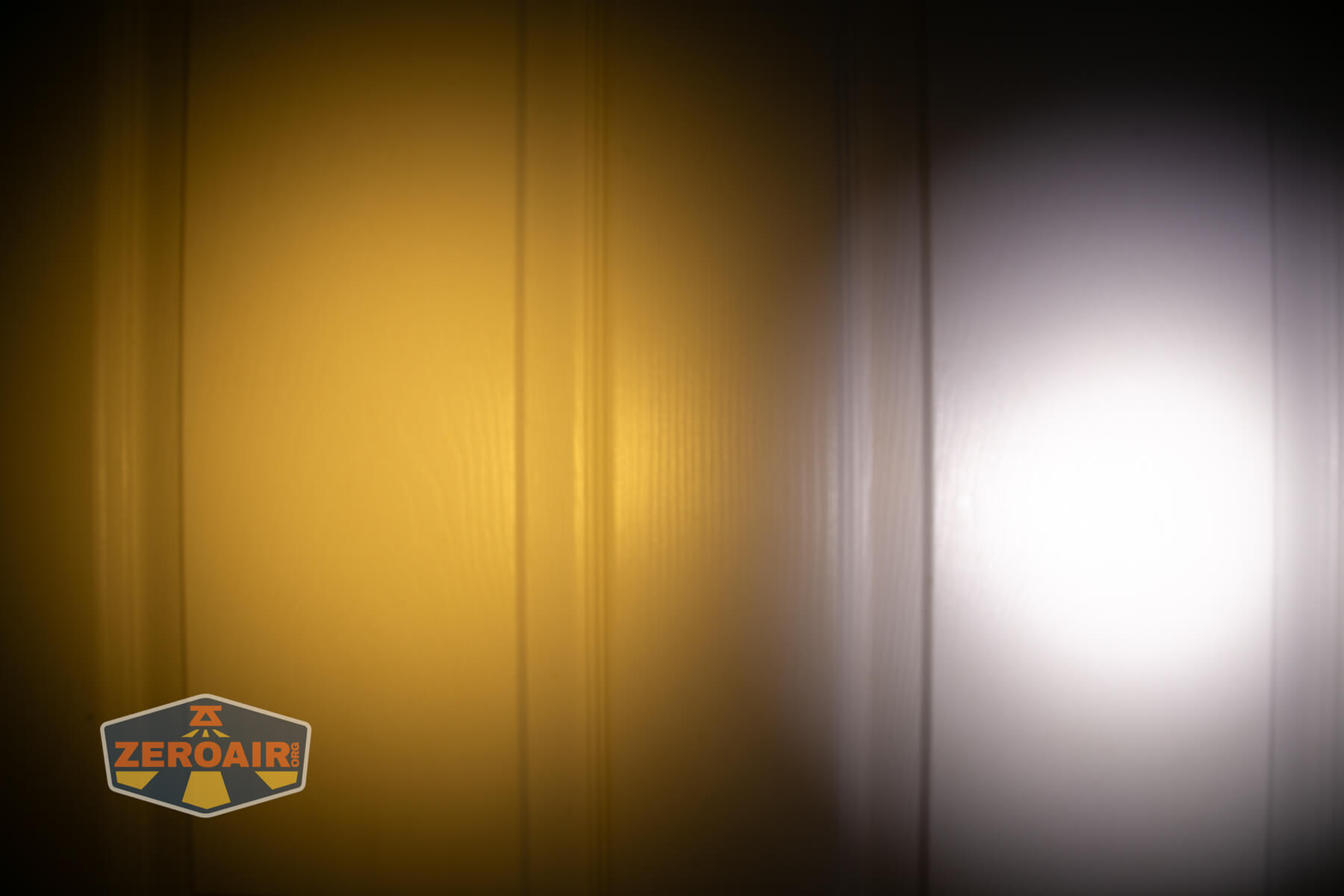
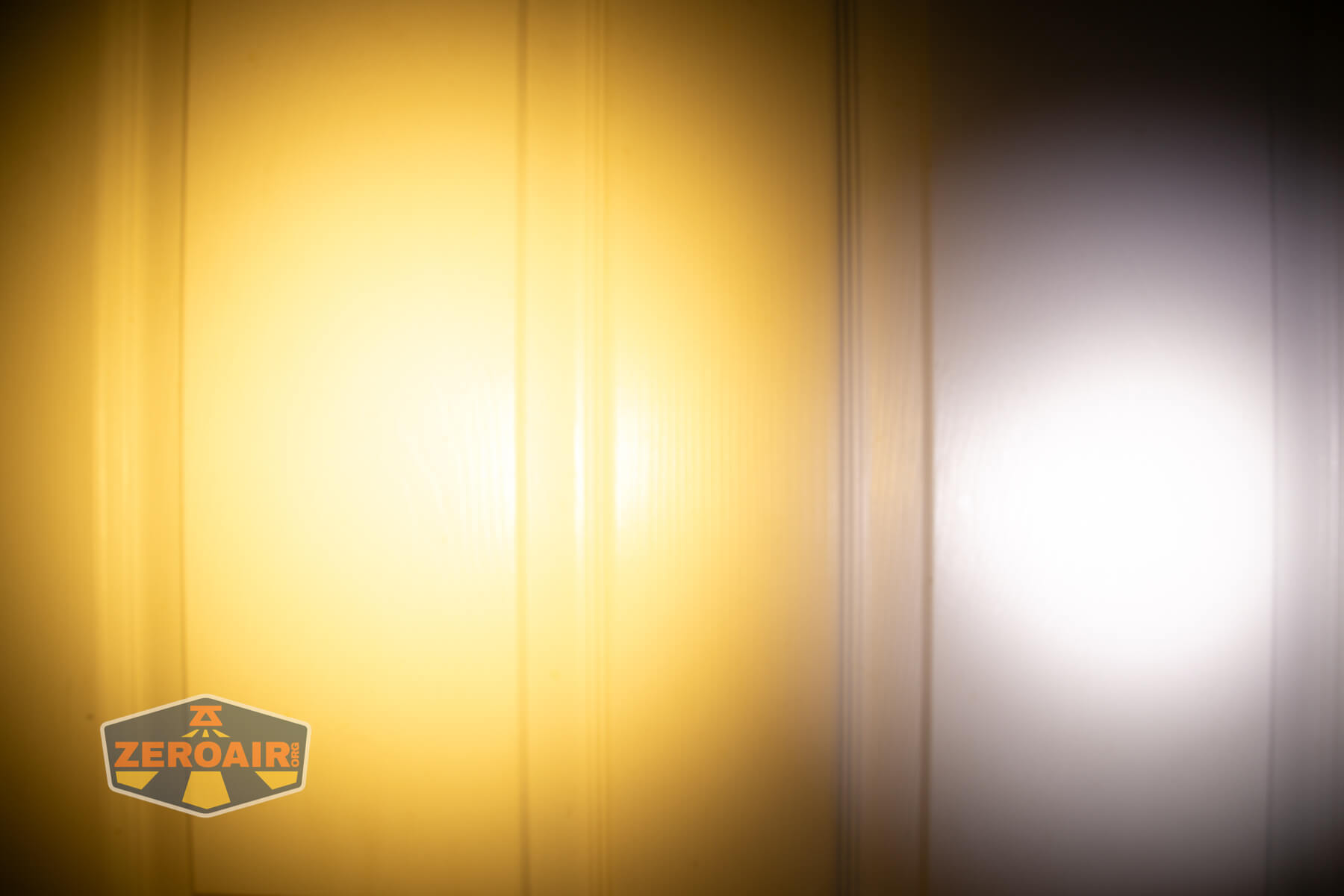
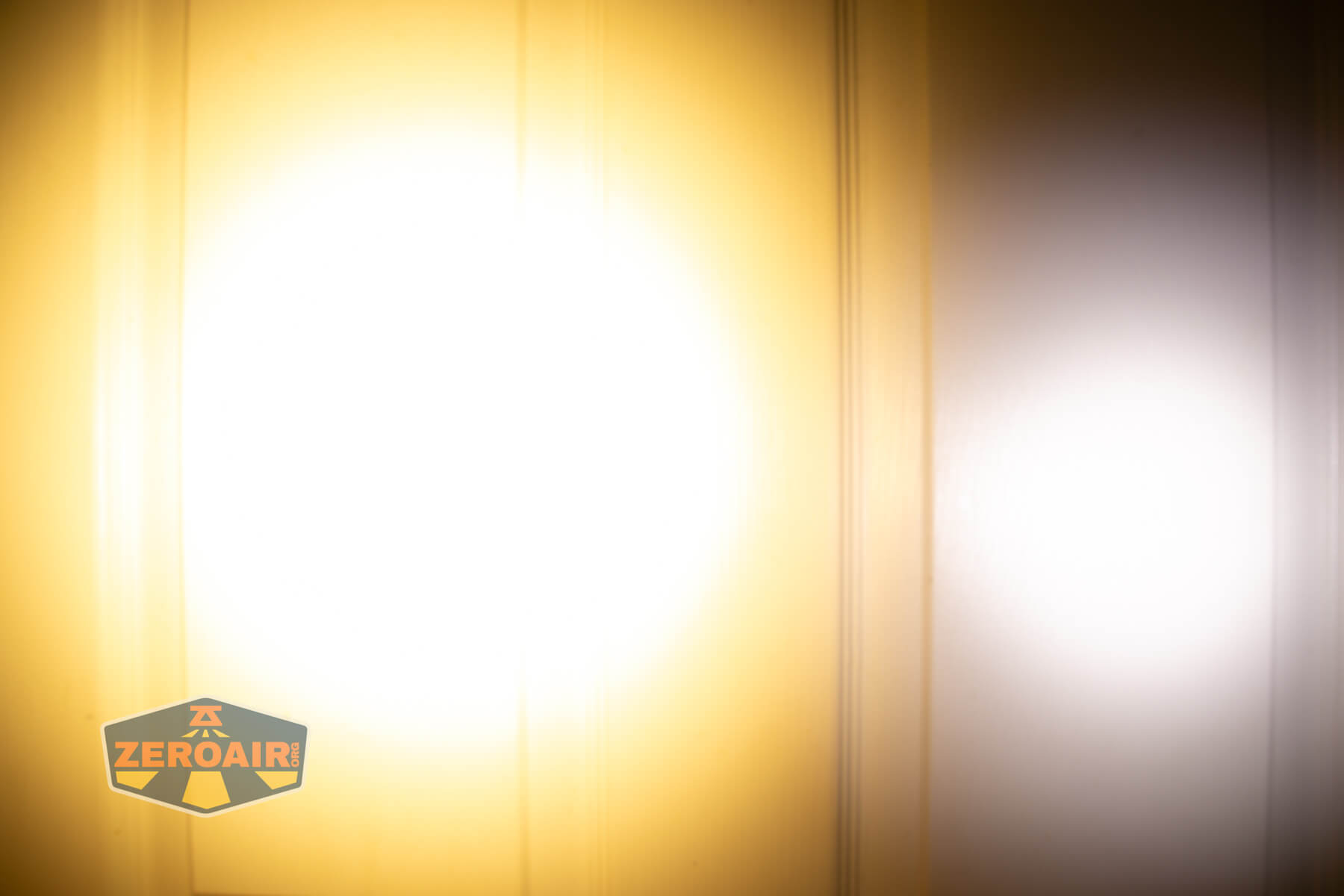
The Nitecore TIP3 keychain flashlight has four LEDs and three CCT options (warm, neutral, and cool), a dual-switch interface, and USB-C charging.
I compare everything to the KillzoneFlashlights.com 219b BLF-348 because it’s inexpensive and has the best tint!
Summary and Conclusion
The Nitecore TIP3 keychain flashlight is a fun light! I liked the Nitecore TINI3 and the Nitecore TUP2 quite a bit, and these lights have many similarities. The beam profile is good, the user interface is reasonable, and I love that the light can switch between three CCTs. And I also love that it’s just three CCTs – no infinite variable or mix range CCT. Just warm, neutral, and cool. Offering those in high CRI would be great! The price is reasonable too, and I love the orange! This is also a better keychain light than the TUP2, which is a good bit thicker. The price is very reasonable, too!
The Big Table
| Nitecore TIP3 Keychain Flashlight | |
|---|---|
| Emitter: | Cool White |
| Price in USD at publication time: | $34.95 |
| Cell: | Internal |
| Runtime Graphs | |
| LVP? | Probably |
| Switch Type: | E-Switch |
| Quiescent Current (mA): | ? |
| On-Board Charging? | Yes |
| Charge Port Type: | USB-C |
| Charge Graph | |
| Power off Charge Port | Yes |
| Claimed Lumens (lm) | 720 |
| Measured Lumens (at 30s) | 627 (87.1% of claim)^ |
| Candela per Lumen | 3.1 |
| Claimed Throw (m) | 92 |
| Candela (Calculated) in cd (at 30s) | 93lux @ 4.614m = 1980cd |
| Throw (Calculated) (m) | 89.0 (96.7% of claim)^ |
| Claimed CCT | Range |
| Measured CCT Range (K) | 3000-6600 Kelvin |
| Item provided for review by: | Nitecore |
| All my Nitecore reviews! | |
^ Measurement disclaimer: Testing flashlights is my hobby. I use hobbyist-level equipment for testing, including some I made myself. Try not to get buried in the details of manufacturer specifications versus measurements recorded here; A certain amount of difference (say, 10 or 15%) is perfectly reasonable.
What I like
- Orange body
- Can switch from CW to NW to WW
- Low cost
- Good user interface
- Modes all have the same output (no “warm tax”)
- Familiar to those already in the Nitecore keychain light ecosystem
What I don’t like
- Low CRI
- Built-in battery
Notes
- This content originally appeared at zeroair.org. Please visit there for the best experience!
- Please use my Amazon.com referral link to help support zeroair.org!
- Please support me on Patreon! I deeply appreciate your support!
Discover more from ZeroAir Reviews
Subscribe to get the latest posts sent to your email.