

Wuben X4 Flashlight Review
The Wuben X4 flashlight is a “redefined” 18650 light. It offers multiple white emitters, a hinged 18650 cover, and a rotary dial for output control. Read on!
Official Specs and Features
Here’s a referral link to the Wuben X4 flashlight page on Amazon.
Versions
Right now, there are two versions of the Wuben X4 flashlight. They have the same emitter options but differ in body color. Black (seen here) and grey are available on Kickstarter.
Price
The Kickstarter early bird pricing was around $40, and the price has gone up from there as the availability of reward options decreases. Today, it looks like you could get in on the Wuben X4 flashlight for around $45, with discounts available for multiple purchases. It helps me and doesn’t hurt you to use this referral link! Thank you!
What’s Included
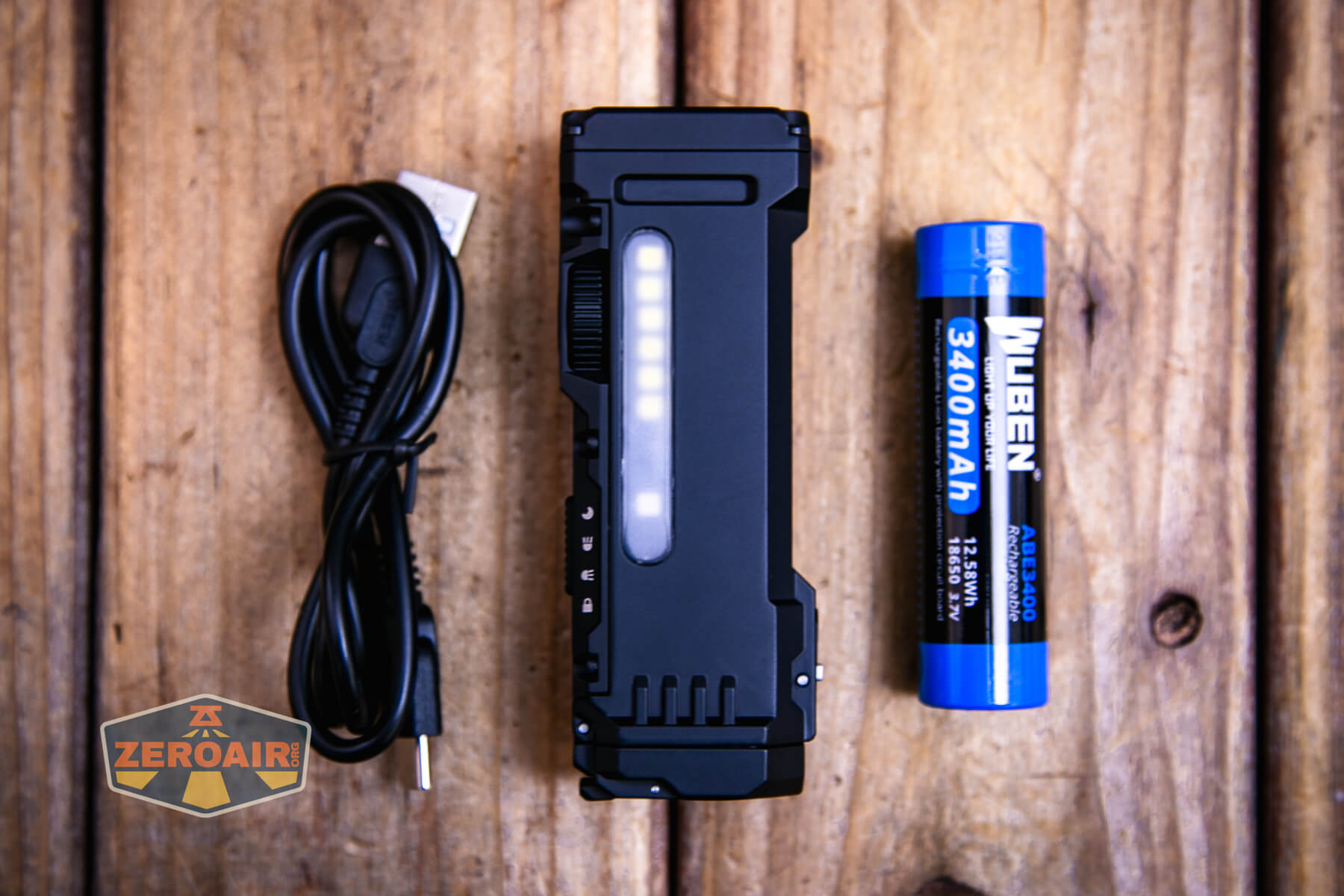
I did not get a retail package, so this is all I have. The Kickstarter page covers what’s included, though. I got:
- Wuben X4 flashlight
- Wuben 3400mAh 18650
- Charging cable.
Package and Manual
Again, I didn’t get a package for the Wuben X4 flashlight. I also didn’t get a manual, which is part of why this review took way longer than Wuben wanted (release date would have ideally matched the Kickstarter start date. Yet here we are.)
Build Quality and Disassembly

The Wuben X4 flashlight is definitely a “redesigned” 18650 flashlight, but if you follow Wuben at all, the light will be very familiar. It’s quite like the Wuben X2 Pro in form and function, but differs in cells used, and some other features.
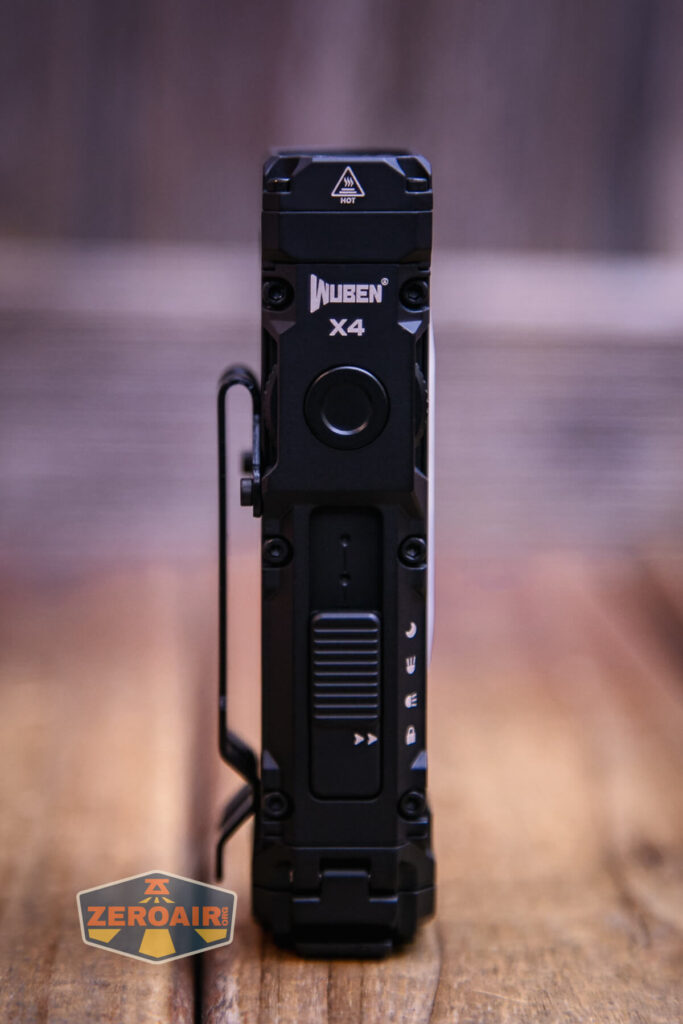

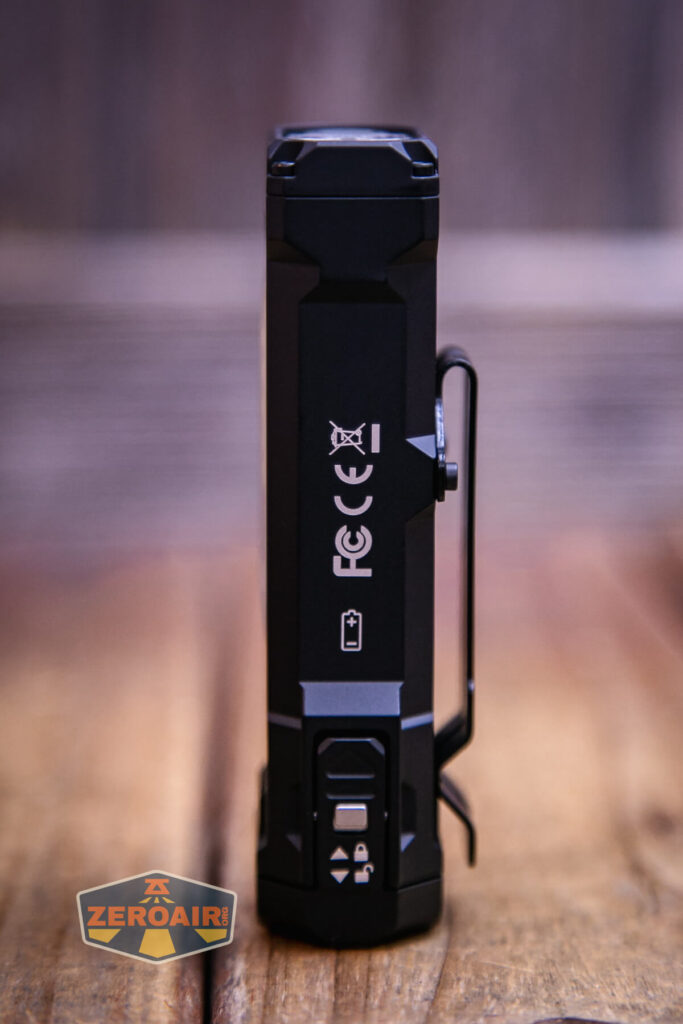
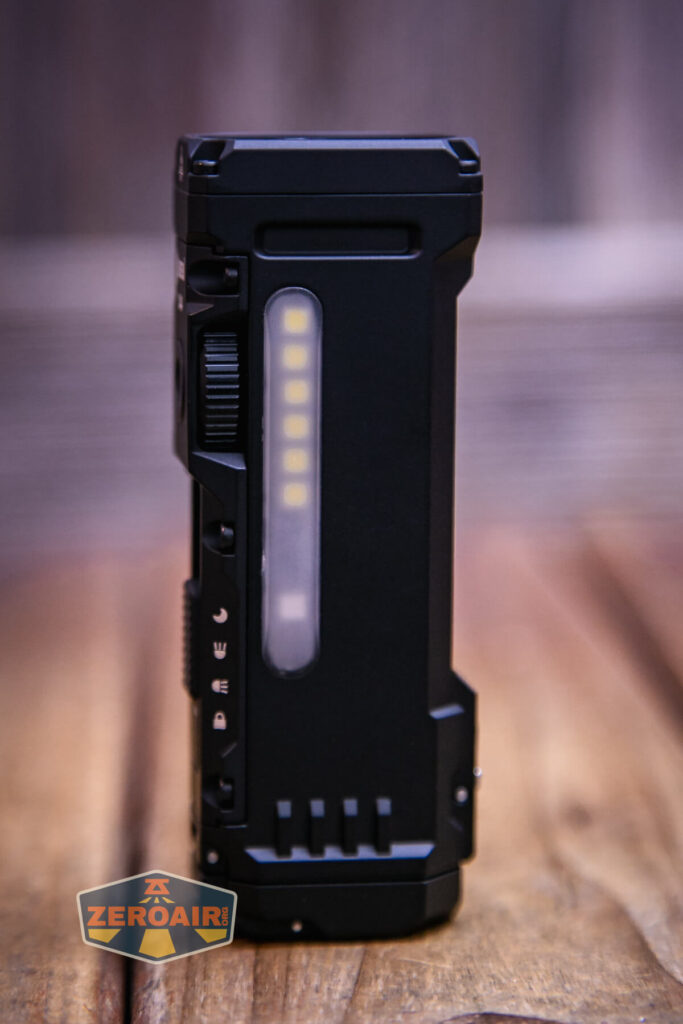
The build quality is good. I never know how much to trust a hinge on a battery cover, since it’s always under tension, but this one seems solid.
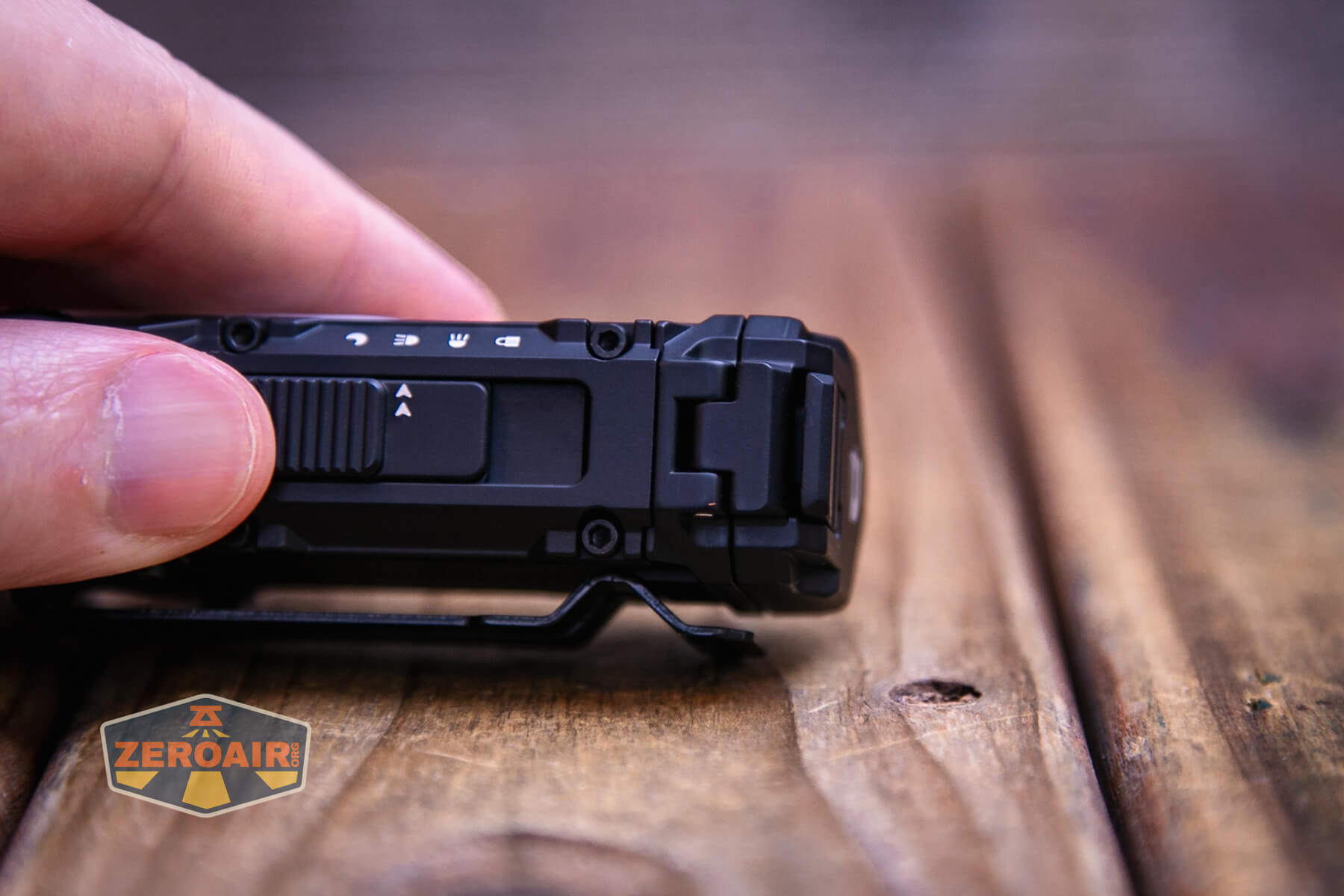
Here’s a look at the hinge. Nothing really suspicious about it – it looks robust.
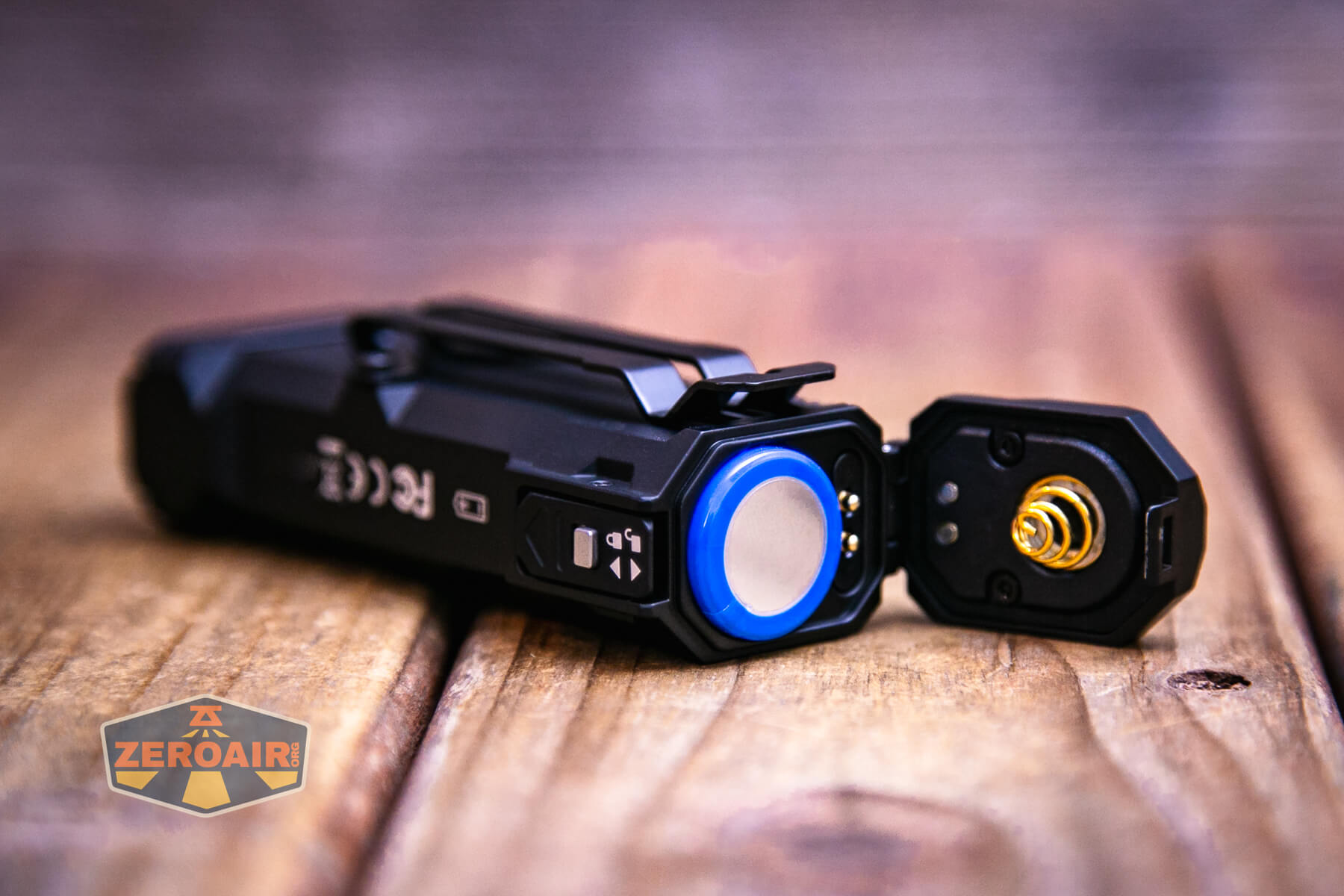
With the hinged door open, you can see that the tailcap has a spring. There are two little contacts too, probably for carrying the tactical tail switch signal.
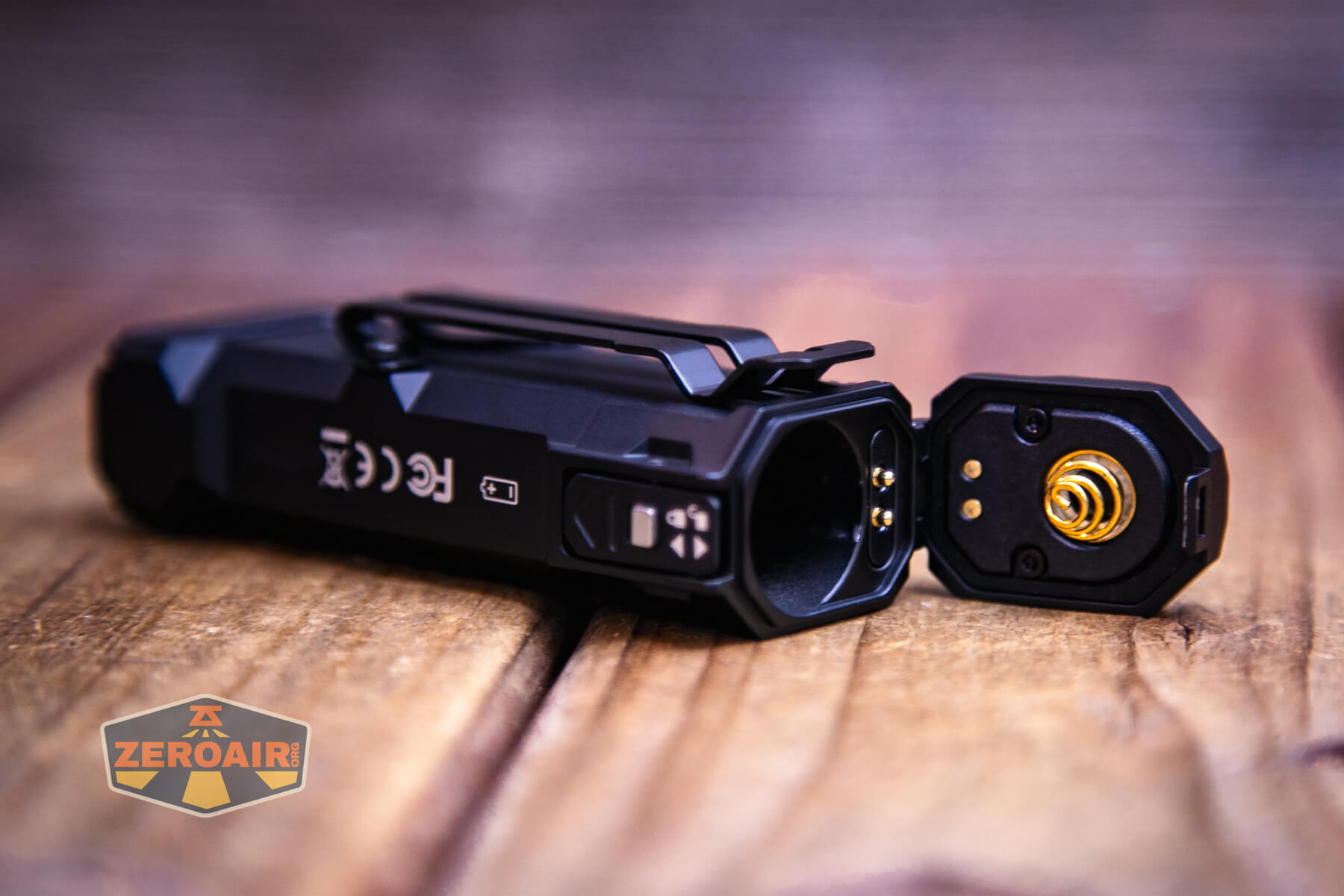
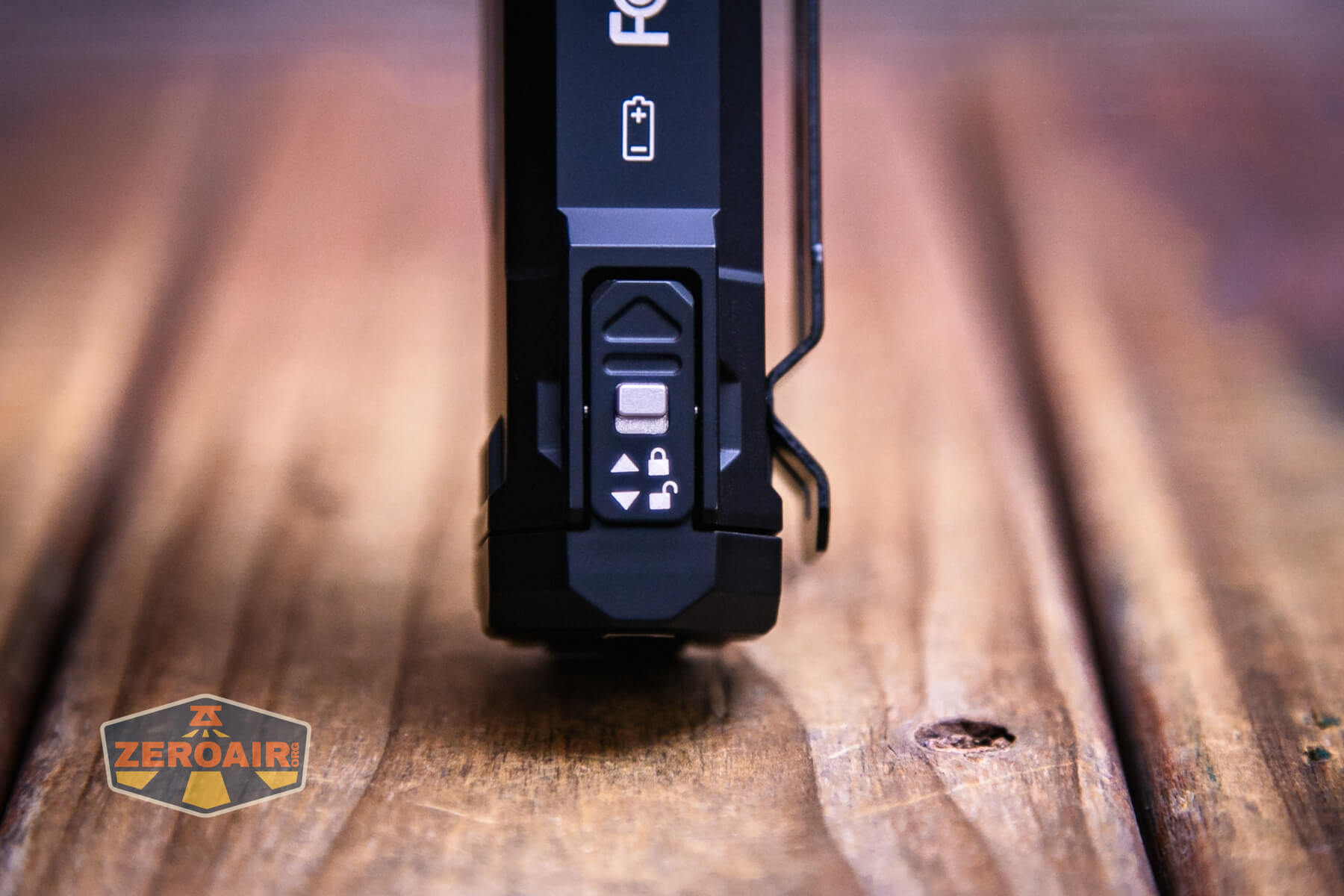
The hinged tailcap can be locked, too!
Inside the cell tube, you can see that the positive contact has a spring too. That’s good!

Size and Comps
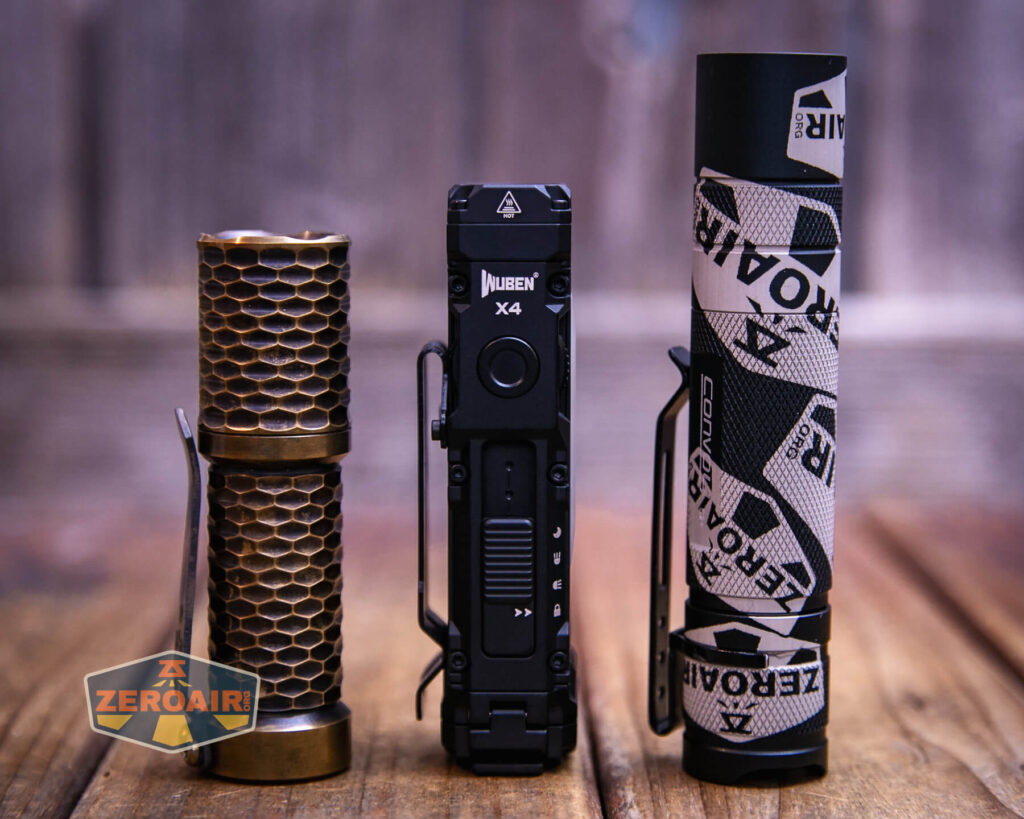
37.3mm x 26.3mm x 95.7mm and 137g with battery.


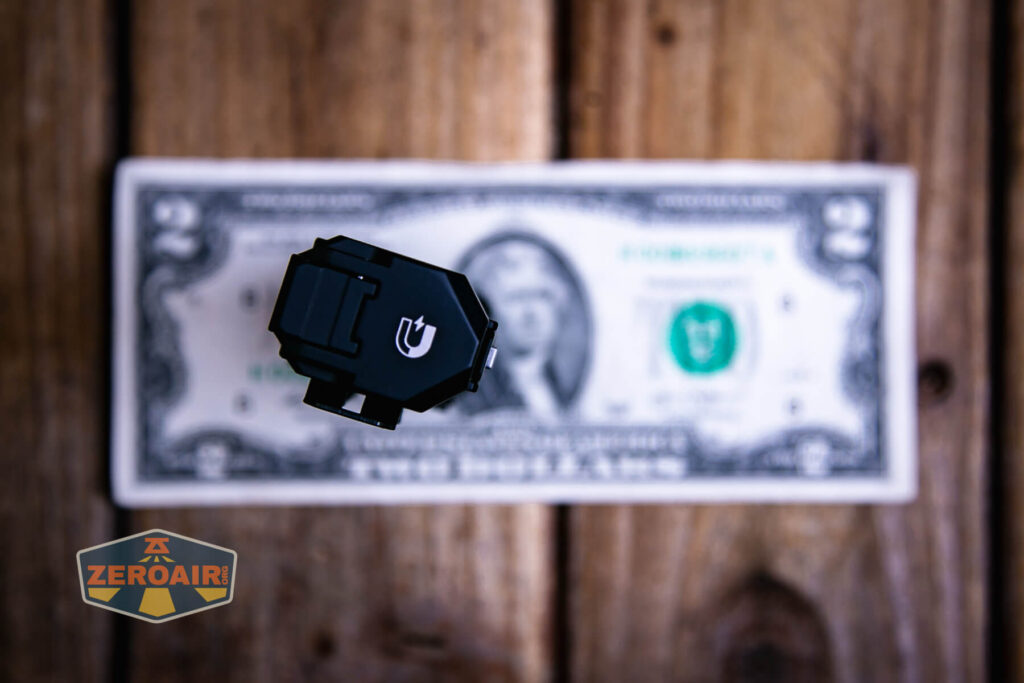

If the flashlight can headstand, I’ll show it here. If it can tailstand, I’ll also show that here!


Here’s the test light with the venerable Convoy S2+. The version below is a custom laser-engraved Convoy S2+ host by GadgetConnections.com. I did a full post on an engraved orange host right here! Or go straight to GadgetConnections.com to buy your Convoy S2+ now!
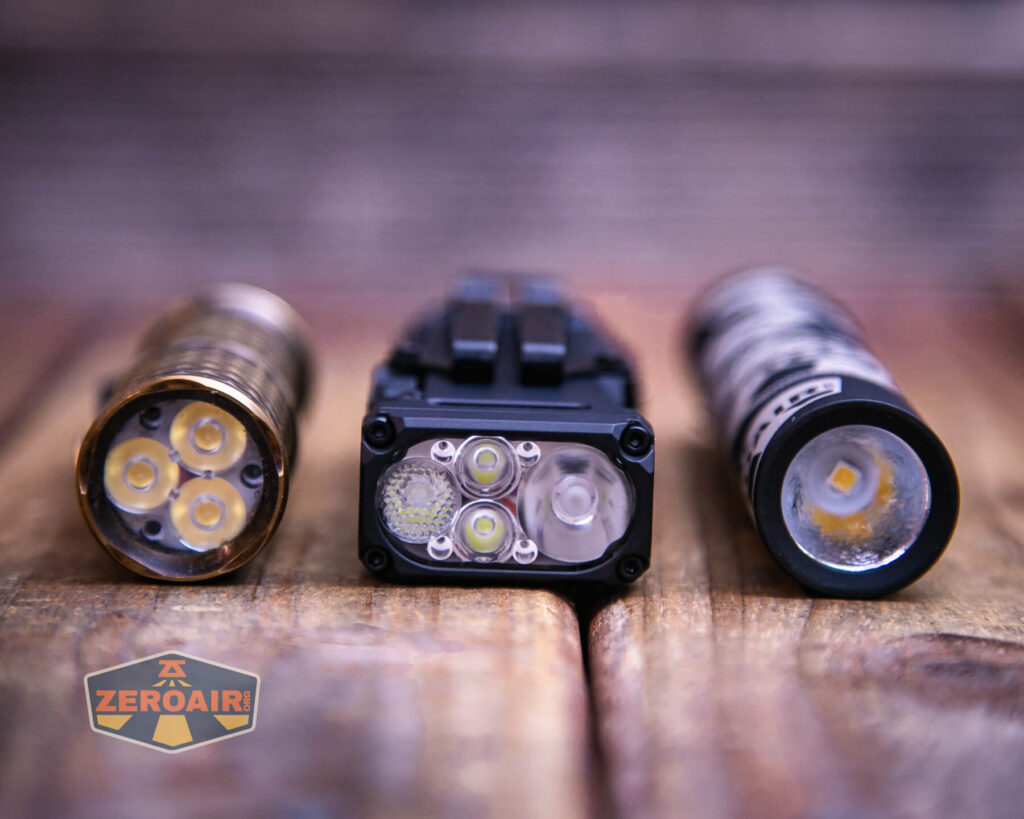
Also in the photo above, my Standard Reference Material (SRM) flashlight is the Hanko Machine Works Trident, an 18350 light. While I have not reviewed or tested the Gunner Grip version seen here, I have tested a Hanko Machine Works Trident Total Tesseract in brass. I love the Trident, and it’s a striking contrast to the inexpensive Convoy S2+, another great SRM.
Retention and Carry
A pocket clip ships already attached to the Wuben X4 flashlight. The clip is quite big, but it provides great coverage and will work wonderfully on a belt. It can be removed easily with just two screws.
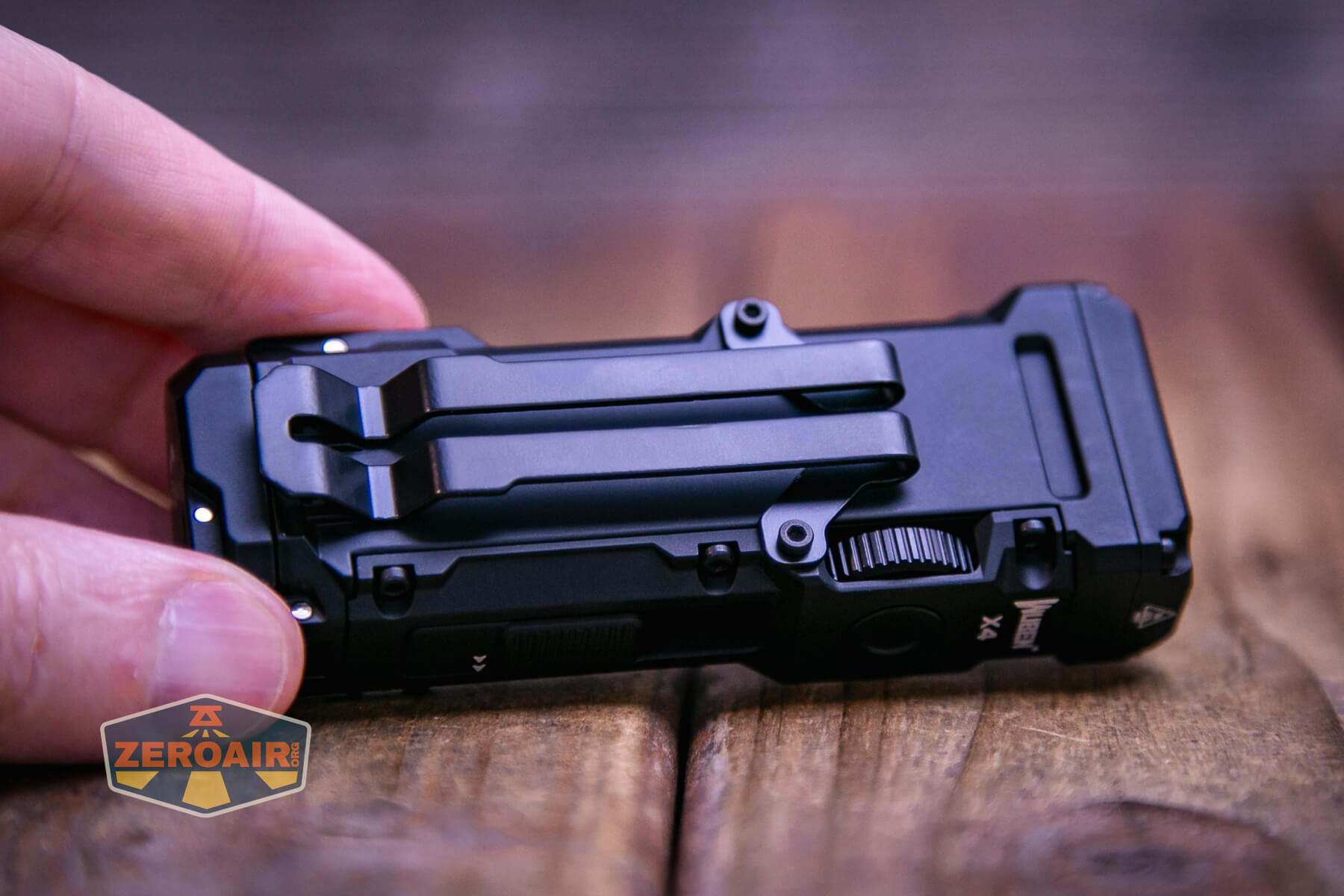
You could also use that pocket clip as an area to attach a lanyard. But that’d be the only place you could attach a lanyard.
There’s a magnet in the tailcap as well.

Above, you may note a new holder for my magnetic-tailcap items. That’s the Exceed Designs Hyzer Titanium Mini Hatchet D2 axe. The handle (as the name suggests) is titanium. But the blade is D2 steel and perfect for retaining magnetic tailcap flashlights! The Hyzer is available in a bunch of cerakote body colors as well as different thickness D2 heads.
Power and Runtime
The Wuben X4 flashlight is powered by a single 18650. It’s a standard 18650, and one is included.
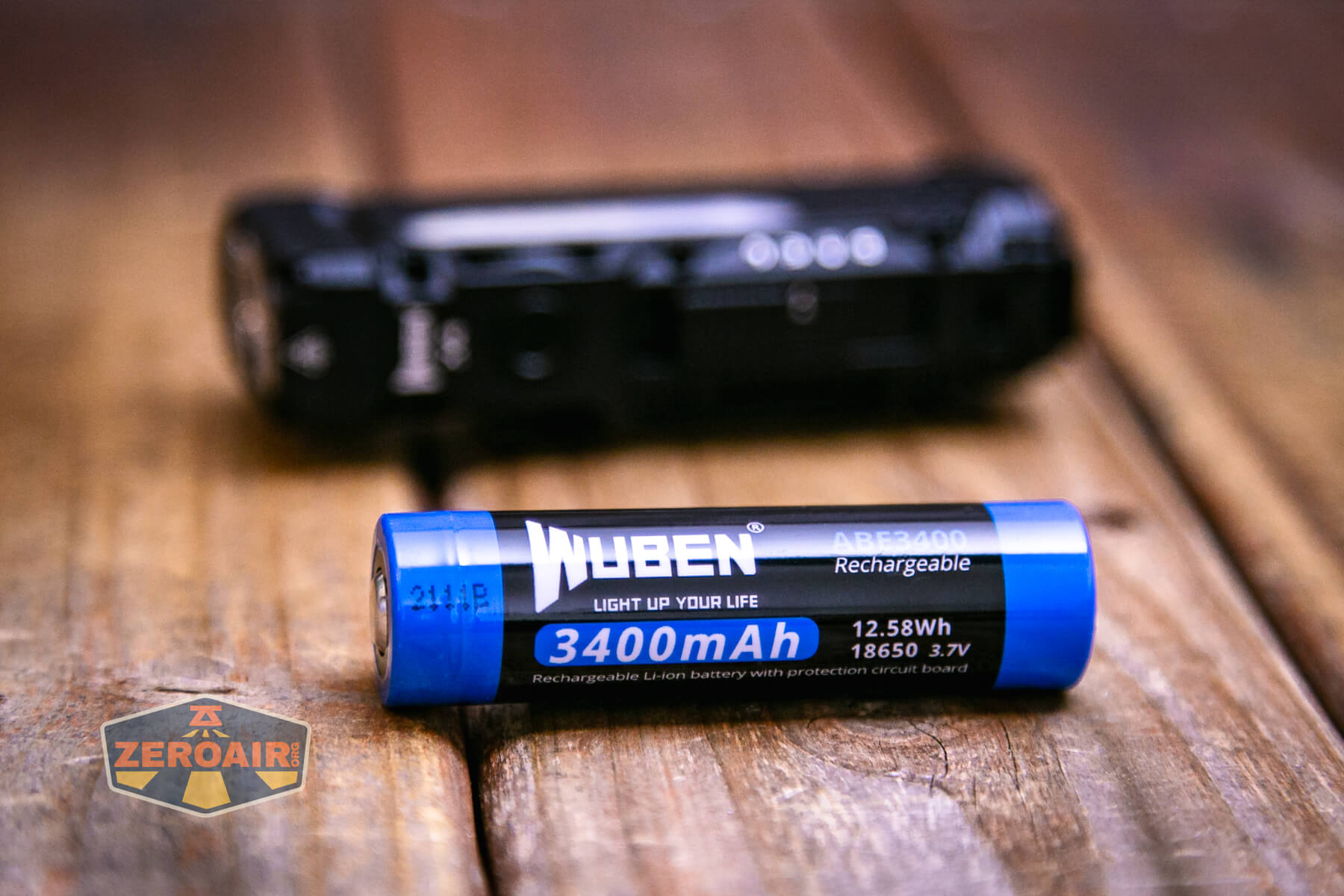
The cell goes into the Wuben X4 flashlight in the usual way – positive end toward the head.
There’s really only one discrete output on the X4, so that’s all I tested. I sometimes fuss about a light, and this is often the reason – a light might be fine (this one is), buta lack of testable points that you can also compare really stymies testing. For example, if I test turbo and then “just below” turbo, you and I might not reliably always select the same “just below” turbo mode. And my results would not be comparable to your experience. It’s one reason I prefer discrete modes!
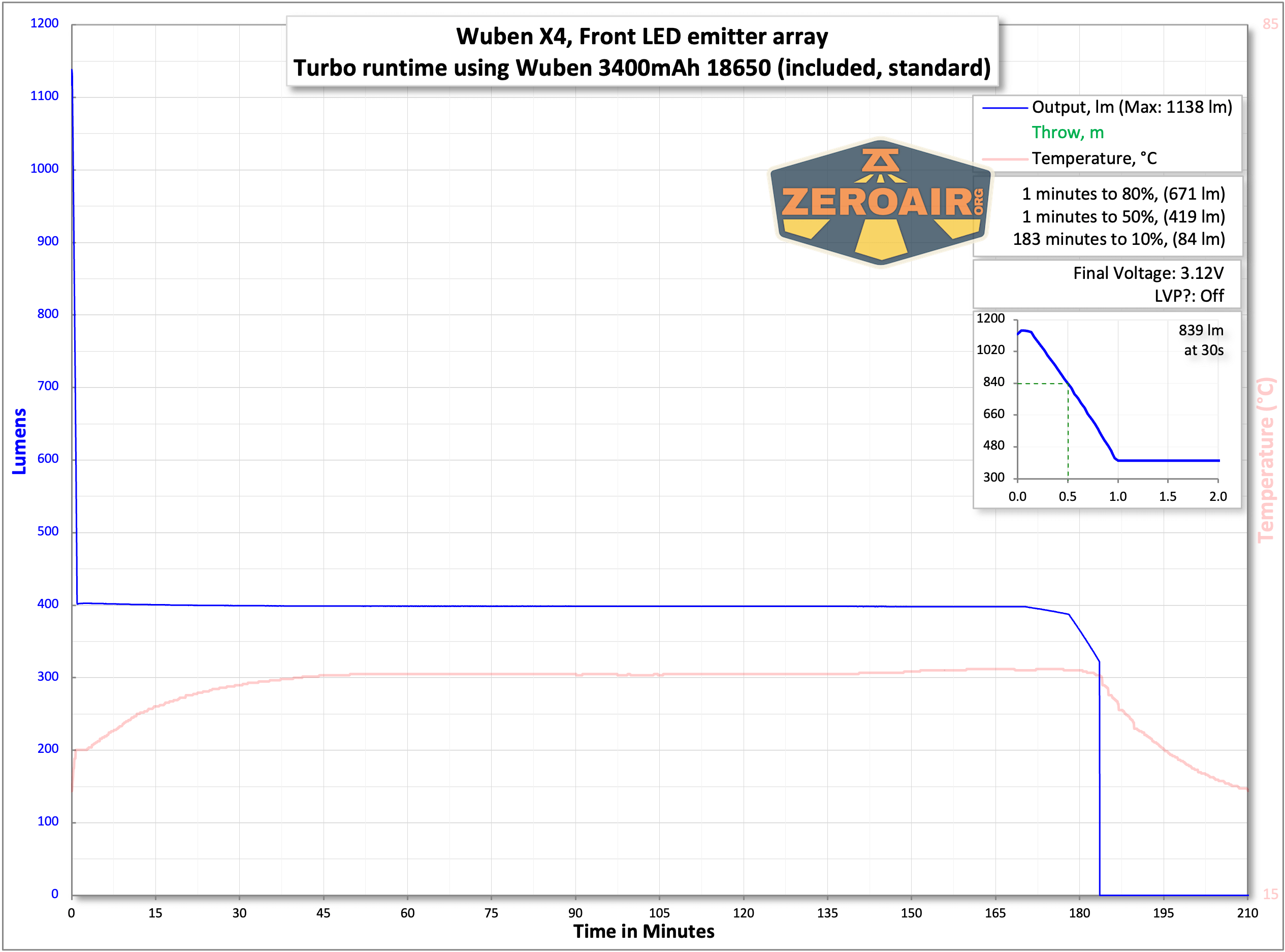
Output looks fine, but drops from the highest output of Turbo (claimed 1500 lumens) to a very stable 400 lumens. The light does exhibit low voltage protection.
Charging
Wuben has used their clever switch-cover USB-C port here. The mode selector being put in the moonlight selection area reveals this USB-C port.
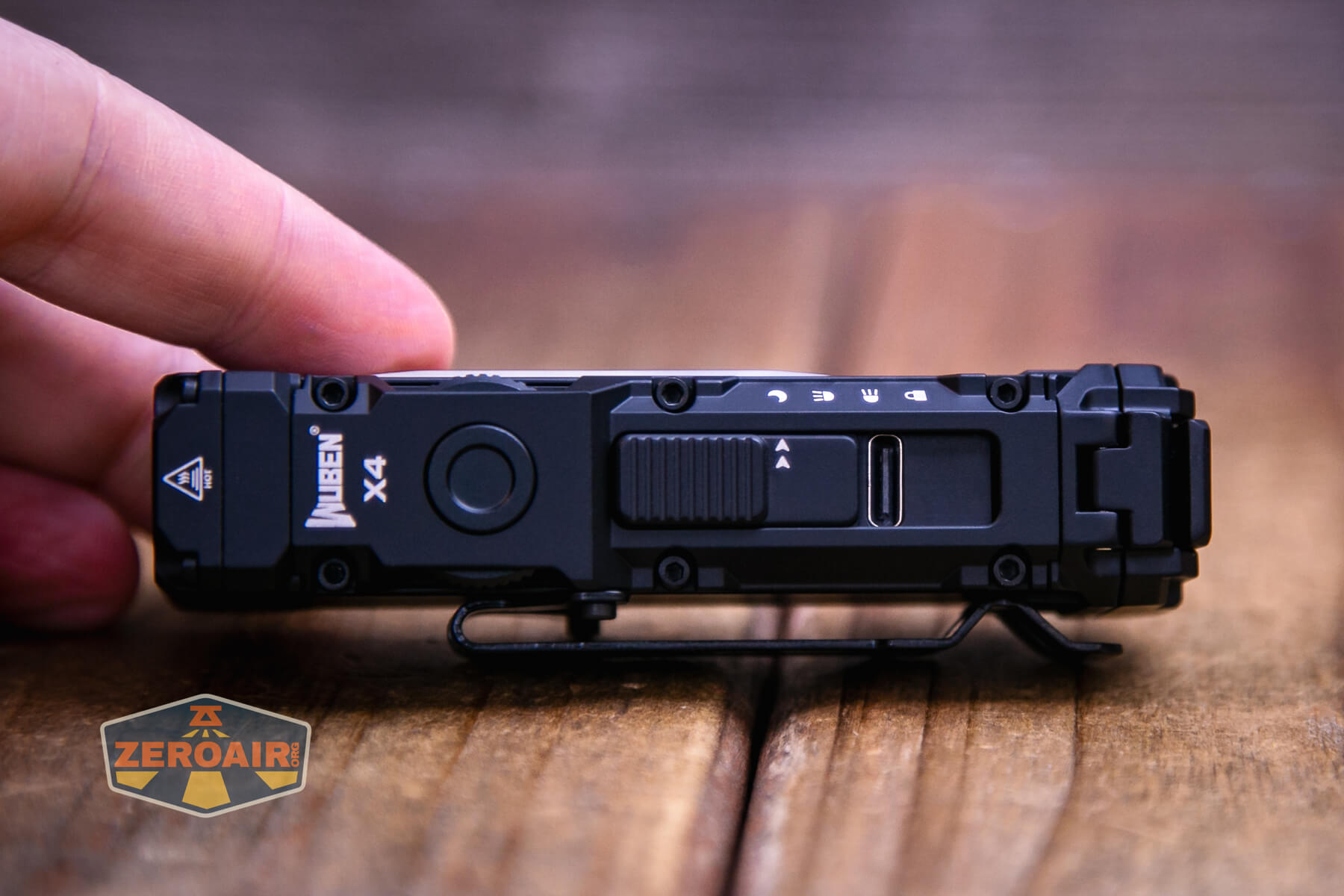
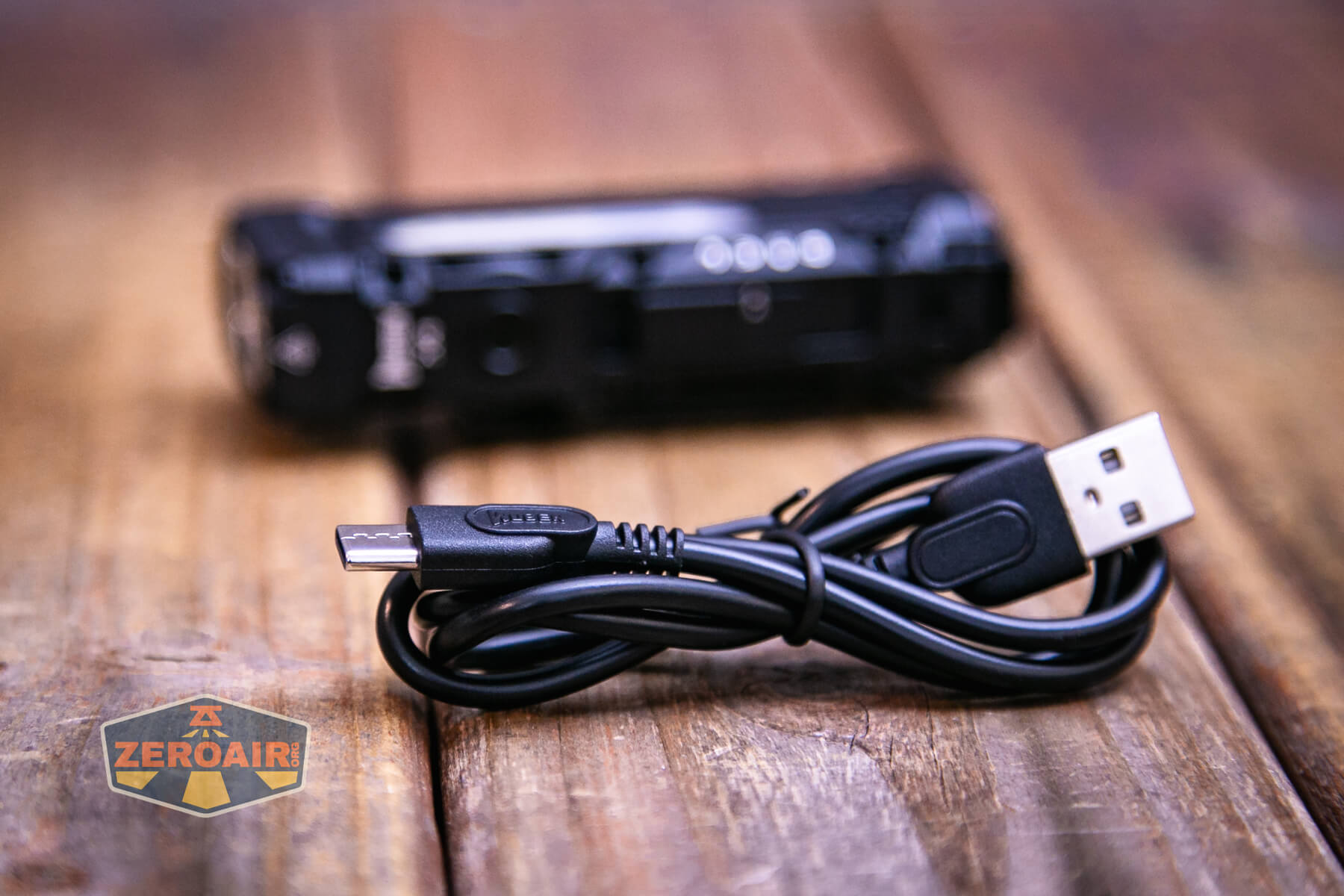
Wuben includes a USB-A to USB-C charging cable.
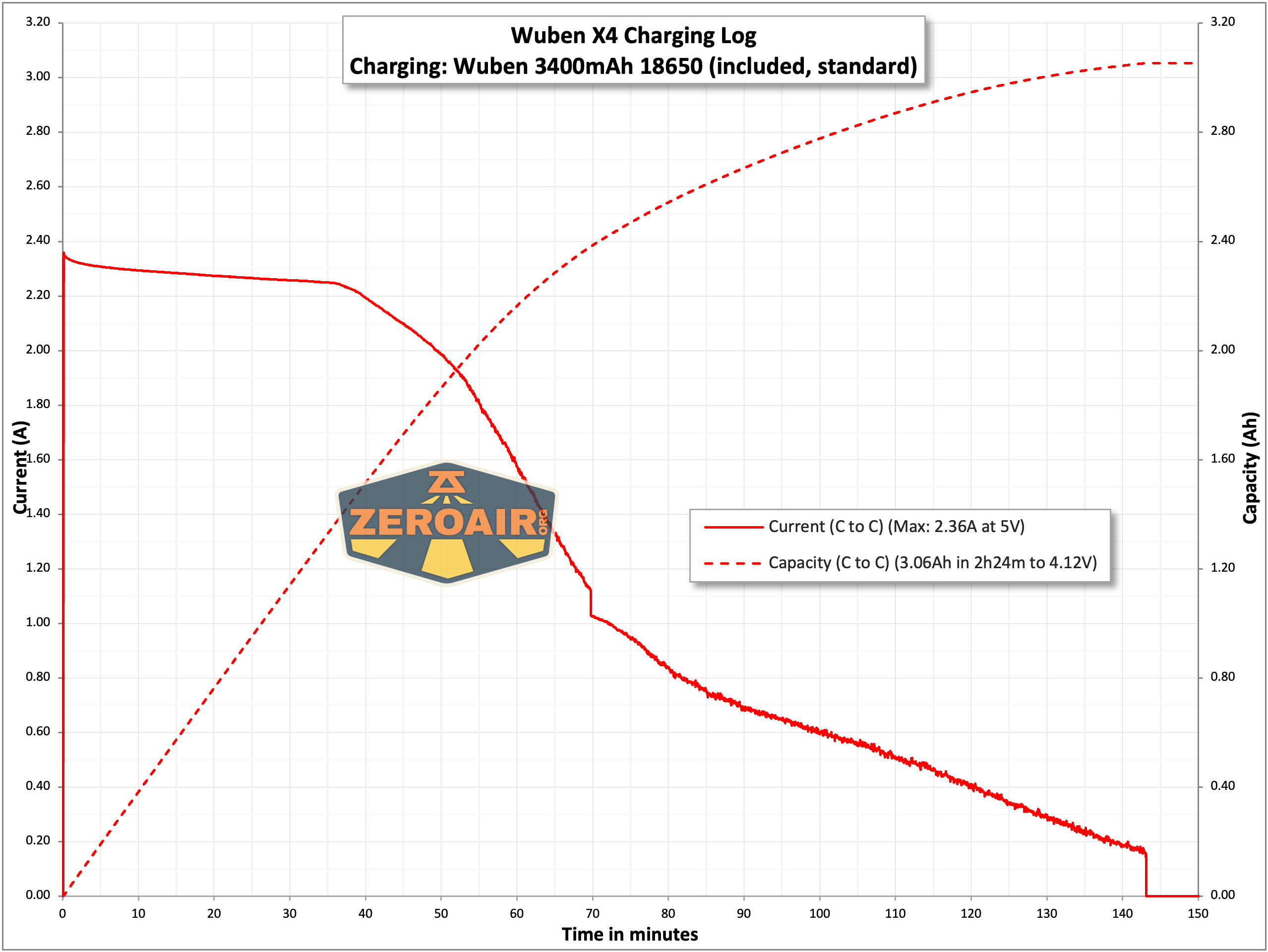
Charging looks fine, and peaks around 2.4A. That’s under 1C for this 3400mAh 18650.
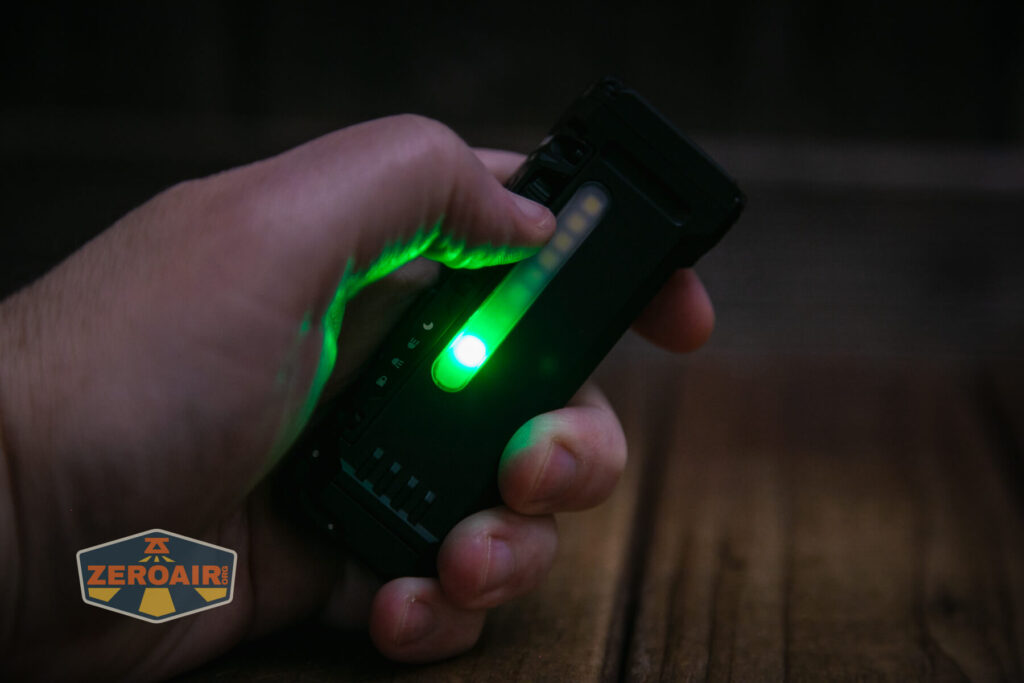
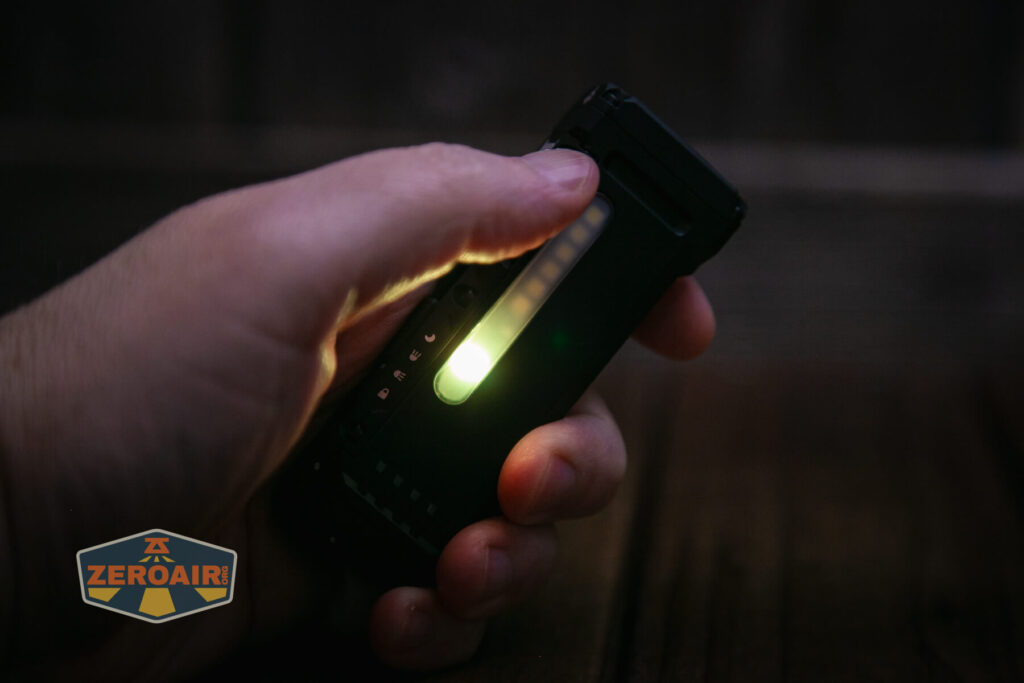
While charging, the side color emitters are used to indicate the status. Red for charging and green for charging complete.
Modes and Currents
| Mode | Mode Claimed Output (lm) | Claimed Runtime | Measured Lumens | Tailcap Amps |
|---|---|---|---|---|
| Front Turbo | 1500 | – | 1138 (0s) 839 (30s) |
3.72 |
| Side white highest | – | – | – | 0.31 |
Pulse Width Modulation
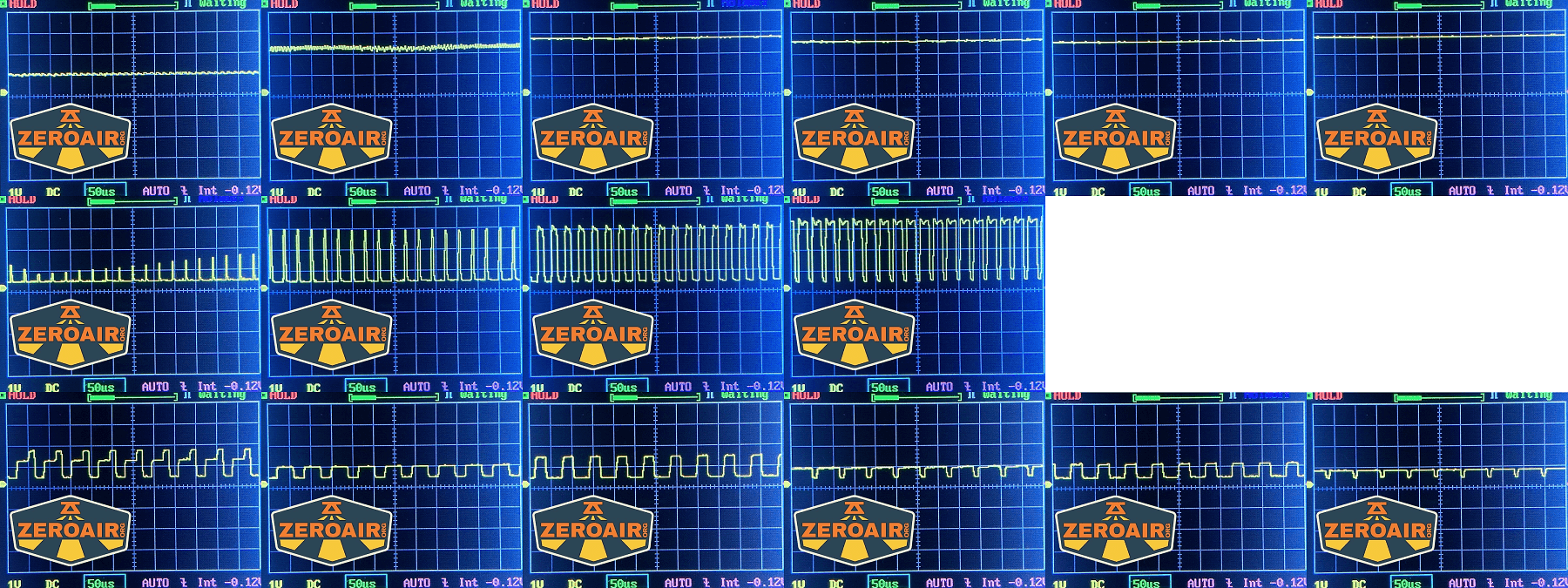
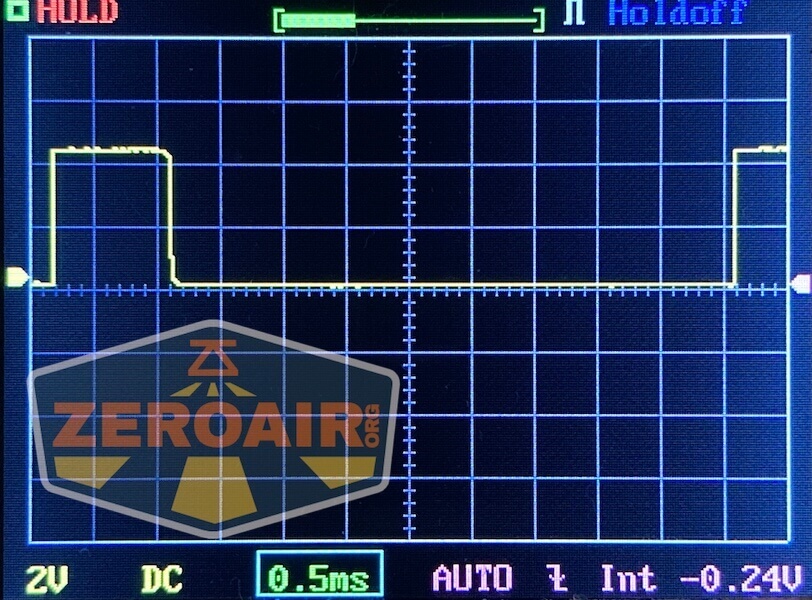
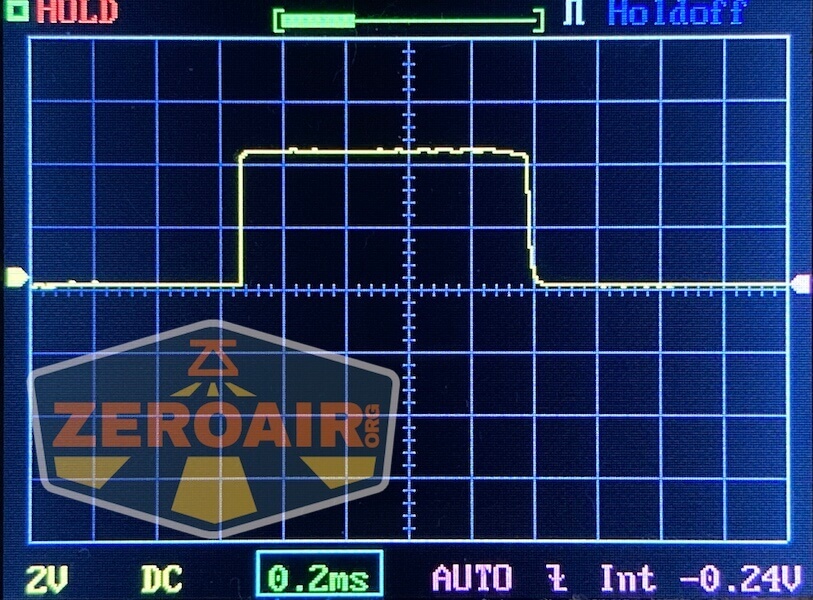
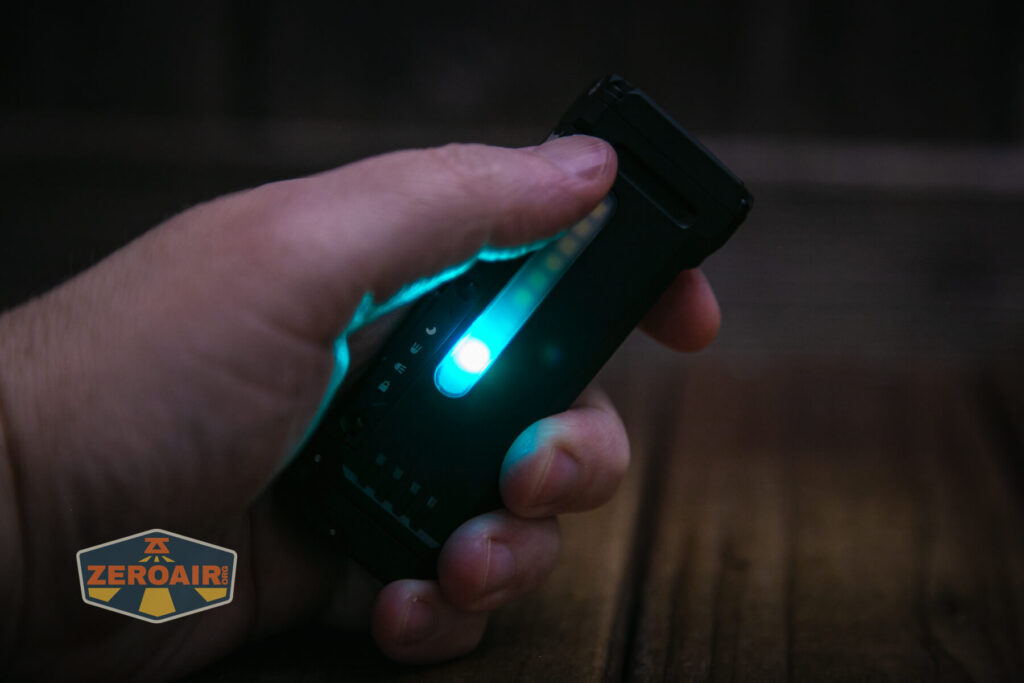
The modes below are just sort of “selected modes.” The front white emitter array does not use PWM. The side white emitters do use PWM, but it’s very fast (second row). The RGB emitters, on the other hand, use PWM that you could notice (but probably won’t.) Below (third row), you can just see “a selection” of RGB, in no particular order.
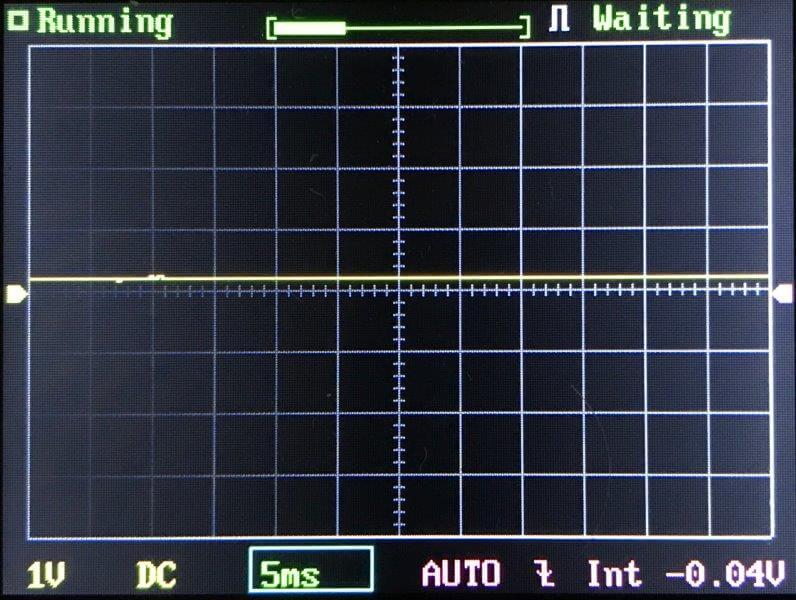
 Click here to see a “baseline” – a chart with almost no light hitting the sensor.
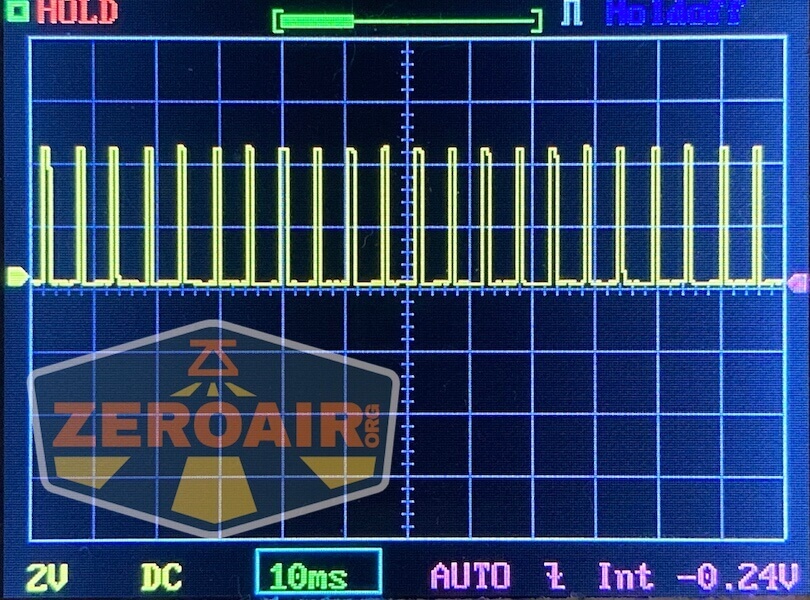
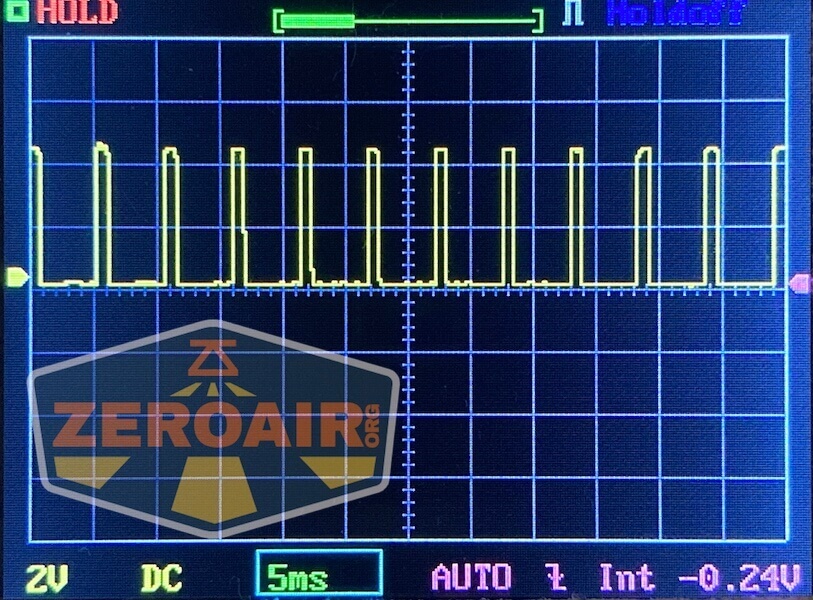
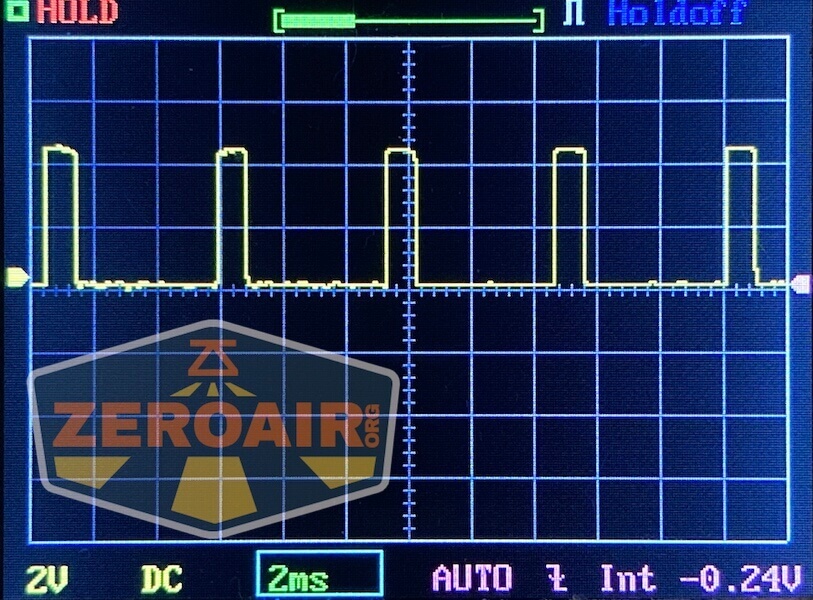
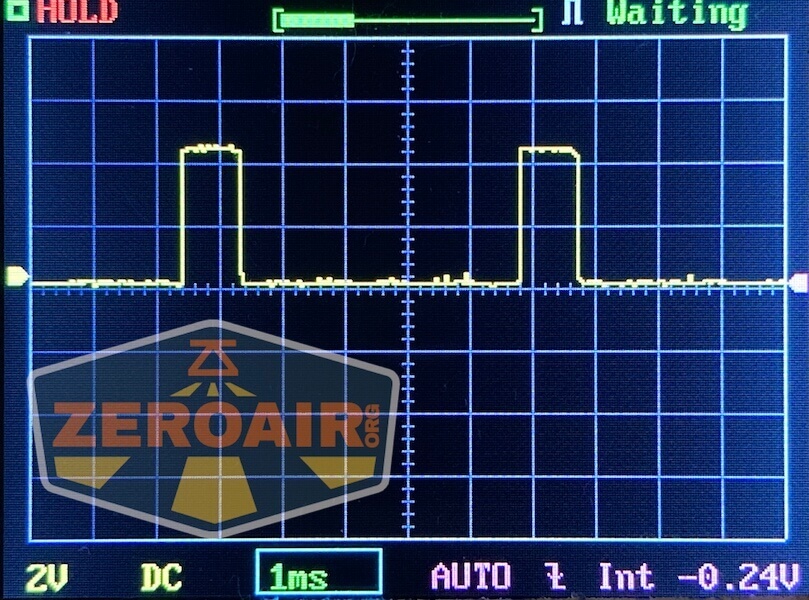
Then there’s the Ultrafire WF-602C flashlight, which has some of the worst PWM I’ve seen. It’s so bad that I used a post about it to explain PWM! Here are multiple timescales (10ms, 5ms, 2ms, 1ms, 0.5ms, 0.2ms) to make comparing this “worst” PWM light to the test light easier. That post also explains why I didn’t test the WF-602C at the usual 50us scale.
User Interface and Operation
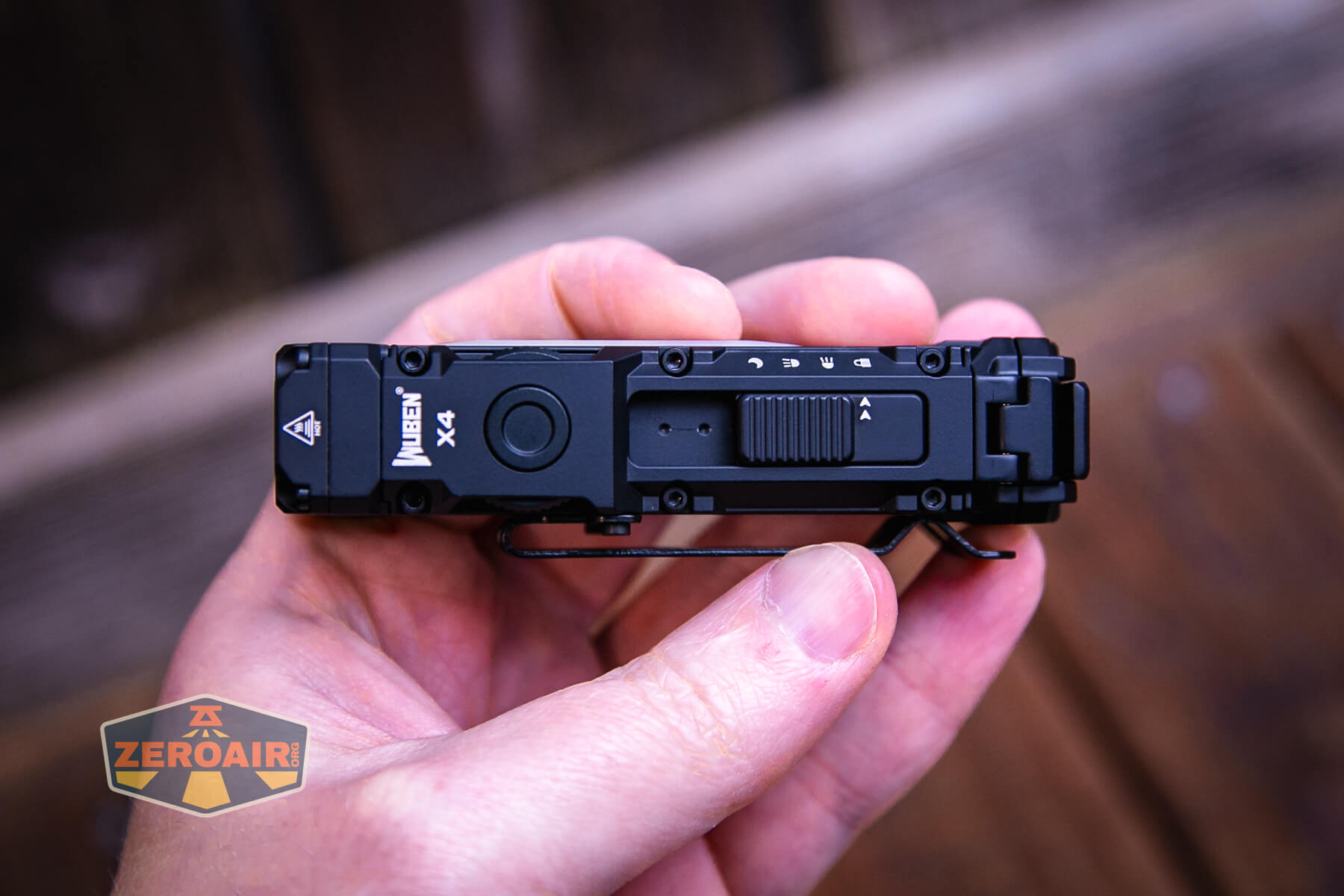
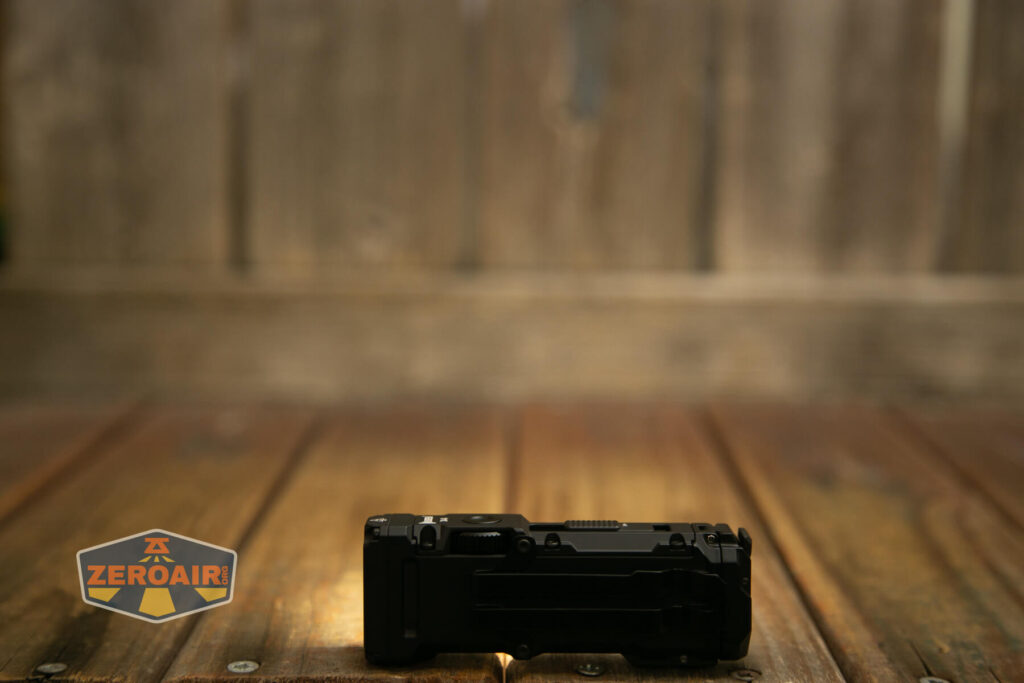
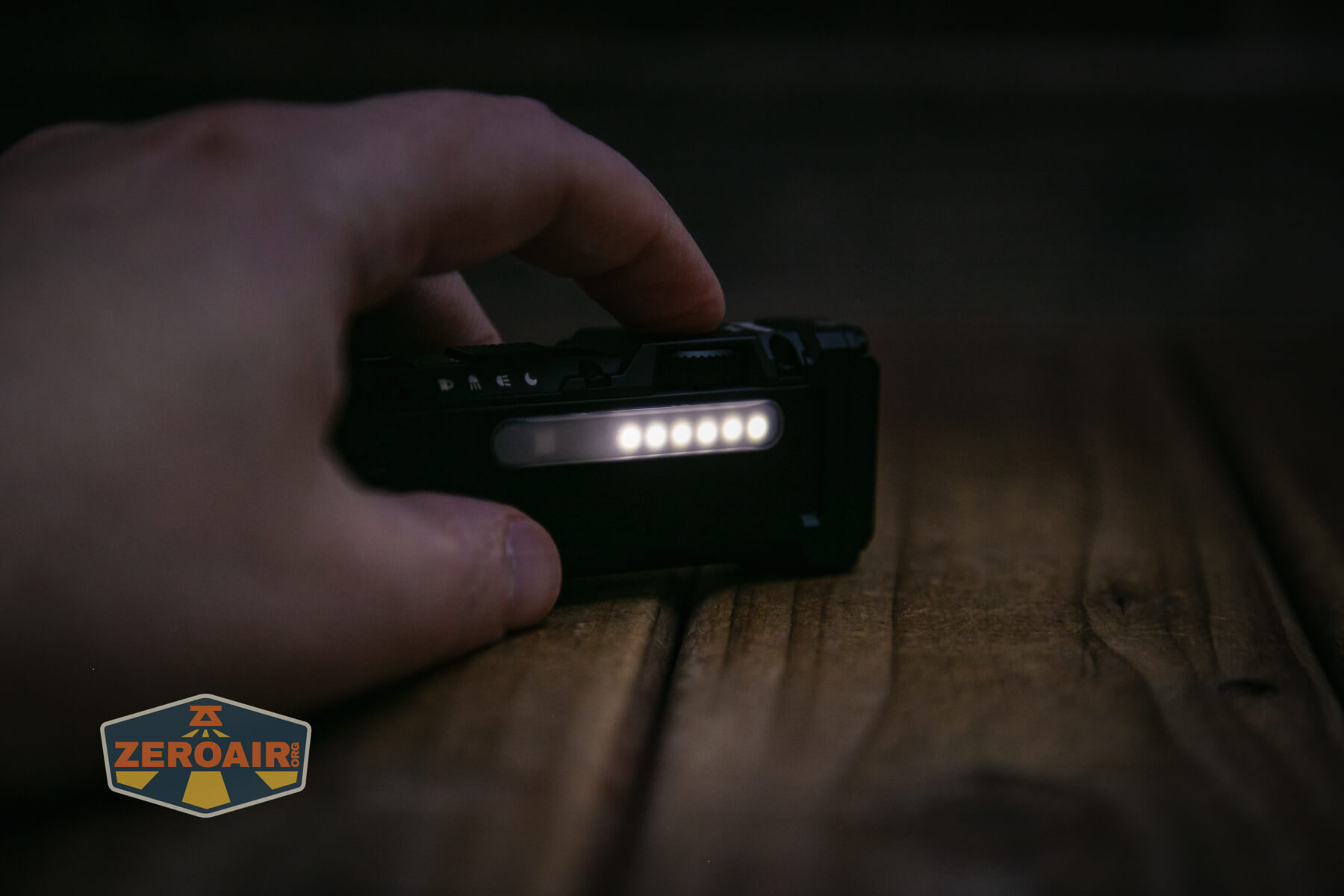
There are a number of ways to interact with and operate the Wuben X4 flashlight. First, there’s this mode selector, which has four positions. Lock is selected below, and as you swipe the switch upward (toward the front of the light), the selections go as follows: Side light, Front light, Moonlight. Moving the switch to moonlight is also how you access the USB-C charging port.
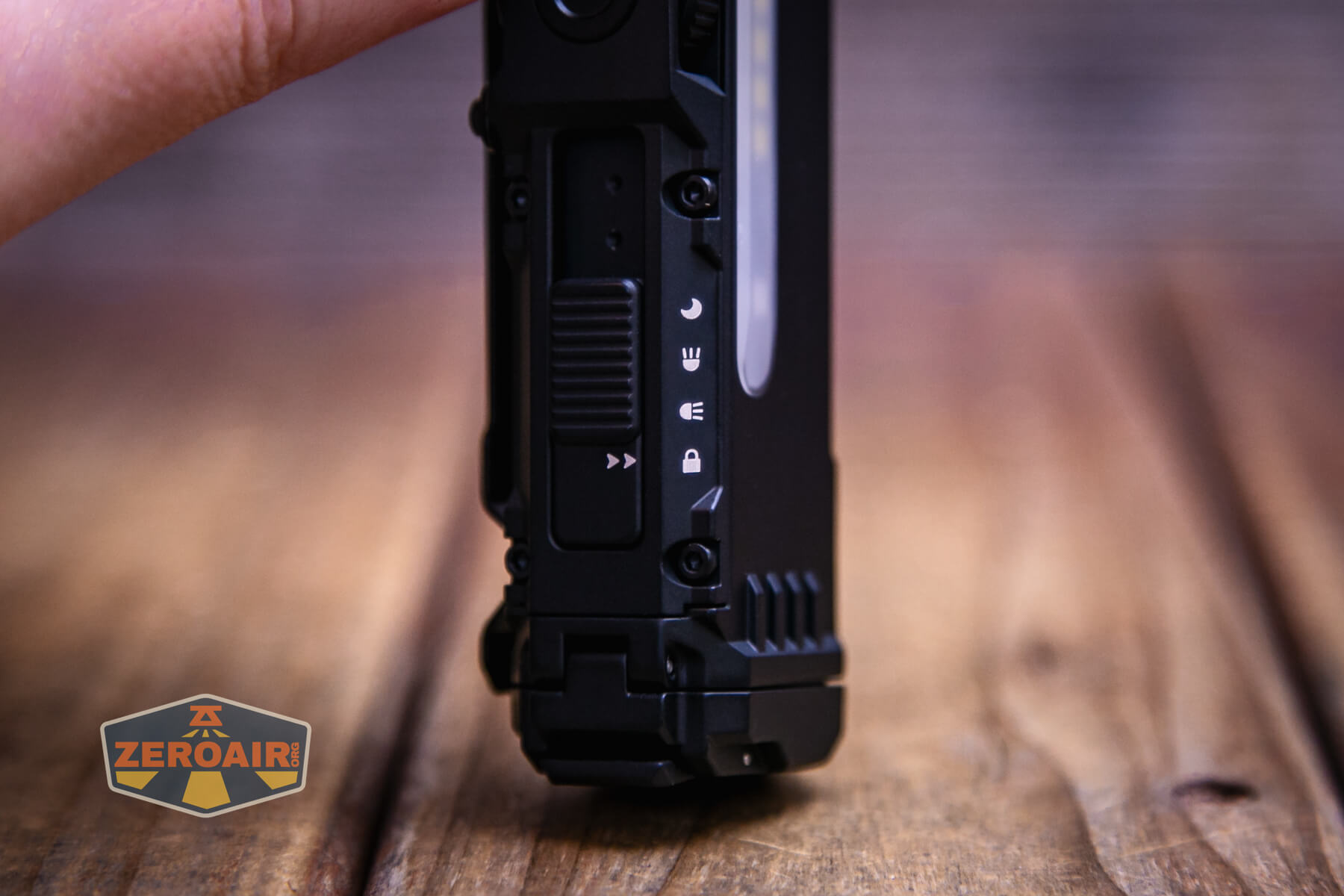
Once you’ve selected the output, you turn the light on and off with this e-switch.

After that, you select the output level or RGB color with the rotary dial.

A tactical paddle switch is also built in.


Here’s a user interface table!
| State | Action | Result |
|---|---|---|
| Off | Click | Selector in the forward light position: Front on (memory) Selector in the side light position: On (memory) |
| On | Click | Off |
| On | Rotate dial | Selector in the forward light position: Front white output increase (clockwise) or decrease (counterclockwise). Selector in the side light position: Advance through RGB or increase side white.For either white, light blinks when it reaches the high or low extreme. |
| Front white On | Click 2x | Turbo |
| Turbo | Click 2x | Previous state |
| Side On | Hold | Advance through options: RGB > White |
| Side RGB On | Click 2x | Beacon of current color |
| RGB Beacon | Click 2x | Previous state |
| Off (Selector on Side) | Click 2x | RGB Warning Flash Mode |
| RGB Warning Flash Mode | Click 2x | RGB Warning Flash Mode advance (Red-Blue > Red-Green > Red-Yellow) |
| Selector on side or front – Off | Hold tactical tail switch | Momentary Turbo (Front) |
| Selector on side or front – Off | Click tactical tail switch 2x | Strobe (not momentary) |
| Strobe | Click tactical tail switch | Off |
| Selector on charging position | Click tactical tail switch | Moonlight |
LED and Beam
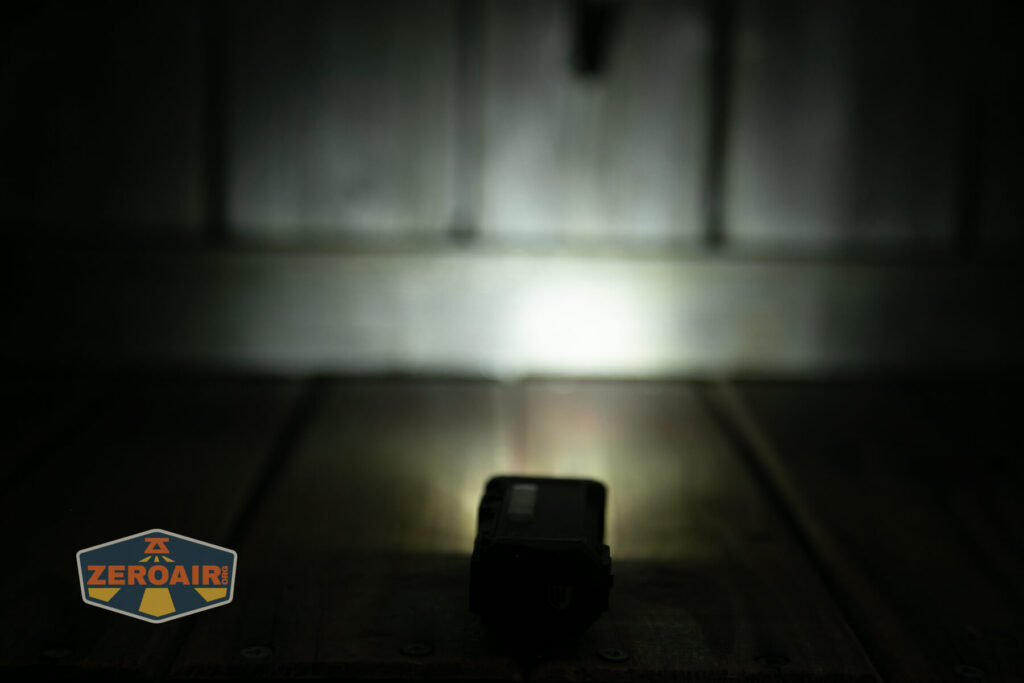
If Wuben says what these emitters are, I can’t see that information. There are four front emitters – one for spot, one for throw, and two for company. Each has a TIR, with the throw emitter having a smooth TIR and flood being dimpled. It’s somewhat wrong to think about these emitters separately since it’s challenging in the user interface to manage them individually. It’s much more of a system.





LED Color Report (CRI and CCT)
The CCT across the board is high and CRI is low (or even “very low.”) The side emitter have a bit better CCT, but still technically “low.”
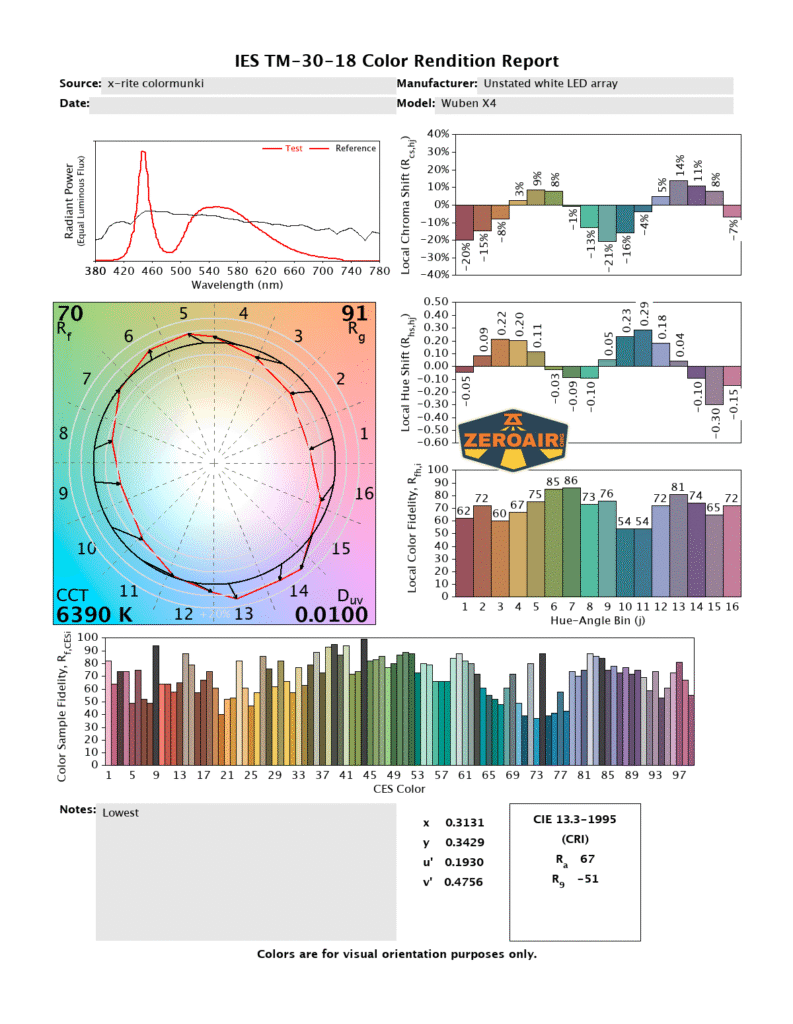
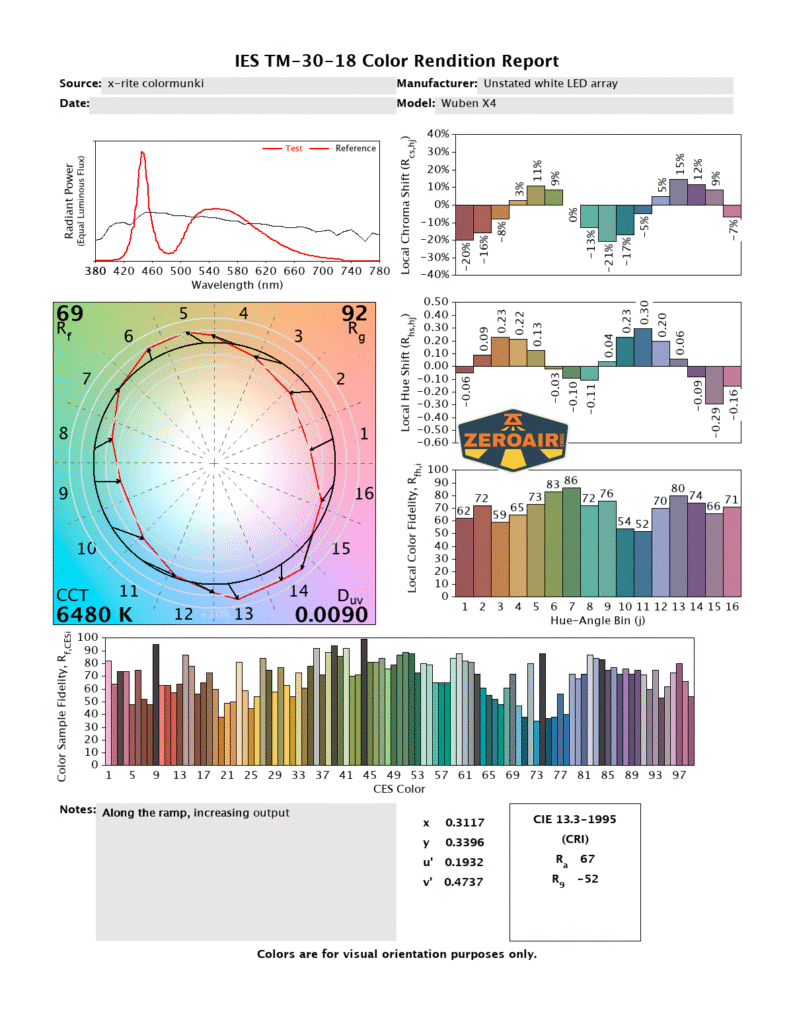
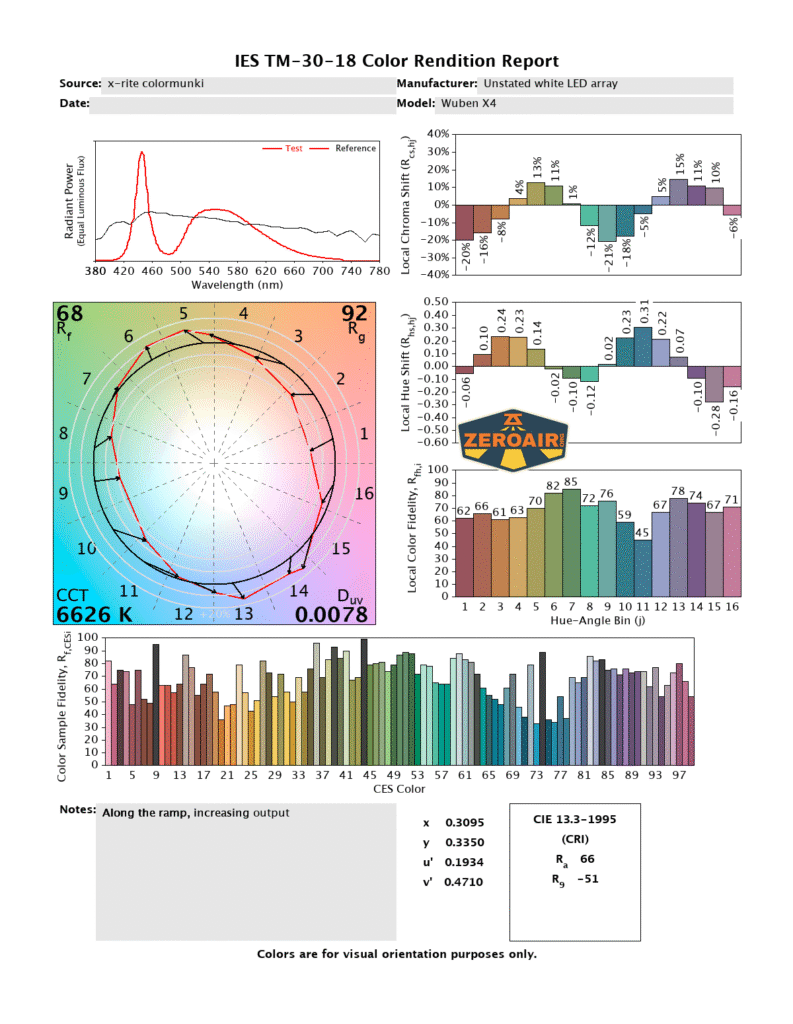
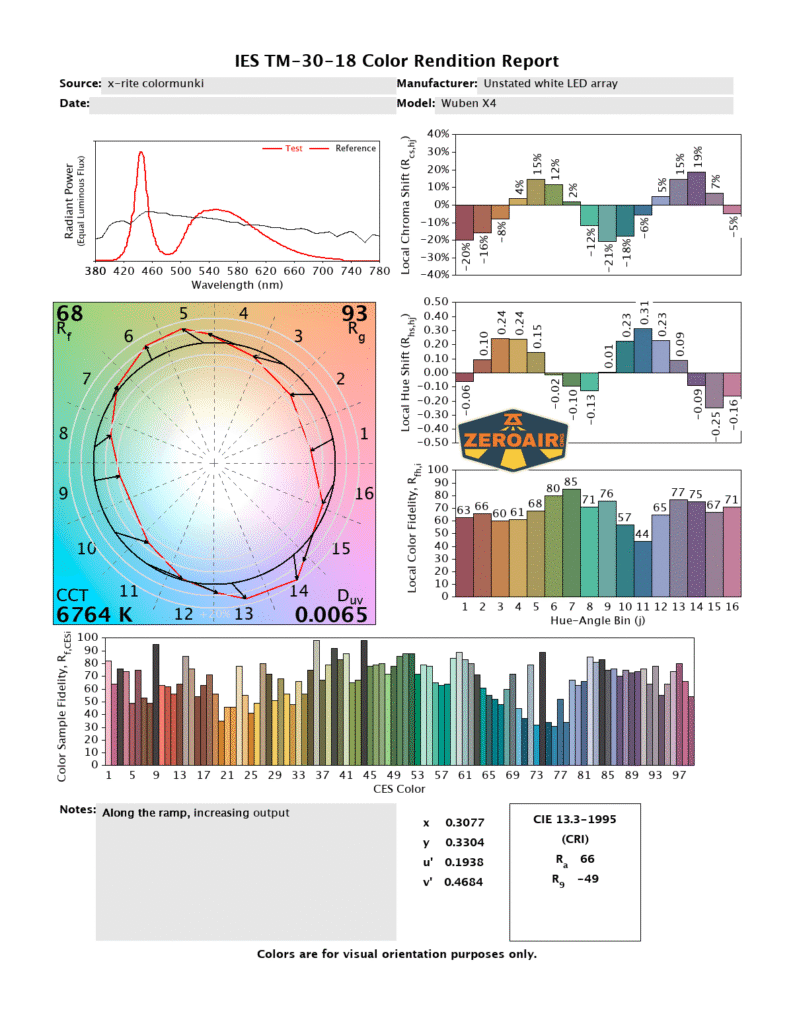
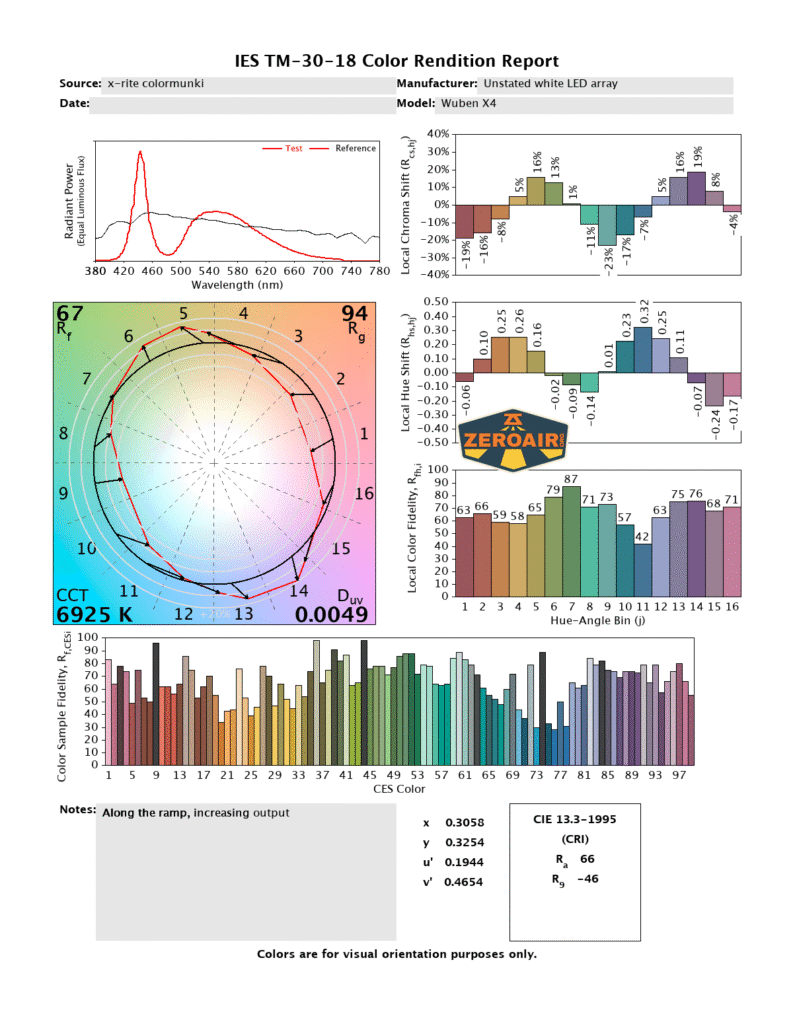
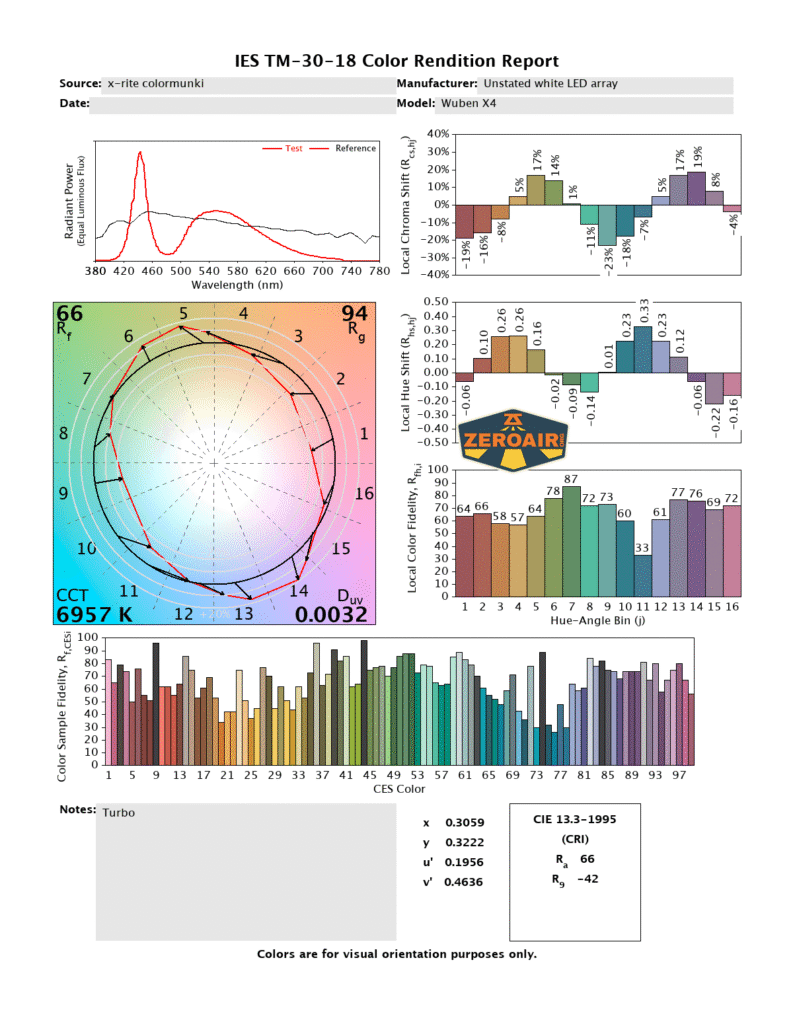
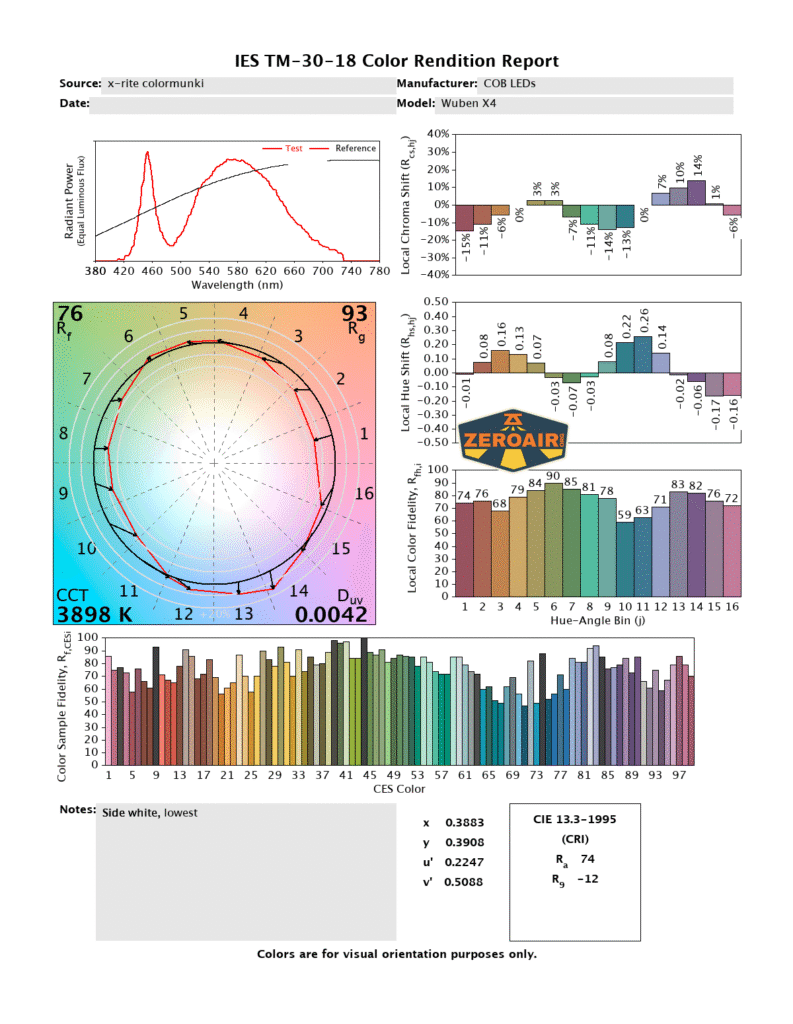
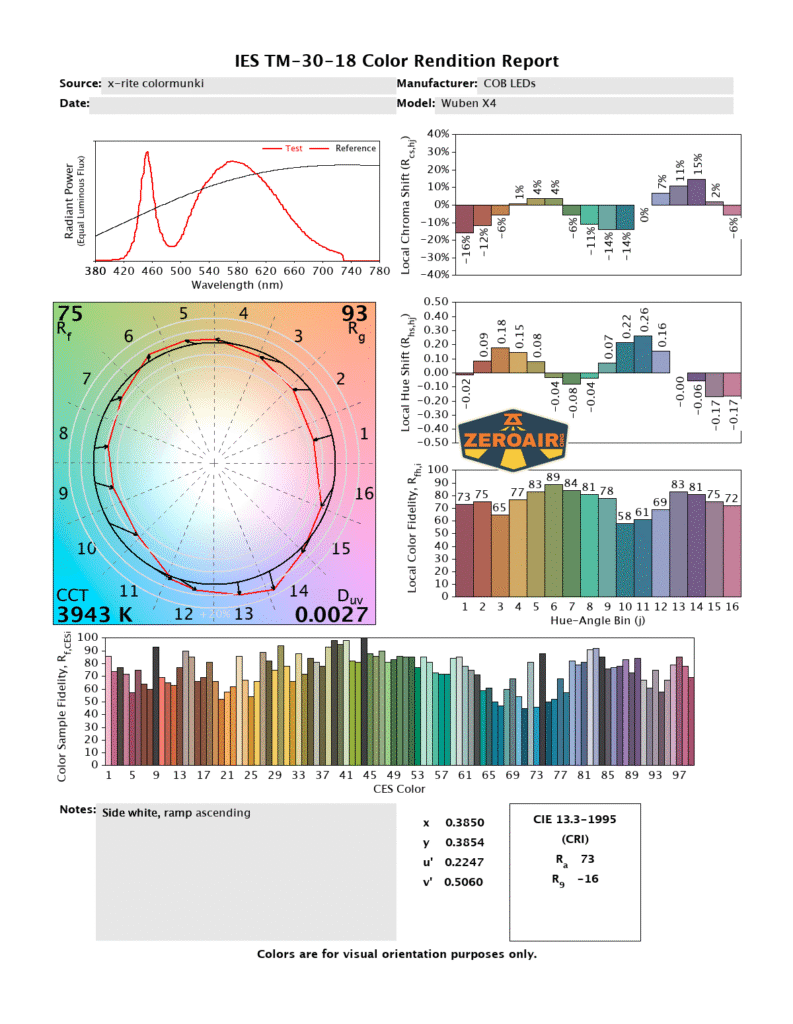
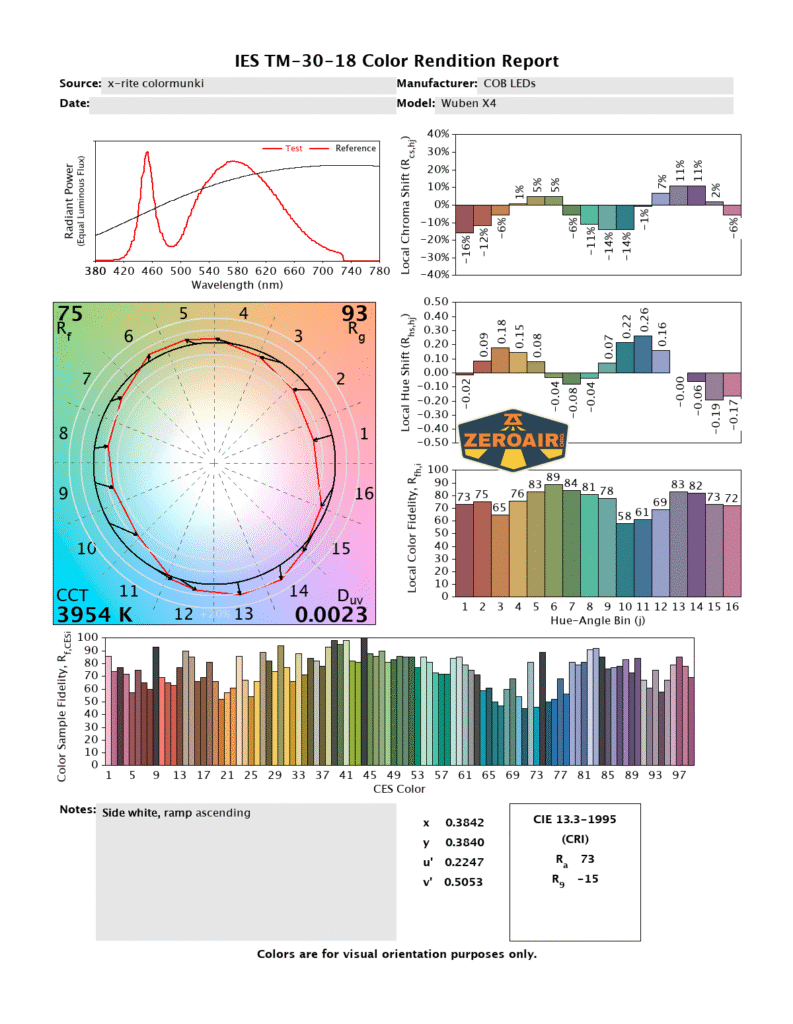
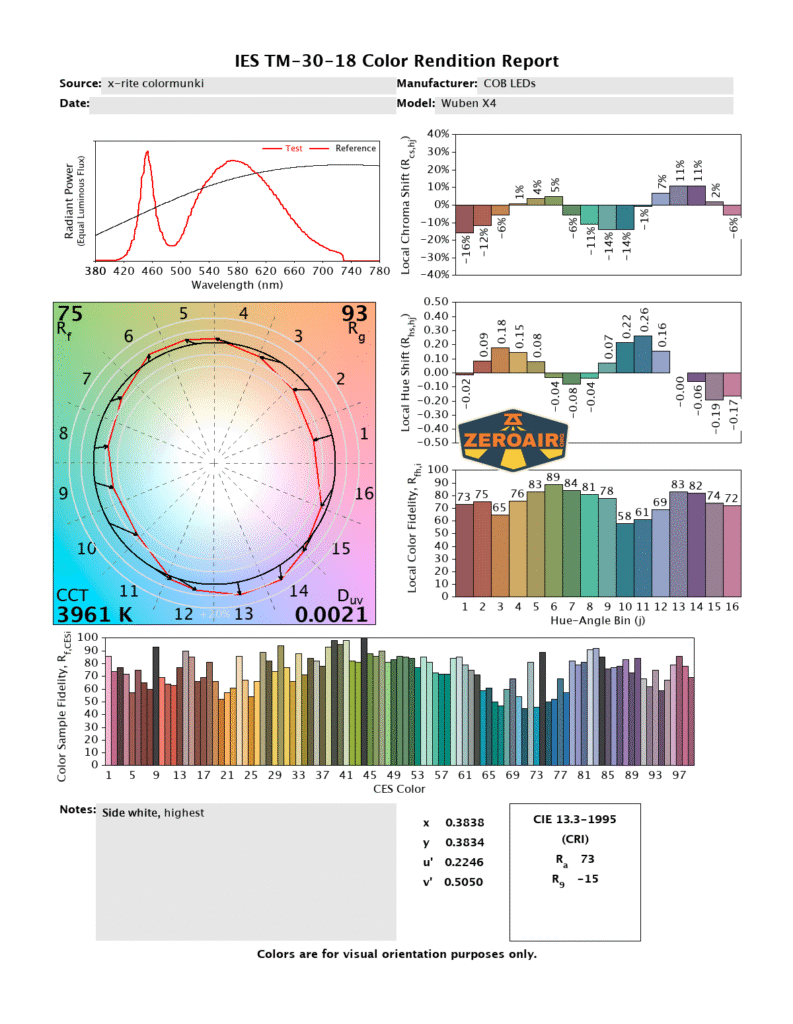
CCT (Correlated Color Temperature) refers to the measurement of the color appearance of light, expressed in Kelvins (K), which indicates whether the light is warm (yellowish) or cool (bluish). A lower CCT (below 3000K) is considered warm light, while a higher CCT (above 5000K) gives cooler, bluish light.
CRI (Color Rendering Index) is a measure of how accurately a light source renders colors in comparison to natural sunlight. Scored on a scale from 0 to 100, higher CRI values indicate that colors appear more true to life and vibrant, similar to how they would look under the sun.
Beamshots
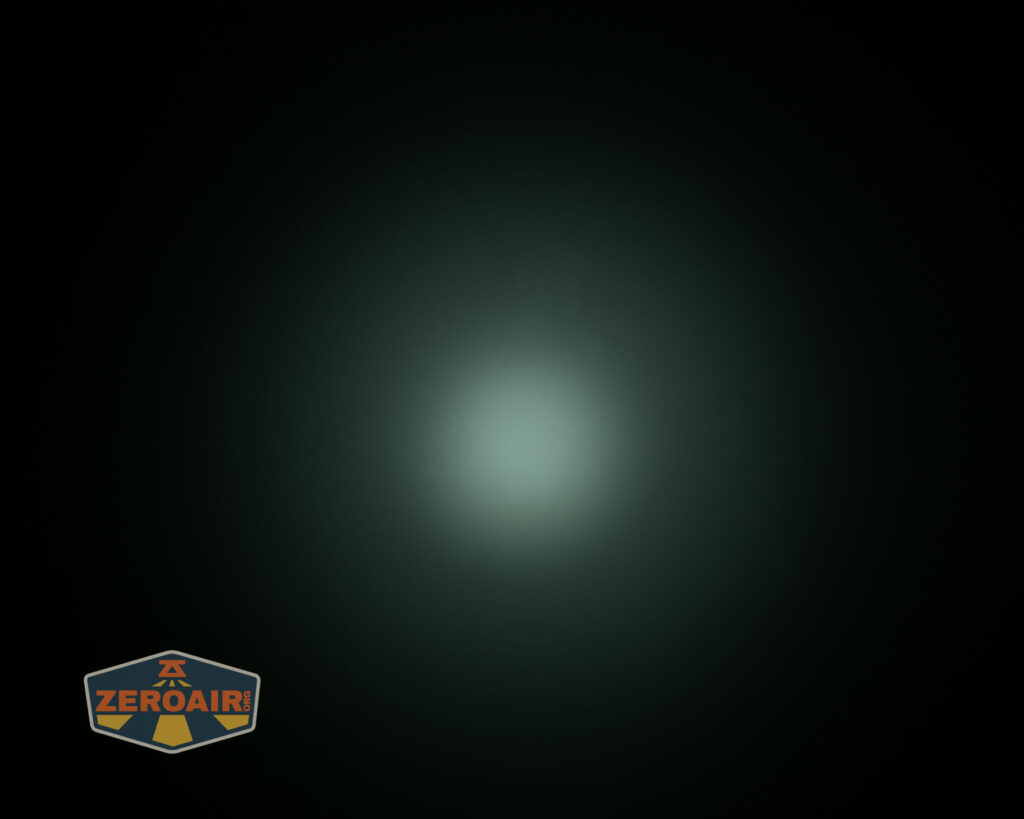
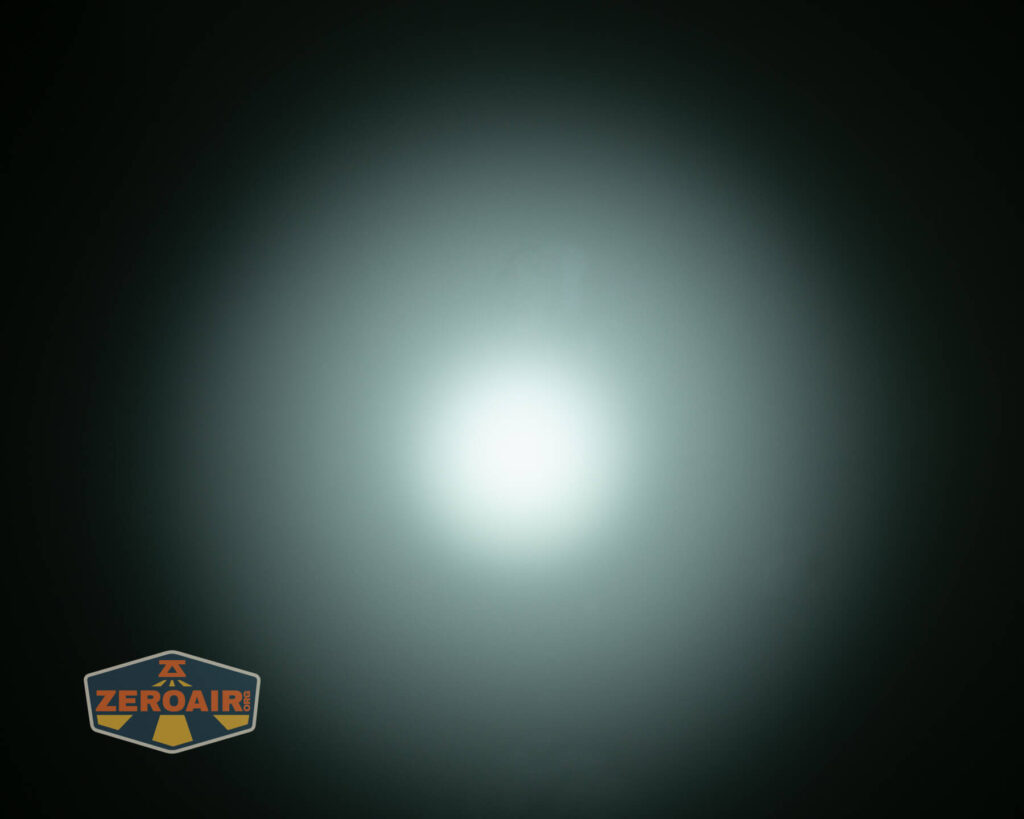
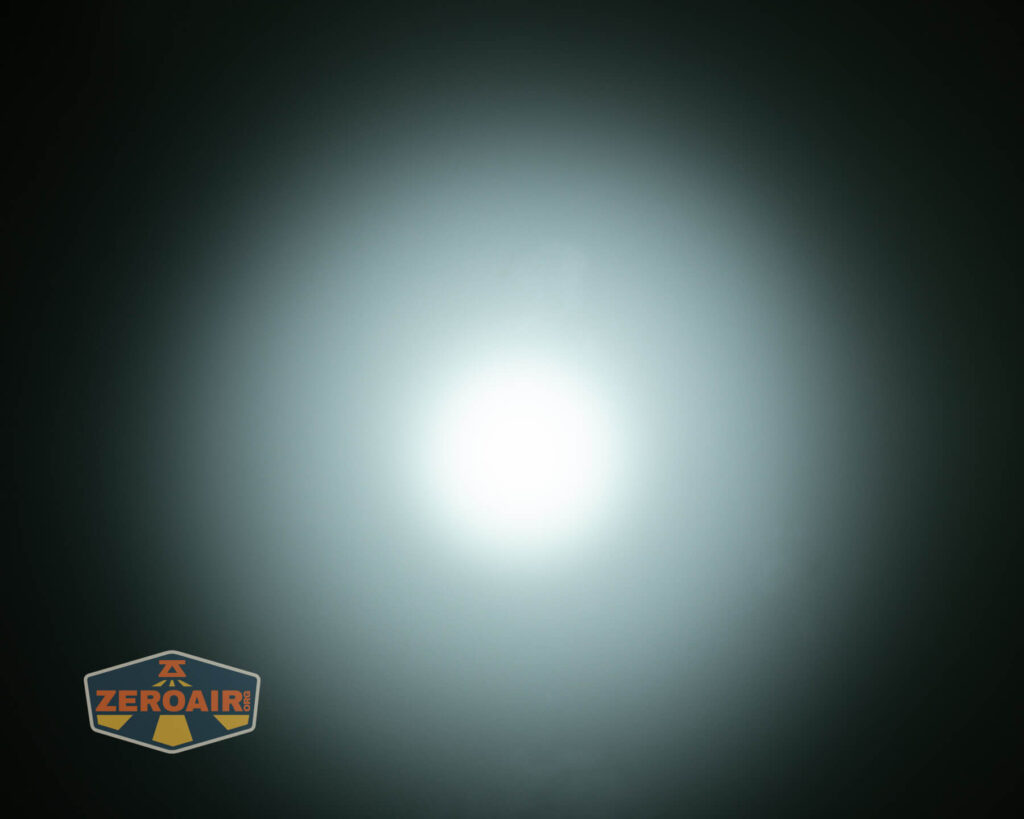
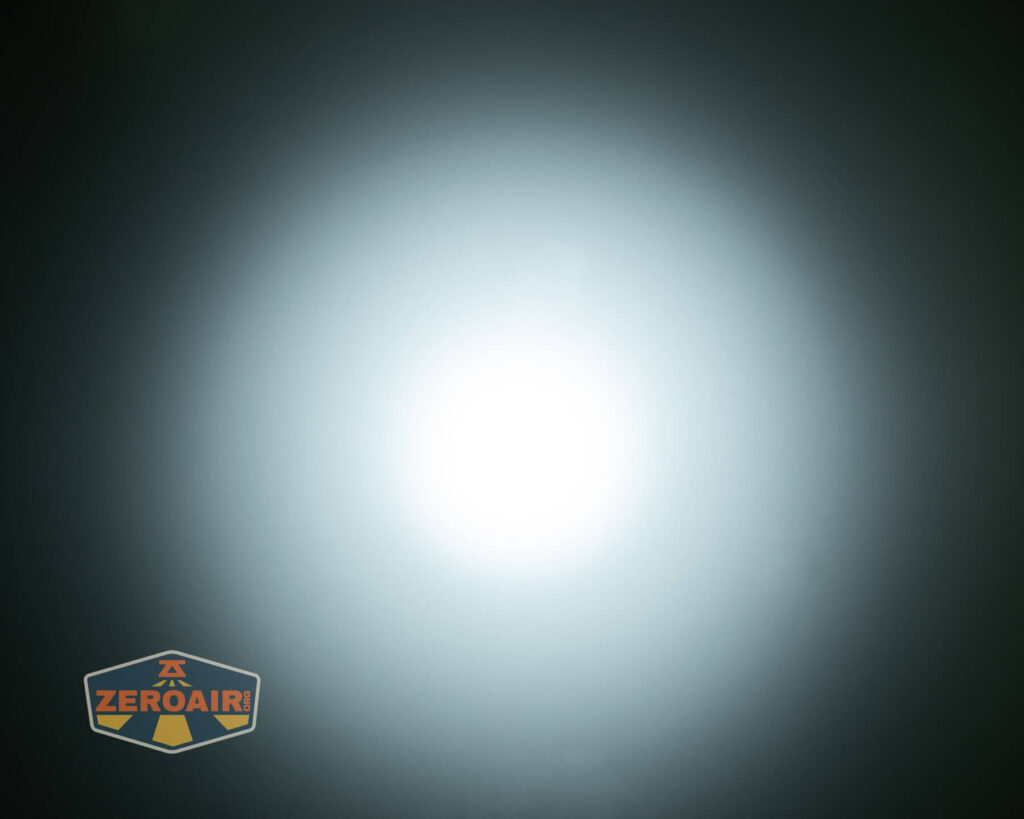
These beamshots always have the following settings: f8, ISO100, 0.3s shutter, and manual 5000K exposure. These photos are taken at floor level, and the beam hits the ceiling around 9 feet away.
First are the front white emitters. Then it’s just a mix of other levels, that I’m showing so you can see that at at distance of “floor to ceiling” they aren’t really bright enough to see. That goes for all side emitters (except maybe white on the highest level.)




Tint vs BLF-348 (KillzoneFlashlights.com 219b version) (affiliate link)
I keep the test flashlight on the left and the BLF-348 reference flashlight on the right. These photos are taken around 18 inches from the door.
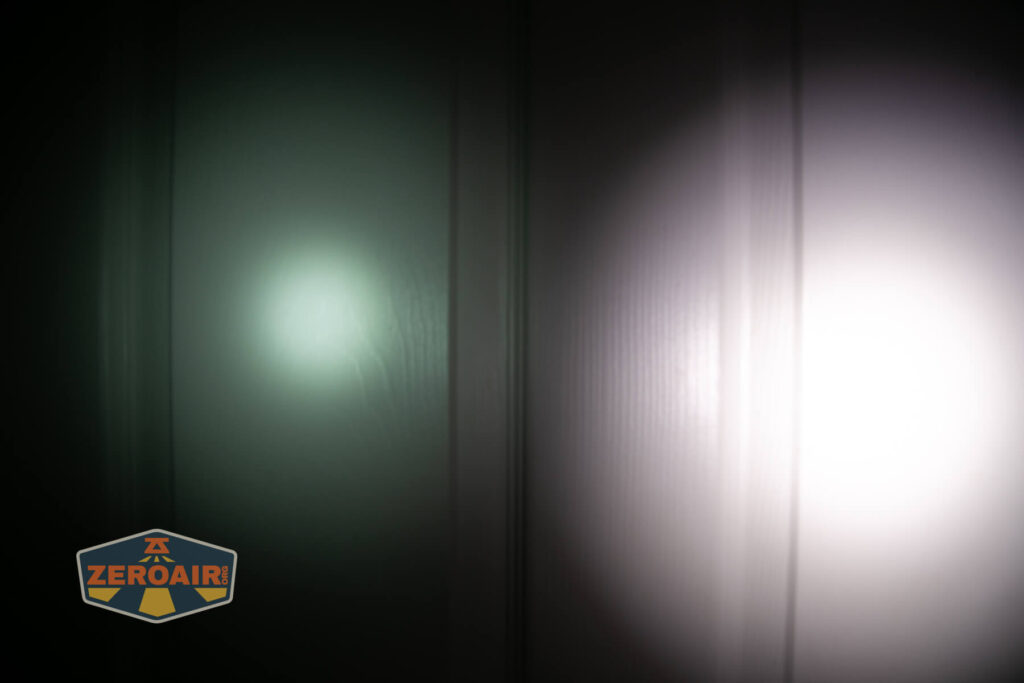
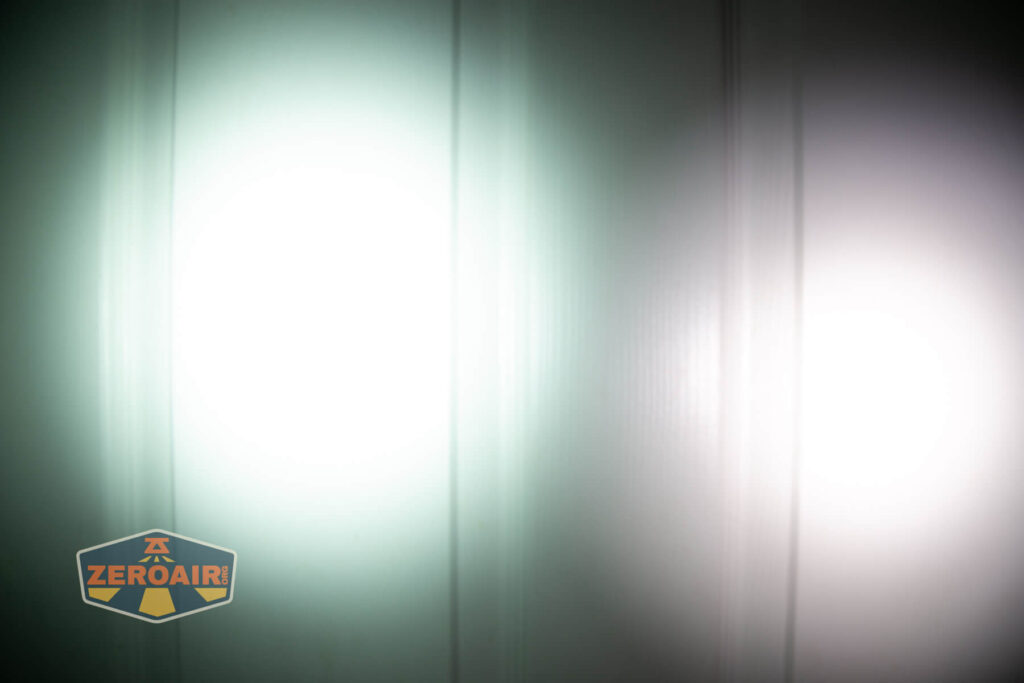
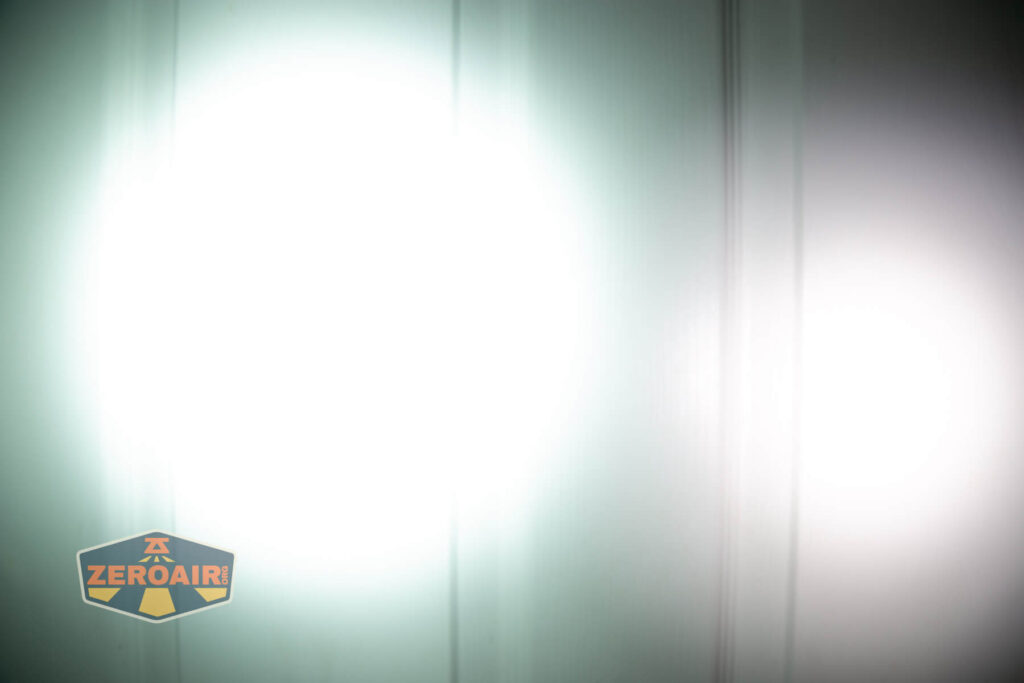
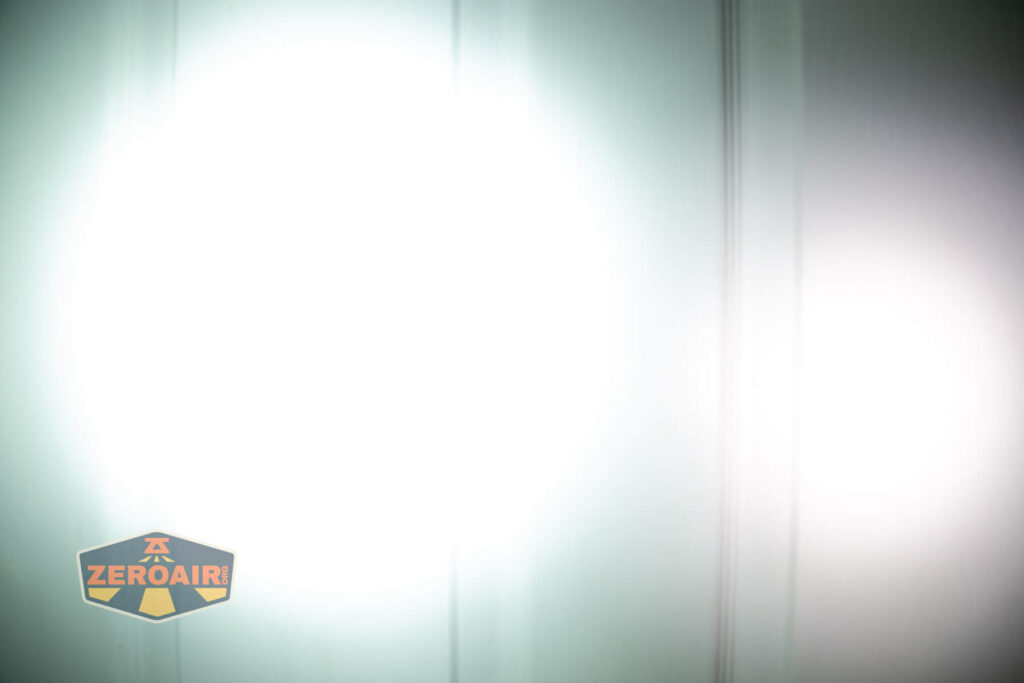
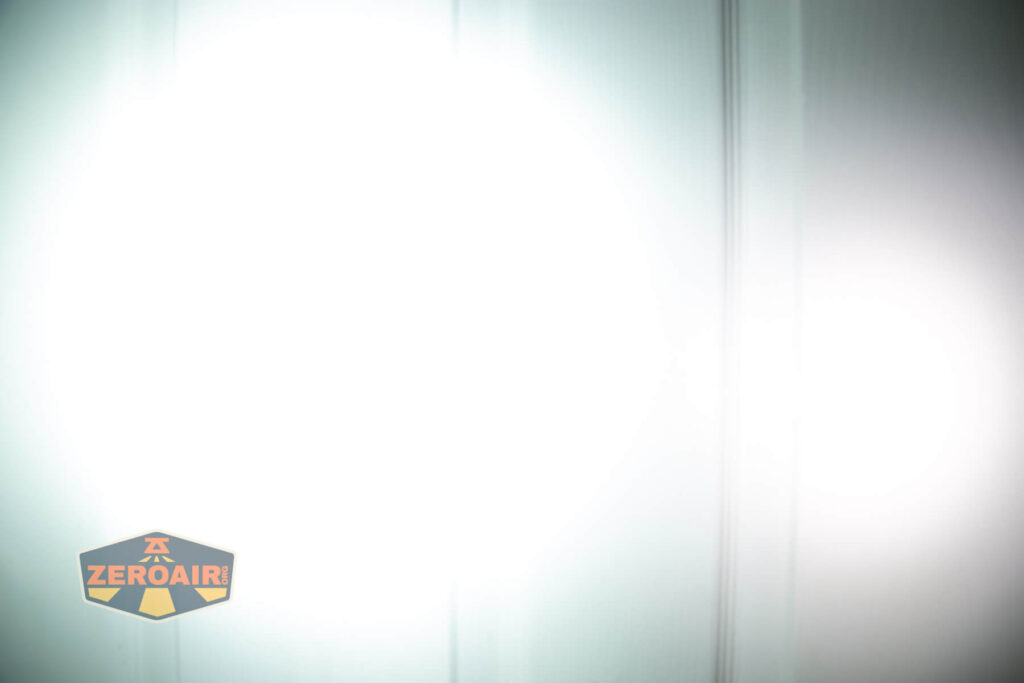
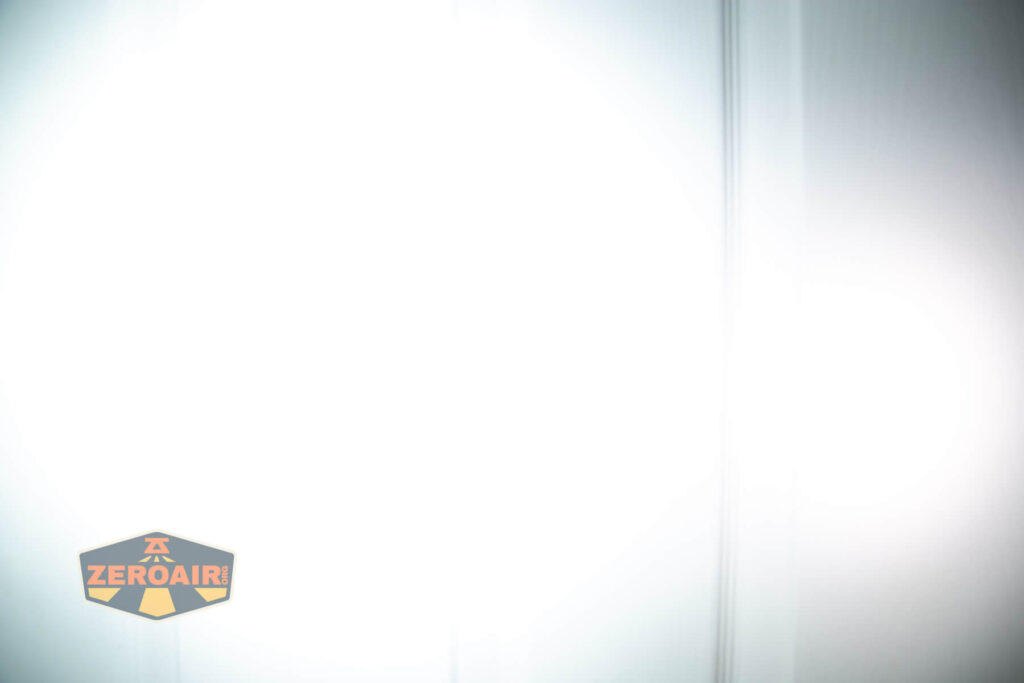
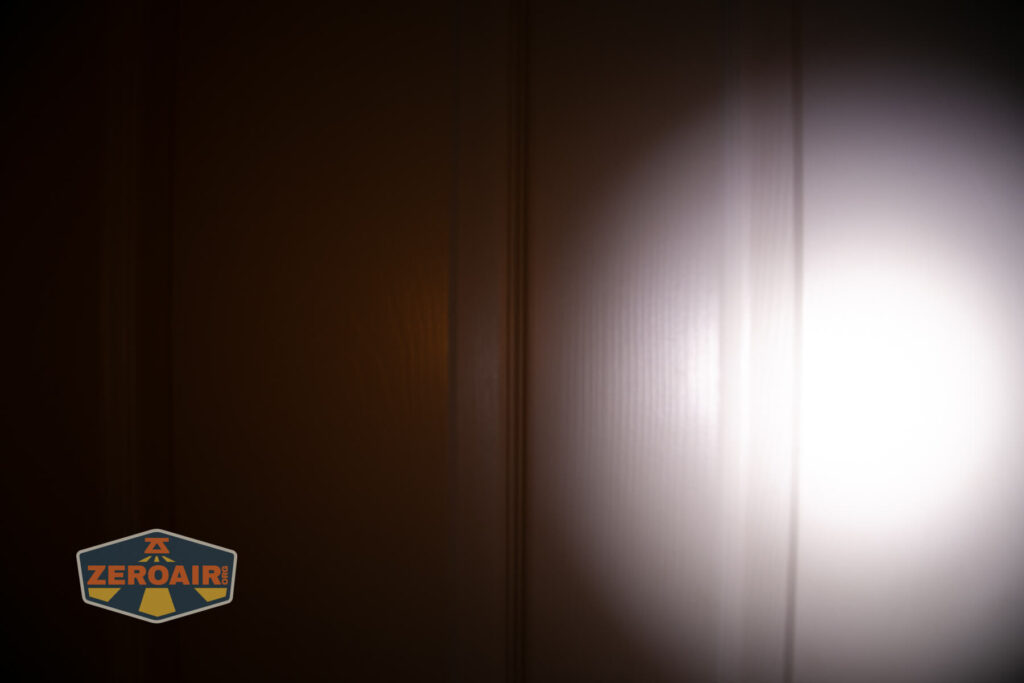
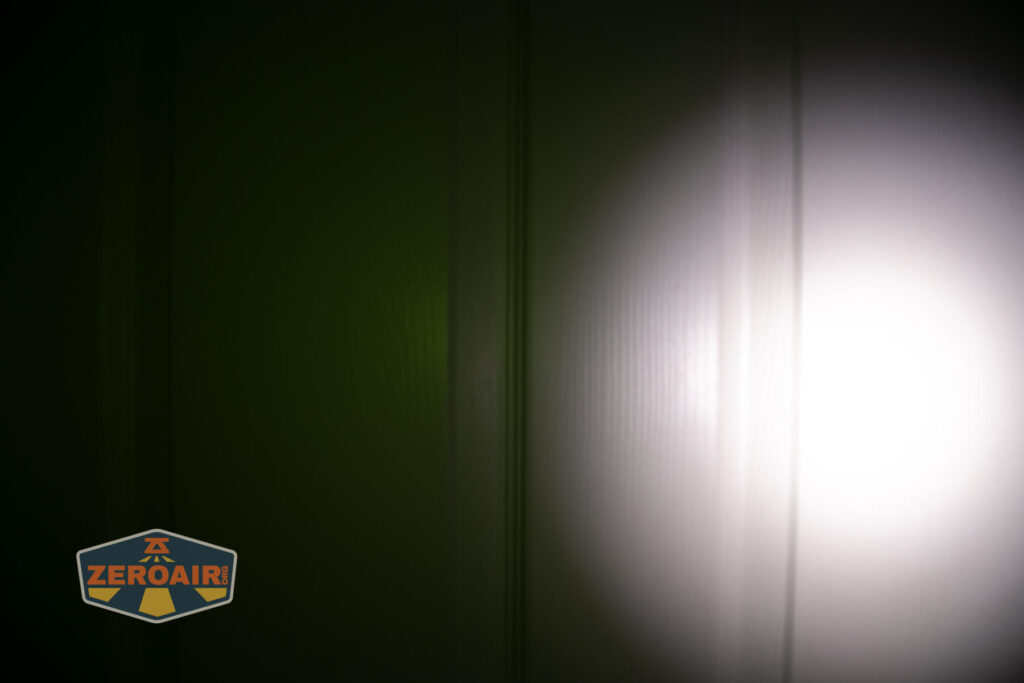
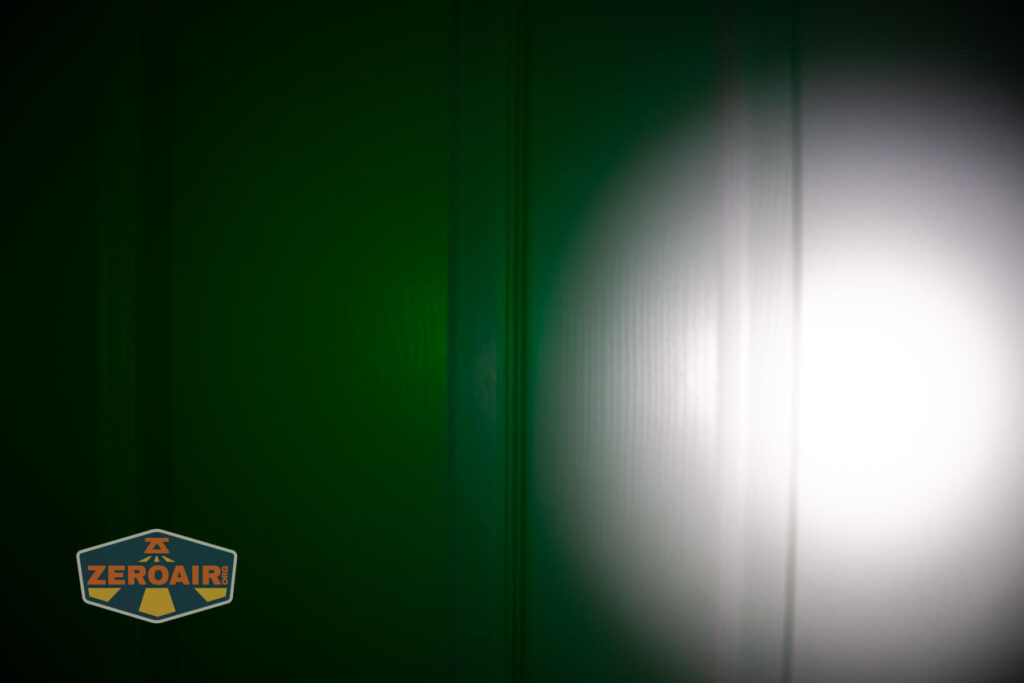
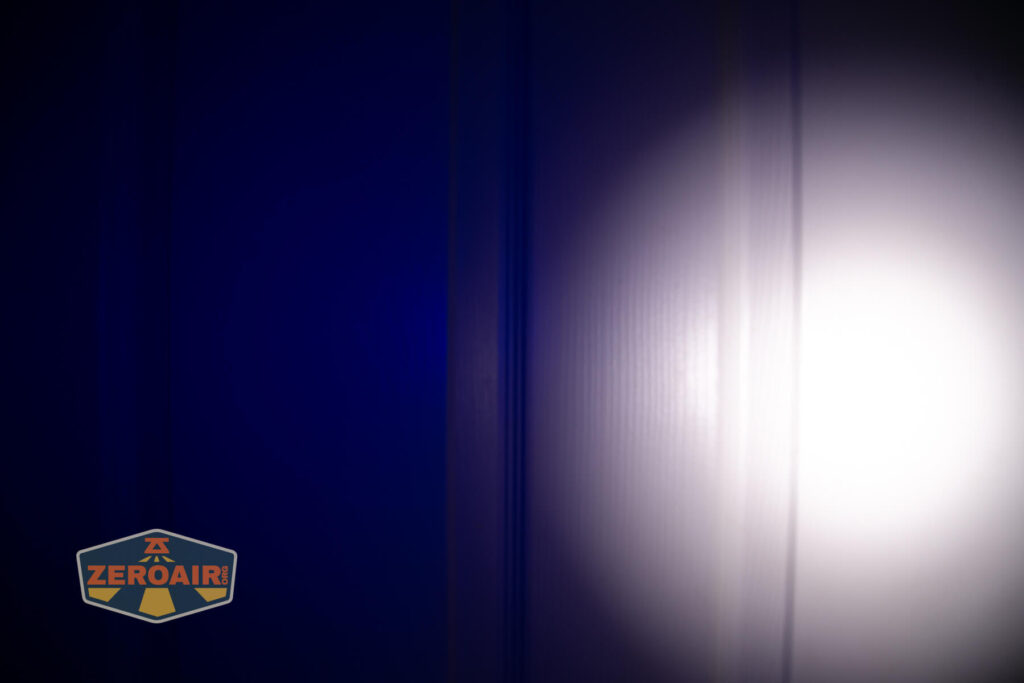
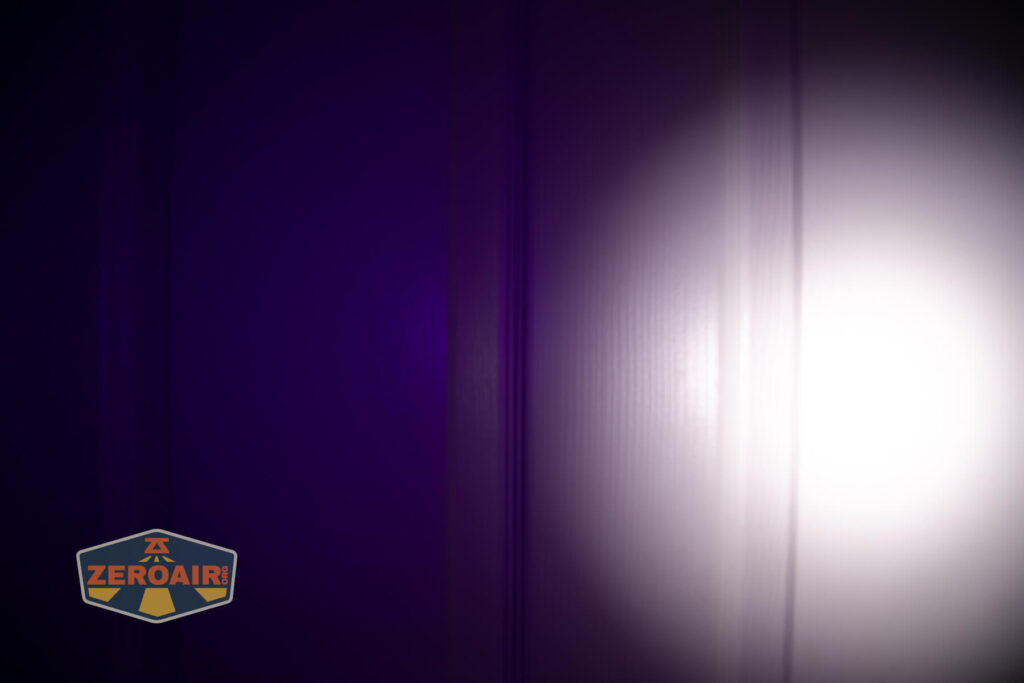
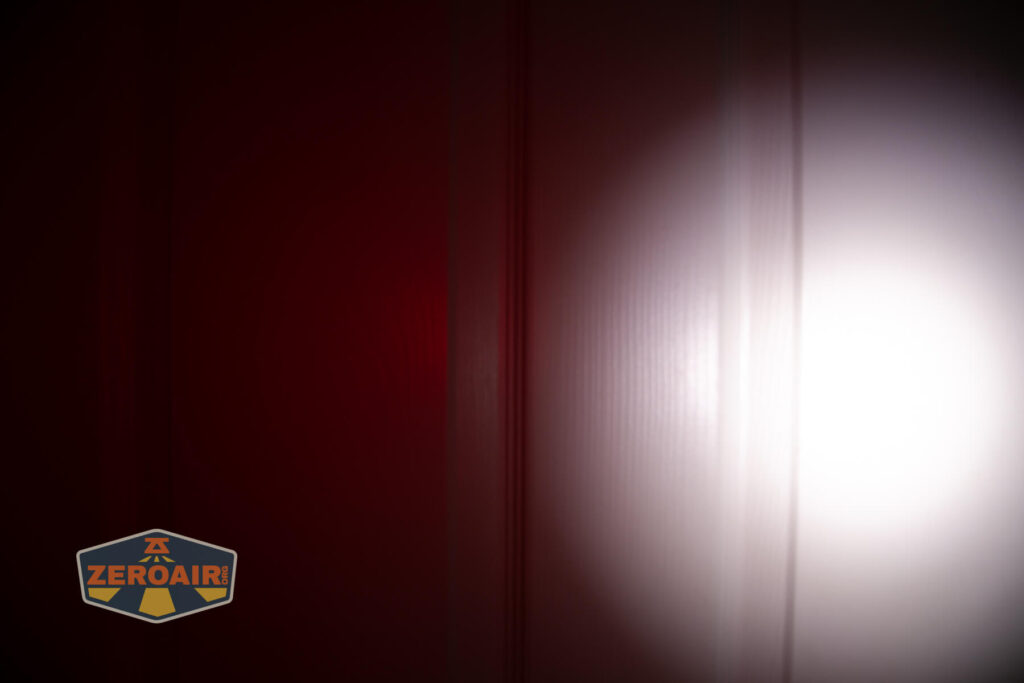

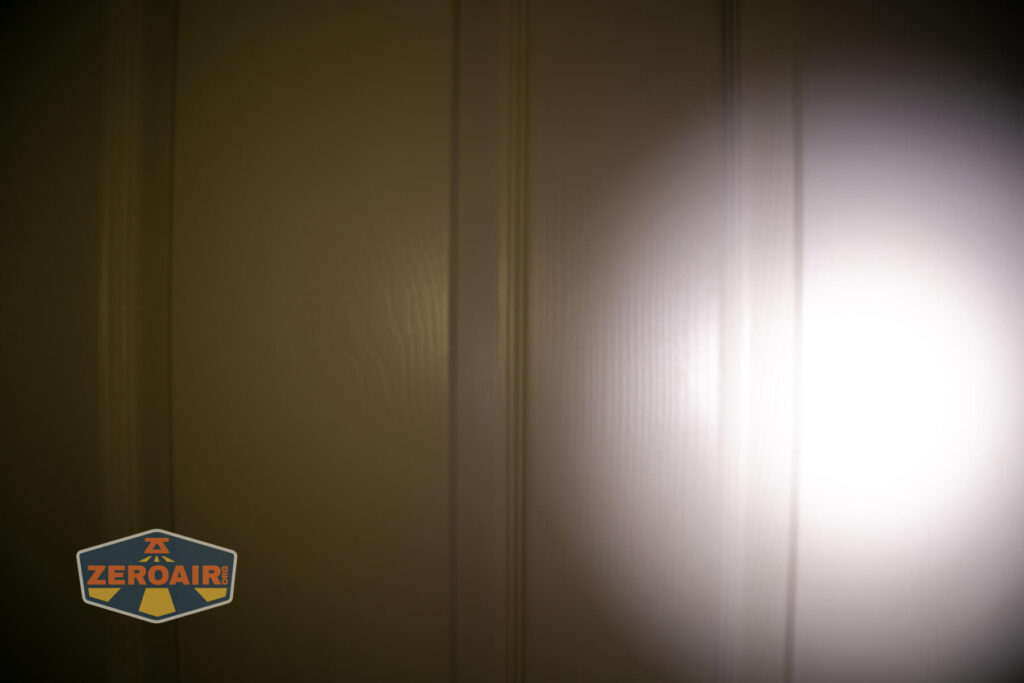
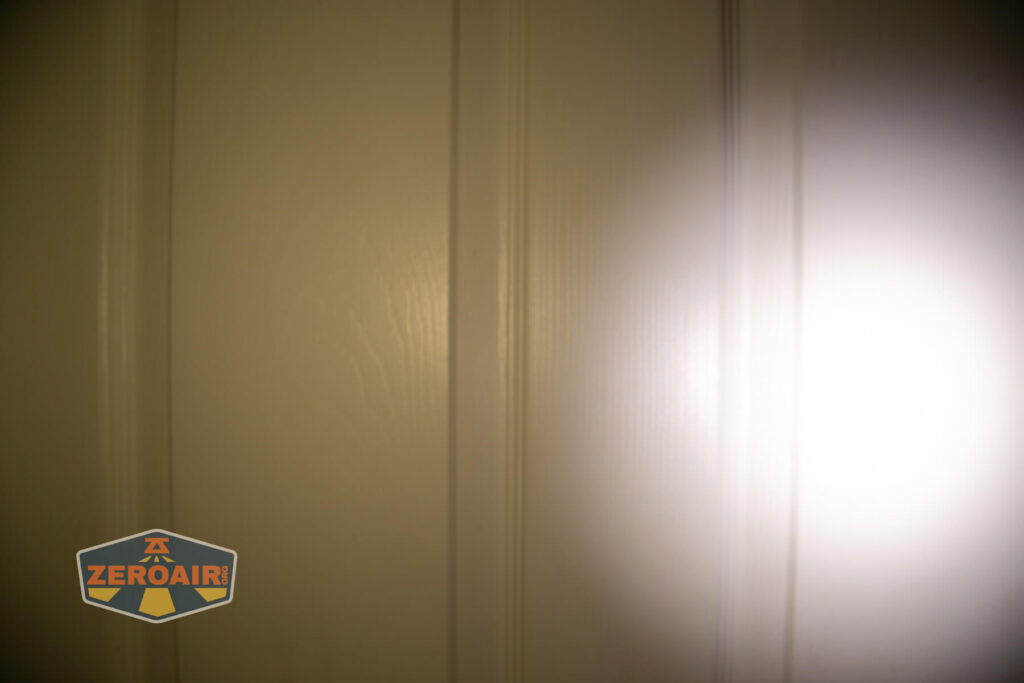
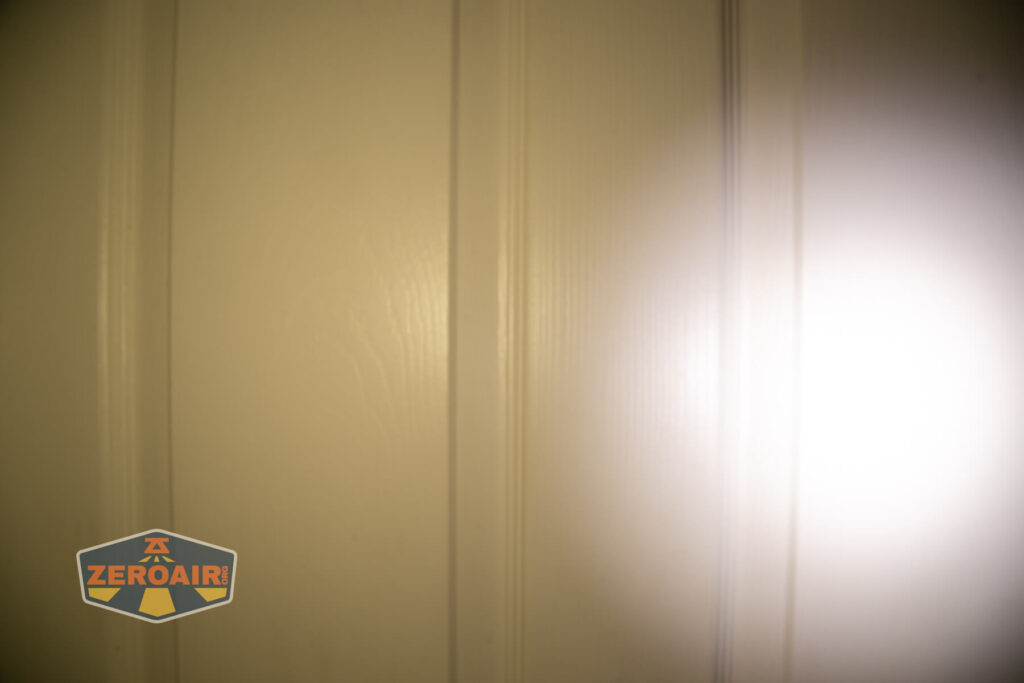
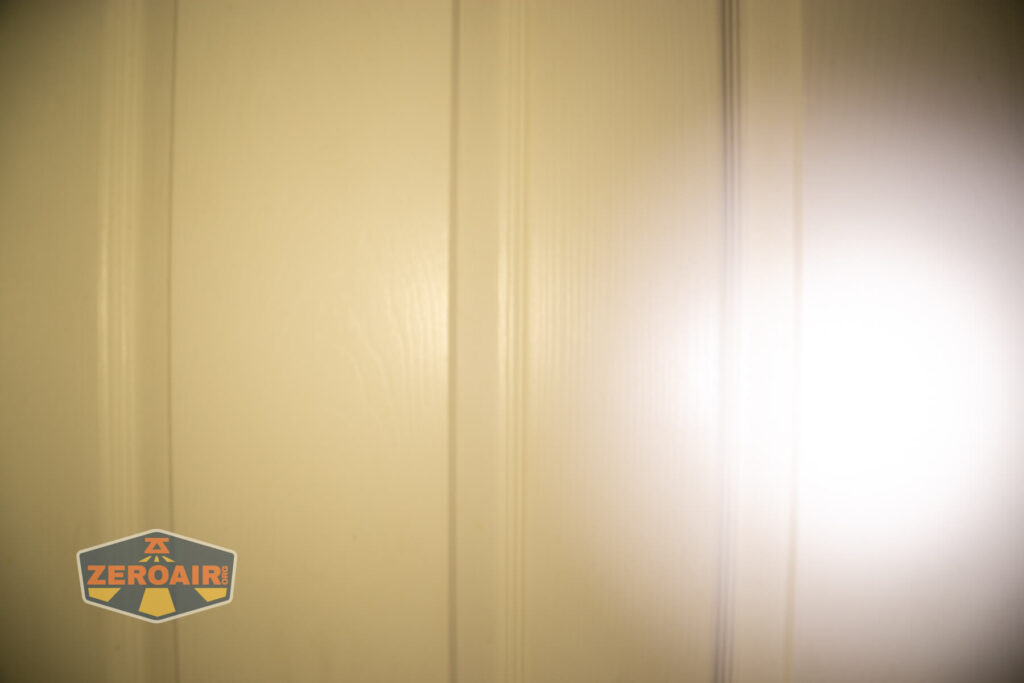
I compare everything to the KillzoneFlashlights.com 219b BLF-348 because it’s inexpensive and has the best tint!
Summary and Conclusion
I love that the Wuben X4 flashlight includes an 18650, and that it uses a standard cell. The user interface is confusing and not specific enough for me, but if you generally like ramping, you’ll probably generally be satisfied with it. The hinged cell door is nice, and prevents a bunch of tailcap unscrewing, but that might never have been necessary anyway – with onboard charging, you really don’t need to remove the cell. The side white emitters are warm (good) but low CRI (not good), and the front emitters are low CRI too. The Wuben X4 flashlight is a good take on a standard 18650 light – it earns the “redesigned” moniker! There are things to love, like the switch/selector/charging port cover. It’s a pretty reasonable price right now, too, so check it out!
The Big Table
| Wuben X4 flashlight | |
|---|---|
| Emitter: | Unstated white LEDs |
| Price in USD at publication time: | $44.90 |
| Cell: | 1×18650 |
| Runtime Graphs | |
| LVP? | Yes |
| Switch Type: | E-Switch |
| Quiescent Current (mA): | ? |
| On-Board Charging? | Yes |
| Charge Port Type: | USB-C |
| Charge Graph | |
| Power off Charge Port | Any scenario: lowest front only |
| Claimed Lumens (lm) | 1500 |
| Measured Lumens (at 30s) | 839 (55.9% of claim)^ |
| Candela (Calculated) in cd (at 30s) | 257lux @ 5.595m = 8045cd |
| Throw (Calculated) (m) | 179.4 |
| Claimed CCT | – |
| Measured CCT Range (K) | “6400-7000K (Front) 3900-4000K (Side white) Kelvin” |
| Item provided for review by: | Wuben |
| All my Wuben reviews! | |
^ Measurement disclaimer: Testing flashlights is my hobby. I use hobbyist-level equipment for testing, including some I made myself. Try not to get buried in the details of manufacturer specifications versus measurements recorded here; A certain amount of difference (say, 10 or 15%) is perfectly reasonable.
What I like
- Anti-roll design
- Hinge for tailcap seems robust
- Selector switch with charging cover built in is a neat design
- E-switch and dial work well together
- Reasonable cost
- Lots of RGB modes
- Good magnet
- Incorporated tactical tail switch is nice (not sure how useful, though.)
What I don’t like
- Low CRI across the board
- No discrete modes between moonlight and Turbo
- Very angular in hand (not “sharp” at all, but it’s very noticeable to carry)
Notes
- This content originally appeared at zeroair.org. Please visit there for the best experience!
- Please use my Amazon.com referral link to help support zeroair.org!
- Please support me on Patreon! I deeply appreciate your support!
Discover more from ZeroAir Reviews
Subscribe to get the latest posts sent to your email.
I appreciate your write up and the effort it includes, much of which was useful to me so I’m reluctant to point out the following but I feel it needs saying, the Wuben X4 has 6 discrete brightness levels despite the animated ramping gimmicks there are only 6 selectable brightness levels. Level 4 seems to be the one that everyone agrees is highest continuous mode (450-480lm).