

Skilhunt M200 V4 Nichia 519a Flashlight Review
The Skilhunt M200 V4 Nichia 519a flashlight is an 18650 flashlight with a few emitter options and improved performance! This High CRI light has the gray body.
Official Specs and Features
Here’s a referral link to the Skilhunt M200 V4 Nichia 519a flashlight product page.
Versions
There’s quite a bit to mention here. First, there are four body colors: black, coyote, grey (seen here), and blue. Next, there are emitter options, of which there are three: Nichia 519a (seen here), “TN cool white”, and Luminus SFT25R.
Price
As shown here, the Skilhunt M200 V4 flashlight sells for $63.90. Here’s a referral link for the Skilhunt M200 V4 Nichia 519a flashlight that I hope you’ll use!
What’s Included

- Skilhunt M200 V4 Nichia 519a flashlight
- Charge cable (USB to proprietary magnetic)
- Lanyard
- Pocket clip
- Manual
- Nylon mesh pouch
- Spare o-rings (2)
Package and Manual


Build Quality and Disassembly

Skilhunt alights are usually well-built, and the M200 V4 is no exception. Maybe more importantly, the design language between this and the other M-series lights is very consistent!


In the photo above, you’ll note that this light is labeled “M200 V3+.” Depending on which color you get and maybe how soon you order, you may get this “M200” or you may get one labeled “M200 V3+” – but they are all V4. Skilhunt just had some bodies already printed with V3 (or no V) and economically used those. But if you order V4, you’re getting V4 (no matter which exact text is on the body).
The threads are square-cut and lubed an appropriate amount. That spring is also removable so that the magnet can be removed, too.

The head end has a spring, too, so the M200 V4 is very “18650-friendly.”
Size and Comps
104.5mm x 23.5mm x 21.6mm (body), and 46g (without battery).


If the flashlight can headstand, I’ll show it here. If it can tailstand, I’ll also show that here!


Here’s the test light with the venerable Convoy S2+. The version below is a custom laser-engraved Convoy S2+ host by GadgetConnections.com. I did a full post on an engraved orange host right here! Or go straight to GadgetConnections.com to buy your Convoy S2+ now!


Also in the photo above, my Standard Reference Material (SRM) flashlight is the Hanko Machine Works Trident, an 18350 light. While I have not reviewed or tested the Gunner Grip version seen here, I have tested a Hanko Machine Works Trident Total Tesseract in brass. I love the Trident, and it’s a striking contrast to the inexpensive Convoy S2+, another great SRM.
Below you can see both of my M300 V4’s. One has “V3+” and the other just “M200.” They are both V4!

Retention and Carry
A pocket clip is included. It’s a pretty nice friction-fit two-way clip.

The pocket clip can be installed on the head or tail end. Each shoulder of the clip has a lanyard hole, too!

Also included is a lanyard, which attaches either through the pocket clip (less recommended) or the tailcap, where there is a hole for this express purpose.


The tailcap has a magnet, too, which is plenty strong to hold the light.

Above, you may note a new holder for my magnetic-tailcap items. That’s the Exceed Designs Hyzer Titanium Mini Hatchet D2 axe. The handle (as the name suggests) is titanium. But the blade is D2 steel and perfect for retaining magnetic tailcap flashlights! The Hyzer is available in a bunch of cerakote body colors as well as different thickness D2 heads.
Power and Runtime
The Skilhunt M200 V4 Nichia 519a flashlight runs a single lithium-ion cell. My package was the combo that includes this 3500mAh 18650 seen below.

Inside the cell tube is a sticker indicating that the cell should go with the positive end toward the head.

The switch has a battery indicator, too. This lights briefly (around 5 seconds) when a cell is installed or the light is turned on.

Skilhunt’s main improvement for the V4 version of the M200 is performance! I tested a V4 with Luminus SFT25R but hadn’t tested a previous version (so no comparison). But this time, I have a V4 Nichia 519a as well as a V3 Nichia 519a M200. Here’s a link to the M200 V3 with Nichia 519a, specifically the power section.
You’re welcome to evaluate and compare, but it does appear that Skilhunt has eked out some extra runtime at the same output levels (or higher) across the tested modes. That’s great work!


Low voltage protection was observed in every test. The switch blinks to warn you, too.
Charging
The Skilhunt M200 V4 Nichia 519a flashlight also has built-in charging. There’s a connector opposite the switch. One end is a USB plug, and the other is a proprietary magnetic connector. This is the MC-20 version of Skilhunt’s charger.

There seems to be quite a performance advantage to the MC-20, as it reaches a max current of around 2A.

I’m really not sure what happened on charging of the Skilhunt M200 V4 Nichia 519a flashlight. The Luminus SFT25R looked fine (and great) but the Nichia version charged… weirdly. Here are the four tests I performed. One (the longest) didn’t even charge the cell fully. I stopped the test after it trailed off and the voltage was only 3.91V. This is light-related, because I use the same charge connector for testing both lights.

For reference, here’s the charge test from the Luminus version. It looks fine.

While charging, the charger blinks red, and when charging is complete, the charger uses a blue indicator.
Modes and Currents
| Mode | Mode Claimed Output (lm) | Claimed Runtime | Measured Lumens | Tailcap Amps |
|---|---|---|---|---|
| T1 | 1200-550 | 1m+130m | 1038 (0s) 916 (30s) |
5.95 |
| T2 | 550 | 135m | 505 | 1.46 |
| H1 | 300 | 260m | 276 | 0.67 |
| M1 | 125 | 12h | 117 | 0.23 |
| M2 | 21 | 60h | 21 | 0.02 |
| L1 | 2.5 | 150h | 2.4 | [low] |
| L2 | 0.2 | / | 0.08 | [low] |
Pulse Width Modulation
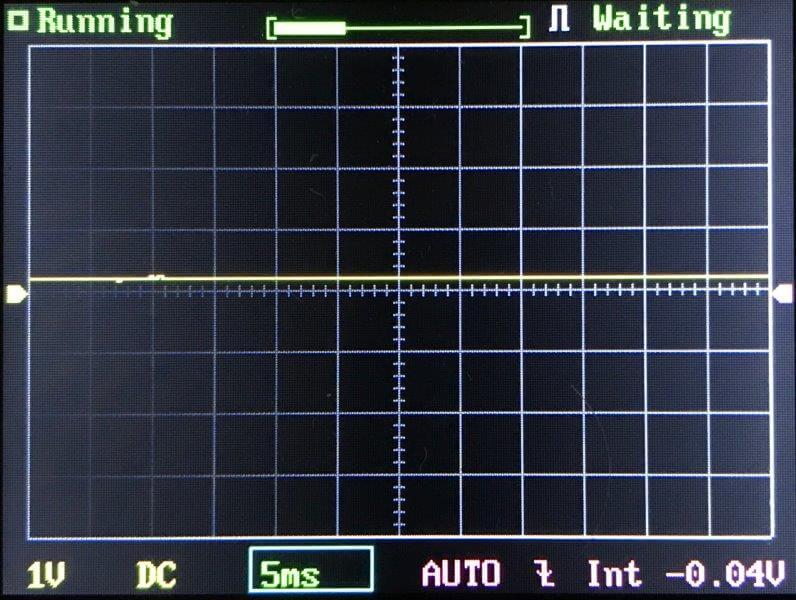
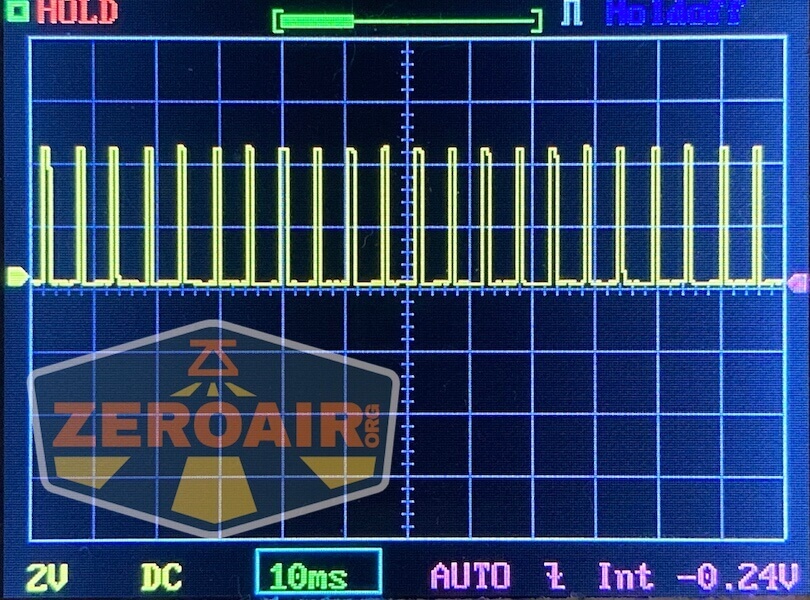
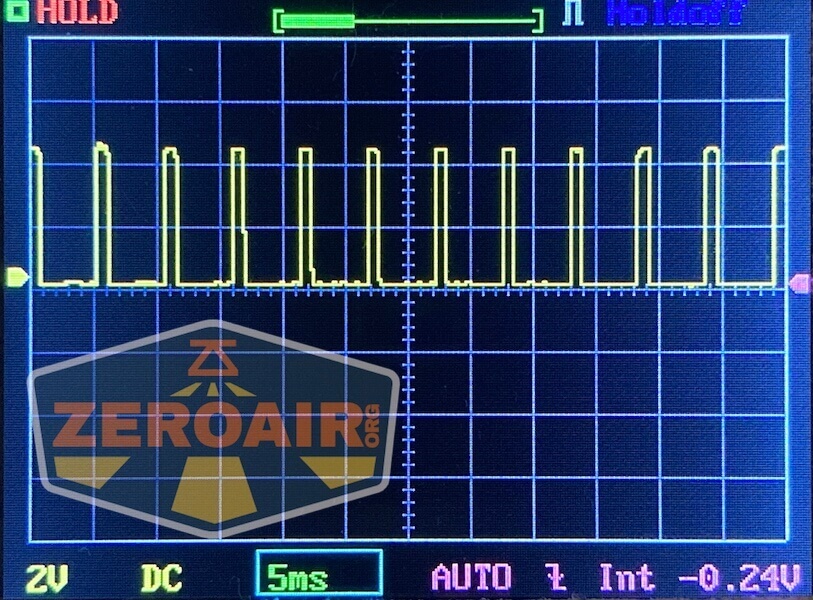
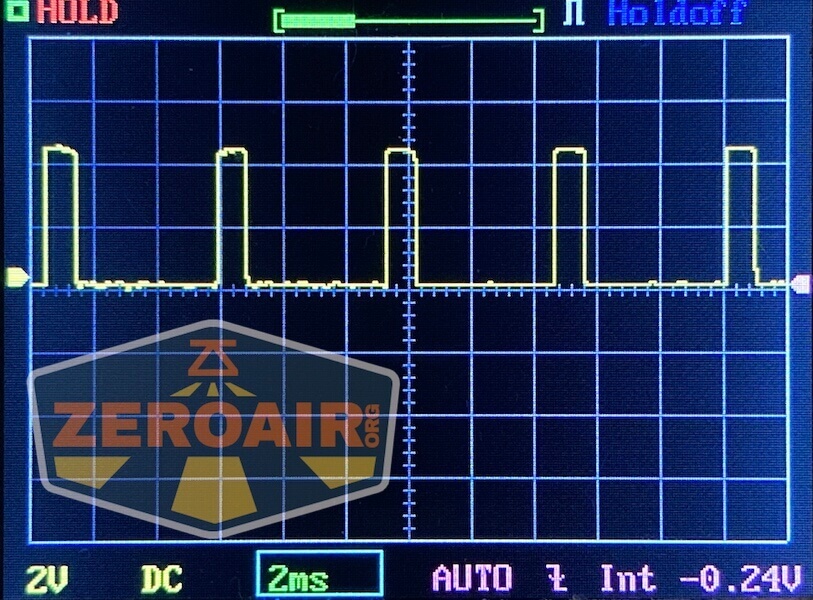
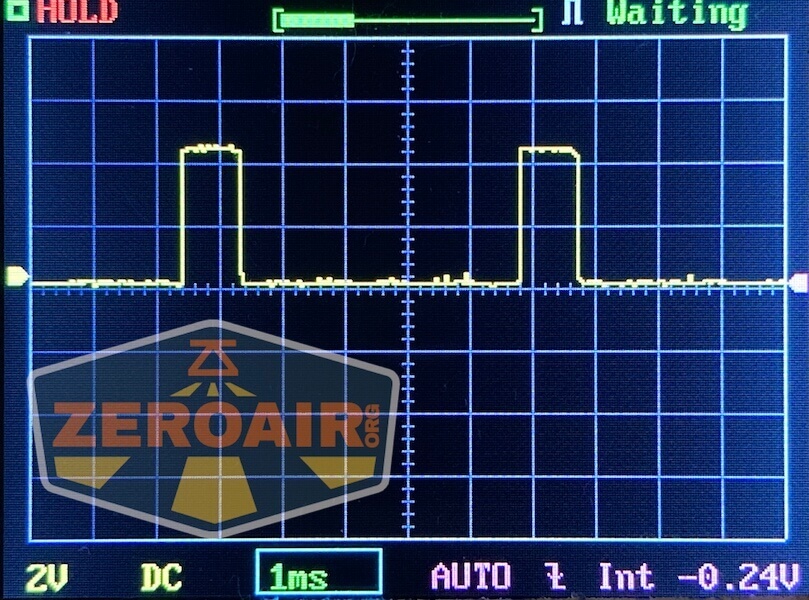
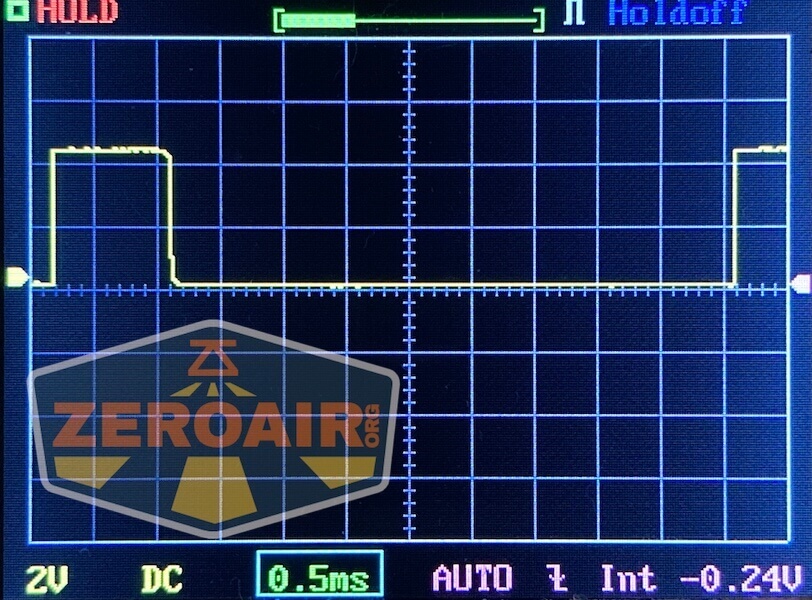
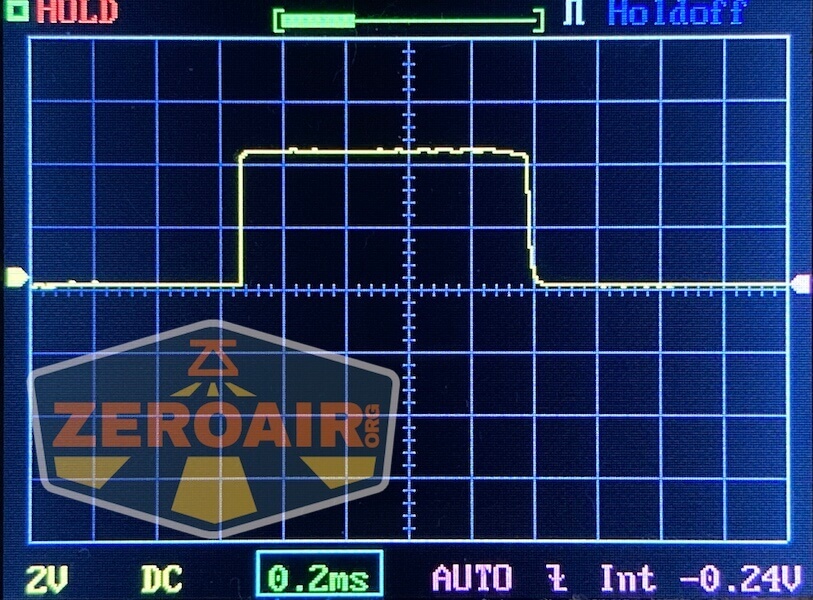
There’s no PWM, but a couple of modes have some squiggles.

Click here to see a “baseline” – a chart with almost no light hitting the sensor.
Then there’s the Ultrafire WF-602C flashlight, which has some of the worst PWM I’ve seen. It’s so bad that I used a post about it to explain PWM! Here are multiple timescales (10ms, 5ms, 2ms, 1ms, 0.5ms, 0.2ms) to make comparing this “worst” PWM light to the test light easier. That post also explains why I didn’t test the WF-602C at the usual 50us scale.
User Interface and Operation
There’s a single switch on the M200 V4 Nichia 519a. It’s a side e-switch, with an indicator in the center. It’s a big secure switch with a very positive but quiet click. I very much like this switch. The switch seems unchanged from the previous iterations of the M-series. I believe the user interface is unchanged, too.

The cutout for the switch in the head is the same size as the charge connector, and while it’s hard to distinguish between the two while holding the light, I found that it didn’t matter; I’ll just pinch the light with both spots between my fingers, and activate the light.


The user interface could be a bit daunting, but it’s very straightforward when you get used to it. It’s also very logical and provides access to low from off, which is as close to a requirement from a user interface as I have.
Here’s a user interface table! The user interface is nearly the same as the Skilhunt EC500, but a bit updated from the M200 V3.
| State | Action | Result |
|---|---|---|
| Off | Hold | Low (Memory between L1 and L2) |
| L1 or L2 | Hold | Iterate between L1 and L2 |
| Off | Click 4x | Lockout (Three blinks of the emitter to confirm) |
| Lockout | Click 4x | Unlock to Low group (memory, can be L1/L2) |
| Lockout | Click 2x | Iterate lockout indicator^ |
| Lockout | Hold | Momentary Low group (memory, can be L1/L2) |
| L1/L2 | Click | Off |
| Off | Click | On in “Main Group” (Mode memory M2/M1/H) |
| Main Group | Hold | Mode advance (M2 > M1 > H) |
| Main Group | Click | Off |
| Main Group, Off, or Low group | Click 2x | Turbo Group (T1/T2) |
| T1/T2 | Hold | Iterate between T1 (higher) and T2 (lower) output |
| T1/T2 | Click | Off |
| T1/T2 | Click 2x | Main Group (memory output) |
| Main Group, Off, or Low group | Click 3x | Strobe Group (with memory) |
| Strobe Group | Click 3x | Previous Group (T1/T2 or M2/M1/H, depending on how you accessed Strobe Group)^^ |
| Strobe Group | Hold | Strobe Advance (S1 > S2 > S3) |
| Strobe Group | Click | Off |
LED and Beam
The single emitter used in the Skilhunt M200 V4 Nichia 519a flashlight is, of course, a Nichia 519a. The main point of using this emitter is that it is High CRI!

The M200 still uses a reflector. It’s lightly textured. As opposed to the Luminus version, this beam is much broader, but not “floody.”

LED Color Report (CRI and CCT)
Skilhunt states the Nighia 519a as “5000K. It tests a right around that claim, too, depending on which mode you’re using. The CRI is in fact high, at around 97. This is a very pleasant emitter!!


CCT (Correlated Color Temperature) refers to the measurement of the color appearance of light, expressed in Kelvins (K), which indicates whether the light is warm (yellowish) or cool (bluish). A lower CCT (below 3000K) is considered warm light, while a higher CCT (above 5000K) gives cooler, bluish light.
CRI (Color Rendering Index) is a measure of how accurately a light source renders colors in comparison to natural sunlight. Scored on a scale from 0 to 100, higher CRI values indicate that colors appear more true to life and vibrant, similar to how they would look under the sun.
Beamshots
These beamshots always have the following settings: f8, ISO100, 0.3s shutter, and manual 5000K exposure. These photos are taken at floor level, and the beam hits the ceiling around 9 feet away.


Tint vs BLF-348 (KillzoneFlashlights.com 219b version) (affiliate link)
I keep the test flashlight on the left and the BLF-348 reference flashlight on the right. These photos are taken around 18 inches from the door.


I compare everything to the KillzoneFlashlights.com 219b BLF-348 because it’s inexpensive and has the best tint!
Summary and Conclusion
I have liked the previous M200 (V3) by Skilhunt, and I like (maybe love?) the various options available with the M150. The M300 is great too! This whole series is a winner. I still do love this Nichia 519a, and in the higher-efficiency Skilhunt M200 V4 flashlight, it’s still a winner. I will say, though, that the higher cd/lm Luminus version really has my interest right now. So check out and decide between both of those! (Sorry to say I don’t know anything about the TN emitter version.)
The photo below really summarizes the difference in the Nichia version (left) and the Luminus version.

The Big Table
| Skilhunt M200 V4 Nichia 519a flashlight | |
|---|---|
| Emitter: | Nichia 519a (High CRI R9080 5000K) |
| Price in USD at publication time: | $63.90 |
| Cell: | 1×18650 |
| Runtime Graphs | |
| LVP? | Yes |
| Switch Type: | E-Switch |
| Quiescent Current (mA): | ? |
| On-Board Charging? | Yes |
| Charge Port Type: | Proprietary Magnetic |
| Charge Graph | |
| Power off Charge Port | Any scenario: all modes |
| Claimed Lumens (lm) | 1200 |
| Measured Lumens (at 30s) | 915 (76.3% of claim)^ |
| Candela per Lumen | 8.26 |
| Claimed Throw (m) | 176 |
| Candela (Calculated) in cd (at 30s) | 280lux @ 5.465m = 8363cd |
| Throw (Calculated) (m) | 182.9 (103.9% of claim)^ |
| Claimed CCT | 5000 |
| Measured CCT Range (K) | 4700-5100 Kelvin |
| Item provided for review by: | Skilhunt |
| All my Skilhunt reviews! | |
^ Measurement disclaimer: Testing flashlights is my hobby. I use hobbyist-level equipment for testing, including some I made myself. Try not to get buried in the details of manufacturer specifications versus measurements recorded here; A certain amount of difference (say, 10 or 15%) is perfectly reasonable.
What I like
- Small for a 18650 flashlight
- Skilhunt’s user interface has something for everyone (and I like the UI)
- The button is perfectly clicky and ‘pinch to click’ opposite the charge port works nicely too
- Nice charging built-in
- Very high CRI!
- Pocket clip is fantastic (even though it’s a two-way)
- Emitter options for those preferring higher output, CRI, or throw.
- Improved performance
What I don’t like
- Charging requires a proprietary charger cable (but the light runs a standard 18650, so you can also use a bay-charger)
Notes
- This content originally appeared at zeroair.org. Please visit there for the best experience!
- Please use my Amazon.com referral link to help support zeroair.org!
- Please support me on Patreon! I deeply appreciate your support!
Discover more from ZeroAir Reviews
Subscribe to get the latest posts sent to your email.