
Olight ArkPro Ultra EDC Flashlight Review
New from Olight is the Olight ArkPro Ultra EDC flashlight, a flat light with three variants and multiple emitter options. It has flood, throw, laser, and UV!
Official Specs and Features
Here’s a referral link to the Olight ArkPro Ultra EDC flashlight product page.
Versions
Of the Olight ArkPro specifically, there seem to be six body colors. Most of them offer only cool white emitter options, but at least one is available in neutral white and cool white, too.
There are also two other ArkPro variants: ArkPro Lite and ArkPro Ultra. One of those two is more Lite, the other is more Ultra!
Price
MSRP for the Olight ArkPro Ultra EDC flashlight is $129.99, but the introductory price (for another couple of weeks) is $103.99.
What’s Included
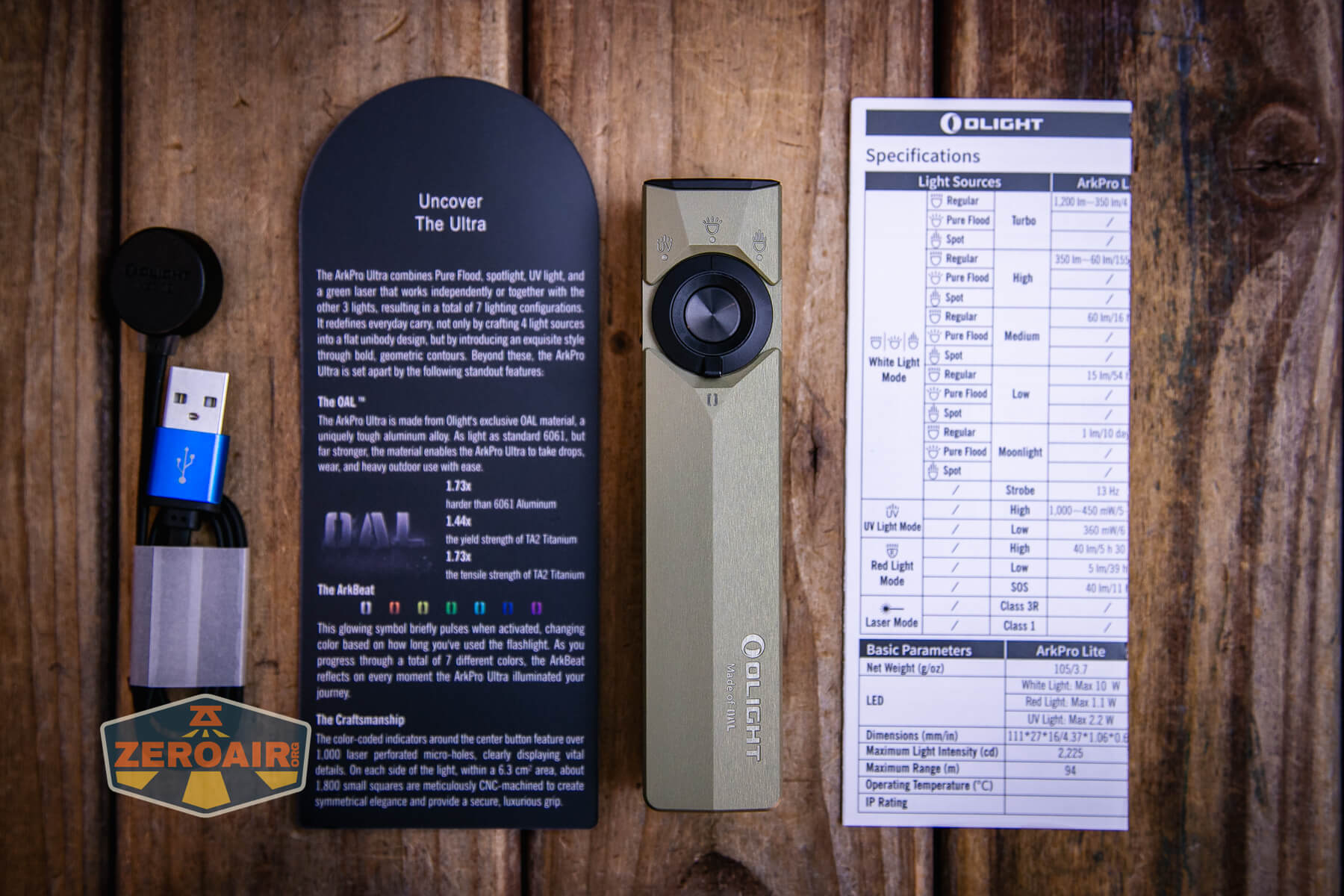
- Olight ArkPro Ultra EDC flashlight
- Charging base
- Manual
Package and Manual
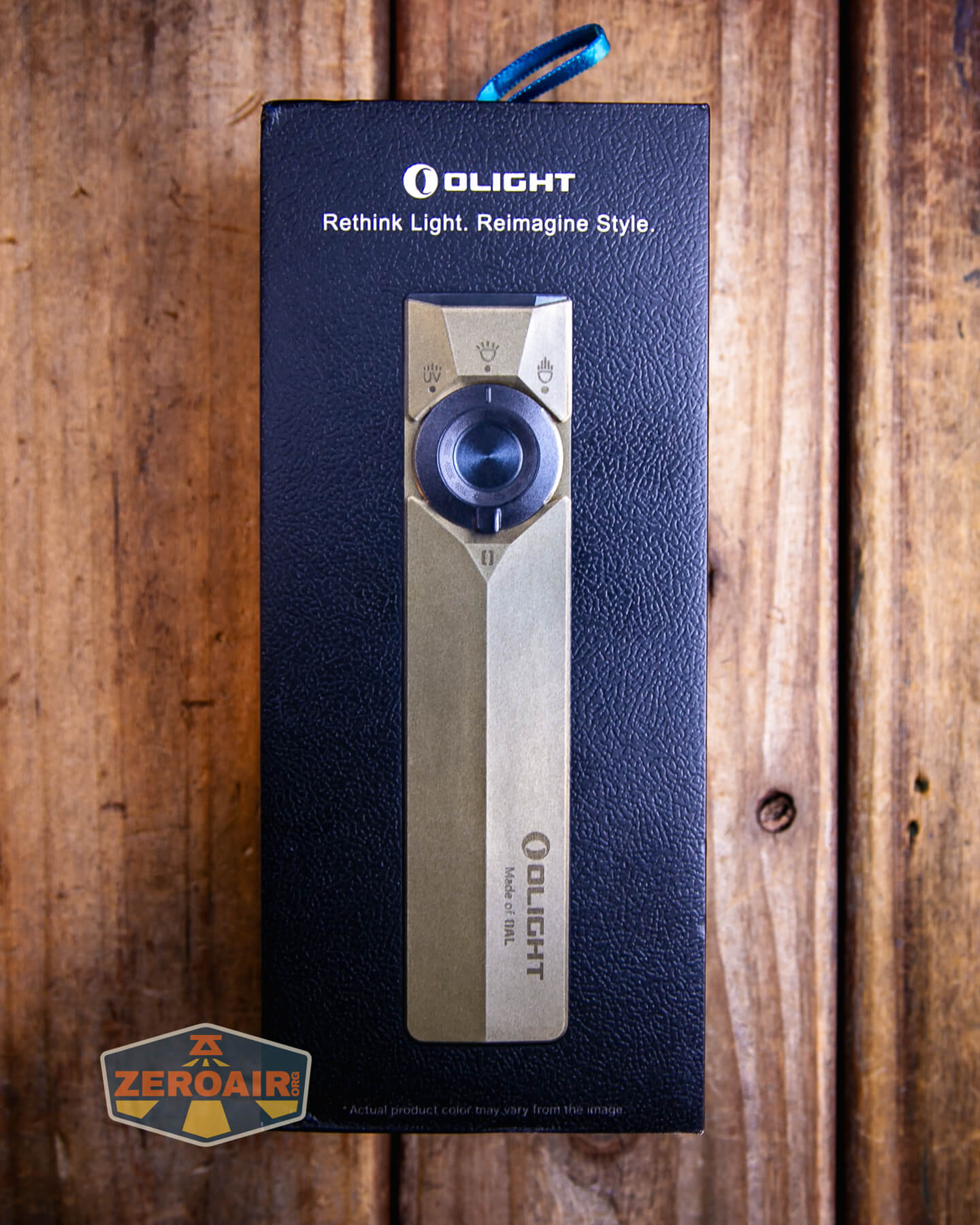
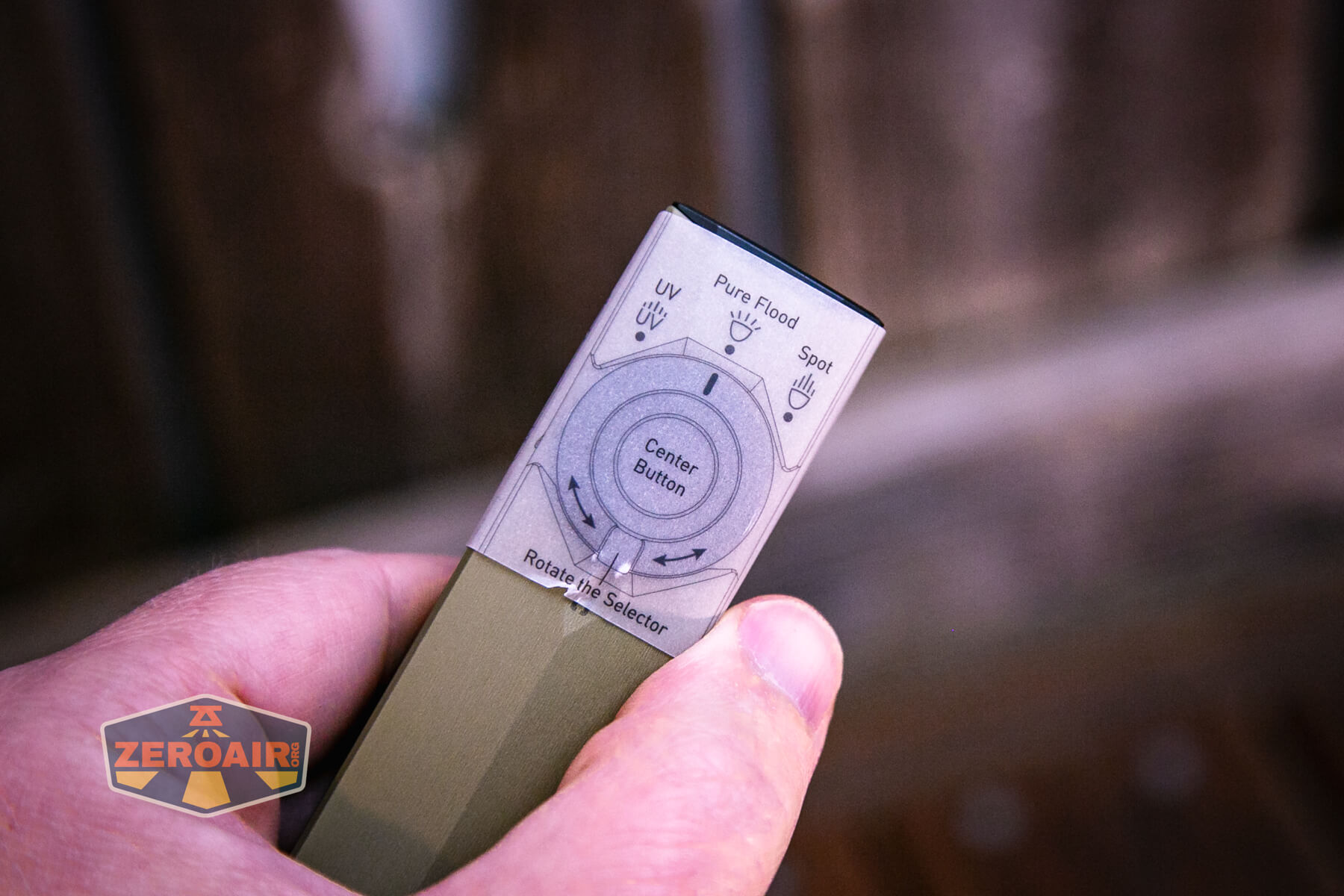
Note that this manual is for all three versions of the ArkPro (including this Ultra), and I do not like that. I found the manual quite hard to follow! But I’m sure a ton of work was put into it (that’s the only way it could be so confusing.)
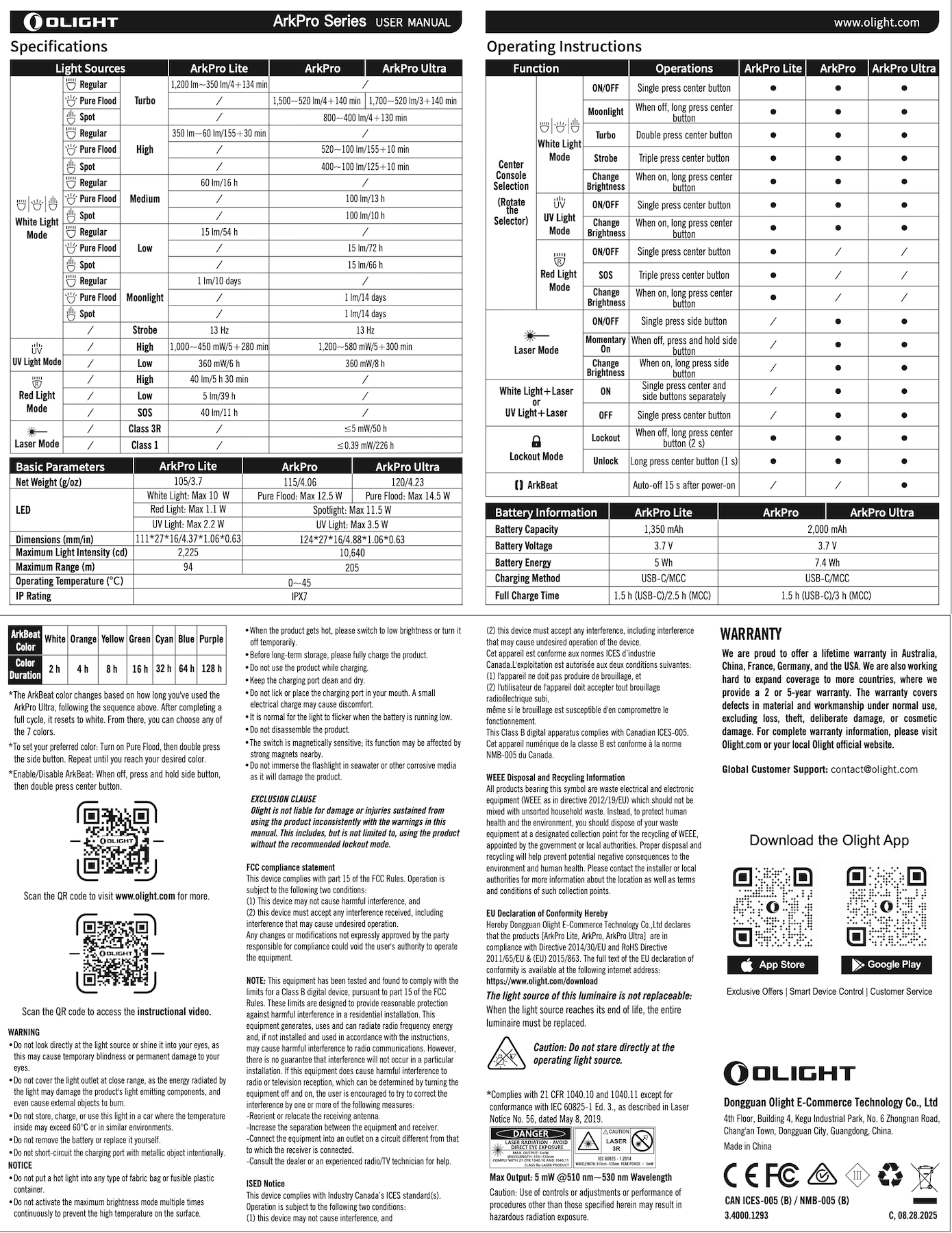
Here’s one little point about the confusion. The image below implies to me that a light might have all three options. But that’s not the case. Only some of the ArkPro versions have some of these three options.

Build Quality and Disassembly
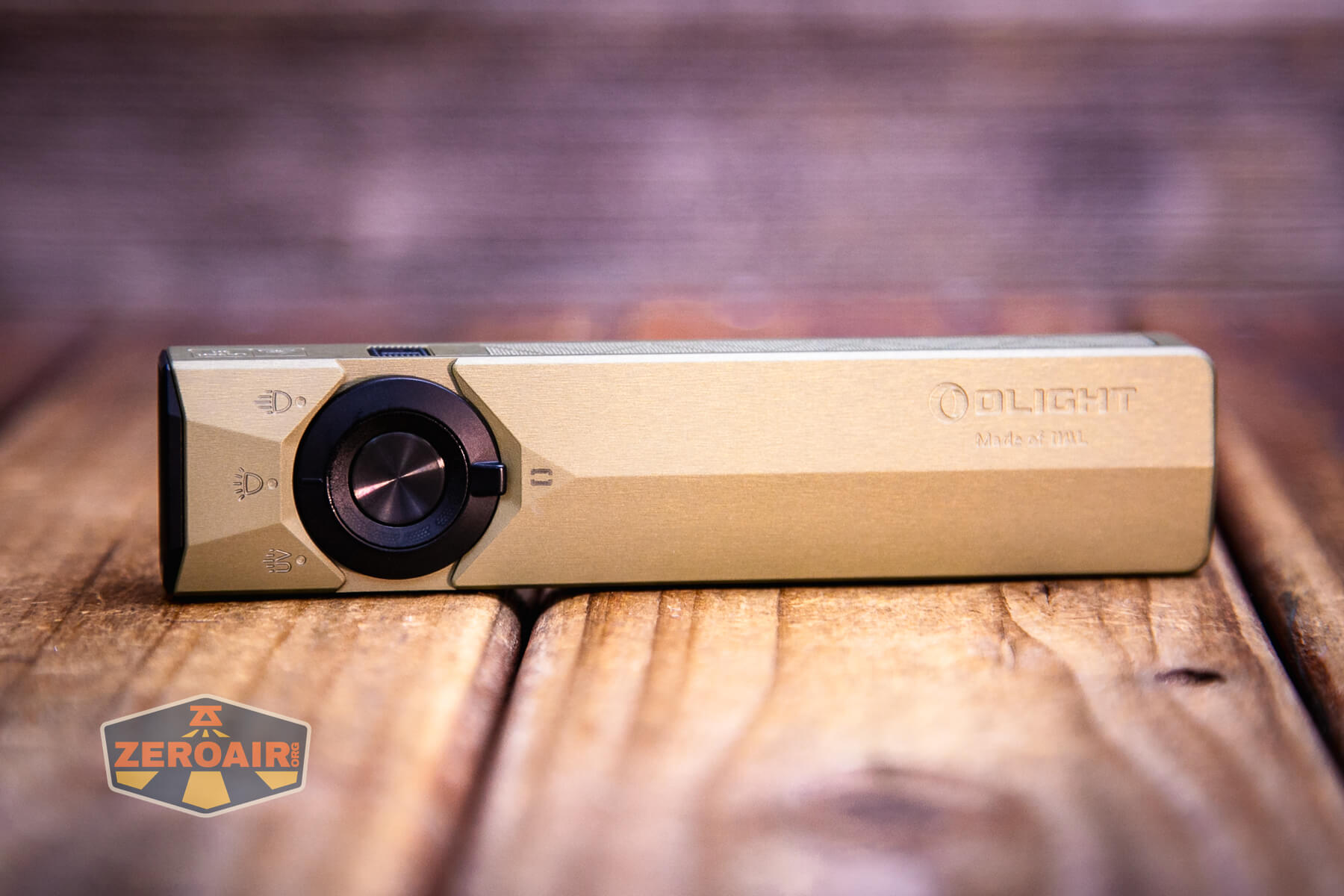
I didn’t disassemble the Olight ArkPro Ultra EDC flashlight at all. The build quality is very solid.
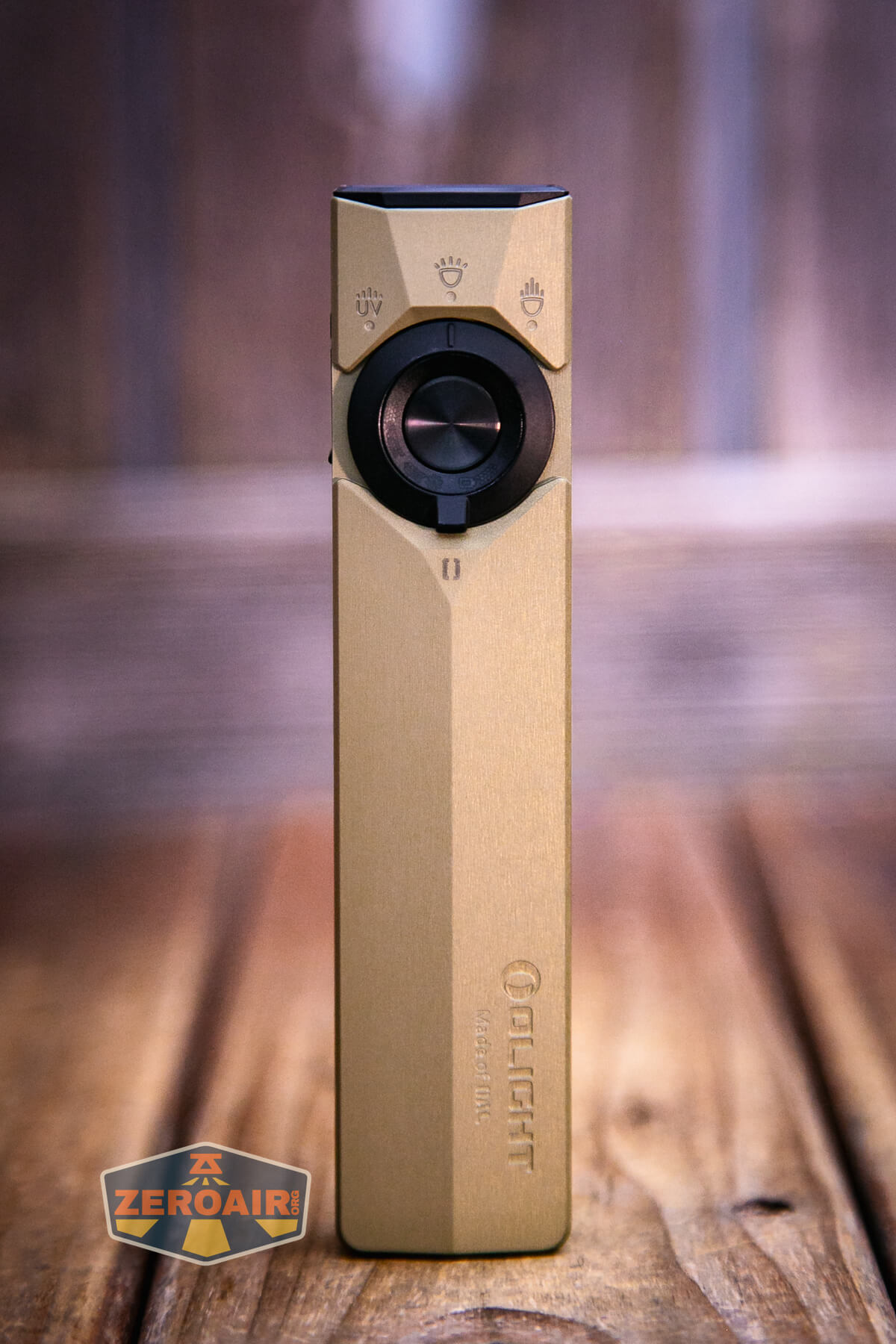
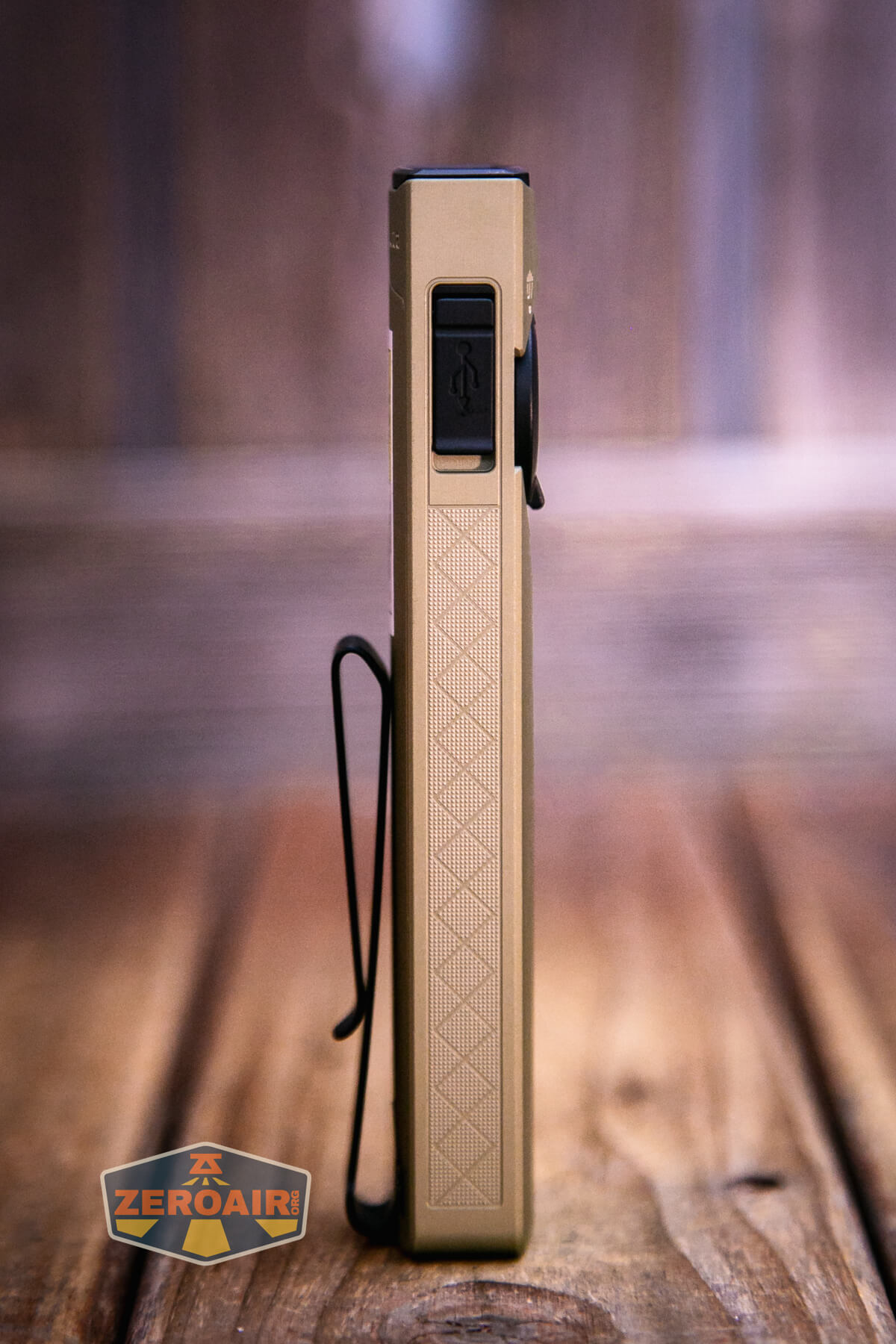
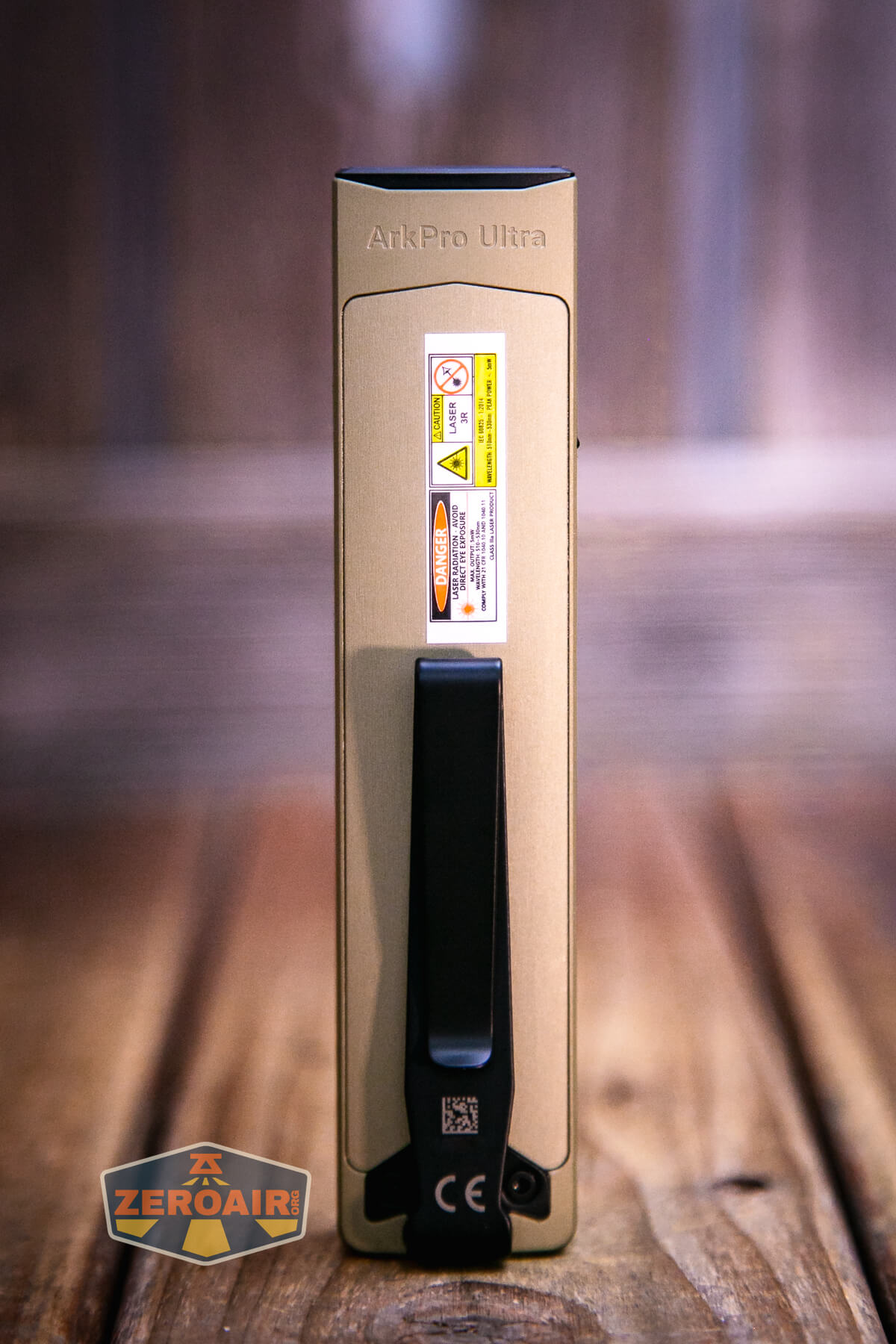

Of course, there’s no cylindrical cell in there to rattle around or be removed, or whatever. The cell is 100% built-in. That’s good and bad, of course. Building the cell in means Olight can get reliable performance, but it also means you can’t change the cell when it wears out in a number of years.
Whatever the case about the battery, the build here is great. I love the anti-roll shape. Not only that, but the Olight ArkPro Ultra EDC flashlight fits into the pocket where I normally carry an 18650 light in a much more comfortable way.
I have already disassembled an Arkfeld, and I did not do so for the Olight ArkPro Ultra EDC flashlight version. You’re invited to check out the photos from that review, though. Here’s a link. (Note: I didn’t get too far with disassembly.)
Size and Comps
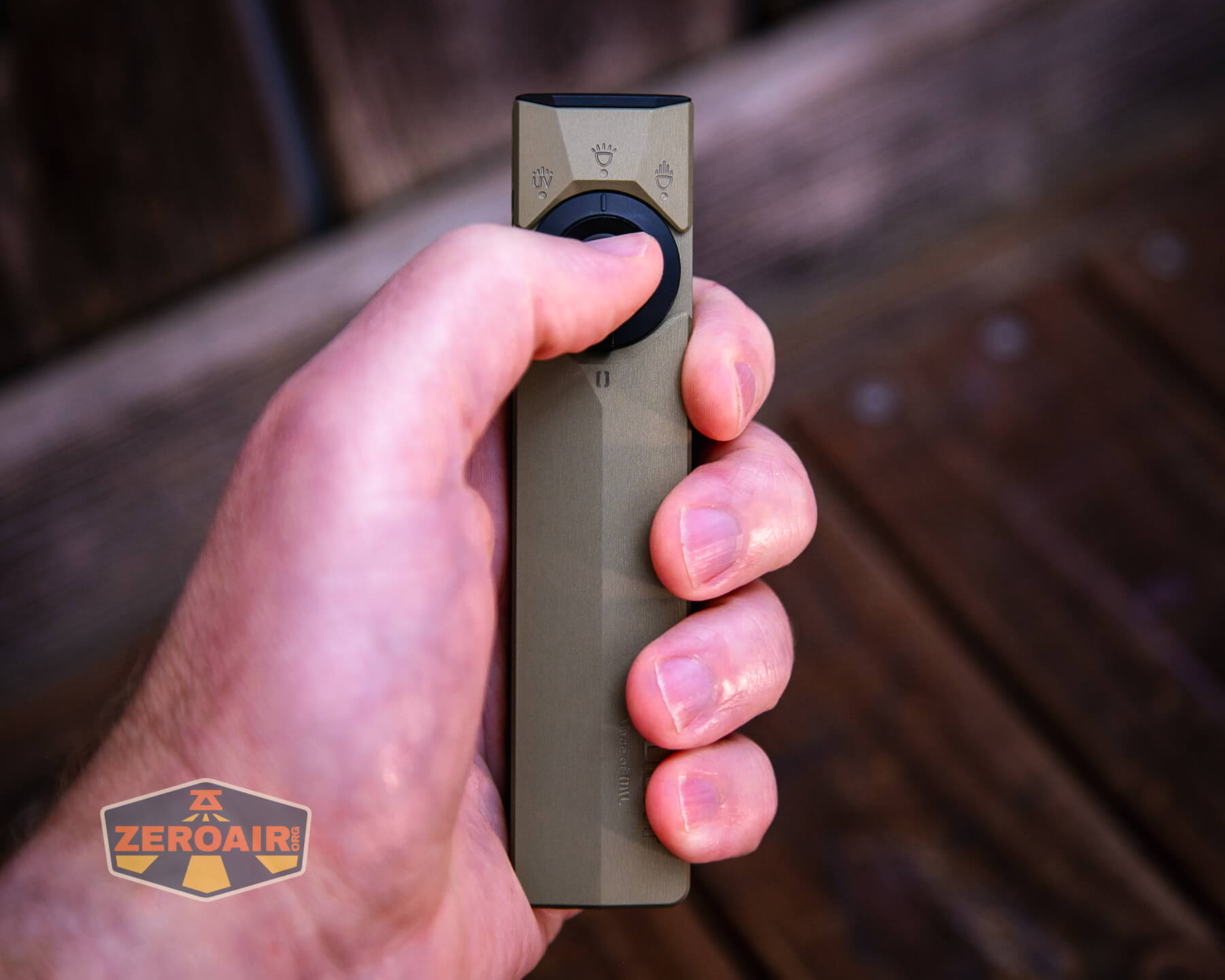
The Olight ArkPro Ultra EDC flashlight is 124mm x 27mm x 16mm and 115g. ArkPro and ArkPro Ultra have the same dimensions.
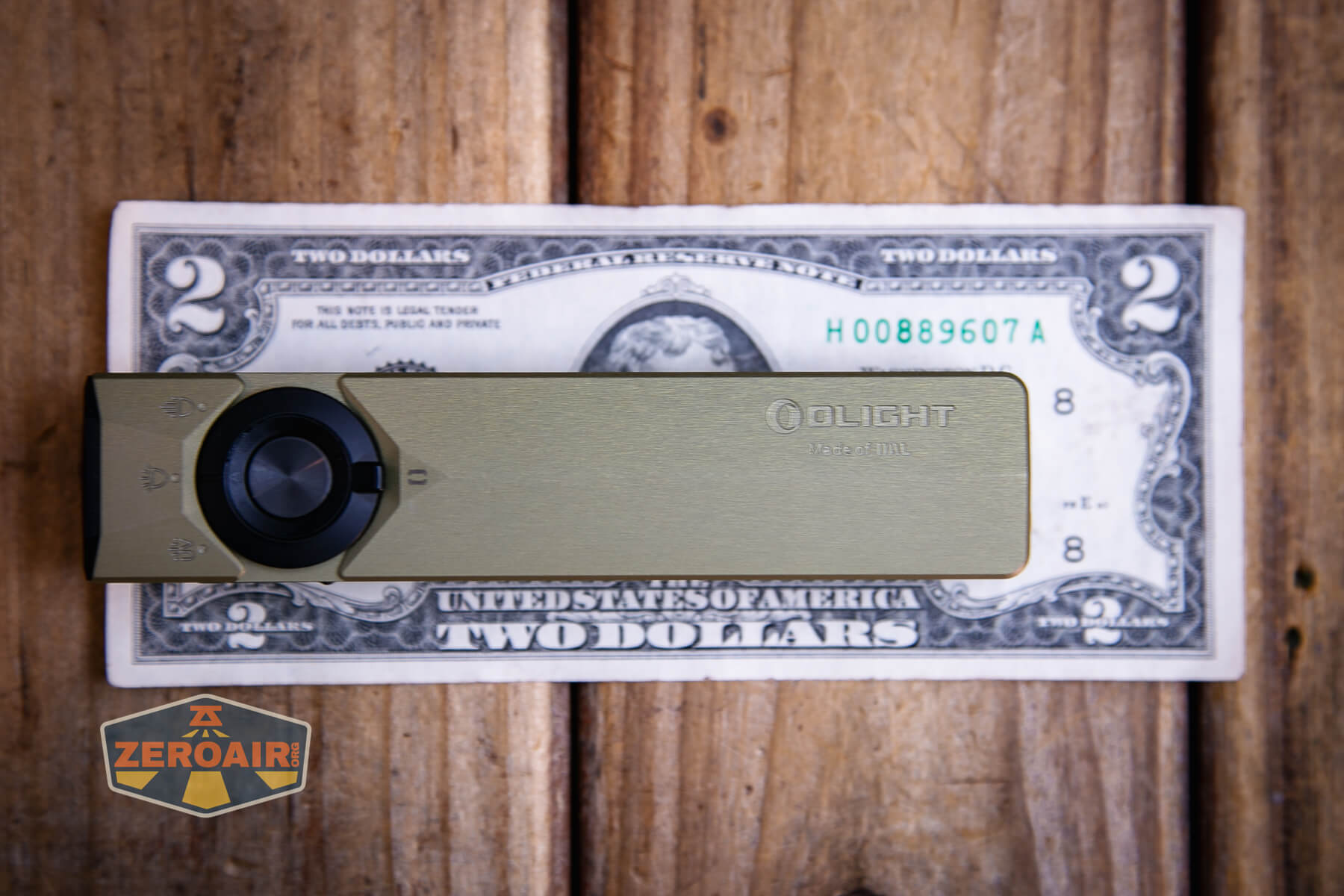
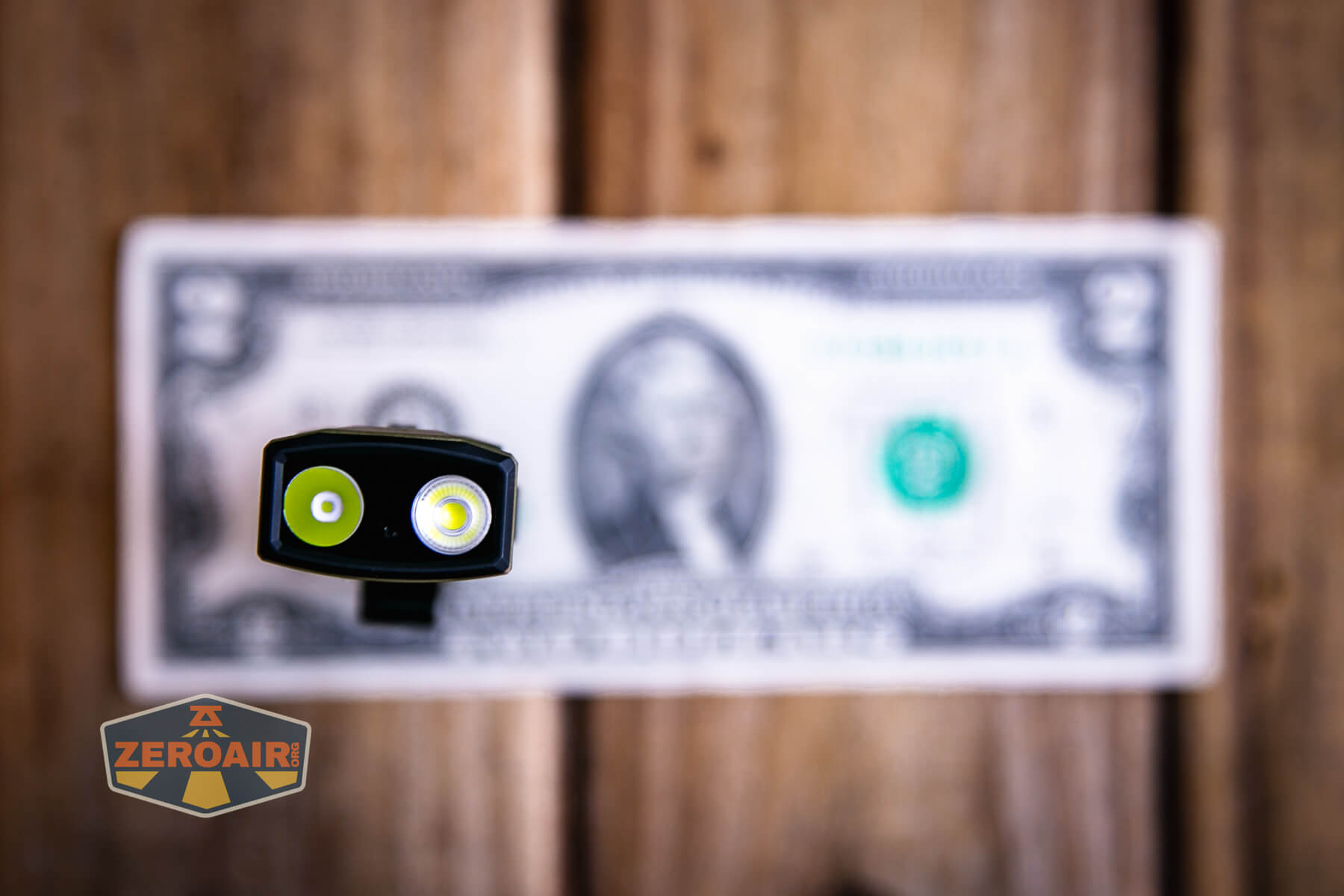
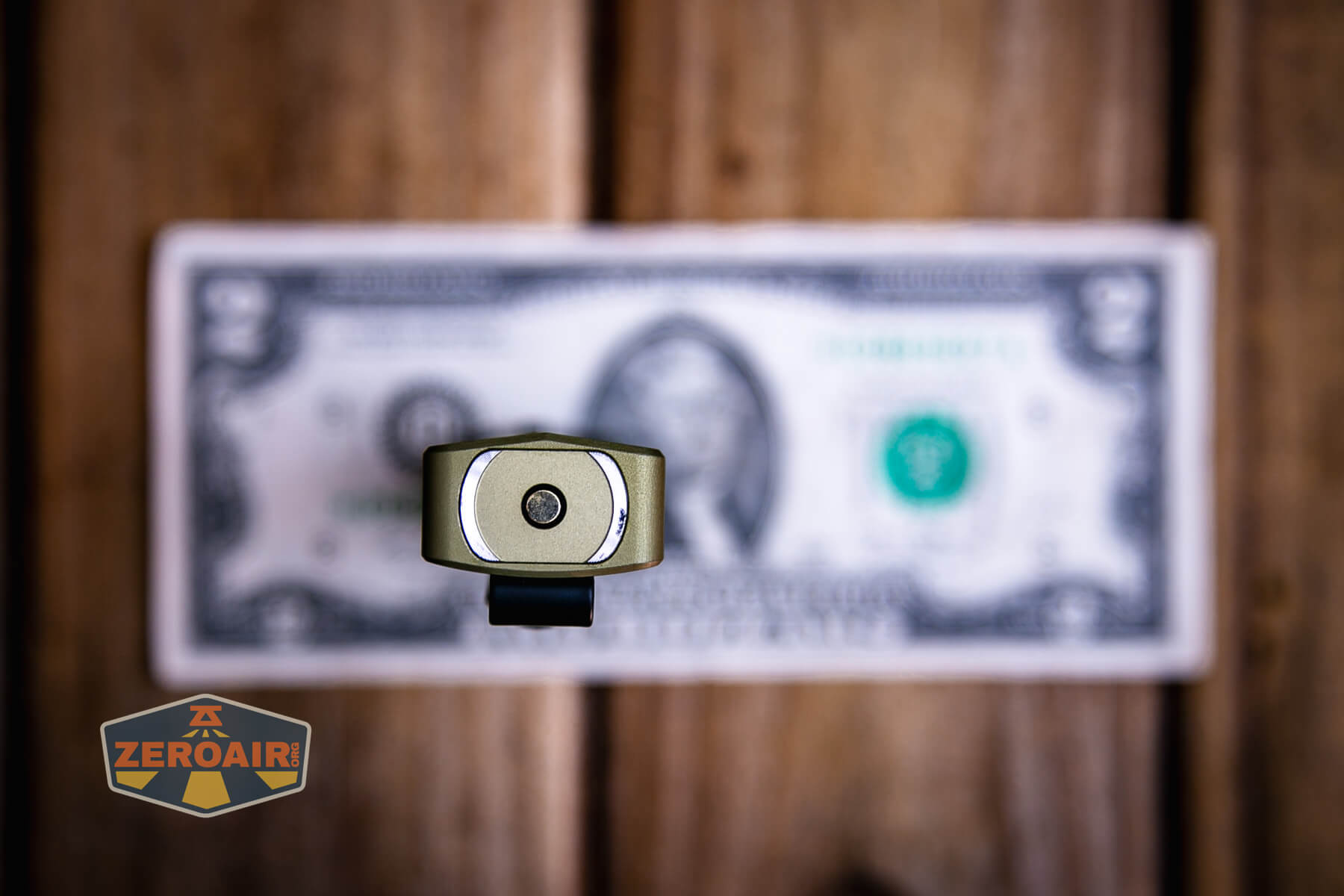
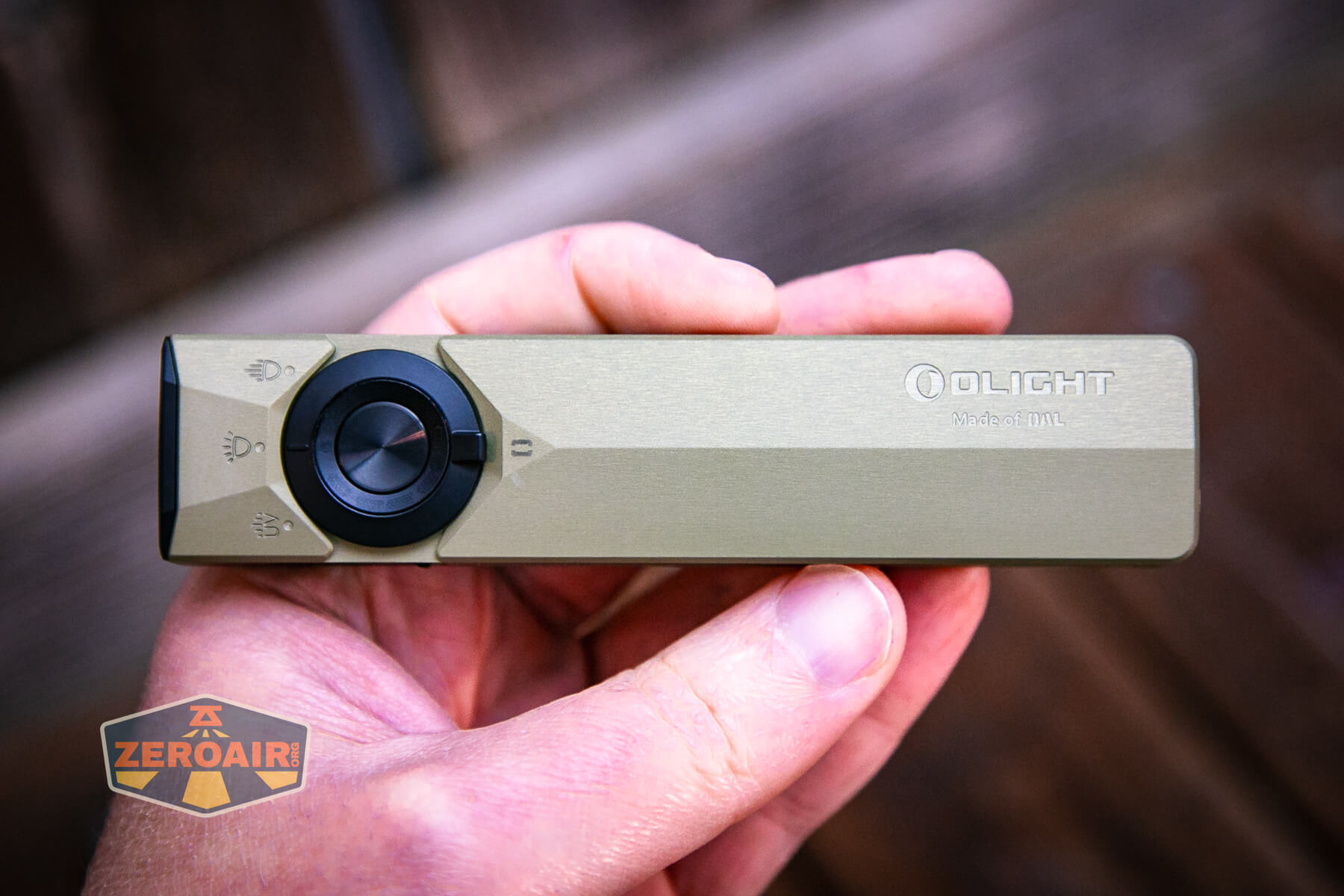
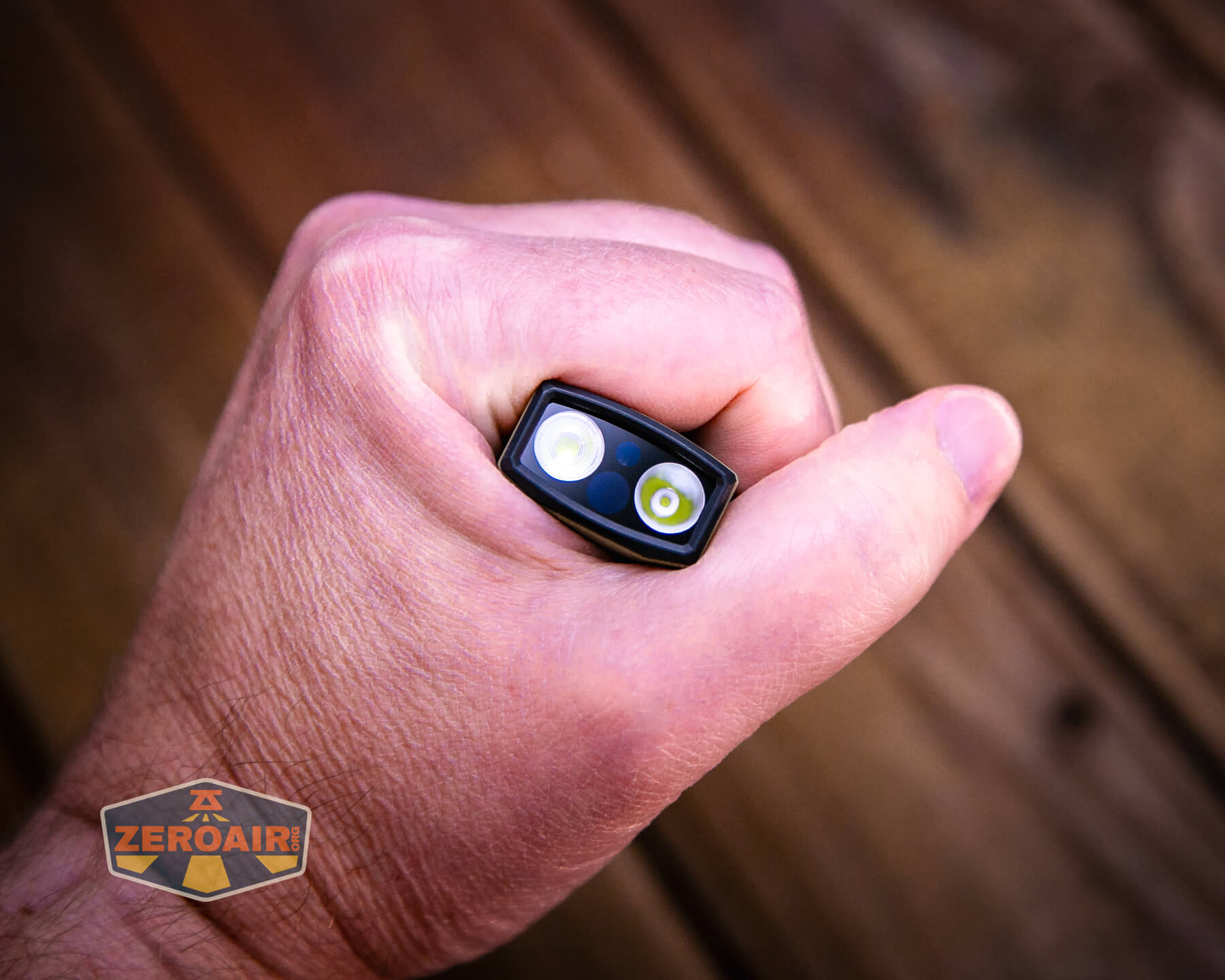
Here’s the light in hand:
Here’s the test light with the venerable Convoy S2+. The version below is a custom laser-engraved Convoy S2+ host by GadgetConnections.com. I did a full post on an engraved orange host right here! Or go straight to GadgetConnections.com to buy your Convoy S2+ now!
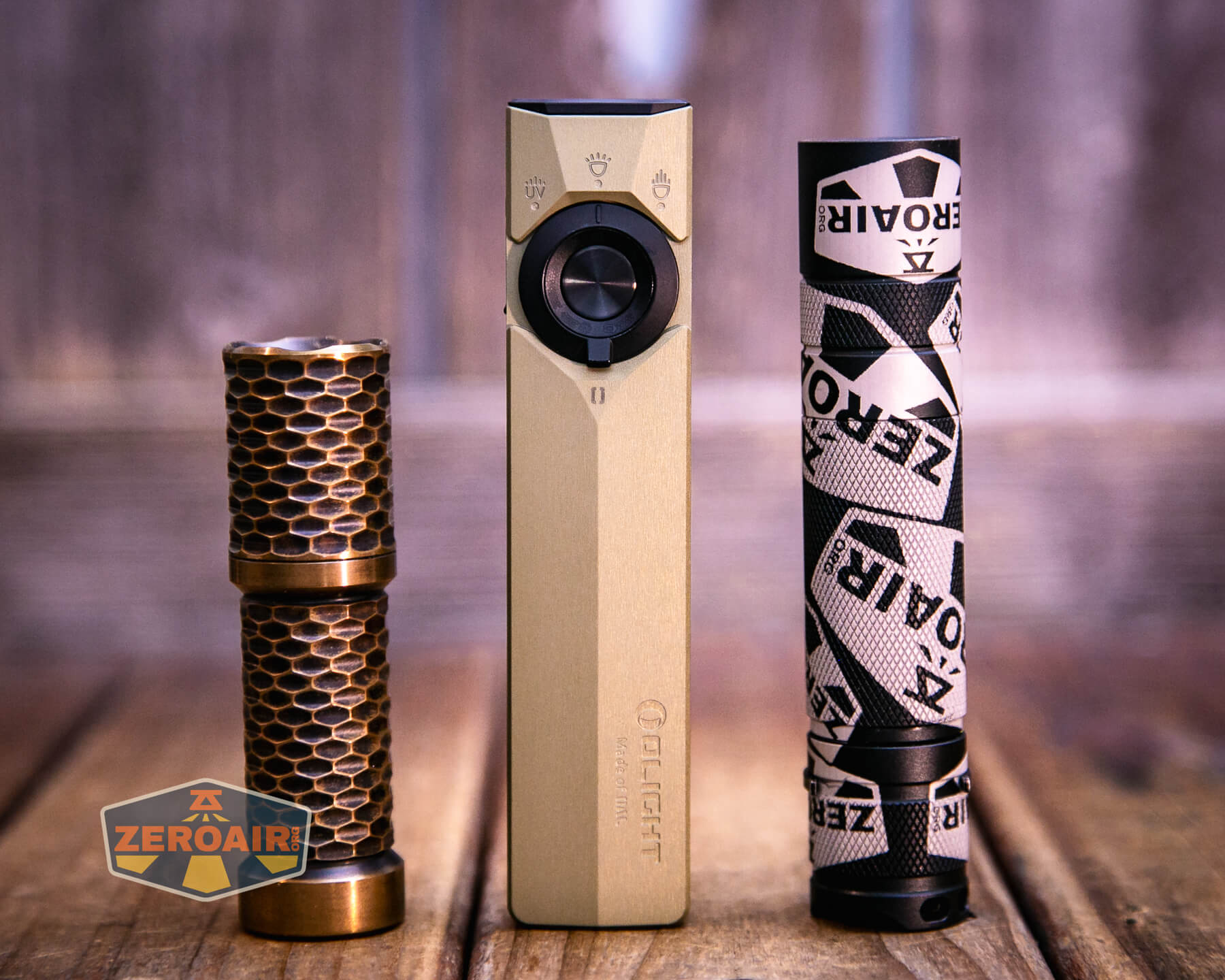
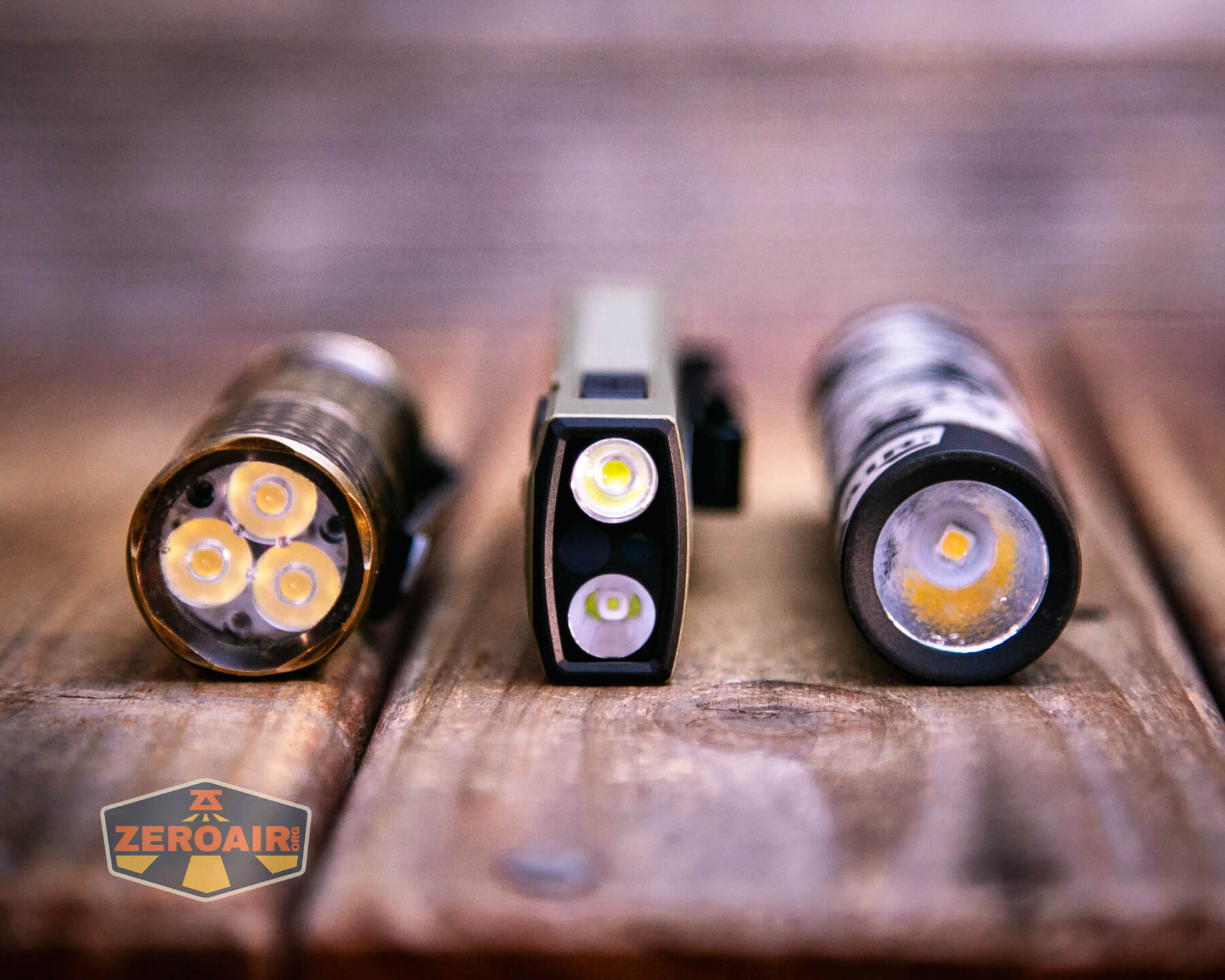
Also in the photo above, my Standard Reference Material (SRM) flashlight is the Hanko Machine Works Trident, an 18350 light. While I have not reviewed or tested the Gunner Grip version seen here, I have tested a Hanko Machine Works Trident Total Tesseract in brass. I love the Trident, and it’s a striking contrast to the inexpensive Convoy S2+, another great SRM.
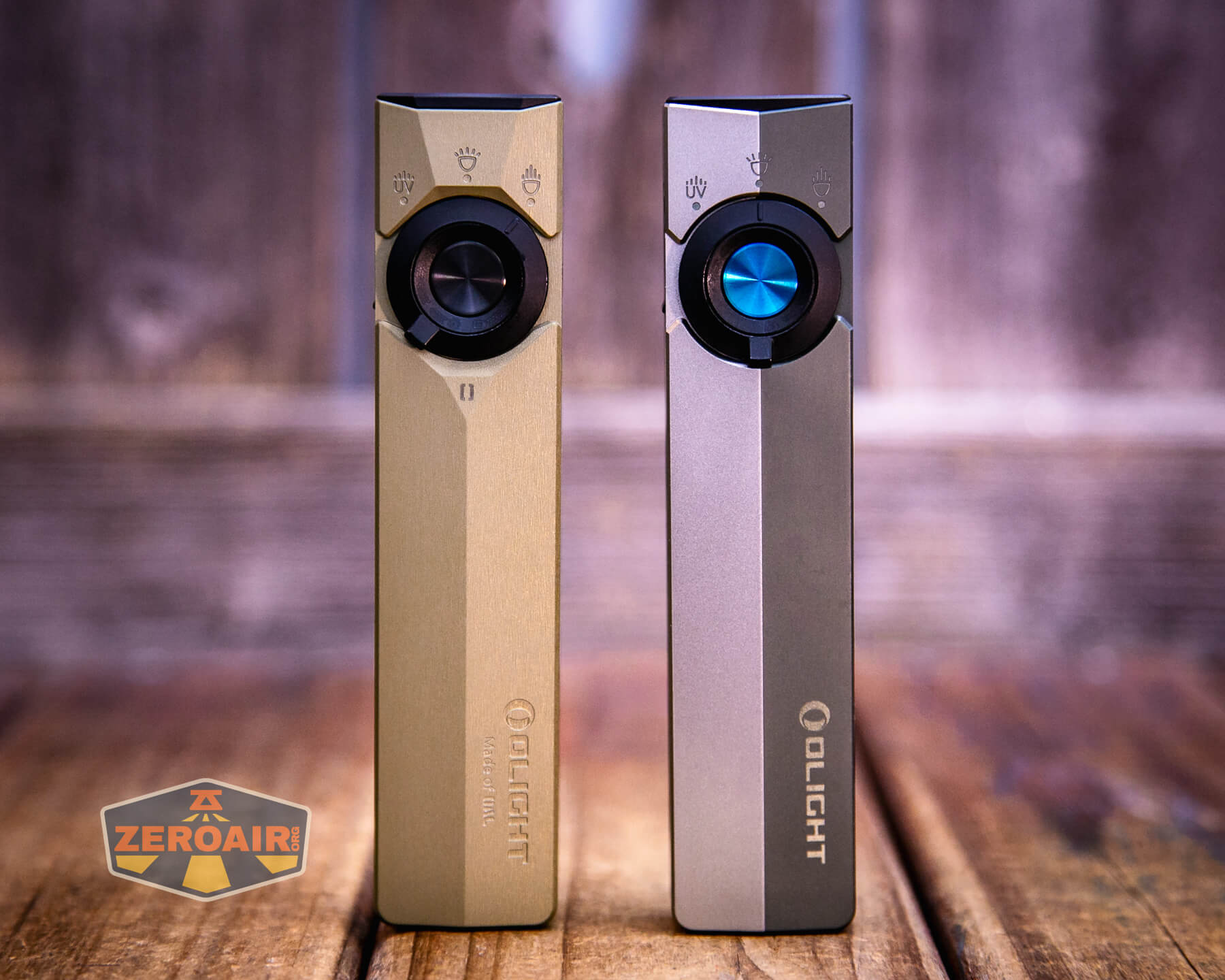
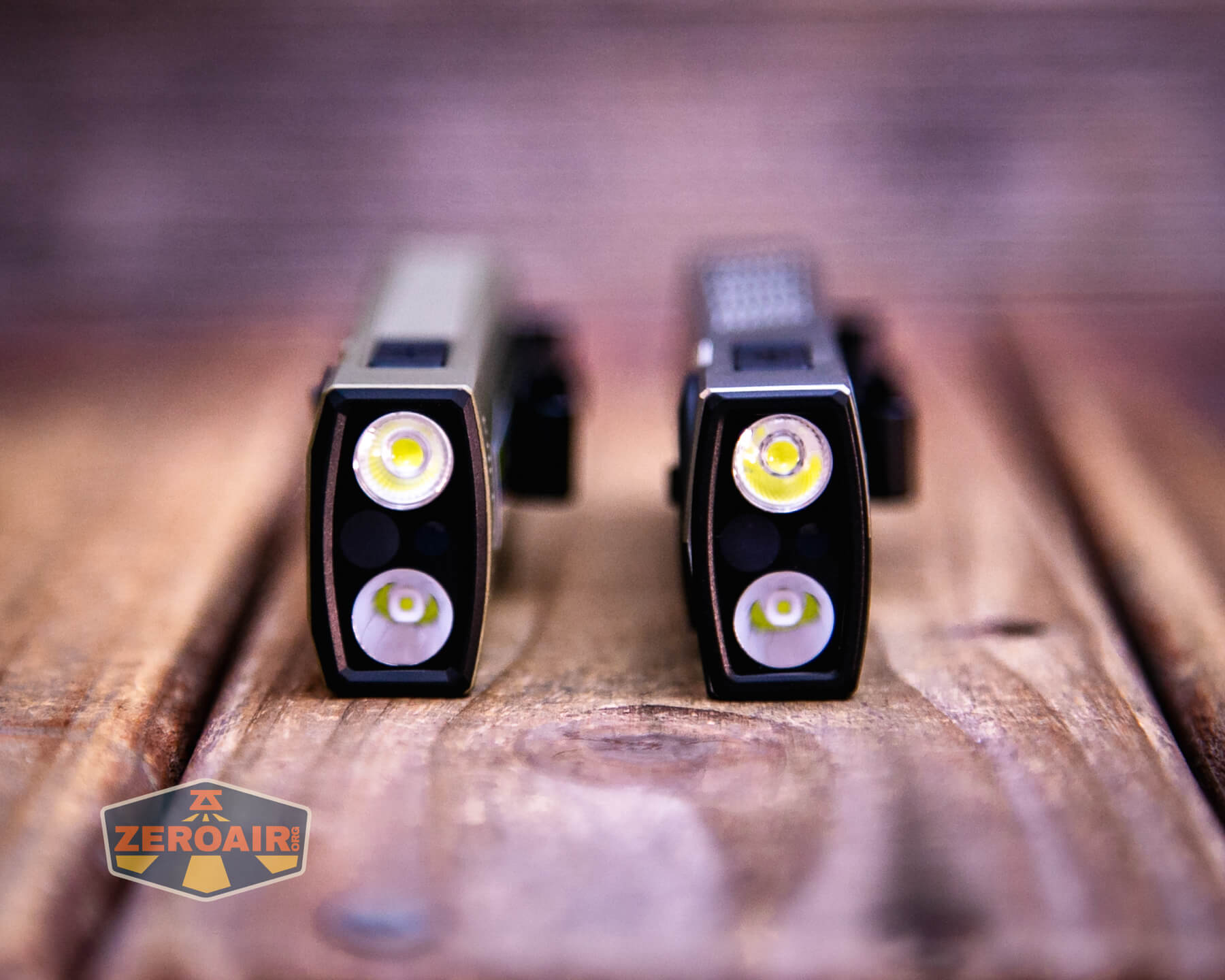
Below you can see the Olight ArkPro Ultra EDC flashlight beside an ArkPro. They’re very similar!
Retention and Carry
The Olight ArkPro Ultra EDC flashlight has a two-way pocket clip, which is so much better than some earlier edition Arkfeld-type lights. This clip allows great deep carry and has a two-way option. I don’t care at all about the two-way, but I love the deeper carry.
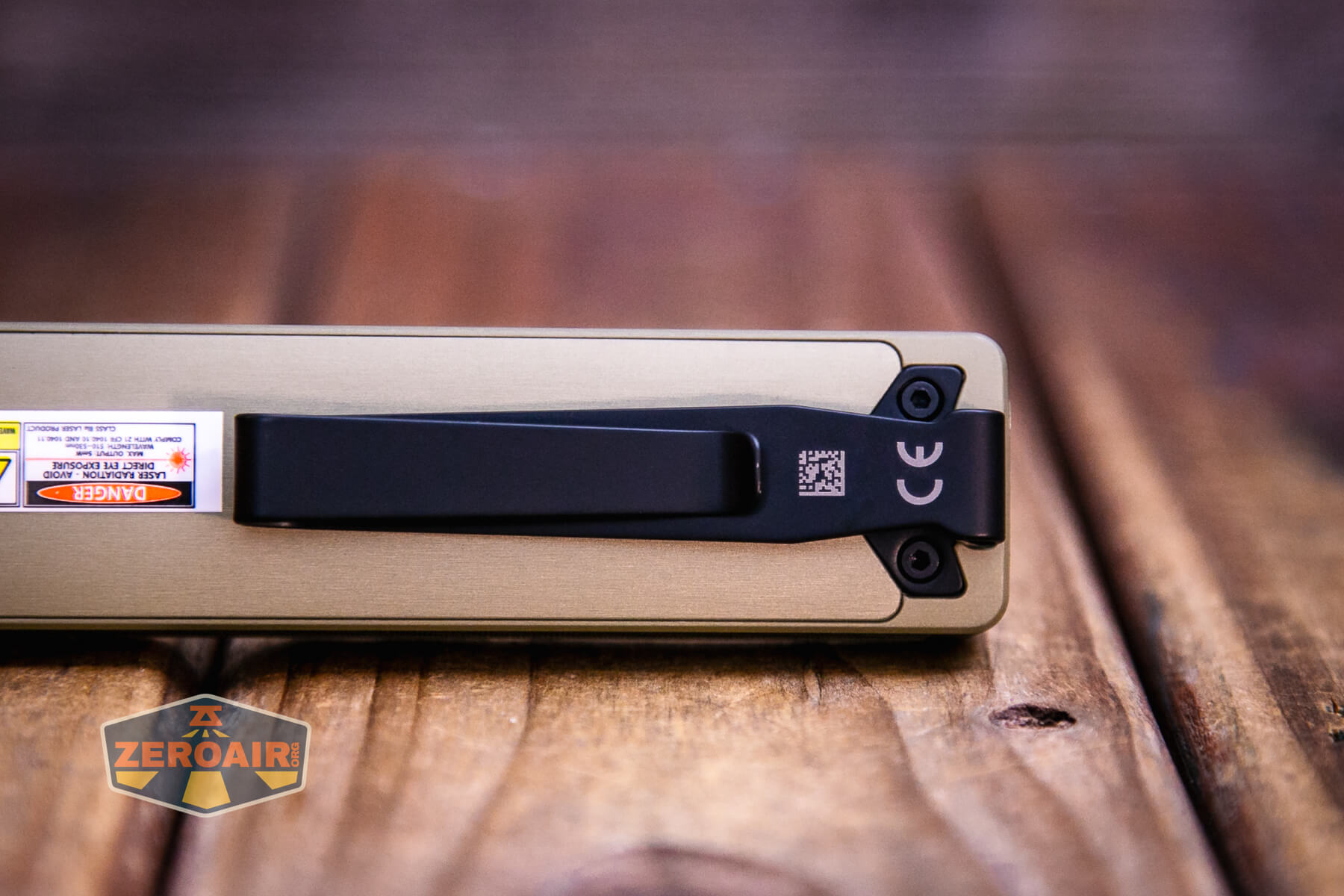
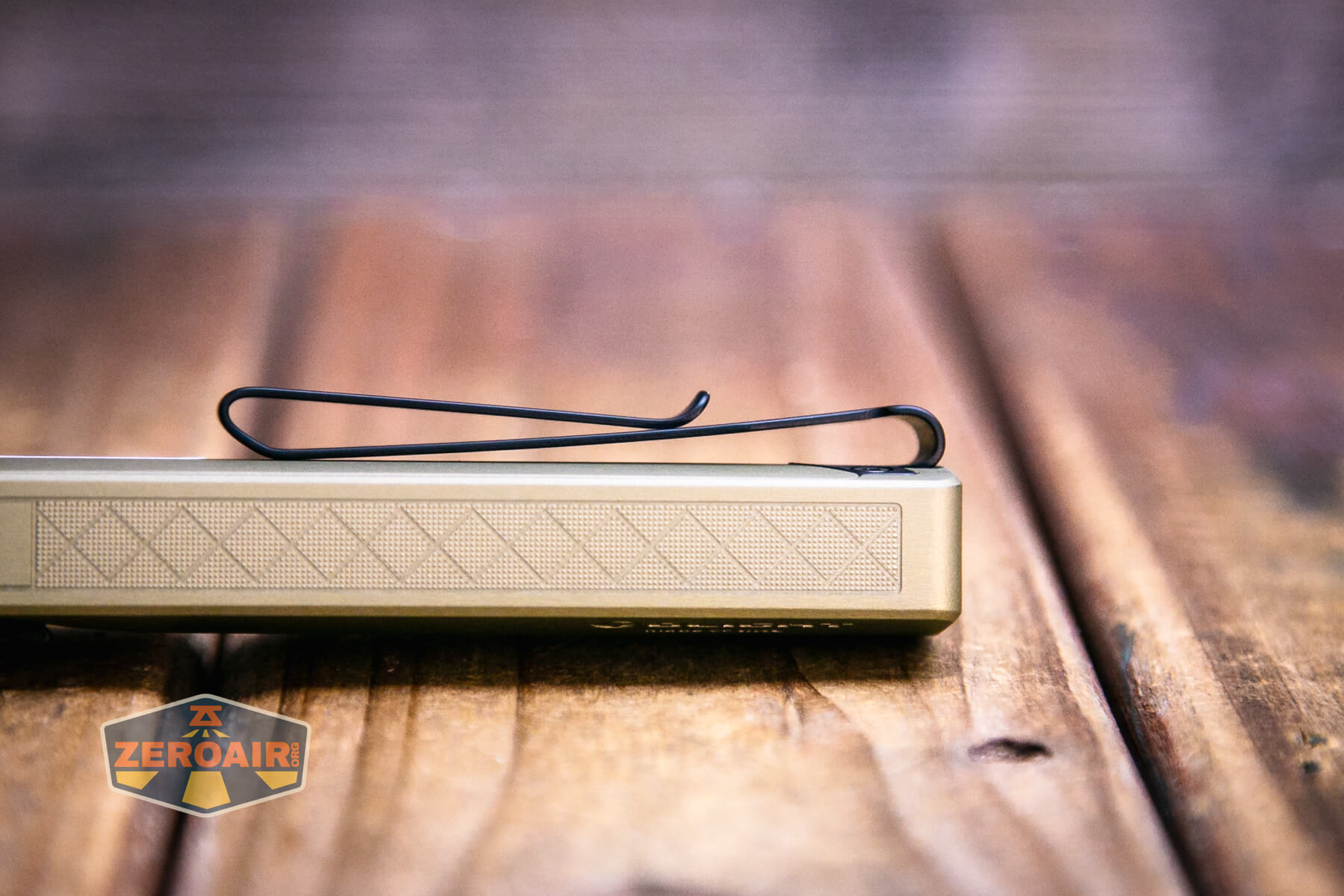
Interestingly, the Olight ArkPro Ultra EDC flashlight does not have a lanyard hole in the pocket clip like some previous Arkfelds.
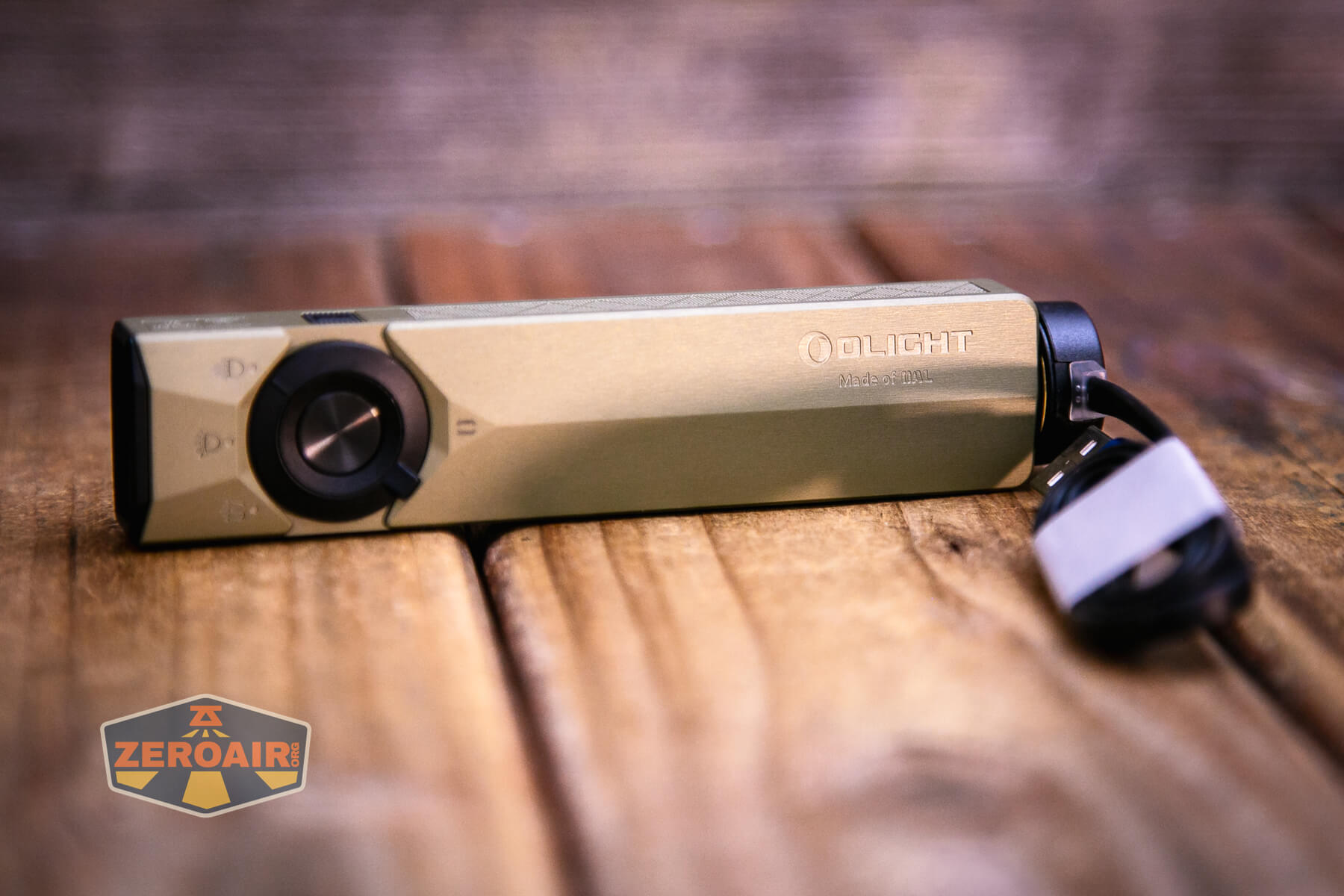
There’s a magnet in the tail because that’s the way the charger connects. It’s also strong enough to hold the ArkPro Ultra.
Power and Runtime
Olight states this as a 2000mAh battery, and that’s perfectly logical (and confirmed by a user on Reddit). I was unable to gain any access to the LiPO, but I did run a couple of output tests. There is a battery indicator surrounding the switch, and it does indicate when the voltage is low. The light finally shuts off, too.
One of the main points about the ArkPro Ultra (over the ArkPro and certainly the ArkPro Lite) is higher output. I do observe higher output here, but it’s not that much higher. There are other neat things about the Olight ArkPro Ultra EDC flashlight that you may care about more than you care about the output, though.
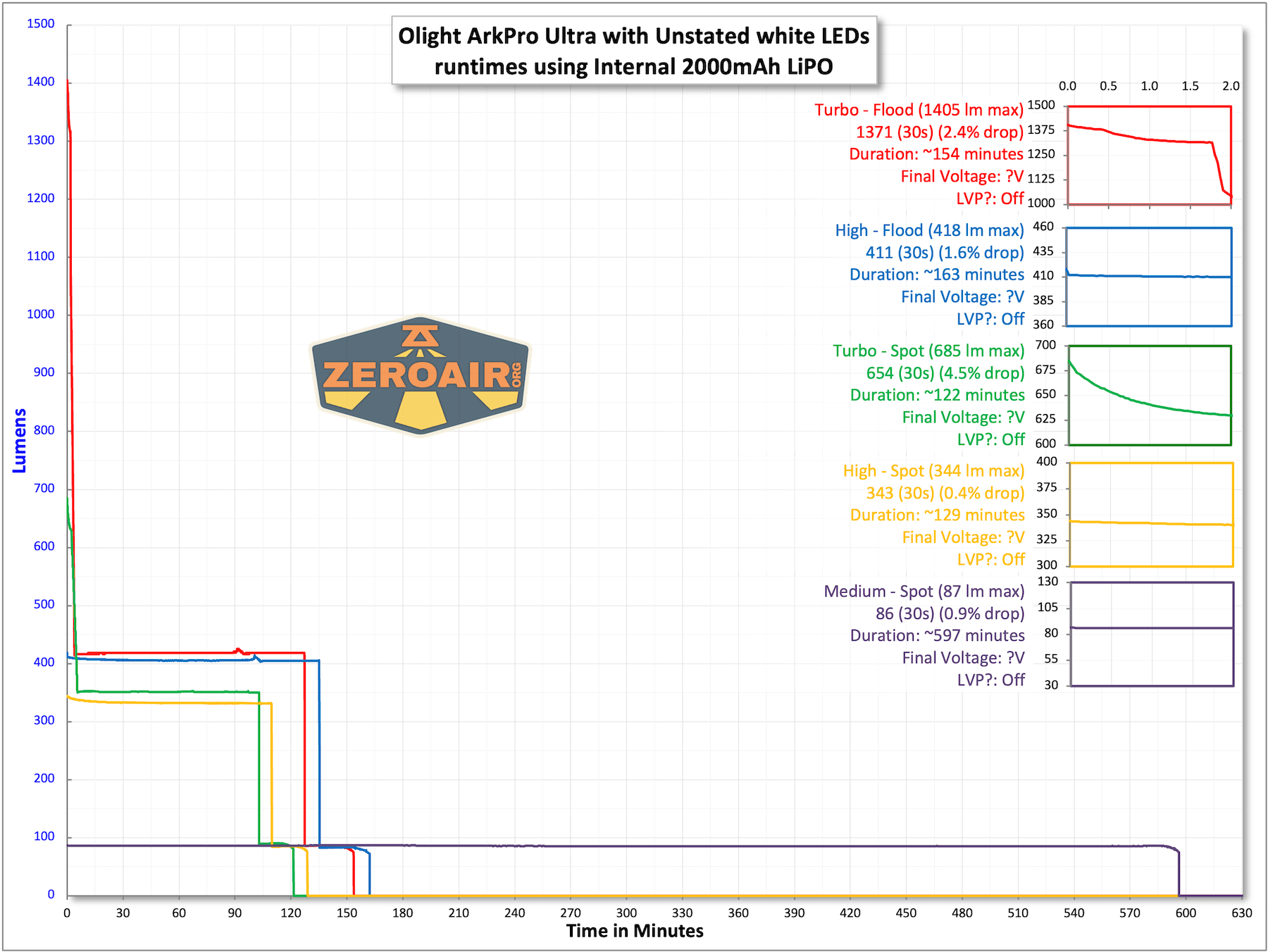
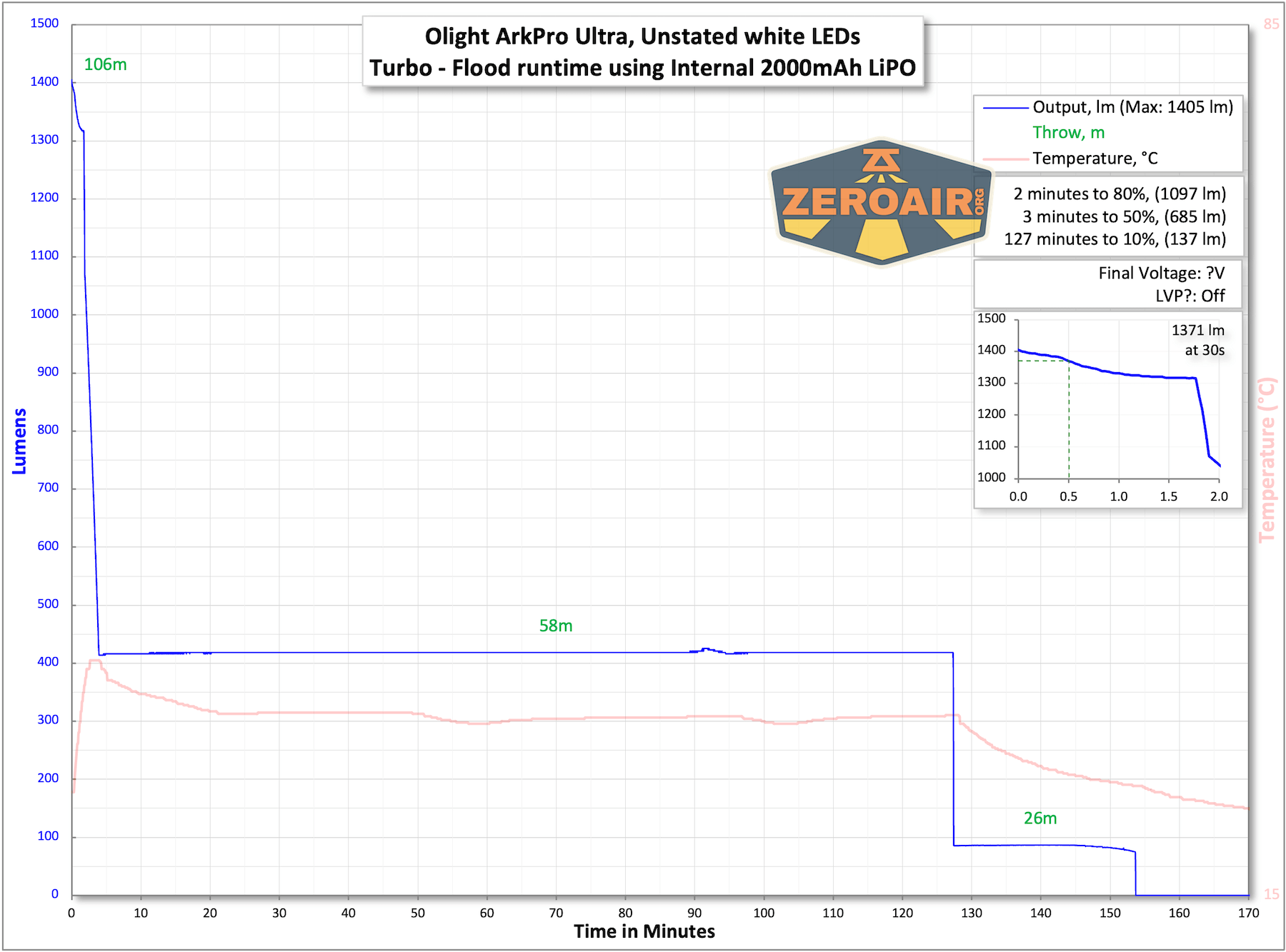
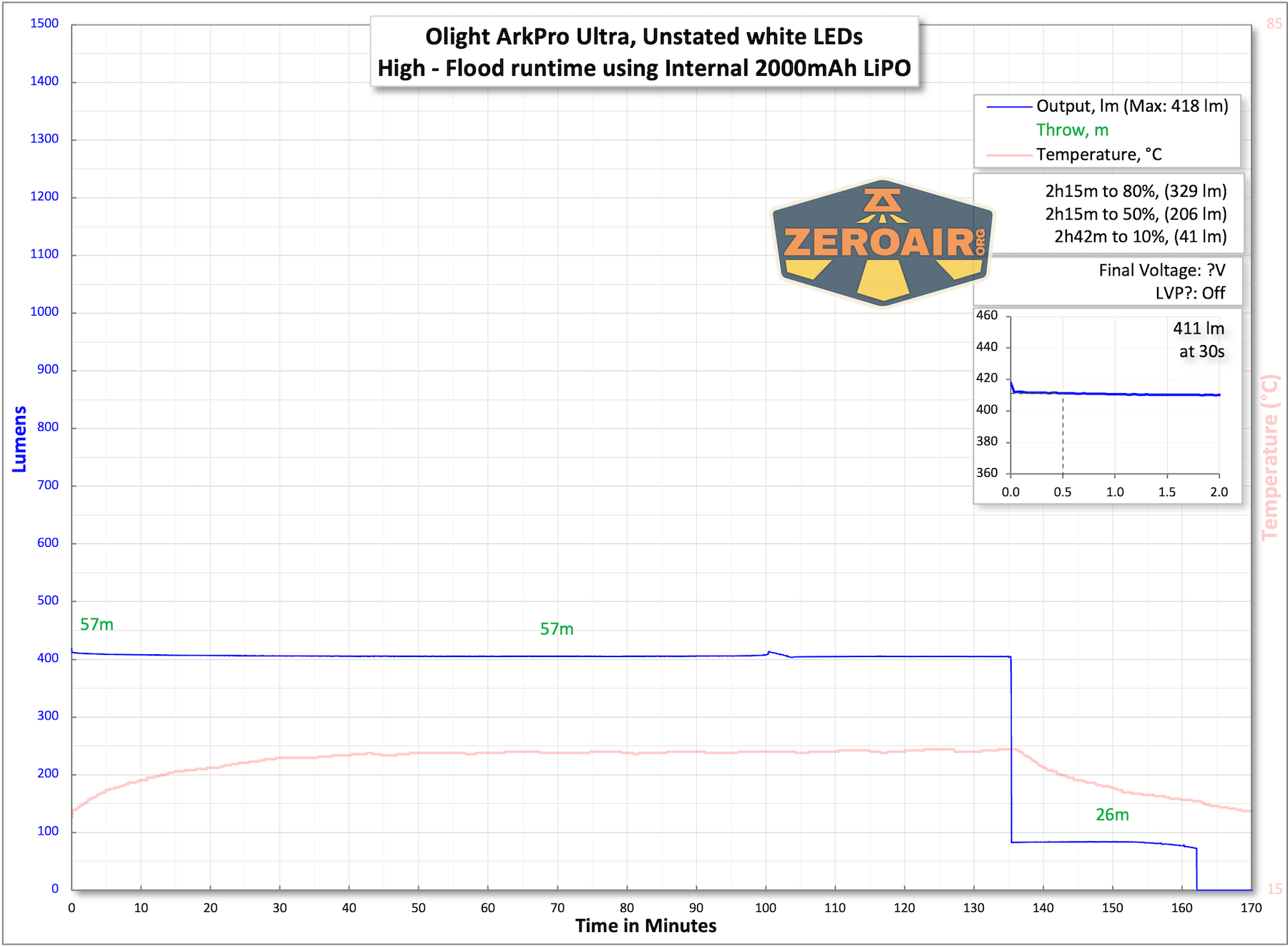
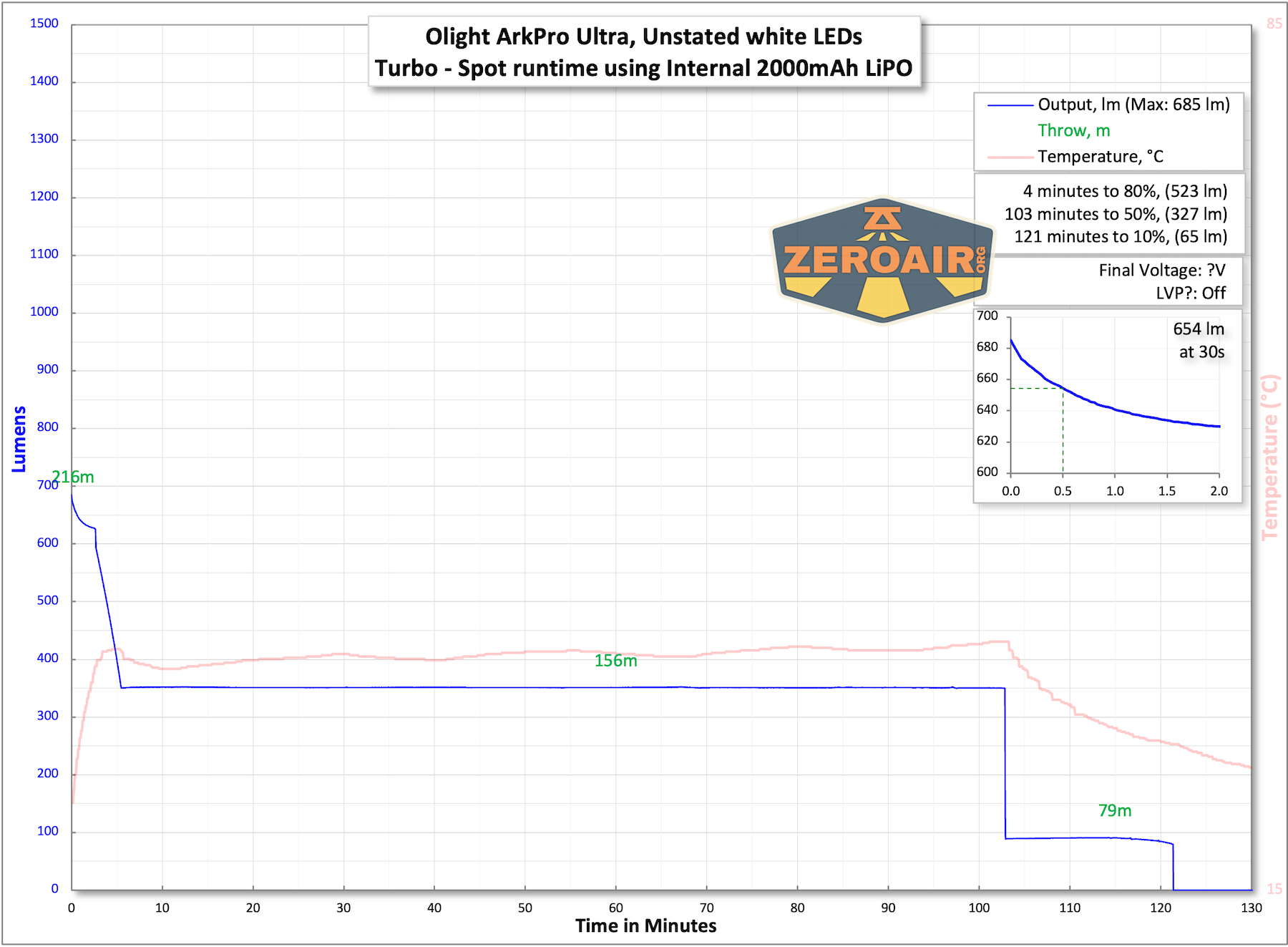
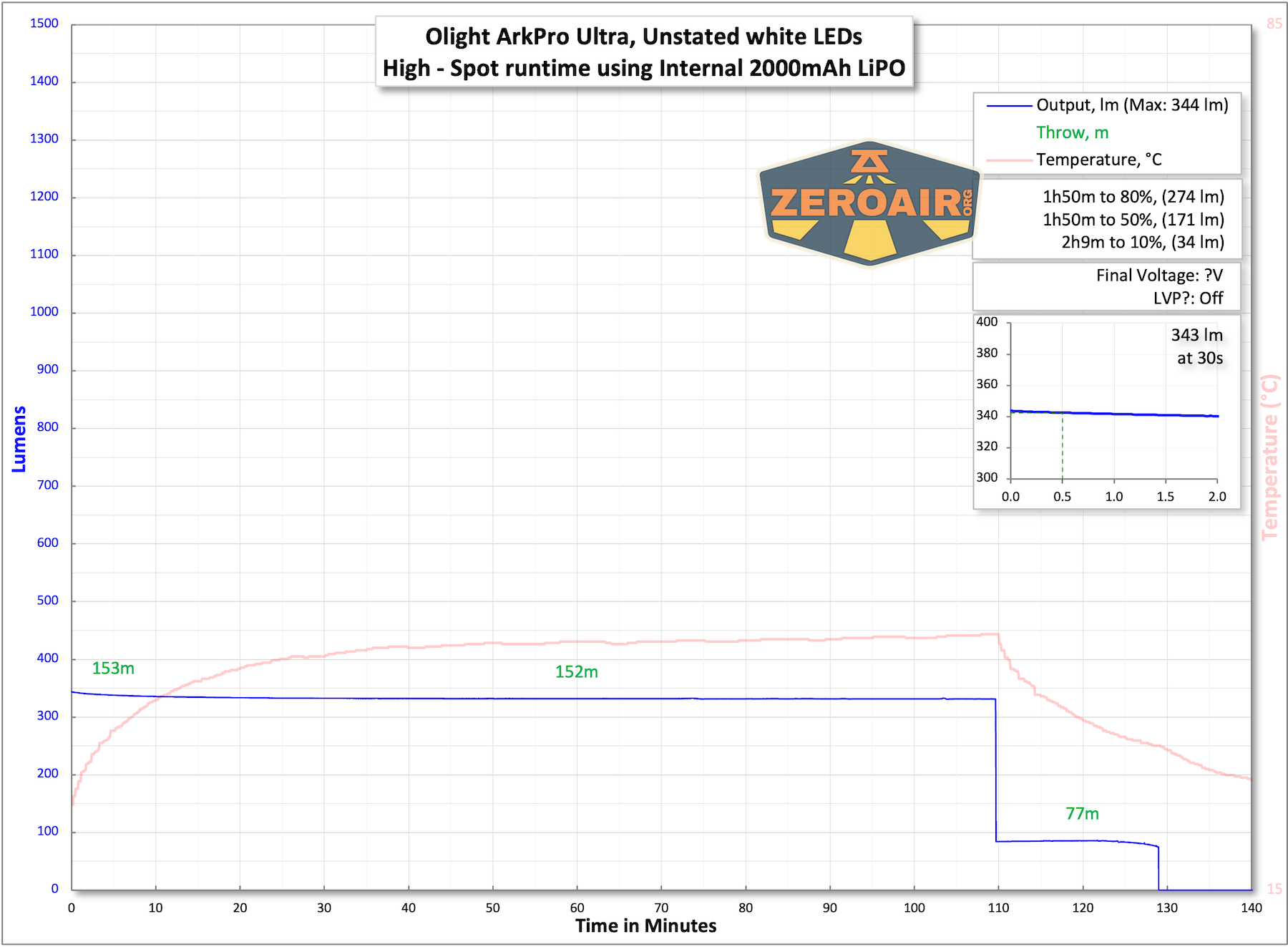
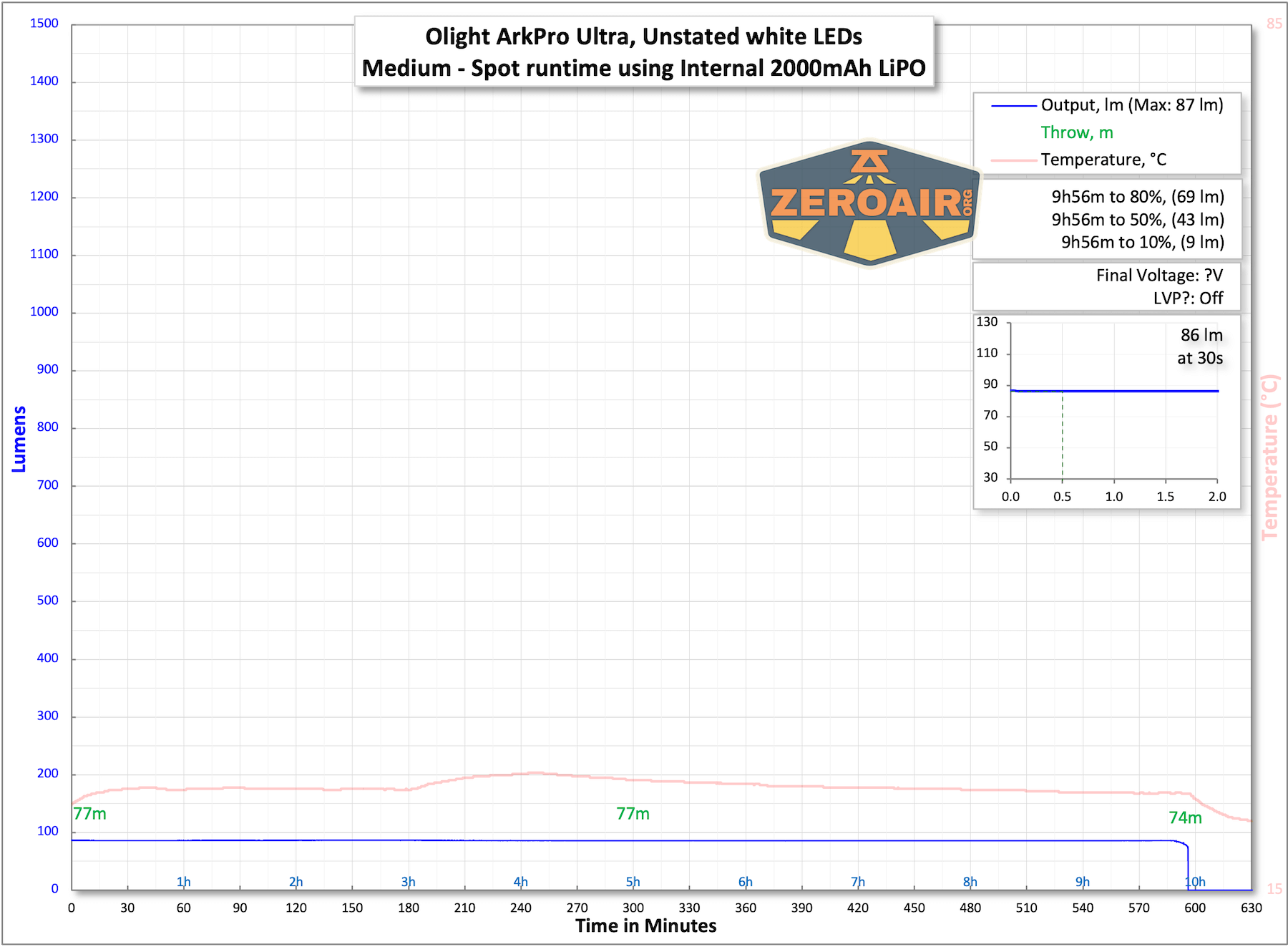
The temperature lines in these charts are included as general context, not precise measurements. The values represent the range (min to max) during testing, but should not be taken as exact readings. A temperature sensor is not always attached to the bezel (or even the hottest spot, assuming that could be defined). Even with ideal placement, too many variables affect temperature to definitively state a specific max value.
Charging
The Olight ArkPro Ultra EDC flashlight offers USB-C charging! The charge port is covered by the same type of cover we have seen recently on some of the Oclip lights (for example, the Oclip Pro).
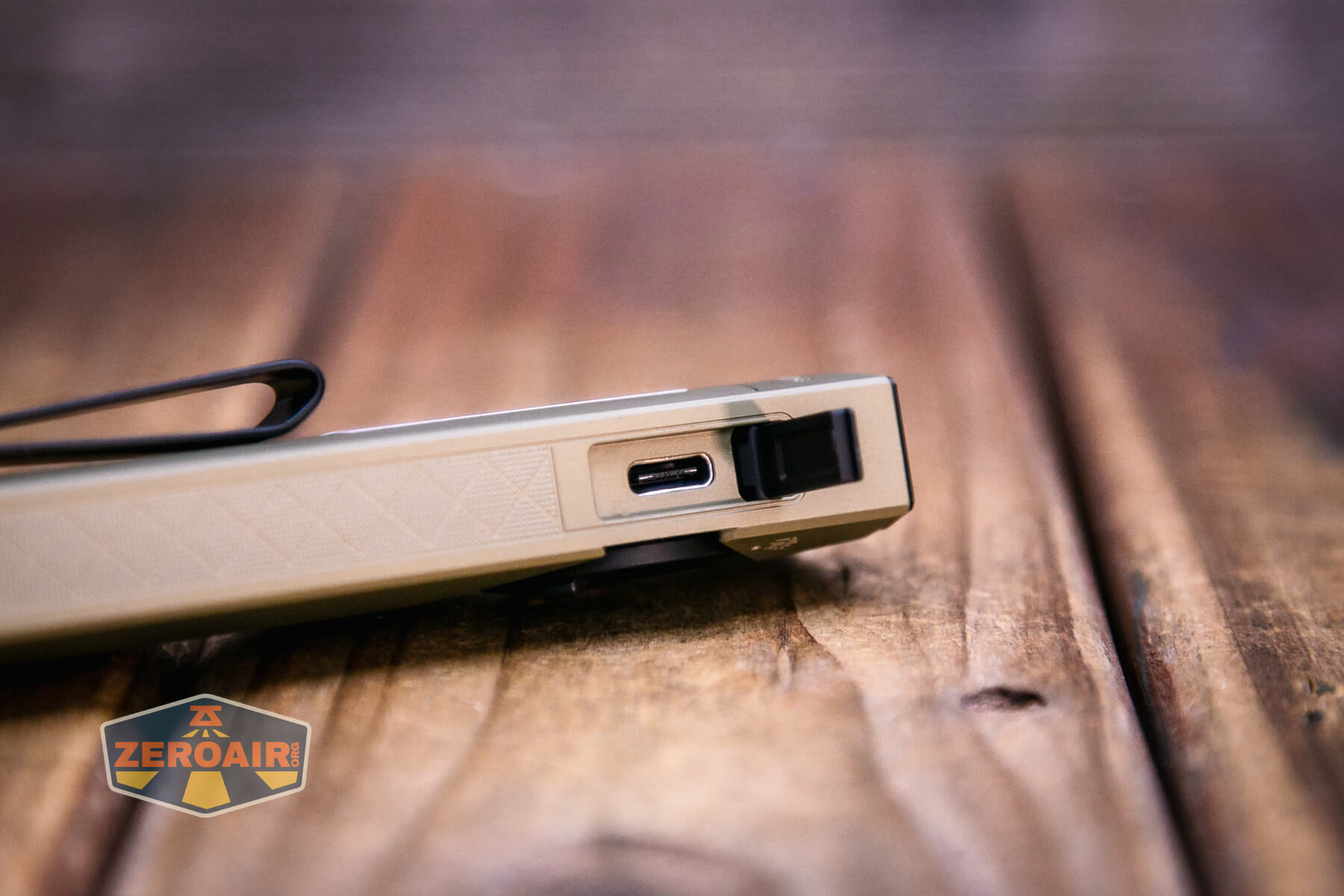
The cover feels metal, and I would guess that the charge port is waterproof, as the hinged door doesn’t have any gaskets.
A second option is available for charging, too! Olight includes this proprietary MCC charger.
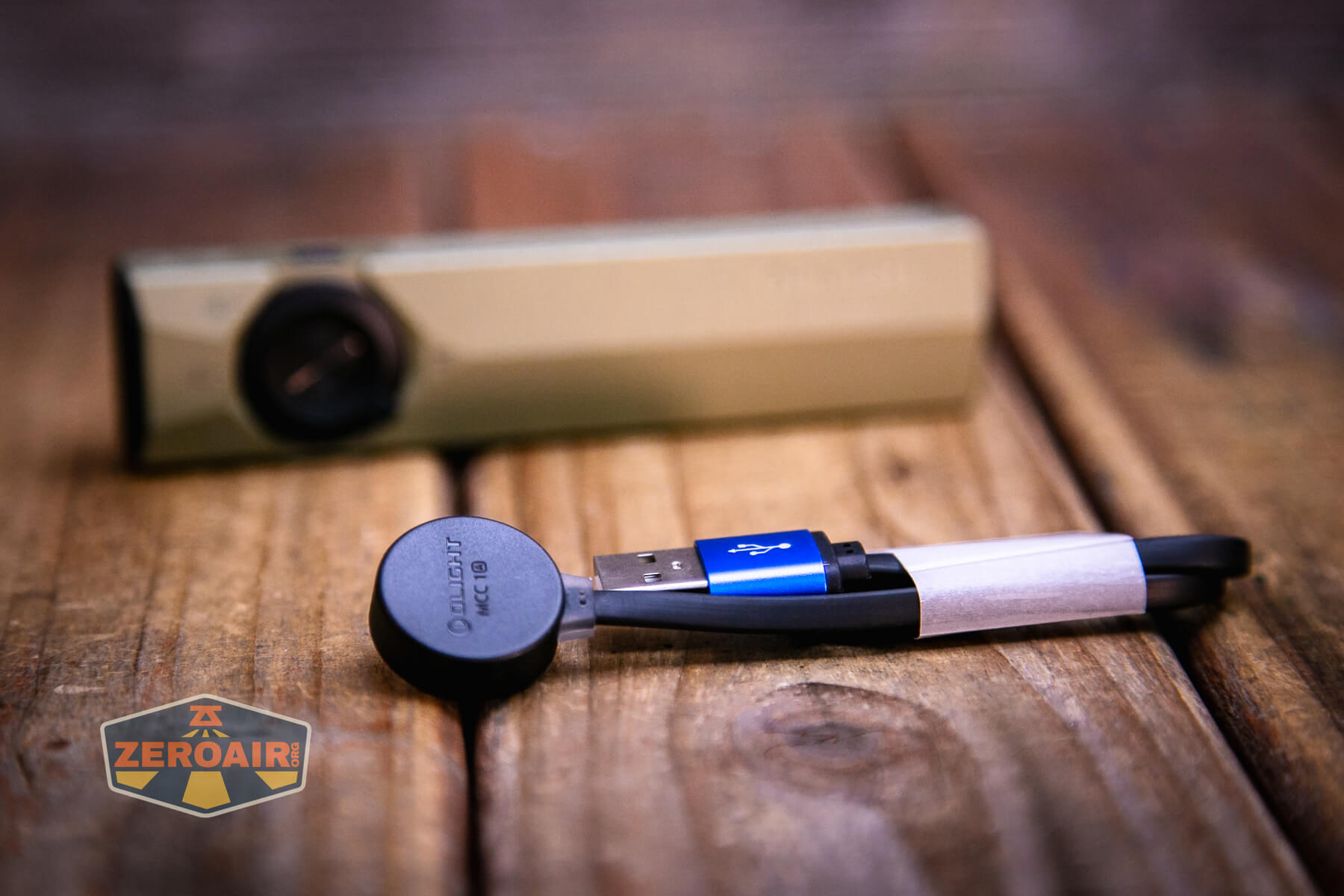
That works just fine too, but with USB-C as an option now, I don’t anticipate using this charging base!
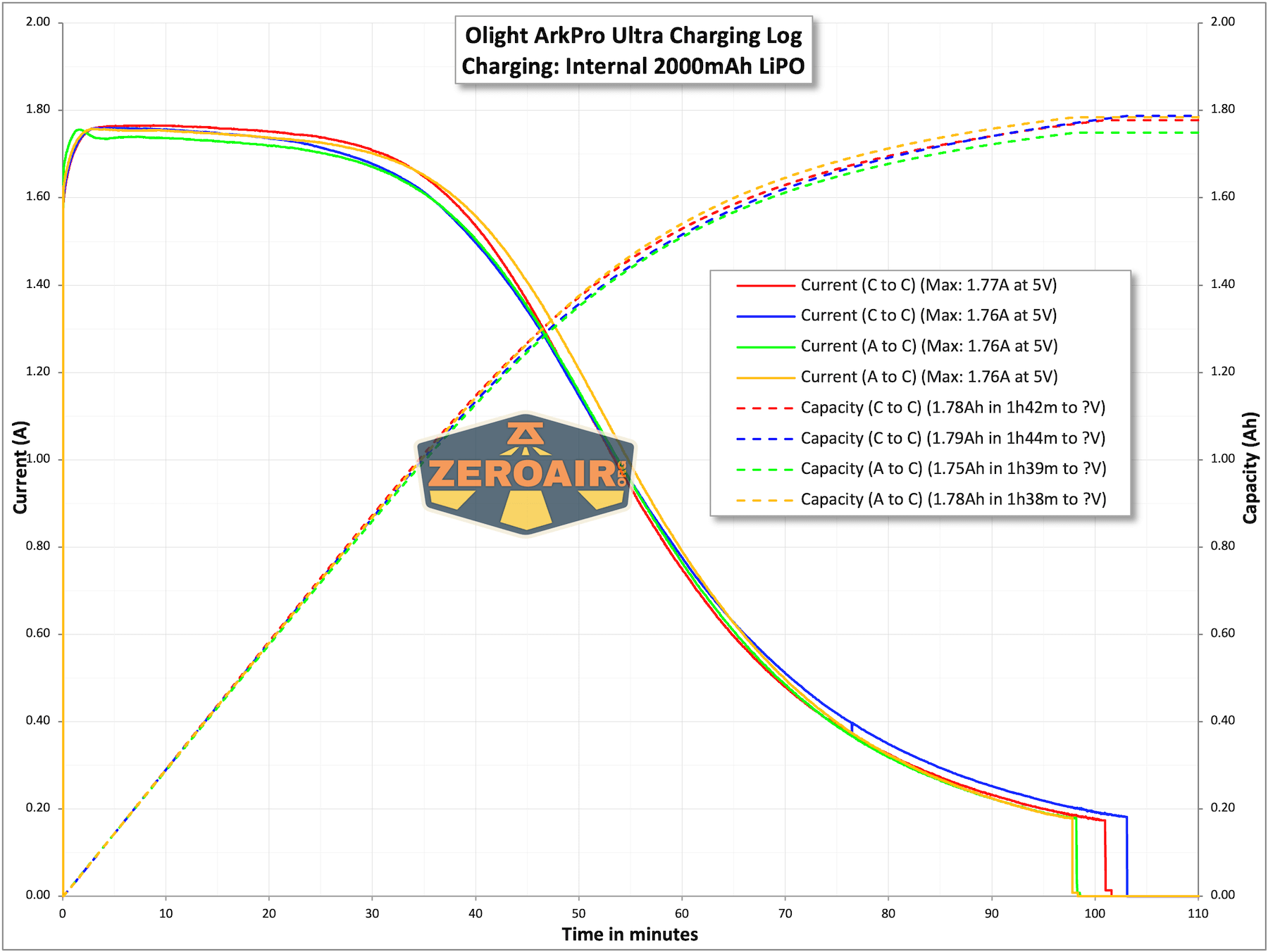
I only tested charging with USB-C. USB-C charging works great with A to C and C to C both. Charging completes in about 1.5 hours. ArkPro and ArkPro Ultra seem to have about the same charging.
Modes
| Mode | Mode Claimed Output (lm) | Claimed Runtime | Measured Lumens |
|---|---|---|---|
| Turbo – Flood | 1700-520 | 3m+140m | 1405 (0s) 1371 (30s) |
| High – Flood | 520-100 | 155m+10m | 418 |
| Med – Flood | 100 | 13h | 86 |
| Low – Flood | 15 | 72h | 12.7 |
| Moonlight – Flood | 1 | 14d | 0.94 |
| Turbo – Spot | 800-400 | 4m+130m | 685 (0s) 654 (30s) |
| High – Spot | 400-100 | 125m+10m | 344 |
| Med – Spot | 100 | 10h | 87 |
| Low – Spot | 15 | 66h | 12.6 |
| Moonlight – Spot | 1 | 14d | 1.2 |
Pulse Width Modulation
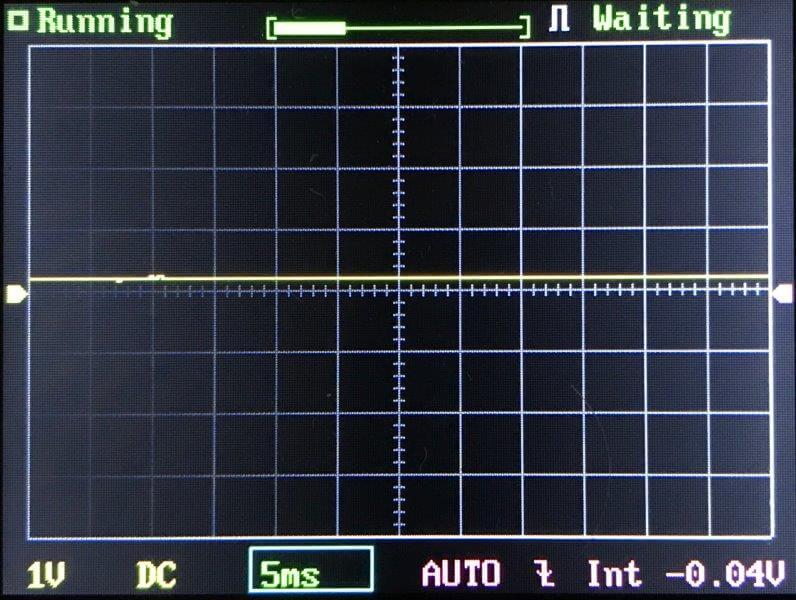
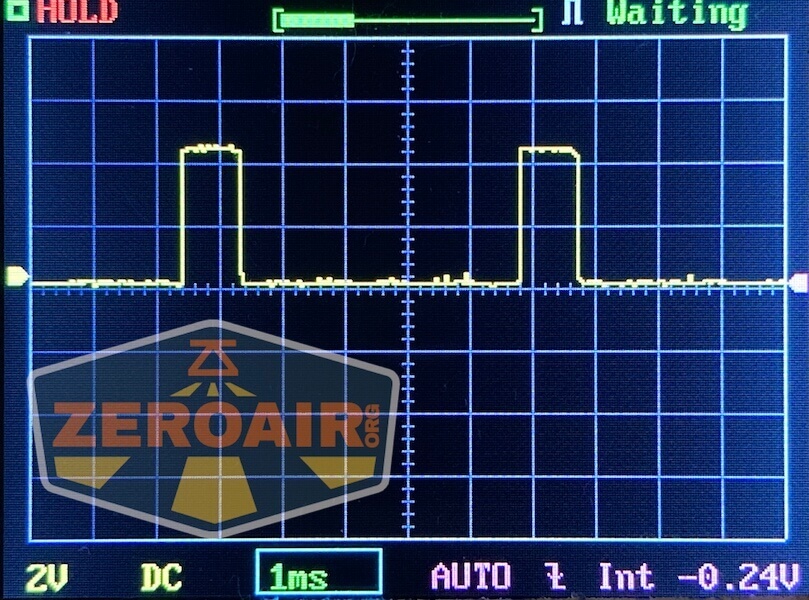
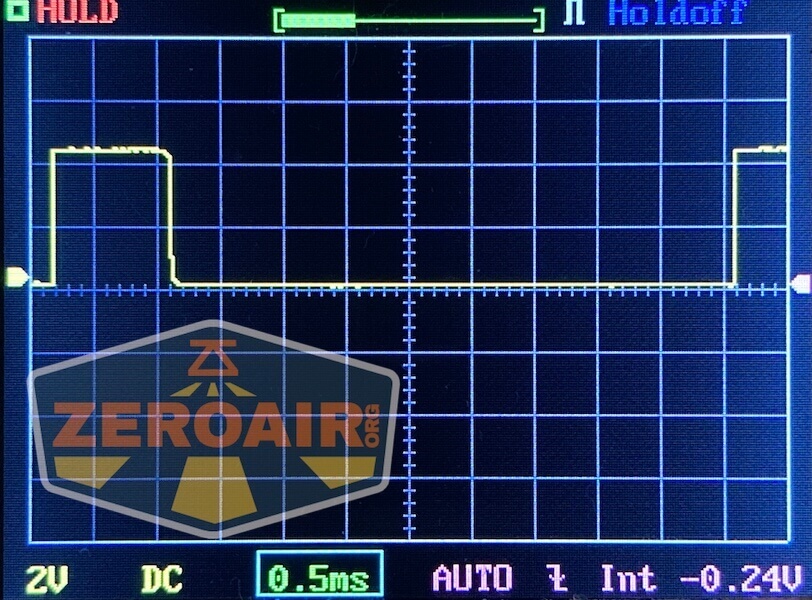
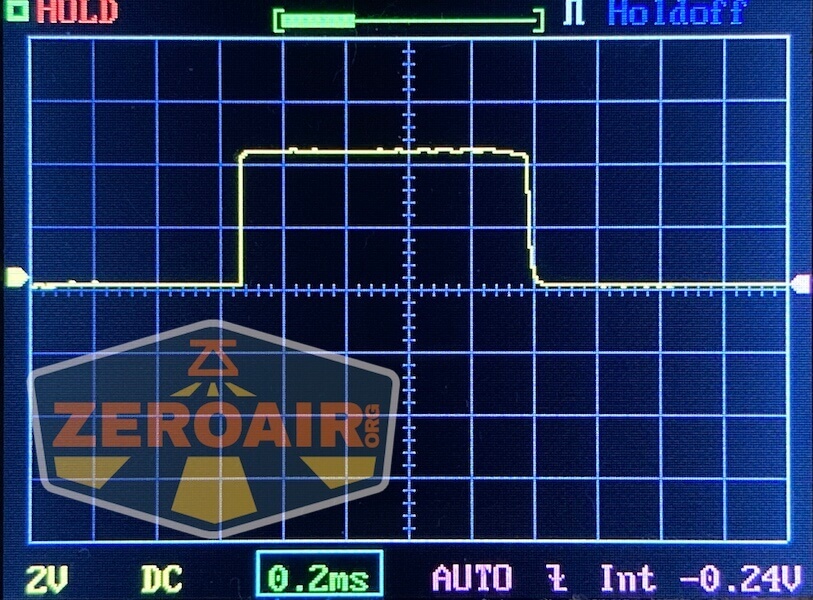
Nothing really to mention here. None of the modes seems to be using PWM. The second-lowest mode for both does have a bit of SMS ripple, but it’s not PWM.
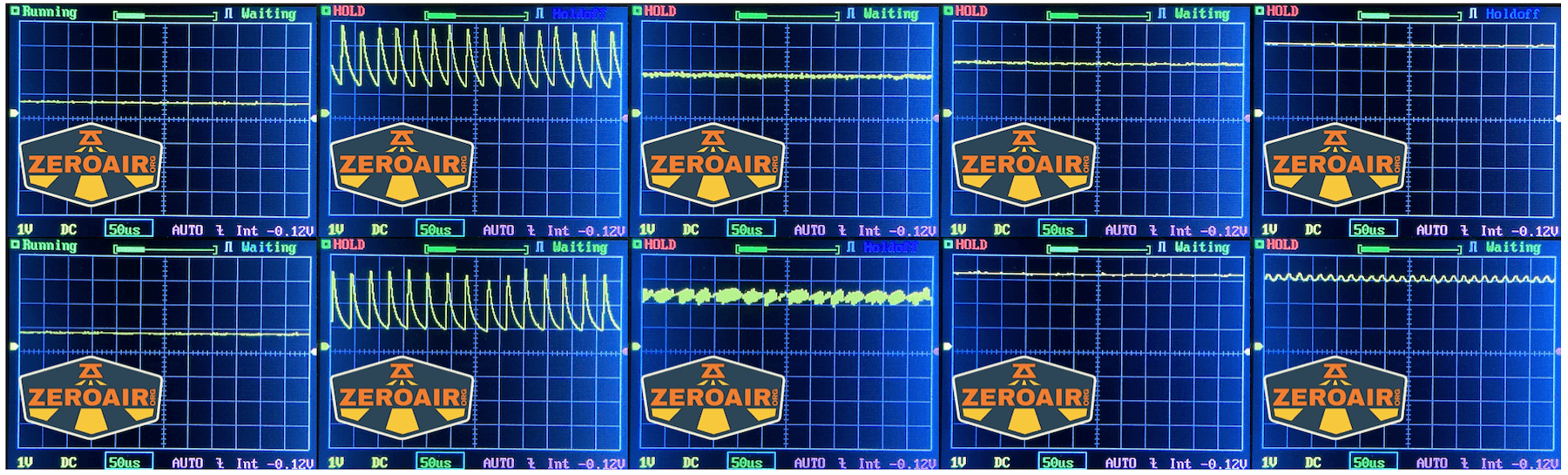
Click here to see a “baseline” – a chart with almost no light hitting the sensor.
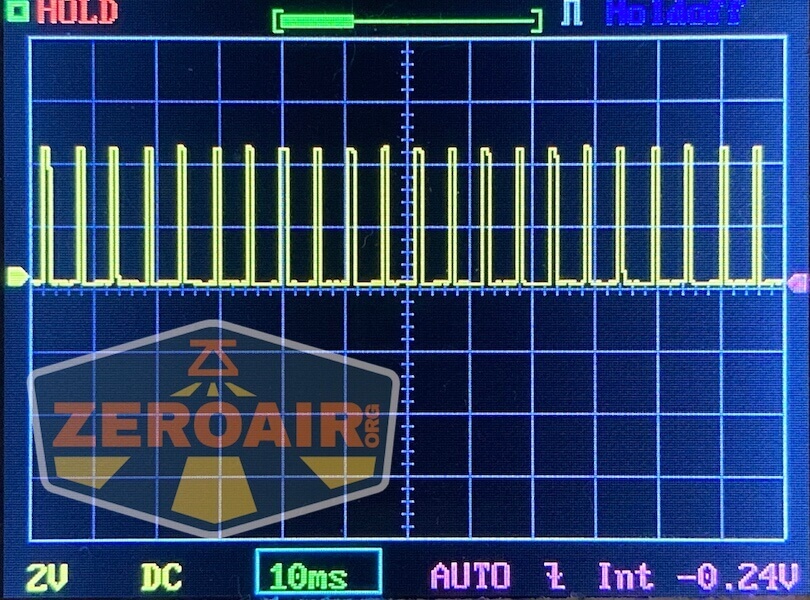
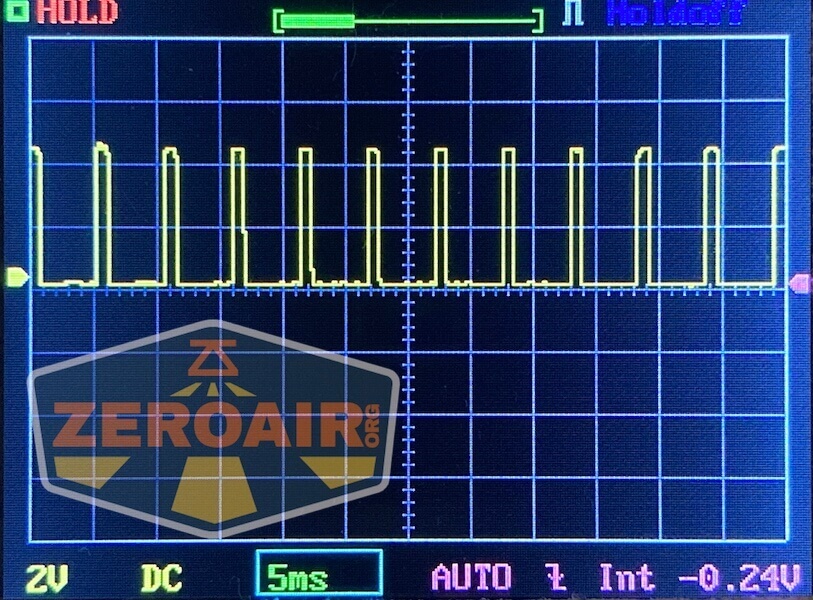
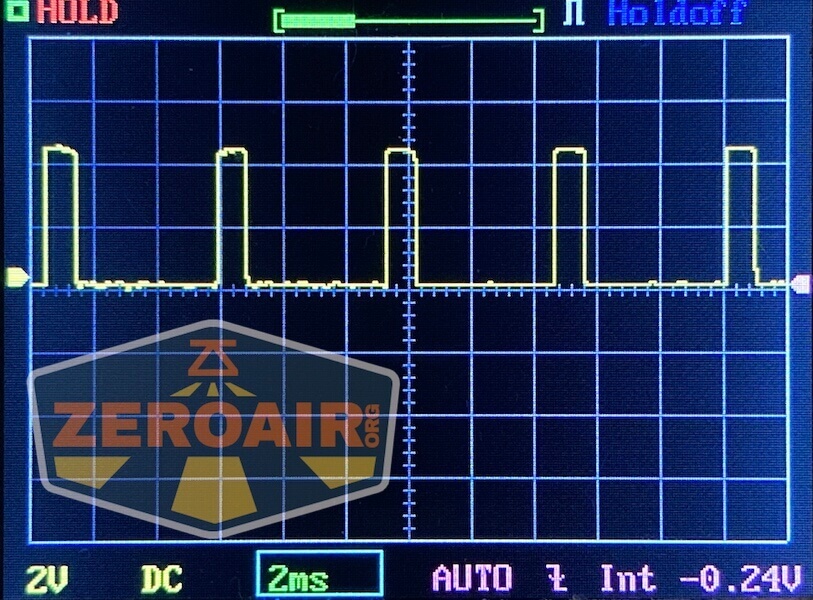
Then there’s the Ultrafire WF-602C flashlight, which has some of the worst PWM I’ve seen. It’s so bad that I used a post about it to explain PWM! Here are multiple timescales (10ms, 5ms, 2ms, 1ms, 0.5ms, 0.2ms) to make comparing this “worst” PWM light to the test light easier. That post also explains why I didn’t test the WF-602C at the usual 50us scale.
User Interface and Operation
The Olight ArkPro Ultra EDC flashlight has two switches! That may be a first for the Ark series. Surrounding that e-switch is a selector knob of sorts, which points to either white LED output, ultraviolet, or laser output. Functionally, this is exactly the same as the Arkfeld Pro and Arkfeld Ultra.
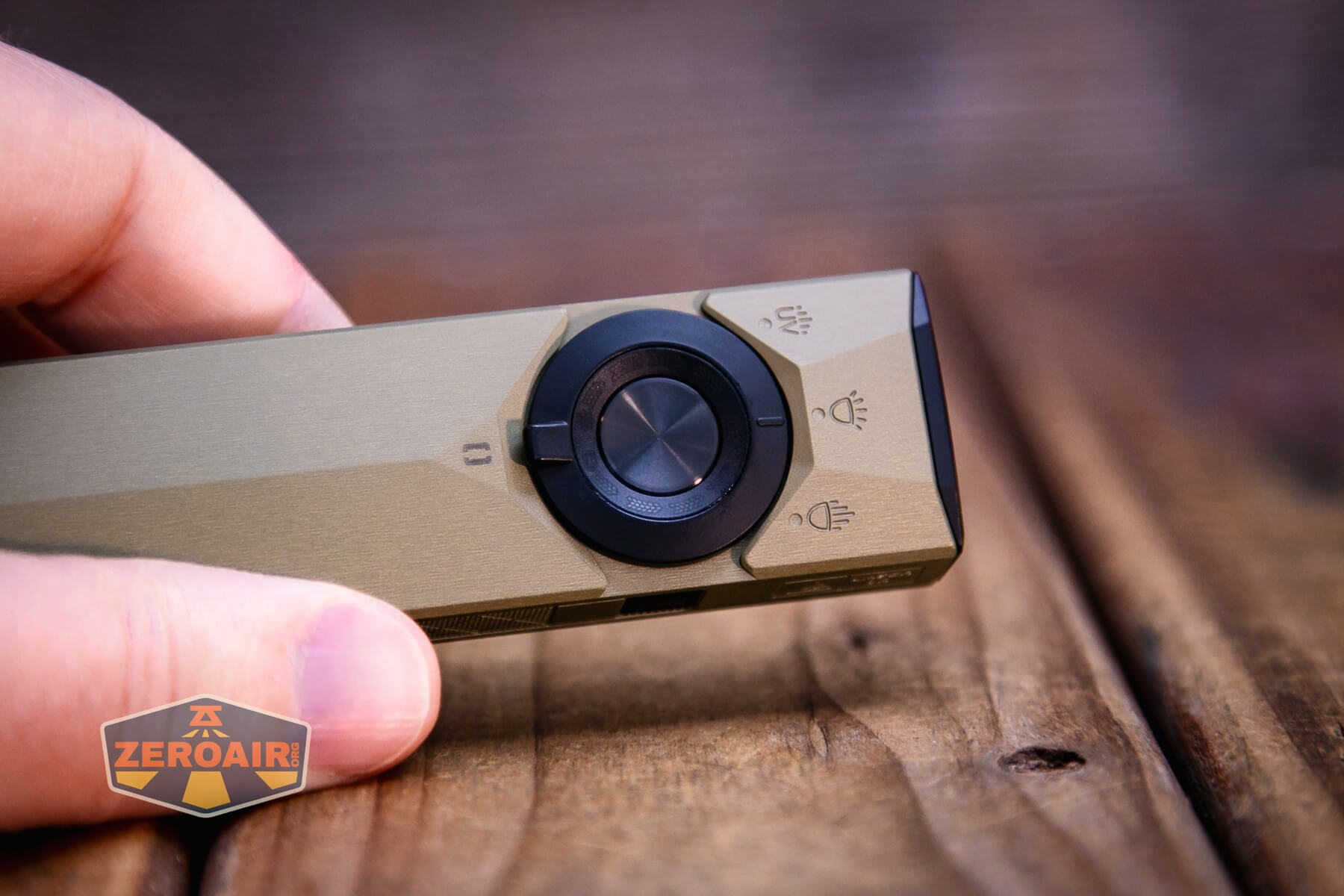
One big and fantastic update is the indicators (not pictured). They’re in a ring between the rotary and the e-switch. The left side indicates the output level, while the green right side indicates the charge status. Not pictured, but there’s a little illuminated lock icon when the light is put in lockout mode, too! That’s at the top.
One of the (maybe the biggest) differences in the Olight ArkPro Ultra EDC flashlight is that it has a kitchsy little thing called “ArkBeat.” To quote: “The AkrBeat color changes based on how long you’ve used the ArkPro Ultra, following the sequence above” (see manual). “After completing a full cycle, it resets to white. From there, you can choose any of the 7 colors.” I am not sure how practical this is, but it’s a neat little thing.
They say the LED e-switch is great for thumb use, and I am inclined to agree. There’s a nicely sized pad area for my thumb to rest. The concave around the rotary helps with this, too.
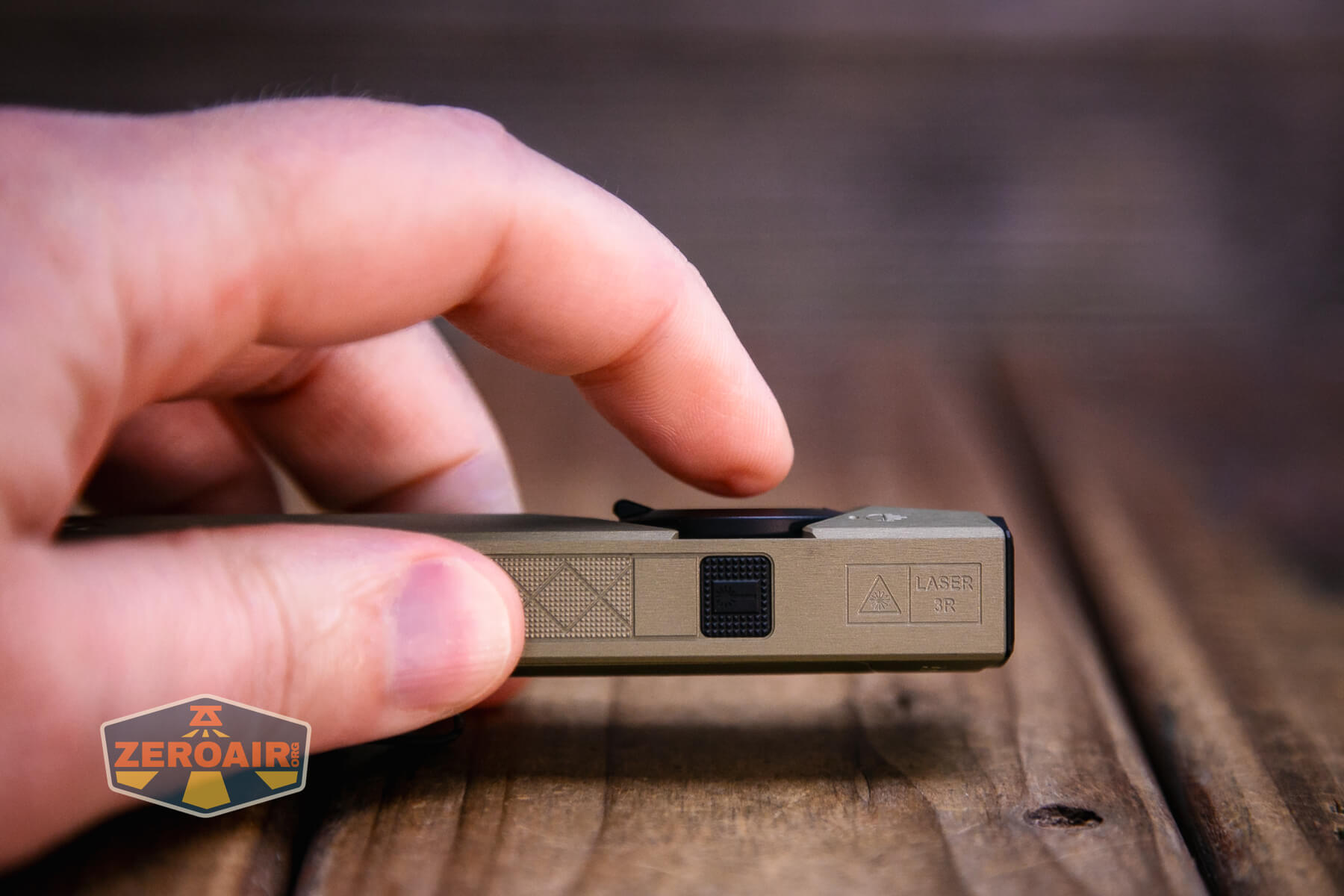
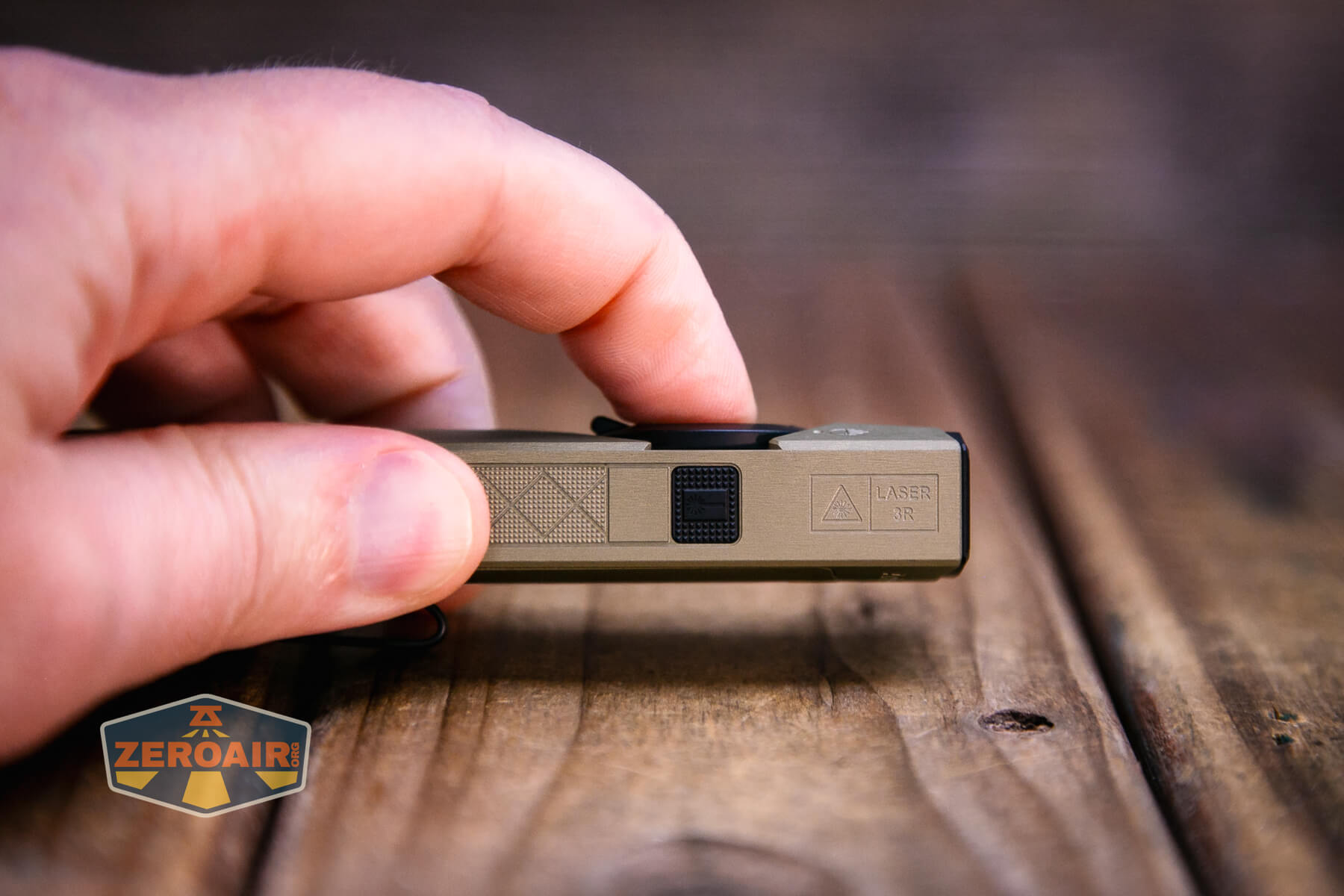
The second e-switch is this one on the side. It operates (only) the laser.
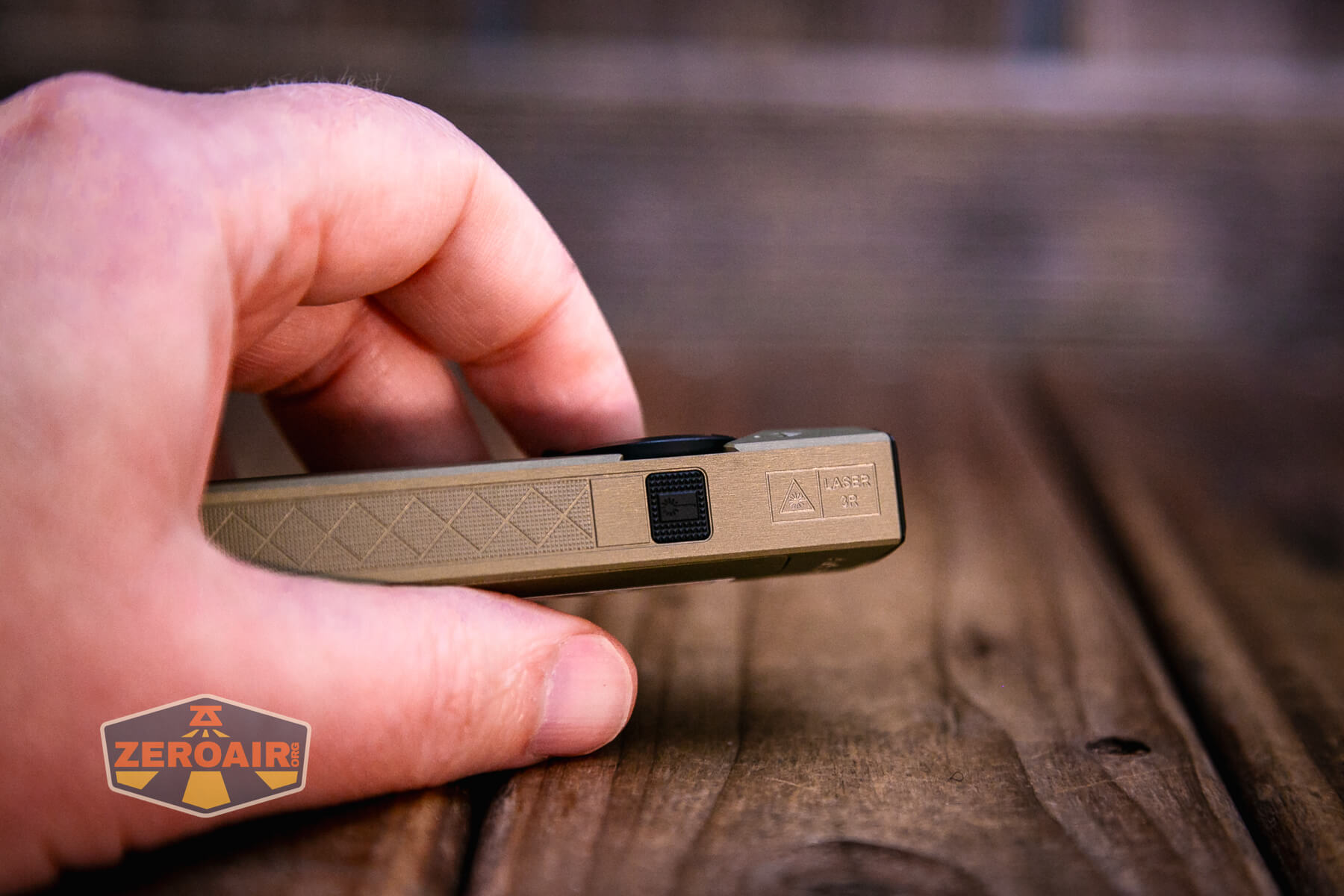
This only applies when the selector is in either LED position. The user interface is the same for flood and spot LEDs. The user interface is really the same for UV and laser, too; it’s just with a separate button.
| State | Action | Result |
|---|---|---|
| Off | Click | On (mode memory)^ |
| On | Hold (release at desired mode) | Mode cycle (L, M, H) (no Moon or Turbo) |
| Off | Hold | Moonlight |
| Any | Double click | Turbo |
| Any | Triple click | Strobe |
| Strobe | Click | Off |
| Strobe | Hold | Previous Mode (or Moonlight, if strobe from off) |
| Off | Long hold (past Moonlight) | Lockout (indicated by a lock icon near the battery indicator)^ |
| Lockout | Hold | Unlock to Moonlight |
| On | Click then Click and Hold (quickly)^^ | Timer (Single blink: 3 minutes, Double blink: 9 minutes) |
| Timer | Click then Click and Hold (quickly)^^ | Switch between 3- and 9-minute timers. |
| Any | Click the laser button | Laser on (doesn’t change LED state) |
| Laser on | Click the laser button | Laser off |
| Laser on | Turn LED(s) off | LEDs and laser off |
| UV selected – Off | Click | UV on low |
| UV on | Hold | Iterate between UV high and low |
| UV on | Click | Off |
| Laser off | Hold | Momentary laser (memory) |
| Laser on | Hold laser button | Iterate between laser high and low |
^ Moon, Low, Medium, and High are memorized. Turbo is memorized as High.
^^ The manual doesn’t mention the timers as far as I can see.
LED and Beam
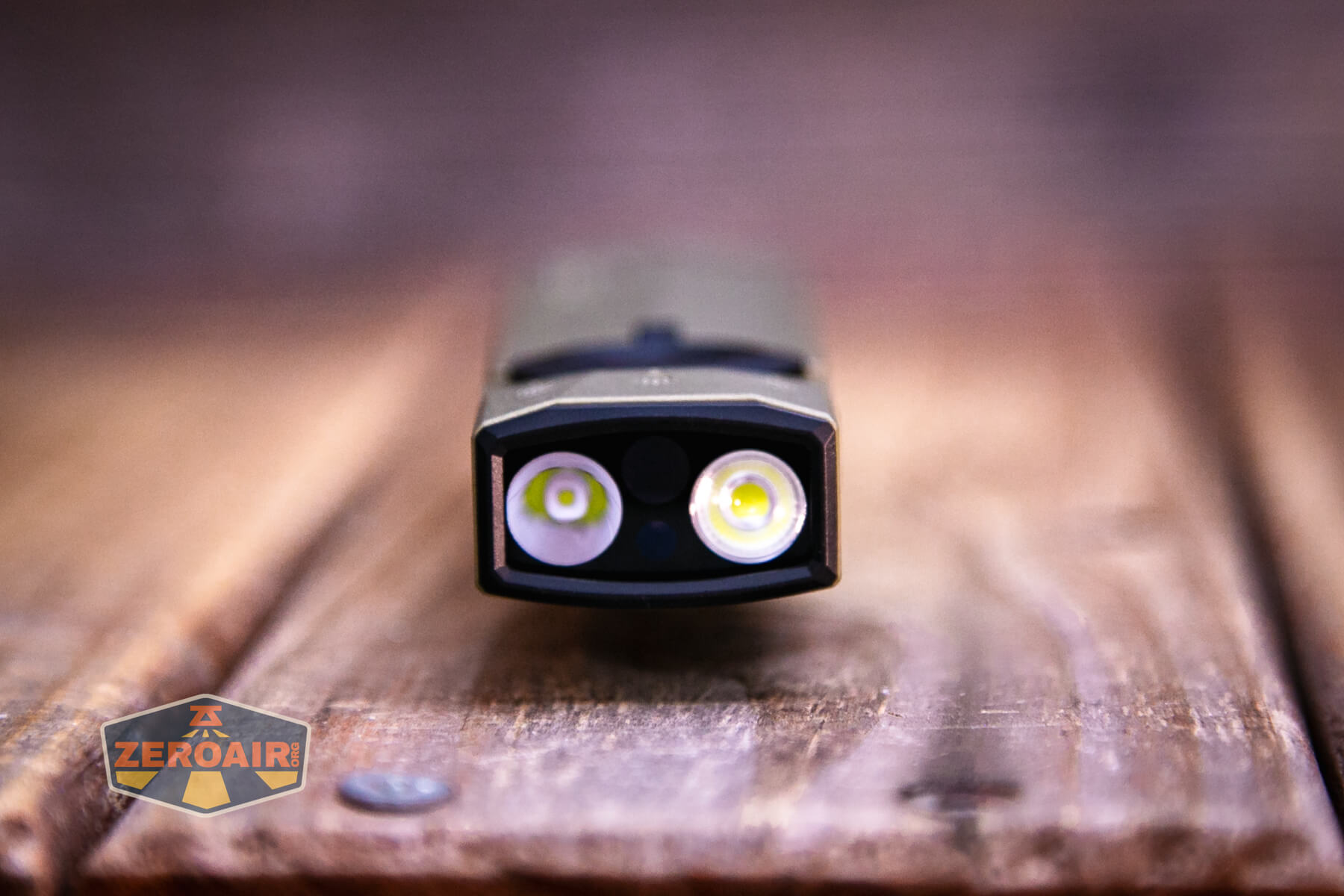
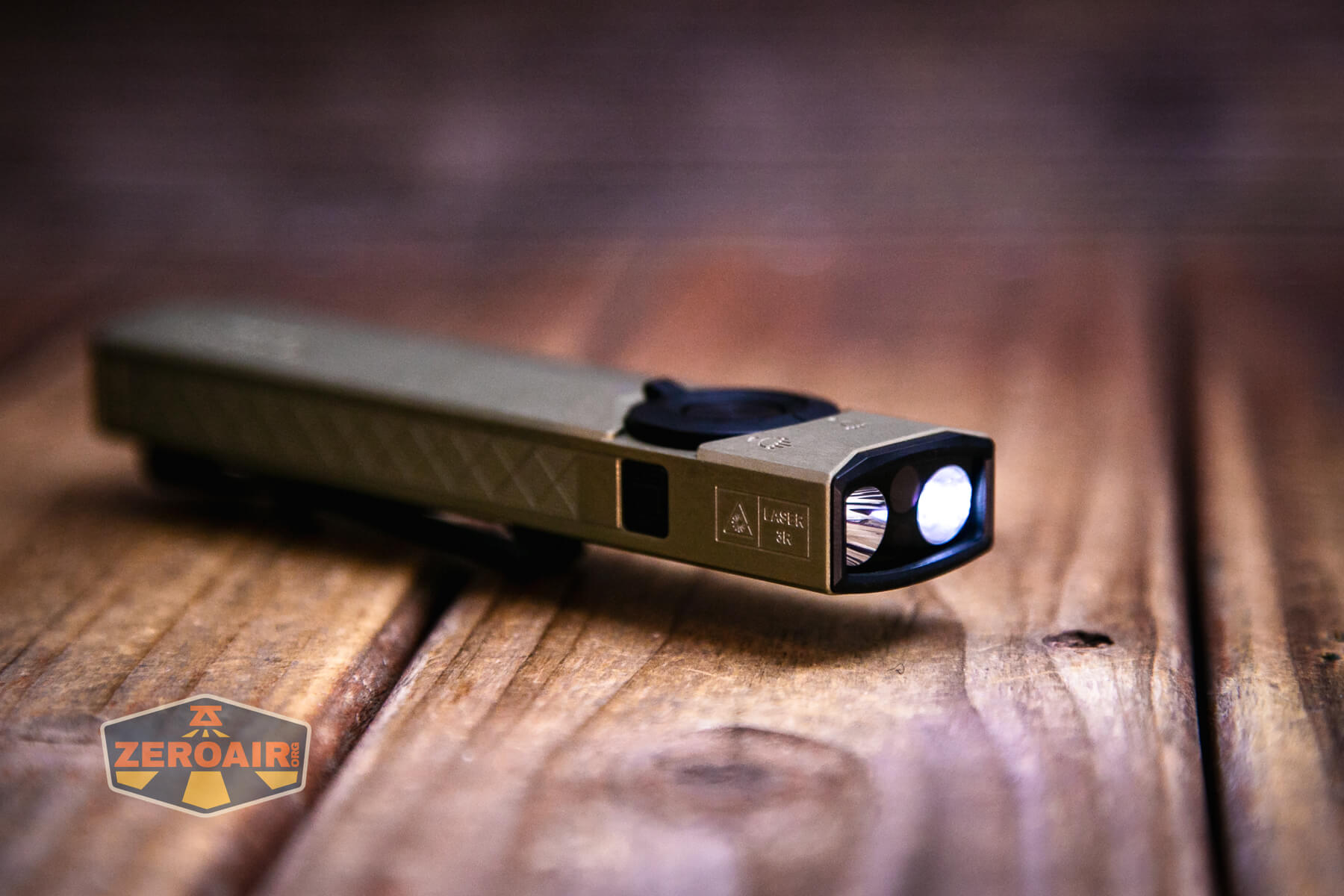
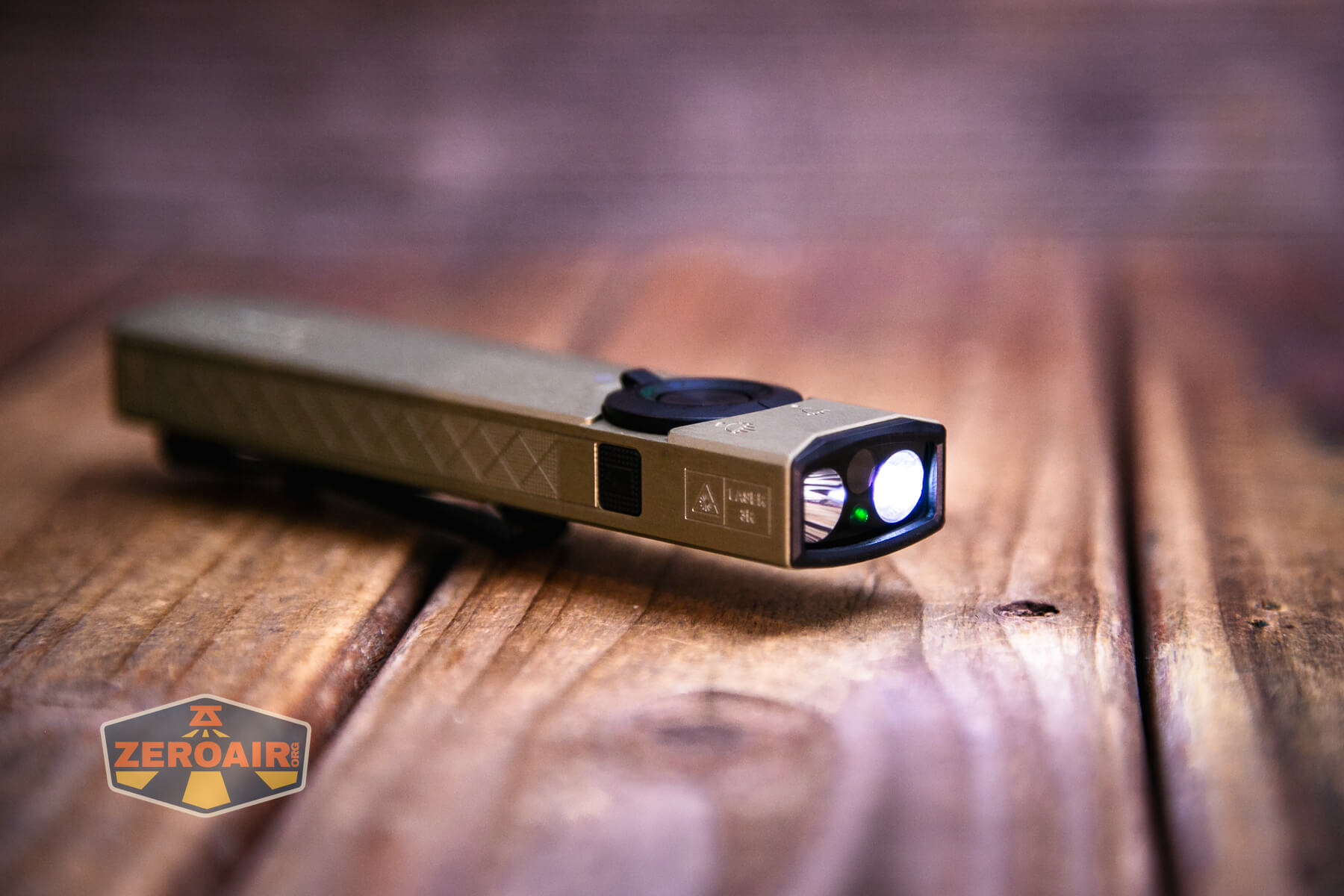
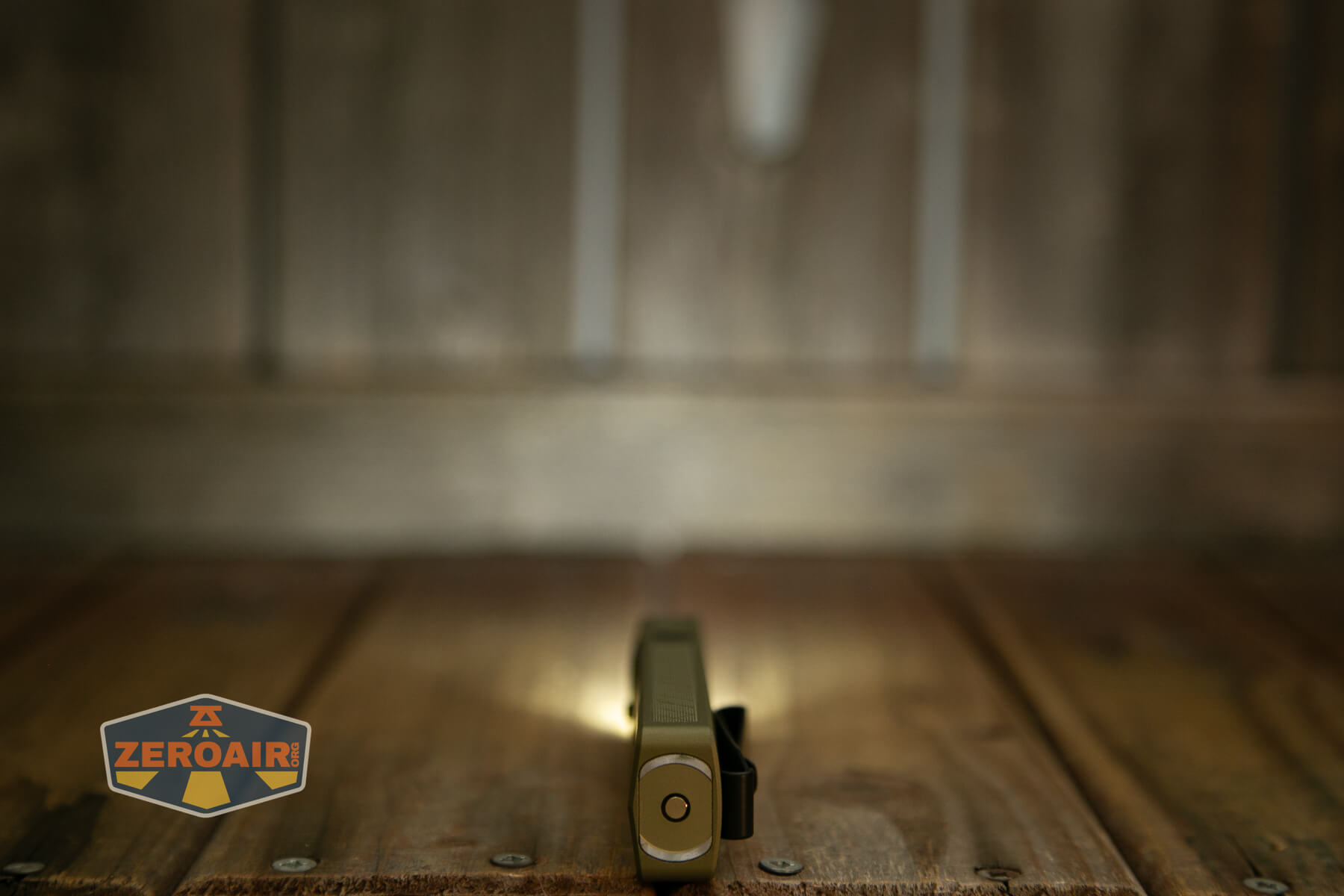
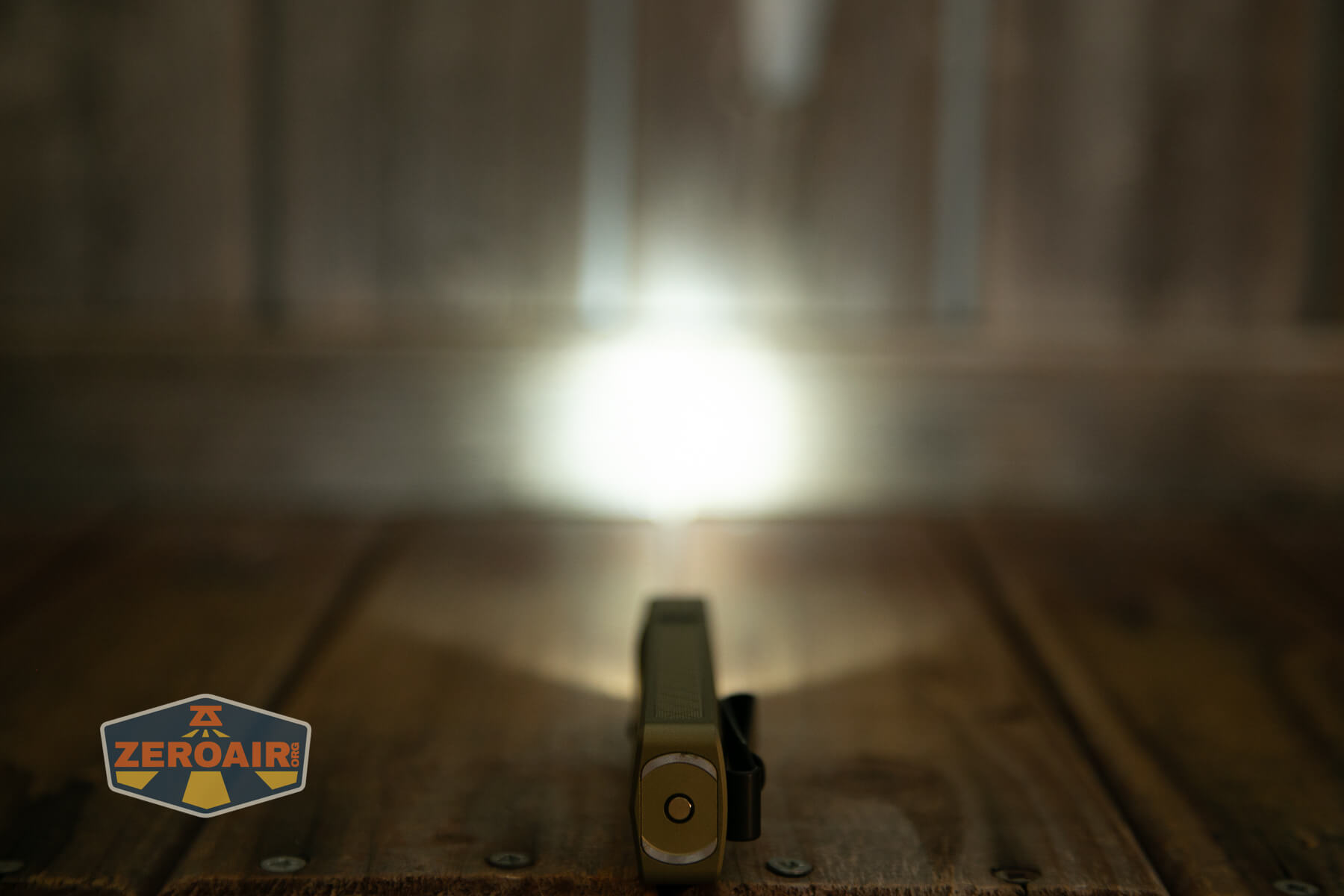
I was certain I’d seen somewhere that Olight designed these emitters themselves, but I can’t find that information now. I’m not totally sure it matters, since we can see the CRI and CCT in the next section. These emitters have the best type of optic for their purpose. The flood emitter has a shallow TIR, and the spot emitter (right, below) has a deep, smooth reflector.
LED Color Report (CRI and CCT)
The CCT for either emitter is cool white. Note that some body colors (black, at least) do offer neutral white as an option. The CRI is also low for both LEDs.
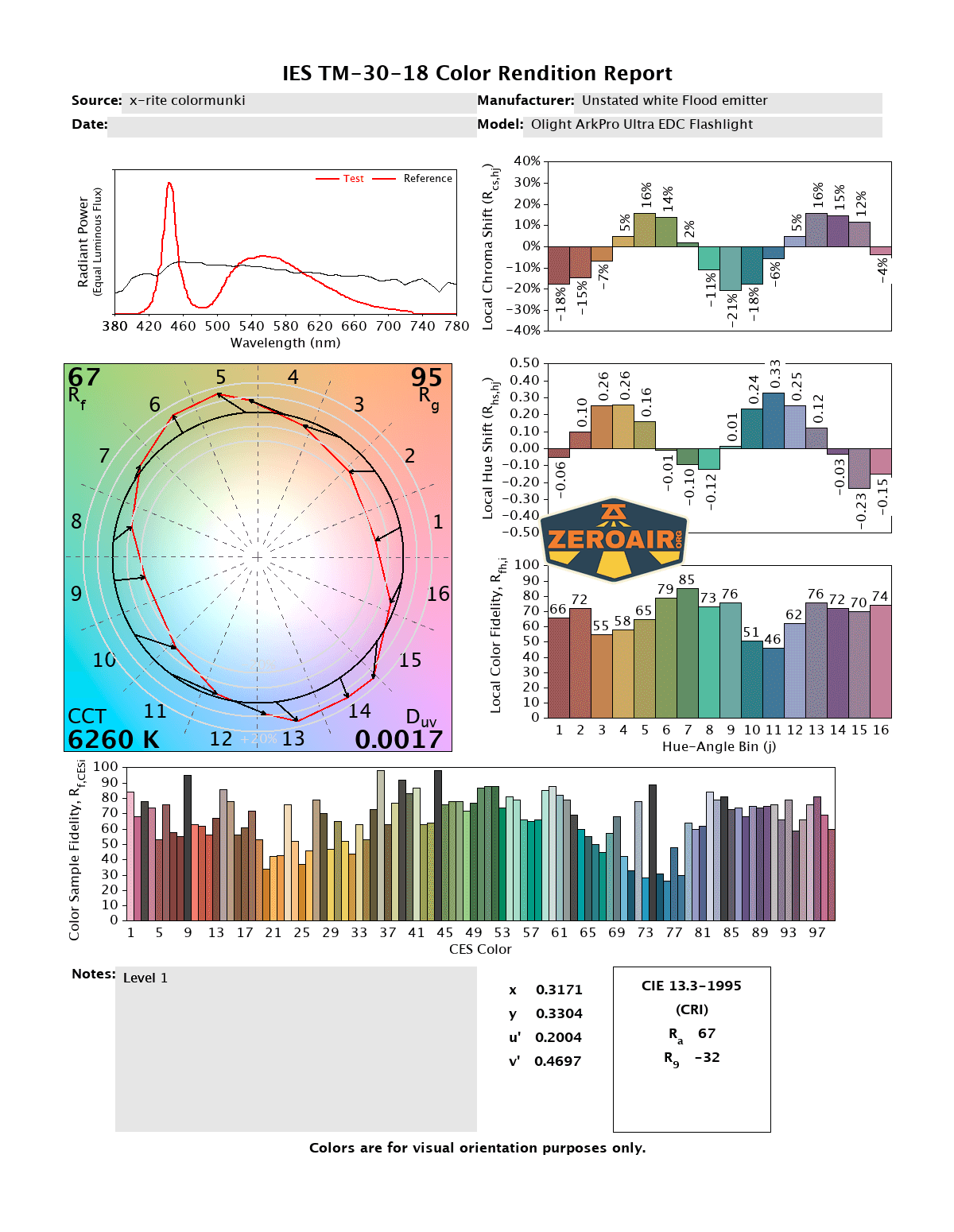
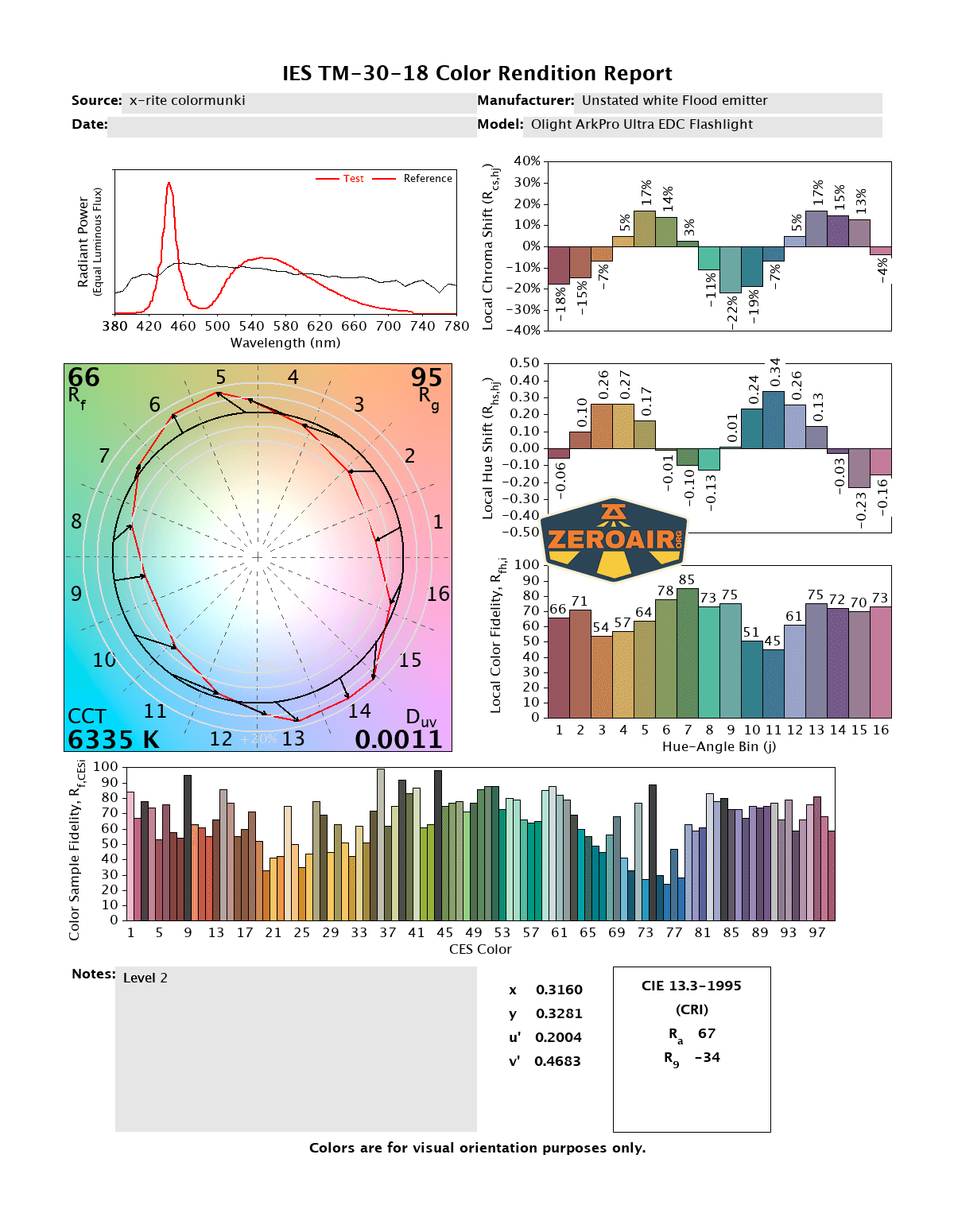
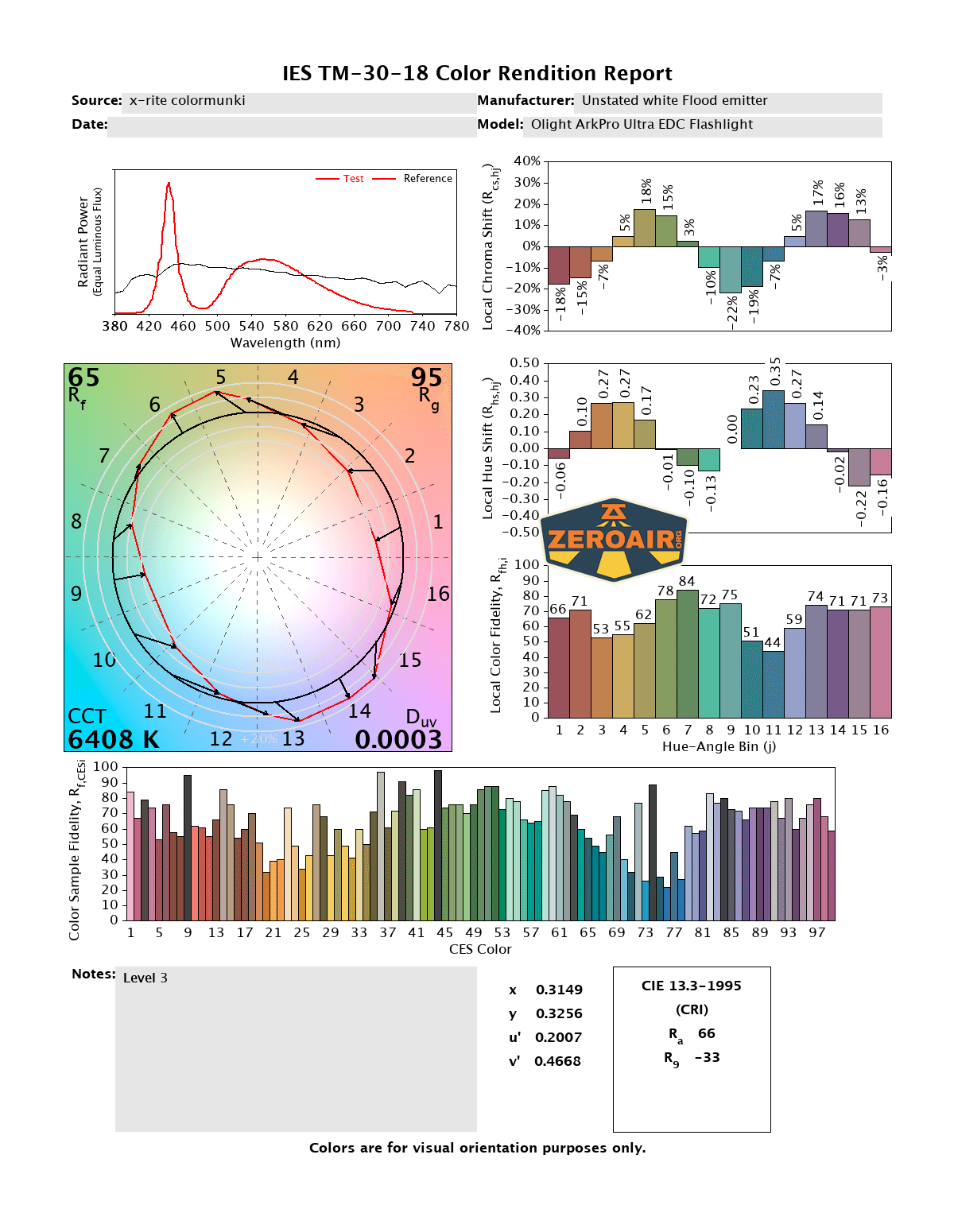
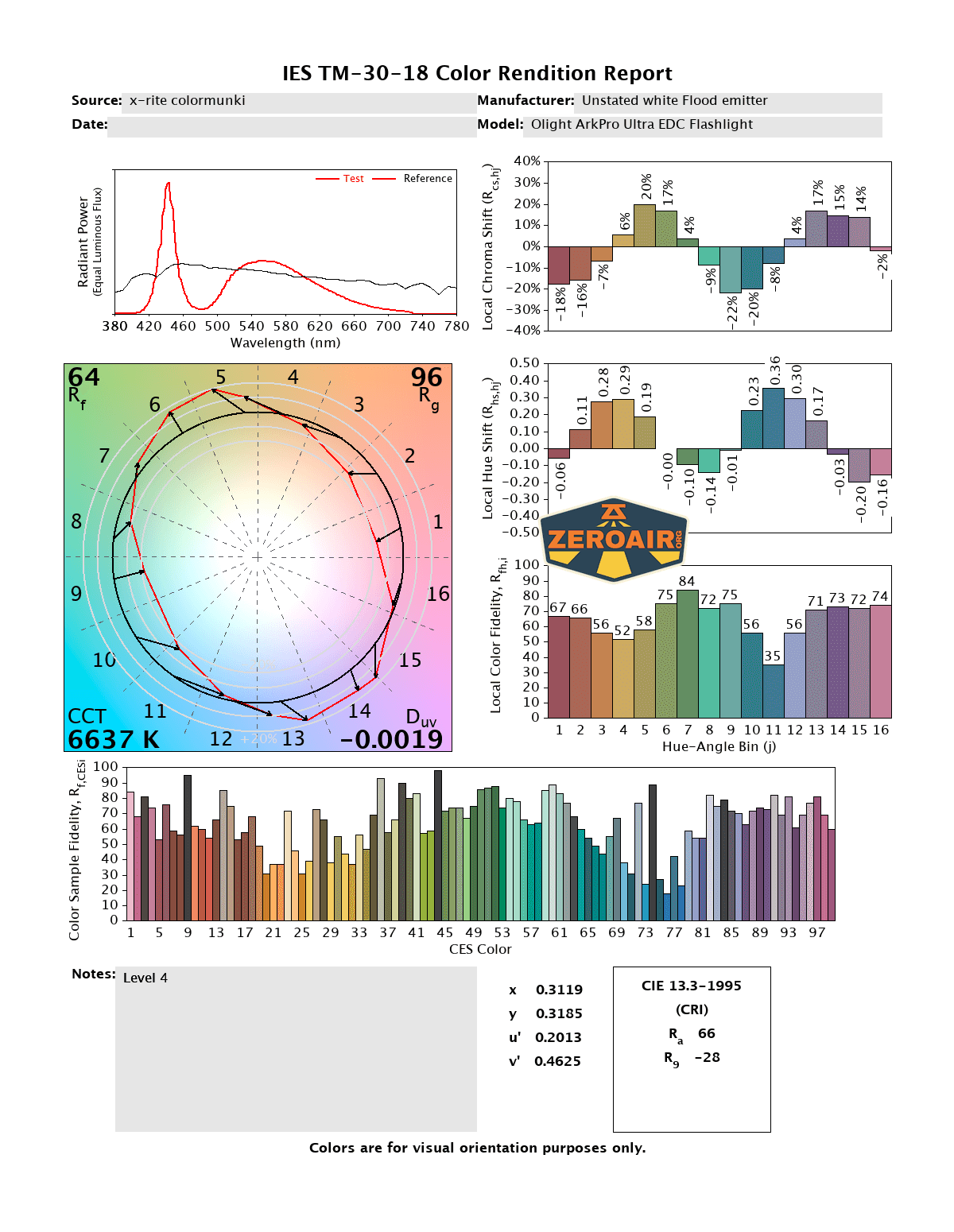
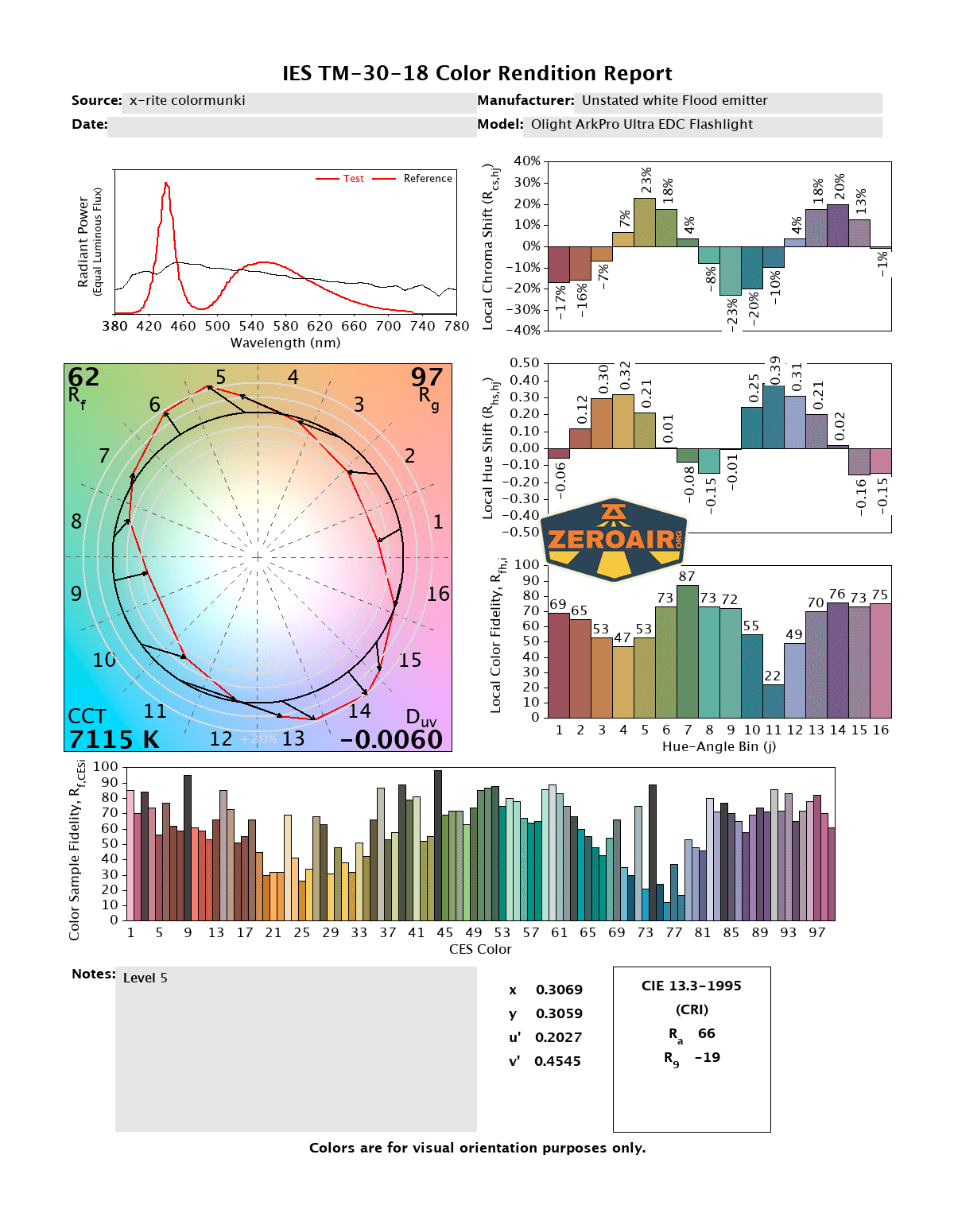
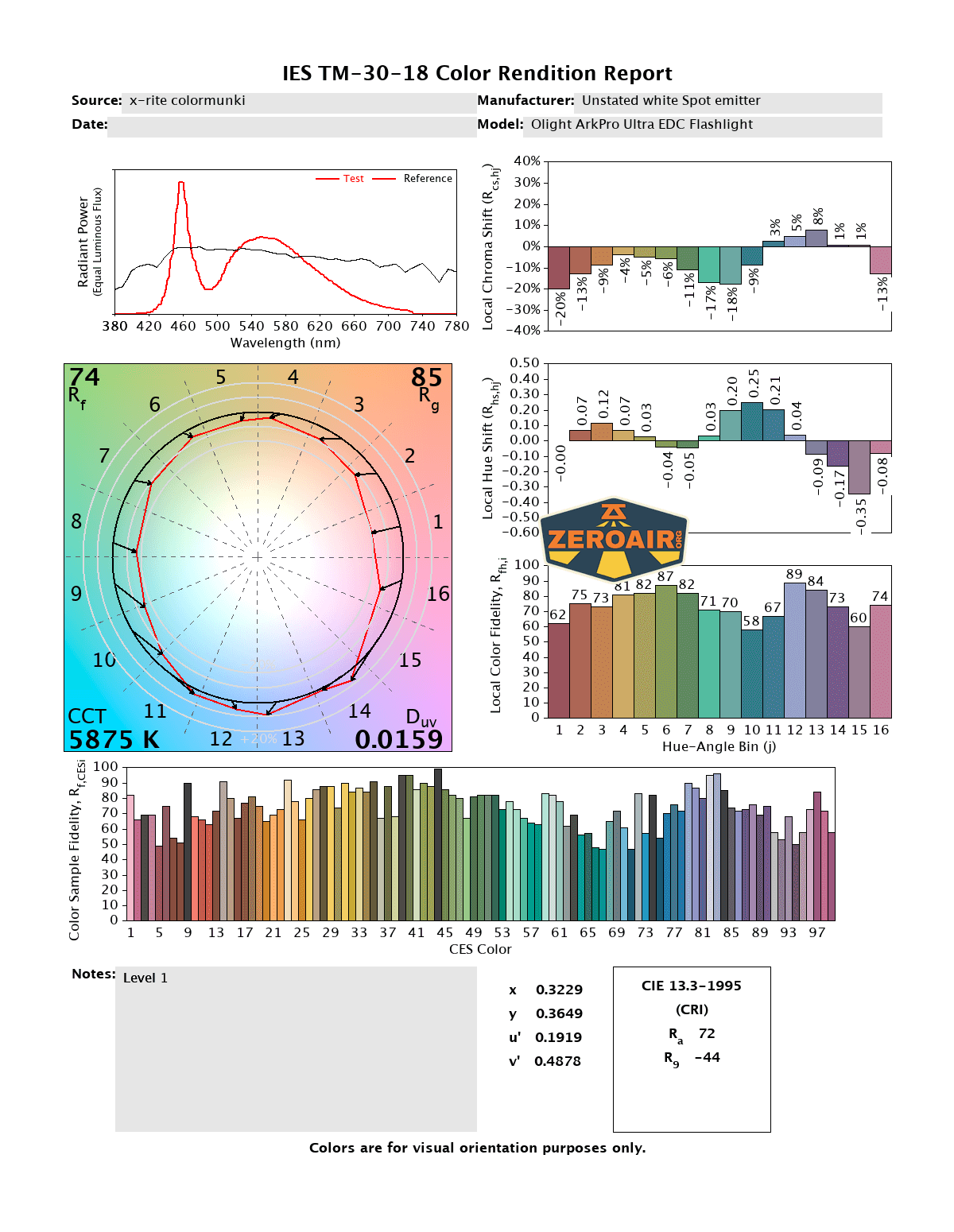
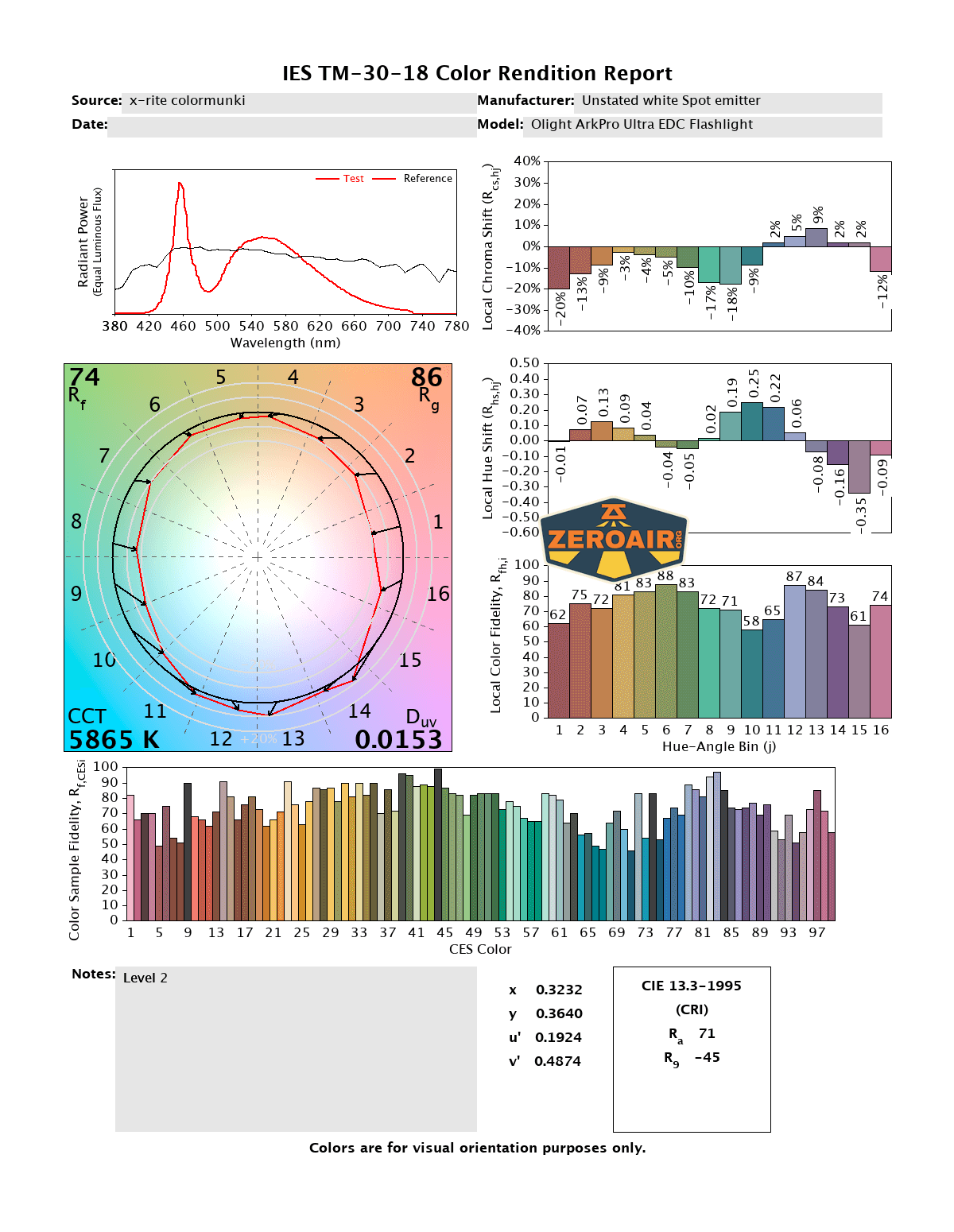
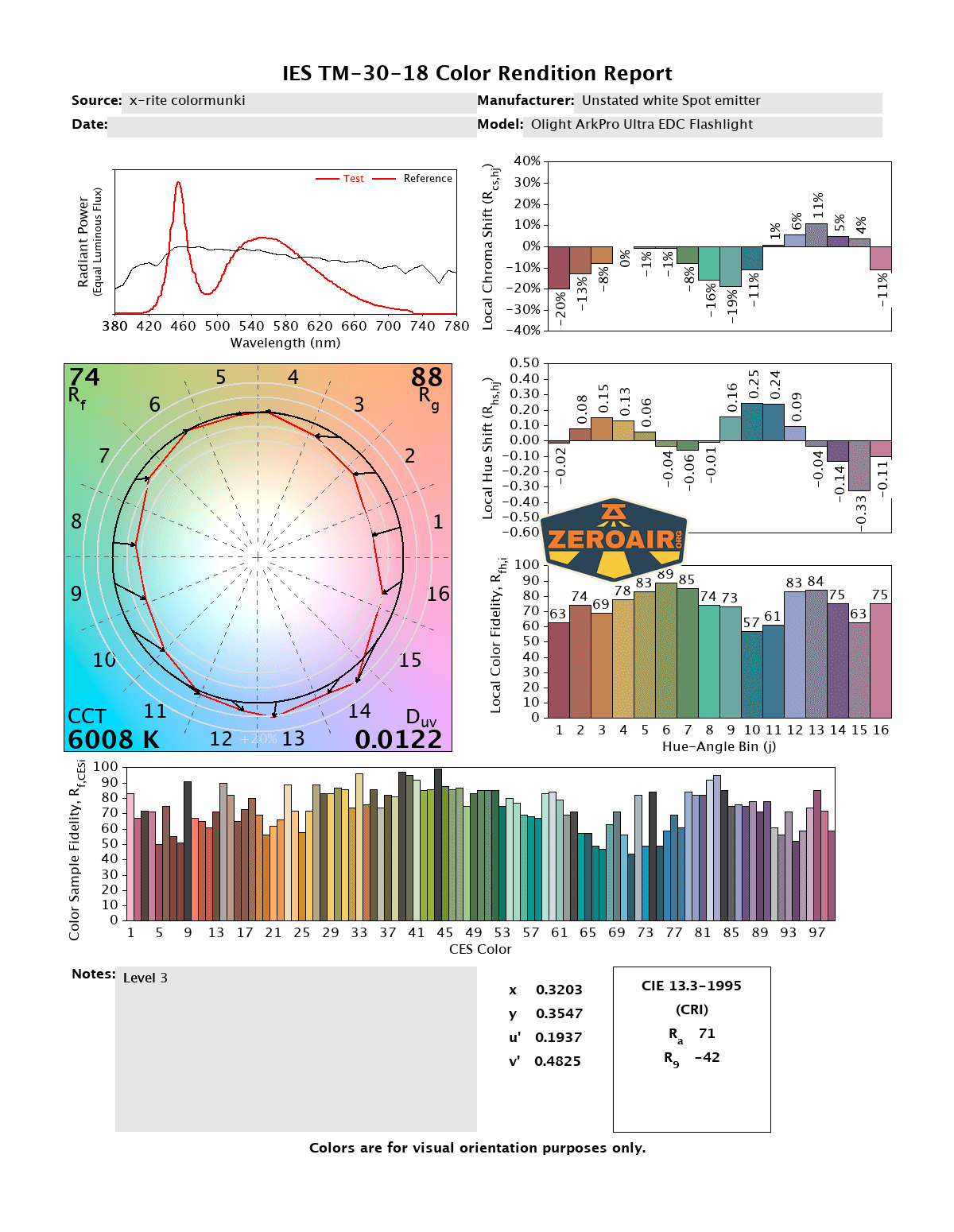
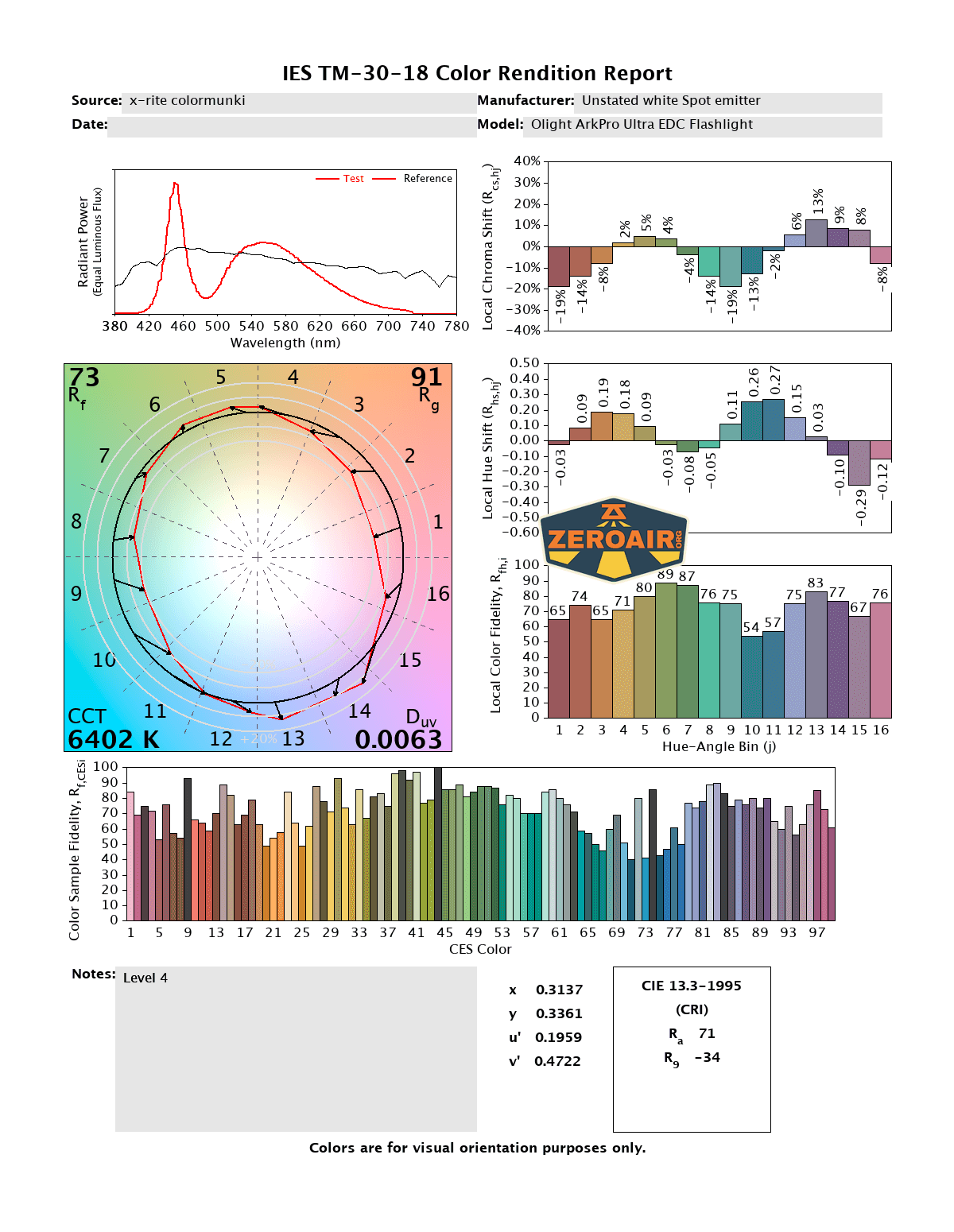
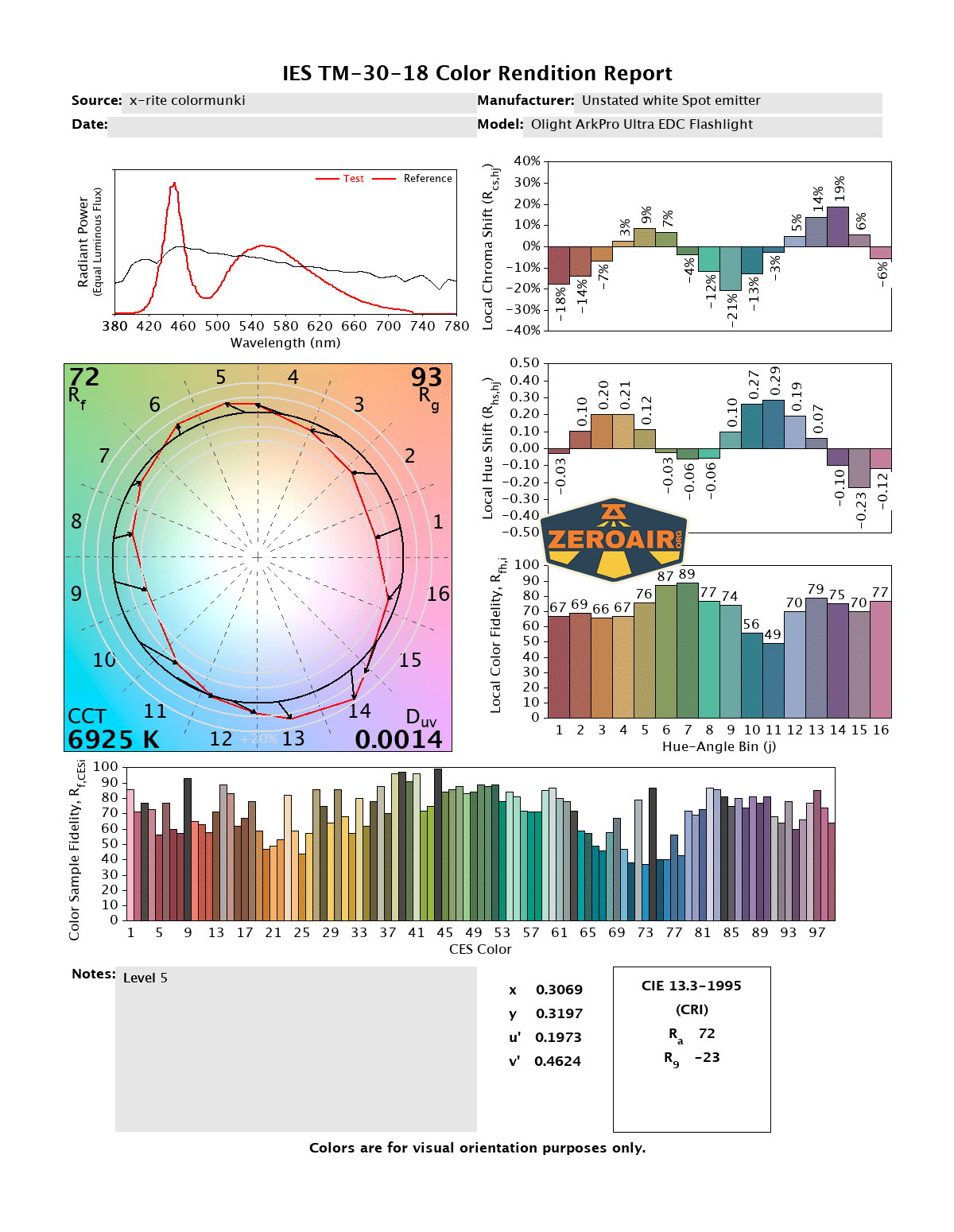
CCT (Correlated Color Temperature) refers to the measurement of the color appearance of light, expressed in Kelvins (K), which indicates whether the light is warm (yellowish) or cool (bluish). A lower CCT (below 3000K) is considered warm light, while a higher CCT (above 5000K) gives cooler, bluish light.
CRI (Color Rendering Index) is a measure of how accurately a light source renders colors in comparison to natural sunlight. Scored on a scale from 0 to 100, higher CRI values indicate that colors appear more true to life and vibrant, similar to how they would look under the sun.
Beamshots
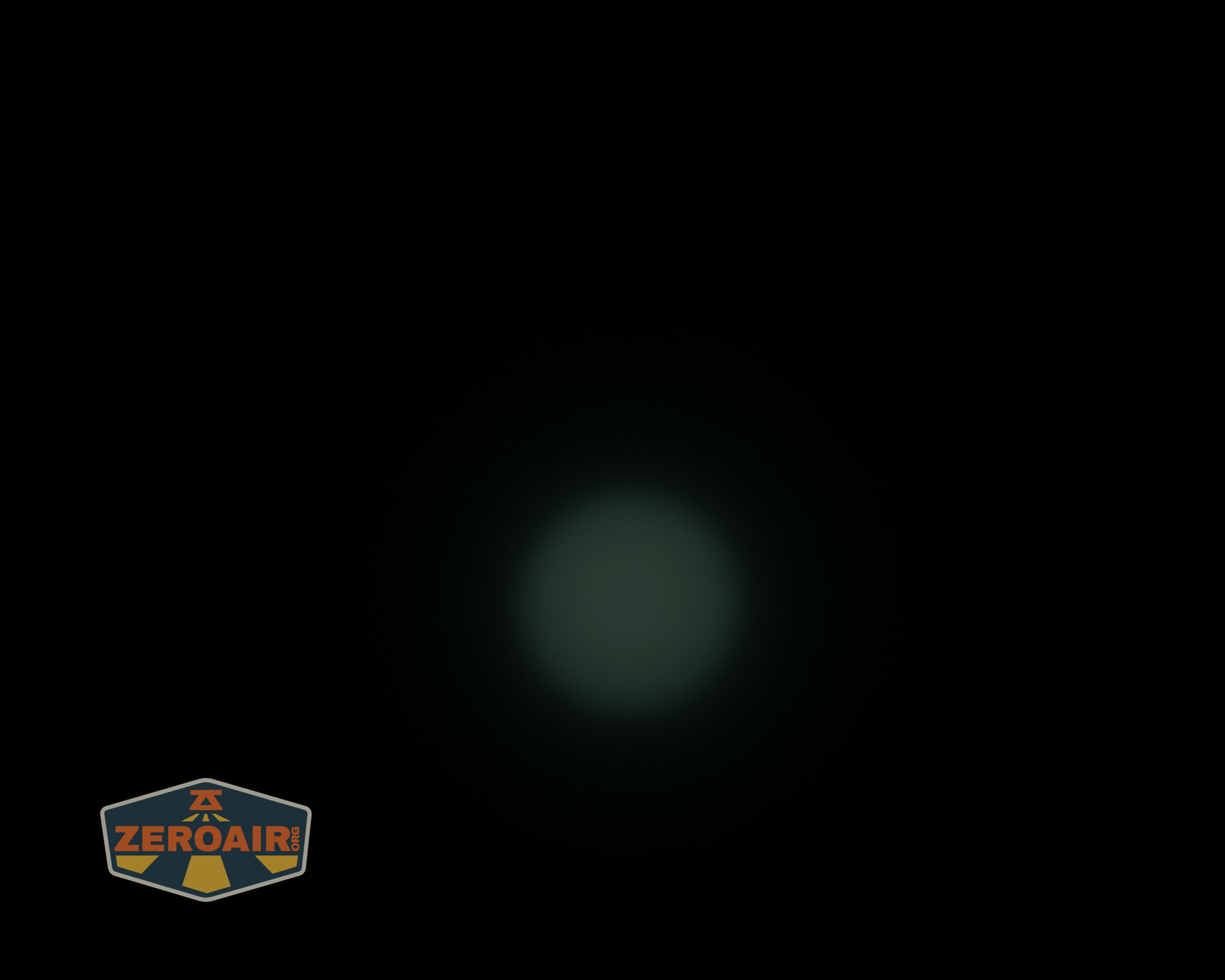
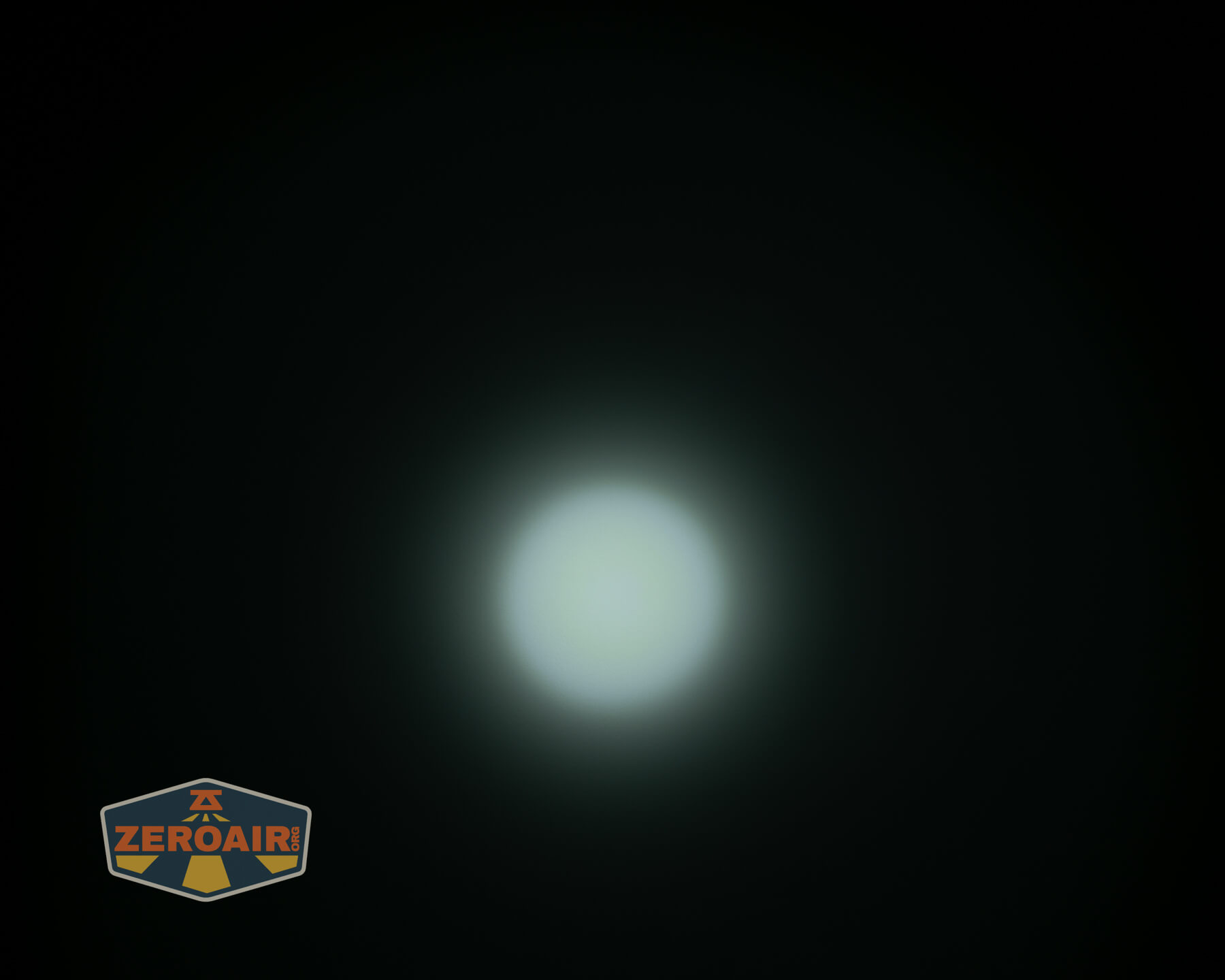
These beamshots always have the following settings: f8, ISO100, 0.3s shutter, and manual 5000K exposure. These photos are taken at floor level, and the beam hits the ceiling around 9 feet away.






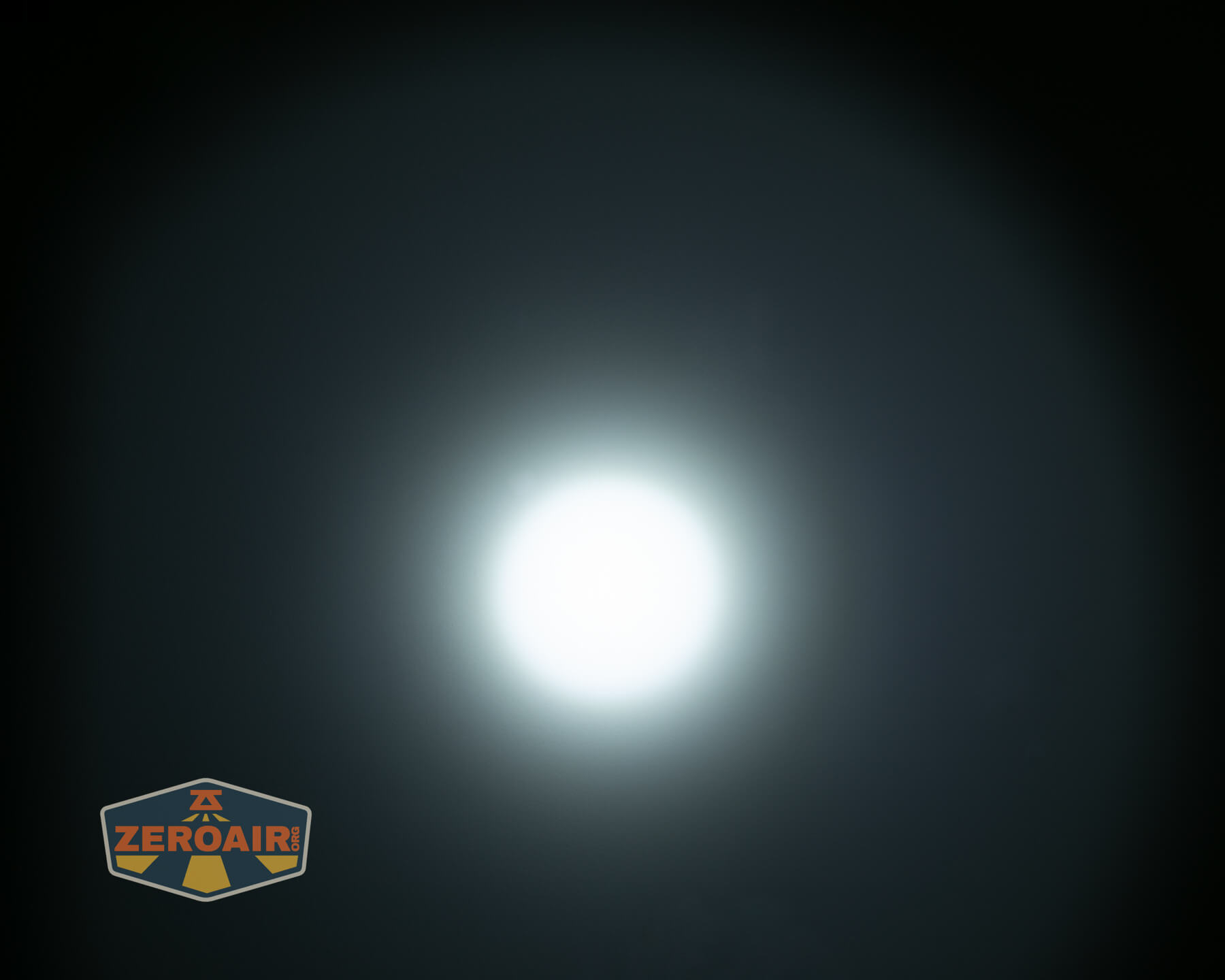
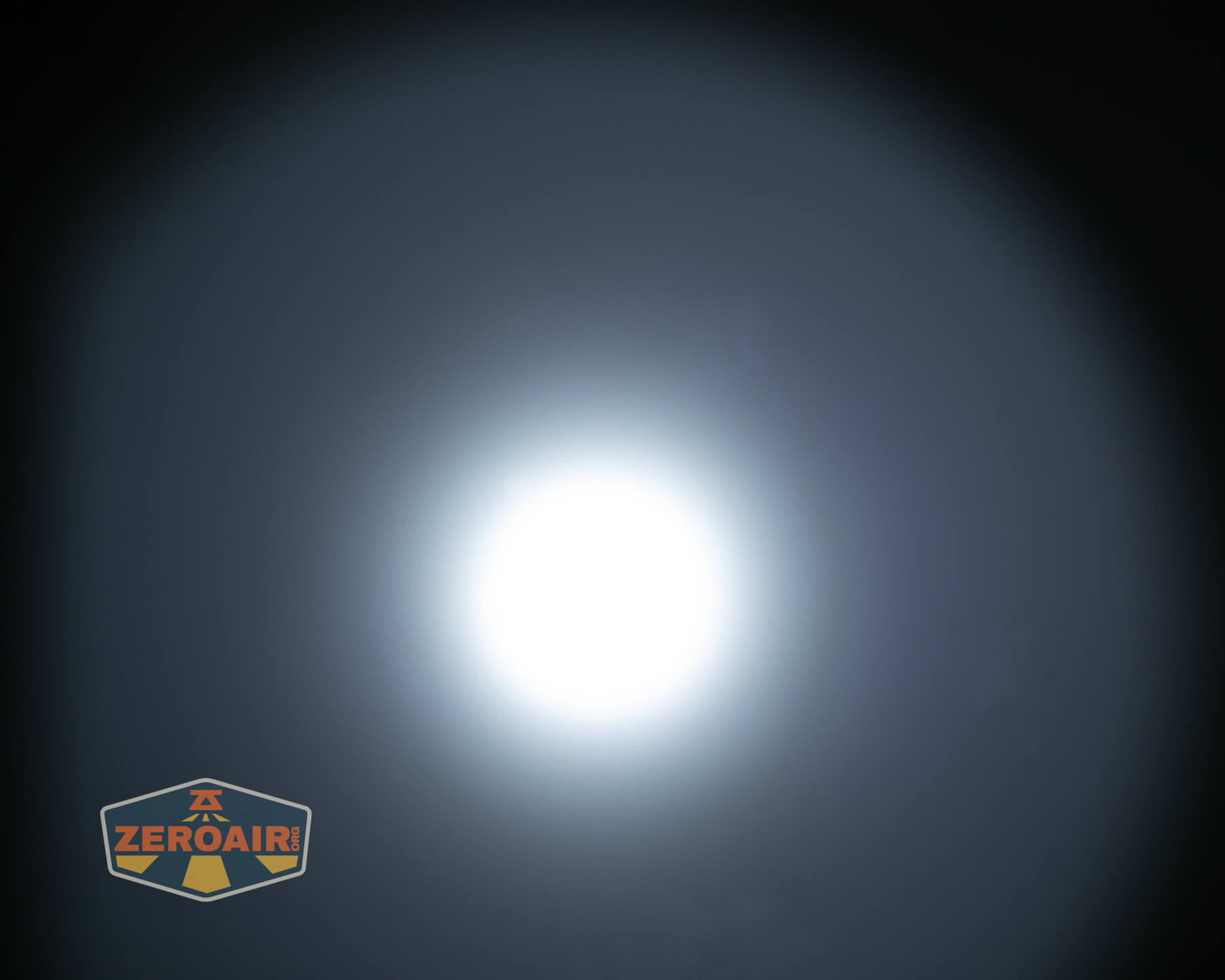
Tint vs BLF-348 (KillzoneFlashlights.com 219b version) (affiliate link)
I keep the test flashlight on the left and the BLF-348 reference flashlight on the right. These photos are taken around 18 inches from the door.
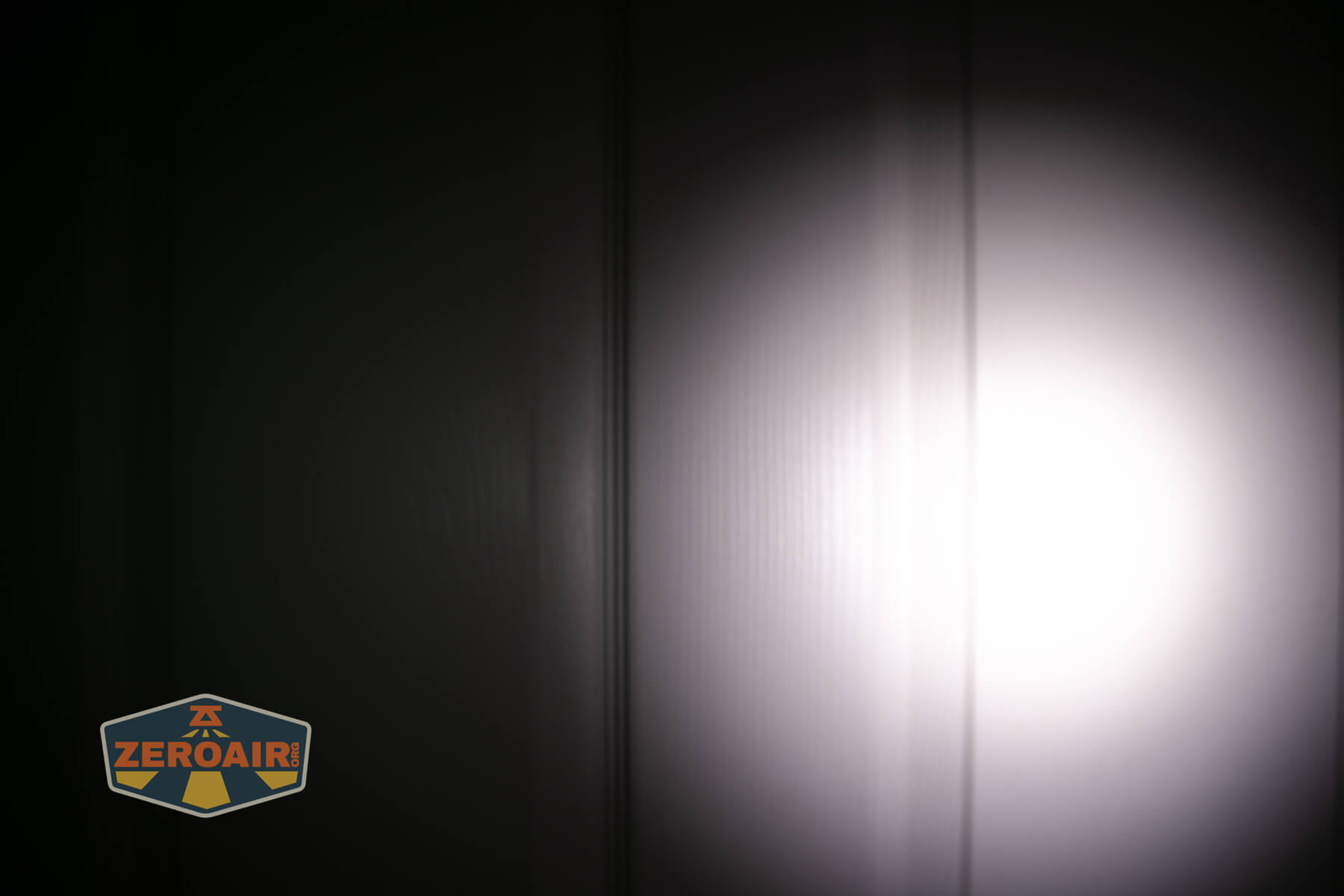
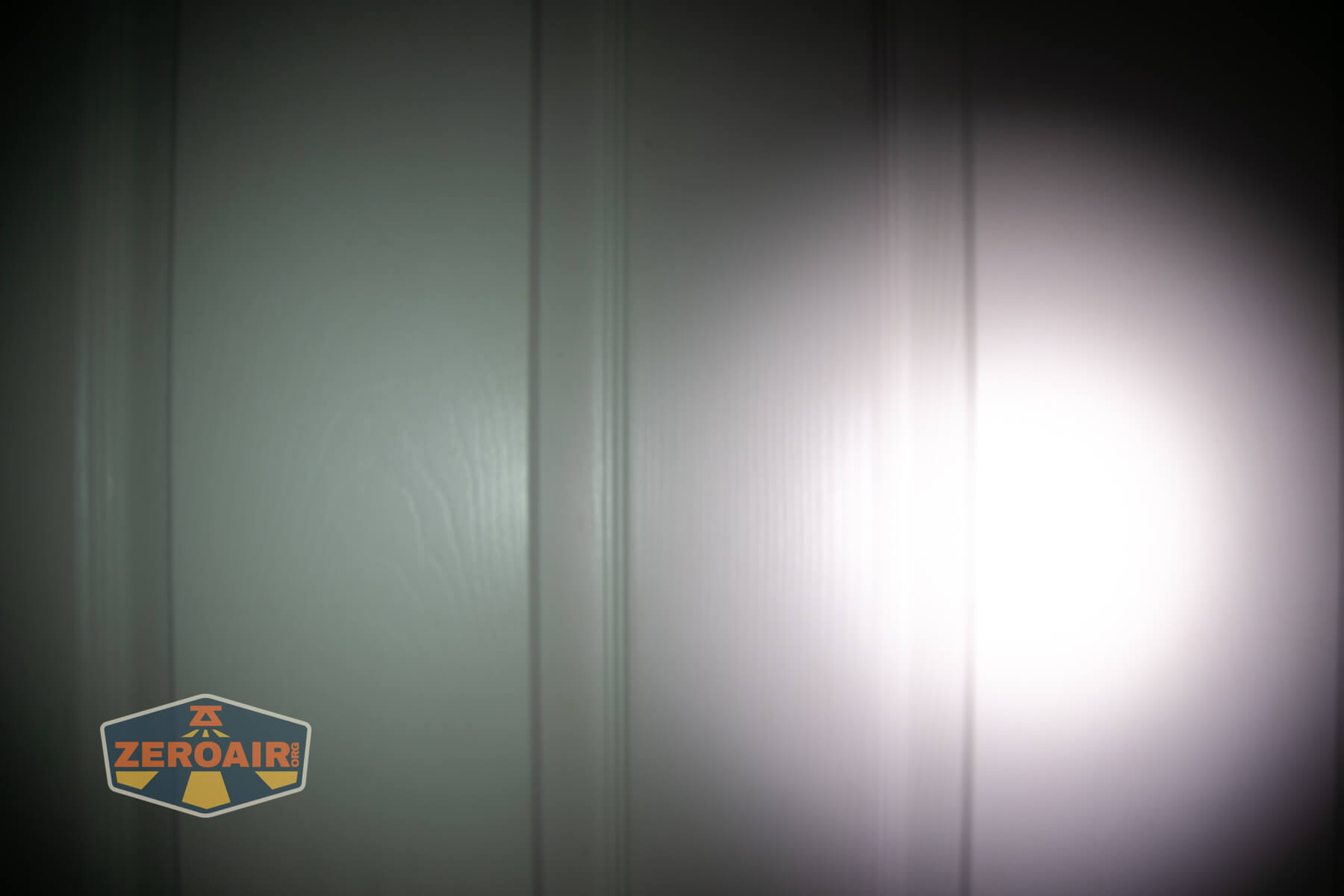



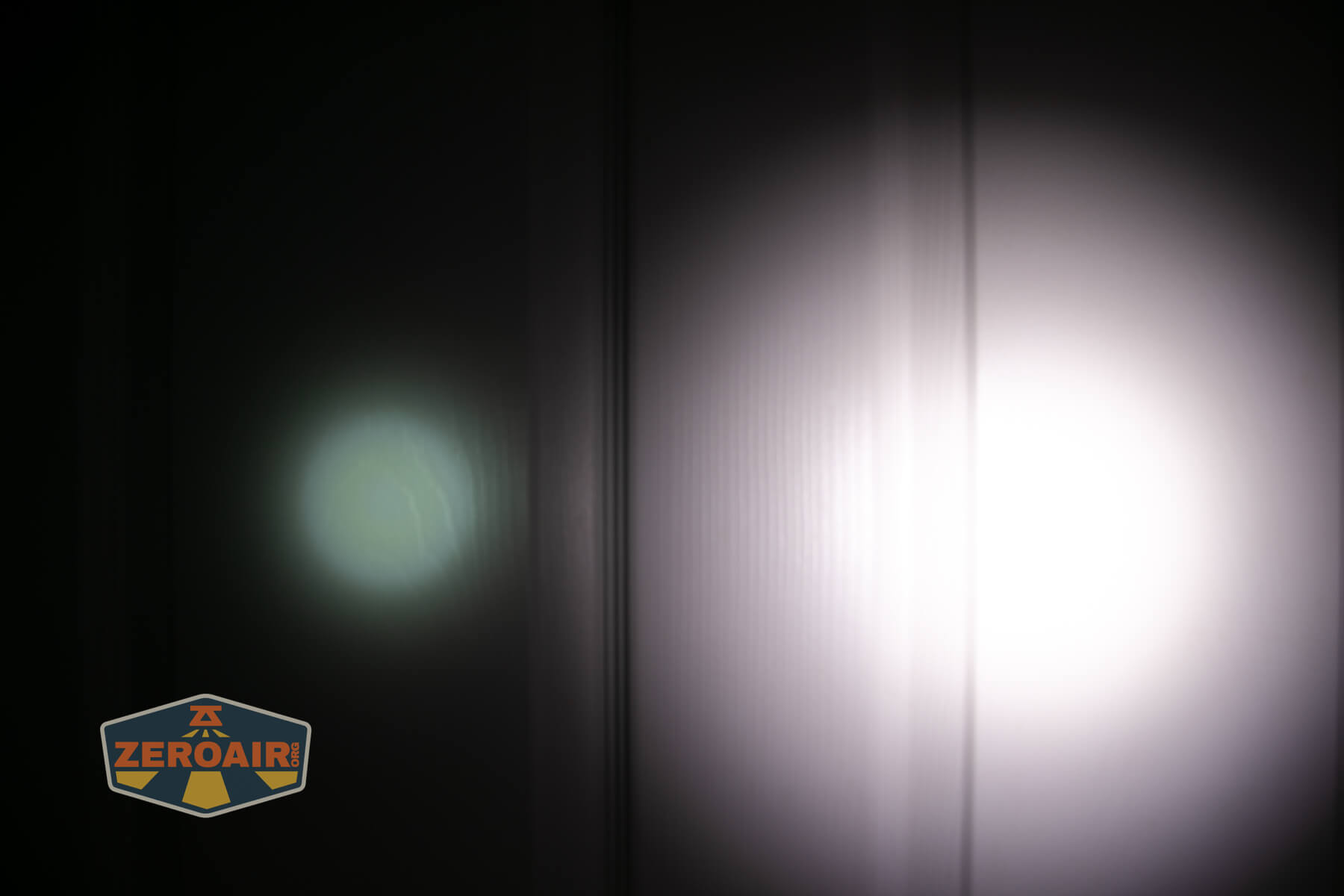
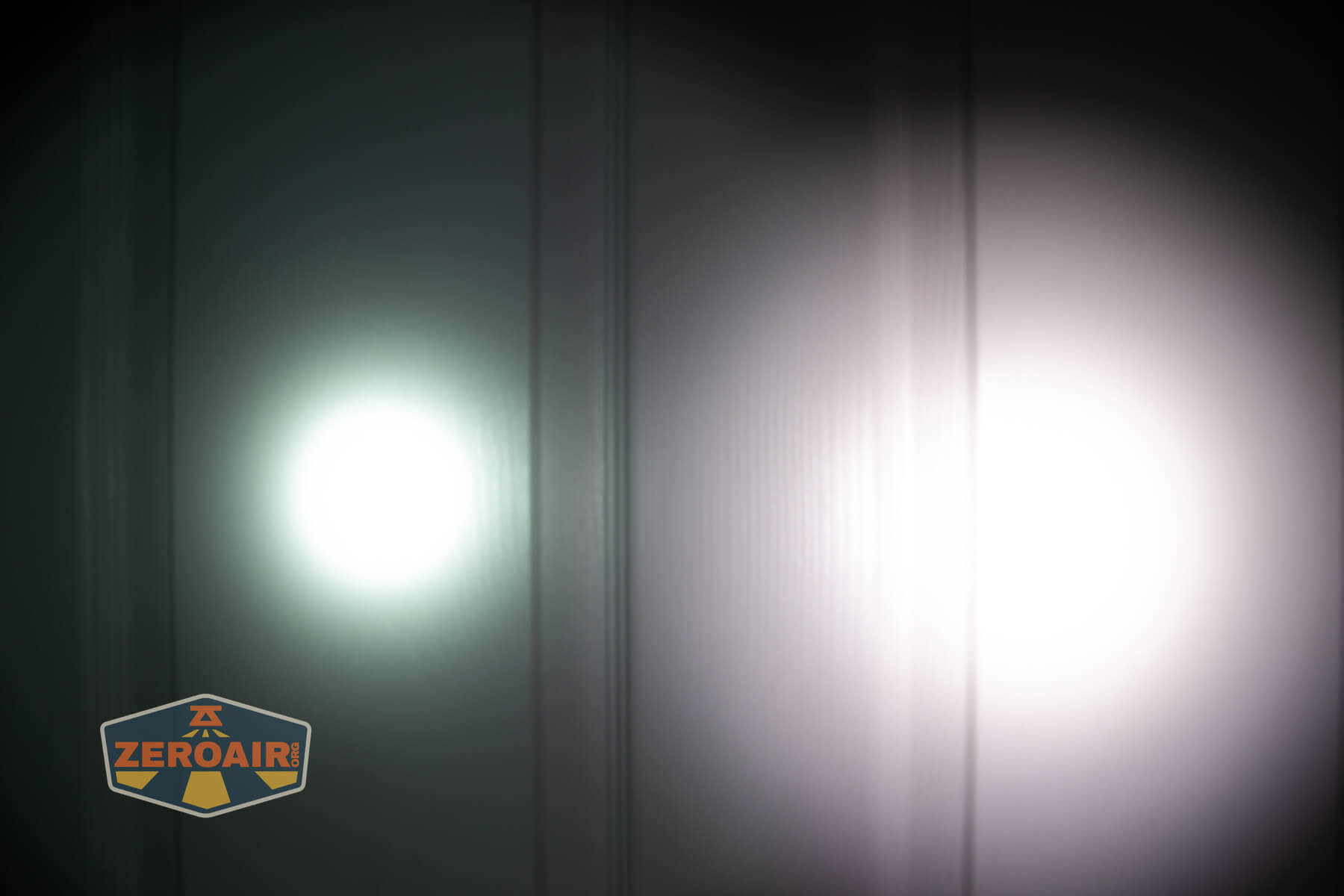
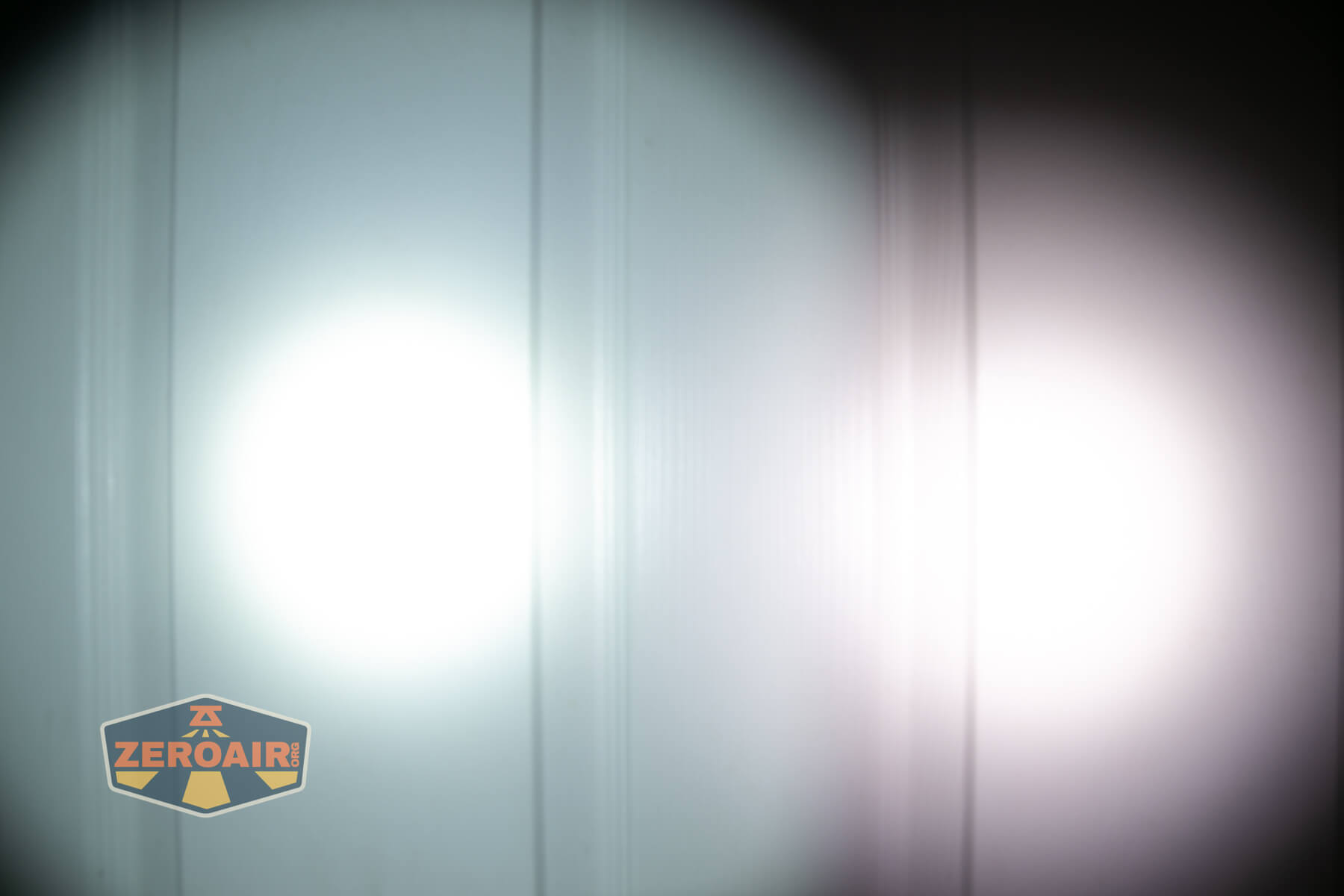
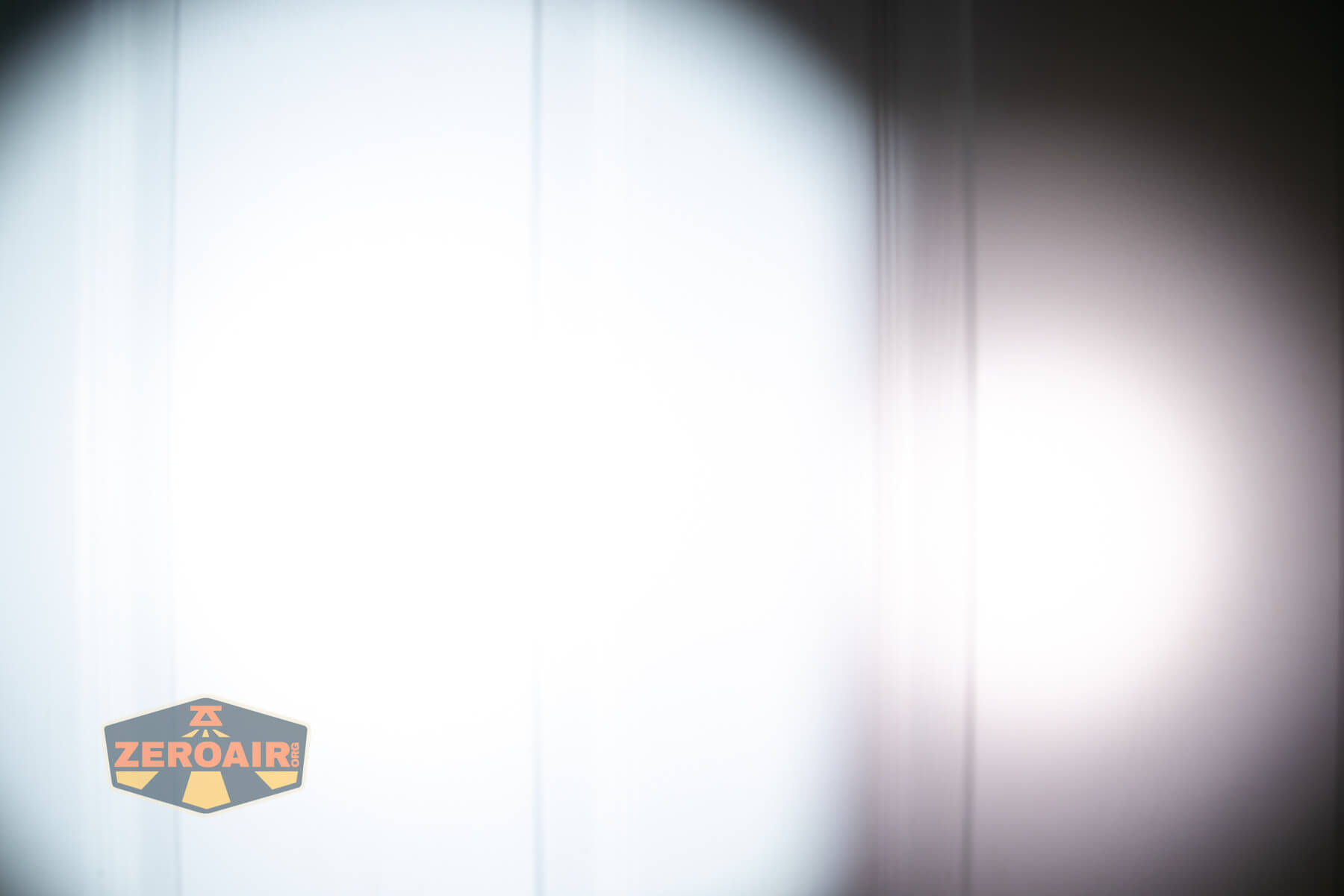
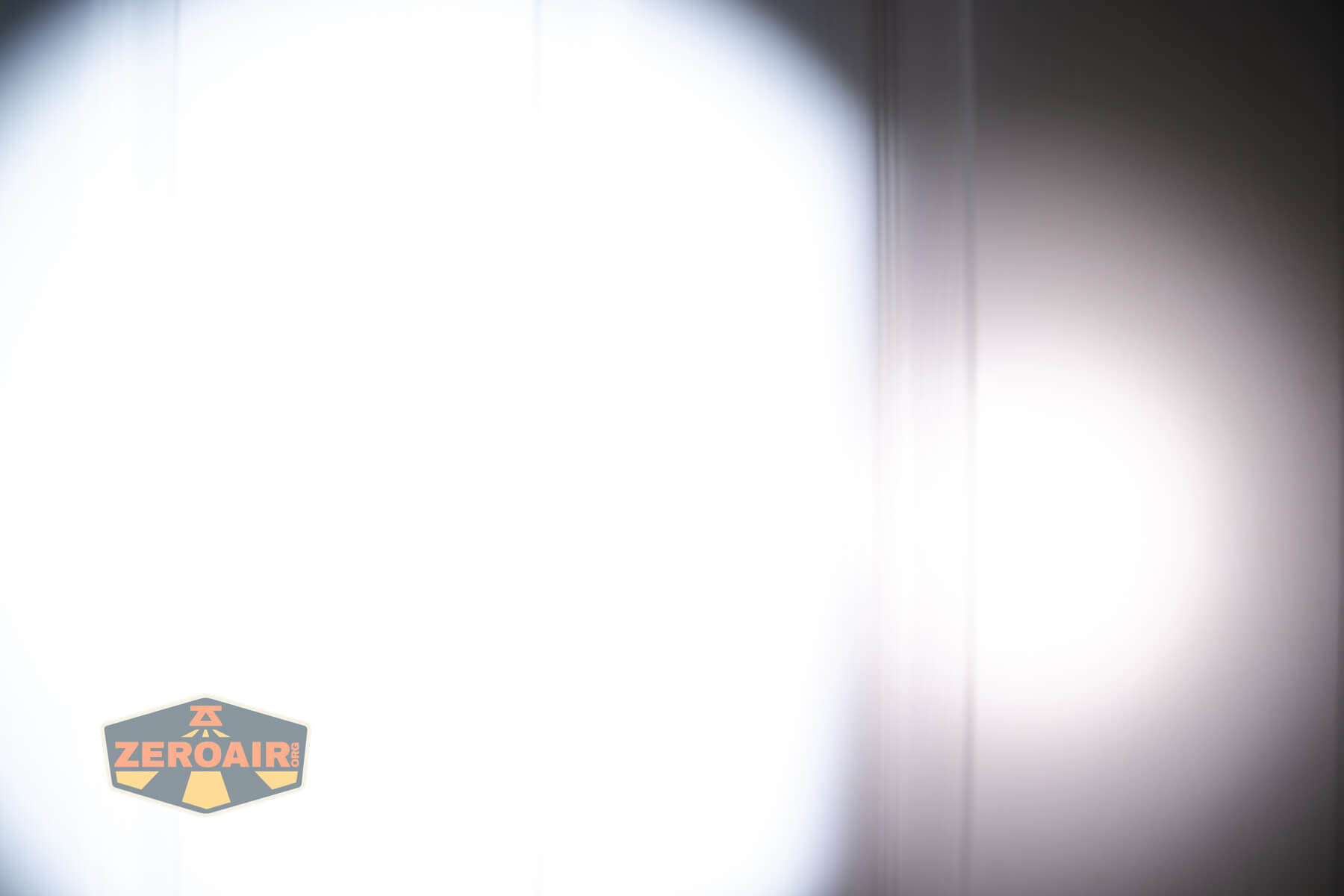
I compare everything to the KillzoneFlashlights.com 219b BLF-348 because it’s inexpensive and has the best tint!
Summary and Conclusion
I didn’t know I needed another in the Ark series, but the Olight ArkPro Ultra EDC flashlight is a great light. Olight continues to build on Ark’s success and even improves the lights that were already great! The bigger battery is a welcome addition, as is a throw emitter. Having laser and UV still built in is a bonus! I don’t super care that this one offers higher output, and the OAL aluminum is great if you need it (I suppose; I never had durability issues with regular aluminum.) Ultimately, the extra $20 or so comes down to whether the neat little “O” LED feature near the rotary and a bit more output is worth it for you.
The Big Table
| Olight ArkPro Ultra EDC flashlight | |
|---|---|
| Emitter: | (Spot) |
| Price in USD at publication time: | $103.99 |
| Cell: | Internal |
| Runtime Graphs | |
| LVP? | Almost certainly |
| Switch Type: | E-Switch (2) |
| On-Board Charging? | Yes |
| Charge Port Type: | USB-C and proprietary magnetic |
| Charge Graph | |
| Power off Charge Port | All modes except turbo of either LED |
| Claimed Lumens (lm) | Spot: 800 Flood: 1700 |
| Measured Lumens (at 30s) | Spot: 654 (81.8% of claim)^ Flood: 1371 (80.6% of claim)^ |
| Candela per Lumen | Spot: 17.4 Flood: 2 |
| Claimed Throw (m) | Spot: 205 Flood: – |
| Candela (Calculated) in cd (at 30s) | Spot: 417lux @ 5.148m = 11051cd Flood: 137lux @ 4.751m = 3092cd |
| Throw (Calculated) (m) | Spot: 210.3 (102.6% of claim)^ Flood: 111.2 |
| Claimed CCT | Spot: – Flood: – |
| Measured CCT Range (K) | Spot: 6300-7100 Kelvin Flood: 5900-6900 Kelvin |
| Item provided for review by: | Olight |
| All my Olight reviews! | |
^ Measurement disclaimer: Testing flashlights is my hobby. I use hobbyist-level equipment for testing, including some I made myself. Try not to get buried in the details of manufacturer specifications versus measurements recorded here; A certain amount of difference (say, 10 or 15%) is perfectly reasonable.
What I like
- The laser switch was moved out of the main switch
- USB-C charging
- Bigger battery
- Higher output on the Ultra version
- Little LED icons around the switch
- Great beam shape on the spot emitter
- ArkBeat is neat
What I don’t like
- Built-in battery
- High CCT
- Low CRI
Notes
- This content originally appeared at zeroair.org. Please visit there for the best experience!
- Please use my Amazon.com referral link to help support zeroair.org!
- Please support me on Patreon! I deeply appreciate your support!
Discover more from ZeroAir Reviews
Subscribe to get the latest posts sent to your email.
Pingback: Olight ArkPro & Ultra Flashlights: Lowest Prices & Deals [Year] - World Today Journal
Hi Dear,
This is Angelica from Speras Lighting, professional maker of premium LED flashlights and headlamps.
We are inviting you to test our EST PLUS V3. If you’d like to evaluate this tactical light, we will send you a sample for review. Once you receive it, please create a review post or article on YouTube, Instagram, blogs or other social platforms, then send us the published link.
Here kindly introduce a high-performance tactical flashlight EST PLUS V3 which is designed and produced by our SPERAS as below:
3000 lumens,800m beam distance
One-step tactical turbo
Long runtime & fast charging
1-inch mount compatible
ideal for safety patrols, emergency response, hunting, and outdoor observation.
What do you think of EST PLUS V3? We look forward to your tests and opinions.