
LoopGear SK05 Pro Halloween Flashlight Review
The LoopGear SK05 Pro Halloween flashlight has a new Halloween finish, and still has accessible 18650 cells as well as a high-output triple and throwy single.
Official Specs and Features
Here’s a referral link to the LoopGear SK-05 Pro MAO flashlight product page on Amazon. Unfortunately, I don’t think this LoopGear SK05 Pro Halloween flashlight is available for sale anywhere anymore! (But it’s great enough that you should probably to hunt one down!)
Versions
There are now many versions of the LoopGear SK-05 Pro flashlight. Three body colors are available: black, grey, MAO, and this new Halloween. There’s a non-Pro version too. This Pro version comes with two flood emitter options – Nichia 519a or higher output Luminus SST25.
Price
This version of the LoopGear SK-05 Pro MAO flashlight comes in at an MSRP of $152.99. It’s available now at Amazon!
You can also purchase this through LoopGear directly. Here’s a link to the LoopGear SK-05 Pro MAO flashlight and a coupon! code: zeroair
What’s Included
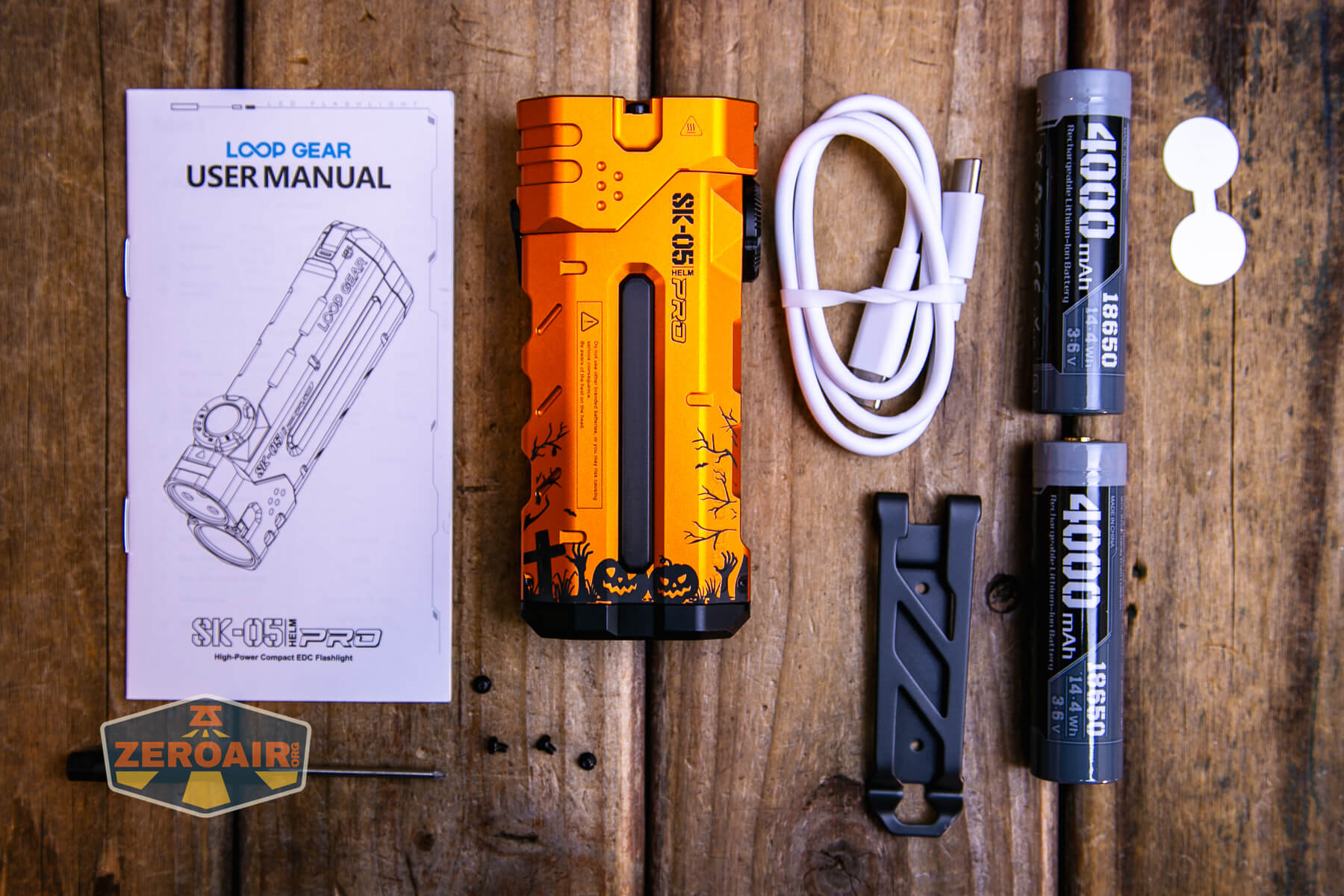
- LoopGear SK05 Pro Halloween flashlight
- LoopGear 4000mAh 18650 (2)
- Charging cable
- Pocket clip (with screws and tool for mounting)
- Manual
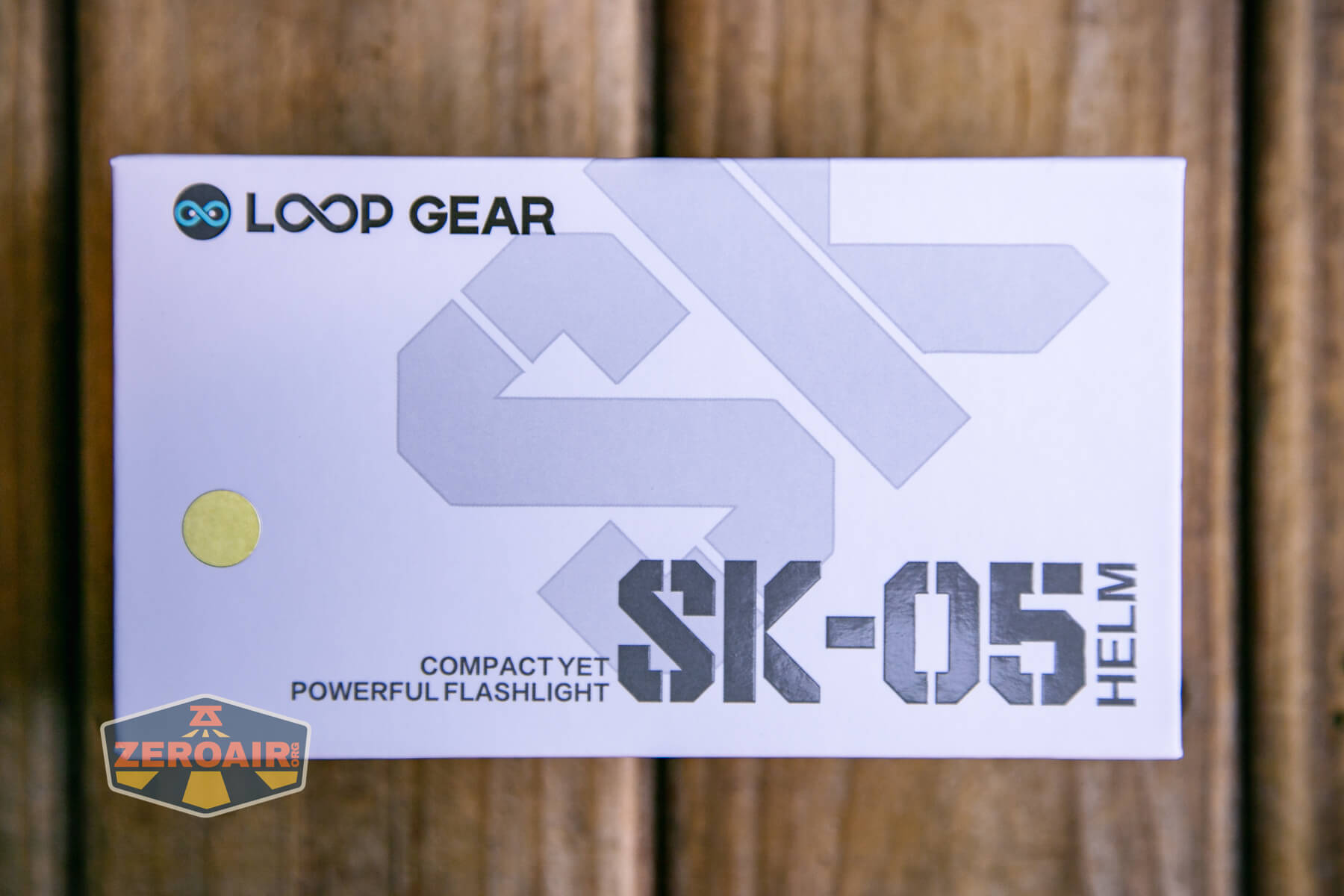
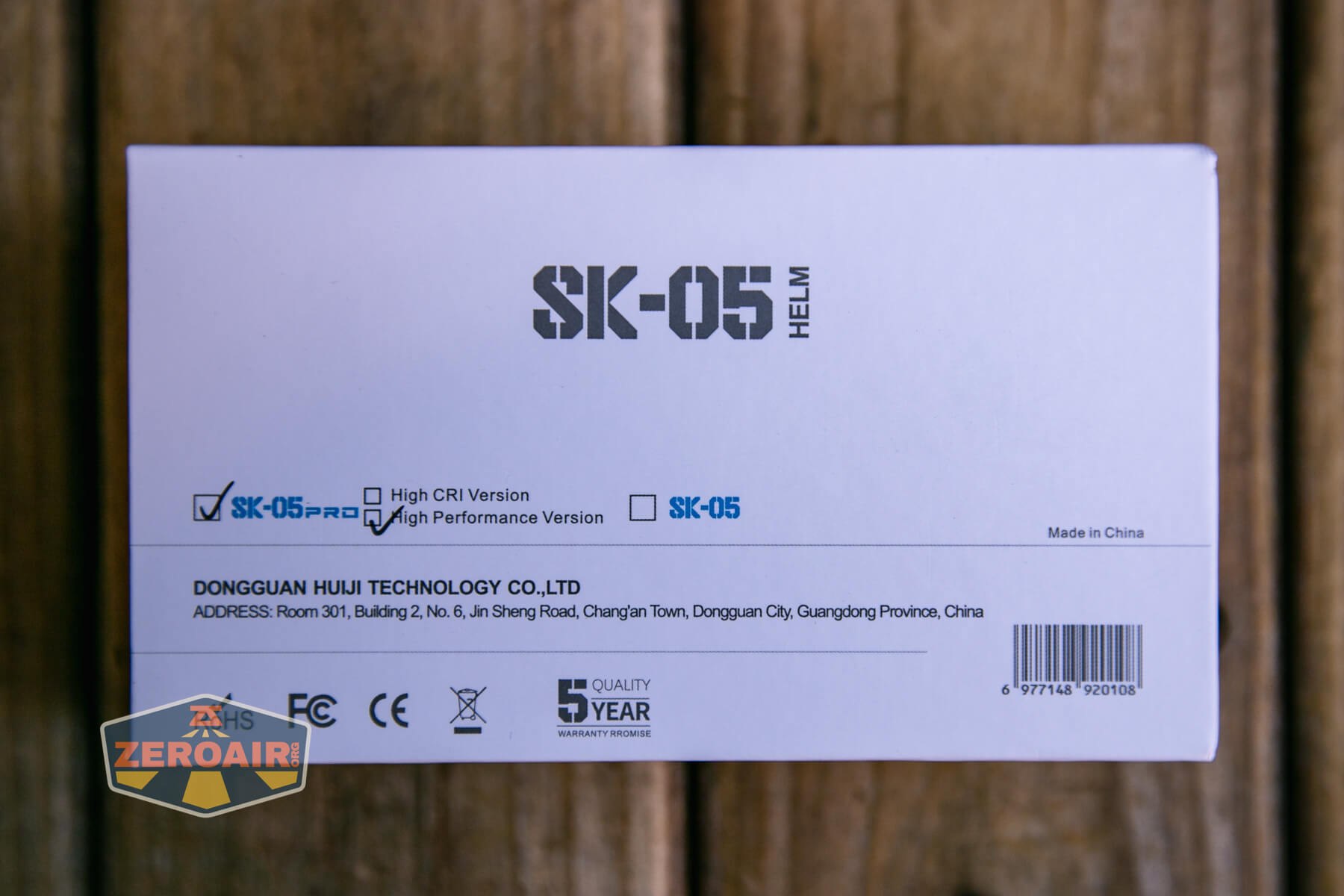
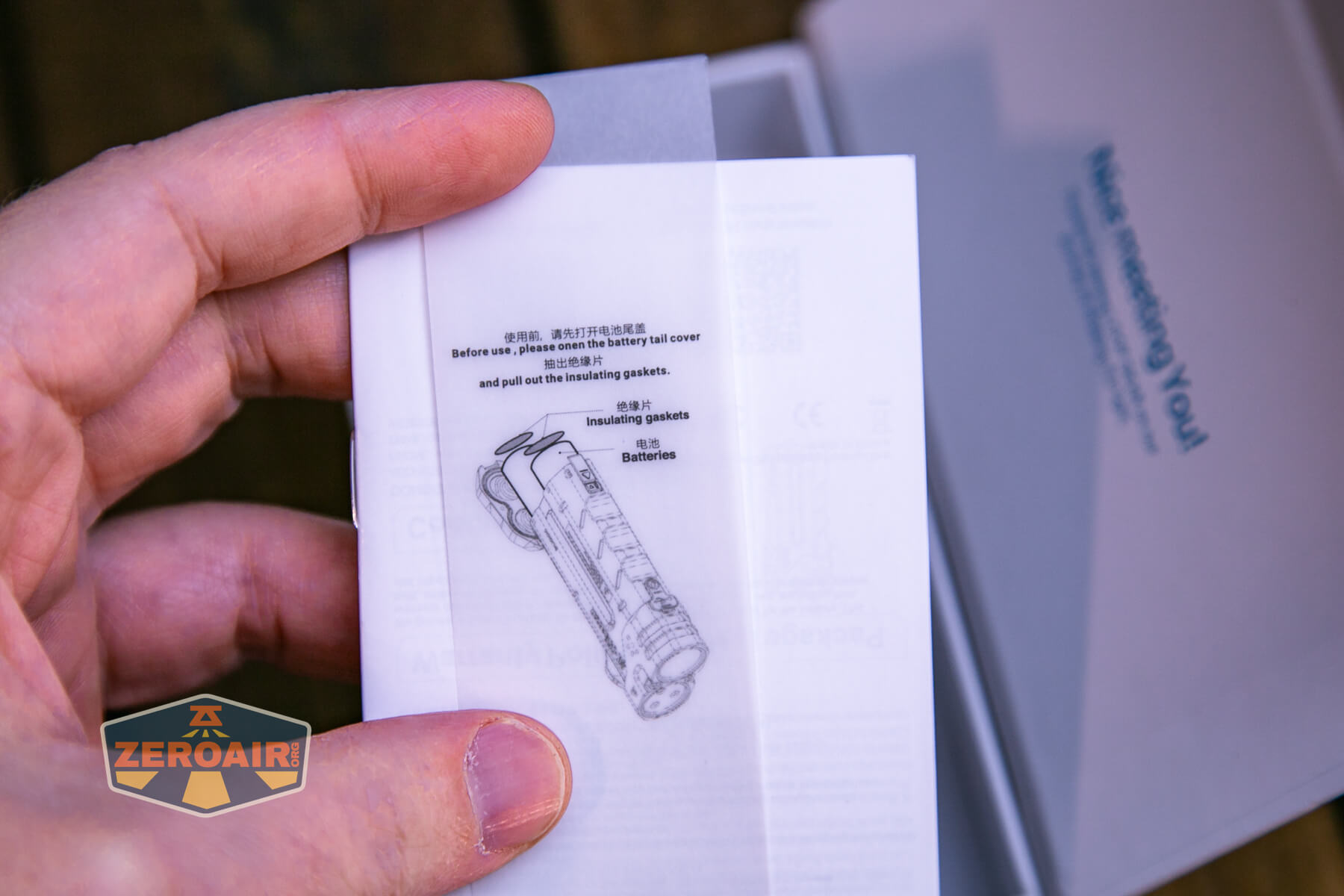
Package and Manual

Build Quality and Disassembly
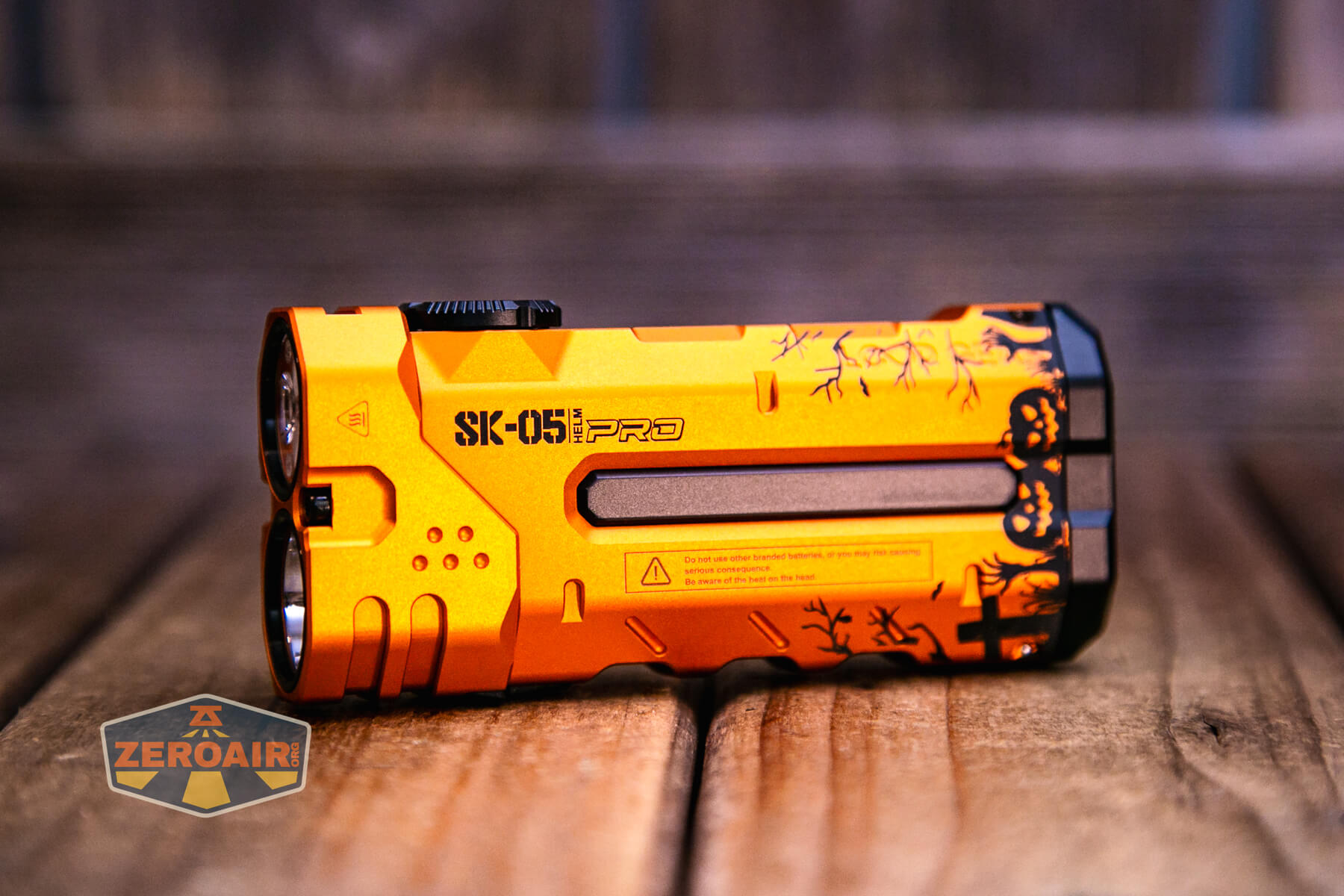
The LoopGear SK05 Pro Halloween flashlight is very much like the LoopGear SK-05 (non-Pro). There are a few differences, most of which are important later in the review. But general build quality is the same between models – very good.
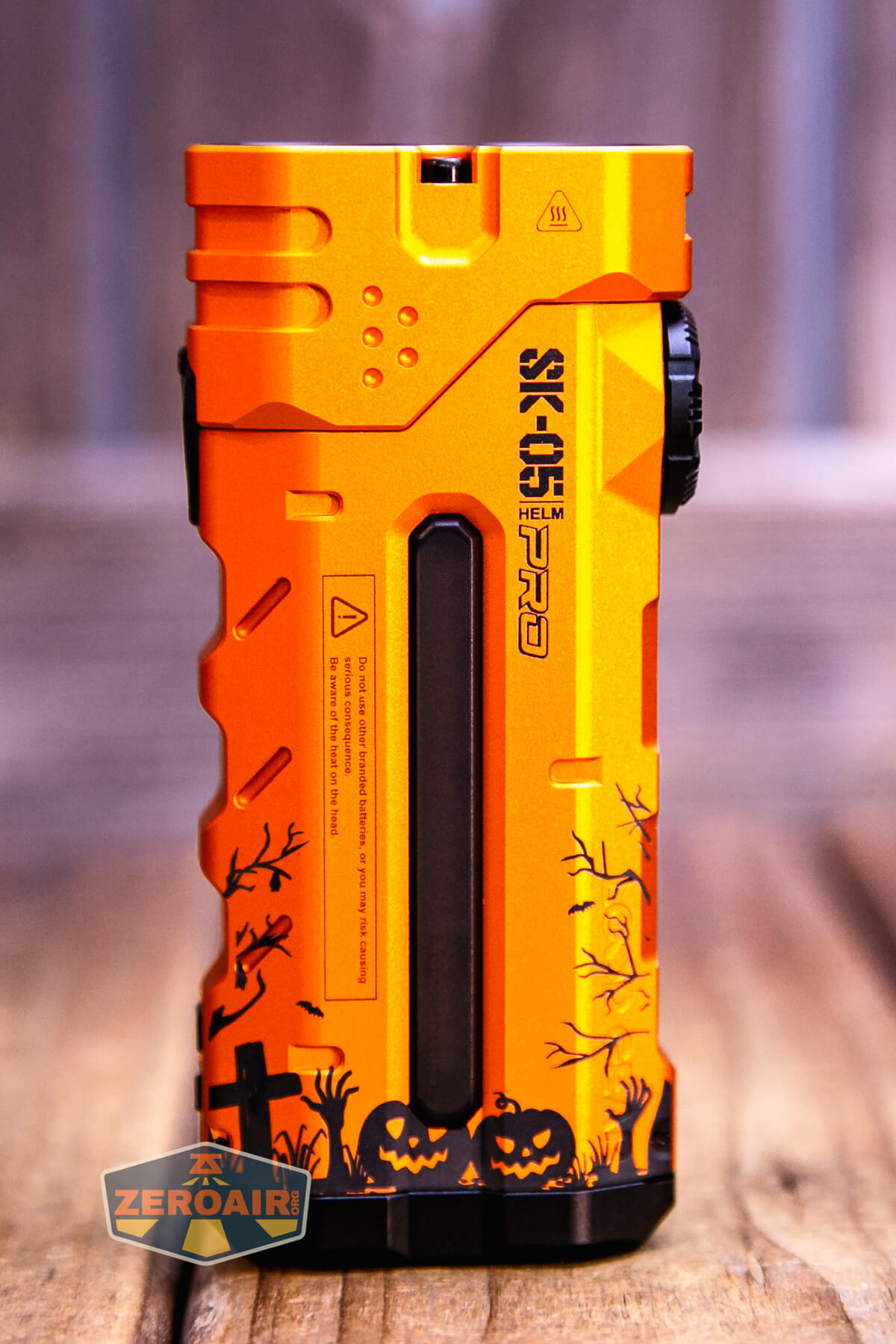
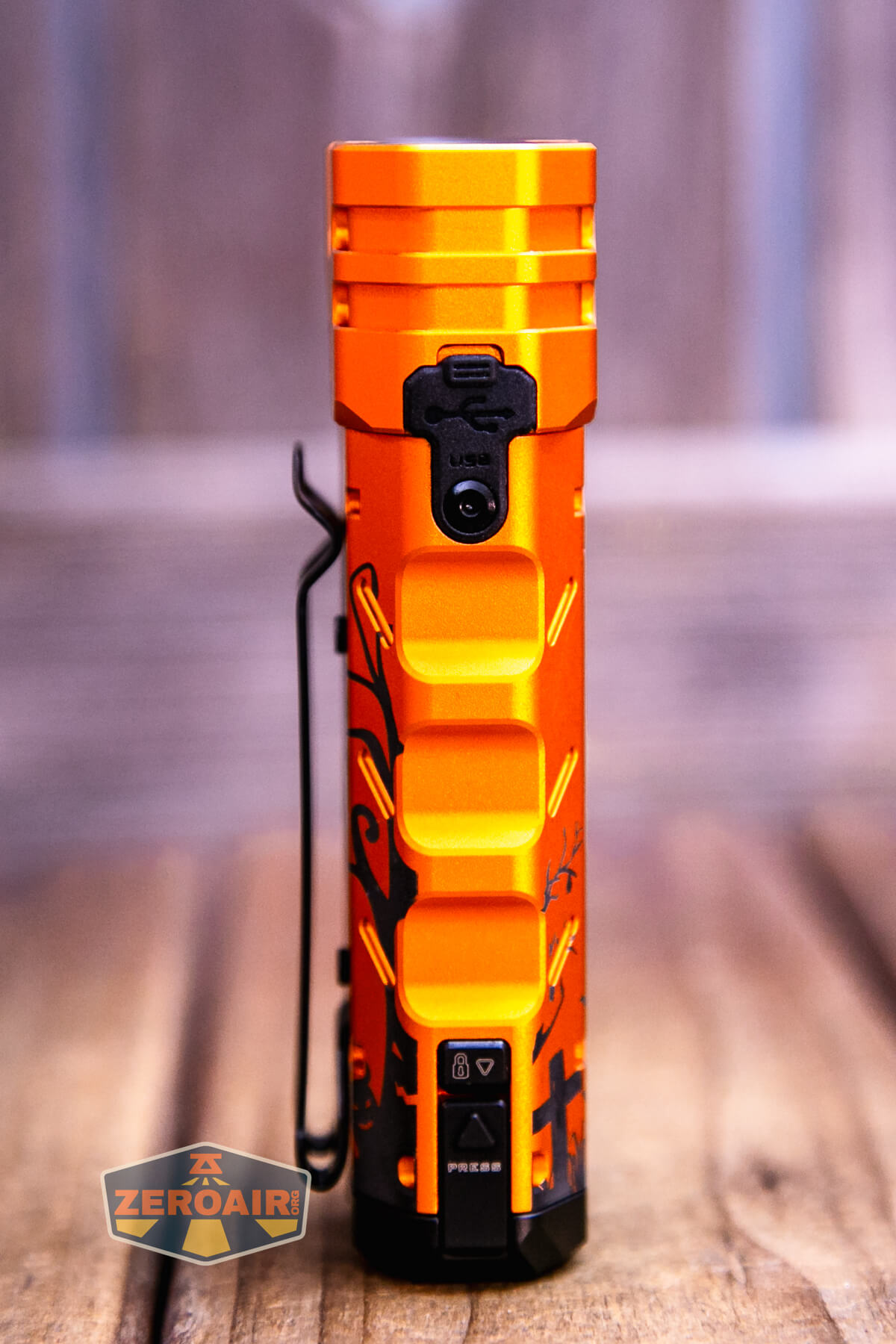
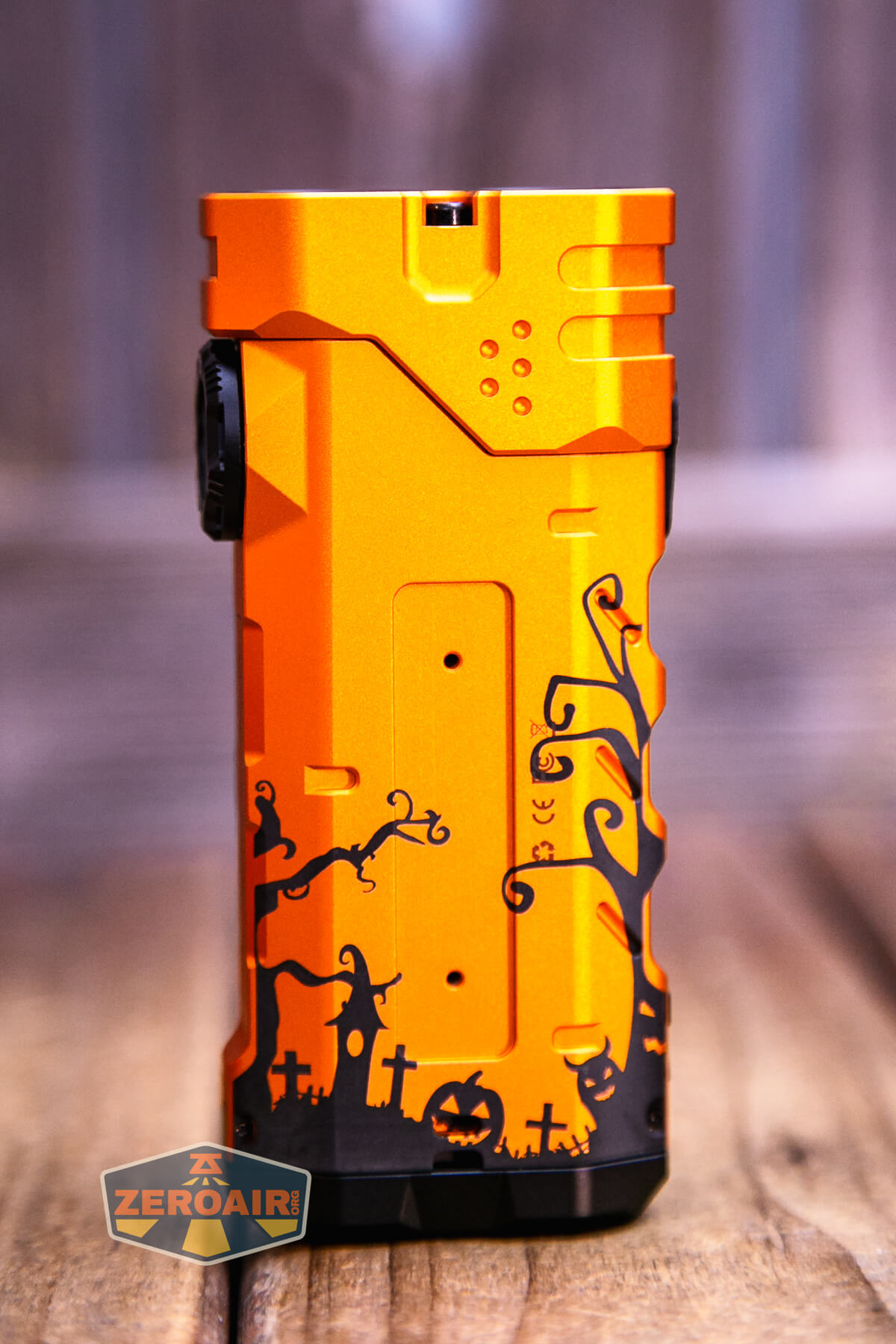
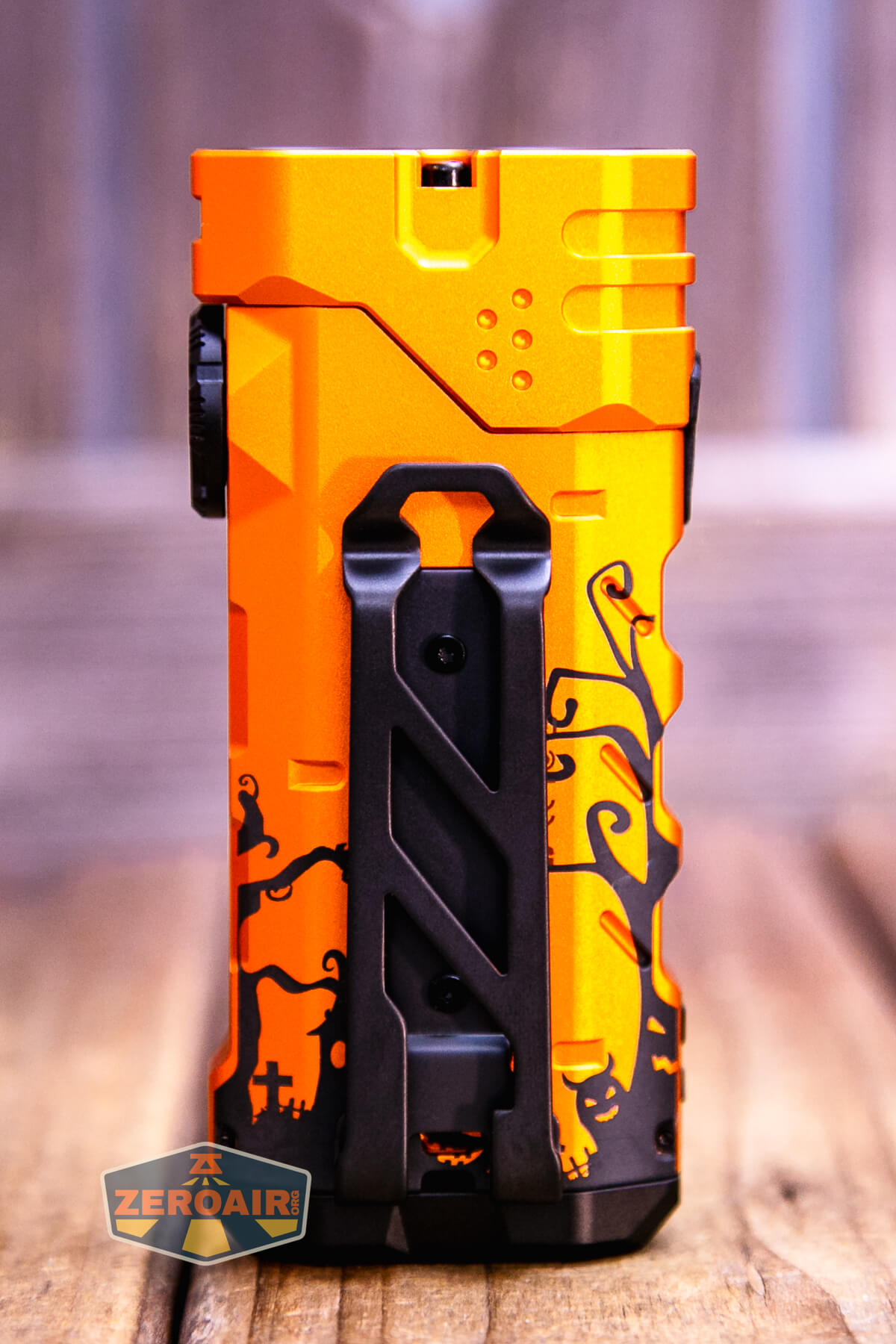
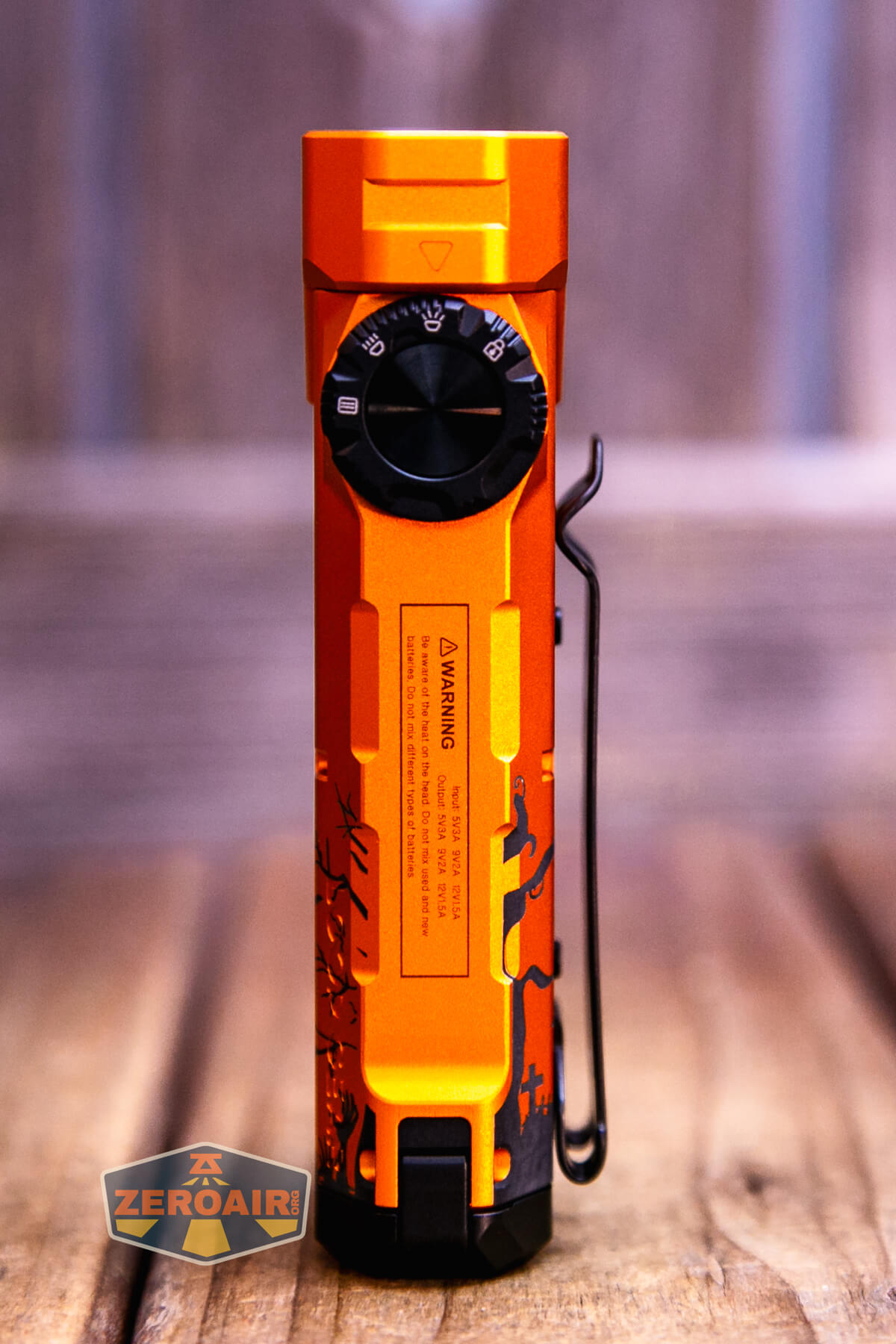
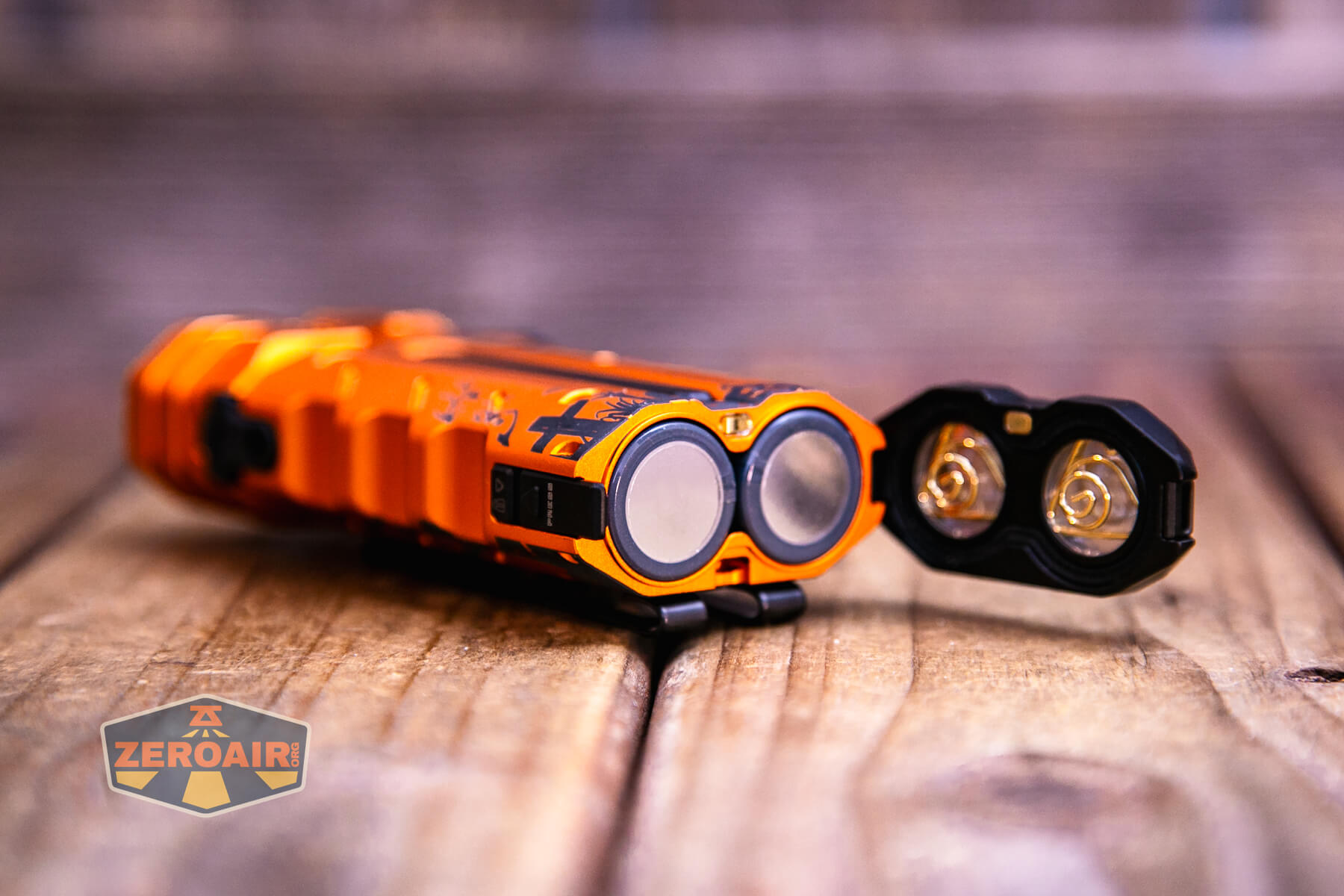
Of course, one of the biggest differences is that the cells are accessible! So inside the light, you can see that the positive contact is a big button.
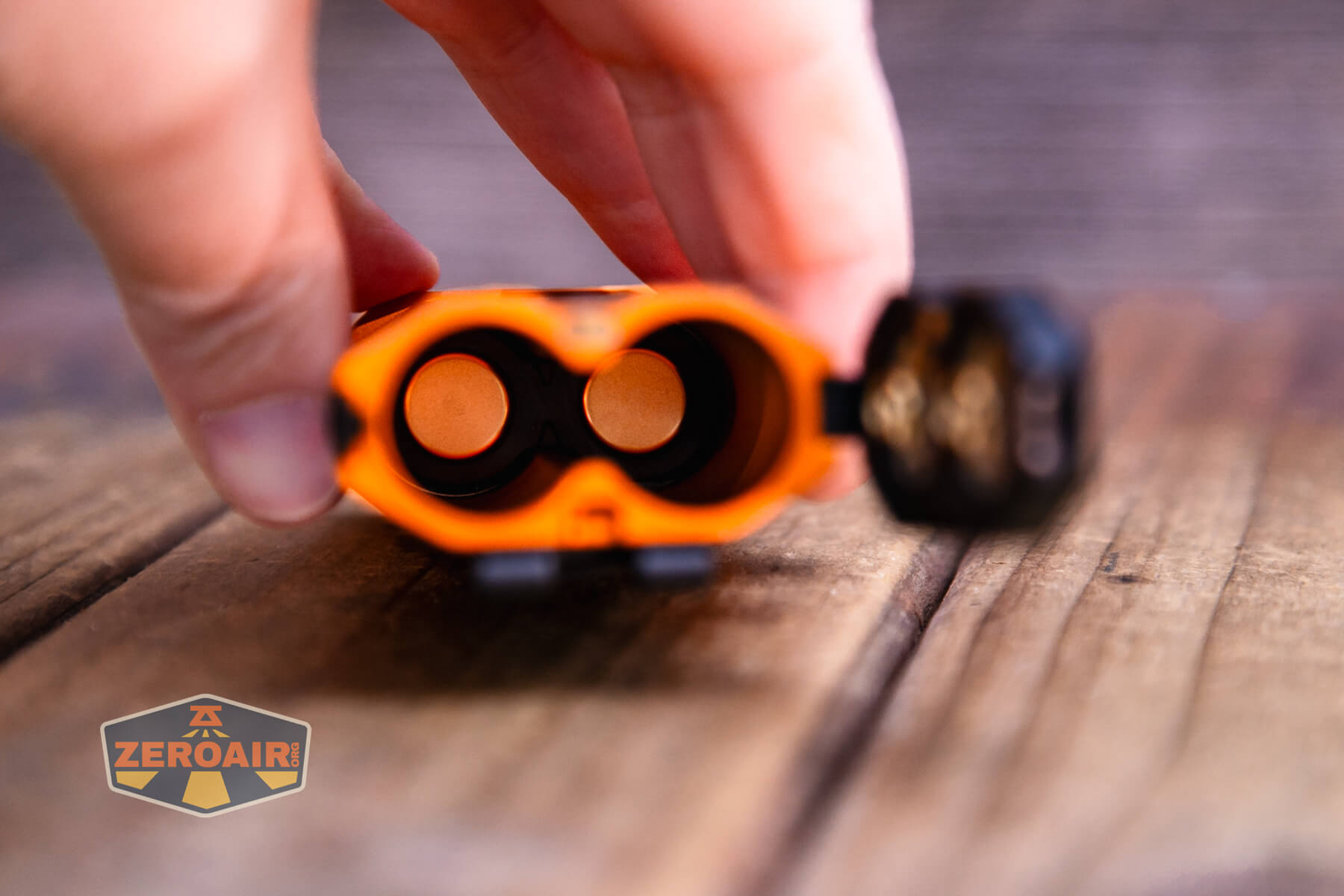
And on the other end, where negative contact is made, there are dual springs.
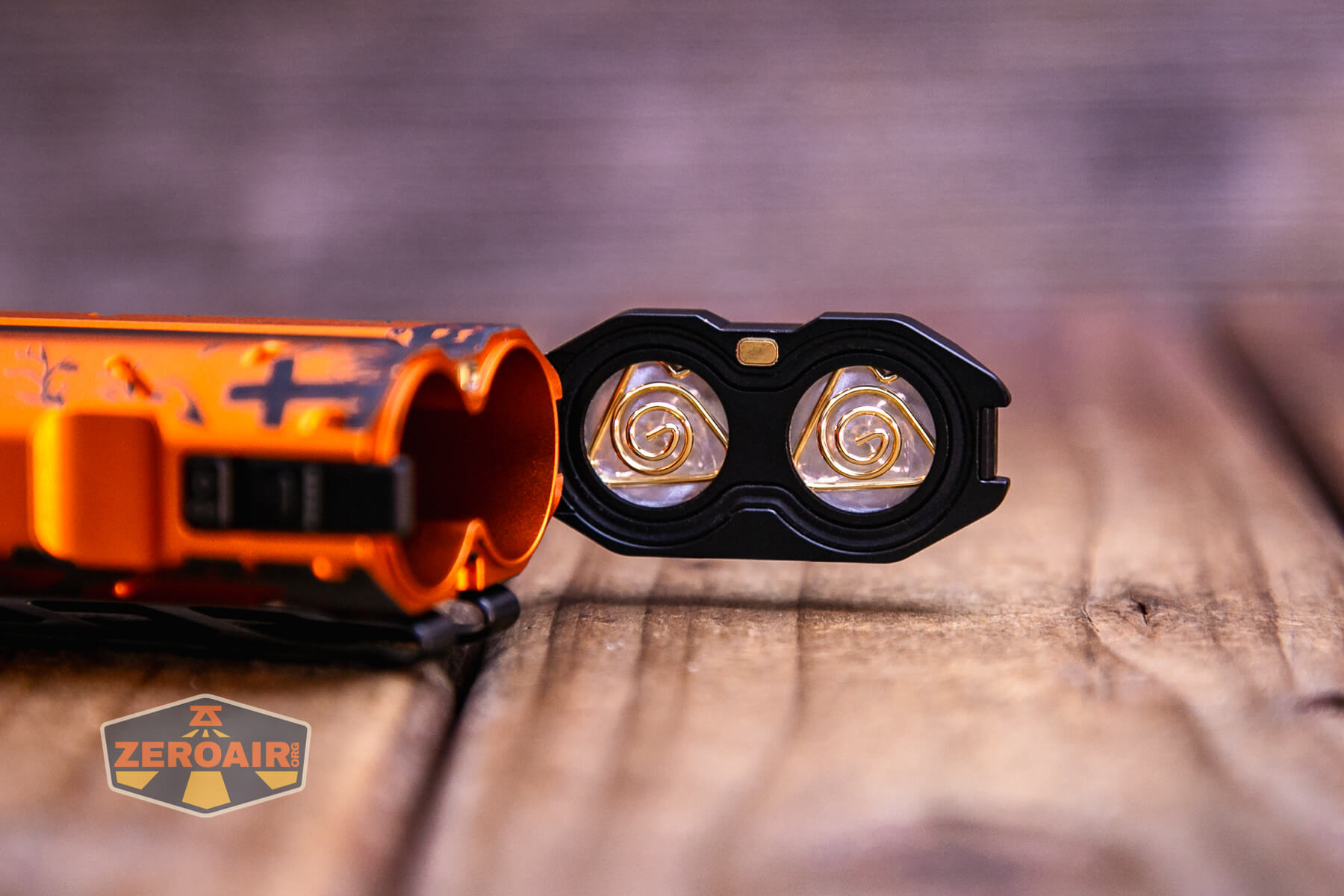
Here’s how you open that tail section – this little button! The button (where it says “Press”) has a lock, so you can fully prevent the tail from opening.
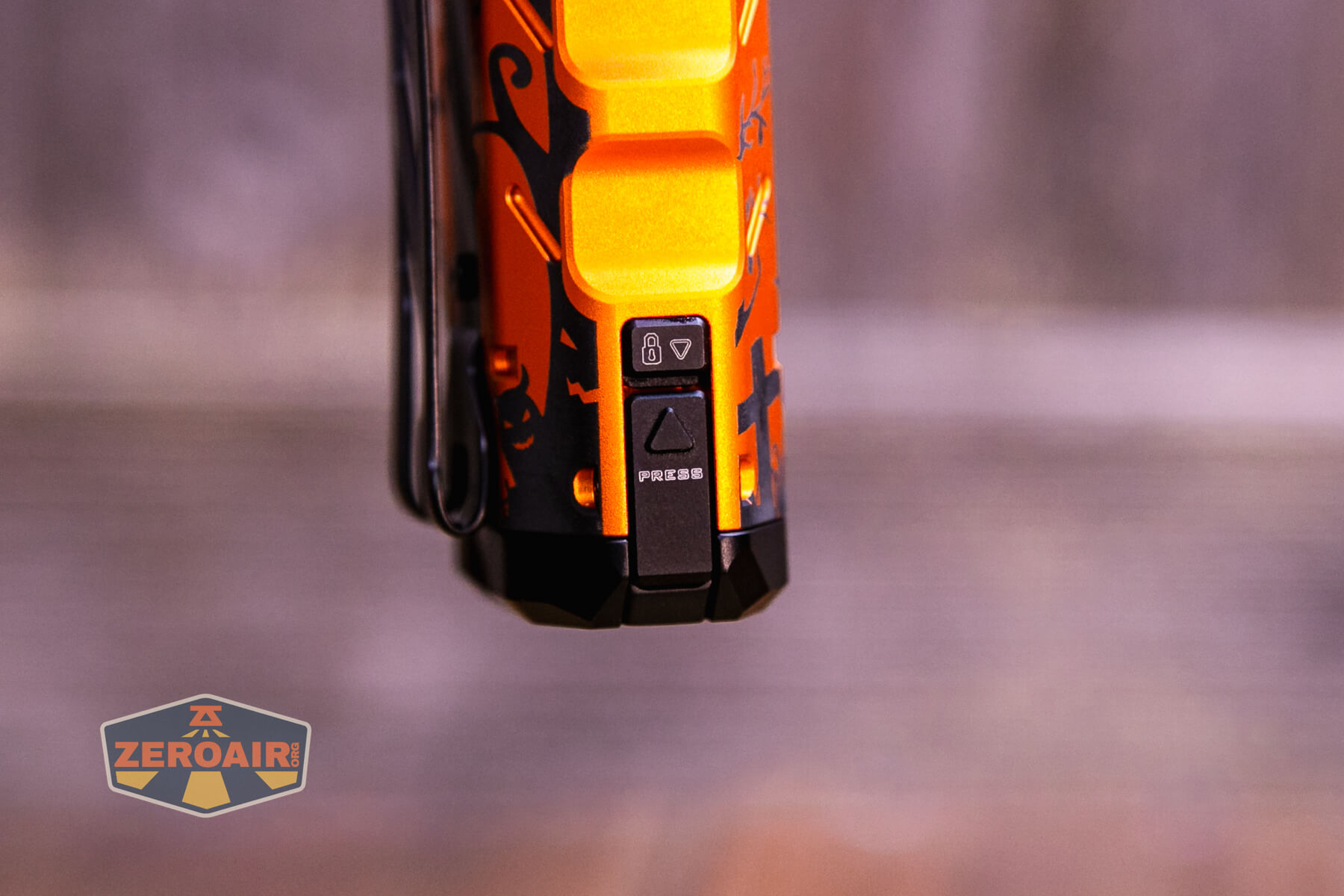
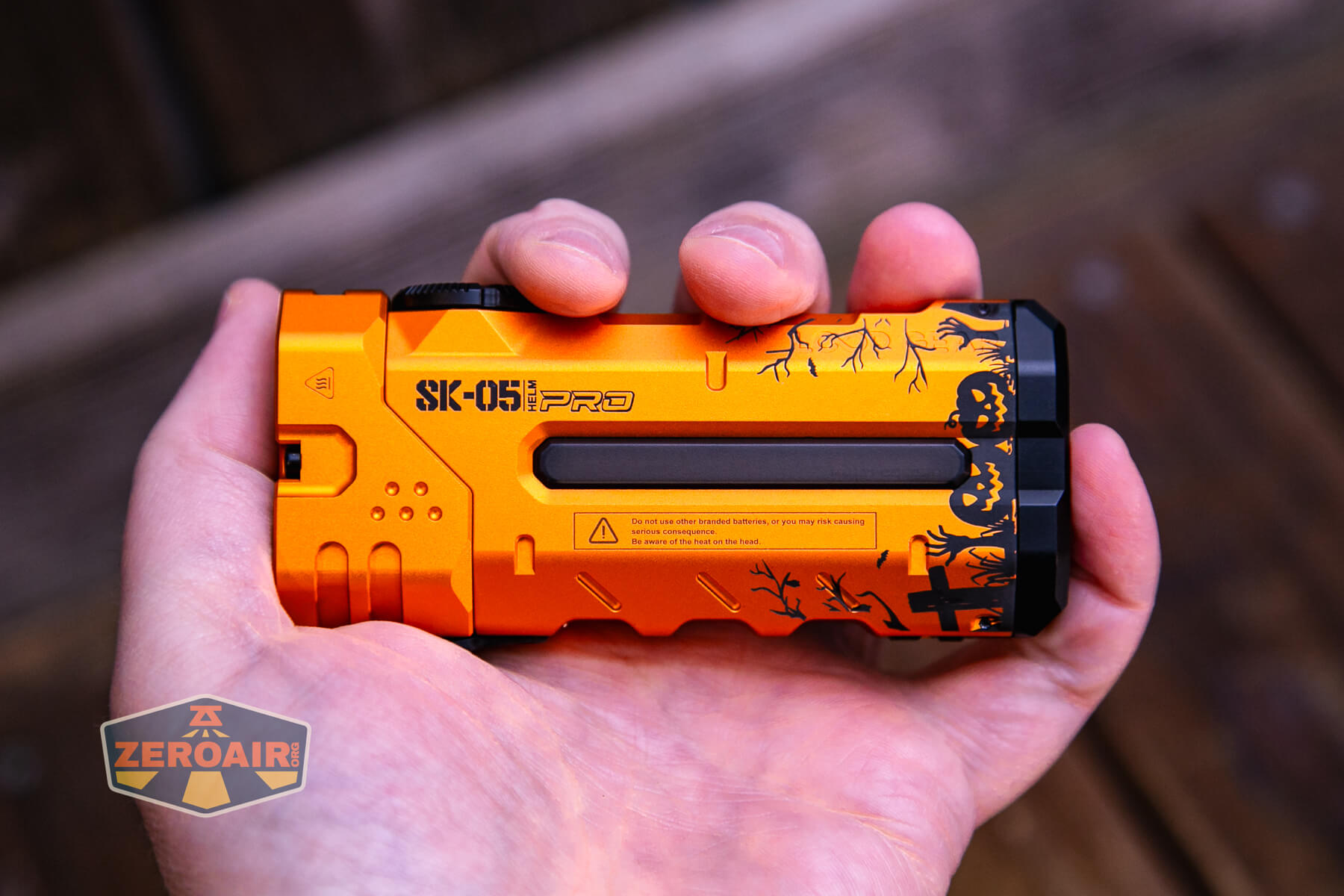
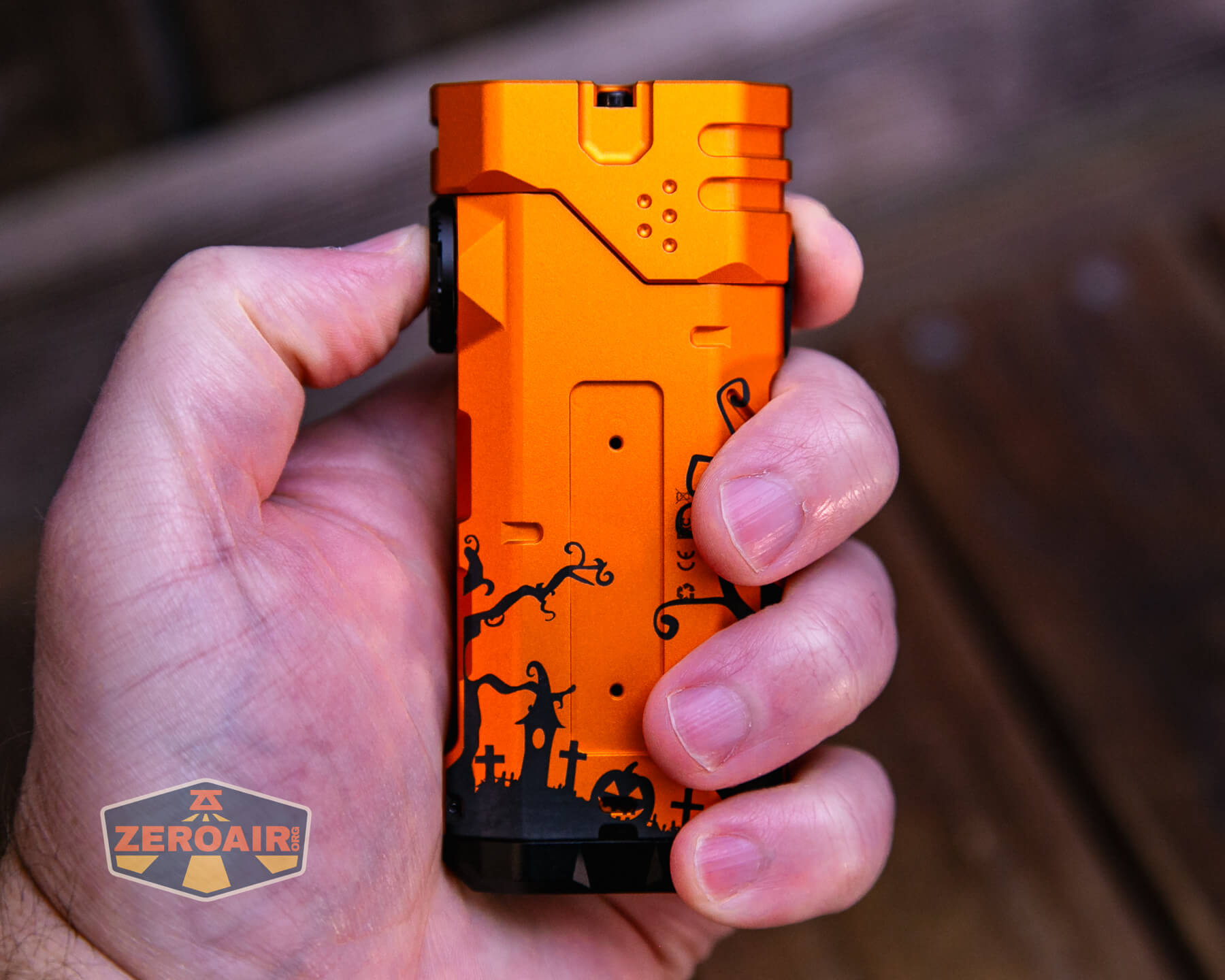
And here’s one of the more important aspects of this LoopGear SK05 Pro Halloween flashlight: The Halloween design! I have to say, this is incredibly well done. Both sides have some design, and it’s not the same (repeated) design!
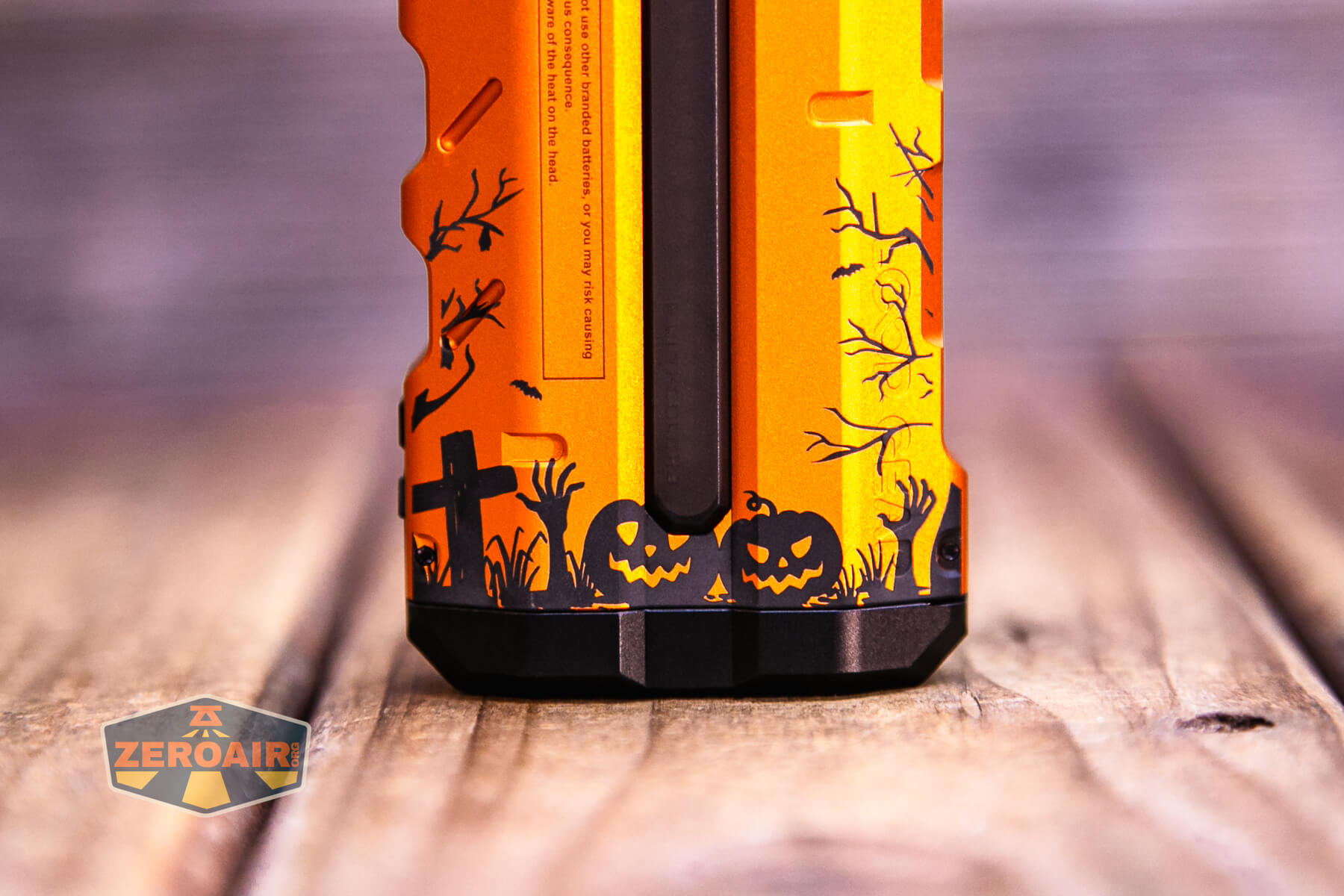
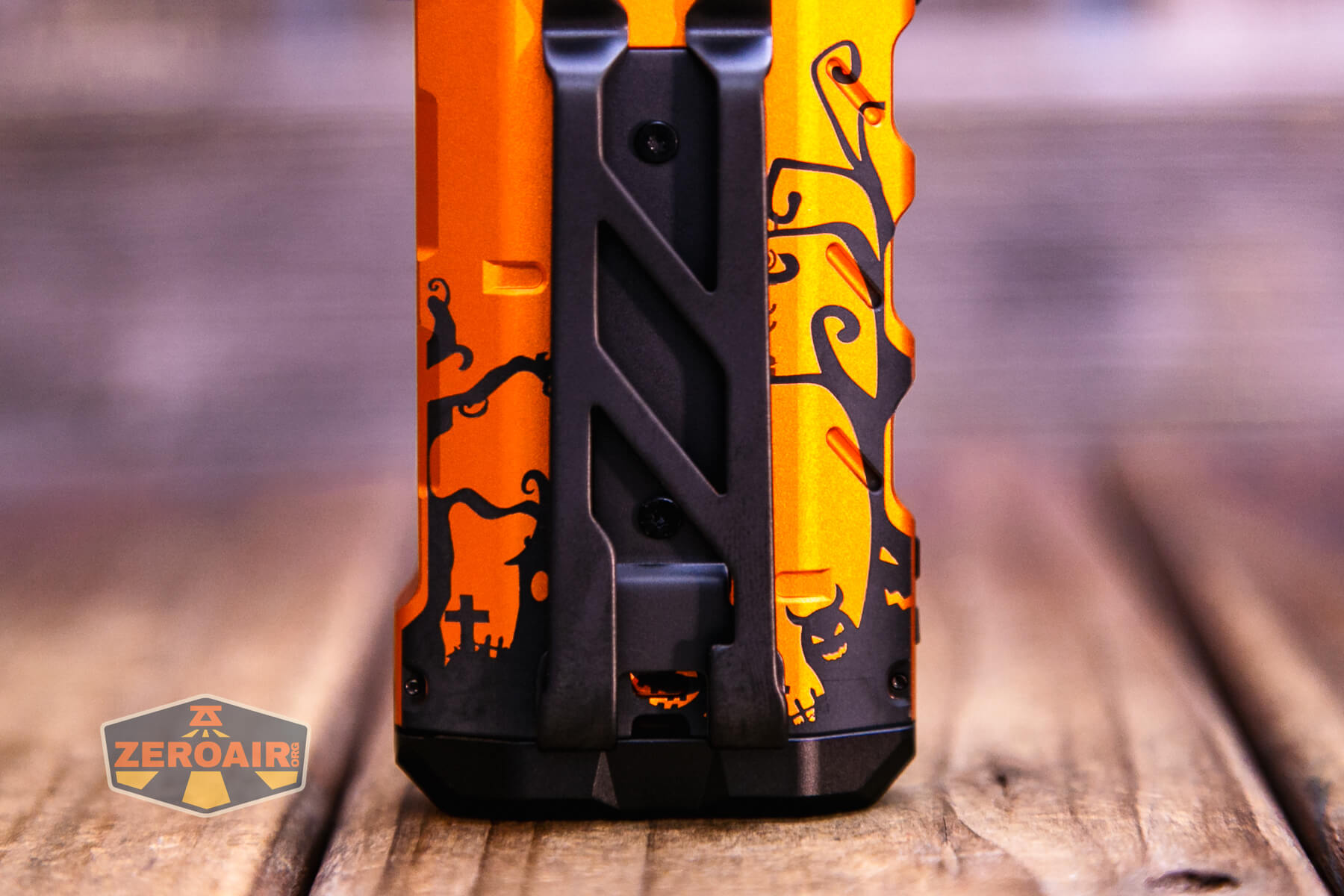
I really love it! The pocket clip (that ships unattached) covers just a little bit of the design on the back side.
Size and Comps
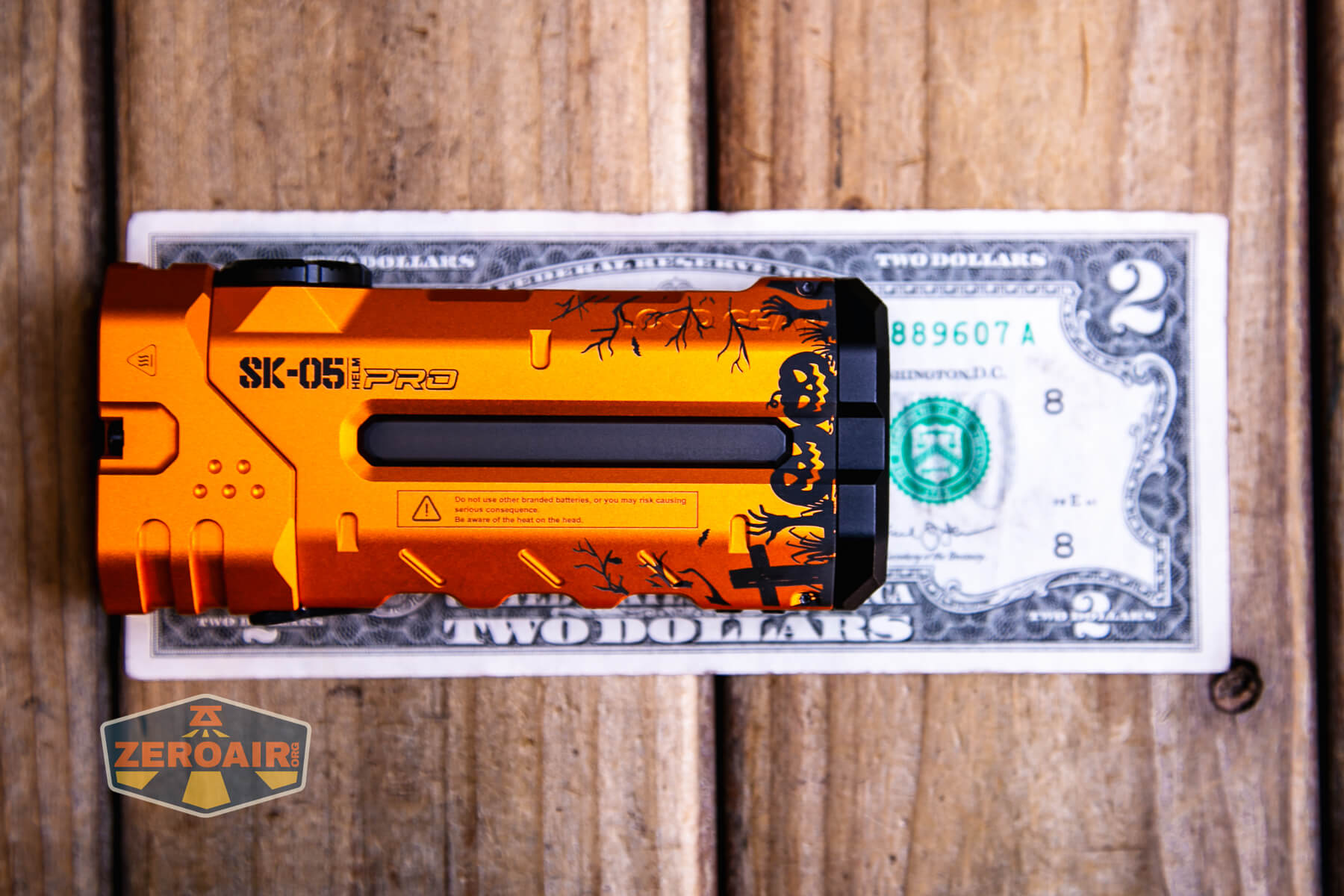
106mm x 47.8mm x 22.5mm and 235g. Notably, this is the same size as the non-Pro. (And 10 grams heavier.)
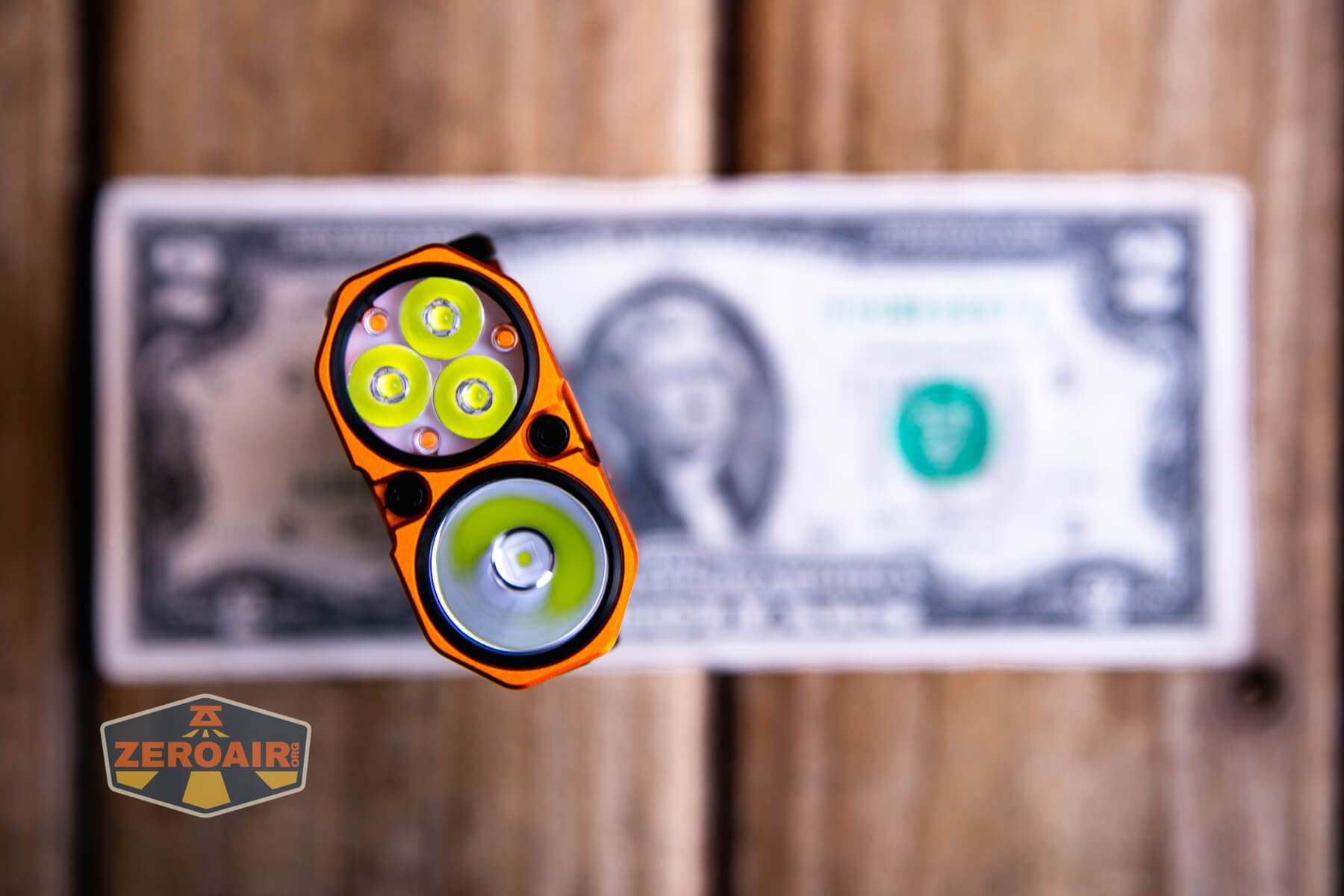
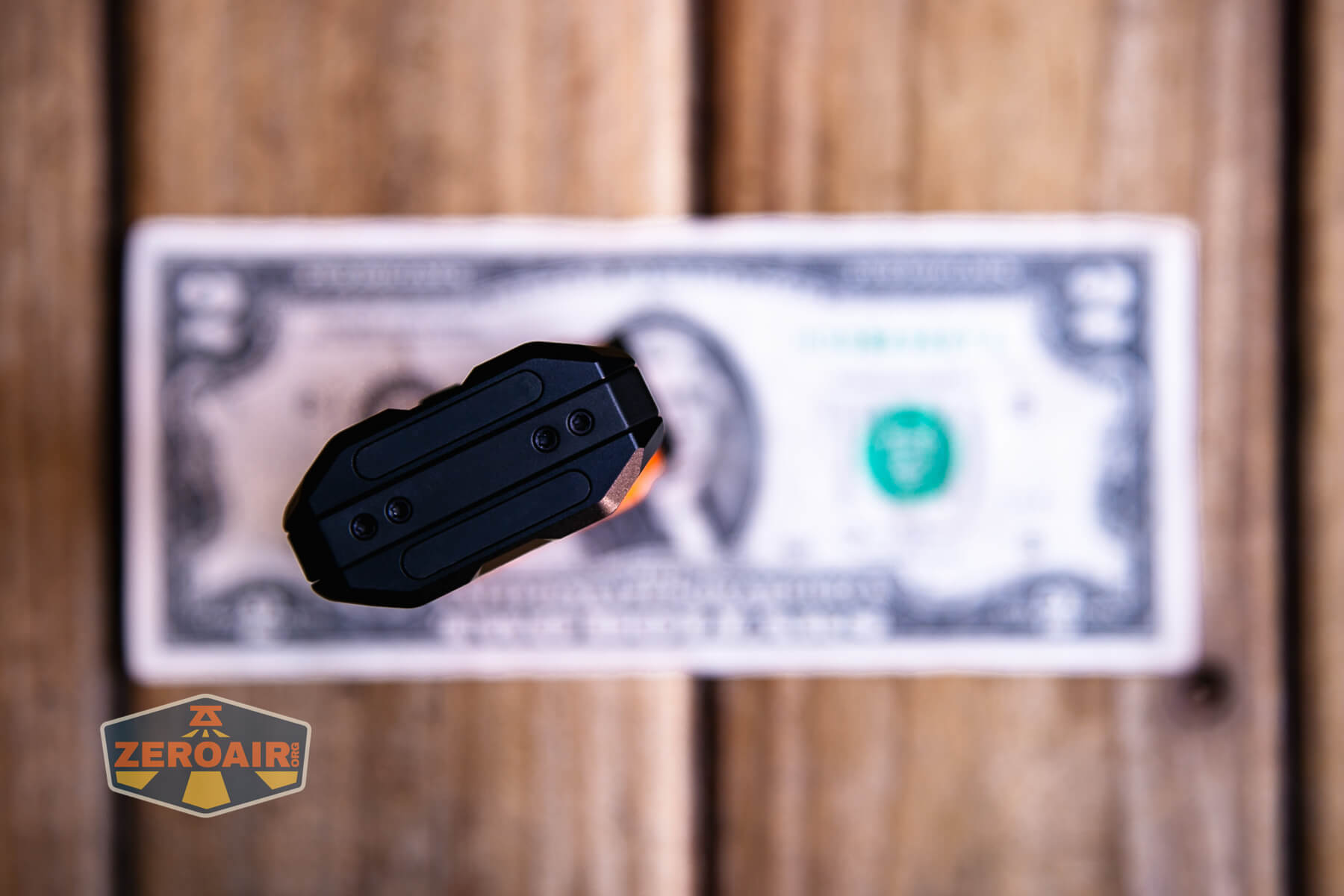
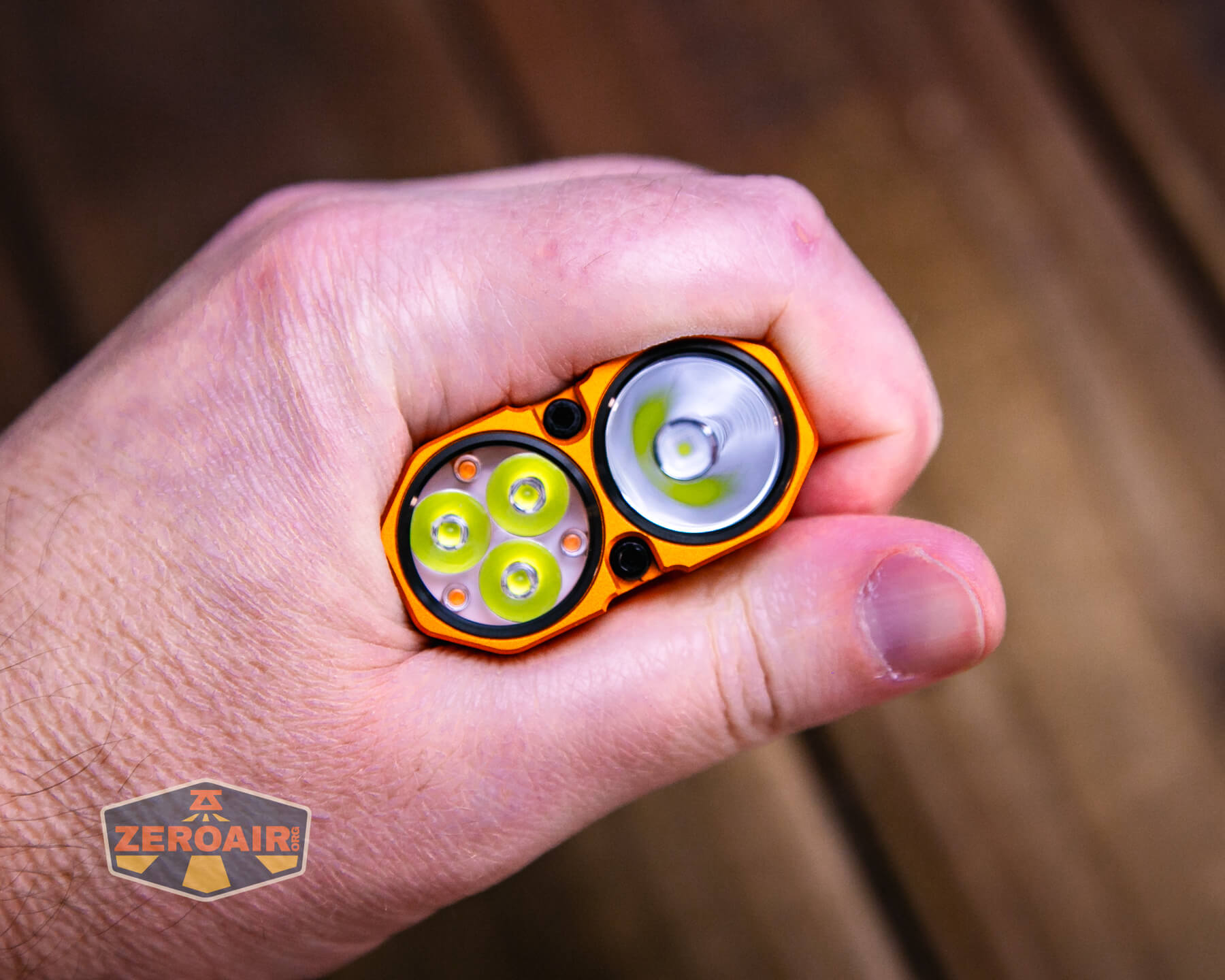
Here’s the light in hand:
Here’s the test light with the venerable Convoy S2+. The version below is a custom laser-engraved Convoy S2+ host by GadgetConnections.com. I did a full post on an engraved orange host right here! Or go straight to GadgetConnections.com to buy your Convoy S2+ now!
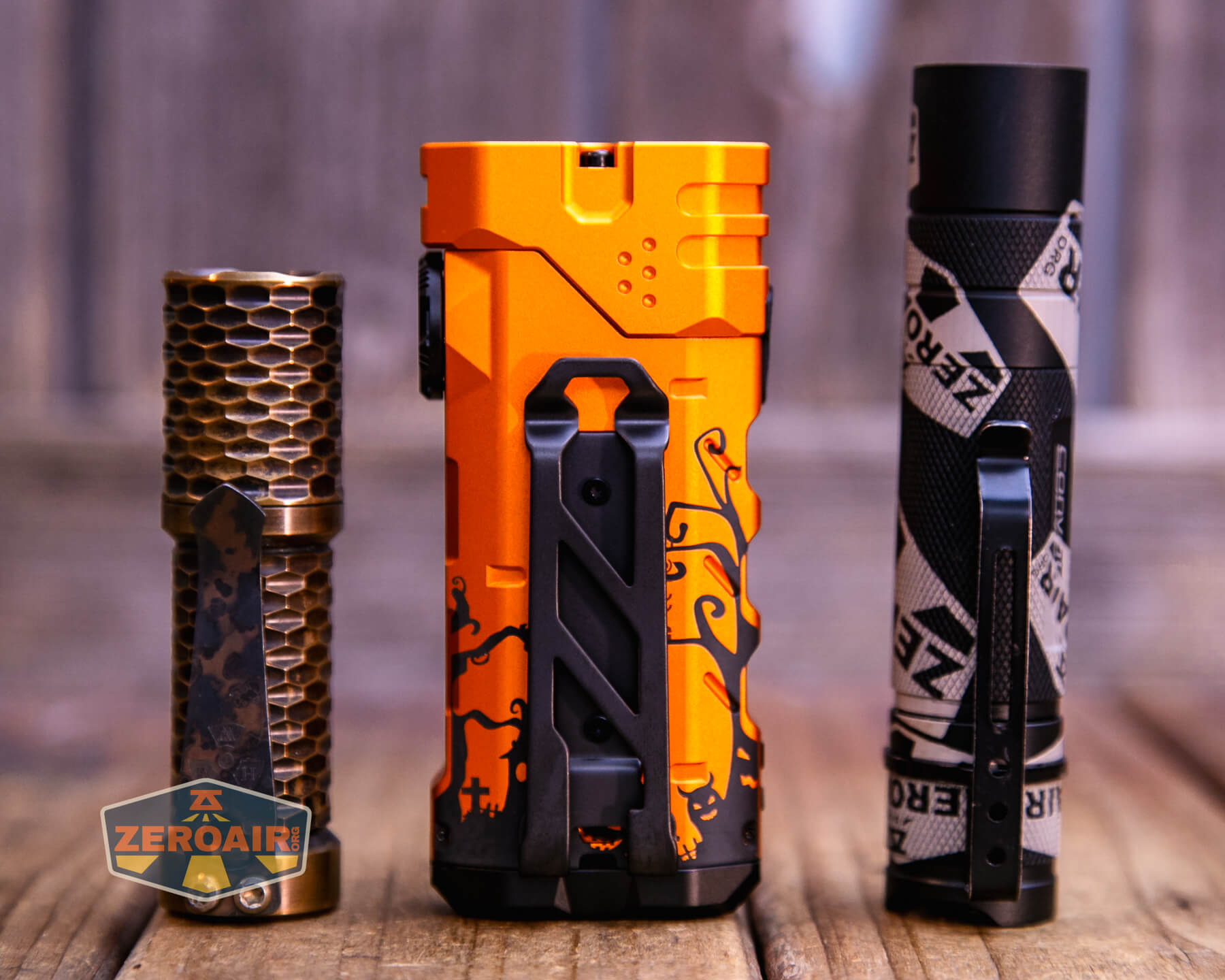
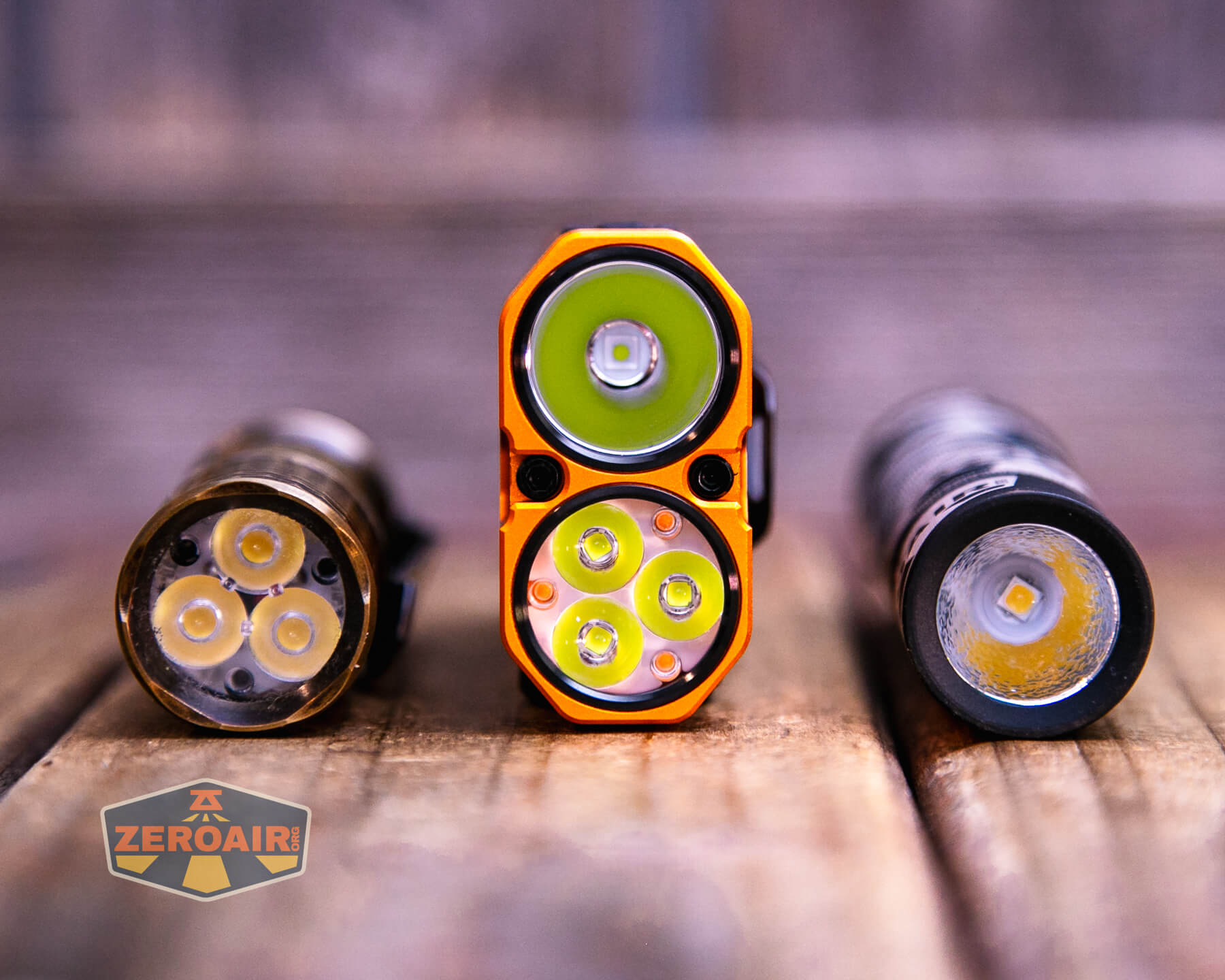
Also in the photo above, my Standard Reference Material (SRM) flashlight is the Hanko Machine Works Trident, an 18350 light. While I have not reviewed or tested the Gunner Grip version seen here, I have tested a Hanko Machine Works Trident Total Tesseract in brass. I love the Trident, and it’s a striking contrast to the inexpensive Convoy S2+, another great SRM.
Retention and Carry
Unlike the non-Pro, there’s a pocket clip included here. It’s not attached, but two screws (and two extra) are included. A screwdriver (TORX) is also included, too!
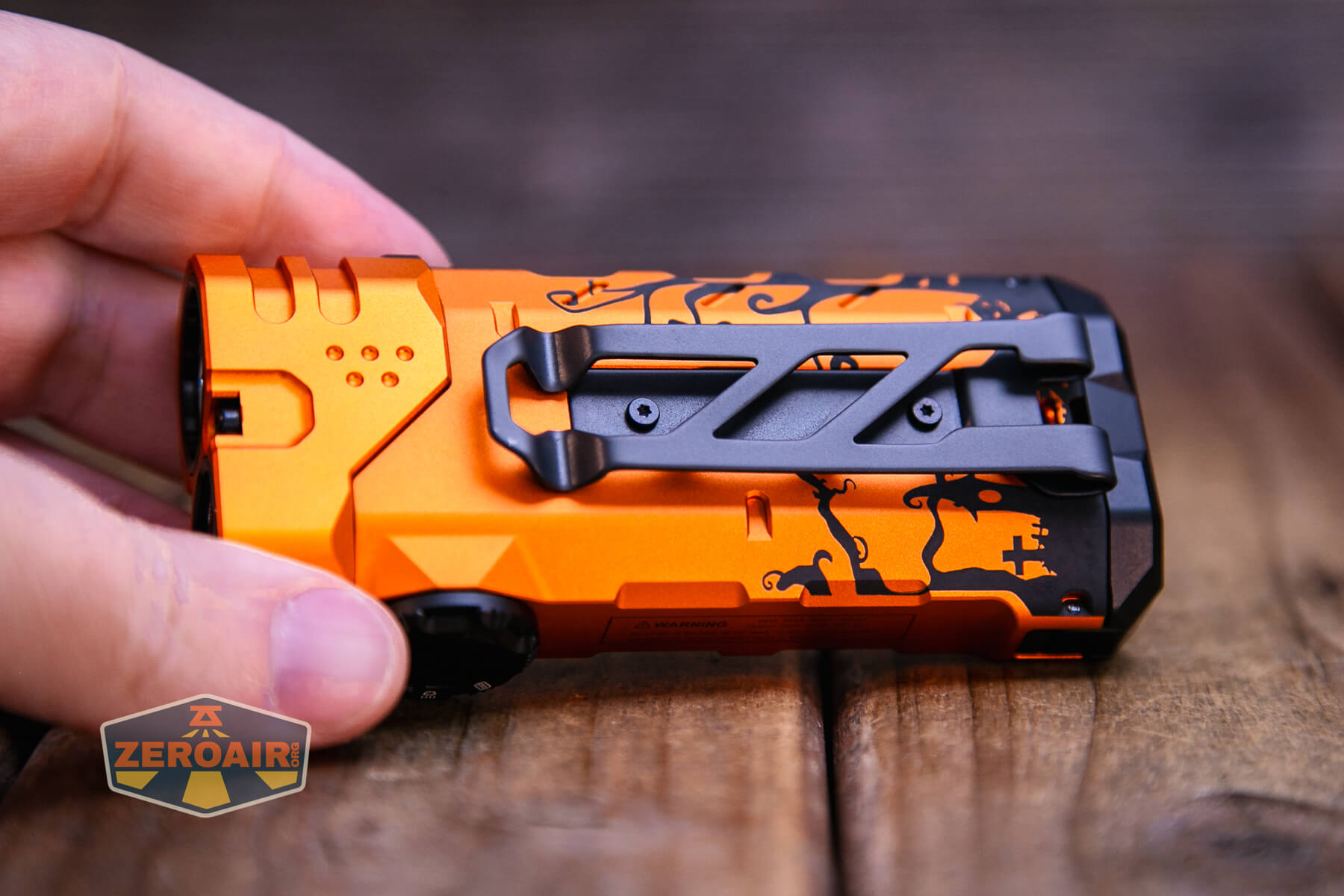
I believe the clip is formed so that it could be installed in either direction. Opposite to how I have it below might be better, and allow a deeper carry. Both orientations allow access to the lanyard loop, which you can see most clearly below. No lanyard is included.
There’s a strong magnet in the tailcap. Forgive me for forgetting a photo of this magnet in use with the LoopGear SK05 Pro Halloween flashlight, but here it is holding the LoopGear SK-05 Pro MAO flashlight.
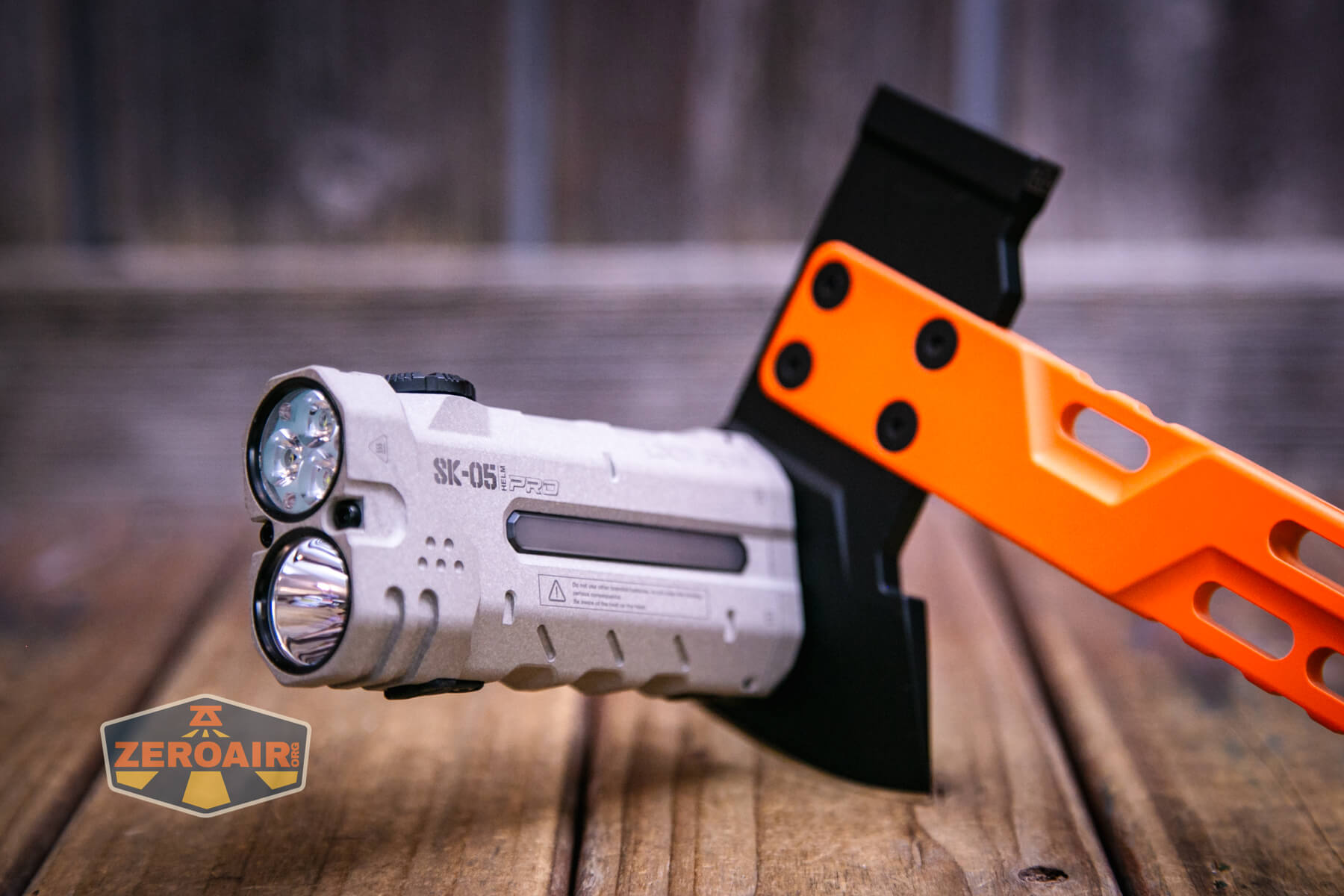
Above, you may note a new holder for my magnetic-tailcap items. That’s the Exceed Designs Hyzer Titanium Mini Hatchet D2 axe. The handle (as the name suggests) is titanium. But the blade is D2 steel and perfect for retaining magnetic tailcap flashlights! The Hyzer is available in a bunch of cerakote body colors as well as different thickness D2 heads.
Power and Runtime
The LoopGear SK05 Pro Halloween flashlight uses two 18650 cells. The two that are included are 4000mAh standard 18650 cells.
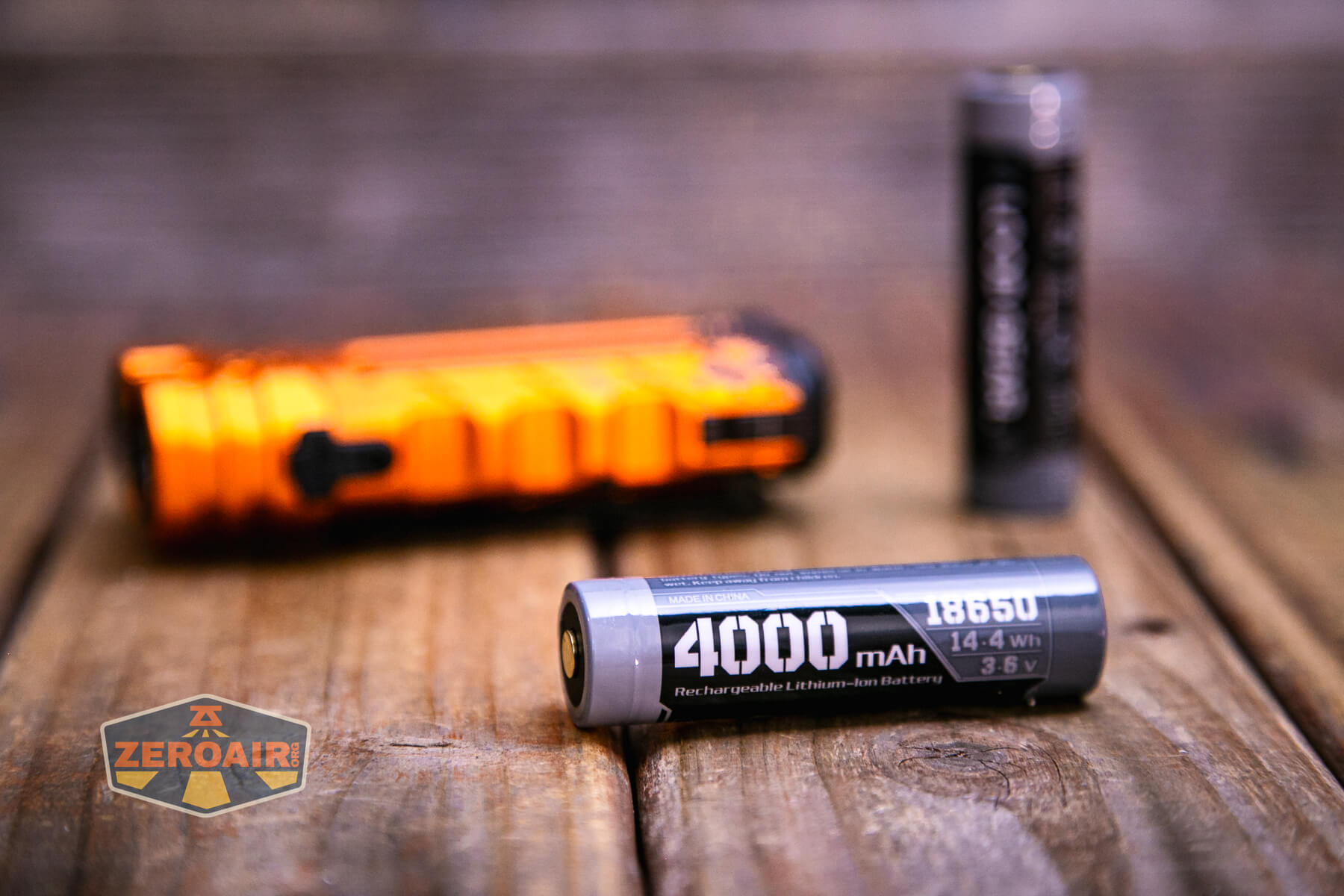
The cells go into the light with the button (positive end) toward the head. They are parallel, too, so they both go in the same direction. This does mean that the light can run with just one cell!
Runtime tests are below. Interestingly, the manual does not cover the highest-output mode, which is accessible only from off, and only for momentary output. I did test that mode briefly.
Performance is exactly the same (in profile) as the Nichia version, but this Luminus SST25 version has higher output.
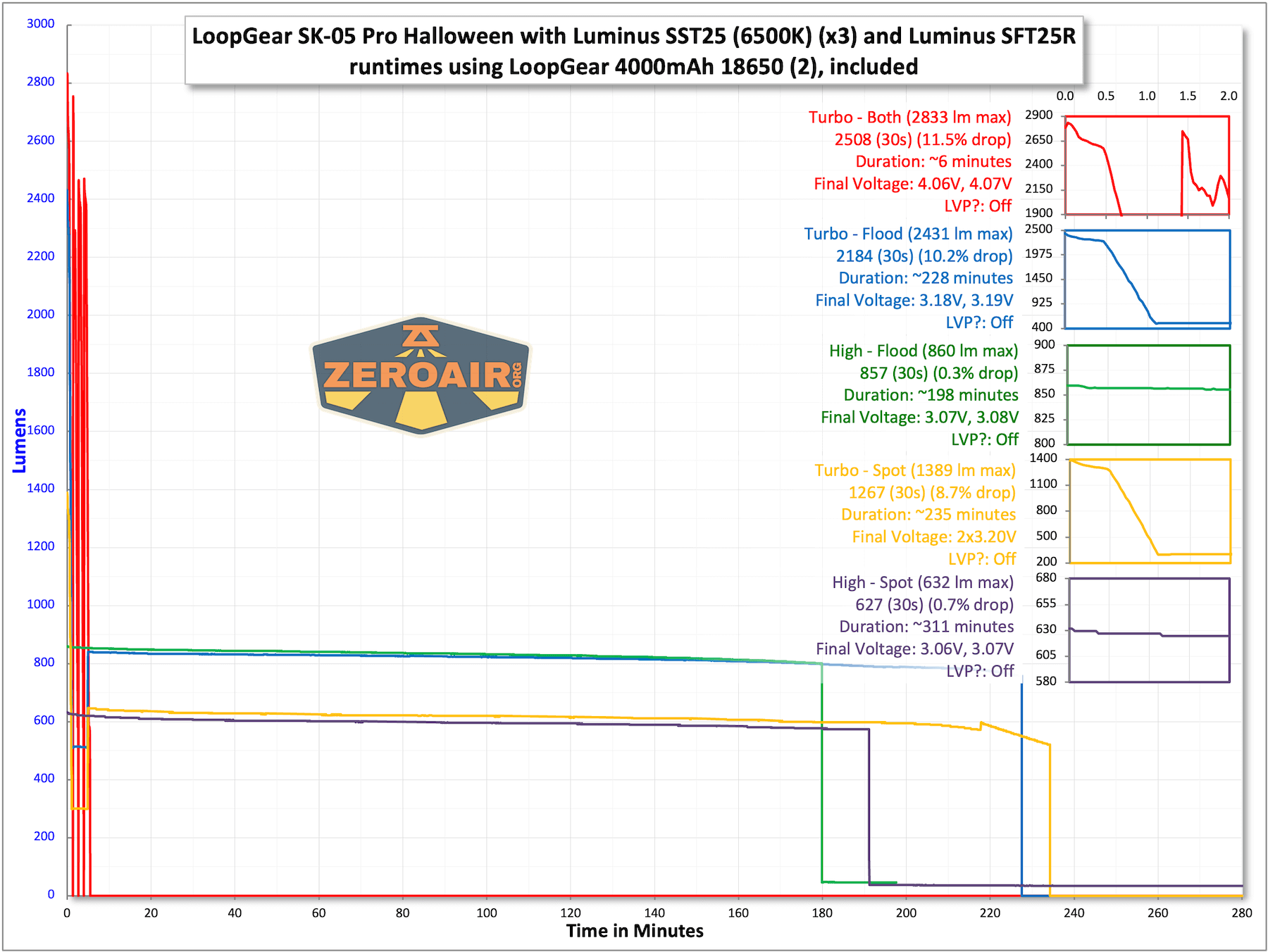
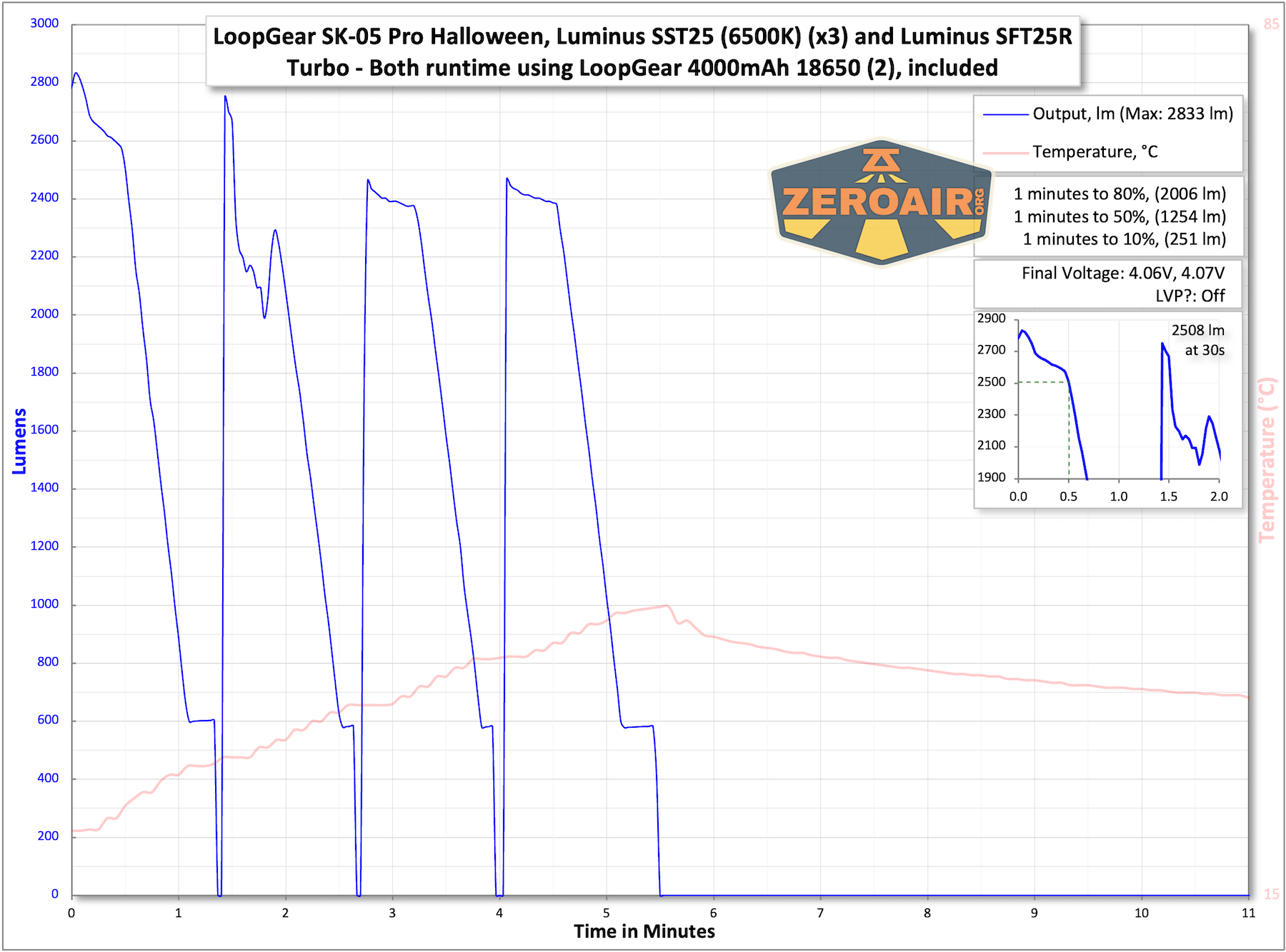
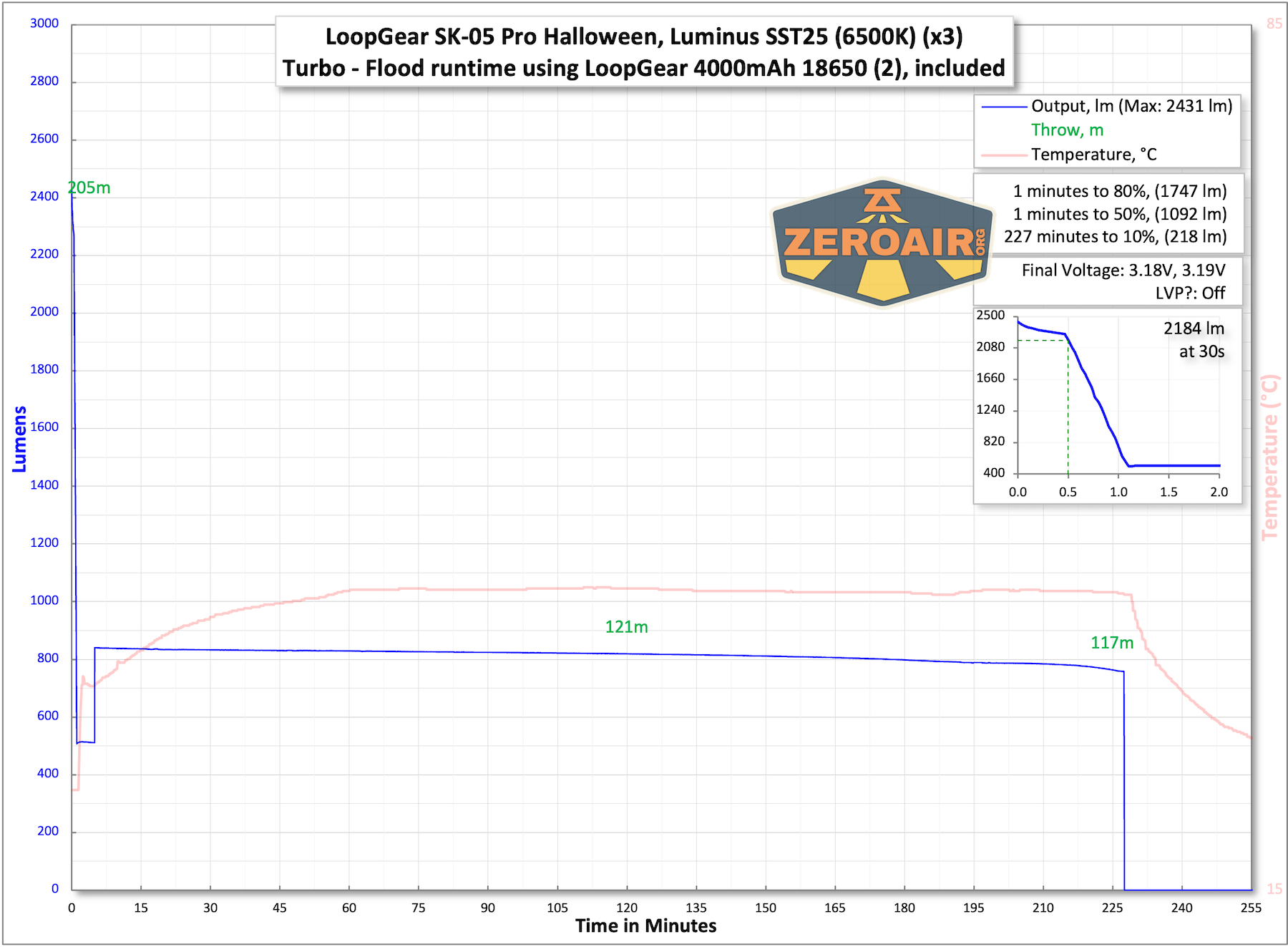
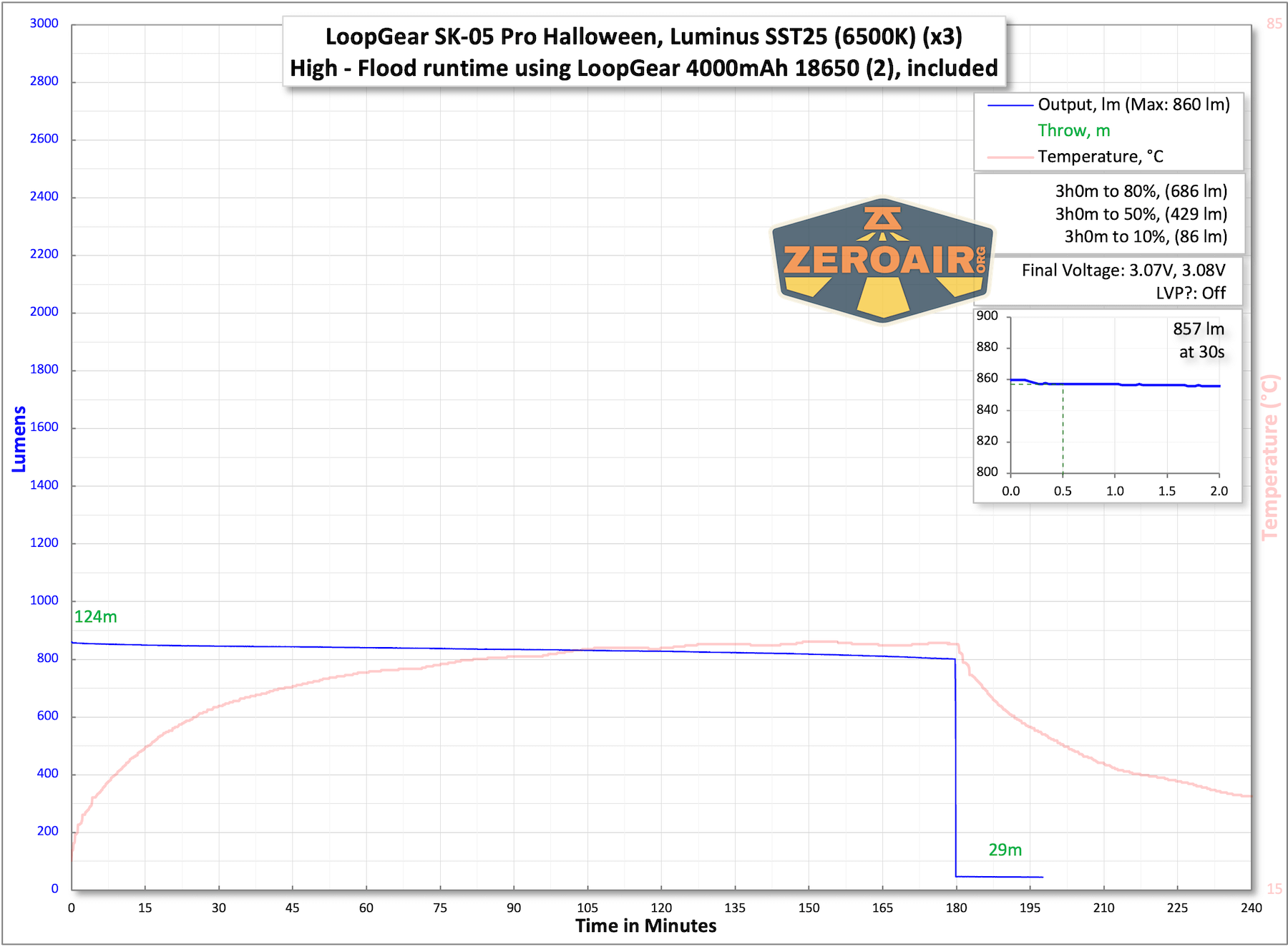
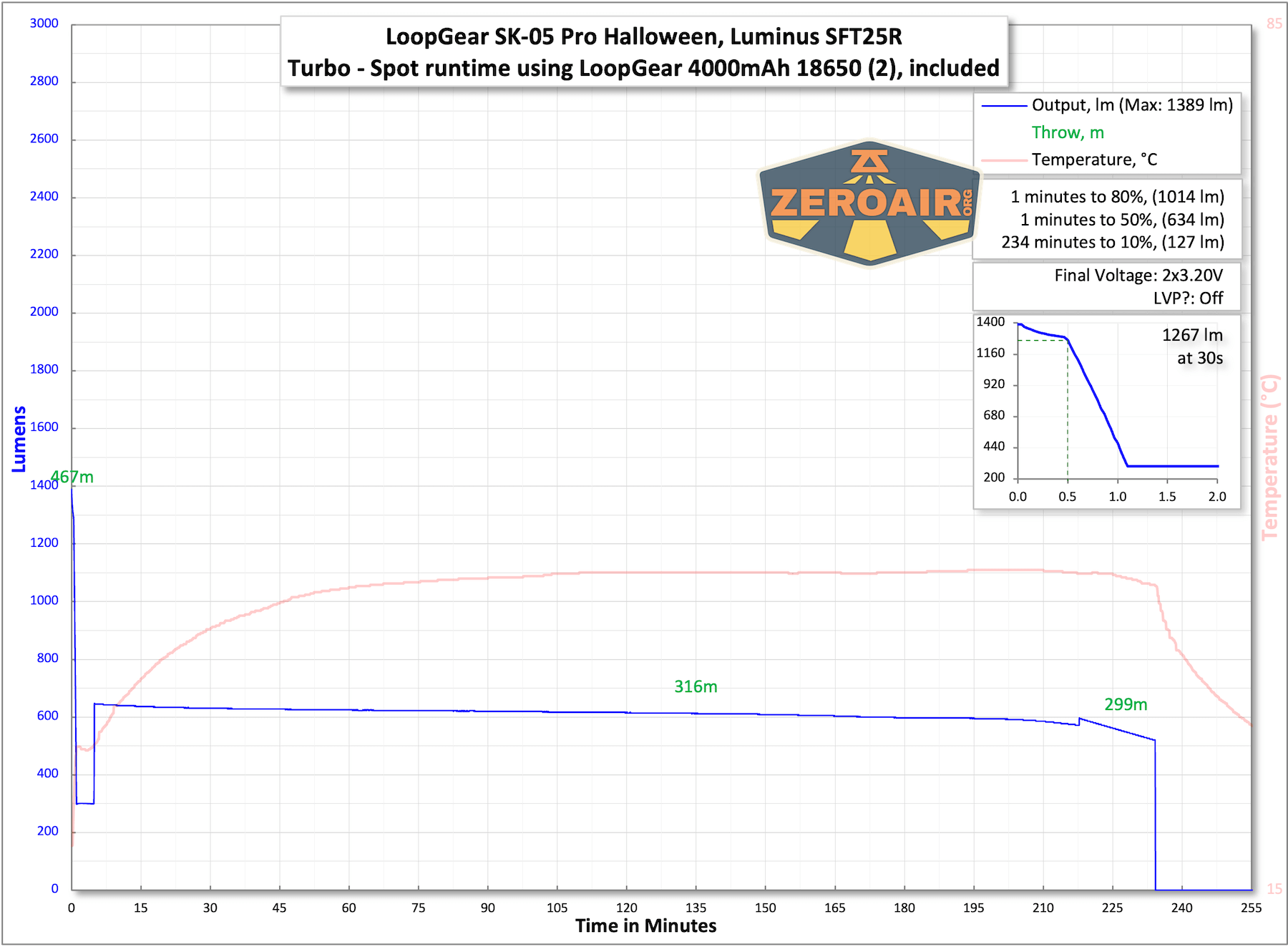
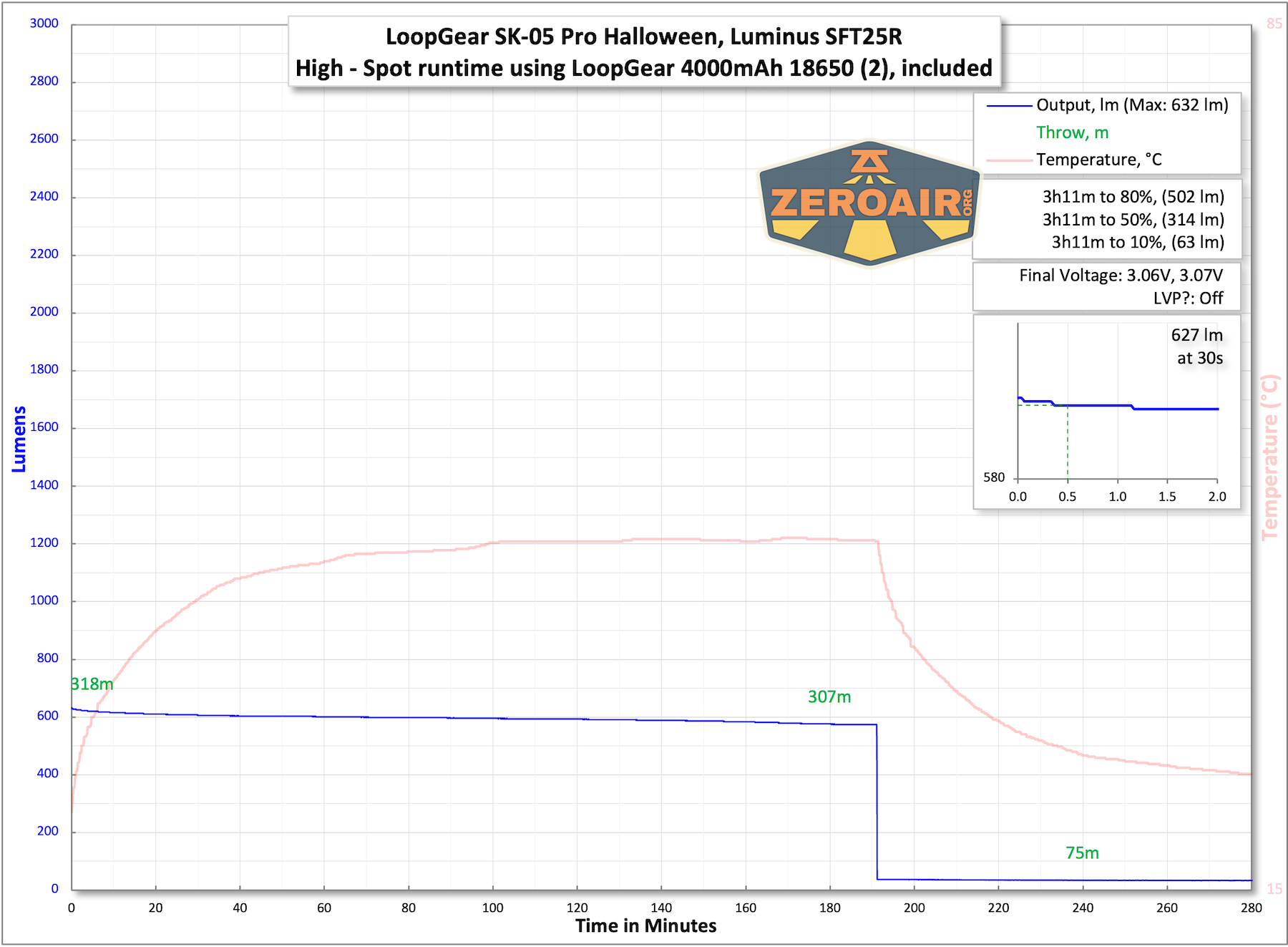
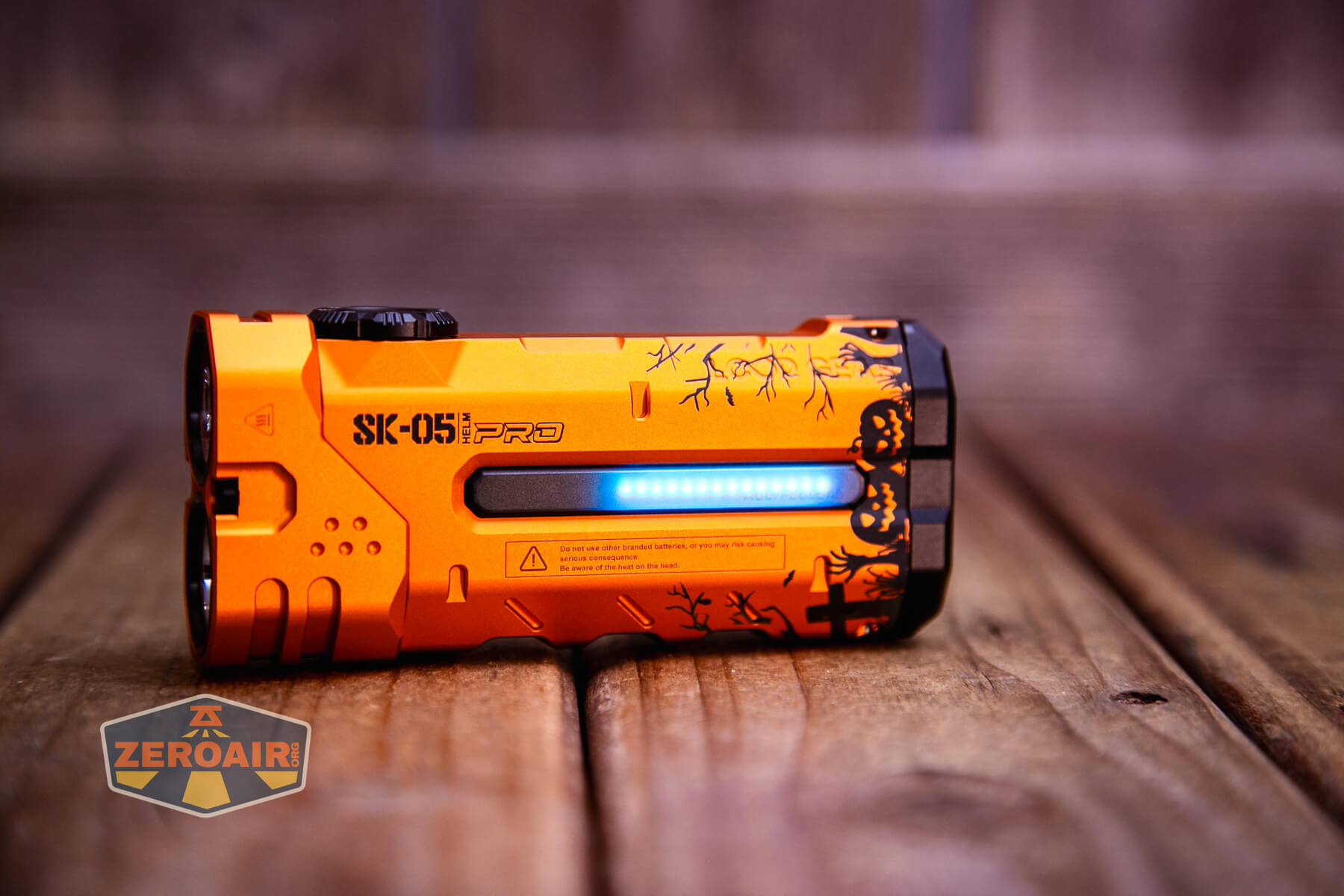
The light shuts off with low voltage protection. There’s a prominent side RGB COB that alerts the user to the approximate cell voltage at startup. In fact, you don’t even have to turn the light on – just switch the rotary dial away from lockout mode, and the indicator will display the charge level. It’s basically a power meter. Red means basically empty (“0%”), and anything blue is higher than that. So, for example, if the indicator is half blue and half off, the charge is approximately 50%.
In some of those tests above, I did cut the graph once the light had stepped down to a negligible level. That prevented my Excel from crashing; I hope you can forgive me!
The temperature lines in these charts are included as general context, not precise measurements. The values represent the range (min to max) during testing, but should not be taken as exact readings. A temperature sensor is not always attached to the bezel (or even the hottest spot, assuming that could be defined). Even with ideal placement, too many variables affect temperature to definitively state a specific max value.
Charging
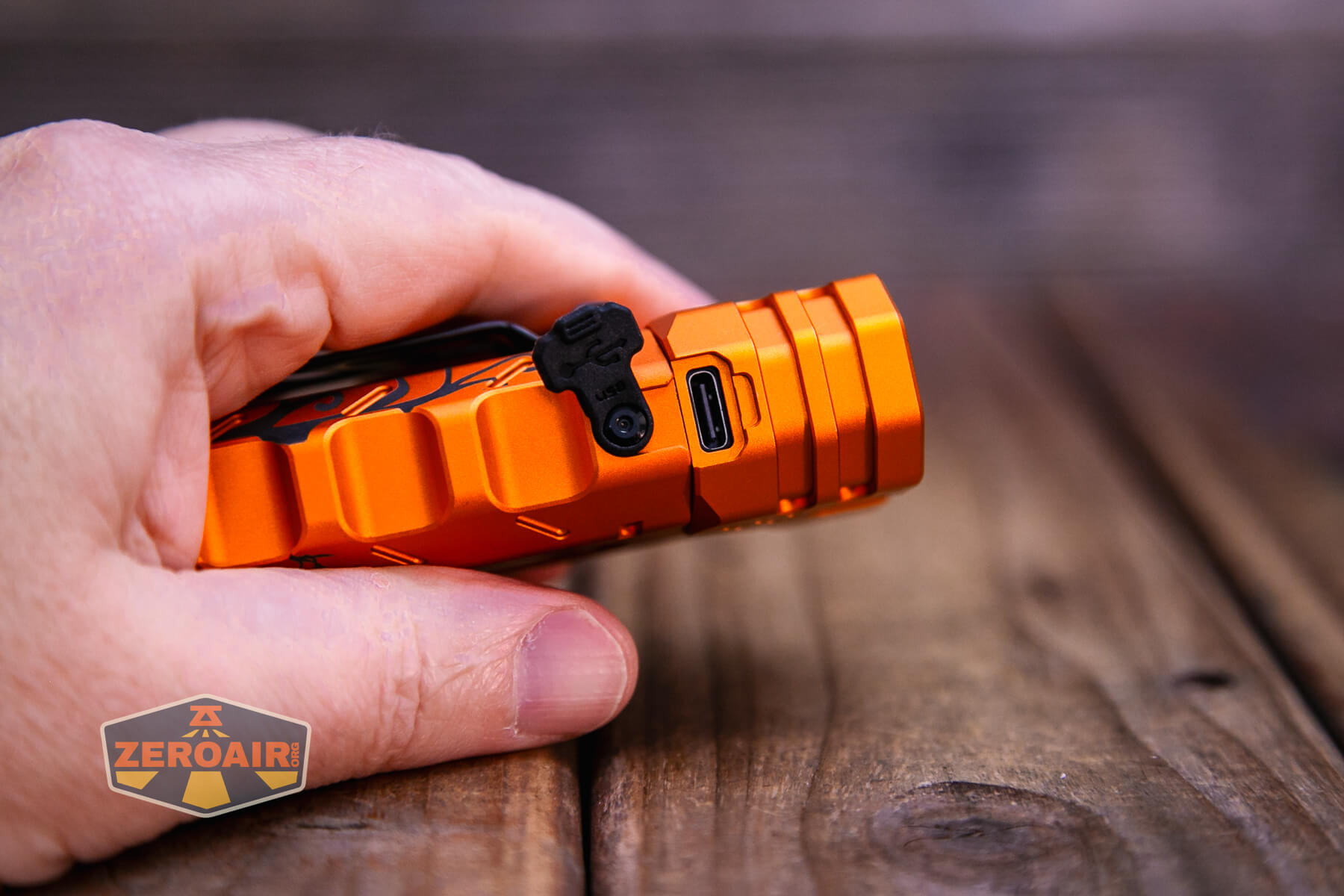
UBS-C charging is used for the LoopGear SK05 Pro Halloween flashlight. The port is near the head and has a press-in silicone cover.
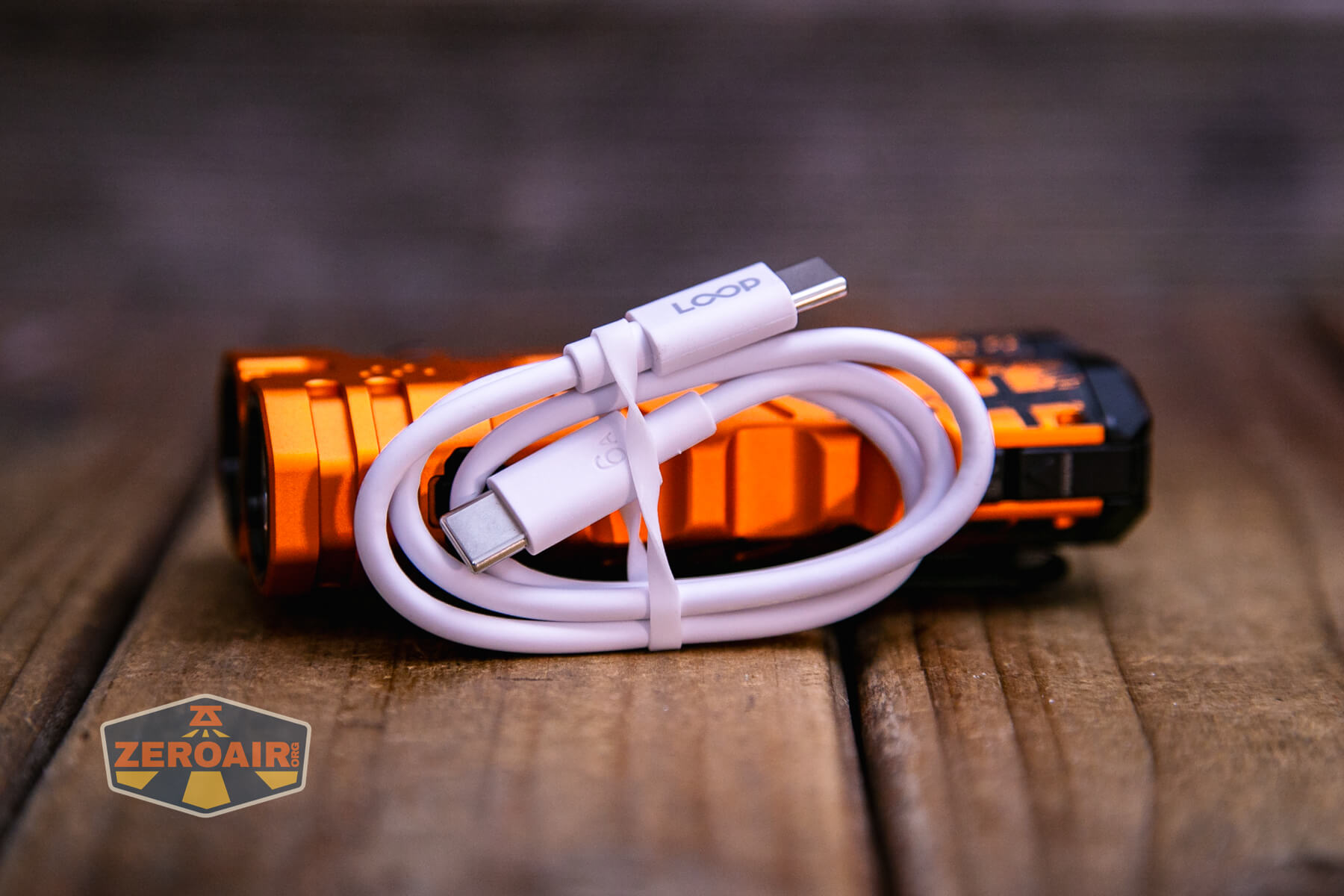
A C to C charging cable is included.
Below is the battery indicator that shows when you turn the light on, and the charging indicator you can see while the charging is ongoing.
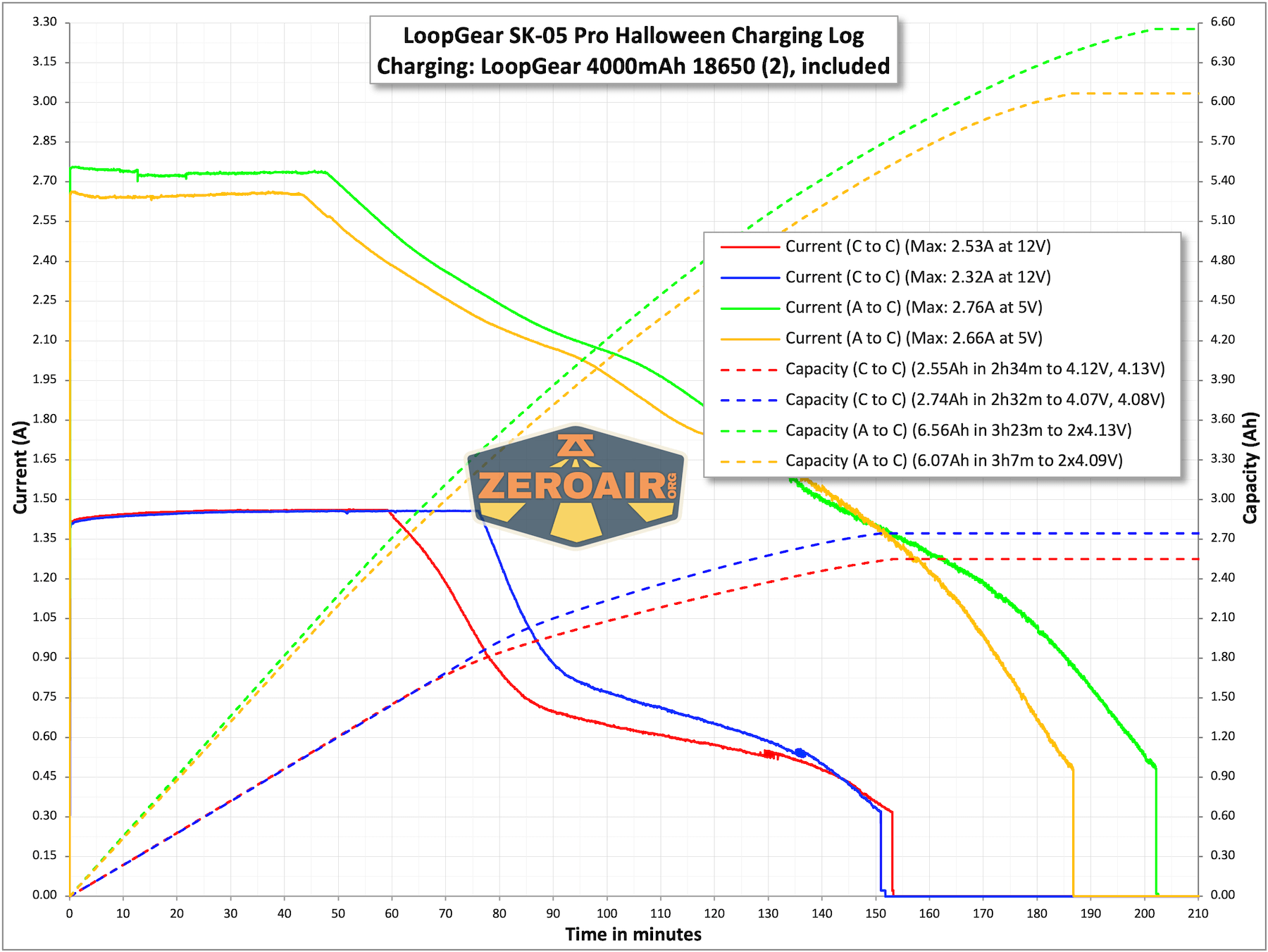
Charging looks fine – While C to C delivers less current, it’s delivered at 12V, so is overall much quicker. A to C also works fine, but at 5V and a higher current still takes over 3 hours.
Powerbank
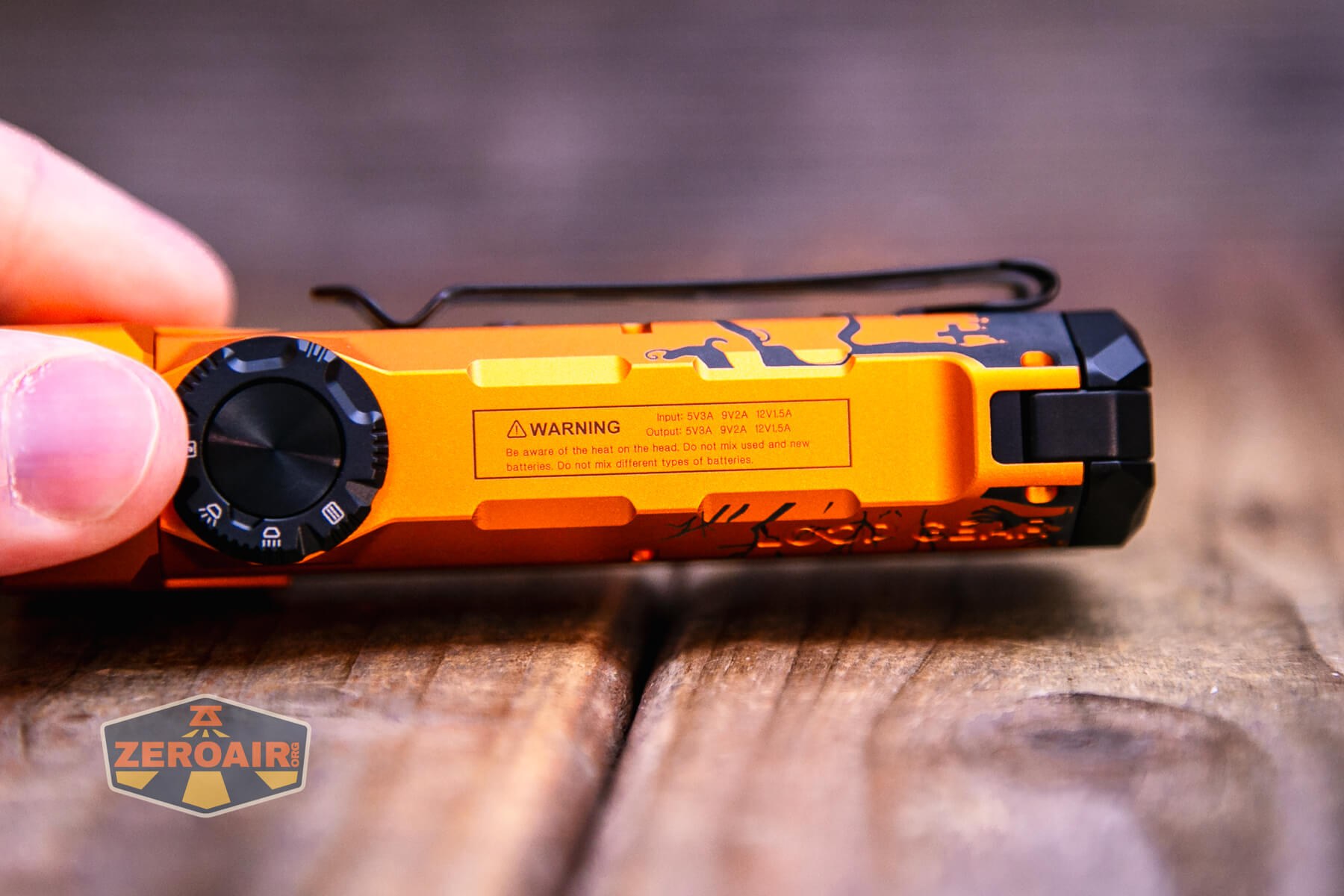
The LoopGear SK05 Pro Halloween flashlight is capable of being used as a powerbank. There are indications on the side – the light can be charged at 5, 9, or 12V, and can also output (powerbank) at 5, 9, and 12V.
I didn’t do any testing of this version of the SK05, but here’s data from a previous version.

Output proceeds at around 3.3A for over an hour. At that point, the powerbank is basically depleted (around 3V) but it’ll still output at lower currents for a little while.

Modes and Currents
| Mode | Mode Claimed Output (lm) | Claimed Runtime | Measured Lumens | Tailcap Amps |
|---|---|---|---|---|
| Turbo – Both | – | 40s+2.5h+30m | 2833 (0s) 2508 (30s) |
7.52 |
| Turbo – Flood | 3060-950-50 | 40s+2.5h+30m | 2431 (0s) 2184 (30s) |
6.27 |
| High – Flood | 950-50 | 3h+30m | 860 (0s) 857 (30s) |
1.63 |
| Med – Flood | 350 | 11h | 323 | 0.53 |
| Low – Flood | 50 | 52h | 56 | 0.11 |
| Turbo – Spot | 1300-600-40 | 40s+5.5h+30m | 1389 (0s) 1267 (30s) |
5.64 |
| High – Spot | 600+40 | 5.5h+30m | 632 | 1.59 |
| Med – Spot | 220 | 11.5h | 249 | 0.49 |
| Low – Spot | 40 | 58h | 40 | 0.11 |
Pulse Width Modulation
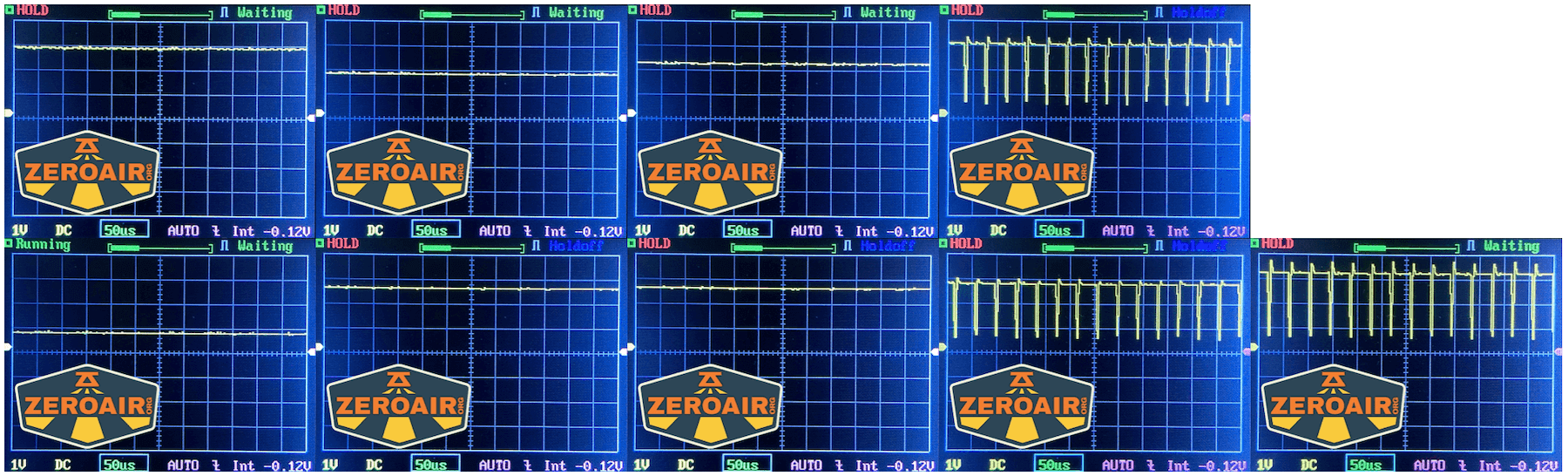
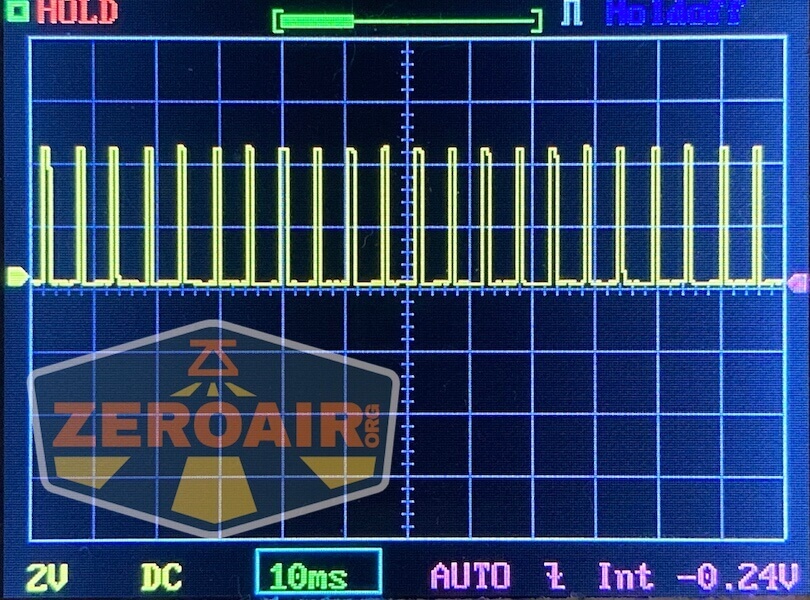
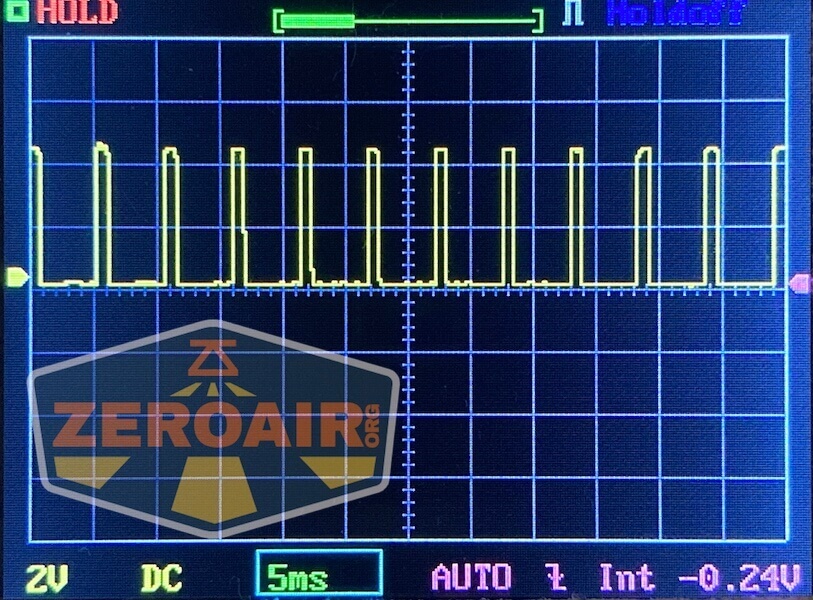
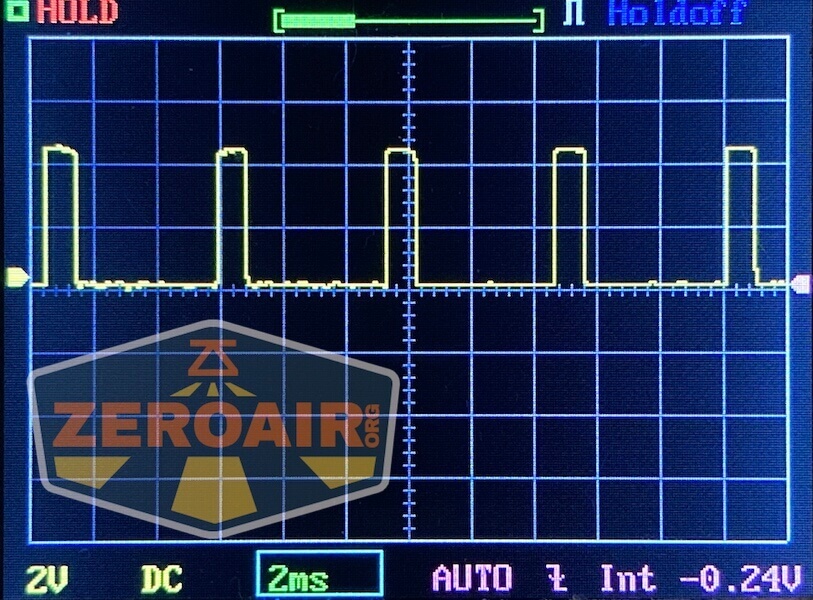
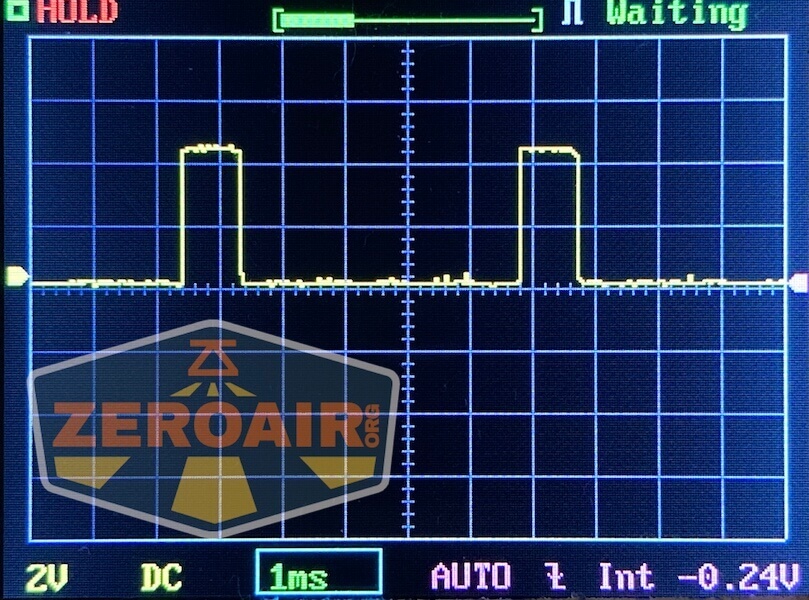
Only the highest mode for each output uses PWM. That’s striking. The off-cycle is very brief, though, so it’d be nearly impossible to notice this PWM. Even “Turbo – Both” uses the same type of PWM.
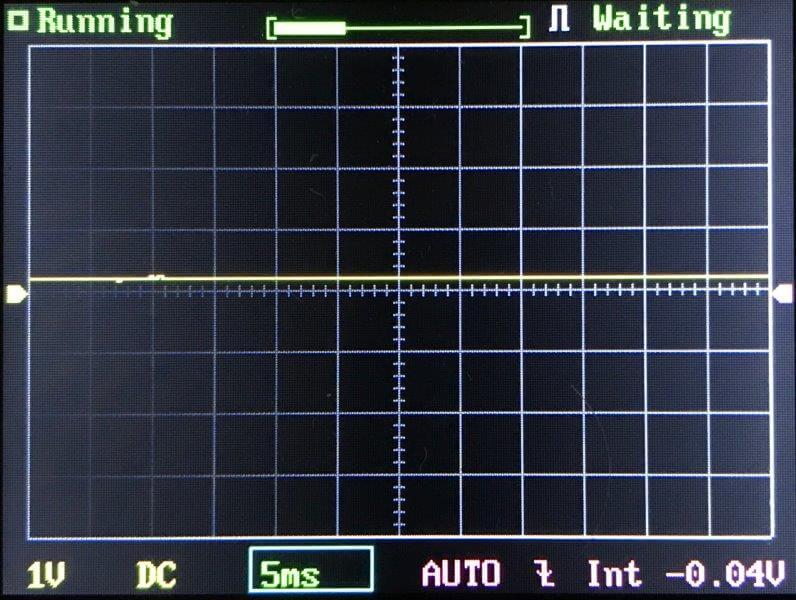
Click here to see a “baseline” – a chart with almost no light hitting the sensor.
Then there’s the Ultrafire WF-602C flashlight, which has some of the worst PWM I’ve seen. It’s so bad that I used a post about it to explain PWM! Here are multiple timescales (10ms, 5ms, 2ms, 1ms, 0.5ms, 0.2ms) to make comparing this “worst” PWM light to the test light easier. That post also explains why I didn’t test the WF-602C at the usual 50us scale.
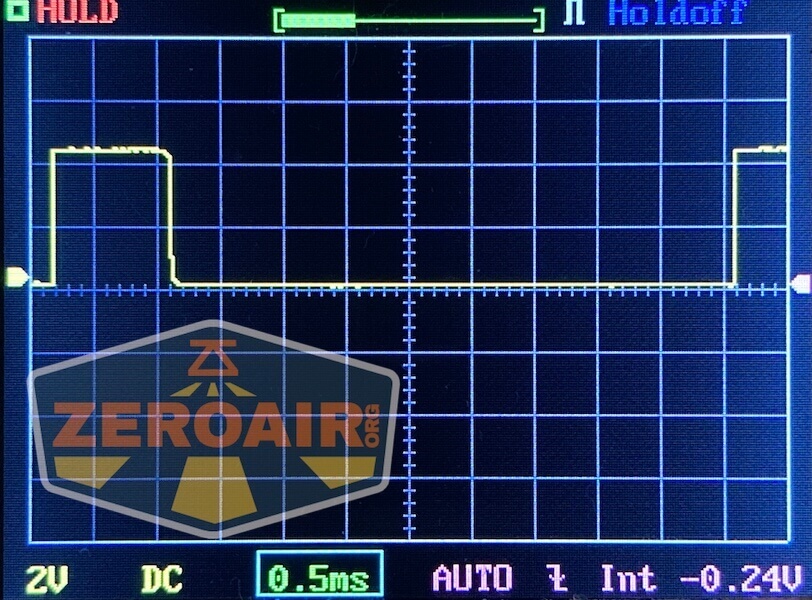
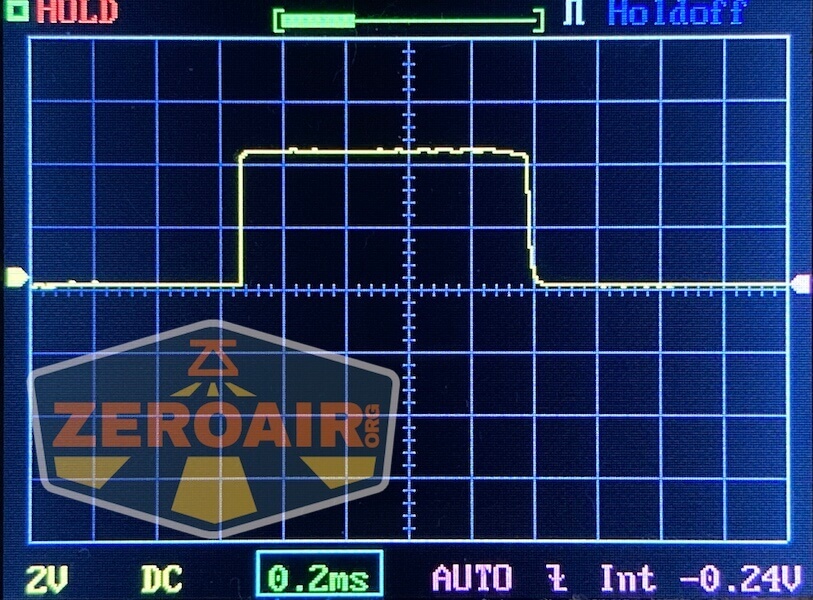
User Interface and Operation
There are two ways to interact with the LoopGear SK05 Pro Halloween flashlight. First, there’s a rotary dial. It has four positions. Locked, flood (seen below), spot, and side RGB (in that order).
Next is the e-switch, right in the center of that rotary dial. It’s a very big switch with good action.
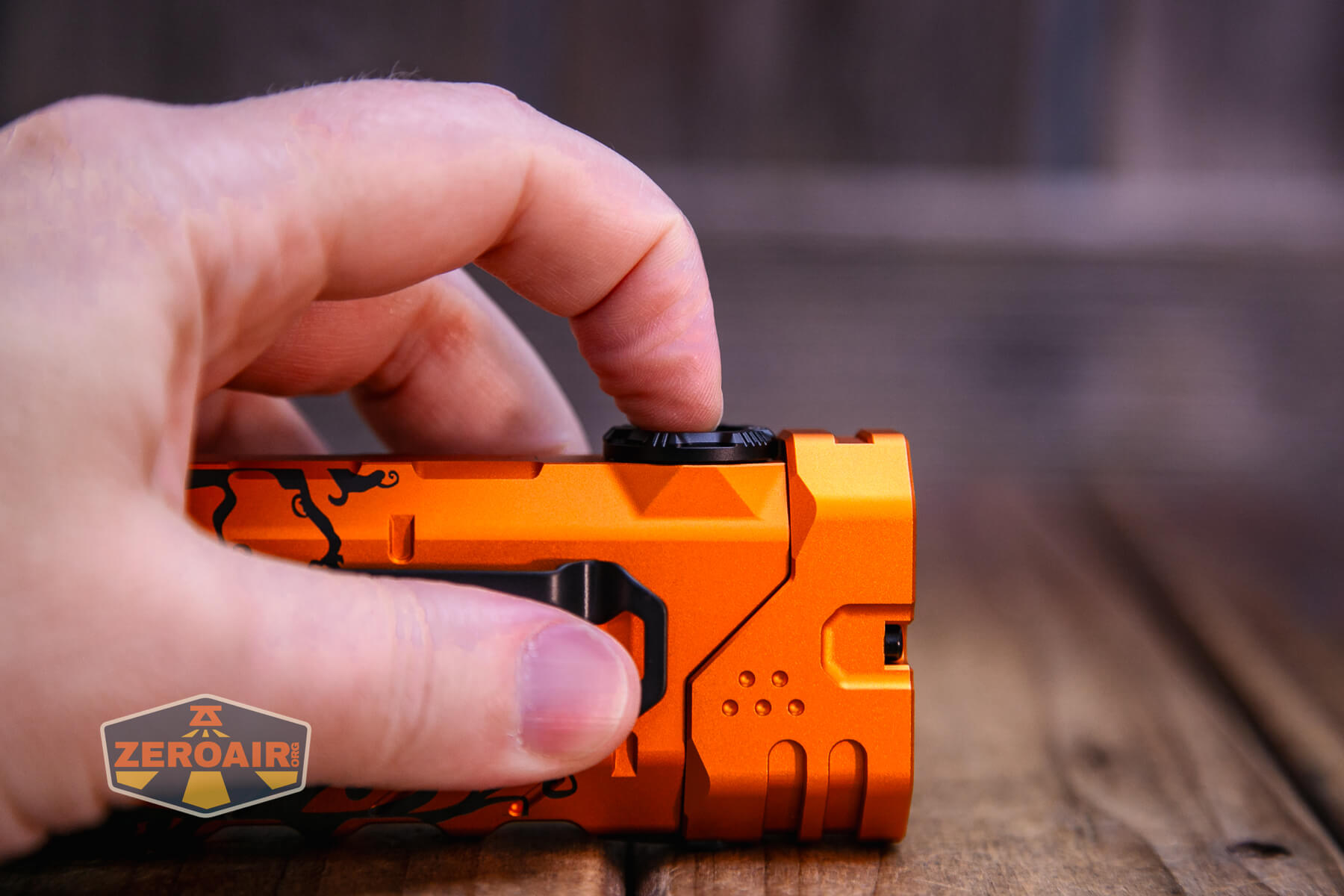
As stated above, there’s a rotary dial with four positions. You’ll want to rotate this dial to your output of choice, then follow the actions in the user interface table below! Note that the user interface for Spot and Flood seems to be the same.
The side emitters are RGB, including three variations of white.
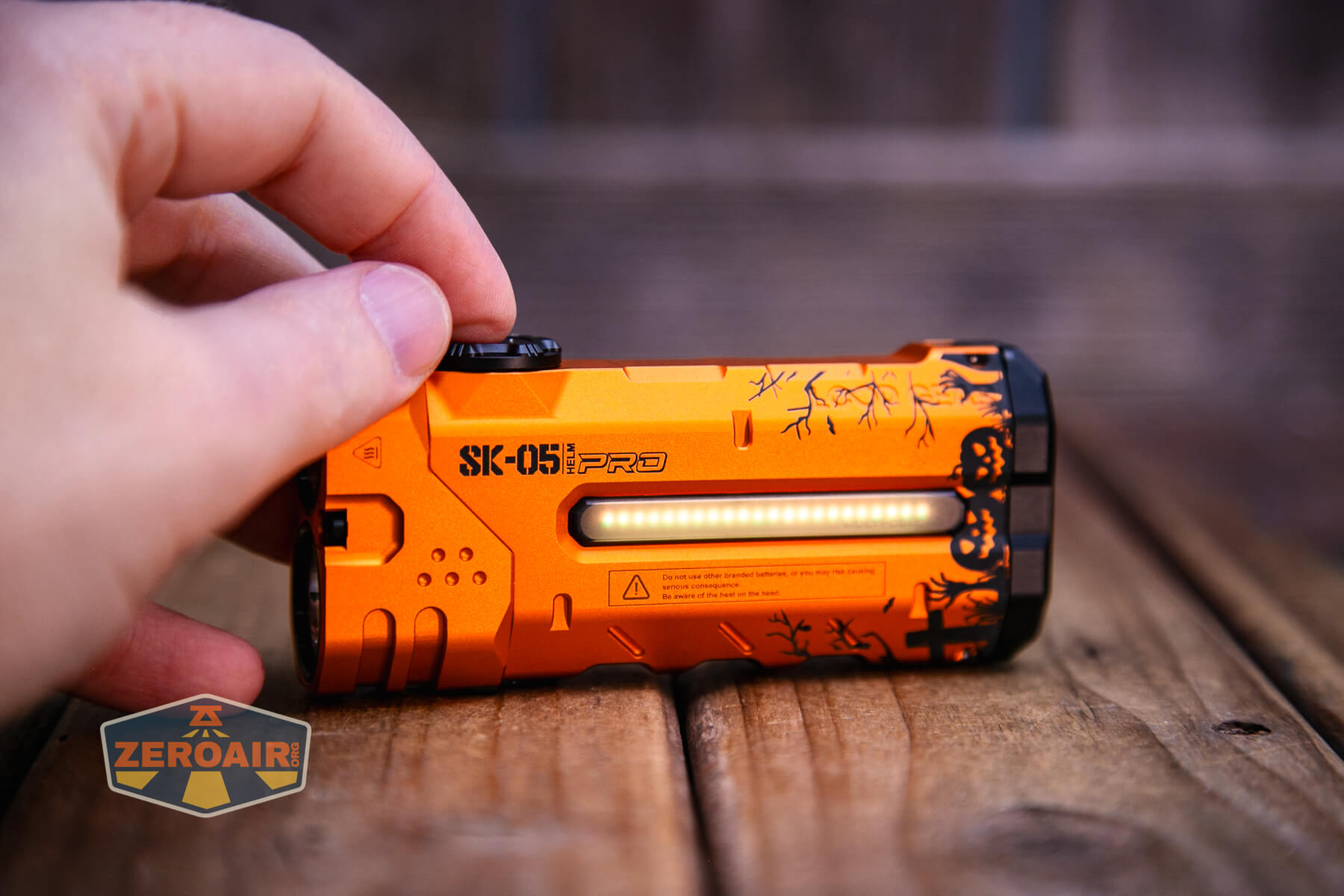
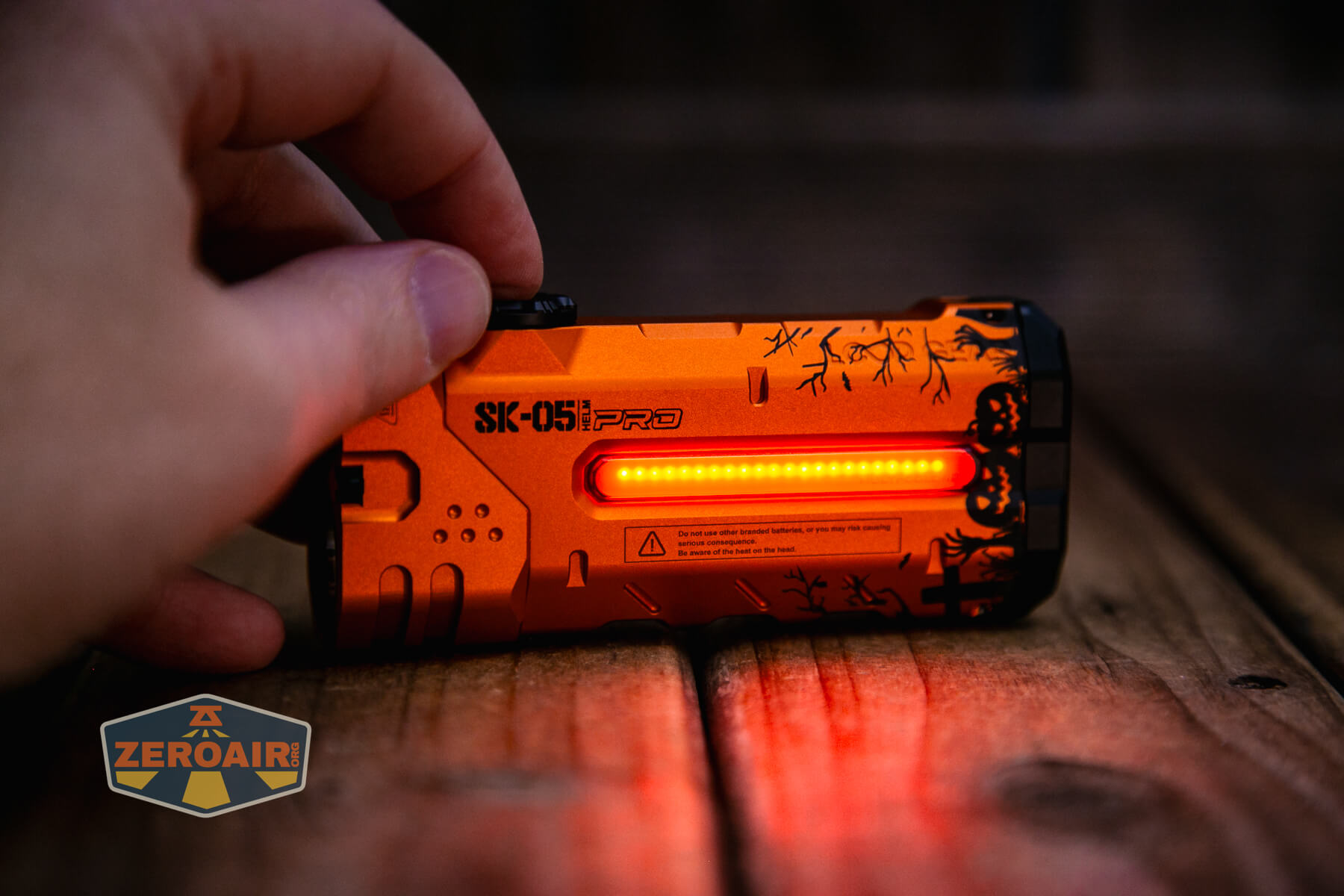
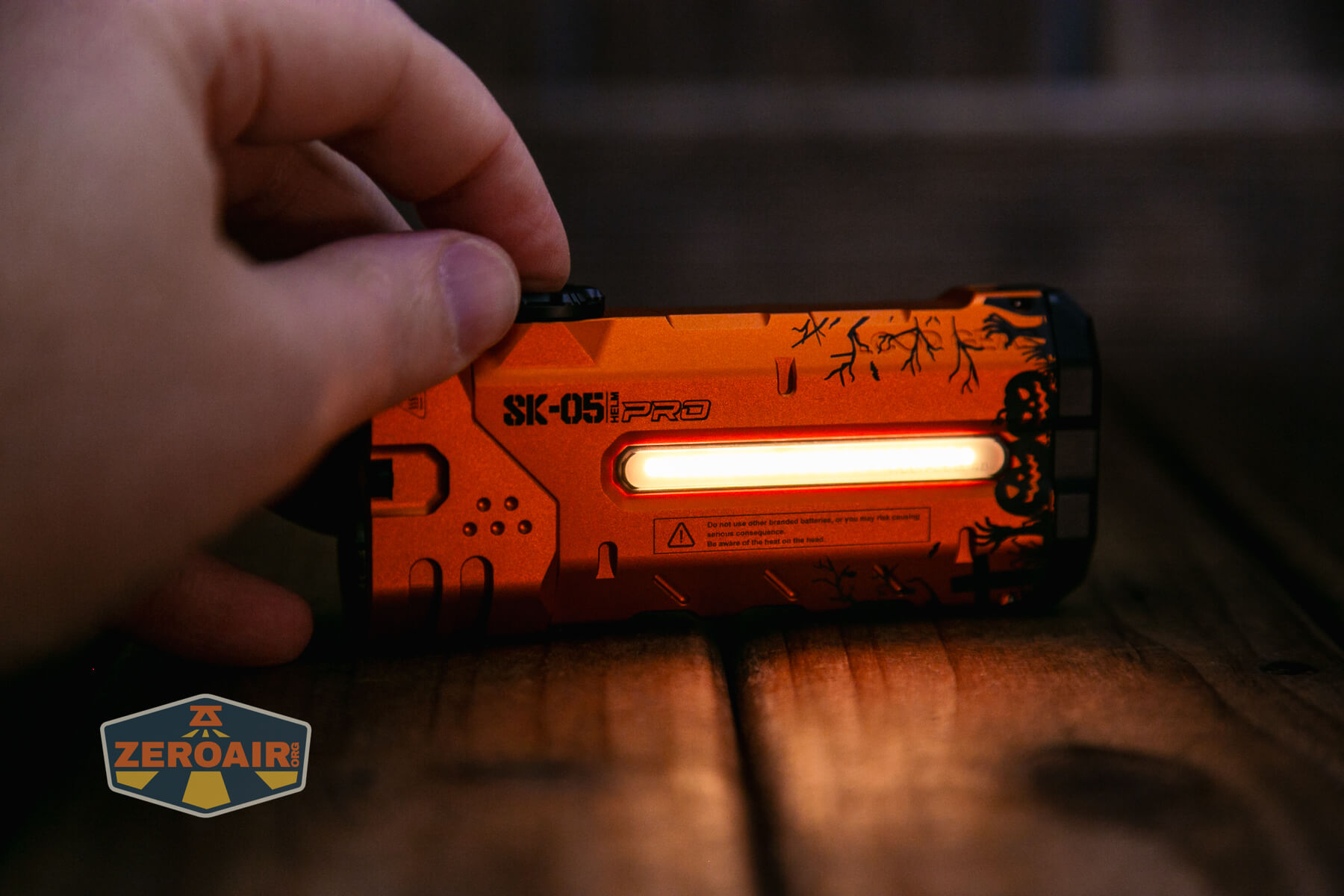
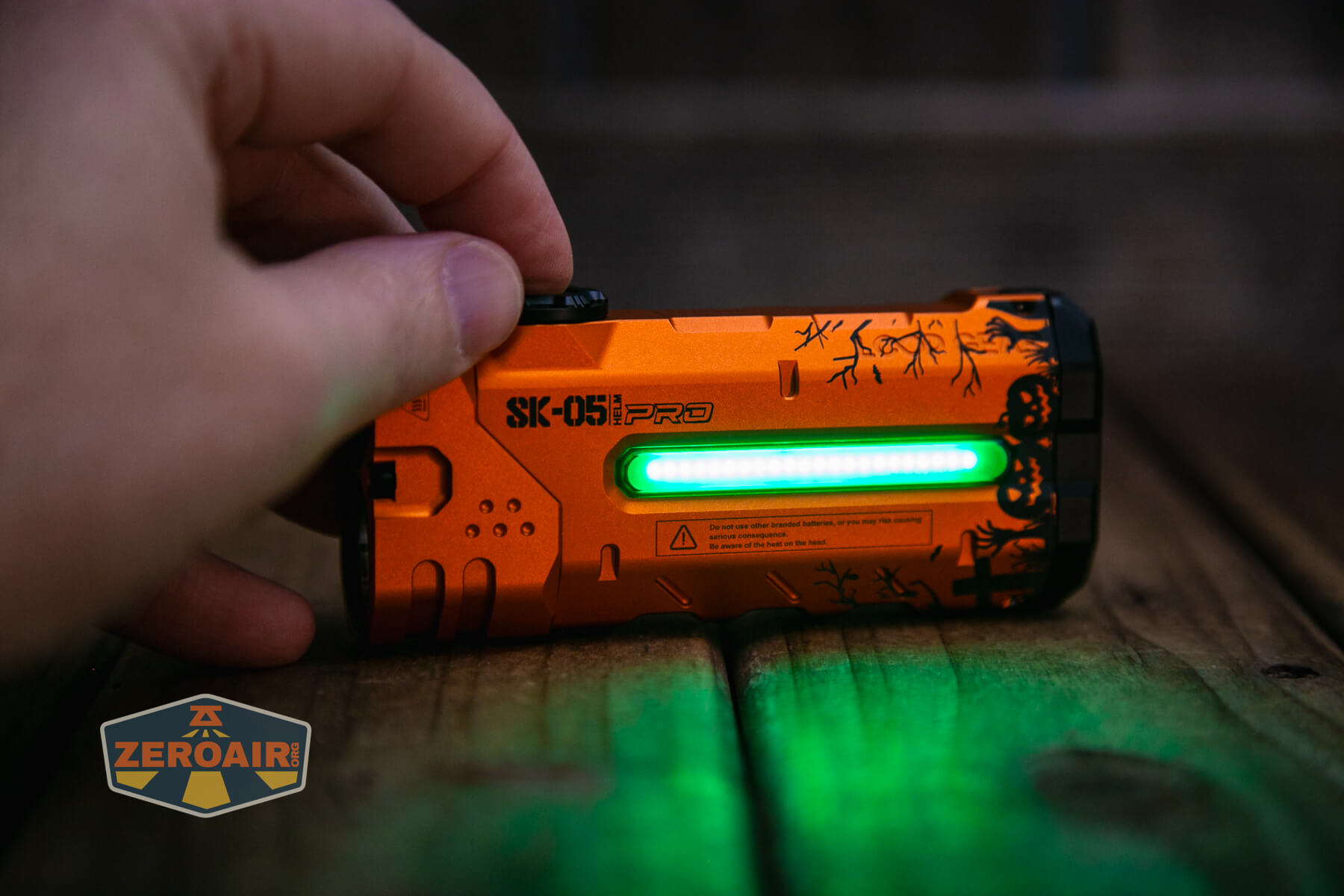
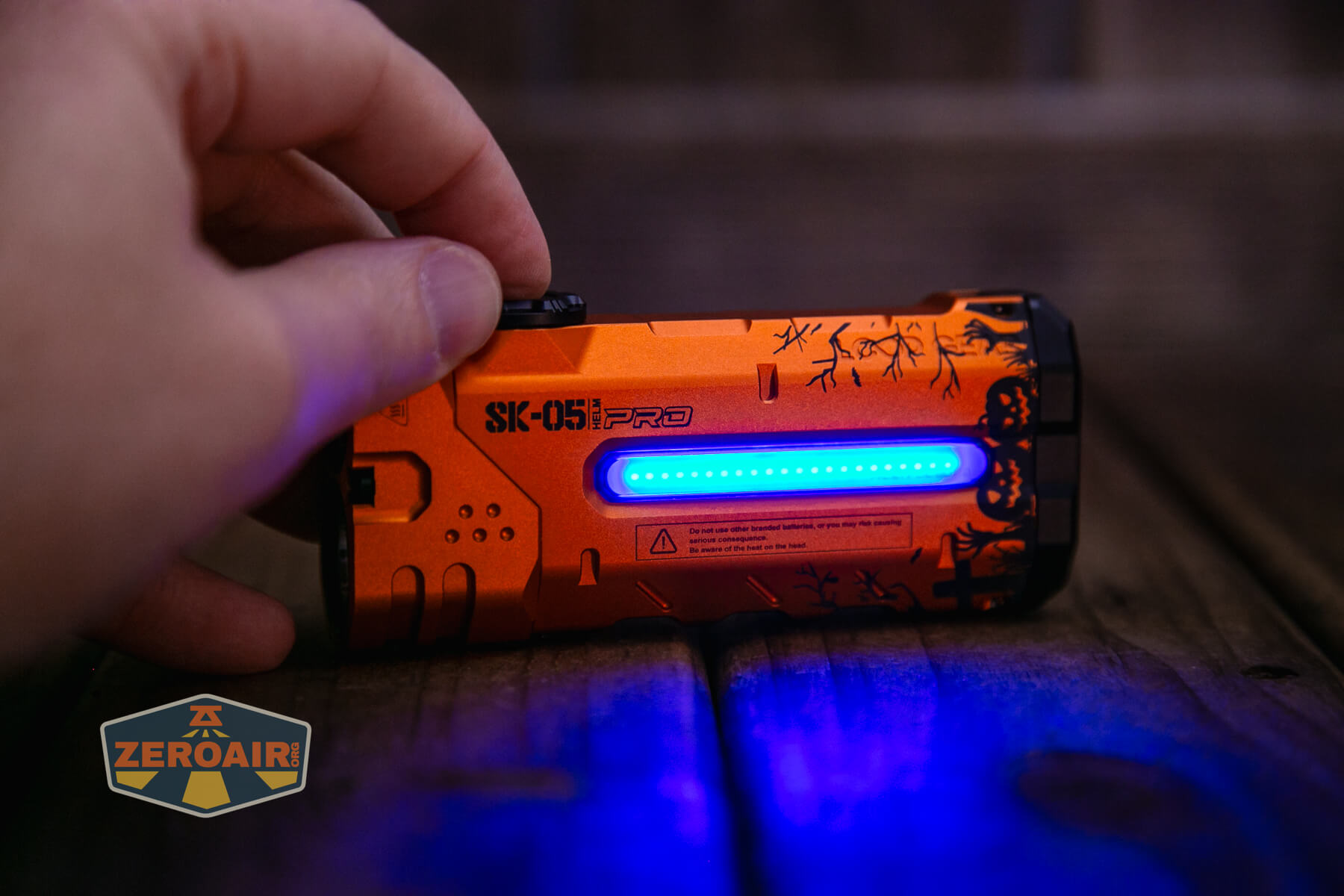
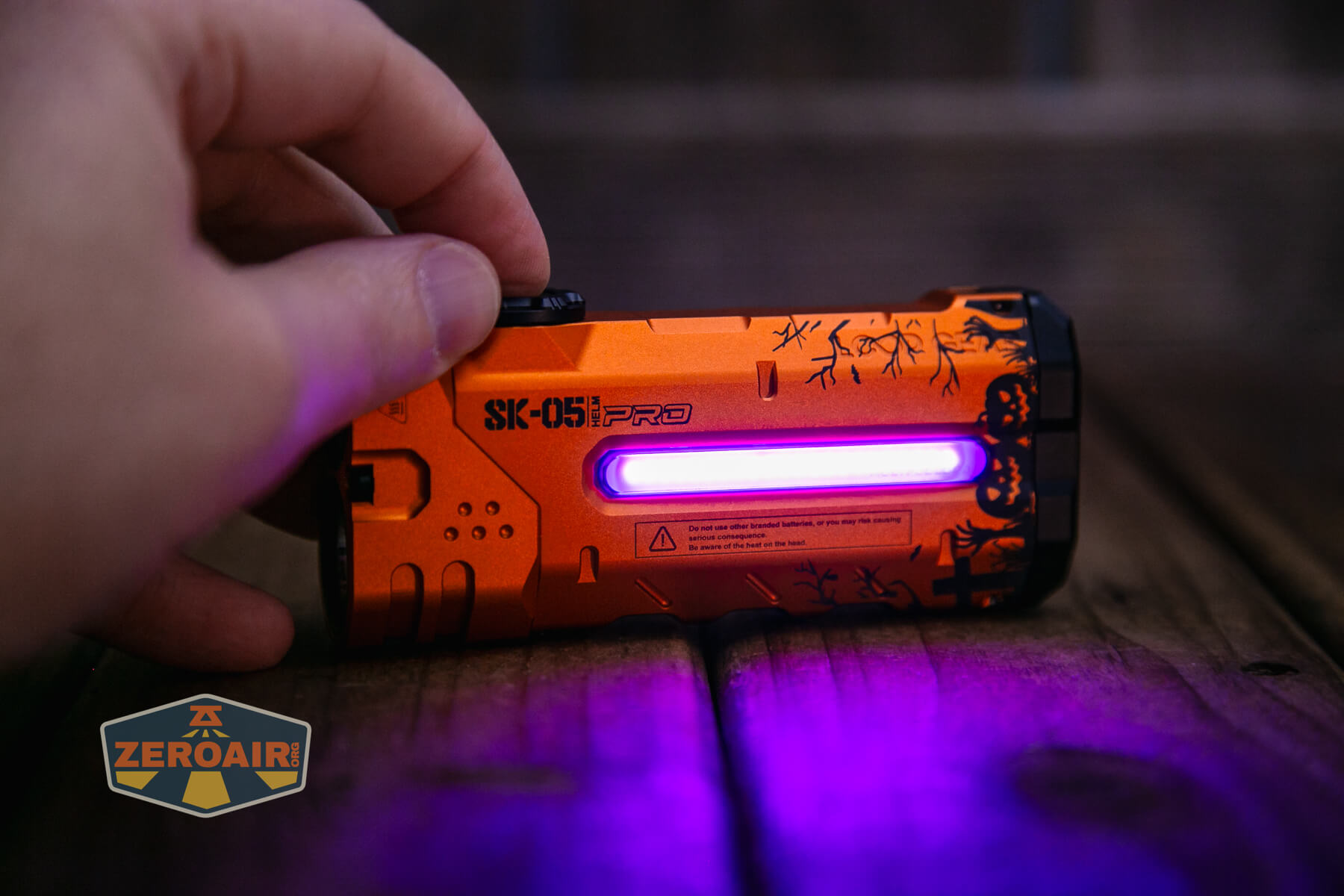
One update to this Pro version is that there seems to be a delay. This is probably to prevent accidental activation. So in every case, the dial will need to have been rotated before the e-switch will work.
| State | Action | Result |
|---|---|---|
| Off | Click | On (Mode memory) |
| On | Click | Off |
| Off | Hold | Momentary Turbo (both emitters) |
| Rotary set to Floodlight or Spotlight Off |
Double click | Turbo (selected emitter(s)) |
| Rotary set to Floodlight or Spotlight On |
Hold | Mode advance (LMH only) |
| Rotary set to Floodlight or Spotlight Any |
Click 3x | Strobe (both emitters) |
| Rotary set to Floodlight or Spotlight Strobe |
Click then hold | SOS (reverse direction works too) |
| Rotary set to Special Mode Off |
Click | RGB COB On (Mode memory) |
| Rotary set to Special Mode Off |
Click 3x | Red-blue flash warning light mode |
| Rotary set to Special Mode
On |
Double click | Advance through Lighting options (Steady White > Steady Color > Fade in/out Color > Slide Color > Dash Color > Rainbow Slide) |
| Rotary set to Special Mode On |
Hold | Advance through Color options for specific lighting options (or advance through 3 lighting levels for COB White). |
| Side white on | Click 4x | Advance through: Warm white, Neutral White, Cool White (side light) |
| RGB on | Hold | RGB mode advance for that output style |
Various clicks can perform various things for the RGB levels. Suffice it to say that the RGB options are greatly increased for the Pro version. You can speed up the cycling of some RGB options. Many of the RGB options have low/medium/high, too. It’s pretty impressive!
LoopGear SK05 Pro Halloween flashlight LED and Beam
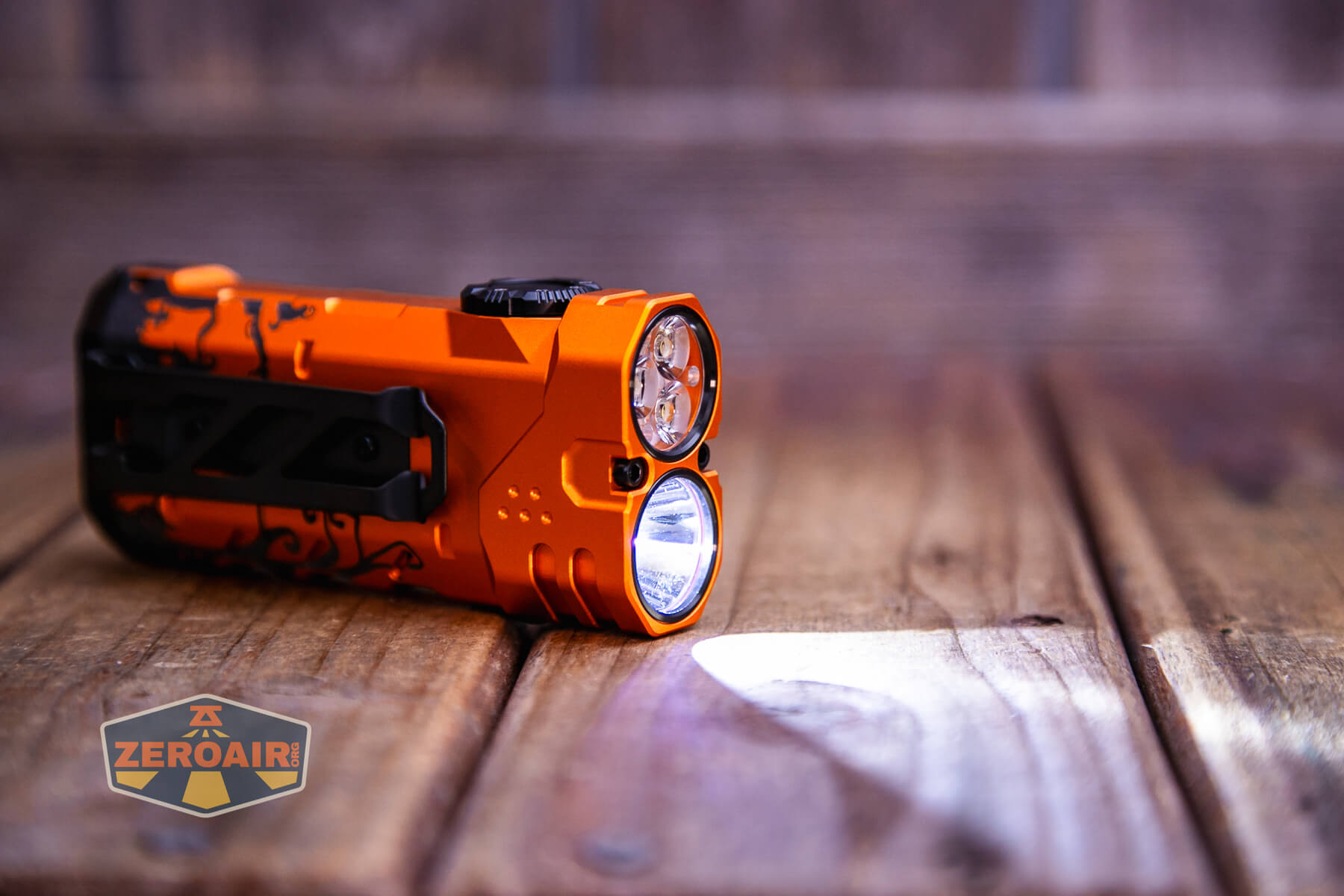
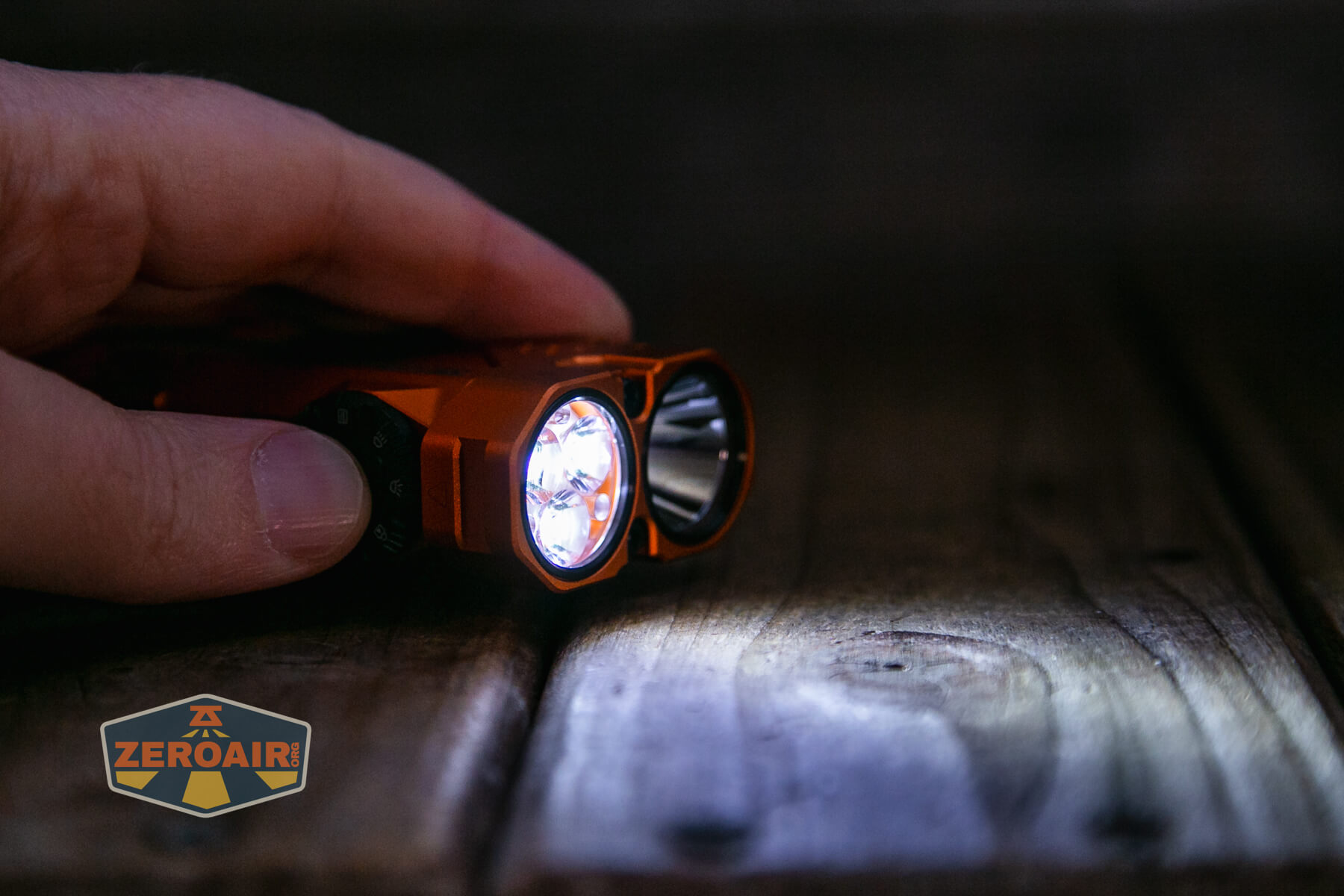
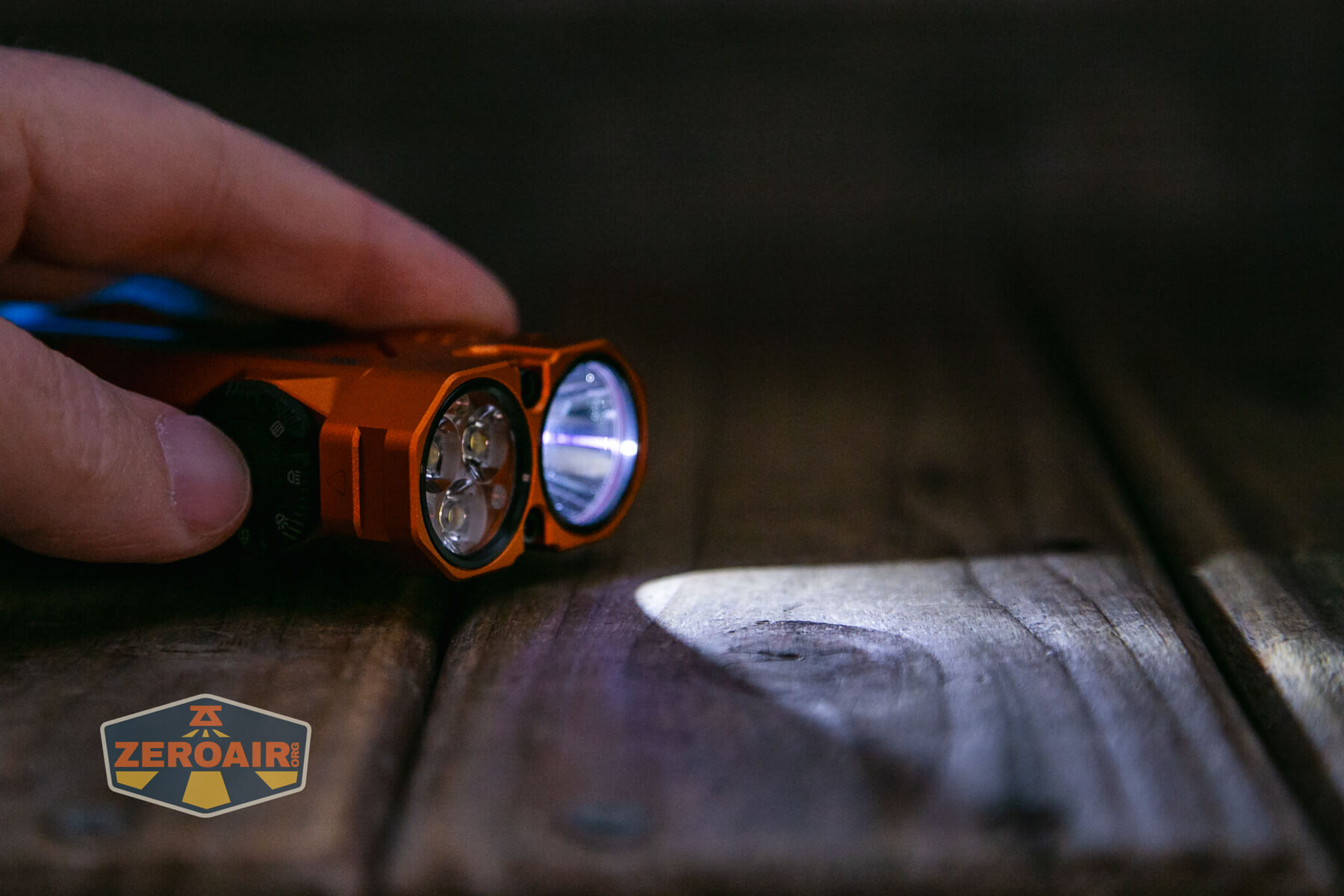
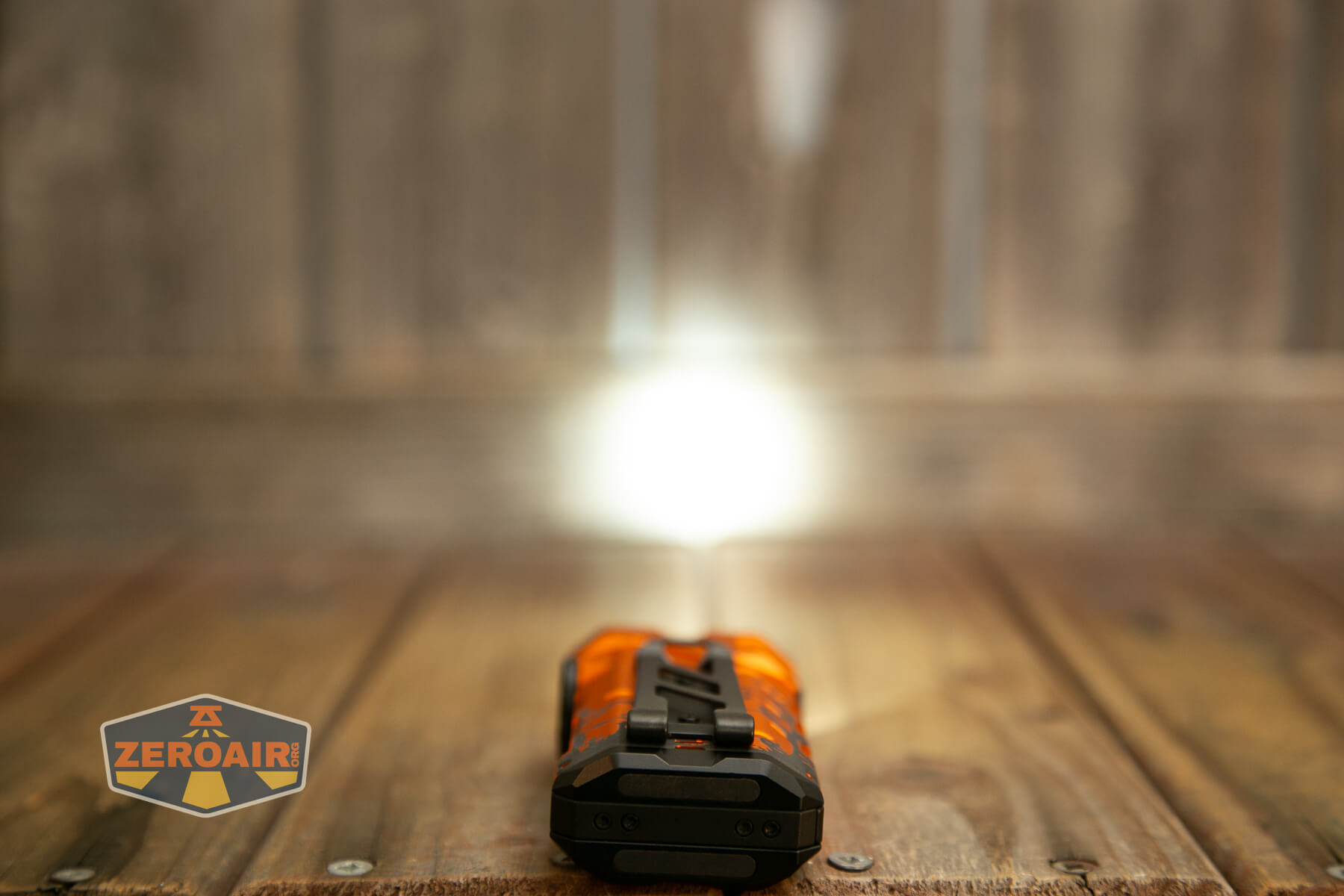
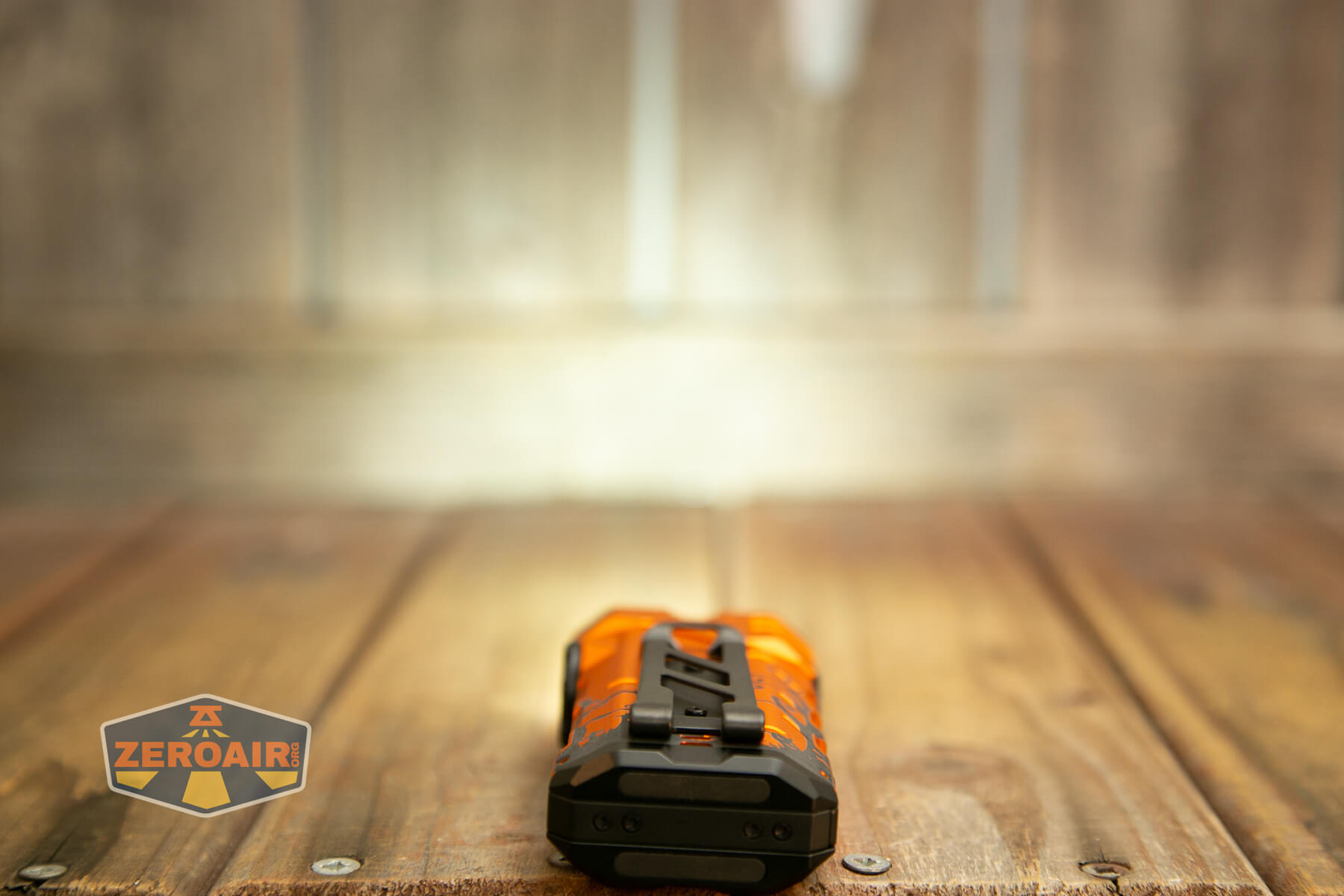
There are two options here for output. In the photo below, the bottom emitter is the “Spot” output – it’s a Luminus SFT25R. The triple on the top is three Luminus SST-25 emitters. They’re all cool white. In fact, the LoopGear SK05 Pro Halloween flashlight was only available in cool white.
LED Color Report (CRI and CCT)
CRI and CCT are not mysteries – LoopGear claims the flood triple to be 6500K, and that’s approximately right – I measure it as 5600-6100 CCT. CRI for this high output triple is low.
The bottom row is the spot emitter – CCT is cool or very cool, and CRI is low.
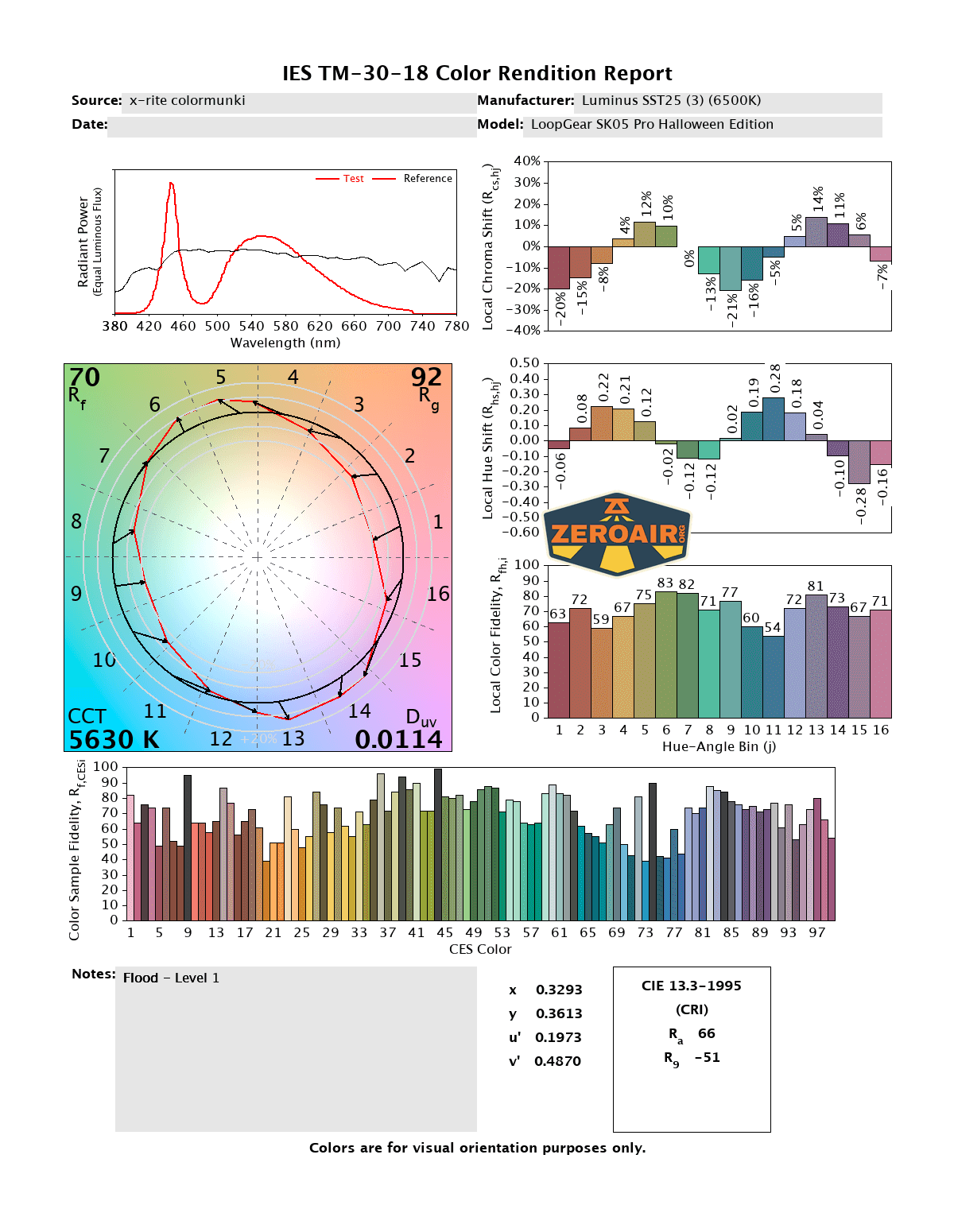
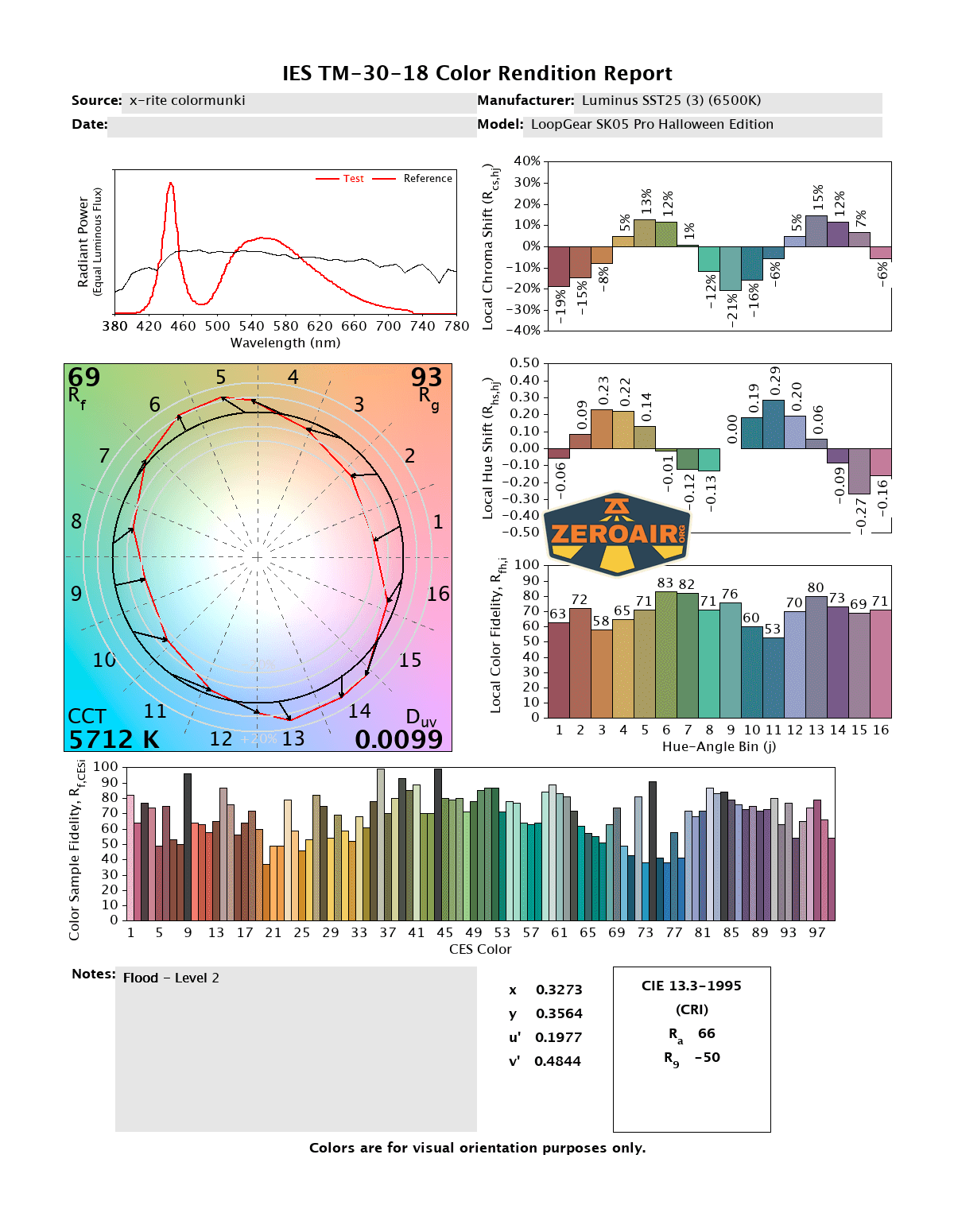
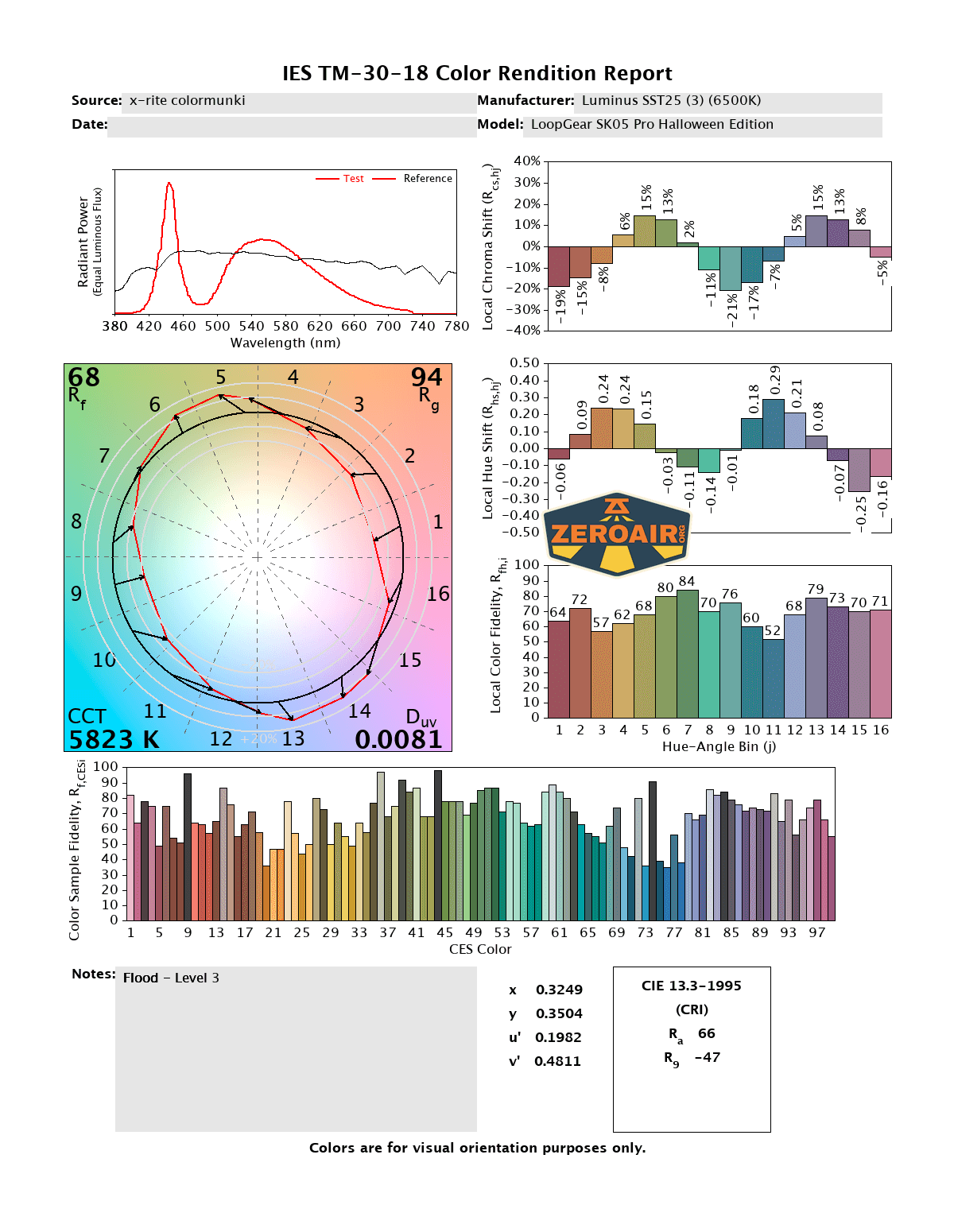
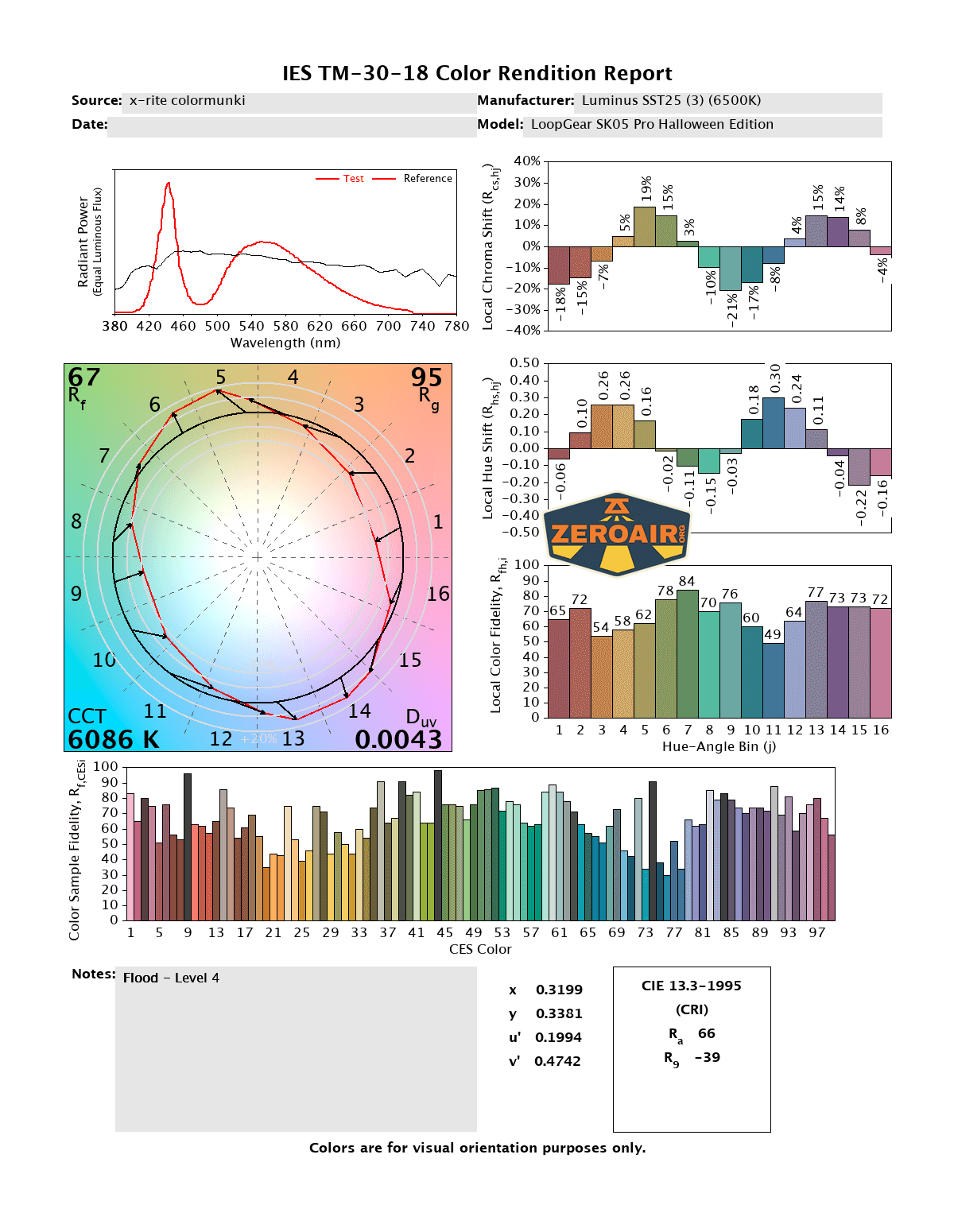
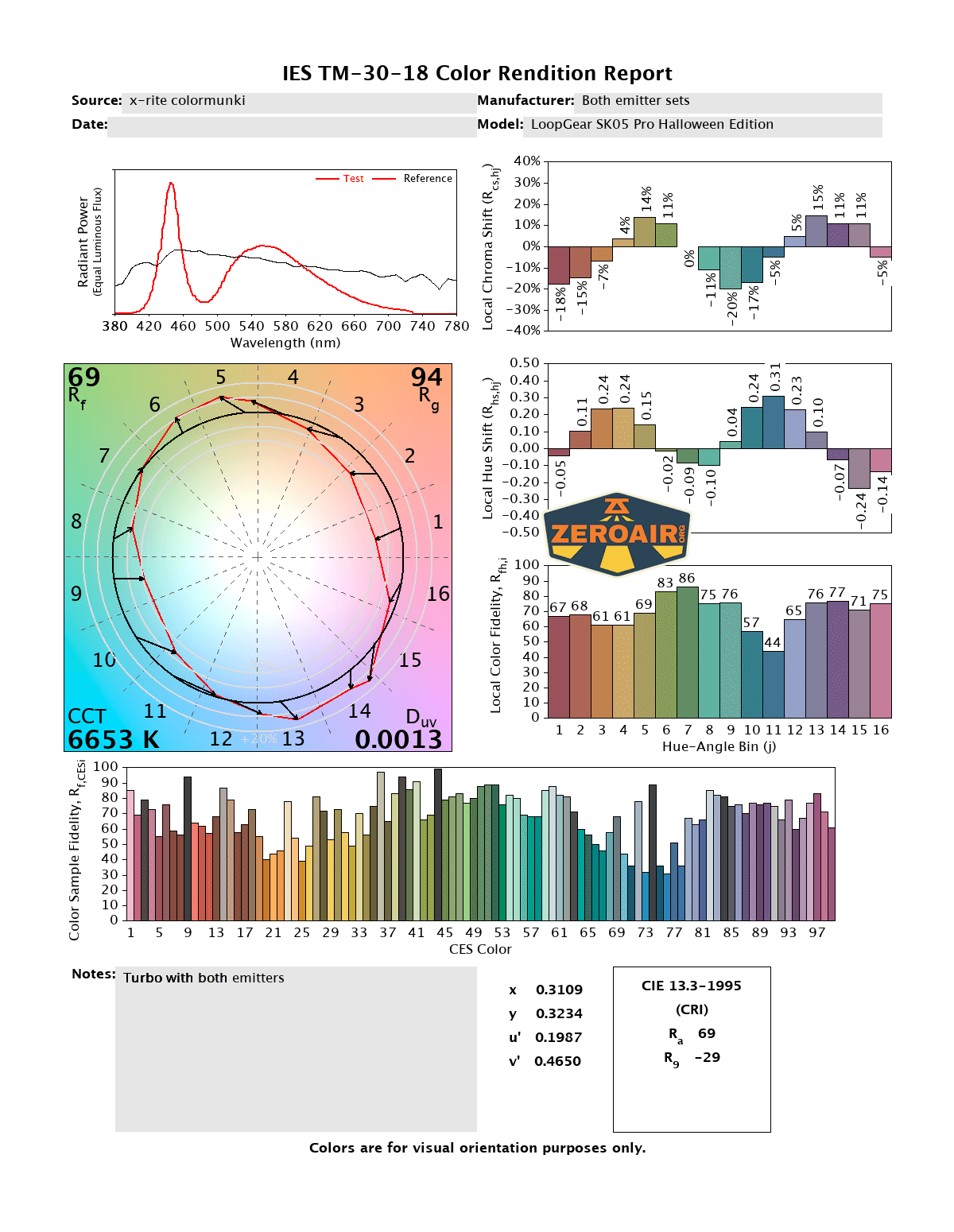
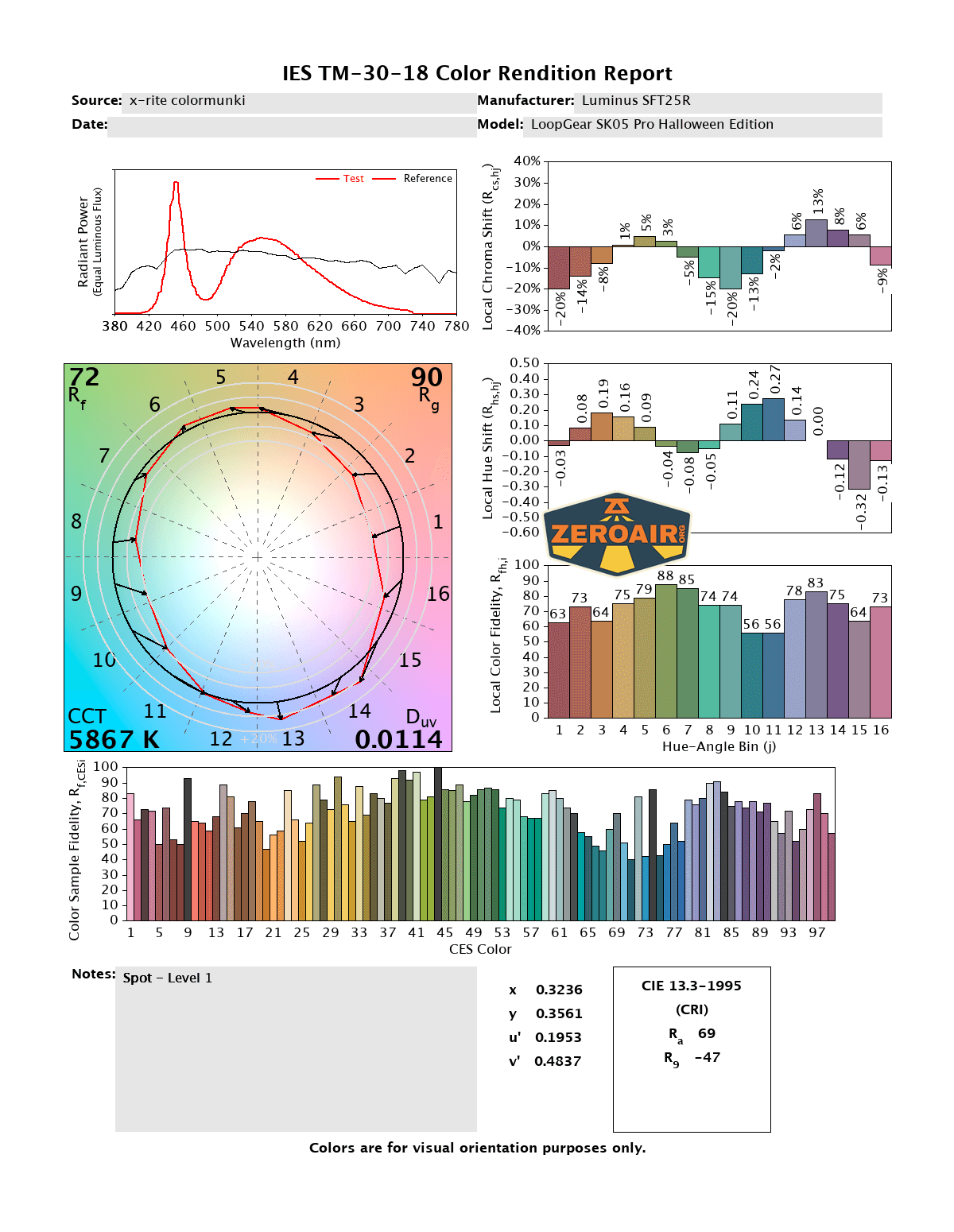
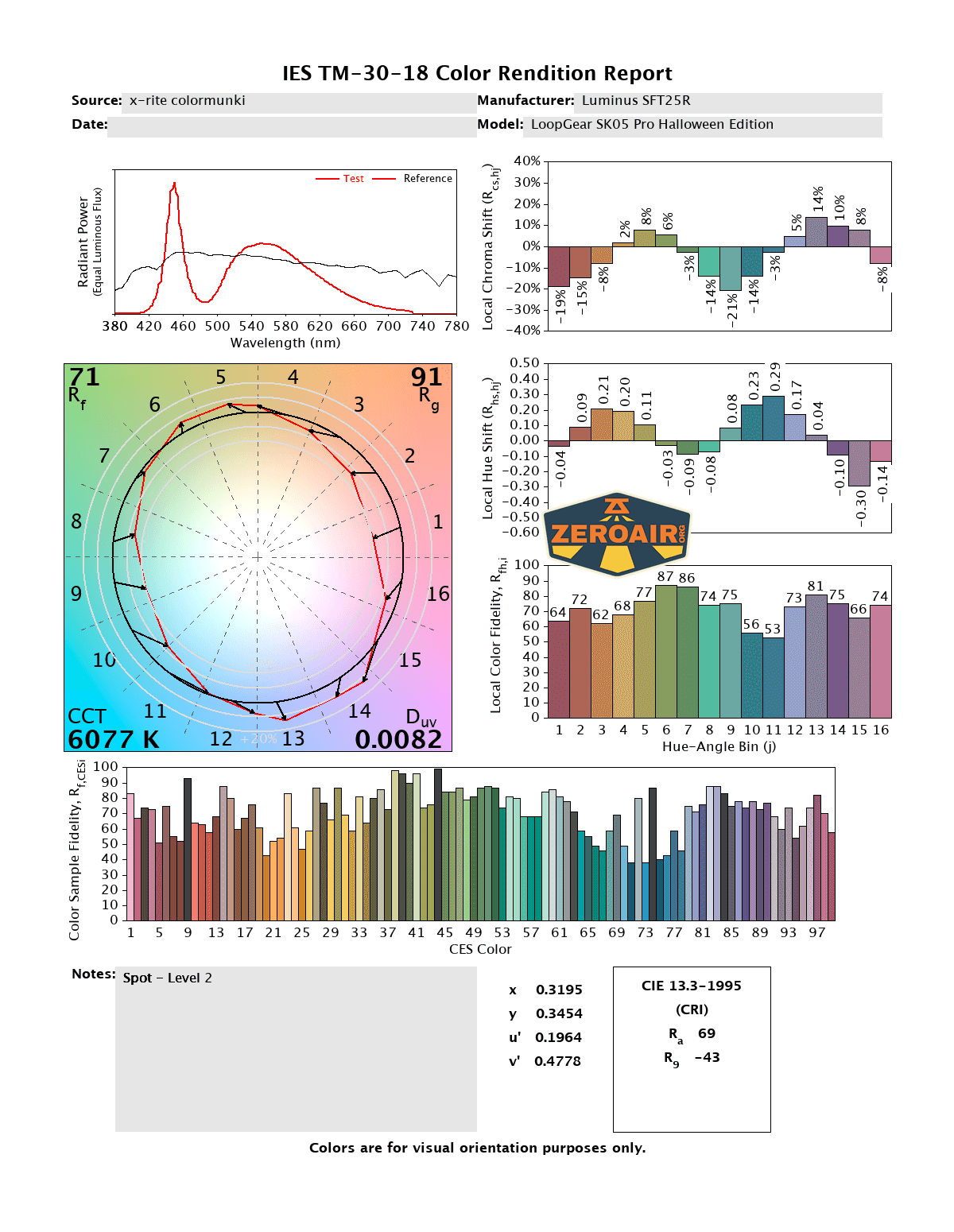
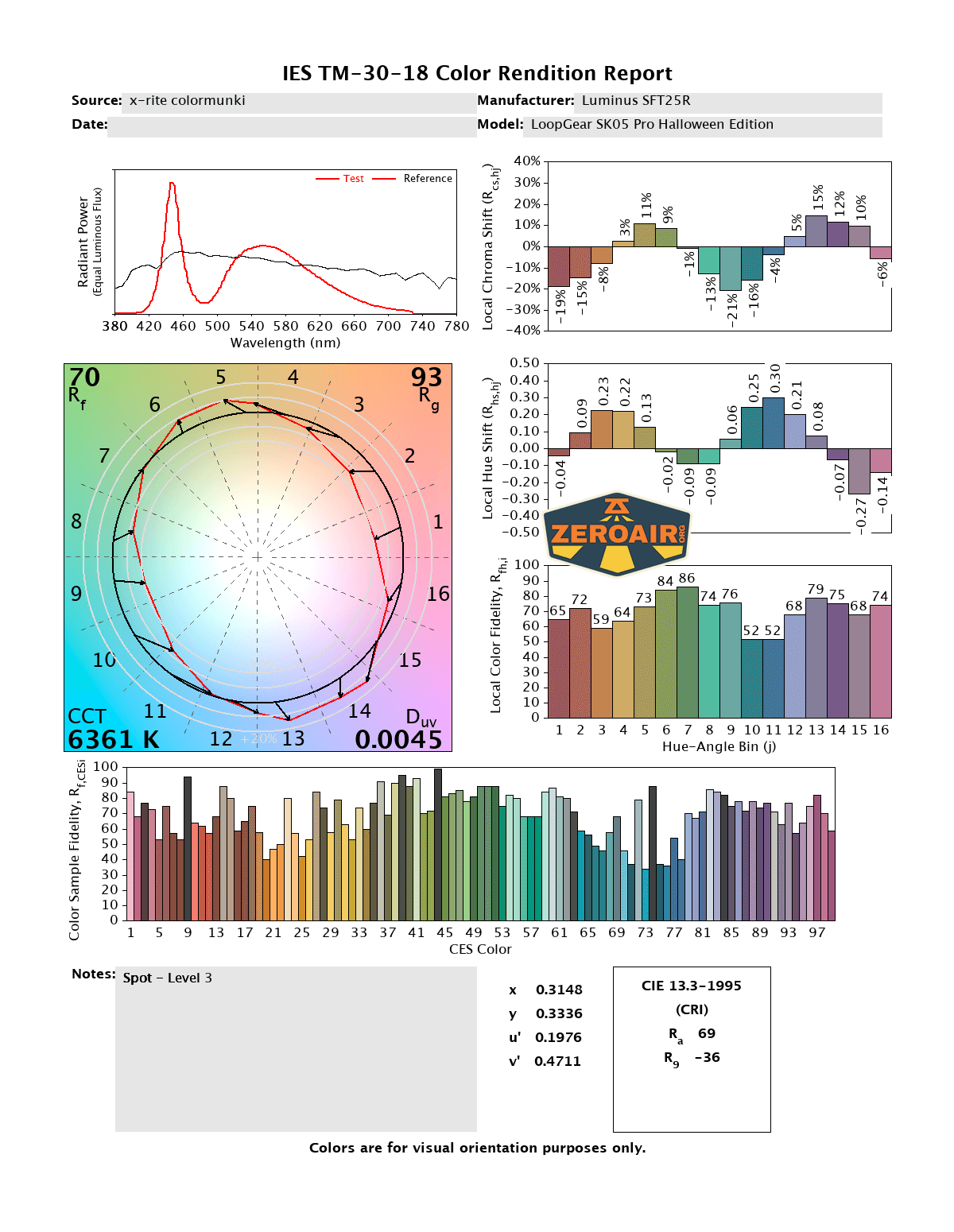
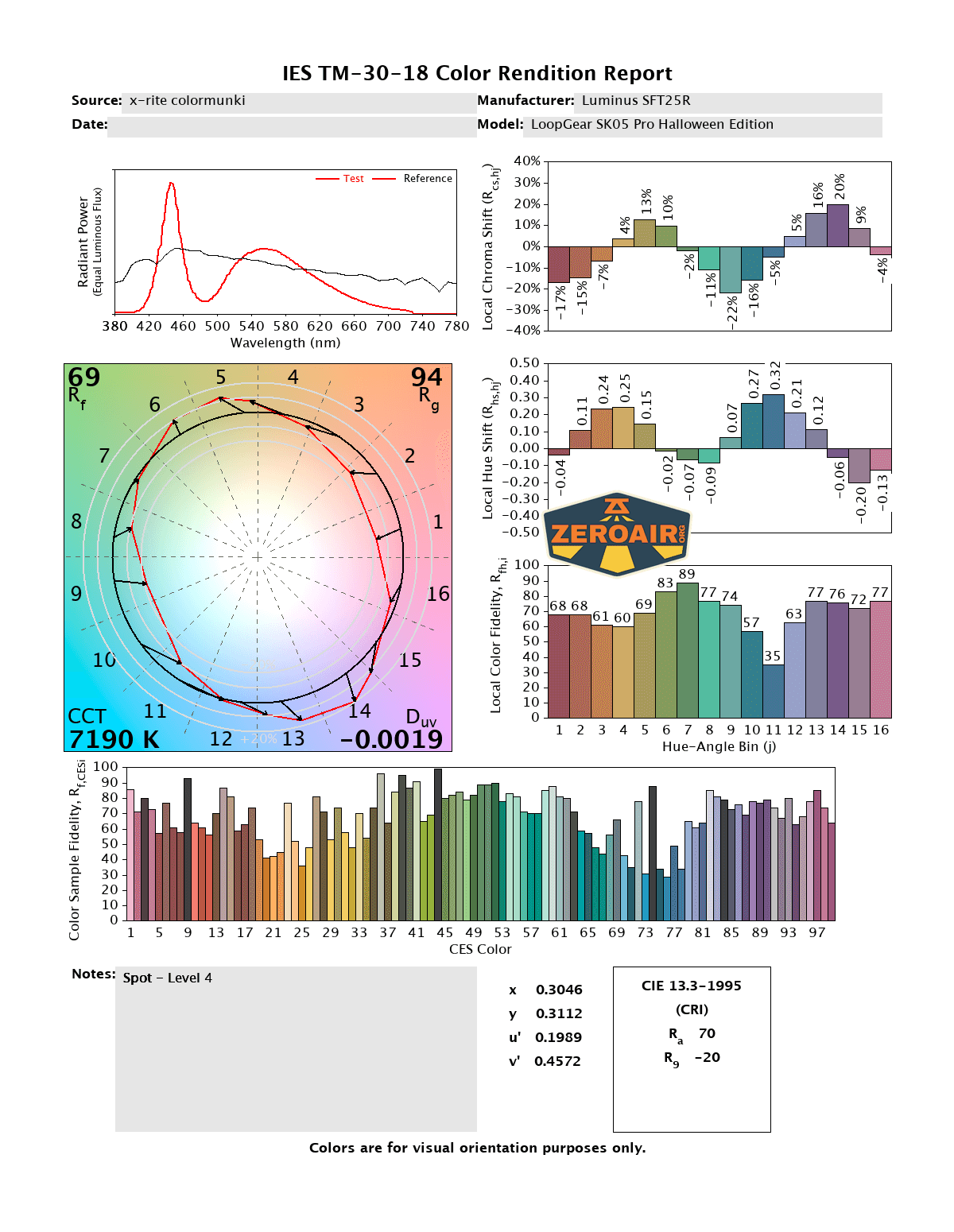
CCT (Correlated Color Temperature) refers to the measurement of the color appearance of light, expressed in Kelvins (K), which indicates whether the light is warm (yellowish) or cool (bluish). A lower CCT (below 3000K) is considered warm light, while a higher CCT (above 5000K) gives cooler, bluish light.
CRI (Color Rendering Index) is a measure of how accurately a light source renders colors in comparison to natural sunlight. Scored on a scale from 0 to 100, higher CRI values indicate that colors appear more true to life and vibrant, similar to how they would look under the sun.
Beamshots
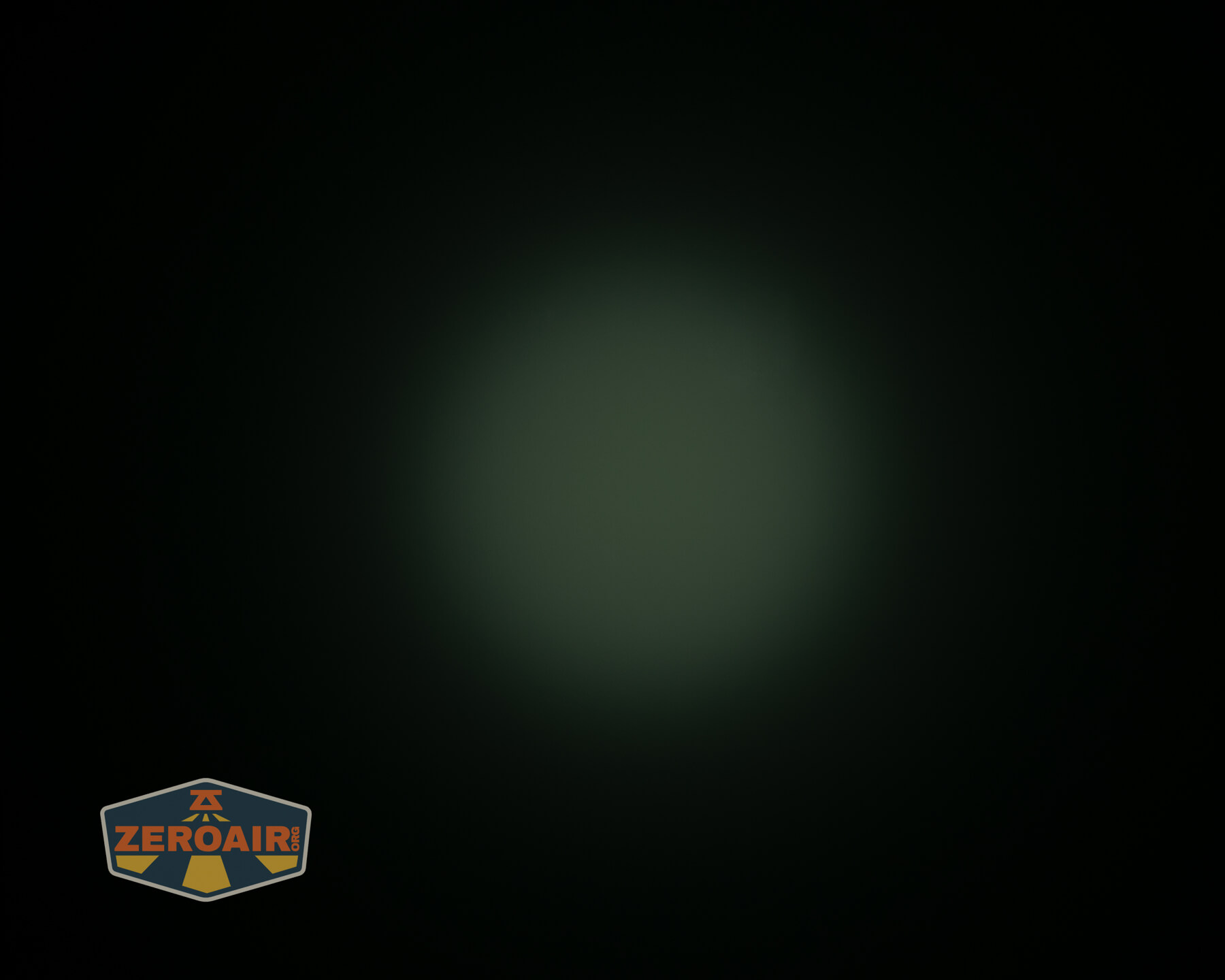
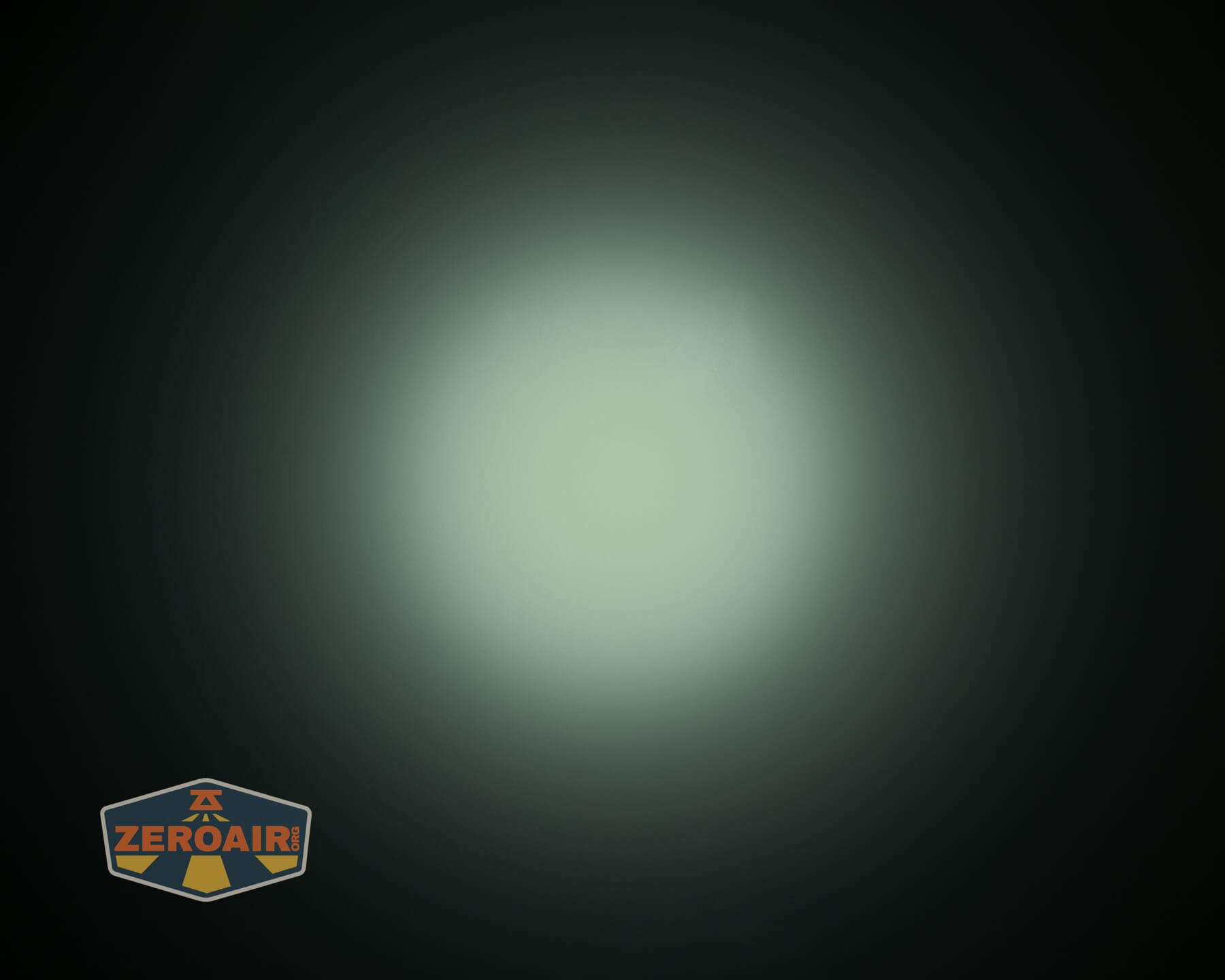
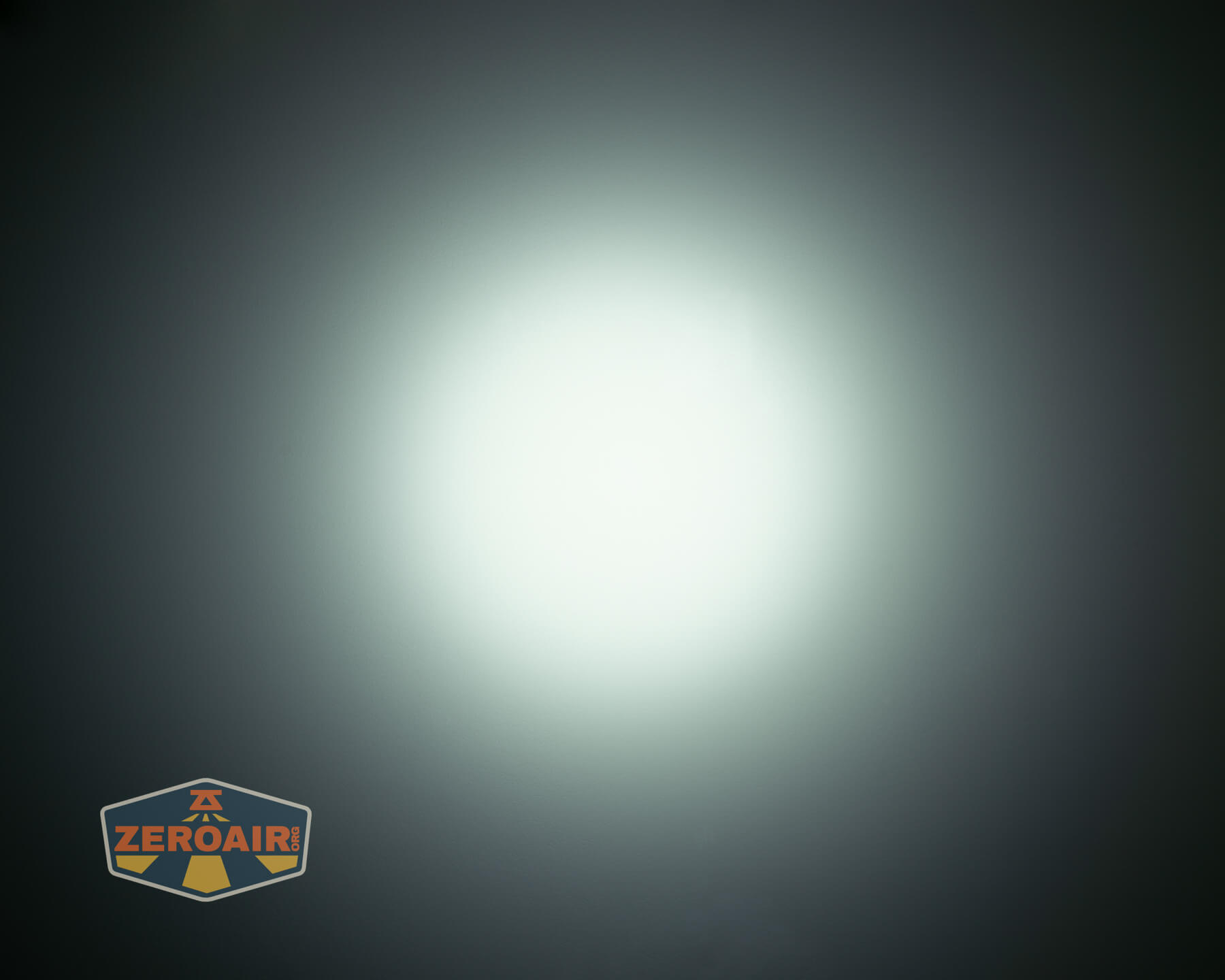
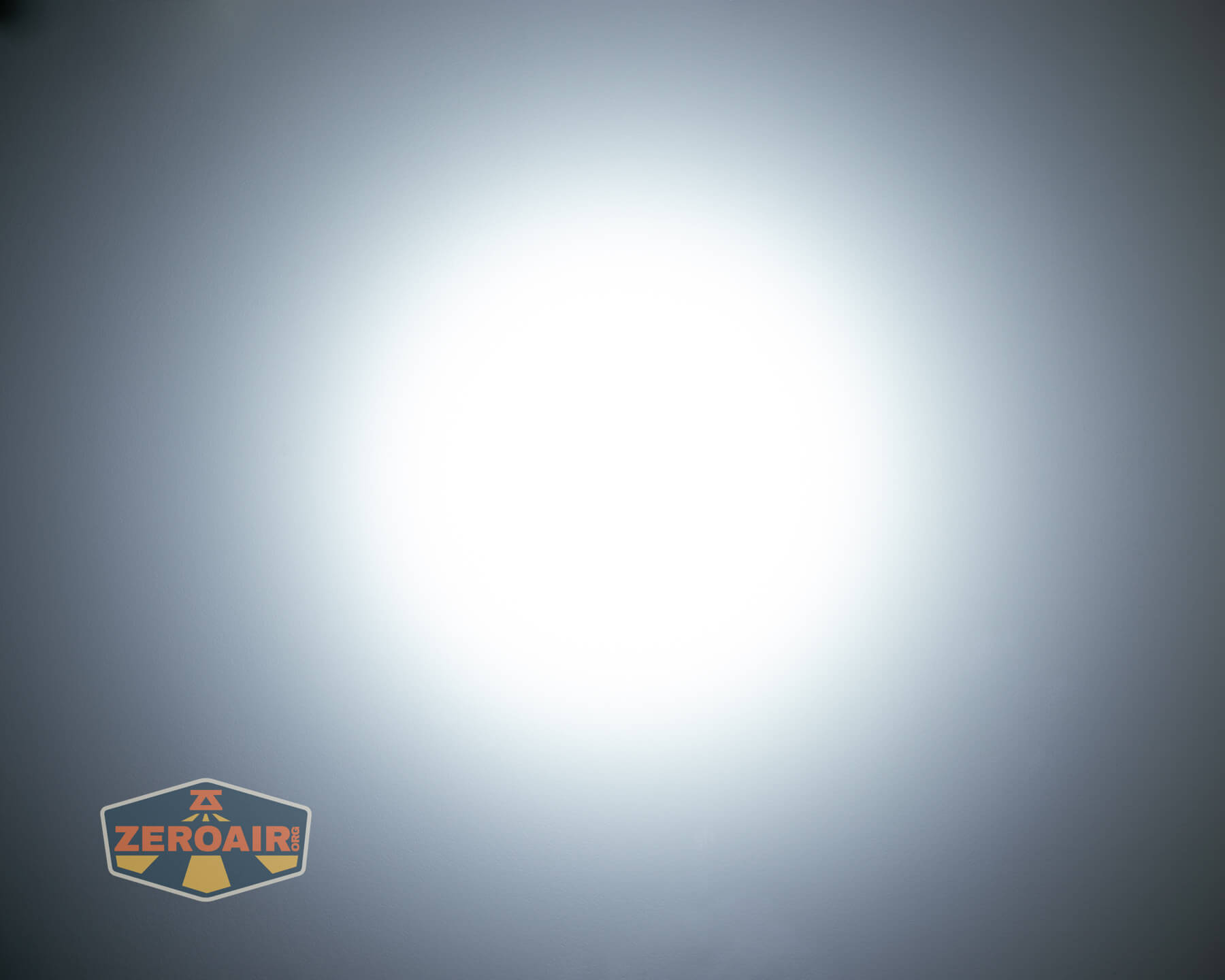
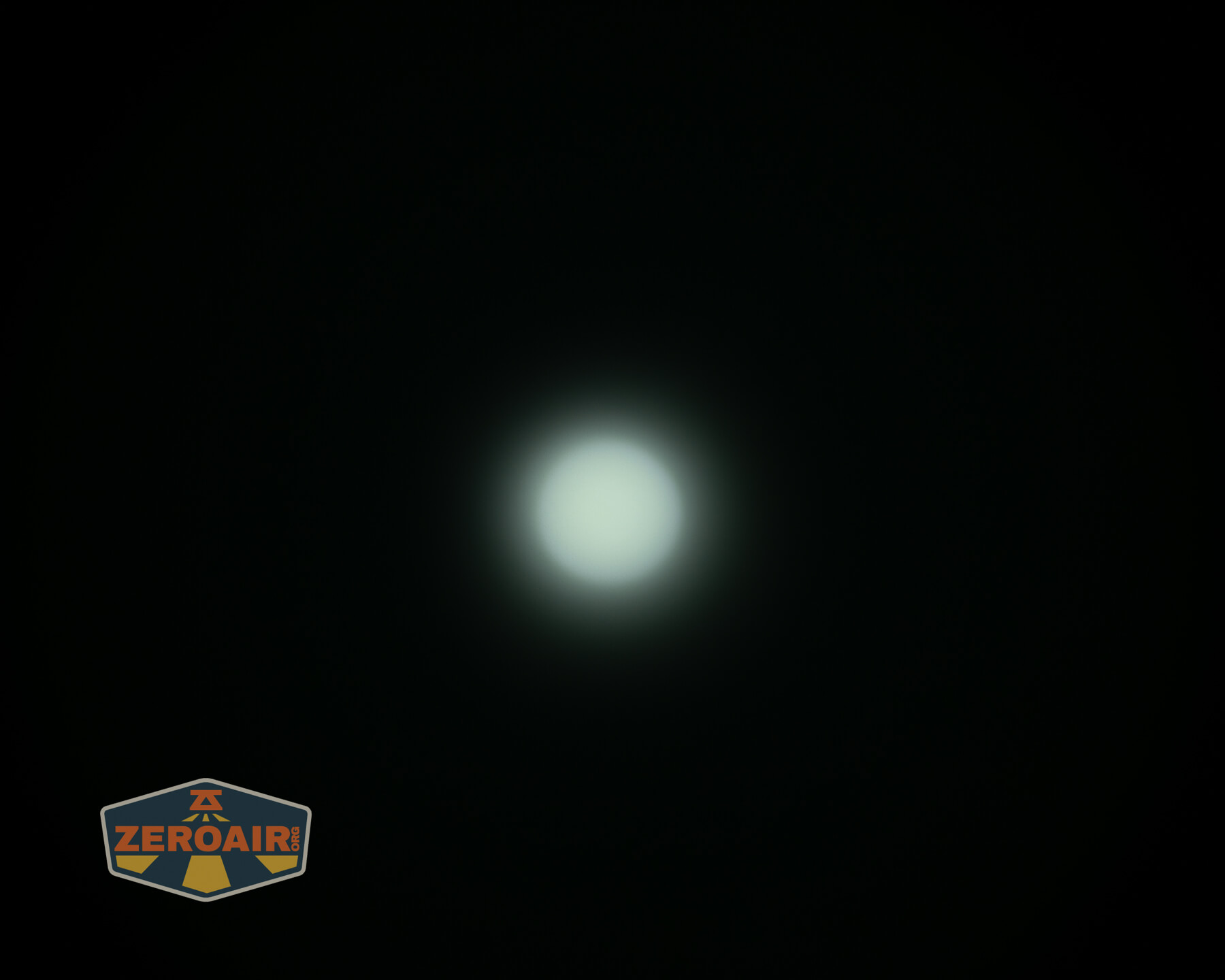
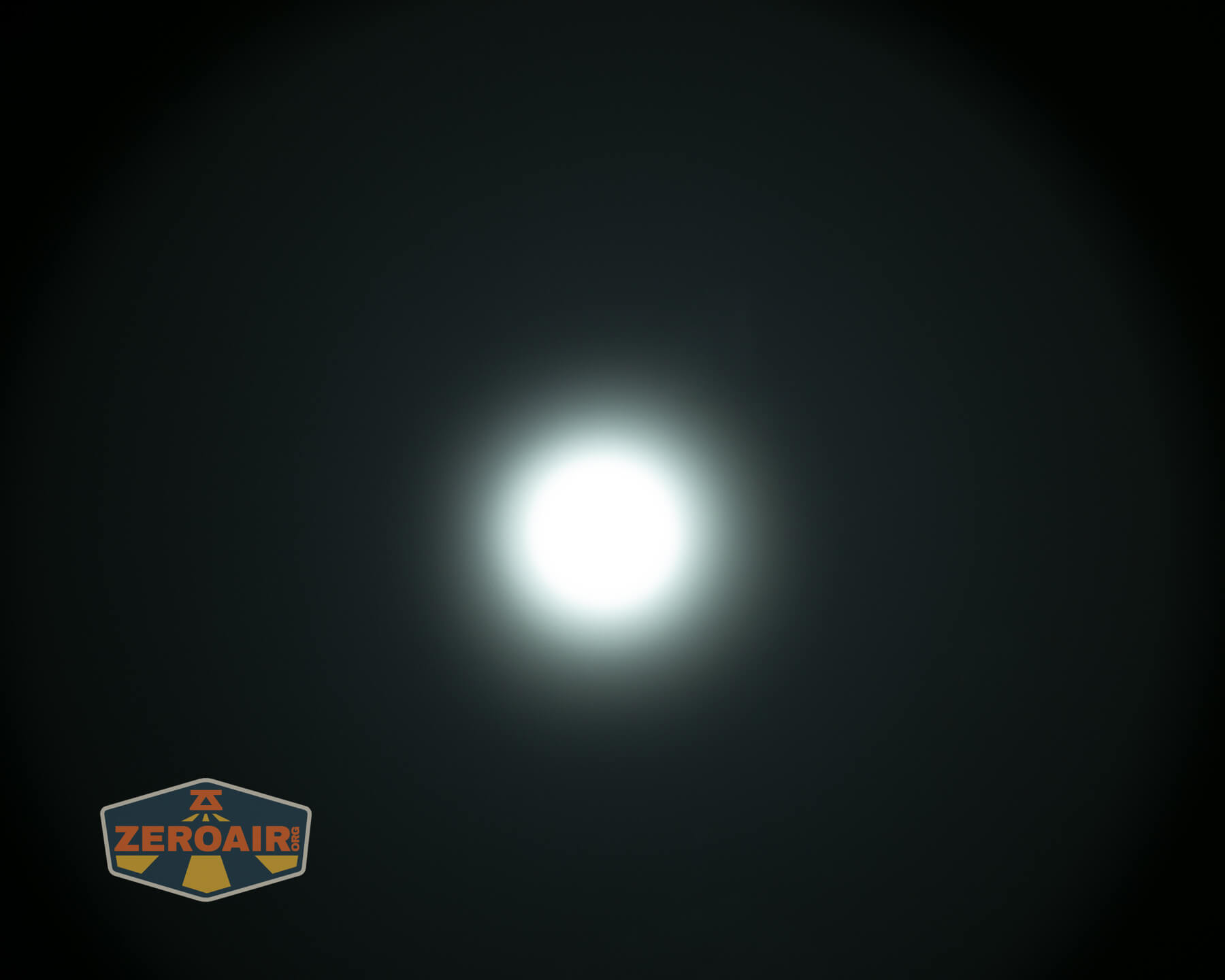
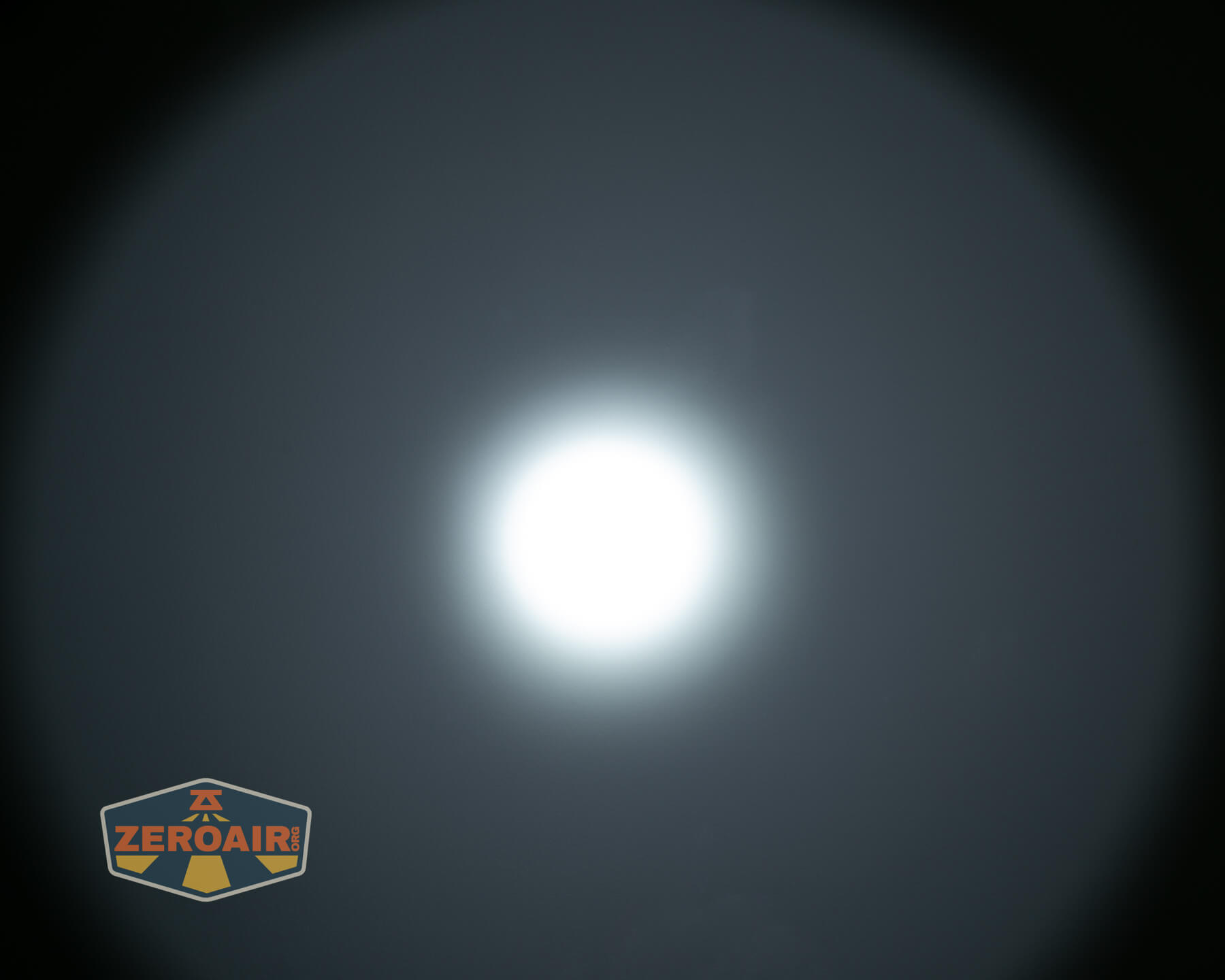
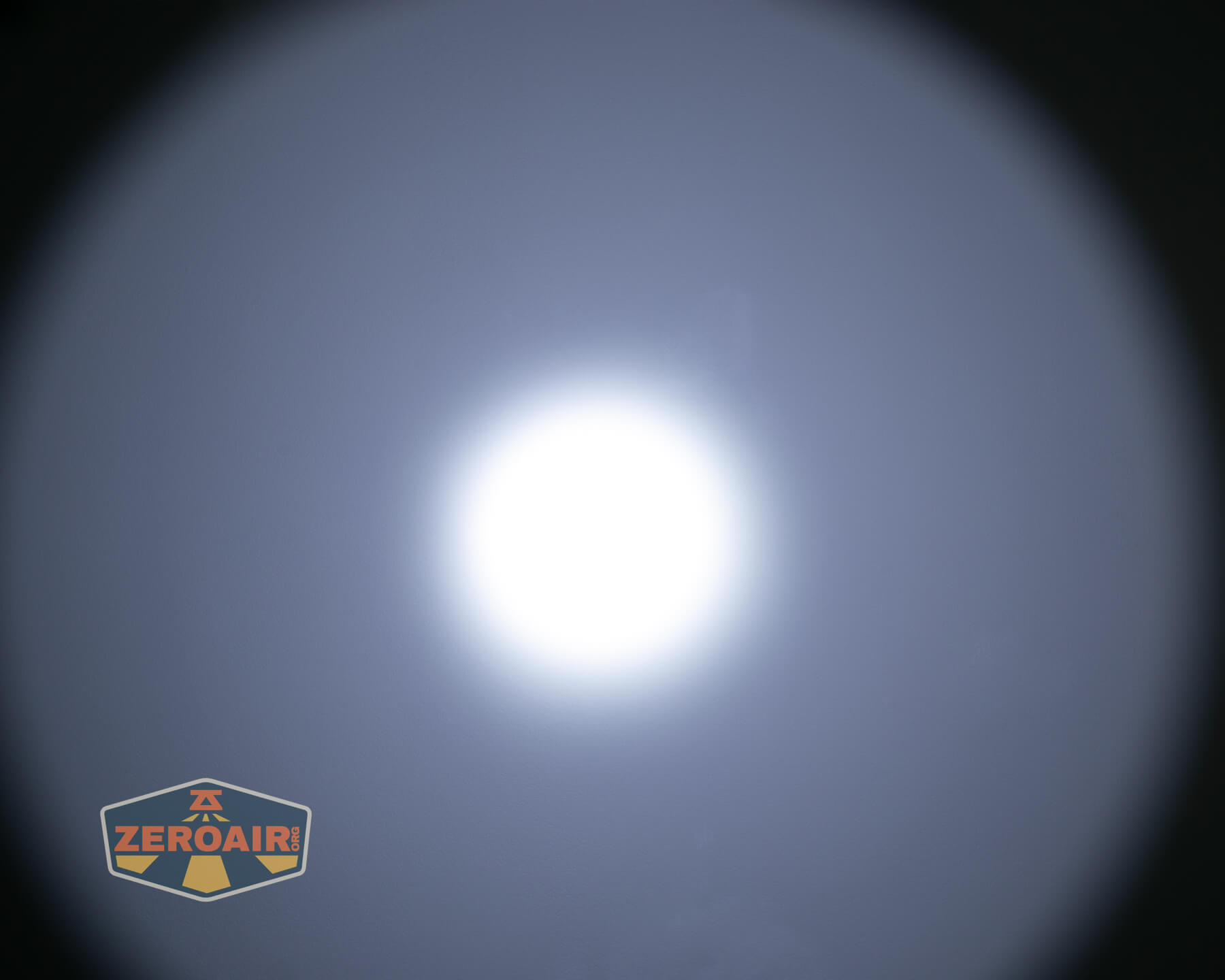
These beamshots always have the following settings: f8, ISO100, 0.3s shutter, and manual 5000K exposure. These photos are taken at floor level, and the beam hits the ceiling around 9 feet away. The fifth photo in the second row is turbo with both emitters. It’s the same in that next section below, too.

Tint vs BLF-348 (KillzoneFlashlights.com 219b version) (affiliate link)
I keep the test flashlight on the left and the BLF-348 reference flashlight on the right. These photos are taken around 18 inches from the door.
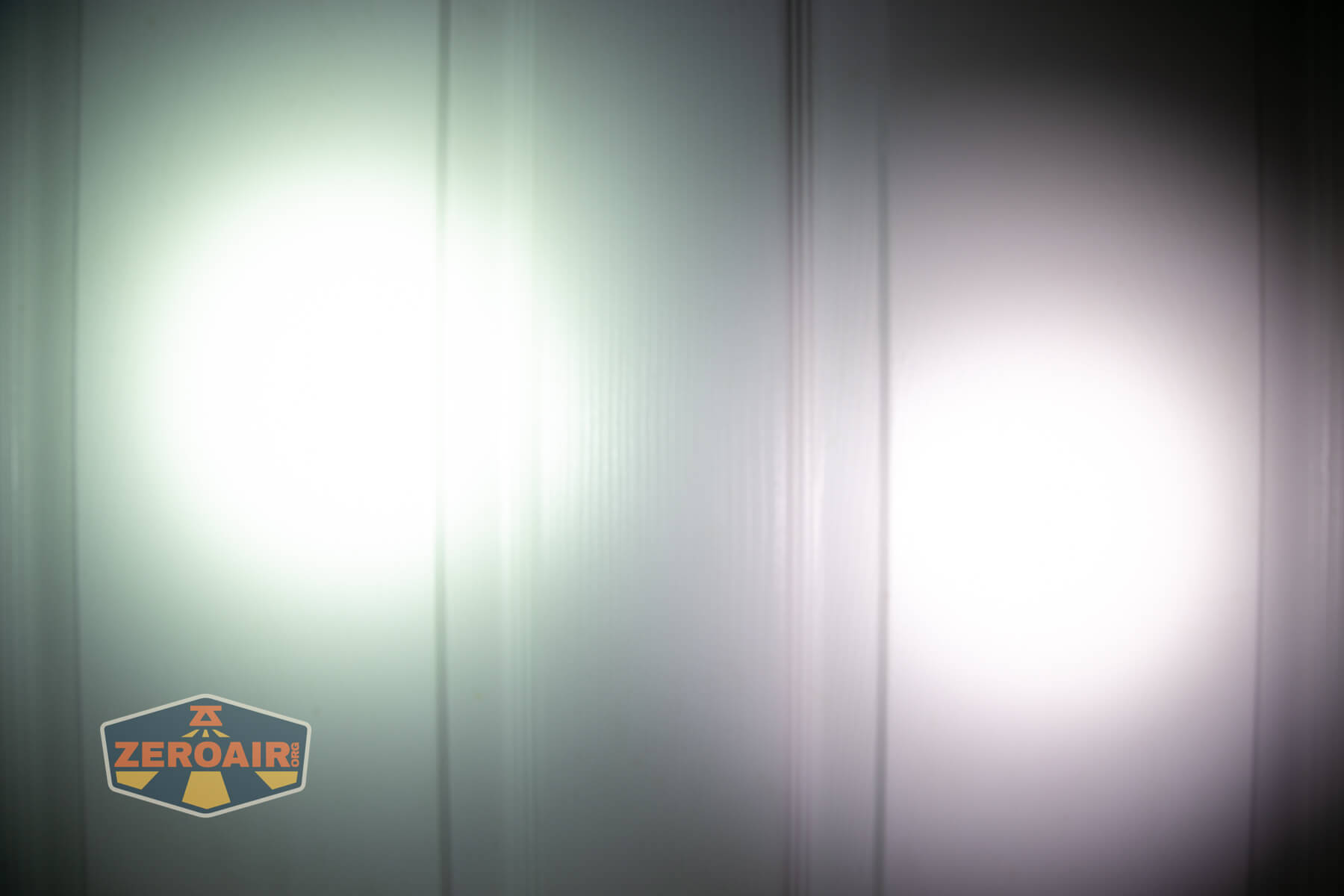



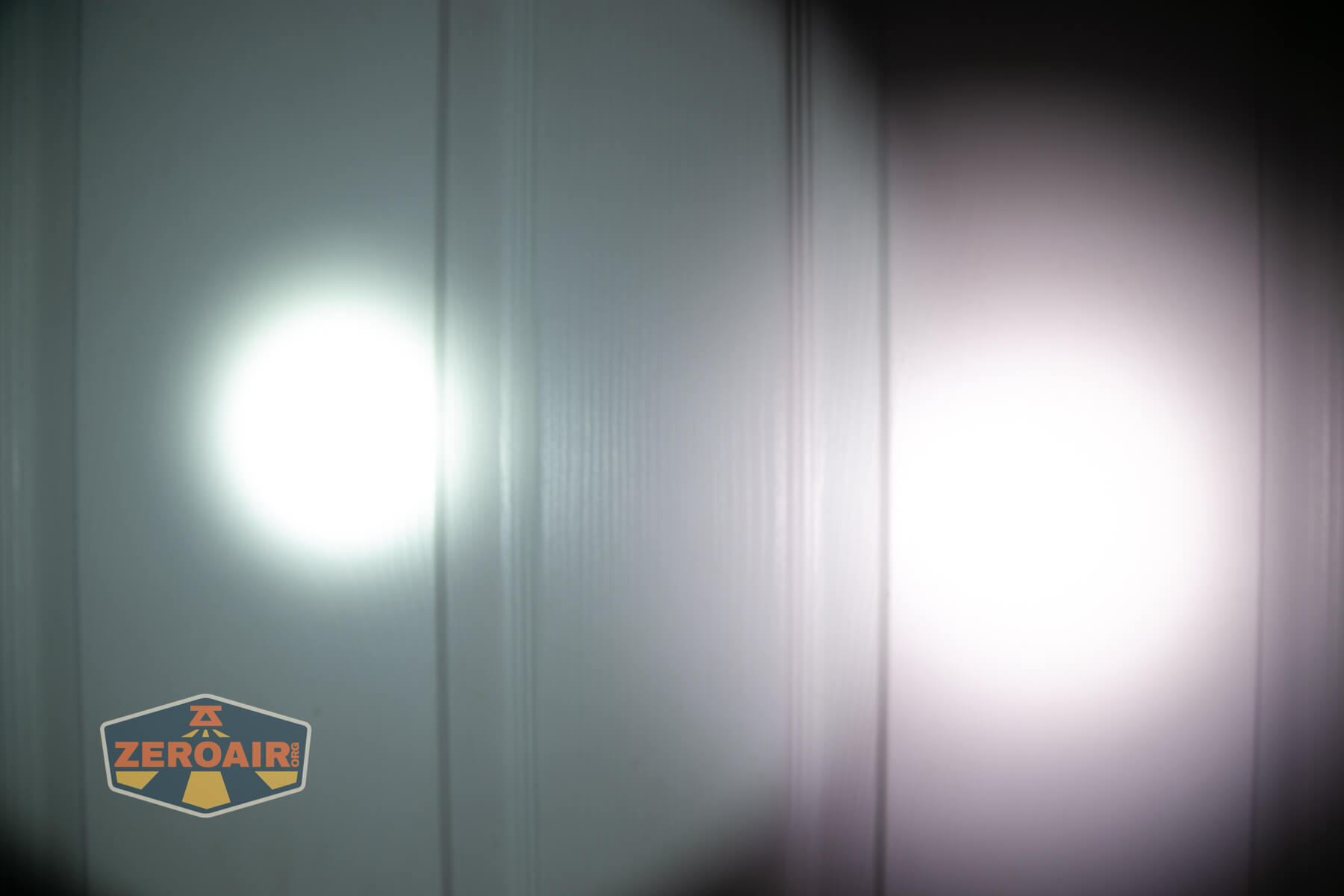




I compare everything to the KillzoneFlashlights.com 219b BLF-348 because it’s inexpensive and has the best tint!
Summary and Conclusion
The Big Table
| LoopGear SK-05 Pro | |
|---|---|
| Emitter: | Luminus SFT25R (Spot) |
| Price in USD at publication time: | |
| Cell: | 2×18650 |
| Runtime Graphs | |
| LVP? | Yes |
| Switch Type: | E-Switch |
| Quiescent Current (mA): | ? |
| On-Board Charging? | Yes |
| Charge Port Type: | USB-C |
| Charge Graph | |
| Power off Charge Port | No |
| Claimed Lumens (lm) | Spot: 1300 Flood: 3060 |
| Measured Lumens (at 30s) | Spot: 1267 (97.5% of claim)^ Flood: 2184 (71.4% of claim)^ |
| Candela per Lumen | Spot: 40.8 Flood: 4.5 |
| Claimed Throw (m) | Spot: 405 Flood: 150 |
| Candela (Calculated) in cd (at 30s) | Spot: 1460lux @ 5.949m = 51670cd Flood: 460lux @ 4.791m = 10559cd |
| Throw (Calculated) (m) | Spot: 454.6 (112.2% of claim)^ Flood: 205.5 (137% of claim)^ |
| Claimed CCT | Spot – Flood: 6500 |
| Measured CCT Range (K) | Spot 5900-7200 Kelvin Flood: 5600-6100 Kelvin |
| Item provided for review by: | LoopGear |
| All my LoopGear reviews! | |
^ Measurement disclaimer: Testing flashlights is my hobby. I use hobbyist-level equipment for testing, including some I made myself. Try not to get buried in the details of manufacturer specifications versus measurements recorded here; A certain amount of difference (say, 10 or 15%) is perfectly reasonable.
What I like
- Solid build quality
- Halloween finish (is seriously awesome)
- Cells are easily accessible
- Uses standard cells
- Intuitive user interface
- RGB side options are fun!
- C to C charging works very well
- Can run off just one cell
What I don’t like
- Very cool white
- Low CRI
Notes
- This content originally appeared at zeroair.org. Please visit there for the best experience!
- Please use my Amazon.com referral link to help support zeroair.org!
- Please support me on Patreon! I deeply appreciate your support!
Discover more from ZeroAir Reviews
Subscribe to get the latest posts sent to your email.