
FLGEDC MR01 Long-Range Flashlight Review
The FLGEDC MR01 long-range flashlight offers excellent sustained output, impressive throw, and solid medium level, but its cool white emitter and slipperiness.
Official Specs and Features
Here’s a link to the FLGEDC MR01 long-range flashlight product page.
Versions
Three body colors are available, but they all offer the same features.
Price
The FLGEDC MR01 long-range flashlight (in any color) is priced at $59.99 and is available now from flashlightgo.com.
And while you’re checking out the FLGEDC MR01 long-range flashlight at flashlightgo.com, check out their Black Friday sales event!
Black Friday & Cyber Monday Sale 2026
What’s Included
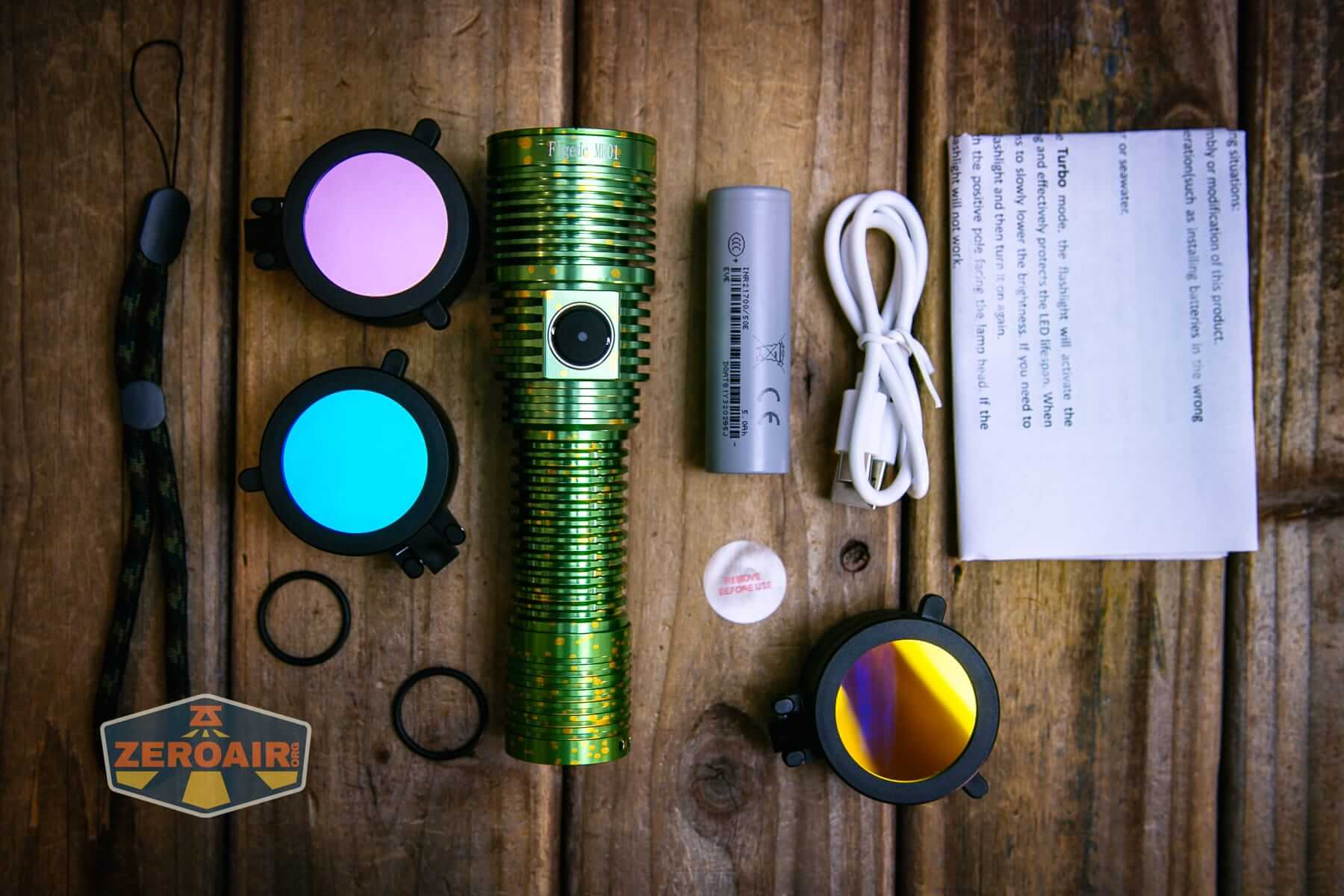
- FLGEDC MR01 long-range flashlight
- 21700
- Charging cable
- Lanyard
- Spare O-rings (2)
- Filters (3) (optional)
- Manual
Package and Manual
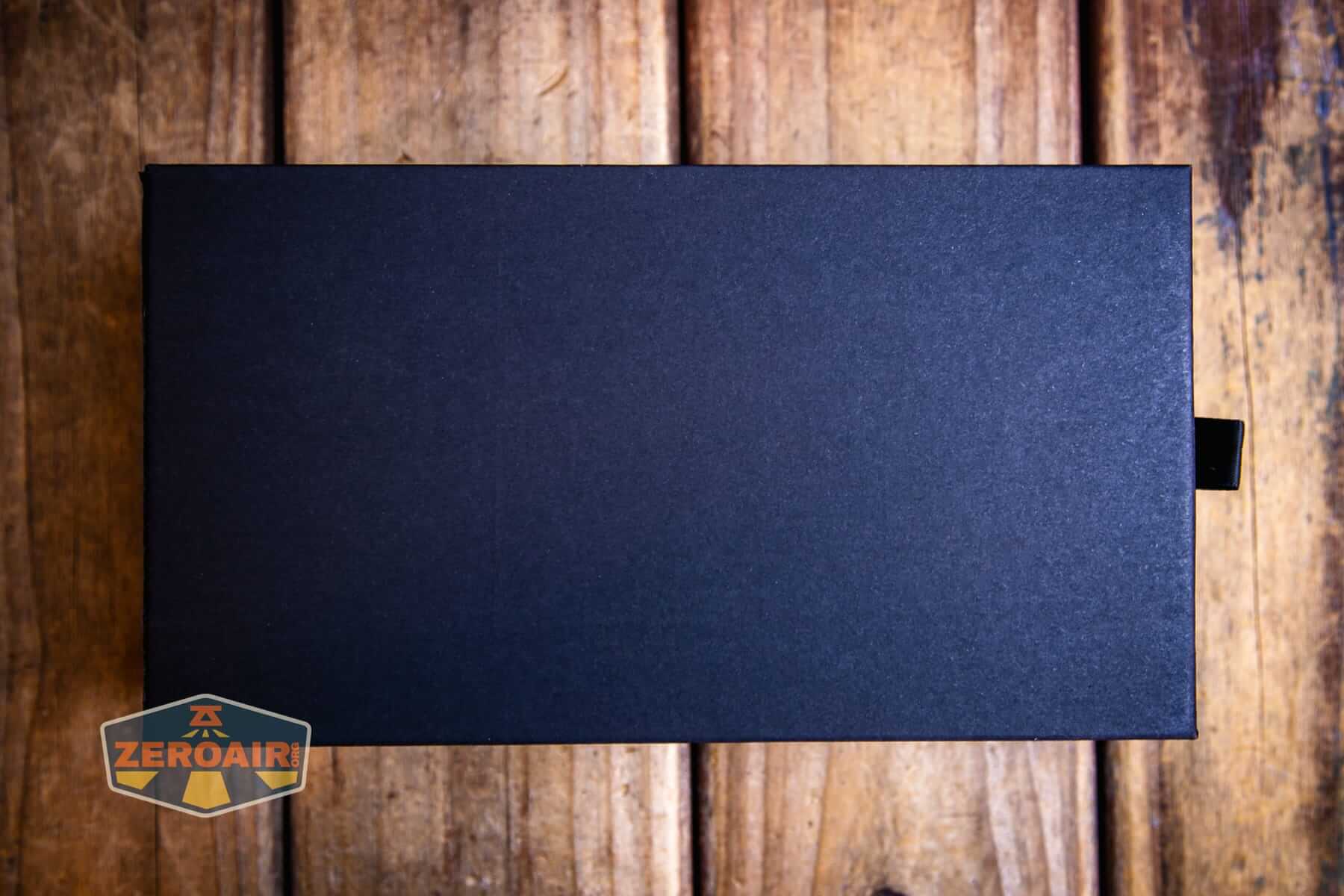
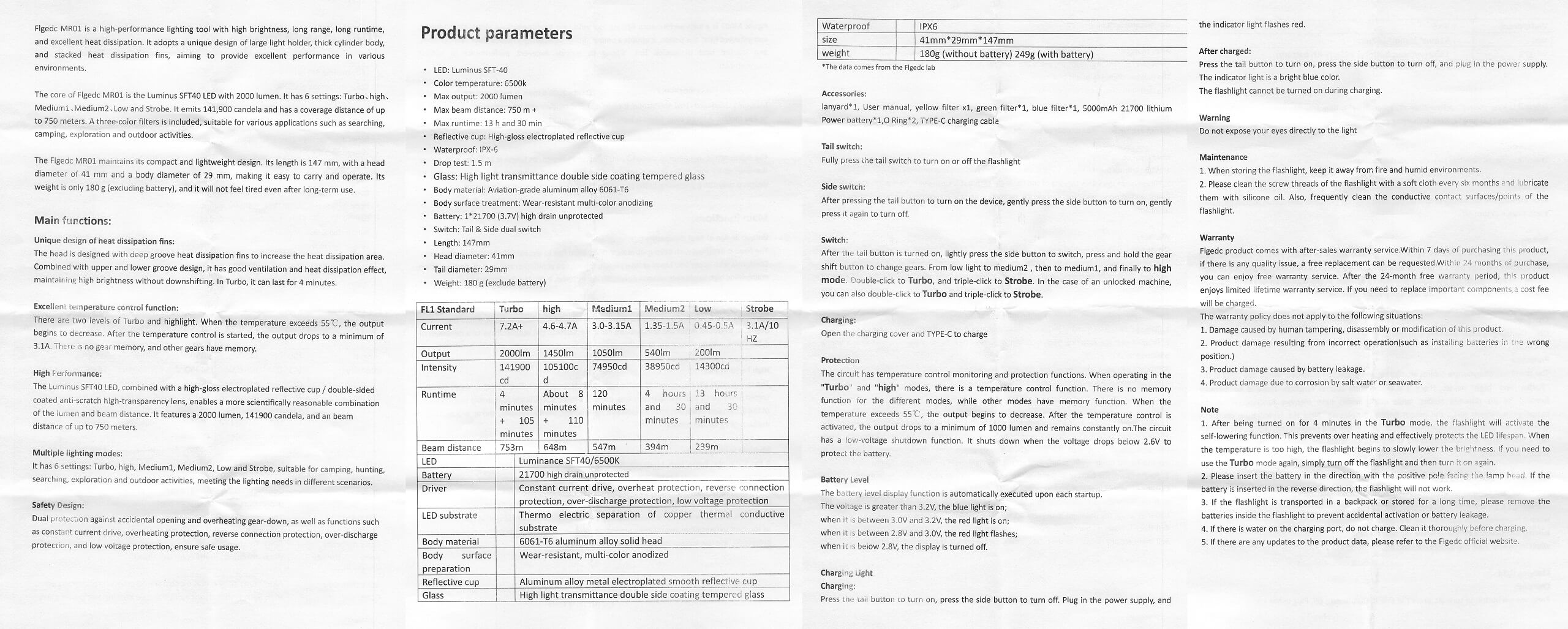
I’m not sure this is the officially official manual. But it’s the one I have.
Build Quality and Disassembly
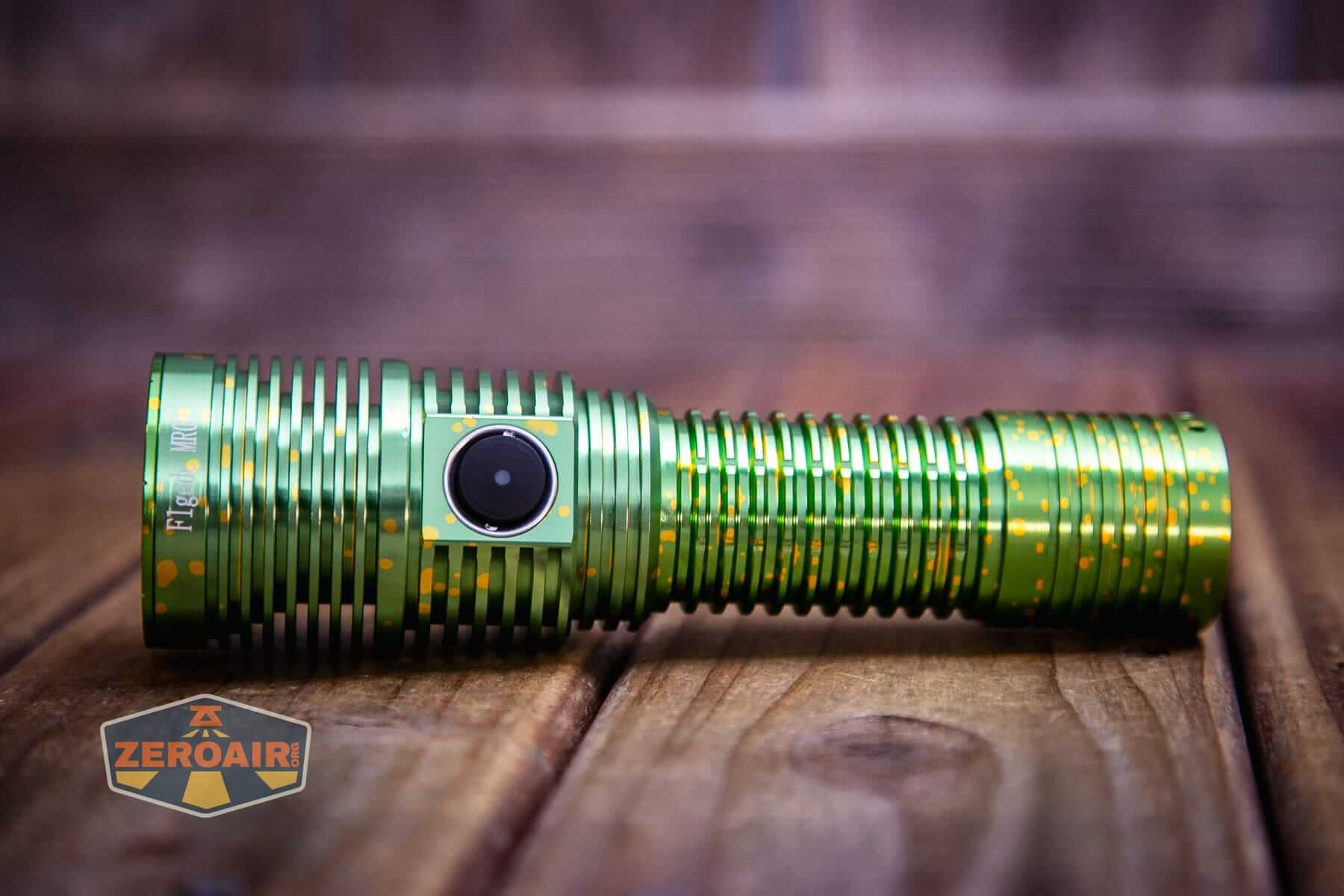
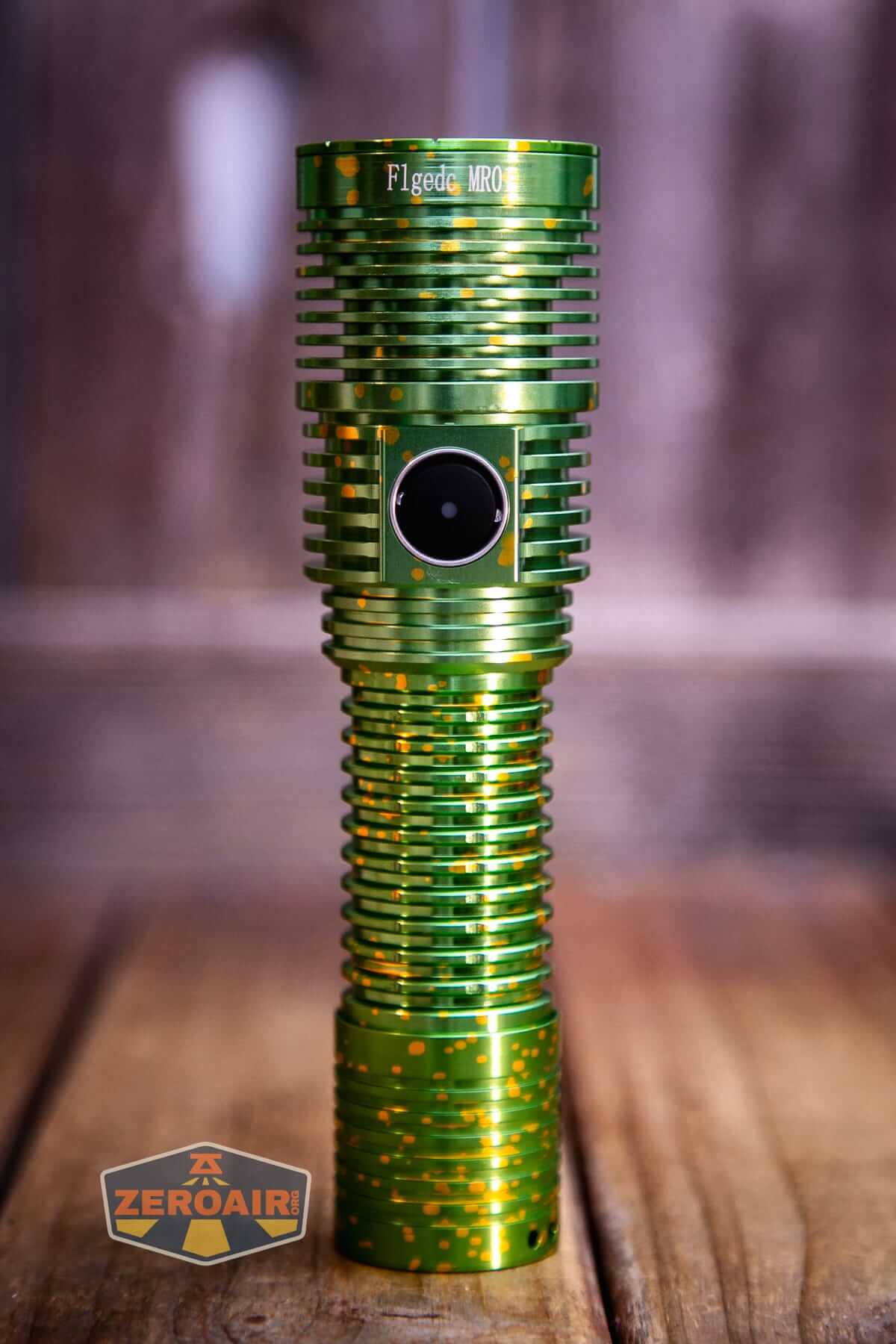
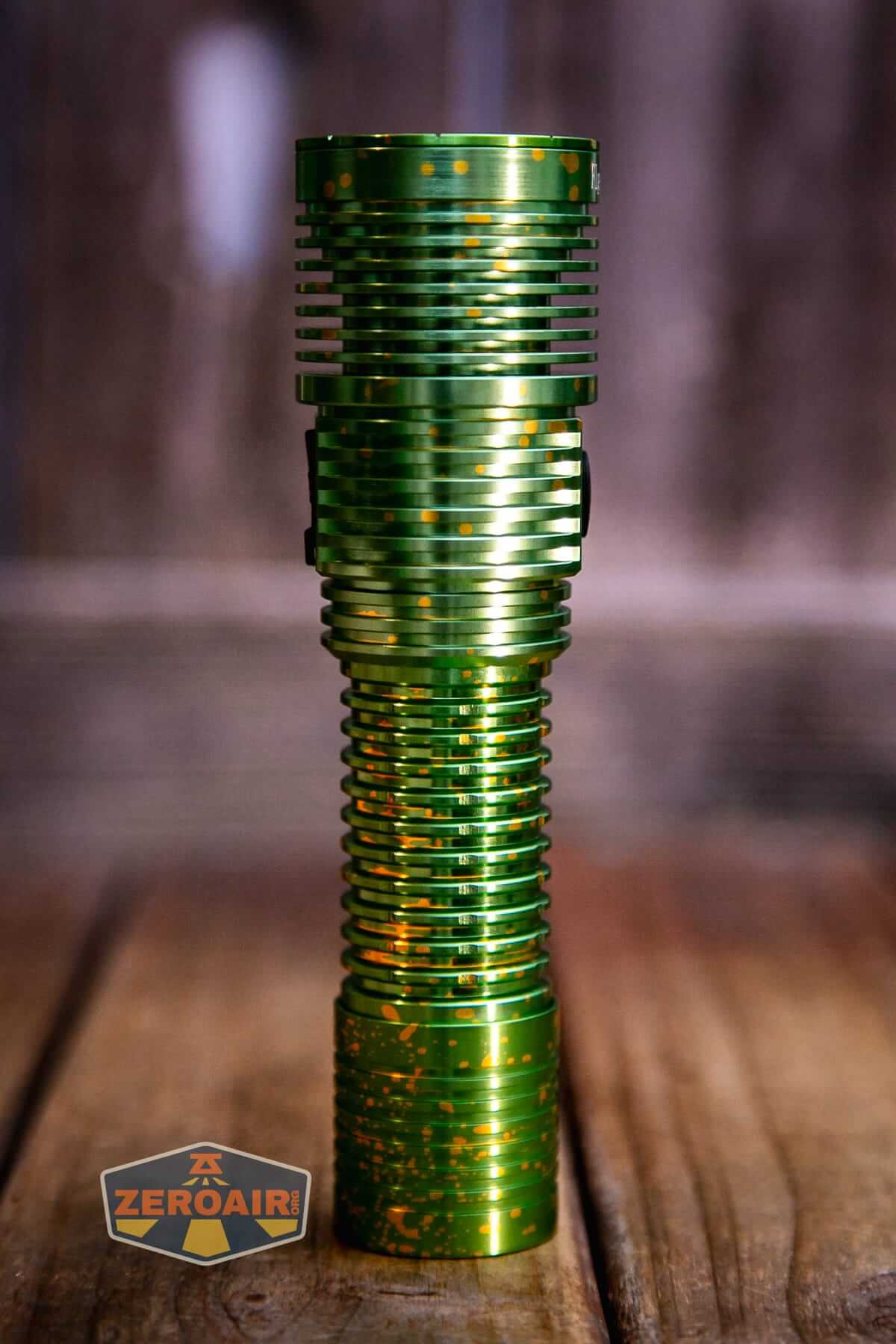
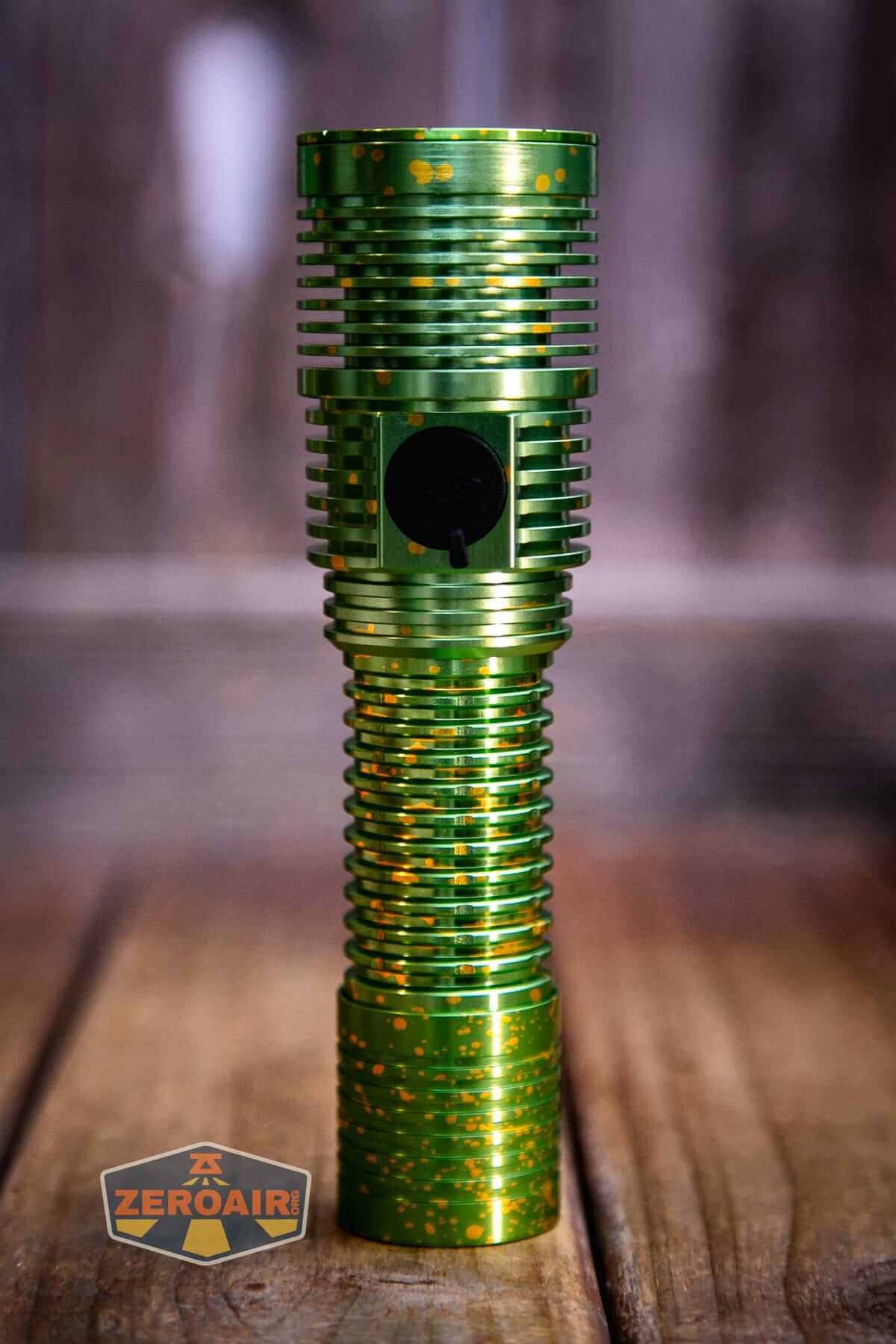
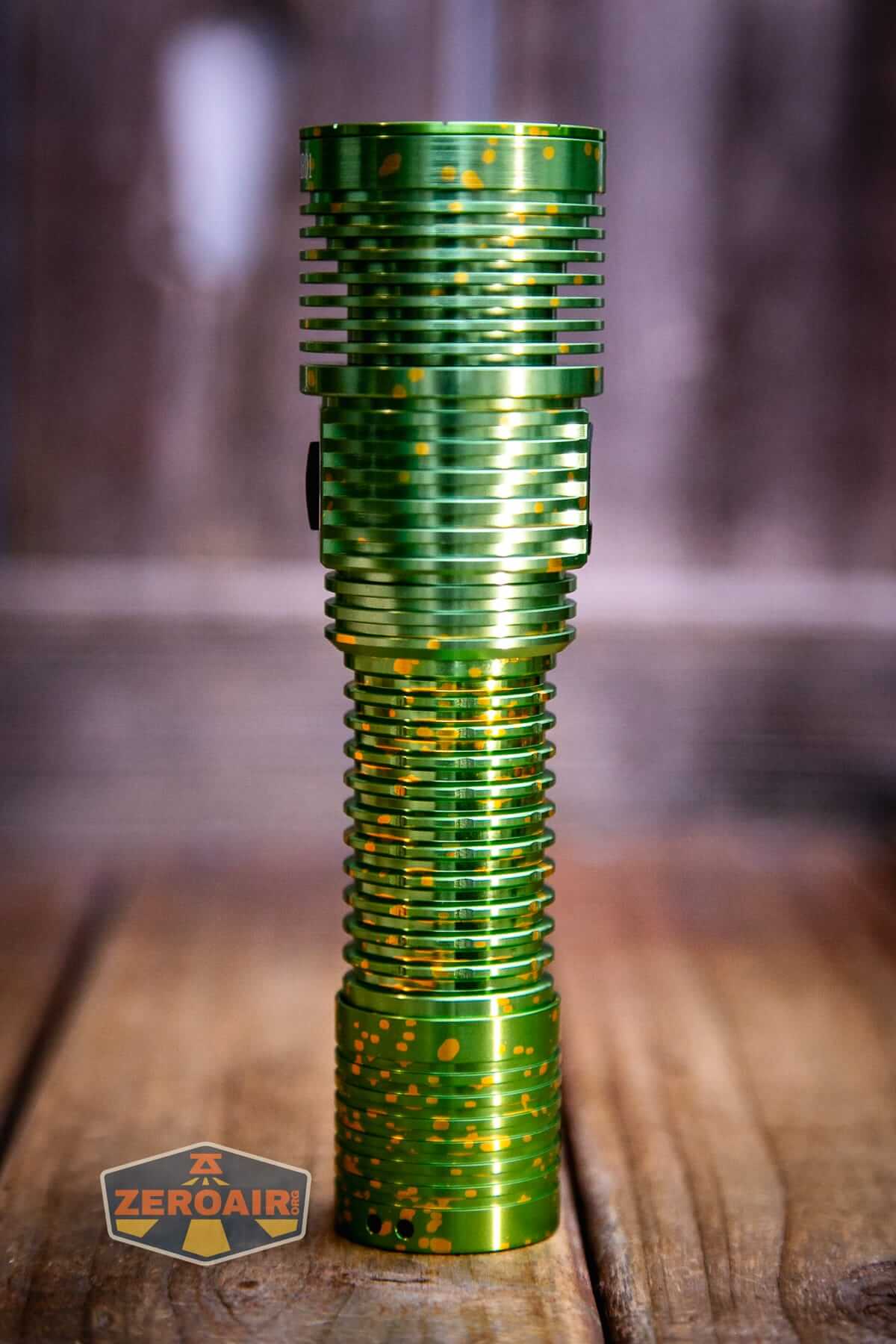
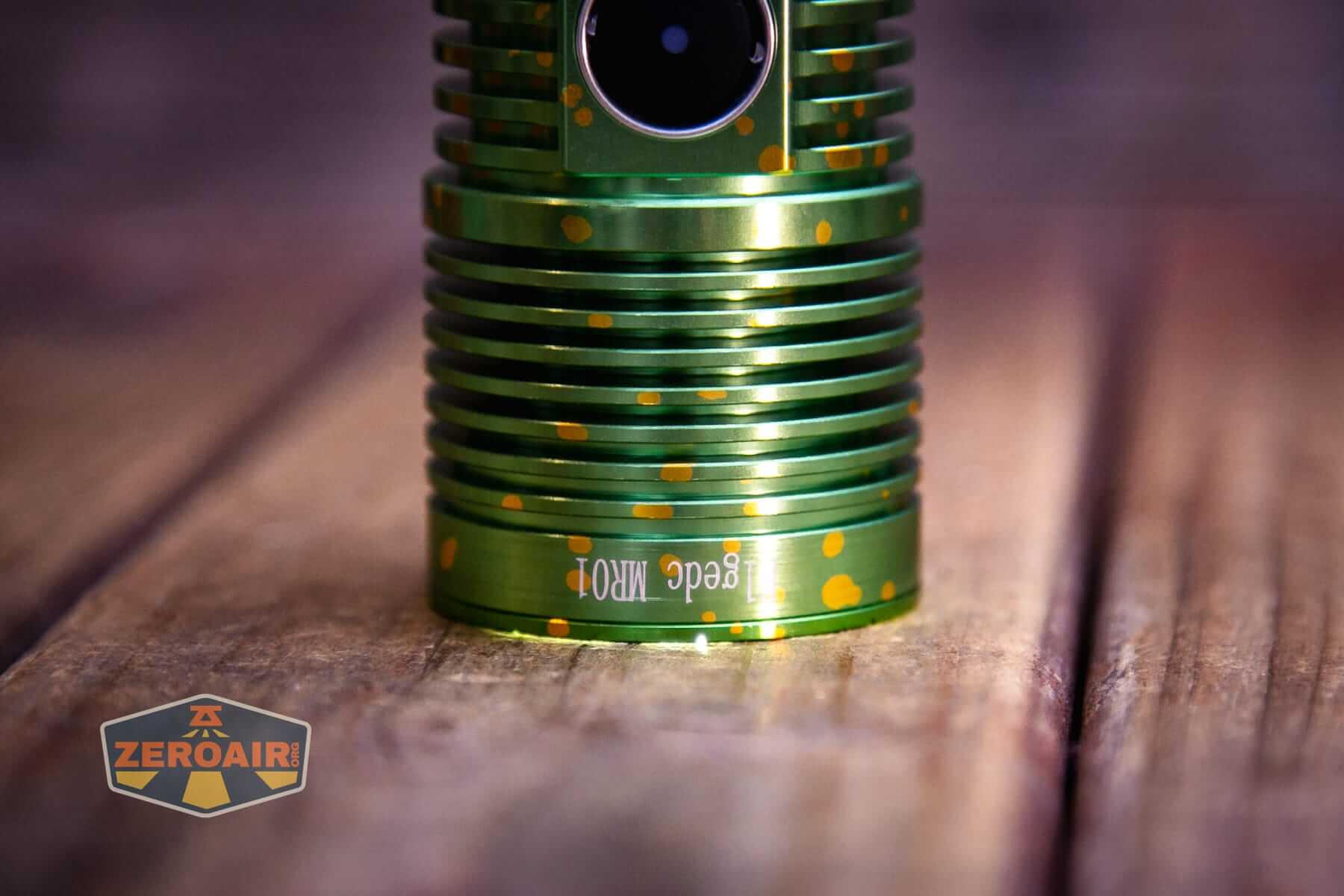
The FLGEDC MR01 long-range flashlight is made of 6061-T6 aluminum alloy, and anodized in an interesting splatter pattern. (In years past, I think we decided to officially call this a “splattern” right?)
The light is very slick in the “twisting” direction, but the body ridges offer great grip in the “slipping out of hand” direction. So this is a bit of a wash on grip. Good one way, slick the other.
This isn’t really a tactical light, so having a spring only on the tail end is acceptable. The positive connection is a button.
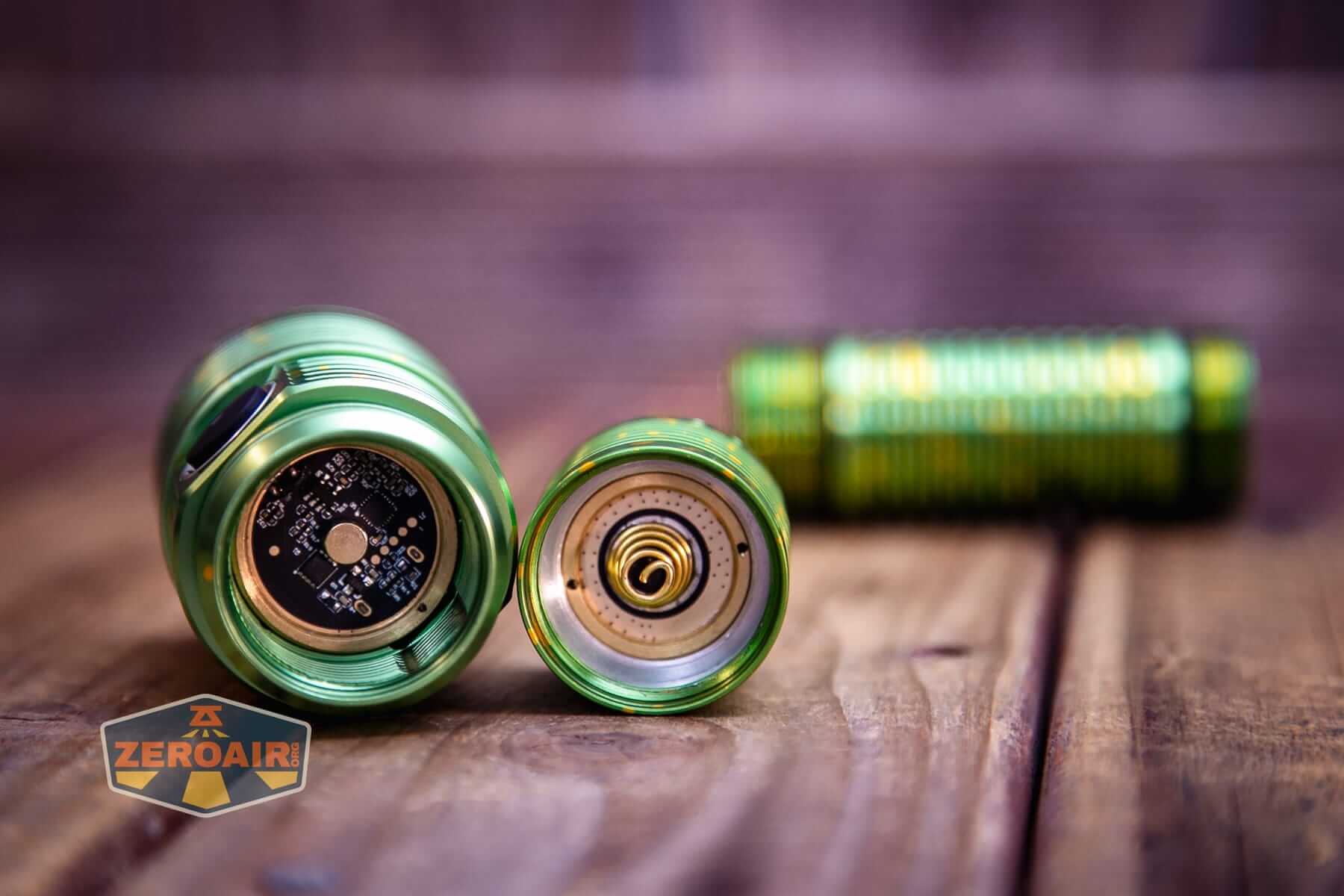
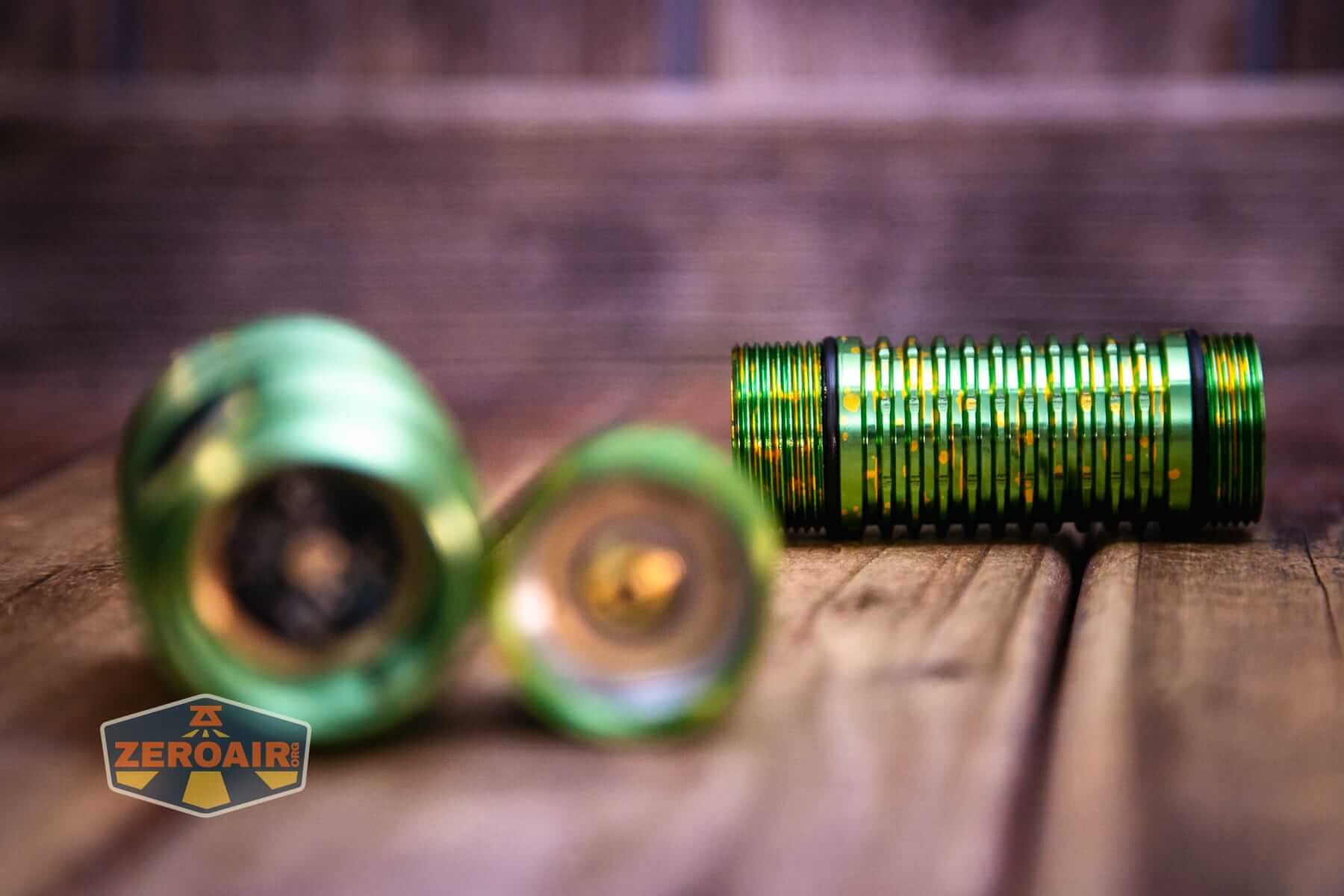
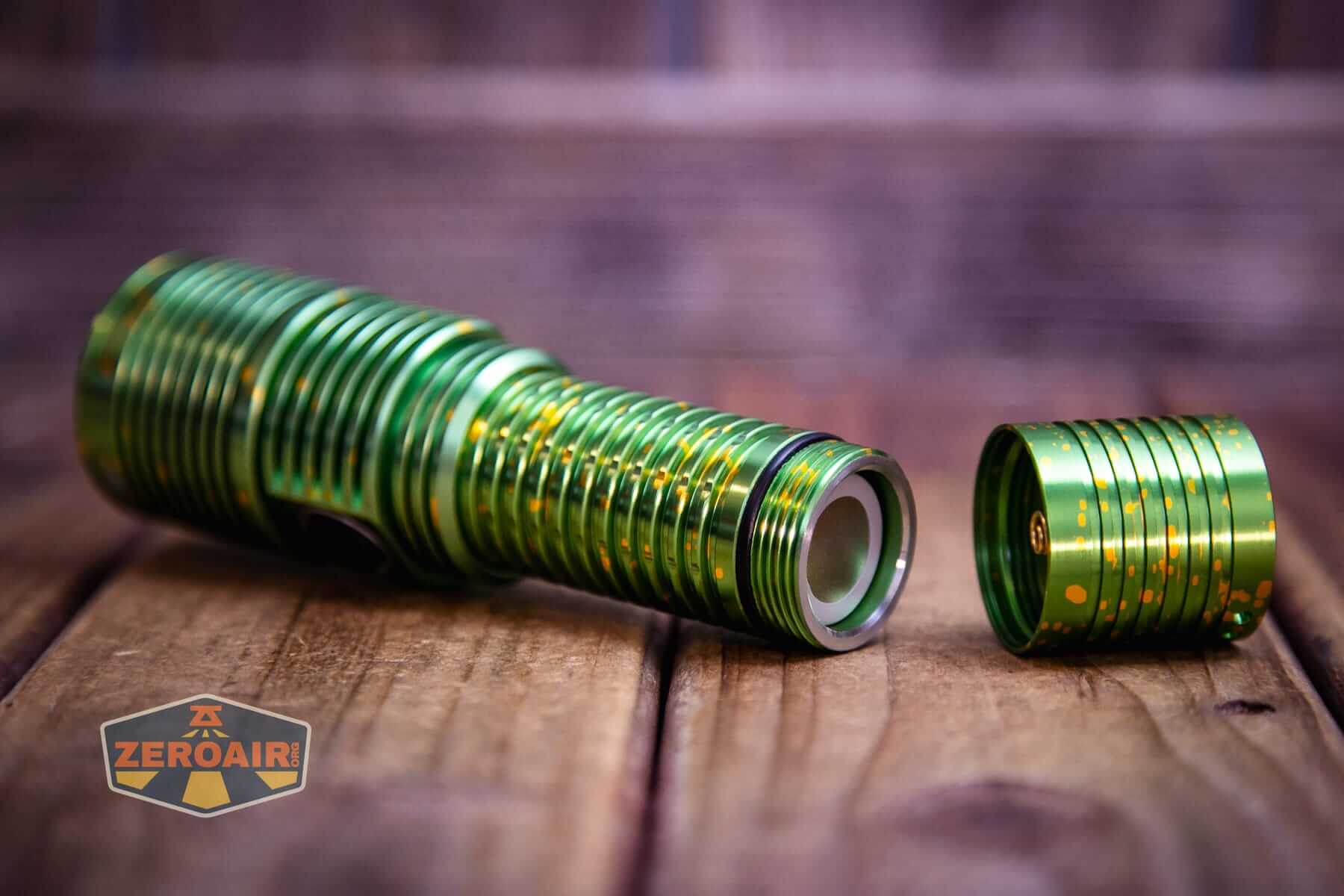
The cell tube is not reversible. And look how long those head threads are! Because of this, it’s much easier to unscrew and remove the tailcap for cell swaps.
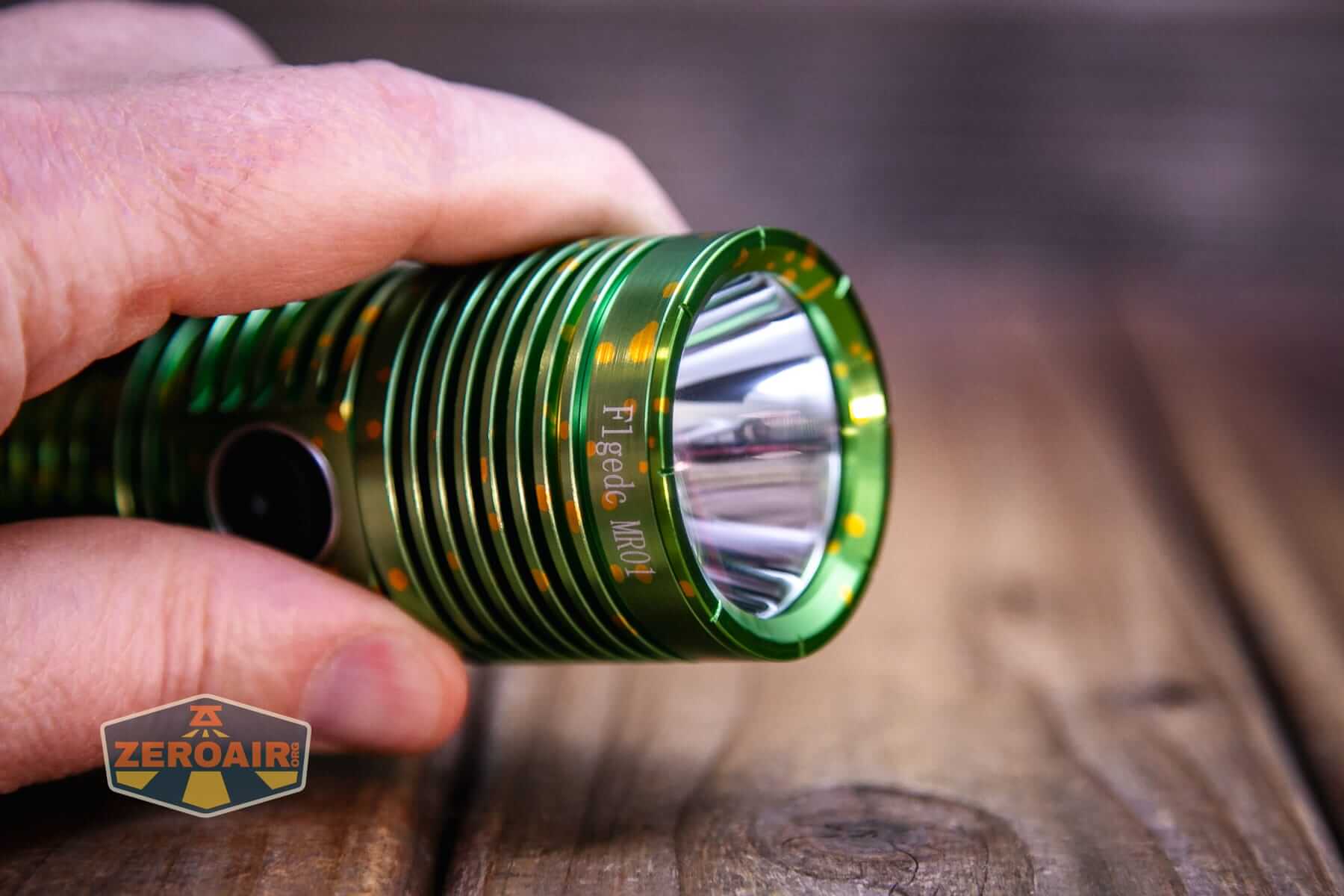
The bezel has some interesting cutouts. I had to say these seem like an afterthought, but they don’t really seem to provide much function.
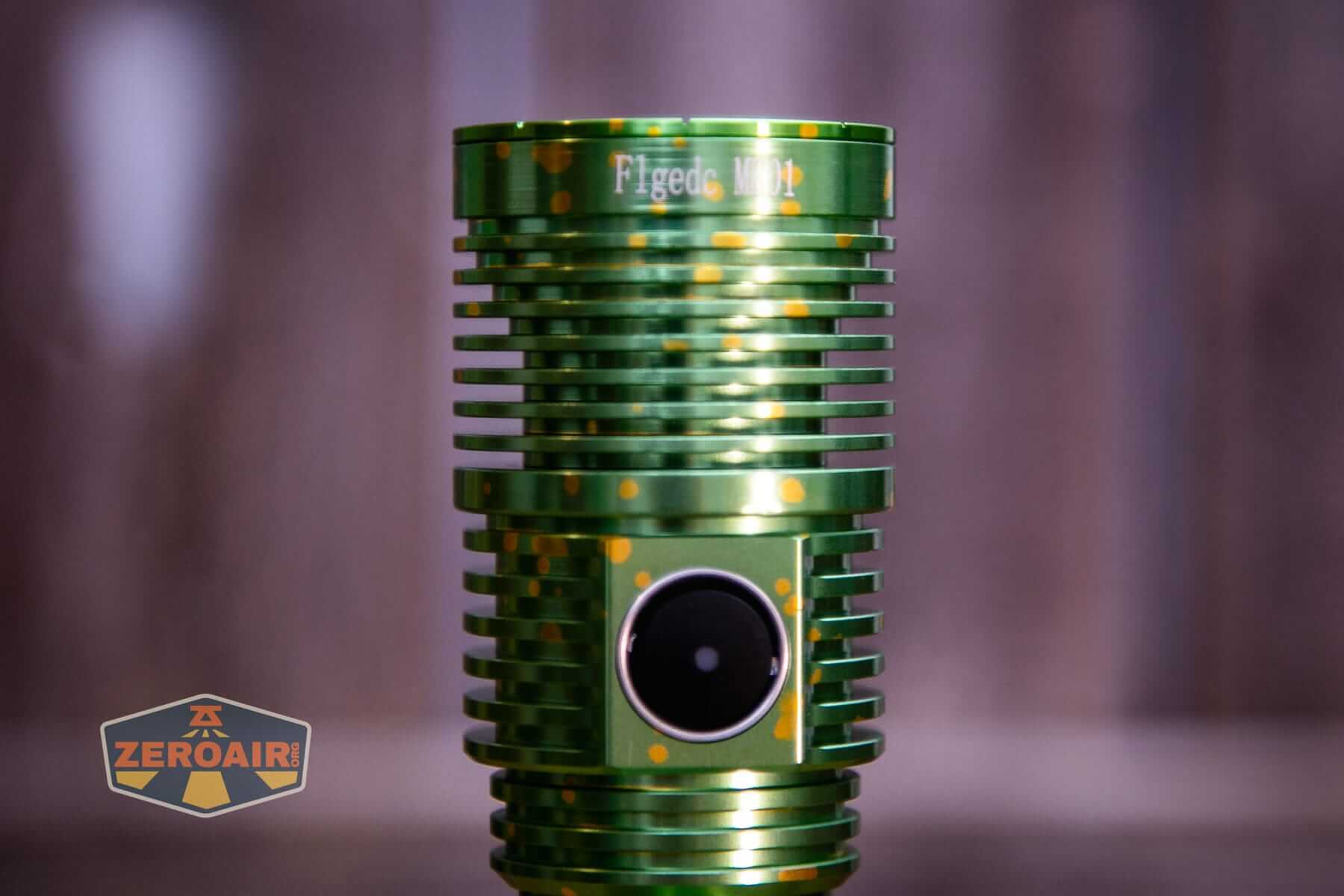
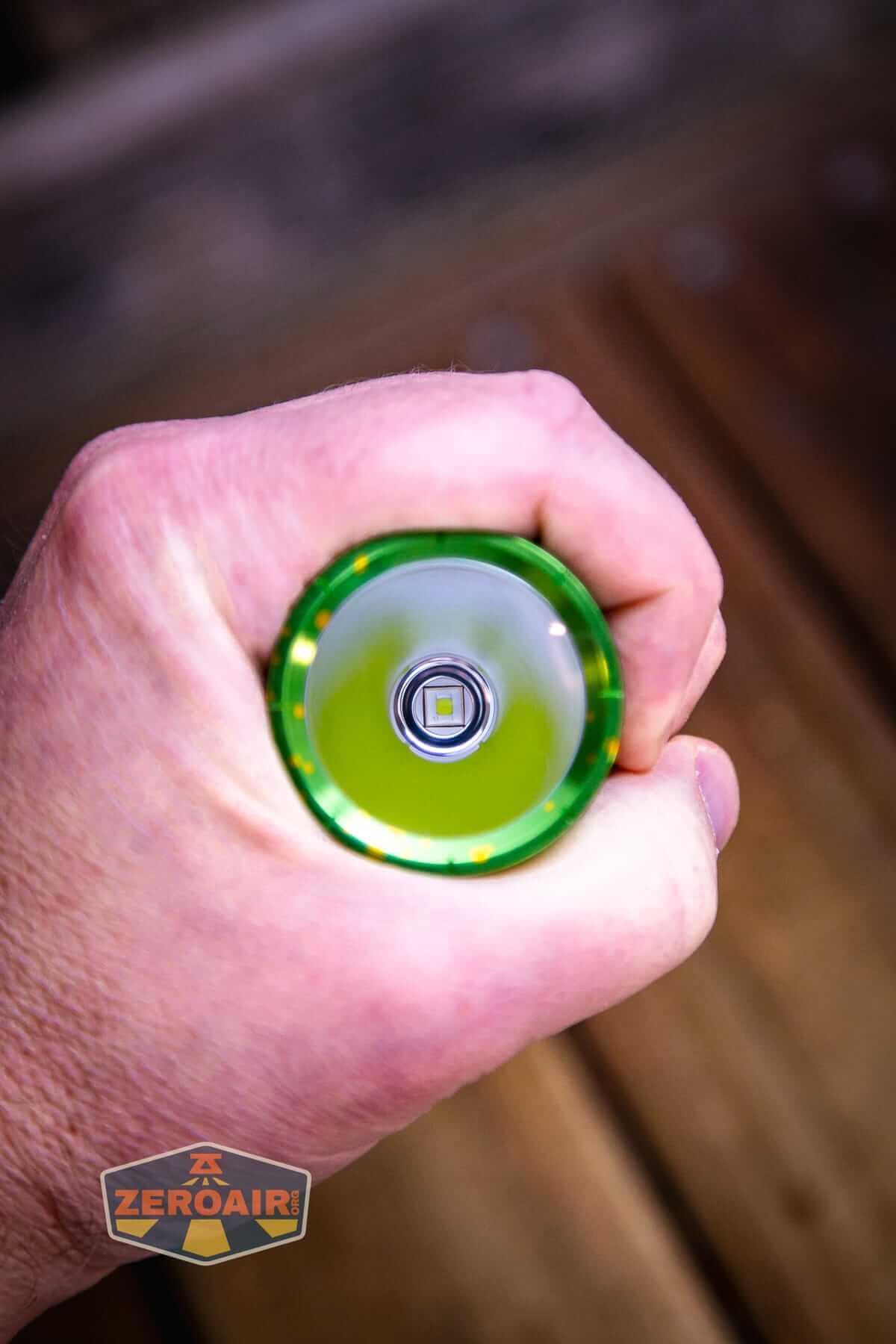
The cooling fins on the head are very deep! These should provide good cooling.
Size and Comps
Length: 147 mm
Head Diameter: 41 mm
Body/Tail Diameter: 29 mm
Weight: 180 g without battery
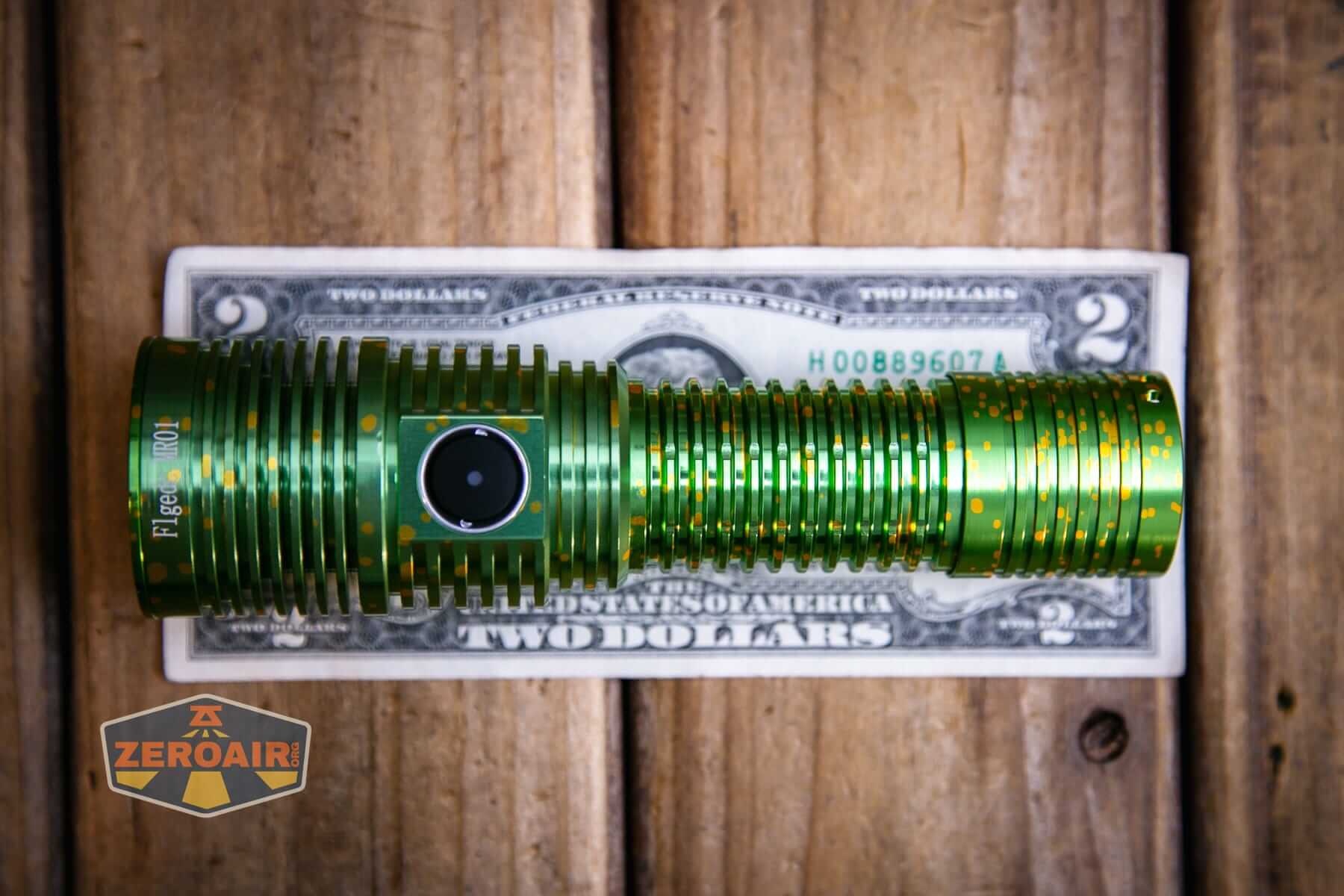
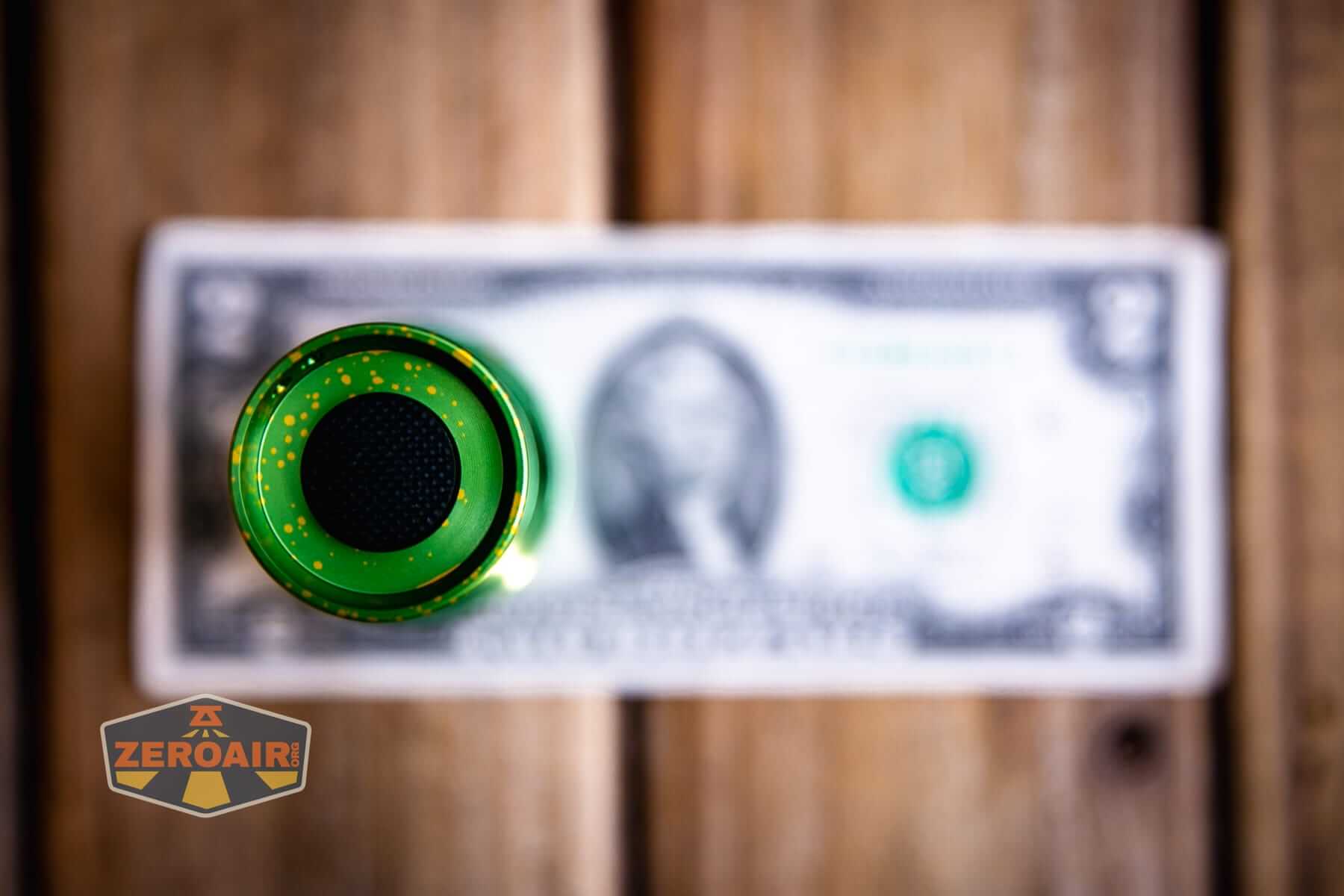
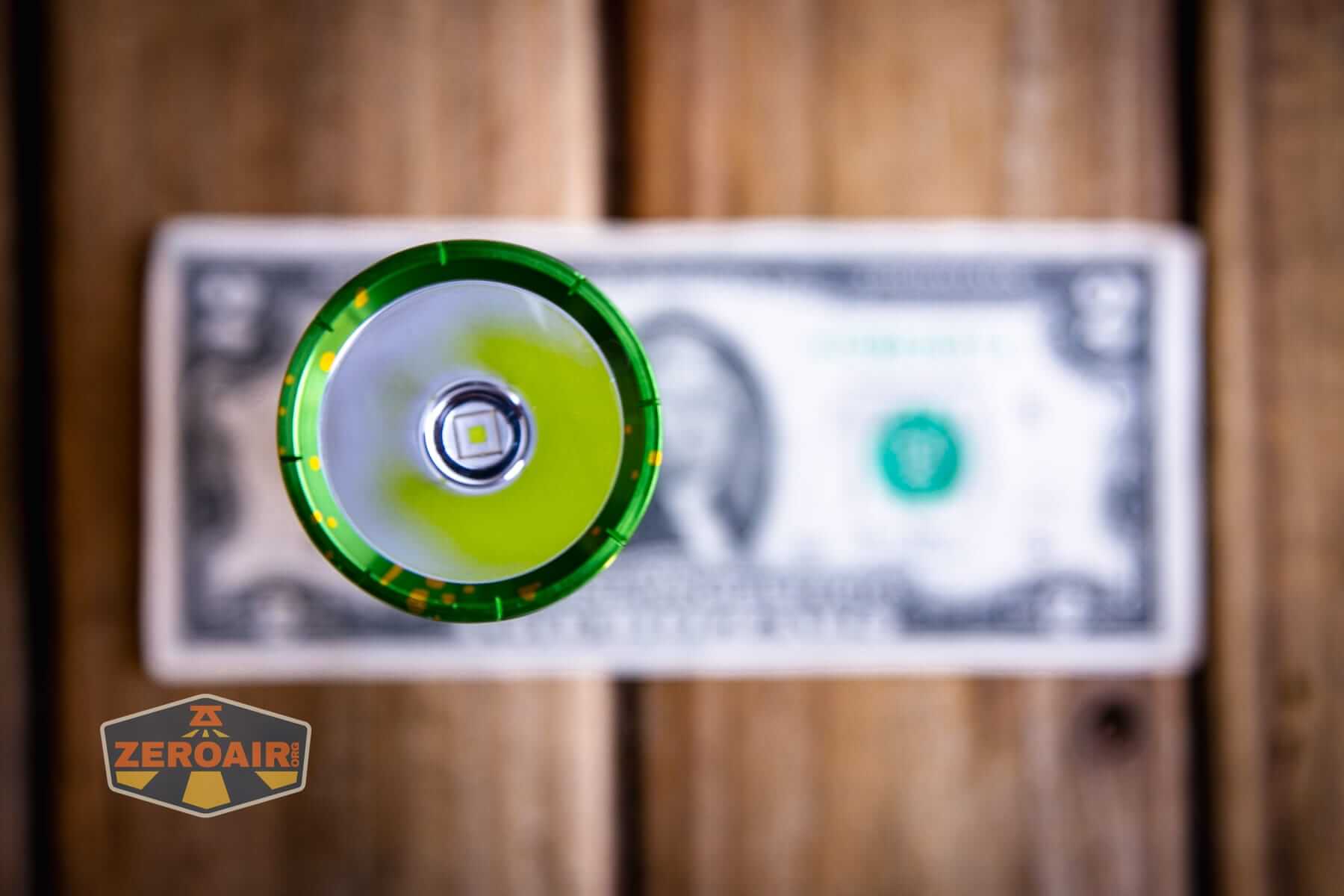
Here’s the light in hand:
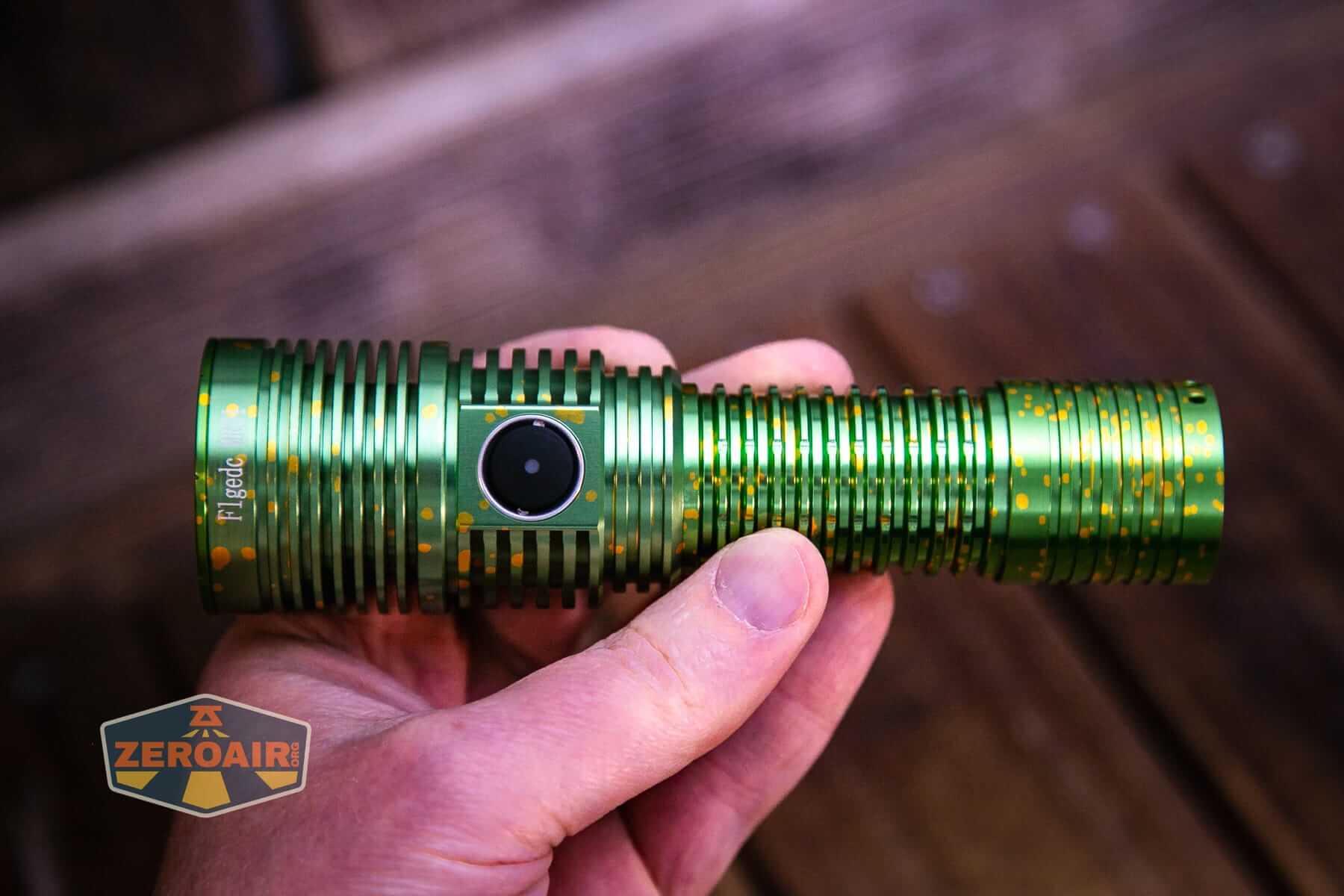
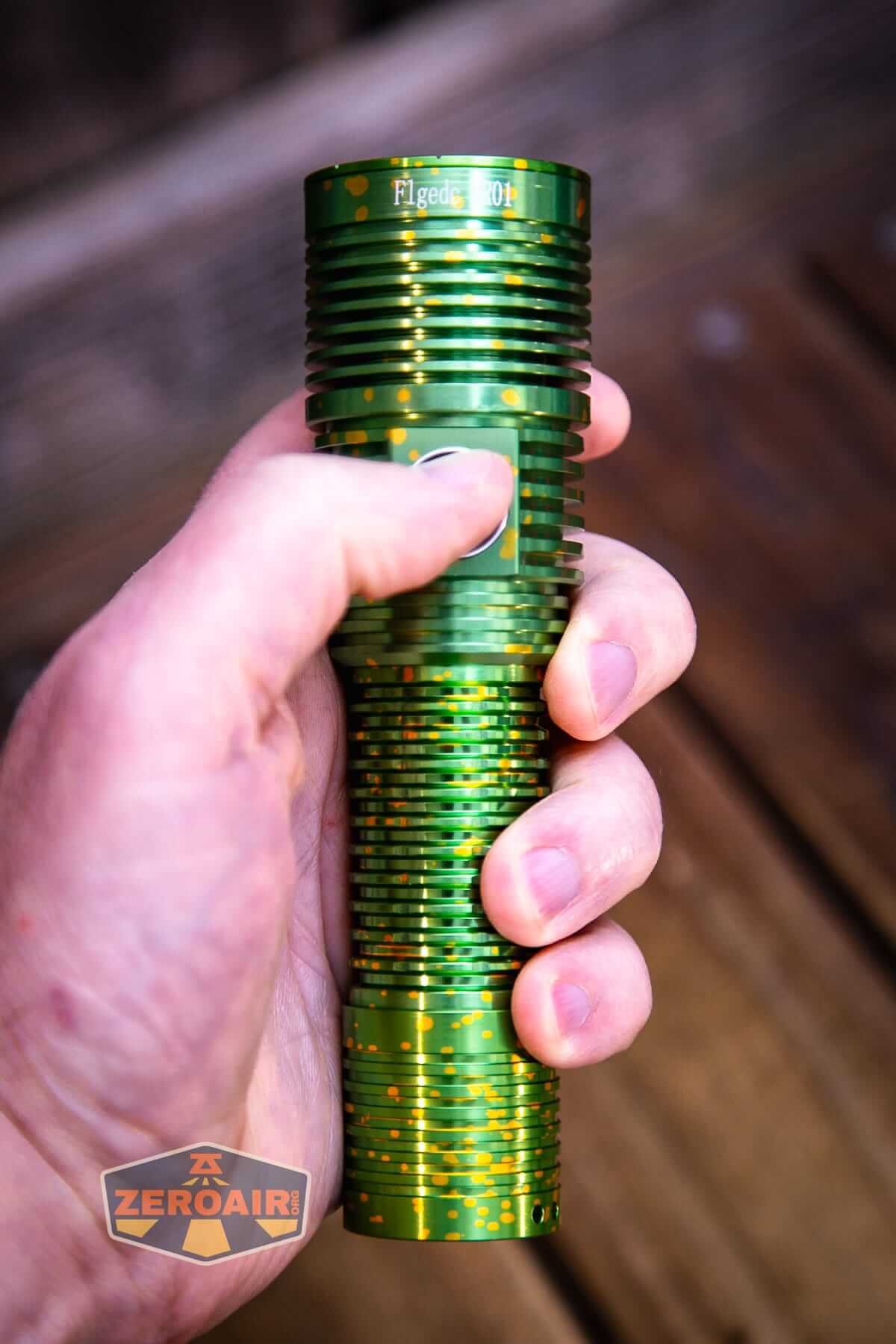
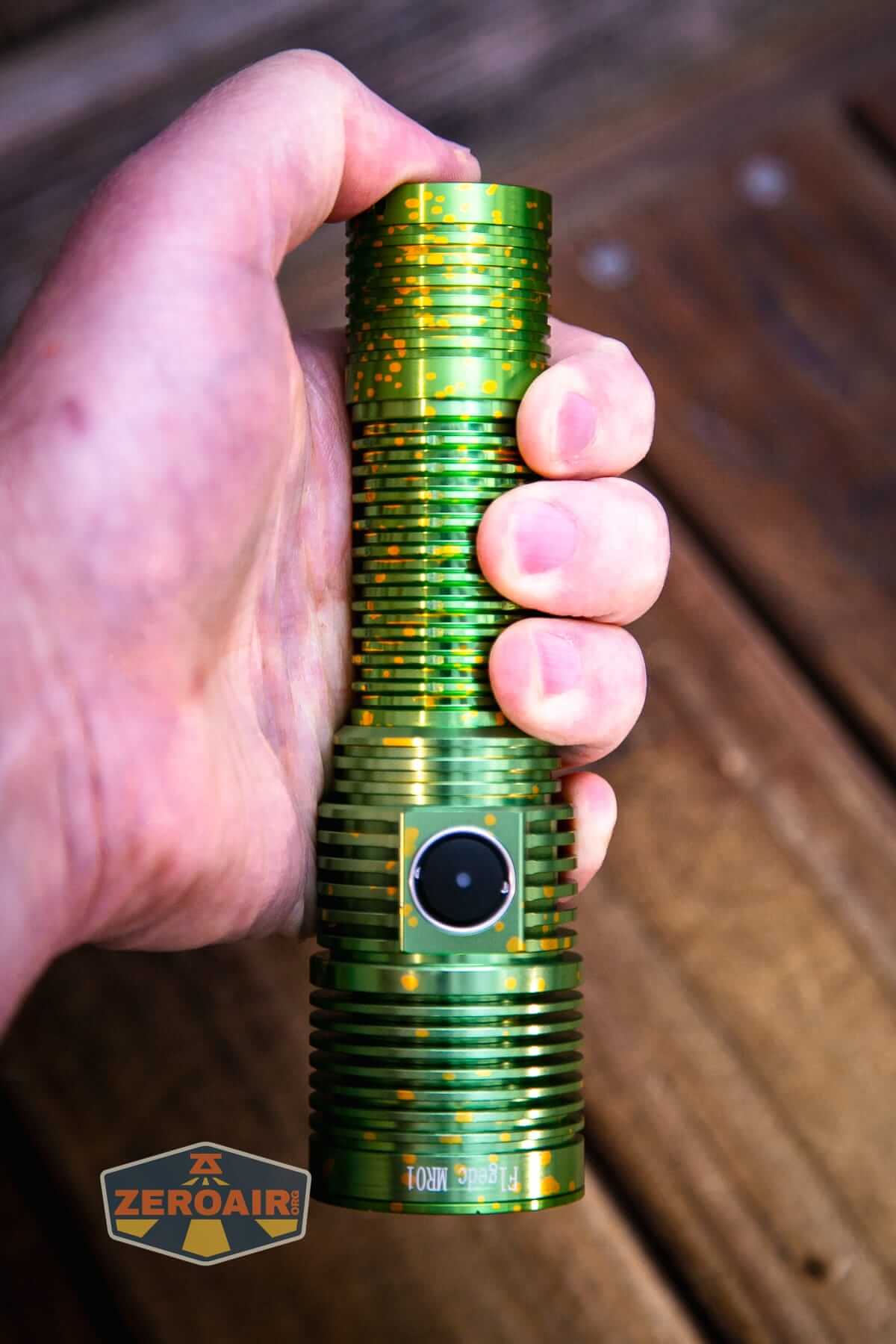
Here’s the test light with the venerable Convoy S2+. This is a brass version, which is a good bit heavier than aluminum, but has the same dimensions: 24mm in diameter by 117.5mm in length.
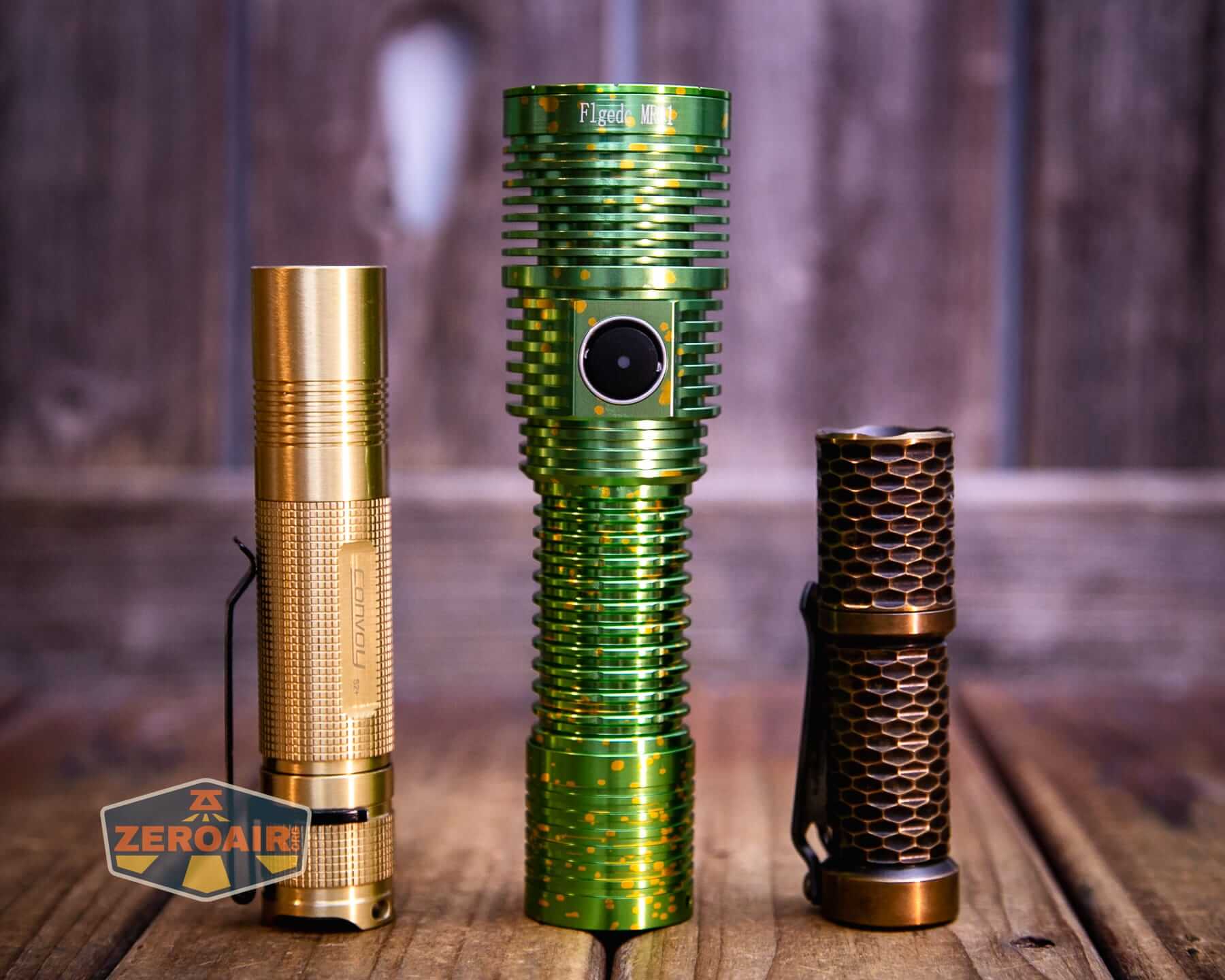
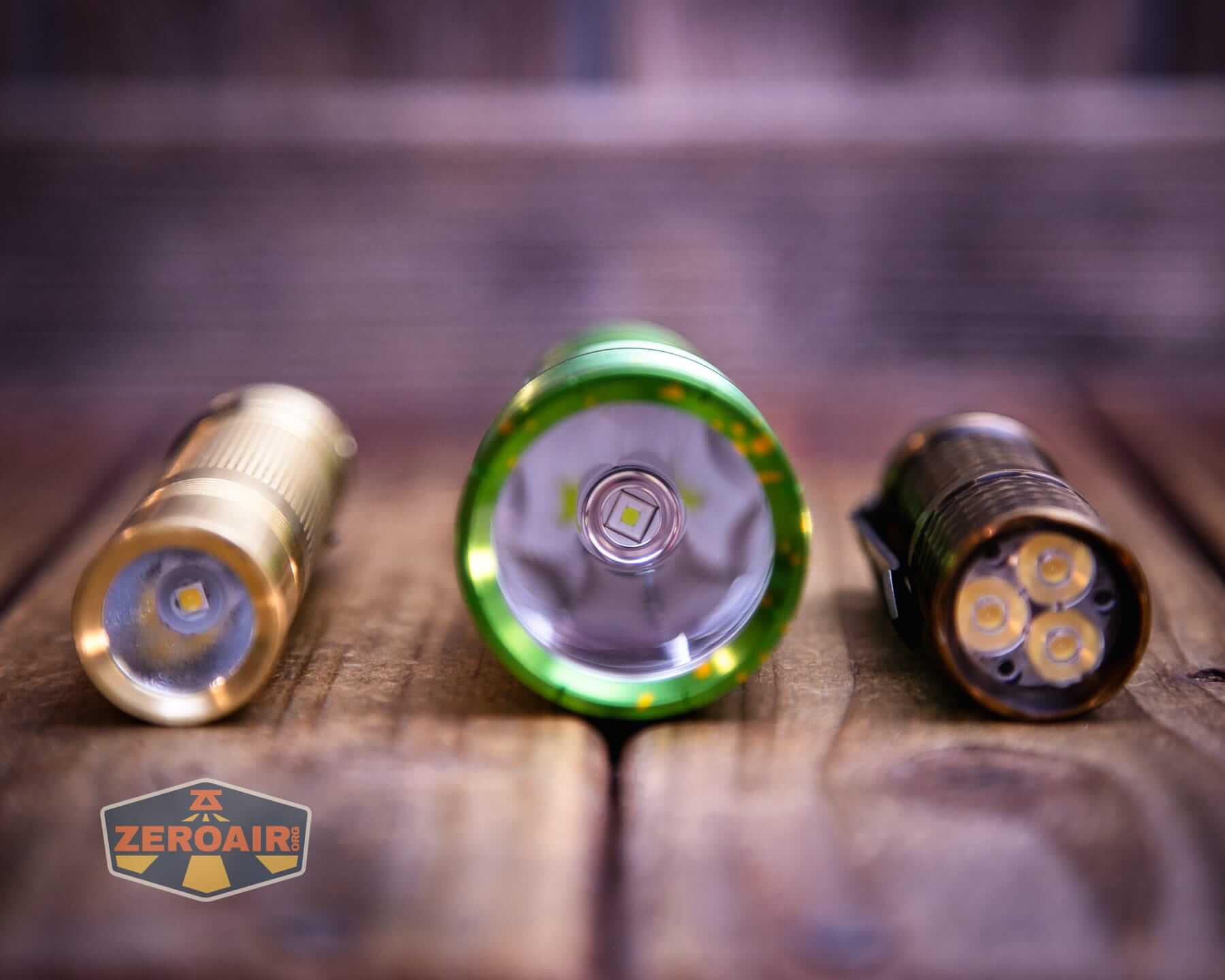
Also in the photo above, my Standard Reference Material (SRM) flashlight is the Hanko Machine Works Trident, an 18350 light. While I have not reviewed or tested the Gunner Grip version seen here, I have tested a Hanko Machine Works Trident Total Tesseract in brass. I love the Trident, and it’s a striking contrast to the inexpensive Convoy S2+, another great SRM.
Retention and Carry
The FLGEDC MR01 long-range flashlight includes a lanyard, which can attach only through these two holes in the tailcap.
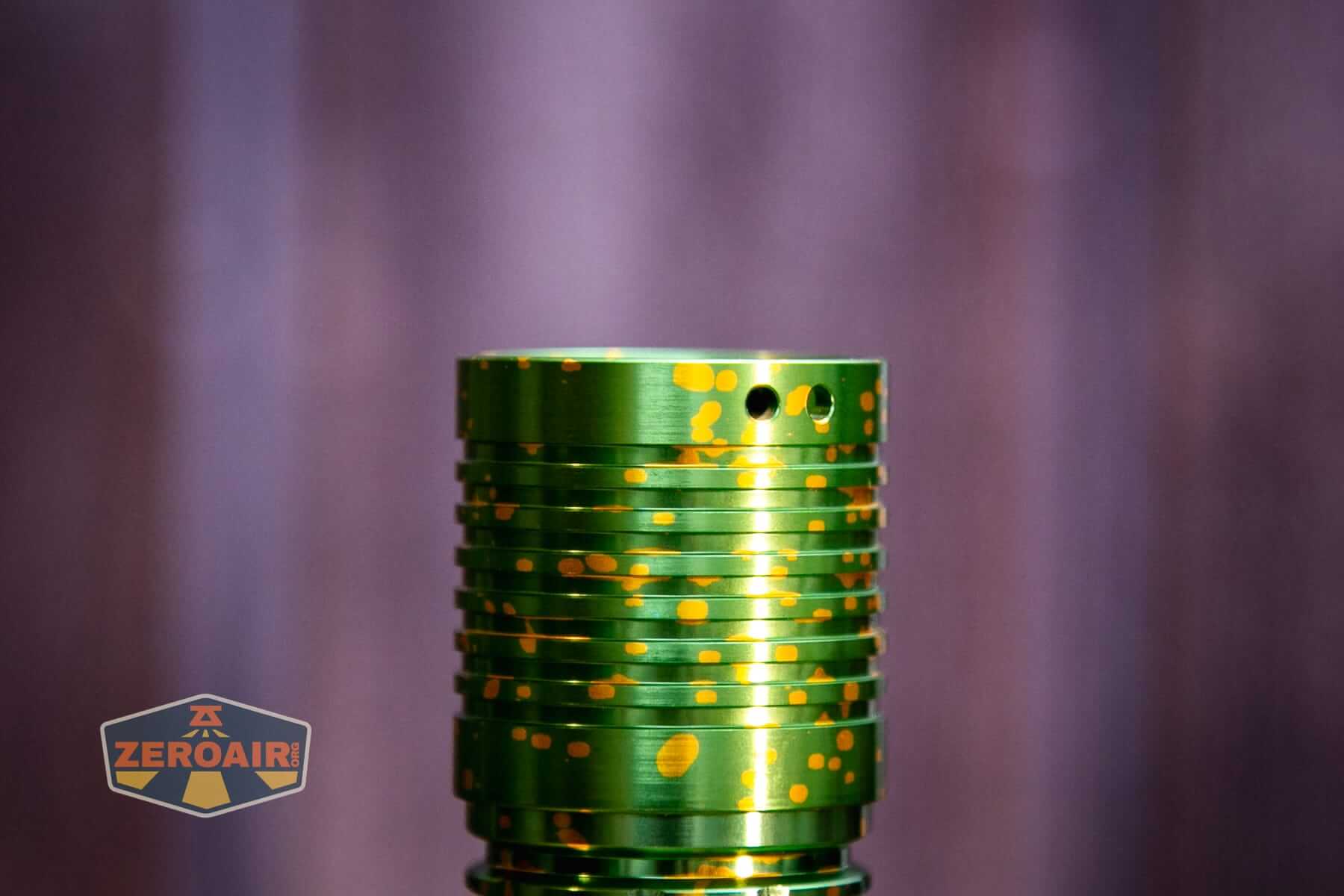
I’m glad there are two holes, because when properly installed, the FLGEDC MR01 long-range flashlight should still be able to tailstand.
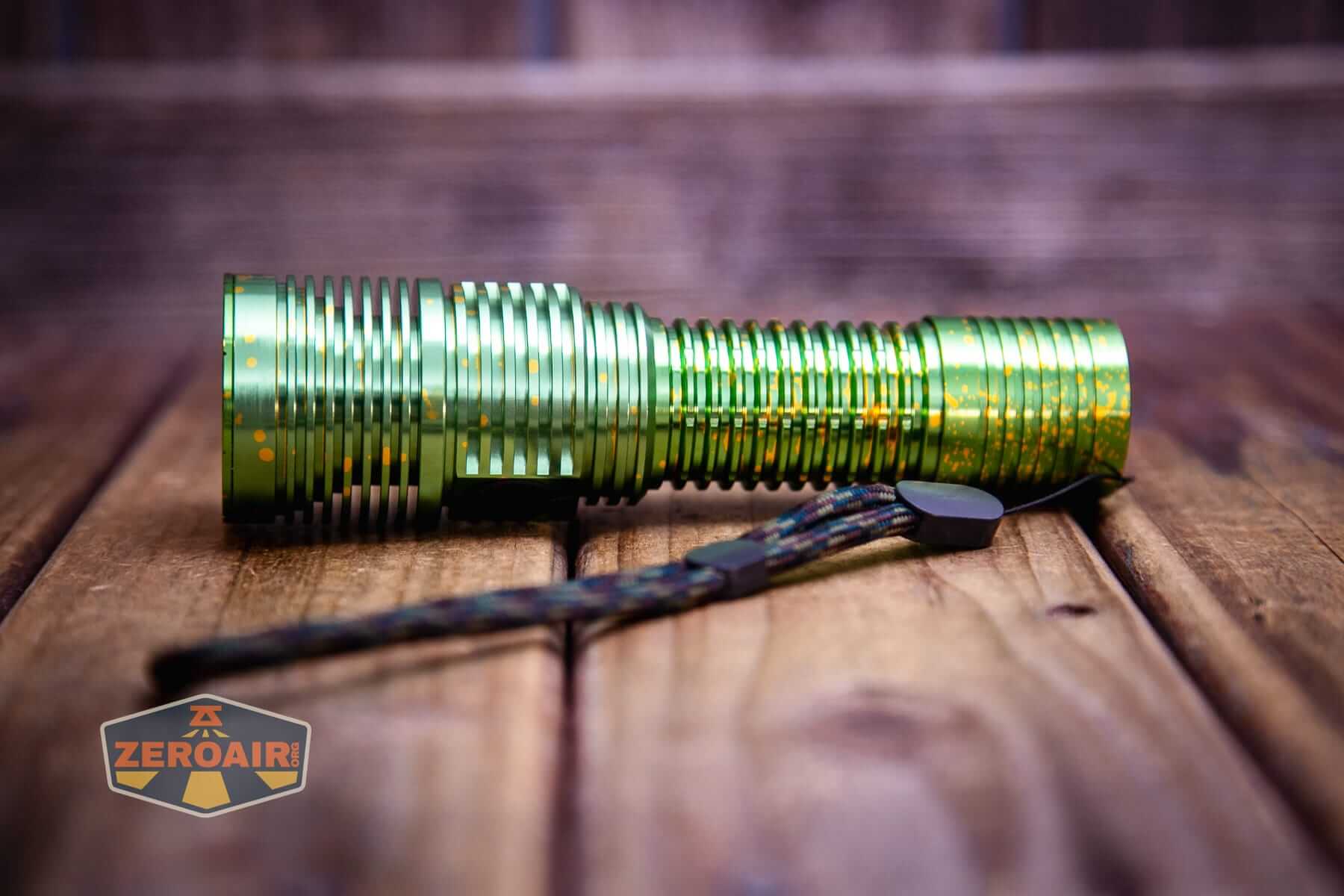
That’s it – there is no pocket clip, magnet, pouch, or anything else.
Power and Runtime
The FLGEDC MR01 long-range flashlight runs on a single lithium-ion battery. My kit and I think all kits included this EVA 50E 21700. It’s a standard flat-top cell.
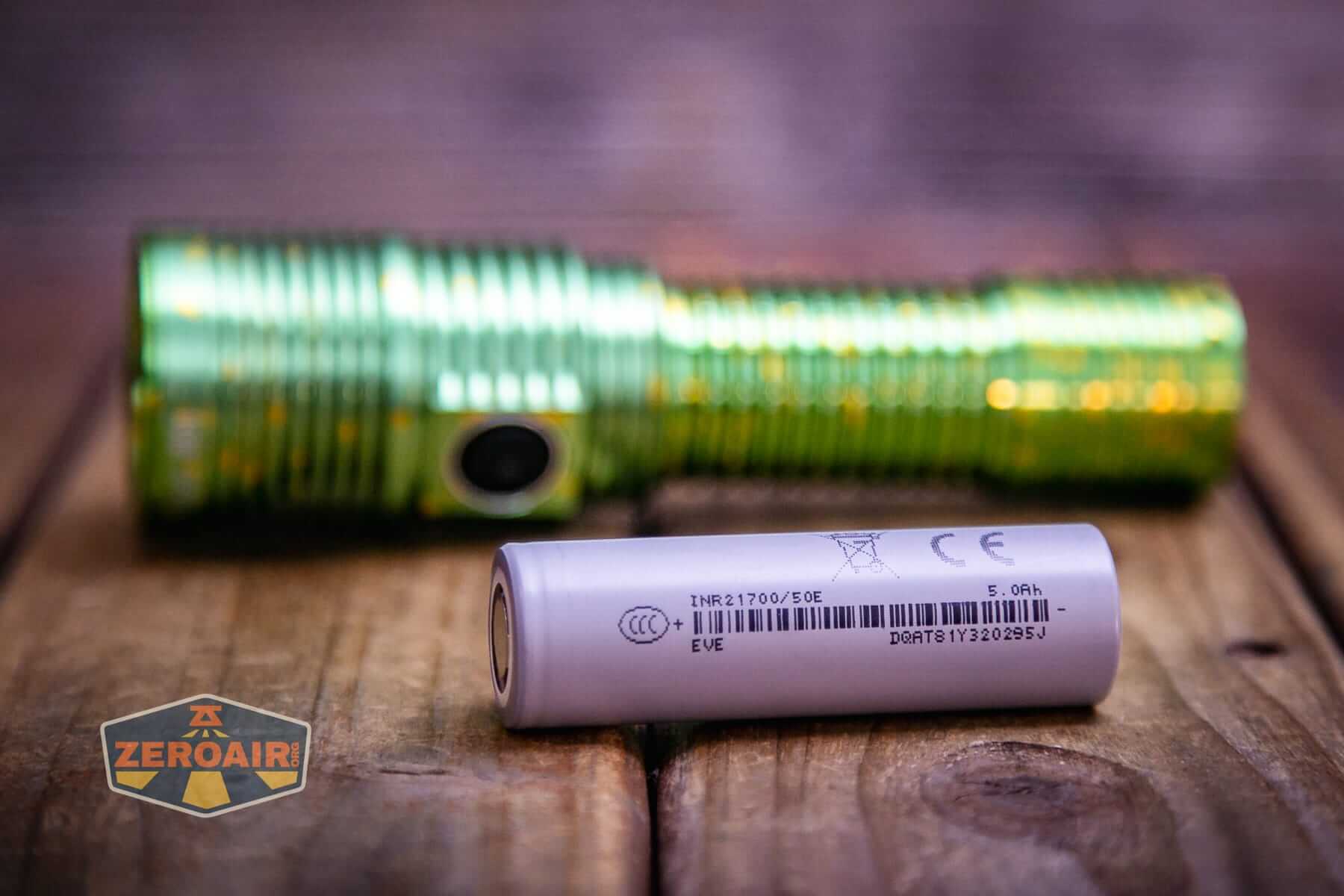
It goes into the FLGEDC MR01 long-range flashlight in the usual direction: positive terminal toward the head.
Below are runtime tests on the highest four modes. Performance is good, and the stepdown even on Turbo is after a reasonable time at the highest output. Medium of 1000 lumens steady is the real star, though.
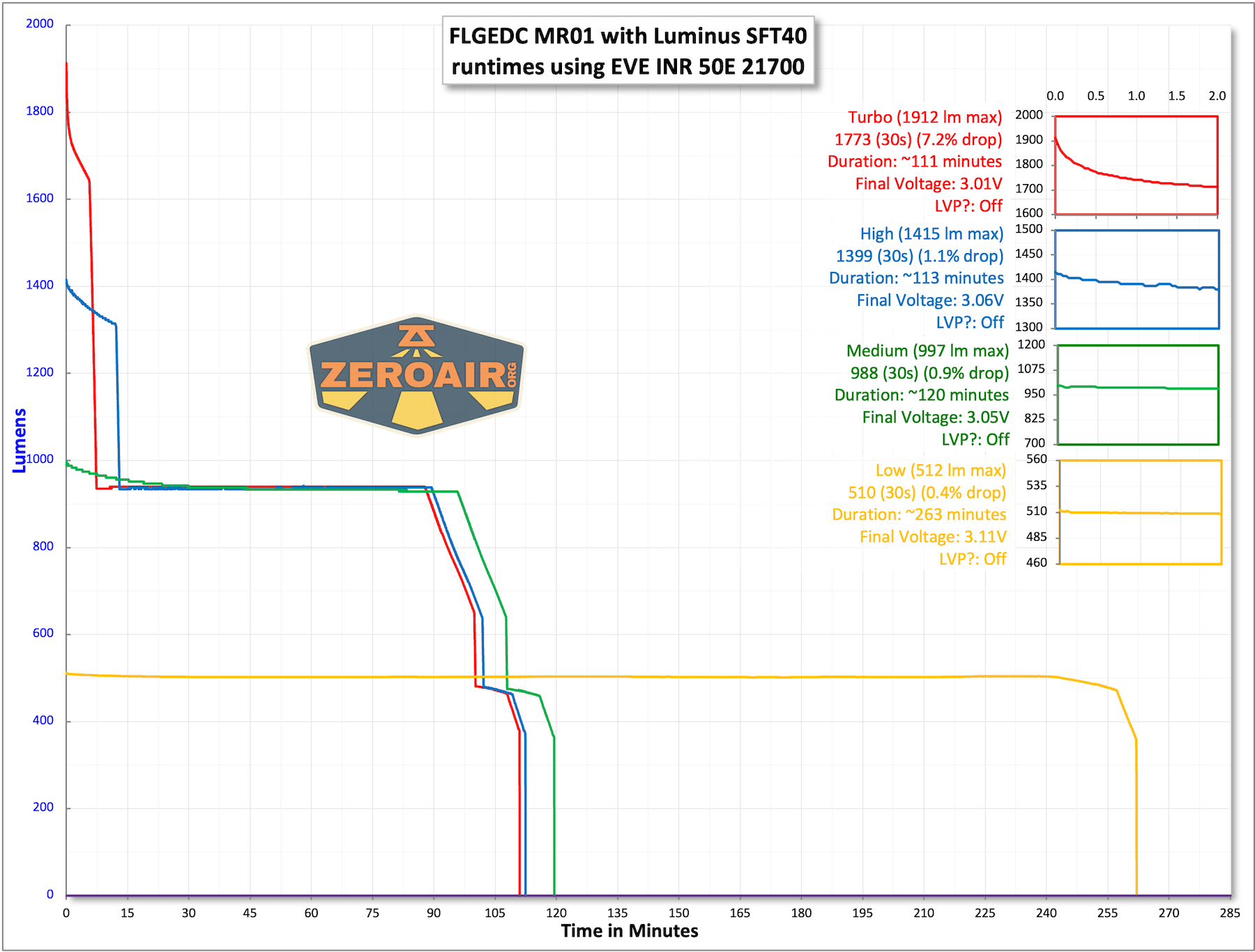
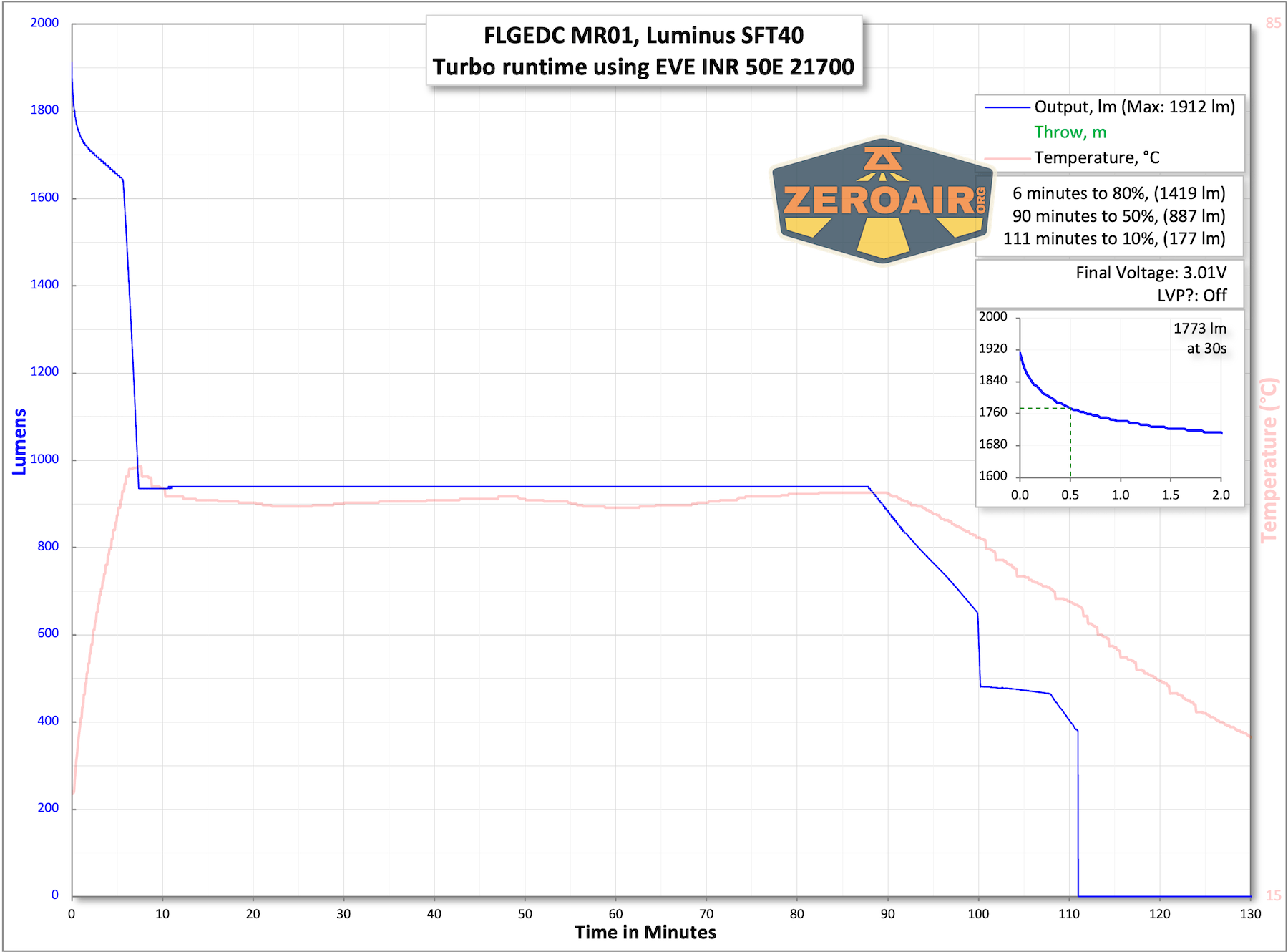
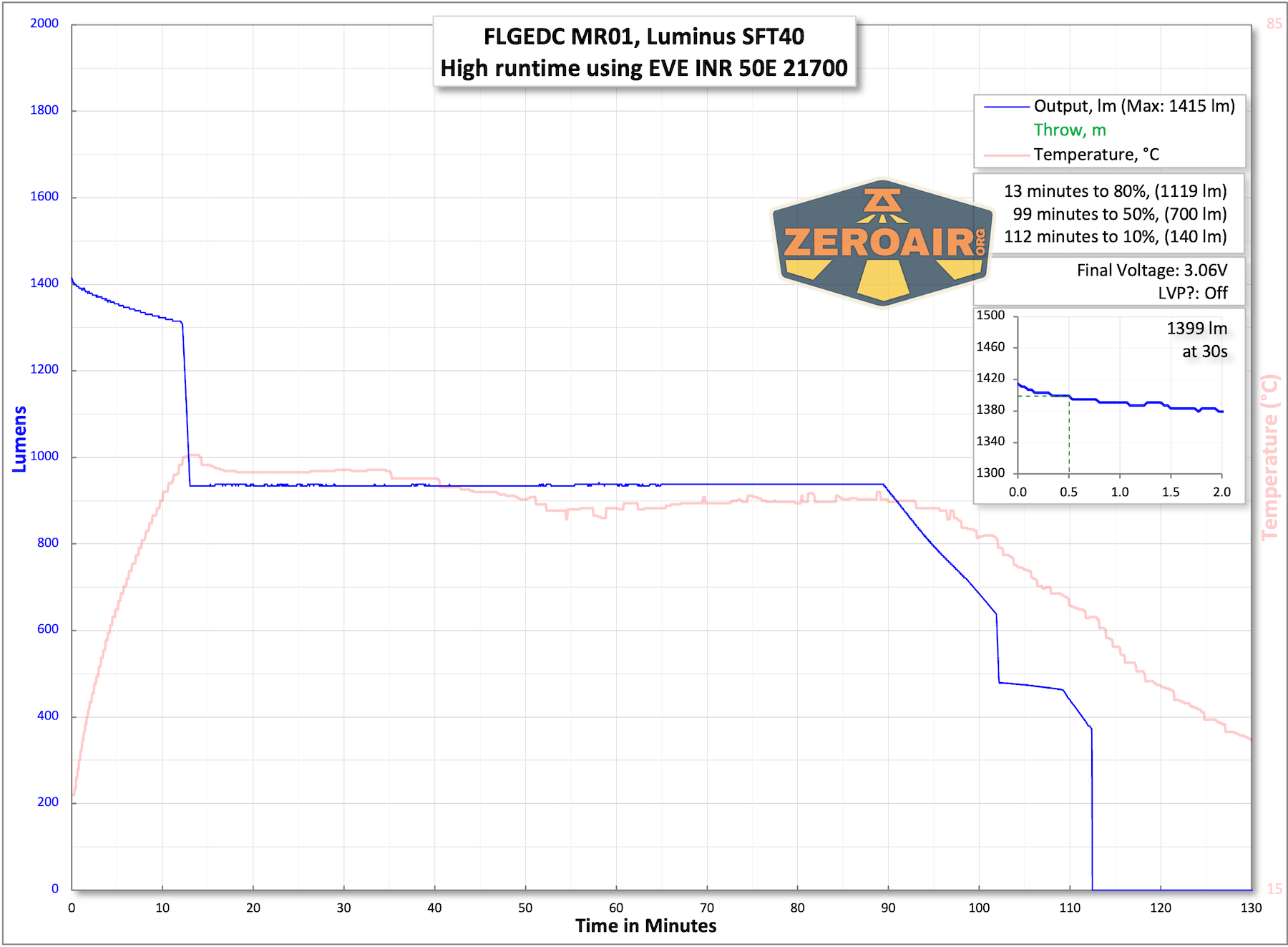
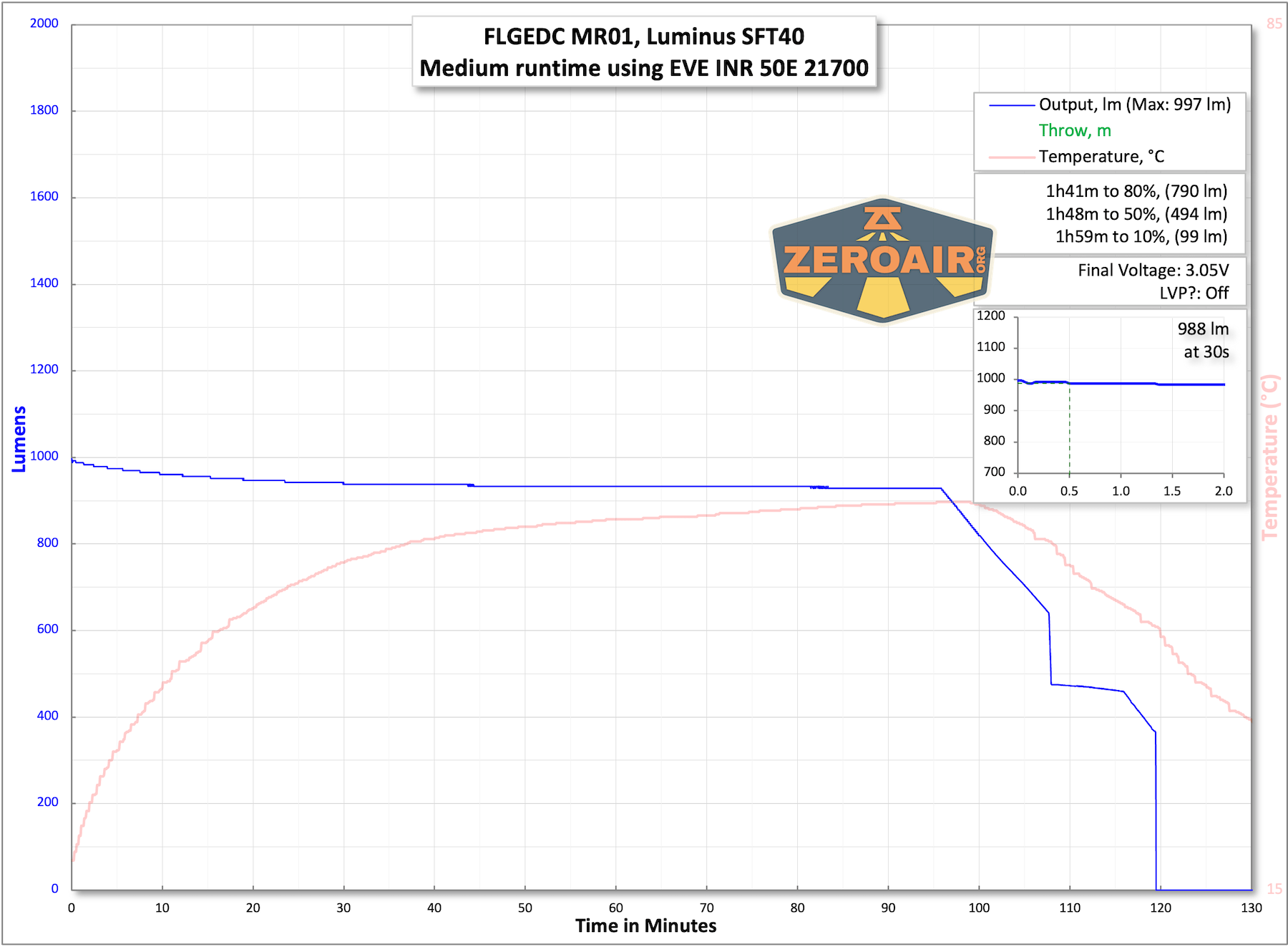
The test above should be “Medium1” and the test below should be “Medium2.”
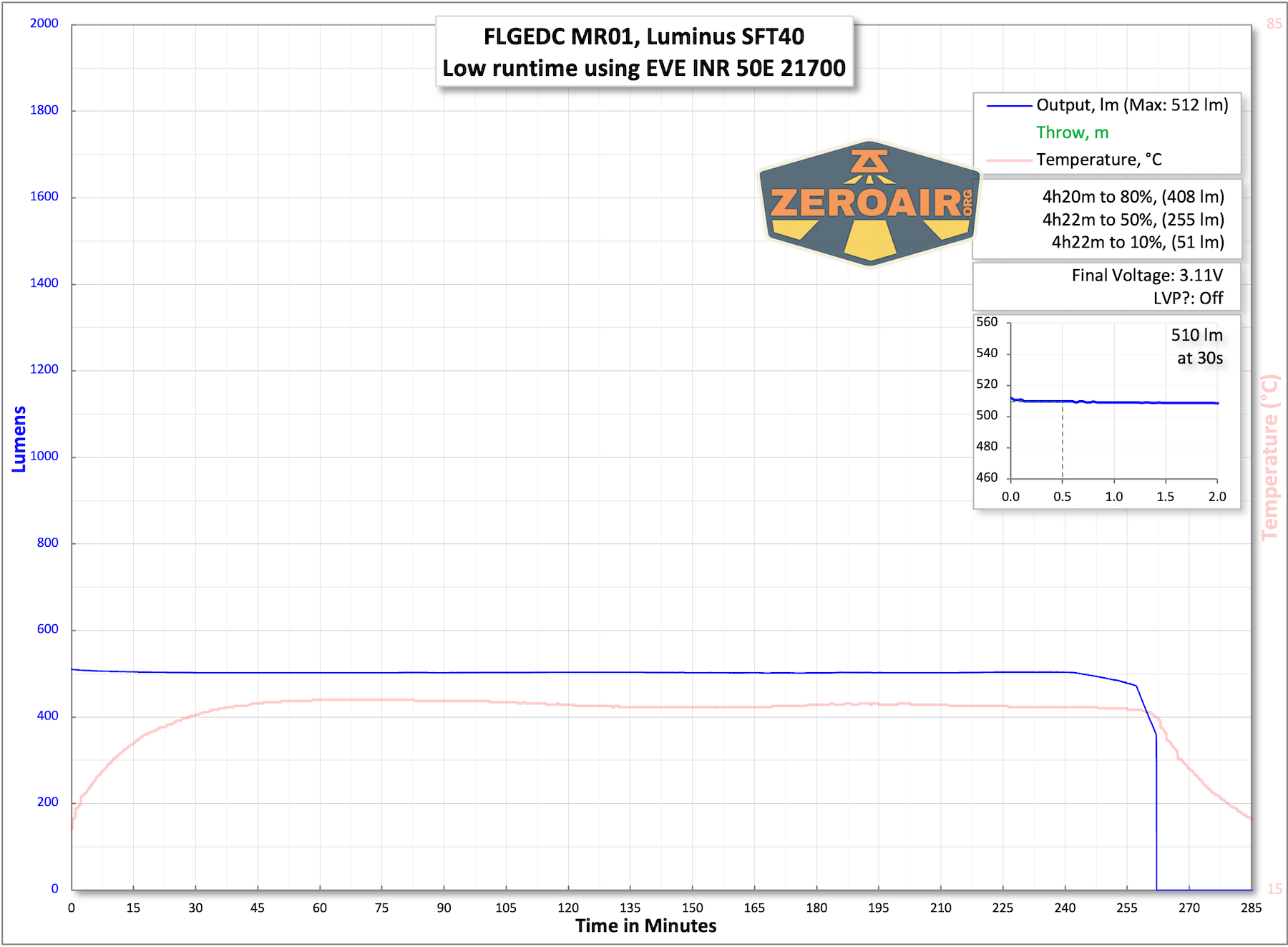
The temperature lines in these charts are included as general context, not precise measurements. The values represent the range (min to max) during testing, but should not be taken as exact readings. A temperature sensor is not always attached to the bezel (or even the hottest spot, assuming that could be defined). Even with ideal placement, too many variables affect temperature to definitively state a specific max value.
Charging
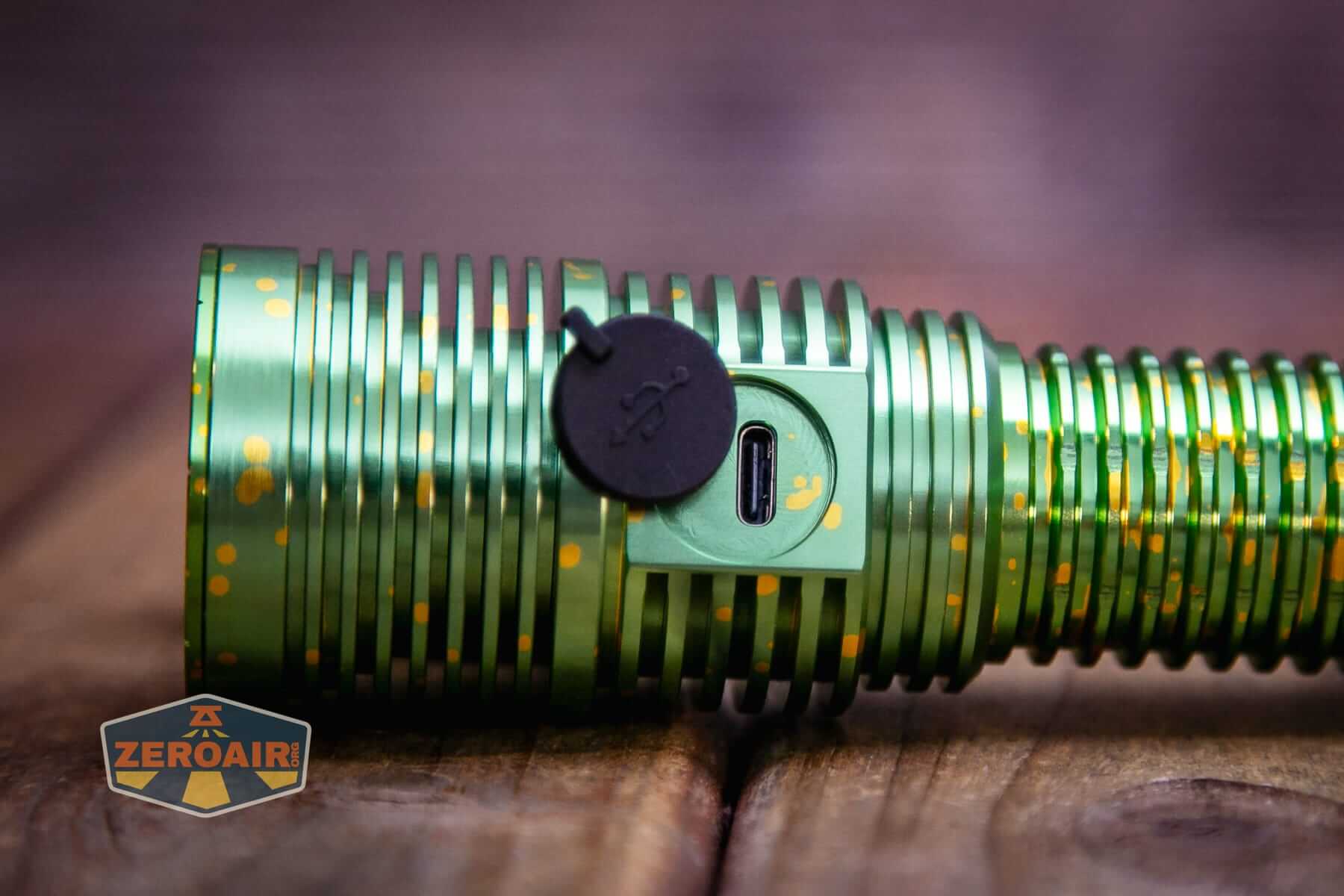
The FLGEDC MR01 long-range flashlight has a USB-C charging port on the head. This port is on the opposite side from the e-switch, and there’s a good chance they can be confused. But the charging port cover is flat.
A cable is included for charging. It’s A to C.
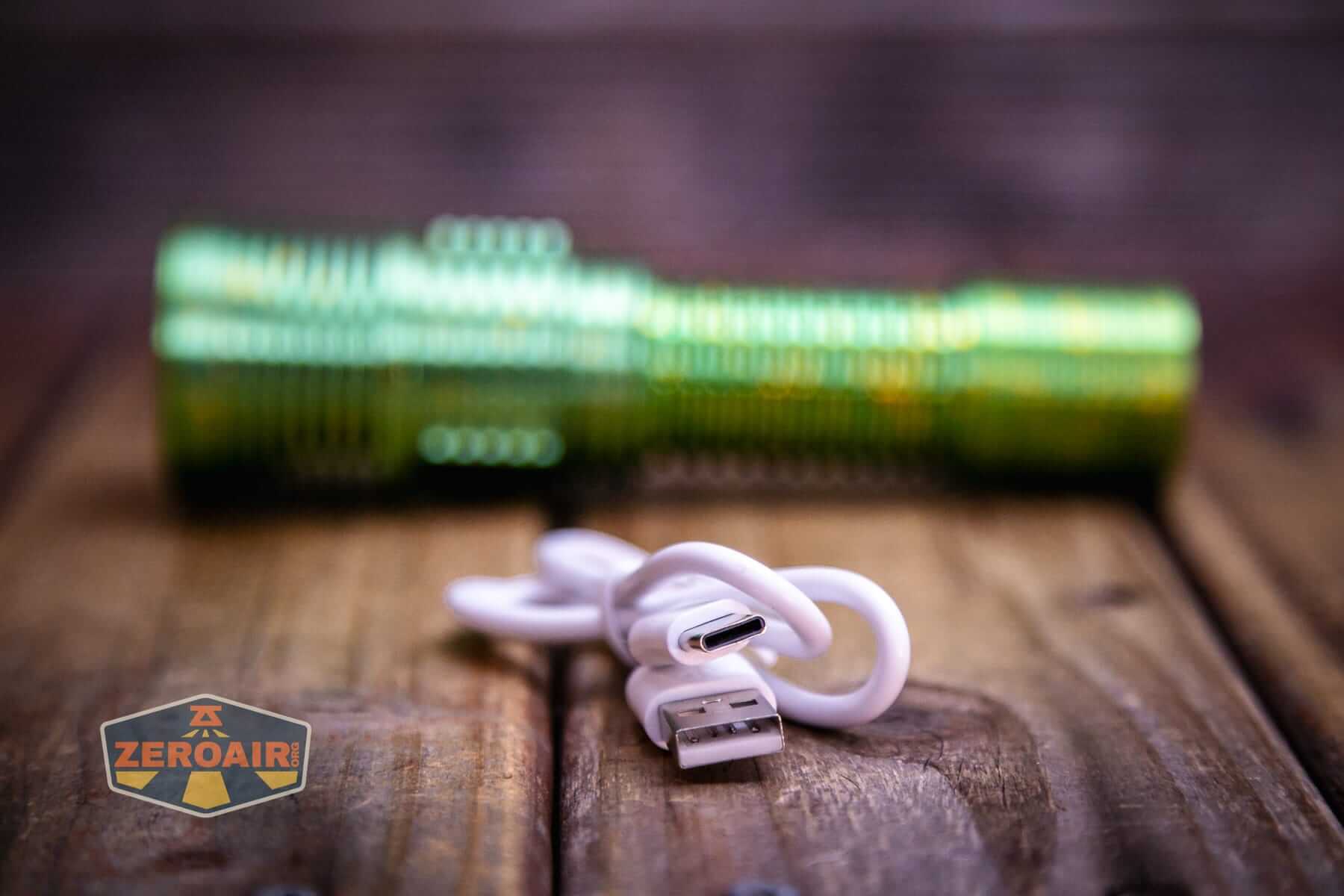
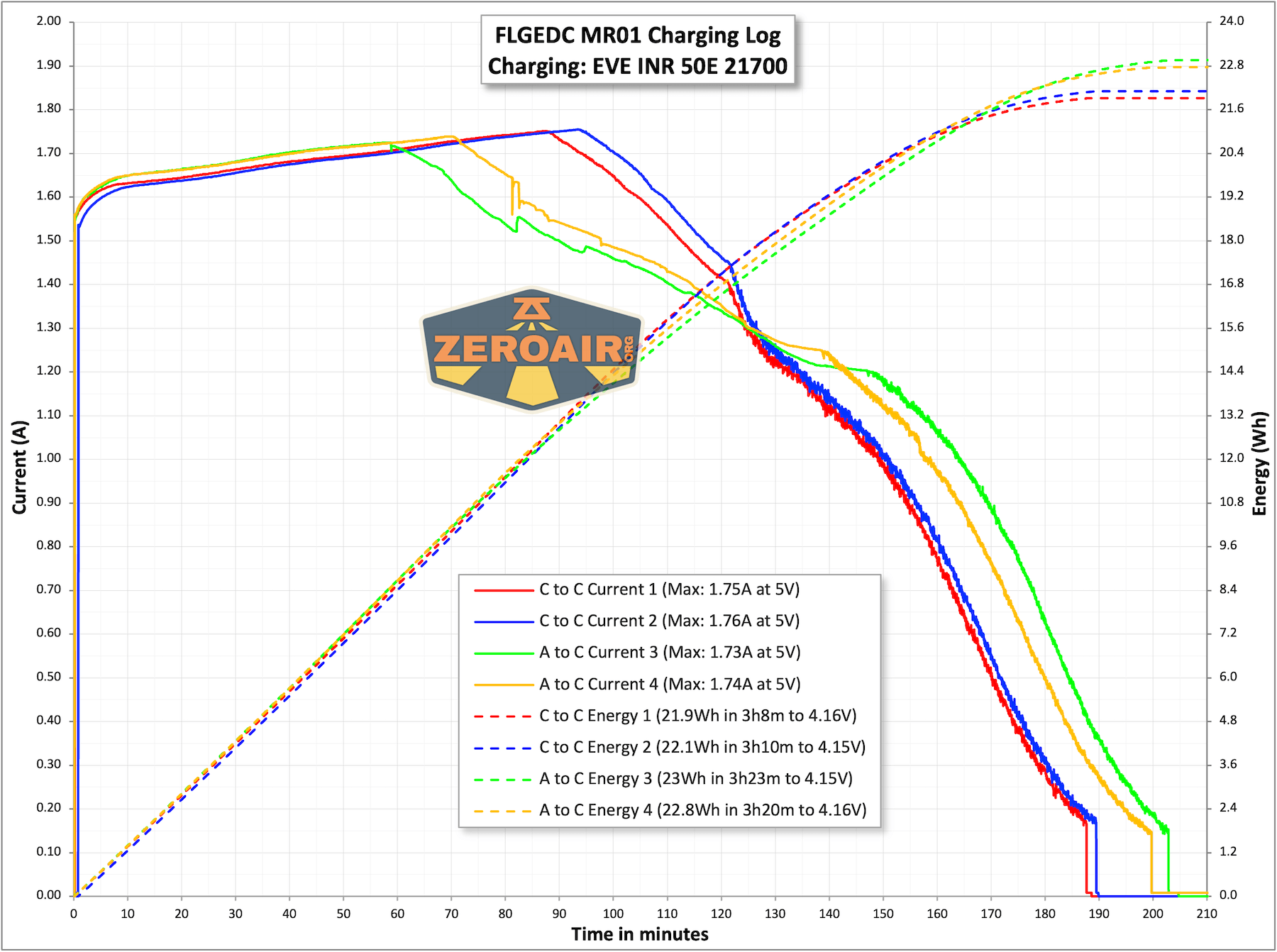
Charging C to C looks great. A to C is fine too. Both finish in under 3.5 hours.
Modes and Currents
| Mode | Mode Claimed Output (lm) | Claimed Runtime | Measured Lumens | Tailcap Amps |
|---|---|---|---|---|
| Turbo | 2000 | 5m+105m | 1912 (0s) 1773 (30s) |
5.05 |
| High | 1450 | 8m+110m | 1415 (0s) 1399 (30s) |
4.24 |
| Medium1 | 1050 | 120m | 997 | 2.44 |
| Medium2 | 540 | 4h30m | 512 | 0.97 |
| Low | 200 | 13h30m | 186 | 0.30 |
Pulse Width Modulation
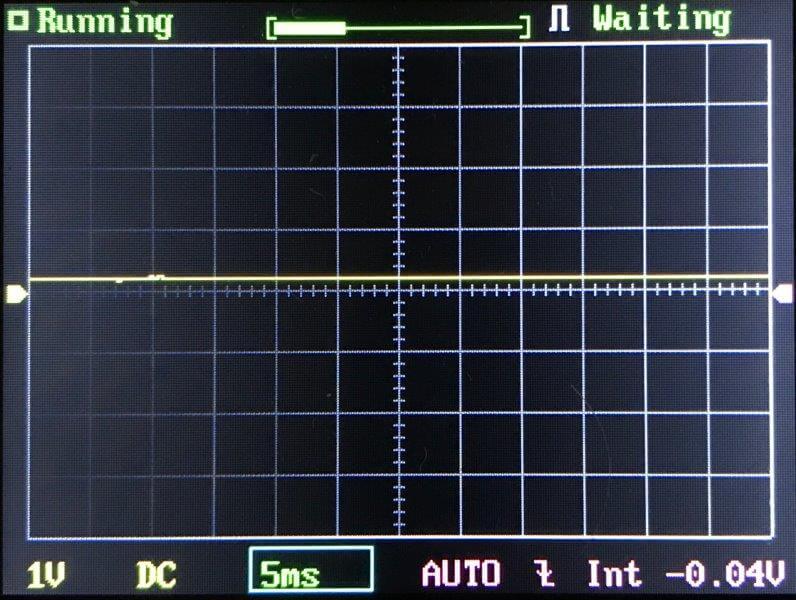
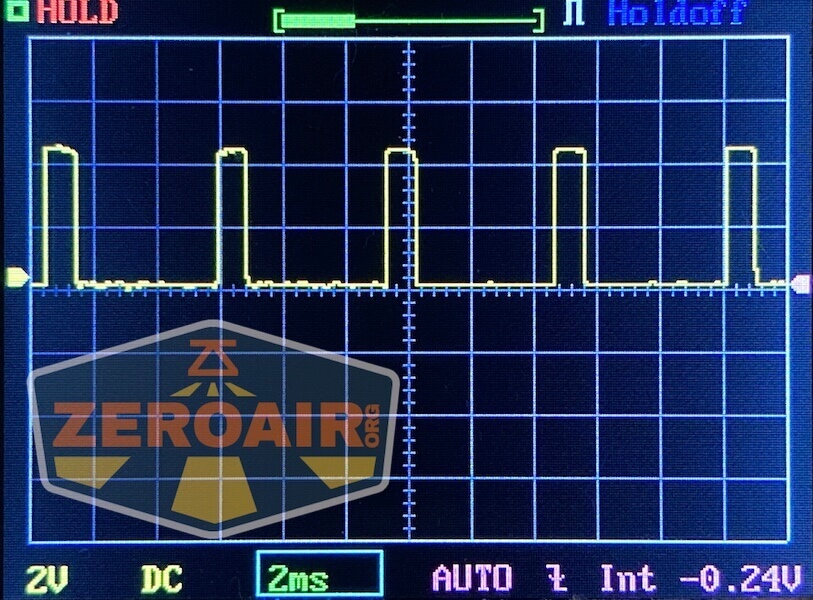
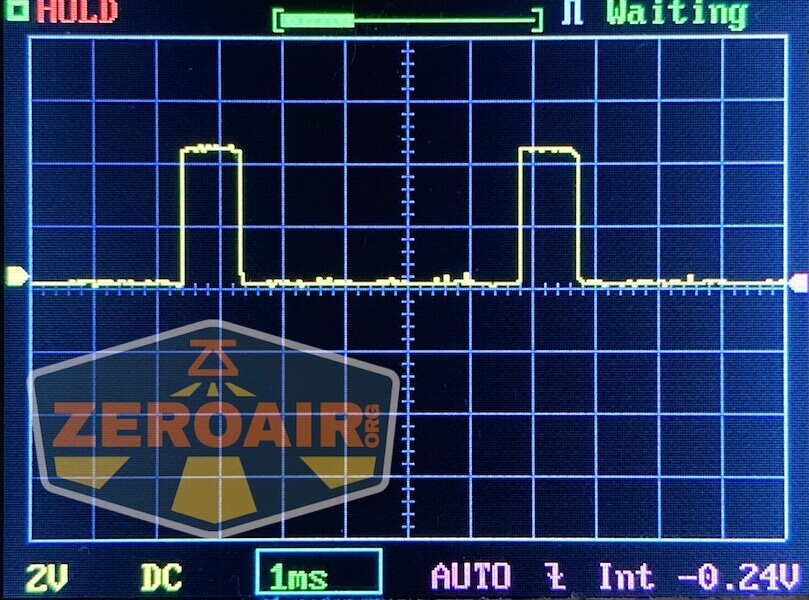
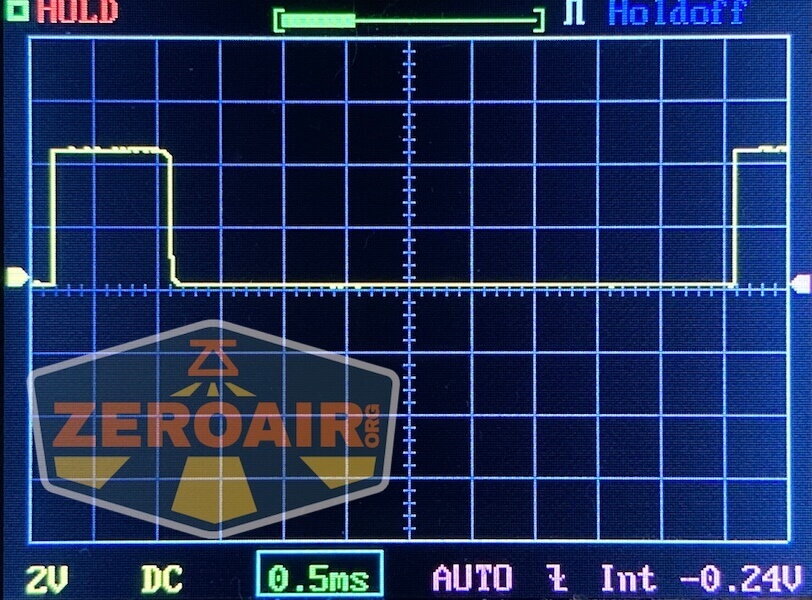
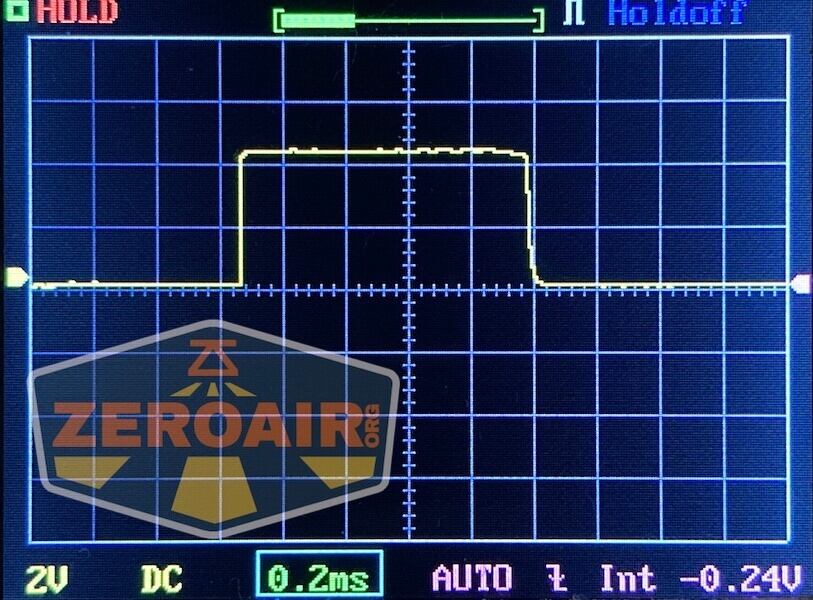
None of the modes use PWM. What you see below is probably SMS ripple.

Click here to see a “baseline” – a chart with almost no light hitting the sensor.
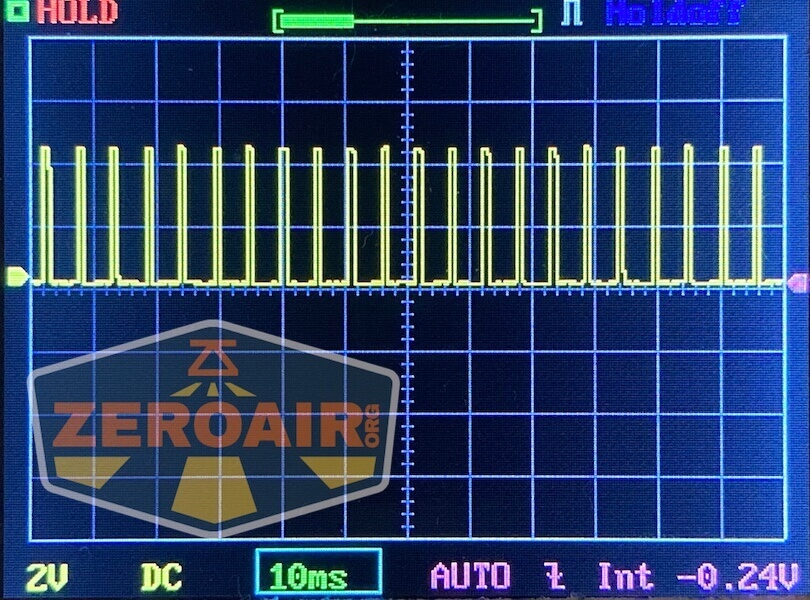
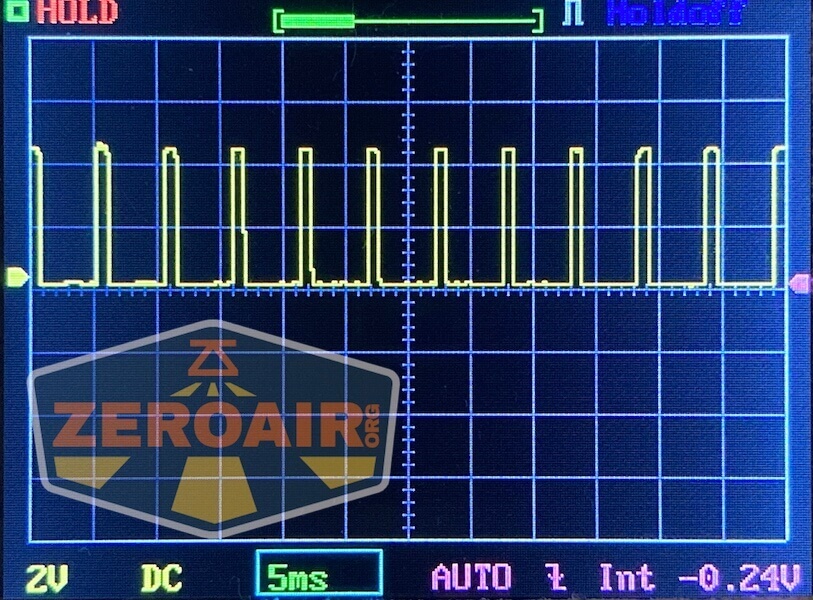
Then there’s the Ultrafire WF-602C flashlight, which has some of the worst PWM I’ve seen. It’s so bad that I used a post about it to explain PWM! Here are multiple timescales (10ms, 5ms, 2ms, 1ms, 0.5ms, 0.2ms) to make comparing this “worst” PWM light to the test light easier. That post also explains why I didn’t test the WF-602C at the usual 50us scale.
User Interface and Operation
The FLGEDC MR01 long-range flashlight has two switches. The first is a tail mechanical switch that serves as a mechanical lockout. If this switch isn’t “on,” the light will not do anything!
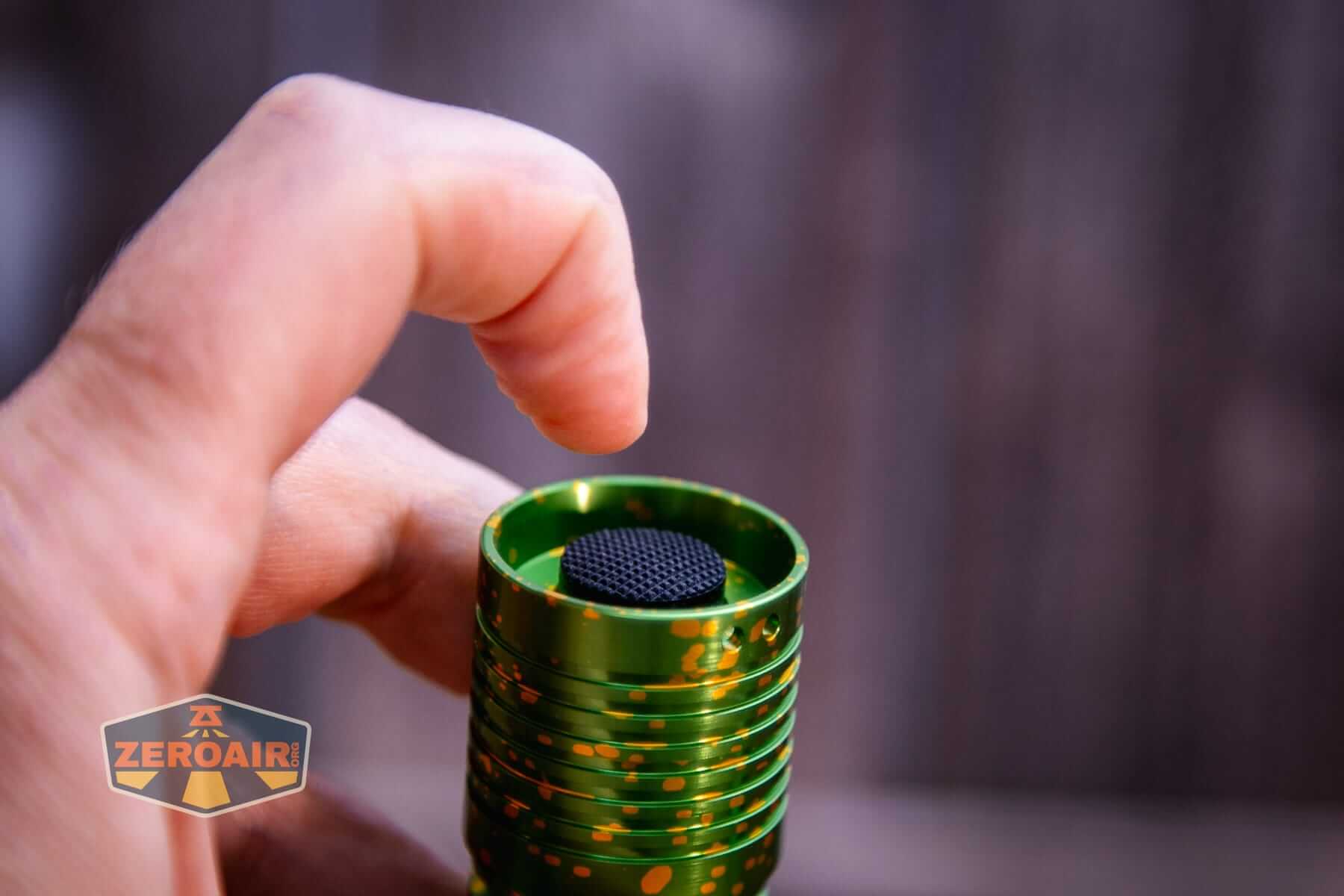
That shroud completely protects the switch from side access. It also allows tailstanding.
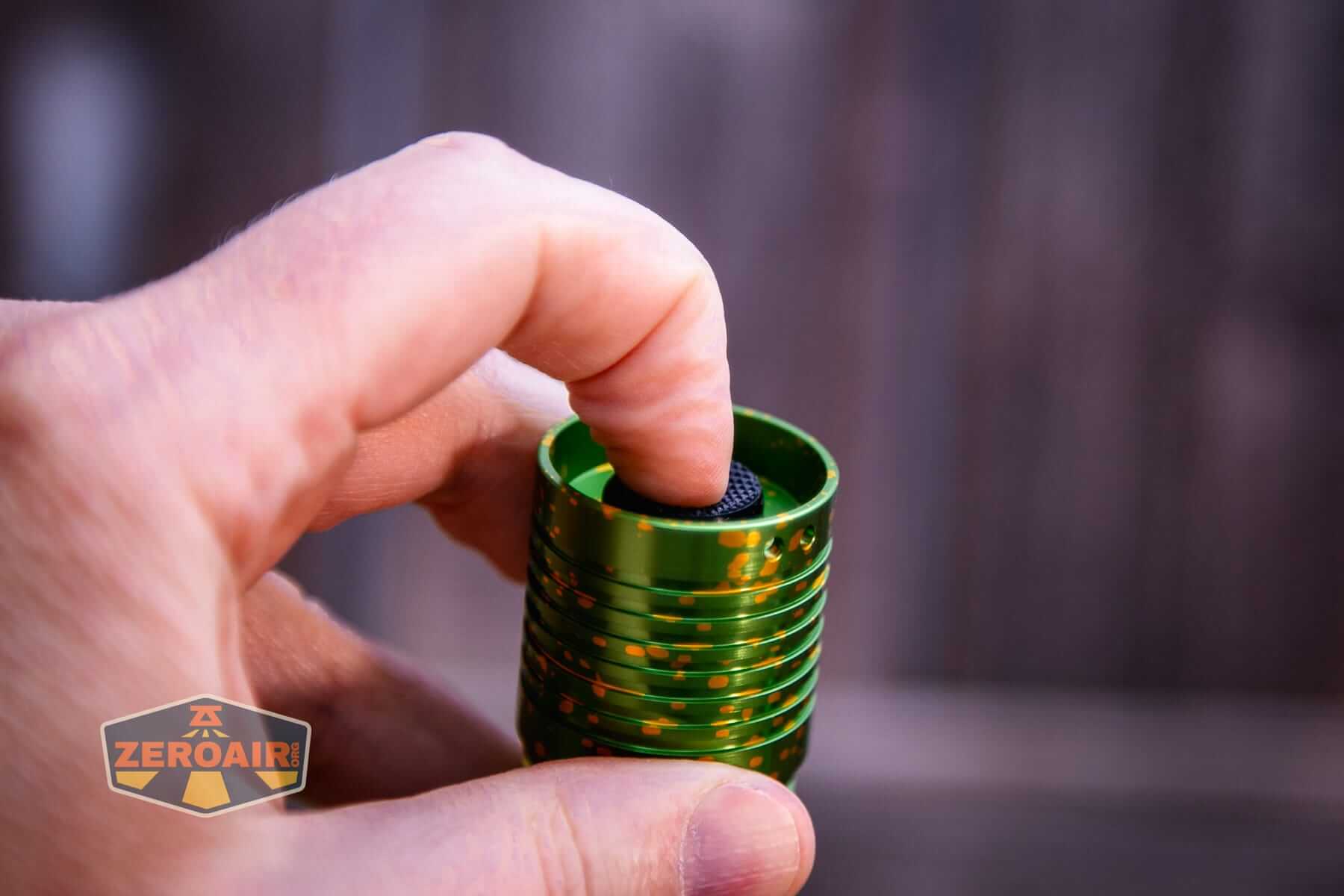
The other switch is a side e-switch. It does appear to have an indicator feature in the center, but I’m not sure there’s an LED under there.
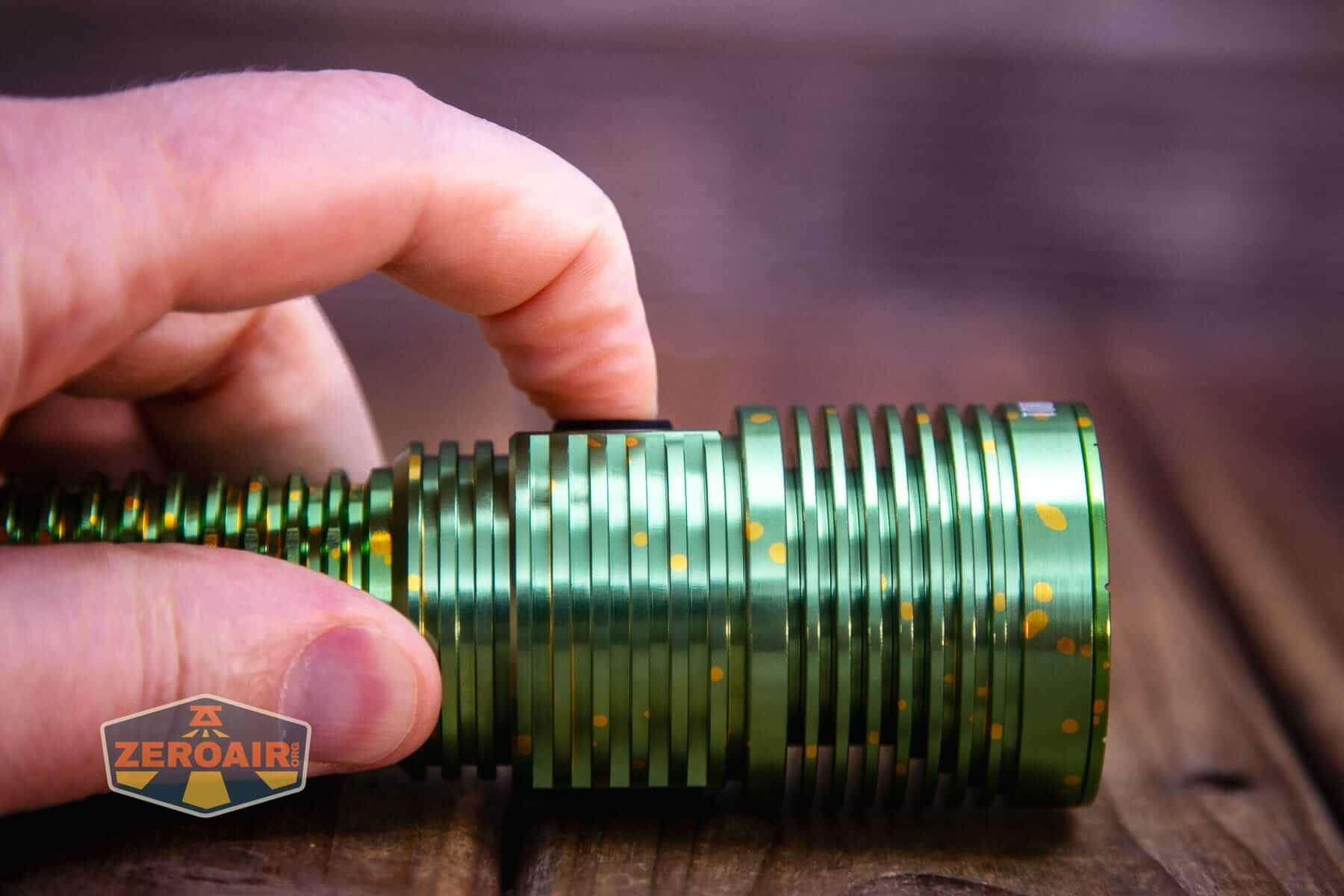
Here’s a user interface table!
| State | Action | Result |
|---|---|---|
| Tail switch off | Any e-switch action | No change |
| Tail switch off | Click tail switch | Mode memory (including “off”) |
| Tail switch on | Click tail switch | Light is off |
| Tail switch on | Click e-switch | Iterate no output (faux-off) and output (memory) |
| Tail switch on, light on | Hold e-switch | Mode advance (excluding Turbo) |
| Tail switch on, light on | Double click e-switch | Turbo |
| Tail switch on, light on | Triple click e-switch | Strobe |
| Tail switch on, light on | Click e-switch | Faux-off |
I just double-checked the indicating e-switch, and it DOES light in blue (for certain), and probably red. But it’s very faint. So faint you’ll wonder if it’s just light from the main emitter bleeding through inside the body. But the indicating switch does (seem to) work.
LED and Beam
The FLGEDC MR01 long-range flashlight uses a Luminus SFT40 emitter at 6500K. The light has a smooth, wide, and deep reflector. It’s a good combo to help the light live up to the “long-range” moniker.
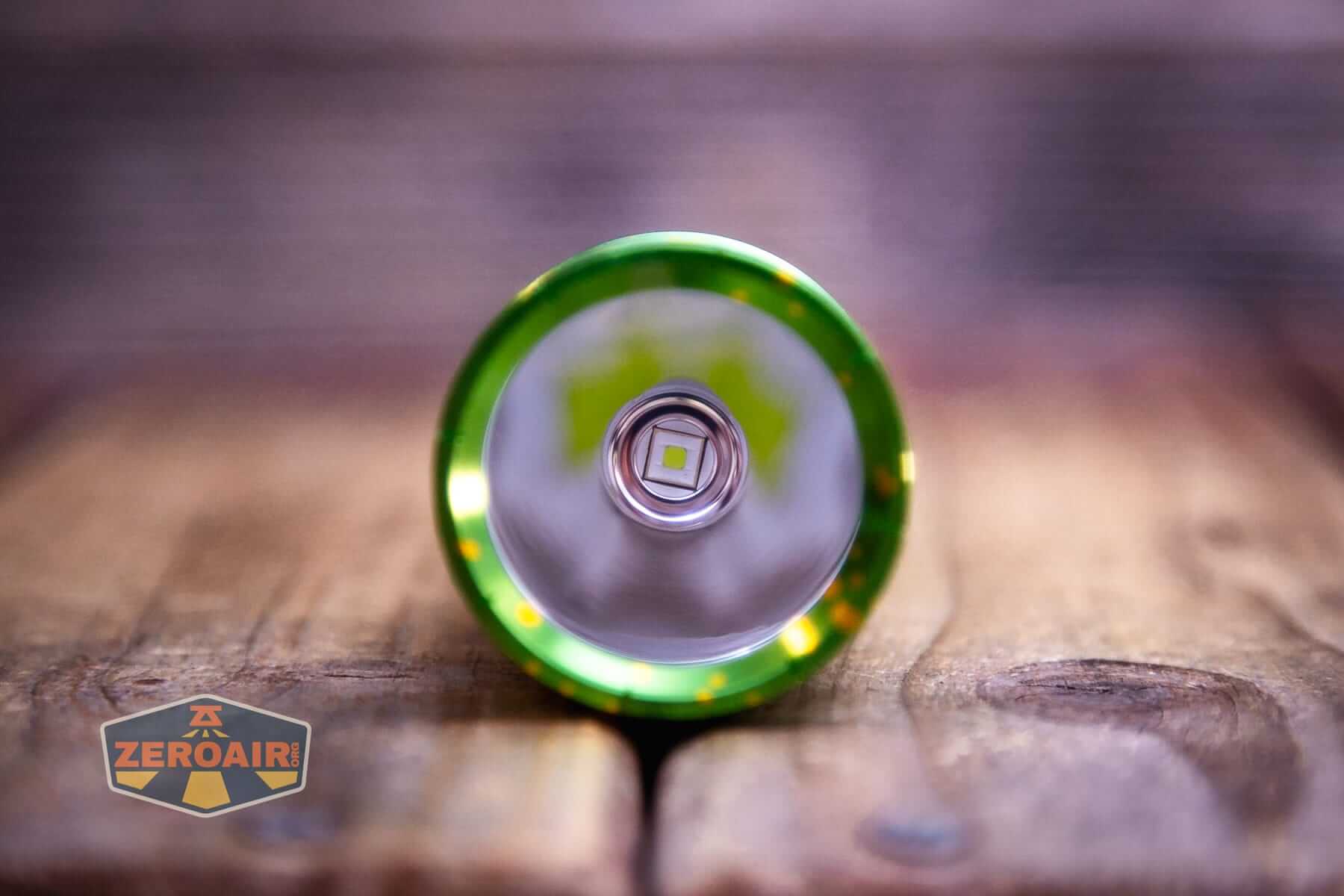
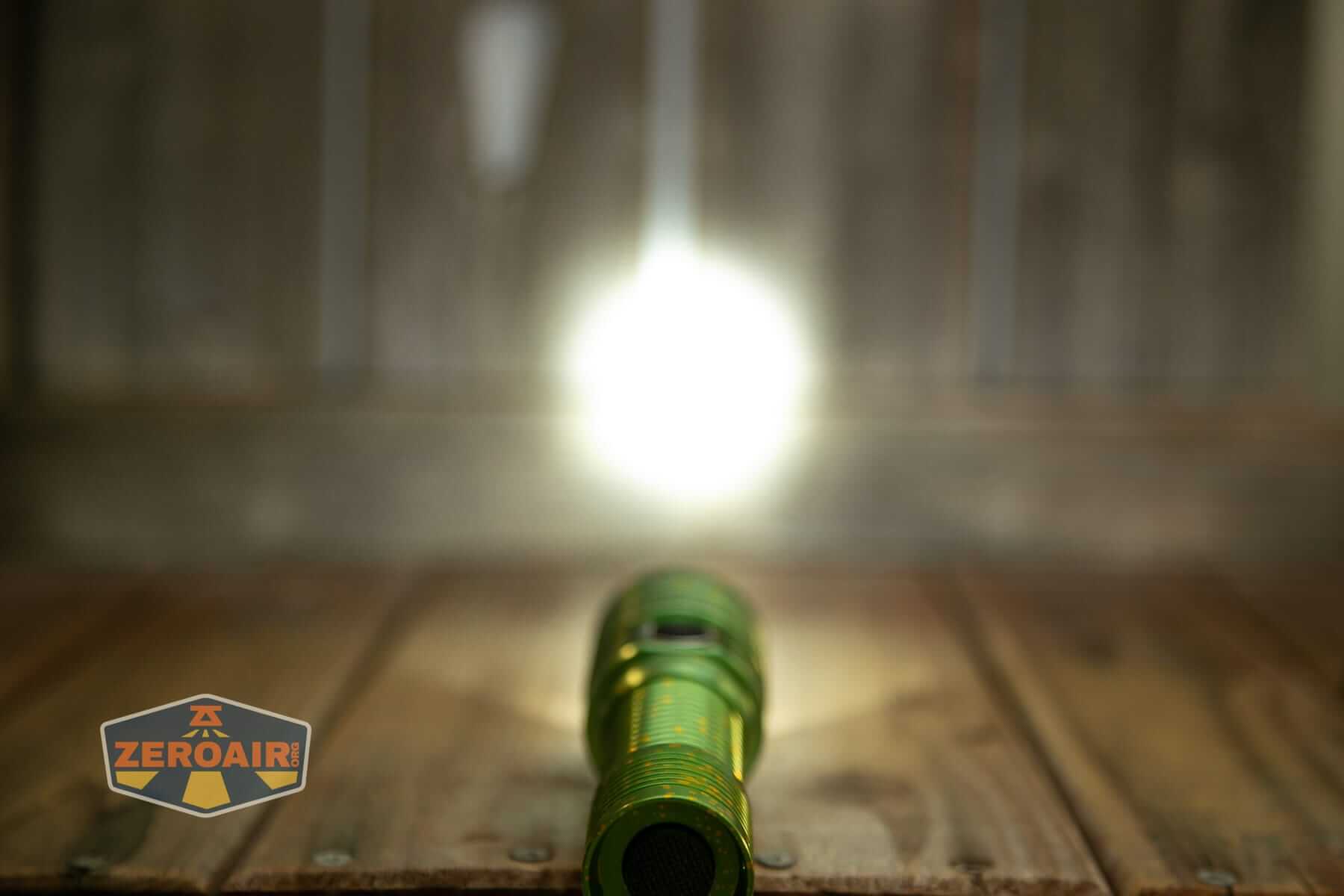
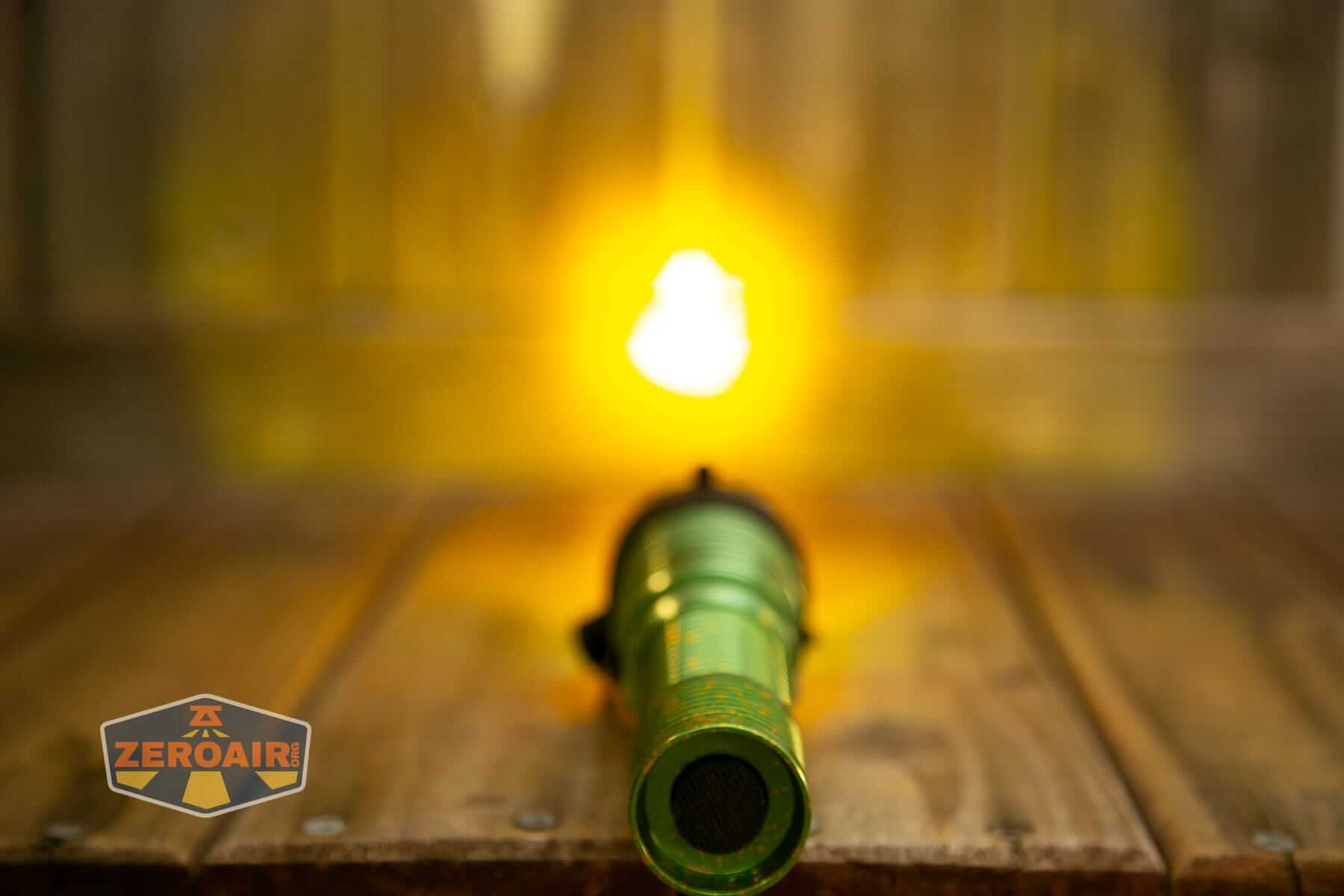
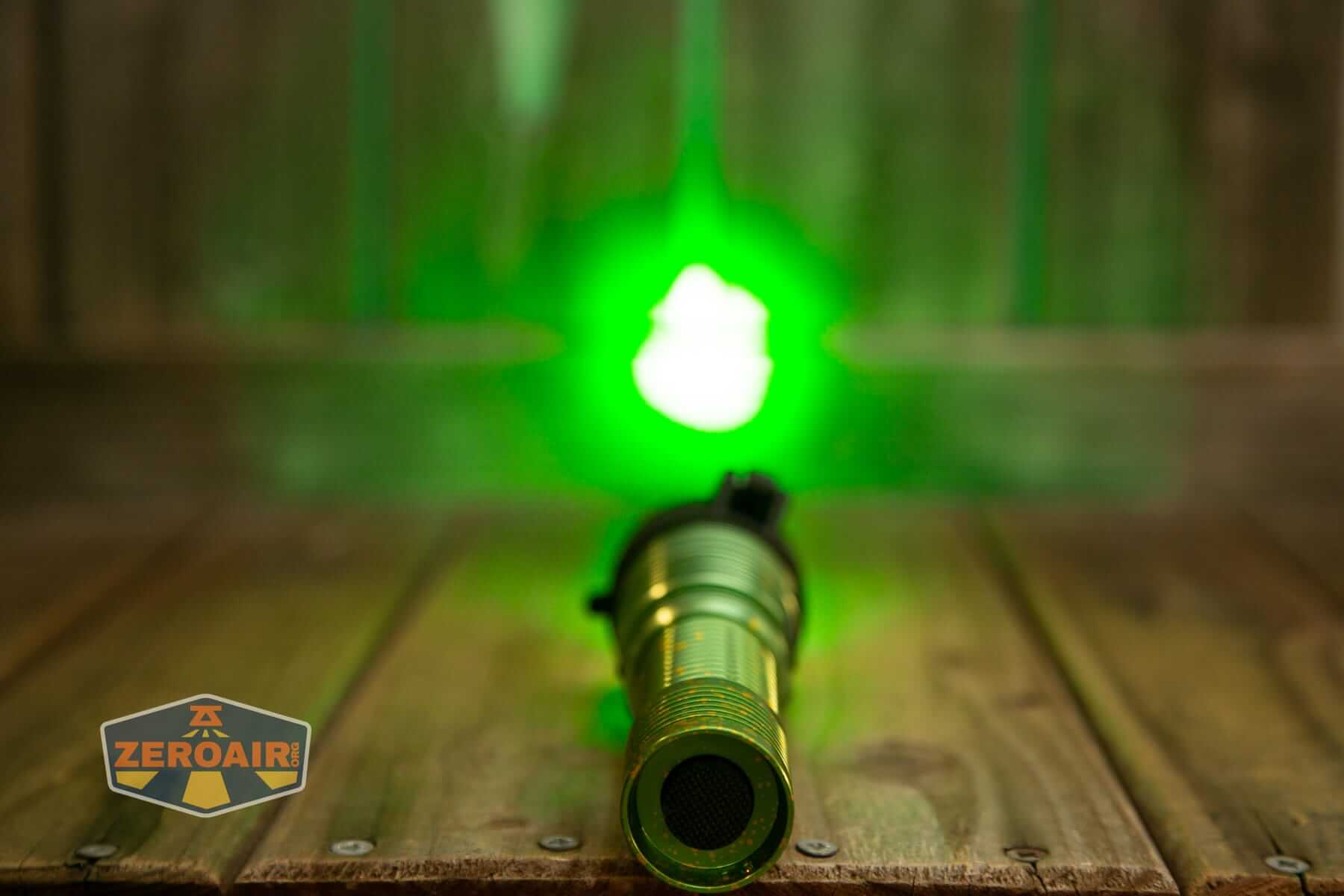
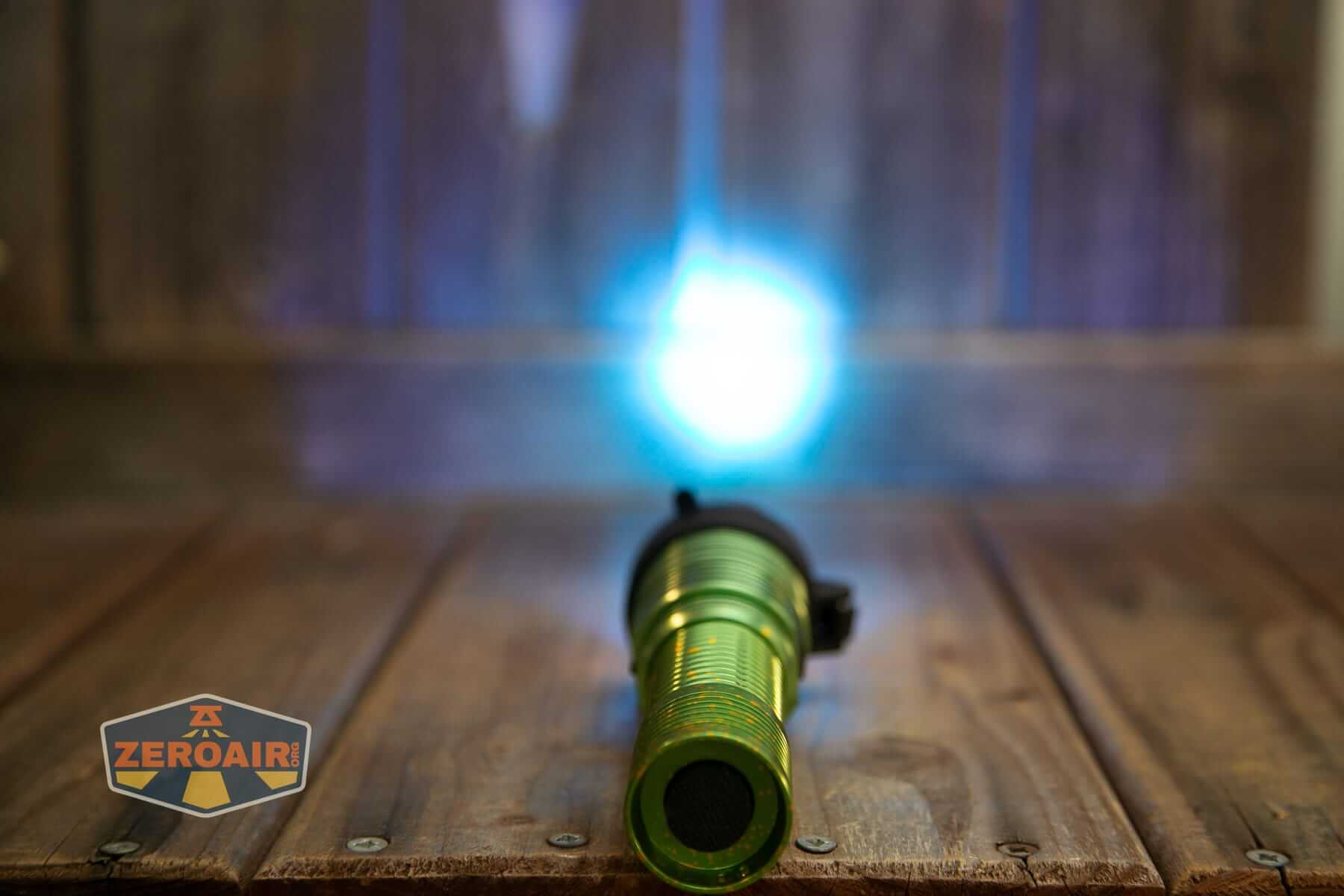
Optional, FLGEDC includes three filters.
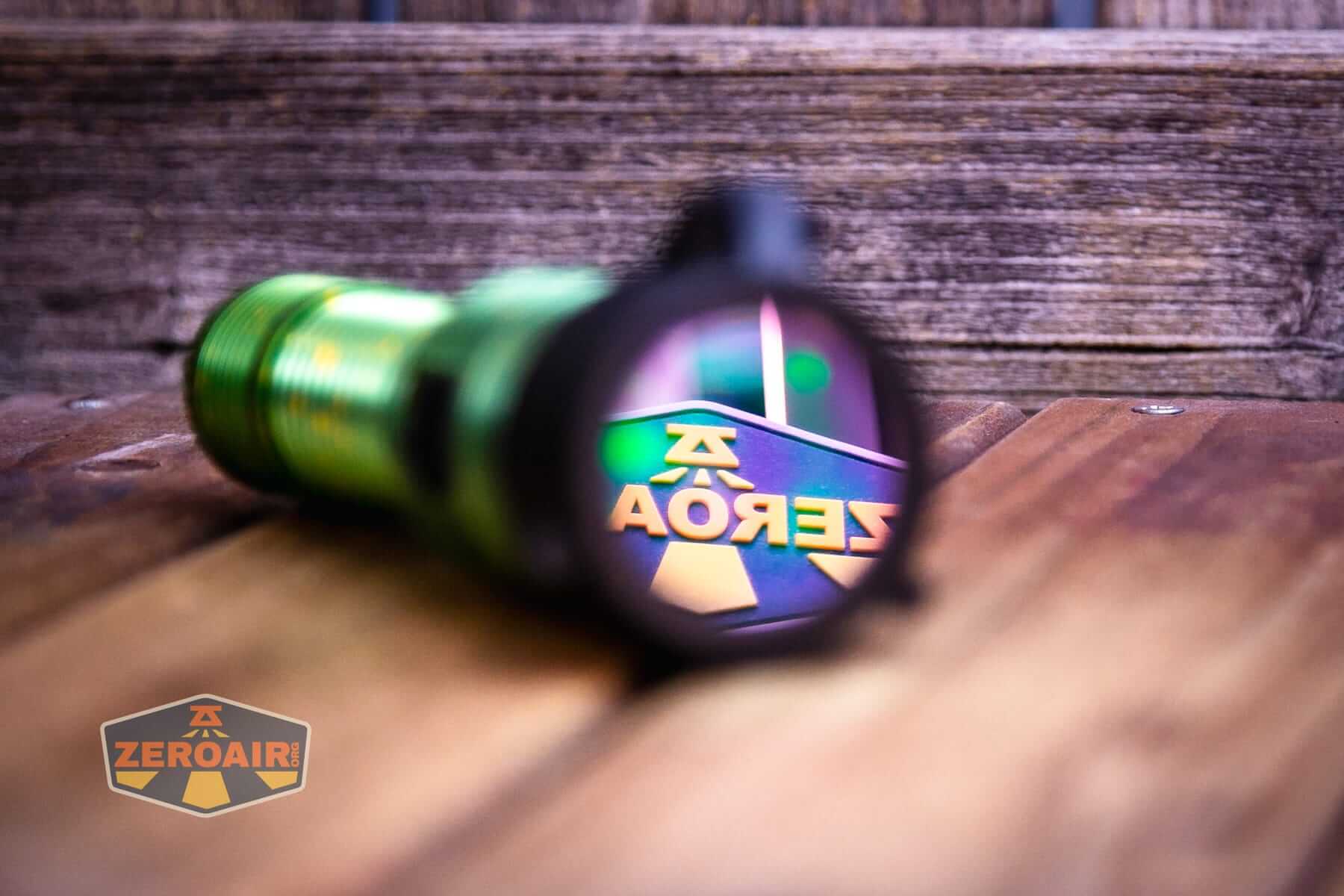
They have a hinge, so you can use the light as a white output light, or with one (at a time) filter color.
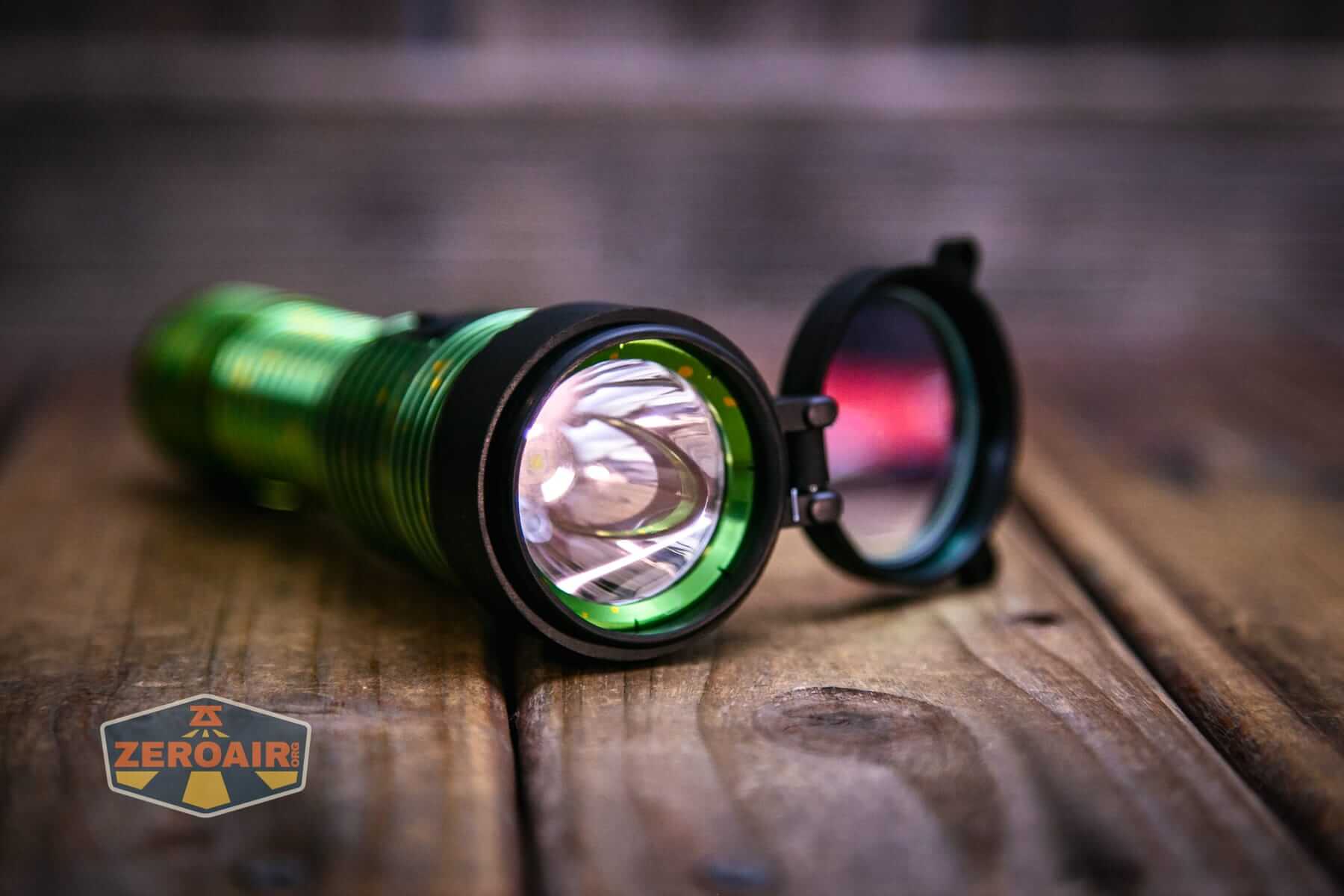
The three filters are amber, green, and blue.
LED Color Report (CRI and CCT)
The CCT is cool white, but not as bad cool white as we might imagine. Often, when a brand claims 6500K, what we actually see is >7000K. Not the case here, with the highest, hardest-driven mode hitting around 6700K. CRI is low.
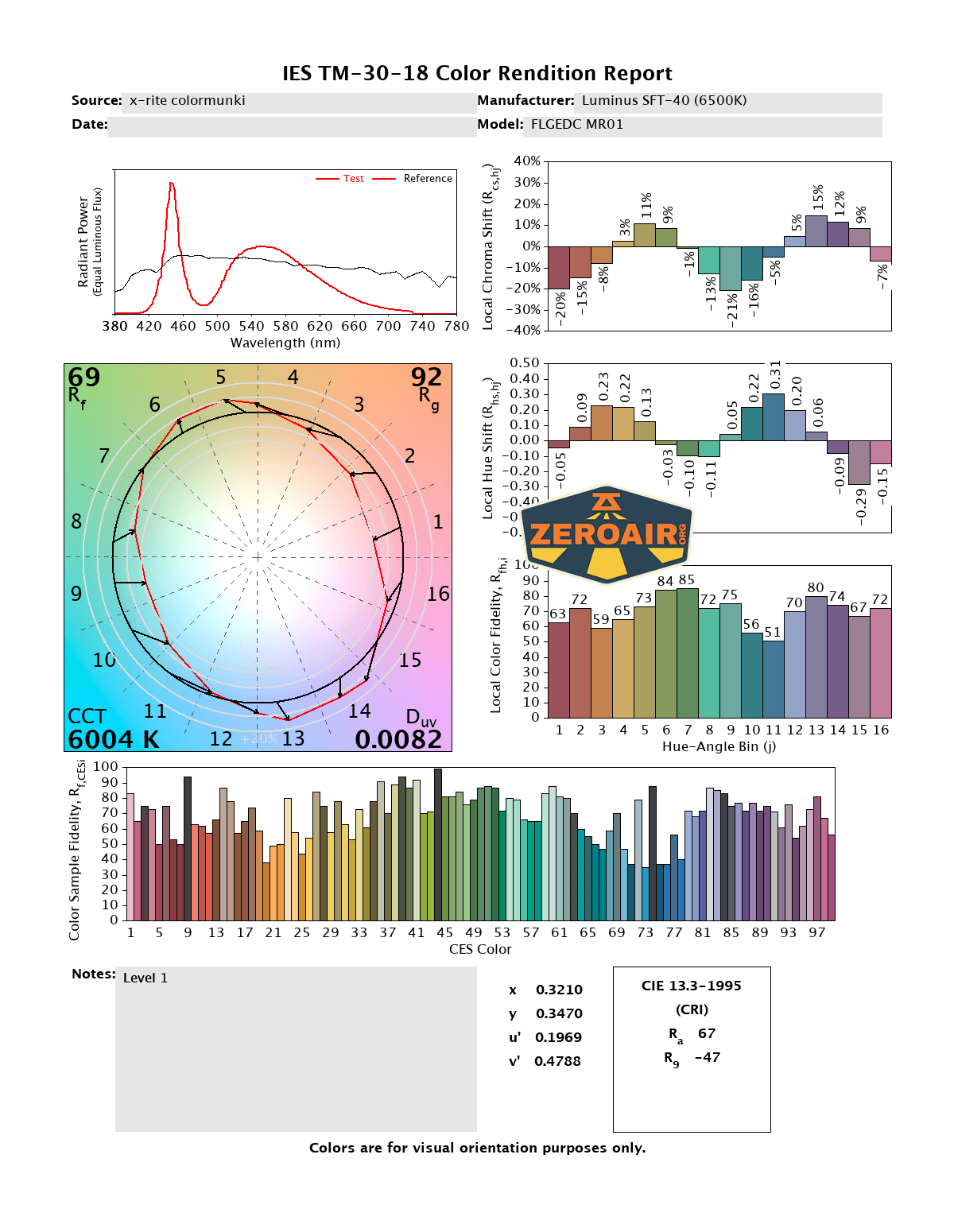
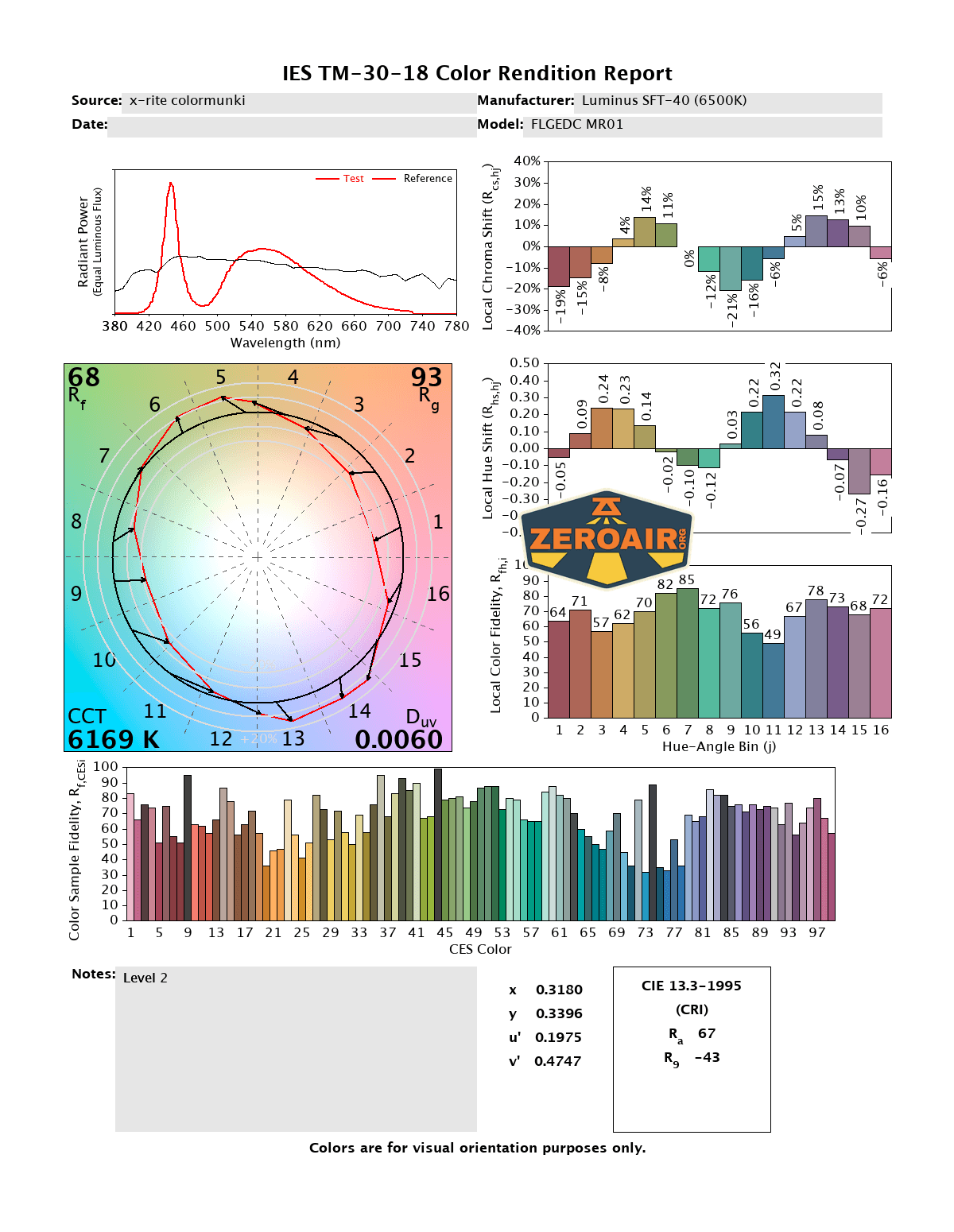
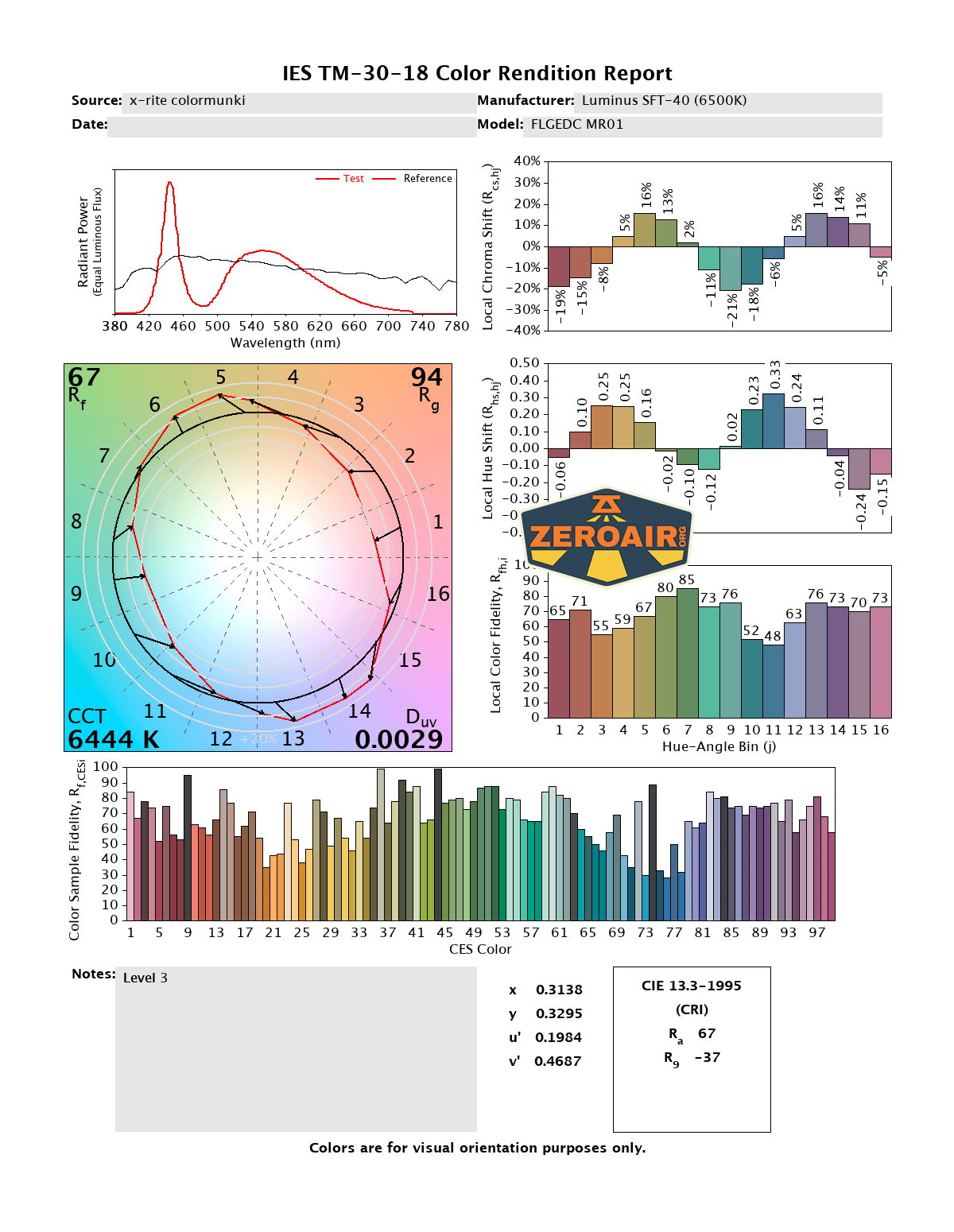
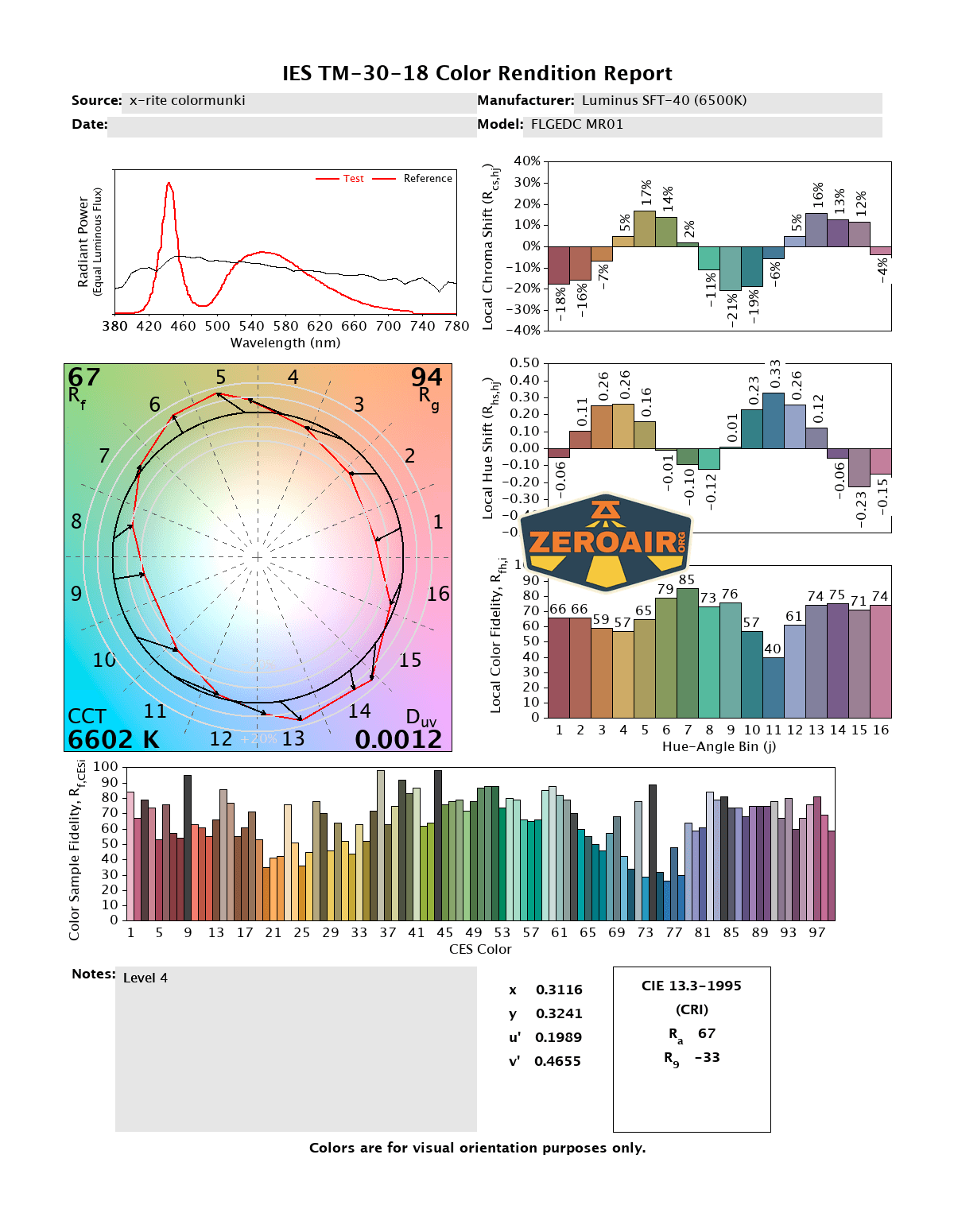
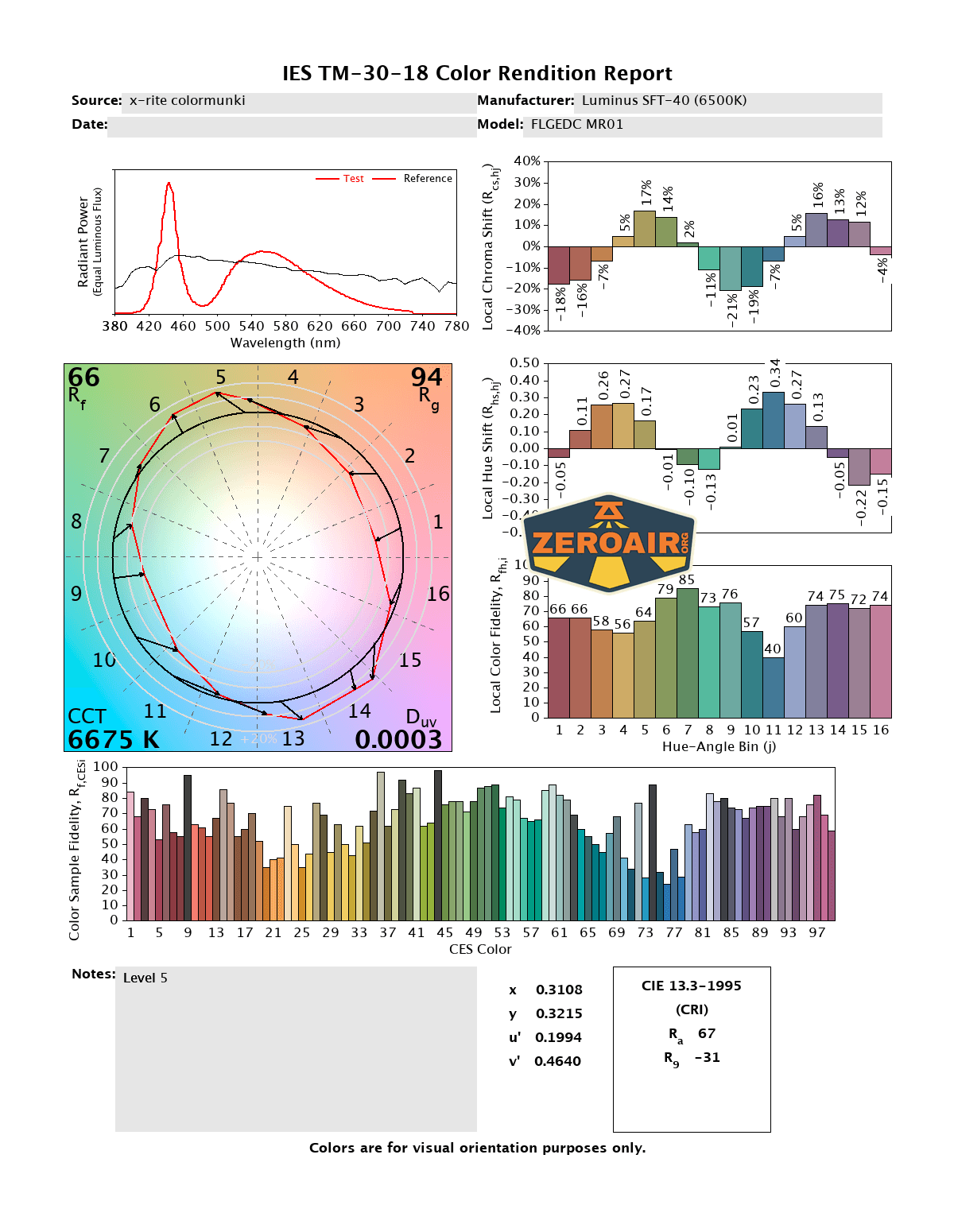
CCT (Correlated Color Temperature) refers to the measurement of the color appearance of light, expressed in Kelvins (K), which indicates whether the light is warm (yellowish) or cool (bluish). A lower CCT (below 3000K) is considered warm light, while a higher CCT (above 5000K) gives cooler, bluish light.
CRI (Color Rendering Index) is a measure of how accurately a light source renders colors in comparison to natural sunlight. Scored on a scale from 0 to 100, higher CRI values indicate that colors appear more true to life and vibrant, similar to how they would look under the sun.
Beamshots
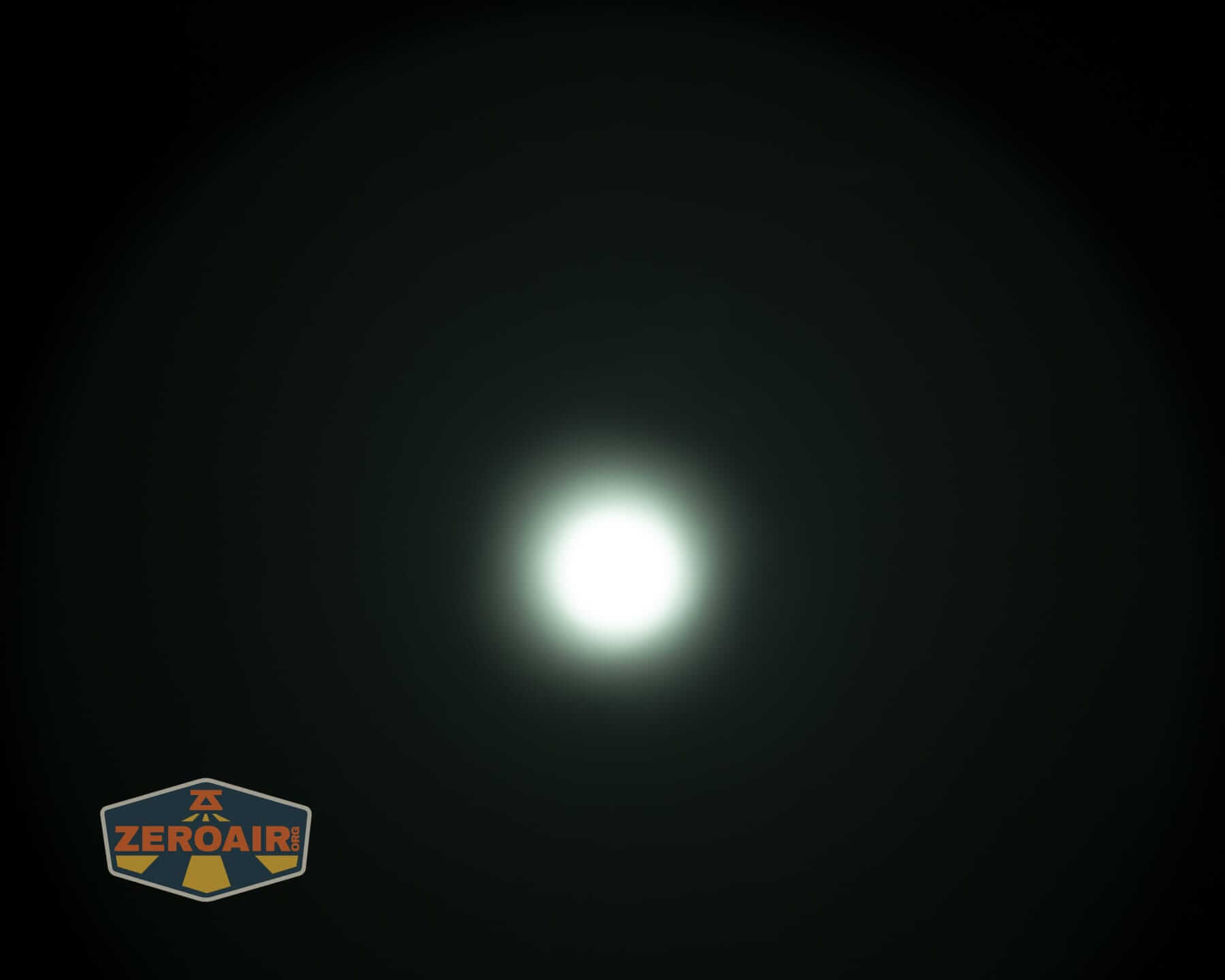
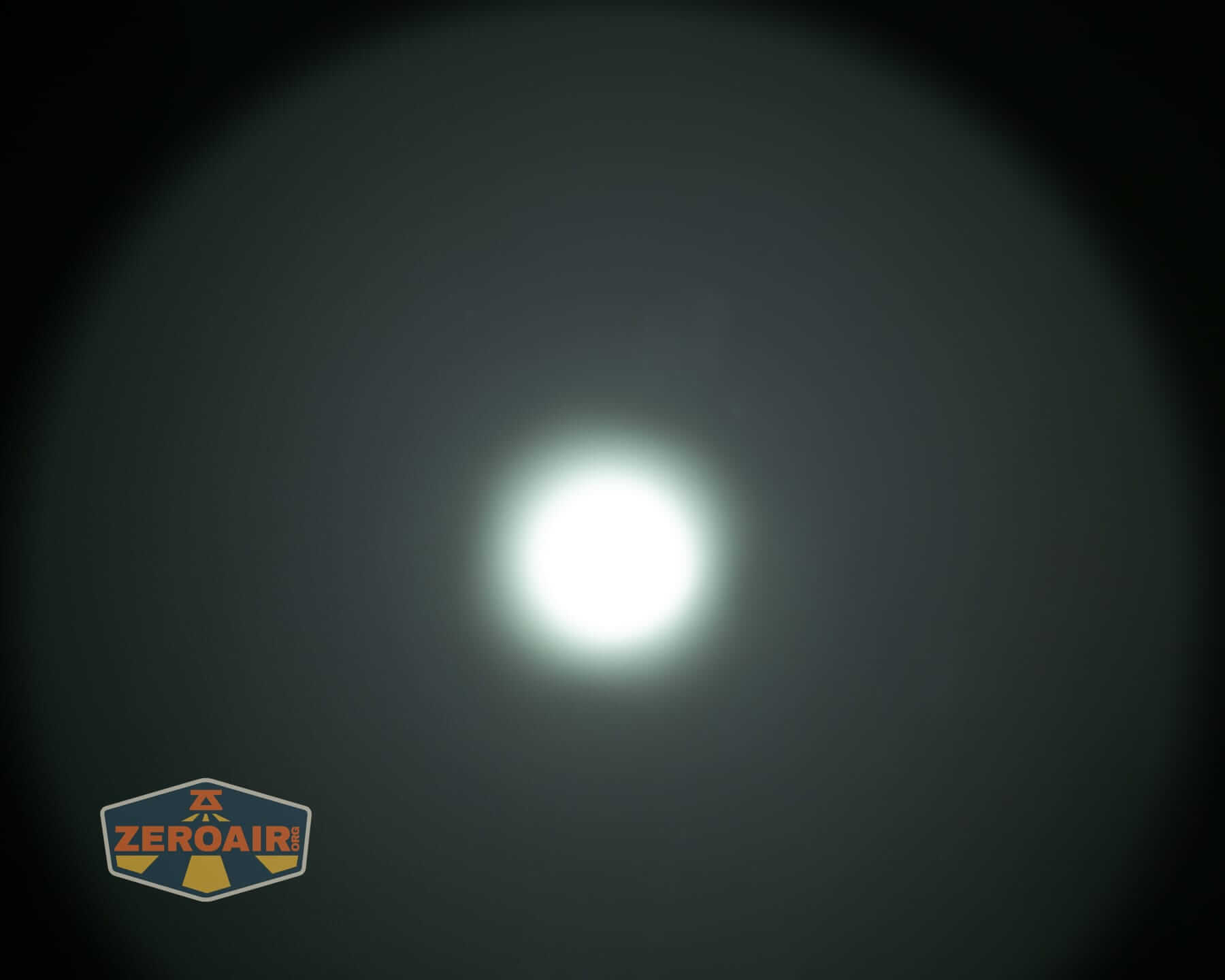
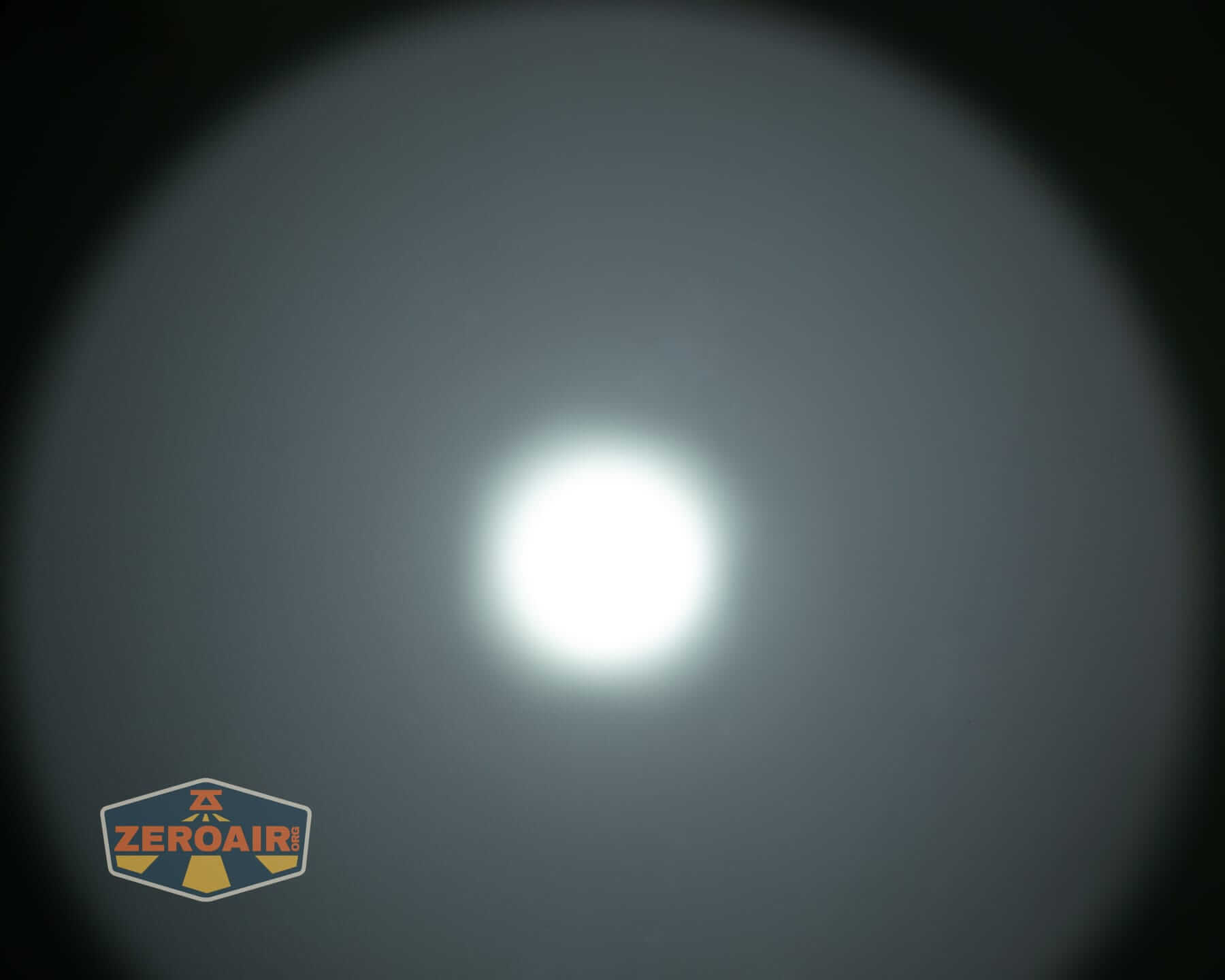
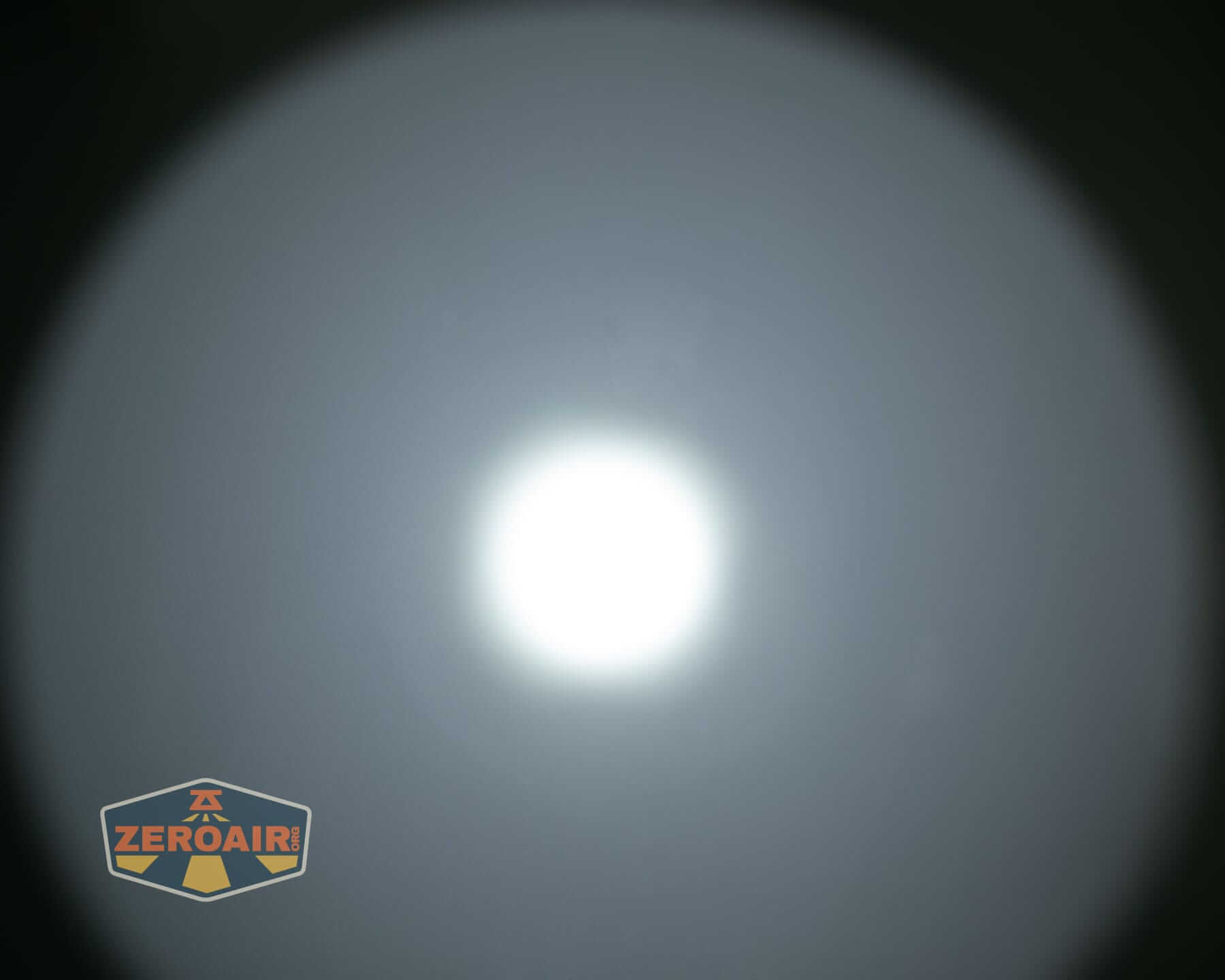
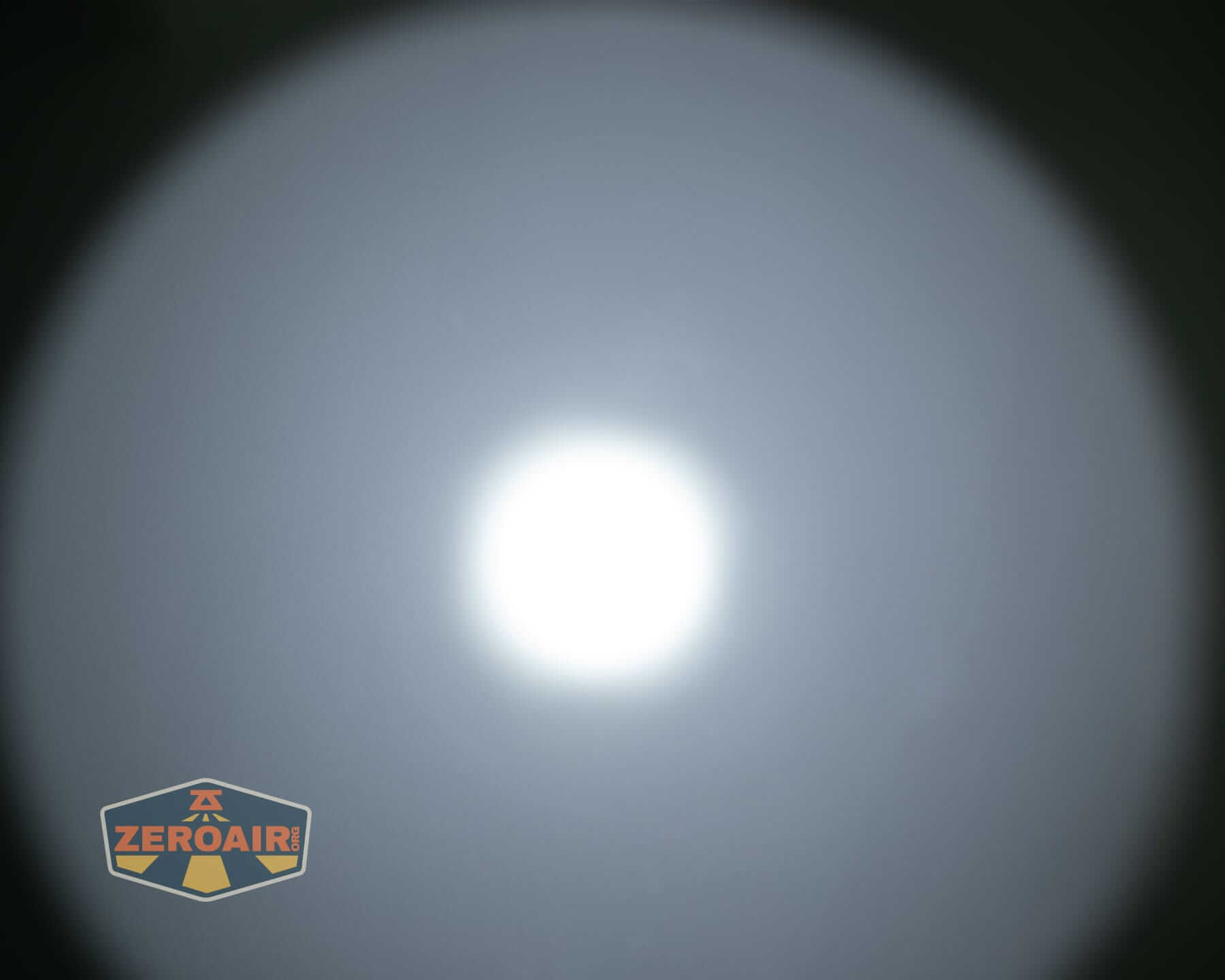
These beamshots always have the following settings: f8, ISO100, 0.3s shutter, and manual 5000K exposure. These photos are taken at floor level, and the beam hits the ceiling around 9 feet away.
There’s surprisingly little difference in feel between the highest two modes. The lowest mode is also remarkably bright.
Tint vs BLF-348 (KillzoneFlashlights.com 219b version) (affiliate link)
I keep the test flashlight on the left and the BLF-348 reference flashlight on the right. These photos are taken around 18 inches from the door.
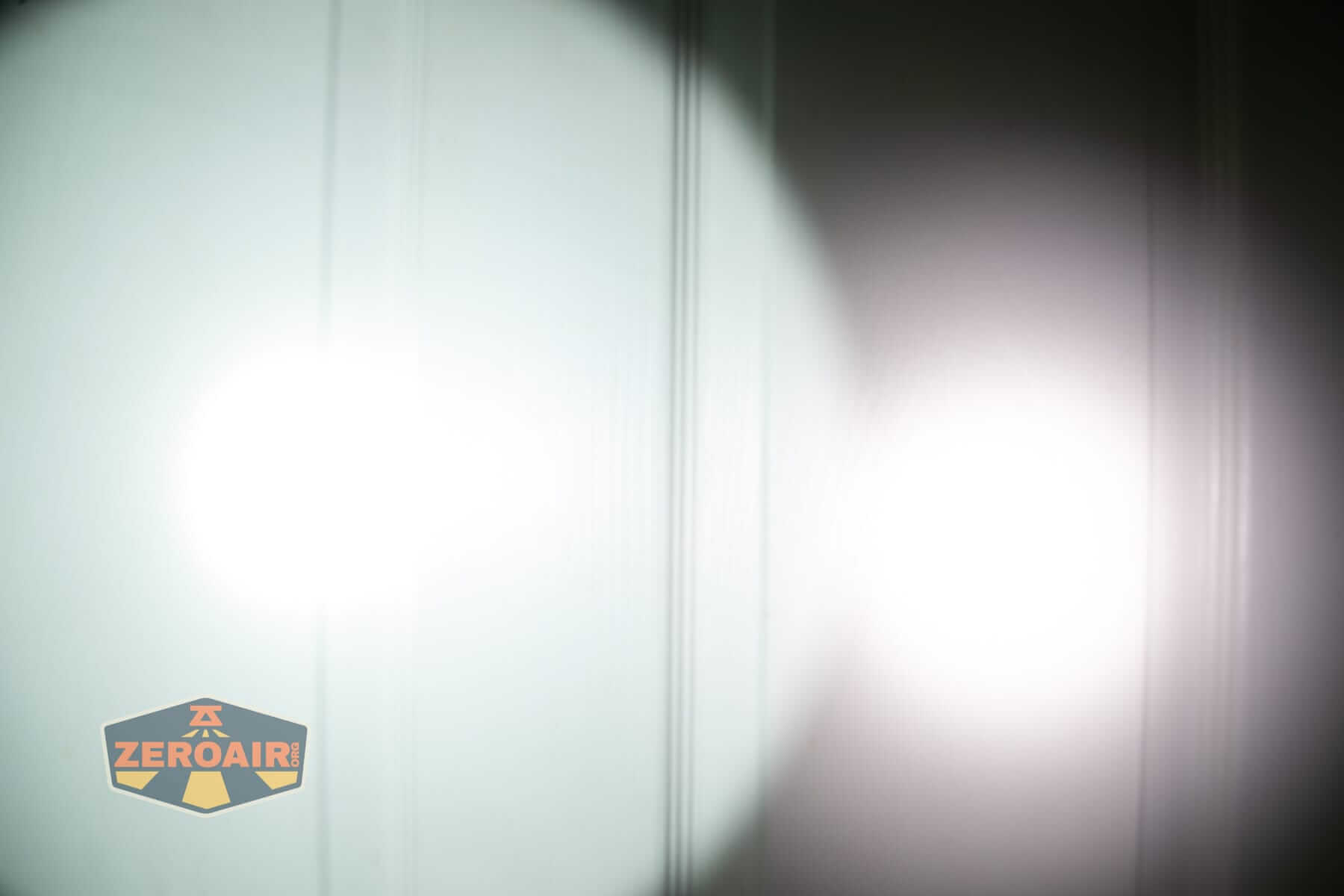
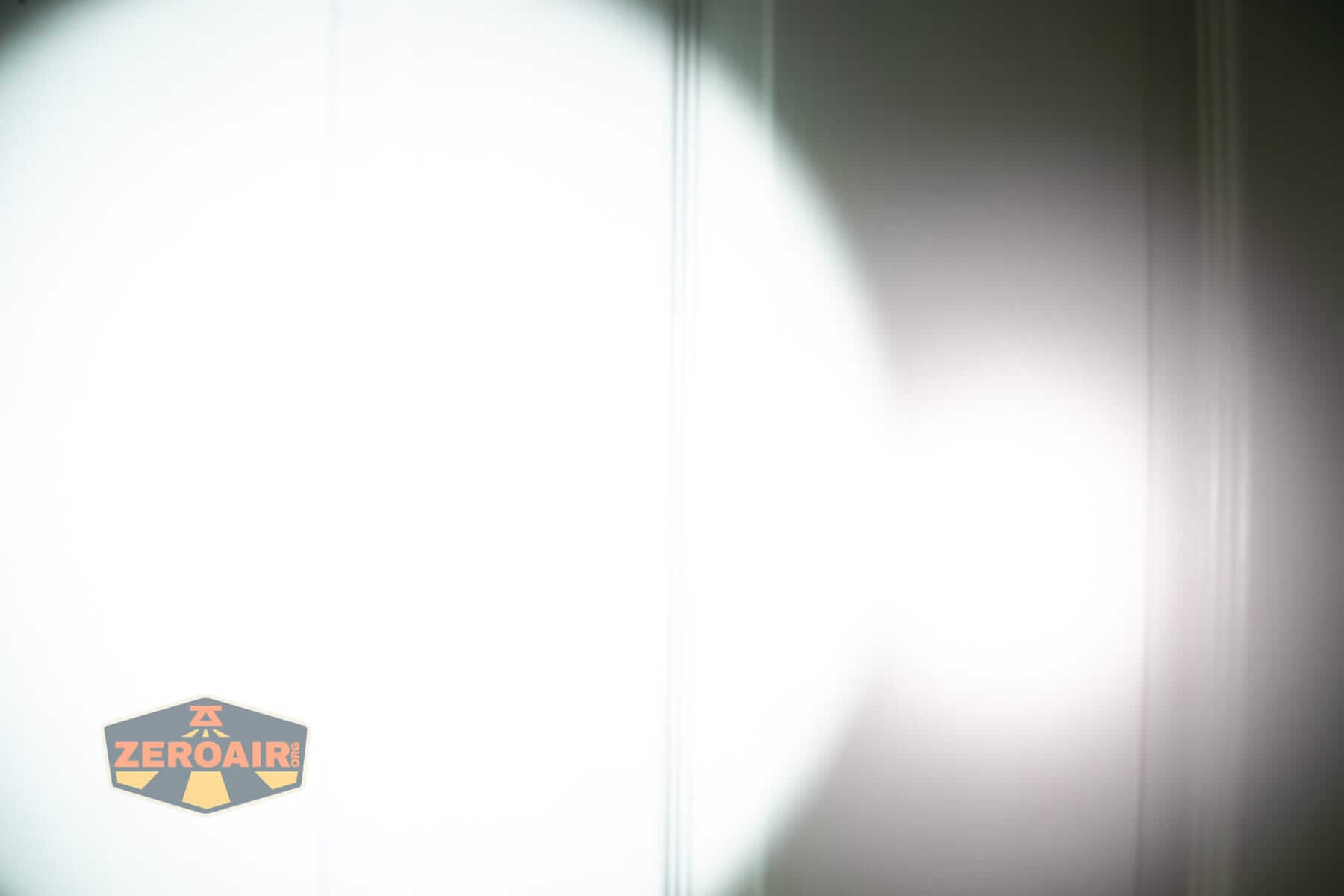
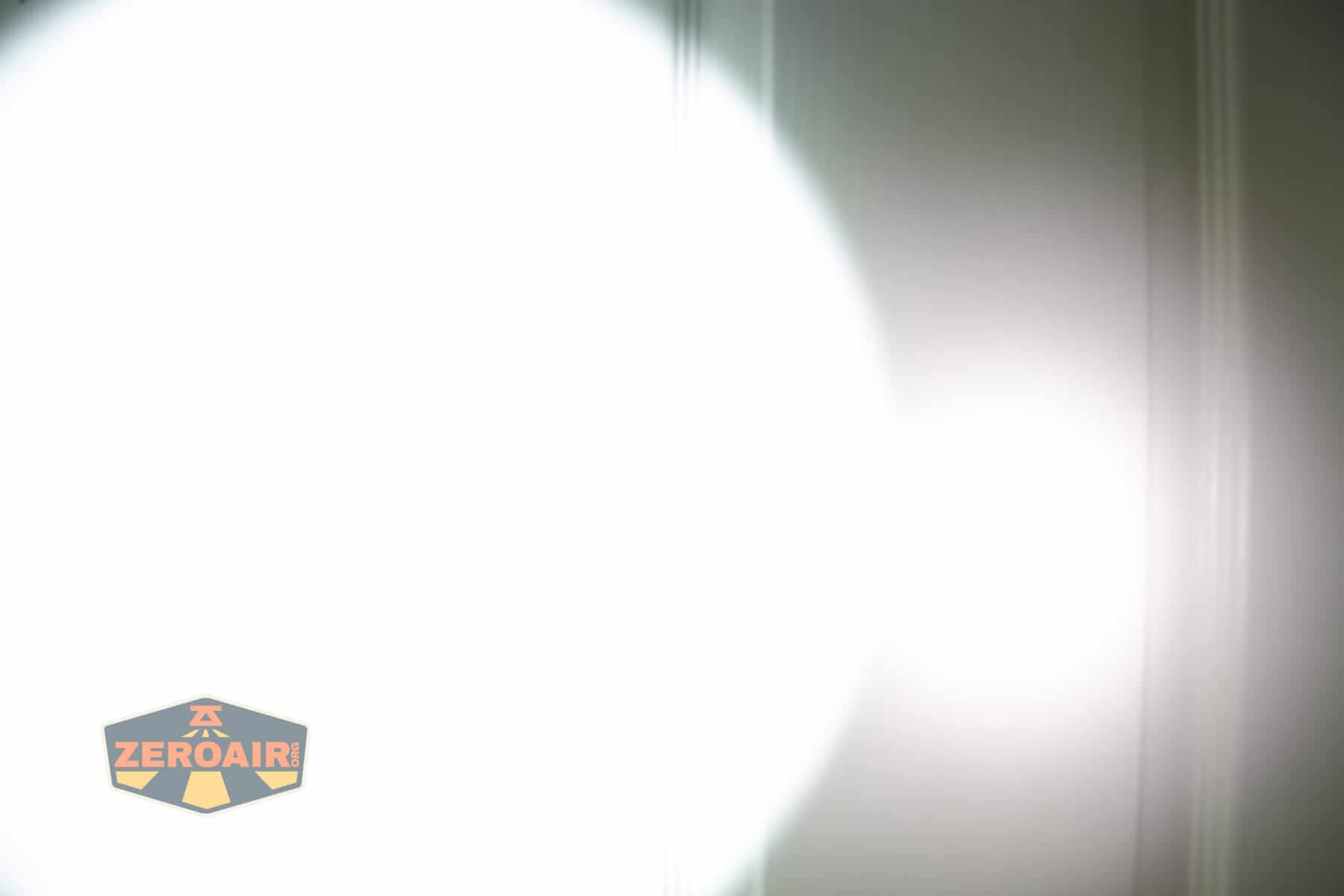
I compare everything to the KillzoneFlashlights.com 219b BLF-348 because it’s inexpensive and has the best tint!
Summary and Conclusion
The FLGEDC MR01 long-range flashlight is a capable long-range flashlight with excellent output and, more importantly, impressive sustained performance. Medium 1 holds nearly 1000 lumens for two hours, a highlight of this light. Build quality is good, USB-C charging works well, and the optional color filters are a fun extra. The cool-white, low-CRI SFT40 is ok, and not as cold white as it could be. And I just don’t love the implementation of the mechanical tail switch and side e-switch. At $59.99, there’s a lot to like here, particularly if sustained output and throw are your priorities.
The Big Table
| FLGEDC MR01 | |
|---|---|
| Emitter: | Luminus SFT40 (Cool white) |
| Price in USD at publication time: | $59.99 |
| Cell: | 1×21700 |
| Runtime Graphs | |
| LVP? | Yes |
| Switch Type: | Both |
| Quiescent Current (mA): | – |
| On-Board Charging? | Yes |
| Charge Port Type: | USB-C |
| Charge Graph | |
| Power off Charge Port | – |
| Claimed Lumens (lm) | 2000 |
| Measured Lumens (at 30s) | 1773 (88.7% of claim)^ |
| Candela per Lumen | 65.2 |
| Claimed Throw (m) | 753 |
| Candela (Calculated) in cd (at 30s) | 3080lux @ 6.128m = 115661cd |
| Throw (Calculated) (m) | 680.2 (90.3% of claim)^ |
| Claimed CCT | Cool white 6500 |
| Measured CCT Range (K) | Cool white 6000-6700 Kelvin |
| Item provided for review by: | flashlightgo.com |
| All my FLGEDC reviews! | |
^ Measurement disclaimer: Testing flashlights is my hobby. I use hobbyist-level equipment for testing, including some I made myself. Try not to get buried in the details of manufacturer specifications versus measurements recorded here; A certain amount of difference (say, 10 or 15%) is perfectly reasonable.
What I like
- Excellent sustained output, particularly Medium 1
- Good runtime and reasonable Turbo stepdown
- Impressive throw
- USB-C charging
- Includes a 21700 cell
- Useful cooling fins
- Optional color filters are a fun addition
- No PWM
What I don’t like
- Cool-white, low-CRI output
- Slick body in the twisting direction
- No pocket clip or magnet
- Two-switch operation and mechanical lockout are unnecessarily complicated
- Very faint switch indicator
- Bezel cutouts don’t seem to serve much purpose
Notes
- This content originally appeared at zeroair.org. Please visit there for the best experience!
- Please use my Amazon.com referral link to help support zeroair.org!
- Please support me on Patreon! I deeply appreciate your support!
Discover more from ZeroAir Reviews
Subscribe to get the latest posts sent to your email.