

Wuben X-2 Copper Flashlight Review
Here’s the Wuben X-2 Copper Flashlight! The copper is uncoated and will age nicely. And the X-2 has all the great X-2 features, too, like USB-C charging!
Official Specs and Features
Here’s a link to the Wuben X-2 copper flashlight product page.
Versions
There are some options when considering the Wuben X-2 Owl flashlight. There are a few aluminum bodies (black, “gradient ramp,” and white (seen here)). There’s also a copper body available. And finally, there’s this titanium version – in fact, there are a few finishes! Seen in this post is “Geometric Blue” but there’s a sandblasted, “Green Circuit,” and “Ink Splash” too. Among those options, there are Samsung LH351d (seen here) and Osram P9 choices, too.
Price
The most basic Wuben X-2 Owl Titanium flashlight sells for $98. That’s a black aluminum light. Titanium (for example, the blue geometric version) sells for $308. Copper hits the middle ground at $158. Here’s a 20% off coupon, too:
zeroair20
Short Review
The Wuben X-2 Owl is a very fun little flashlight. It has the same feel of the Wuben X-1 Falcon but in a much more manageable body. I also love that copper is available! The user interface and output and runtimes – all of that looks great! C to C charging works, too! I did really love the “blue geometric” and the other special titanium versions are great – even the “plain” sandblasted is very nice! This copper seems to hit different, though. It brings the weight and is uncoated, so will eventually (quickly!) look very nice with wear.
Long Review
The Big Table
| Wuben X-2 Copper flashlight | |
|---|---|
| Emitter: | Samsung LH351d |
| Price in USD at publication time: | $158.00 Here’s a 20% off coupon, too: zeroair20 |
| Cell: | Internal |
| Runtime Graphs | |
| LVP? | Warning (at least) |
| Switch Type: | E-Switch |
| Quiescent Current (mA): | ? |
| On-Board Charging? | Yes |
| Charge Port Type: | USB-C |
| Charge Graph | |
| Power off Charge Port | Lowest 3 modes |
| Claimed Lumens (lm) | 1800 |
| Measured Lumens (at 30s) | 1554 (86.3% of claim)^ |
| Candela per Lumen | 3.4 |
| Claimed Throw (m) | 128 |
| Candela (Calculated) in cd (at 30s) | 253lux @ 4.696m = 5579cd |
| Throw (Calculated) (m) | 149.4 (116.7% of claim)^ |
| Claimed CCT | 5000 |
| Measured CCT Range (K) | 4700-5000 Kelvin |
| Item provided for review by: | Wuben |
| All my Wuben reviews! | |
^ Measurement disclaimer: Testing flashlights is my hobby. I use hobbyist-level equipment for testing, including some I made myself. Try not to get buried in the details of manufacturer specifications versus measurements recorded here; A certain amount of difference (say, 10 or 15%) is perfectly reasonable.
What’s Included


- Wuben X-2 Copper flashlight
- Charging cable lanyard (USB-C to USB-C)
- Two 14500 cells (“built-in”)
- Red diffuser
- Manual
Package and Manual

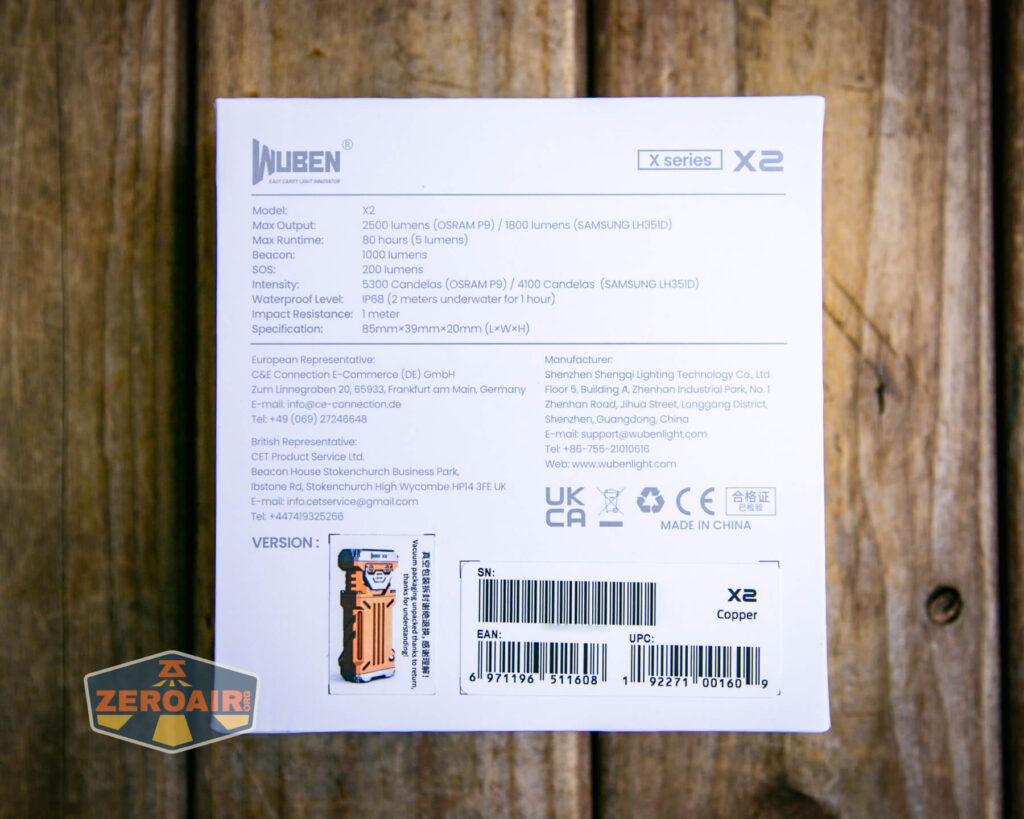

I apparently still need to scan the X-2 manual. I was sure I had a pdf around here somewhere.
Build Quality and Disassembly

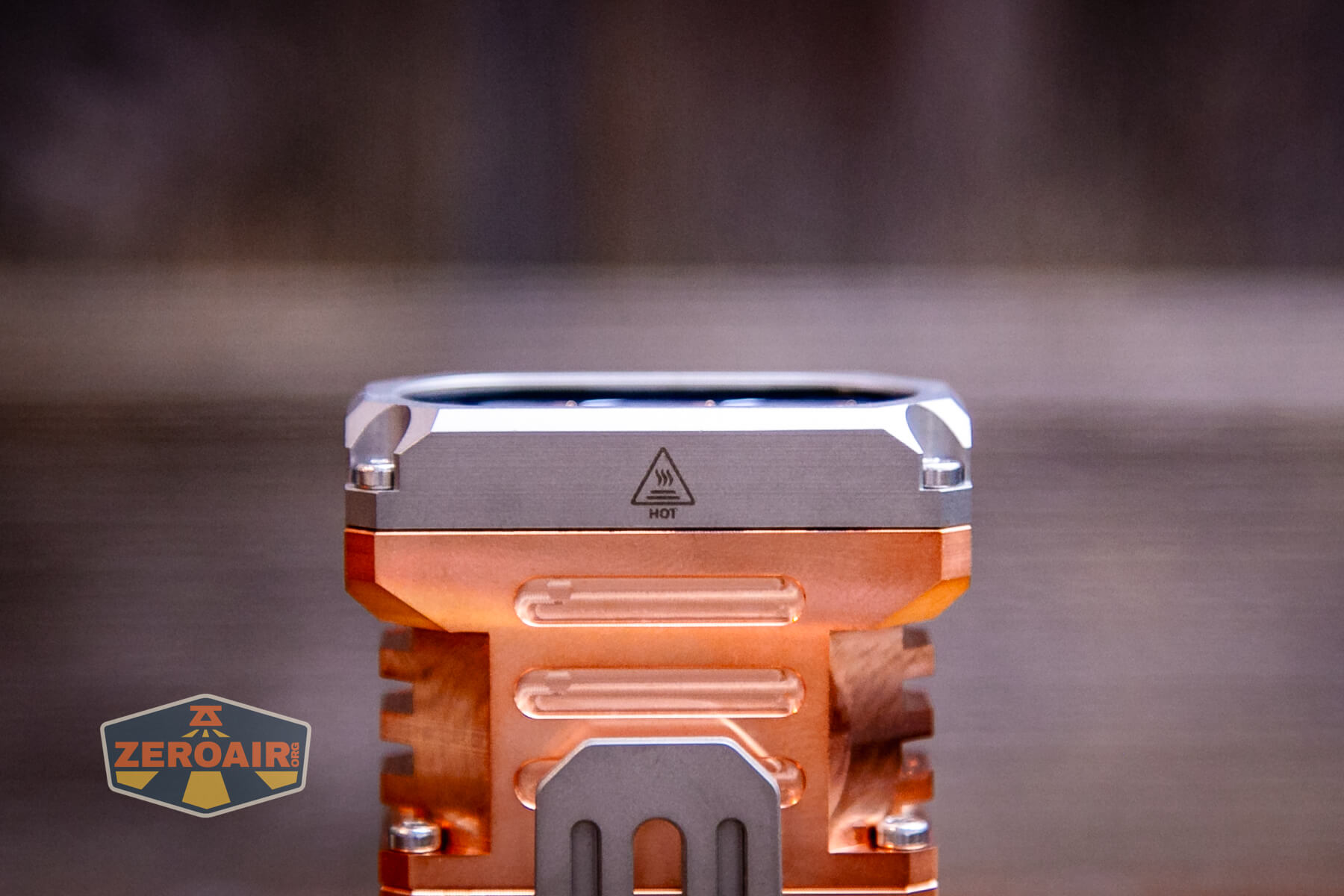
The Wuben X-2 Copper flashlight has an interesting design. We’ve seen rectangular lights before, but they’re still uncommon enough to warrant discussion. This light has mostly the same look as the X-1 Falcon but with some design mixed in from the X-0 Knight. All in all, it’s a great mix-up of the two lights.
This version does have some differences from the other X-2 I reviewed previously, but I’ll cover those later. I do think it’s the same as the titanium version I tested though, so this seems to be the “final form.”


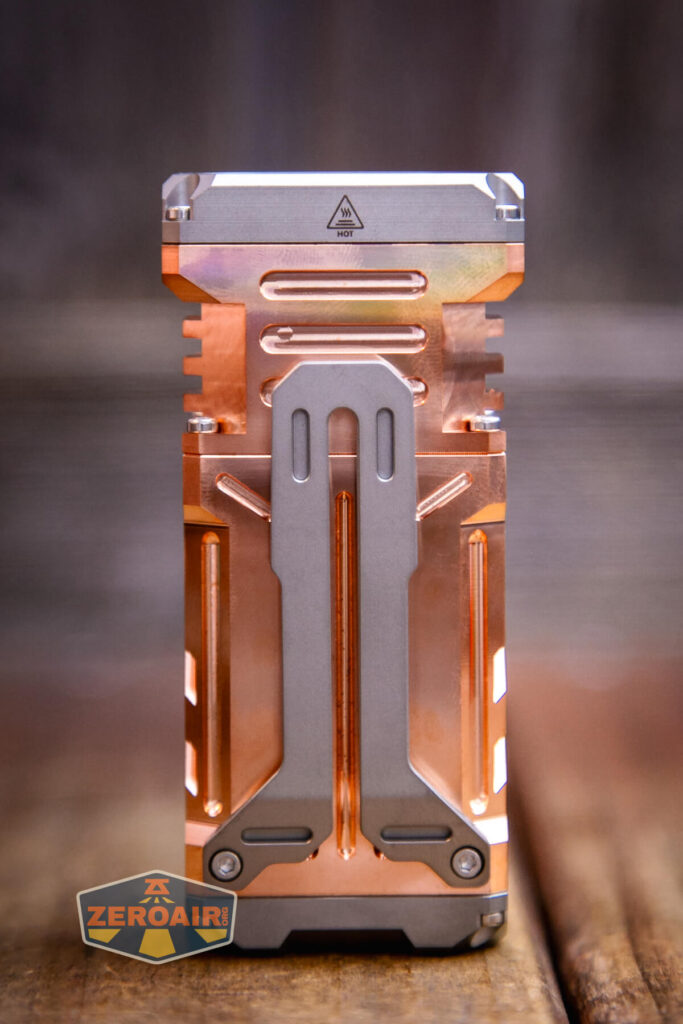
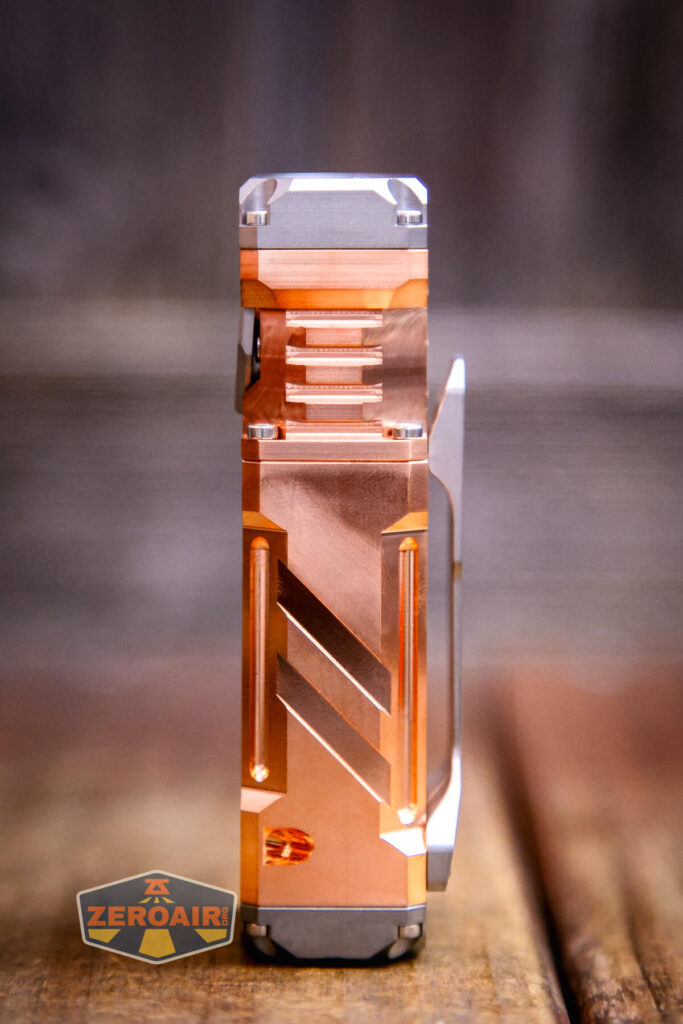
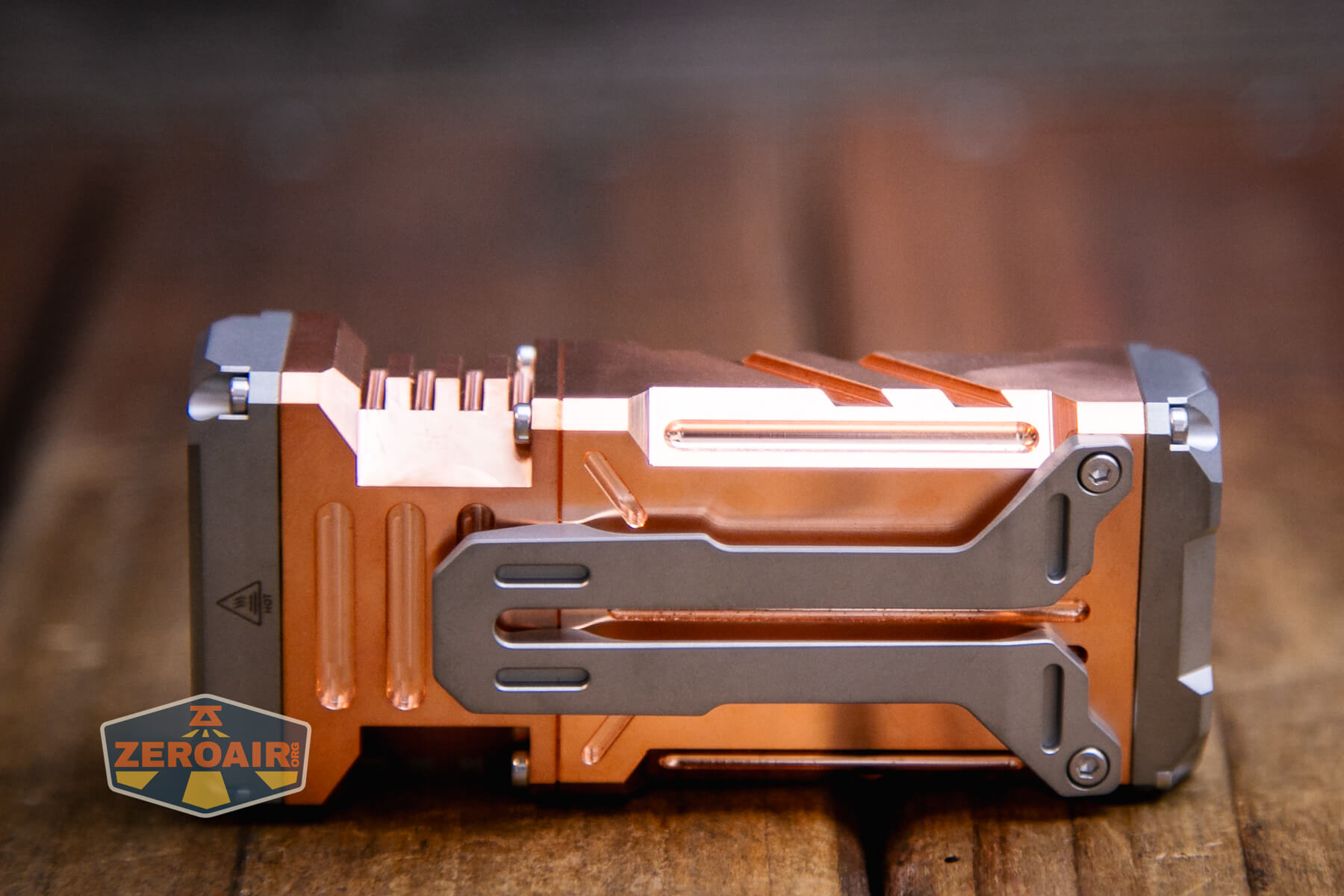
The copper finish (or “lack of finish”) here is extraordinary – it’s very much like a brand new shiny penny! The copper version is also quite weighty. This version does ship in a sealed package but to be honest, in the grooves on the body and places like that, some very minimal aging had already begun to occur.
I gotta tell you… the edges on this light are basically unfinished. Or “unrounded” or whatever word you might use that helps convey that these edges (particularly on those three grooves that run up the center) are sharp. I wouldn’t say they’re sharp in the way where you might end up with a cut but… They’re sharp. I didn’t compare but don’t recall any other version being this way, so I have to surmise that it’s intentional. It’ll wear down with usage, I’m sure but just on first blush this is not my favorite feature of the Wuben X-2 Copper flashlight.
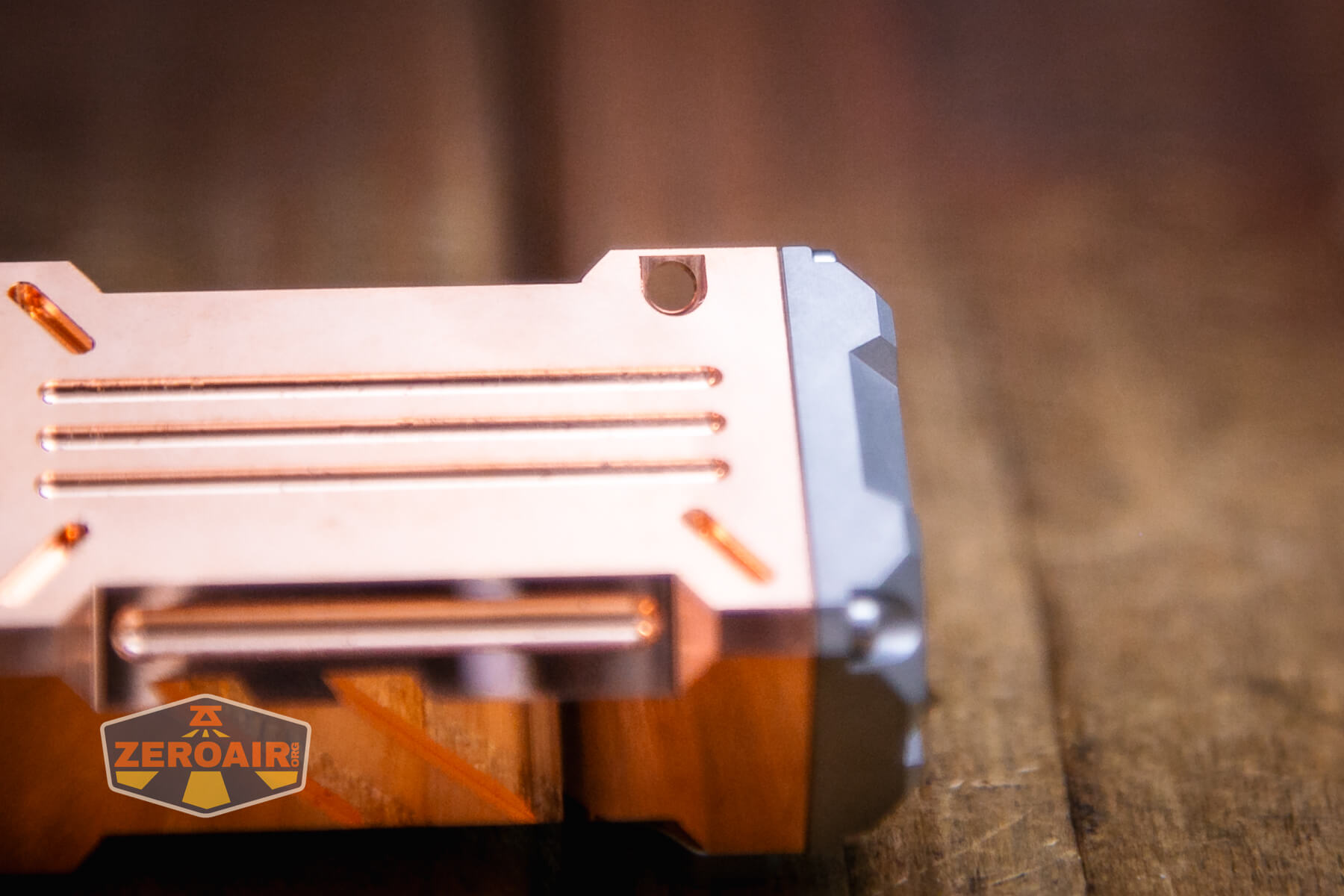
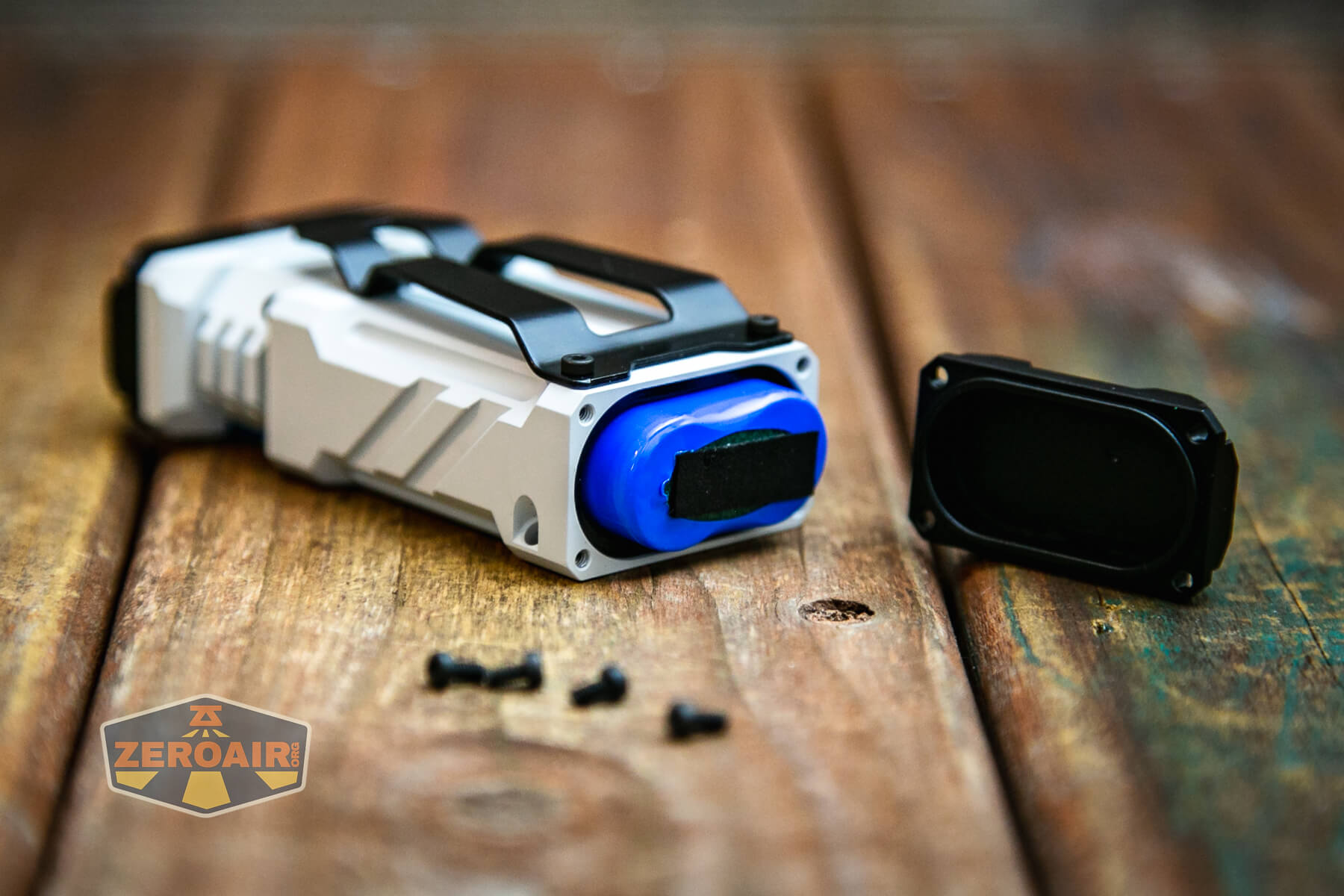
Wuben seems adamant that the X-2 should not be disassembled.

I’d say based on having removed these four tailcap Torx screws, Wuben is properly right about these not being user serviceable. They are (probably) standard 14500 cells, but they seem to be connected on the front end by a wire (probably a J-type) and do not come out through the tailcap direction. Batteries like this are usually in series, too, so this light probably runs at ~8V. Below is a photo from my previous run of X-2. I did not disassemble the copper version.

Size and Comps
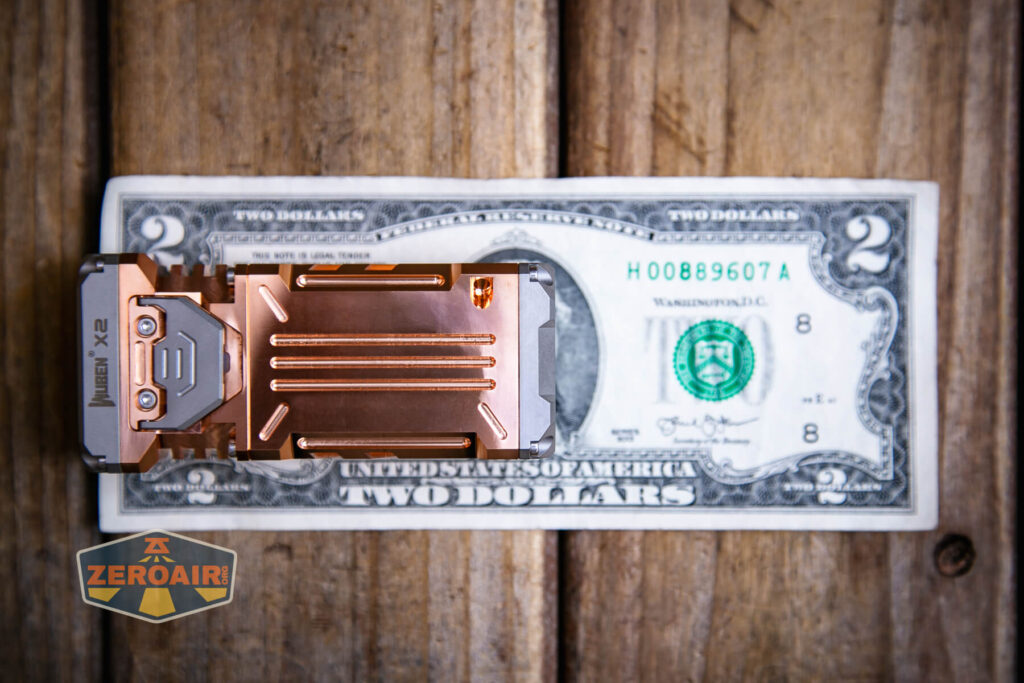
39mm wide
20mm thick
85mm long
25.3mm thick including the pocket clip. (my measurement)
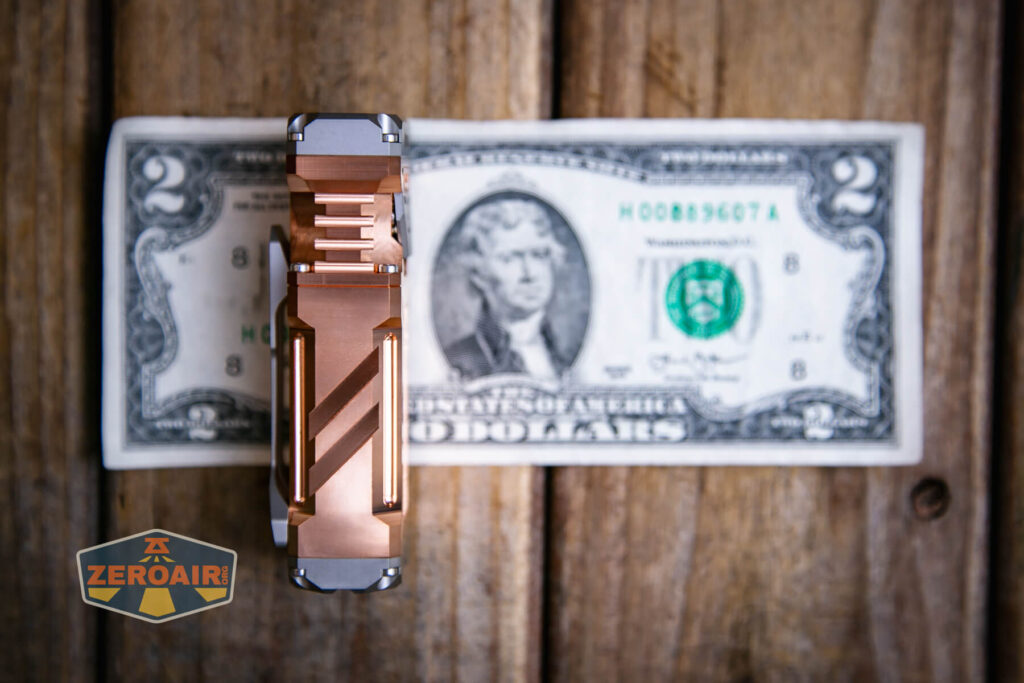
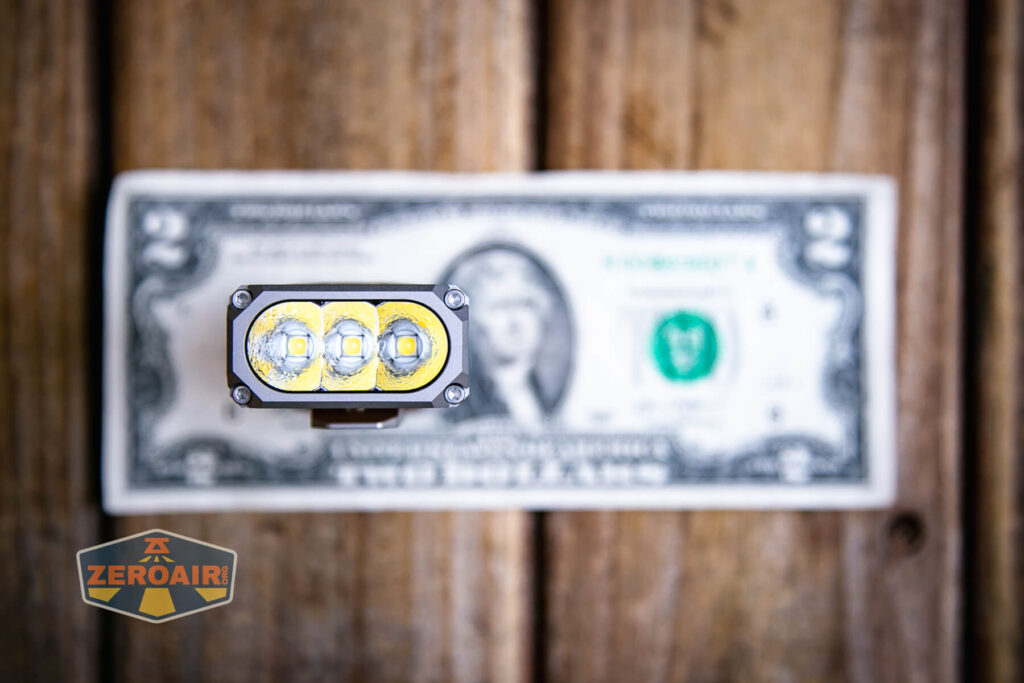

If the flashlight will headstand, I’ll show it here (usually the third photo). If the flashlight will tailstand, I’ll also show that (usually in the fourth photo).

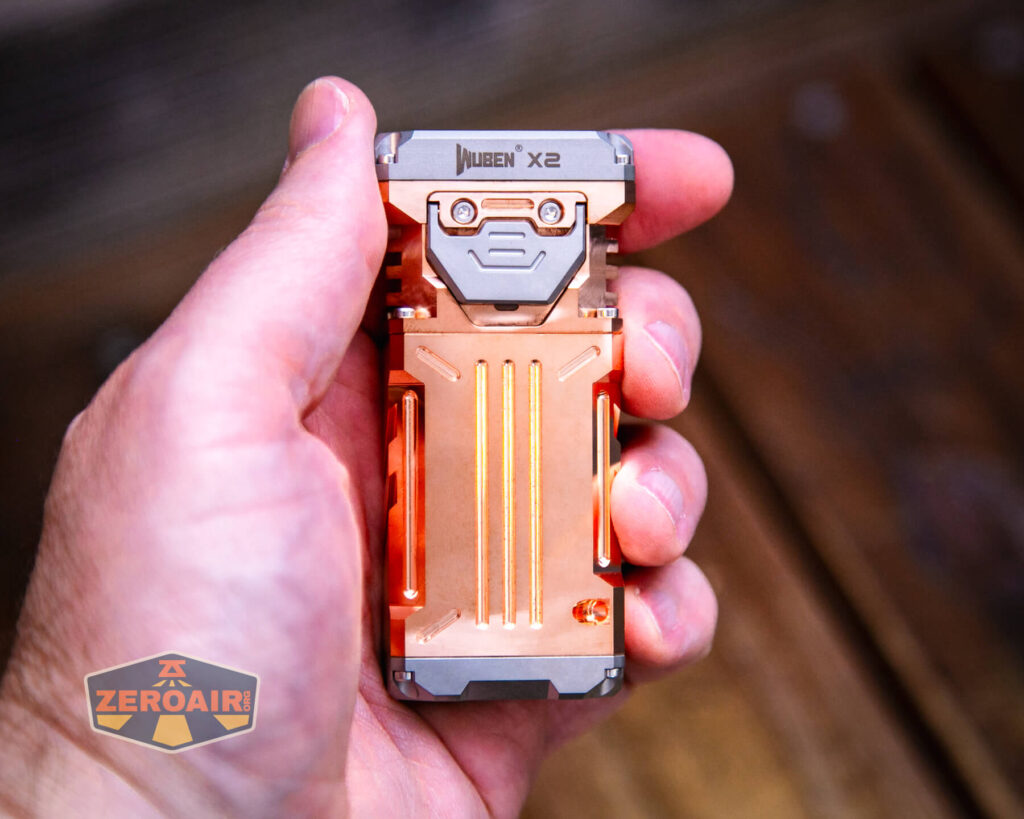


Here’s the test light with the venerable Convoy S2+. Mine’s a custom “baked” edition Nichia 219b triple. A very nice 18650 light.

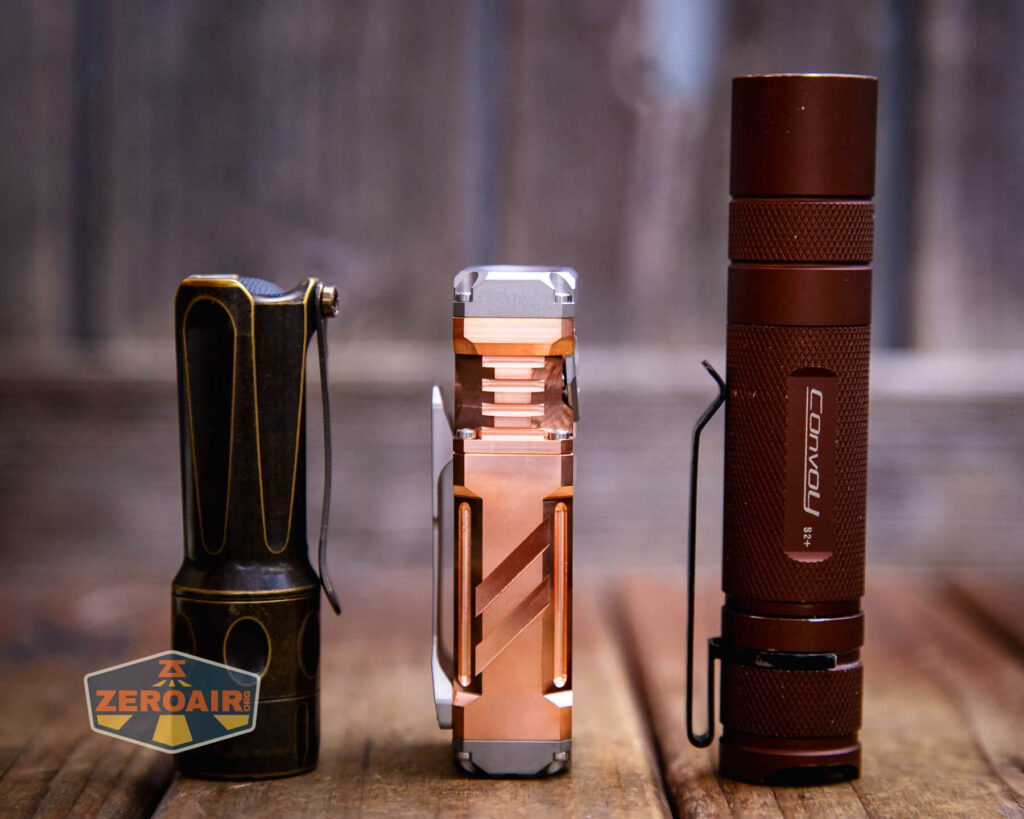

Also above is the light beside my custom-engraved TorchLAB BOSS 35, an 18350 light. I reviewed the aluminum version of that light in both 35 and 70 formats. I also reviewed that specific edition, the “Oveready BOSS FT Collector Vintage Brass” 35. I love it!
Retention and Carry
In my review of the aluminum version, I noted “Wuben says they’ve updated the pocket clip to be more reliable. The clip is quite big, but provides great coverage and will work wonderfully on a belt.” All of that is still true, except I think what we see here is the updated clip. This is a milled clip, whereas the first edition has just a bent steel clip. The new clip does feel more rigid, but honestly either clip seems fine to me.
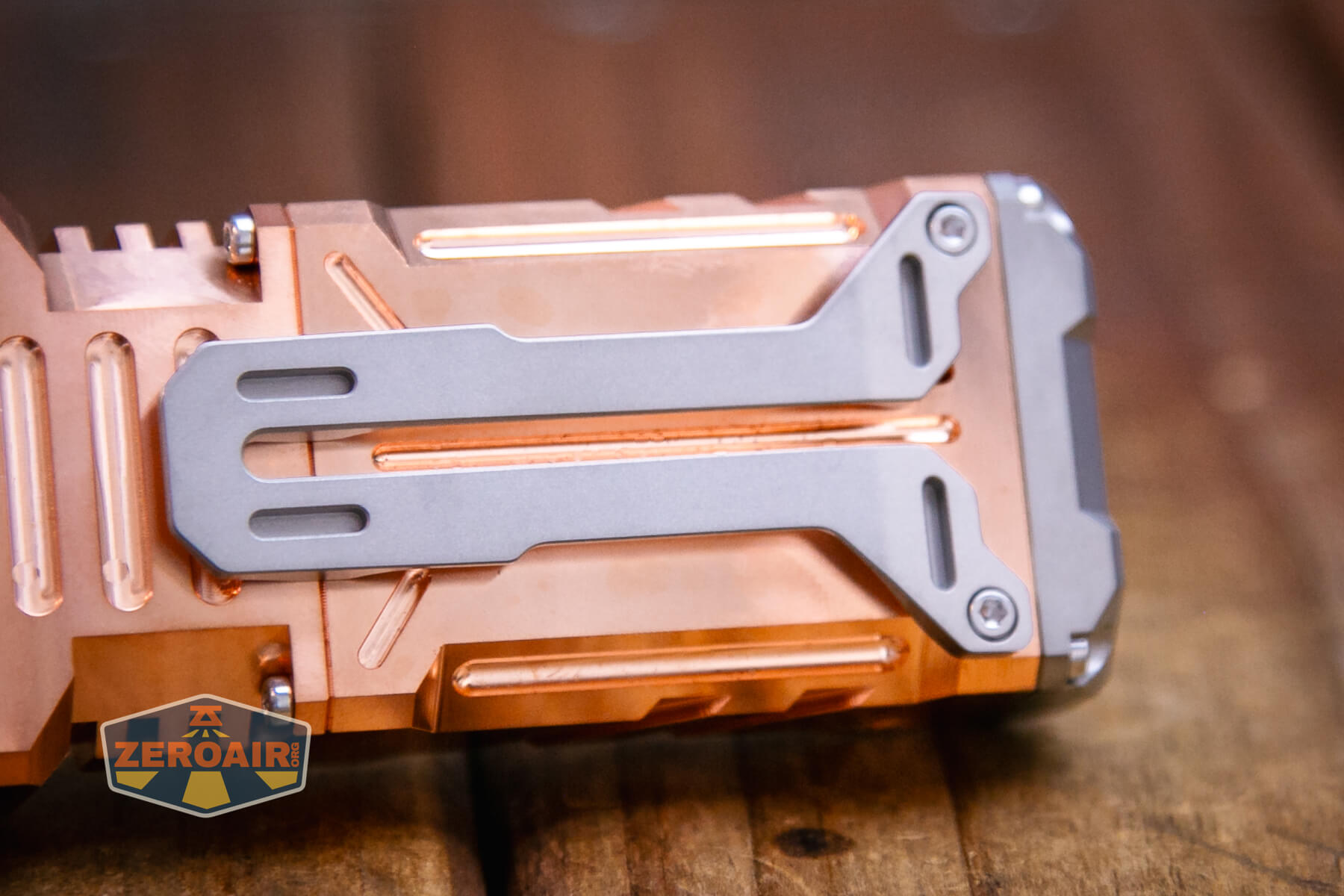
It can be removed easily with just two screws. Unlike the first version, this one seems to have tritium slots (4)!


Wuben also includes a lanyard, which can be attached on the pocket clip or through the hole in the body seen below.
This lanyard is updated, too. The soft band has a metric ruler built in! This is the kind of detail I love, and I love it in this instance, too.
Power and Runtime
As stated above, the Wuben X-2 Copper flashlight runs two 14500 cells. Again, Wuben is adamant that these shouldn’t be messed with by the user. And in any case, they aren’t cells you’ll swap in the field – the light will require recharging via USB-C.
Runtimes look pretty good – all but the highest output is quite steady for the duration. If you flipped back to the titanium X-2 review, you’d note the consistency among these tests!


Charging
Charging on the Wuben X-2 Copper flashlight is by way of a USB-C charging port on the head. This charging port has an interesting flap cover much like the switch that was seen on the Wuben X-0. This cover also serves to actuate the e-switch.
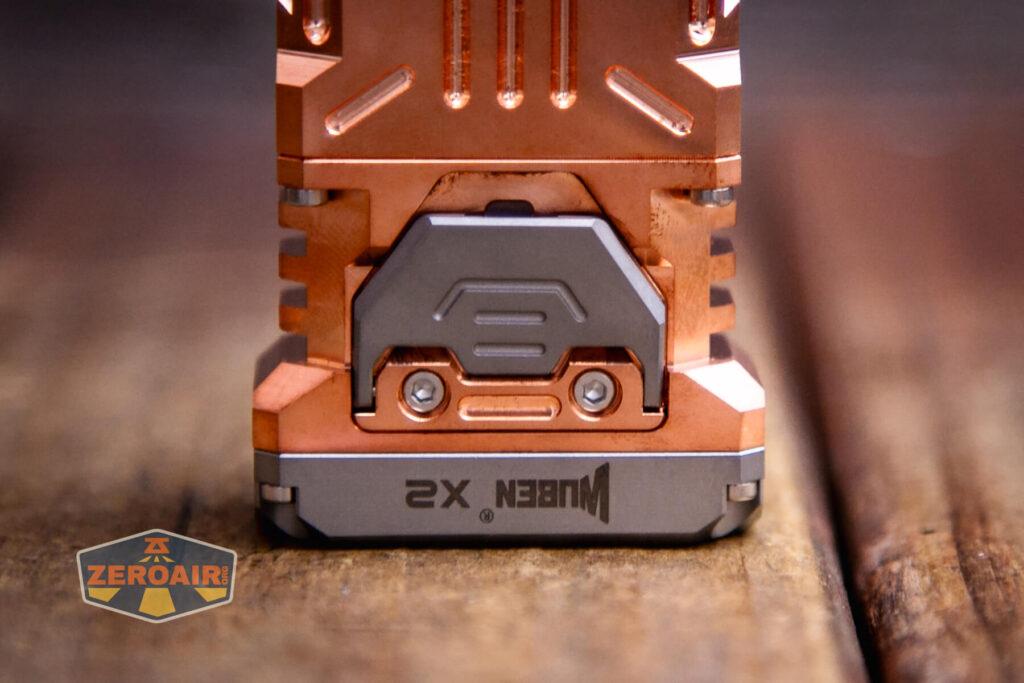

Here’s the trick the lanyard was hiding. The lanyard is actually a charge cable!! It’s a nice touch, and supports you always carrying the light on the lanyard. If you do that, then you’ll always have a USB to USB-C charging cable handy!

When charging, there’s an indicator below the switch that shows as red. When charging is completed, this indicator turns blue.
Charging via USB-C also works fine, and the profile is about the same as USB-A charging. Time required is also around 2.25 hours.

Charging via USB-A proceeds at around 1A and requires around 2.25 hours.

Modes and Currents
| Mode | Mode Claimed Output (lm) | Claimed Runtime | Measured Lumens |
|---|---|---|---|
| Turbo | 1800+800 | 1m+1h | 1554 |
| High | 400 | 2.5h | 289 |
| Medium | 100 | 10h | 72 |
| Low | 5 | 80h | 4.4 |
Pulse Width Modulation
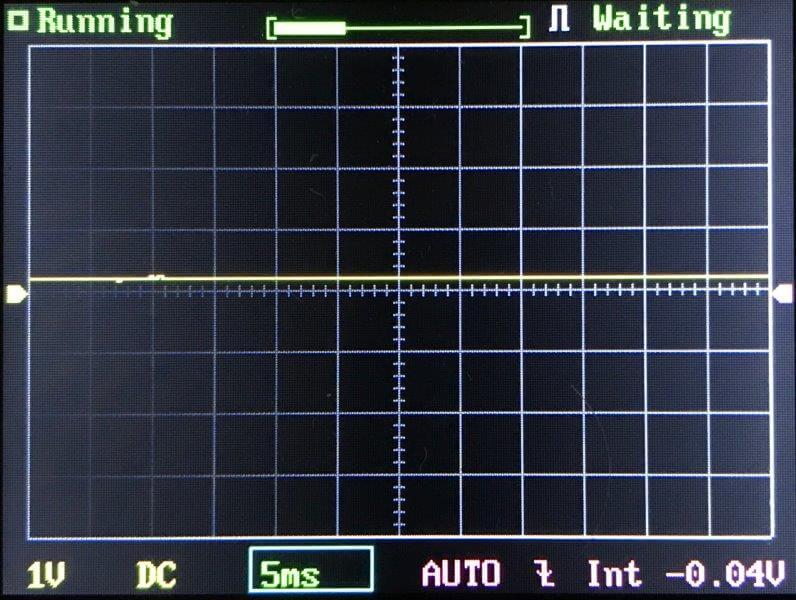
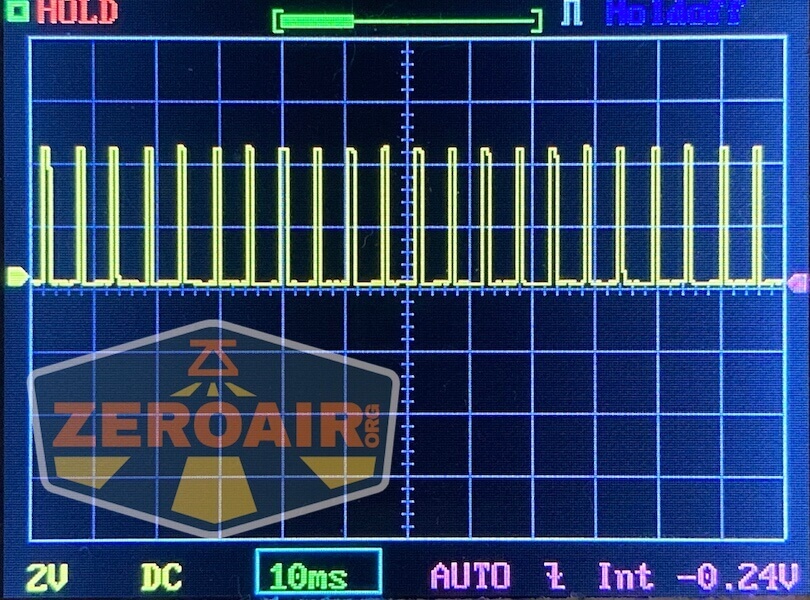
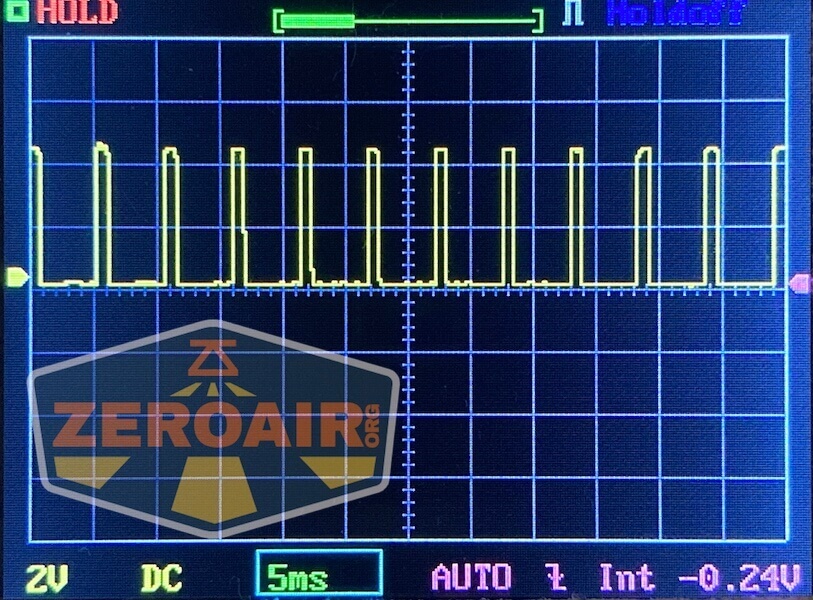
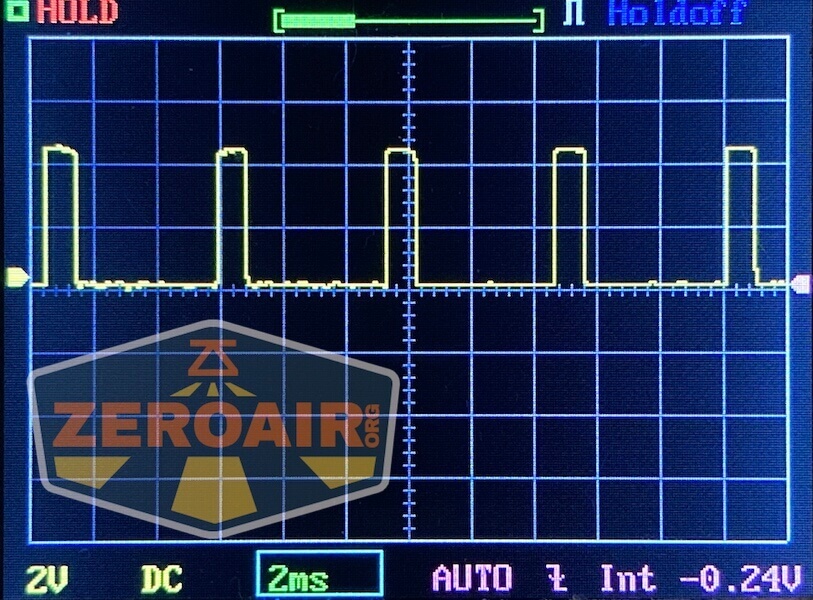
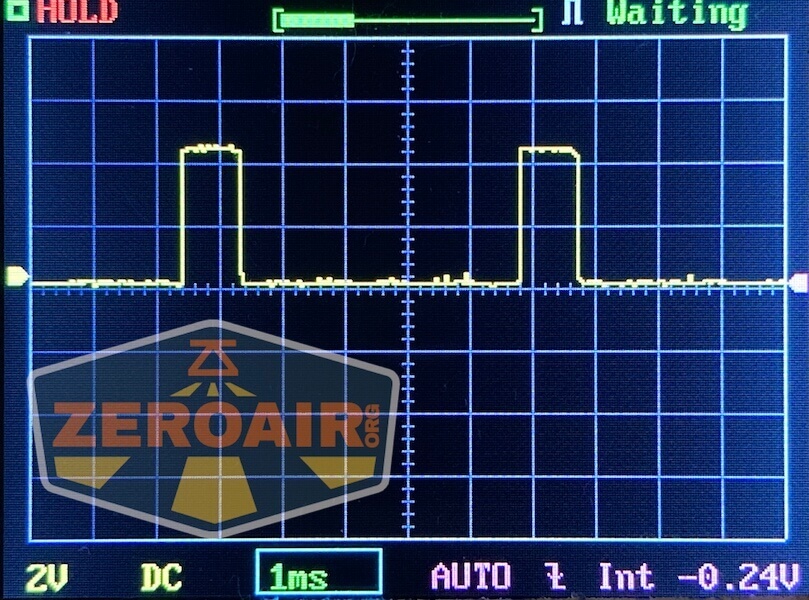
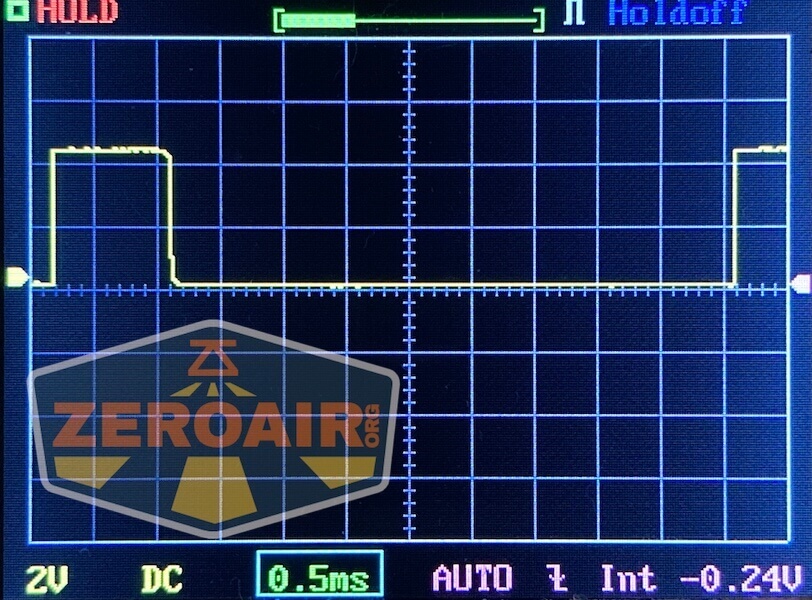
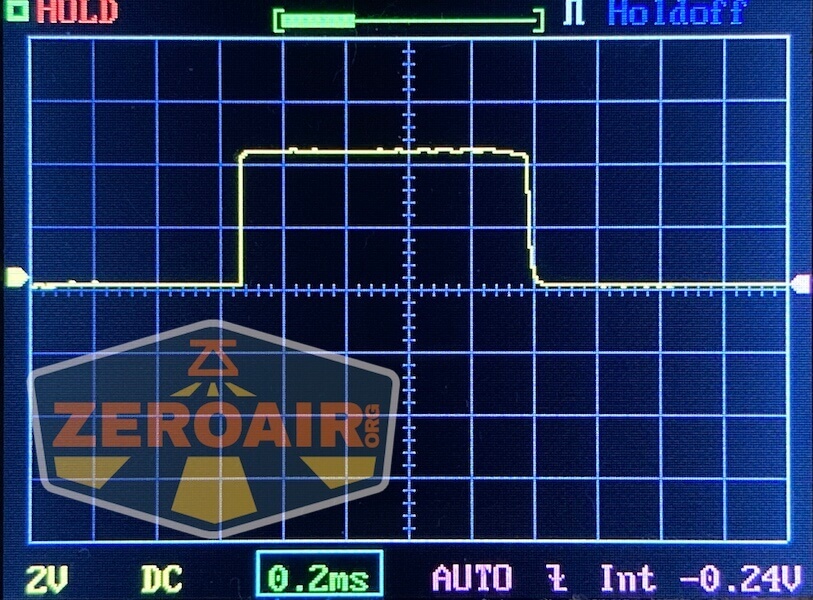
There’s some ripple on the lower modes, but nothing you’ll notice (and not PWM).
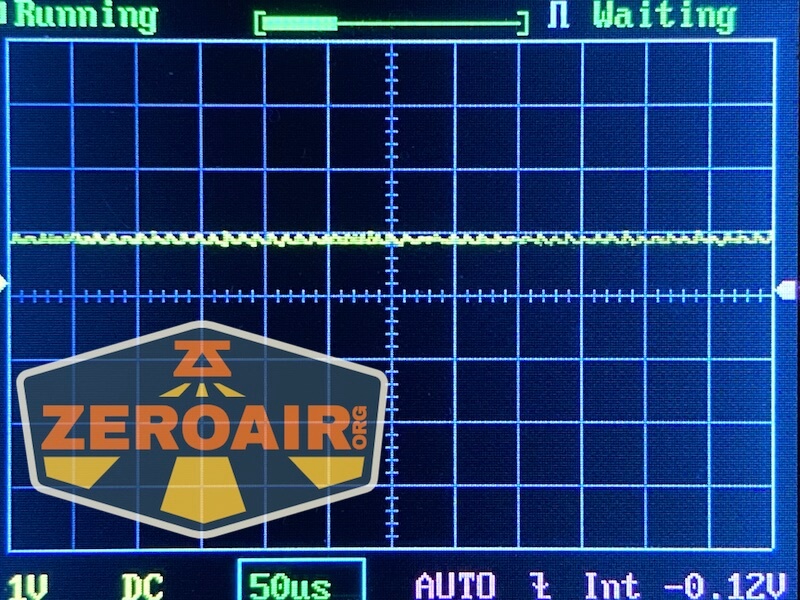
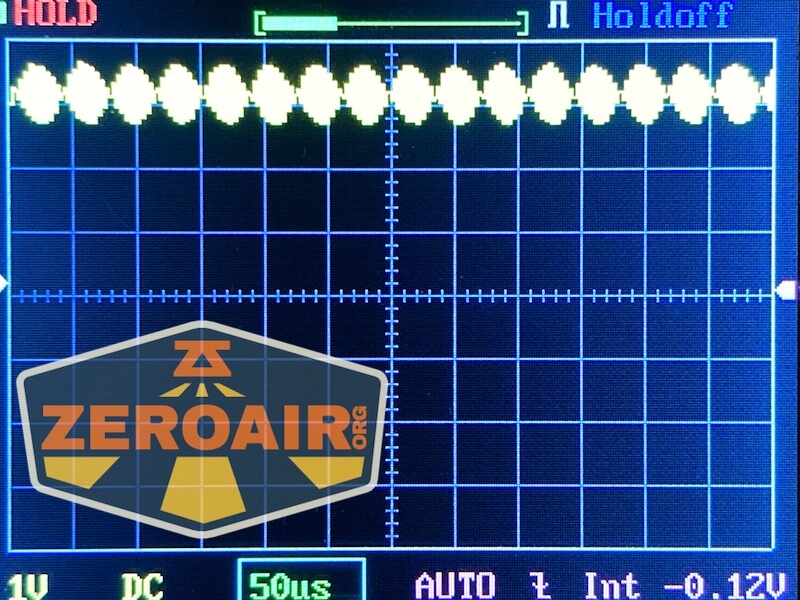


Here you can see a “baseline” – a chart with almost no light hitting the sensor. Then there’s the Ultrafire WF-602C flashlight, which has some of the worst PWM I’ve seen. It’s so bad that I used a post about it to explain PWM! Here are multiple timescales (10ms, 5ms, 2ms, 1ms, 0.5ms, 0.2ms) to make comparing this “worst” PWM light to the test light easier. That post also explains why I didn’t test the WF-602C at the usual 50us scale.
User Interface and Operation
The switch and the user interface are both as seen on the Wuben X-0. The switch itself is a soft-cover e-switch. But over that switch is the blue anodized lever-style switch. This metal part also serves as a charging port cover.


The switch and the user interface are both as seen on the Wuben X-0. The switch itself is a soft-cover e-switch. But over that switch is the blue anodized lever-style switch. This metal part also serves as a charging port cover.

There are two buttons for this metal cover to rest against. On the X-0, they appear to be brass, but here they seem stainless steel. When the cover goes from “up” (all the way up) to down, there’s a very pleasant ‘thonk’ that I can’t even describe. The cover has no bounce at all, and because of this thonk, could be described adequately as a fidget toy, too. Turns out that those two brass buttons are springy, and “catch” the cover when it lands. It’s exceptionally pleasant.
It’s possible to use the e-switch without the levered part. That switch is fairly tiny and fairly hidden though.
As you can see, the switch cover is translucent. It doesn’t directly have indicating features (I think), but the indicator visible from the top of the light (not visible in the photo below because of the hinged cover) has indicating features that also light up the switch just a bit.
Here’s a user interface table!
| State | Action | Result |
|---|---|---|
| Off | Click | On (Mode Memory) and battery indicator from near-switch LED^ |
| On | Hold | Mode advance (Moon, Low, Med, High) |
| On | Double click | Turbo |
| On | Click | Off |
| Off | Hold | Eco (Or “Moon”, they call it both) |
| Off or Turbo | Double Click | Strobe |
| Strobe | Double Click | SOS |
| Strobe | Click | Return to previous state except Turbo, which resumes to Moon |
| Off | Click 4x | Lockout (indicated by three blinks from main emitter) |
| Lockout | Click | Lockout indication by LED indicator near switch |
| Lockout | Click 4x | Unlock to Moon |
| Any steady mode (excluding Turbo) | Click then Hold (two actions; it’s not just “hold” it’s: click first then hold) | Program output of selected mode^^ |
| Lockout | Click [wait], Double Click [wait], Triple Click | Resets light to default state. Light unlocks and turns on to Eco to confirm. |
^ Battery indication is as follows (from the near-switch LED)
<
p style=”padding-left: 40px;” data-slot-rendered-content=”true”>Blue steady: ≥90% power
Blue flashing: 90% to ≥40% power
Red steady: 40% to ≥15% power
Red flashing: 15% to ≥ 0% power
^^ In programming mode, the output ramps up to the maximum possible for that level and blinks then begins ramping down to the lowest output possible for that mode and again blinks. When you release the switch, that mode is programmed to that output level.
LED and Beam
There are two options, but my version of the Wuben X-2 Copper flashlight has Samsung LH351d emitters. That’s great because they’re 5000K. I believe the other (Osram P9) are much cooler than 5000K.
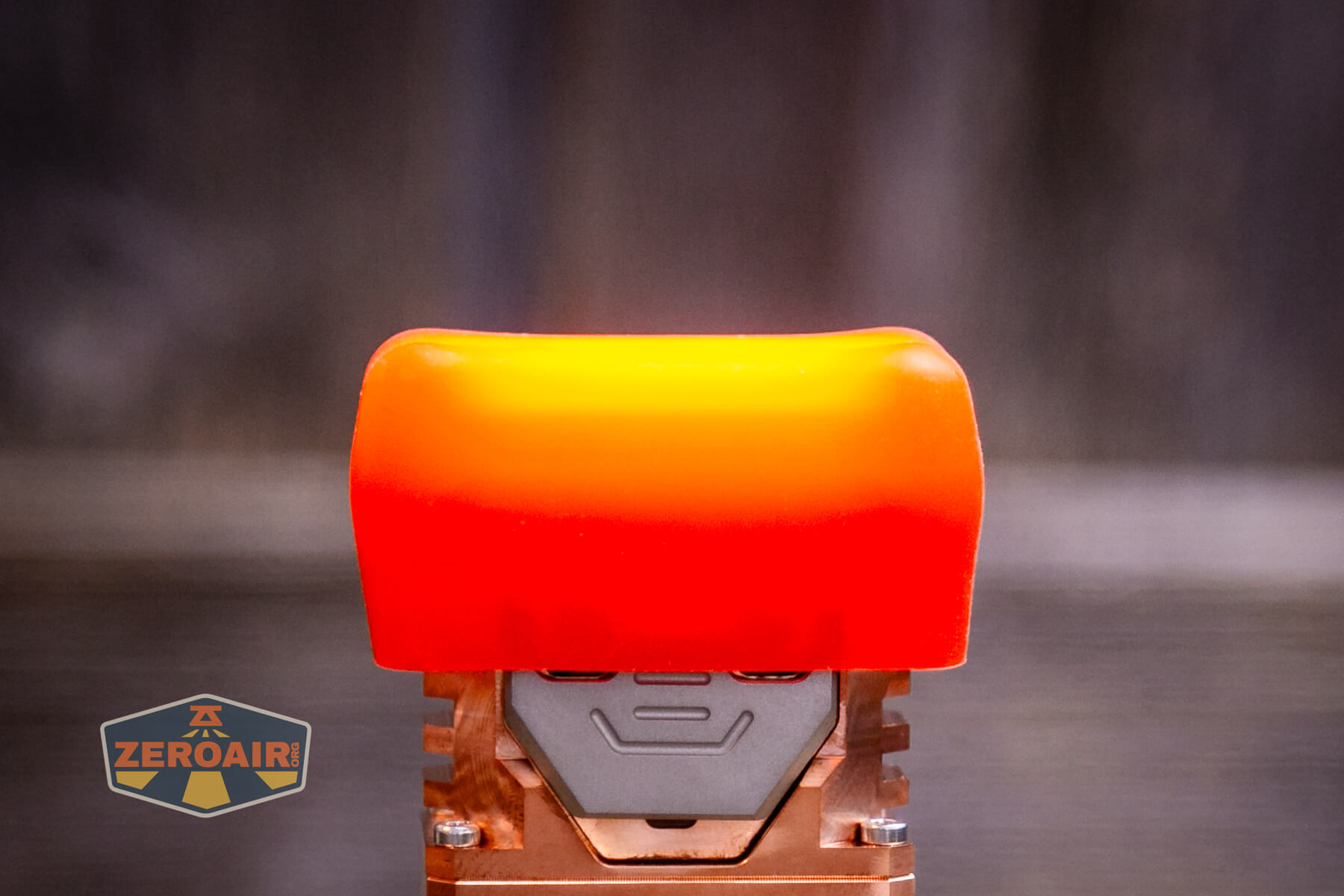
This is a “triple” but the emitters are side by side in a line. They each have a small orange peel reflector.

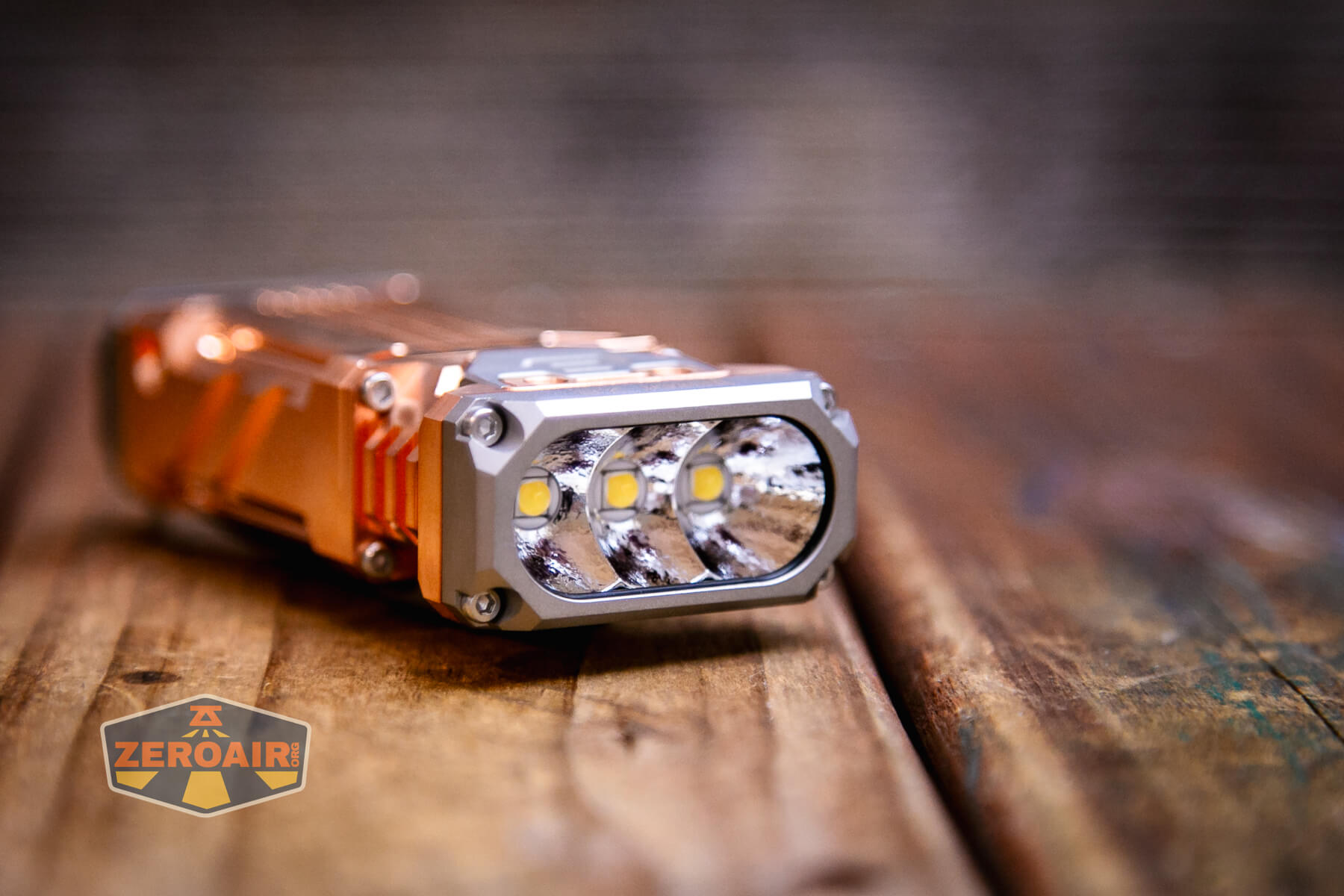

This little diffuser is included, and fits pretty nicely. It’s red.
LED Color Report (CRI and CCT)
Both CCT and CRI are great – the claim of 5000K is accurate and the light is also High CRI.


Beamshots
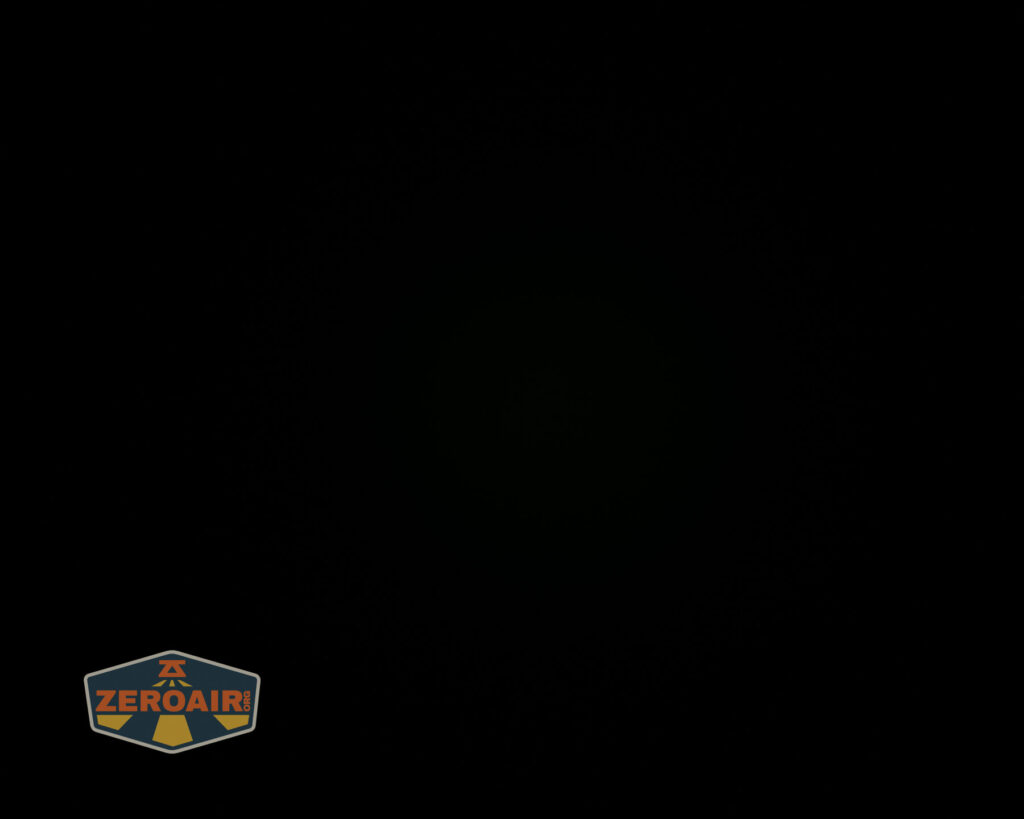
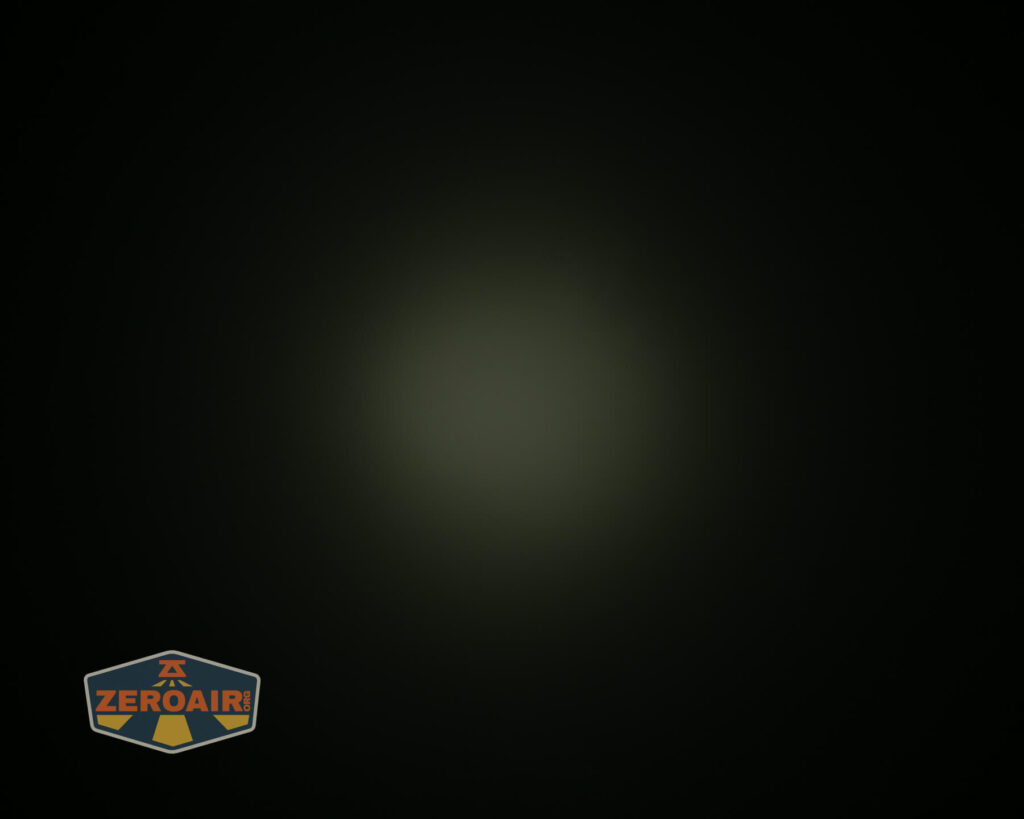
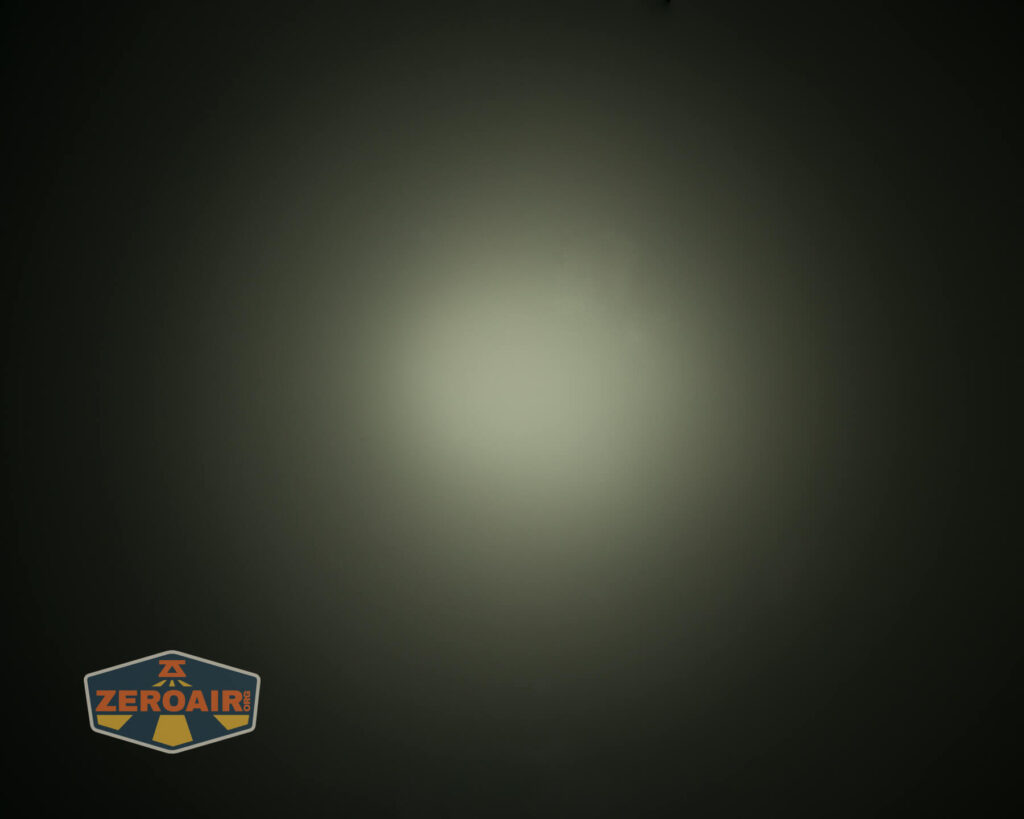
These beamshots always have the following settings: f8, ISO100, 0.3s shutter, and manual 5000K exposure. These photos are taken at floor level, and the beam hits the ceiling around 9 feet away.

Tint vs BLF-348 (KillzoneFlashlights.com 219b version) (affiliate link)
I keep the test flashlight on the left and the BLF-348 reference flashlight on the right.
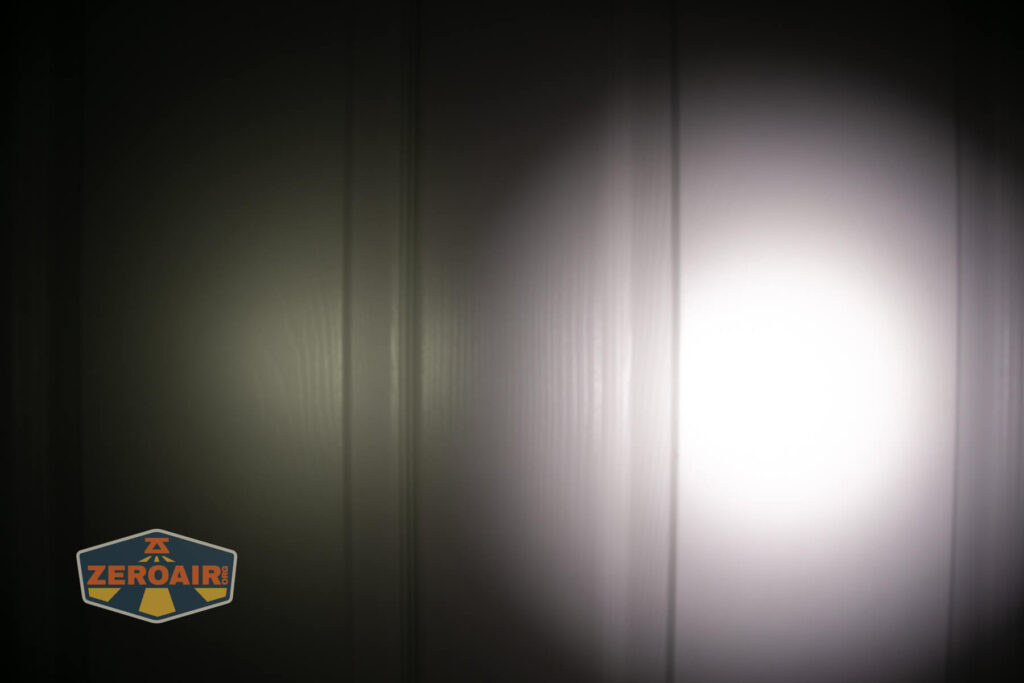
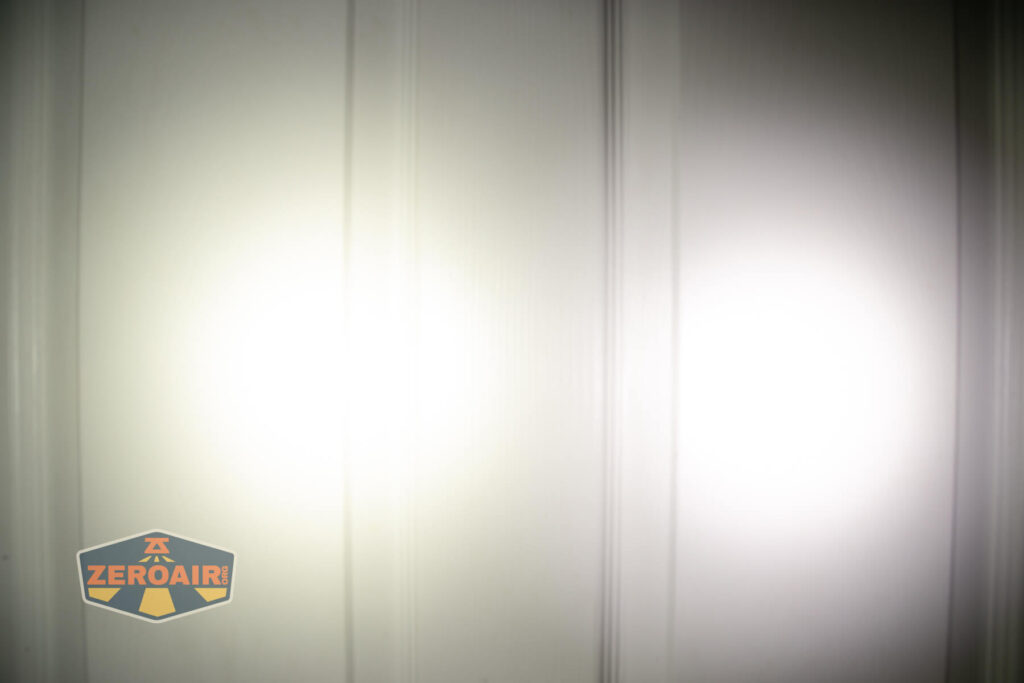


I compare everything to the KillzoneFlashlights.com 219b BLF-348 because it’s inexpensive and has the best tint!
Conclusion
What I like
- Nice small size
- C to C charging works
- Indicating switch
- “Programmable” levels
- Neat color options
- Offered in 5000K/High CRI
- Copper! I don’t always love carrying copper but this heavy copper version feels unusually reassuring.
What I don’t like
- Batteries are not accessible
- Cells are actually wrapped (and probably in series – it’s a “battery pack” not “two 14500 cells”)
- Edges on most of the interior (not corner) cuts are quite sharp
Notes
- This content originally appeared at zeroair.org. Please visit there for the best experience!
- Please use my Amazon.com referral link to help support zeroair.org!
- Please support me on Patreon! I deeply appreciate your support!
Discover more from ZeroAir Reviews
Subscribe to get the latest posts sent to your email.