

Mateminco SL02 Titanium EDC Flashlight Review
The Mateminco SL02 Titanium EDC flashlight offers a single emitter with RGB, a shallow TIR, and USB-C charging. The switch area has RGB, too! Read on for more.
Official Specs and Features
Here’s a link to the Mateminco SL02 Titanium EDC flashlight product page.
Versions
There are a couple of “special” versions – titanium (seen here) and copper. Also available are a few colors of the SL02 in aluminum. The SL02 is apparently available with a short tube (for 18350), too!
Price
The Mateminco SL02 Titanium EDC flashlight sells for $65.99 (or $69.99 with the battery seen in this post.) Copper is a bit less and aluminum is even less.
Short Review
I love the design of this light. It’s very smooth and can even be slippery in hand (but that doesn’t bother me). The head and tail RGB are nice additions. Aside from the light looking nice, the performance is really not up to par. Output is low, the throw is low, and even the charging doesn’t seem to work right (stops charging at 3.9V!). And there’s no low voltage protection at all. It could be that I got unlucky with the unit I received, but I have no way to know – I didn’t receive a response from the sender.
Long Review
The Big Table
| Mateminco SL02 Titanium EDC flashlight | |
|---|---|
| Emitter: | Lumileds HL2X |
| Price in USD at publication time: | $69.99 |
| Cell: | 1×18650 |
| Runtime Graphs | |
| LVP? | No |
| Switch Type: | Mechanical |
| On-Board Charging? | Yes |
| Charge Port Type: | USB-C |
| Charge Graph | |
| Power off Charge Port | No |
| Claimed Lumens (lm) | 1287 |
| Measured Lumens (at 30s) | 600 (46.6% of claim)^ |
| Candela per Lumen | 9.39 |
| Claimed Throw (m) | 451 |
| Candela (Calculated) in cd (at 30s) | 222lux @ 5.749m = 7337cd |
| Throw (Calculated) (m) | 171.3 (38% of claim)^ |
| Claimed CCT | 6500 |
| Measured CCT Range (K) | 6000-6600 Kelvin |
| Item provided for review by: | FlashlightGo.com |
| All my Mateminco reviews! | |
^ Measurement disclaimer: Testing flashlights is my hobby. I use hobbyist-level equipment for testing, including some I made myself. Try not to get buried in the details of manufacturer specifications versus measurements recorded here; A certain amount of difference (say, 10 or 15%) is perfectly reasonable.
What’s Included
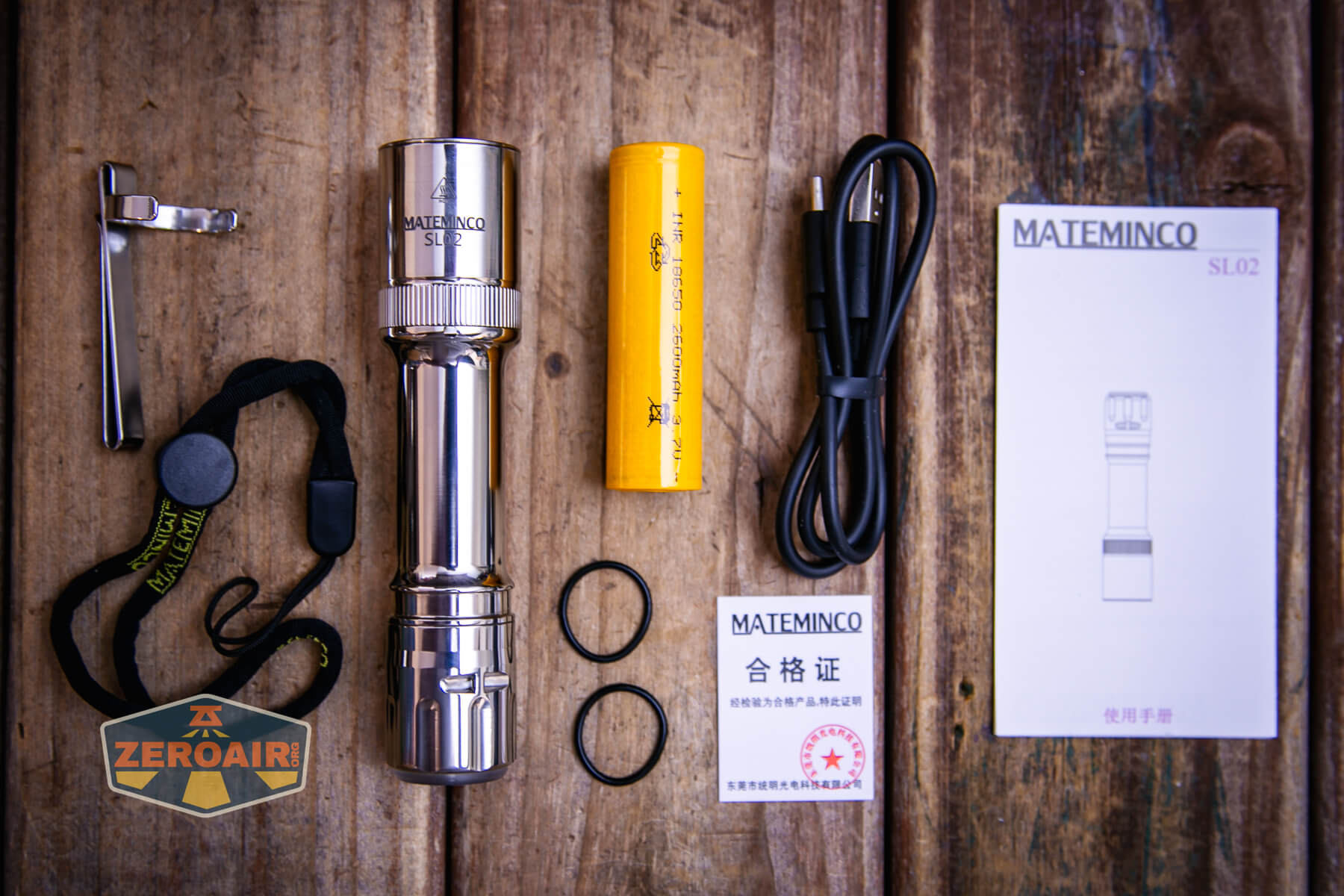
- Mateminco SL02 Titanium EDC flashlight
- Charging cable (USB to USB-C)
- 2600mAh 18650
- Pocket clip
- Lanyard
- Spare o-rings (2)
- Manual
Package and Manual
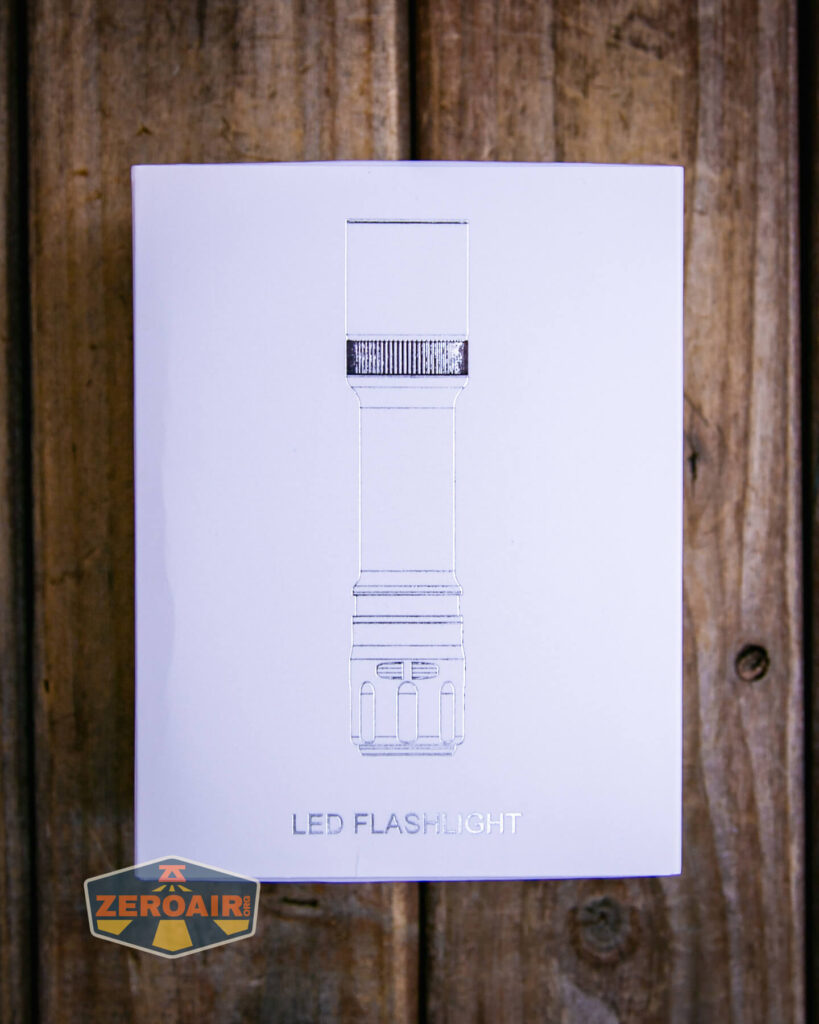
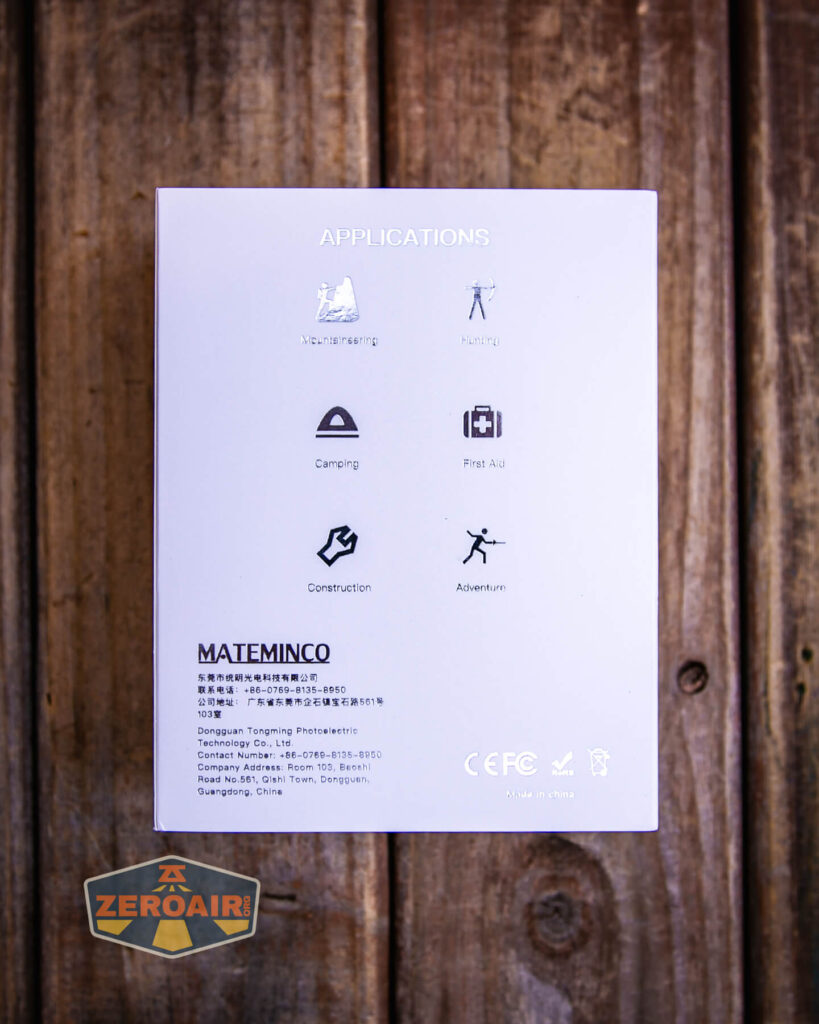


Build Quality and Disassembly

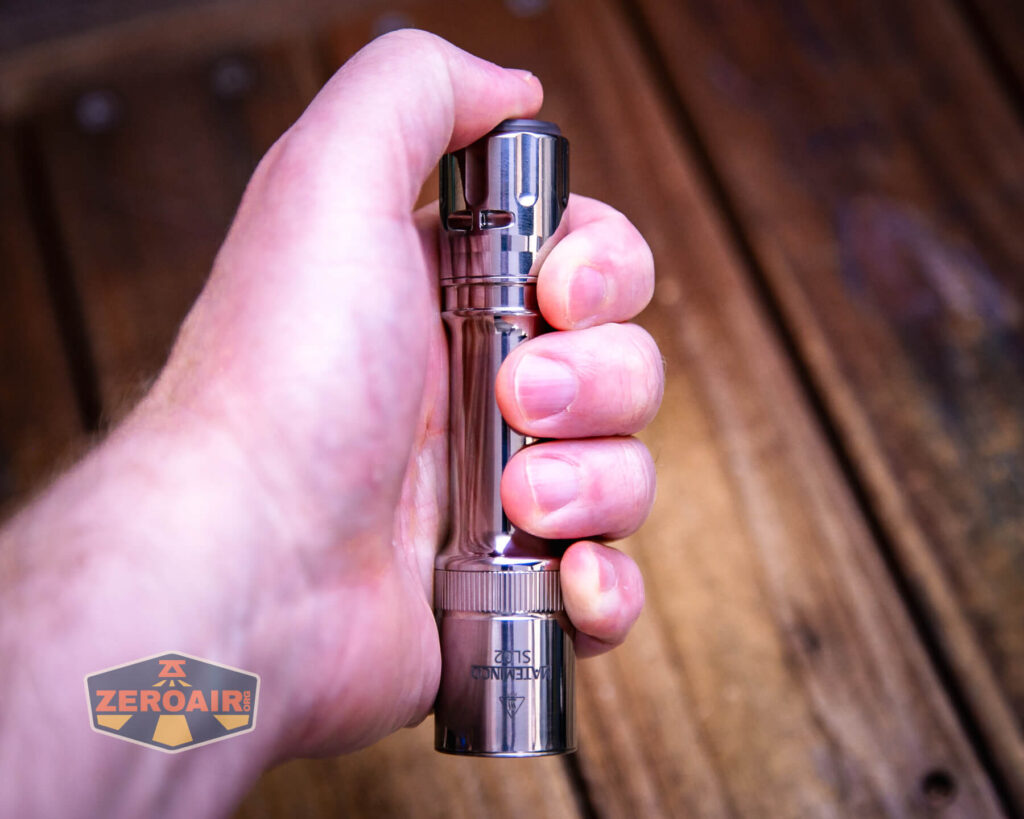
Again, the Mateminco SL02 Titanium EDC flashlight has a very sleek look. It’s great to hold and use, too – if you’re prepared for how slick it is. The polished titanium looks fantastic and is very nicely done.
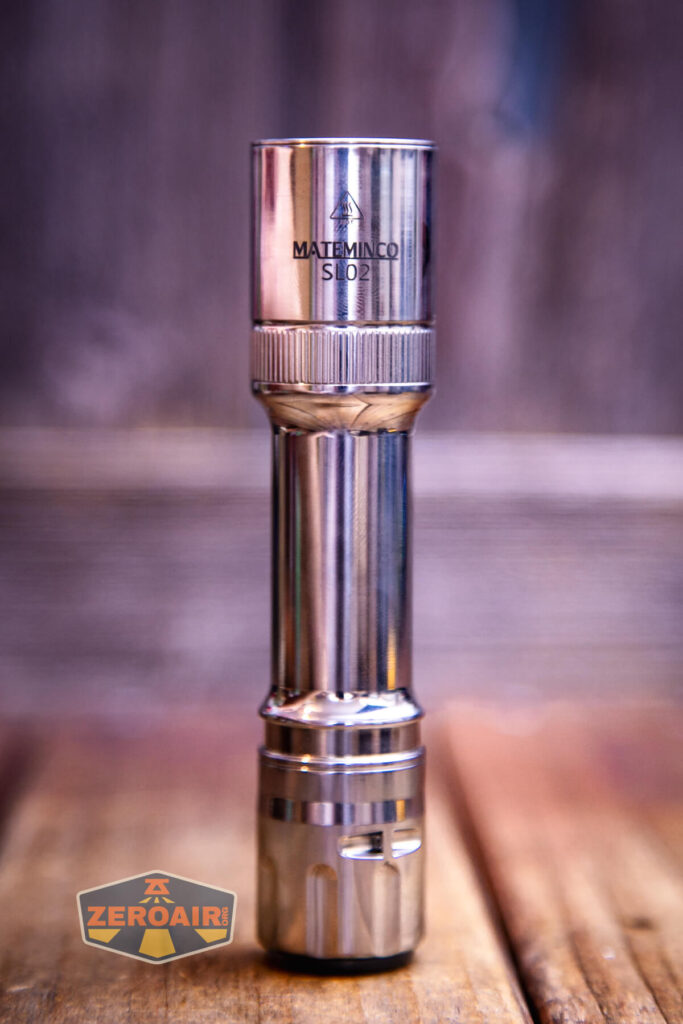
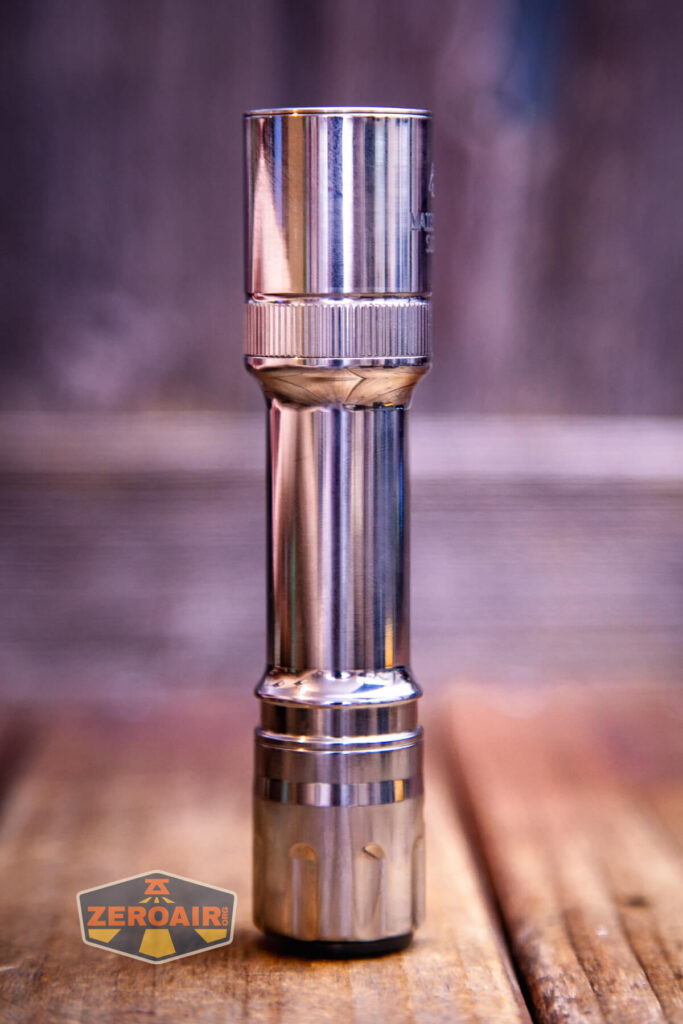
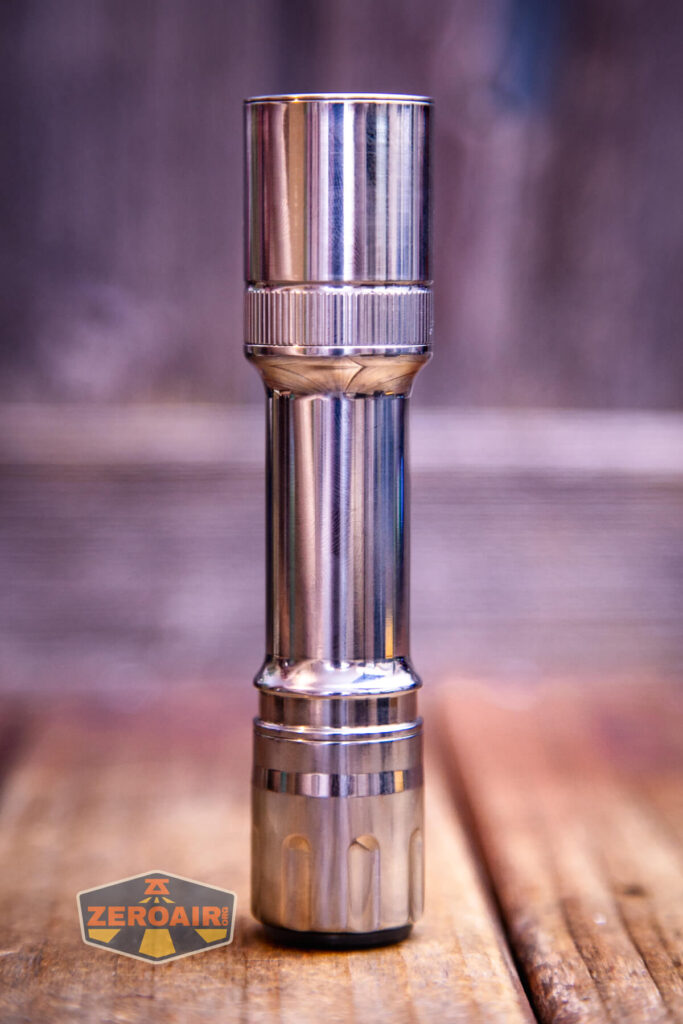

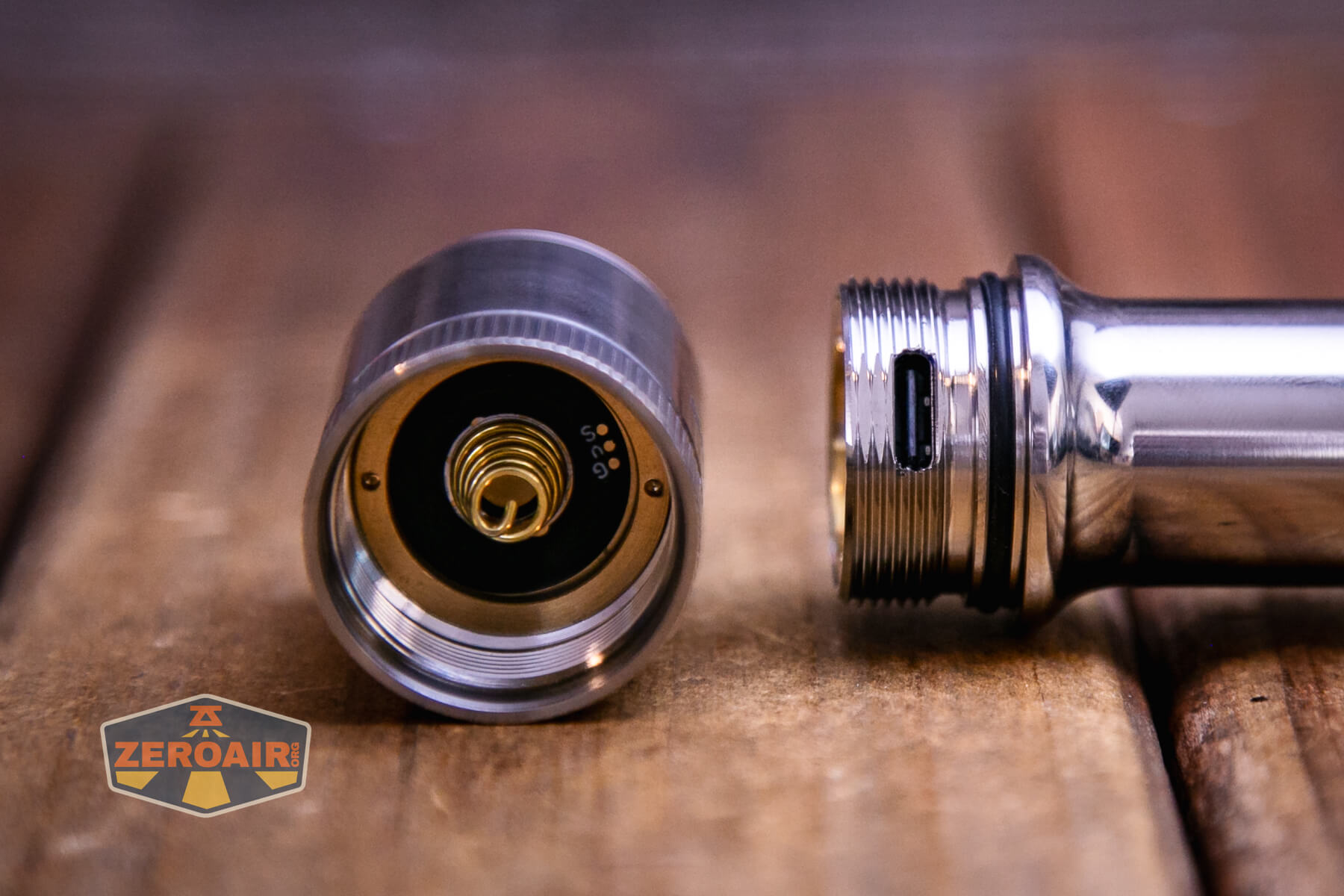
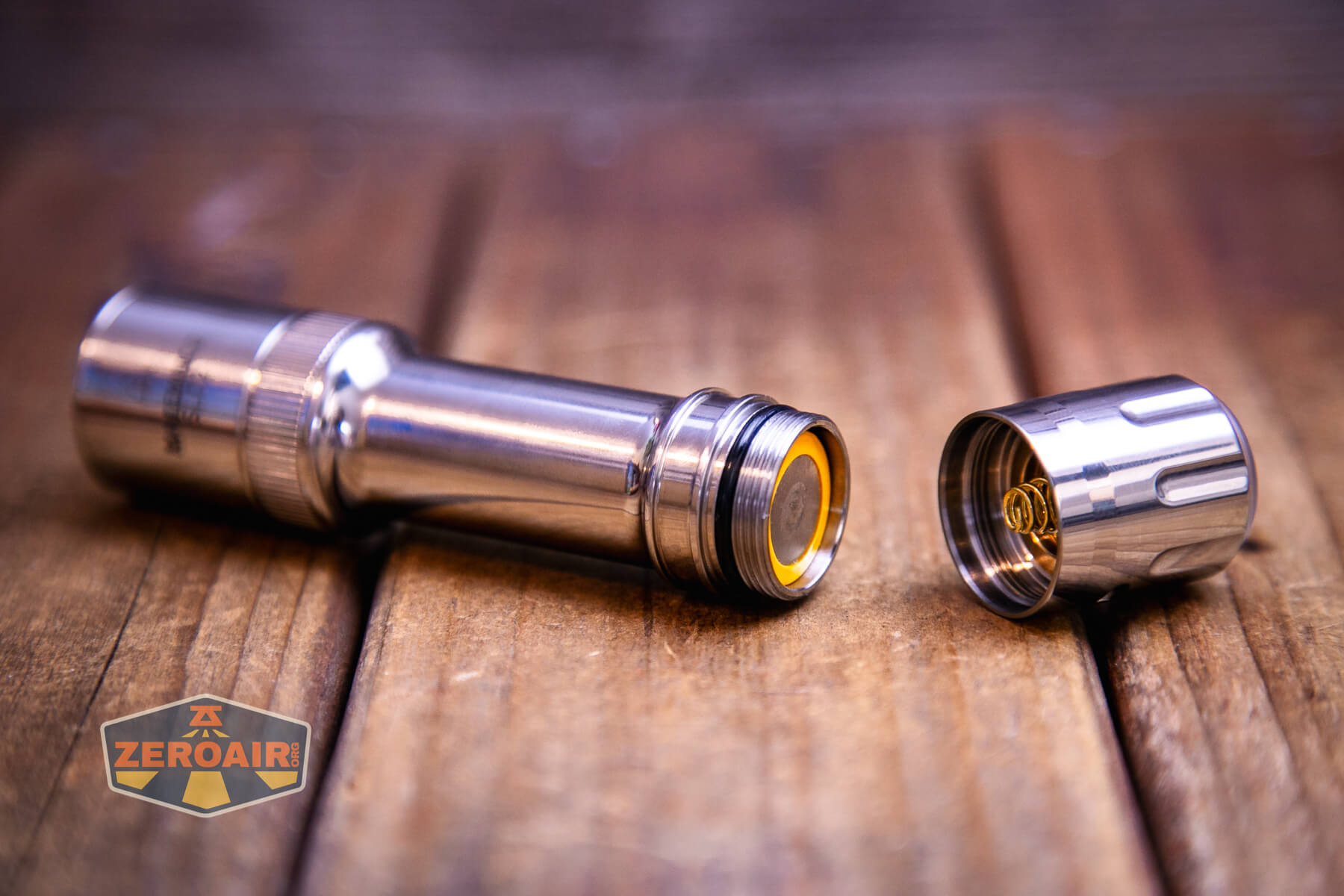
The tail does not have any real knurling for grip and the head does have some, but it’s not at all where I need it for removing the head. And you’ll have to remove the head, too, since that’s how you access the USB-C charging port.
Both the head and tail have a nice beefy spring. The threads are fairly smooth too, for titanium threads.

Size and Comps
Size: 117.7mm (length) x 26.8mm (head) x 25.8mm (tail)
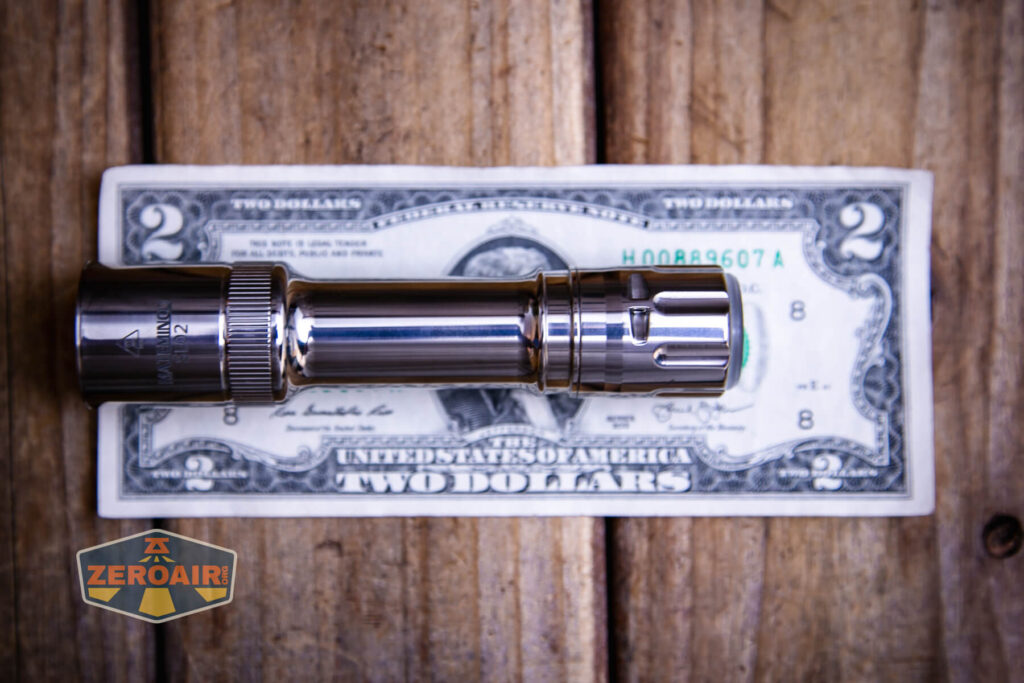
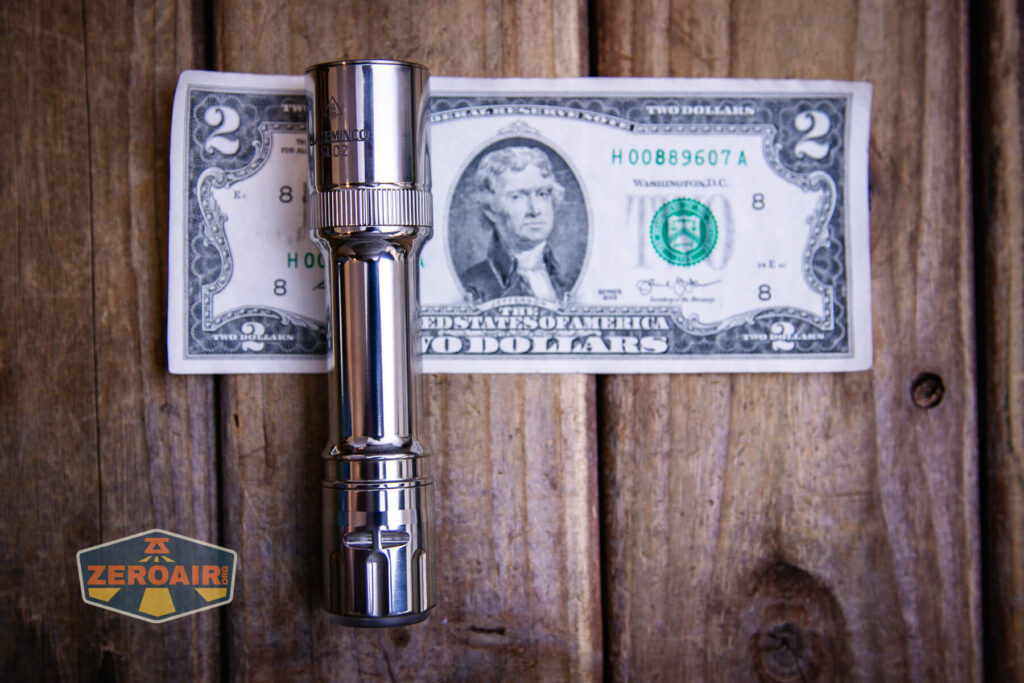
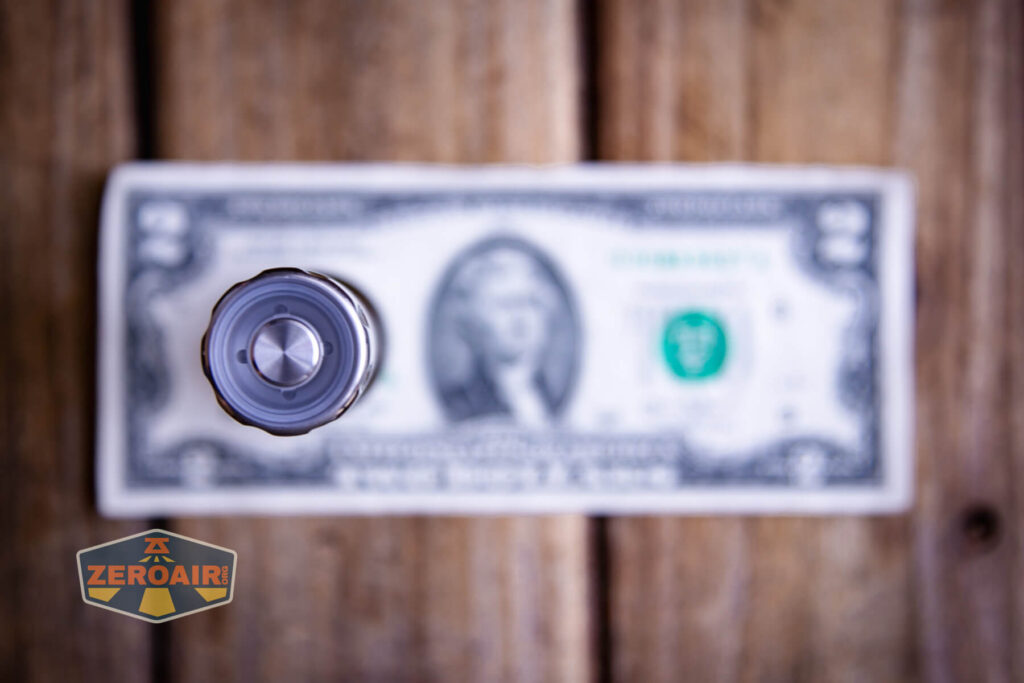
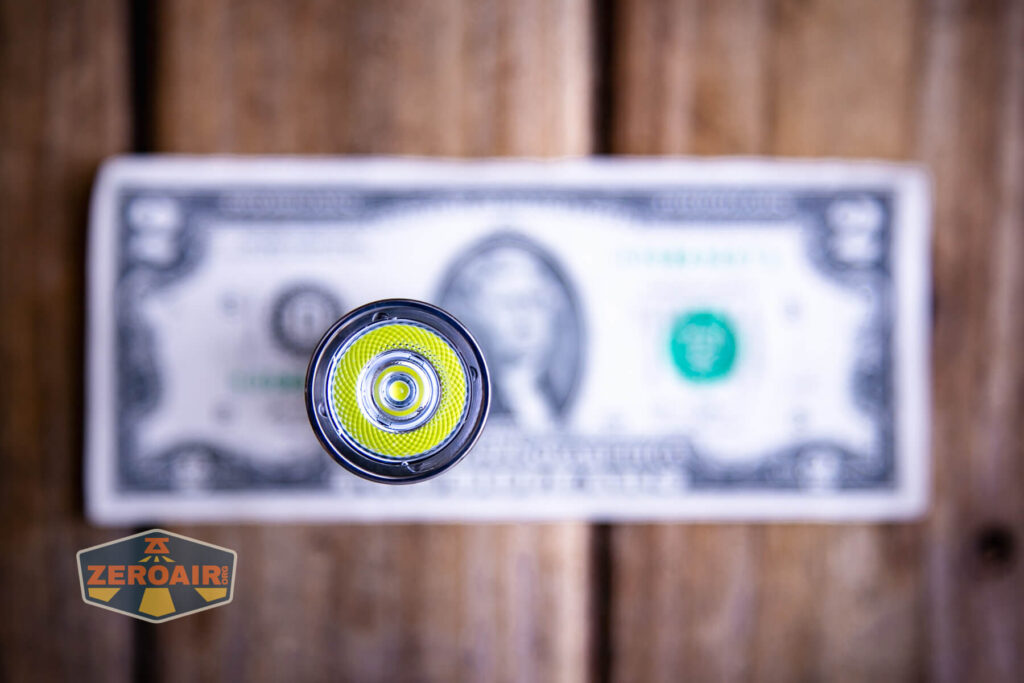
If the flashlight will headstand, I’ll show it here (usually the third photo). If the flashlight will tailstand, I’ll also show that (usually in the fourth photo).
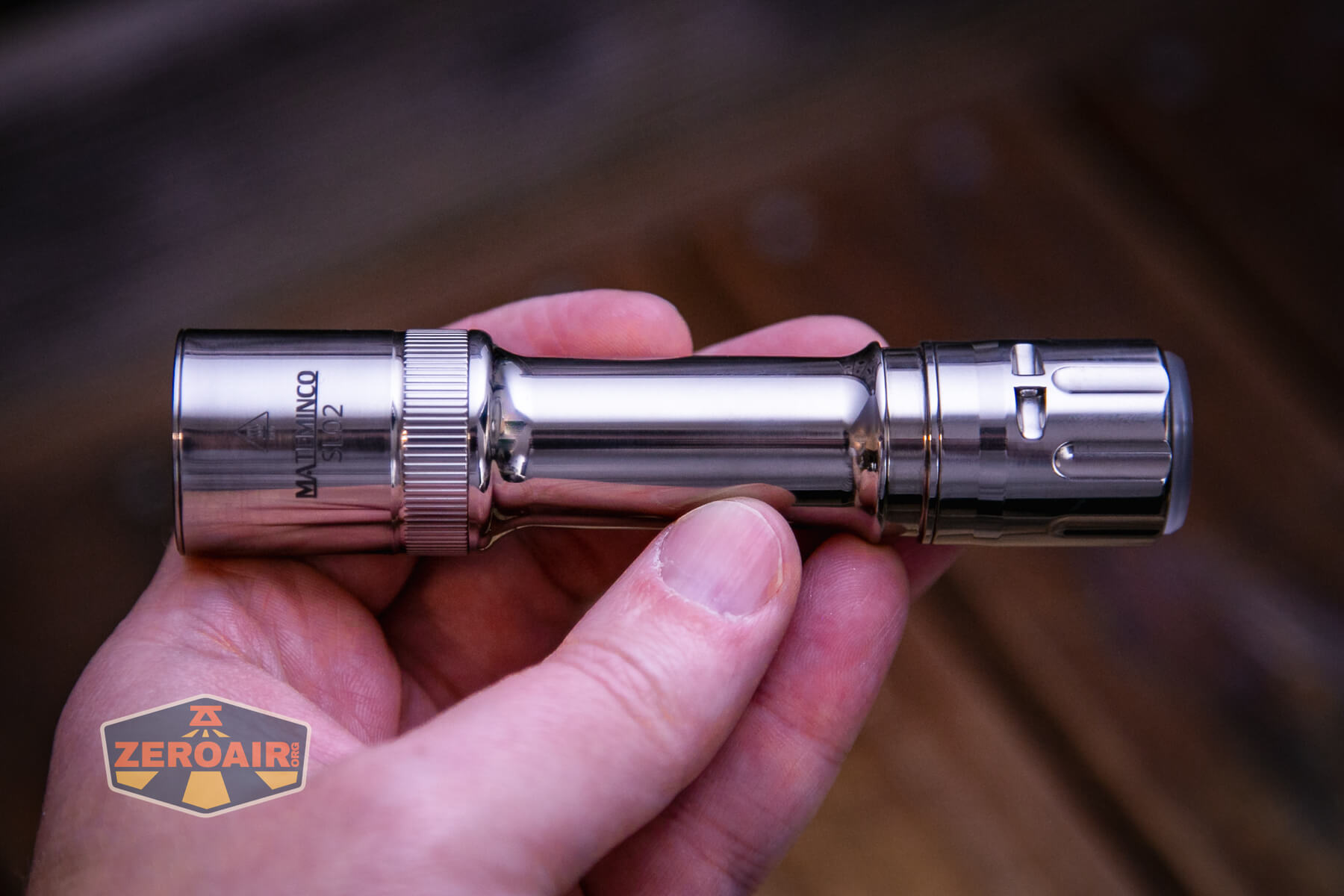
Here’s the test light with the venerable Convoy S2+. The version you see below is an orange Convoy S2+ host that’s been laser engraved by GadgetConnections.com. I did a full post on this light right here! Or go straight to GadgetConnections.com to buy your Convoy S2+ now!
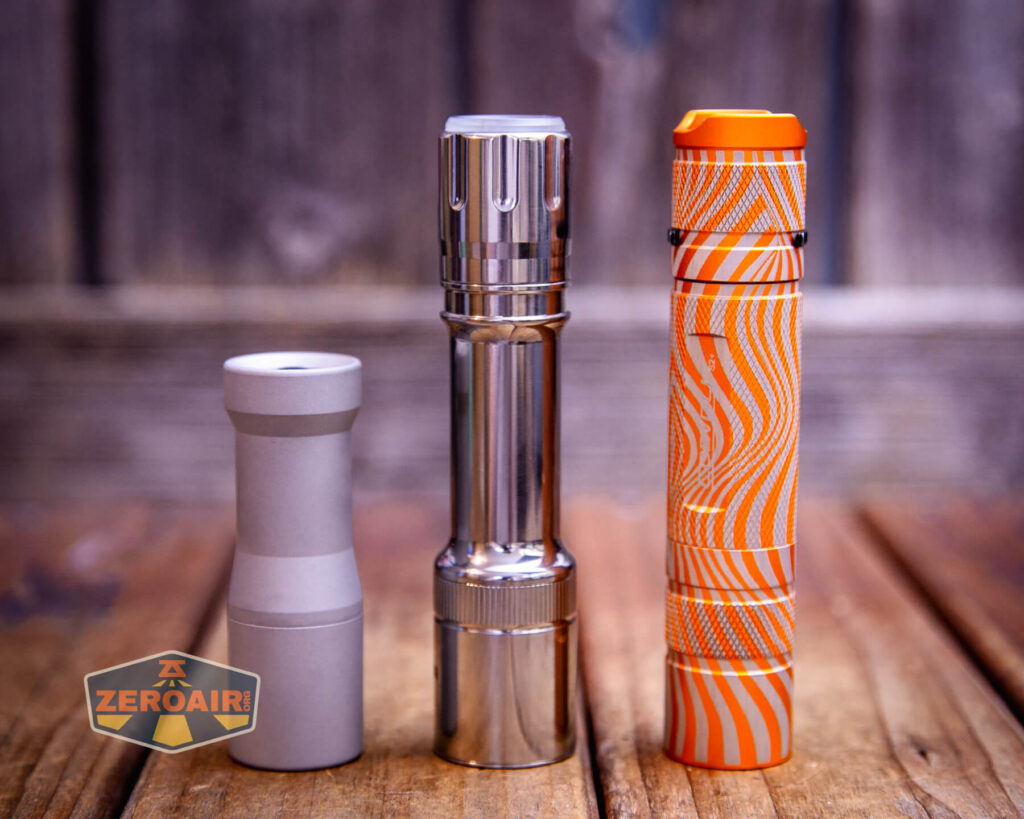
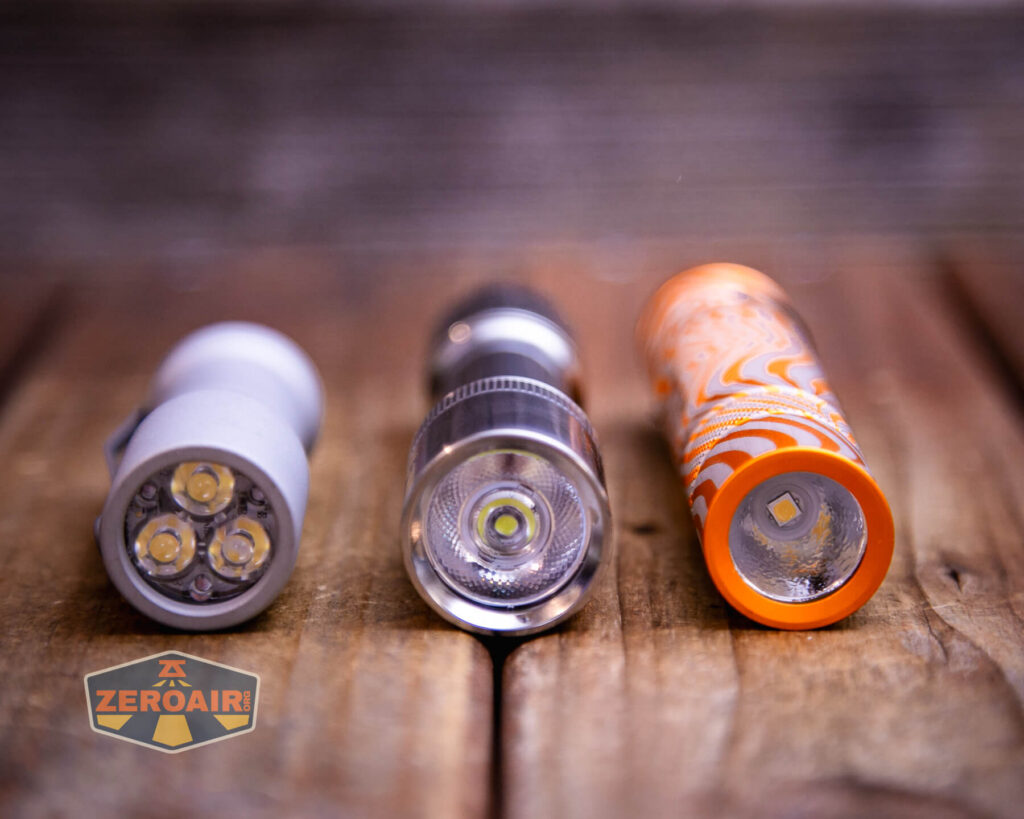
Also above is the light beside a new standard 18350 light! It’s not one I’ve reviewed yet but this is the CWF Arcadian Peanut in aluminum. This one is stonewashed and has the new Quantum Dragon driver – a whole new product! Stay tuned for a full review of this tiny powerhouse!
Retention and Carry
A pocket clip is included with the Mateminco SL02 Titanium EDC flashlight package.
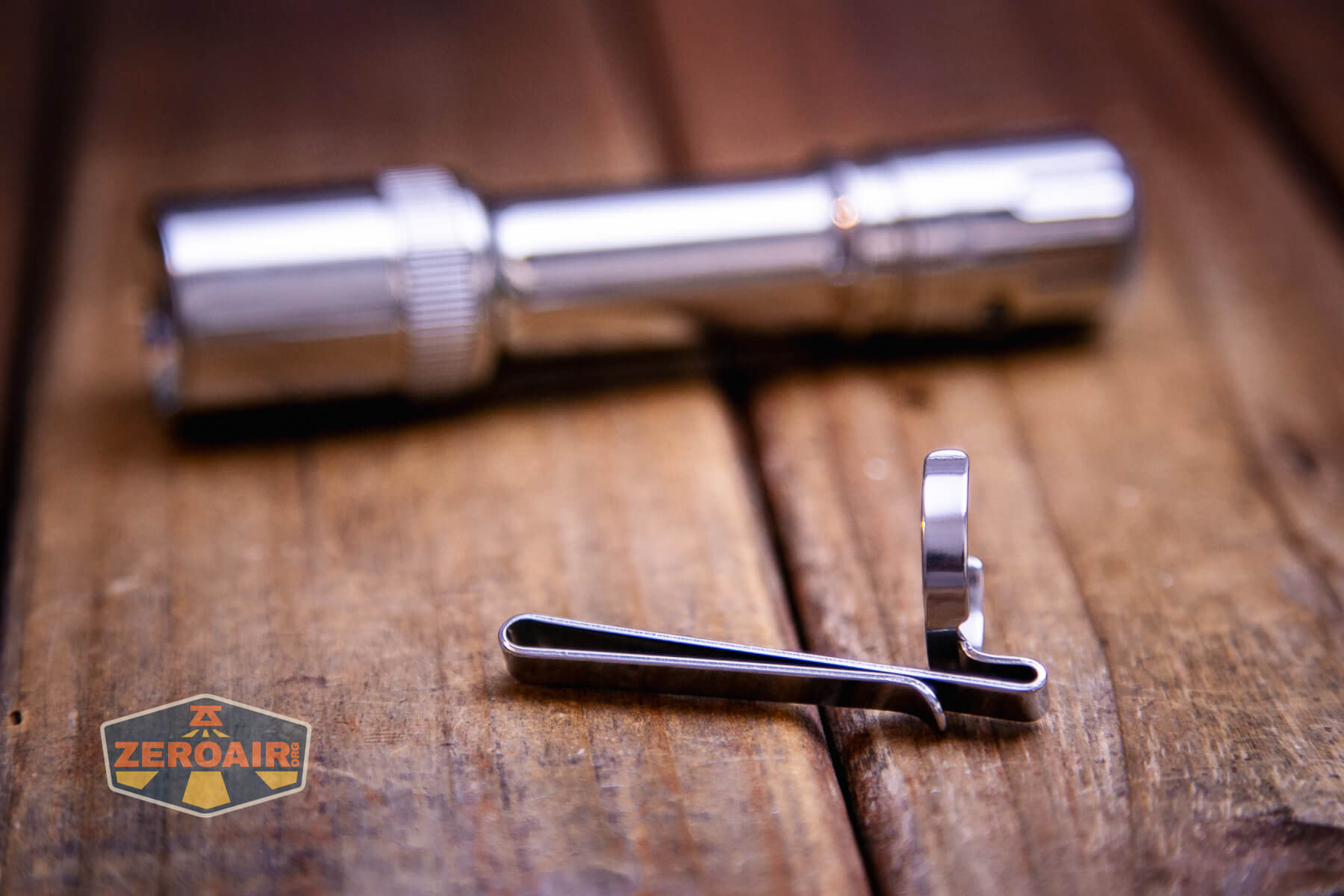
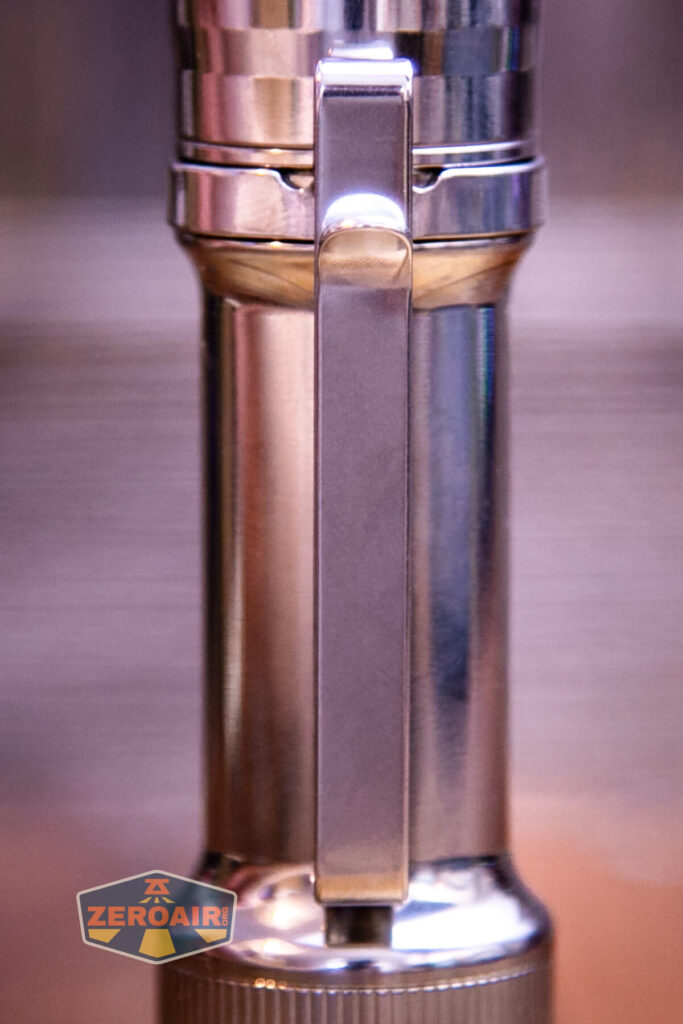
The only place to attach this clip is on the tail end. But this is a two-way clip, so it’d be possible to carry the light on a belt (probably, and not a pocket) in either orientation.

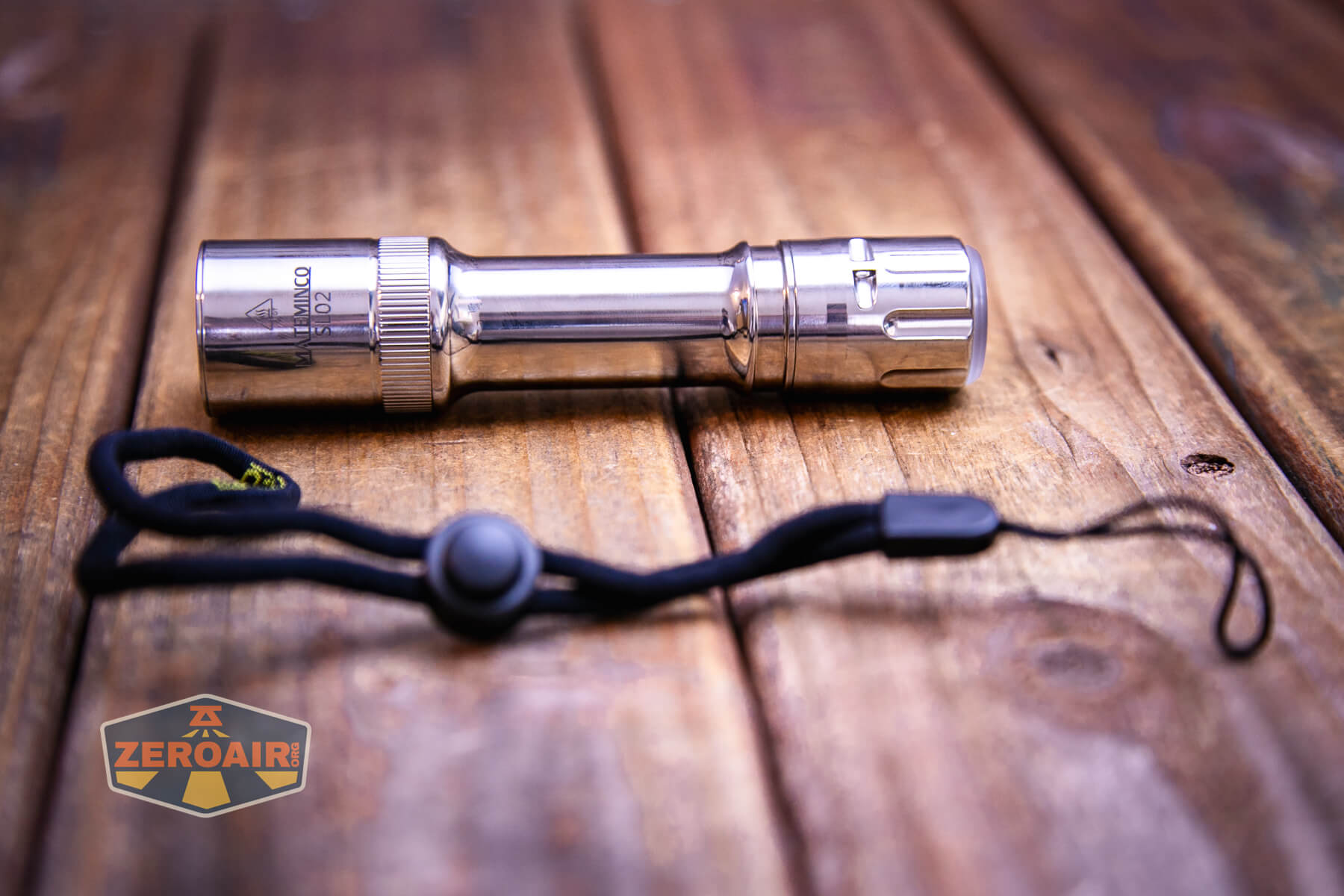
A lanyard is included, and it fits through this dedicated hole in the tailcap.
Power and Runtime
The Mateminco SL02 Titanium EDC flashlight runs a single 18650. You can order the package with or without a cell. The cell adds $4, so it’s fairly reasonable to just add that. With springs on both ends of the inside, any type 18650 should work fine (but the included cell is an unprotected flat top).
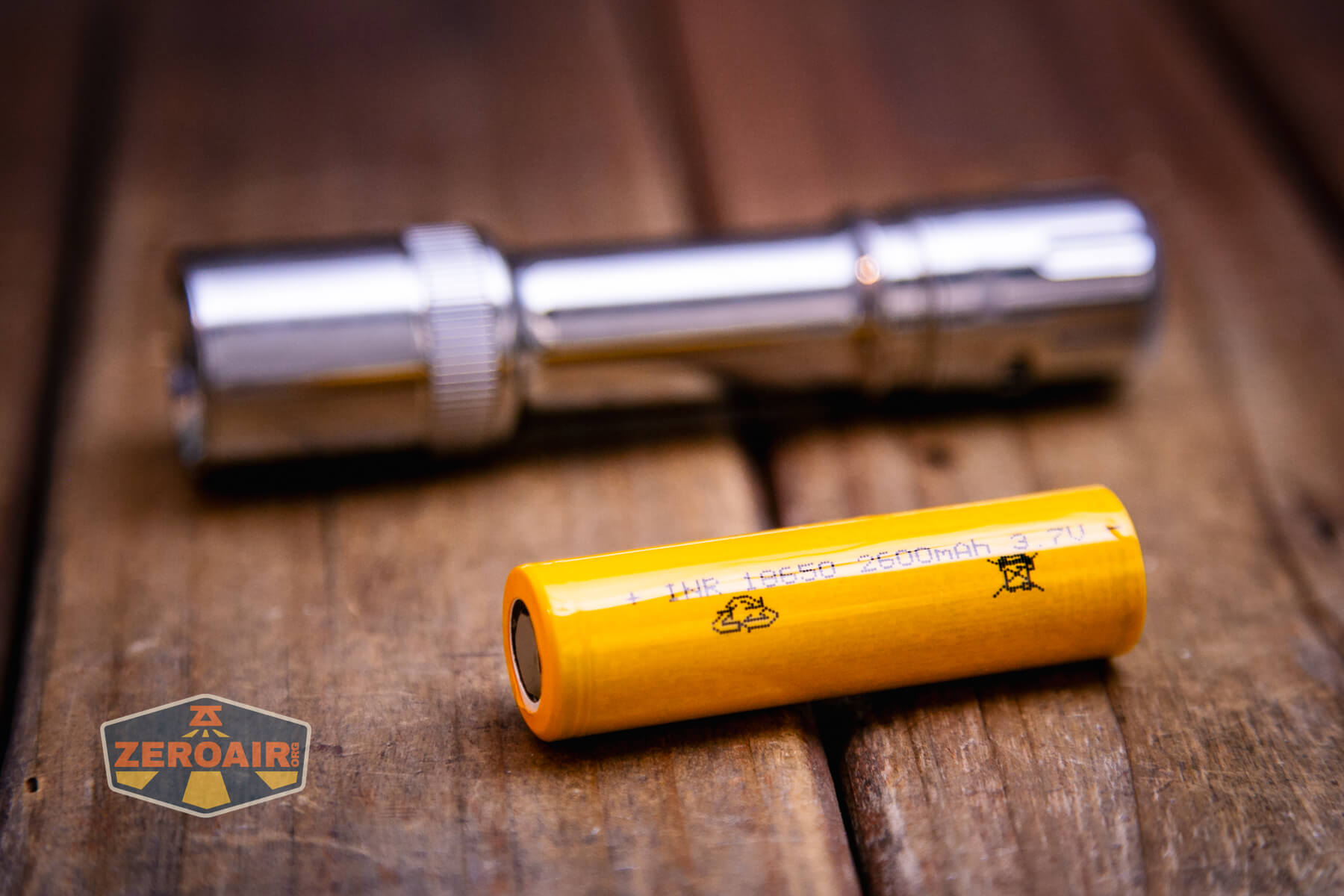
The cell goes into the light with the positive end toward the head.
Below you can see a couple of runtimes. Output is claimed at 1287 lumens. The max I observed was 833, so not too close to 1287. Moreover, the output drops fairly quickly, down to around 200 lumens. I’m usually reasonably accommodating to output deviations from the claim, but this seems a bit unusual. Again, I’m unsure if this is just a bad copy of the light or if all of these lights will have similar (low) performance.
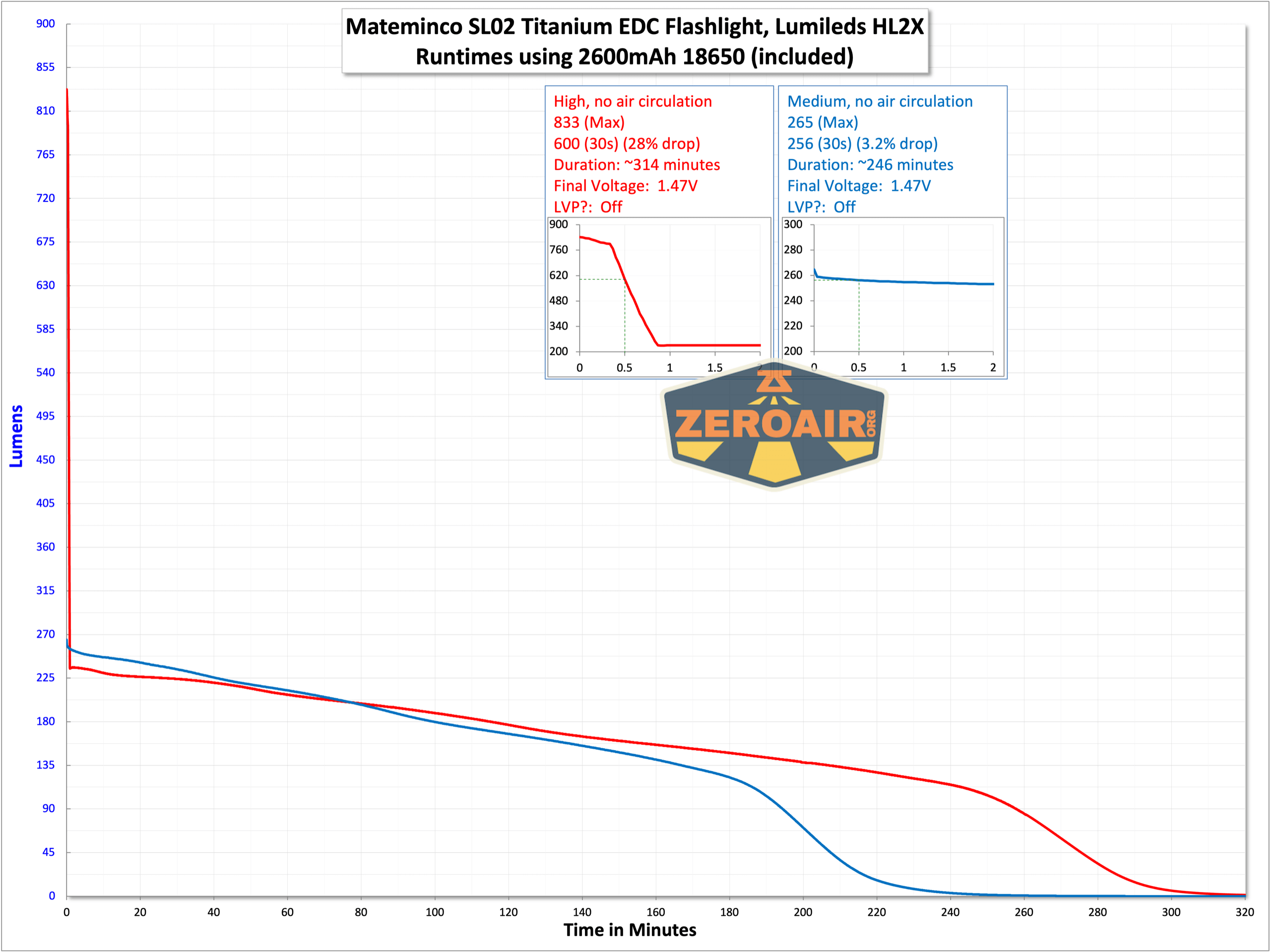
I also can’t really explain why high lasts longer than medium – probably due to come charging issue where the cell wasn’t actually fully charged (more on that later, but to be clear I did charge the cell in a bay charger before testing).
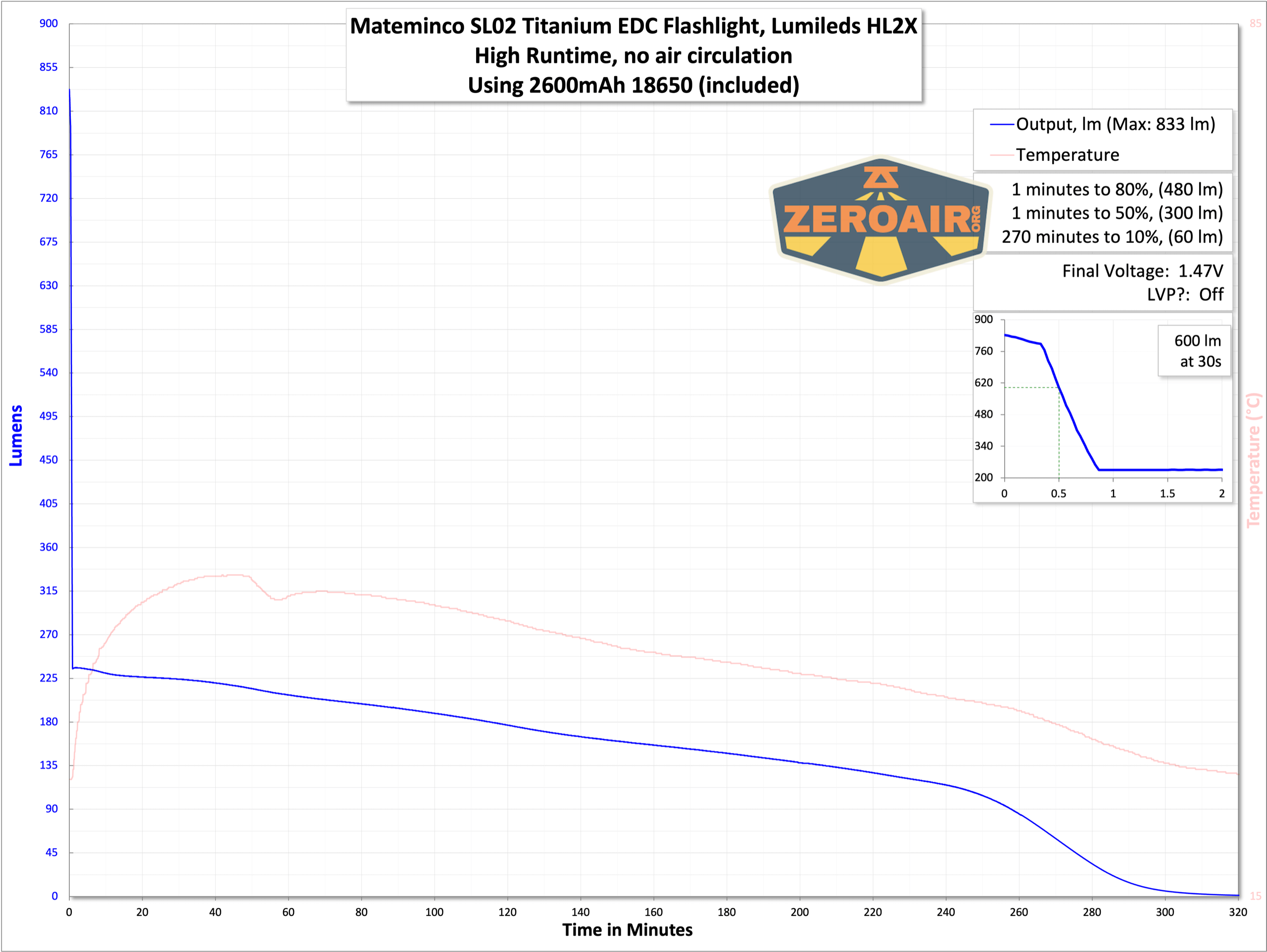
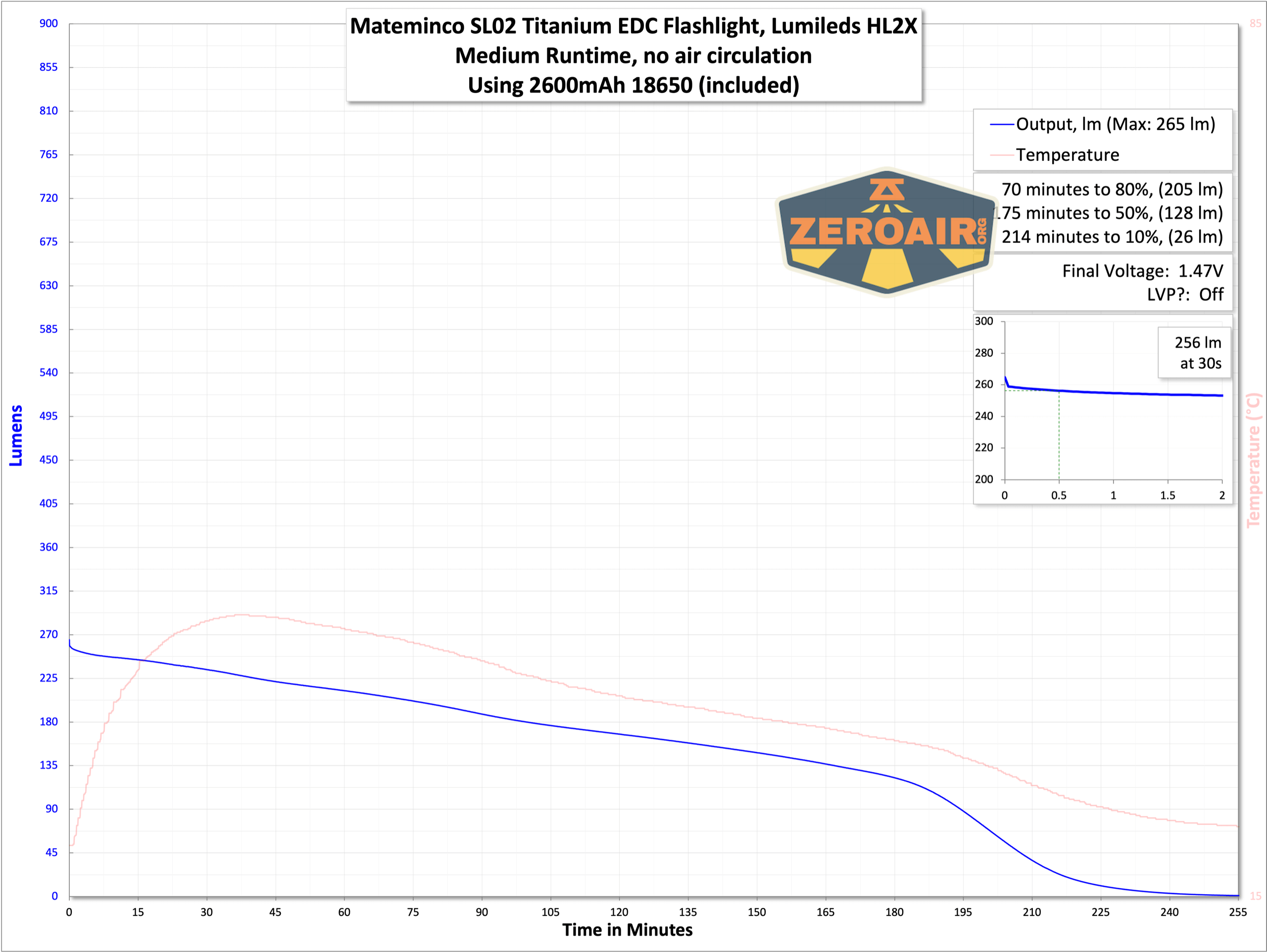
Worse than the output issues is that the light does not exhibit low voltage protection at all. The cell gets over discharged, and then seems to settle at 1.47V, which is not a safe voltage for continued use of lithium-ion cells. So I’d be wary – if your light begins to have low output, charge your cell!
Honestly I wonder if there’s an “actual Turbo” mode – a 4th mode, that the manual doesn’t cover and I couldn’t figure out how to access that comes closer to the throw and output numbers, and also draws more than 3A. Mateminco says this light has a “linear direct drive” which doesn’t really line up with the light only pulling 3A…
Charging
The Mateminco SL02 Titanium EDC flashlight has built-in charging. There’s a USB-C charge port in the head. As stated above, you’ll have to fully remove the head to access this charging port. I don’t love that, because if I’m going to have to remove something fully anyway, why wouldn’t I just remove the tailcap and charge the cell in a bay charger (that I already know and love.)
Anyway, there’s a charging cable included – it’s USB to USB-C.
Charging looks normal but positively doesn’t seem to work right either. There’s an indicator that’s red while the light is charging and turns green when charging is “complete.” “Complete” though, is inaccurate, because the cell voltage is only around 3.9V when charging is marked as done. That’s not unsafe but it’s very low to be considered “finished.”
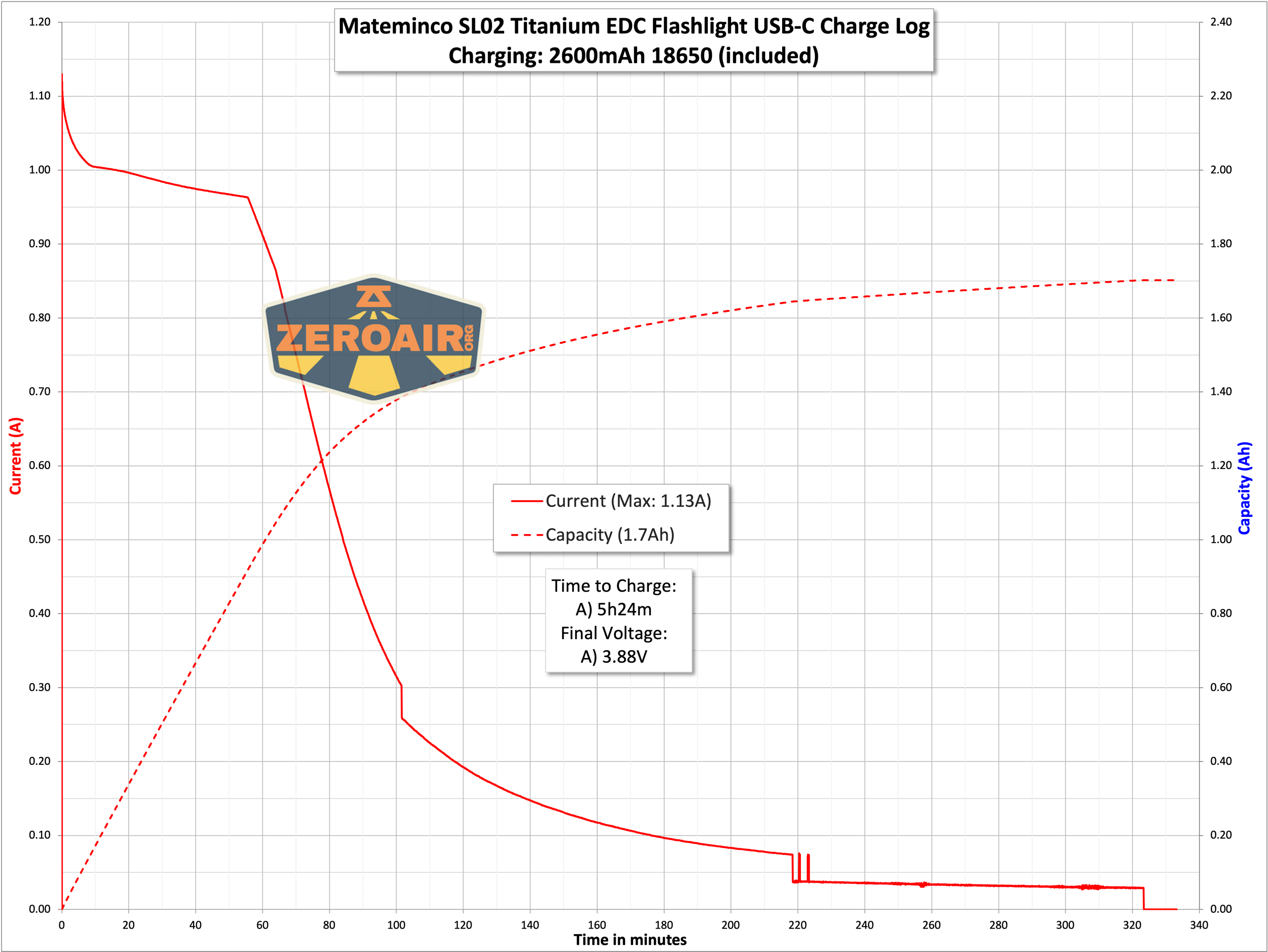
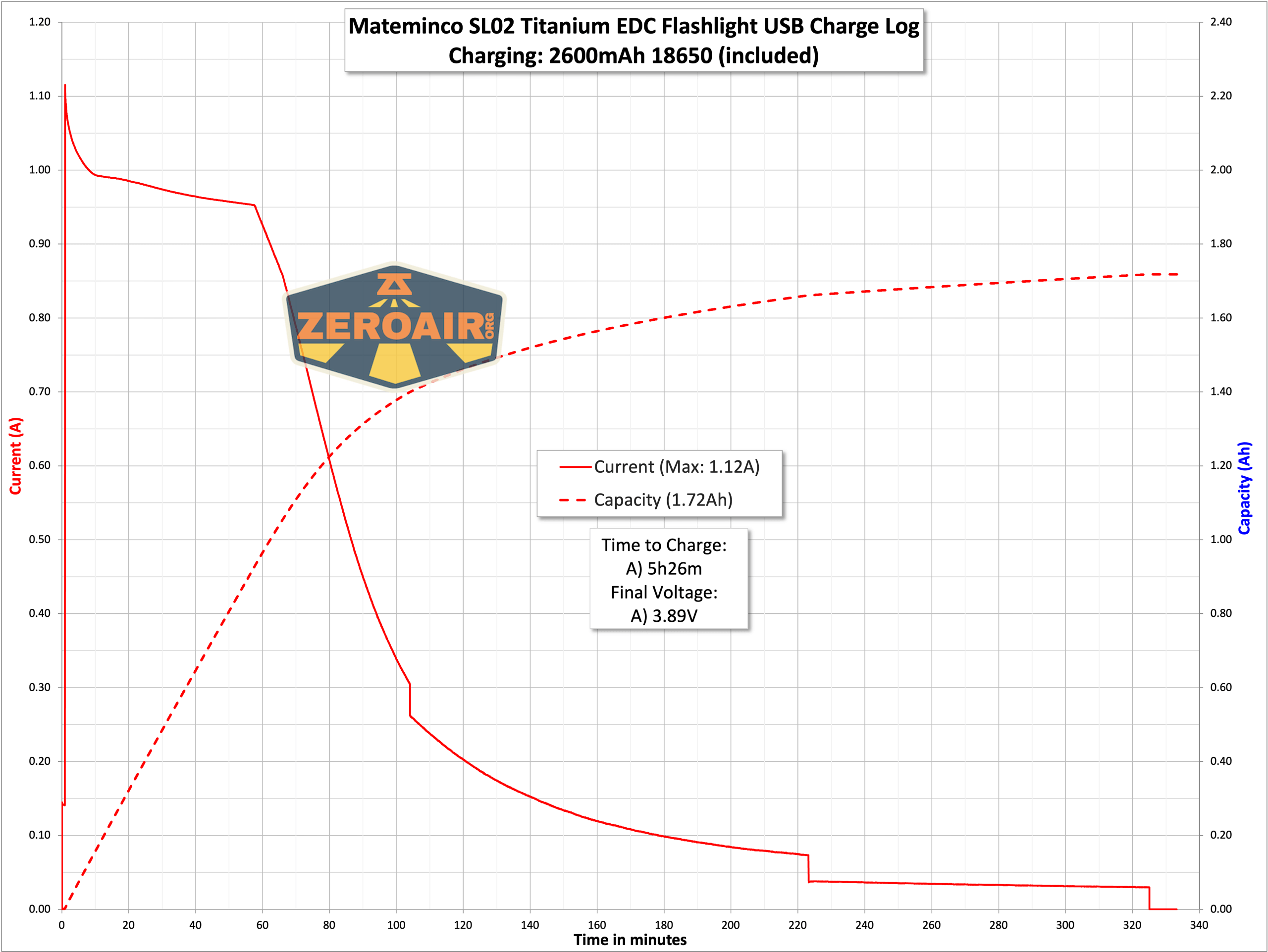
Both A to C and C to C exhibit this same characteristic.
Modes and Currents
| Mode | Mode Claimed Output (lm) | Claimed Runtime | Measured Lumens | Tailcap Amps |
|---|---|---|---|---|
| High | 1287 | 8h | 833 (0s) 600 (30s) |
2.98 |
| Medium | 550 | 12h | 256 | 0.69 |
| Low | 101 | 72h | 0.34 | 0.01 |
Pulse Width Modulation
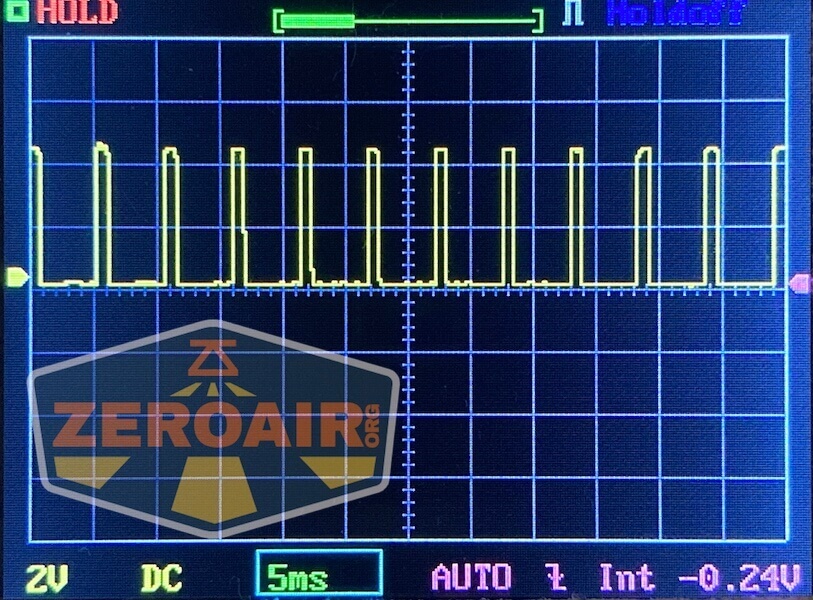
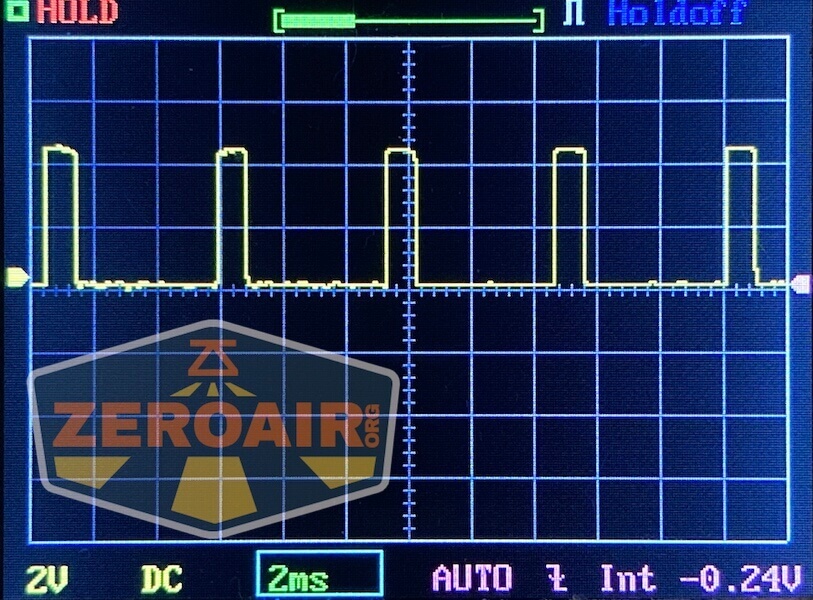
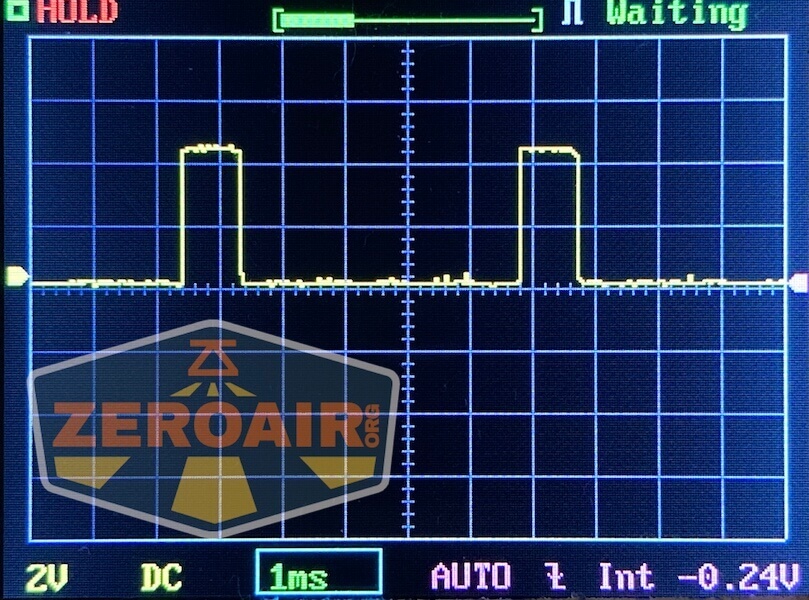
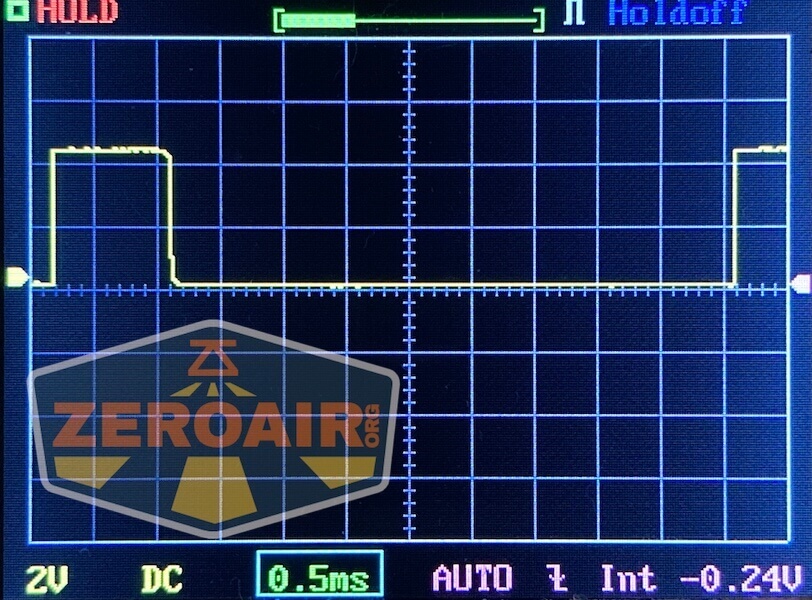
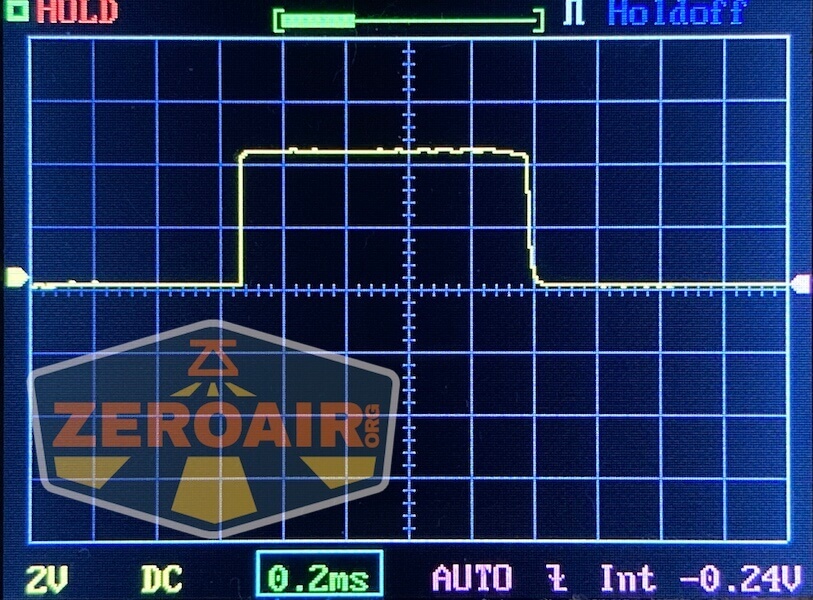
Low (leftmost) doesn’t use PWM but the higher two modes do. It’s very fast though, so nothing to worry about.
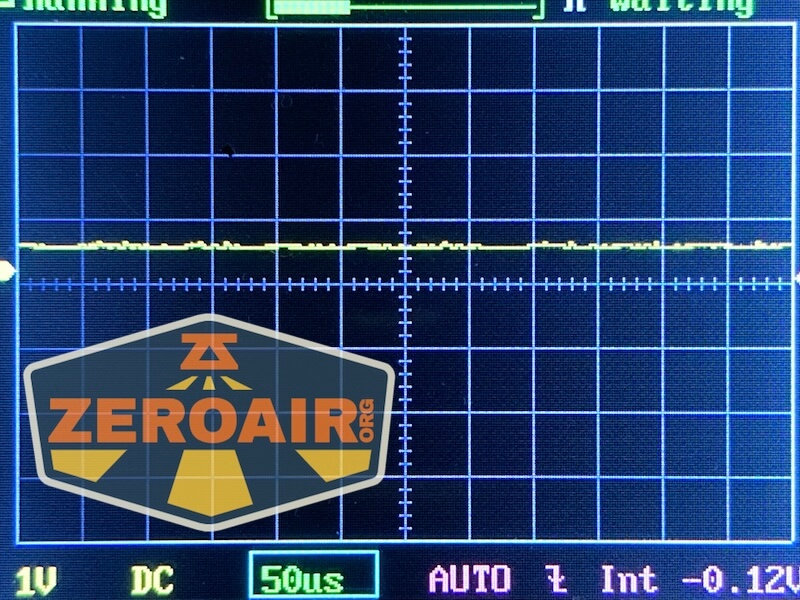
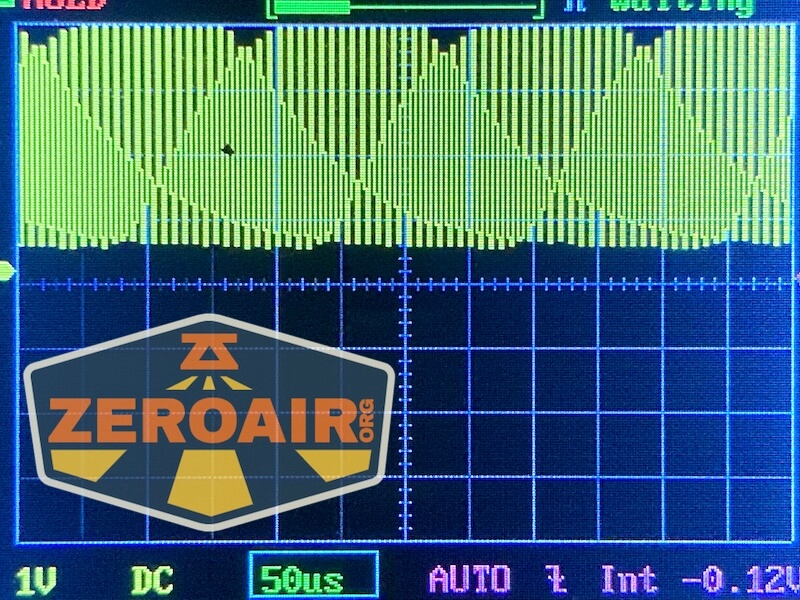
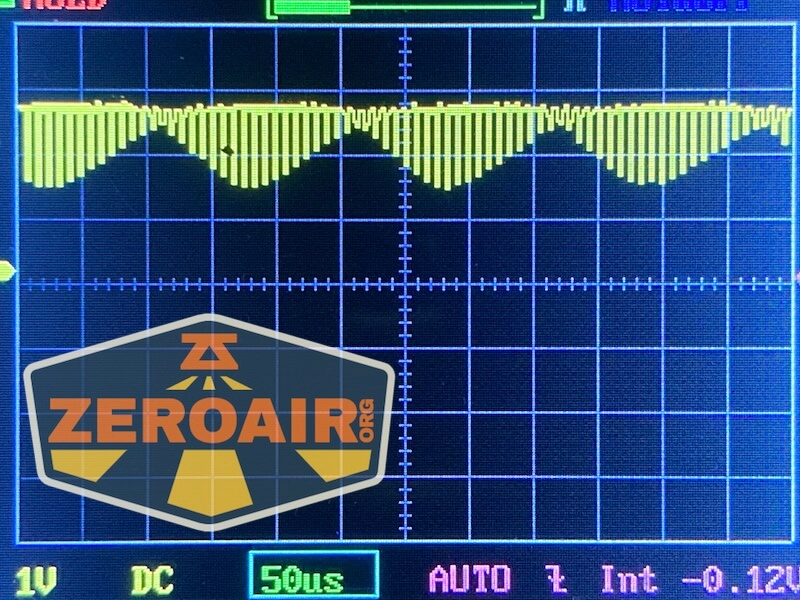
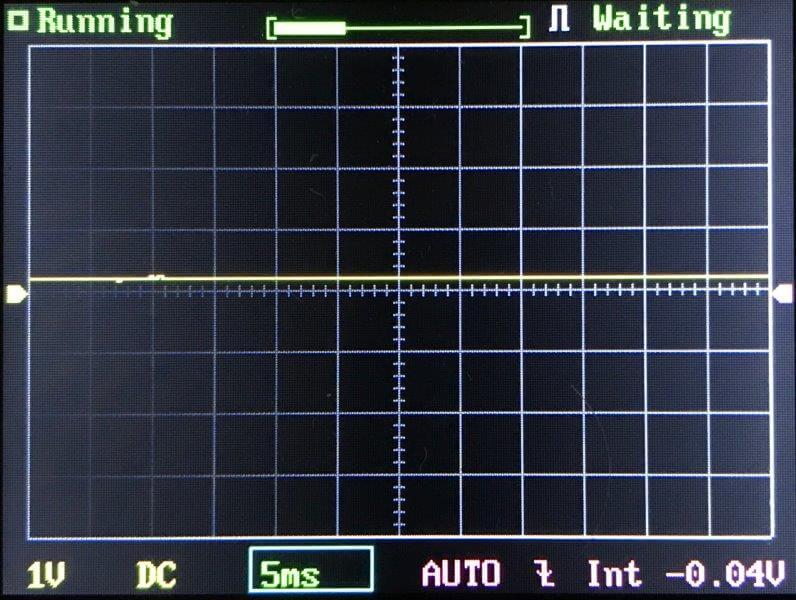
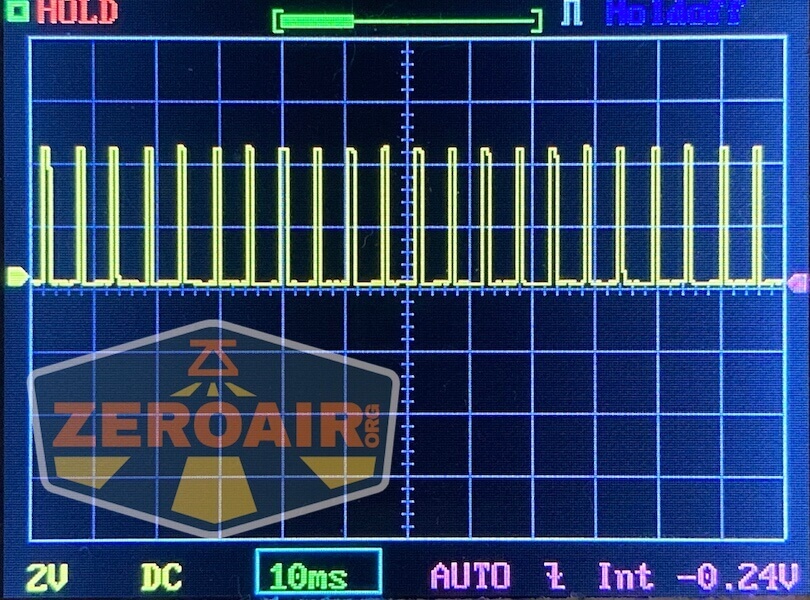
Here you can see a “baseline” – a chart with almost no light hitting the sensor. Then there’s the Ultrafire WF-602C flashlight, which has some of the worst PWM I’ve seen. It’s so bad that I used a post about it to explain PWM! Here are multiple timescales (10ms, 5ms, 2ms, 1ms, 0.5ms, 0.2ms) to make comparing this “worst” PWM light to the test light easier. That post also explains why I didn’t test the WF-602C at the usual 50us scale.
User Interface and Operation
A single switch controls the Mateminco SL02 Titanium EDC flashlight. It’s a reverse clicky and has a very nice metal cover. Surrounding the metal cover area is a plastic translucent bit that allows a set of RGB emitters to shine though.
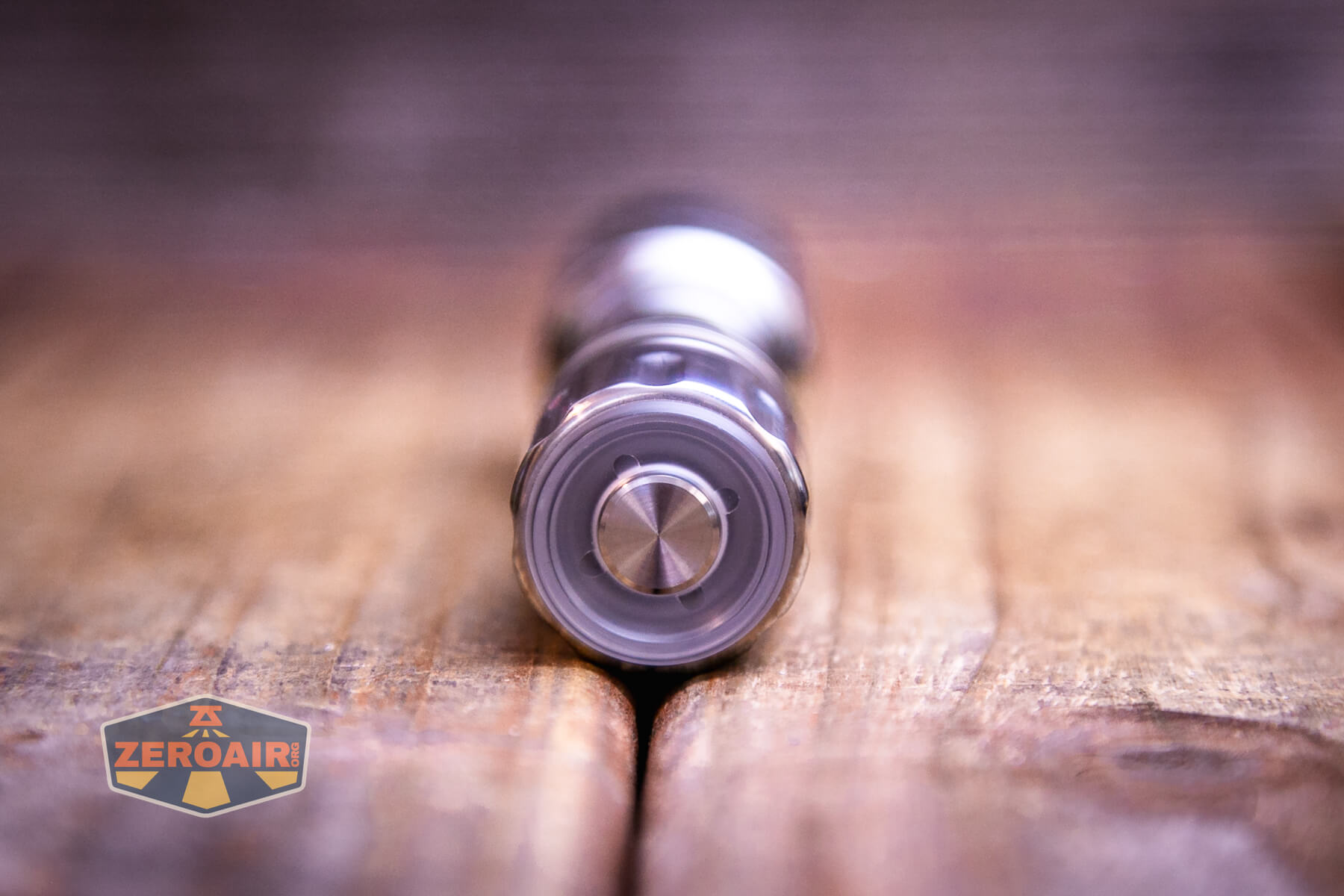
This translucent bit provides protection around the switch and the light can tailstand because of it.

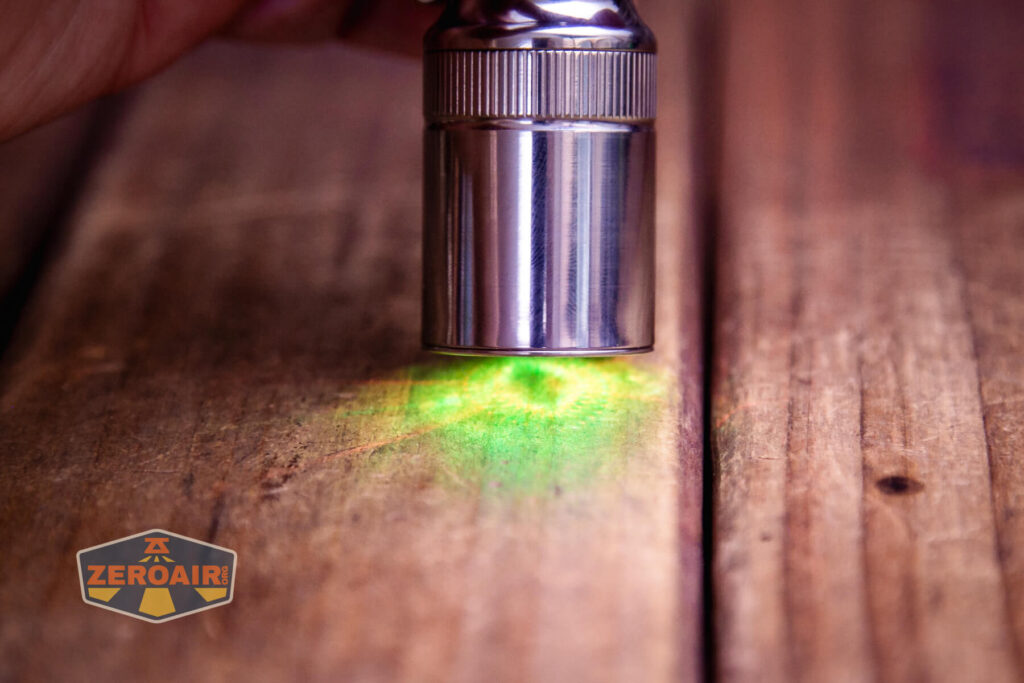
Here’s an example of the switch (area) RGB emitters (green then blue, below).
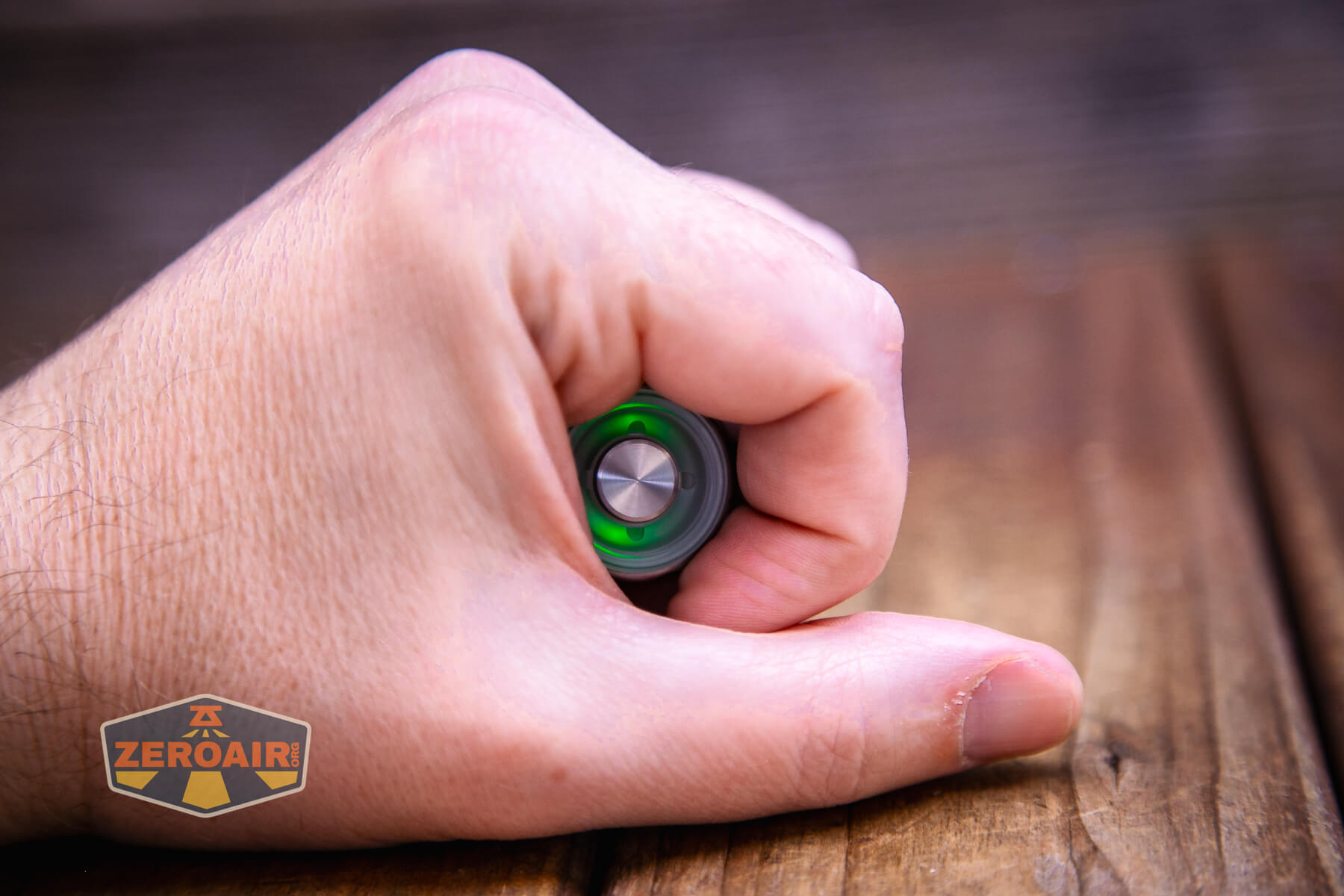
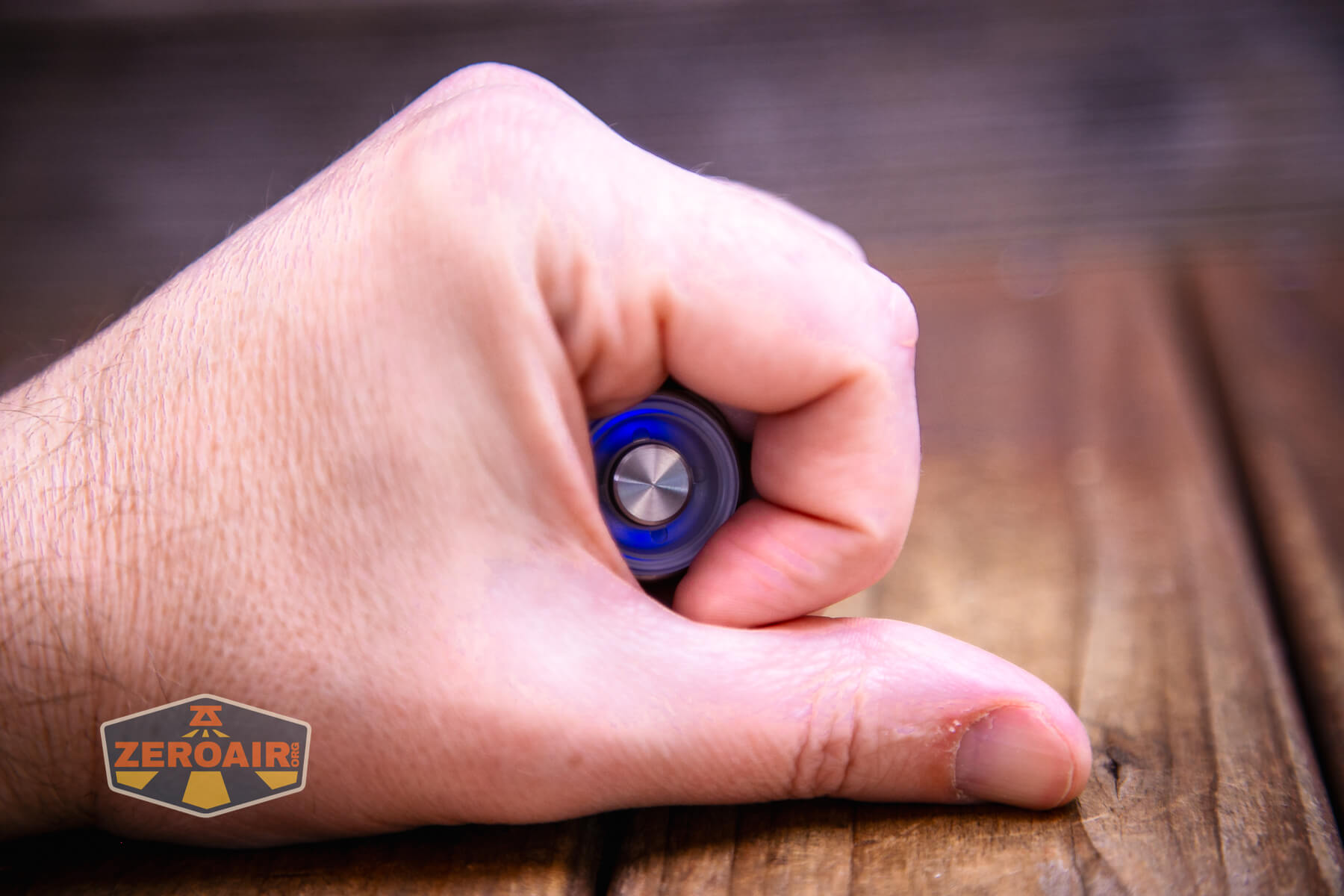
As far as I know, there’s no way to control the color of these switch emitters. They are for display purposes only.
Here’s a user interface table!
| State | Action | Result |
|---|---|---|
| Off | Click | On (Mode memory) |
| Off | Tap | No action (it’s a reverse clicky) |
| On | Click | Off |
| On | Tap | Mode advance (LMH then RGB)^ |
| On | Double Tap | Strobe |
| Strobe | Tap | Next mode from where you were. (Mode memory + 1, basically) |
^ At least in my copy it seems like if you pause with the light on, the next tap will enter the same mode, and then you can tap to the next mode. If you’re actively tapping, then the modes advance normally.
LED and Beam
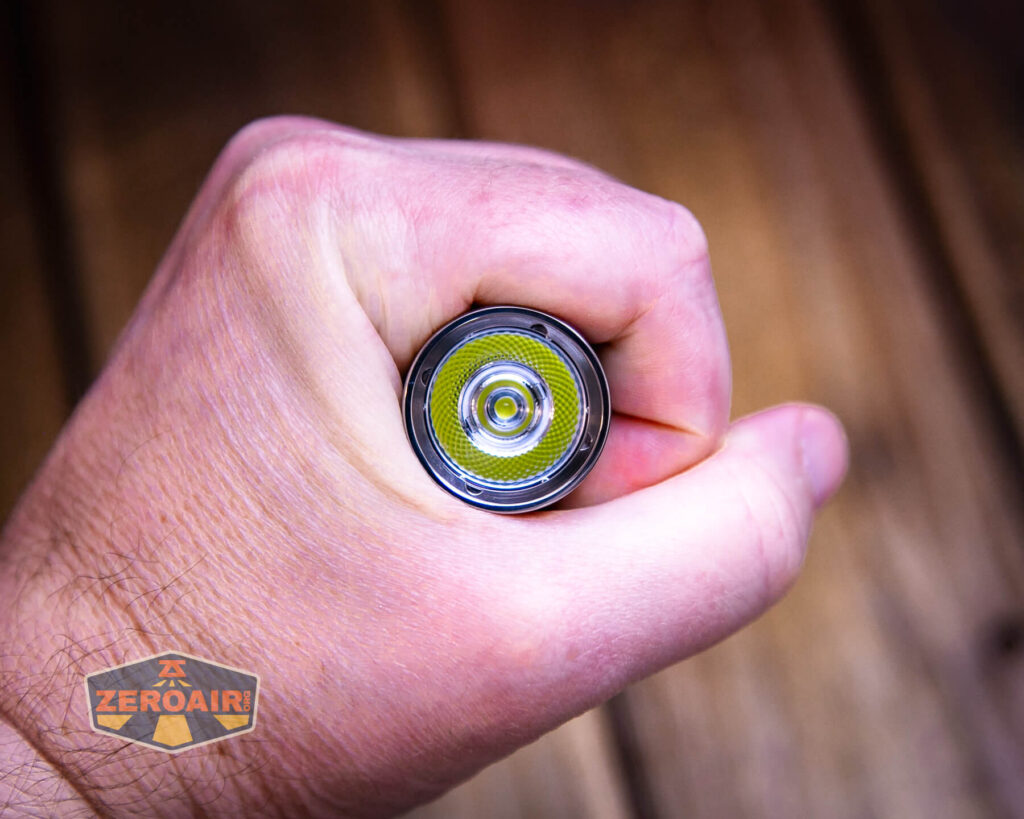
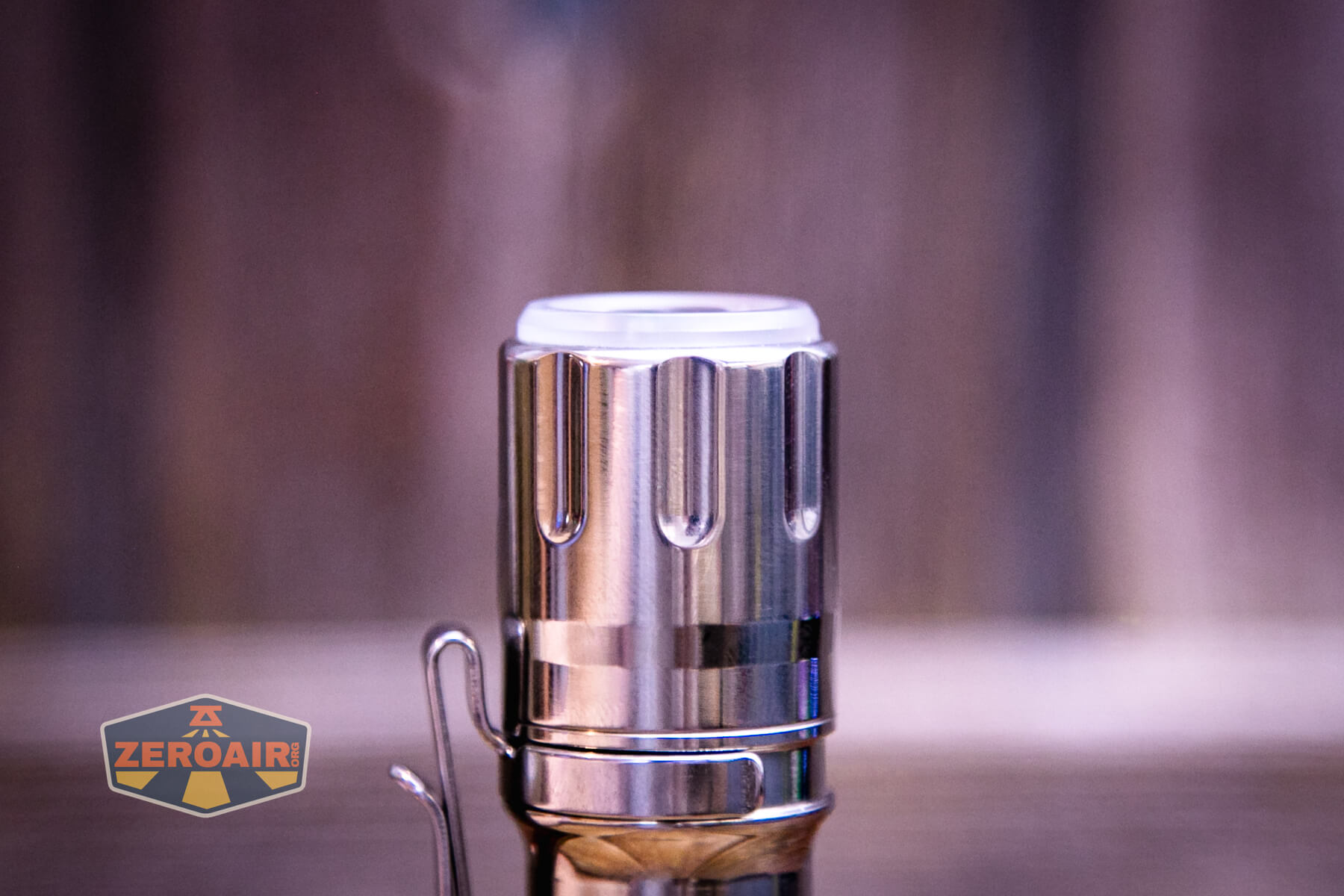
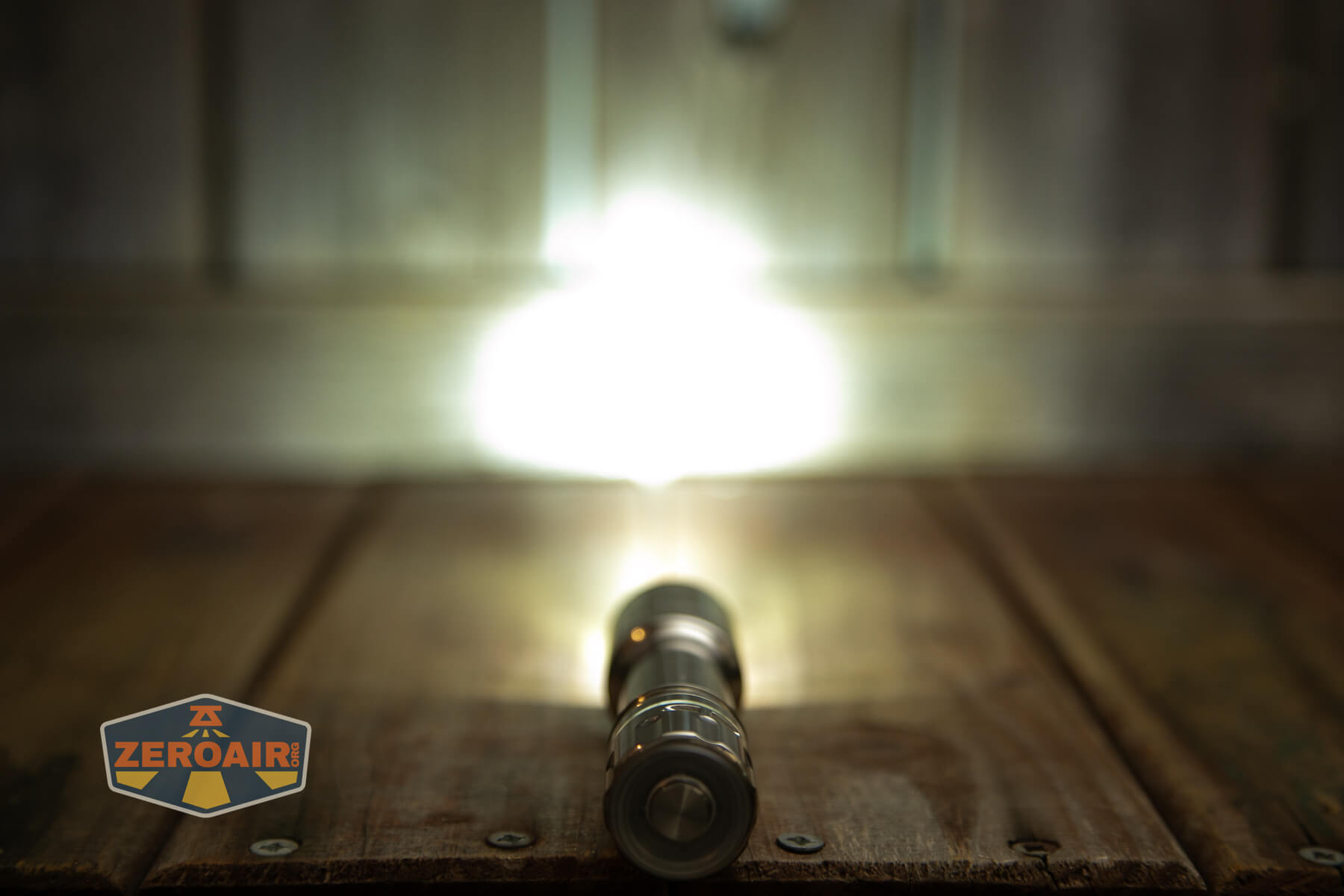
Mateminco says this emitter is a Luminleds HL2X. The emitter is behind of of those cool very short TIR optics. I have historically liked those because they allow for a shorter light and end up having the beam profile I like. That’s true here, but I’m not sure this light is shorter because of the TIR. But I do like the beam profile.
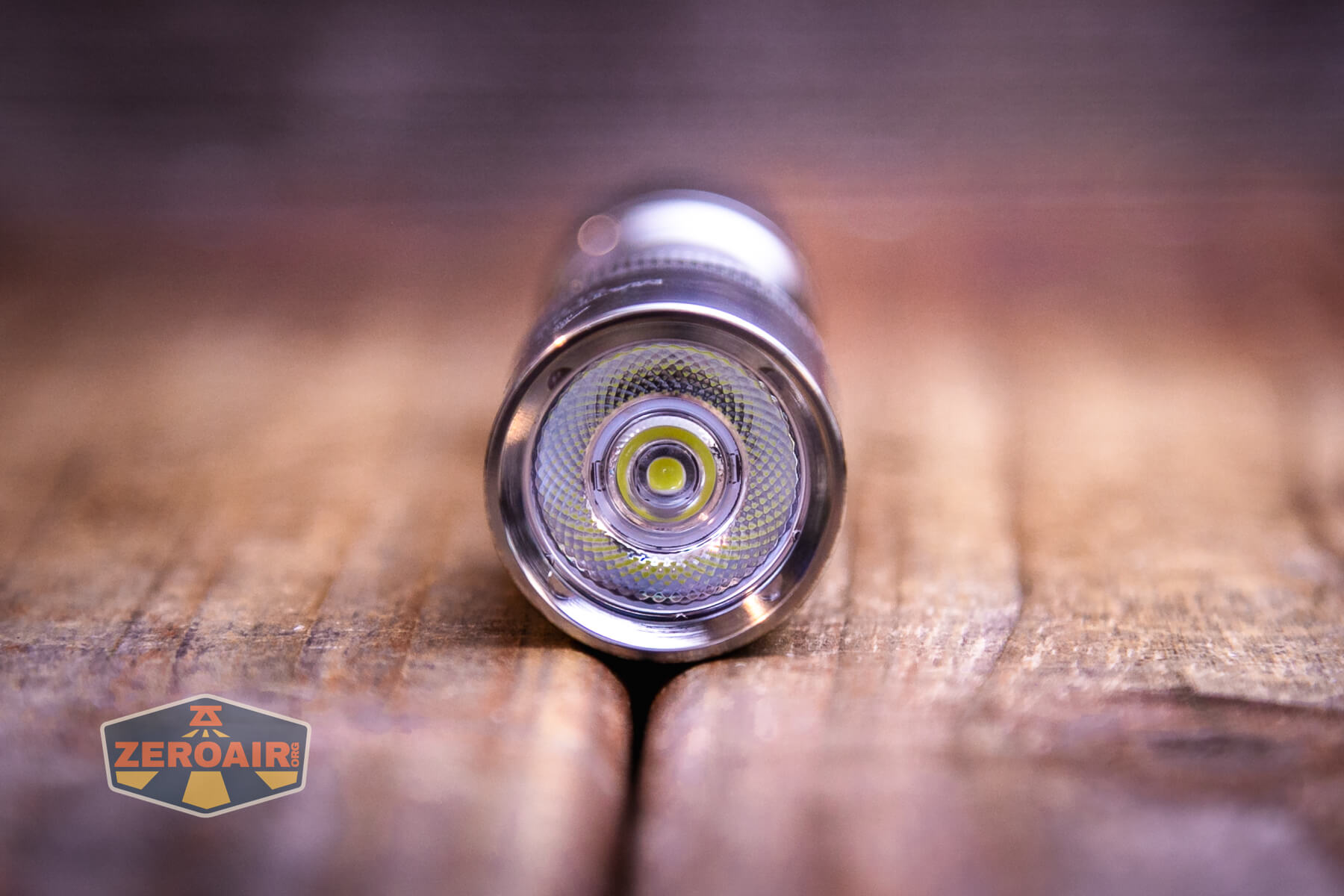
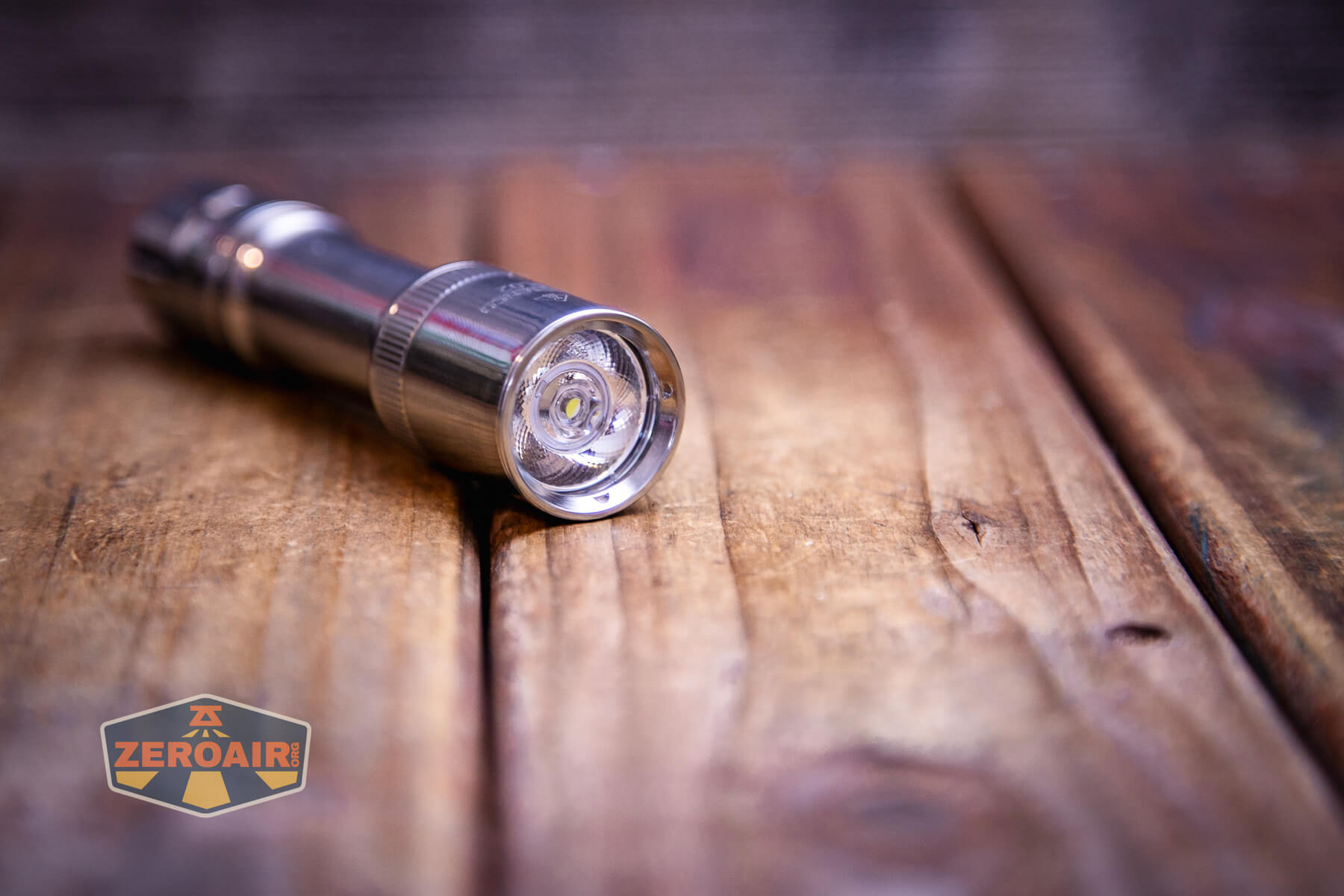
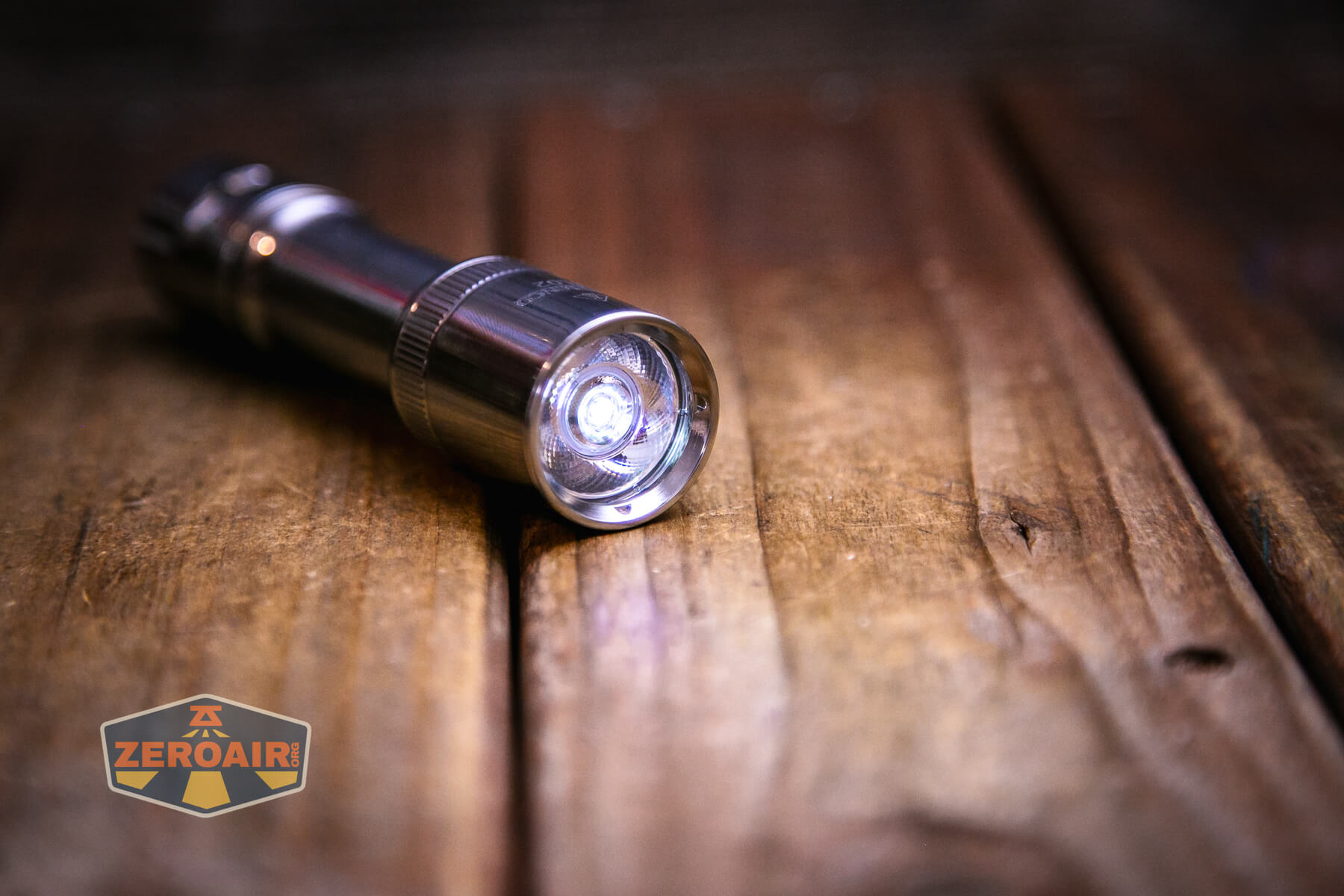
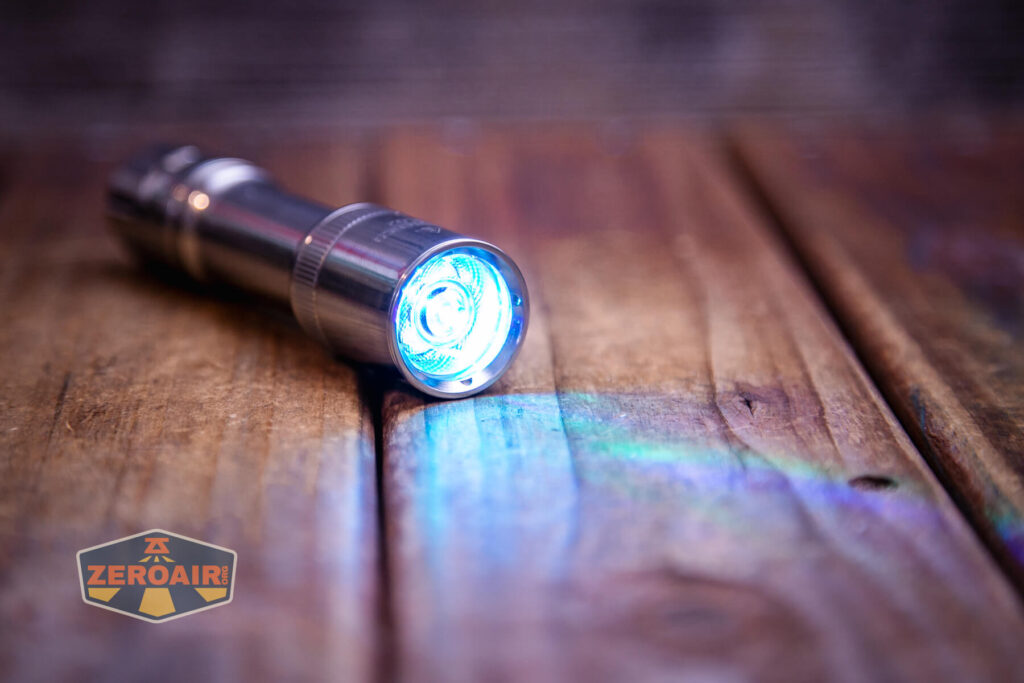
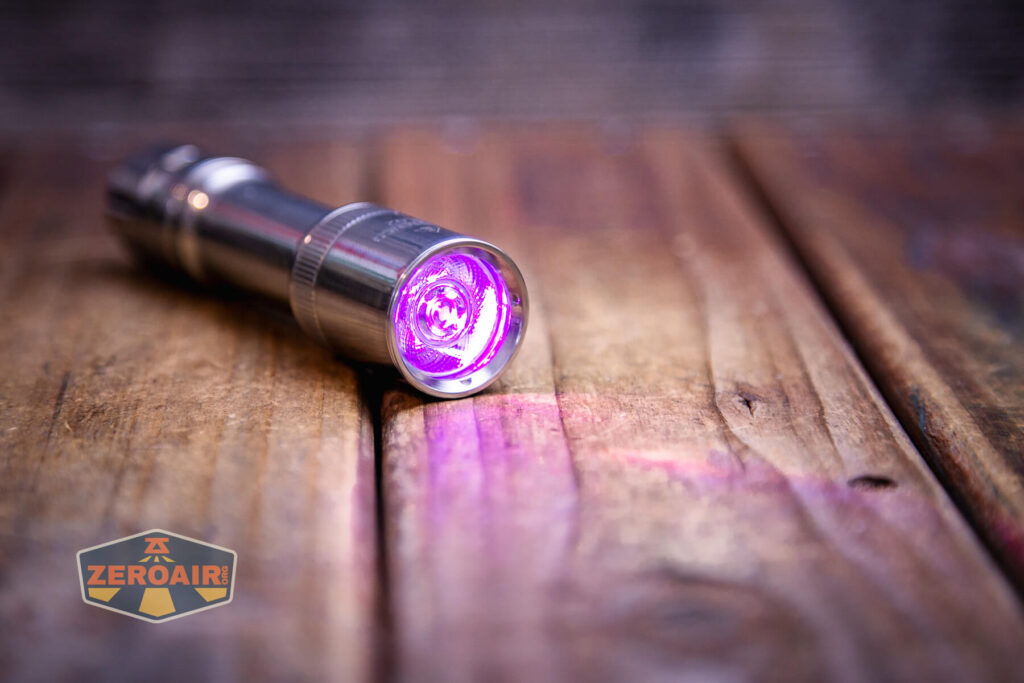
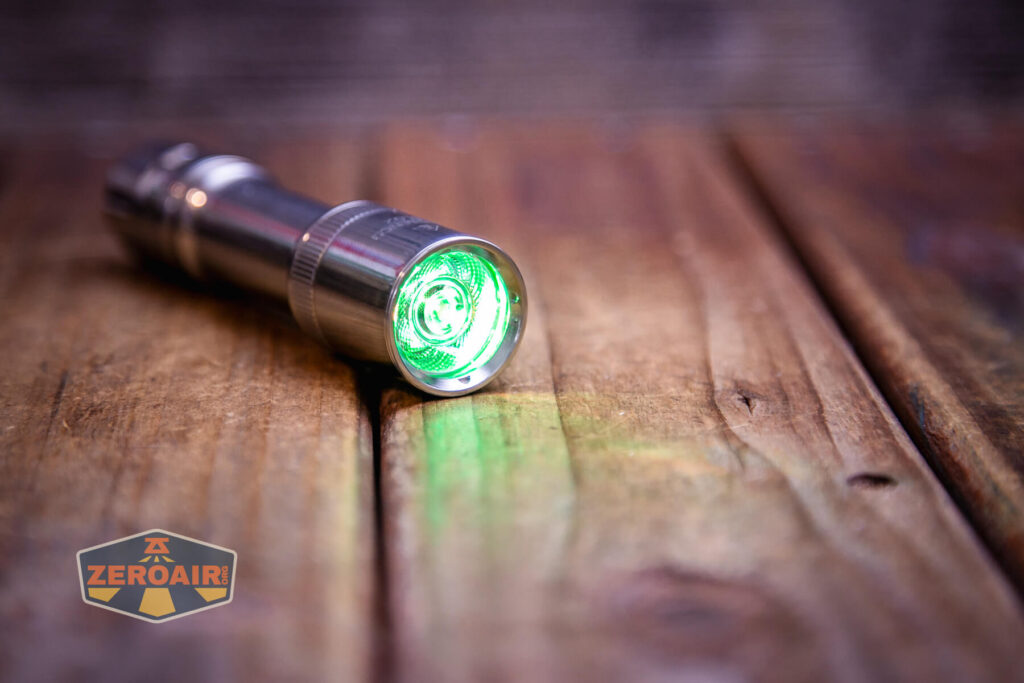
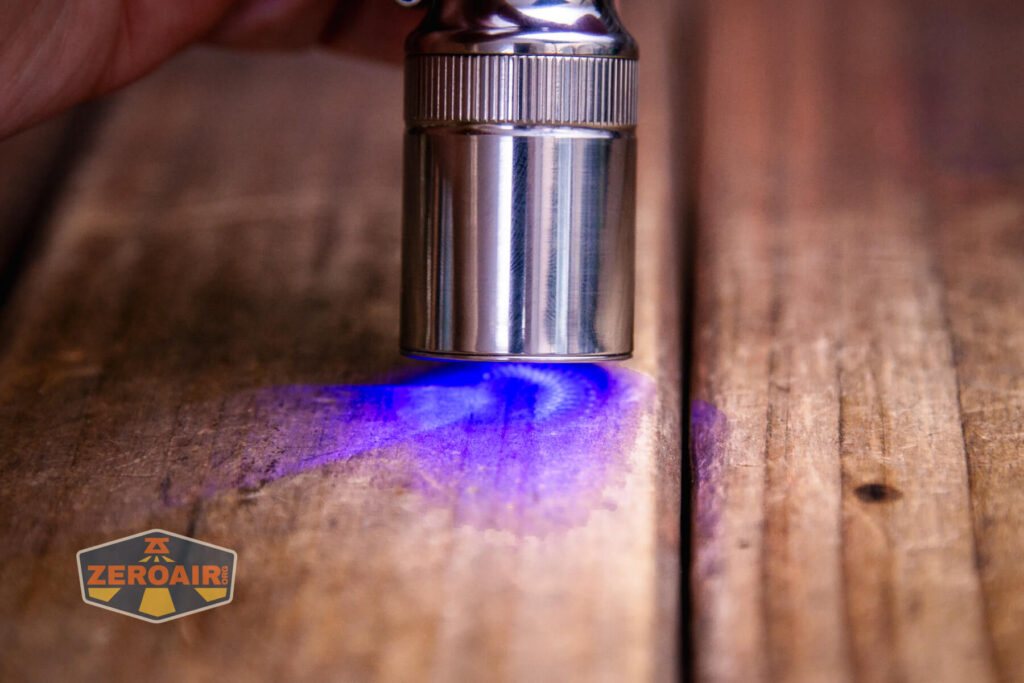
There are RGB emitters behind the TIR, too. Just like the tail RGB, there doesn’t seem to be any way to control these except to be on or off. And “on” is fading in and out through the range of RGB options. The current draw with these color emitter options appears to be around what Low is (o.01A to 0.02A) so I’d expect a similar lifespan (claimed at 72 hours for white Low). But remember that the light doesn’t have low voltage protection, and leave the RGB on at your own risk.

LED Color Report (CRI and CCT)
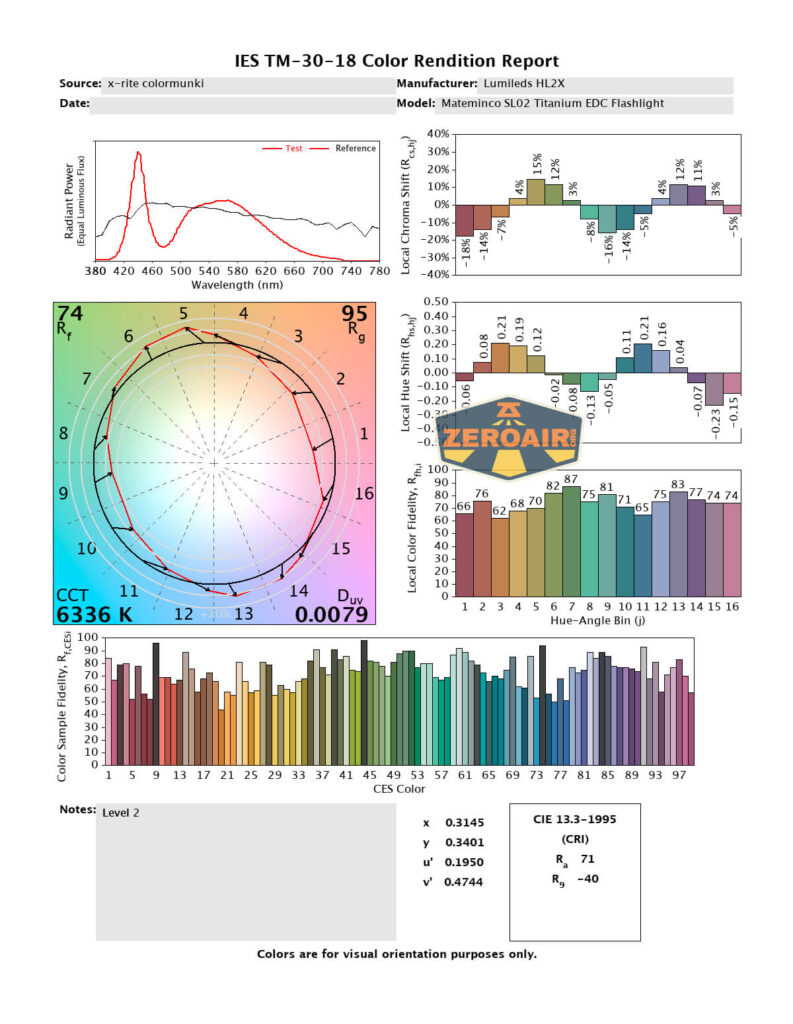
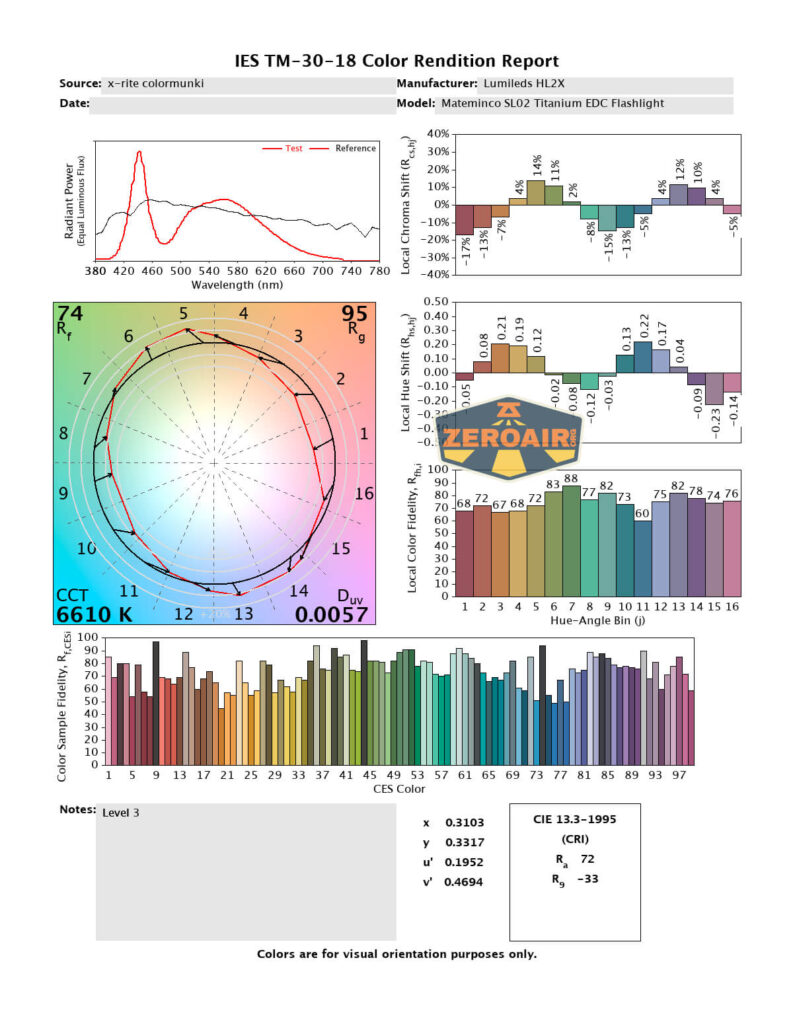
CCT is claimed at 6500K, and that’s approximately what we see here – 6000K-6600K. CRI is low, at around 72.

Beamshots
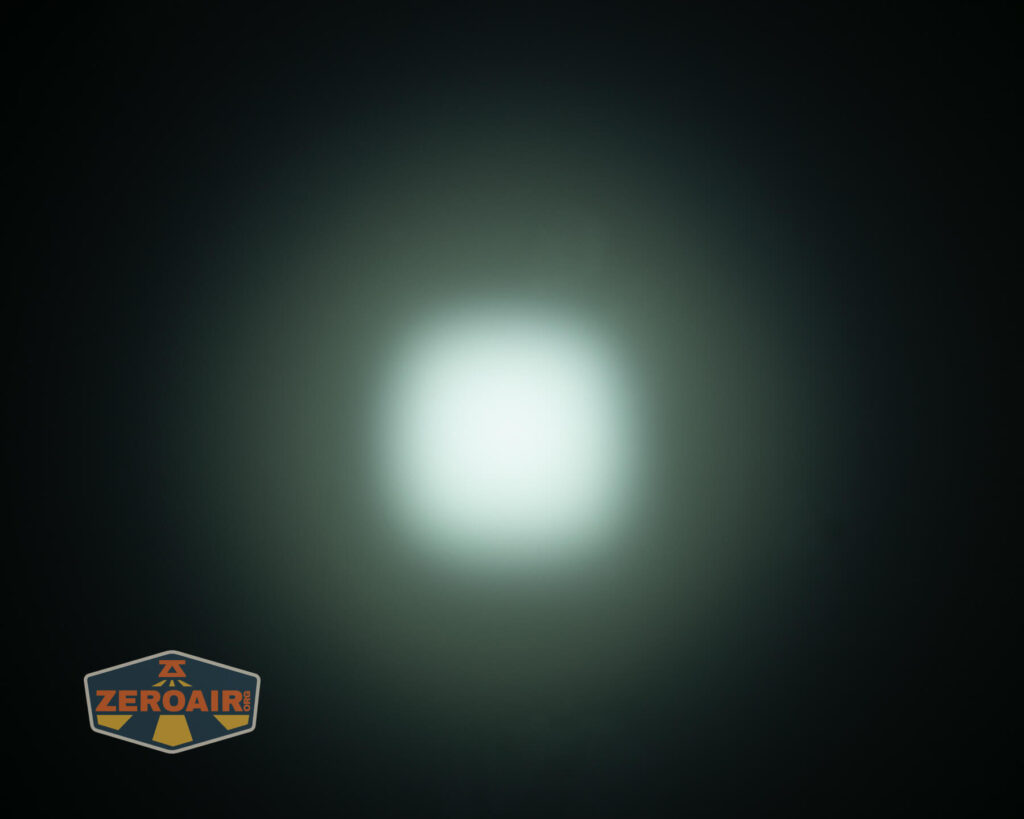
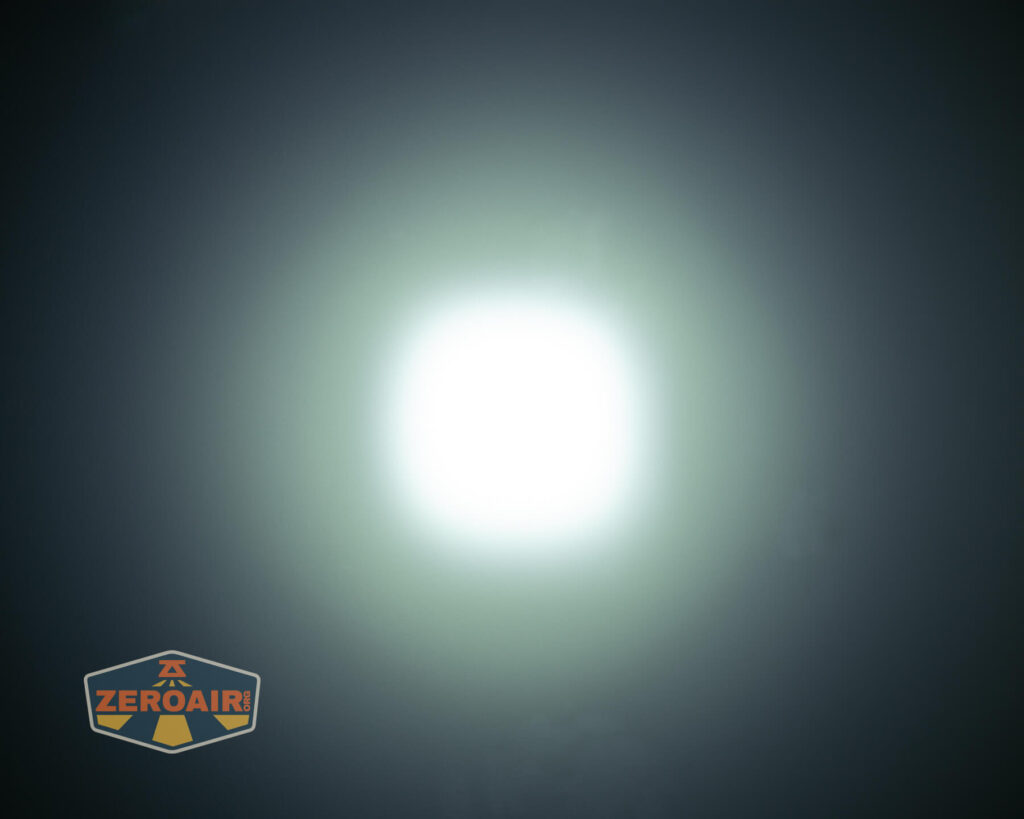
These beamshots always have the following settings: f8, ISO100, 0.3s shutter, and manual 5000K exposure. These photos are taken at floor level, and the beam hits the ceiling around 9 feet away. One thing you can pick up from these first three photos is how different low is from medium – there’s a huge jump between these two levels


Tint vs BLF-348 (KillzoneFlashlights.com 219b version) (affiliate link)
I keep the test flashlight on the left and the BLF-348 reference flashlight on the right.
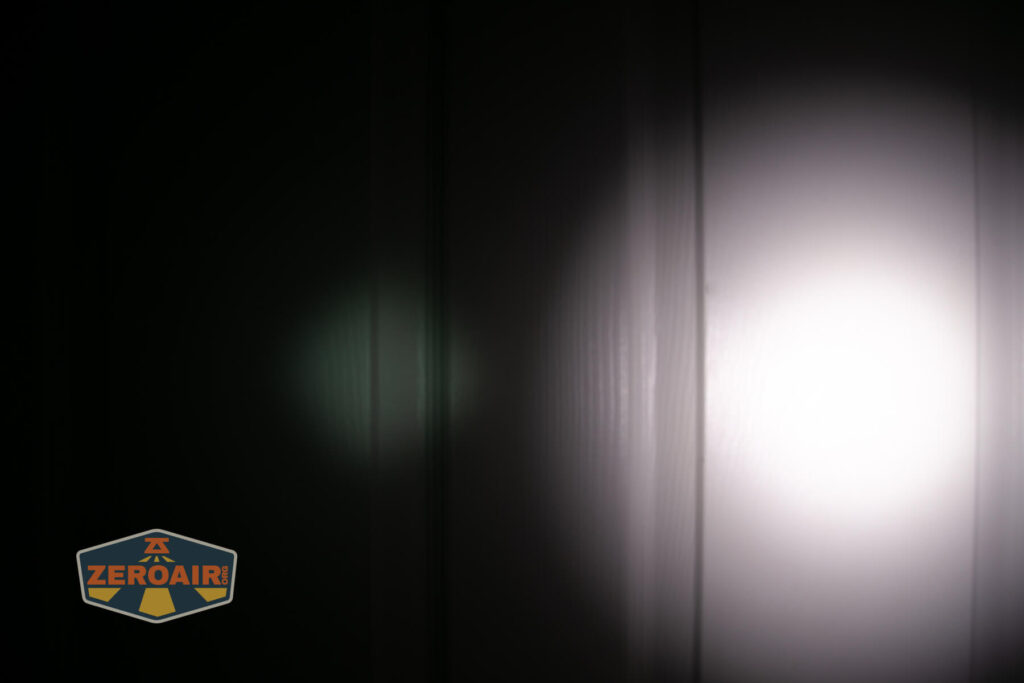


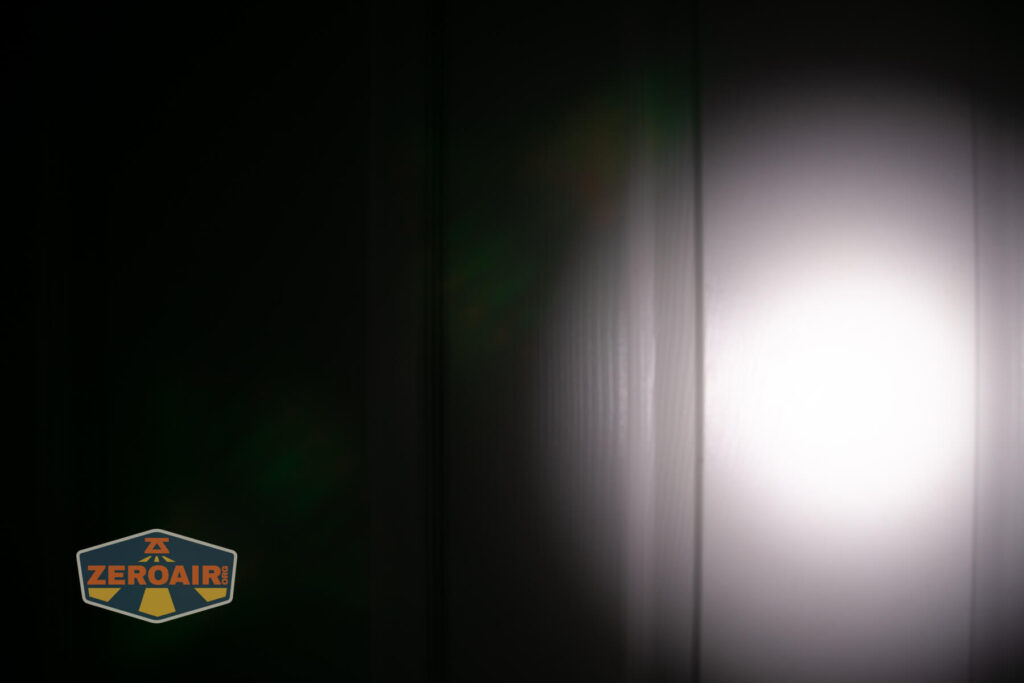

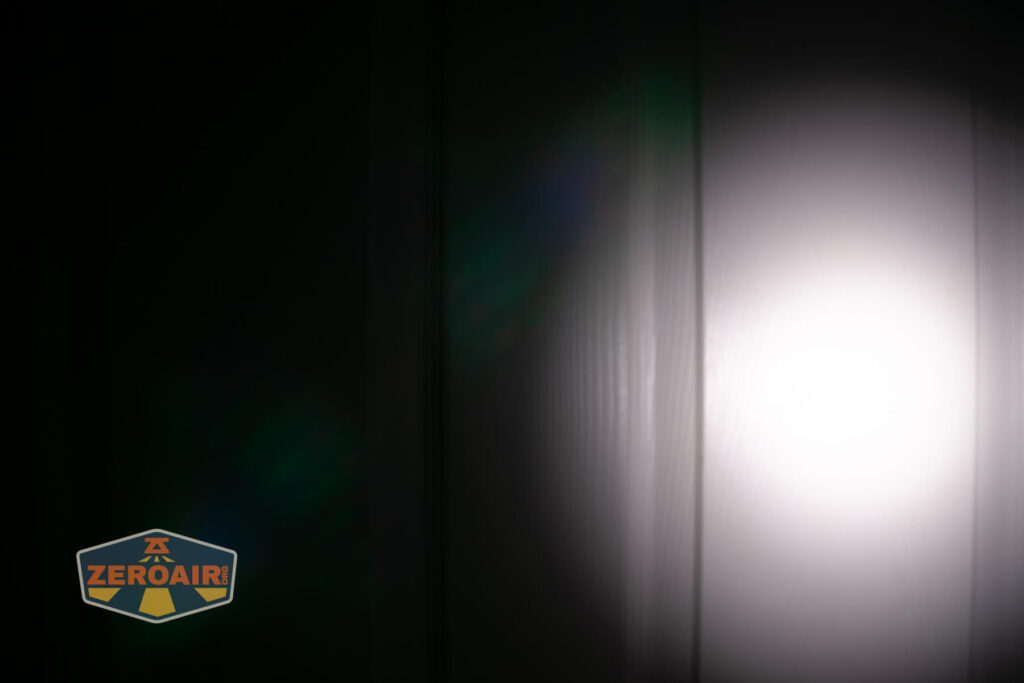
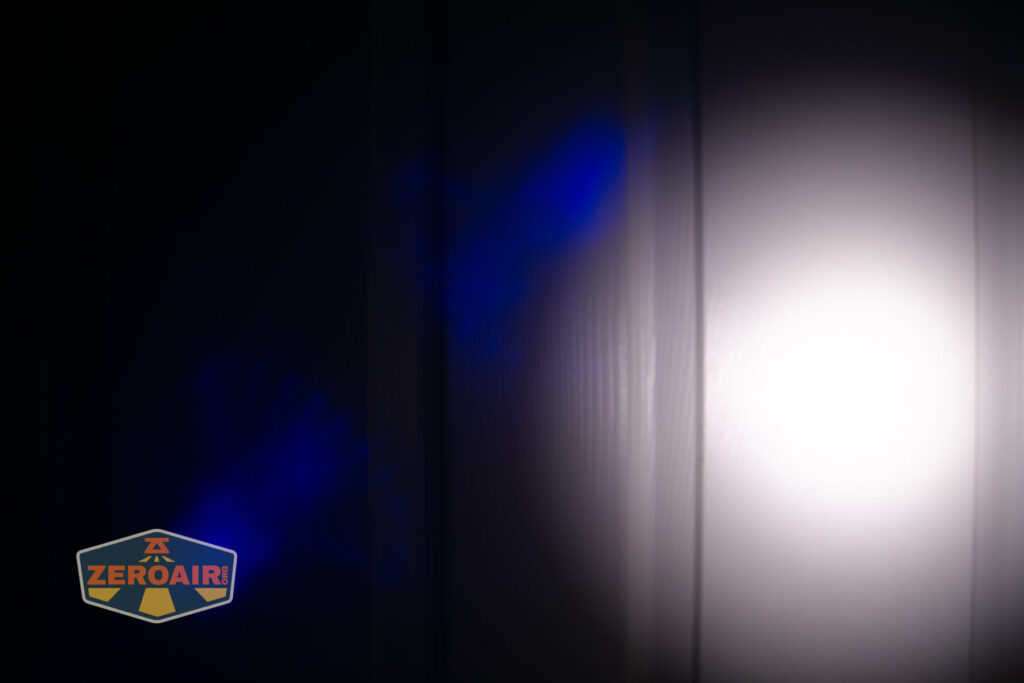
I compare everything to the KillzoneFlashlights.com 219b BLF-348 because it’s inexpensive and has the best tint!
Conclusion
What I like
- Titanium construction
- The polished titanium is very attractive!
- Very simple user interface
What I don’t like
- Throw claim not even close to being met
- Lumen claim not met
- Doesn’t charge the cell completely
- No low voltage protection
- User interface bugs (specifically mode advancing)
- RGB can’t be controlled
- Must remove head fully to charge via USB-C
Notes
- This content originally appeared at zeroair.org. Please visit there for the best experience!
- Please use my Amazon.com referral link to help support zeroair.org!
- Please support me on Patreon! I deeply appreciate your support!
Discover more from ZeroAir Reviews
Subscribe to get the latest posts sent to your email.
I recently bought the Astrolux ED01, which is the same flashlight as this one, but in green aluminum. I bought it on Banggood at a very good price of 15€ or 16USD approximately.
It came with a 18650 battery and a reducer tube for 18350.
After testing it quite a bit, I give my opinion:
It does not meet the announced outputs or the battery life (that has been made clear in this review) by any means.
The modes are poorly spaced. 10-550-1287 (theoretical). There is at least one more mode missing between low and medium.
The USB charging system is absurd.
The front RGB LEDs are useless. It is nothing more than a mini disco light.
The rear LEDs can only be turned off by unscrewing the head.
I only see it as a good option if you buy it in a kit at a bargain price with the 18350 tube. By buying one of these batteries, you have two flashlights in one.
Otherwise, a Sofirn SC18, Wurrkos WK03 or some entry-level 18650 from a cheap brand are a much better option, really more powerful and with better battery life.