
Olight R50 Seeker Flashlight Review
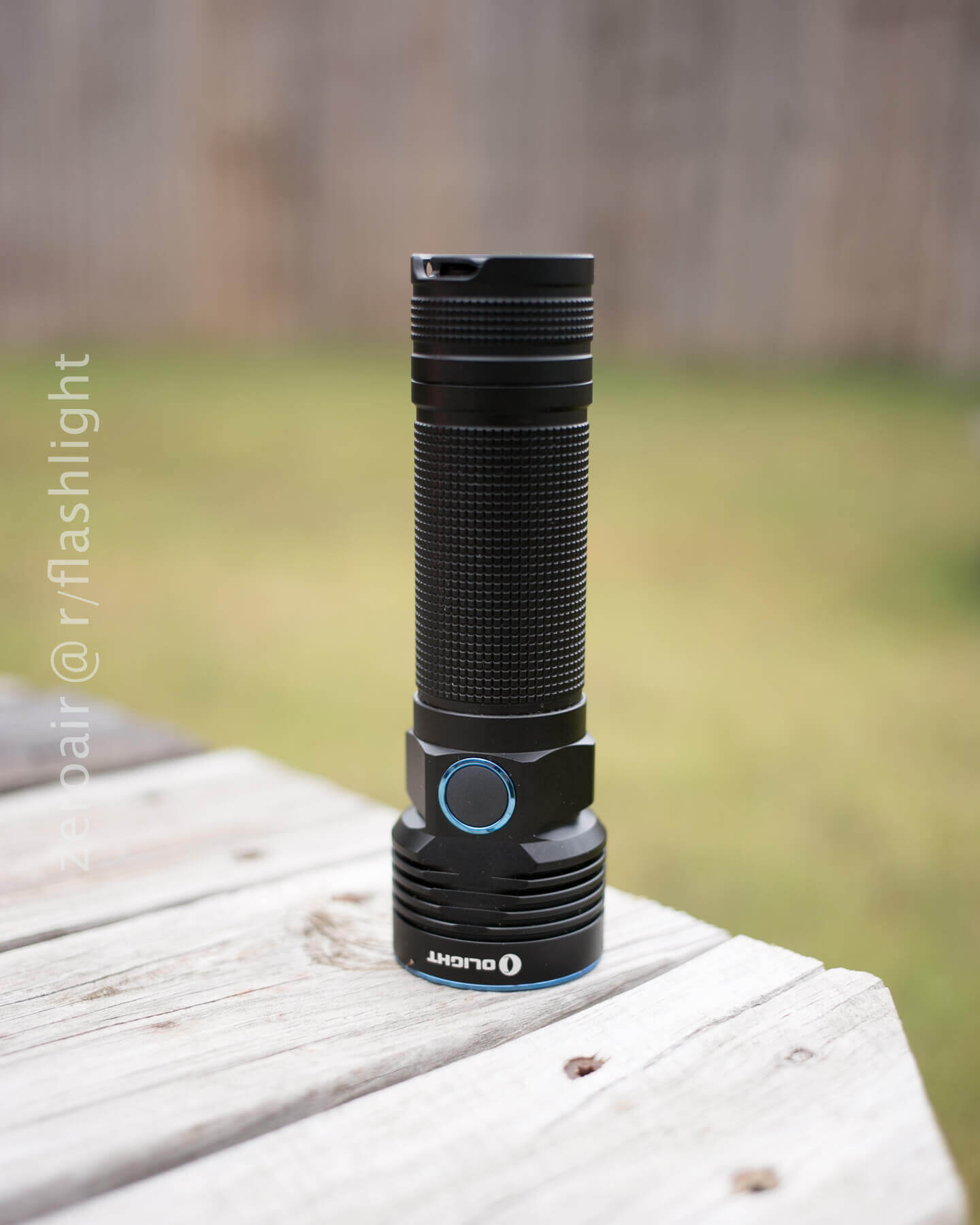
Here’s the Olight R50 Seeker flashlight that uses a Cree XHP50 emitter and includes the cell. It has an e-switch for operation. Read on!
Olight R50 Seeker Official Specs
Here’s a link to the Olight R50 Seeker Flashlight product page.
- Features a Cree XLamp XHP50 LED, maximum output of 2500 lumens, and runtime up to 50 hours.
- Side switch cycles through three brightness levels. double click access to Turbo while triple click access to Strobe.
- Multi-function side switch featuring a battery power indicator that glows red when the battery runs low.
- automatically returns to your last brightness level from the off position with the built-in memory function.
- Built-in rechargeable 26650 4500 mAh lithium battery with charging cable included.
- Aircraft-grade aluminum body with anti-scratch type III hard anodizing
- Ergonomic design with chamfered edges for a comfortable feel in the hand.
- Lock-out function to prevent accidental activation.
- Waterproof up to 2 meters.
This product has the following specifications (ANSI/NEMA FL1-2009 Standards):
| Parameter | Rating |
|---|---|
| Max Output (lumens) | 2500 |
| Low (lumens) | 50 |
| Max Run Time (hours) | 50 |
| Beam Distance | 297 m |
| Peak Beam Intensity (candela units) | 22,000 cd |
| Water Resistance | IPX8 (up to 2 meters) |
| Impact Resistance | 1 m |
| Head Diameter | 1.65 in. / 42 mm |
| Length | 5.24 in. / 133 mm |
| Battery Type | 26650 |
| Weight (oz) | 8.9900 |
| pocketclip | No |
| User Manual | No |
The above section contains the manufacturer’s descriptions and claims, not my impressions or results.
Short Review
Fantastic XHP50 26650 light. Perfect for a first-time serious flashlight buyer who has a little ‘flashlight’ setup (no charger, batteries, etc).
Long Review
The Big Table
| Olight R50 Seeker | |
|---|---|
| Emitter: | Cree XHP50 |
| Cell: | 1×26650 |
| Runtime | |
| LVP? | ? |
| Switch Type: | E-Switch |
| On-Board Charging? | No |
| Claimed Lumens (lm) | 2500 |
| All my Olight reviews! | |
History and Use-Case
The Olight R50 is the next generation of the Seeker series – the previous being the Olight R40. This is a step forward – the R40 had an XM-L2 and was rated at only 1100 lumens. The R50 has an XHP50, which gives an estimated 2500 lumens. It also ships with an improved capacity battery (4000 vs 4500 mAh).
This solidifies Olight’s entry into the “compact wall-o-light” category and is in a class all to itself in the single 26650 XHP50 category.
What’s Included
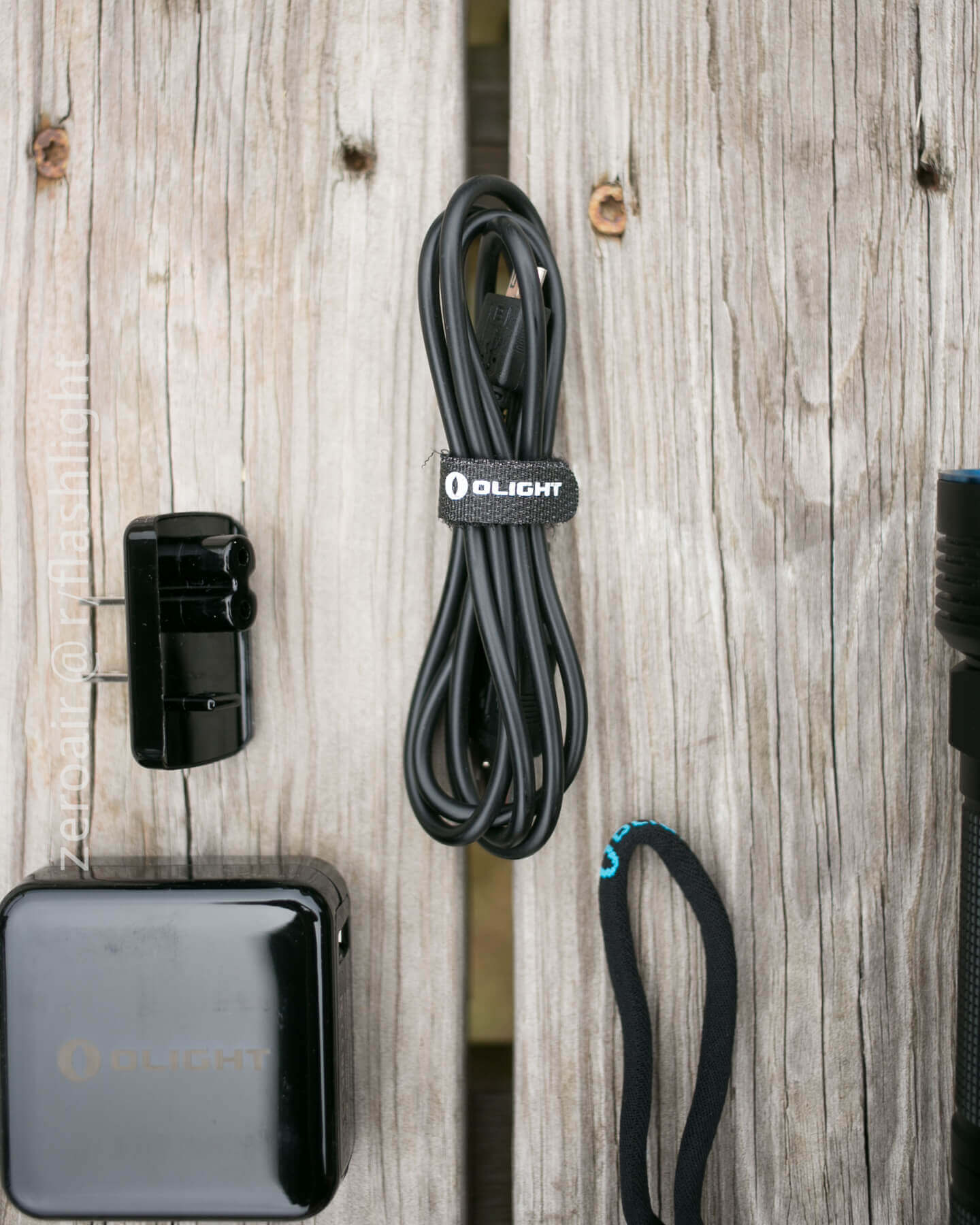
One of the more robust packages I’ve seen with a light, and one that’s clearly been thought out and planned as a “one-shot” type purchase. You’ll get everything you need to roll with!

- Olight R50
- Lanyard
- Olight dual-polarity 4500 mAh 26650 cell
- Micro-USB charging cable (1m)
- US-Plug wall charger with a USB port
- User Manual
Build Quality, Durability, and Disassembly
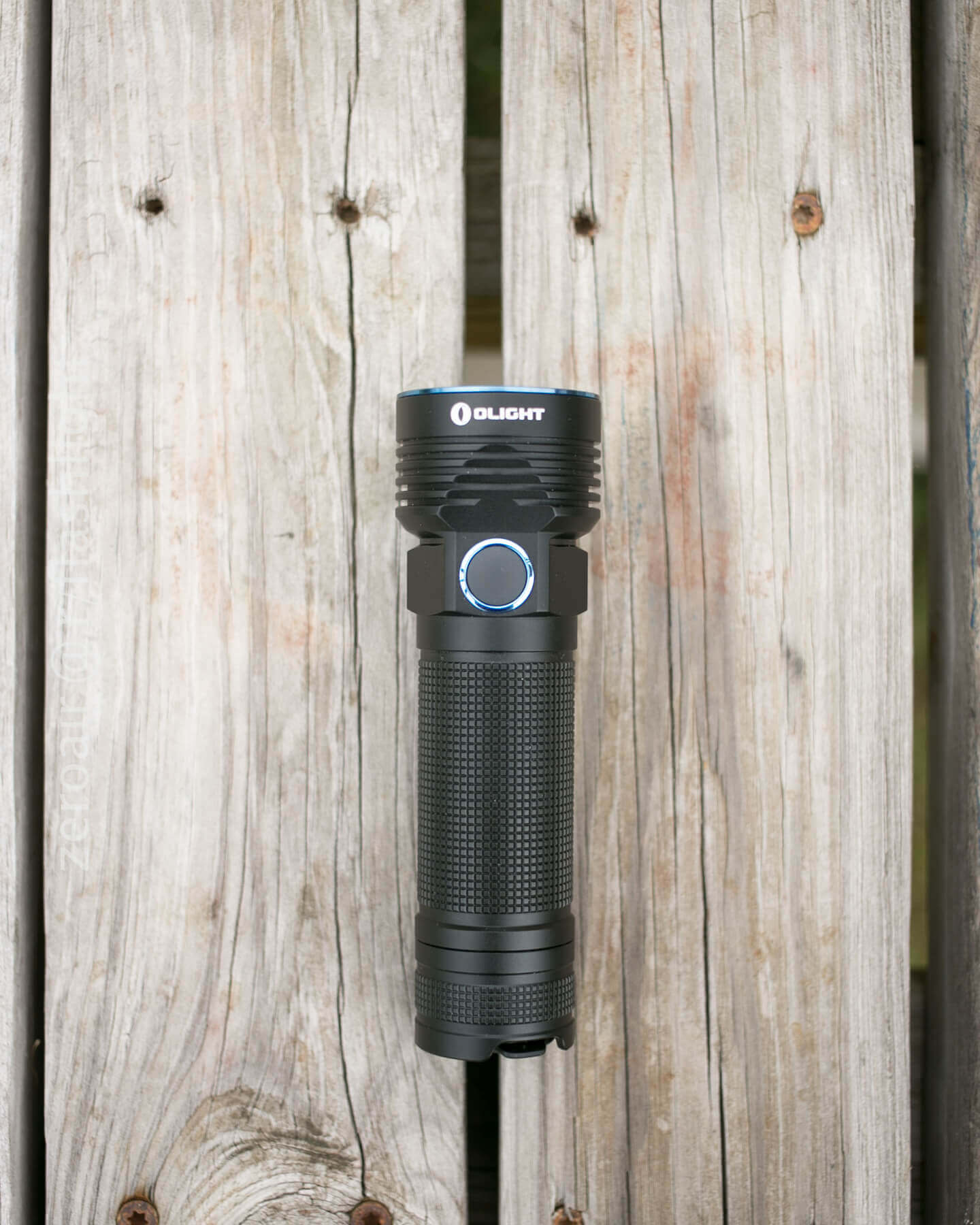
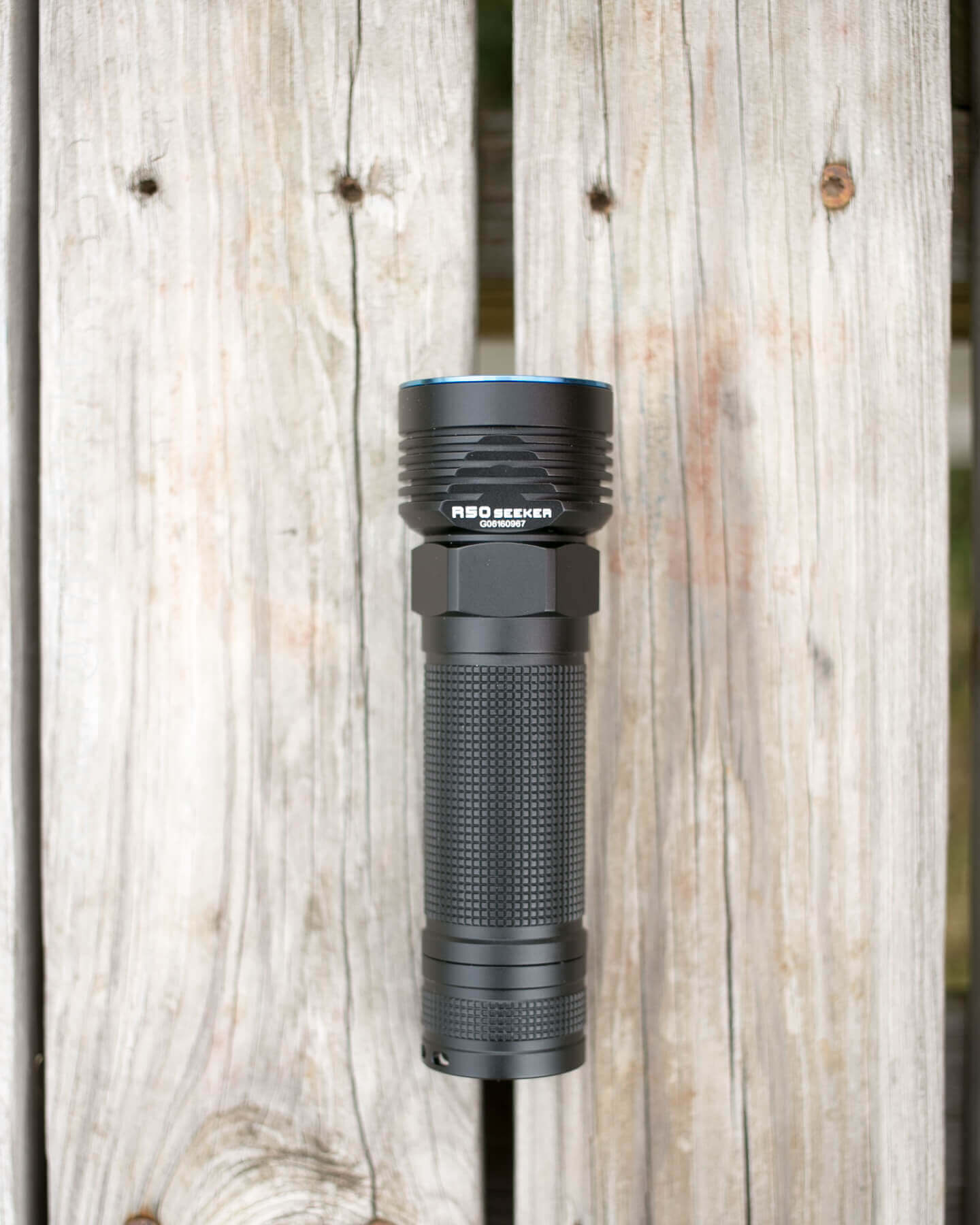
The R50 Seeker is a very well-manufactured, high-quality light. The rubber cover over the micro-USB port seals very firmly, and the micro-USB cable attaches snugly in the micro-USB slot.


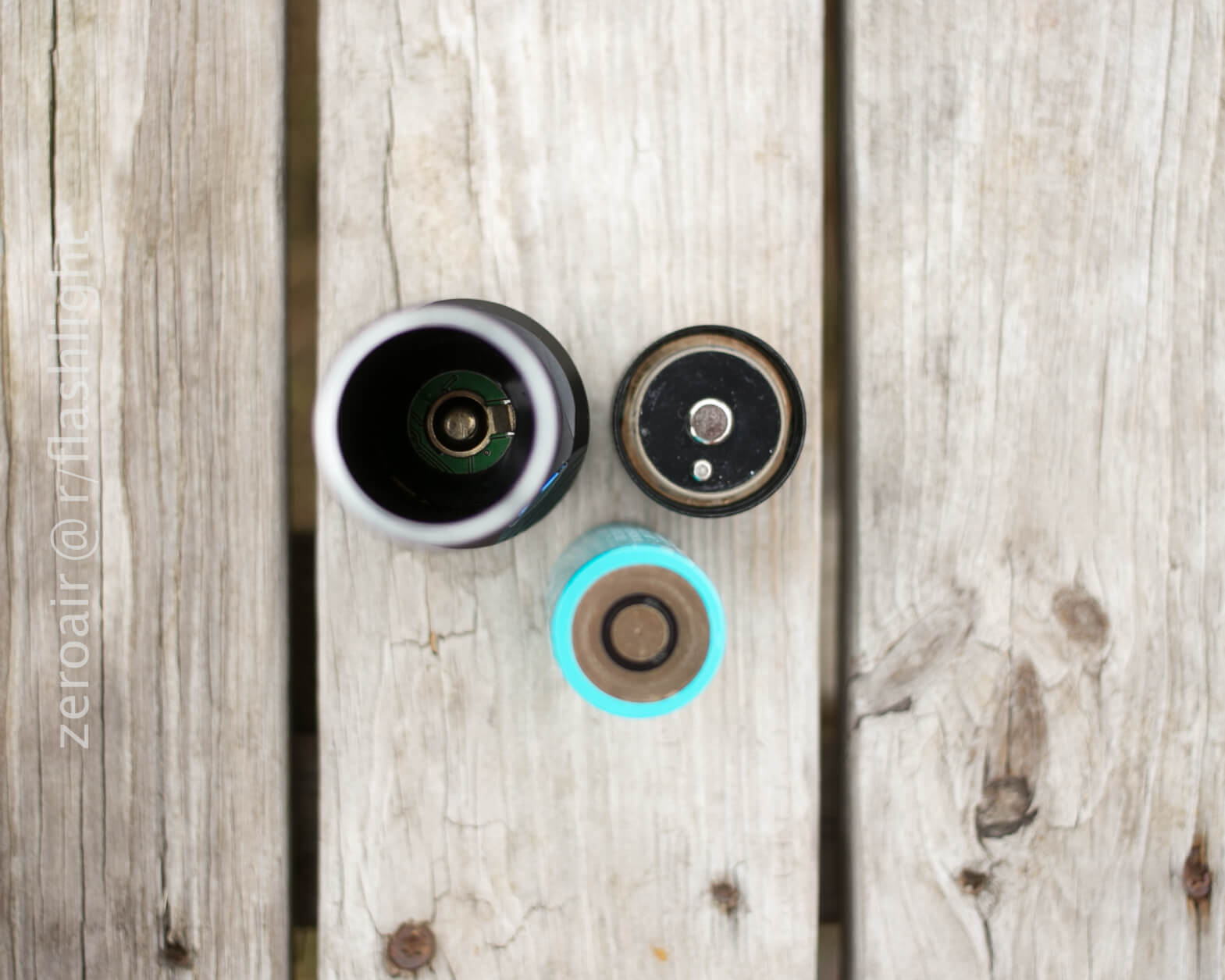
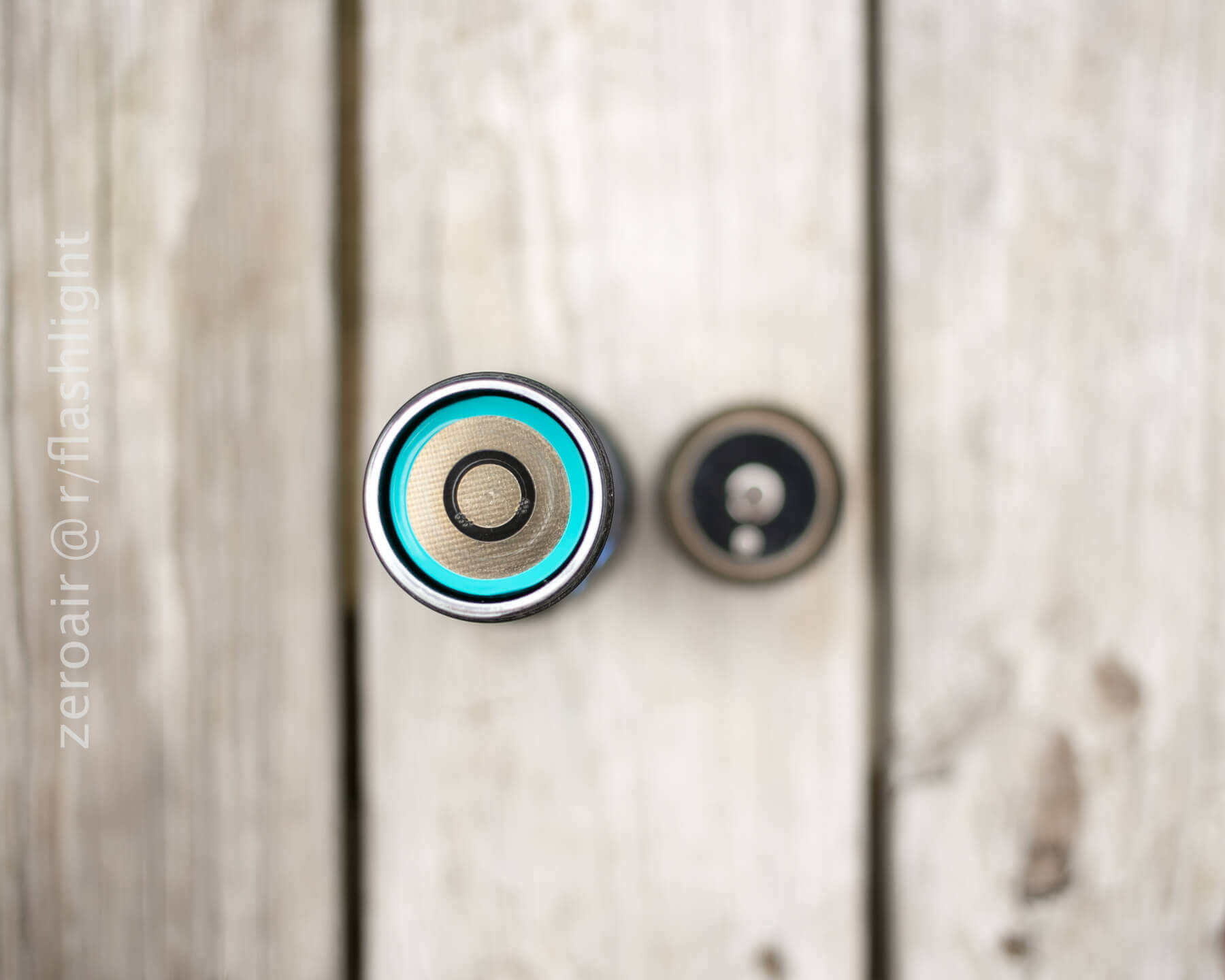
The light does not disassemble, except to unscrew the tailcap and access the battery tube. Note that both those little buttons there are springy. One (the thinner taller) is presumably what allows in-light charging. And that black disc seems to be rubber, and is surprisingly grippy!

The head is press-fit in, like many other current Olights, and is not to be removed.
Looking down the battery tube, one can see the positive terminal – it’s a little brass button, almost just like on the Olight S1A.
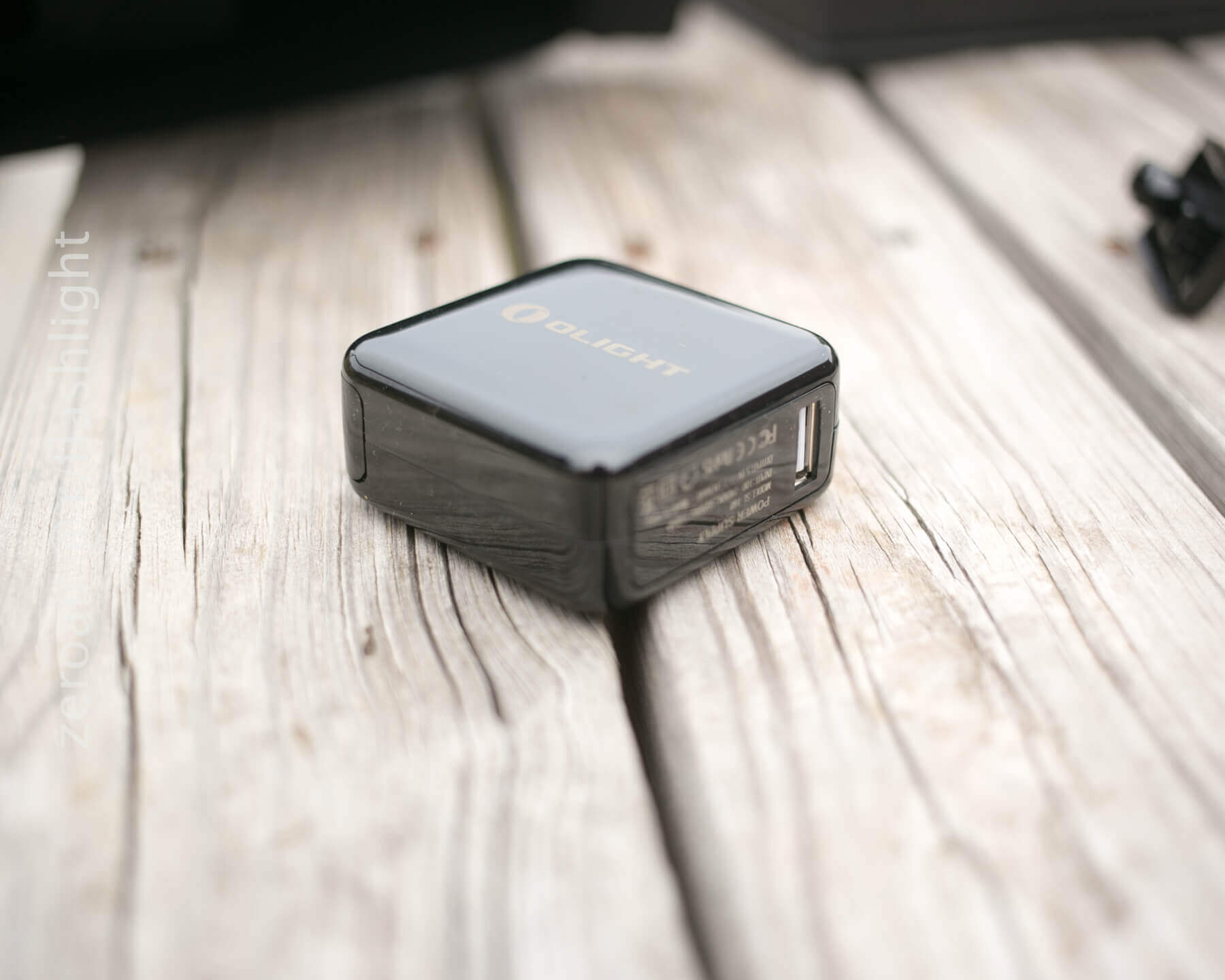
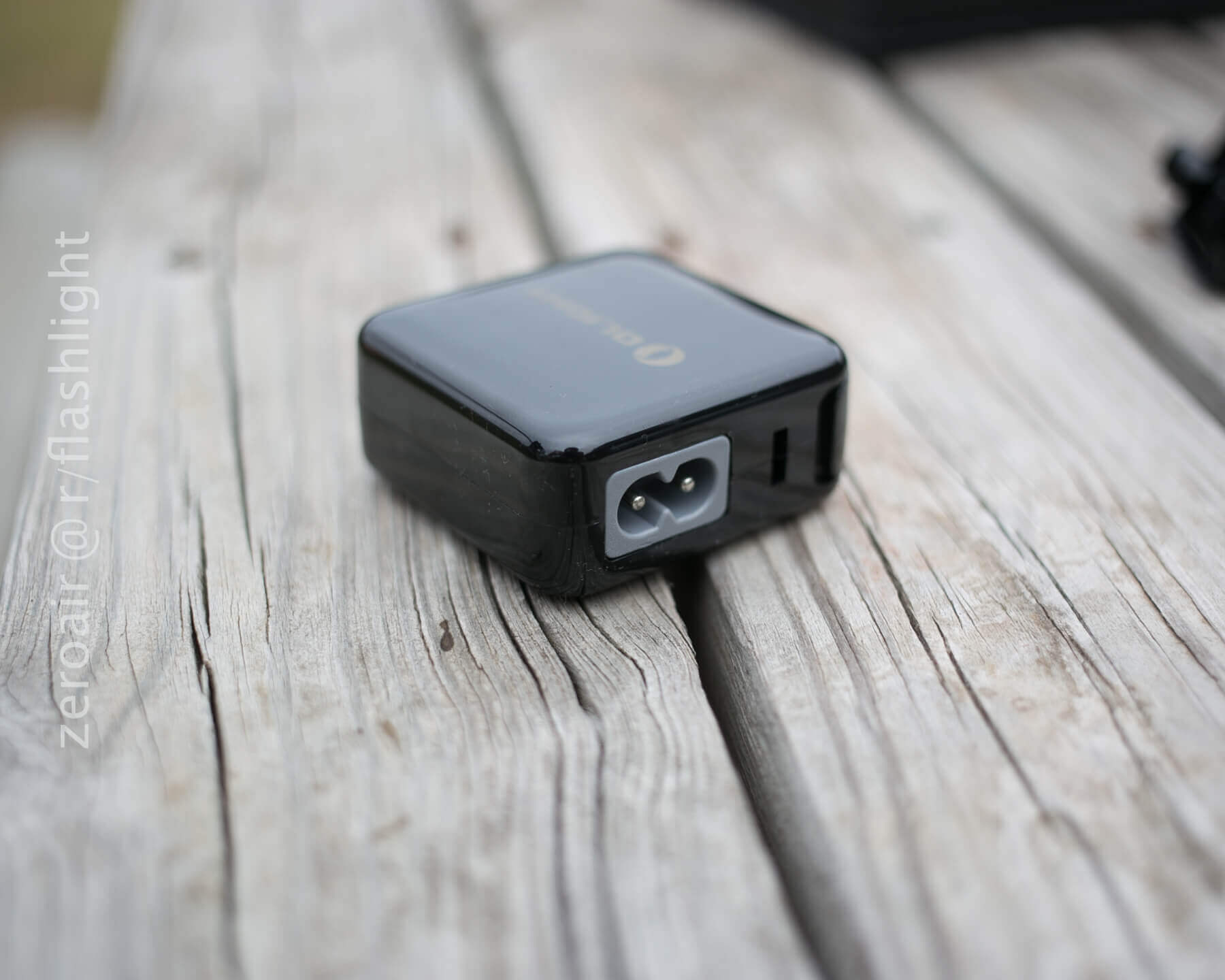
The other components are high quality too. The wall wart has a USB out and a non-polarized C7 in. Provided with the package, though, is a plug-to-non-polarized-C7, and this has a locking bit, so it’ll click in and lock. It’s removed by a button on the wall wart. The combination of these two items works together perfectly, but the C7 adapter does look and feel like a bit of an afterthought.

The micro-USB cable is nice quality too (unlike many other cables that come with lights)!
Package and Manual
The package is something else, with this R50! It arrives encased in a thin plastic wrap. It’s a very nice box, held closed by a flap secured by a couple of magnets. Inside the box is the flashlight – a ribbon is provided to allow easier lifting of the precious cargo. The other goods are inside a smaller box, which also has a ribbon to allow removal. All the accessories are in this little box, including the manual.
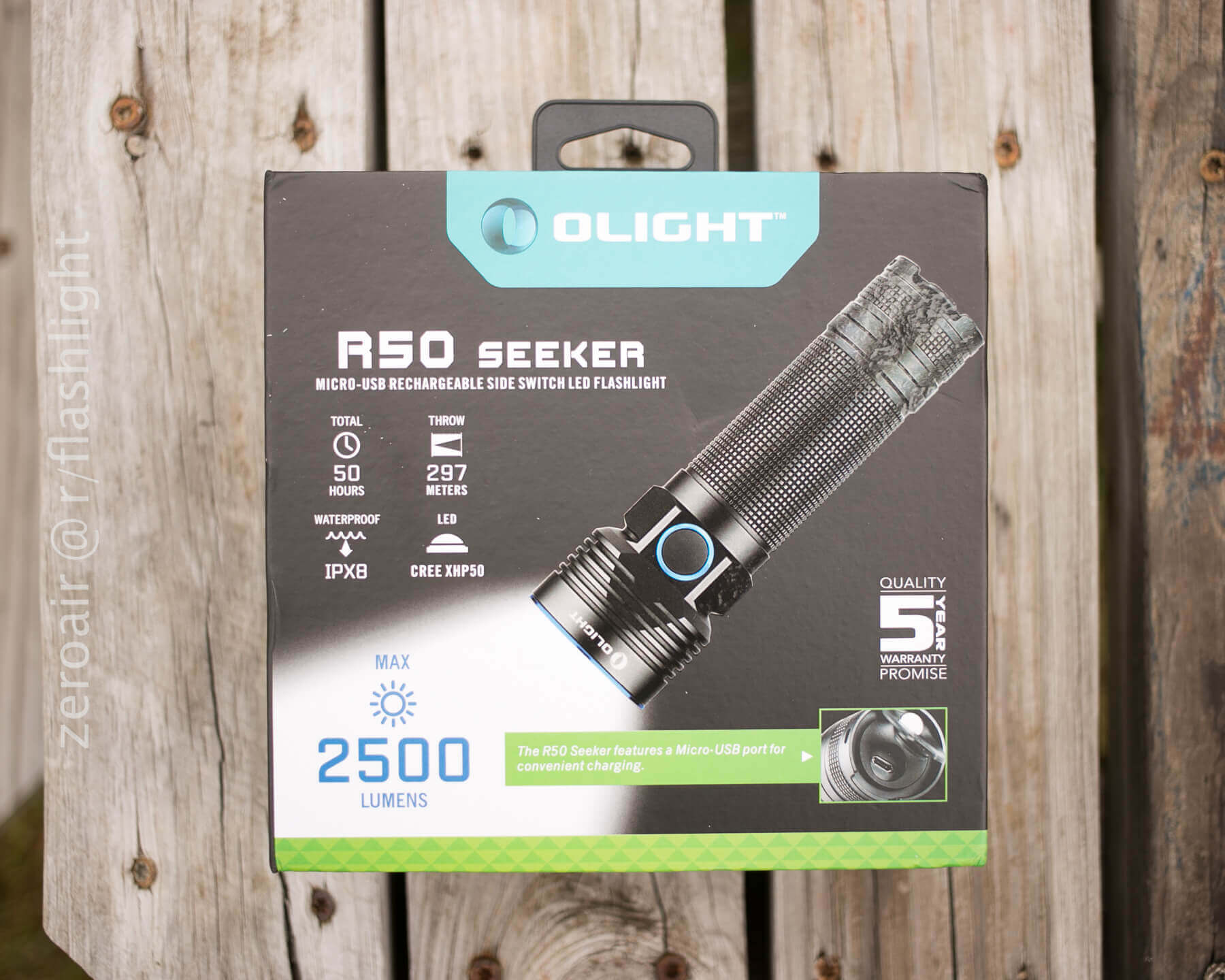


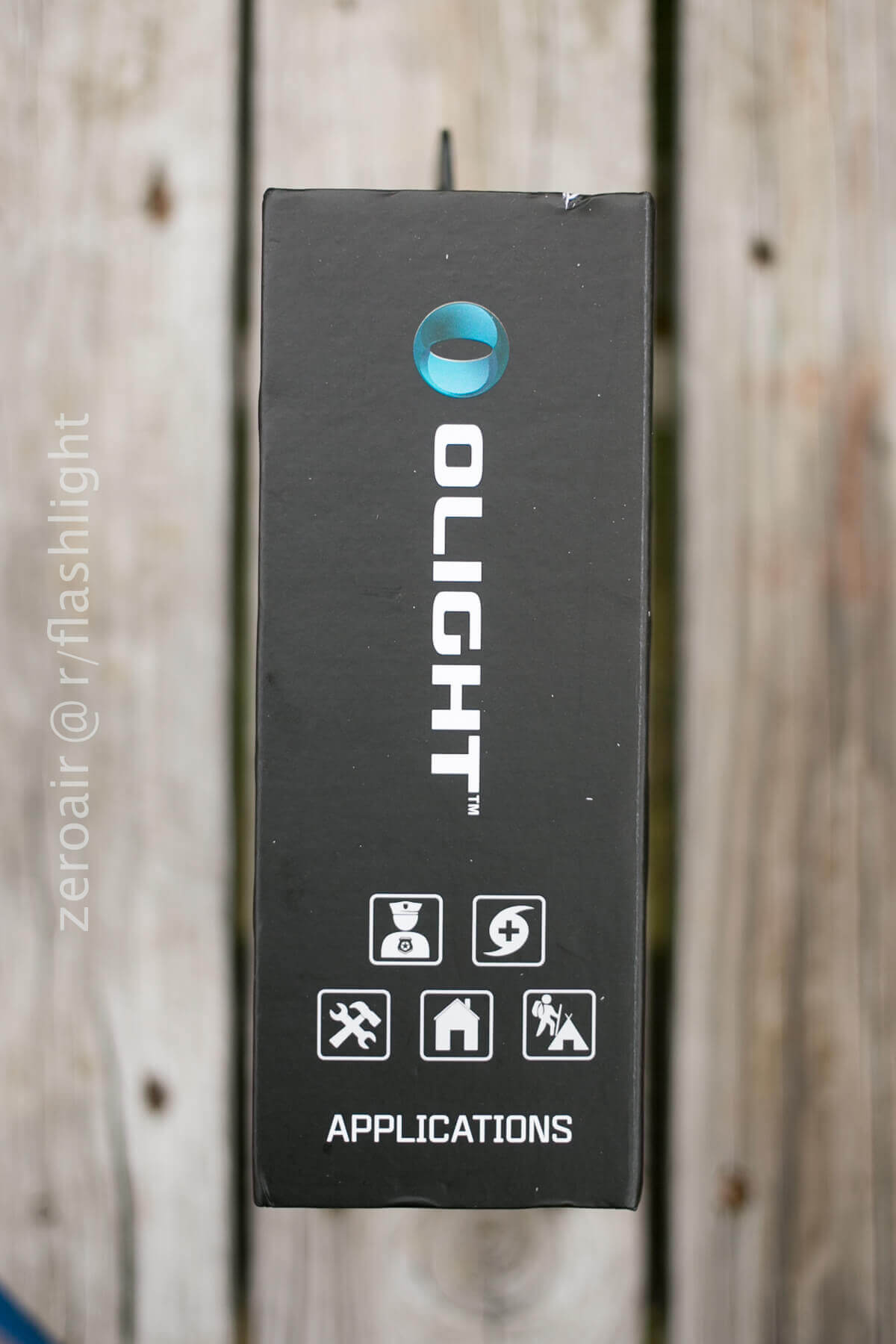
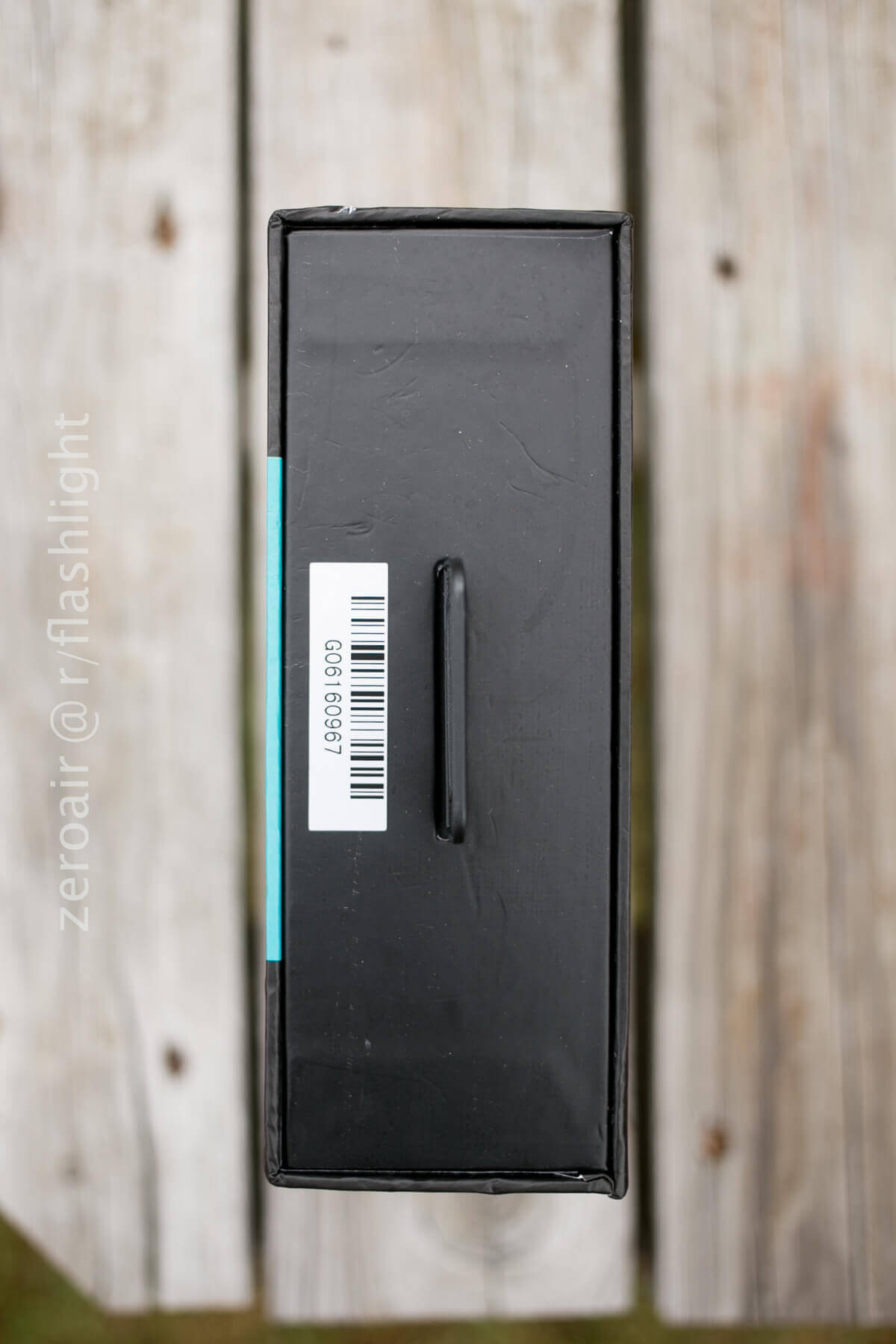
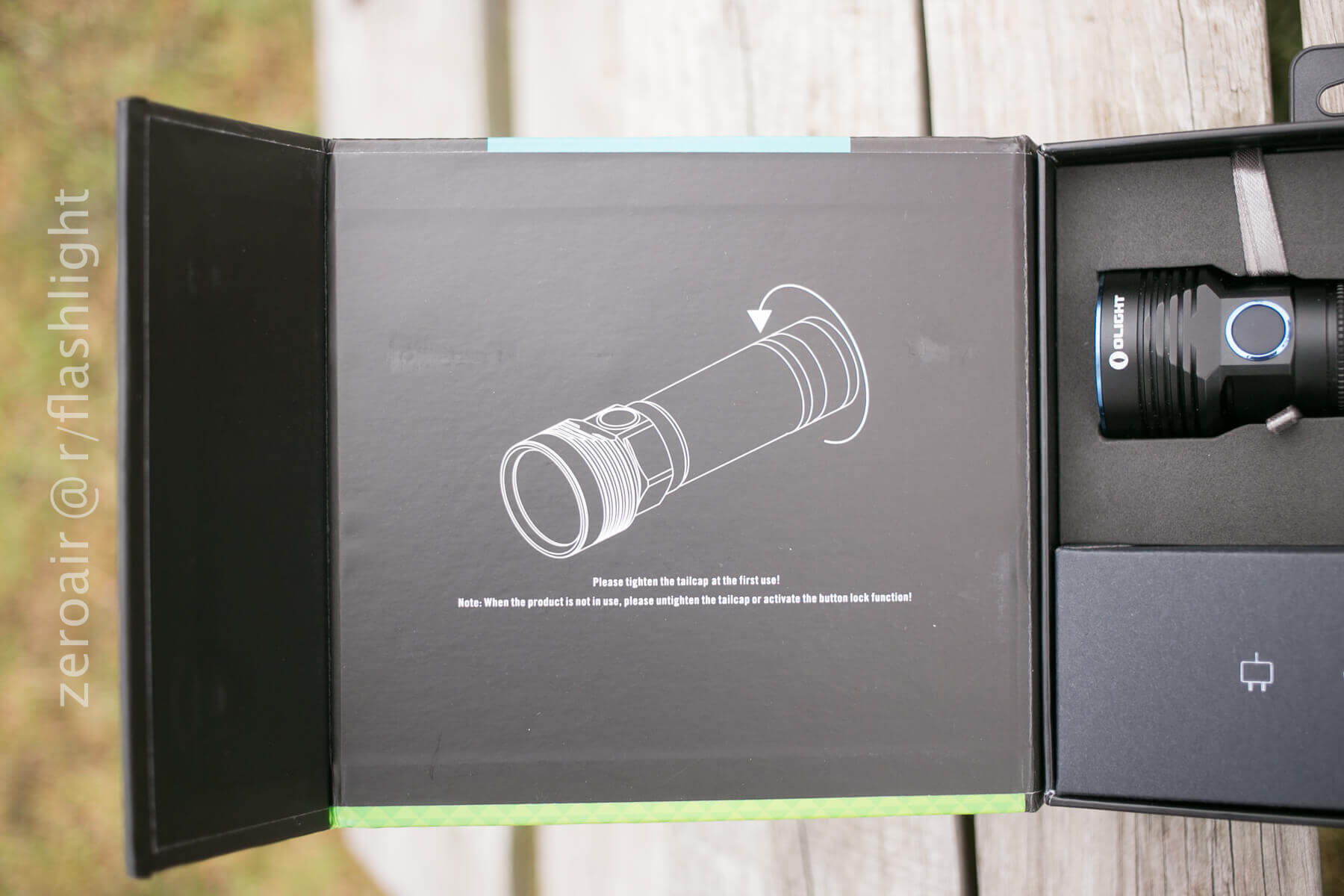

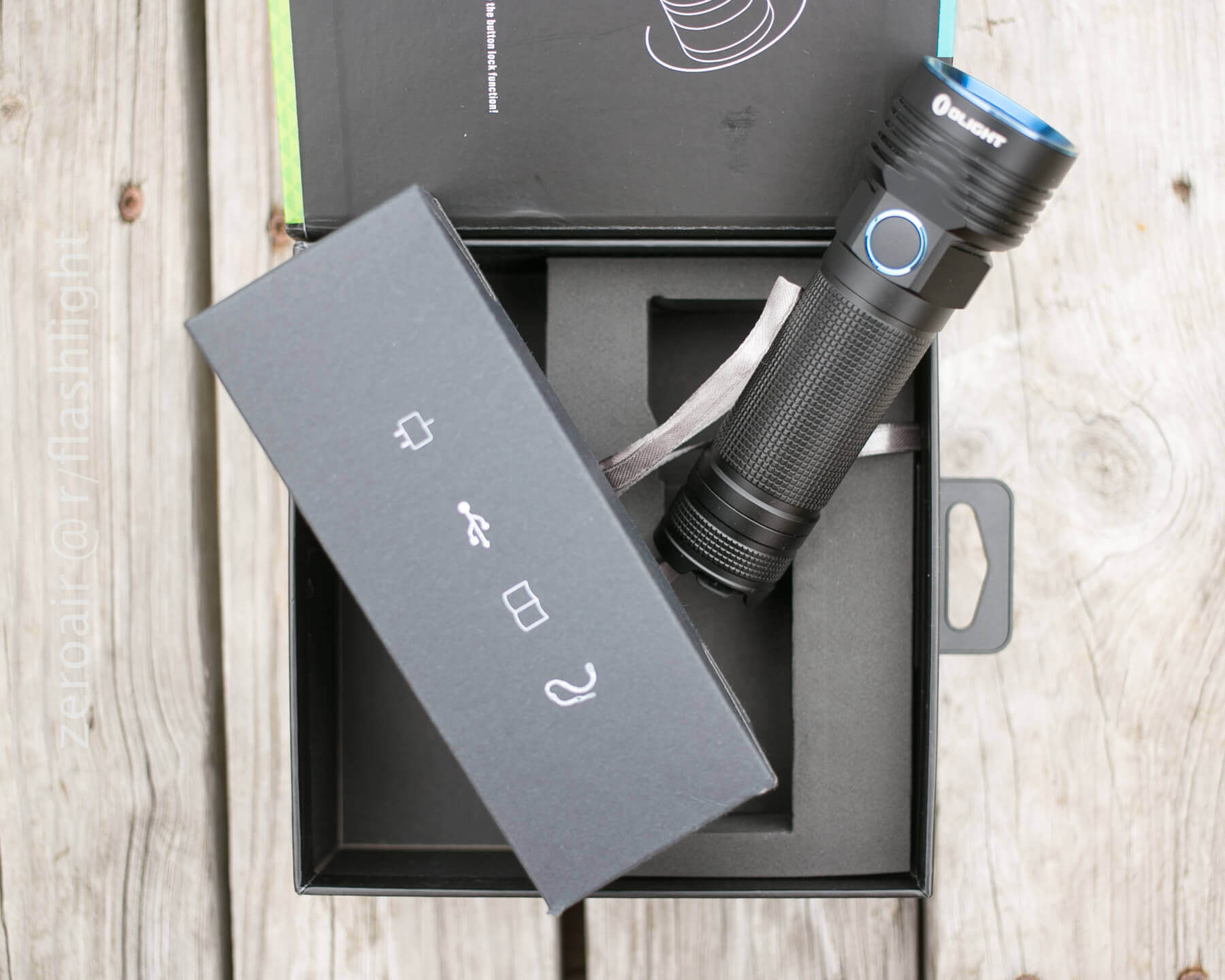
These are nice touches! It might not seem necessary but, for the type of light and consumer this is aimed at, it seems appropriate.
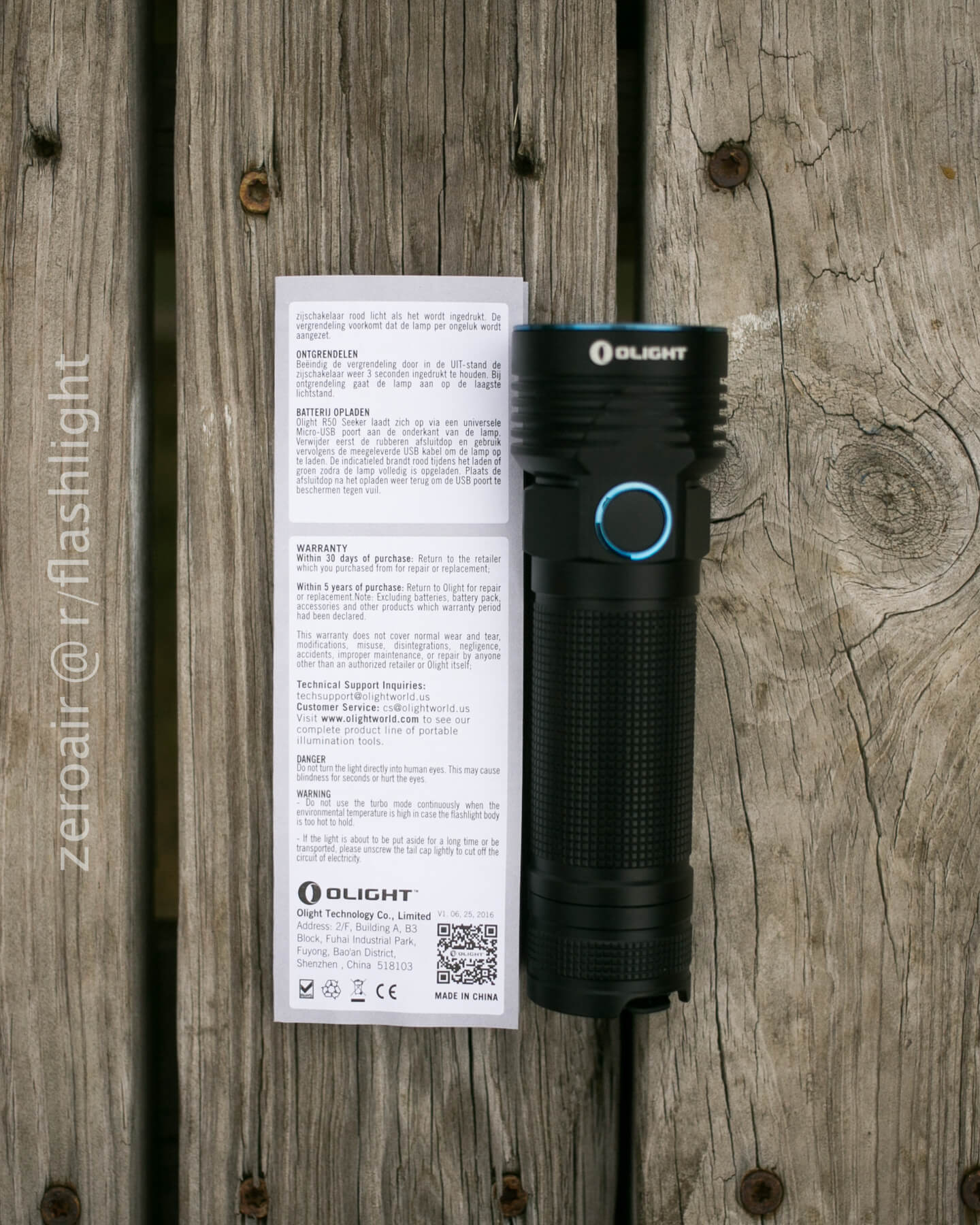
The manual is a typical Olight manual. A few pages of English, and a bunch of pages of non-English. The User Interface is covered, and general specs and warranties on the light too.

Retention
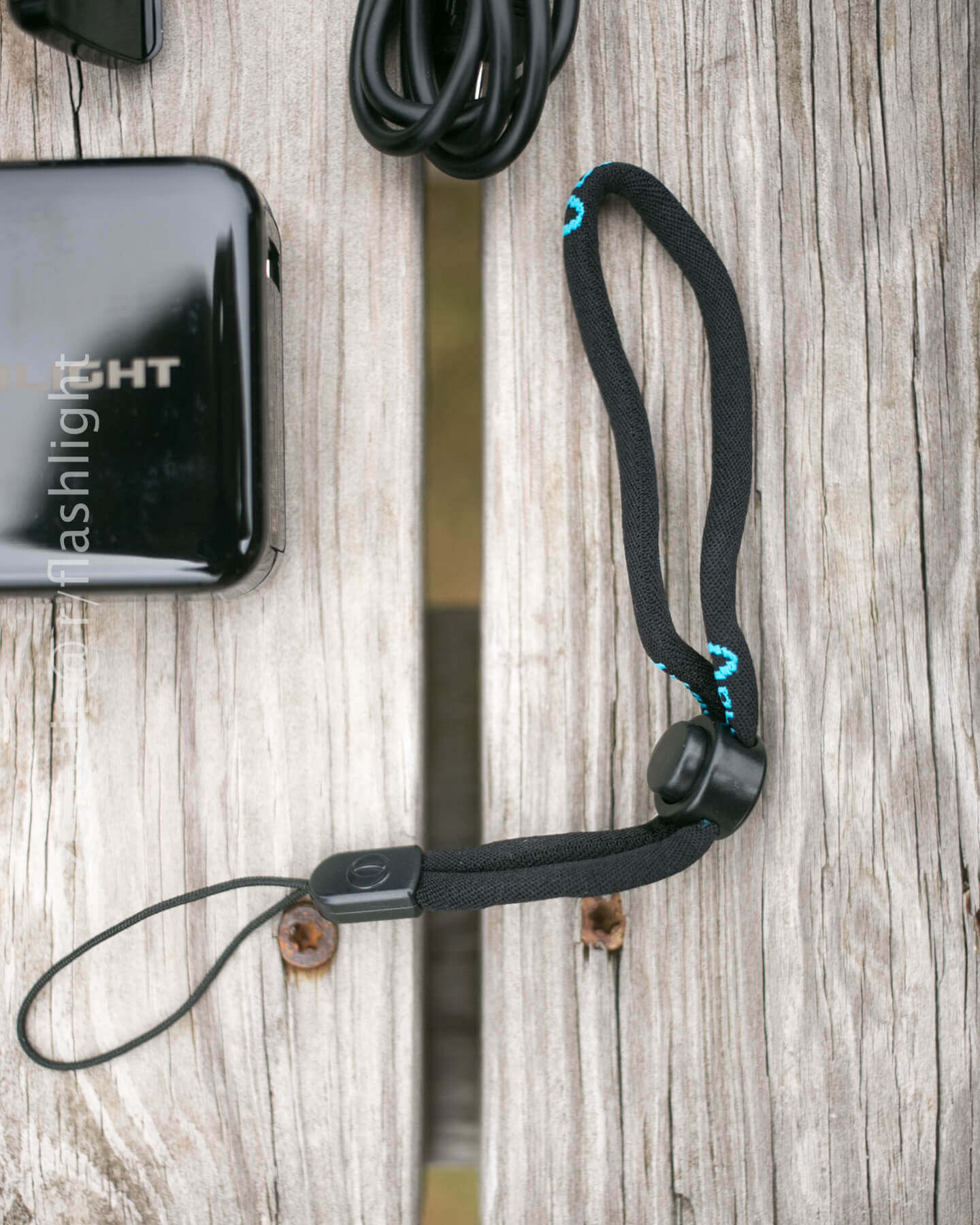
There’s a nice lanyard, which has a little button that allows tighter or looser retention. There’s no clip, and that’s fine; this light is really too big to comfortably pocket. There’s no pouch, and this light might be great for a belt pouch. I personally would rather carry it in a bag – and in that case, a pouch might still be great.
A second option, if no pouch was provided, would be to provide a lens cover. The glass on the R50 is very clear – so clear it’s hard to tell how thick it is. As a result, it’s easy to think it’s thin glass. So it’d be nice to have a way to protect it. A little cap would be great (think like the cap binoculars have on the lens), then you could retain the light in a bag very easily, and not have to futz with a pouch.
Power
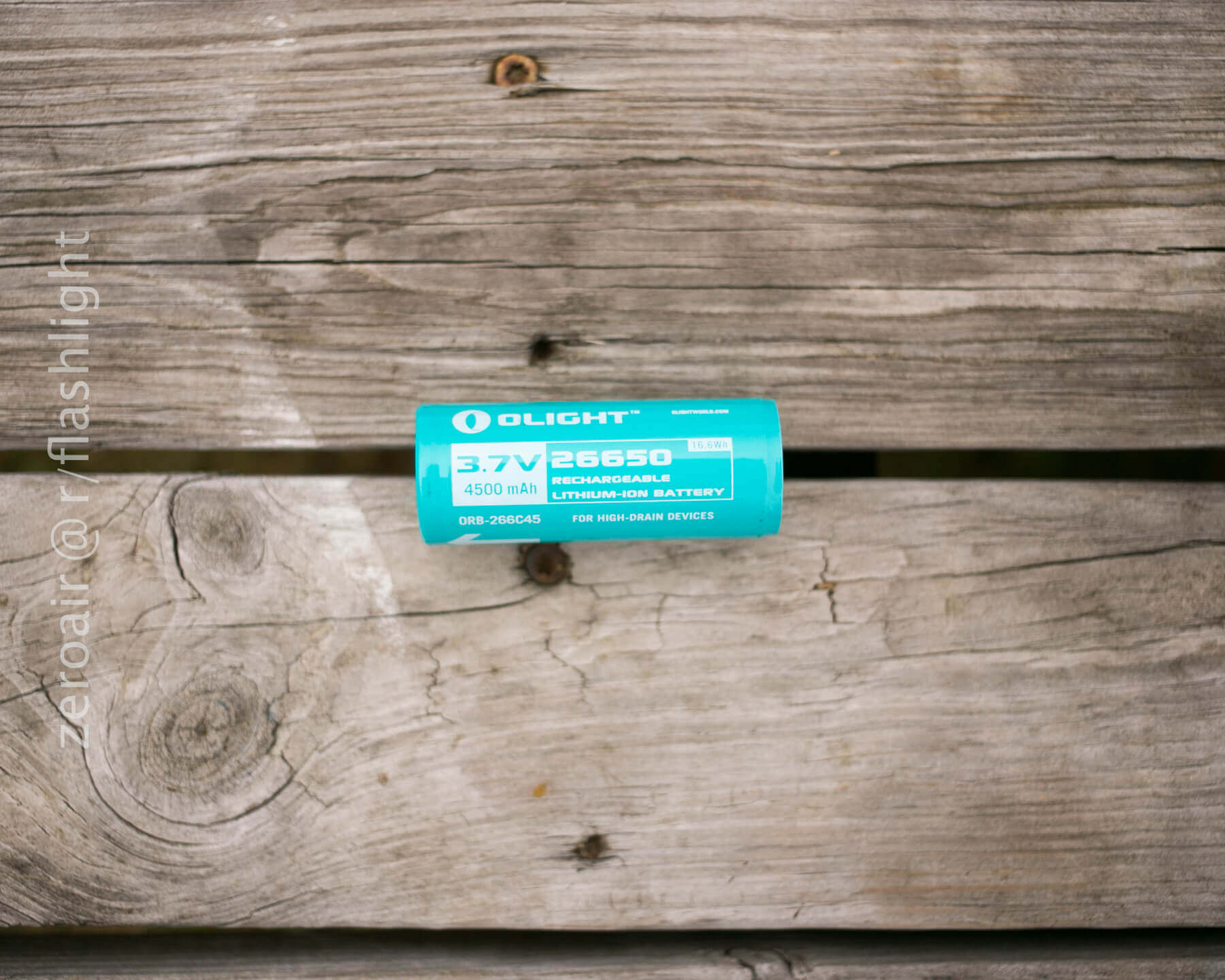
The Olight R50 Seeker works on one 26650 cell. The light ships with a 4500 mAh 26650 Olight cell. It’s a flat top and is a proprietary cell. On the negative terminal side, it’s clear what Olight has done to make this in-light charging work – the negative terminal is “dual-polarity” – the light can charge because the negative side has both positive and negative poles. Would this be easy to short? Well, I’ve handled the cell extensively and also placed it into an external charger. Technically, placing the cell into a charger, if good contact is made, would short the terminals. I did not have any issues from doing this, so Olight apparently has some protection built in that prevents shorting or even tripping the cell’s protection.
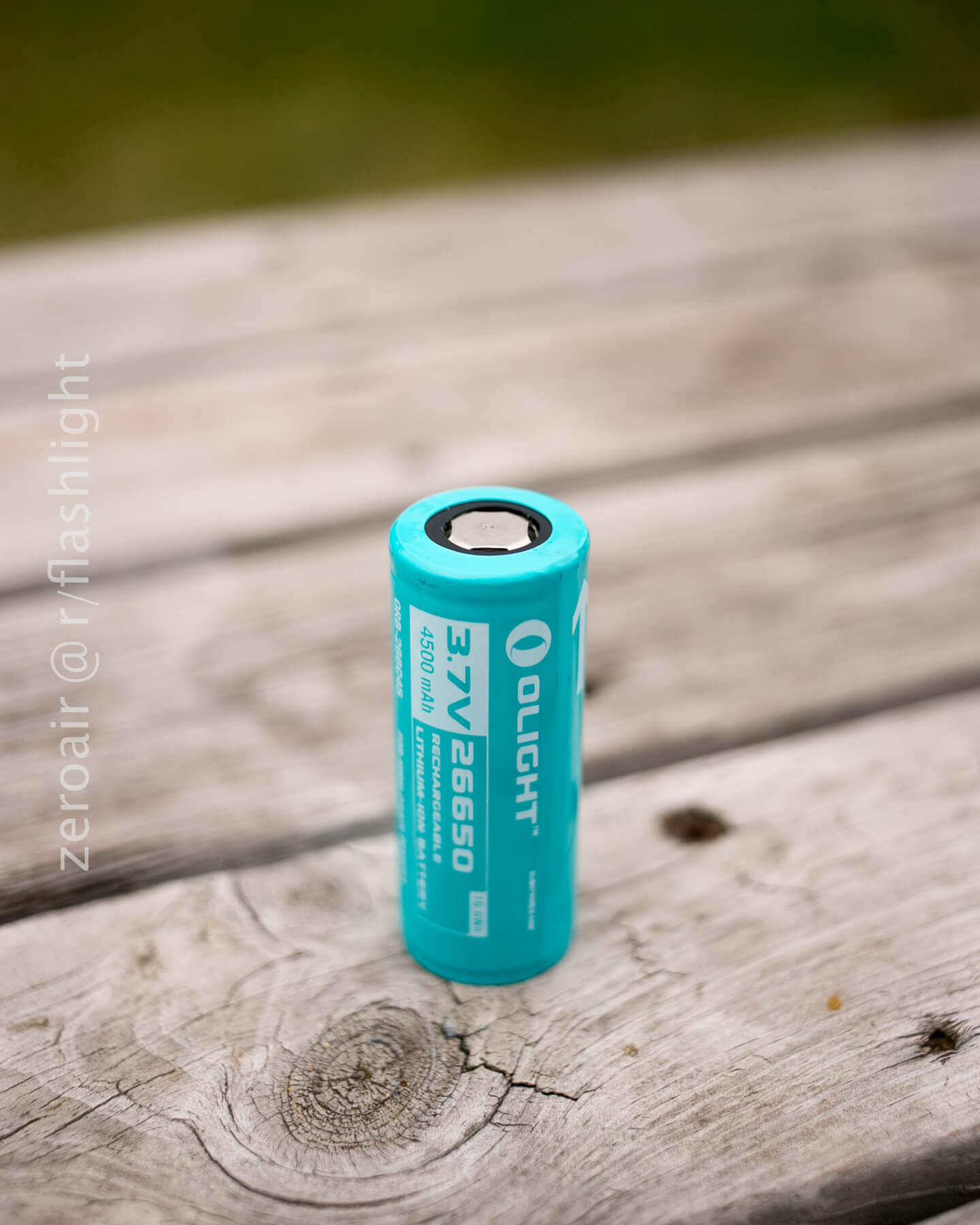
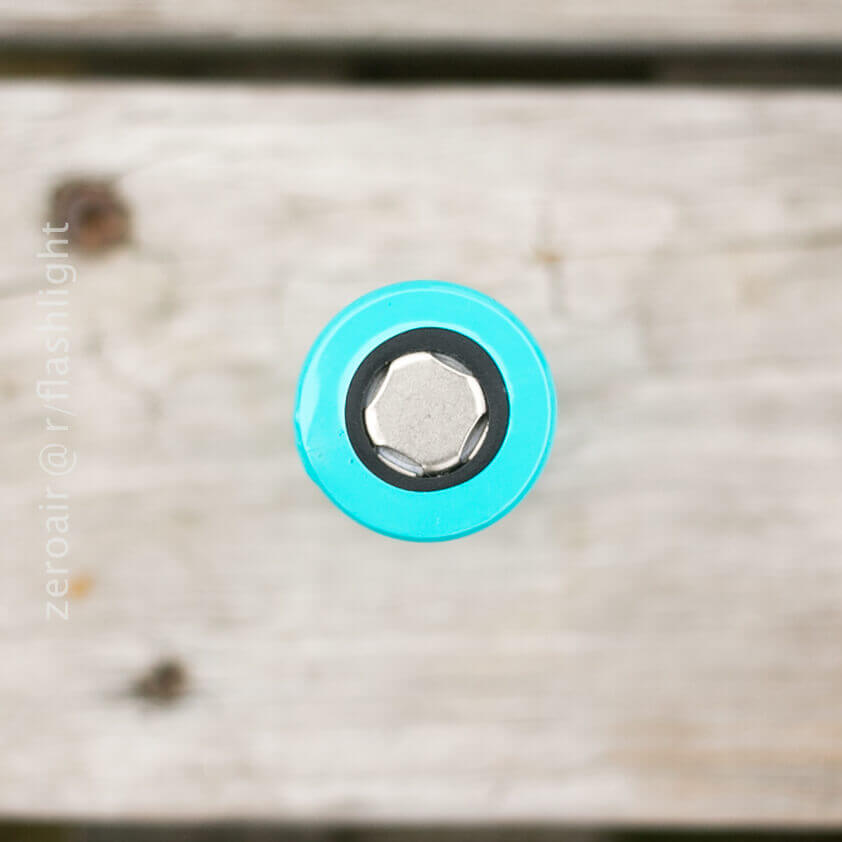
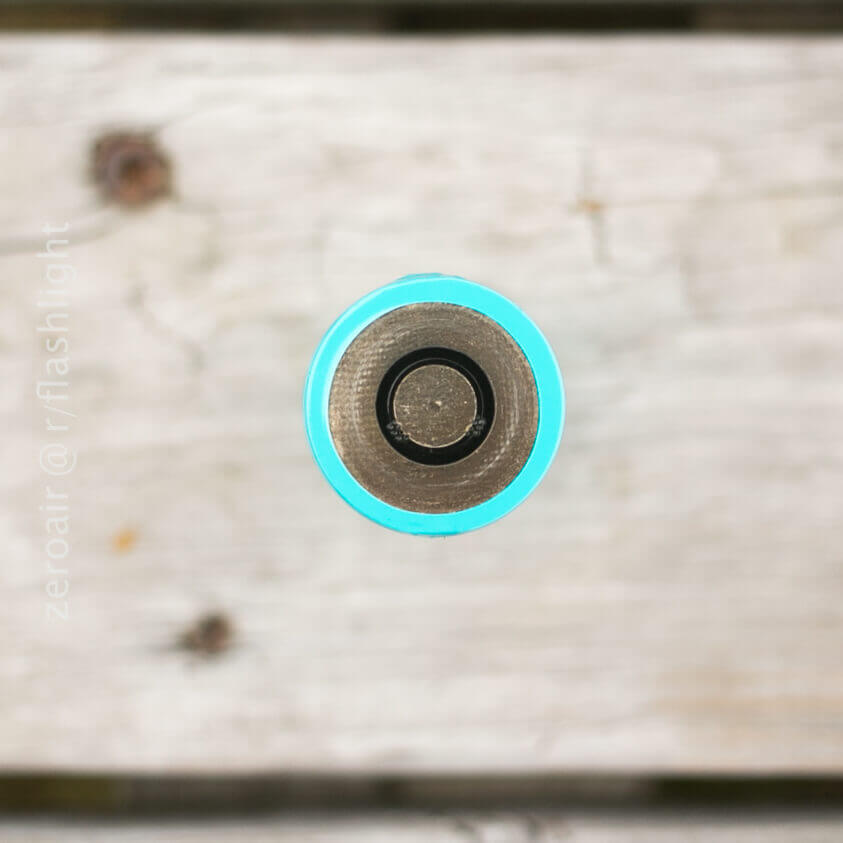
The R50 will work with “any” cell (I say “any” generally – it’ll work with my protected EVVA cells, which are long). So it’ll work with other protected cells as well.
It’ll also work with 18650s – the output should be the same (the cells would be the same voltage), but the runtime will be dramatically shorter.
Huge note about the cells on this light – both the one that’s provided, and the ones you might have on hand:
- The 26650 that ships with the light does not work in external chargers. So this Olight dual-polarity 26650 will only be charged in the Olight R50.
- The R50 will not charge non-Olight 26650s.
The real point of the notes section there: ^ One really needs to be married to or willing to own a bunch of Olight 26650s if they need multiples. I don’t, and this isn’t a big deal to me, BUT the light will work best on just the Olight cells. But “best” is confusing: The light output will be the same with any cells, only recharging will be affected. So if you never plan to use this light to recharge any cells, this shouldn’t pose any issue whatsoever.
I have just one other kind of 26650, an EVVA 4000 mAh protected cell. It’s fairly longer than the Olight cell. And you can see here the difference in a regular 26650 and Olight’s.
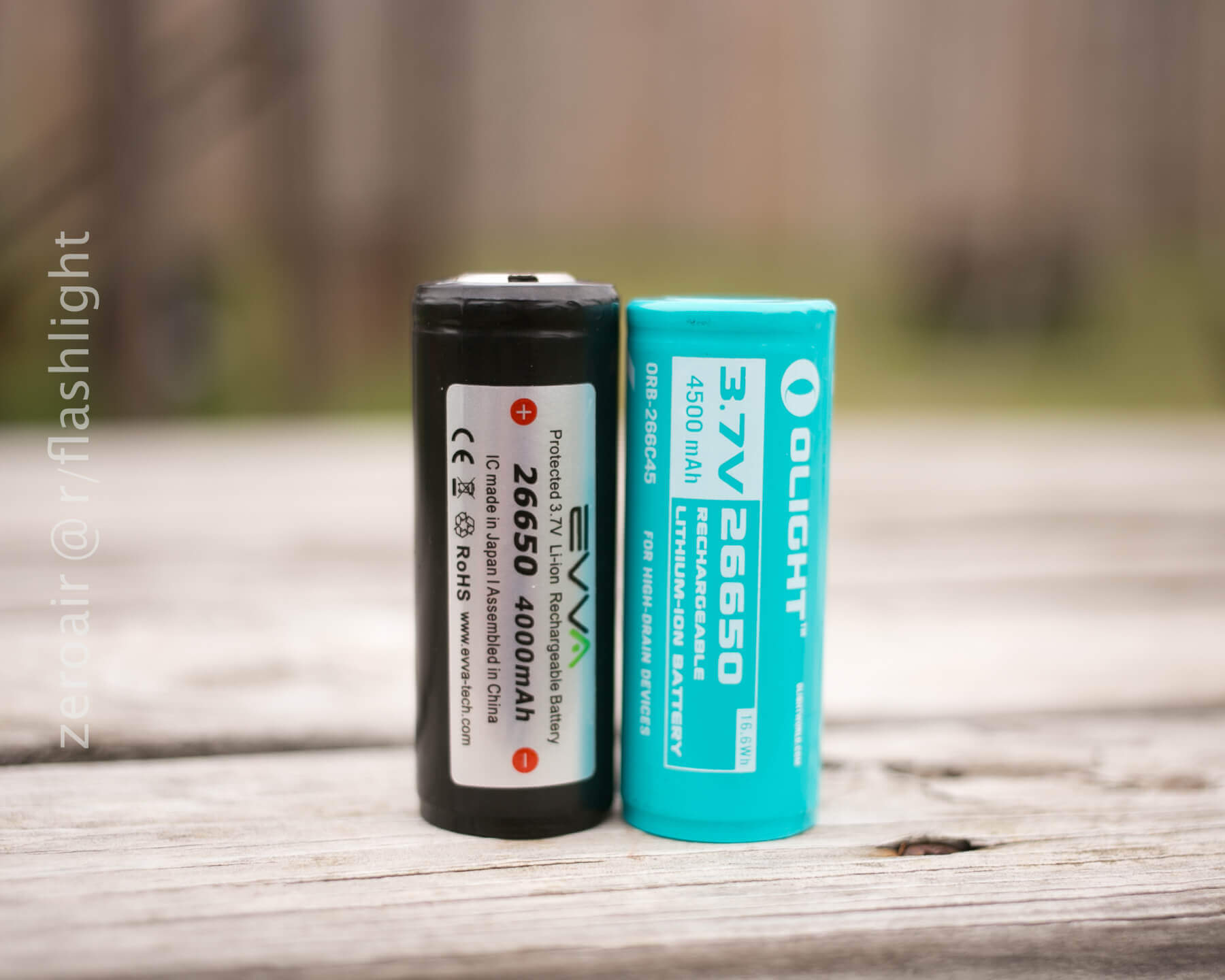
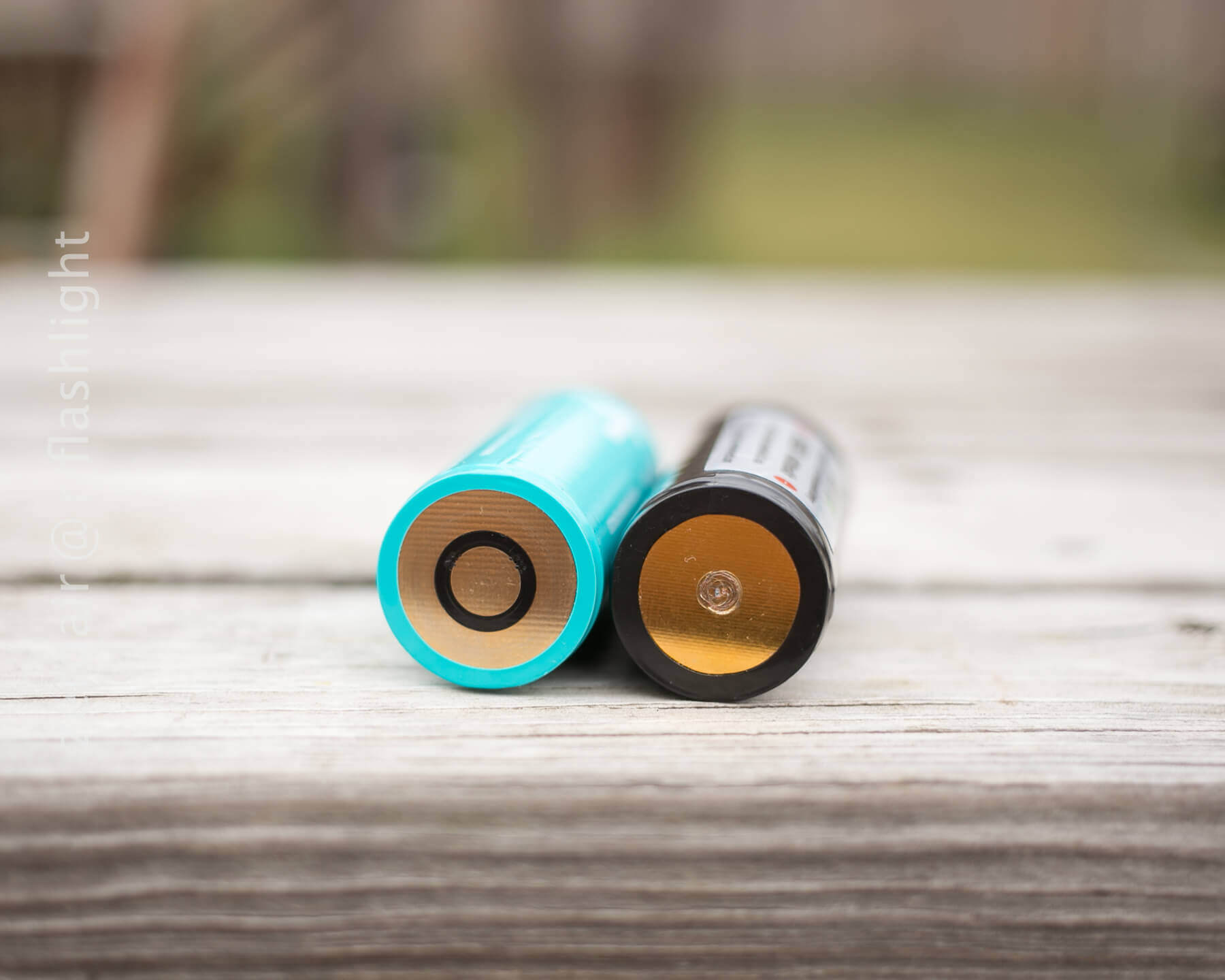
Also worth noting is that the provided cell fits much more snugly than the EVVA cell I have. The EVVA tended to rattle, but the Olight rattles very little. It can be made to rattle, but there’s probably less than 1mm of play.
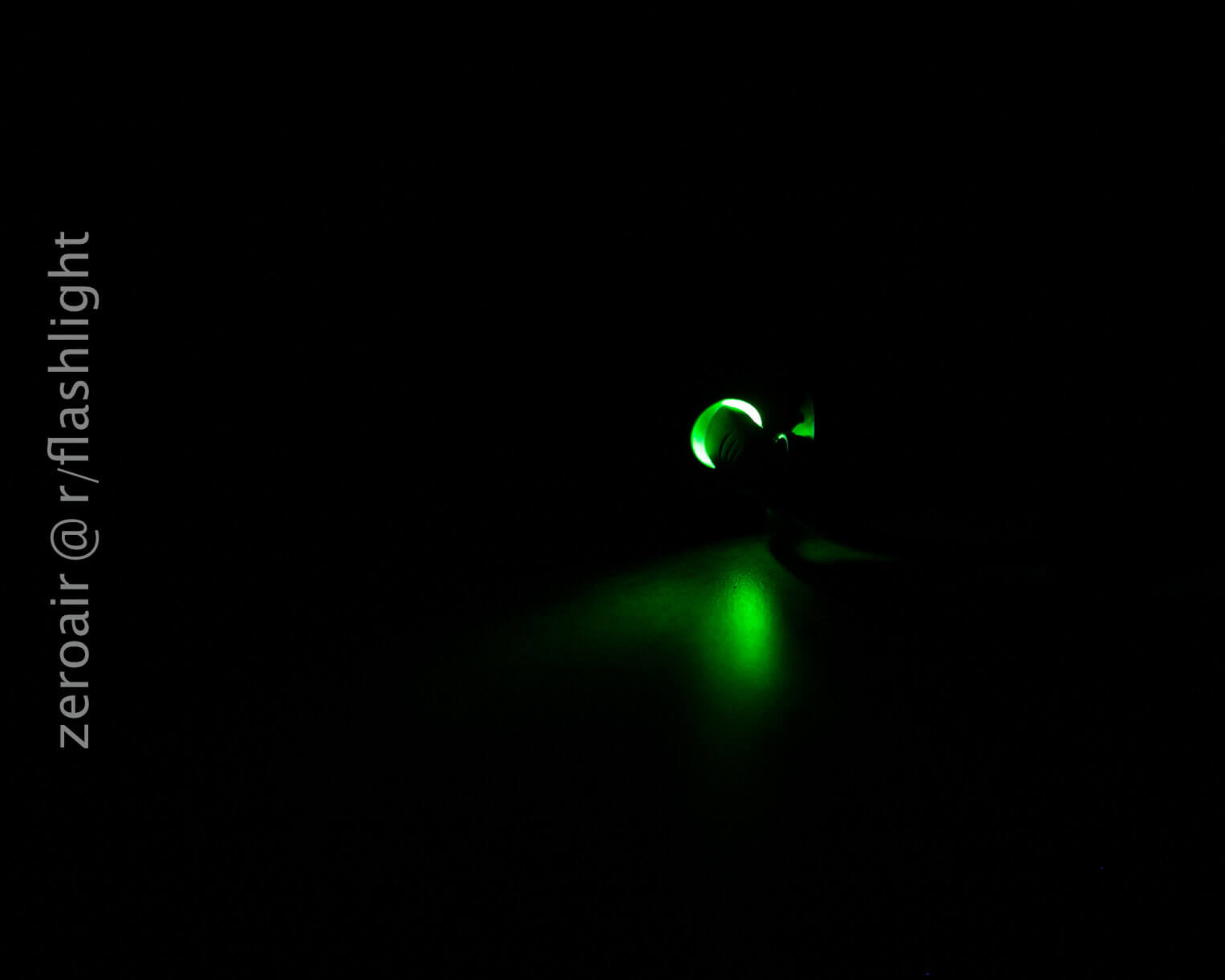
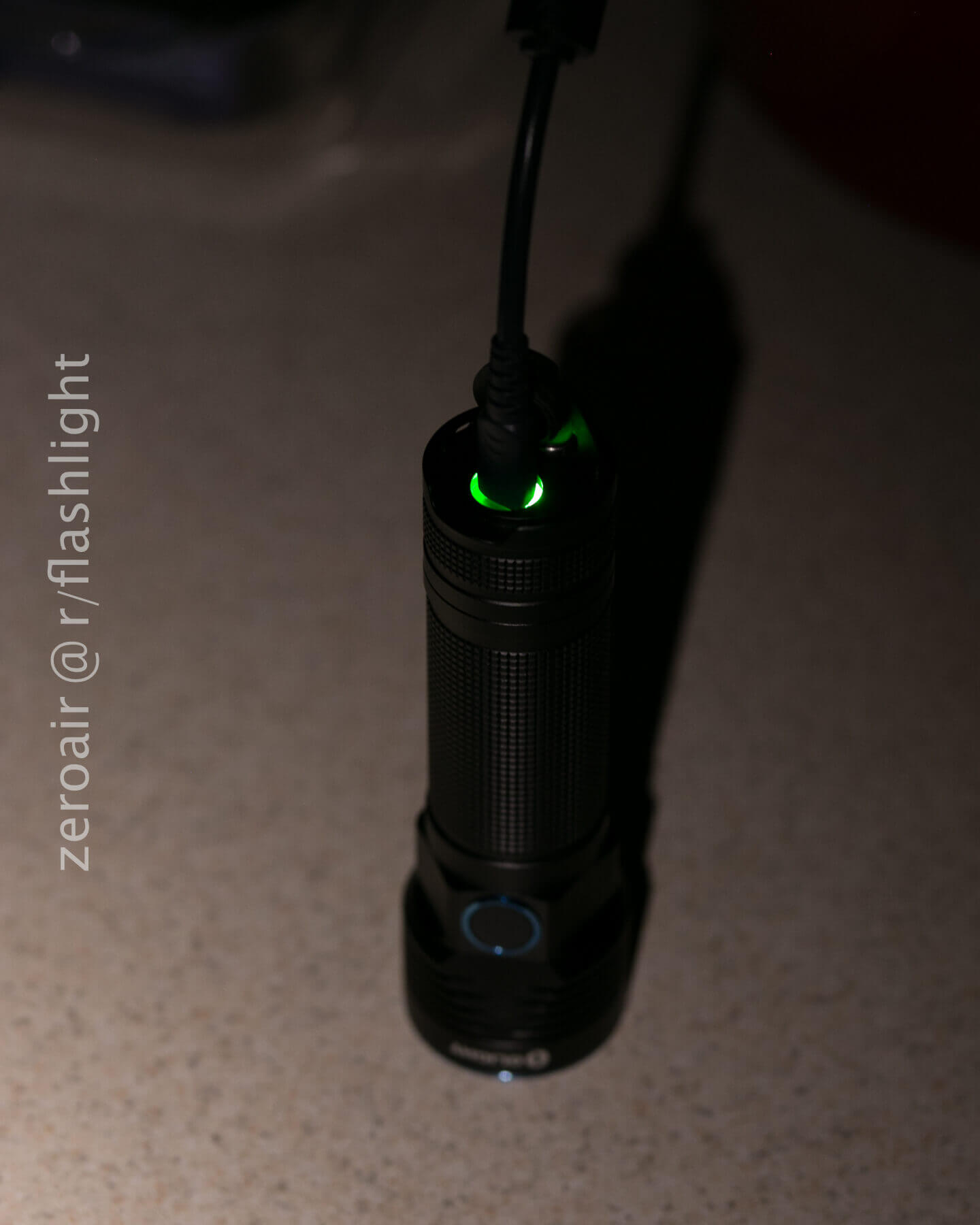
Onboard charging works great, but might be considered slow. If power is going in, the micro-USB port is lit. If the cell is at capacity, the port area is green. If the cell is accepting power, the port lights red. Also, the light does work when the cell is charging. My cell took around 6 hours to charge each time it was fully discharged.


User Interface and Operation
The R50 has a single silicone side button. It’s the same material as on other recent Olights, like the S1A I just reviewed and the S1 (which I have in brushed titanium, and love!). So all the input you have with the light will be through that button. I will say that I had some trouble with the button. It worked 100% of the time if I was extremely deliberate with the clicks. If I were even slightly careless, I would have unplanned results.
The light does have an electronic switch, and as with all electronic switches, there might be some parasitic drain. It does have an electronic lockout. Otherwise, unscrew the tailcap to prevent parasitic drain (and accidental activation).
The R50 also has mode memory (excluding turbo and strobe). I personally do not care for mode memory, but if that’s your thing, then here you go. However, in this case, there’s direct access to low, so I’m good to go as well. I like to be able to trust what mode is going to come on without relying on my (admittedly bad) memory to say what it’ll be. So the long press for Low is very appreciated. Of course, the same can be said for direct access to turbo….
| State | Action | Result |
|---|---|---|
| Off | Click | Last mode (Memory) |
| Off | Hold | Low |
| Off | Hold + Hold | Electronic Lockout |
| On | Click | Off |
| On | Hold | L>M>H |
| Any | Double Click | Turbo (not memorized) |
| Any | Triple Click | Strobe (not memorized) |
| Electronic Lockout | Hold | Low |
LED and Beam
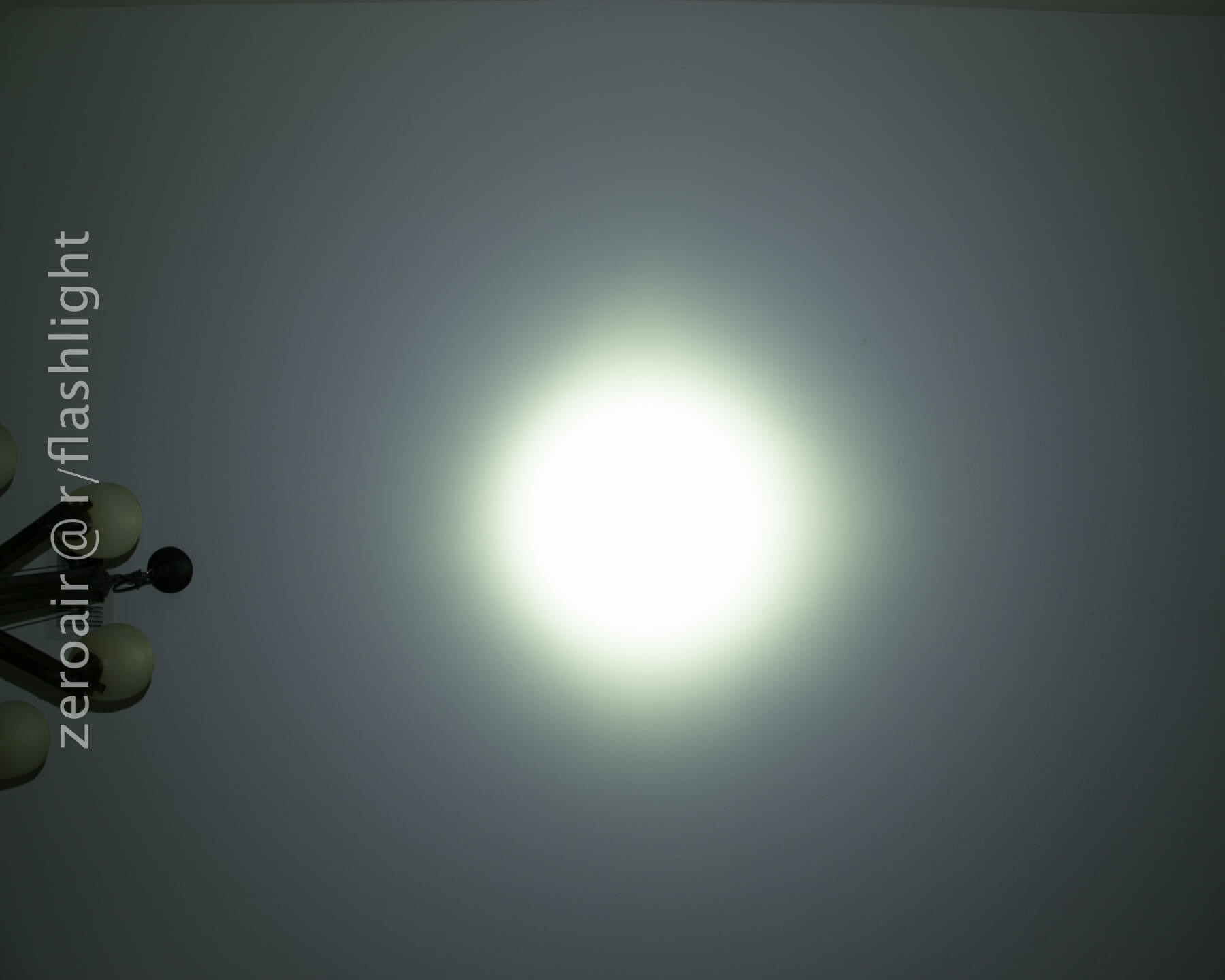
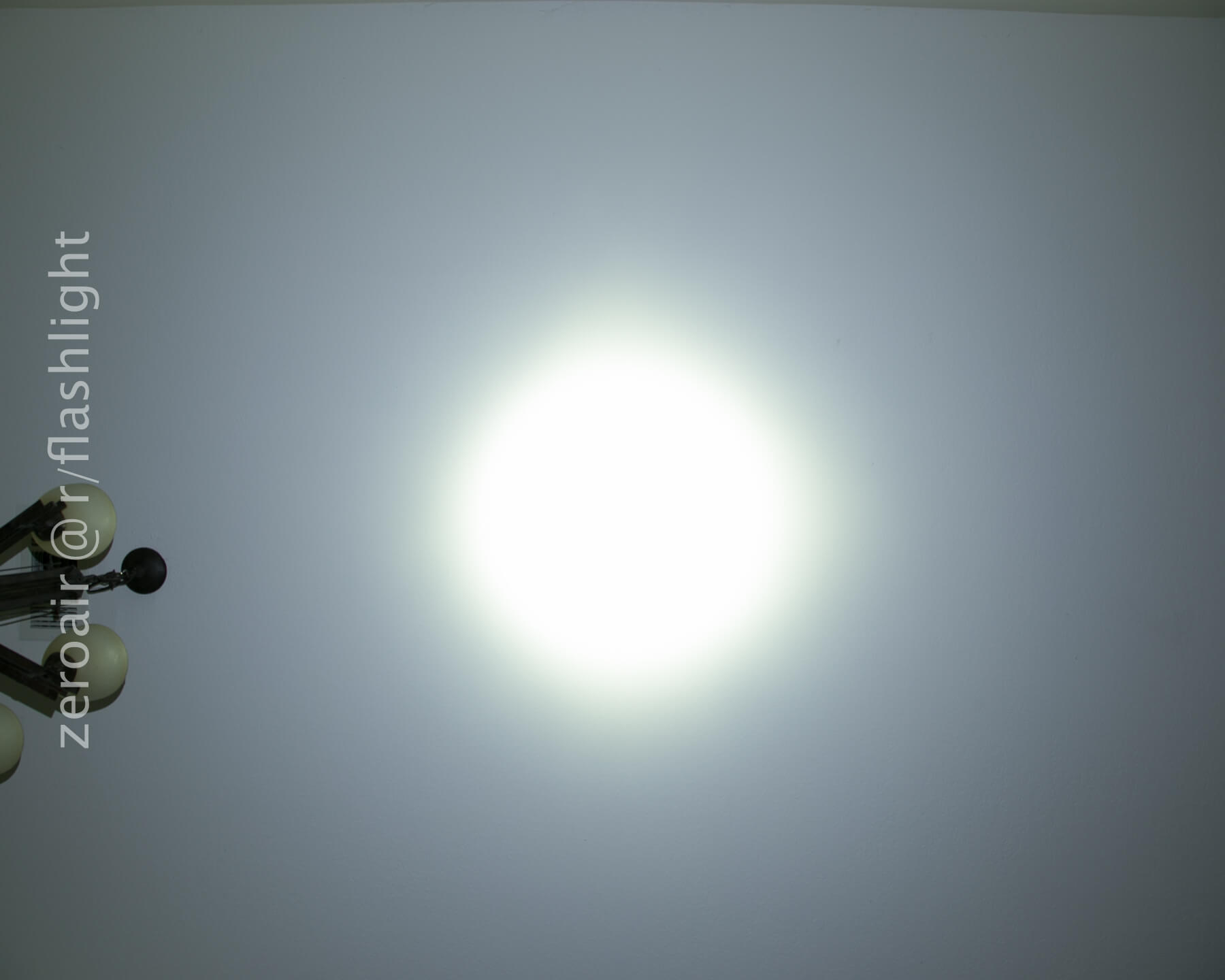
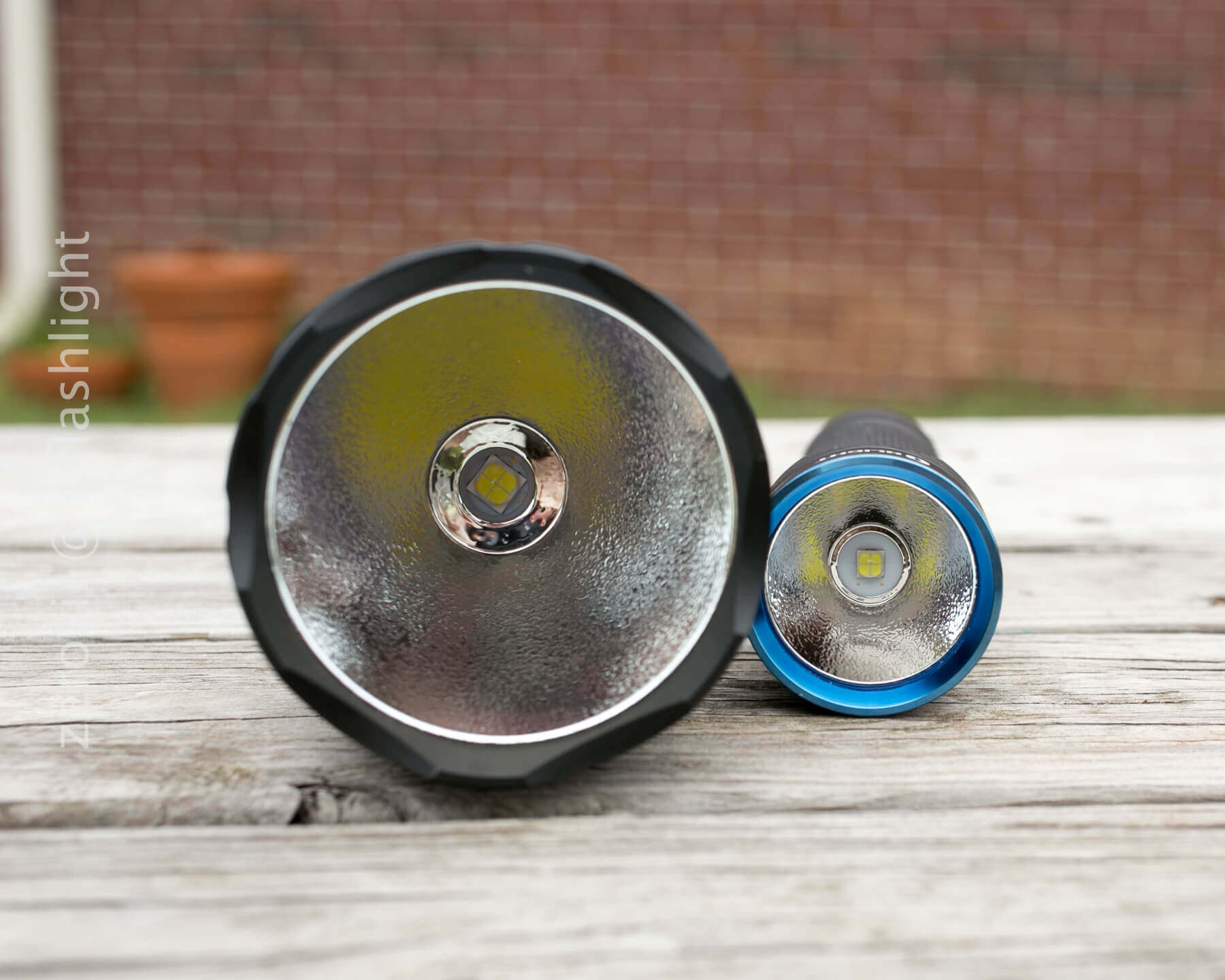
The beam is quite floody, as could be expected with such a shallow orange peel reflector. However, a good bit of light does go forward, so it’s useful at a distance too. By no means a thrower, but it does produce a lot of light. The OP reflector also helps minimize artifacts from the “cross” of the die.
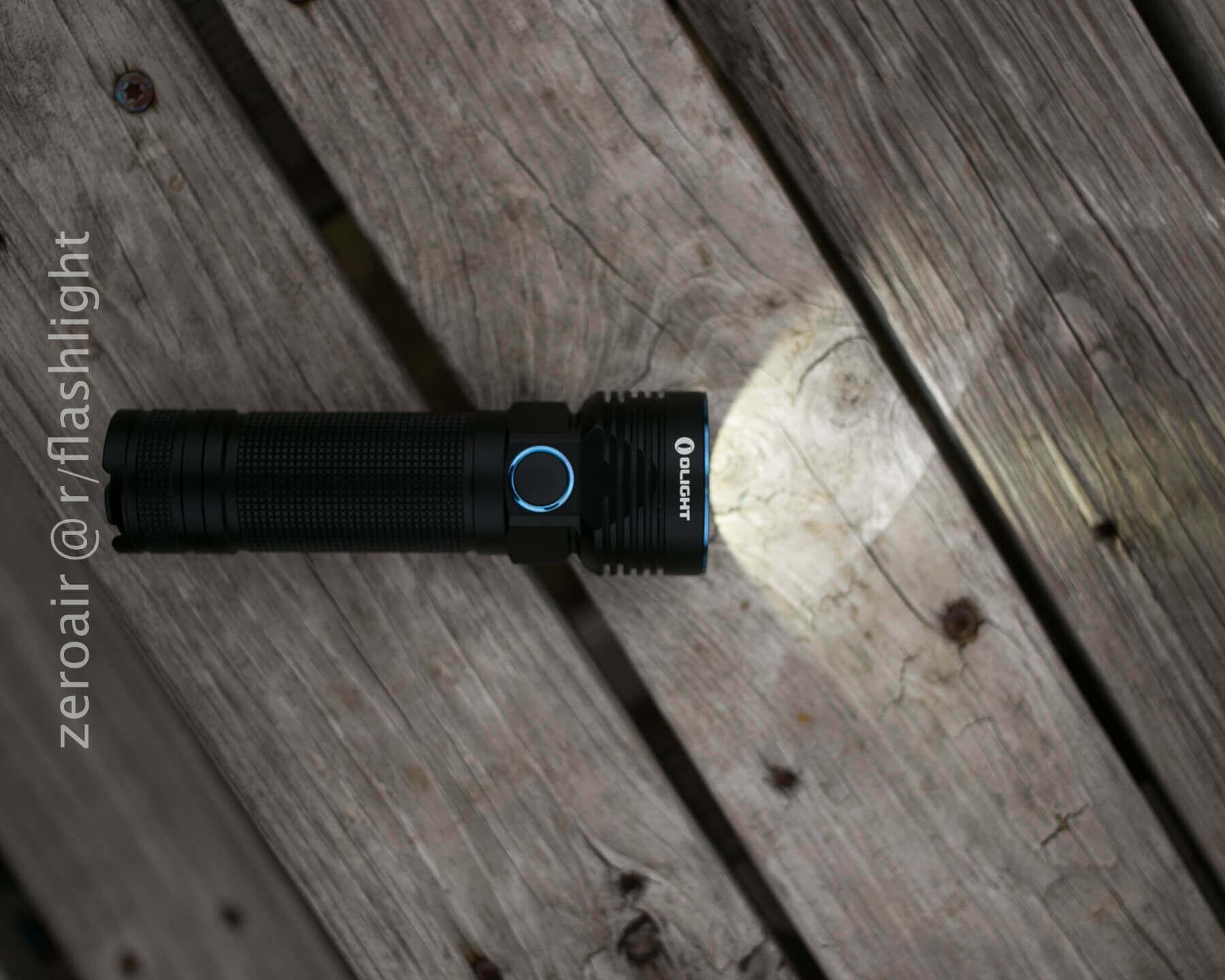
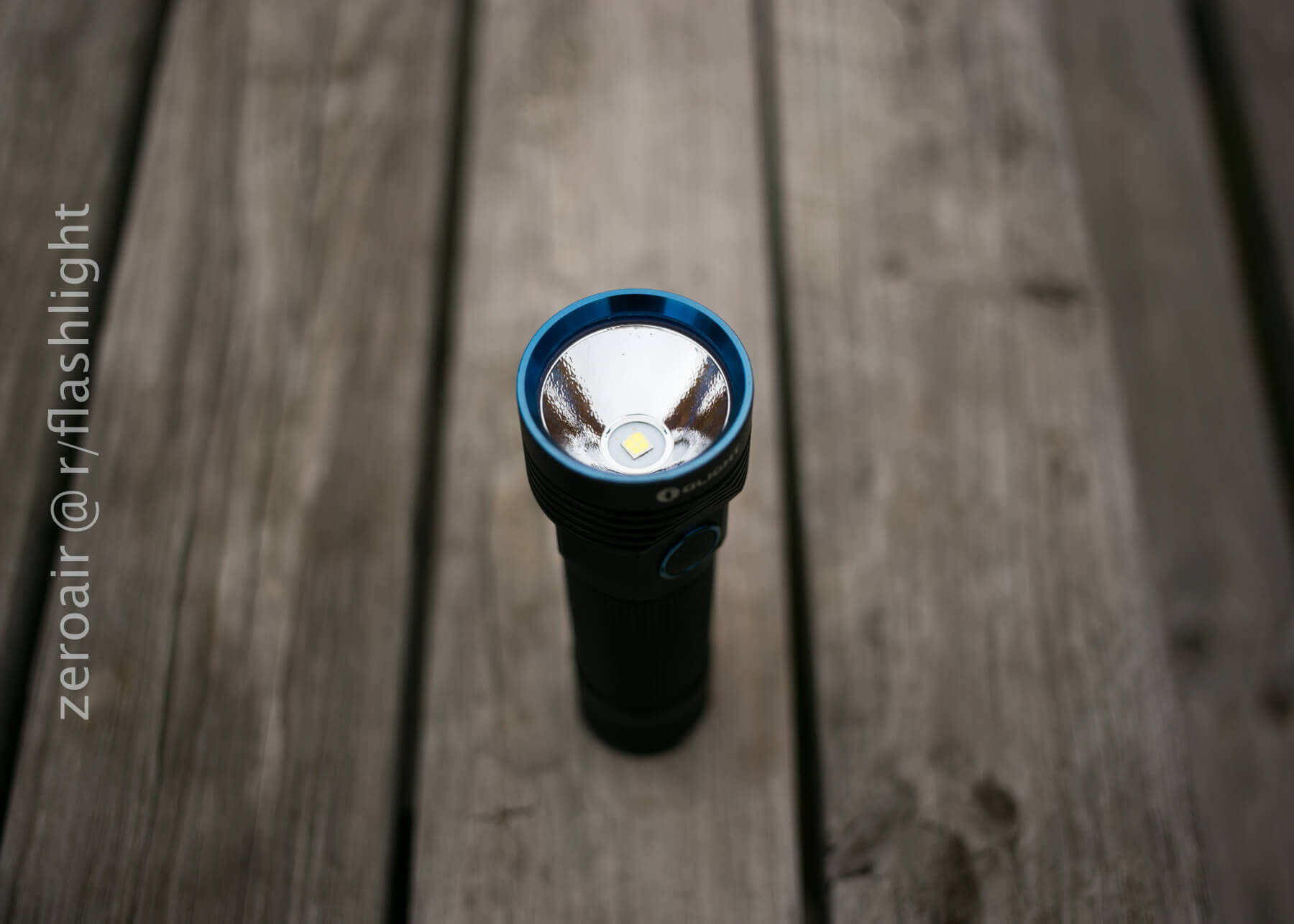

The Cree XLamp XHP50 rests on a large centering ring at the foot of this shallow reflector.
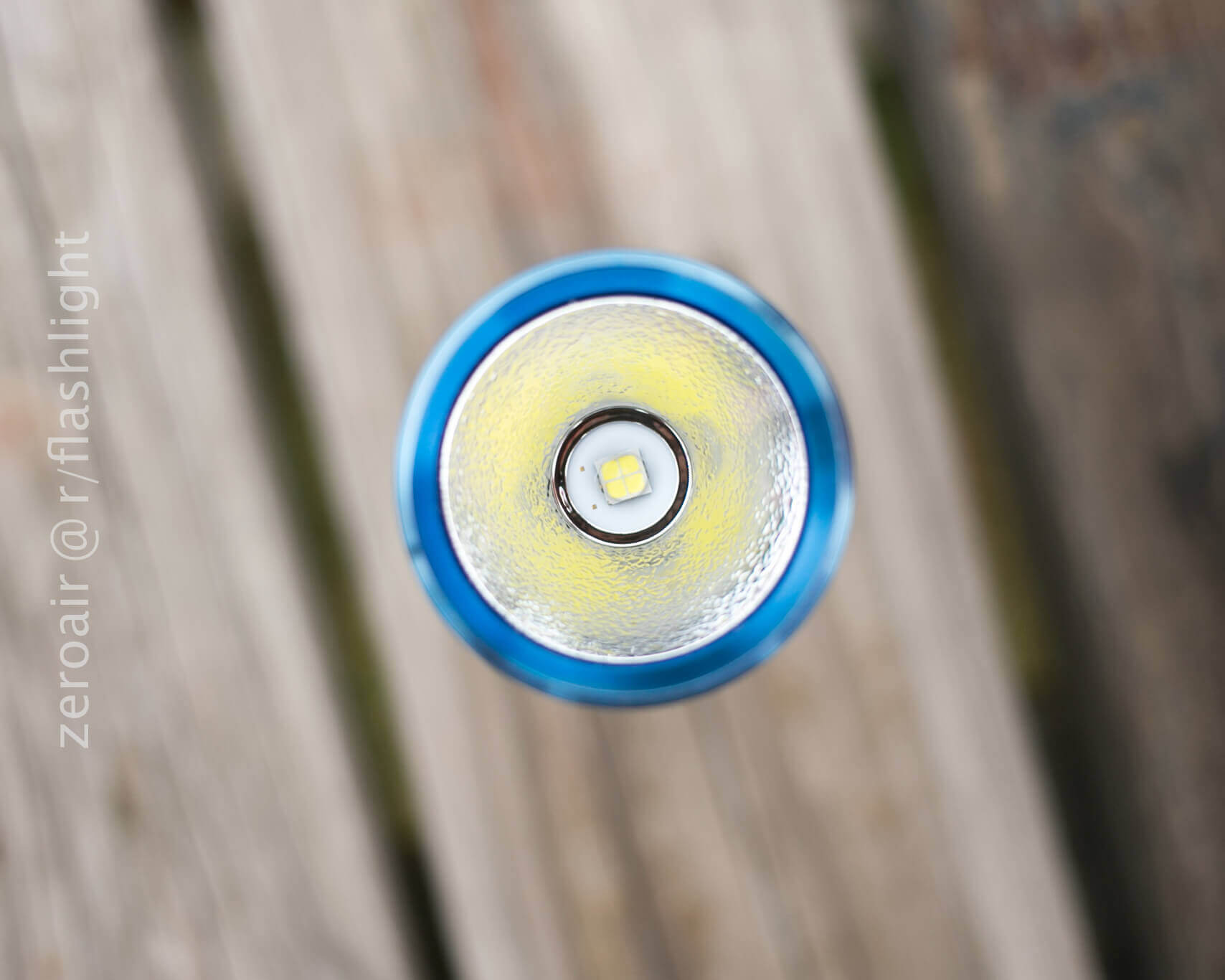
I don’t have any way to measure these ratings, so maybe the beamshots below will help you come to some conclusion based on a light you already own. I’ll say that this light is very bright on turbo, so it’s kind of hard to doubt the rating, particularly for the non-turbo modes.
| Mode | Lumens |
|---|---|
| Turbo | 2500 |
| High | 1200 |
| Medium | 300 |
| Low | 50 |
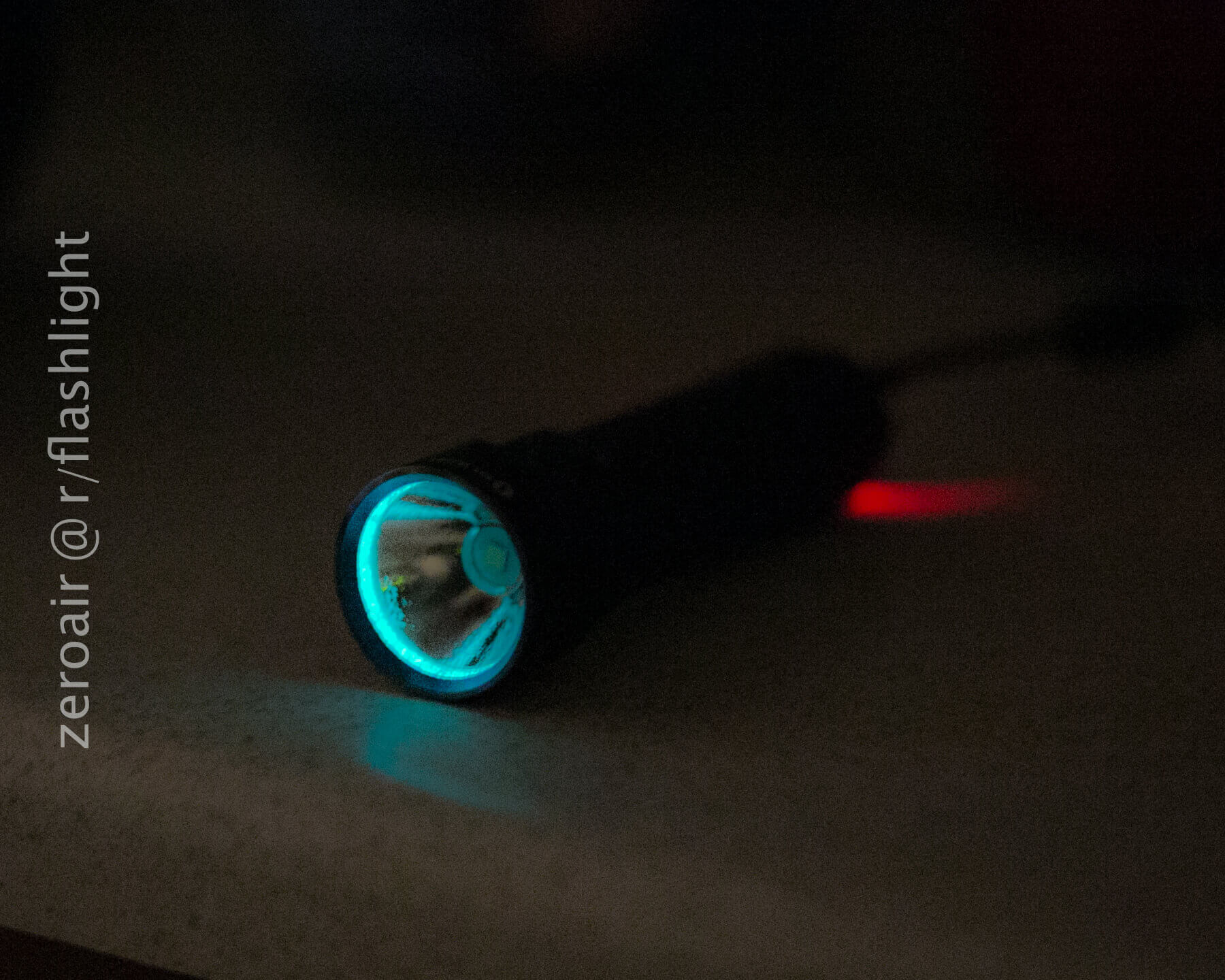
And let me be the first to tell you, the reflector is separated from the lens by a bit of glow in the dark something! I’m not sure if it’s an o-ring or some glow paint. (Make sense for it to be a ring, but it actually glows like paint.) I love this feature. I love GITD stuff.
Beamshots
All beamshots are at the same settings in practically the same conditions. Many are beamshots used in previous reviews: I have included them here just for fun. And I try to sort them in order of relative interest, so the most interesting light compared to what I’m reviewing here should be next in order.
I ran some comparative outdoor beamshots, too, of semi-similar lights. I don’t have a lot of similar lights, but still maybe worth comparing. All lights are tested in the order: lowest mode to highest mode.
Camera settings were the same for all shots.
0.4 sec at f / 8.0, ISO 400 (and accidentally, AWB).


Runtime
The manual does not seem to state this, but the back of the box is pretty clear: the light has programmed stepdowns at preset times. This would explain another thing I’d wondered about the light: the low voltage protection has seemed to kick in at different voltages. It turns out it may not be low voltage protection at all, kicking in – it’s probably just a timed stepdown, which included a shutoff. That’d also explain the relatively high voltage the light turned off at. And indeed, I can’t see a place where anything mentions this light has low voltage protection at all.
These are not complaints: I find the stepdowns to be fairly user-interested. A specific way to say that is this: The stepdown from turbo does not appear to be to cheat FL1 standards. And the other modes test pretty accurately to their rating, and the stepdown from High and Turbo is to 800 lumens, a noticeable difference (and more) light than the output of Medium
So we should update the output chart with runtimes:
| Mode | Lumens | Duration |
|---|---|---|
| Turbo | 2500 | 2 min (+150 min @800) |
| High | 1200 | 12 min (+130 min @800) |
| Medium | 300 | 6 hour |
| Low | 50 | 50 hour |
And here’s the graph from 4 runtime tests.

I ran Turbo twice because I was not really satisfied with the first one. IIRC, I moved something around (or changed the conditions in some way) on the first test. So I believe the second to be more accurate.
Turbo runtime terminated at 2.86V. High runtime terminated at 3.03V.
Size
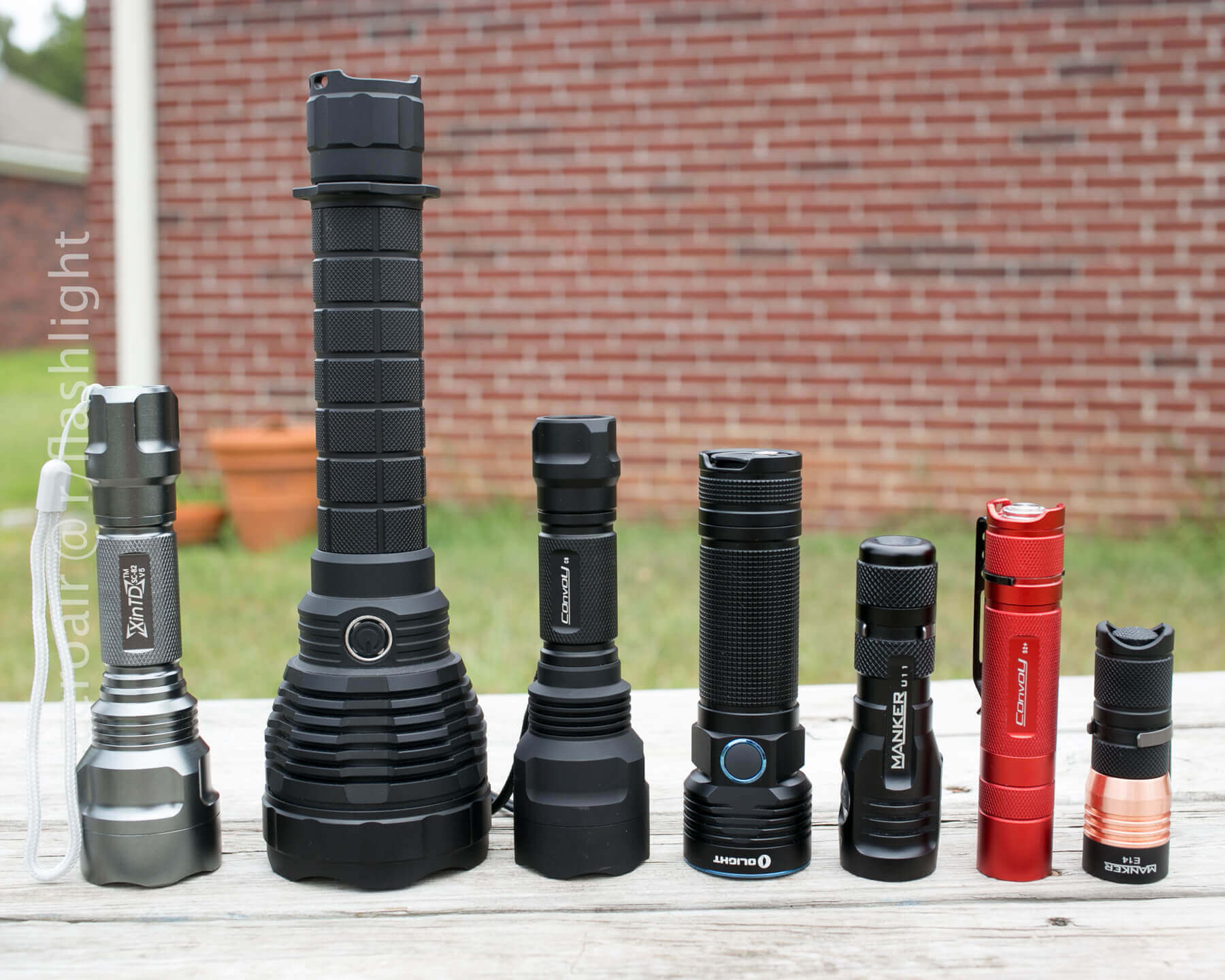
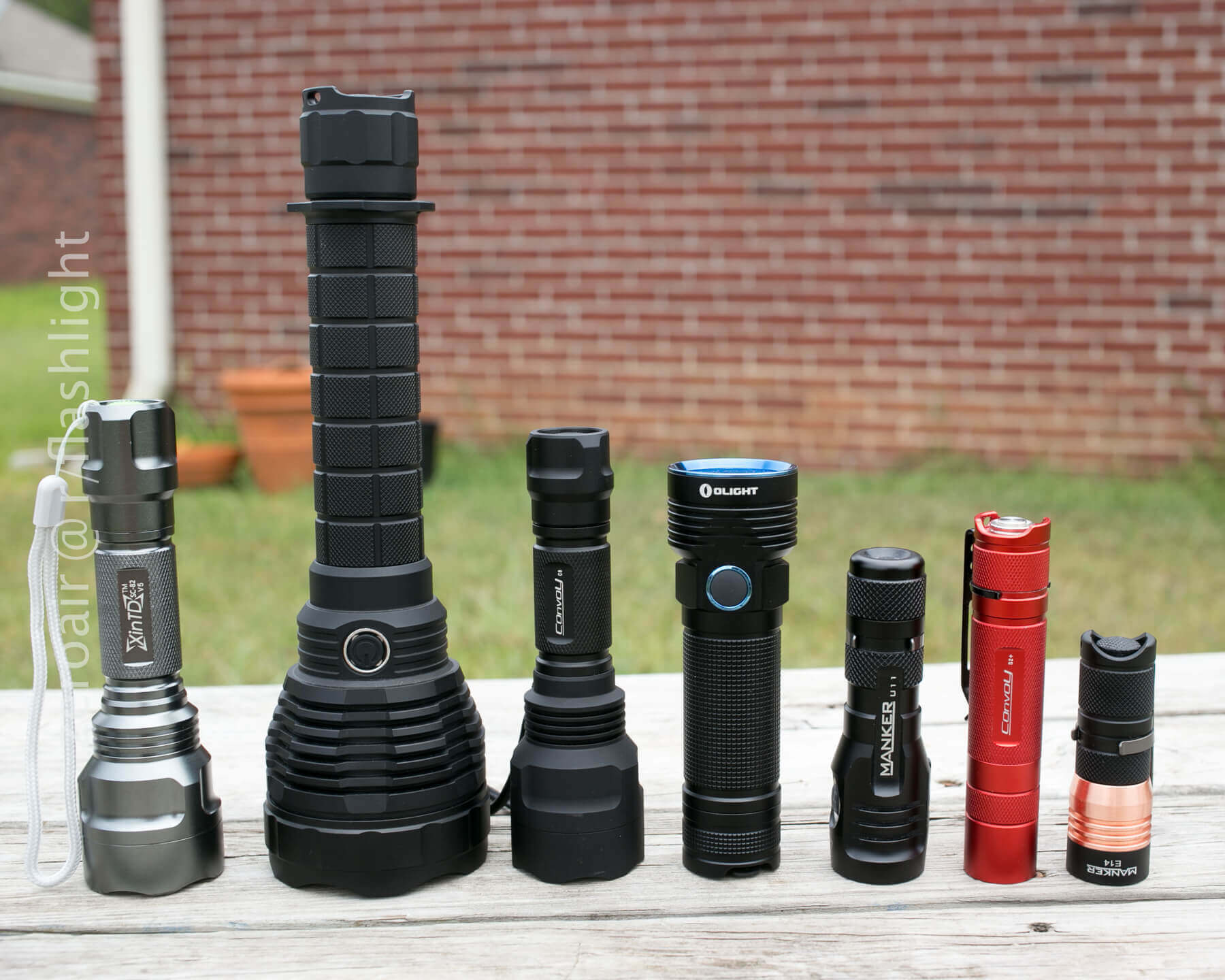
For a 26650 light, it’s surprisingly thin and small. The head isn’t large, and the reflector is very shallow, so overall it’s very small!
Here are a few pics with some lights you may have, so you can size it up. And tailstanding! All those reflectors (and one optic).

Random Comparisons….
I really do not have all that much that directly compares with the Olight R50. The nearest is probably the Convoy L6, but that’s a 2-cell light with a much bigger reflector. Anyway, here are those side by side, and head-to-head. The L6 has an XHP70, while the R50 is an XHP50.

Competitive Options
- Nitecore EC4S
Conclusion
What I like
- Complete package
- Small
- Built-in charging
- Charging LEDs show when the charge is finished
- Glow ring around the inside of the bezel
- Works while charging.
What I don’t like
- Dual-polarity limits those who wish to in-light charge their non-Olight cells.
- Proprietary battery limitations are really anti-consumer
- Slow charge
- Low is not low enough. (Proper moonlight, please!! Yes, even on this light.)
- The wall outlet adapter for the wall wart seems like an afterthought
- Requires extremely deliberate button presses
- No good way to carry it
- Tint is to the greenish side
Final Thoughts
I think this is a nice little light. Like I said, my nearest competitor would be the Convoy L6, and the Olight R50 is grossly more carryable than the L6.
The R50 would also be a great starter kit as a gift, too.
Parting Shot
The Olight R50 size comparison with Twilight Sparkle.
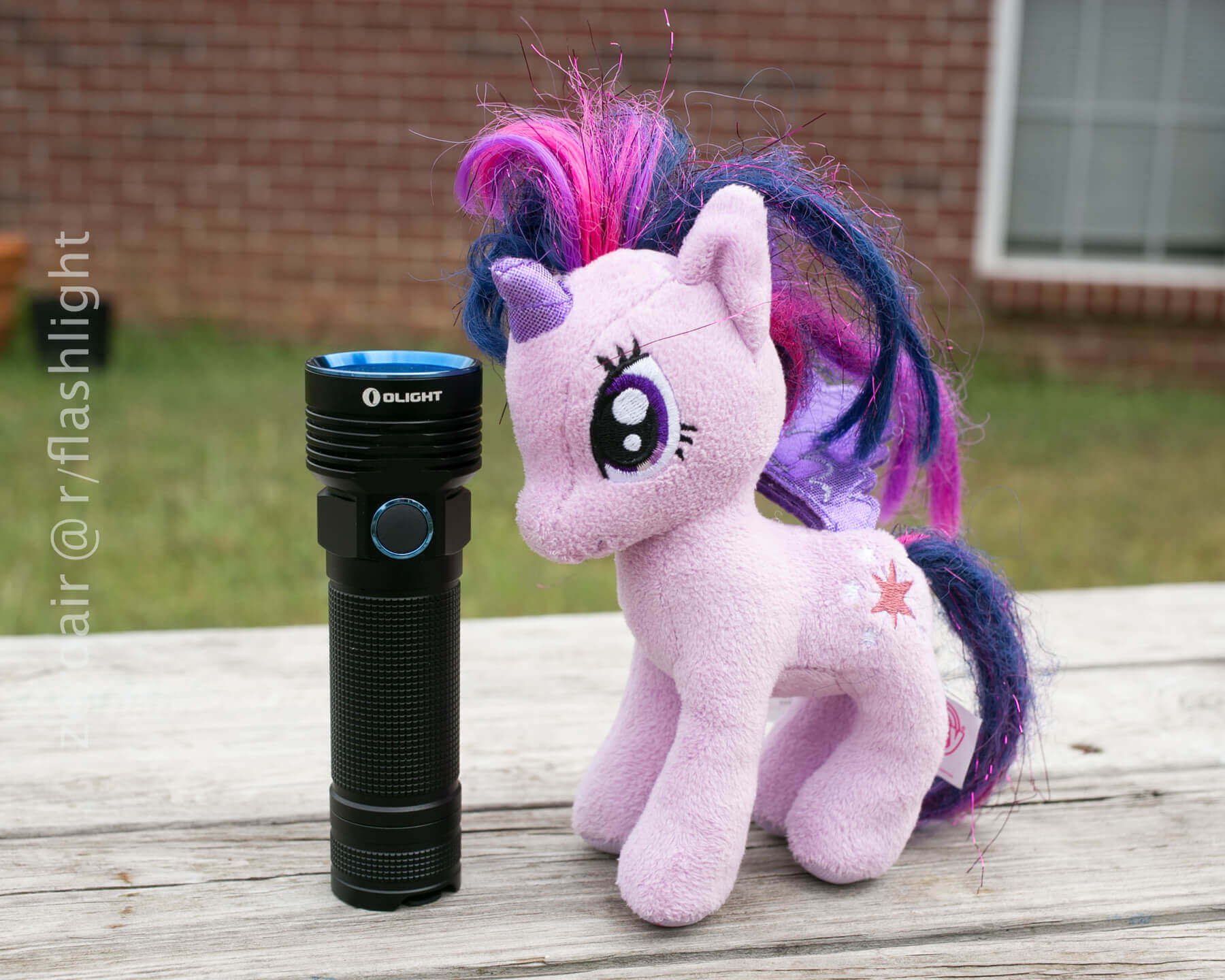
Wait, you got some problem with Twilight Sparkle? Twilight Sparkle will fix that for you.
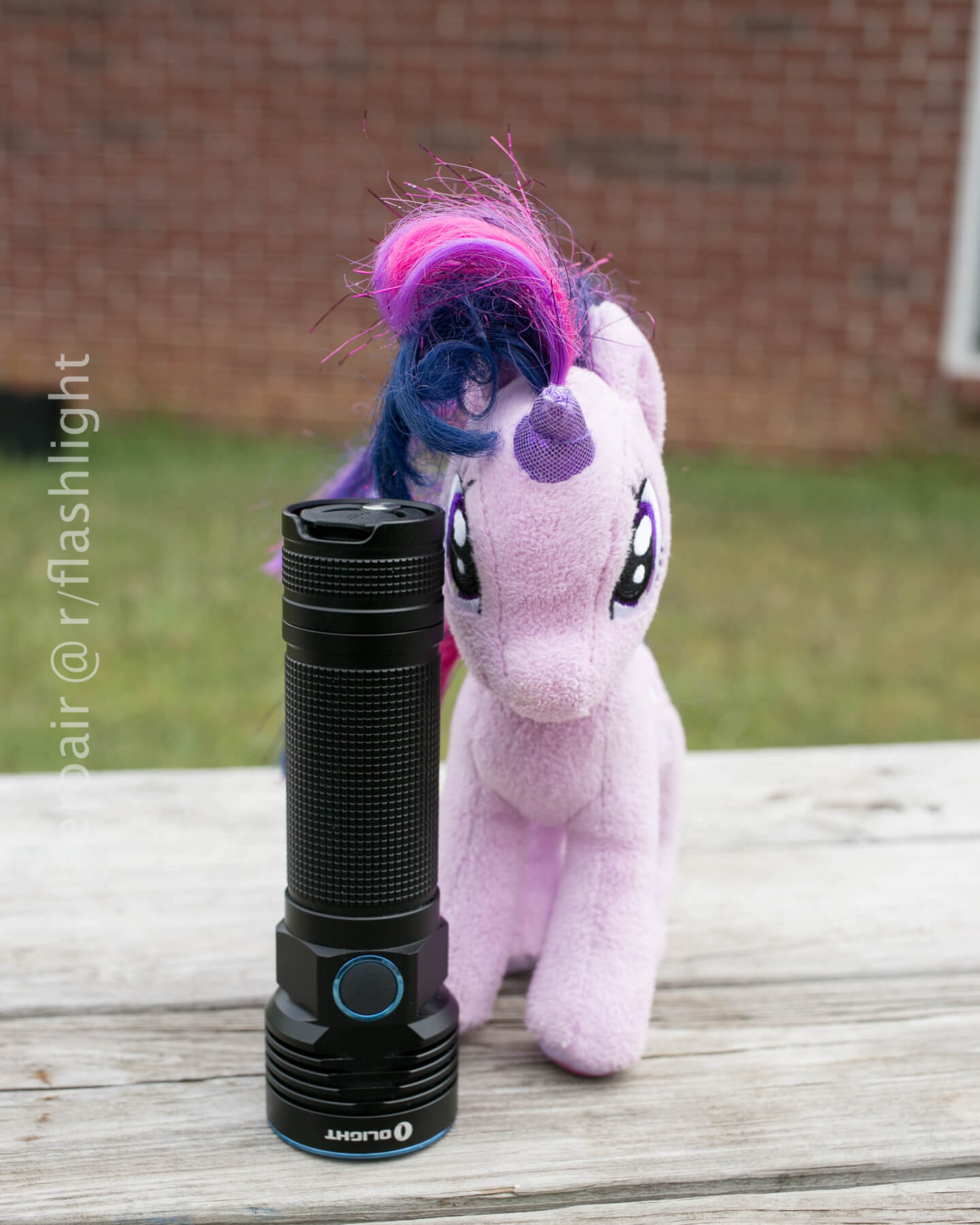
Notes
- This light was provided for review by Olight, facilitated by Calvin at Illumn. Thanks to both!! Use the coupon code “reddit” at Illumn.com for 10% off most lights!
- This content originally appeared at zeroair.org. Please visit there for the best experience!
- Use my amazon.com referral link if you’re willing to help support making more reviews like this one!
- Please support me on Patreon! I deeply appreciate your support!
Pingback: Olight Seeker 2 Flashlight Review – ZeroAir Reviews