
Nitefox UT20 Flashlight Review
Here’s the Nitefox UT20 flashlight, an 18650 flashlight with a single Cree XM-L2 emitter. The light has onboard charging and a dual switch interface!
Official Specs and Features
Here’s a link to the Nitefox UT20 flashlight product page.
Versions
Only one. There’s an option that includes a cell, though.
Price
$30 without cell, $37 with cell.
Short Review
This is a decent quality light, and for the feature set contained a good value.
Long Review
The Big Table
| Nitefox UT20 | |
|---|---|
| Emitter: | Cree XM-L2 |
| Price in USD at publication time: | $30.00 |
| Cell: | 1×18650 |
| Turbo Runtime | |
| LVP? | Switch warning and Flash, shutoff ~2.6V |
| Switch Type: | Dual |
| On-Board Charging? | Yes |
| Chargetime | |
| Claimed Lumens (lm) | 1080 |
| Claimed Throw (m) | 350 |
| Candela (Calculated) in cd (at 30s) | 847lux @ 3.609m = 11032cd |
| Throw (Calculated) (m) | 210.1 (60% of claim)^ |
| All my Nitefox reviews! | |
^ Measurement disclaimer: Testing flashlights is my hobby. I use hobbyist-level equipment for testing, including some I made myself. Try not to get buried in the details of manufacturer specifications versus measurements recorded here; A certain amount of difference (say, 10 or 15%) is perfectly reasonable.
What’s Included
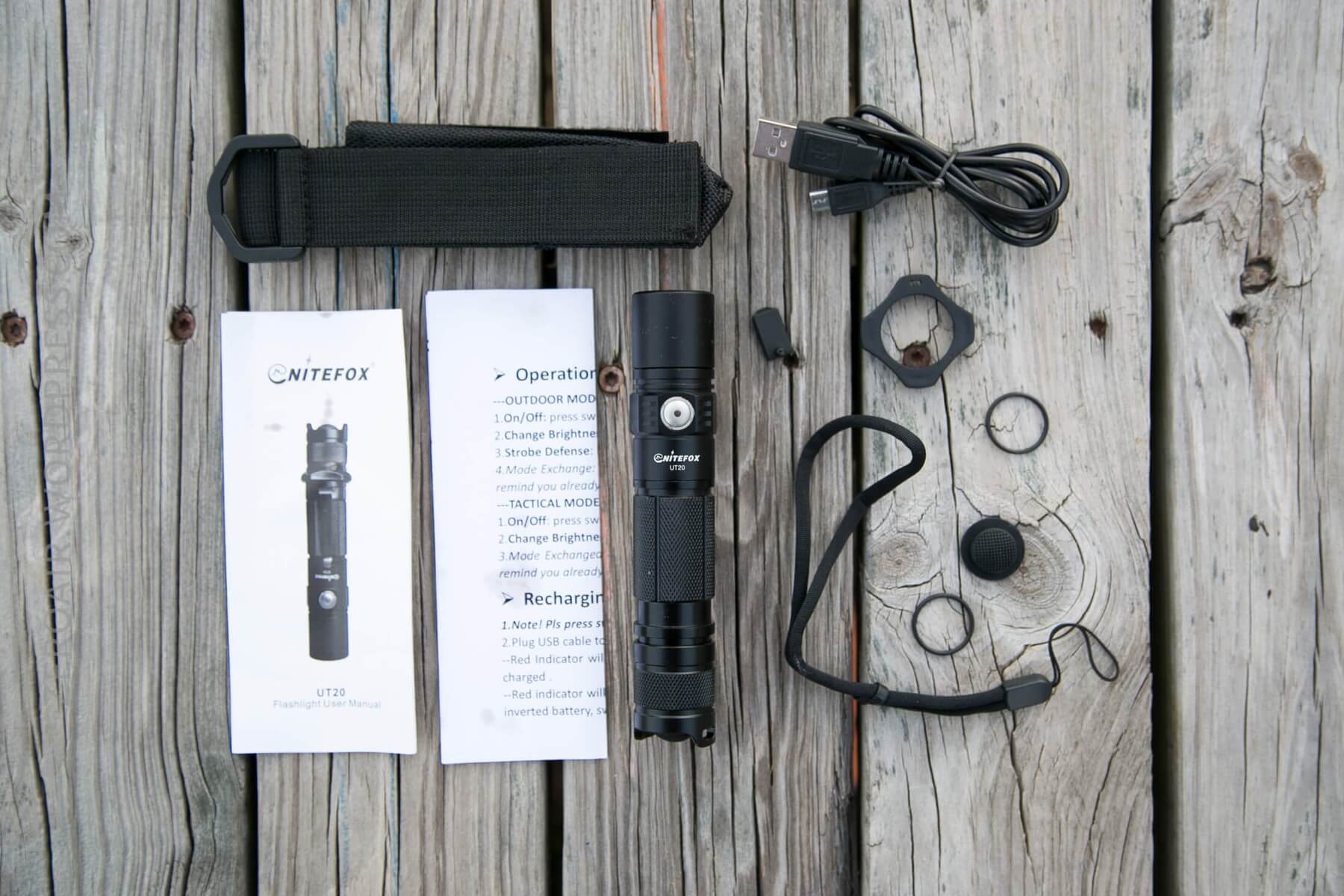
- Nitefox UT20 Flashlight
- Charge cable
- Nylon pouch
- Spare o-ring (2)
- Spare boot
- Spare charge port cover
- Lanyard
- Tactical ring
- Manual and paperwork
Package and Manual
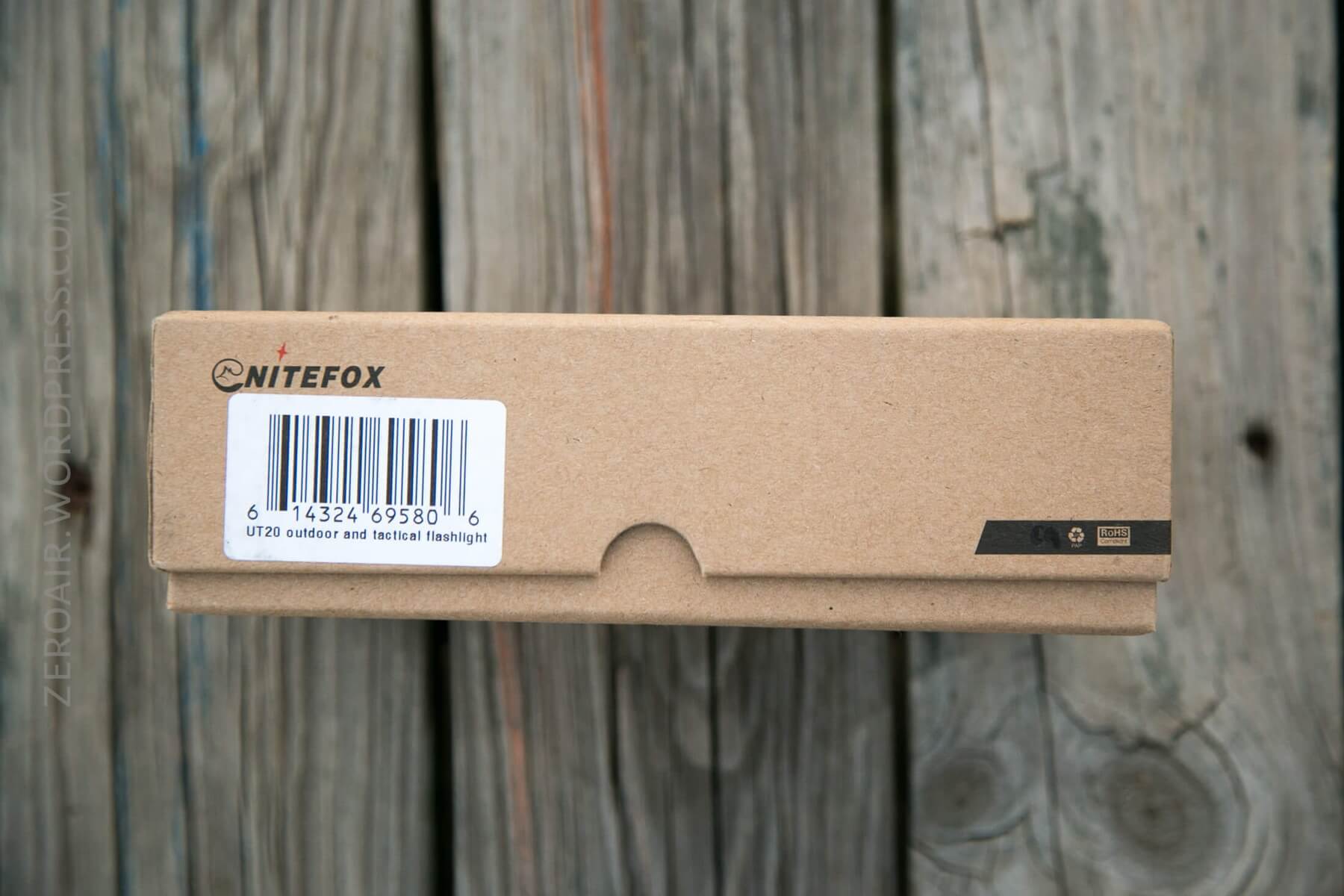
The Nitefox ships in a nice slip-fit cardboard box, with a great relief for grabbing to separate the halves. The box is largely without printing. Foam protects the contents.
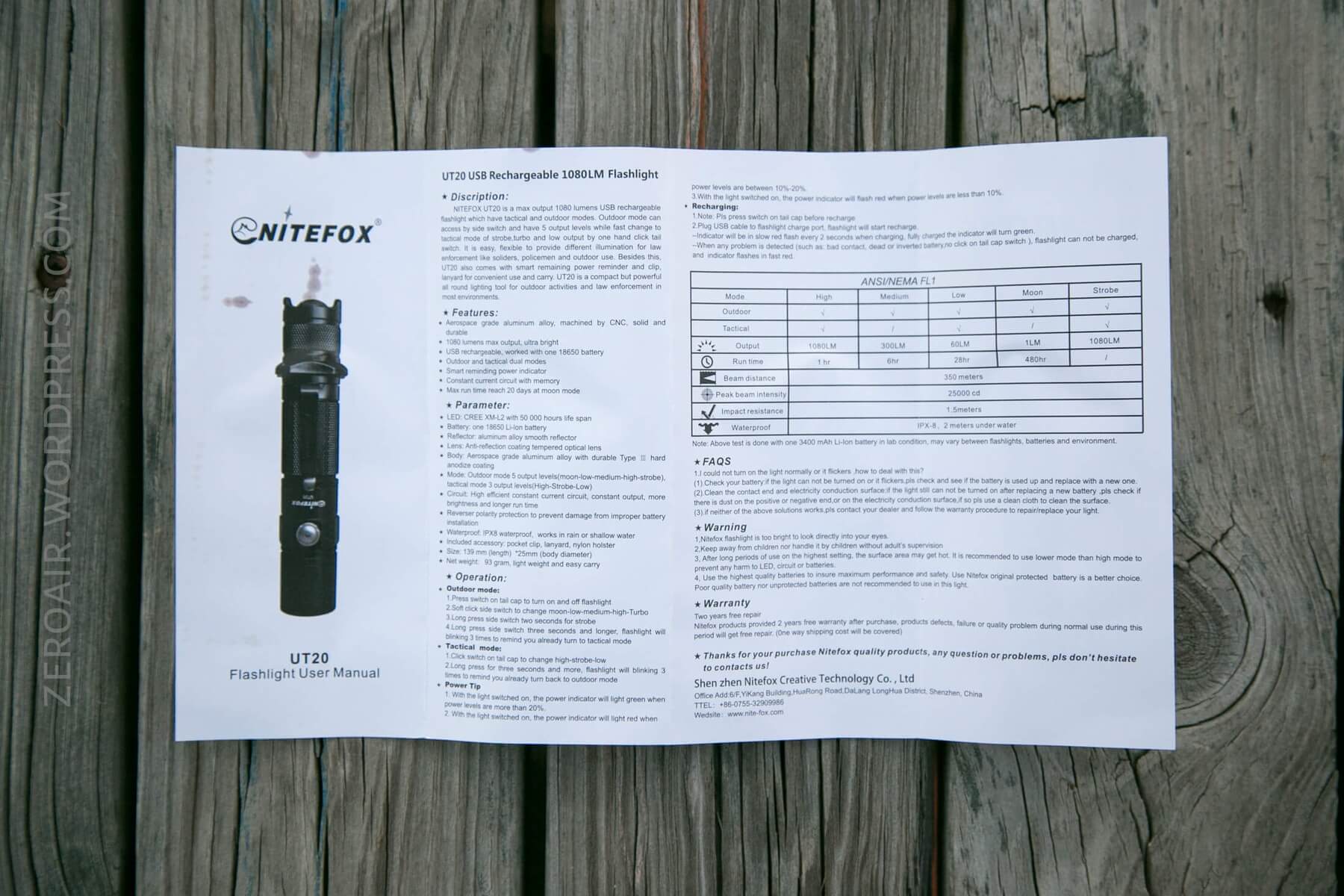
The manual is good enough. It has a table with runtime and output estimates, and the other usual warranty and user interface information is included.
Build Quality and Disassembly
There’s nothing to nitpick about the quality of this light. It feels just fine, and at $30, the build quality is good. The glossy anodizing seems resilient, and the knurling is ok (but not very grippy).
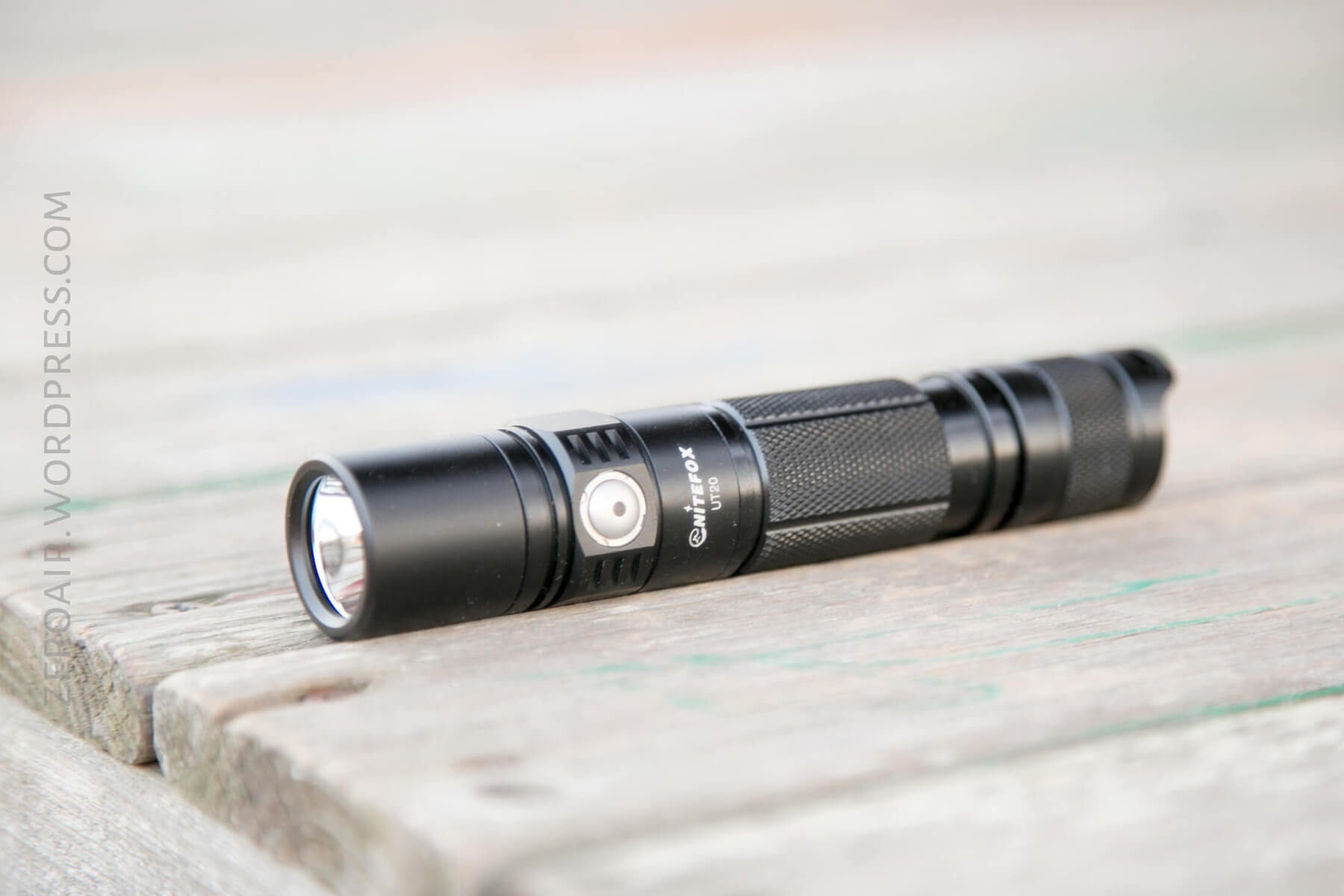
The light is quite long, and there are a lot of different textures going on.
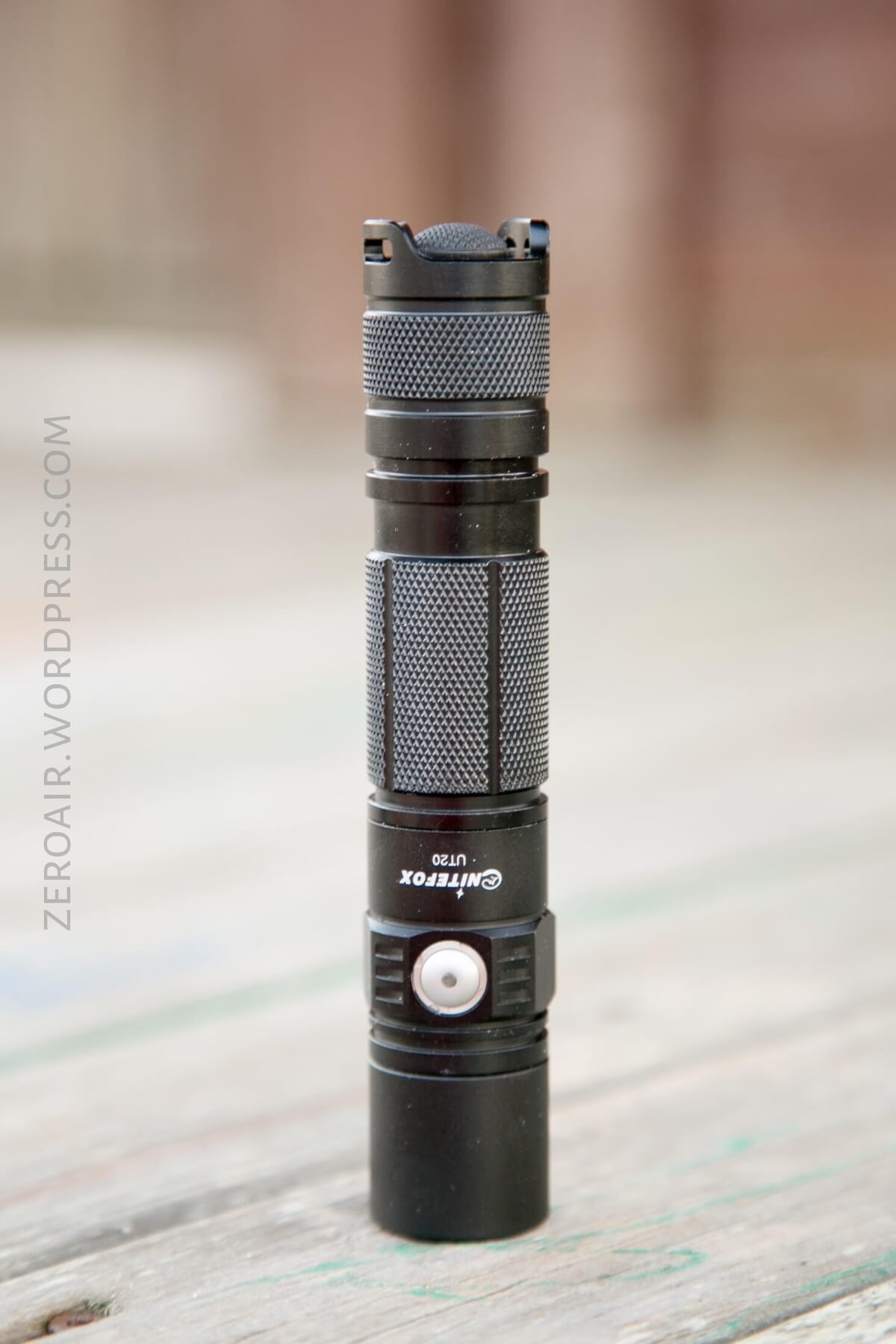
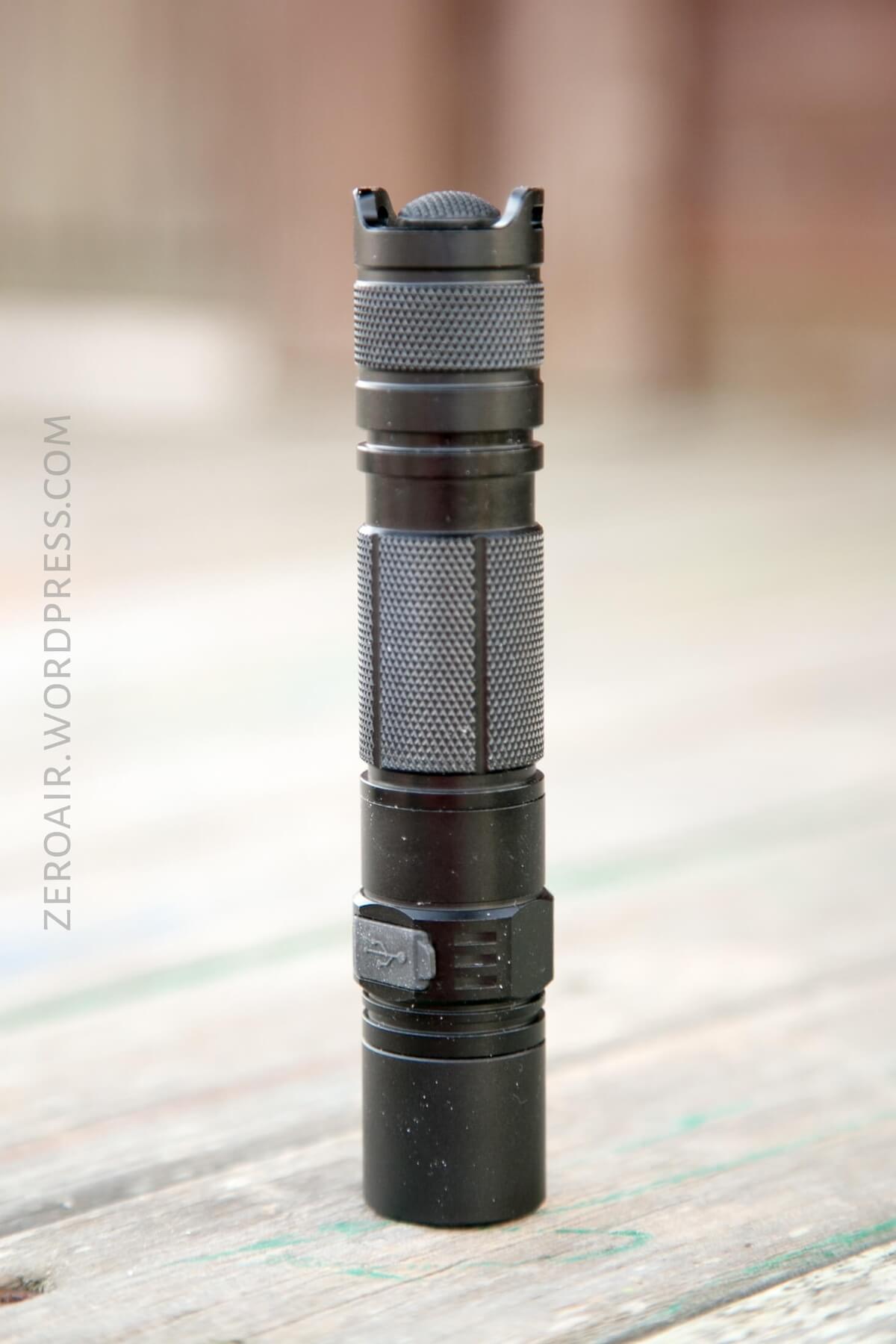
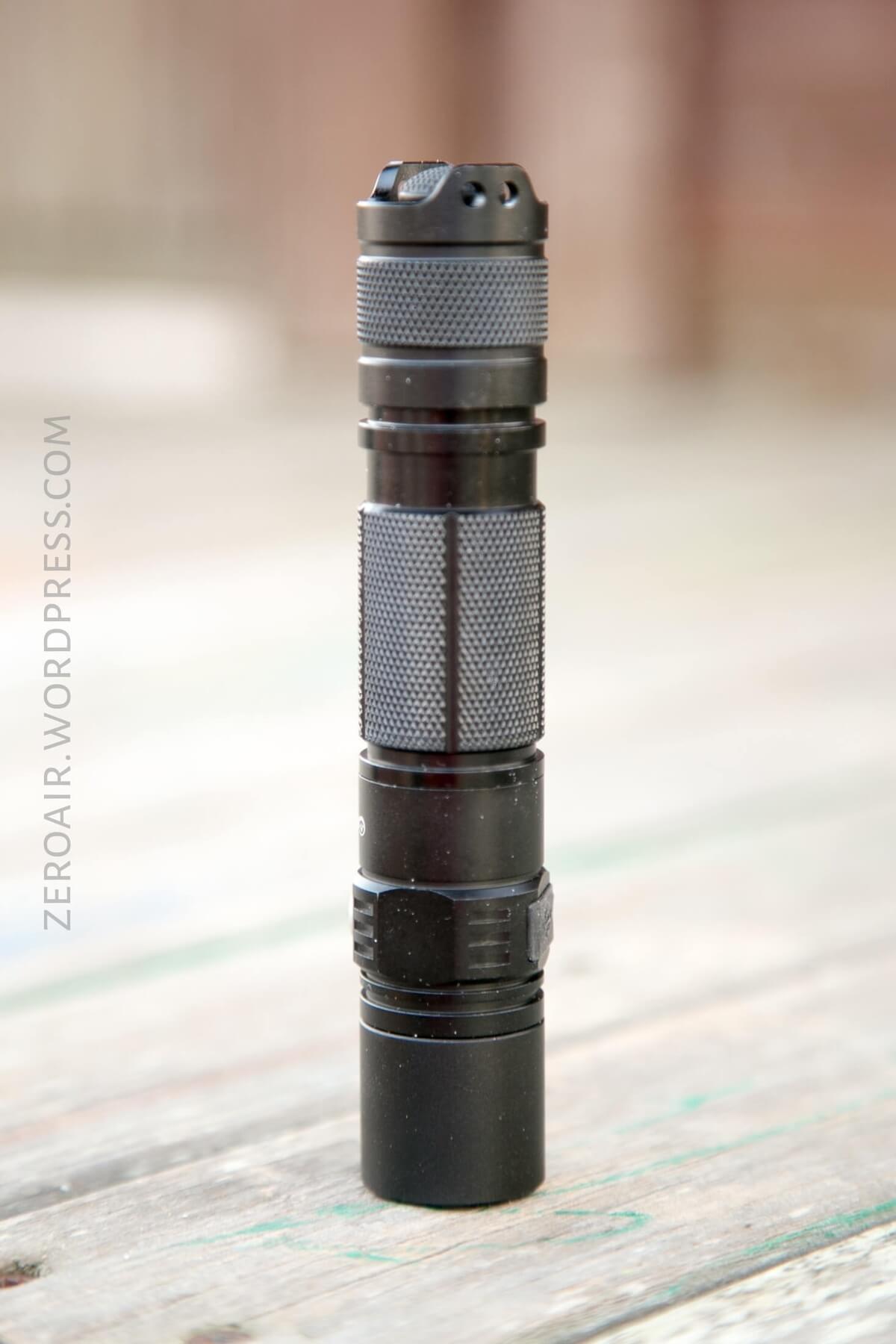
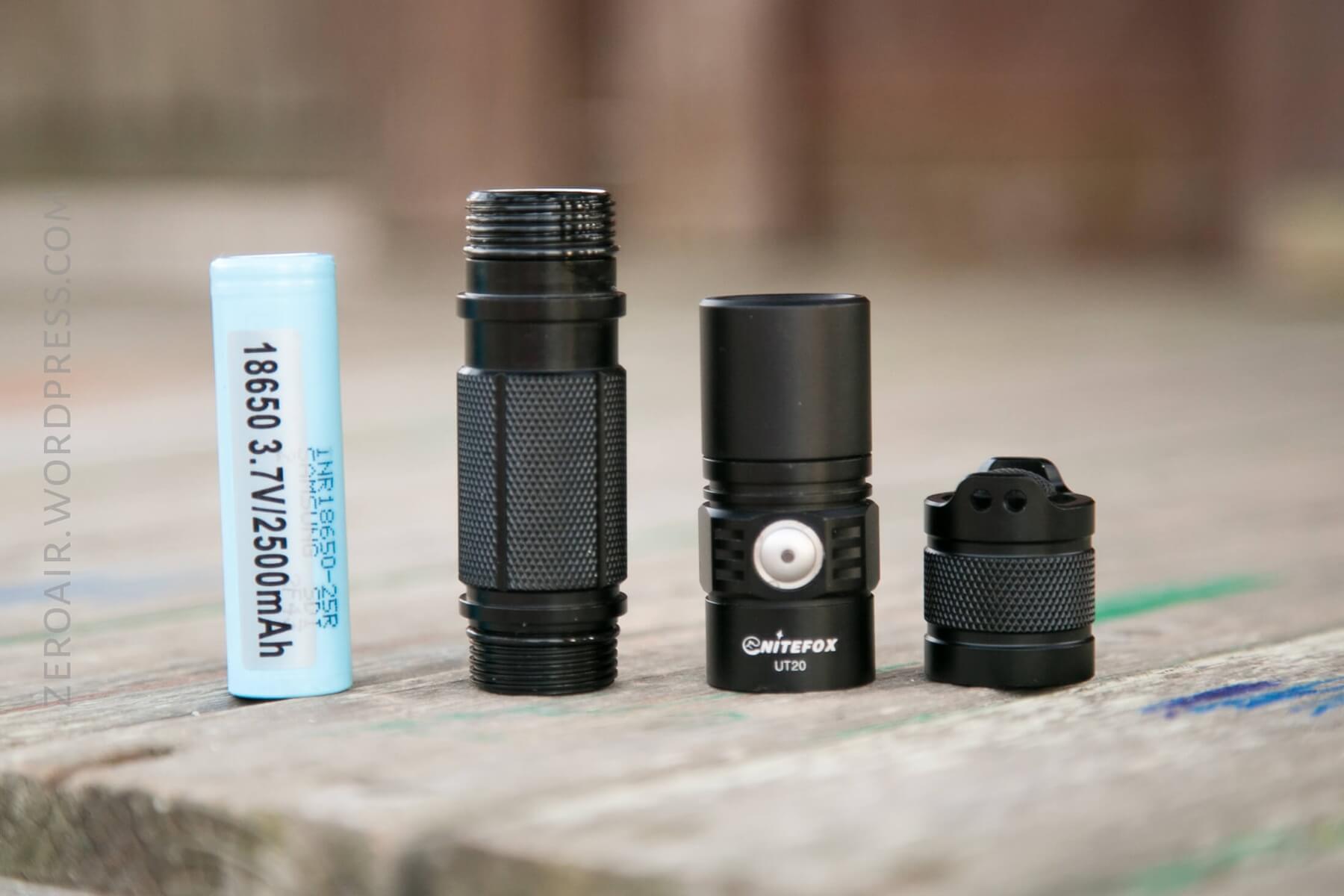
The cell tube separates from the head and tail. The cell tube is not reversible – it’ll only work in one orientation (see photo above for that). The head and tail both have very small springs for contact. Minimally stiff.
The threads on both ends are very nice, square-cut anodized threads, with a fair amount of thick lube.
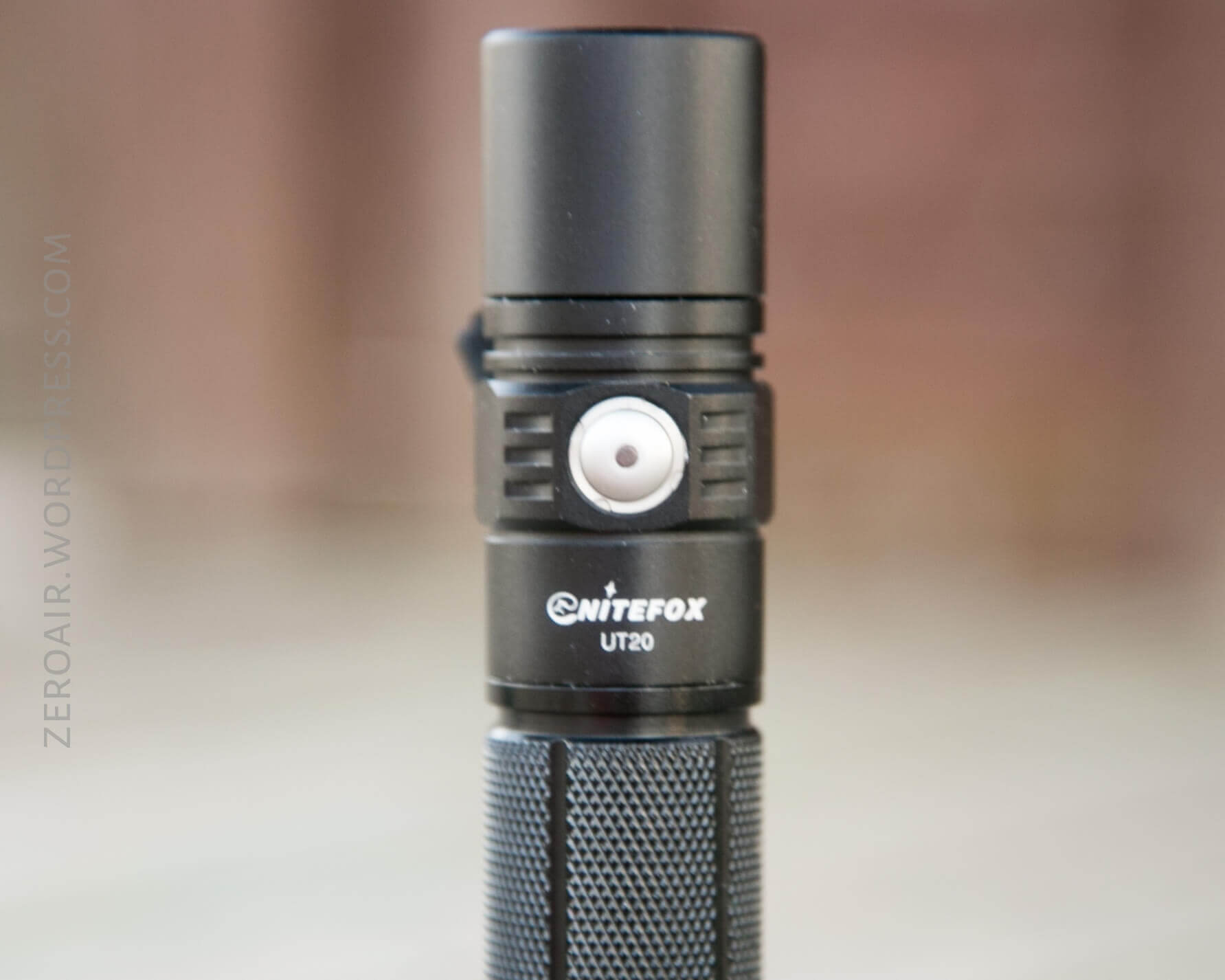
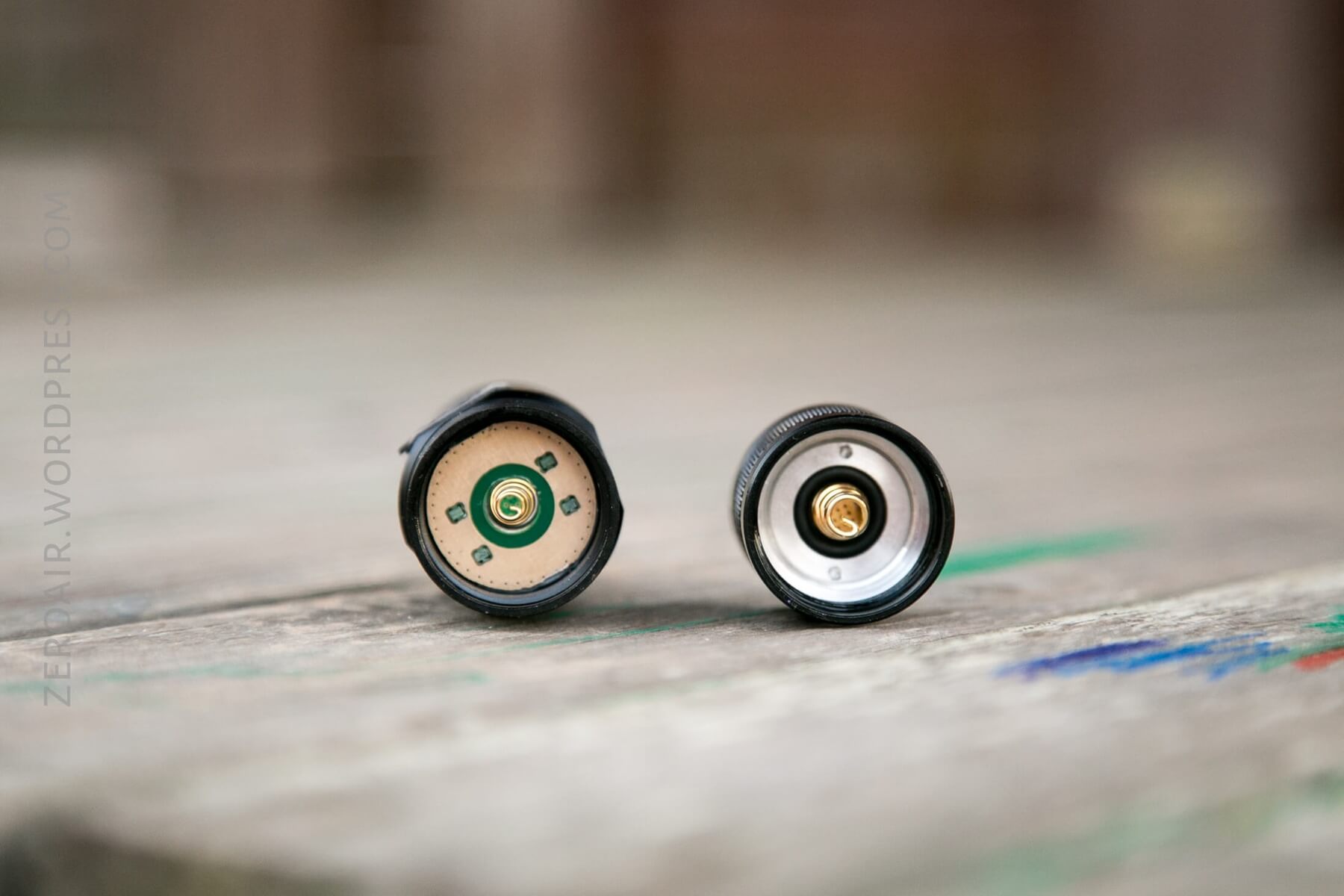
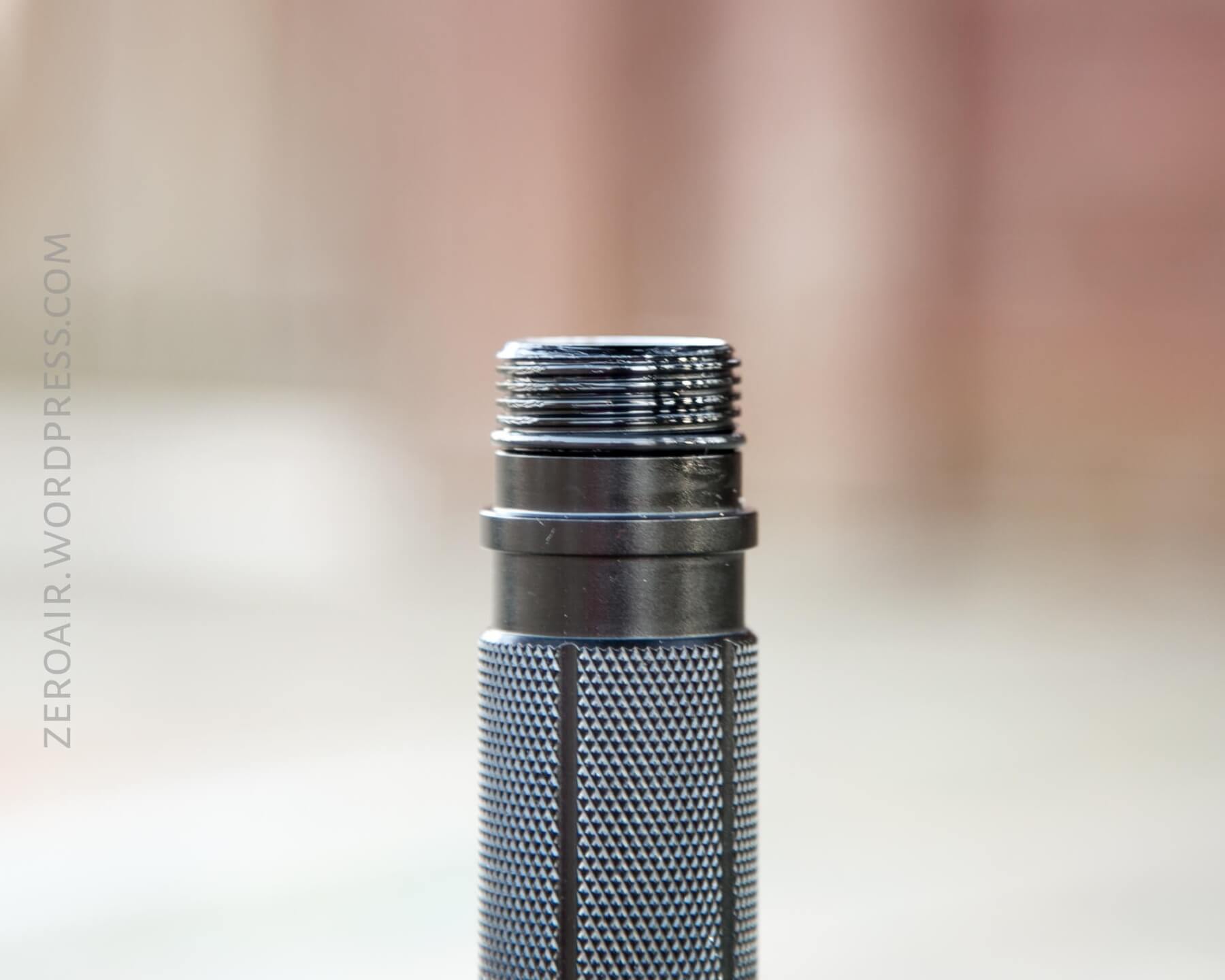
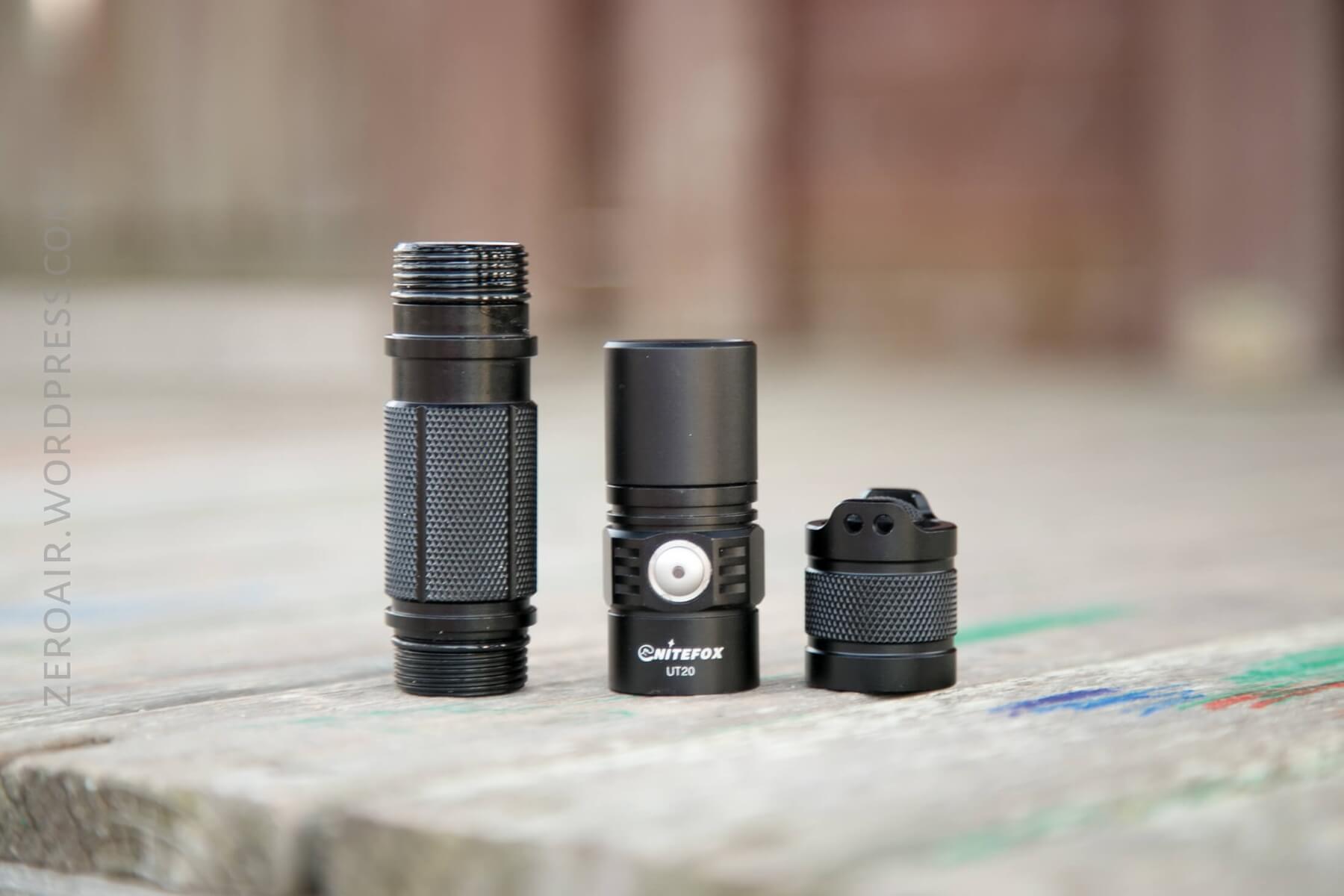
The switch end has an aluminum retaining ring that unscrews. The head, on the other hand, looks to have a press-fit driver and might pose some challenges to remove (as do many lights with onboard charging).
Size
I measure the light at about 14cm x 2.5cm.
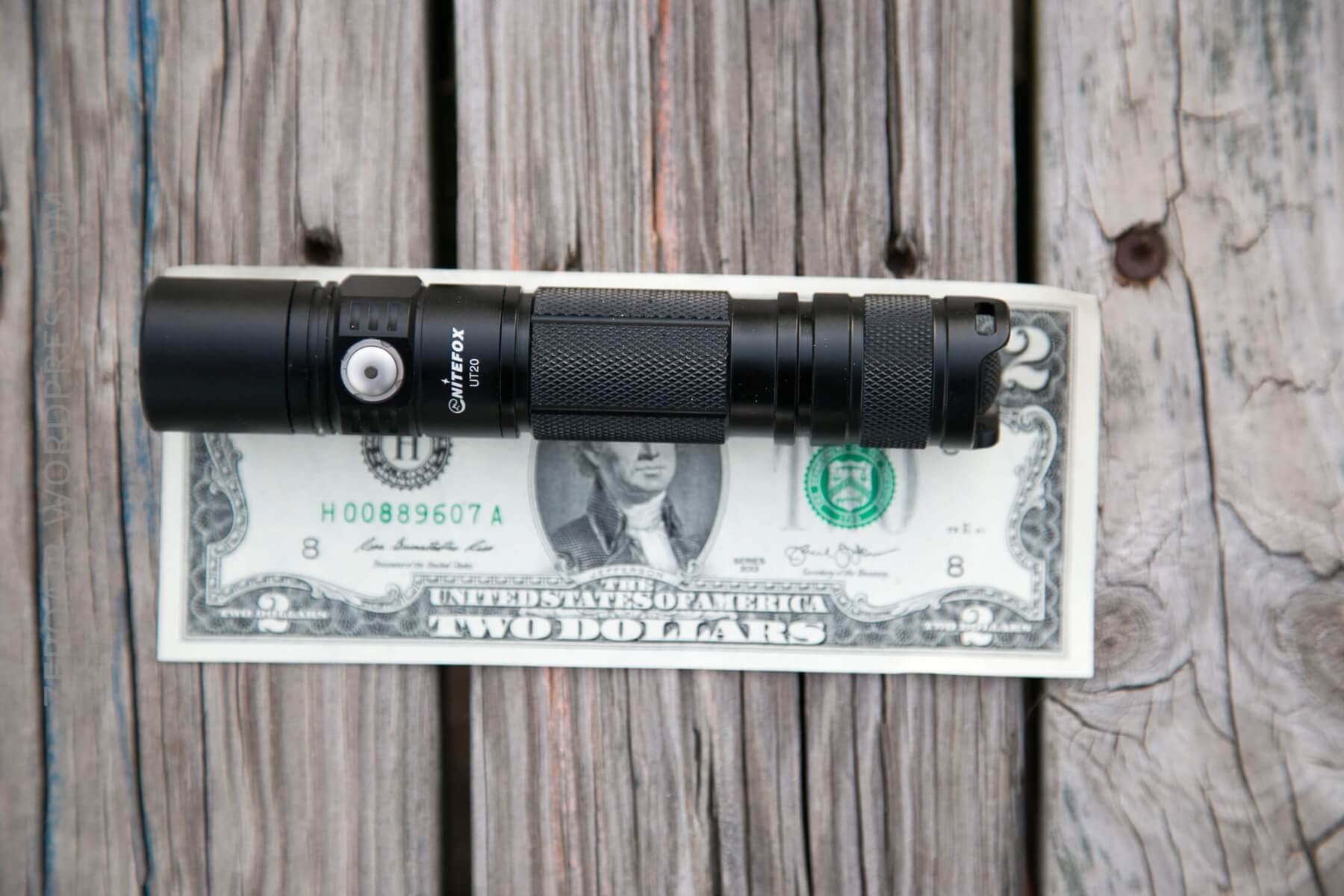
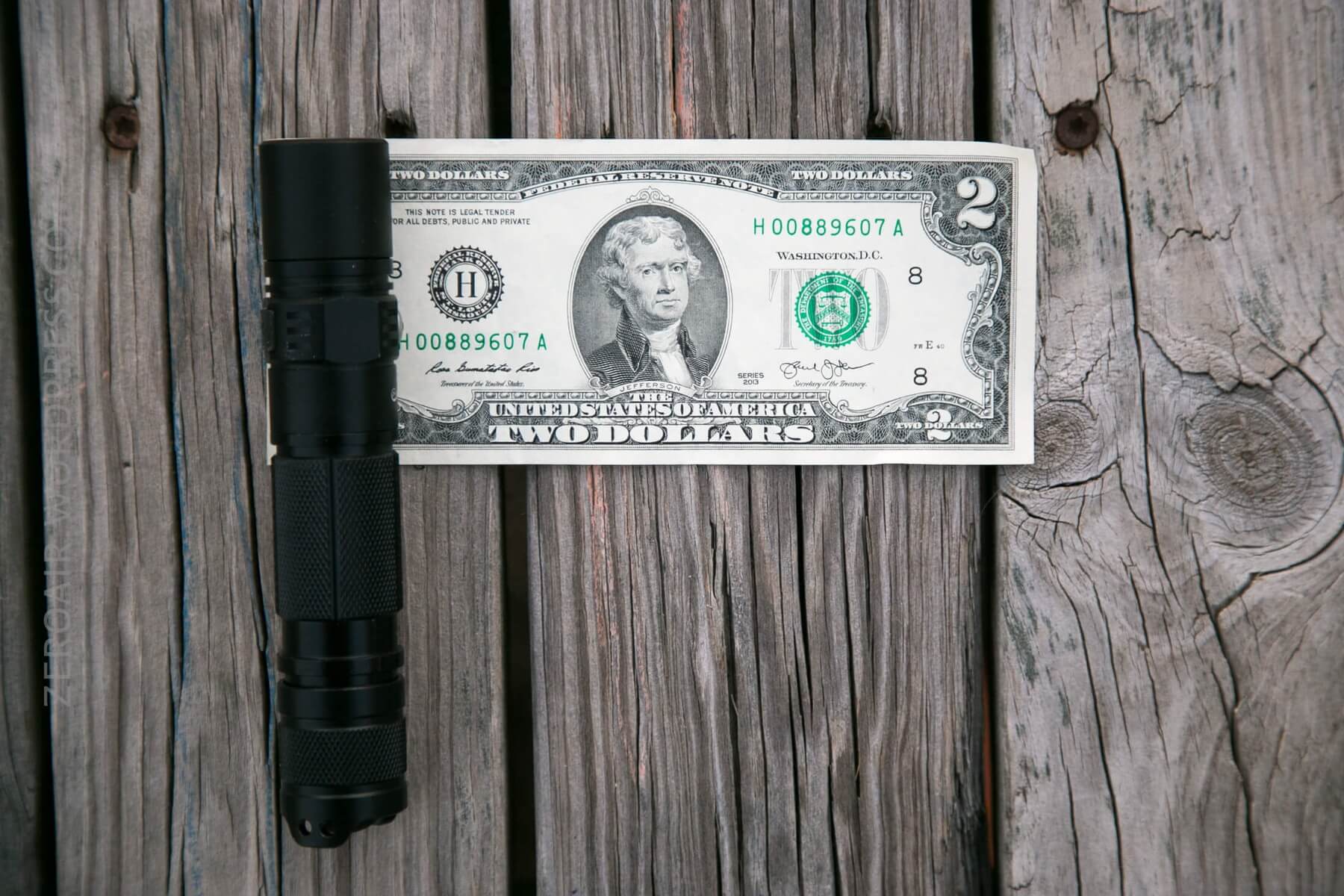
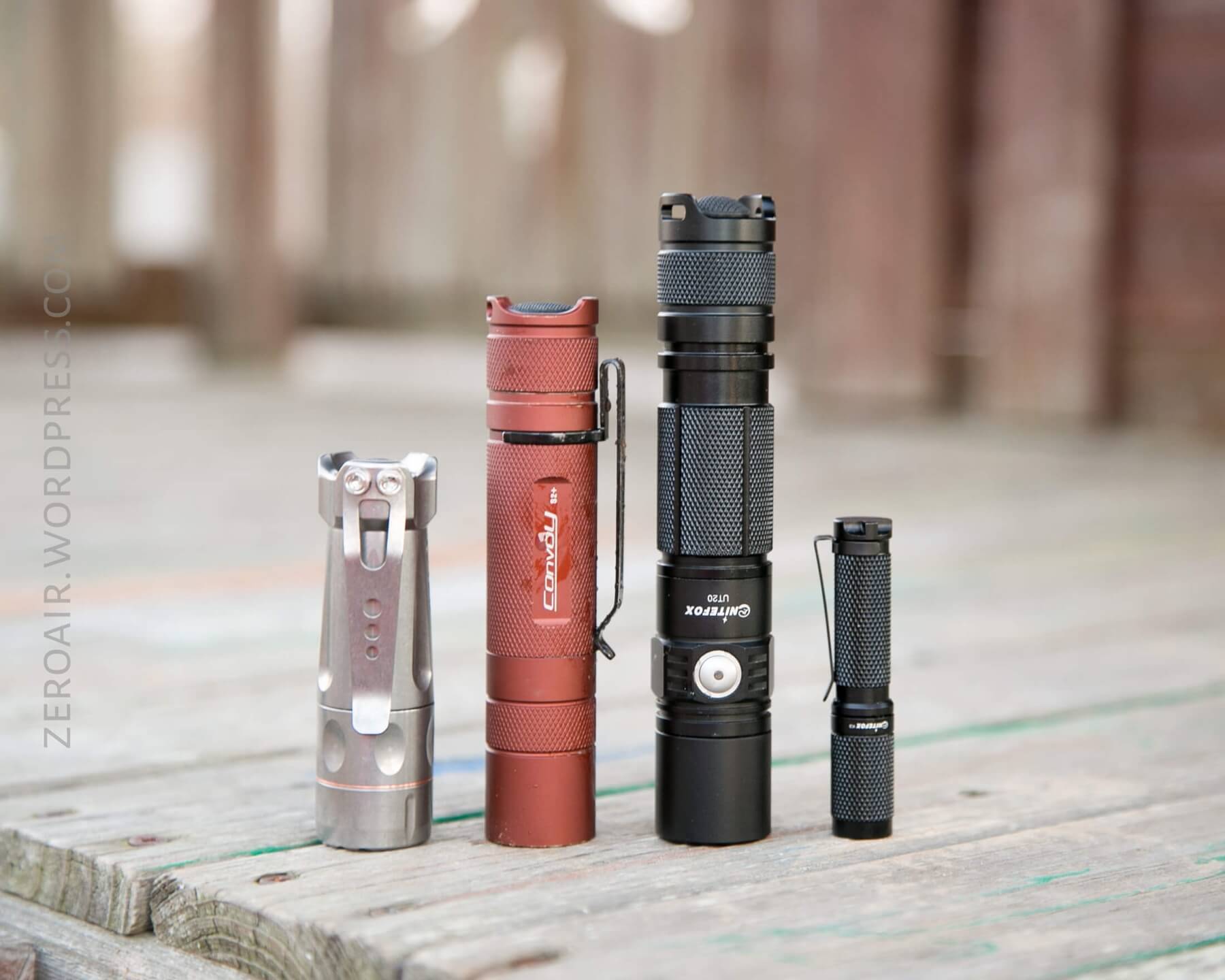
This light is a bit long, to be sure. Much longer than the Convoy S2+.
Retention
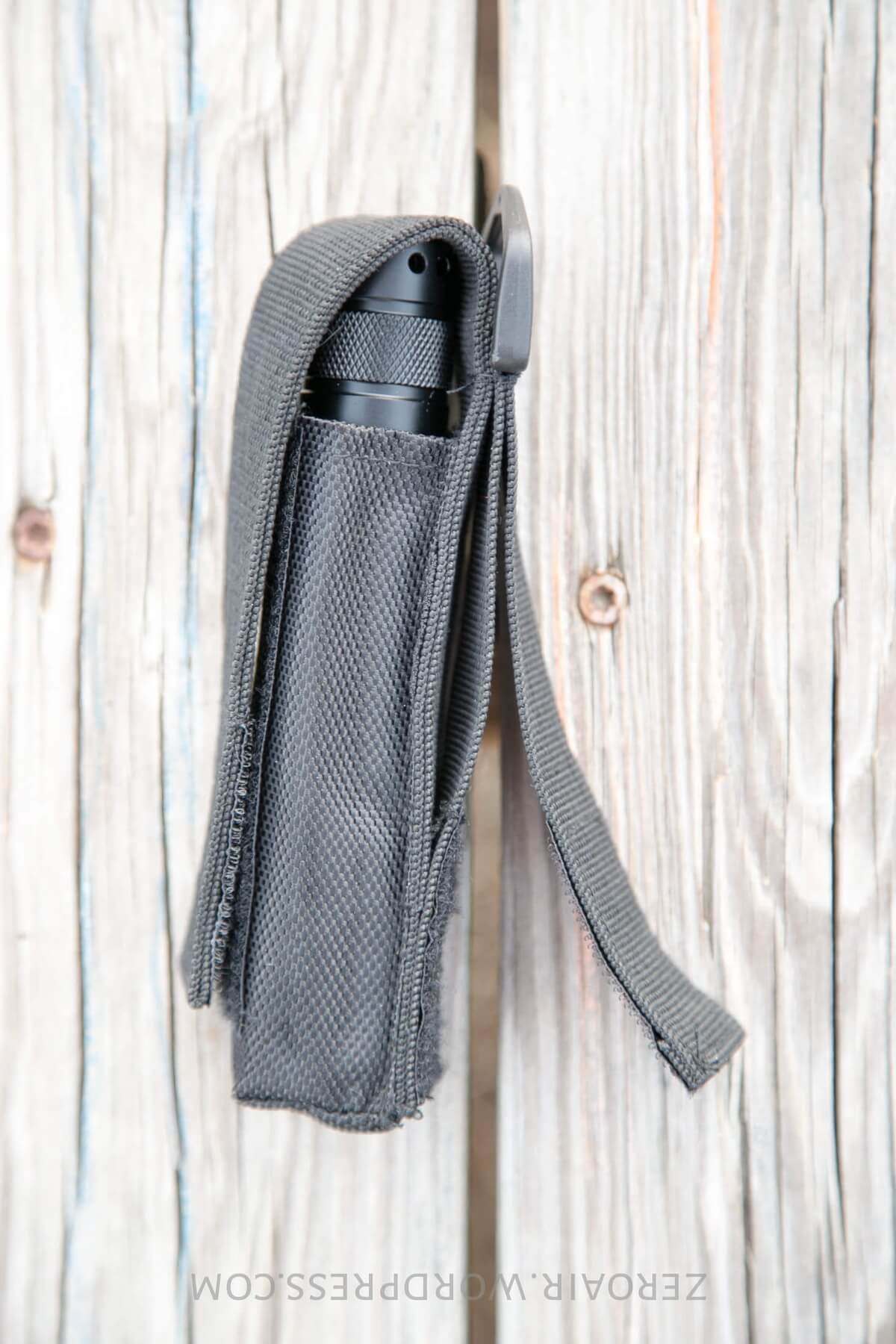
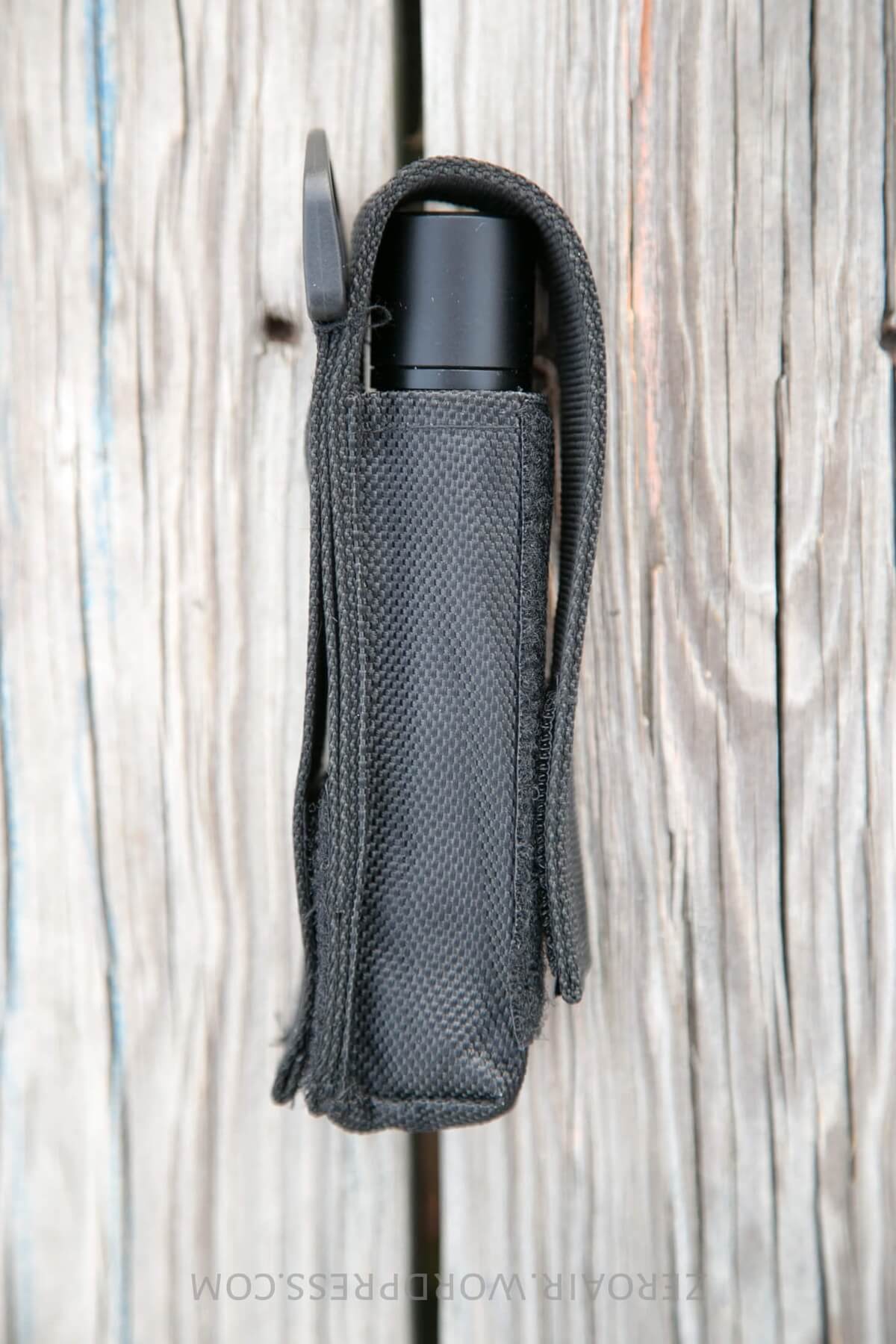
The UT20 includes a nylon pouch. It’s a fine (and typical) pouch, and the light will fit in the pouch in either direction.
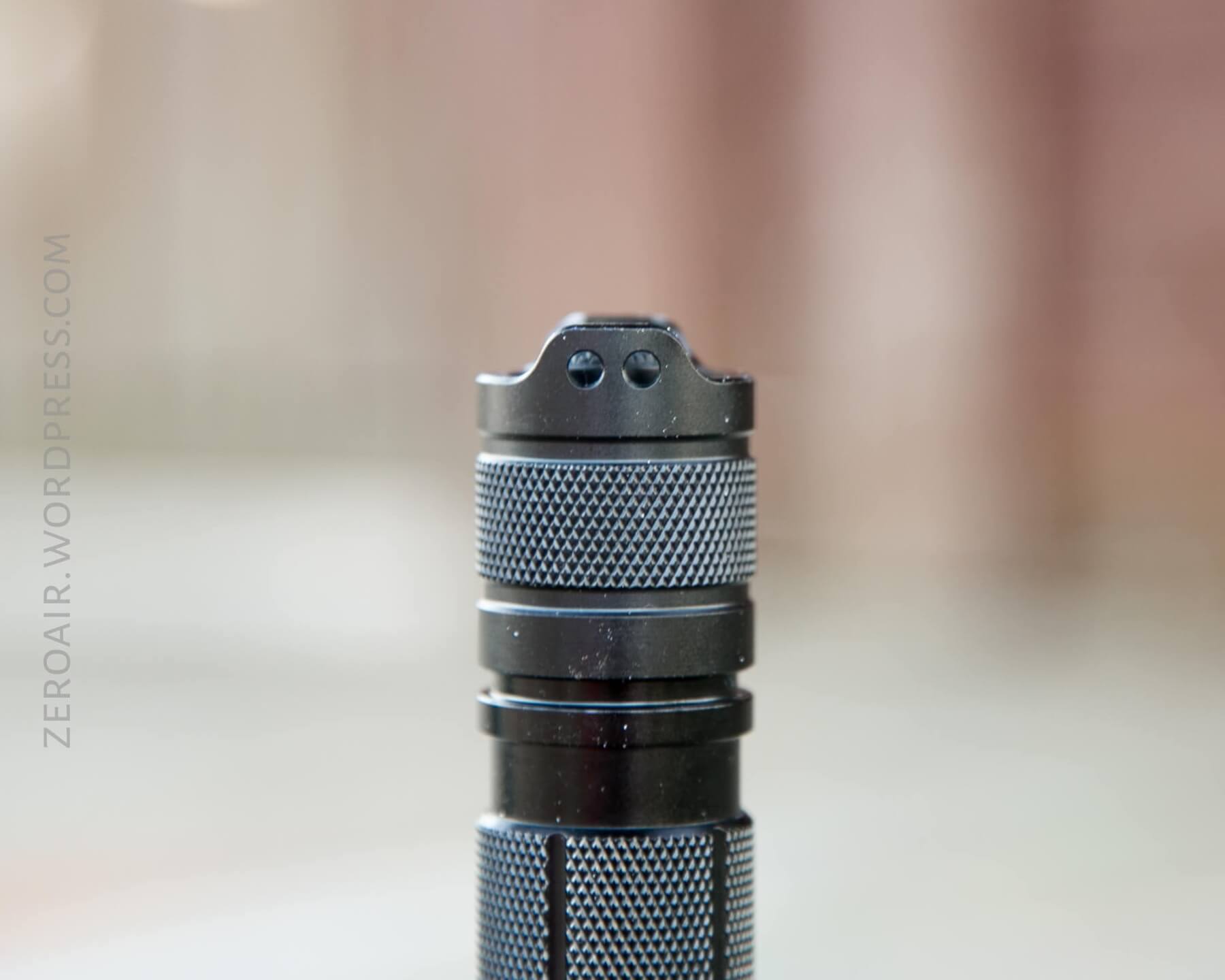
The lanyard holes for the included lanyard are in the tailcap. One on each side, and they’re different, too.
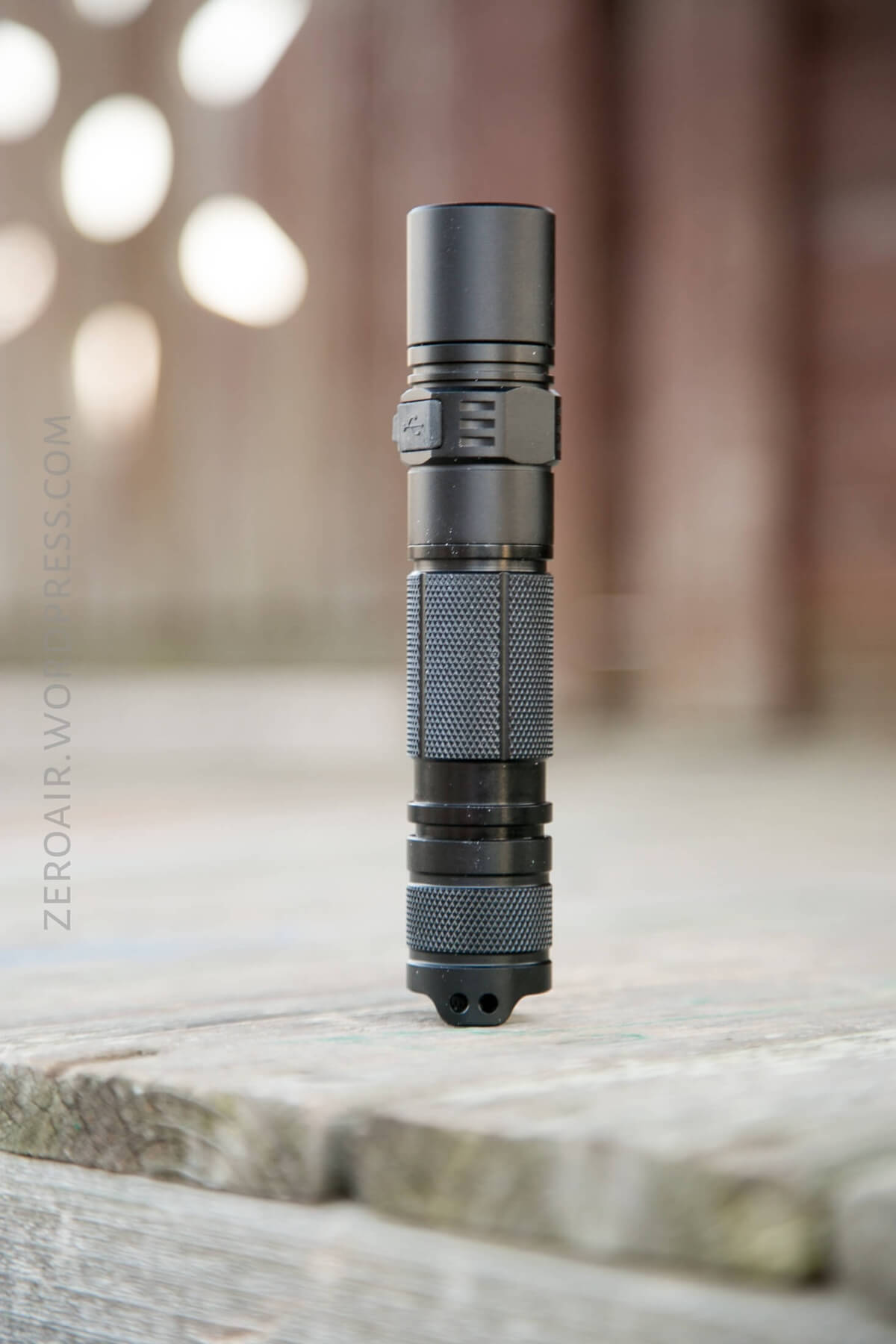
No pocket clip is included (!!), but there is a tactical ring, to which a lanyard may also be attached. There’s a smoothed spot on the body tube just for this.
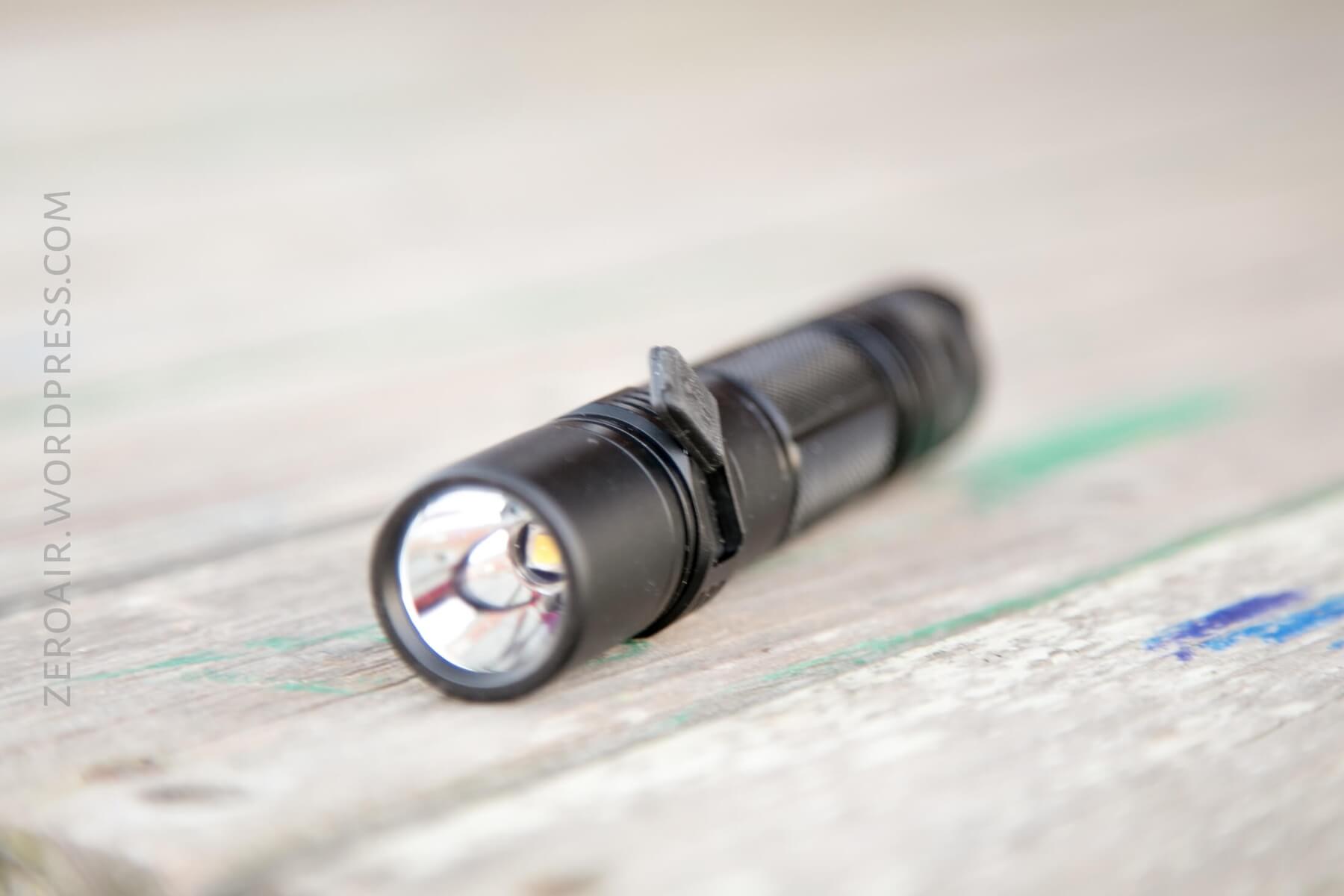
Unfortunately, the light doesn’t tailstand (reliably).
Power
Power is provided by a single 18650 cell. The manual doesn’t mention support for higher than 4.2V, so I wouldn’t push my luck with 2x 18350 or anything else 2-up.
Since the light has dual springs, it’ll work with any type of 18650 without issue.
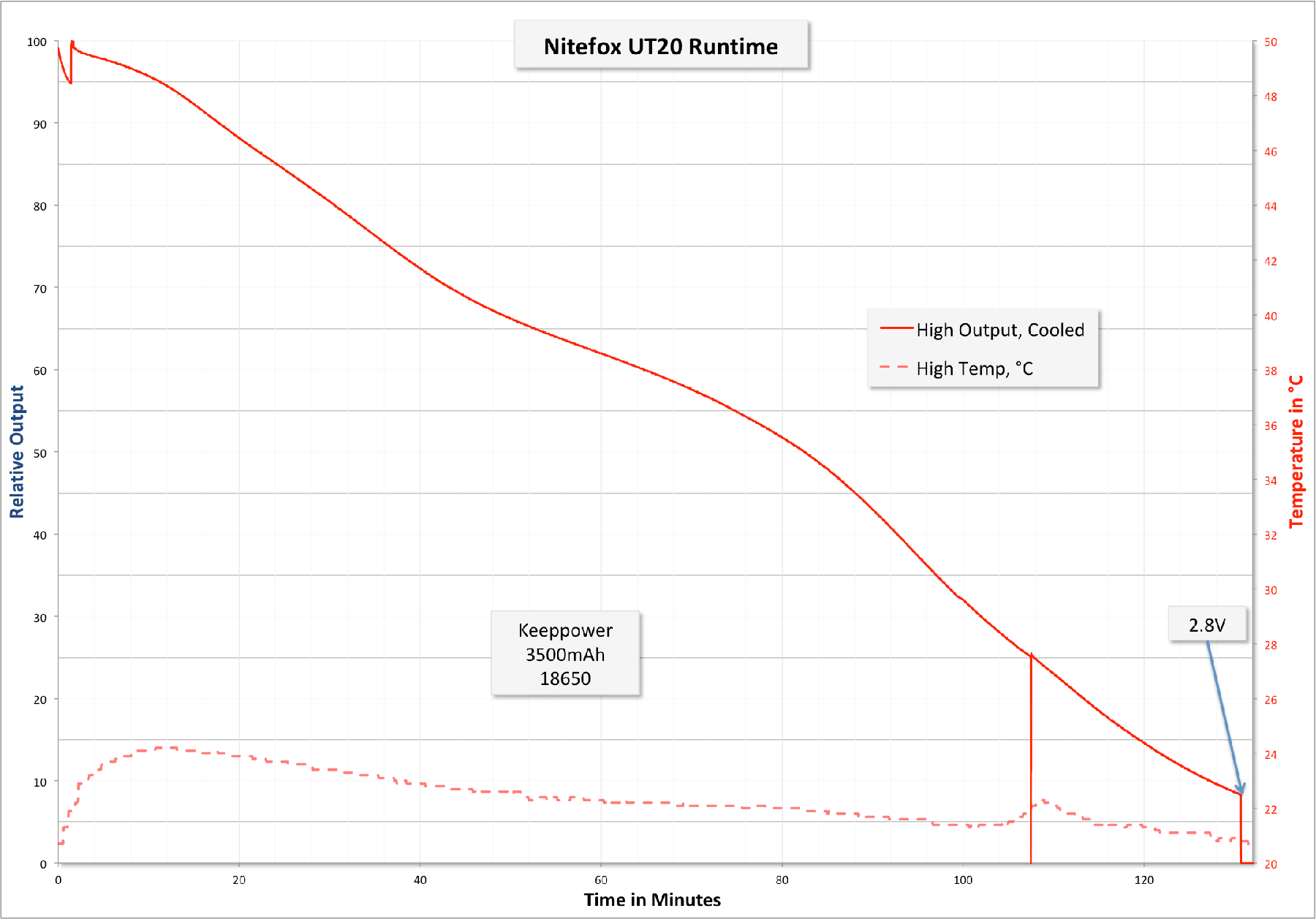
The runtime is unfortunately very unimpressive. It seems to indicate no regulation at all, and the output simply tracks the cell voltage through the runtime. The side switch does provide low voltage warning, and I stopped this runtime after that, at 2.8V.
Charging
There’s also onboard charging, via micro-USB. The port is sturdy and covered by a rubber boot.
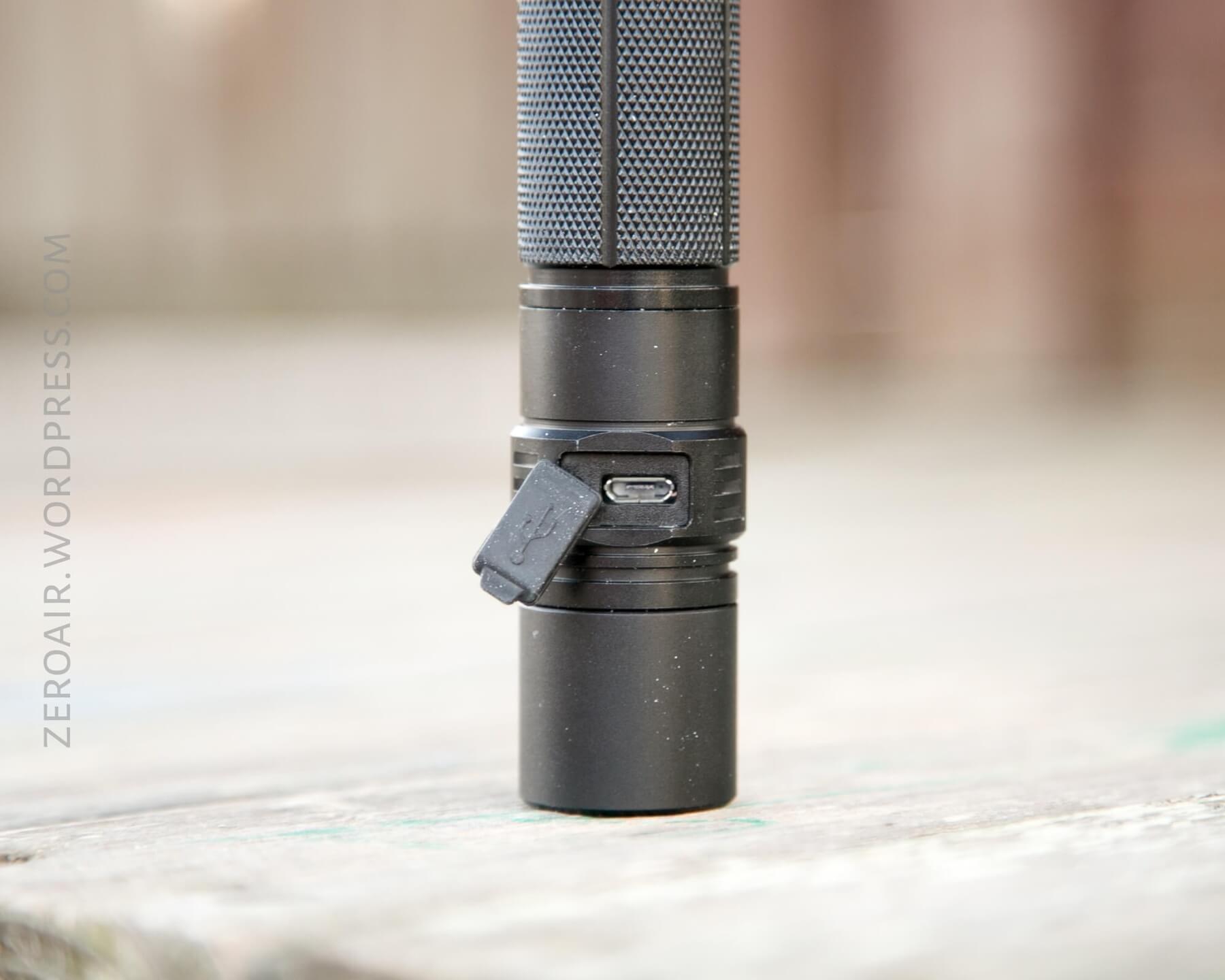
The boot is fairly thick.
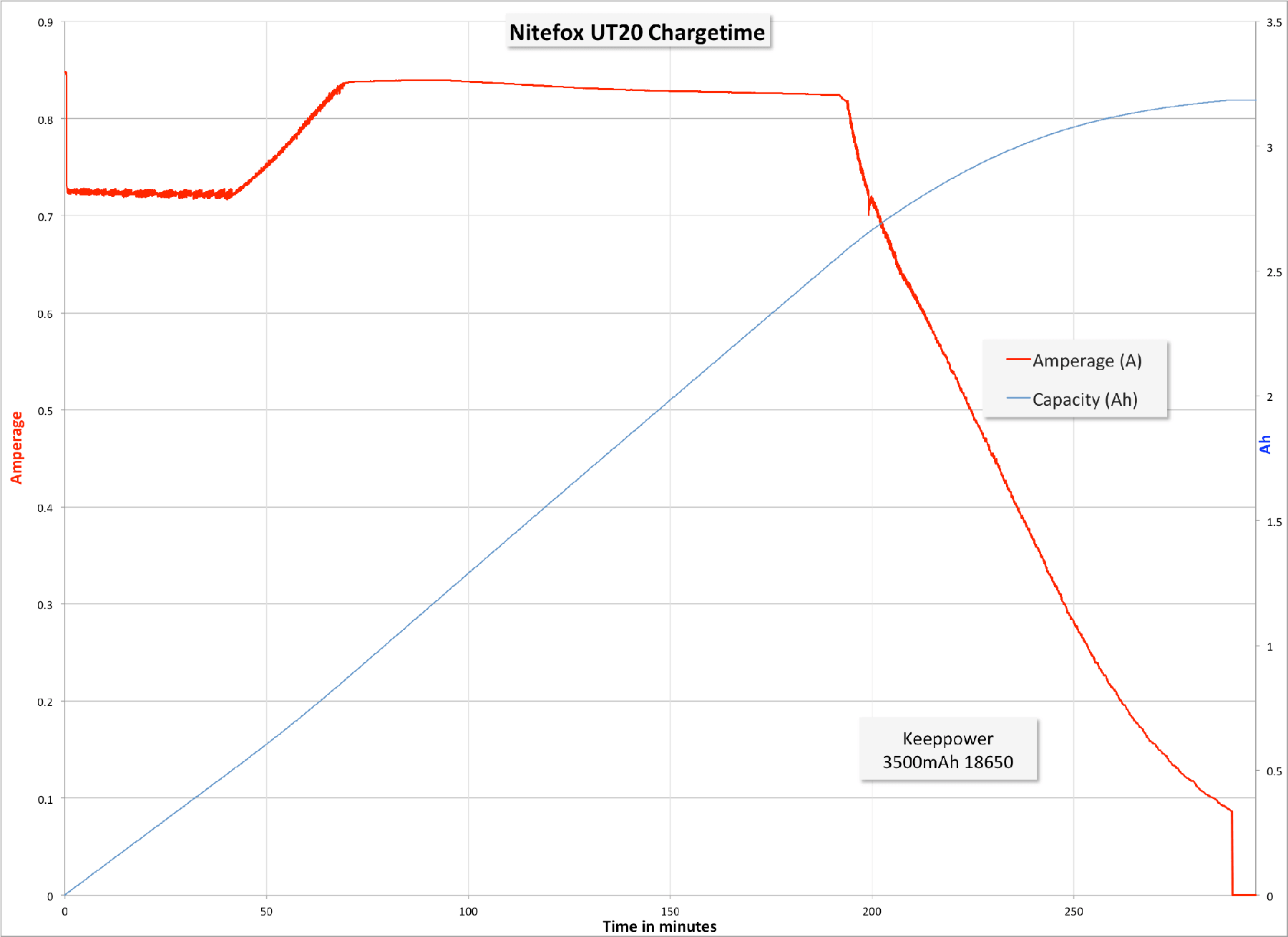
Charging looks much better than the runtime looked, and takes place at around 0.85A. I can’t explain the first 50 minutes, but once the light gets up to max charge rate, it’s very steady. This is a good CC/CV charge program. You’ll need to click the tail switch for charging to happen…. (it’s a mechanical clicky, so the system needs it in the “on” position so that there’s a closed loop).
User Interface and Operation
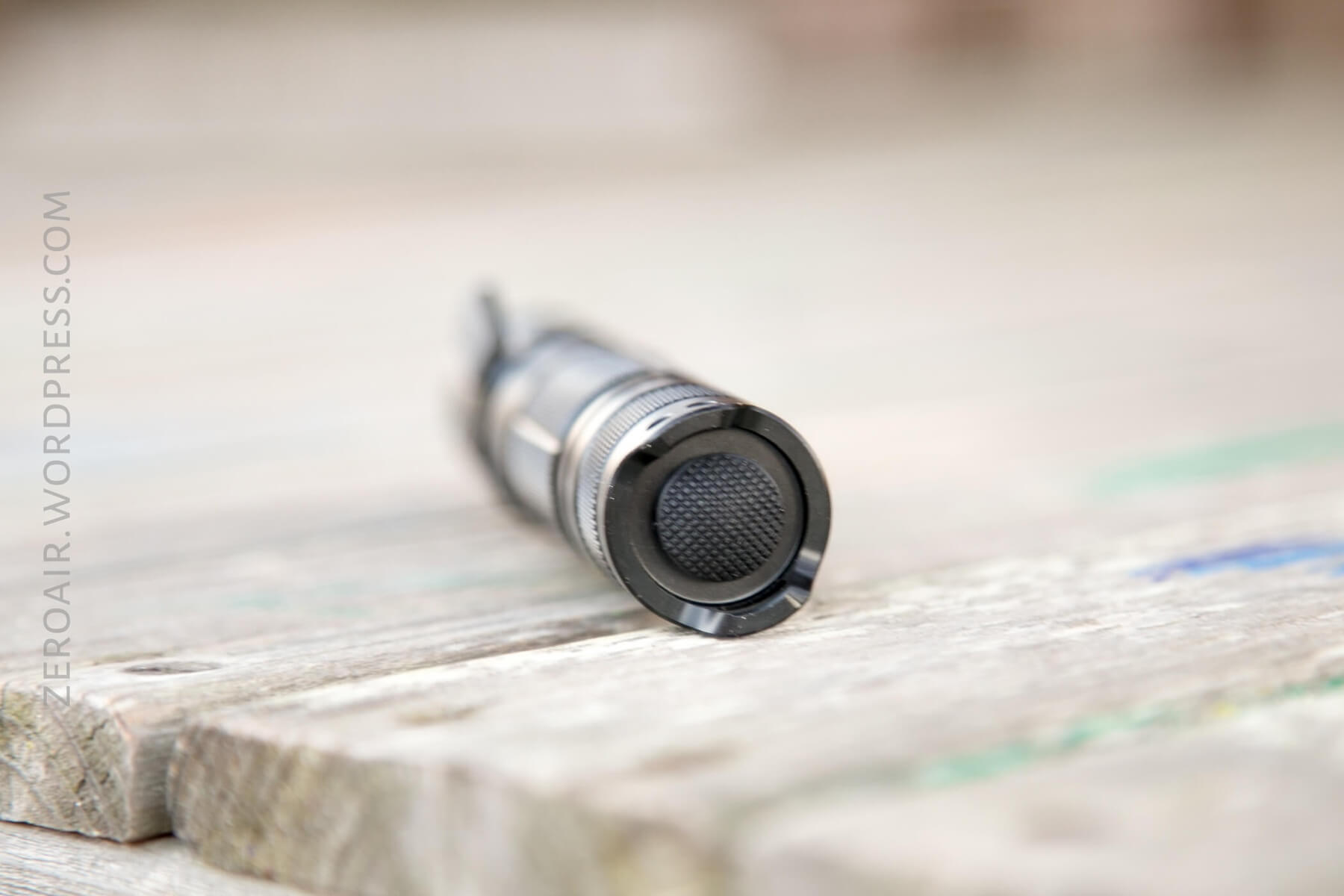
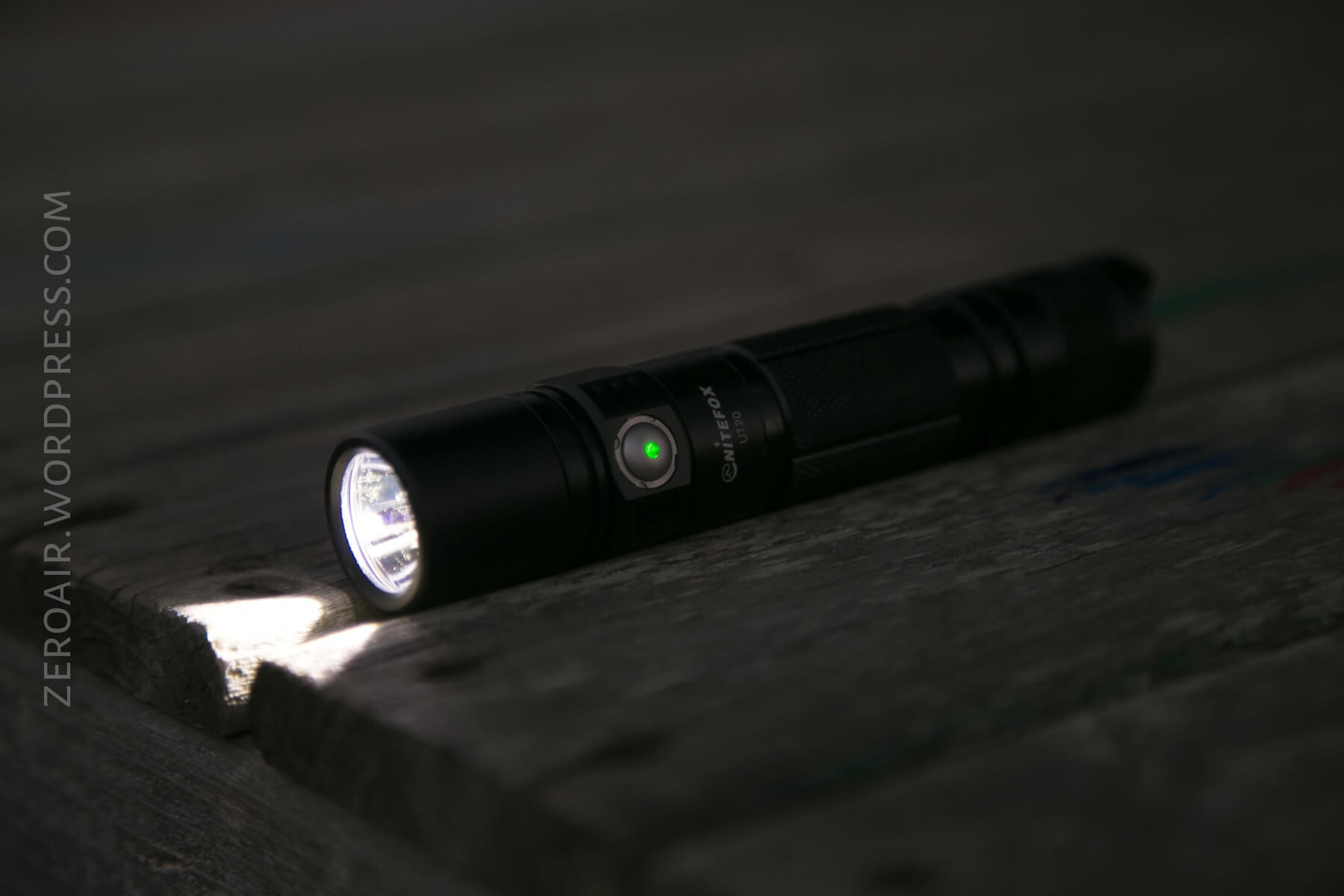
The UT20 has two switches: A side e-switch with an indicating LED, and a mechanical tail switch.
The tail switch has a bit of (what I’d call) a ‘tactical dome’. It’s a forward clicky, so there’s an intrinsic momentary option.
The indicating side switch will tell the cell power, as follows:
Green: >20% power
Red: Between 10 and 20%
Red flashing: <10% power remaining
Here’s a user interface table! This is for the non-tactical option.
| State | Action | Result |
|---|---|---|
| Off | Click Tail Switch (TS) | On (mode memory) |
| Off | Click Side Switch (SS) | No action |
| On | Click TS | Off |
| Off | Soft press TS | Momentary (Mode memory) |
| On | Long press SS | Strobe |
| On | Click SS | Mode advance (Moon, LMHT) |
| On | Long Press (>3s) SS | Switch mode group |
The tactical group is simpler – The side switch does nothing. The tail switch comes on in High (and resets after a few seconds, back to high). If clicked quickly, it cycles H, Strobe, L.
Strangely (in either group), the tail switch causes a bit of medium-ish preflash, no matter the mode. I found this to be a bit off-putting, as most flashes are.
Modes
| Mode | Mode Claimed Output (lm) | Claimed Runtime | Mode Measured Lux | Tailcap Amps |
|---|---|---|---|---|
| High | 1080 | 1h | 18730 | 1.52 |
| Medium | 300 | 6h | 7330 | 0.93 |
| Low | 60 | 28h | 2070 | 0.20 |
| Moon | 1 | 480h | 28 | 0.007 |
| Strobe | 1080 | – | – | – |
LED and Beam
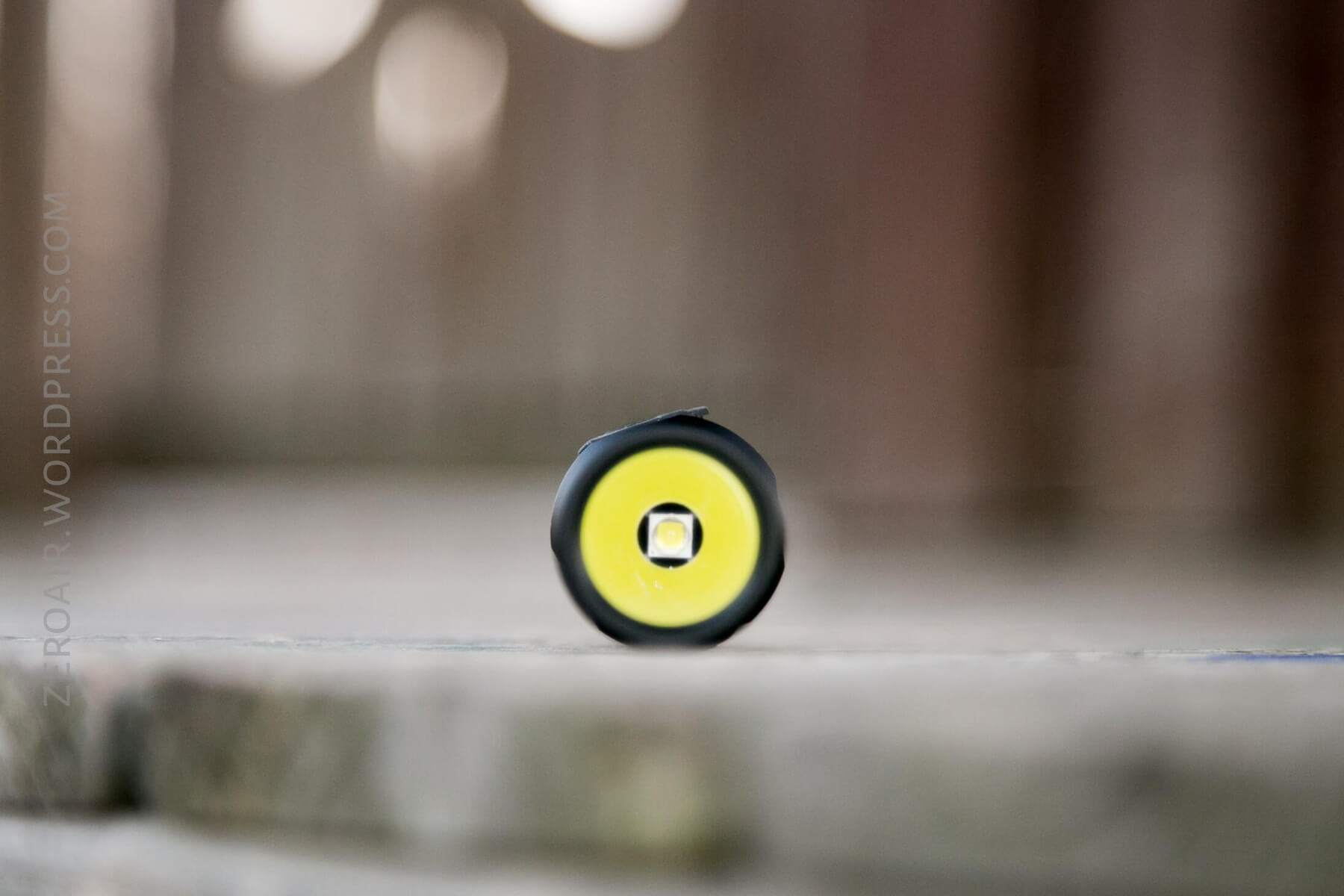
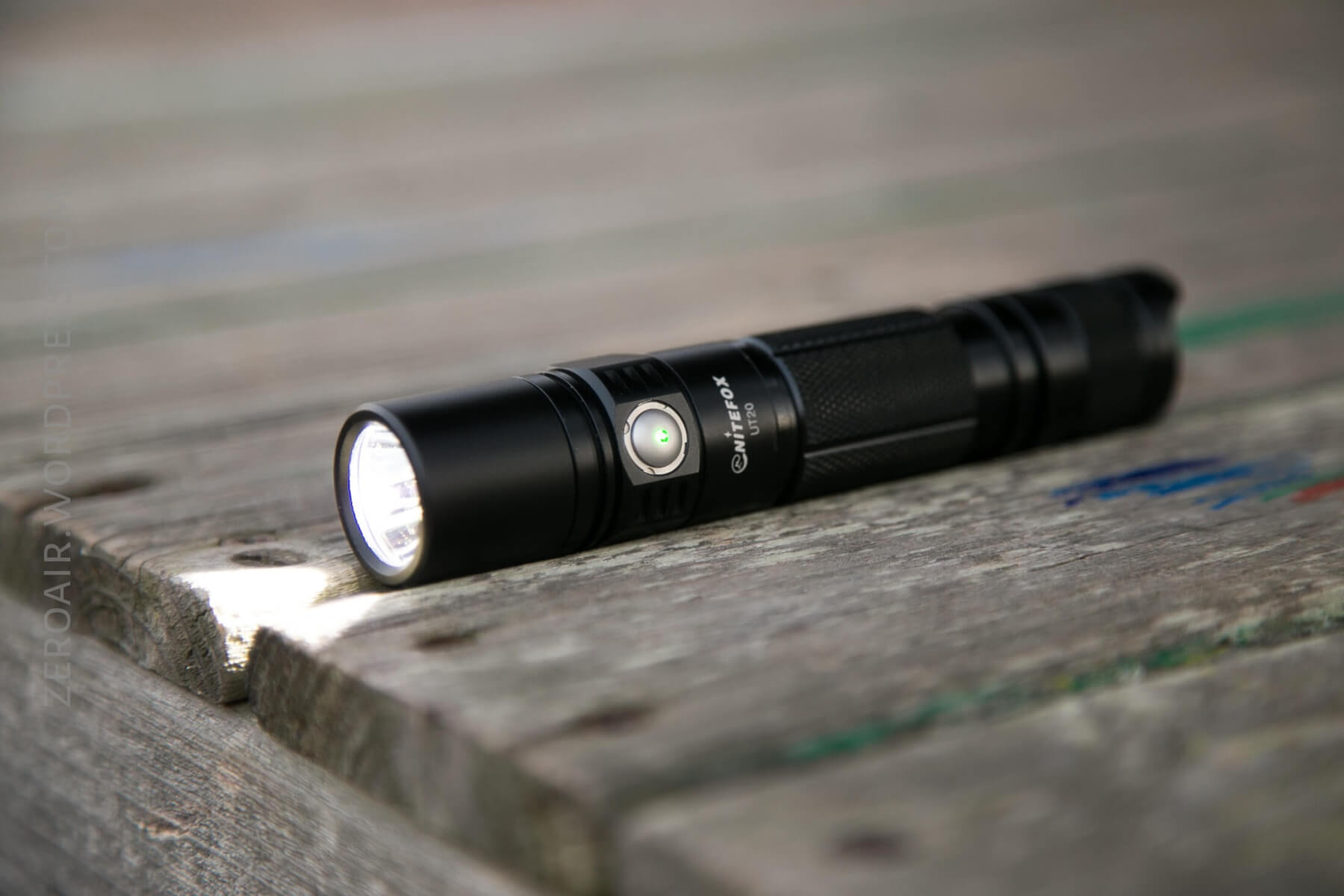
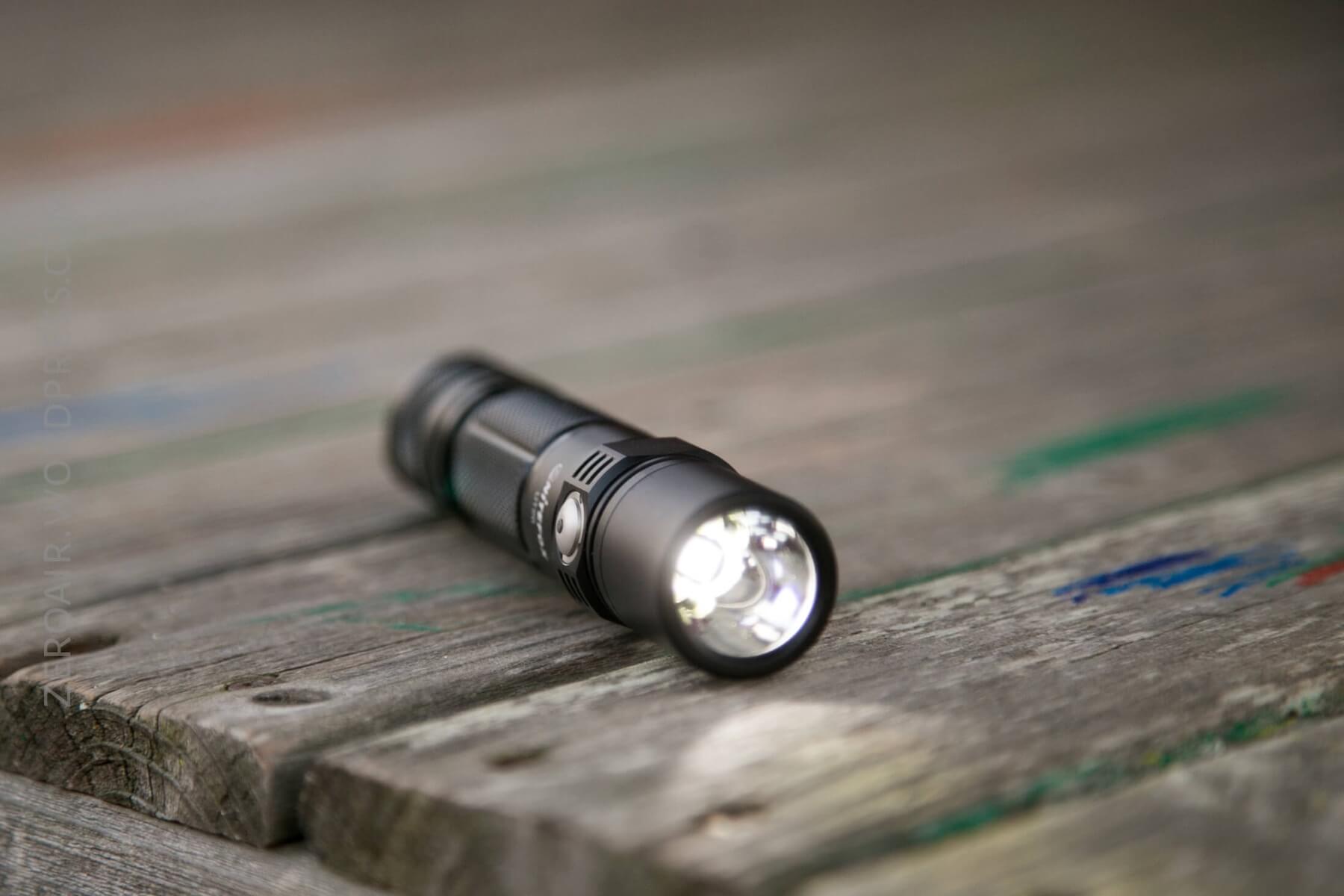
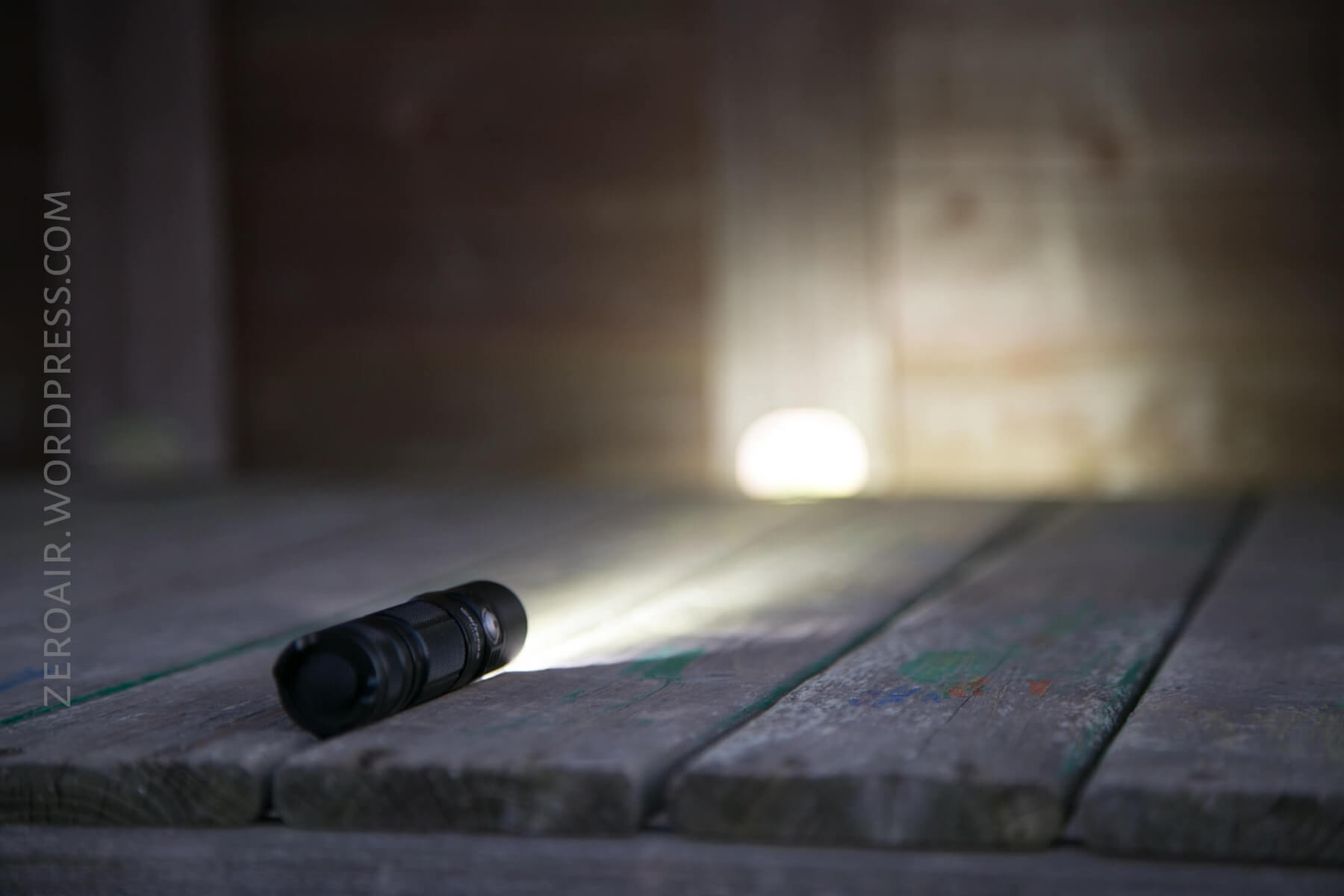
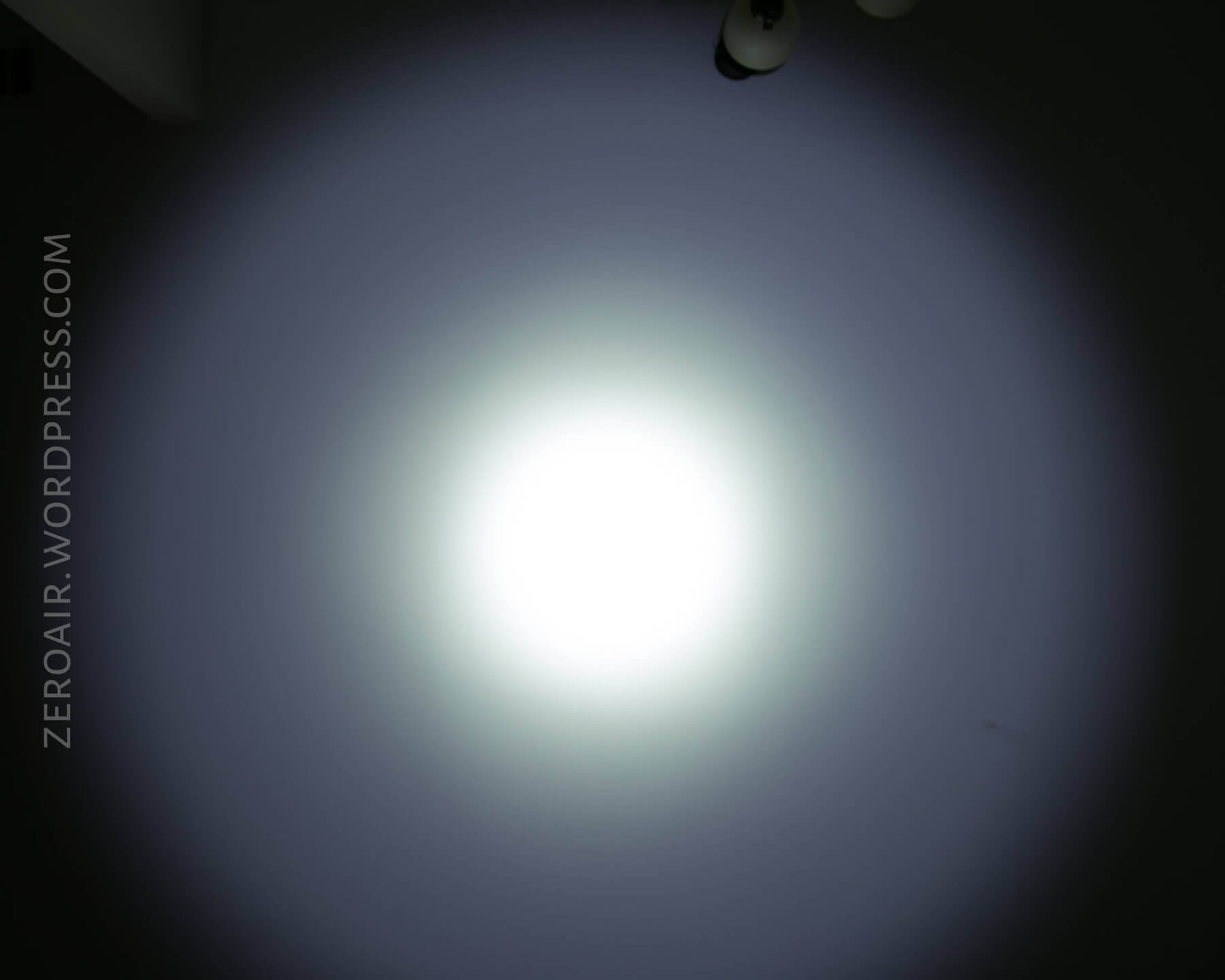
The UT20 has a Cree XM-L2 emitter and a smooth, moderately deep reflector. The beam is quite tight but still has some spill.
Beamshots
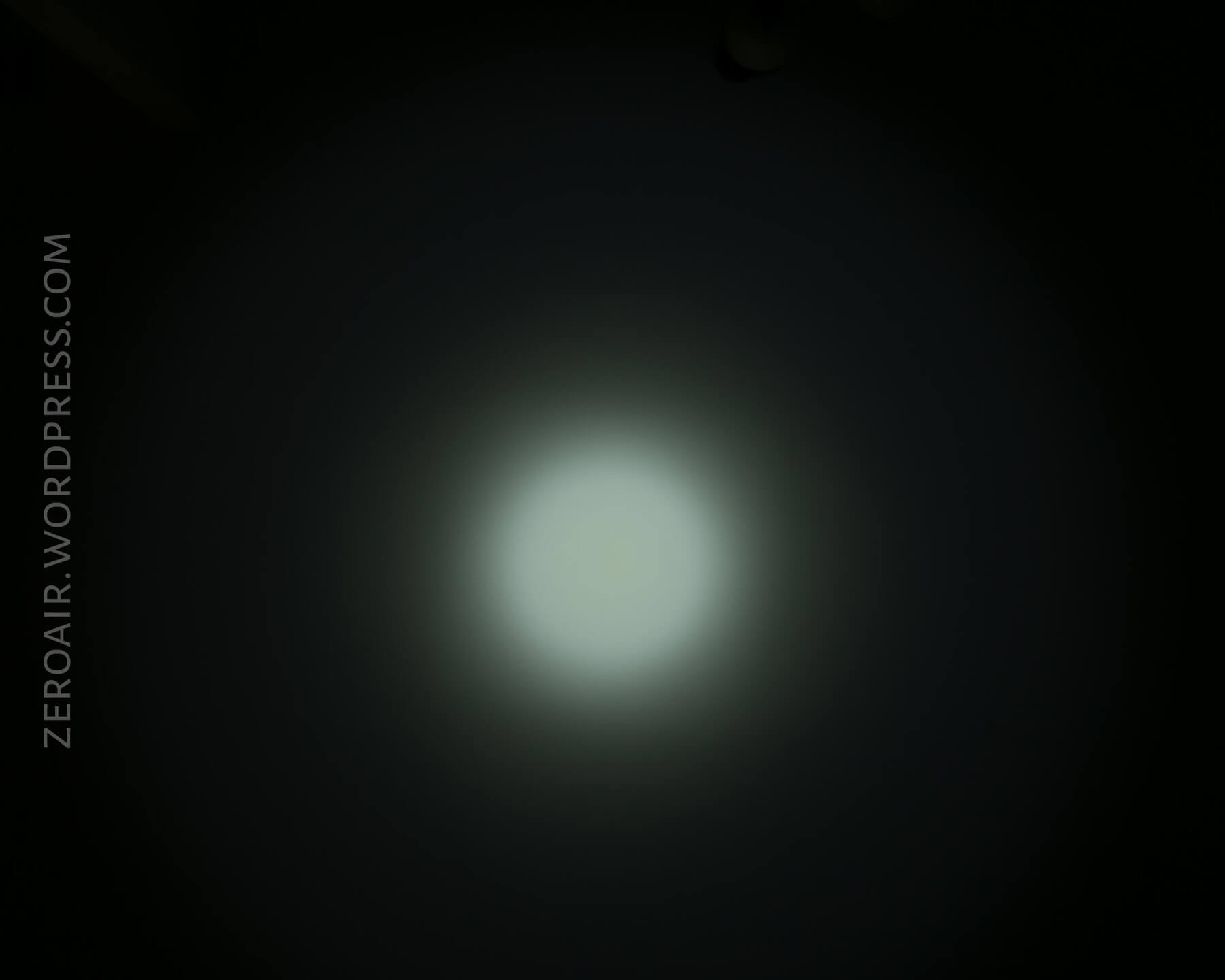
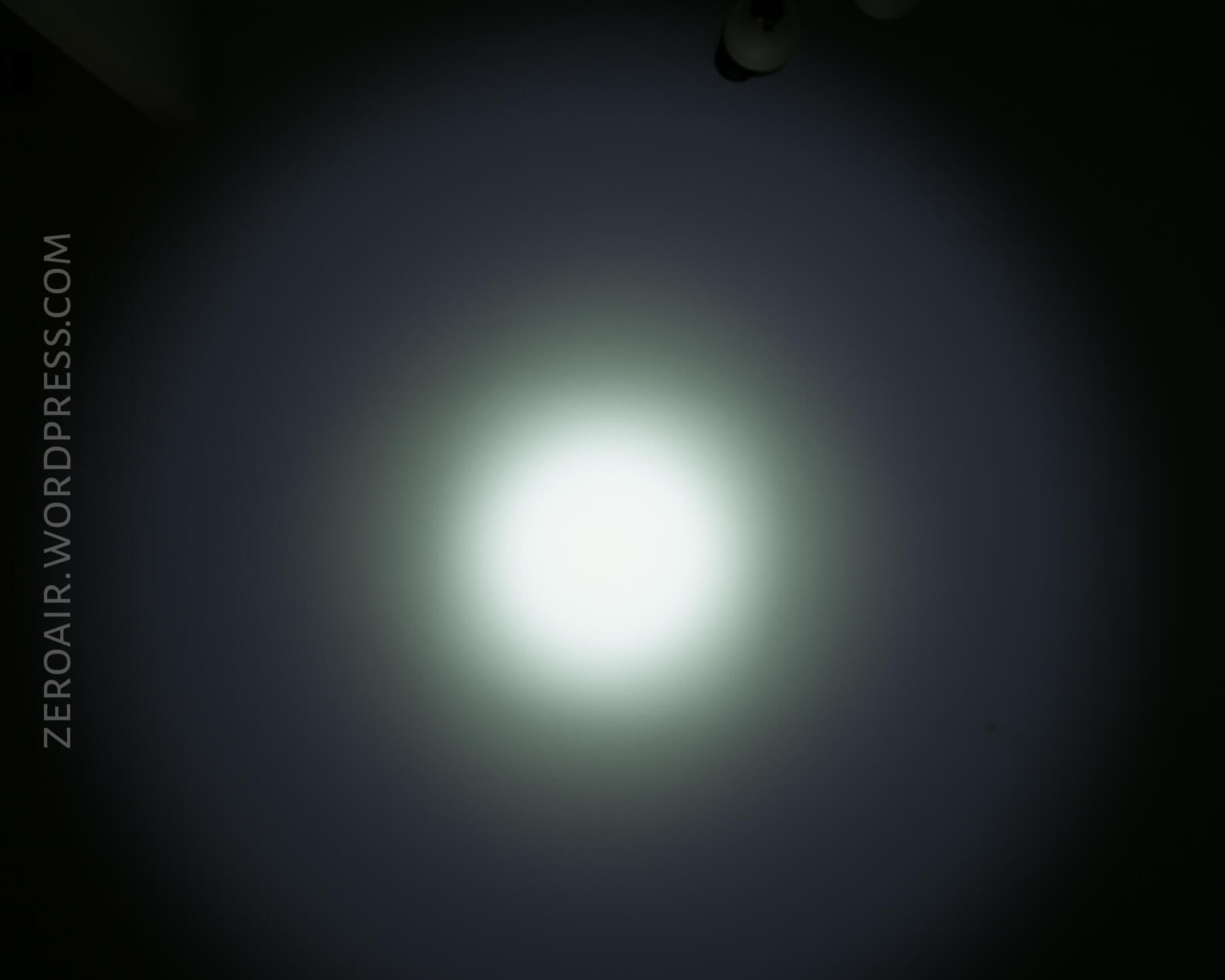
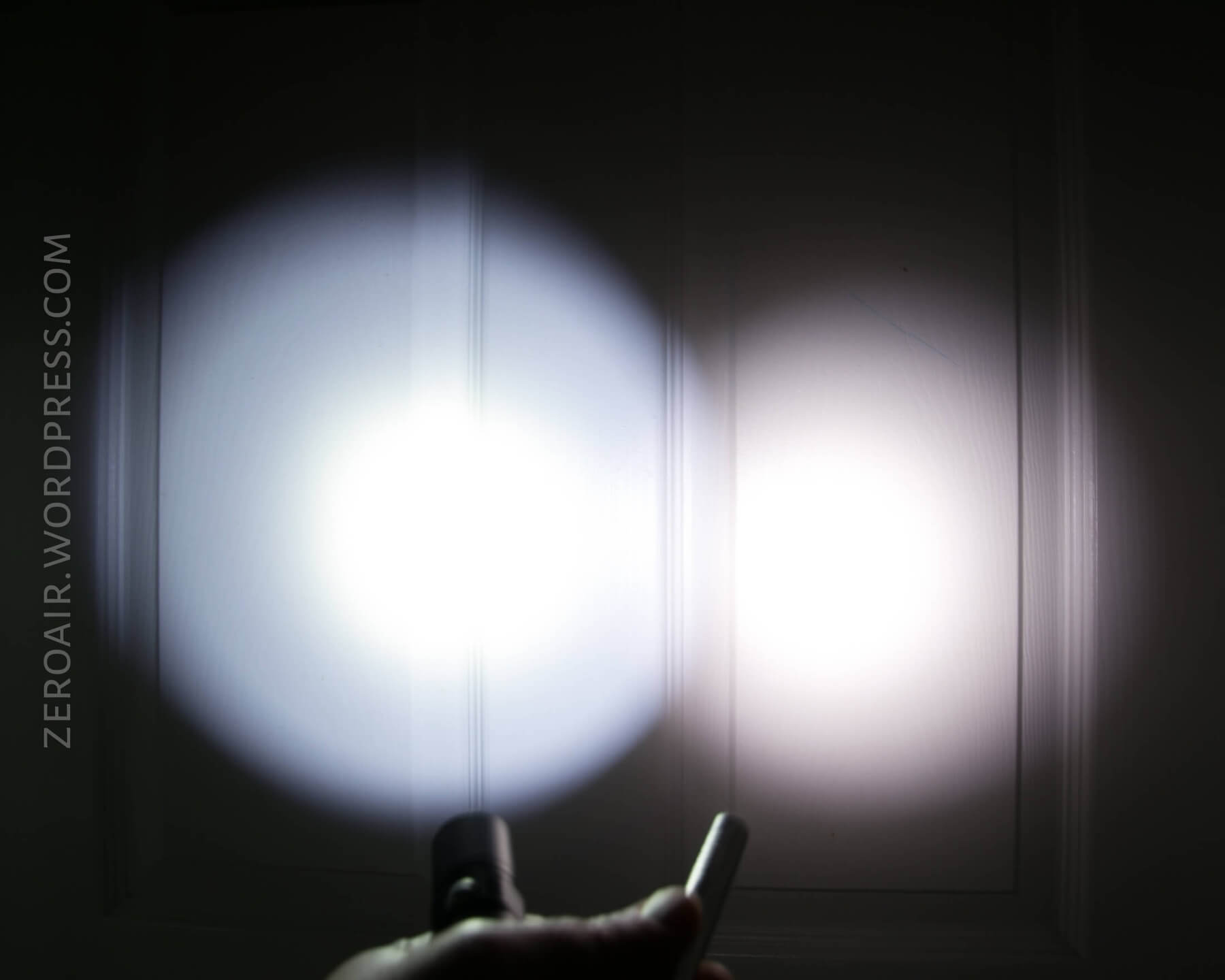
These beamshots always have the following settings: f8, ISO100, 0.3s shutter, and manual 5000K exposure. These photos are taken at floor level, and the beam hits the ceiling around 9 feet away.

Tint vs BLF-348 (KillzoneFlashlights.com 219b version) (affiliate link)
I keep the test flashlight on the left and the BLF-348 reference flashlight on the right.
Random Comparisons and Competitive Options
Here’s a relevantly filtered page on parametrek.com.
There are quite a few lights in this category, many of which also support 2-up cells. The Nitecore MH12, for example, is a nice competitor (in fact, they practically share a body design). Even more similar is the Thrunite TC12 v2, which I reviewed here. All of these are good choices, but the Nitefox is less expensive. I don’t expect any of these others to have preflash, though.
Conclusion
What I like
- Charging is good
- Indicating side switch
- Good build quality
What I don’t like
- Preflash
- Light is very long
- Can’t tailstand
Notes
- This light was provided by Nitefox for review. I was not paid to write this review.
- This content originally appeared at zeroair.org. Please visit there for the best experience!
- Use my amazon.com referral link if you’re willing to help support making more reviews like this one!
- Please support me on Patreon! I deeply appreciate your support!
Discover more from ZeroAir Reviews
Subscribe to get the latest posts sent to your email.