
Maratac PCL Brass Keychain Flashlight Review
The Maratac PCL brass flashlight is maybe a bit chunky for keychain use. It’s a great little light, though, using a Cree XP-G2.
Official Specs and Features
Here’s a link to the Maratac PCL Brass Keychain Flashlight product page.
Versions
There are three versions of the PCL: Brass (seen here, of course), Stainless Steel, and Copper.
Price
Prices range from $46.50 for Brass, $39.50 for Stainless, and miraculously, the least expensive version is Copper, at $35.95. It should be noted that these are all sale prices, and at regular prices they’re in the order you’d expect (Copper>Brass>Stainless).
Short Review
Based on the above price discussion, skip the rest of the review and go buy the copper while it’s still on sale.
Long Review
The Big Table
| Maratac PCL Brass | |
|---|---|
| Emitter: | Cree XP-G2 S4 |
| Price in USD at publication time: | $46.50 |
| Cell: | 1×14250 |
| Turbo Runtime Graph | |
| LVP? | Switch to Low |
| Switch Type: | Twisty |
| On-Board Charging? | Yes |
| Charge Port Type: | micro-USB |
| Charge Graph | |
| Power off Charge Port | No |
| Claimed Lumens (lm) | 305 |
| Measured Lumens (at 30s) | 116 (38% of claim)^ |
| Candela per Lumen | 8.6 |
| Claimed Throw (m) | – |
| Candela (Calculated) in cd (at 30s) | 79lux @ 4.044m = 1292cd |
| Throw (Calculated) (m) | 71.9^ |
| Claimed CCT | – |
| Measured CCT Range (K) | 4500 Kelvin |
| Item provided for review by: | Me |
| All my Maratac reviews! | |
^ Measurement disclaimer: Testing flashlights is my hobby. I use hobbyist-level equipment for testing, including some I made myself. Try not to get buried in the details of manufacturer specifications versus measurements recorded here; A certain amount of difference (say, 10 or 15%) is perfectly reasonable.
What’s Included
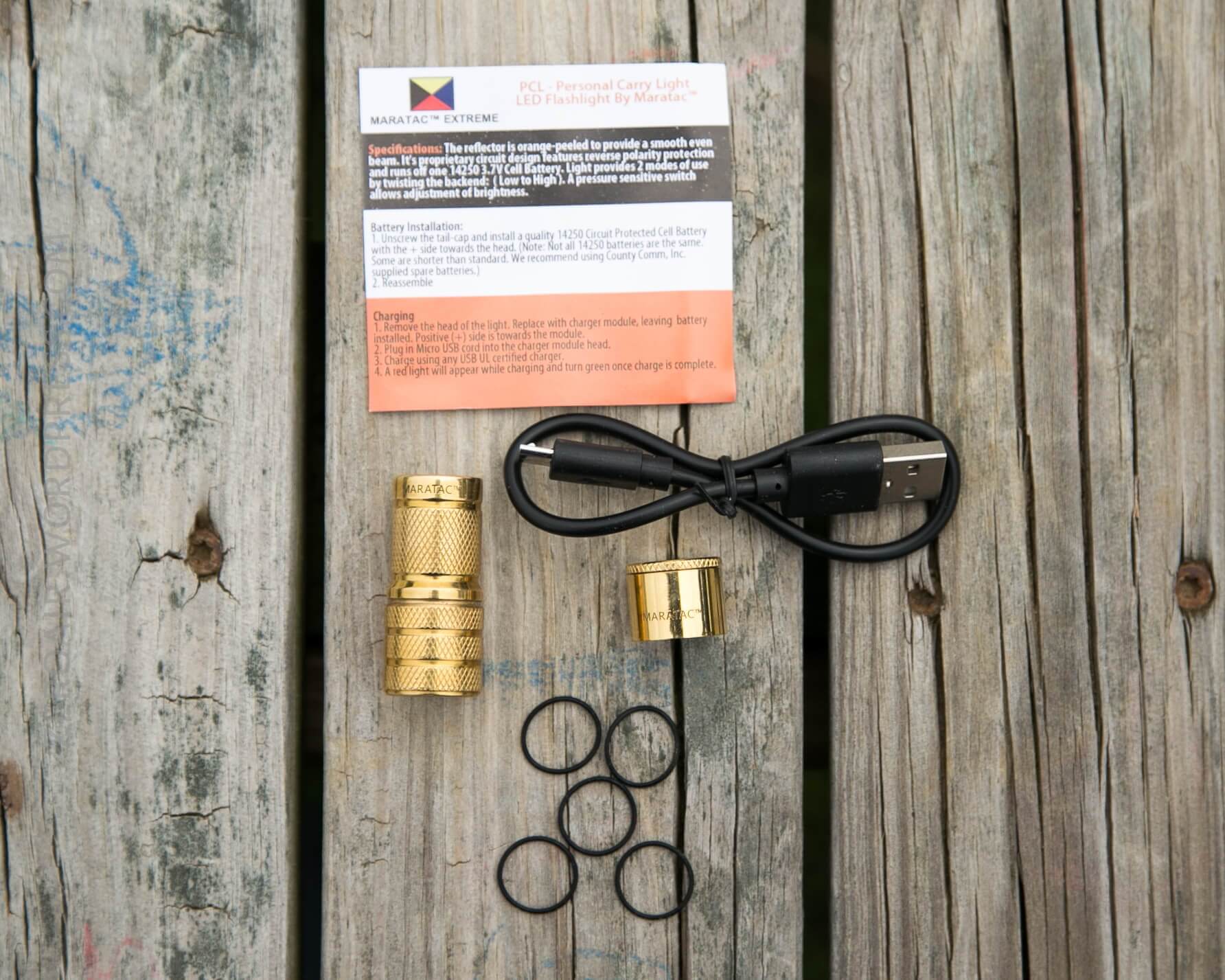
- Maratac PCL keychain flashlight
- Micro-USB charge cap
- Spare o-rings (5)
- Charge cable
- Manual
Package and Manual
The package is a very unusual slip-fit package. I got mine used, so I’m not really sure how the light is packaged normally, but with a little bit of packaging (like tissue or something), the parts stay steady nicely.
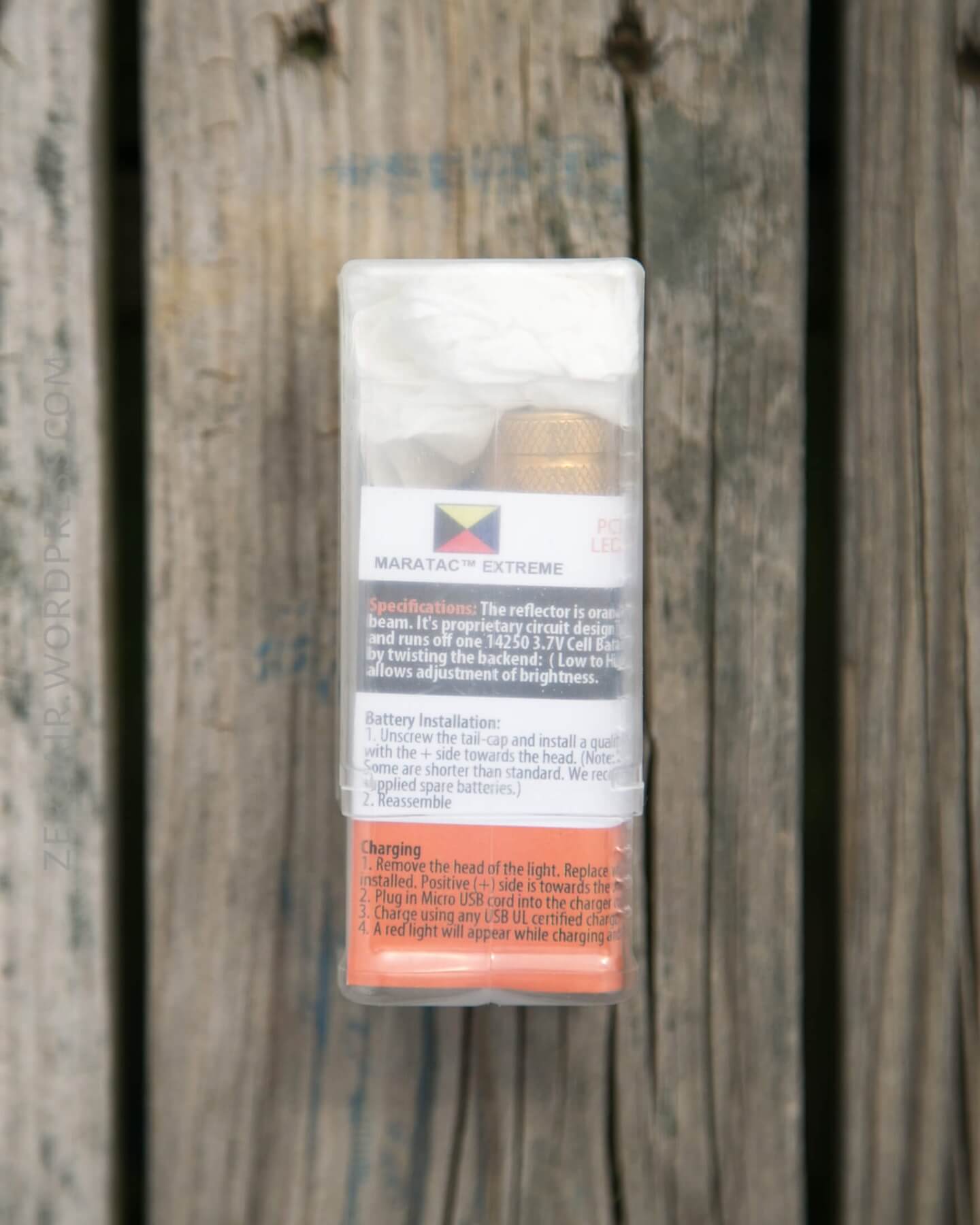
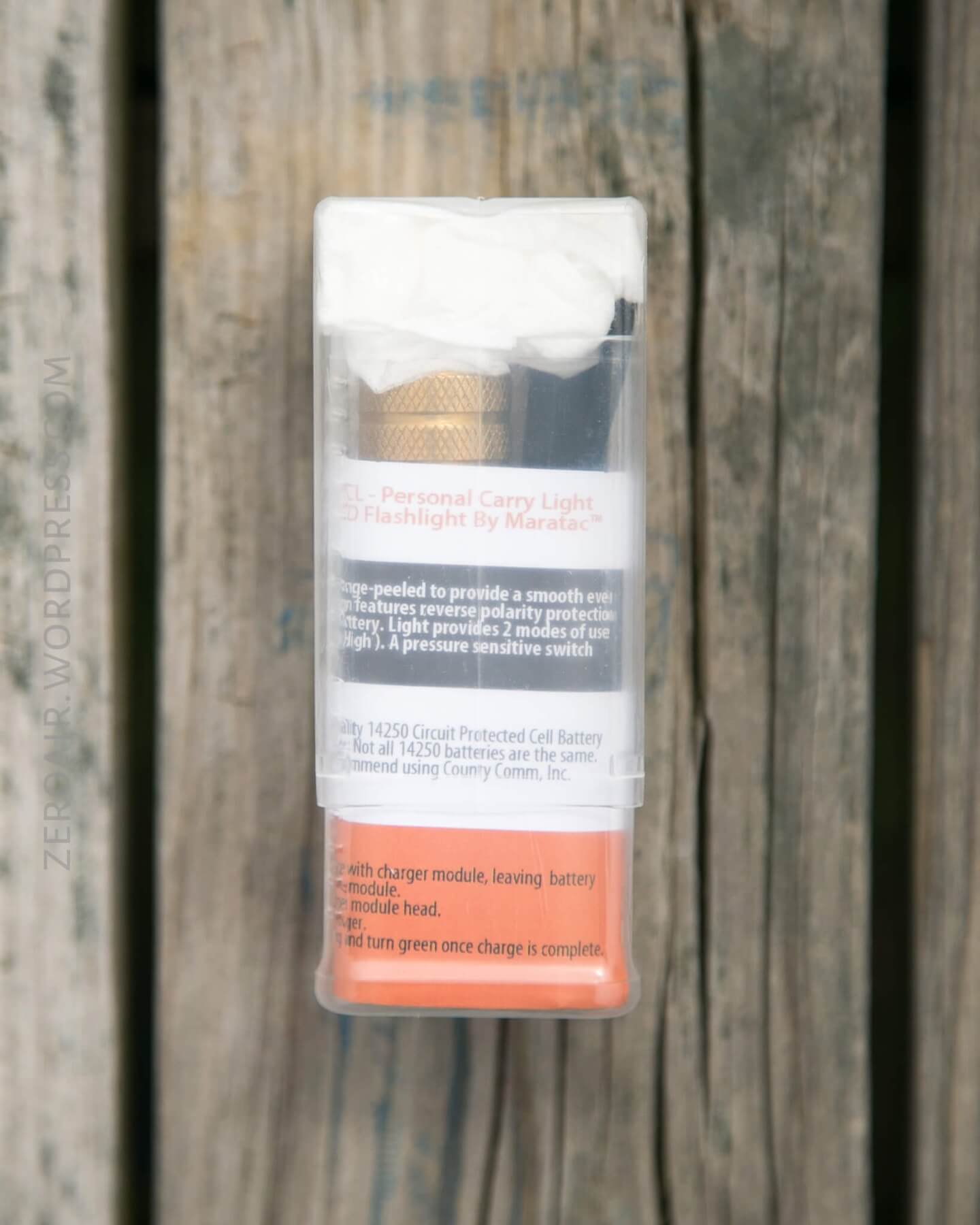
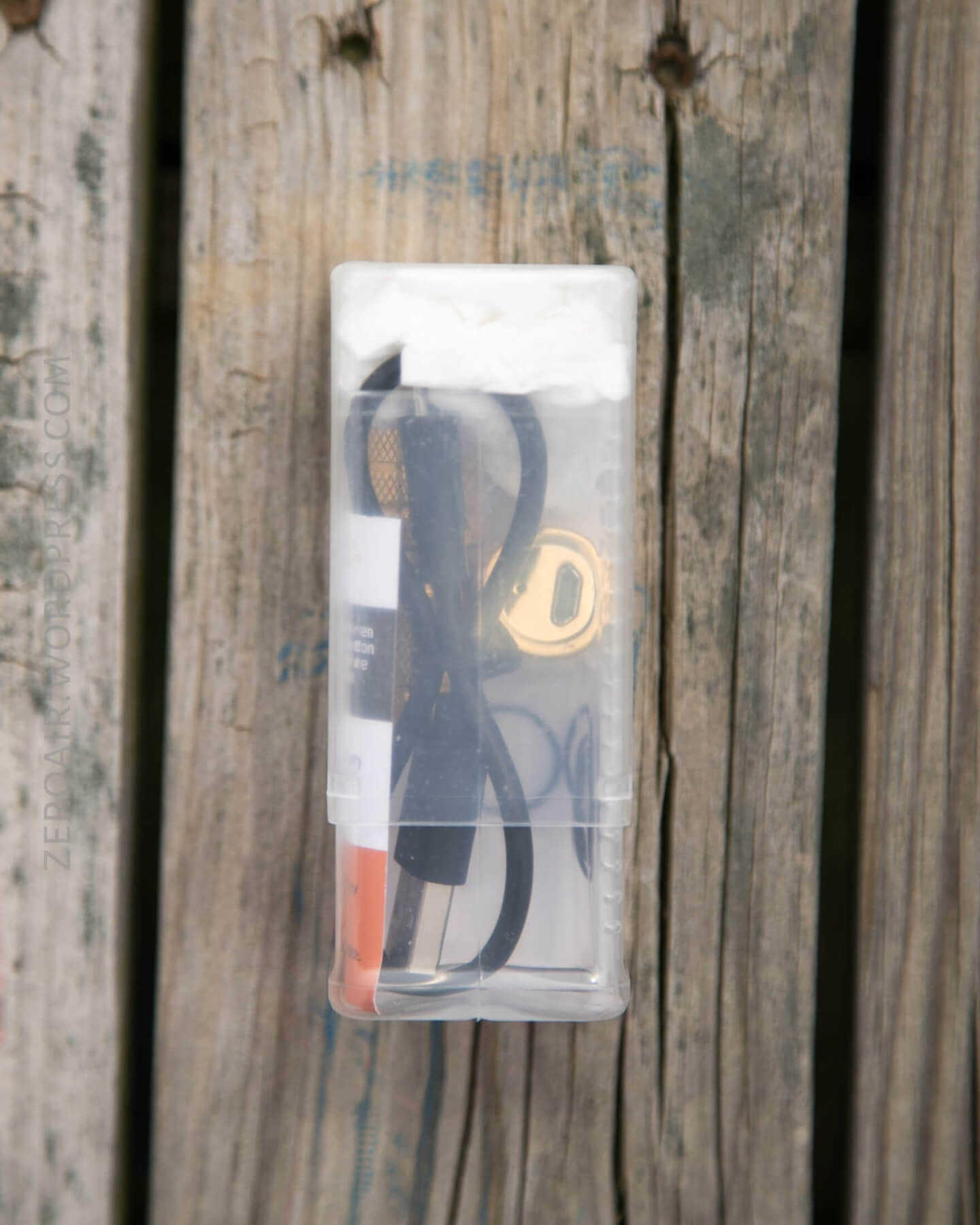
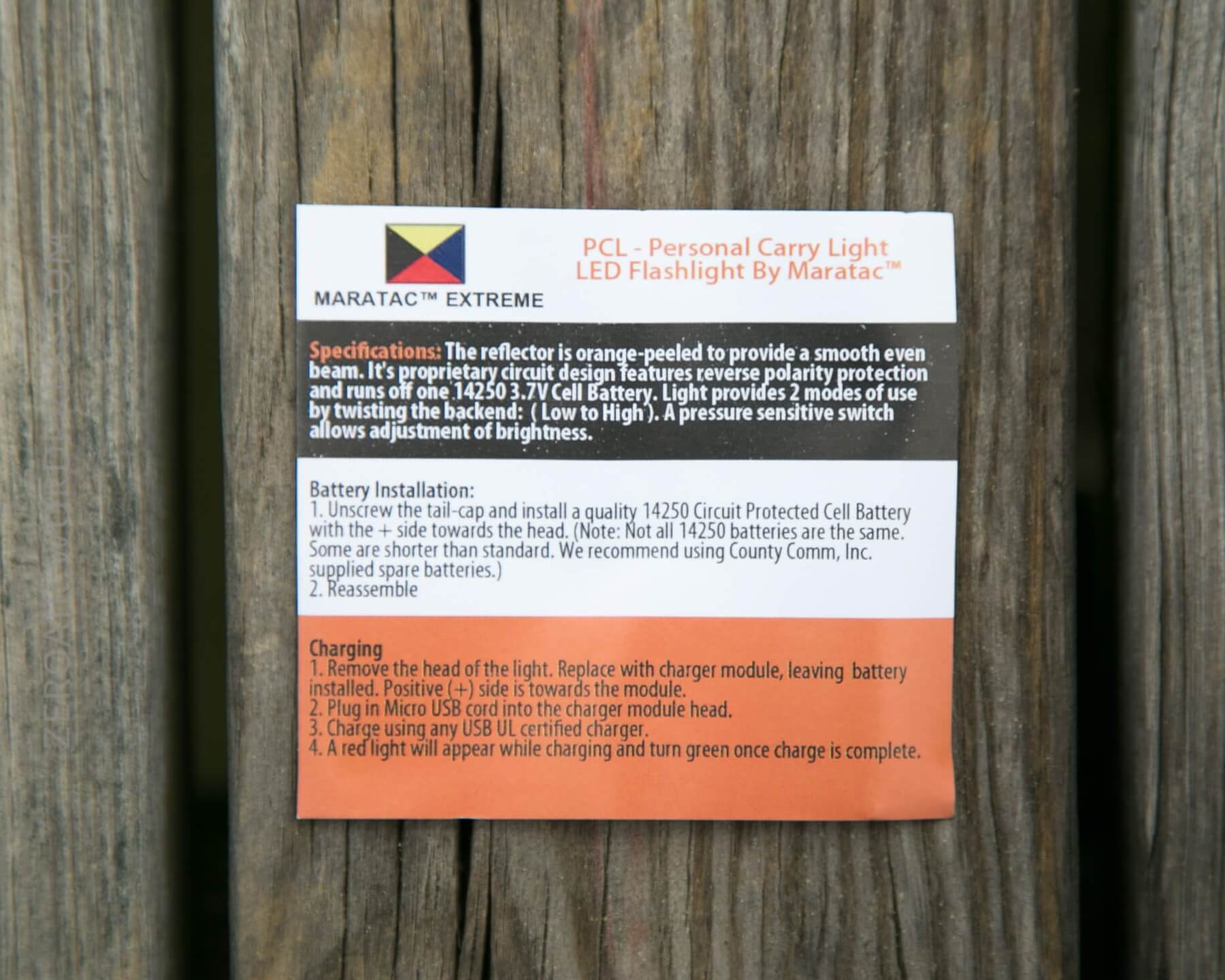
The manual is a single small sheet of glossy paper, with very minimal instructions. Could it be wordier? Better even? Yes, it could. But it gets the job done.
Build Quality and Disassembly
It’s often hard to evaluate small lights like this. This one definitely has some things I like. The knurling is a diamond pattern, but fairly flat (my favorite). This allows easy twisting of this [small] twisty light. Also, there’s a split ring, but it has a specific home, so the light will tailstand without interference from the split ring.
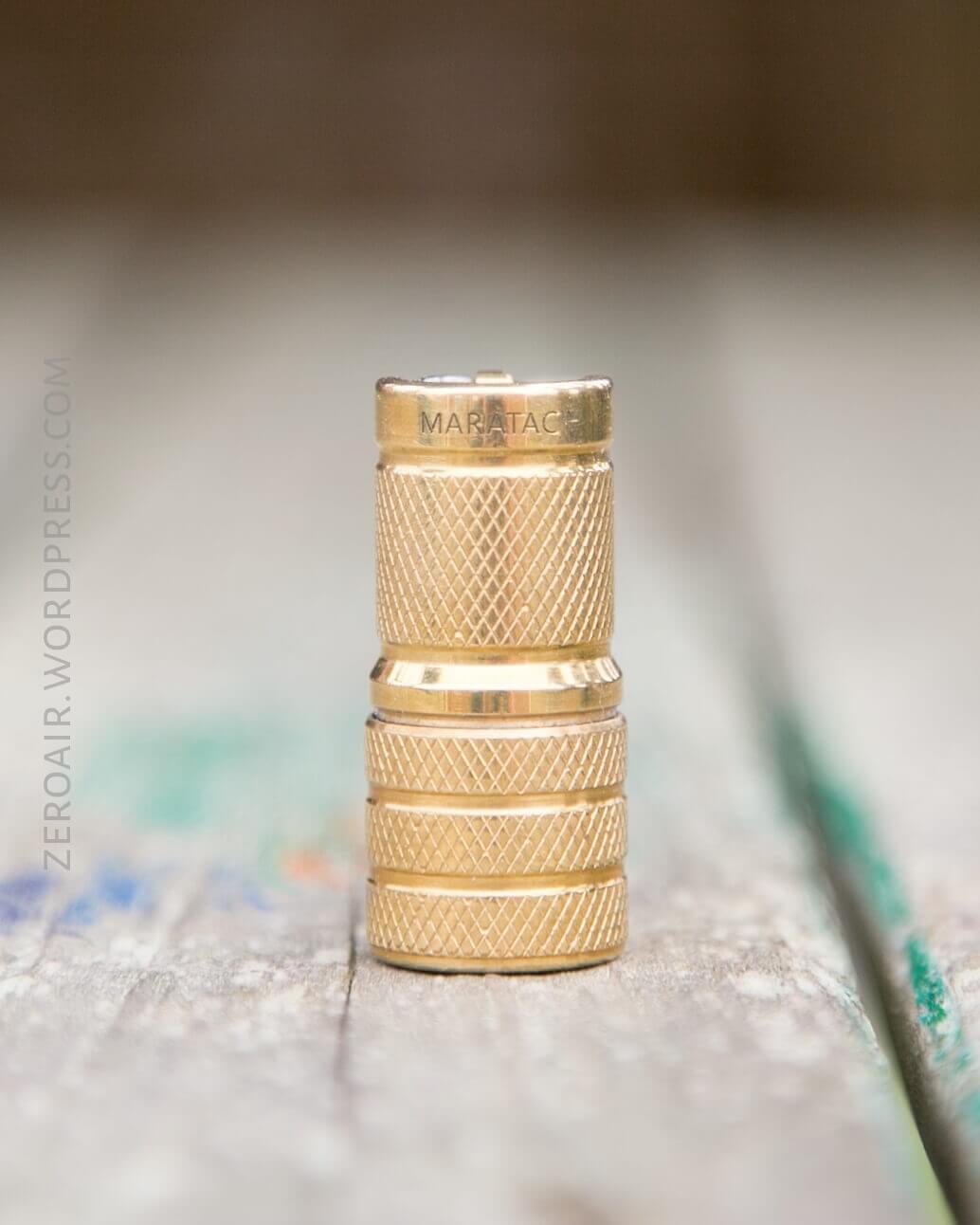
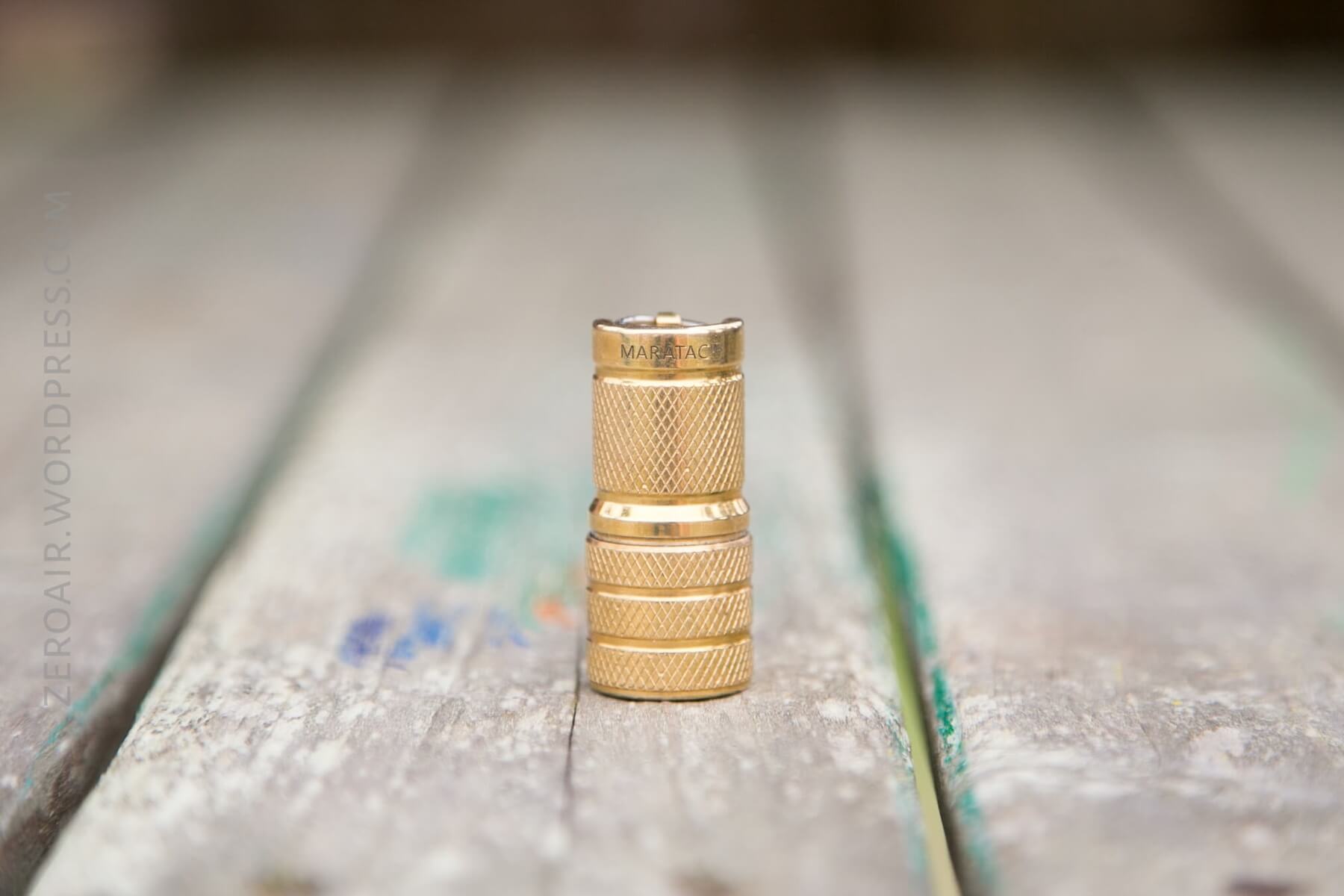
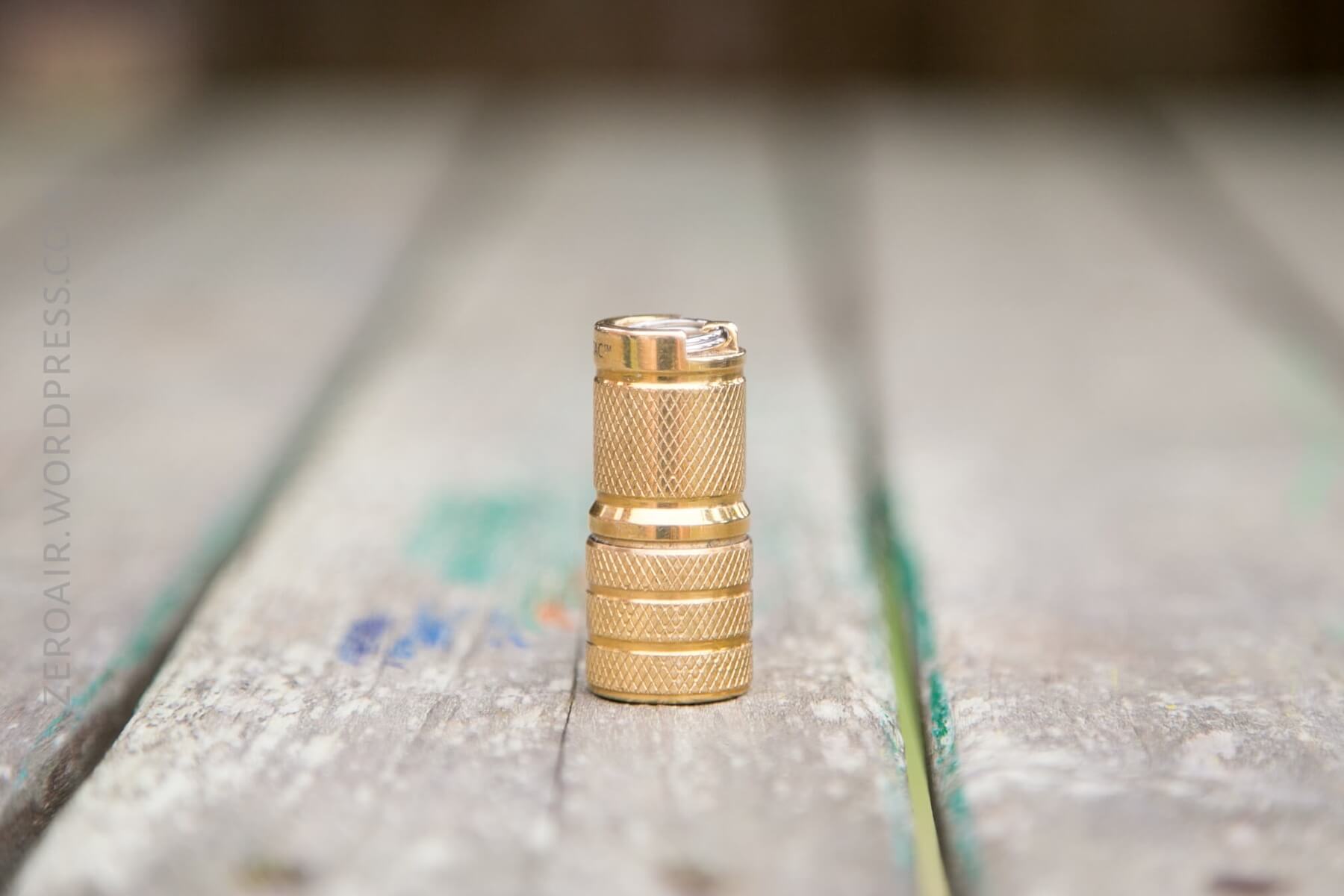
The light has a nice balance to it and overall a great weight. All of the PCL lights should have this same nice weight. The PCL also has a nice symmetry (i.e., the four photos below look the same, but it’s just all four ‘sides’ of the light). The material is C360 Free Machining Brass, which means nothing to me. But the information’s out there.
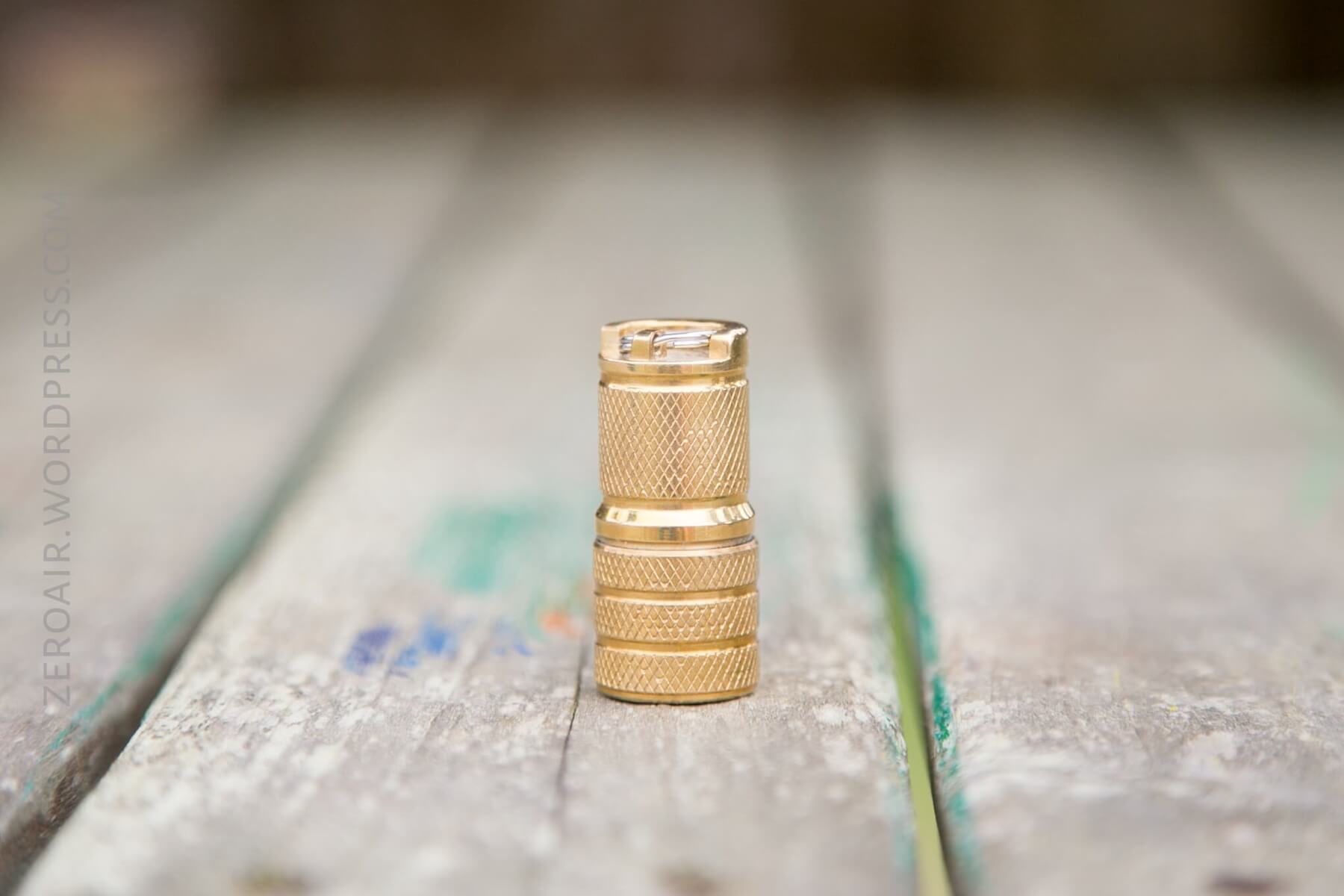
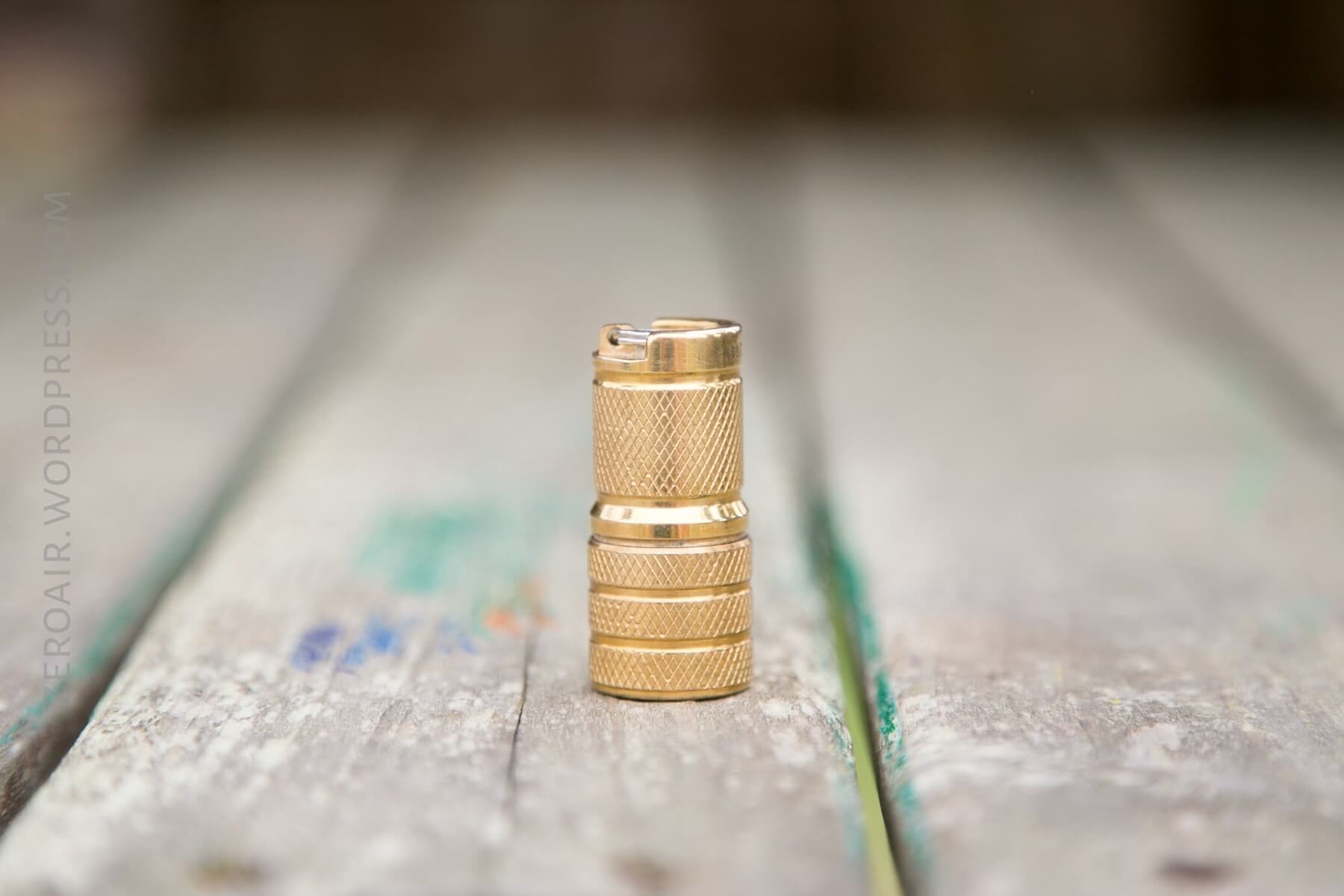
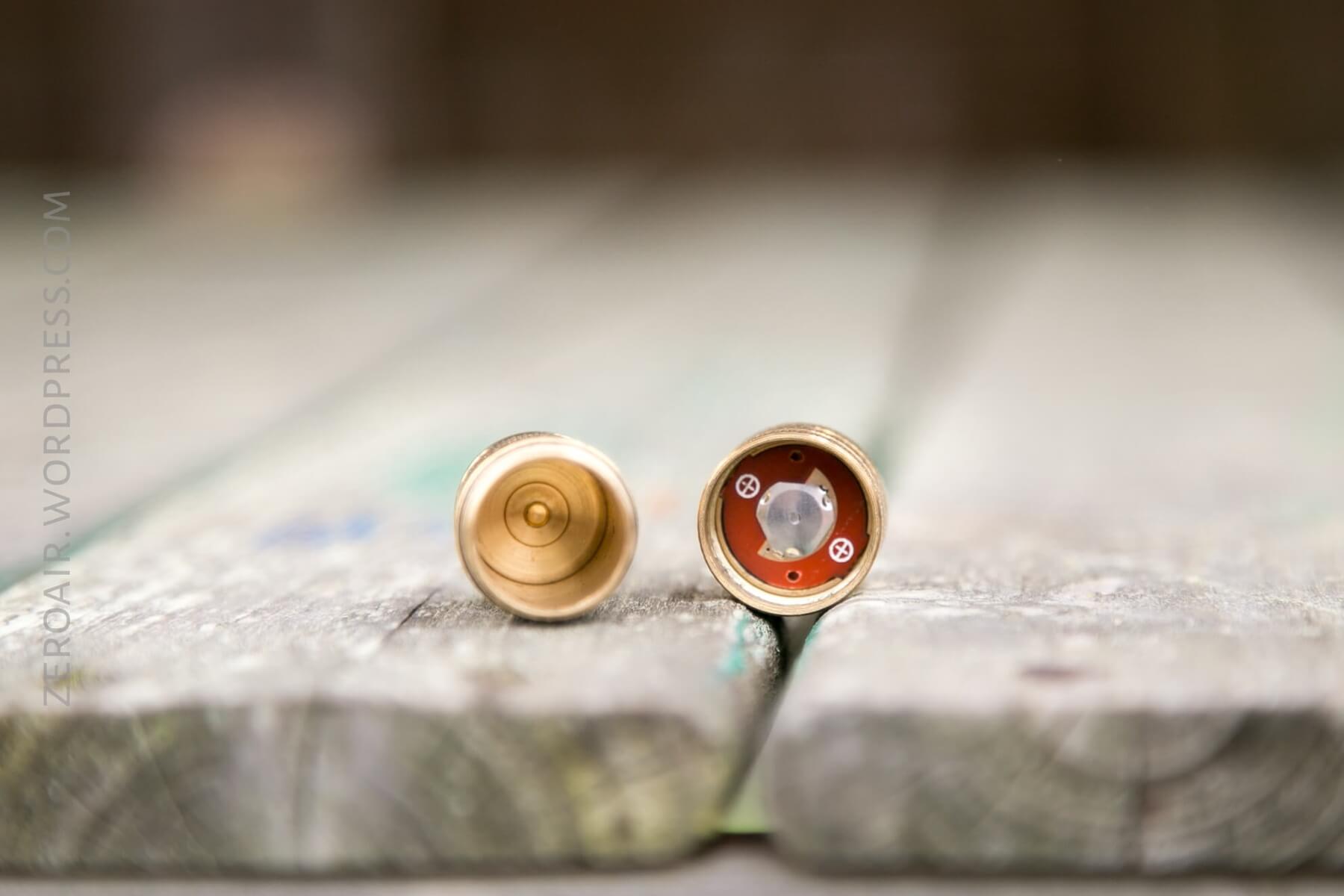
The threads are triangle threads. The cell tube is just solid metal – no springs or anything (more on that later). The head has a tiny button that the positive terminal of the cell presses against, causing the mode changes.
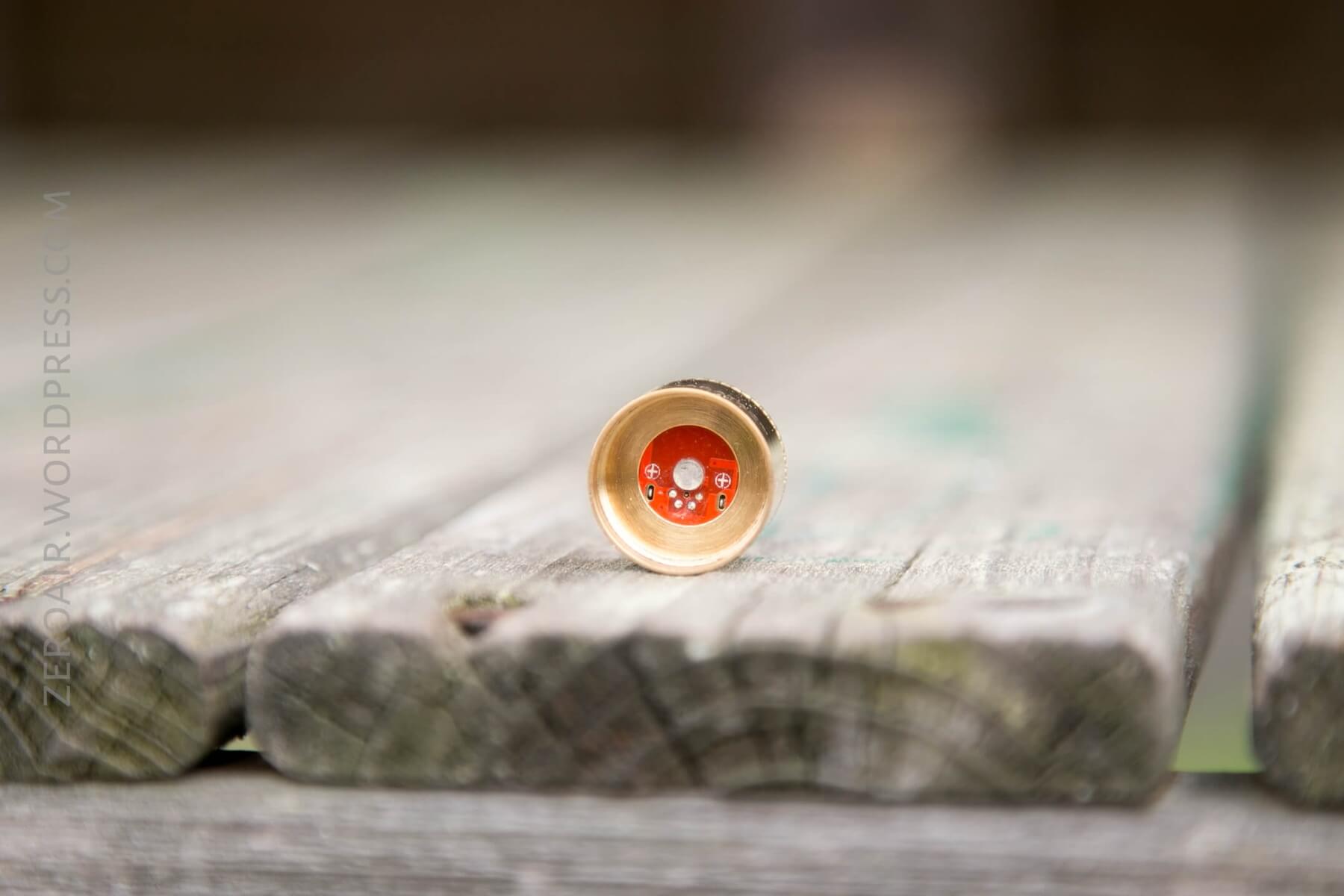
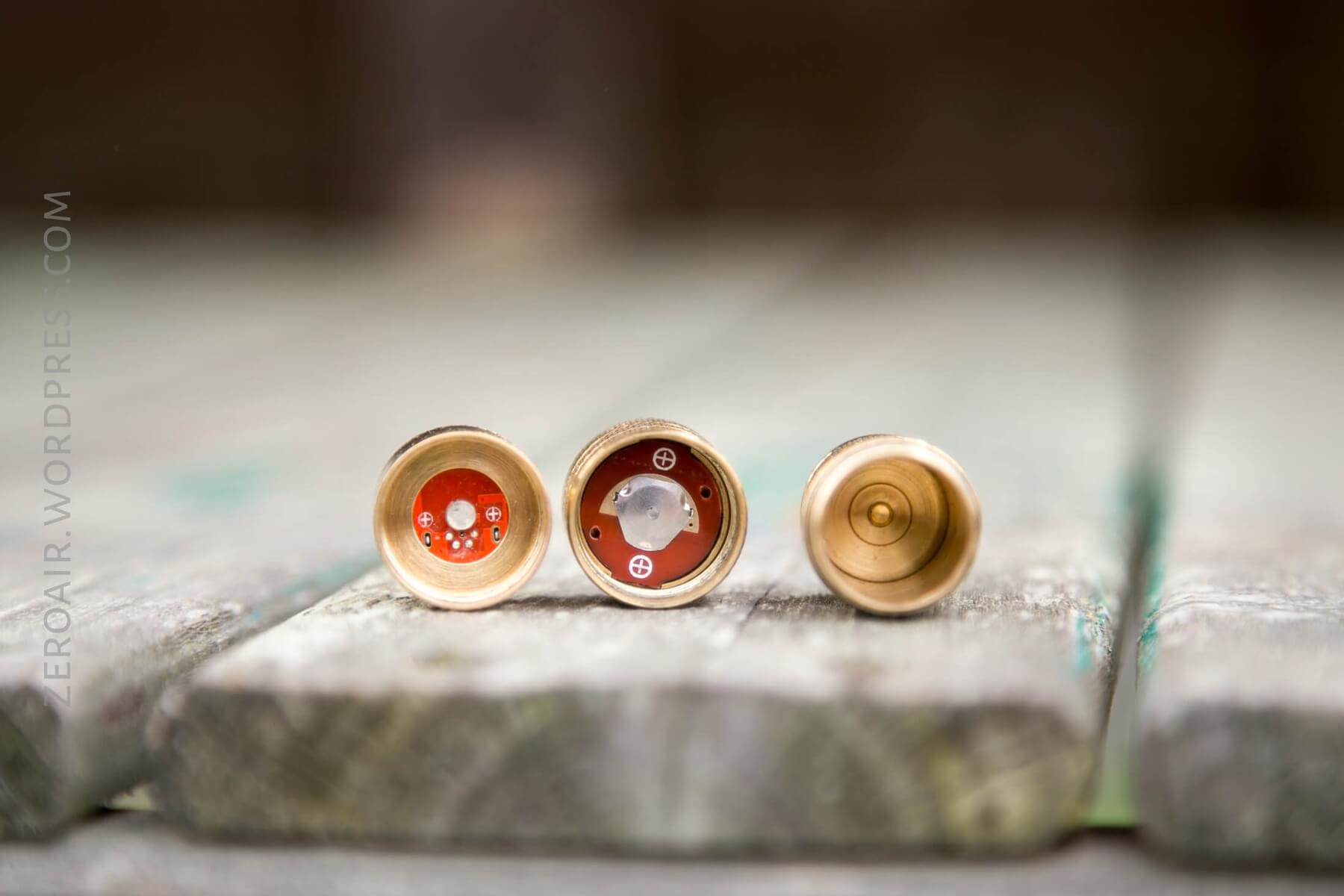
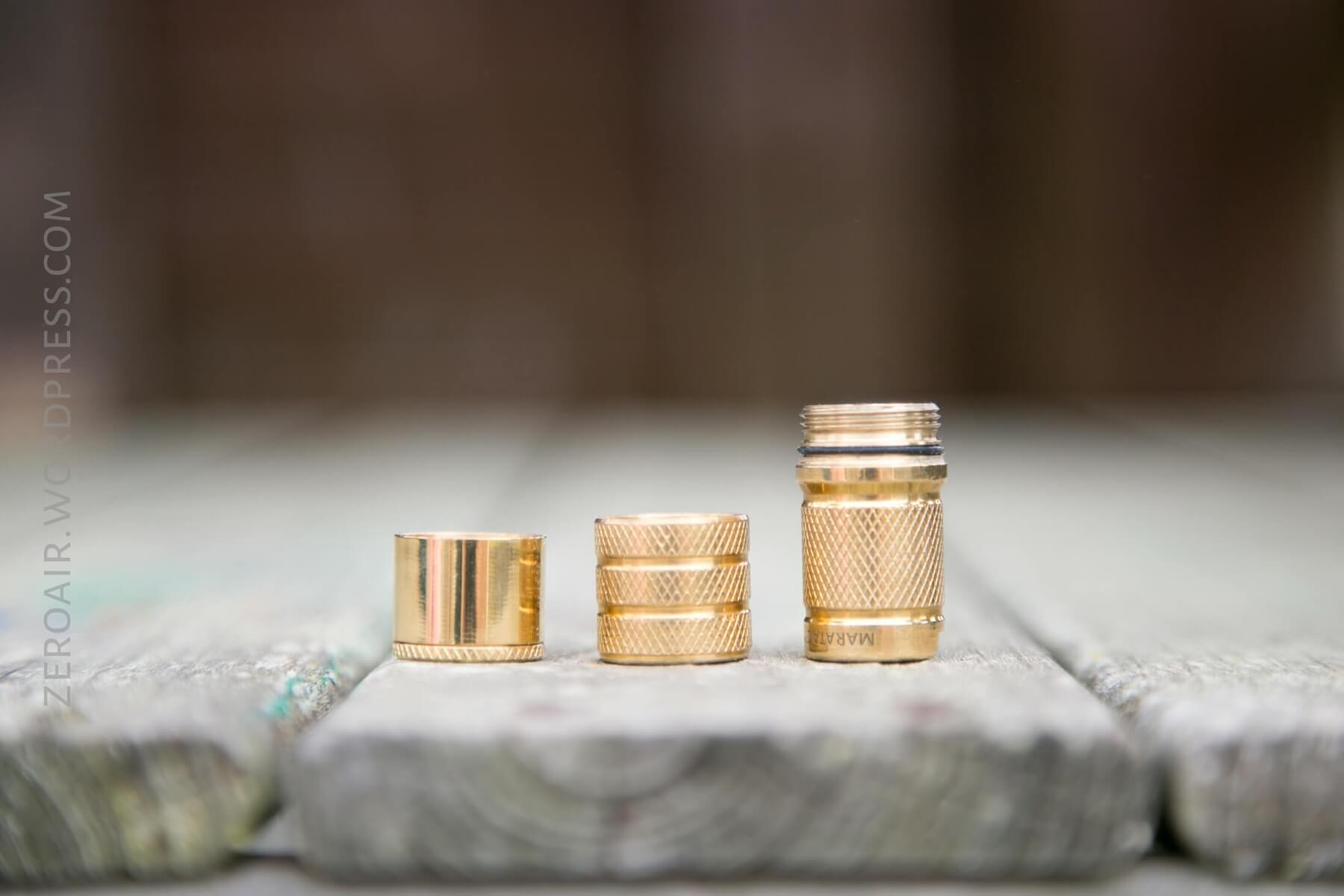
The charging head has a completely different look, but the same nice build quality.
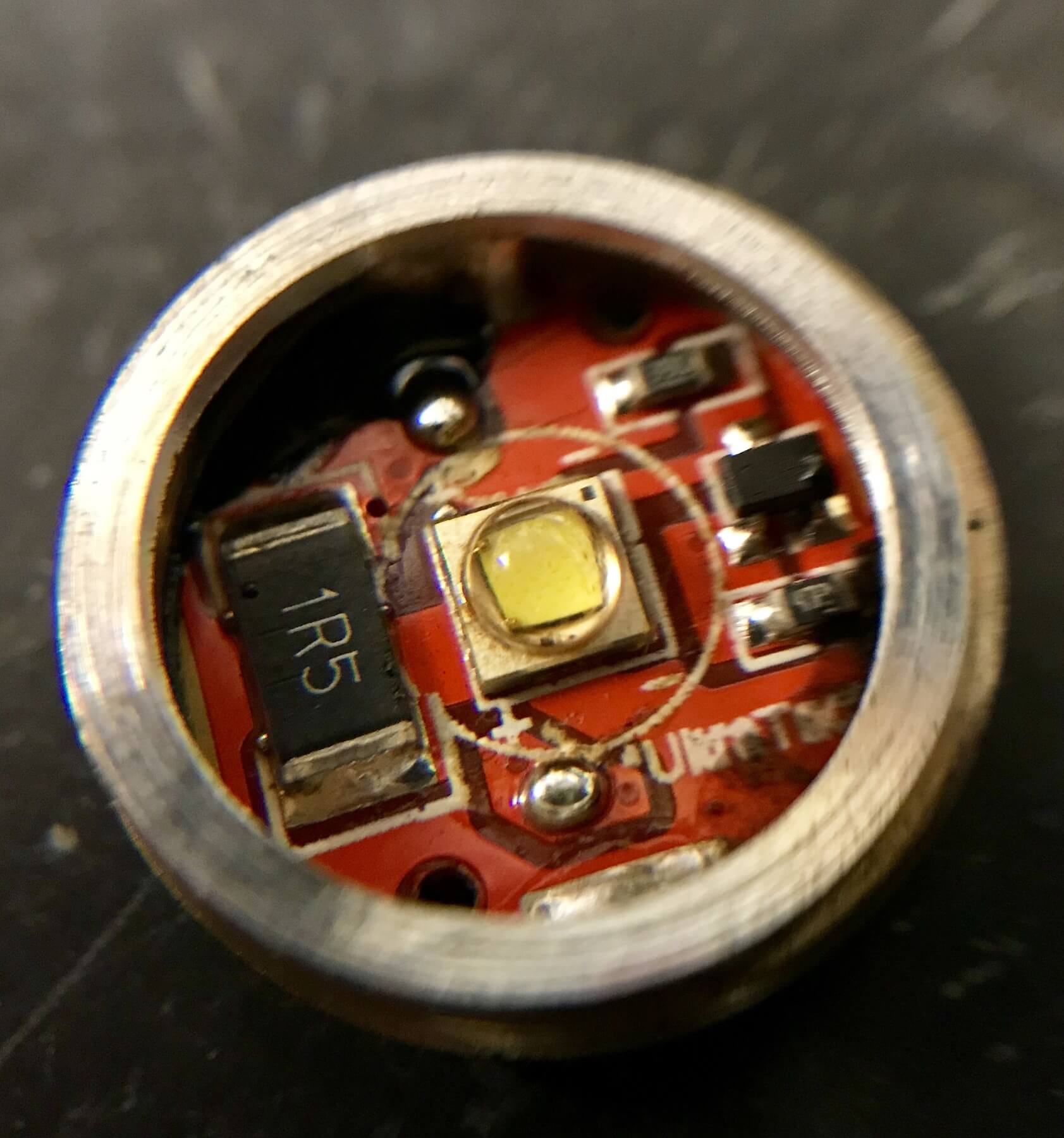
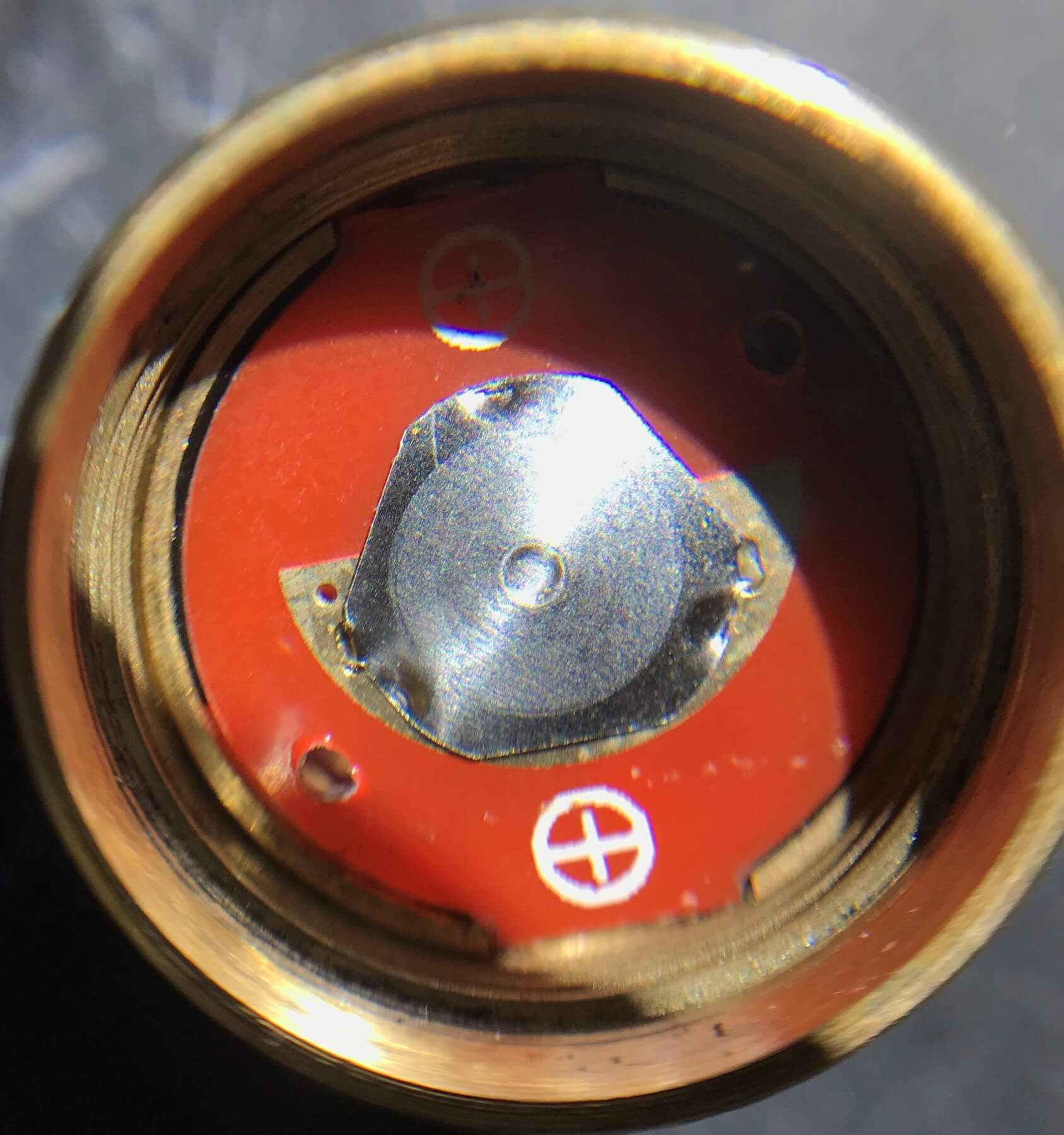
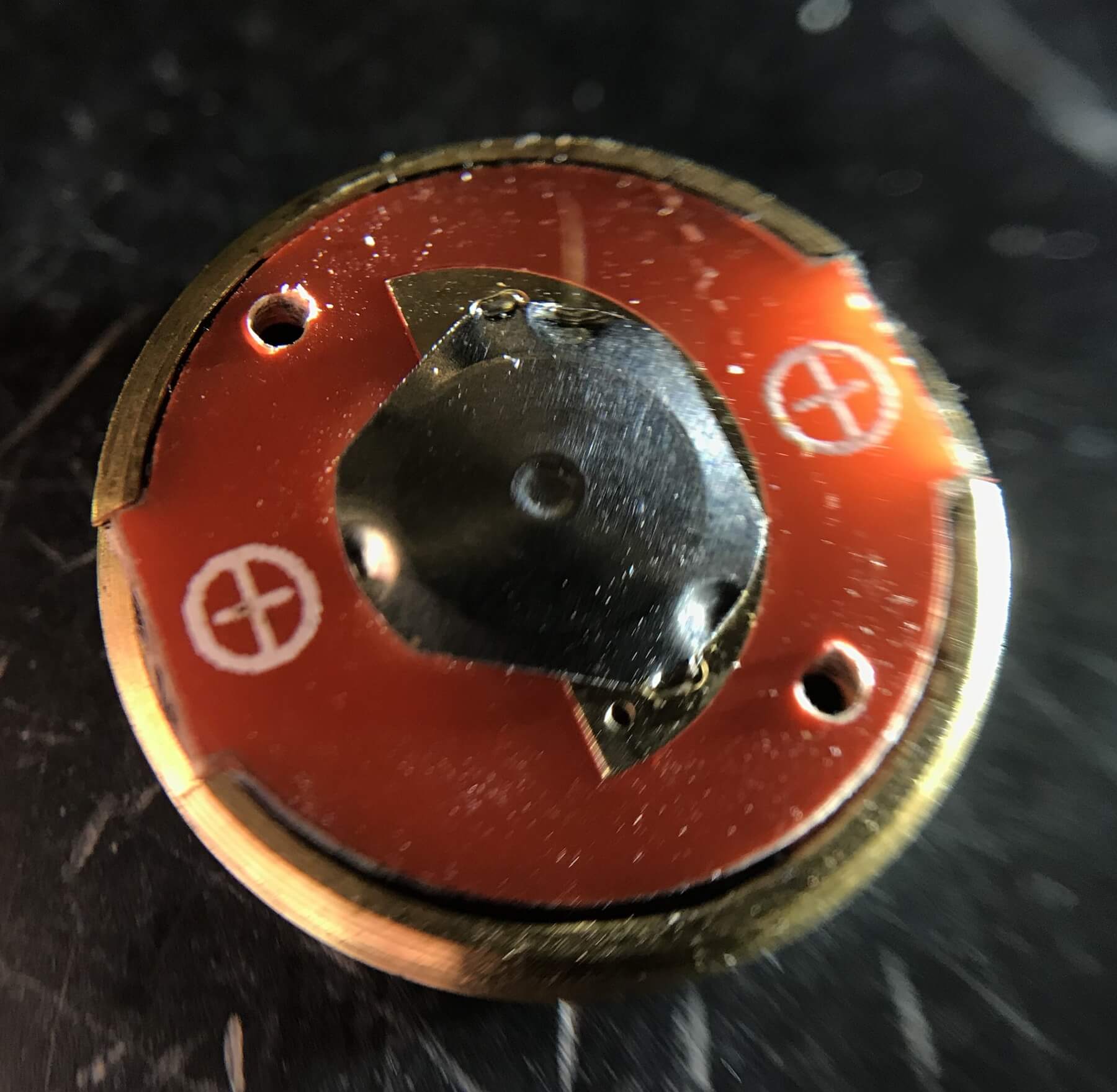
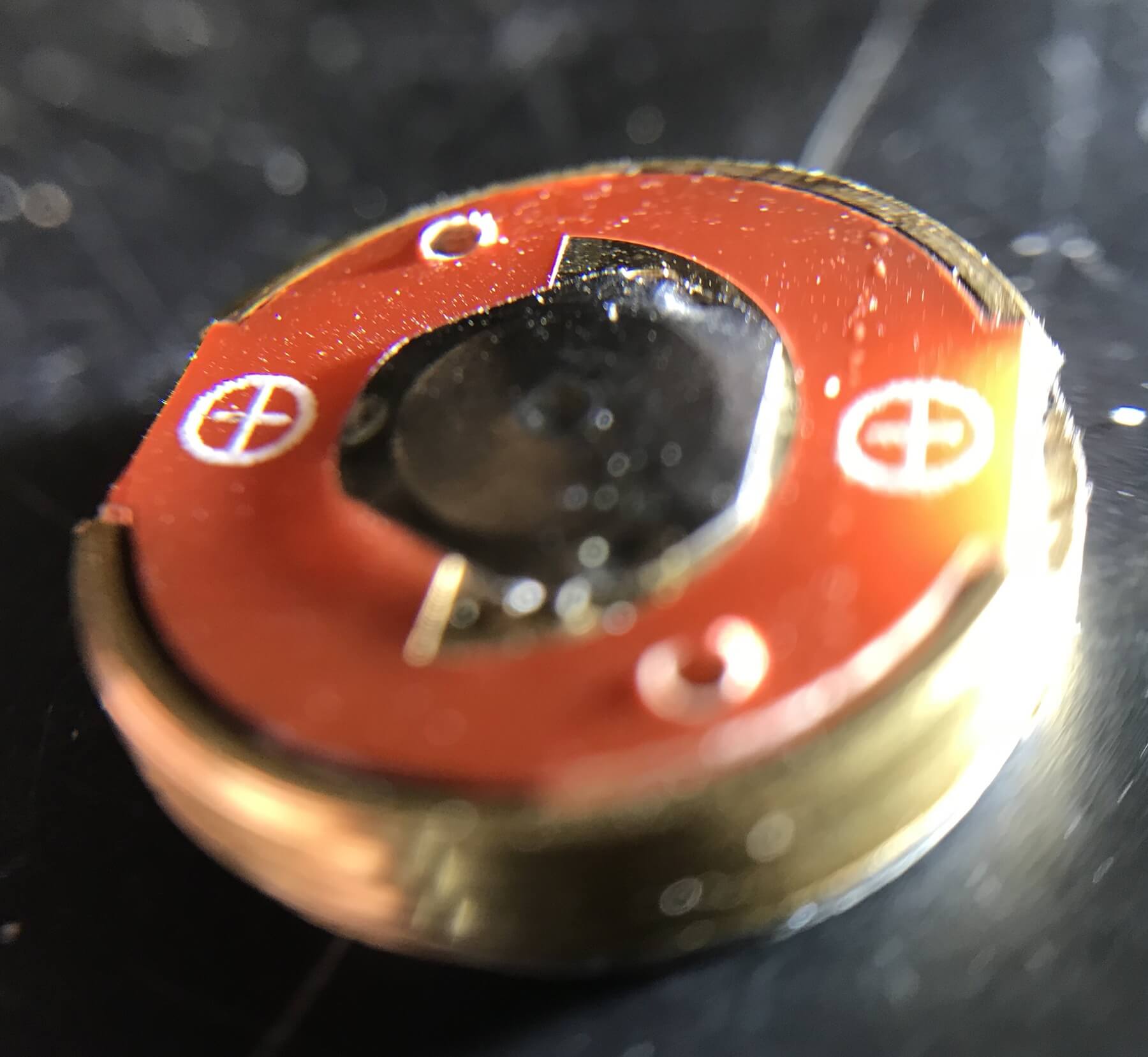
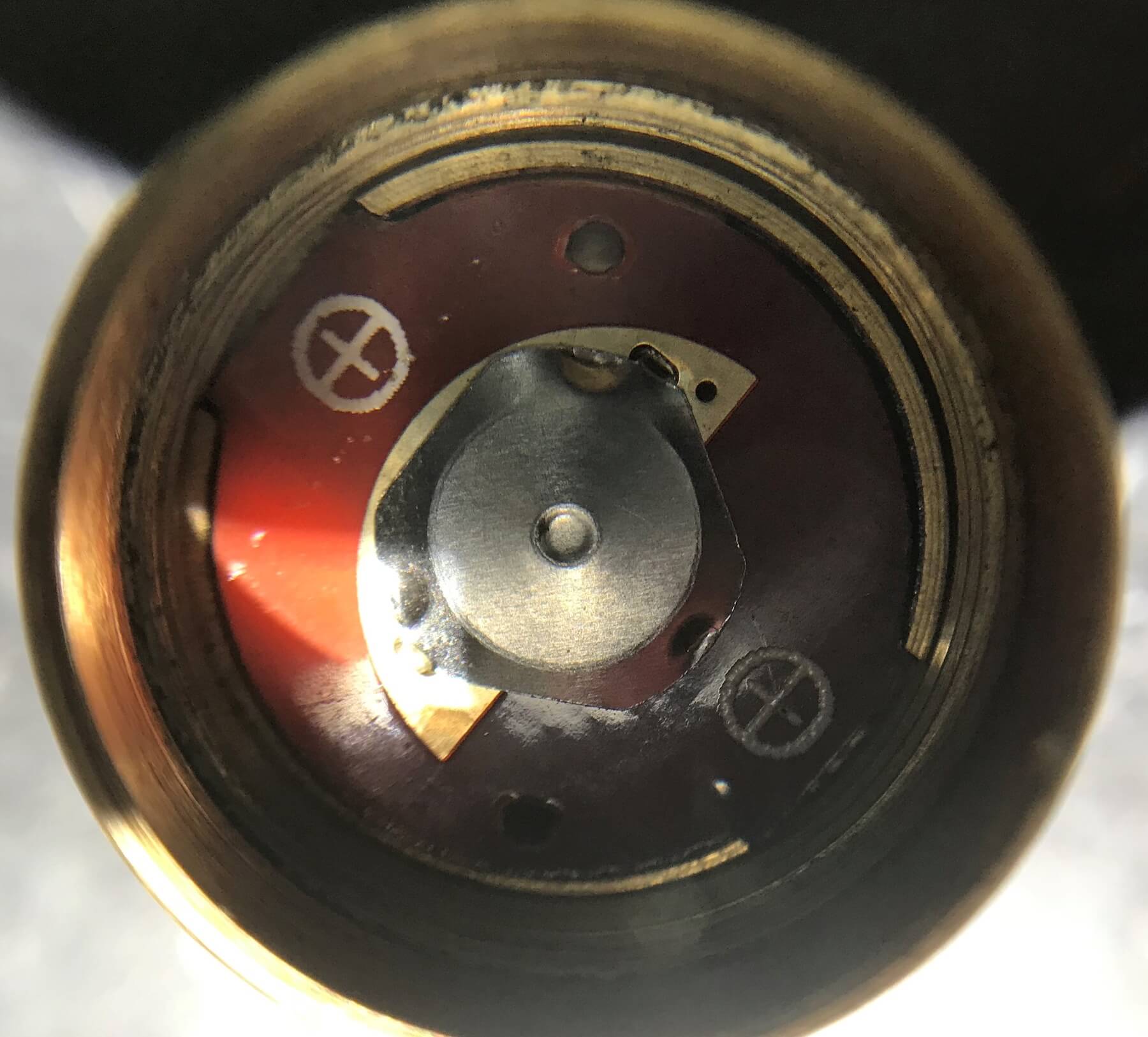
The pill is an interesting little pill. It’s also made of brass, and there’s just one MCPCB. I don’t know enough about drivers to know, but it seems like a pretty clever design.
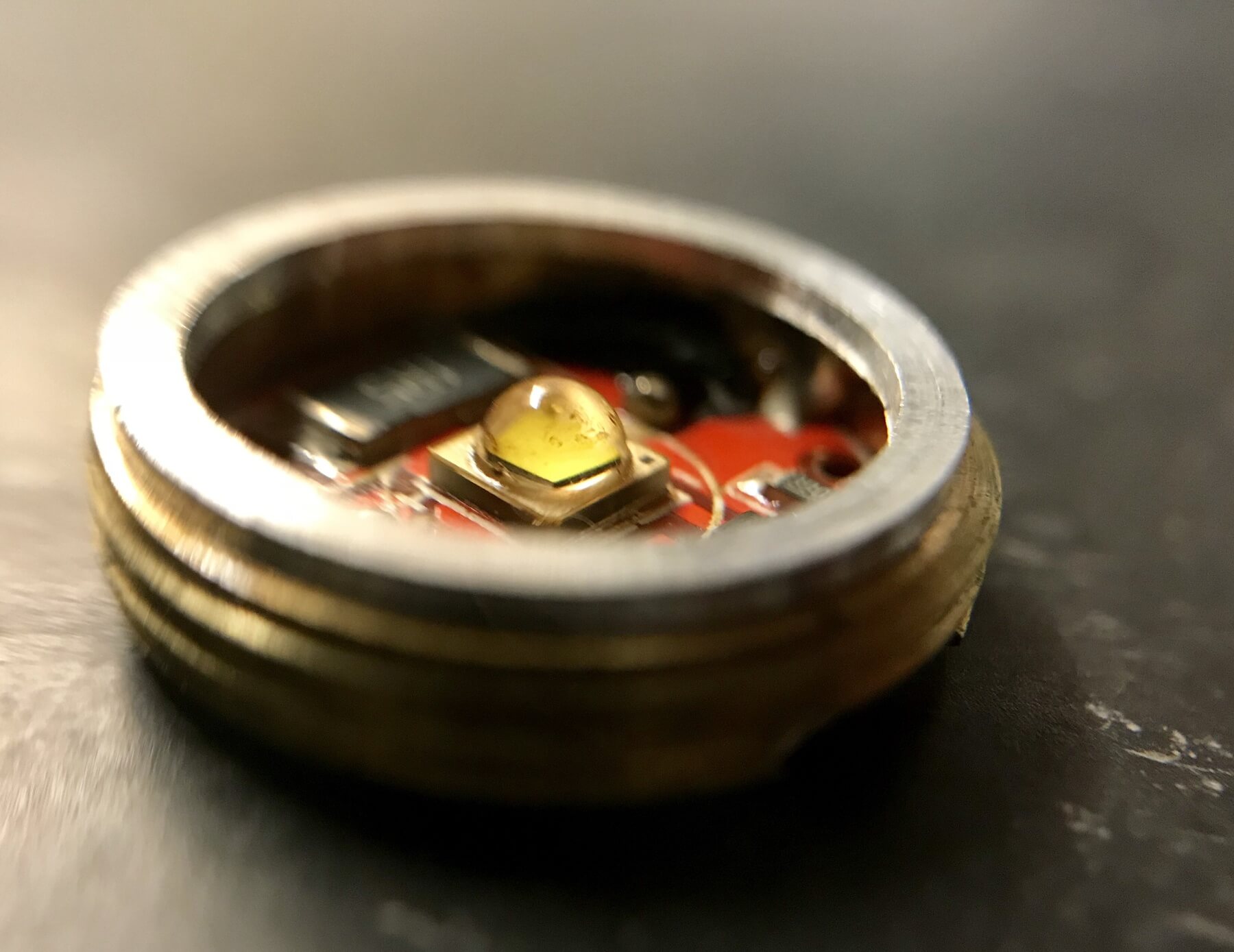
I think it’d require some hot tweezers to do a good job of an emitter swap. I’m not entirely sure how the board is in the pill, but possibly just press-fit in. The little nipple on the contact side is a kind of button – almost a spring, but not quite. I presume the level of pressed-in-ness of this nipple allows the mode change.
Size
Officially (and imperially), the PCL is 1.6″ long and 0.74″ wide. Maratac understandably uses freedom units as an American company promoting its relationship with the Government.
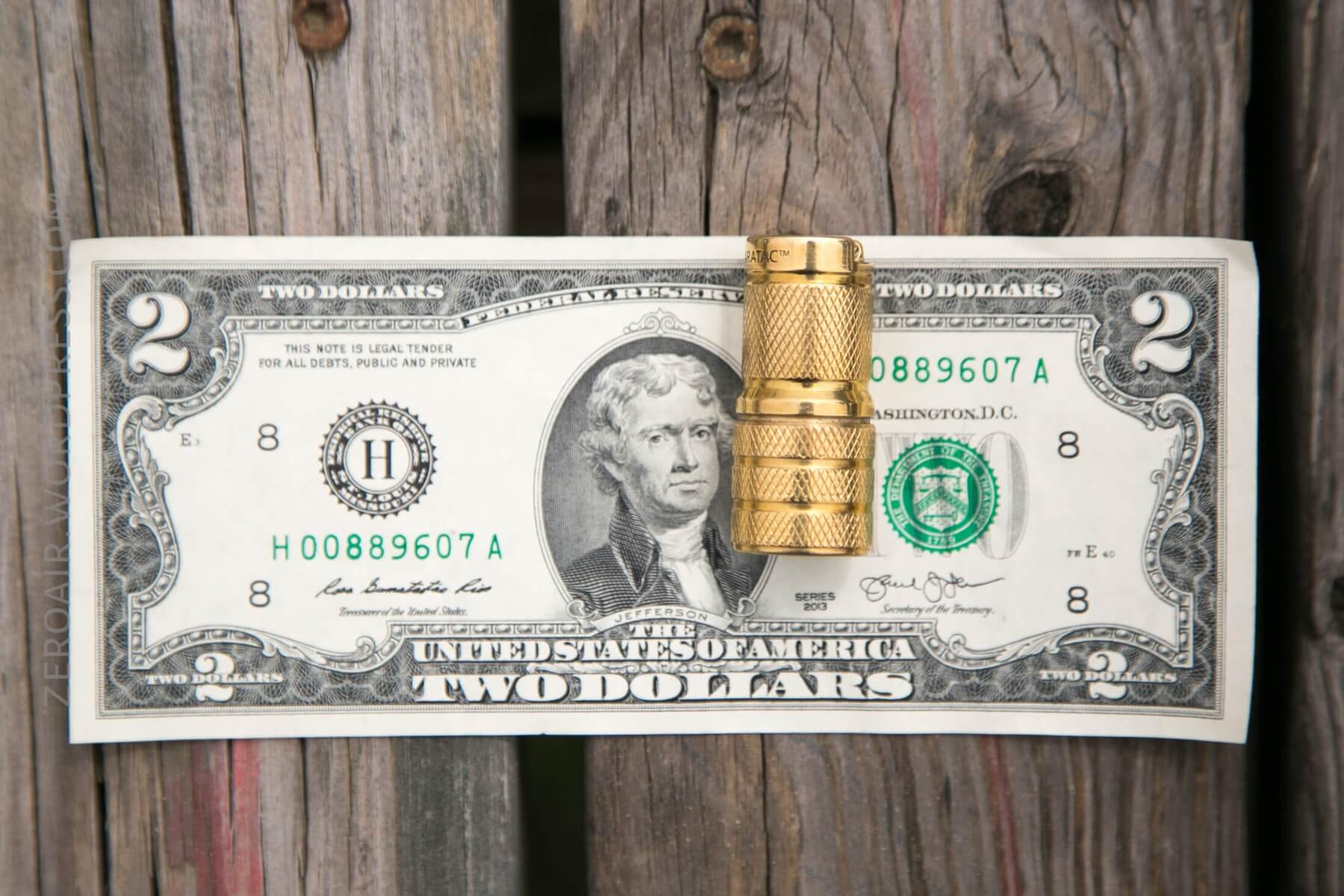
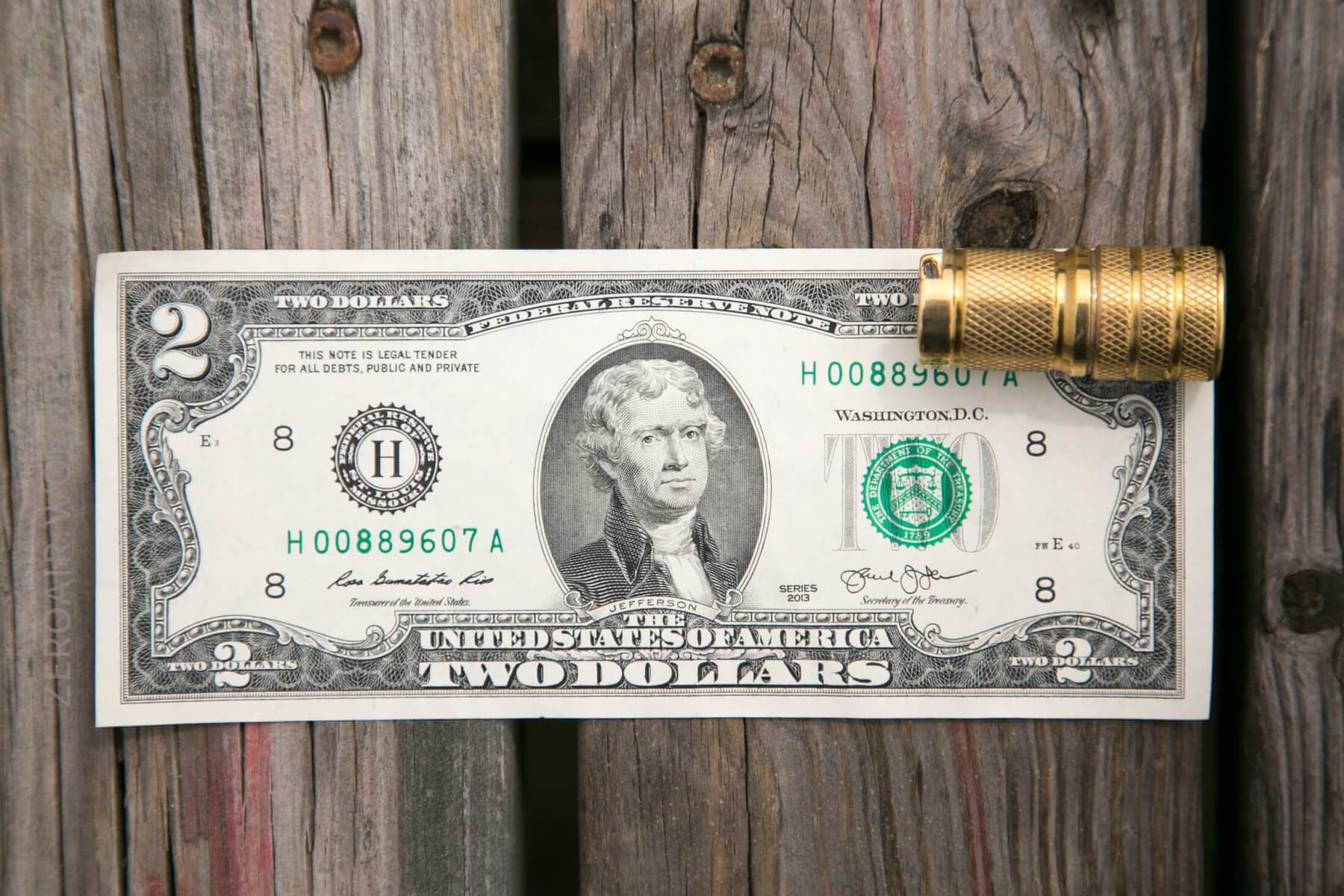
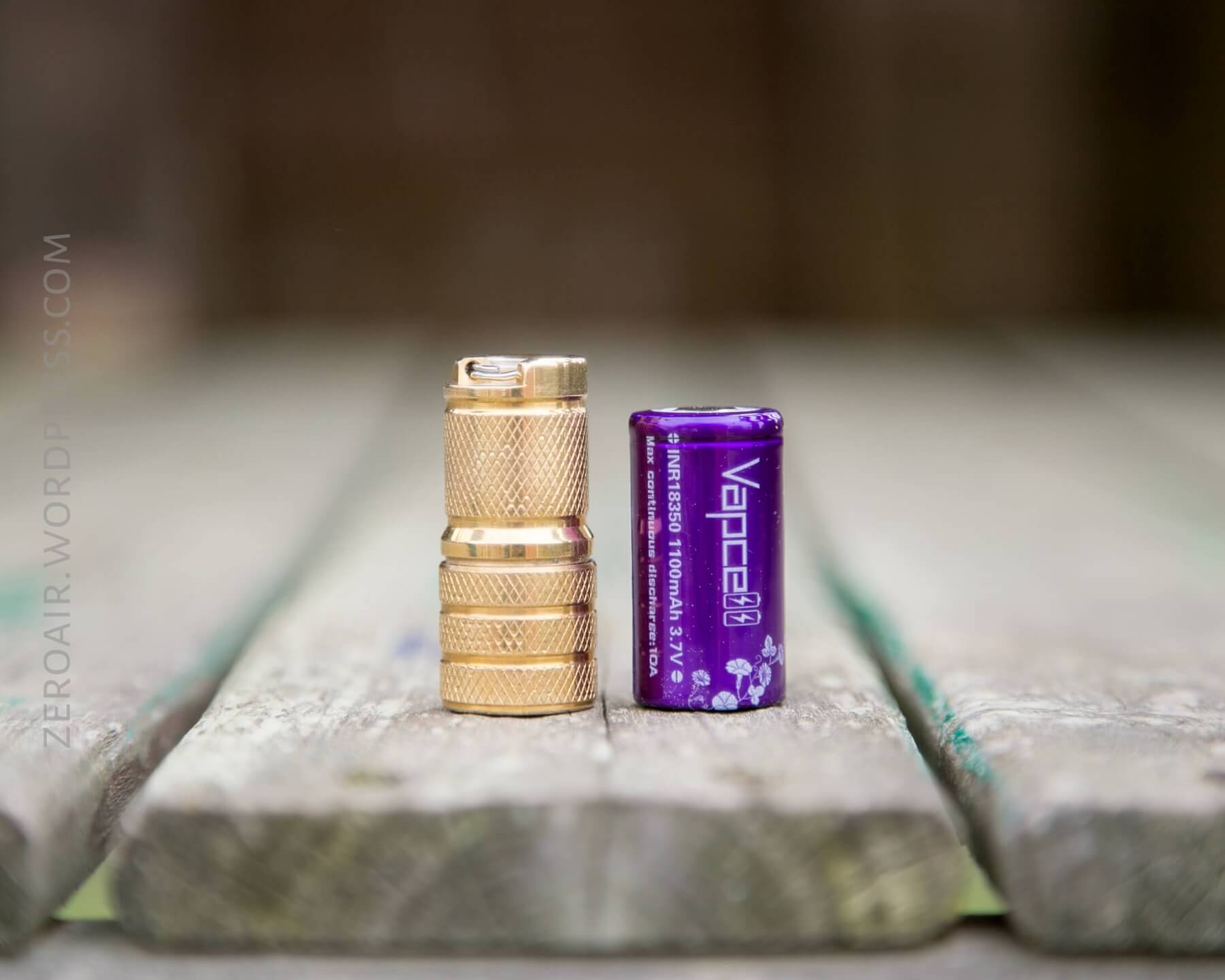
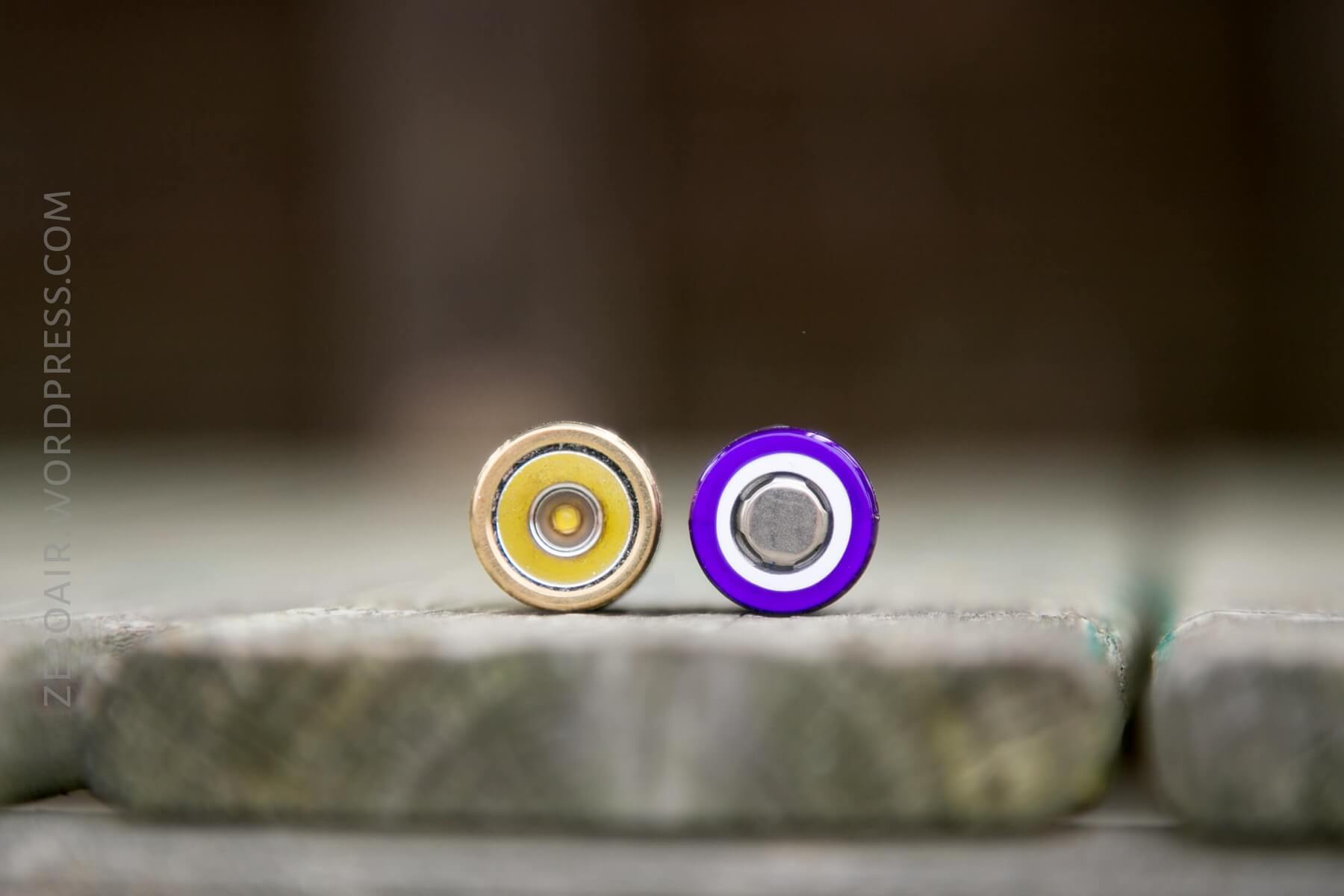
It’s a small light. It’s around the size of an 18350 cell (which practically gives you the metric dimensions).
Retention
A split ring is provided (and in my case, installed). It’s fairly large and easy enough to attach to whatever you’d need to attach it to.
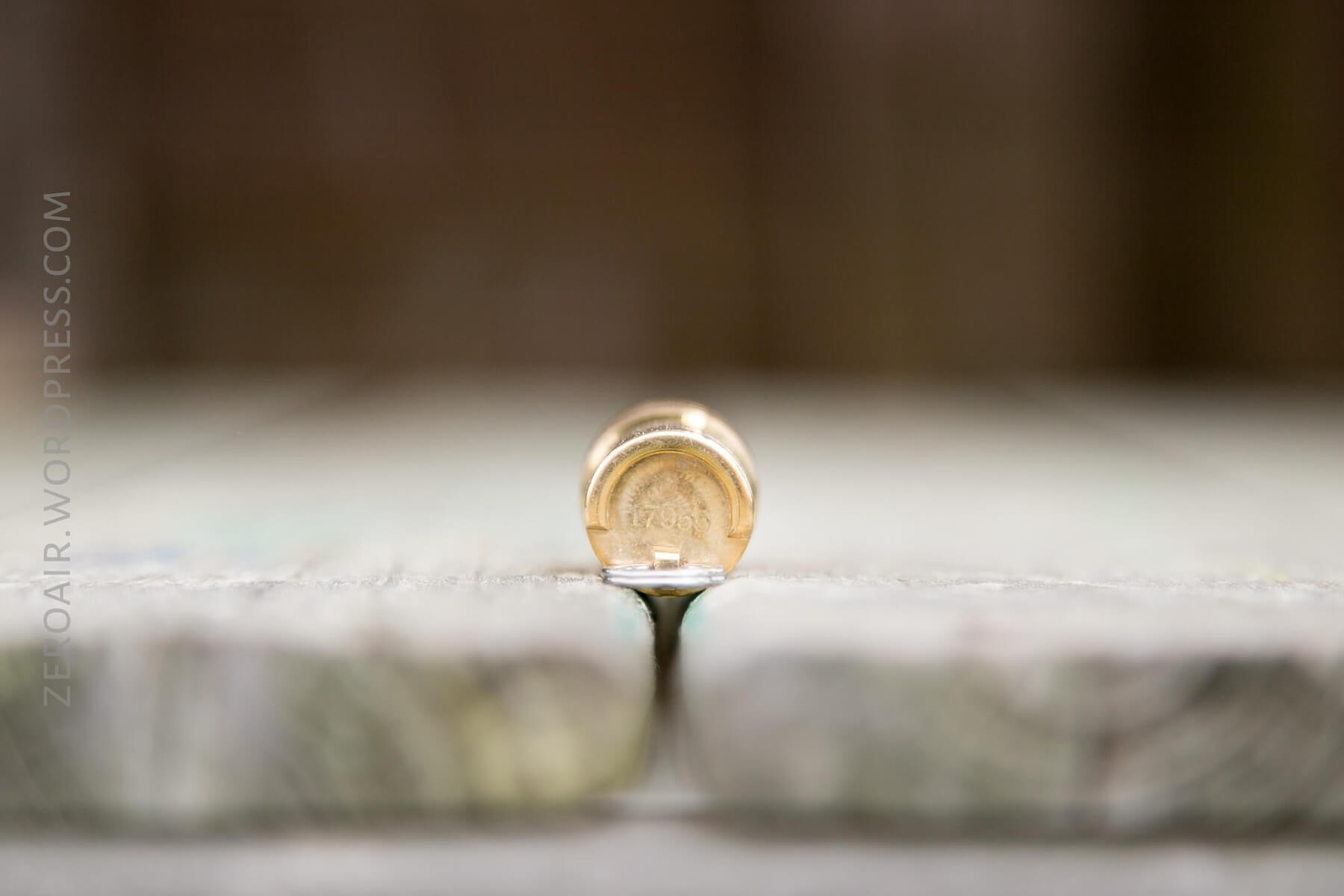
That’s all. There’s no other attachment for carrying the light. I carry it deep in my pocket without any issue.
Also note that in the cutout area where the split ring rests, there is a serial number for the light. The info page says
Limited Production Of 888 Lights
(Year / Number in the series up to 888)
And my number is 17955. Presumably, that’s from 2017, and a production number of 955. Maybe it’s 888/year, and they start at 100 or something? I don’t know – and I wouldn’t buy this light because it’s limited. I’d buy it because it’s neat.
Power
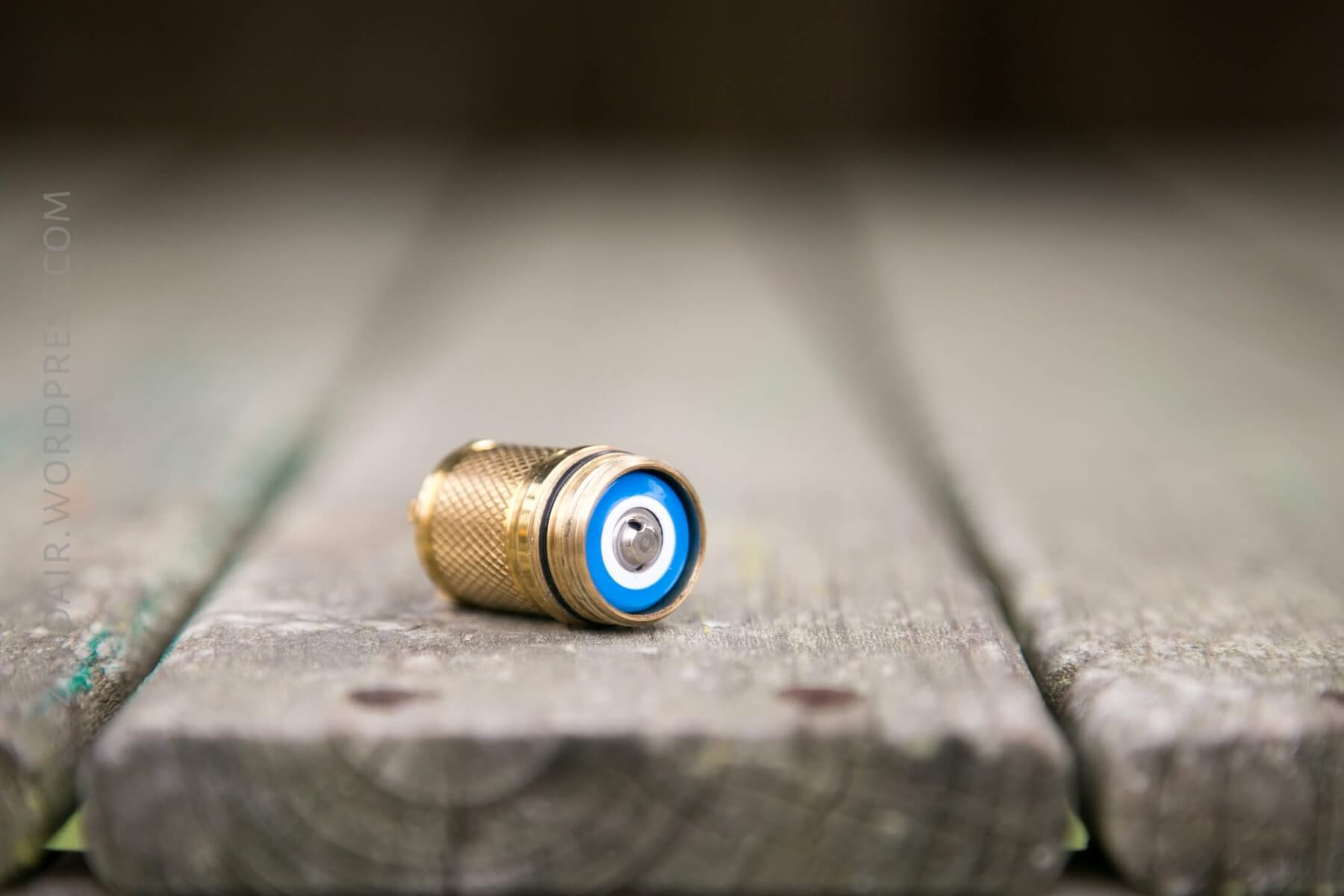
The unusual cell required to run the PCL is a 14250 Li-ion cell. The light ships with one of these cells, and Maratac sells them, too.
As I said above, the body of the light doesn’t have a spring or anything but bare metal. This means the cell needs to be a certain length, or it won’t make good contact. Of course, Maratac recommends the cells they sell.
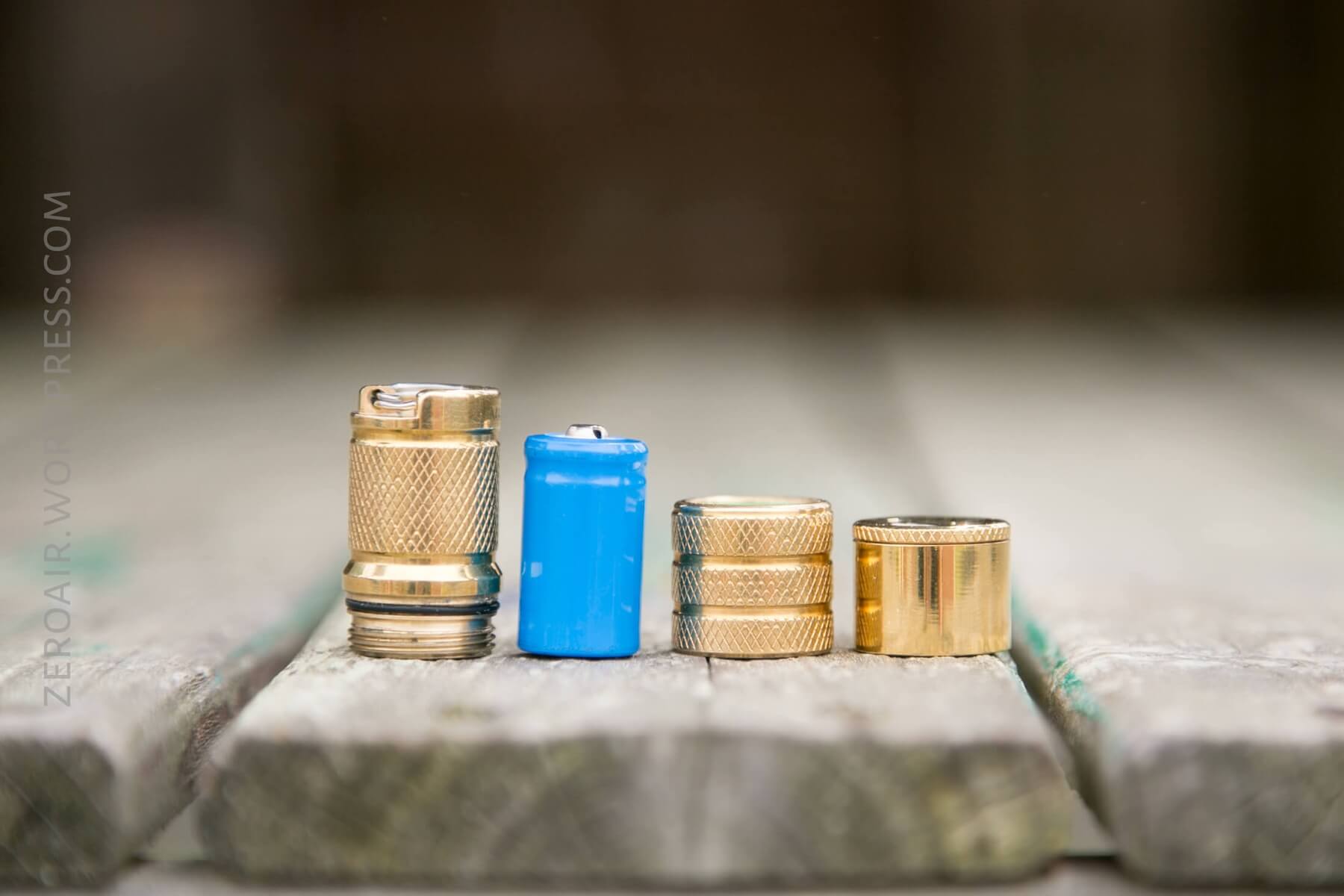
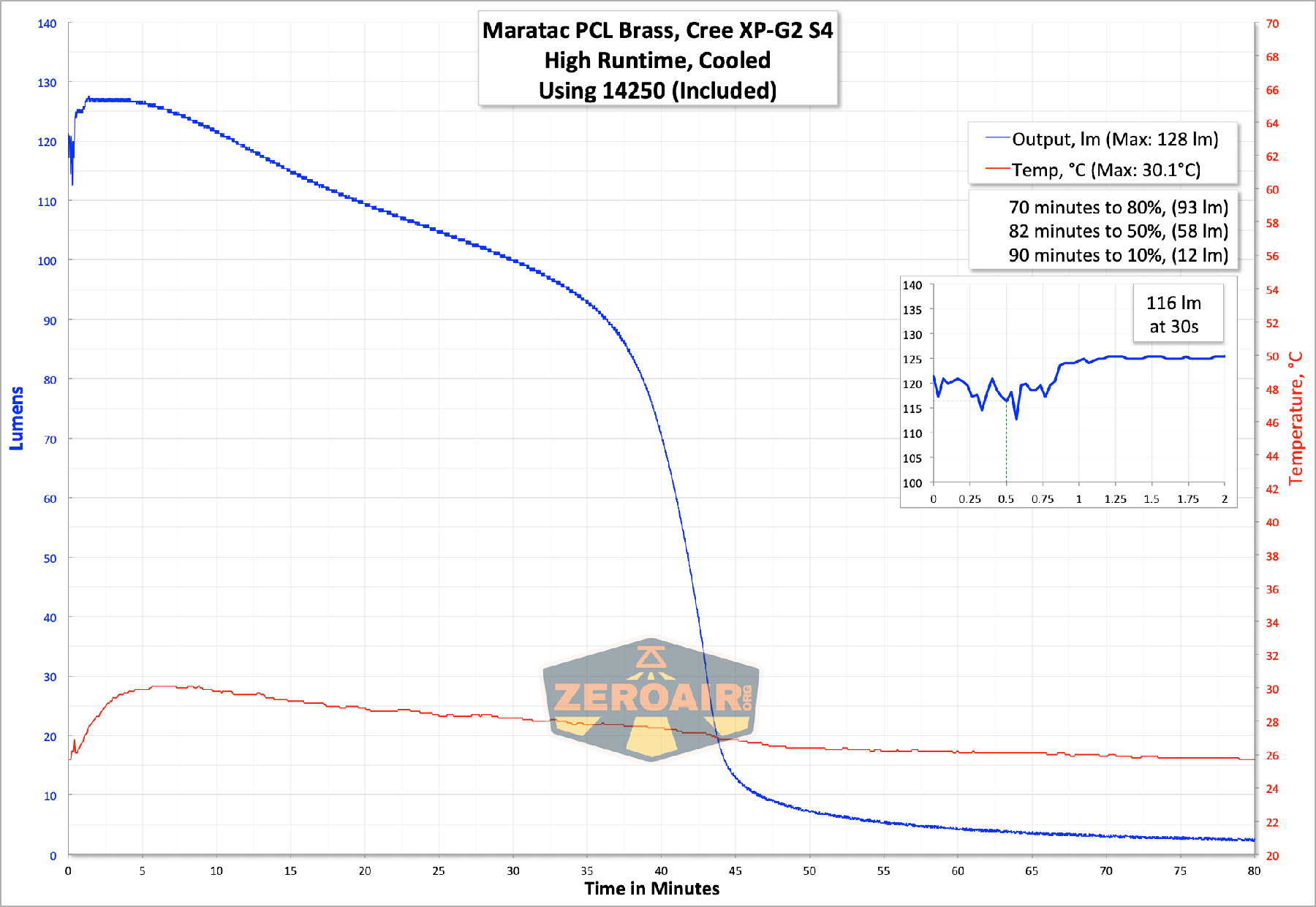
Output on high is unregulated, and the temp never really gets more than warm. I stopped the runtime when the light was still outputting light, but at a very low level.
Charging
This light doesn’t have “on-board” charging, but let’s call it that just for the sake of ease. Really, it’s just an included charger. The head must be replaced with this charging apparatus, seen below.
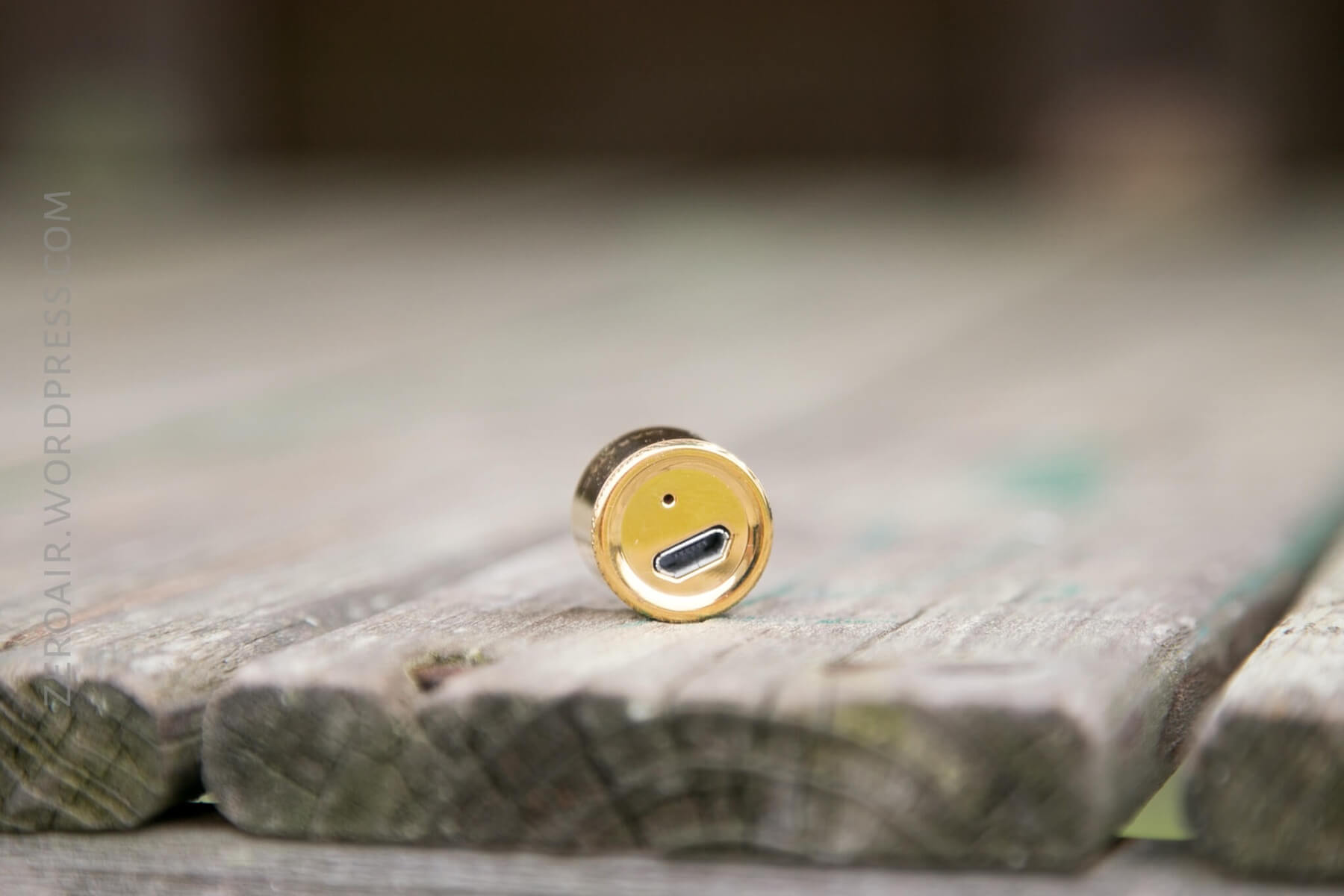
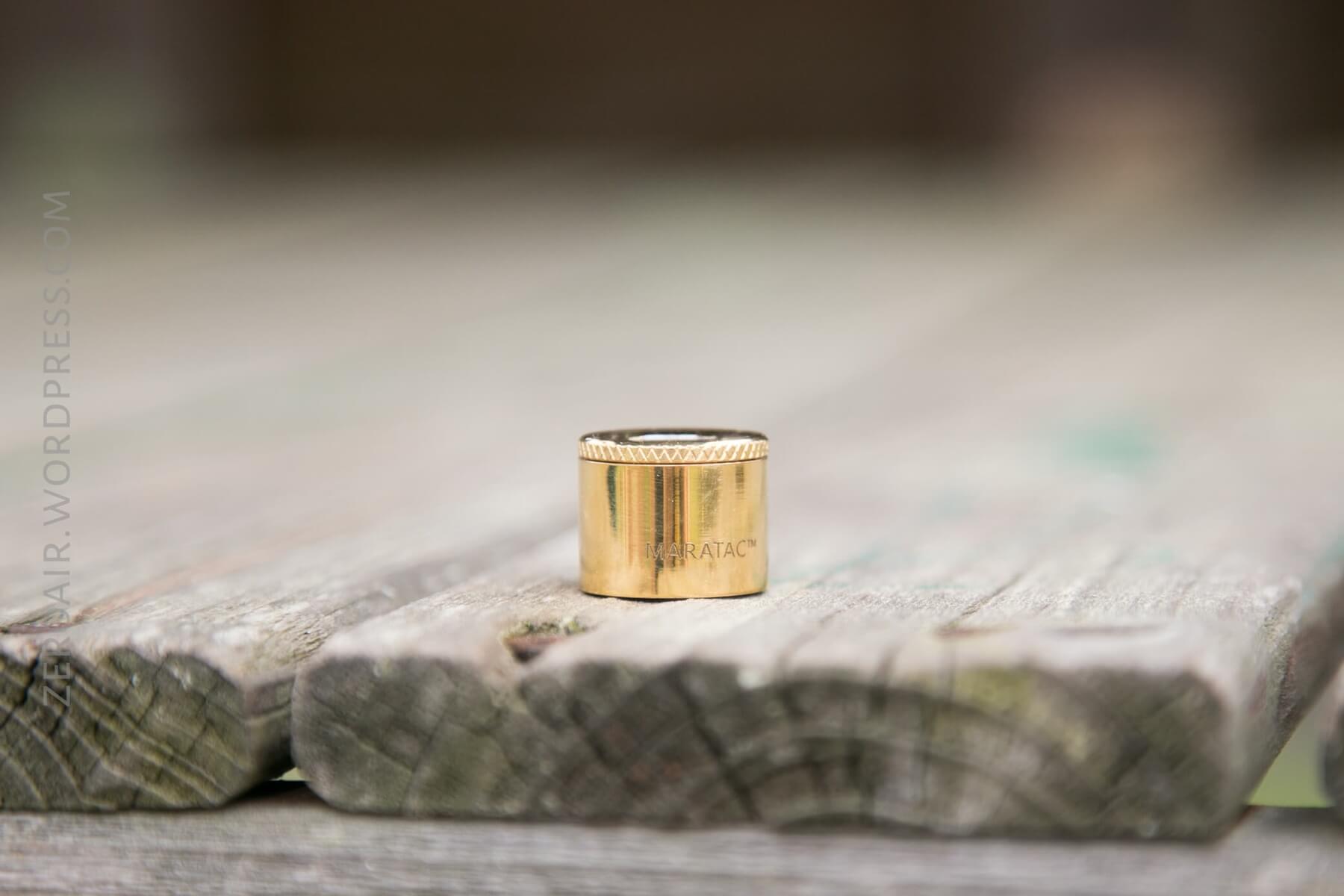
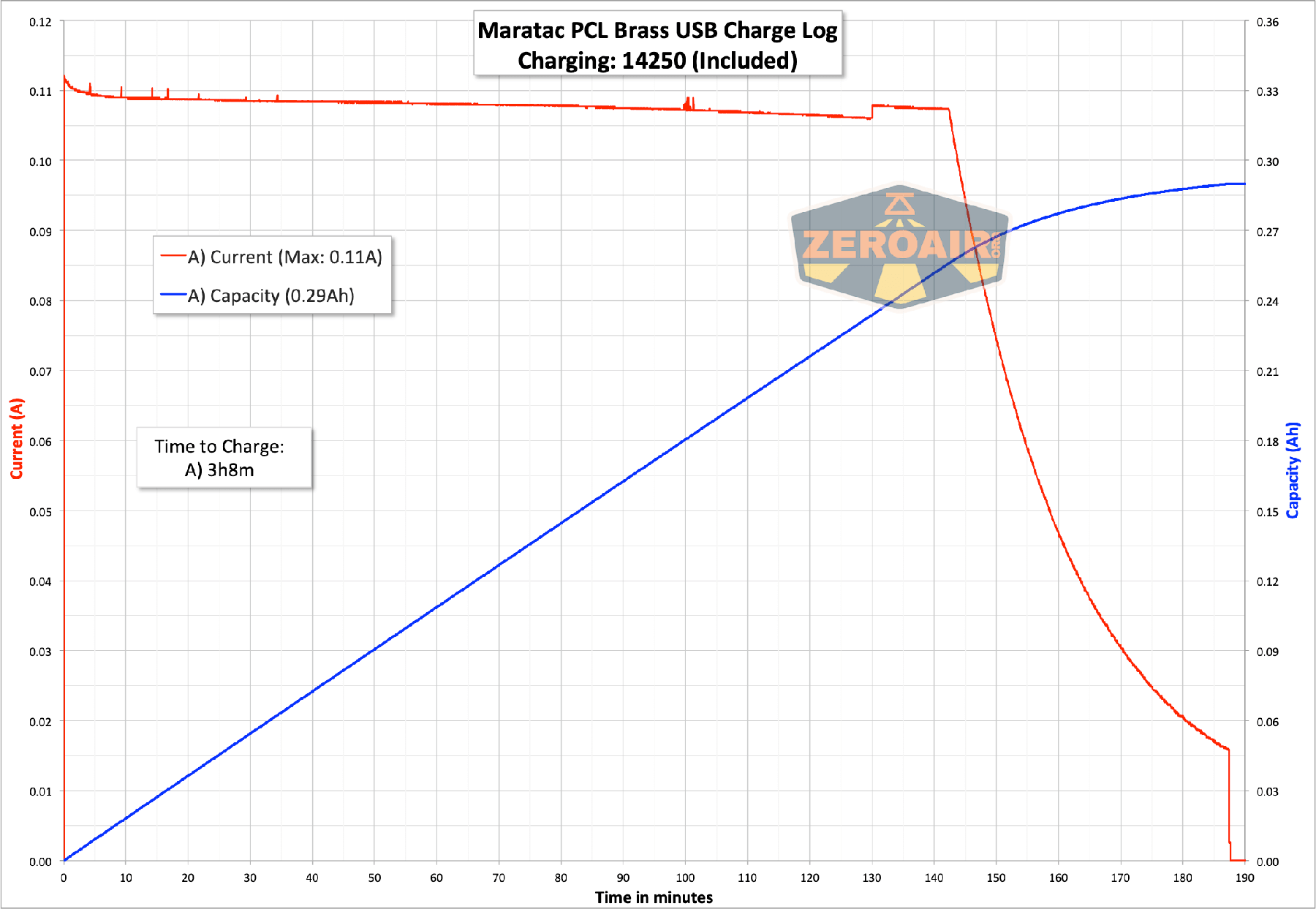
There are two emitters inside the charging head. When charging, red is displayed. When charging is complete, green is displayed. The included cell is 280mAh, and the chargetime bears that out. The charge rate is around 0.11A, and charging is a very nice-looking CC/CV curve.
User Interface and Operation
This is a two-stage twisty. There’s no button, just twisty. Twist for on, twist more for more on. It’s pretty simple.
If you’re clever about it, you can ride the edge of “on” just enough to have a momentary low.
Here’s a user interface table!
| State | Action | Result |
|---|---|---|
| Off | Tighten a little | Low |
| Low | Tighten a little more | High |
| High | Loosen a little | Low |
| Low | Loosen a little | Off |
Modes and Currents
| Mode | Mode Claimed Output (lm) | Claimed Runtime | Measured Lumens | Tailcap Amps |
|---|---|---|---|---|
| High | 305 | 40m | 116 | 0.500 |
| Low | 15 | 9h | 11.7 | 0.038 |
Pulse Width Modulation
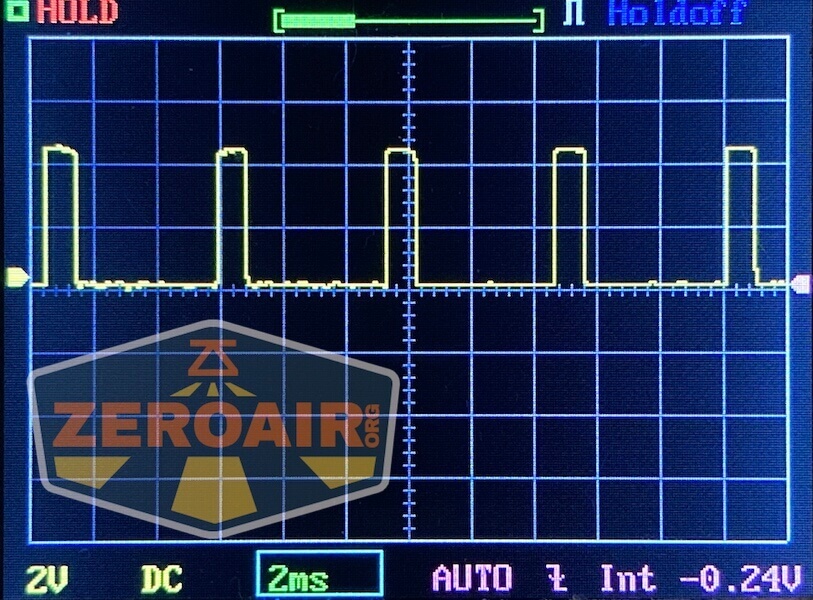
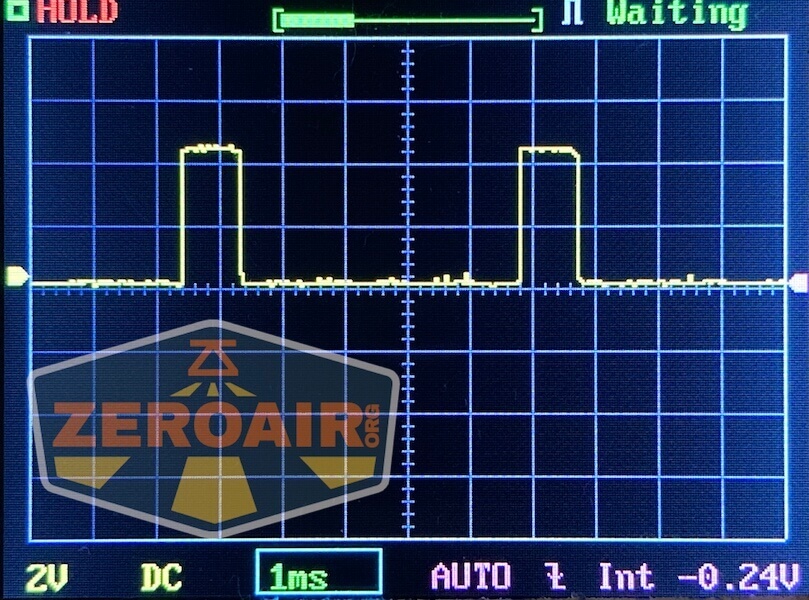
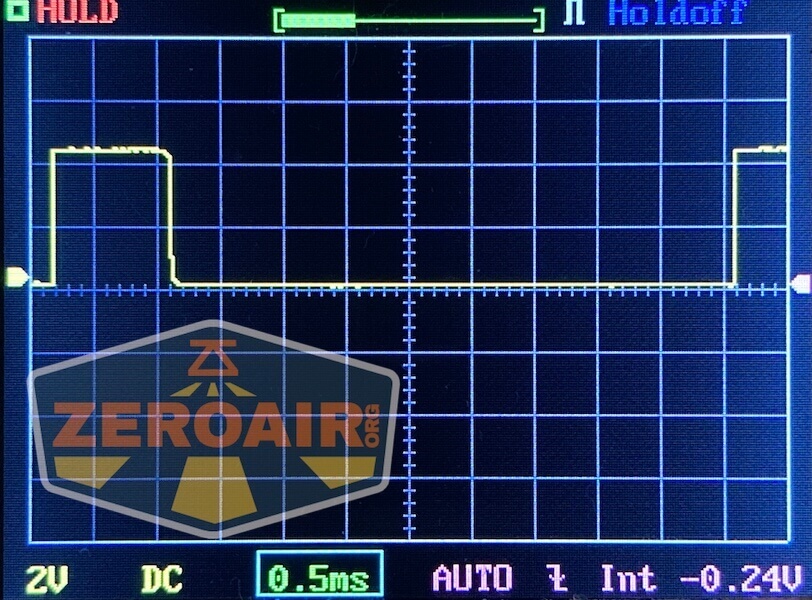
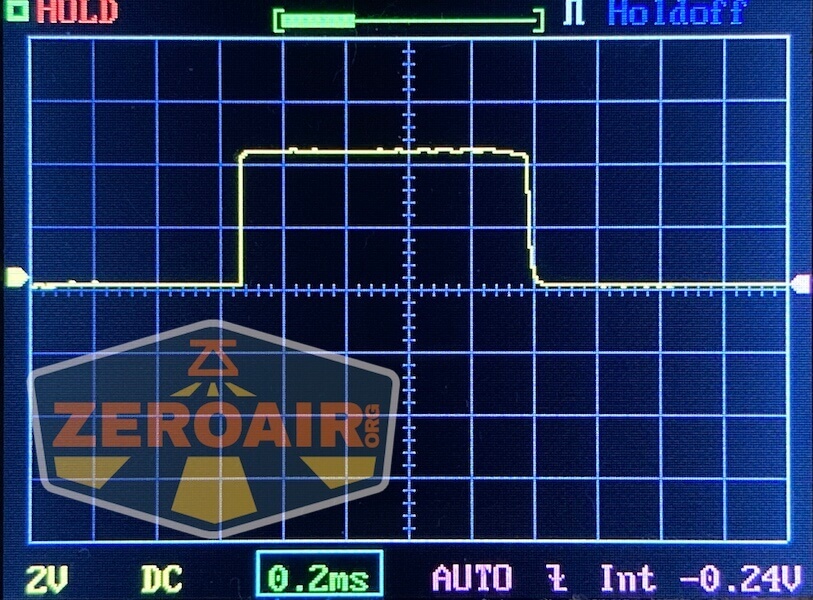
Neither mode uses PWM!
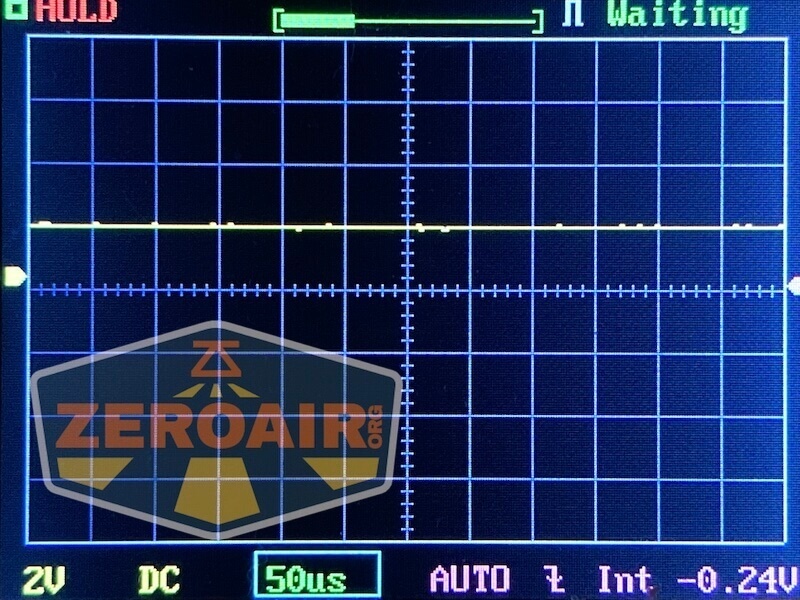
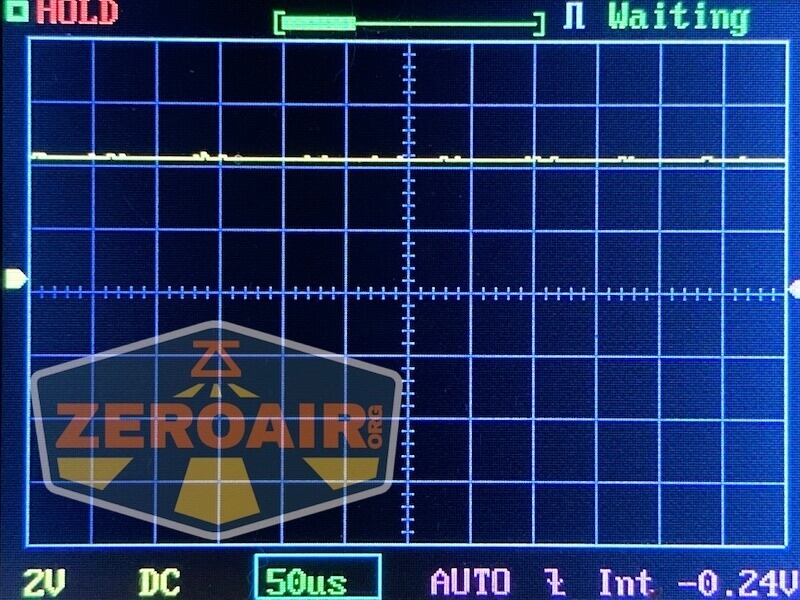
Here you can see a “baseline” – a chart with almost no light hitting the sensor.
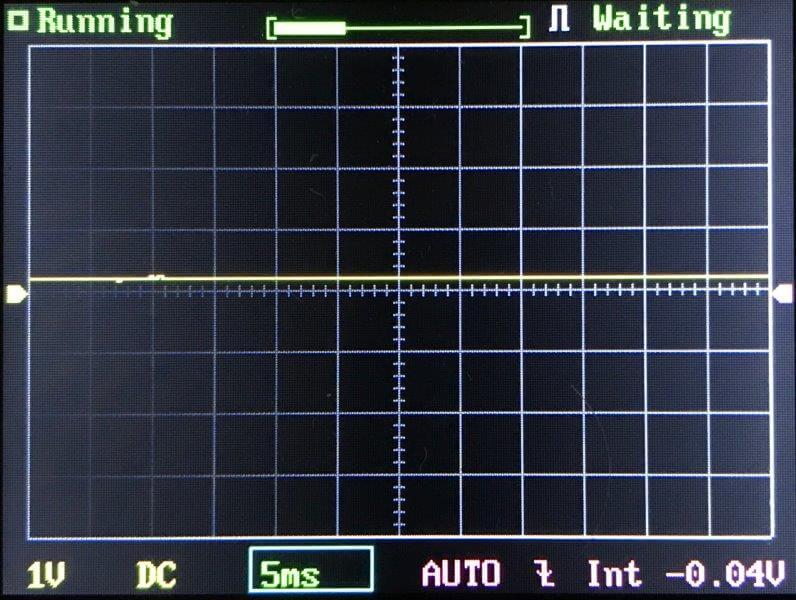
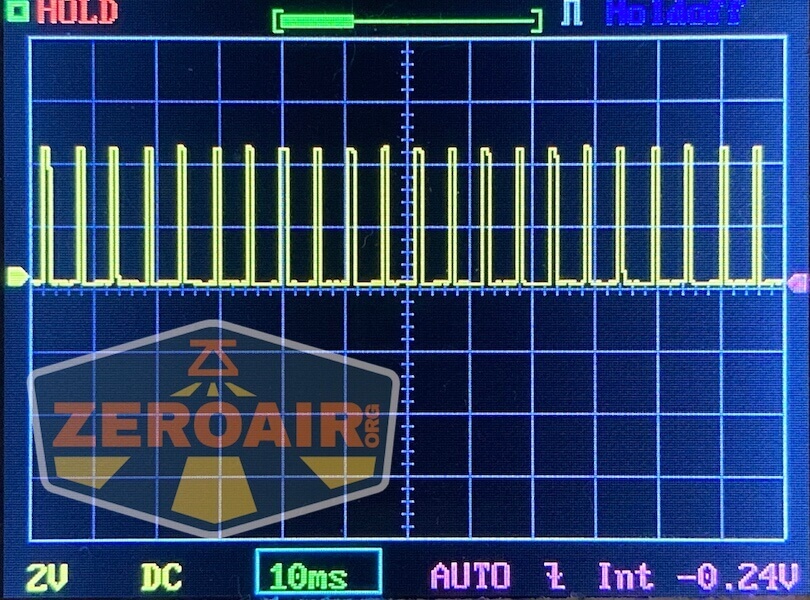
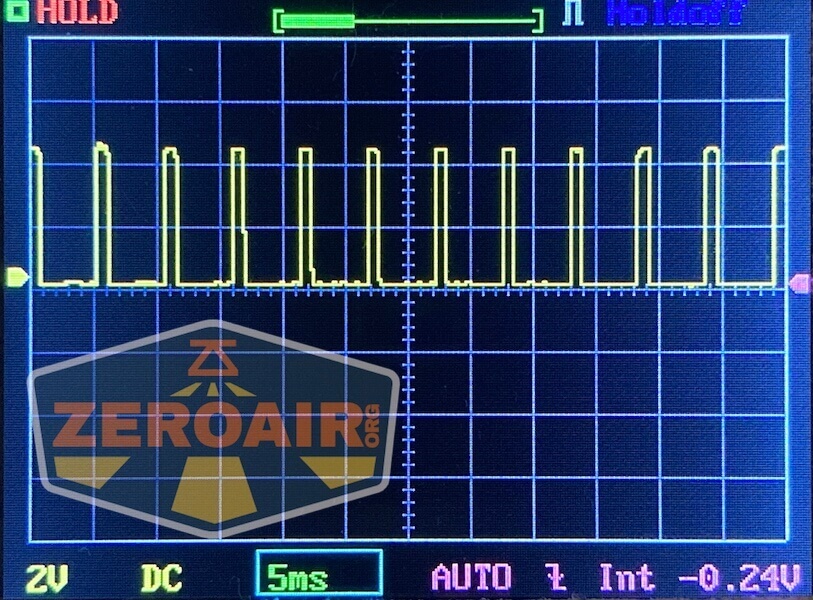
Then there’s the Ultrafire WF-602C flashlight, which has some of the worst PWM I’ve seen. It’s so bad that I used a post about it to explain PWM! Here are multiple timescales (10ms, 5ms, 2ms, 1ms, 0.5ms, 0.2ms) to make comparing this “worst” PWM light to the test light easier. That post also explains why I didn’t test the WF-602C at the usual 50us scale.
LED and Beam
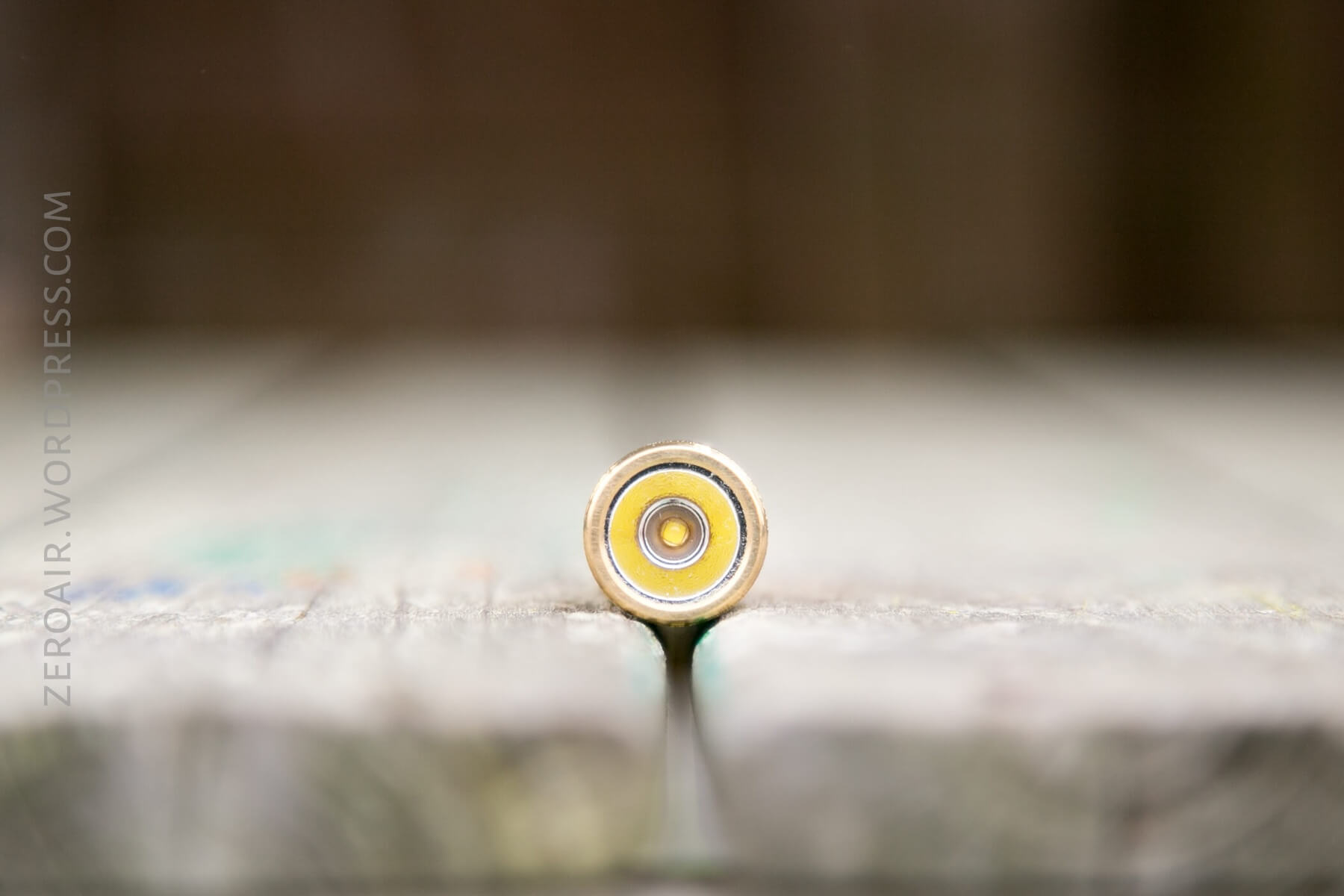
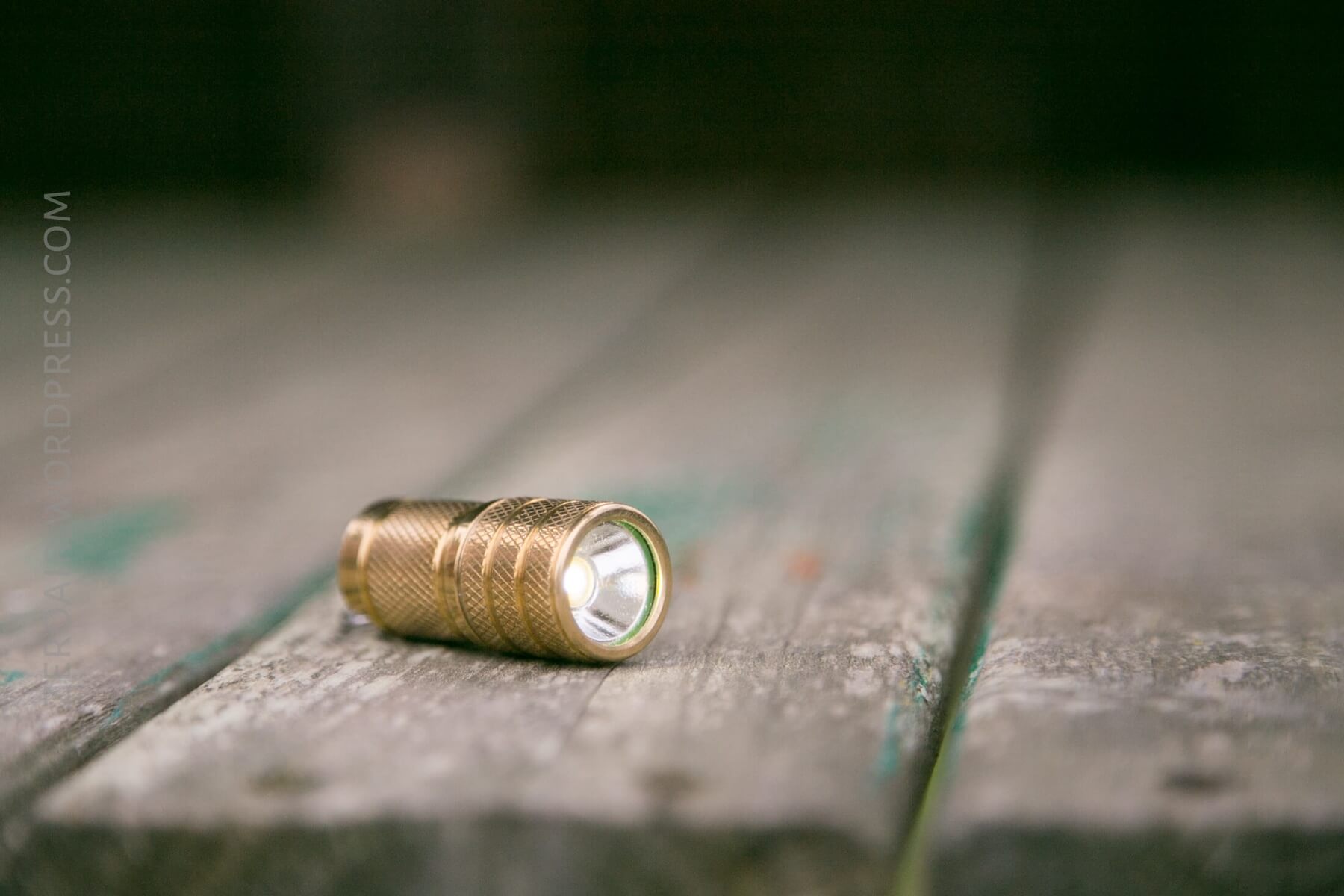
The emitter of choice in this brass light is a Cree XP-G2 S4. The reflector is smooth and shallow. The beam is a surprising spot, but with a useful amount of spill as well.
Something about me just wants warm emitters in brass lights. To be honest, I prefer Nichia emitters in brass lights. This is not bad, though, and the beam shape is quite nice.
Beamshots
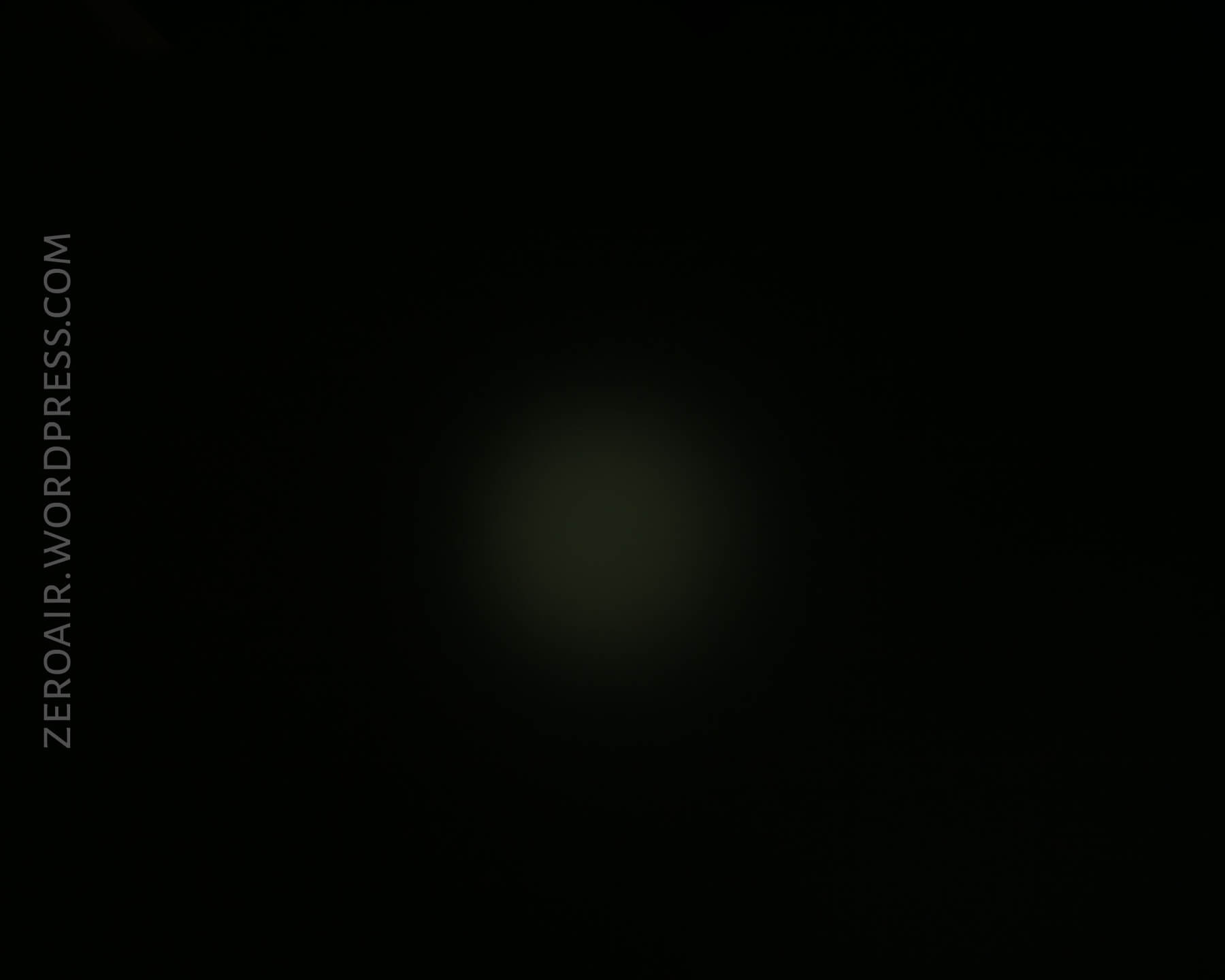
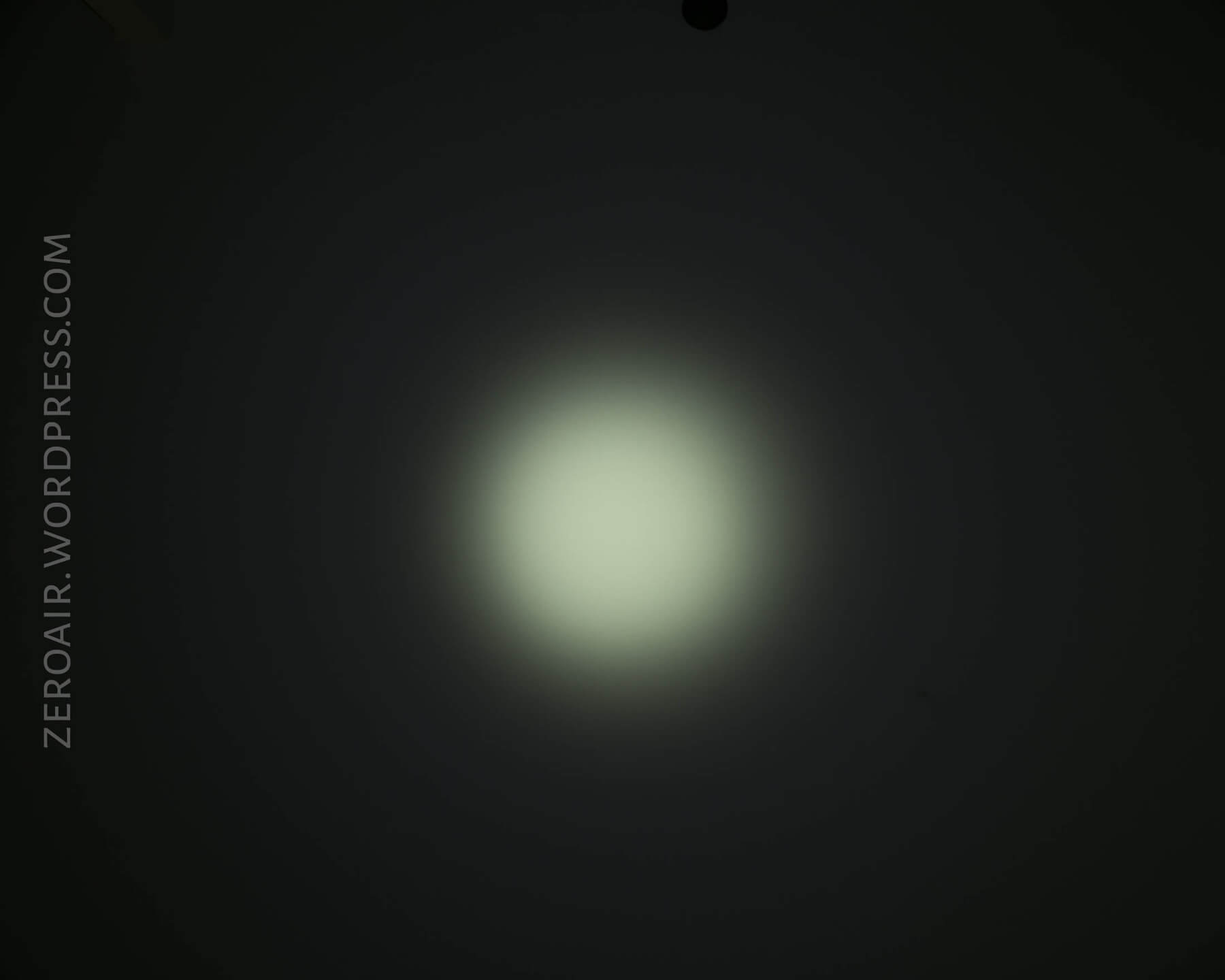
These beamshots always have the following settings: f8, ISO100, 0.3s shutter, and manual 5000K exposure. These photos are taken at floor level, and the beam hits the ceiling around 9 feet away.
Tint vs BLF-348 (KillzoneFlashlights.com 219b version) (affiliate link)
I keep the test flashlight on the left and the BLF-348 reference flashlight on the right.
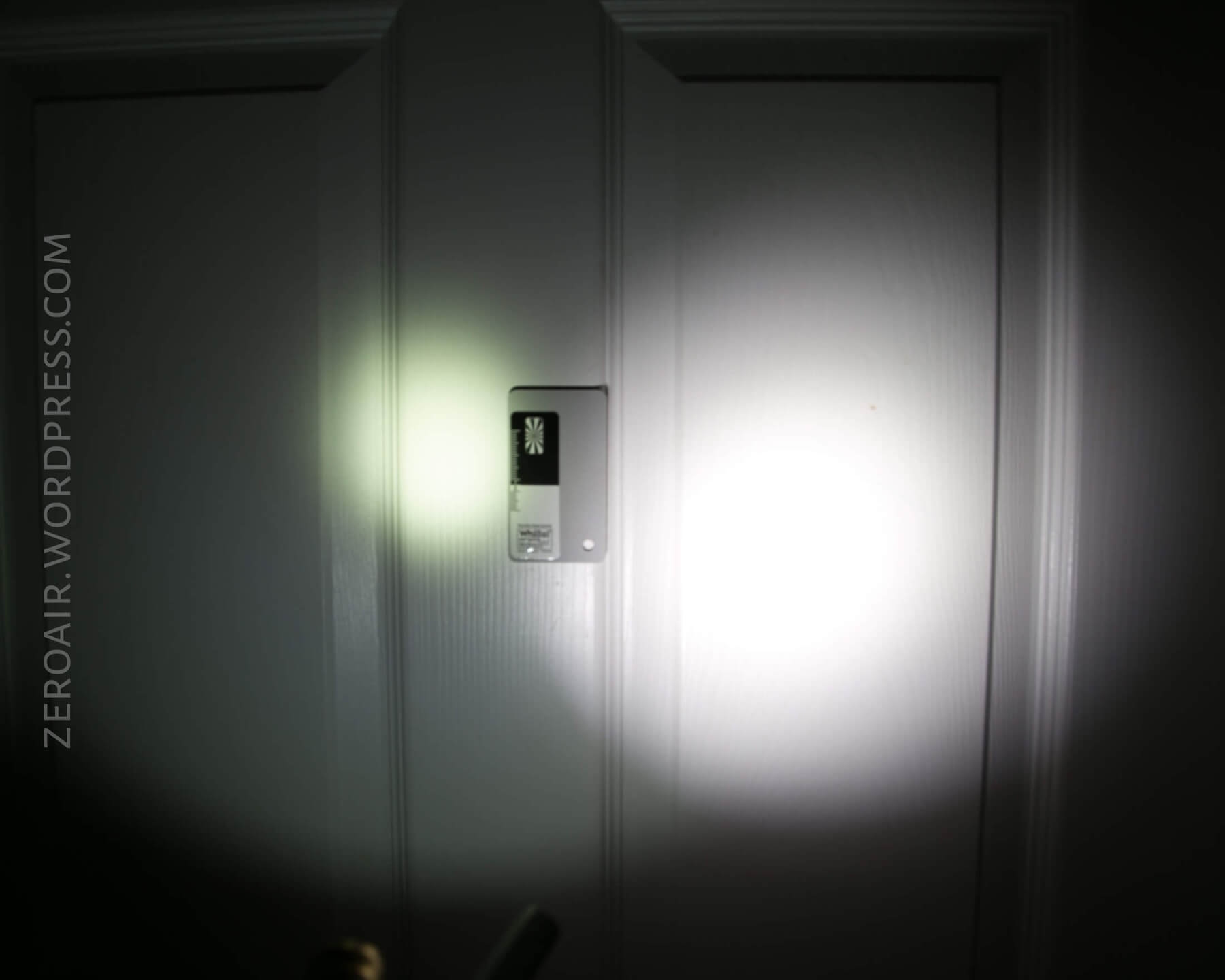
That’s my first color-corrected tint comparison. The card in the middle is a gray card, which should help with accurate color rendering for this comparison. I can’t honestly tell if it’s better or worse. The BLF-348 looks more accurate, anyway.
Random Comparisons and Competitive Options
I can’t turn up all that many 14250 flashlights, and if this is one you’re even marginally interested in, it’s certainly built well enough to justify the price.
Conclusion
What I like
- Build quality is great
- Available in brass, copper, and stainless – nice choices
- Two-stage twisty has a nice range for modes (i.e., plenty of twist during Low, toward High)
What I don’t like
- Doesn’t have Nichia
Notes
- This light was provided by ME for review. I was not paid to write this review.
- This content originally appeared at zeroair.org. Please visit there for the best experience!
- Use my amazon.com referral link if you’re willing to help support making more reviews like this one!
- Please support me on Patreon! I deeply appreciate your support!
Discover more from ZeroAir Reviews
Subscribe to get the latest posts sent to your email.
Pingback: Maratac AA Titanium Nichia (REV 2 2018) Flashlight Review - ZeroAir Reviews