
Nitefox UT25 Flashlight Review
The Nitefox UT25 flashlight offers Cree XP-L HD output and a dual-switch interface. One of those switches has an indicator, too! Read on!
Official Specs and Features
Here’s a link to the Nitefox UT25 Flashlight product page.
Versions
There’s just one version of this light!
Price
The going price is around $40 – currently $42.90 on the Nitefox official Amazon.com store.
Short Review
This is a sturdy light, and the dual switches are nice. I like the simple UI, and the build quality is acceptable. I’d like the price to ease down into the $30’s max for this to be a great value.
Long Review
The Big Table
| Nitefox UT25 | |
|---|---|
| Emitter: | Cree XP-L HD |
| Price in USD at publication time: | $29.90 on Amazon (referral link). |
| Cell: | 1×18650 |
| Turbo Runtime | |
| LVP? | Switch Warning |
| Switch Type: | Dual |
| On-Board Charging? | Yes |
| Chargetime | |
| Power off Charge Port with no Cell? | ? |
| Claimed Lumens (lm) | 1180 |
| Claimed Throw (m) | – |
| Candela (Calculated) in cd (at 30s) | 939lux @ 4.151m = 16180cd |
| Throw (Calculated) (m) | 254.4^ |
| All my Nitefox reviews! | |
^ Measurement disclaimer: Testing flashlights is my hobby. I use hobbyist-level equipment for testing, including some I made myself. Try not to get buried in the details of manufacturer specifications versus measurements recorded here; A certain amount of difference (say, 10 or 15%) is perfectly reasonable.
What’s Included
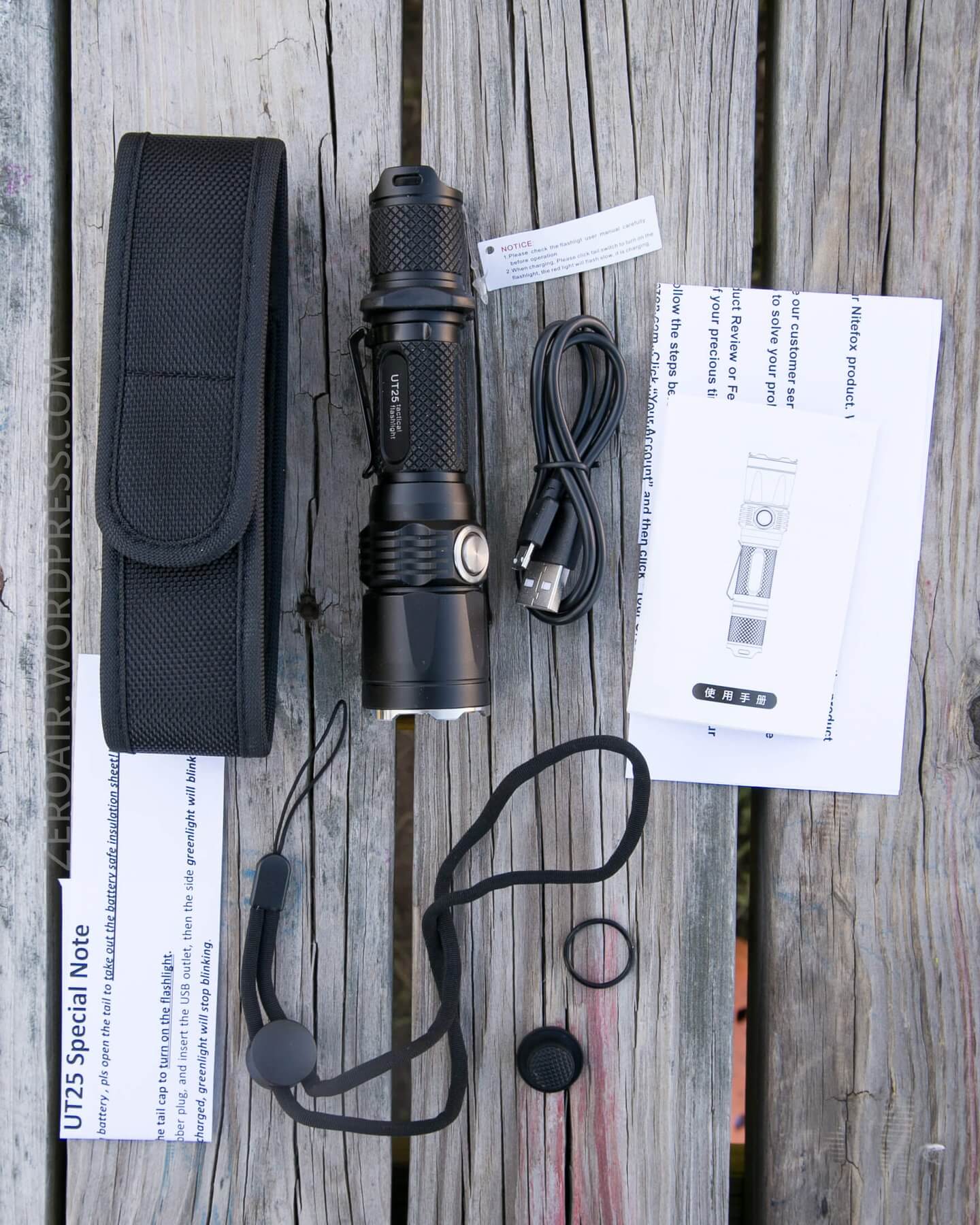
- Nitefox UT25 Tactical Flashlight
- Nitefox 18650 cell
- Nylon pouch
- Charge cable
- Lanyard
- Spare o-ring
- Paperwork
Package and Manual
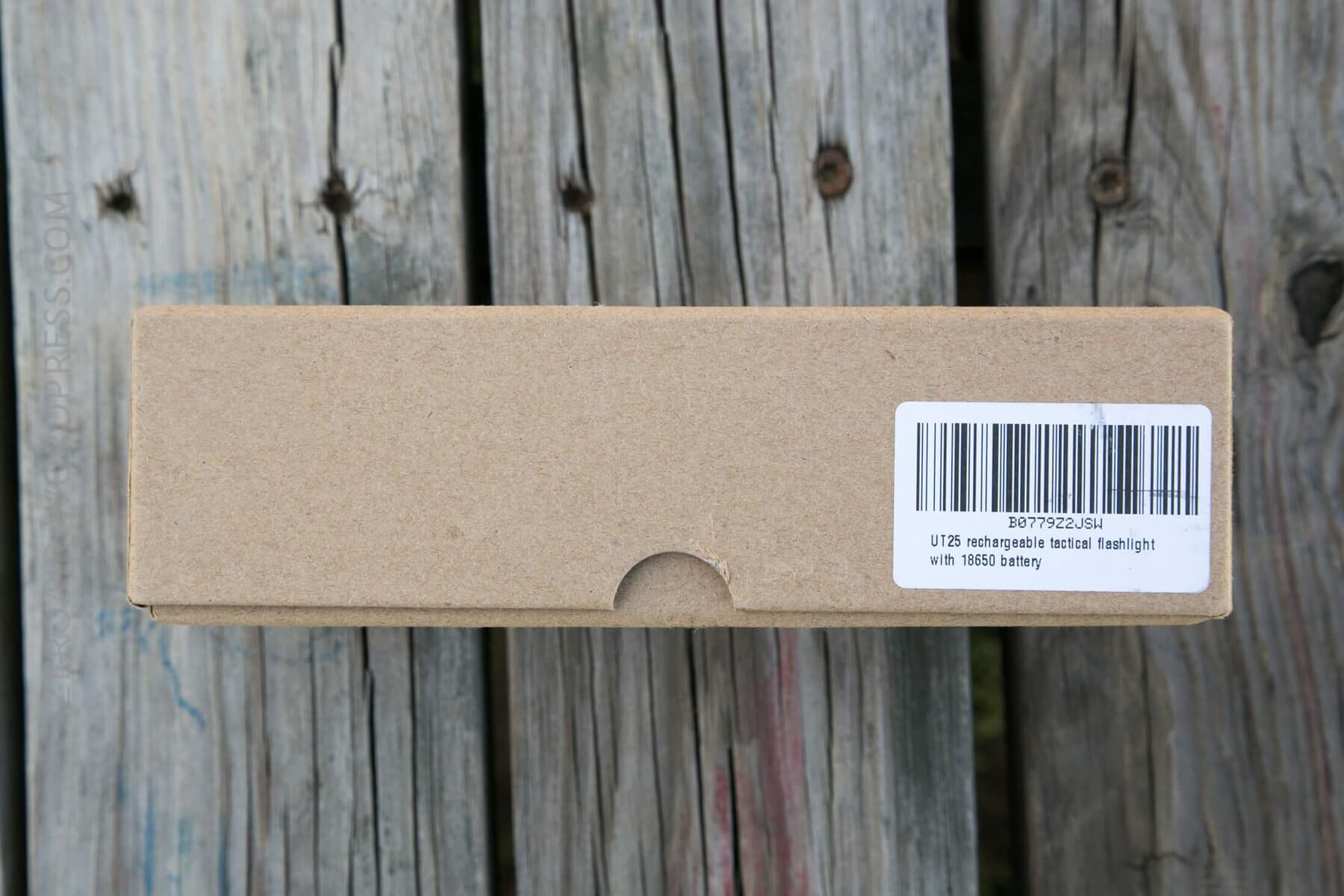
The Nitefox UT25 ships in a slip-fit cardboard box, with convenient grooves for easy opening. There’s a bar code sticker to identify the light.
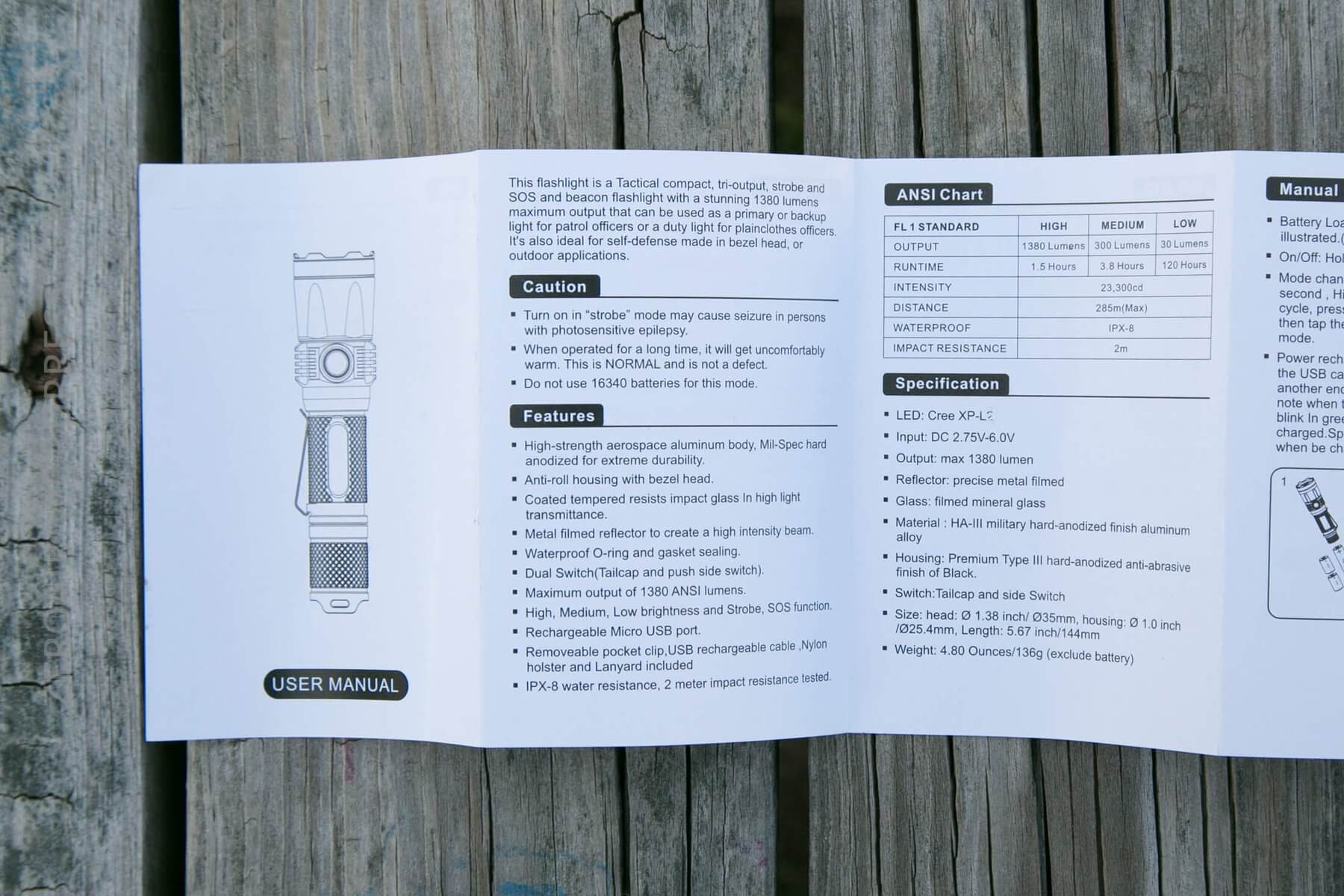
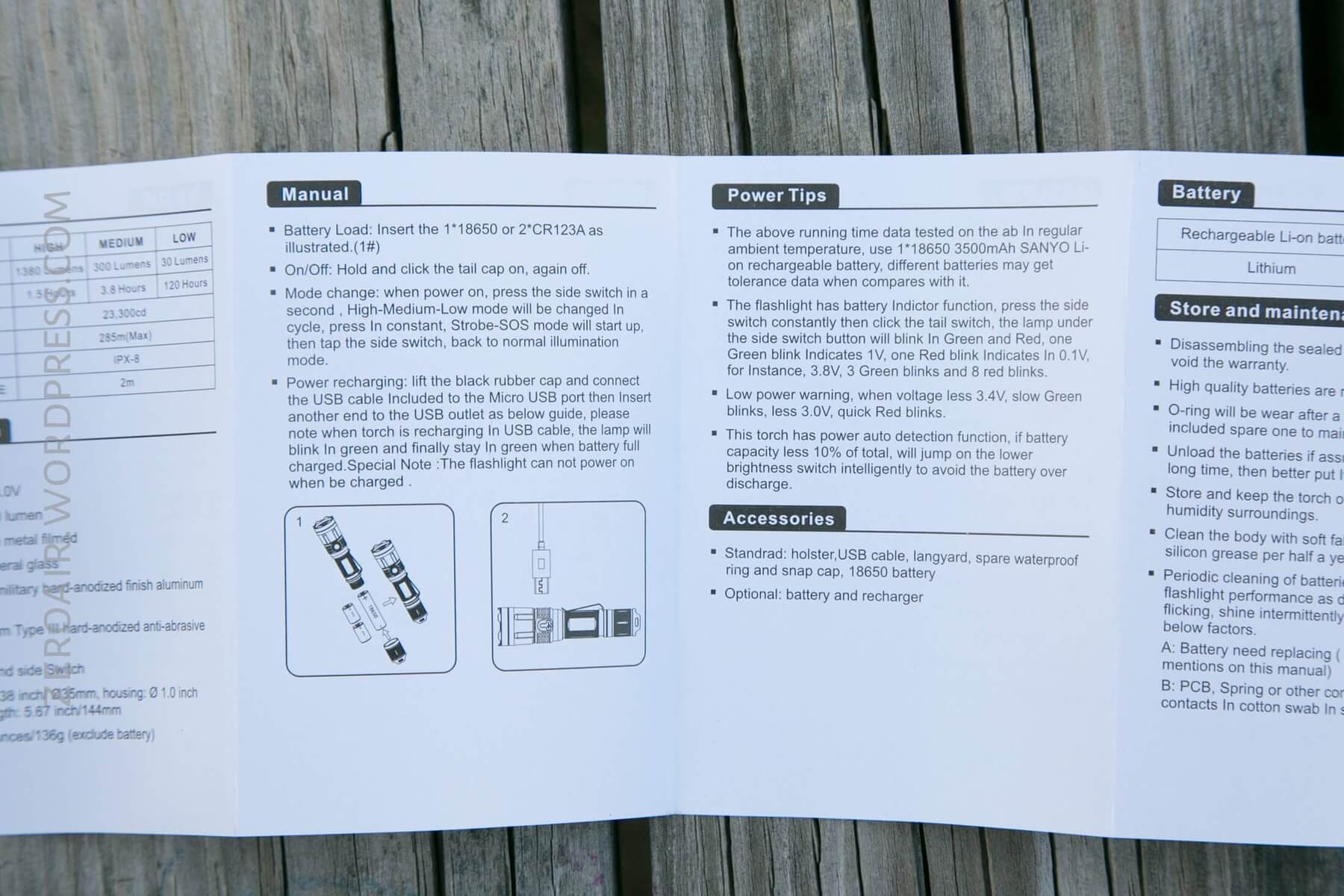
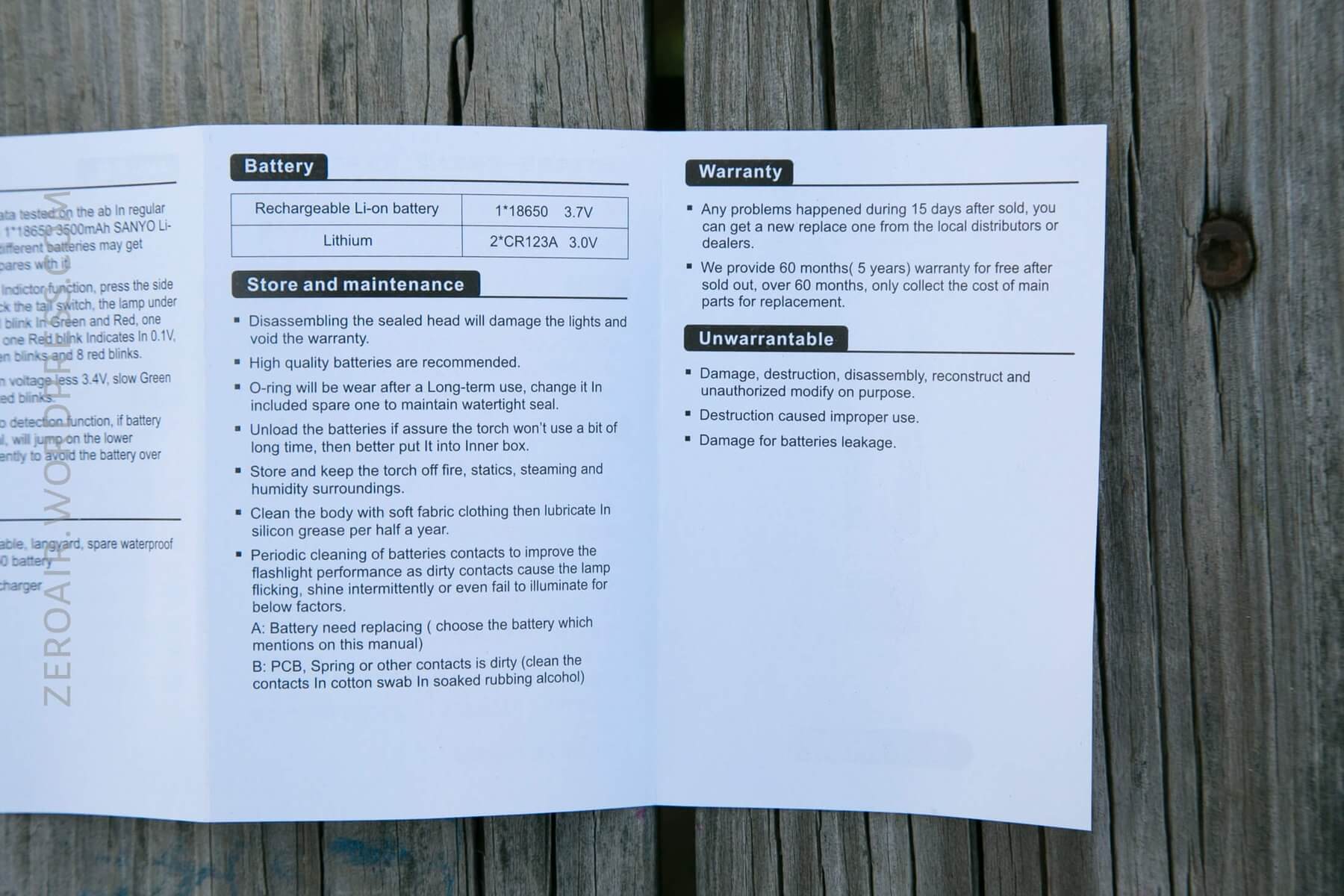
The manual is surprisingly comprehensive and well-written (in English).
Build Quality and Disassembly
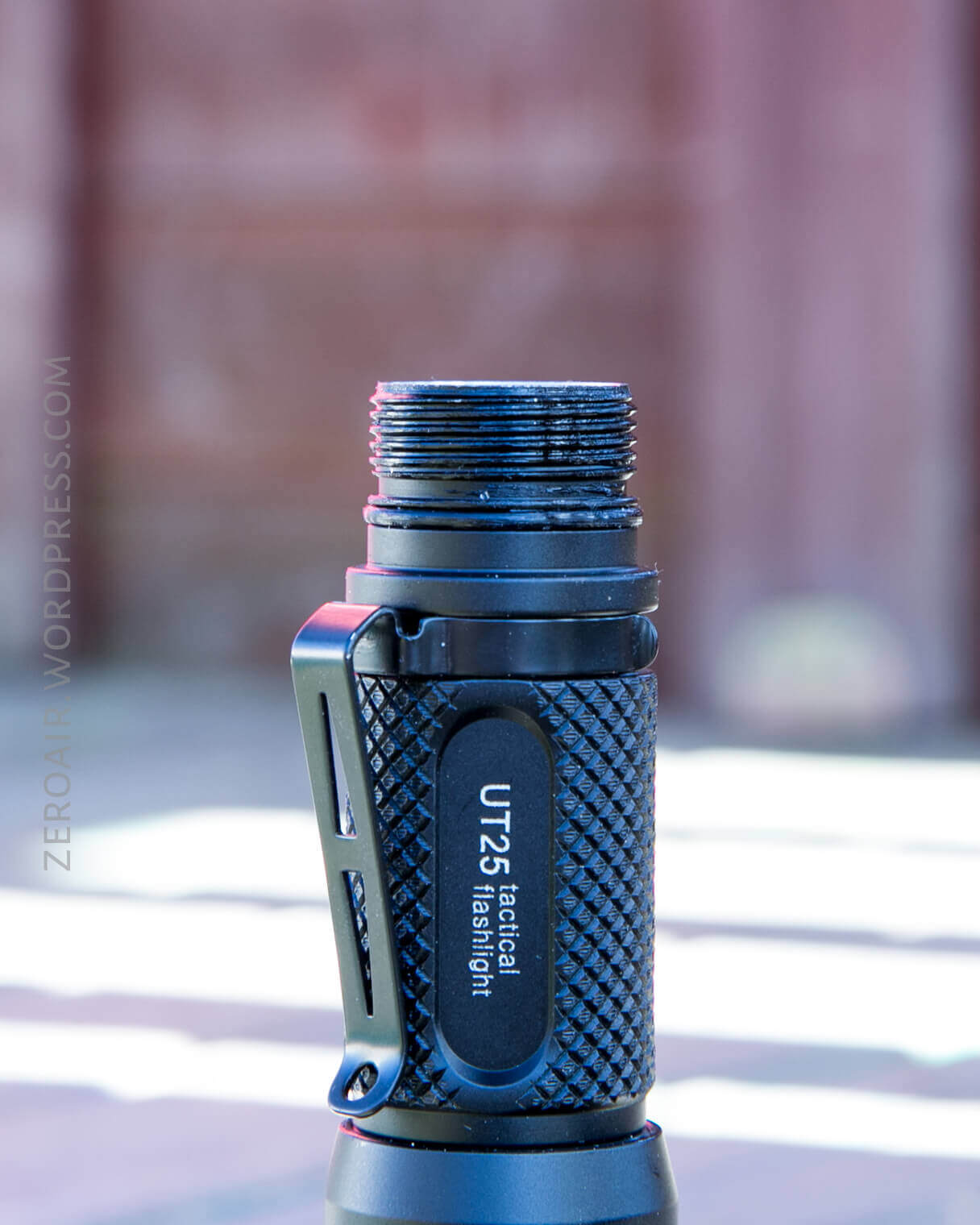
The UT25 is a nicely built light. The anodizing has a good feel. Feels thick and not cheap. The knurling, which is a diamond pattern, isn’t the highest quality knurling, but it’s not strictly bad.
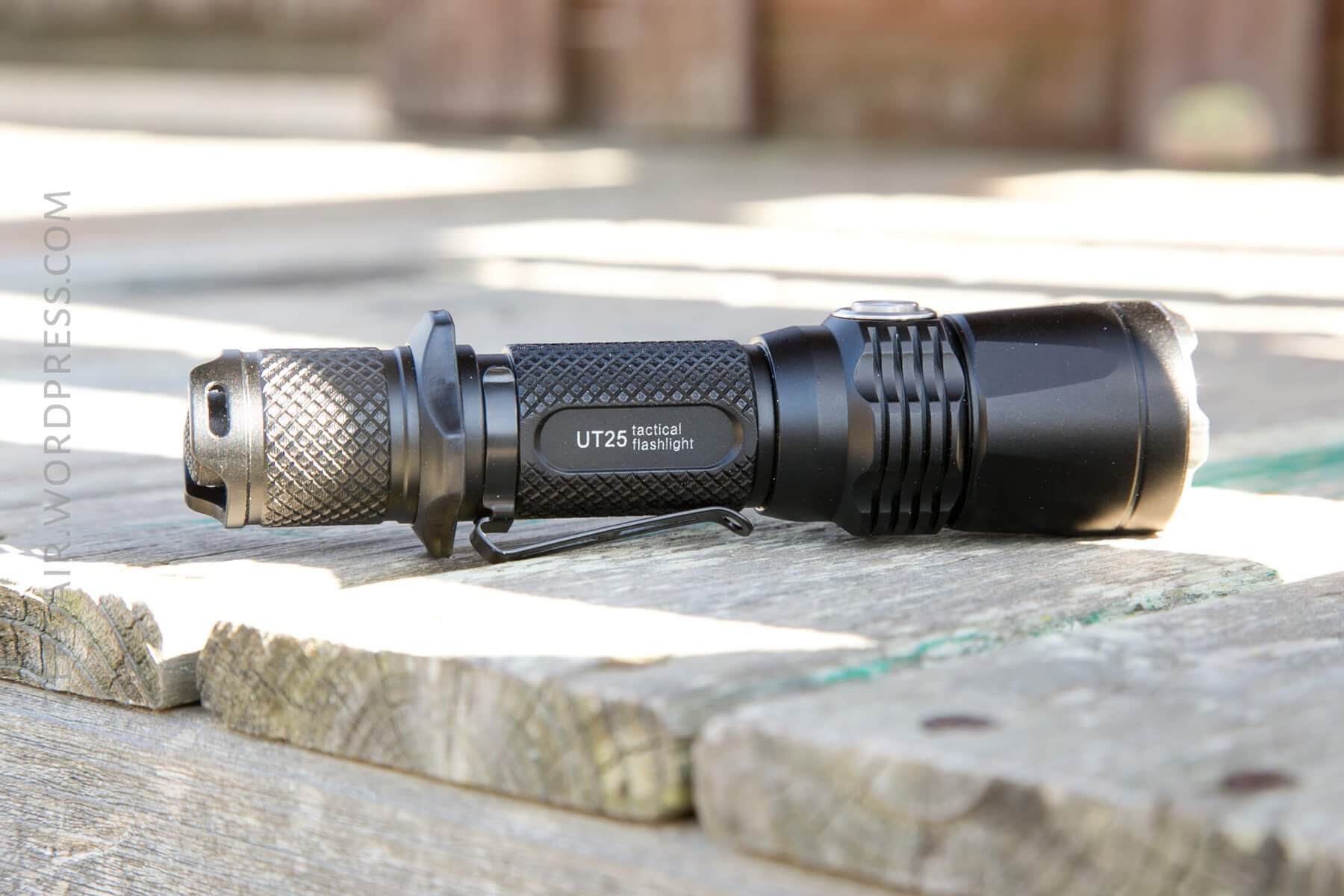
Overall, this is a good quality mid-tier light. The threads are anodized and of good quality (square-cut with the right amount of lube). There are fins on the head for heat dissipation. The side switch is metal and actually very nice. The surface has machining such that there’s just the right amount of grip across the surface. The edges are chamfered and comfortable.
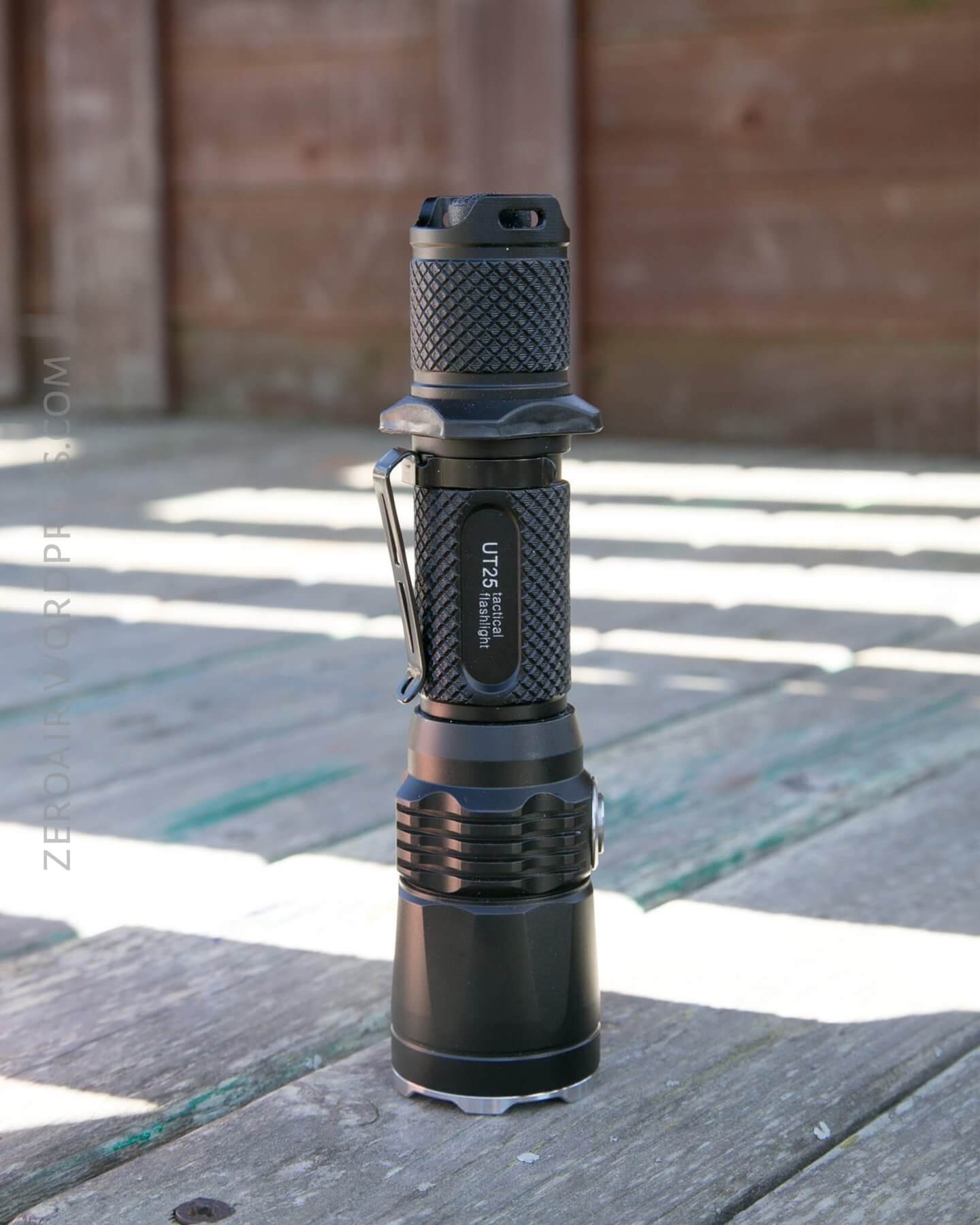
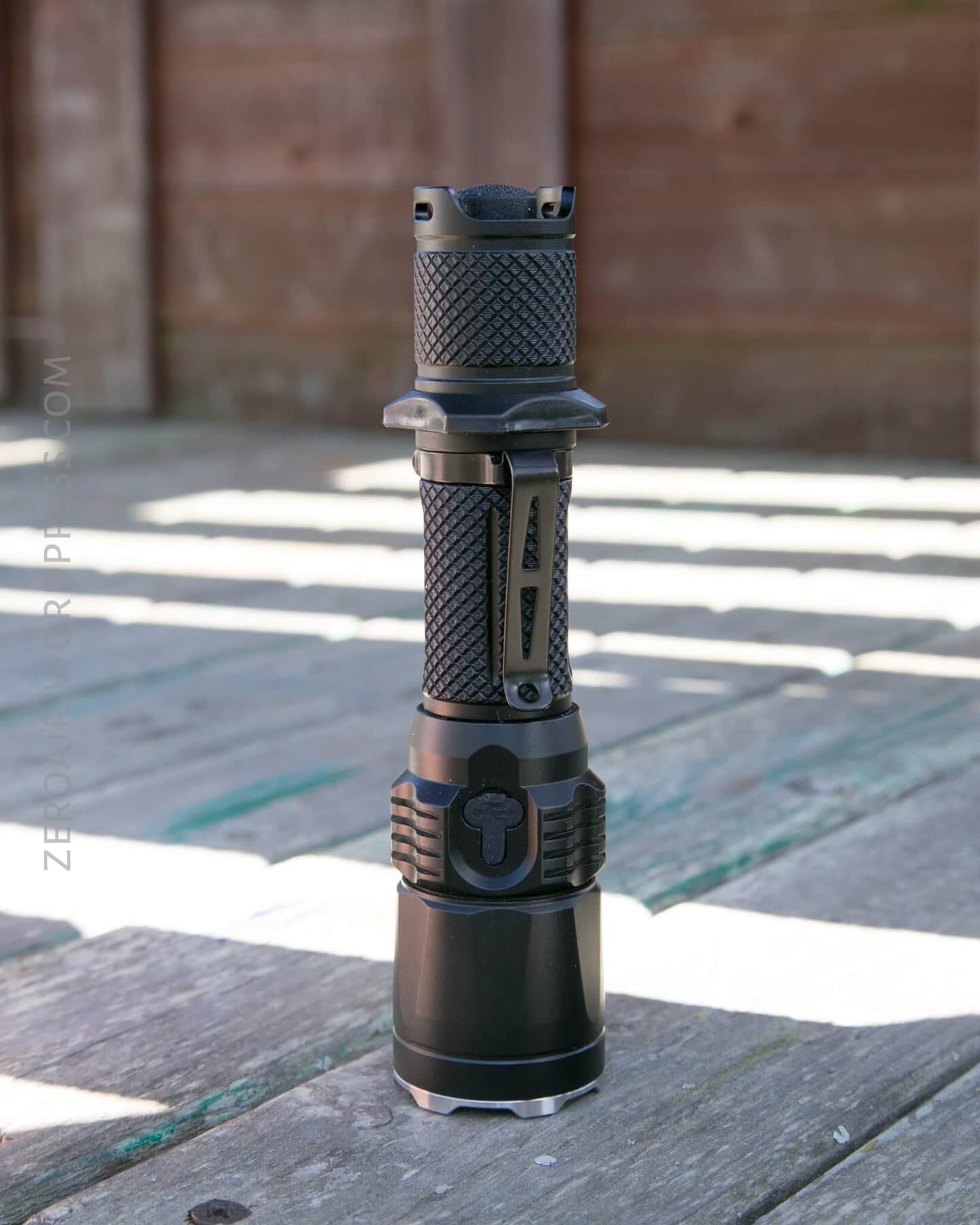
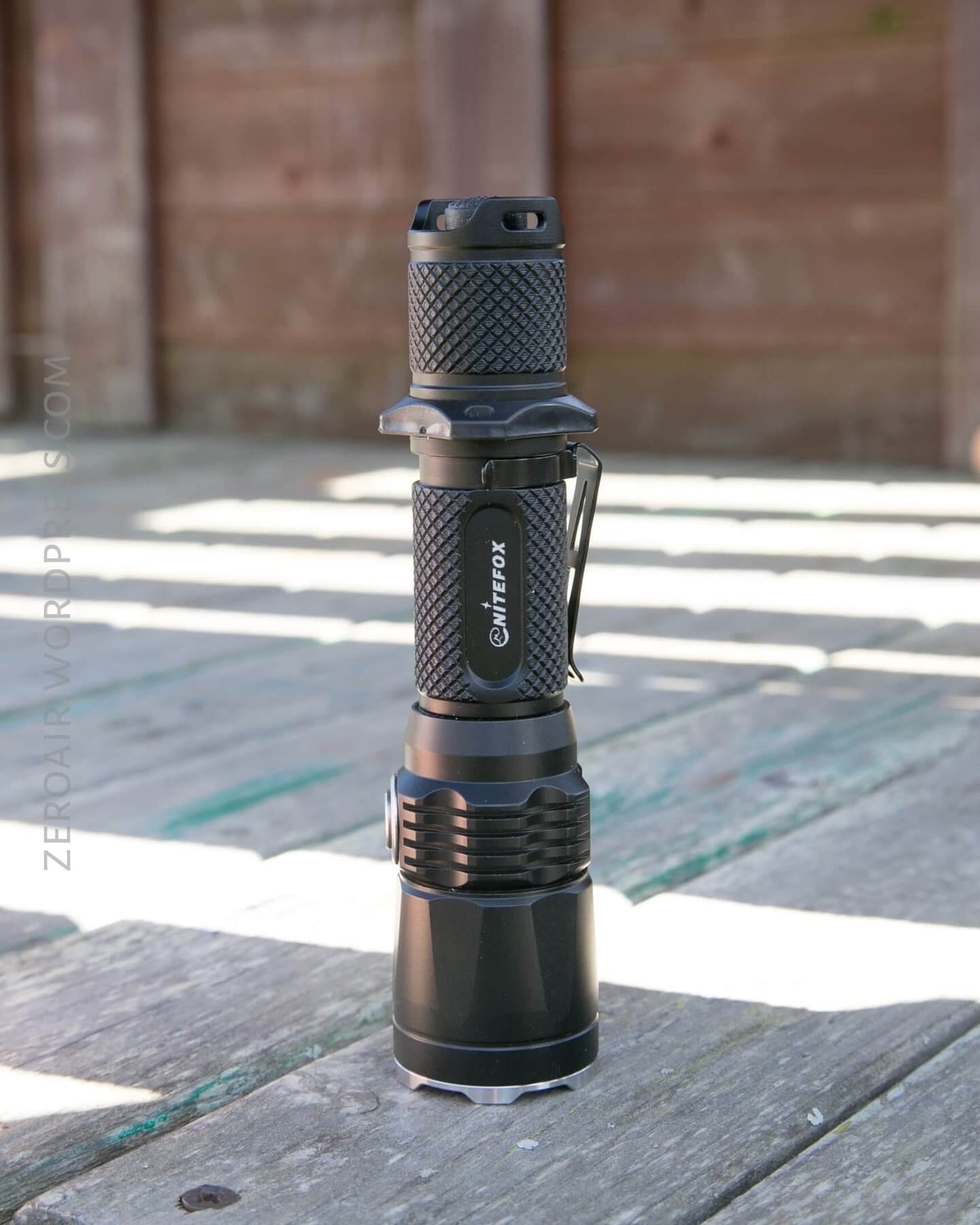
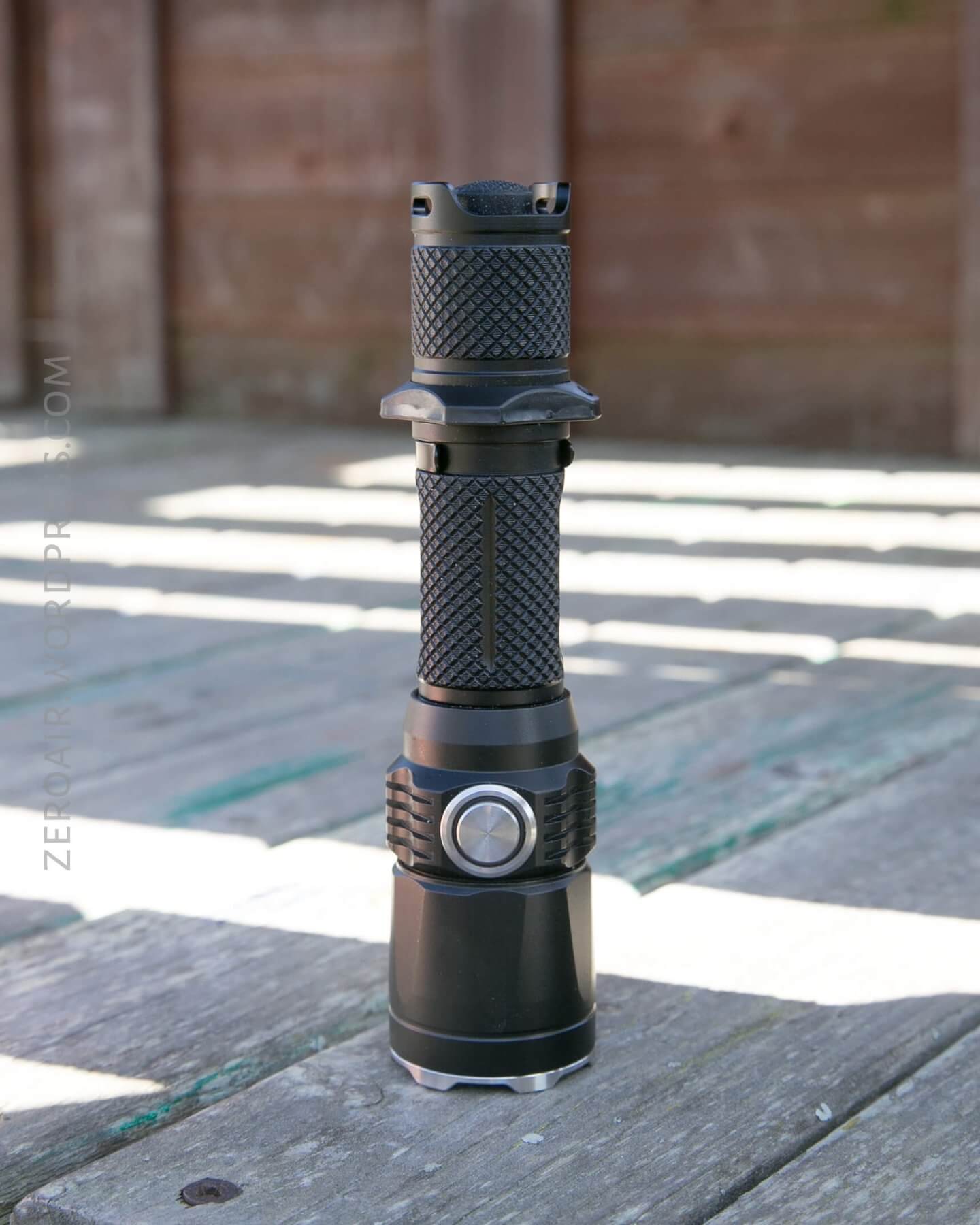
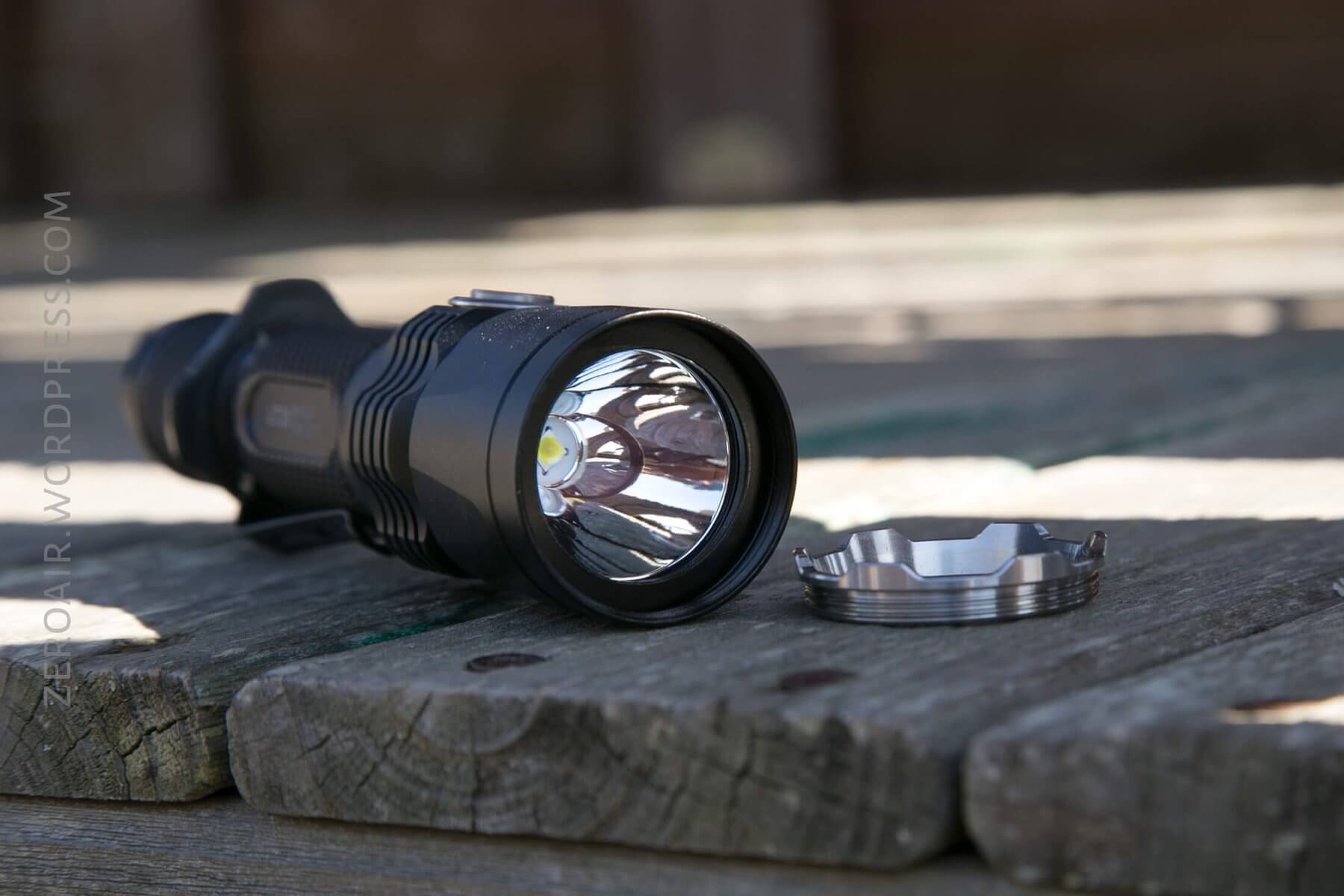
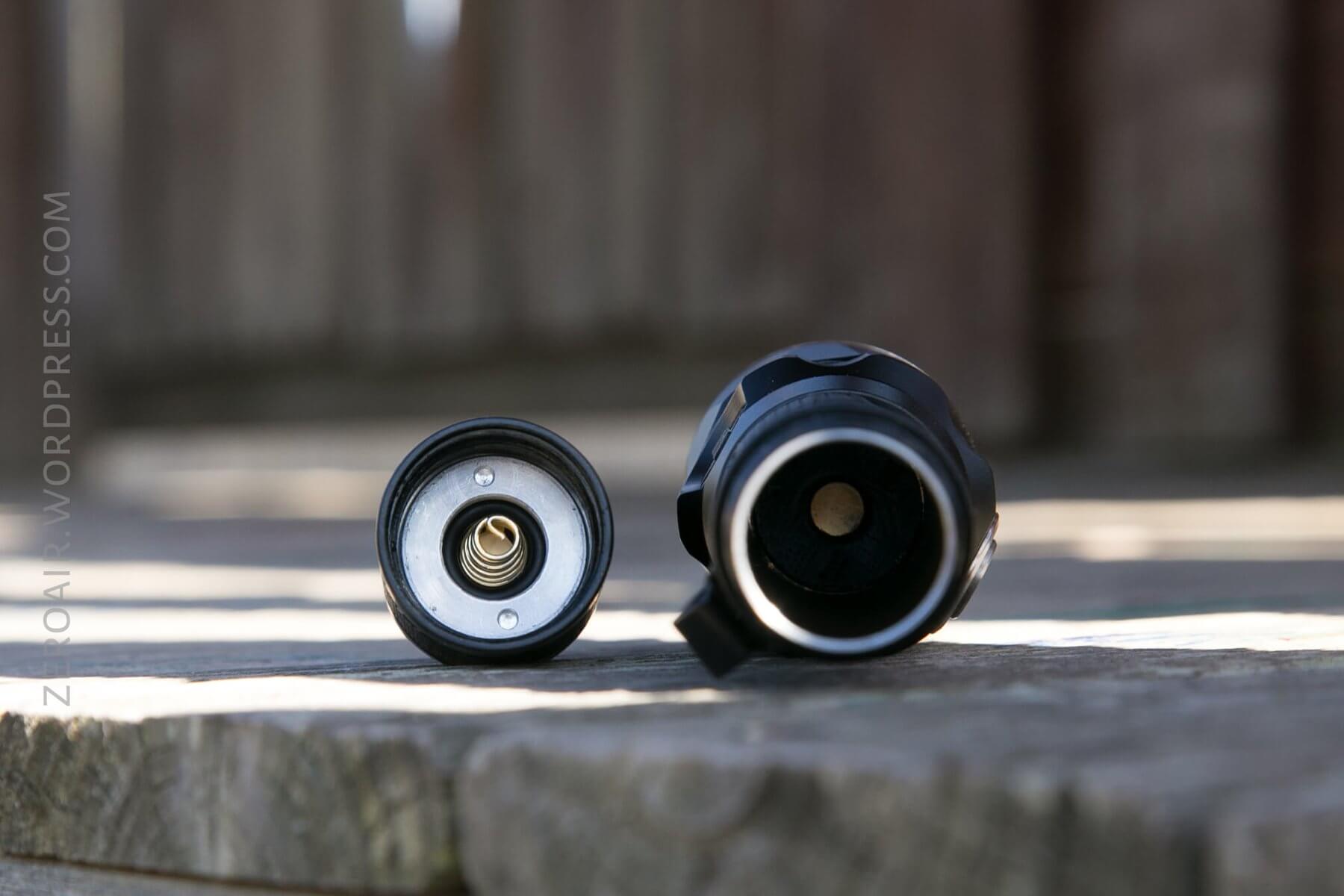
The tailcap has the typical retaining ring – in this case, it’s aluminum. The spring here is long and springy (stiffish). The body tube doesn’t separate from the head. The head end had a brass button, not a spring (dual spring would probably be good for an actual tactical light). The bezel unscrews from the head easily, but the reflector doesn’t come out this way.
Size
Officially the UT25 is 5.7 x 1.4 x 1.4 inches.
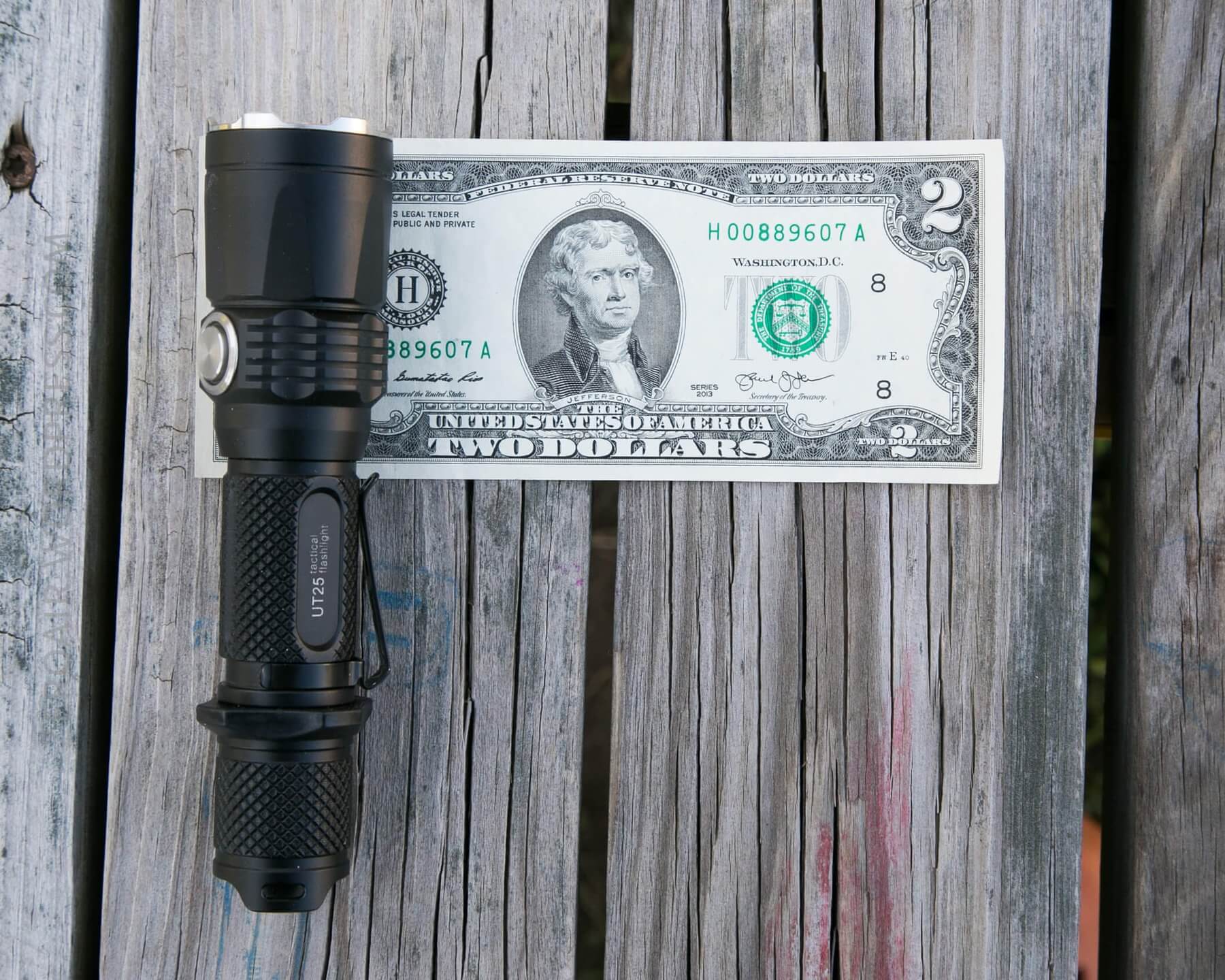
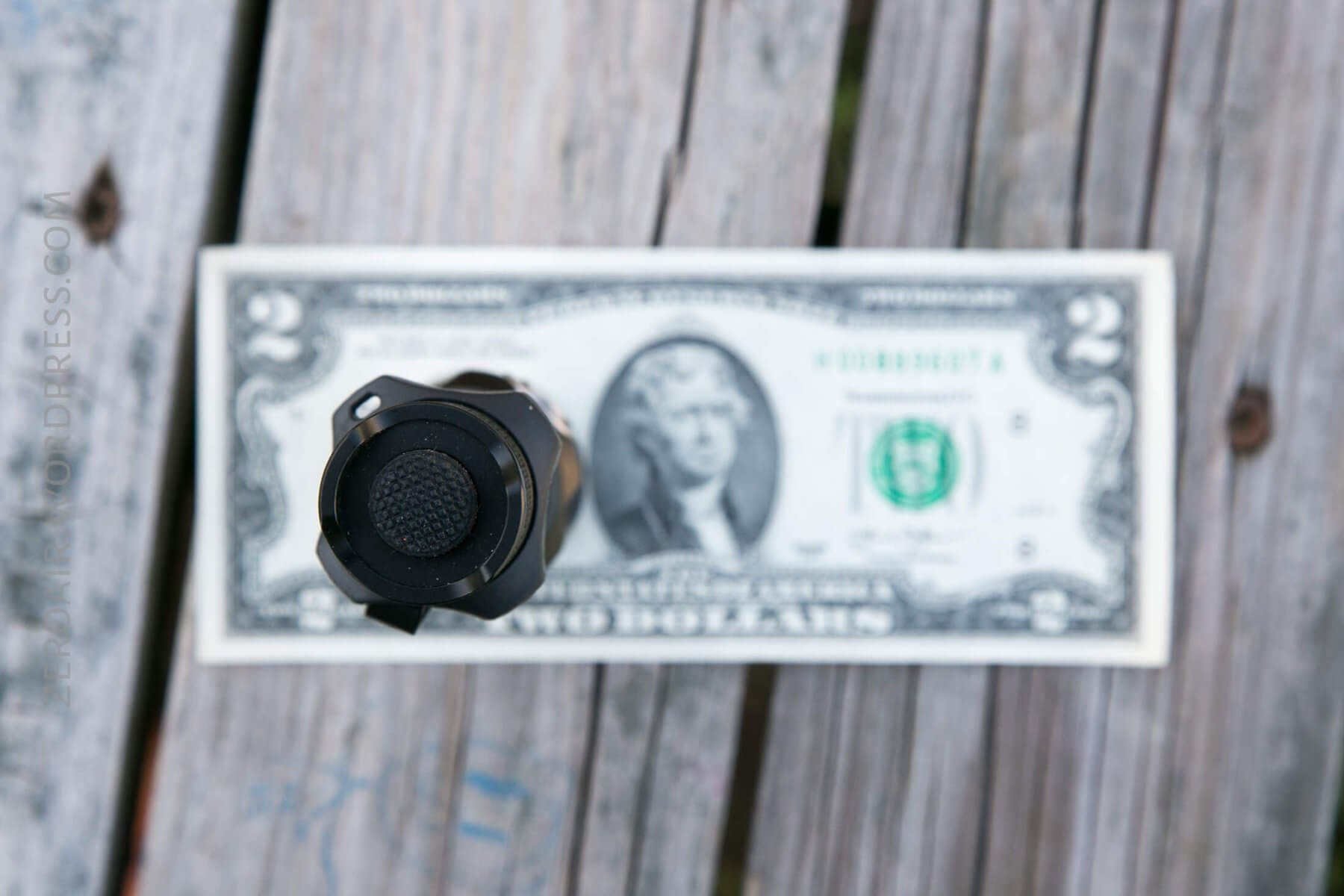
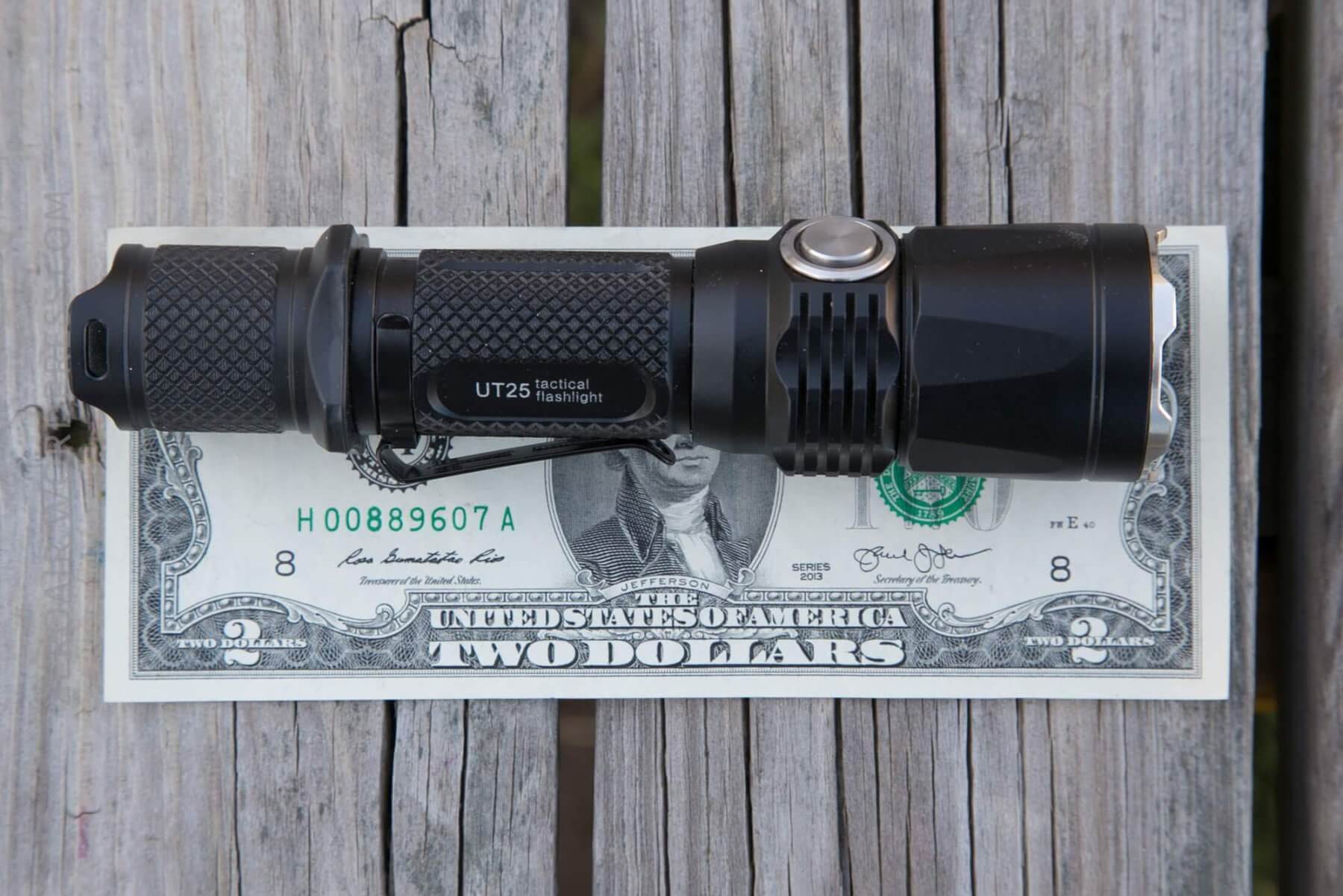
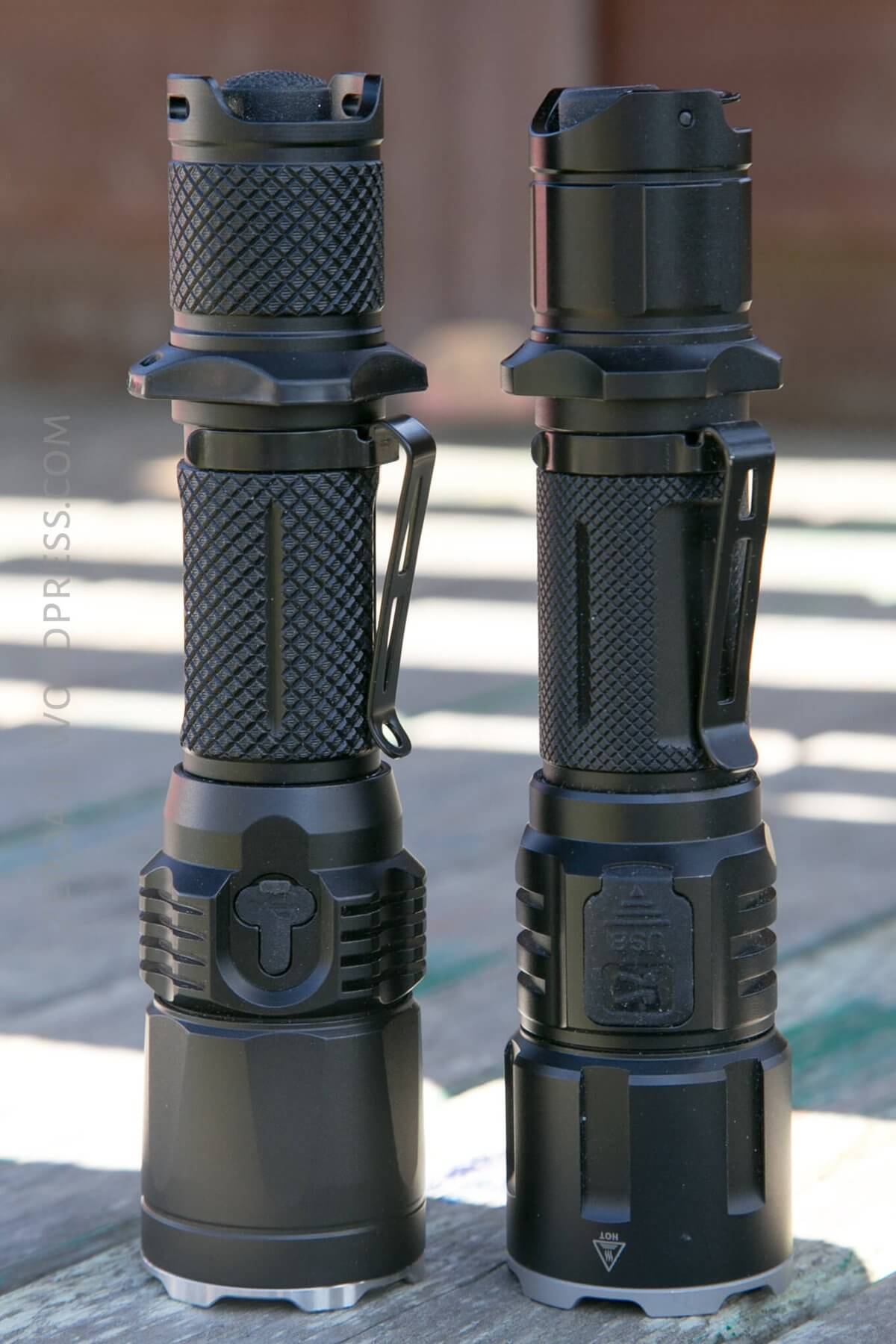
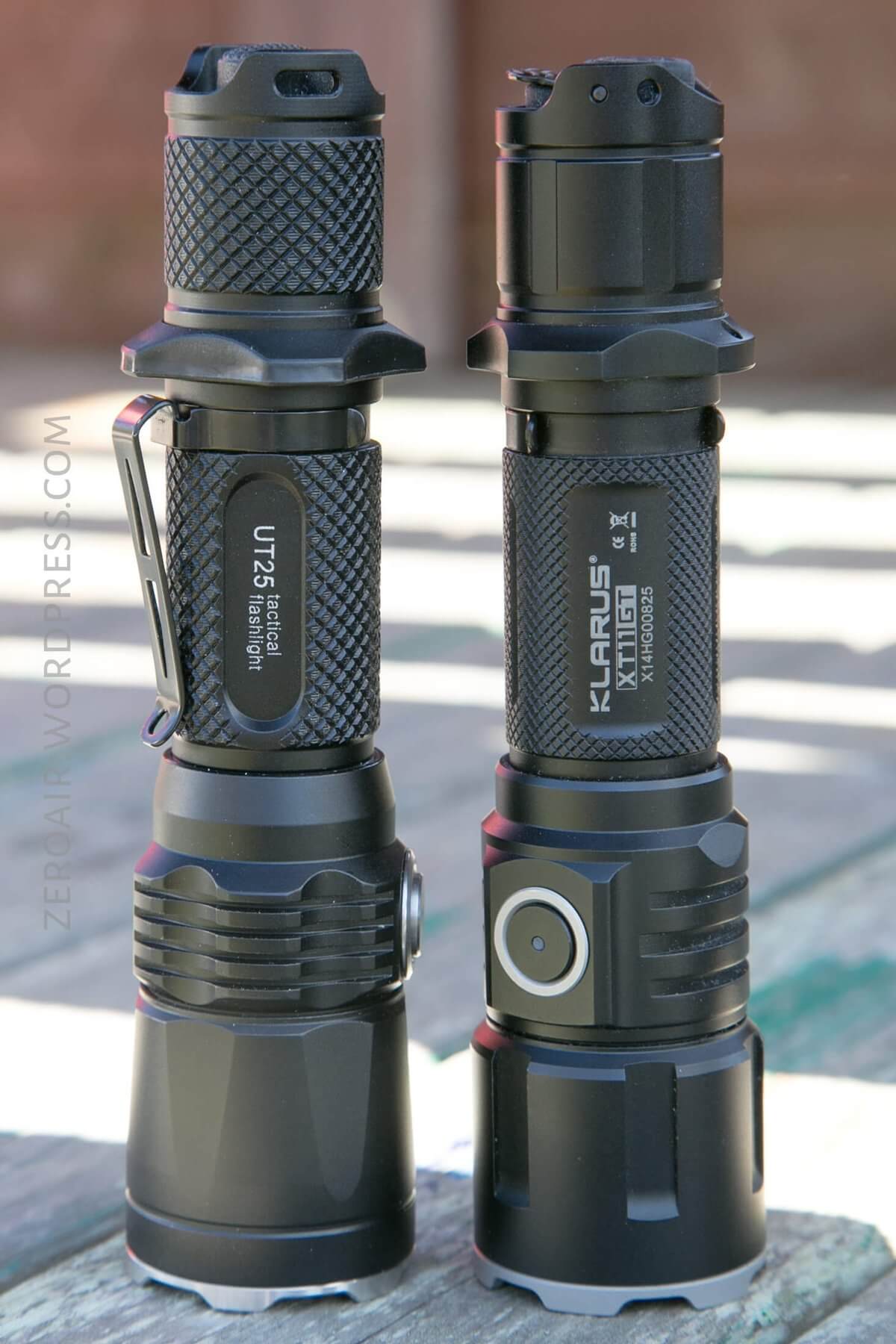
This is a feature-rich light and has the size of a light like that. Here’s the UT25 beside the Klarus XT11GT, a very similar light. The XT11GT has three switches (including a paddle switch on the tail). Otherwise, these are fairly similar lights!
Retention
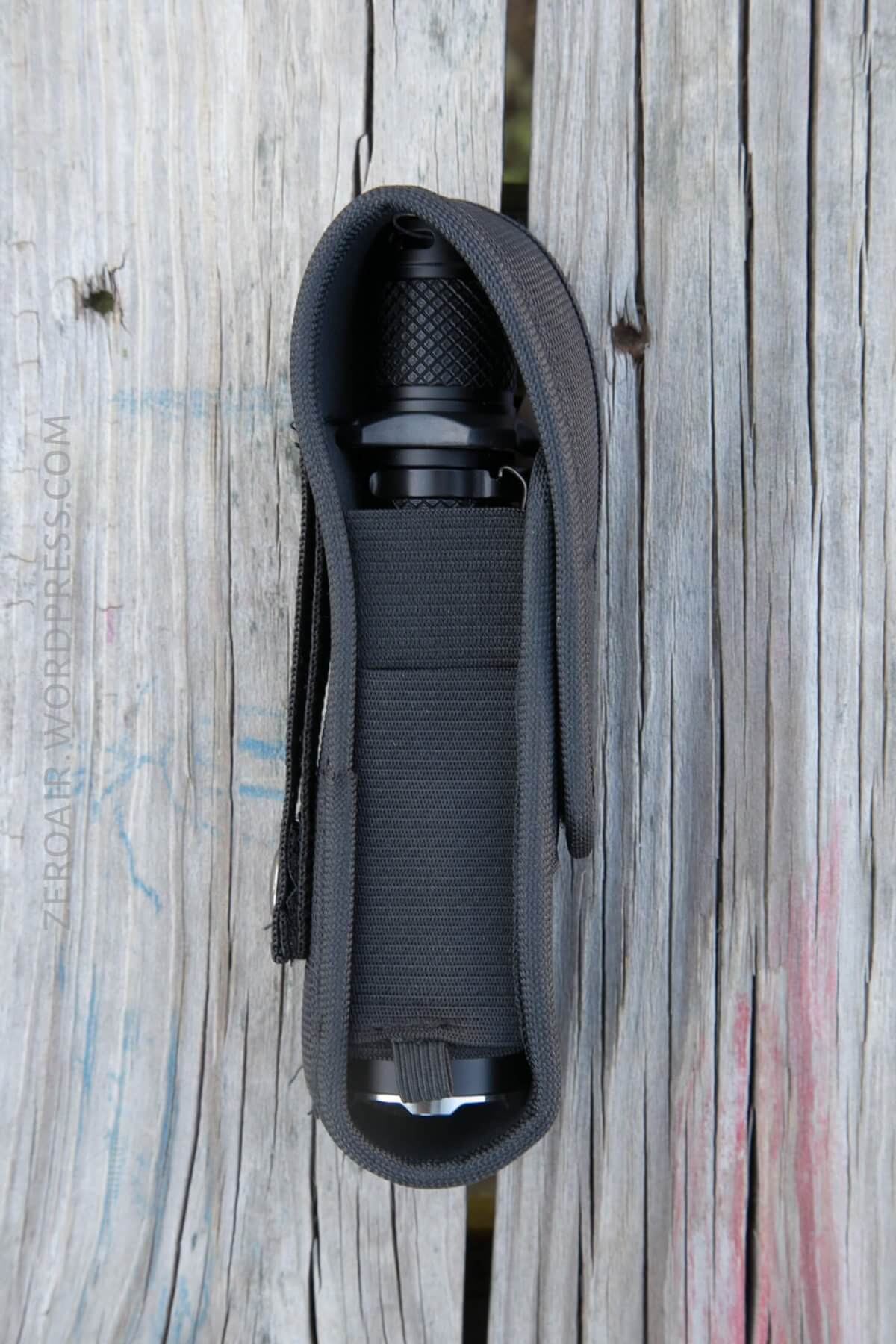
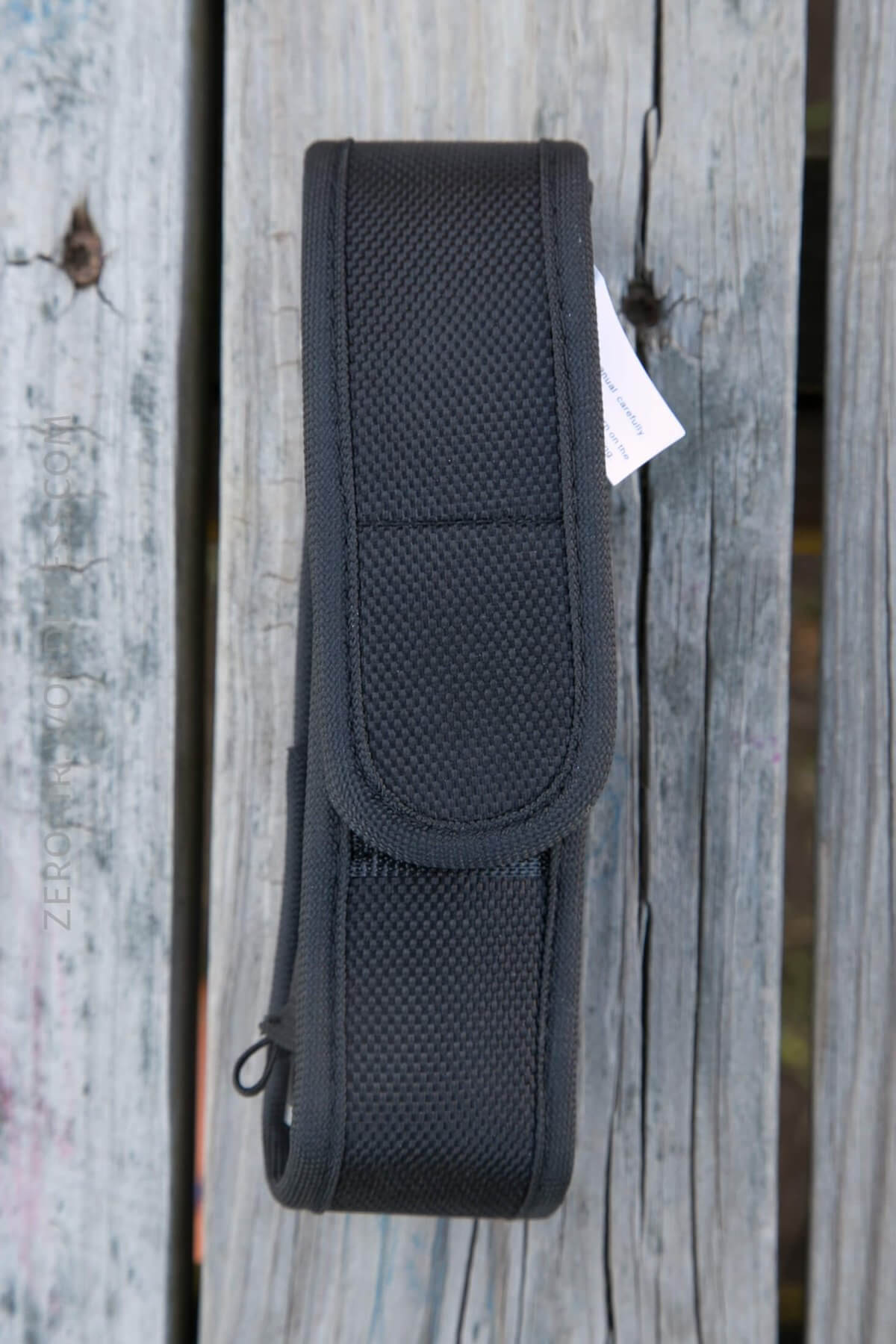
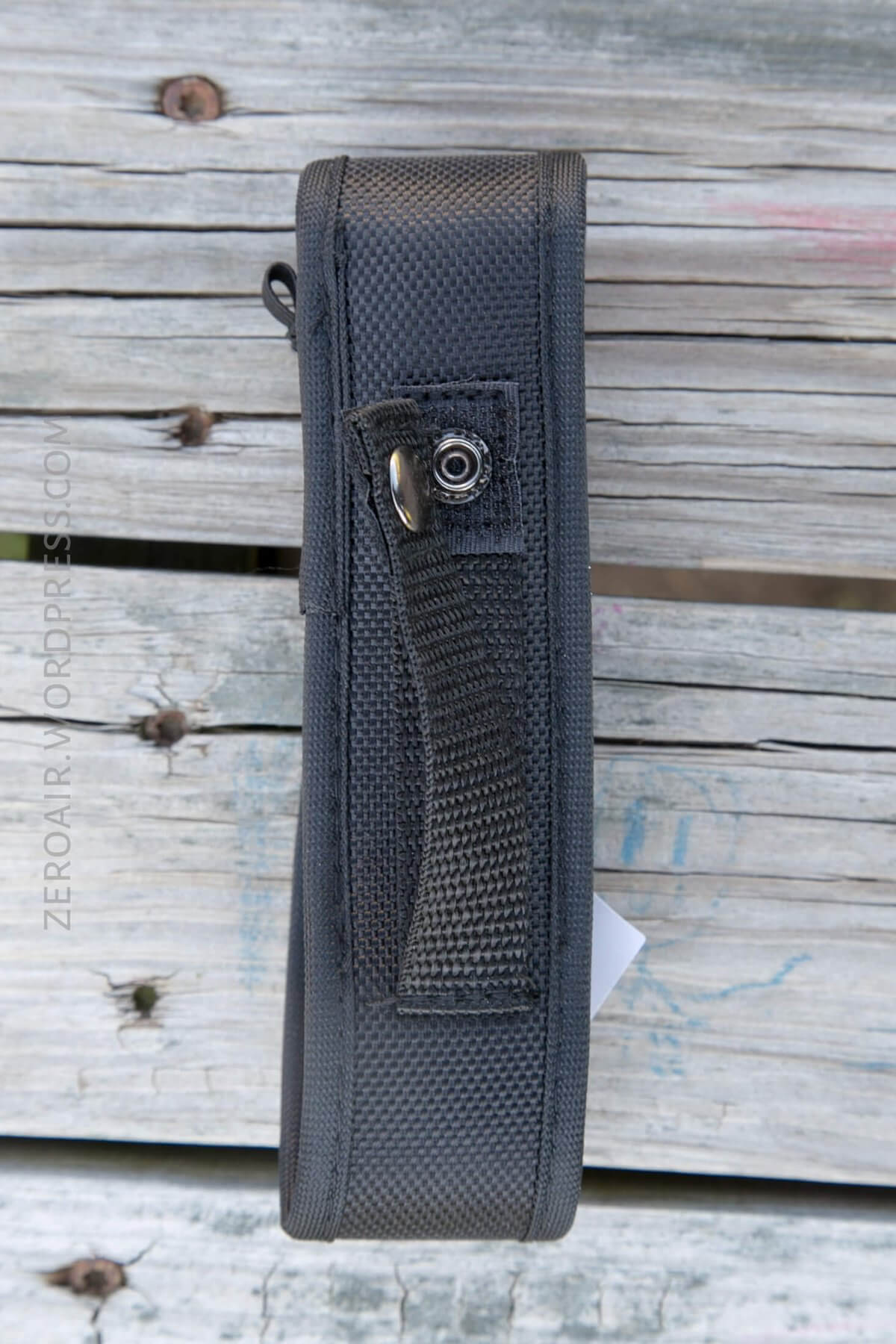
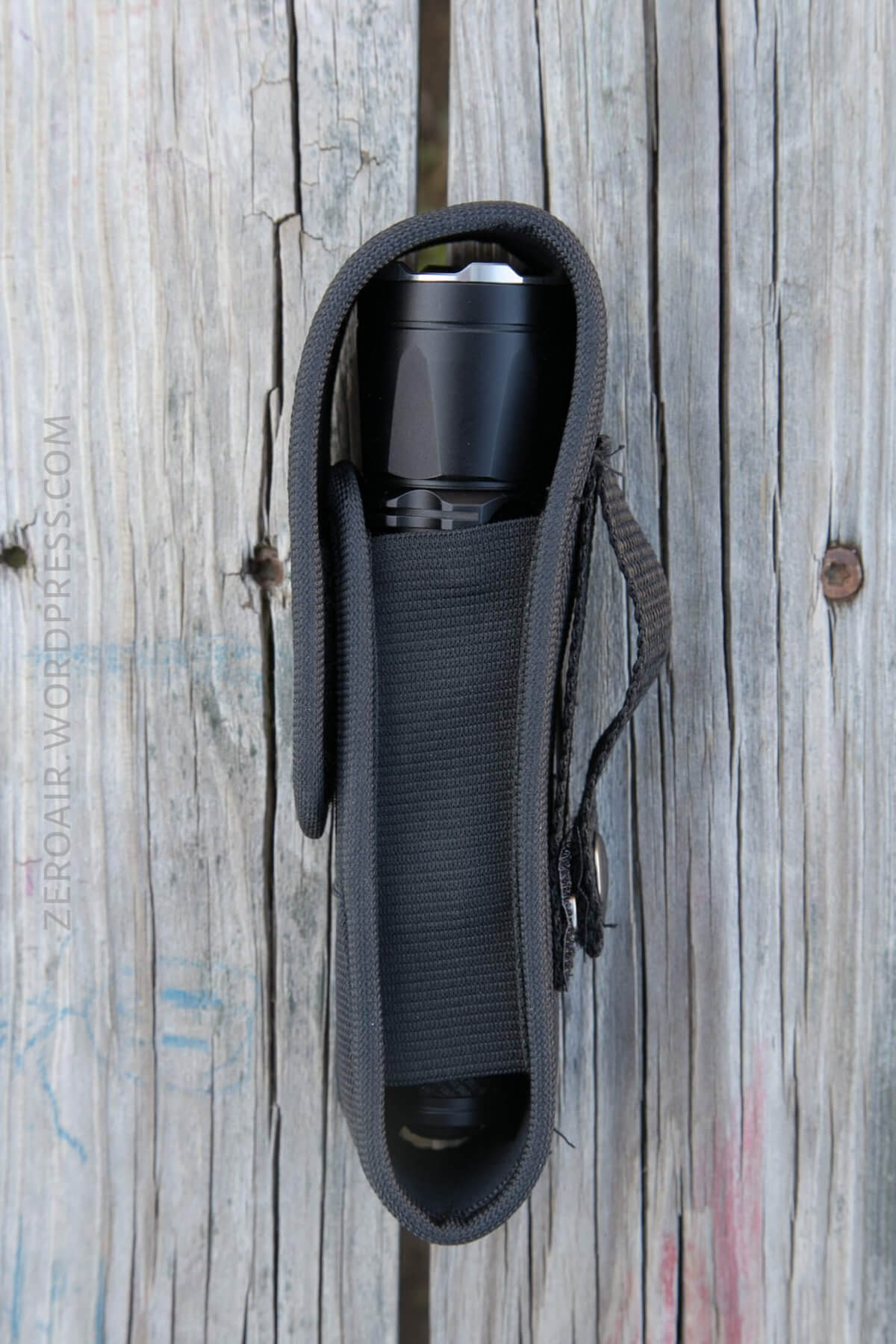
The nylon pouch included with the light is pretty standard fare for pouches. The light surprisingly fits either direction. The belt loop has a snap, not just Velcro.
Also included is a lanyard, which can connect to the tailcap, and also to a hole in the tactical ring.
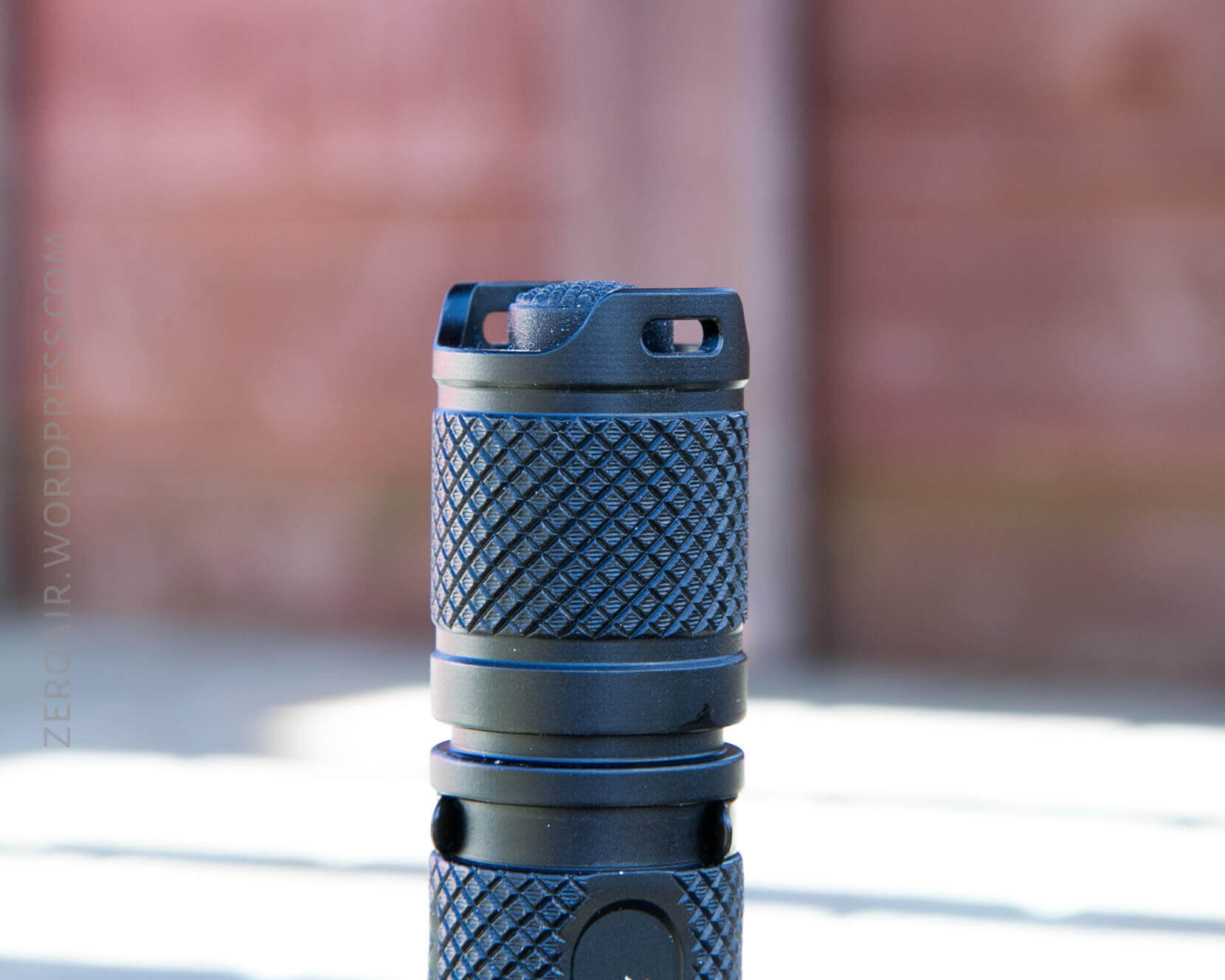
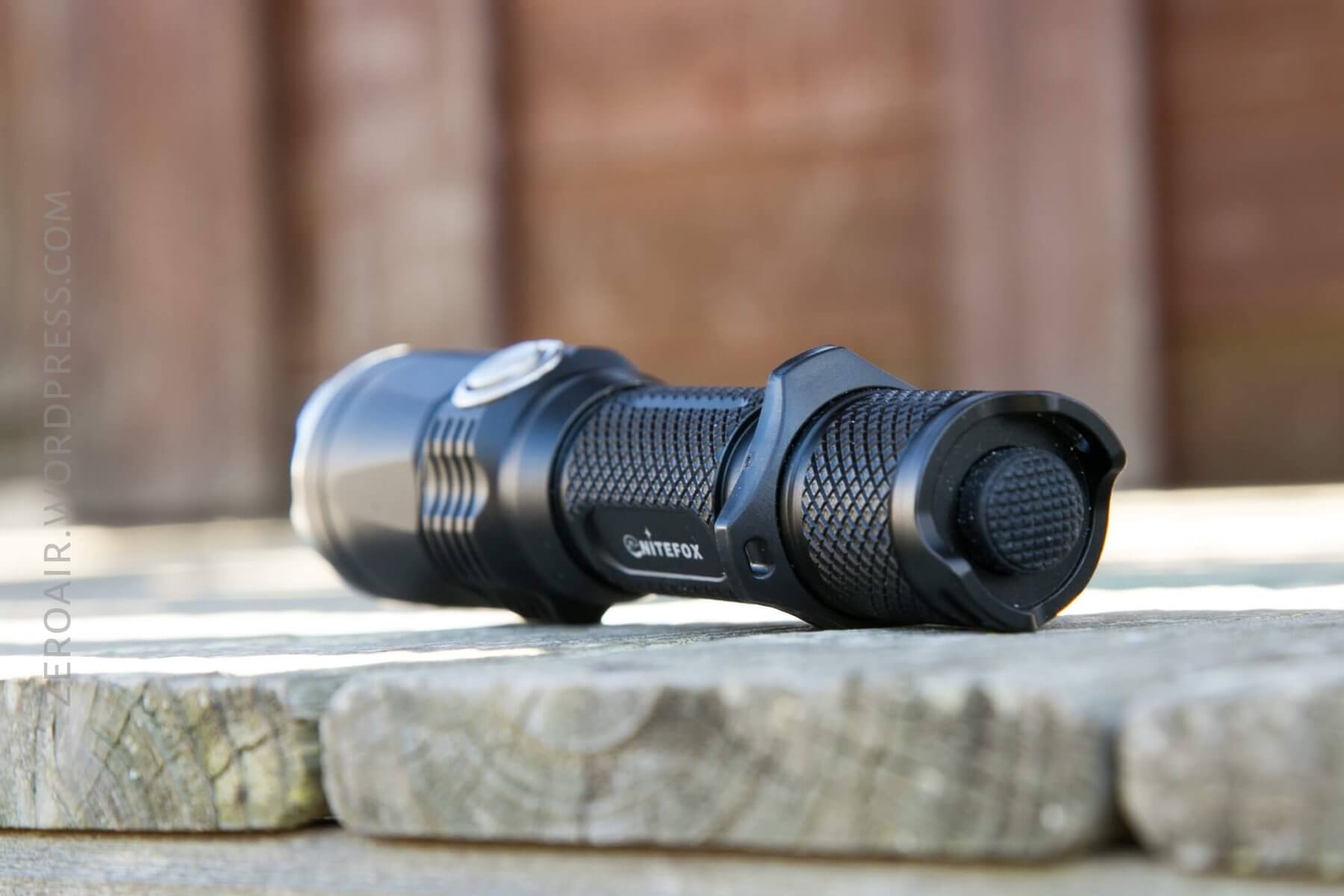
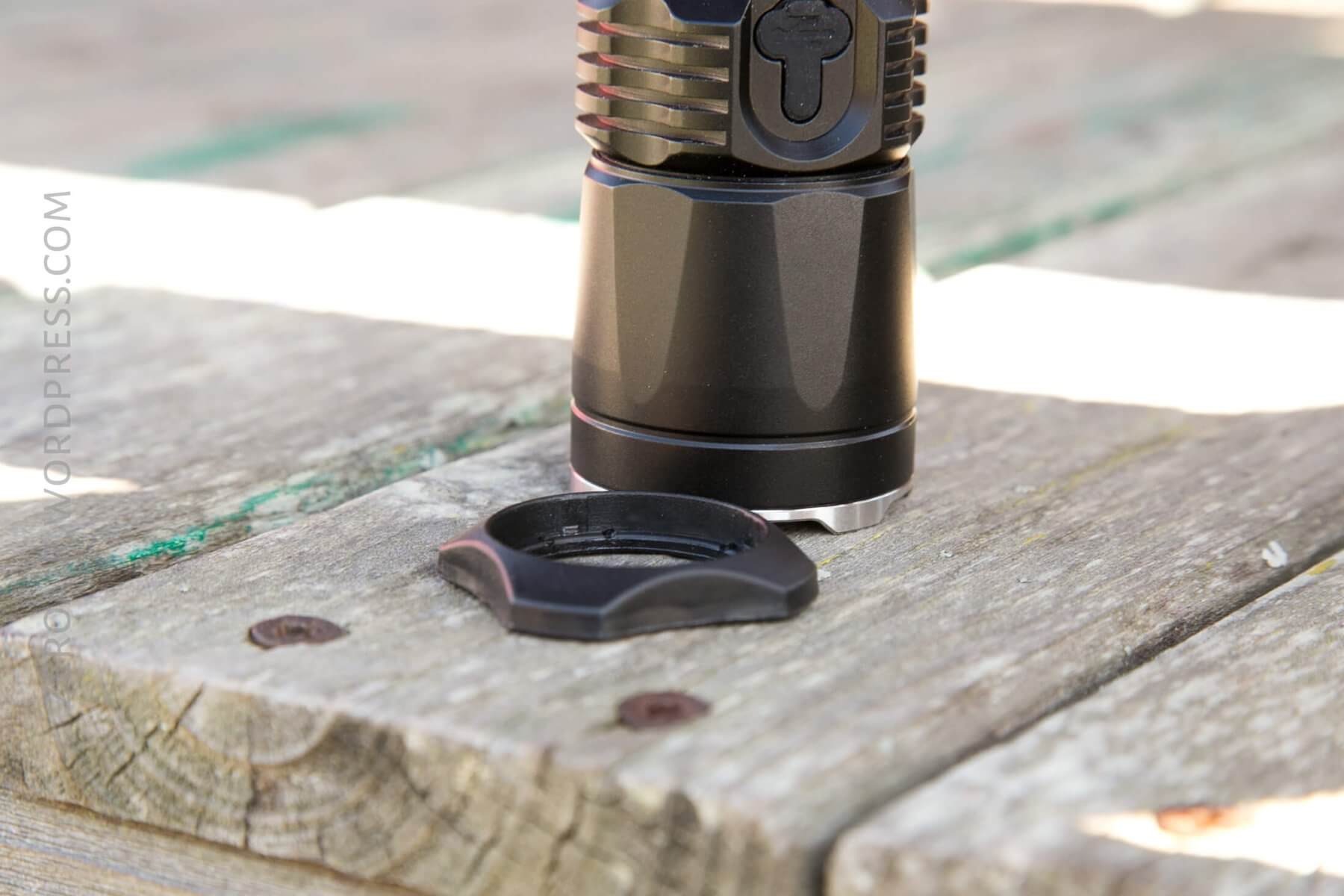
Speaking of the tactical ring, it’s just a friction-fit ring, not threaded on or anything. However, it doesn’t really spin freely.
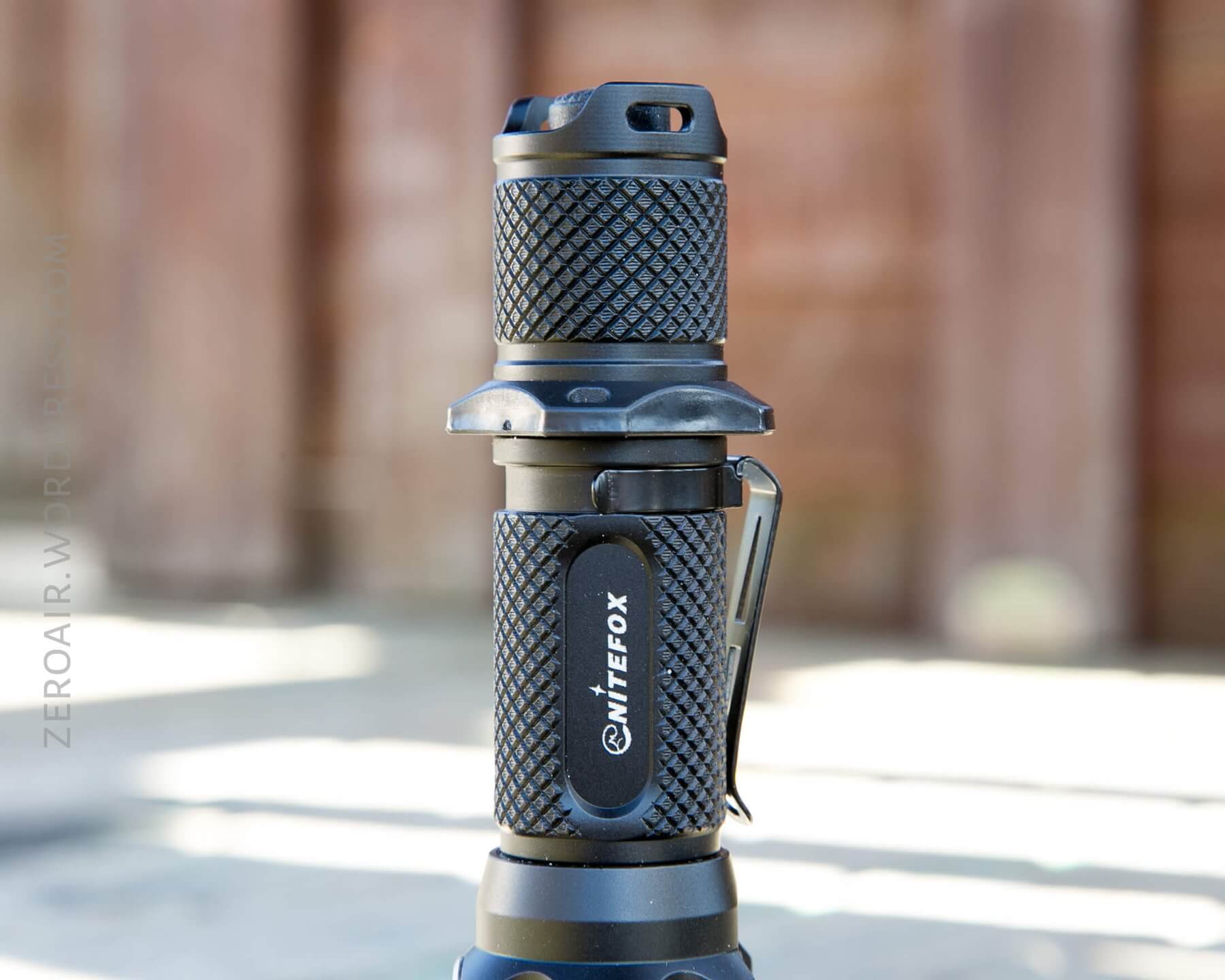
And of course, there’s the pocket clip, which fits only on the tail end of the light. The clip doesn’t interfere with the tactical ring at all, and is not in the least bit a deep carry clip.
Power
There are two options for powering the UT25. Primarily, a single 18650 (which is included). Secondarily, two CR123As may be used. No working voltage is mentioned in the manual, and as a result, I wouldn’t trust using two 18350’s or 16340’s.
With a spring on one end and a button on the other, any type of cell should work fine in this light.
The runtime on turbo is nothing to write home about. Essentially, after the turbo drop (probably a timed stepdown), the output consistently falls off very likely tracking cell voltage. There’s even a second stepdown (suspiciously at exactly 100 minutes), and when I stopped the runtime, the cell voltage was 2.67V. The light does not shut off, but the side switch does flash red to indicate that the cell voltage is low.
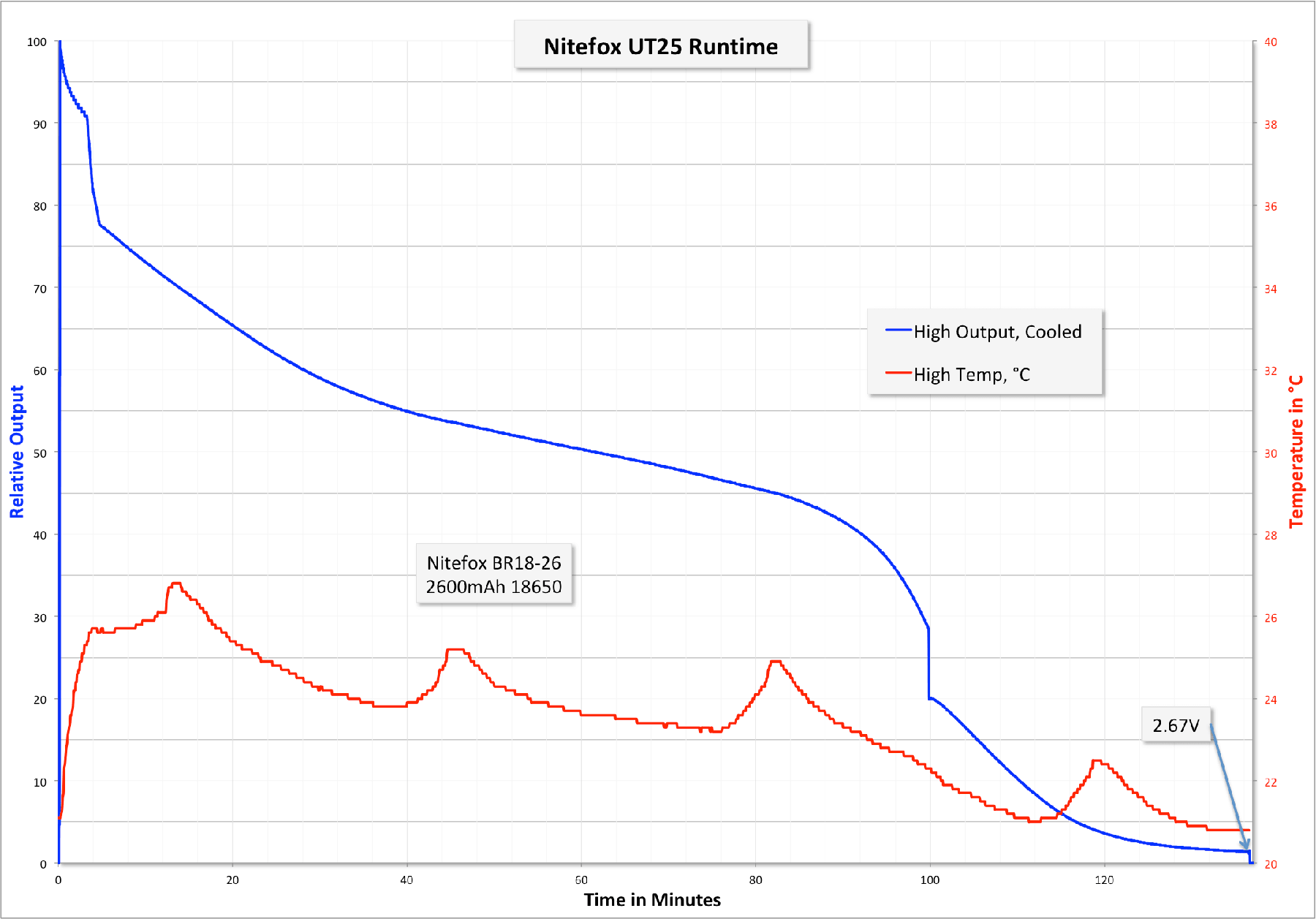
Temperature in the graph above bounces around tracking room temperature; actual light temperature never really blips too high at all.
Charging
The second “Power” feature of the UT25 is onboard charging. It’s not proprietary – it’ll charge any regular 18650. (And since you shouldn’t use any rechargeable short cells 2-up in this light anyway, I don’t have to give you the usual “don’t charge cells in series” warning.)
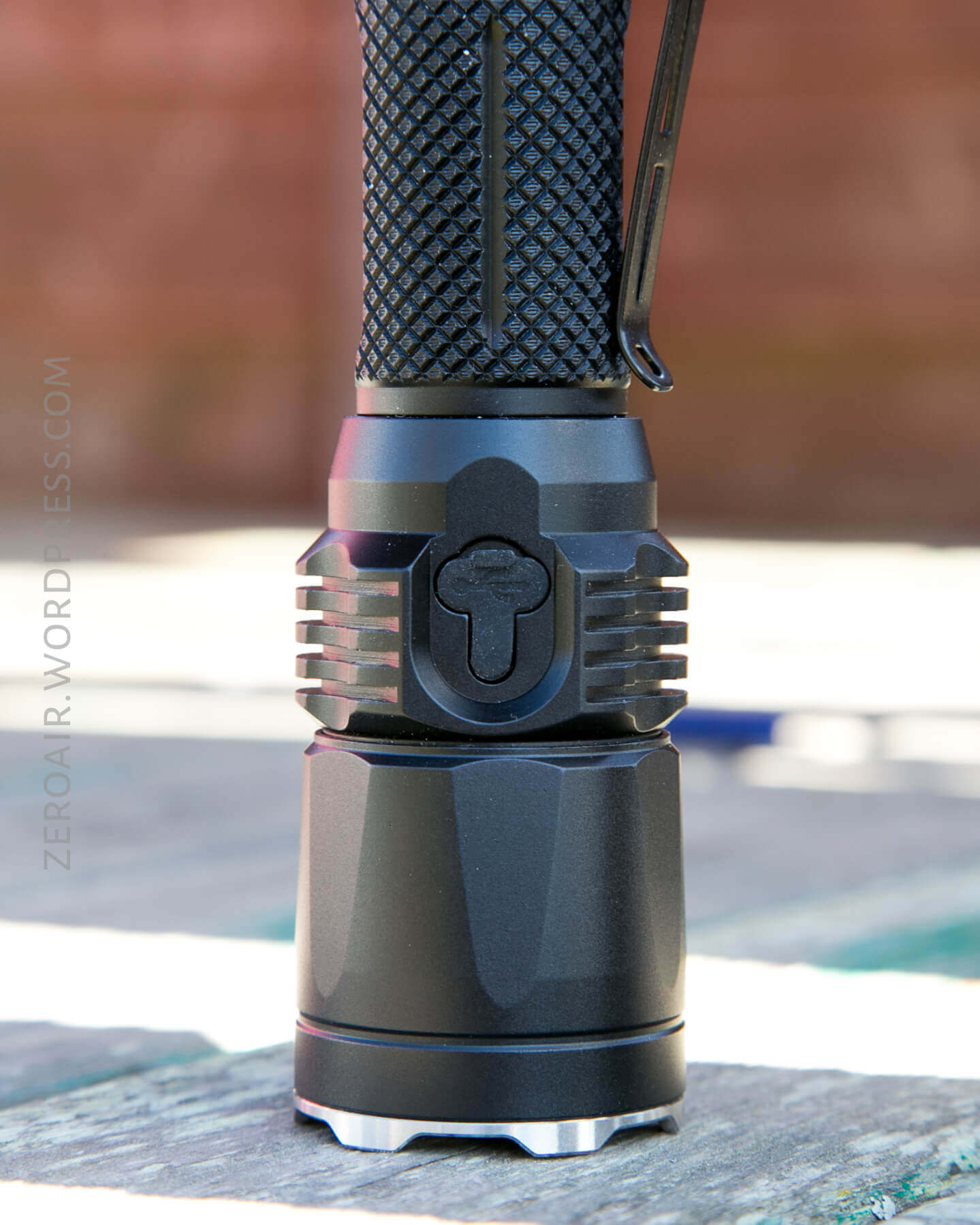
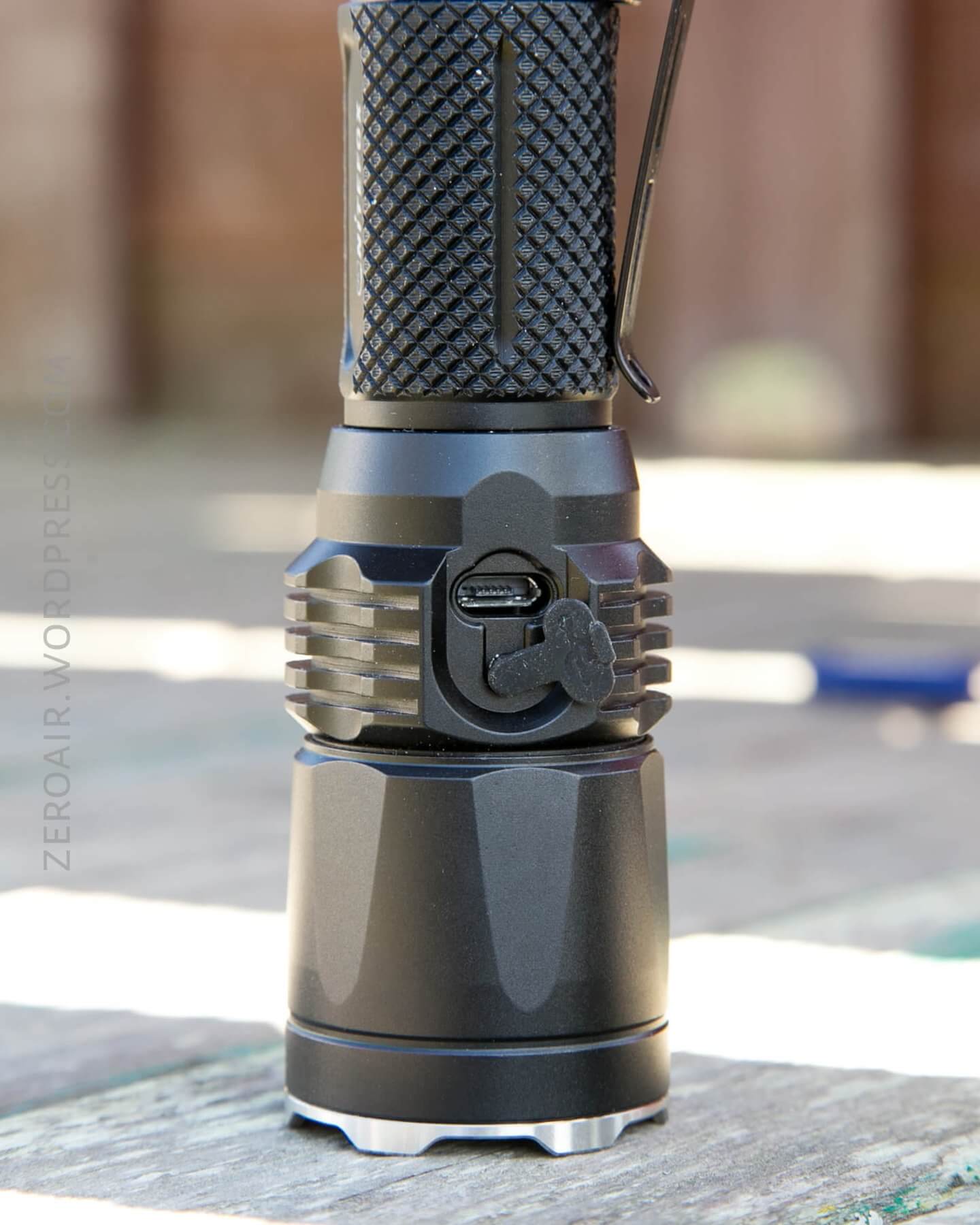
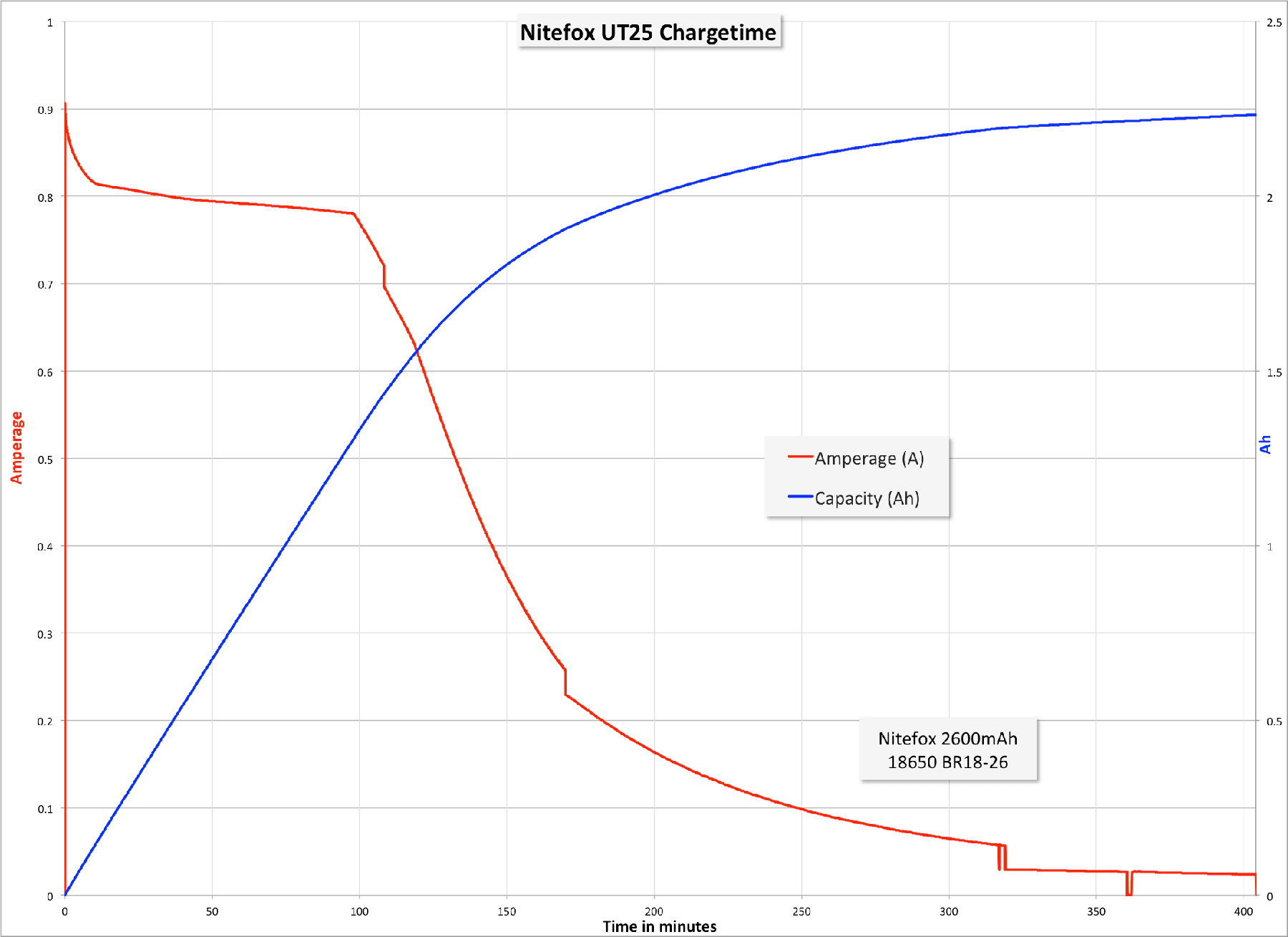
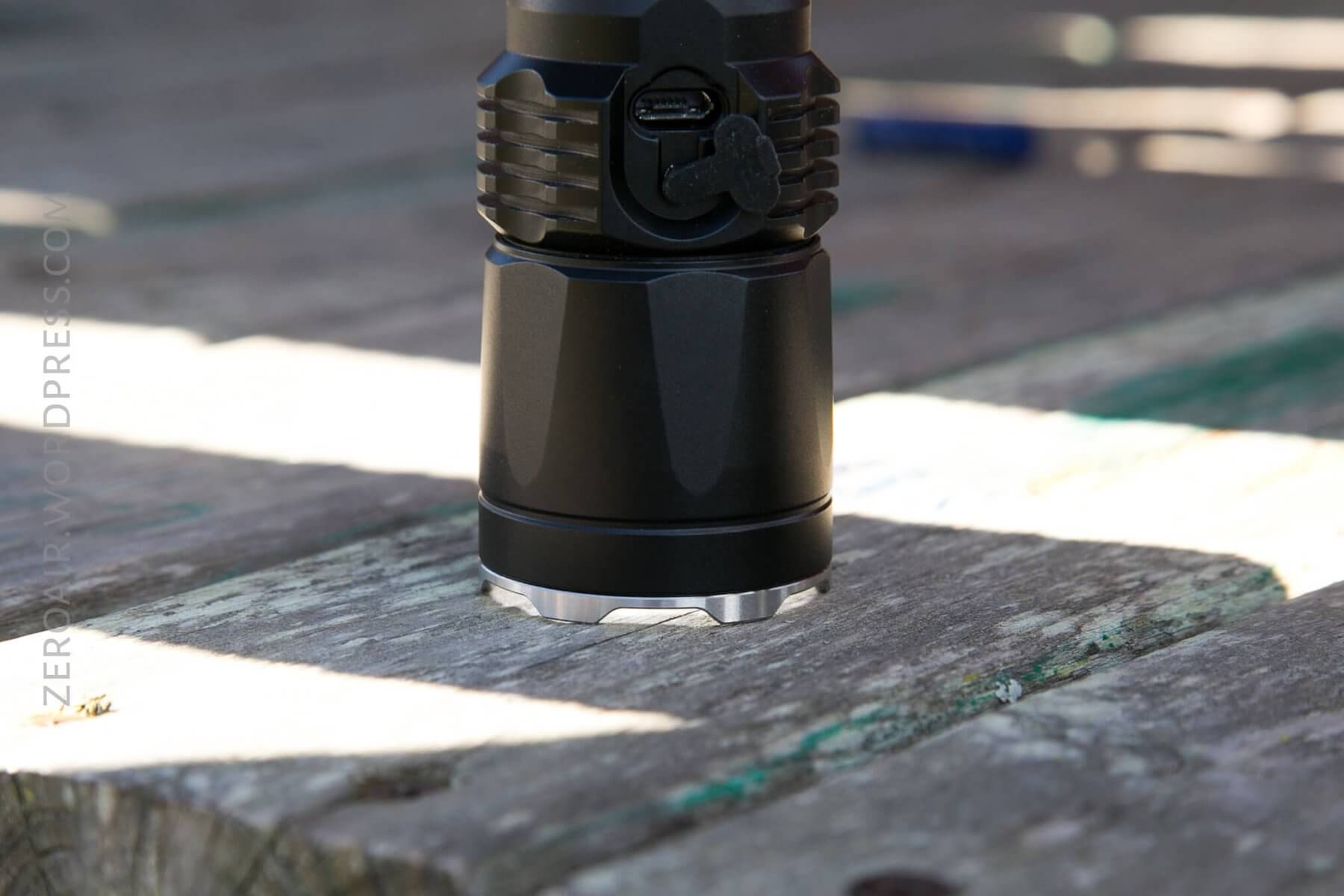
Charging proceeds at around 0.8A, which isn’t bad. The charge port is plugged with a rubber boot. It’s a little difficult to pick out (which is probably the better option than being very easy to get out).
Note that charging will only occur if the tailswitch is in the “on” position. This is required because of the mechanical nature of the switch – if it’s not on, then the circuit isn’t complete.
There’s also a built-in battery check! Read about that in the user interface section, though.
User Interface and Operation
There are two switches. There’s a tail clicky – a forward mechanical switch. It has a rounded rubber boot and has the usual clickiness from these switches.
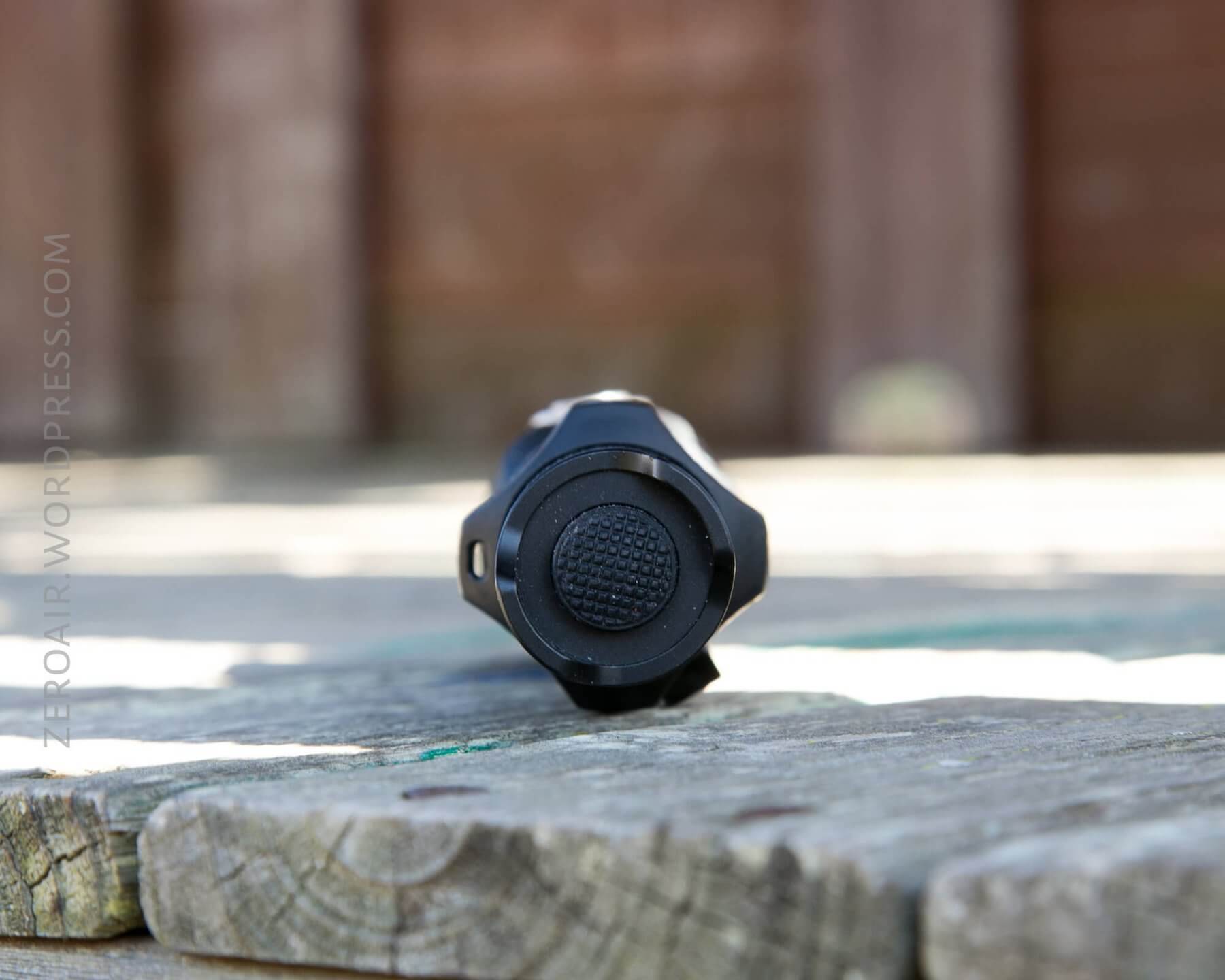
The other switch is a metal side indicating e-switch. Quite a feature-rich switch!
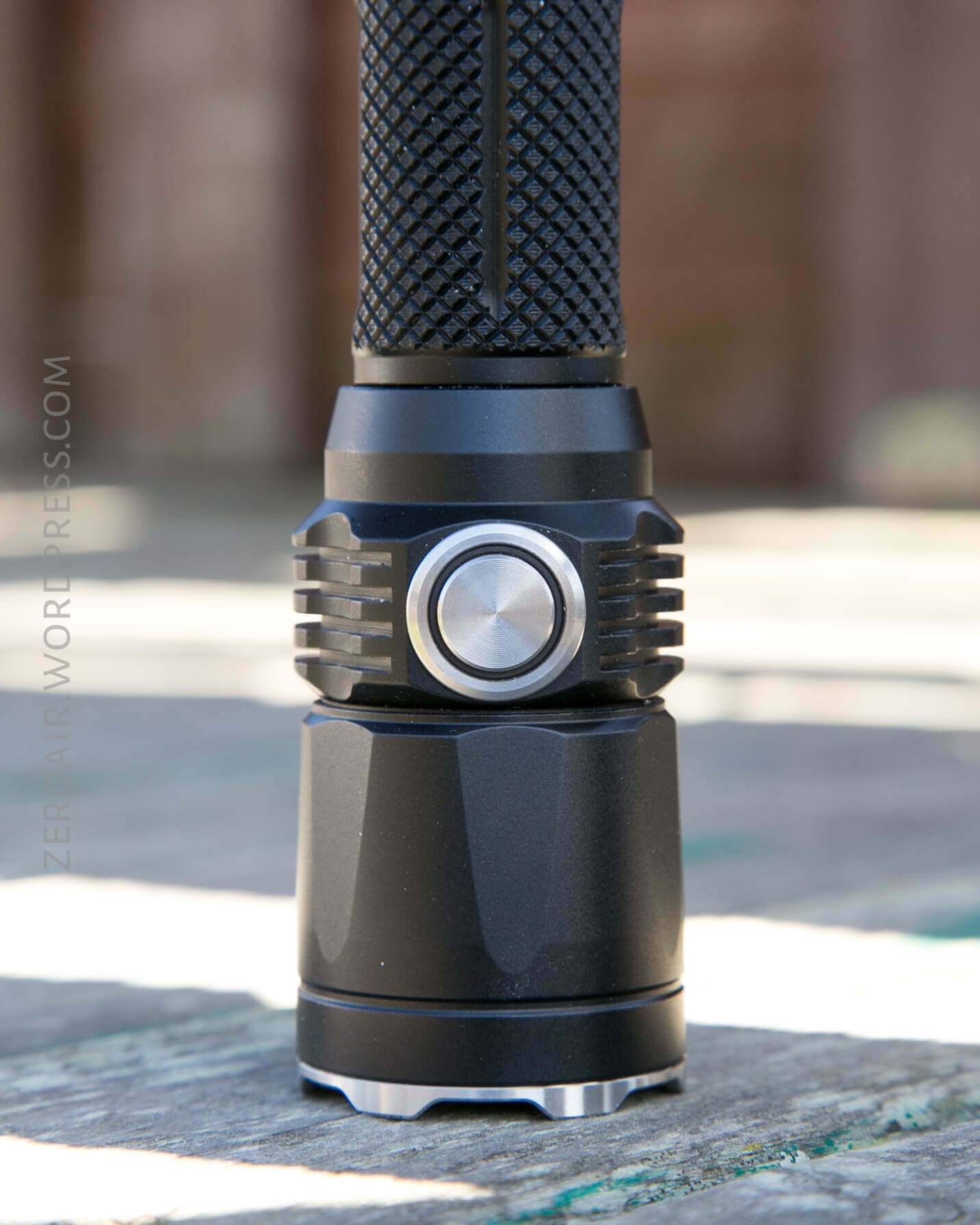
The user interface is very simple. The tail switch controls on/off. With this switch off, nothing can happen (including charging). Since it’s a forward clicky, there is a momentary option. Once this switch is clicked into the “on” position, the side switch takes over.
Here’s a user interface table!
| State | Action | Result |
|---|---|---|
| Off | Click (Tail Switch) | On (mode memory) |
| Off | Half Press (TS) | Momentary (mode memory) |
| Off | Any (Side Switch) | No action |
| On | Click (SS) | Mode advance (LMH^) |
| On | Hold (SS) | Strobe |
| Strobe | Click (SS) | Previous regular mode |
| Strobe | Hold (SS) | Strobe Advance (Disorienting, SOS, [Unnamed mode**] |
| Off | Hold (SS), Press (TS) | Battery check *** |
| On | Double click (SS) | No action |
^ Yes the manual says HML but my experience is LMH. ¯(ツ)/¯
** Unnamed strobe is weird. It’s basically: every 5 seconds, fade from off to on (~50%) to off. The manual doesn’t mention it, either.
*** Battery check!! What a nice feature on a kind of random light! And it’s clever too. Green blinks the “ones” of Volts, and red blinks the tenths! So 4 green then 1 red = 4.1V cell voltage. Very clever, and I really like this.
Modes
| Mode | Mode Claimed Output (lm) | Claimed Runtime | Mode Measured Lux | Tailcap Amps |
|---|---|---|---|---|
| High | 1380 | 1.5h | 20800 | 3.19 |
| Medium | 300 | 3.8h | 12400 | 1.41 |
| Low | 30 | 120h | 967 | 0.07 |
LED and Beam
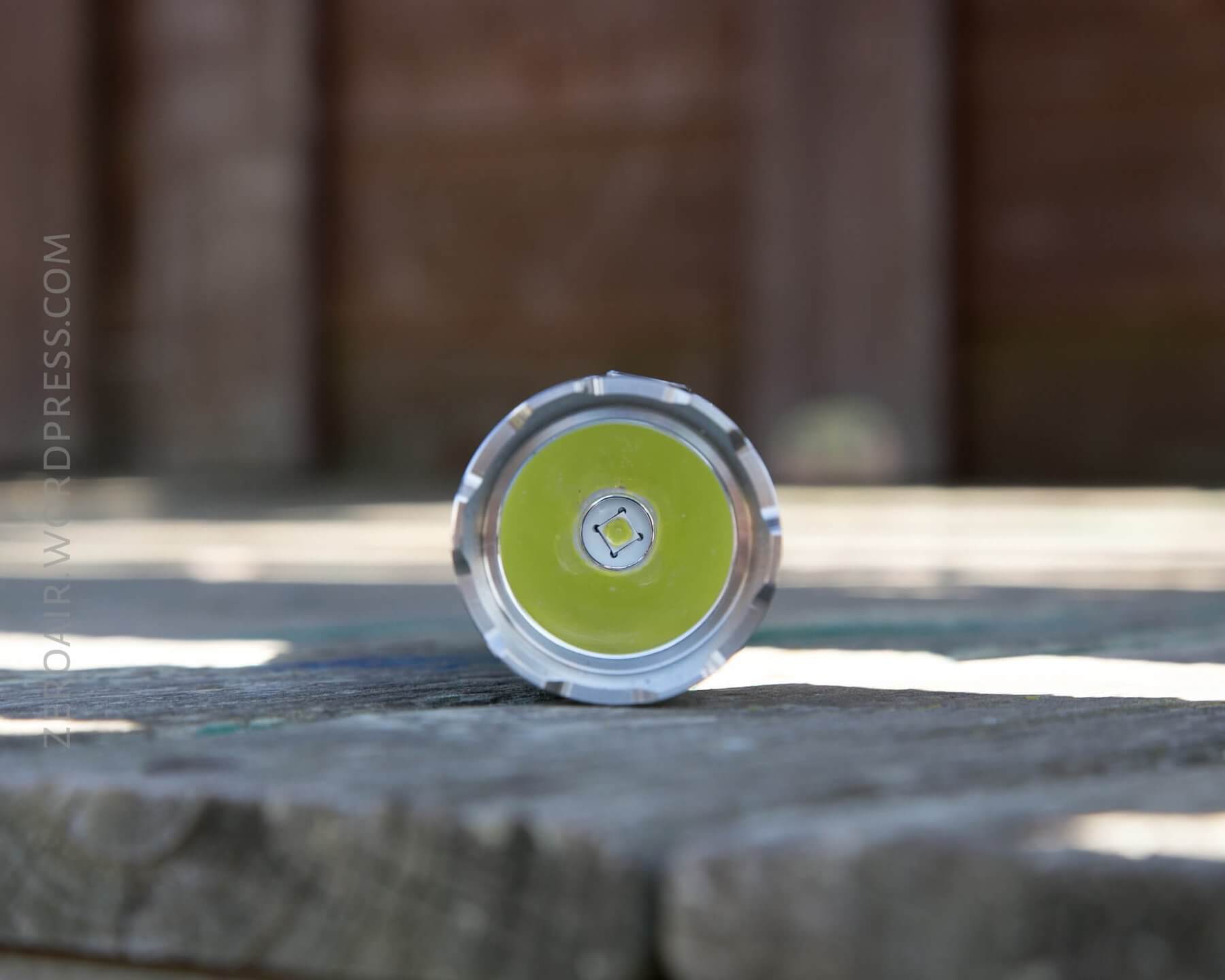
It’s noteworthy that the manual seems to say that the emitter here is the Cree XP-L2. I think it’s actually a Cree XP-L HD, and that’s really the more logical emitter for this light. Not because it’s better than the XP-L2, just because it’s much more common and a bit more budget-friendly (due to ubiquity) than the newer XP-L2.
Beamshots
These beamshots always have the following settings: f8, ISO100, 0.3s shutter, and manual 5000K exposure. These photos are taken at floor level, and the beam hits the ceiling around 9 feet away.
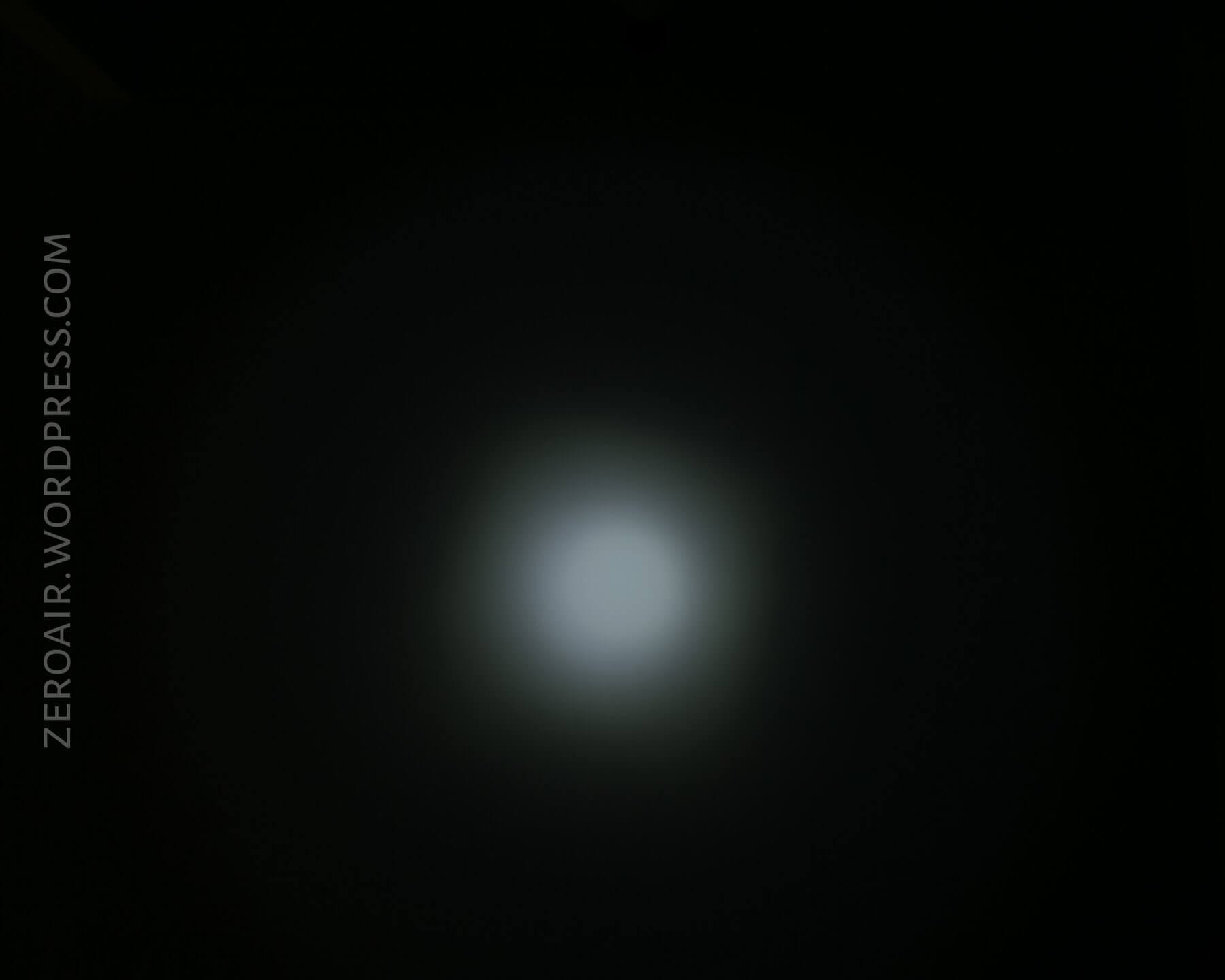
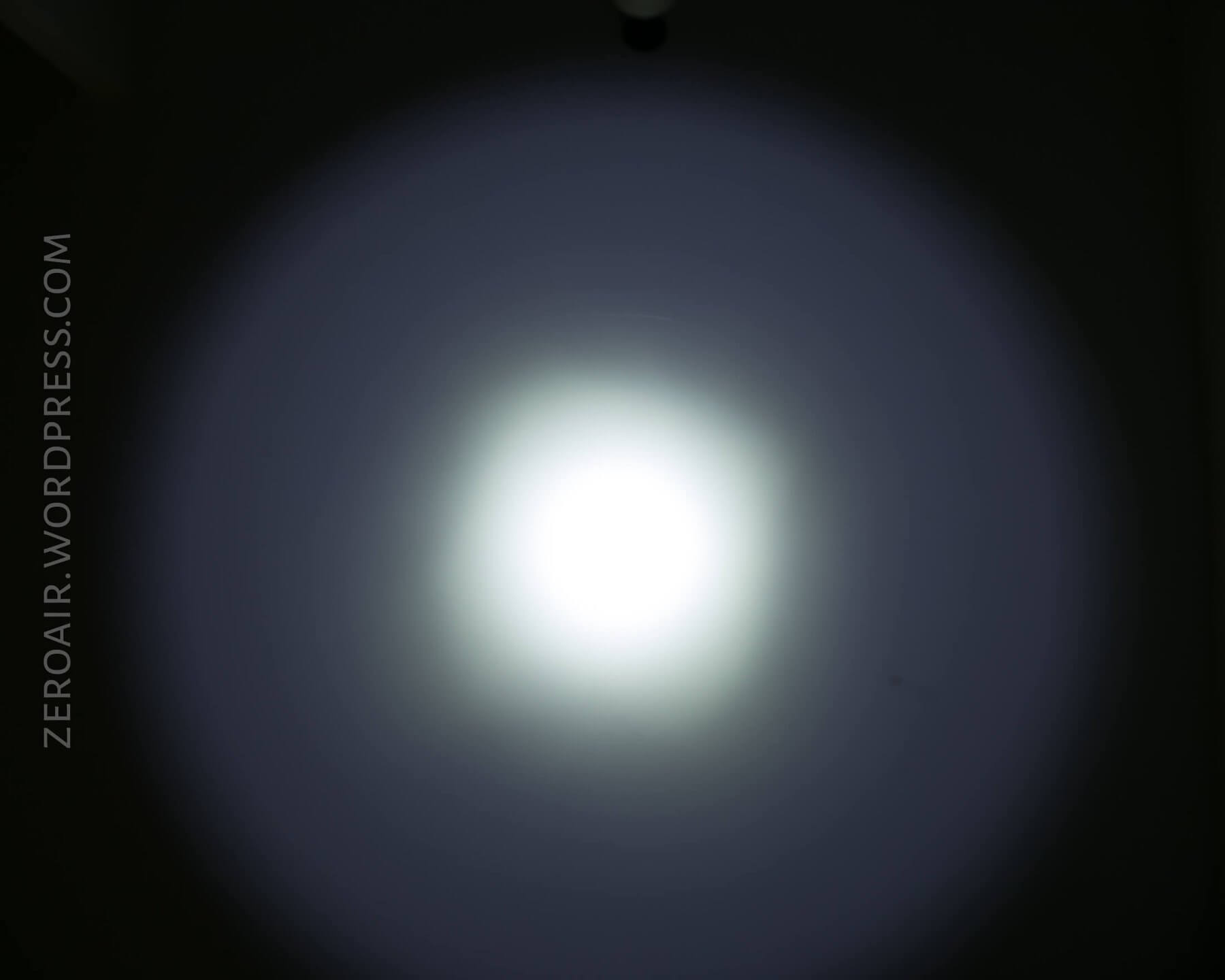
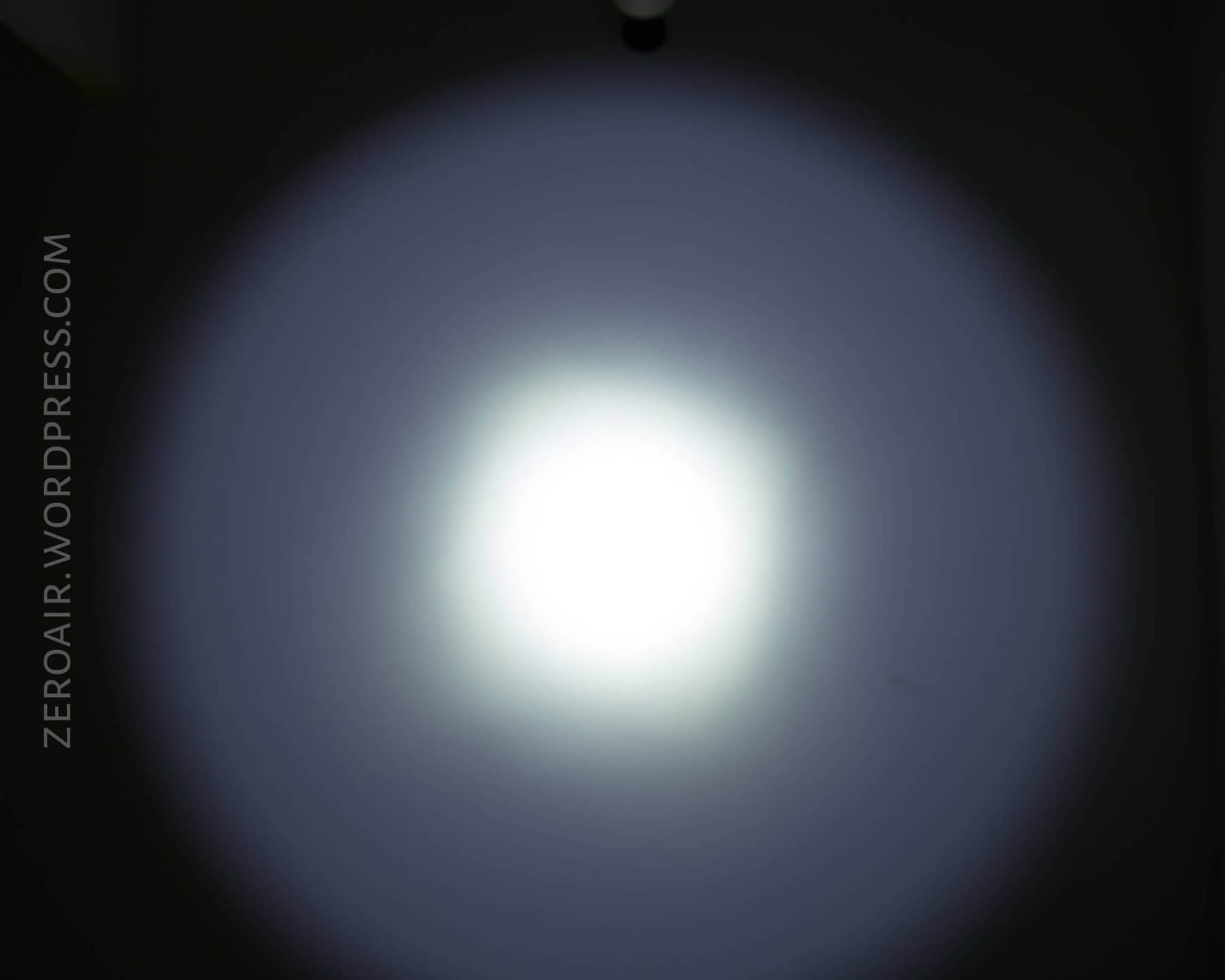
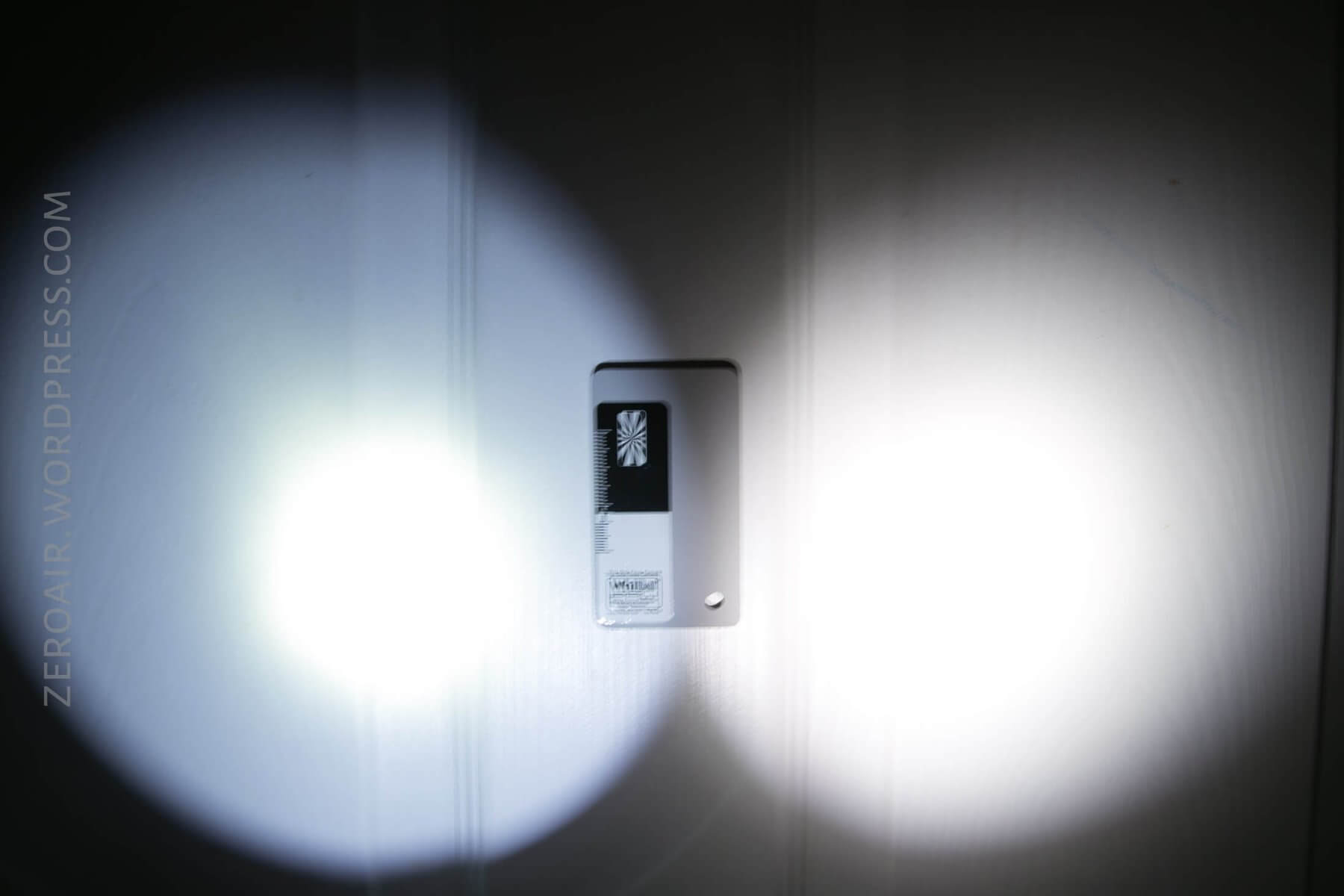
Tint vs BLF-348 (KillzoneFlashlights.com 219b version) (affiliate link)
I keep the test flashlight on the left and the BLF-348 reference flashlight on the right.
Random Comparisons and Competitive Options
Here’s a relevantly filtered page on parametrek.com. Cree XP-L HD lights are plentiful. Dual switch lights are plentiful. Lights with onboard charging are numerous. This is really a saturated field, indeed. This is a solid offering for a reasonable cost. A complete package (cell included!) with onboard charging for around $40 is a fairly good deal!
Conclusion
What I like
- Clever Battery check
- Complete package including cell
- On-board charging quality is respectable
What I don’t like
- Build quality could be a touch better, or the price a touch lower
- Tactical ring is unnecessary. (Doesn’t really seem like much of a tactical light)
- Mode memory
Notes
- This light was provided by Nitefox for review. I was not paid to write this review.
- This content originally appeared at zeroair.org. Please visit there for the best experience!
- Use my amazon.com referral link if you’re willing to help support making more reviews like this one!
- Please support me on Patreon! I deeply appreciate your support!
Discover more from ZeroAir Reviews
Subscribe to get the latest posts sent to your email.
Pingback: Nitefox UW360 Floodlight+Spotlight Review – ZeroAir Reviews