
Malkoff E2XT Flashlight (Head) Review
Malkoff recently released the Malkoff E2XT Flashlight. It’s a very throwy head and has a nice, wide voltage range. Read on for more testing!
Official Specs and Features
Here’s a link to the Malkoff E2XT Flashlight product page.
Versions
A couple of versions of this guy. The E2XT (seen here) and E2XTD head. They’re similar, but the “D” in the one you don’t see here indicates that it’s a direct drive. They are the same price.
Price
The going price for this part (just the head) is $189.99, and it appears to be a sale price. It’s available here.
Short Review
I love this thing. During testing, I scavenged another Malkoff body I had for use with the part, but I liked the head enough to procure another body for use as one of my main handheld throwers.
Long Review
The Big Table
| Malkoff E2XT Flashlight | |
|---|---|
| Emitter: | [unspecified] 5500K |
| Price in USD at publication time: | $189.99 |
| Cell: | 1×16650 |
| Cooled Runtime | Uncooled Runtime |
| LVP? | No |
| Switch Type: | Mechanical |
| On-Board Charging? | No |
| Claimed Lumens (lm) | 500 |
| Measured Lumens (at 30s) | 454 (90.8% of claim)^ |
| Candela per Lumen | 119.6 |
| Claimed Throw (m) | 305 |
| Candela (Calculated) in cd (at 30s) | 1117lux @ 6.999m = 54717cd |
| Throw (Calculated) (m) | 467.8 (153.4% of claim)^ |
| Cell: | 6V (bench power) |
| Candela per Lumen | 119.5 |
| Claimed Throw (m) | 305 |
| Candela (Calculated) in cd (at 30s) | 920lux @ 7.436m = 50871cd |
| Throw (Calculated) (m) | 451.1 (147.9% of claim)^ |
| All my Malkoff reviews! | |
^ Measurement disclaimer: Testing flashlights is my hobby. I use hobbyist-level equipment for testing, including some I made myself. Try not to get buried in the details of manufacturer specifications versus measurements recorded here; A certain amount of difference (say, 10 or 15%) is perfectly reasonable.
What’s Included
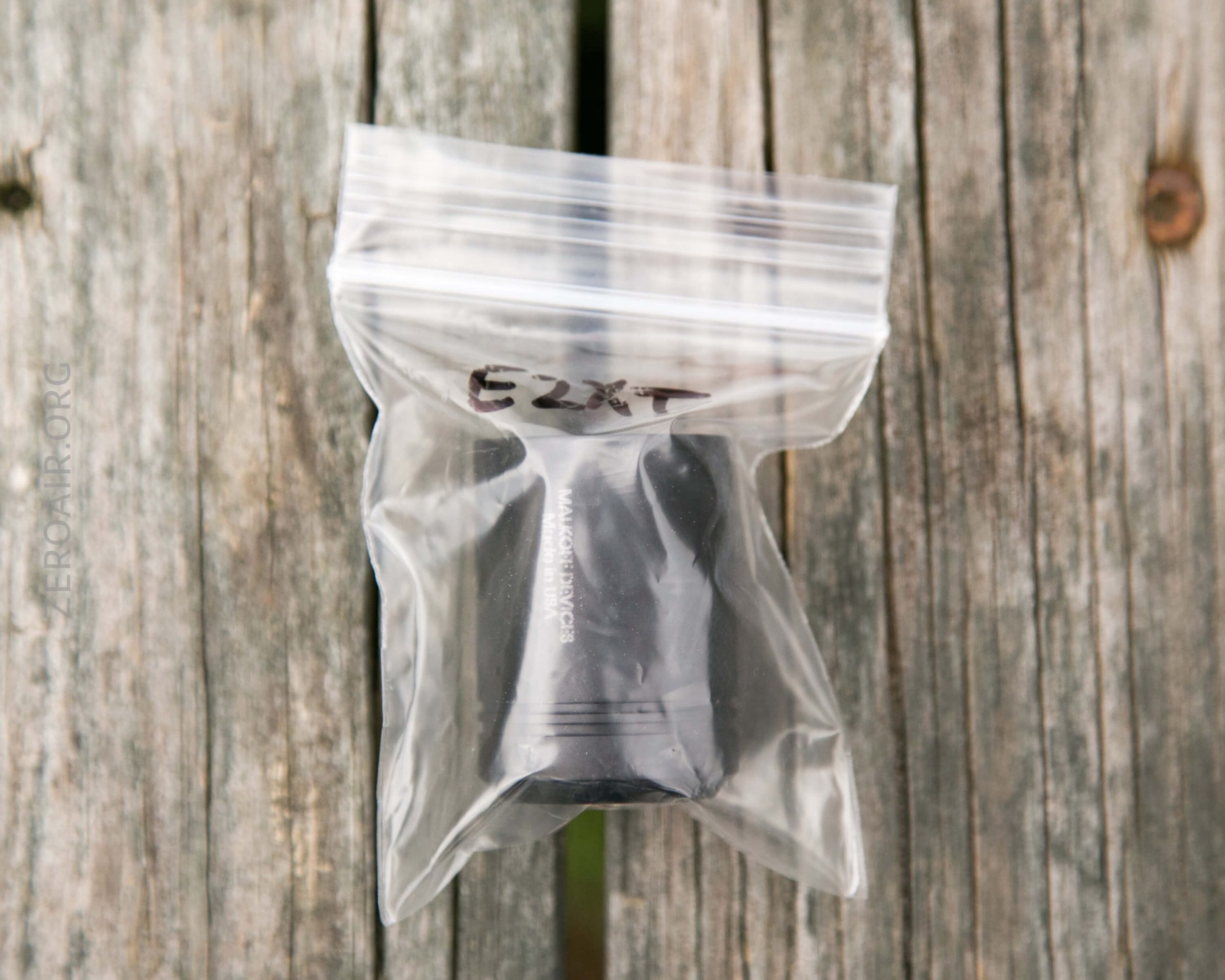
- Malkoff E2XT Flashlight Head
Package and Manual
No manual is included.
Build Quality and Disassembly
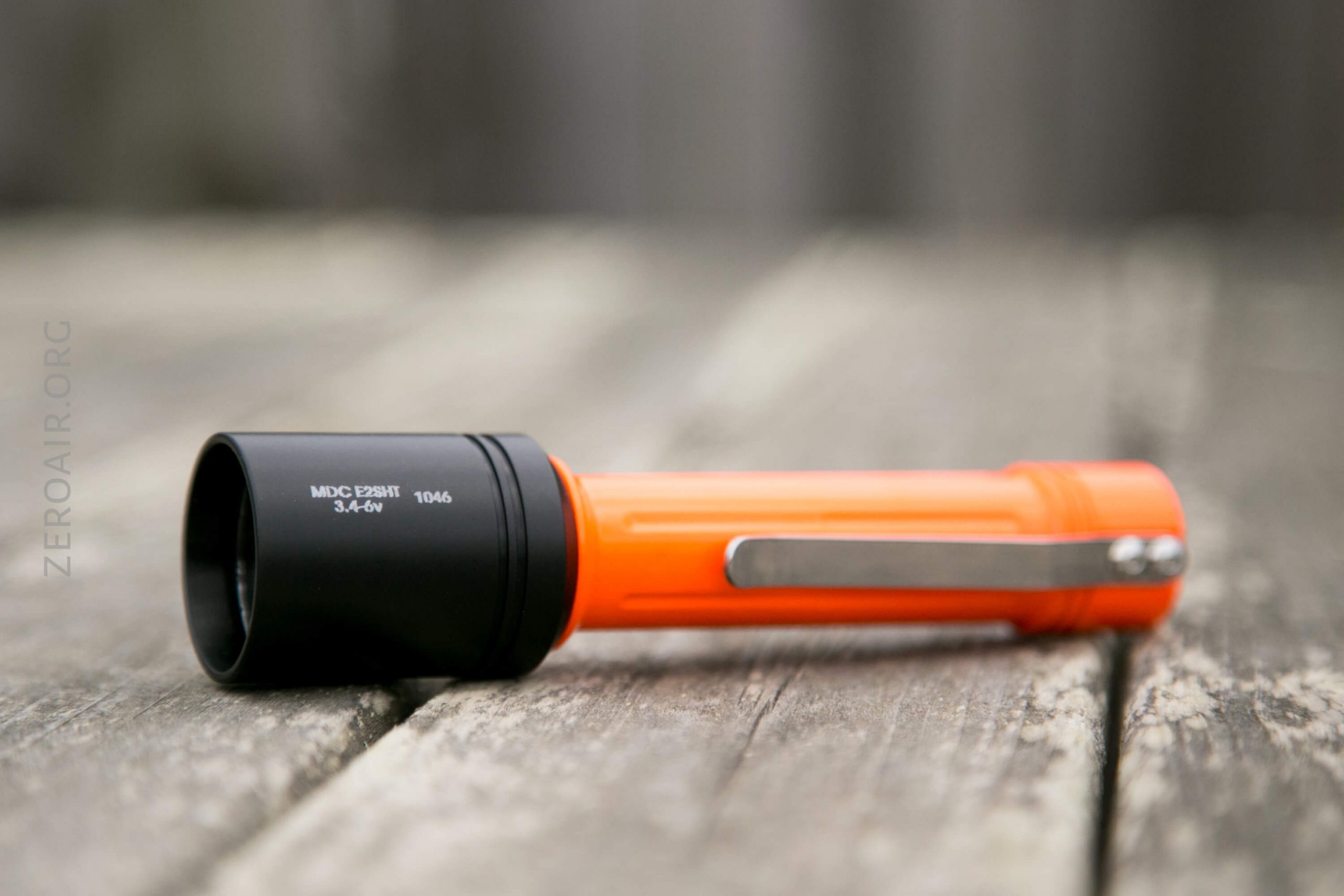
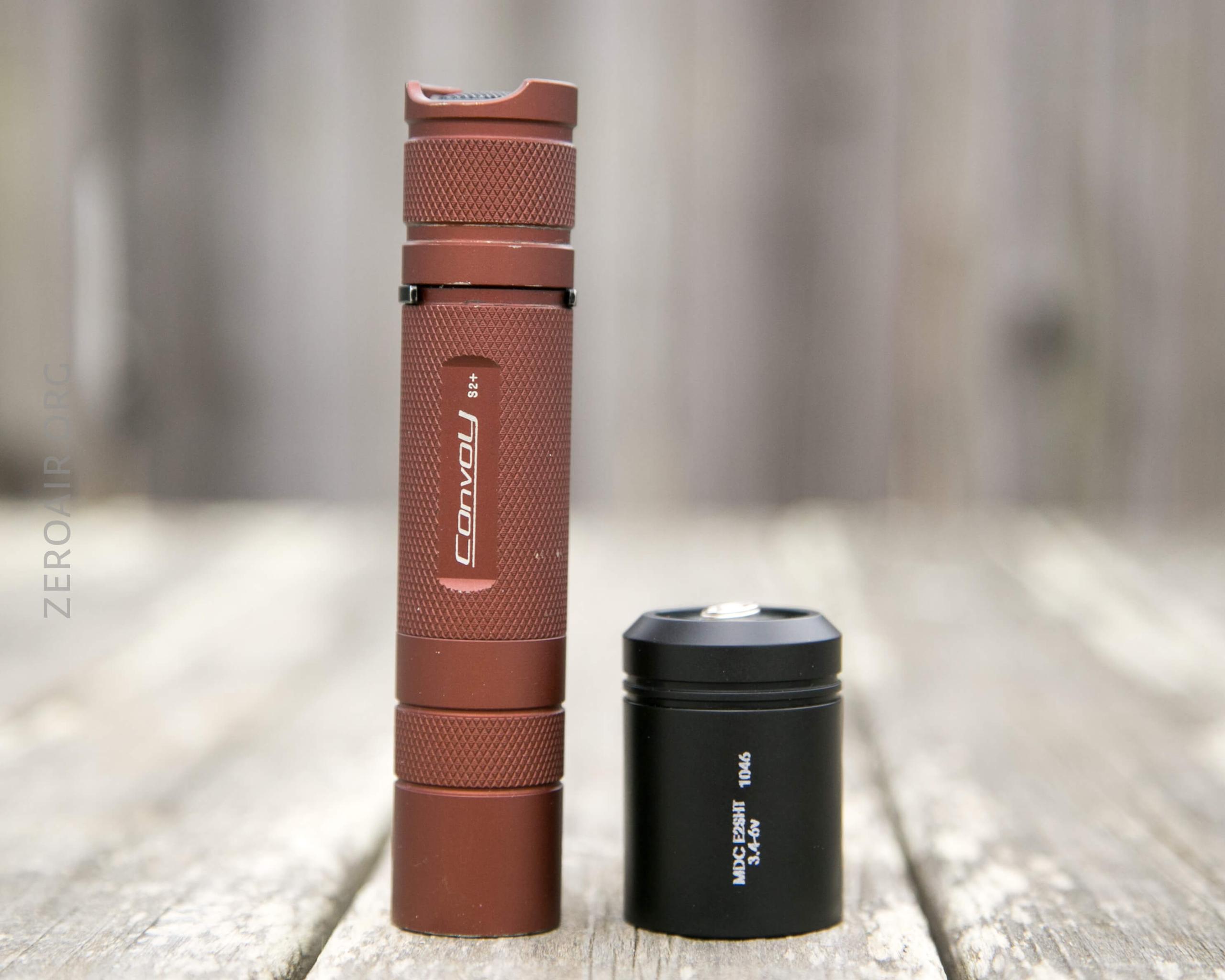
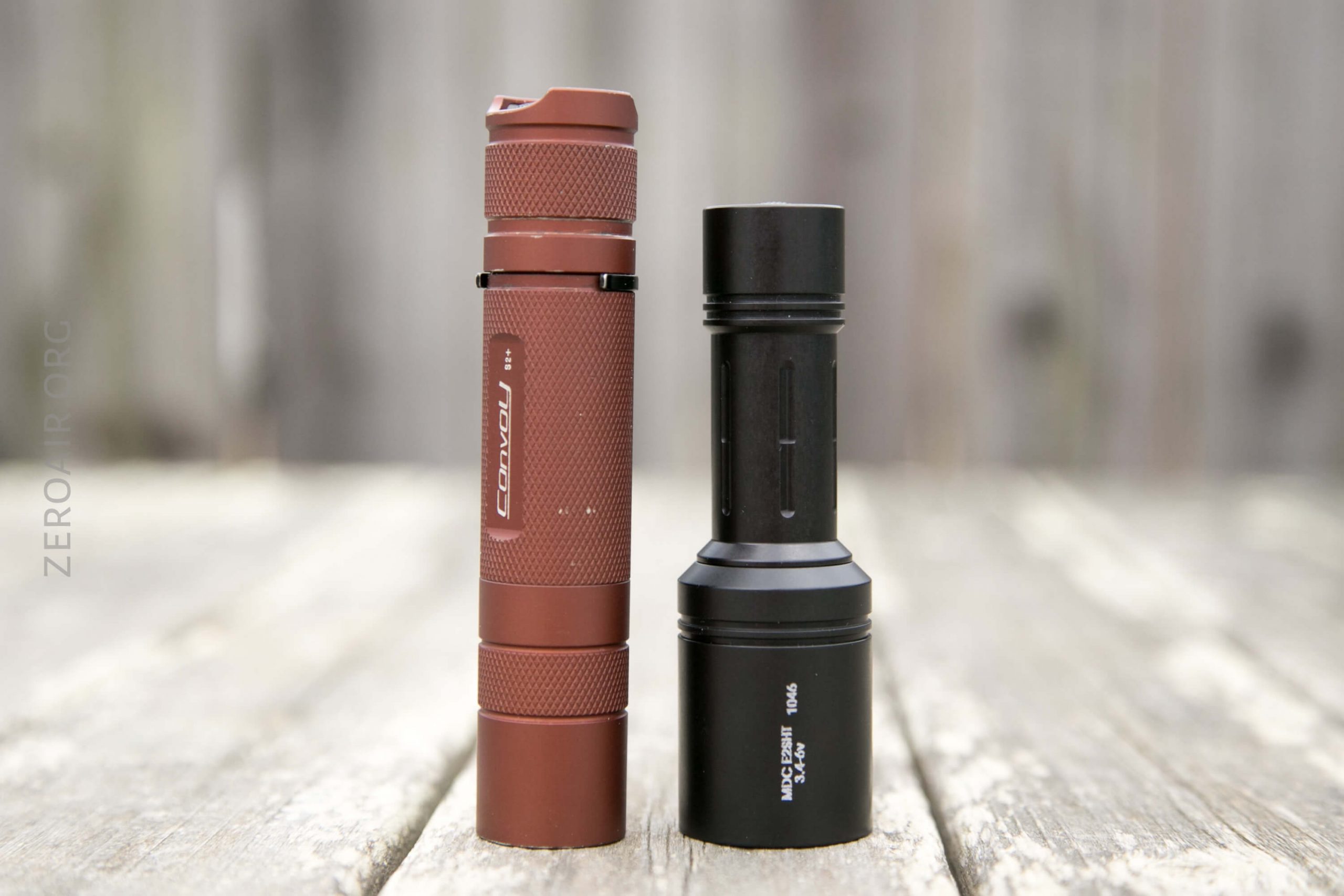
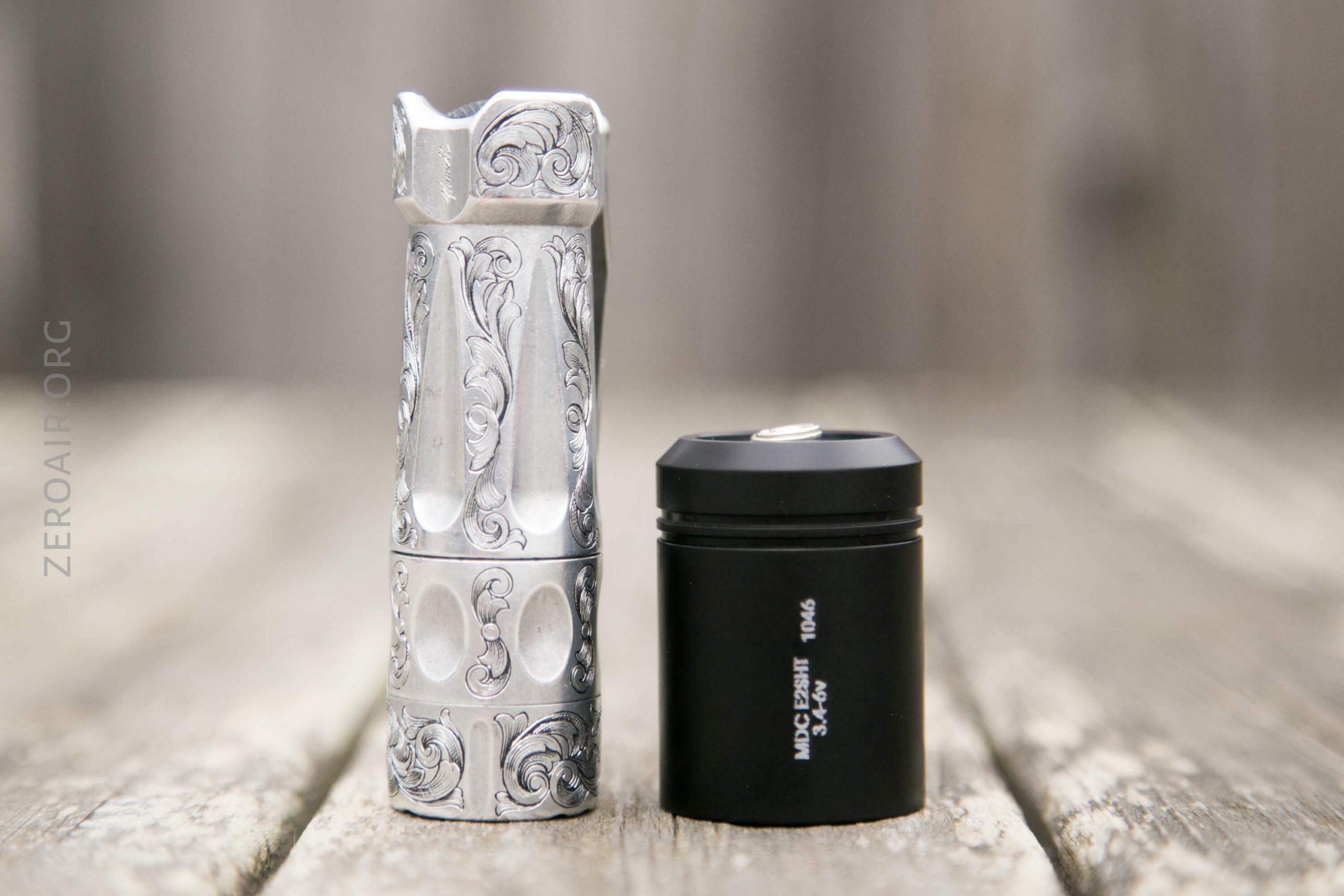
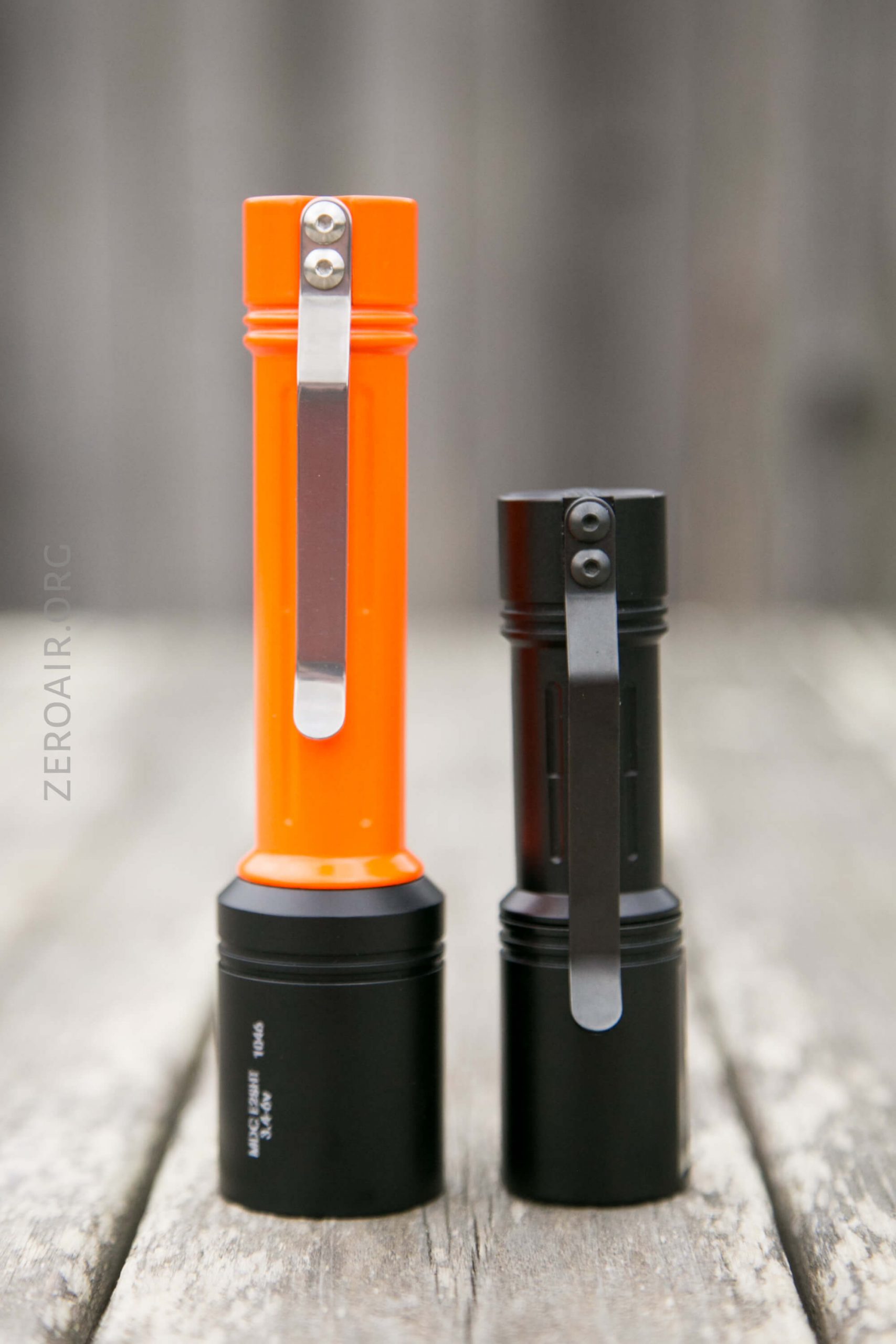
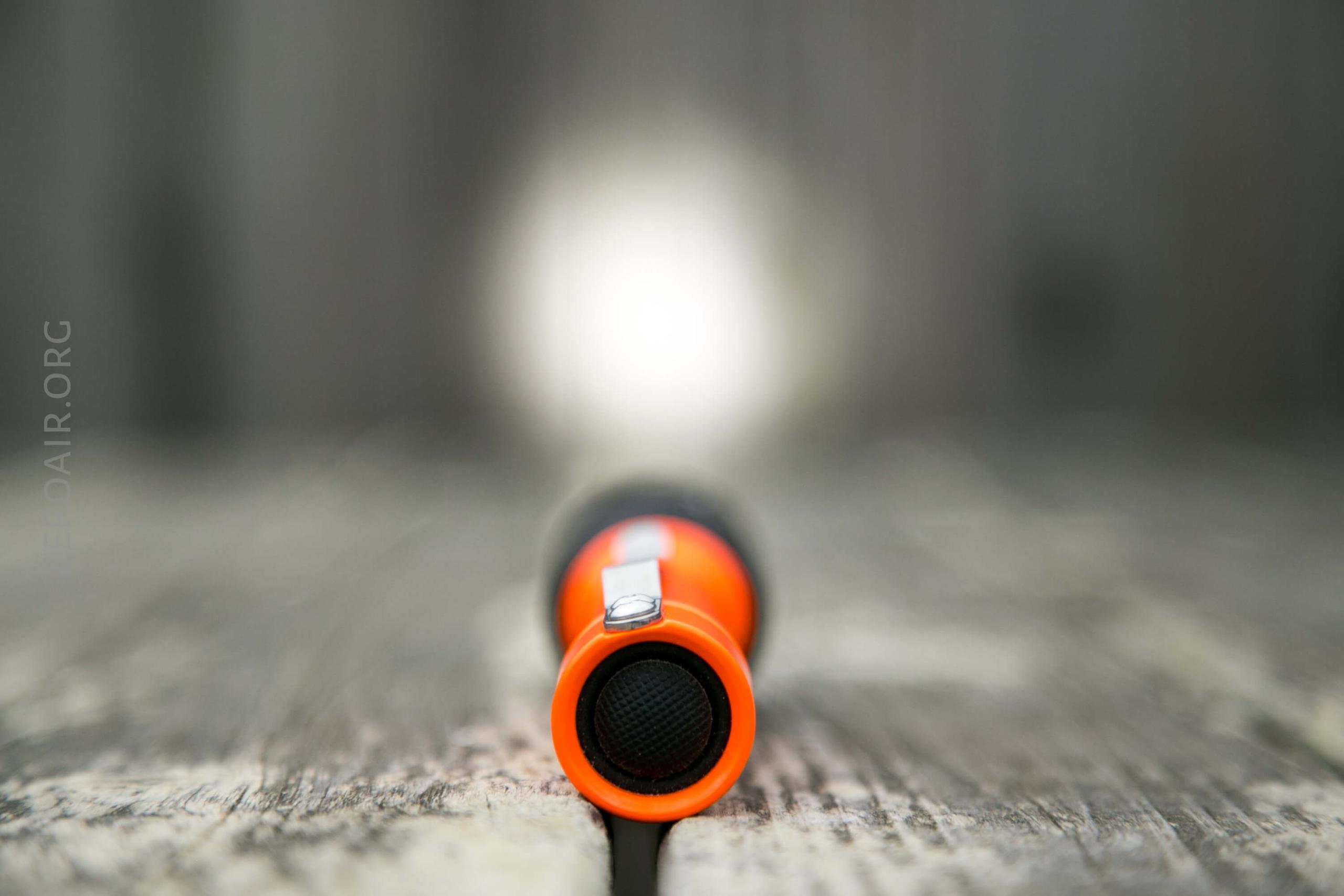
The build quality here is unsurprisingly fantastic. Be reminded any body you see this head-on isn’t included. But any E-Series light will work. I happen to have only two – this glossy orange (very limited edition) Malkoff 16650 (or 2xCR123) body and the other body below.
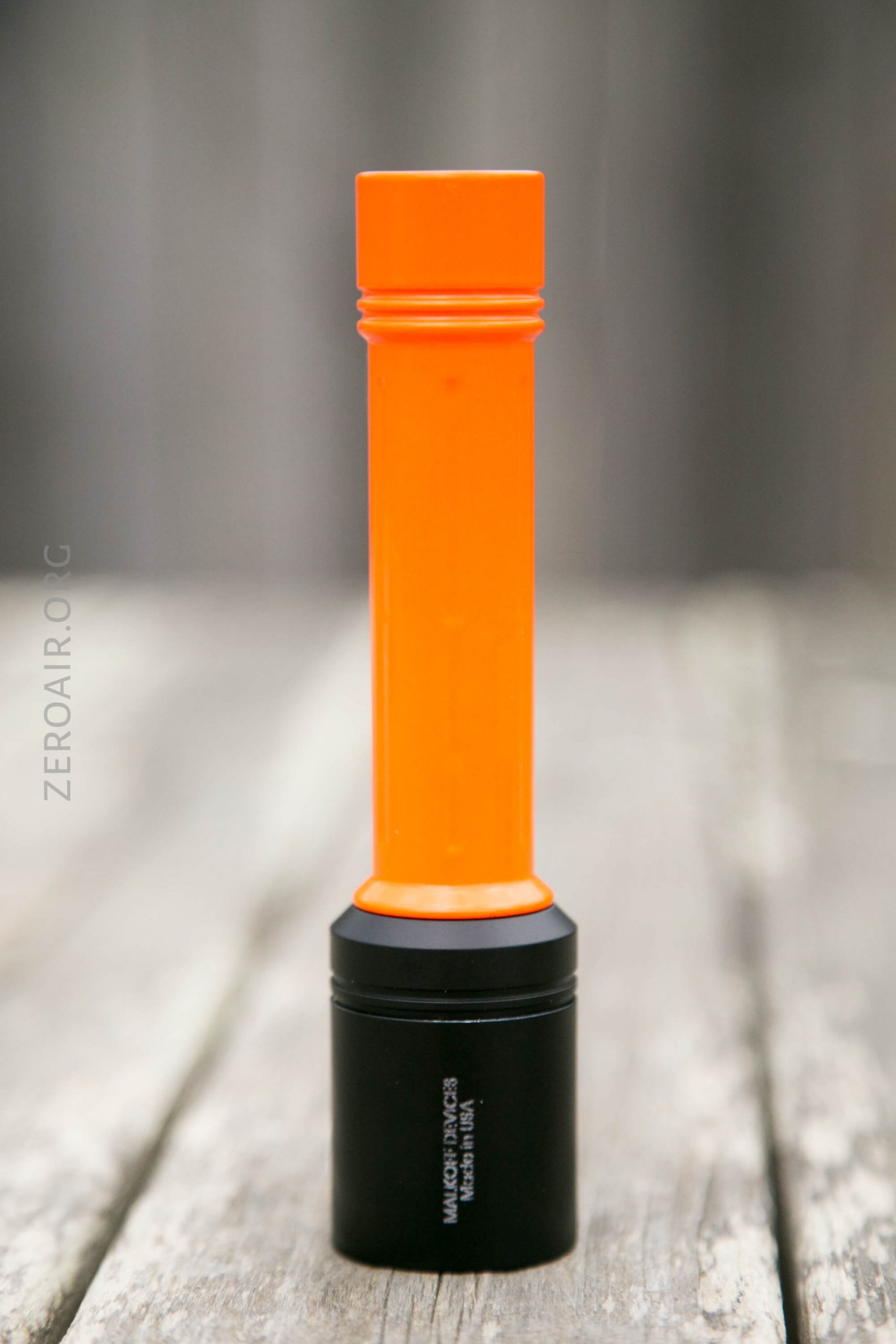
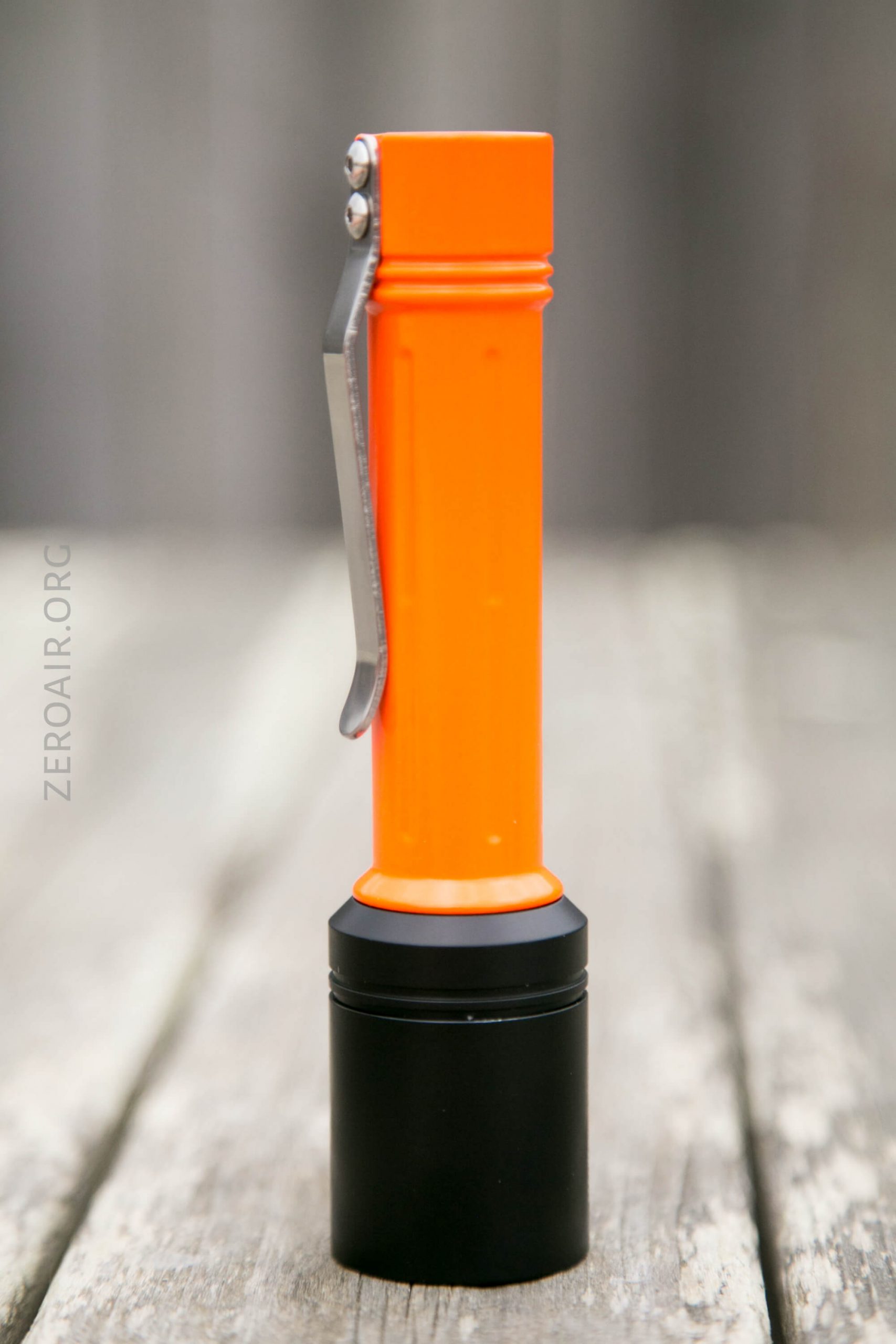
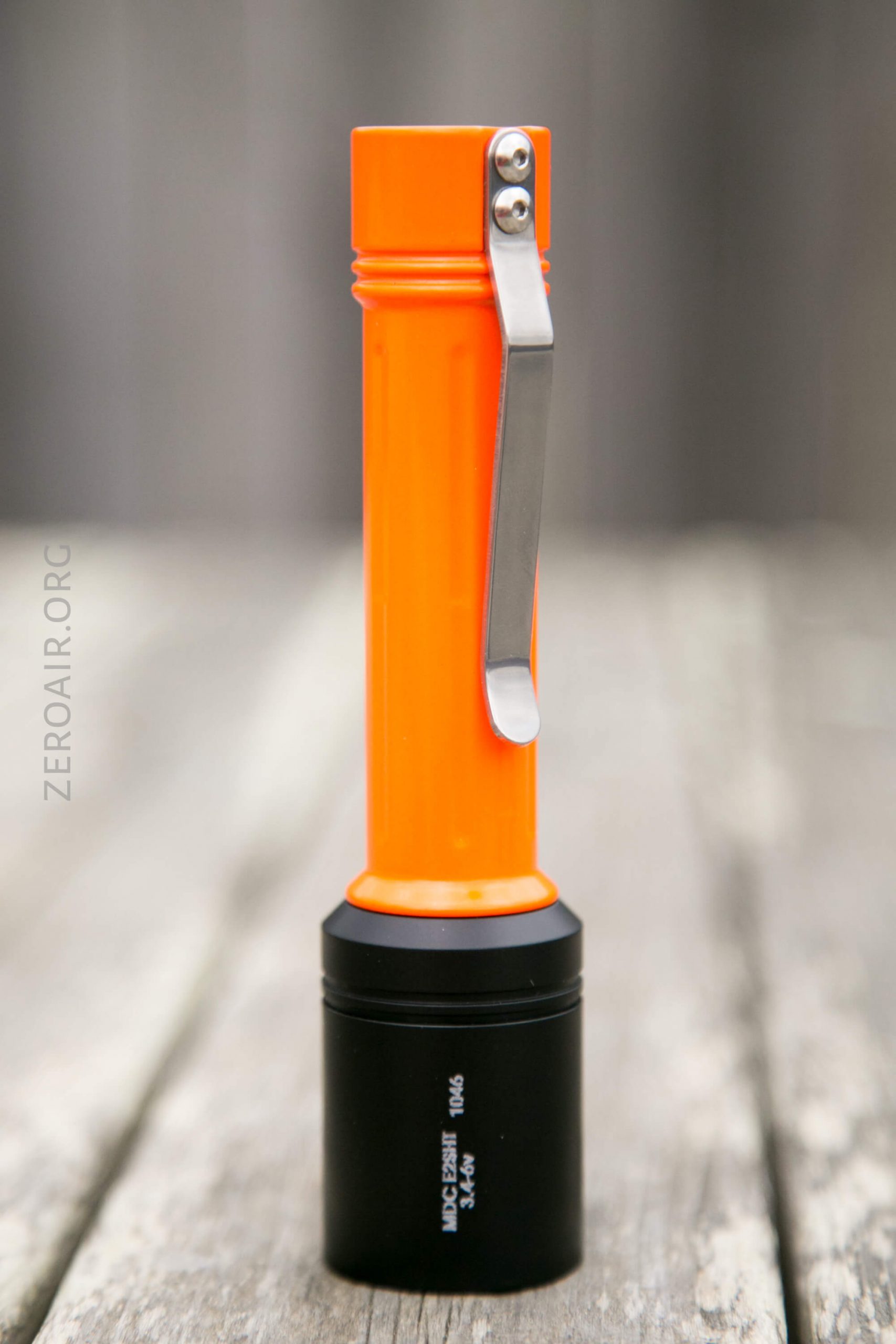
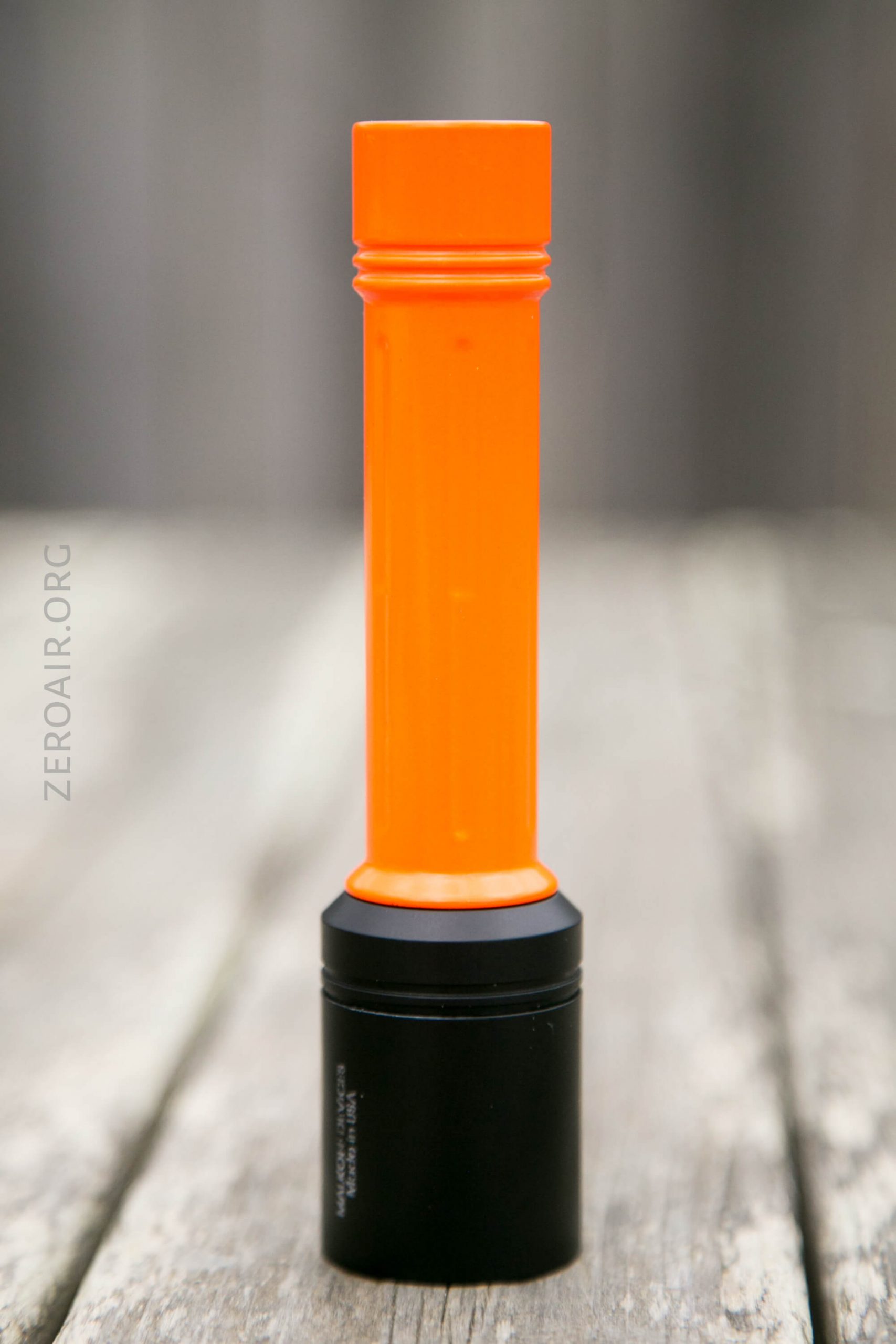
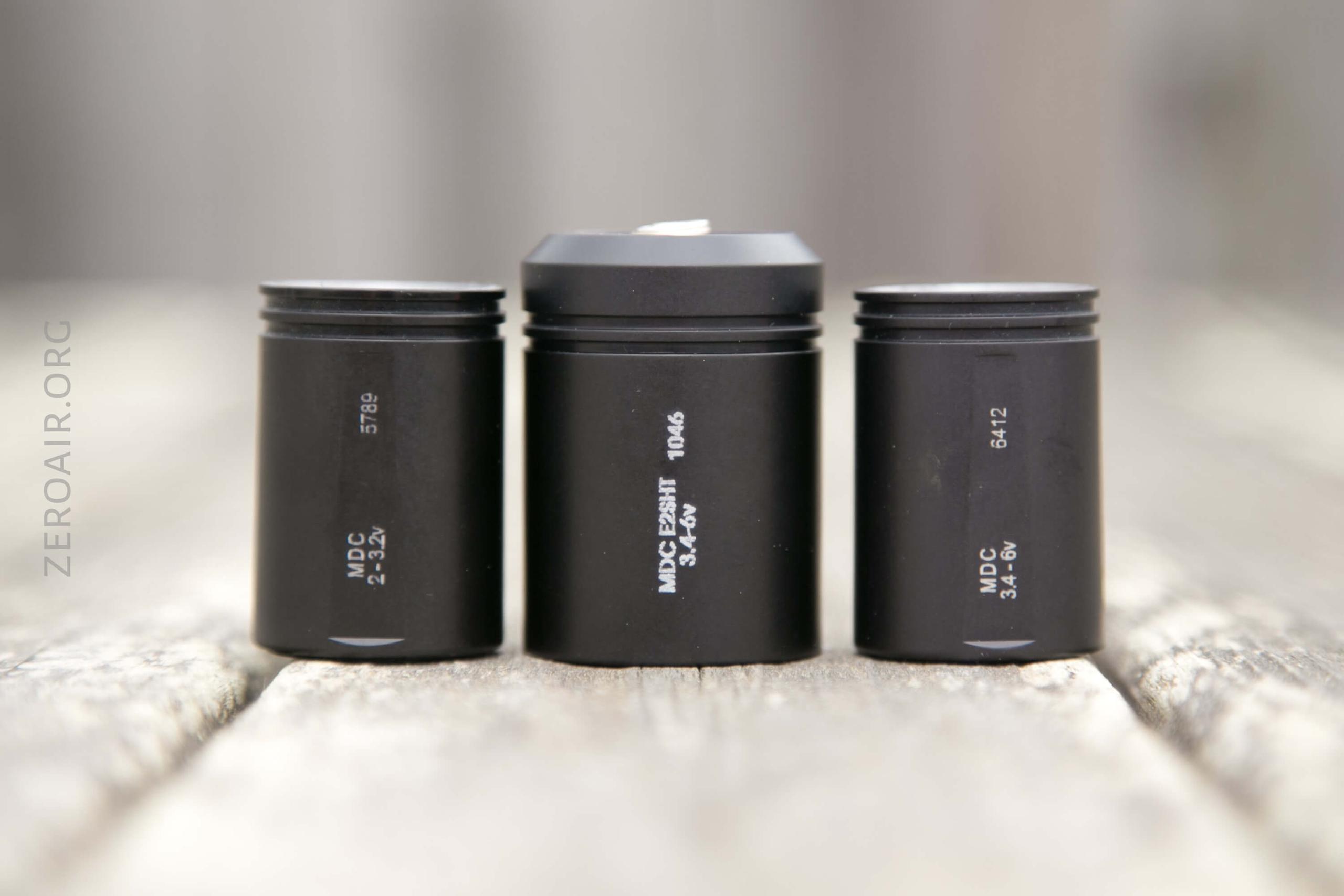
The head has two silk-screened logos. One’s just a Malkoff brand, but the other has useful information – namely, the voltage range of the head. (Important because many e-series lights can support various voltages.
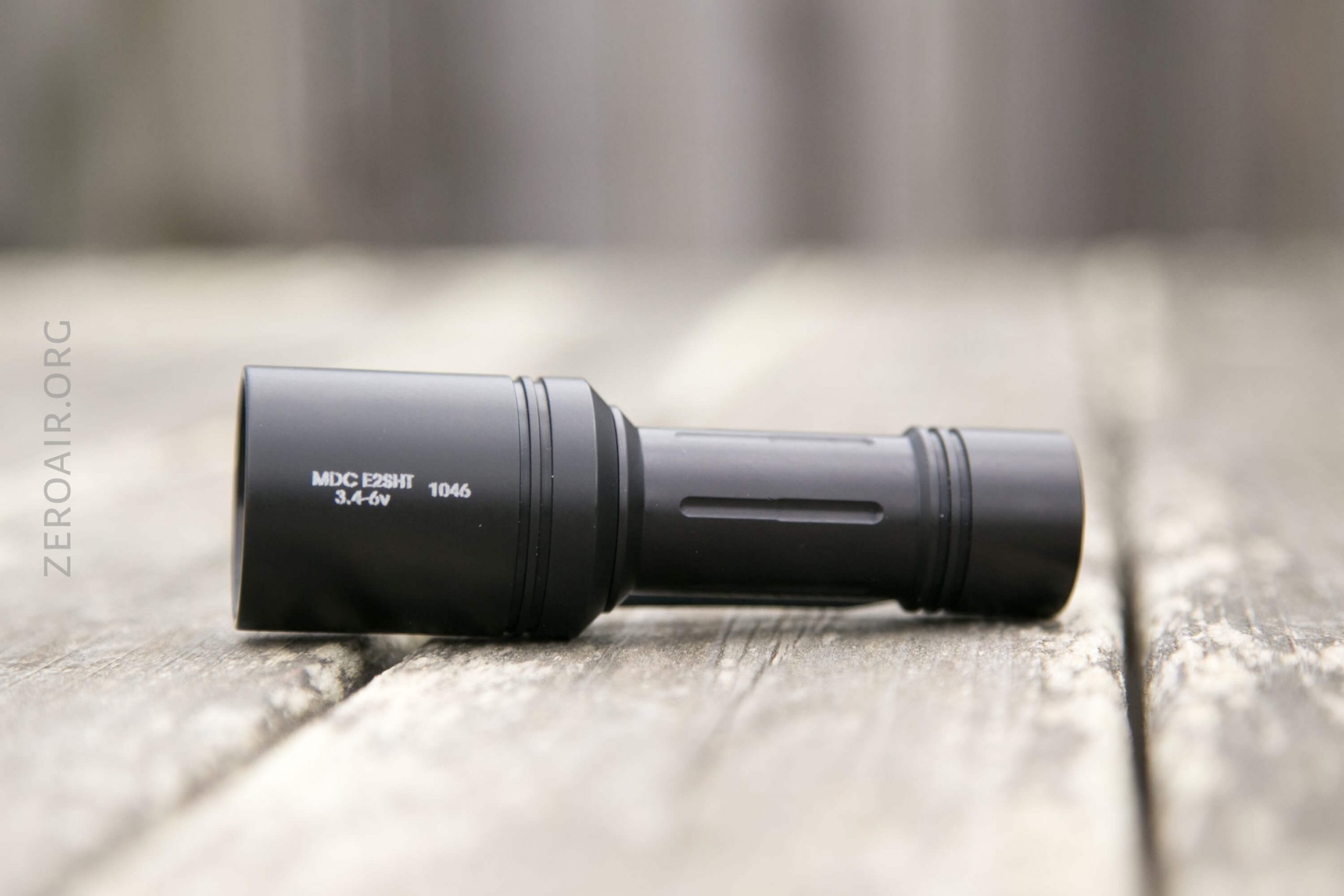
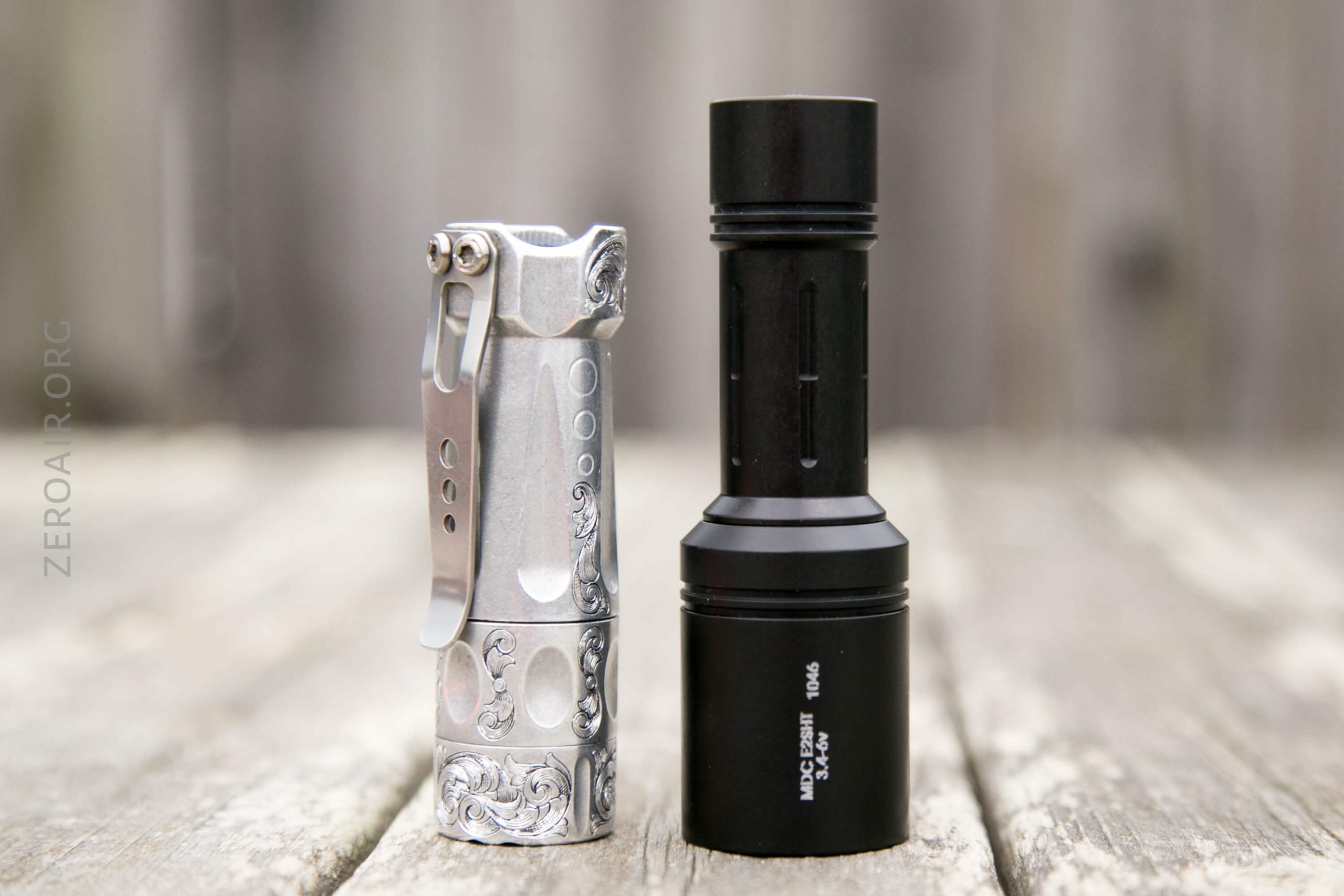
This is my other E-series body – also a Malkoff. An MDC. I usually use this with my Nichia 219b head, and I absolutely love it.
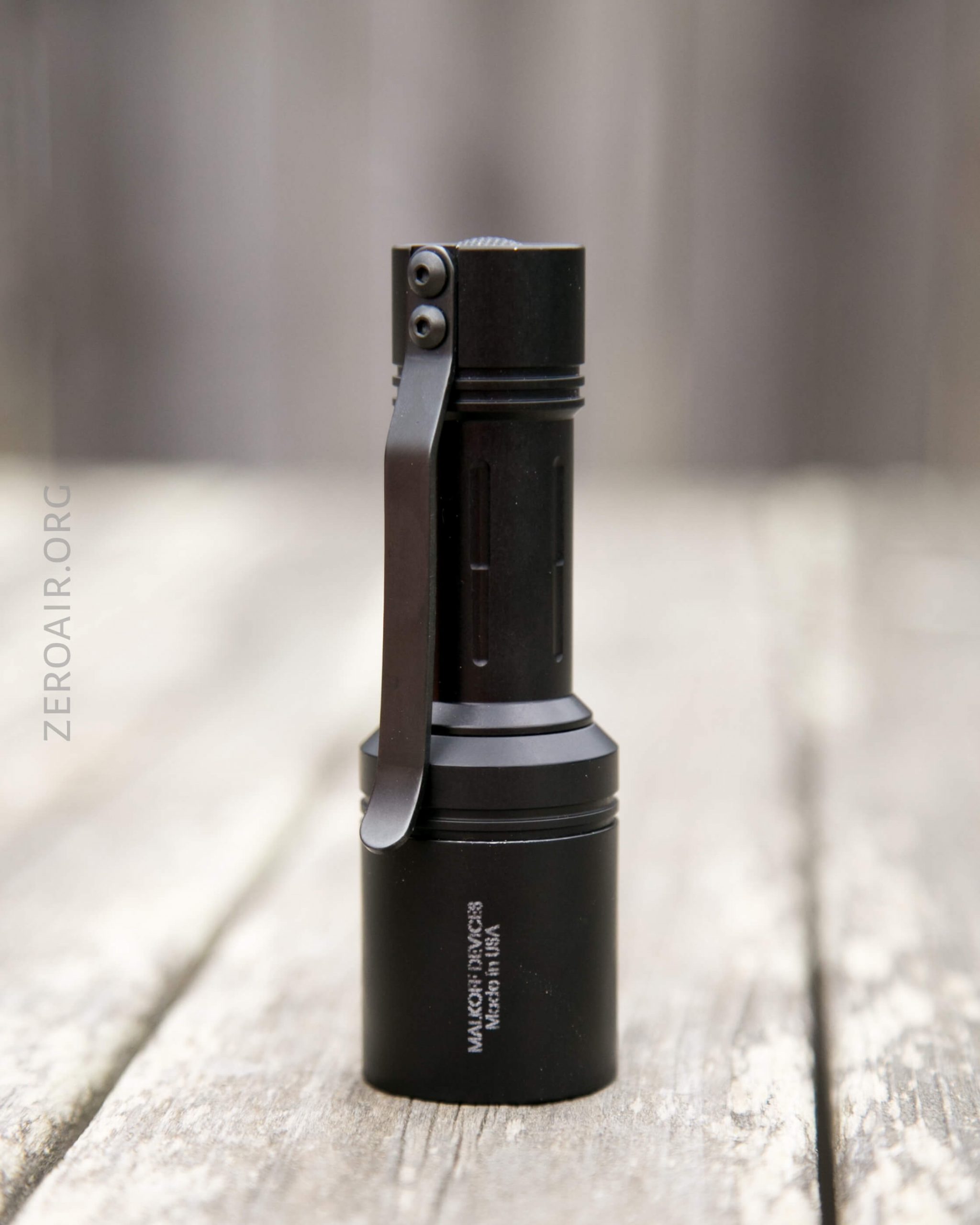
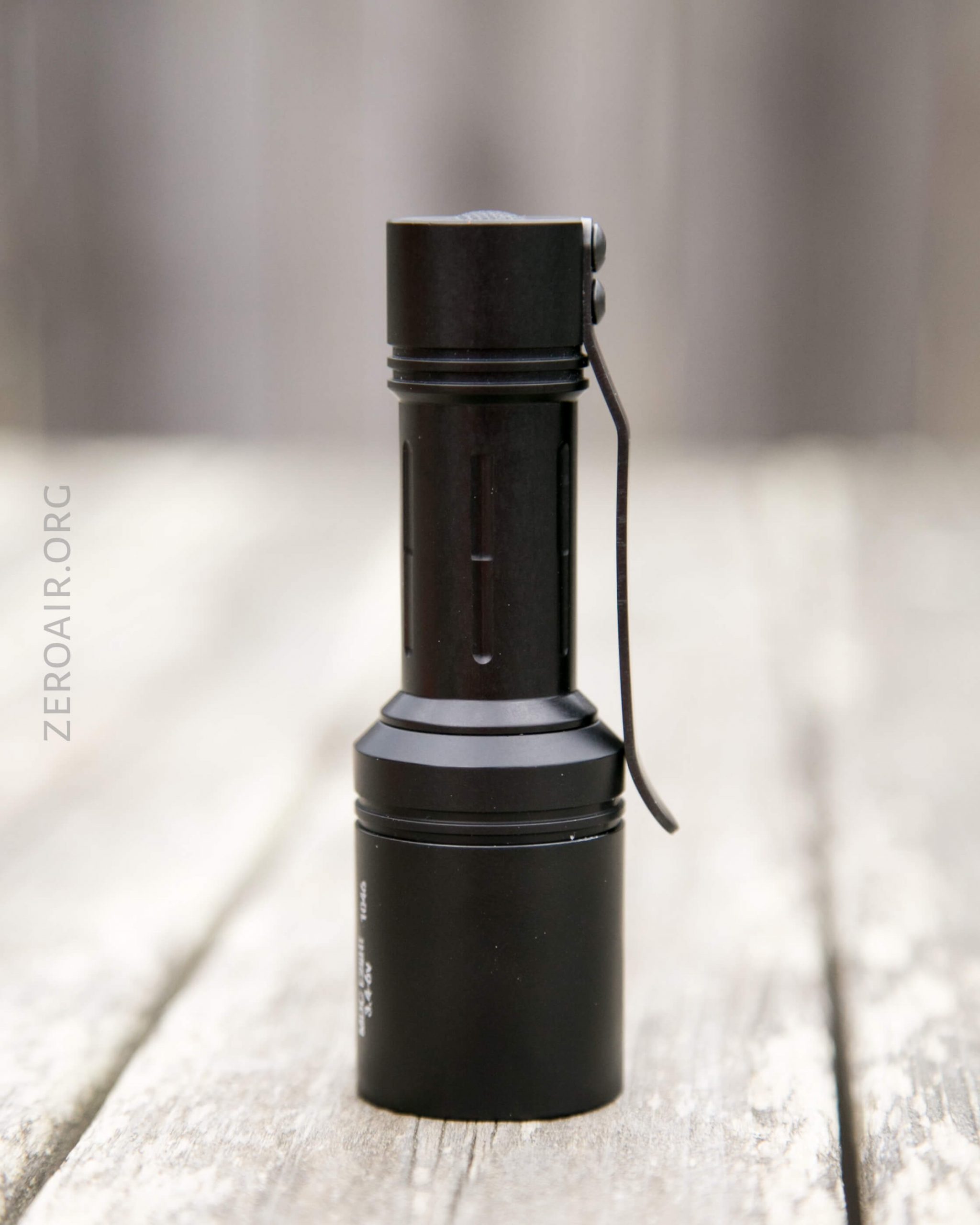
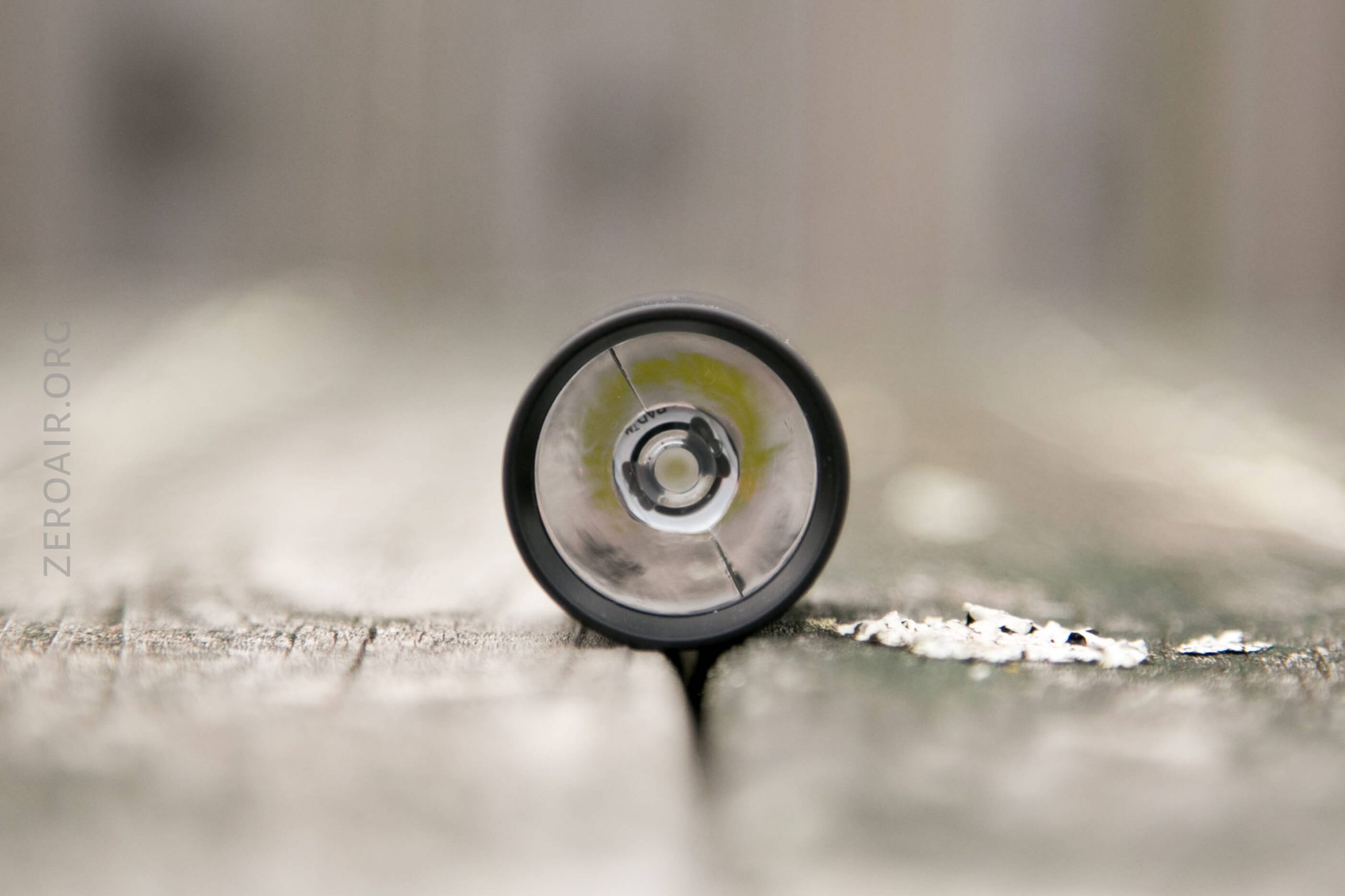
The electronics here are potted, and so no changes are going to be made to this one. One great thing about that is that the labels on the body are always accurate.
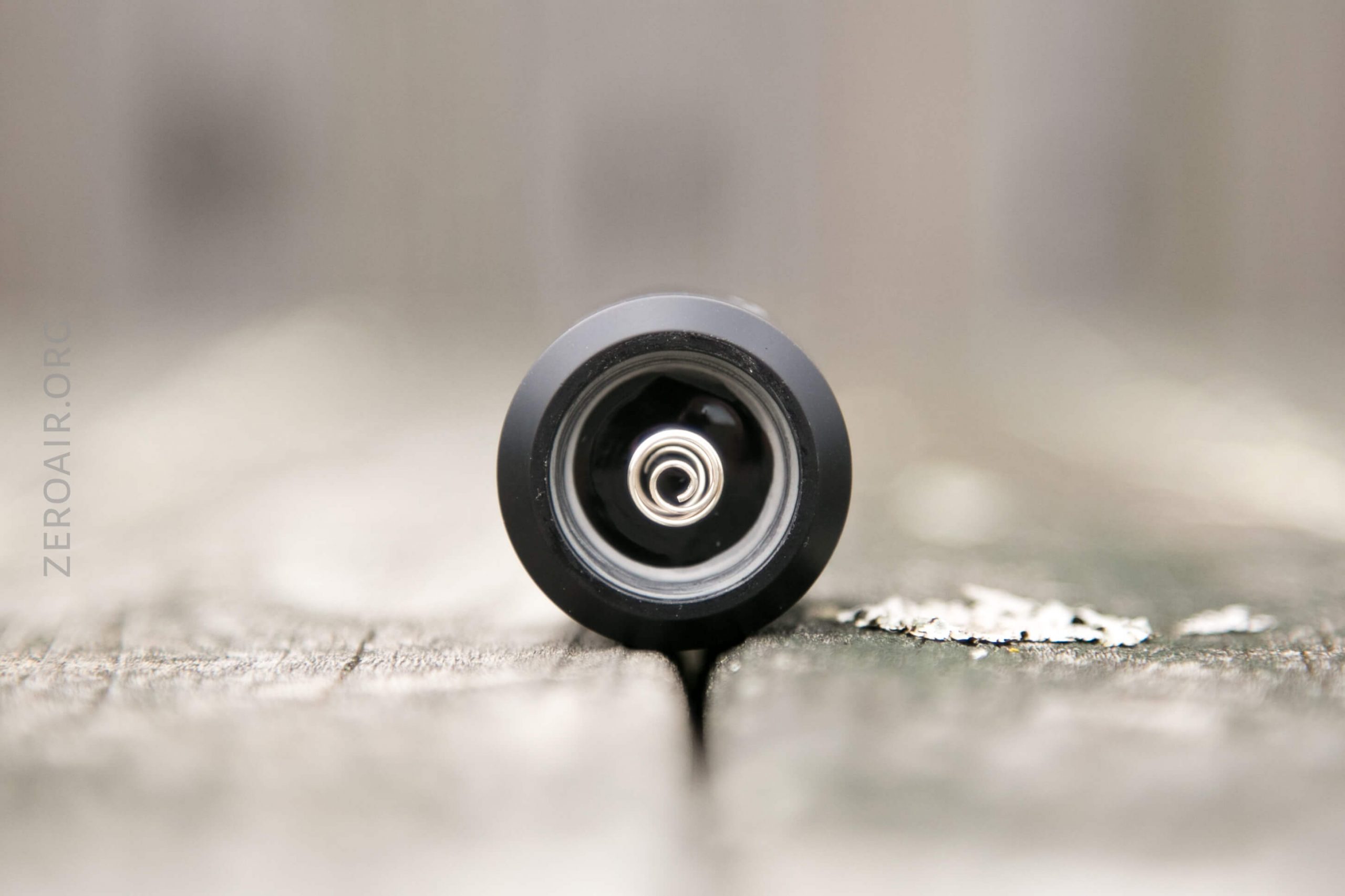
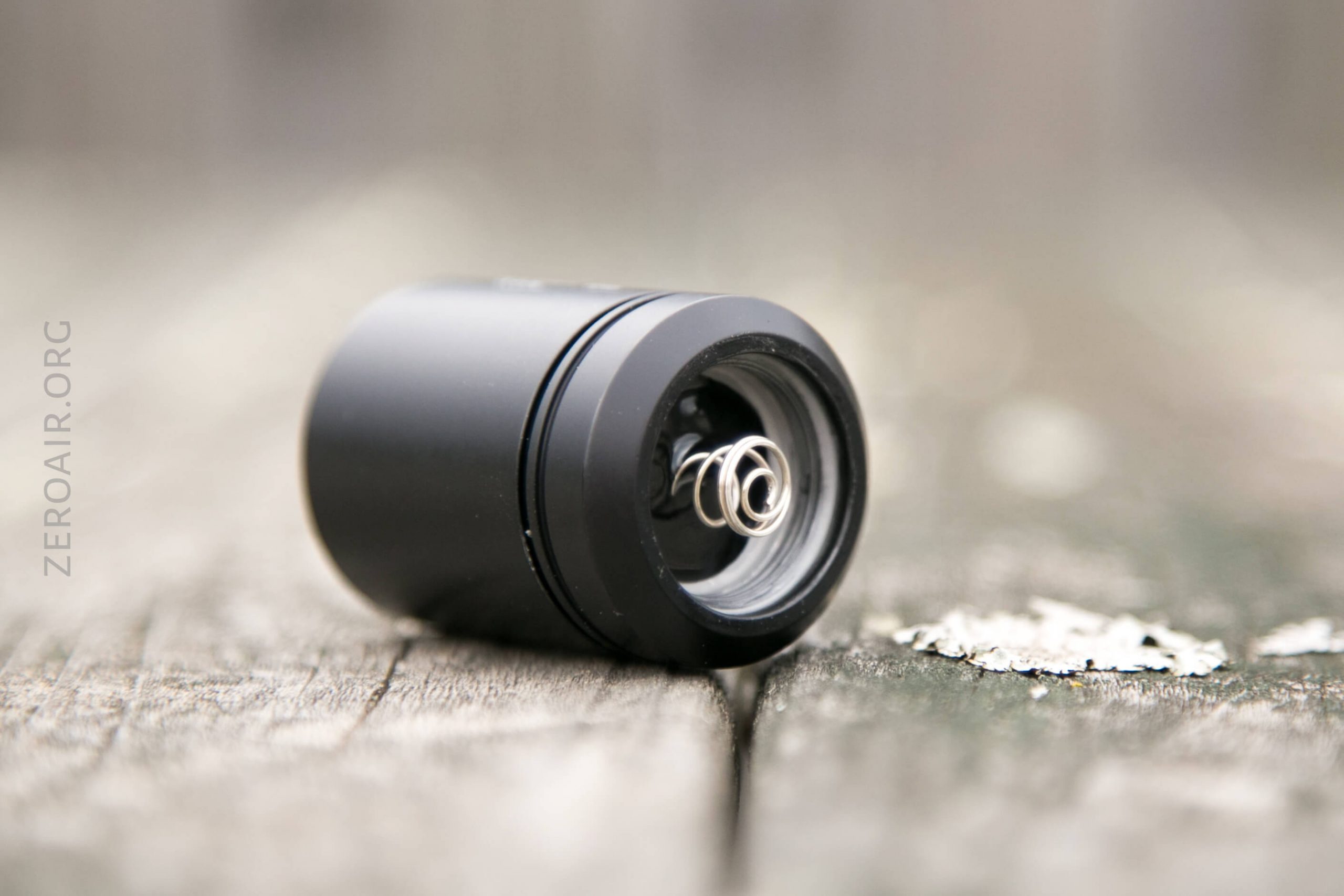
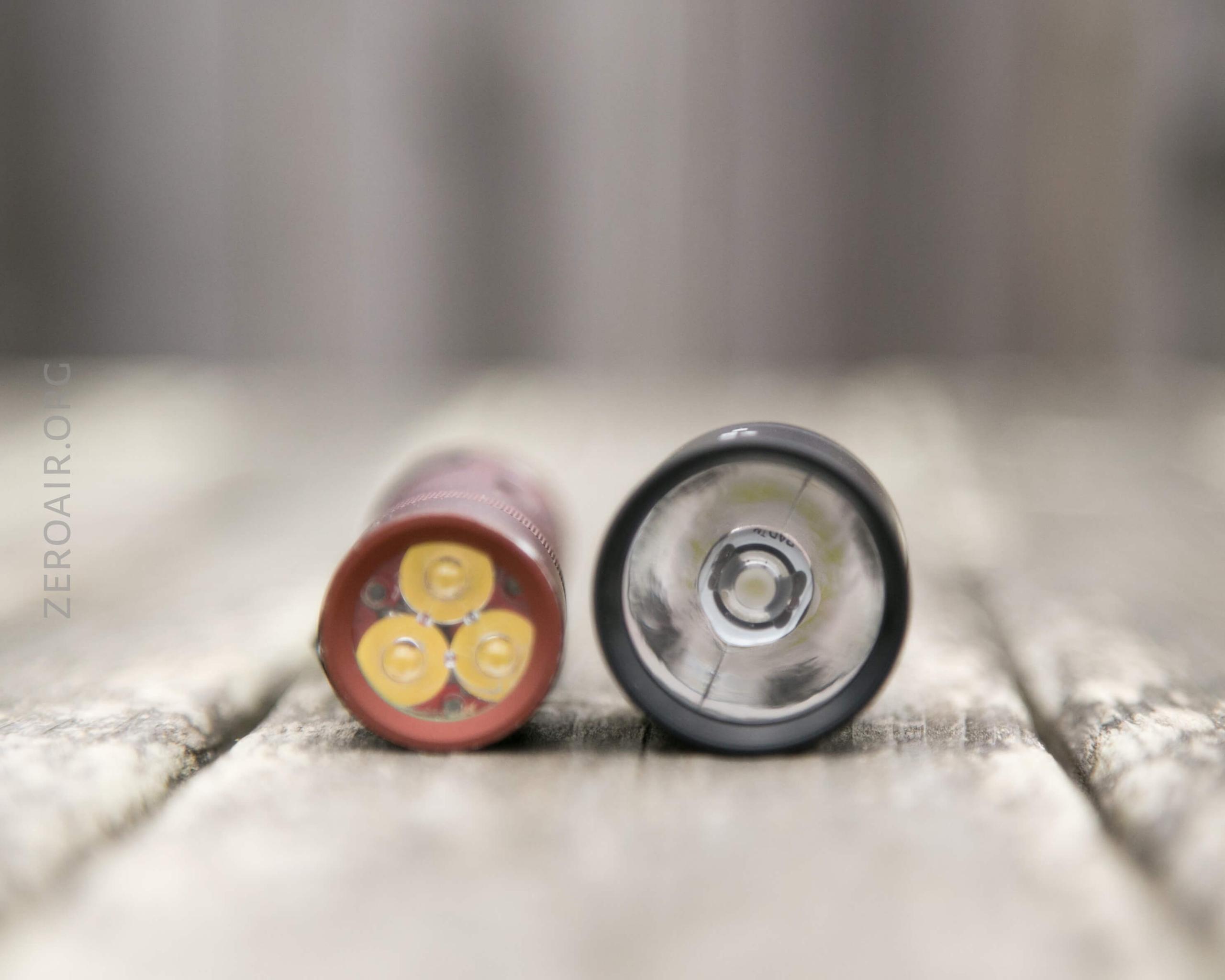
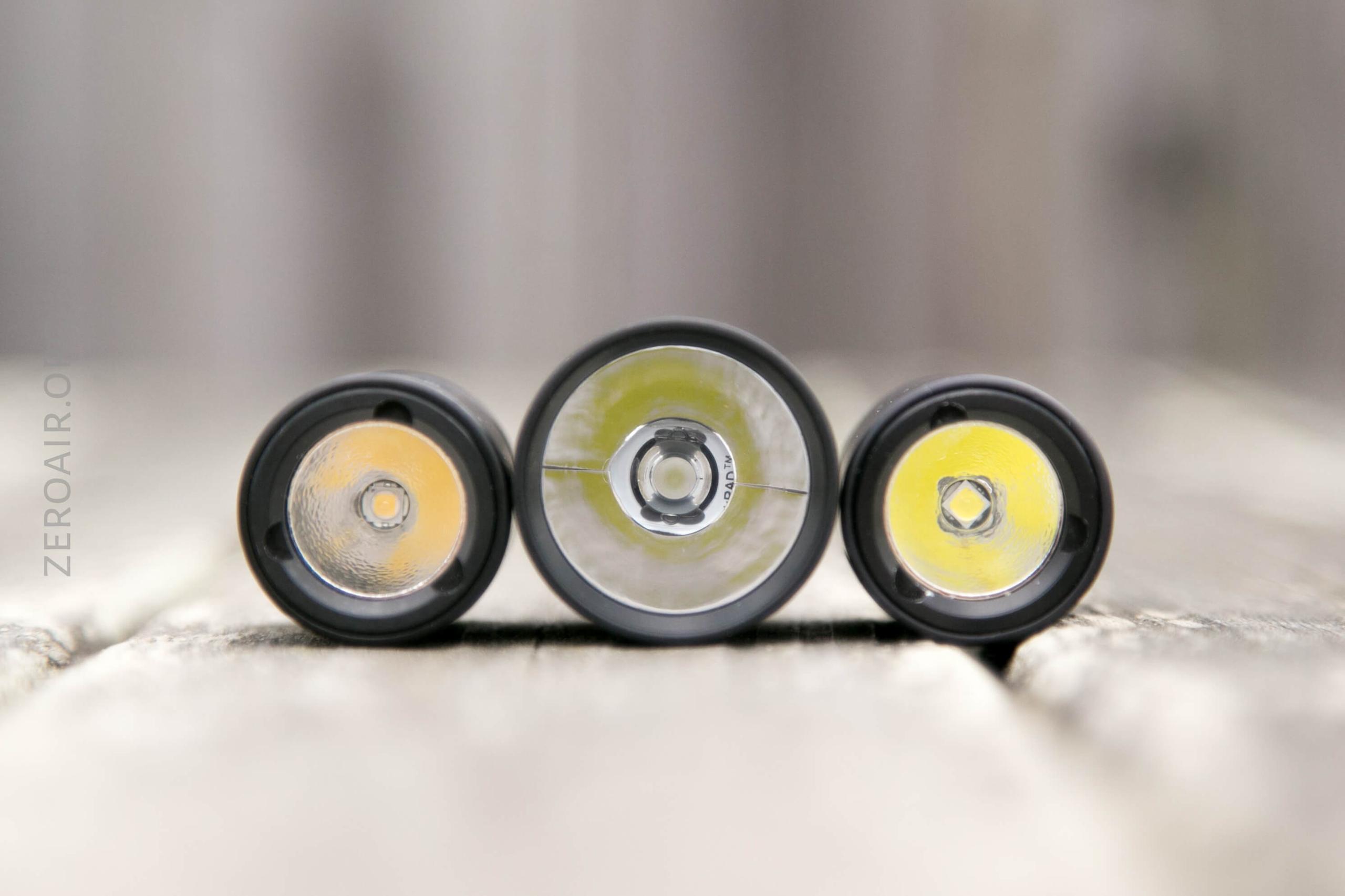
Much to my surprise, after I took all these photos, I found that the head does kind of come apart. The bezel fully unscrews, but again, there’s nothing in there to mess with. The optic is exposed, but it’s affixed permanently to cover the LED.
Size and Comps
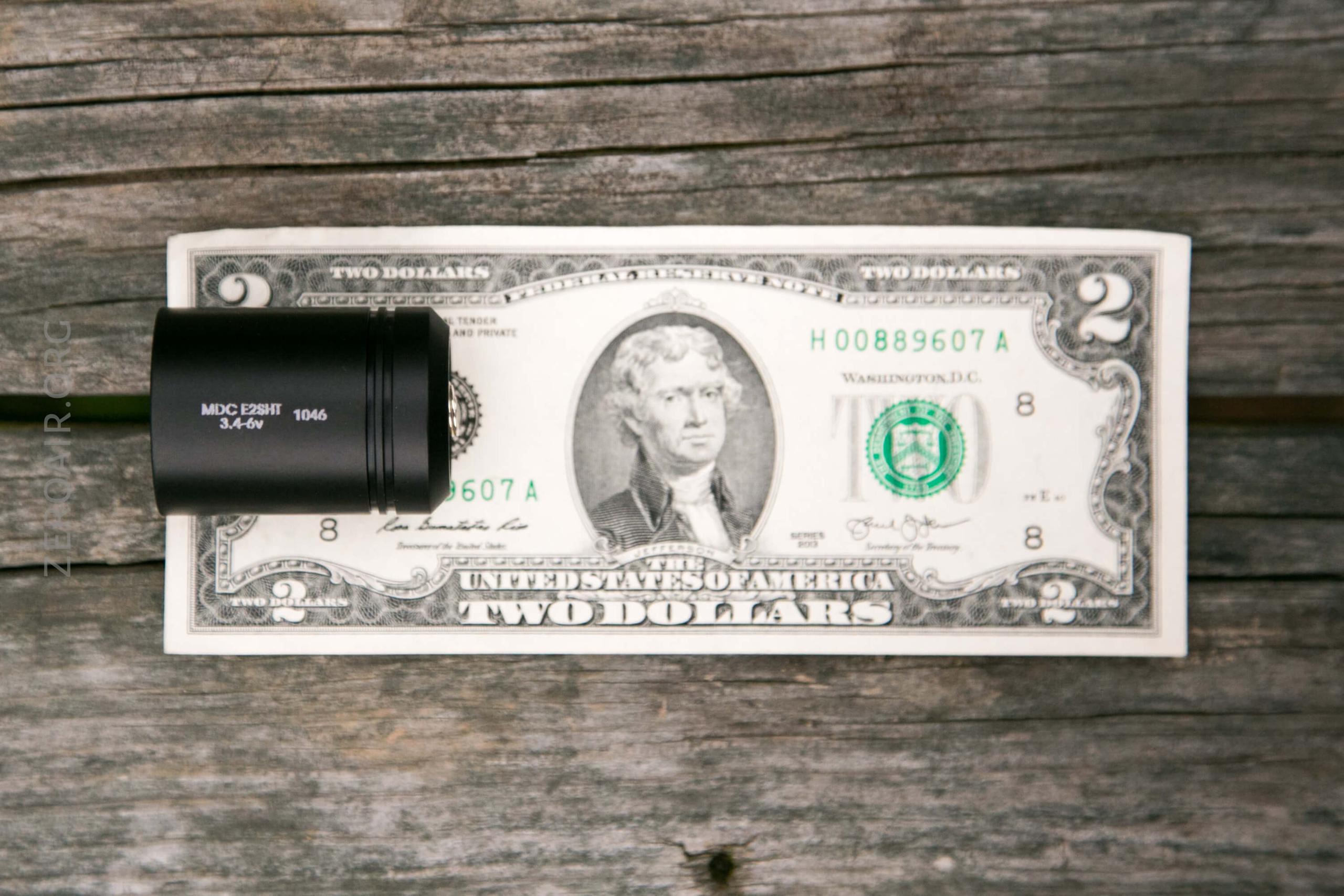
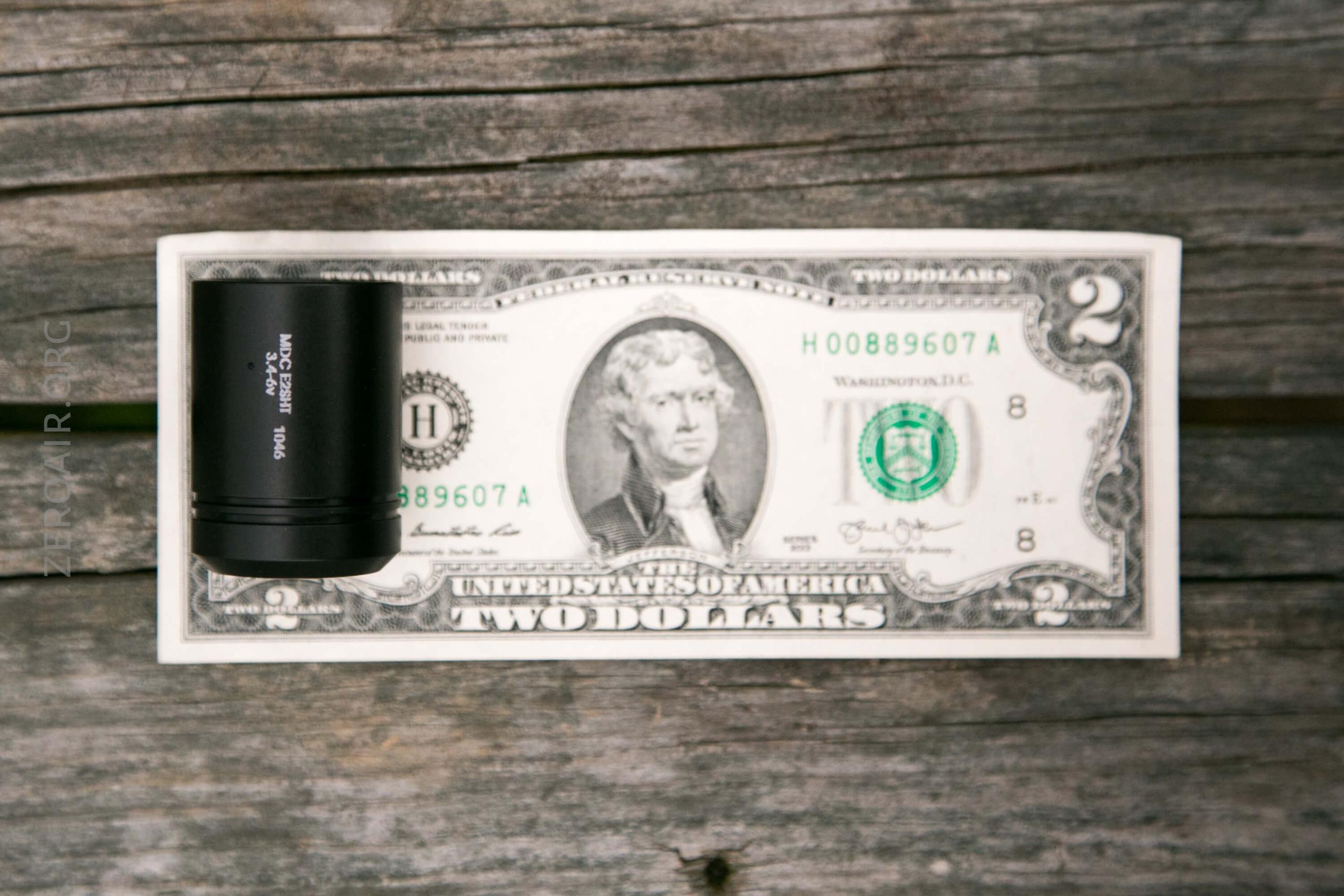
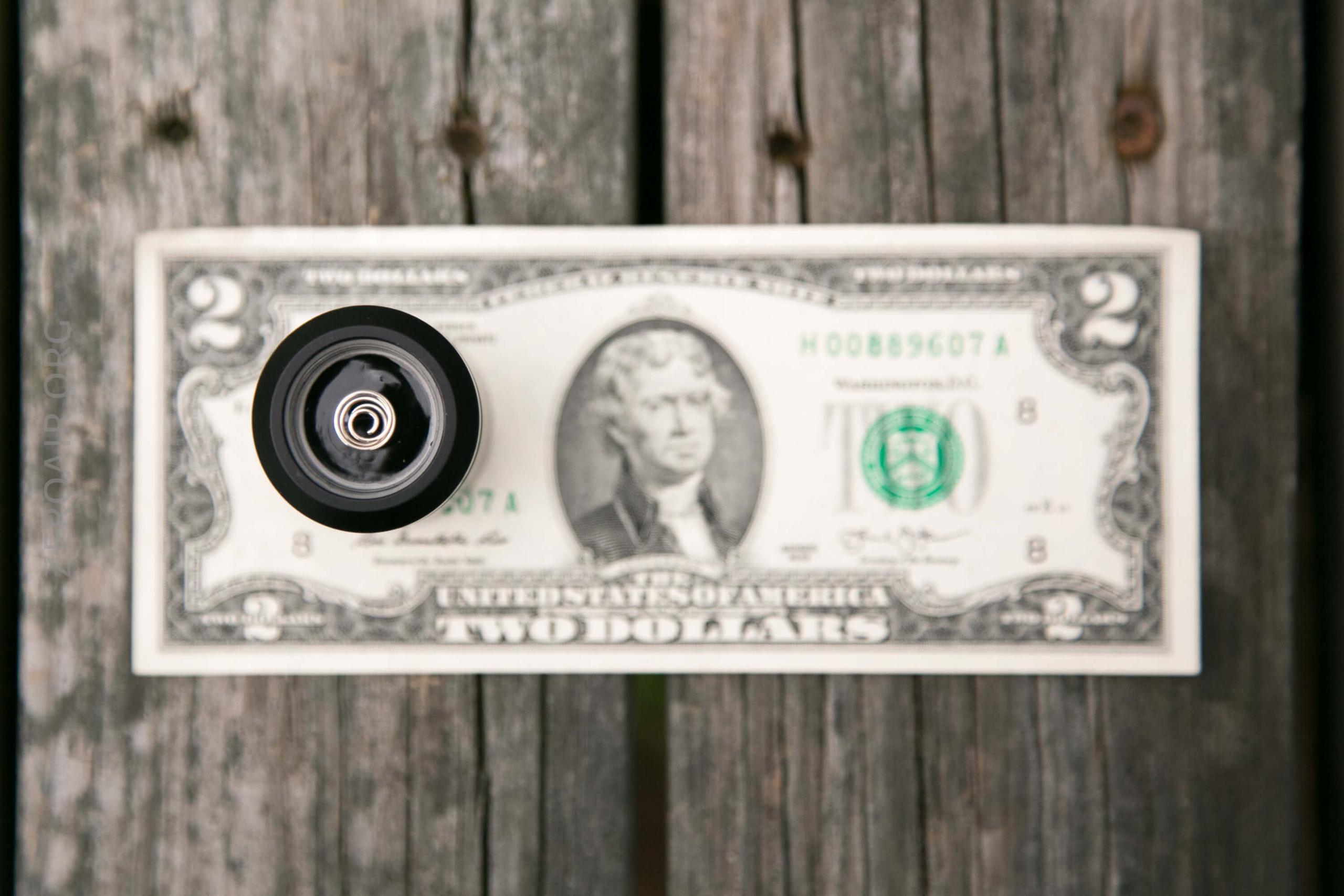
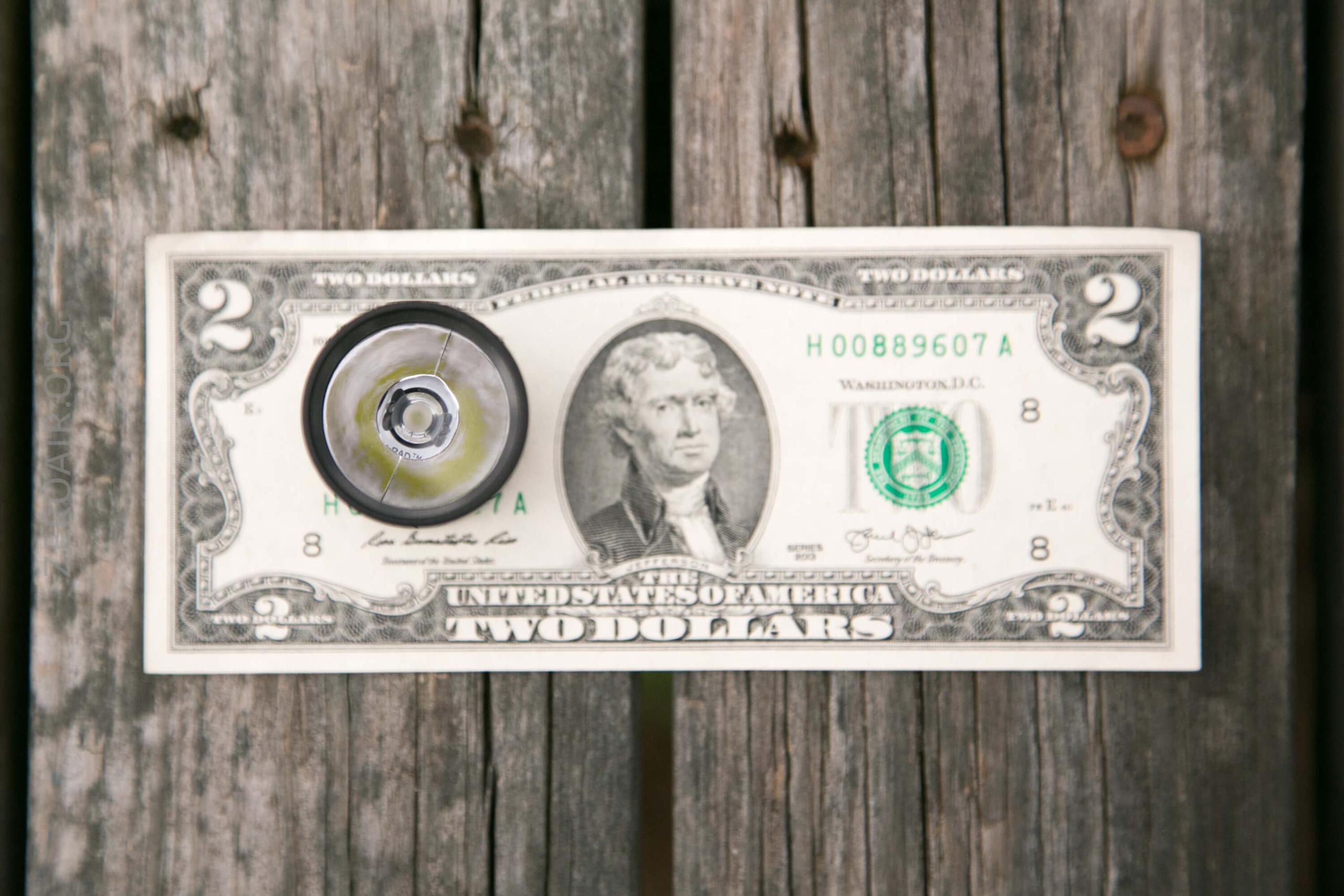
Tiny thrower, right here! On the MDC 123 body, anyway.
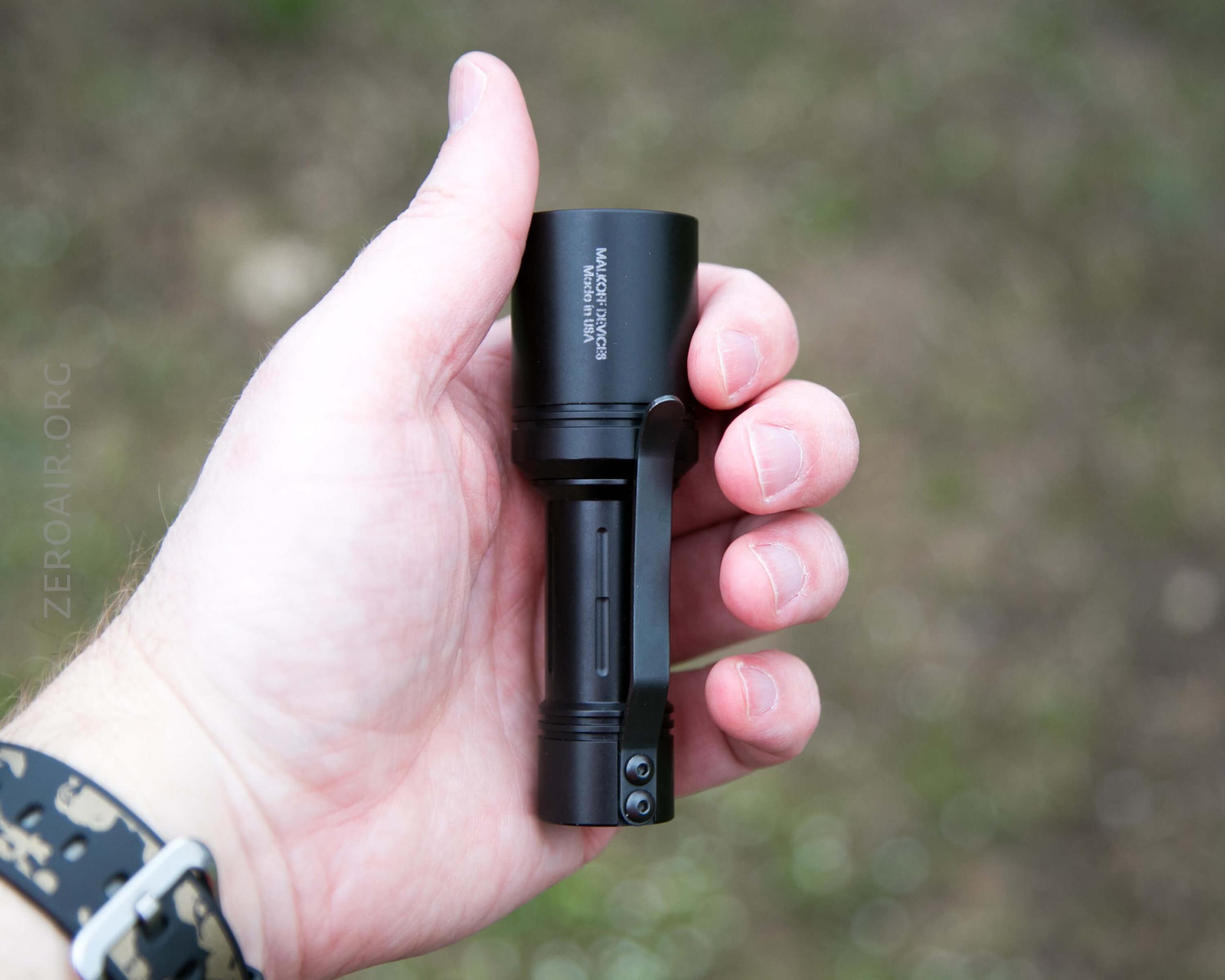
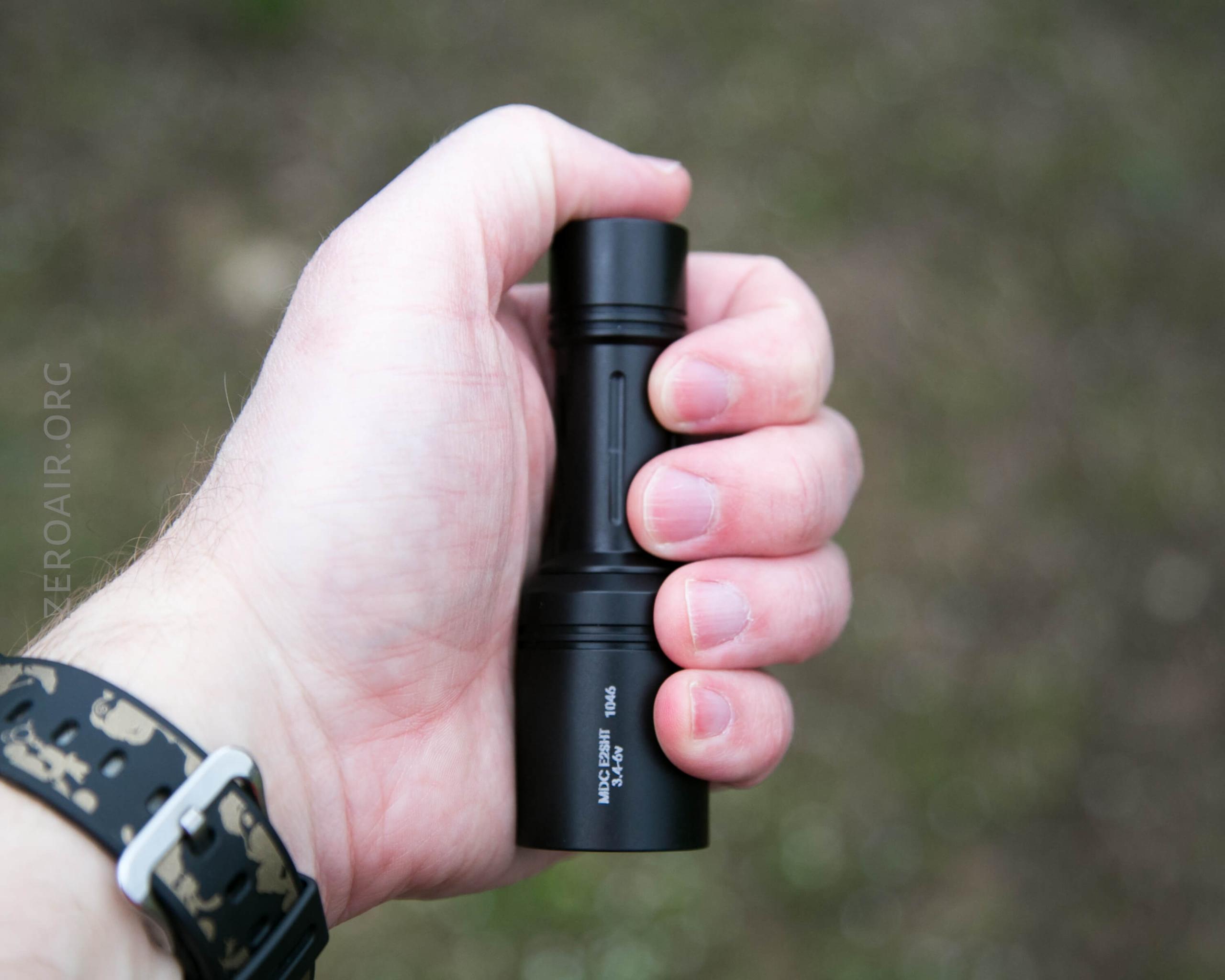
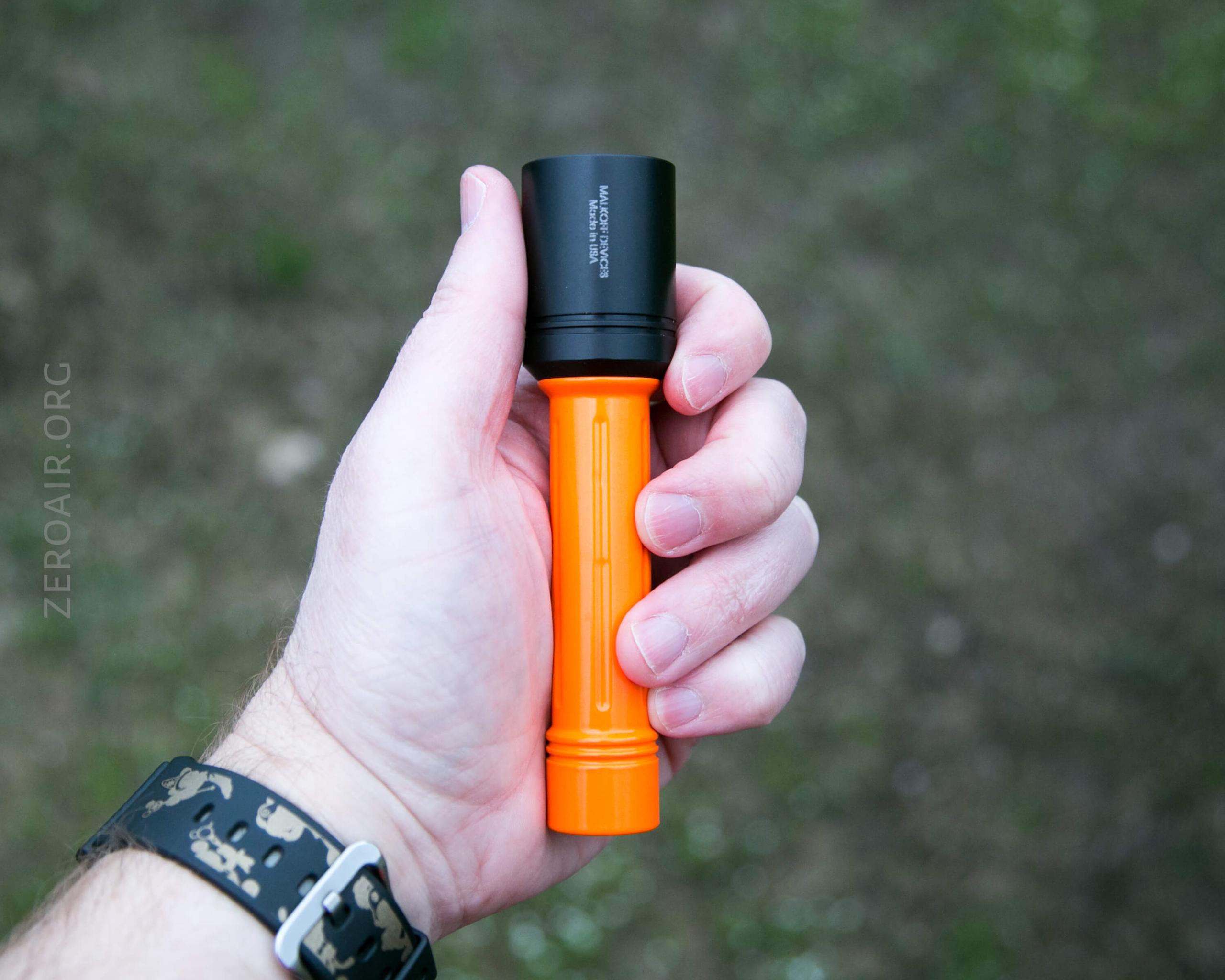
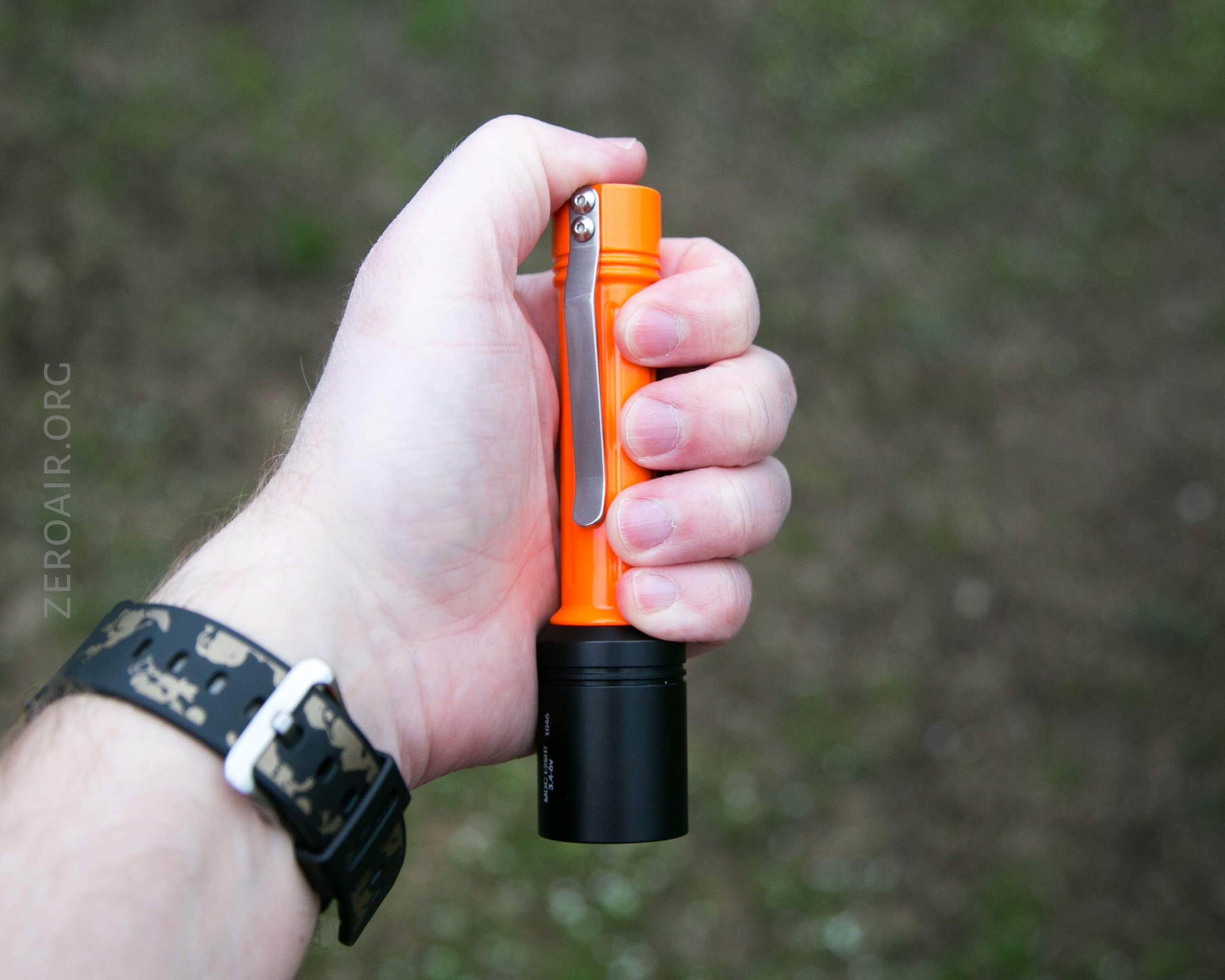
I really like the head on this 16650 body, and that’s what I’ve used most.
Retention and Carry
There’s no body included, so no “real” retention. But you’ll have a body, and all my E-Series bodies have pocket clips.
Power and Runtime
The documentation for this head says that the highest output will be achieved with 2xCR123 (aka 6V). I didn’t find that to be the case, and so I just tested the light with a 16650 cell. Since there’s only one output, I tested cooled and uncooled. Not all that much difference between the two.
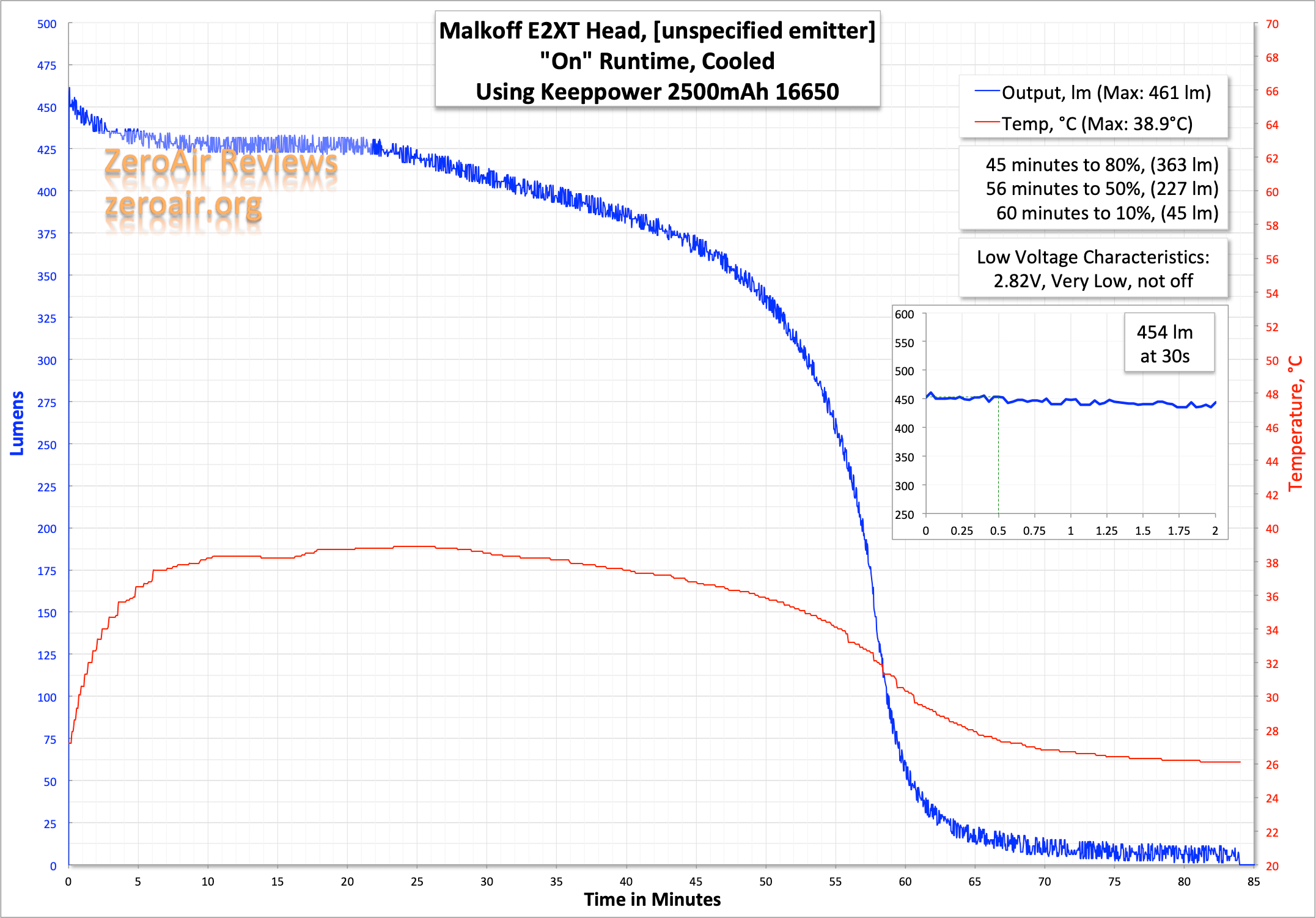
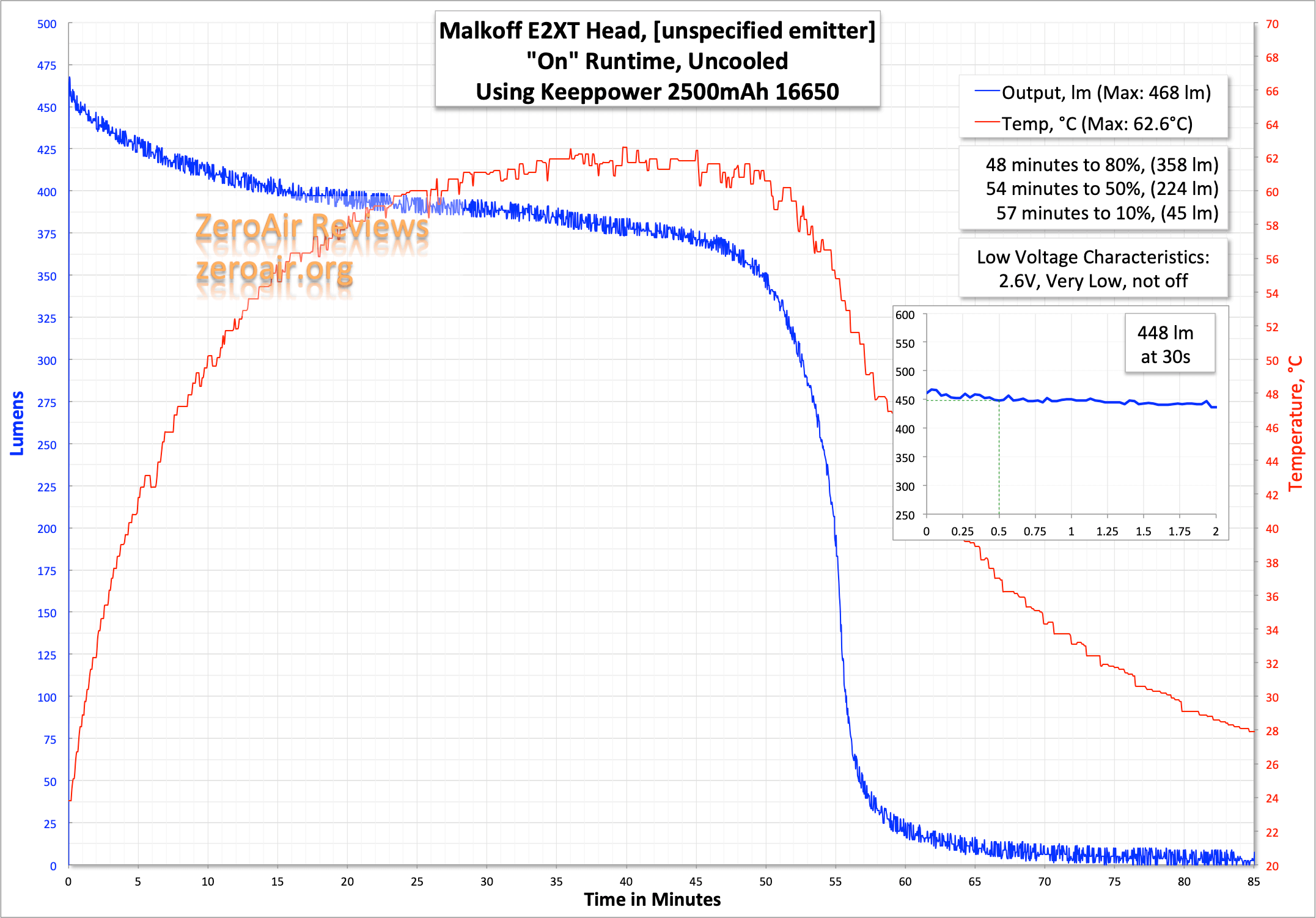
There doesn’t seem to be any LVP, but for this class light, I don’t think you’d really expect it. And there doesn’t seem to be any electronic shutoff at all.
Modes and Currents
| Mode | Mode Claimed Output (lm) | Claimed Runtime | Measured Lumens | Tailcap Amps |
|---|---|---|---|---|
| 4.2V (16650) | 500 | – | 454 | 2.21 |
| 6.0V (Benchpower) | 500 | – | 448 | 1.96 |
Pulse Width Modulation
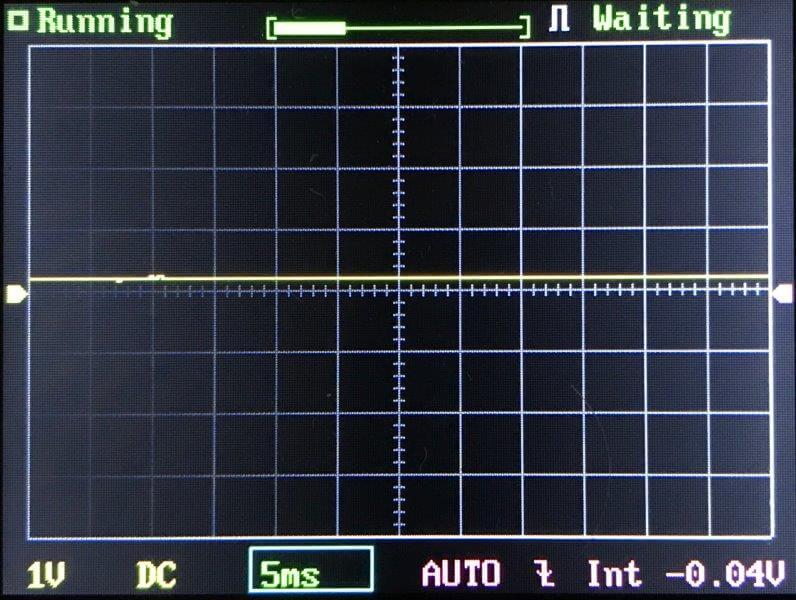
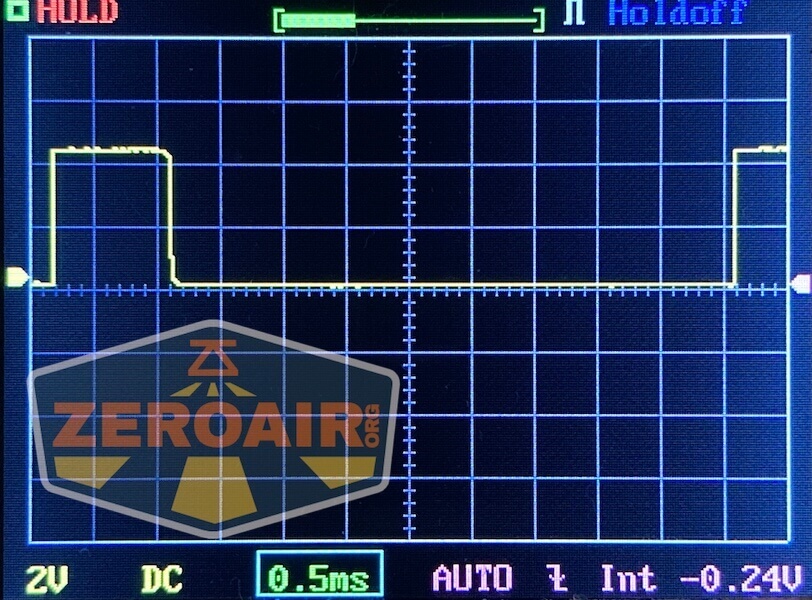
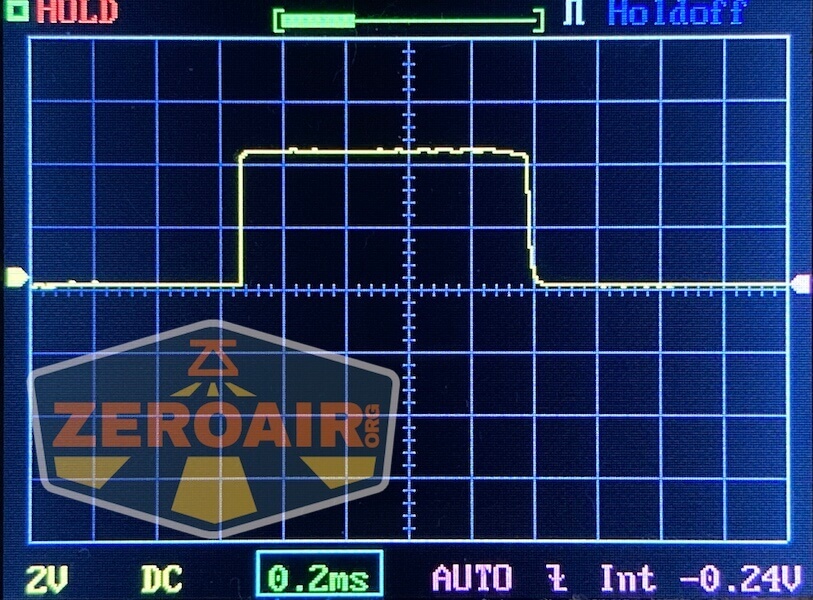
No PWM on the one mode.
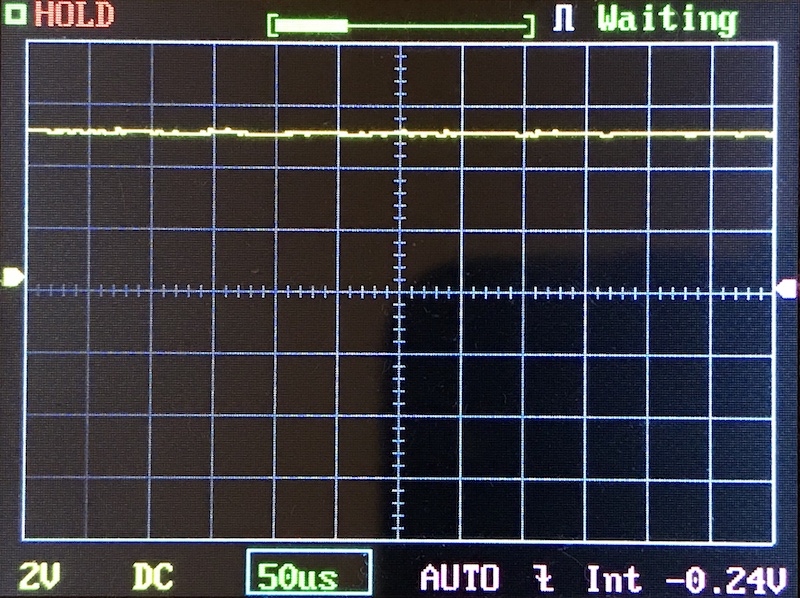
Here you can see a “baseline” – a chart with almost no light hitting the sensor.
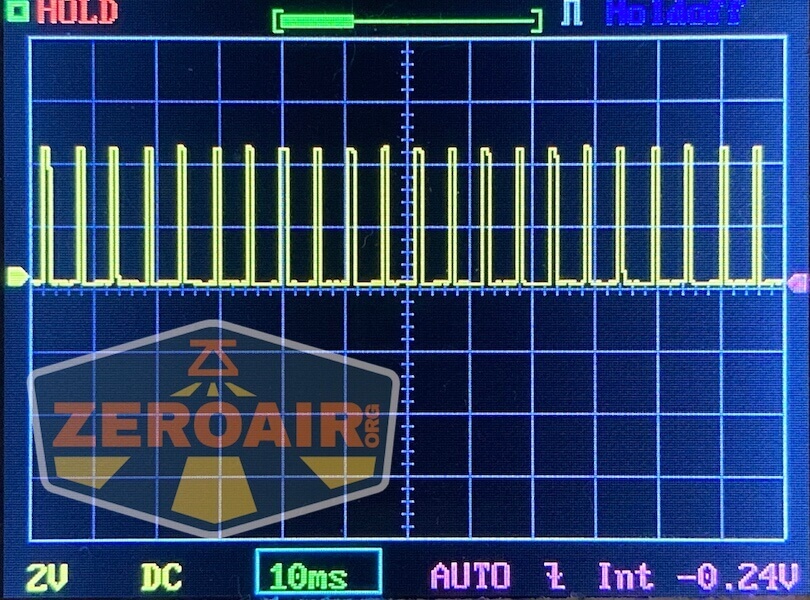
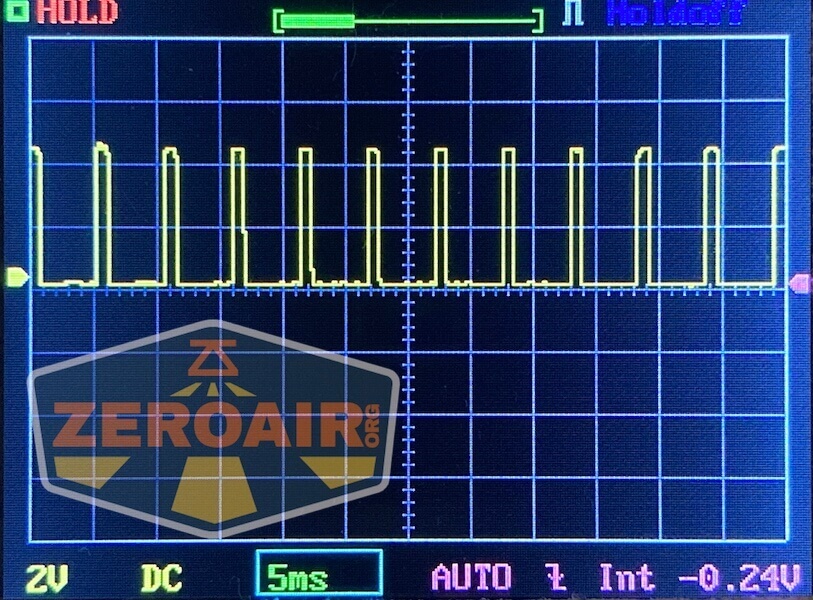
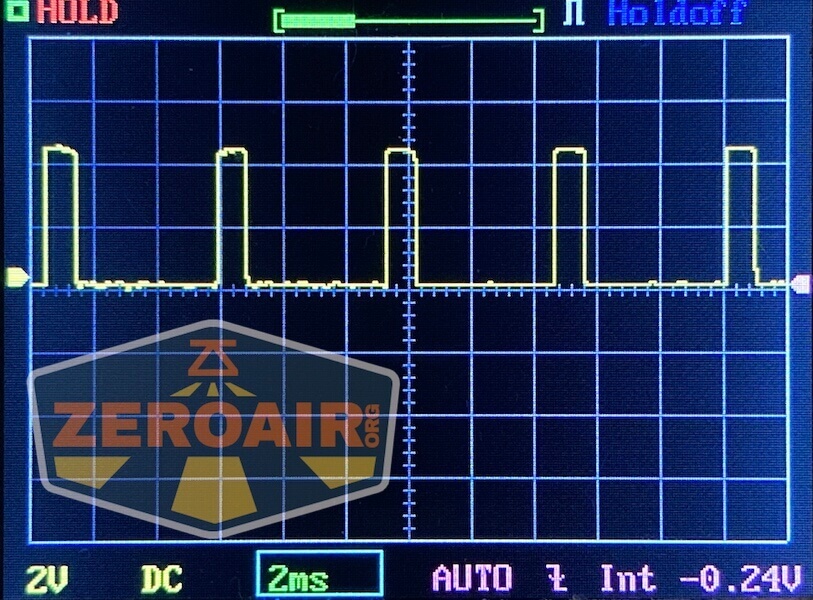
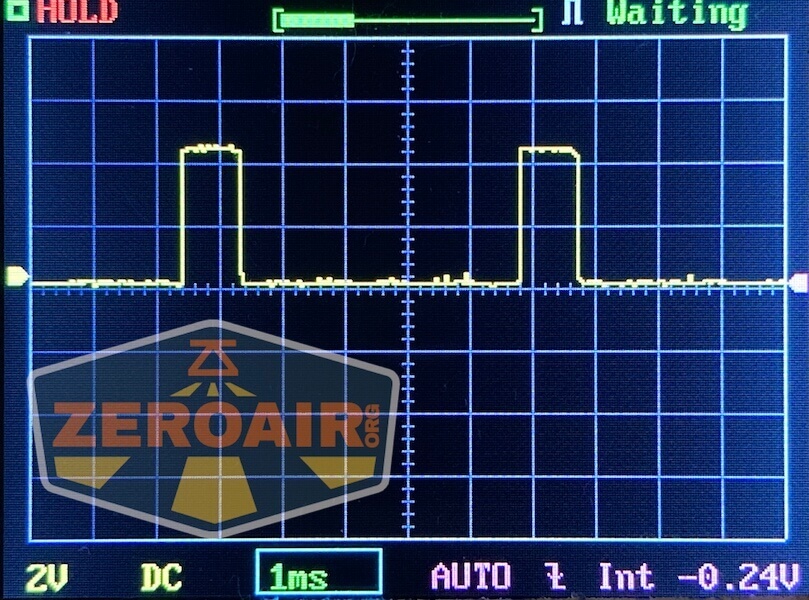
Then there’s the Ultrafire WF-602C flashlight, which has some of the worst PWM I’ve seen. It’s so bad that I used a post about it to explain PWM! Here are multiple timescales (10ms, 5ms, 2ms, 1ms, 0.5ms, 0.2ms) to make comparing this “worst” PWM light to the test light easier. That post also explains why I didn’t test the WF-602C at the usual 50us scale.
User Interface and Operation
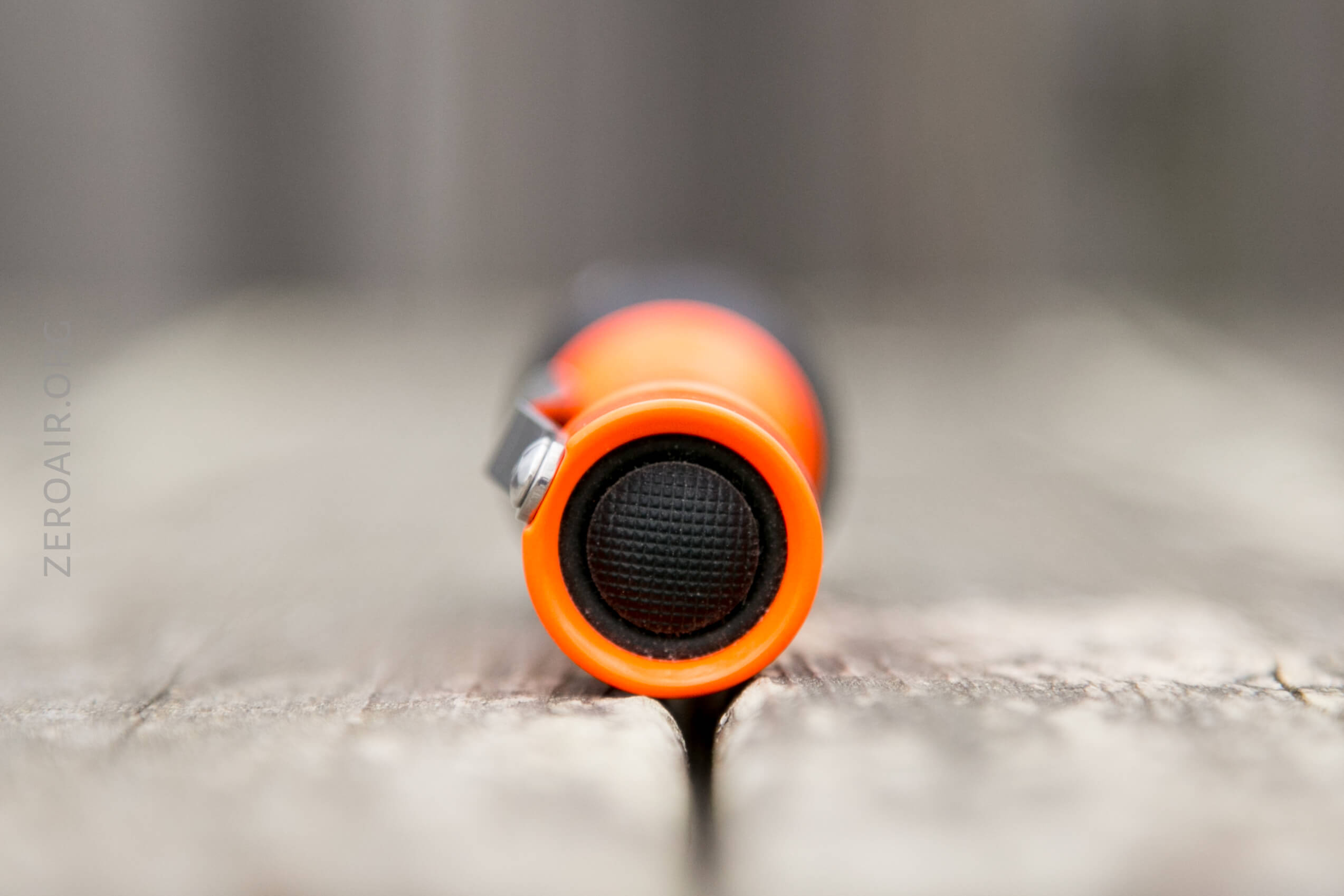
The head itself doesn’t have any user interface. You’ll likely pair it with a mechanical clicky, though. Mechanical clicky operation is easy. Click for on. Click again for off. Nothing more to it.
LED and Beam
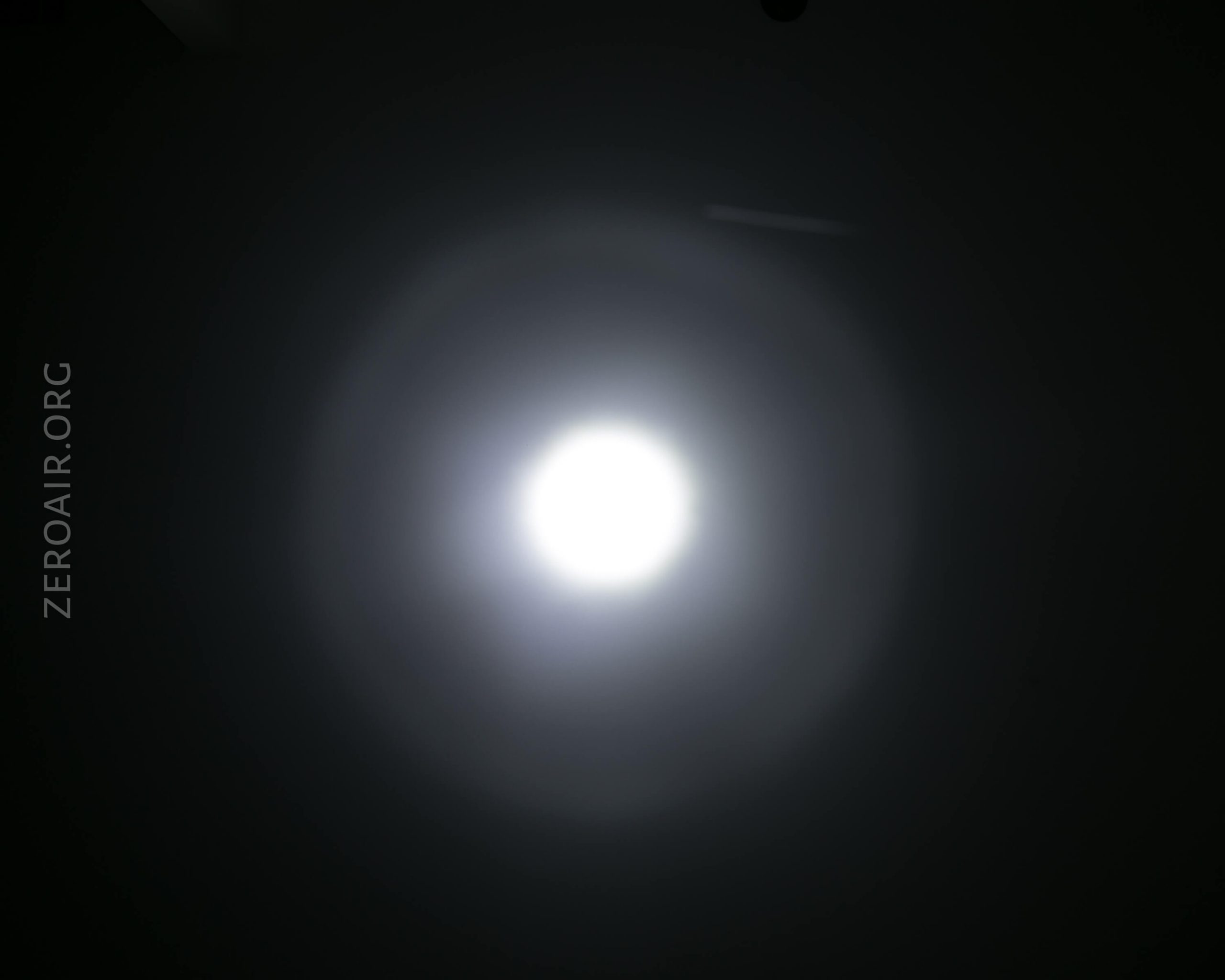
The emitter is described as a “trade secret.” I’m not really sure what it is, and the optic doesn’t come off, so it’s hard to say. I know that some internet sleuths will get it sorted in short order. The optic gives a very good, focused beam. The temperature is a 5500K cool white.
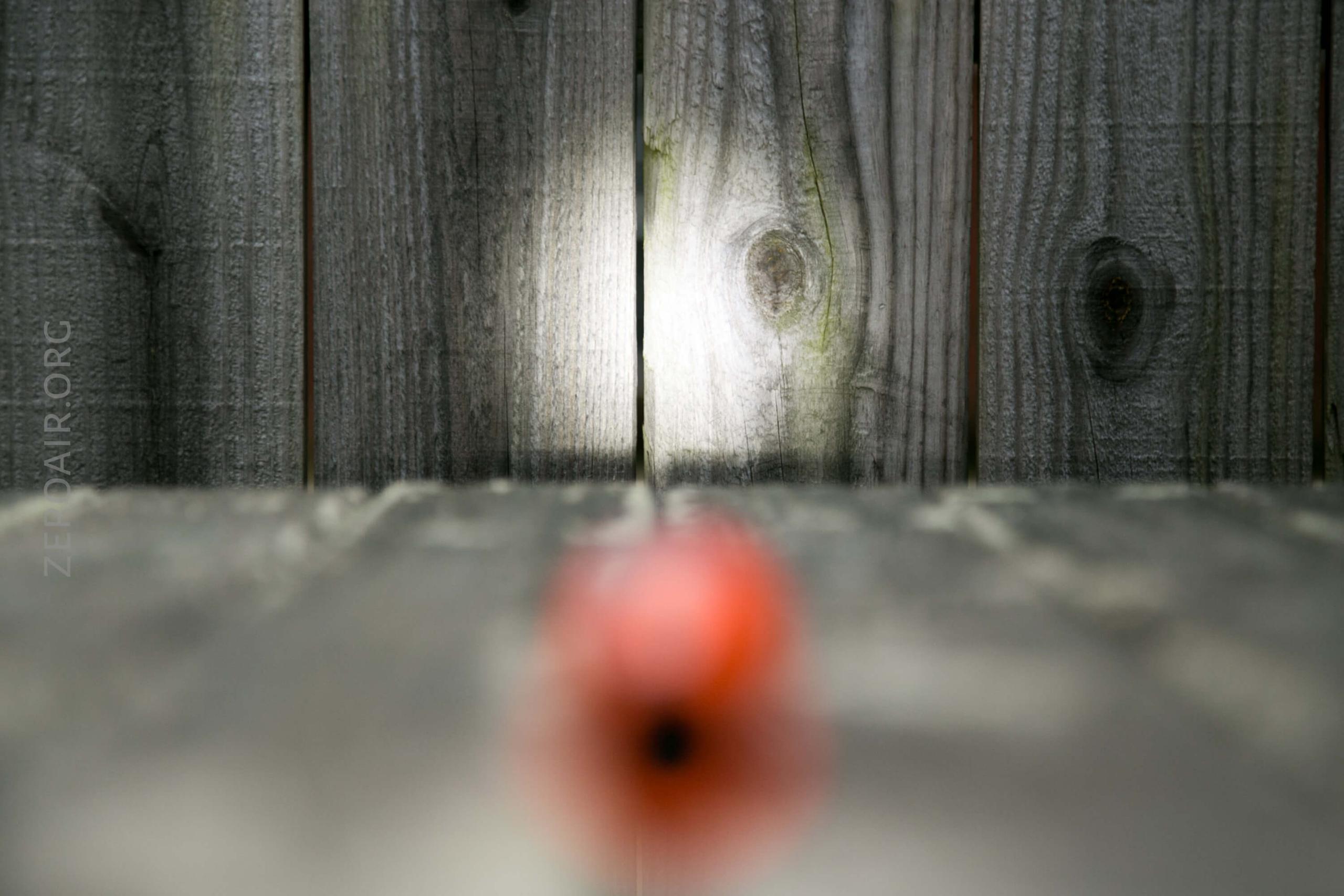
These beamshots always have the following settings: f8, ISO100, 0.3s shutter, and manual 5000K exposure. These photos are taken at floor level, and the beam hits the ceiling around 9 feet away.
Tint vs BLF-348 (KillzoneFlashlights.com 219b version) (affiliate link)
I keep the test flashlight on the left and the BLF-348 reference flashlight on the right.
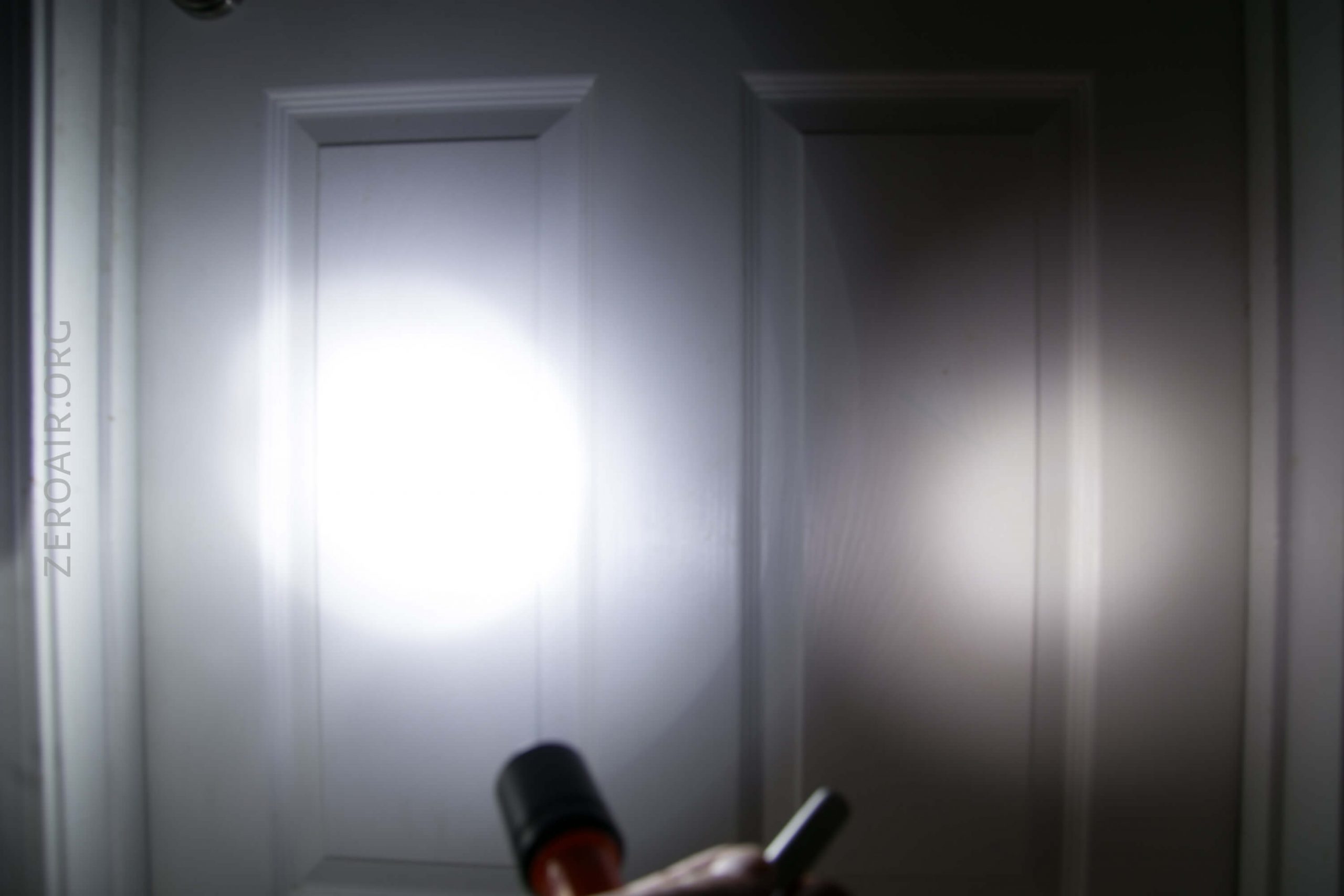
I compare everything to the Killzone 219b BLF-348 because it’s inexpensive and has the best tint!
Conclusion
What I like
- Robust build quality
- Single-mode light
- E-Series makes it suitable for many bodies
- Can be turned into a very tiny thrower
What I don’t like
- Unspecified emitter
- CW and NW isn’t made
Notes
- This light was provided by Malkoff for review. I was not paid to write this review.
- This content originally appeared at zeroair.org. Please visit there for the best experience!
- Please use my Amazon.com referral link to help support zeroair.org!
- Please support me on Patreon! I deeply appreciate your support!
Discover more from ZeroAir Reviews
Subscribe to get the latest posts sent to your email.
Pingback: Holiday Flashlight Guide 2021 - You Should Buy These! - ZeroAir Reviews
A little confused about your comments on PWM. at first you said it has none and then you went on to say it was so bad you couldn’t measure it?
The reference light (a different light) has PWM. This Malkoff does not.