

RovyVon Aurora A24Ti Titanium Keychain Flashlight Review
RovyVon reached out recently and offered to send this A24Ti Keychain Flashlight over for review. I’m a pretty big fan of the Aurora series so I was excited to test this titanium version! It’s slightly updated from the previous similar lights I have like this, so read on!
Official Specs and Features
Here’s a link to the official product page.
Versions of the RovyVon A24Ti Keychain Flashlight
There are a bunch of versions. And each version has options… Aluminum, brass, plastic, with side lights or without, UV, etc. Even a glow body!

Price
This A24Ti titanium model has a base price of $89.95. The price goes up from there, depending on if you’d like tritium (green or blue) vials installed ($119.95).
Short Review
This is another good option from RovyVon. The titanium is a good body. Output is good, the modes are good, charging is good. All in all, this is another good entry! I particularly like the changes in the body style over the brass version I have.
Long Review
The Big Table
| RovyVon A24Ti Keychain Flashlight | |
|---|---|
| Emitter: | Cree XP-L HD |
| Price in USD at publication time: | $89.95 |
| Cell: | Internal |
| Turbo Runtime | High Runtime |
| LVP? | Red warning, switches off |
| Switch Type: | E-Switch |
| Quiescent Current (A): | ? |
| On-Board Charging? | Yes |
| Charge Port Type: | micro-USB |
| Chargetime | |
| Power off Charge Port with no cell? | |
| Claimed Lumens (lm) | 1100 |
| Measured Lumens (at 30s) | 929 (84.5% of claim)^ |
| Candela per Lumen | 6.5 |
| Claimed Throw (m) | 150 |
| Candela (Calculated) in cd (at 30s) | 319lux @ 4.45m = 6317cd |
| Throw (Calculated) (m) | 159.0 (106% of claim)^ |
| All my RovyVon reviews! | |
^ Measurement disclaimer: Testing flashlights is my hobby. I use hobbyist-level equipment for testing, including some I made myself. Try not to get buried in the details of manufacturer specifications versus measurements recorded here; A certain amount of difference (say, 10 or 15%) is perfectly reasonable.
What’s Included

- RovyVon A24Ti Keychain Flashlight
- Split ring
- Spare o-ring
- Charge cable (USB to micro-USB)
- Paracord
- Lanyard
- Carry pouch
- Manual
Package and Manual

Note the updated packaging from the previous versions.


Build Quality and Disassembly

When I took these photos I’d actually carried this light a bit already. I carried it with a knife and some other things in a pocket, and you’ll notice a bit of marking on the body. I didn’t actually expect that, but such is the nature of titanium.
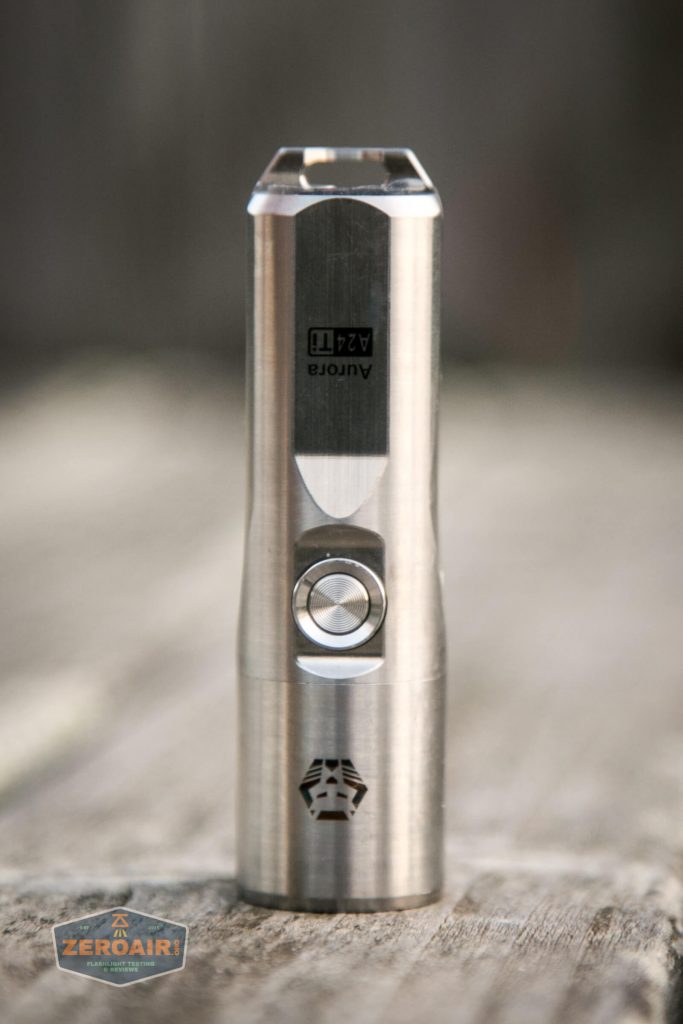

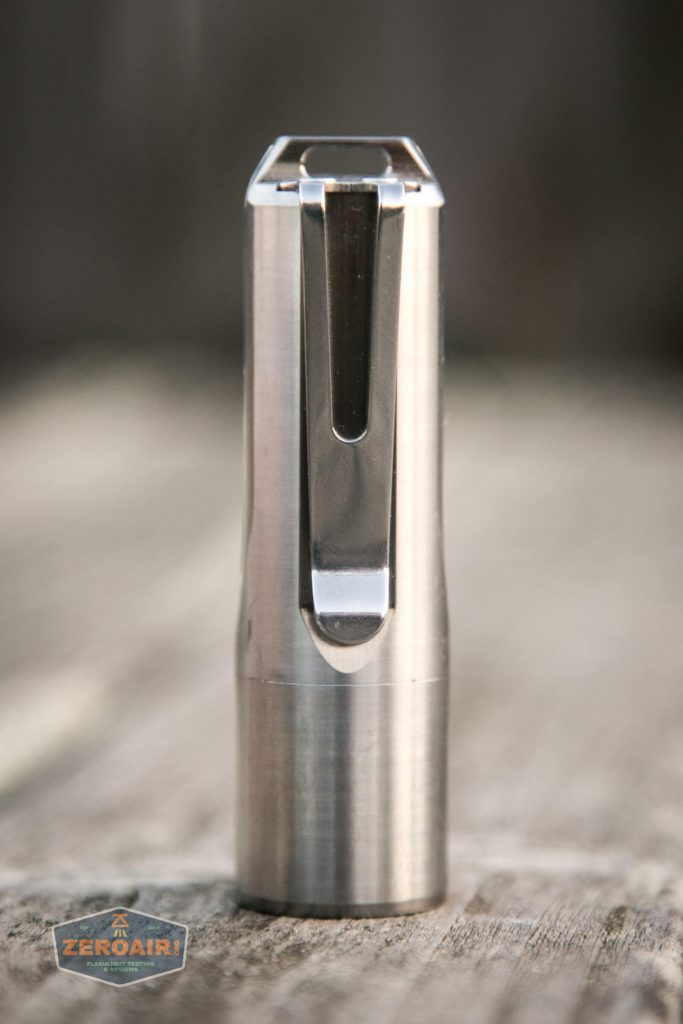
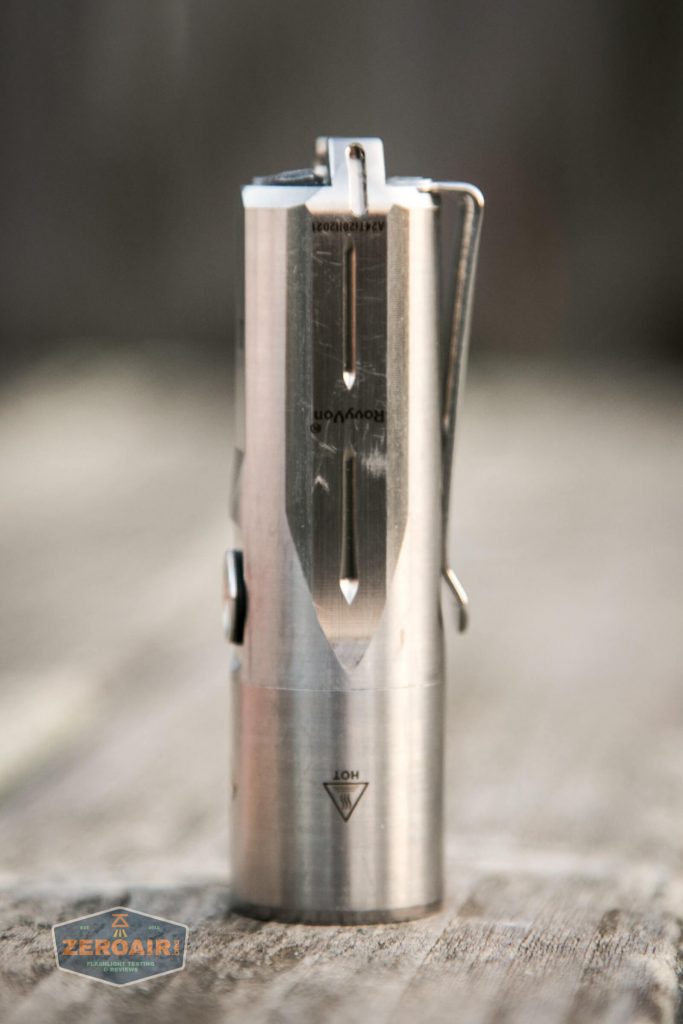
The body is serialized.


The branding doesn’t seem screen printed on – it looks like the titanium has actually been anodized in these tiny areas. A bit impressive, really.


The internals are the same as the other similar lights.


I disassembled the A23 previously, and I don’t think there are any surprises inside here. Here’s the disassembly of that light.


Size and Comps
Dimensions: 76mm (Length) x 21.5mm (Diameter)
Weight: 60.8g/2.14oz
Tritium size: 1.5 x 6.0mm
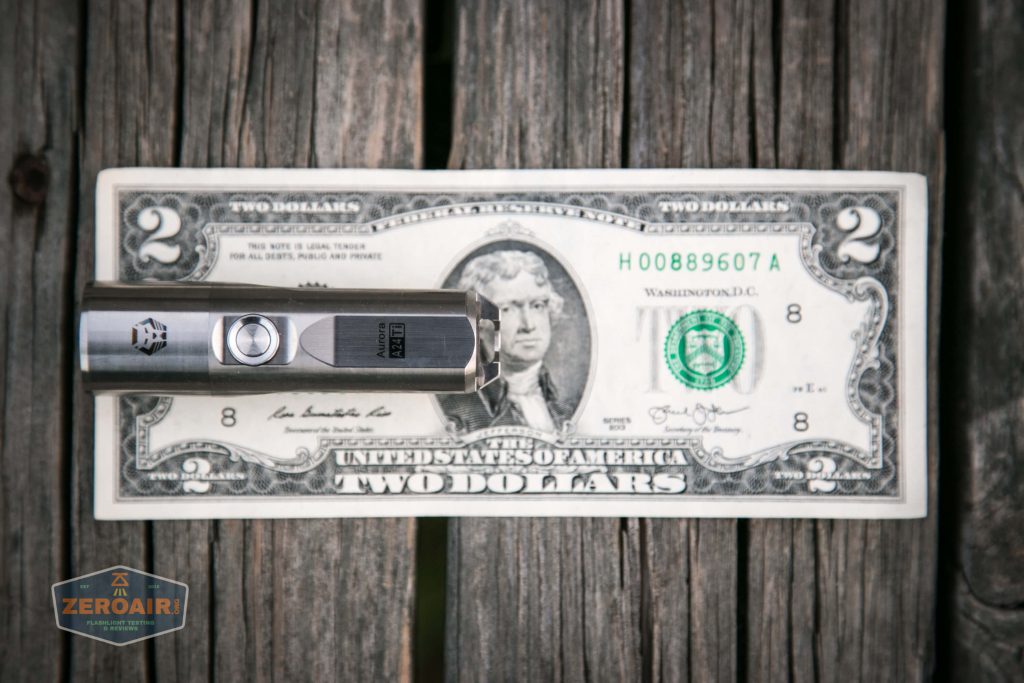
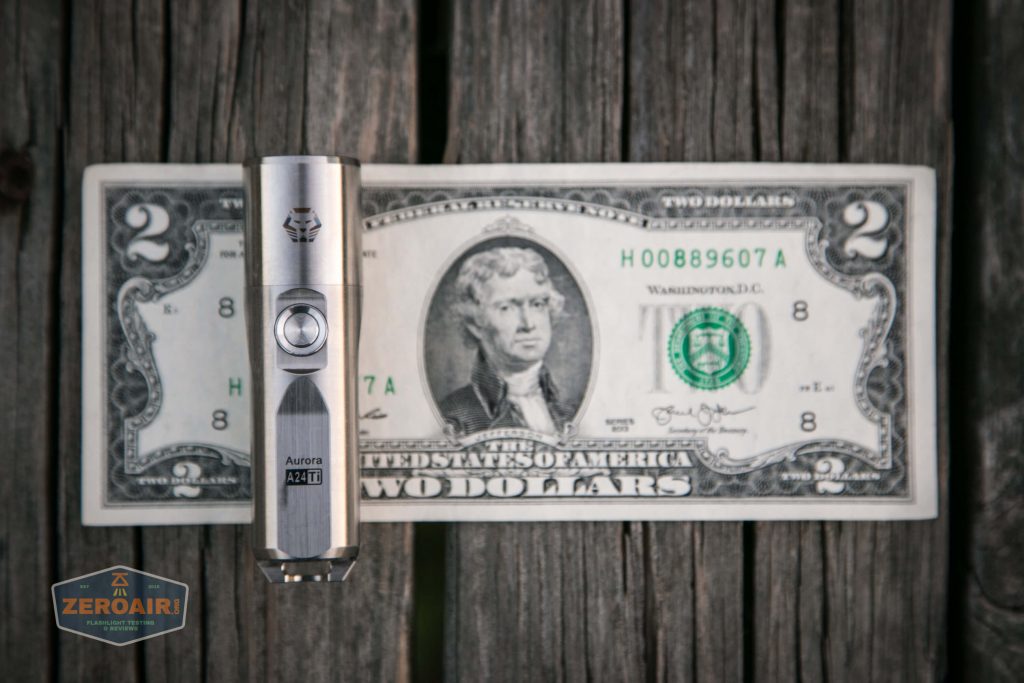
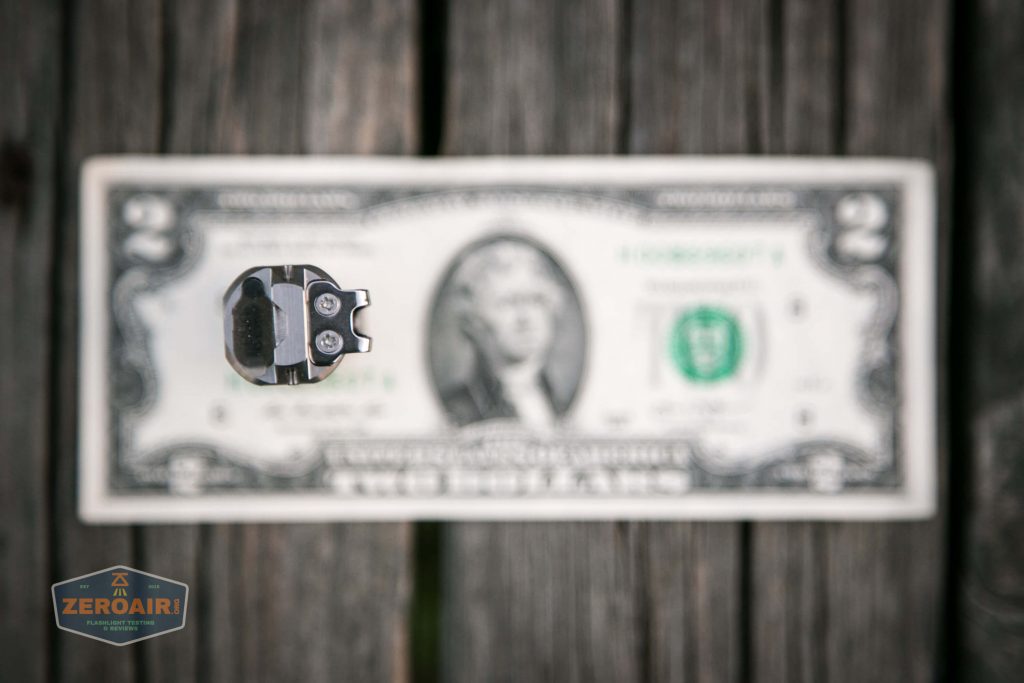

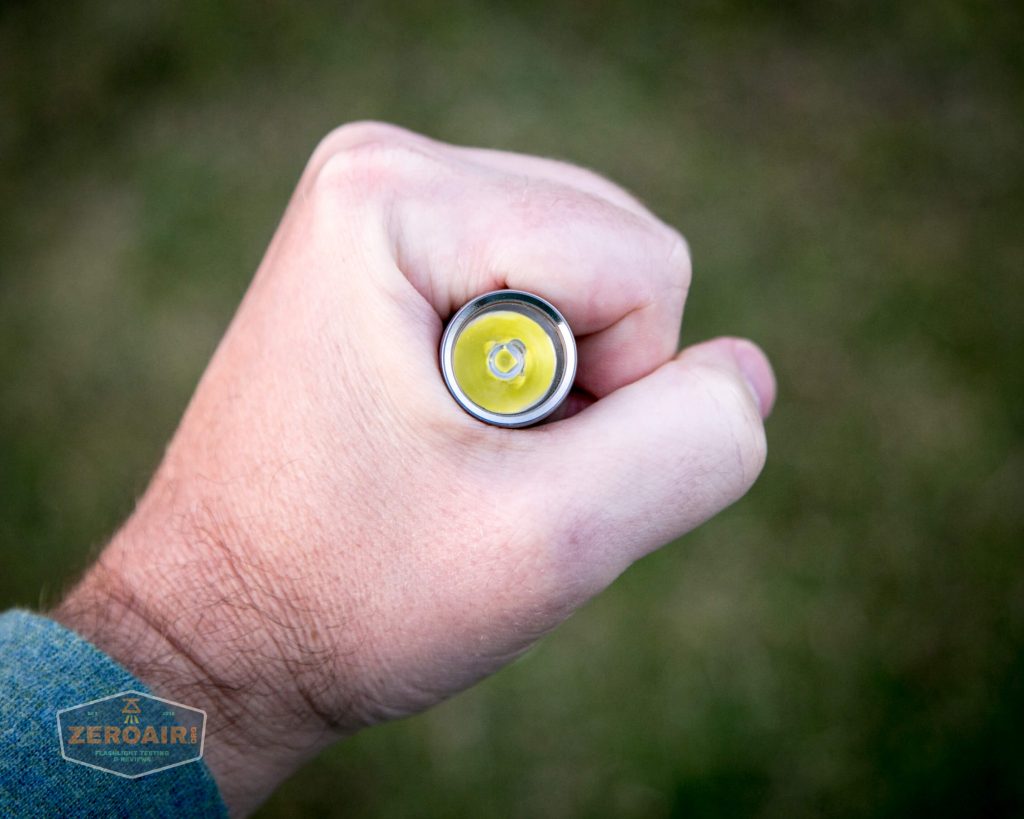
If the flashlight will headstand, I’ll show it here (usually the third photo). If the flashlight will tailstand, I’ll show that here, too (usually the fourth photo).

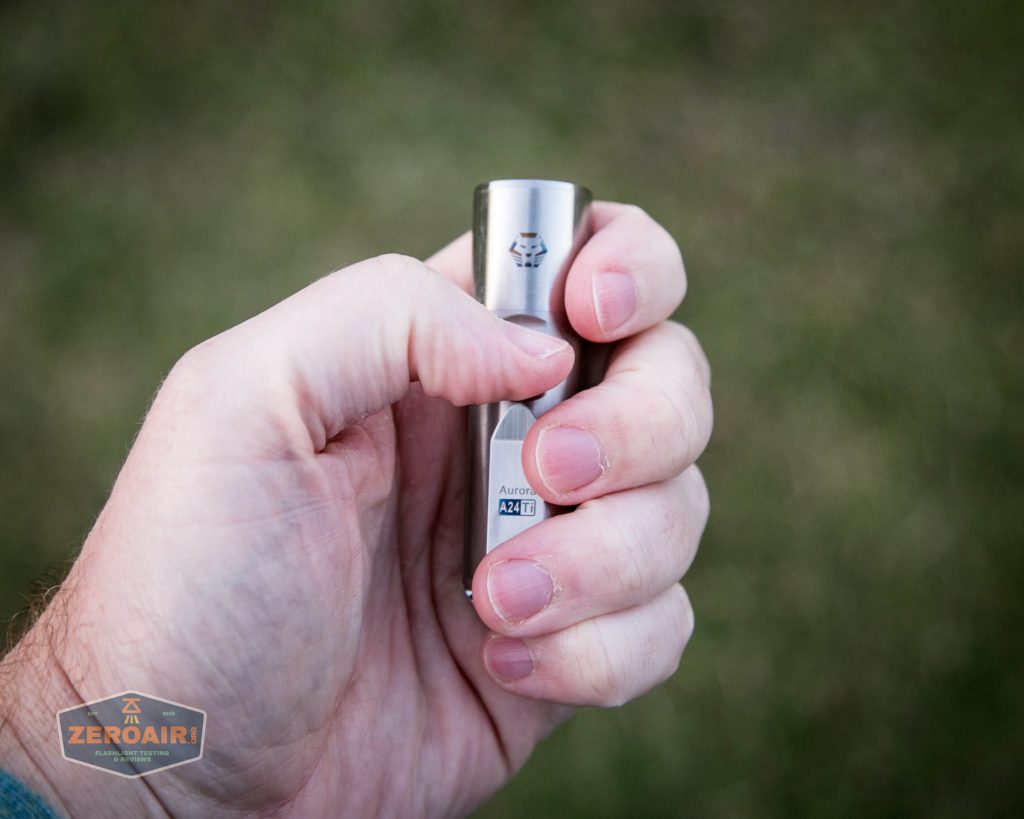

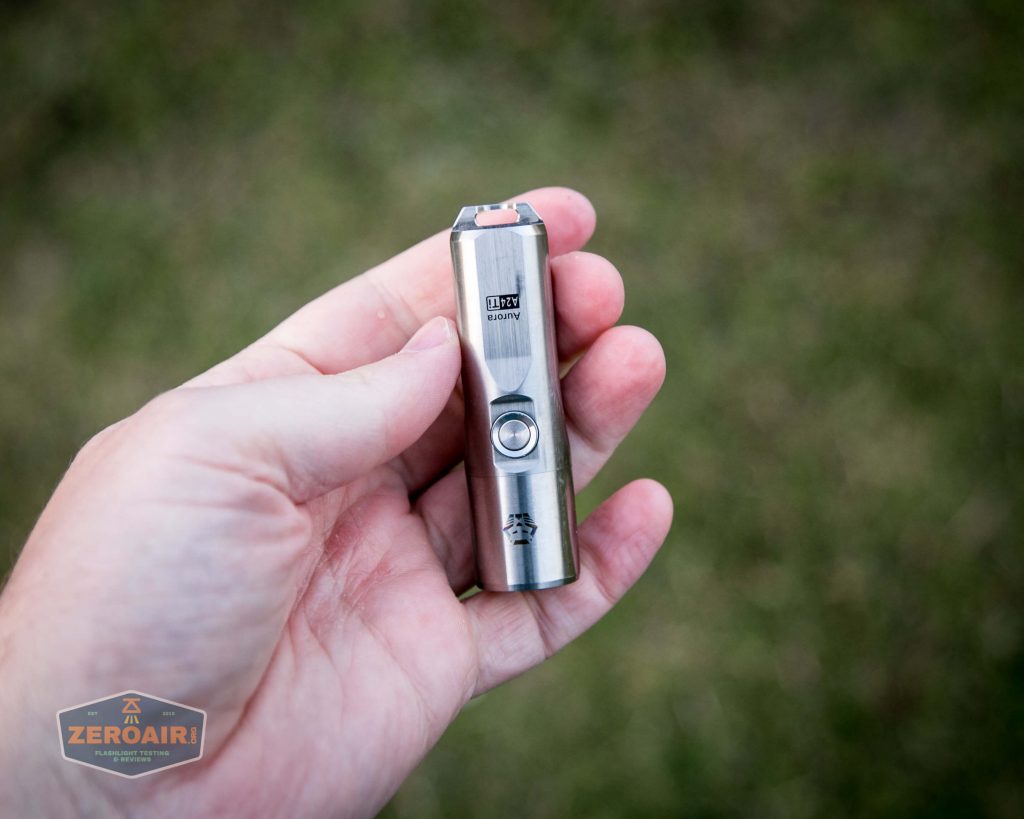
Here’s the test light with the venerable Convoy S2+. Mine is a custom “baked” edition Nichia 219b triple. A very nice 18650 light!

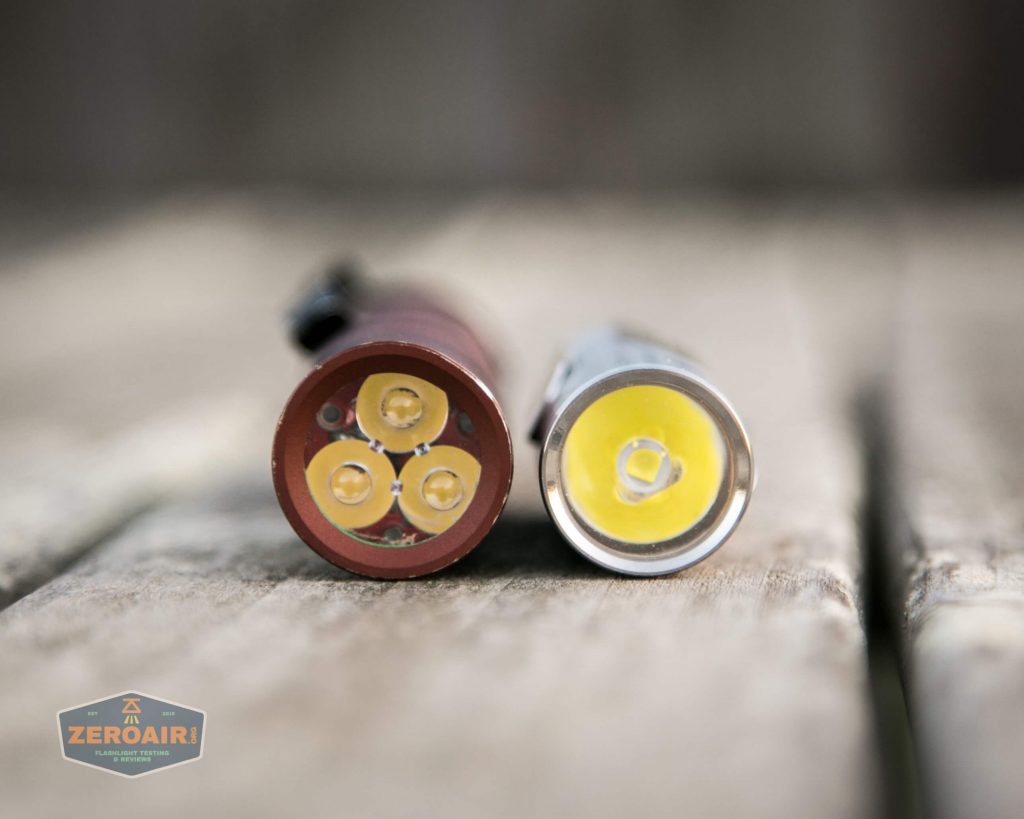
And here’s the light beside my custom-engraved TorchLAB BOSS 35, an 18350 light. I reviewed the aluminum version of that light in both 35 and 70 formats.
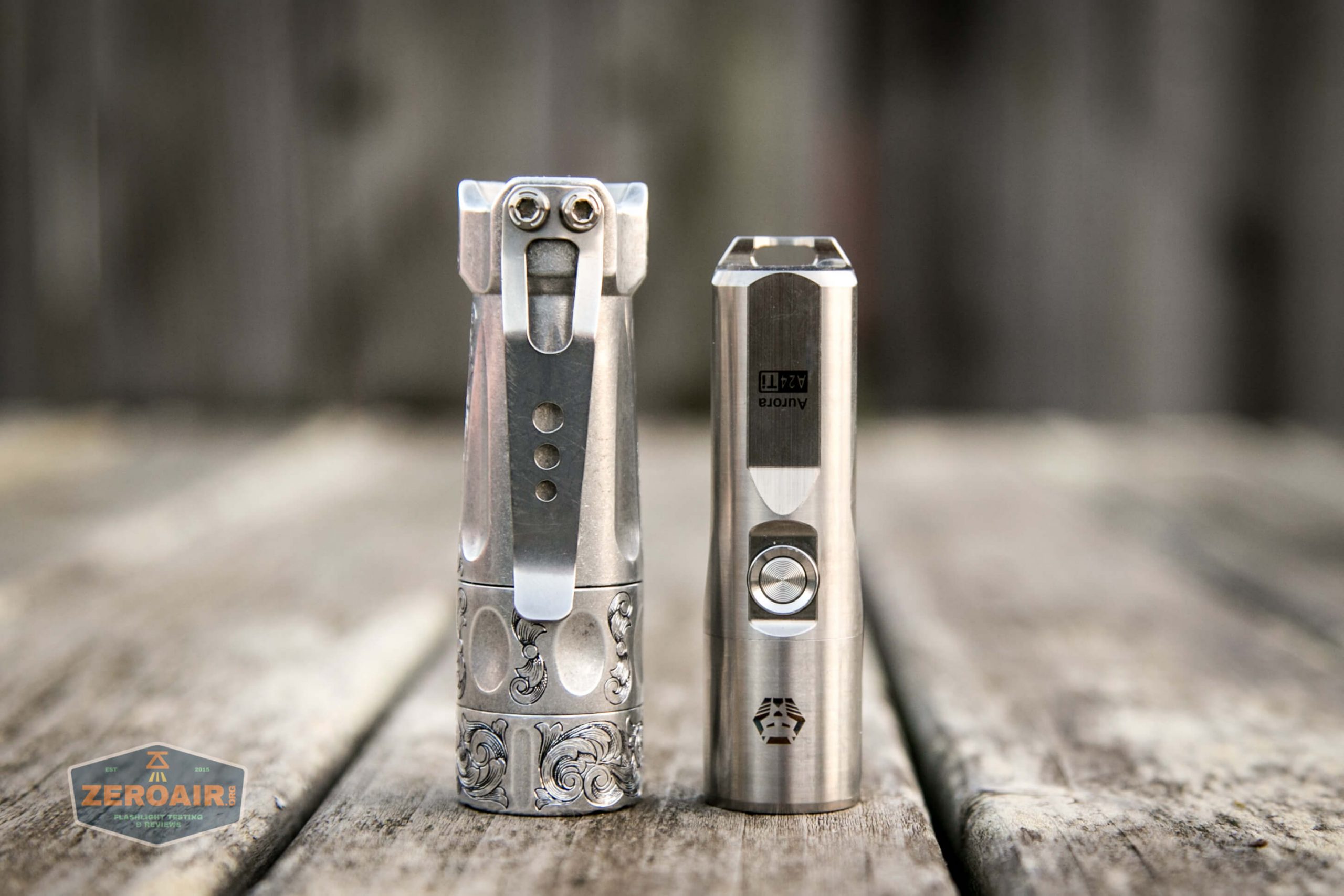
Below see the differences in my brass version and the A24. The A24 has flutes along the size, unlike the brass, which has flutes on the head. Why do I like this better? The new version has zero alignment issues. The flutes on the brass don’t line up to my satisfaction. This does bring up the point of logos on the titanium, which you can see aren’t aligned with the button or other areas.
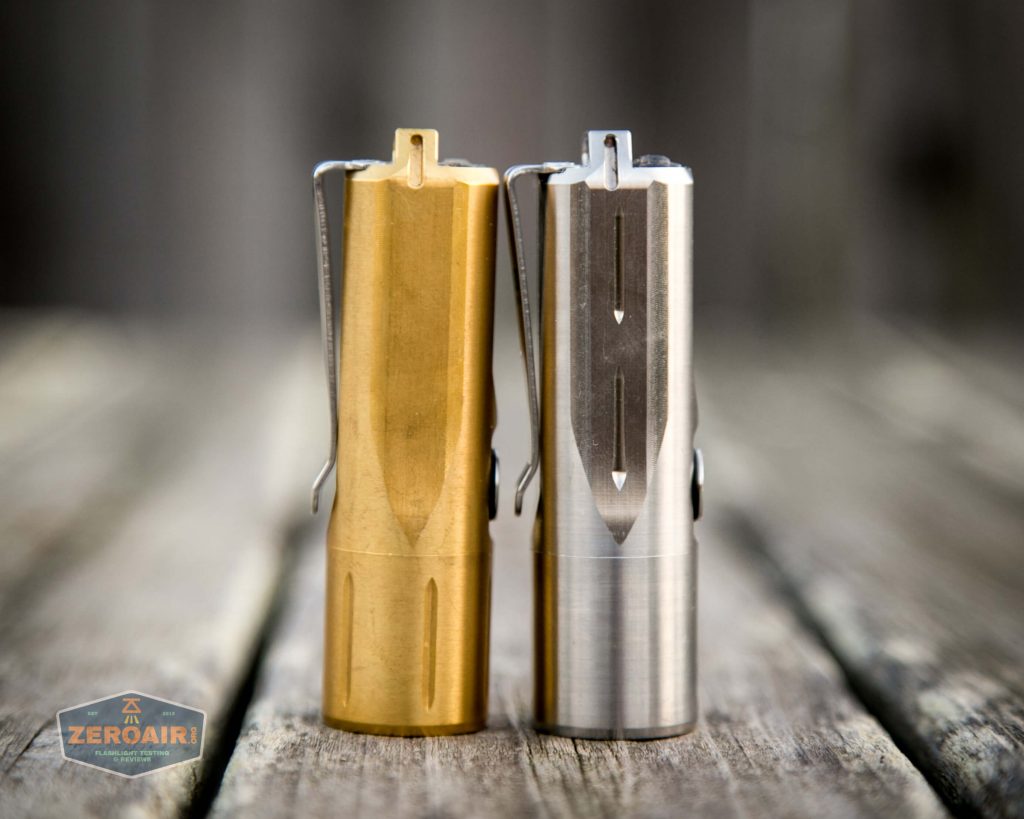
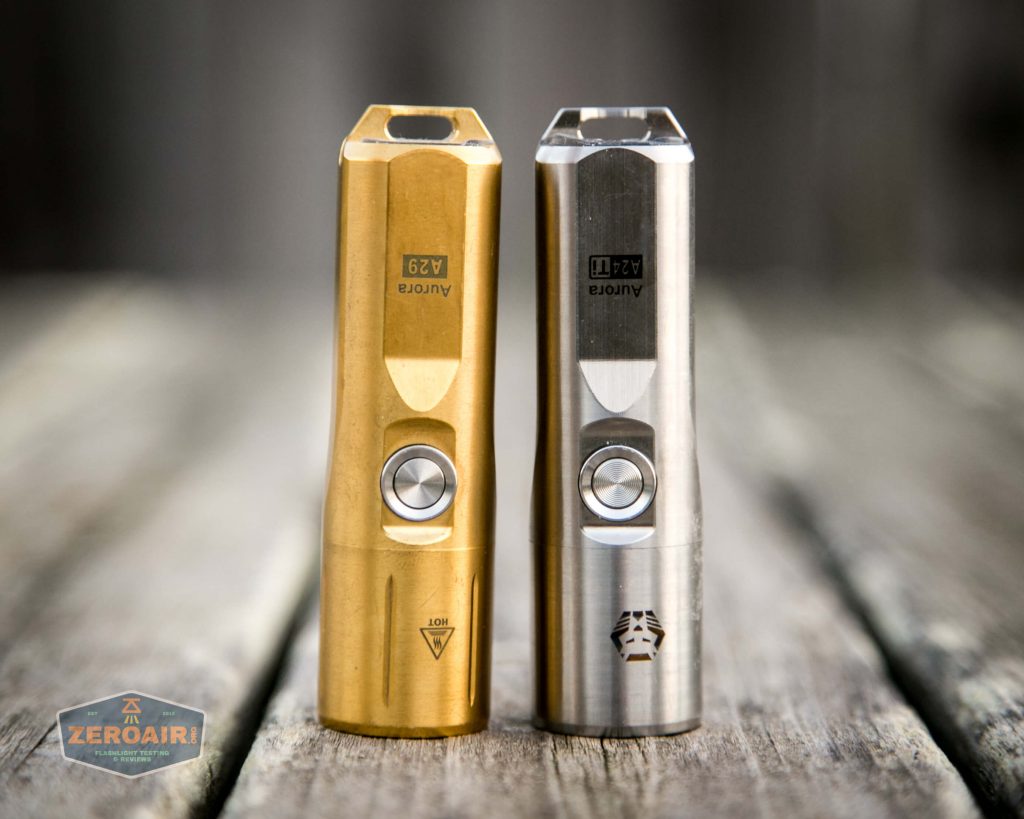
Here are all my Auroras! I think this is all of them… I have a few.

Retention and Carry
This light is primarily carried by the attached pocket clip. It’s a good clip, and quite usable.
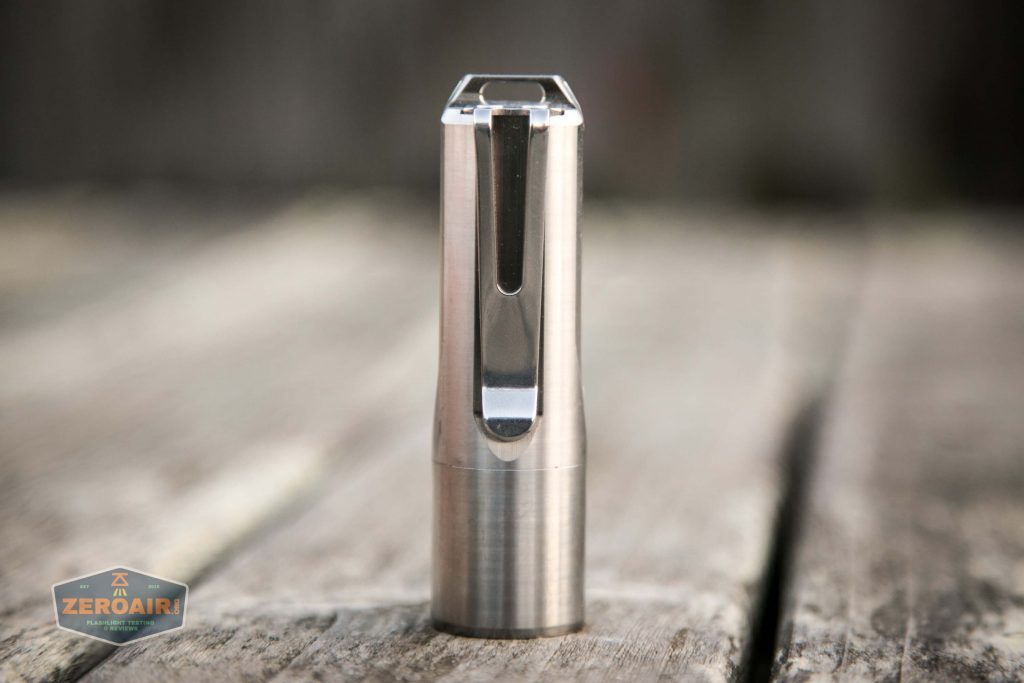
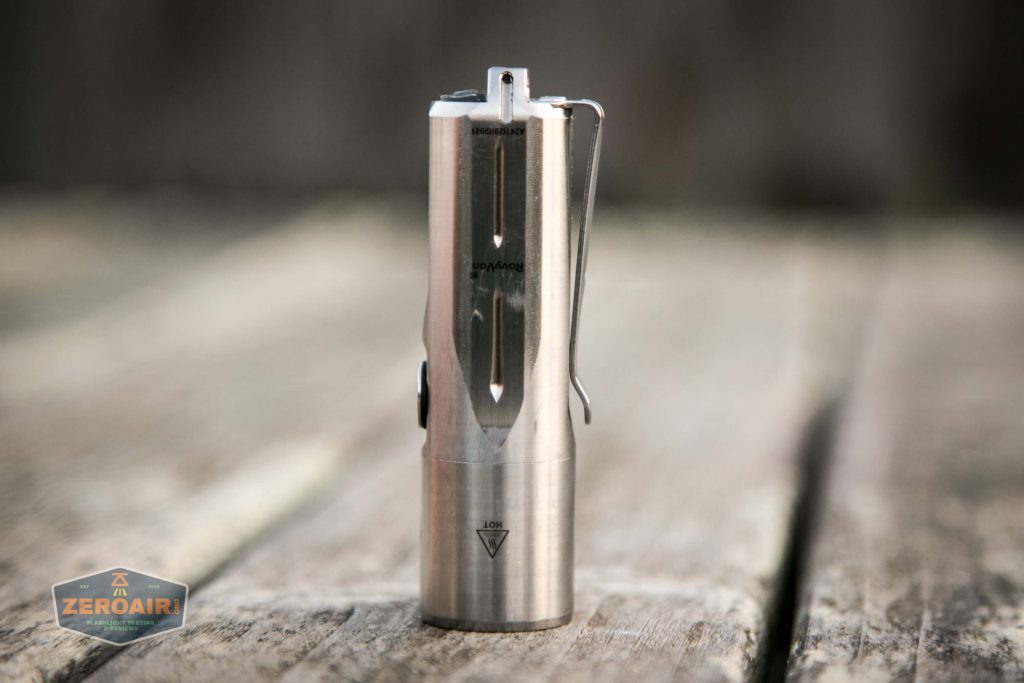
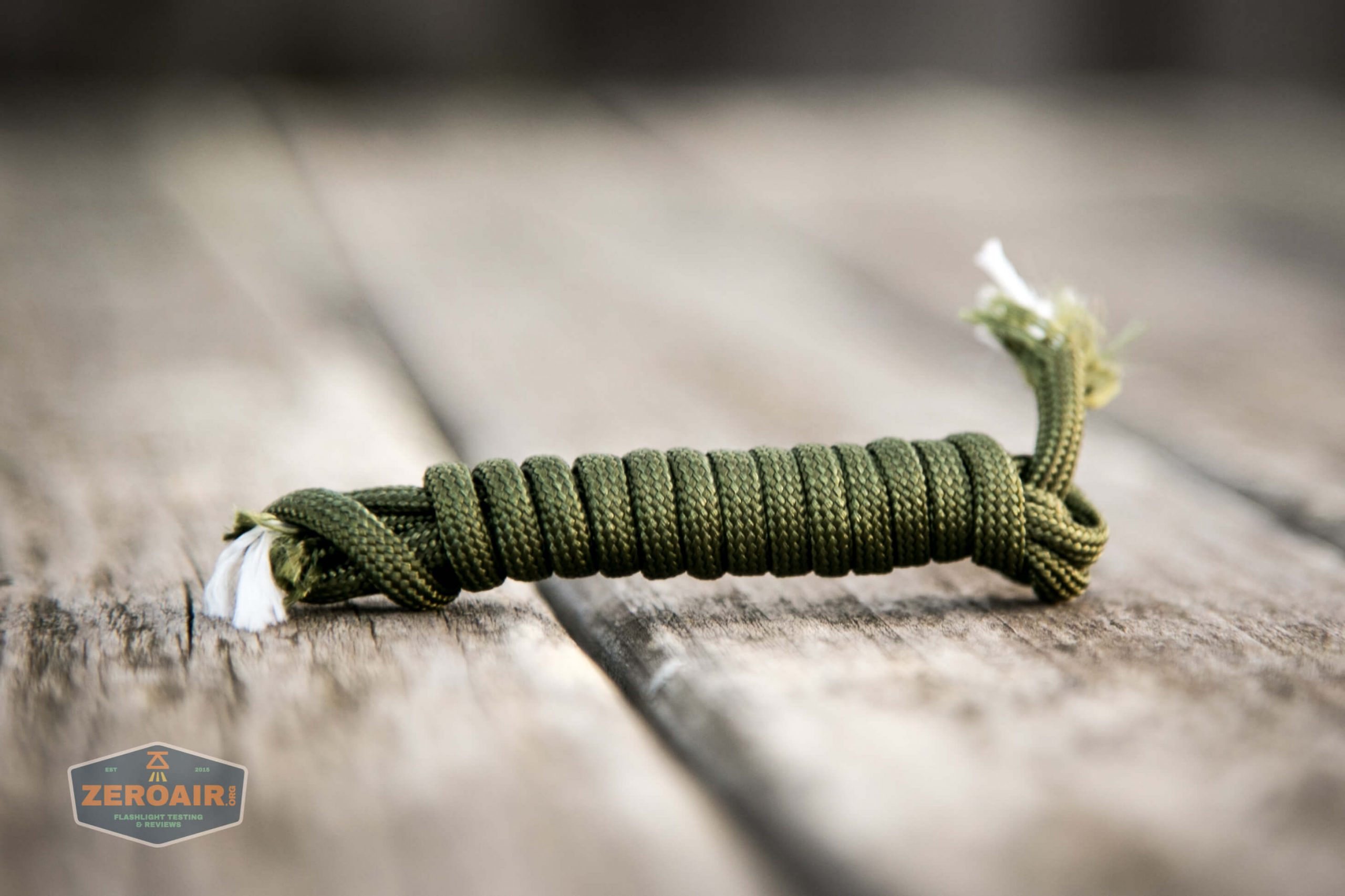
The clip has a slit for attaching the lanyard or paracord (both included). The lanyard can also attach through the tailcap loop area.
The clip is secured by two Philips screws.
Power and Runtime
The A24Ti is powered by an internal lipo, which is housed on the guts as a whole. Extra batteries are available (around $25, since you’re buying the whole internal section). I wouldn’t consider the battery to be field-serviceable, and I would only plan to replace the battery when the other one is worn out and not when the charge is simply depleted. Furthermore, the battery pack isn’t chargeable outside of the body.
Here are a few runtimes. Turbo steps down fairly quickly but has a good 1.5 minute 900-lumen output. The light steps down to around 300 lumens, then drops off to finally providing a red low voltage warning, and having a very low output. The A24 does shut off when the cell voltage is low.


Charging
The onboard charging happens by way of a micro-USB port in the tail end. There’s a press-in cover.

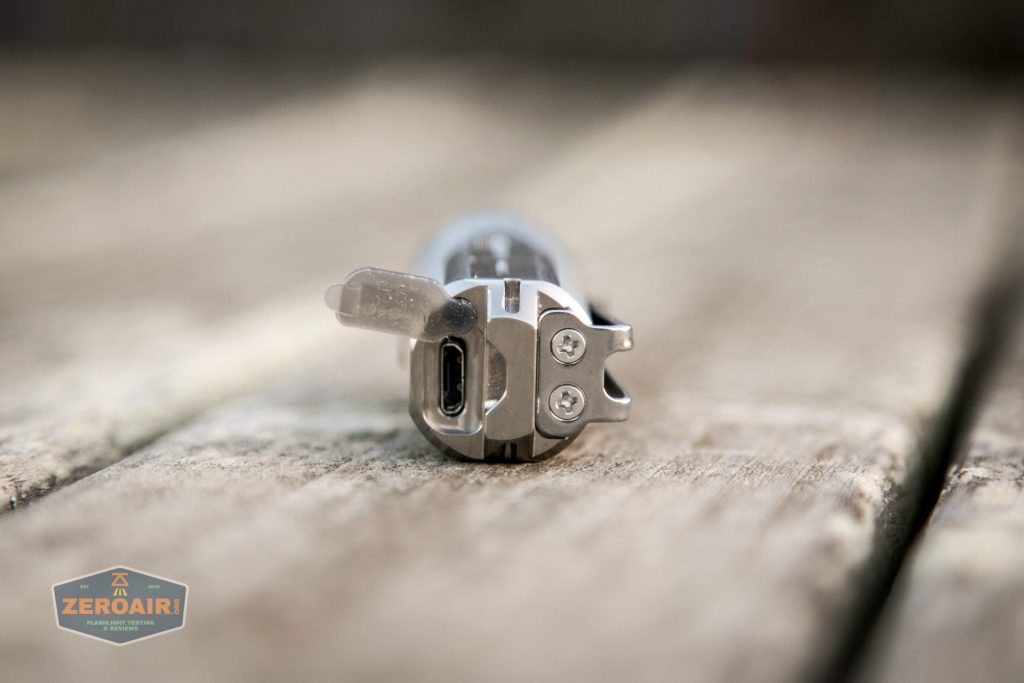
A necessary cable is included – USB to micro-USB.
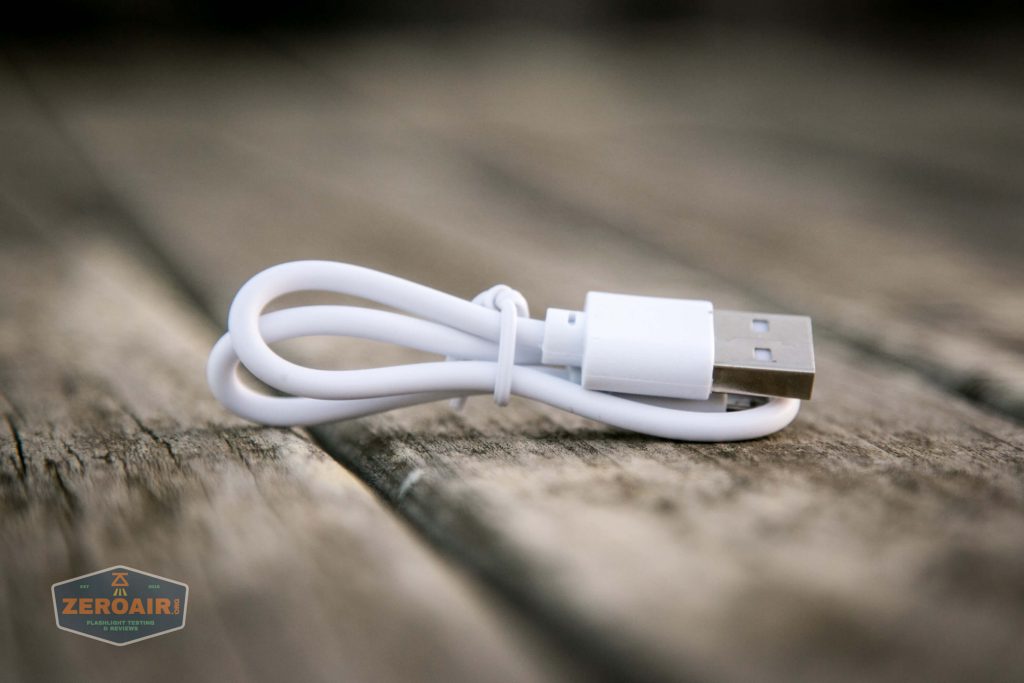
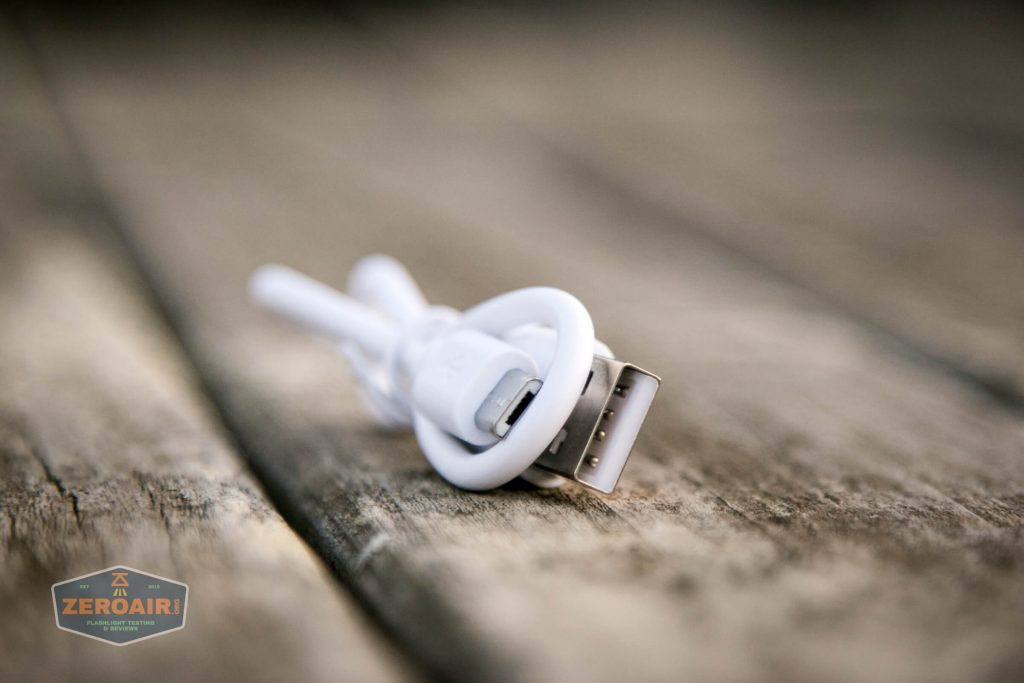
Charging is remarkably fast, at well under 1 hour.

Modes and Currents
| Mode | Mode Claimed Output (lm) | Claimed Runtime | Measured Lumens | Tailcap Amps |
|---|---|---|---|---|
| Turbo | 1100 | 1.5m+70m | 929 | – |
| High | 700 | 1.5m+110m | 619 | – |
| Medium | 170 | 130m | 192 | – |
| Low | 40 | 9.5h | 45 | – |
| Moonlight | 1 | 72h | – | – |
Pulse Width Modulation
The middle 3 modes have PWM, but it’s fast enough that I don’t think you’ll see it.
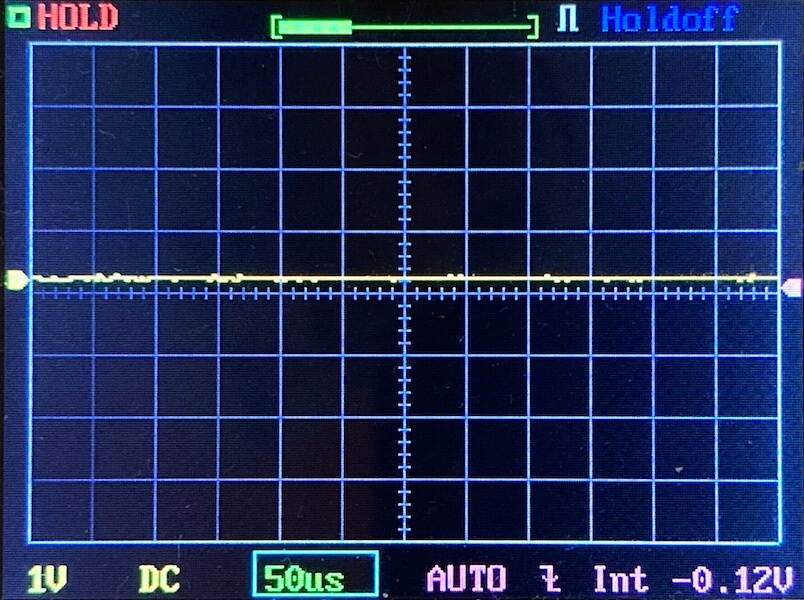


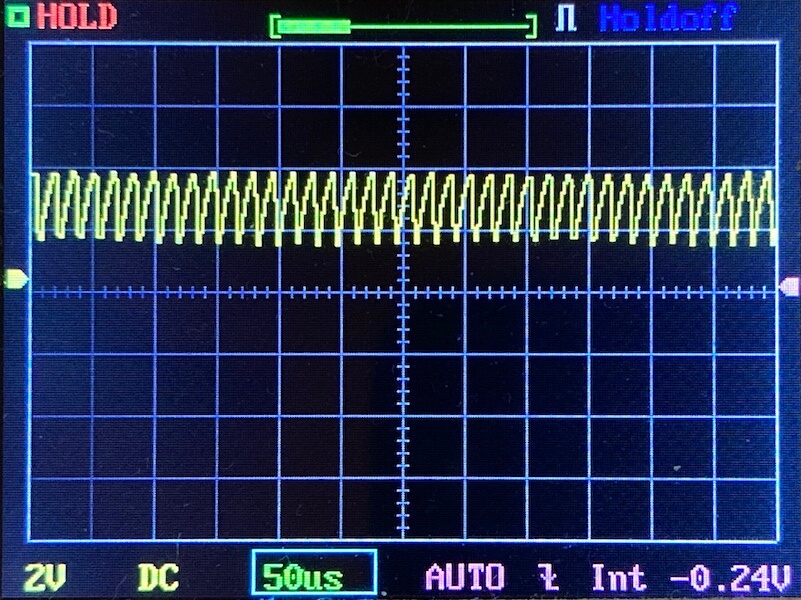
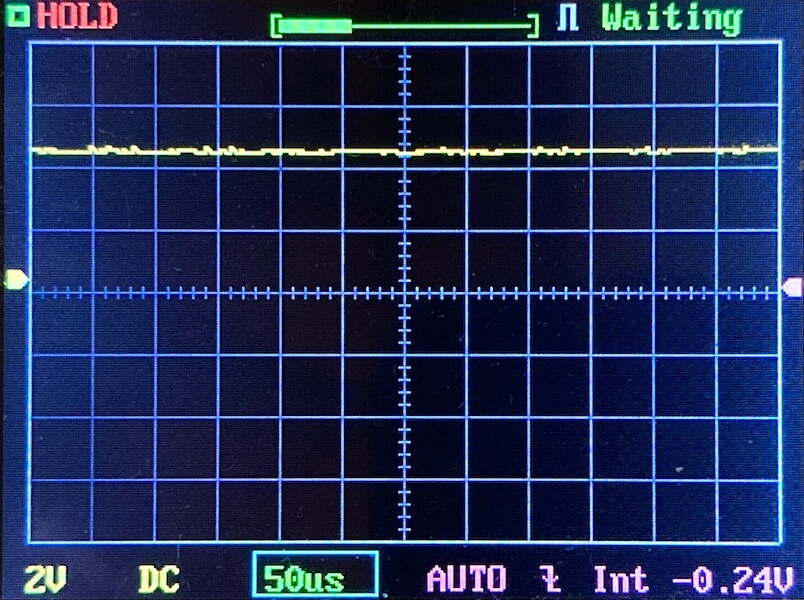
Here you can see a “baseline” – a chart with almost no light hitting the sensor.

Then there’s the Ultrafire WF-602C flashlight, which has some of the worst PWM I’ve seen. It’s so bad that I used a post about it to explain PWM! Here are multiple timescales (10ms, 5ms, 2ms, 1ms, 0.5ms, 0.2ms) to make comparing this “worst” PWM light to the test light easier. That post also explains why I didn’t test the WF-602C at the usual 50us scale.


User Interface and Operation
The button is a side switch, just below the head. It’s a metal-cover e-switch. The metal button has a metal surround, which both gives a place to find with your finger, and helps prevent accidental presses.
It’s a very quiet clicky button.
Here’s a user interface table!
| State | Action | Result |
|---|---|---|
| Off | Click | No action |
| Off | Hold | Momentary Turbo |
| Off | Double Click | On (mode memory) |
| On | Click | Mode advance (excluding moonlight) |
| On | Hold | Off |
| Off | Click 4x | Moonlight |
| Moonlight | Click | Off |
| On >3m | Click | Off |
| Off | Click 3x | SOS |
| SOS | Click | Strobe |
| Strobe | Click | Beacon |
LED and Beam
This review copy has a Cree XP-L HD emitter. My choice is typically for the Nichia option, which is mentioned in the manual of this light, but as far as I can tell is not currently available.
The Cree option is a bit cooler, which I think is suitable for titanium. I like cooler emitters in colder sterile metals (like titanium) and warm emitters in warmer metals (like brass and copper).
These beamshots always have the following settings: f8, ISO100, 0.3s shutter, and manual 5000K exposure. These photos are taken at floor level, and the beam hits the ceiling around 9 feet away.


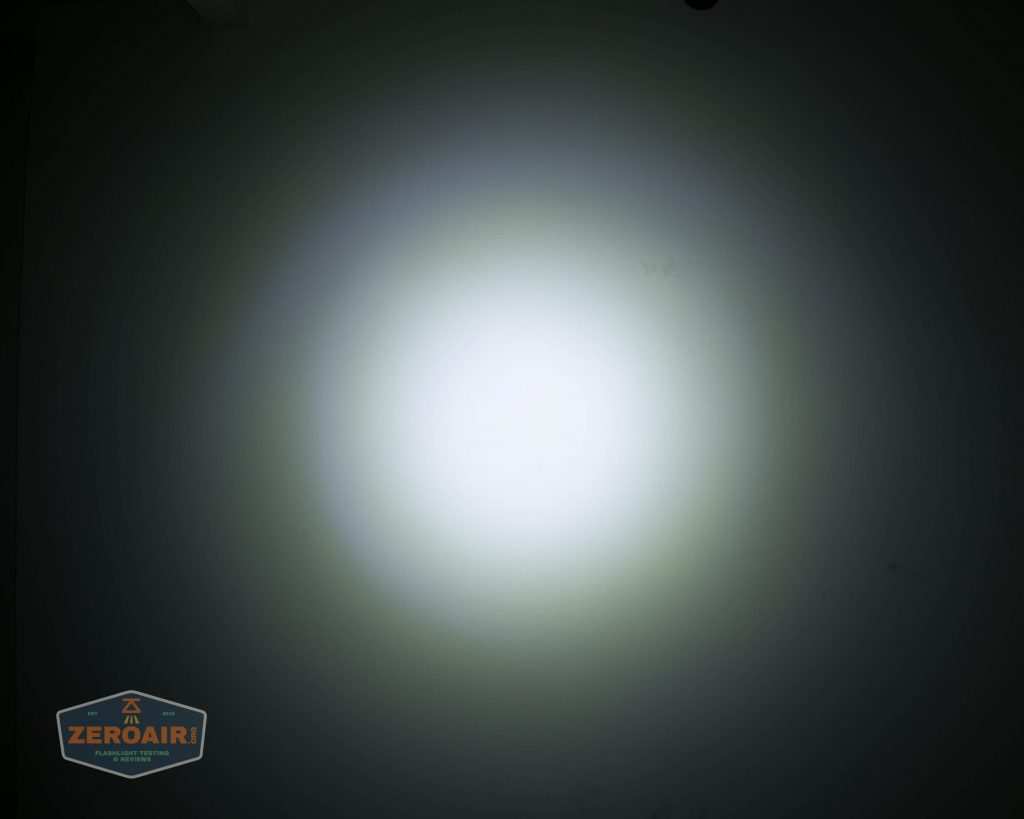

Tint vs BLF-348 (KillzoneFlashlights.com 219b version) (affiliate link)
I keep the test flashlight on the left and the BLF-348 reference flashlight on the right.
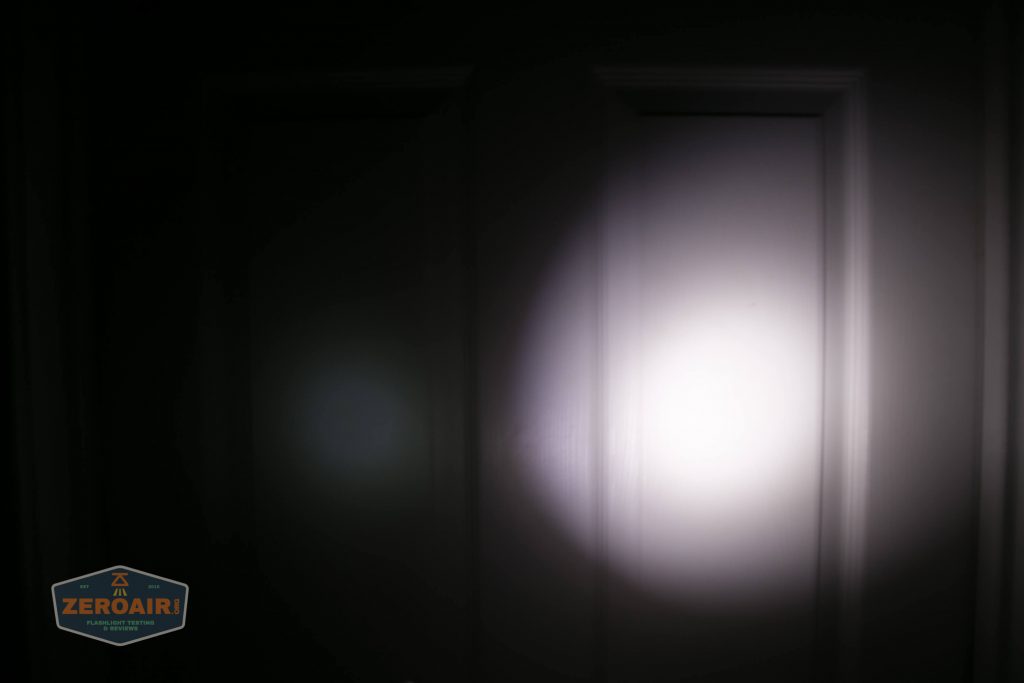
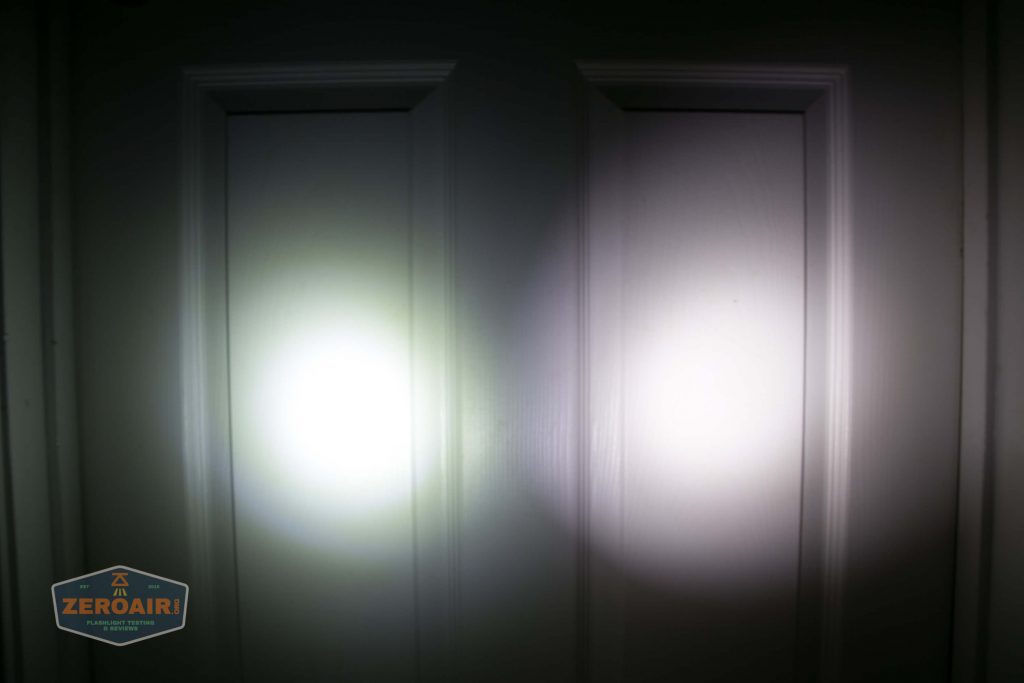
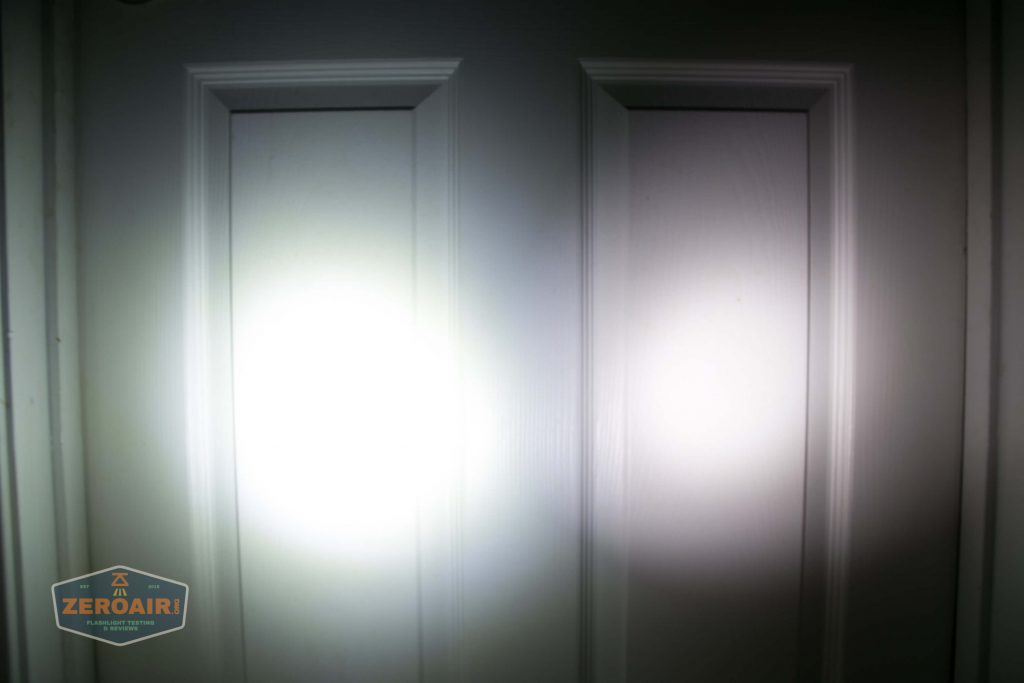
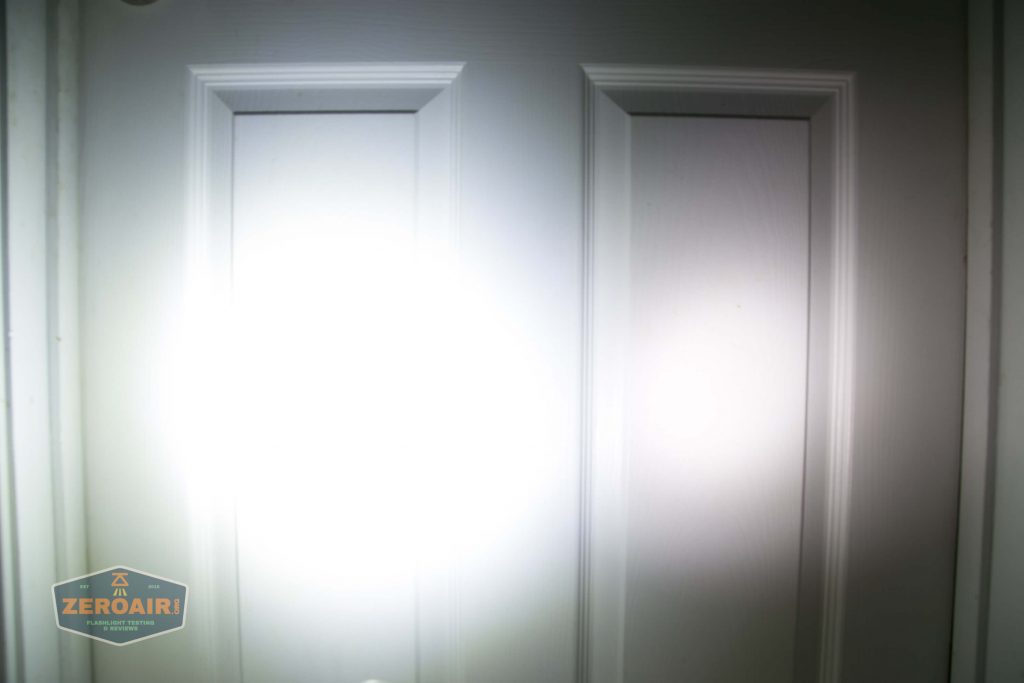
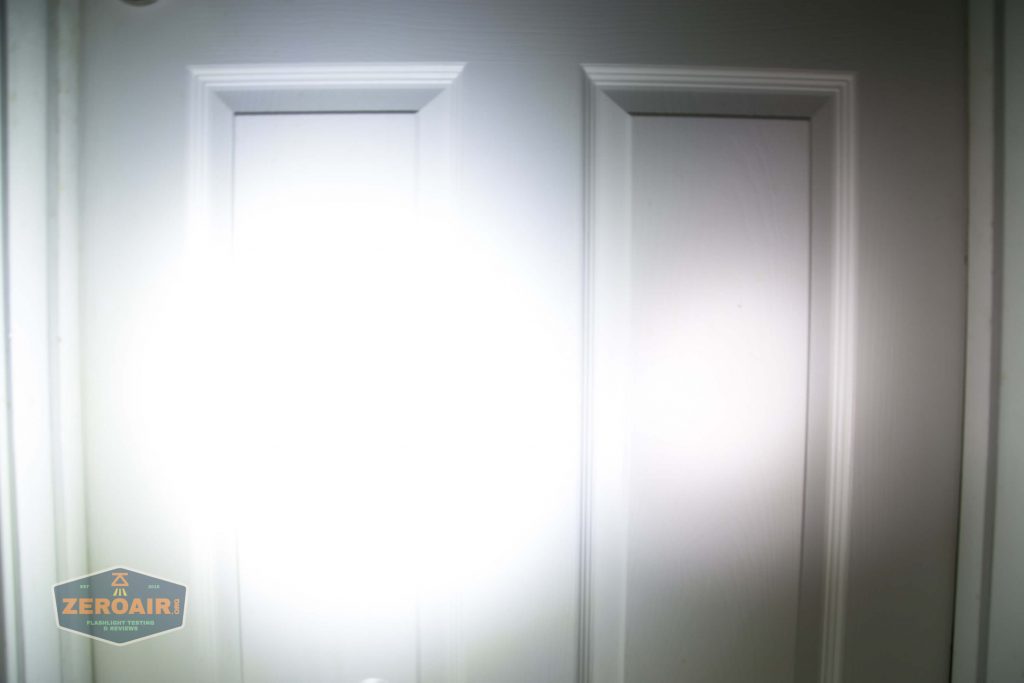
I compare everything to the KillzoneFlashlights.com 219b BLF-348 because it’s inexpensive and has the best tint!
Conclusion
What I like
- Carries very well!
- Metal cover for the e-switch
- Cool location for trit slots
- On-board charging is good
- Easy access to both Turbo and Moonlight
What I don’t like
- Probably not the best to say it has a “replaceable” battery. It’s not field-replaceable.
- Seems to be available for only Cree at the moment.
Notes
- This light was provided by RovyVon for review. I was not paid to write this review.
- This content originally appeared at zeroair.org. Please visit there for the best experience!
- Please use my Amazon.com referral link to help support zeroair.org!
Pingback: Holiday Flashlight Guide 2021 - You Should Buy These! - ZeroAir Reviews