
F0ireFlyLite E01 Luminus SST-40 21700 Flashlight Review
FireFly is now FireFlyLite, and they’re making the FireFlyLite E01 Luminus. It offers an SST-40 and an e-switch. Read on!
Official Specs and Features
Here’s a link to the official product page.
Versions of the FireFlyLite E01 Luminus Flashlight
There’s really just one version of the E01, but it’s available in two different finishes. There’s Matte Black, and “Silver” (seen here). “Silver” is really clear anodized aluminum.
Price
These are selling for $49.99 right now at BraynGear.com (affiliate link). (That includes a 21700 cell and charger, too!!) The price gets you into the free shipping tier. And it ships from the US, so there’s no long wait!
Short Review
I really liked the FireFlyLite E07, and this one is similar enough to be enjoyable in the same way. They’re very different lights, though, and complement each other well. This is a good mix of “EDC” and “throw,” and I have to tell you, I love the clear anno finish. Love it.
FireFlyLite E01 Luminus Flashlight Long Review
The Big Table
| FireFlyLite E01 Luminus Flashlight | |
|---|---|
| Emitter: | Luminus SST-40 (NW 5700K) |
| Price in USD at publication time: | $49.99 at BraynGear.com (affiliate link) |
| Cell: | 1×21700 |
| Turbo Runtime | High Runtime |
| LVP? | Yes |
| Switch Type: | E-Switch |
| Quiescent Current (A): | 0.00009 |
| On-Board Charging? | Yes |
| Charge Port Type: | micro-USB (separate charger) |
| Chargetime | |
| Power off Charge Port with no cell? | – |
| Claimed Lumens (lm) | 2300 |
| Measured Lumens (at 30s) | 1702 (74% of claim)^ |
| Candela per Lumen | 20.2 |
| Claimed Throw (m) | – |
| Candela (Calculated) in cd (at 30s) | 1021lux @ 5.988m = 36609cd |
| Throw (Calculated) (m) | 382.7 |
| Item provided for review by: | BraynGear.com |
| All my FireFlyLite reviews! | |
^ Measurement disclaimer: Testing flashlights is my hobby. I use hobbyist-level equipment for testing, including some I made myself. Try not to get buried in the details of manufacturer specifications versus measurements recorded here; A certain amount of difference (say, 10 or 15%) is perfectly reasonable.
What’s Included
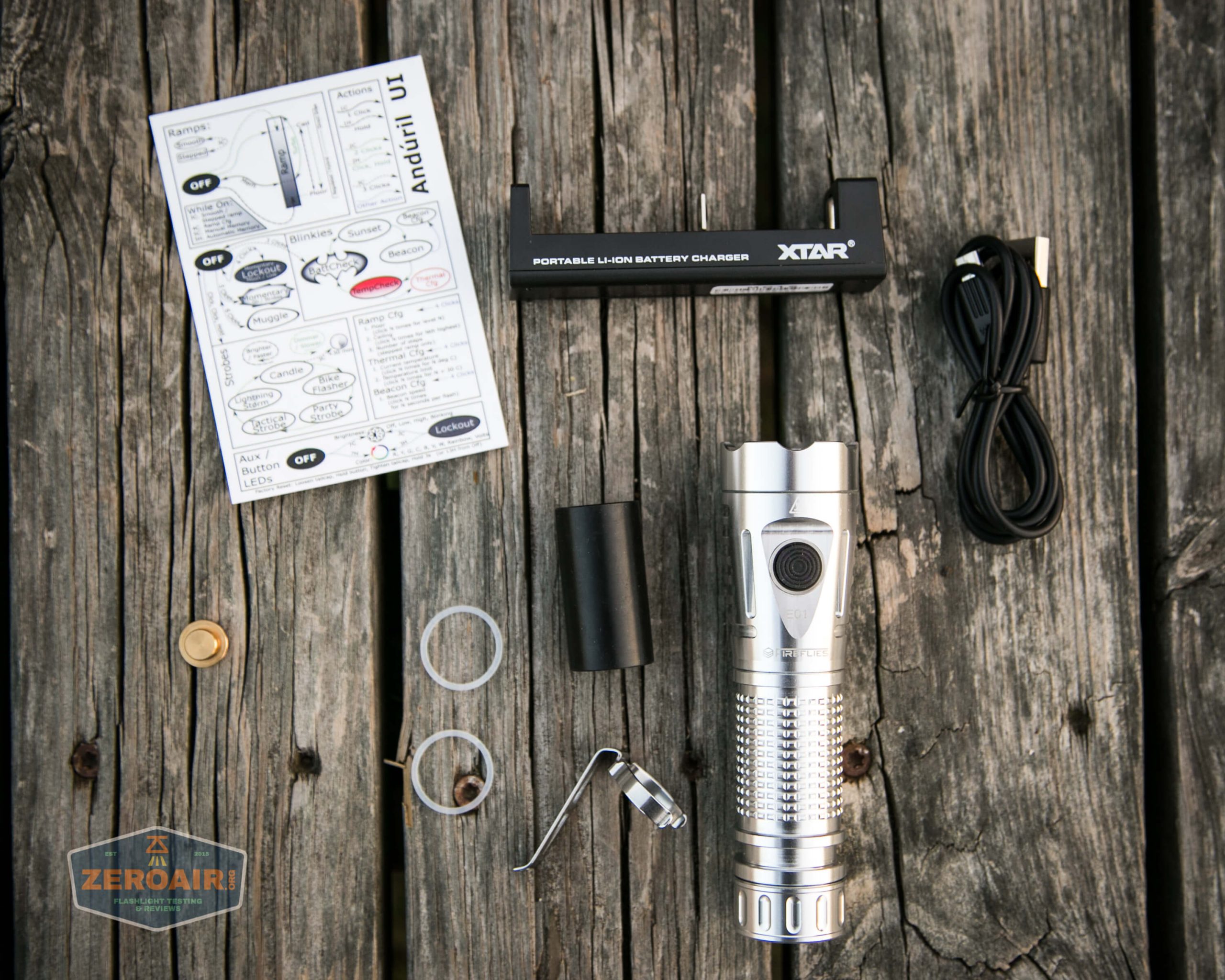
- FireFlyLite E01 Luminus Flashlight
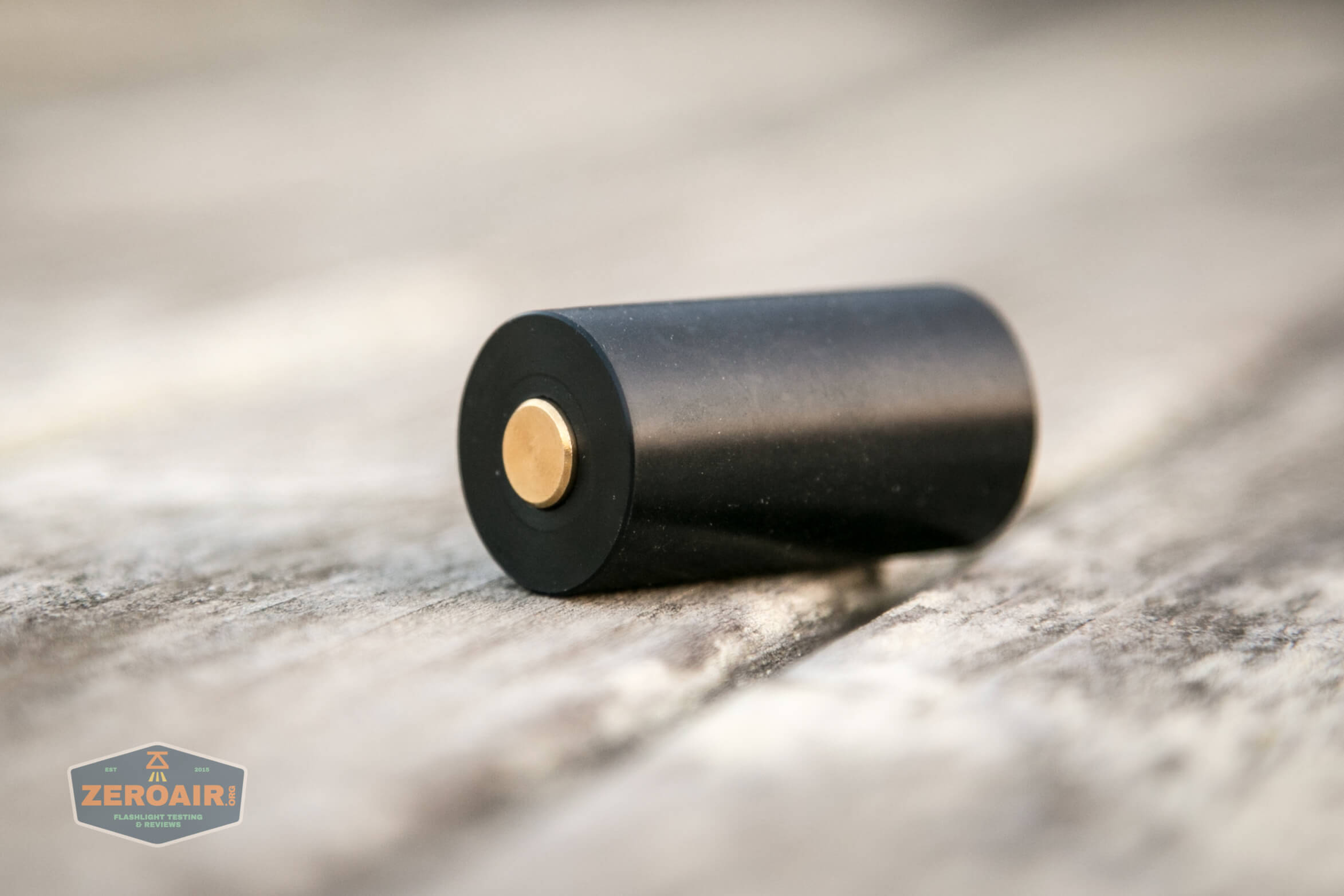
- 21700 to 18650 adapter (the black part and the little brass button at left)
- Spare o-rings (2)
- Pocket clip
- Pocket sized Andúril User Interface graphic
- XTAR MC1S single-bay micro-USB charger
- 10A 4800mAh 21700 (not pictured)
Package and Manual
There’s a manual included in the form of this:
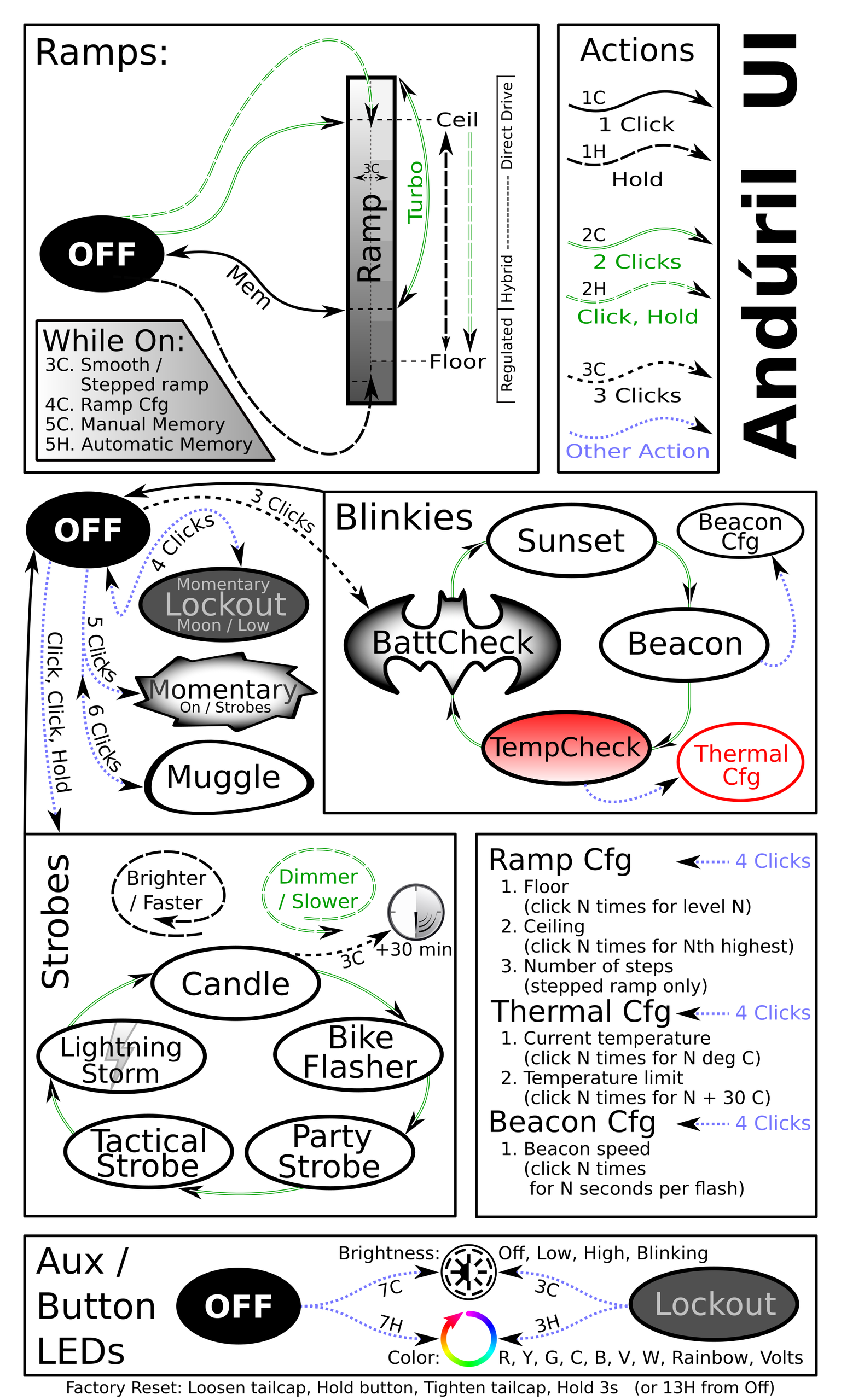
It’s a nice little laminated card, with English (as seen above) on one side, and Chinese on the other. I guess this was my first time seeing the Chinese version of the Andúril diagram.
Build Quality and Disassembly
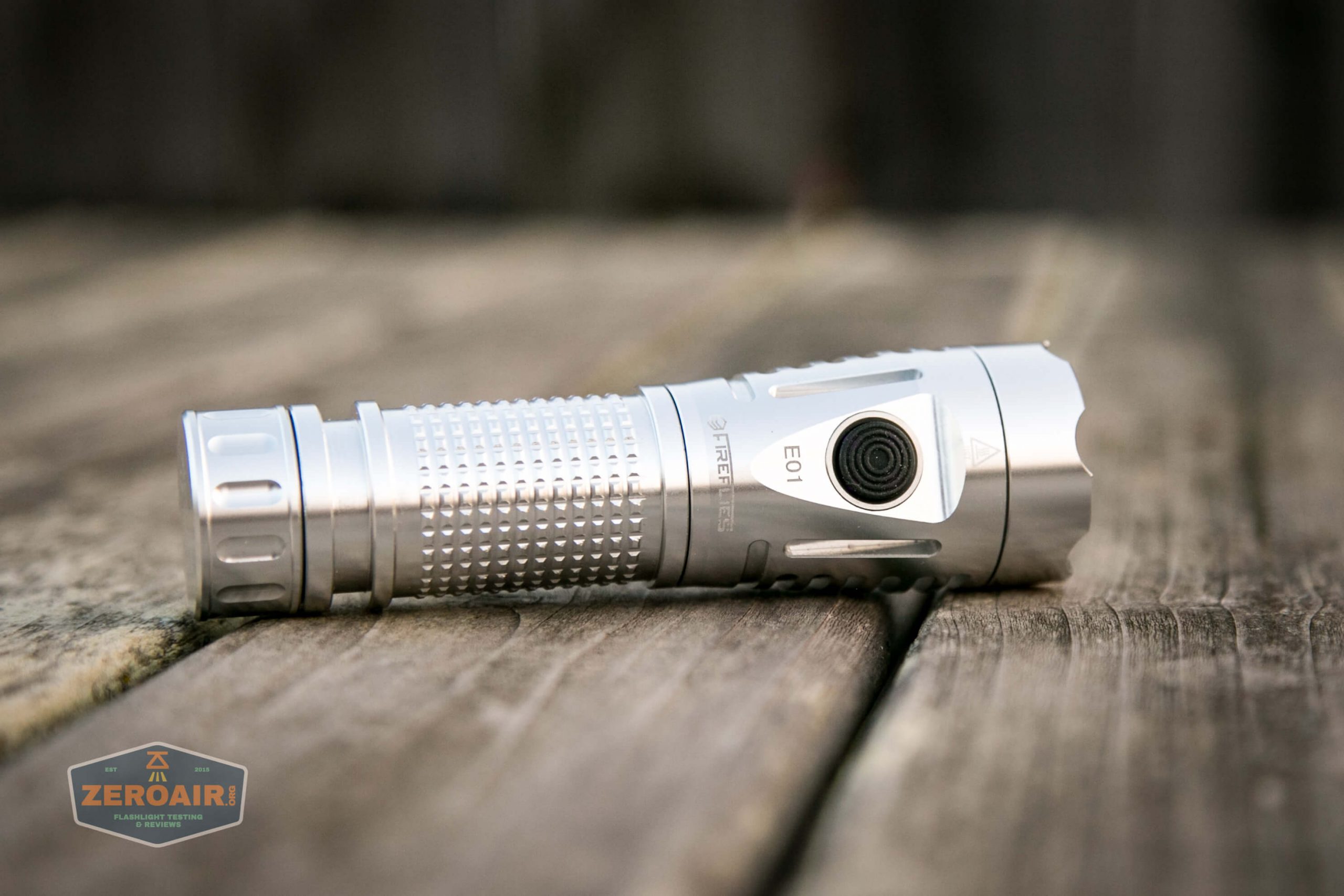
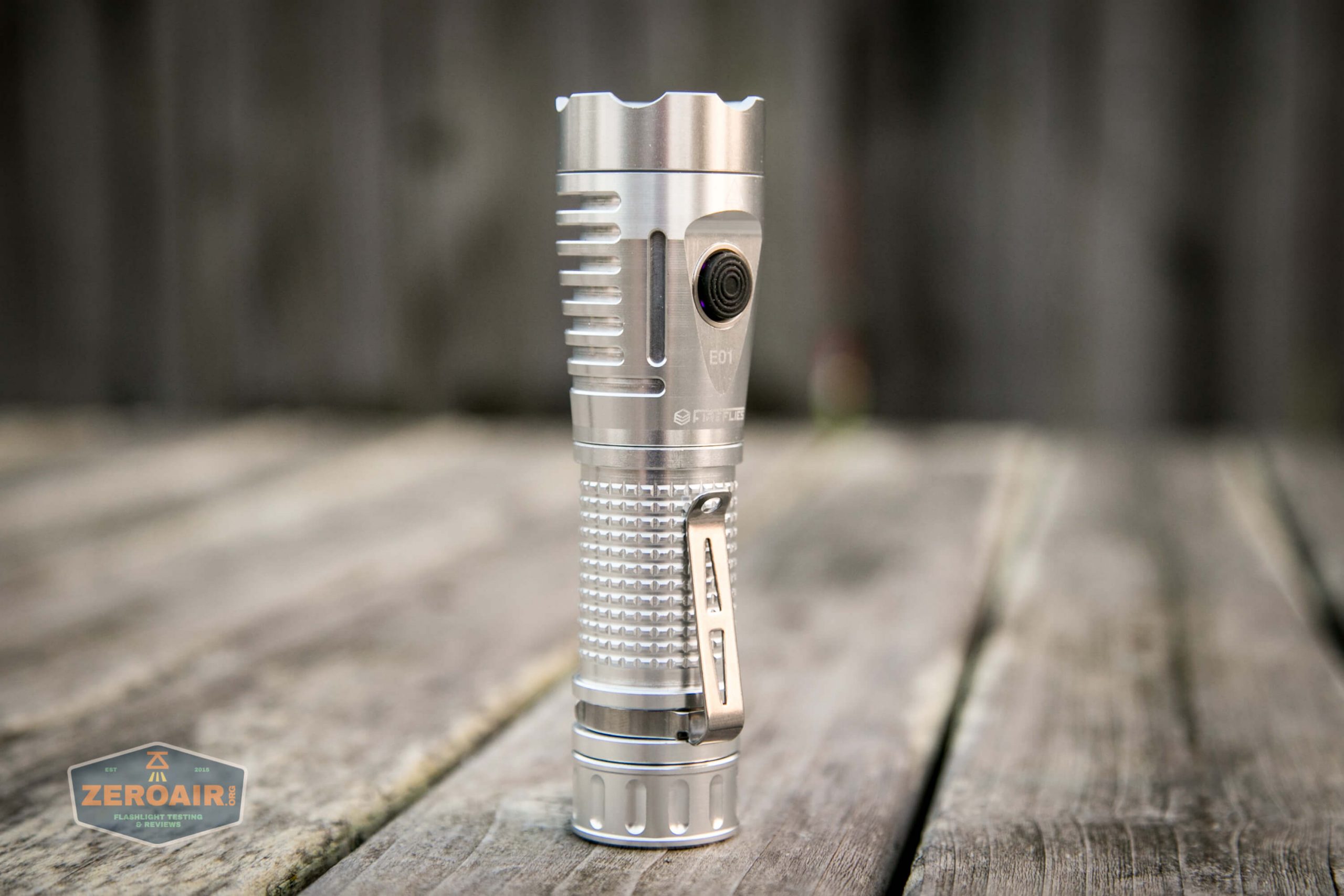
Alright, you probably didn’t buy this light without having experienced clear anodized aluminum before…. So you already know that it’s awesome. I love it. Not only does it have a great feel in hand, but the threads on these lights are so smooth.
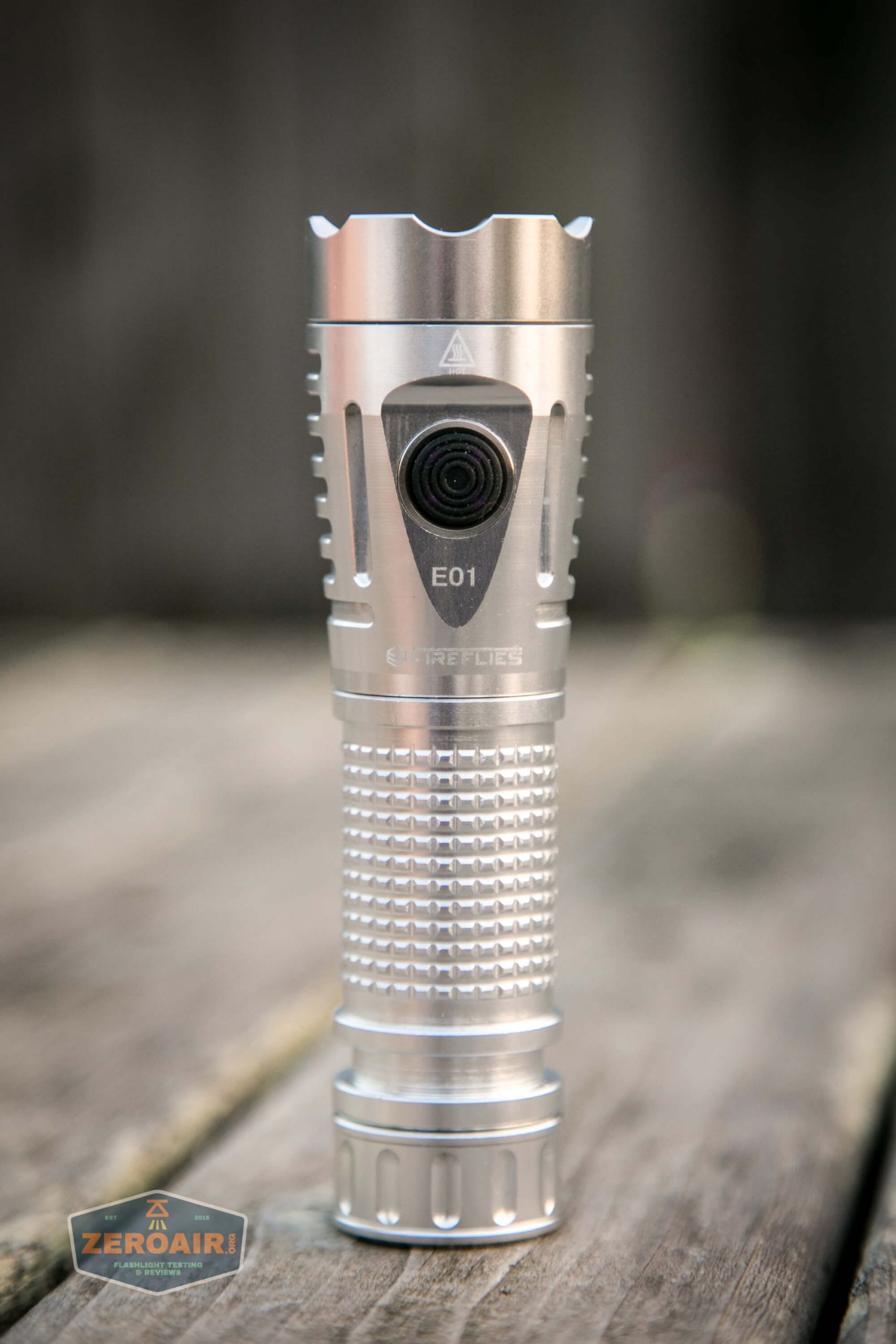
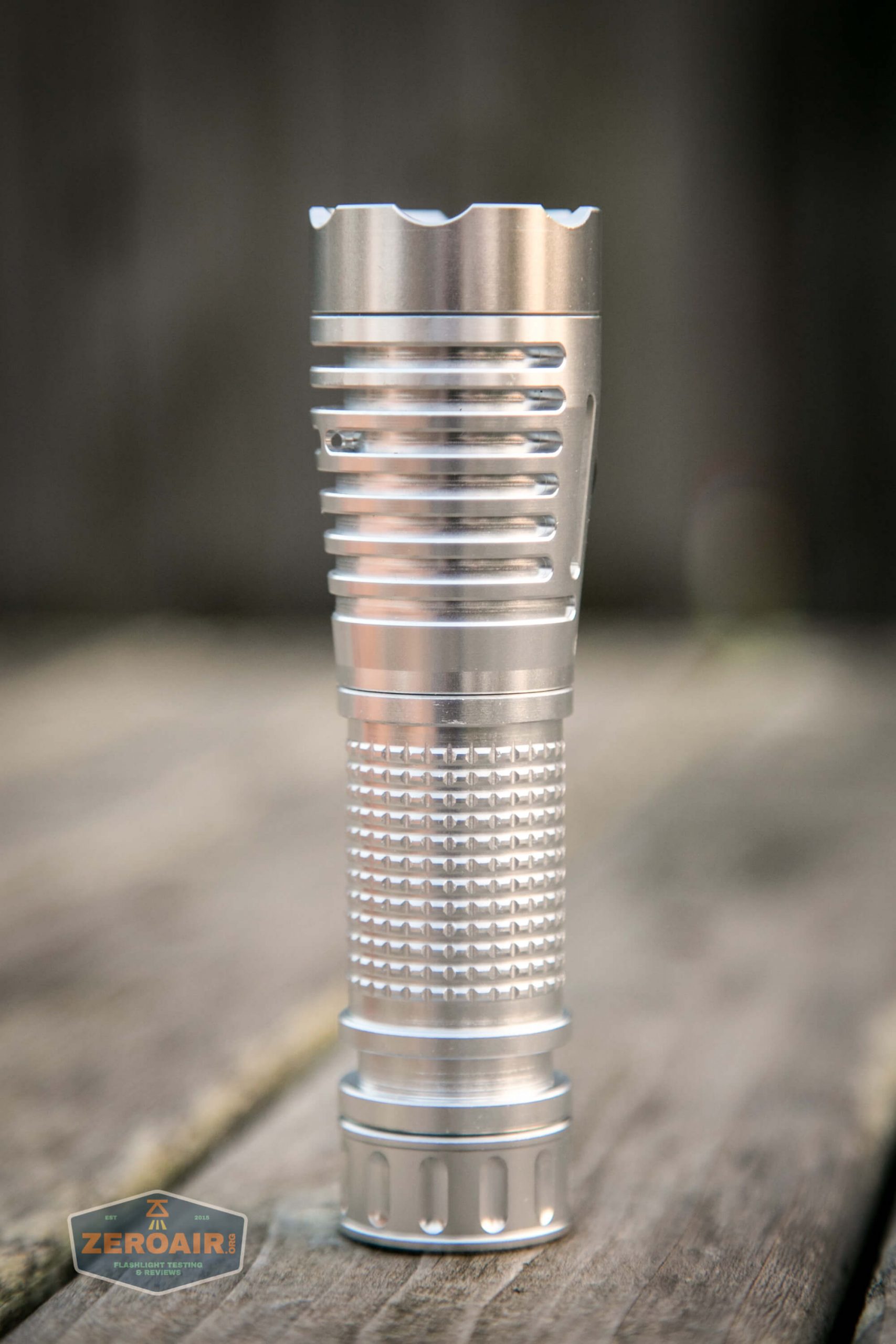
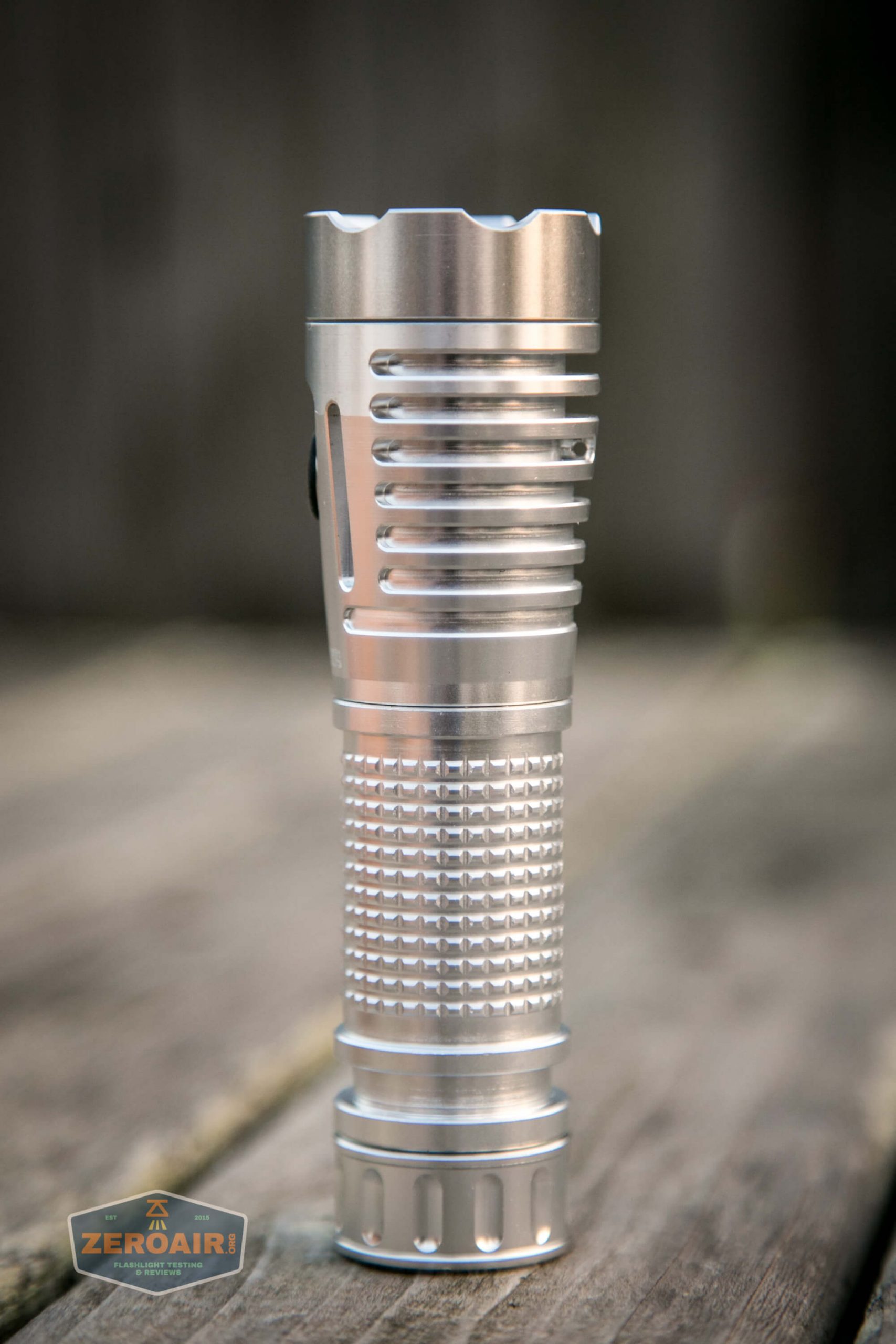
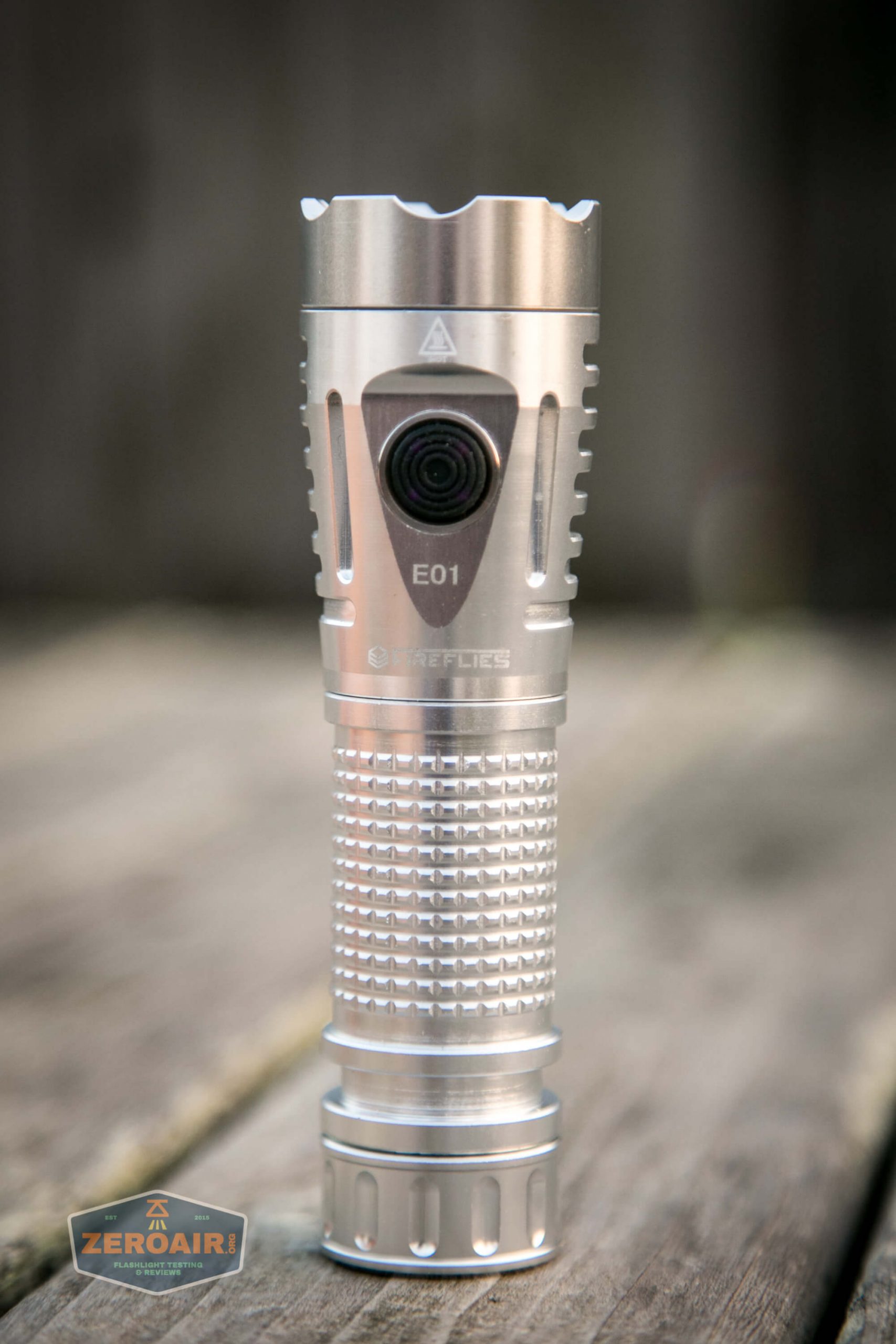
I don’t know it for certain, but I think this bezel is aluminum. I wouldn’t have been surprised to see a stainless bezel on here, but it looks and feels aluminum.
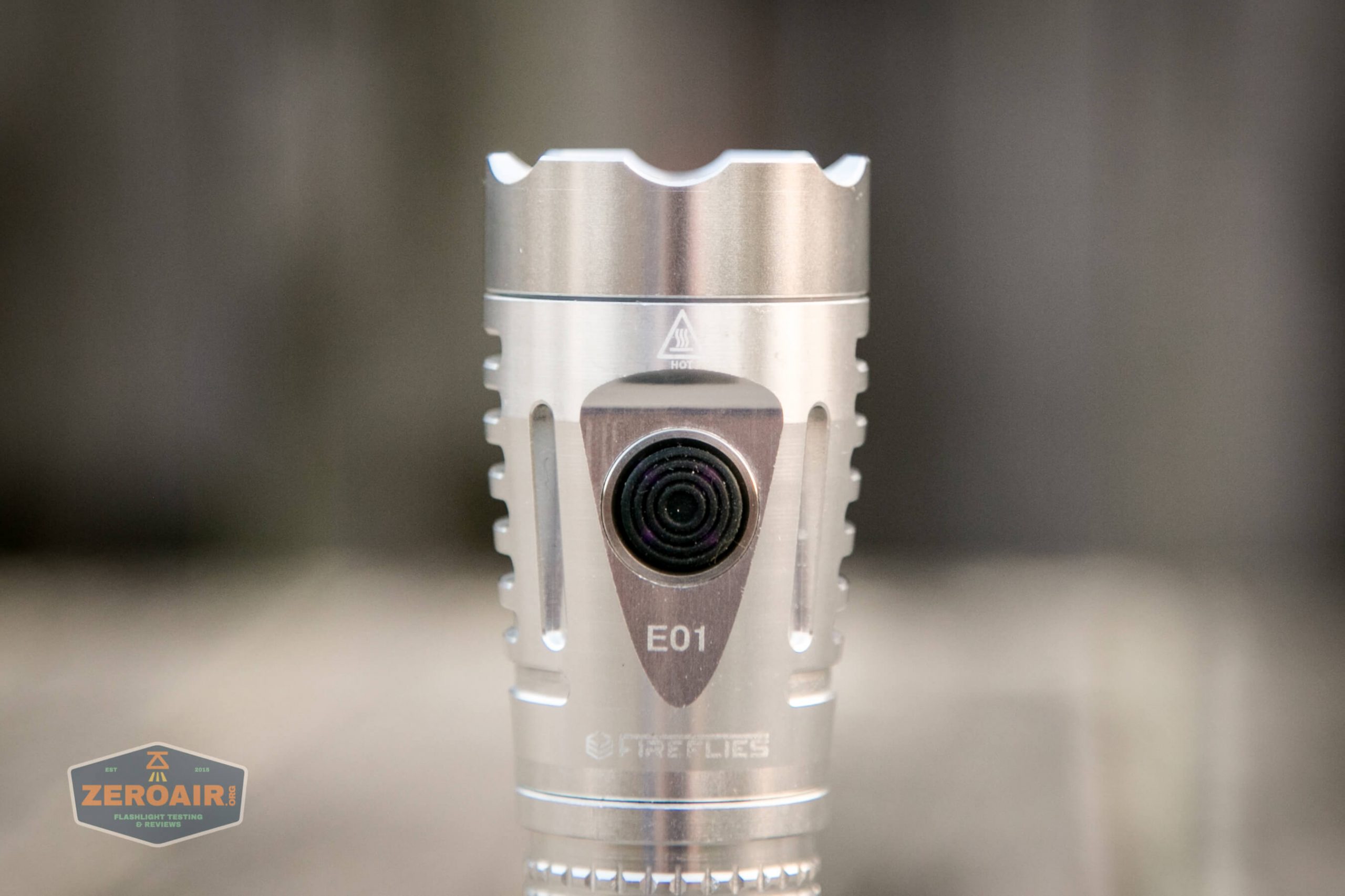
There is minimal branding, and even that branding is fairly faint. It feels laser-etched.
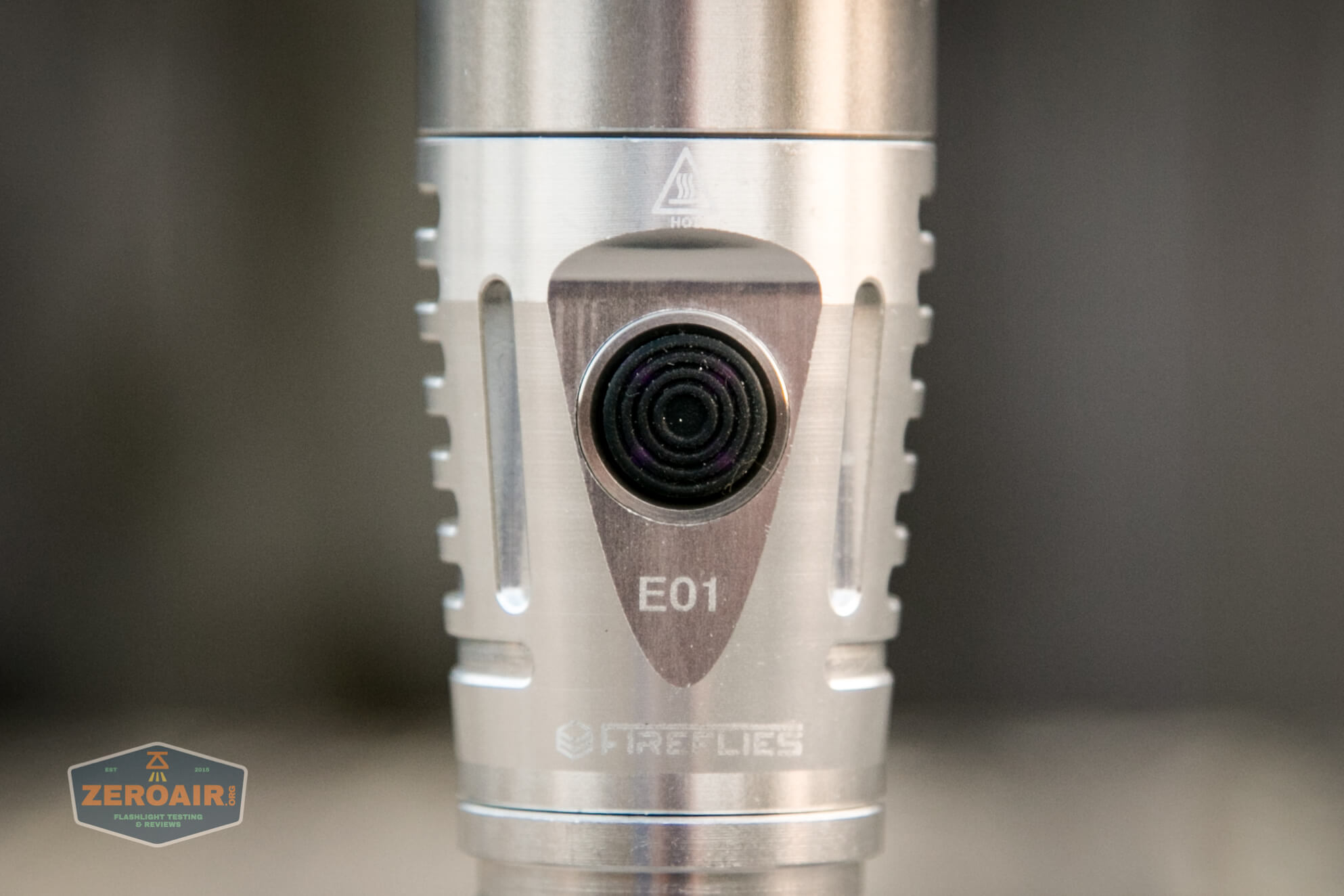
The switch has a backlight function, too!
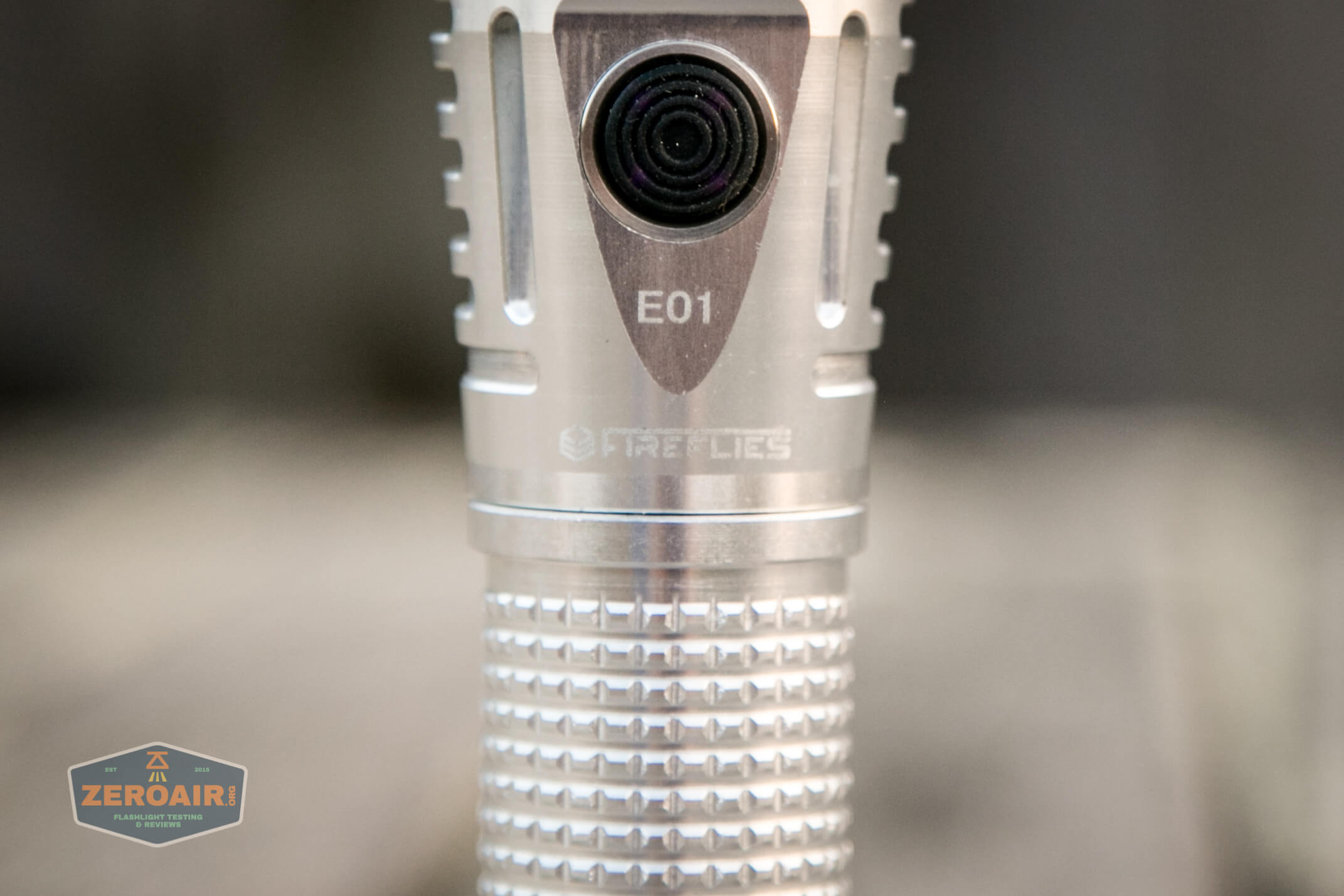
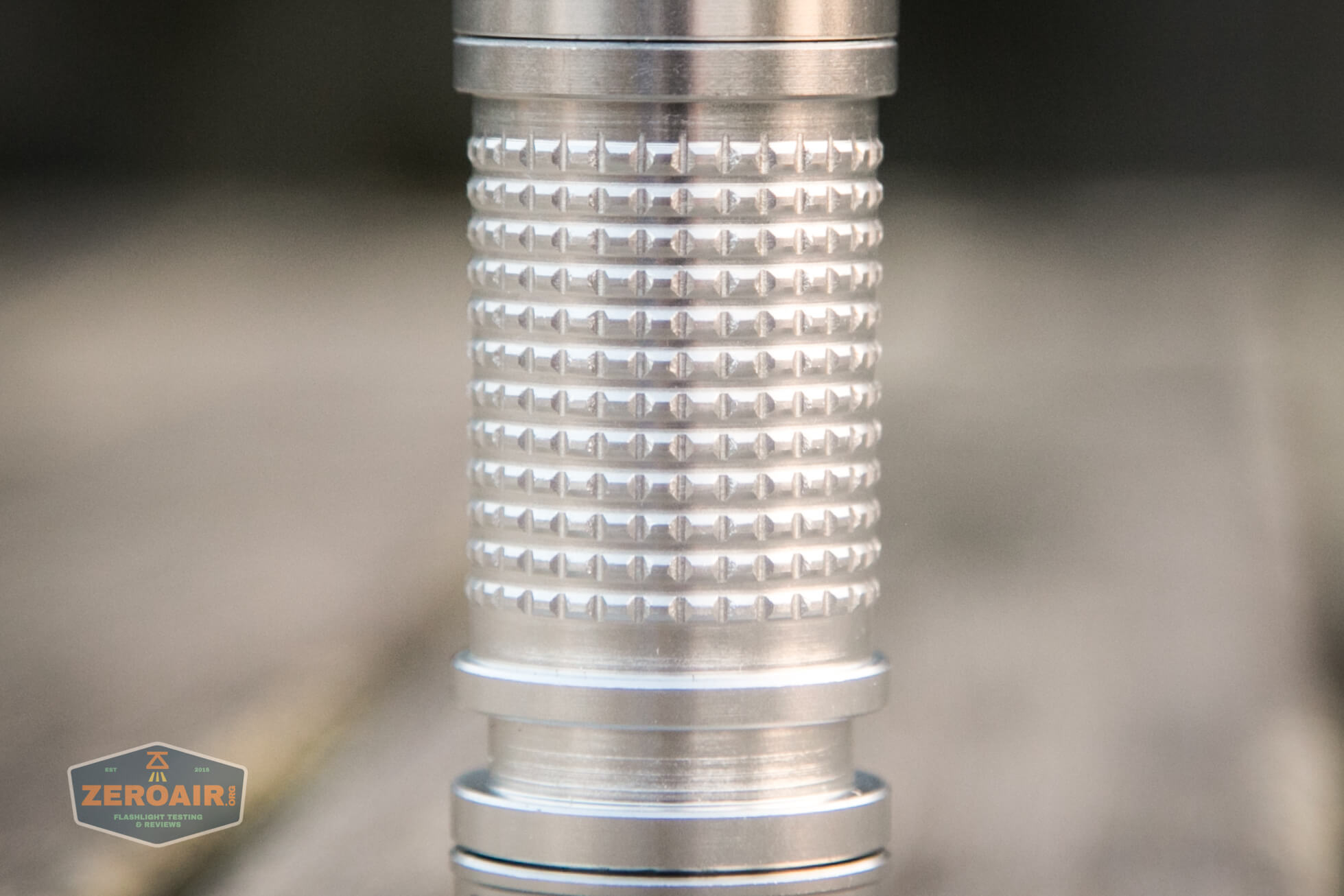
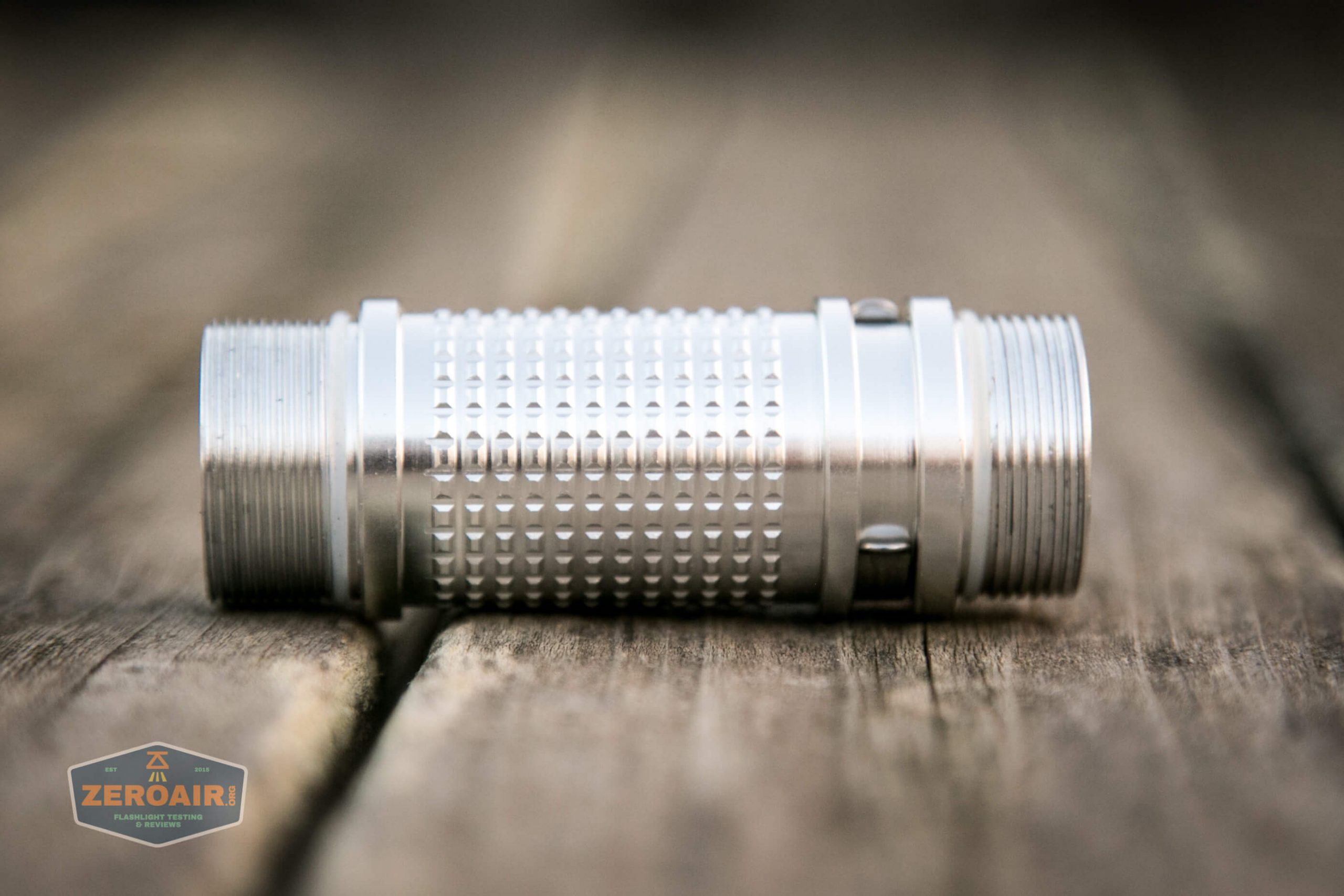
What you see below isn’t so much “knurling” as just a milled pattern on the body. It’s adequate for added grip and is well finished.
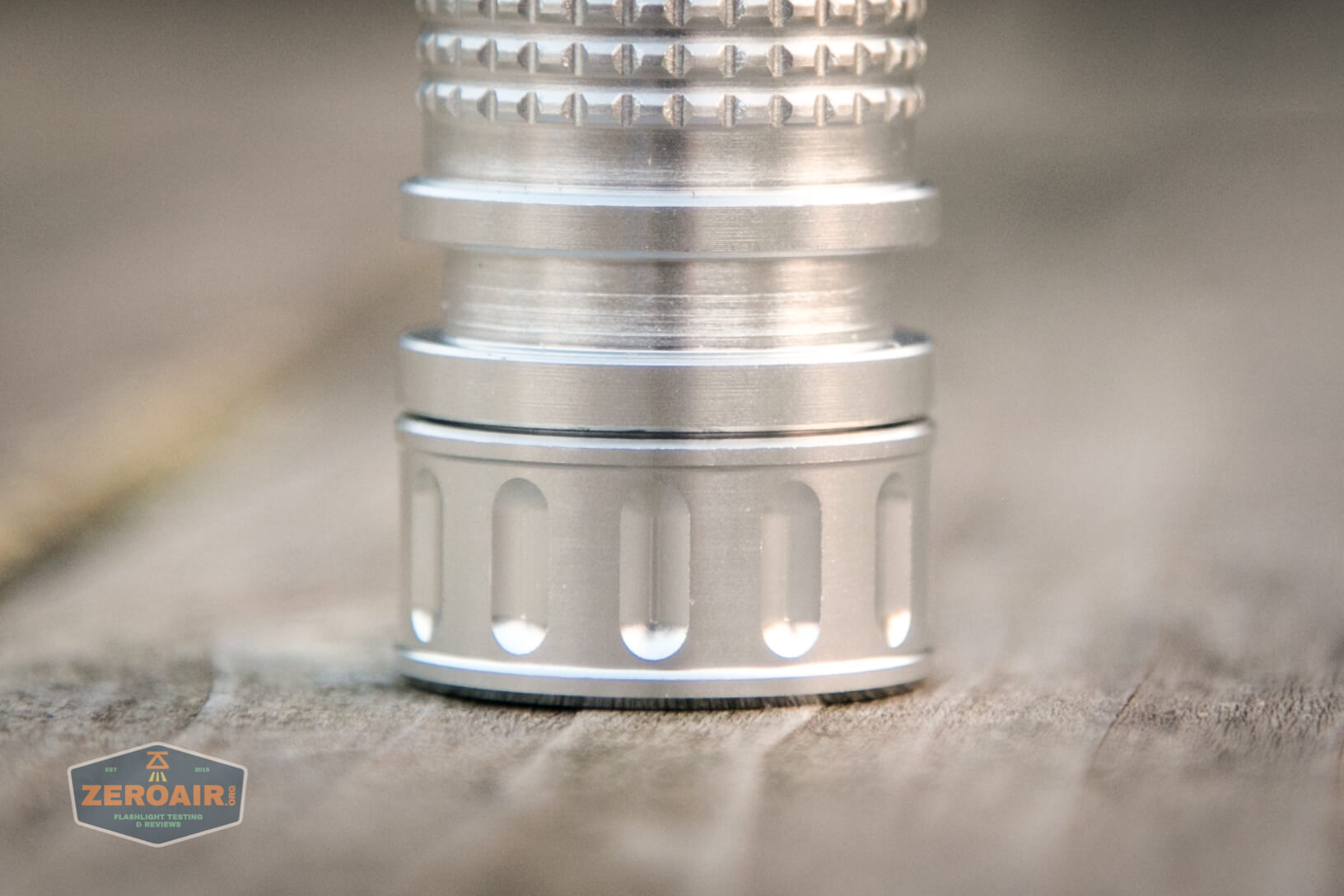
The tailcap also provides adequate grip for removal. Again, these threads are so smooth that it wouldn’t really matter if the tailcap were blank.
The head has some grooves that to me look remarkably like tritium slots. These would be long slots, and what an interesting addition to the light!
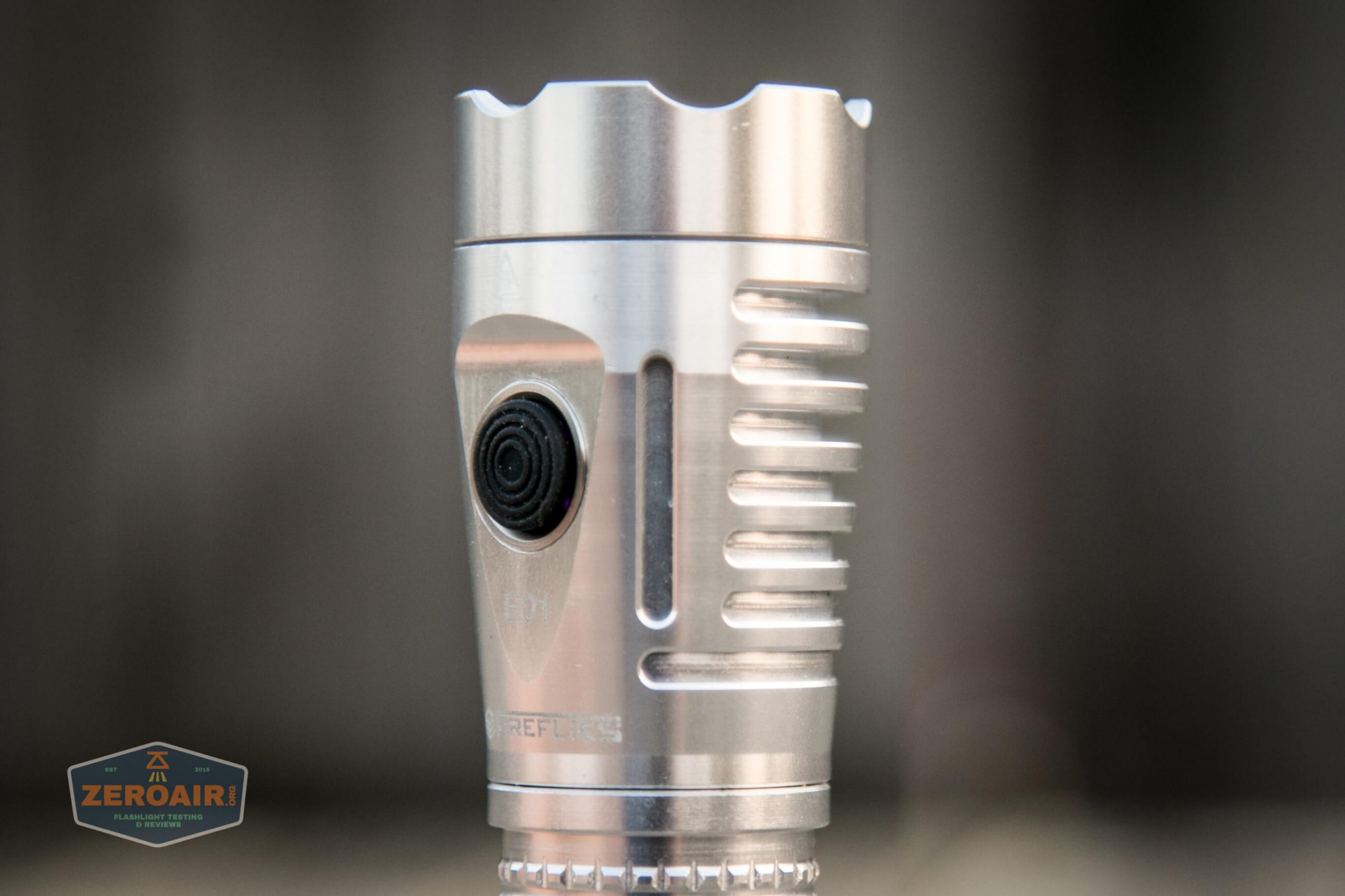
The head has big and deep cooling fins. Also, note that these cooling fins don’t have sharp corners. They’re beveled just a touch, which means they won’t hurt to grab.
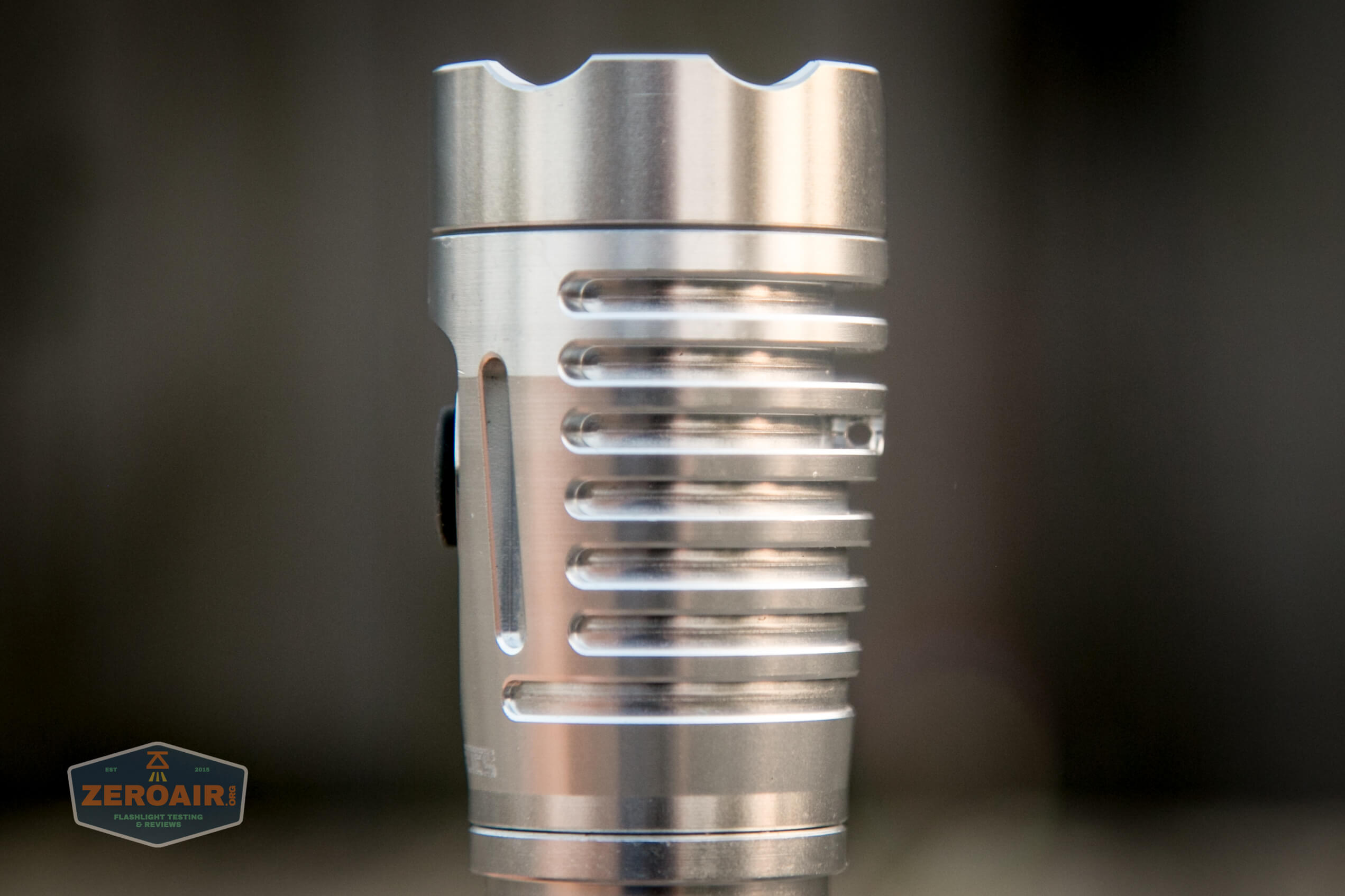
This little bit among the cooling fins is the lanyard hole. More on that later.
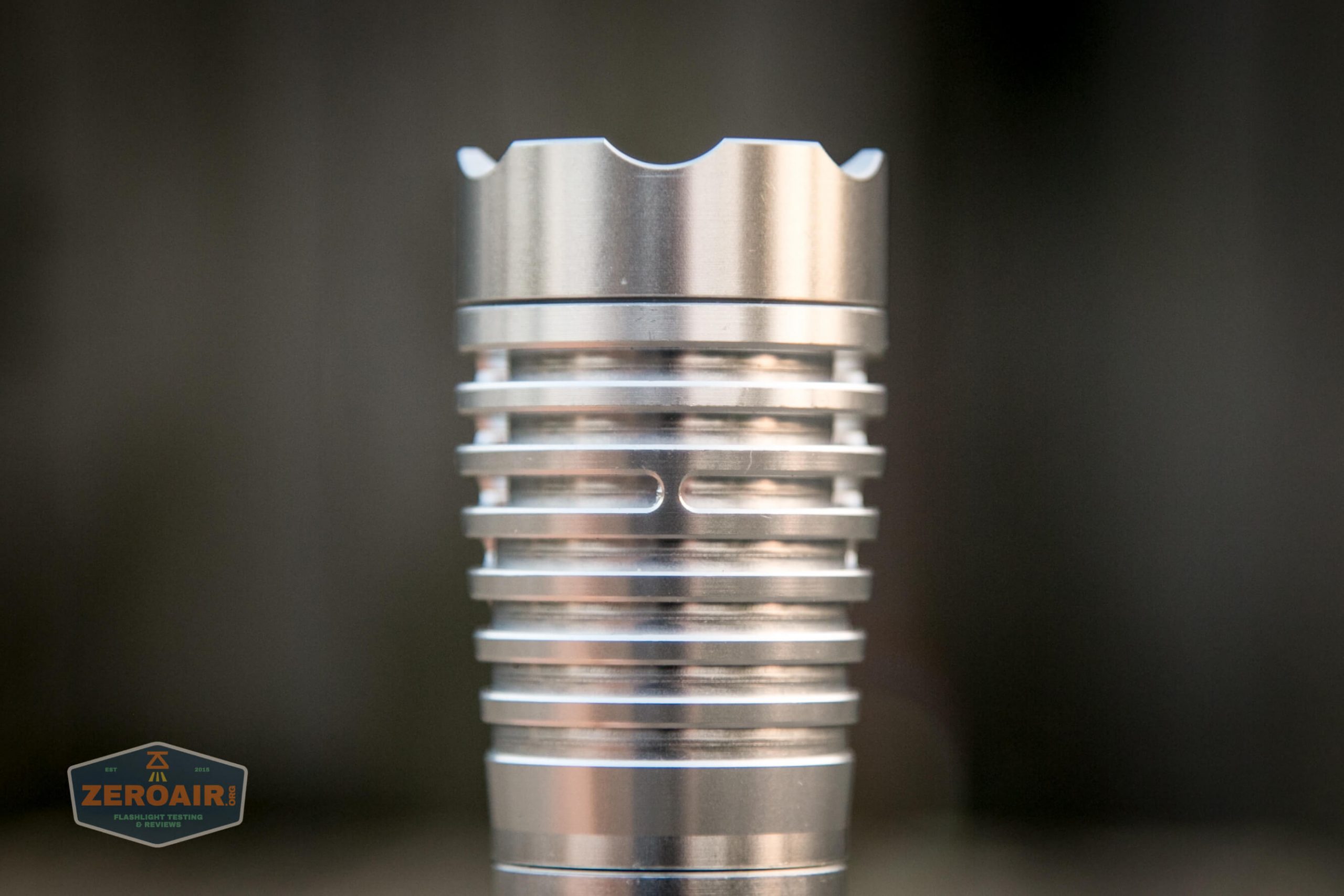
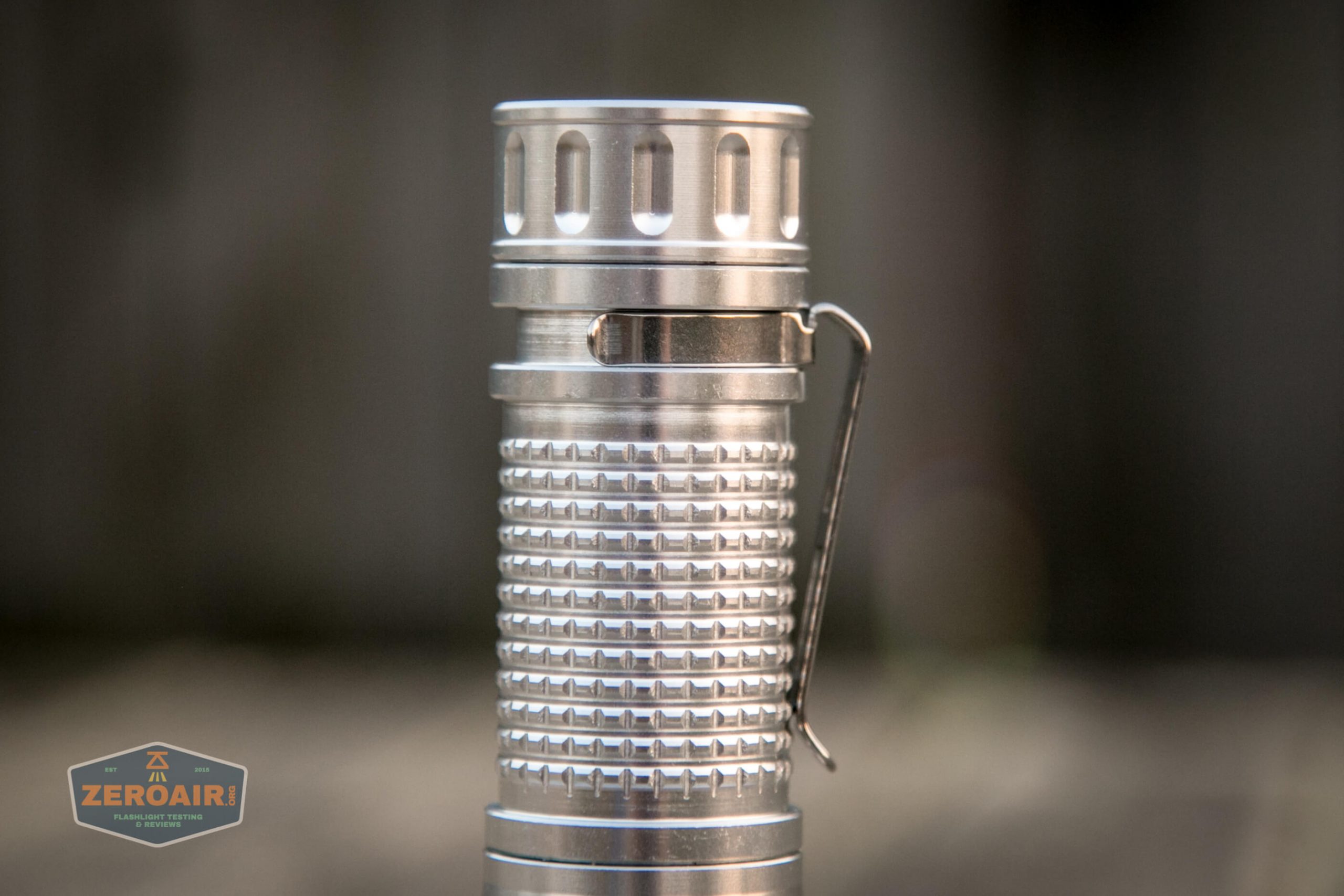
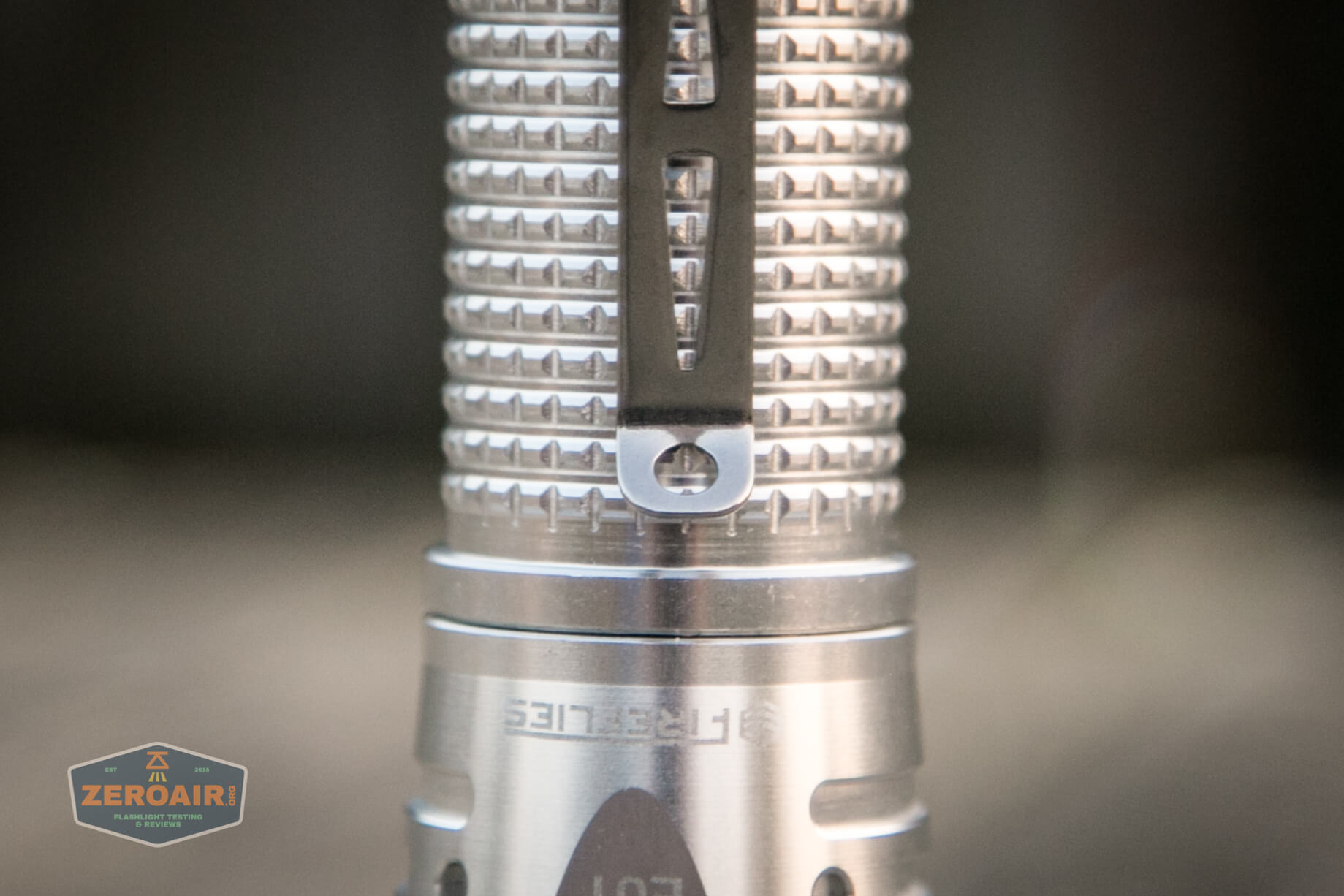
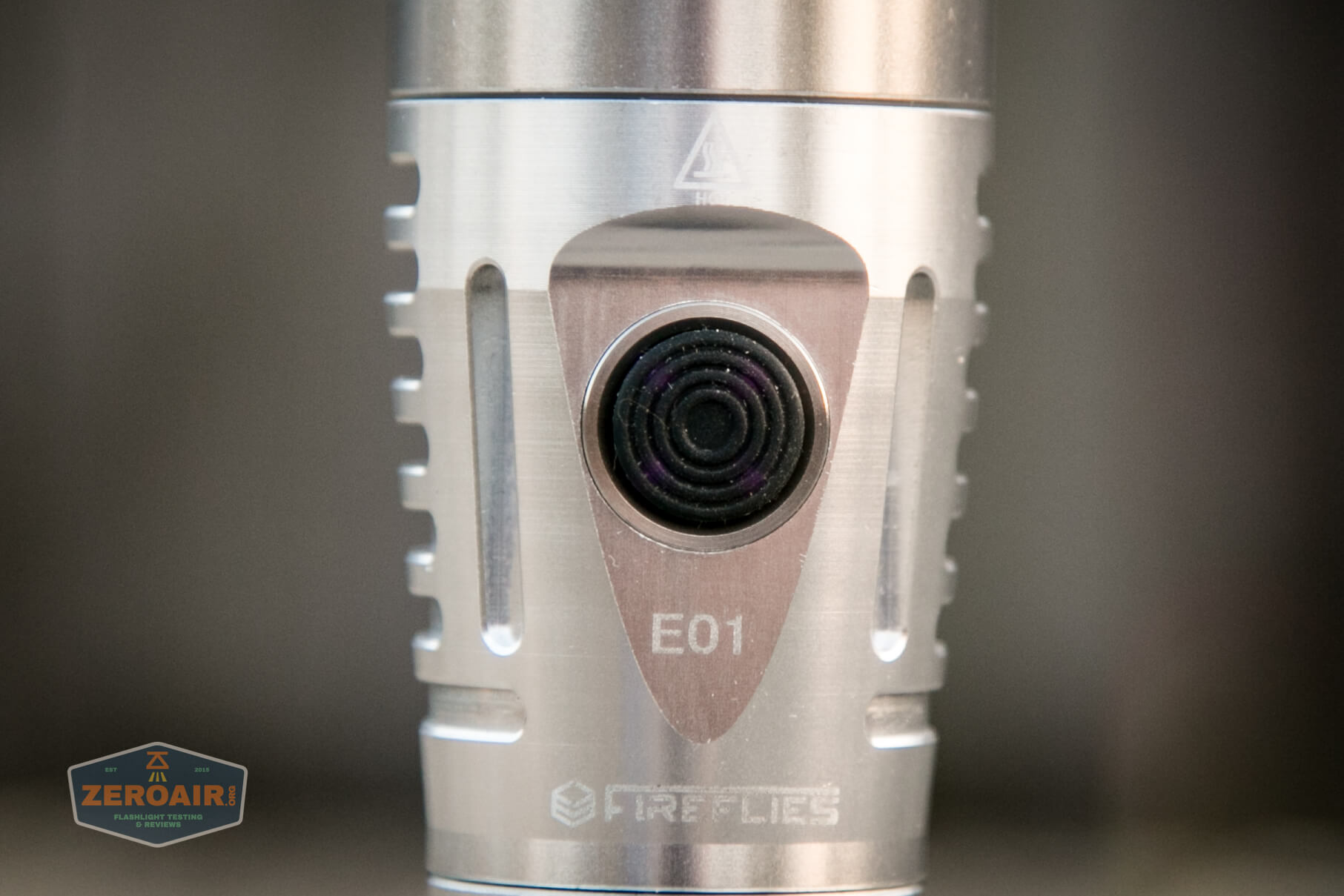
The threads on the tail end are anodized (clear!), square, smooth, and a bit long.
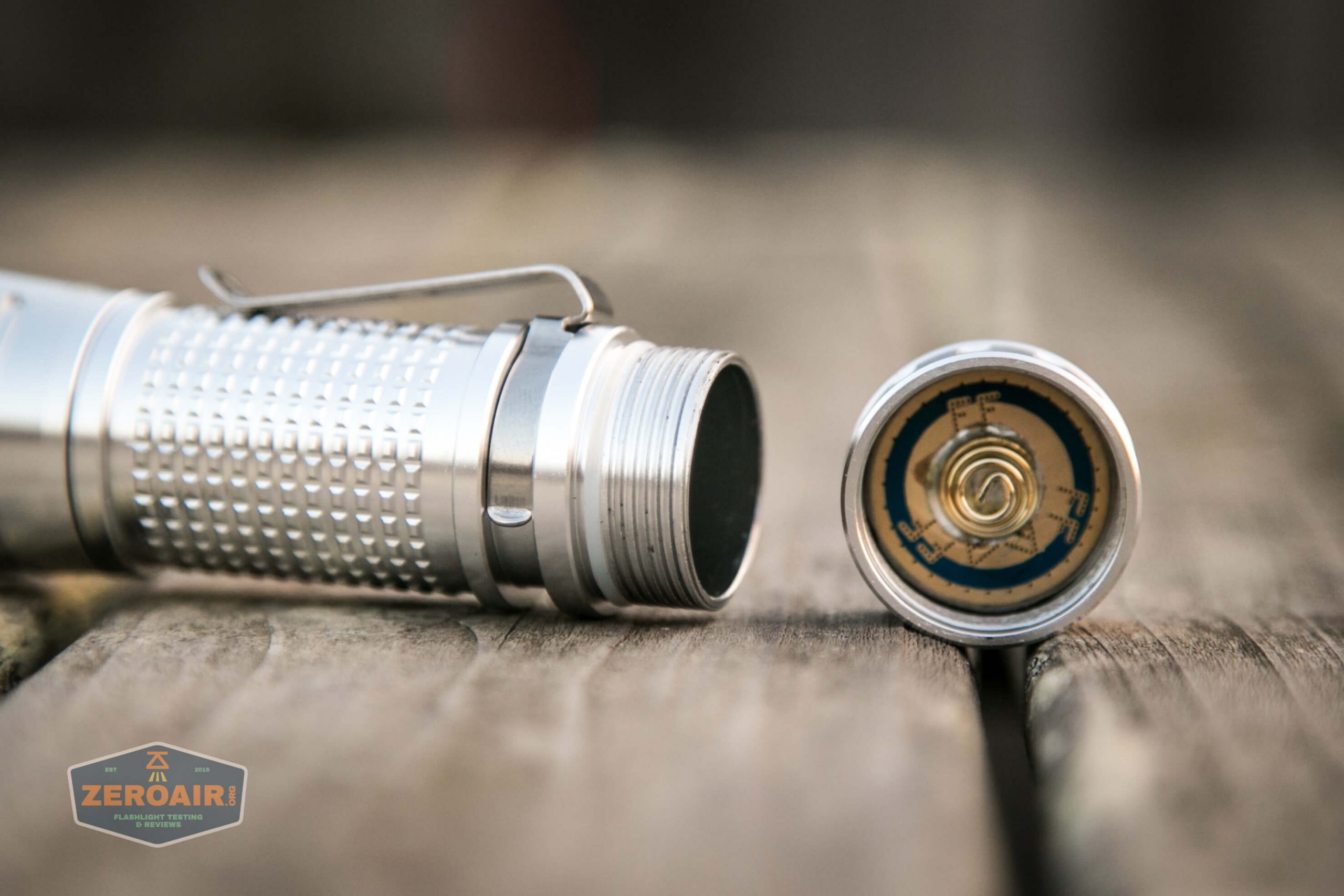
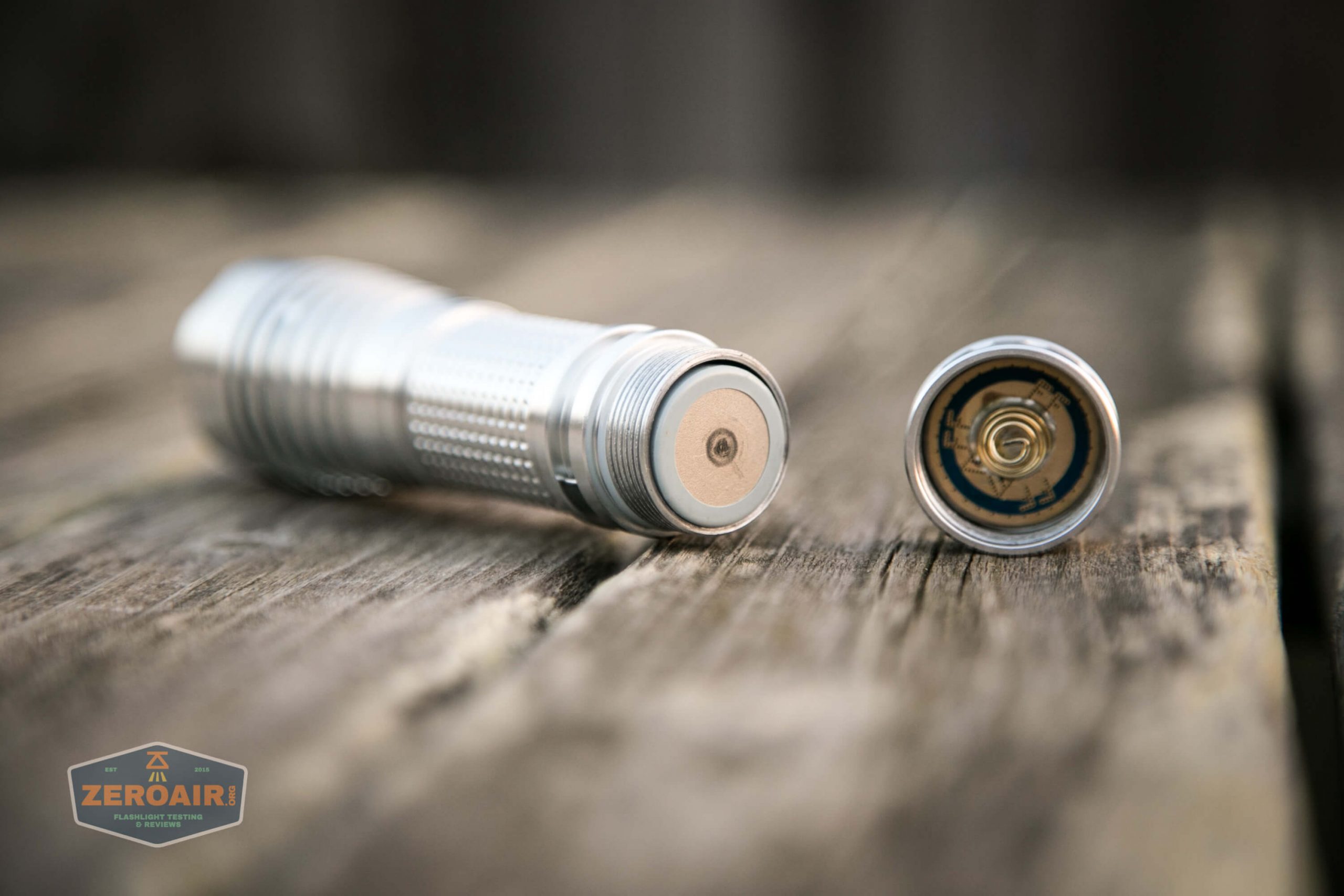
The tailcap has a nice big beefy spring.
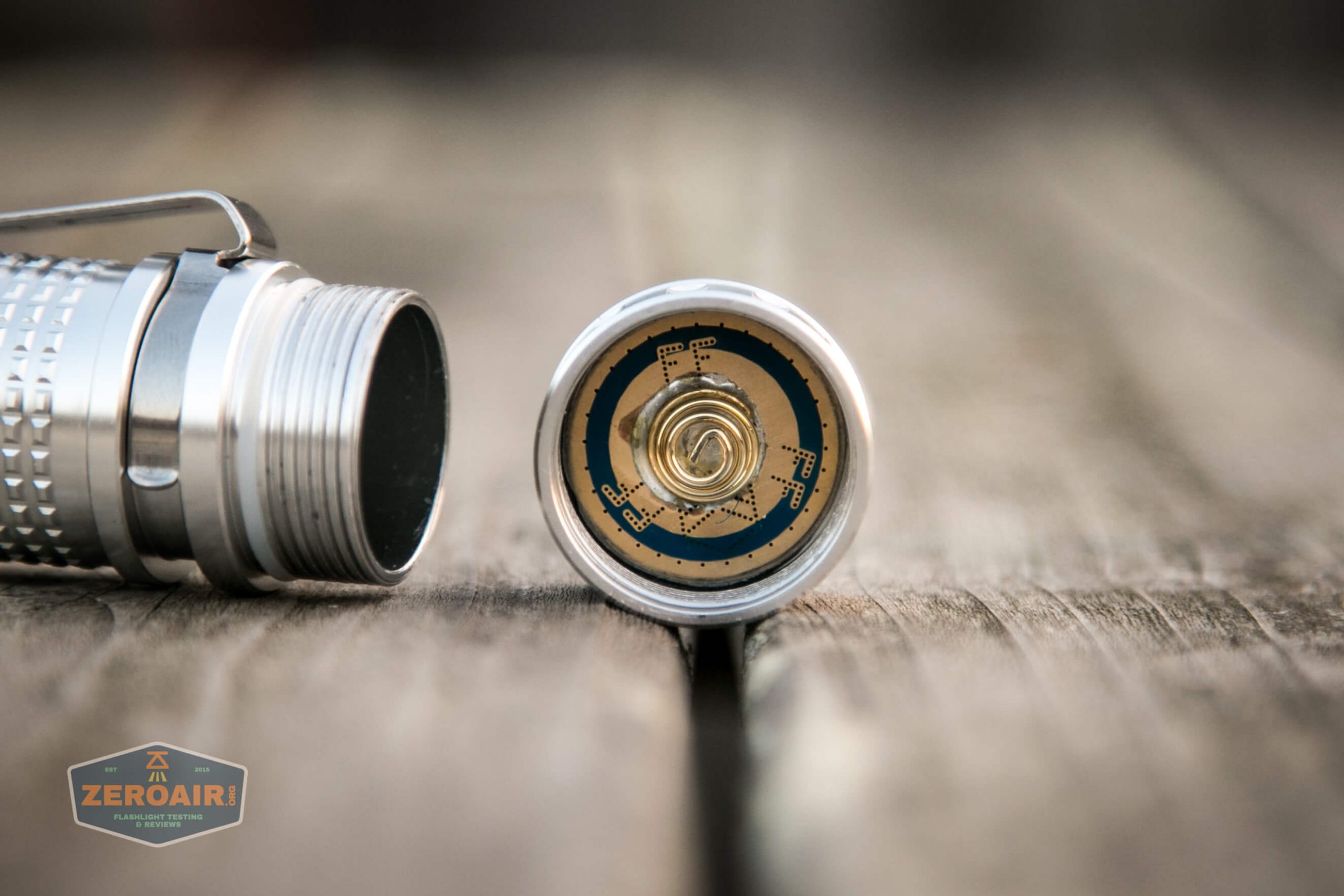
The cell tube is completely removable but is not reversible. This does mean that the clip, which fits on the tail end, fits only on the tail end. The ends of this cell tube are threaded differently – you won’t install it improperly.
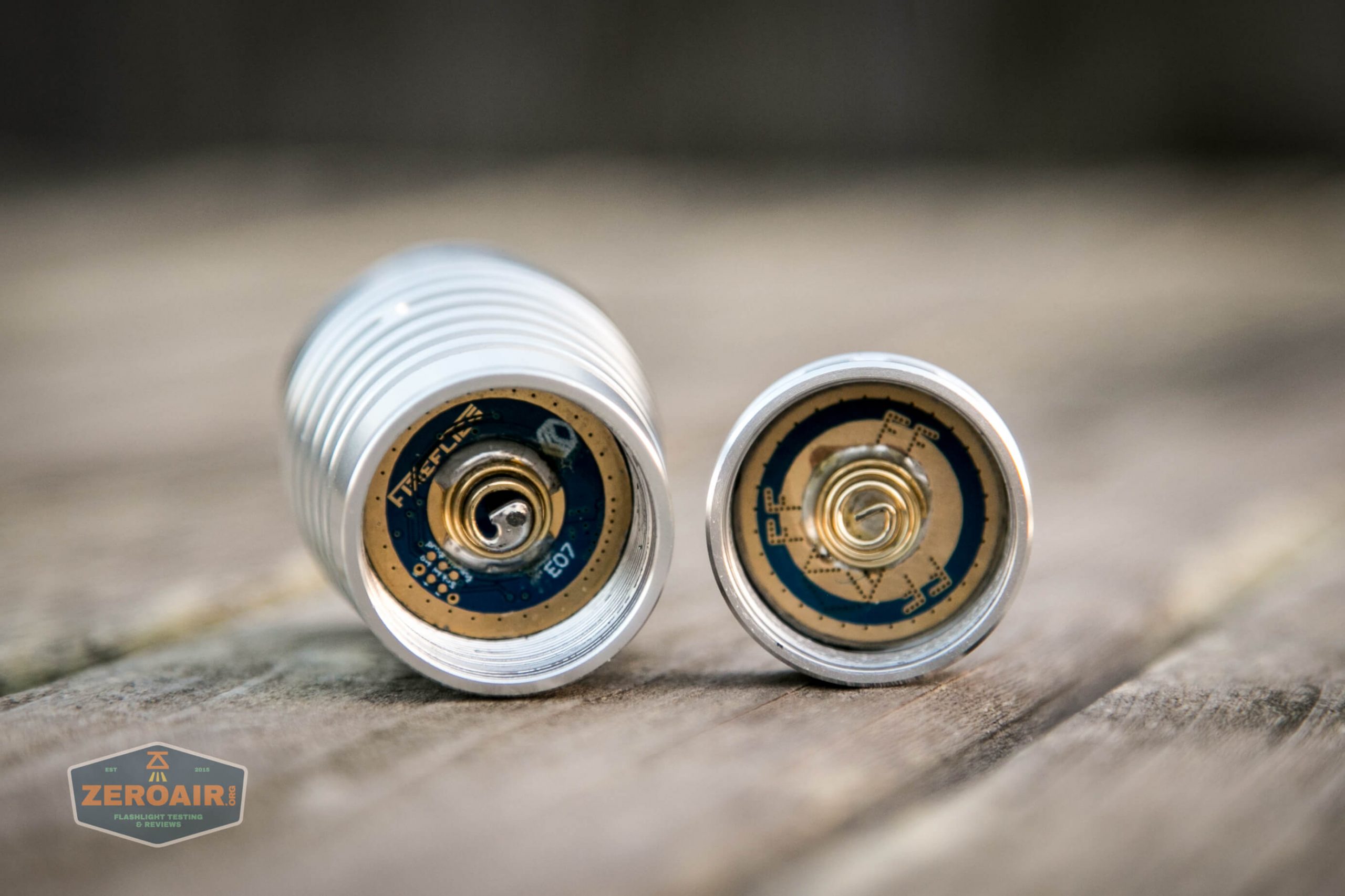
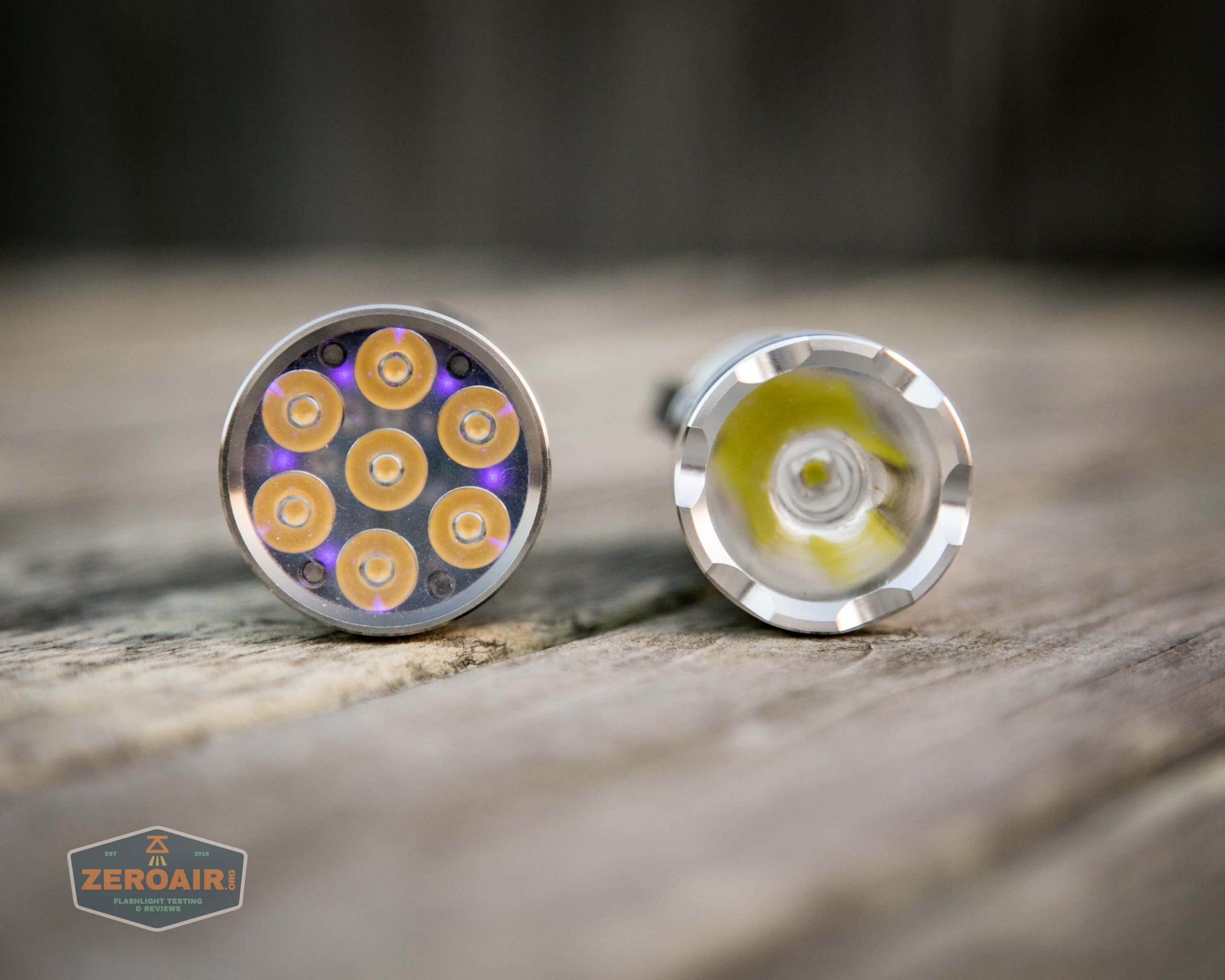
The head end also has a nice beefy spring, which has the spring bypass mod already done. I’m no flasher, but I’m fairly sure those 7 little dots on the head end at the 7 o’clock position are exposed programming pads, too. So if you wish to reprogram the E01, you can do so without any disassembly at all!
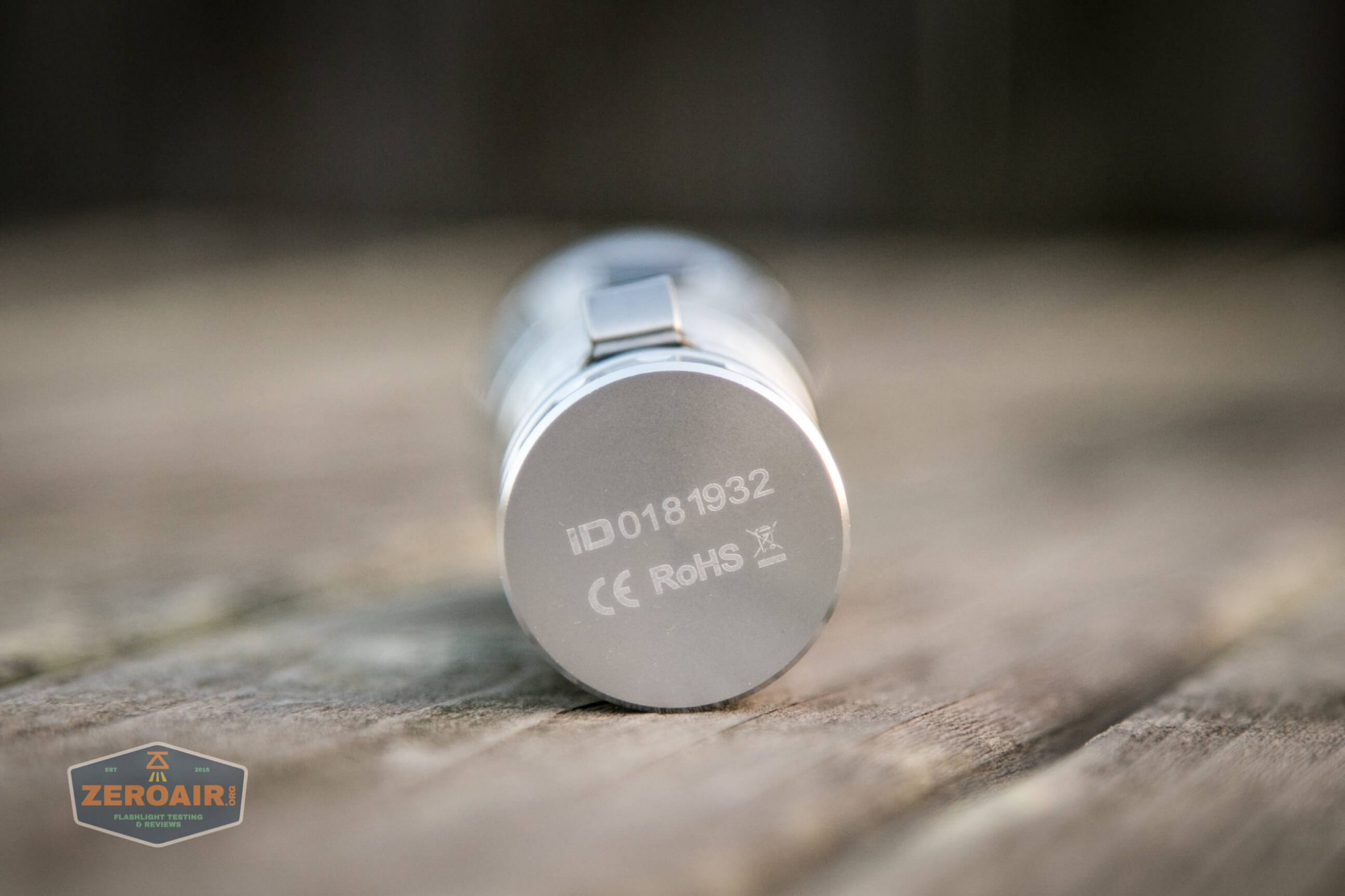
Here’s the other bit of laser-etched branding. It includes a serial number!
Size and Comps
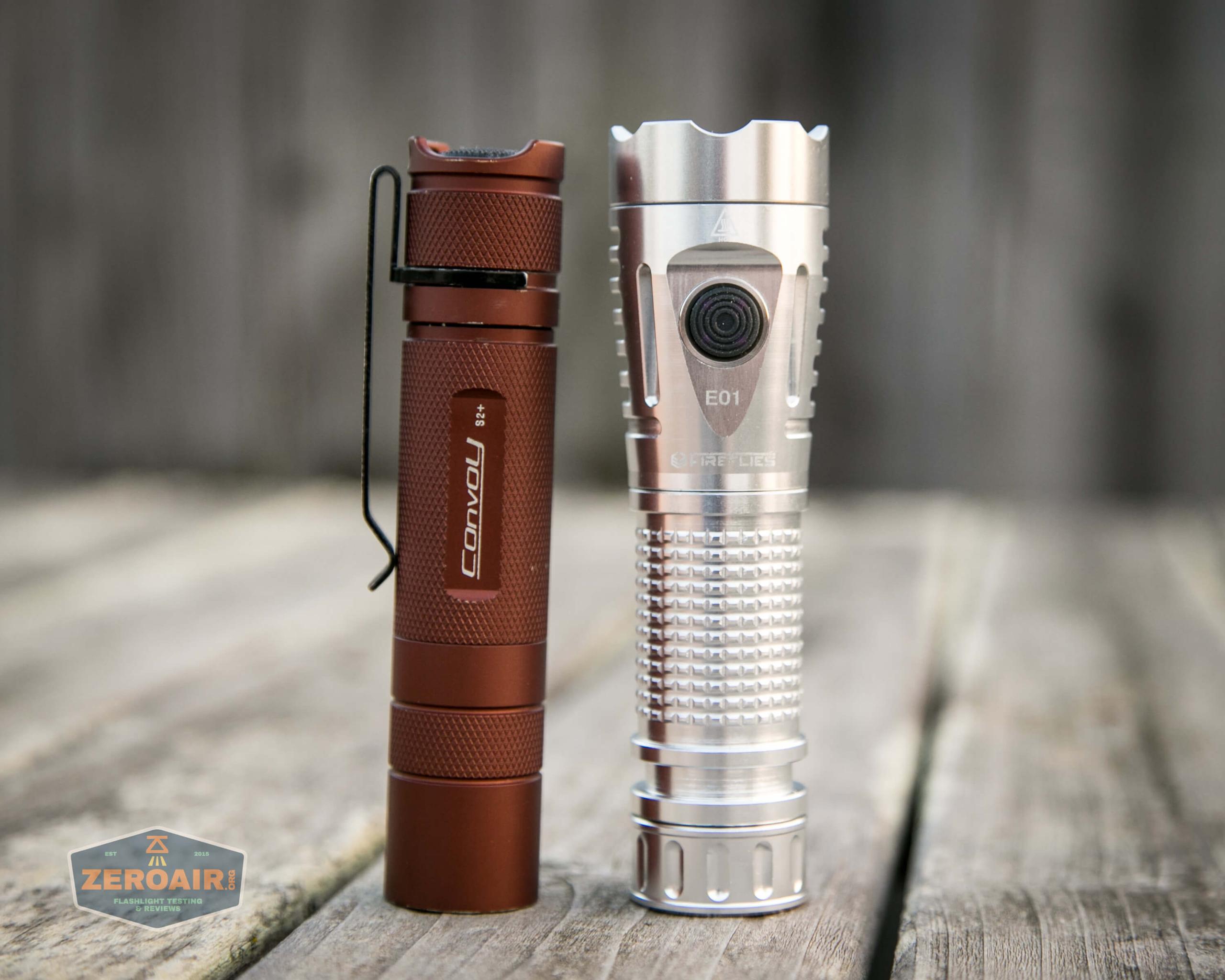
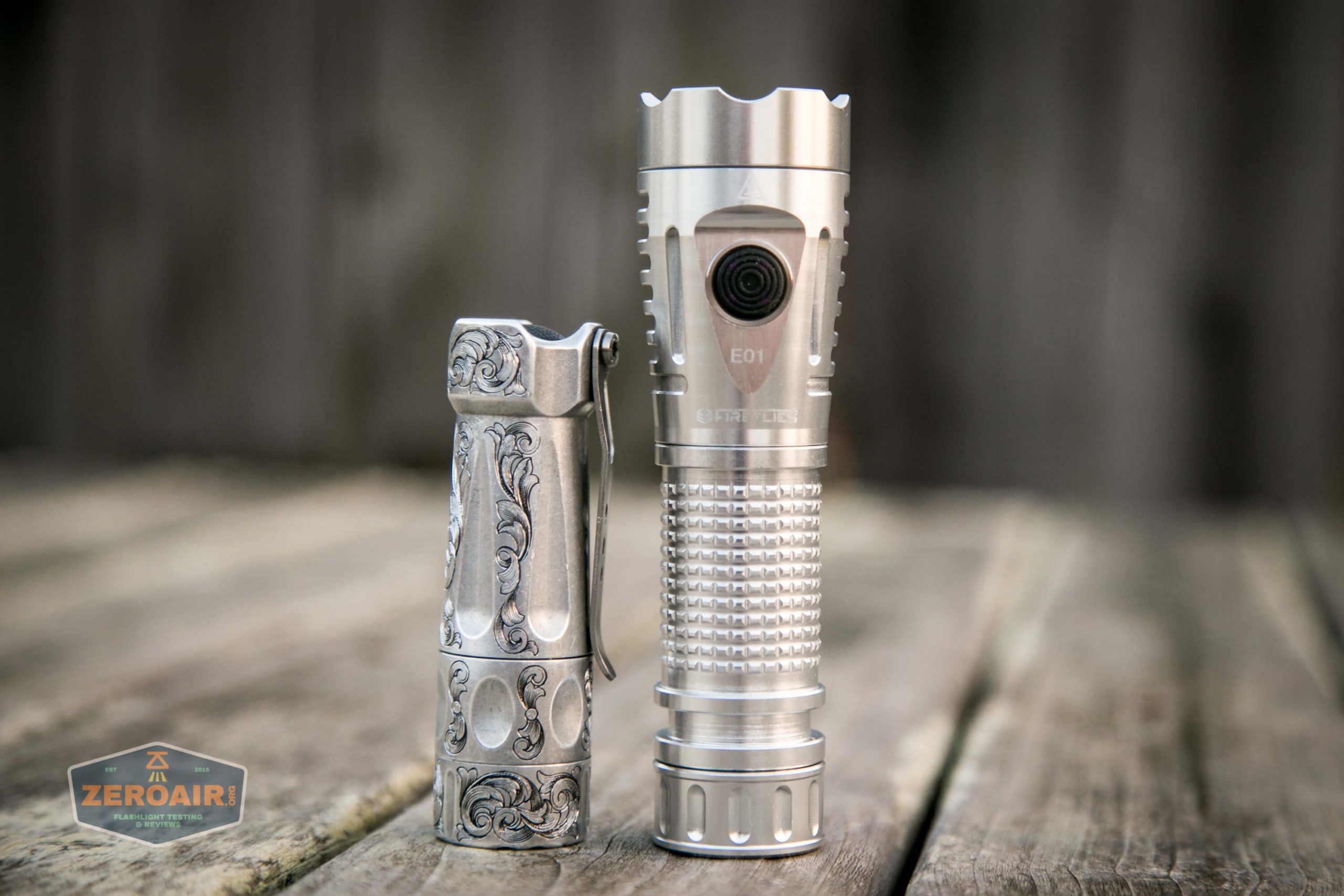
Size: 120mm (L)x 34mm(Head) x 26mm(Body)
Net Weight: 96 grams
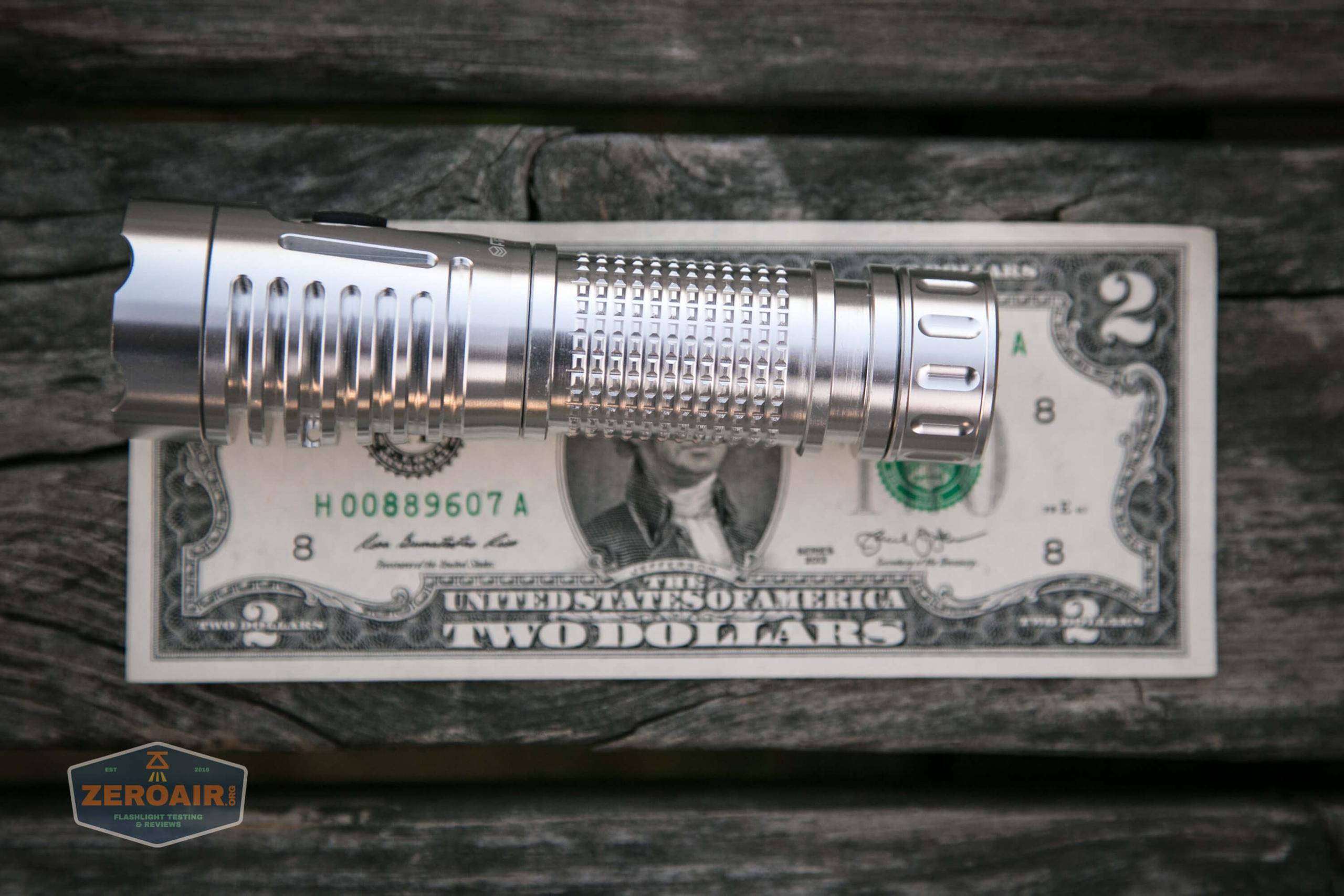
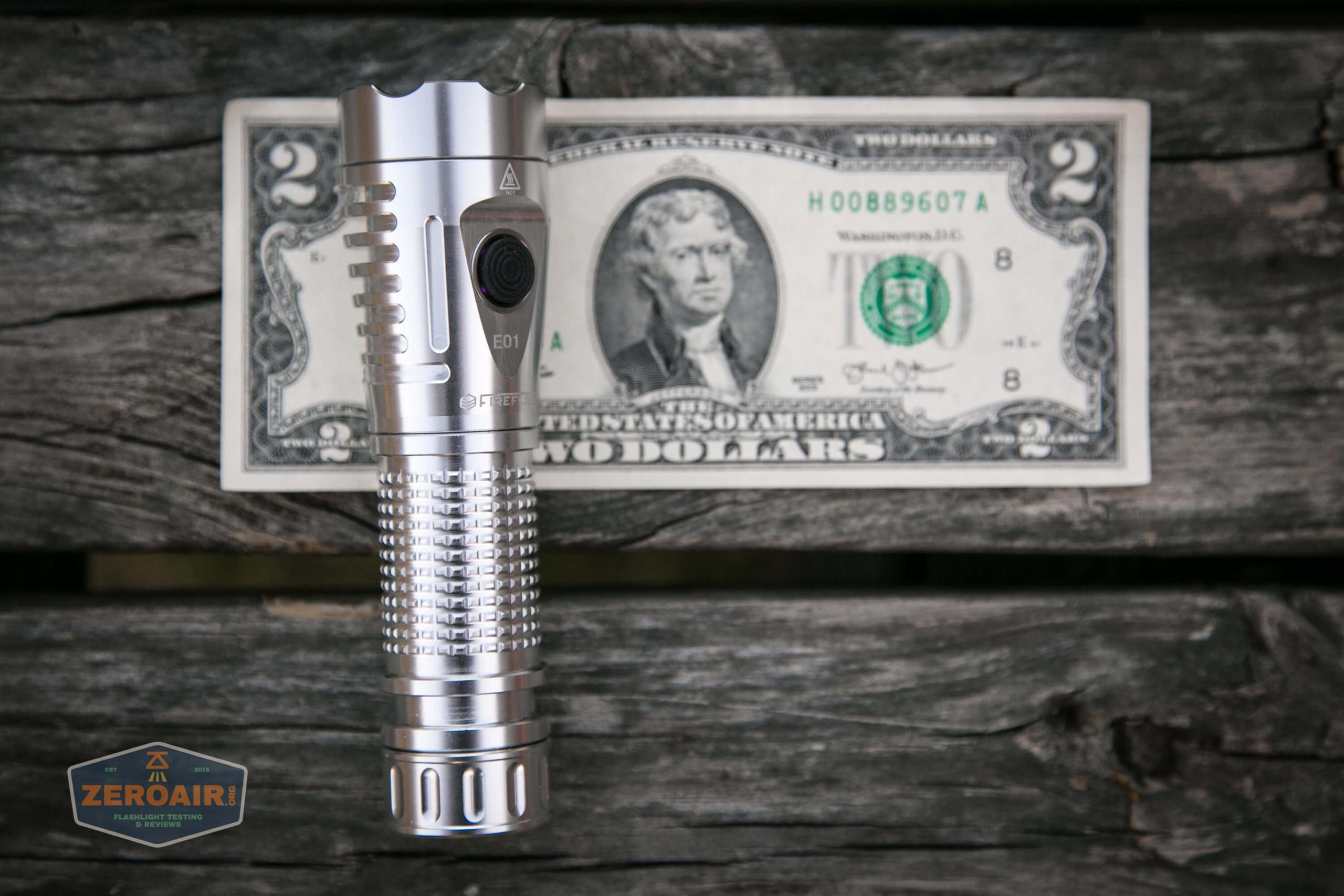
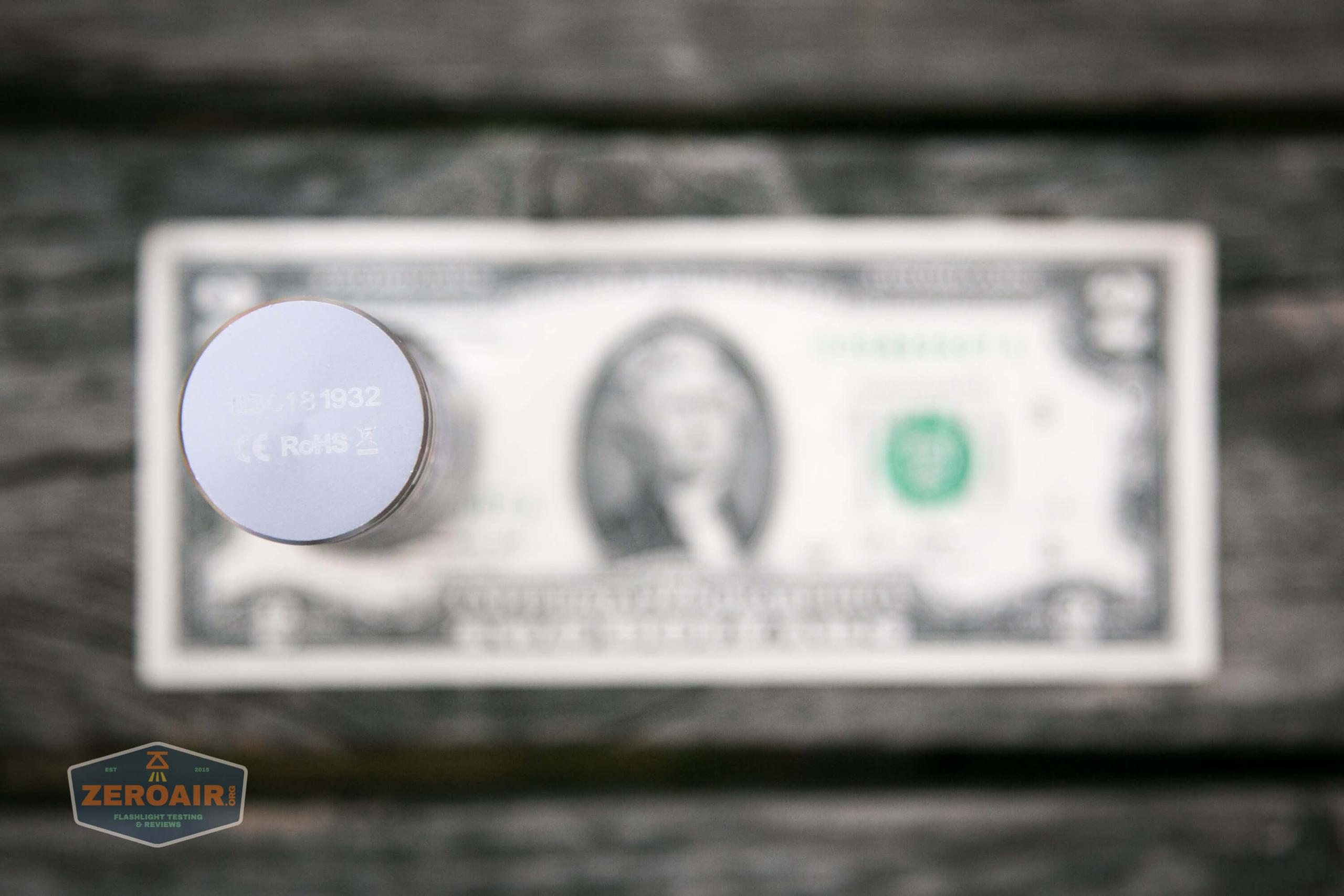
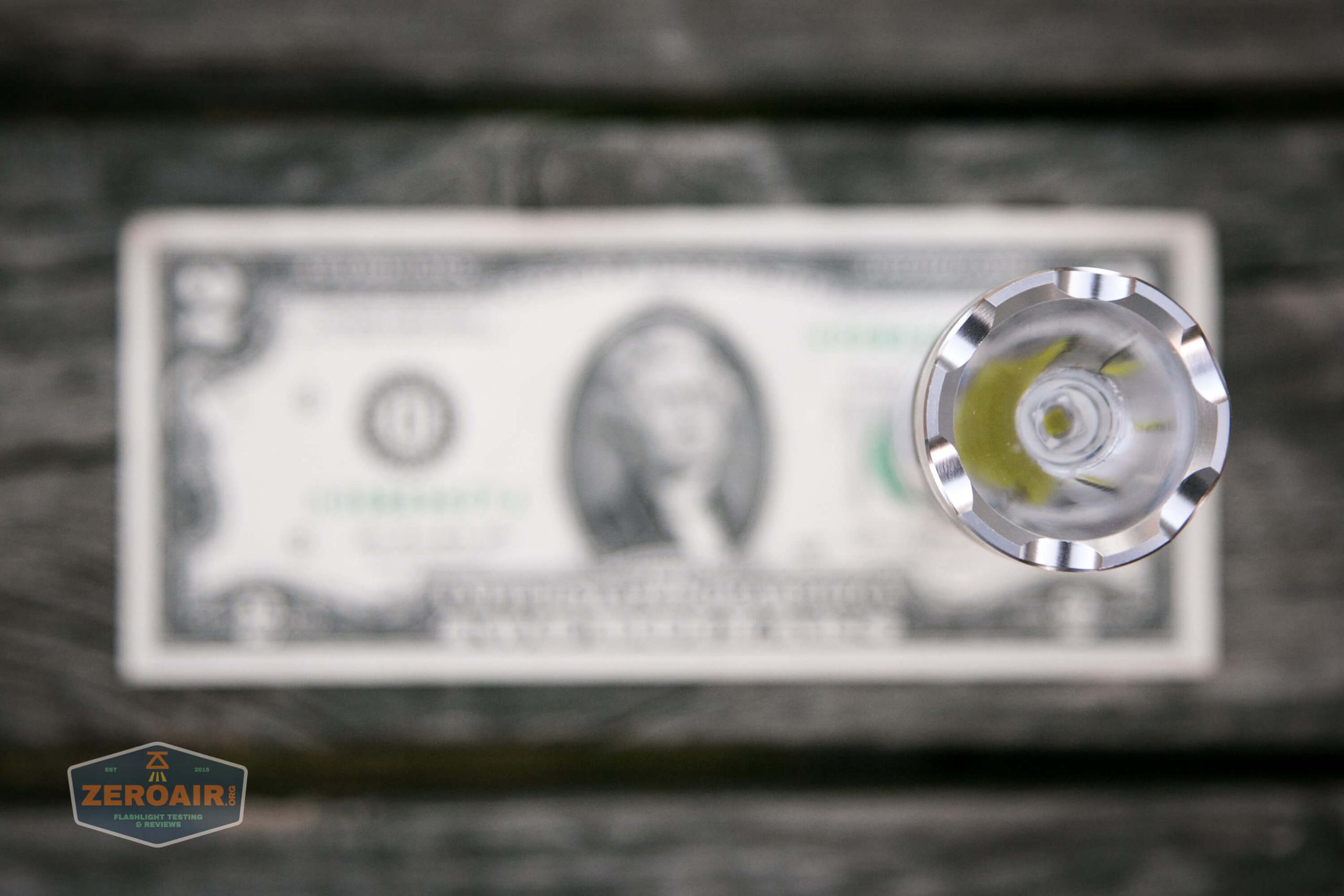
If the flashlight will headstand, I’ll try to show it here. If the flashlight will tailstand, I usually show that here, too.
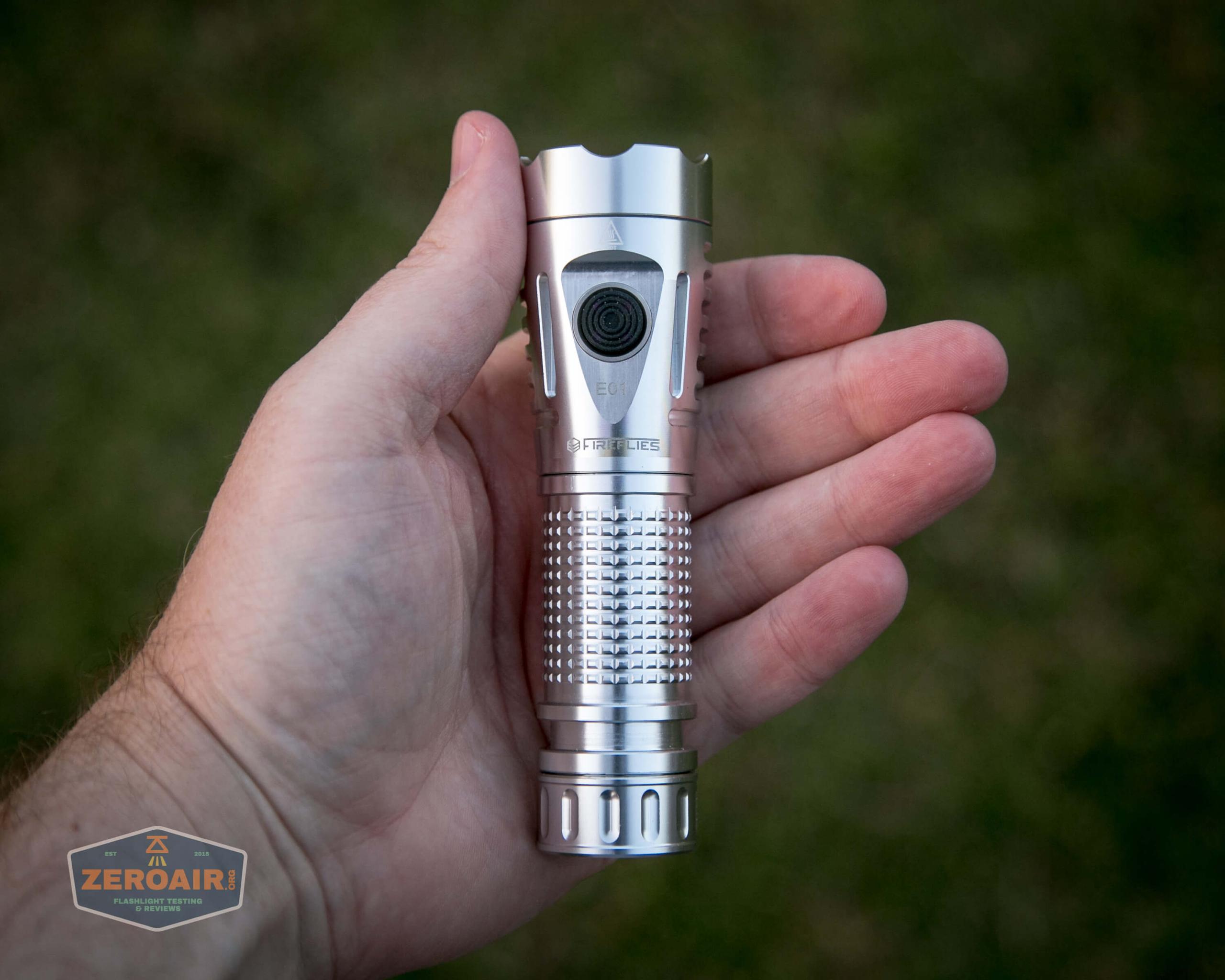
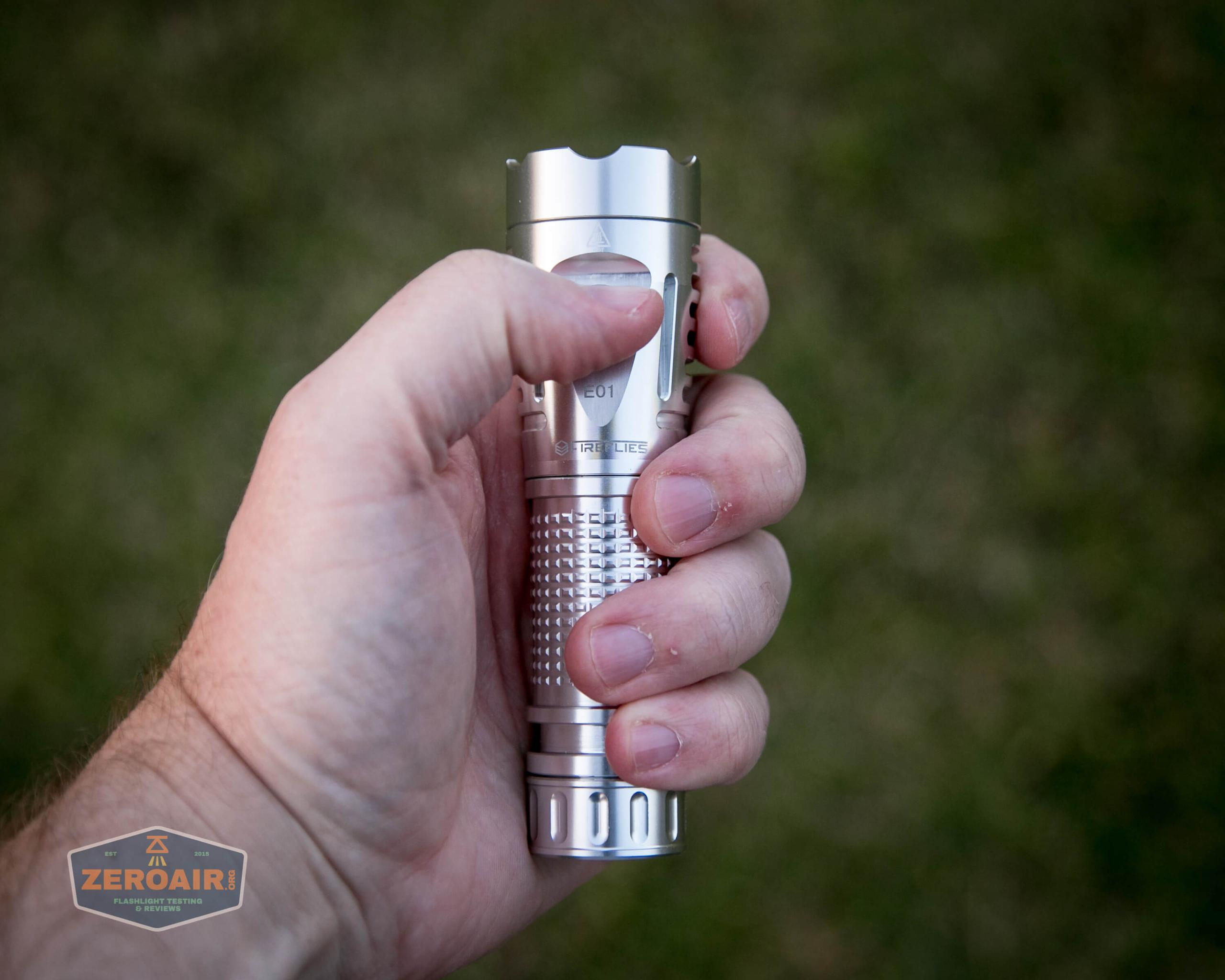
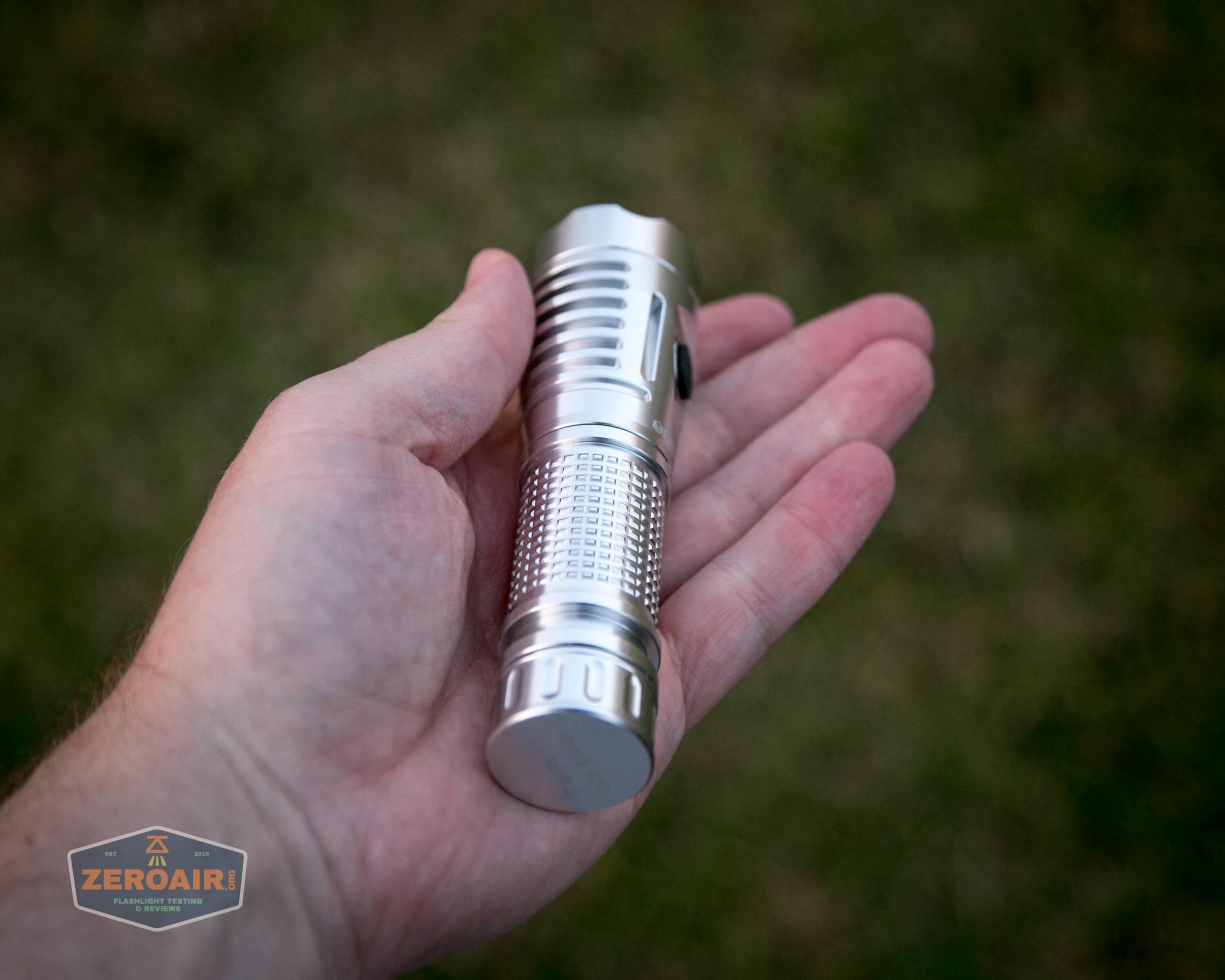
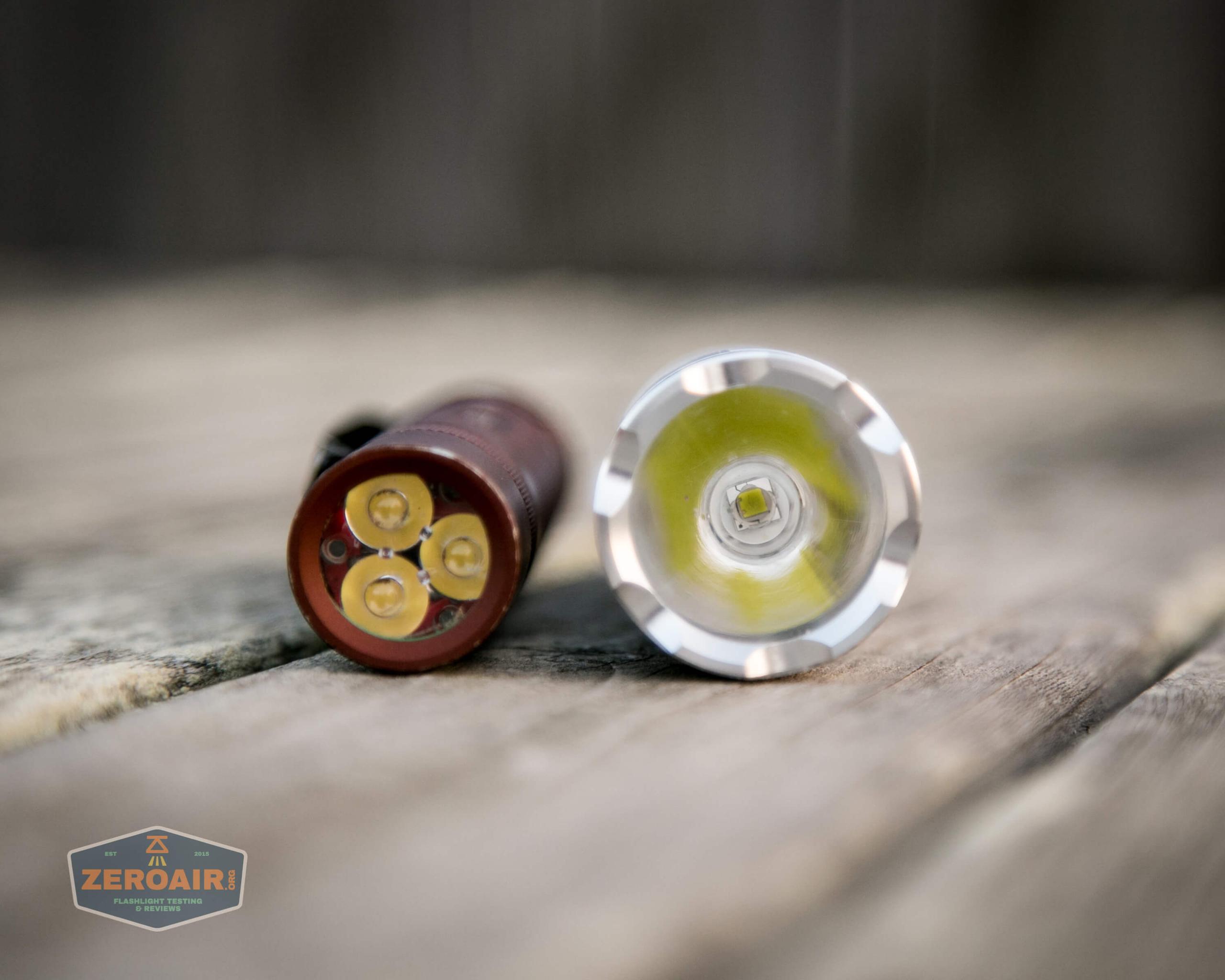
Here’s the test light with the venerable Convoy S2+. Mine is a custom “baked” edition Nichia 219b triple. A very nice 18650 light!
And here’s the light beside my custom-engraved TorchLAB BOSS 35, an 18350 light. I reviewed the aluminum version of that light in both 35 and 70 formats.
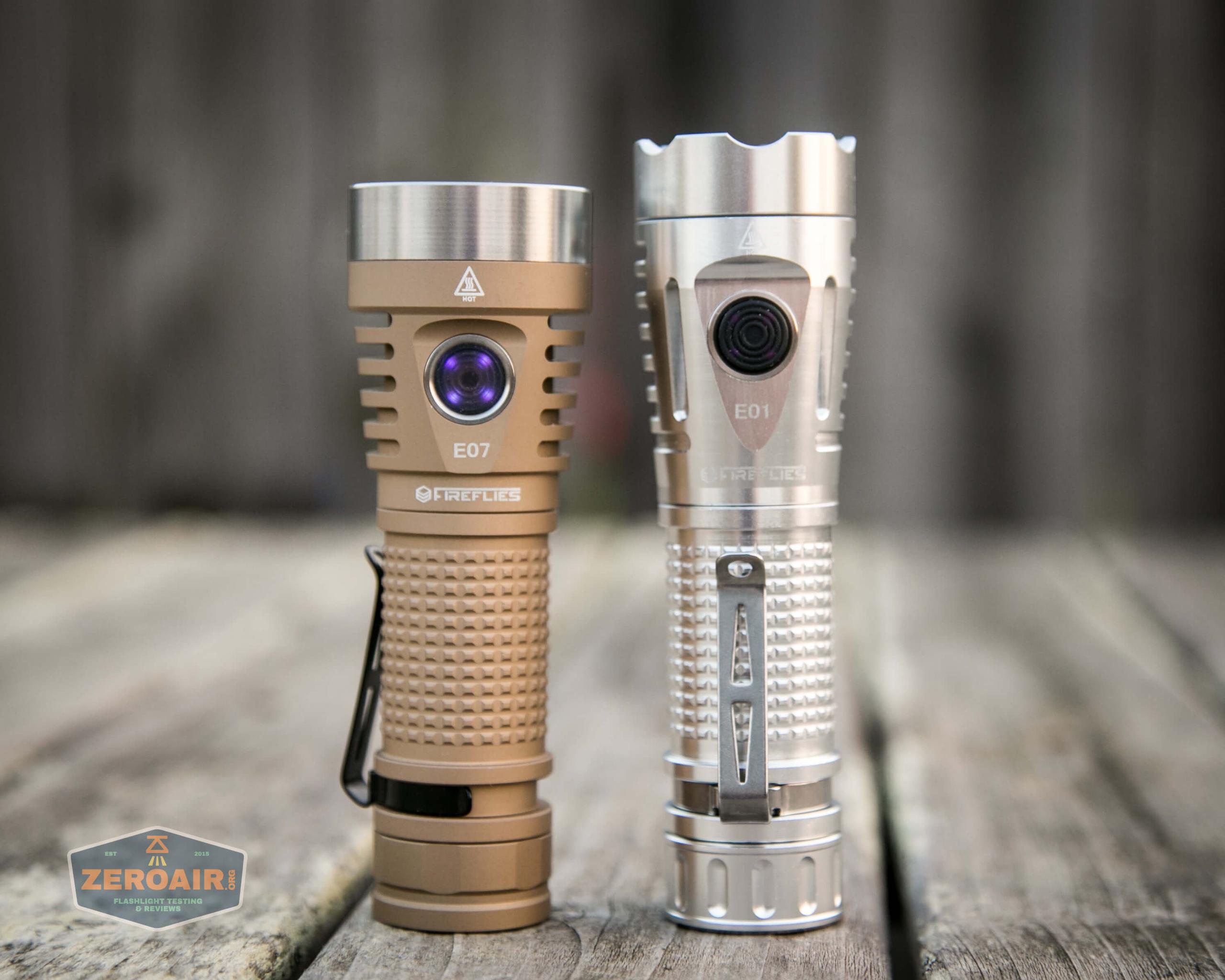
Finally, here’s the E07 beside the E01.
Retention and Carry
Included, but not installed by default, is a pocket clip. It’s a friction clip, and only fits on the tail end of the light – bezel down carry. It’s not a deep carry clip, but proportionally not a bad placement.
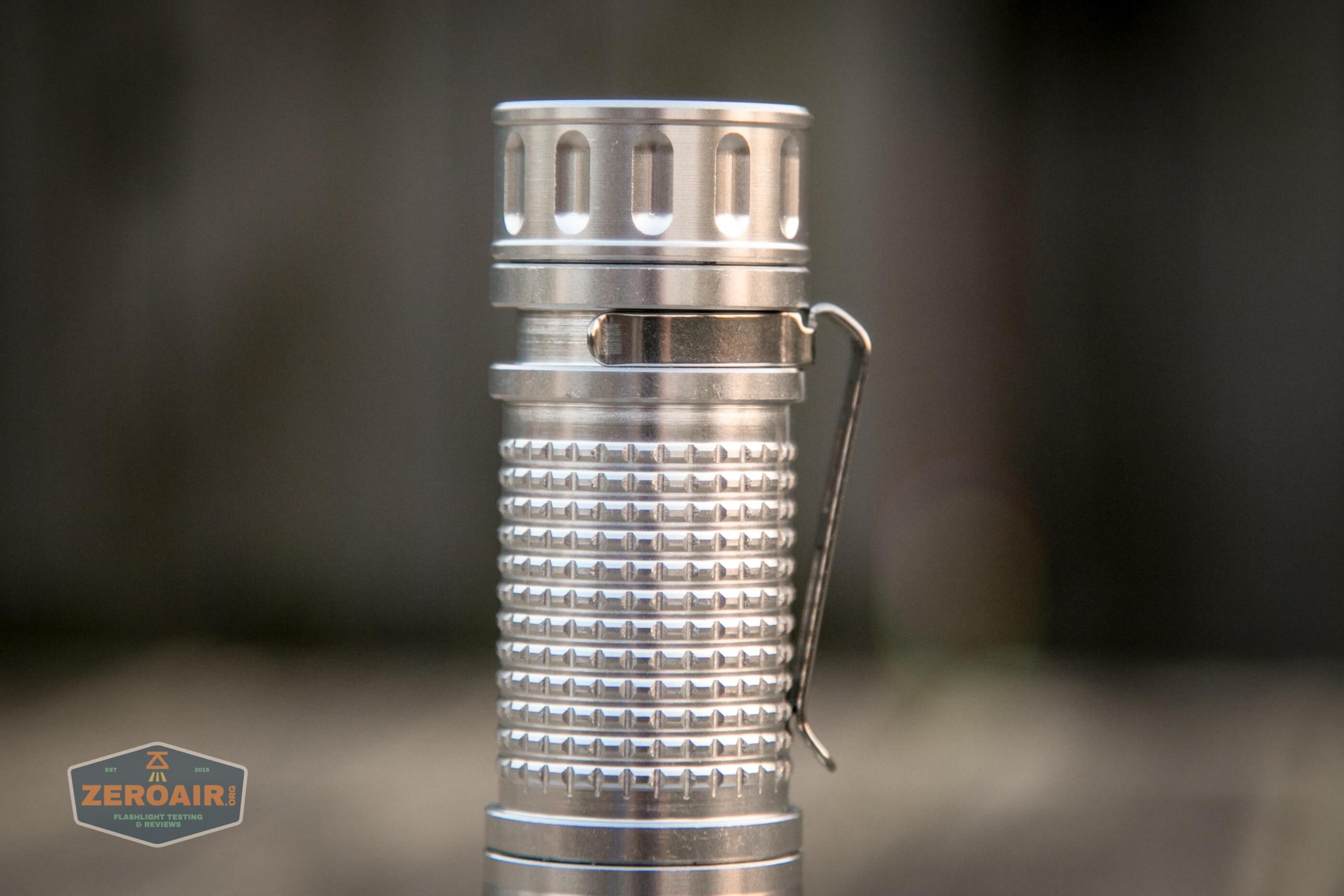
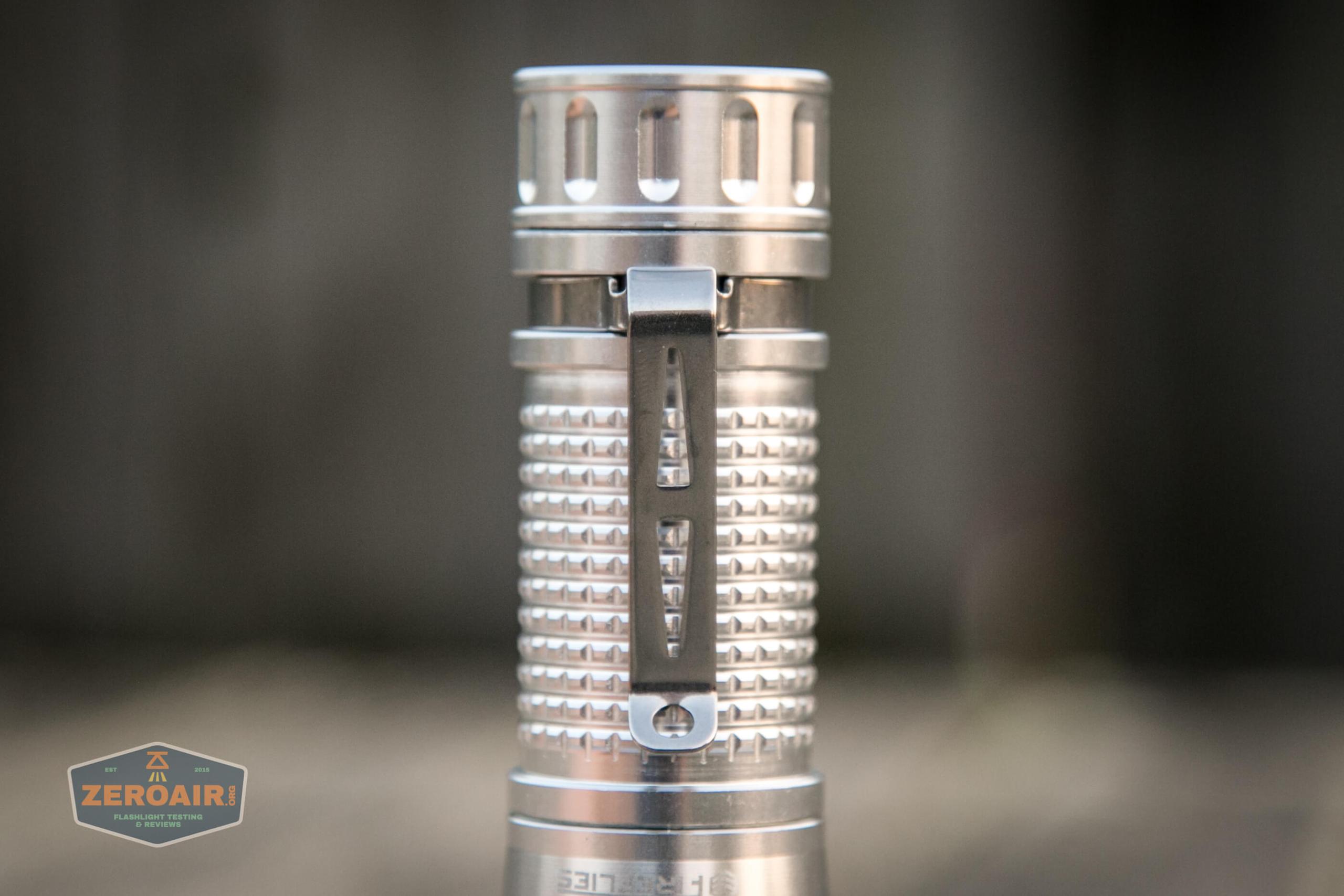
The clip has a couple of places for a lanyard to attach. First is the side of the clip.
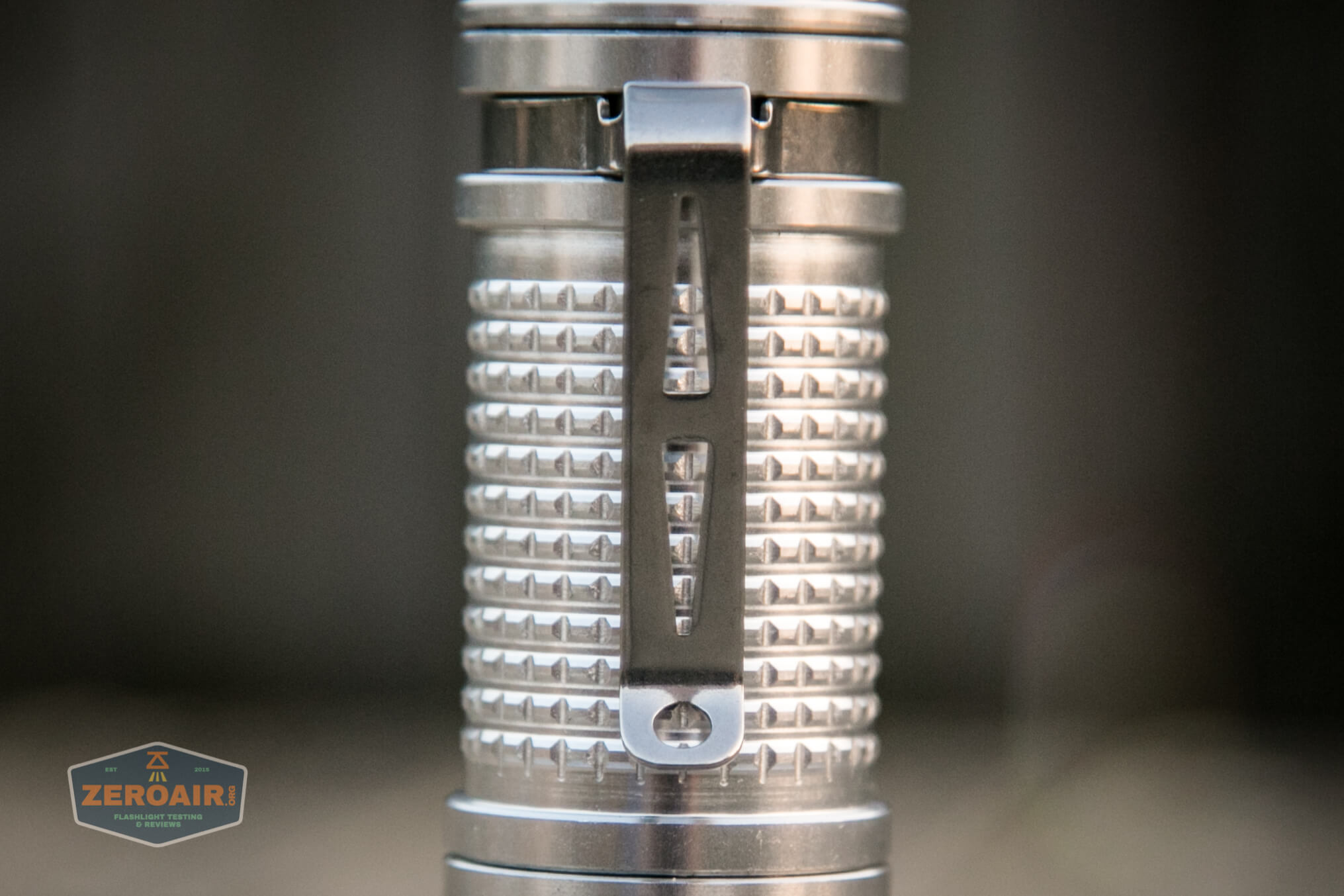
And secondly, at the tip of the clip.
There’s another place for a lanyard to attach, too:
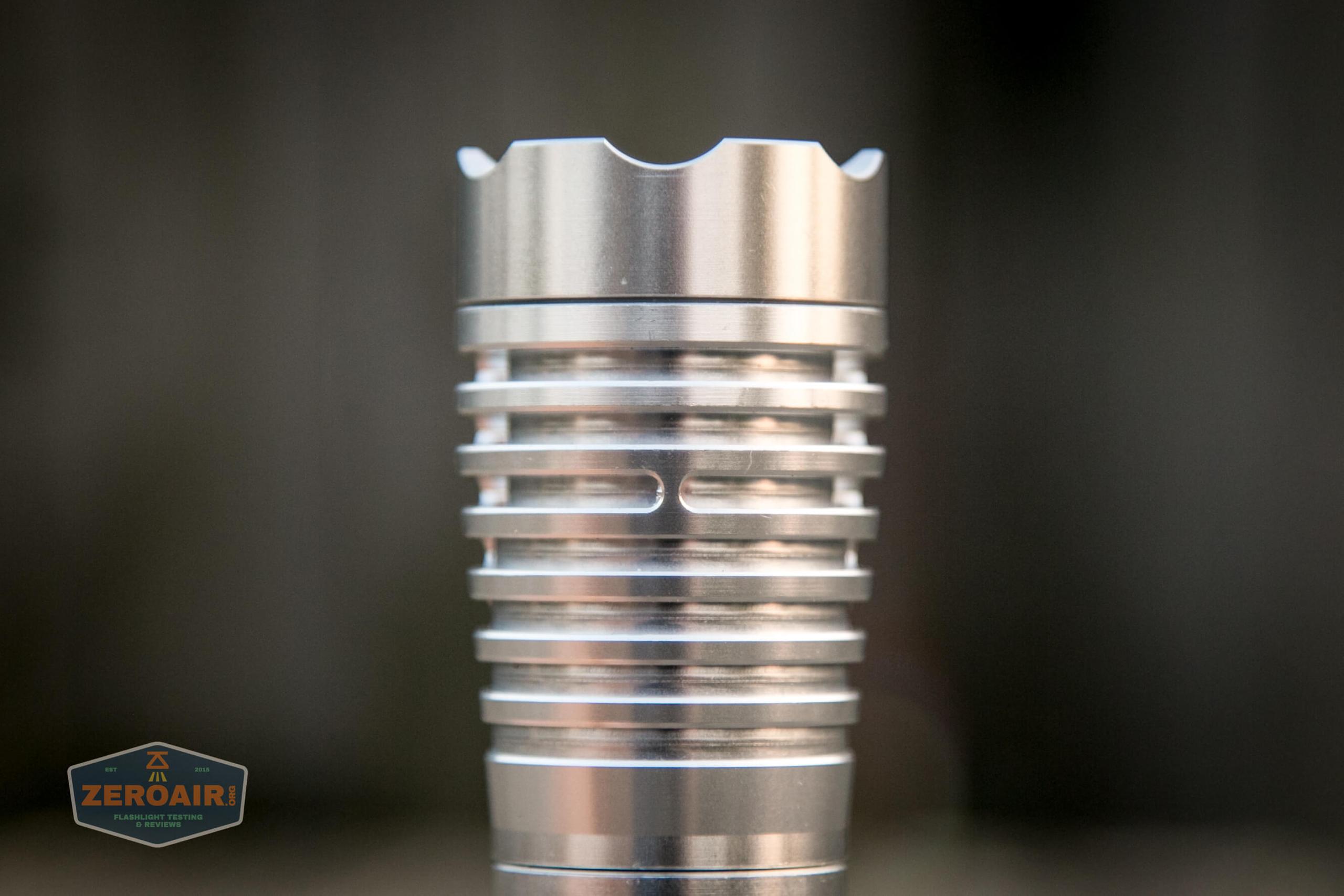
Right there amongst the cooling fins is a tiny hole suitable for a lanyard. Reminder: a lanyard is not included.
Power and Runtime
The E01 is powered by a single 21700 cell. Any type will work: flat or button, protected or unprotected. But the cell needs to be of the shorter variety – there are some button top 21700s that won’t make contact right. The right type of cell is included anyway, so it’s not something you’ll need to worry about. Included is a 10A 4800mAh 21700 (similar to the Samsung 48G) (not what is pictured below!)
Don’t use an extremely high-discharge-capable cell in this light! There’s just one emitter, and you can damage this emitter with too much current! (“Too much” is probably anything over 10A or so.)
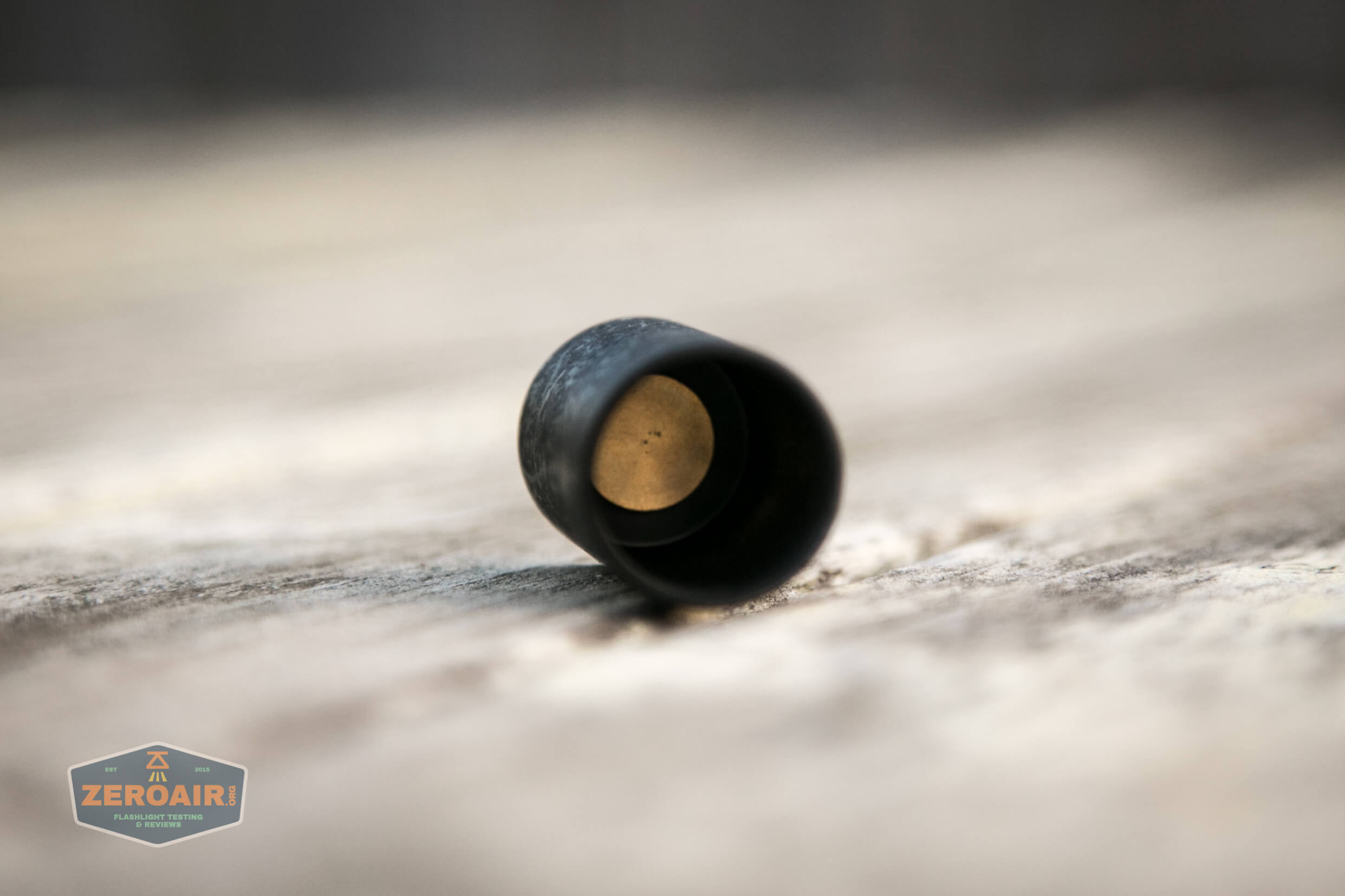
FireFlyLite also includes a 21700 to 18650 adapter. There’s a little brass button in there, too.
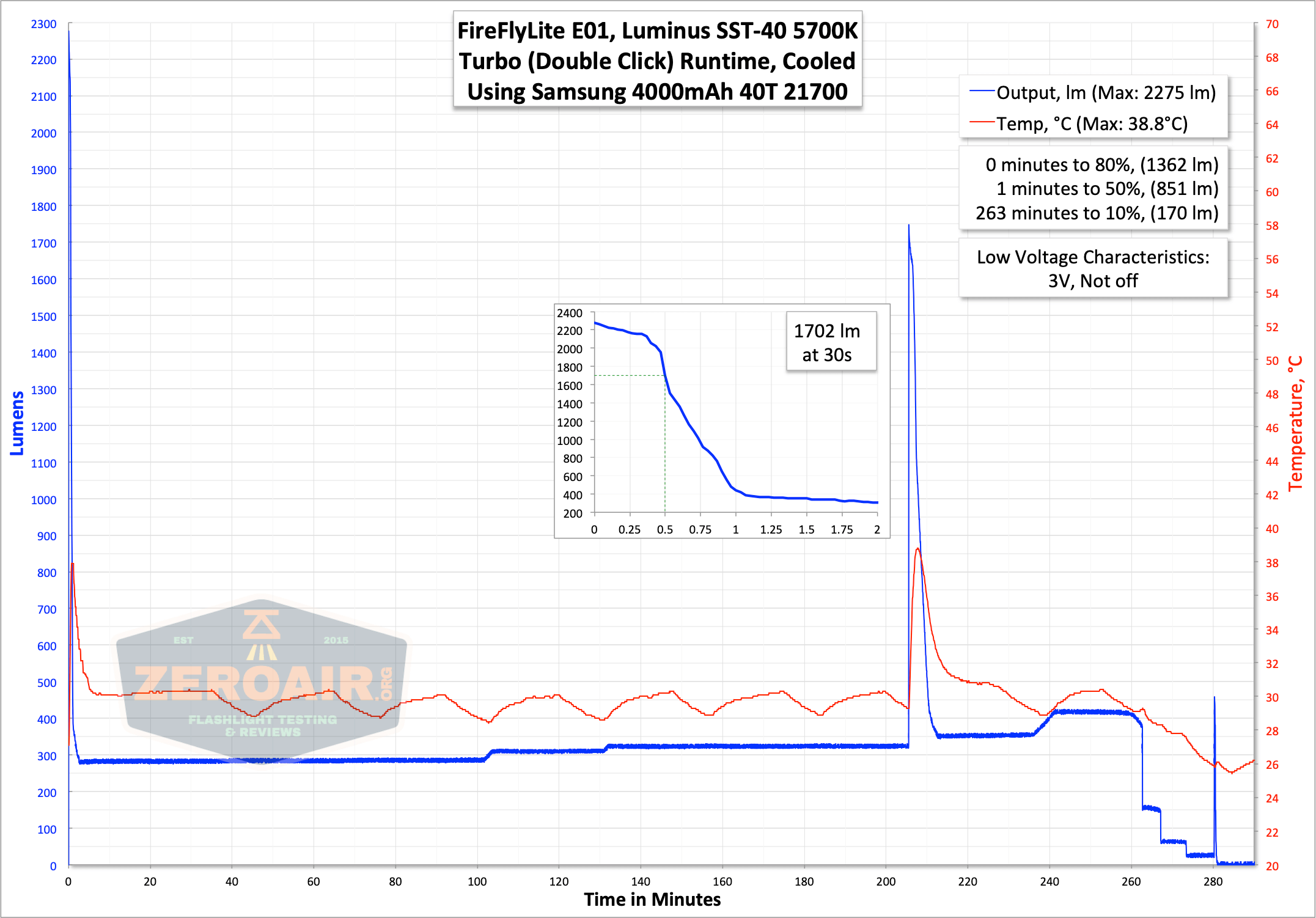
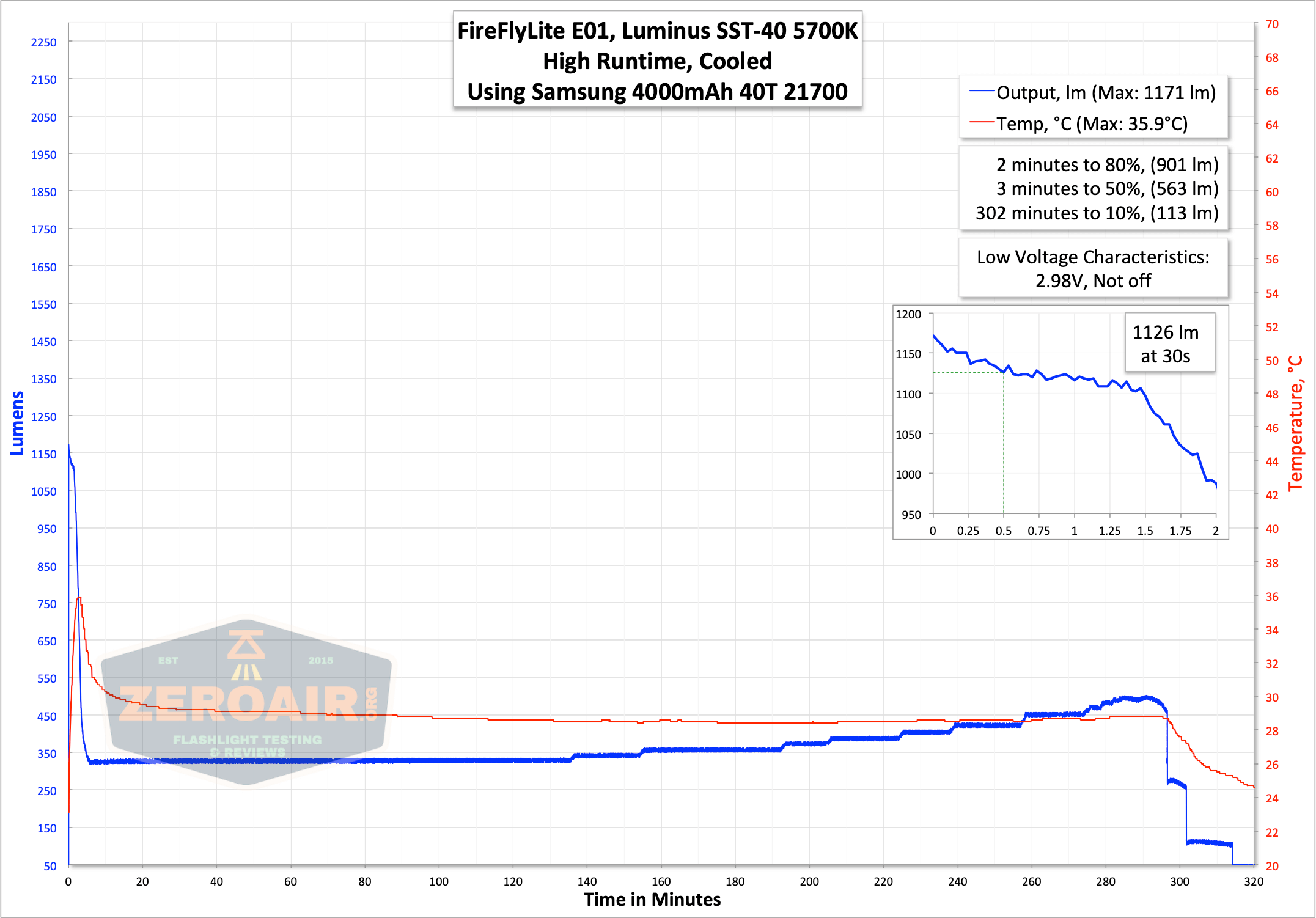
Here are a couple of runtimes: Turbo and High. Turbo is the “double click from on” Turbo (which is the full FET output). And “High” is the “highest mode in the stepped group.”
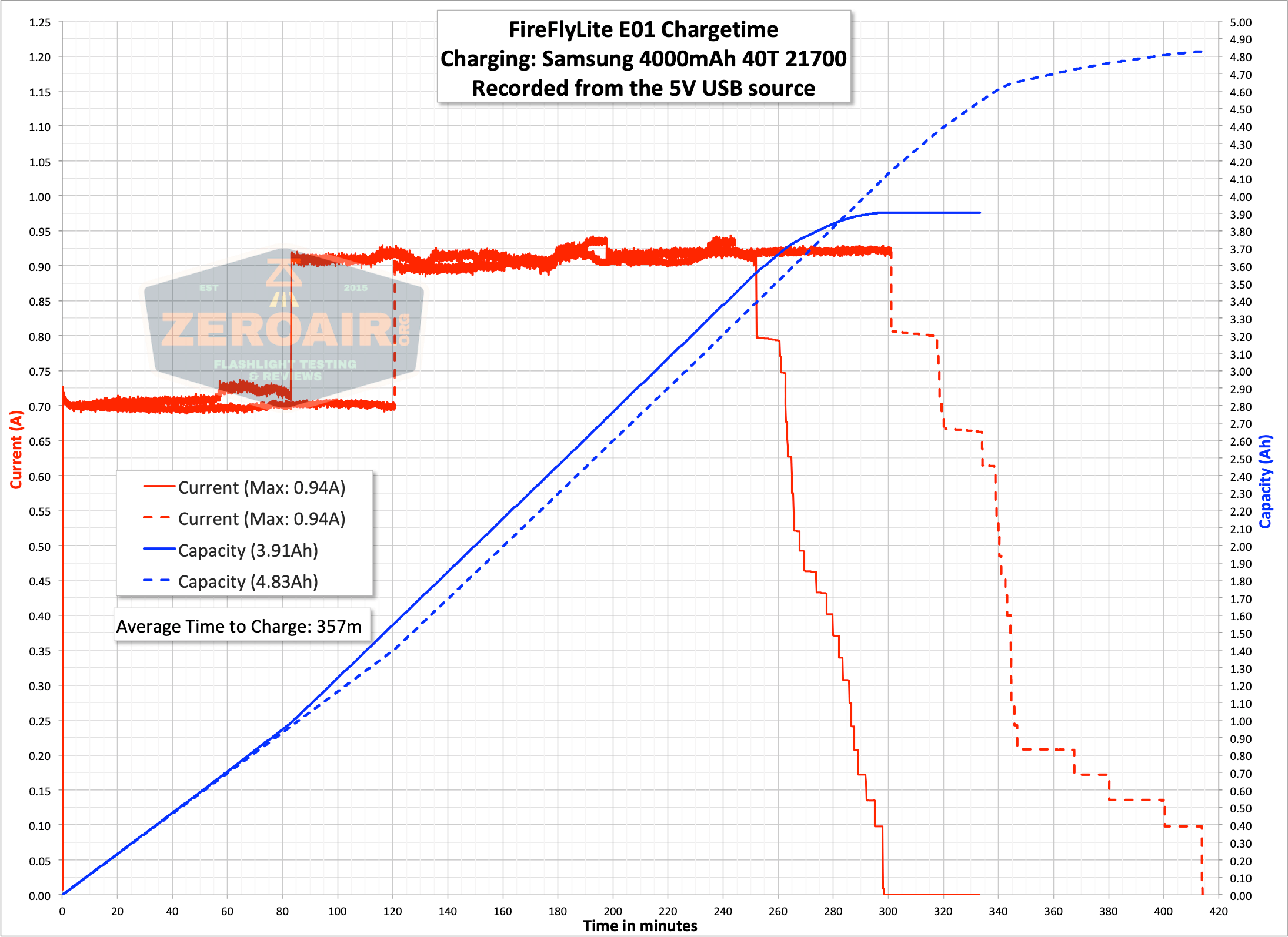
This isn’t a charger review, but I went ahead and logged the charging done by this XTAR MC1S, which is included. It’s a simple single bay charger and works adequately.
Modes and Currents
| Mode | Mode Claimed Output (lm) | Claimed Runtime | Measured Lumens | Tailcap Amps |
|---|---|---|---|---|
| 8 | 2300 | – | 1702 | 8.83 |
| 7 | – | – | 1126 | 2.33 |
| 6 | – | – | 1.35 | |
| 5 | – | – | 1.06 | |
| 4 | – | – | 0.49 | |
| 3 | – | – | 0.19 | |
| 2 | – | – | 0.04 | |
| 1 | – | – | 3.5mA |
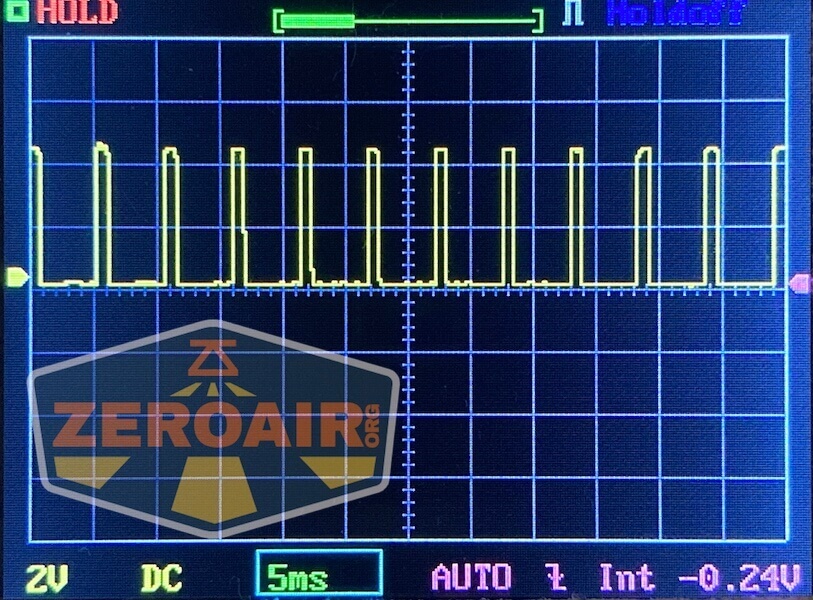
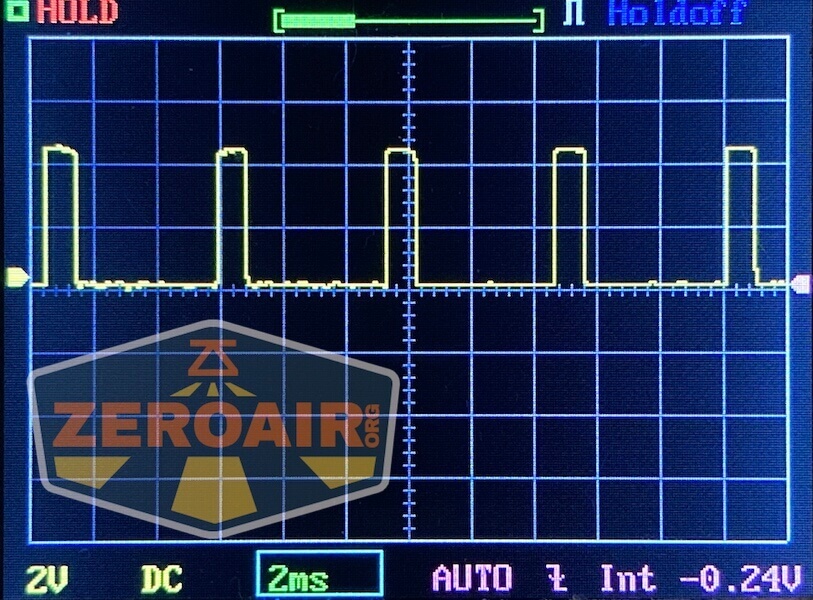
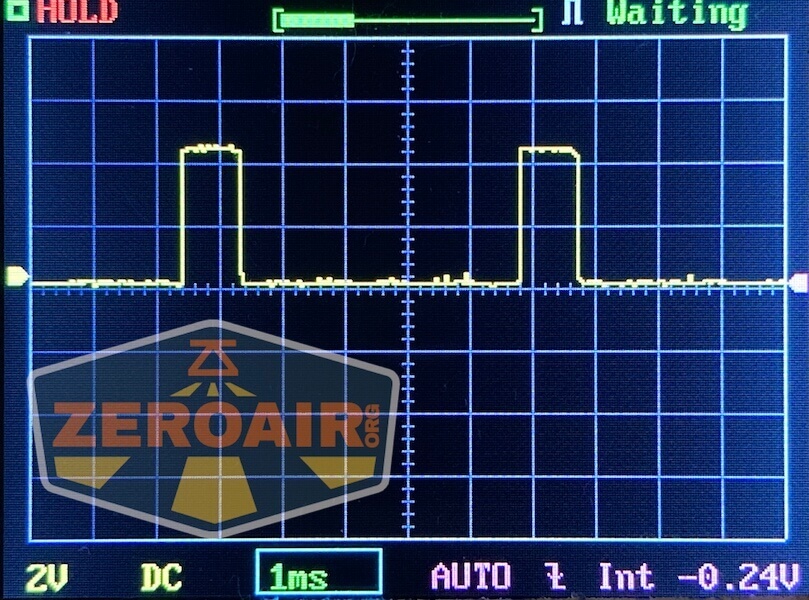
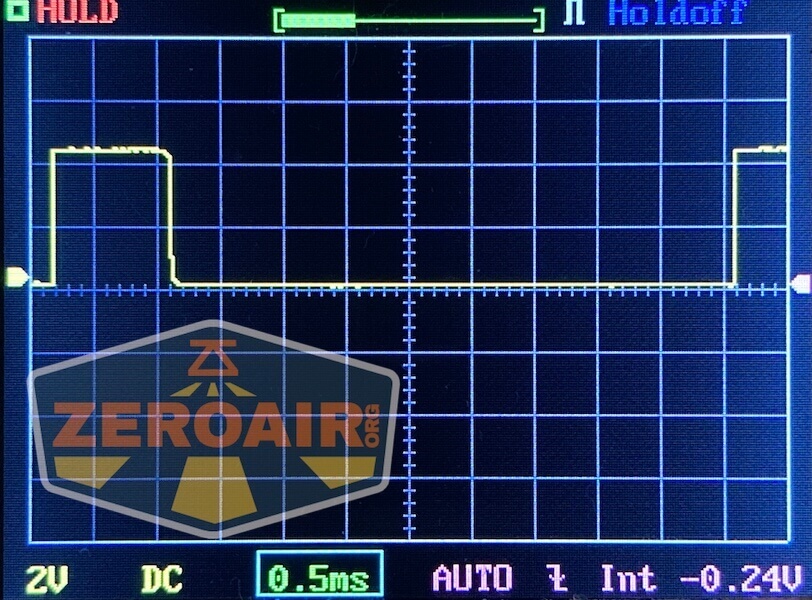
Pulse Width Modulation
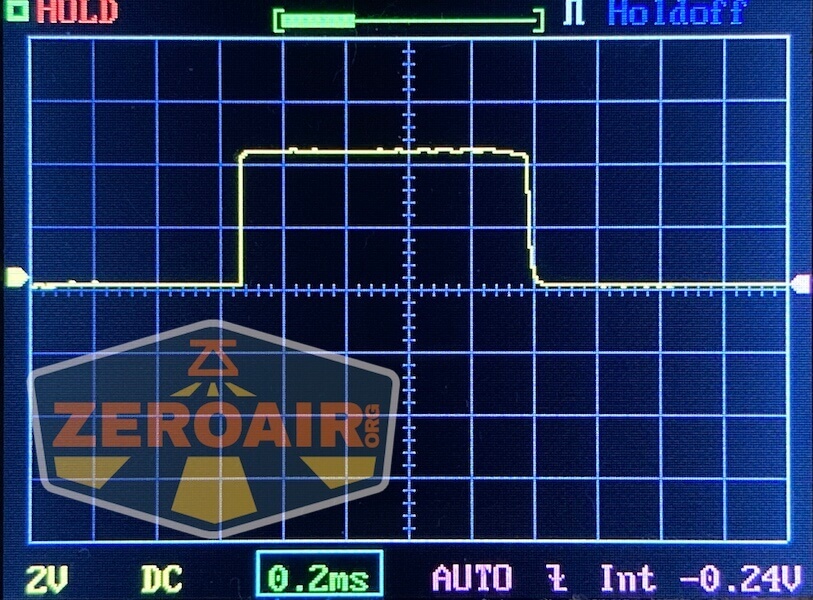
The first mode (at left) is the lowest of the ramping user interface section. The rest are the stepped modes (in order, low to high). You can also note from this that the lowest mode of the ramping user interface is lower than the lowest stepped option.
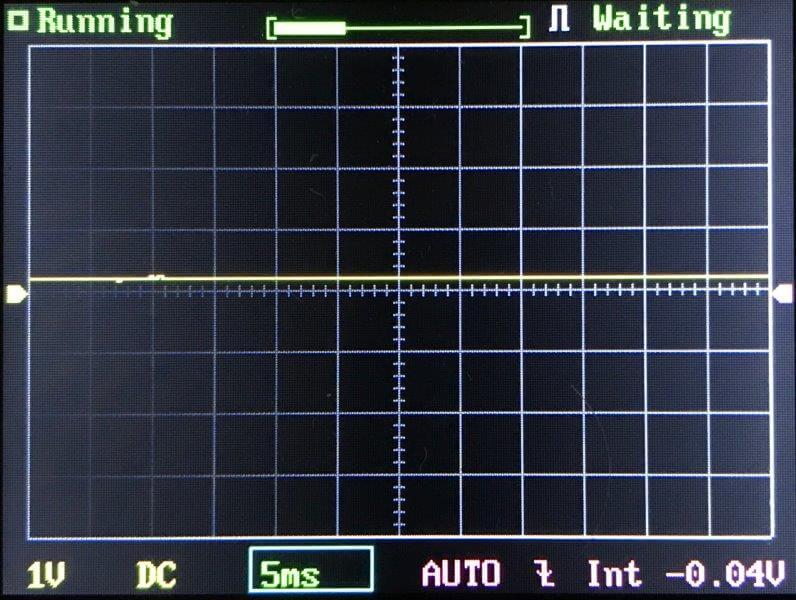
 Here you can see a “baseline” – a chart with almost no light hitting the sensor.
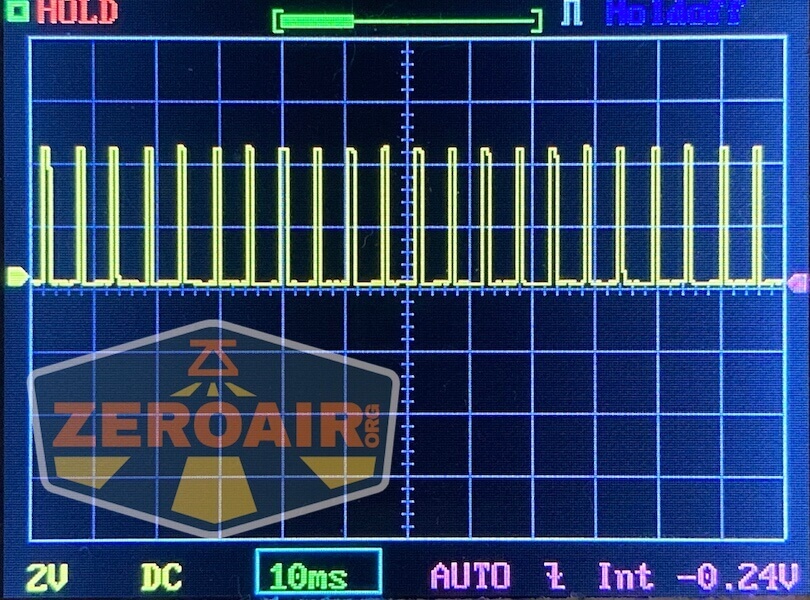
Then there’s the Ultrafire WF-602C flashlight, which has some of the worst PWM I’ve seen. It’s so bad that I used a post about it to explain PWM! Here are multiple timescales (10ms, 5ms, 2ms, 1ms, 0.5ms, 0.2ms) to make comparing this “worst” PWM light to the test light easier. That post also explains why I didn’t test the WF-602C at the usual 50us scale.
User Interface and Operation
There’s one switch on the E01. It’s a side e-switch, with four purple indicating LEDs. It’s quiet but very clicky, and the rubber cover is nice and grippy.
This light ships with Andúril by ToyKeeper. Andúril is a fantastic UI and extremely versatile!
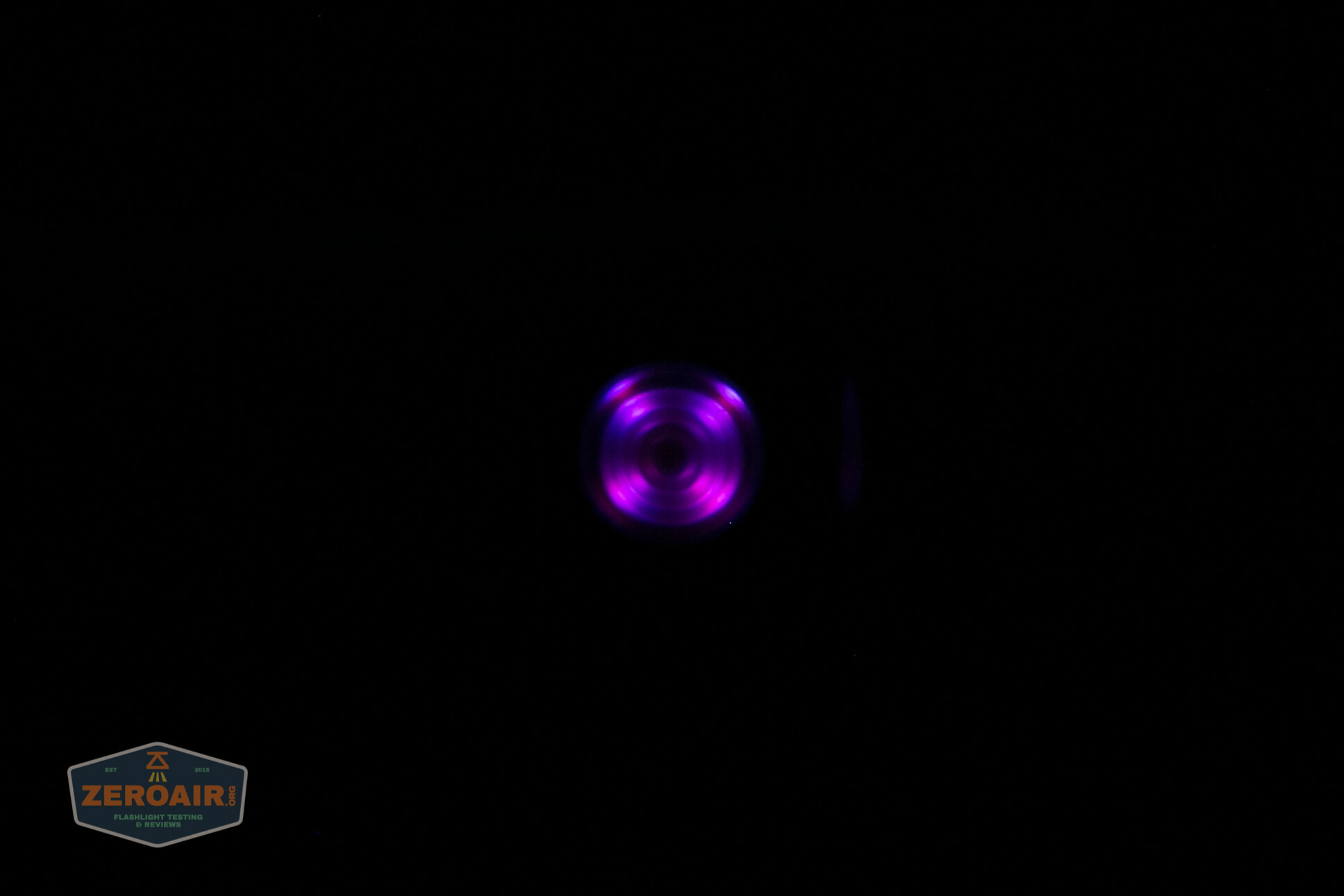
In the photo below, the switch emitters (4) are actually lit.
And here’s a night shot of the same.
First off, here’s the user interface chart made by ToyKeeper.
Here’s my user interface table!
| State | Action | Result |
|---|---|---|
| Off | Hold | On (Low) |
| Off | Click | On (Mode Memory) |
| Off | Click 2x | Highest Hybrid Mode |
| Off | Click 3x | Blinkie Mode Group |
| Off | Click 4x | Lockout |
| Off | Click 5x | Momentary |
| Off | Click 6x | Muggle |
| Off | Click, Click, Hold | Strobe Group (Mode Memory Strobe) |
| Strobe Group | Click 2x | Strobe Cycle (Candle > Bike Flasher > Party Strobe > Tactical Strobe > Lightning Storm) |
| Blinkie Mode Group | Click 2x | Blinke Cycle (Sunset > Beacon > TempCheck > BattCheck) |
| On | Click 3x | Switch between Stepped and Smooth Ramp |
| On | Click 4x | Ramp Configuration |
| TempCheck | Click 4x | Thermal Configuration |
| Beacon | Click 4x | Beacon Configuration |
| Lockout | Click 4x | Off |
| Strobe Group | Click | Off |
| (Basically) On | Click | Off |
| Candle | Click 3x | 30 minute timer to off |
| Strobe Group | Hold | Heighten selected mode (Make faster or brighter) |
| Strobe Group | Click, Hold | Lessen selected mode (Make slower or dimmer) |
| On | Click 2x | FET Turbo |
| Ramp Configuration | [Wait for Single flash] Click N time for level N. | Selection of the “Low” you like best by clicking 1, 2, 3, etc. where 1, 2, 3, etc are different levels of low. |
| Ramp Configuration | [Wait for Second flash] Click N time for 1+Turbo-N. | Selection of the “Ceiling” you like best by clicking 1, 2, 3, etc. where 1, 2, 3, etc are different Ceiling levels. |
| Ramp Configuration | [Wait for Third flash] Click for how many steps you want in Stepped mode. | Sets Number of Steps. |
| Thermal Configuration | [Wait for First flash] Click for N times for N degrees C. | Displays Current Temperature. |
| Thermal Configuration | [Wait for Second flash] Click for N times for 30C + N. | Sets Temperature Limit. |
| Beacon Configuration | [Wait for First flash] Click for N times N seconds per flash | Sets Beacon Speed. |
LED and Beam
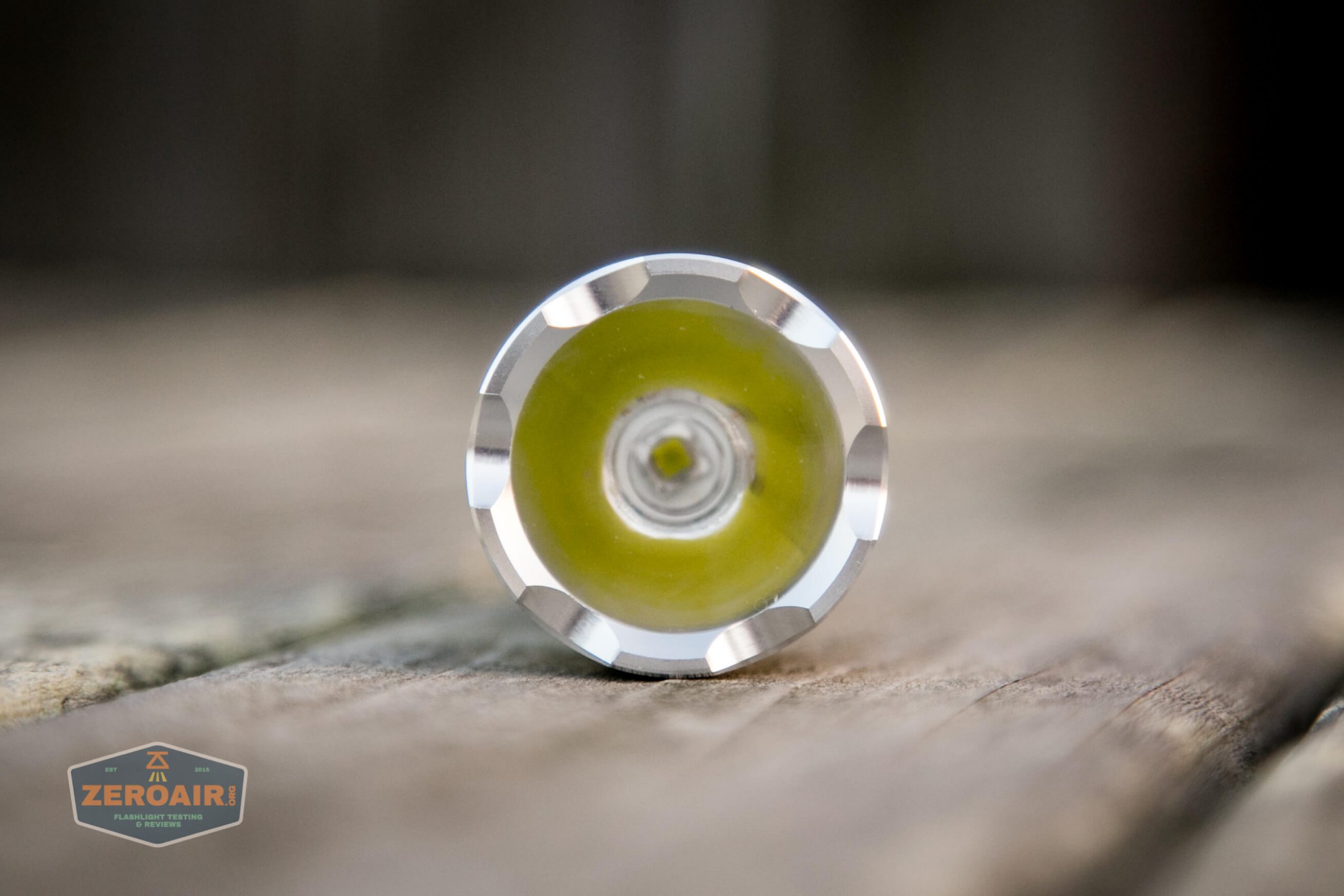
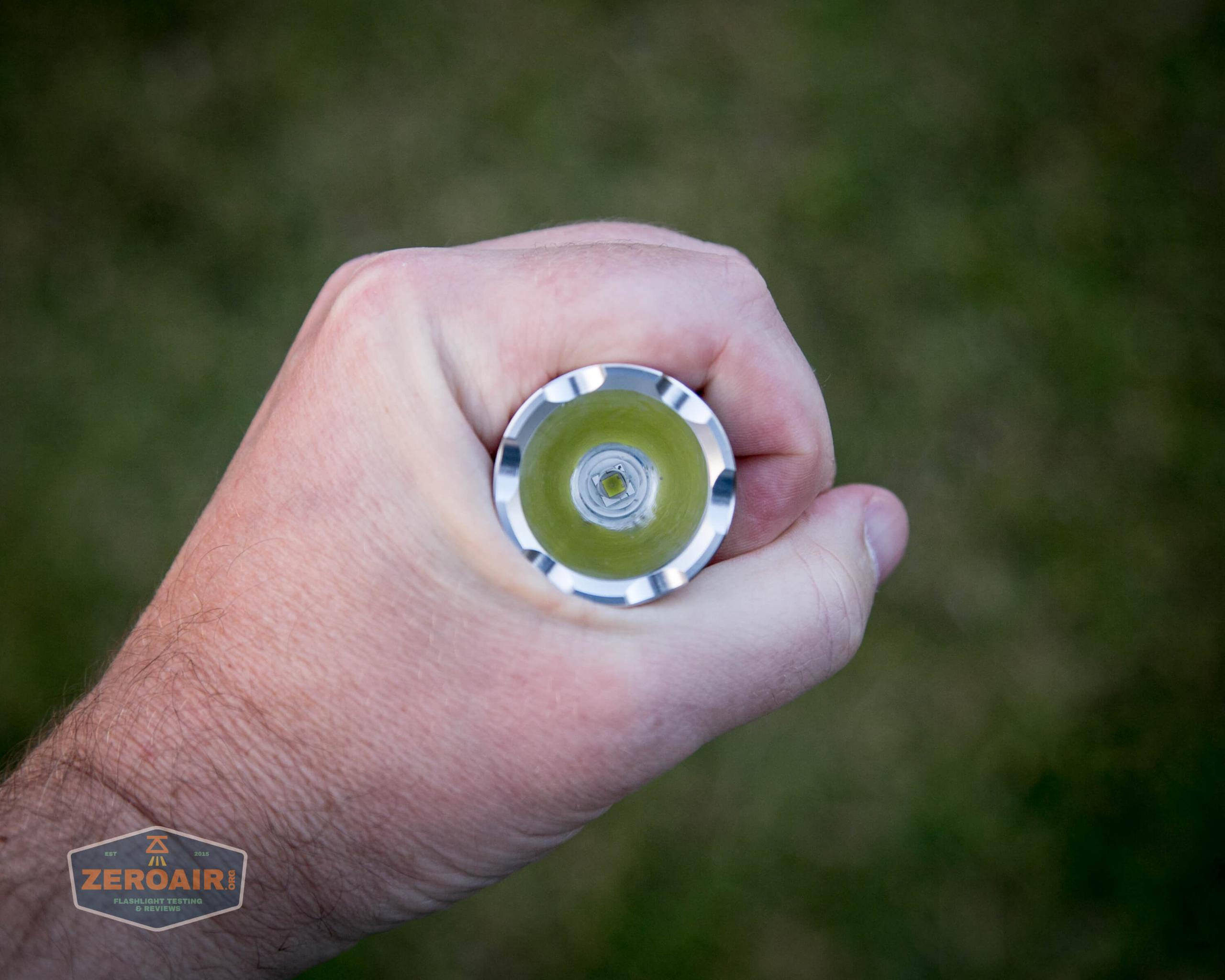
The FireFlyLite E01 Luminus flashlight utilizes one main emitter in the E01. (In fact, you could have guessed the “01” refers to one emitter, just like in the E07, the “07” refers to 7 emitters.) This emitter in the E01 is a Luminus SST-40 in “NW” but specifically 5700K. That emitter is under a TIR.
Beamshots
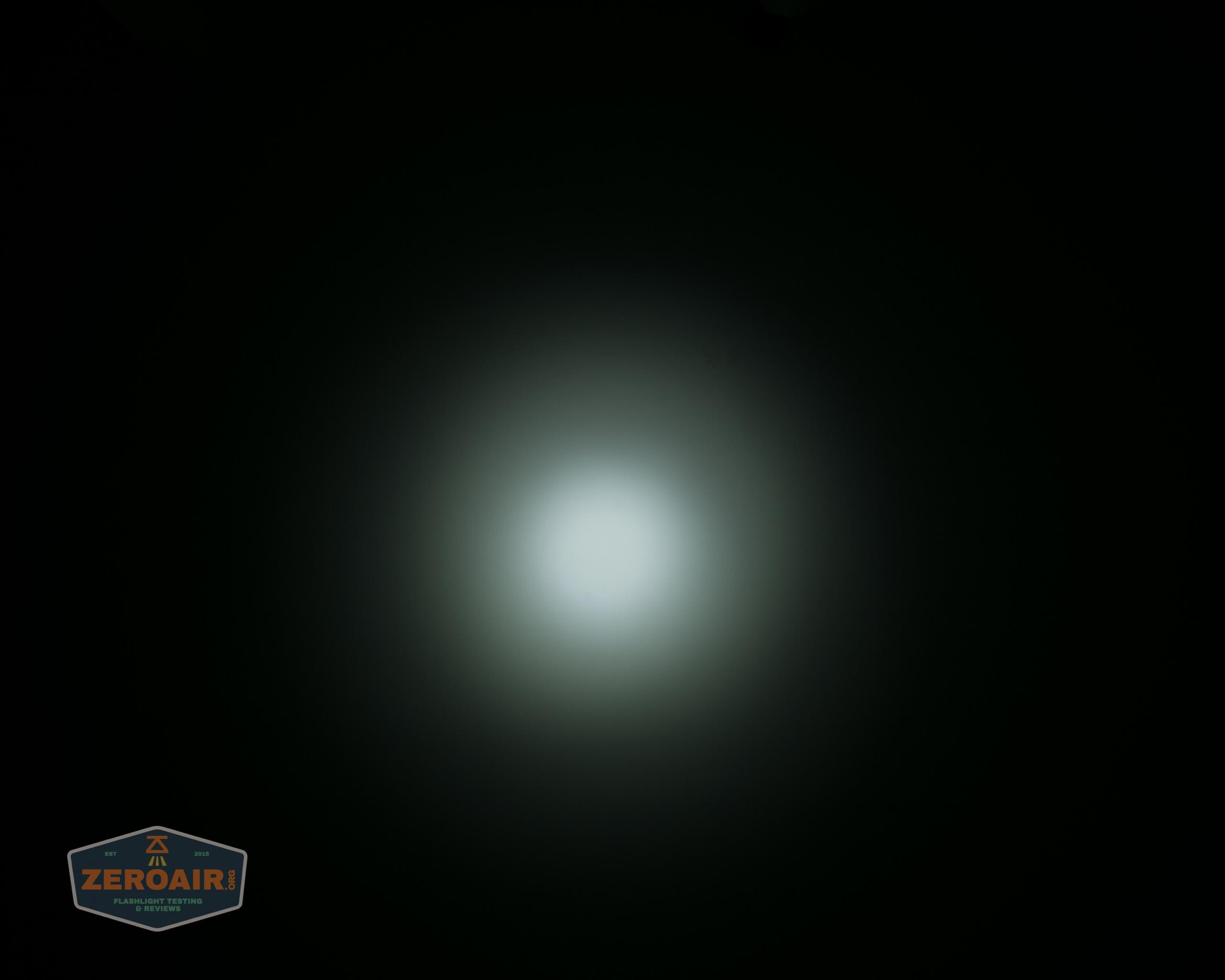
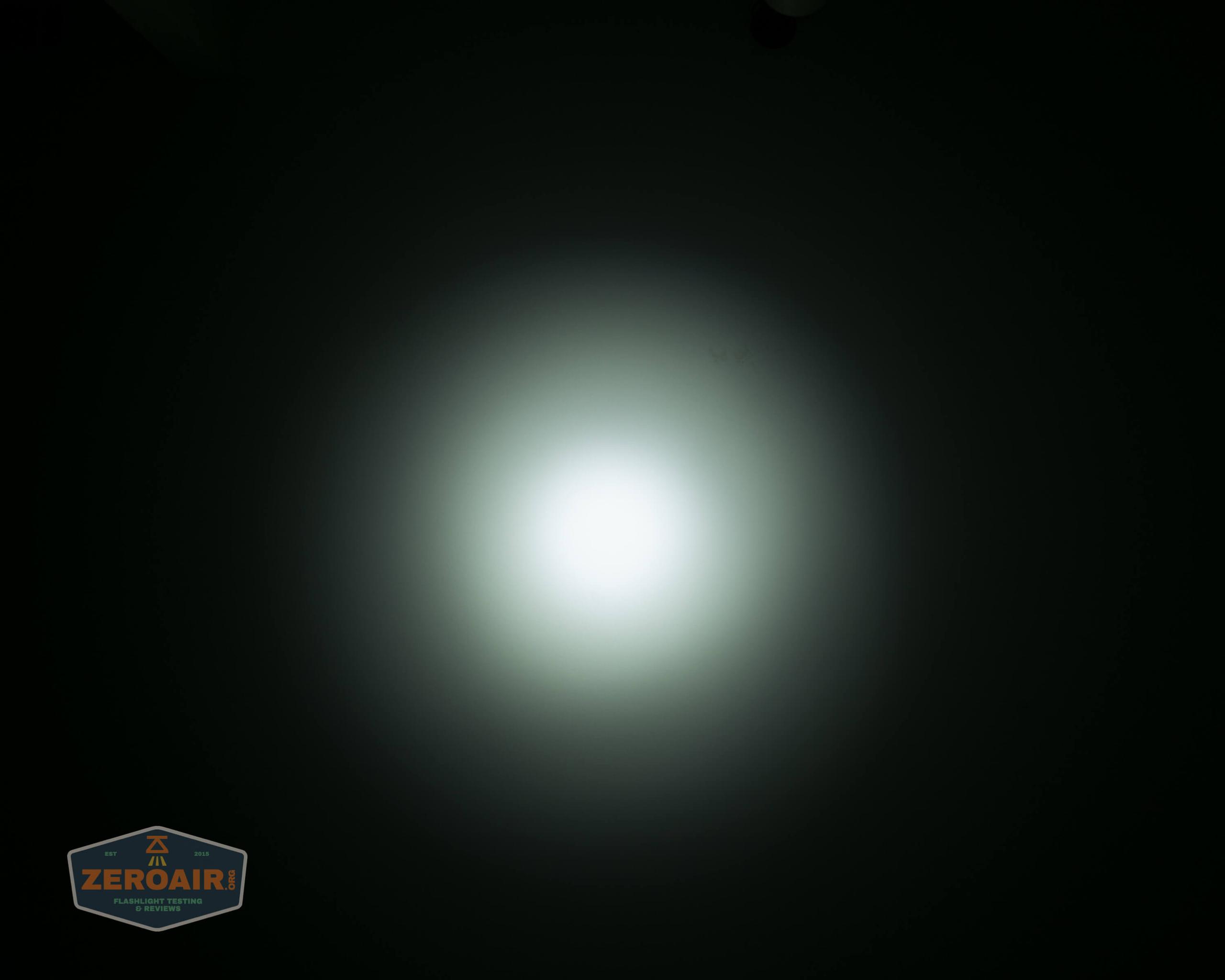
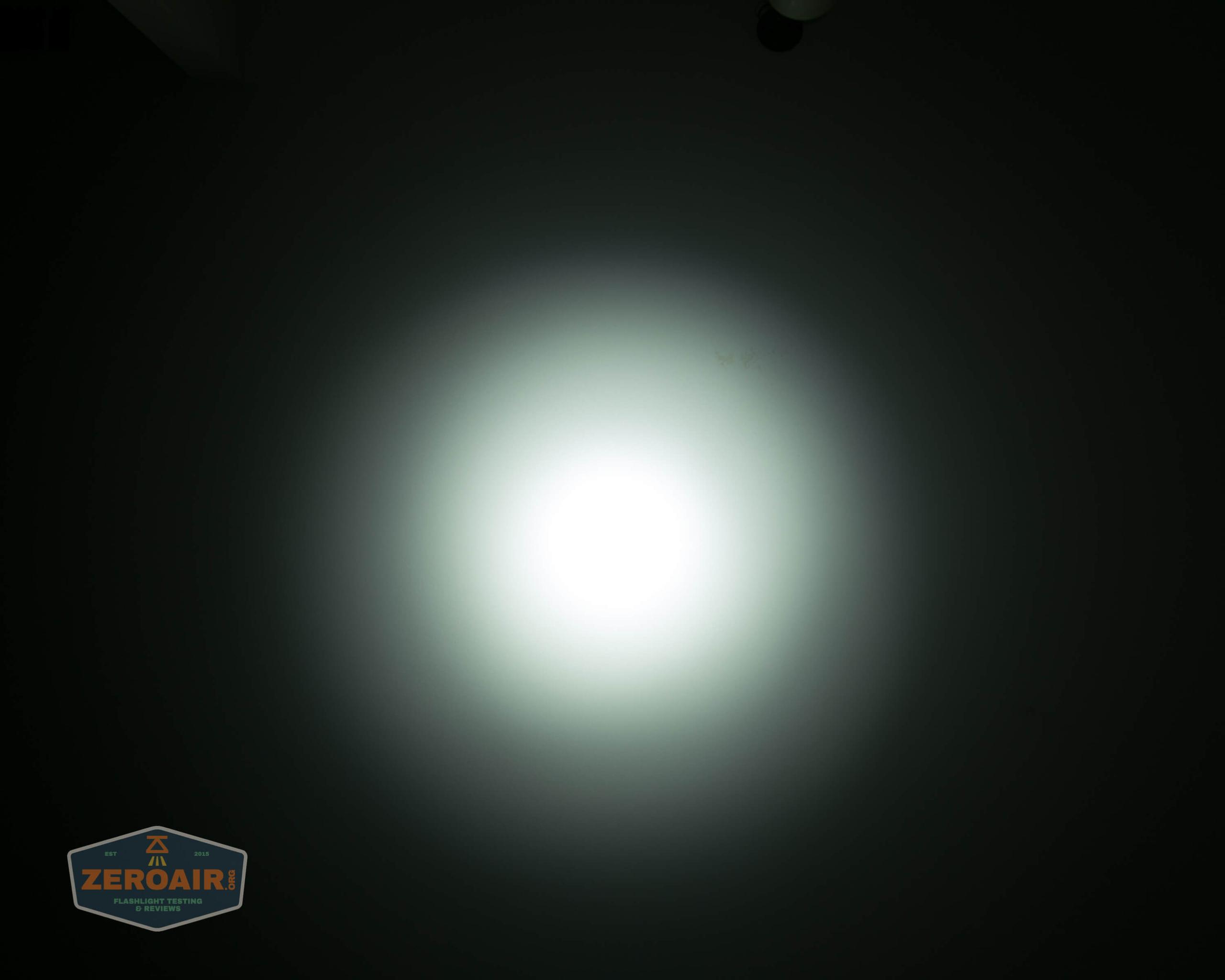
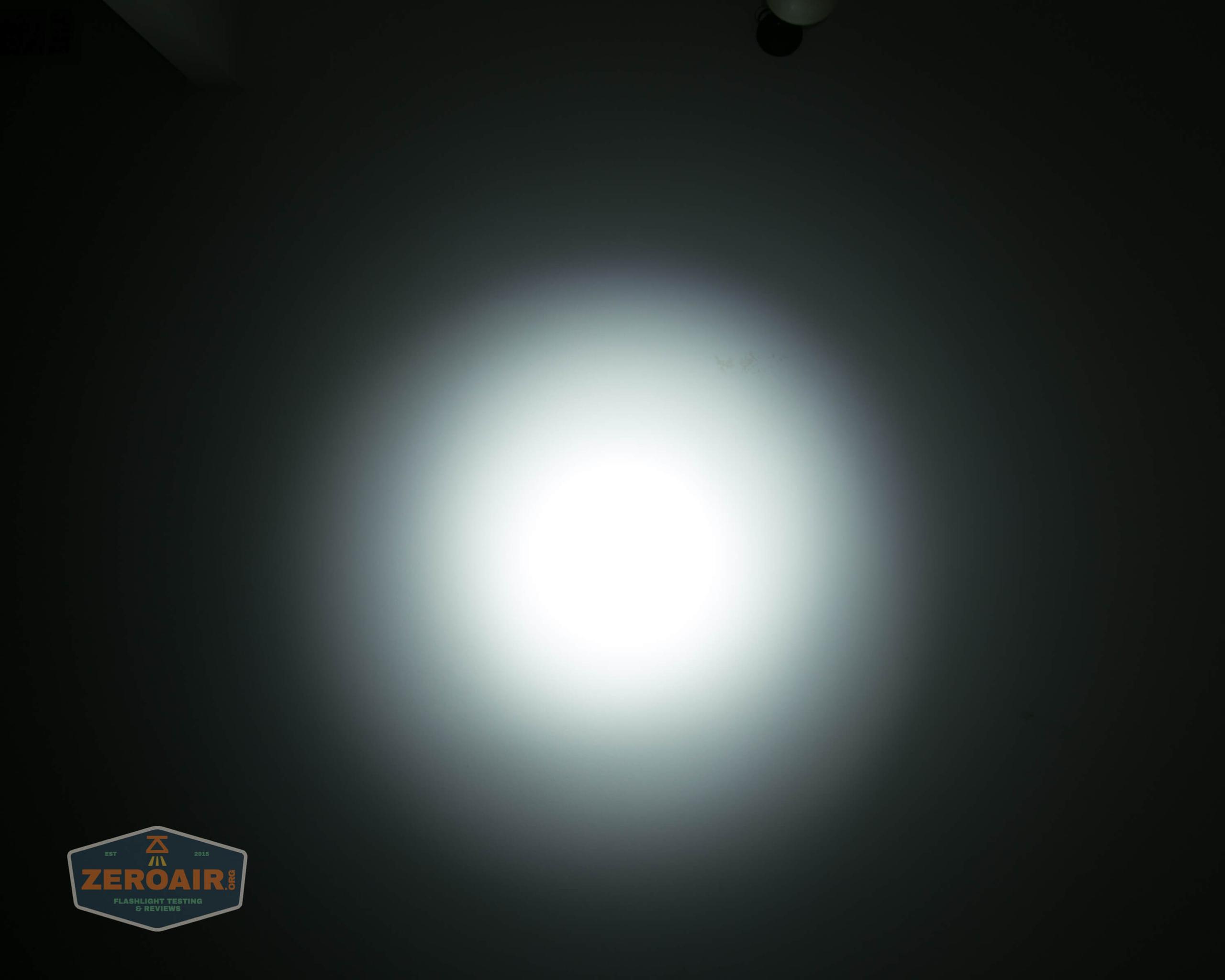
These beamshots always have the following settings: f8, ISO100, 0.3s shutter, and manual 5000K exposure. These photos are taken at floor level, and the beam hits the ceiling around 9 feet away.
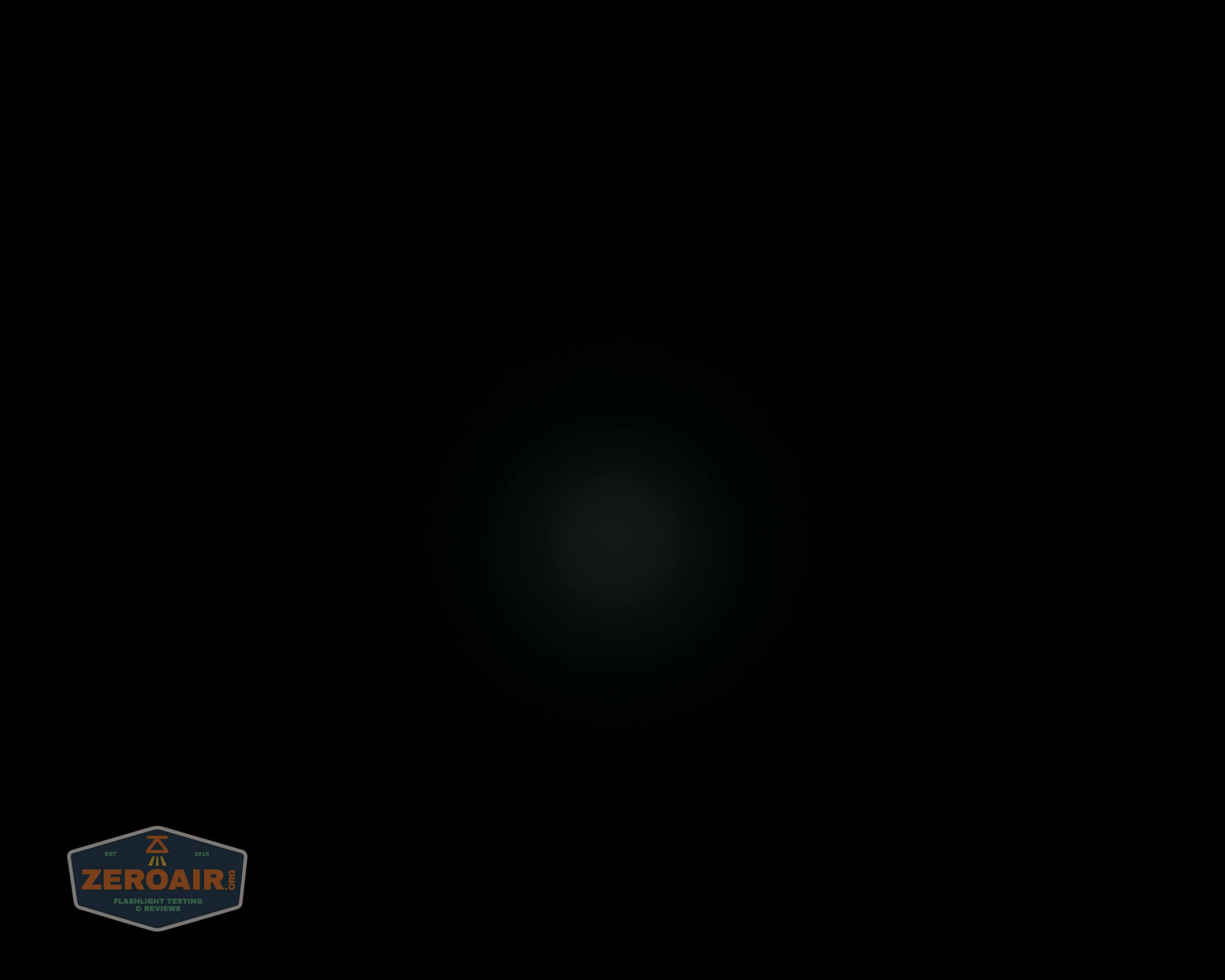
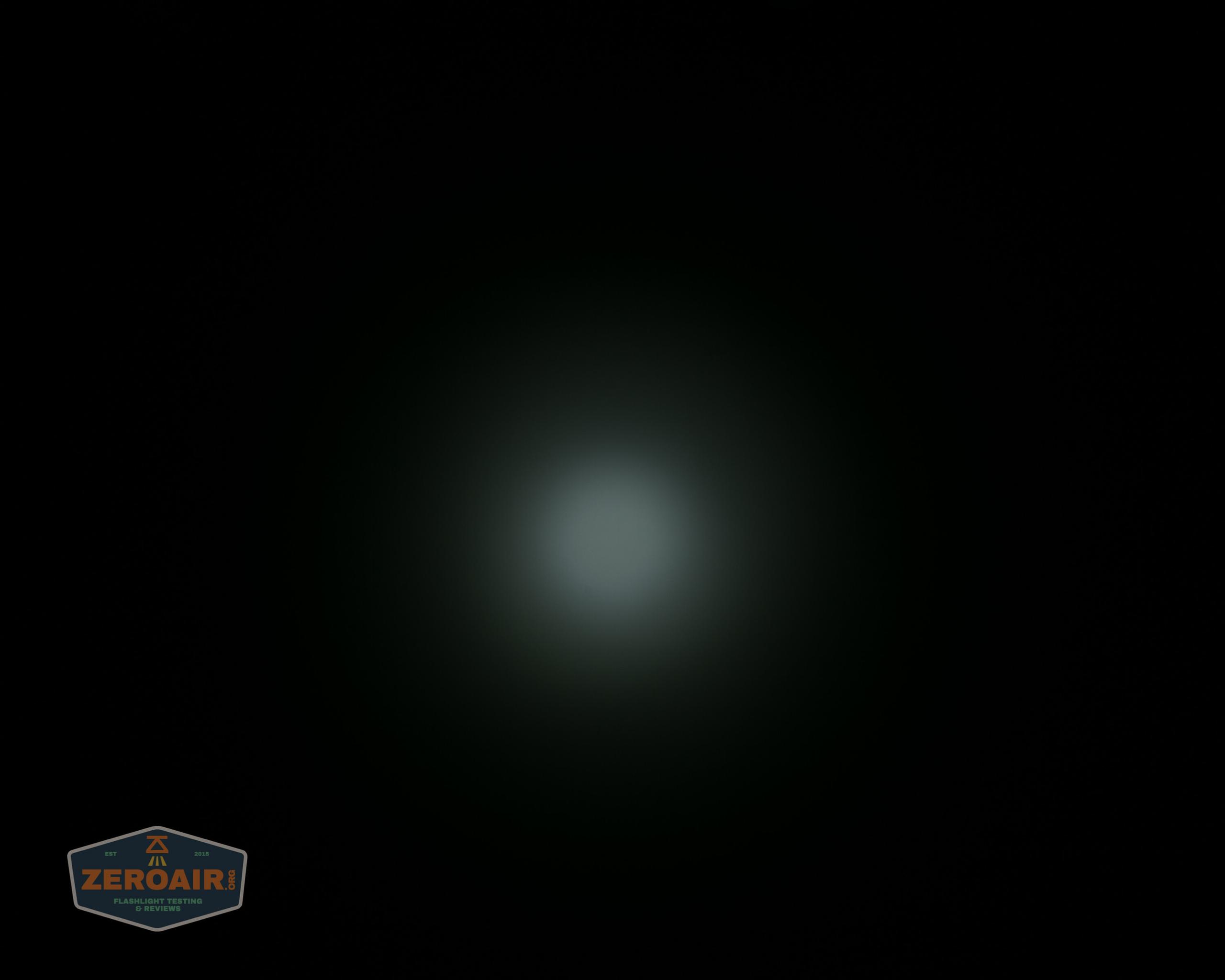
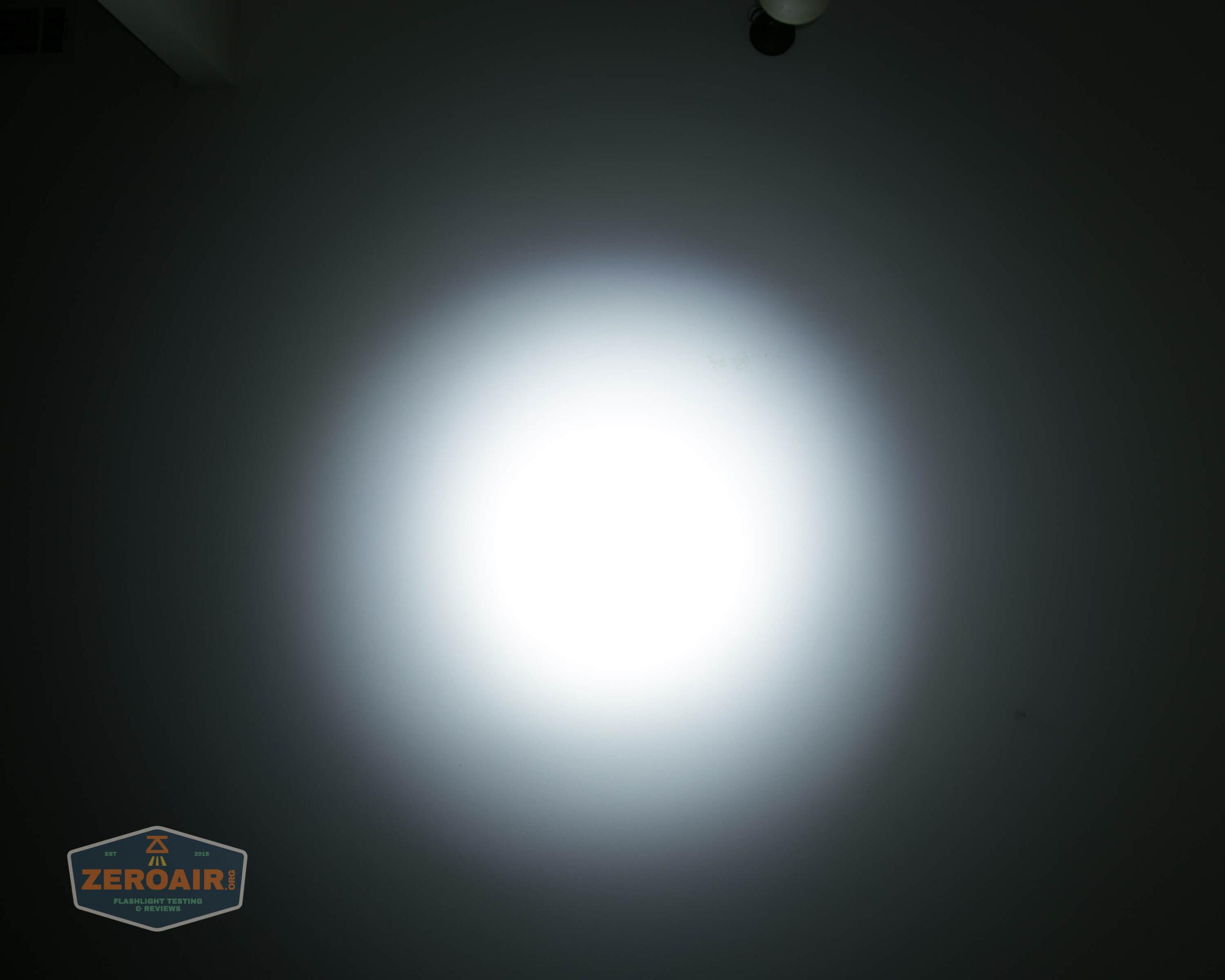
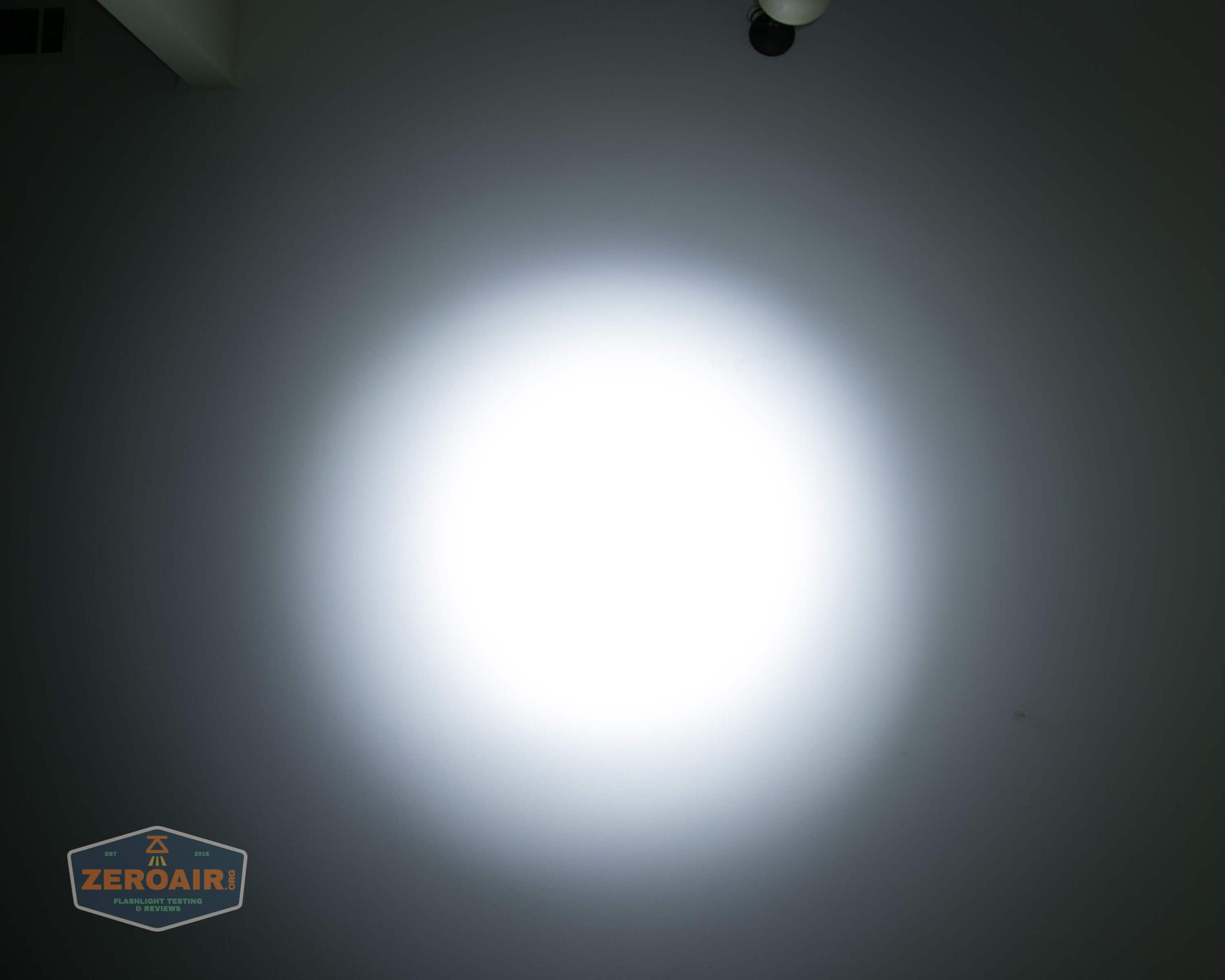
Tint vs BLF-348 (KillzoneFlashlights.com 219b version) (affiliate link)
I keep the test flashlight on the left and the BLF-348 reference flashlight on the right.
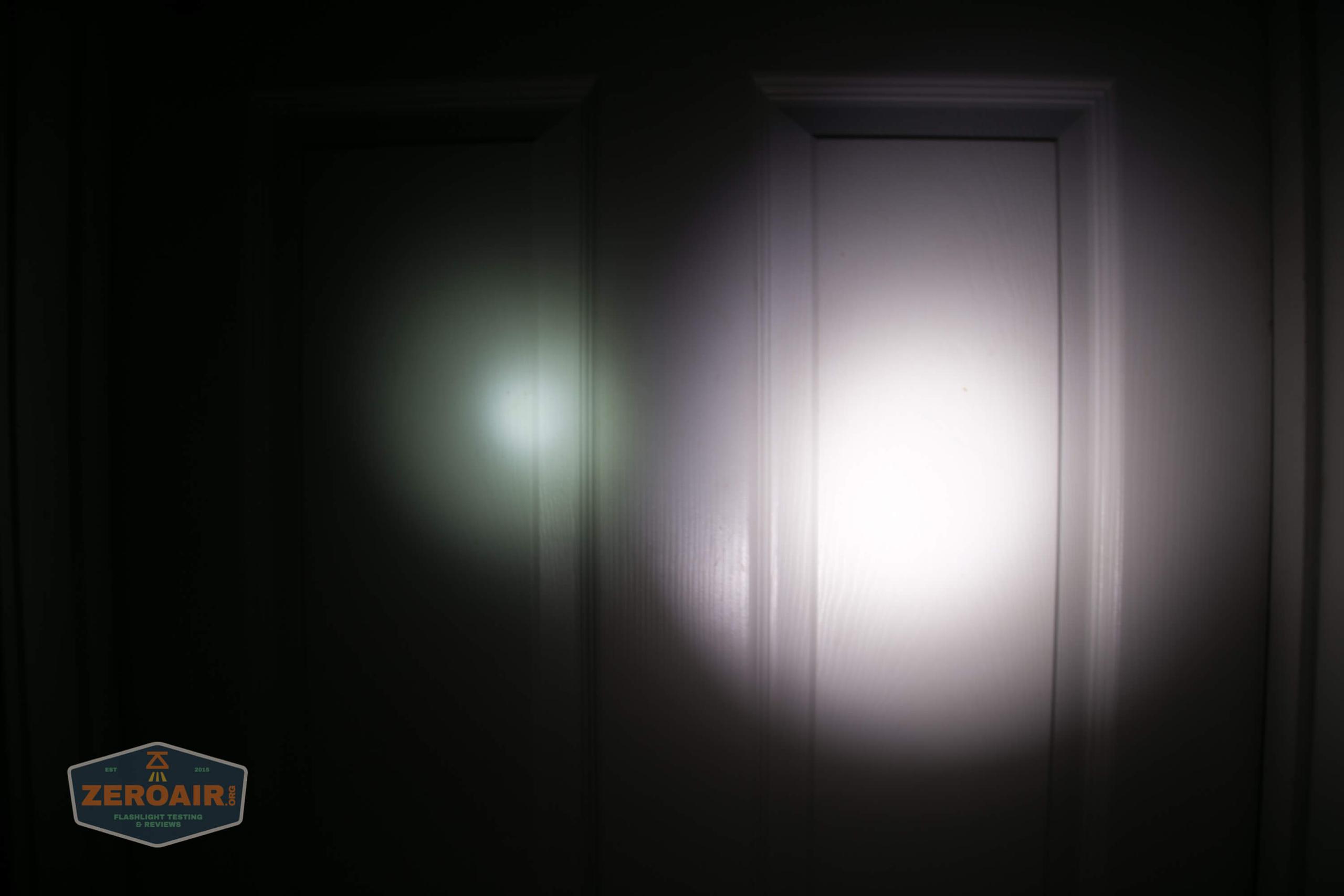
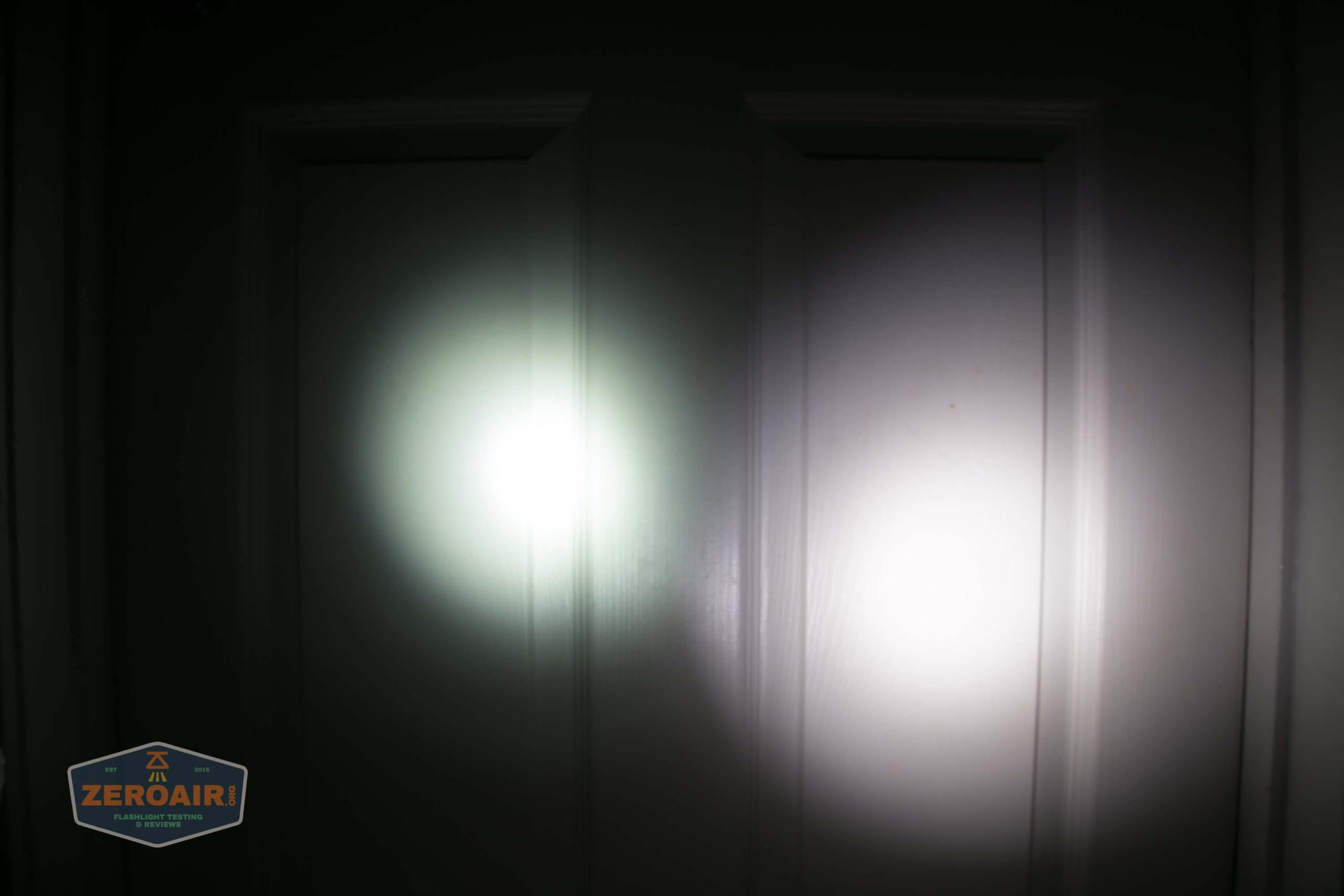
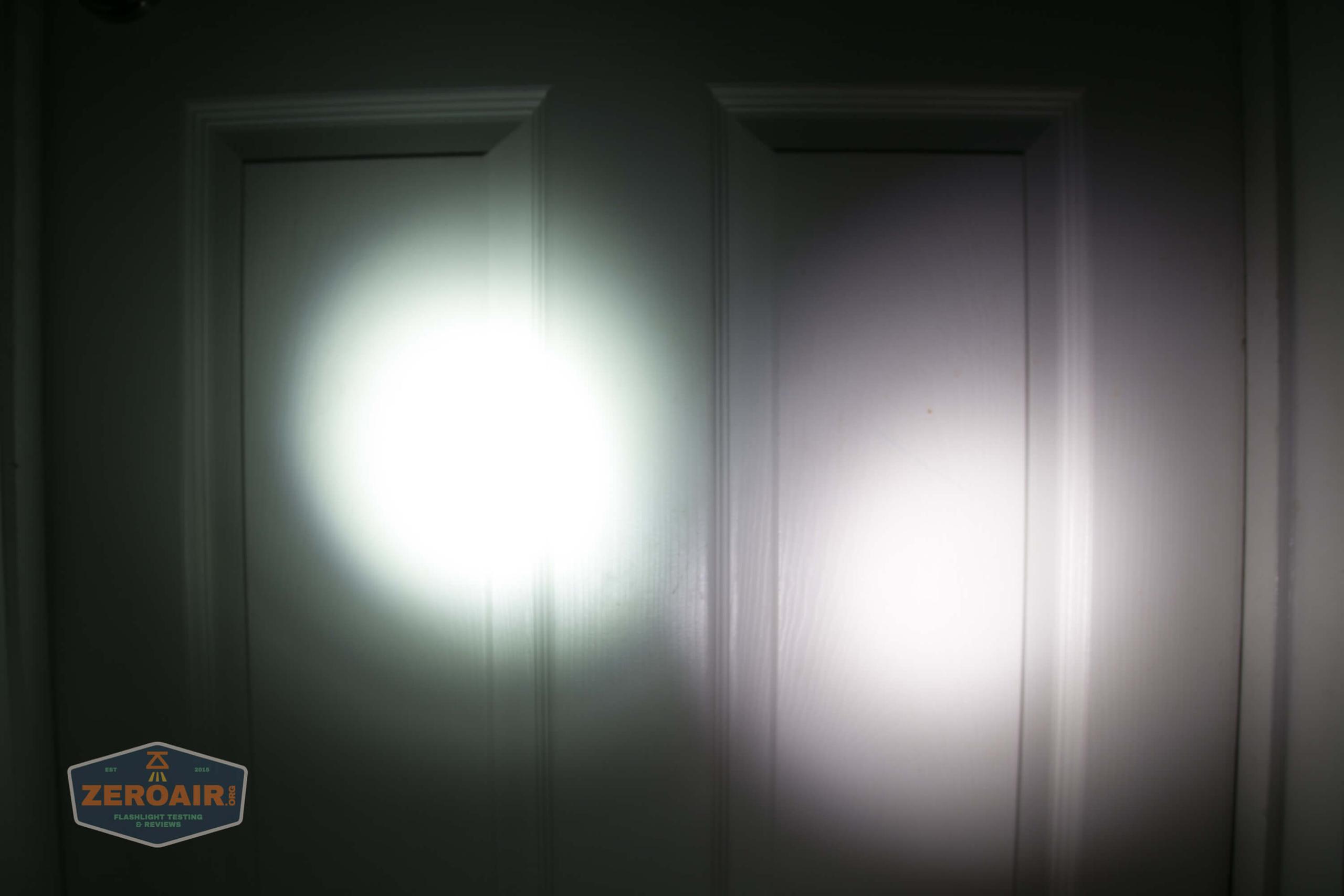
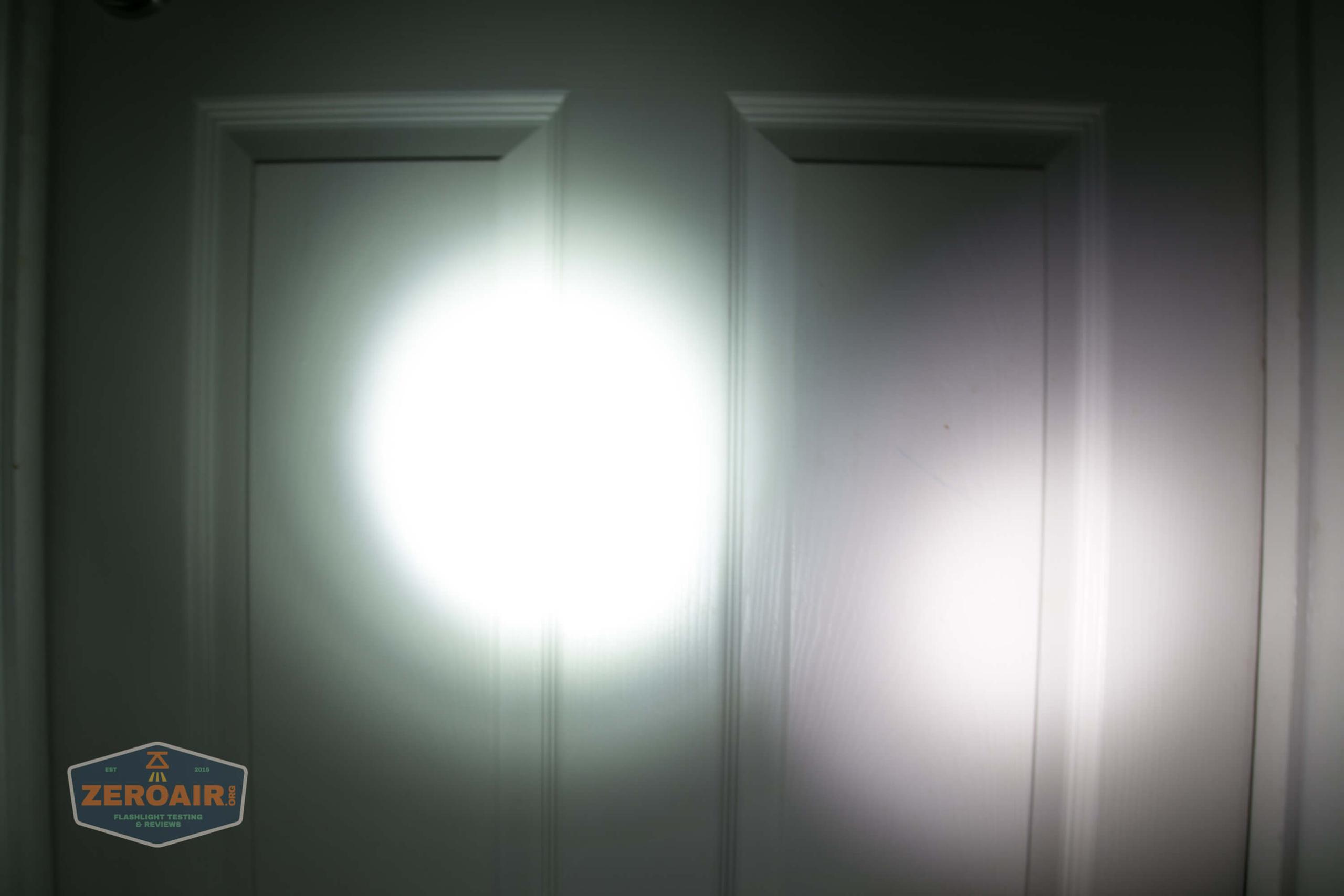
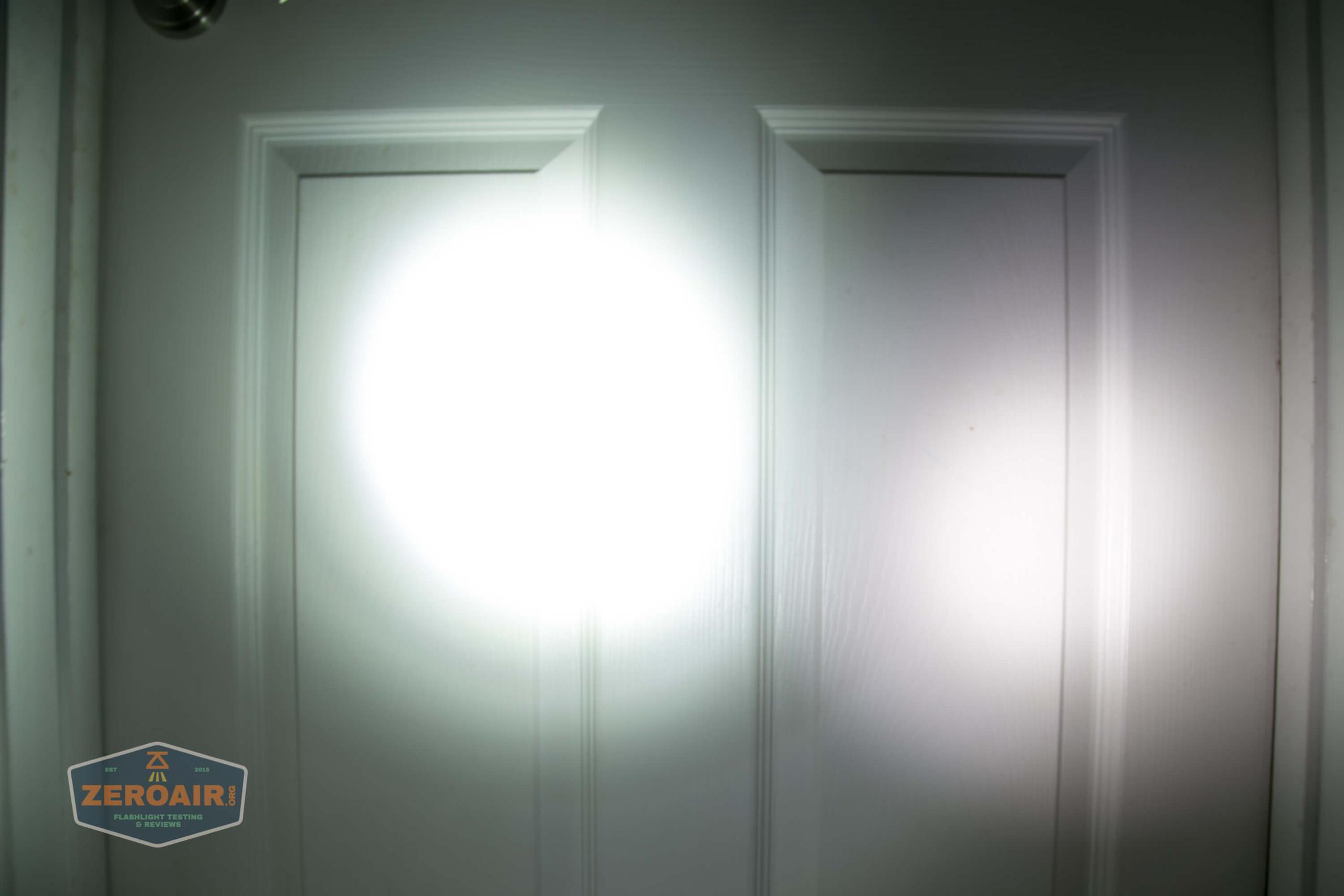
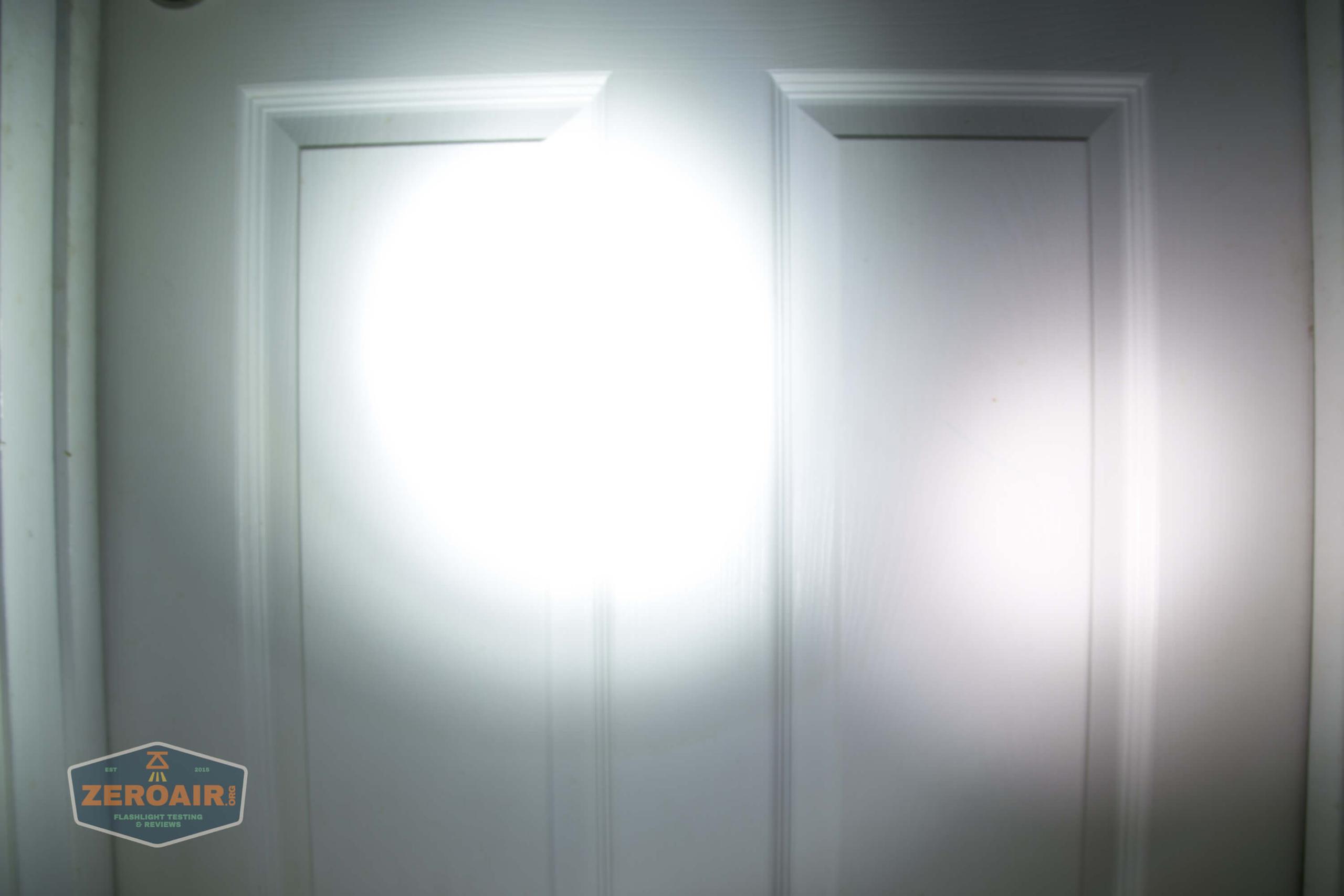
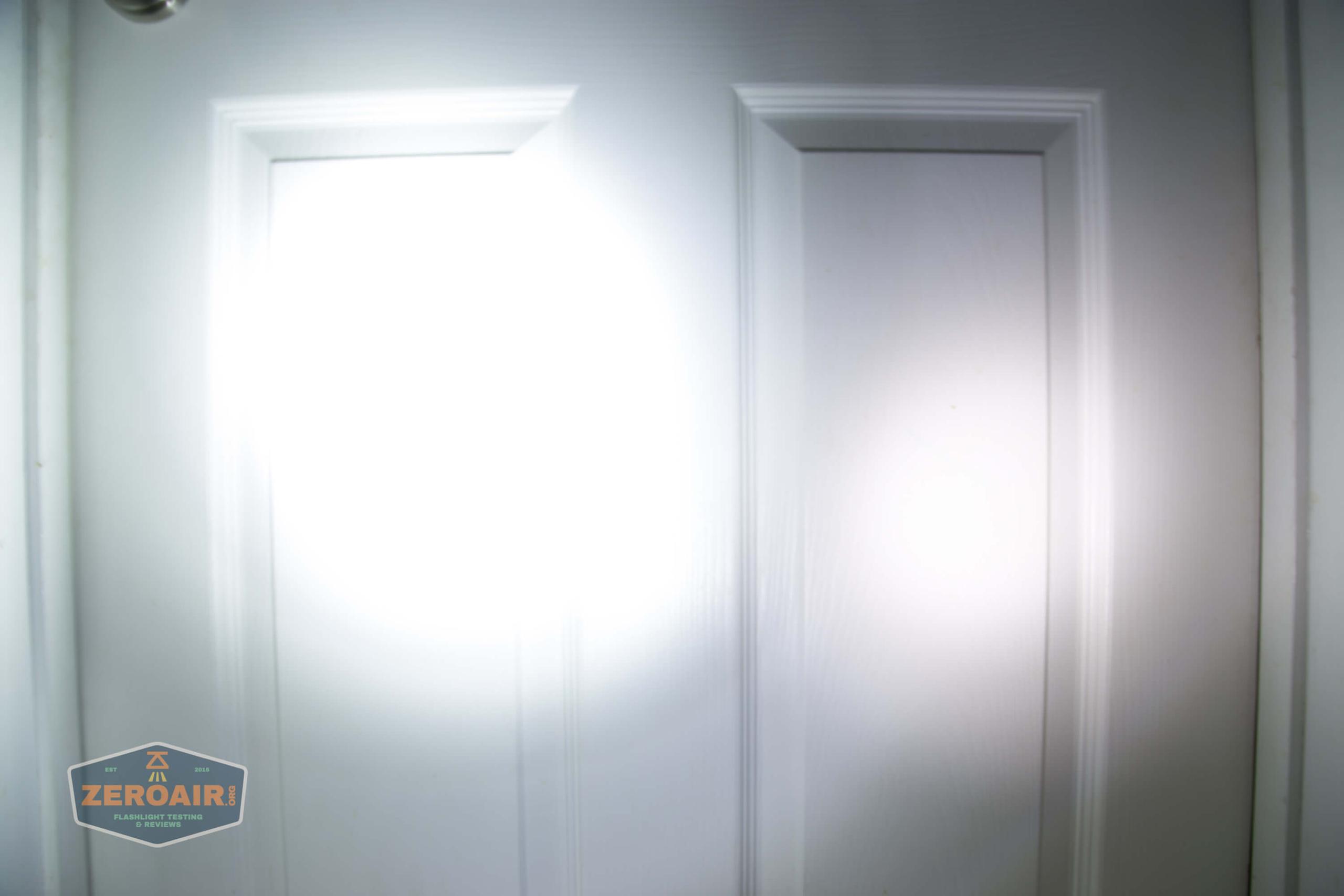
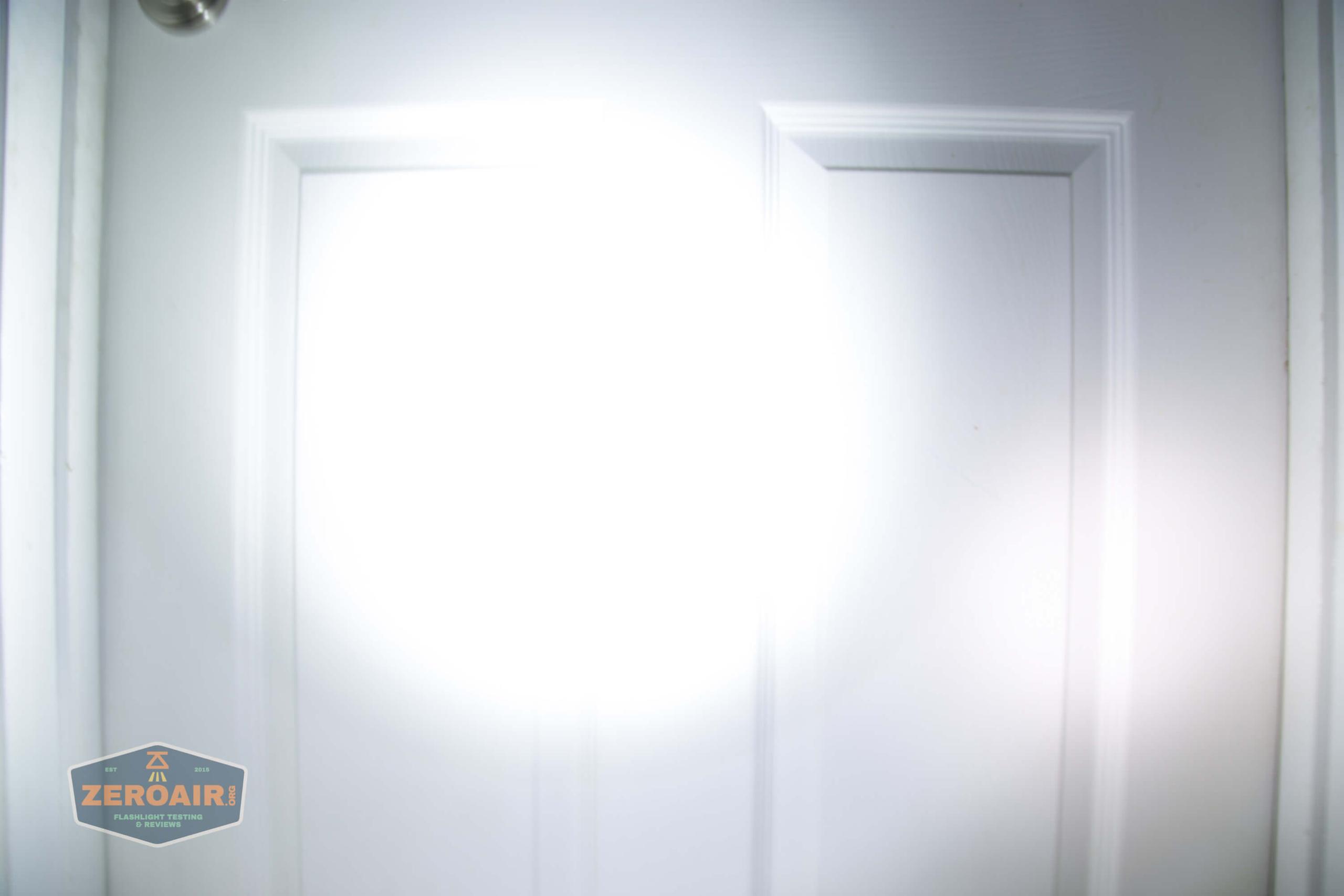
I compare everything to the KillzoneFlashlights.com 219b BLF-348 because it’s inexpensive and has the best tint!
Conclusion on the FireFlyLite E01 Luminus Flashlight
What I like
- Good performance
- The clear anodizing is great!
- Tritium slots tucked away on the head?
- Andúril user interface
What I don’t like
- I don’t really need a crenelated bezel on this light
- The 5700K temperature comes with a bit of green.
Notes
- This content originally appeared at zeroair.org. Please visit there for the best experience!
- Use my amazon.com referral link if you’re willing to help support making more reviews like this one!
- Please support me on Patreon! I deeply appreciate your support!
Discover more from ZeroAir Reviews
Subscribe to get the latest posts sent to your email.