
Thrunite Catapult V6 SST70 Flashlight Review
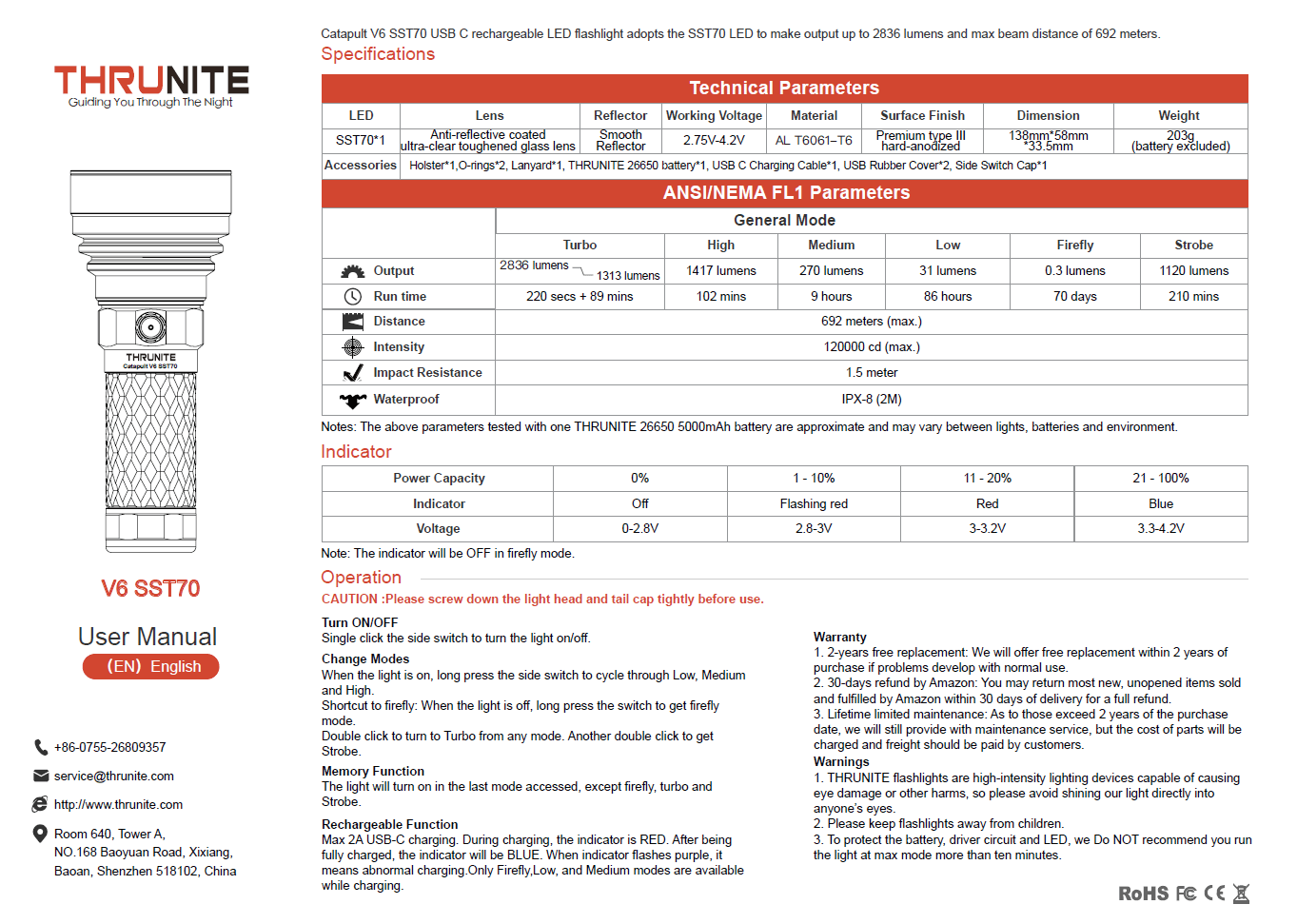
Thrunite has a nice update with the Thrunite Catapult V6 SST70. USB-C charging, a very throwy emitter, and the great Desert Tan color. Read on!
Official Specs and Features
Here’s a link to the Thrunite Catapult V6 SST70 product page.
Thrunite Catapult V6 SST70 Versions
Only one emitter option exists for the Thrunite Catapult V6 SST70. That emitter is available in three body colors, though. Black, Desert Tan (seen here), and “Metal Grey” are available.
Price
These are available on Amazon at the moment, and that’s a good place to get them. The black body comes in as the least expensive, at $74.95. Both the other two are around $5 more, at $79.95. Here’s an Amazon referral link that’ll get you to the right place to buy the Thrunite Catapult V6 SST70 now!
Short Review
This is an exceptionally worthwhile update to the Catapult V6. The throw on this model is down just a little bit (under 10%), but that’s fairly meaningless at 700+ meters. More importantly, this emitter pumps out high lumen numbers and does it well. Maybe I’ve changed too many diapers, but I have to say, I really love the Desert Tan color, too. All in all, this is a nice light!
Long Review
The Big Table
| Thrunite Catapult V6 SST70 Flashlight | |
|---|---|
| Emitter: | Luminus SST-70 (Cool White) |
| Price in USD at publication time: | $74.95 on Amazon (referral link). (Or $79.95 for Desert Tan/Metal Grey) |
| Cell: | 1×26650 |
| Turbo Runtime Graph | High Runtime Graph |
| LVP? | |
| Switch Type: | E-Switch |
| Quiescent Current (mA): | 0.09 |
| On-Board Charging? | Yes |
| Charge Port Type: | USB-C |
| Charge Graph | |
| Power off Charge Port | with cell: lowest 3 modes
without cell: no modes |
| Claimed Lumens (lm) | 2836 |
| Measured Lumens (at 30s) | 2833 (99.9% of claim)^ |
| Candela per Lumen | 45.2 |
| Claimed Throw (m) | 692 |
| Candela (Calculated) in cd (at 30s) | 4270lux @ 5.697m = 138586cd |
| Throw (Calculated) (m) | 744.5 (107.6% of claim)^ |
| All my Thrunite reviews! | |
^ Measurement disclaimer: Testing flashlights is my hobby. I use hobbyist-level equipment for testing, including some I made myself. Try not to get buried in the details of manufacturer specifications versus measurements recorded here; A certain amount of difference (say, 10 or 15%) is perfectly reasonable.
What’s Included
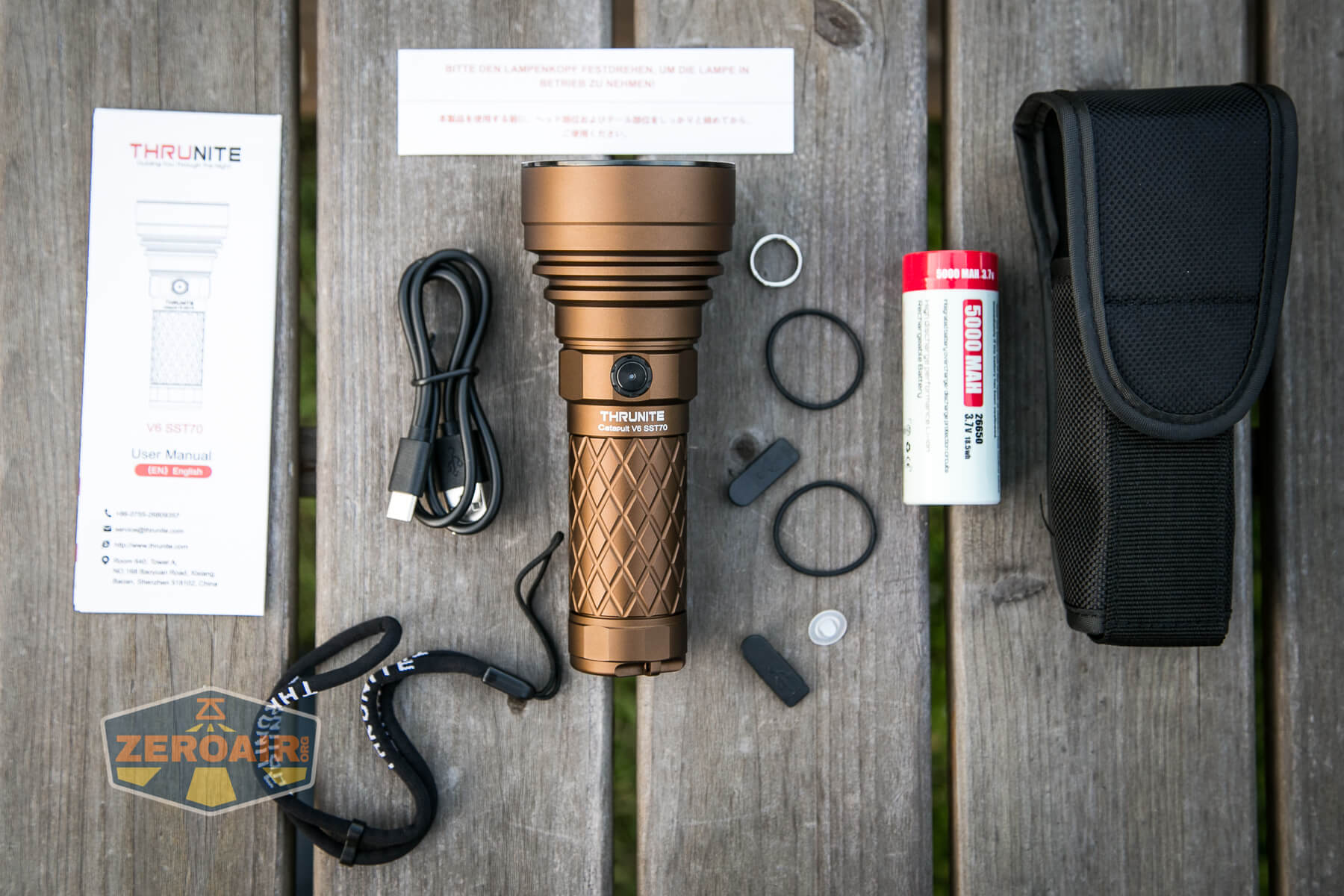
- Thrunite Catapult V6 SST70
- 5000mAh 26650 Thrunite-branded cell
- Lanyard
- Charge cable (USB to USB-C)
- Spare o-rings (2)
- Spare charge port cover (2)
- Spare button
- Split ring
- Nylon pouch
- Paperwork
Package and Manual
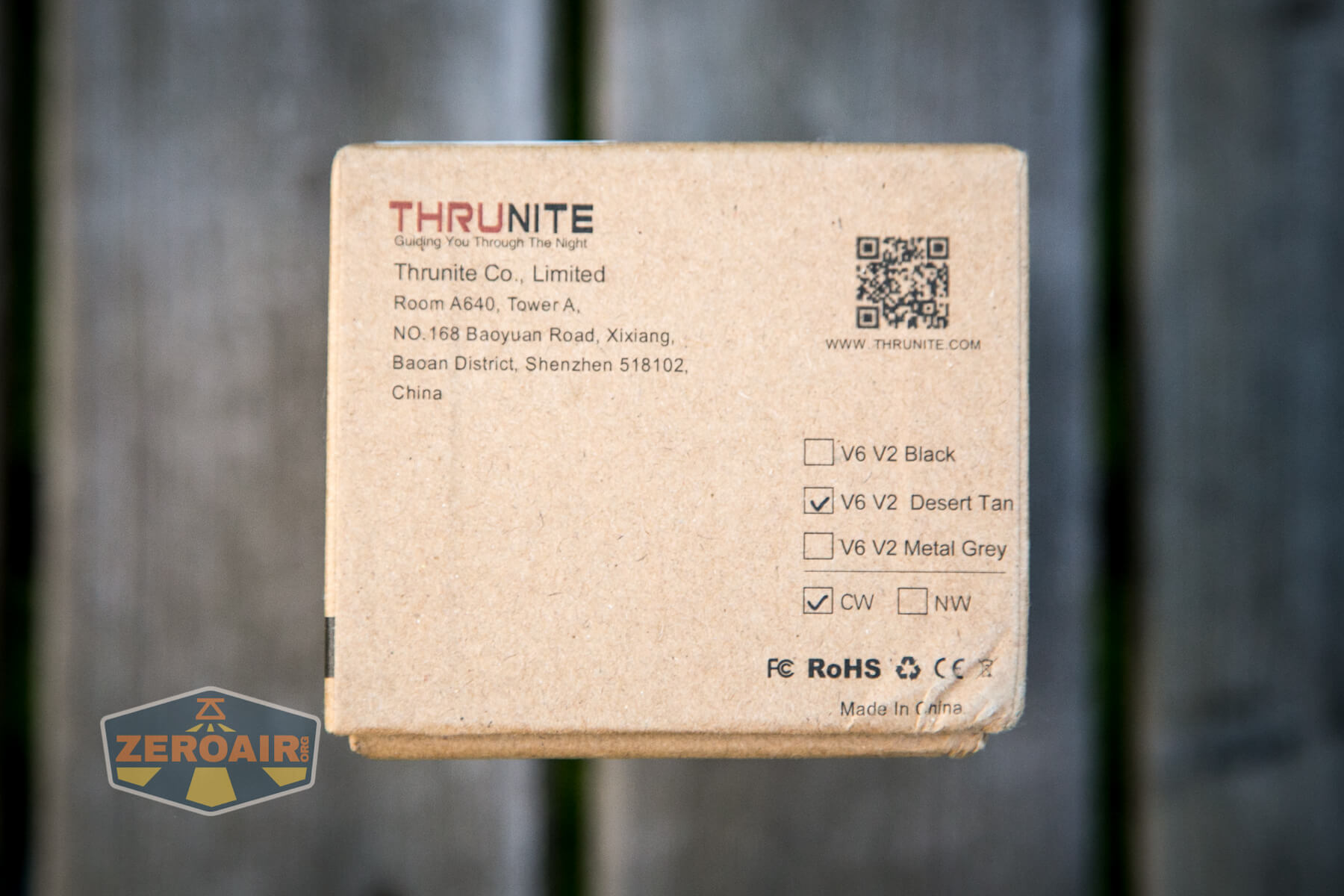
Build Quality and Disassembly
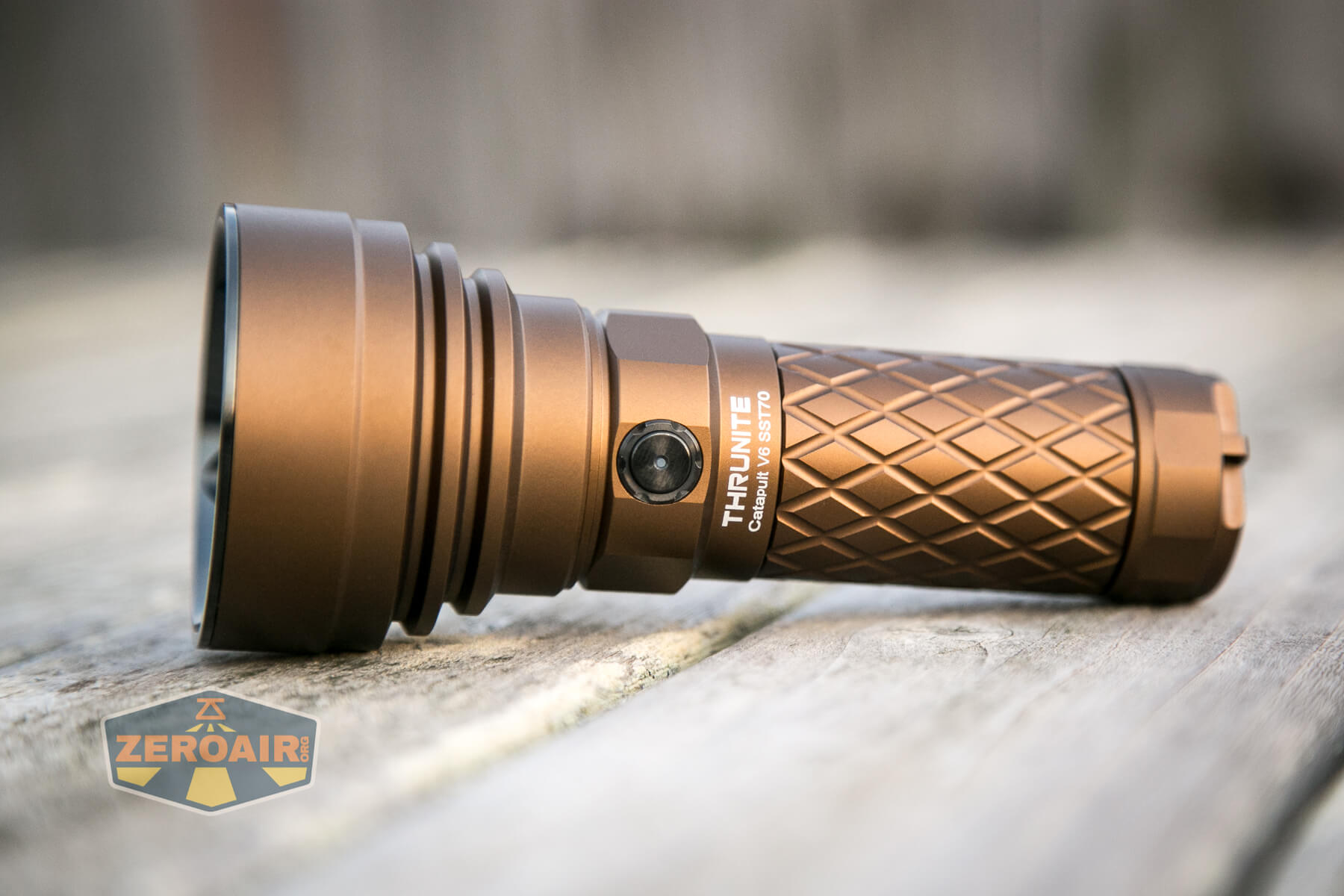
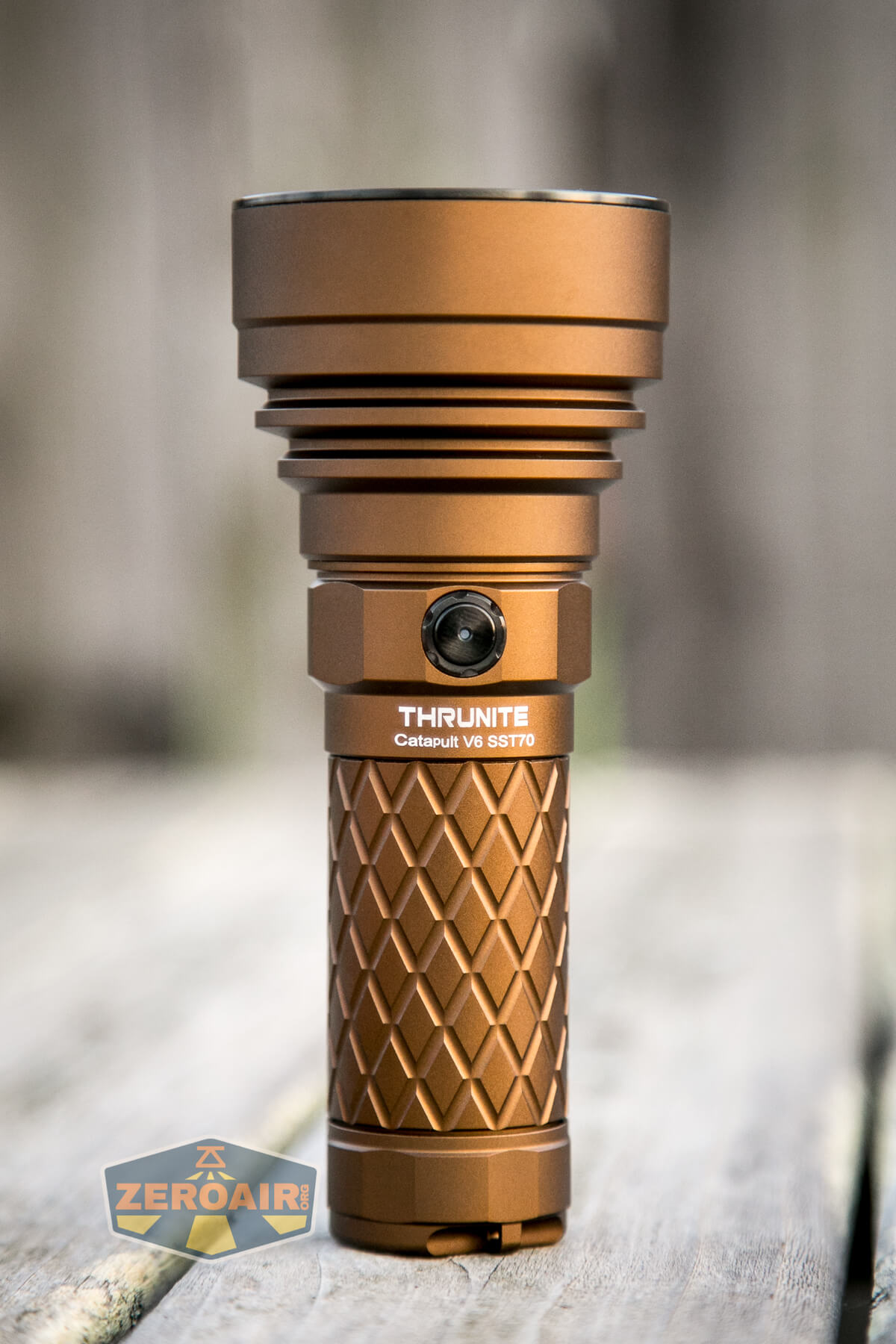
First off, the V6 SST70 is essentially the same as the V6 I previously reviewed (years ago!) There are minor but important updates, but overall, the look and shape are the same.
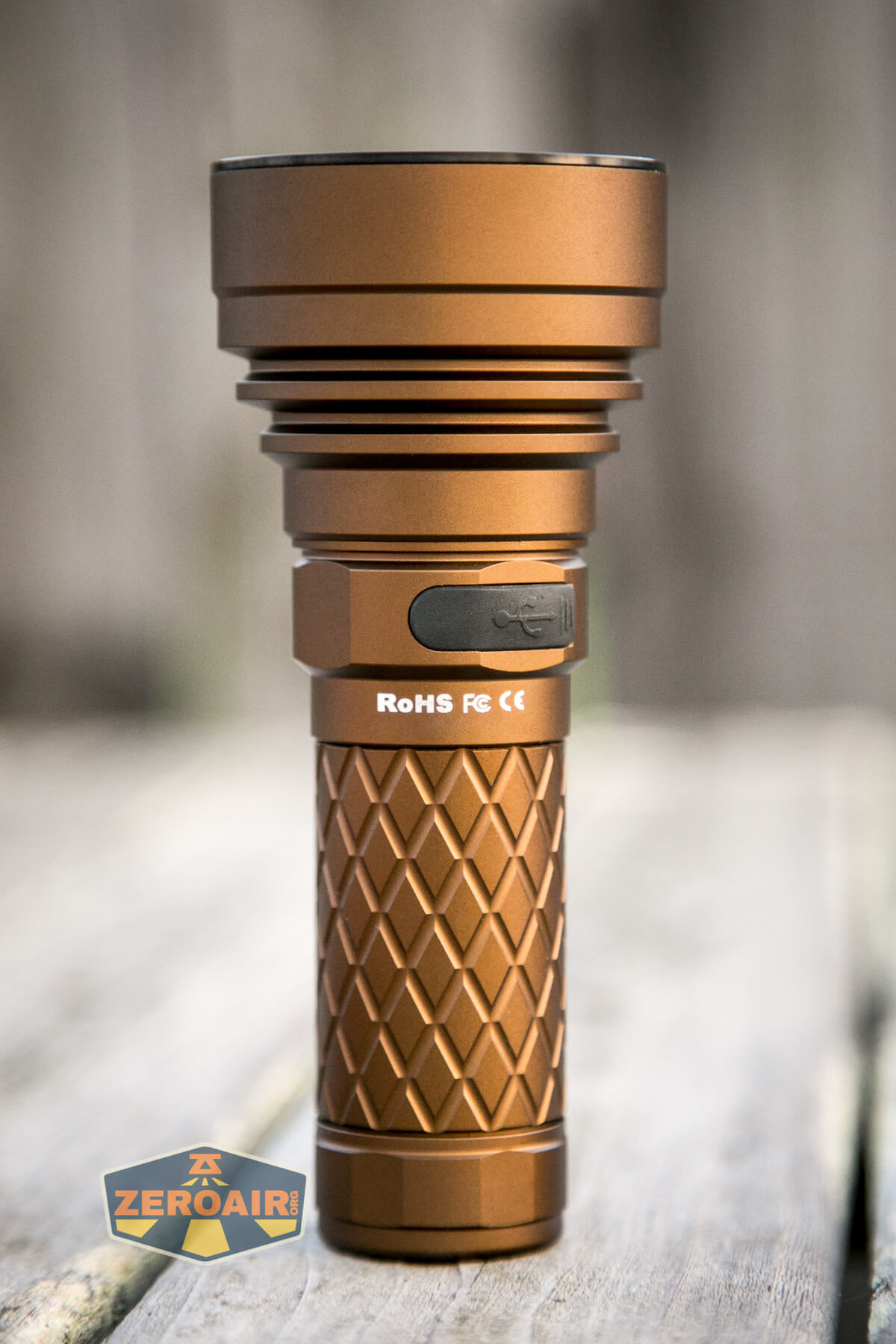
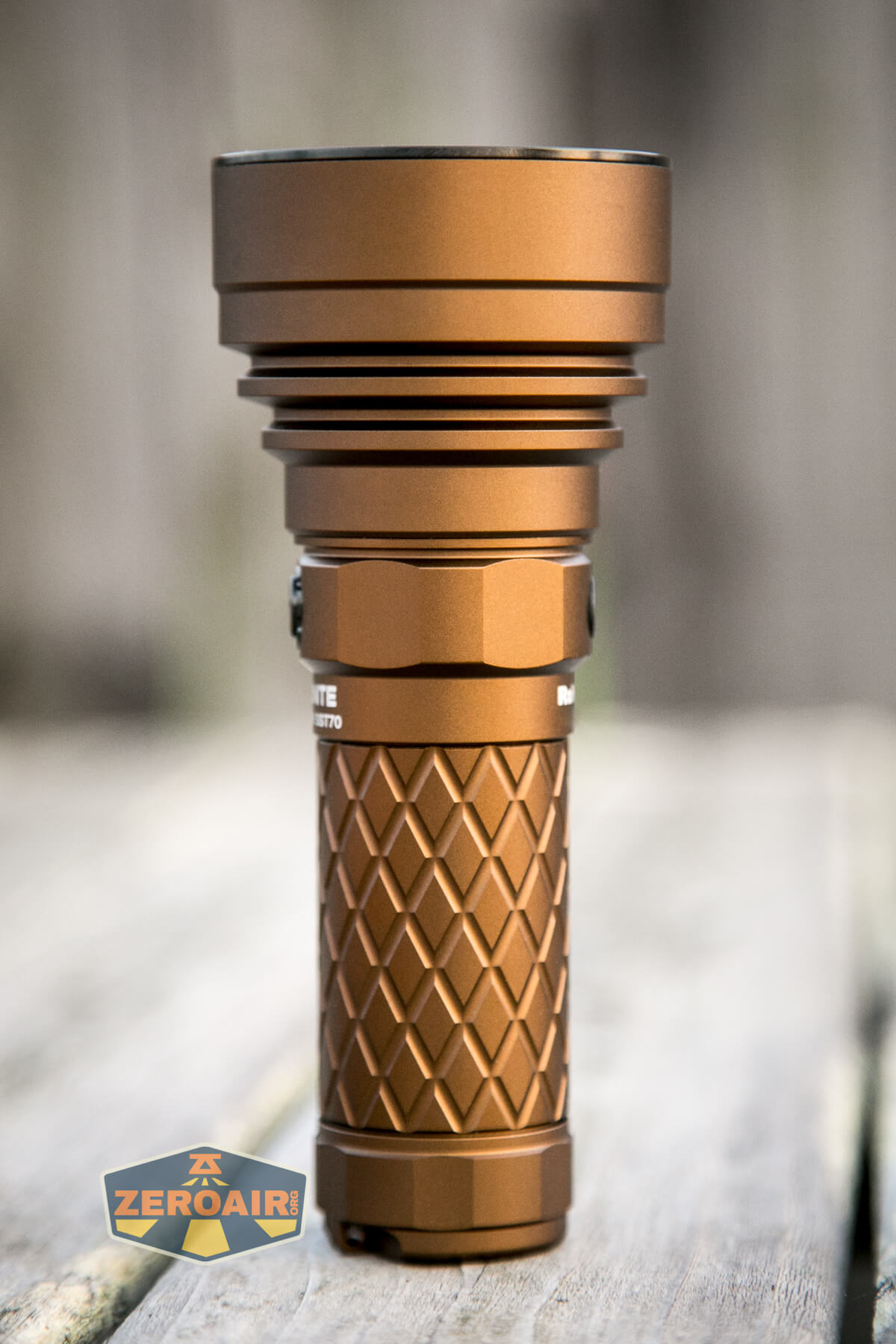
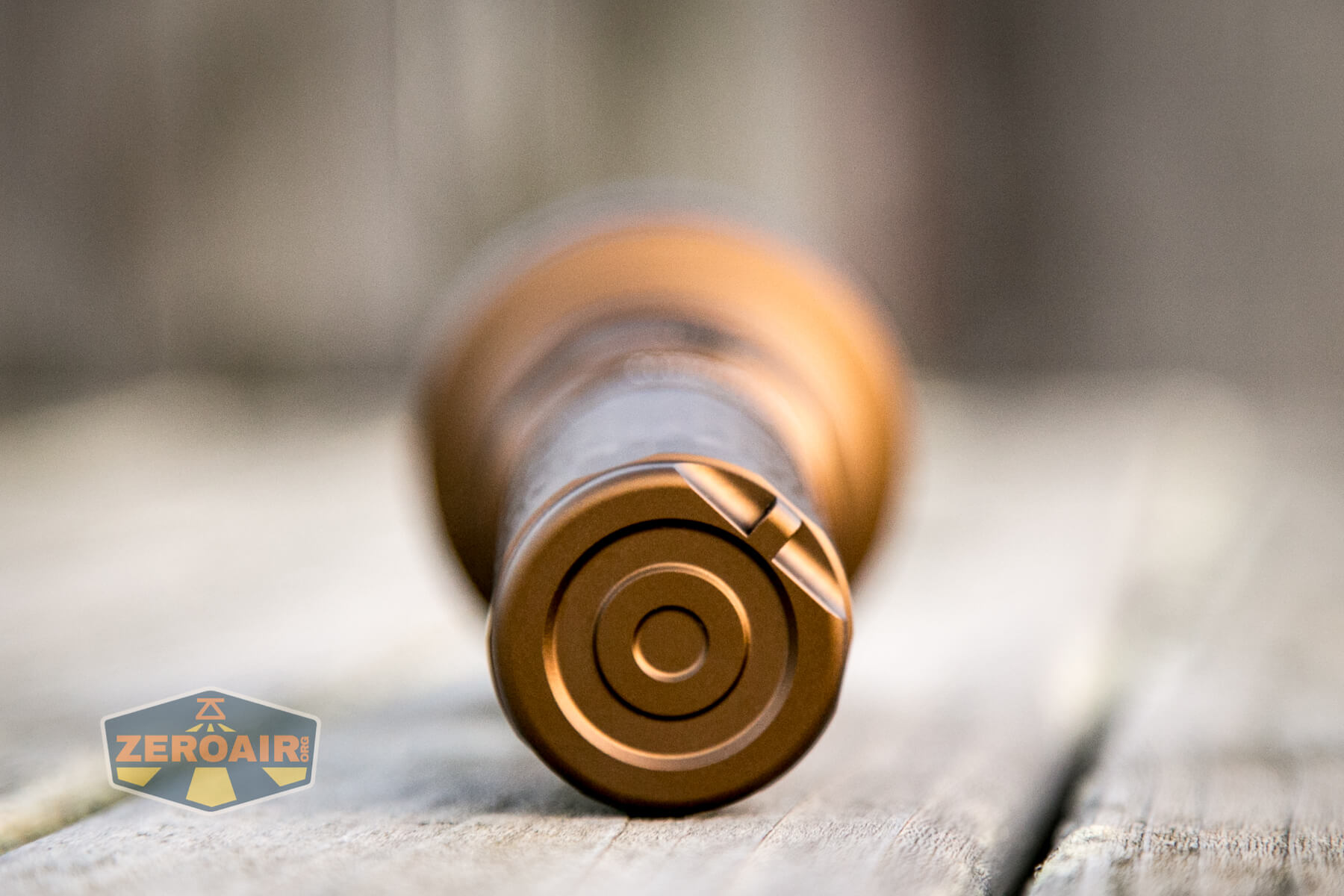
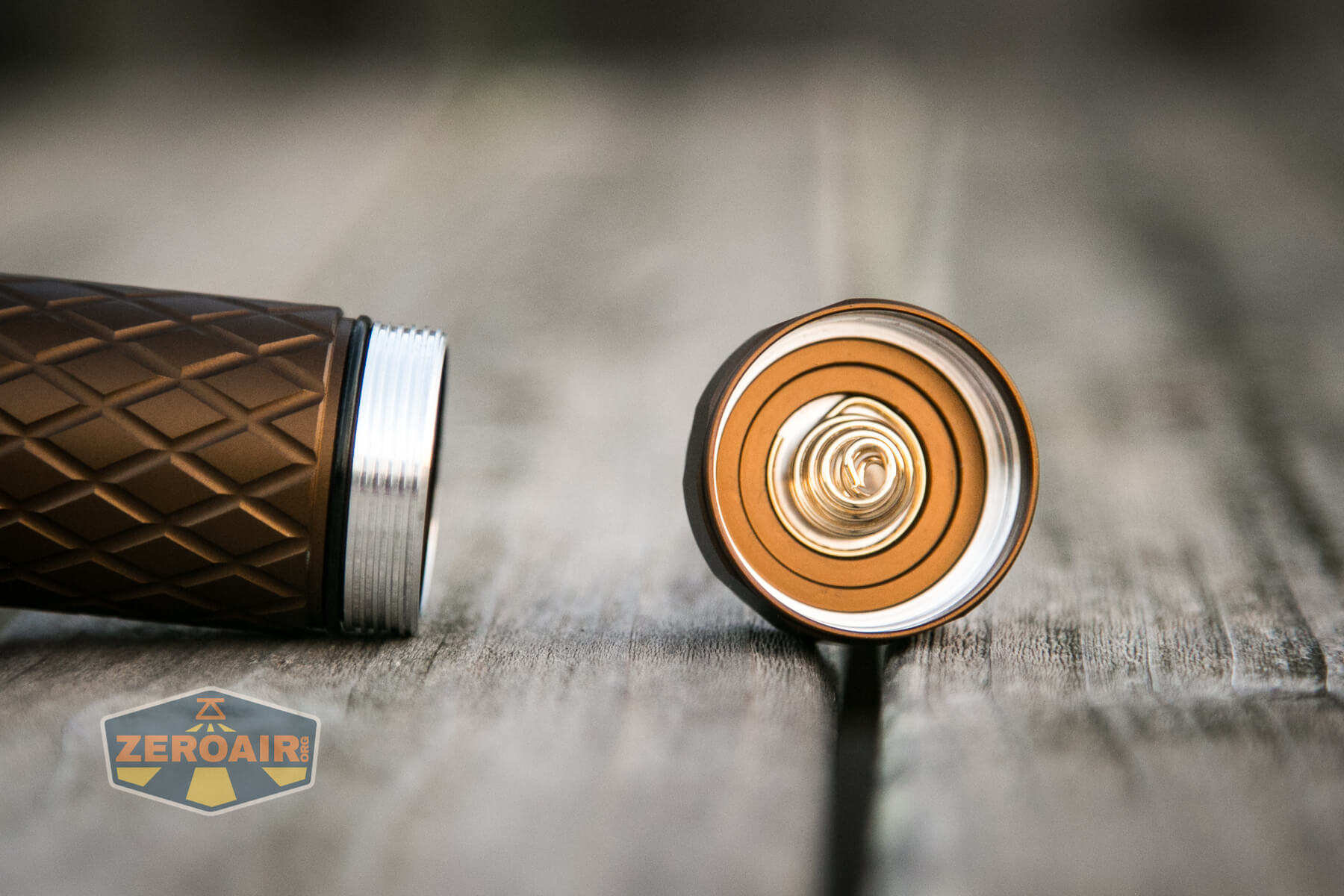
The threads on the tail end are unanodized, sort of long, and square-cut.
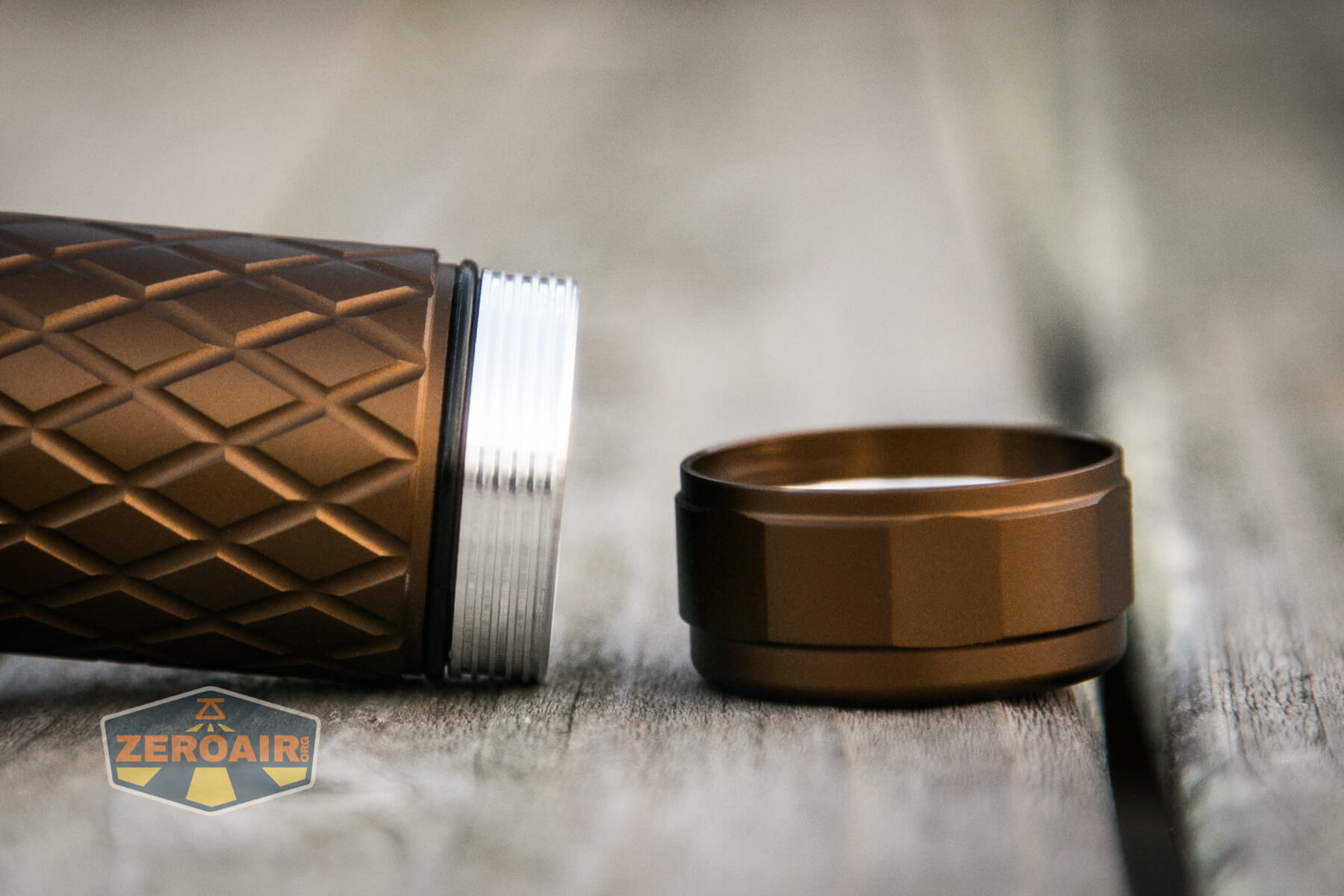
You can see below the tailcap spring – it’s extremely beefy.
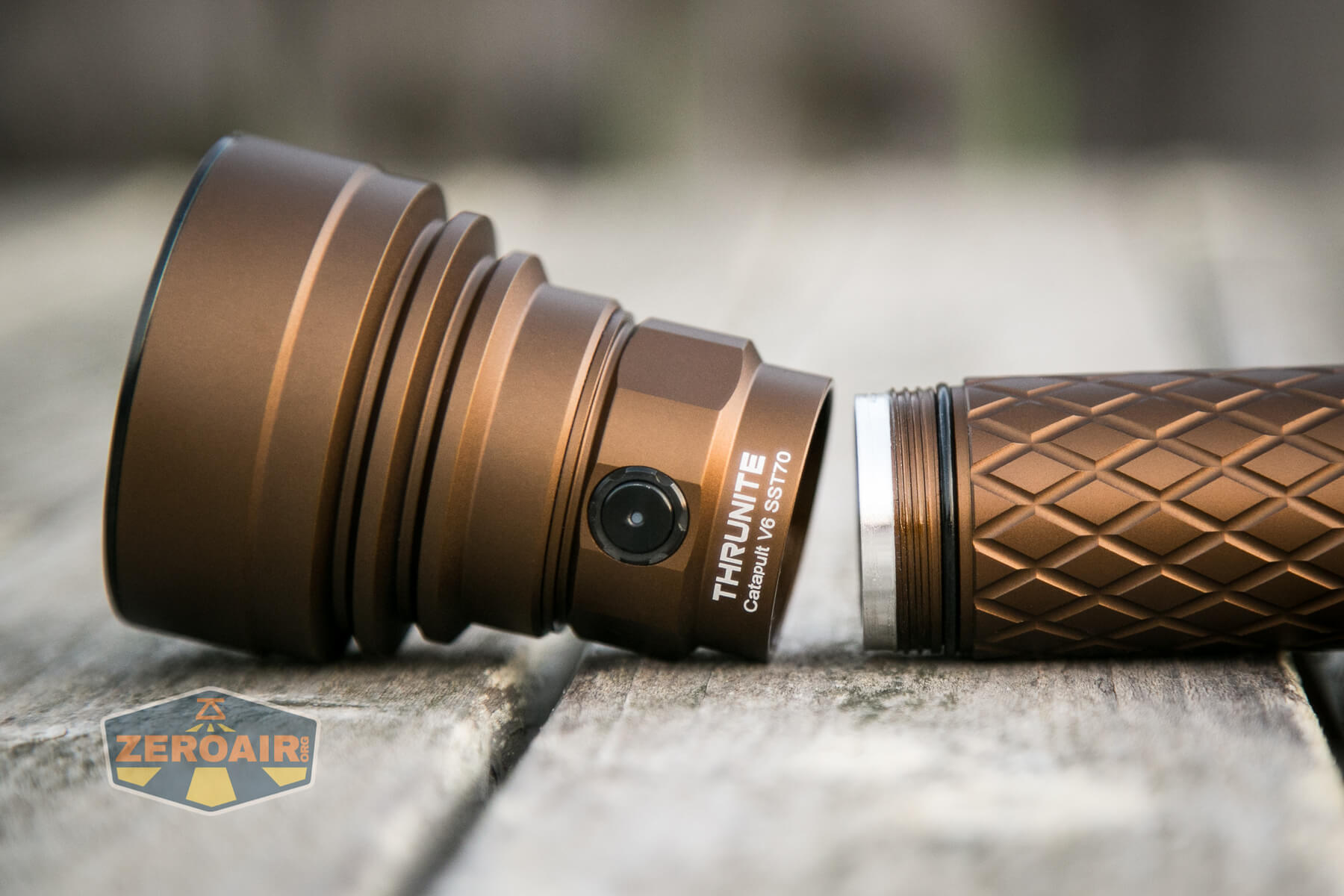
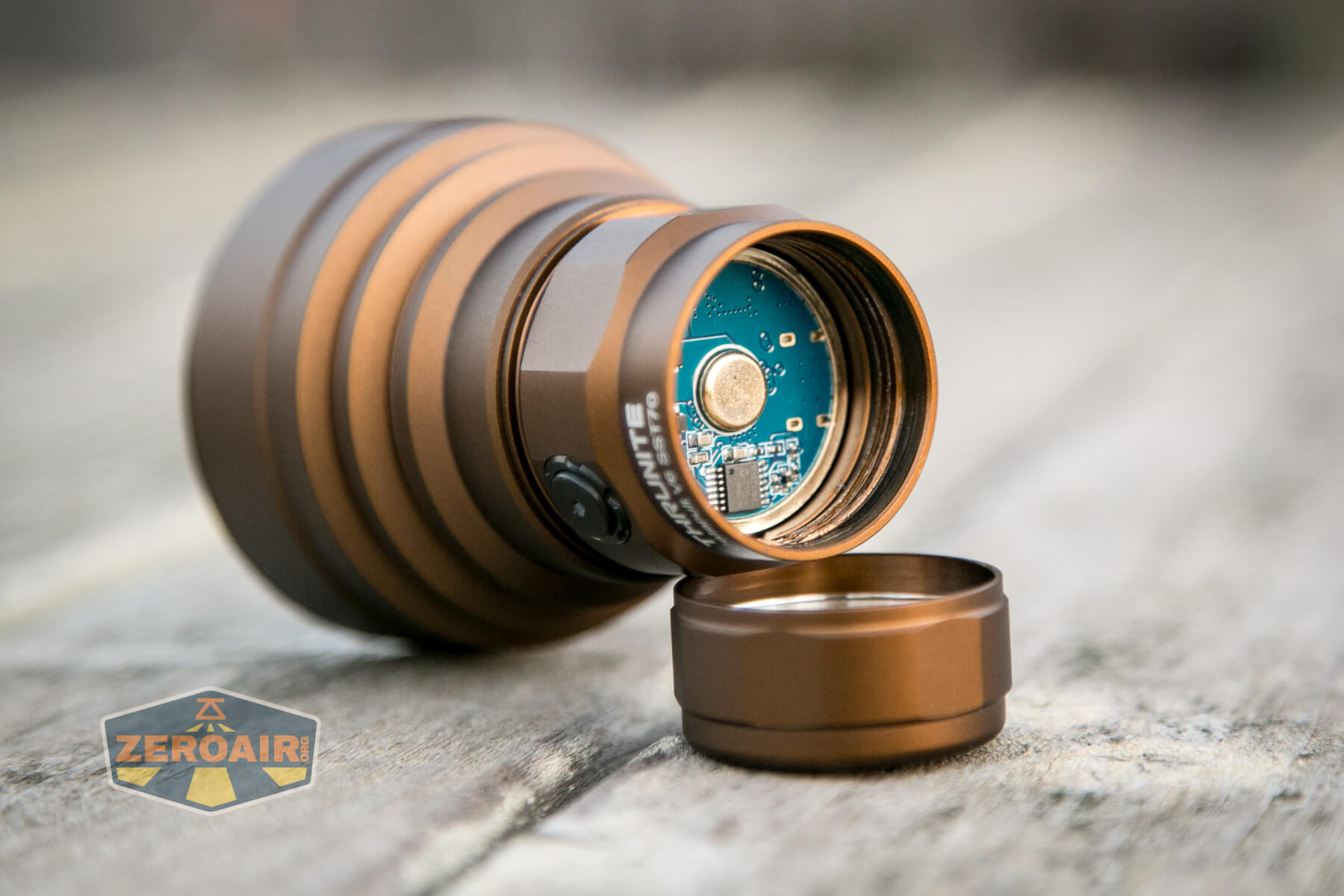
On the head end is a different setup. The threads here are anodized, much shorter, and also square-cut. I’d recommend separating the parts as seen below for cell swaps.
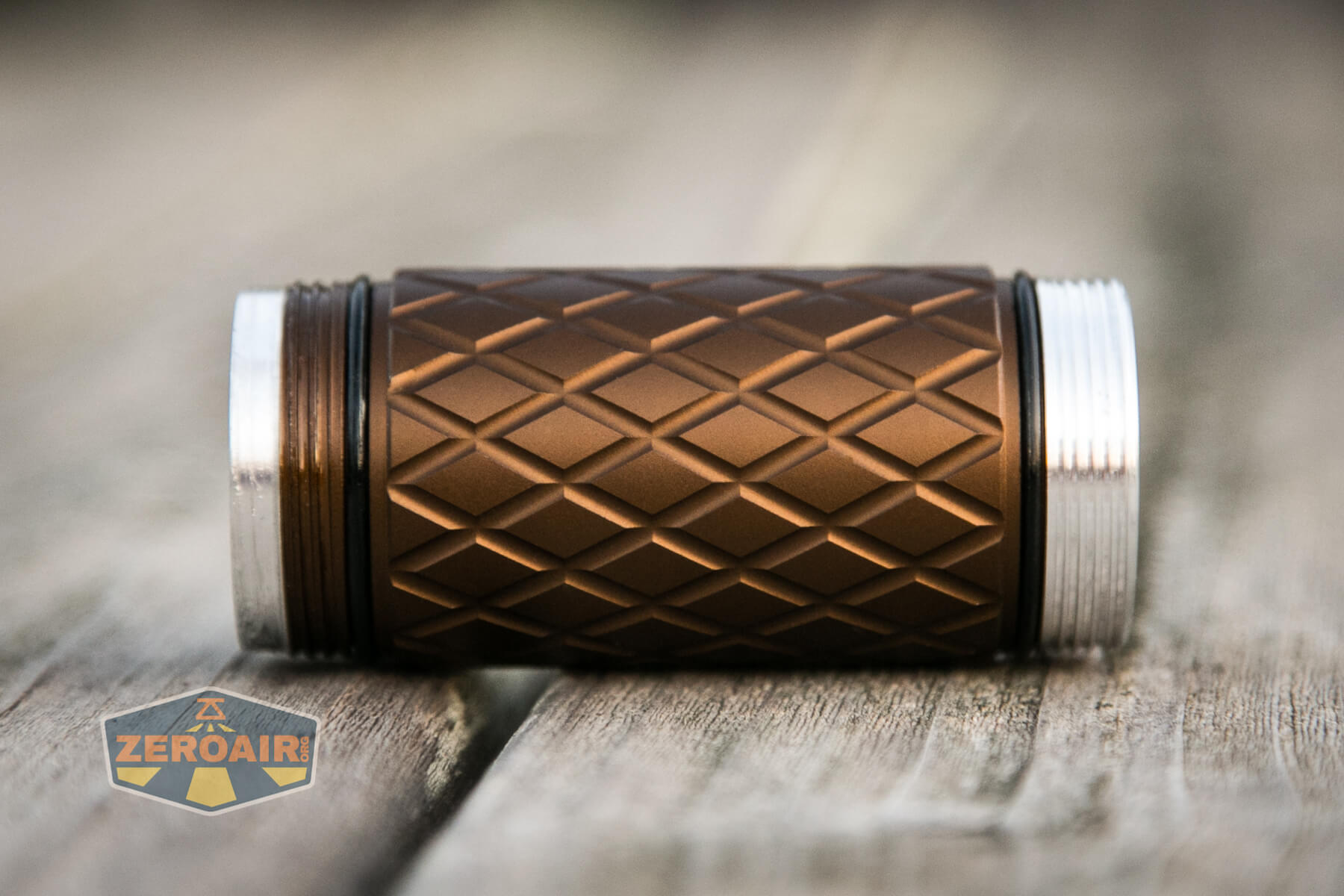
The cell tube is directional.
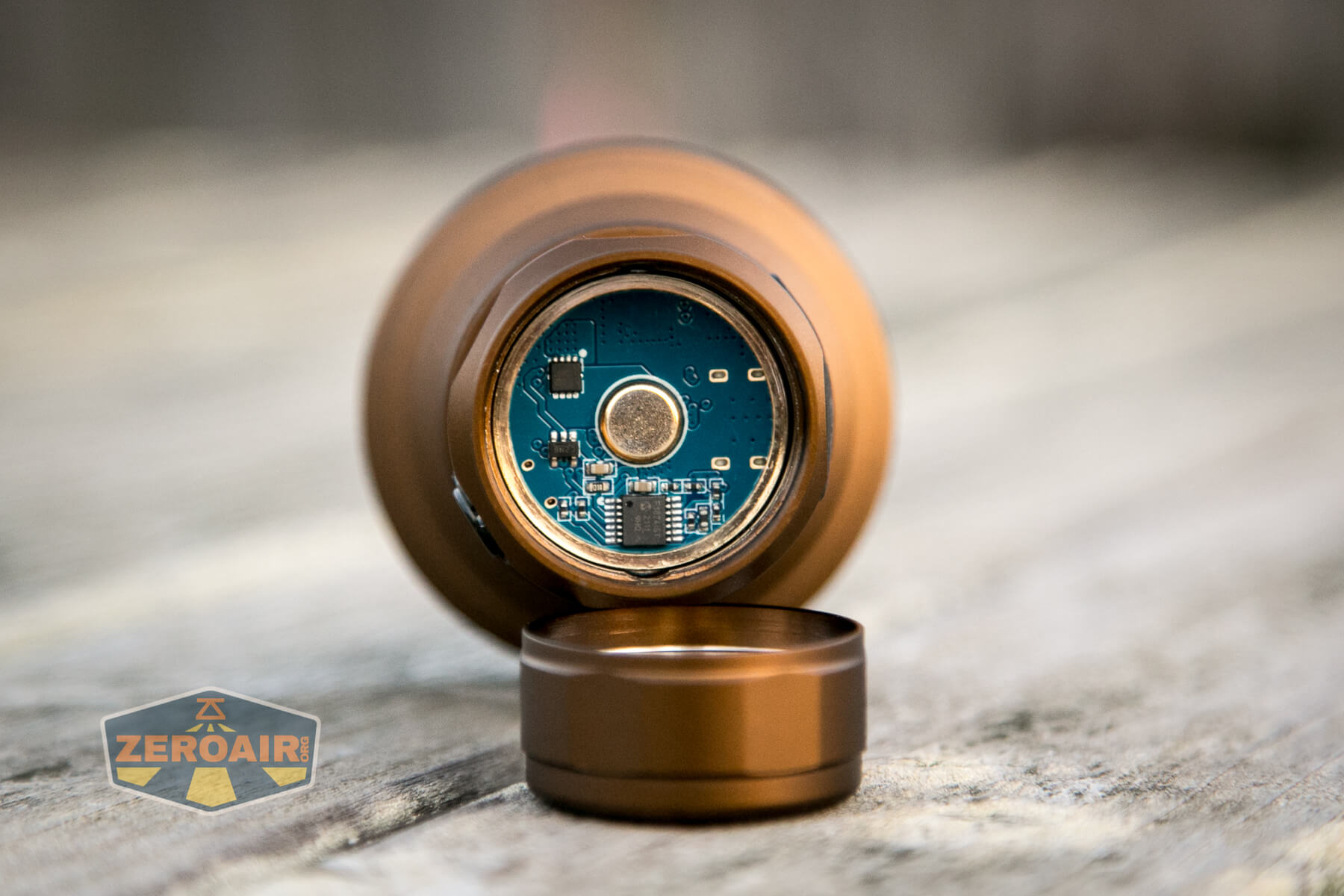
As with many (most? all?) Thrunites, there’s a brass button on the head end.
Size and Comps
Officially 138mm (Length) x 58mm (Bezel Diameter) x 33.5mm (Tube Diameter). This is ever so slightly longer (maybe 5mm) than the previous V6.
The weight without a cell is 203g.
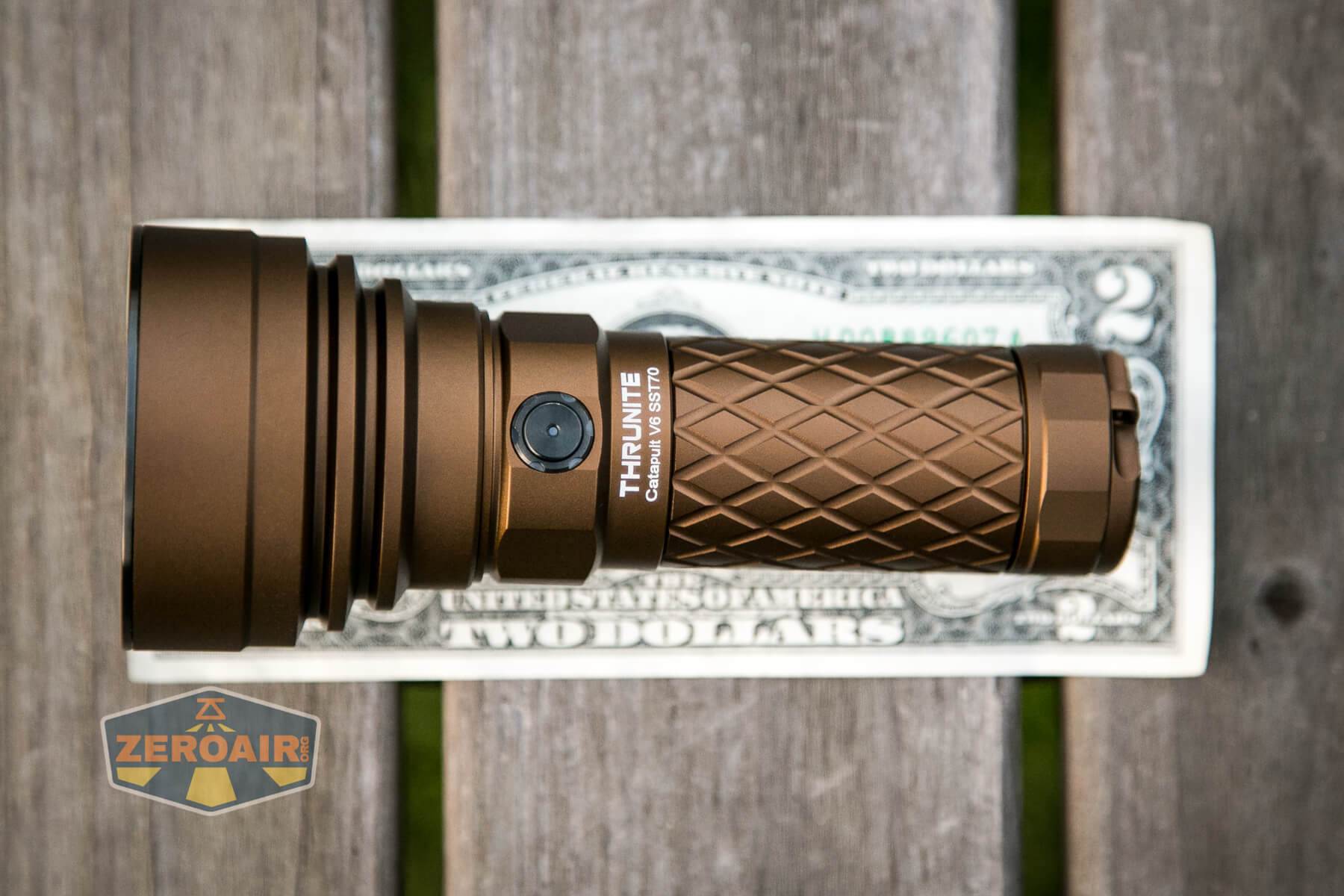
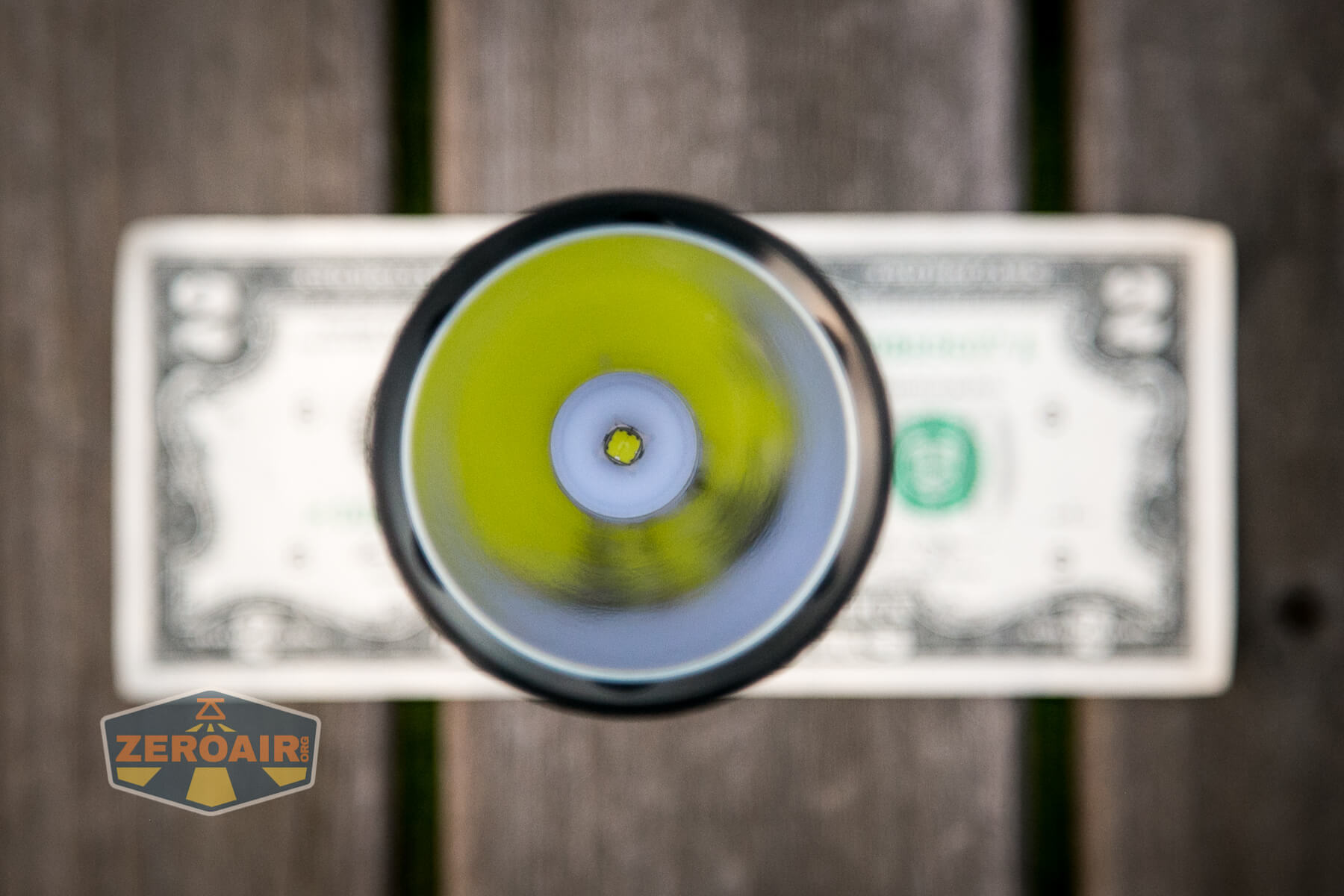
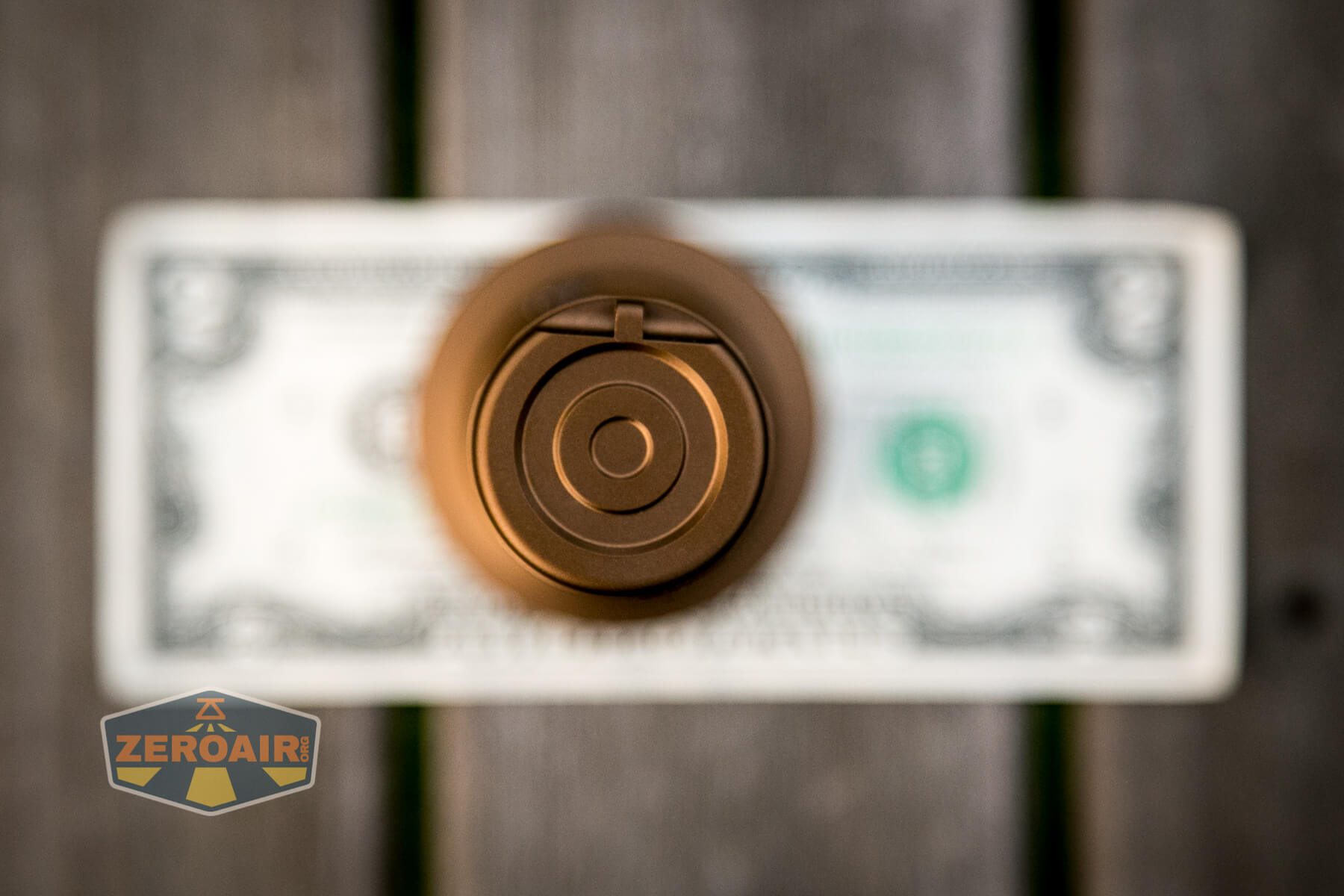
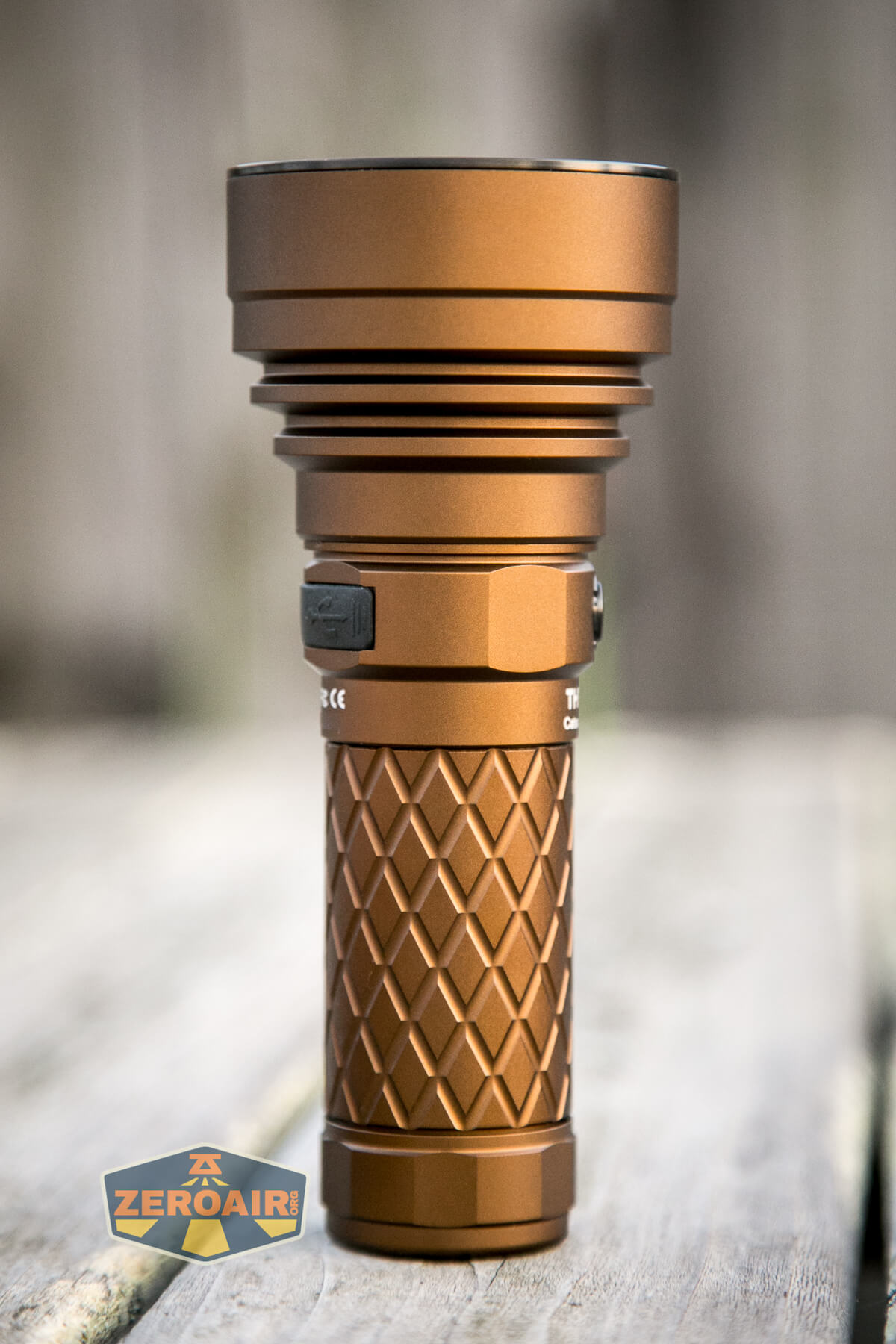
If the flashlight will headstand, I’ll show it here (usually the third photo). If the flashlight will tailstand, I’ll show that here, too (usually the fourth photo).
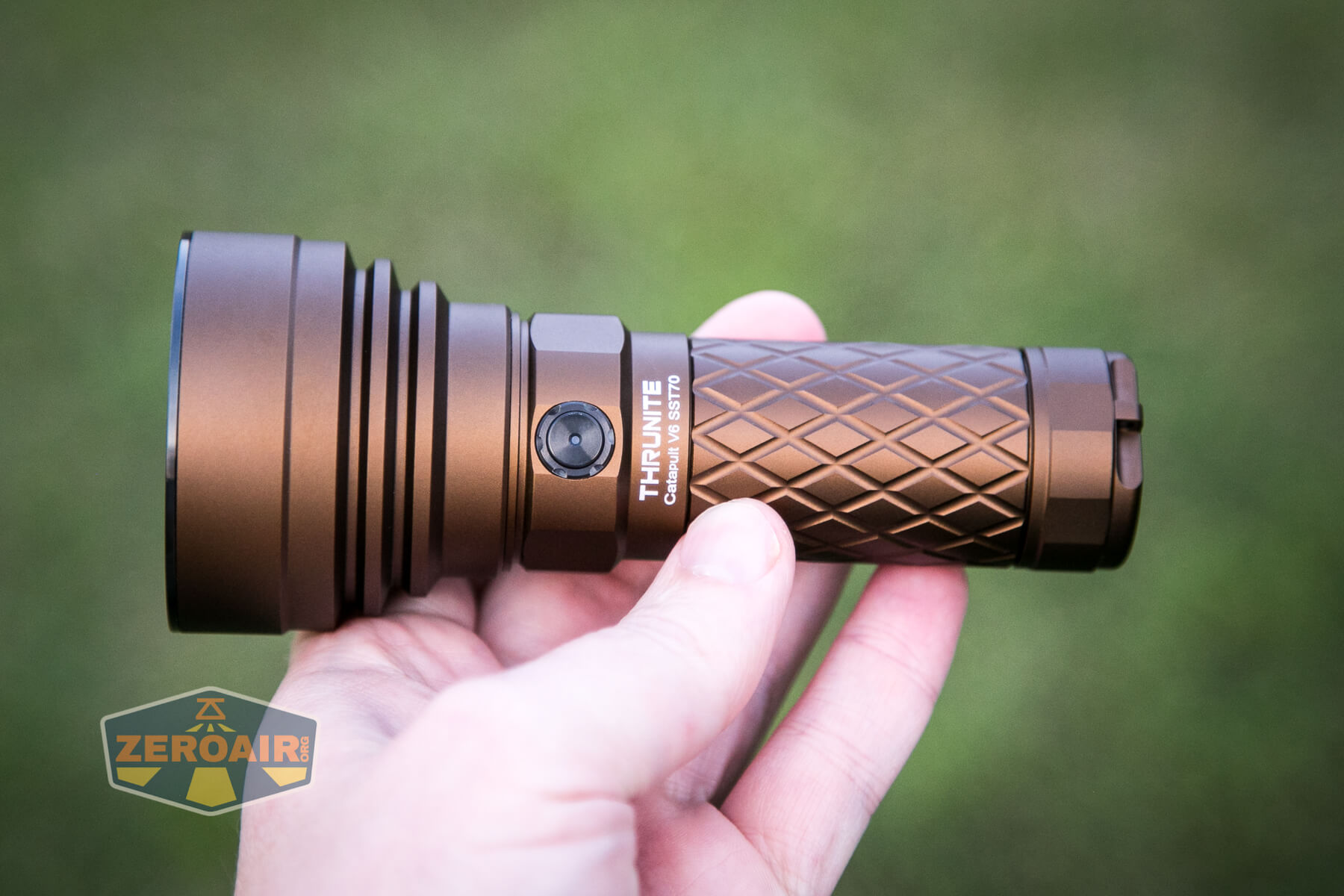
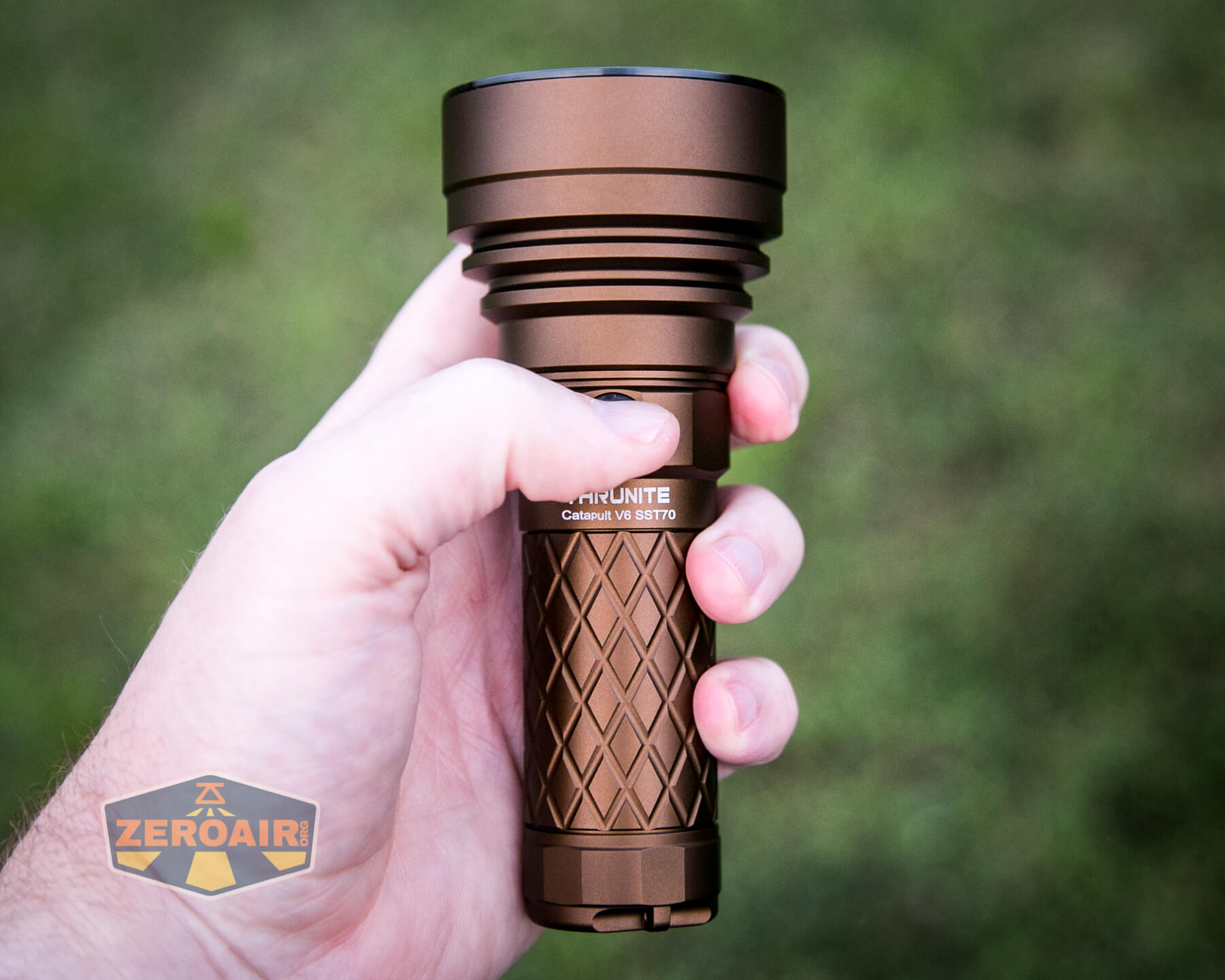
Here’s the test light with the venerable Convoy S2+. Mine is a custom “baked” edition Nichia 219b triple. A very nice 18650 light!
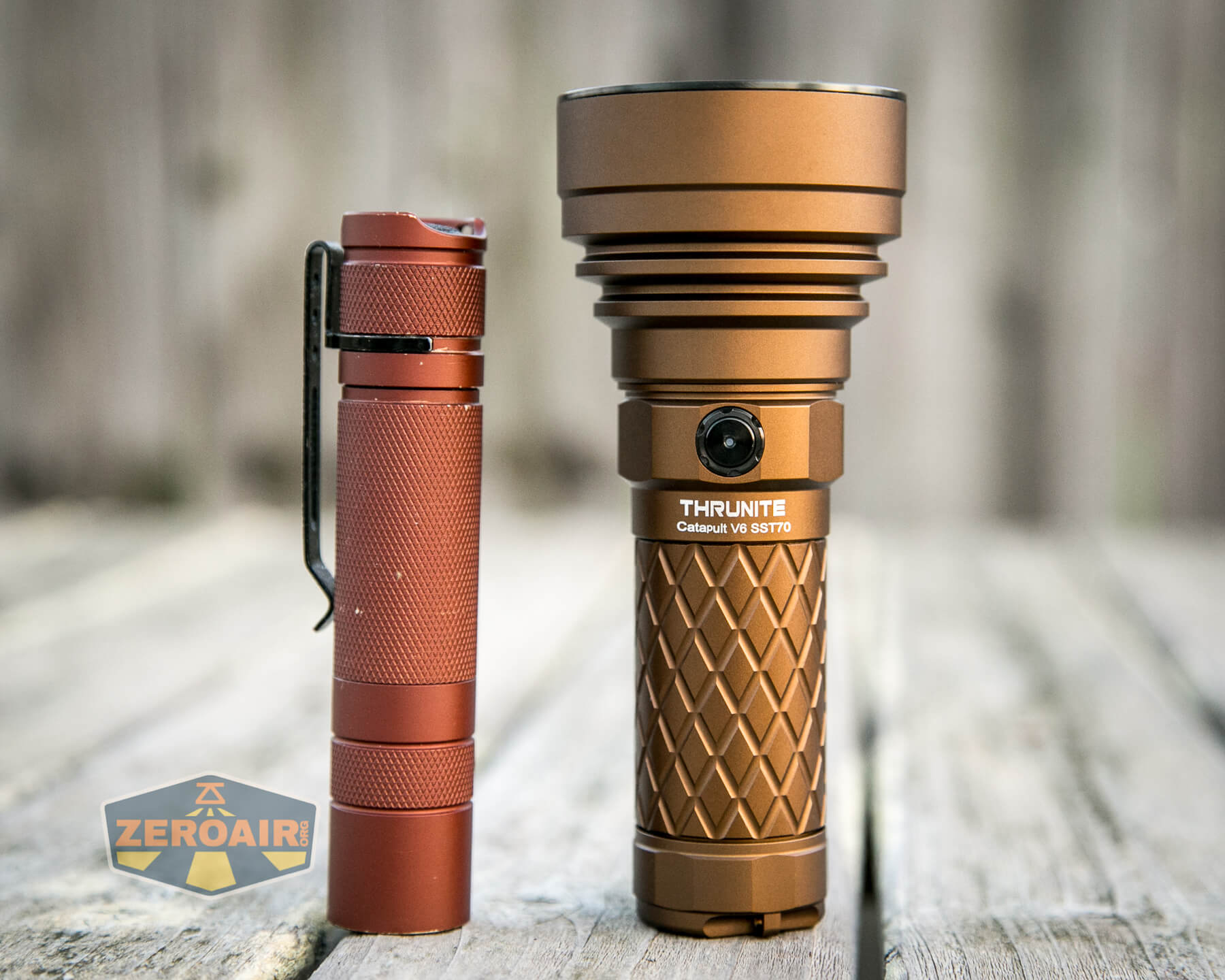
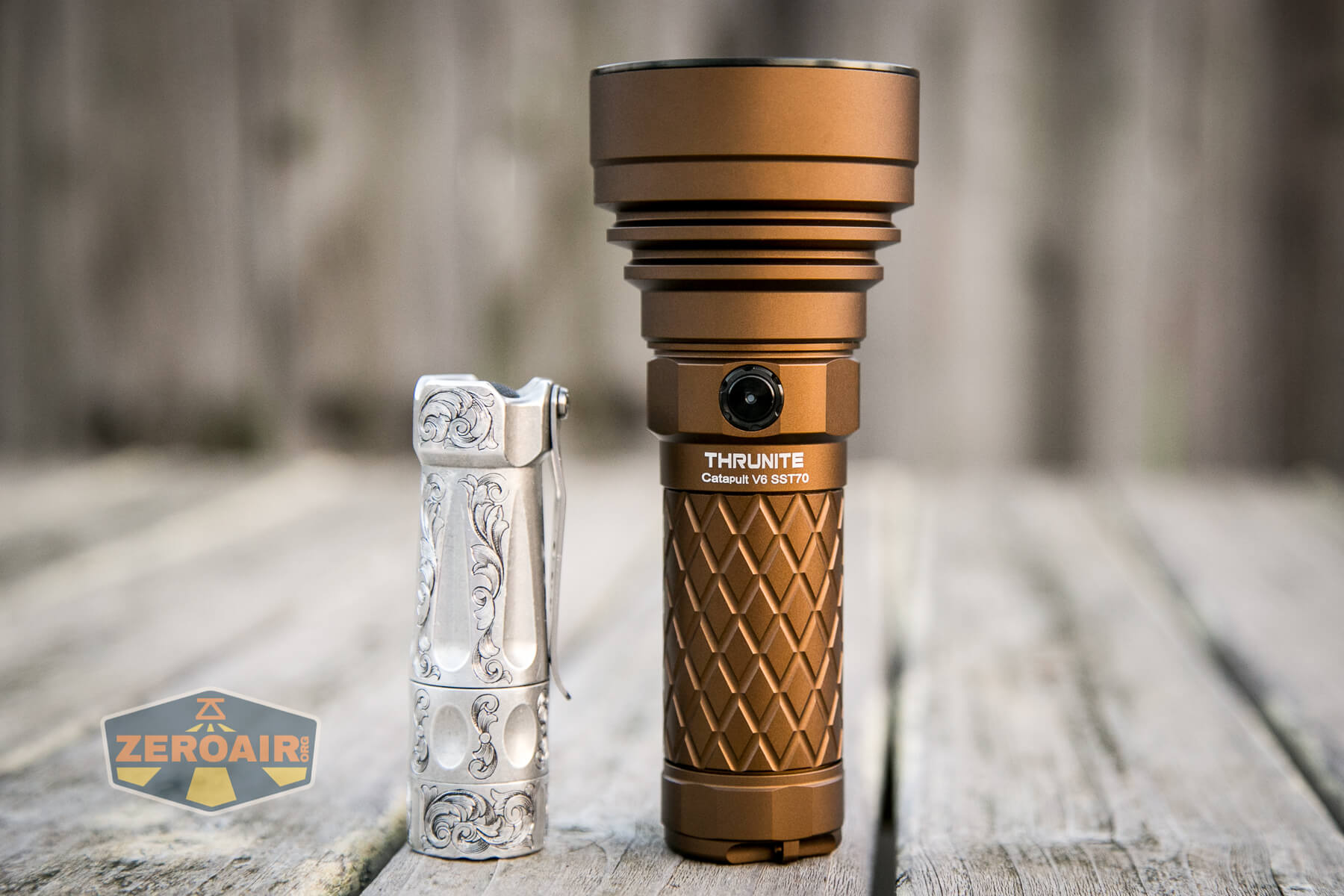
And here’s the light beside my custom-engraved TorchLAB BOSS 35, an 18350 light. I reviewed the aluminum version of that light in both 35 and 70 formats.
Retention and Carry
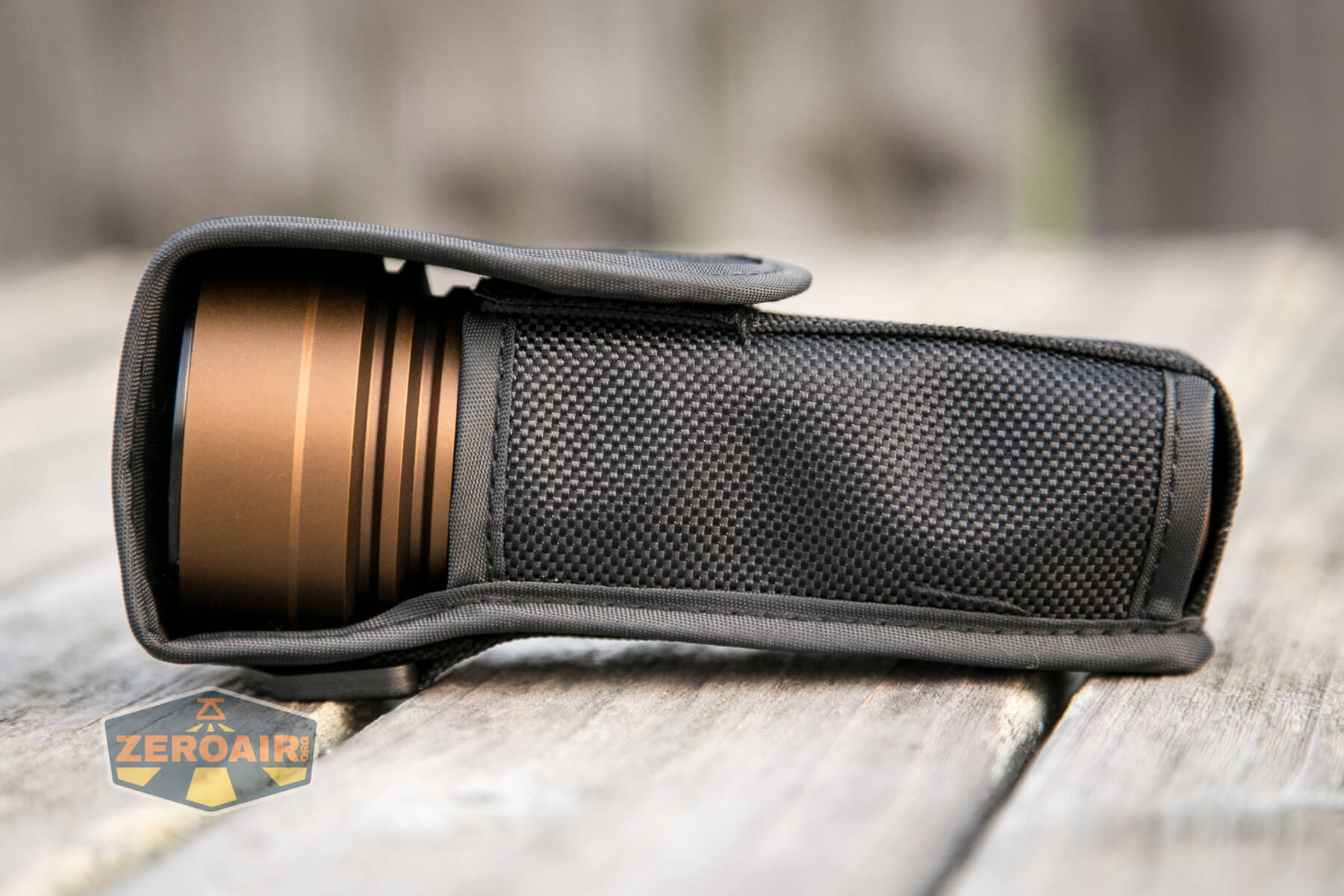
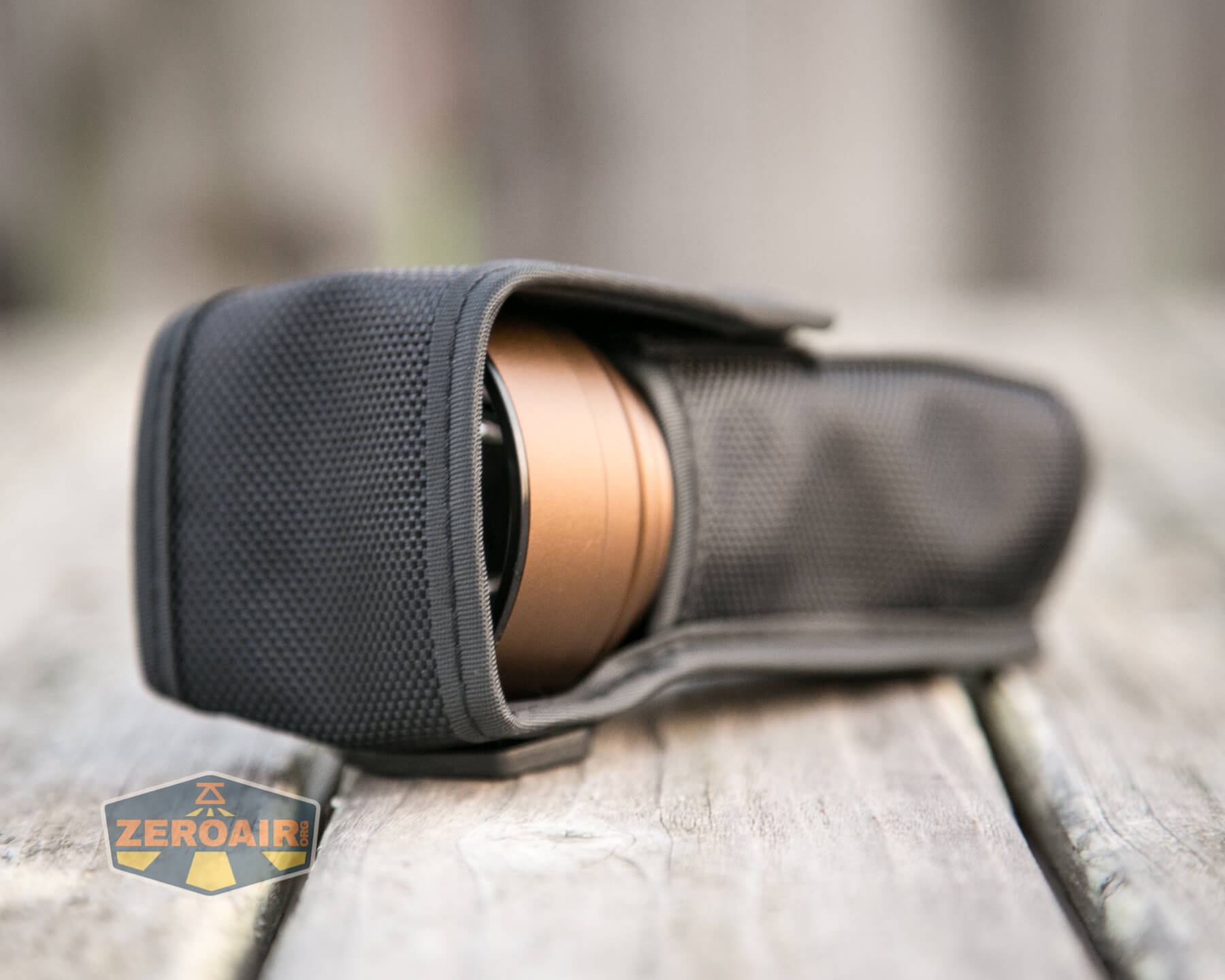
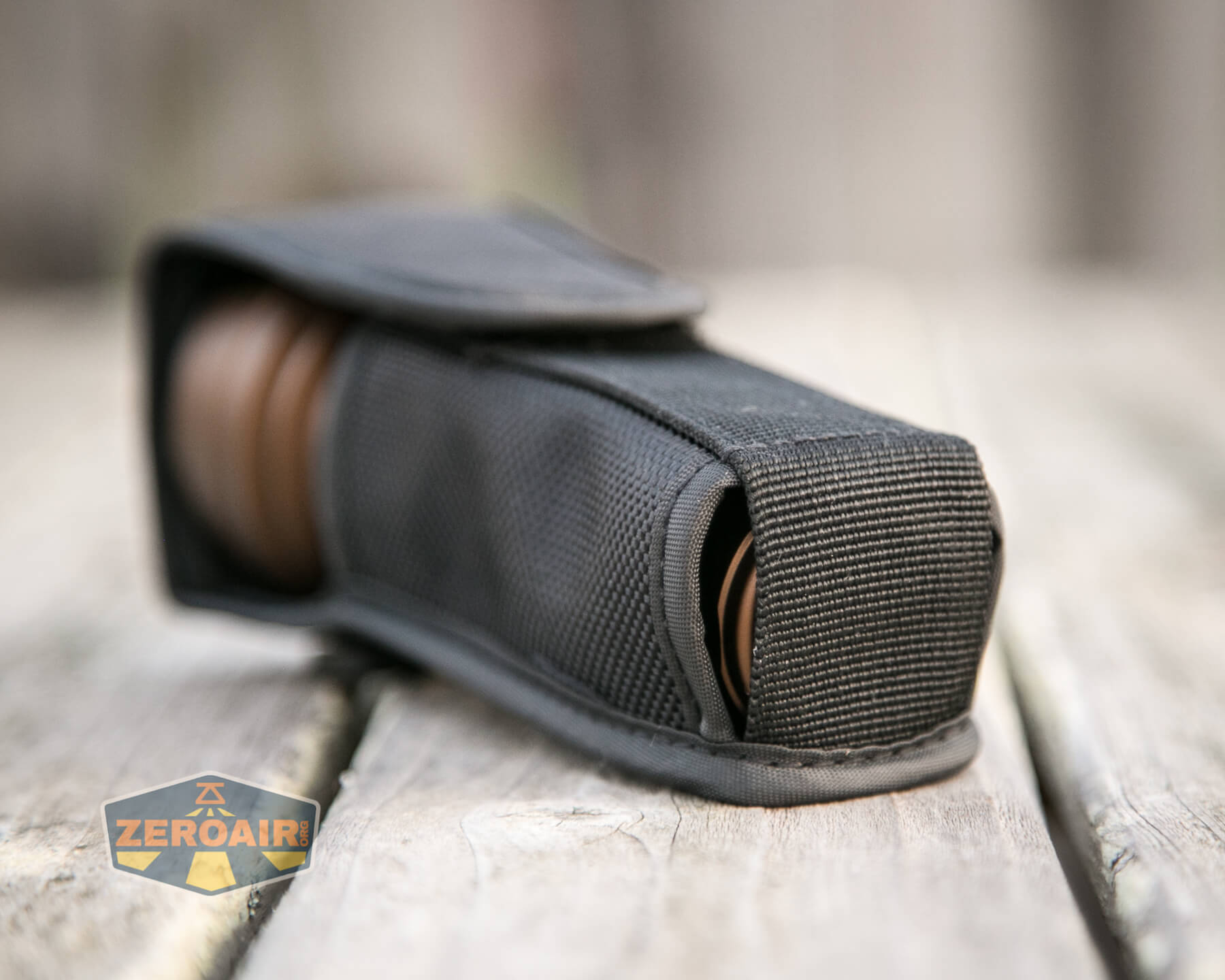
A nylon pouch is included. The light will only go in one direction – tail down. The pouch is of good quality.
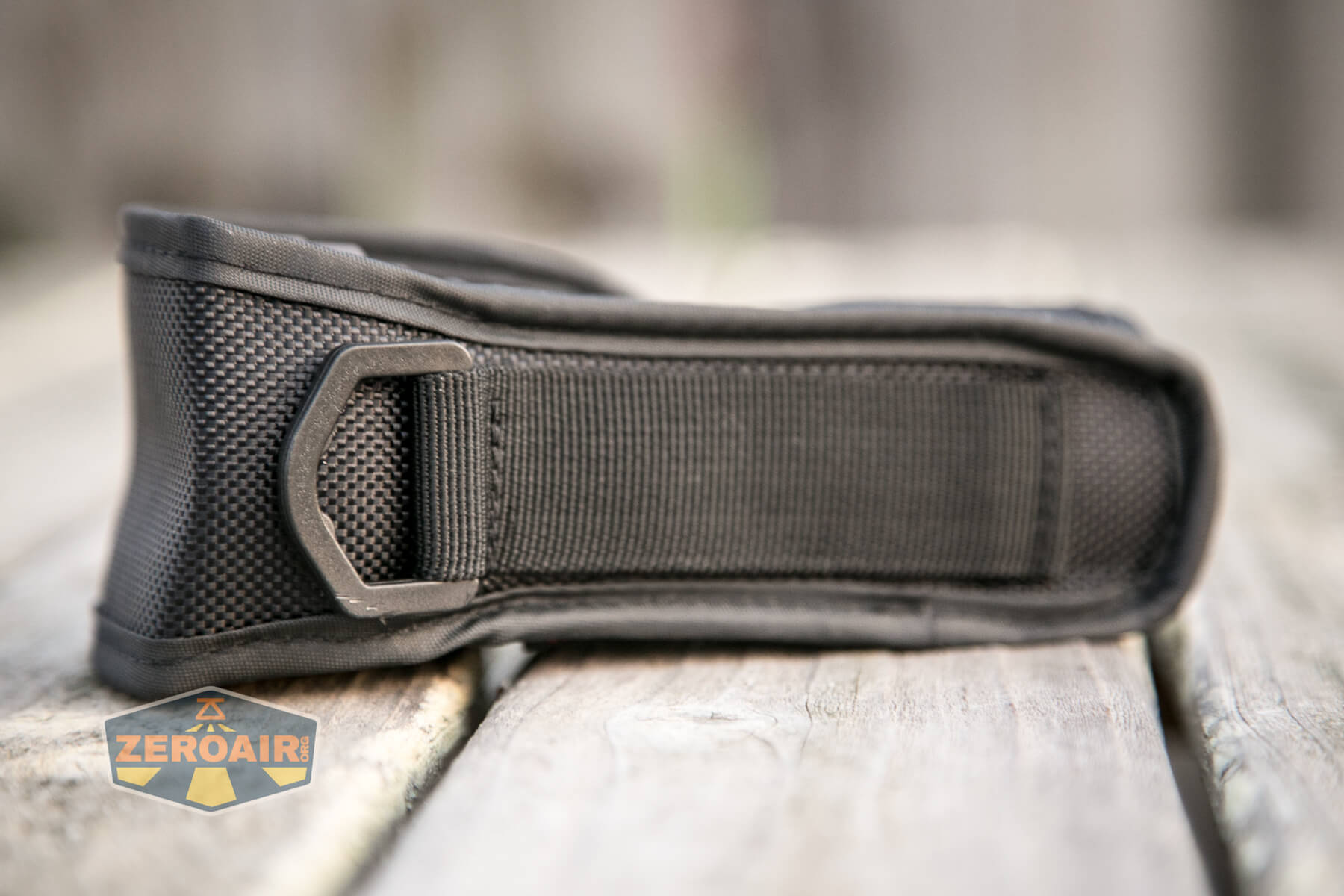
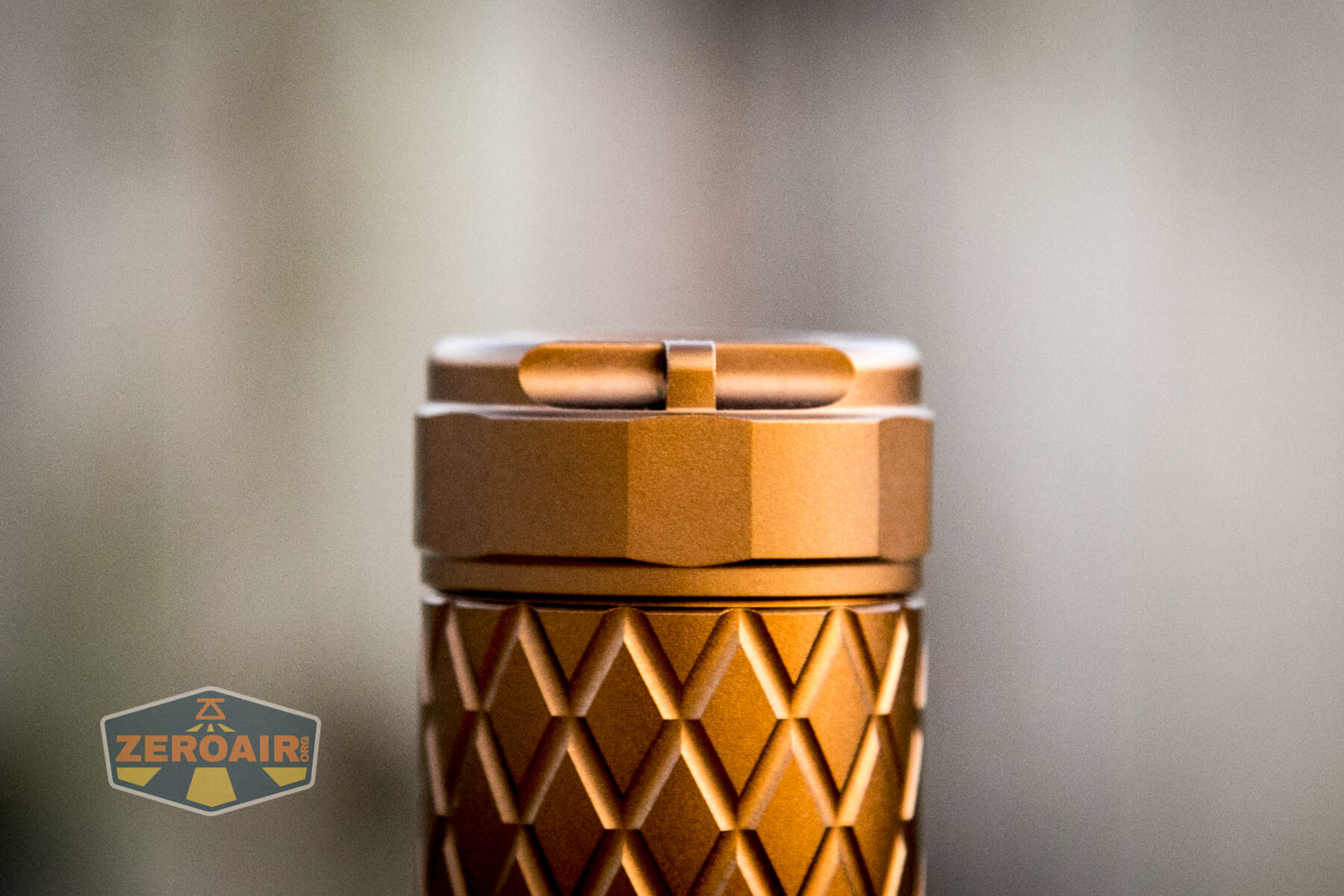
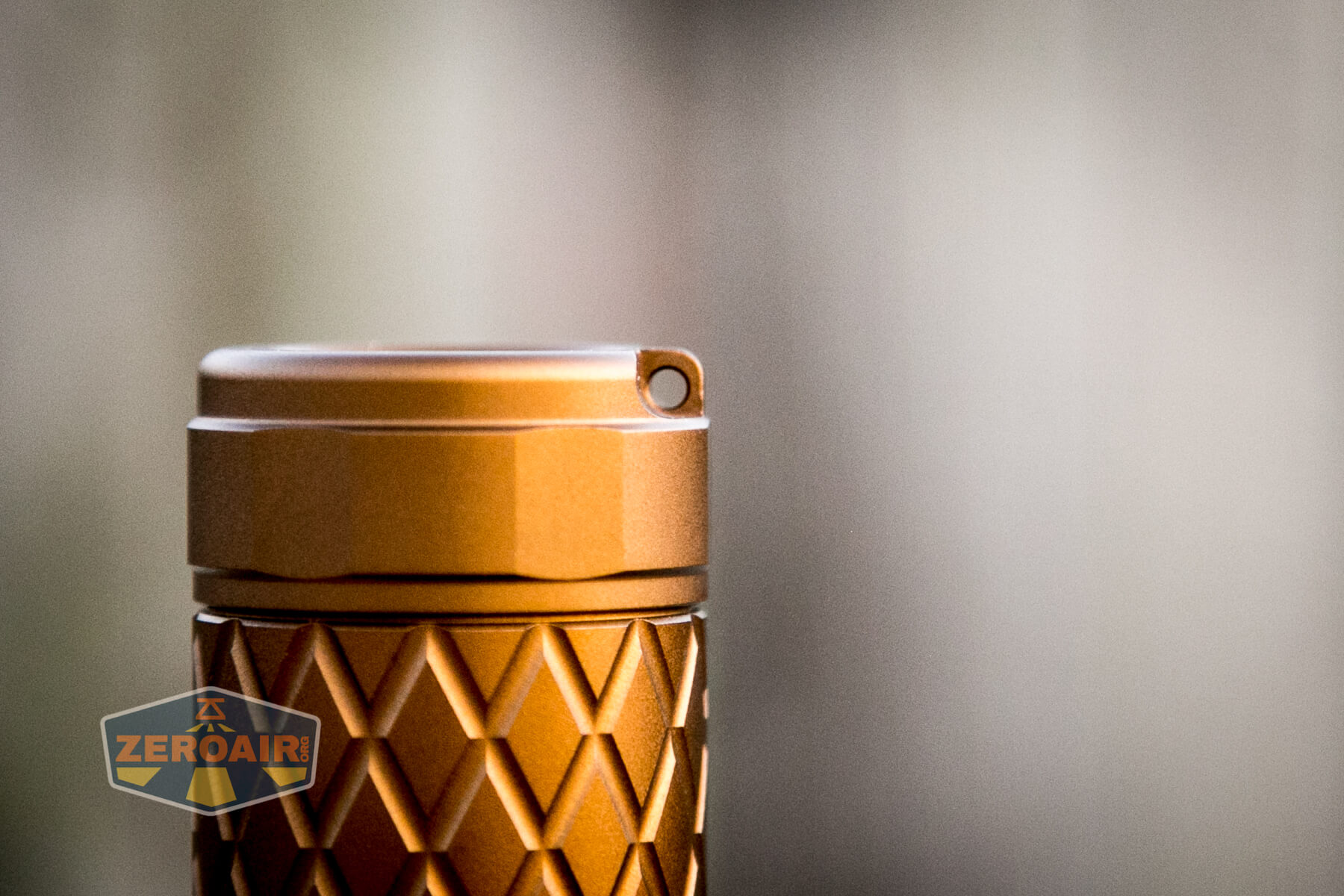
Also included is a lanyard, which attaches to the tailcap through the hole below.
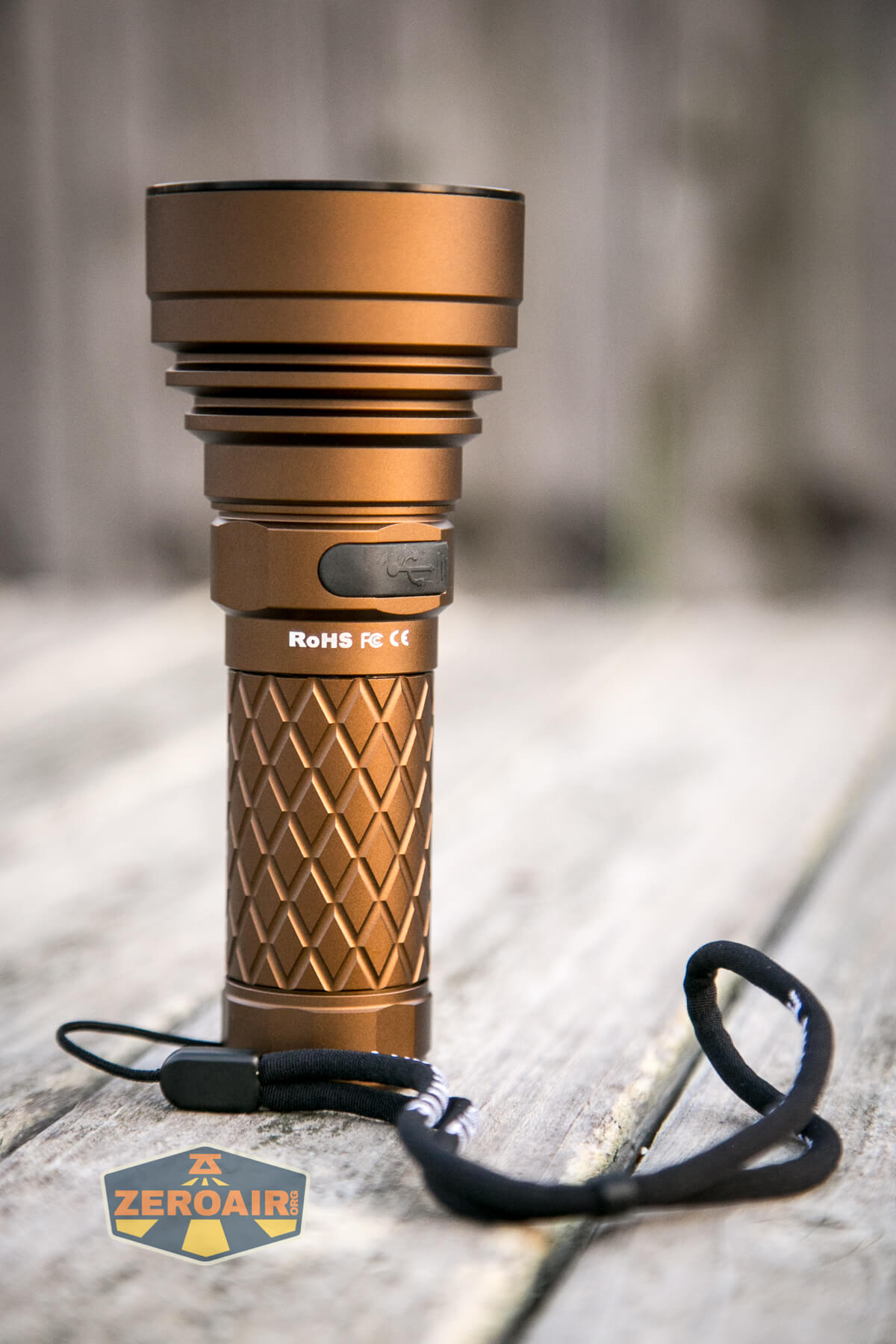
Power and Runtime
The Thrunite Catapult V6 SST70 has a working voltage of 2.75V-4.2V. In my experience, the light shuts off at around 3.1V. That’s great. Might not suck every gram of energy out of a cell, but I like it anyway.
The light doesn’t prefer protected or unprotected, and works with flat or button top cells equally. What it does need is a cell capable of providing very high output. Turbo draws nearly 10 amps.
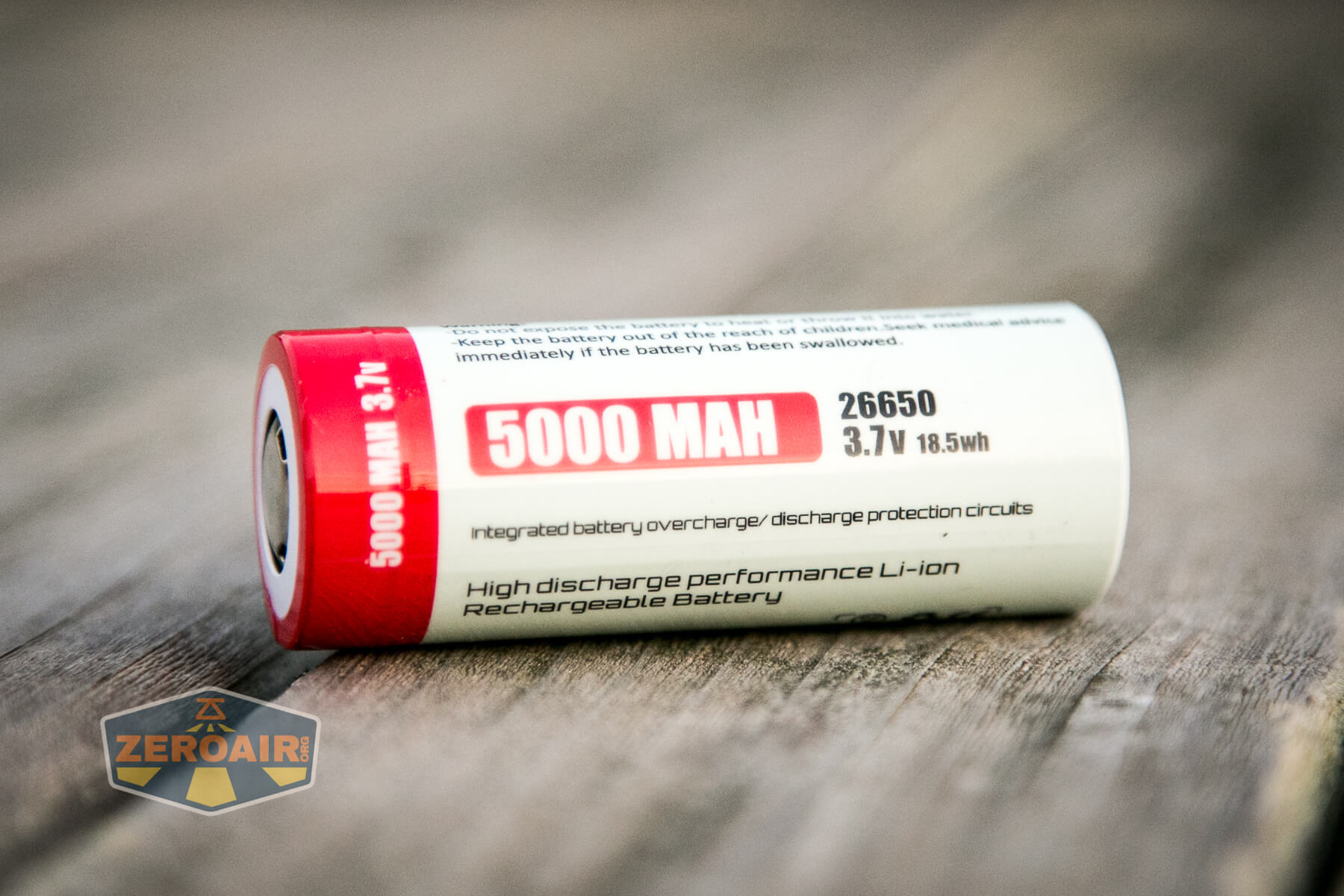
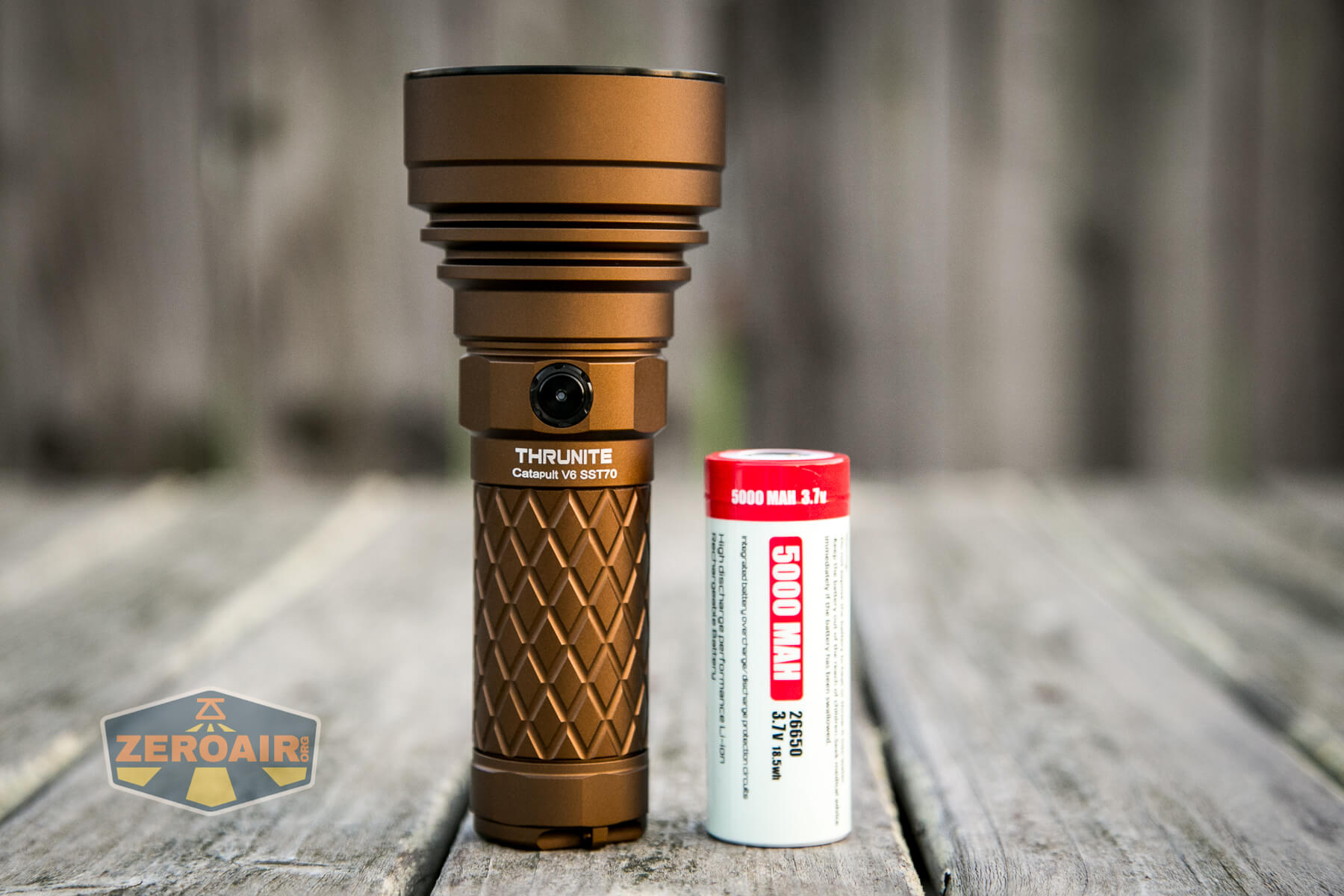
As usual, the cell fits with the positive end toward the head.
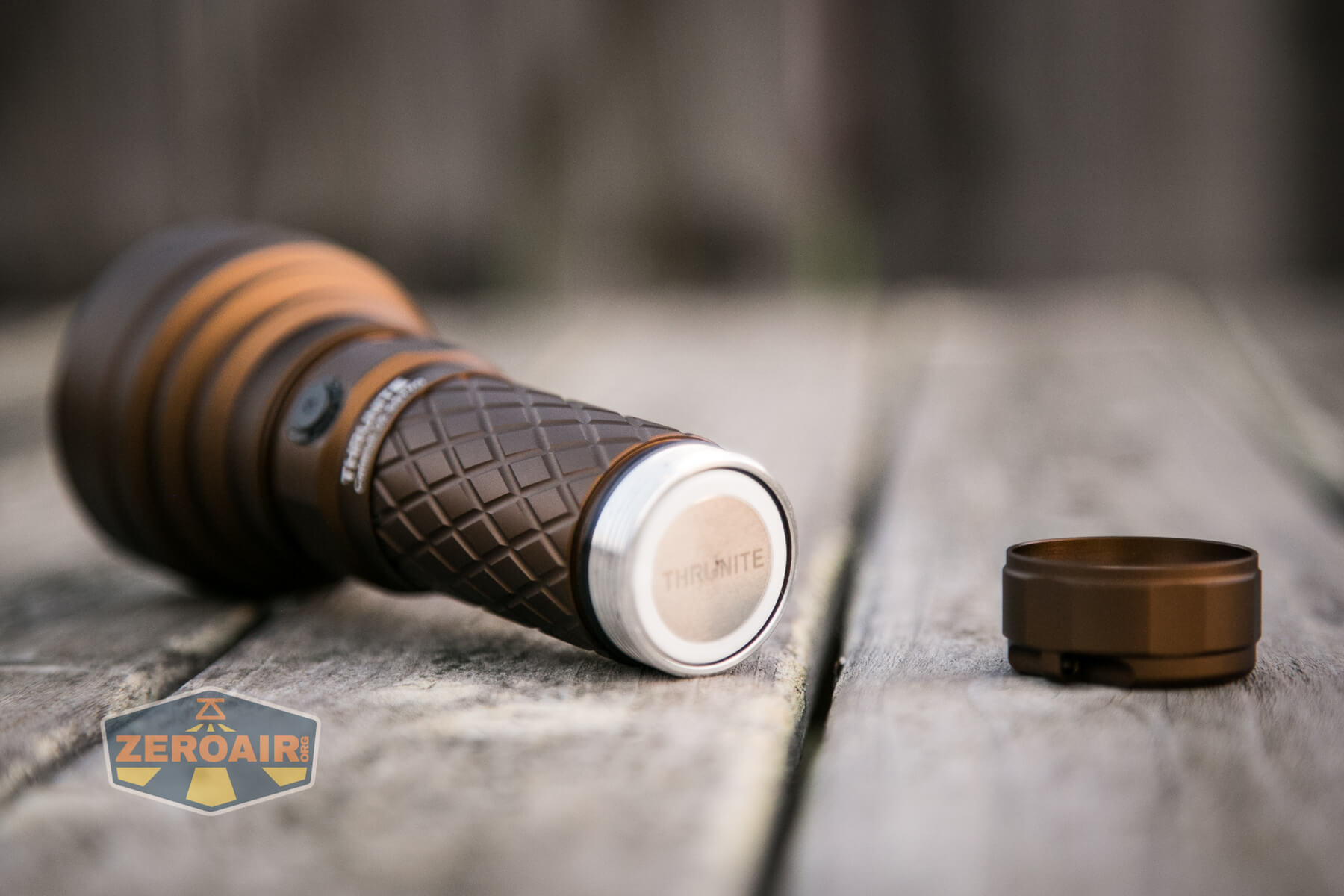
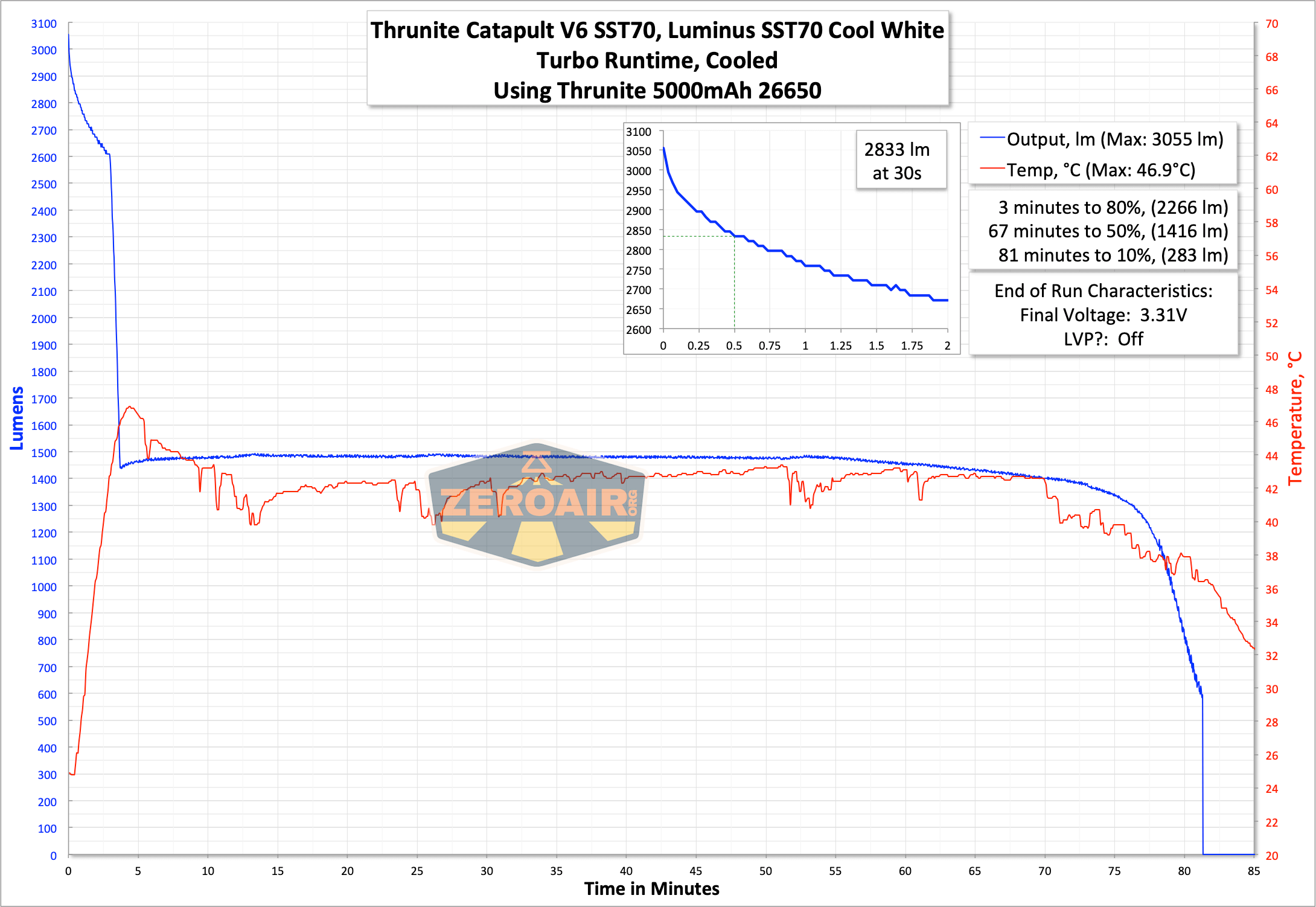
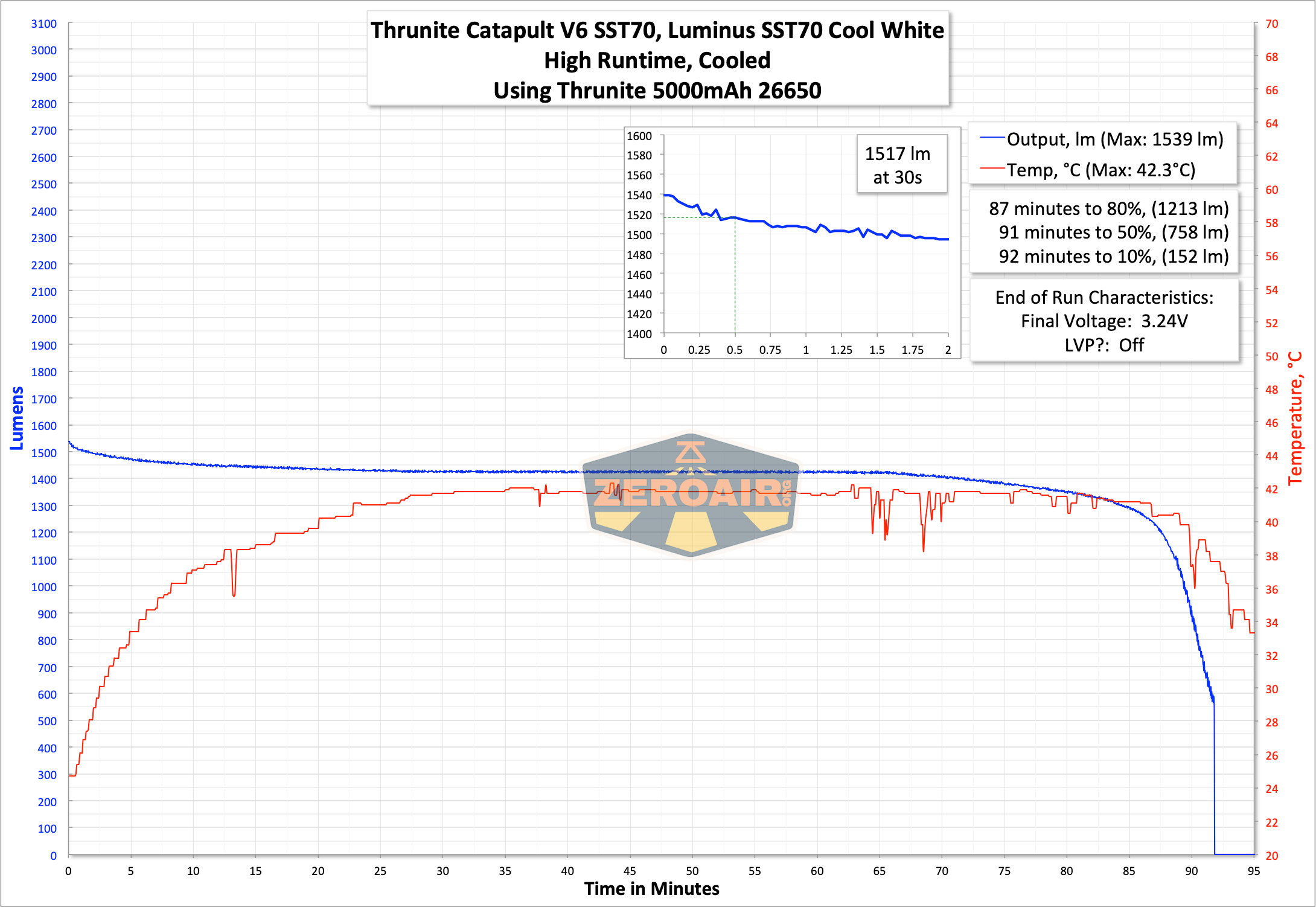
This Luminus SST-70 really blisters out the lumens – this is over 3000 lumens from a single emitter and sustained over 2600 lumens for minutes. Even after that (and the same on High mode), the output for 80 minutes of around 1500 lumens is very good.
The switch indicates as follows:
Blue: 21-100% capacity (3.3-4.2V)
Red: 11-20% capacity (3-3.2V)
Flashing Red: 1-10% capacity (2.8-3V)
Off: 0% capacity (0-2.8V)
Charging
Onboard charging is still a feature of the Catapult series. This one offers USB-C charging. The charge port has a press-in cover.
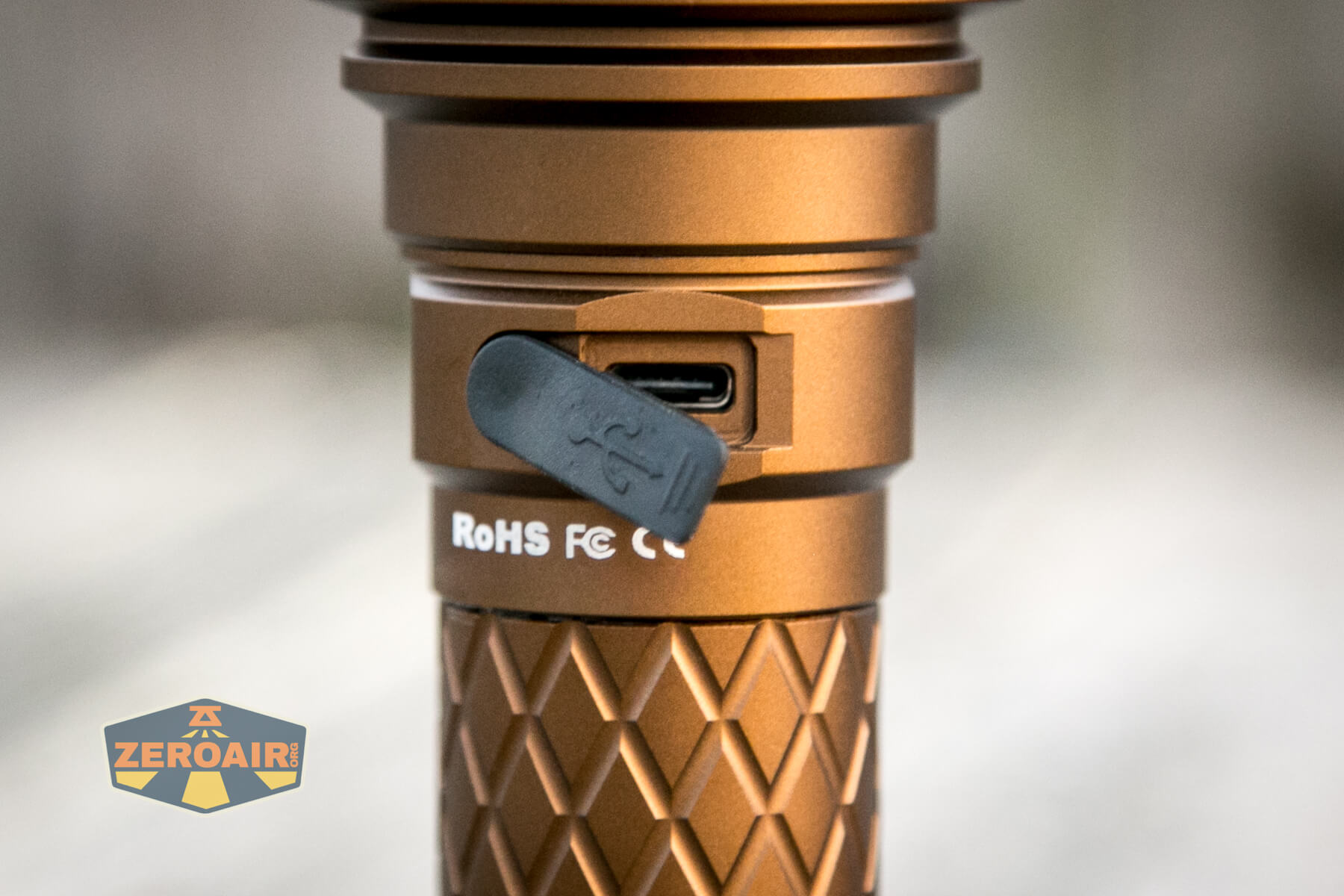
A USB to USB-C charge cable is included.
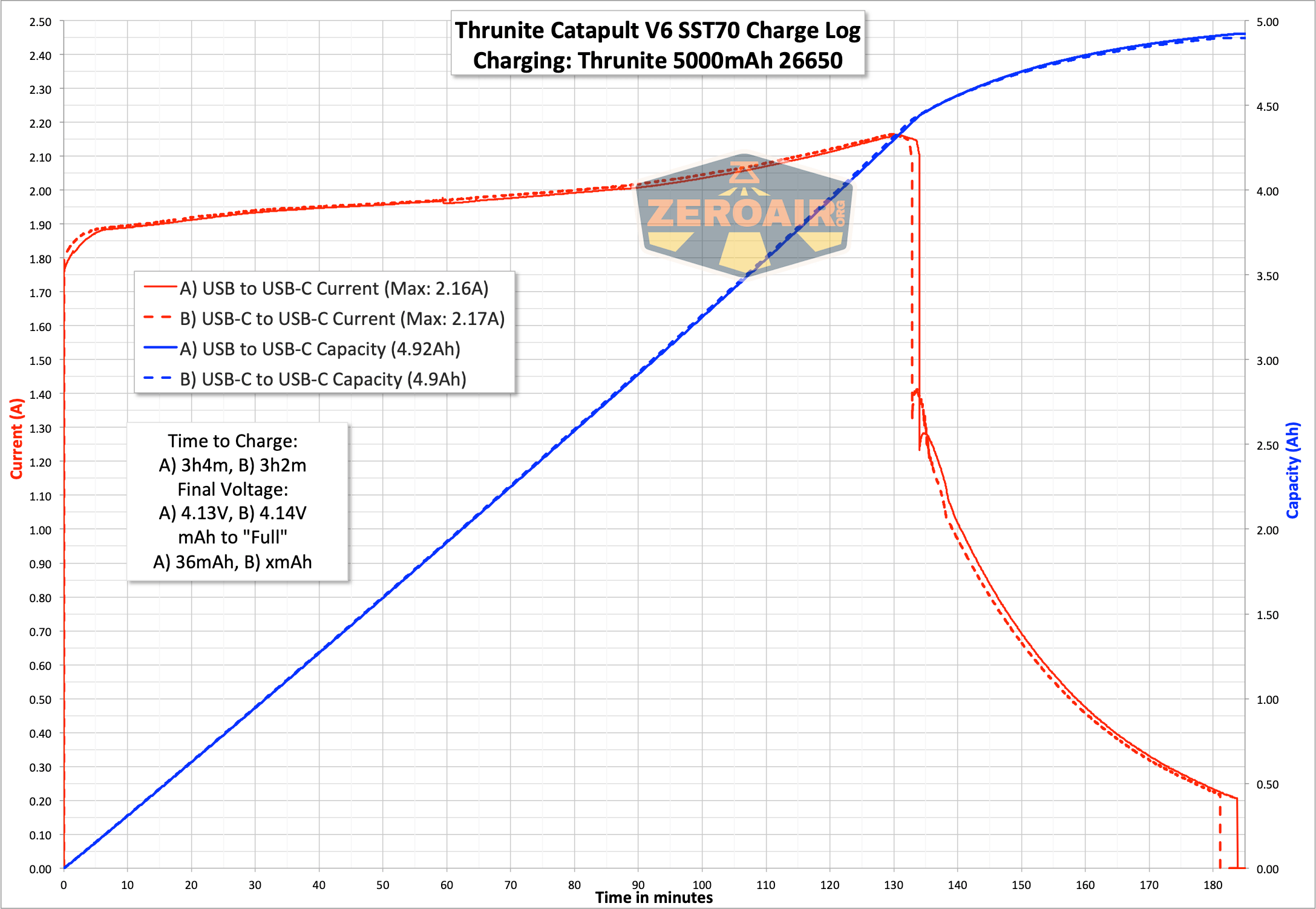
I tested with both a USB source and a USB-C source. Both work fine, and really look practically the same.
Modes and Currents
| Mode | Mode Claimed Output (lm) | Claimed Runtime | Measured Lumens | Tailcap Amps |
|---|---|---|---|---|
| Turbo | 2836/1313 | 220s/89m | 2833 | 9.45 |
| High | 1417 | 102m | 1517 | 3/02 |
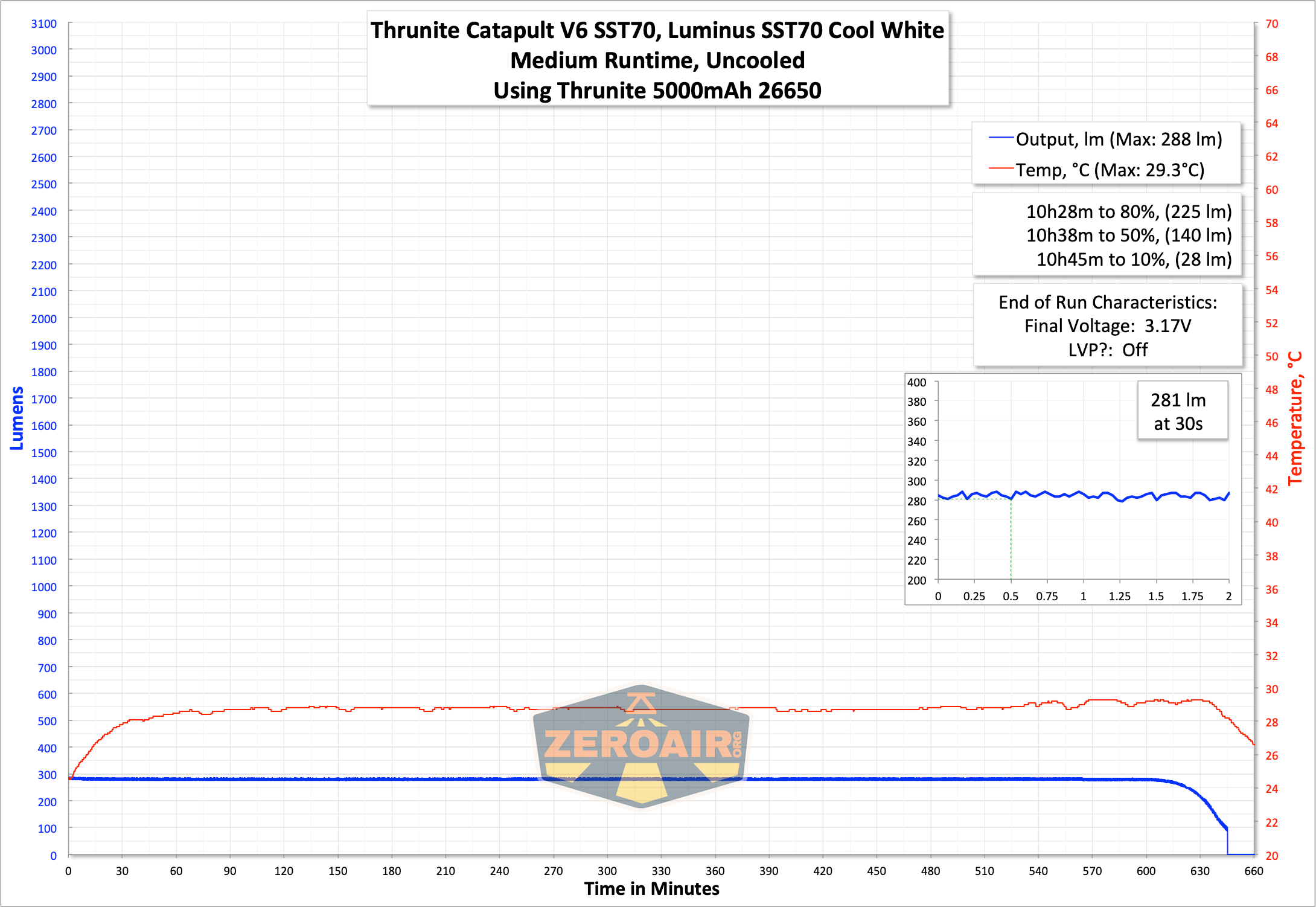
| Medium | 270 | 9h | 281 | 0.41 |
| Low | 31 | 86h | 29 | 0.03 |
| Firefly | 0.3 | 70d | 0.1 | 2.66mA |
Pulse Width Modulation
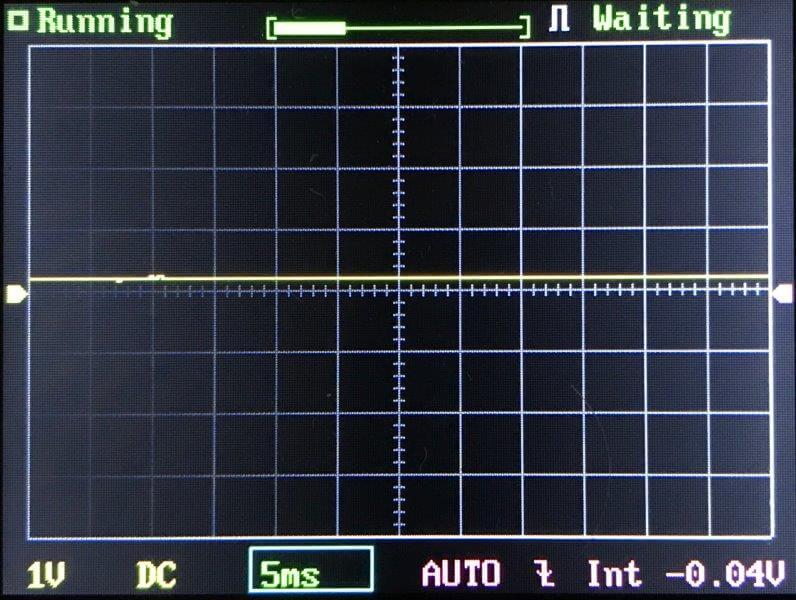
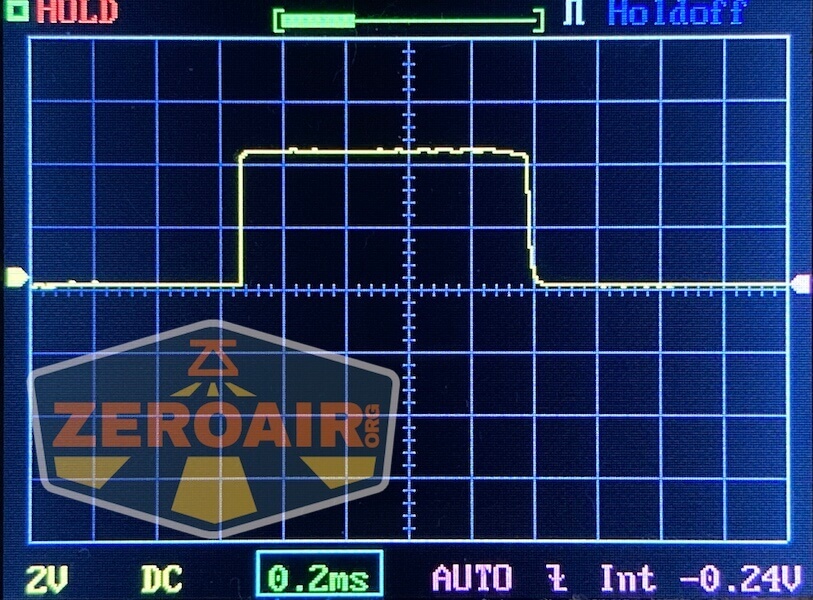
No PWM on any mode is seen here!
 Here you can see a “baseline” – a chart with almost no light hitting the sensor.
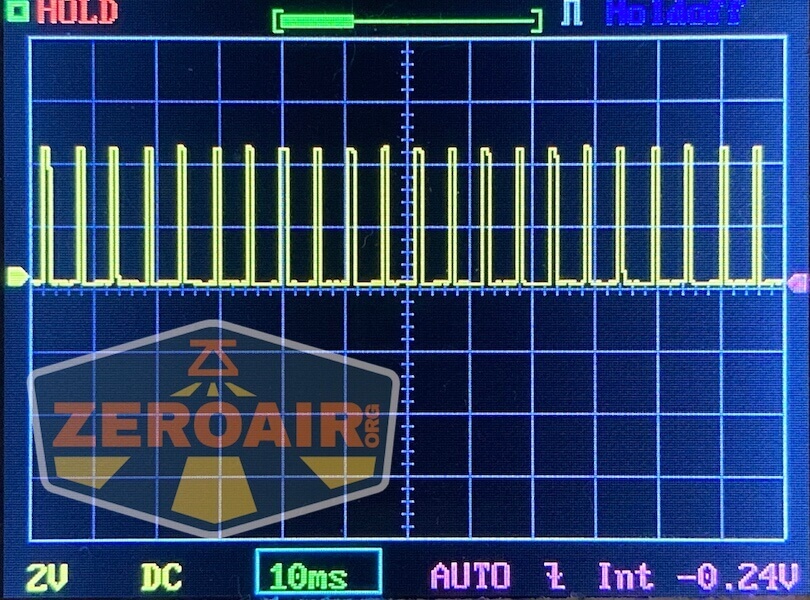
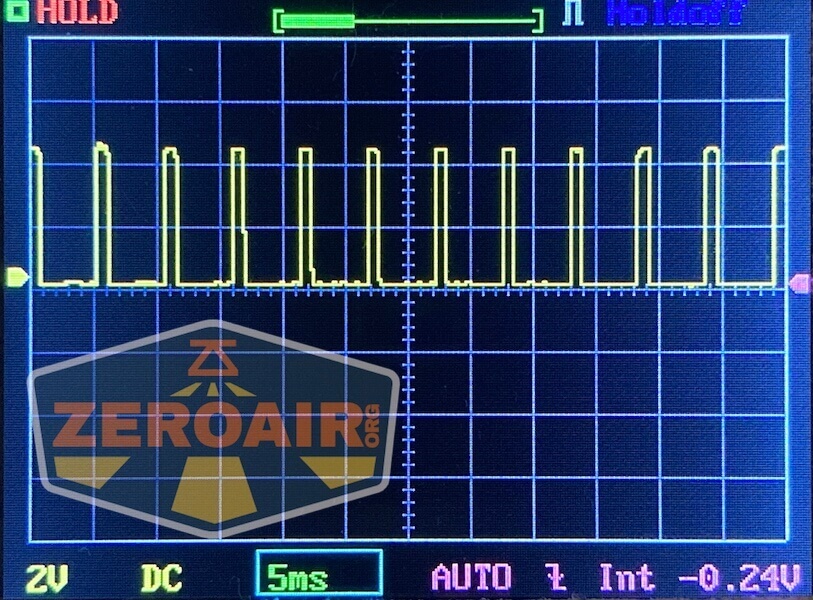
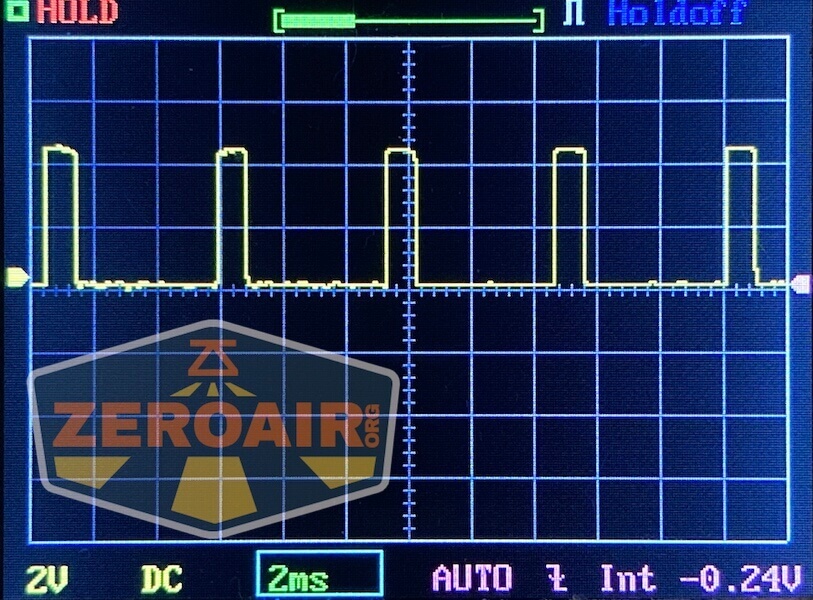
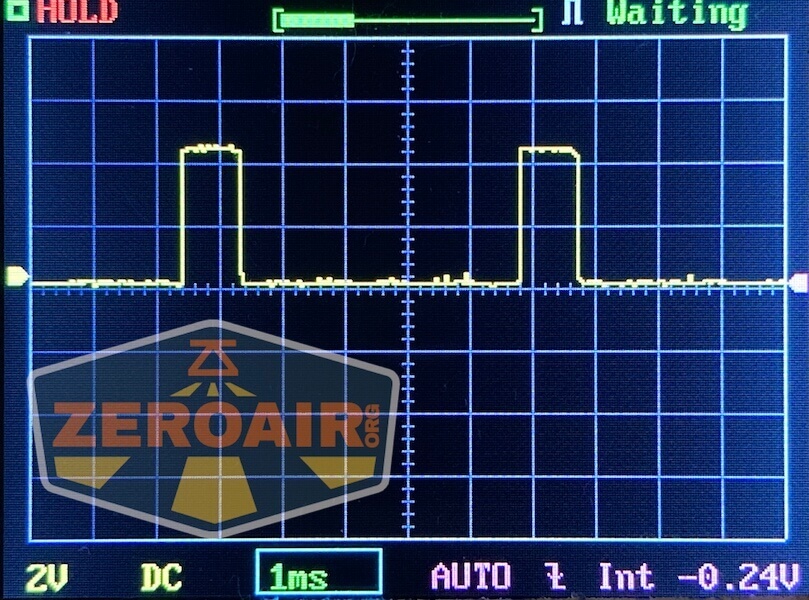
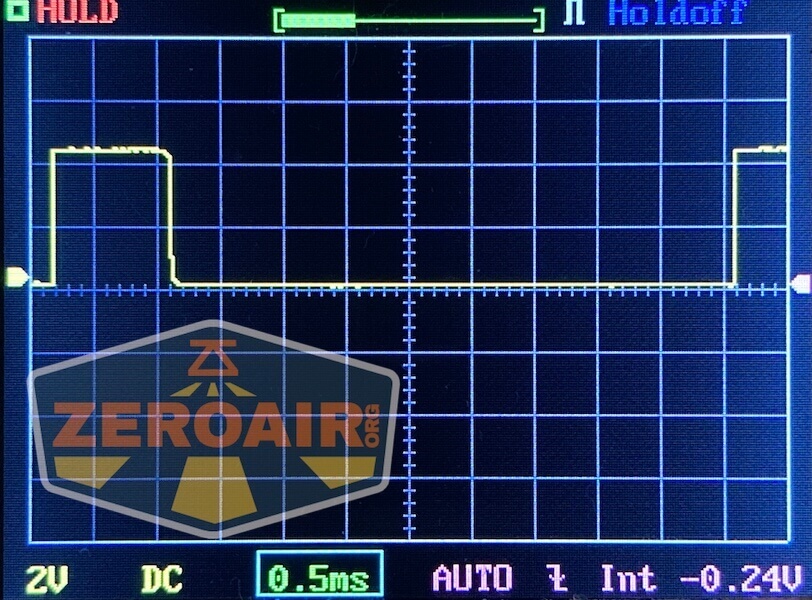
Then there’s the Ultrafire WF-602C flashlight, which has some of the worst PWM I’ve seen. It’s so bad that I used a post about it to explain PWM! Here are multiple timescales (10ms, 5ms, 2ms, 1ms, 0.5ms, 0.2ms) to make comparing this “worst” PWM light to the test light easier. That post also explains why I didn’t test the WF-602C at the usual 50us scale.
User Interface and Operation
The Thrunite Catapult V6 SST70 has a single switch. It’s a side, indicating e-switch. The indicator is a small circle in the center. I love that the switch cover on this model is black. It seems to match the aesthetic very well, but also provides a great contrast to the brown body, making the switch that much easier to find.
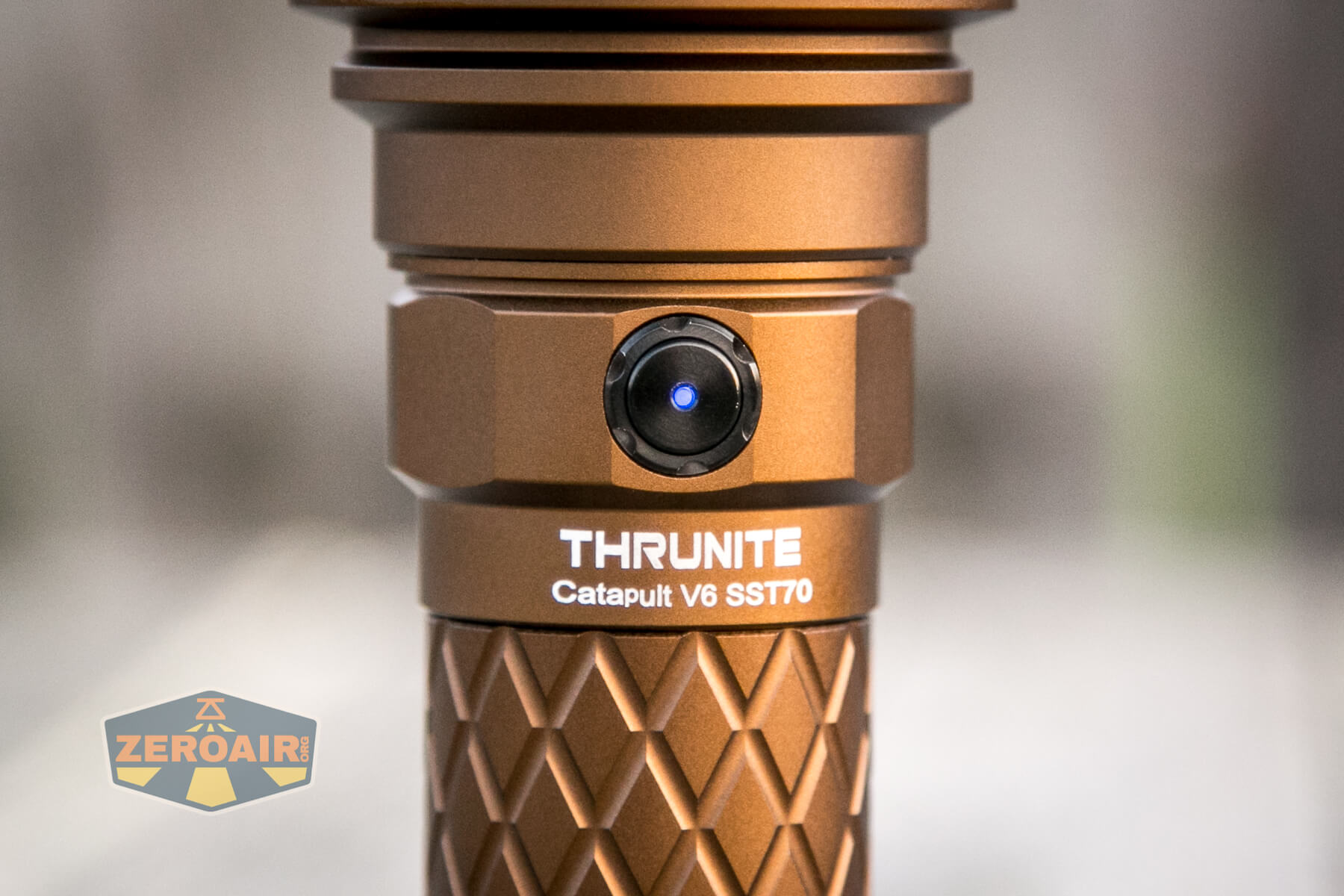
The switch doesn’t sit too proud and has fairly low travel, but is positively clicky. It’s not a hollow click, though, and not too loud. The switch feels like actual metal, and the rubber part under the switch is replaceable.
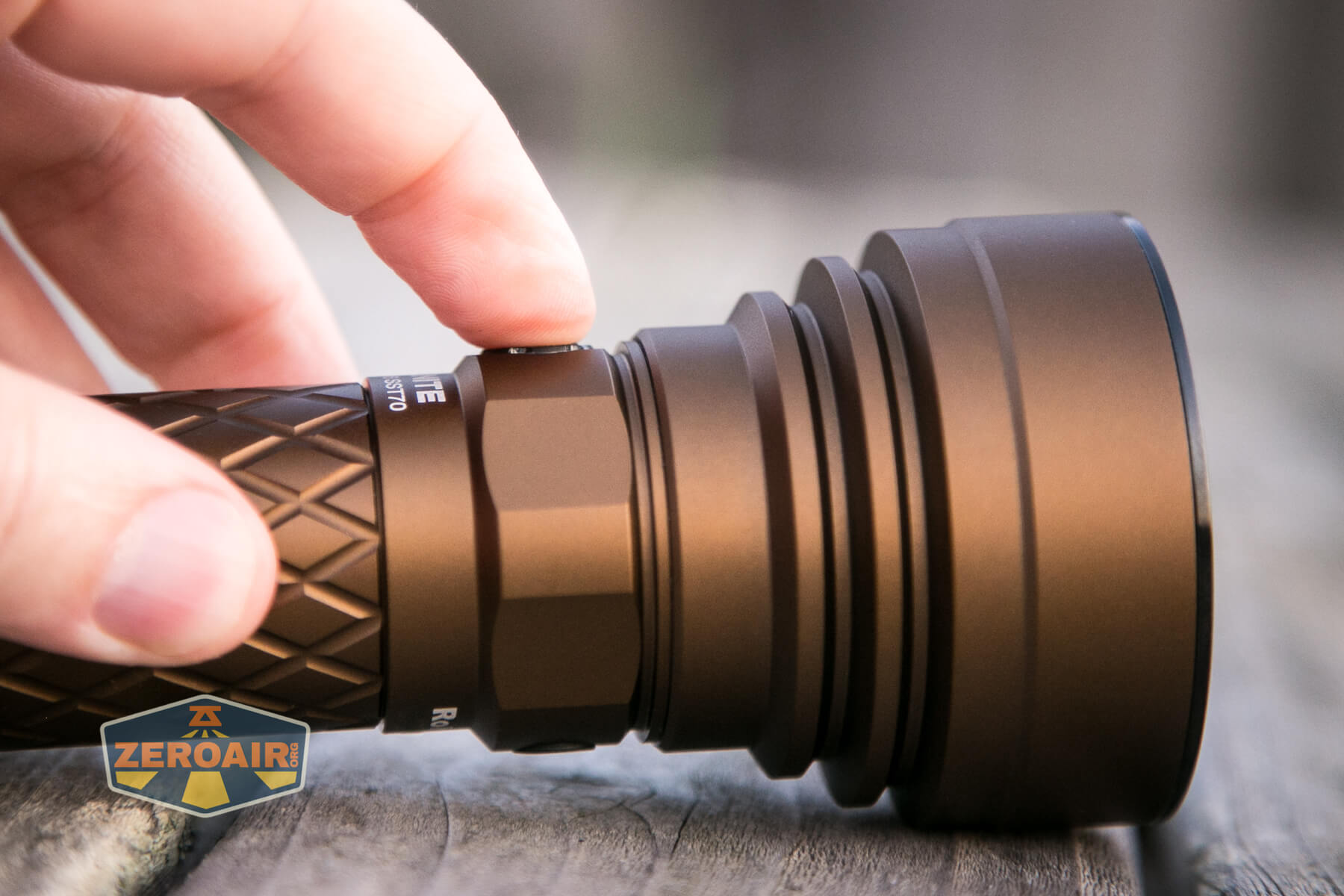
Here’s a user interface table!
| State | Action | Result |
|---|---|---|
| Off | Click | On (Mode Memory) |
| Off | Hold | Firefly |
| Any | Double Click | Turbo |
| On | Click | Off |
| On | Long Press | Mode Cycle (LMH) |
| Turbo | Double Click | Strobe |
I appreciate the simple nature of this UI, but I do wish the indicating side switch were more heavily utilized. Namely, I think every light with an indicating switch should have a battery check feature. Every light has an indicating switch. Every of the lights.
LED and Beam
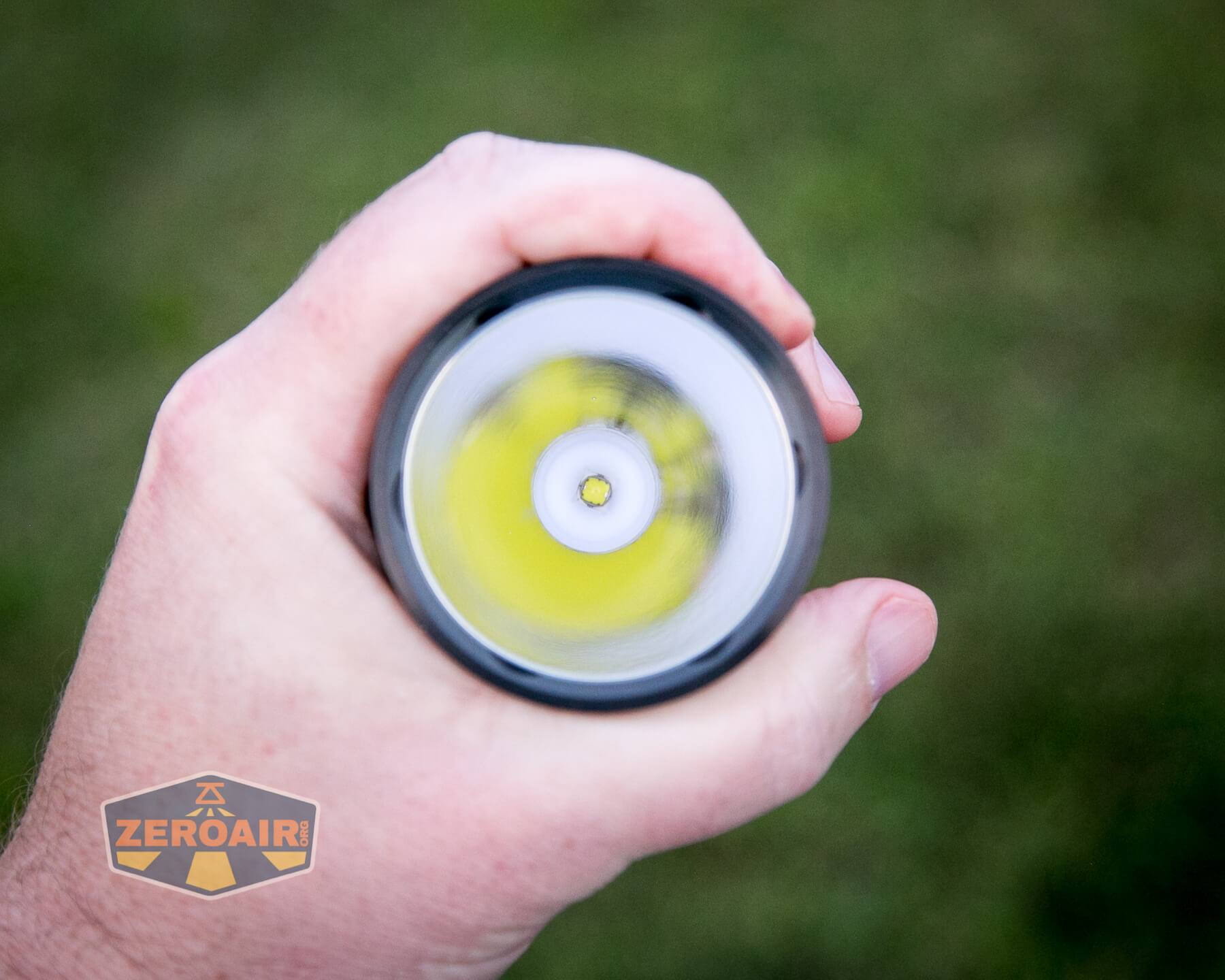
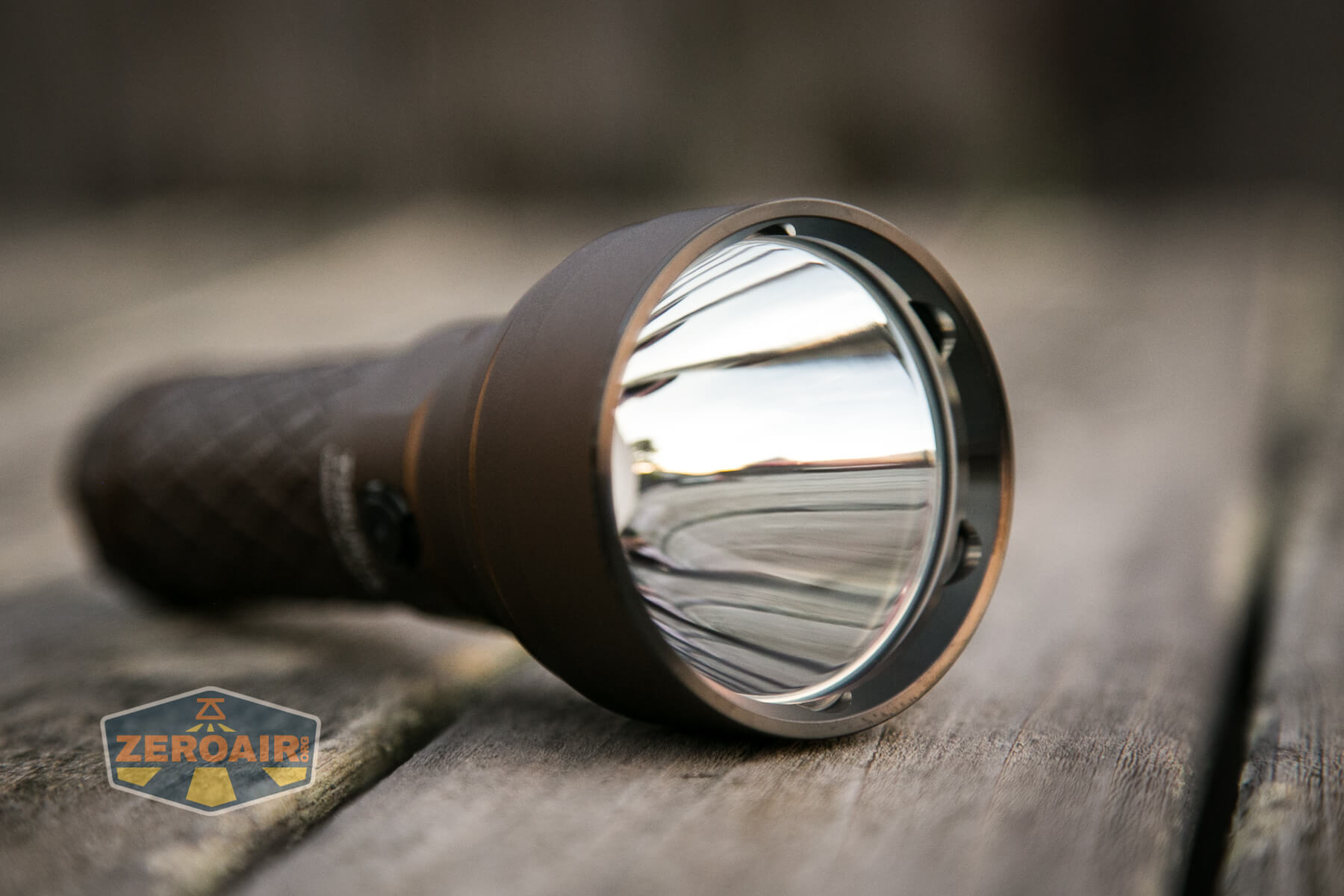
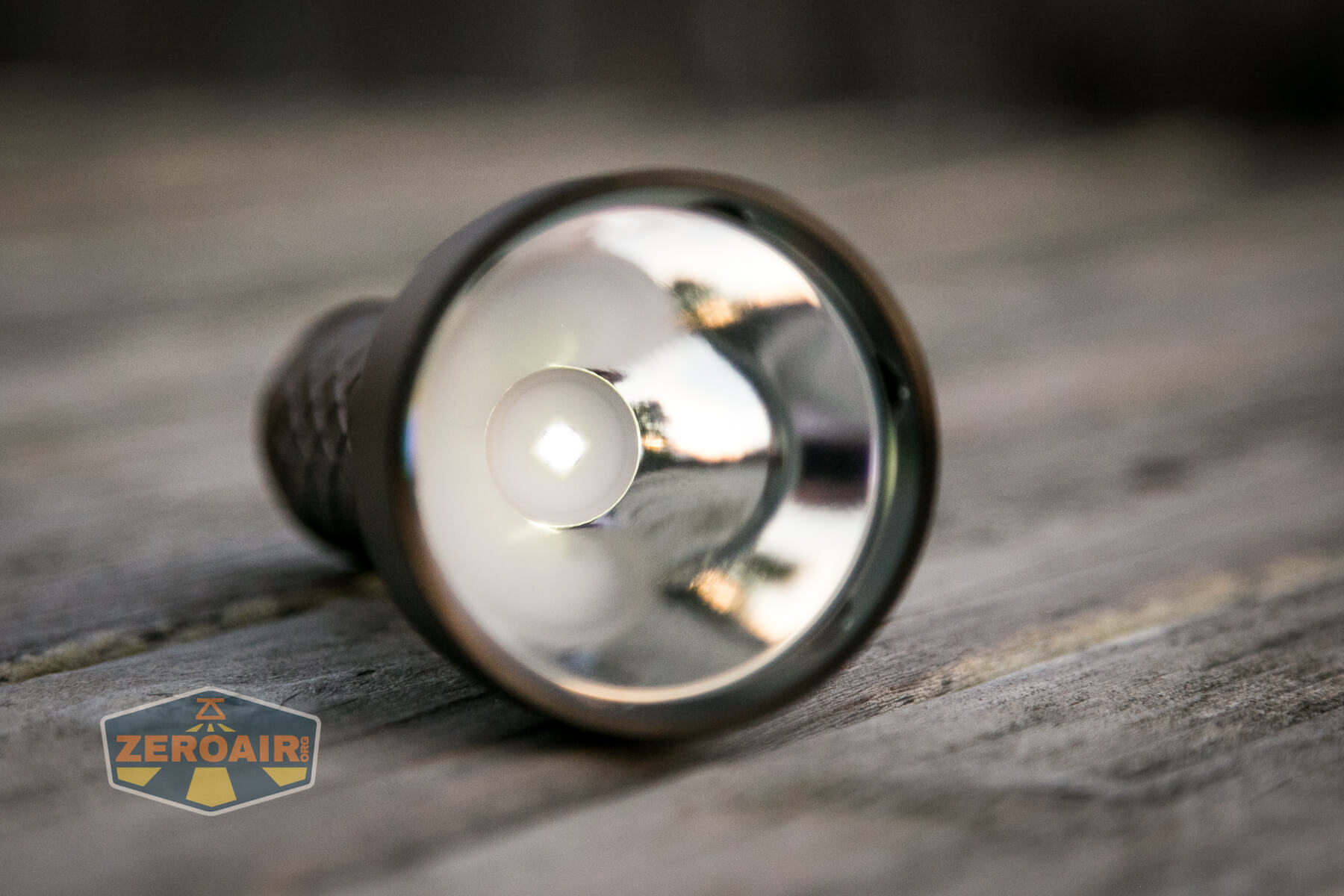
Probably the biggest update to the Catapult V6 is this emitter. It’s a Luminus SST-70 in “cool white.” And it is cool white, but it’s really not that bad of a cool white.
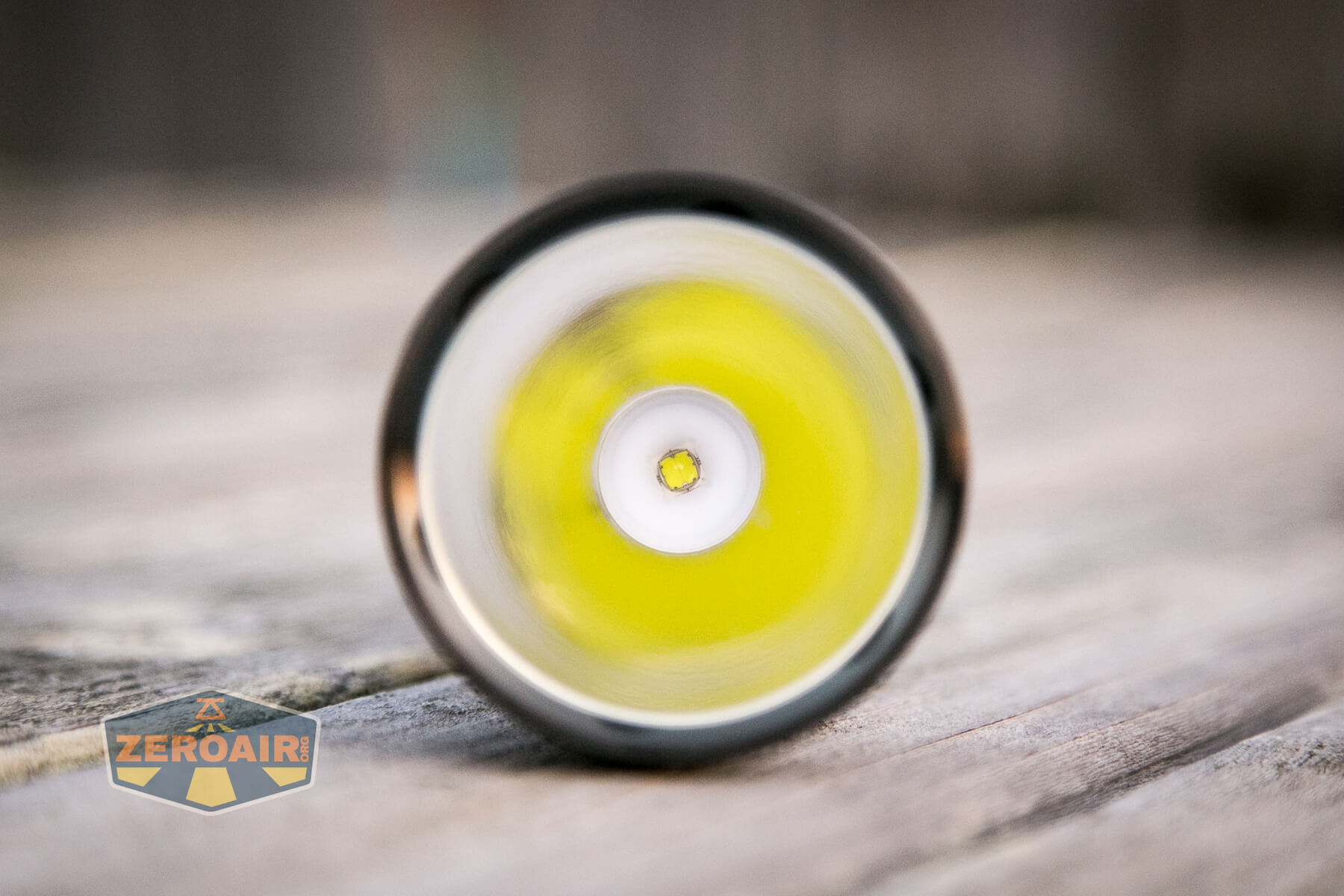
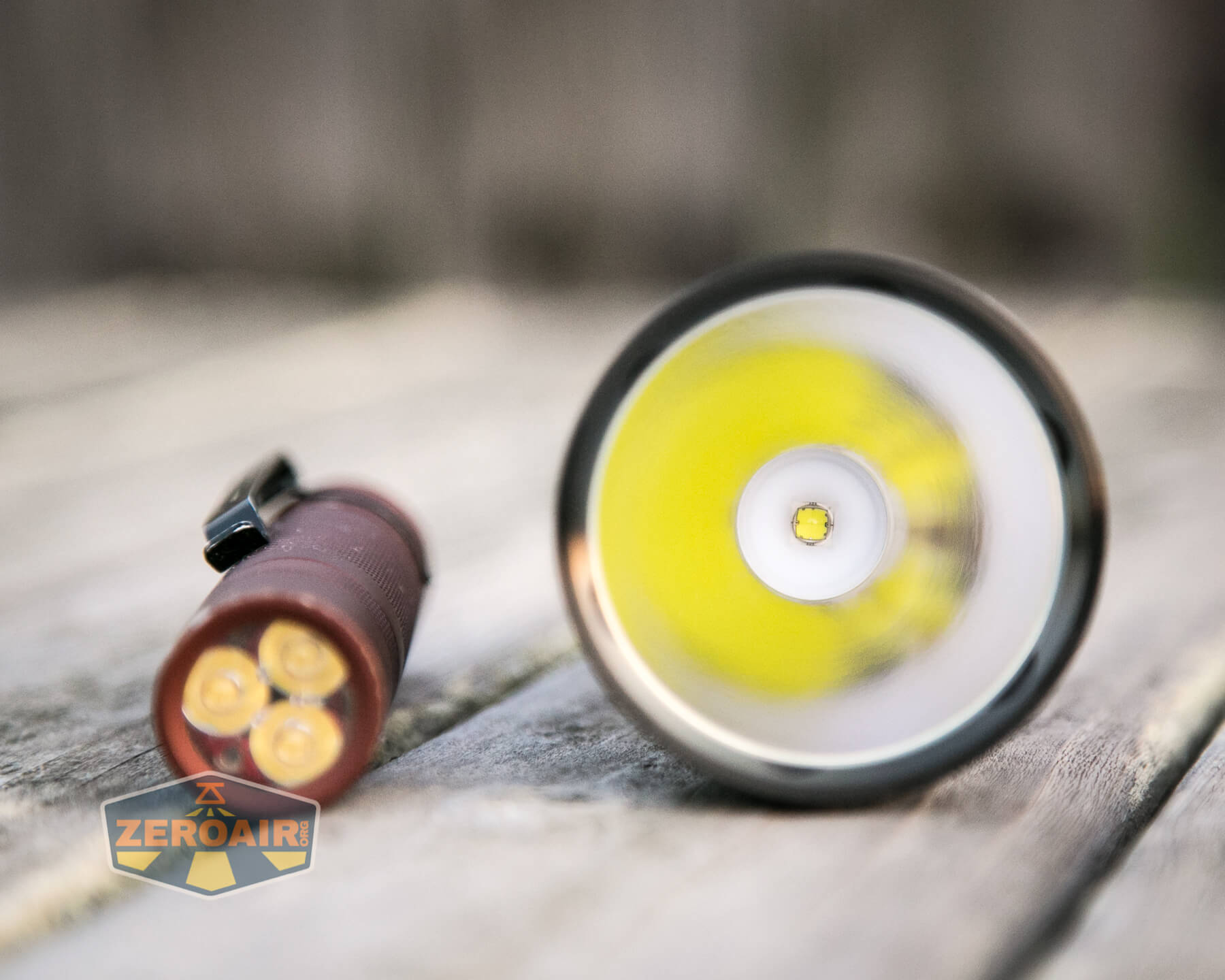
There’s just one emitter here, and it’s really a fairly small footprint. Couple that with the smooth, deep, and wide reflector, and you get a pretty good throw!
LED Color Report (CRI and CCT)
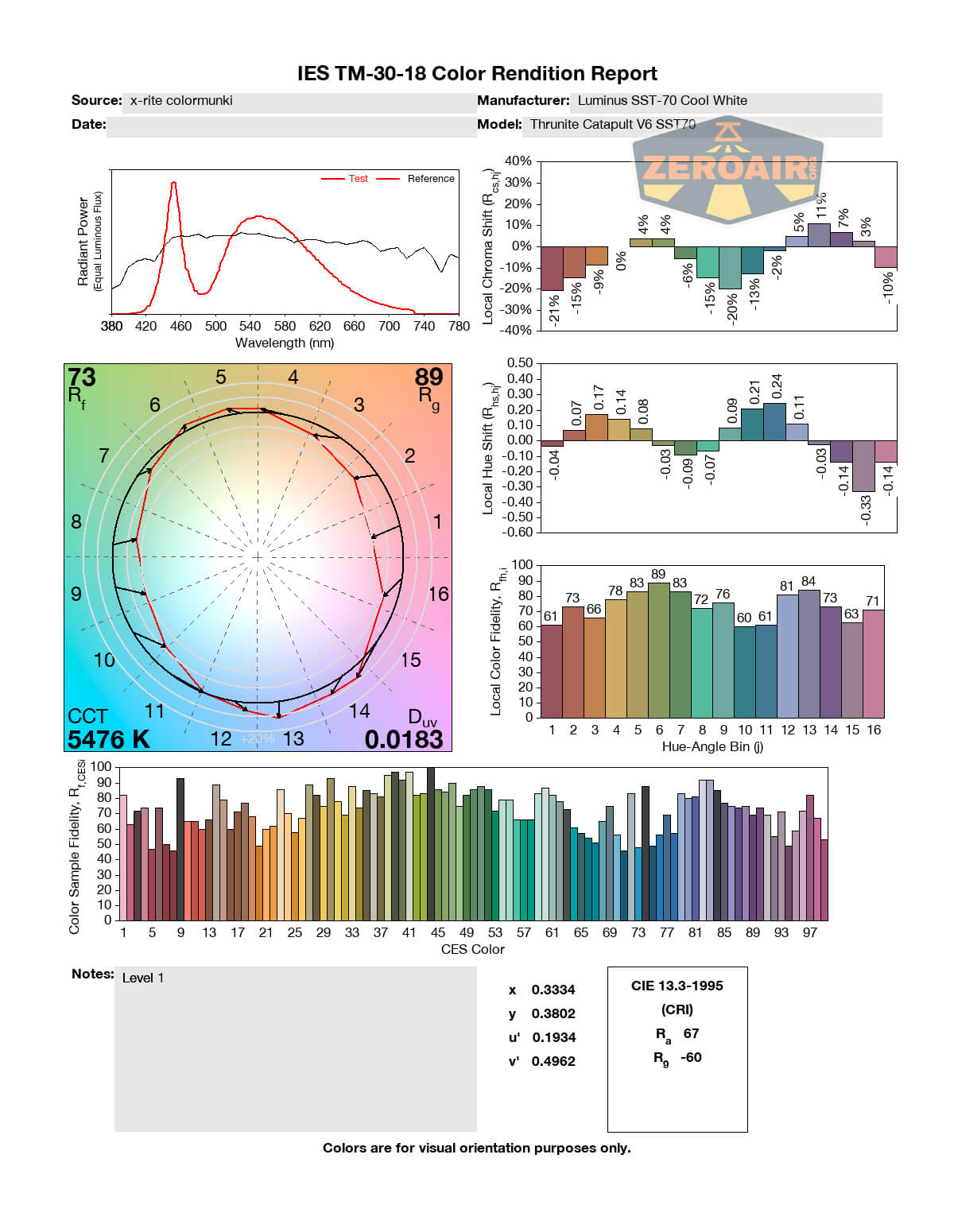
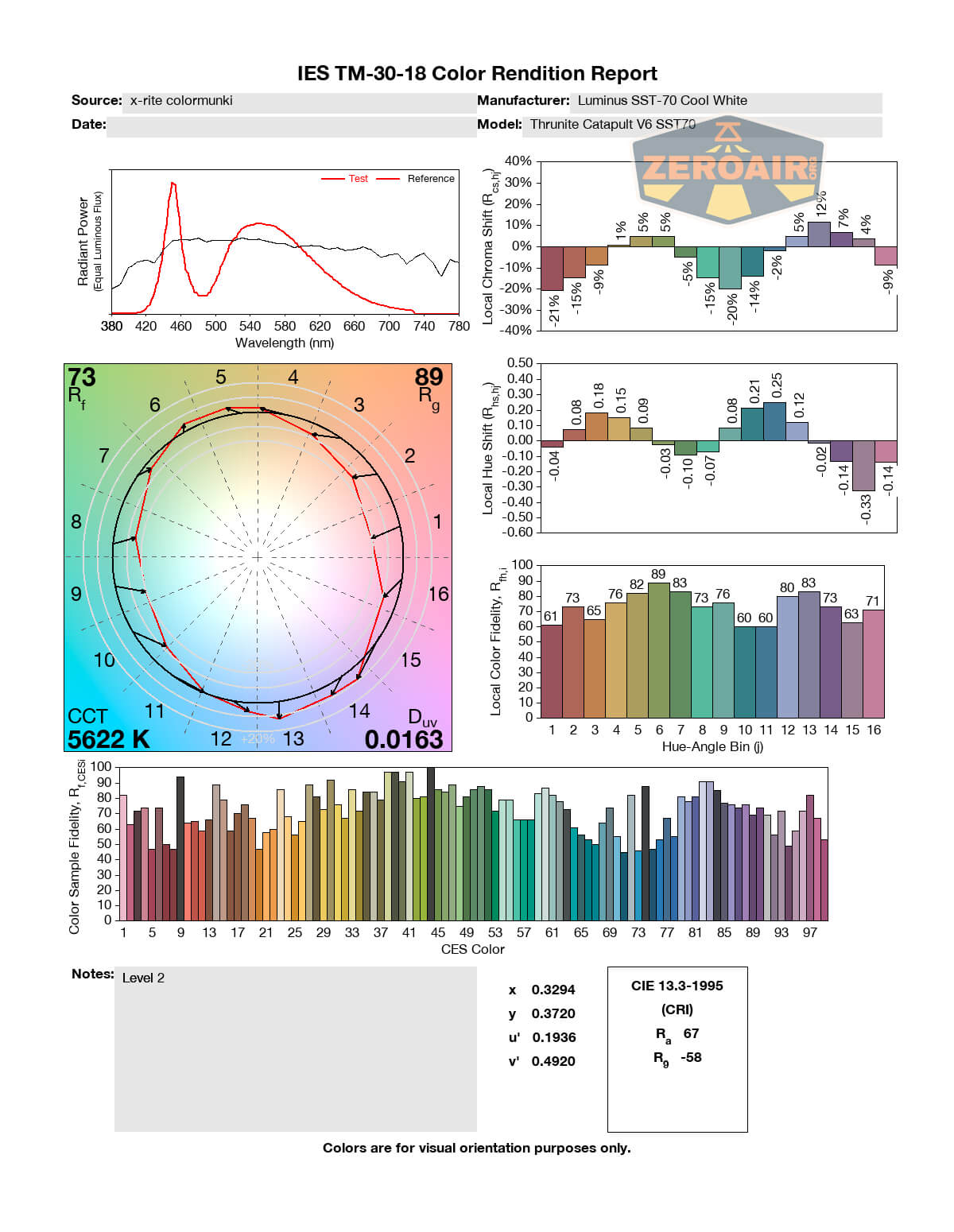
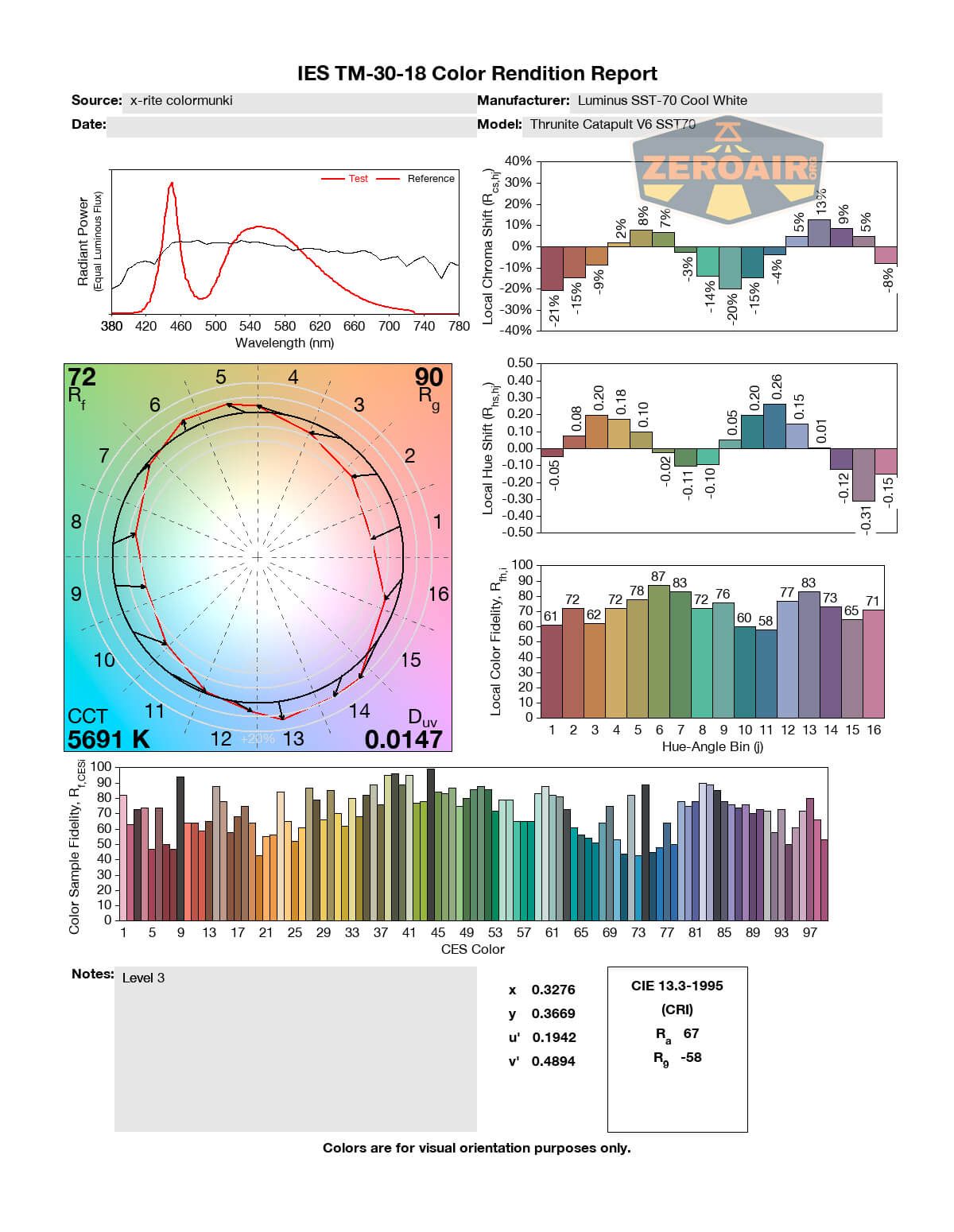
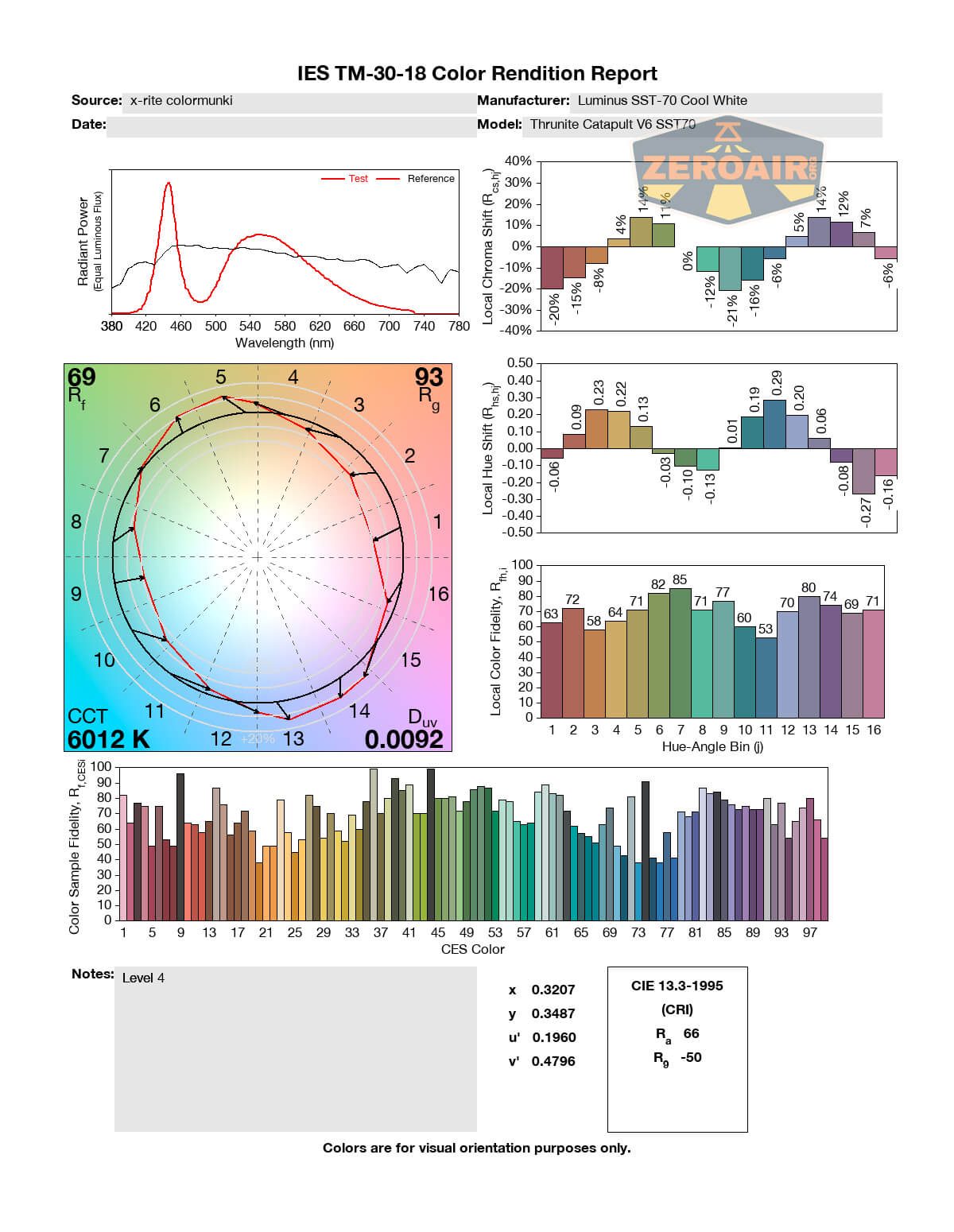
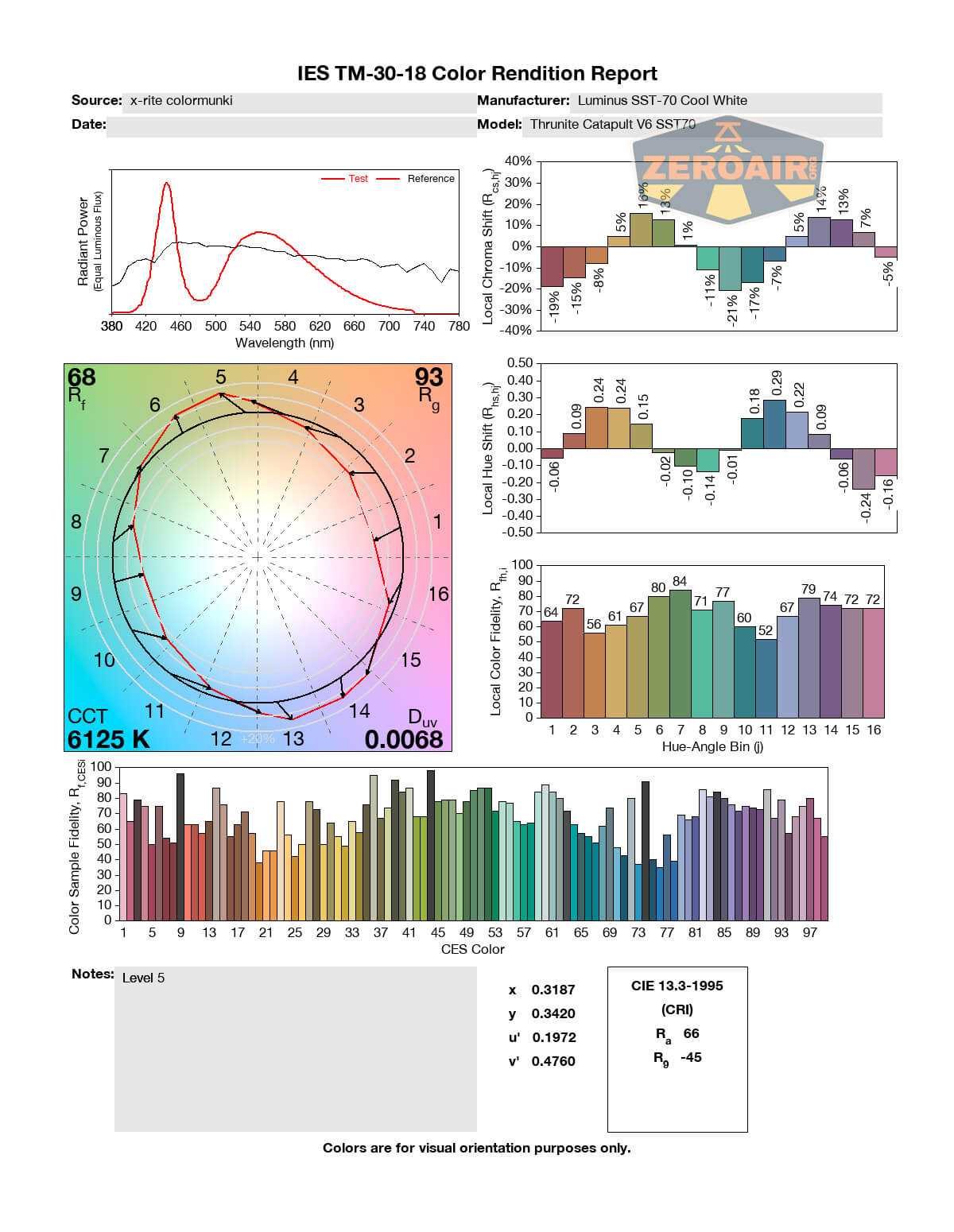
As I said, this is a cool white emitter. Any of the lower three modes is well under 6000K, which is fairly acceptable. After that, and unsurprisingly, the CCT tends toward a cooler level and is above 6000K. On all modes, though (maybe particularly the lower level), the Duv is positive (which means there’s a bit of a green tint).
Beamshots
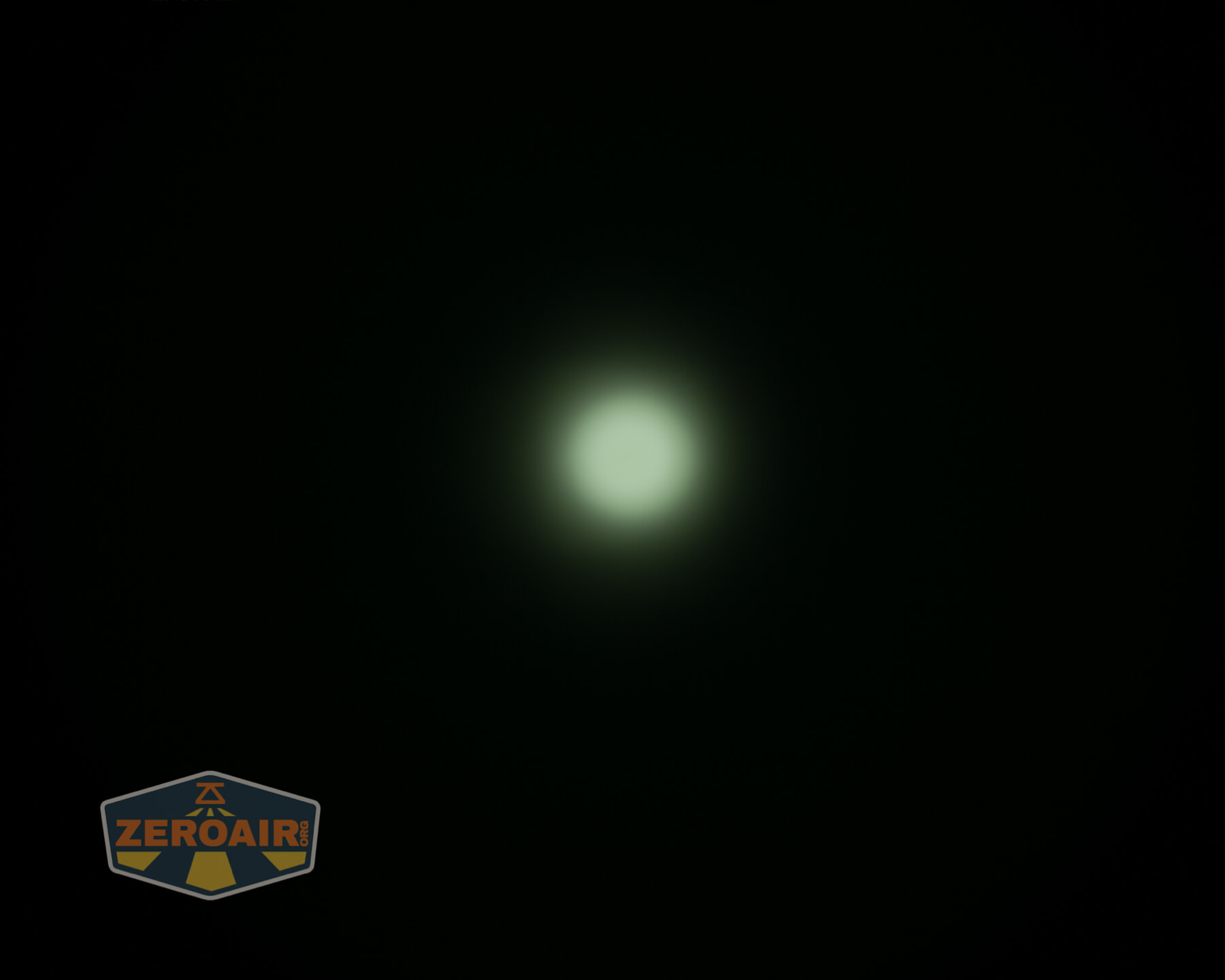
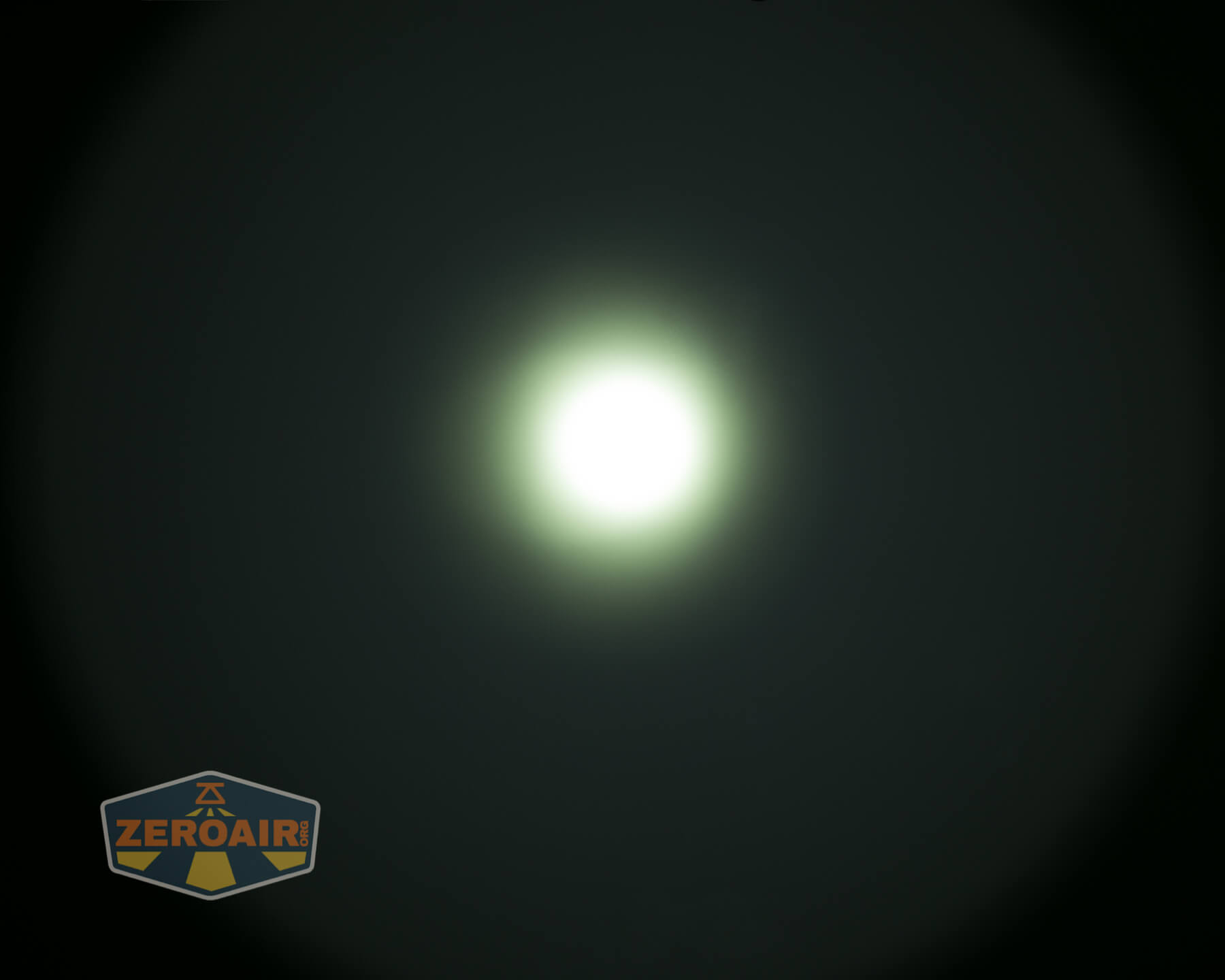
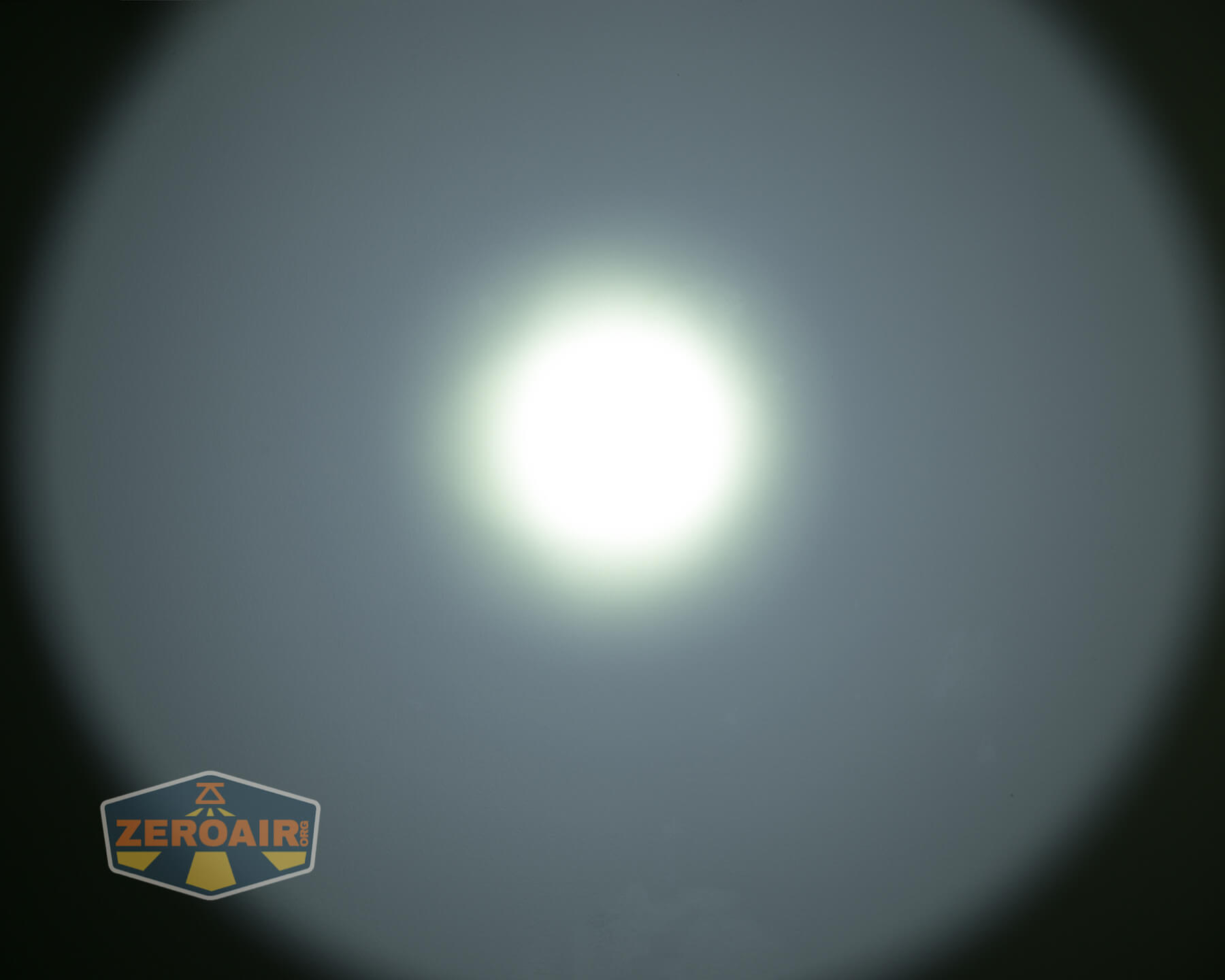
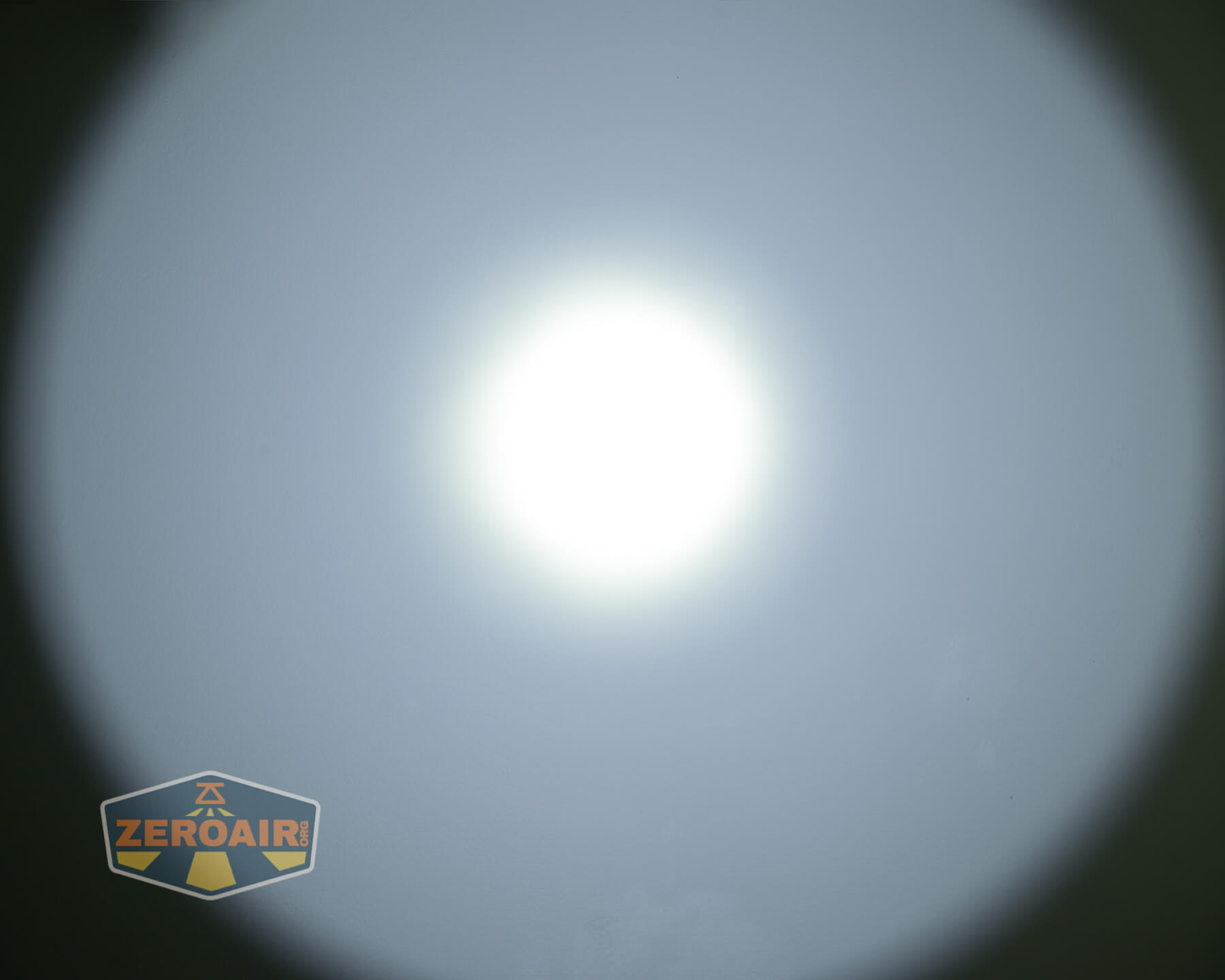
These beamshots always have the following settings: f8, ISO100, 0.3s shutter, and manual 5000K exposure. These photos are taken at floor level, and the beam hits the ceiling around 9 feet away.
Tint vs BLF-348 (KillzoneFlashlights.com 219b version) (affiliate link)
I keep the test flashlight on the left and the BLF-348 reference flashlight on the right.
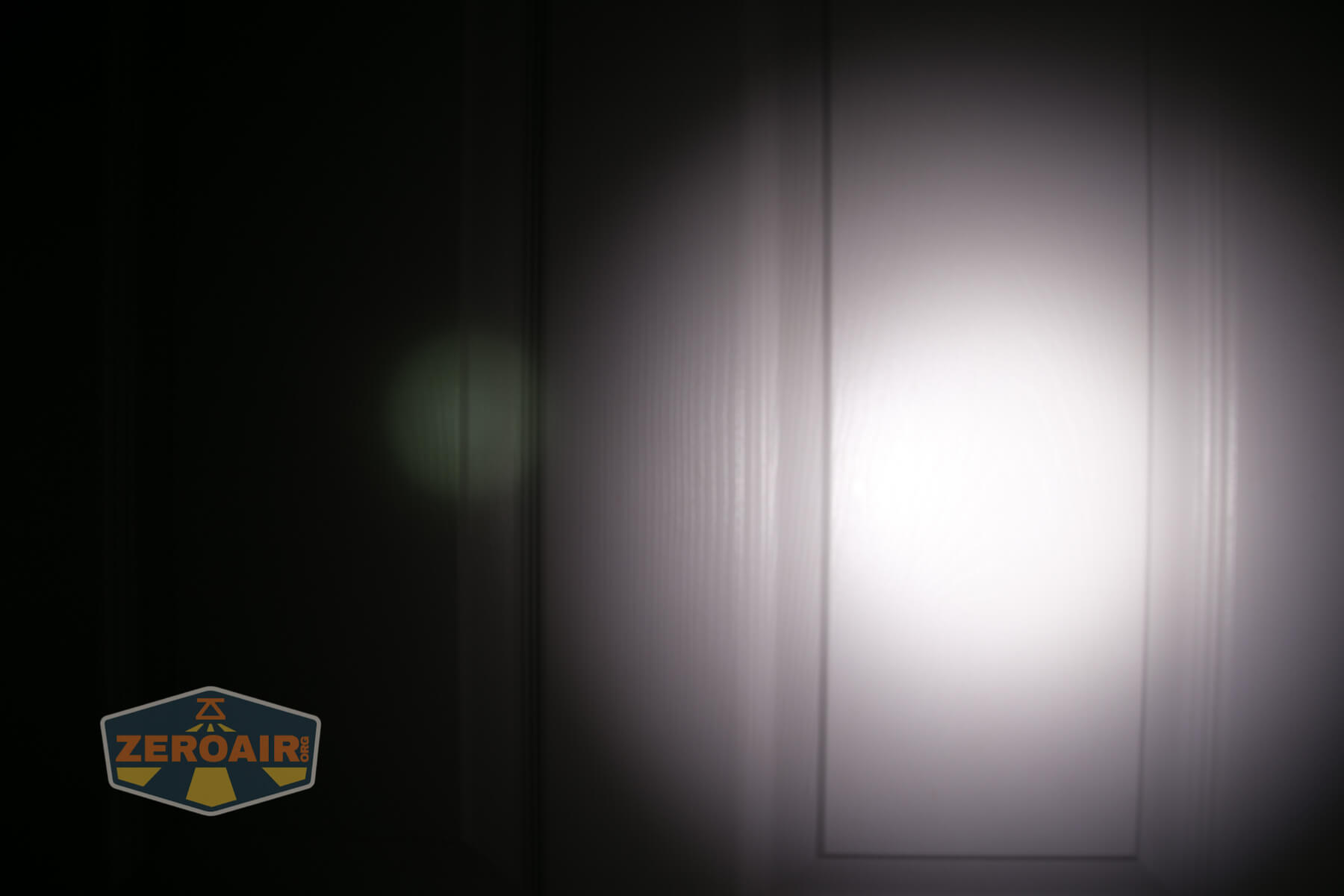
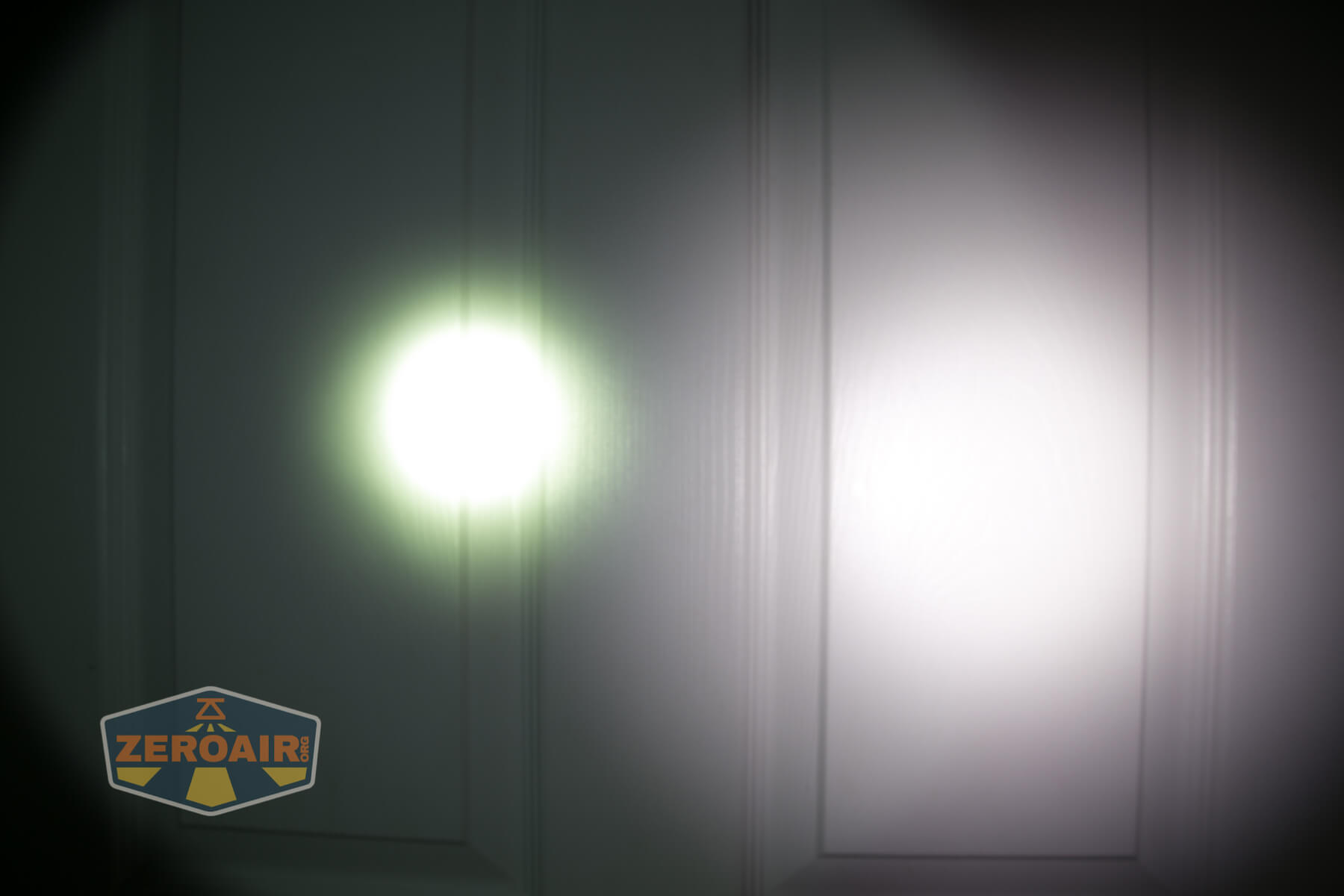
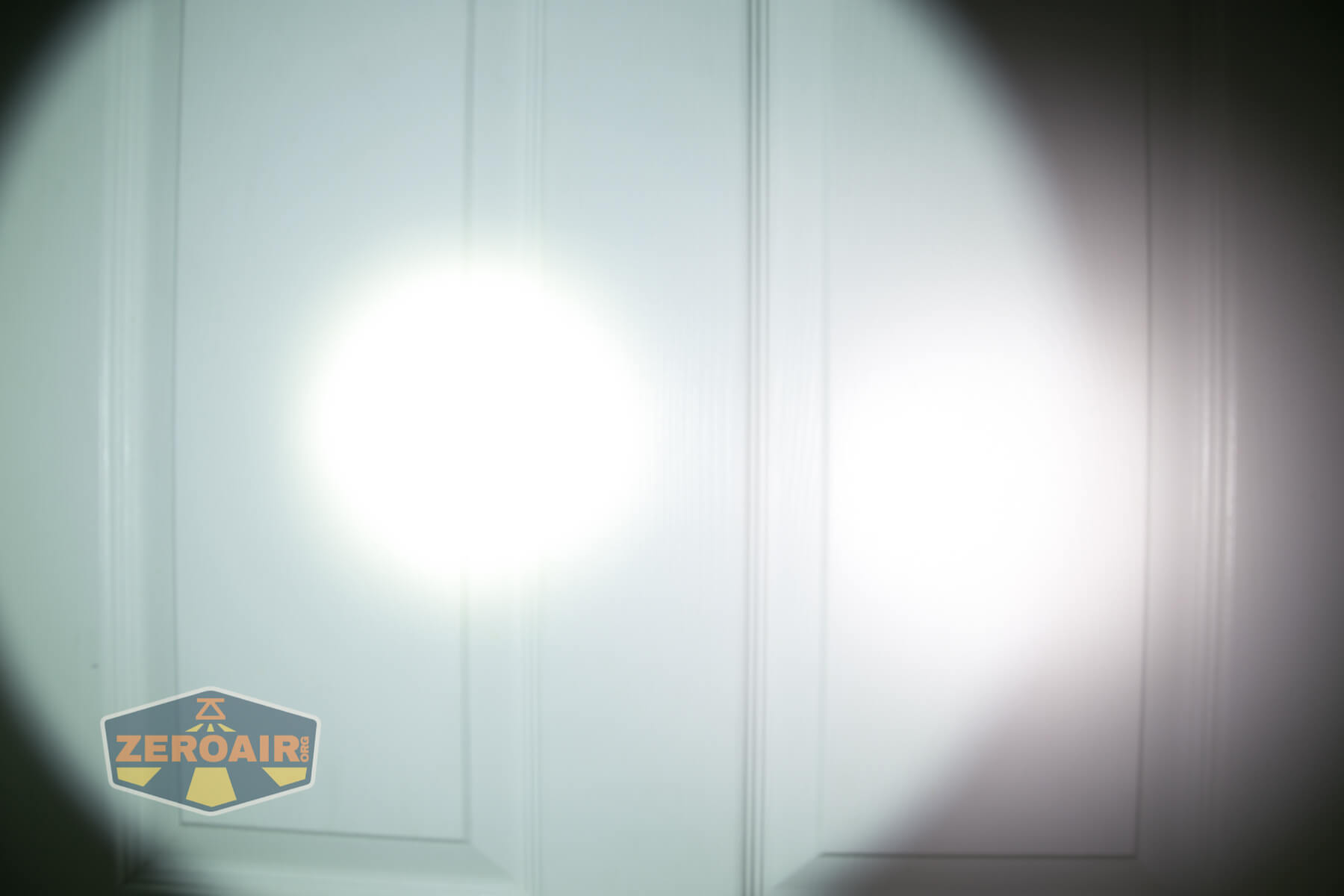
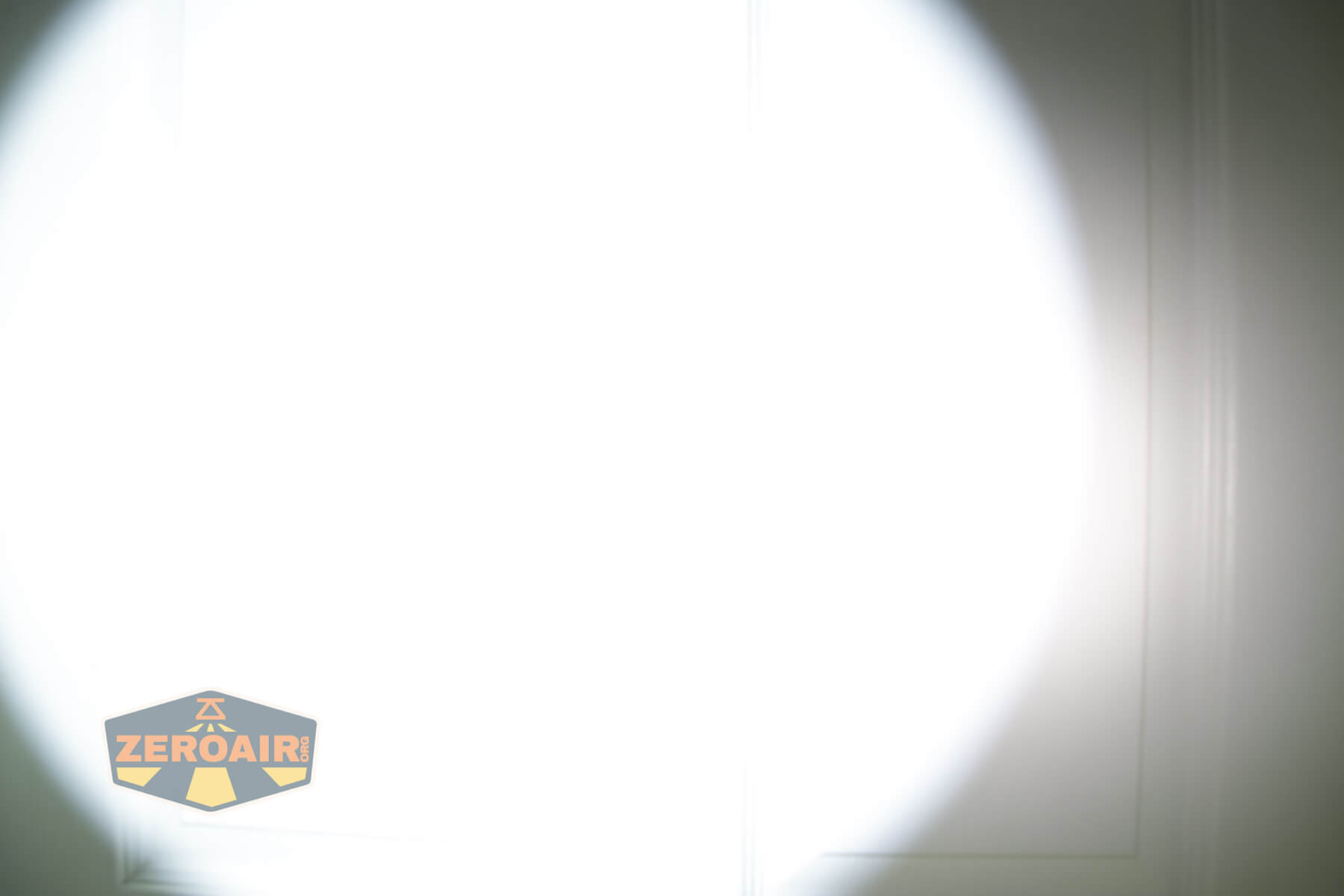
I compare everything to the KillzoneFlashlights.com 219b BLF-348 because it’s inexpensive and has the best tint!
Conclusion on the Thrunite Catapult V6 SST70
What I like
- Both output and throw meet the specifications
- Charging at 2A is suitably quick for this 5000mAh cell
- User interface is simple (and very “Thrunite-consistent”)
- Update to USB-C charging is welcome
- I love the Desert Tan!
What I don’t like
- The user interface lacks a real battery check
- Not available in NW
Notes
- This light was provided by Thrunite for review. I was not paid to write this review.
- This content originally appeared at zeroair.org. Please visit there for the best experience!
- Please use my Amazon.com referral link to help support zeroair.org!
- Please support me on Patreon! I deeply appreciate your support!
Discover more from ZeroAir Reviews
Subscribe to get the latest posts sent to your email.
I’m under the impression that the SST70 is less “throwy” and therefore needs more lumens to achieve the same candela as the older V6 with XHP35 HI. I would be interested in seeing the candela of the two lights compared after step-down. Sustained candela would be a great feature to add to these reviews! (I really appreciate the sustained lumens graphs we are getting now)
Does the cd/lm from the big table not answer this question for you?
I’m mostly interested in how the candela numbers compare between the two lights after the timed step-down occurs on turbo because that stepped-down output level lasts longer.
But the cd/lumen doesn’t change.
Oh right I should be able to calculate the candela for any given lumen level with that. Doh!
I don’t see cd/lumen on the original V6 review for comparison though.
Yep, I reviewed that original V6 before I was collecting the cd/lm data, unfortunately. Also before I had calibrated runtime tests. Sorry for that.
Candela means more to me personally when I’m shopping, I can already see that their last revision, has a higher number and more throw than this one. I hope that Thrunite are not taking a step back. If that’s what you’re worried about like me, it seems that cree is still the way to go.