

Nextorch TA20 Portable Tactical Flashlight Review
The Nextorch TA20 portable tactical flashlight uses a single (included) 16340 cell. The simple interface has a great rotary selector, too!
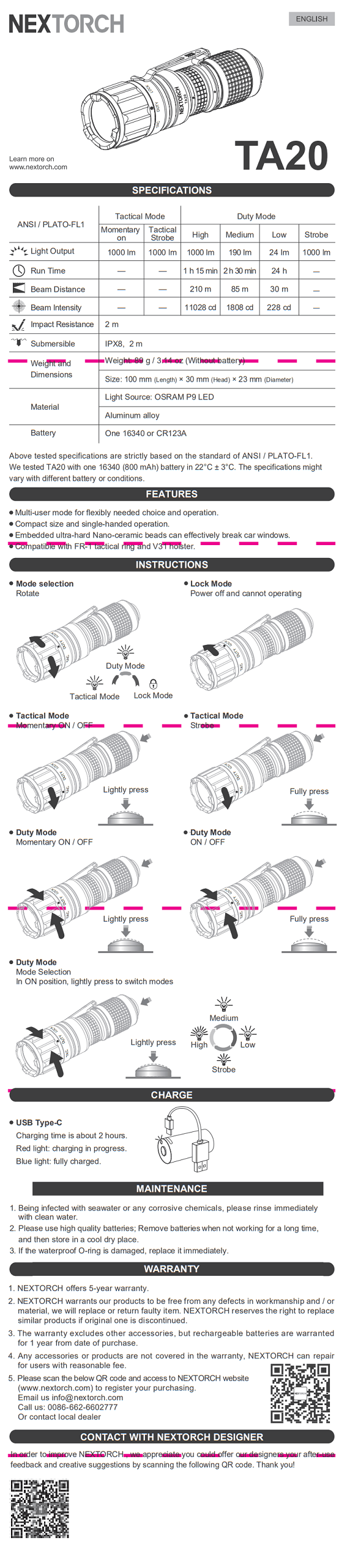
Official Specs and Features
Here’s a referral link to the Nextorch TA20 Portable tactical flashlight product page.
Versions
Only one version of the Nextorch TA20 Portable tactical flashlight is available at this time.
Price
MSRP for the Nextorch TA20 Portable tactical flashlight is $89.95. That includes the USB-C charging cell seen here!
Short Review
I love this little light! It’s very flashlighty, which is important to me. Running a single 16340 is ok but 18350 would be better – those cells offer 50% more capacity (or more!) and could have much better runtimes. The rotary selector is neat, effective, and frankly hard for a user to mess up. Nextorch’s pocket clips are usually great and this one is too, and the FR-1 tactical grip accessory really sets the TA20 off! This is a great combo.
Long Review
The Big Table
| Nextorch TA20 Portable Tactical Flashlight | |
|---|---|
| Emitter: | Osram P9 (Cool White) |
| Price in USD at publication time: | $89.95 |
| Cell: | 1×16340 |
| Runtime Graphs | |
| LVP? | Yes |
| Switch Type: | Mechanical |
| On-Board Charging? | Yes |
| Charge Port Type: | USB-C (On Cell) |
| Charge Graph | |
| Power off Charge Port | – |
| Claimed Lumens (lm) | 1000 |
| Measured Lumens (at 30s) | 795 (79.5% of claim)^ |
| Candela per Lumen | 11.6 |
| Claimed Throw (m) | 210 |
| Candela (Calculated) in cd (at 30s) | 484lux @ 4.736m = 10856cd |
| Throw (Calculated) (m) | 208.4 (99.2% of claim)^ |
| Claimed CCT | – |
| Measured CCT Range (K) | 6900-7000 Kelvin |
| Item provided for review by: | Nextorch |
| All my Nextorch reviews! | |
^ Measurement disclaimer: Testing flashlights is my hobby. I use hobbyist-level equipment for testing, including some I made myself. Try not to get buried in the details of manufacturer specifications versus measurements recorded here; A certain amount of difference (say, 10 or 15%) is perfectly reasonable.
What’s Included

- Nextorch TA20 Portable tactical flashlight
- Nextorch 800mAh 16340
- Charging cable (USB to USB-C)
- Lanyard
- Manual etc
Package and Manual


Build Quality and Disassembly

As stated above, the Nextorch TA20 is a very nicely built portable tactical flashlight. It has a nice heft in hand and overall just feels like a good quality light.


The anodizing is great, notably. While it’s not “matte” (like Armytek), it’s also not glossy. There’s a nice grippiness to it, in fact.
The tailcap has a nice beefy spring, and the threads are fairly short.

Inside the cell tube, you can see that the head also has a spring.

The head or cell tube does not come off, though (at least not readily).

Size and Comps
Weight: 89 g/3.14 oz (Without Battery)
Size: 100 mm (Length) × 30 mm (Head) × 23 mm (Diameter)


If the flashlight will headstand, I’ll show it here (usually the third photo). If the flashlight will tailstand, I’ll also show that (usually in the fourth photo).


Here’s the test light with the venerable Convoy S2+. Mine is a custom “baked” edition Nichia 219b triple. A very nice 18650 light!


Also above on the left is a new feature light!! Laulima Metal Craft sent this titanium Todai for some size comparison photos like the ones above. Laulima has a bunch of incredible items. I’ve tested one (the Laulima Metal Craft Hoku) (the official site for Hoku is here) that was a Friend Fund Friday review. I was impressed enough by that Hoku that I bought a Laulima Metal Craft Diamond Slim (also in tumbled aluminum) (review is upcoming!) These lights by Laulima have impeccable build quality and not only that, they’re quite configurable. There are some (great, actually) default configurations, but Joshua Dawson (of Laulima Metal Craft) is open to ideas and emitter options and the like. I haven’t reviewed this Todai, but I have to say, it feels absolutely fantastic and I love it thus far. (Notably, I love how warm and eggy those emitters look through the TIR.)
Retention and Carry
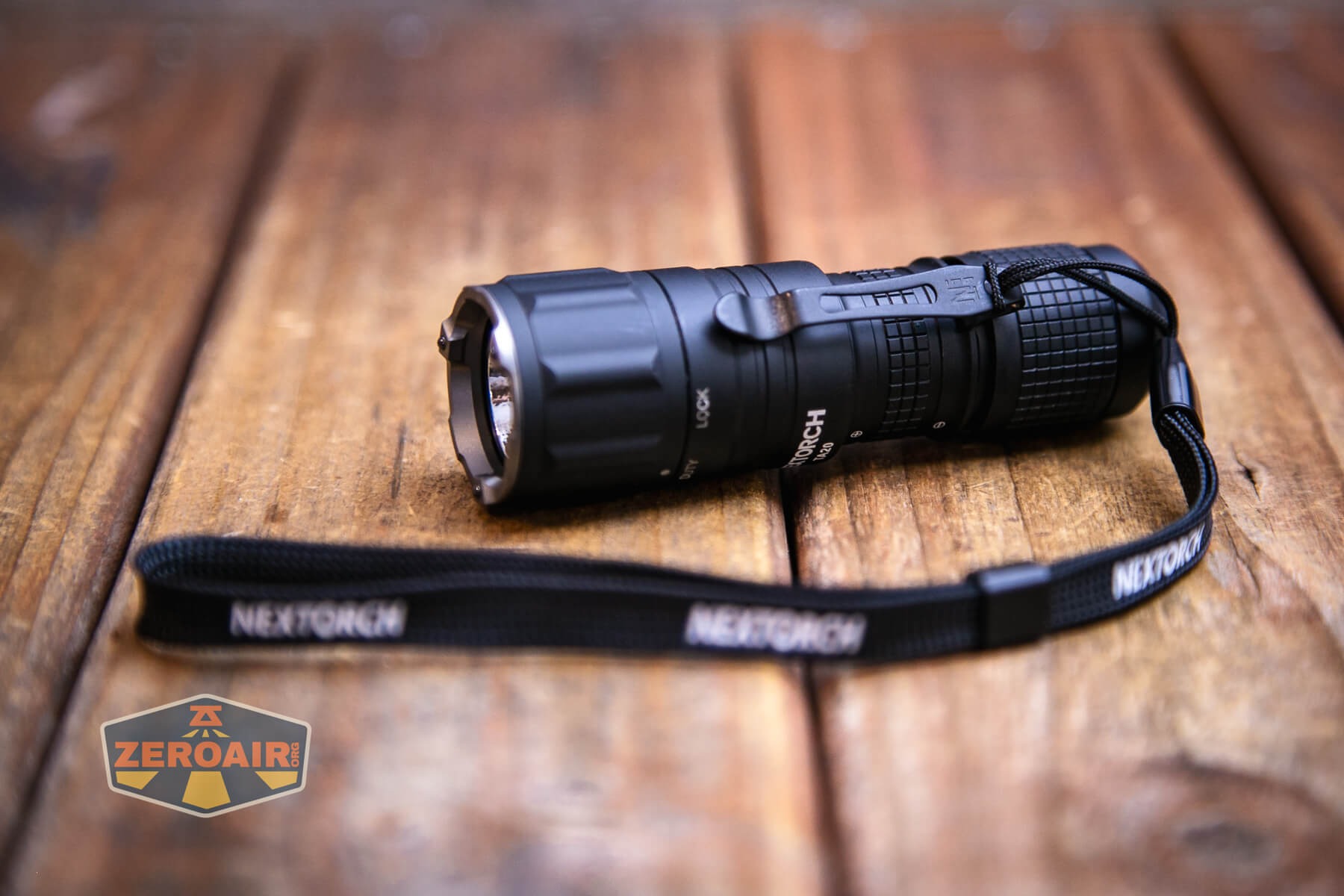
The Nextorch TA20 Portable tactical flashlight has a nice friction-fit pocket clip that attaches only to the tail end.

The clip has a nice design, including a stamped logo near the shoulder.


A lanyard is also included. The only real place to attach it is through the pocket clip. Since the clip is captured, this is a perfectly reliable place to attach the lanyard.
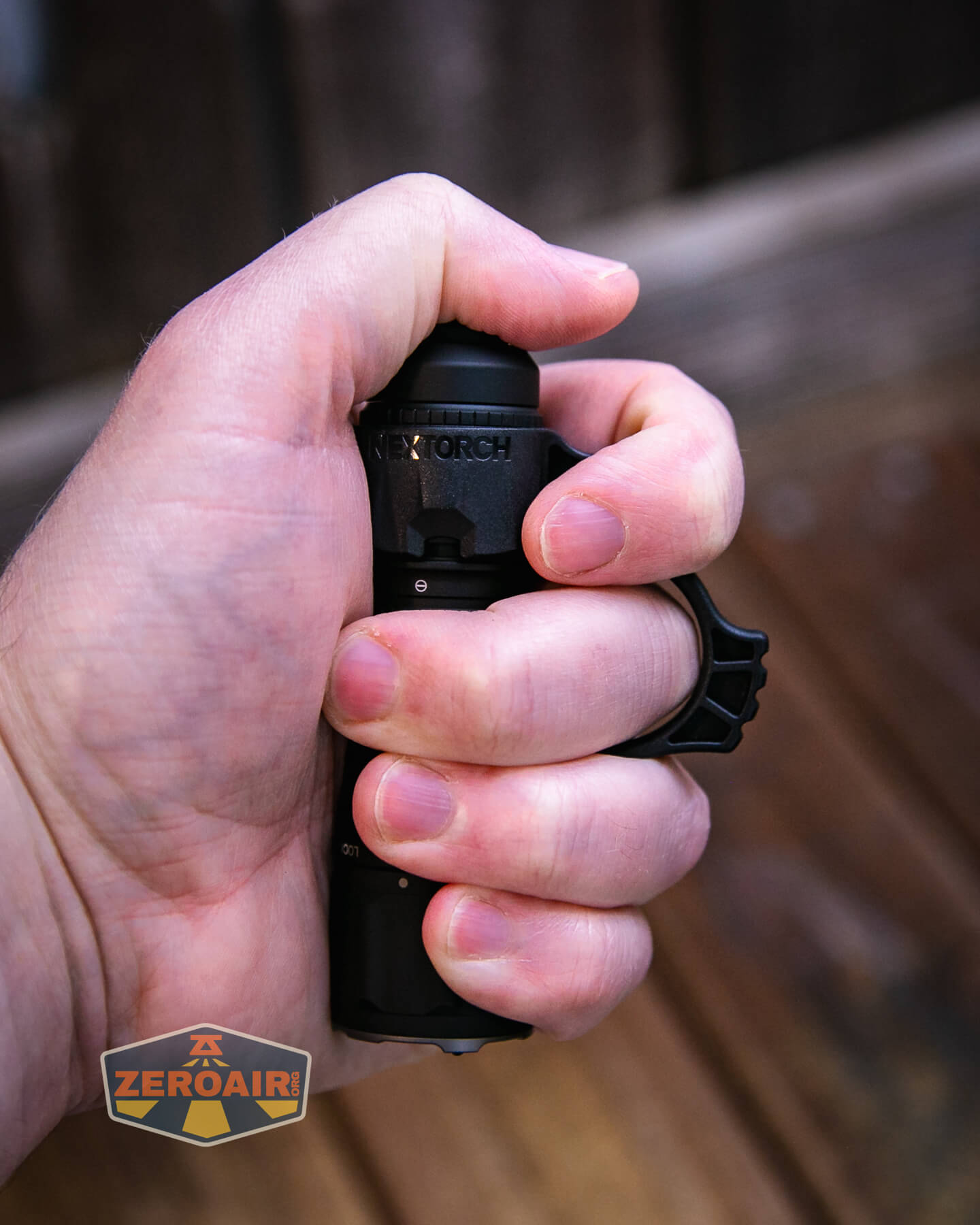
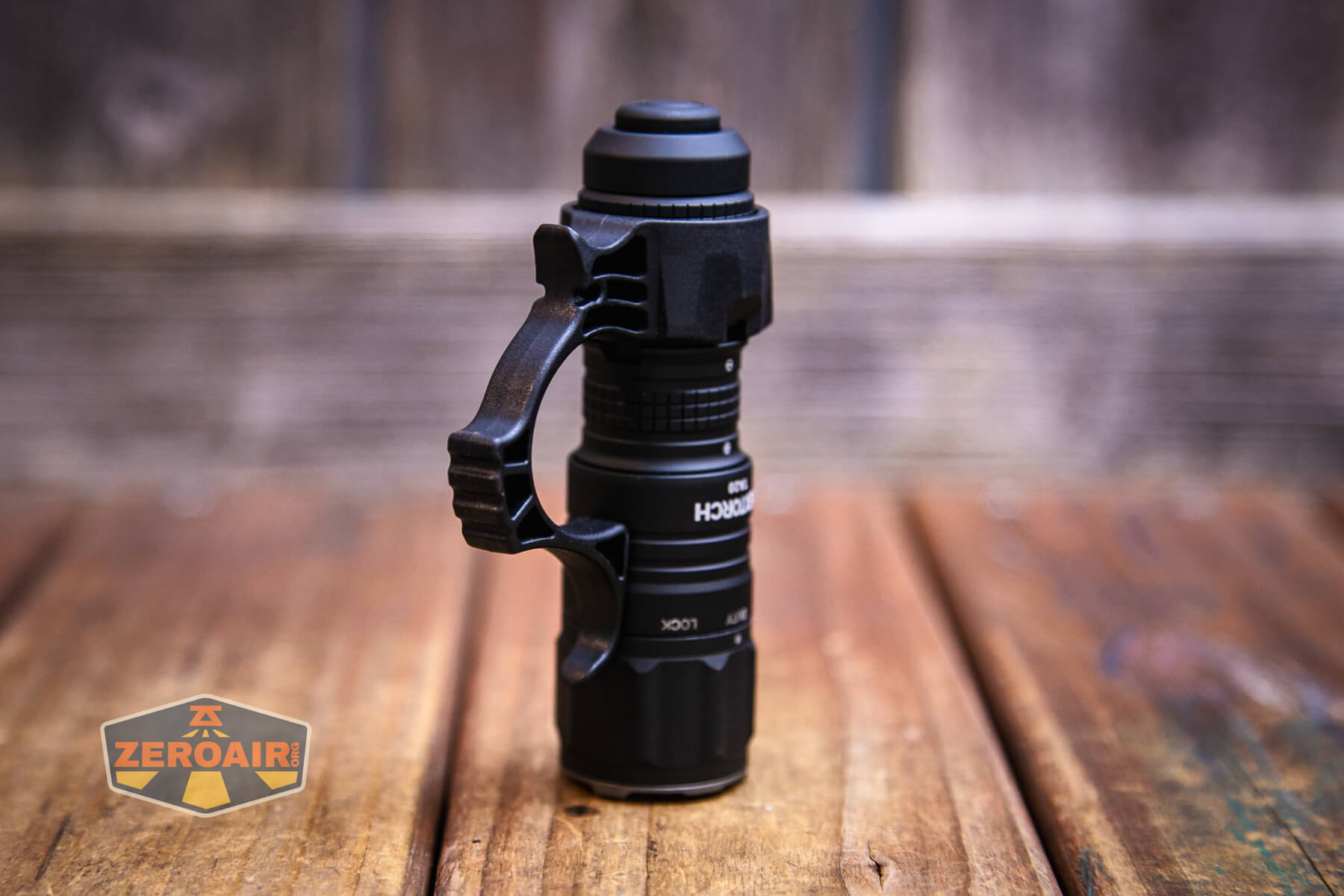
That’s it for included means of carry of the Nextorch TA20 Portable tactical flashlight. However, Nextorch also sent the Nextorch FR-1. This tactical grip is available for $10 and is a perfectly reasonable add-on to your purchase of the TA20. It’s very much a completely separate product and has nice packaging too.


Unlike the Nextorch FR-2 (which is for 21700-sized lights), the FR-1 doesn’t friction-fit on the light like the pocket clip. The tailcap should be removed, the FR-1 slipped over, and the tailcap put back in place. Like the pocket clip, this item is captured (and reliable.)


Power and Runtime
Nextorch includes a single 16340 cell with the TA20. It’s an 800mAh cell and has a button top.

This 800mAh cell goes into the TA20 in the usual flashlight way – positive end toward the head.

In case you for get this, note that there are polarity indicators on the cell tube.

Below are runtime graphs for all three output levels.


While the light didn’t shut of in every mode, output slips down to where you’d certainly notice. I do believe the light has low voltage protection though.
Charging
While the Nextorch TA20 Portable tactical flashlight itself does not have built-in charging, the included 16340 cell does. There’s a USB-C charging port right there on the positive terminal.

Also not shown, but there’s a tiny indicating LED near the button, too. Red when charging and blue when charging has completed.
A USB to USB-C charging cable is included. Note the touch of “Nextorch green” there on both ends of the cable. I really like that! Small touch, but it points out that Nextorch does things right!

The charging is good and finishes in around 2 hours. USB to C and C to C both work fine.

Modes and Currents
| Mode | Mode Claimed Output (lm) | Claimed Runtime | Measured Lumens |
|---|---|---|---|
| High | 1000 | 1h15m | |
| Medium | 190 | 2h30m | |
| Low | 24 | 24h |
Pulse Width Modulation
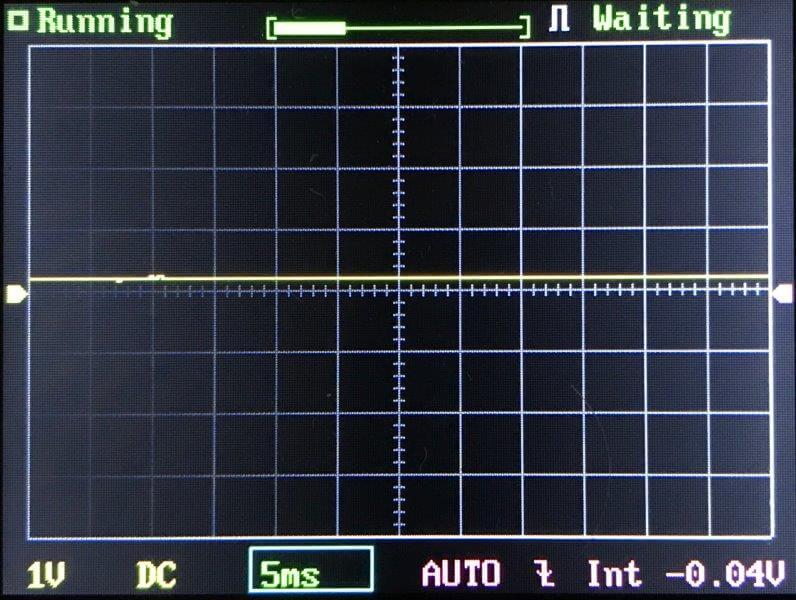
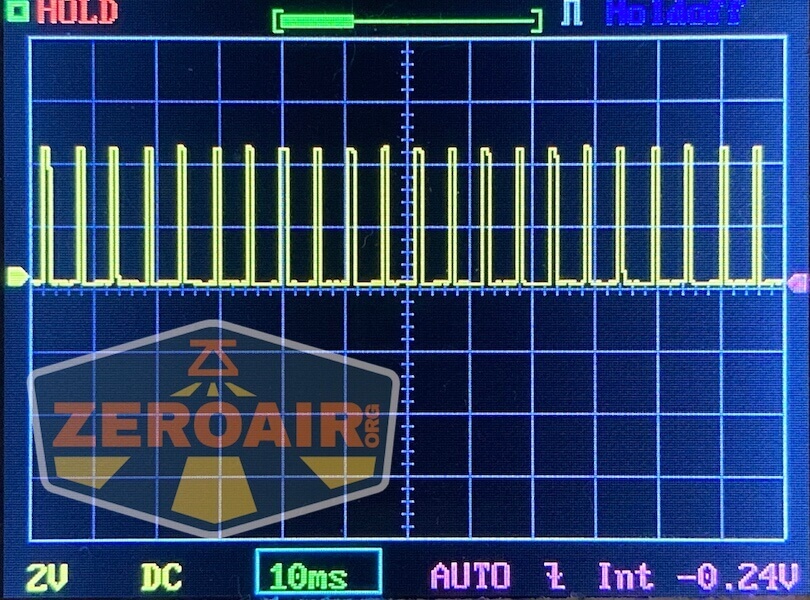
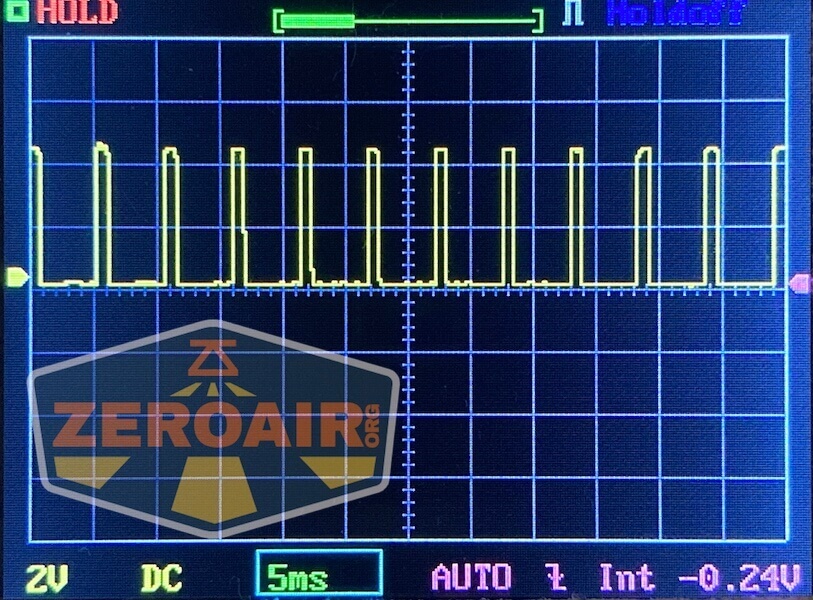
High (left-most photo) does not have PWM. The other two do. It’s fairly fast, and I wouldn’t say it’s noticeable at all.
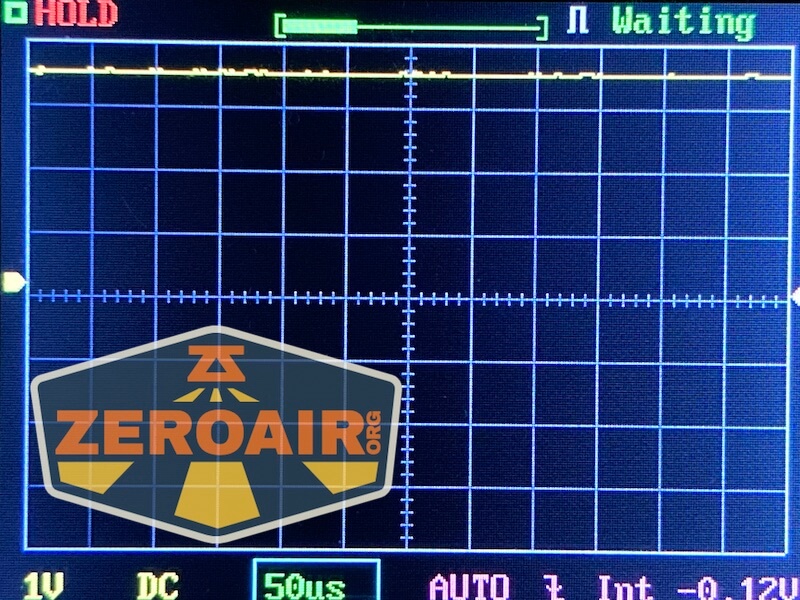


Here you can see a “baseline” – a chart with almost no light hitting the sensor.
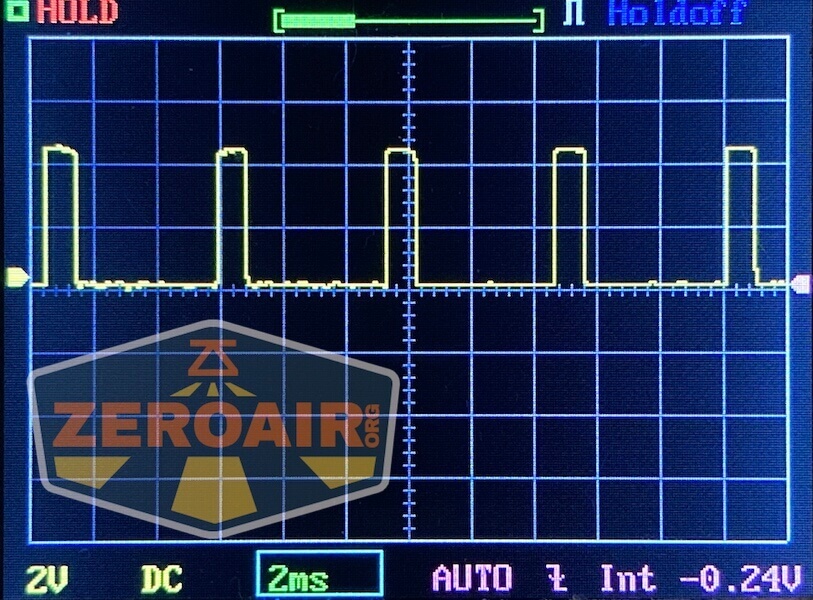
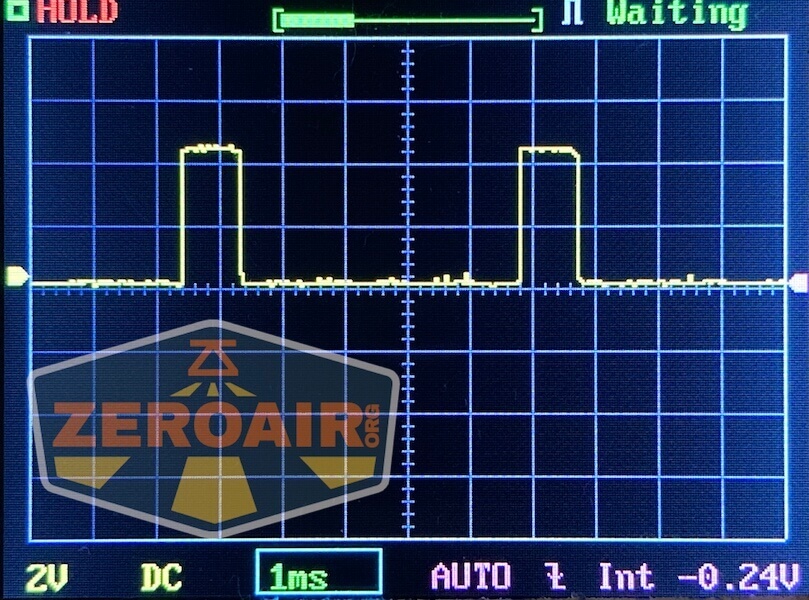
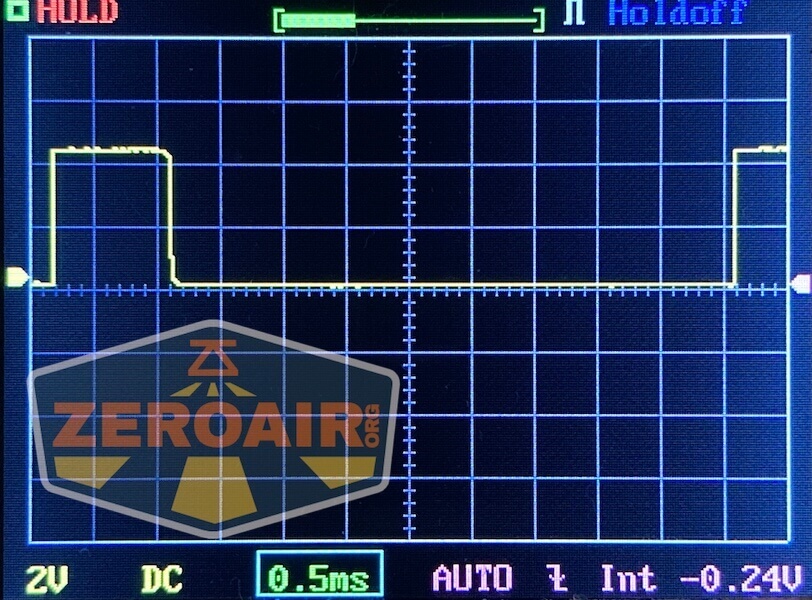
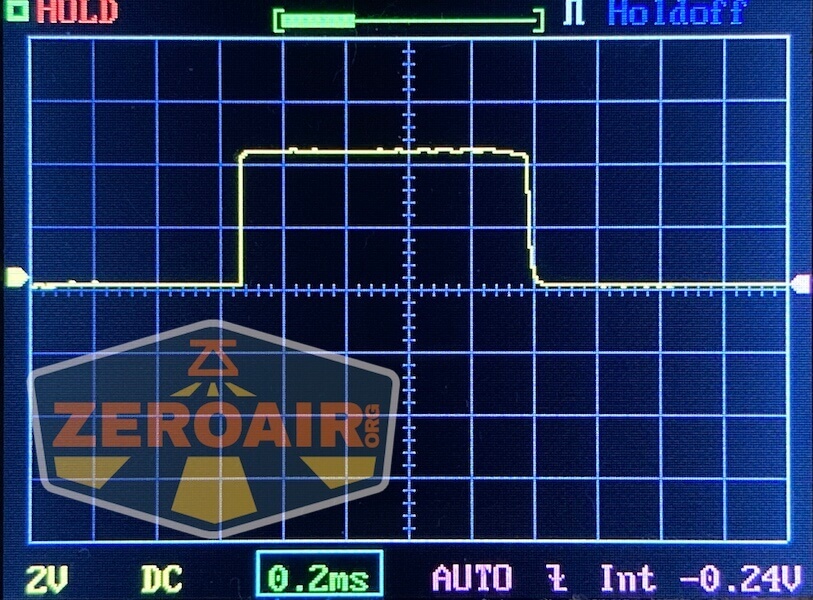
Then there’s the Ultrafire WF-602C flashlight, which has some of the worst PWM I’ve seen. It’s so bad that I used a post about it to explain PWM! Here are multiple timescales (10ms, 5ms, 2ms, 1ms, 0.5ms, 0.2ms) to make comparing this “worst” PWM light to the test light easier. That post also explains why I didn’t test the WF-602C at the usual 50us scale.
User Interface and Operation
There’s one switch on the Nextorch TA20 Portable tactical flashlight. It’s a tail switch and possibly e-switch but it functions much like a forward mechanical clicky, though. The switch, however, doesn’t click.

This switch is great. 
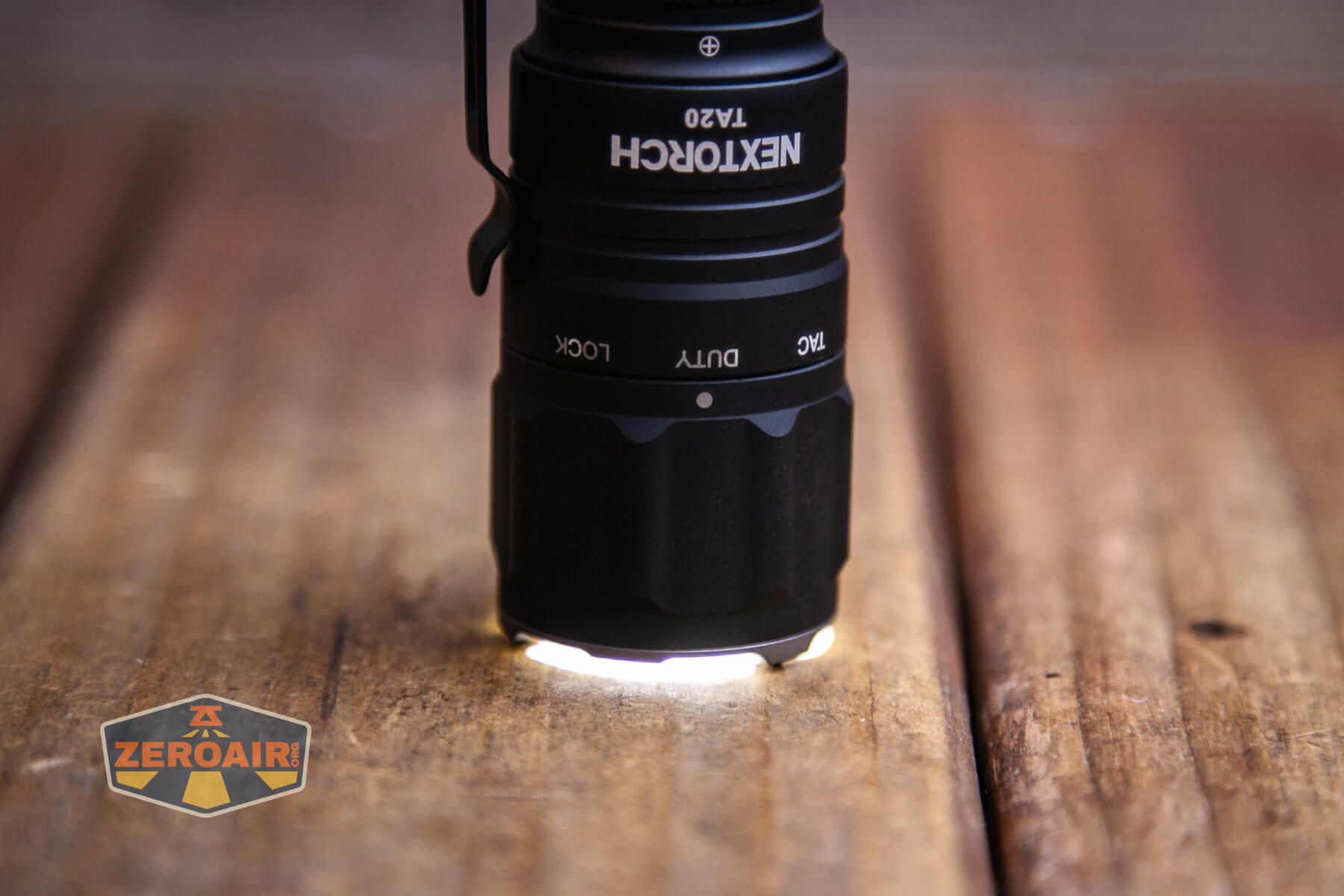
Aside from that actual switch, there’s a rotary control. This rotary control can be put in three positions. Those three are “TAC,” “DUTY,” and “LOCK.” These are largely self explanatory.

Below you can see the indicating dot (screen printed) that rotates over the selected mode.

Here’s a user interface table!
| State | Action | Result |
|---|---|---|
| TAC Off | Tap Switch | Momentary High^ |
| TAC Off | “Click” Switch (quickly fully depress) | Momentary Strobe^ |
| DUTY Off | Tap Switch | Momentary High |
| DUTY Off | “Click” Switch (quickly fully depress) | On High |
| On | Tap switch | Mode advance (High > Medium > Low > Strobe) |
^ In TAC setting, there are no steady on states – only momentary.
LED and Beam
Nextorch states this emitter is an Osram P9. The emitter has a dome and a lightly textured orange peel reflector.

Below you can also see the glass-breaking ball bearings in the bezel. I think that the bezel is probably stainless steel, too, which is a good choice.


LED Color Report (CRI and CCT)
CCT ranges from around 6900K (cool white) up to around 7000K (very cool white) and the CRI is low, at around 70. None of those should really be surprises – it’s very usual for a tactical light to be cool white and low CRI, namely because they’re usually as bright as possible, and low CRI high CCT lights output the most light (comparatively).


Beamshots
These beamshots always have the following settings: f8, ISO100, 0.3s shutter, and manual 5000K exposure. These photos are taken at floor level, and the beam hits the ceiling around 9 feet away.


Tint vs BLF-348 (KillzoneFlashlights.com 219b version) (affiliate link)
I keep the test flashlight on the left and the BLF-348 reference flashlight on the right.


I compare everything to the KillzoneFlashlights.com 219b BLF-348 because it’s inexpensive and has the best tint!
Conclusion
What I like
- Great build quality
- Interesting (and effective) rotary control
- Switch has a very nice actuation
What I don’t like
- Just three levels in DUTY mode (I always want at least four!)
- 16340 instead of 18350
Notes
- This content originally appeared at zeroair.org. Please visit there for the best experience!
- Please use my Amazon.com referral link to help support zeroair.org!
- Please support me on Patreon! I deeply appreciate your support!
Discover more from ZeroAir Reviews
Subscribe to get the latest posts sent to your email.