
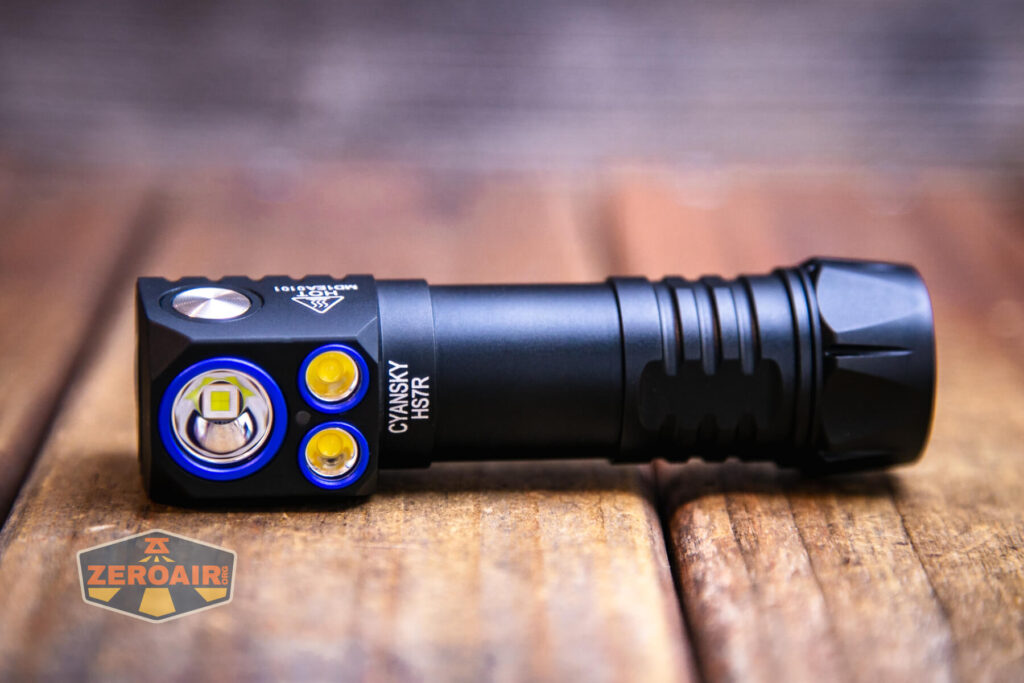
Cyansky HS7R Multifunctional Headlamp Review
Cyansky released the Cyansky HS7R Multifunctional Headlamp offering both flood and throw, as well as USB-C charging and a dual-switch interface!
Official Specs and Features
Here’s a link to the Cyansky HS7R multifunctional headlamp product page.
Versions
There seems to be just one version of the Cyansky HS7R multifunctional headlamp.
Price
MSRP on the Cyansky HS7R multifunctional headlamp looks to be around $109.99.
Short Review
The Cyansky HS7R is a multifunctional headlamp. Among those functions are having a cool white emitter for throw, having a set of neutral/warm emitters for flood, and offering USB-C charging (on the light and the included 21700 cell, too!).
Long Review
The Big Table
| Cyansky HS7R multifunctional headlamp | |
|---|---|
| Emitter: | Osram P9 (Flood (4000K)) |
| Price in USD at publication time: | $109.99 |
| Cell: | 1×21700 |
| Runtime Graphs | |
| LVP? | Yes |
| Switch Type: | E-Switch |
| Quiescent Current (mA): | ? |
| On-Board Charging? | Yes |
| Charge Port Type: | USB-C |
| Charge Graph | |
| Power off Charge Port | with cell: lowest mode only without cell and/or tailcap: no modes |
| Claimed Lumens (lm) | 2000 |
| Measured Lumens (at 30s) | 1641 (82.1% of claim)^ |
| Candela per Lumen | 0 |
| Claimed Throw (m) | 91 |
| Candela (Calculated) in cd (at 30s) | 177lux @ 4.527m = 3627cd |
| Throw (Calculated) (m) | 120.5 (132.4% of claim)^ |
| Claimed CCT | 4000 |
| Measured CCT Range (K) | 3900-4000 Kelvin |
| Item provided for review by: | Cyansky |
| All my Cyansky reviews! | |
| Cyansky HS7R multifunctional headlamp | |
|---|---|
| Emitter: | Luminus SFT-70 (Spot (6500K)) |
| Price in USD at publication time: | $109.99 |
| Cell: | 1×21700 |
| Runtime Graphs | |
| LVP? | Yes |
| Switch Type: | E-Switch |
| Quiescent Current (mA): | ? |
| On-Board Charging? | Yes |
| Charge Port Type: | USB-C |
| Charge Graph | |
| Power off Charge Port | with cell: lowest mode only without cell and/or tailcap: no modes |
| Claimed Lumens (lm) | 2800 |
| Measured Lumens (at 30s) | 2090 (74.6% of claim)^ |
| Candela per Lumen | 0 |
| Claimed Throw (m) | 186 |
| Candela (Calculated) in cd (at 30s) | 507lux @ 4.629m = 10864cd |
| Throw (Calculated) (m) | 208.5 (112.1% of claim)^ |
| Claimed CCT | 6500 |
| Measured CCT Range (K) | 5700-6700 Kelvin |
| Item provided for review by: | Cyansky |
| All my Cyansky reviews! | |
^ Measurement disclaimer: I am an amateur flashlight reviewer. I don’t have $10,000 or even $1,000 worth of testing equipment. I test output and such in PVC tubes!! Please consider claims within 10% of what I measure to be perfectly reasonable (accurate, even).
What’s Included
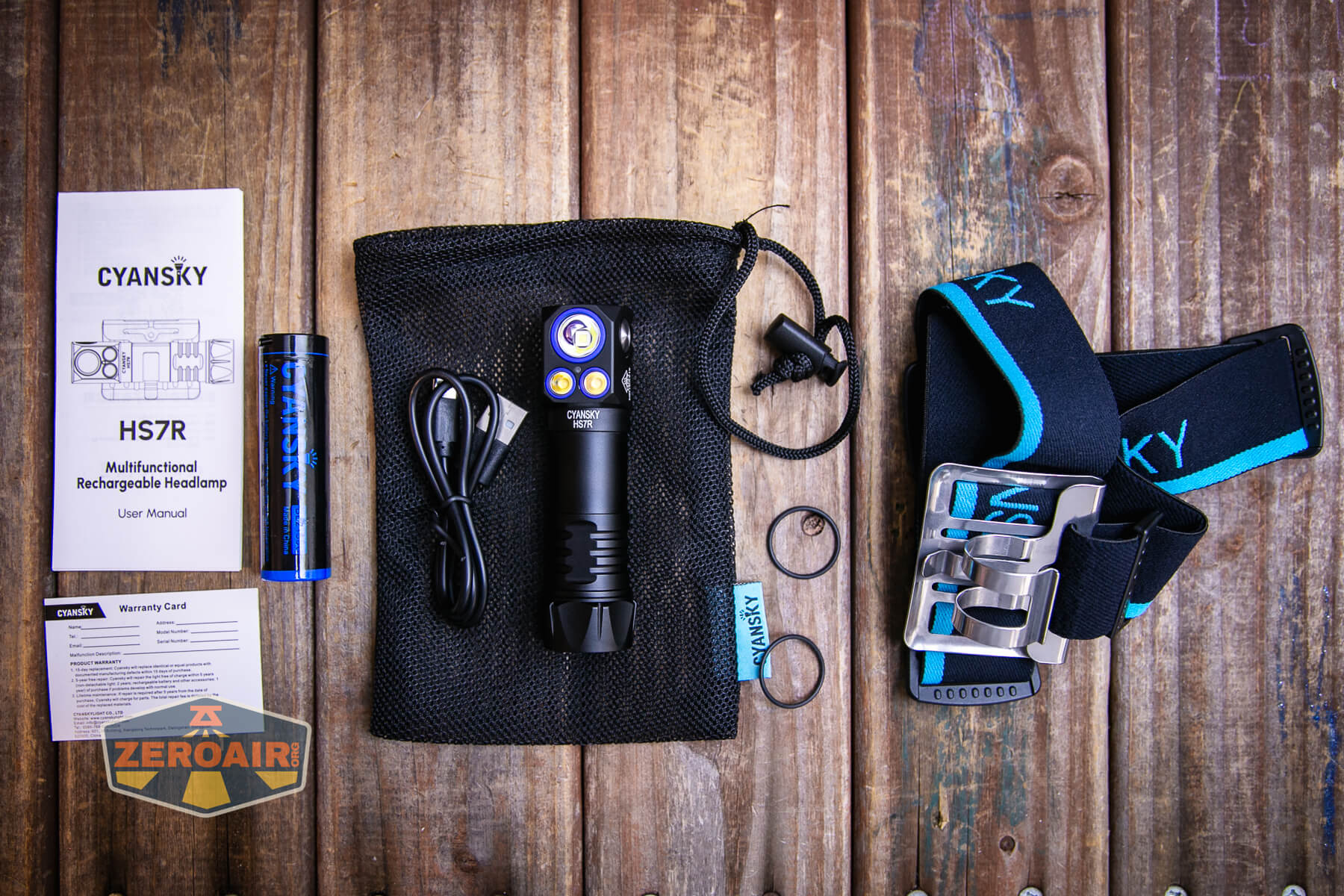
- Cyansky HS7R multifunctional headlamp
- Cyansky 5000mAh 21700
- Charging cable (USB to USB-C)
- Headmount and headband
- Mesh bag
- Spare o-rings (2)
- Manual etc
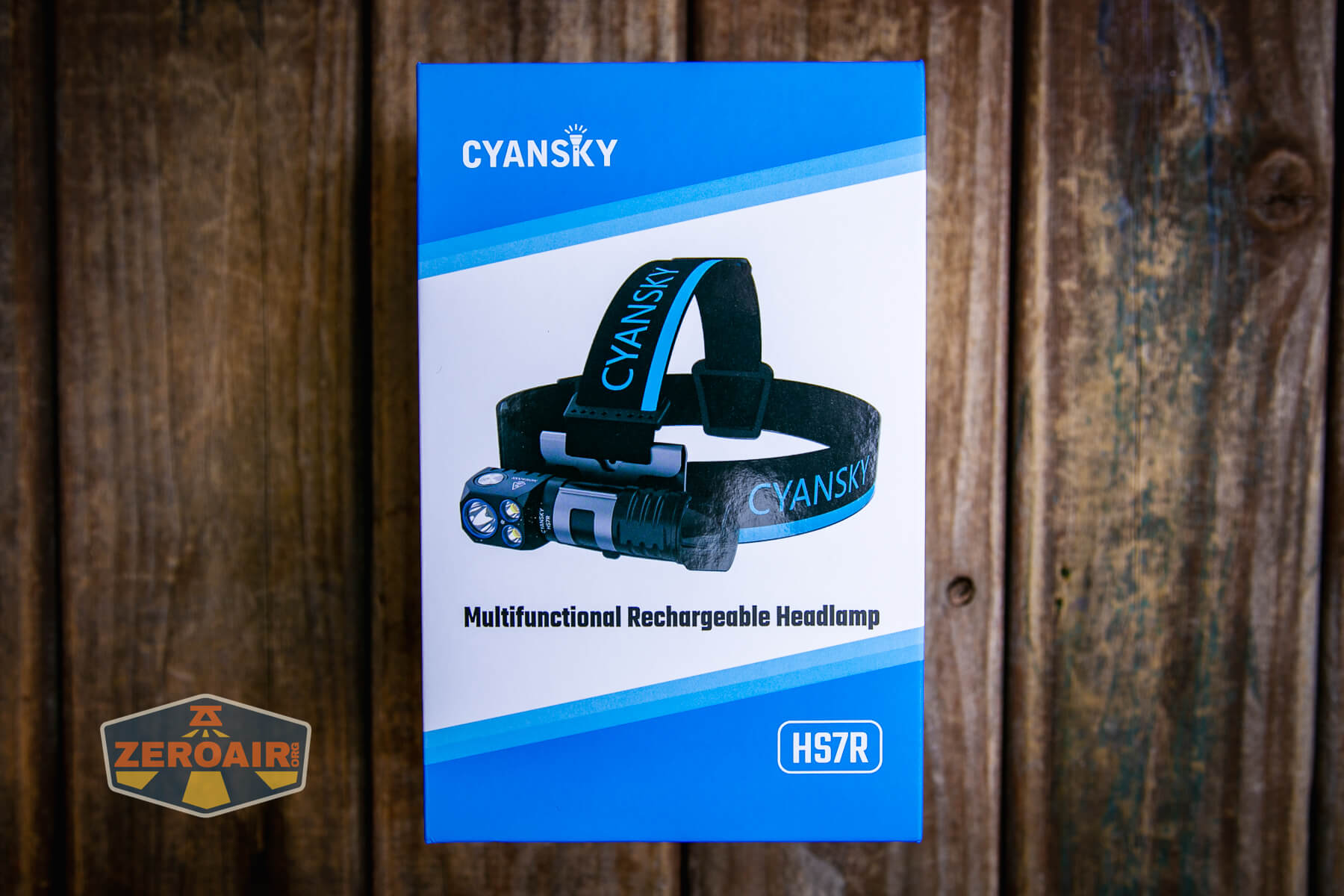
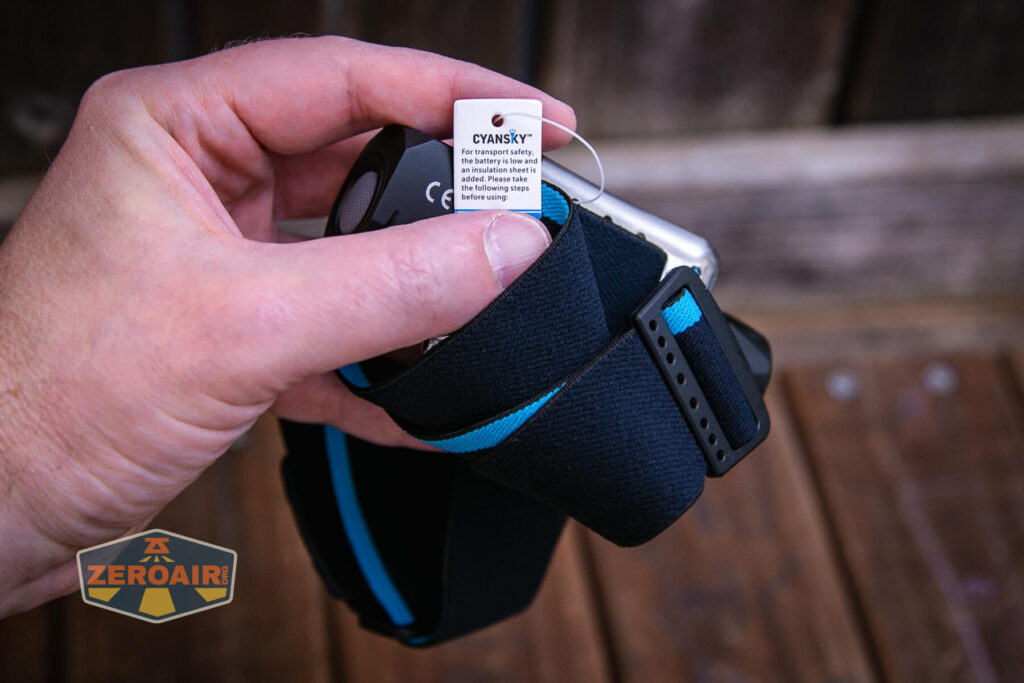
Package and Manual
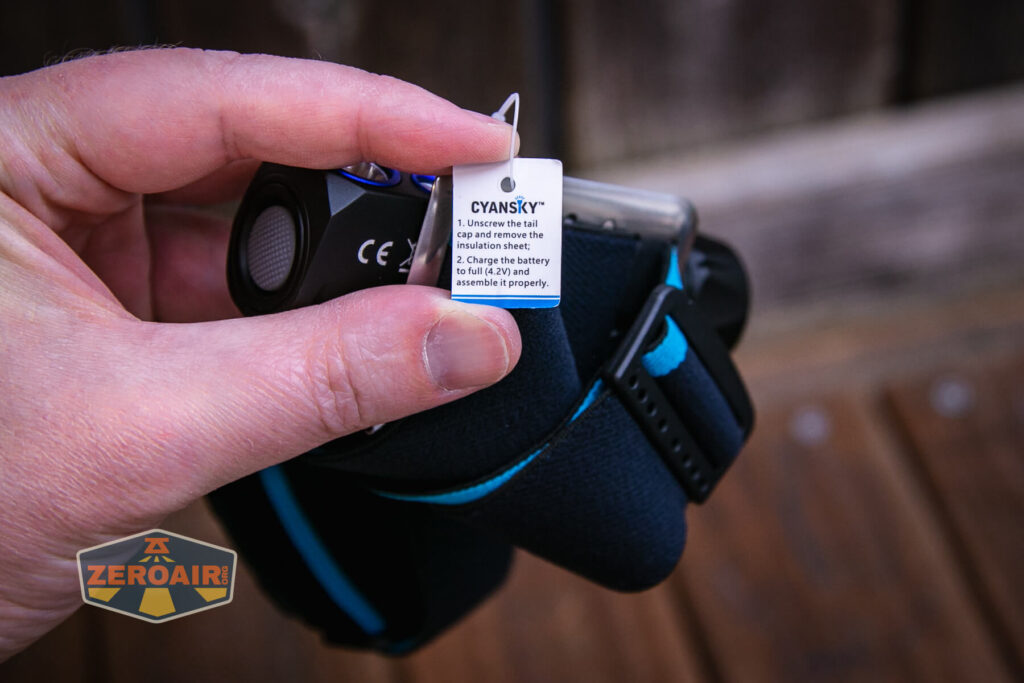
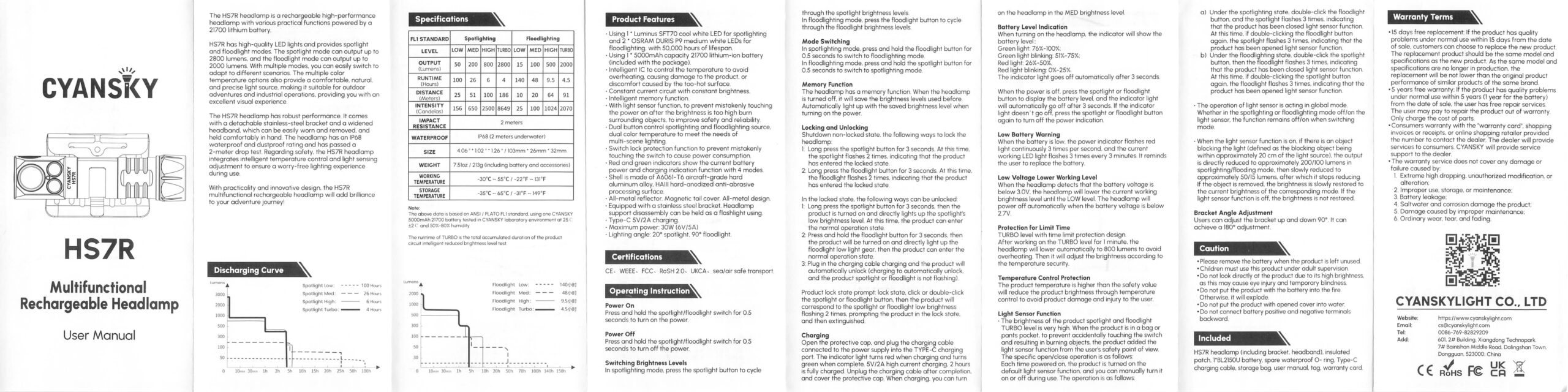
Build Quality and Disassembly

The build quality displayed by the Cyansky HS7R multifunctional headlamp is unsurprisingly good. Cyansky seems to make quality products and that’s demonstrated immediately by how the HS7R feels in hand.
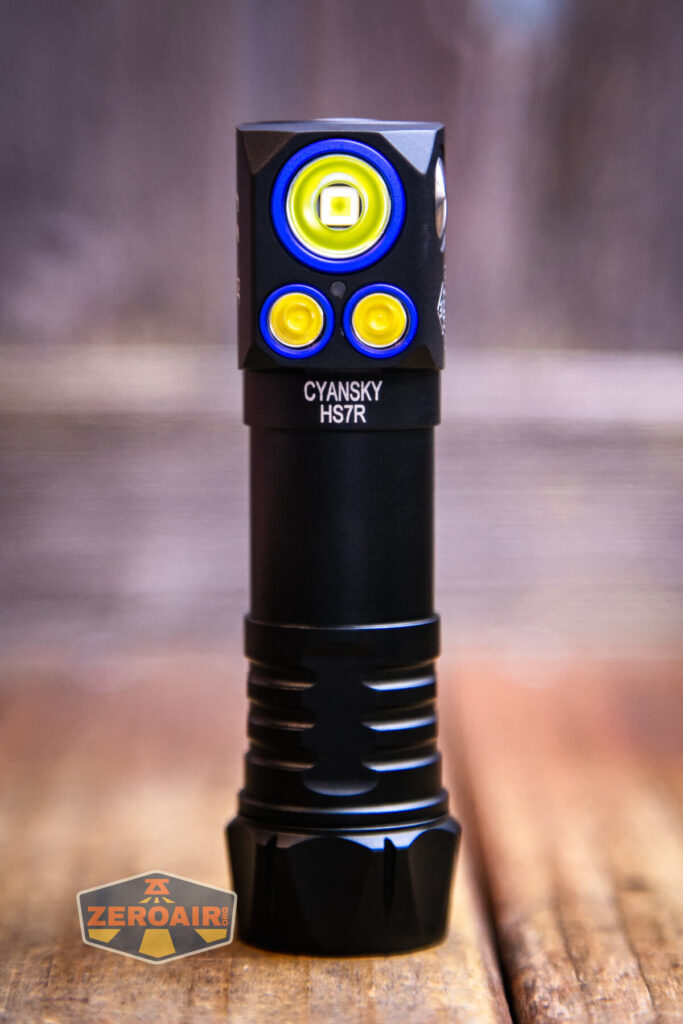
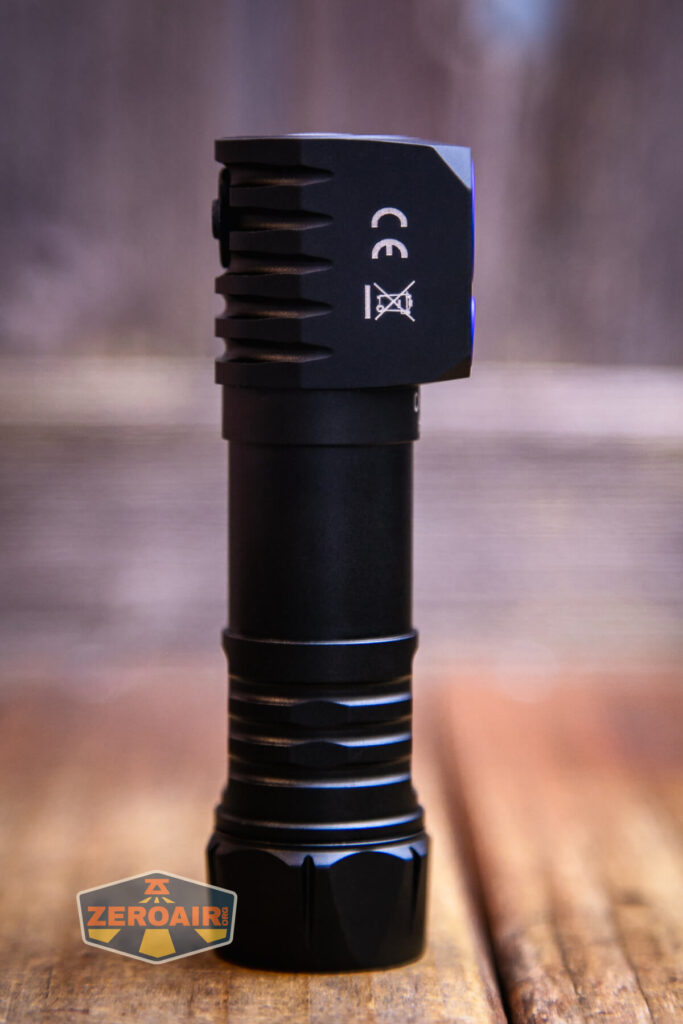
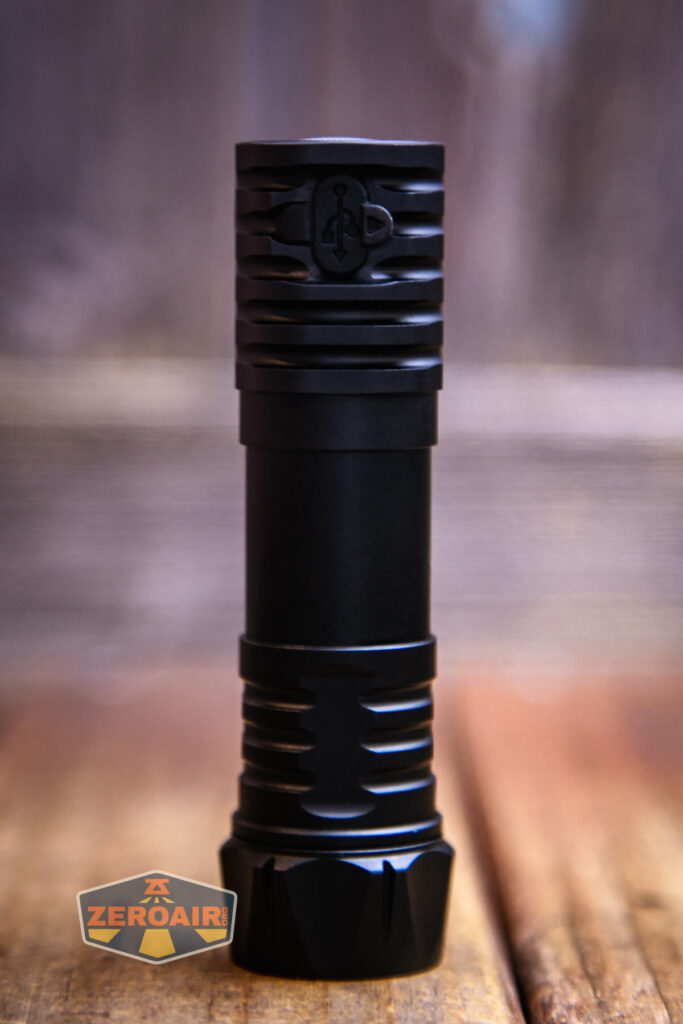
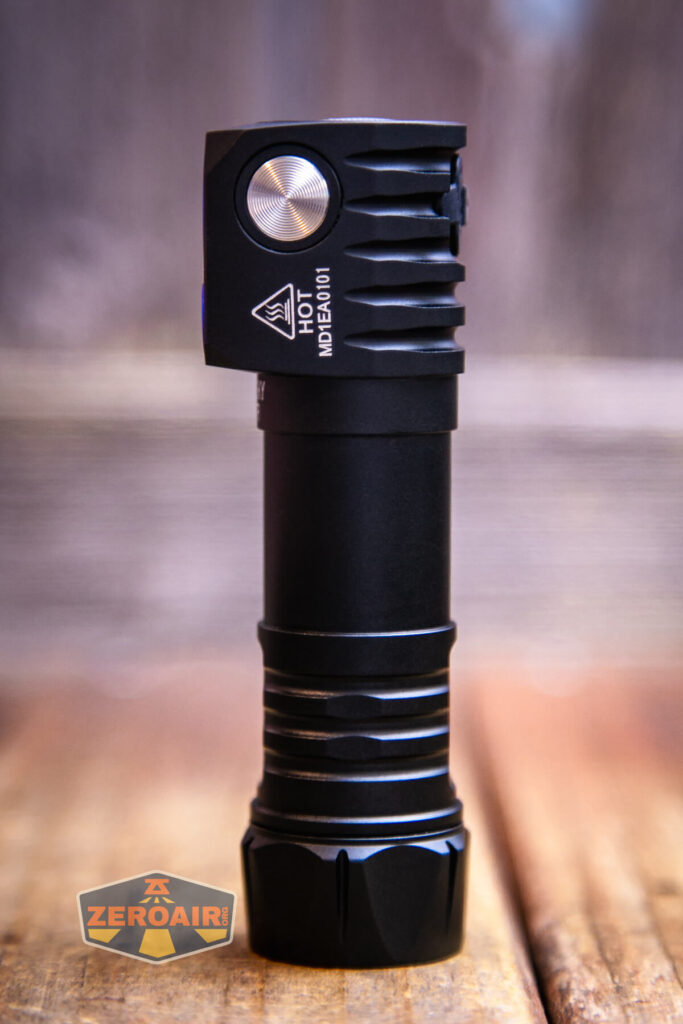
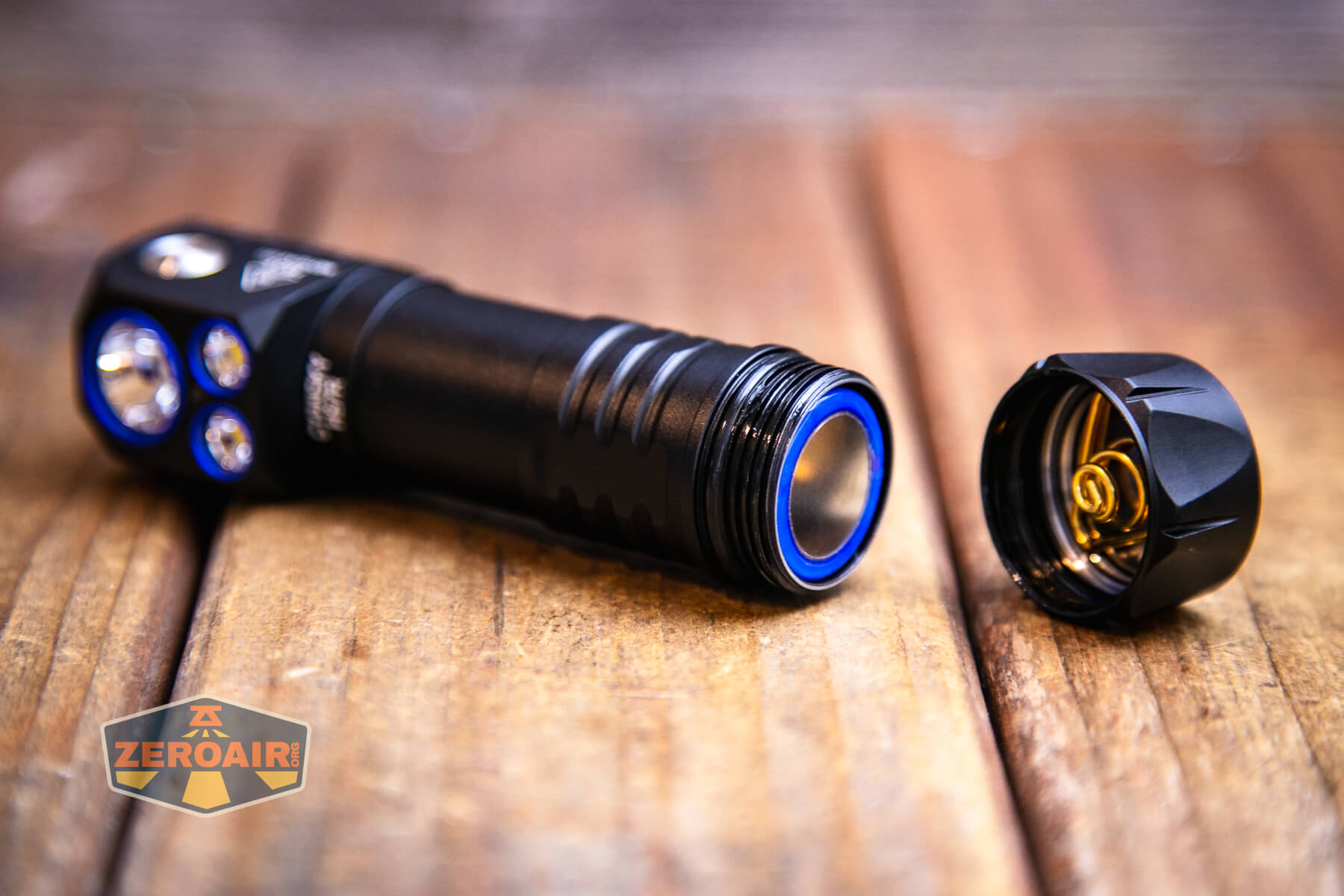
The tailcap of this HS7R gets an update from previous iterations of the HS-type headlamp by Cyansky. I really liked the tailcaps that Cyansky used on the HS3R and HS5R. This tailcap is nearly just like the one on the Cyansky HS5R – in fact, these two share MANY features. This one has a bit less grip than the previous one, but the grip is still sufficient.
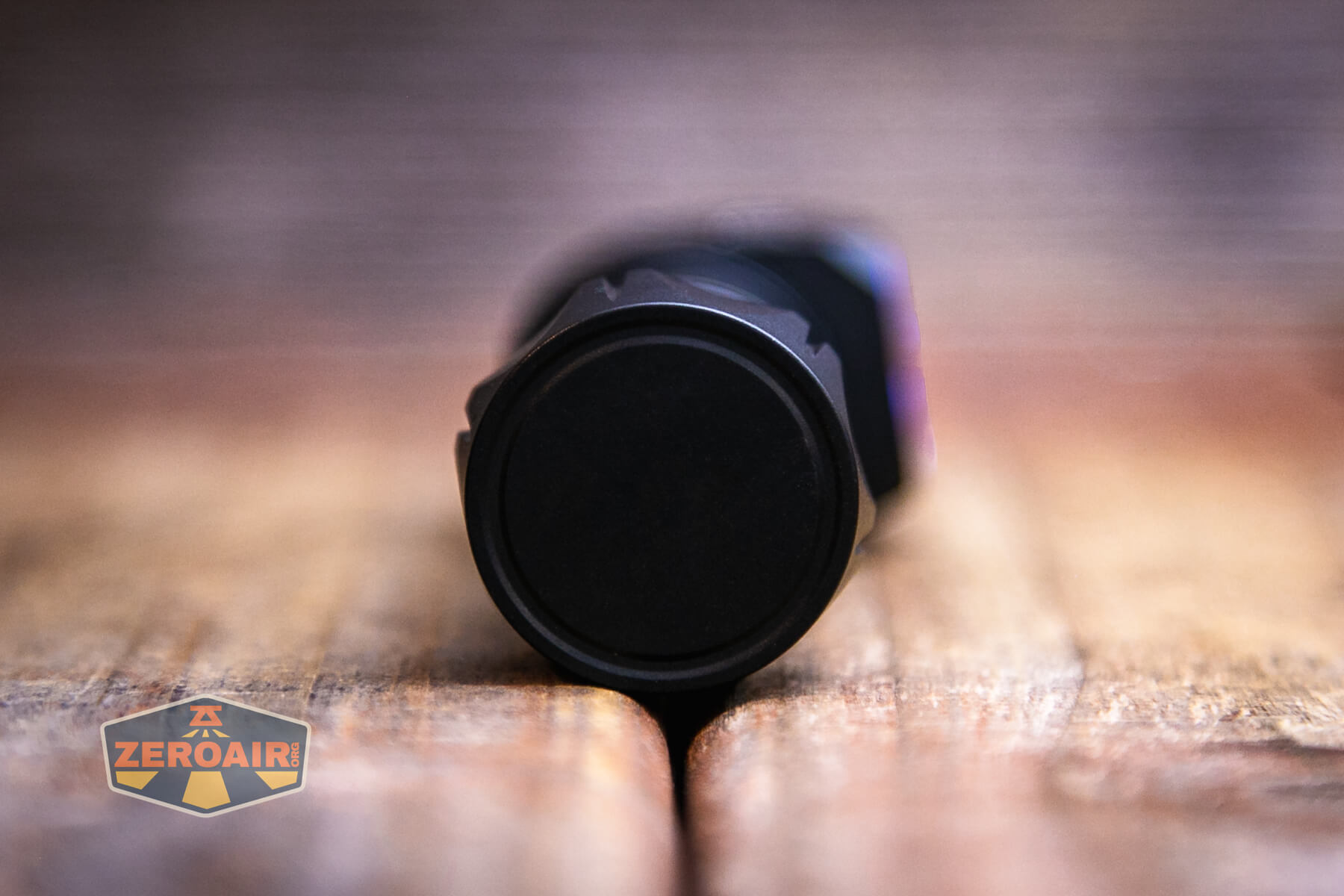
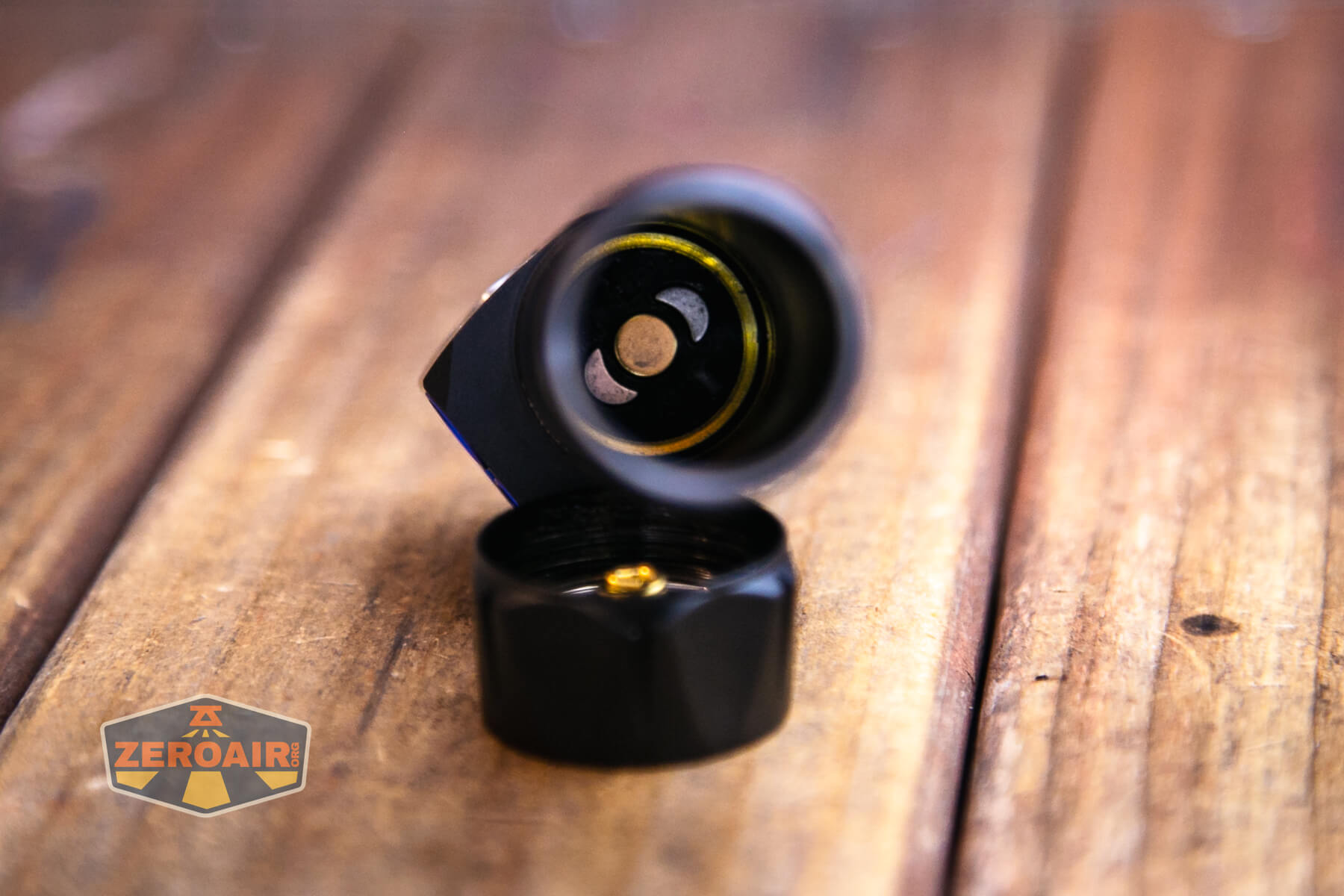
There’s a magnet in that tailcap, too.
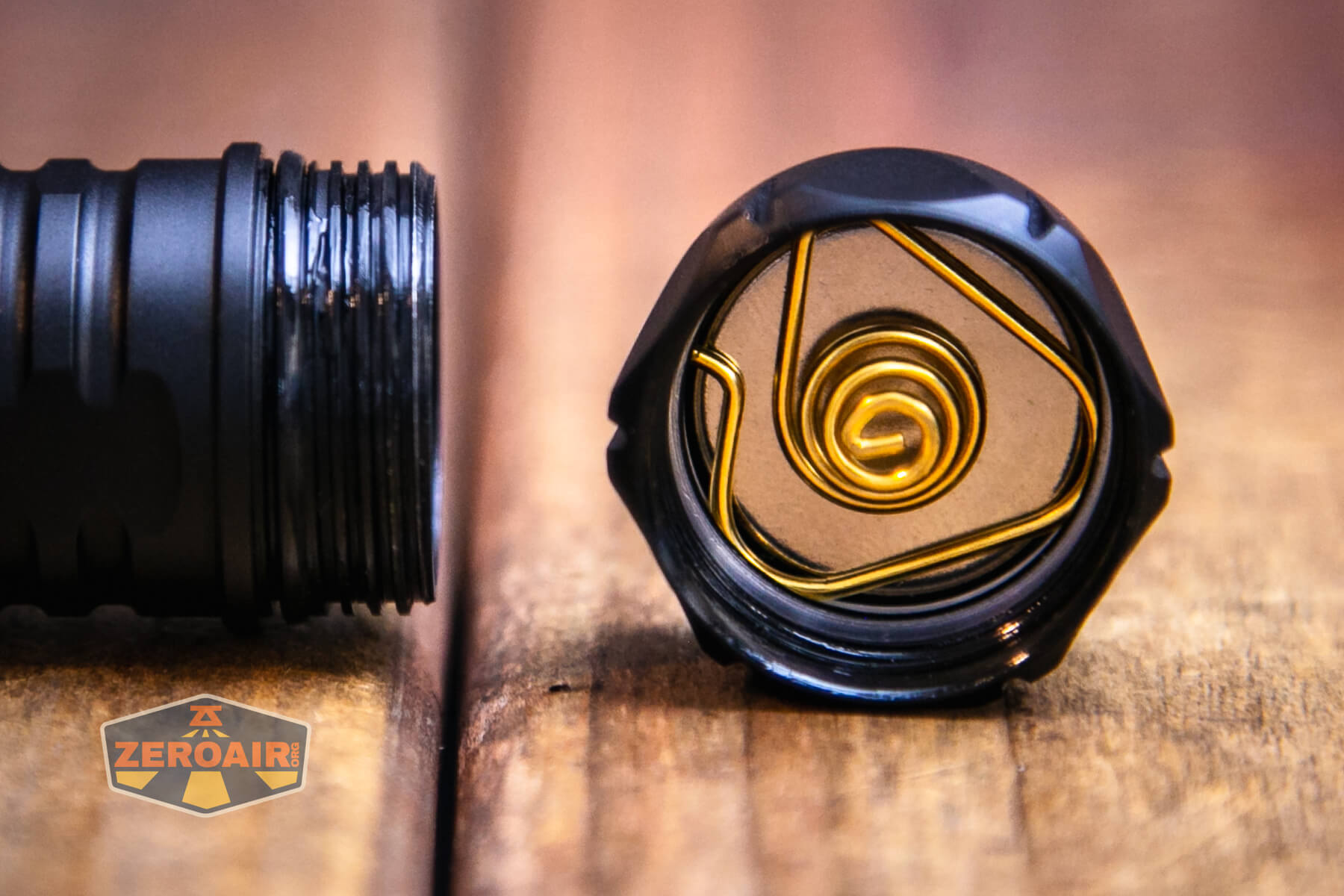
The tailcap has a spring, but the head (unlike the HS5R, but like the HS3R) has only a button for contact.
Size and Comps
103mm x 26mm x 32mm and 213g including battery and accessories.
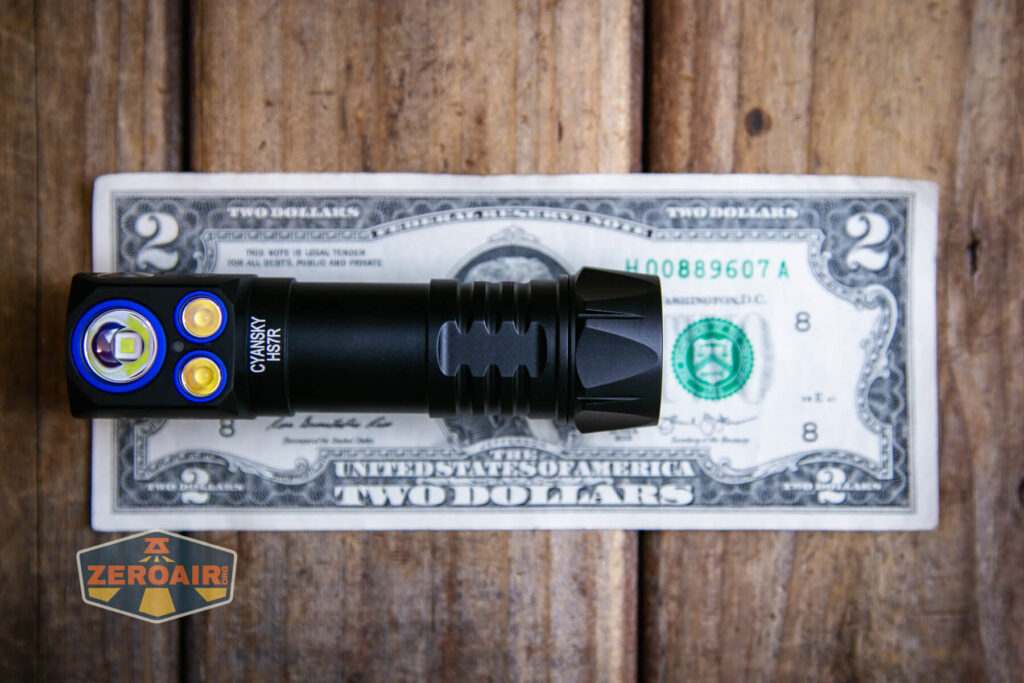
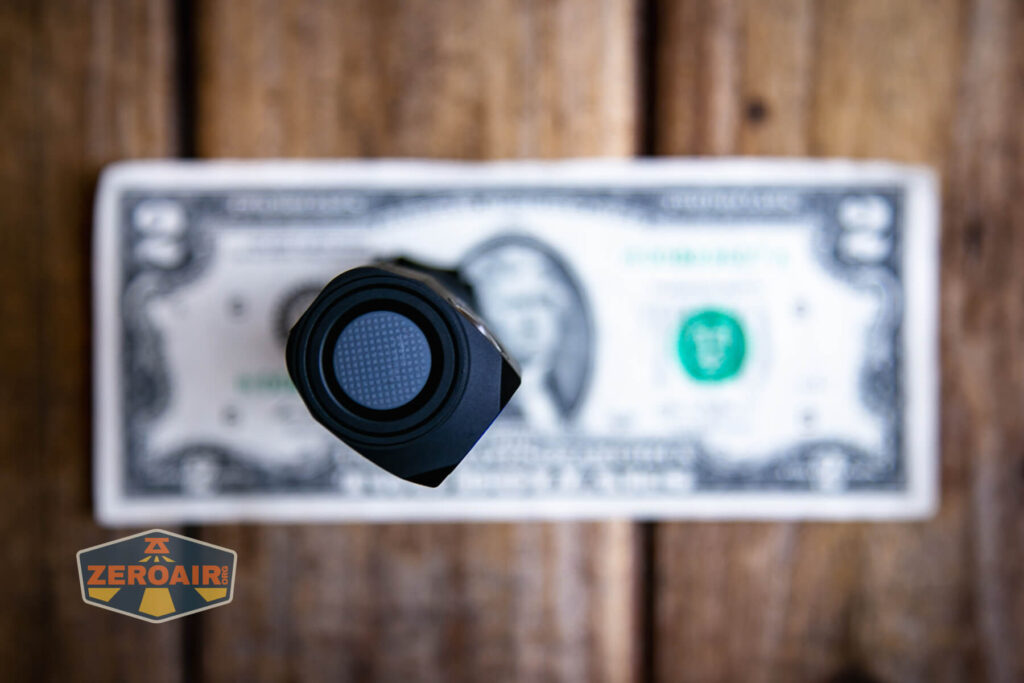
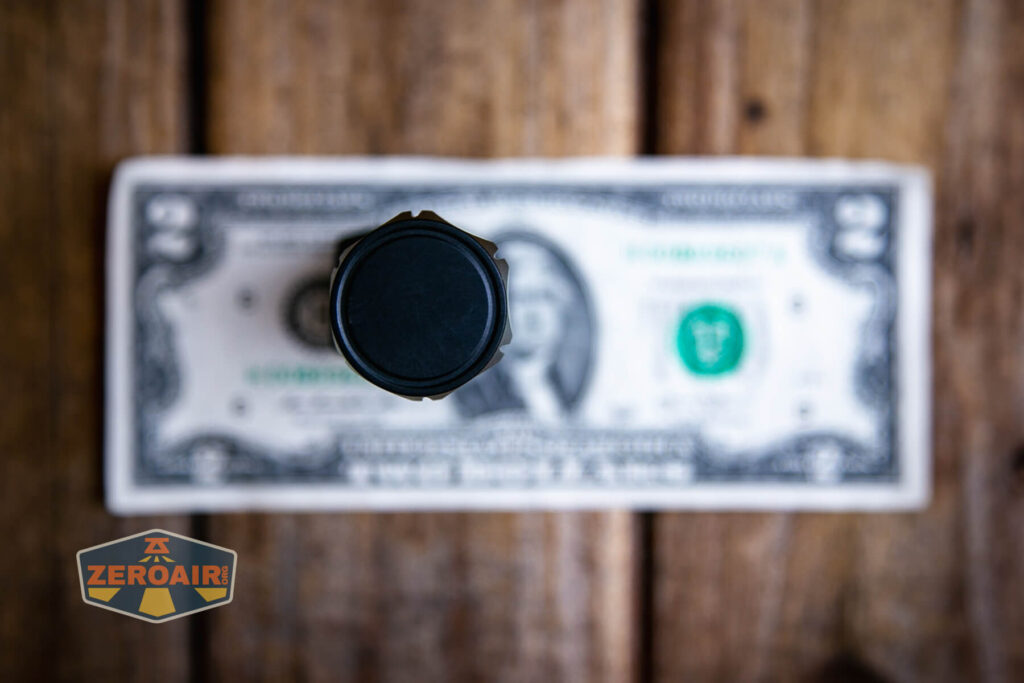
If the flashlight will headstand, I’ll show it here (usually the third photo). If the flashlight will tailstand, I’ll also show that (usually in the fourth photo).
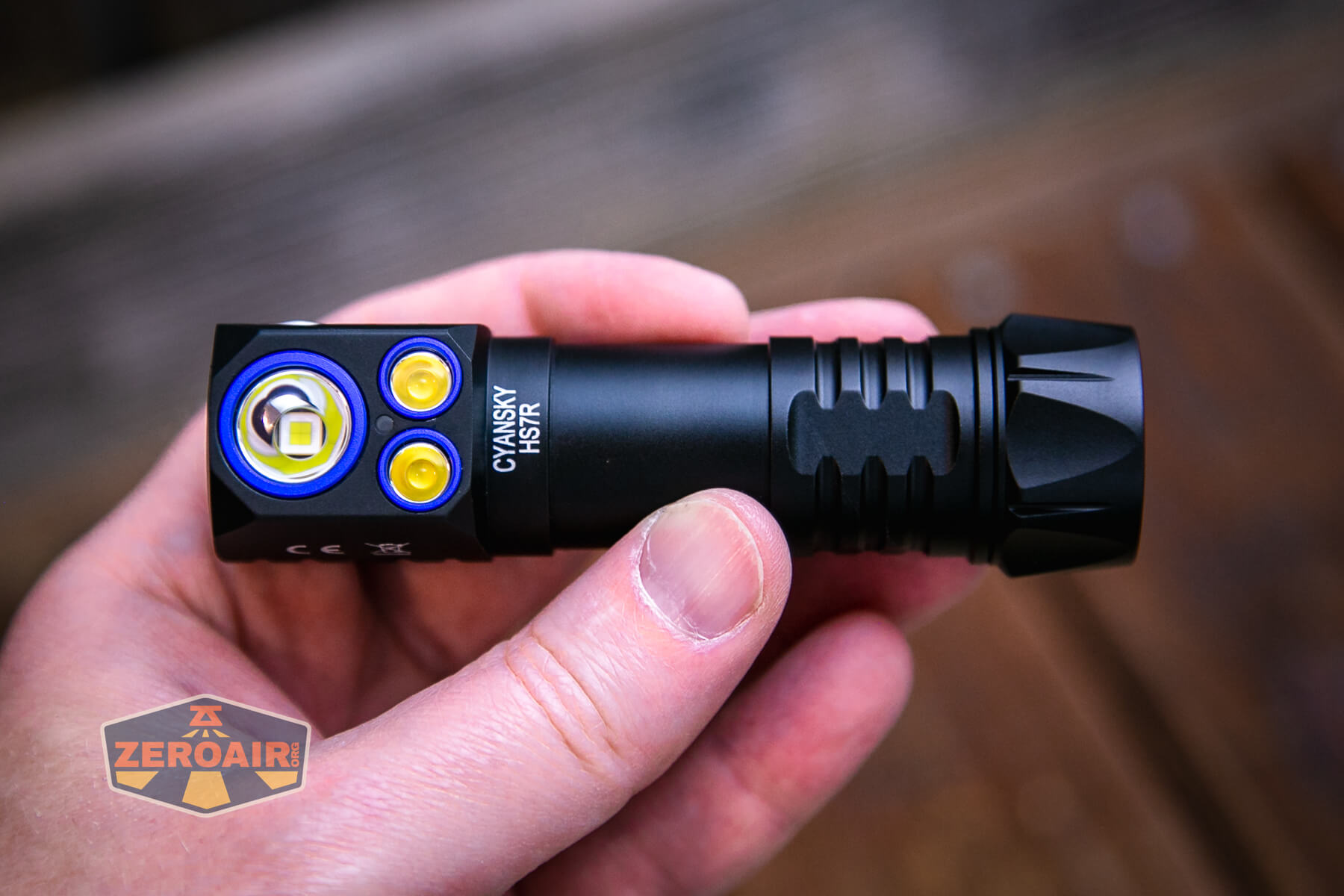
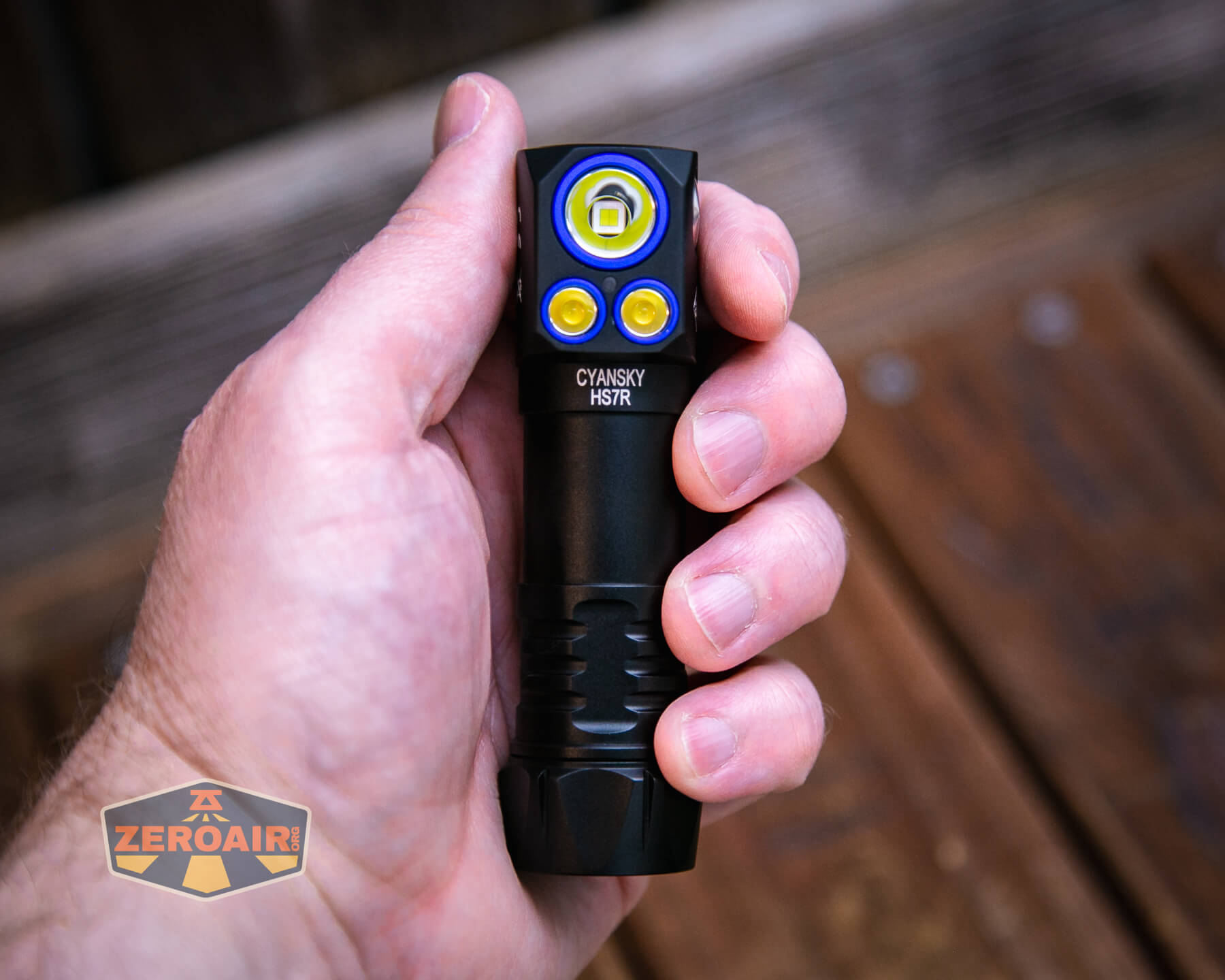
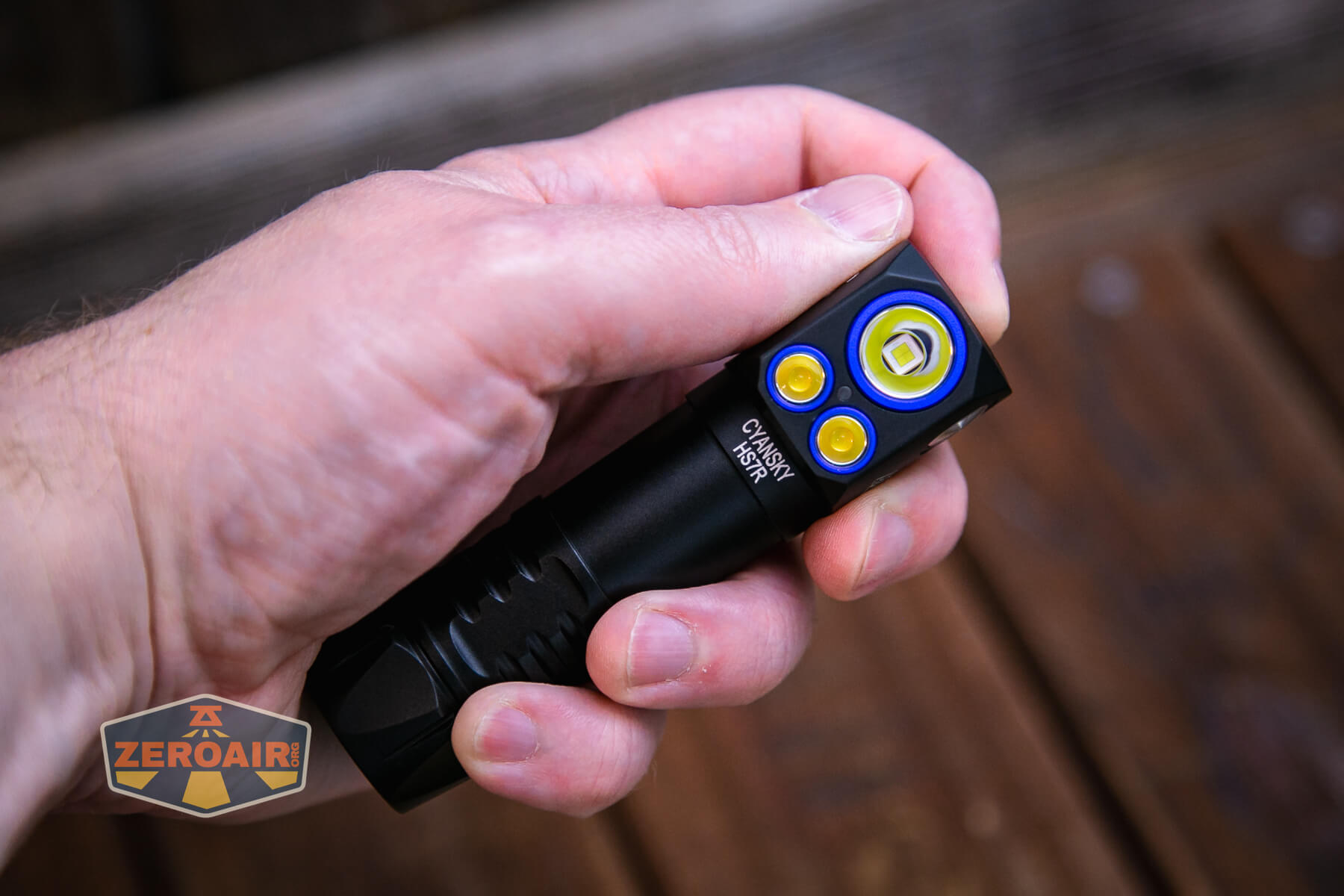
Here’s the test light with the venerable Convoy S2+. Mine’s a custom “baked” edition Nichia 219b triple. A very nice 18650 light.
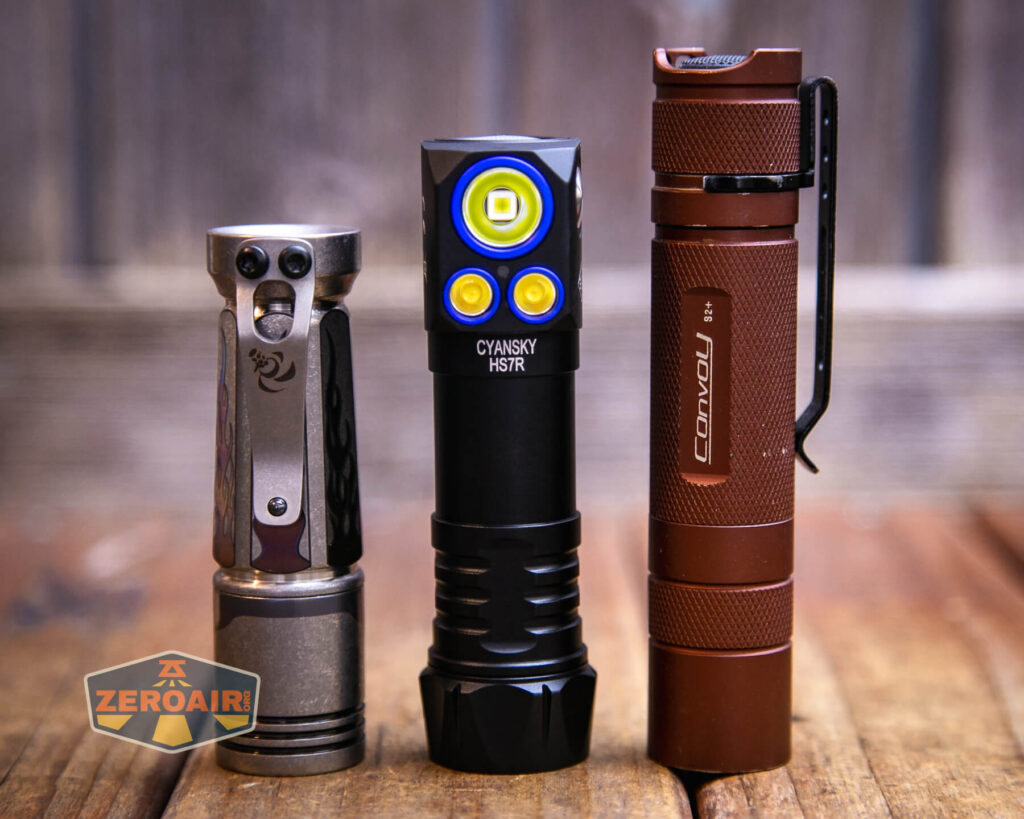
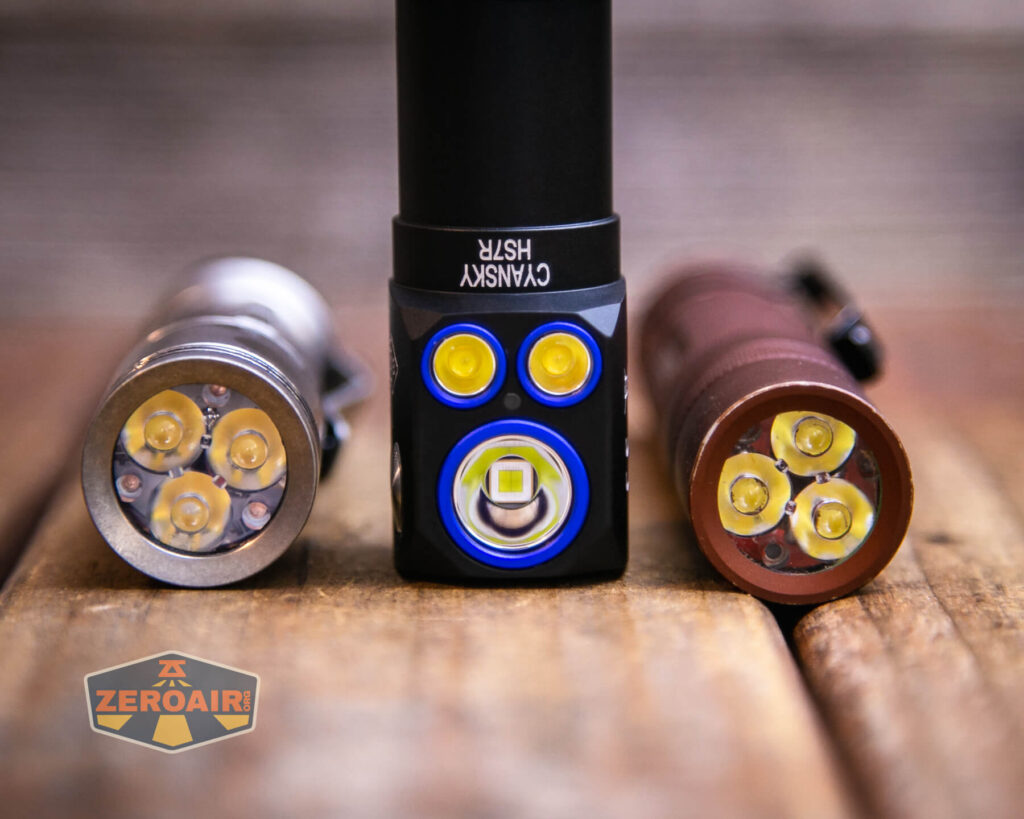
Also above on the left is a new feature light!! Laulima Metal Craft sent this titanium Todai for some size comparison photos like the ones above. Laulima has a bunch of incredible items. I’ve tested one (the Laulima Metal Craft Hoku) (the official site for Hoku is here) that was a Friend Fund Friday review. I was impressed enough by that Hoku that I bought a Laulima Metal Craft Diamond Slim (also in tumbled aluminum) (review is upcoming!) These lights by Laulima have impeccable build quality and not only that, they’re quite configurable. There are some (great, actually) default configurations, but Joshua Dawson (of Laulima Metal Craft) is open to ideas and emitter options and the like. I haven’t reviewed this Todai, but I have to say, it feels absolutely fantastic and I love it thus far. (Notably, I love how warm and eggy those emitters look through the TIR.)
Retention and Carry
Mainly the Cyansky HS7R is a multifunctional headlamp. So of course the first thing to mention is this headband.
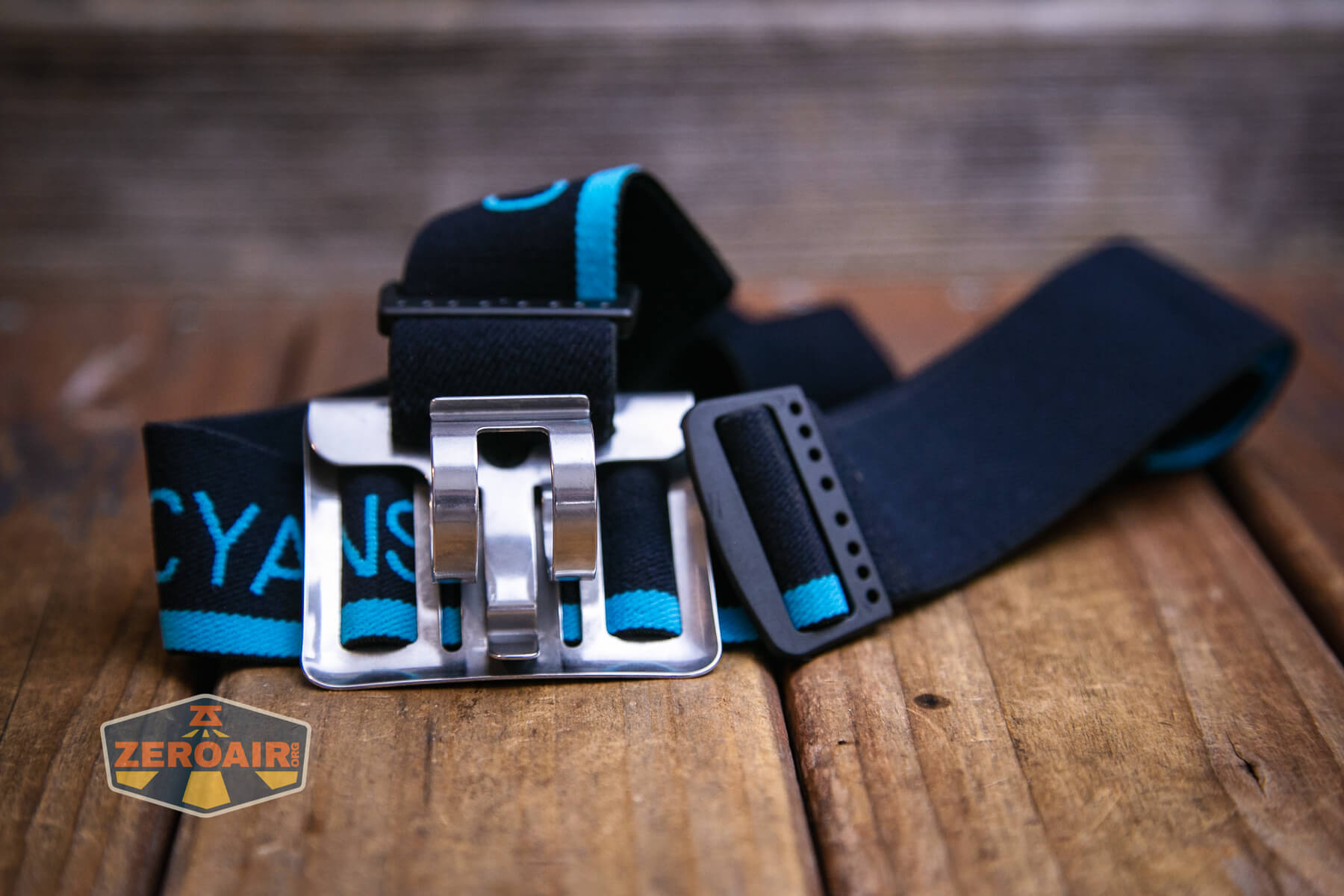
The band itself is super comfortable. Even this metal bracket has a back that gels with a forehead very nicely. The edges are rounded out and it’s overall just good.
But have a look at the bracket that holds the HS7R. This bracket is a huge improvement over the HS5R. The light can be removed without damage and without special tools. It’s still “very metal” but it’s acceptable.
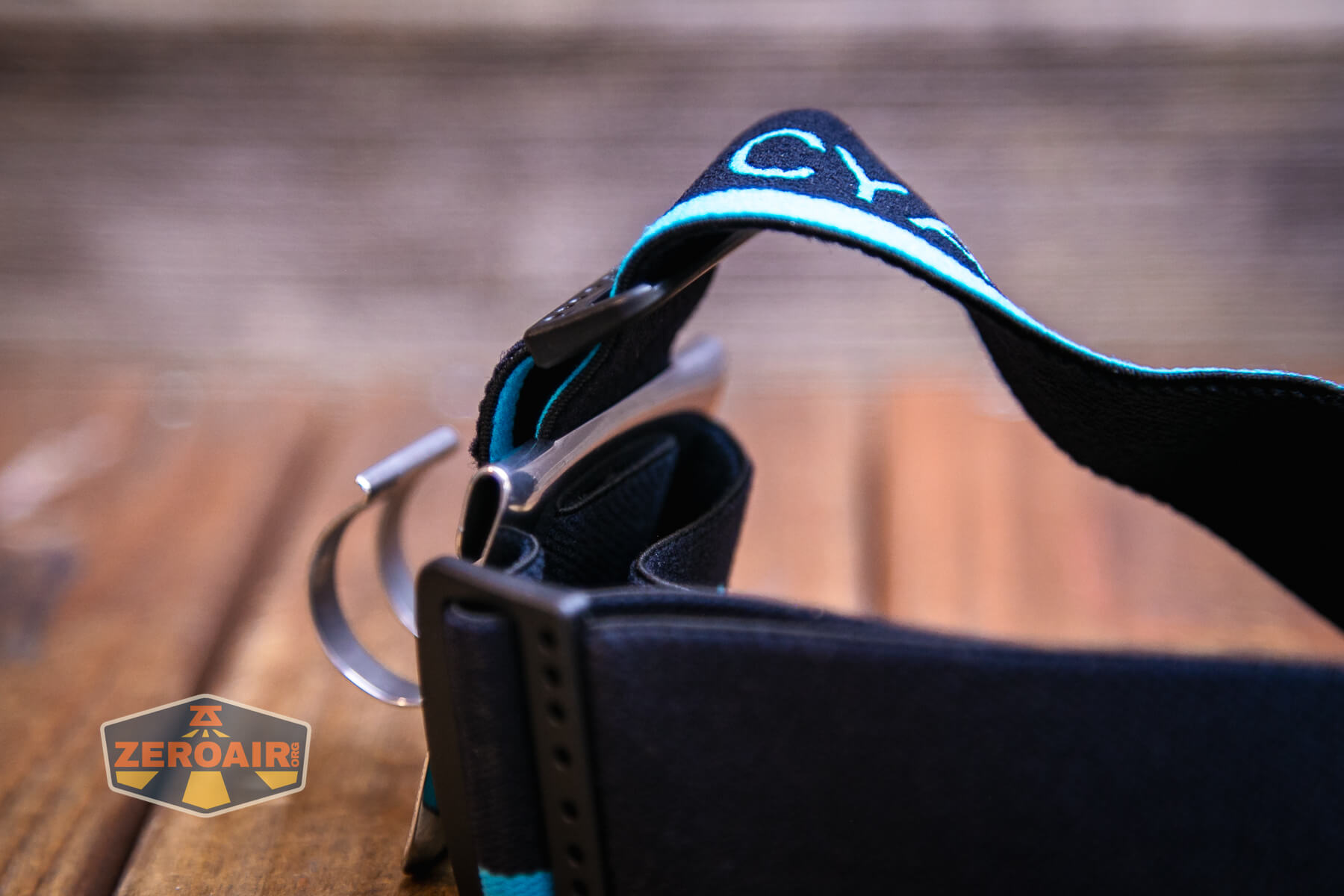
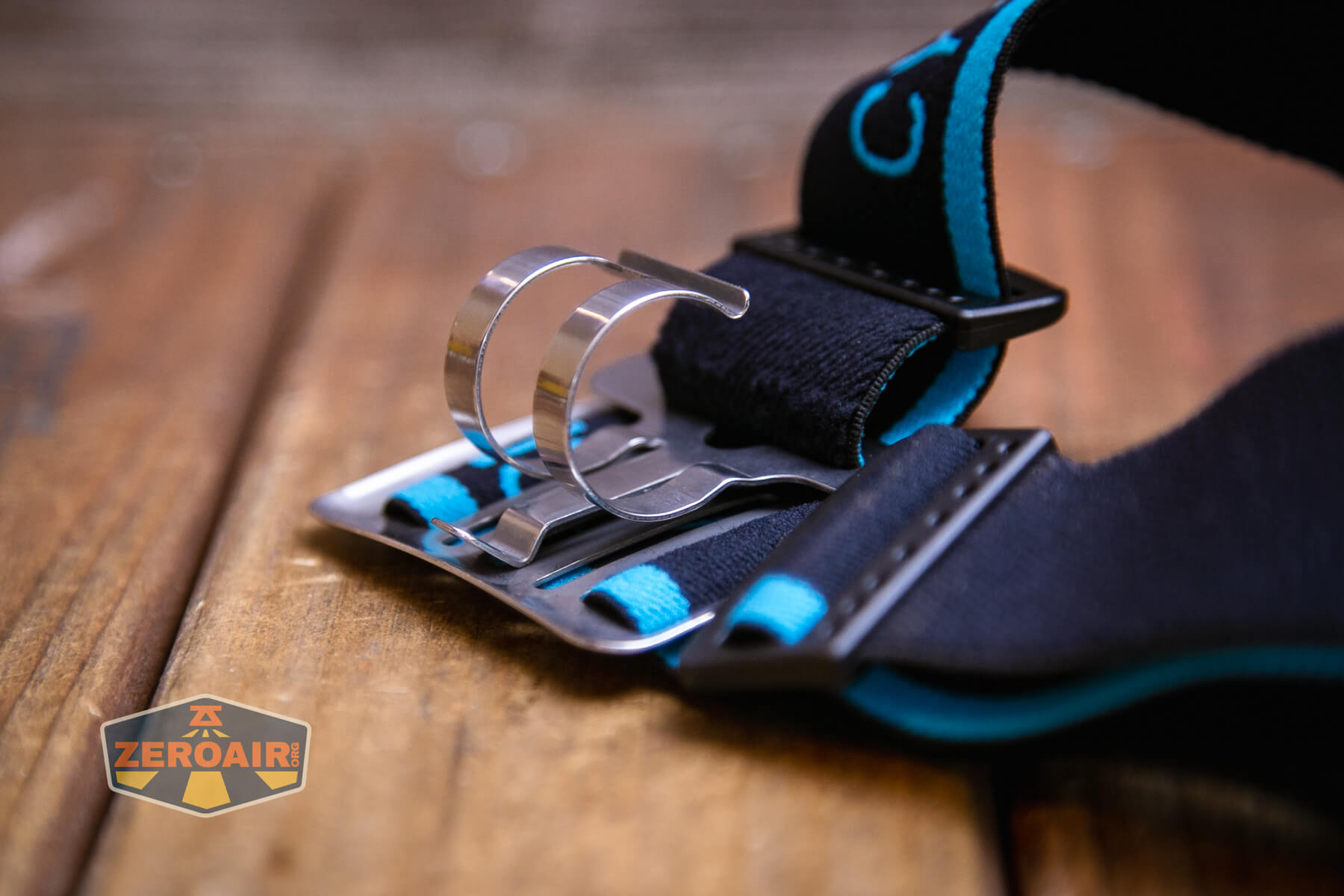
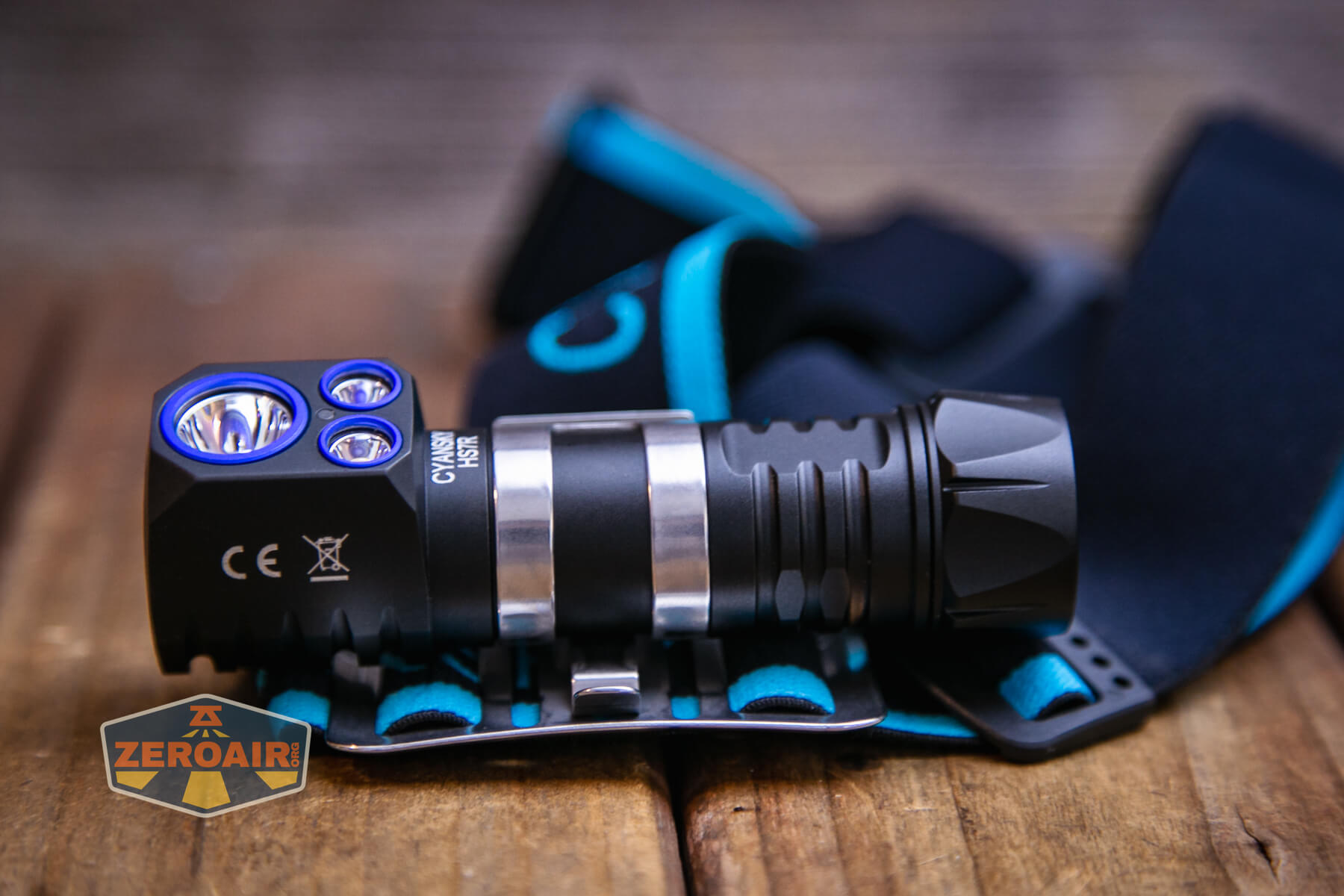
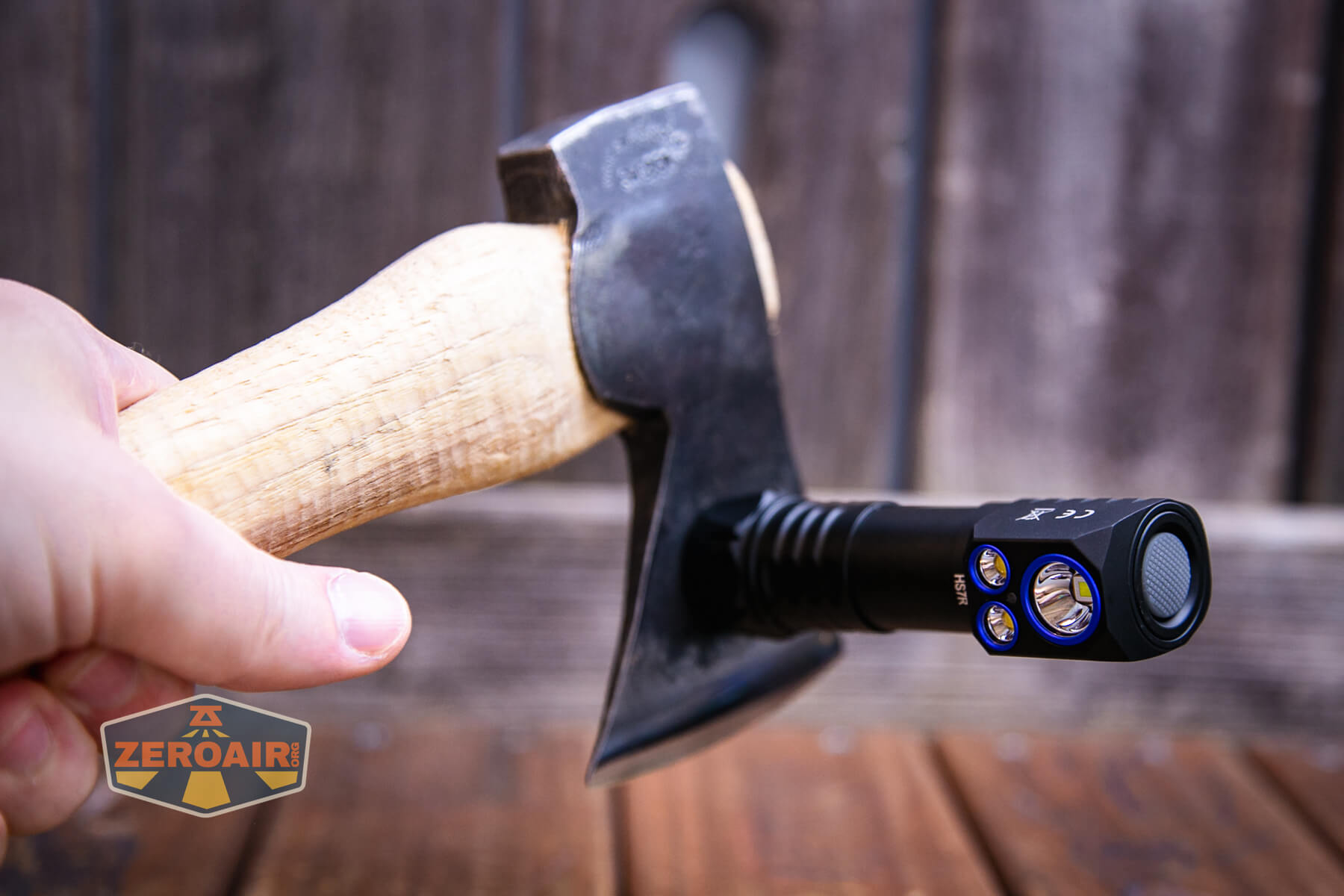
As mentioned, the tailcap has a magnet, and this magnet is perfectly sufficient for holding the light stable. That’s a feat, because the light is not really small!
Cyansky also includes that mesh bag shown above.
Power and Runtime
The Cyansky HS7R multifunctional headlamp is powered by a single lithium-ion cell. Cyansky includes an appropriate cell – a 5000mAh 21700, the BL2150U.
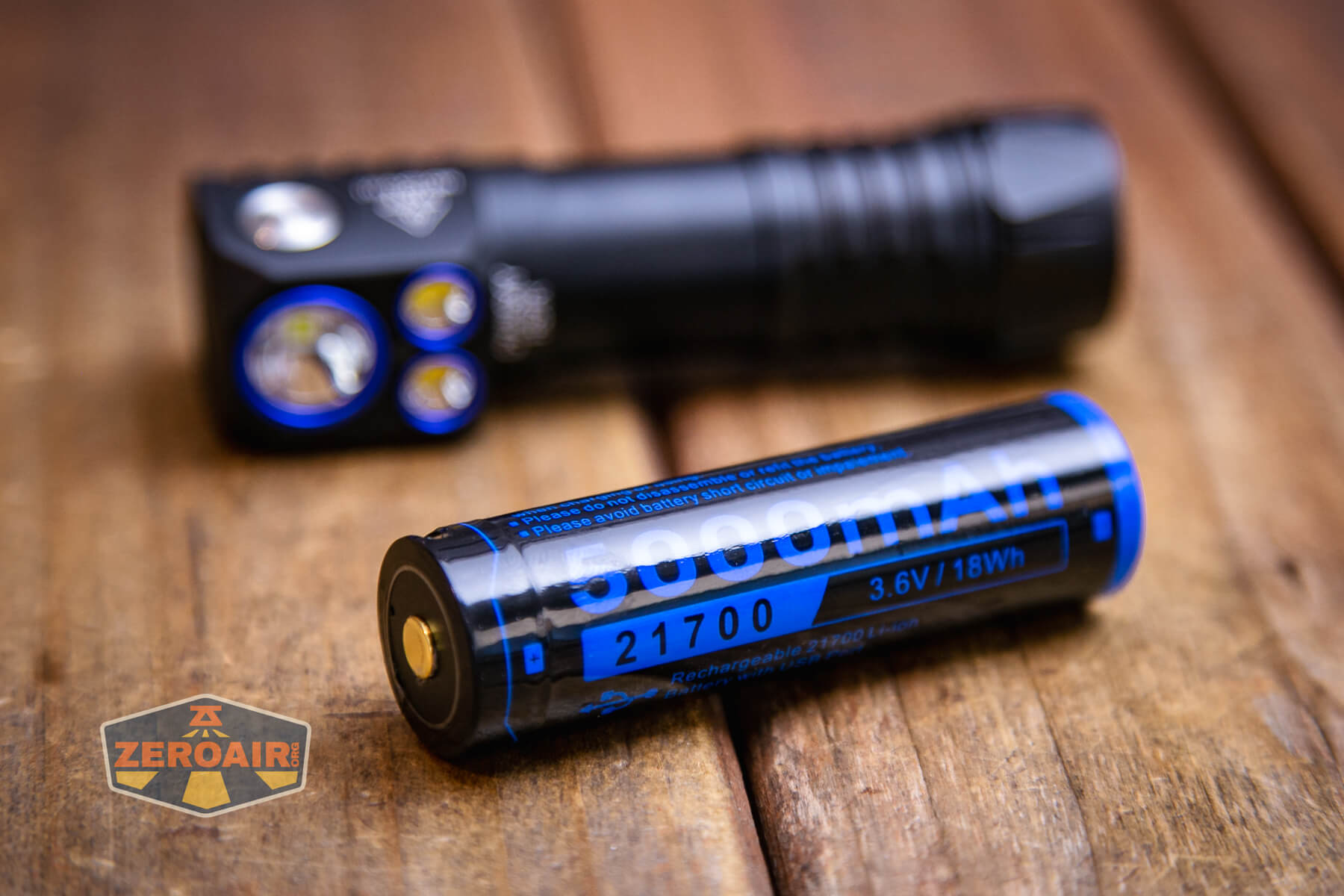
As far as usage goes, this is a standard button top 21700. It has some additional features, which I’ll cover below. This is the same cell that’s used in the other Cyansky 21700 cell lights.
The cell fits into the H5GT in the usual way – positive terminal toward the head.
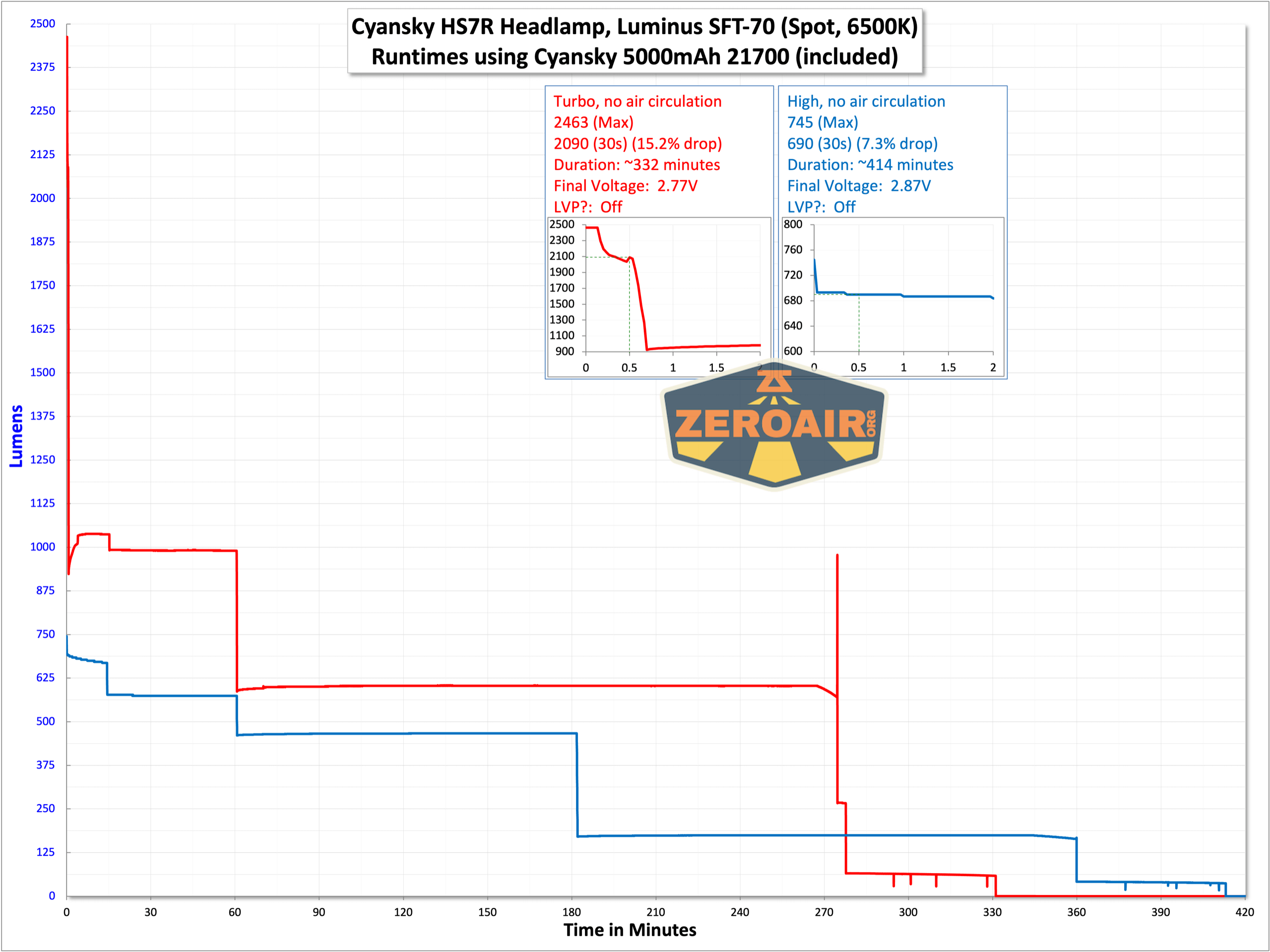
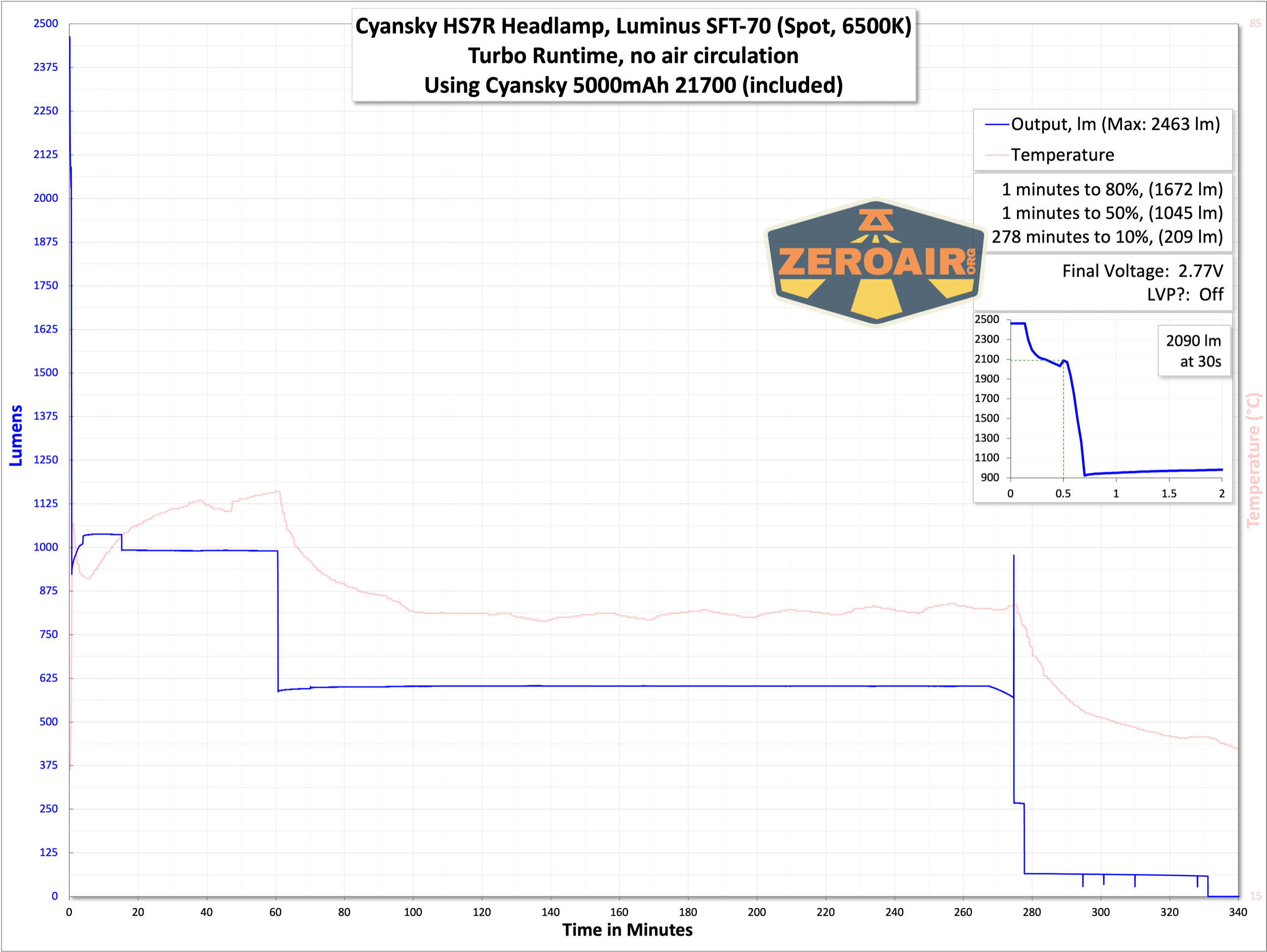
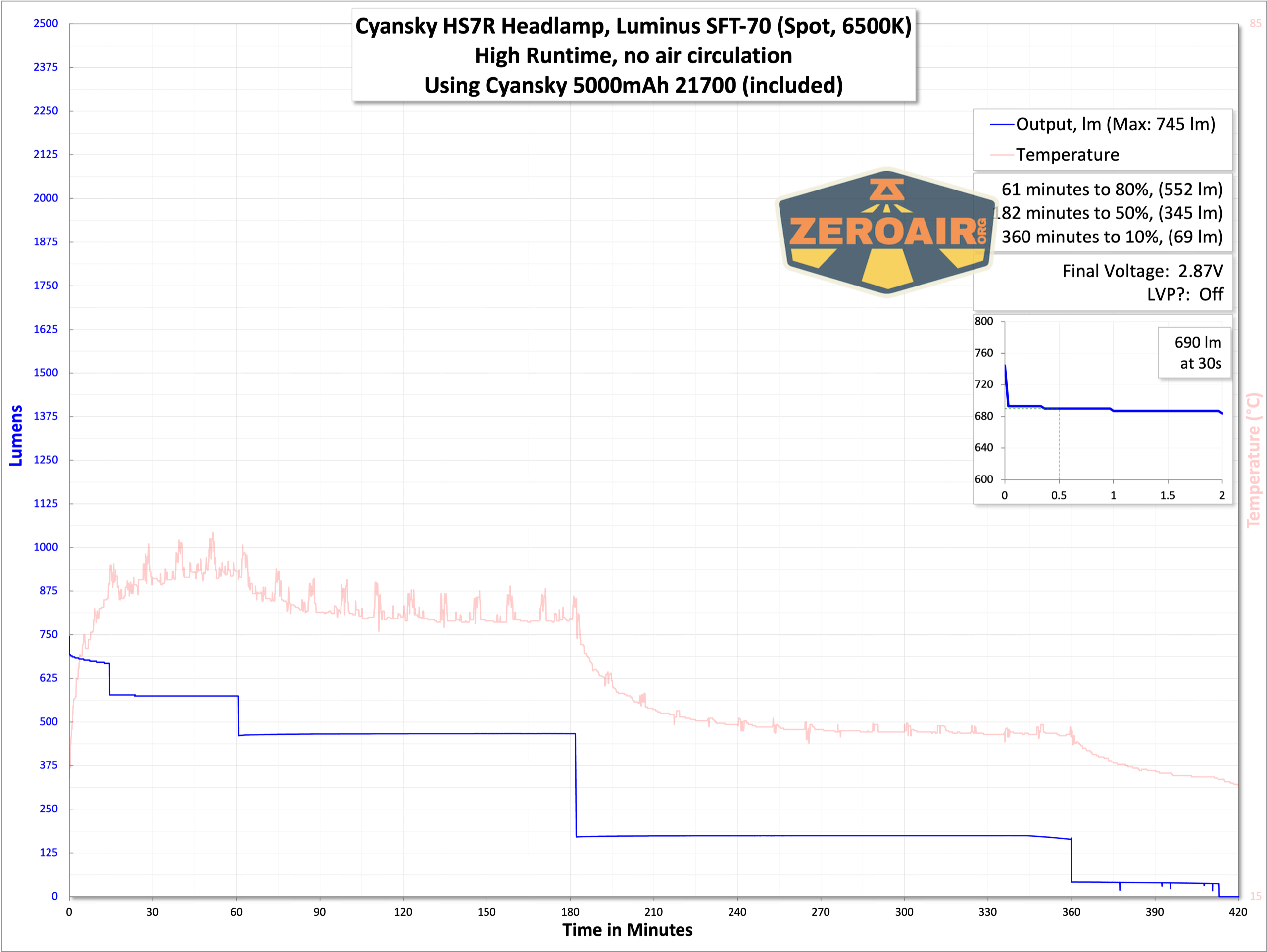
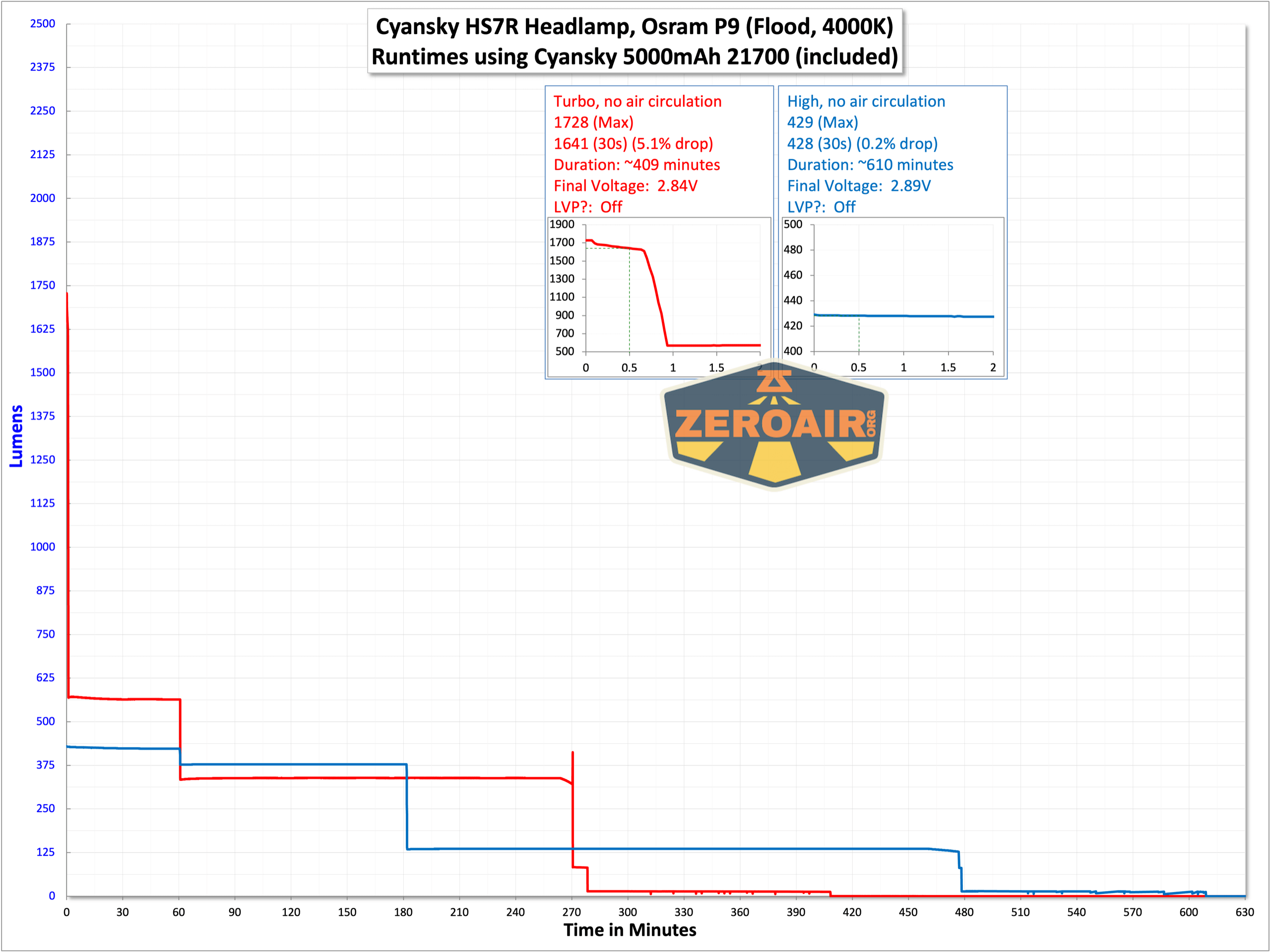
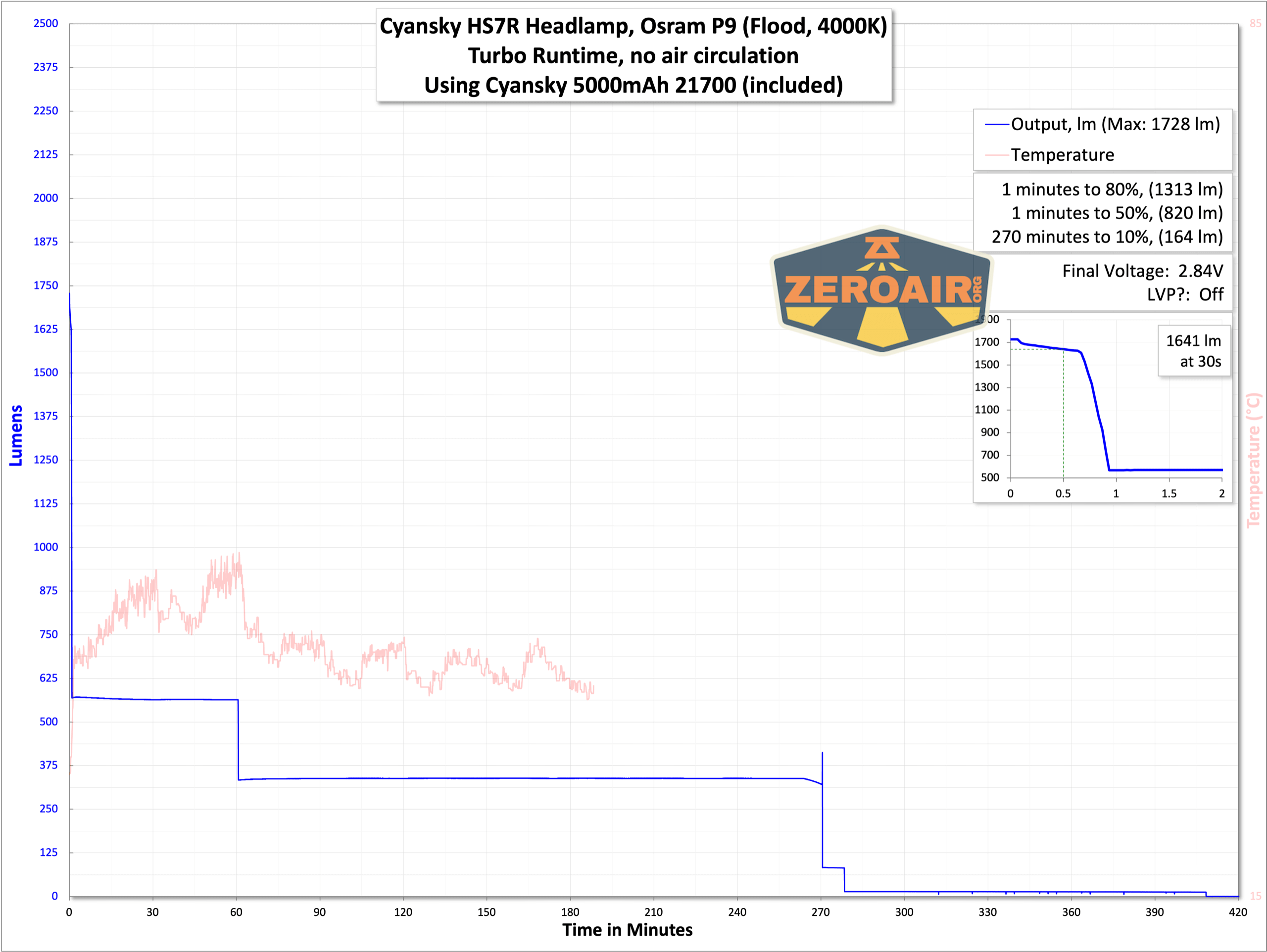
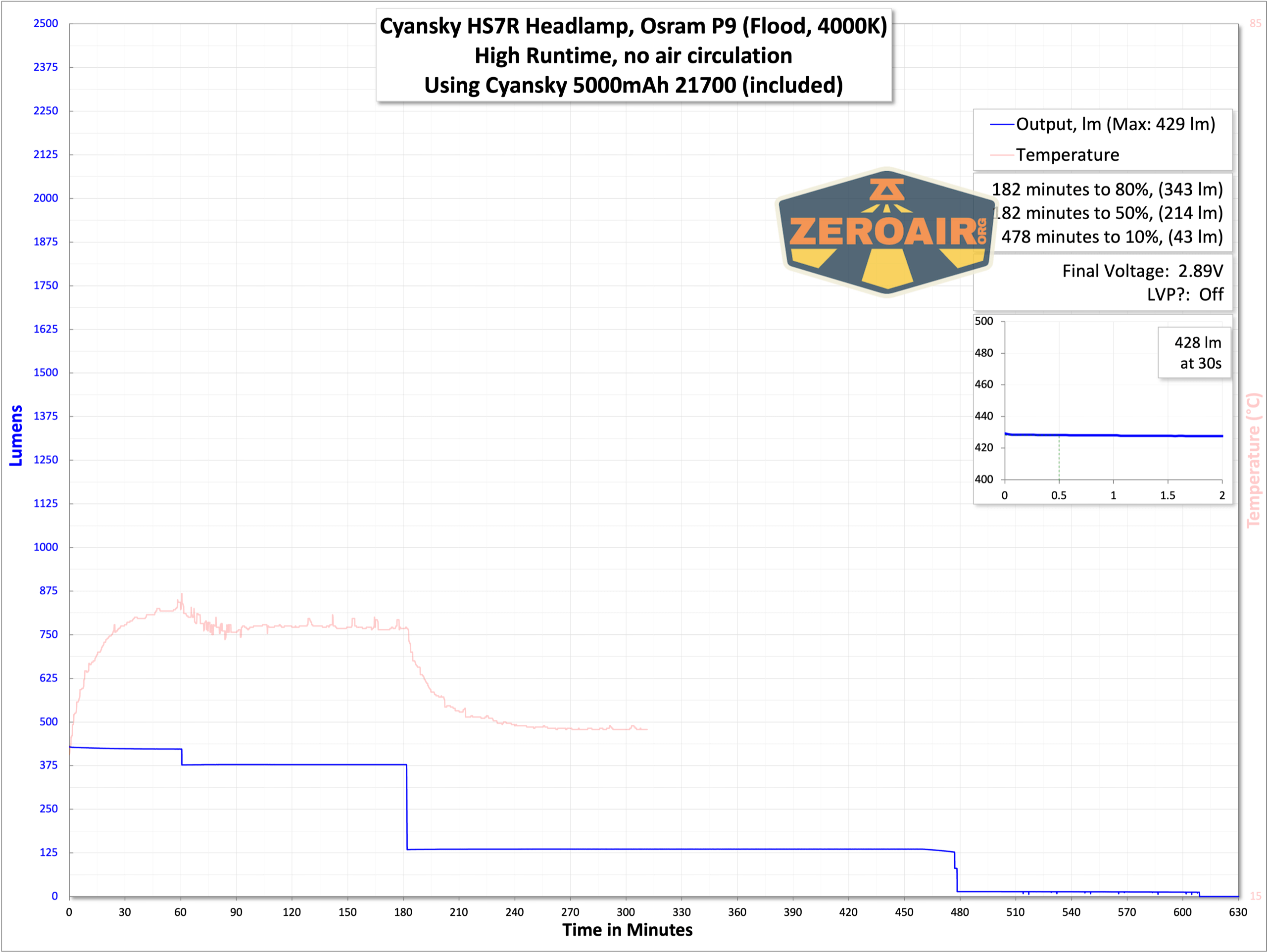
Below are a few runtime tests. In fact, there are two tests for each output group – flood and throw. You’ll note the big stepdown in turbo – I’d like to see this held a bit longer and a bit higher.
Charging
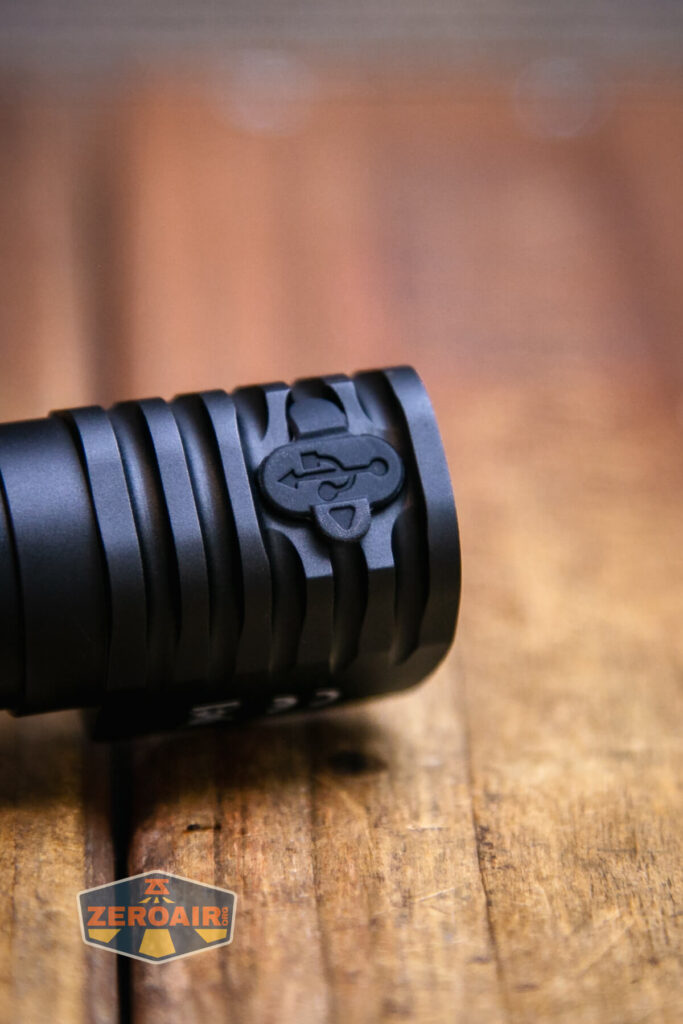
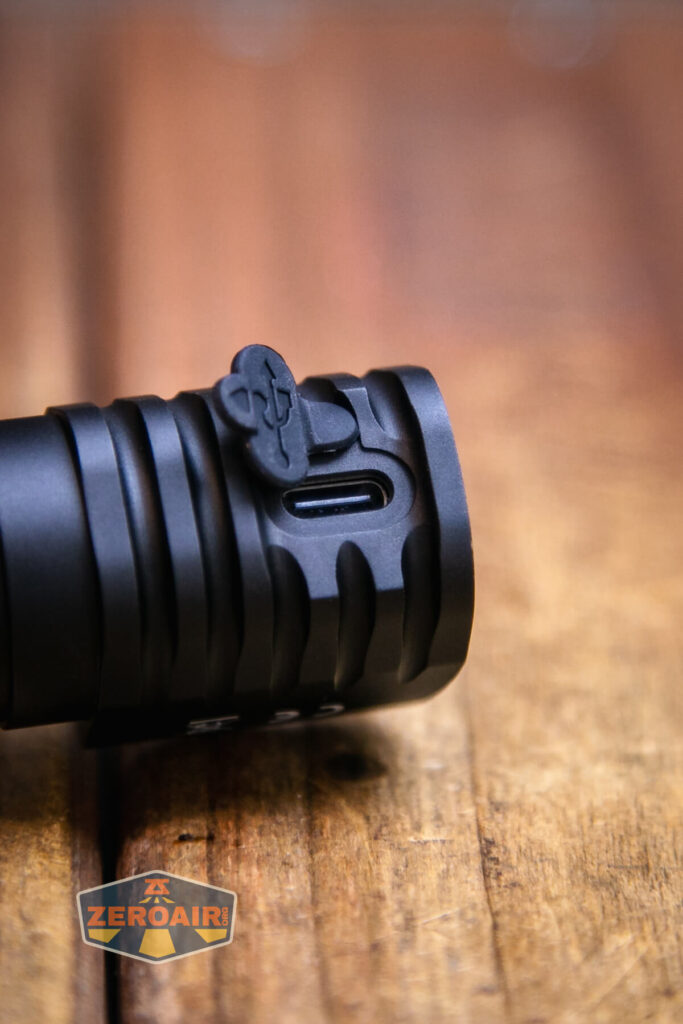
The Cyansky HS7R multifunctional headlamp has a built-in USB-C charging port, too. There’s a small charging port cover that presses into the USB-C port. This feels sufficient.
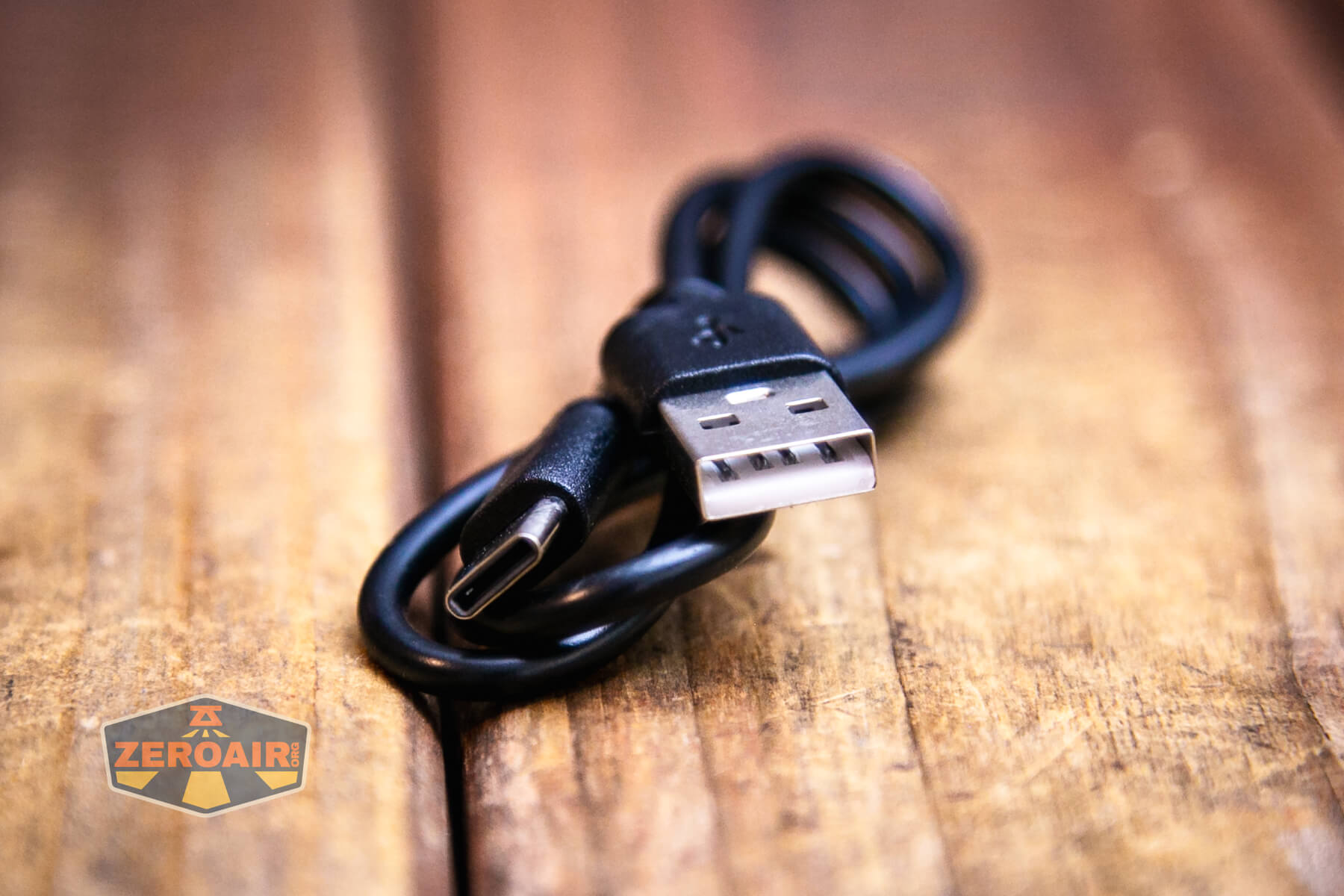
An appropriate cable is included – USB to USB-C.
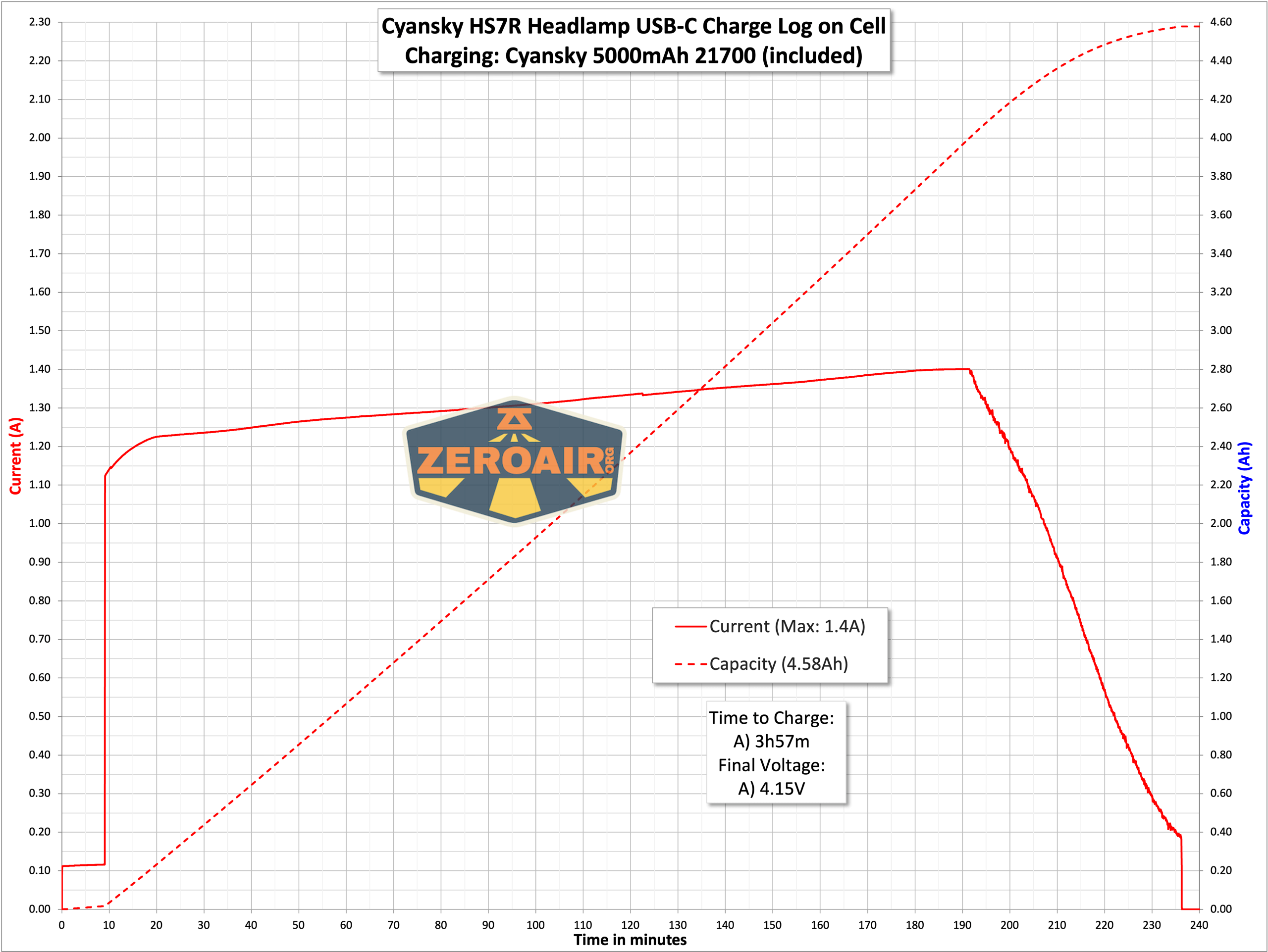
While charging, the switch atop the light demonstrates charge activity by blinking red. When charging is complete, this switch turns green. Charging by either USB or USB-C looks just fine, and is fairly quick, at around 2A.
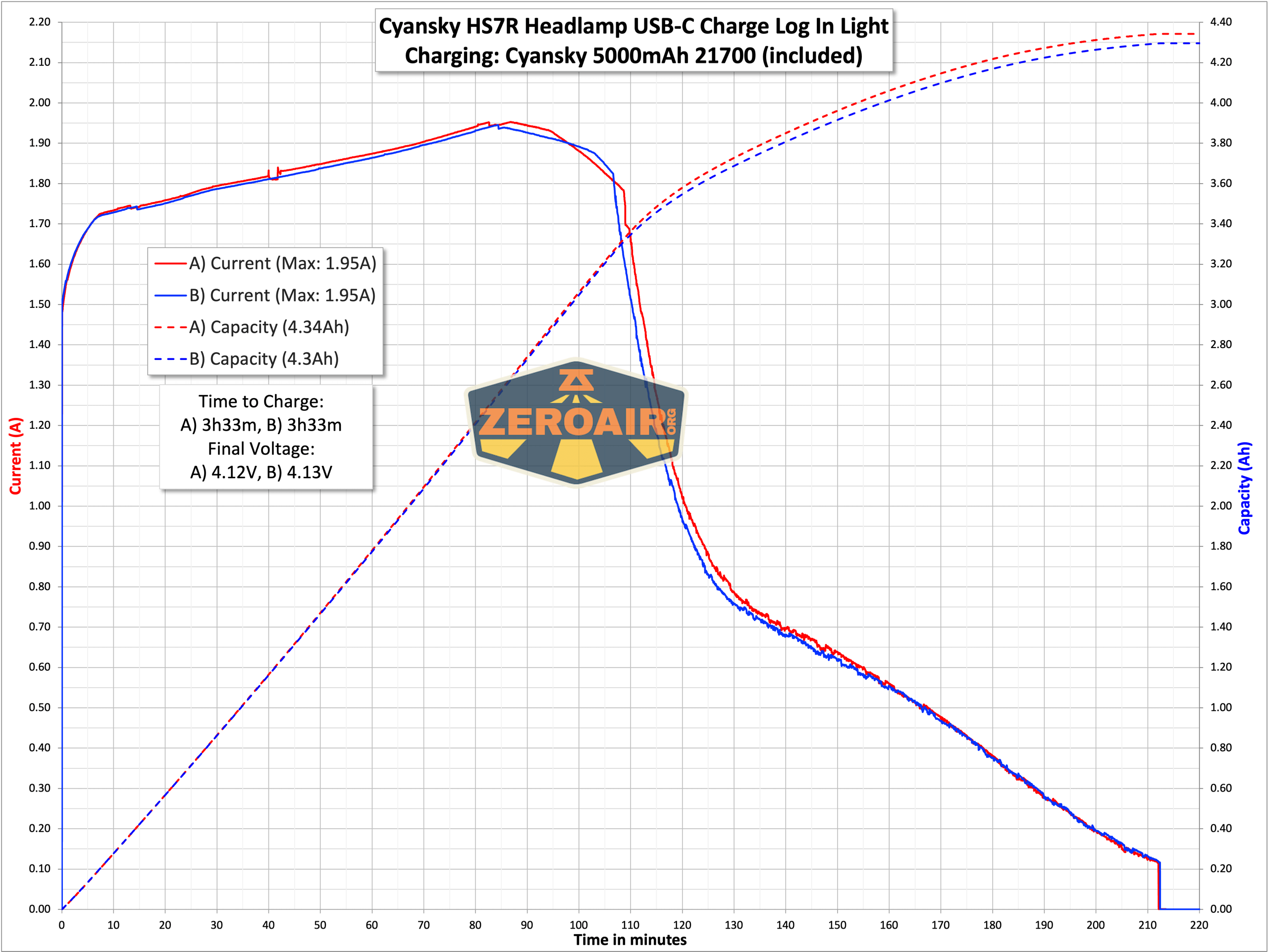
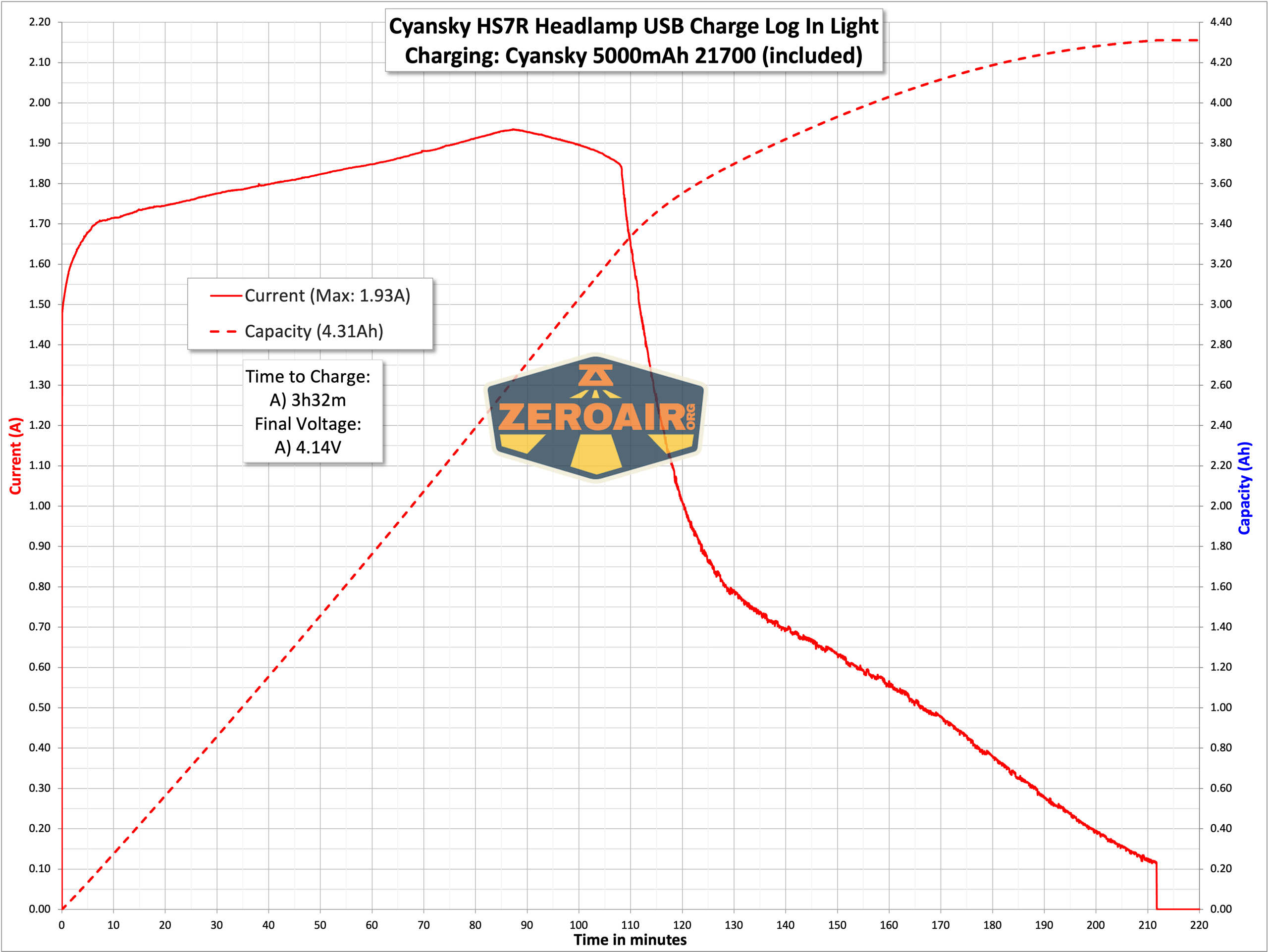
As stated, the cell has some other features too. There’s built-in USB-C charging, by way of a USB-C port on the positive terminal end.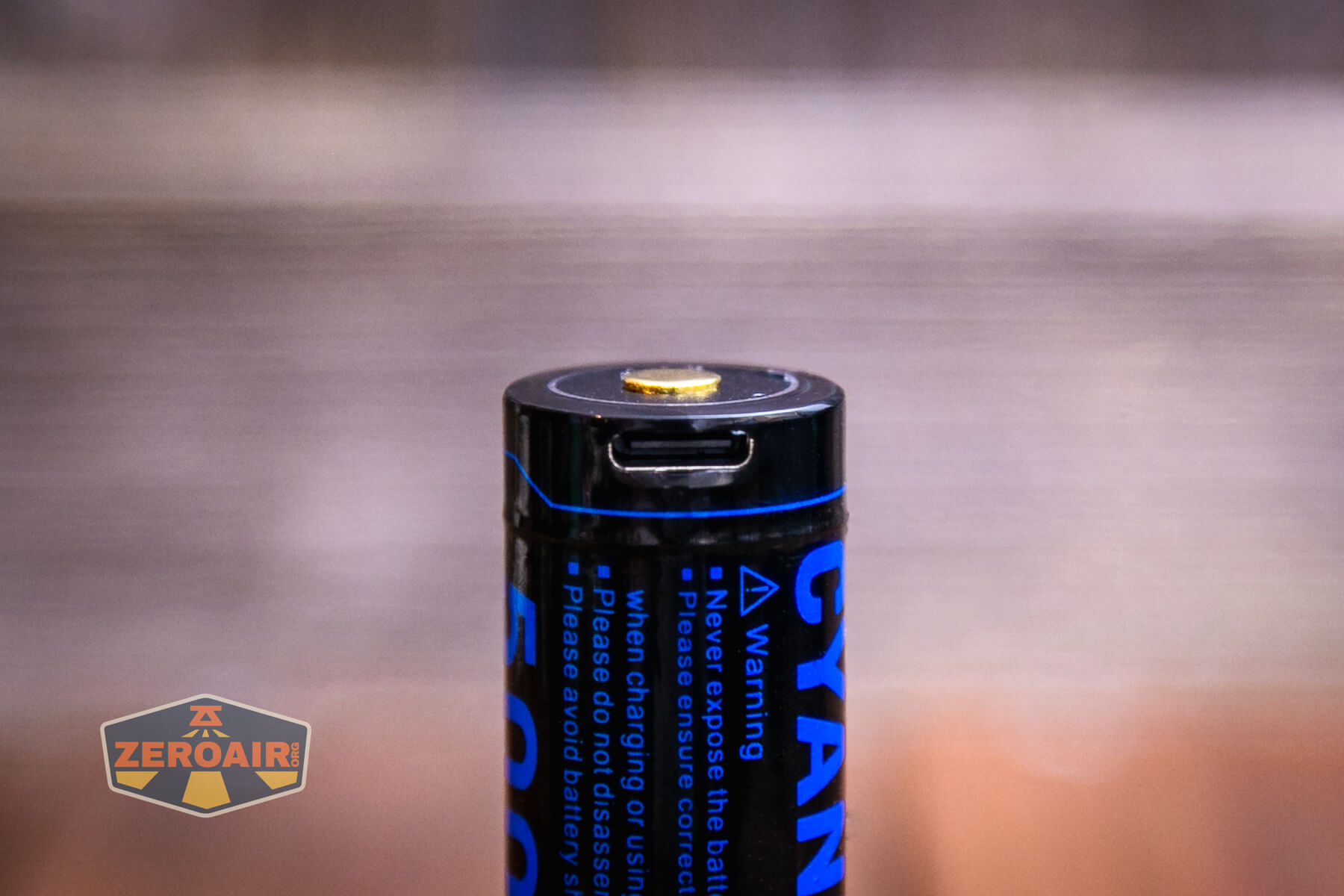
Charging via the USB-C port in the cell is much slower than charging via the USB-C port in the body of the HS7R.
Modes and Currents
| Mode – Flood | Mode Claimed Output (lm) | Claimed Runtime | Measured Lumens | Tailcap Amps |
|---|---|---|---|---|
| Turbo | 2000 | 4.5h | 1728 (0s) 1641 (30s) |
6.93 |
| High | 500 | 9.5h | 428 | 1.00 |
| Med | 100 | 48h | 86 | 0.17 |
| Low | 15 | 140h | 15 | 0.02 |
| Mode | Mode Claimed Output (lm) | Claimed Runtime | Measured Lumens | Tailcap Amps |
|---|---|---|---|---|
| Turbo – Spot | 2800 | 4h | 2463 (0s) 2090 (30s) |
10.20 |
| High | 800 | 6h | 690 | 1.60 |
| Med | 200 | 26h | 175 | 0.32 |
| Low | 50 | 100h | 43 | 0.06 |
Pulse Width Modulation
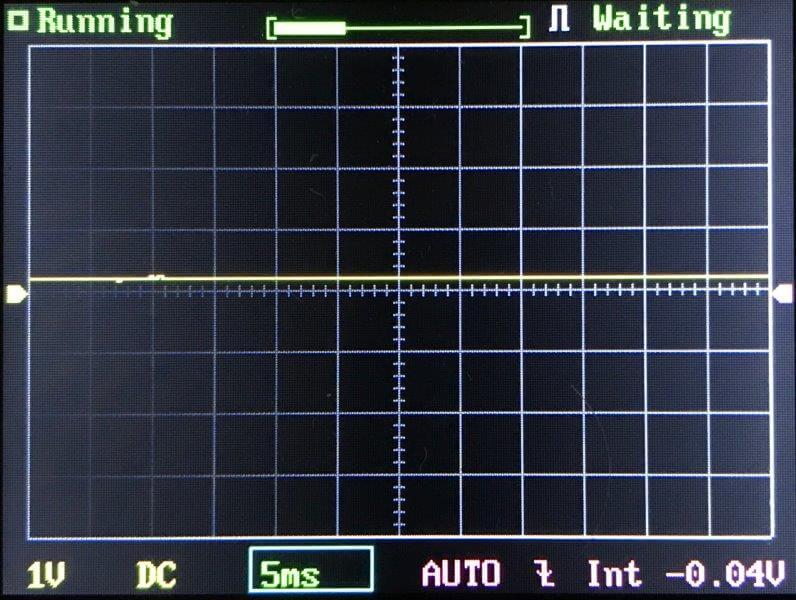
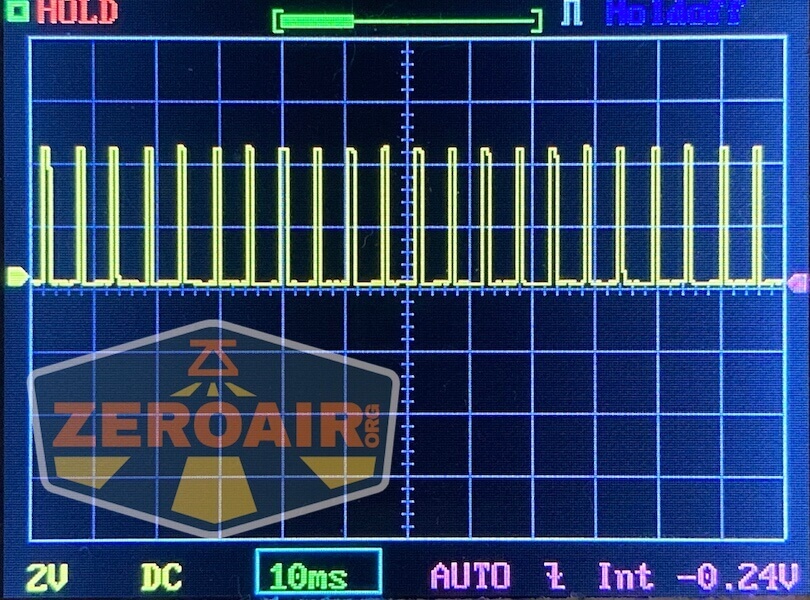
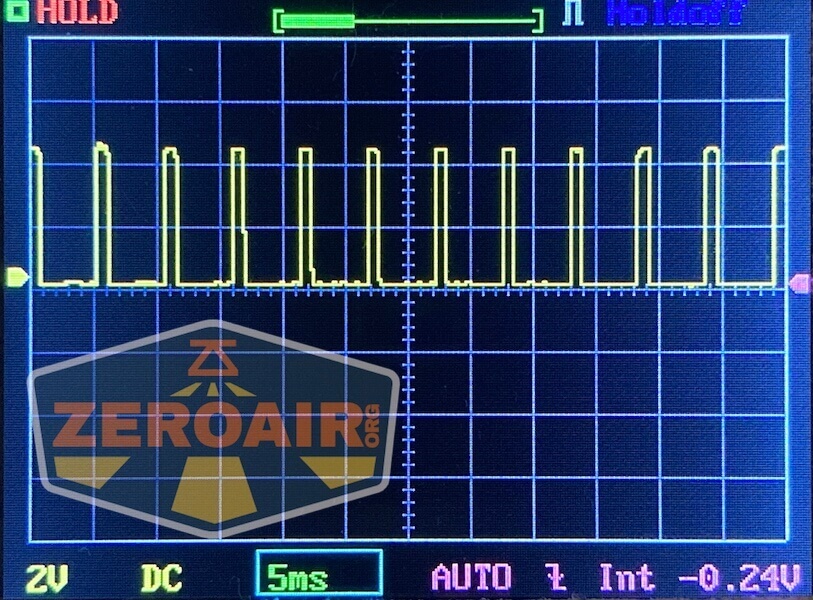
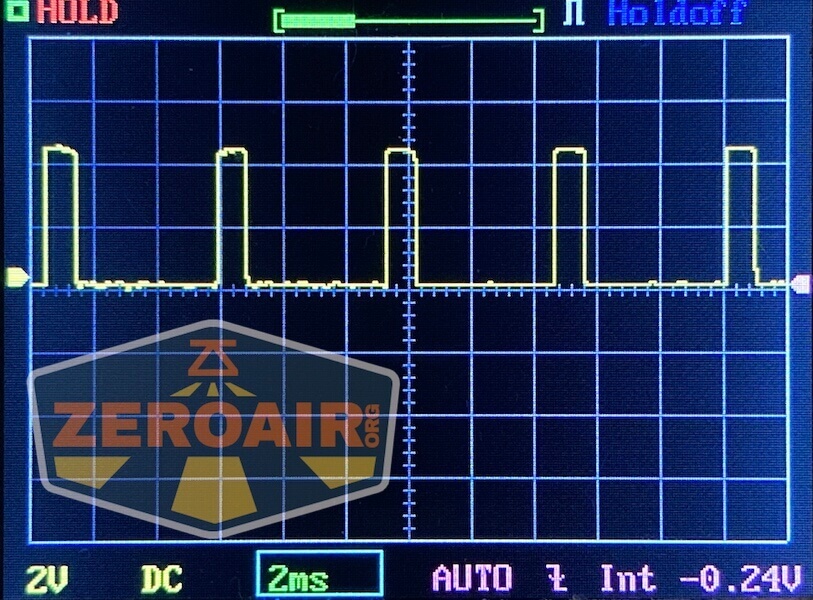
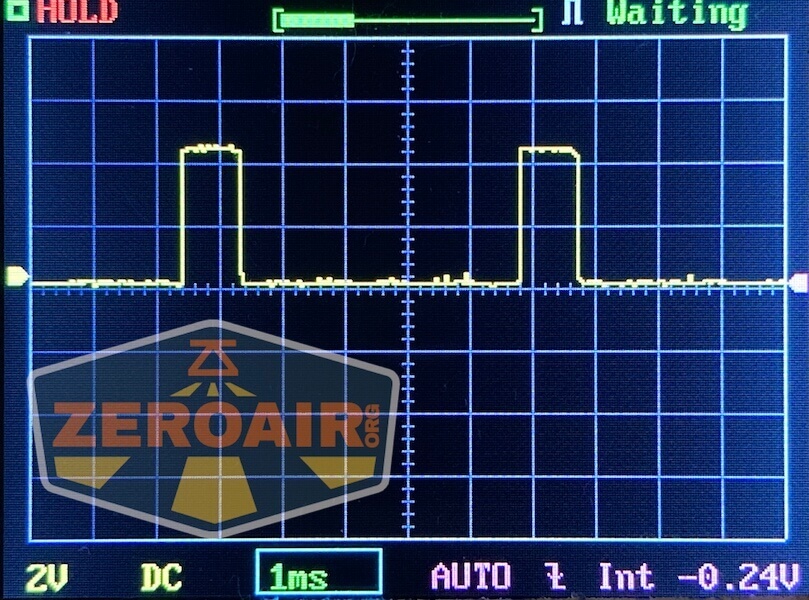
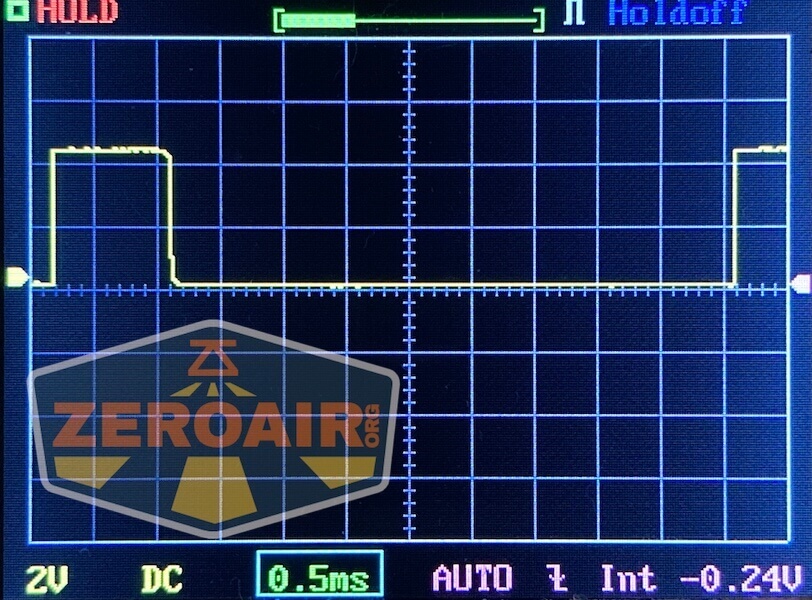
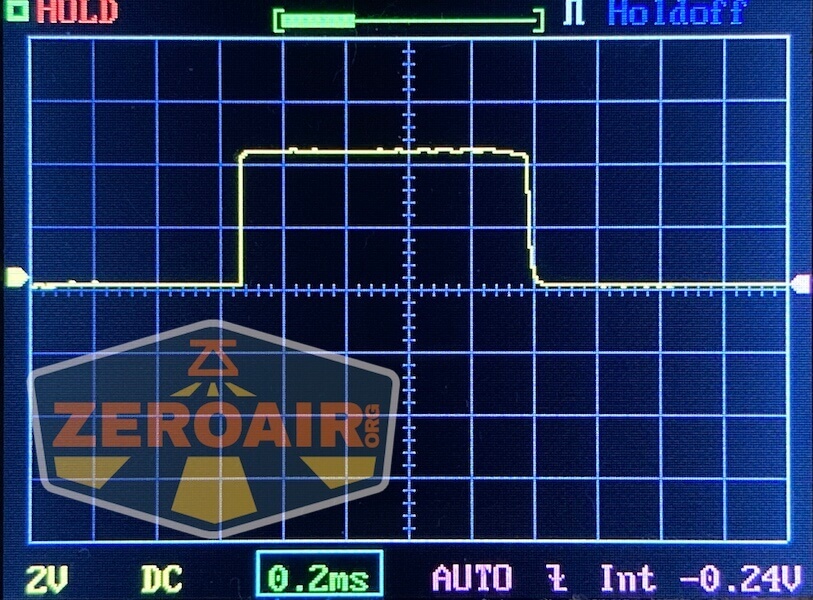
No mode from either output option uses PWM.
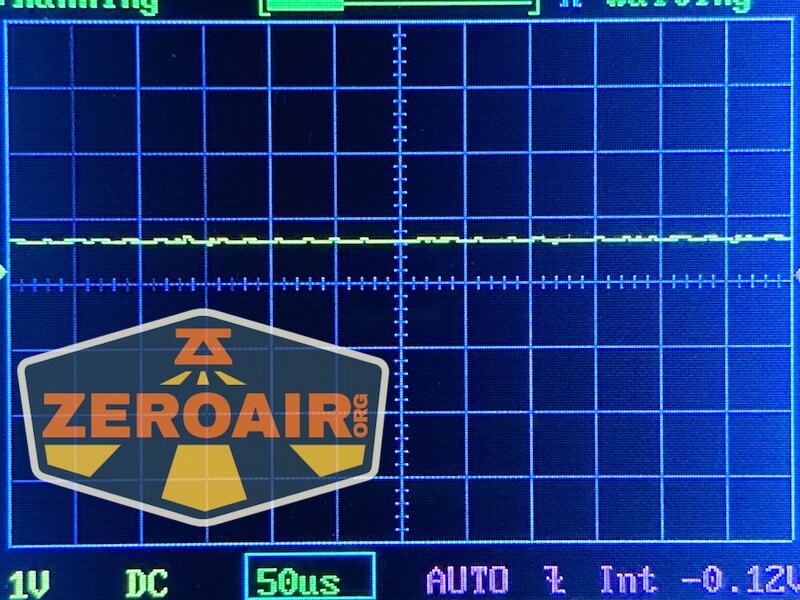
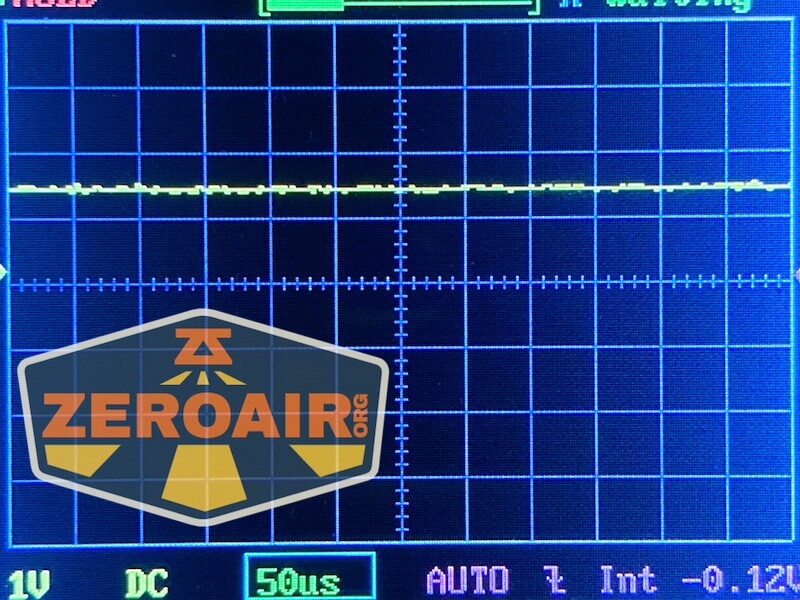
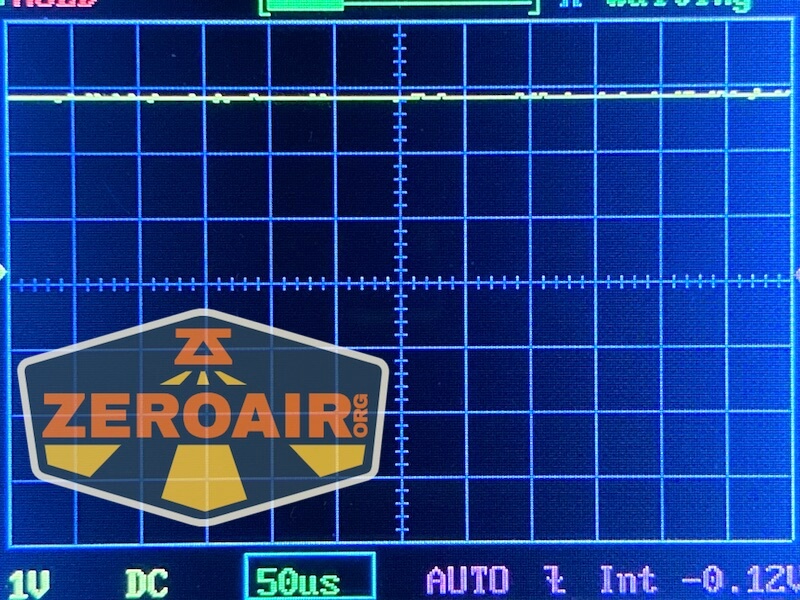
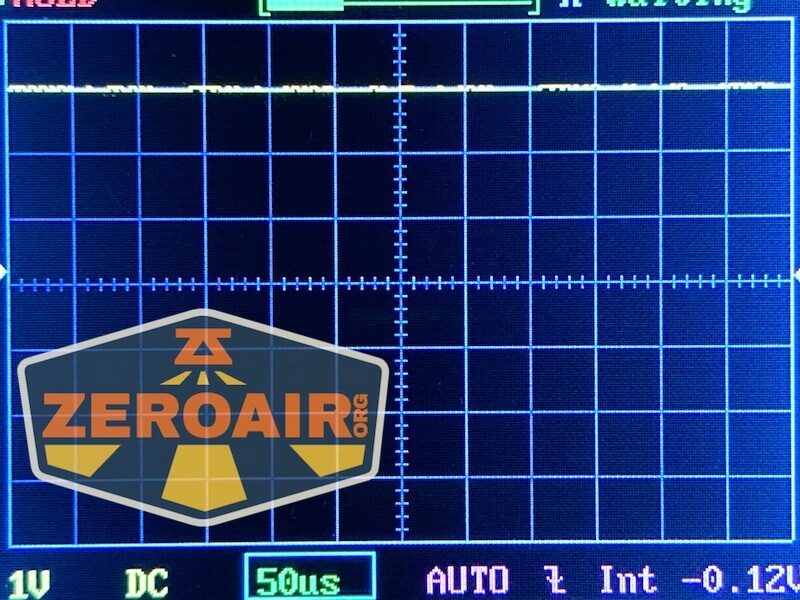
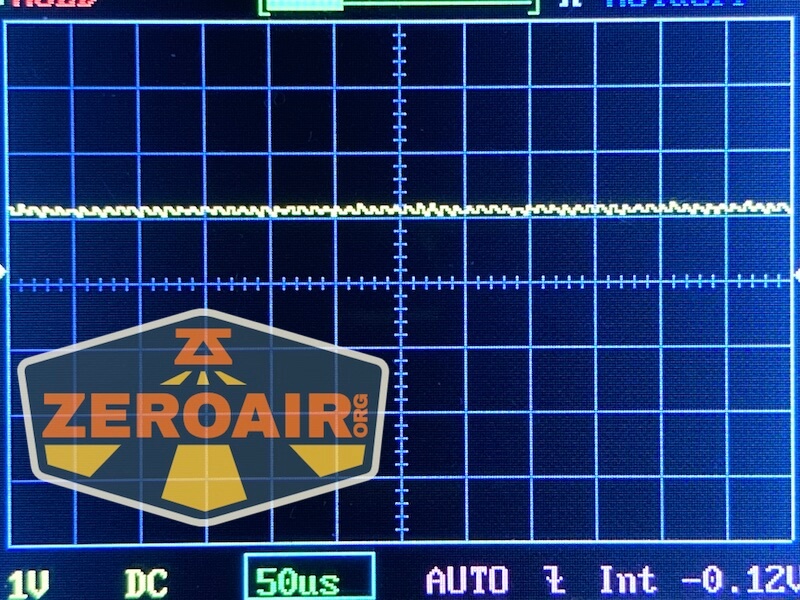
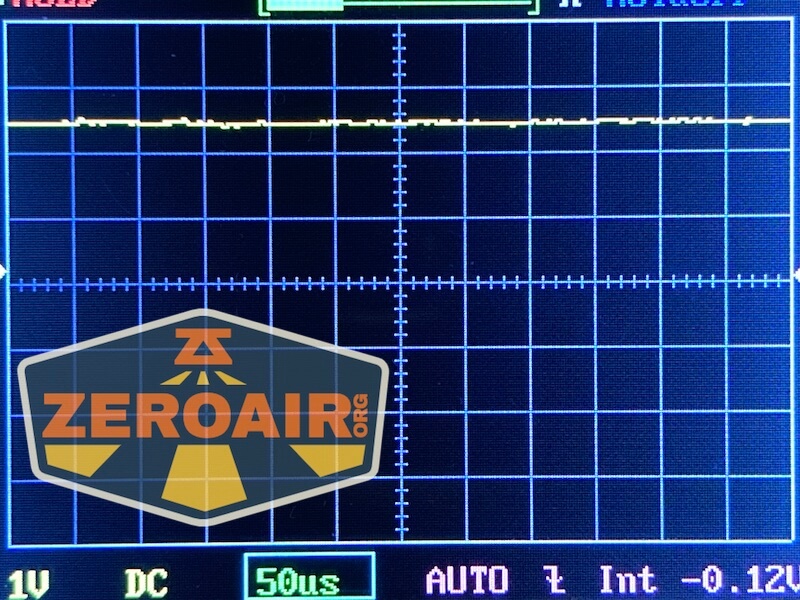
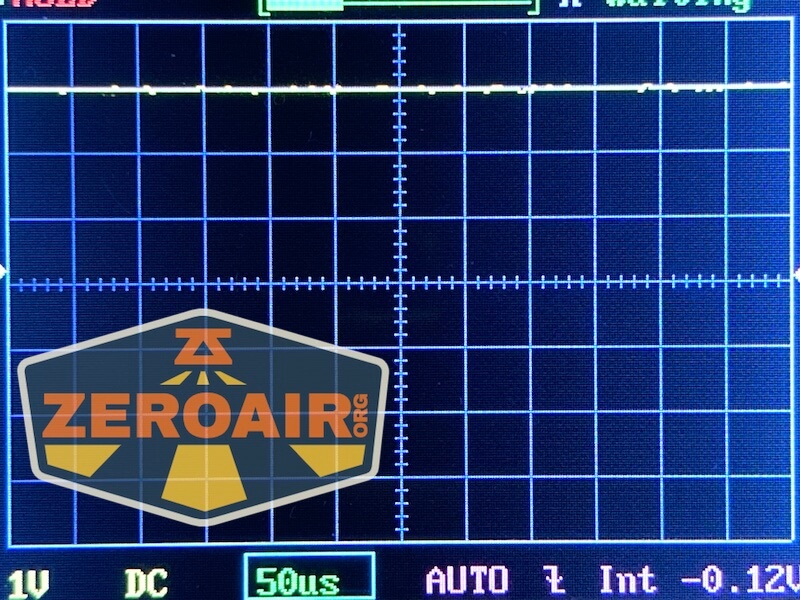
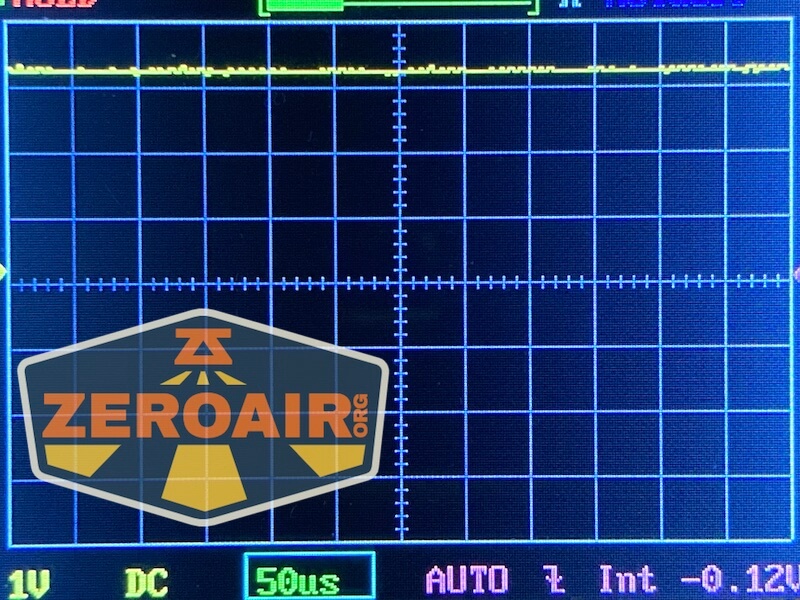
For reference, here’s a baseline shot, with all the room lights off and almost nothing hitting the sensor. Also, here’s the light with the worst PWM I could find. I’m adding multiple timescales, so it’ll be easier to compare to the test light. Unfortunately, the PWM on this light is so bad that it doesn’t even work with my normal scale, which is 50 microseconds (50us). 10ms. 5ms. 2ms. 1ms. 0.5ms. 0.2ms. In a display faster than 0.2ms or so, the on/off cycle is more than one screen, so it’d just (very incorrectly) look like a flat line. I wrote more about this Ultrafire WF-602C flashlight and explained a little about PWM too.
User Interface and Operation
There are two switches on the HS7R. The top switch (seen below) controls the single emitter output. This is the throw or “spot” output.
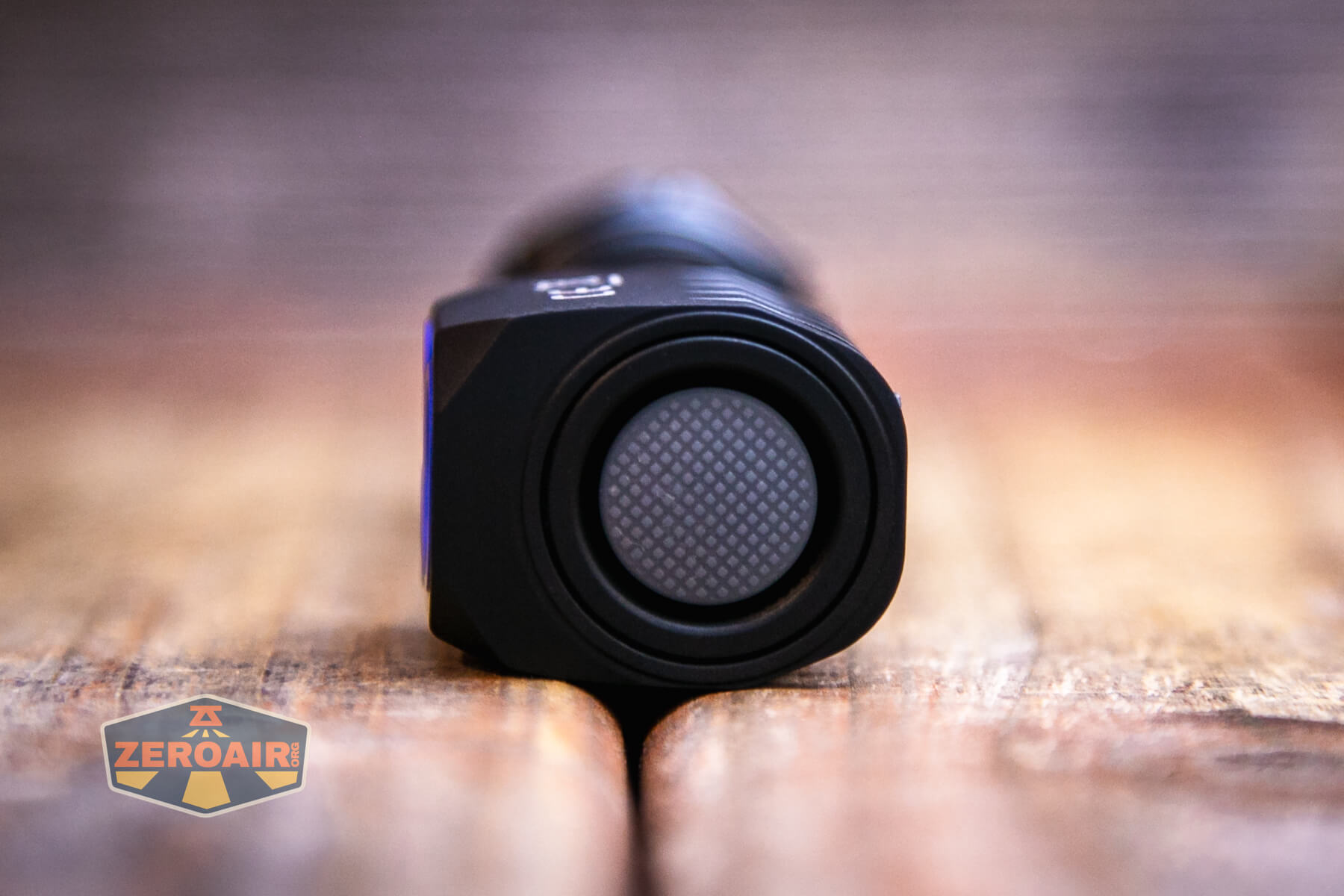
Action on this switch is low; it’s an e-switch.
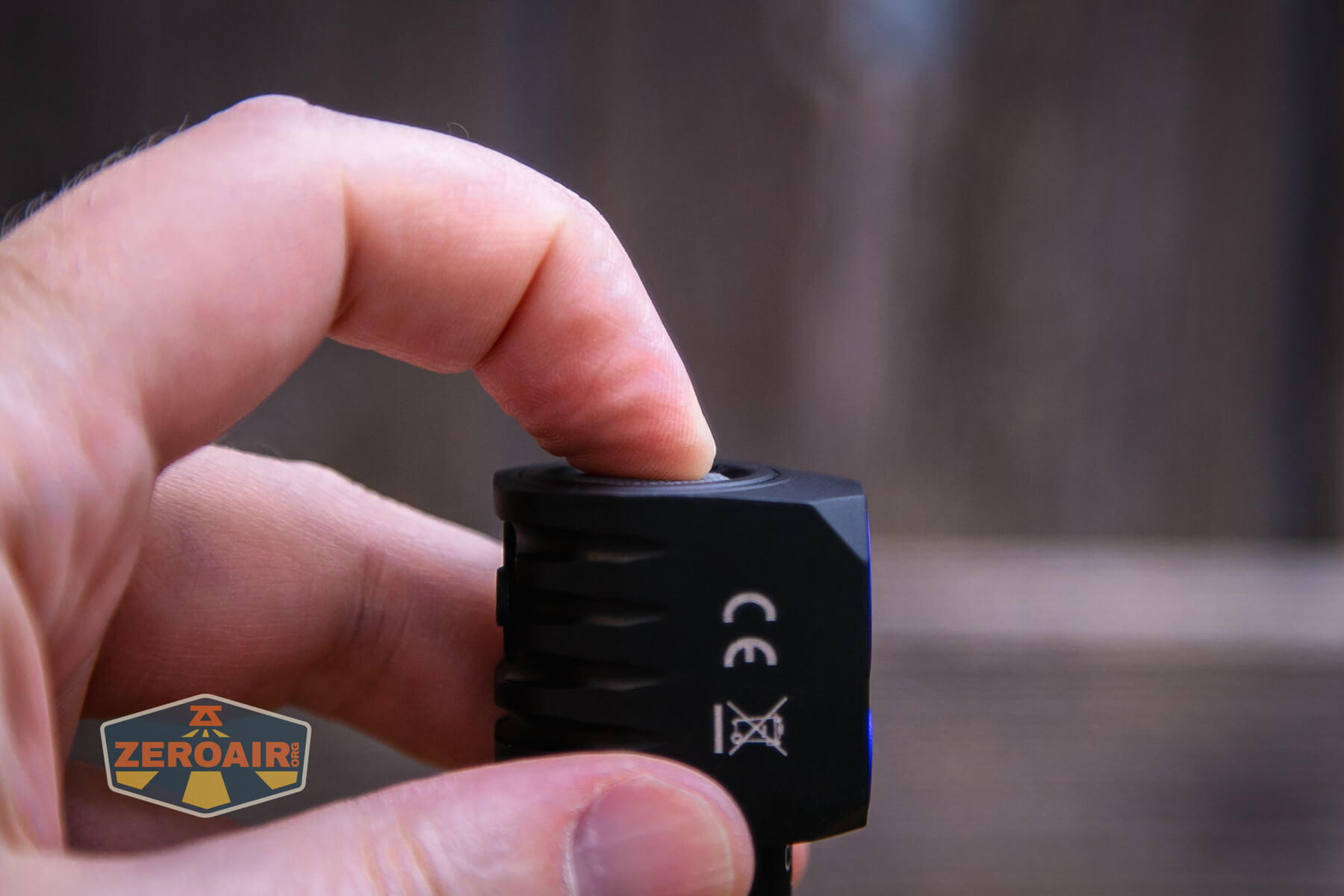
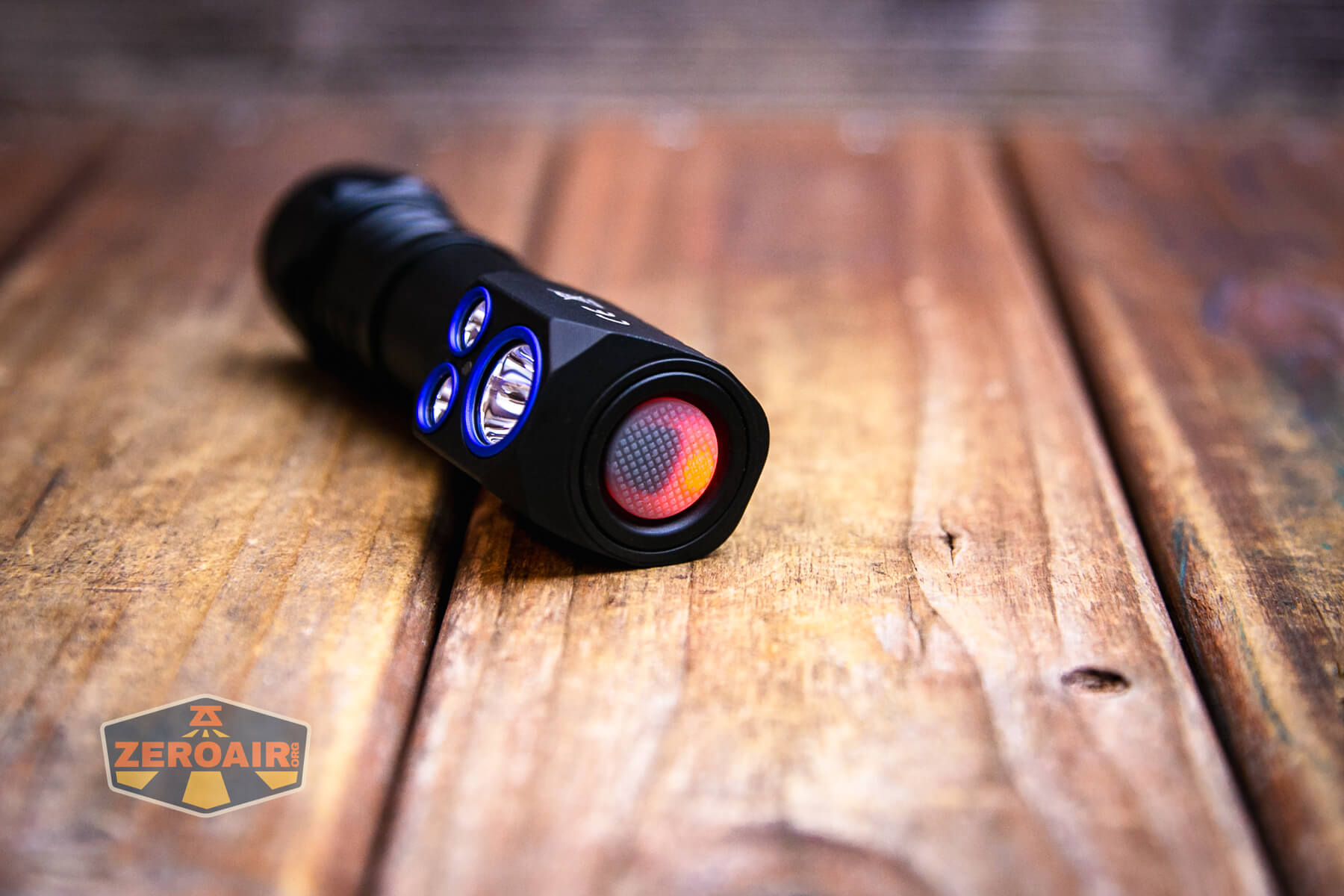
The switch also has an indicating function, demonstrated in red below.
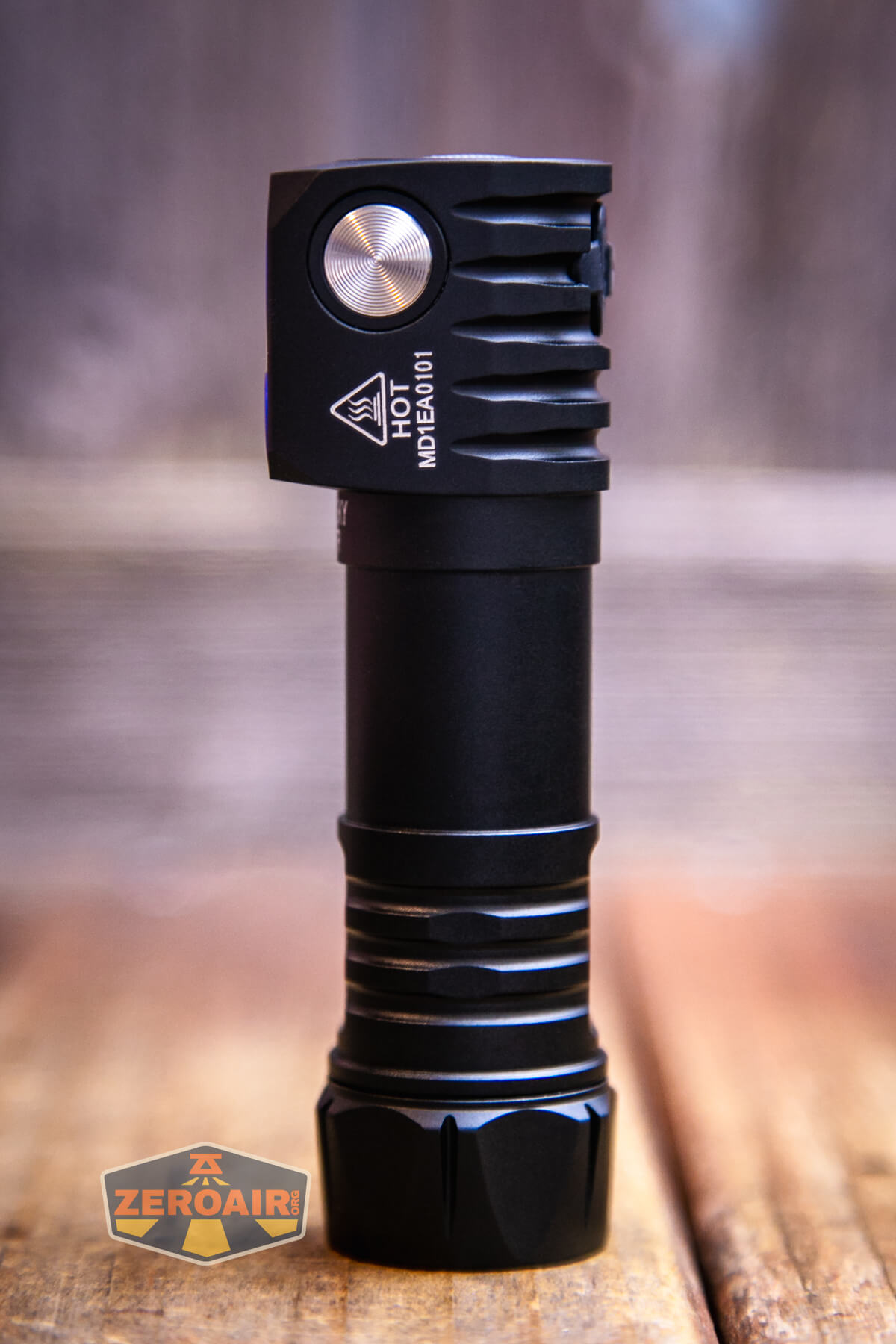
Control for the flood emitters is by this e-switch on the side of the head.
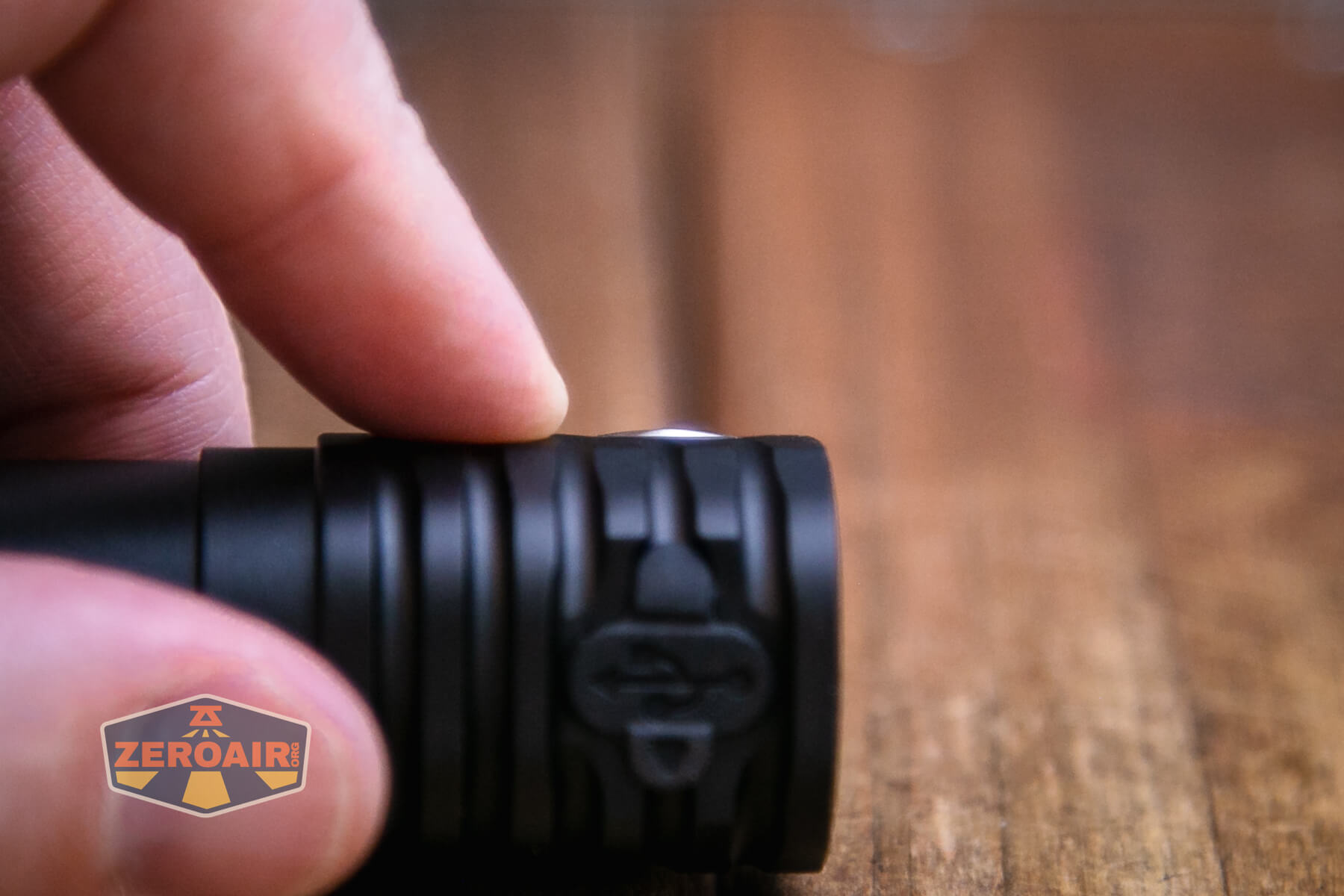
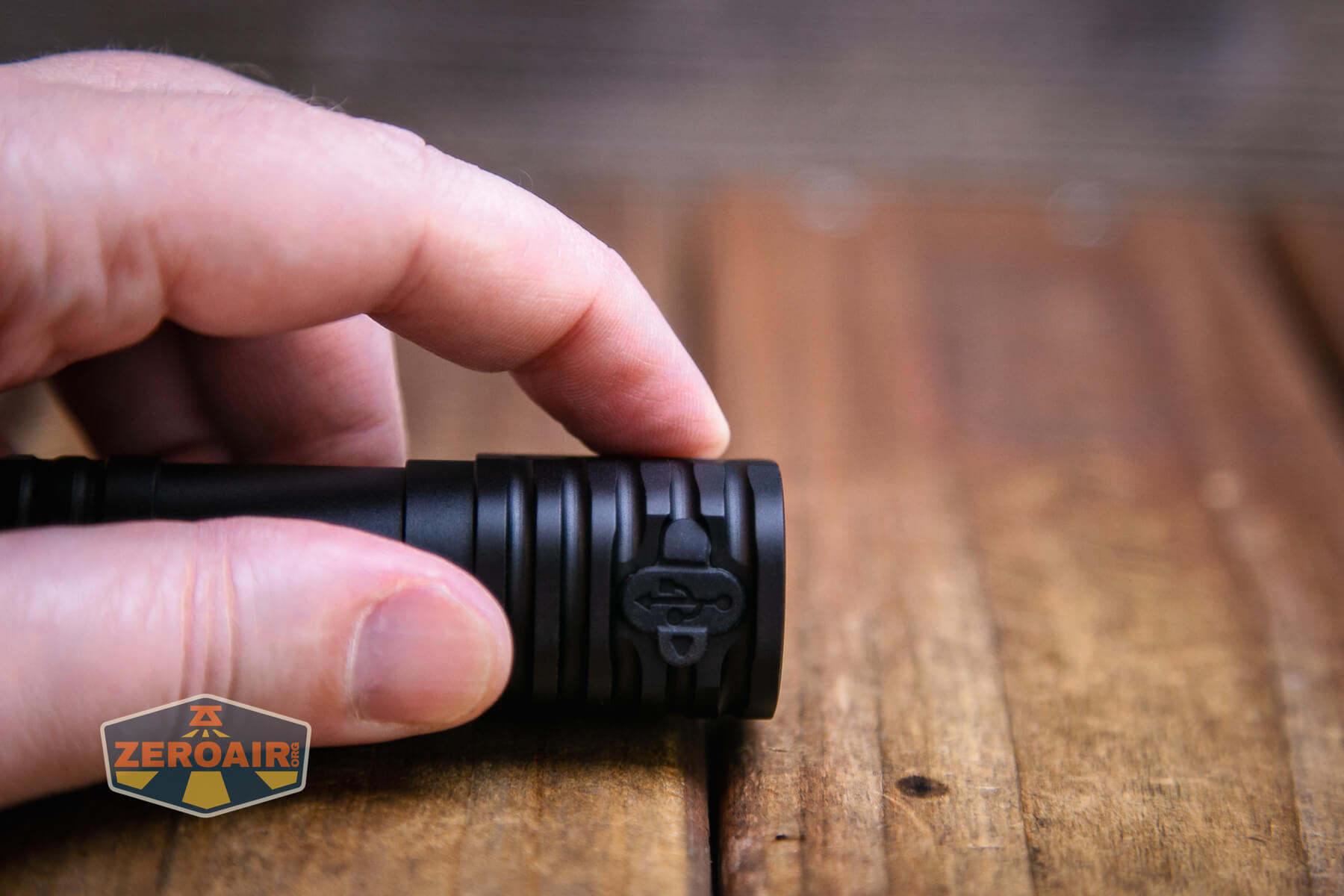
Aside from being separately controlled, the switches do nearly the same actions for their respective output. As such, I think I can cover both in just one table. Hey, tables are expensive!! Here’s a UI table!
| State | Action | Result |
|---|---|---|
| Off | Click (either) | Battery indicator^ |
| Off | Hold Top Hold Side |
Spot on (mode memory) Flood on (mode memory) |
| Spot On Flood On |
Hold Top Hold Side |
Off |
| Spot On | Hold Side | Switch to Flood |
| Flood On | Hold Top | Switch to Spot |
| On | Click respective switch | Mode advance (LMH) |
| On | Click switch for other emitter | No action |
| On | Double click switch for other emitter | Disable proximity sensor until light is shut off again or until double click is repeated |
| Off | Hold either >3s | Lockout (emitter will flash 3x to confirm lock) |
| Lockout | Hold either switch >3s or Plug into charging port |
Unlock to emitter of switch pressed or Unlock to off (and charging state) |
^ The switch indicates the battery level as follows:
Green: 76-100%
Green blinking: 51-75%
Red: 26-50%
Red blinking: 0-25%
LED and Beam
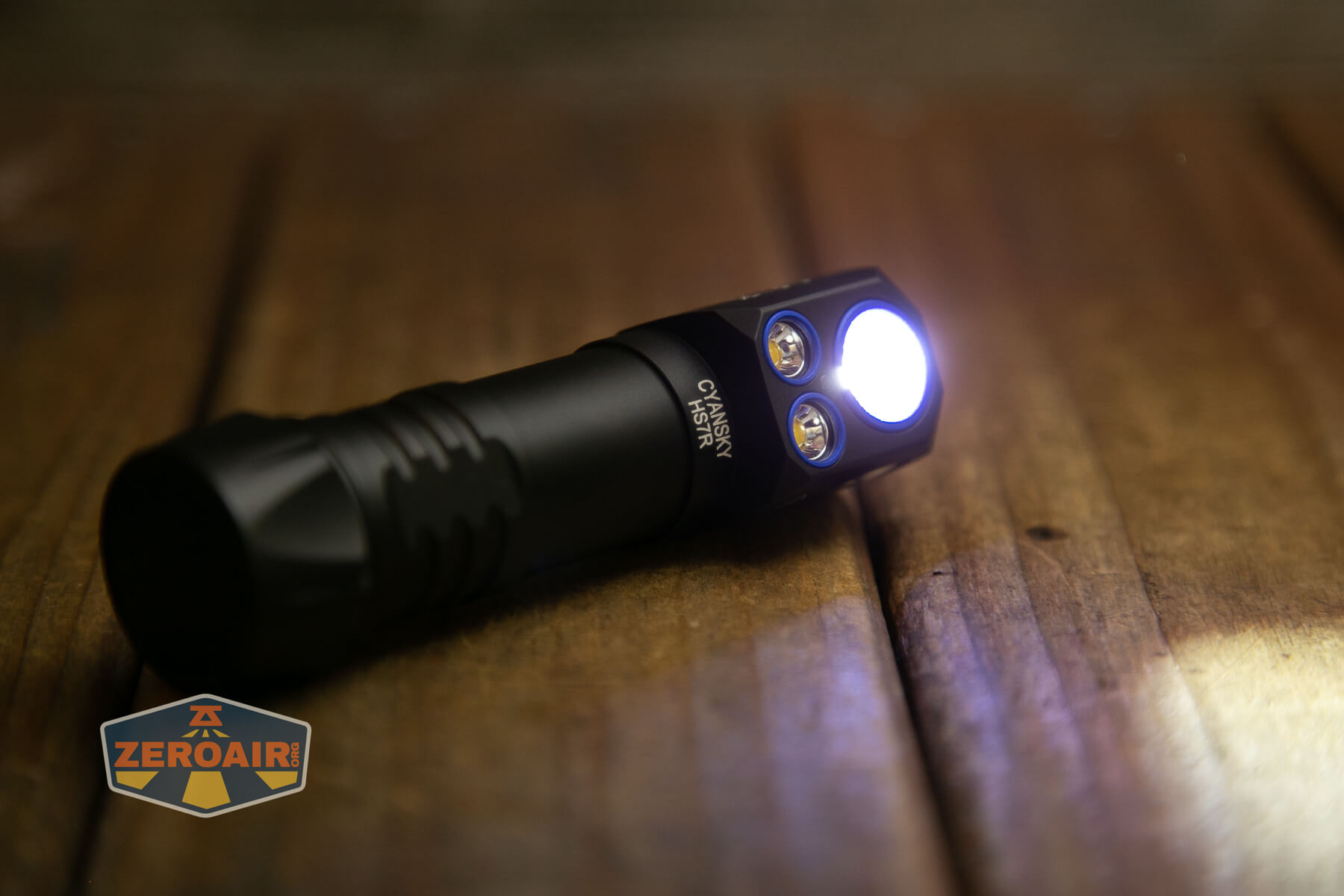
Both spot and flood options are available on the Cyansky HS7R multifunctional headlamp. The spot is a single Luminus SFT-70 (6500K) emitter, and flood uses two Osram P9 (4000K) emitters.
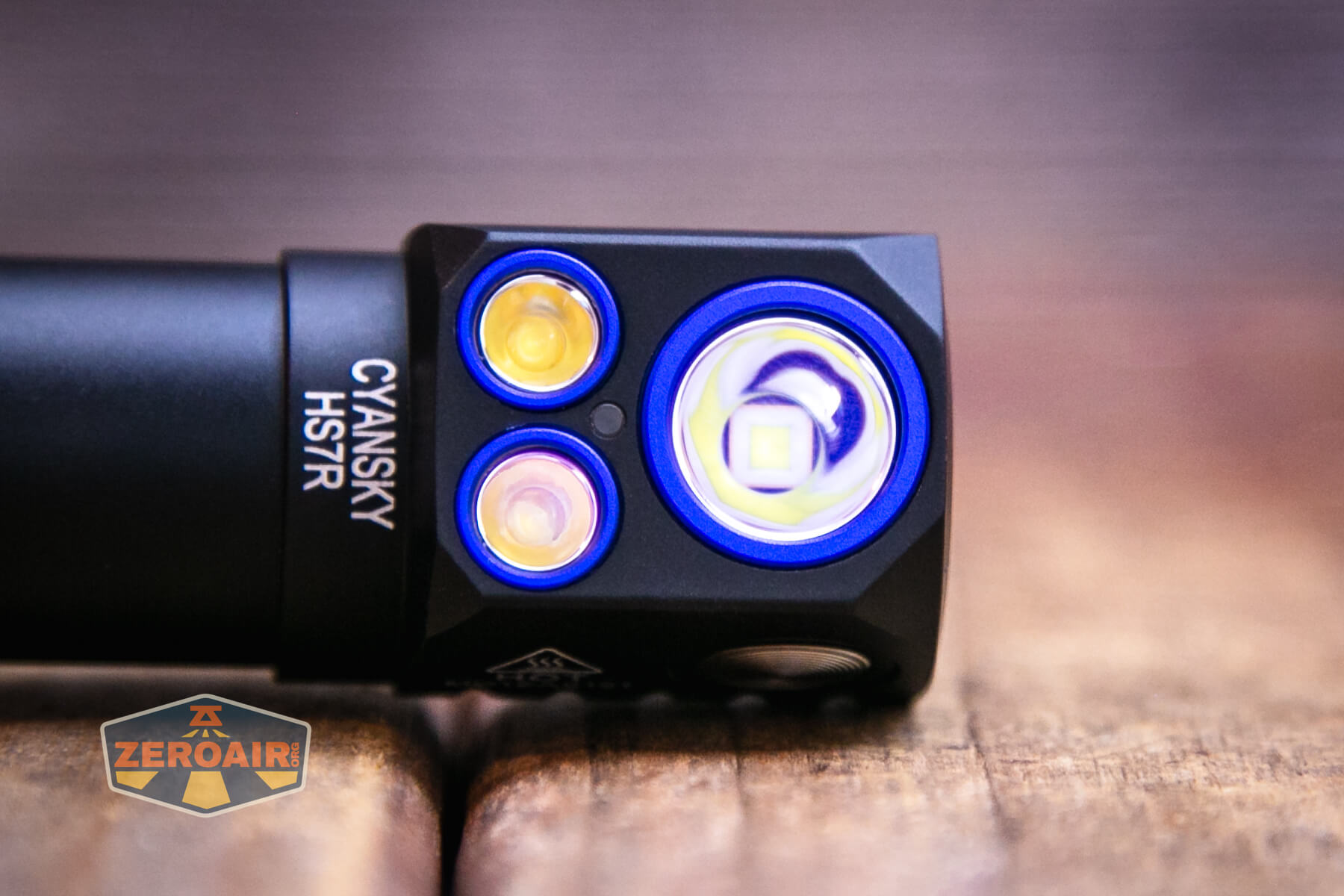
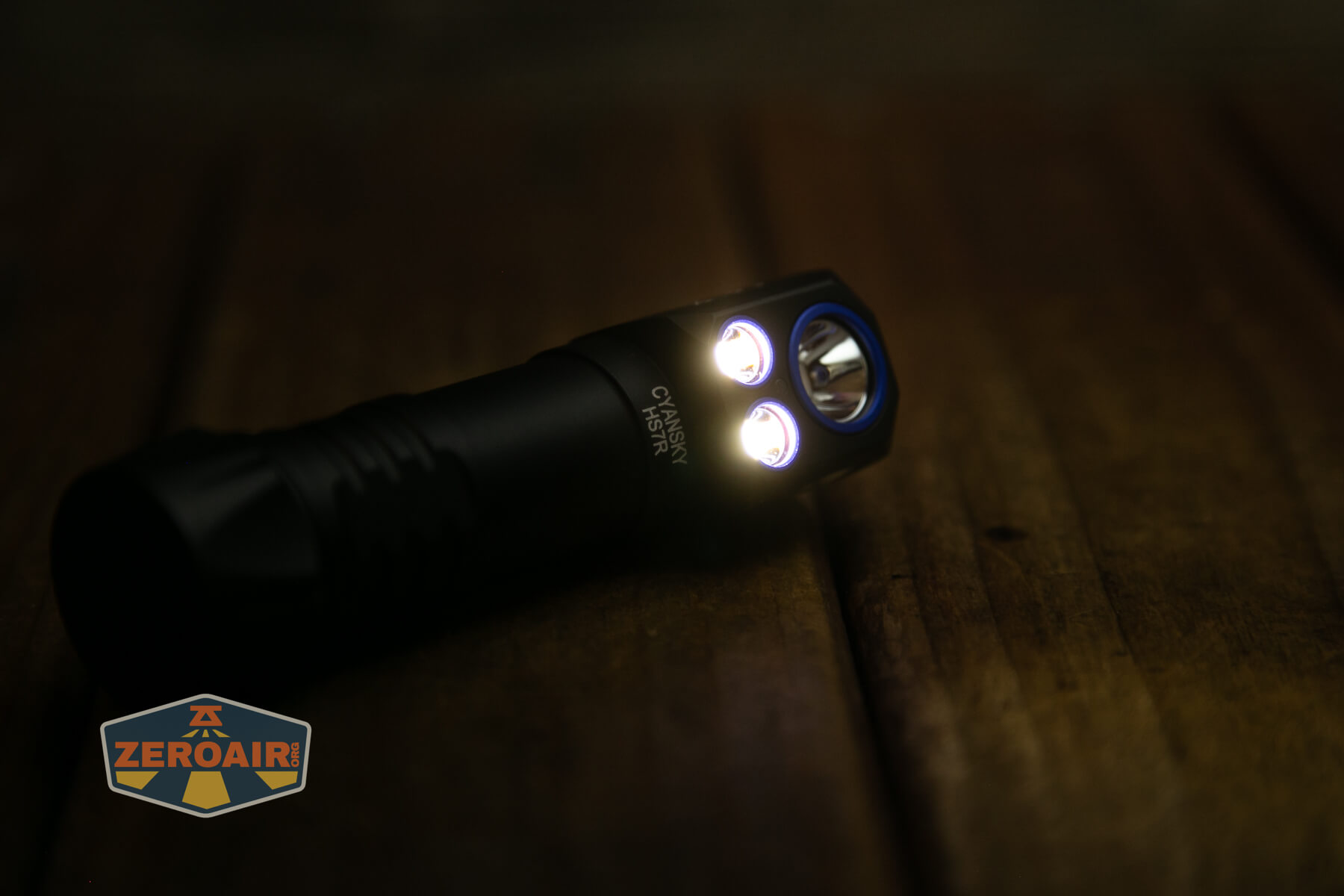
LED Color Report (CRI and CCT)
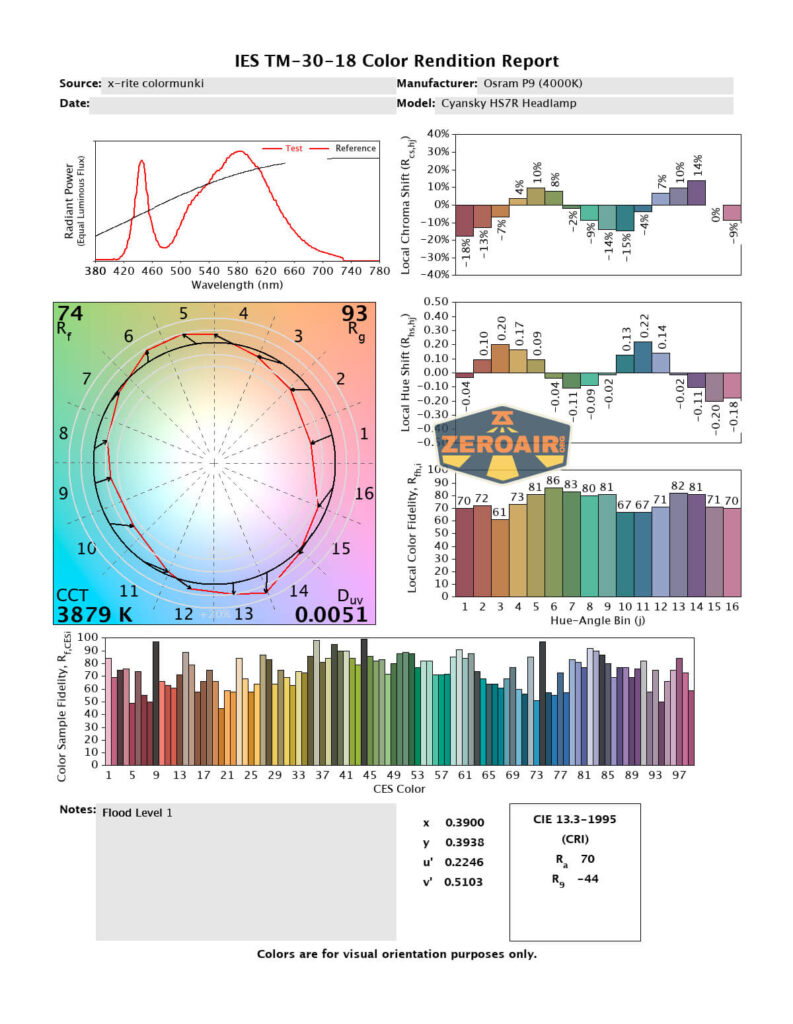
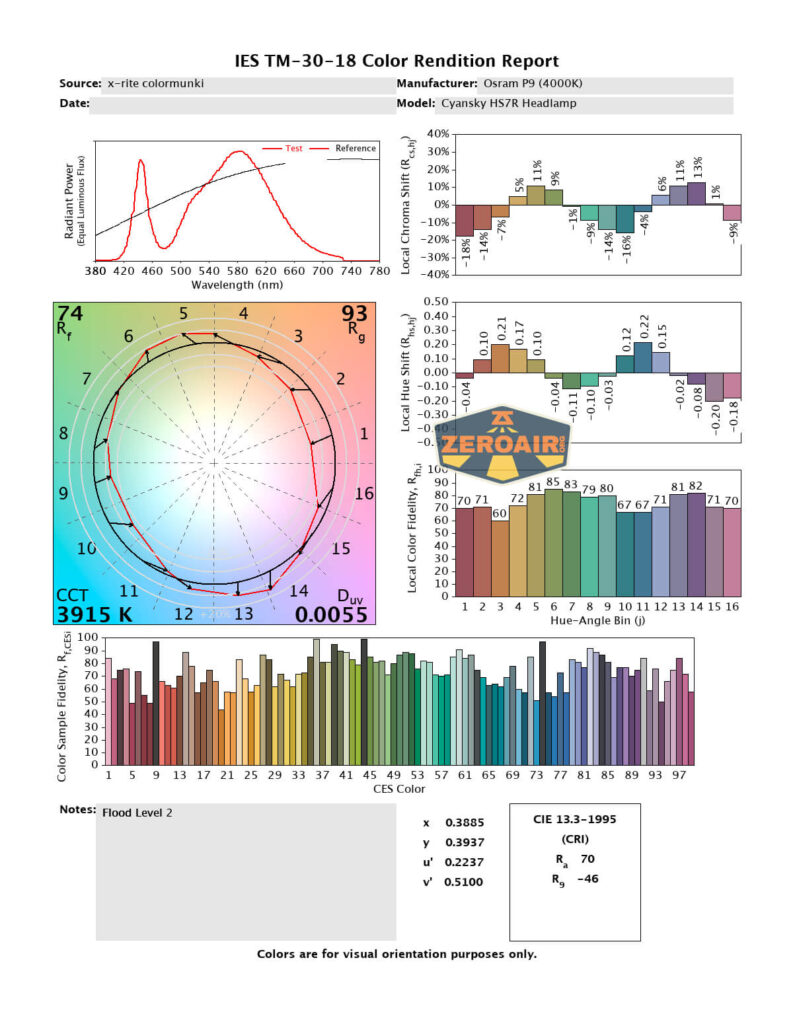
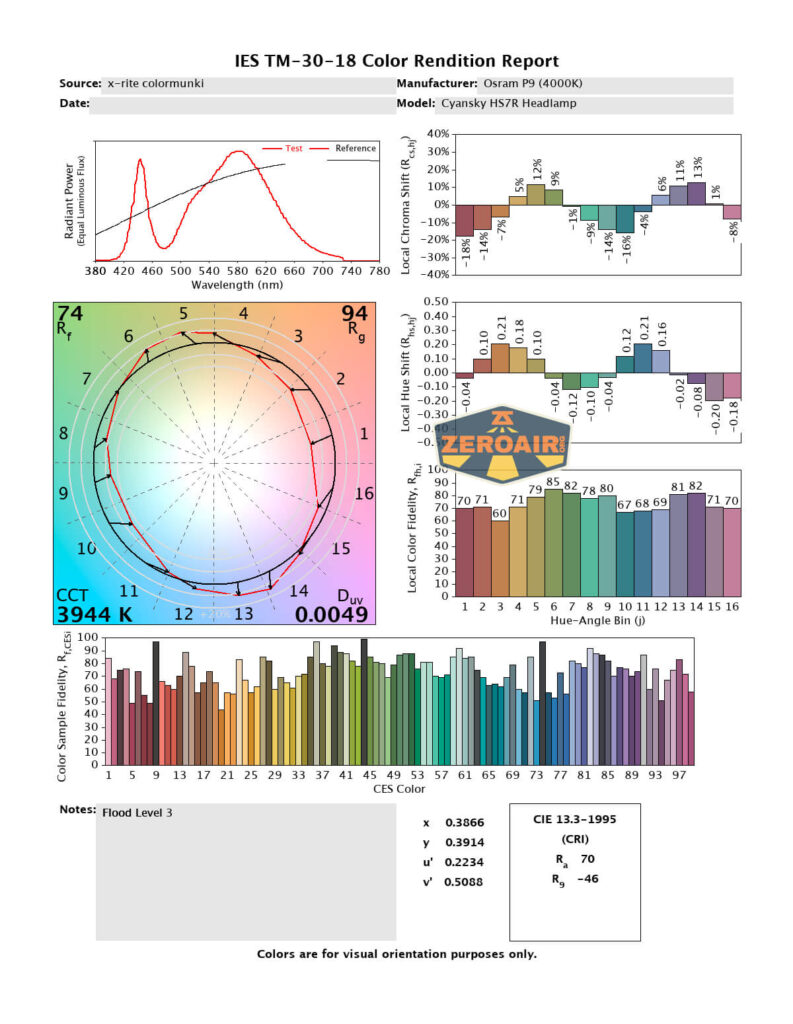
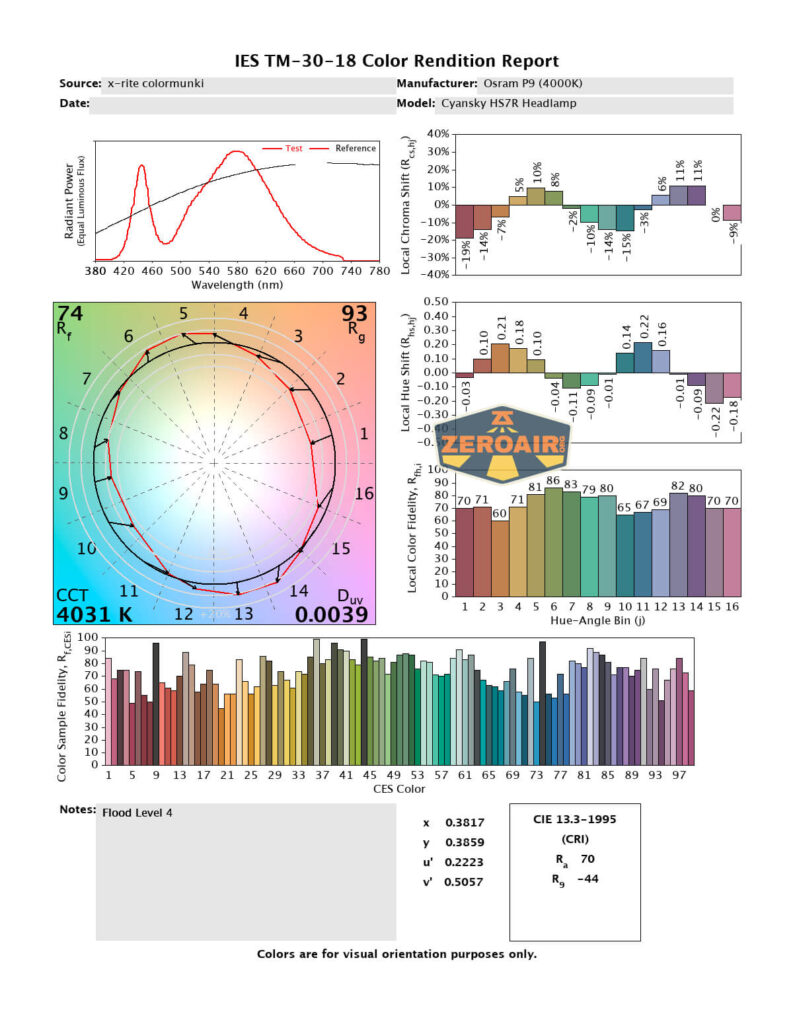
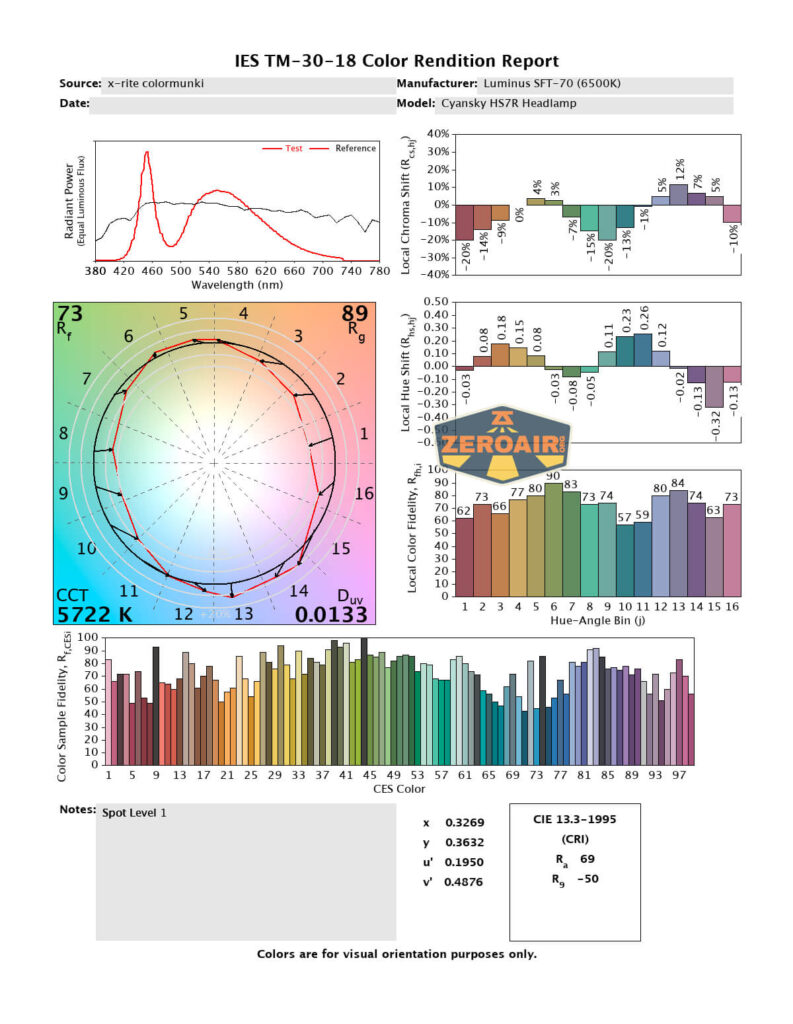
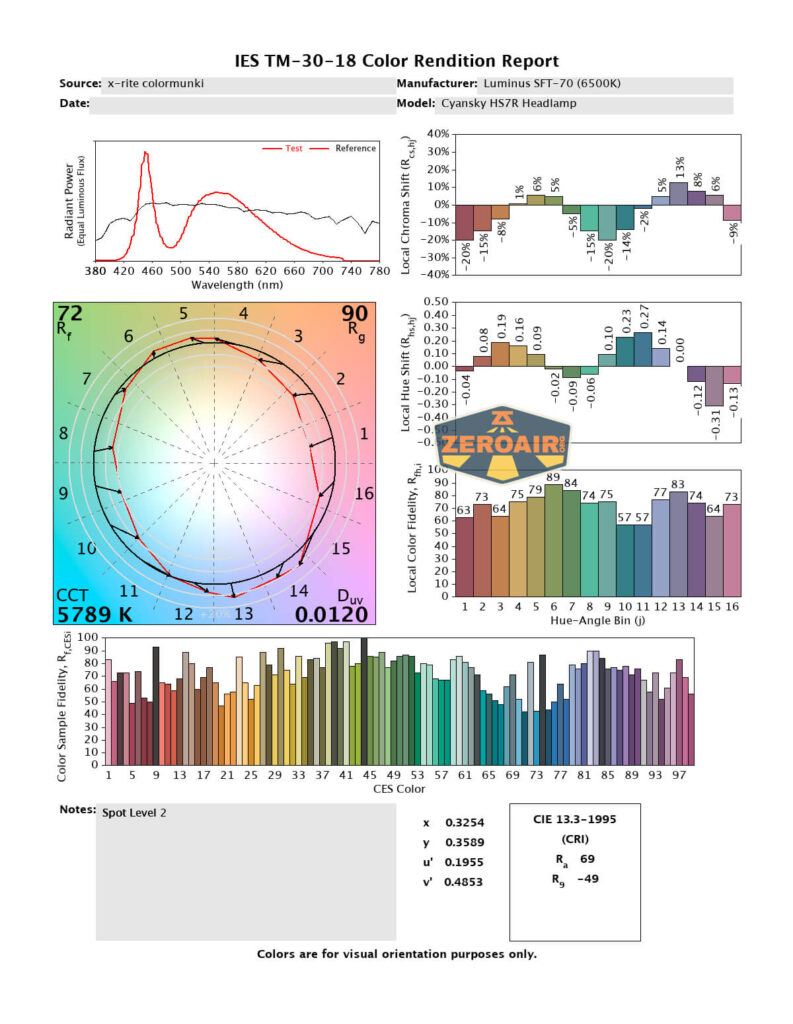
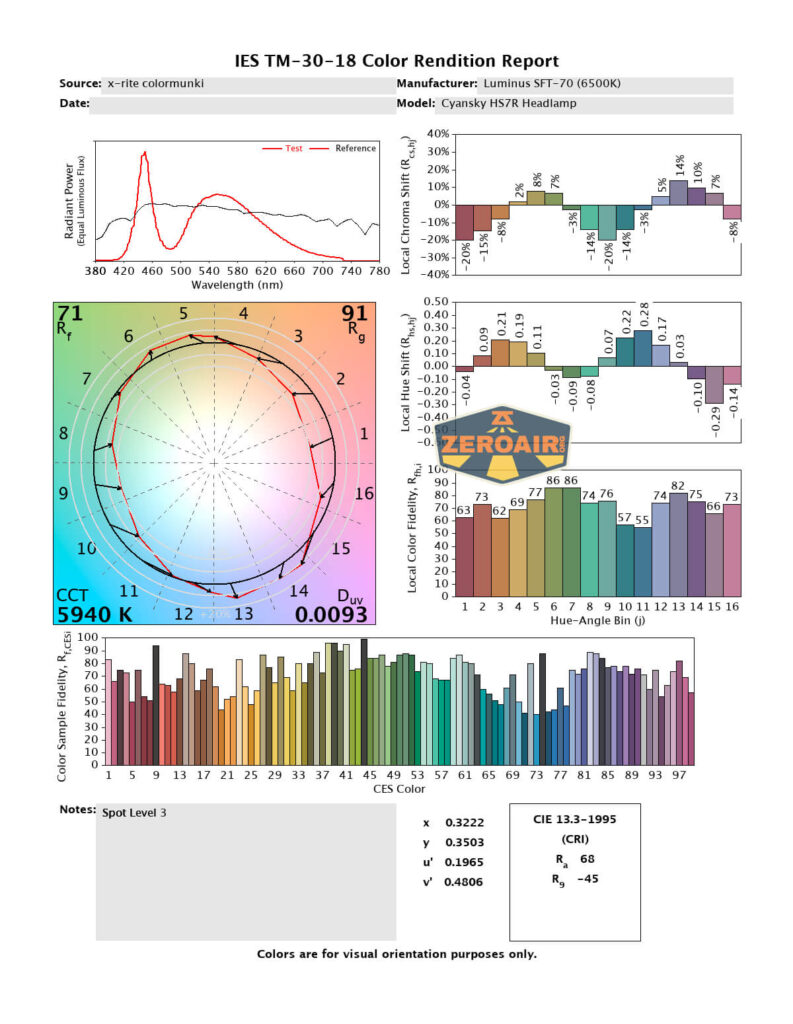
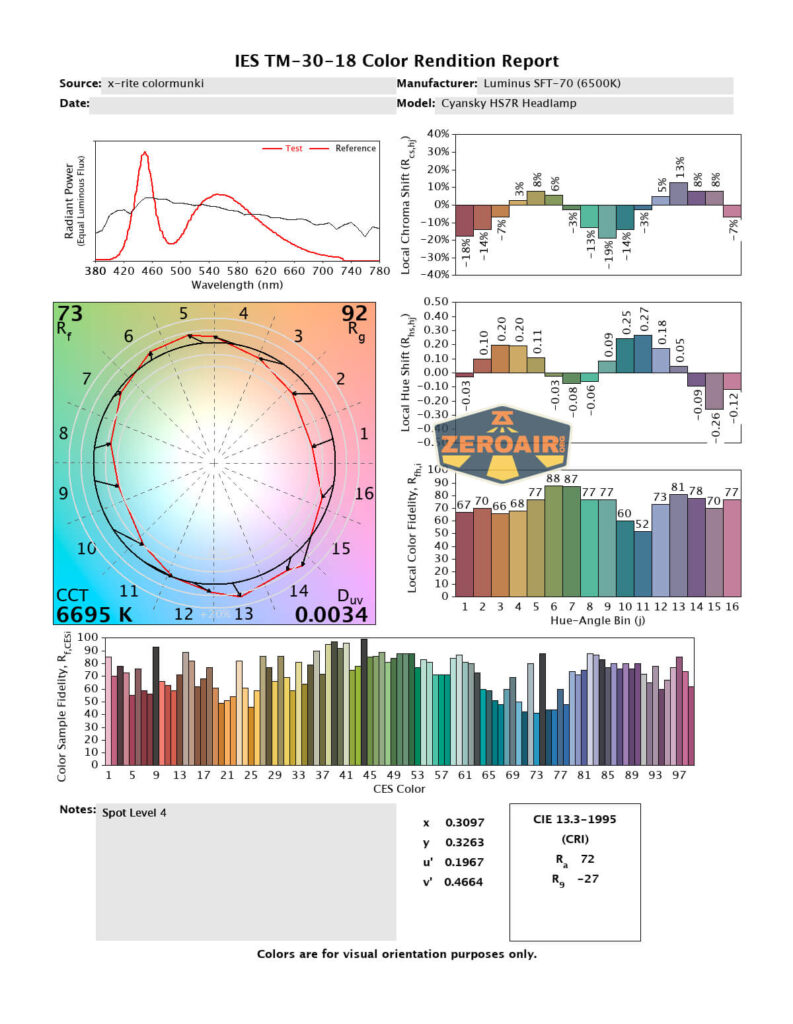
Below, flood is in the top row, with spot below. The flood emitters do come in around 4000K, which is great. CRI is low, though, at around 70. The spot emitter doesn’t hit that cool 6500K output immediately, on the highest output it does. This is normal, and indicative of the emitter being driven hard (a fact that’s confirmed above with spot turbo being around 10A). CRI is low here too, at around 72.
Beamshots
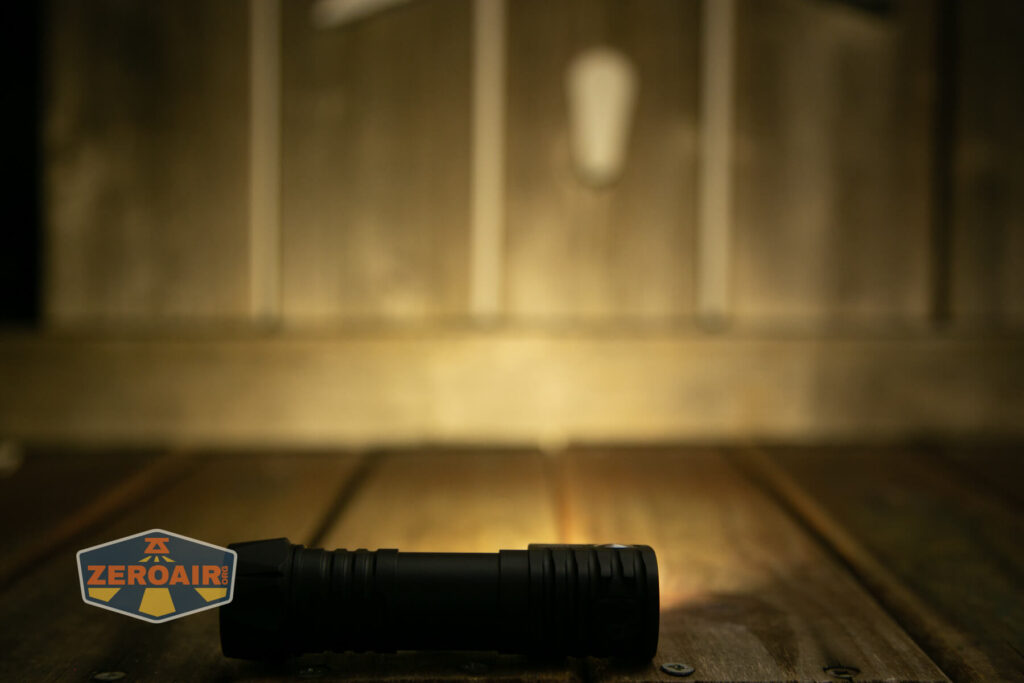
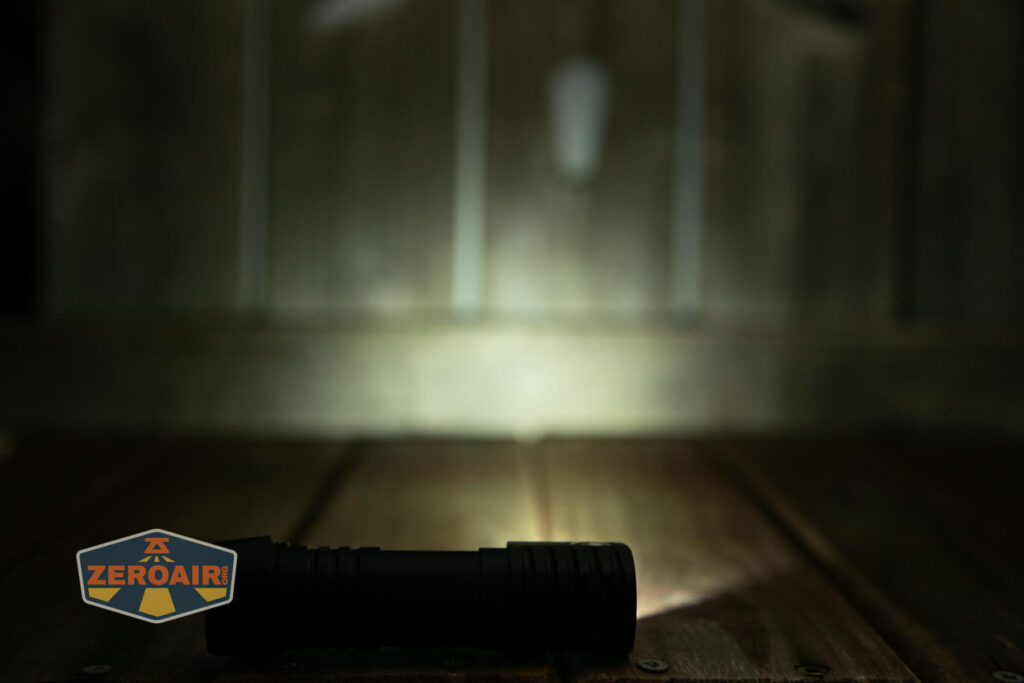
These beamshots are always with the following settings: f8, ISO100, 0.3s shutter, and manual 5000K exposure.




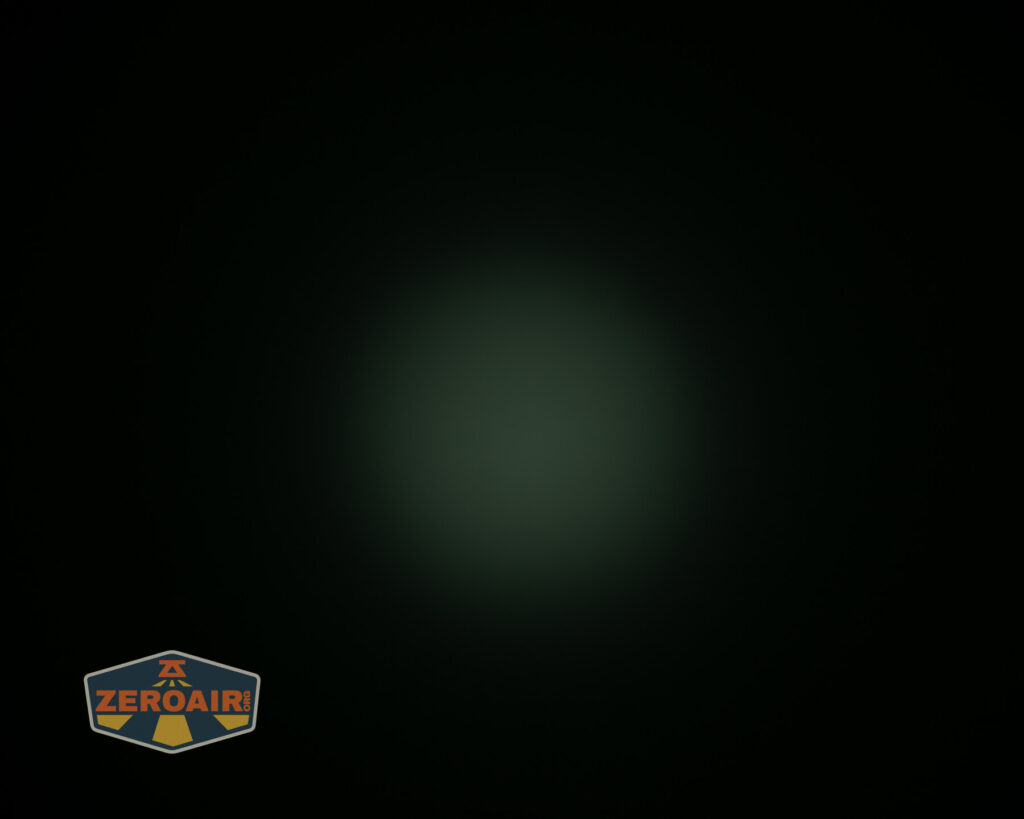
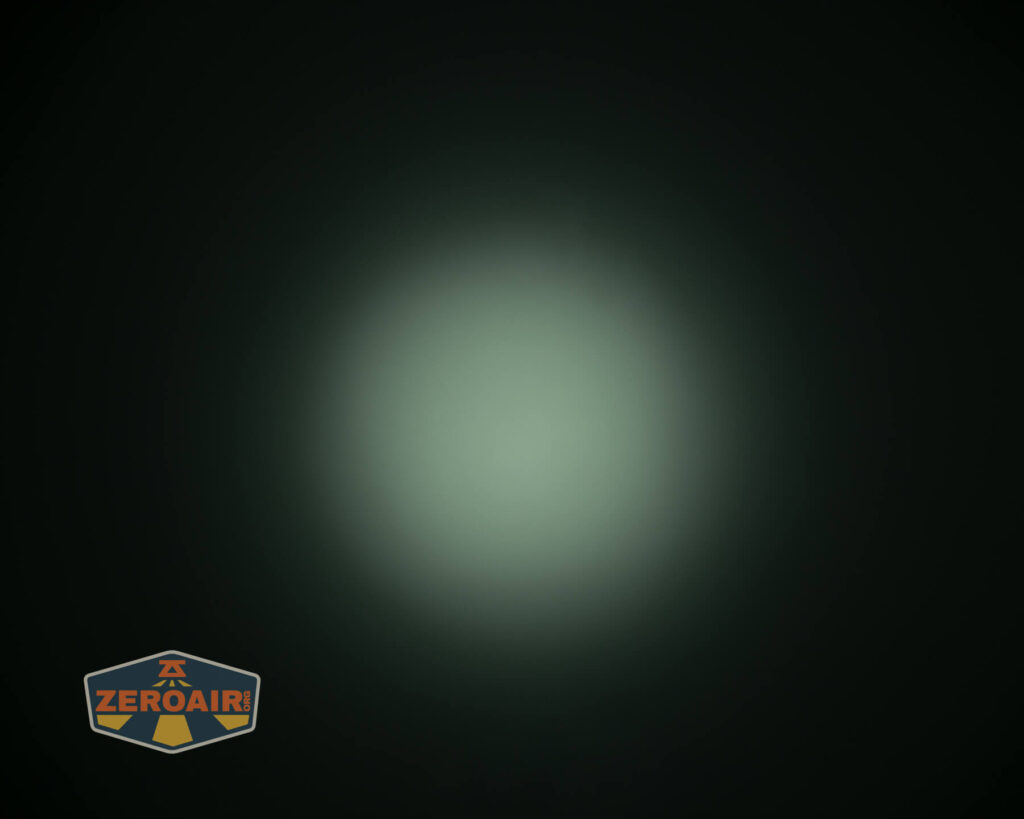
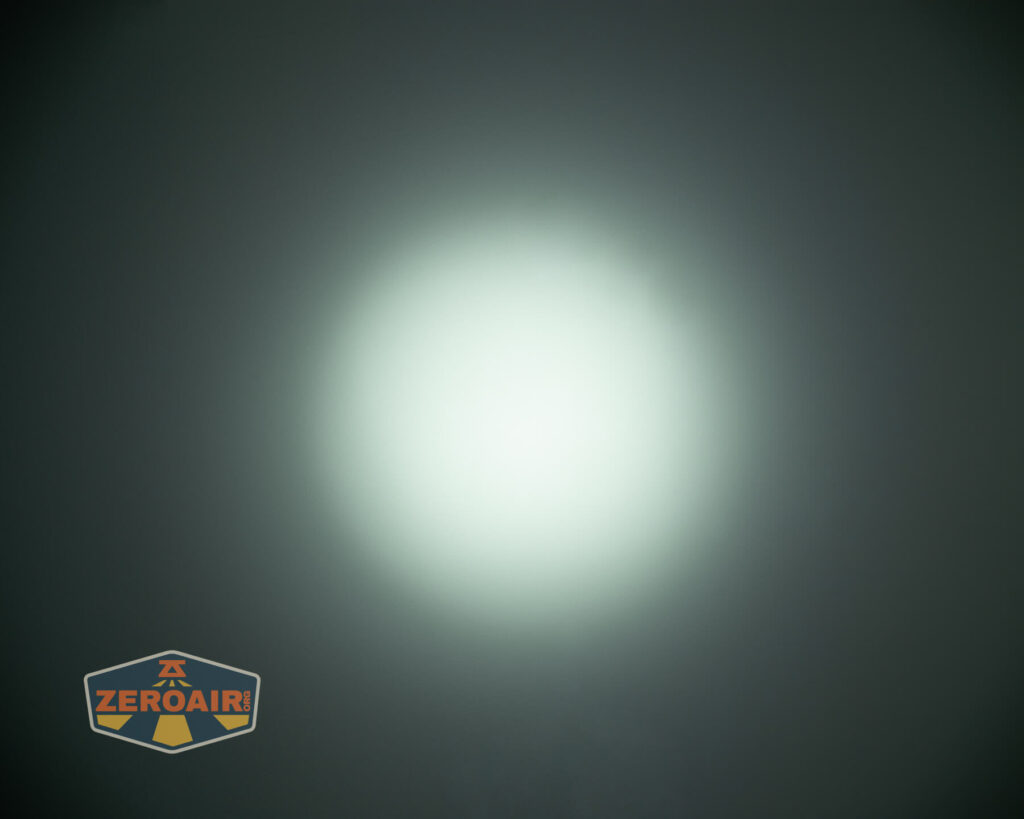
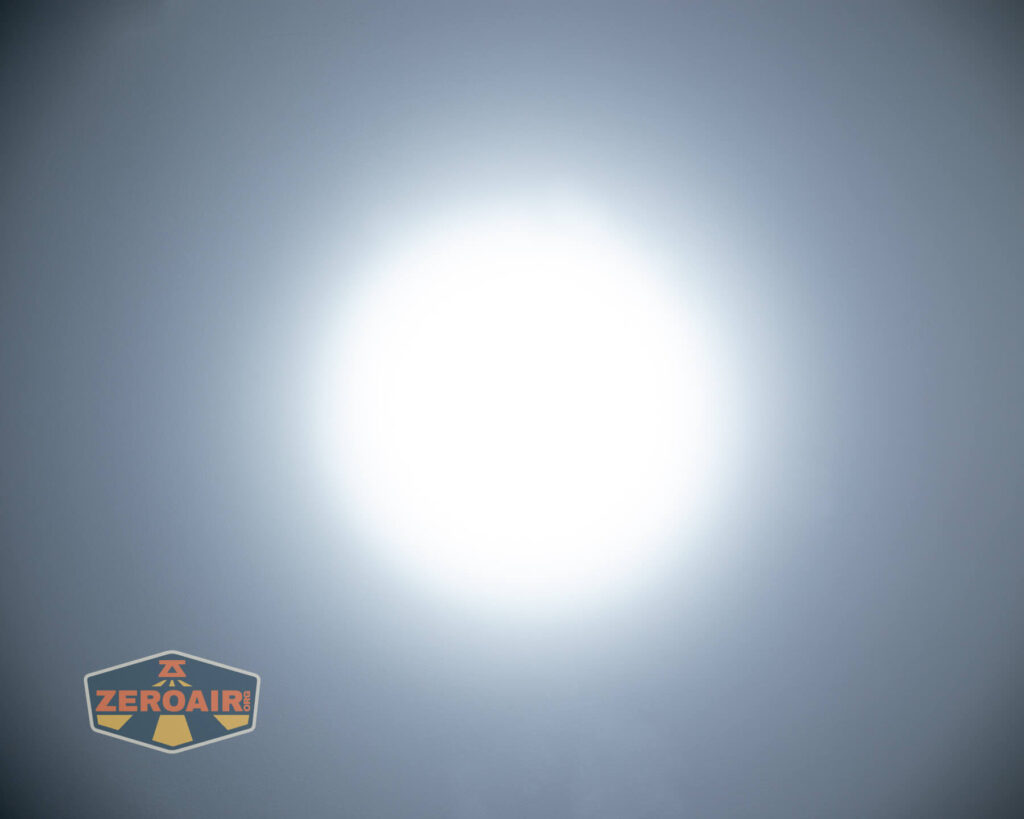
Tint vs BLF-348 (KillzoneFlashlights.com 219b version) (affiliate link)
I keep the test flashlight on the left, and the BLF-348 reference flashlight on the right.
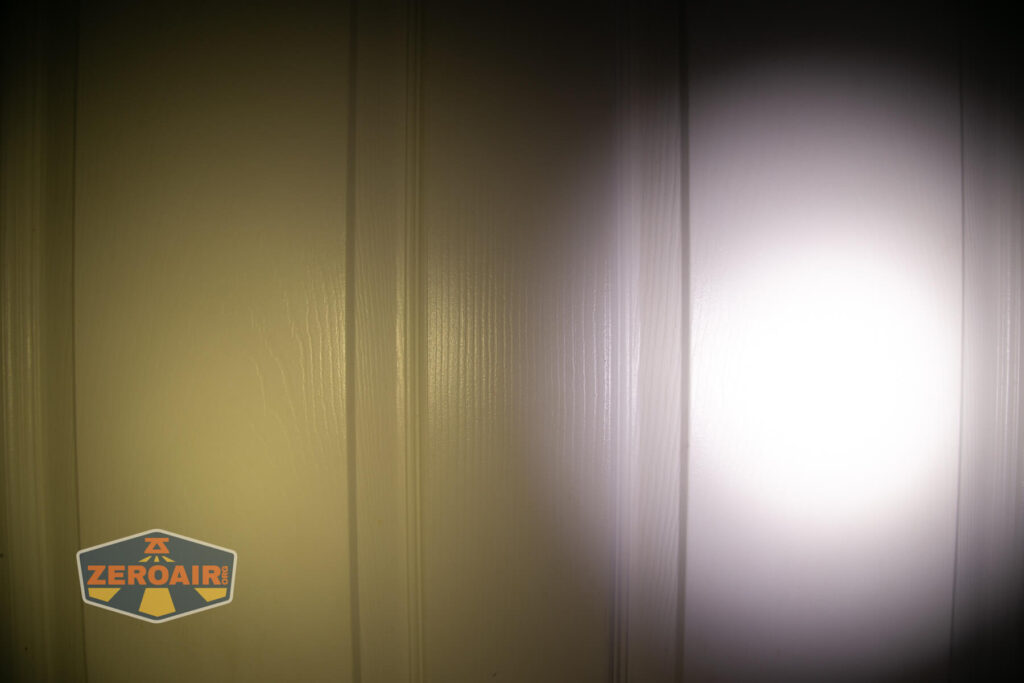
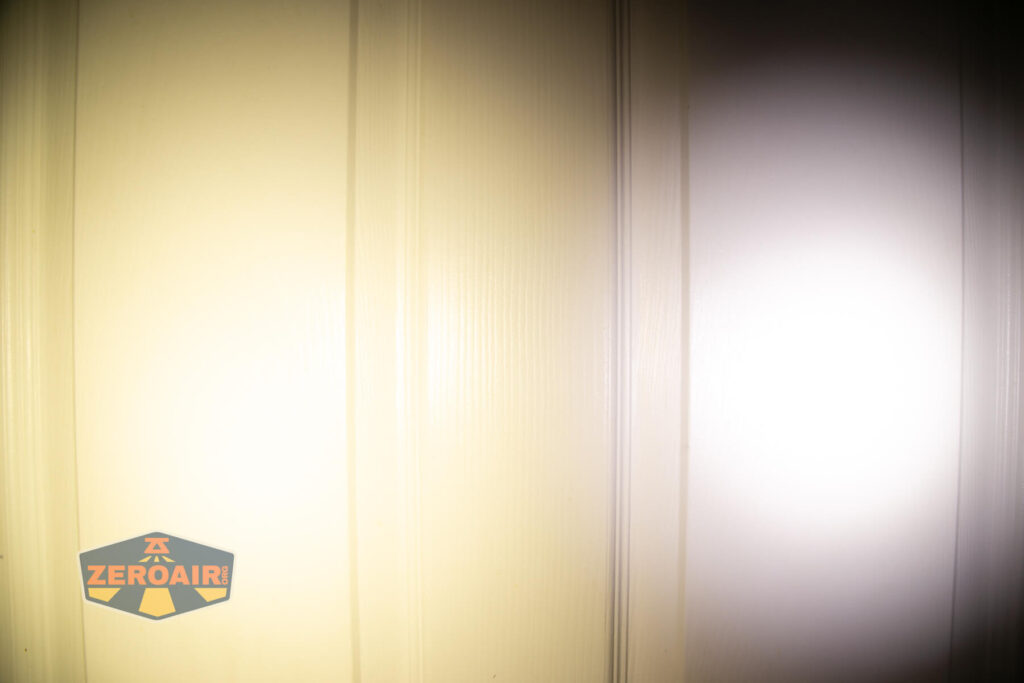


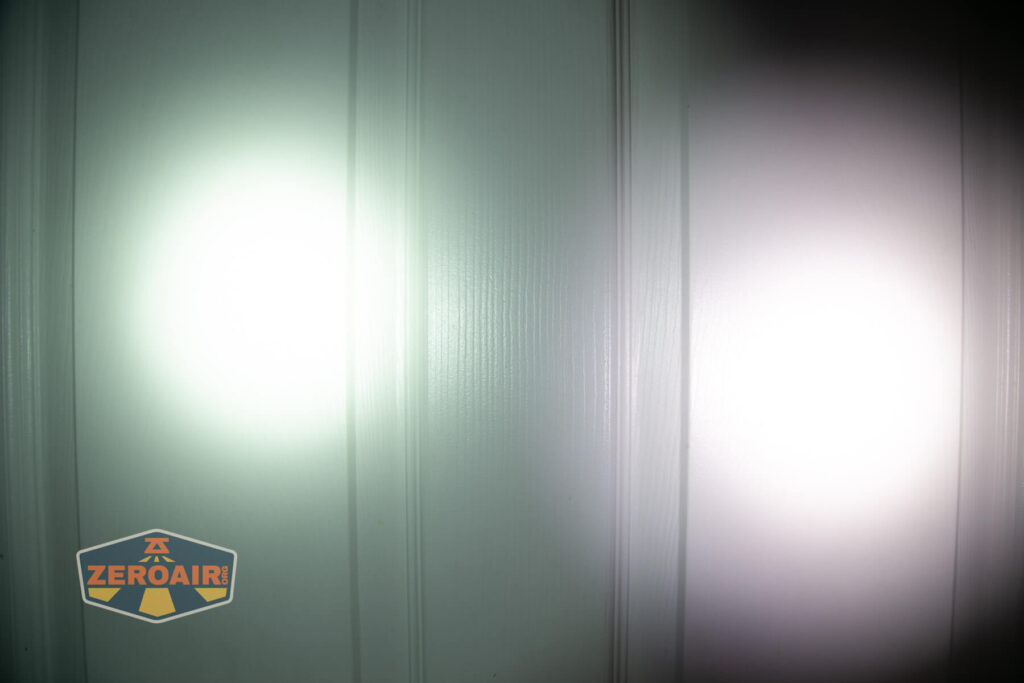



I compare everything to the KillzoneFlashlights.com 219b BLF-348 because it’s inexpensive and has the best tint!
Conclusion
What I like
- Both flood and spot in one light
- Flood and spot are quite different (aside from one being floody and one being spotty)
- Complete package – includes capable 21700 cell
- USB-C charging works very well
- Dual switch interface is easy to memorize and uncomplicated
- Proximity sensor can be disable easily
What I don’t like
- Low CRI for both spot and flood
- Neither emitter option provides a low that’s suitably low
- Surprisingly doesn’t seem to be listed for use as a powerbank?
Notes
- This content originally appeared at zeroair.org. Please visit there for the best experience!
- Please use my Amazon.com referral link to help support zeroair.org!
- Please support me on Patreon! I deeply appreciate your support!
Discover more from ZeroAir Reviews
Subscribe to get the latest posts sent to your email.