

Thrunite Catapult Mini V2 Flashlight Review
The Thrunite Catapult Mini V2 has hit the market! It’s an updated thrower! This one uses a Luminus SFT-40 emitter and has USB-C charging!
Official Specs and Features
Here’s a link to the Thrunite Catapult Mini V2 flashlight product page.
Versions
The page hints at some other versions, but for now it looks like there’s only the version of the Thrunite Catapult Mini V2 flashlight seen in this review.
Price
MSRP of the Thrunite Catapult Mini V2 flashlight is $39.95, a reasonable price for such a great (and tiny) thrower that includes the required 18350 cell!
The Thrunite Catapult Mini V2 flashlight is also available on Amazon! (That’s a referral link.)
Short Review
There’s a whole category of lights like this now – maybe all stemming from the original Thrunite version. This Catapult Mini V2 is another great flashlight in the lineup, too. The V2 still has a side e-switch, and still has the great Thrunite user interface. Throw here is outstanding, of course, and for $40ish, it’s a great purchase.
Long Review
The Big Table
| Thrunite Catapult Mini V2 flashlight | |
|---|---|
| Emitter: | Luminus SFT-40 (Cool White) |
| Price in USD at publication time: | $39.95. Buy yours at amazon.com through my referral link! |
| Cell: | 1×18350 |
| Runtime Graphs | |
| LVP? | Yes, with warning |
| Switch Type: | E-Switch |
| Quiescent Current (mA): | ? |
| On-Board Charging? | Yes |
| Charge Port Type: | USB-C |
| Charge Graph | |
| Power off Charge Port | with cell: all modes without cell and/or body: three lowest modes |
| Claimed Lumens (lm) | 1108 |
| Measured Lumens (at 30s) | 1217 (109.8% of claim)^ |
| Candela per Lumen | 66.64 |
| Claimed Throw (m) | 515 |
| Candela (Calculated) in cd (at 30s) | 2150lux @ 6.142m = 81107cd |
| Throw (Calculated) (m) | 569.6 (110.6% of claim)^ |
| Claimed CCT | – |
| Measured CCT Range (K) | 5800-6800 Kelvin |
| Item provided for review by: | Thrunite |
| All my Thrunite reviews! | |
^ Measurement disclaimer: Testing flashlights is my hobby. I use hobbyist-level equipment for testing, including some I made myself. Try not to get buried in the details of manufacturer specifications versus measurements recorded here; A certain amount of difference (say, 10 or 15%) is perfectly reasonable.
What’s Included

- Thrunite Catapult Mini V2 flashlight
- Thrunite 1100mAh 18350
- Charging cable (USB to USB-C)
- Lanyard
- Spare o-rings (2)
- Spare charge port cover
- Manual and papers
Package and Manual
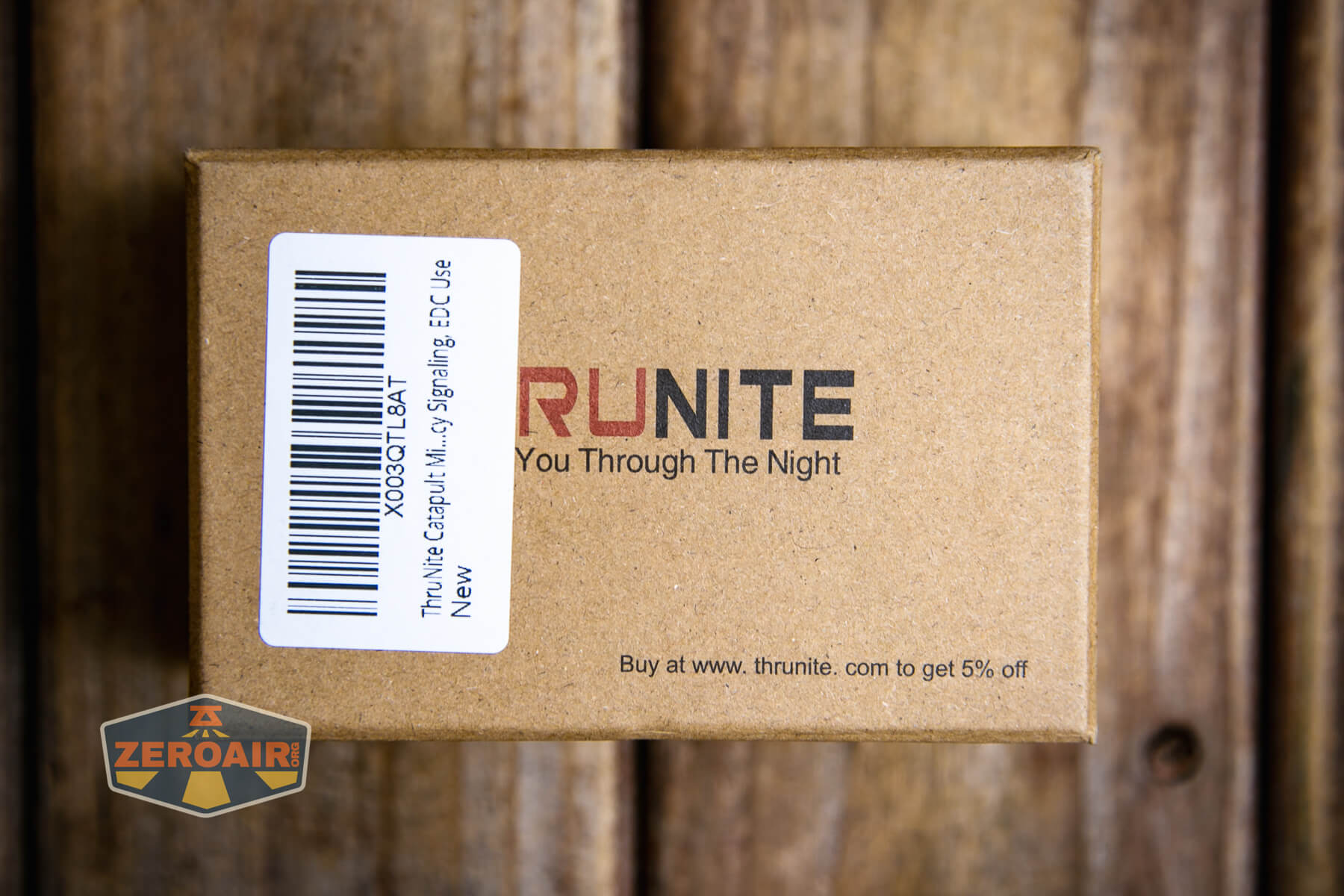


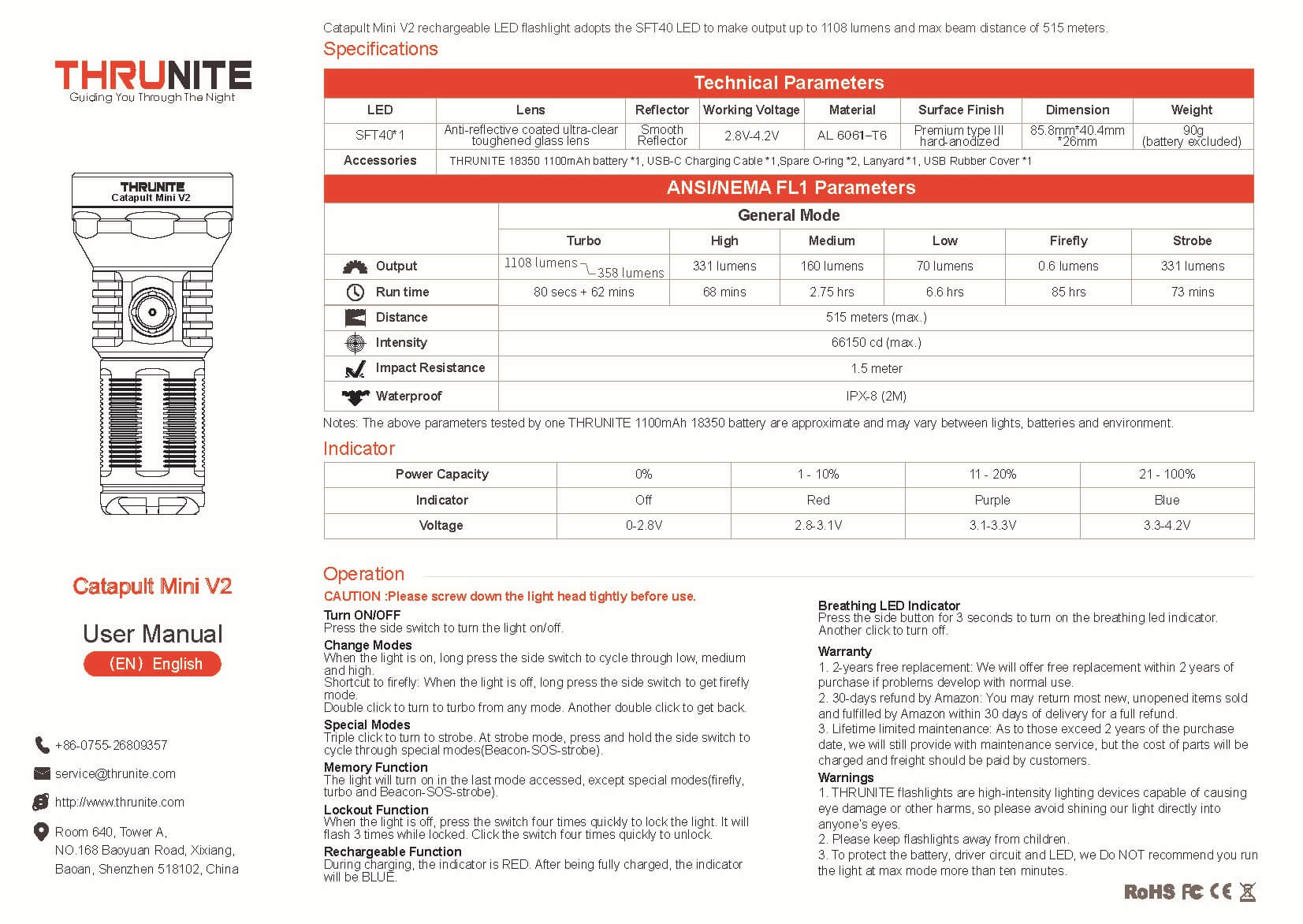
Build Quality and Disassembly

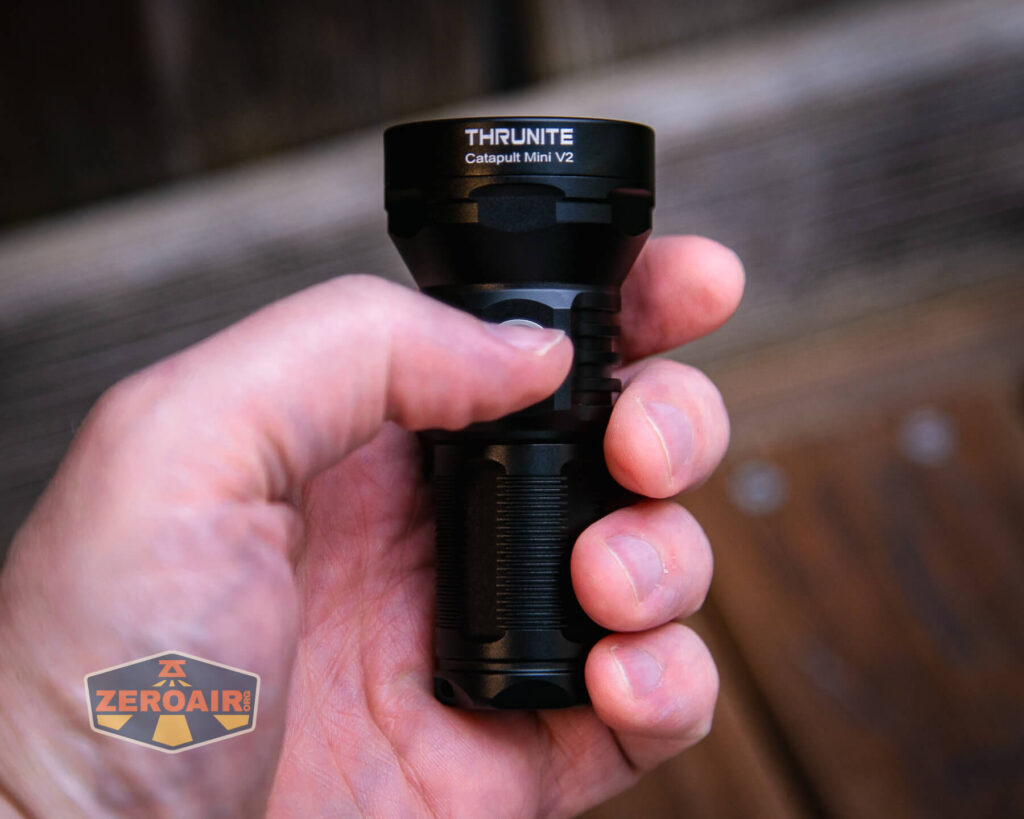
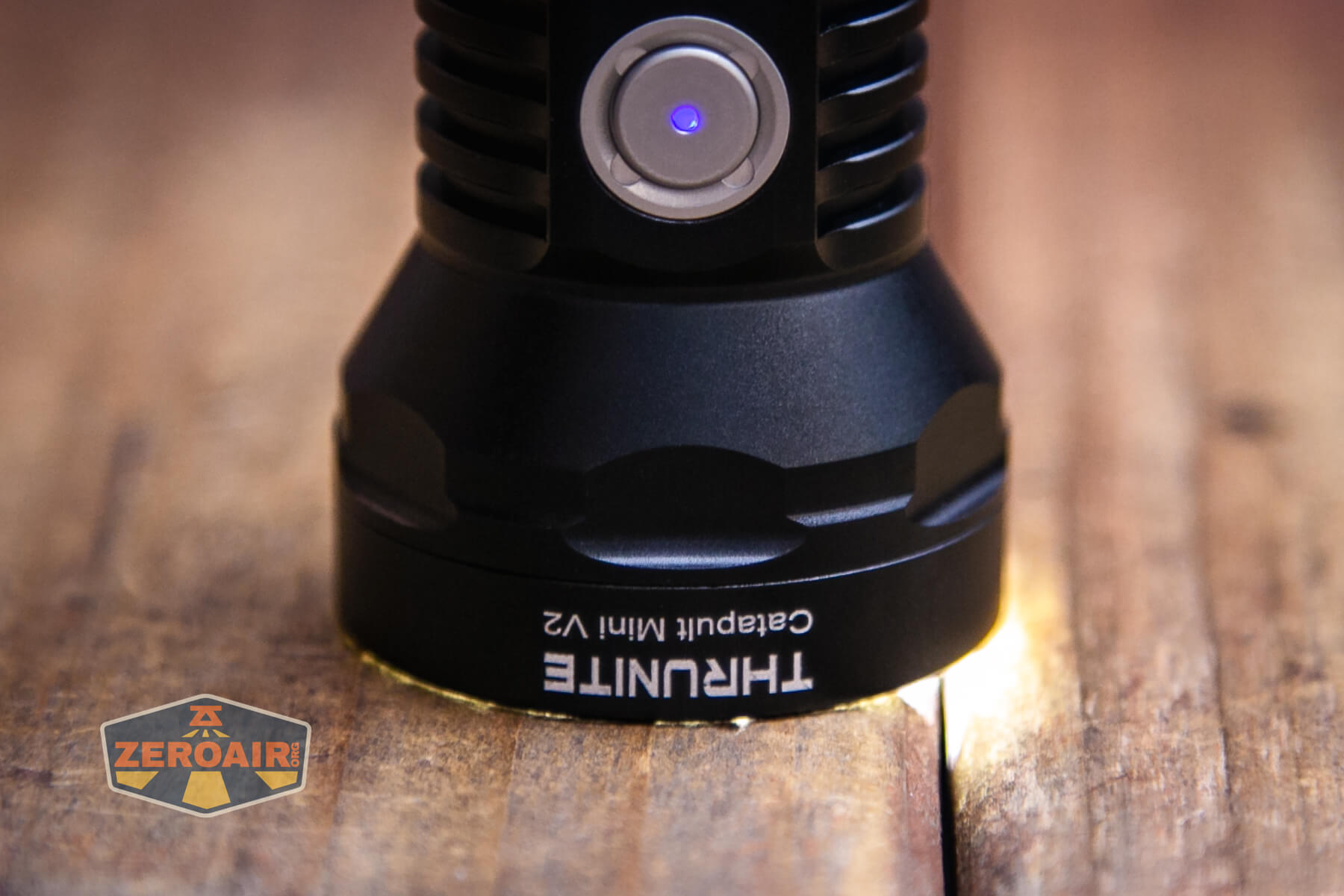
Unlike the previous iteration of the Thrunite Catapult Mini flashlight (that would be the V1 now, I suppose), this V2 is standard black. The build quality is very good, which you should already expect from Thrunite. So no surprises at all there.


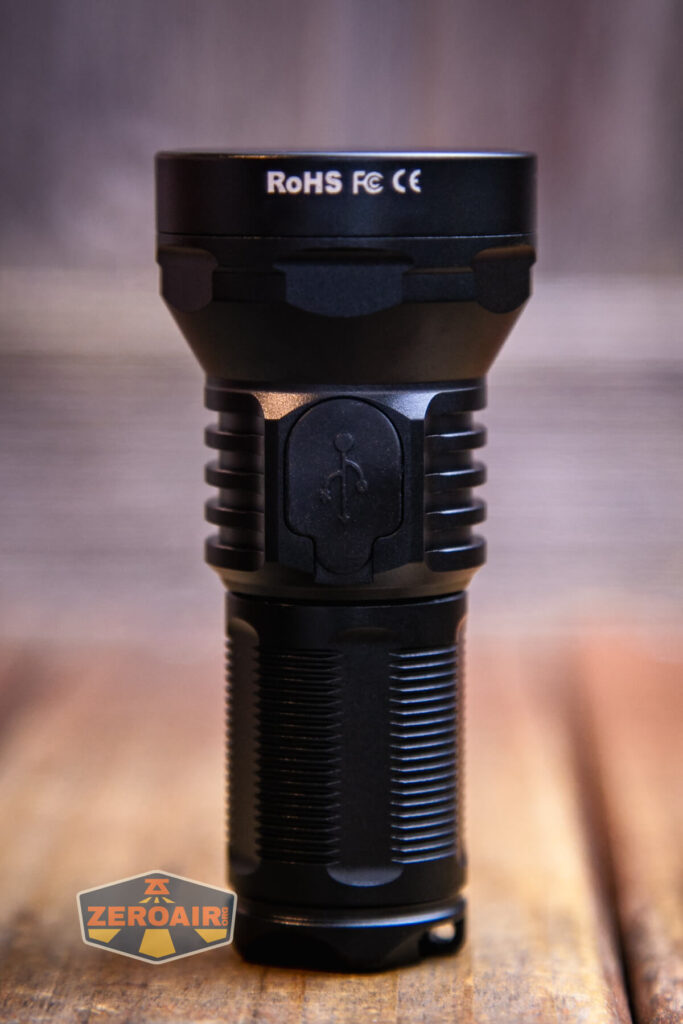
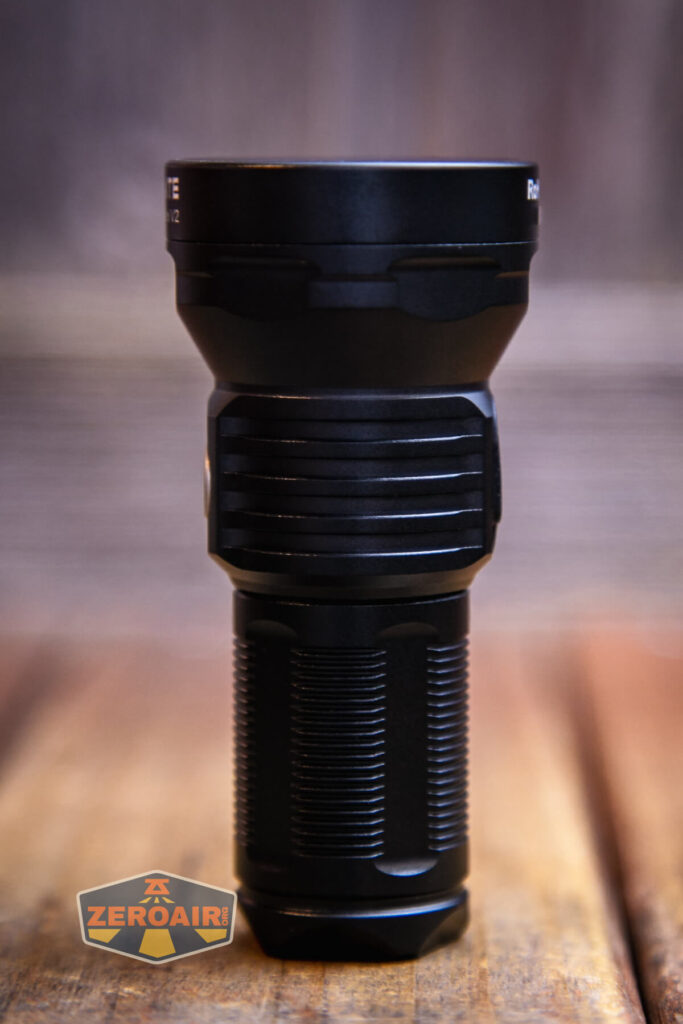
There’s fairly minimal branding – I think this is silk-screened and seems to me to be very much like on the bigger (and legendary) Thrunite TN42.
You can see that the tailcap doesn’t have much going on – no branding, completely smooth.

Only the cell tube comes off the light – it’s really just a two-part flashlight. The threads are short and anodized.

Below you’ll see why this detail is important, but there’s just one contact point at this brass button. Negative travels through the cell tube and to the outer rim. You’ll see why that’s important later.
Inside the body you can see a nice beefy spring on the tail end, and just a brass button for contact in the head.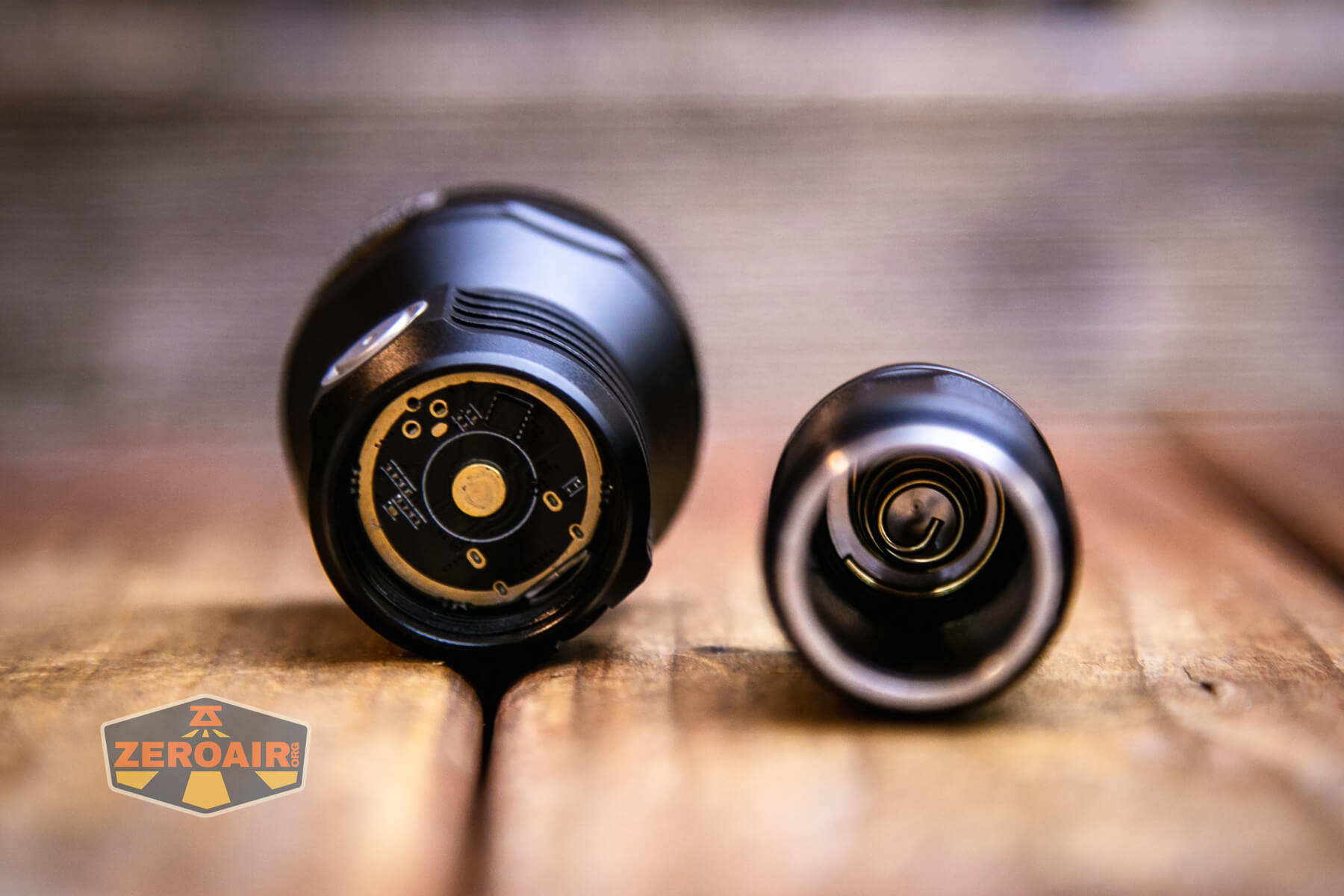
Size and Comps
Dimensions: 85.8mm x 40.4mm x 26mm and 90g without the battery. The size is up a very little bit from the original.

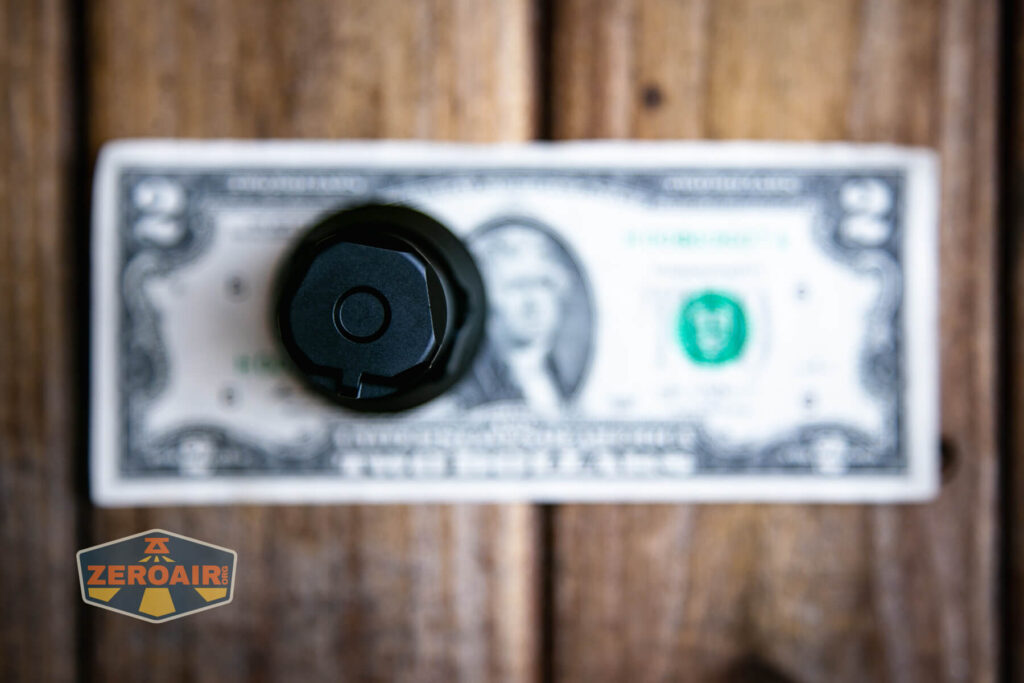
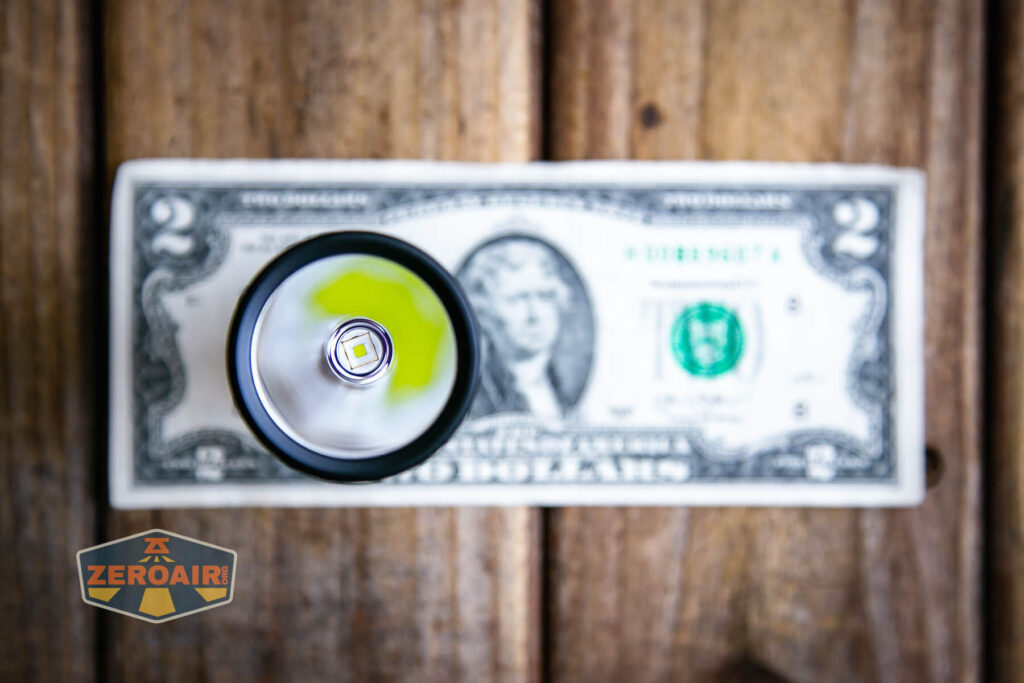
If the flashlight will headstand, I’ll show it here (usually the third photo). If the flashlight will tailstand, I’ll also show that (usually in the fourth photo).

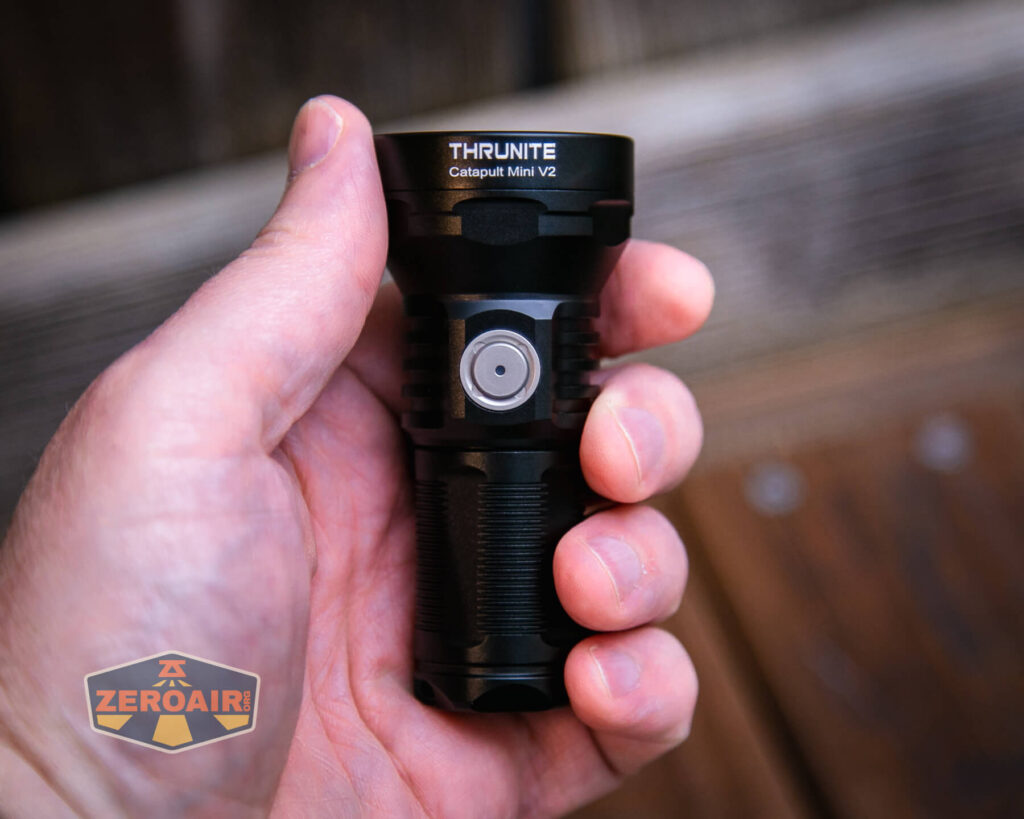
Here’s the test light with the venerable Convoy S2+. Mine is a custom “baked” edition Nichia 219b triple. A very nice 18650 light!
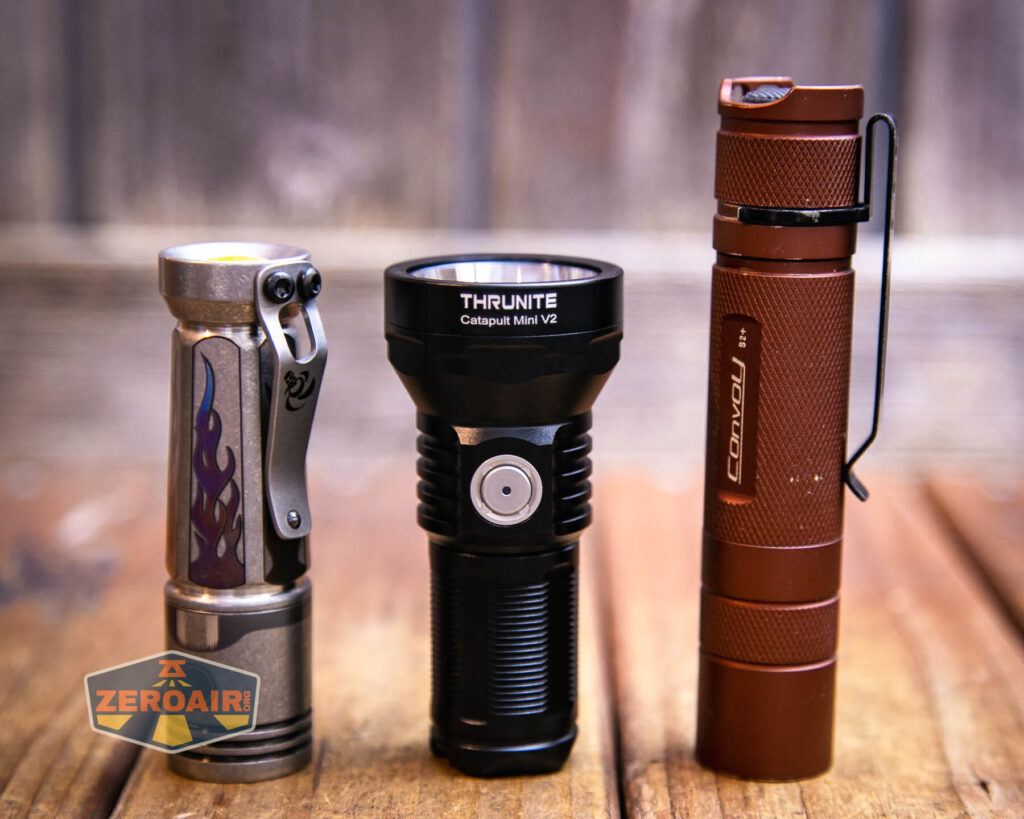
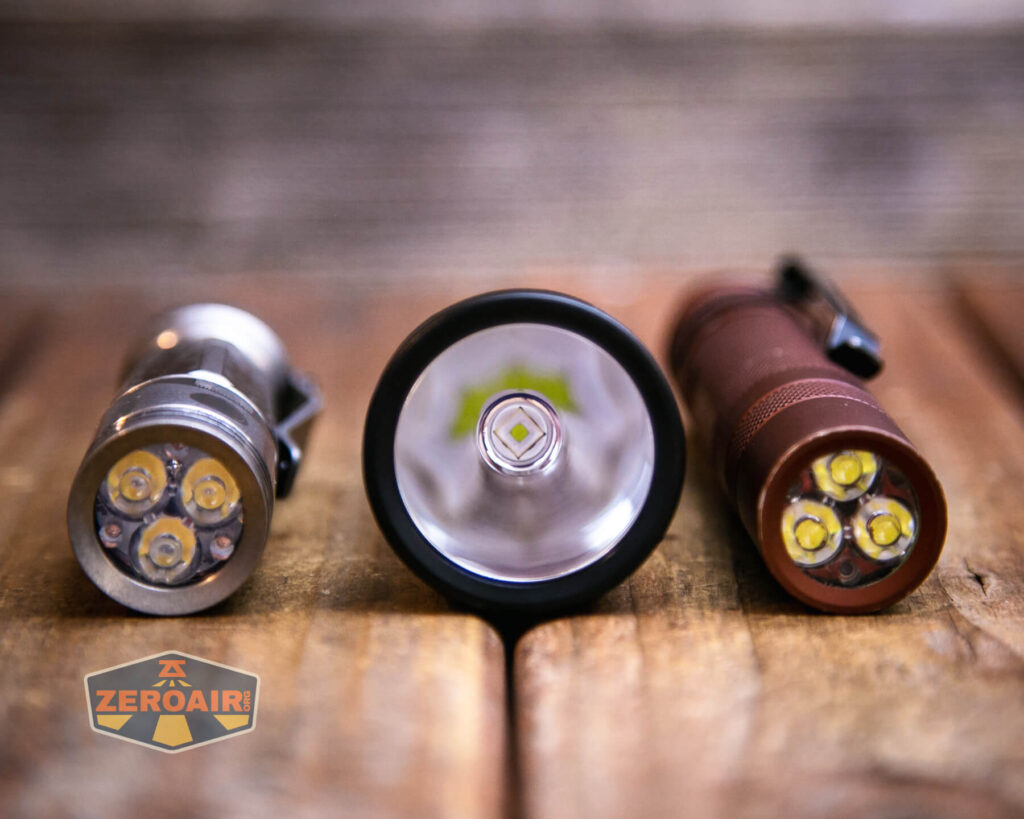
Also above on the left is a new feature light!! Laulima Metal Craft sent this titanium Todai for some size comparison photos like the ones above. Laulima has a bunch of incredible items. I’ve tested one (the Laulima Metal Craft Hoku) (the official site for Hoku is here) that was a Friend Fund Friday review. I was impressed enough by that Hoku that I bought a Laulima Metal Craft Diamond Slim (also in tumbled aluminum) (review is upcoming!) These lights by Laulima have impeccable build quality and not only that, they’re quite configurable. There are some (great, actually) default configurations, but Joshua Dawson (of Laulima Metal Craft) is open to ideas and emitter options and the like. I haven’t reviewed this Todai, but I have to say, it feels absolutely fantastic and I love it thus far. (Notably, I love how warm and eggy those emitters look through the TIR.)
Retention and Carry
Really the only option for carrying the Thrunite Catapult Mini V2 flashlight is the included lanyard, which attaches through this hole in the tailcap.
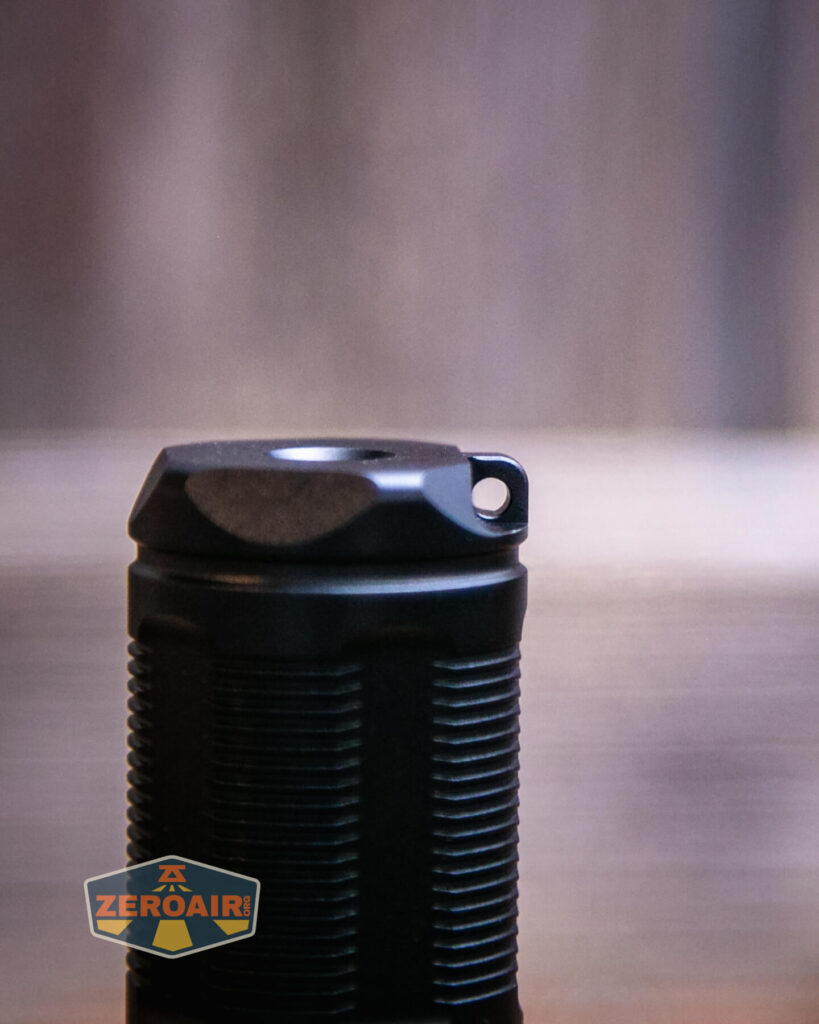
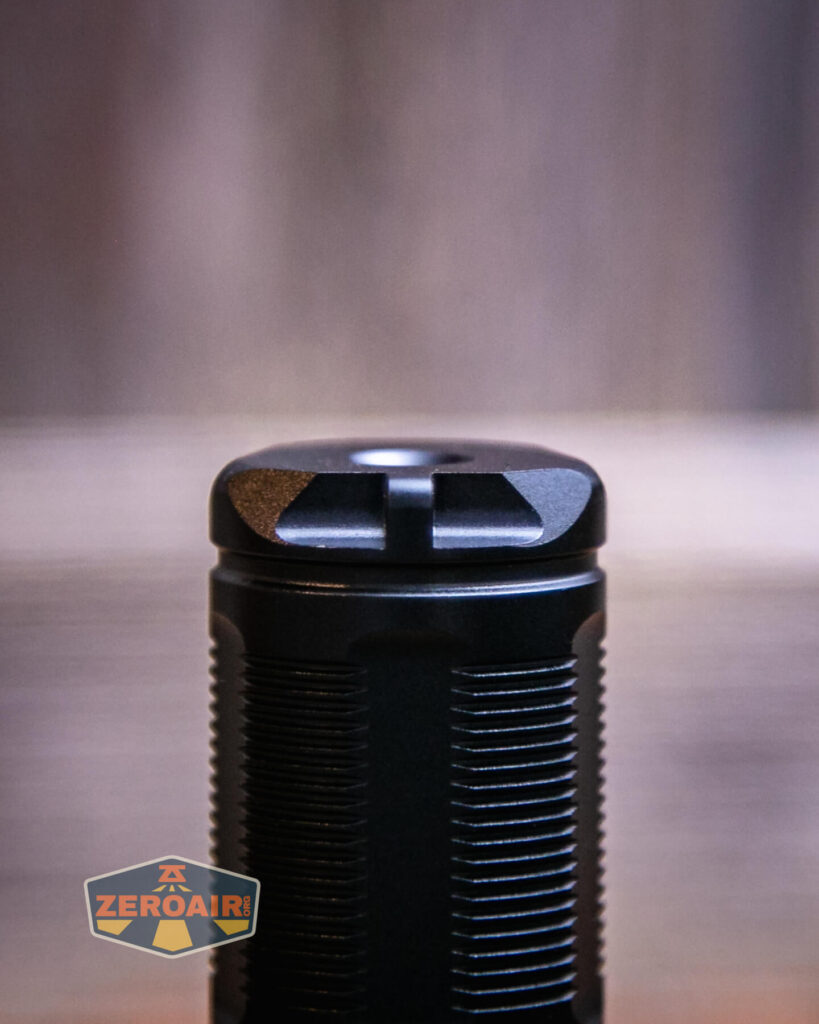
It’s a fairly standard lanyard, but gets the job done.

There is no pocket clip. There is no magnet. There is no pouch. You probably wouldn’t really want those things, but for example, the Manker MC13 has a pocket clip, and I didn’t complain that it did have a pocket clip.
Power and Runtime
The Thrunite Catapult Mini V2 flashlight is powered by a single lithium-ion cell. One is provided, seen below. It’s a 1100mAh 18350, with a proprietary connection on the positive end. This connection has both positive and negative terminals. See below but read now: there’s actually no reason for these proprietary connections!

The cell fits with the positive end toward the head (which is the normal configuration).

Despite all this customization or proprietary connection setup on the included 18350 cell, it’s not actually necessary. I tested the light with a standard unprotected flat-top 18350, and the light works just like it should.
Below are a few runtimes; the highest three modes.

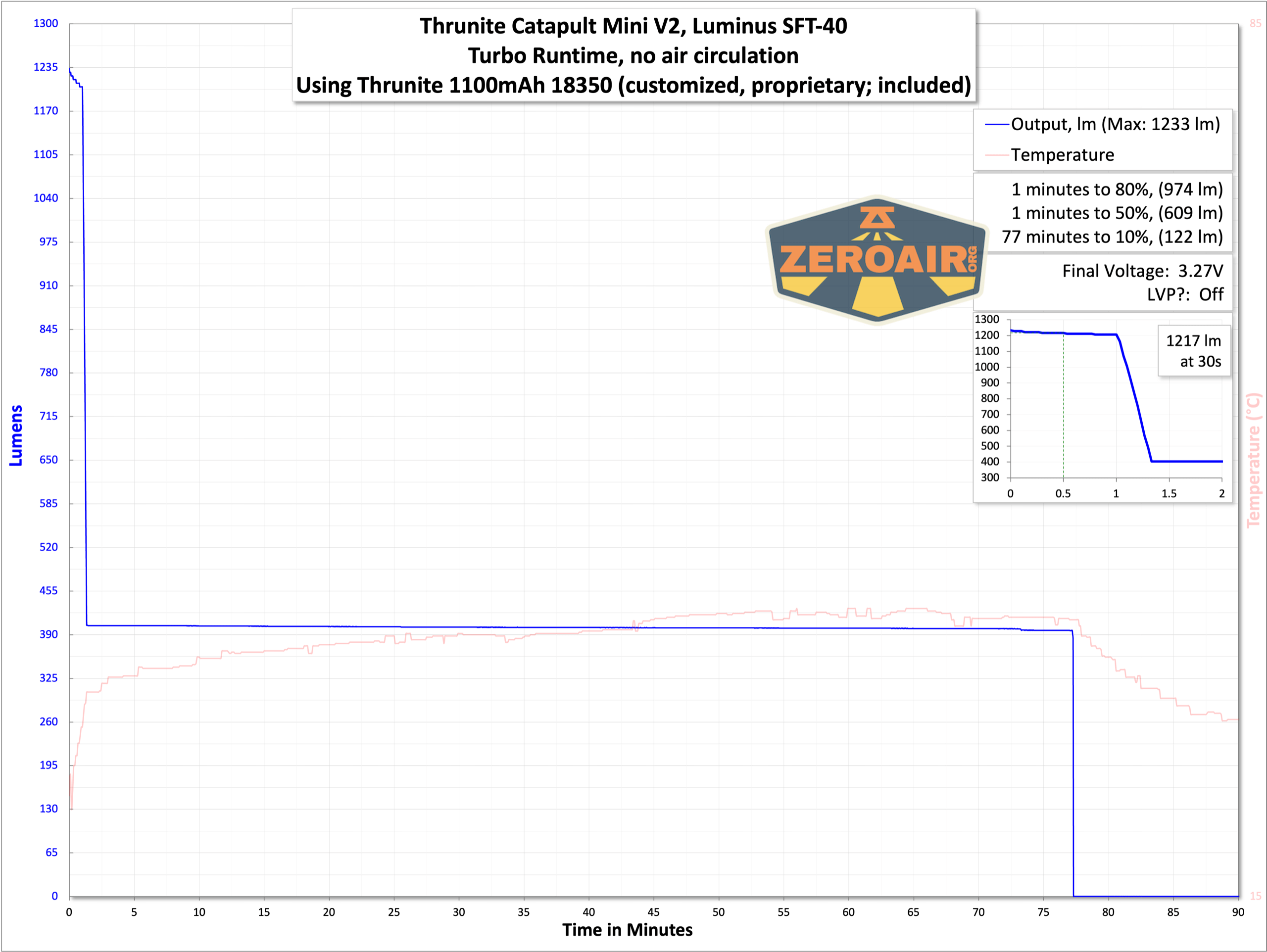

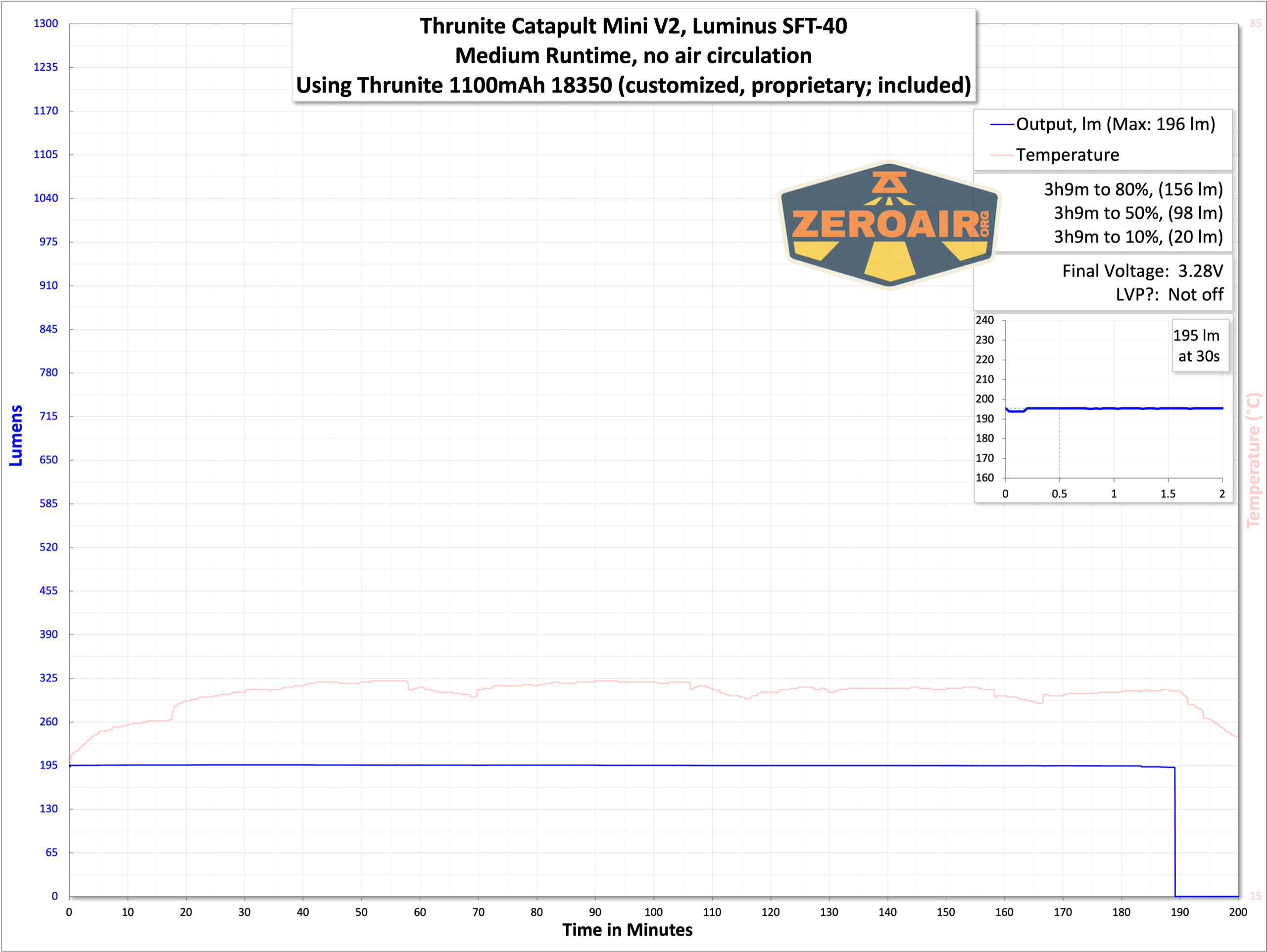
The switch indicated an orange-ish color around 3.3V, red at 3.1V, and then finally the light shut off at 2.7V. This is acceptable low voltage protection.
Charging
Also built into the Thrunite Catapult Mini V2 flashlight is USB-C charging. The port is in the head (opposite the switch) and has a press-in rubber cover (there is a spare). This is a high-quality port – something I don’t say all that often because it’s not always so evident. The port lines up perfectly with the opening.

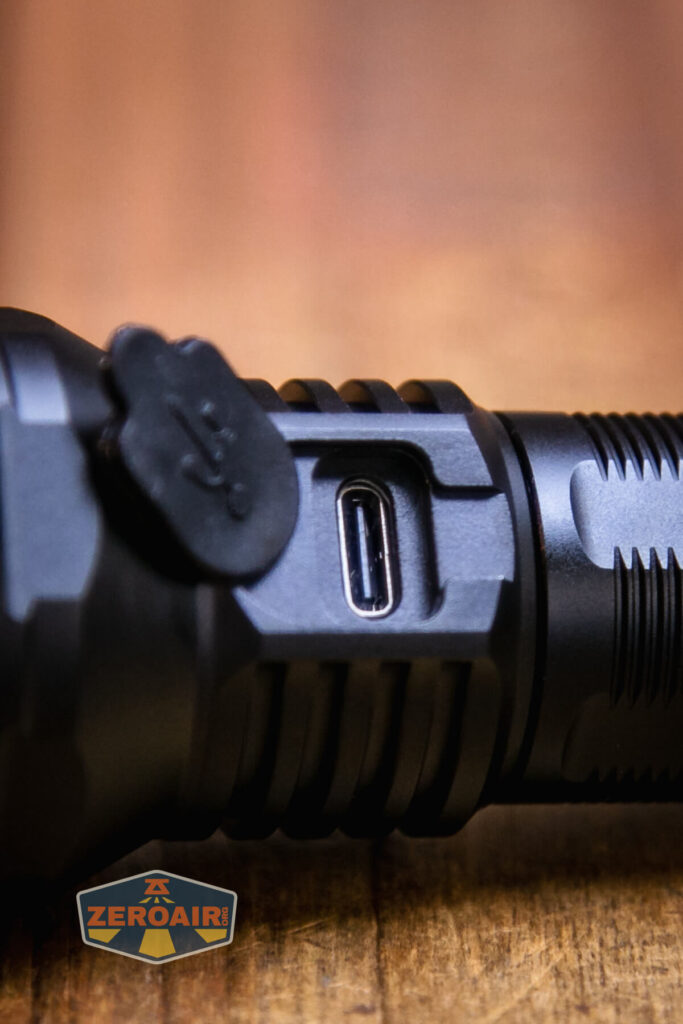
There’s also a cable included for charging – USB to USB-C.


The charge cycle is very consistent, which is good. At 0.6A or so, it’s not “fast” charging but is charging at over 0.5C, so it’s “plenty fine.” Finally, C to C charging does work, at 5V.

Modes and Currents
| Mode | Mode Claimed Output (lm) | Claimed Runtime | Measured Lumens | Tailcap Amps |
|---|---|---|---|---|
| Turbo | 1108 – 358 | 80s – 62m | 1217 | 3.43 |
| High | 331 | 68m | 400 | 0.75 |
| Medium | 160 | 2.75h | 195 | 0.35 |
| Low | 70 | 6.6h | 84 | 0.16 |
| Firefly | 0.6 | 85h | 0.10 | .009 |
Pulse Width Modulation
There’s no PWM on any mode.
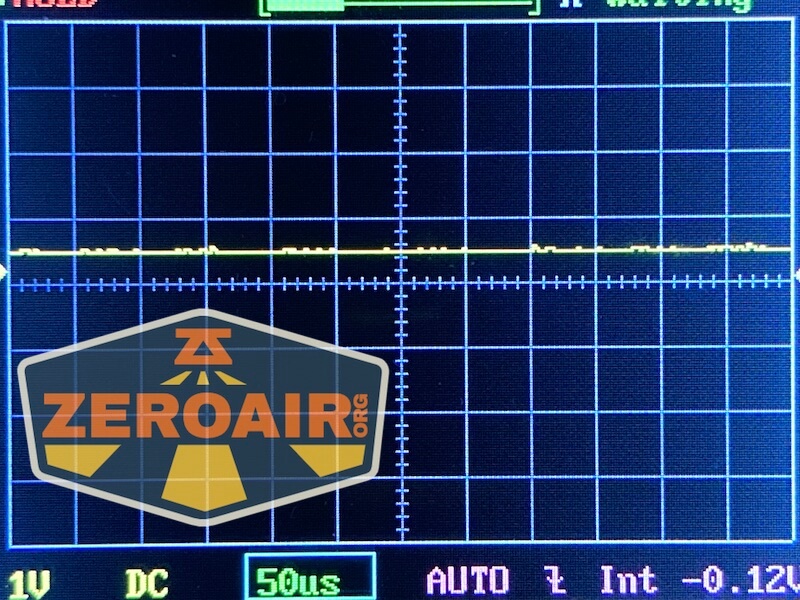
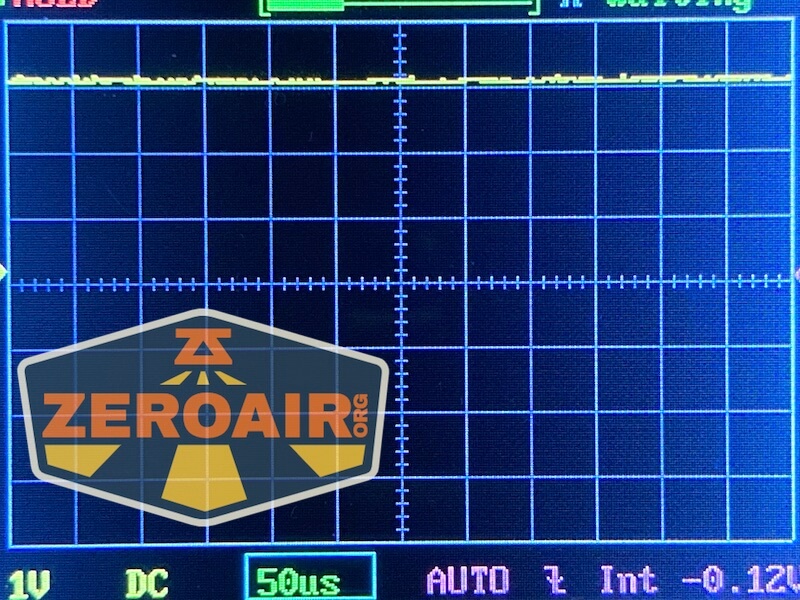
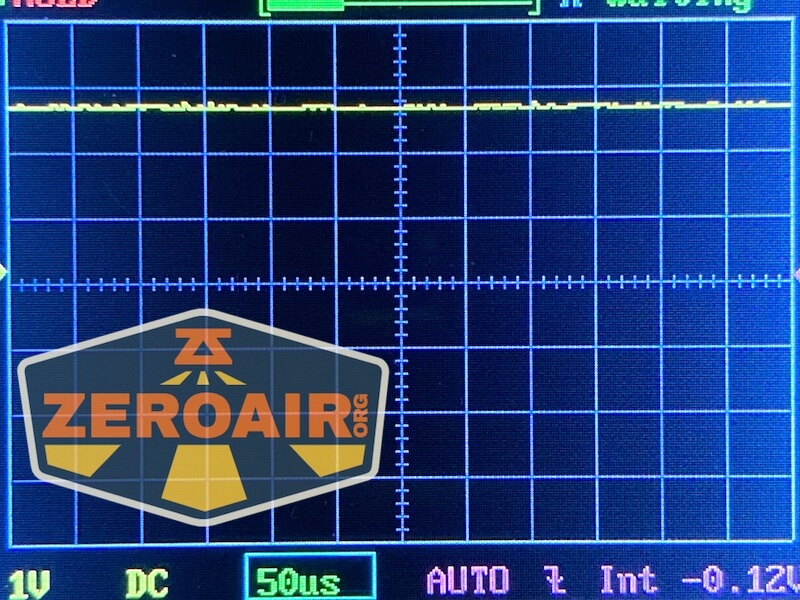
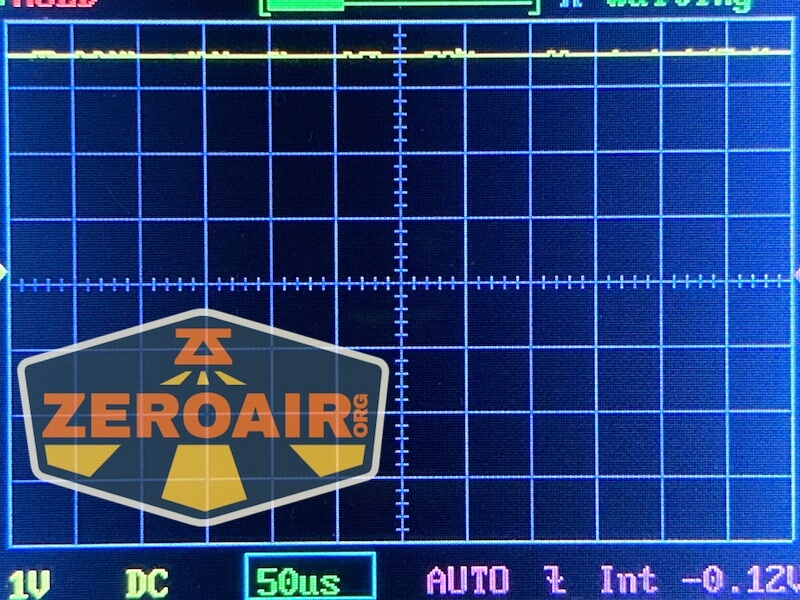
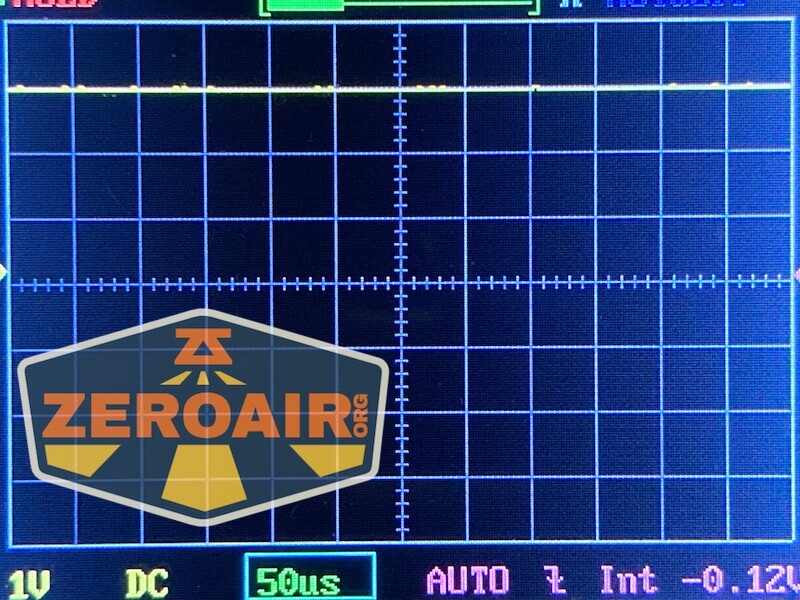
Here you can see a “baseline” – a chart with almost no light hitting the sensor.

Then there’s the Ultrafire WF-602C flashlight, which has some of the worst PWM I’ve seen. It’s so bad that I used a post about it to explain PWM! Here are multiple timescales (10ms, 5ms, 2ms, 1ms, 0.5ms, 0.2ms) to make comparing this “worst” PWM light to the test light easier. That post also explains why I didn’t test the WF-602C at the usual 50us scale.


User Interface and Operation
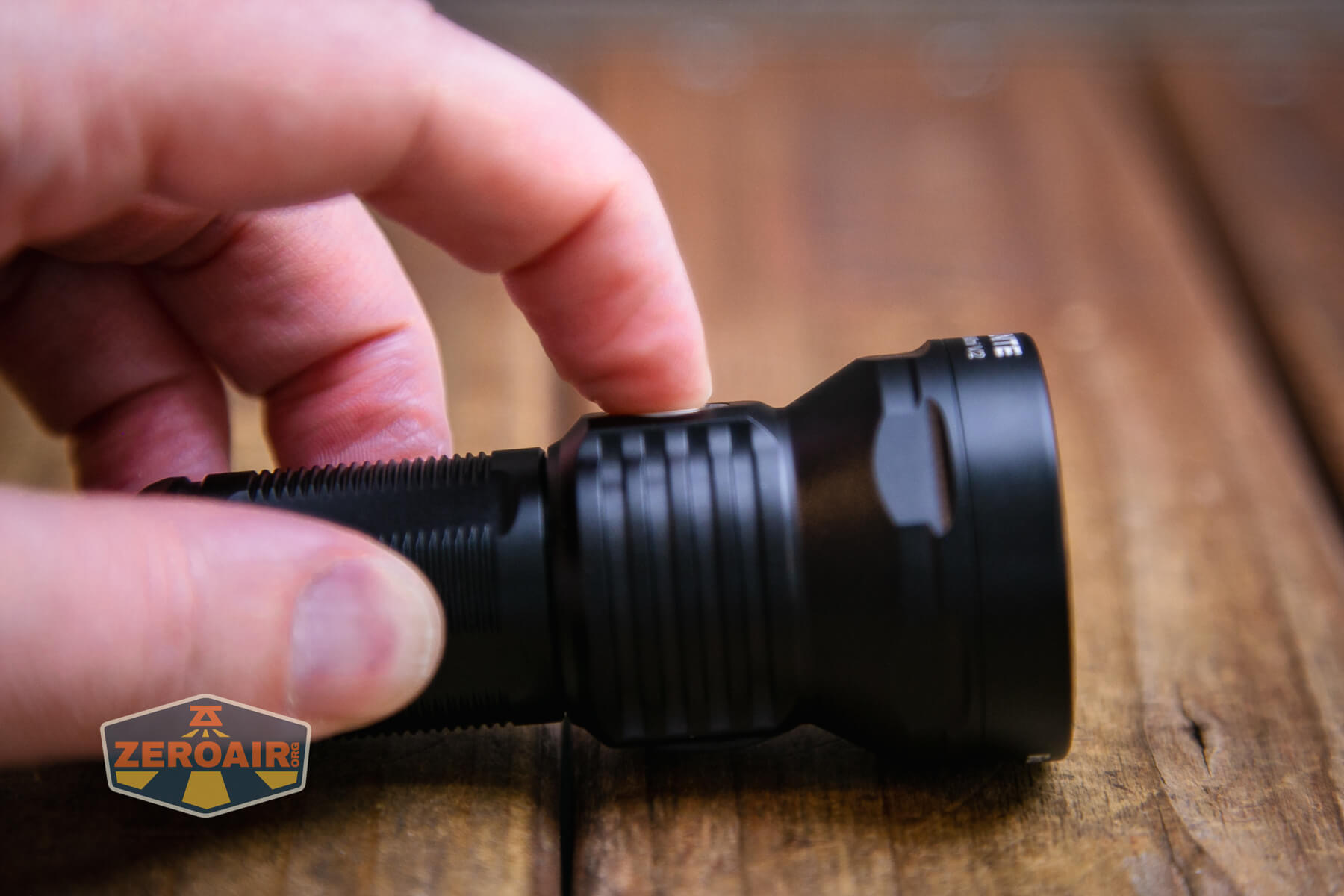
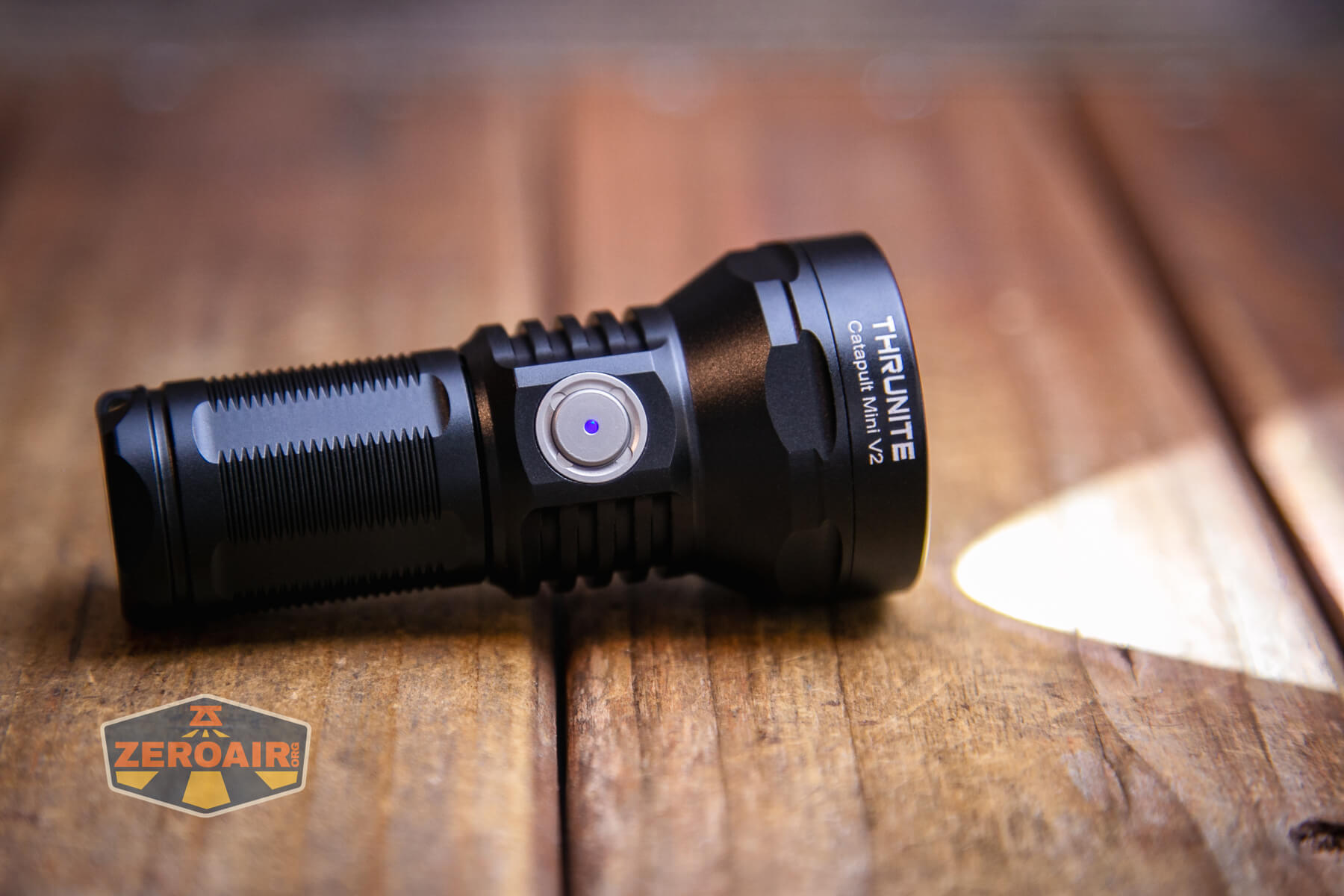
Thrunite put a single switch in the Catapult Mini V2. It’s an indicating e-switch on the head, and just slightly proud. The cover is hard (but probably plastic, not metal) – still a great switch. It’s easy to differentiate between the switch and the charge port cover.

Here’s a user interface table!
| State | Action | Result |
|---|---|---|
| Off | Click | On (Mode Memory except for Firefly, Turbo, Strobe) |
| Off | Hold 1s | Firefly |
| Off | Click 4x | Lockout (the main emitter blinks 3x to confirm) |
| Lockout | Click (1, 2, 3) | No Output (switch indicates in blue (or possibly battery status)) |
| Lockout | Click 4x | Firefly |
| On | Click | Off |
| On (including Firefly) | Hold | Mode advance (LMH only) |
| Any | Double Click | Turbo |
| Any | Triple Click | Strobe |
This user interface is slightly updated from previous generation Thrunites, and I think it’s better. You’re no longer locked into firefly and can cycle forward from there (big upgrade). I think that’s the main difference.
LED and Beam
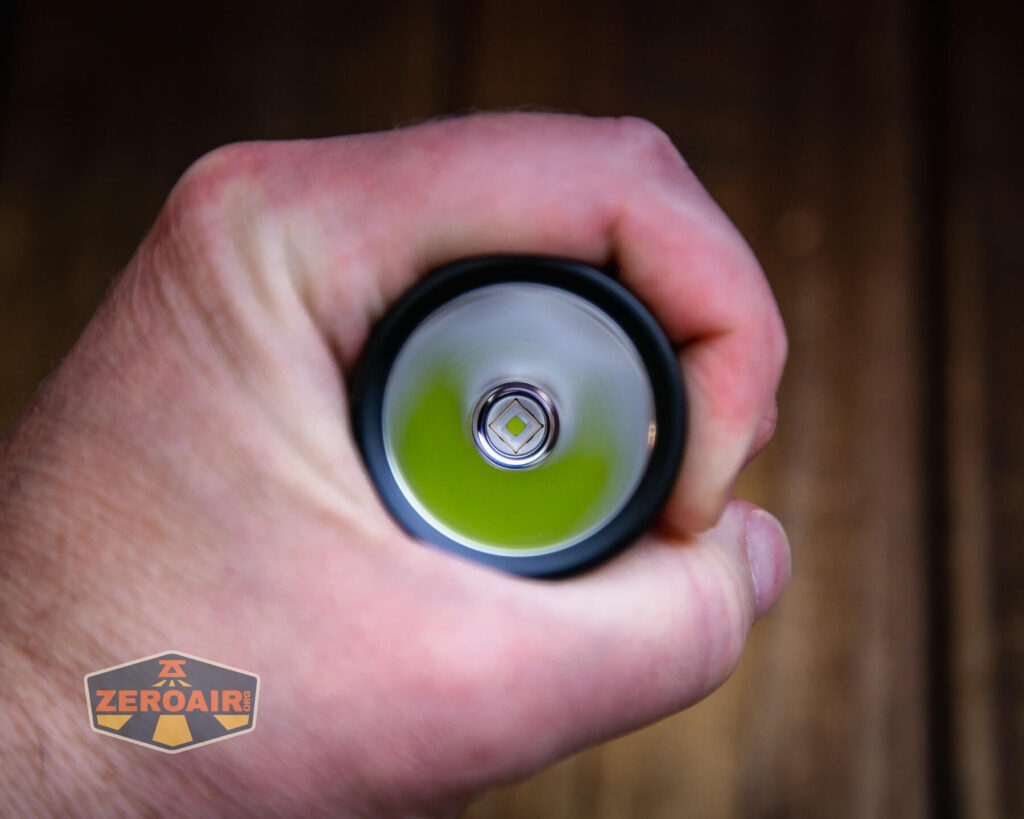
In the Thrunite Catapult Mini V2 is a Luminus SFT-40 emitter, and of course fantastic for throw.
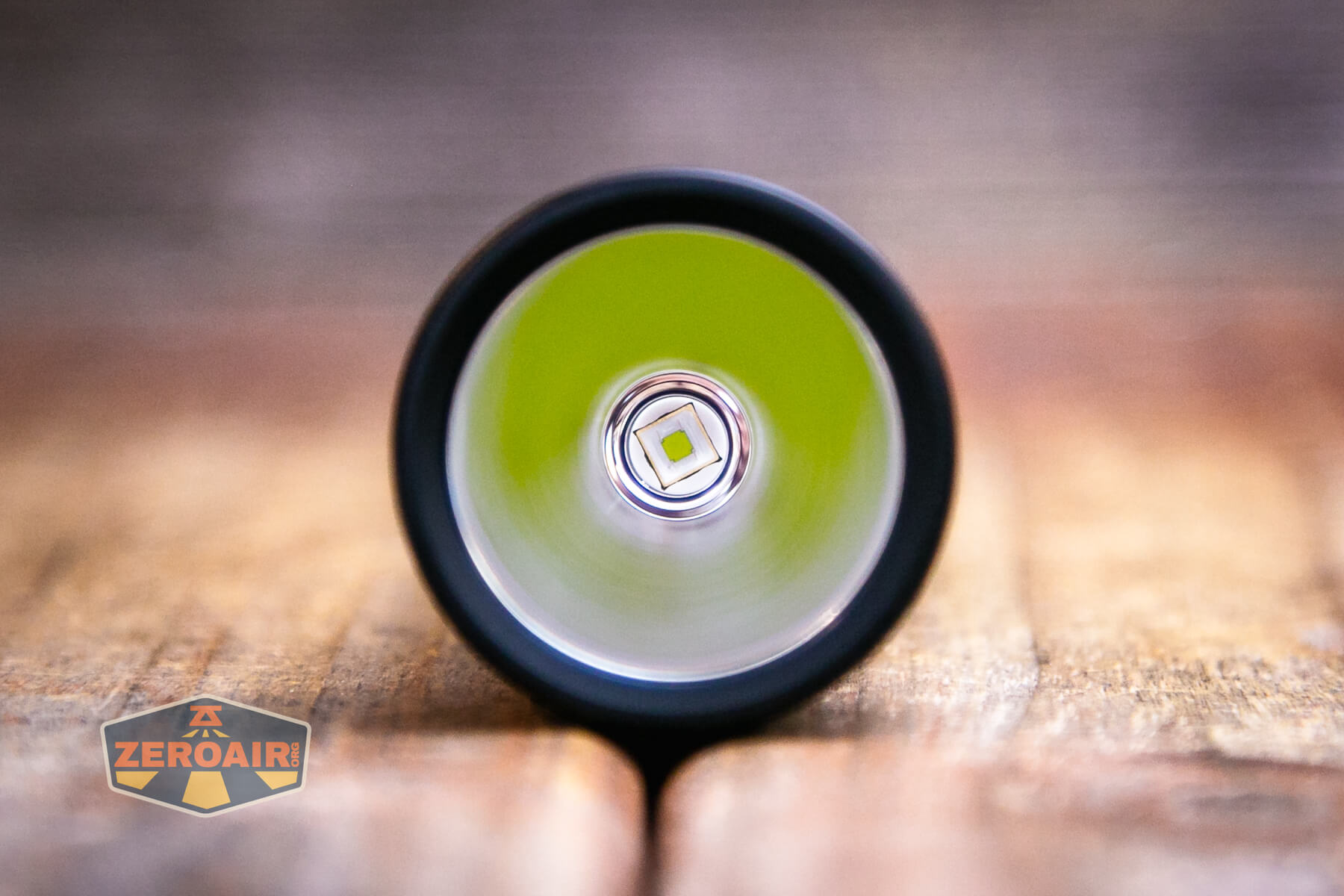
Notably, this version gets a reflector instead of a TIR. This is great for those reflector lovers (or TIR haters) – both are reasonable stances, and now your requirements can be met.
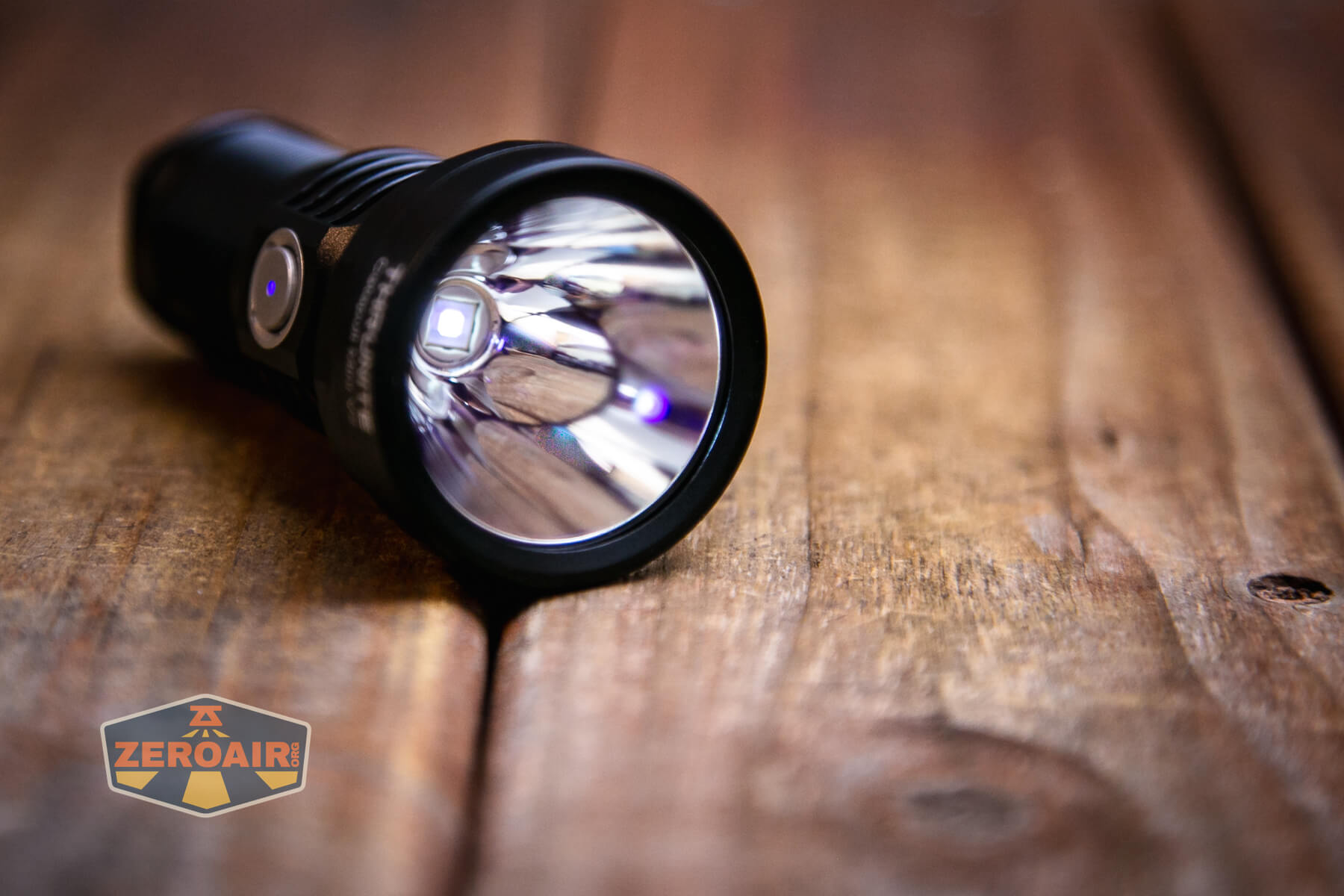
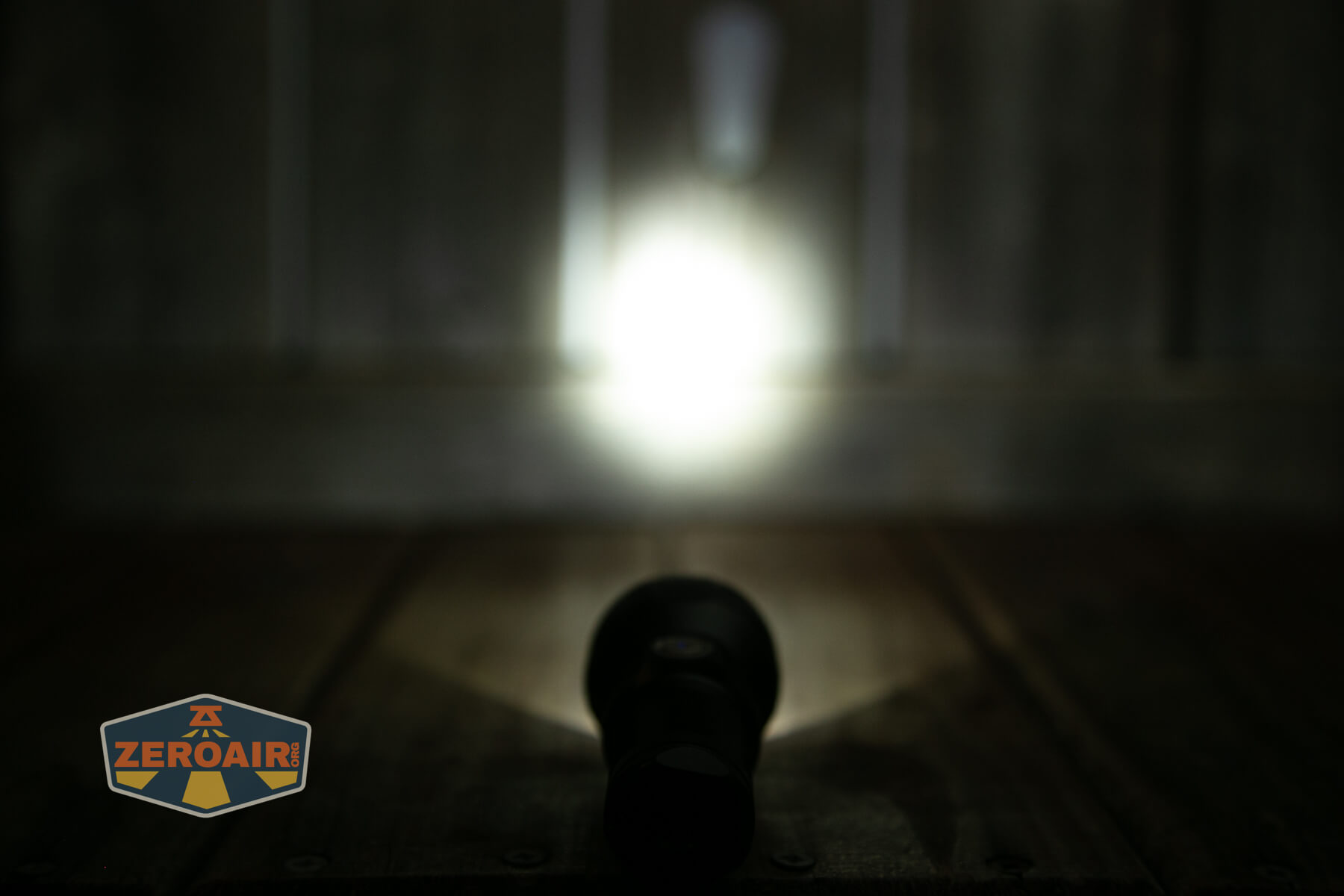
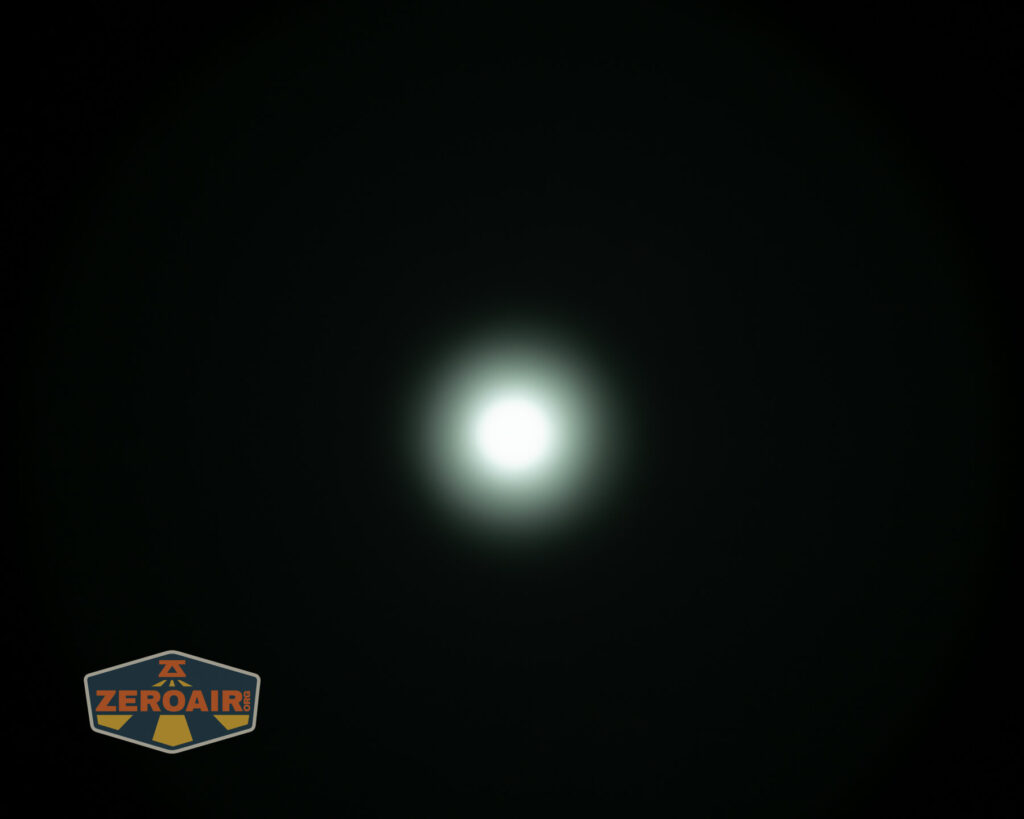
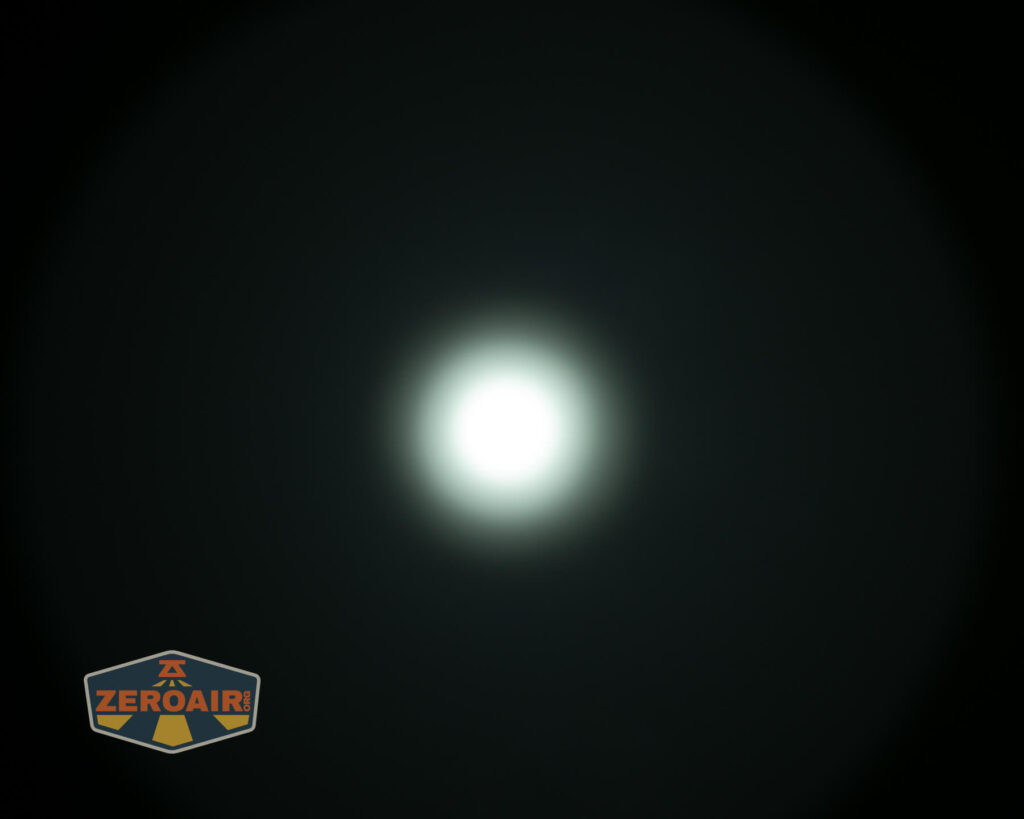
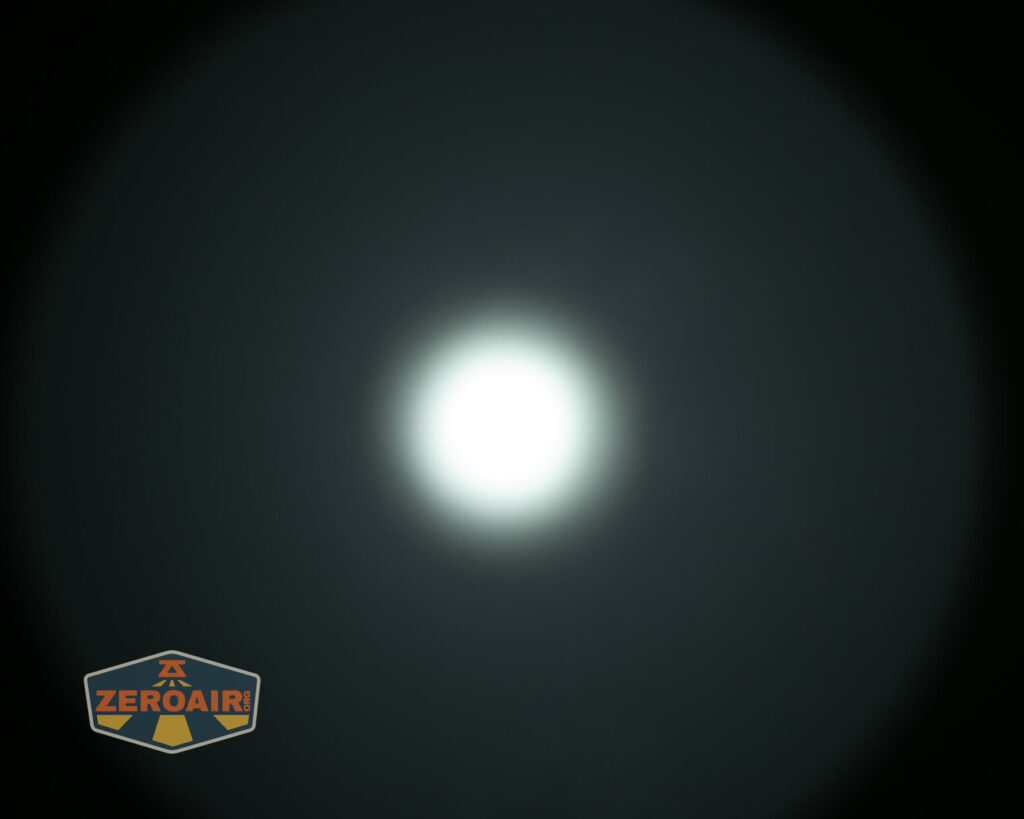
Below you can see the tight hotspot – there’s some spill present, but really, this is a throwy little light.
LED Color Report (CRI and CCT)
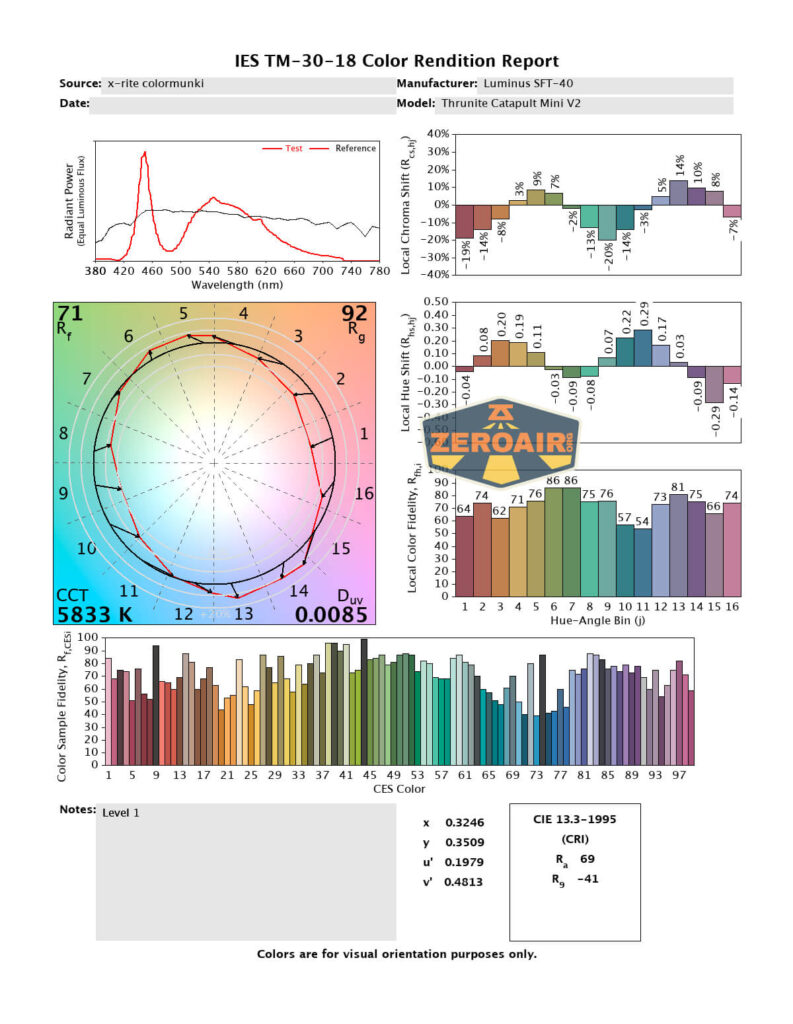
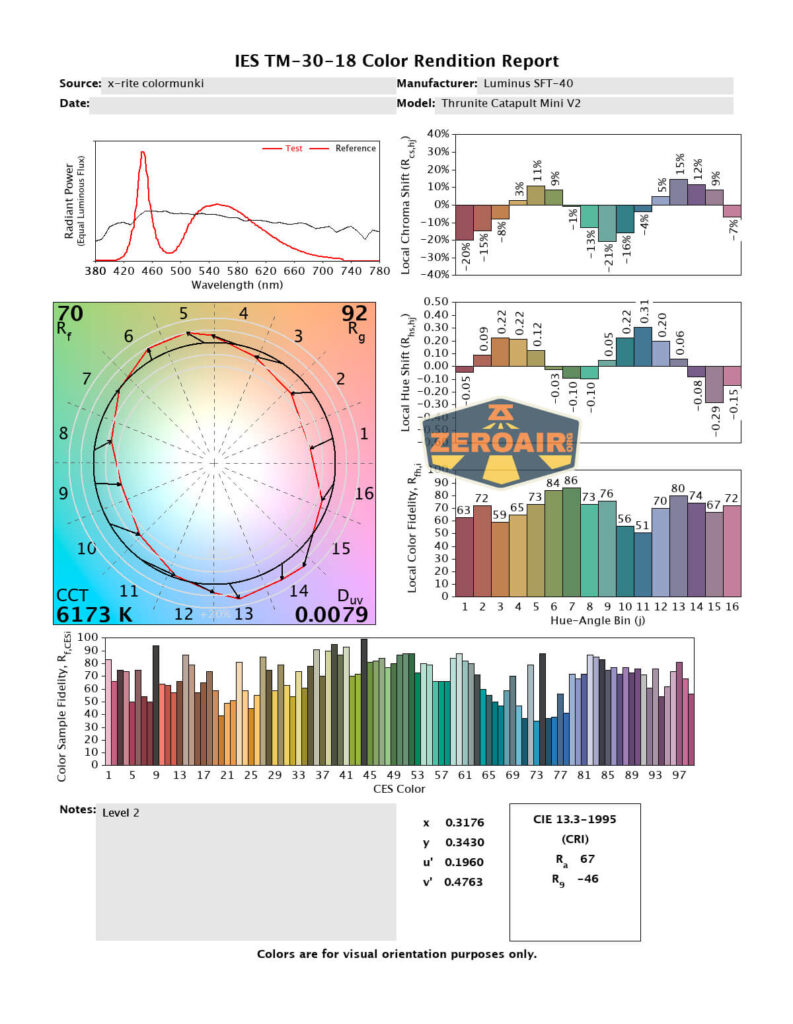
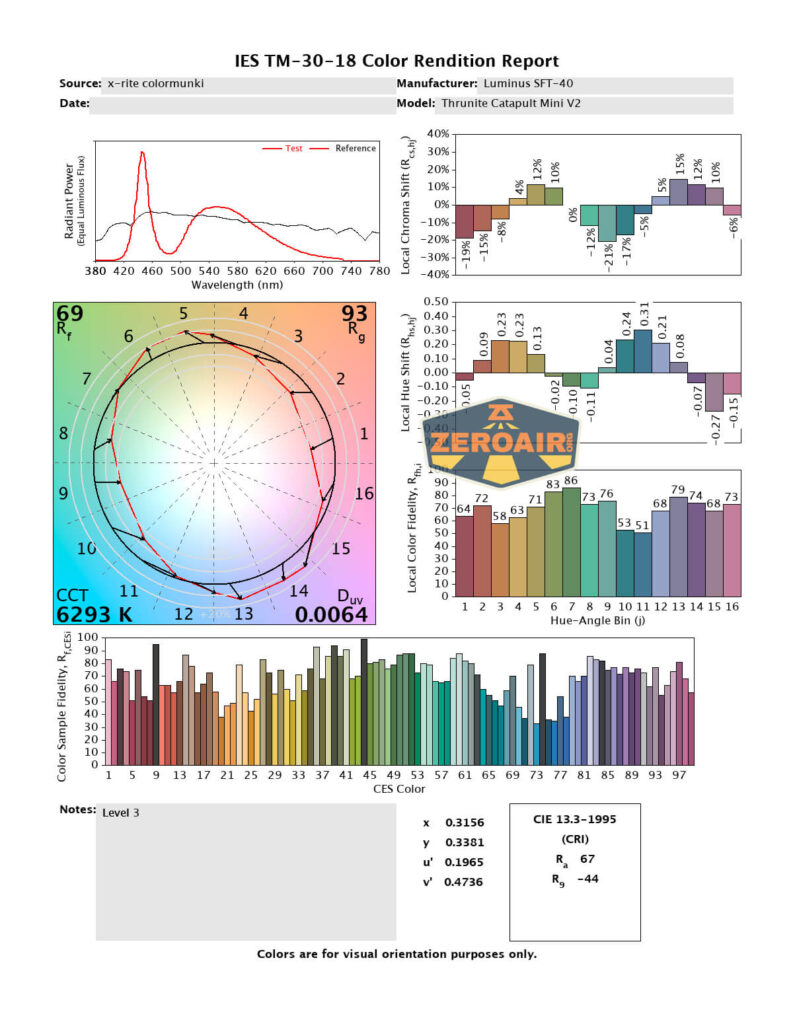
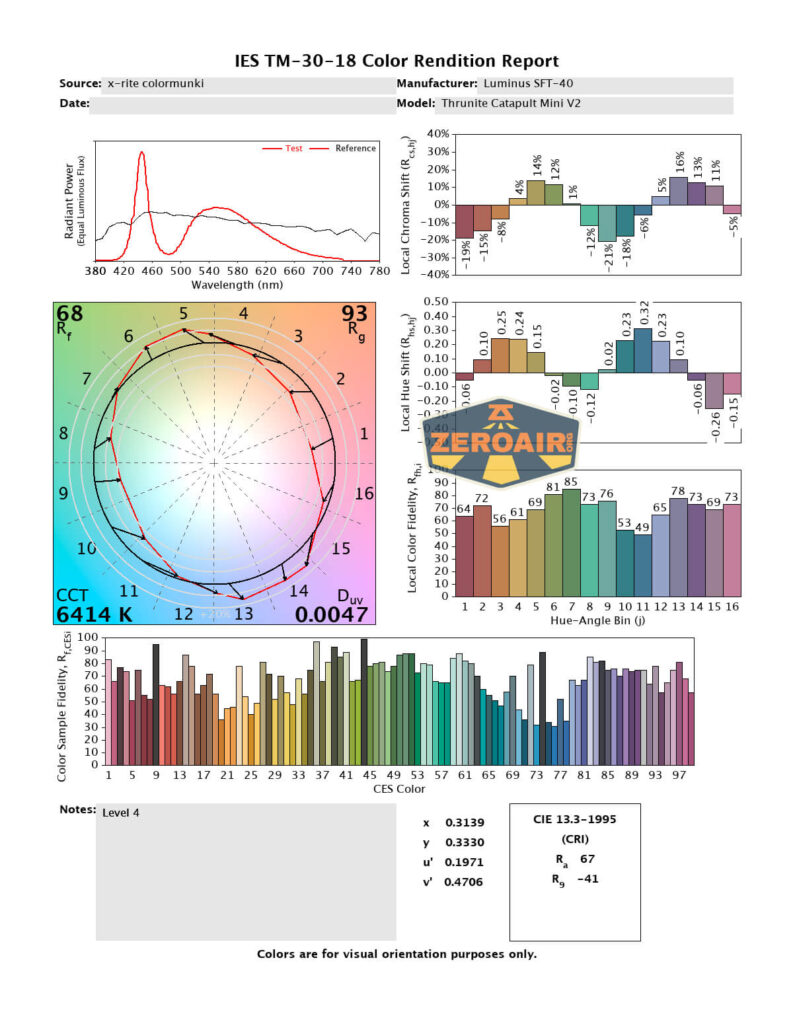
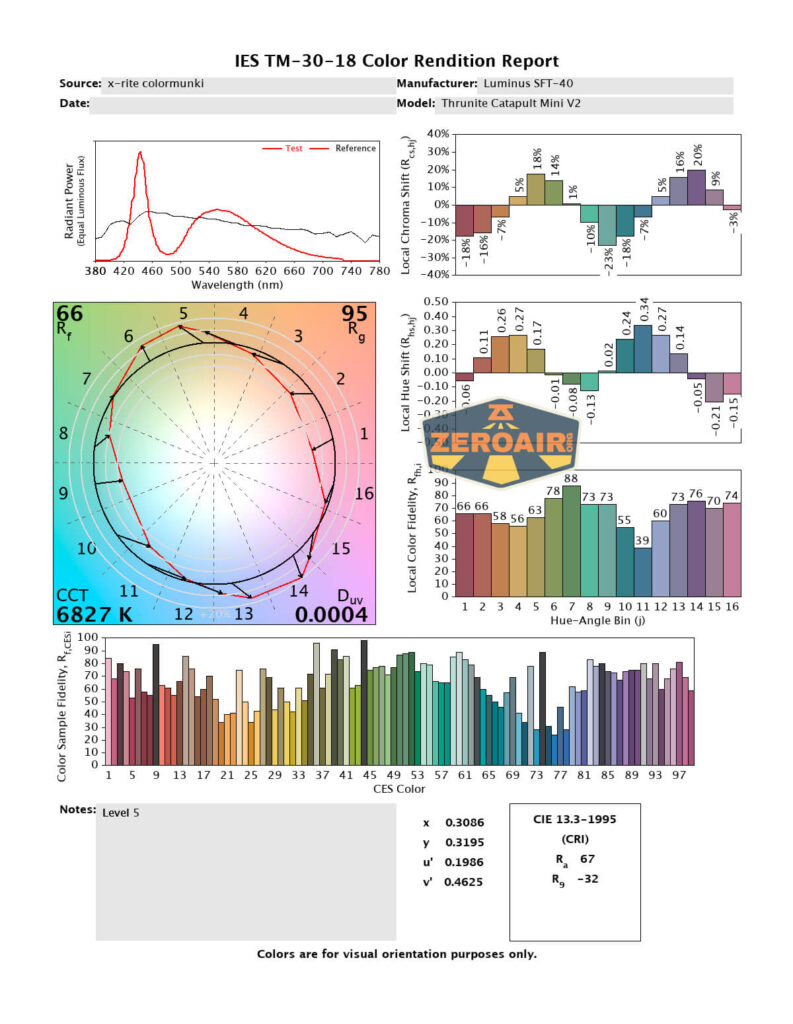
CRI on this Luminus SFT-40 emitter is low, at under 70. CCT ranges from 5800K on the low output to a cooler 6800K for Turbo.
Beamshots
These beamshots always have the following settings: f8, ISO100, 0.3s shutter, and manual 5000K exposure. These photos are taken at floor level, and the beam hits the ceiling around 9 feet away.

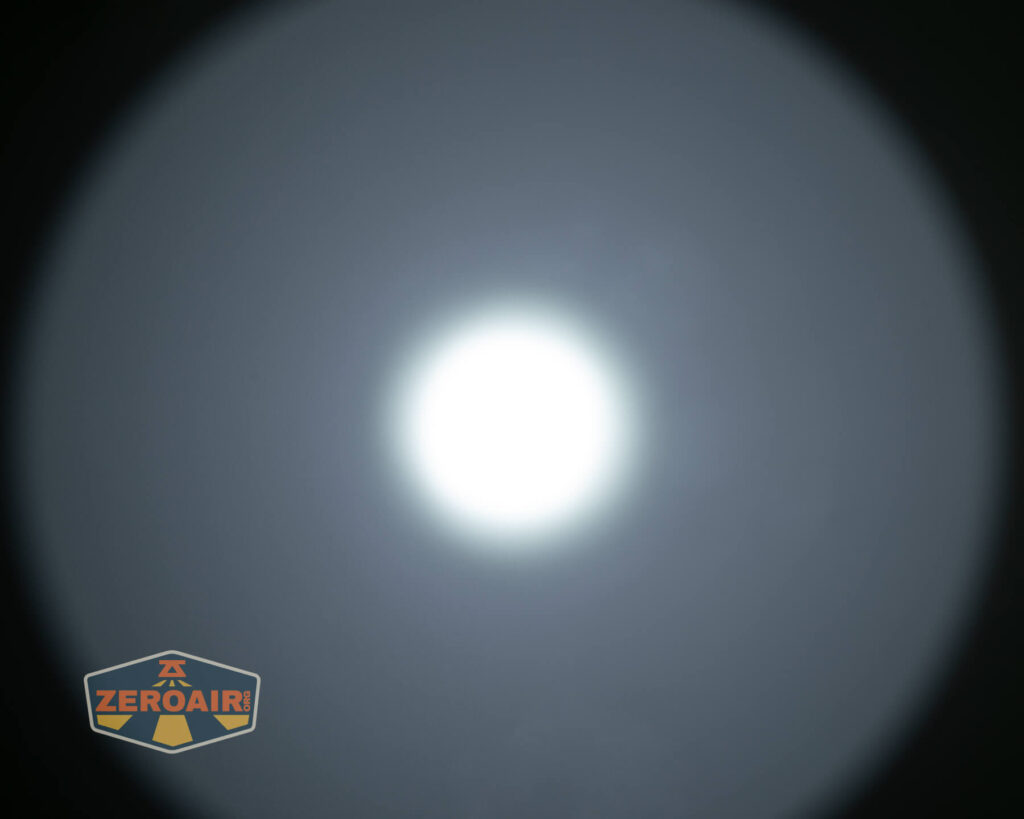
Tint vs BLF-348 (KillzoneFlashlights.com 219b version) (affiliate link)
I keep the test flashlight on the left and the BLF-348 reference flashlight on the right.
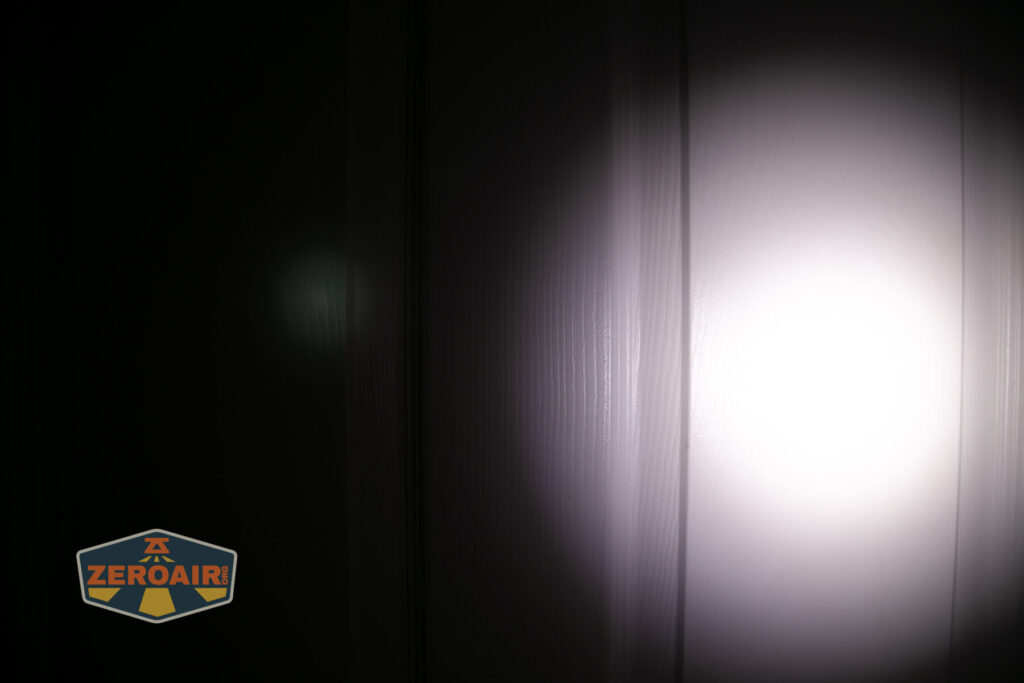
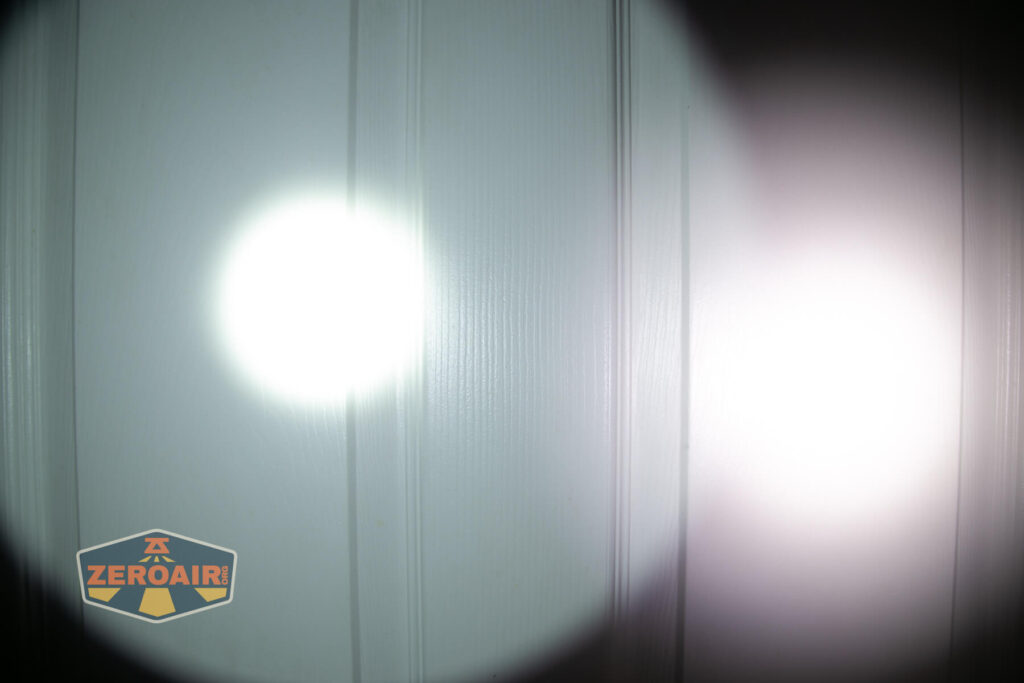
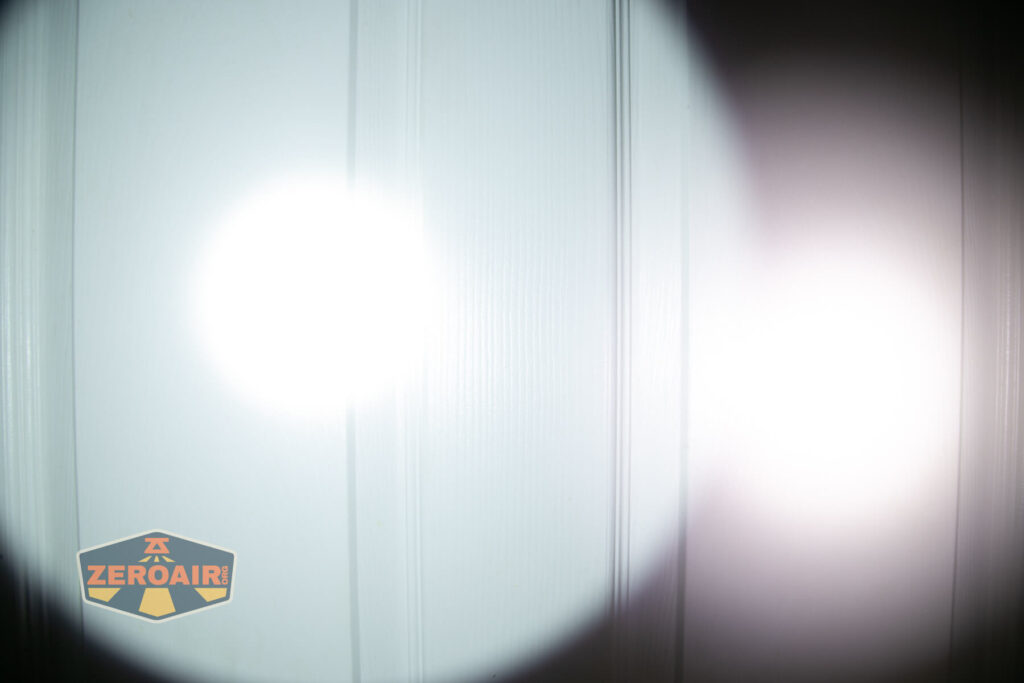
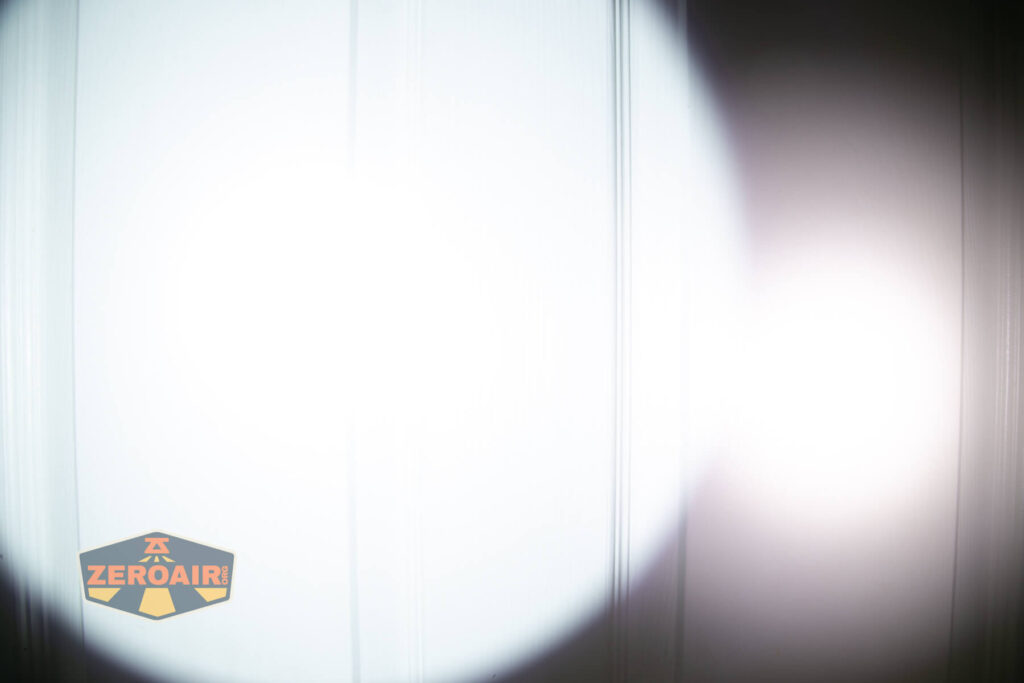
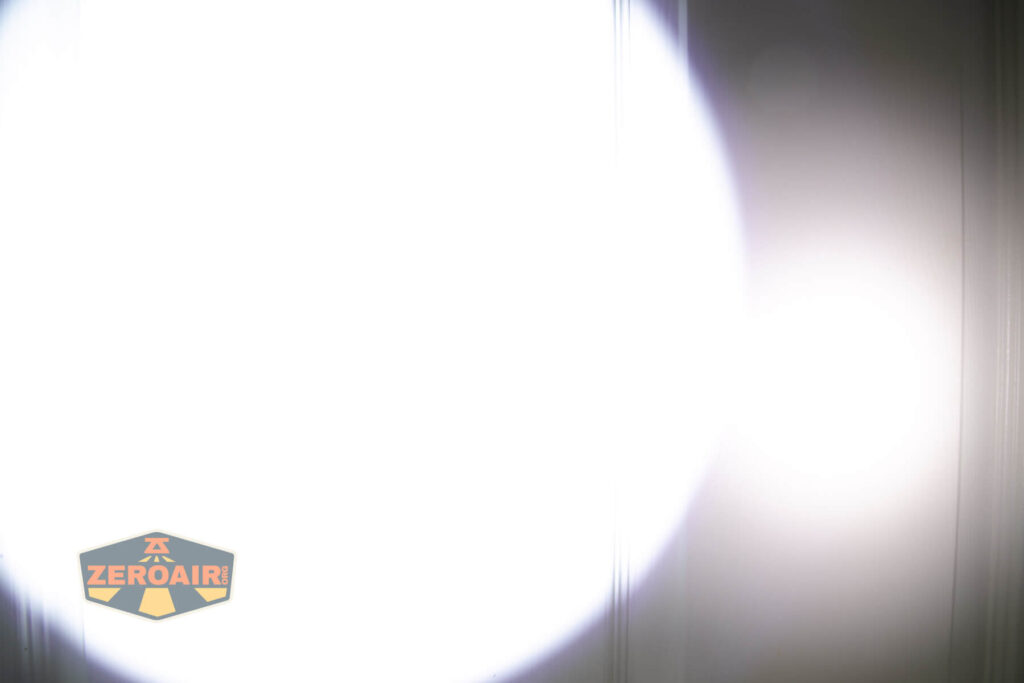
I compare everything to the KillzoneFlashlights.com 219b BLF-348 because it’s inexpensive and has the best tint!
Conclusion
What I like
- Great thrower
- Excellent build quality
- Complete package includes capable 18350 cell
- USB-C Charging
- Another good use of the “standard” Thrunite user interface
What I don’t like
- Charging is slow (but conservative speed leads to better cell life.)
- No 18650 tube available (yet?)
- No pocket clip
- Low CRI
Notes
- This content originally appeared at zeroair.org. Please visit there for the best experience!
- Please use my Amazon.com referral link to help support zeroair.org!
- Please support me on Patreon! I deeply appreciate your support!