
Olight Baton 3 Roadster Flashlight Review
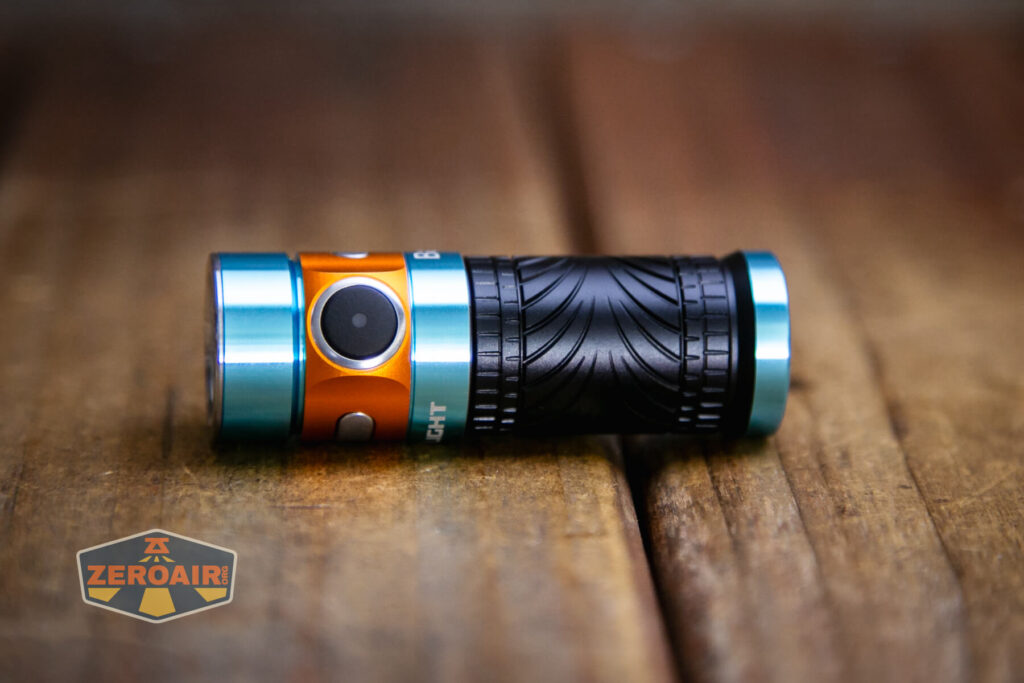
Olight released a special Olight Baton 3 Roadster. Functionally, it’s a standard Baton 3 and offers great output as well as magnetic contact charging.
Official Specs and Features
Here’s a link to the Olight Baton 3 Roadster product page.
Versions
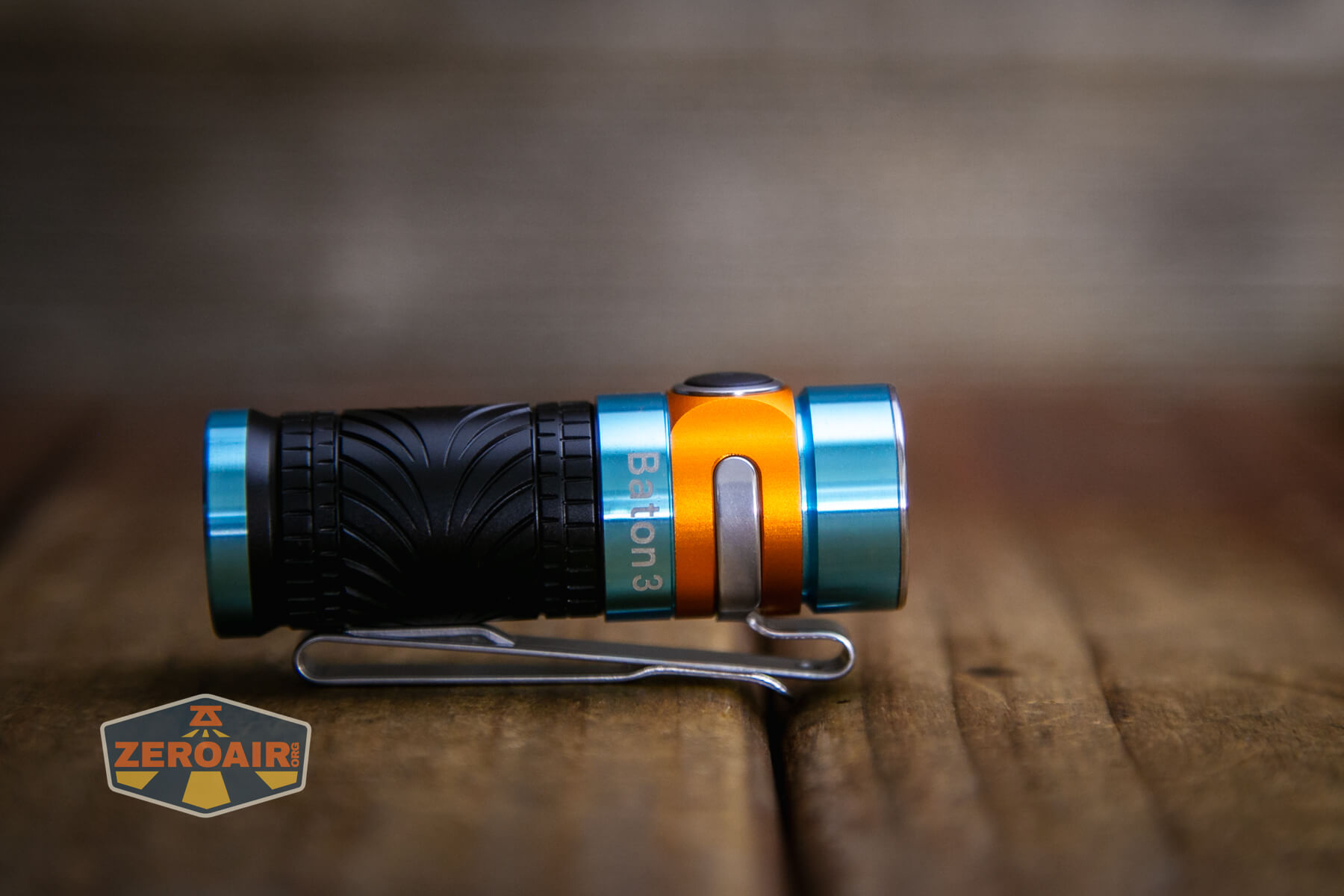
There are a number of versions. First, the packages – there’s the Premium package, which you can see in this review of the Summer edition. That includes the charging/carry case. It’s available in black or red as standard colors, or blue, which is a limited color. Also available is the seasons series, which is another limited color. And then there’s this fade-type color, such as this Deep Sea Blue. The version seen here is the “Roadster” edition, in blue and orange color.
Price
The Olight Baton 3 sells for $64.95 in some colorways. Unfortunately, this fantastic Roadster color is sold out. Get your Olight Baton 3 through my ShareASale link!
Short Review
I’ve tested a number of Baton 3 flashlights by Olight. It’s actually good to test the same light multiple times because more data is always useful! There have been a number of editions, and now I own probably 8 of these. Roadster was an immediately popular version of the Baton and sold out very quickly (and is still sold out!). It’s a standard Baton 3, which is also pretty great. While I typically fuss about the CCT on these, it’s actually quite fine – under 5500K on the low modes and still under 6000K on the highest level. Read on for more thoughts!
Long Review
The Big Table
| Olight Baton 3 Roadster | |
|---|---|
| Emitter: | Luminus SST-40 (CW (6000K-7000K)) |
| Price in USD at publication time: | Roadster is sold out! Other Baton 3’s start at $64.95. |
| Cell: | 1×16340 |
| Runtime Graphs | |
| LVP? | Yes |
| Switch Type: | E-Switch |
| Quiescent Current (mA): | ? |
| On-Board Charging? | Yes |
| Charge Port Type: | Proprietary Magnetic |
| Charge Graph | |
| Power off Charge Port | with cell: all modes without cell: no modes |
| Claimed Lumens (lm) | 1200 |
| Measured Lumens (at 30s) | 1240 (103.3% of claim)^ |
| Candela per Lumen | 6 |
| Claimed Throw (m) | 166 |
| Candela (Calculated) in cd (at 30s) | 283lux @ 5.268m = 7854cd |
| Throw (Calculated) (m) | 177.2 (106.7% of claim)^ |
| Claimed CCT | 6000-7000 |
| Measured CCT Range (K) | 5200-6000 Kelvin |
| Item provided for review by: | Olight |
| All my Olight reviews! | |
^ Measurement disclaimer: Testing flashlights is my hobby. I use hobbyist-level equipment for testing, including some I made myself. Try not to get buried in the details of manufacturer specifications versus measurements recorded here; A certain amount of difference (say, 10 or 15%) is perfectly reasonable.
What’s Included

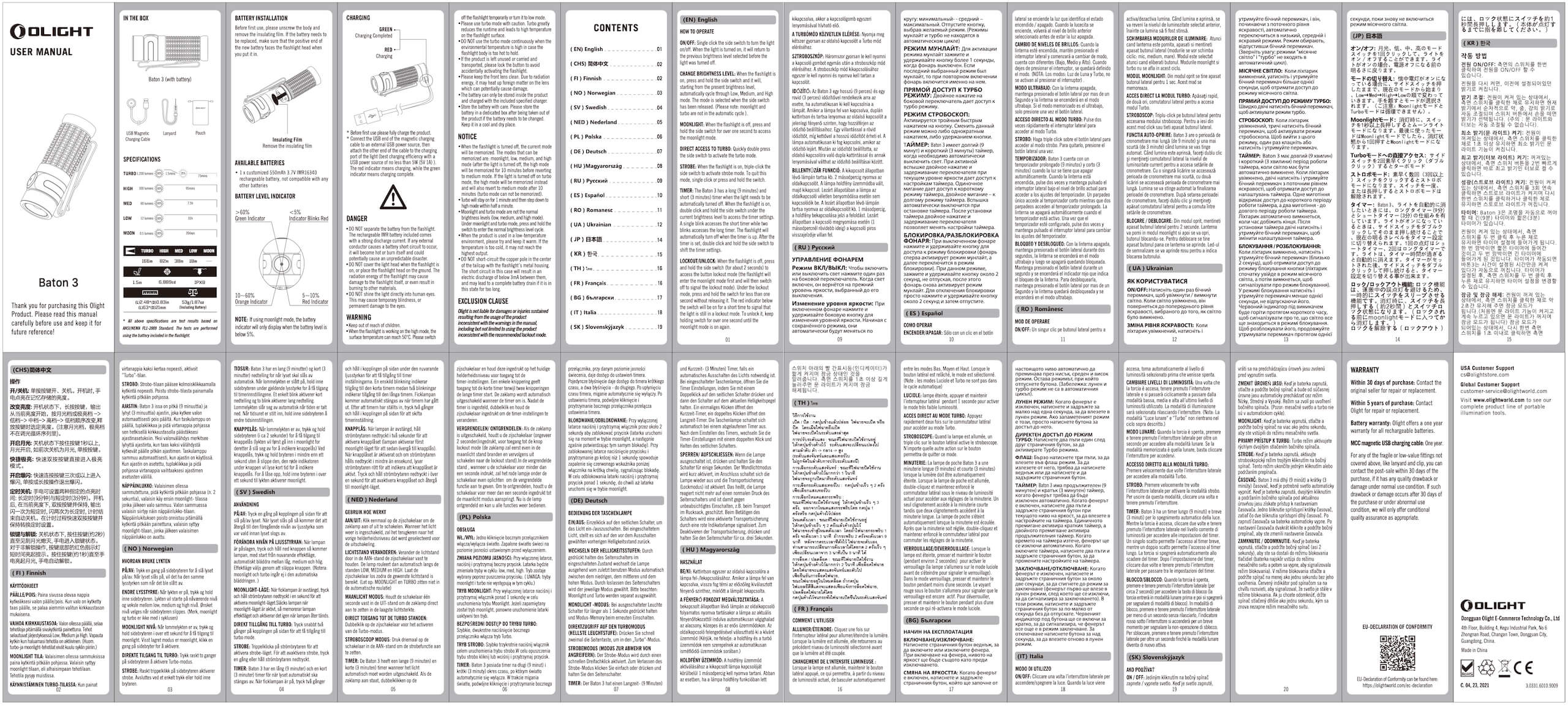
- Olight Baton 3 Deep Sea Blue Flashlight
- 550mAh 16340 (customized, proprietary)
- Charge cable (USB to proprietary magnetic)
- Felt(ish) carry case
- Lanyard
- Manual and papers
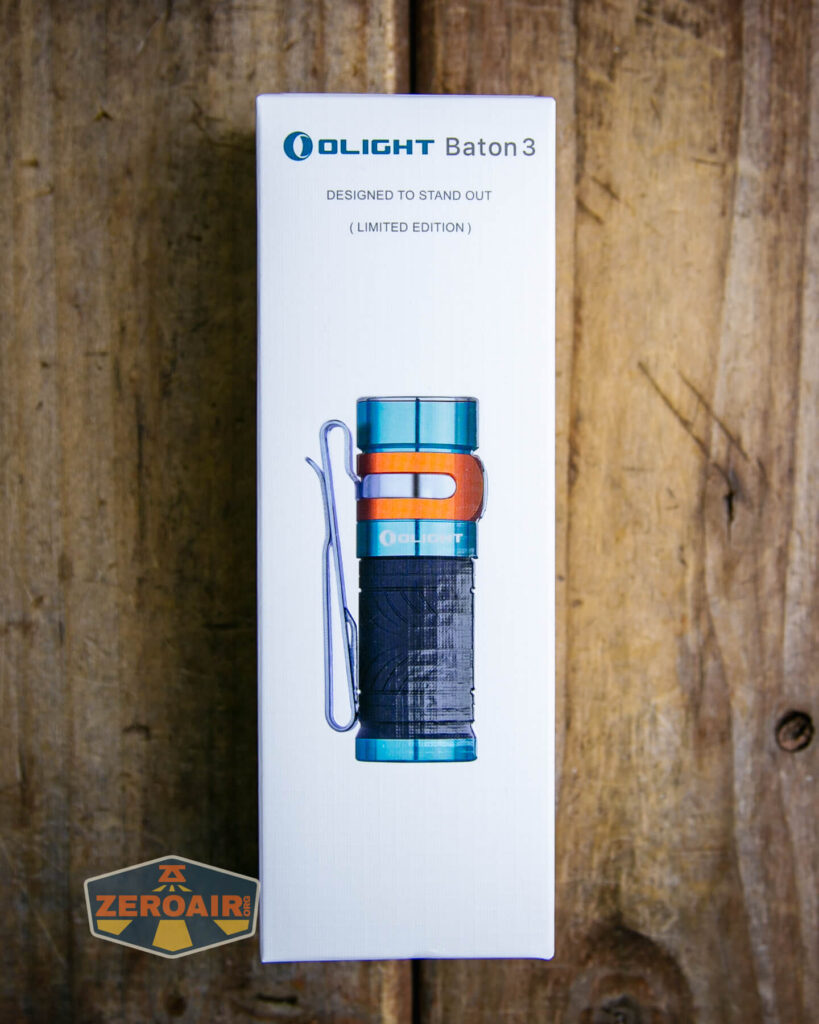
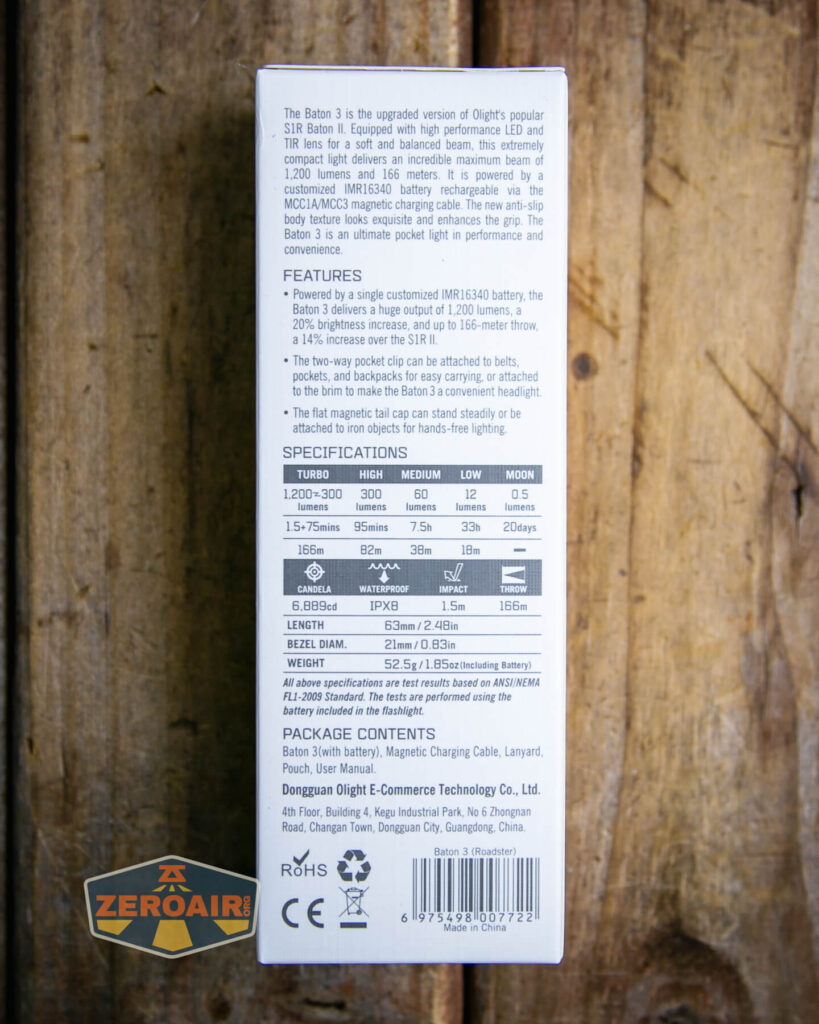
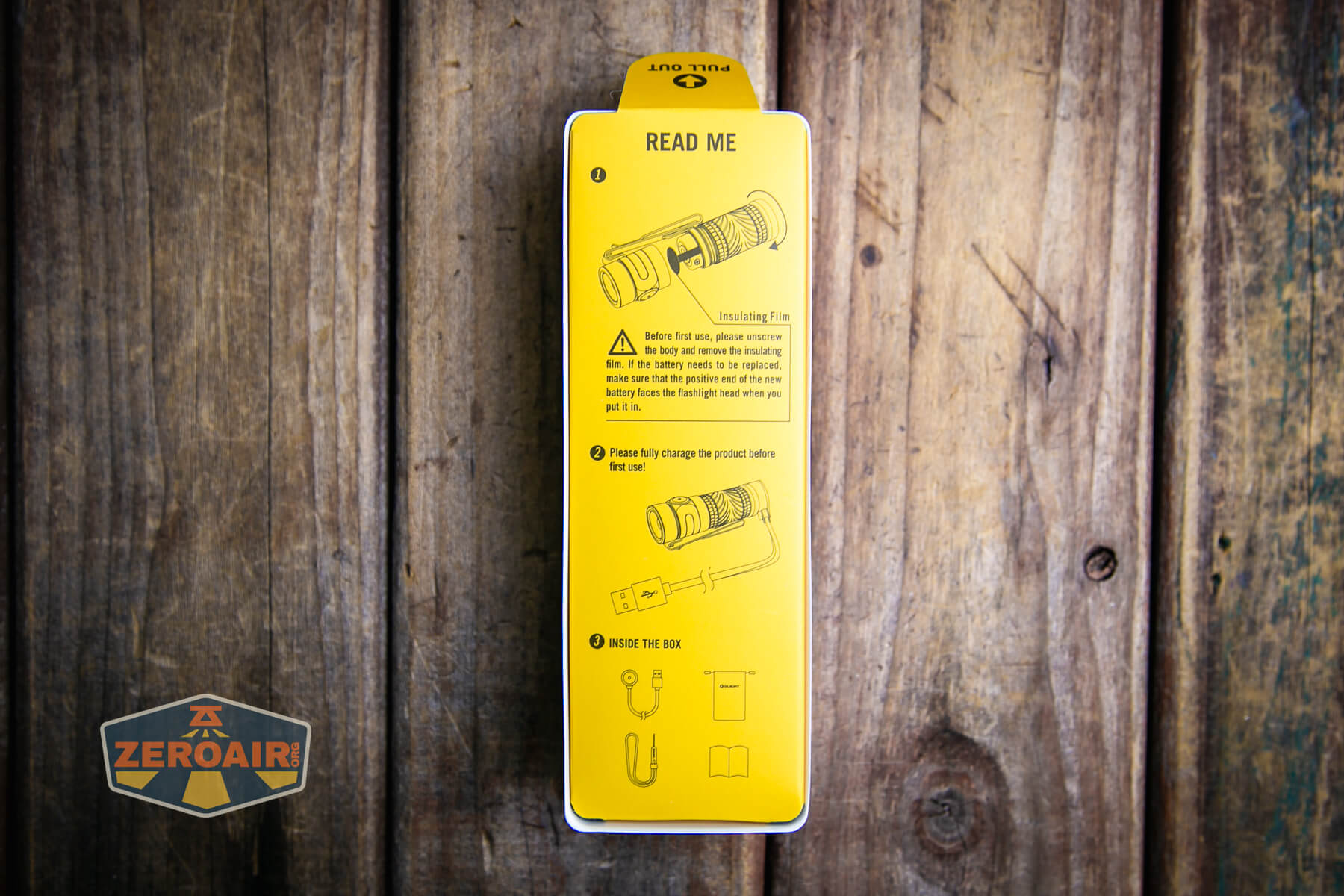
Package and Manual
Build Quality and Disassembly

I have a bunch of Olight Batons. Some that I have reviewed, sure, but I have so many that I haven’t even reviewed. And a few of those Batons are just about my most used lights – stock emitter and all. I love the Baton series! (And a rich series of lights it is, covering more than just this 16340-sized light!)



The threads here are unanodized, short, square-cut, and very smooth. The unanodized threads are actually an update from previous versions, which have anodized threads.

Inside is unchanged from the most recent Batons I’ve tested. There’s still “a lot going on” in there but it’s different from previous (non-‘3’) Batons.


Size and Comps
Weight (g / oz) 53 / 1.87
Length (mm / in) 63 / 2.48
Head Diameter (mm / in) 21 / 0.83
Body Diameter (mm / in) 21 / 0.8
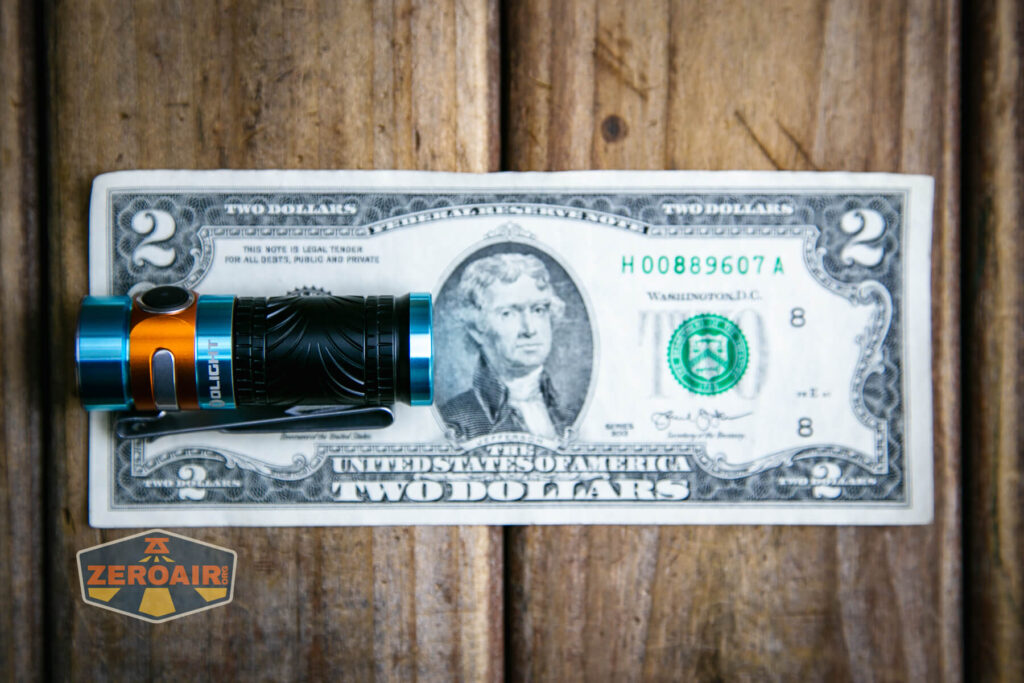
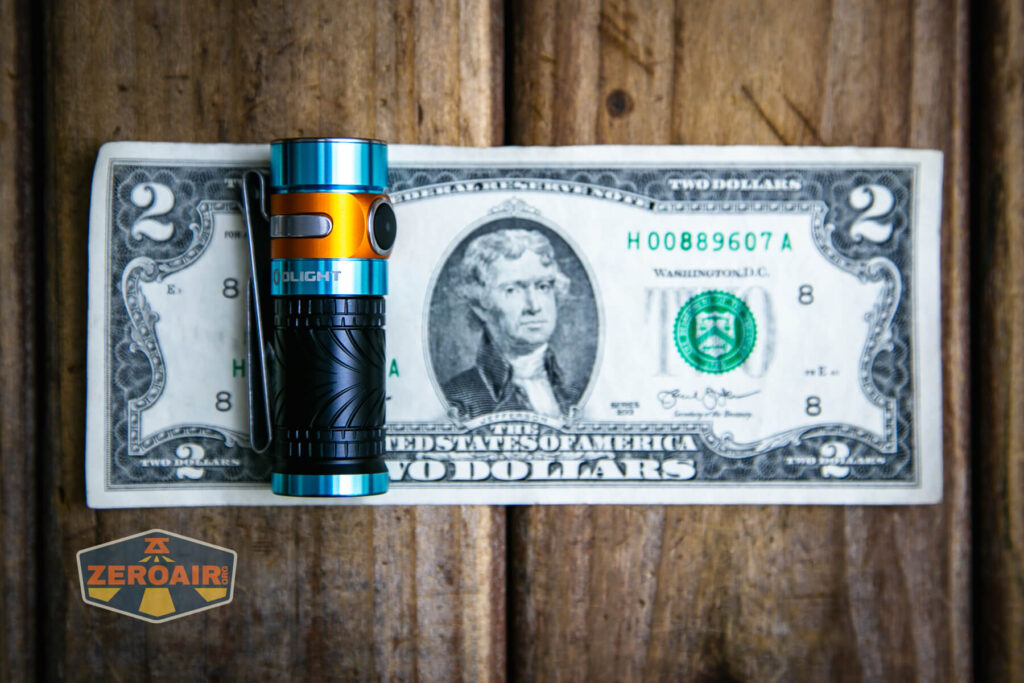
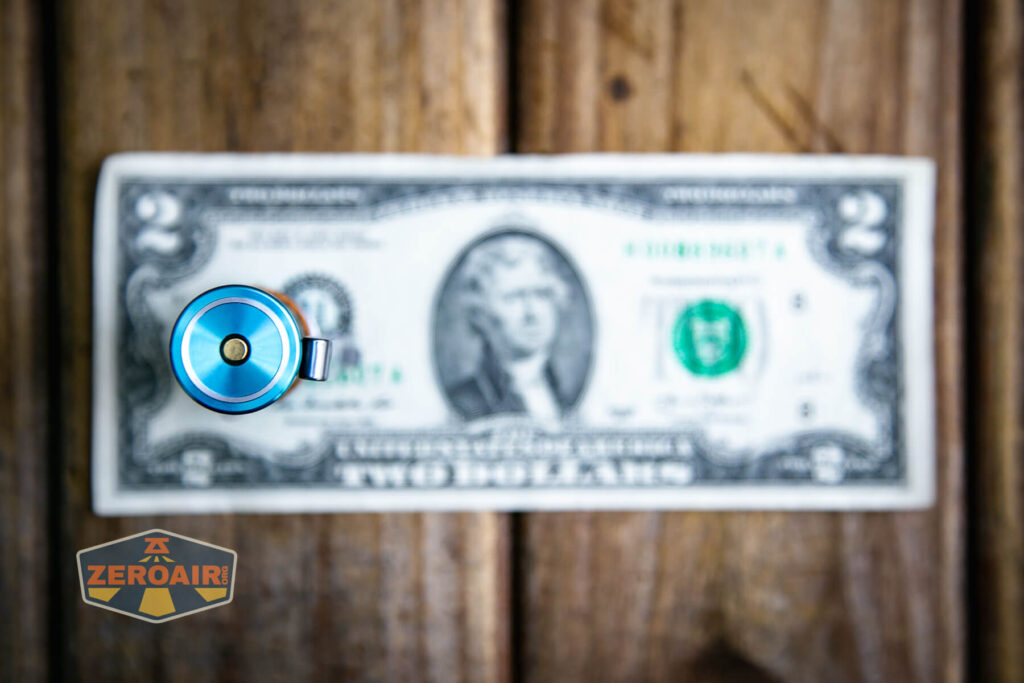
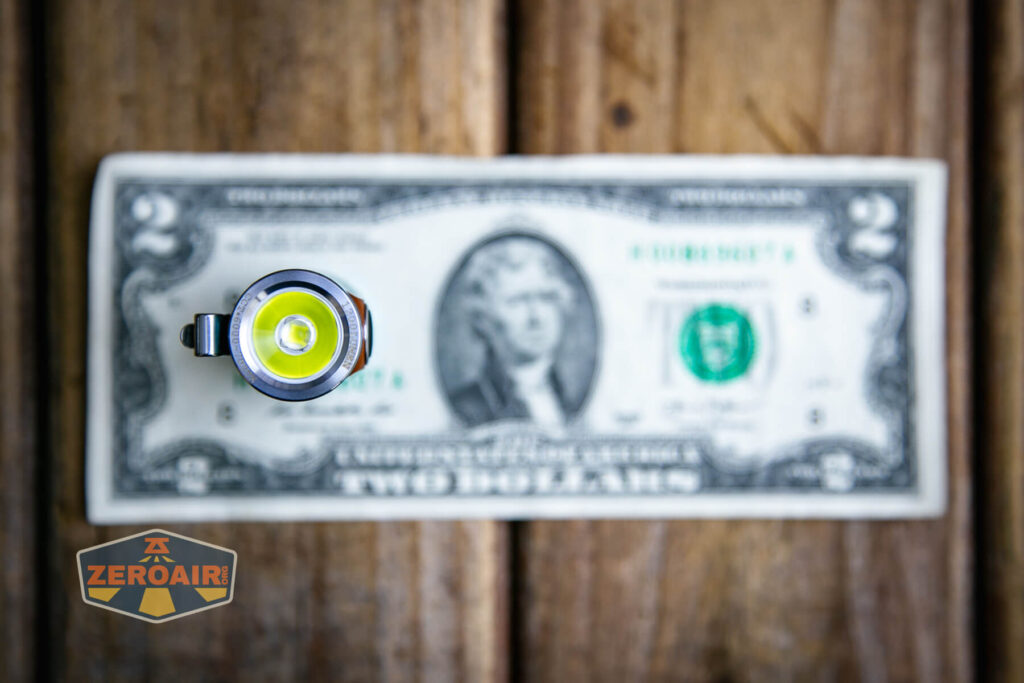
If the flashlight will headstand, I’ll show it here (usually the third photo). If the flashlight will tailstand, I’ll also show that (usually in the fourth photo).

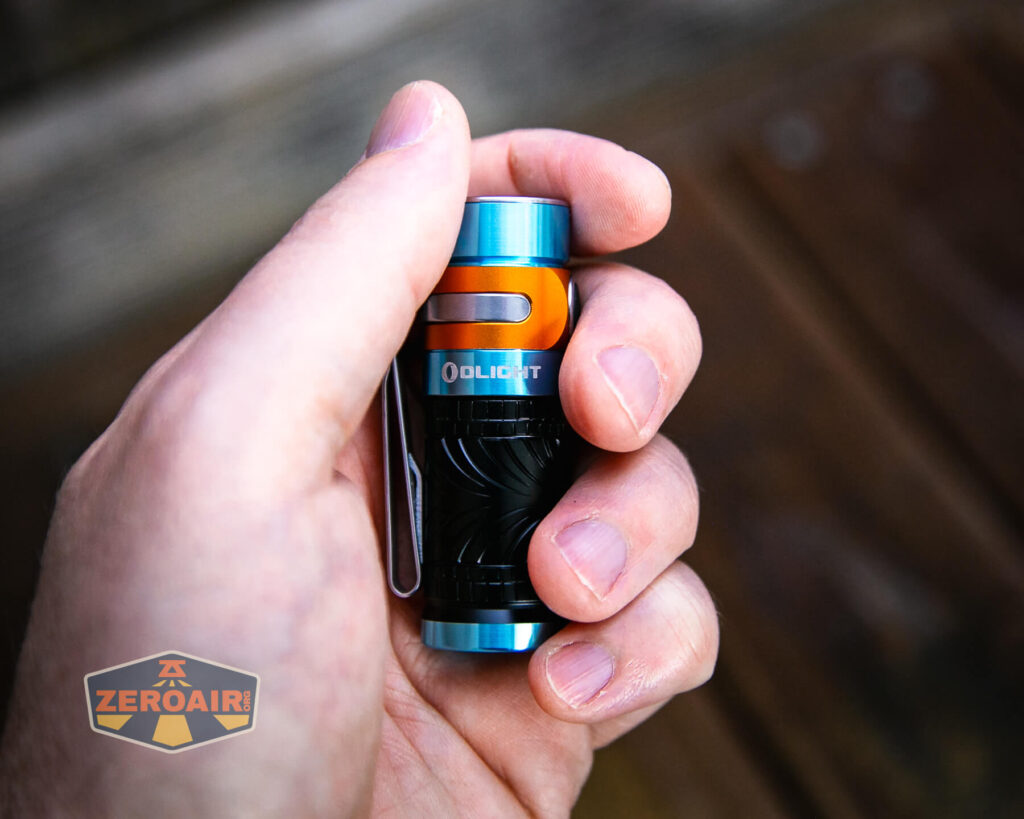
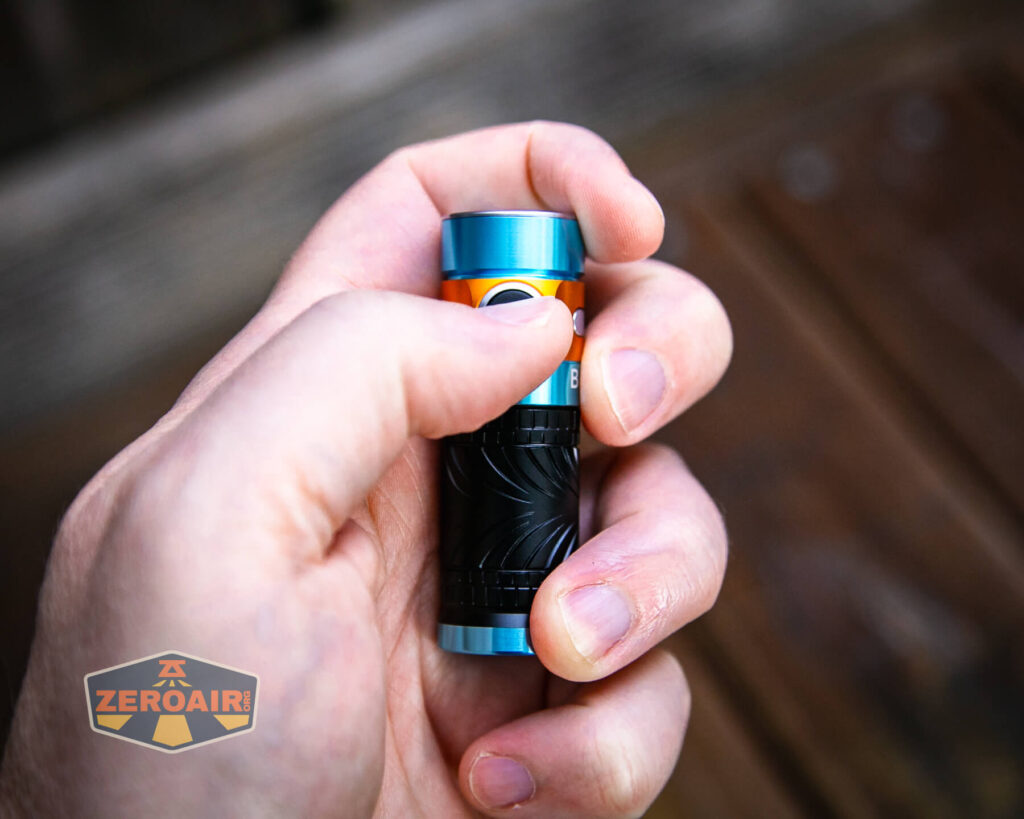
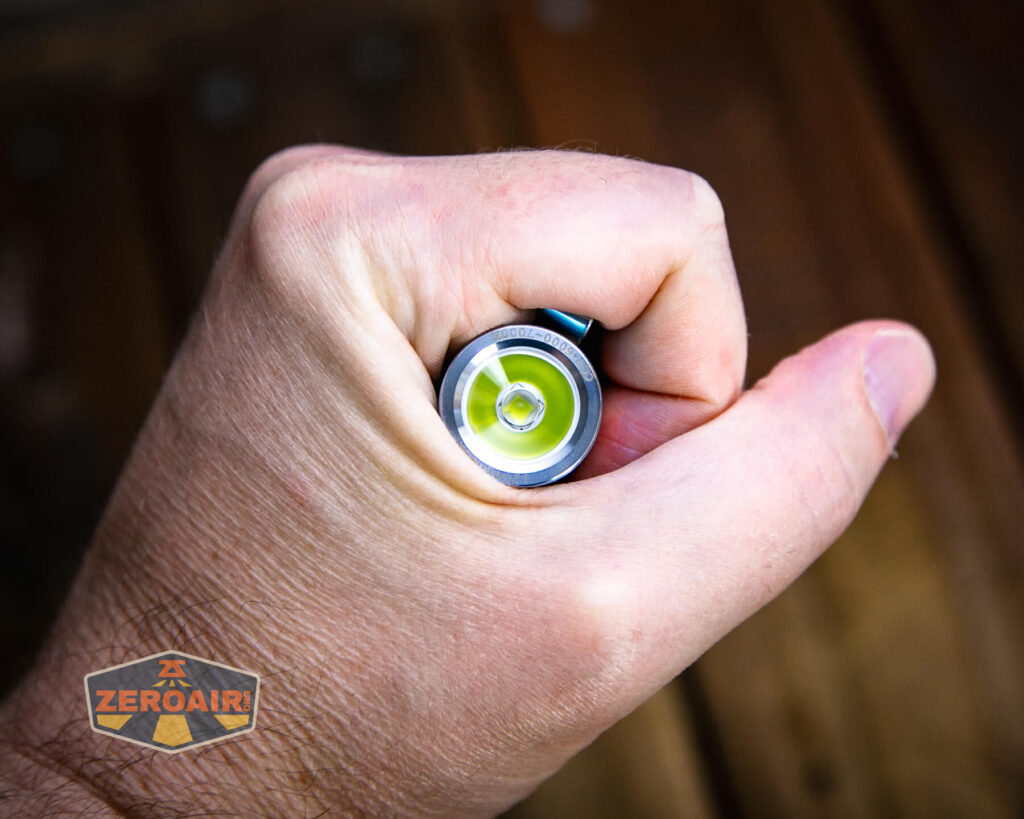
Here’s the test light with the venerable Convoy S2+. Mine’s a custom “baked” edition Nichia 219b triple. A very nice 18650 light.

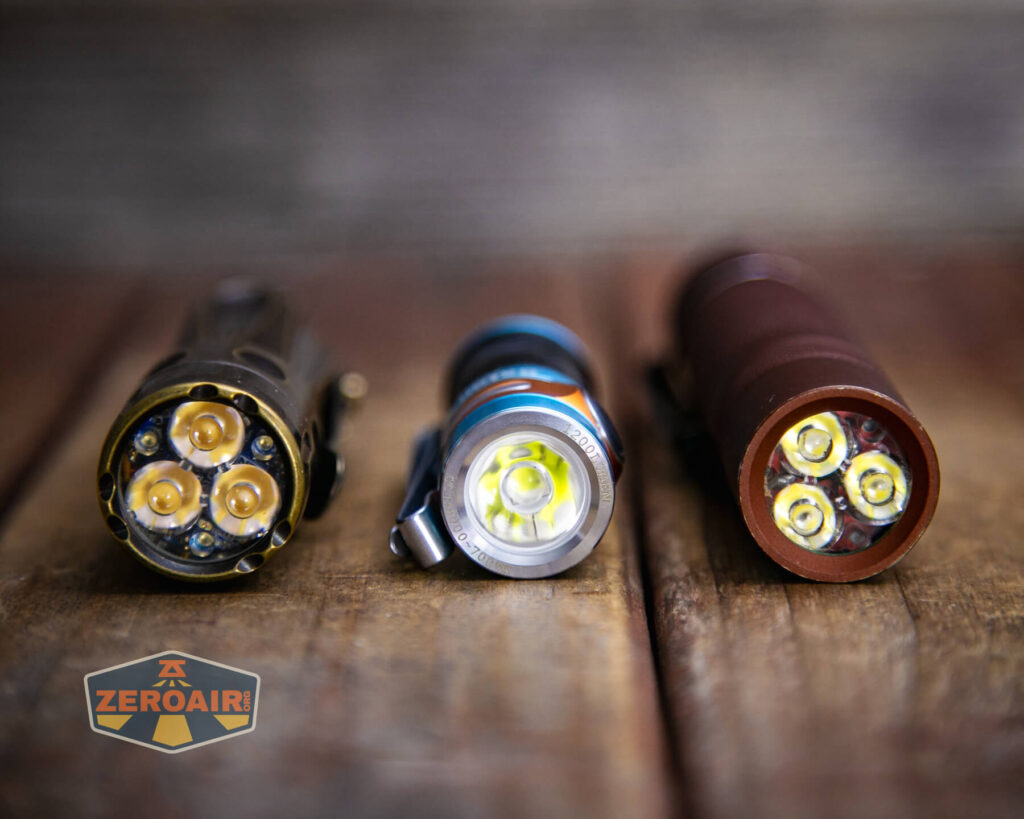
Also above is the light beside my custom-engraved TorchLAB BOSS 35, an 18350 light. I reviewed the aluminum version of that light in both 35 and 70 formats. I also reviewed that specific edition, the “Oveready BOSS FT Collector Vintage Brass” 35. I love it!
Retention and Carry
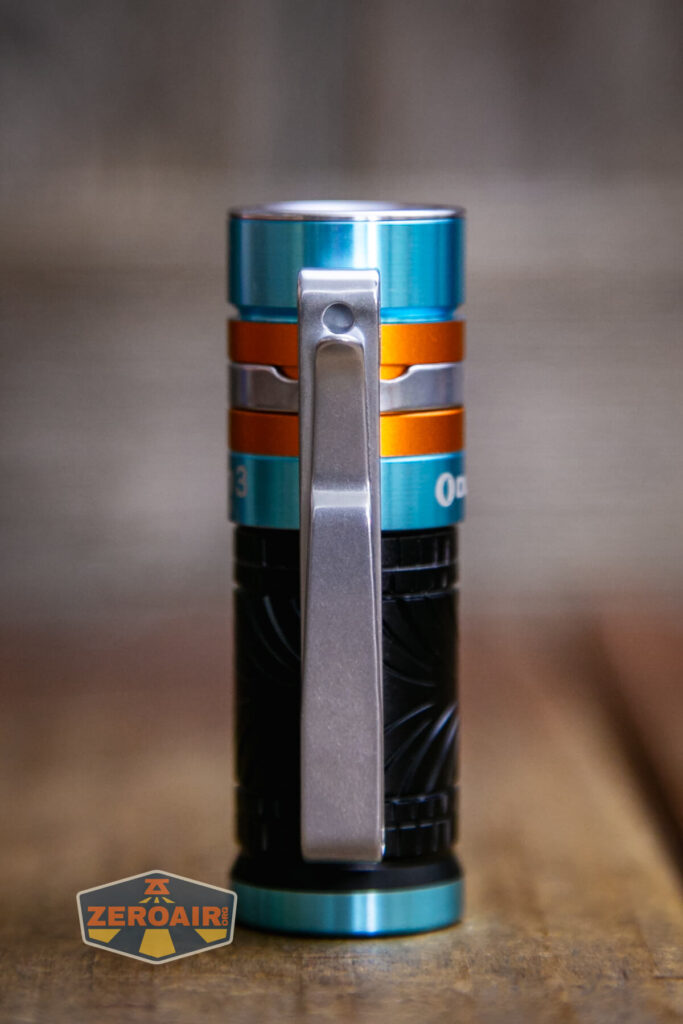
We can speak about the Olight Baton 3 Roadster having two carry methods. First is the pocket clip, which is mostly the same as previous generations, but with small tweaks.

It’s a two-way clip, which I don’t often love, but this is a reasonable implementation – being two-way doesn’t cause too much extra size.
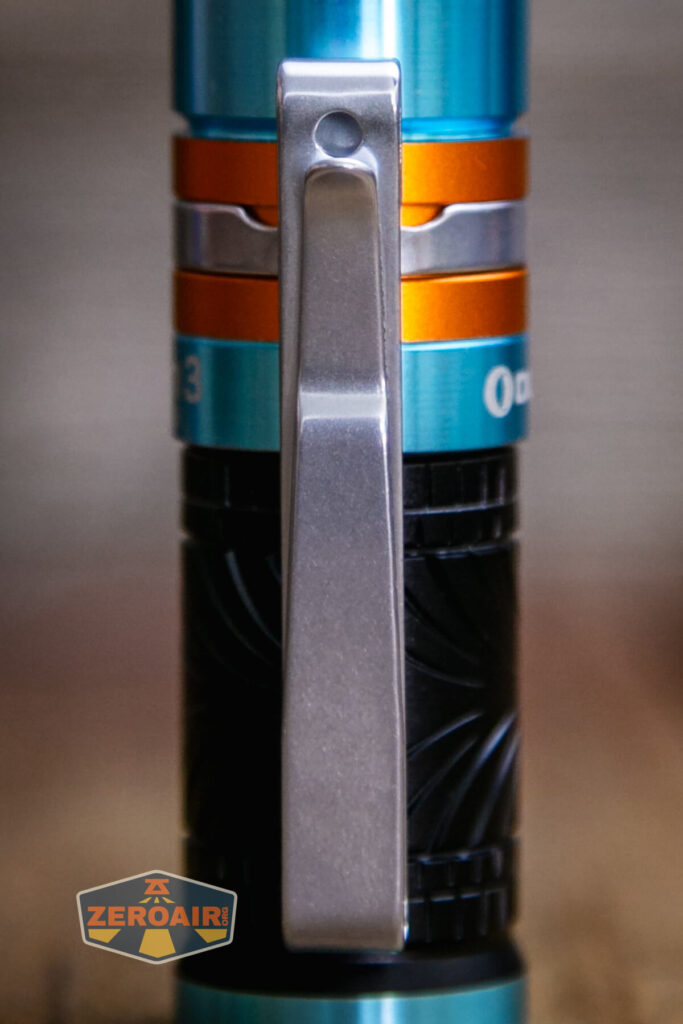
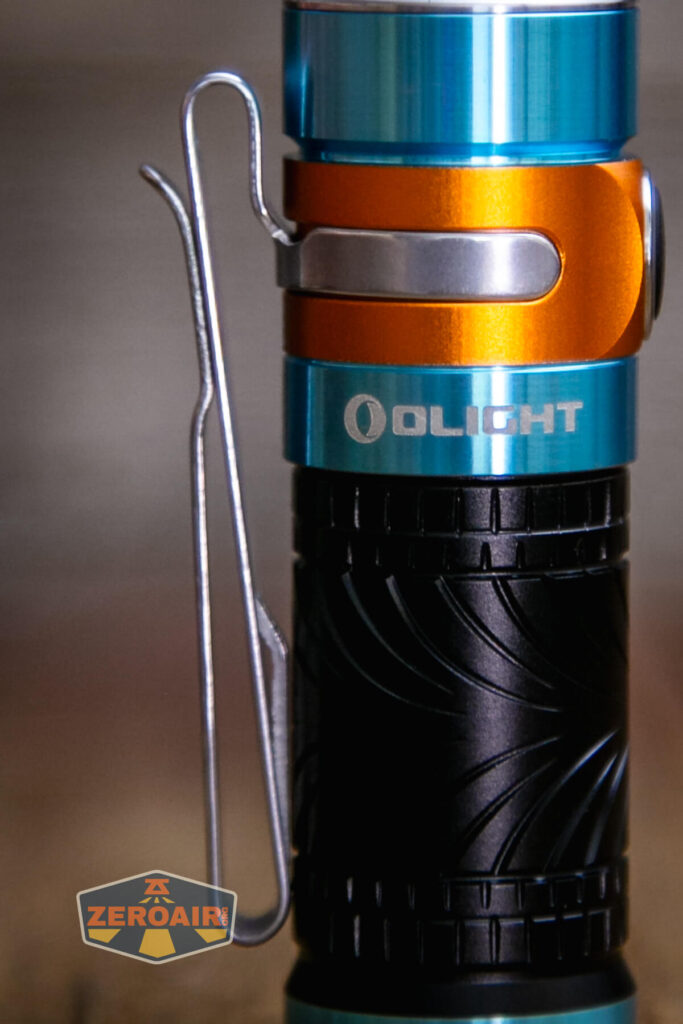
There’s also a lanyard hole in the pocket clip. Unlike some other editions of the Baton 3, this Roadster includes a lanyard. And it’s not some cheap cloth lanyard. This is a full silicone lanyard, and is quite great!

I didn’t pull this clip, but you can expect it to leave a mark on the orange part of the body.
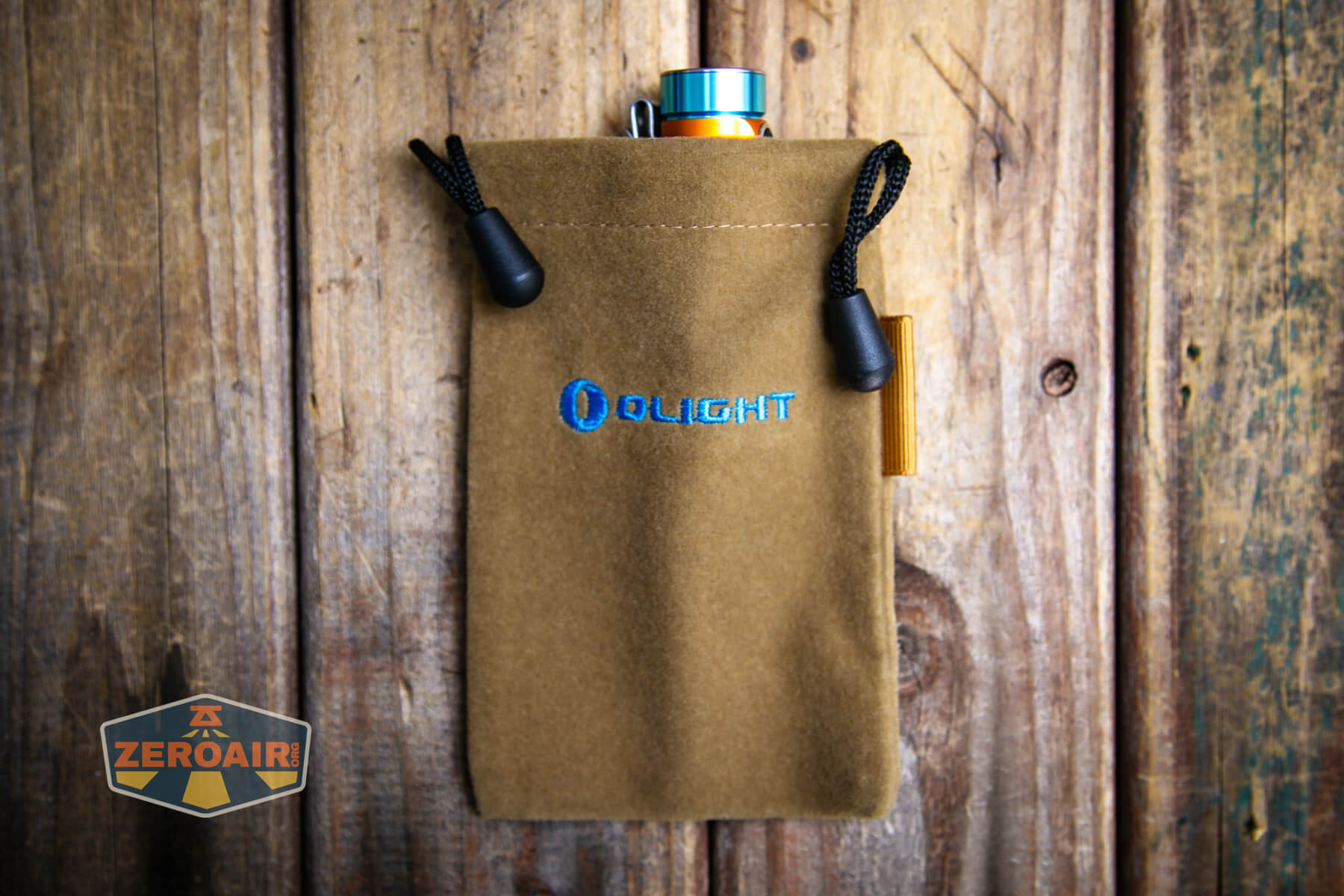
One other way to carry this little light is the crushed velvet carry case. This bag is nice, but … I wonder who uses these? I don’t think I have ever used this type of carry bag.
Power and Runtime
The Olight Baton 3 Roadster flashlight is powered by a single lithium-ion cell. This is a customized 16340, with both positive and negative terminals on the positive end. A “normal” (or “non-customized”) 16340 will not work in this light.

Not only that but the positive terminal is recessed into a plastic shroud. This shroud will prevent charging of the cell in most if not all bay chargers.

Below you can see a few runtime tests. Performance is just like the other Baton 3 lights I’ve tested (which is to say: good).
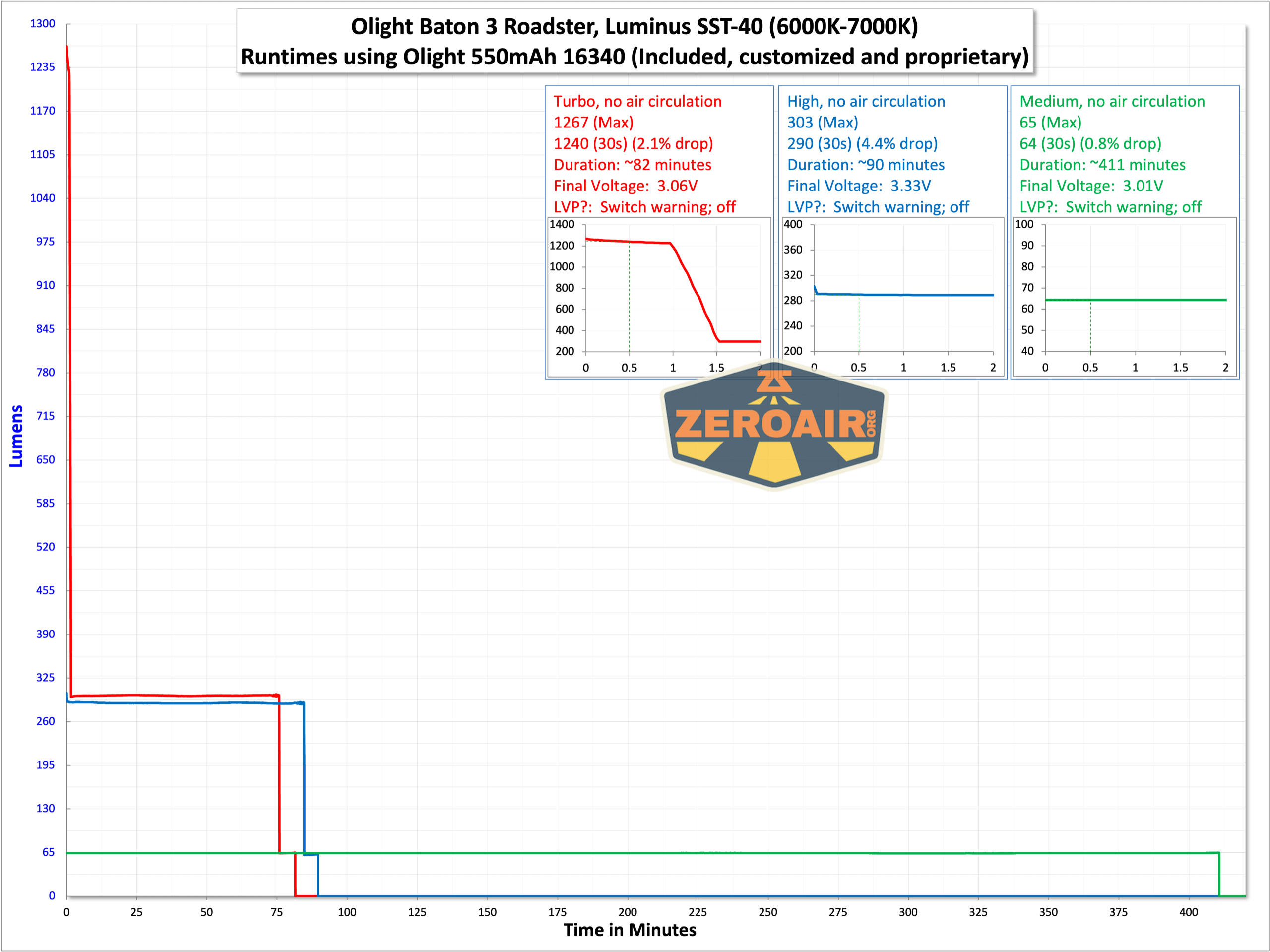
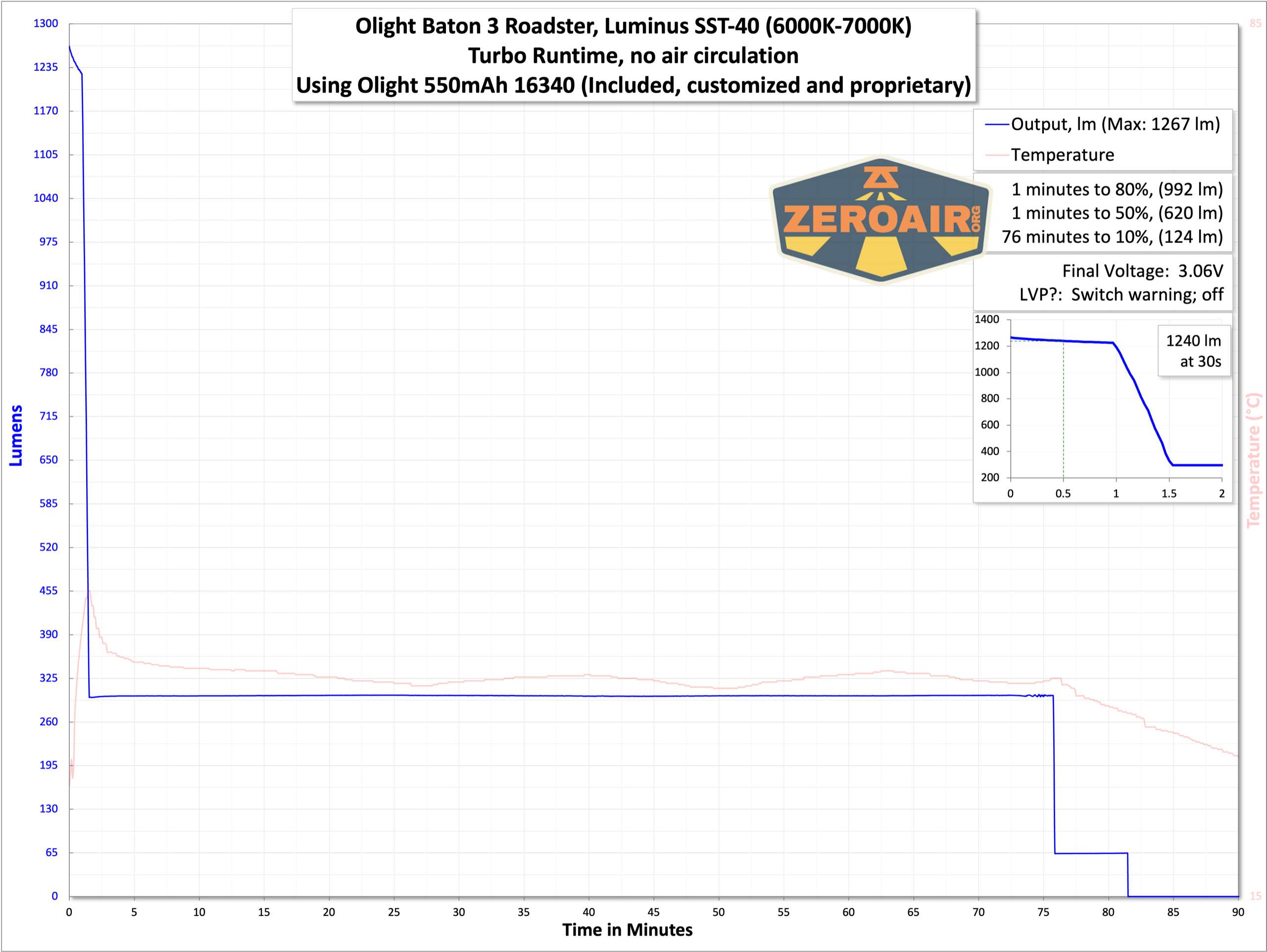
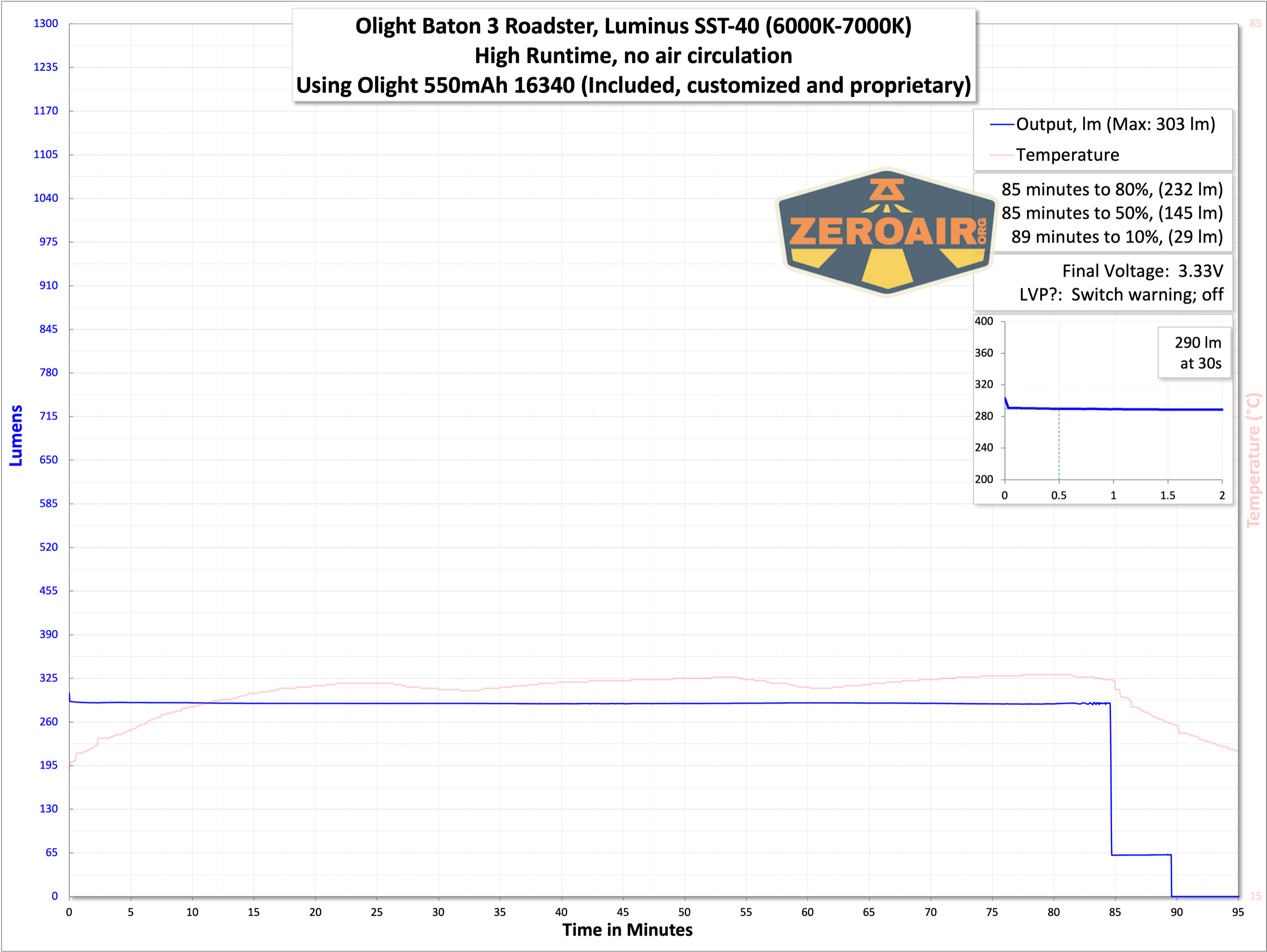
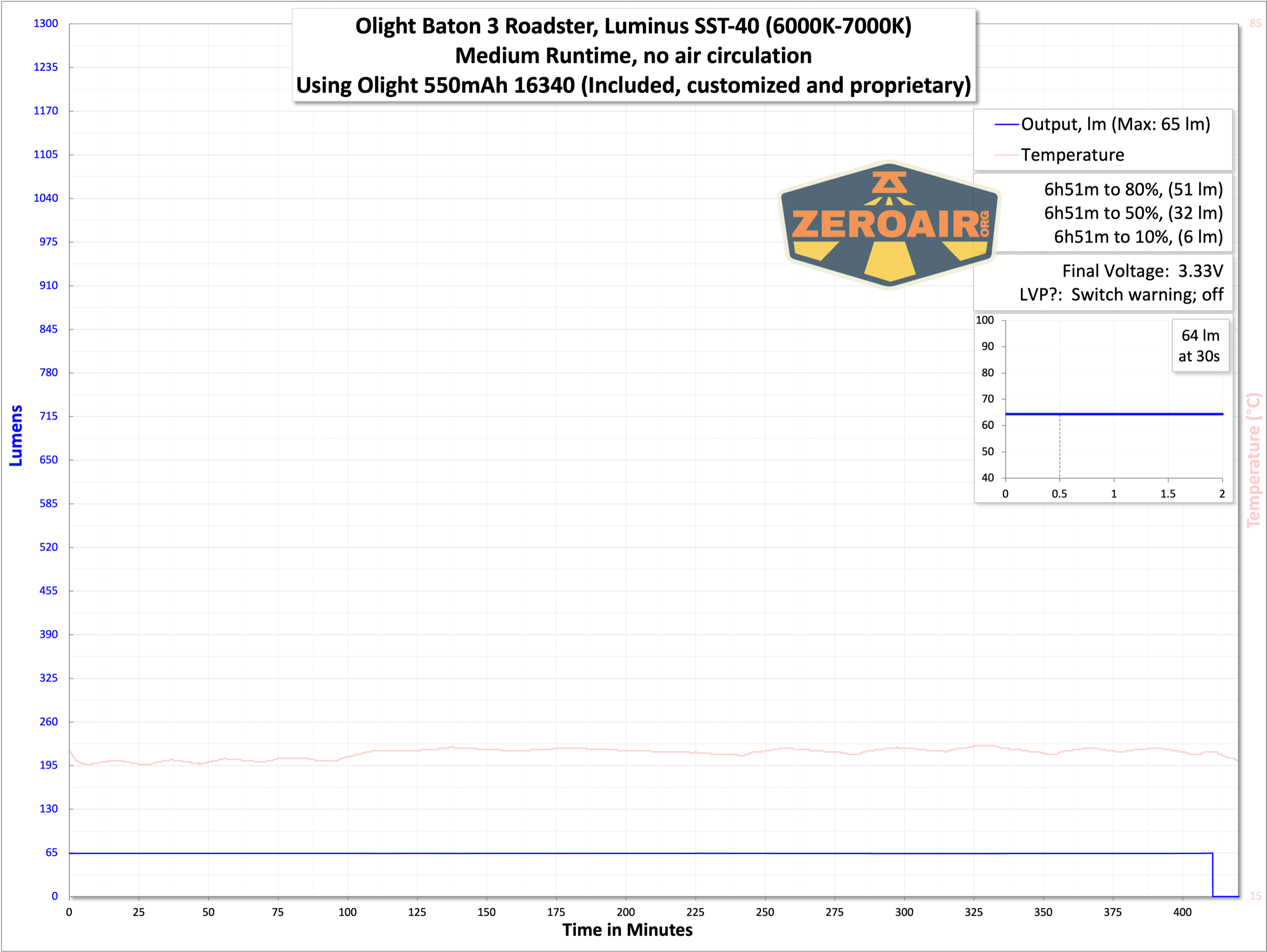
While the light is running, the switch will give you some idea that the cell voltage is getting low. It’ll go from green to orange to red.
Charging
The Olight Baton 3 Roadster flashlight gets the “regular” charging style. There’s no “wireless case.” Like all the other Baton 3’s, this one has a charging base on the bottom.

The regular MCC1A charger is included. This is a proprietary magnetic setup.

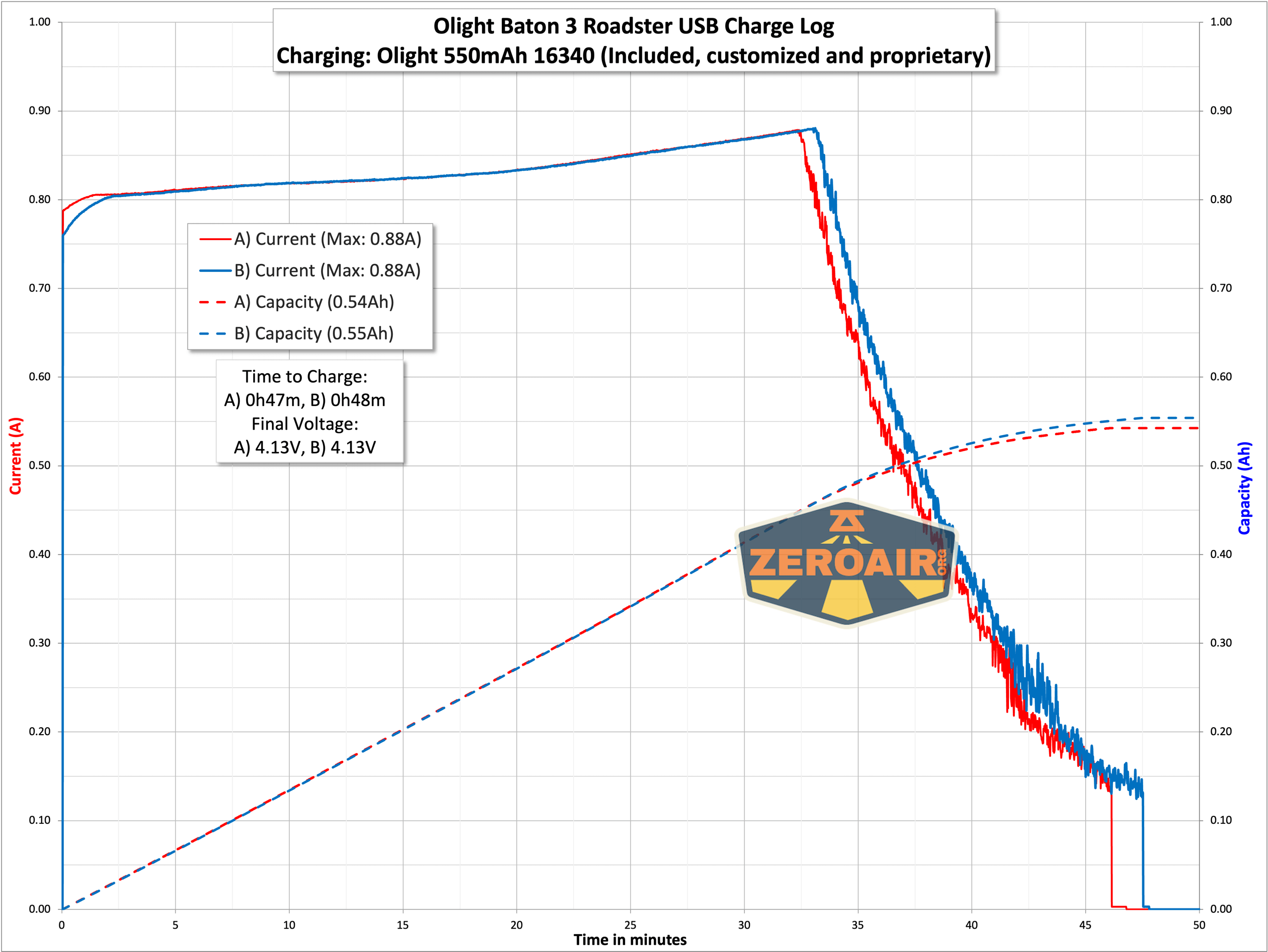
Below is one charge graph with a couple of charge cycles. I’ll note that this performance looks better than from previous iterations. It’s quick (under 50 minutes) as well as not having the dropouts some MCC chargers have had in the past. This is very good charging.
Modes and Currents
| Mode | Mode Claimed Output (lm) | Claimed Runtime | Measured Lumens | Tailcap Amps |
|---|---|---|---|---|
| Turbo | 1200/300 | 1.5m/75m | 1240 | 2.51 |
| High | 300 | 95m | 290 | 0.41 |
| Medium | 60 | 7.5h | 64 | 0.08 |
| Low | 12 | 33h | 11.6 | 0.01 |
| Moon | 0.5 | 20d | 0.47 | [low] |
Pulse Width Modulation
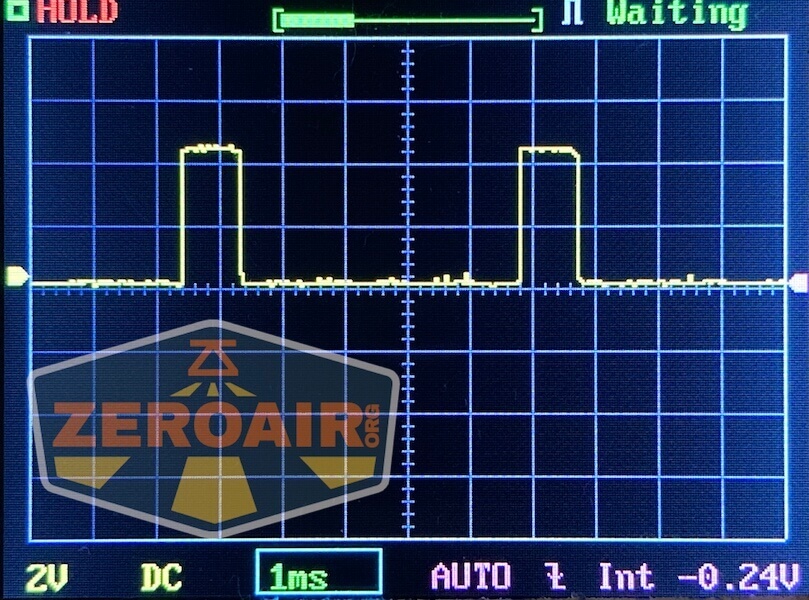
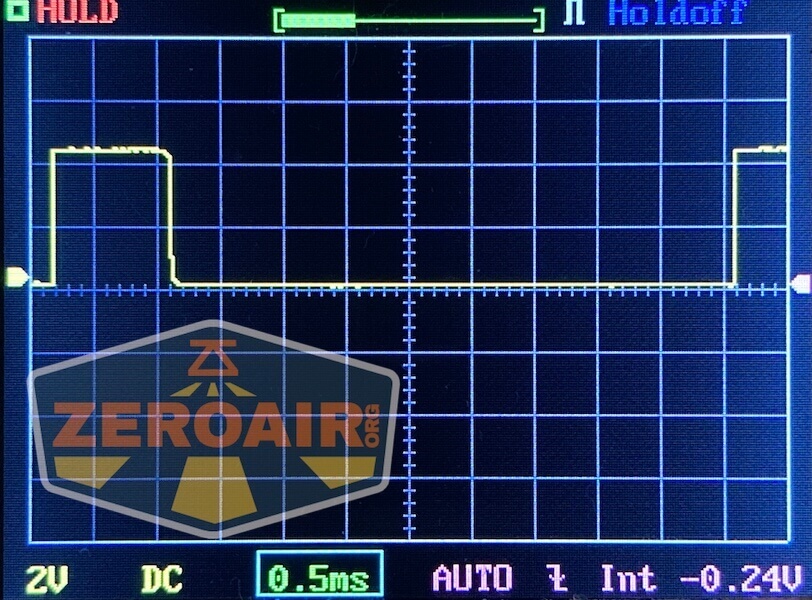
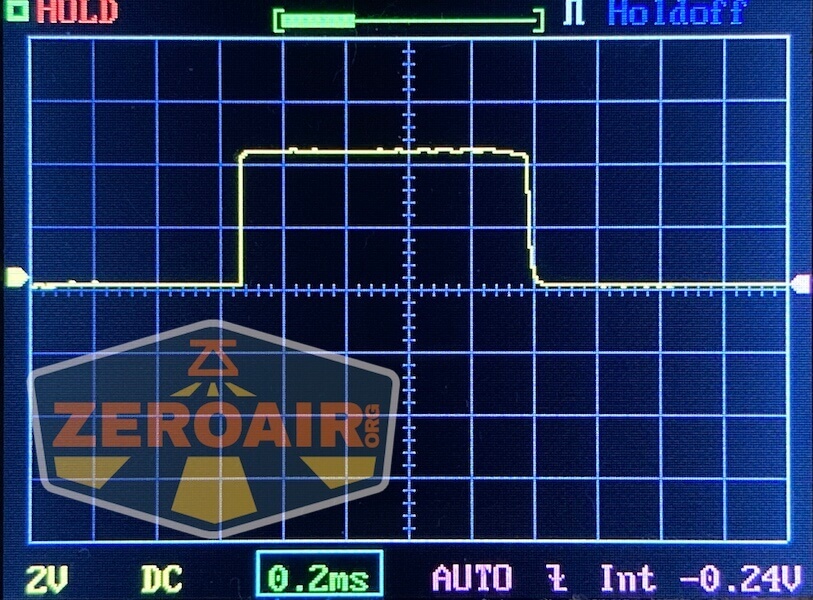
There’s some sawtooth going on in the lower 3 modes, but I’m hesitant to call this PWM directly.
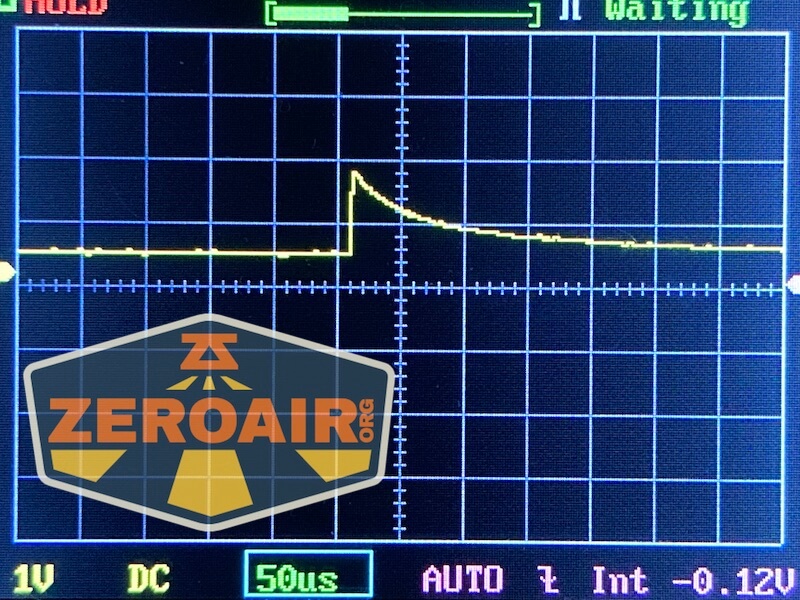
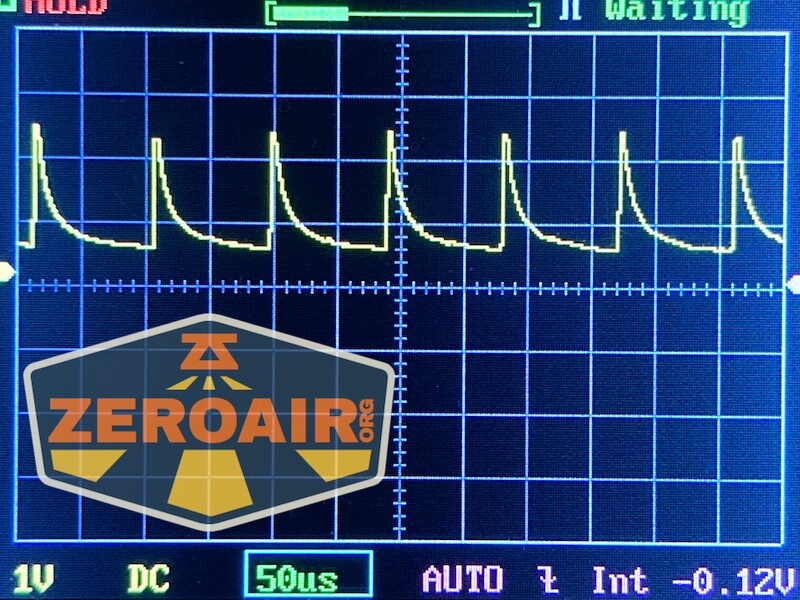
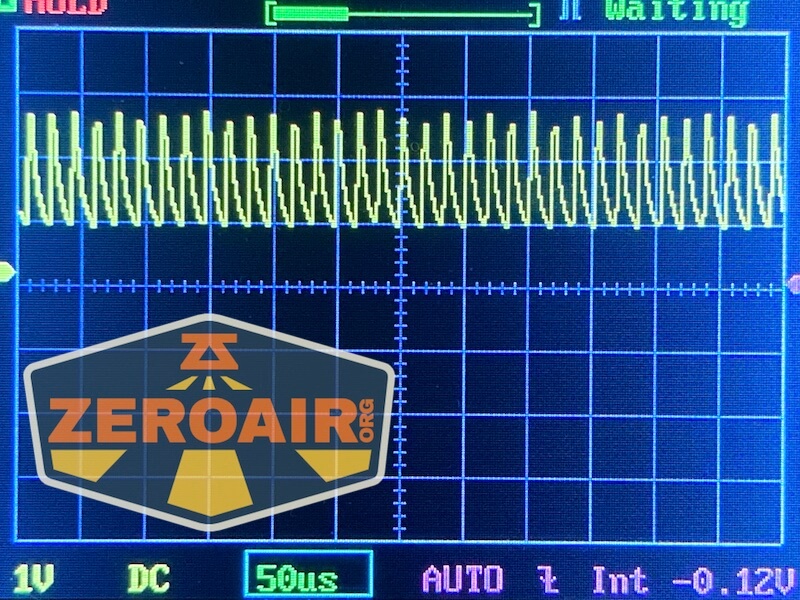
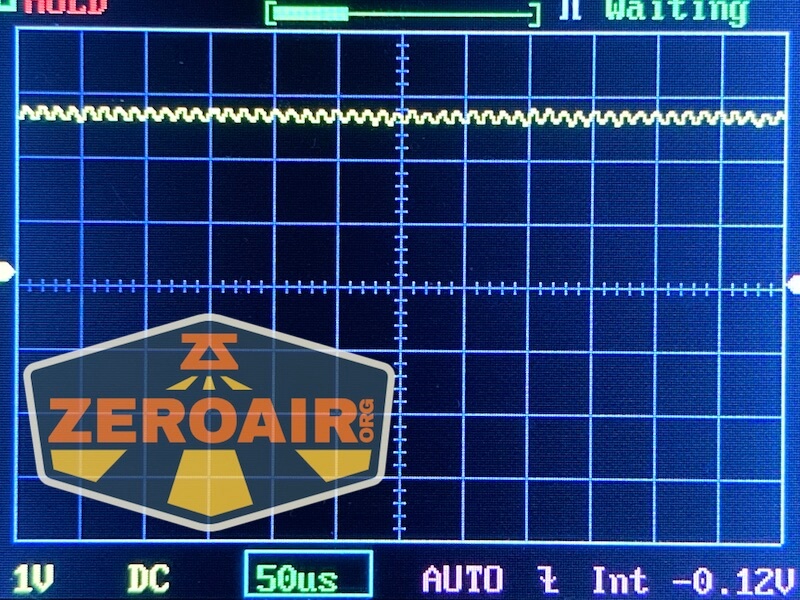
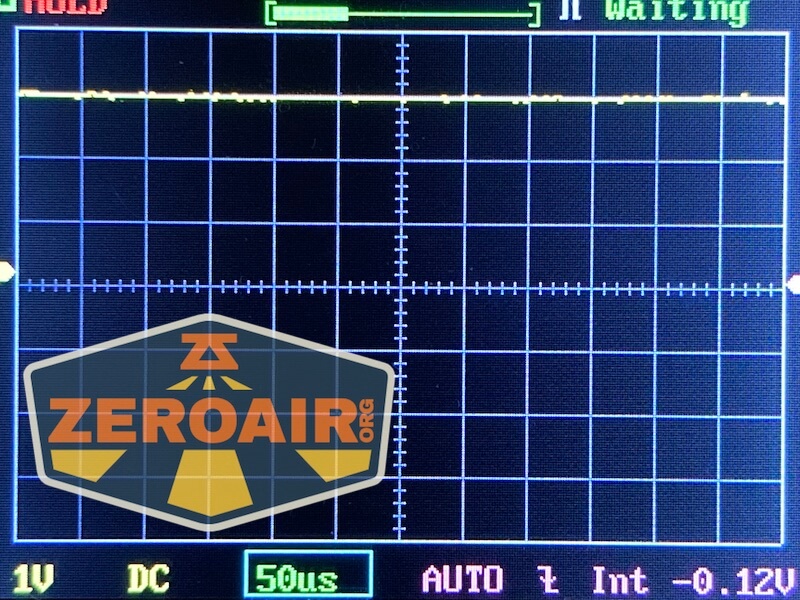
The graph below is the lowest output but at a bigger timescale to show full peaks and valleys.
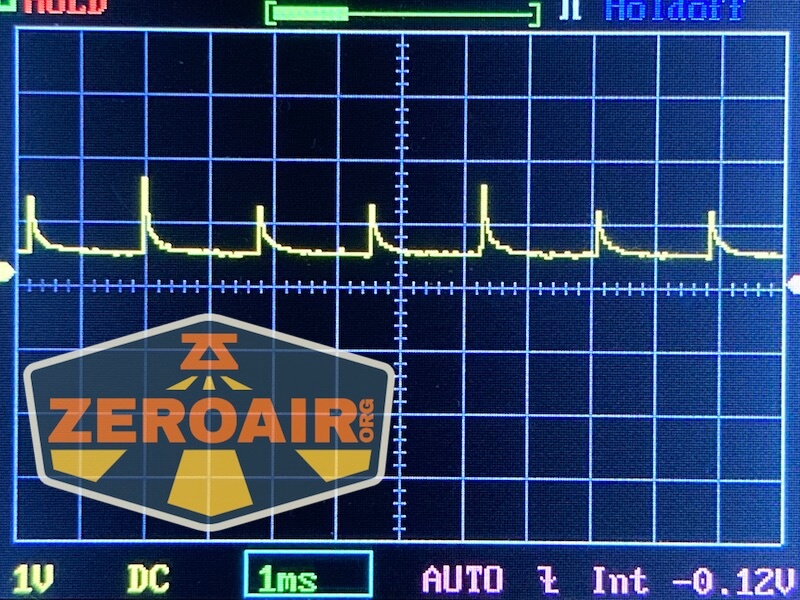
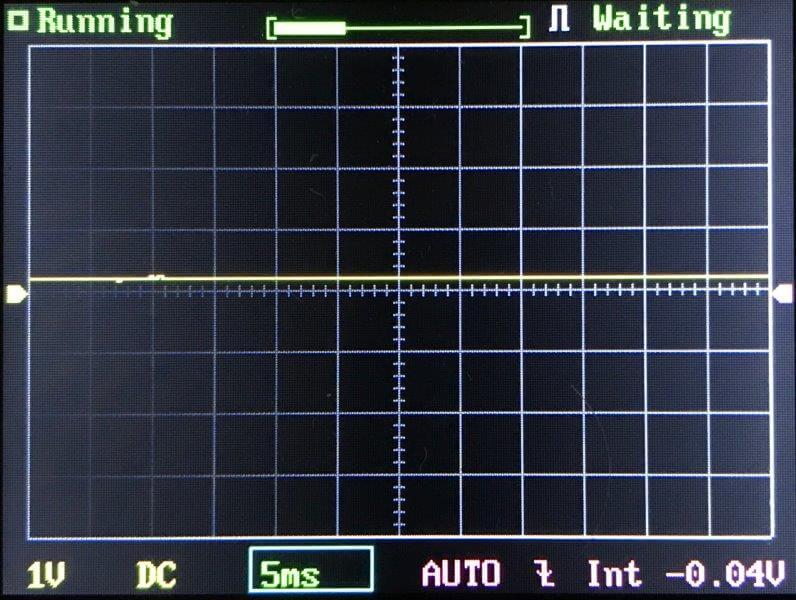
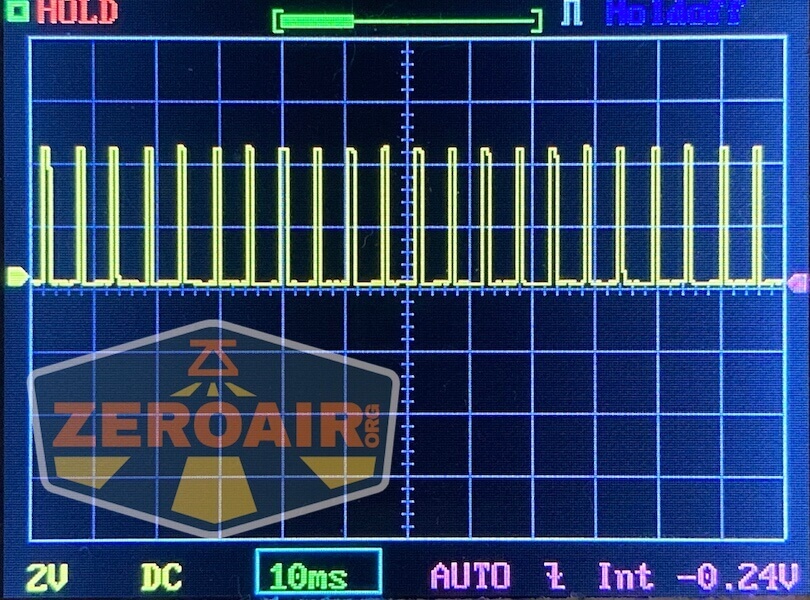
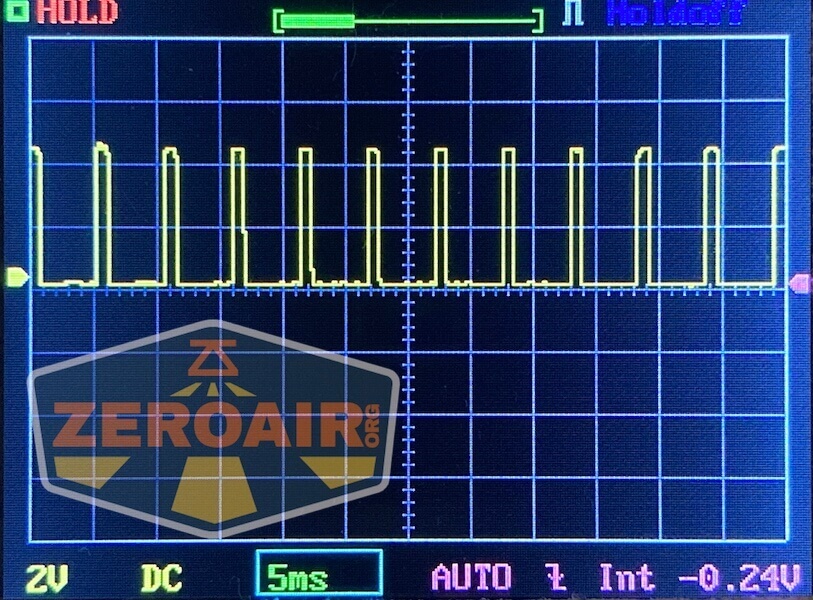
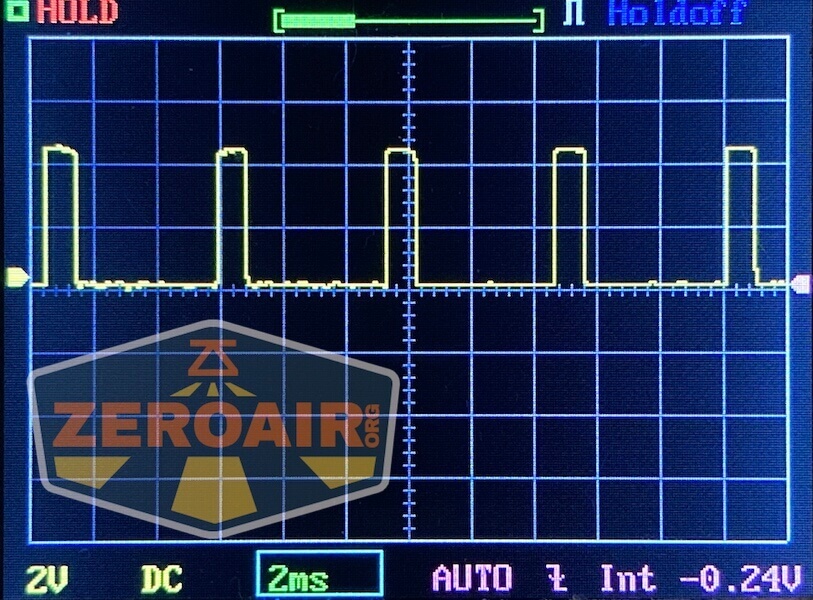
Here you can see a “baseline” – a chart with almost no light hitting the sensor. Then there’s the Ultrafire WF-602C flashlight, which has some of the worst PWM I’ve seen. It’s so bad that I used a post about it to explain PWM! Here are multiple timescales (10ms, 5ms, 2ms, 1ms, 0.5ms, 0.2ms) to make comparing this “worst” PWM light to the test light easier. That post also explains why I didn’t test the WF-602C at the usual 50us scale.
User Interface and Operation
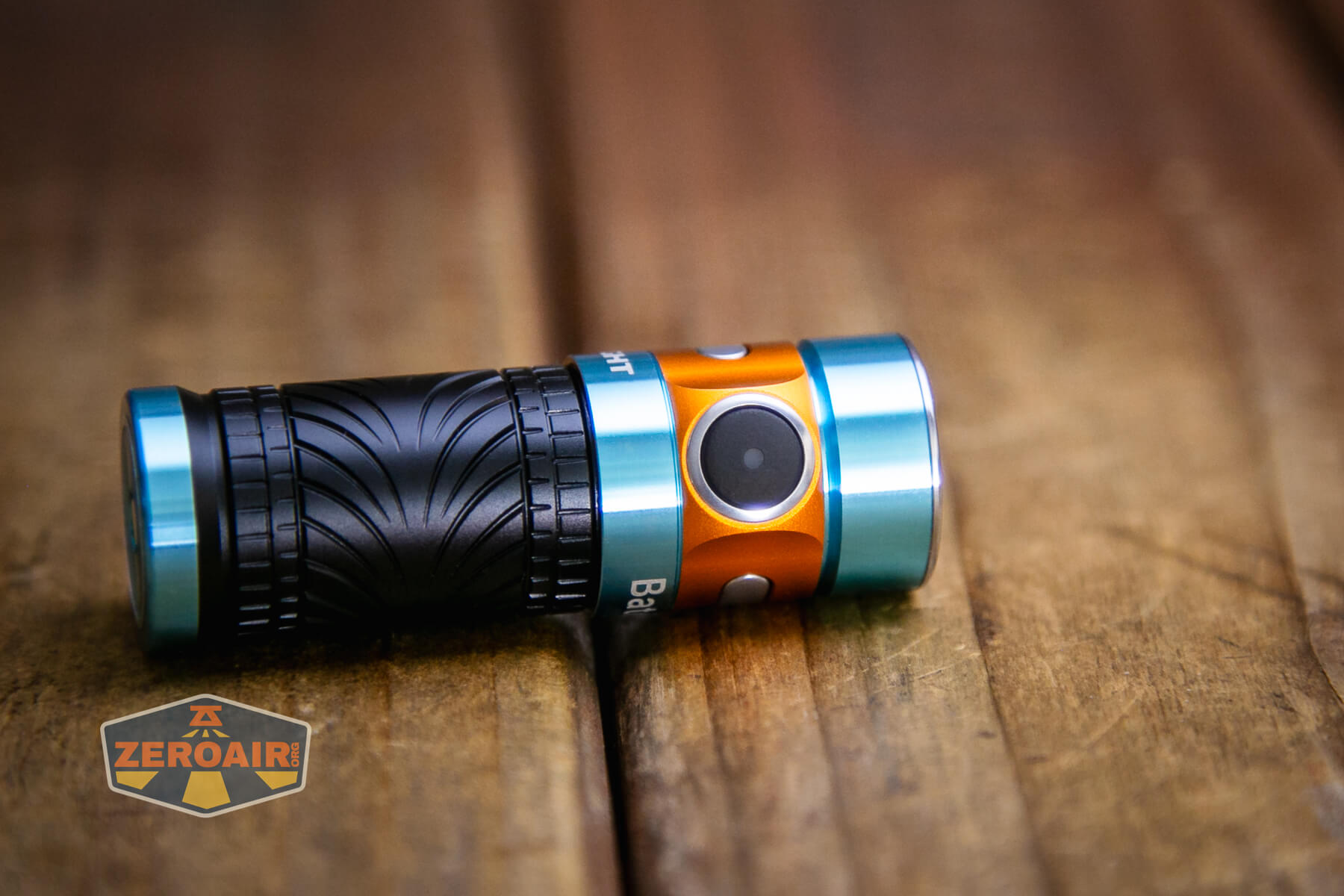
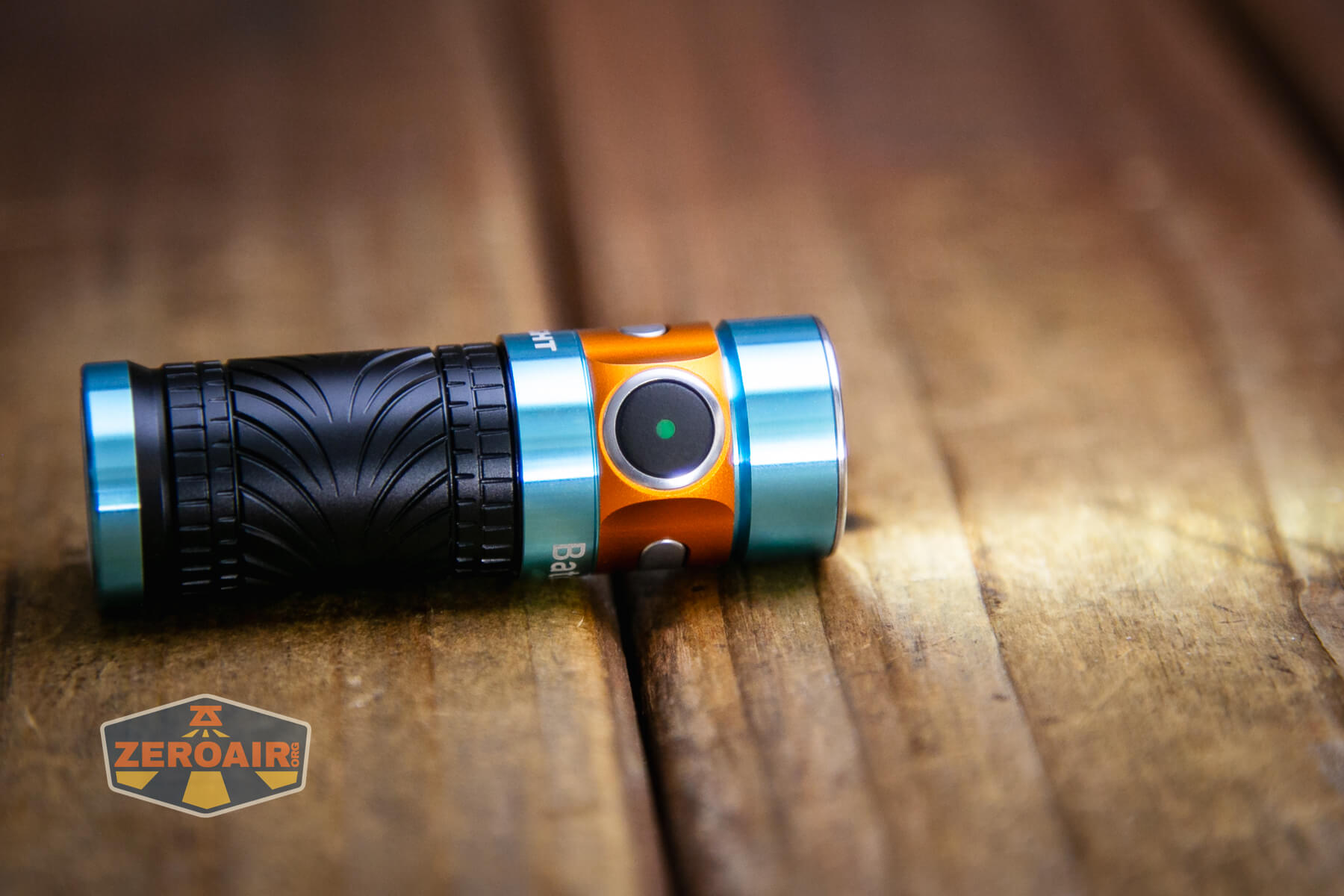
The Olight Baton 3 Roadster has an indicating e-switch on the head end of the side of the body. The switch cover has a bit of texture and is proud enough that it’s easy to find. It’s also not so proud or soft that it will easily activate accidentally, at least in my experience.
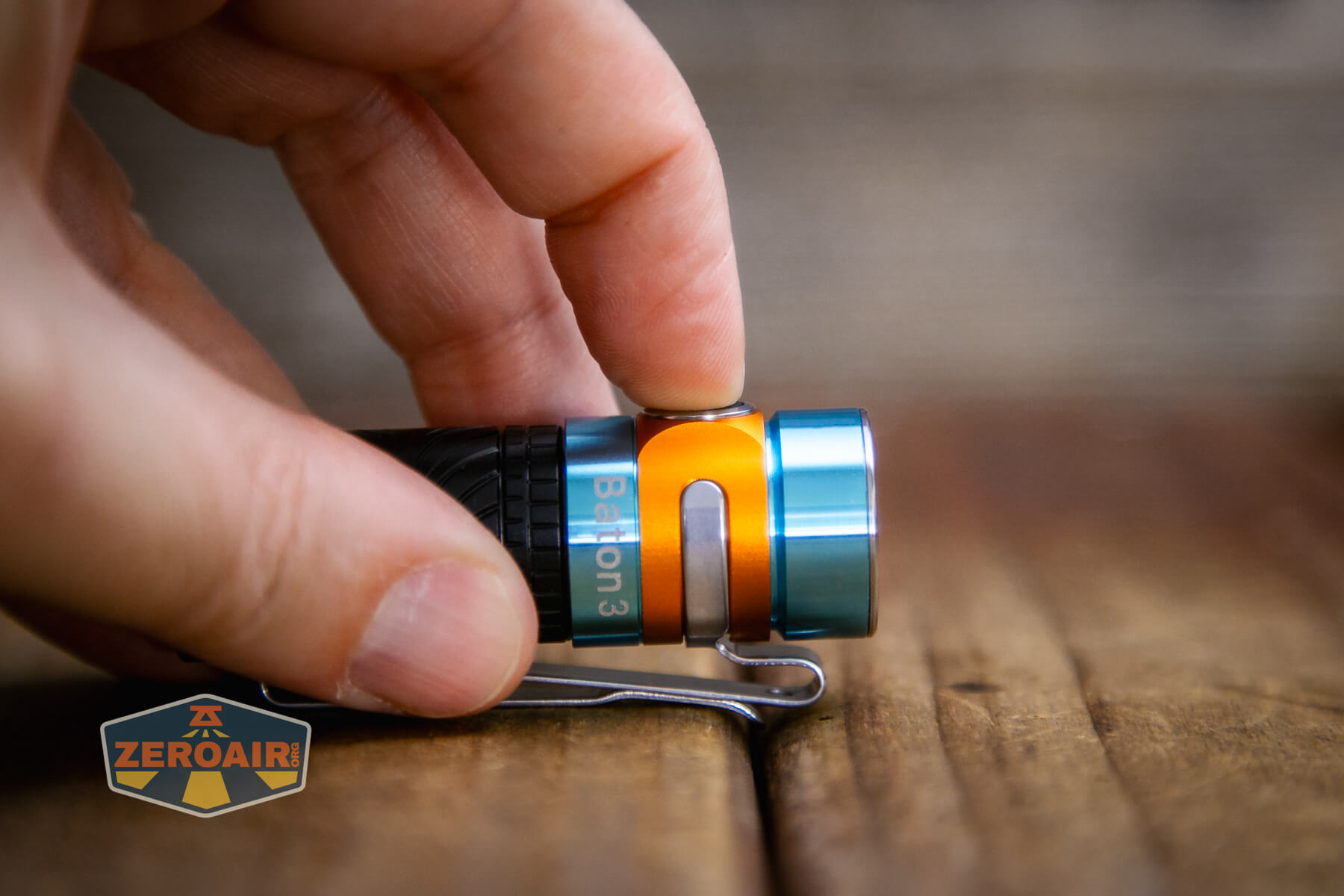
Here’s a user interface table! You’ll know this user interface, as it’s been used for years. The S1R Baton II uses the same UI.
| State | Action | Result |
|---|---|---|
| Off | Click | On (mode memory)^ |
| On | Hold (release at desired mode) | Mode cycle (Moon, L, M, H) (no Turbo) |
| Off | Hold | Moonlight |
| Any | Double click | Turbo |
| Any | Triple-click | Strobe |
| Strobe | Click | Off |
| Strobe | Hold | Previous Mode |
| Off | Long hold (past Moonlight) | Lockout |
| Lockout | Hold | Unlock to Moonlight |
| On | Click and Hold (quickly)^^ | Timer (Single blink: 3 minutes, Double blink: 9 minutes) |
| Timer | Click and Hold (quickly)^^ | Switch between 3 and 9-minute timers. |
^ Moon, Low, Medium, and High are memorized. Turbo is memorized as High.
^^ The manual states this as “Double click and hold” but I think it should be “click and hold” quickly. Any form of double click ends in Turbo or Strobe. The manual hasn’t been corrected yet, after all these years of this model.
LED and Beam
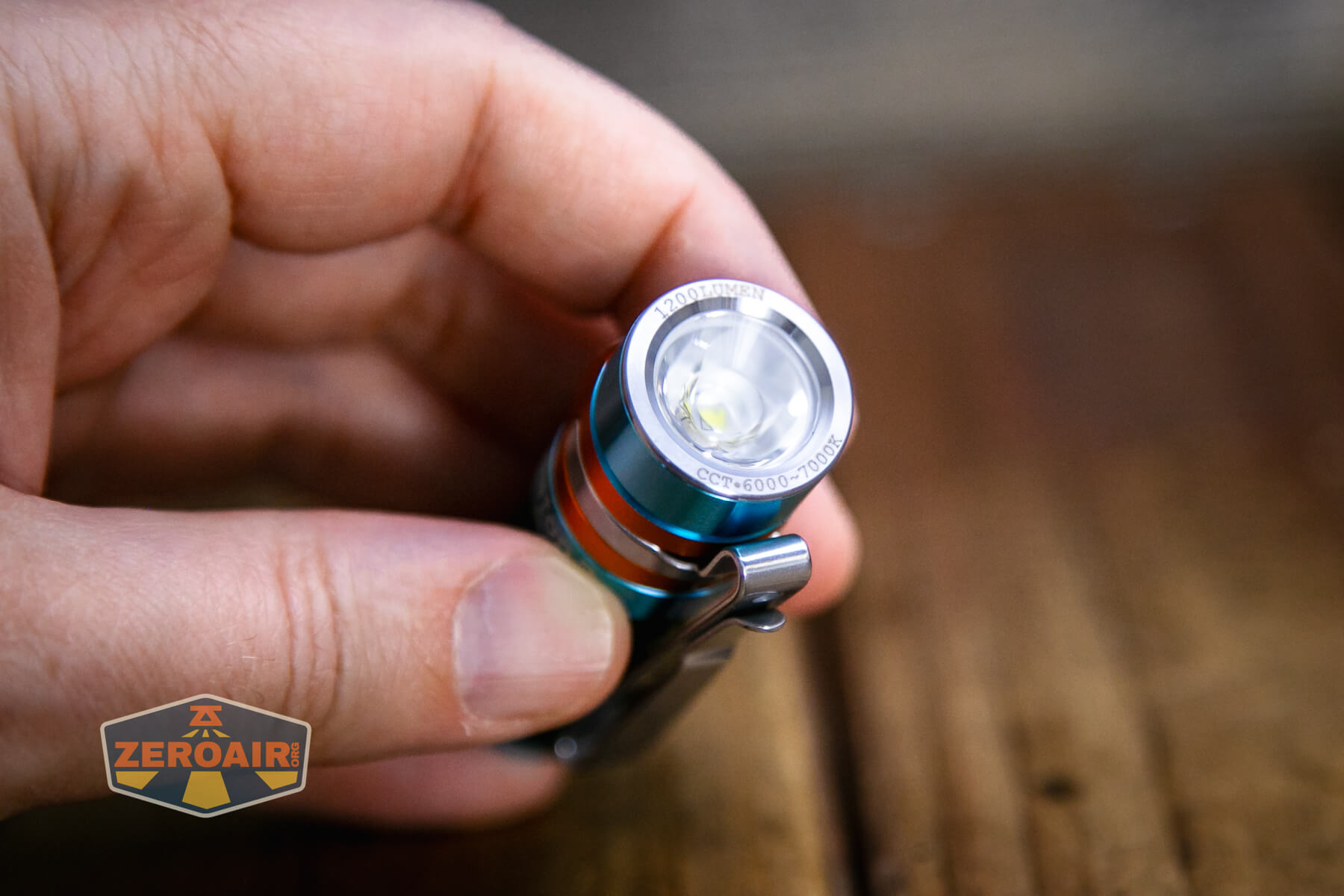
The new edition, the Olight Baton 3 Roadster, uses Luminus SST-40 emitter. And yeah it’s stated as cool (6000-7000K) (seven thousand Kelvin what)… But it really pumps out the lumens.
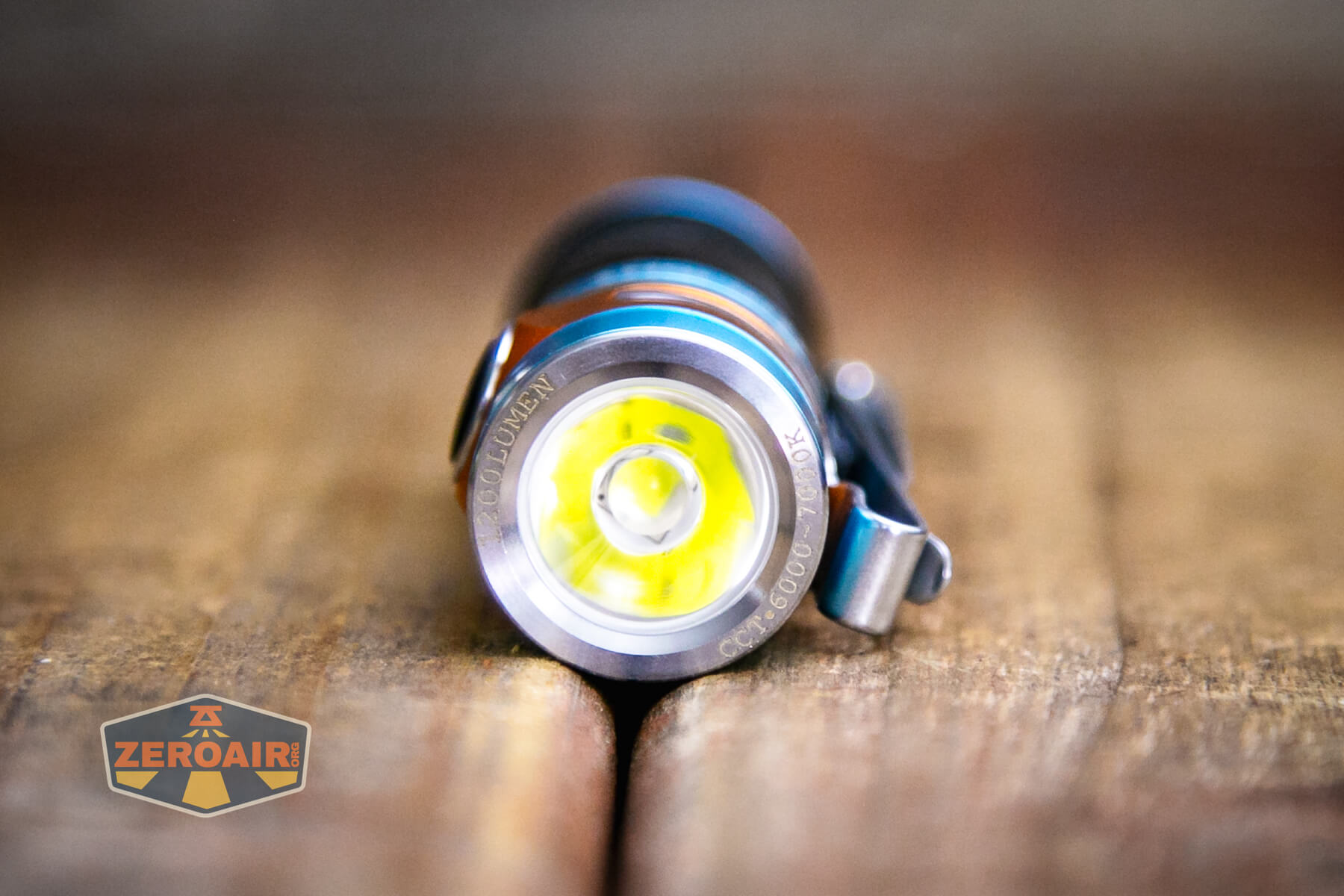
Olight has gone with the usual setup for the Baton 3: A press-fit bezel, a TIR optic, and a cool white CCT (“6000K-7000K”).
LED Color Report (CRI and CCT)
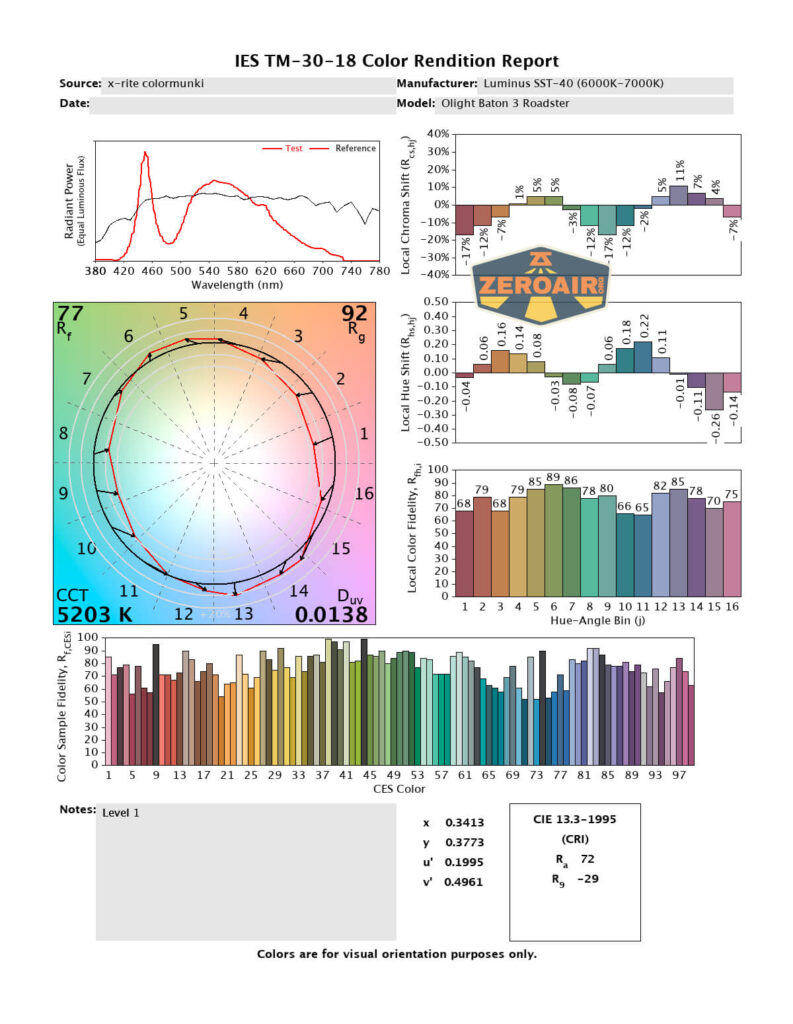
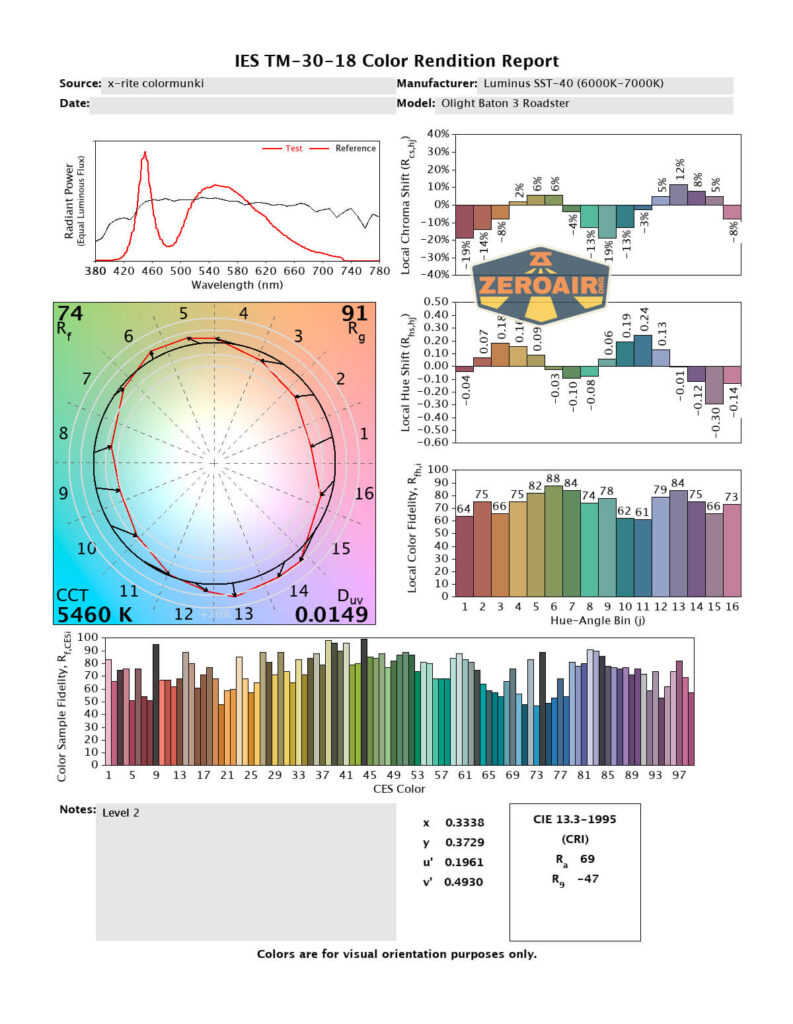
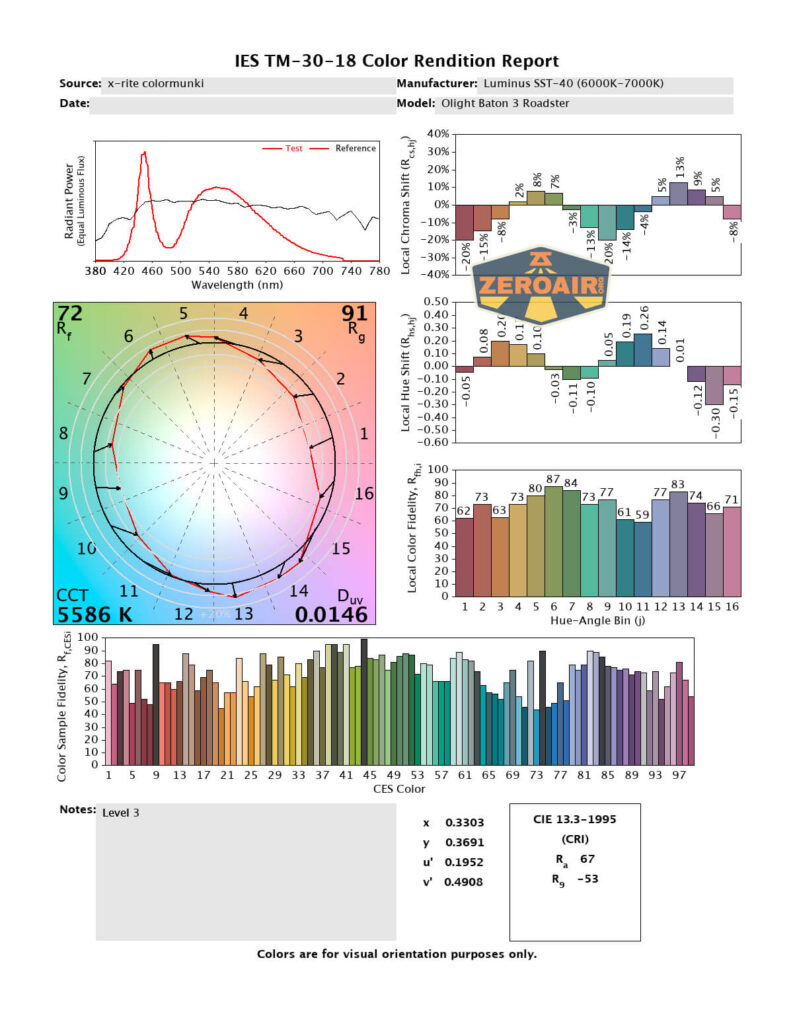
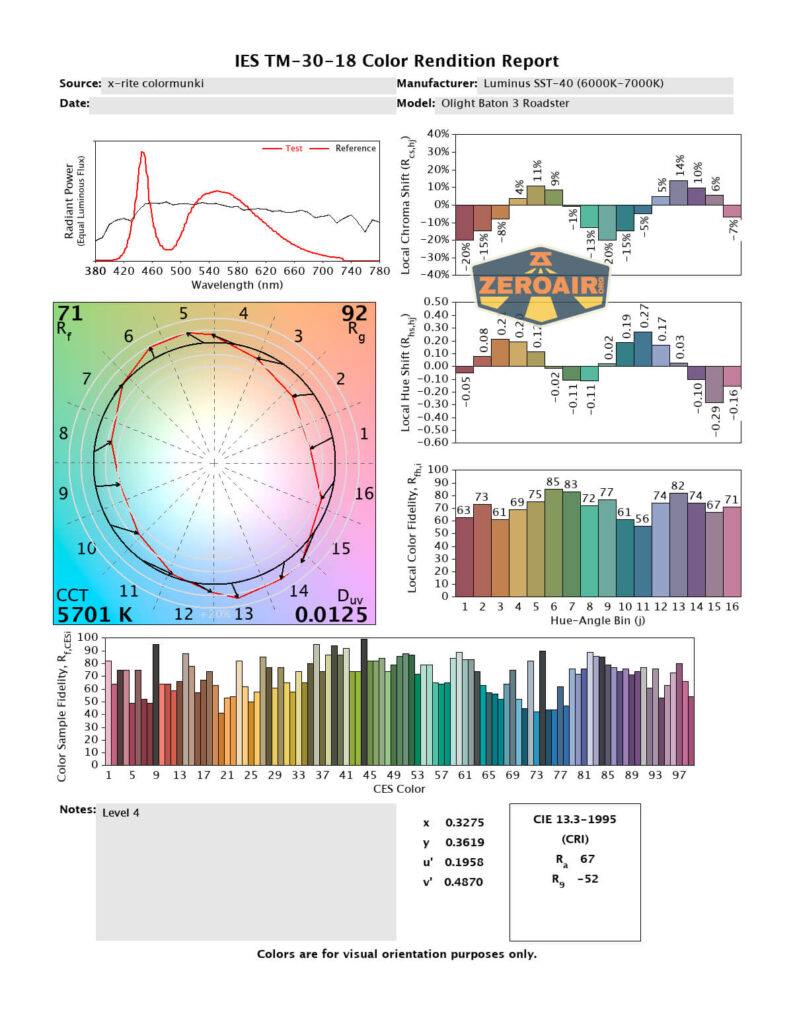
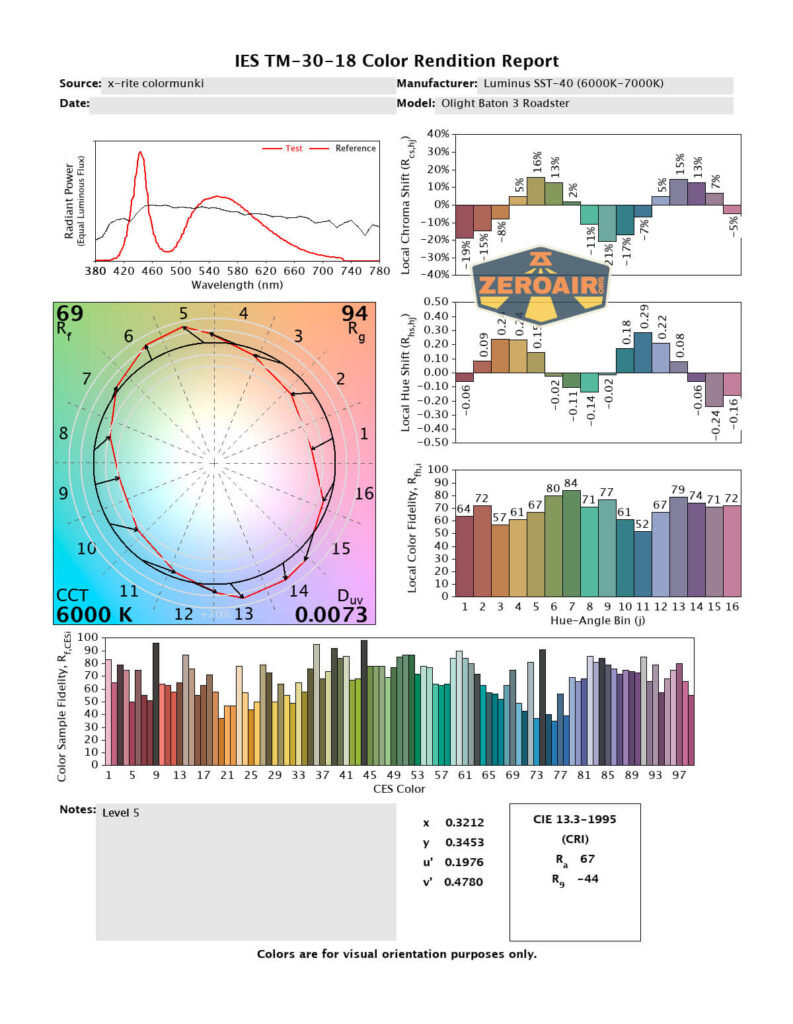
Despite the “claim” or “default numbers being listed” as 6000-7000K, what we actually see is something much warmer (but not actually “warm”). I measure this at around 5500-6000, depending on which mode you’re in. Lower modes will have warmer output.
Another thing we can note from these results is that the dUV does the opposite – as the mode level increase, the dUV decreases. This is usually seen as a good thing because it means the light is going from a “more green” tint to a “less green” tint.
So actually what we see on turbo is positively not really bad. Around 6000K and nearly on the black body line…
Beamshots
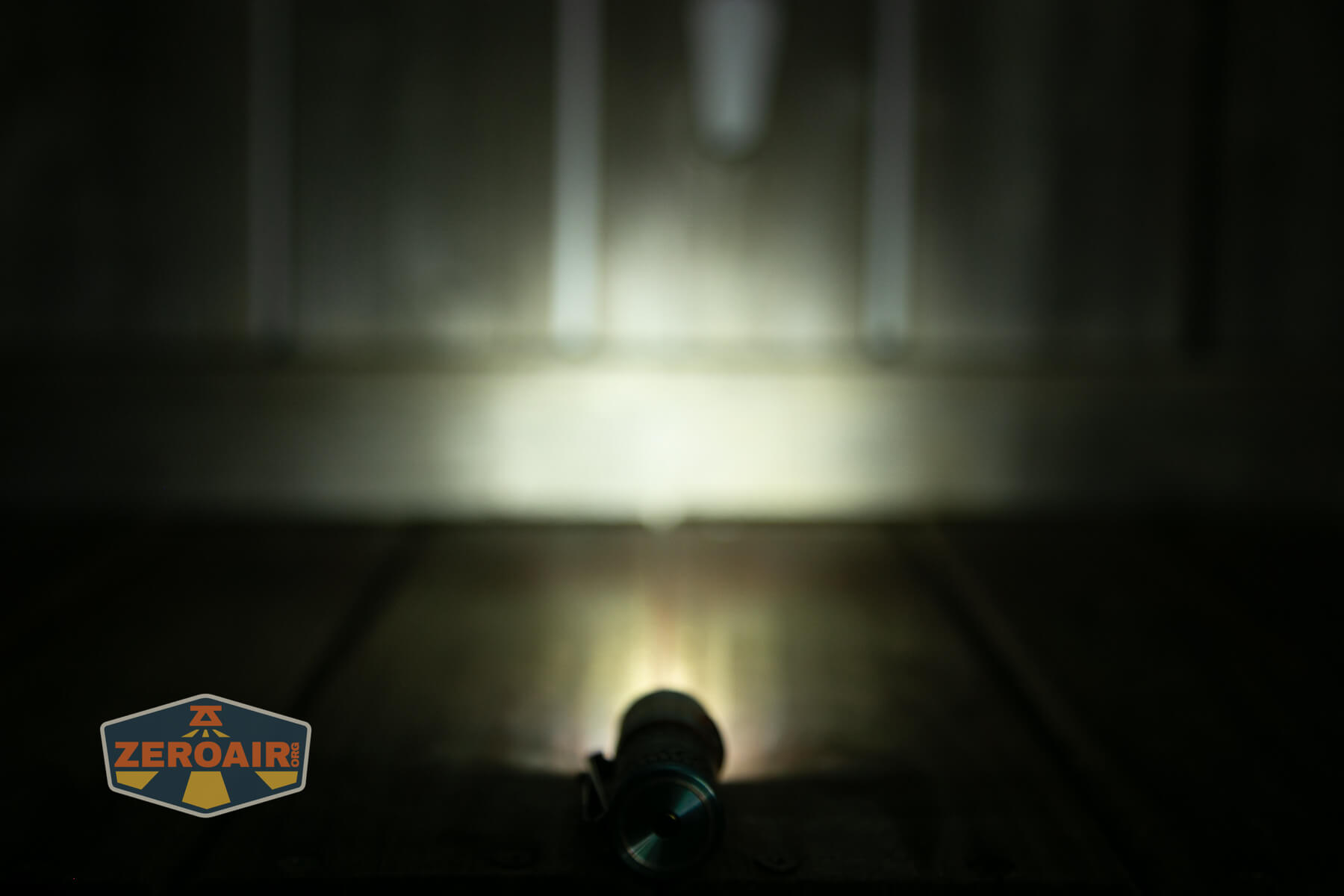
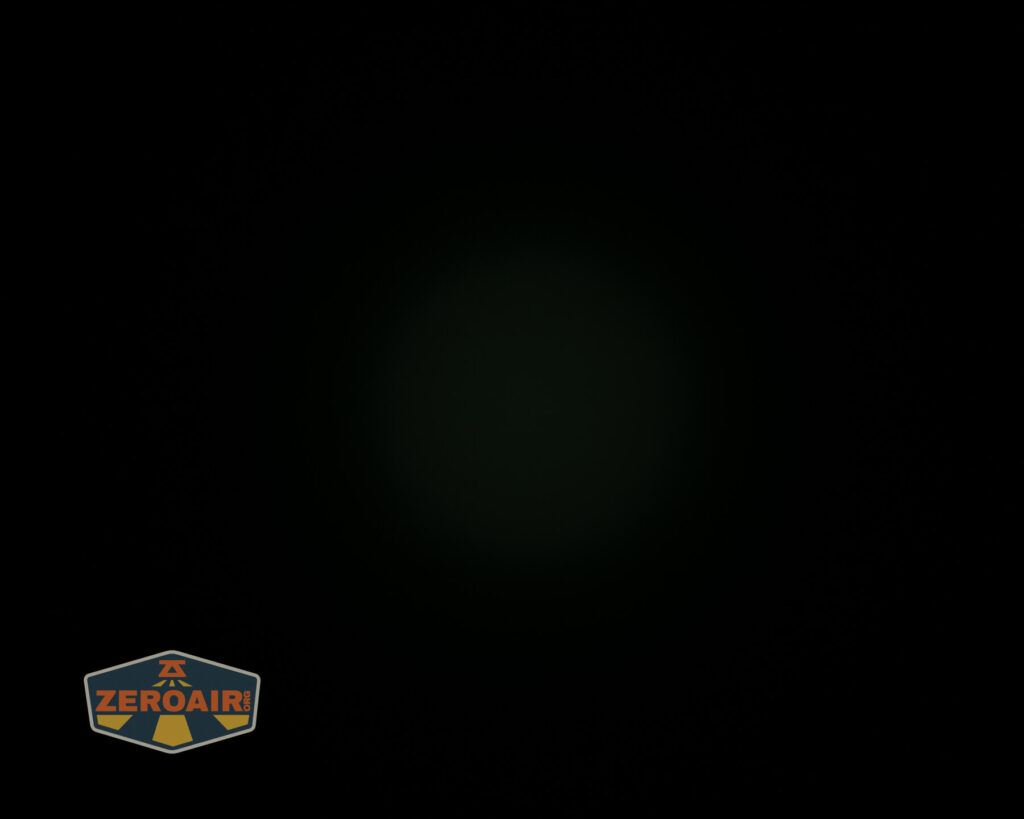
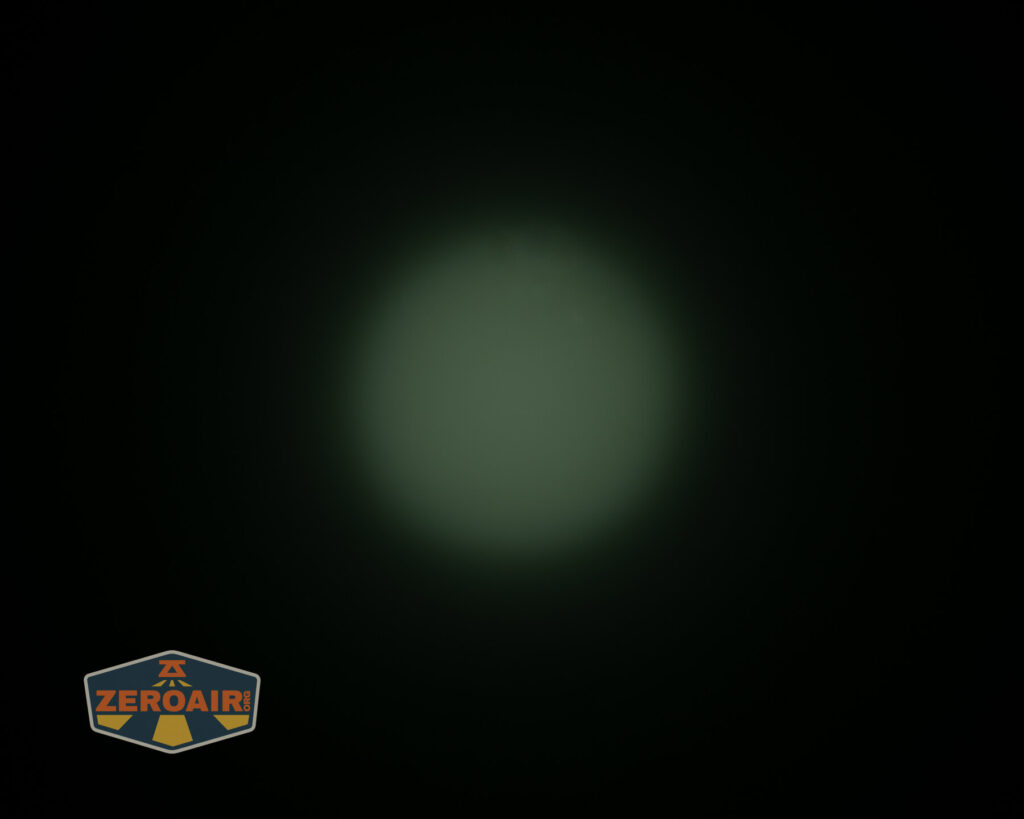
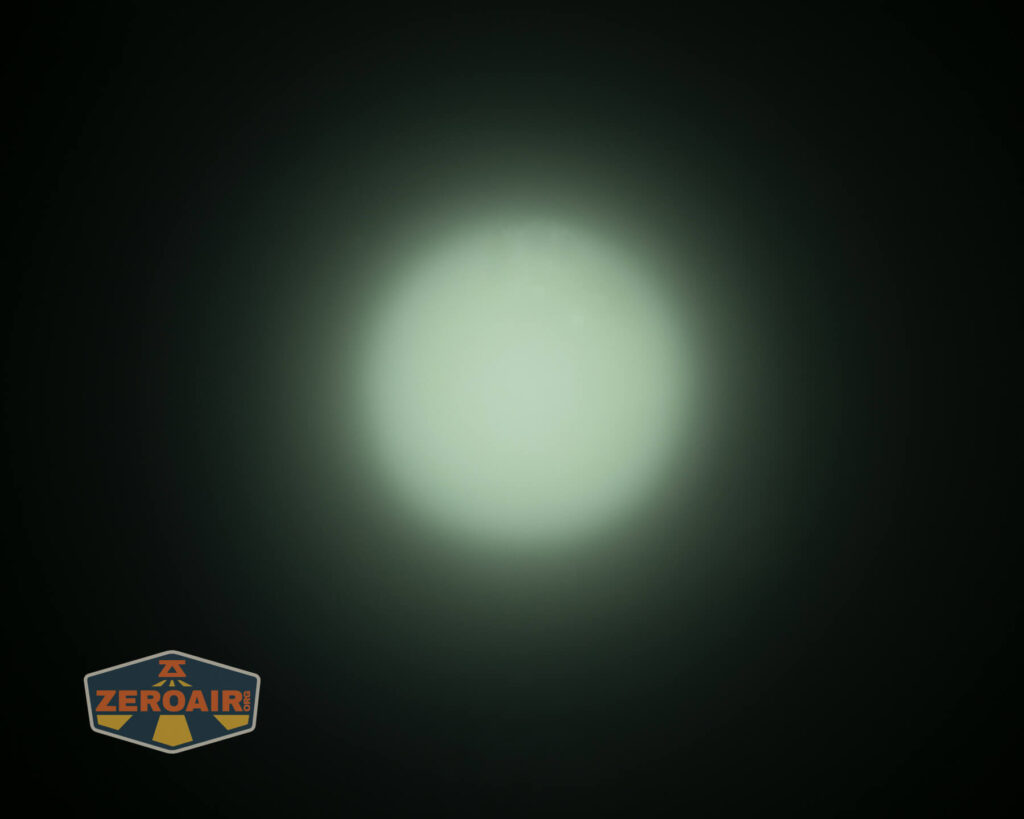
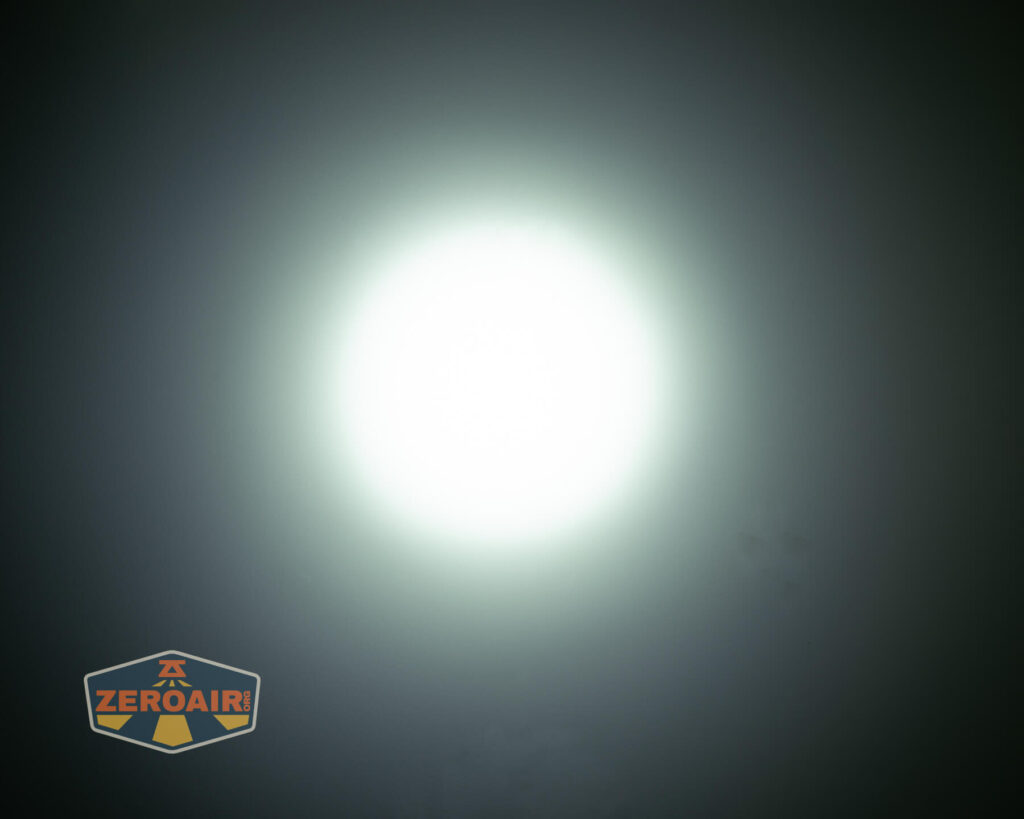
These beamshots always have the following settings: f8, ISO100, 0.3s shutter, and manual 5000K exposure. These photos are taken at floor level, and the beam hits the ceiling around 9 feet away.

Tint vs BLF-348 (KillzoneFlashlights.com 219b version) (affiliate link)
I keep the test flashlight on the left and the BLF-348 reference flashlight on the right.
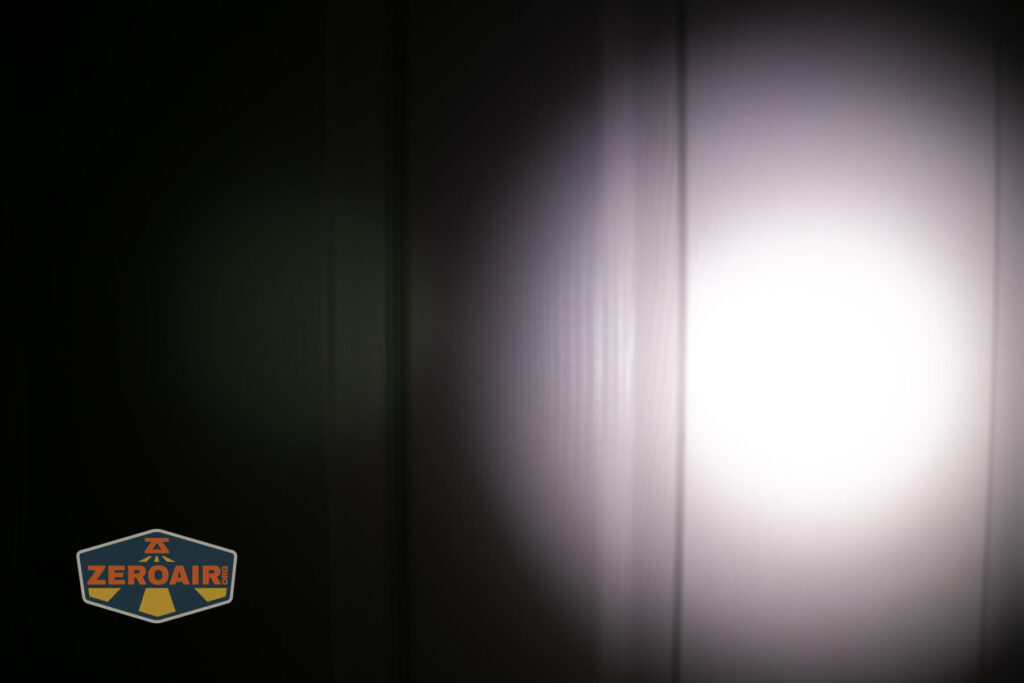
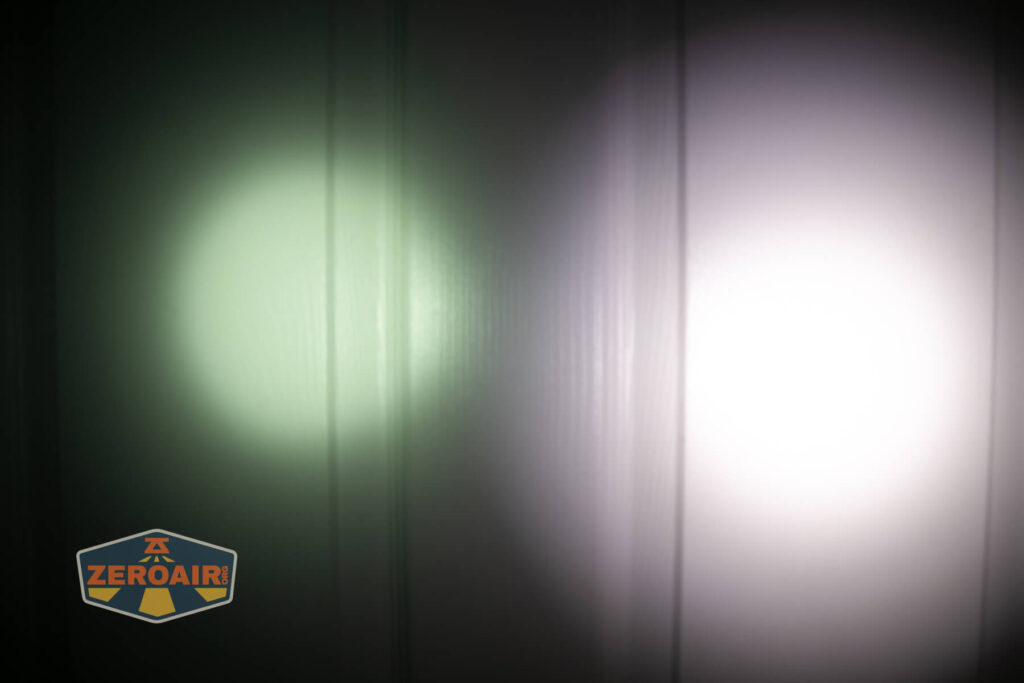
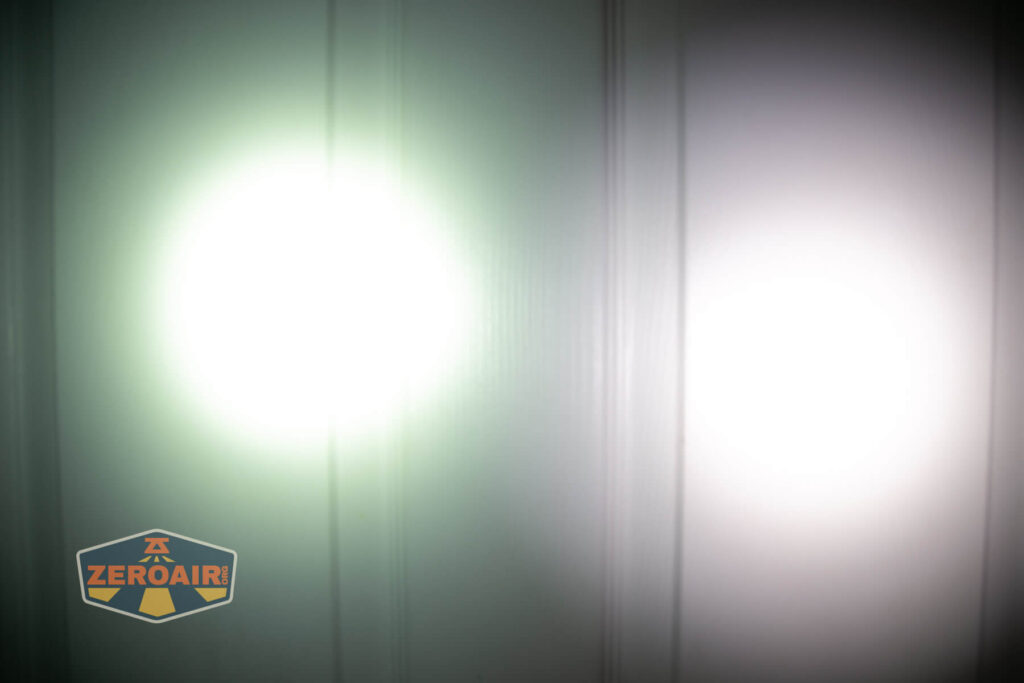


I compare everything to the KillzoneFlashlights.com 219b BLF-348 because it’s inexpensive and has the best tint!
Conclusion
What I like
- Build quality is quite good, as usual
- Roadster is a very neat colorway
- Full package includes charging and cell
- The user interface retains neat features from previous models, like the 3 or 9-minute timer
- Output does hit the claimed specification
- Doesn’t include “wireless charging case” – something I don’t want to use anyway (and a lower price because of that!)
What I don’t like
- Proprietary cells don’t work in bay chargers
- Greenish output on lower levels
Notes
- This content originally appeared at zeroair.org. Please visit there for the best experience!
- Please use my Amazon.com referral link to help support zeroair.org!
- Please support me on Patreon! I deeply appreciate your support!
Discover more from ZeroAir Reviews
Subscribe to get the latest posts sent to your email.