
Nitecore TM38 Tiny Monster Flashlight Review
This massive Nitecore TM38 Tiny Monster is a Cree XHP35 HI emitter flashlight offering an OLED display and great throw. Read on!
Official Specs and Features
Here’s a link to the Nitecore TM38 Tiny Monster flashlight product page.
Versions
There are two versions of the TM38. The TM38, which you see here, and the TM38 Lite. The Lite version is the same head but has a shorter body (by approximately half) and allows a user to swap in their own cells.
MSRP
The going price looks to also be the MSRP, which is about $460. The Lite version is much cheaper, at about $350.
Short Review
I’m blown away by this light – honestly, the output (throw) is just ridiculous. I’m impressed by the output being so steady, too; with just a little cooling, the output is very stable. This light may just be a toy to me, but it’s one I’m going to love having around!!
Long Review
The Big Table
| Nitecore TM38 | |
|---|---|
| Emitter: | Cree XHP35 HI (D4) |
| Price in USD at publication time: | $460 |
| Cell: | Internal (8×18650/3400mAh) |
| Turbo Runtime | |
| LVP? | Warning |
| Switch Type: | E-Switch |
| Quiescent Current (A): | ? |
| On-Board Charging? | No |
| Claimed Lumens (lm) | 1800 |
| Claimed Throw (m) | 1400 |
| Candela (Calculated) in cd (at 30s) | 8750lux @ 7.555m = 499433cd |
| Throw (Calculated) (m) | 1413.4 (101% of claim)^ |
| All my Nitecore reviews! | |
^ Measurement disclaimer: Testing flashlights is my hobby. I use hobbyist-level equipment for testing, including some I made myself. Try not to get buried in the details of manufacturer specifications versus measurements recorded here; A certain amount of difference (say, 10 or 15%) is perfectly reasonable.
What’s Included
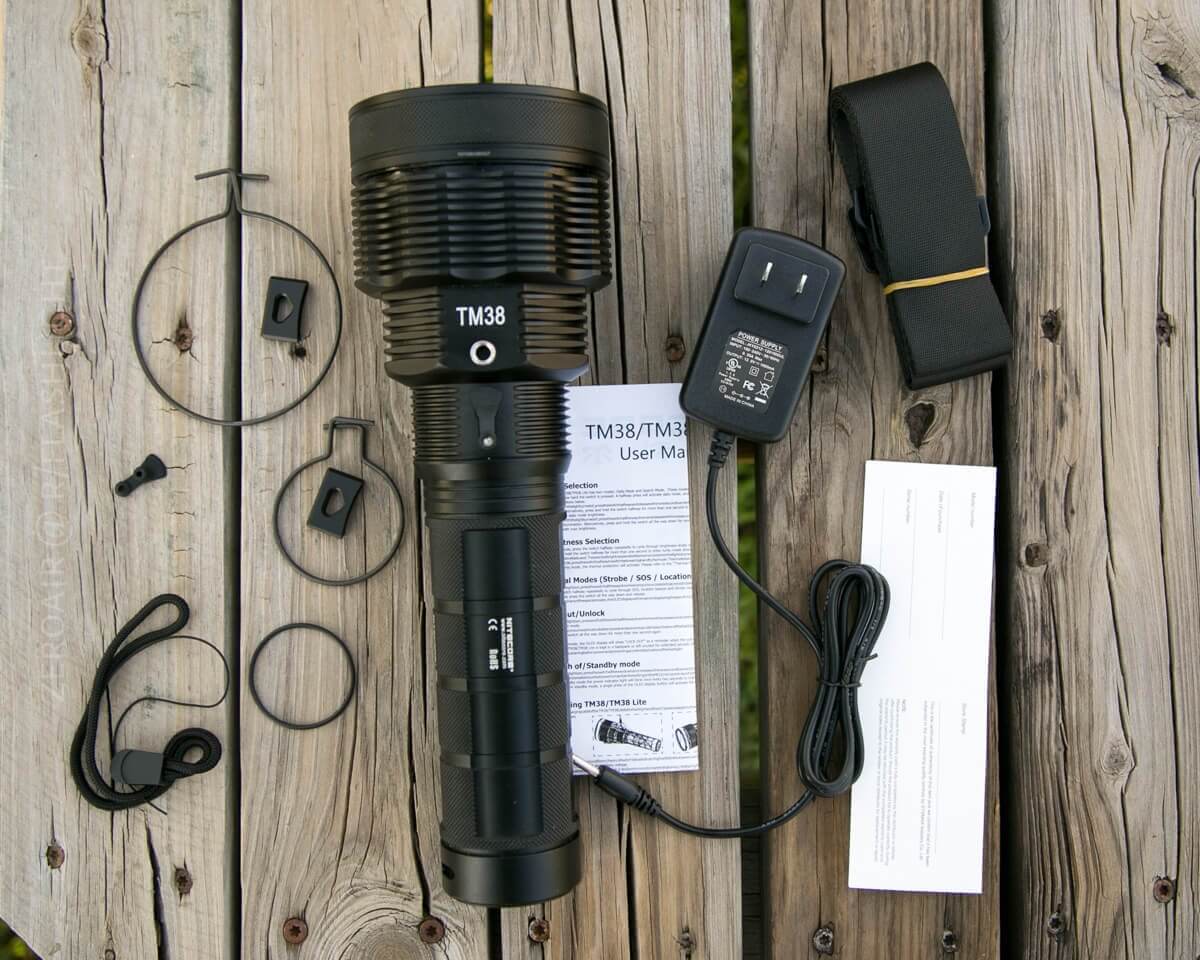
- Nitecore TM38
- 2A wall plug
- Spare o-ring
- Lanyard
- Spare charge port cover
- Shoulder strap and attachments (two metal rings)
- Manual/warranty card
Package and Manual
Nitecore still uses the standard black and yellow, but this light gets a special, big box! It’s cardboard and has a carrying handle. Inside is some foam that holds the light very secure during transport.
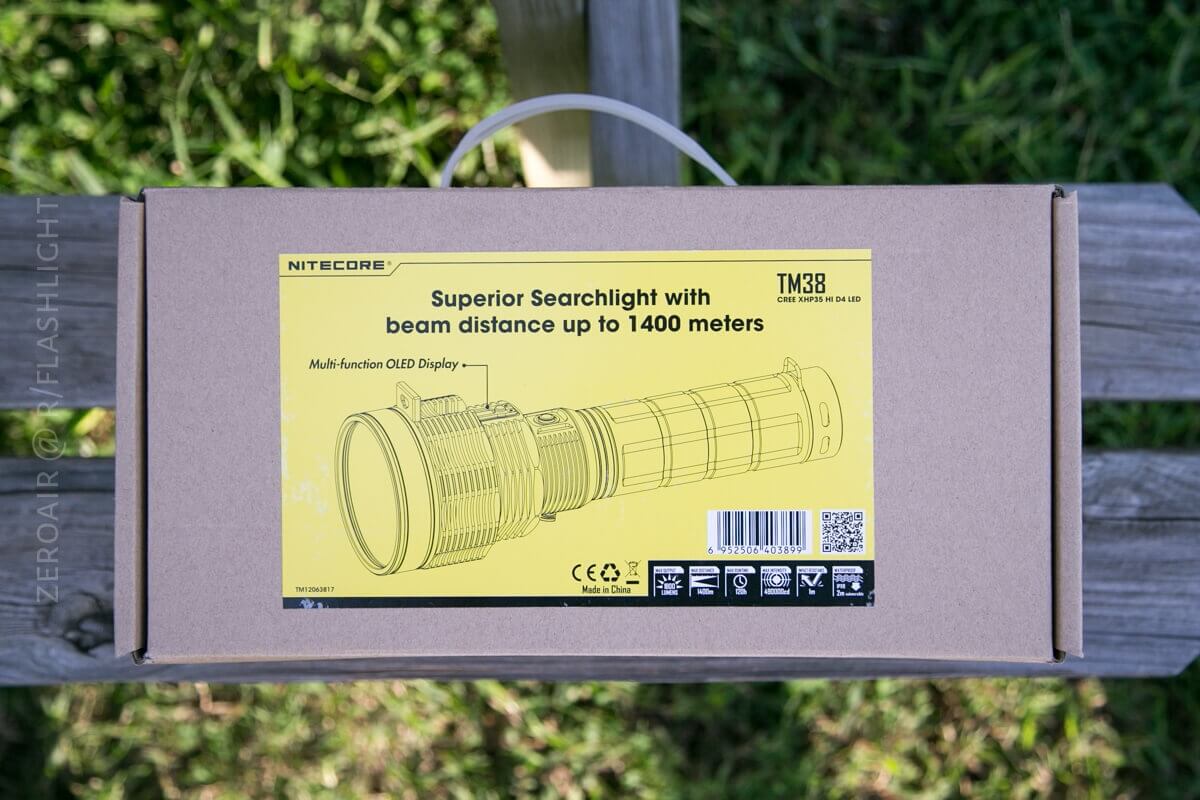
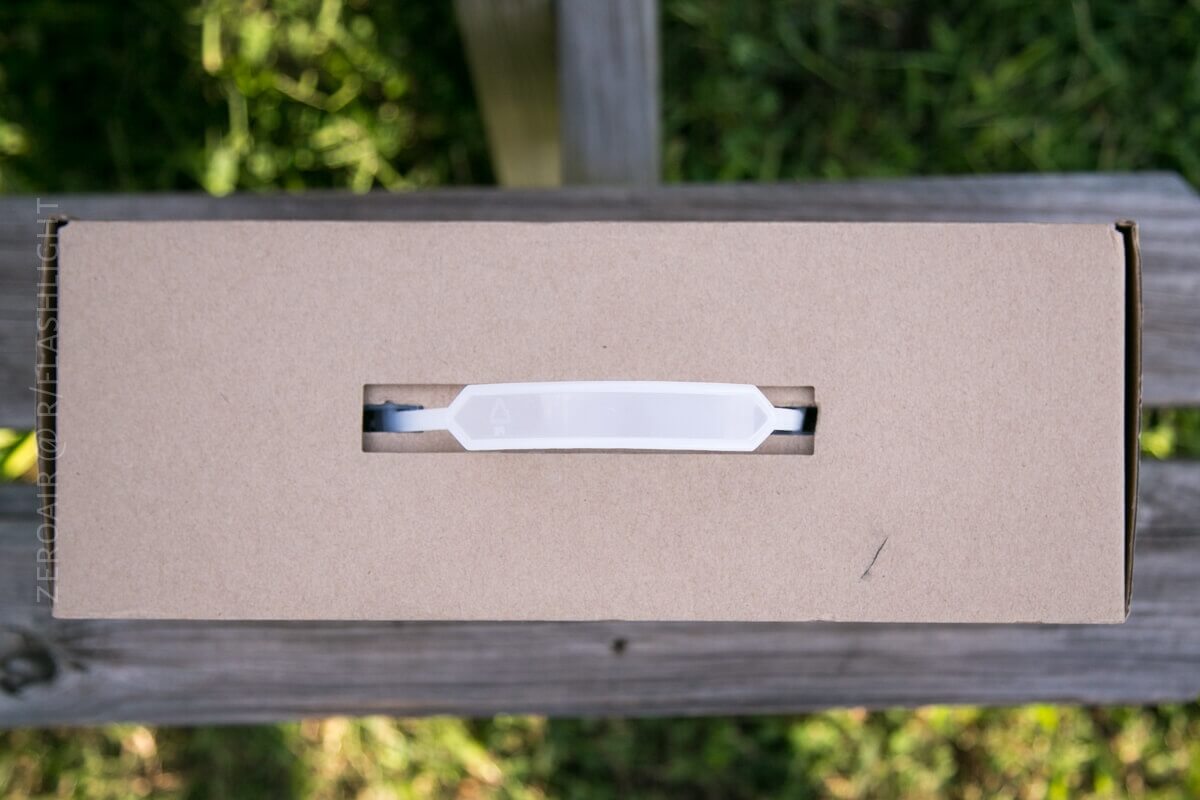
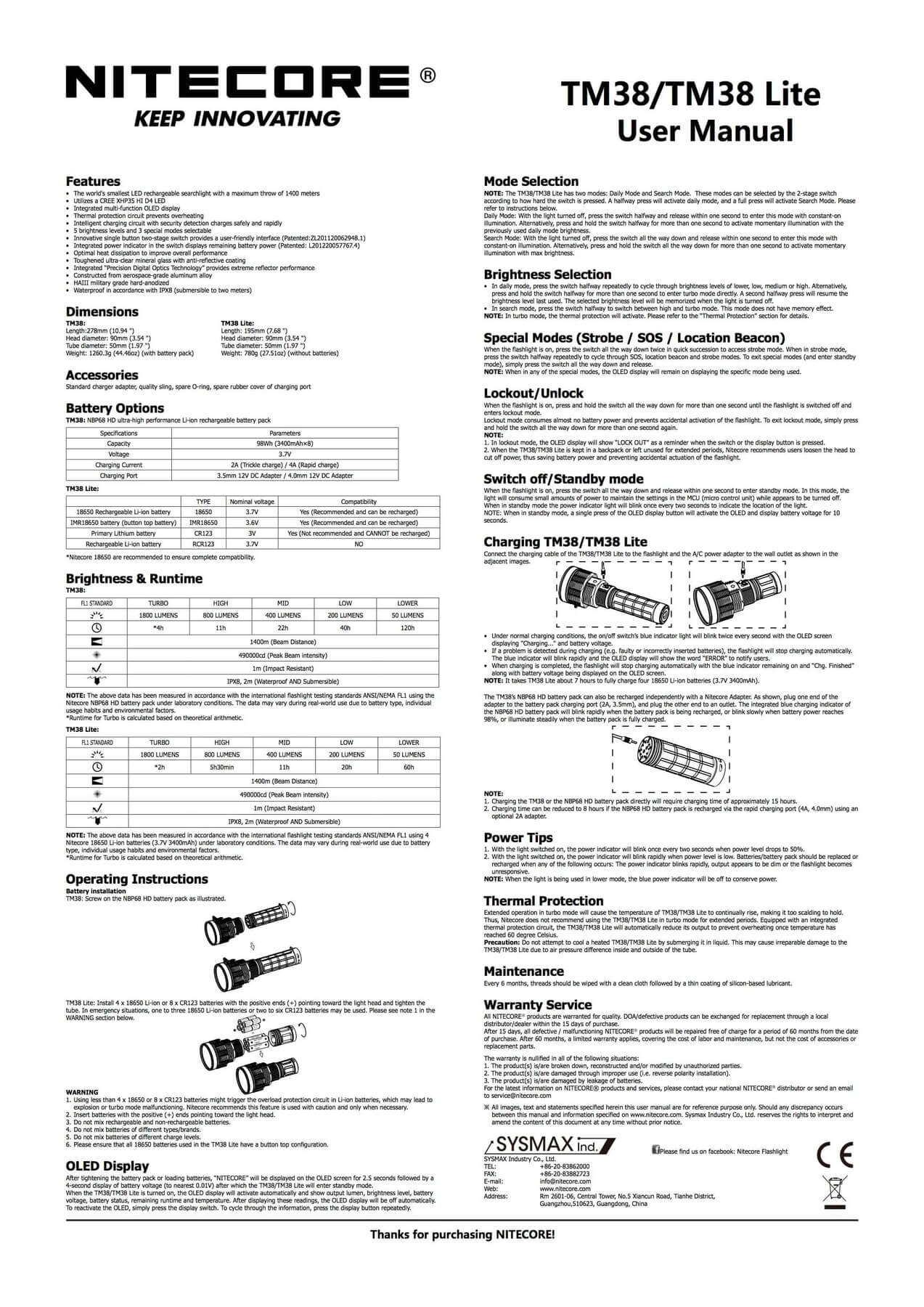
The manual I received had some very bad kerning issues (like when one copies from a pdf and pastes elsewhere). Fortunately, Nitecore provides a pdf manual on their website, so I got a clean copy there. The manual itself is pretty good, but there are a few things that could use more clarity – like what the light does when the battery voltage is low (the manual does say, but it’s not that clear.)
Build Quality and Disassembly
The TM38 is a big light. It’s heavy, and it’s also well built. It’s a sturdy heavy. I hate to say it’s built like a brick, but … that’s probably not a bad comparison.
Let’s start with the most important part of this light: the reflector. 1) it’s huge and 2) it’s smooth. And 3) most importantly, it’s flawless. No aberrations at all – it gets all the light out there!
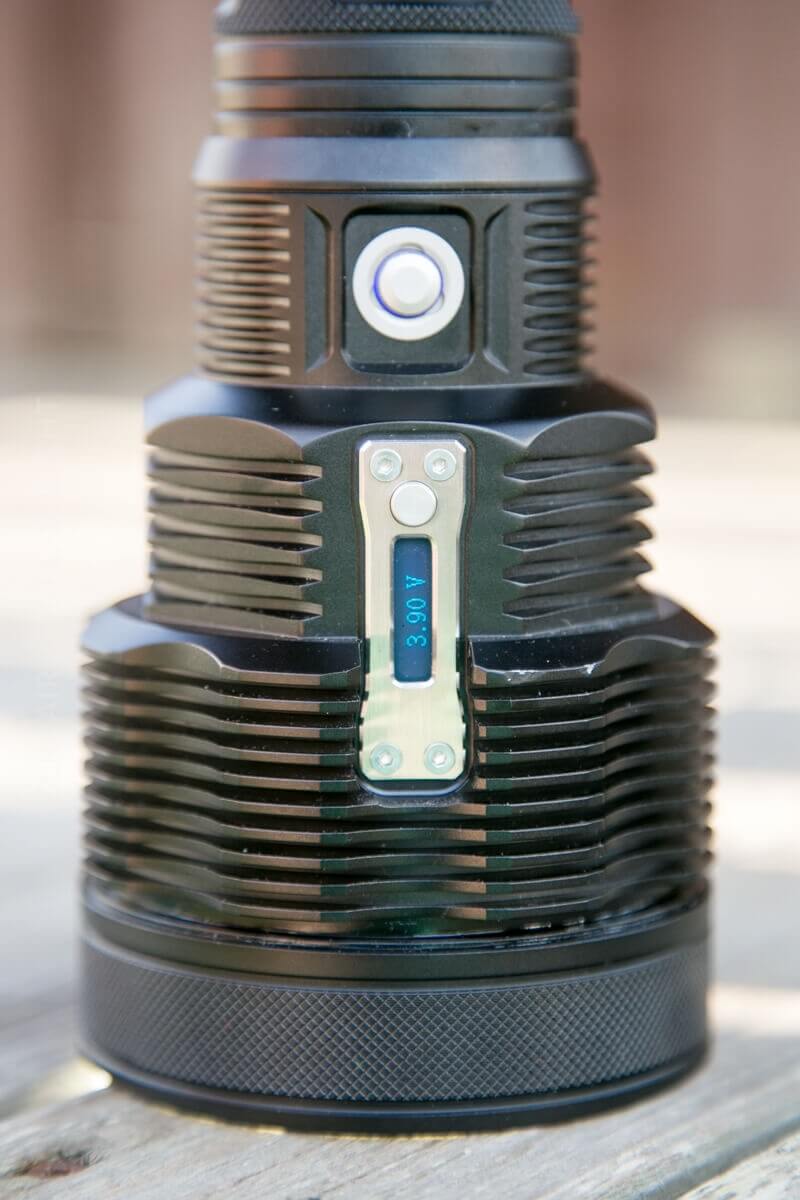
The second point of interest is the large head. There are a lot of cooling fins on this head. If you persist in the review, you’ll see later how effective these are! (Very!) The head also has an OLED display, which gives readouts of important information throughout the use of the light. The head also has one of the (3) charging ports – a barrel plug.
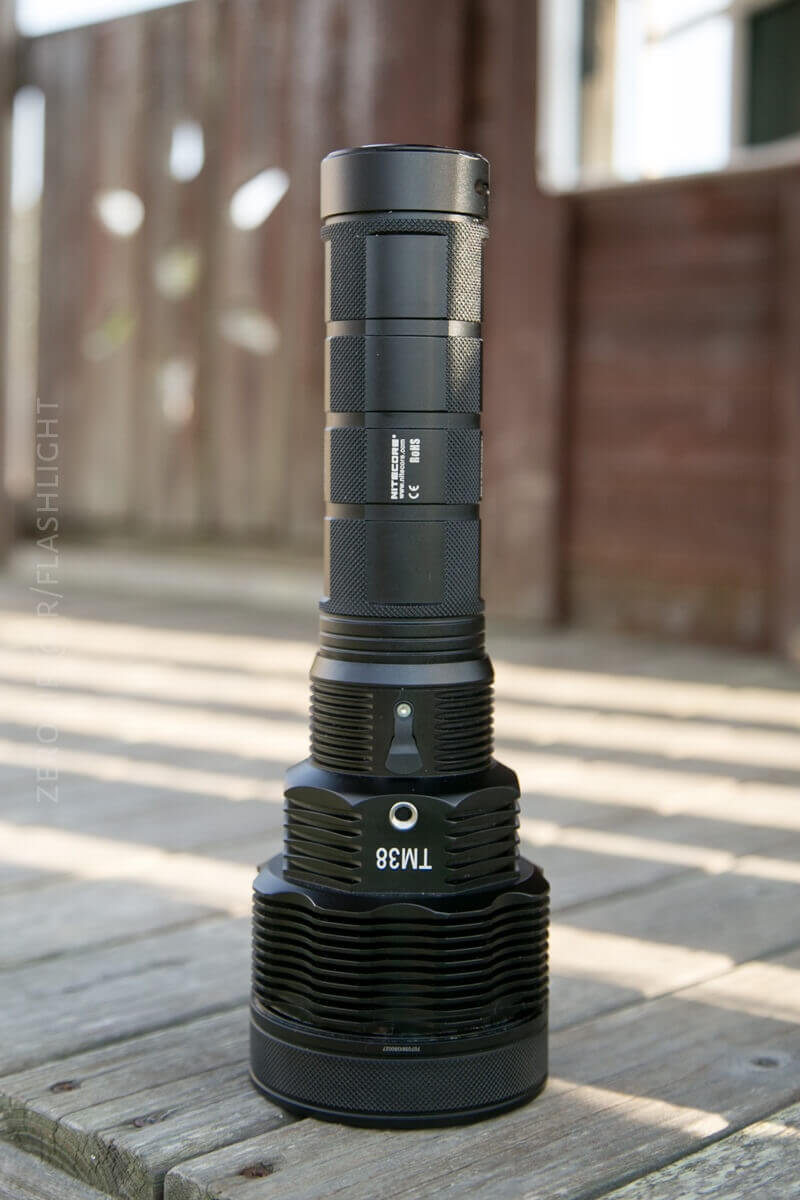
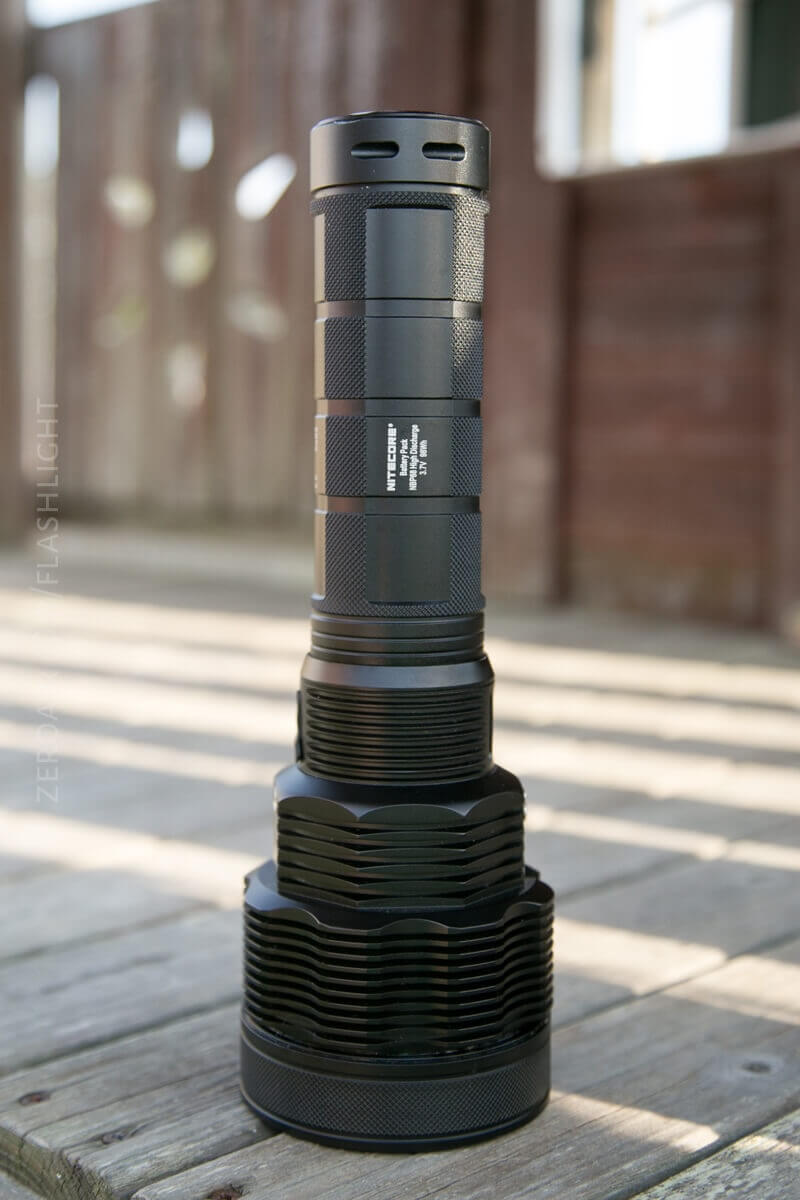
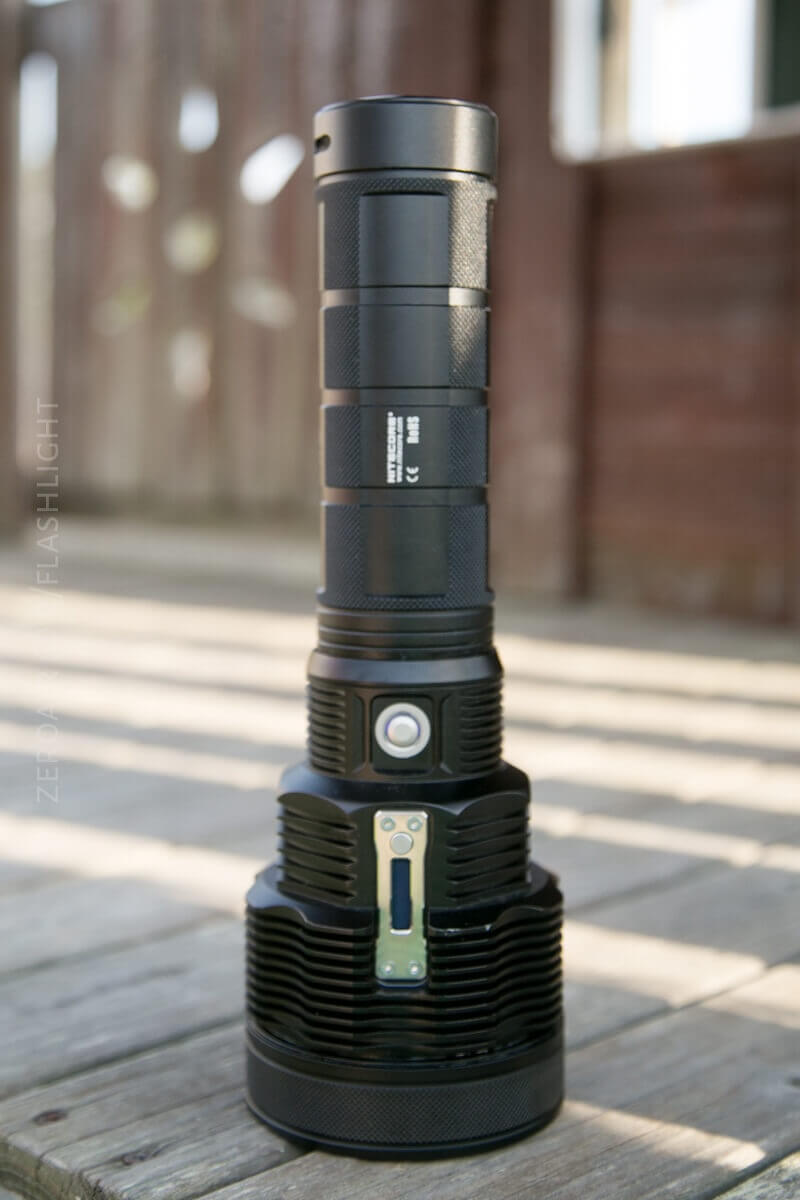
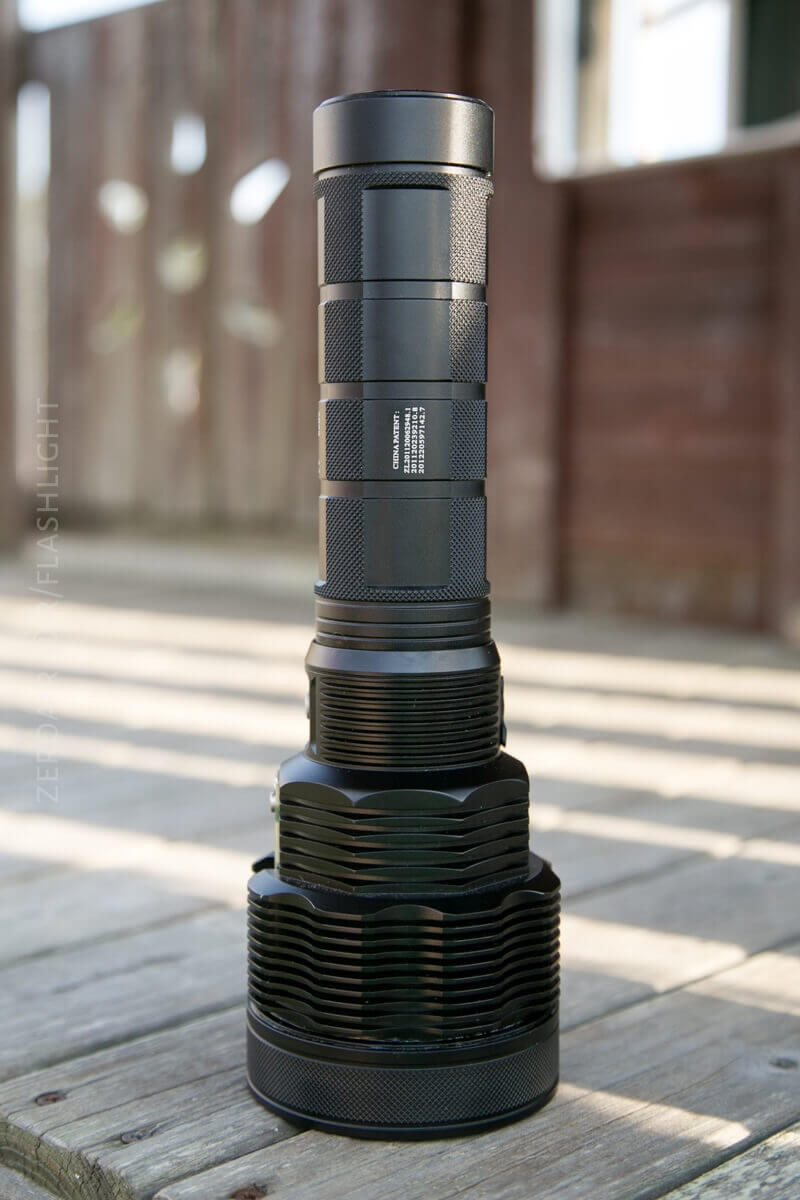
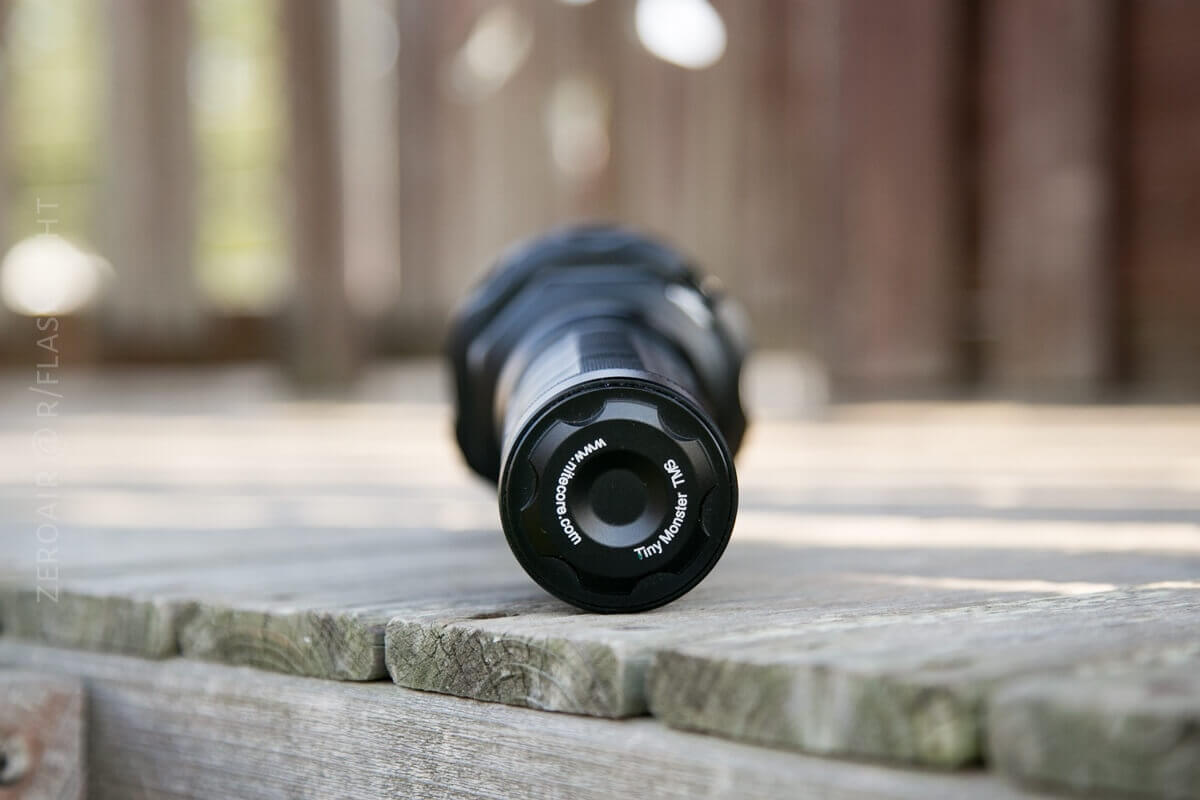
The body of the light is just massive – The TM38 (not “Lite”) has an integrated cell, but let’s be honest and say what it is – 8x 18650 cells. It’s that big and heavy. The whole battery is the handle and has grippy diamond knurling.
Below, you can see the head and body of the light separated. There are large contact rings for connection between the two, and an O-ring for waterproofness on the battery. Note that the terminals on the battery are 1) a flat ring and 2) pogo pins on the interior. This makes for great contact between the parts.
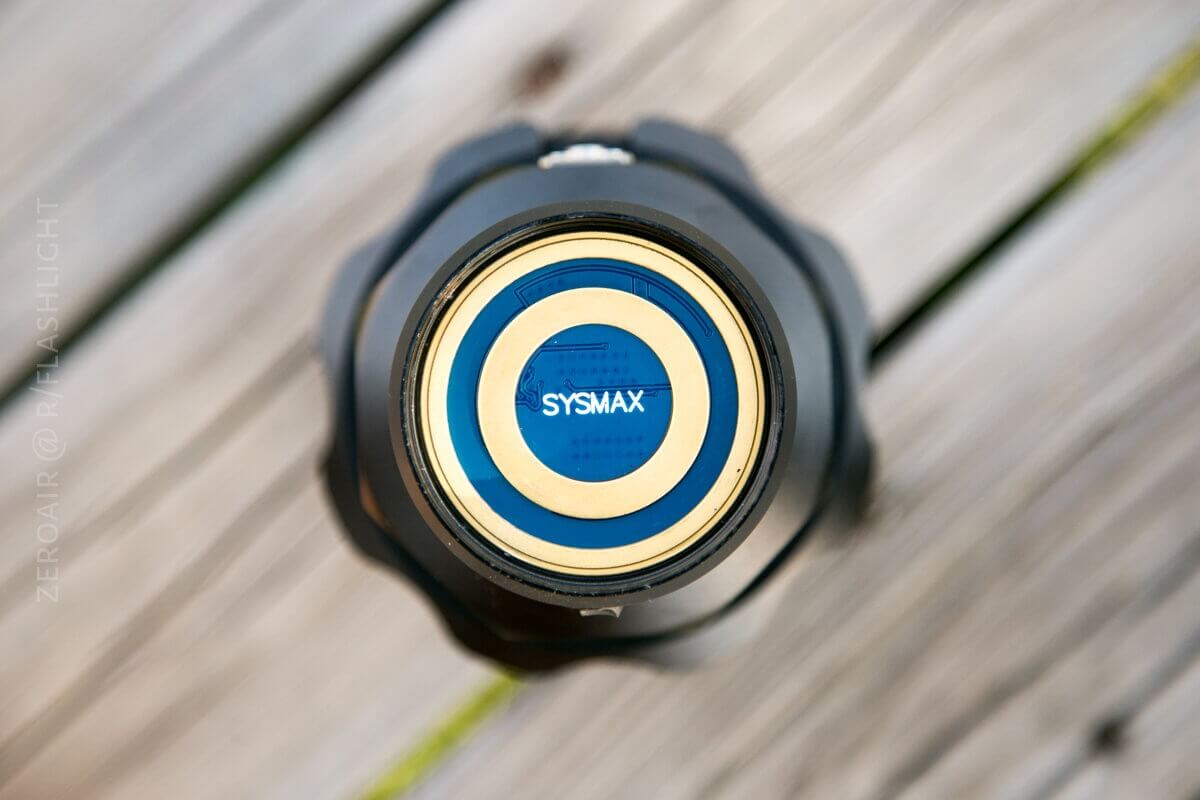
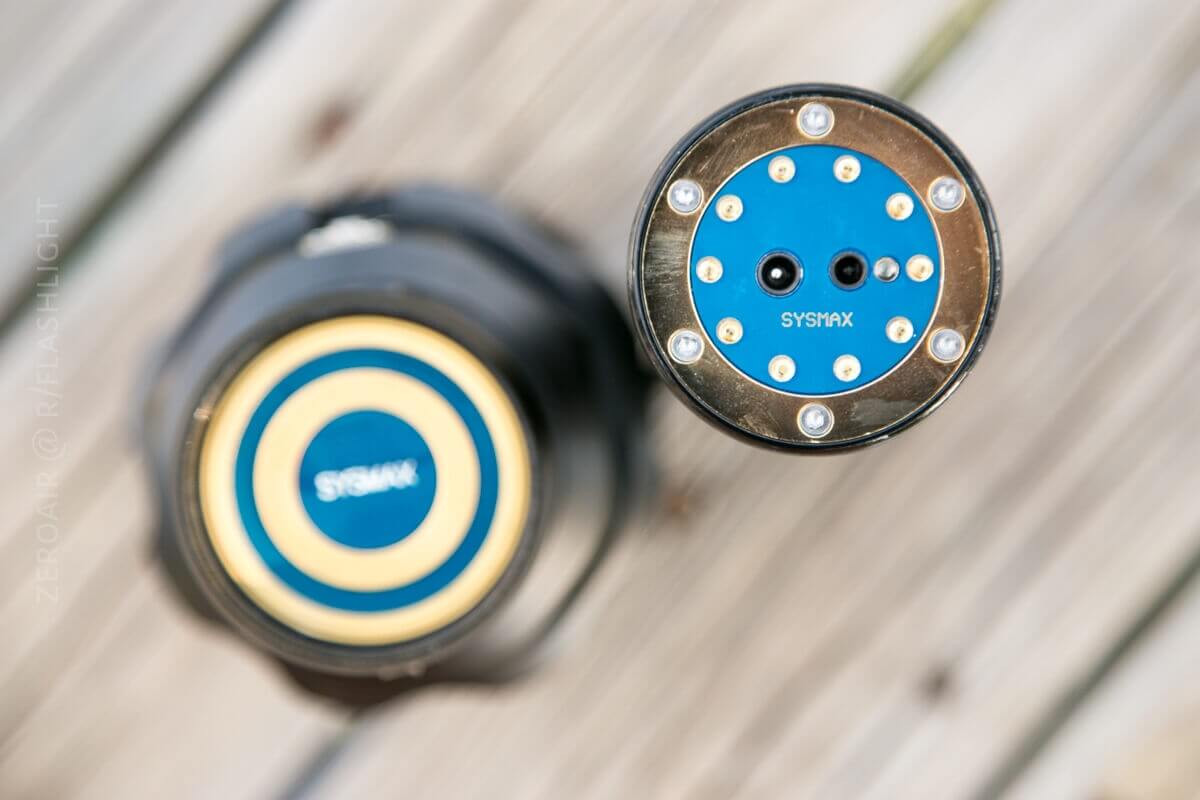
The battery has very nice square-cut threads, which are anodized and lubed appropriately.
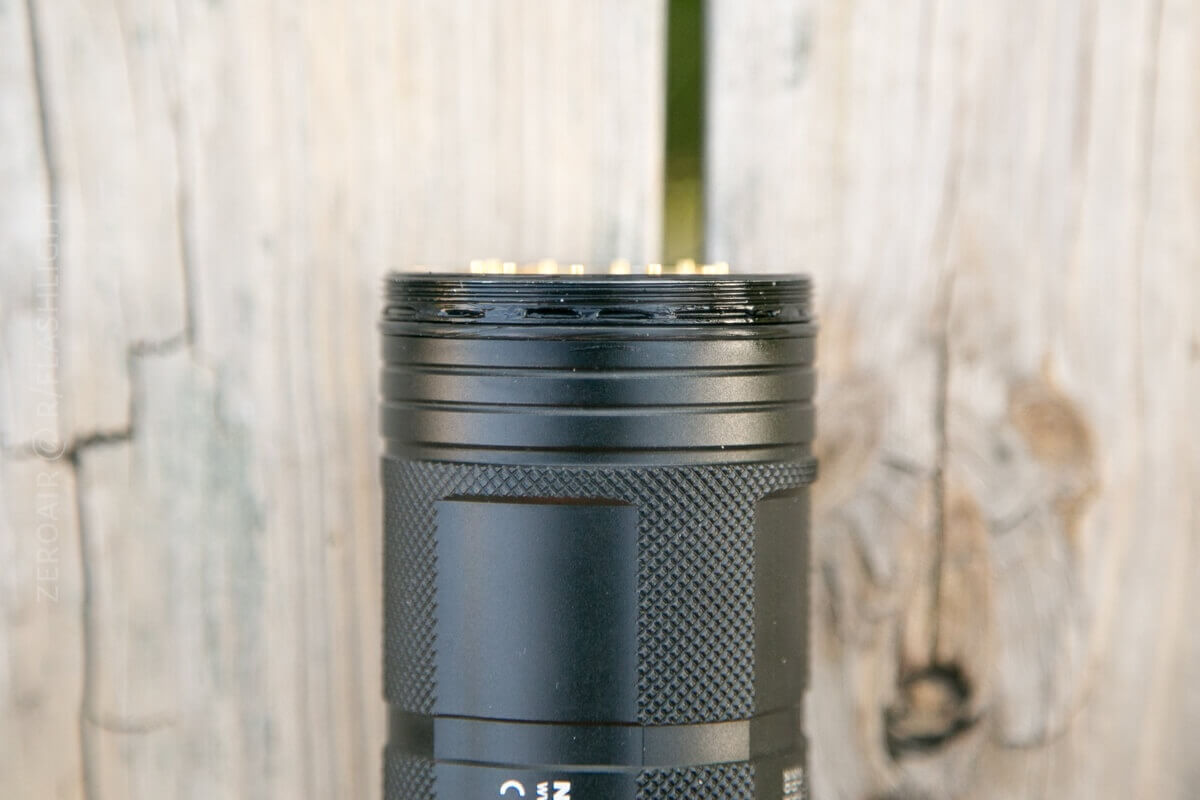
I was unable to further disassemble the head, so I have no thoughts about the possibility of an emitter swap. The emitter that’s in there looks very happy down in that big ol’ reflector, though…
Size
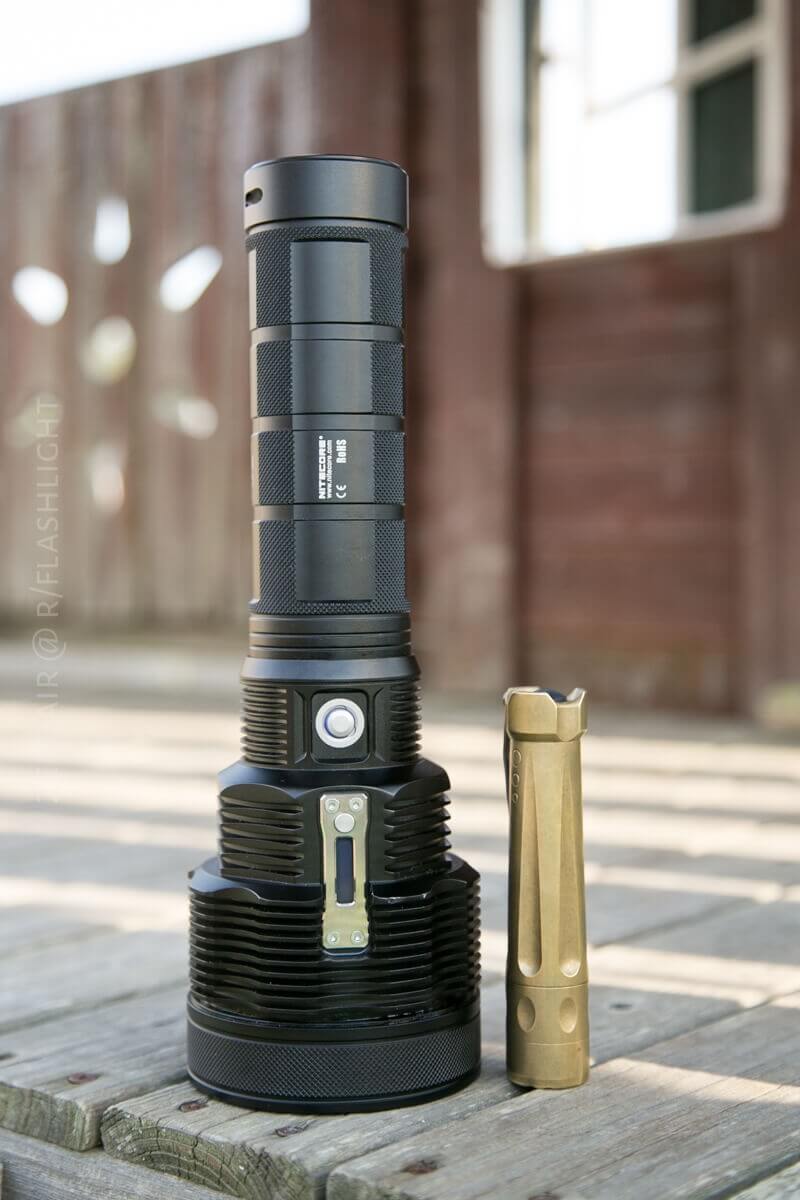
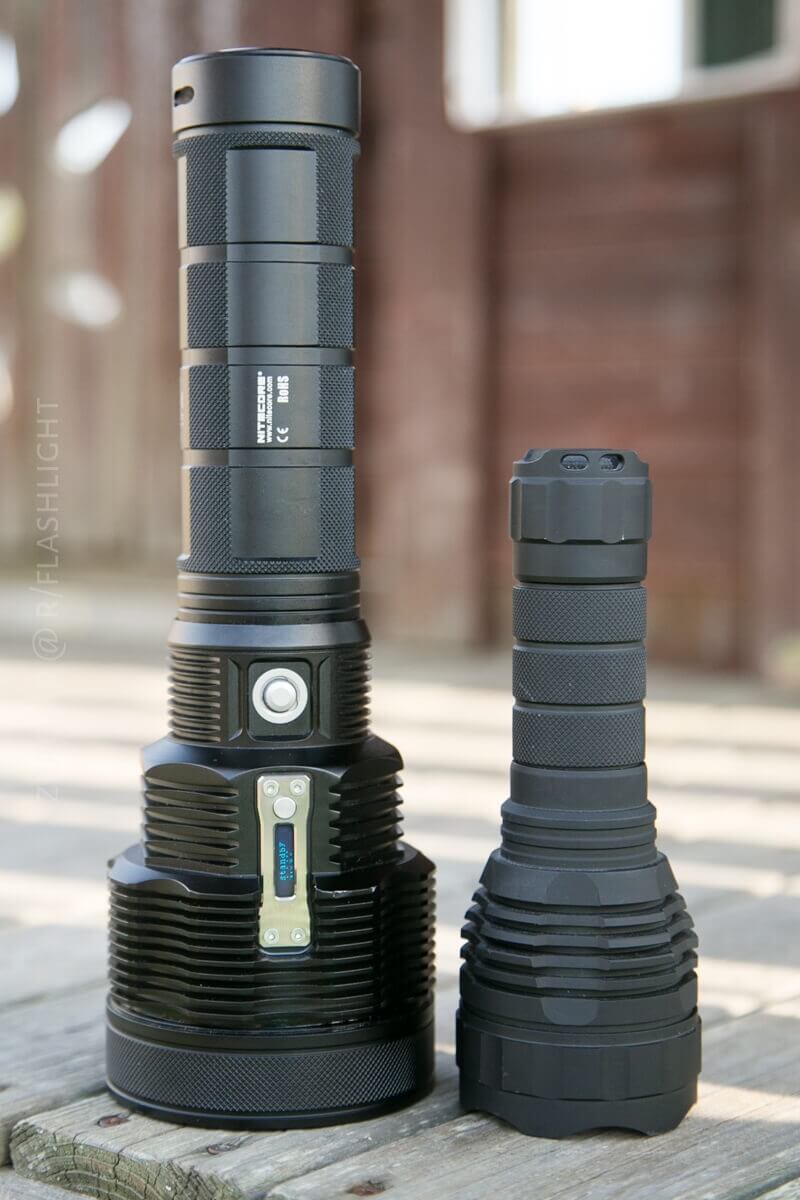
Officially, this light is 278mm x 90mm x 50mm (tube), and weighs almost 45oz.
It’s big enough that it thwarts my normal means for size identification… It just dwarfs the dollar bill I normally use. The battery is a nearly perfect fit on the bill, though!
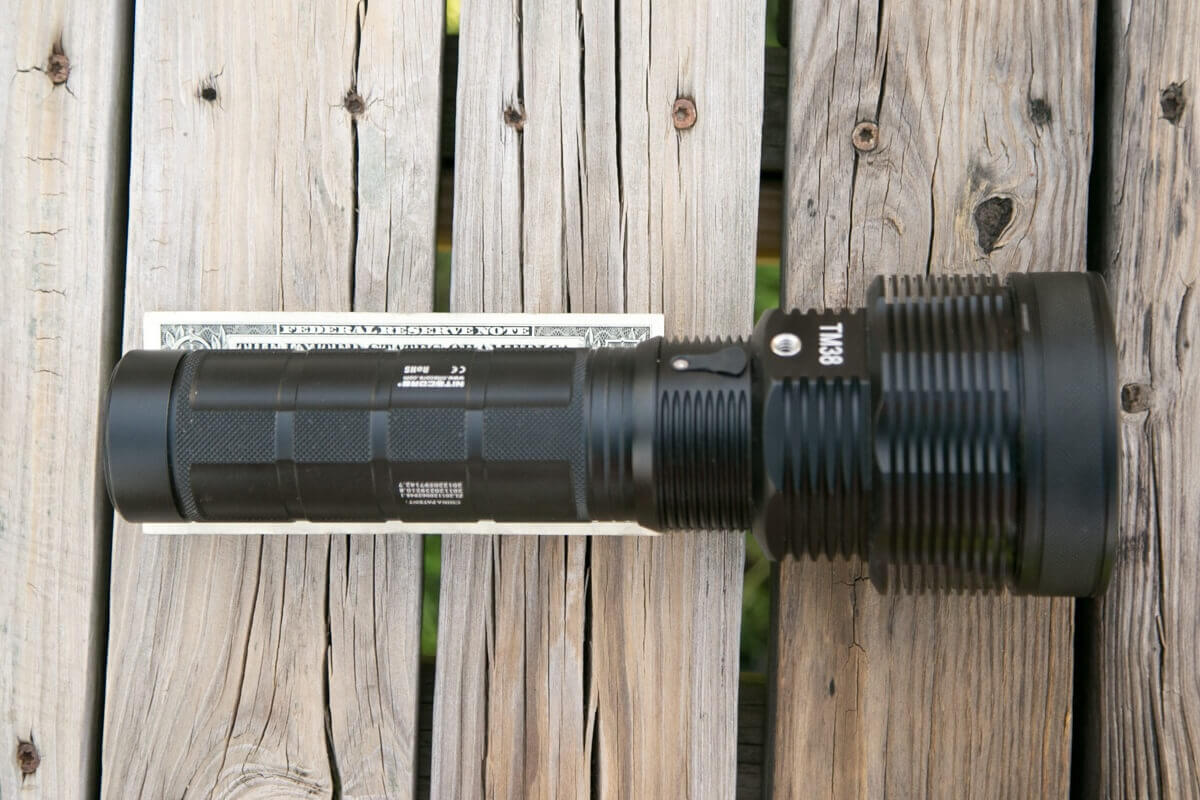
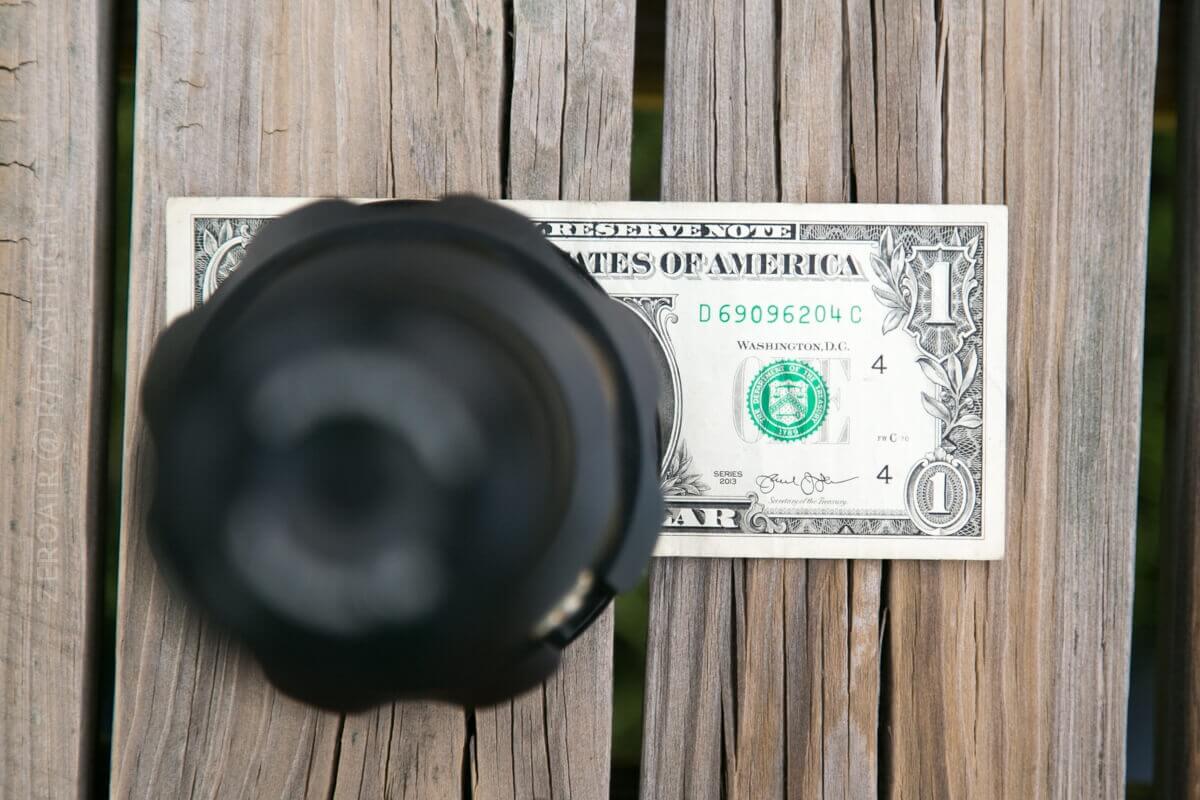
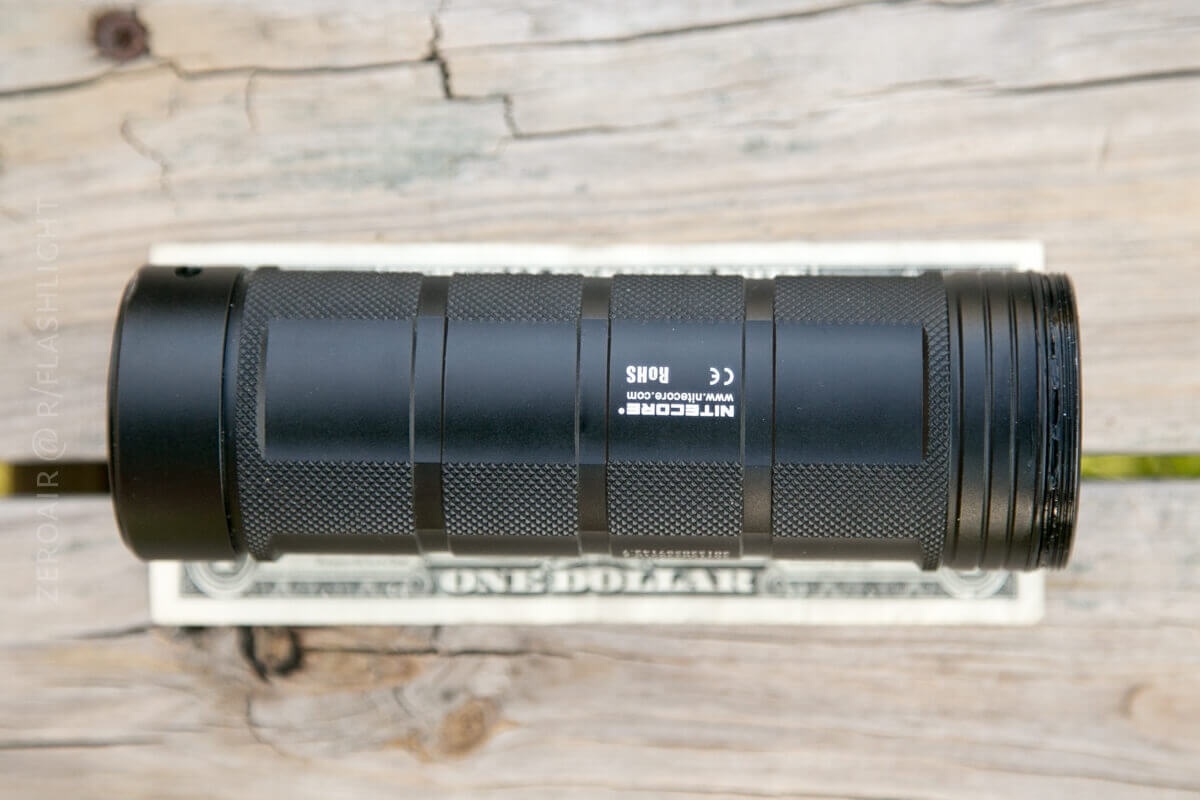
It also dwarfs the other lights I might use for comparison. The BOSS looks positively diminutive beside it. The Convoy L2, in single-cell configuration, also looks quite small!
Retention
There are two ways to carry this light. One, and the main (ideal) way, is the included shoulder strap. This is my first light with a shoulder strap, and I have to say, it’s a fun way to carry such a light. I’ll add that I’ve attached it in these two photos in a wrong and insecure way, but you get the idea.
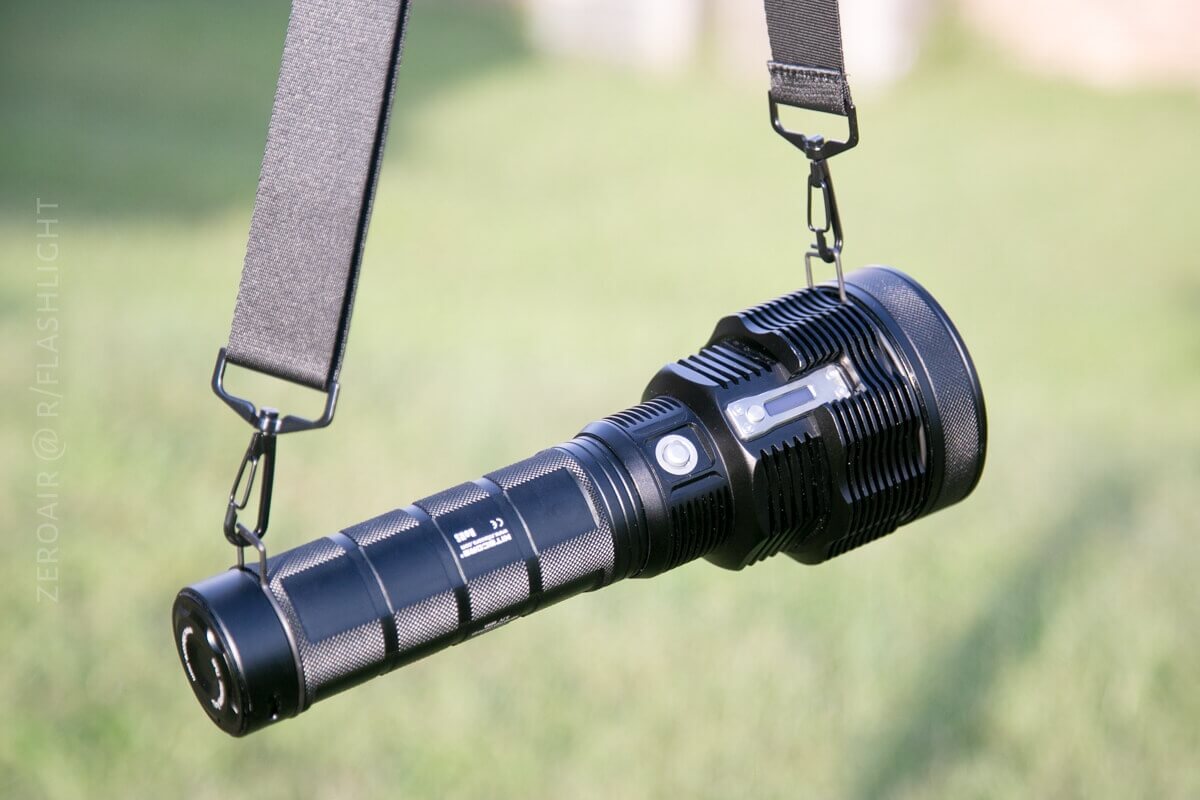
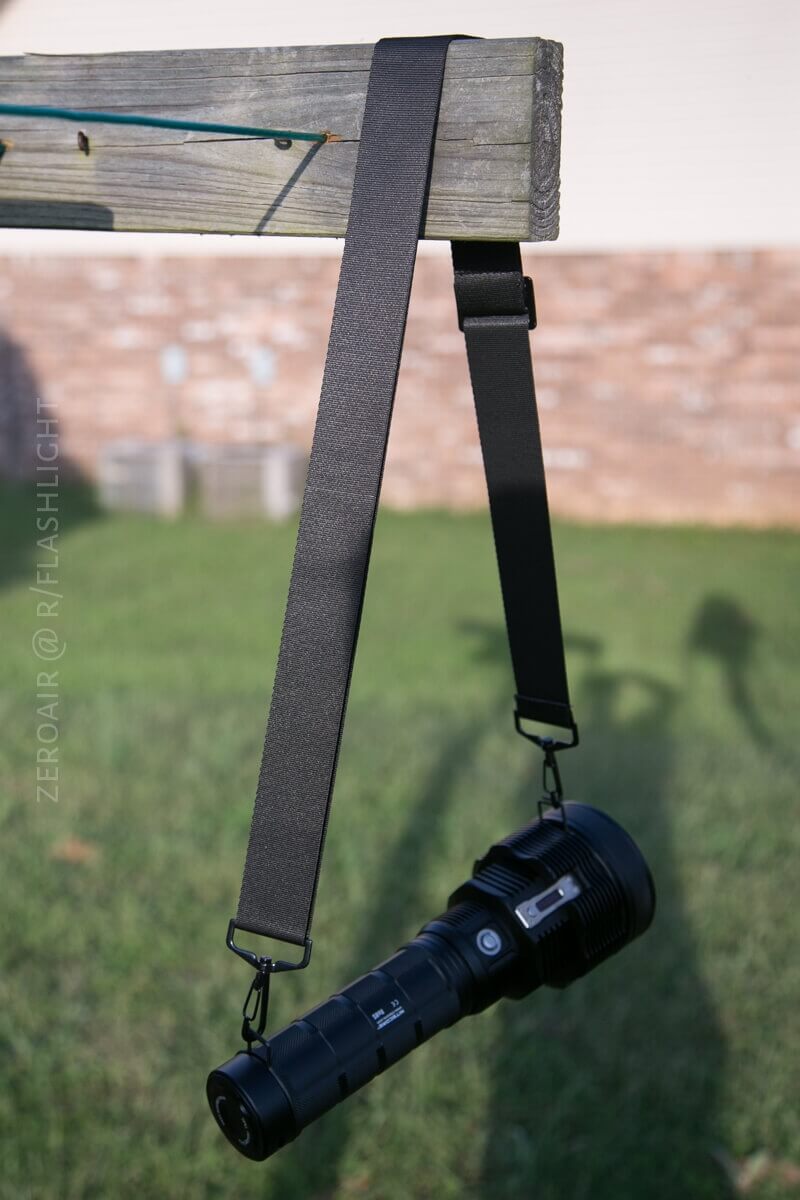
Here’s the actual right way. There are two metal snap-fit rings that go over the light – one on the head and one on the tail. Then a small plastic piece fits over those so that those rings can’t accidentally pull off. Then the strap goes through the holes in those pieces. It’s a secure (yet fully removable) way to attach these parts.
The other option is a lanyard. I didn’t try this method, but I can say that I’d only use this as a backup or safety measure. Dangling this light on your hand only by the lanyard is probably not going to work. But if you’re holding the light, looping the lanyard as a backup (so you don’t drop your $450 light to the ground) is a smart idea. I am sure this is what Nitecore actually intended.
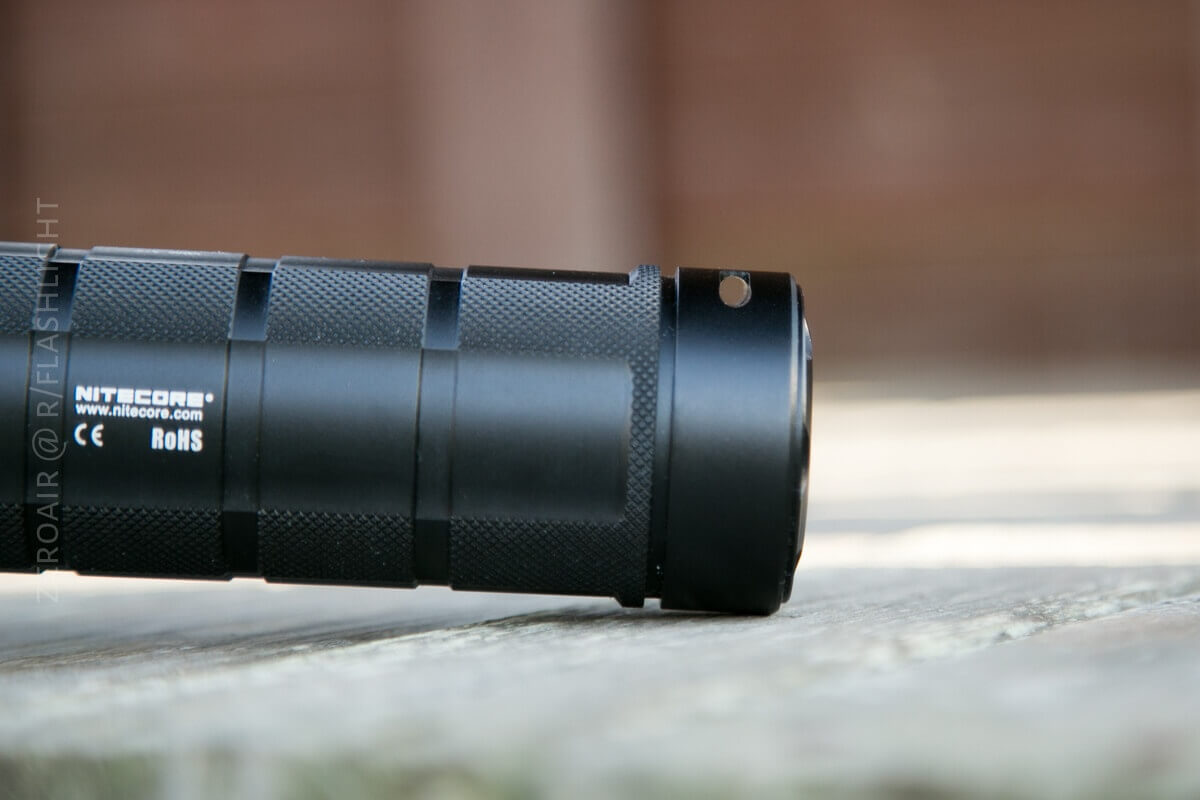
There are no other options for carrying. Particularly, there’s no concession made for bag carry. I’d really love for there to be a lens cover that snapped into place so that this light would be safer in a bag.
Power
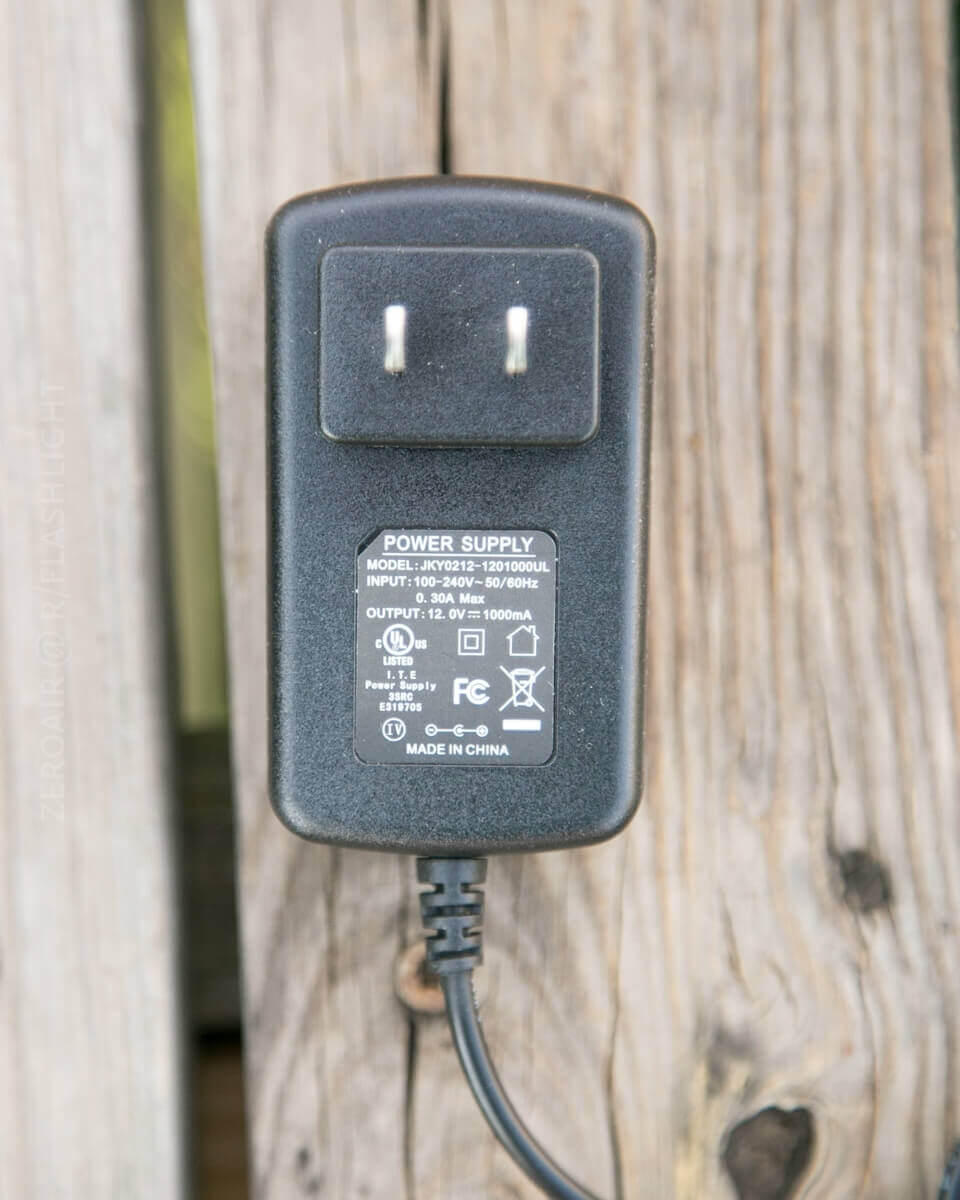
The TM38 is powered by a battery, which is included with the light. The package includes a charger (described as a “2A ‘trickle charger'”). Also available is a 4A “fast charger”. The plug between the two is a different size. This is a common barrel plug as far as I can tell.
There is a charge port for only the trickle charger on the outside of the body at the bottom of the head. The port is covered by a rubber boot, which is held in place by a Hex screw. There is a replacement boot included in the package, too. When using the charge port on the outside of the body, the OLED display provides information about charging, including cell voltage and if charging is complete (“Chg.finish”) or ongoing (“Charging”).
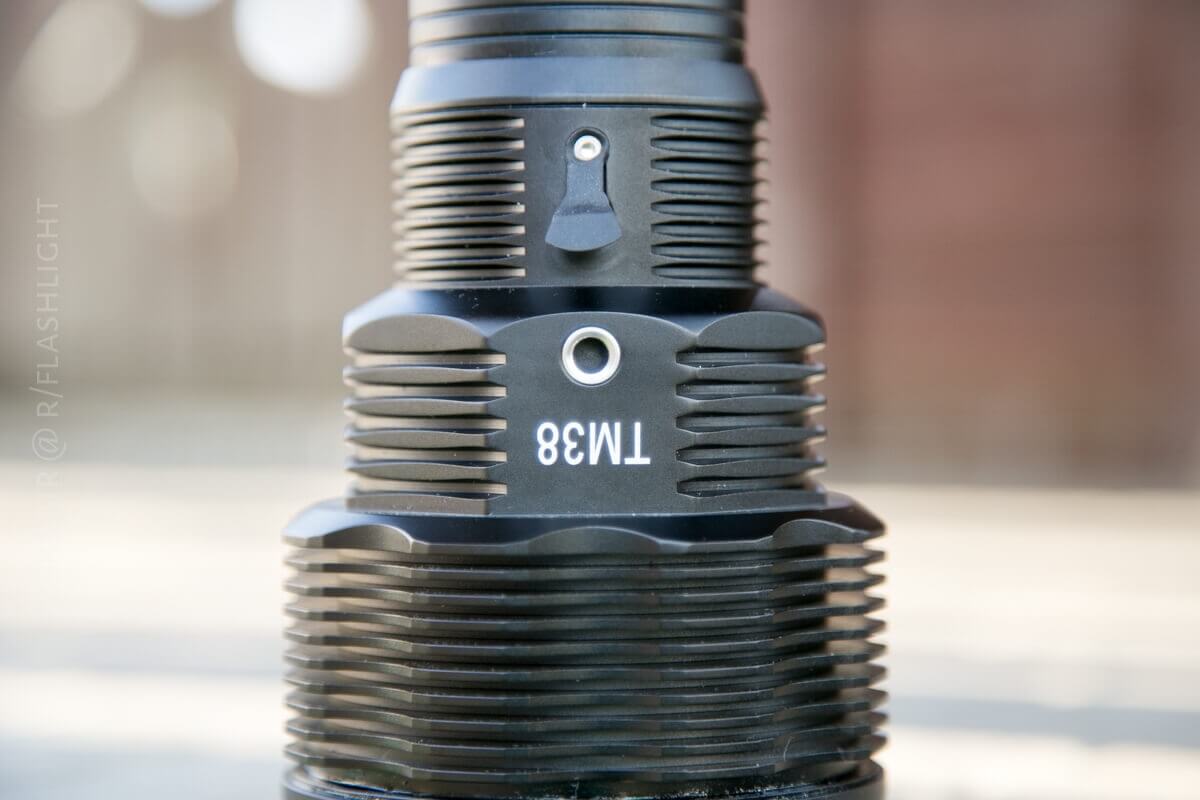
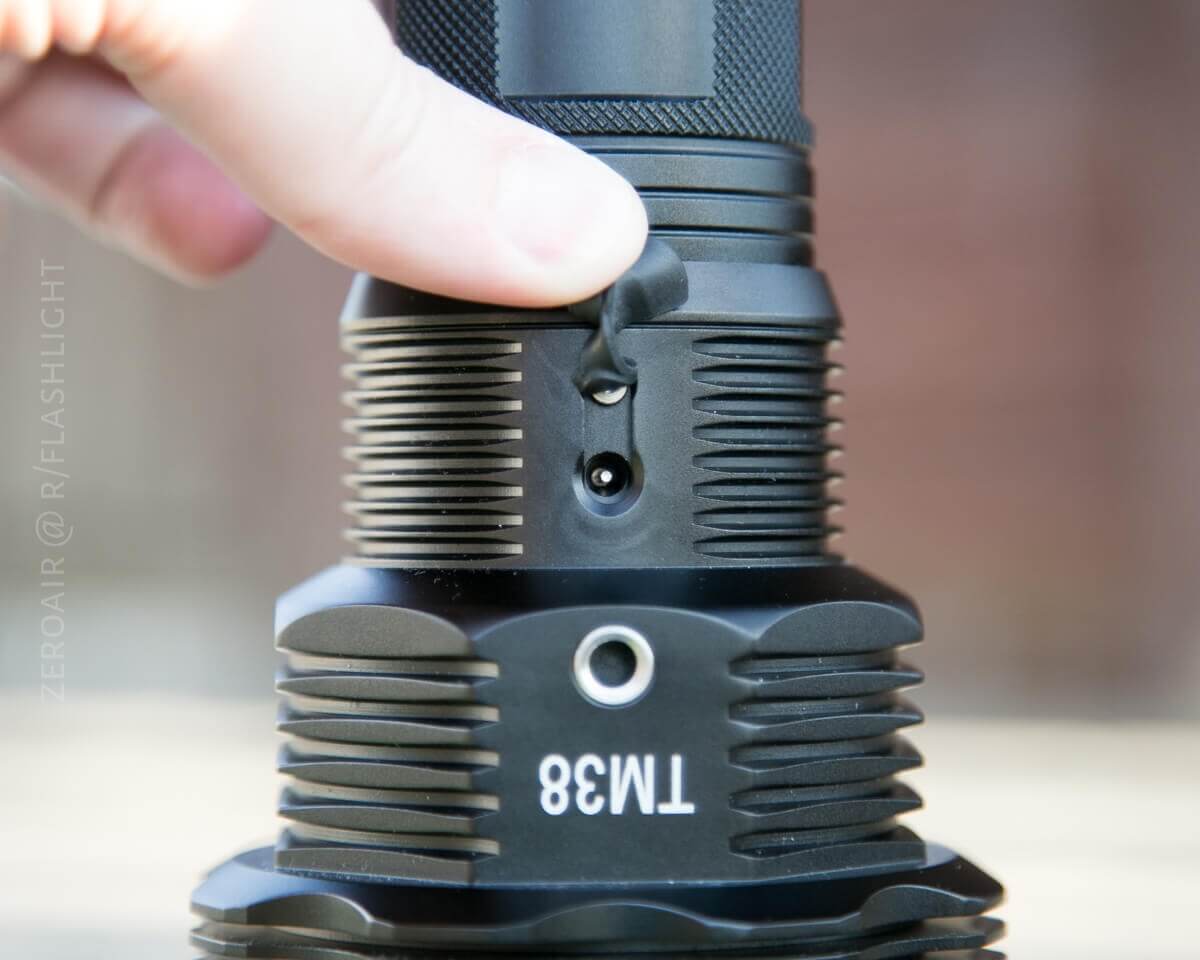
The battery itself also has a trickle charge port, and a separate fast charge port as well. When using these ports, there’s a blue led that gives information about the charging state.
I had intended to tear this battery down, and I might still. It’s held closed by 6 Hex screws, with the circuitry right there on top.
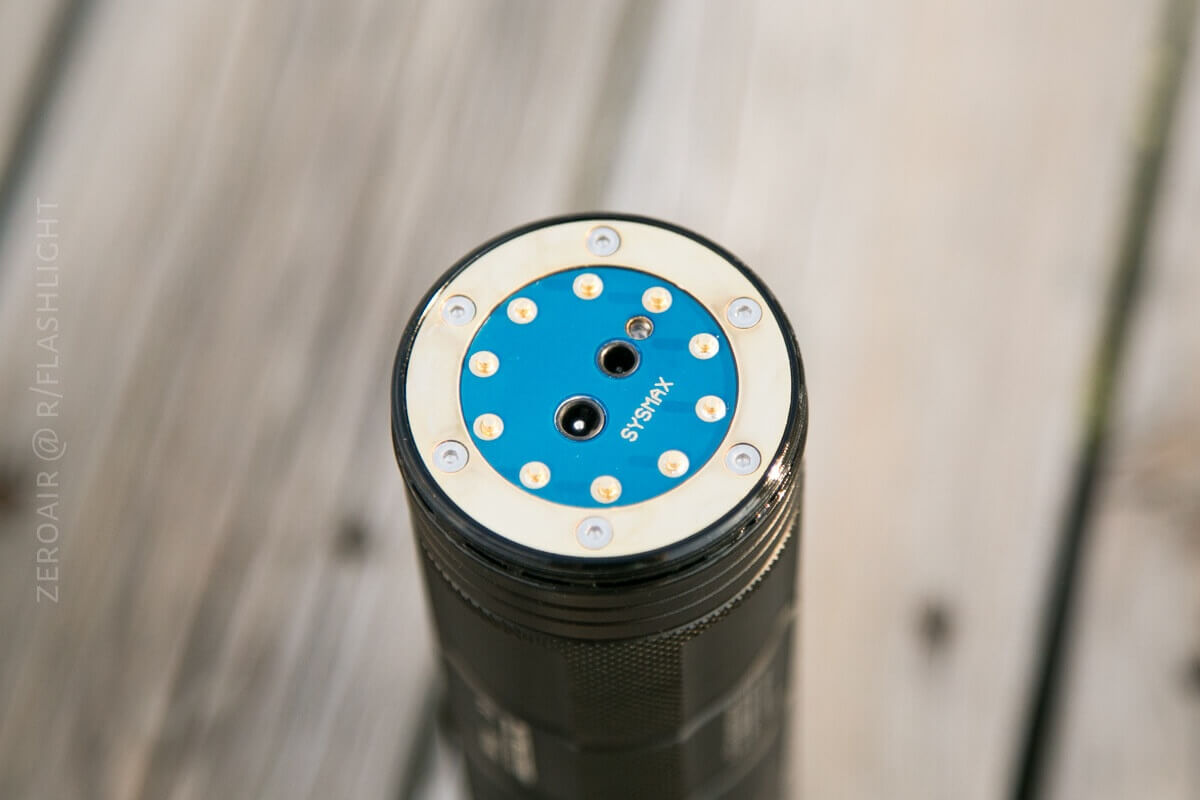
The adapter is seen below. This is a 3.5mm 12V adapter, and the fast charger is a 4.0mm 12V adapter.
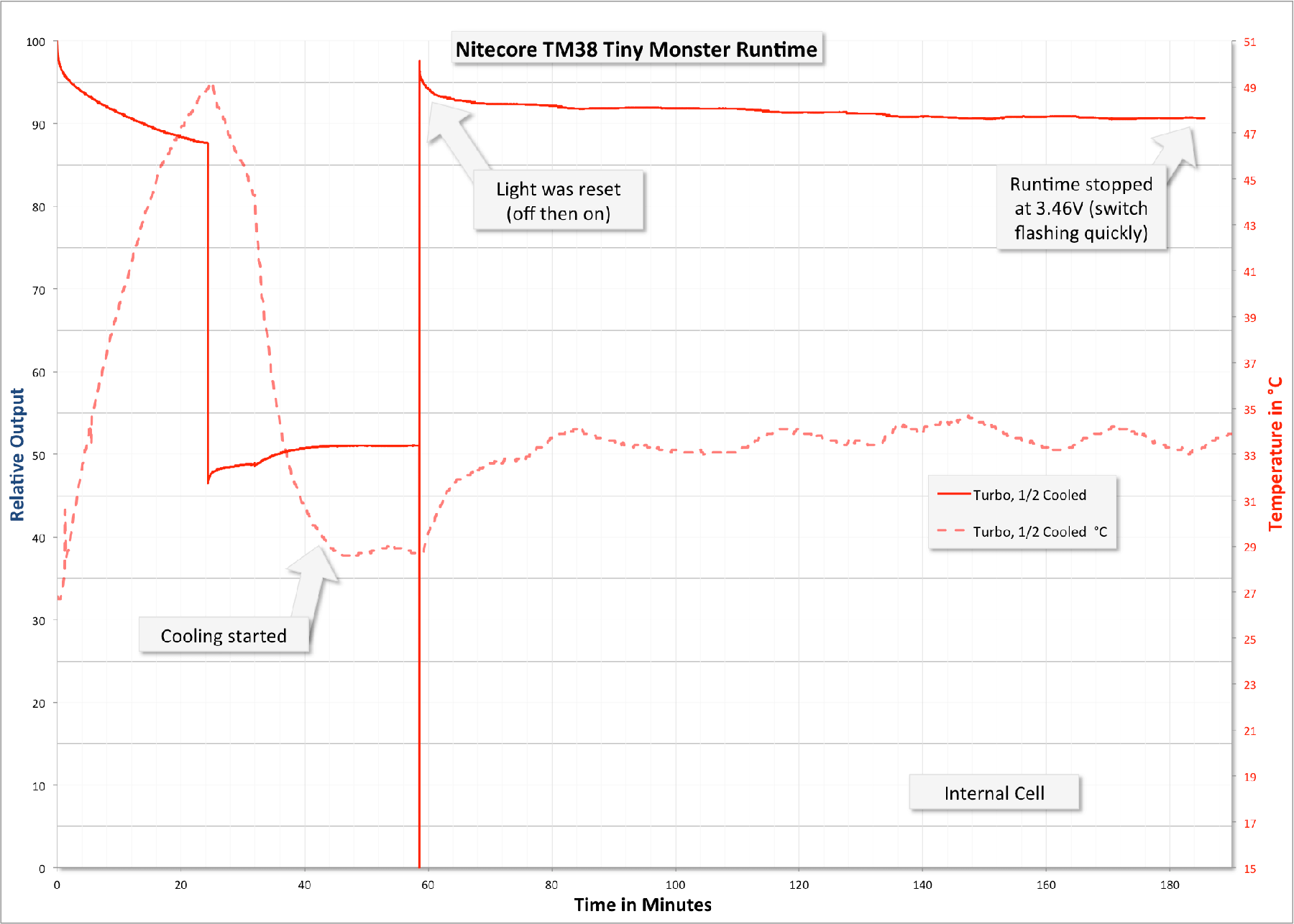
Runtime:
Uncooled for the first 30-40 minutes. Then I turned on cooling, which stayed on for the remainder of the test. I then turned off the light and turned it back on to see if the output would reset, and it did. Notably, now that there was cooling, the light maintained over 90% output for two solid hours. Essentially, turbo works as long as the light is cooled. There is low voltage warning, which is indicated by the blinking of the indicating switch rapidly. I stopped the test when this began, and the voltage was 3.46V.
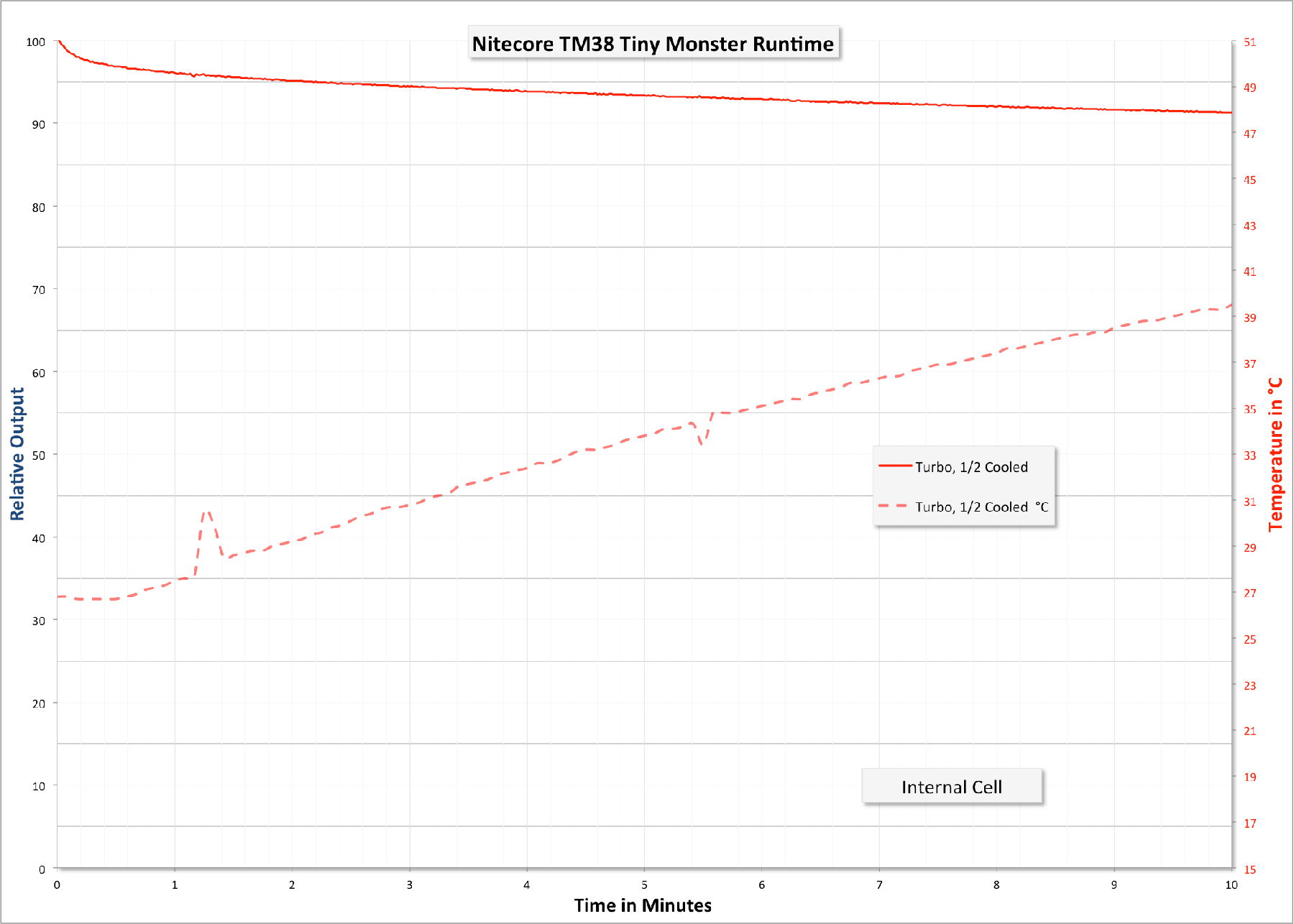
Unfortunately, I was not able to record a charge time for this light. My setup doesn’t include any way to record from a barrel plug.
User Interface and Operation
There’s really just one operational switch on the light, but there are two actual switches. The bigger the power switch is. The smaller one is just the OLED cycling button. They’re both metal, and both fairly clicky. In fact, the user interface switch is very clicky and has a bit of a loud, hollow sound.
The user interface is dead simple, but when I first picked up the light, I wasn’t quite prepared for it. Fully clicking the power switch turns the light on Turbo. Softly pressing the power switch turns the light on to low and then softly pressing cycles the modes from low to high. Turbo is not included in this cycle. What I wasn’t prepared for was how soft the “Daily mode” presses are. It’s not a click at all, it’s just [very] light pressure on the switch.
Fully clicking with the light on (in any mode) turns the light off.
There are plenty of other options, too. When in Turbo mode, the switch can be lightly pressed for high (but only high).
For example, Daily mode can have a momentary setting of the last used mode by pressing and holding (from off). Click and hold has momentary activity too, but that’s the Turbo setting. Turbo is available in Daily mode (that is, when any of the “Daily modes” are on) by clicking and holding the switch for momentary Turbo. Following that with a press (not a click) will return the light to the previous mode.
Double-clicking will activate strobe. Clicking again will cycle strobe modes (Strobe, SOS, Beacon). The OLED will continually display which Strobe mode is being used.
There is an electronic lockout, too. And this is important and useful (and recommended by me!), since this model is known to have a fairly high parasitic drain. With the light on, click and hold the switch. When the light turns off, it’s locked out. Nitecore recommends further measures, though (since the OLED is background-active even when locked out) – they recommend loosening the head a little to separate contact.
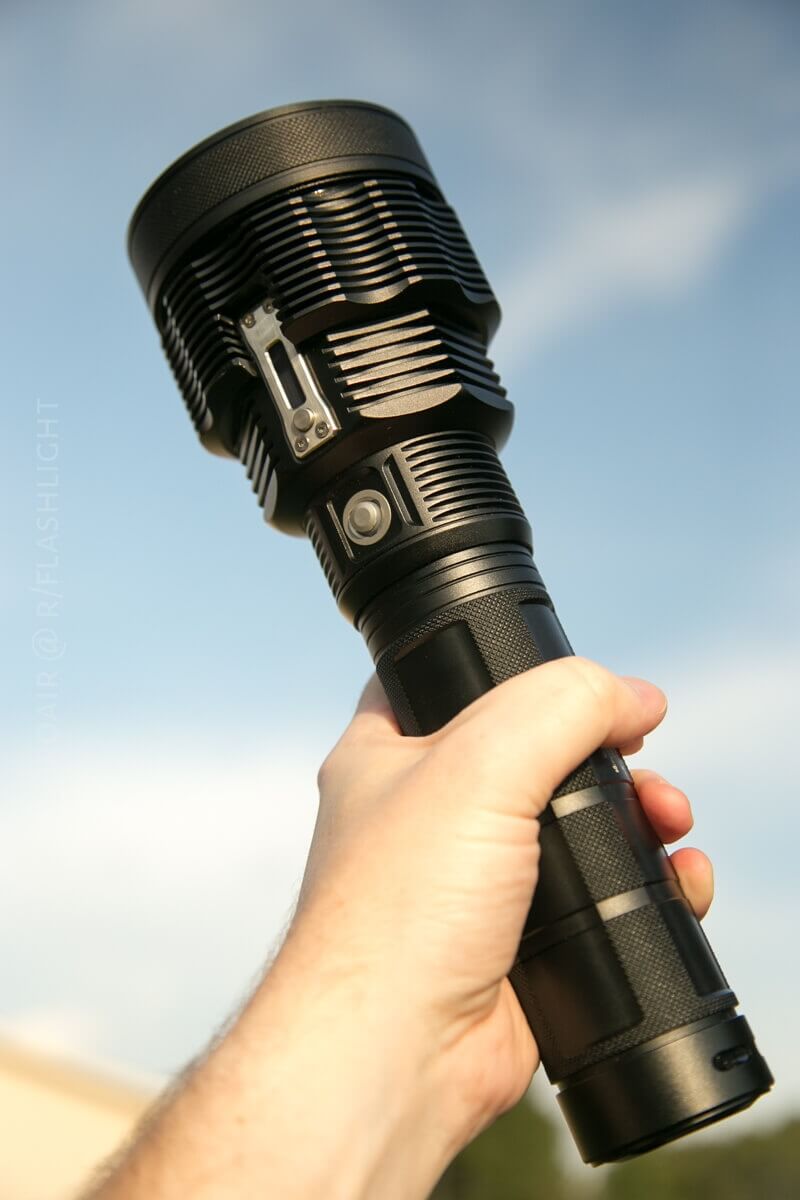
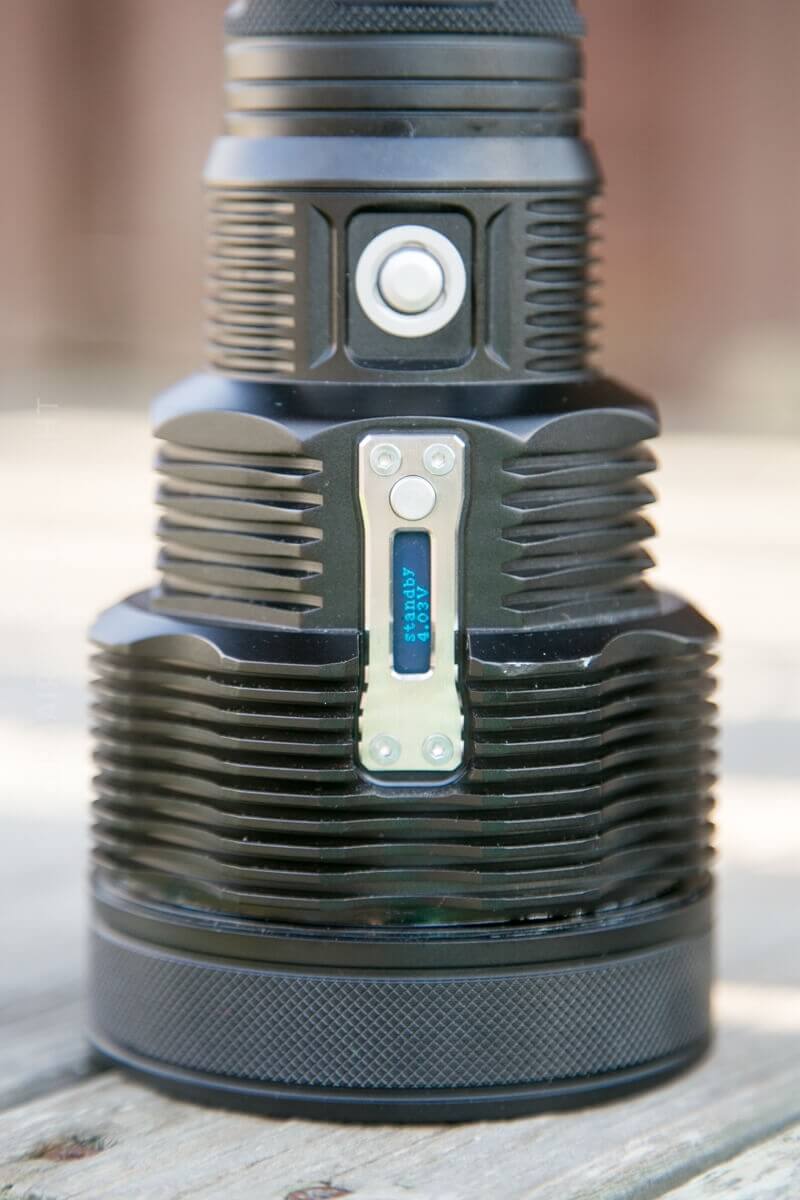
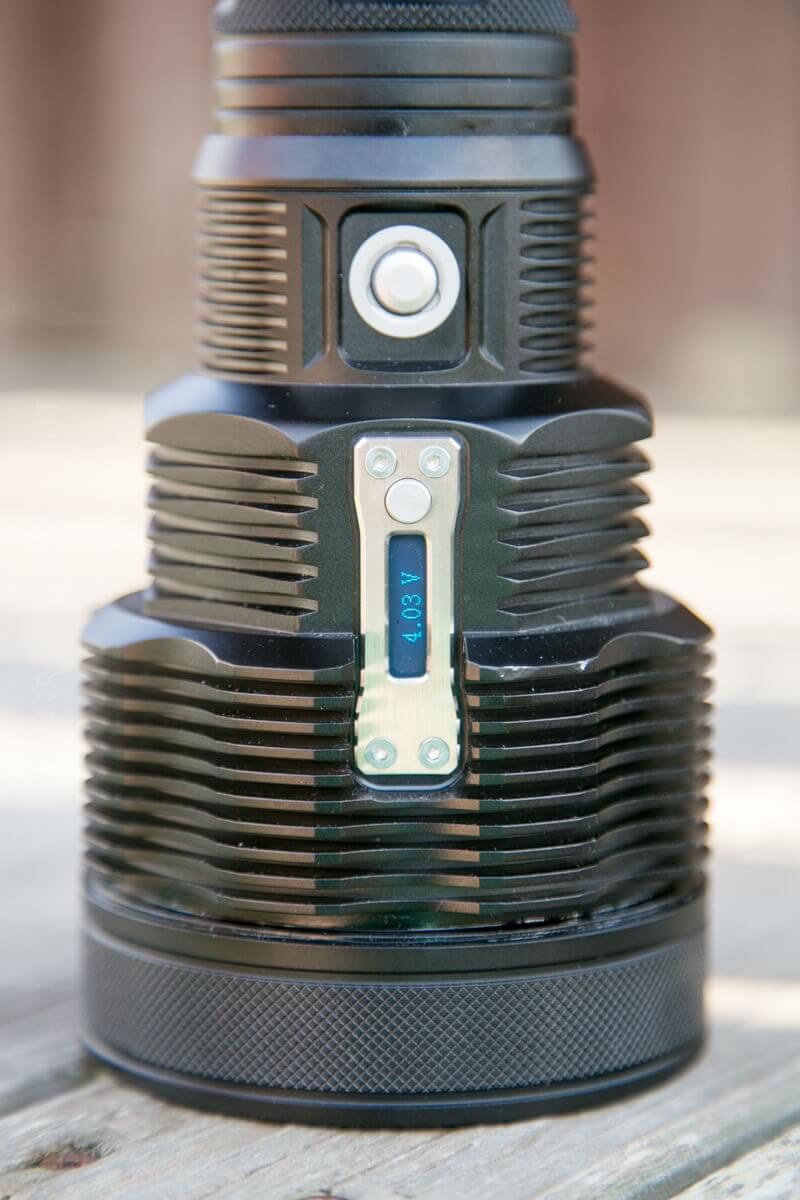
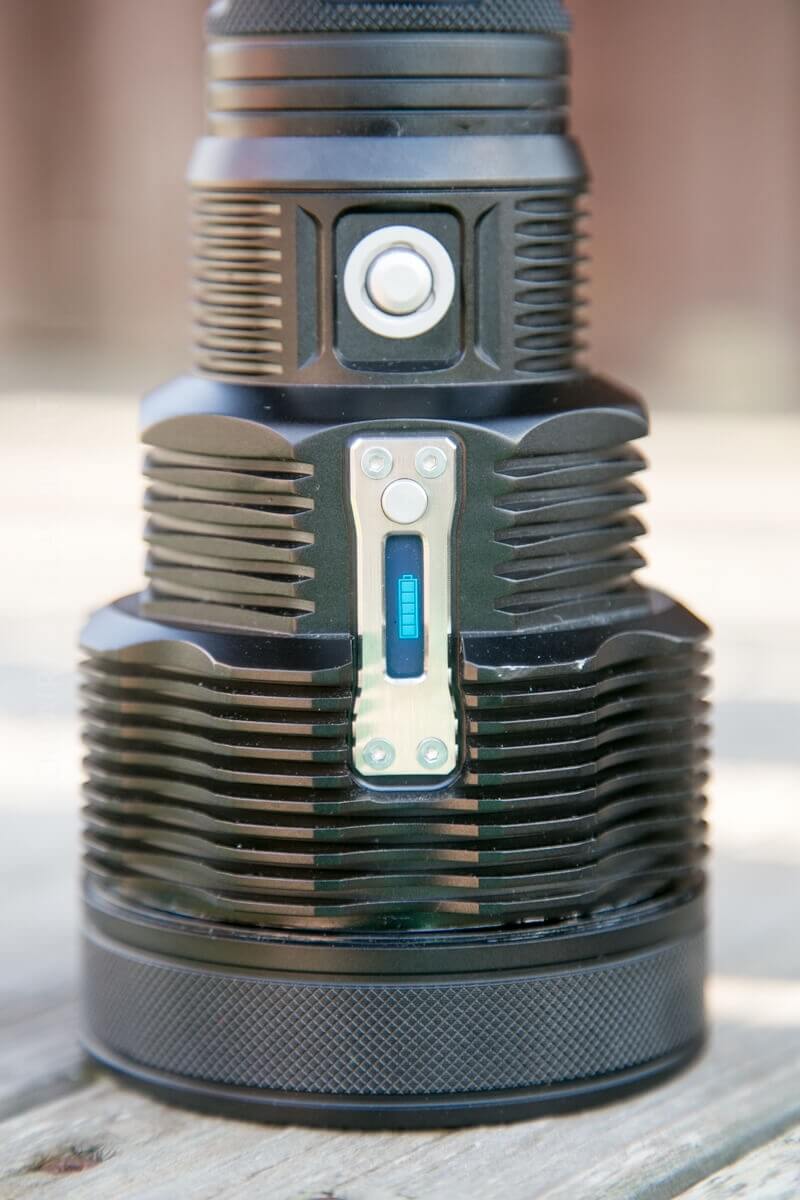
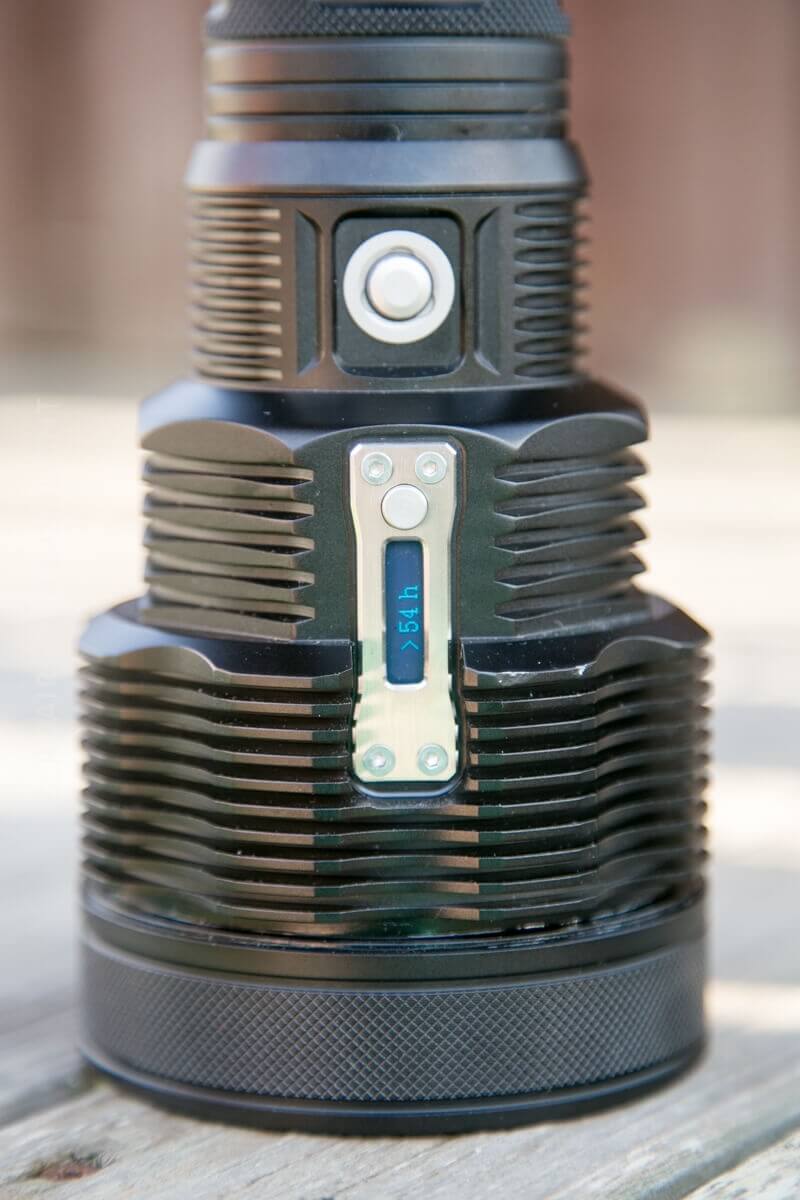
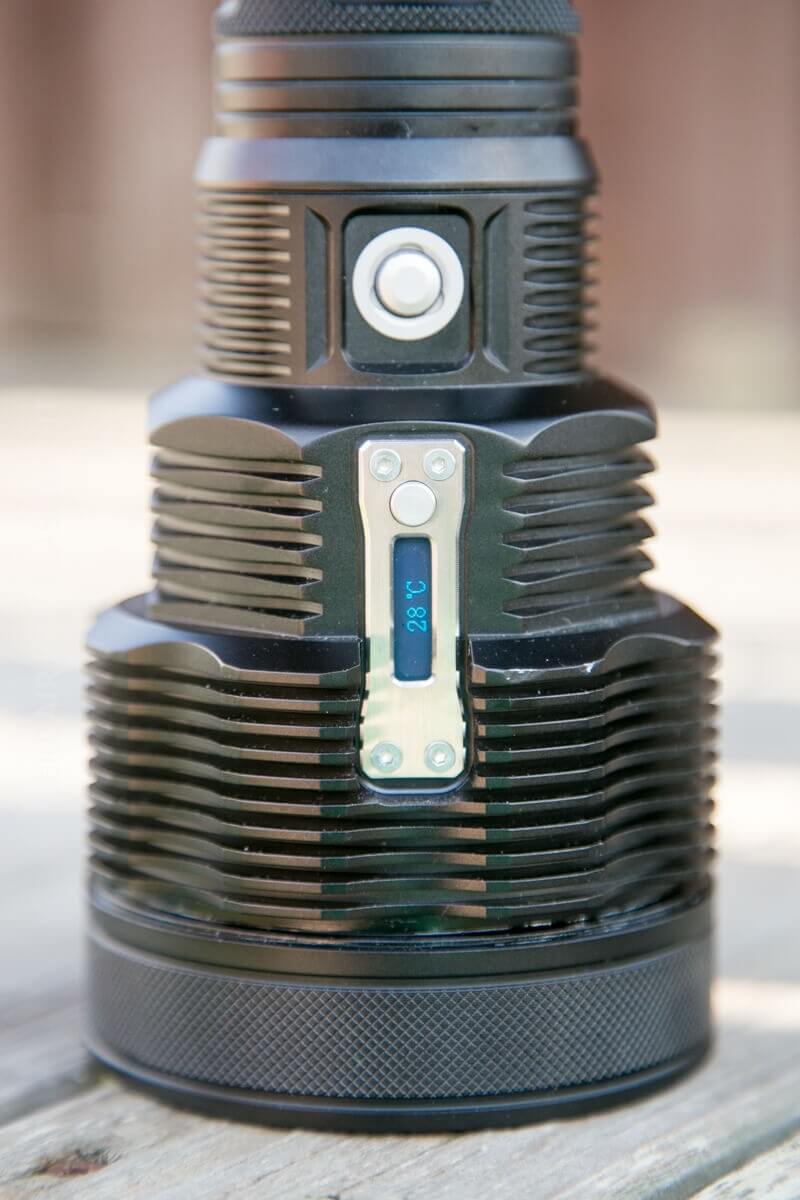
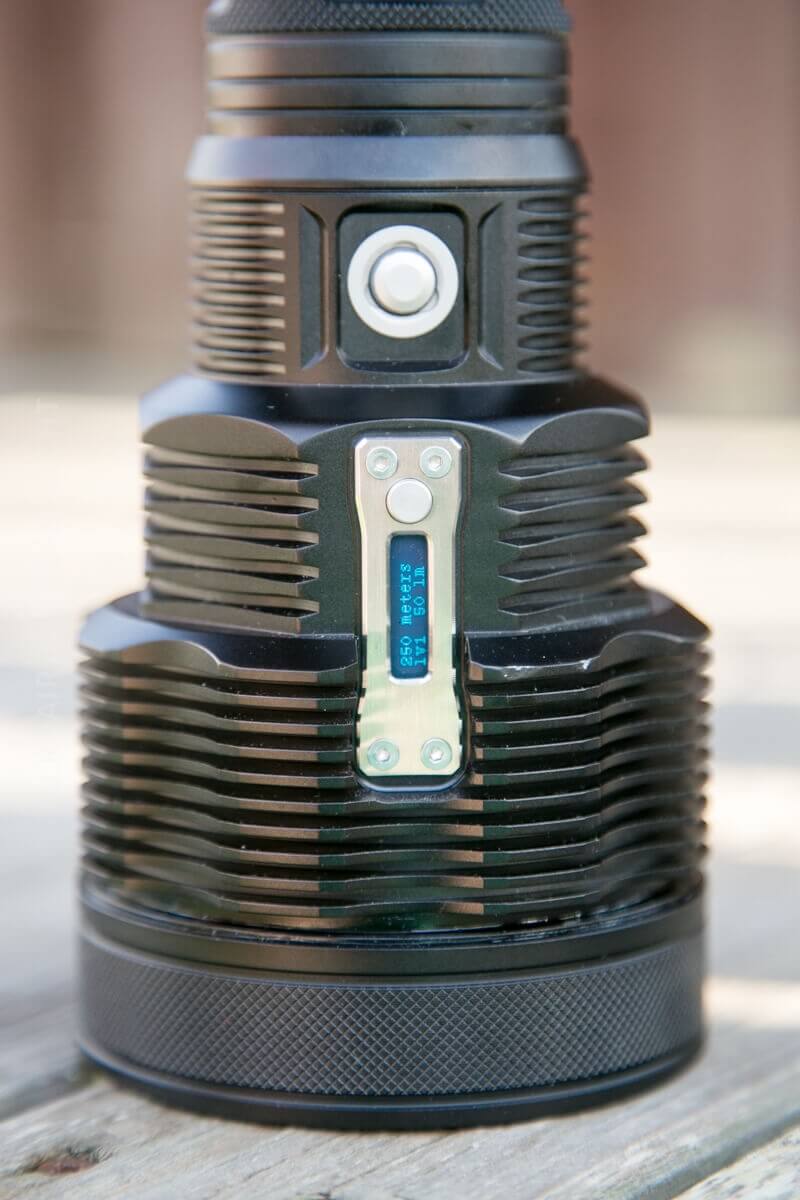
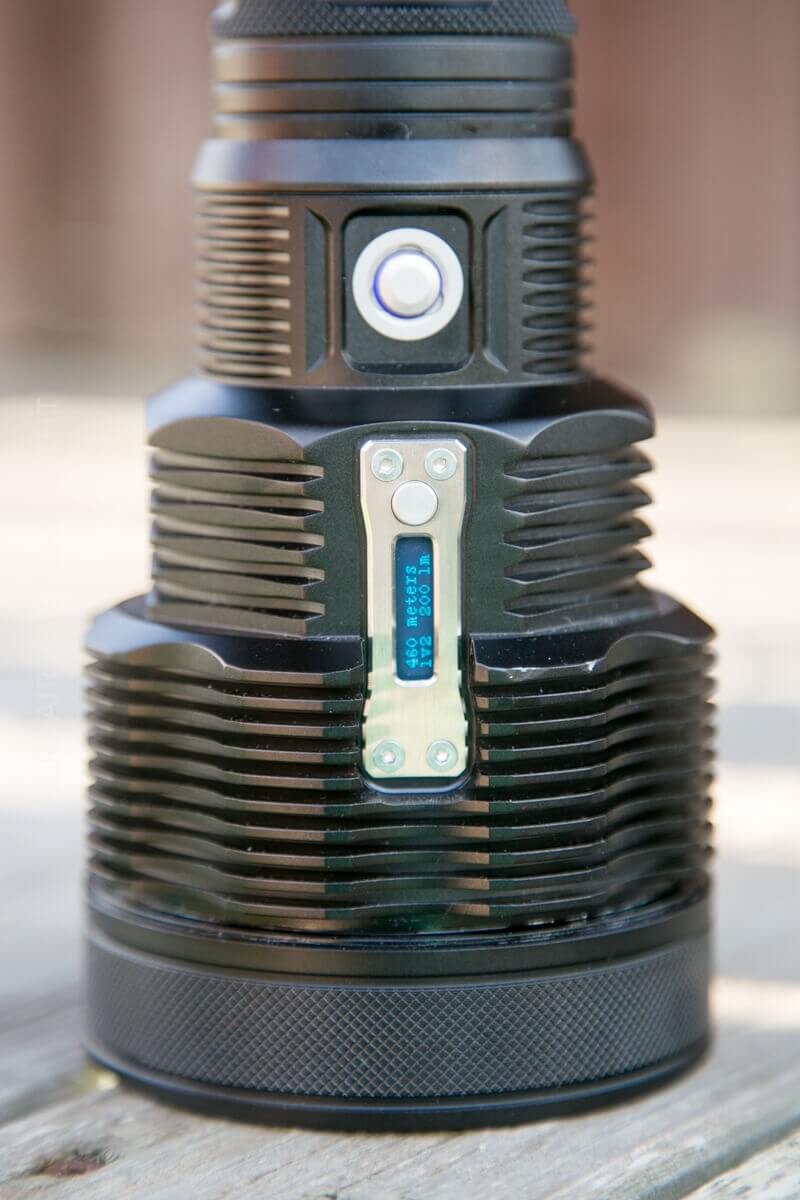
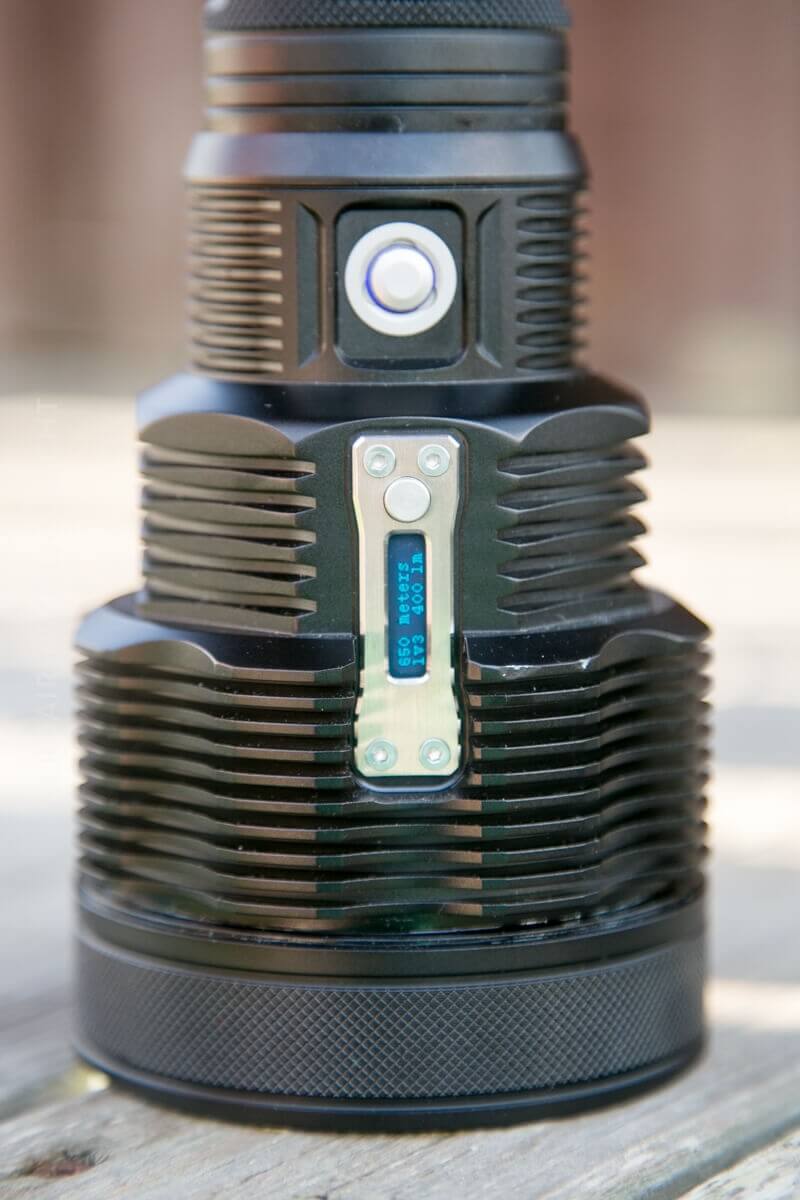
Below, you can see a lot of what the OLED display does. There are more things, yes, but this should give you an idea. For example, there’s a 2.5-second “Nitecore” splash screen when the battery is connected. And a “Lockout” screen when the button is pressed during lockout.
Also, note that the smaller button can be pressed at any time to cycle through the possible data screens for any mode you’re on.
Modes
| Mode | Mode Claimed Output (lm) | Claimed Runtime |
|---|---|---|
| Turbo | 1800 | 4h |
| High | 800 | 11h |
| Mid | 400 | 22h |
| Low | 200 | 40h |
| Lower | 50 | 120h |
LED and Beam
Nitecore wisely chose a Cree XHP35 HI for this light. It sits at the base of this huge, smooth reflector, on a large centering disk. The disk is approximately the size of a quarter (or larger) and is flush with the surface of the emitter.
The beam is, of course, all throw. On the lowest mode, hardly any spill is even visible – in a dark room, you’d be able to notice it, but outdoors, it’s not even noteworthy.
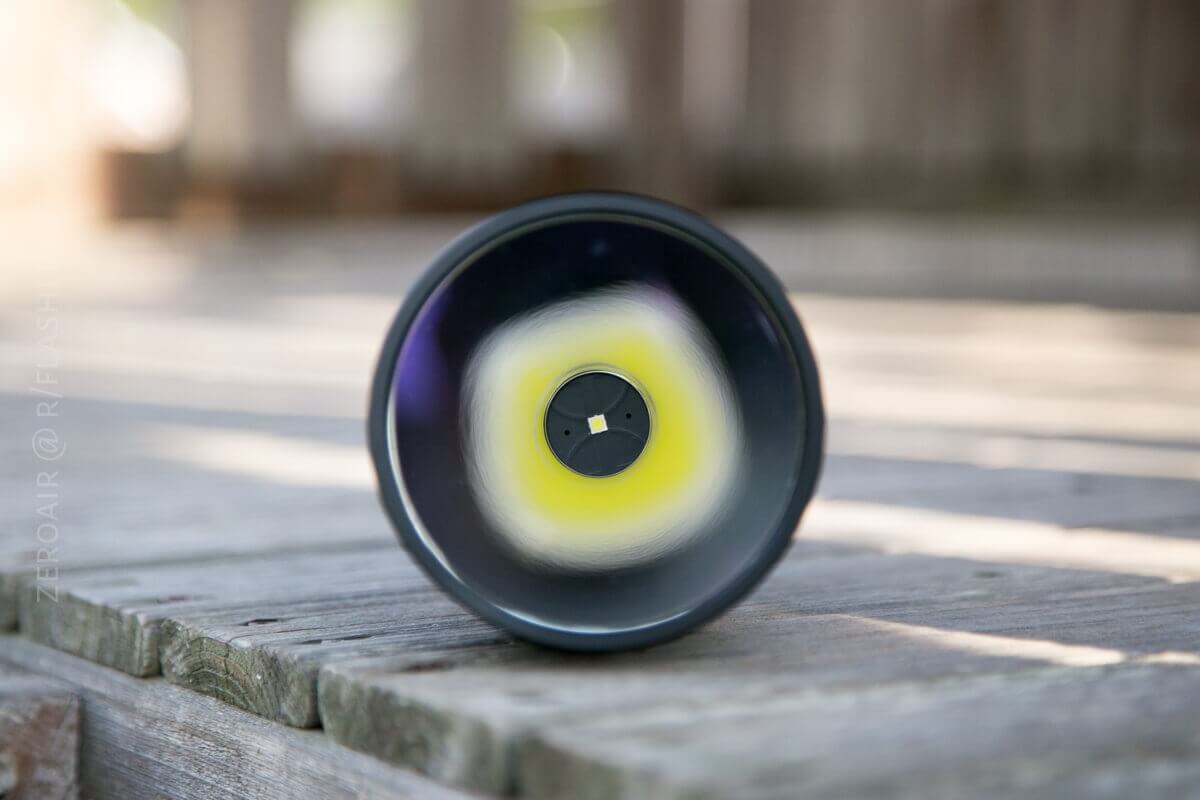
I did not take any outdoor beamshots. I have a few reasons (excuses?) for this, but I can say, and you’ll see in the table below, that I measured the light at 1413 meters, which is even better than their claim. Ok, just 1% better…. But good work to Nitecore for making a real claim for throw on this light. That’s the 30-second measure, too.
Beamshots
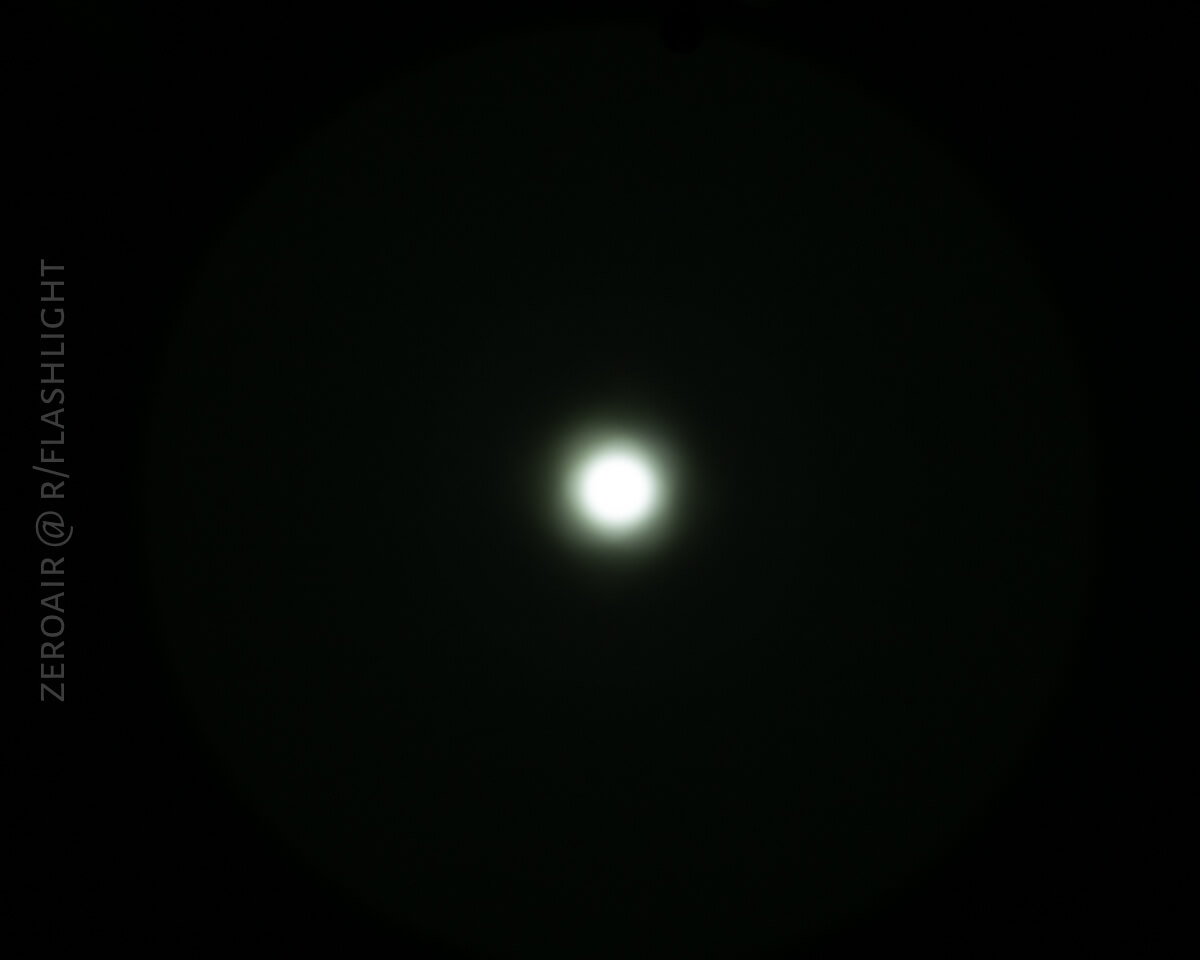
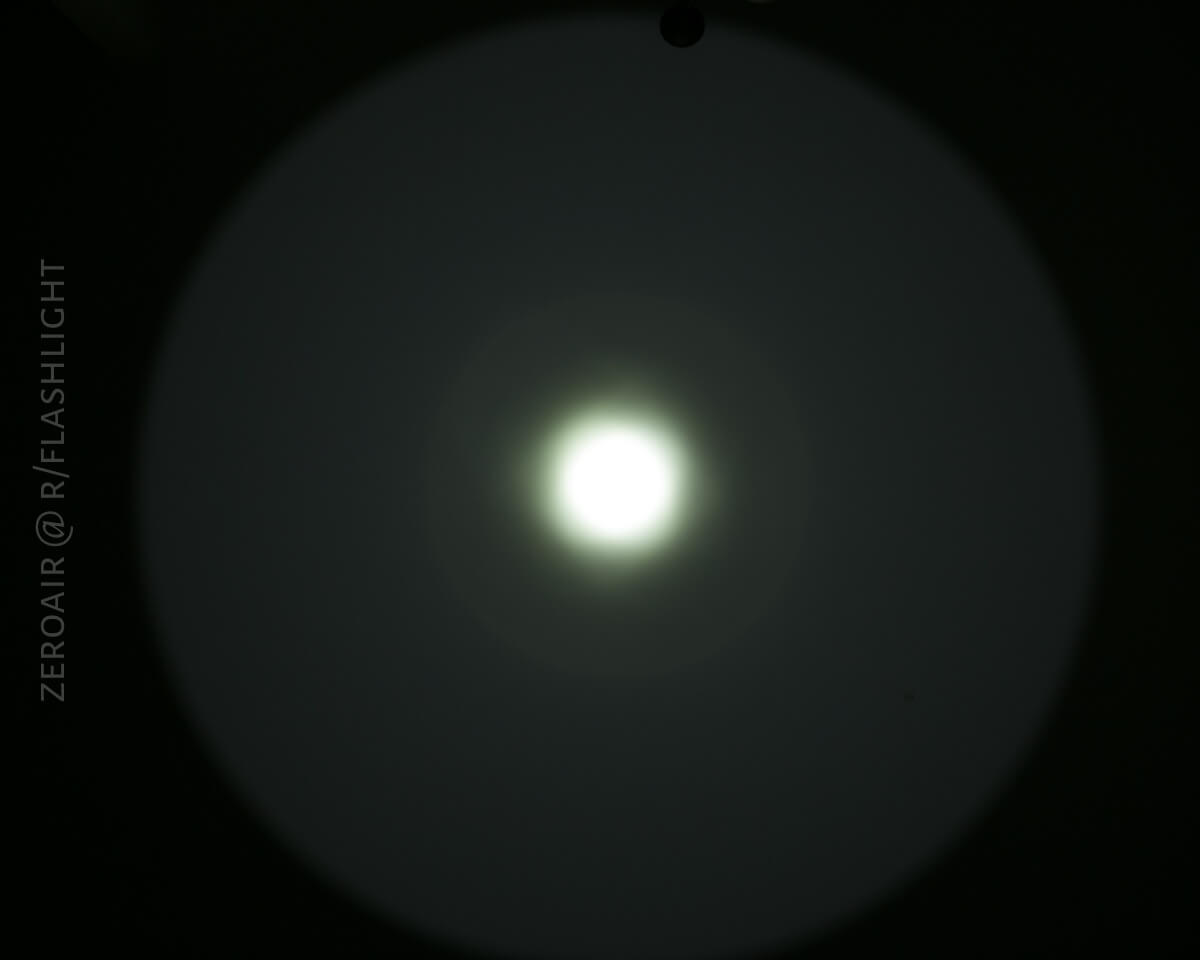
These beamshots always have the following settings: f8, ISO100, 0.3s shutter, and manual 5000K exposure. These photos are taken at floor level, and the beam hits the ceiling around 9 feet away.
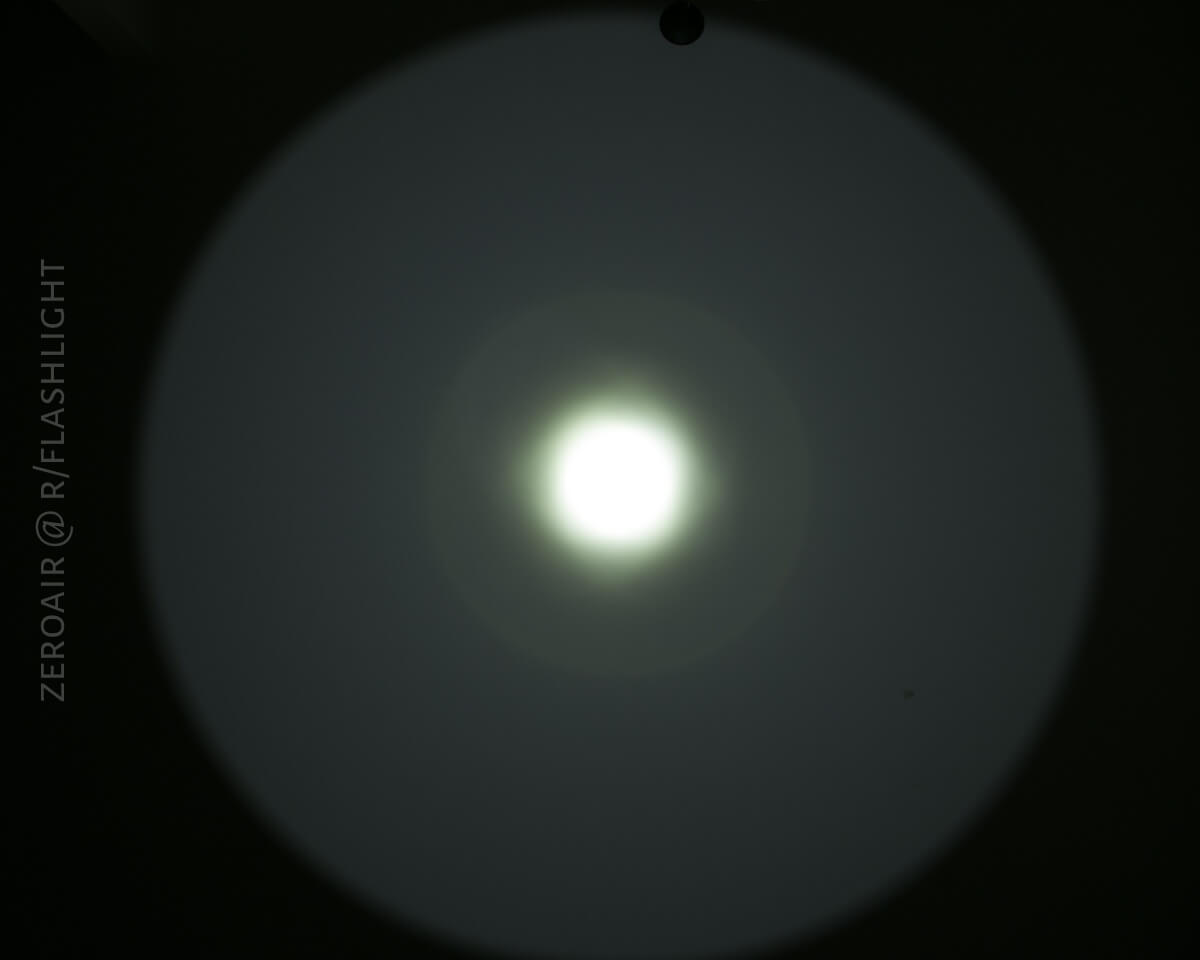
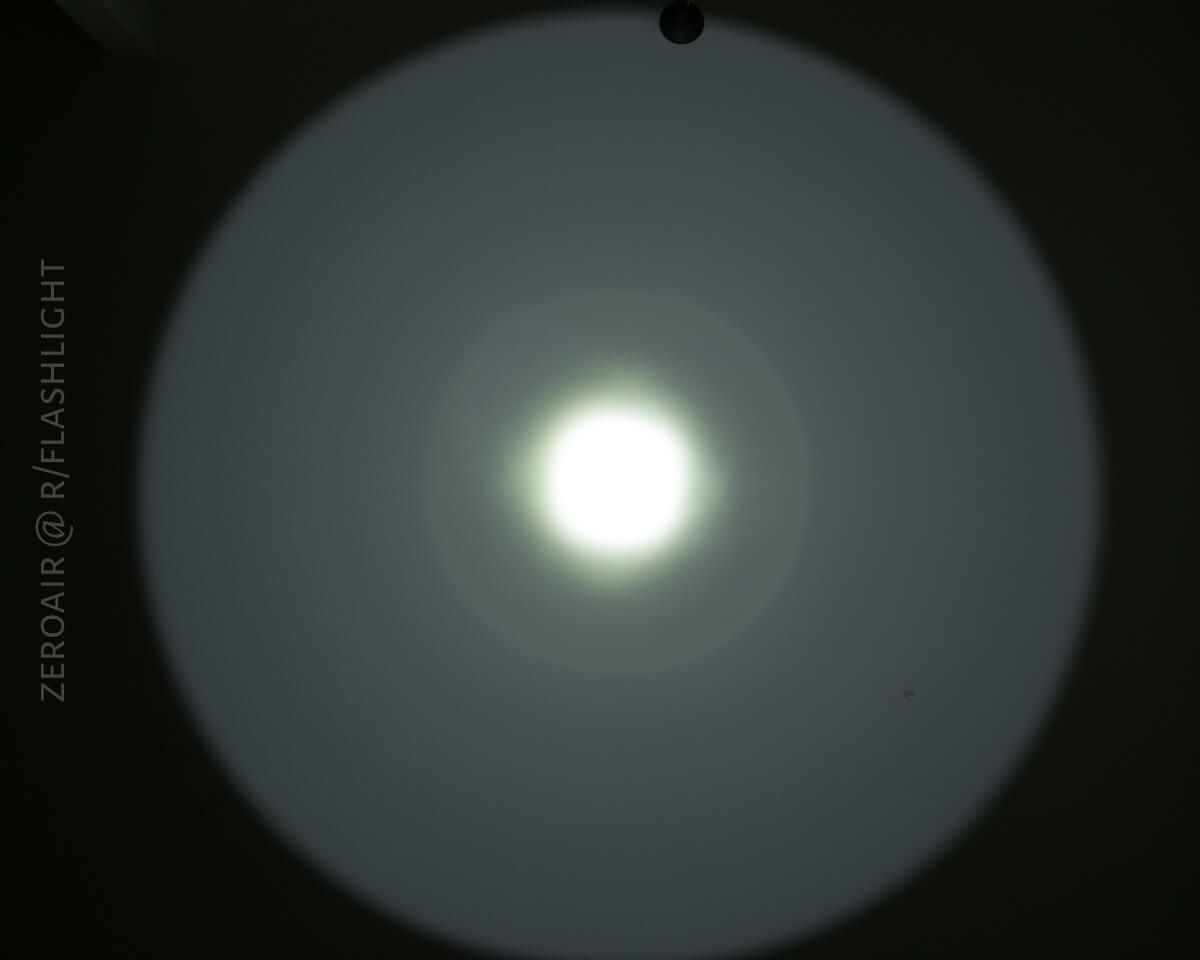
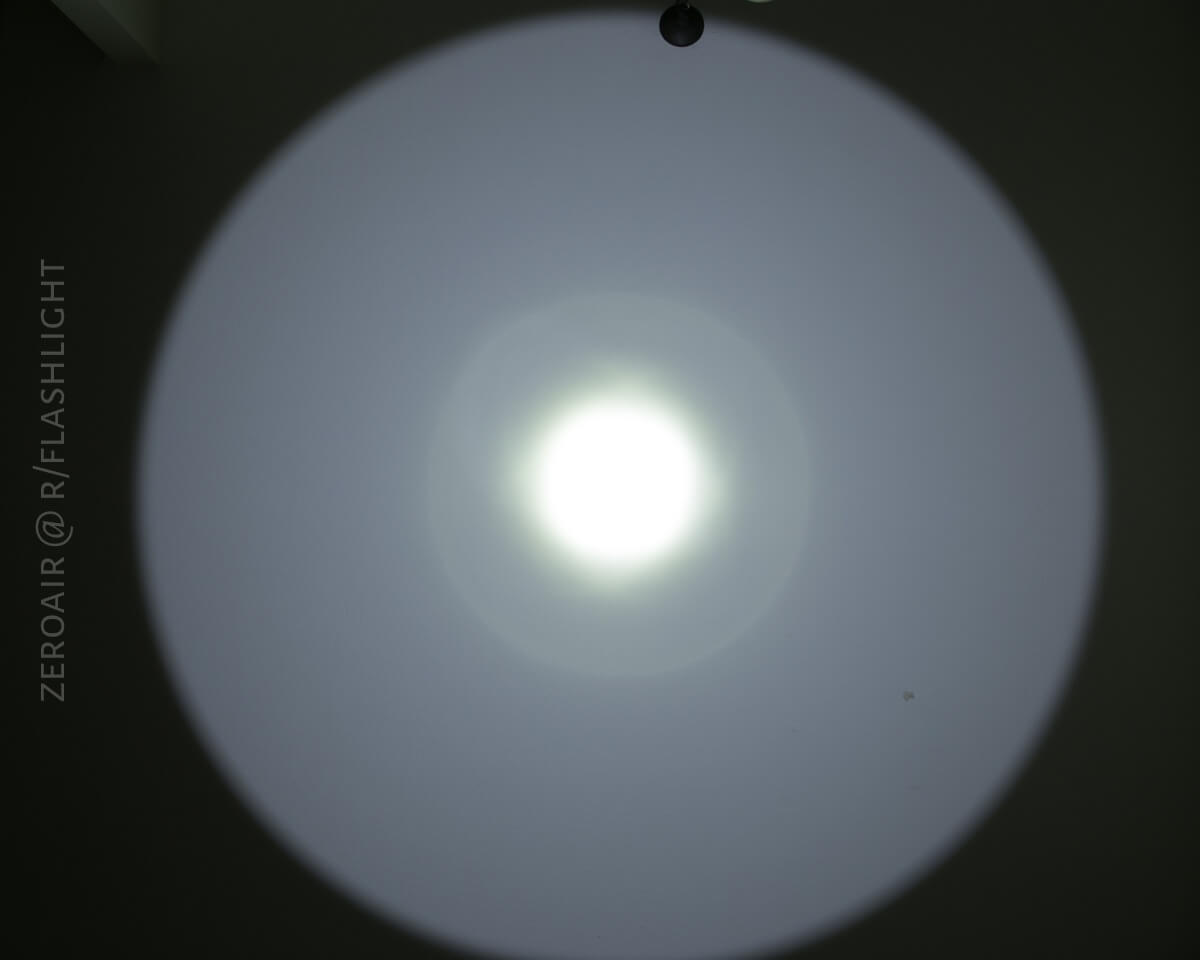
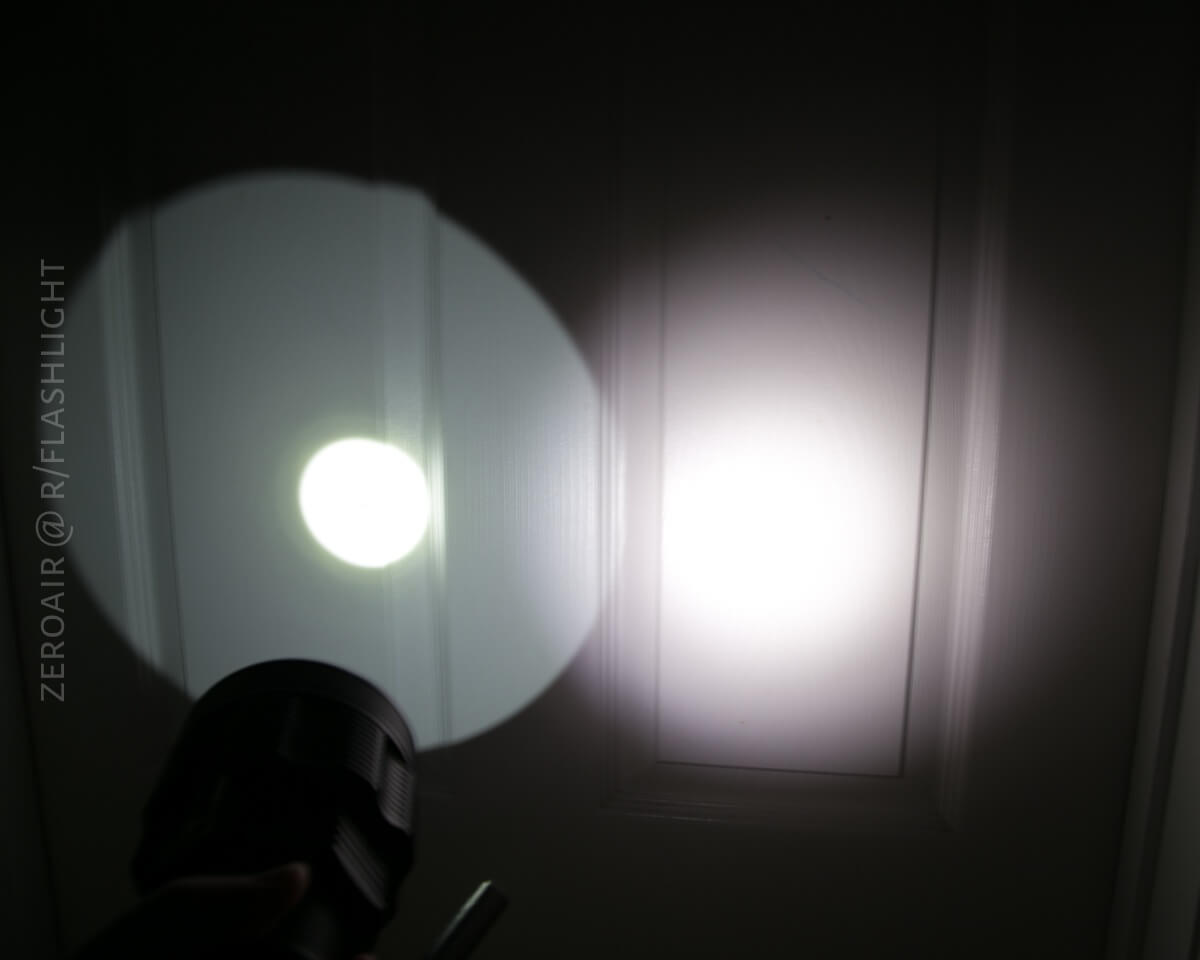
Tint vs BLF-348 (KillzoneFlashlights.com 219b version) (affiliate link)
I keep the test flashlight on the left and the BLF-348 reference flashlight on the right.
Random Comparisons and Competitive Options
The obvious comparison will be the Thrunite TN42. They even make a rechargeable version now. There is no 8-cell version, so the overall capacity of the TM38 is better. Thrunite offers NW and CW both, which are nice options. The TM38 is much more informative, with the OLED display, however.
Conclusion
What I like
- Hits rated throw numbers
- OLED display is informative (and also neat)
- Man, this thing really throws
- The user interface is simple but also very versatile
- The shoulder strap is a nice inclusion in the package
What I don’t like
- Tint could be improved
- Since the cells are integrated, I’d love to be able to tap into that power and charge other devices
- I’d love a cap for the lens
- I’d prefer a lower low, but that might be wishful thinking.
Notes
- This light was provided by BestLight.io for review. I was not paid to write this review. HUUUUUGE thanks to the guys at BestLight.io!!!!
- This content originally appeared at zeroair.org. Please visit there for the best experience!
- Use my amazon.com referral link if you’re willing to help support making more reviews like this one!
- Please support me on Patreon! I deeply appreciate your support!
Discover more from ZeroAir Reviews
Subscribe to get the latest posts sent to your email.