

Amutorch AM30 Flashlight Review
The Amutorch AM30 flashlight offers a Cree XHP70.2 emitter, an e-switch, and runs on four 18650 cells. Read on for testing of this light.
Official Specs and Features
Here’s a link to the Amutorch AM30 flashlight product page.
Versions
Just one version of this light!
Price
Looks like MSRP is around $108, but the street price is going to be around $86 or less.
Short Review
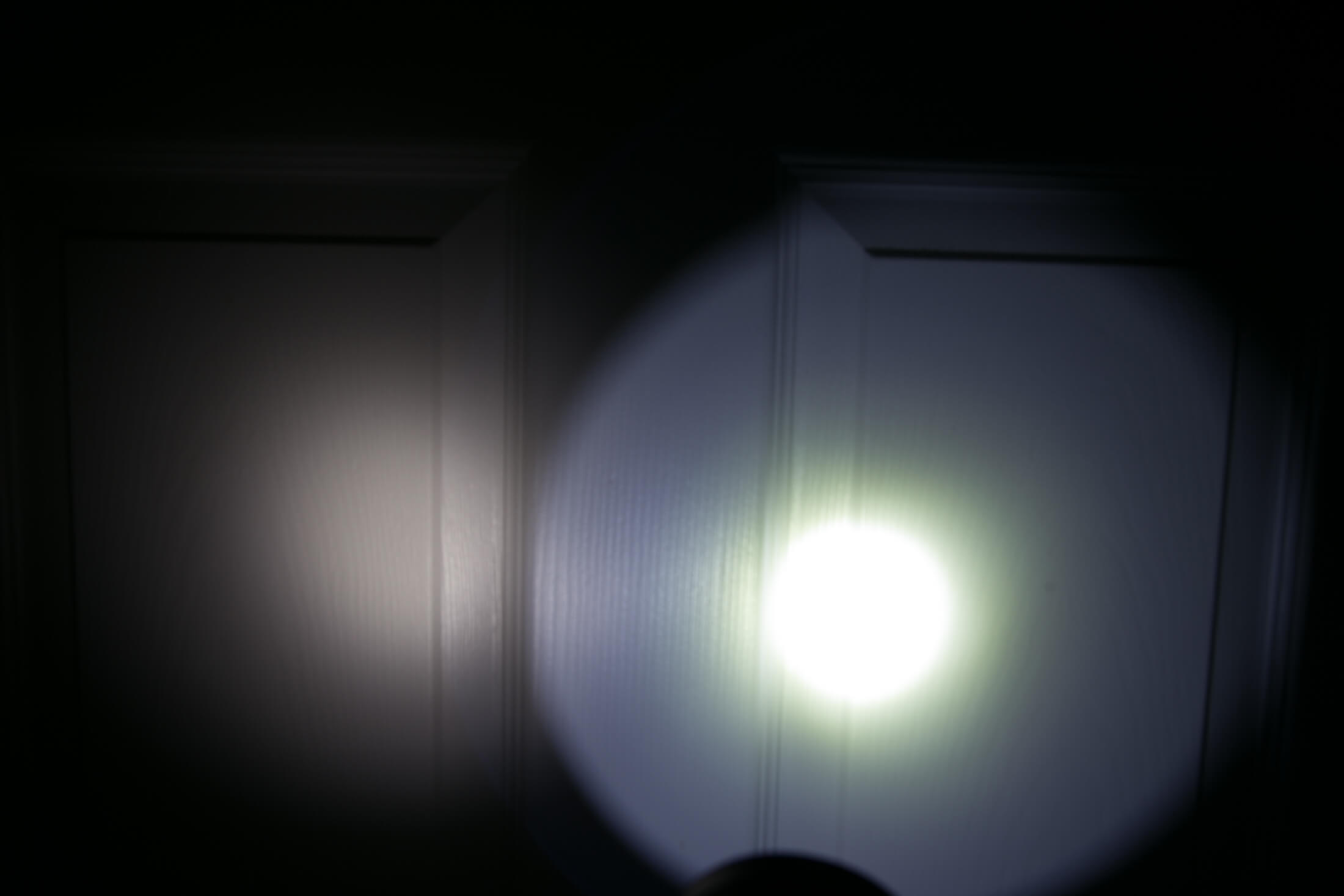
This is a well-built XHP70.2 light that suffers from the tint issues of the XHP70.2 (greenish spill, blue corona). Still, the onboard charging makes it compelling, particularly if a 3-cell 18650 is your thing.
Long Review
The Big Table
| Amutorch AM30 | |
|---|---|
| Emitter: | Cree XHP70.2 |
| Price in USD at publication time: | $86 |
| Cell: | 3×18650 |
| Turbo Runtime | |
| LVP? | Yes |
| Switch Type: | E-Switch |
| Quiescent Current (A): | ? |
| On-Board Charging? | Yes |
| Charge Port Type: | Magnetic proprietary |
| Chargetime | |
| Power off Charge Port with no Cell? | ? |
| Claimed Lumens (lm) | 3600 |
| Claimed Throw (m) | 550 |
| Candela (Calculated) in cd (at 30s) | 1720lux @ 6.333m = 68984cd |
| Throw (Calculated) (m) | 525.3 (95.5% of claim)^ |
| All my Amutorch reviews! | |
^ Measurement disclaimer: Testing flashlights is my hobby. I use hobbyist-level equipment for testing, including some I made myself. Try not to get buried in the details of manufacturer specifications versus measurements recorded here; A certain amount of difference (say, 10 or 15%) is perfectly reasonable.
What’s Included

- Amutorch AM30
- Lanyard
- Charge cable (USB to magnetic proprietary)
- Manual
- Spare O-ring
- Spare lens (!!)
Package and Manual
The AM30 arrives in a simple cardboard box, with little printing and … nothing in English. There’s a GearBest inventory sticker, too.


The manual is in Chinese, unfortunately. I got most of my operational information from the Amutorch official page.
Build Quality and Disassembly
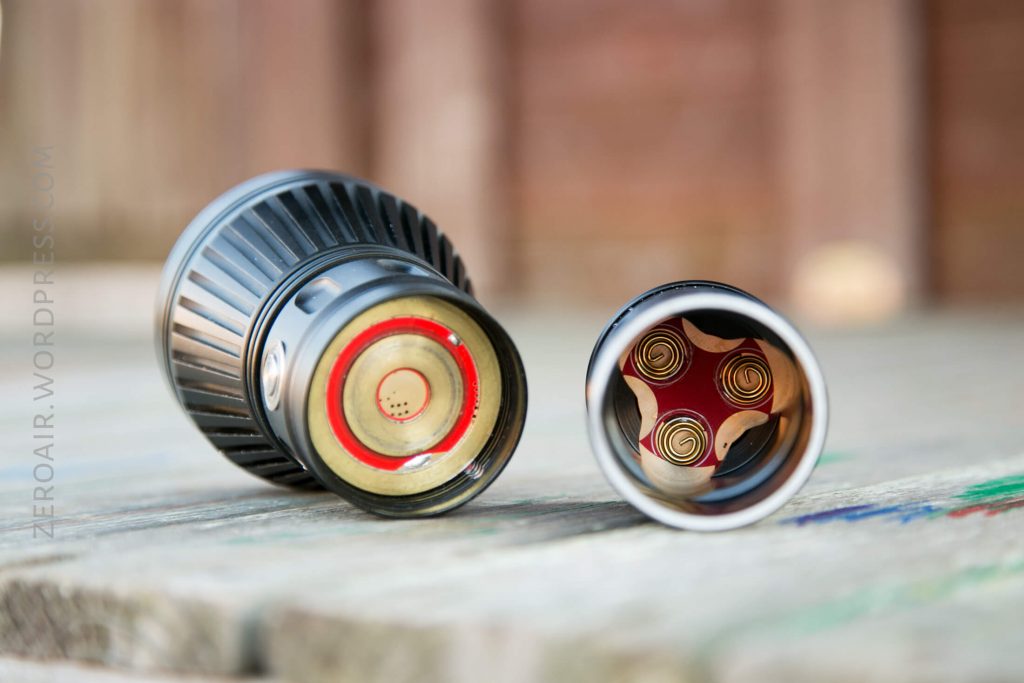
This is a superbly built light. The anodizing is nice and feels thick. The parts fit snugly. The reflector is extremely smooth with little aberration. The cells are held snugly but not overly. The cooling fins are unusual, yes, but do increase the surface area quite a bit, and in my testing seem to help dramatically with cooling. The cell contact points on the head are nice fat brass rings.
Overall, it’s just a nice quality light.

The cooling fins give this light a bit of a distinctive look, too.
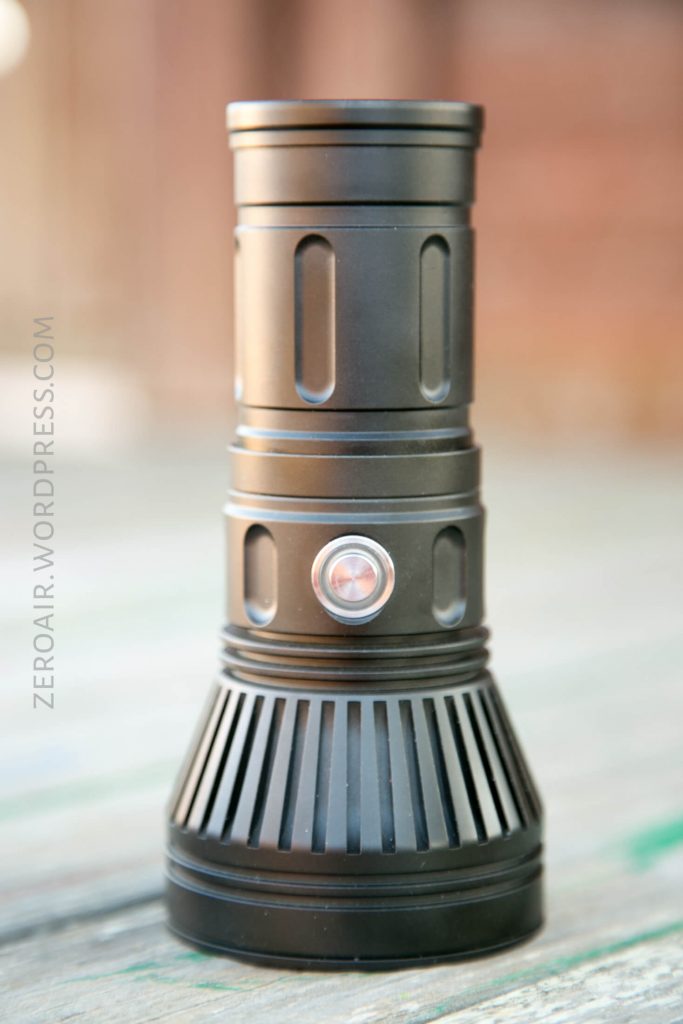

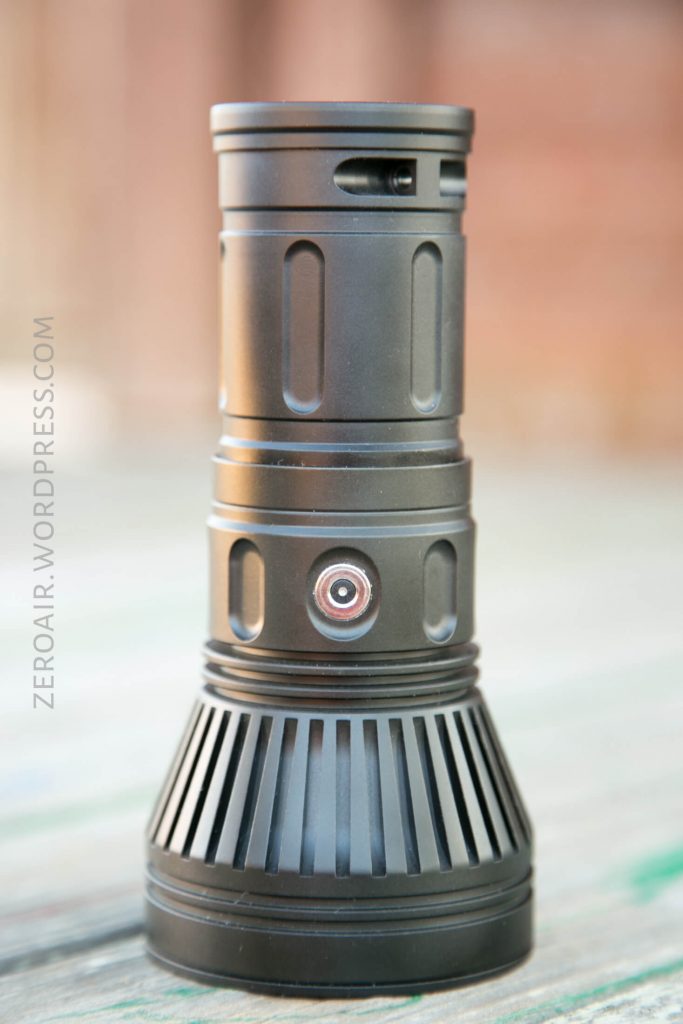
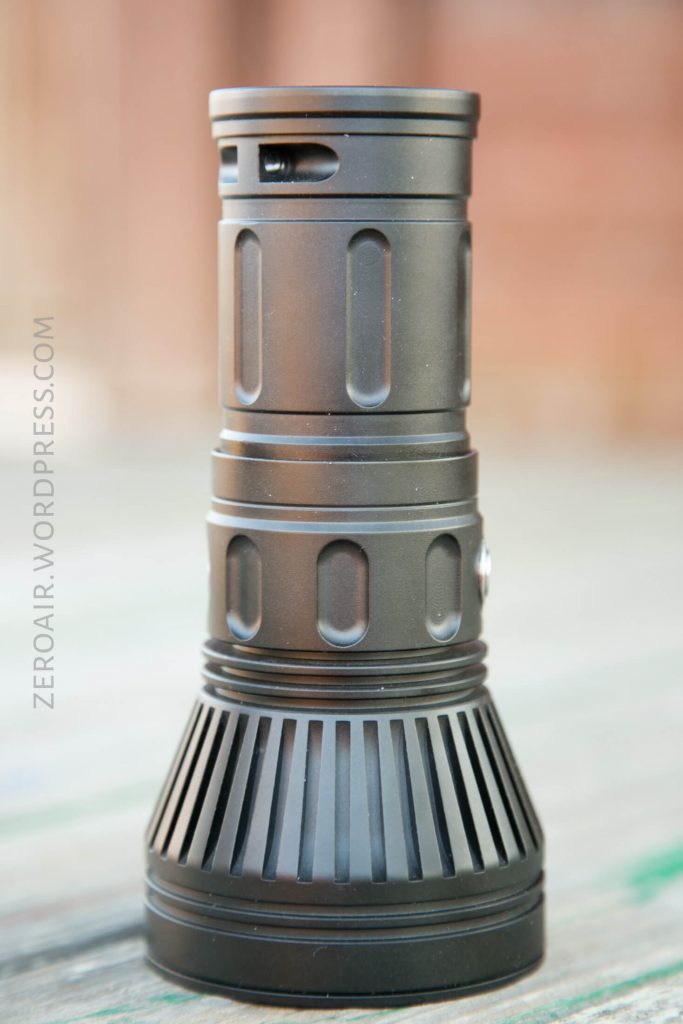
Below, note the brass contact points on the head. These are big and thick and make great contact. The tail end has thick firm springs. I did not remove the driver from the head – I’m not sure if it’s press-fit or screwed in. I don’t see any spanner connect points, so I have to guess it’s press-fit. And with the e-switch and charging, that makes fairly good sense.

Size
Officially 156mm long, and weighing 369g. I measure the head at 72.52mm, and the tail at 47.78mm. The head-on this light is quite large, as would be expected. It’s a great light for a bag.


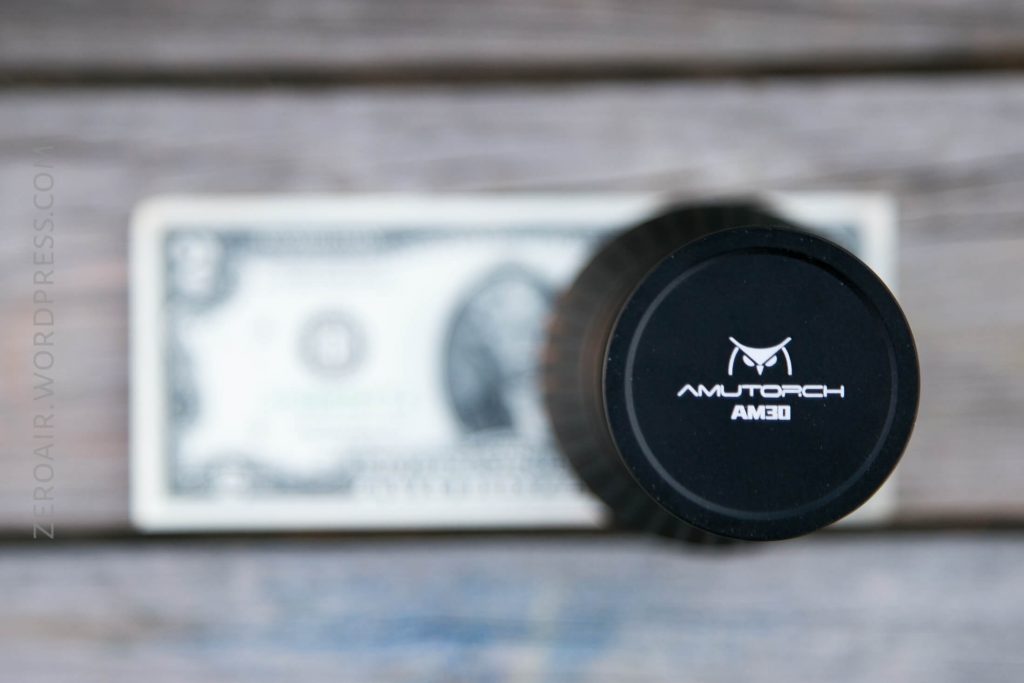
That said, it’s still a fairly small light, for being 3×18650, and having such a large reflector.

Retention
Amutorch provides a lanyard, and there’s an unusually large hole in the tailcap for connecting this lanyard.

And that’s it. There’s no pouch and of course no pocket clip. I’m surprised Amutorch concluded that a spare lens was a better inclusion than something like a pouch, but it is what it is.
Power
The AM30 is powered by three 18650 cells. I found the light to be fairly picky, unfortunately – it didn’t like button top cells, and certainly does not like long cells. I ended up using three unprotected NCR cells.
The cells are in parallel. The light will work with any number of cells: 1, 2, or 3. As far as I can tell, all modes work with all cell numbers. This is a little surprising to me since running an XHP70.2 from one cell requires a boost driver. And since the light has three cell capacities, one might think they’d just series them and buck the voltage. On the other hand, I suppose there’s no good way to series 3 cells when aiming at 6V.
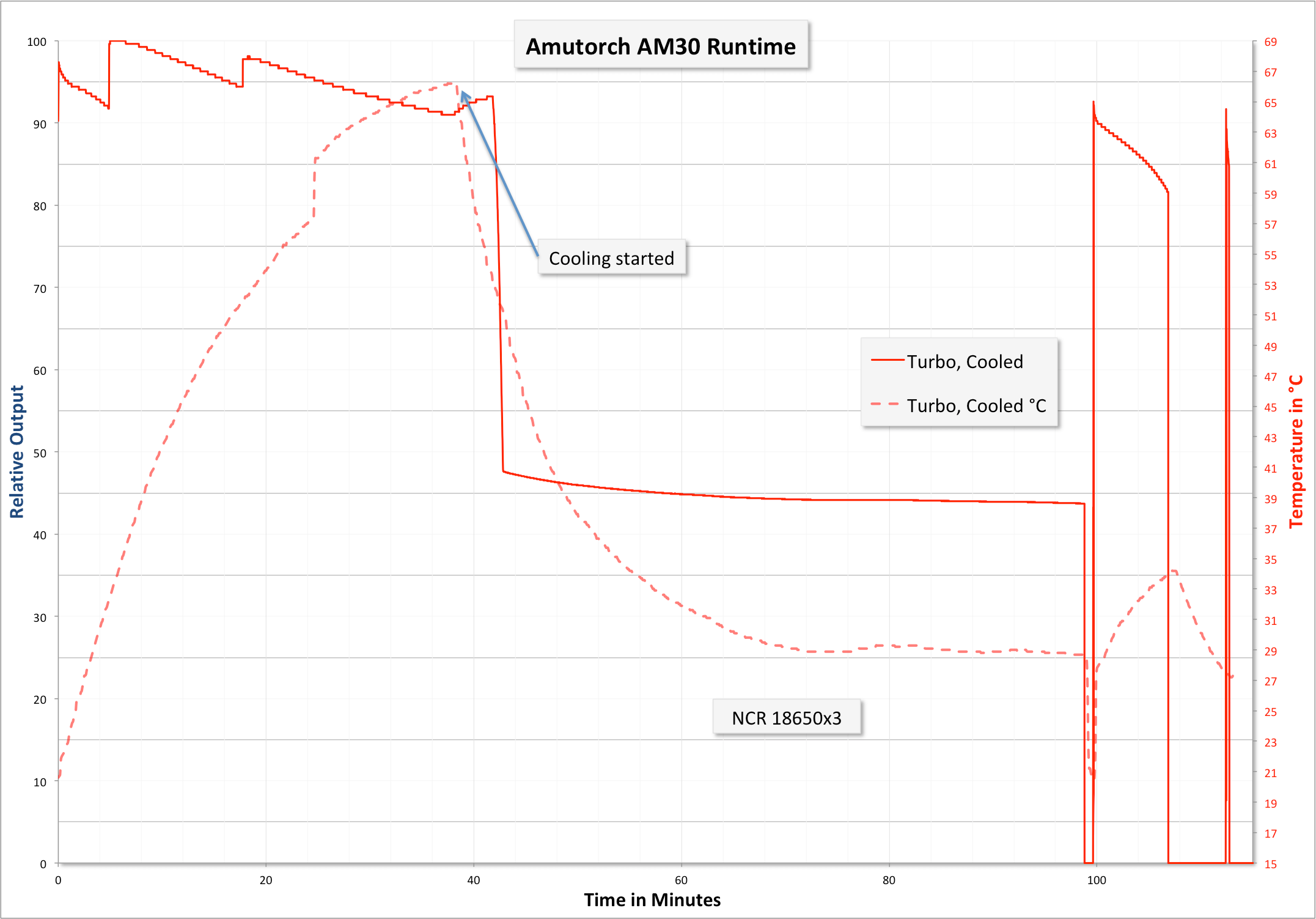
The runtime…. This runtime is on High (not turbo! made a mistake on the table, sorry!!). If I’m honest, I forgot to turn on cooling until around 43 minutes. This does provide some interesting information, however – the light has a nearly flat output for the first 40 minutes, even without cooling! I can’t really speak to why the light dips then bounce back up to nearly 100% (doesn’t seem temperature-related). I expect with moderate cooling, the first 40 minutes would be nearly flat. Also, note that this light gets hot. Like hooooooooot. Up to 66° C on the very outside of the bezel). By no means the best place to measure temperature but that’s what I’m able to measure. The product literature says when the MCPCB reaches 80° regulation will kick in. I…. can’t imagine that didn’t happen here; it seems like the temperature was on a steady rise.
Strangely soon after I turned on cooling, the light stepped down to around 45% and stayed there for a while. Until I pulled the cells for a voltage check, in fact. After a voltage check, I put the light back on turbo, where it stayed for a few minutes, then shut off, due to voltage protection. The listing says this will happen at 2.8V, but I found it to be much higher (around 3.3V). At this point, the indicating side switch was blinking red.
Charging
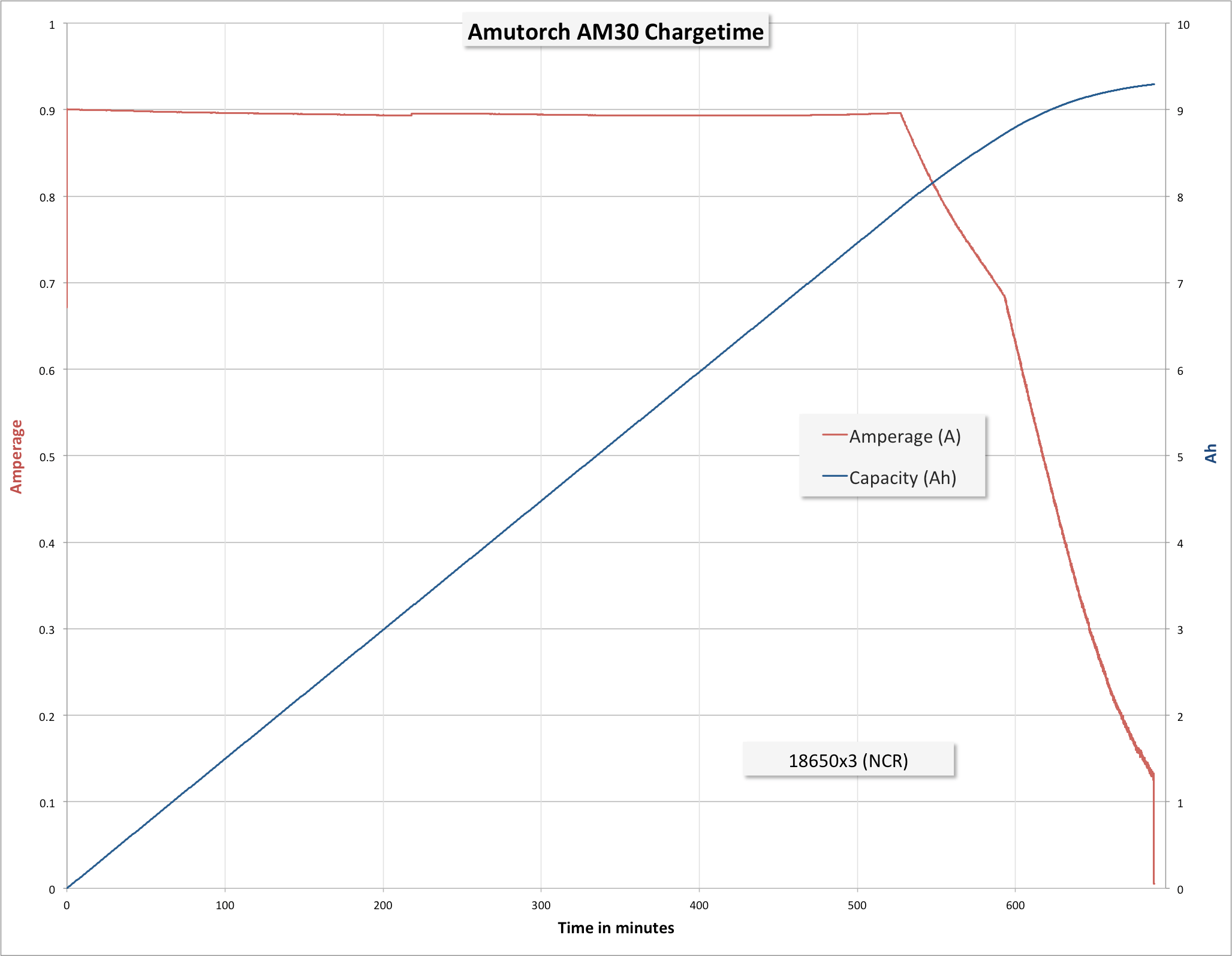
This light also has onboard charging! This is facilitated by a proprietary magnetic cable, which is included. The other end is USB. This is fine in that it adds versatility (ie, one could charge this in their car from a cigarette plug adapter) but it also means that charging isn’t going to be very fast.


I was using a 2.4A capable outlet, and as you can see, charging happened at around 900mAh. With three cells, that’s 0.3A per cell. With, say 3000mAh cell capacity, it’s pretty easy to do the math to know how long this will take (a long time). Fortunately, the light delivers this 0.9A at a very consistent rate, and that makes it very reliable.
I don’t love a proprietary connector, but this one works acceptably. I can’t see one of these available separately. So don’t lose yours!!!
User Interface and Operation
There’s a single switch on this light. It’s a metal side e-switch, with an indication feature. I’m a bit of a switch snob, and I have to tell you: I really love this one. The switch is very low action, but a positive click. The indication surrounds the whole switch, and is very reminiscent of the work u/emarkd did on his Convoy S2+, which I was always extremely impressed with.
The user interface is simple (and also notably, different from what’s listed on the aliexpress page for this light!) Click for on (mode memory). Click to advance modes (L>H direction). Hold for off (except in turbo!!). Double click for turbo. Click to get out of turbo to last mode. Triple-click from any state to get strobe. Click to get out of strobe.
The difference between Turbo and High is very slight. (That’s why I ended with a High runtime, instead of a Turbo runtime.)
The manual mentions a lockout feature, but I couldn’t get that work on my sample.
During all operations, the side switch will give an indication of cell capacity. When full (or >3.4V), the switch is solid green. Between 3.0 and 3.4V, it’s solid orange. Below 3.0, the switch flashes red. The difference in orange and red from this switch is slight, but the difference in solid and flashing is obvious.
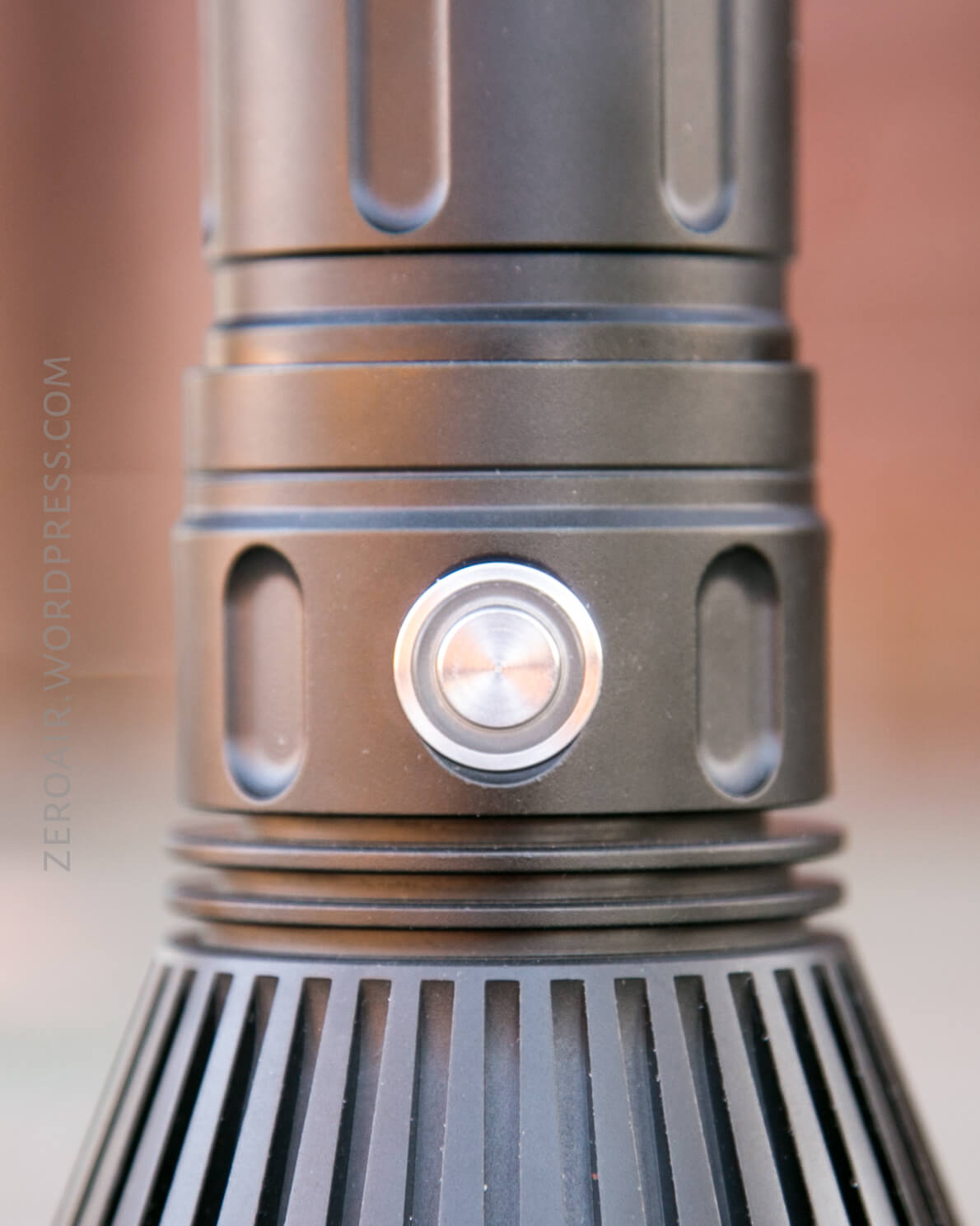
I really, really love this switch!!
Modes
| Mode | Mode Claimed Output (lm) | Claimed Runtime | Mode Measured Lux |
|---|---|---|---|
| Maximum | 3600 | Temperature regulated | 26000 |
| Medium | 1000 | 5h20m | 12720 |
| Low | 200 | 26h | 2720 |
LED and Beam
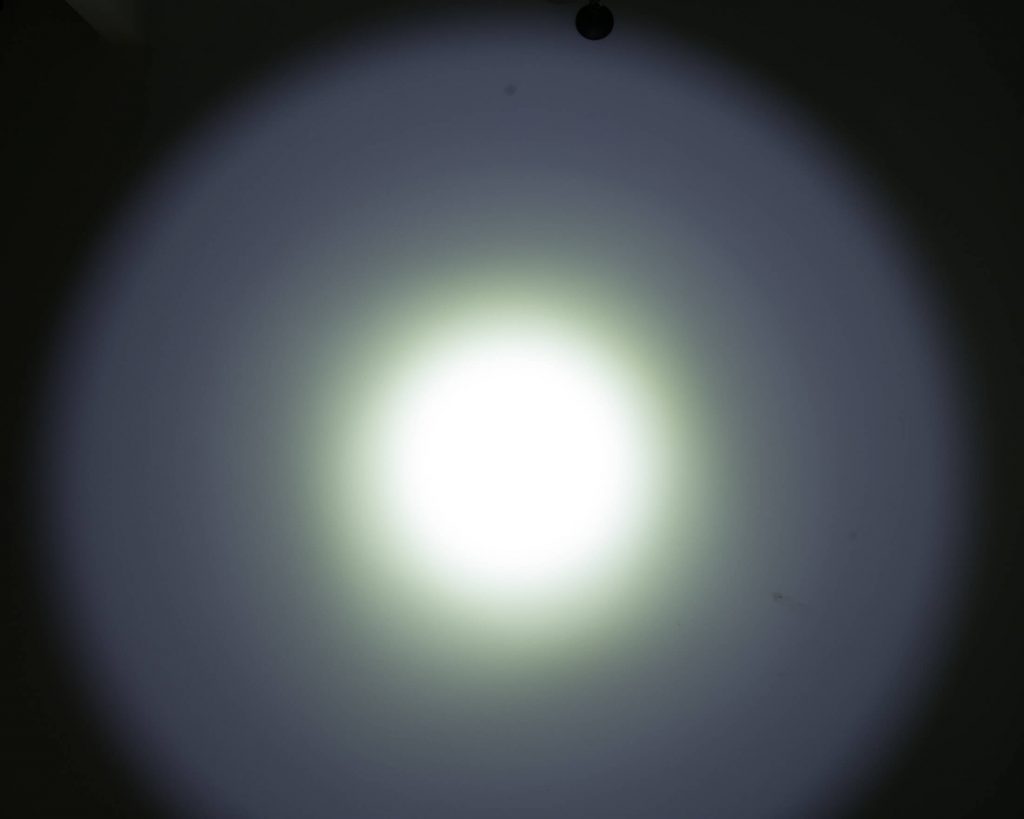
Same thing I said for the recent JETBeam TH20: “The massive emitter in this light is a Cree XHP70.2. It’s a cool look and provides loads of output. The beam tint isn’t great (leaning toward green on the spill, and blue/cool in the center).” This beam profile, however, is different. The beam profile is like that of a much bigger Emisar D1 – it’s a very clear spot, but perfectly even across the spot. Quite unusual!

Beamshots
These beamshots always have the following settings: f8, ISO100, 0.3s shutter, and manual 5000K exposure. These photos are taken at floor level, and the beam hits the ceiling around 9 feet away.


Tint vs BLF-348 (KillzoneFlashlights.com 219b version) (affiliate link)
I keep the test flashlight on the left and the BLF-348 reference flashlight on the right.
Random Comparisons and Competitive Options
Here’s a relevantly filtered page on parametrek.com. There are a few similar lights, like the Acebeam K30 and Eagtac SX30L3 Pro but those are not throwers. Among the group, the AM30 is the only thrower and also has onboard charging.
Conclusion
What I like
- Good throw from a large emitter
- Build is great
- On-board charging is consistent and acceptable
- Switch is fantastic
- Switch is an indicating switch
- Can run off 1, 2, or 3 cells
What I don’t like
- Proprietary charge cable
- Charging limited to 0.9A (or probably 0.1C, which is very slow)
- No pouch included
Notes
- This light was provided by GearBest for review. I was not paid to write this review.
- This content originally appeared at zeroair.org. Please visit there for the best experience!
- For flashlight-related patches, stickers, and gear, head over to PhotonPhreaks.com!
- Use my amazon.com referral link if you’re willing to help support making more reviews like this one!
- Please support me on Patreon! I deeply appreciate your support!