
Sofirn C8F Flashlight Review
The Sofirn C8F flashlight is a 21700 cell flashlight which is three Cree XP-L HD emitters for great output in a good size. Read on for testing!
Official Specs and Features
Here’s a link to the Sofirn C8F Flashlight product page.
Versions
There is just one light option for the light, but it’s available as a kit or not. The kit is $46 and includes a 21700 cell and charger. For $40, you get just the light. (So for $6 more, it seems worthwhile to get a Sofirn-branded cell and charger that works with that cell.)
The “21700” is an important part of the name since there’s a previous “C8F” (which is 18650).
Price and Coupon
The kit is $46 and includes a 21700 cell and charger (referral link). The $40 kit is just the light. (So for $6 more, it seems worthwhile to get a Sofirn-branded cell and charger that works with that cell.)
Short Review
I like this light quite a bit. I like it better than the other C8F I had (which I’ve given away to someone who could fix it). I like it enough that I wish there were a dedicated thrower version of it. I like the dual switch UI. I like the included cell. Overall, it’s just a great package!
Long Review
The Big Table
| Sofirn C8F | |
|---|---|
| Emitter: | Cree XP-L |
| Price in USD at publication time: | $46.00 on Amazon (referral link) |
| Cell: | 21700 |
| Turbo Runtime | High Runtime |
| LVP? | Yes, but very low. |
| Switch Type: | Both |
| On-Board Charging? | Yes |
| Chargetime | |
| Power off Charge Port with no Cell? | – |
| Claimed Lumens (lm) | 3500 |
| Measured Lumens (at 30s) | 2969 (84.8% of claim)^ |
| Claimed Throw (m) | 299 |
| Candela (Calculated) in cd (at 30s) | 952lux @ 5.836m = 32424cd |
| Throw (Calculated) (m) | 360.1 (120.4% of claim)^ |
| All my Sofirn reviews! | |
^ Measurement disclaimer: Testing flashlights is my hobby. I use hobbyist-level equipment for testing, including some I made myself. Try not to get buried in the details of manufacturer specifications versus measurements recorded here; A certain amount of difference (say, 10 or 15%) is perfectly reasonable.
What’s Included
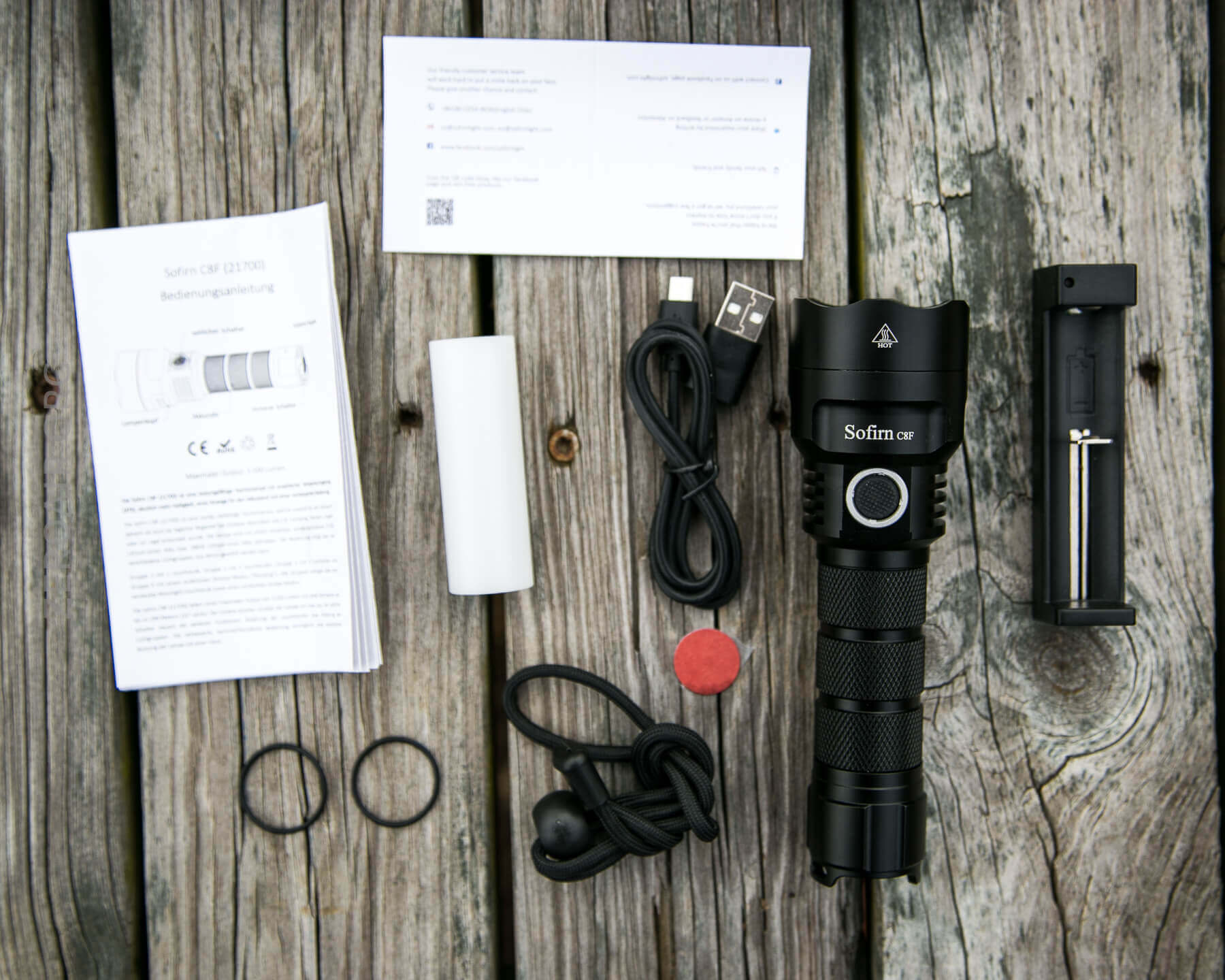
- Sofirn C8F 21700
- Sofirn 4000mAh 40A 21700 Li-ion cell
- Single bay Charger (USB to micro-USB)
- Lanyard
- Charge cable
- Spare o-rings (2)
- 21700 to 18650 adapter sleeve
- Manual and papers
Package and Manual
This light is shipped in a very generic flip-top cardboard sleeve box, with a very non-descript bar code. There’s no printing.
I know I’ve said it before, but it’s still true. On lights where the package isn’t… special…. (like the tactical hay of the original BOSS), I like packages that are easily recyclable. I won’t want to keep this box – it’s nice that it has low impact.
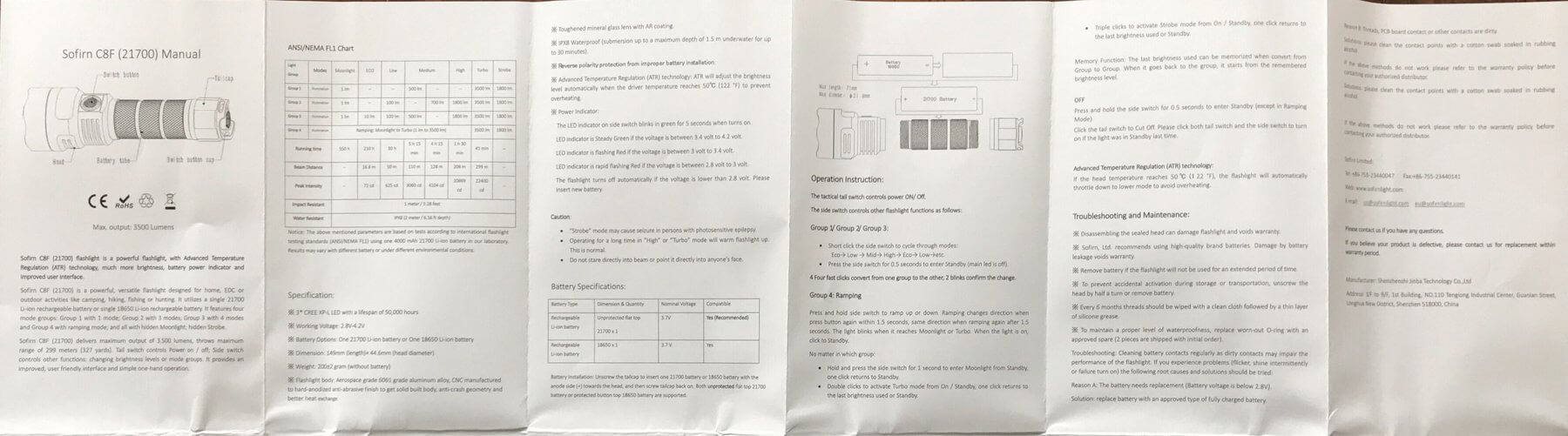
The manual is a long sheet of paper with four languages total. It’s a good manual, with illustrations and runtimes and all that.
Build Quality and Disassembly
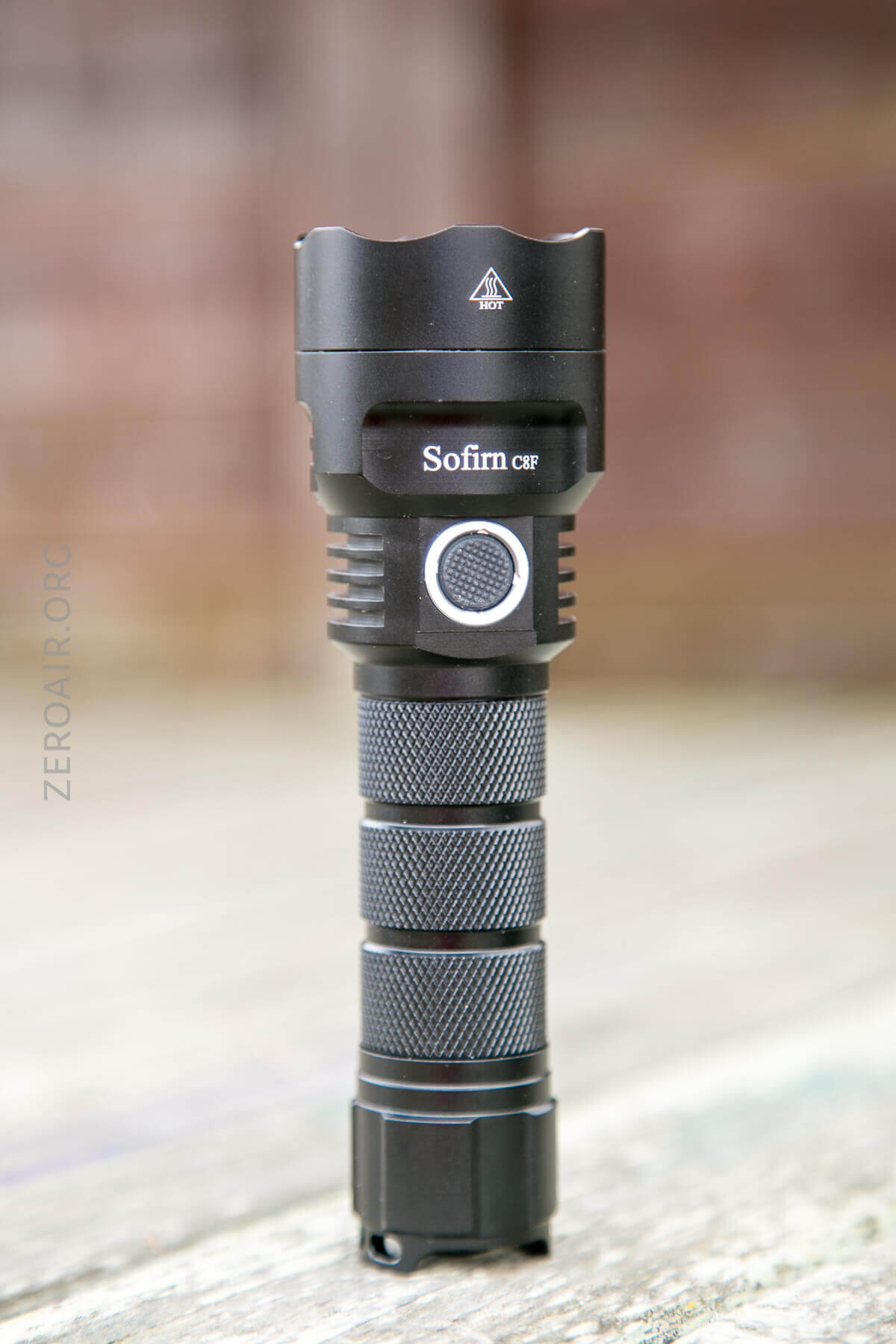
As far as Sofirns go, this ranks among the best built that I’ve handled (and I’ve handled more than a few). It’s rivaled only by the Q8 – I’d put them on the same level. So if you’ve had a Q8 (and you should), consider the build quality about the same.
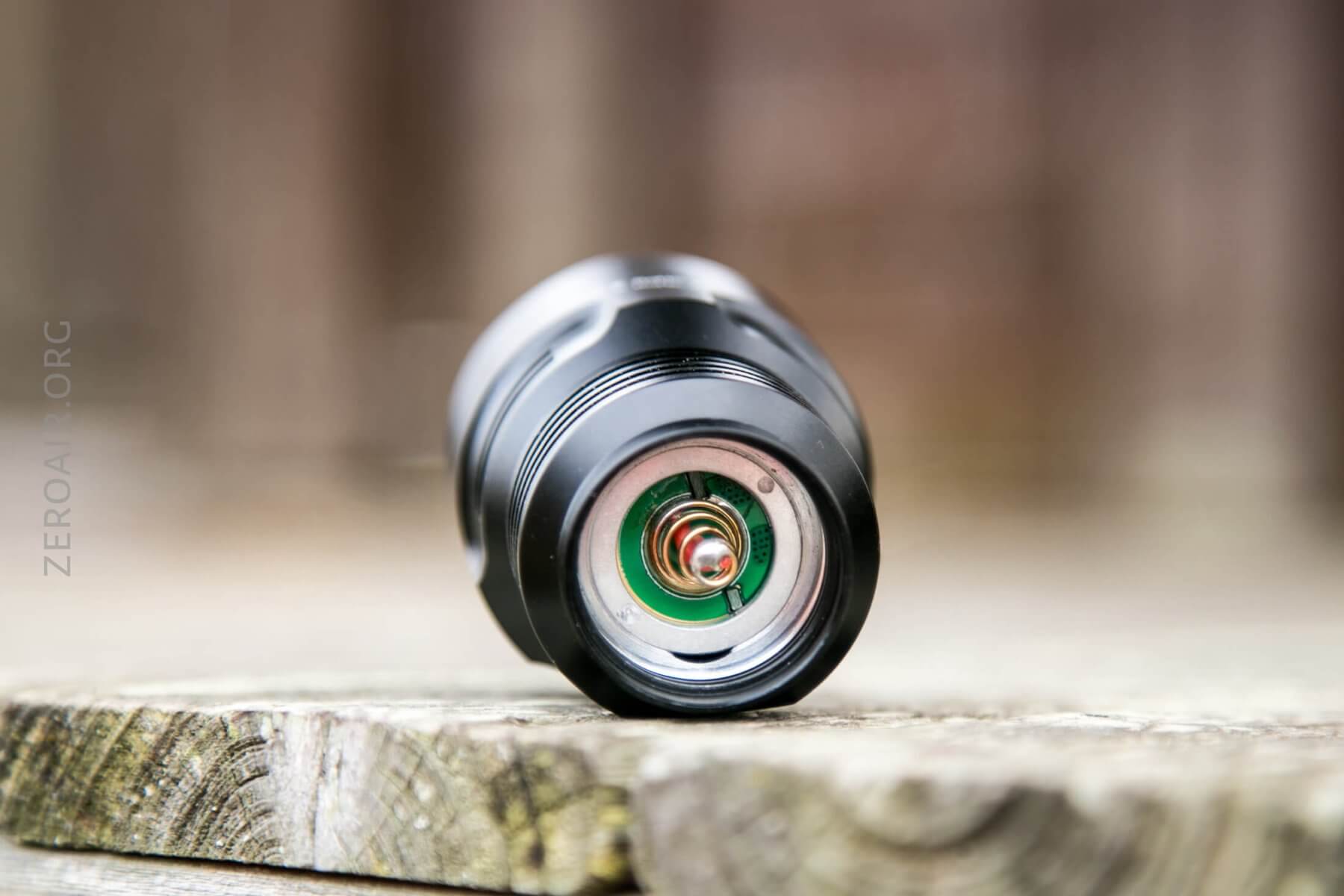
That’s a good thing. This one is well built and seems to have flashlight people in mind. For example (as you’ll see later): the head and tail springs are both already bypassed! And in case you don’t know what that means, or why we’d want that: A spring is one point of resistance in the electronics of a flashlight. Bypassing the spring lowers that resistance. Bypassing both springs gives even lower resistance in the circuit. And since this light uses a “FET+1” driver, it’ll take all the current and make lumens. So higher resistance directly means lower lumens. Anyway, it’s a great move by Sofirn!
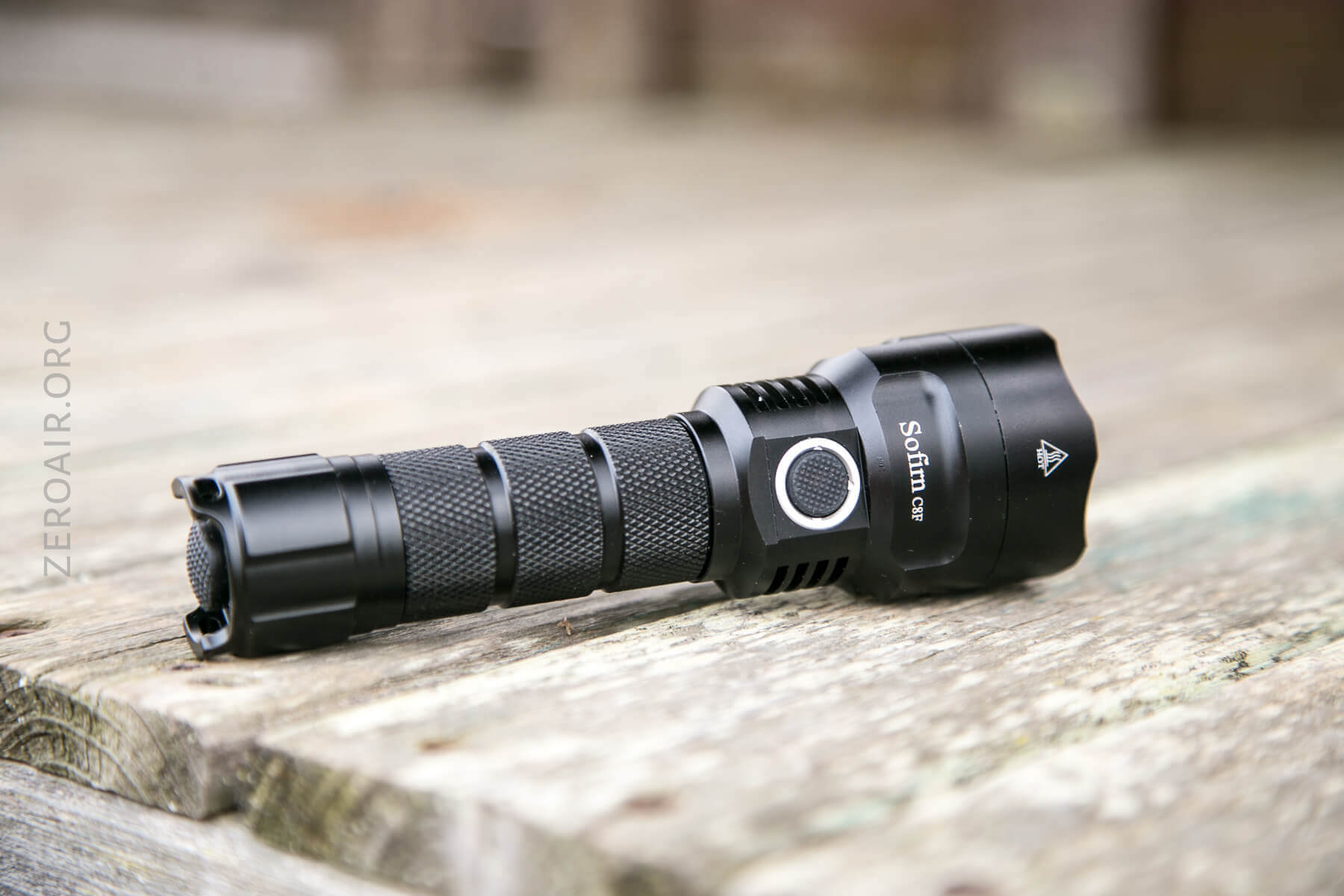
This light is a 21700 light, so the body is a little thicker than a normal C8. This suits me just fine; I love the 21700 size lights, and this is no exception.
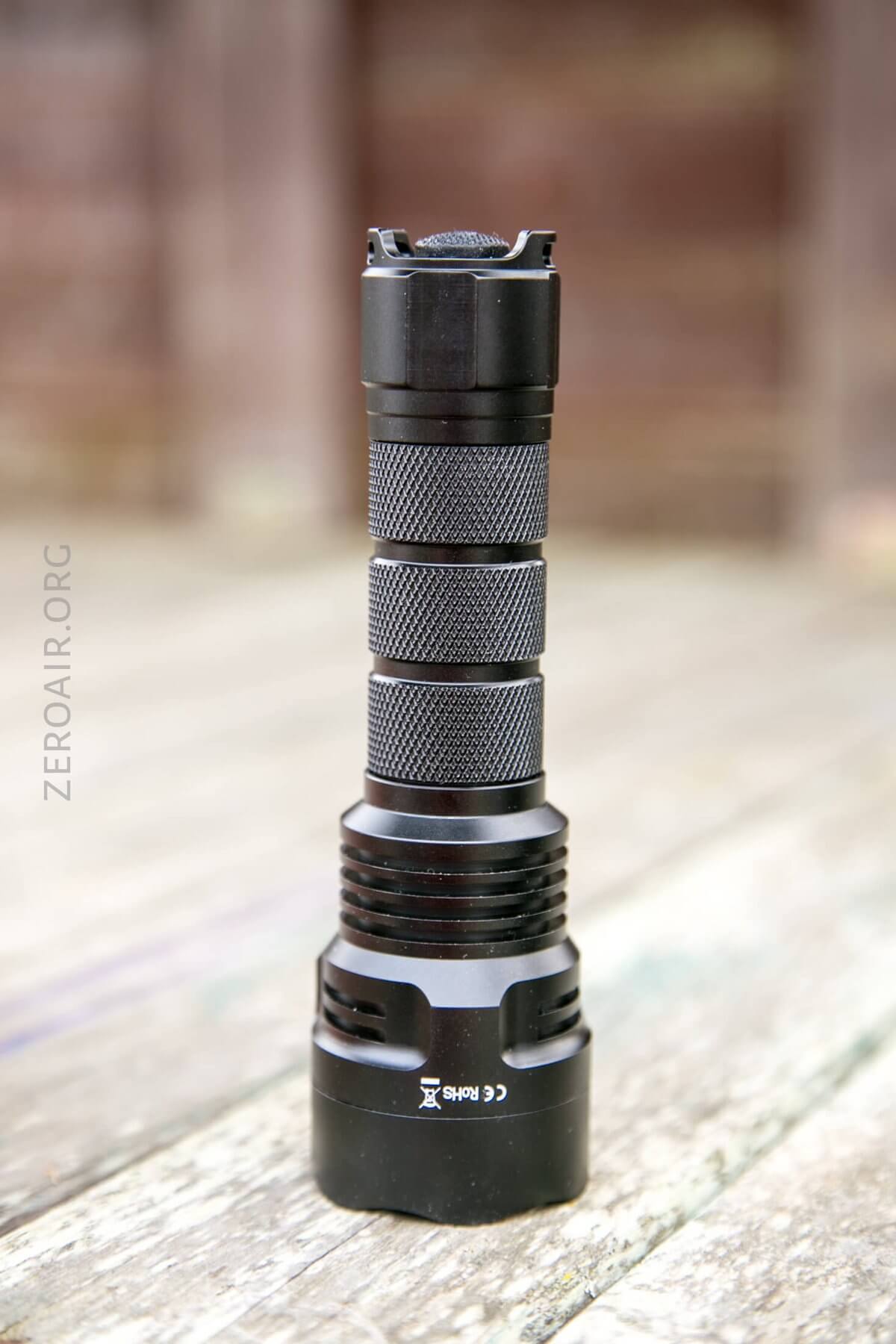
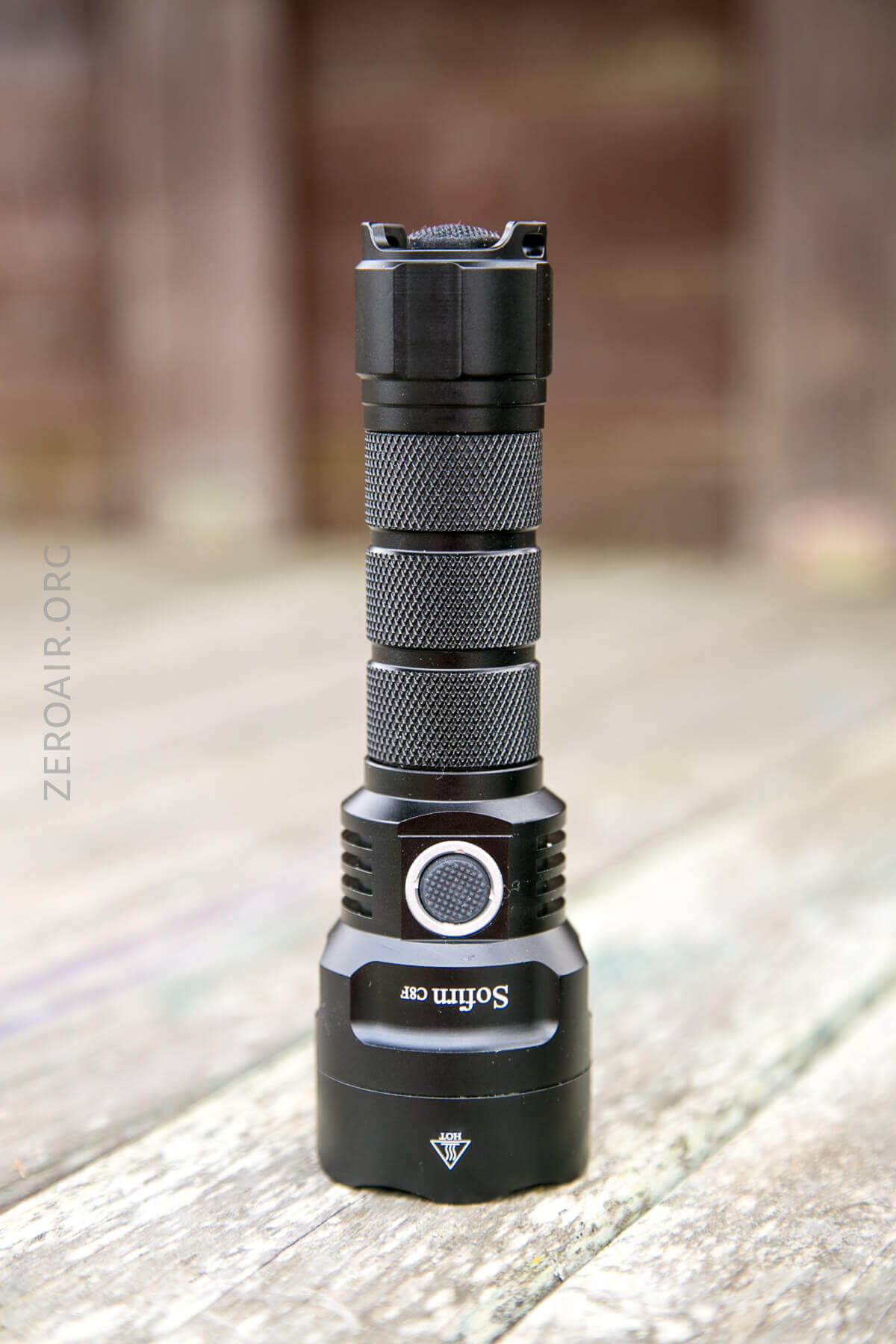
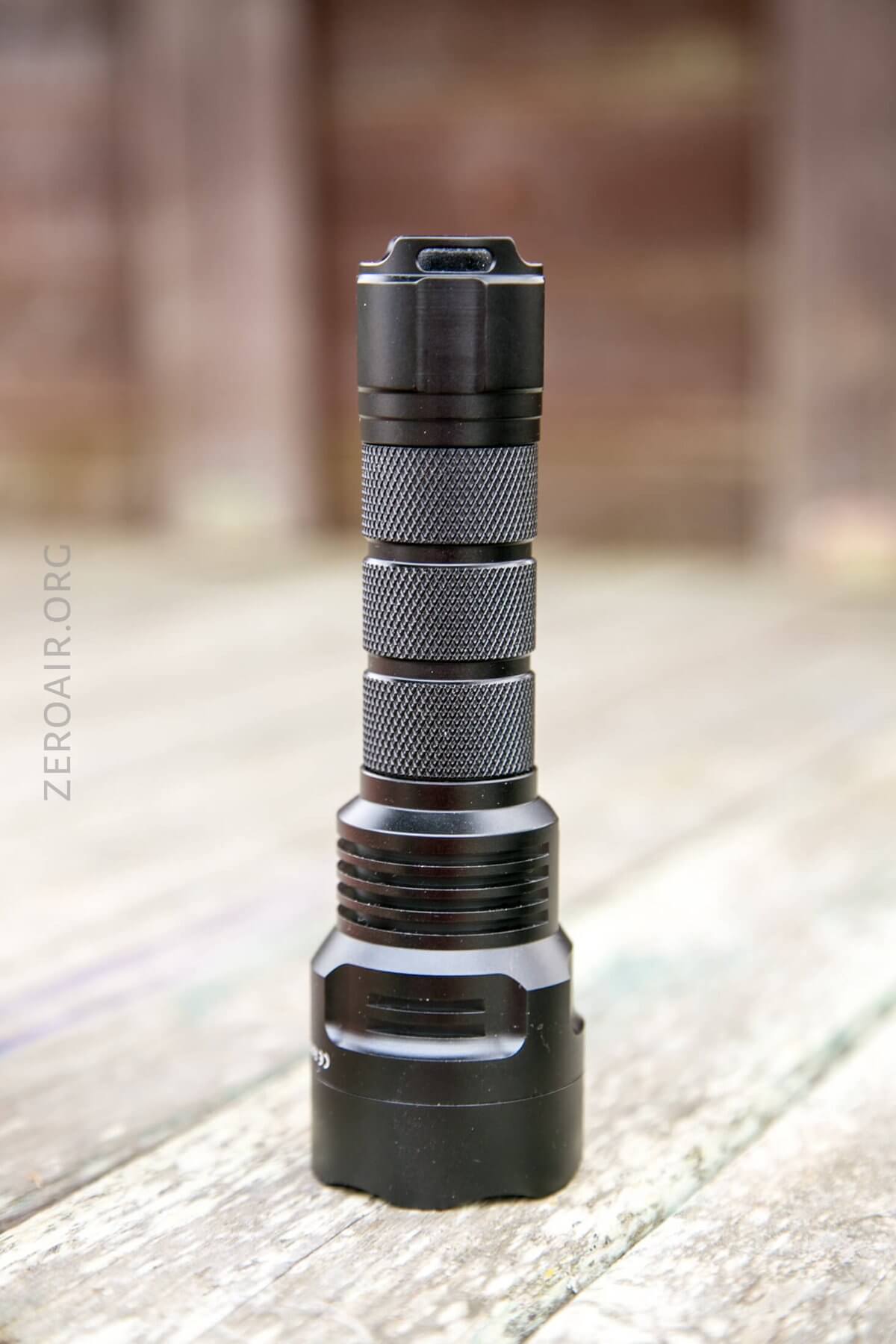
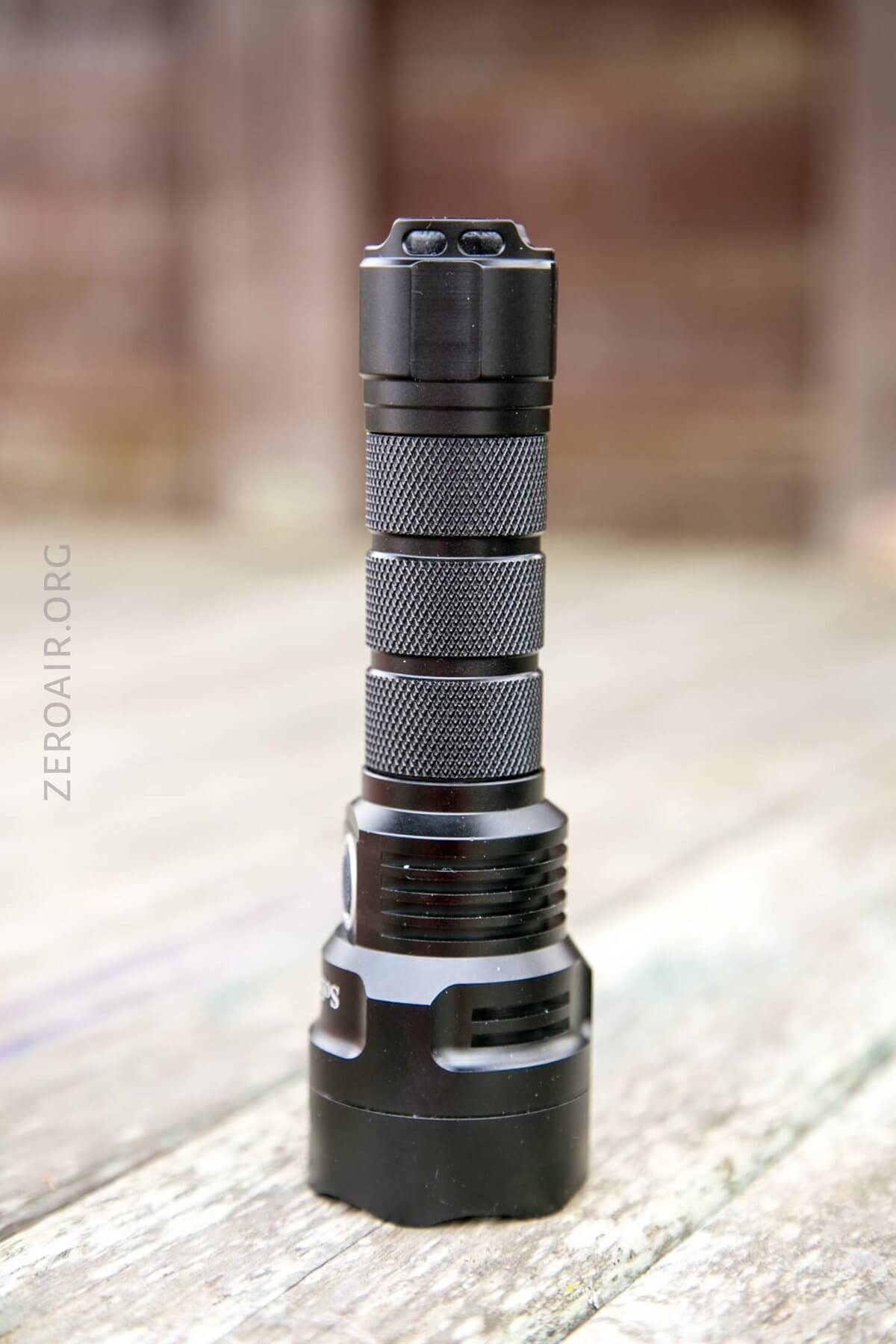
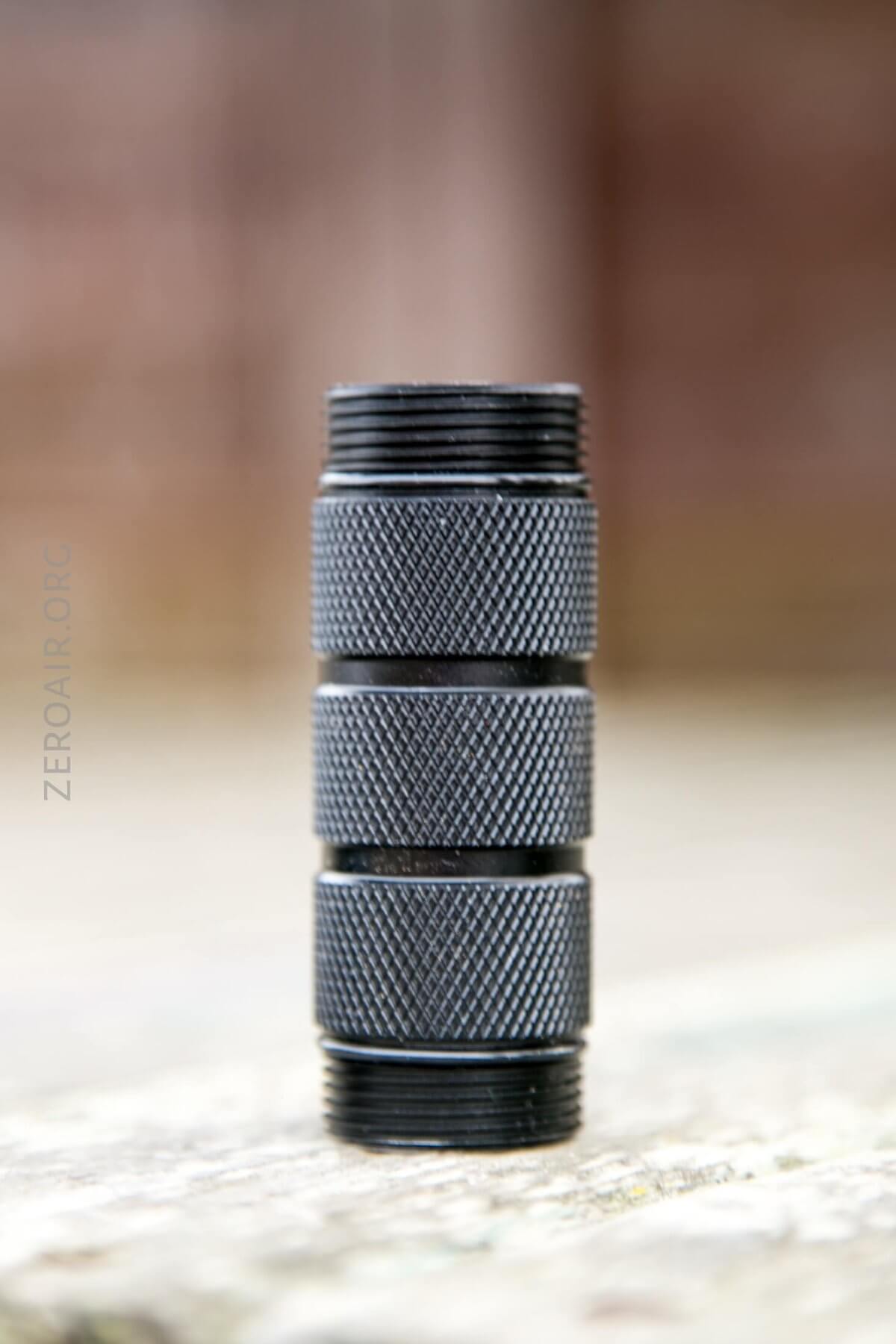
There’s ample knurling on the body.
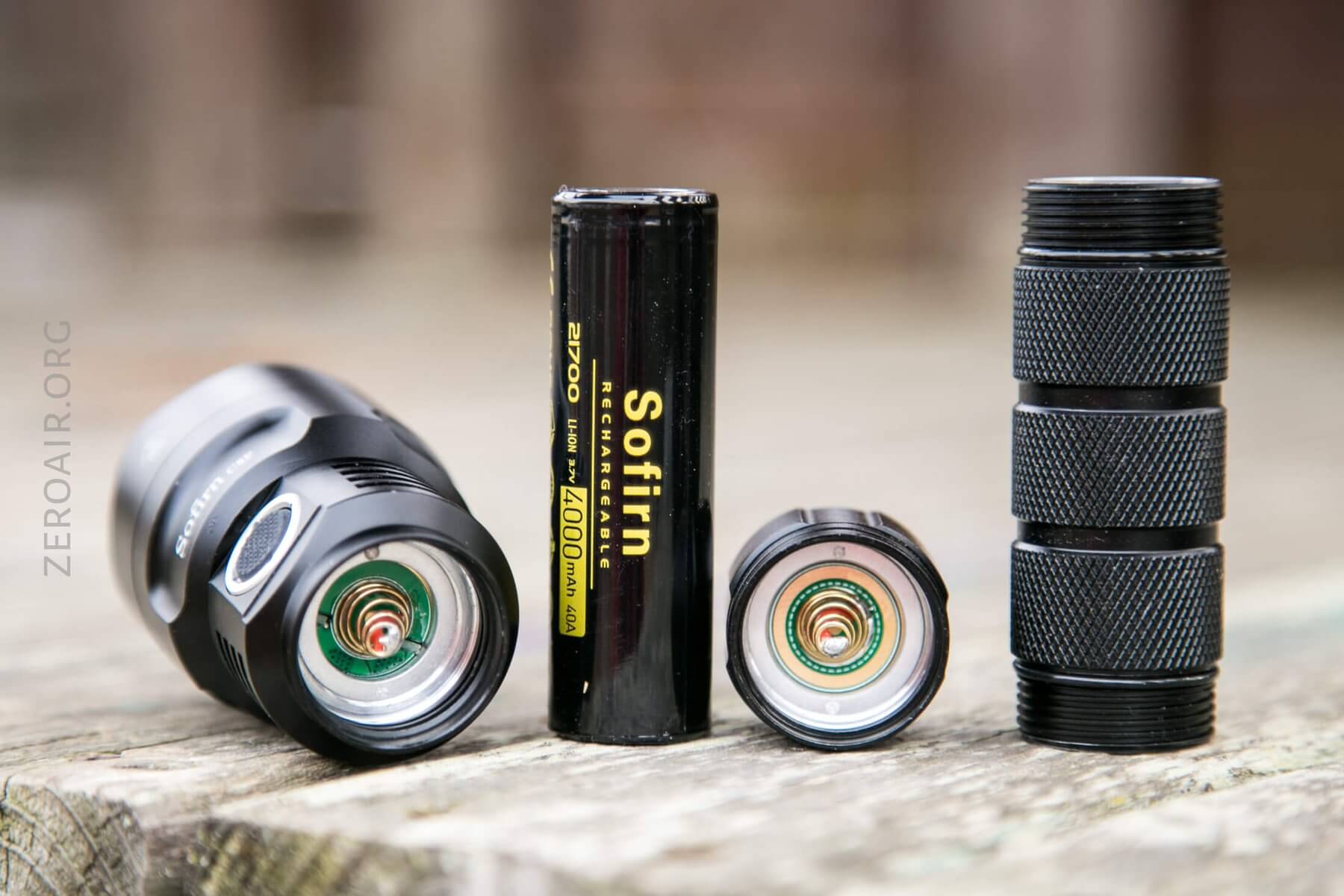
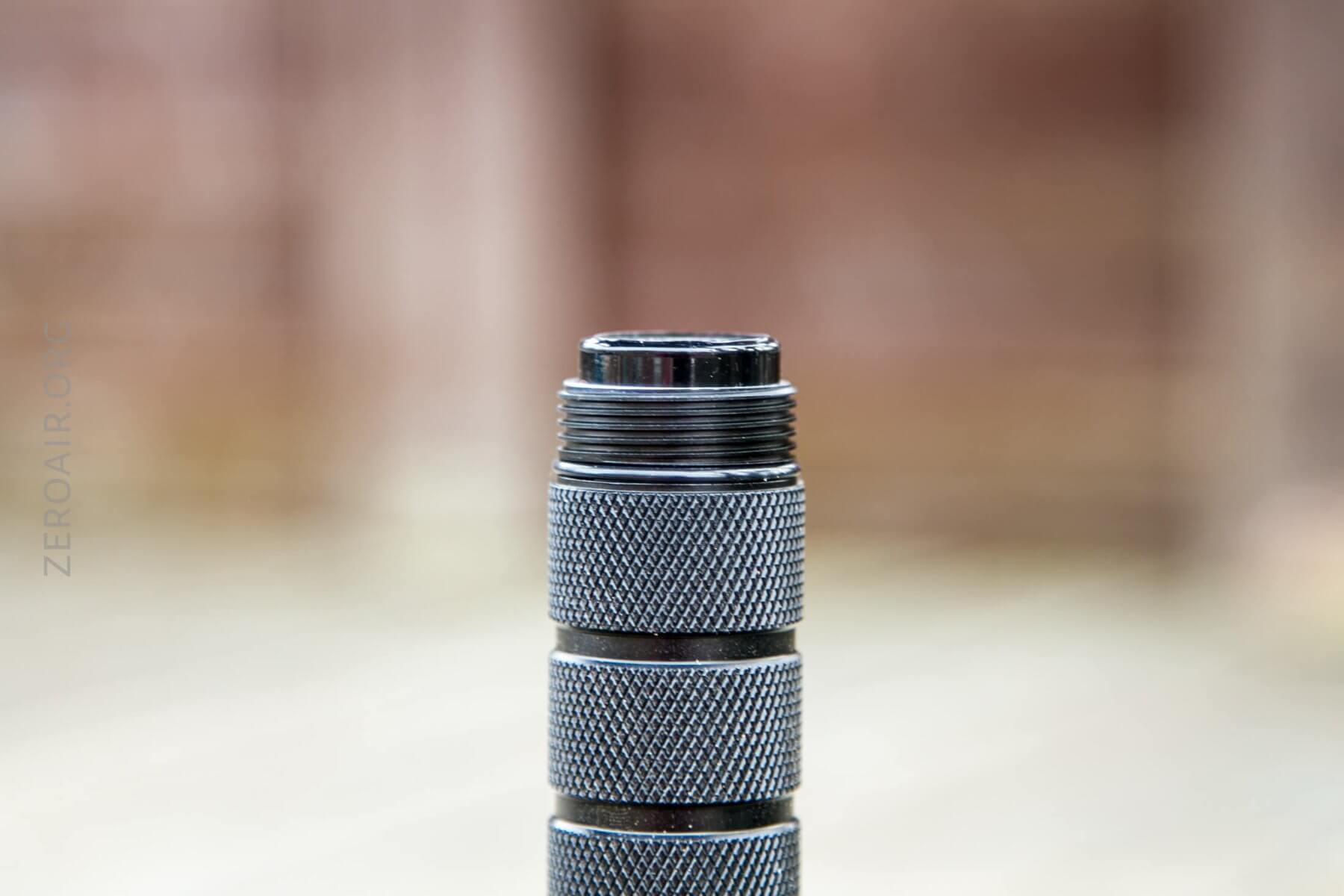
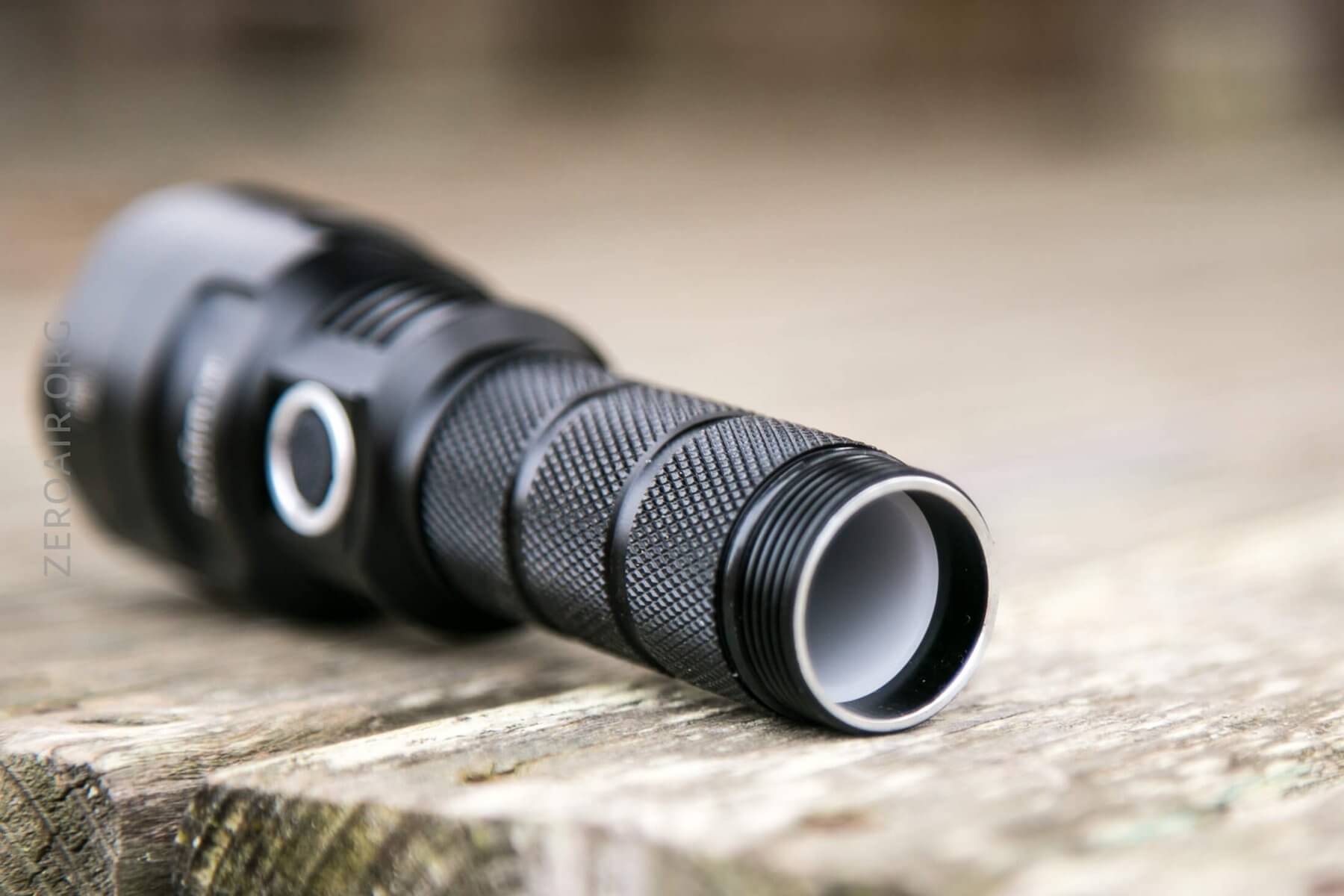
The threads on both ends are anodized, square-cut, and the same length – the cell tube is reversible. The cell tube does not have any indentions for a pocket clip.
Notice the spring bypass on the head. The driver is held in place by an aluminum retaining ring.
The head has some crenelations, but not really “strike” crenelations (though with the right attitude, they would work just fine as weapons).
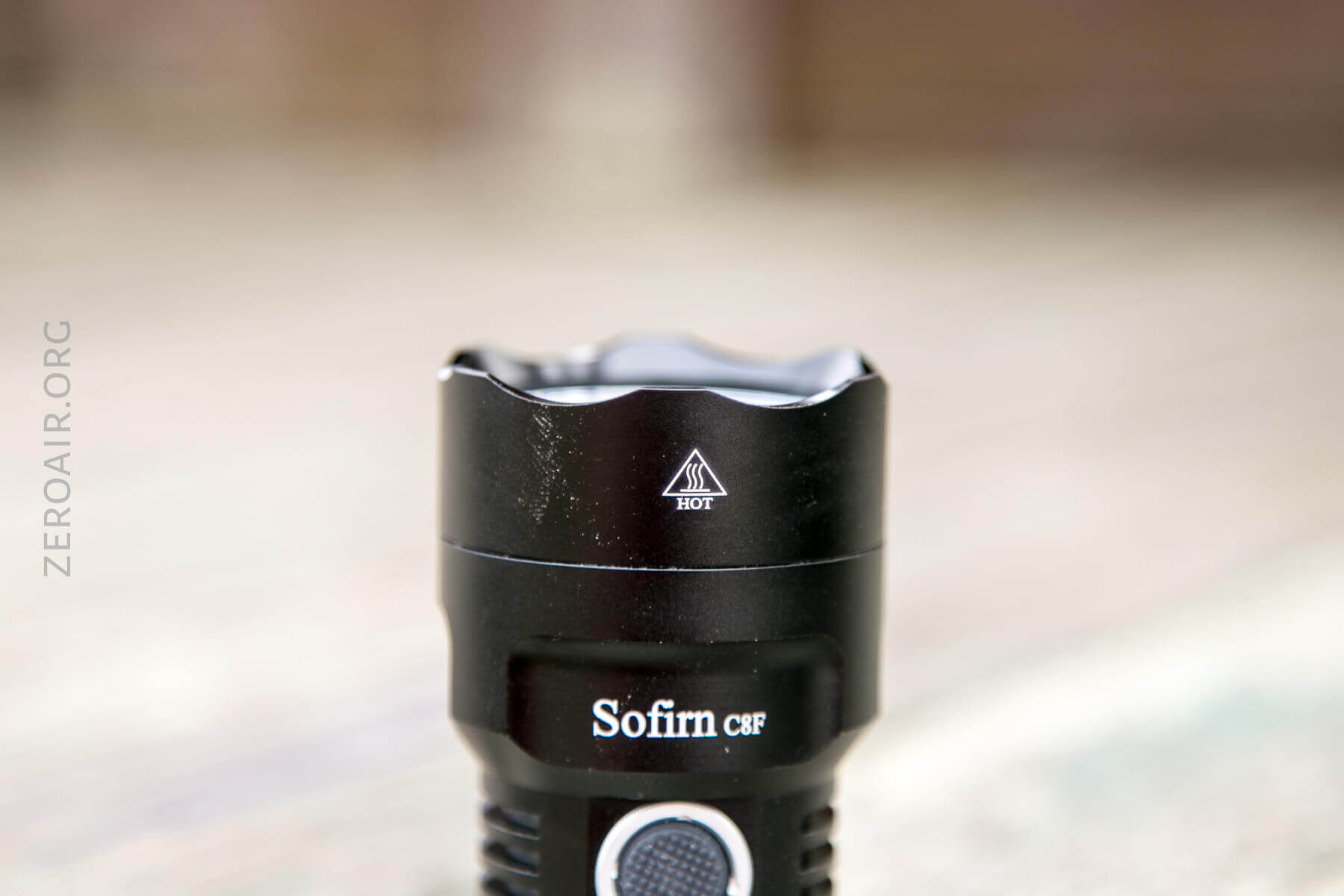
This is a well-built light, and it’s a big step up from most other Sofirns, and certainly a huge step up from the original C8F.
Size and Comps
Officially:
- Dimension: 149mm (length) x 44.6mm (head diameter)
- Weight: 200±2 gram (without battery)
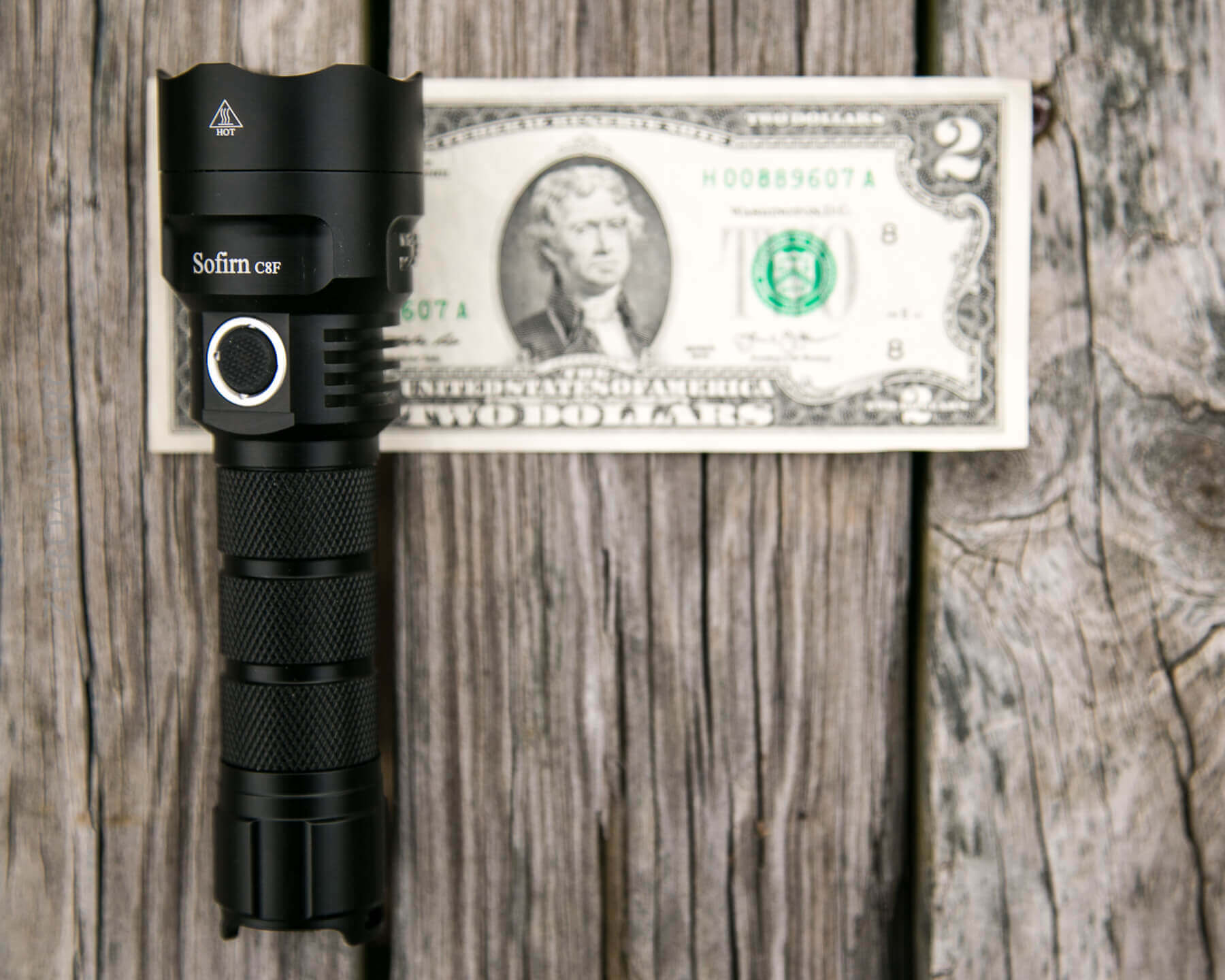
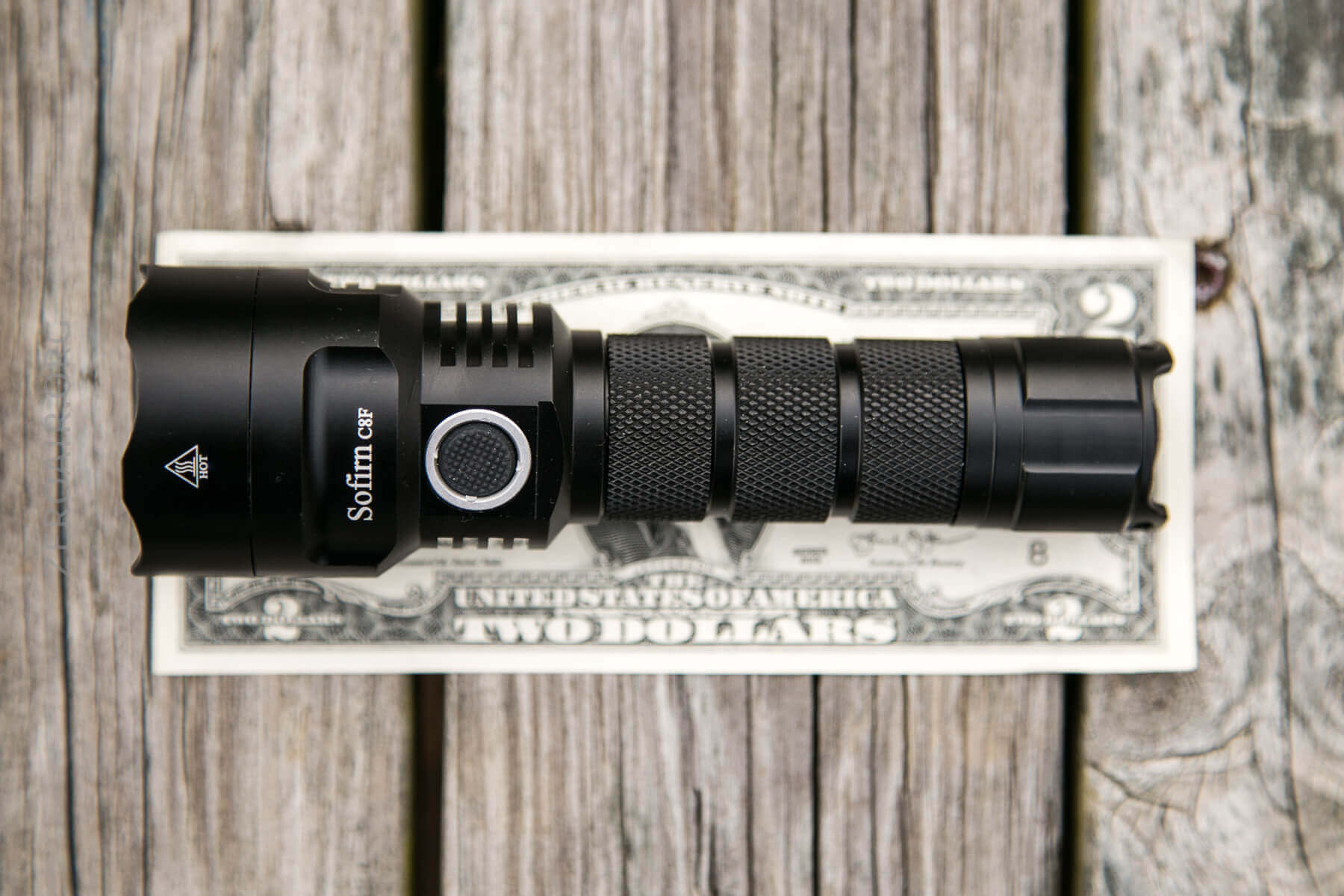
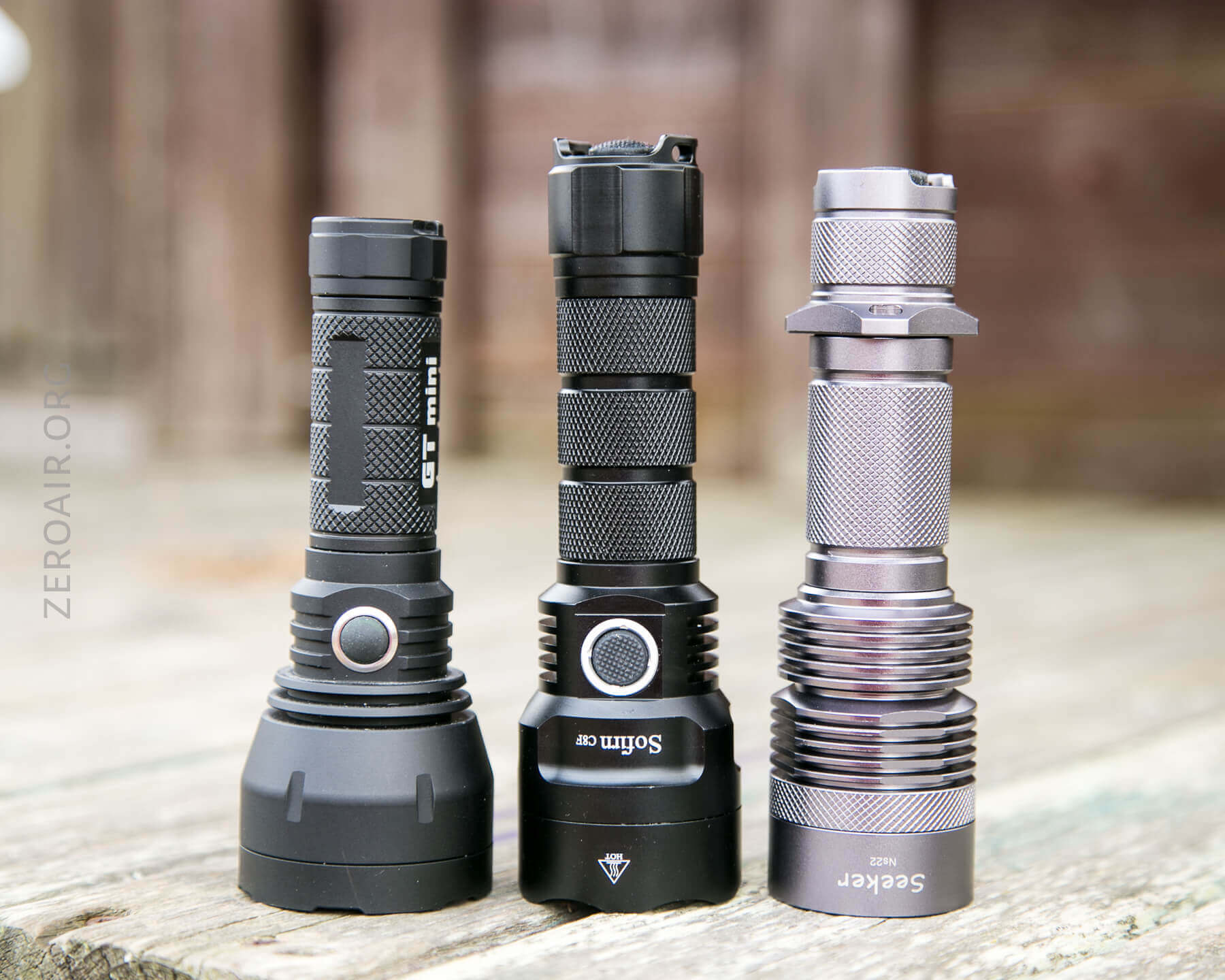
Here are a couple of other throwers. Left is the BLF GT Mini. Right is the Seeker Ns22. Both of those are 18650 lights.
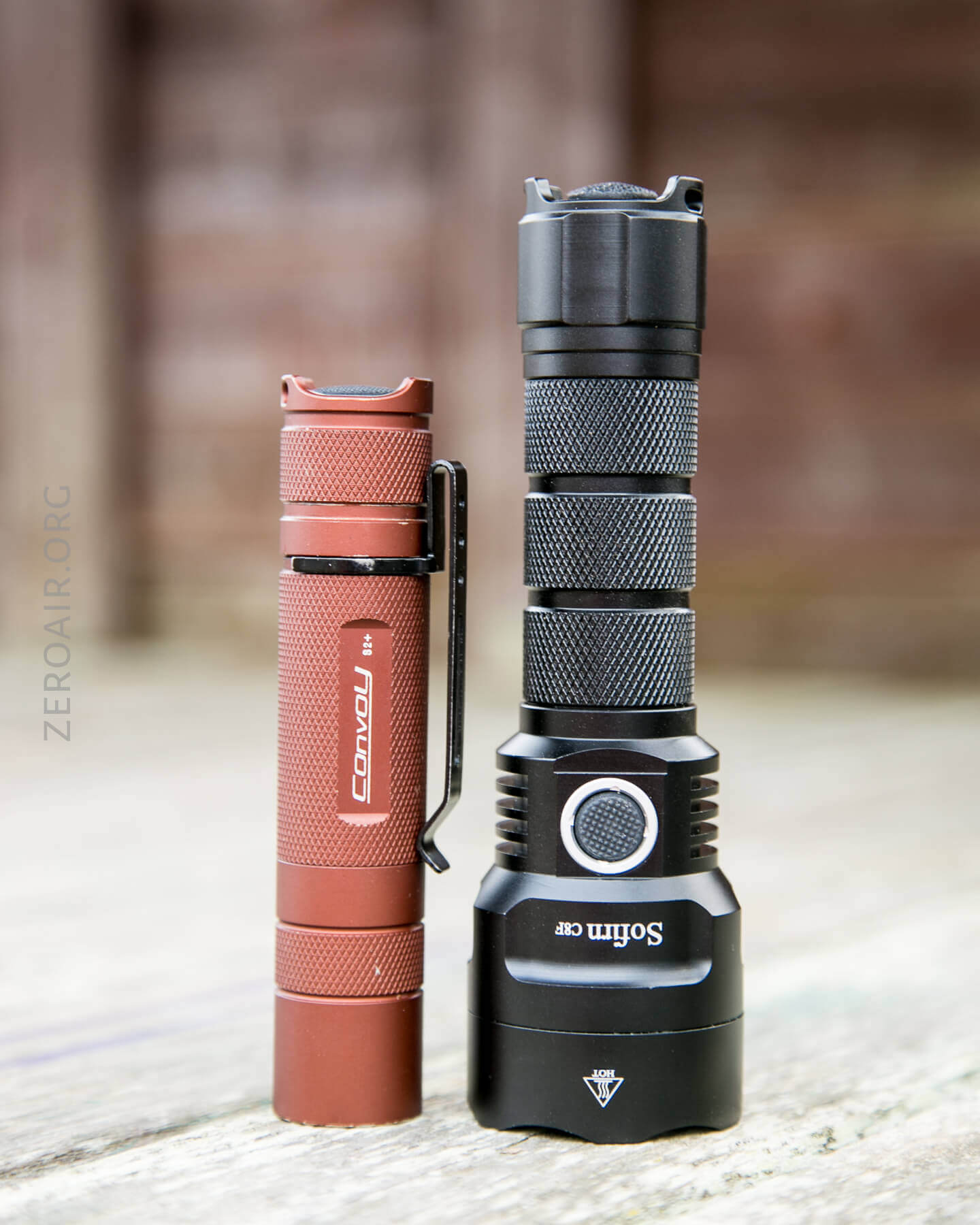
It’s thicker, but not that much thicker than the Convoy S2+.
Retention and Carry
There’s a lanyard included, which attaches only to the holes in the tailcap. The holes are generously sized, and this is a very solid connection.
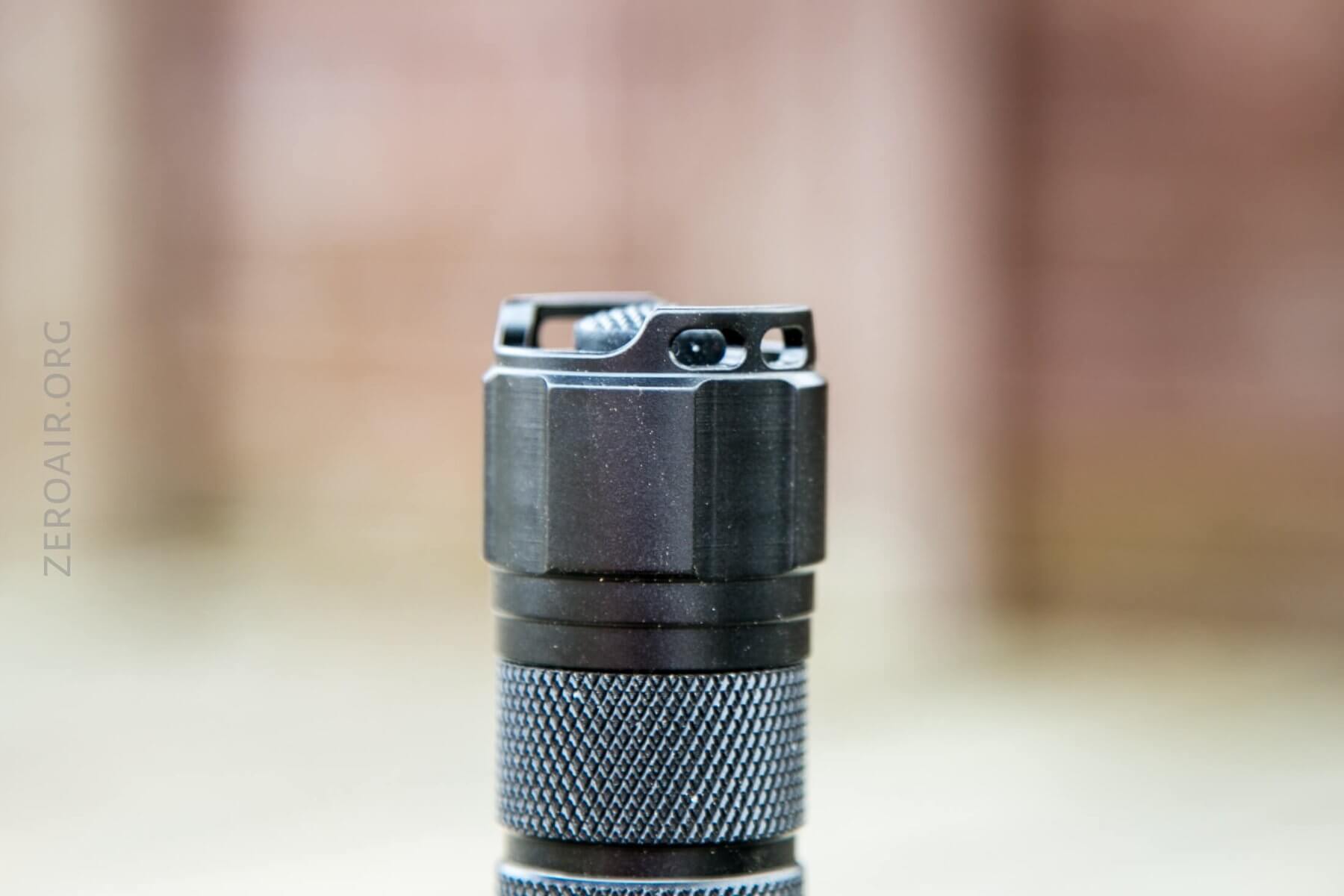
There is no other option. The body is not made to accept a pocket clip, either.
Power and Runtime
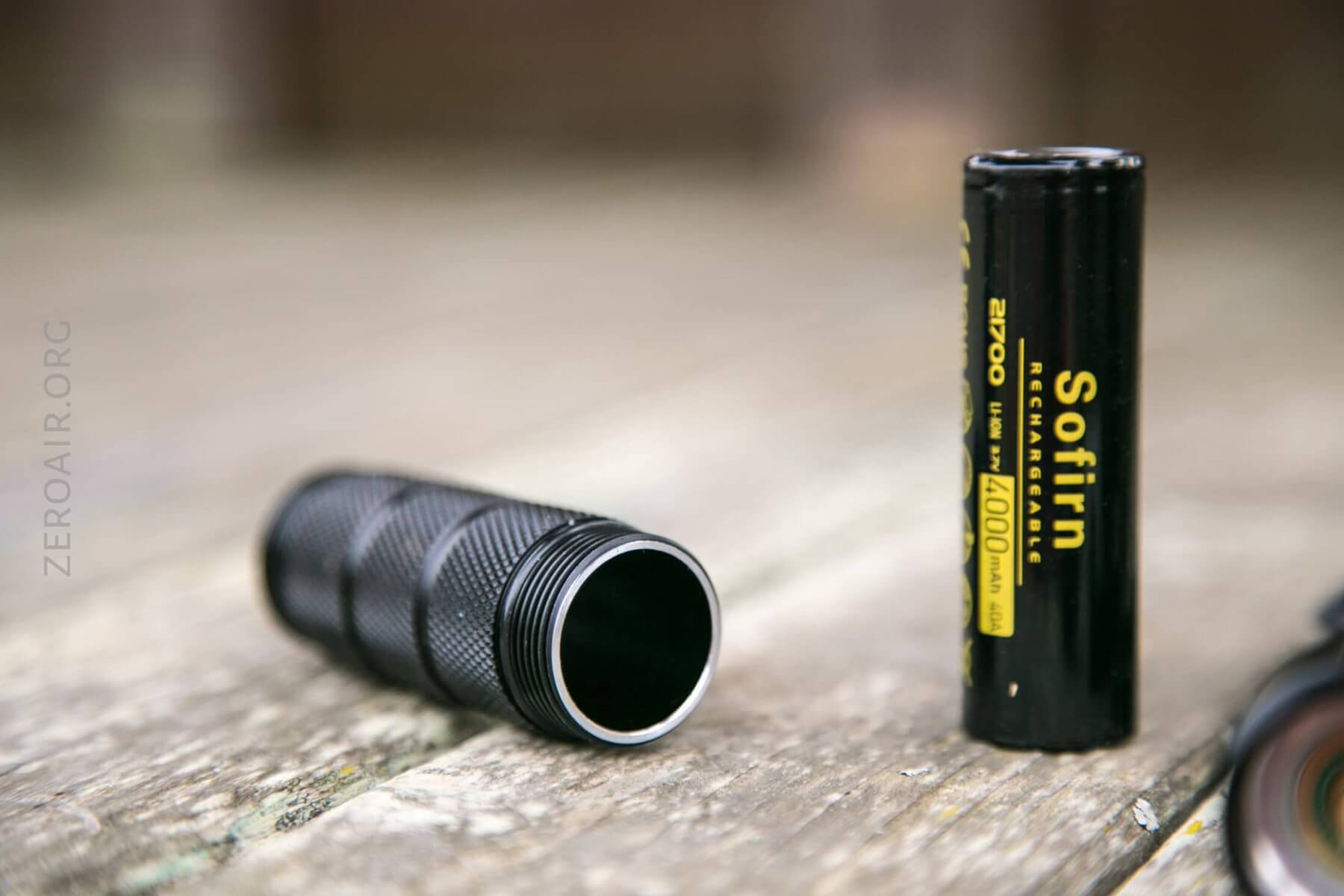
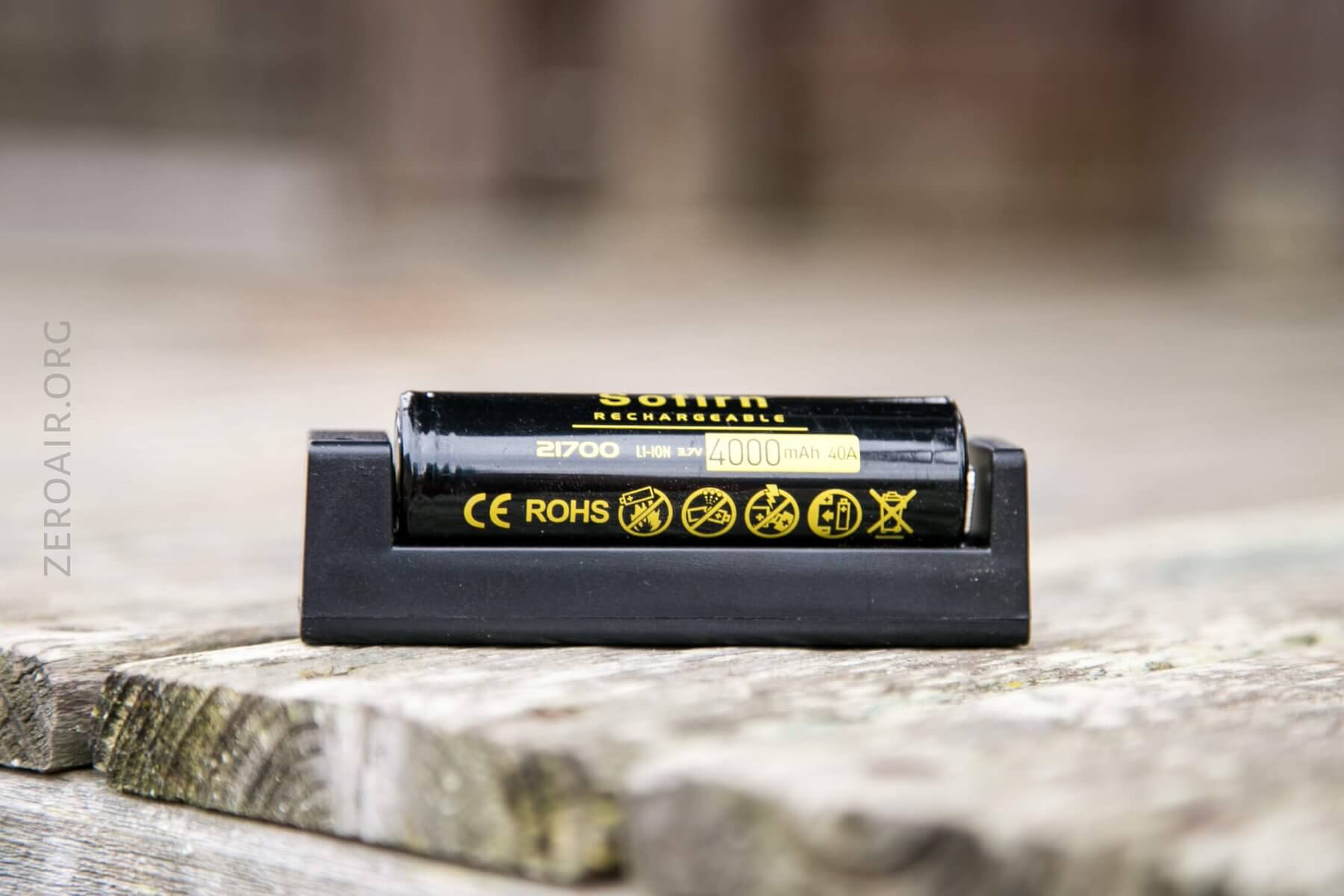
Sofirn includes the best type of cell for this light – a 21700. The one included is an unprotected flat top, capable of a claimed 40A (though that specification is probably inflated). The included cell is a flat top, too, but button tops should work just fine since there is a spring on the head and tail.
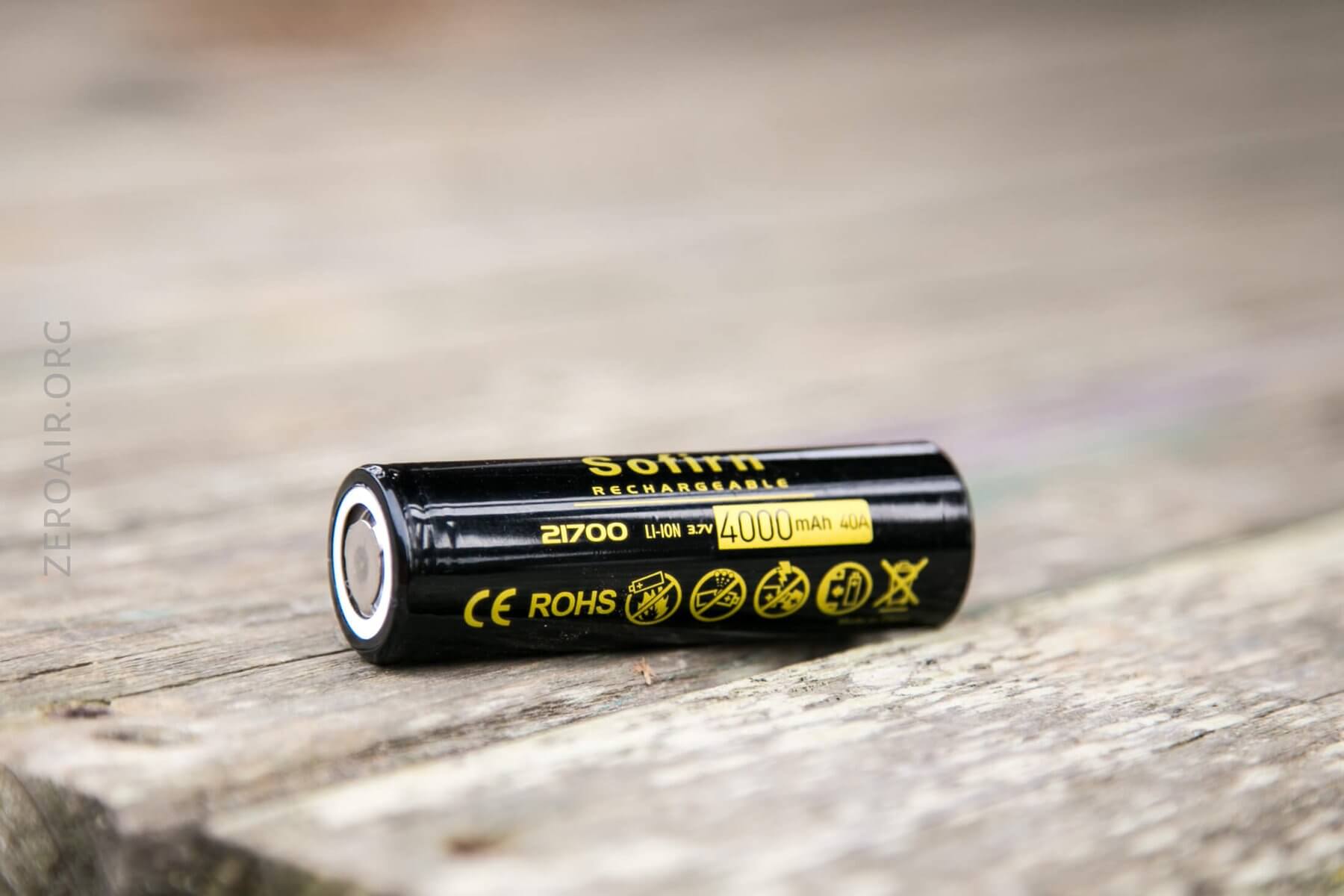
The wrapper doesn’t cover quite as much of the negative terminal as I’d like.
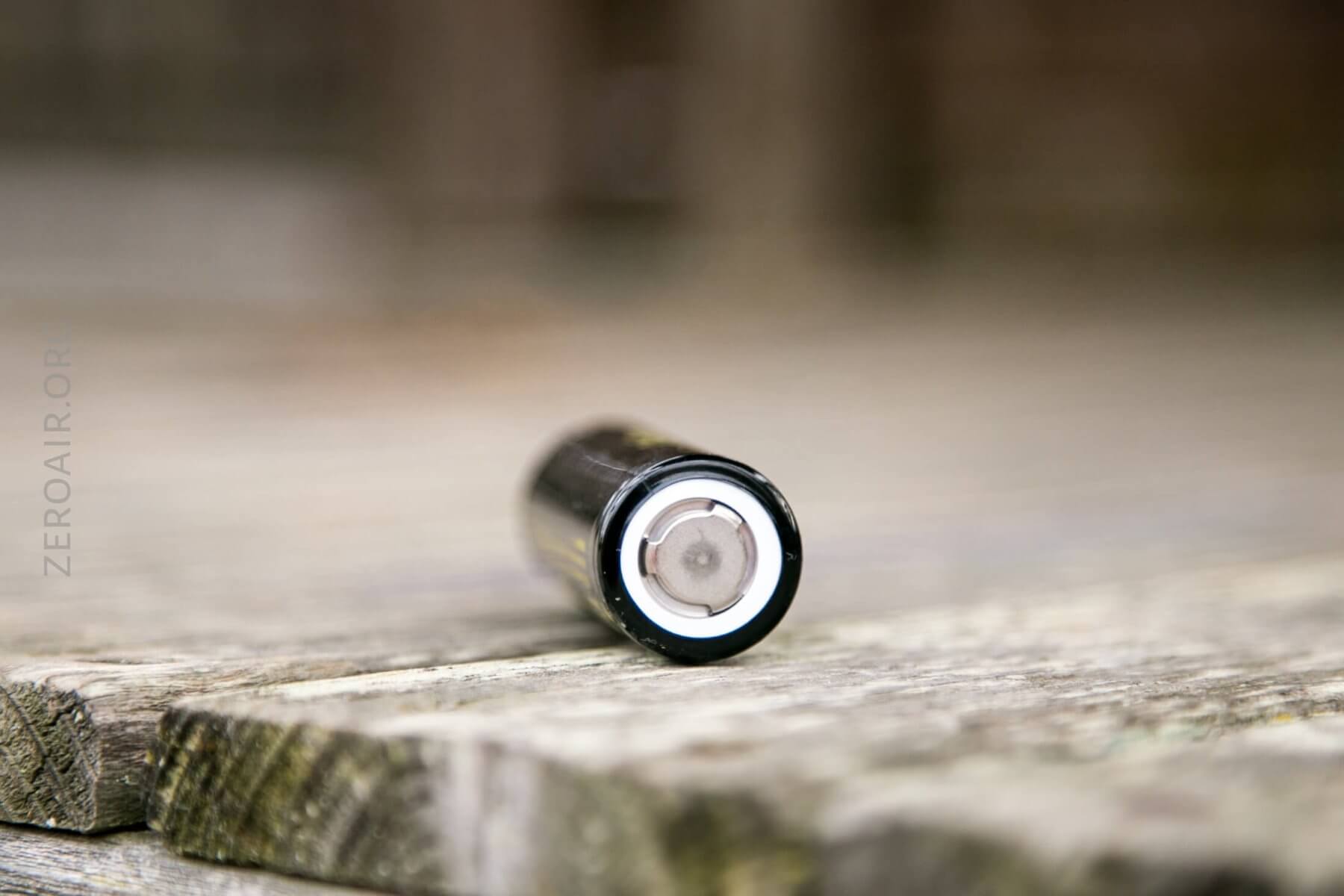
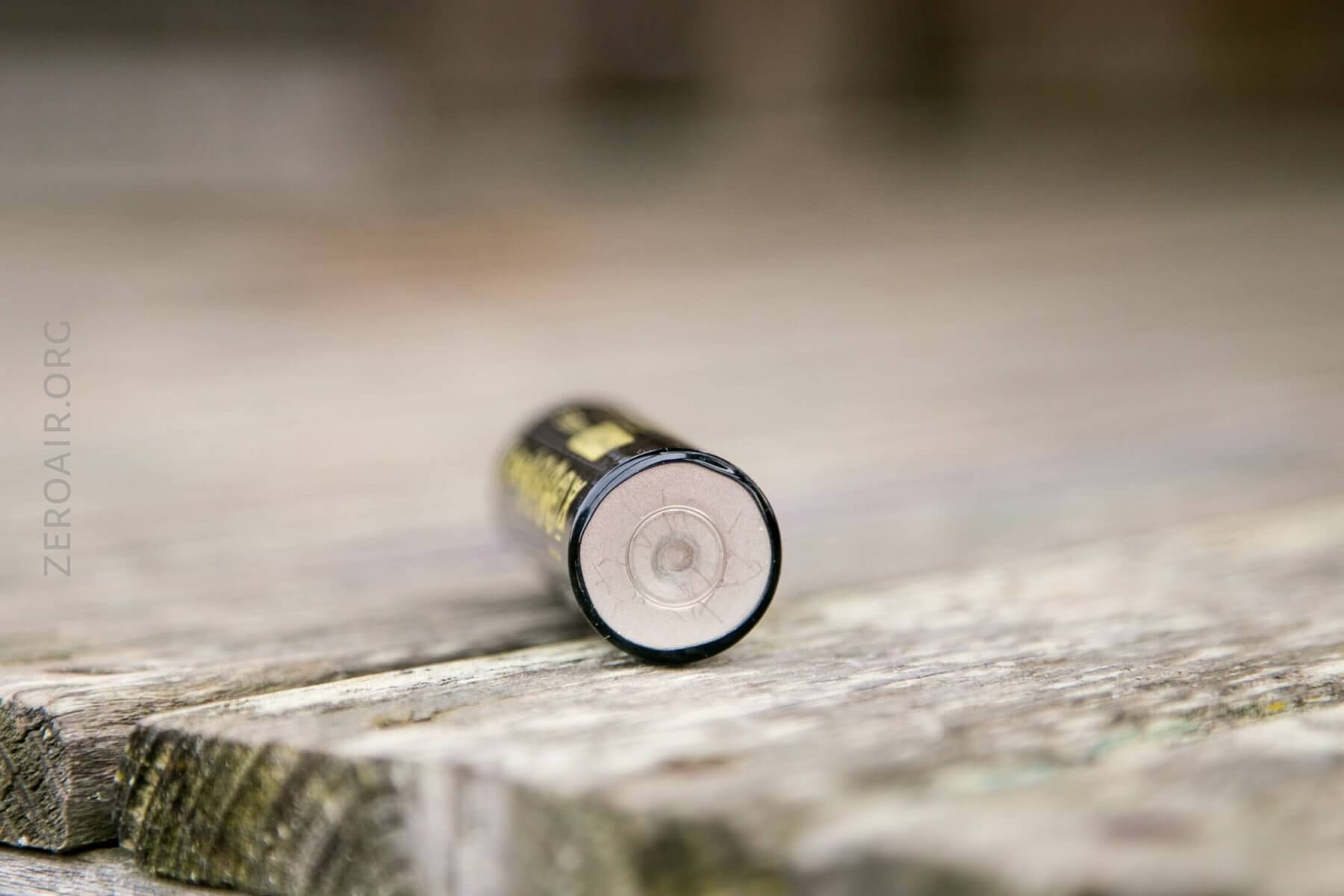
When installed in the light, the 21700 sticks out a few mm.
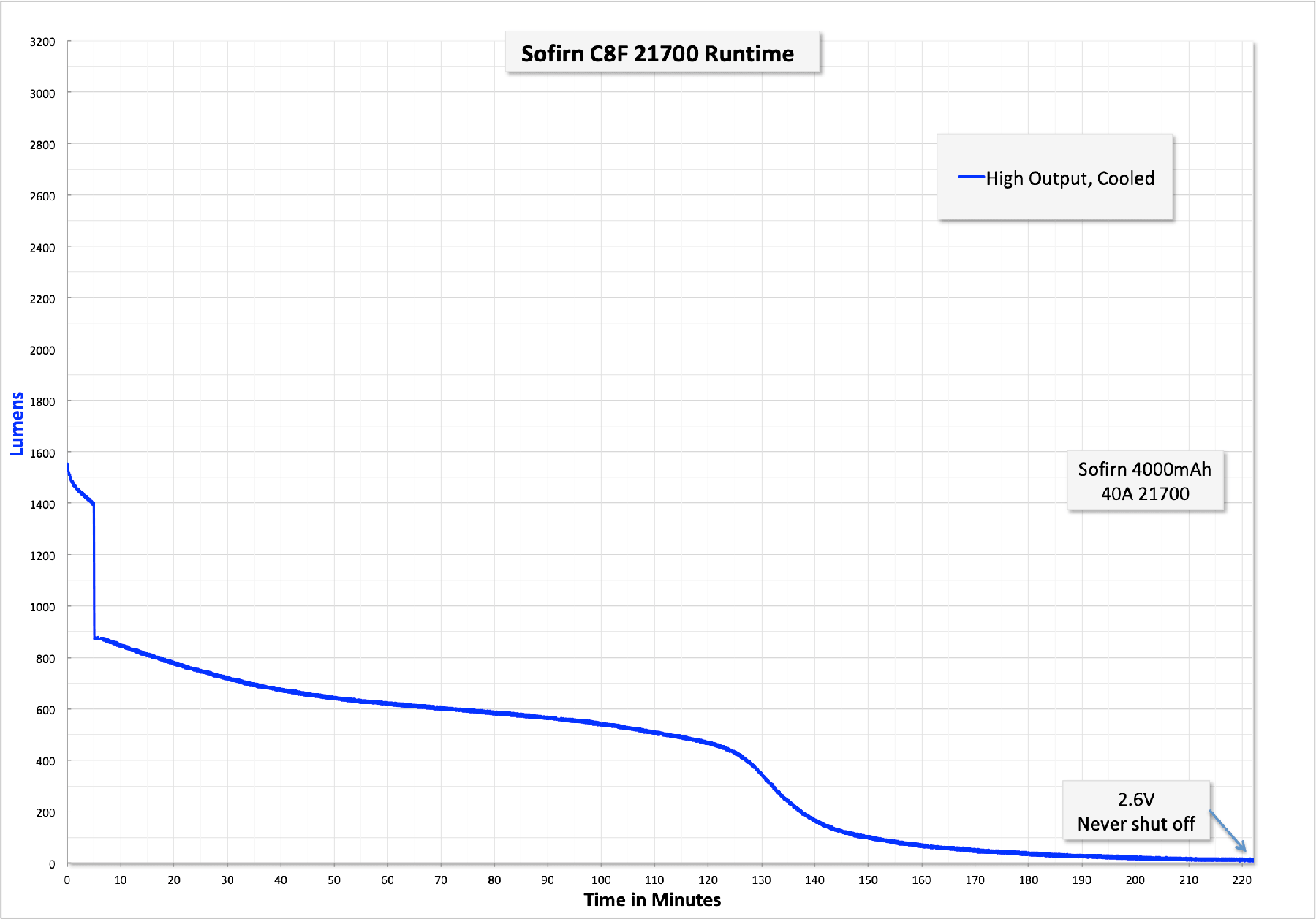
I performed two runtimes. The first is on Turbo, which again is FET driven. (The driver is a FET+1 – the “+1” has to do with non-Turbo modes.) Output is fairly stable for the first few minutes. At 30s, I measure around 3000 lumens. The claim is 3500, so my measure is significantly (~16%) under that. Then there’s a pretty heavy stepdown to around 850 lumens. Unfortunately, the output isn’t flat from there – the output basically tracks the cell voltage all the way down to very low. The light never shut off, but I stopped both runtimes when the output was very low, and both times the voltage was around 2.6. That’s not “dangerously” low for the cell, but it’s bordering on it.
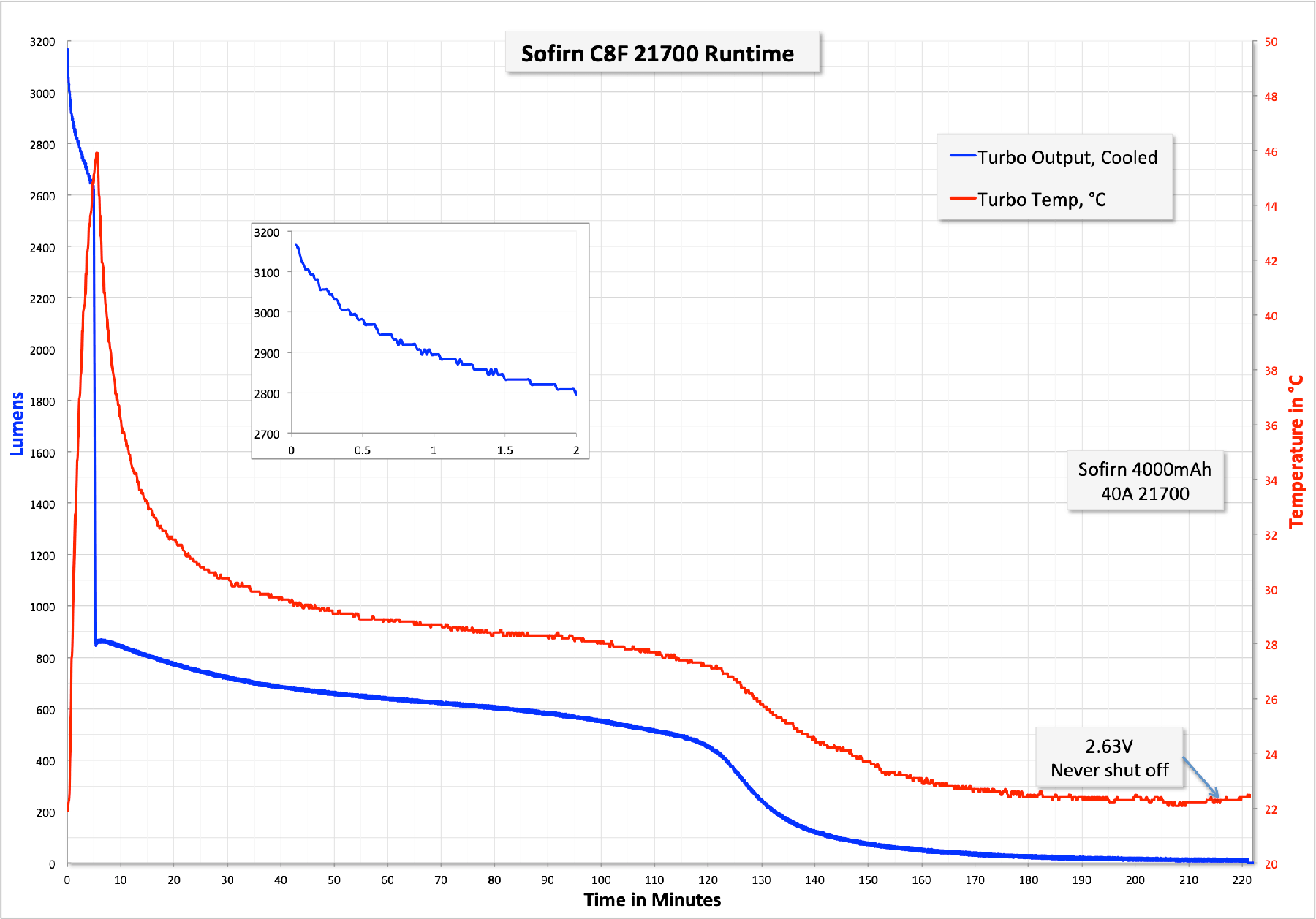
The output on High is essentially exactly like Turbo. The output just doesn’t start as high, but otherwise – including the stepdown – the runtime is exactly the same. (And sorry, I managed to miss the temp setting for this runtime.)
Sofirn also provides a sleeve to allow an 18650 to fit without rattling. It’s just plastic and doesn’t have any contacts or anything. Thus, performance will be dependent fully on the 18650 you use.
Charging
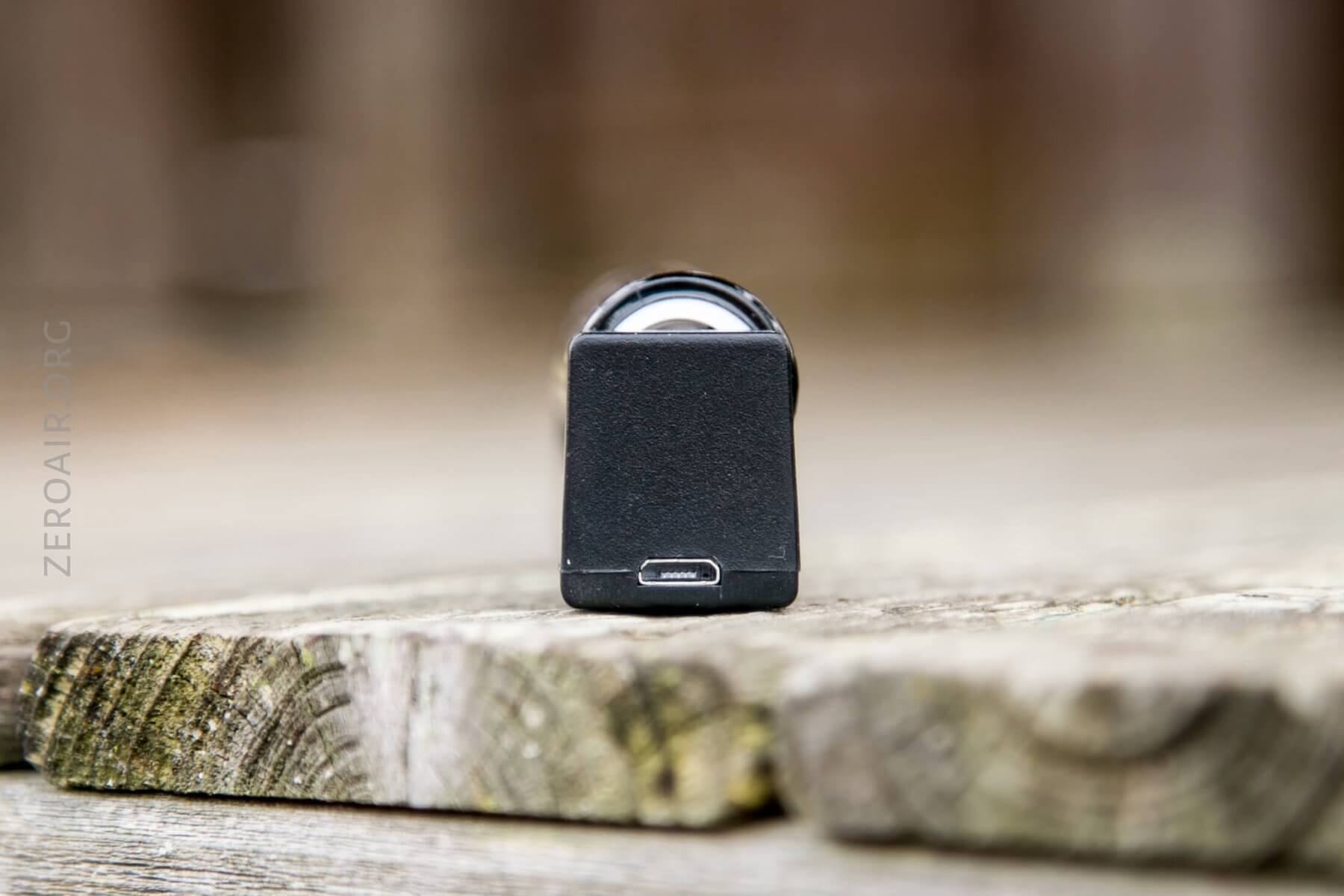
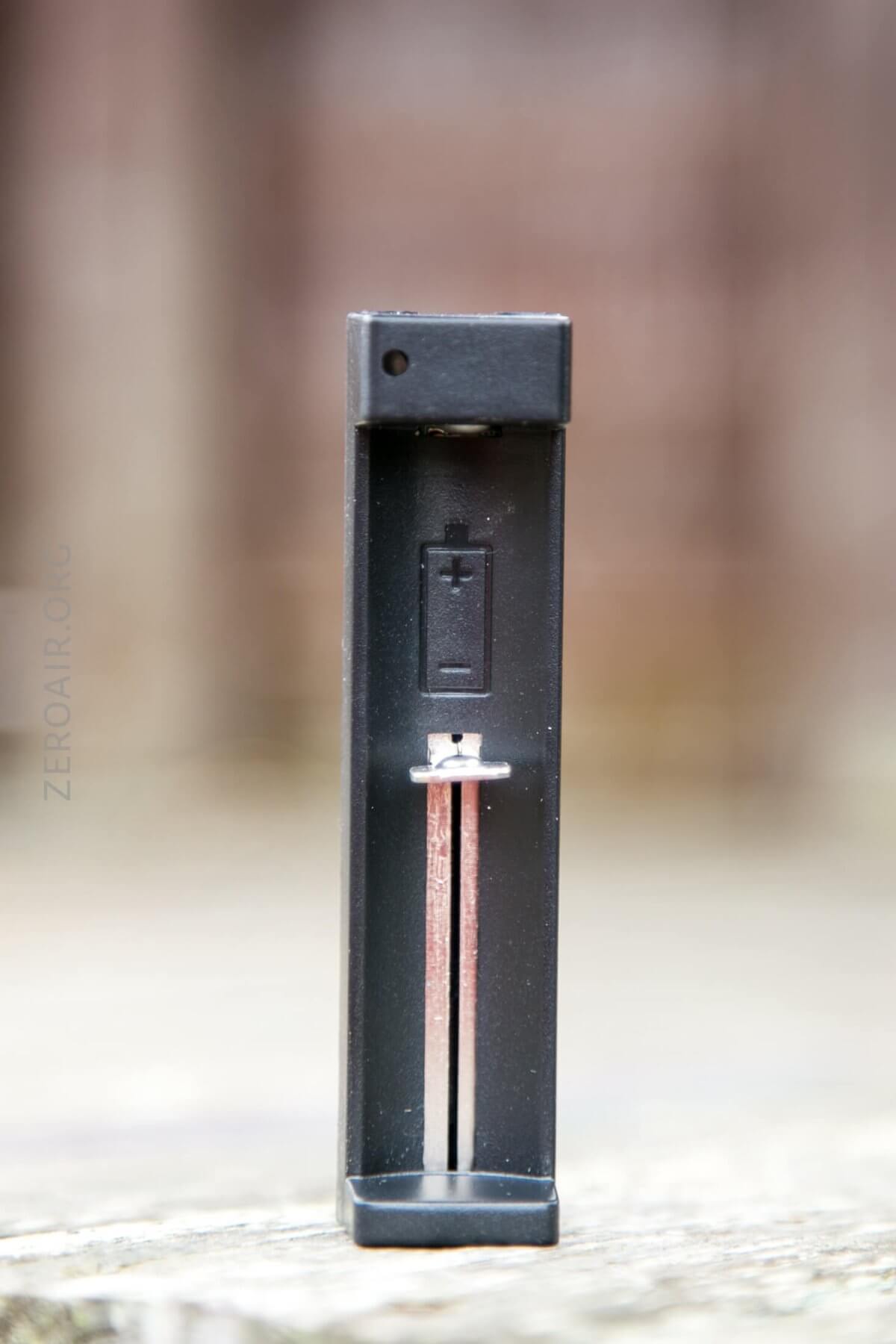
The kit also includes a charger fit for a 21700 cell. It’s a simple one-bay charger, which gets power from a micro-USB port. A USB to micro-USB cable is included.
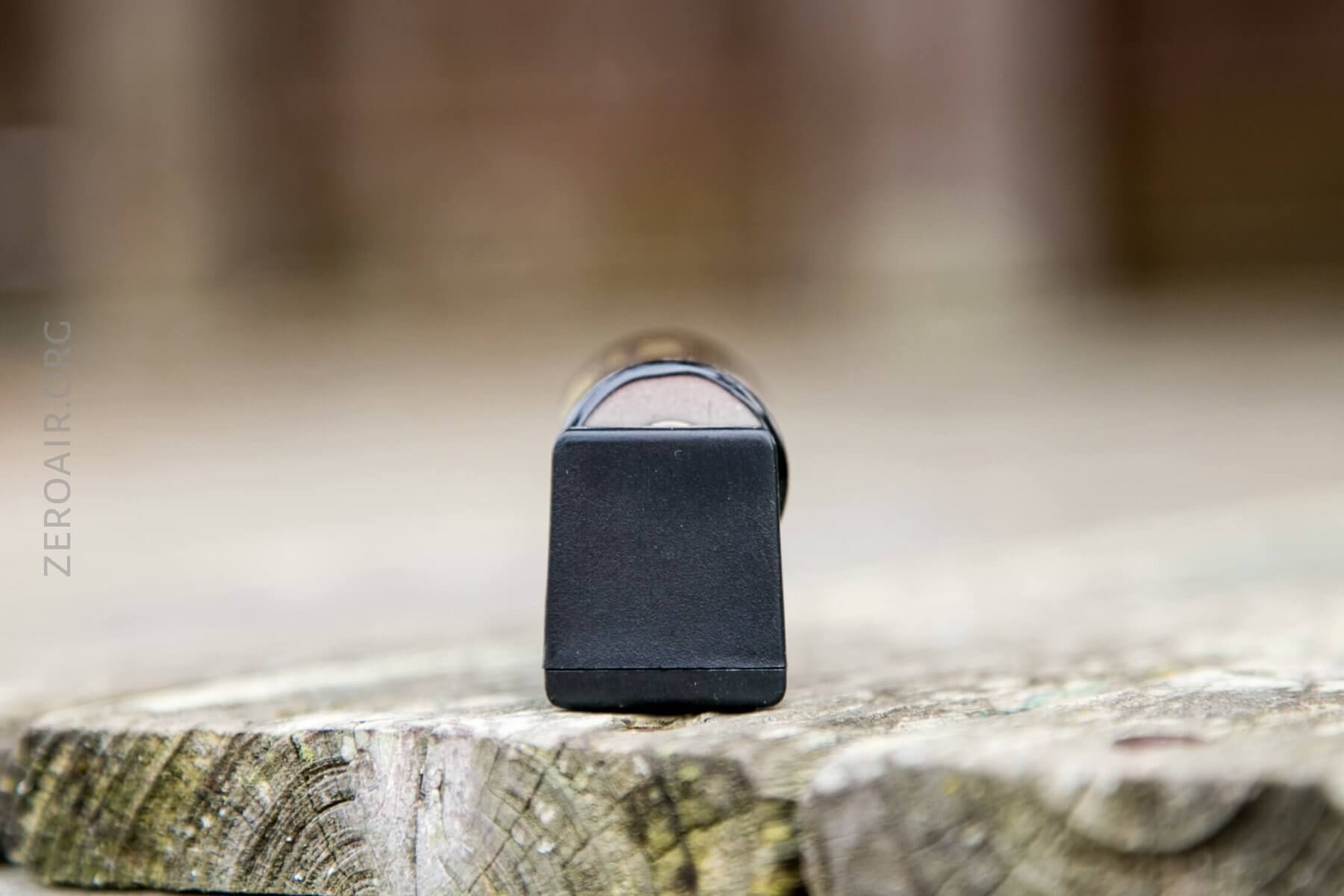
There’s a LED on the front – red if the cell is charging, green if charging is complete.
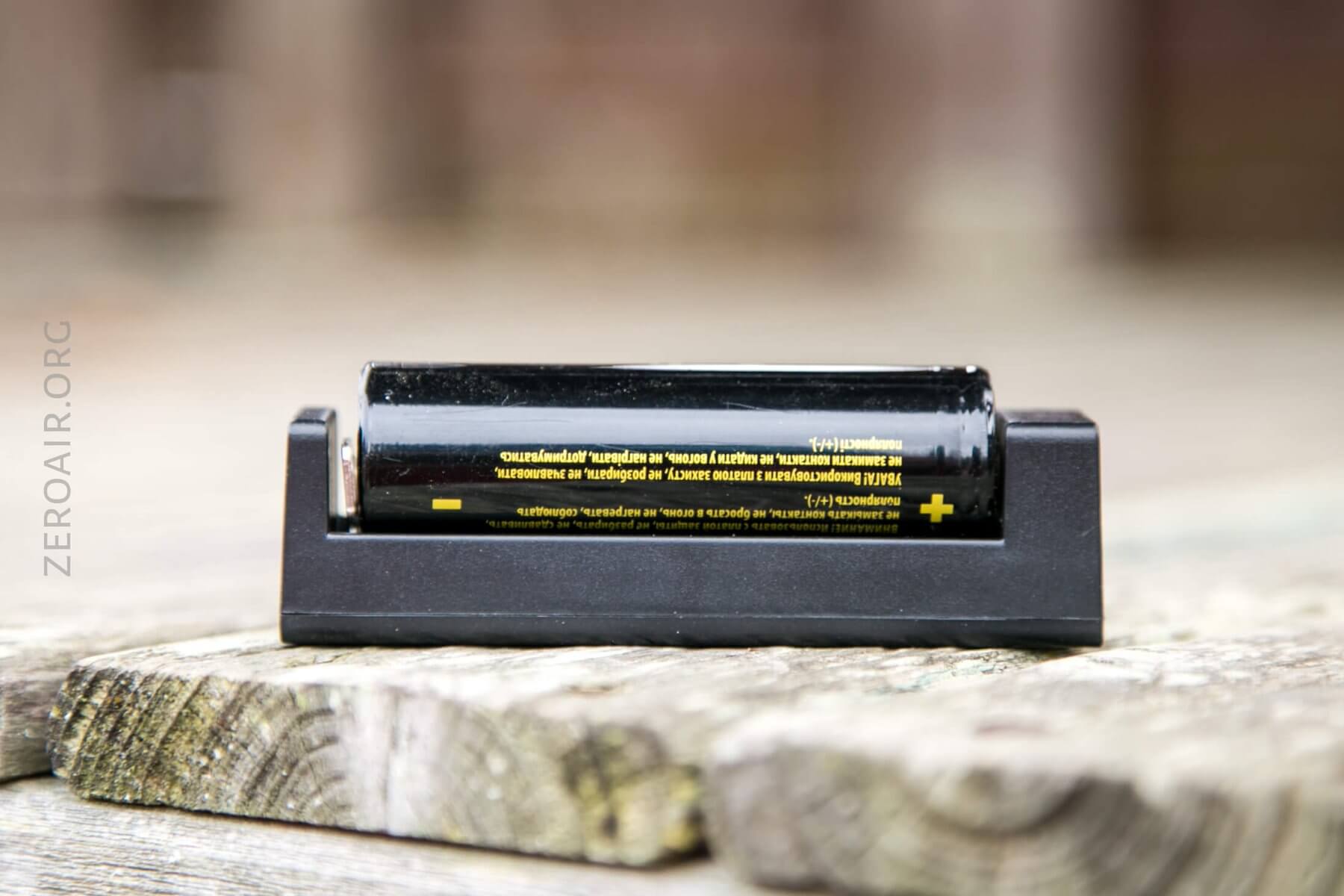
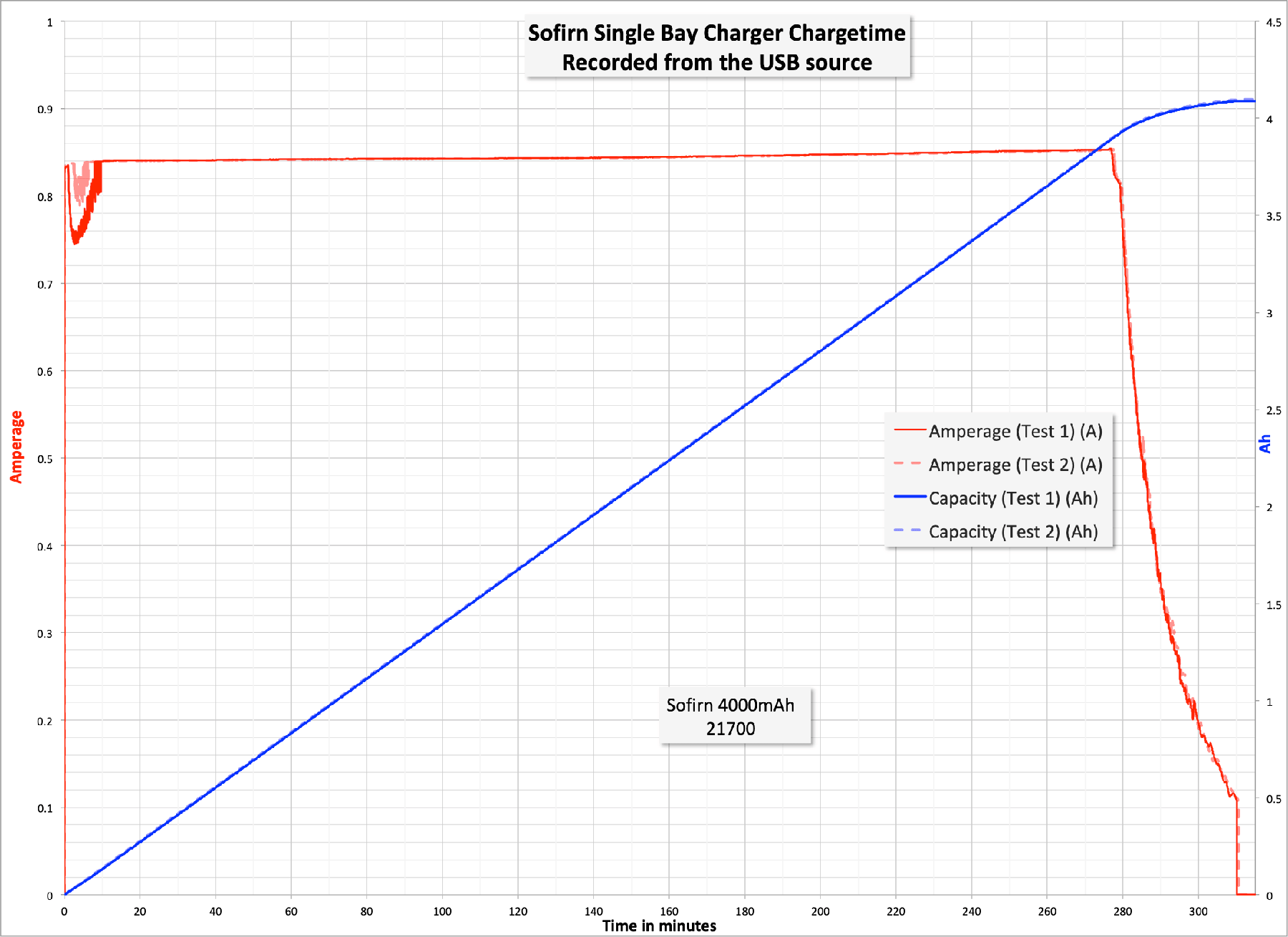
My usual charger testing would fit in this charger with the cell in place. There’s just not much extra room. So this data is recorded from the USB source. Still interestingly proves that the cell is much higher capacity than the claimed 4000mAh (because remember, the shown 4+Ah is recorded at 5V). The charger performs well, charging with over 0.8A in the CC and having a short CV phase.
User Interface and Operation
The C8F 21700 utilizes two switches. The first is a mechanical forward clicky tail switch. It’s very clicky, quite proud, and doesn’t protrude over the edges of the tailcap. Tailstanding is possible.
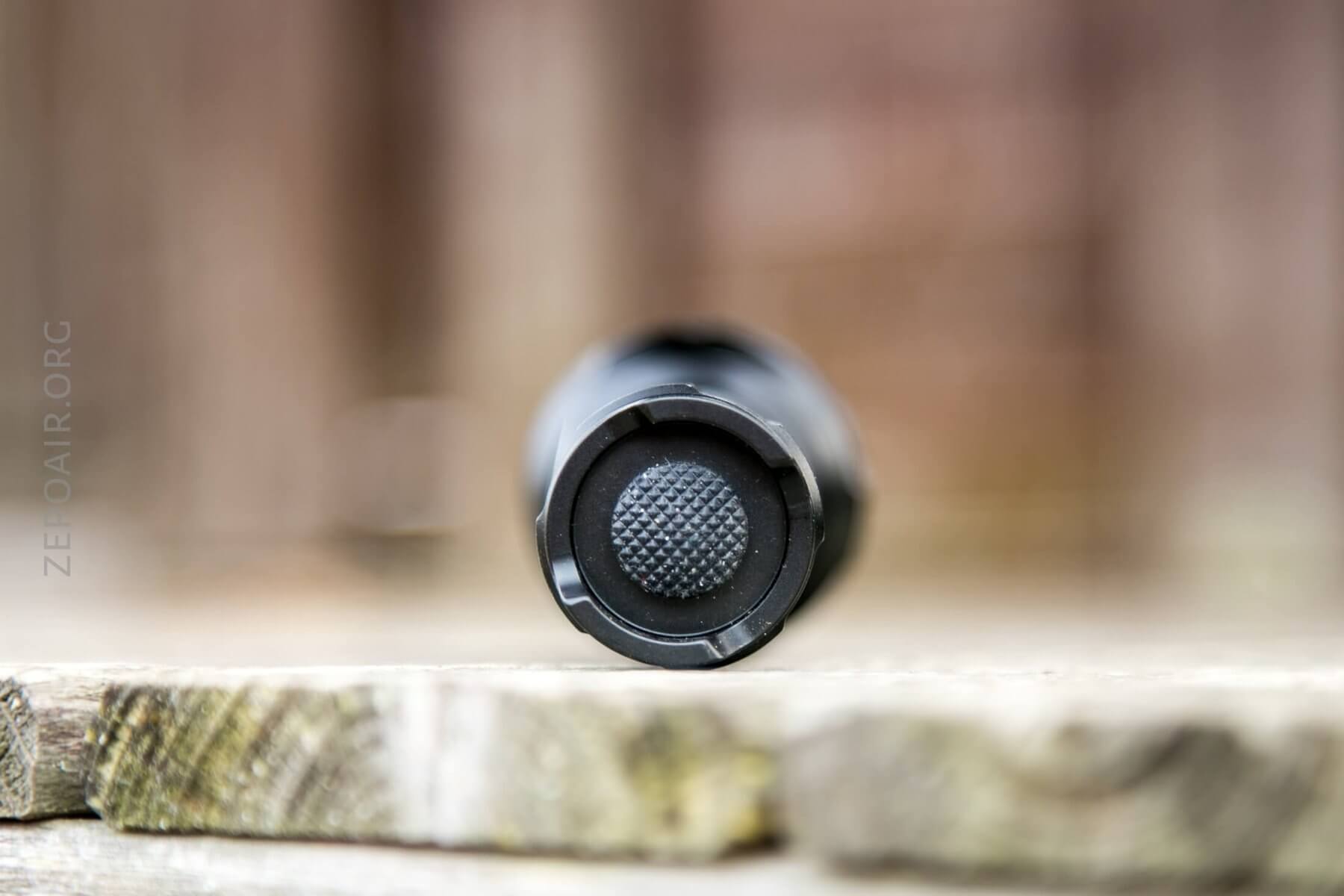
The other switch is an indicating e-switch on the side of the head.
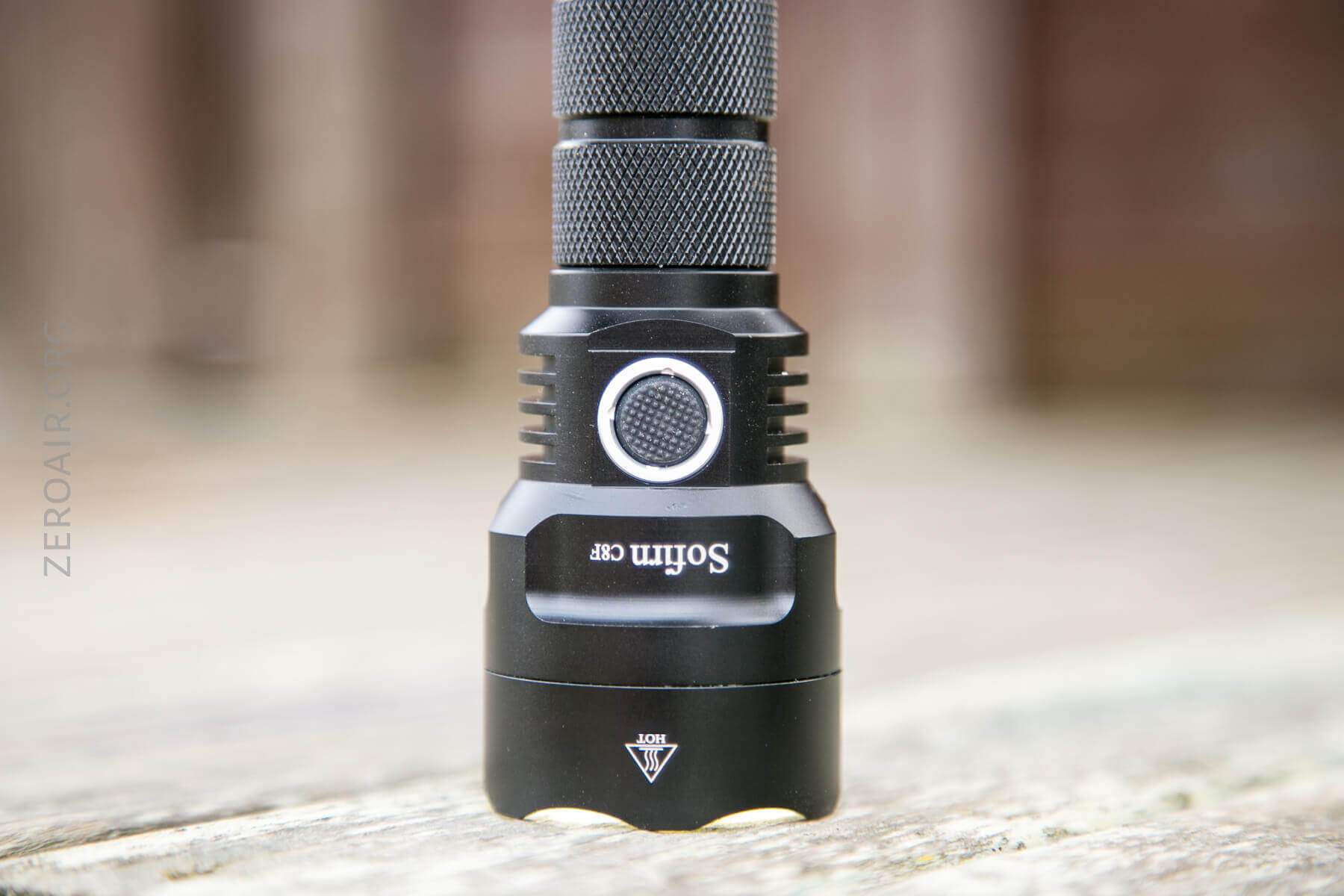
This switch is flat, but since the only other feature on the head is the fins for cooling, it’s easy to find without looking.
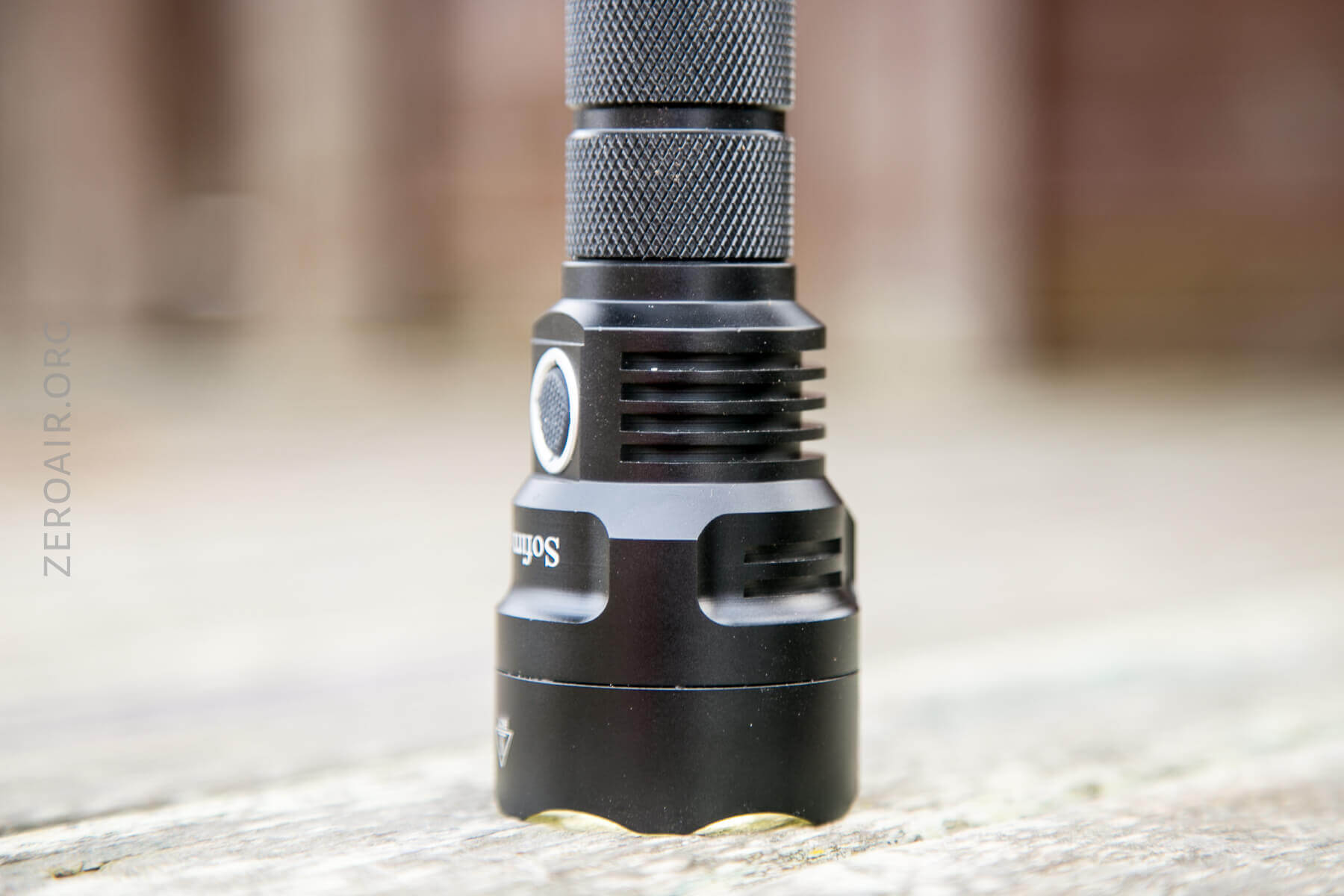
There is a lot going on with this user interface. There are four groups, each with different modes, and one of them is a ramping user interface! Switching between the groups requires the light to be on and the user to click quickly 4x. The mode group change will be signaled by two quick flashes. It’s a little hard to tell into which group you’ve landed. A hint will be what output you land in after the two flashes: a higher output (but not Turbo) will be either Group 1 or 4. A lower output (but not low) will be Group 2 or 3. Also, the Groups advance logically, 1>2>3>4. So you might have to do a bit of hunting, but it can be figured out easily enough.
Also noteworthy: Group 1 can be seen as a “1 Mode Light” even though there are other modes available through certain click actions. That’s fairly unusual.
Here’s a user interface table! Generally, this is for only Groups 1-3, though there is some carryover to Group 4, too.
Also, I’ll try to explain up front since it is confusing in a table form.
“Off” means there is no complete electrical circuit. i.e., “mechanical lockout.”
“Active” means the circuit is complete, but there is no light coming out.
“On” means there is light coming out of the front.
| State | Action | Result |
|---|---|---|
| Off | Click Tail Switch (TS) | On (Mode Memory, including Standby). Switch indicates battery level for 5s^ |
| Off | Click Side Switch (SS) | No action |
| Active | Click TS | Off (Electrically off) |
| Off | Half Press TS | Momentary memorized mode, and Battery check |
| All following actions require Tail Switch to be in the “On” state (where “on” means electrically on, but not necessarily with output) | ||
| Active | Click SS | On |
| On | Click | Mode Advance (Except Group 1) |
| Active (or On) | Double Click SS | Turbo |
| Active (or On) | Triple Click SS | Strobe |
| Active | Hold SS | Moonlight^^ |
| Moonlight | Click SS | Standby |
| On | Hold SS | Standby |
| On | Quad Click SS | Mode group Advance |
| Turbo Or Strobe | Click SS | Previous mode (including Standby and Moonlight) |
^ Battery indication:
Solid Green: Cell is 3.4V to 4.2V
Flashing Red: Cell is 3.0V to 3.4V
Rapid Red Flash: Cell is between 2.8V and 3V
Below 2.8V, light will turn off (Claimed – this was not my experience!)
^^ As far as I can tell, it’s not possible to advance to other (non-special) modes from Moonlight.
Modes and Currents
This table, too, will be a little convoluted, because each Group doesn’t have the same lumen outputs. But since that isn’t a concern for this specific table, I’m just going to cover that generally. To see which mode works in which group, refer to the manual scan above. I’ll try to indicate in which group the mode is available in parentheses.
| Mode | Mode Claimed Output (lm) | Claimed Runtime | Measured Lumens | Tailcap Amps |
|---|---|---|---|---|
| Turbo (1,2,3,4) | 3500 | 45m | ~4.50 | |
| High (2,3) | 1800 | 1h30m | 1.71 | |
| Medium (2) | 700 | 4h15m | 0.39 | |
| Medium (1,3) | 500 | 5h15m | 0.24 | |
| Low (2,3) | 100 | 30h | 0.03 | |
| ECO (3) | 10 | 210h | 0.00 | |
| Moonlight (1,2,3,4) | 1 | 550h | 0.00 |
Regarding LVP: At 3.10V, the switch blinks red slowly.
At 2.90V, red fast.
And at 2.5V, the light is electrically off. So there is LVP, but it’s quite low LVP.
LED and Beam
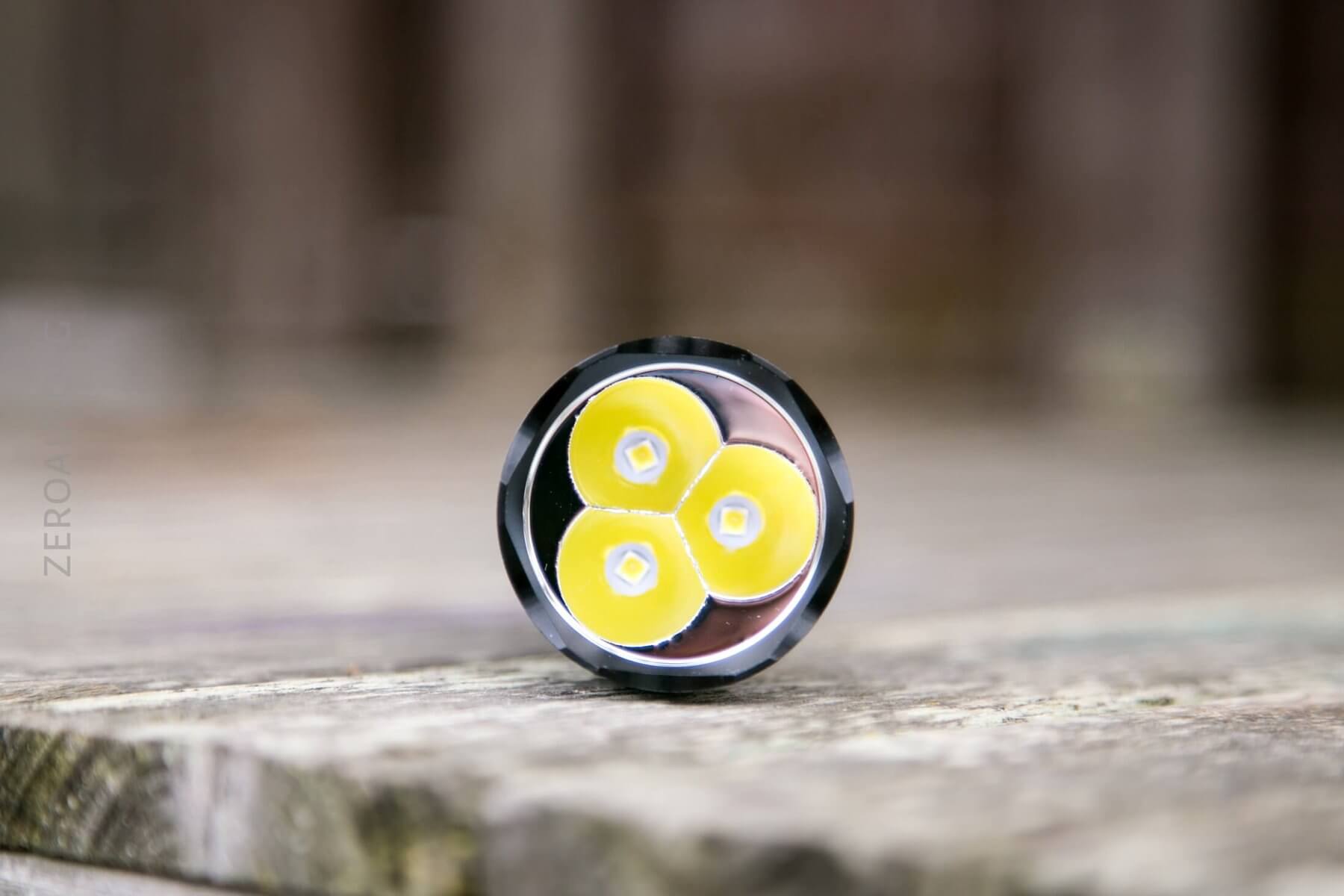
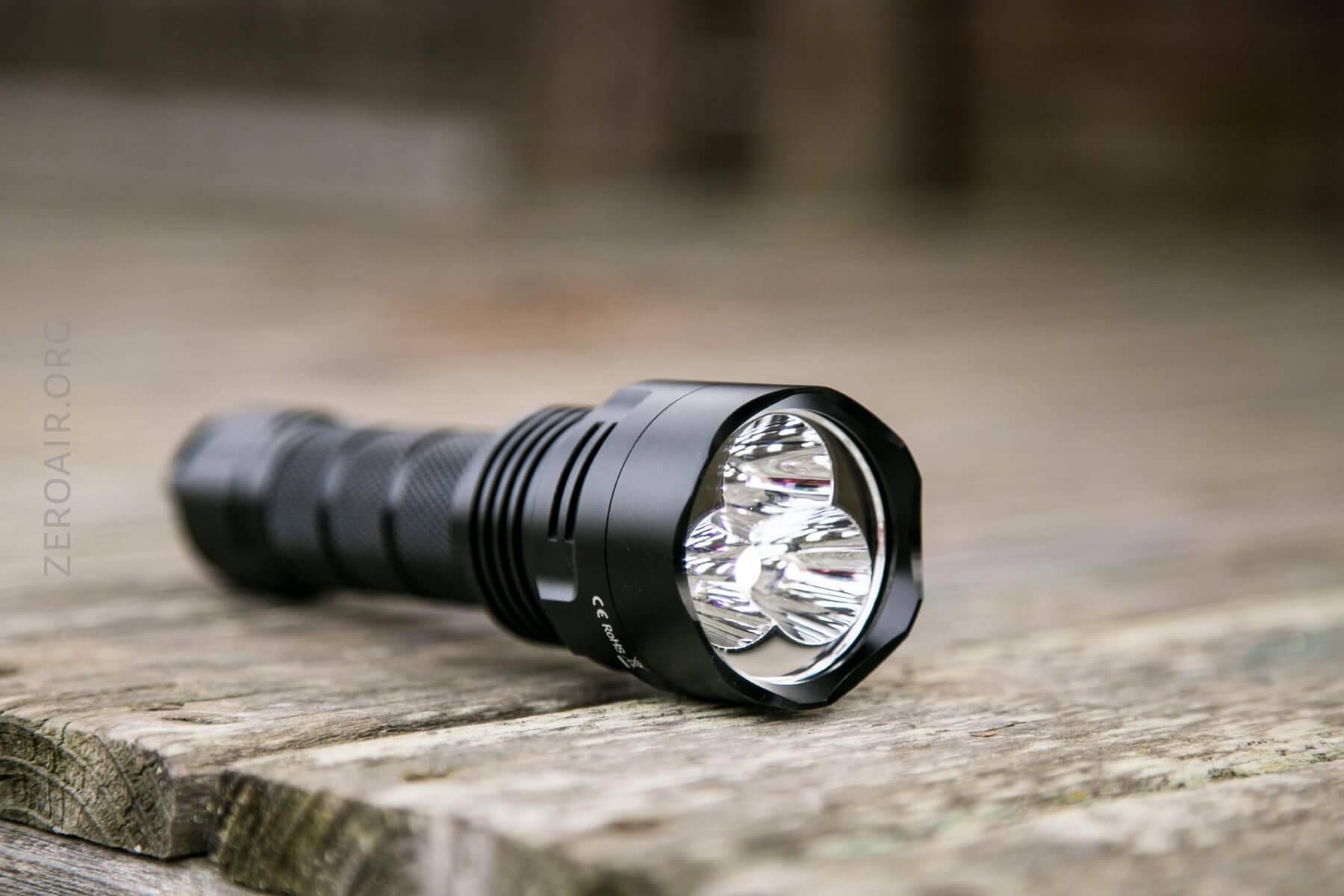
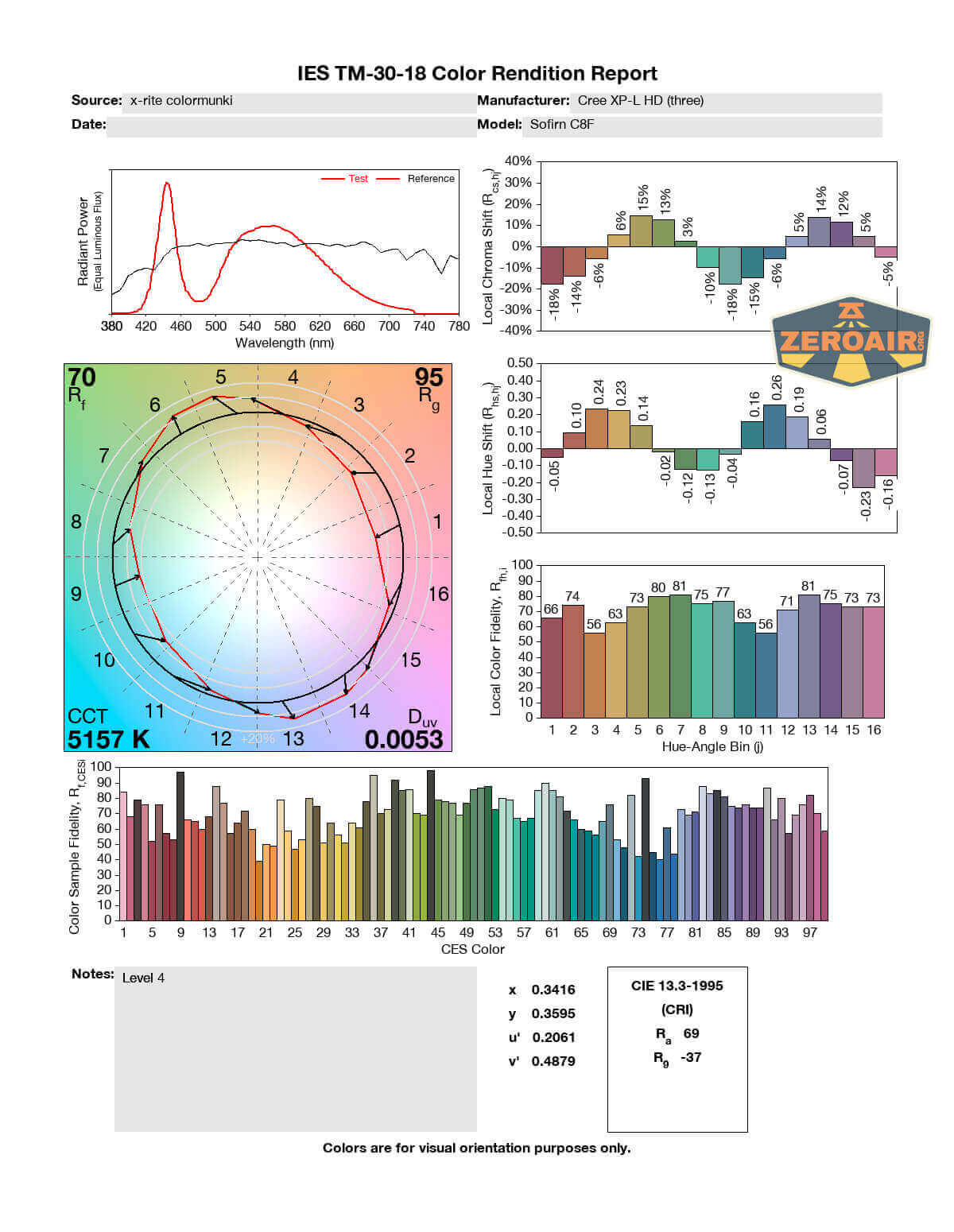
The emitters used in the C8F 21700 are three Cree XP-L HD’s. There’s a three-up smooth reflector. The beam has a lot of throw and little spill. The triple doesn’t really show up in the beam.
Pulse Width Modulation
I can detect some PWM on at least moonlight.
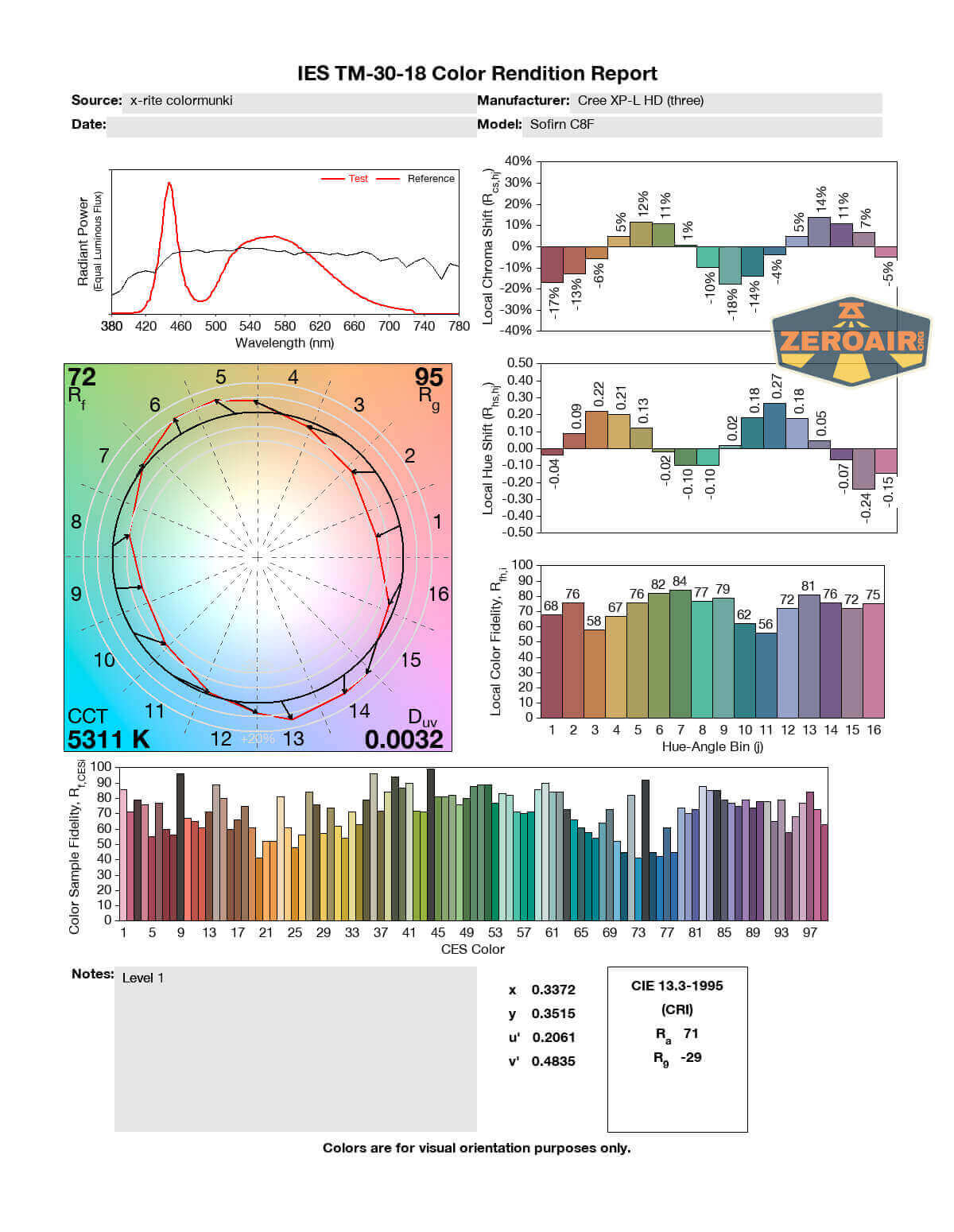
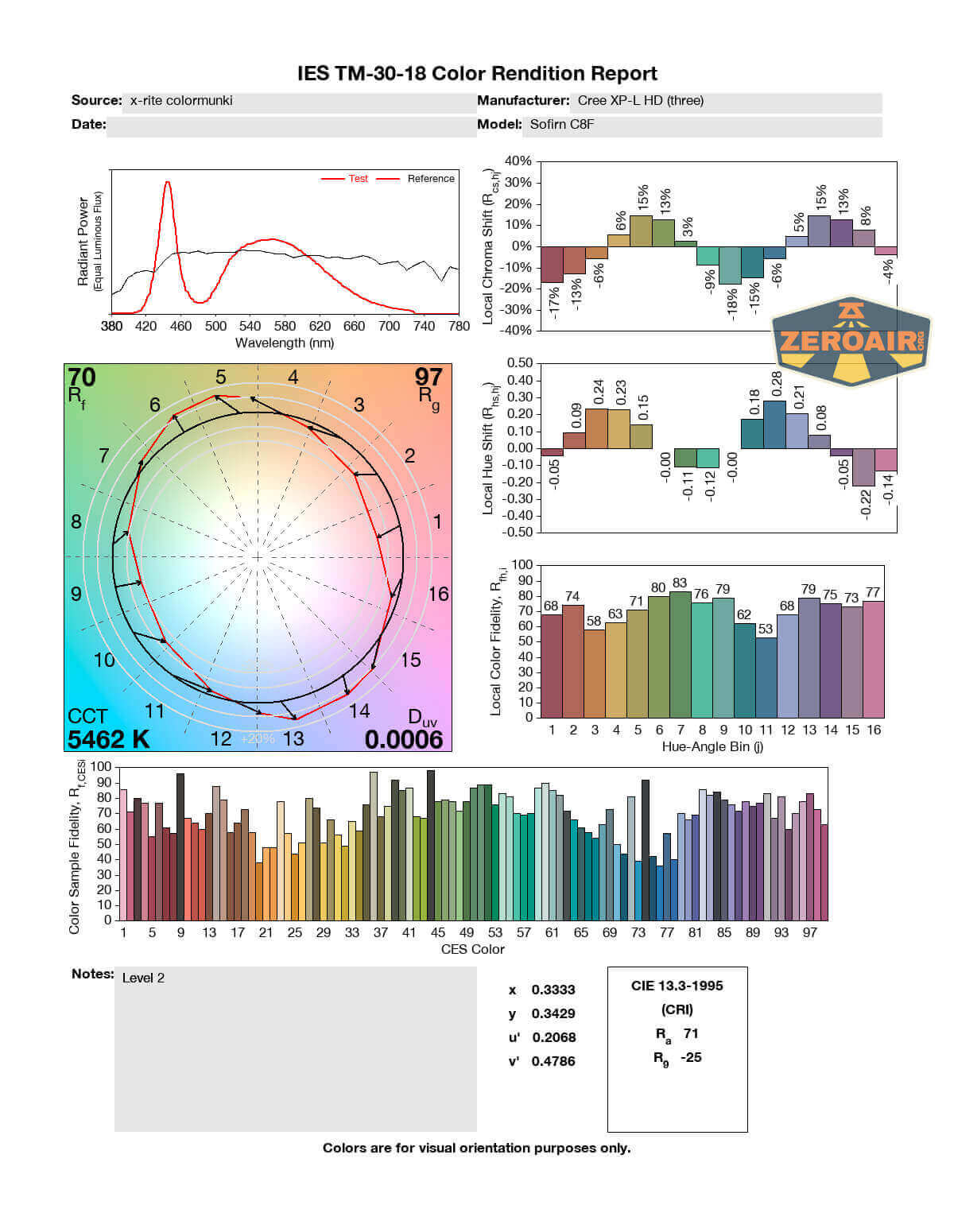
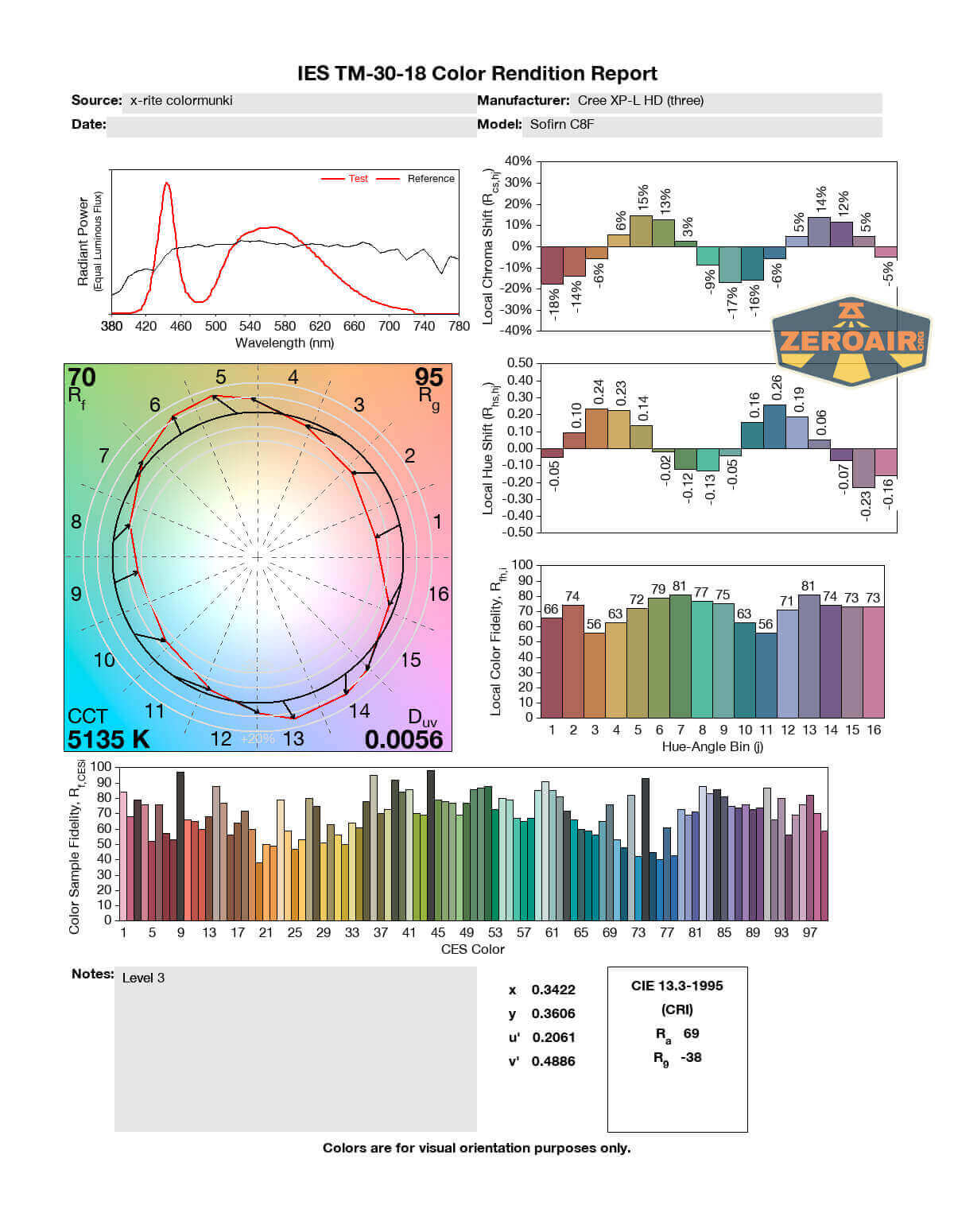
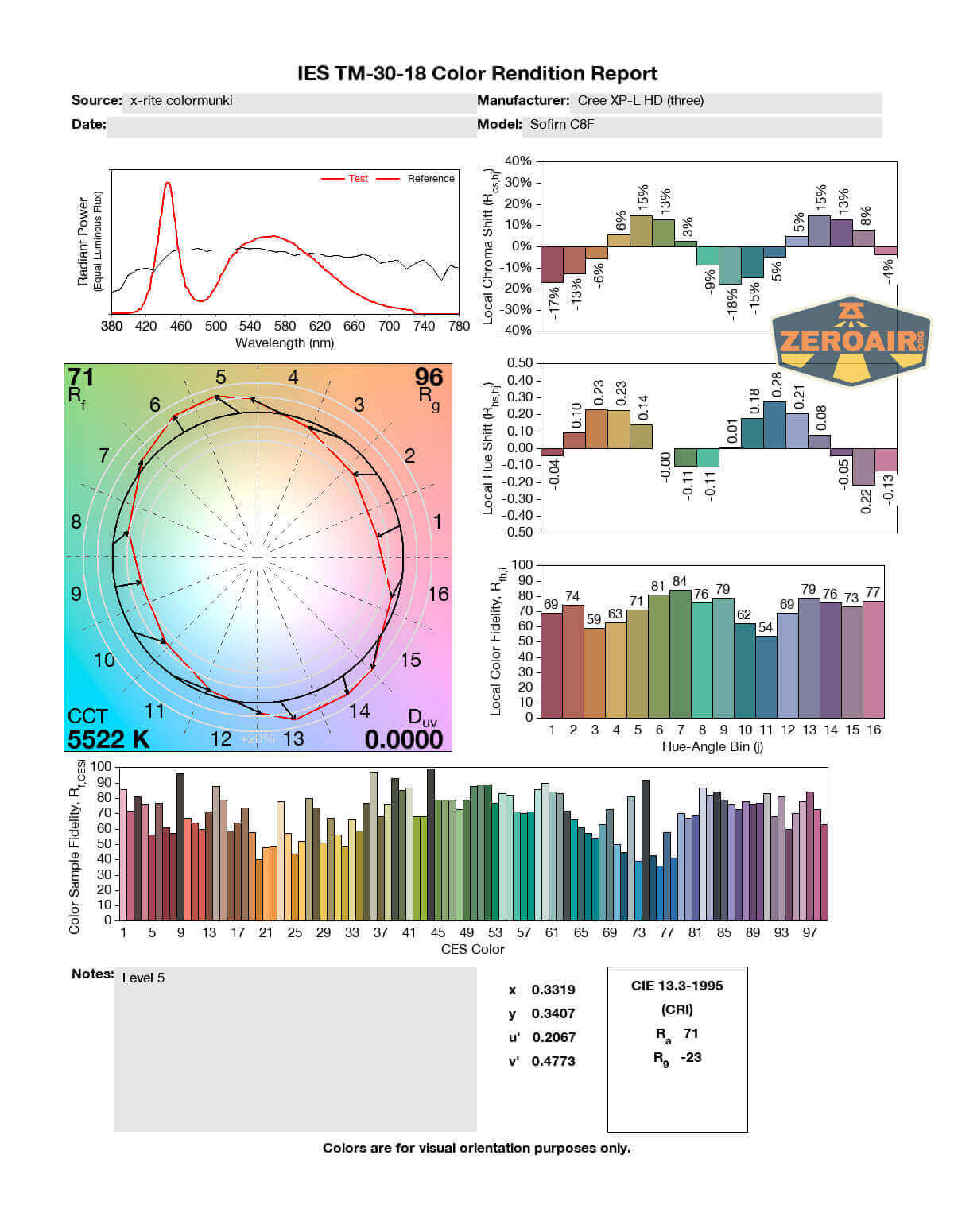
LED Color Report (CRI and CCT)
Beamshots
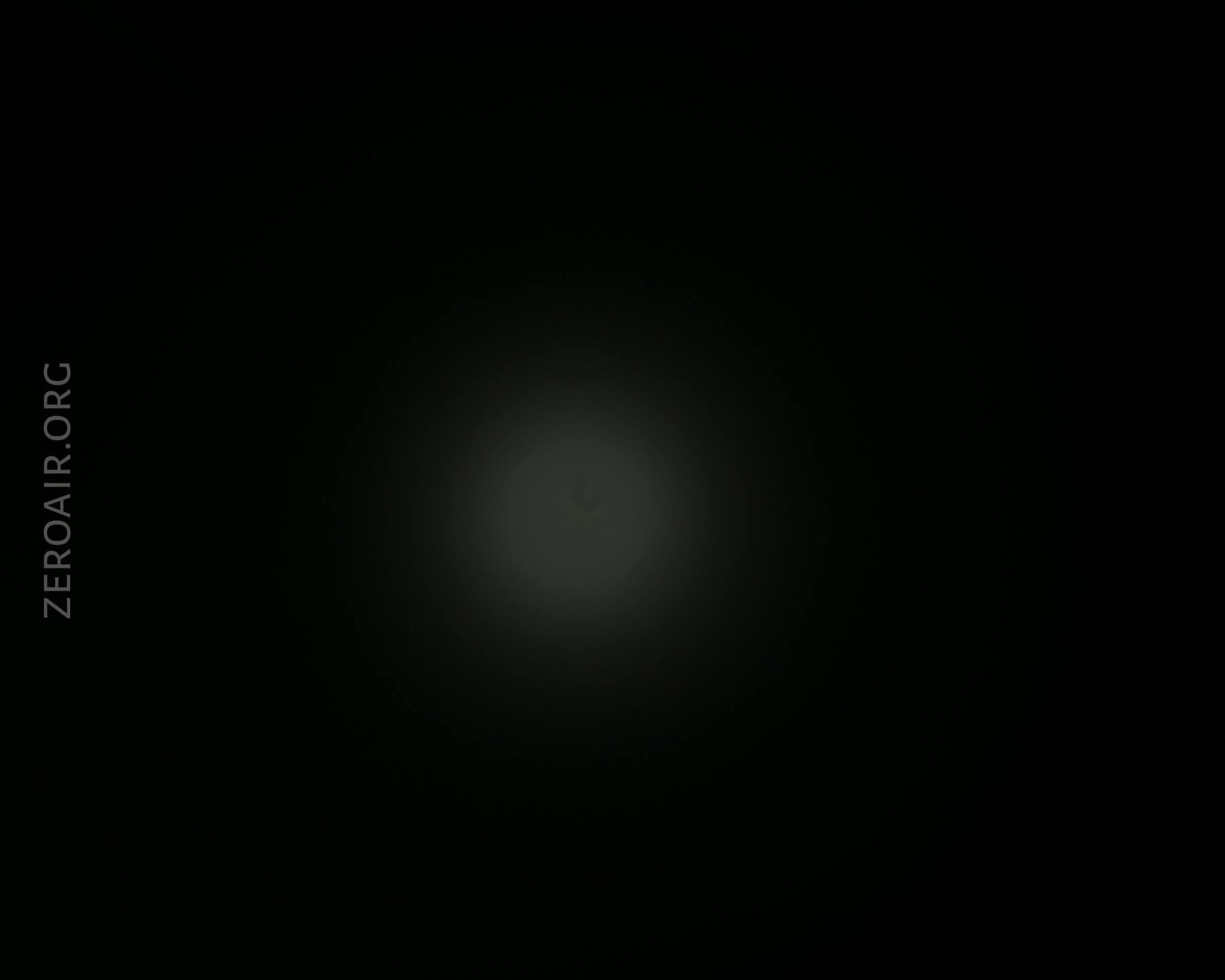
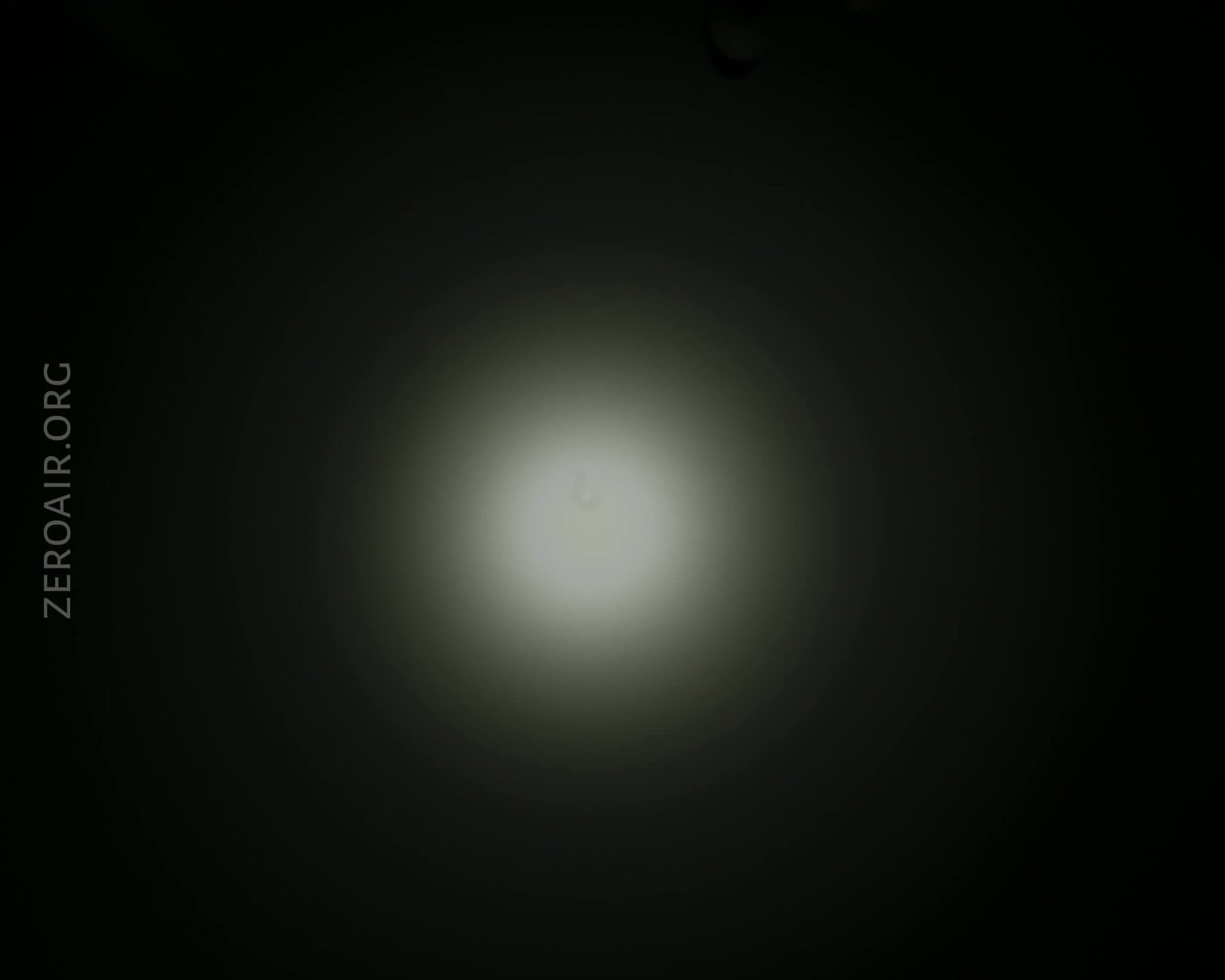
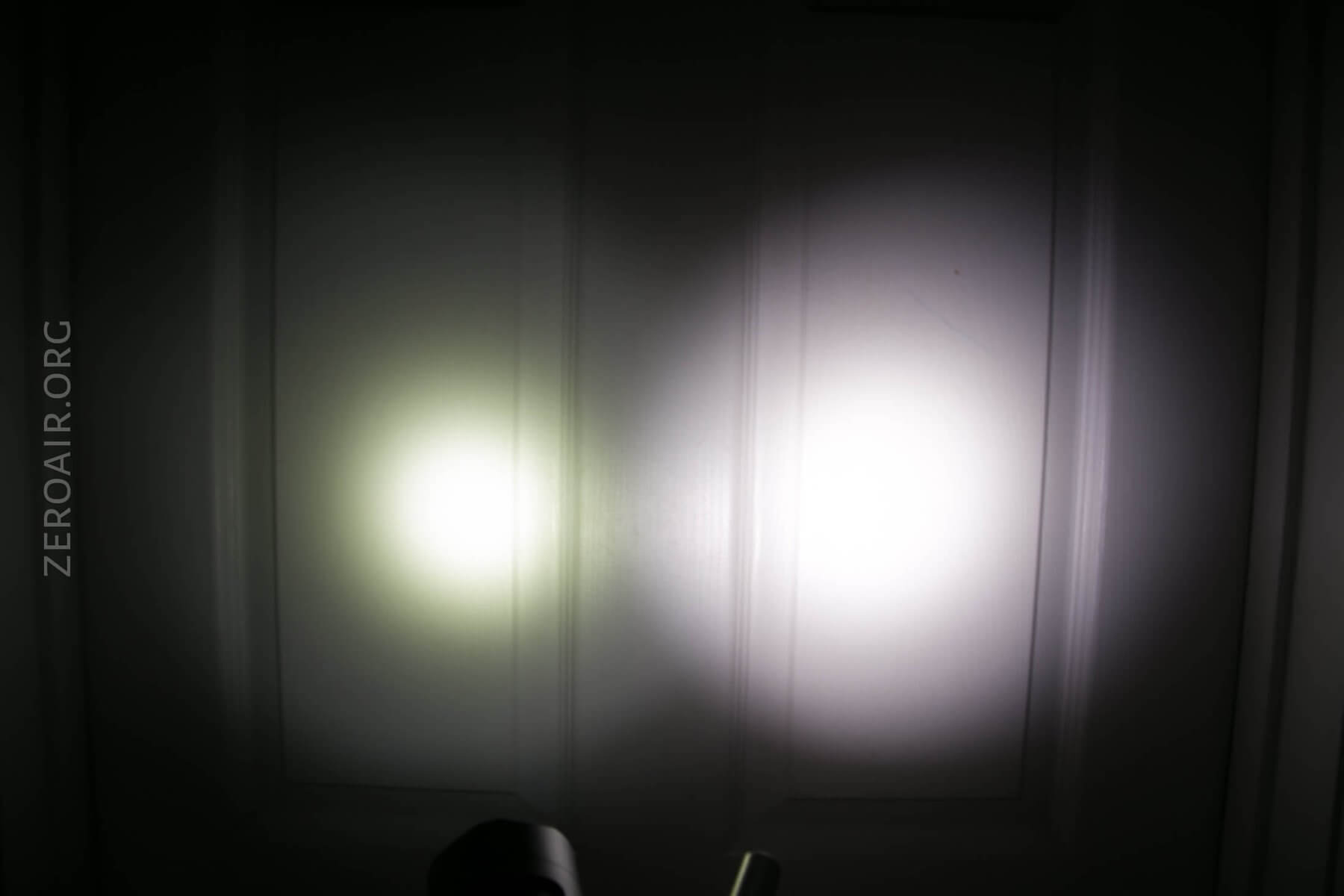
These beamshots always have the following settings: f8, ISO100, 0.3s shutter, and manual 5000K exposure. These photos are taken at floor level, and the beam hits the ceiling around 9 feet away.
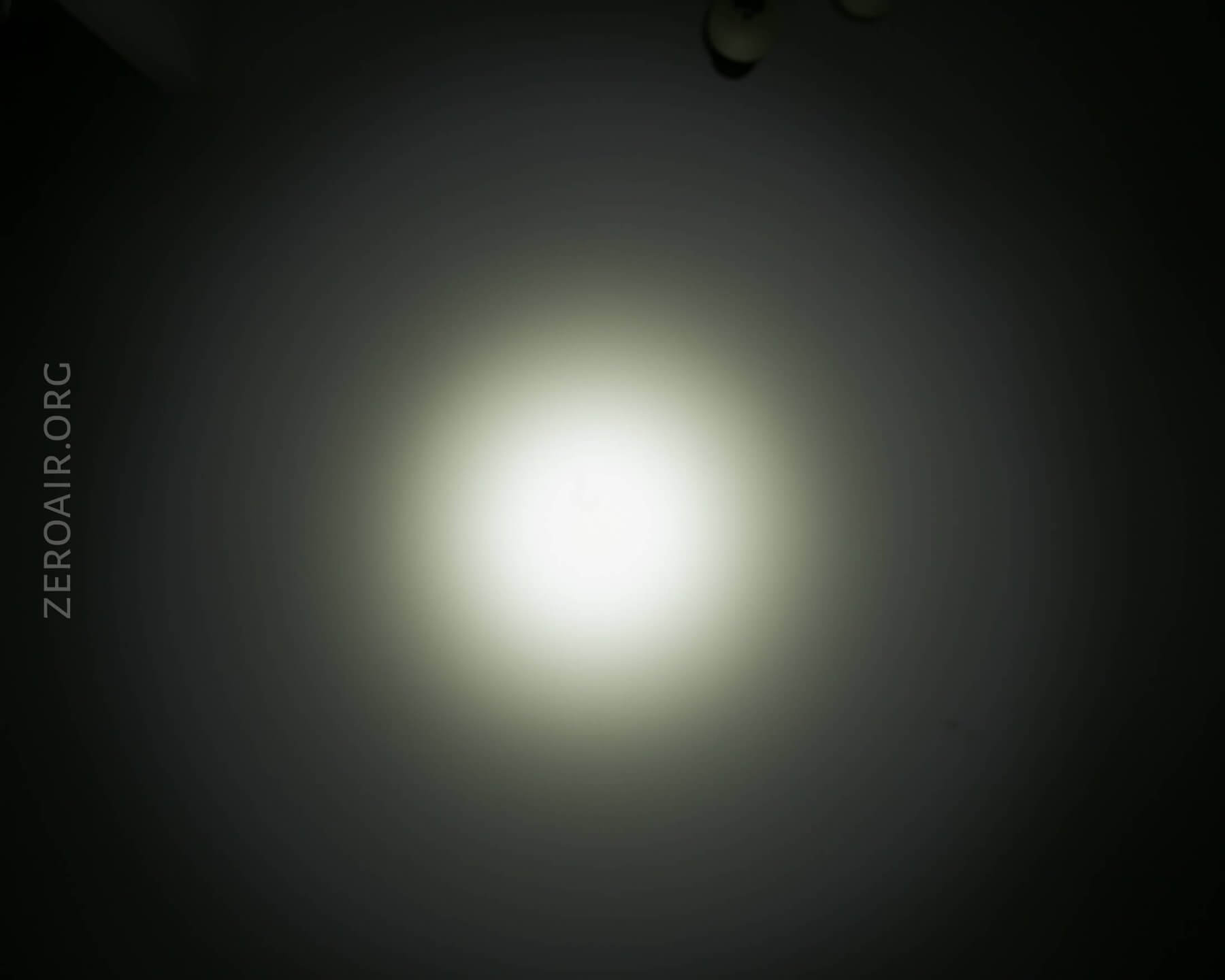
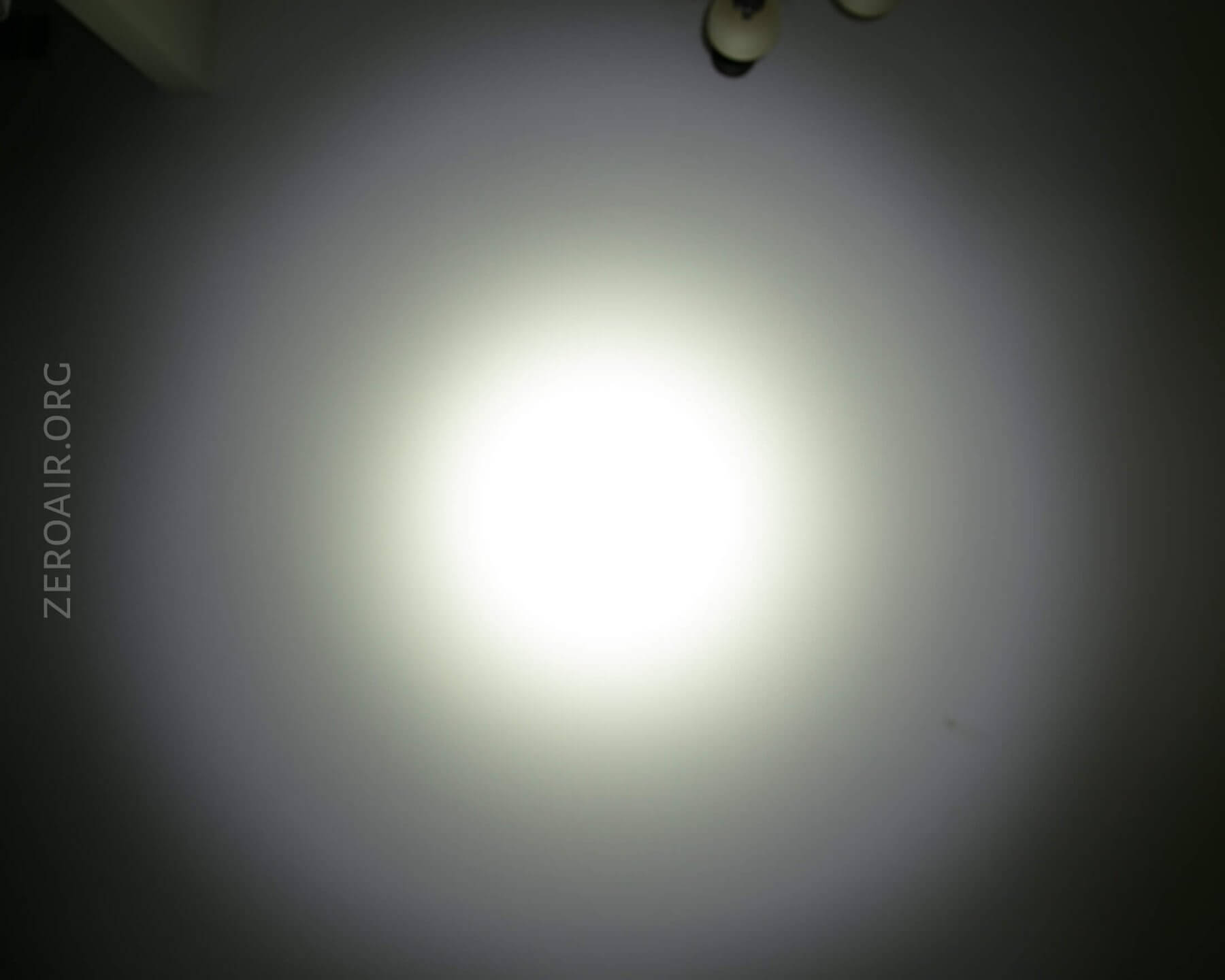
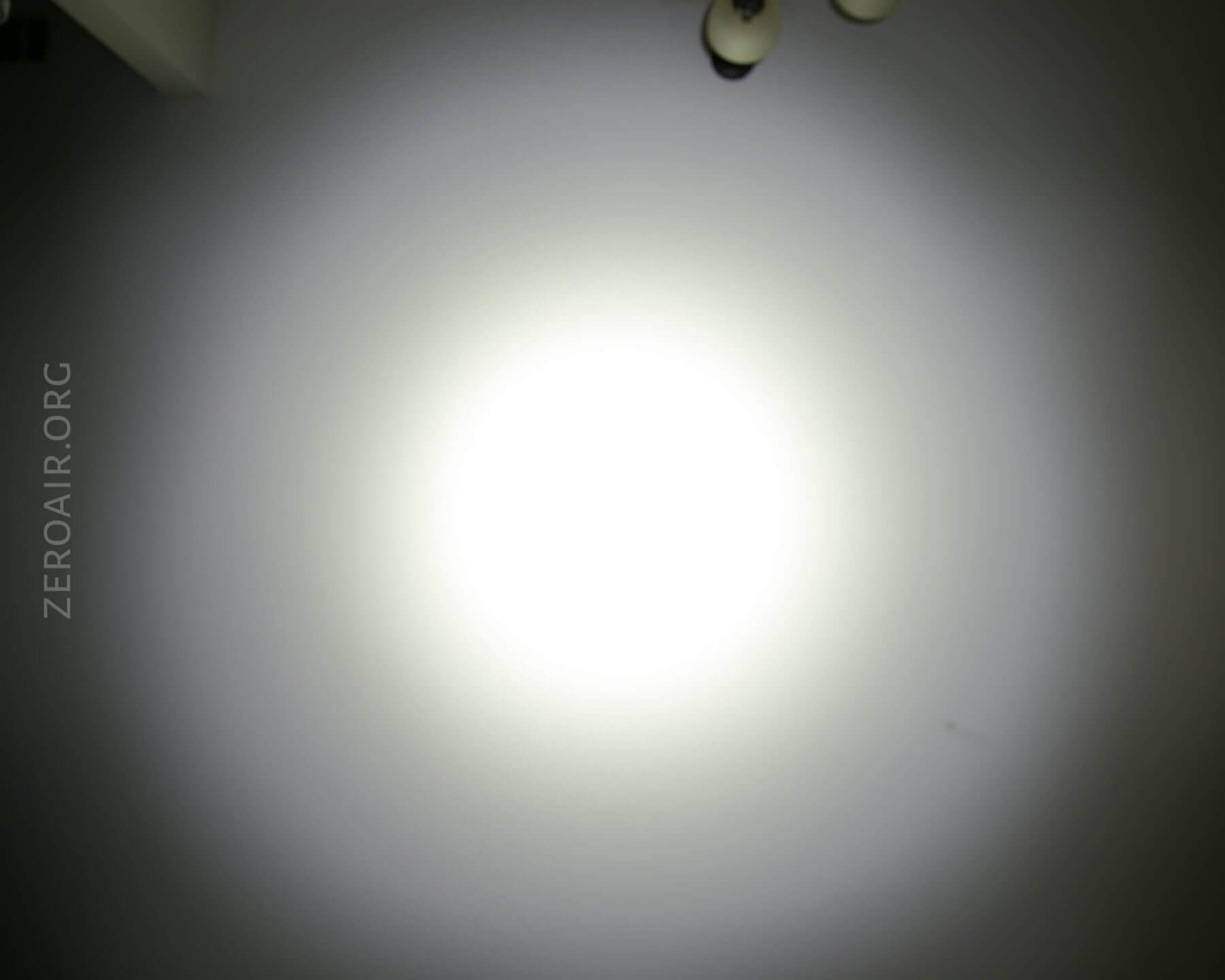
Tint vs BLF-348 (KillzoneFlashlights.com 219b version) (affiliate link)
Random Comparisons and Competitive Options
Here’s a relevantly filtered page on parametrek.com. There’s really not a lot, just like this light out there – being that it’s a 21700 light. But without that stipulation, there are a number of lights with similar features. Every other option is much more expensive, and many of those aren’t complete packages and don’t offer charging.
Conclusion
What I like
- Full package light
- 21700 makes a nice-sized light in this format
- Build quality is great for a $46 light
- The dual switch interface is quite versatile
- Four mode groups, with good options
- Moonlight available in all mode groups
- Ramping user interface is available
- Indicating switch, with battery indicator
What I don’t like
- Seems like XP-L HI might have been a better choice
- Moonlight has visible PWM
Notes
- This light was provided by Sofirn for review. I was not paid to write this review.
- This content originally appeared at zeroair.org. Please visit there for the best experience!
- Use my amazon.com referral link if you’re willing to help support making more reviews like this one!
- Please support me on Patreon! I deeply appreciate your support!
Discover more from ZeroAir Reviews
Subscribe to get the latest posts sent to your email.
Excellent review! Thanks very much. You did put a lot of efford in it.
I received my Sofirn C8F, 21700 yesterday. It is an amazing flashlight to say the least.
Feels sturdy in the hand, tailclicky and sideclicky work fine. Ramping is one big feature, I love it!
Most impressive for me is the beam. It is the best beam in a flashlight I’ve seen so far.
Ok, with what flashlights I compare the beam of the Sofirn C8F?
Klarus XT11GT, cool white, Cree XHP35 HD E4 led
Nitecore MH20, warm white until the C8F the best beam, excellent, distictive spot, Cree XM-L2 U2 led
Nitecore MH23, cool white, very similar to the beam of the XT11GT, Cree XHP-35 HD led
The Sofirn has a bit warm, floody beam with both sufficient throw capacity and flood. For this to work the flashlight needs the 3000+ Lm.
Excellent flashlight
Thanks
Carel
Excellent Carel, enjoy the C8F in good health!